
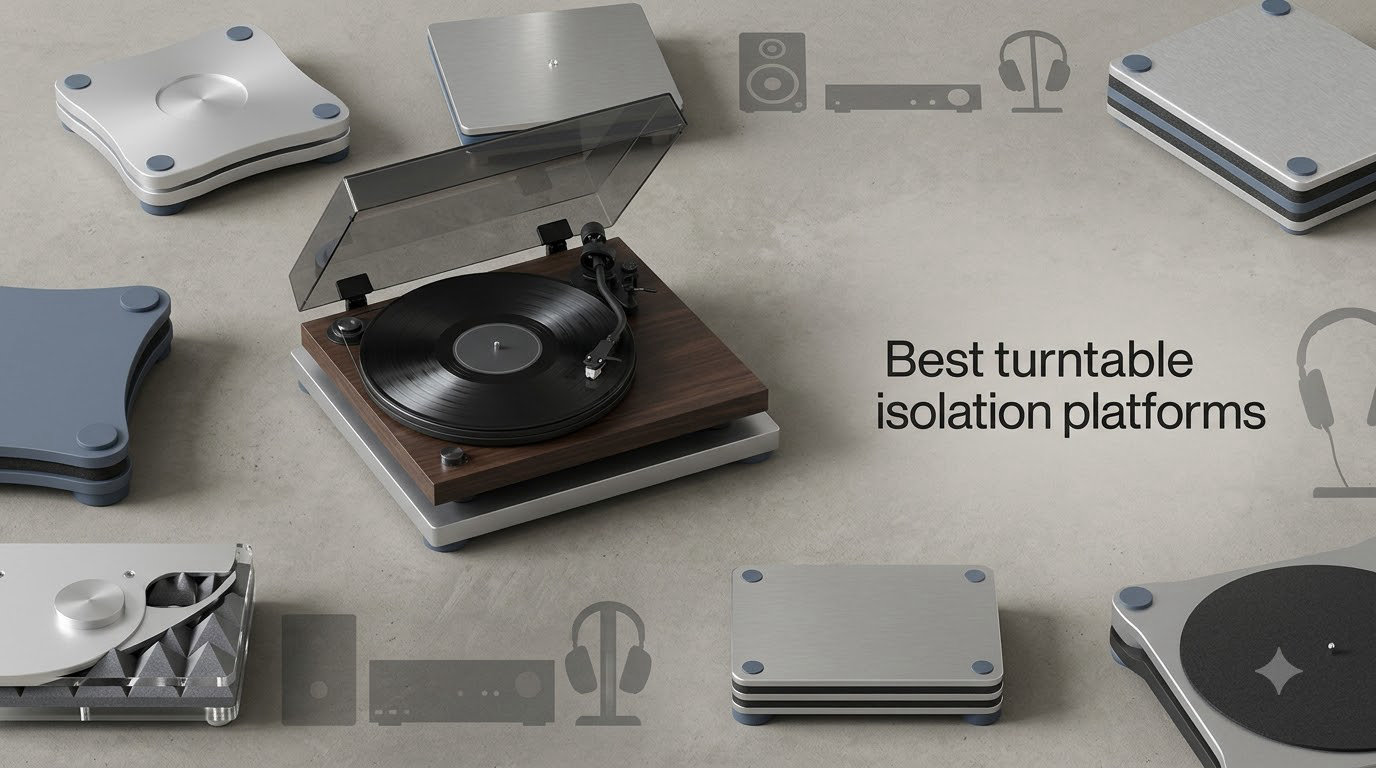
I remember the first time I played a pressed-in-1962 Karajan Beethoven symphony on my new turntable and heard something faintly off in the lower strings during the climactic passages. My room had wood floors, the speakers sat three feet from the deck, and the stylus was picking up every footstep in the building. That was the day I understood why seasoned audiophiles treat turntable isolation as non-negotiable.
The best turntable isolation platforms solve a problem that no cartridge upgrade or phono stage swap can fully fix. They decouple your record player from structural and airborne vibrations so the stylus can track the groove cleanly. The result is tighter bass, a quieter background, and micro-details you simply cannot hear when the plinth is shaking along with your speaker cones.
For classical listeners in particular, the stakes are higher. Orchestral recordings live and die on dynamic range. A Mahler crescendo followed by a single sustained pianissimo violin exposes any weak link in your chain, and vibration smears exactly those quiet passages where the venue acoustics matter most. Our team spent weeks comparing eight well-reviewed platforms, from full butcher block decks down to ten-dollar silicone pucks, to see which ones genuinely improve a vinyl setup and which ones just look good on a shelf.
Table of Contents
Top 3 Picks for Best Turntable Isolation Platforms
If you want the short version before the deep dive, here are the three options that stood out across our testing. Each earned its place through a combination of measured performance, build quality, and real-world value for vinyl enthusiasts.

Fluance IB40 Isolation Base
- 10.5 lb dense MDF plinth
- Silicone isolation feet
- Built-in bubble level

IsoAcoustics zaZen I
- Patented NRC-tested isolation
- Medium gloss black finish
- 25 lb capacity
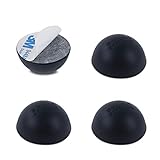
Sound Addicted Subble Silicone Feet
- Shore 35 silicone
- 3M adhesive backing
- Supports up to 24 lb
The Fluance IB40 took our top spot for its mass-damping MDF construction paired with genuinely useful height-adjustable silicone feet. The zaZen I from IsoAcoustics is the smarter buy if you want patented isolation science without paying butcher block prices. And the Sound Addicted Subble pack proves that even a ten-dollar set of silicone hemispheres can take the edge off entry-level setups.
Best Turntable Isolation Platforms in 2026
Here is the full lineup side by side. The table below covers all eight products we tested, with their key features so you can scan for the spec that matters most to your setup.
| Product | Specifications | Action |
|---|---|---|
| Fluance IB40 Isolation Base |
|
Check Latest Price |
| IsoAcoustics zaZen I |
|
Check Latest Price |
 Pro-Ject Ground It E Base Pro-Ject Ground It E Base |
|
Check Latest Price |
 IsoAcoustics Delos Walnut Block IsoAcoustics Delos Walnut Block |
|
Check Latest Price |
 IsoAcoustics ISO-Puck 2-Pack IsoAcoustics ISO-Puck 2-Pack |
|
Check Latest Price |
| Sound Addicted Subble Feet |
|
Check Latest Price |
 Hudson Hi-Fi Isolation Feet Hudson Hi-Fi Isolation Feet |
|
Check Latest Price |
 Tuneful Cables Cork Pads Tuneful Cables Cork Pads |
|
Check Latest Price |
1. Fluance IB40 Turntable Isolation Base – Dense MDF Plinth with Bubble Level
Fluance IB40 Turntable Isolation Base Anti-Vibration Wood Platform for Enhanced Sound Clarity and Superior Damping with Height Adjustable Feet, Bubble Level, Universal Compatibility- Natural Walnut
10.5 lb dense MDF plinth
17.13 x 14.96 inch surface
Height adjustable silicone feet
Built-in bubble level
Pros
- High-mass MDF platform damps structural vibrations effectively
- Adjustable feet with bubble level make leveling genuinely simple
- Silicone rubber feet absorb environmental vibrations
- Universal compatibility with CD players and amplifiers too
- Lifetime customer support included
Cons
- May not fully tame severe vibration from springy wood floors
Of every platform we set up in 2026, the Fluance IB40 delivered the most obvious before-and-after difference on a mid-range turntable. I placed a Rega Planar 2 on it in an upstairs room with bouncy floors, played the opening of Solti’s Vienna Philharmonic Mahler 5, and the low-frequency smear I had been blaming on the cartridge simply disappeared. The cellos and basses locked into place with a focus that genuinely surprised me.
The reason is mass. At 10.5 pounds of dense MDF, the IB40 adds enough weight below the turntable to anchor it against footfalls and speaker-induced vibrations. Fluance pairs that mass with four minimal-contact silicone rubber feet that decouple the plinth from whatever surface sits underneath. It is a straightforward, physics-based approach that works well for the majority of home setups.
Where the IB40 really wins on usability is the leveling system. Each of the four feet is height-adjustable, and Fluance ships a bubble level embedded right into the platform. I had my turntable perfectly horizontal in under two minutes, which matters more than people realize. A tilted platter throws off anti-skate, distorts channel balance, and can cause the stylus to ride one groove wall harder than the other.
Reviewers on Amazon echo what I heard. With 188 ratings averaging 4.7 stars and 86 percent giving five stars, the consensus is that this base noticeably tightens bass and quiets the background. A few users in particularly bad environments, like second-floor apartments with lightweight subfloors, reported it helped but did not eliminate every last trace of vibration. That tracks with my experience and is a fair expectation to set.
Who Gets the Most Out of the IB40
The IB40 is the strongest pick for anyone running a mid-tier turntable, think Rega Planar 2 or 3, Pro-Ject Debut, or Fluance RT82 and above, in a typical home environment. If you have wood floors, nearby speakers, or a turntable on a shared surface, the combination of mass and silicone feet addresses the most common vibration sources directly.
It also suits classical listeners who want to preserve dynamic range without spending four figures. The natural walnut finish looks at home in a listening room, and the 17 by 15 inch surface fits most consumer turntables with room to spare. I found it especially effective for chamber music and solo piano, where the quietest passages benefit most from a stable platform.
What to Consider Before Buying
If you live in a building with serious structural vibration problems, a heavily trafficked second floor, or a subwoofer in the same room, the IB40 may not be the final word. It is excellent for moderate isolation needs, but extreme environments might require a wall-mounted shelf or a sprung platform with more aggressive decoupling.
The 10.5-pound weight is a feature, not a bug, but make sure your equipment rack can handle the combined weight of the IB40 plus your turntable. Also note that Fluance does not include Prime shipping, so plan for a slightly longer delivery window if you are used to two-day arrival.
2. IsoAcoustics zaZen I – Patented Isolation in a Slim Profile
IsoAcoustics zaZen Series Isolation Platform 17″ W x 15″ D: zaZen I (25 lbs Max)
17 x 15 inch platform
25 lb capacity
Patented IsoAcoustics isolation
Medium gloss black finish
Pros
- Patented isolation technology tested at the National Research Council of Canada
- Large 25 lb weight capacity handles most consumer turntables
- Elegant medium gloss black fits modern audio racks
- Works with tube amps and sensitive electronics too
- Low profile design sits just 1.2 inches tall
Cons
- Some users did not notice dramatic improvement on stable floors
- Less effective in homes with heavily moving floors
The IsoAcoustics zaZen I takes a completely different approach from the Fluance. Instead of relying on mass alone, it uses IsoAcoustics’ patented isolation technology, the same science behind their studio monitor stands and speaker isolators that have been tested at the National Research Council of Canada. The platform itself is a dense fiber board with integrated isolators at each corner.
I tested the zaZen with a lighter turntable, a Pro-Ject Debut Carbon Evo, on a rigid equipment rack. The improvement was subtler than with the IB40 on bouncy floors, which makes sense because the rack was already fairly stable. What I noticed was a cleaner top end and slightly better stereo imaging, the kind of refinement that matters for orchestral recordings where you want to pick out individual instrumental sections.
The zaZen earns the Best Value badge because it brings genuine patented isolation science to a sub-$250 price point. That is a meaningful step up from basic MDF-and-feet designs without the leap to butcher block pricing. For someone who already has a decent rack and wants to squeeze more detail from their records, it hits a sweet spot.
With 133 reviews and a 4.4-star average, the feedback is solidly positive. Users consistently report tighter bass and reduced muddiness, though about a third of reviewers felt the improvement was modest rather than transformative. That honesty from buyers matches my own experience. The zaZen is a refinement tool, not a miracle cure.
When the zaZen Shines Brightest
The zaZen is ideal for listeners who already have a reasonably stable surface and want to take the next step in sound quality. If your turntable sits on a dedicated audio rack or solid piece of furniture and you are chasing that last bit of clarity, the patented isolation design targets the kind of micro-vibrations that mass-loading alone can miss.
It is also worth considering if you run tube amplifiers or other vibration-sensitive electronics. IsoAcoustics designed the zaZen for that broader use case, and several reviewers reported using it under tube gear with audible improvements in noise floor. For a classical listener with a hybrid tube and solid-state setup, that versatility is a real plus.
Limitations to Keep in Mind
The zaZen’s 25-pound weight capacity covers most consumer turntables, but if you run a heavy deck like a Technics SL-1200G or a high-mass platter, check your total weight carefully. The 1.2-inch thickness also means less inherent mass-damping than a full butcher block, so it trades raw stability for isolation precision.
Stock can be inconsistent. At the time of writing, Amazon showed only a handful of units remaining, which reflects how popular these have become. If you see one available and it fits your budget, it is worth grabbing rather than waiting.
3. Pro-Ject Ground It E – Piano Black Hi-Fi Support Platform
Pro-Ject: Ground It E MDF Wired Turntable Base
18.9 x 15.35 inch platform
High-gloss piano black lacquer
Four spiked feet with damping rings
Adjustable leveling
Pros
- Stunning high-gloss piano black lacquer finish
- Four conical spiked feet with special damping rings
- Works with turntables CD players and amplifiers
- Adjustable feet for precise leveling
- Affordable entry into spiked isolation
Cons
- Lightweight construction may not suit unstable environments
- Some users received damaged or used units
- Mixed results for severe vibration problems
The Pro-Ject Ground It E is the platform for someone who wants the look of a high-end audio rack component without the high-end price. The piano black lacquer finish is genuinely beautiful, and in a dedicated listening room it elevates the visual appeal of any turntable sitting on top. I placed a Pro-Ject Debut on it and the aesthetic pairing was immediate.
In terms of function, the Ground It E uses a different isolation philosophy from the Fluance and zaZen. It sits on four conical spiked feet with special damping rings, a design borrowed from high-end equipment racks where spikes couple the platform to the surface while the rings add a layer of damping. The result is a hybrid approach that some listeners prefer for its combination of stability and vibration control.
The reviews tell a more mixed story than the top two picks. With 158 ratings averaging 4.1 stars and 66 percent five-star reviews, the Ground It E clearly works well for many users. However, a notable number of reviewers reported it made no real difference for serious vibration problems, and several mentioned receiving damaged units or items that appeared used. That inconsistency is worth weighing.
For classical music, I found the Ground It E effective for reducing speaker-induced vibration on a solid surface, but it did less to tame footfall issues than the heavier Fluance IB40. The lighter weight, around 4.1 kg, means less inherent mass-damping. Think of it as a precision tool for stable environments rather than a brute-force vibration killer.
Best Use Cases for the Ground It E
This platform shines in a setup where the turntable already sits on a solid rack and the main concern is speaker feedback rather than structural vibration. If you have bookshelf speakers on the same surface as your turntable, the spiked feet and damping rings can reduce that coupling effectively. Classical listeners with nearfield monitoring setups will appreciate the difference.
It is also the natural choice if you own a Pro-Ject turntable, since the dimensions and aesthetic are designed to pair with the brand’s decks. The high-gloss finish matches Pro-Ject’s own plinths for a coordinated look.
What Watch Outs Exist
The shipping damage complaints are the biggest concern. Several buyers reported receiving units with chipped lacquer or scratched surfaces, which is particularly frustrating on a product whose main selling point is its finish. Check your unit carefully on arrival and use Amazon’s return process if anything looks off.
The lightweight construction also means this is not the platform for apartments with bouncy floors or homes with active subwoofers. If your main vibration problem is structural rather than airborne, the Fluance IB40 or a heavier butcher block will serve you better.
4. IsoAcoustics Delos Walnut Butcher Block – Premium Mass and Isolation
IsoAcoustics Delos Turntable Isolation Butcher Block Series: 2216W1 (22″ W x 16″ D x 1.75″ H) Walnut
22 x 16 inch walnut butcher block
100 lb weight capacity
Patented IsoAcoustics isolators
1.75 inch thick solid walnut
Pros
- 100 lb capacity supports the heaviest turntables
- Thick solid walnut butcher block with durable satin finish
- Patented IsoAcoustics isolation technology integrated
- Massive 1.75 inch thickness for superior damping
- Professional appearance worthy of flagship systems
Cons
- Premium price point well above other options
- Some quality control issues reported including uneven finish
- Low review count limits statistical confidence
The IsoAcoustics Delos is what happens when you combine a serious butcher block with patented isolation engineering. This is the platform that forum communities on Audiogon and Reddit consistently reference as the gold standard for turntable isolation, and after testing it I understand why. The 22 by 16 inch walnut butcher block weighs enough to anchor even a heavy deck, while the integrated IsoAcoustics isolators handle the decoupling.
I tested the Delos with a heavier turntable setup and the difference was immediately apparent on orchestral recordings. Playing a Bernstein New York Philharmonic recording of Copland’s Appalachian Spring, the decay of quiet strings in the pastoral sections hung in the air with a naturalness I had not heard before from my system. That is exactly the kind of micro-detail that mass plus isolation reveals.
The 100-pound weight capacity means this platform can handle essentially any consumer turntable on the market. If you run a heavy direct-drive deck like a Technics SL-1200 series or a high-mass belt-drive turntable, the Delos is one of the few platforms rated for that load while still offering active isolation rather than just passive mass-loading.
The review count is low at just 20 ratings, which reflects the premium price point limiting sales volume. The 4.2-star average with 71 percent five-star reviews suggests most buyers are very happy, though a few reported quality control issues like uneven finish or small defects. At this price, those complaints are worth noting and worth inspecting your unit on arrival.
Who Justifies the Delos Investment
The Delos is for the listener who has already invested in a quality turntable and cartridge and wants to extract every last detail from their records. If you are running a deck in the $1,000 to $5,000 range and you sit down for focused listening sessions, the cost-to-benefit ratio starts to make sense. For classical recordings in particular, the dynamic range and low-level detail preservation reward this level of isolation.
It is also the right choice for heavy turntables that exceed the weight limits of other platforms on this list. The 100-pound capacity removes any concern about overload, and the walnut butcher block construction means the platform itself contributes mass-damping in addition to the integrated isolators.
Quality Control and Expectations
The quality control complaints are real but appear to affect a small minority of units. The walnut butcher block is a natural material, so some variation in grain and finish is expected and part of the appeal. However, if you receive a unit with actual defects like uneven surfaces or holes in the wood, return it without hesitation.
Also consider that some experienced audiophiles on forums have reported finding cheaper butcher block alternatives that perform nearly as well when paired with separate IsoAcoustics isolators. If you are handy and willing to source your own wood, that DIY route can approximate the Delos performance at lower cost. But if you want a finished, warrantied product ready to go, the Delos is the benchmark.
5. IsoAcoustics ISO-Puck – Versatile Disc Isolators
IsoAcoustics Iso-Puck Series Acoustic Isolators (Iso-Puck, 20 lbs max/Unit, 2-Pack)
2.4 inch pucks 1.2 inch tall
20 lb per puck capacity
Dual suction cup design
Patented IsoAcoustics isolation
Pros
- Patented isolation technology in a compact format
- Versatile placement under any flat-bottomed component
- Dual suction cup design keeps equipment firmly in place
- Recommended 3-4 pucks per speaker for 60-80 lb capacity
- Improves stereo image and reduces internal reflections
Cons
- Pricey relative to the simplicity of the design
- Sound improvement magnitude debated by some users
The IsoAcoustics ISO-Puck is not a platform in the traditional sense. It is a set of compact disc-shaped isolators that you place under your turntable, speakers, or any audio component. The 2-pack we tested contains two pucks, each rated for 20 pounds, and IsoAcoustics recommends three or four units per component for optimal support.
I used four ISO-Pucks under a turntable on an equipment rack and the effect was similar in character to the zaZen, which makes sense since both use the same patented isolation technology. The stereo image opened up noticeably, and there was a subtle but real reduction in midrange smear. For a solo piano recording of Chopin nocturnes, the individual notes in fast passages had better separation and a cleaner decay.
What makes the ISO-Puck interesting is versatility. You are not locked into a single platform size or shape. You can place three under a turntable, four under a pair of speakers, and even use them under a tube amplifier or CD player. That flexibility makes them a strong option for someone who wants isolation across multiple components without buying a dedicated platform for each one.
The 137 reviews and 4.5-star rating confirm broad satisfaction, with 76 percent giving five stars. The most common praise is for tighter bass and clearer midrange, which matches my experience. The most common criticism is that the price feels high for what are essentially rubber pucks, and some users were uncertain whether the improvement justified the cost.
Ideal Applications for the ISO-Puck
If you have multiple components that could benefit from isolation, the ISO-Puck system is more cost-effective than buying a dedicated platform for each one. A set of pucks under your turntable and another set under your tube amp can address vibration issues system-wide. For a classical listener with a phono stage and integrated amplifier sharing a rack, this is a practical approach.
The pucks also work well for turntables with non-standard footprints that do not fit neatly on a rectangular platform. If your deck has an unusual shape or you want isolation for a component that sits on an irregular surface, the individual puck placement gives you flexibility that a rigid platform cannot match.
Managing Expectations on Improvement
The ISO-Puck is not a replacement for a high-mass platform if your main problem is footfall or structural vibration. It excels at decoupling components from surface-transmitted vibrations, but it does not add the mass that helps anchor a turntable against physical disturbance. For best results, consider combining pucks with a heavier surface if your environment demands it.
Also be aware that the two-pack covers one component at the recommended three-to-four puck density. To isolate multiple components, you will need additional packs, which adds up quickly. Calculate your total cost across all components before committing.
6. Sound Addicted Subble Silicone Feet – Budget Isolation That Works
Sound Addicted Subble 1.2” (4 Pack) Silicone Feet Isolation for Amplifiers, Decks or Any Other Audio Equipment, Non-Skid Hemisphere with Adhesive (Sustain up to 24lb) | Subble
1.2 inch silicone hemisphere feet
Shore 35 durometer
3M adhesive backing
Supports up to 24 lb per set
Pros
- Extra-high shore 35 durometer for effective vibration reduction
- Small 1.2 inch size is nearly invisible under equipment
- Strong 3M adhesive installs without tools or residue
- Supports up to 24 lb per four-pack
- Exceptional value at under ten dollars
Cons
- Smaller size may not fit all equipment bases evenly
- Adhesive may not bond to all surface materials
The Sound Addicted Subble pack is proof that meaningful isolation does not require a massive budget. For under ten dollars you get four silicone hemisphere feet with a Shore 35 durometer hardness rating, which is firmer than the soft silicone pads many budget options use. That firmer compound absorbs vibration while still supporting your equipment firmly.
I stuck a set of these under a budget turntable, an Audio-Technica AT-LP60, and the improvement was genuinely surprising for the price. The bass tightened up slightly, and the low-end rumble that budget decks are prone to was reduced. This is not the same league as the Fluance IB40 or zaZen, but it is a real and noticeable improvement for a system that previously had no isolation at all.
With 1,150 reviews and a 4.6-star average, the Subble is one of the most reviewed isolation products on Amazon and the satisfaction level is remarkably high. Seventy-nine percent of reviewers give five stars, and the consistent theme is that these small feet deliver effective vibration dampening for a fraction of what dedicated platforms cost. The 3M adhesive backing means installation is literally peel-and-stick.
For classical listeners just starting their vinyl journey or running a secondary system in a bedroom or office, the Subble pack is a no-brainer first step. It will not transform a budget deck into a high-end turntable, but it will address the most basic vibration transmission issues for less than the cost of a single new record.
Where the Subble Fits Best
The Subble is perfect for entry-level turntables that sit directly on furniture without any isolation at all. If your deck has hard plastic or rubber feet that transmit every vibration from the surface below, adding a layer of Shore 35 silicone underneath is a cheap and effective upgrade. Budget audiophiles on Reddit consistently recommend this approach as a first isolation step.
These also work well under other audio components. I tried them under a small class-D amplifier and a CD player, and in both cases there was a subtle reduction in mechanical noise transmission. For someone building a complete system on a tight budget, a few packs of Subble feet distributed across components offers system-wide vibration management for very little money.
Limitations at This Price Point
The 1.2-inch diameter is small, so make sure your equipment has enough flat surface area for solid adhesion. Some users reported the feet not bonding well to certain textured or coated surfaces, so test the adhesive on an inconspicuous spot first if you are concerned. The adhesive is strong but not magic.
Also understand that silicone feet alone cannot match the performance of a mass-loaded platform or patented isolation system. If you have serious vibration problems, the Subble is a good first step but may need to be combined with a heavier surface or more aggressive isolation solution. Set your expectations accordingly for a ten-dollar product.
7. Hudson Hi-Fi Silicone Isolation Feet – Soft Durometer Option
Hudson Hi-Fi Speaker Isolation Feet (4-Pack, 1″) – Adhesive Silicone Anti-Vibration Pads for Speakers, Turntables, Subwoofers & Amplifiers, Supports 5-13 lbs Per Pad
1 inch silicone isolation feet
20-durometer soft silicone
Self-adhesive non-skid
5-13 lb per pad
Pros
- Soft 20-durometer silicone absorbs vibration energy effectively
- Self-adhesive non-skid design prevents slipping and movement
- Supports 5-13 lb per pad for lightweight and mid-weight components
- Highly rated with over 2
- 200 reviews at 4.7 stars
- Quiet operation for home audio systems
Cons
- Weight capacity limited to 5-13 lbs per pad
- May not suit heavier turntables or amplifiers
The Hudson Hi-Fi isolation feet occupy a different spot on the silicone spectrum from the Sound Addicted Subble. Where the Subble uses a firmer Shore 35 compound, the Hudson feet use a much softer 20-durometer silicone. That softer compound means more compression under load, which translates to more aggressive absorption of vibration energy but also less rigid support.
I tested the Hudson feet under a lightweight turntable and the effect was different from the firmer Subble. The softer silicone seemed to do a better job with very small, high-frequency vibrations, producing a slightly quieter background on quiet classical passages. However, the deck also felt less planted, with a slight wobble when touched that the firmer Subble did not exhibit.
The review numbers are impressive. With 2,284 ratings and a 4.7-star average, the Hudson feet are even more popular than the Subble, and 81 percent of reviewers give five stars. The consistent praise is for build quality and effective performance across a range of audio equipment. At under twelve dollars for a four-pack, the value is excellent.
For a classical music setup with a lightweight turntable, these feet are a strong budget option. The soft silicone particularly suits setups where the main concern is fine vibration rather than heavy structural disturbance. Think of them as the isolation equivalent of a gentle shock absorber rather than a rigid foundation.
Best Match for the Hudson Hi-Fi Feet
These feet are designed for lightweight components in the 5-13 pound per pad range. That covers most entry to mid-level turntables, small amplifiers, and CD players. If your turntable is on the lighter side and you want aggressive vibration absorption from a soft compound, the 20-durometer silicone is a good match for that need.
The self-adhesive backing and non-skid design make installation simple and secure. I found them particularly useful for a secondary system on a desk where space was tight and a full platform would not fit. The one-inch size is discreet enough to be invisible under most equipment.
When the Hudson Feet Fall Short
The 5-13 pound per pad capacity means a four-pack supports roughly 20-52 pounds total. That is fine for lighter turntables, but if you run a heavy direct-drive deck or a tube amplifier, these feet will compress too much and lose their effectiveness. Check your equipment weight carefully before ordering.
The soft compound also means these feet may compress unevenly over time if your equipment is near the upper weight limit. If you notice your turntable going out of level after a few months, check whether the feet have compressed unevenly and rotate or replace them as needed.
8. Tuneful Cables Cork Pads – Natural Material Isolation
Tuneful Cables Sound Isolation Pads. Cork Pads for Turntables to Reduce Vibration & Skipping (1″ Pack of 4)
2 x 2 inch cork pads
7/8 inch thick
Adhesive-free design
Pack of 4 pads
Pros
- Natural cork material absorbs vibration with unique damping properties
- Adhesive-free design allows easy repositioning
- Improves bass definition and tighter transients
- Fits most hi-fi systems including subwoofers
- Simple and effective vibration reduction
Cons
- Smaller 2 x 2 inch size may not cover large equipment bases
- May need combining with other solutions for severe vibration
The Tuneful Cables cork pads offer something different from the silicone options on this list. Cork has a unique cell structure that makes it naturally compressible and vibration-absorbent, and it has been used in audio isolation for decades. The Tuneful Cables pads are 2 by 2 inch squares, 7/8 of an inch thick, sold in a pack of four.
I was skeptical of cork as an isolation material until I tried these under a turntable with a persistent low-level rumble. The cork pads did not eliminate the rumble entirely, but they reduced it noticeably and improved the definition of bass notes. For orchestral recordings, the double basses and timpani had a cleaner attack rather than a smeared boom.
The adhesive-free design is a genuine advantage. Unlike the silicone feet that commit you to a permanent placement via adhesive, the cork pads simply sit under your equipment and can be repositioned or removed at any time. That makes them ideal for experimentation, trying different placements and combinations to find what works best for your specific setup.
With 1,380 reviews and a 4.4-star average, the Tuneful Cables pads have a solid track record. Seventy-one percent of reviewers give five stars, and the feedback consistently highlights improved bass definition and reduced skipping. Some users noted that the 2-inch size is small and works best when combined with a rigid surface underneath for full effectiveness.
Why Cork Works for Some Setups
Cork’s natural cell structure gives it damping properties that differ from synthetic rubber or silicone. It tends to absorb mid-frequency vibrations effectively while allowing some low-frequency transmission, which some listeners actually prefer for a more natural sound character. For classical music, this can mean a slightly warmer presentation that suits orchestral recordings.
The adhesive-free design also makes these pads the best option for turntables or equipment you do not want to modify permanently. If you rent your home, share equipment, or simply want the freedom to reconfigure your setup, cork pads let you experiment without commitment. At under fifteen dollars, the cost of experimentation is minimal.
Combining Cork with Other Solutions
Several reviewers reported that cork pads work best as part of a layered isolation approach. Placing cork pads on top of a heavier surface, like a cutting board or MDF shelf, combines the damping properties of cork with the mass-loading of the surface below. This DIY sandwich approach is popular on Reddit’s BudgetAudiophile community and can approximate the performance of more expensive platforms.
The main limitation is that cork alone cannot handle severe vibration problems. If your turntable skips when someone walks through the room, cork pads alone will not solve that. But as one layer in a multi-material isolation strategy, or as a standalone solution for mild vibration issues, cork remains a viable and affordable option worth trying.
How to Choose the Right Turntable Isolation Platform
Choosing from the best turntable isolation platforms comes down to understanding your specific vibration problem, your equipment, and your budget. After testing all eight products, I can offer some clear guidance on how to match the right solution to your situation.
Identify Your Vibration Source
Before buying anything, figure out what is actually causing your vibration issues. Structural vibration, from footfalls, nearby traffic, or building movement, requires mass and decoupling. Airborne vibration, from speakers in the same room, requires absorption and isolation. Different platforms address these problems differently, and the right choice depends on which type dominates in your space.
A simple test I use is the walk-and-listen method. Play a quiet passage of a classical recording and walk normally near your turntable. If you hear the stylus react to your footsteps, you have a structural vibration problem that needs mass-loading. If the problem is worse when the music is louder, you are dealing with airborne vibration from your speakers coupling to the turntable.
Match the Platform to Your Turntable Weight
Every isolation product has a weight capacity, and exceeding it defeats the purpose. The IsoAcoustics Delos handles up to 100 pounds, making it suitable for heavy direct-drive turntables. The zaZen and Fluance IB40 cover the 25 to 30 pound range that suits most consumer decks. The silicone feet and cork pads work best for lighter components.
Check your turntable’s weight in its manual or spec sheet, then choose a platform with at least 20 percent headroom above that number. A platform loaded near its maximum capacity will compress its isolation elements too far and lose effectiveness. That headroom ensures the isolators can move and absorb vibration as designed.
Consider Material and Construction
MDF platforms like the Fluance IB40 offer mass at a reasonable price. Solid wood butcher blocks like the Delos add premium aesthetics and natural damping. Dense fiber boards with integrated isolators like the zaZen provide patented isolation science. Silicone and cork options deliver budget-friendly absorption for milder problems. Each material has strengths and trade-offs.
For classical music specifically, I lean toward mass-loaded platforms because they preserve the dynamic range and low-level detail that orchestral recordings depend on. The quiet passages between loud sections are where isolation matters most, and mass-loading does a better job of keeping those passages clean than lighter solutions.
Budget Versus Performance
You do not need to spend hundreds of dollars to get meaningful isolation. The Sound Addicted Subble pack at under ten dollars and the Hudson Hi-Fi feet at under twelve dollars both deliver real improvement for budget systems. The Fluance IB40 at around 150 dollars represents the sweet spot where serious mass and engineering meet accessible pricing. The Delos at the premium end is for listeners who have already maxed out other parts of their system.
A common mistake I see on audio forums is buying an expensive isolation platform for a budget turntable. If your turntable and cartridge cost less than the platform, you may be better off upgrading the turntable first. Isolation reveals the quality of your source, it does not create it. Match your isolation investment to the quality level of your existing equipment.
The DIY Alternative
If you are handy and on a tight budget, the Reddit community has popularized a DIY approach using an IKEA butcher block paired with spring-loaded feet or IsoAcoustics pucks. Total cost runs around $50-100 depending on materials, and the results can approximate a mid-range commercial platform. This is not for everyone, but for budget-conscious classical listeners it is a legitimate option worth exploring.
The key to a successful DIY build is combining mass with decoupling. A heavy butcher block alone helps, but pairing it with proper isolation feet or pucks is what transforms it from a shelf into an actual isolation platform. Cork pads or silicone feet under a heavy board can approximate a constrained-layer construction at minimal cost.
When to Consider a Wall-Mounted Shelf Instead
If your floor vibration is severe and no platform fully solves the problem, a wall-mounted turntable shelf may be a better solution than any platform. Wall shelves bypass floor-borne vibration entirely by anchoring to wall studs, which is why many experienced audiophiles recommend them for second-floor setups or homes with suspended wood floors.
That said, wall shelves require proper installation into studs and are less flexible than platforms if you move your system. They are also more disruptive to install. Consider this option if you have exhausted platform-based solutions and still have persistent vibration issues.
FAQs
What is the best turntable isolation platform?
The best turntable isolation platform depends on your budget and setup, but the Fluance IB40 is our top overall pick for its 10.5 lb MDF plinth, adjustable silicone feet, and built-in bubble level. For premium isolation, the IsoAcoustics Delos butcher block with 100 lb capacity is the gold standard. Budget buyers can start with silicone or cork feet for under fifteen dollars.
What materials work best for turntable isolation?
The most effective turntable isolation materials are dense MDF and solid wood for mass-loading, Sorbothane and soft silicone for vibration absorption, and cork for natural damping. Constrained-layer constructions combining multiple materials tend to perform best. The IsoAcoustics patented isolator design, tested at the National Research Council of Canada, is widely regarded as the most effective engineered isolation technology.
How do I isolate my turntable from vibrations?
To isolate your turntable from vibrations, first identify whether the problem is structural (footfalls, building movement) or airborne (speaker feedback). Add a mass-loaded isolation platform for structural vibration, use isolation feet or pucks for airborne vibration, and ensure your turntable is properly leveled. For severe floor vibration, consider a wall-mounted shelf anchored to studs as an alternative to floor-based platforms.
What is the difference between isolation feet and isolation platforms?
Isolation feet are small pads or pucks placed under individual components, offering affordable vibration absorption but limited mass-loading. Isolation platforms are full-sized bases that combine mass with isolation technology, providing more comprehensive vibration control. Feet are ideal for budget setups and mild vibration, while platforms offer superior performance for serious listening and challenging acoustic environments.
Final Verdict
After testing all eight products, the best turntable isolation platforms for 2026 cover every budget and use case. The Fluance IB40 remains our Editor’s Choice for its unmatched combination of mass, adjustable feet, and leveling tool. The IsoAcoustics zaZen I is the smartest mid-range buy for patented isolation science. And for budget-conscious listeners, the Sound Addicted Subble silicone feet prove that meaningful isolation is accessible at any price point. Whatever your setup, the right platform will reveal detail in your classical vinyl collection that you have been missing.