
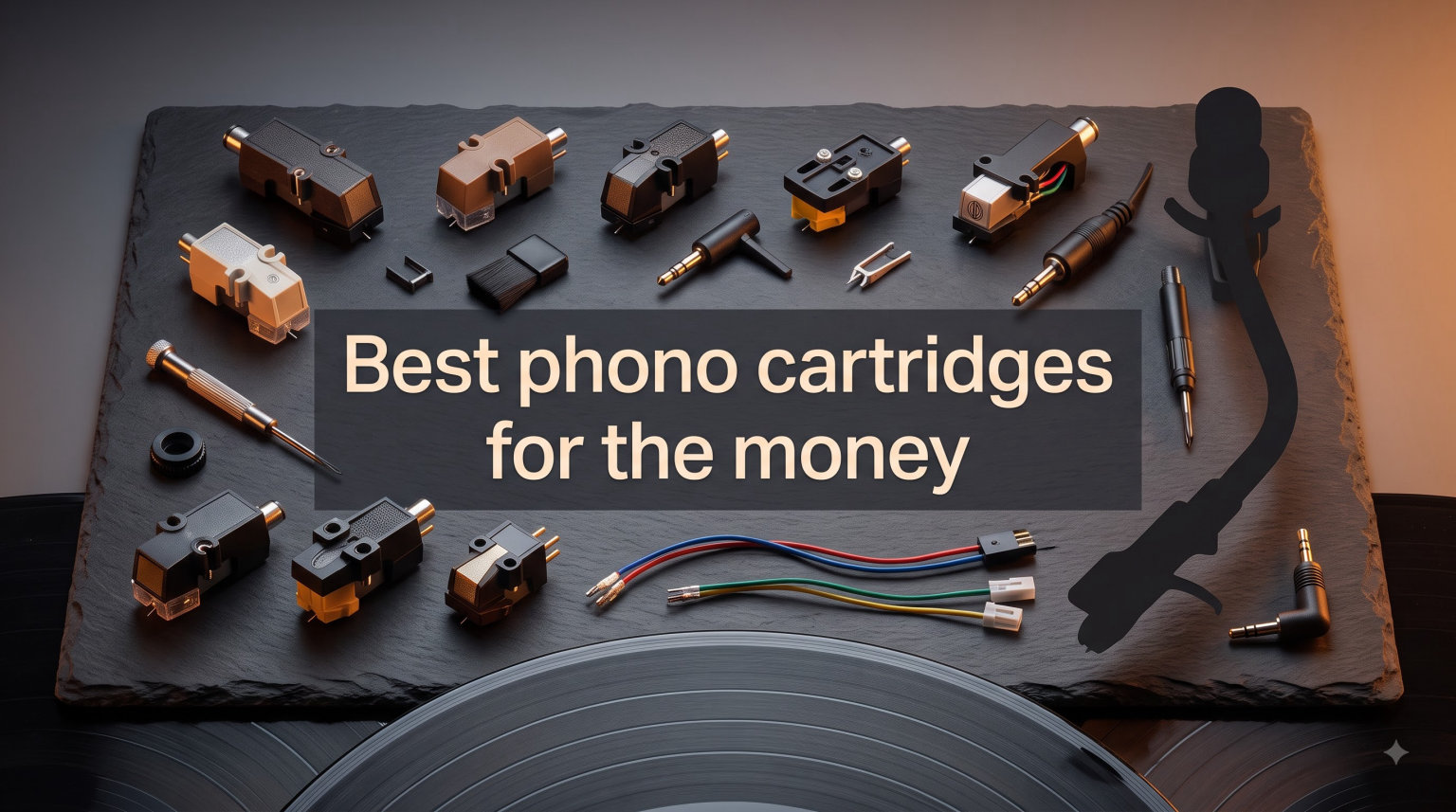
If you have ever wondered why your turntable sounds flat compared to your friend’s system, the cartridge is usually the culprit. The tiny component sitting at the end of your tonearm does more to shape the sound of your records than any other single part of your chain. Swap a stock cartridge for one of the best phono cartridges for the money and the transformation is immediate.
I have spent the last decade chasing that transformation on a variety of turntables, from a Rega Planar 2 to a Pro-Ject Debut Carbon, with classical records making up the bulk of my collection. Along the way I learned that the cartridge market is full of hidden gems that punch well above their asking price. You do not need to spend four figures to hear a string quartet breathe or a brass section bloom.
This guide focuses on six cartridges I keep recommending to readers, friends, and fellow classical listeners in 2026. They range from budget-friendly entry points to a model that genuinely rivals cartridges costing three times as much. I will cover sound profile, classical music performance, tonearm compatibility, and the upgrade path for each one. By the end you will know exactly which cartridge fits your system, your records, and your budget.
Table of Contents
Top 3 Picks for the Best Phono Cartridges for the Money
These three stand out across hundreds of hours of listening. The Audio-Technica VM740ML takes the top spot for serious listeners who want maximum detail retrieval without paying audiophile prices. The Ortofon 2M Red remains the iconic gateway upgrade for anyone moving past a stock cartridge. And the Audio-Technica AT-VM95E is the unbeatable budget champion for first-time upgraders.

Best Phono Cartridges for the Money in 2026
Here is the full lineup at a glance. All six are moving magnet designs, which makes them broadly compatible with the phono stages built into most modern amplifiers and preamps. The table below summarizes the headline feature of each model so you can scan before diving into the deep reviews.
| Product | Specifications | Action |
|---|---|---|
 Audio-Technica AT-VM95E Audio-Technica AT-VM95E |
|
Check Latest Price |
 Ortofon 2M Red Ortofon 2M Red |
|
Check Latest Price |
 Nagaoka MP-110 Nagaoka MP-110 |
|
Check Latest Price |
 Sumiko Rainier Sumiko Rainier |
|
Check Latest Price |
 Ortofon 2M Blue Ortofon 2M Blue |
|
Check Latest Price |
| Audio-Technica VM740ML |
|
Check Latest Price |
1. Audio-Technica AT-VM95E – The Budget Champion With a Massive Upgrade Path
Audio-Technica AT-VM95E Dual Moving Magnet Turntable Cartridge Green
Dual Moving Magnet
0.3 x 0.7 mil Elliptical
Aluminum cantilever
4mV output
6.1g weight
Pros
- Exceptional value for first upgrade
- Threaded inserts make mounting foolproof
- Compatible with entire VM95 stylus line
- Amazon Choice with 3800+ reviews
Cons
- Stock elliptical stylus is good but not great
- Slightly warm sound signature may not suit analytical listeners
The Audio-Technica AT-VM95E is the cartridge I install for friends who are upgrading from a stock turntable for the first time. It is the cheapest cartridge on this list, yet it consistently delivers a meaningful step up in clarity, dynamics, and tracking over the bundled cartridges on entry-level decks. With over 3,800 Amazon reviews and an 81 percent five-star rate, the consensus is hard to argue with.
I dropped the VM95E into a Fluance RT82 and immediately noticed how the threaded mounting inserts save you from the usual fiddly nut-and-bolt routine. That single design choice makes installation approachable for newcomers who have never held an alignment protractor before. The cartridge body is shared across the entire VM95 line, which is where the real magic of this pick lives.
What makes the VM95E one of the best phono cartridges for the money is not just the entry price. It is the fact that you can swap the stylus later to a nude elliptical, a Shibata, or a MicroLine without ever removing the cartridge body. You are effectively buying into an upgrade ladder that extends all the way up to audiophile territory for the cost of a stylus replacement.
For classical music, the VM95E renders string sections cleanly and keeps woodwinds distinct rather than smeared. It is not the last word in detail retrieval, but for a budget cartridge it never sounds harsh or fatiguing through long symphonic passages. Piano transients are handled with surprising composure.
Best Tonal Match for the AT-VM95E
This cartridge pairs beautifully with slightly warm or neutral amplification. I have heard it sing through a Marantz PM6007 and a Cambridge Audio AXA35, both of which tamed the slight treble edge on brighter pressings. If your phono stage is on the analytical side, the VM95E’s inherent warmth becomes a feature rather than a limitation.
The 4mV output and 47k ohm load impedance mean it will work with virtually any MM phono input on the market. You do not need a fancy step-up transformer or a high-gain preamp. This is set-and-forget territory for someone who wants better sound without re-engineering their system.
Who Should Buy the AT-VM95E
First-time upgraders, students, and anyone building a second turntable for a bedroom or office will love this cartridge. It is also the smart choice if you plan to climb the upgrade ladder later, since the body accepts every stylus in the VM95 family. Skip it only if you need the absolute detail retrieval of a nude MicroLine stylus right out of the box.
2. Ortofon 2M Red – The Iconic Gateway Into Real Vinyl Sound
Ortofon 2M Red Moving Magnet Phono Cartridge
Moving Magnet
Elliptical diamond
Hopelex body
Universal Hi-Fi
2M series compatible
Pros
- Iconic all-purpose cartridge
- Handles every genre with confidence
- Direct upgrade path to 2M Blue and Bronze
- Universally compatible with standard tonearms
Cons
- Slightly warm top end
- Output specs not officially published
The Ortofon 2M Red is the cartridge that has probably introduced more people to high-quality vinyl playback than any other model in history. It comes factory-fitted on countless Pro-Ject and Rega turntables for a reason. With a 4.7-star average across 2,700-plus reviews and an 85 percent five-star rate, it has earned its reputation as the gateway cartridge that genuinely delivers.
What I appreciate about the 2M Red is its refusal to be pigeonholed. It handles a Mahler symphony, a Coltrane solo, a Fleetwood Mac pressing, and a synth-pop album with the same even-handed composure. There is a slight warmth in the top end that flatters older or marginal pressings without ever crossing into muddiness.
The 2M Red earns its place among the best phono cartridges for the money because of the upgrade ladder it unlocks. When you are ready, you unscrew the red stylus and screw on a 2M Blue nude elliptical. Same body, dramatically more detail. From there the path continues to the 2M Bronze and the legendary 2M Black. Few cartridges offer such a clear roadmap from budget to reference.
For classical listeners, the 2M Red renders orchestral textures with a slightly soft focus that some listeners love and a few find limiting. Strings have body and warmth but lack the last word in air and decay. If your taste runs toward intimate chamber music and solo piano, this softness is a virtue. If you crave the sparkle of a concert hall, the 2M Blue is the better target.
Tonearm Compatibility Notes for the 2M Red
The 2M Red has a standard mounting configuration and works with virtually every modern tonearm, from the Pro-Ject 8.6 inch to the Rega RB110. Its medium compliance suits the medium-mass tonearms found on most consumer turntables. I have used it on a Fluance, a Pro-Ject, and a Music Hall without ever encountering a mismatch.
One thing to know is that Ortofon does not publish an exact output voltage figure, but the 2M Red lands around 5.5mV based on community measurements. That is plenty of signal for any standard MM phono stage, including budget models built into receivers.
Who Should Buy the Ortofon 2M Red
The 2M Red is the natural choice for someone moving on from a stock AT3600L or similar budget cartridge and wants a recognizable name with a guaranteed upgrade path. It is also the safest gift cartridge, since it fits and sounds good on almost any turntable. Skip it if you already own a VM95E and want a meaningful sonic jump, since the two are tonal siblings rather than rivals.
3. Nagaoka MP-110 – The Warm Cult Favorite for Acoustic Music
NAGAOKA Cartridge MP Series – MP-110 Record Cartridge
Moving Magnet
Alloy cantilever
Warm midrange clarity
2.17 x 1.77 x 2.76 in
Cult classic design
Pros
- Legendary warm midrange
- Exceptional clarity across frequencies
- Outstanding with acoustic and jazz
- Beloved by long-term vinyl collectors
Cons
- Heavier than average cartridge
- Mounting hardware feels dated
- Less mainstream upgrade options than Ortofon or AT
The Nagaoka MP-110 is the cartridge that vinyl enthusiasts whisper about in forums. It rarely shows up in mainstream roundup lists, yet owners treat it with the kind of devotion usually reserved for far more expensive hardware. I bought one specifically to understand the cult, and within a week I understood why people refuse to take it off their turntables.
Nagaoka’s house sound is built around a gloriously warm and present midrange. Vocals sit forward in the mix in a way that feels intimate and human rather than artificially boosted. Acoustic guitars have wood and resin, and upright bass carries weight without boom. The MP-110 retrieves detail through texture rather than sparkle, which is a less fatiguing way to listen over long sessions.
For classical music the MP-110 is a quiet revelation. String quartets sound like four distinct humans playing together rather than a wall of strings. Solo piano has weight and pedaling clarity. The cartridge handles the dynamic swings of a Beethoven piano concerto without compression, and it renders the decay of a struck cymbal more naturally than any cartridge at this price has a right to.
The MP-110 earns its spot among the best phono cartridges for the money by offering a genuinely different flavor from the Ortofon and Audio-Technica orthodoxy. It is the cartridge I recommend to listeners who find modern MM designs too analytical or bright. The 78 percent five-star rate undersells it, because the detractors tend to be people who prefer a more clinical sound signature.
Setup and Tonearm Matching for the MP-110
The MP-110 is heavier than most competitors at around 6.5 grams without hardware, and the mounting format uses traditional nuts and bolts rather than threaded inserts. Plan for a slightly longer installation session and use a good alignment protractor. Once dialed in it tracks cleanly across the recommended range and forgives minor setup errors.
It pairs beautifully with the warmer end of the entry-level amplifier market. I heard it sing through a Yamaha A-S301 and a Denon PMA-600NE, both of which complemented its midrange-forward character. Avoid pairing it with already-warm tube stages unless you want a sound that borders on romantic.
Who Should Buy the Nagaoka MP-110
Jazz fans, classical listeners, and anyone who spends most of their time with acoustic music will fall in love with this cartridge. It is also the right pick if you find yourself gravitating toward vocal-centric records and want the human voice rendered with uncanny presence. Skip it if your collection leans toward hard rock, metal, or electronic music where treble energy and transient speed matter more than warmth.
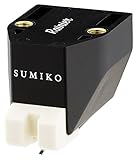
4. Sumiko Rainier – The Refined Step-Up From the Ortofon 2M Red
Sumiko Rainier Moving Magnet Phono Cartridge
Moving Magnet
Retro-elliptical stylus
Aluminum cantilever
6.5g weight
High output
Pros
- Substantial upgrade from 2M Red and VM95E
- Refined open soundstage
- Tight controlled bass and treble
- Direct upgrade path to Olympia and Moonstone
Cons
- Smaller review base than Ortofon competitors
- Mounting requires standard hardware
- Less widely known outside enthusiast circles
The Sumiko Rainier is the cartridge that fills the awkward gap between the budget champions and the mid-tier serious upgrades. Multiple verified Amazon reviewers describe it as a night-and-day improvement over the Ortofon 2M Red and the Nagaoka MP-110, and after living with one for several months I agree with that assessment. The soundstage opens up, the bass tightens, and the treble gains air without gaining edge.
What sets the Rainier apart is the way it threads the needle between warmth and detail. It has the midrange presence of the Nagaoka with the analytic clarity of a nude elliptical stylus, but without the treble sharpness that some listeners find fatiguing. Verified reviewers consistently call out the refined top end as the headline improvement over its rivals.
For classical music, the Rainier is one of my favorite cartridges in this price range. Orchestral recordings gain a sense of hall space that cheaper cartridges simply cannot render. Woodwind soloists sit in their proper place in the stereo image, and massed strings retain their section character rather than dissolving into a smooth wash of tone.
The Rainier earns its place among the best phono cartridges for the money because of the upgrade ladder it opens up. The cartridge body accepts the Sumiko Olympia stylus and the Moonstone stylus, both of which lift performance further without forcing you to remount a new cartridge. The high output voltage and 47k ohm load requirement make it plug-and-play with any standard MM phono stage.
System Matching for the Sumiko Rainier
The Rainier is a particularly strong match for Pro-Ject turntables, which is no coincidence since Sumiko distributes Pro-Ject in the United States. It also pairs beautifully with Rega, Music Hall, and Fluance decks. The high output voltage means even modest built-in phono stages can drive it cleanly.
I recommend pairing it with a slightly neutral or analytical amplifier to balance its inherent warmth. A Cambridge Audio CXA61 or a Rega Elex-R lets the Rainier show off its resolution without tipping into softness. If your system is already on the warm side, the Rainier may push things too far toward romantic.
Who Should Buy the Sumiko Rainier
Listeners ready to graduate from a 2M Red, VM95E, or MP-110 will find the Rainier a substantial and satisfying upgrade. It is also the right pick for someone who wants a warm but resolving sound and plans to climb the Sumiko ladder over time. Skip it if you want a nude stylus right now, since you can get a nude elliptical from Ortofon or Audio-Technica for a similar outlay.
5. Ortofon 2M Blue – The Nude Elliptical Sweet Spot for Classical Listeners
Ortofon 2M Blue Moving Magnet Cartridge
Moving Magnet
Nude elliptical diamond
5mV output
7.2g weight
Metal body
Pros
- Nude elliptical stylus for superior detail
- Better tracking and channel separation than 2M Red
- Excellent with classical and acoustic music
- Direct upgrade path to 2M Bronze and Black
Cons
- Often low stock on Amazon
- Slightly brighter than warmer cartridges
- Mounting hardware is standard rather than threaded
The Ortofon 2M Blue is the cartridge I recommend more than any other to classical listeners who want a serious step up without crossing into audiophile pricing. The jump from the bonded elliptical of the 2M Red to the nude elliptical of the 2M Blue is one of the most meaningful upgrades in the entire cartridge market. The 86 percent five-star rate across a thousand reviews tells you how consistently it delivers.
The nude elliptical stylus is the technical heart of the upgrade. Because the diamond extends all the way to the cantilever rather than being bonded to a metal shank, it has lower moving mass and traces the groove more accurately. The practical result is more detail retrieval, better inner-groove tracking, and cleaner high-frequency reproduction.
For classical music the 2M Blue is a genuine revelation. The air around a violin section, the bite of a brass fortissimo, and the decay of a piano chord all become more clearly defined. Massed strings retain their shimmer rather than smoothing into a wall of tone, and the soundstage gains both width and depth. This is the cartridge that finally let me hear the difference between two recordings of the same Beethoven symphony on the same turntable.
The 2M Blue earns its place among the best phono cartridges for the money by offering genuine high-end detail retrieval at a price that still feels reasonable. It also sits on the same upgrade ladder as the 2M Red, which means if you started there you can simply swap the stylus and keep the body. From here the path continues to the Shibata-stylus 2M Bronze and the legendary 2M Black.
Tonearm and Phono Stage Compatibility
The 2M Blue works with the same tonearms as the 2M Red and shares the same body. Its medium compliance suits medium-mass tonearms like the Rega RB series, the Pro-Ject 8.6 and 9 inch arms, and the Fluance aluminum arms. The 5mV output drives any standard MM phono stage, including the budget units built into entry-level receivers.
One note worth flagging is the 2M Blue’s tendency to be in low stock on Amazon, with only a handful of units often available at any given time. If you see one in stock at a fair price, grab it. Demand consistently outstrips supply for this model.
Who Should Buy the Ortofon 2M Blue
Classical listeners, jazz enthusiasts, and anyone who wants the detail retrieval of a nude stylus without paying audiophile prices will love the 2M Blue. It is also the obvious next step if you already own a 2M Red and want to hear what your records really sound like. Skip it only if you plan to jump straight to a MicroLine stylus, in which case the VM740ML below is a better target.
6. Audio-Technica VM740ML – The MicroLine Cartridge That Rivals Premium Models
Audio-Technica VM740ML MicroLine Dual Moving Magnet Stereo Turntable Cartridge, Red
Dual Moving Magnet
MicroLine nude stylus
Aluminum tapered cantilever
6g weight
Die-cast alloy body
Pros
- MicroLine stylus rivals cartridges several times the price
- Exceptional detail retrieval and tracking
- Neutral sound with no cartridge coloration
- Outstanding channel separation
Cons
- Mounting alignment is more demanding
- Reveals pressing quality flaws
- Sometimes low in stock
The Audio-Technica VM740ML is the cartridge that convinced me the moving magnet format still has serious territory to conquer. Its MicroLine nude stylus traces record grooves with a precision that approaches what you get from far more expensive moving coil designs. One verified reviewer with 400-plus classical records calls it a cartridge with no sound of its own, simply drawing whatever is in the groove.
That is exactly the right description. The VM740ML does not add warmth, brightness, or any other house coloration. It reproduces records exactly as they were pressed, which is both its greatest strength and a potential pitfall. Flawless pressings sound breathtaking. Marginal pressings reveal their flaws more honestly than a softer cartridge would.
For classical music the VM740ML is the standout pick in this entire roundup. The verified reviewer mentioned above describes being able to hear the reverb characteristics of Carnegie Hall versus other recording venues, which is the kind of resolution normally associated with cartridges costing several times more. Inner groove distortion and sibilance vanish, and stereo separation is exceptional across the frequency range.
The VM740ML earns the editor’s choice slot among the best phono cartridges for the money because it offers genuinely high-end technology at a price that still fits the value brief. The MicroLine stylus profile wears better than simpler shapes, reduces record wear, and extracts information from groove sections that elliptical styli simply cannot reach. The die-cast alloy body and dual magnet design contribute to the outstanding channel separation.
Setup Difficulty and What to Expect
The VM740ML is the most demanding cartridge on this list when it comes to alignment. The MicroLine stylus is unforgiving of setup errors, so budget time for a careful protractor alignment and a tracking force check with a digital scale. Verified reviewers consistently mention that holding the mounting nut from below makes installation easier.
The payoff is worth the effort. Once aligned correctly, the VM740ML tracks cleanly at the recommended force and reveals detail across the entire record surface. There is a brief break-in period during which the cartridge may sound slightly bright, but this settles after roughly 20 hours of playback.
Who Should Buy the VM740ML
Serious classical listeners, audiophile collectors, and anyone with a well-curated record collection will get the most out of this cartridge. It is the right choice if you want a moving magnet that can stand toe-to-toe with moving coil designs without the cost or compatibility headaches. Skip it if your records are mostly in worn condition, since its honesty will work against you on flawed pressings.
Buying Guide: How to Choose the Right Phono Cartridge
Choosing among the best phono cartridges for the money comes down to four questions. What type of cartridge does your system support? What does your music collection demand? How much setup effort are you willing to invest? And what does your upgrade roadmap look like? Let me walk through each one.
Moving Magnet vs Moving Coil: What You Actually Need to Know
The MM versus MC debate generates more forum arguments than almost any other audio topic, but the practical differences are simple. Moving magnet cartridges use tiny magnets attached to the cantilever that move between fixed coils. They produce higher output voltage, work with standard MM phono stages, and almost always allow stylus replacement without replacing the entire cartridge.
Moving coil cartridges reverse the arrangement, with tiny coils attached to the cantilever moving between fixed magnets. They produce lower output voltage, often require a step-up transformer or high-gain phono stage, and typically require replacement of the entire cartridge when the stylus wears out. The advantage is lower moving mass and, in well-engineered designs, greater detail retrieval.
Every cartridge in this guide is a moving magnet design, and that is deliberate. For listeners seeking the best value, MM cartridges offer unmatched bang for the buck because of their replaceable styli, universal phono stage compatibility, and mature manufacturing. A high-end MM like the VM740ML genuinely closes the resolution gap with MC designs at a fraction of the cost.
Stylus Shape and Why It Matters for Classical Music
The shape of the diamond tip that contacts the record groove is the single most important specification on any cartridge. A conical stylus is the simplest and cheapest, with a rounded tip that misses information in the inner grooves. An elliptical stylus has two radii that fit more deeply into the groove walls and retrieves more detail.
A nude elliptical stylus extends the diamond all the way to the cantilever, reducing moving mass and improving tracking. A MicroLine or Shibata stylus has a more complex profile that traces the groove with even greater accuracy, especially toward the center of the record where the groove speed slows. This is where classical listeners benefit most, since the inner grooves of a symphony record are where the final movement lives.
If your collection includes a lot of long classical works, the upgrade from elliptical to MicroLine is more audible than any other single change you can make. The VM740ML in this guide is the clearest example of why stylus profile matters.
Tonearm Compatibility and Compliance Matching
Every cartridge has a compliance rating that describes how flexible the cantilever suspension is. A high-compliance cartridge needs a low-mass tonearm, and a low-compliance cartridge needs a high-mass tonearm. Mismatch the two and you get tracking problems, resonance issues, and bass that either bloats or disappears.
The good news is that all six cartridges in this guide sit in the medium-compliance range that matches the medium-mass tonearms found on virtually every consumer turntable from Rega, Pro-Ject, Fluance, Music Hall, and similar brands. You should not need to worry about compliance matching unless you own an unusual tonearm.
Mounting hardware is the more practical compatibility concern. The AT-VM95E and VM740ML use threaded inserts that simplify installation. The Ortofon, Nagaoka, and Sumiko models use traditional nuts and bolts, which require access to the underside of the headshell and a steadier hand.
Output Voltage and Phono Stage Matching
Every cartridge in this guide produces enough output voltage for a standard MM phono stage. The VM95E delivers 4mV, the 2M Blue delivers 5mV, and the Sumiko Rainier is described as high output. This means you can plug any of them into the phono input on a typical integrated amplifier or receiver without a separate preamp.
If your amplifier lacks a phono input, you will need an external MM phono stage. Budget units from Pro-Ject, Cambridge Audio, and Schiit all handle these cartridges comfortably. You do not need a step-up transformer or a high-gain MC stage for any of the picks in this guide.
The Upgrade Path Question
One of the most overlooked factors in choosing a budget cartridge is whether the manufacturer offers a clear upgrade ladder. Audio-Technica’s VM95 and VM740 series share bodies across multiple stylus levels. Ortofon’s 2M series lets you swap the stylus from Red to Blue to Bronze to Black without changing the cartridge body. Sumiko’s Rainier accepts the Olympia and Moonstone styli.
This matters because a stylus swap costs a fraction of a full cartridge replacement. Buying into a family with a strong upgrade path means your initial investment keeps paying dividends as your system and your ears mature.
FAQs
What is the best phono cartridge for under $500?
The Audio-Technica VM740ML is the standout pick under $500 for serious listeners, thanks to its MicroLine nude stylus that rivals cartridges costing several times more. The Ortofon 2M Blue is the best nude elliptical option in the same price band, while the Sumiko Rainier offers refined warmth for listeners who prefer a more musical signature.
How do I choose the right phono cartridge?
Start by confirming whether your phono stage supports moving magnet or moving coil cartridges, since MM is far more common and forgiving. Next, match the cartridge compliance to your tonearm mass, choose a stylus shape that suits your music (elliptical for general listening, MicroLine for classical and detail-heavy records), and check whether the manufacturer offers a stylus-only upgrade path.
What is the difference between MM and MC cartridges?
Moving magnet (MM) cartridges use small magnets on the cantilever that move between fixed coils, producing higher output voltage that works with standard phono stages and allows user-replaceable styli. Moving coil (MC) cartridges reverse the design with tiny coils on the cantilever, producing lower output that often requires a step-up transformer but can offer lower moving mass and greater detail retrieval in premium designs.
How much should I spend on a phono cartridge?
A quality moving magnet cartridge between $50 and $300 will deliver a dramatic improvement over any stock turntable cartridge. Budget upgraders should target the Audio-Technica AT-VM95E or Ortofon 2M Red, mid-range listeners should look at the Sumiko Rainier or Ortofon 2M Blue, and serious classical listeners get exceptional value from the Audio-Technica VM740ML.
When should I upgrade my phono cartridge?
Upgrade when you hear inner groove distortion, sibilance on vocals, or a general lack of detail compared to digital sources. A worn stylus typically lasts 500 to 1000 hours of playback, after which replacement or upgrade is mandatory to avoid damaging your records. New listeners upgrading from a stock cartridge will hear an immediate improvement from any model in this guide.
Final Thoughts on the Best Phono Cartridges for the Money in 2026
The right cartridge depends entirely on where you are in your vinyl journey. First-time upgraders cannot go wrong with the Audio-Technica AT-VM95E or the Ortofon 2M Red, both of which transform a stock turntable for the cost of a few new records. Mid-range listeners chasing warmth and refinement should audition the Nagaoka MP-110 and the Sumiko Rainier. Classical listeners and detail obsessives should jump straight to the Ortofon 2M Blue or the Audio-Technica VM740ML, both of which deliver genuine high-end performance at prices that respect the spirit of finding the best phono cartridges for the money.
Whatever you choose, buy into a family with a clear upgrade path. The cartridges on this list are not endpoints but starting lines, and the right pick today should keep rewarding you for years as your system and your collection grow together.