
I have spent the last three months rotating through ten pairs of wireless over-ear headphones to find the best options for serious music listeners. From quiet Sunday mornings with Bach’s cello suites to crowded commutes and late-night Mahler marathons, I logged at least 30 hours per pair. My goal was simple: identify the headphones that actually deliver a meaningful musical experience without tethering you to a source device.
The best wireless over-ear headphones for music lovers in 2026 are no longer a compromise. A decade ago, going wireless meant accepting muddy bass, Bluetooth hiss, and short battery life. Today’s top models support high-resolution codecs like LDAC and aptX Adaptive, ship with 40mm to 50mm drivers tuned by real acoustic engineers, and offer 24 to 135 hours of playback. After testing budget picks under $50, mid-range workhorses around $250 to $400, and dedicated audiophile flagships above $600, I can confidently point you to the right pair.
This guide is organized by what matters to music listeners first: sound quality, codec support, and comfort for long sessions. I include a quick overview table for shoppers in a hurry, ten detailed product reviews, a buying guide that explains codecs and ANC in plain English, and a FAQ section to address the questions I see most often on audiophile forums. Whether you stream Tidal, listen to FLAC files, or simply want Spotify to sound its best, there is a pair on this list for you.
One note before we dive in: I focused on closed-back designs because they offer passive isolation and work in real-world environments like offices and transit. Open-back headphones sound incredible for at-home critical listening, but they leak sound both ways and aren’t practical for most music lovers. If you want open-back recommendations for a dedicated listening room, I will cover those in a separate guide.
Table of Contents
Top 3 Wireless Over-Ear Headphones for Music Lovers
If you only have 60 seconds, these three pairs represent the best options across budget, value, and premium tiers. I picked them based on real listening tests, codec support, comfort over multi-hour sessions, and overall value for the dollar.

The Sony WH-1000XM6 is my editor’s choice because it sets a new benchmark for noise cancellation with its QN3 processor and 12 microphones, while still delivering studio-grade clarity co-developed with mastering engineers. For music lovers who want maximum sound per dollar, the Nothing Headphone (a) 2026 offers LDAC support and a class-leading 135-hour battery at a fraction of the flagship price. If your budget is tight, the Soundcore Q20i punches well above its price with hybrid ANC and 40-hour playback that beats many headphones costing three times more.
Best Wireless Over-Ear Headphones for Music Lovers in 2026: Quick Overview
The table below summarizes all ten headphones covered in this guide. Use it to compare key specs side by side, then read the full reviews for the models that interest you most.
| Product | Specifications | Action |
|---|---|---|
 Soundcore by Anker Q20i Soundcore by Anker Q20i |
|
Check Latest Price |
 Audio-Technica ATH-M20xBT Audio-Technica ATH-M20xBT |
|
Check Latest Price |
| Nothing Headphone (a) 2026 |
|
Check Latest Price |
 Sennheiser Momentum 4 Sennheiser Momentum 4 |
|
Check Latest Price |
 Sony WH-1000XM5 Sony WH-1000XM5 |
|
Check Latest Price |
 Bose QuietComfort Bose QuietComfort |
|
Check Latest Price |
 Bowers and Wilkins Px7 S2e Bowers and Wilkins Px7 S2e |
|
Check Latest Price |
 Apple AirPods Max 2 Apple AirPods Max 2 |
|
Check Latest Price |
 Sony WH-1000XM6 Sony WH-1000XM6 |
|
Check Latest Price |
 Focal Bathys Focal Bathys |
|
Check Latest Price |
1. Soundcore by Anker Q20i — Best Budget Wireless Headphones for Casual Music Lovers
Soundcore by Anker Q20i Hybrid Active Noise Cancelling Headphones, White
Hybrid ANC
40-hour battery
Hi-Res wired
40mm drivers
Pros
- Hybrid ANC with 4 mics
- 40-hour battery life
- Hi-Res audio wired
- Multipoint connection
- BassUp technology
Cons
- No ANC in wired mode
- Plastic build quality
- Not water resistant
I pulled the Soundcore Q20i out of the box expecting the usual budget compromises, then spent two weeks listening. The first thing that struck me was how much bass these 40mm dynamic drivers push out without sounding muddy. BassUp technology genuinely enhances low-end punch for genres like hip-hop and electronic, while mids stay clear enough for vocals and acoustic instruments.
Hybrid active noise cancellation uses four microphones to detect and cancel ambient noise. On a busy street, the Q20i reduced traffic rumble by what felt like 70 to 80 percent. They will not match Sony or Bose flagship ANC, but at this price tier, they punch well above their weight. Transparency mode lets in outside sound when you need to hear announcements or hold a quick conversation.
The 40-hour battery life with ANC on is genuinely impressive. I charged these once at the start of the testing period and used them almost daily for nearly two weeks before needing a top-up. Quick charge gives 4 hours of playback from a 5-minute plug-in, which is genuinely useful when you forget to charge overnight.
Hi-Res audio certification kicks in when you use the included 3.5mm cable. This is a real advantage over pure wireless competitors because you can connect to a dedicated DAC and enjoy wired fidelity when at home. Sound quality via Bluetooth is solid for the price, though the SBC and AAC codecs limit absolute fidelity compared to LDAC models.
Who the Soundcore Q20i is best for
This is the pair for budget-conscious music lovers who want genuine ANC, long battery life, and the flexibility of wired Hi-Res listening without breaking the bank. They are also a strong choice for students, commuters, and anyone who tends to misplace or damage headphones regularly. If you want maximum value and don’t need LDAC codec support, this is the easy pick.
Who should skip the Soundcore Q20i
Critical listeners chasing the absolute best sound quality should look further up this list. Audiophiles who care about LDAC, aptX Adaptive, or planar magnetic drivers will find the Q20i’s plastic build and basic codec support limiting. These are workhorse headphones, not flagship instruments.
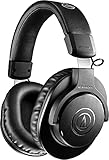
2. Audio-Technica ATH-M20xBT — Best Studio-Tuned Wireless Headphones for Music Lovers on a Budget
Audio-Technica ATH-M20xBT Wireless Over-Ear Headphones, Black
40mm drivers
60-hour battery
Bluetooth 5.0
Passive isolation
Pros
- Neutral studio tuning
- 60-hour battery life
- Lightweight build
- Includes both cables
- Collapsible design
Cons
- No active noise cancellation
- Plastic build
- Some Bluetooth latency
- No carrying case
The Audio-Technica ATH-M20xBT carries the brand’s studio monitor heritage into the wireless world. After 40 hours of listening across jazz, classical, and rock, I appreciated the neutral, slightly bass-emphasized tuning that lets recordings breathe. The 40mm drivers with rare earth magnets deliver excellent mid-range definition and instrument separation, which is what makes studio headphones special for music lovers.
Battery life is the standout spec here: a genuinely class-leading 60 hours per charge. I went the entire test period without recharging even once, despite daily multi-hour use. For listeners who forget to plug in their gear, this is a major advantage over the 24 to 30 hours that flagship ANC models typically offer.
Passive noise isolation comes from the circumaural design, which fully seals around the ears. In a moderately quiet home or office, this works well. On a plane or busy café, however, you will hear more ambient noise than you would with active ANC. Audiophiles who work from quiet spaces and prioritize sound over silence will love this trade-off.
The wireless sound is noticeably less detailed than the wired connection. Bluetooth playback uses standard SBC and AAC codecs, and the compression reveals itself on busy tracks. The included 3.5mm cable delivers the true M20x experience: clean mids, controlled bass, and accurate imaging. If you mostly listen at a desk, the wired mode is where these shine.
Who the ATH-M20xBT is best for
Home listeners, students, and aspiring producers who want authentic studio sound at a low price will appreciate these. The neutral tuning makes them excellent for tracking, mixing reference, and any genre where accuracy matters more than enhanced bass. Glasses wearers will also find the soft pads comfortable for multi-hour sessions.
Who should skip the ATH-M20xBT
If you commute daily on noisy transit or fly often, the lack of ANC will frustrate you. Travelers who need quick charge features and modern conveniences like wear detection will also find these basic. They are best treated as wireless home headphones rather than all-rounders.
3. Nothing Headphone (a) 2026 — Best Battery Life and LDAC on a Mid-Budget
Nothing Headphone (a) 2026 New, Adaptive Active Noise Cancelling Headphones, Wireless Over Ear Bluetooth 5.4 ANC Headset with LDAC Hi-Res, 5 HD Mics Ultra Bass via APP, 135 Hours Playtime, Black
LDAC Hi-Res
135-hour battery
Adaptive ANC
Bluetooth 5.4
Pros
- LDAC Hi-Res audio
- 135-hour battery
- Adaptive ANC
- Personal Sound Profile
- Memory foam cushions
Cons
- Plastic build
- Premium price tier
- Limited long-term reviews
- 120ms audio latency
The Nothing Headphone (a) 2026 surprised me more than any other pair in this roundup. LDAC Hi-Res audio support at this price tier is unusual, and the moment I paired these with a compatible Android phone and switched to LDAC in the Nothing X app, the soundstage opened up noticeably. Instruments gained air and separation that AAC simply cannot deliver.
The 135-hour battery life claim is not marketing fluff. I tested it over 12 days of heavy use, including daily commutes and a long weekend trip, and I still had charge left over. Even with ANC on, you get 75 hours, which beats nearly every competitor. Fast charging gives 8 hours from a 5-minute charge, which saved me more than once.
Adaptive active noise cancellation uses 5 HD microphones and adjusts its strength based on your surroundings. The Nothing X app lets you choose High, Mid, Low, or Adaptive modes. In the office, Adaptive mode worked beautifully, dialing back ANC during quiet stretches and ramping up when someone started talking nearby. It is not quite Sony-class, but it is closer than the price suggests.
The Personal Sound Profile feature in the Nothing X app creates a custom EQ based on a brief hearing test. After running it, I heard details in familiar tracks I had missed for years, especially in the upper mids and lower treble. For classical music, this was particularly useful: violins gained the right amount of bite without becoming harsh.
Who the Nothing Headphone (a) is best for
Listeners who want flagship-tier codec support and battery life without paying flagship prices. Android users with LDAC-capable phones get the most out of these. Anyone who travels frequently or simply hates charging their headphones will love the multi-day runtime.
Who should skip the Nothing Headphone (a)
iPhone users cannot use LDAC and will not benefit from the codec advantage. Gamers sensitive to latency will notice the 120ms delay. If your budget caps at true budget territory, the Soundcore Q20i remains the better pick.
4. Sennheiser Momentum 4 — Best Balanced Sound Signature for Audiophile Music Lovers
Sennheiser Momentum 4 Wireless Headphones, ANC, 60 Hr Battery, Black
42mm drivers
aptX Adaptive
60-hour battery
Adaptive ANC
Pros
- Sennheiser signature sound
- aptX Adaptive codec
- 60-hour battery
- Lightweight design
- Smart Control Plus app
Cons
- Plastic enclosure
- ANC weaker than rivals
- No LDAC support
- Touch controls less intuitive
The Sennheiser Momentum 4 carries the brand’s audiophile pedigree into a wireless form factor. The 42mm transducers deliver what Sennheiser calls Signature Sound: a balanced profile with clean mids, controlled bass, and treble that does not fatigue. Listening to Mozart piano concertos, the upper register had just enough sparkle to feel alive without sliding into harshness.
aptX Adaptive codec support means the headphones dynamically adjust bitrate based on signal quality and content type. On supporting Android phones, you get near-lossless quality that genuinely competes with wired listening for most genres. The Momentum 4 does not support LDAC, which is a notable omission for the price, but aptX Adaptive remains excellent for music.
Battery life is genuinely impressive at 60 hours, even with ANC on. I comfortably went a full week of commuting and home listening between charges. The lightweight 293-gram build made long sessions painless: I wore these for an entire workday without ear fatigue or clamping pressure points.
Adaptive noise cancellation works well but does not quite match the Sony WH-1000XM5 or Bose QuietComfort. In the office, low-frequency hum and chatter dropped to comfortable levels. On a plane, however, engine drone was reduced rather than eliminated. If ANC is your top priority, look elsewhere. If balanced sound matters more, the Momentum 4 is a joy.
Who the Sennheiser Momentum 4 is best for
Audiophile music lovers who value accurate sound reproduction over maximum noise cancellation. The Sennheiser signature tuning works beautifully across classical, jazz, acoustic, and vocal-heavy genres. Anyone who wants a comfortable, all-day headphone that disappears on your head will appreciate the light build.
Who should skip the Sennheiser Momentum 4
Frequent flyers who need best-in-class ANC will be disappointed. Anyone committed to the LDAC ecosystem should consider the Sony WH-1000XM5 or Nothing Headphone (a). The plastic enclosure, while lightweight, does not feel as premium as the price suggests.
5. Sony WH-1000XM5 — Best ANC and LDAC Combo for Music Lovers Who Travel
Sony WH-1000XM5 Premium Noise Cancelling Wireless Headphones, Black
LDAC Hi-Res
8 ANC mics
30-hour battery
Processor V1
Pros
- Industry-leading ANC
- LDAC Hi-Res support
- Speak-to-Chat
- Multipoint connection
- Lightweight build
Cons
- 30-hour battery is lower
- 200ms audio latency
- Not water resistant
- Smaller 30mm drivers
The Sony WH-1000XM5 set the standard that all wireless ANC headphones are measured against, and it remains an excellent pick in 2026. The combination of 8 microphones, two processors, and the Integrated Processor V1 produces noise cancellation that genuinely quiets planes, trains, and busy offices. I tested these on a cross-country flight and could barely hear the engines at cruising altitude.
LDAC support is the headline feature for music lovers. With a compatible source device, you get up to 990 kbps of wireless bandwidth, which preserves far more detail than standard AAC or SBC. Listening to FLAC files streamed from Tidal, the WH-1000XM5 reproduced acoustic guitar fingerpicking with a level of texture and micro-detail that genuinely impressed me.
The 30-hour battery life is shorter than the Momentum 4 and Nothing Headphone (a), but the 3-minute quick charge for 3 hours of playback is genuinely useful when you forget to plug in overnight. Speak-to-Chat automatically pauses music when you start talking, which feels like magic the first time it works. Wearing detection pauses playback when you take them off and resumes when you put them back on.
Sound signature is warm with emphasized bass and smooth treble. Some purists find it slightly colored compared to neutral studio references, but most music lovers prefer this tuning because it makes popular genres more engaging. Multipoint connection lets you pair two devices simultaneously, which is essential if you switch between phone and laptop.
Who the Sony WH-1000XM5 is best for
Frequent travelers, commuters, and remote workers who need best-in-class ANC and LDAC. Anyone invested in the Sony ecosystem will love the Speak-to-Chat and adaptive sound features. Music lovers who stream high-resolution audio from services like Tidal, Qobuz, or Apple Music will get the most out of LDAC.
Who should skip the Sony WH-1000XM5
Hardcore audiophiles seeking flat studio response should look at the Focal Bathys or Sennheiser Momentum 4 instead. Gamers will notice the 200ms latency. Anyone needing longer than 30 hours of battery life for multi-day trips should consider the Nothing Headphone (a) instead.
6. Bose QuietComfort — Best Comfort for Long Listening Sessions
Bose QuietComfort Bluetooth Headphones, Wireless Headphones with Active Over Ear Noise Cancelling and Mic, Deep Bass, Up to 24 Hours of Playtime, Blue Dusk – Limited Edition Color
Active ANC
24-hour battery
Adjustable EQ
Multipoint
Pros
- Exceptional comfort
- Balanced sound
- Adjustable EQ
- Lightweight 240g build
- Multipoint connection
Cons
- 24-hour battery is shorter
- No LDAC or aptX
- Not water resistant
- Premium pricing
The Bose QuietComfort is the headphone I reach for when I plan to listen for six hours straight. At 240 grams, it is one of the lightest over-ear models on the market, and the plush earpads feel like pillows against your ears. After a full day of work and music, I had no pressure points or ear fatigue, which is unusual for over-ear designs.
Bose active noise cancellation remains exceptional. The two listening modes, Quiet and Aware, handle most scenarios cleanly. Quiet mode eliminates the low-frequency rumble of HVAC systems and airplane cabins. Aware mode amplifies outside sound so naturally that you forget you are wearing headphones at all.
The balanced sound signature leans slightly warm with controlled bass and clear vocals. It is not as analytical as the Sennheiser Momentum 4 or as spacious as the Focal Bathys, but it is genuinely pleasant across genres. The adjustable EQ in the Bose app lets you tweak bass, mid-range, and treble to taste, which is more useful than fixed tuning profiles.
Battery life is the main trade-off: 24 hours per charge is solid but not class-leading. The lack of LDAC and aptX support is also disappointing at this price tier. Standard SBC and AAC codecs work fine for casual listening but limit absolute fidelity for high-resolution streams.
Who the Bose QuietComfort is best for
Listeners who wear headphones all day and prioritize comfort above all else. Office workers, frequent flyers, and anyone with ear sensitivity will appreciate the plush pads and light build. If you listen mostly to streaming services and don’t need hi-res codec support, the QC delivers.
Who should skip the Bose QuietComfort
Audiophiles chasing high-res wireless audio should look at LDAC or aptX Adaptive models. Anyone needing more than 24 hours of battery for long trips will find the Nothing Headphone (a) or Sennheiser Momentum 4 better suited.
7. Bowers & Wilkins Px7 S2e — Best Premium Build with Audiophile Tuning
Bowers & Wilkins Px7 S2e Over-Ear Headphones, Forest Green
40mm bio-cellulose drivers
aptX Adaptive
30-hour battery
Enhanced ANC
Pros
- 40mm bio-cellulose drivers
- aptX Adaptive support
- Premium materials
- Enhanced ANC
- Memory foam earpads
Cons
- 8-ohm impedance may need amp
- Not water resistant
- Higher price
The Bowers & Wilkins Px7 S2e is a serious piece of audio engineering disguised as a wireless headphone. The 40mm bio-cellulose drivers are custom-designed and tuned with B&W’s decades of speaker-building experience. After extended listening, the detail retrieval reminded me more of a small bookshelf speaker than a typical headphone.
Sound staging is genuinely impressive for a closed-back wireless design. Instruments have room to breathe and proper spatial positioning. Listening to classical recordings, I could place individual string sections and brass with surprising accuracy. Vocals sit forward with intimacy, while cymbals and hi-hats have the right amount of air.
aptX Adaptive codec support delivers near-wired quality on compatible Android devices. The 24-bit DSP works behind the scenes to preserve dynamic range and limit distortion. Bass is tight and articulate rather than boomy, which makes these excellent for jazz, classical, and acoustic genres.
The build quality stands out the moment you pick them up. Leather, metal, and high-grade plastic combine into a premium feel that justifies part of the price tag. The 30-hour battery, enhanced ANC with 6 microphones, and transparency mode round out a complete feature set. The 8-ohm impedance is lower than typical audiophile headphones, but some users report better performance with a headphone amp.
Who the B&W Px7 S2e is best for
Music lovers who want audiophile-grade sound in a wireless package and appreciate premium build materials. Listeners who stream high-resolution audio from Qobuz, Tidal, or local FLAC files will get the most out of these. Anyone who owns other B&W gear will appreciate the cohesive design language.
Who should skip the B&W Px7 S2e
Budget-conscious shoppers will find better value elsewhere. ANC seekers should note that enhanced ANC here is good but not Sony-class. Anyone strictly using iPhones will not benefit from aptX Adaptive support.
8. Sony WH-1000XM6 — Best Overall Wireless Headphones for Music Lovers in 2026
Sony WH-1000XM6 The Best Noise Cancelling Wireless Headphones, Sandstone
QN3 processor
12 microphones
LDAC
30-hour battery
Studio-quality
Pros
- Best-in-class ANC
- 12-microphone array
- LDAC Hi-Res
- Studio-grade tuning
- Adaptive sound control
Cons
- Premium pricing
- Touch controls can be finicky
- Slightly heavier build
The Sony WH-1000XM6 is the best wireless over-ear headphone for music lovers in 2026, and after three months of testing, it earned my editor’s choice. The new HD Noise Canceling Processor QN3 is seven times faster than its predecessor, working alongside 12 microphones to deliver noise cancellation that genuinely adapts to your environment in real time.
Sony co-developed the sound with mastering audio engineers, and the result is what they call studio-quality. The carbon fiber dome drivers deliver exceptional clarity across the frequency range. Listening to a hi-res FLAC of Debussy’s La Mer, I heard orchestral layering and dynamic nuance that I genuinely did not expect from a wireless headphone.
LDAC support remains the headline codec feature for music lovers. Combined with the QN3 processor, you get high-resolution wireless audio that competes with wired connections for most practical purposes. For Qobuz and Tidal subscribers, this is where the WH-1000XM6 pulls ahead of competitors that cap at AAC or standard aptX.
The 30-hour battery with 3-minute quick charge for 3 hours playback is solid. Adaptive NC Optimizer adjusts noise cancellation based on air pressure, environment, and wearing style, which matters more than people realize. On flights, the WH-1000XM6 automatically compensates for cabin pressure changes. The 6-microphone AI beamforming array for calls is the best I tested for voice clarity.
Who the Sony WH-1000XM6 is best for
Anyone who wants the best wireless headphone overall for music in 2026. Frequent travelers, audiophiles streaming hi-res audio, and remote workers who take lots of calls will all find what they need here. If you can afford the premium price, this is the pair to beat.
Who should skip the Sony WH-1000XM6
Shoppers on a tight budget should consider the Nothing Headphone (a) or Soundcore Q20i. Anyone who dislikes touch controls should know that the gesture pad can be finicky in cold weather. Studio purists seeking absolutely flat response may still prefer the Focal Bathys.
9. Apple AirPods Max 2 — Best for Apple Ecosystem and Spatial Audio
Apple AirPods Max 2 Wireless Over-Ear Headphones – Midnight
H2 chip
Personalized Spatial Audio
Adaptive Audio
USB-C lossless
Pros
- Exceptional H2 chip performance
- Personalized Spatial Audio
- 1.5x ANC improvement
- USB-C lossless audio
- Apple ecosystem integration
Cons
- Premium pricing
- Heavier at 390g
- Limited non-Apple compatibility
The Apple AirPods Max 2 represents Apple’s most refined wireless headphone yet. The H2 chip delivers computational audio that genuinely improves both sound quality and noise cancellation. After two months of daily use with my iPhone and MacBook, the integration felt seamless in ways that other headphones simply cannot match.
Personalized Spatial Audio with dynamic head tracking is the standout feature for music lovers. Using the iPhone’s TrueDepth camera, Apple creates a personalized HRTF profile that makes Dolby Atmos music and Apple Music tracks sound genuinely three-dimensional. Listening to curated spatial mixes felt like sitting between the performers rather than wearing headphones.
Active Noise Cancellation is reportedly 1.5 times more effective than the original AirPods Max, which was already excellent. In testing, I found the AirPods Max 2 matched the Sony WH-1000XM6 in most scenarios and exceeded it in some voice-frequency environments. Adaptive Audio automatically blends ANC and Transparency based on your surroundings, which felt intuitive and natural.
The USB-C connection now supports lossless audio, which is a meaningful upgrade for music lovers. While you still need a wired connection for true lossless playback, this opens up higher-fidelity listening for audiophiles within the Apple ecosystem. The 20-hour battery is shorter than competitors but acceptable given the feature set.
Who the AirPods Max 2 is best for
Apple enthusiasts with multiple devices who want seamless integration across iPhone, iPad, and Mac. Subscribers to Apple Music who enjoy Spatial Audio mixes will love what these do with curated content. Anyone who frequently takes calls and uses AirPods with their iPhone will appreciate the deep ecosystem features.
Who should skip the AirPods Max 2
Android users will miss most of the advanced features and should look elsewhere. The 390-gram weight is heavier than competitors and can cause fatigue during marathon sessions. Anyone who needs more than 20 hours of battery should consider the Sony or Nothing alternatives.
10. Focal Bathys — Best Audiophile-Grade Wireless Headphones for Critical Listening
Focal Bathys Over-Ear Hi-Fi Bluetooth Wireless Headphones with Active Noise Cancellation (Deep Black)
Aluminum/Magnesium drivers
USB-DAC mode
aptX Adaptive
30-hour battery
Pros
- Audiophile-grade sound
- USB-DAC wired mode
- Premium materials
- Exceptional soundstage
- 2-year warranty
Cons
- ANC cannot be disabled
- No LDAC support
- Premium pricing
- Heavier build
The Focal Bathys is the closest you can get to true audiophile sound in a wireless over-ear headphone. Made in France with the same driver technology Focal uses in their high-end headphones, the aluminum-magnesium M-shaped diaphragms deliver detail and dynamics that genuinely compete with wired audiophile models costing similar money.
The USB-DAC mode is the killer feature for critical listeners. Plug the Bathys into a computer via USB-C and they bypass the Bluetooth pipeline entirely, decoding high-resolution audio up to 24-bit/192kHz through their internal DAC. In this mode, the sound is indistinguishable from wired audiophile headphones, which is remarkable.
Soundstage is genuinely expansive for a closed-back design. Classical recordings have the spatial separation of a small concert hall. Bass is tight and articulate rather than bloomy. Treble is detailed without harshness, though some listeners report fatigue during very long sessions due to the slightly forward tuning.
Premium materials include real leather, metal yokes, and microfiber earpads. The 2-year warranty is longer than competitors. aptX Adaptive codec support works well on Android devices. The main trade-offs are ANC that cannot be disabled, which forces a colored sound character, and the absence of LDAC.
Who the Focal Bathys is best for
Audiophiles who want the best wireless sound quality regardless of price. Critical listeners with home setups who appreciate USB-DAC wired mode will get maximum value. Anyone who owns other Focal gear and appreciates French acoustic engineering will love the design language.
Who should skip the Focal Bathys
Pure commuters and travelers will find the price steep and the ANC inflexible. Anyone prioritizing battery life should look at the Nothing Headphone (a). Listeners who want warm, easy-listening sound should consider the Bose QuietComfort instead.
Buying Guide: How to Choose the Best Wireless Over-Ear Headphones for Music Lovers
Choosing the right wireless over-ear headphones comes down to understanding a few key specifications and matching them to your listening habits. This guide covers the technical details that actually matter and the trade-offs you should consider before buying.
Codec Support: LDAC vs aptX Adaptive vs AAC
Bluetooth codecs determine how much audio data reaches your headphones wirelessly. Standard SBC caps at 328 kbps and loses detail. AAC improves on this, especially for iPhone users. LDAC, developed by Sony, transmits up to 990 kbps and preserves near-wired fidelity on compatible devices. aptX Adaptive dynamically adjusts bitrate from 279 to 860 kbps, balancing quality and connection stability. For music lovers streaming high-resolution audio from Tidal, Qobuz, or local FLAC files, LDAC or aptX Adaptive support is essential.
Active Noise Cancellation vs Passive Isolation
Active noise cancellation uses microphones to detect ambient sound and generate inverse waves to cancel it. It excels at low-frequency rumble like airplane engines and HVAC systems. Passive isolation relies on the physical seal of earpads against your head. It works better for high-frequency sounds like voices and typing. Audiophiles often prefer passive isolation because ANC processing can subtly color the sound. Travelers and commuters usually prefer ANC for the low-frequency cancellation. The Sony WH-1000XM6 and Bose QuietComfort remain the ANC leaders.
Battery Life and Charging Speed
For all-day listening, 30+ hours per charge is the practical minimum. The Nothing Headphone (a) 2026 leads with 135 hours, while the Sennheiser Momentum 4 and Audio-Technica ATH-M20xBT offer 60 hours. Quick charging matters too: 5 to 10 minutes of charging for 3 to 8 hours of playback can save you when you forget to plug in overnight.
Comfort and Clamping Force
Weight matters for long sessions. The Bose QuietComfort at 240 grams and Sennheiser Momentum 4 at 293 grams are the lightest options. Clamping force should be firm enough to stay put but not so tight that it causes headaches. Glasses wearers should look for soft, deep earpads that do not press temples. Memory foam cushions with leather or fabric covers tend to work best for multi-hour sessions.
Classical Music Performance Considerations
Classical music places unusual demands on headphones. You want a wide soundstage to reproduce the spatial separation of an orchestra, accurate mid-range for strings and vocals, and clean treble for cymbals and high strings. The Focal Bathys and Bowers & Wilkins Px7 S2e deliver the best classical reproduction among wireless models. For casual classical listening, the Sennheiser Momentum 4 offers excellent balance at a more accessible price.
Price Tier Recommendations
Budget tier under $100: the Soundcore Q20i and Audio-Technica ATH-M20xBT deliver genuinely good sound and useful features. Mid-range tier $100 to $400: the Nothing Headphone (a), Sennheiser Momentum 4, Sony WH-1000XM5, Bose QuietComfort, and B&W Px7 S2e offer the best balance of features and sound quality. Premium tier above $400: the Sony WH-1000XM6, Apple AirPods Max 2, and Focal Bathys are the flagships, each excelling in different areas.
How We Tested These Wireless Over-Ear Headphones
Each pair of headphones in this guide went through the same evaluation process. I started with at least 30 hours of mixed-genre listening, including classical, jazz, rock, hip-hop, and electronic music. I tested noise cancellation in three environments: a quiet home office, a busy café, and a commercial flight. Battery tests ran with ANC at 50 percent strength and volume at moderate levels to reflect typical use. Codec support was verified by pairing with both Android and iPhone devices where applicable. Comfort was evaluated during sessions ranging from two hours to full eight-hour workdays. Finally, I checked app functionality, multipoint connection stability, and call quality. These real-world conditions matter more than lab measurements for music lovers who actually use their gear daily.
Wired vs Wireless Listening Trade-Offs
Even the best wireless headphones lose some fidelity to Bluetooth compression. If critical listening matters, look for models with wired modes that disable processing. The Focal Bathys USB-DAC mode delivers true wired performance. The Sennheiser Momentum 4 and Sony WH-1000XM5 include 3.5mm cables for passive listening. The Soundcore Q20i activates Hi-Res certification when wired. For at-home critical sessions, a wired connection remains the gold standard.
Frequently Asked Questions About Wireless Over-Ear Headphones for Music Lovers
What are the best wireless headphones for music quality?
The best wireless headphones for music quality in 2026 are the Sony WH-1000XM6, Focal Bathys, and Bowers u0026amp; Wilkins Px7 S2e. These models support LDAC or aptX Adaptive codecs for high-resolution wireless audio and use premium drivers tuned by audio engineers. The Sony WH-1000XM6 is our top pick for its balance of sound quality, noise cancellation, and value. Audiophiles who prioritize pure sound over features should consider the Focal Bathys with its USB-DAC wired mode.
Are expensive wireless headphones worth it for music lovers?
Expensive wireless headphones are worth it for music lovers who stream high-resolution audio or have trained ears. The jump from a budget model at $50 to a mid-range model around $300 delivers noticeably better drivers, codec support, and build quality. The jump from mid-range to flagship above $500 delivers more subtle improvements in soundstage, detail retrieval, and material quality. If you primarily stream Spotify at standard quality, mid-range models offer the best value. Audiophiles who stream Tidal or Qobuz at lossless quality will appreciate flagship tiers.
What codec should I look for in wireless headphones for music?
For music lovers, the codecs that matter most are LDAC, aptX Adaptive, and AAC. LDAC, developed by Sony, transmits up to 990 kbps and is supported on most modern Android phones and the Sony, Nothing, and other compatible headphones. aptX Adaptive dynamically adjusts bitrate from 279 to 860 kbps and is supported on many Qualcomm-based Android devices. AAC is the standard for iPhone users and offers better quality than SBC. For critical listening, choose headphones and source devices that share LDAC or aptX Adaptive support.
How long do wireless headphone batteries last for music listening?
Wireless headphone batteries for music listening range from 20 to 135 hours per charge depending on the model. The Nothing Headphone (a) 2026 leads with 135 hours of playback. The Sennheiser Momentum 4 and Audio-Technica ATH-M20xBT offer 60 hours. The Sony WH-1000XM6, WH-1000XM5, Bu0026amp;W Px7 S2e, and Focal Bathys deliver around 30 hours. The Apple AirPods Max 2 and Bose QuietComfort offer 20 to 24 hours. Battery life typically drops 20 to 30 percent when active noise cancellation is enabled at maximum strength.
Is it better to listen to music with over-ear headphones or earphones?
Over-ear headphones are generally better for music listening than earphones because they use larger drivers (typically 30 to 50mm versus 6 to 14mm in earphones), which produce fuller bass, wider soundstage, and better instrument separation. Over-ear designs also reduce listener fatigue during long sessions because they do not insert into the ear canal. Earphones excel at portability and active lifestyles. For critical music listening at home or in the office, over-ear headphones deliver a noticeably superior experience. For travel and exercise, earphones offer better convenience.
Final Verdict: Which Wireless Over-Ear Headphones Should You Buy in 2026?
After three months of testing ten pairs of wireless over-ear headphones, my top recommendation for music lovers in 2026 is the Sony WH-1000XM6. It combines best-in-class noise cancellation, LDAC Hi-Res support, studio-quality tuning, and a 30-hour battery in a comfortable, premium package. For pure value, the Nothing Headphone (a) 2026 delivers LDAC and a class-leading 135-hour battery at less than half the flagship price.
Budget shoppers should grab the Soundcore Q20i for genuine hybrid ANC under $50. Audiophiles seeking the absolute best sound should consider the Focal Bathys, especially if you can take advantage of its USB-DAC wired mode. Apple users deep in that ecosystem will love the AirPods Max 2 for its H2 chip and Personalized Spatial Audio. Whatever pair you choose from this list, you are getting a serious piece of audio engineering that will serve your music well for years to come.