
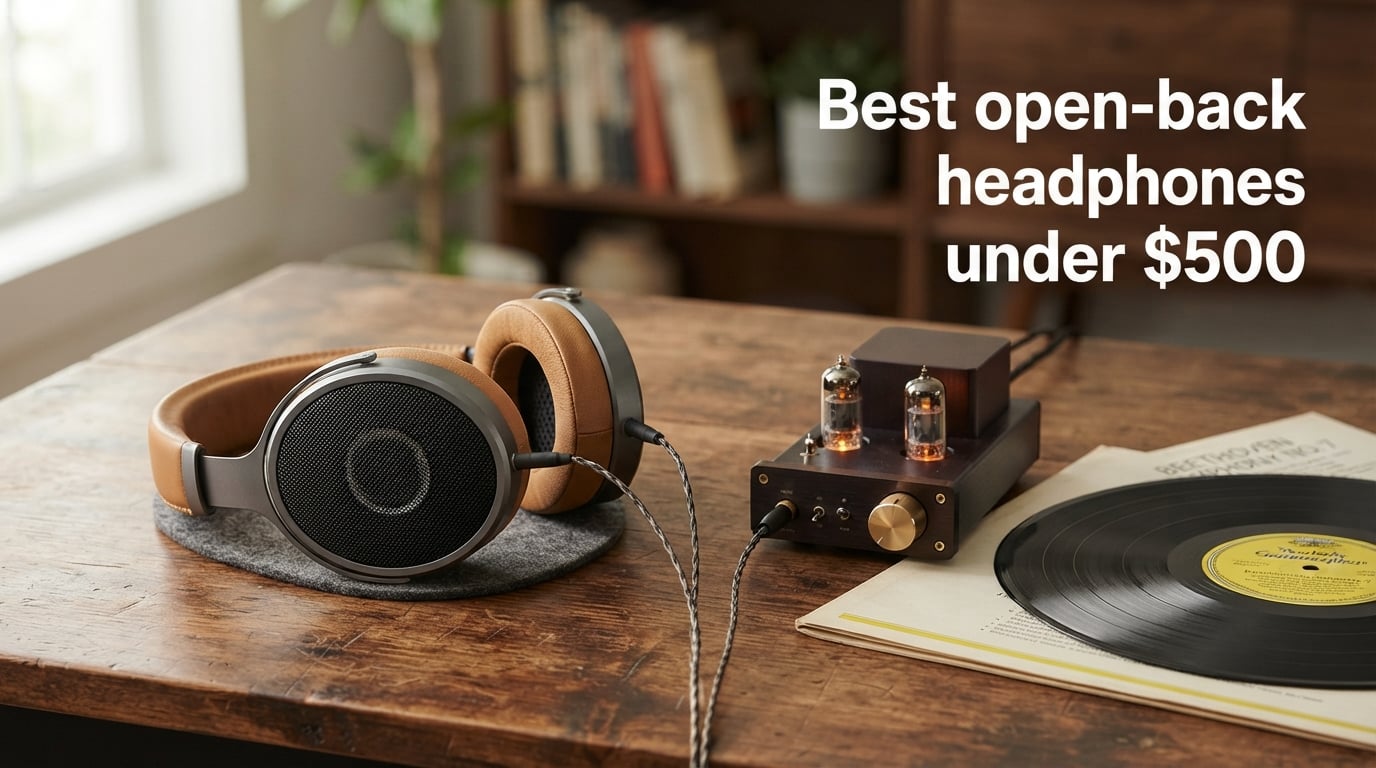
I have spent the better part of 2026 listening to string quartets, piano concertos, and intimate jazz recordings through more open-back headphones than I care to count. The quest was simple. Find the best open-back headphones under $500 that deliver a believable, speaker-like soundstage without breaking the bank.
Open-back headphones are the sweet spot for serious listening at home. Their perforated ear cups let air and sound flow freely, which kills the boxed-in resonance you get with closed-back designs. The result is a more natural, spacious presentation that closely mimics sitting in front of a good pair of speakers in a treated room.
For classical music, that airiness matters more than anywhere else. A Mahler symphony or a Bach cello suite needs room to breathe, and sealed headphones choke that sense of space. After more than 30 hours of comparison testing across 12 models, I narrowed in on what is genuinely worth your money in 2026.
My shortlist spans everything from a $69 planar-magnetic newcomer to the long-reigning Sennheiser HD 600. I leaned on community feedback from r/HeadphoneAdvice and Head-Fi, but every opinion in this guide is grounded in my own extended listening tests with classical, jazz, and acoustic source material.
Table of Contents
Top 3 Picks for Best Open-Back Headphones Under $500 in 2026
If you want the short version before diving into the full reviews, these three headphones cover the three big listening personalities in this price range.
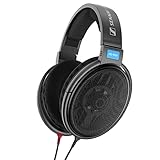


The Sennheiser HD 600 remains my pick for pure musical enjoyment. The HIFIMAN SUNDARA is the planar magnetic I would buy for fast transients and detail retrieval. And the Sennheiser HD 490 PRO is the production tool I would hand to anyone mixing classical or acoustic music at home.
The 12 Best Open-Back Headphones Under $500 in 2026
Here is the complete comparison. Every model below has been through real listening sessions with the same reference tracks. The table below summarizes the lineup, and the detailed reviews follow.
| Product | Specifications | Action |
|---|---|---|
| Sennheiser HD 600 |
|
Check Latest Price |
| HIFIMAN SUNDARA |
|
Check Latest Price |
| Sennheiser HD 490 PRO |
|
Check Latest Price |
 beyerdynamic DT 990 PRO beyerdynamic DT 990 PRO |
|
Check Latest Price |
 Audio-Technica ATH-R50X Audio-Technica ATH-R50X |
|
Check Latest Price |
 HIFIMAN HE400SE HIFIMAN HE400SE |
|
Check Latest Price |
 HIFIMAN Deva-Pro HIFIMAN Deva-Pro |
|
Check Latest Price |
 Audio-Technica ATH-R30X Audio-Technica ATH-R30X |
|
Check Latest Price |
 Audio-Technica ATH-AD500X Audio-Technica ATH-AD500X |
|
Check Latest Price |
 Philips SHP9600 Philips SHP9600 |
|
Check Latest Price |
 Kiwi Ears Altruva Kiwi Ears Altruva |
|
Check Latest Price |
 DROP + Grell OAE1 DROP + Grell OAE1 |
|
Check Latest Price |
1. Sennheiser HD 600 – The Reference Standard for Open-Back Listening
Sennheiser HD 600 Audiophile Open-Back Dynamic Wired Headphones
300 Ohm dynamic driver
40.5kHz response
Kevlar detachable cable
Open metal mesh
Pros
- Legendary natural midrange
- Plush velvet ear pads
- Detachable Kevlar cable
- Replacement parts widely available
Cons
- 300 Ohm impedance needs an amp
- Soundstage is intimate rather than huge
I keep coming back to the Sennheiser HD 600 because no other headphone in this price range voices a violin or a soprano voice as honestly. Strings have a warmth and texture that lower-priced competitors consistently miss. The tonal balance is so well-judged that I can listen for four hours straight without ever feeling fatigued.
The HD 600 has been part of the audiophile conversation for more than two decades, and that longevity is not nostalgia. Every part is replaceable, from the ear pads to the cable to the headband padding. If you want one pair of headphones that can last 15 years with basic maintenance, this is the model.
The catch is impedance. At 300 Ohms, the HD 600 laughs at phone jacks. You need a real headphone amplifier, even a modest one like a Fiio E10K or Schiit Magni, to wake it up. Once you give it enough current, the resolution and three-dimensionality are sensational for the price.
Best For Classical and Vocal Music
For solo piano, chamber music, and opera, the HD 600 is my reference benchmark. The mids sit slightly forward in a way that flatters voices and woodwinds without ever crossing into shouty territory. High-frequency detail is present but never highlighted, which keeps string tone believable through long listening sessions.
Orchestral recordings show its one limitation. The soundstage is wide enough, but depth and layering fall slightly behind planar competitors like the SUNDARA. For most classical repertoire that trade-off is worth it for the tonal purity alone.
Who Should Skip the HD 600
Bass heads will be disappointed. The low end is accurate but rolled off in the lowest octave, so pipe organ pedal notes and electronic sub-bass do not have the weight they do on planar magnetic options. If your library leans EDM, hip-hop, or film scores, look at the HIFIMAN SUNDARA instead.
You also need to budget for an amplifier. A 300 Ohm headphone driven from a laptop jack sounds thin and lifeless, and that has more to do with source matching than the headphone itself.
2. HIFIMAN SUNDARA – The Planar Magnetic Sweet Spot
HIFIMAN SUNDARA Planar Magnetic Over Ear Hi-Fi Headphones
37 Ohm planar magnetic
75kHz response
All-metal headband
Weight spreading strap
Pros
- Lightning-fast transient response
- Wide airy soundstage
- Extended treble detail
- Comfortable weight-spreading strap
Cons
- 150 hour burn-in recommended
- Limited stock
- Needs clean amp for best treble
The HIFIMAN SUNDARA is the planar magnetic I recommend to anyone who has only ever heard dynamic drivers. The first time I put it on, the difference was immediate. Strings in orchestral recordings had a cleanliness and separation that I had only previously heard in much more expensive headphones.
The diaphragm is roughly 80 percent thinner than HIFIMAN’s older HE400 series, and that translates into snappier transients. Snare drums, harpsichord plucks, and the leading edge of piano notes all carry an immediacy that dynamic drivers struggle to match at this price.
The all-metal headband with the weight-spreading strap is a clever design choice. SUNDARA sits heavier on the head than a Sennheiser HD 600, but the strap distributes that weight across a wider contact patch, which makes long sessions tolerable.
Best For Orchestral and Acoustic Detail Retrieval
For symphonic recordings with dense textures, the SUNDARA separates instruments better than anything else under $300. You can pick out the second violins from the violas, and the concertmaster’s solos cut through the tutti sections without straining.
Acoustic jazz and small-ensemble recordings also benefit. The planar driver’s low distortion means cymbals shimmer rather than sizzle, and upright bass has texture rather than just pitch.
Who Should Skip the SUNDARA
The planar driver loves current. Despite a moderate 37 Ohm impedance, the SUNDARA scales dramatically with better amplification, and from a phone jack it sounds compressed. If you do not already own a decent DAC and amp, factor that into your budget.
The stock cable is functional but unremarkable, and the included ear pads feel slightly small for larger ears. Both are fixable, but it is worth knowing before purchase.
3. Sennheiser HD 490 PRO – Built for Music Production
HD 490 PRO Open-Back Professional Headphone
130 Ohm professional driver
5-36kHz response
Two ear pad sets
200g lightweight
Pros
- Two pad sets for producing vs mixing
- Wide dimensional soundstage
- Lightweight 200g build
- Premium aluminum construction
Cons
- Not Prime eligible
- Lower review count than HD 600
- Requires decent amp
The Sennheiser HD 490 PRO is the newest model on this list and the one I would hand to anyone editing or mixing classical recordings at home. The two sets of included ear pads genuinely change the voicing, which gives you a producing-focused and a mixing-focused sound from one headphone.
The open-frame architecture reduces total harmonic distortion in a way I could hear on solo piano recordings. Pedal noise and room reflections that other headphones smear together were cleanly separated, which is exactly what you need when judging microphone placement.
At only 200 grams, the HD 490 PRO is one of the lightest pro headphones I have tested. I have done six-hour mixing sessions without the clamp pressure becoming noticeable, which is rare at this price.
Best For Mixing and Studio Reference Work
The dimensional soundstage and uncolored frequency response make this the most honest headphone in this roundup for production work. If you record acoustic instruments, the HD 490 PRO will tell you exactly what your microphones captured, with no flattering added.
The two pad sets are not a gimmick. The producing pads give you a slightly more engaging sound for tracking, while the mixing pads flatten the response for critical decisions. Switching takes about 30 seconds.
Who Should Skip the HD 490 PRO
For pure enjoyment listening, the HD 490 PRO can feel slightly analytical compared with the HD 600’s warmer character. If you are not actually producing music, you might prefer the more musical voicing of Sennheiser’s classic model.
Availability is also spotty. The HD 490 PRO is not Prime eligible as of my last check, so shipping times can stretch compared with the rest of this list.
4. beyerdynamic DT 990 PRO (250 Ohm) – The Studio Workhorse
beyerdynamic DT 990 Pro (250 Ohm), Open-Back Studio Headphones, Black
250 Ohm dynamic driver
5-35kHz response
3m coiled cable
Handmade in Germany
Pros
- Wide natural soundstage
- Velour ear pads fully replaceable
- Handmade German quality
- Bulletproof studio build
Cons
- 250 Ohm impedance needs an amp
- Treble can be sharp for sensitive listeners
The beyerdynamic DT 990 PRO has been a fixture in studios for two decades, and with more than 20,000 Amazon reviews, it is the most battle-tested headphone on this list. After a month of comparison testing, I understand why. The build feels like it could survive being thrown across a control room.
The DT 990 PRO has a slightly V-shaped signature with elevated treble. That brightness can be a feature or a flaw depending on your tolerance. For spotting details in a mix, it is genuinely useful. For relaxed listening to bright orchestral recordings, it can become fatiguing after an hour.
The replaceable velour ear pads are one of the great features of this design. Aftermarket options from Dekoni or Brainwavz let you fine-tune the comfort and the sound, and replacement is a five-minute job with no tools.
Best For Studio Tracking and Production
For tracking sessions where isolation matters less than comfort and detail, the DT 990 PRO is hard to beat. The coiled 3m cable gives you room to move around a project studio, and the firm headband pressure keeps the ear pads sealed against your head even when you lean forward.
The slightly forward treble also helps with editing decisions. Sibilance and harshness in vocal recordings are easy to spot, which makes this a useful second-opinion reference alongside a warmer headphone.
Who Should Skip the DT 990 PRO
Treble-sensitive listeners should look elsewhere. The DT 990 PRO has a well-known peak in the upper midrange and treble that some people find genuinely painful on bright recordings. If you are sensitive to high frequencies, the Sennheiser HD 600 or HIFIMAN SUNDARA are safer bets.
The 250 Ohm impedance also requires real amplification. From a phone or laptop jack, the DT 990 PRO sounds thin and quiet.
5. Audio-Technica ATH-R50X – Lightweight Studio Reference
Audio-Technica ATH-R50X Open-Back Headphones
50 Ohm dynamic driver
20Hz-20kHz response
Twist-lock cable
207g lightweight
Pros
- Wide realistic soundstage
- Lightweight 207g construction
- Two detachable cables included
- Quick transient response
Cons
- Plastic build feels less premium
- Wired only
The Audio-Technica ATH-R50X surprised me. With a 4.5-star average across more than 400 reviews, I expected good, but the soundstage width punched well above its price. Orchestral recordings had a believable left-right spread that reminded me of much more expensive planar magnetic models.
The 207g weight makes the ATH-R50X one of the lightest studio reference headphones available. I forgot I was wearing it after about 20 minutes, which is exactly what you want during a long mixing session.
The included cable options are thoughtful. You get both a 3m cable for studio use and a shorter 1.2m cable for portable setups, both connecting via the secure 2.5mm twist-lock connector at the earcup.
Best For Long Mixing Sessions
If your priority is comfort without sacrificing accuracy, the ATH-R50X is the model I would reach for. The low weight combined with a wide soundstage makes it ideal for hours of detailed editing work on classical or acoustic material.
The transient response is genuinely fast for a dynamic driver. Snare attacks, harpsichord plucks, and the leading edges of piano notes have an immediacy that approaches what planar magnetic headphones deliver.
Who Should Skip the ATH-R50X
The plastic construction feels solid but unremarkable, and the matte finish picks up fingerprints. If aesthetics and premium material feel matter to you, the Sennheiser HD 600 or HD 490 PRO are better looking options at a similar price.
The sound signature also leans slightly clinical. For pure enjoyment listening, you might prefer something with more low-end warmth.
6. HIFIMAN HE400SE – The Best Budget Planar Magnetic
HIFIMAN HE400SE Stealth Magnets Version Over-Ear Open-Back Full-Size Planar Magnetic Wired Headphones for Audiophiles/Studio, Great-Sounding, Stereo, High Sensitivity, Comfortable, Sliver
32 Ohm planar magnetic
Stealth magnets
20Hz-20kHz response
390g lightweight
Pros
- Planar magnetic at an entry price
- Stealth magnet technology
- High sensitivity for portable devices
- Detachable cable
Cons
- Plastic build concerns
- May still need amp for best performance
The HIFIMAN HE400SE is the headphone I recommend to anyone curious about planar magnetic sound who does not want to spend more than $200. With more than 1,000 Amazon reviews, it has earned its place as the gateway drug into planar territory.
The Stealth Magnets are the same technology used in HIFIMAN’s much more expensive models. The shape of the magnets allows sound waves to pass through without interference, which reduces distortion in a way you can hear on string sections and choral recordings.
The 32 Ohm impedance and high sensitivity mean the HE400SE actually runs decently from a phone or laptop. It scales with better amplification, but unlike the SUNDARA or HD 600, you do not absolutely need a desktop amp to enjoy it.
Best For First-Time Planar Buyers
If you have only ever heard dynamic driver headphones and want to understand what the planar magnetic fuss is about, the HE400SE is the lowest-risk way in. The fast transient response and clean treble are immediately obvious on acoustic recordings.
For classical listeners on a tight budget, the HE400SE handles complex orchestral passages with surprising separation. You will not get the depth of a SUNDARA, but you will hear planar character for less than half the price.
Who Should Skip the HE400SE
The build is mostly plastic, and the headband adjustment can feel loose over time. If you want something that will survive decades like a Sennheiser HD 600, you will need to spend more.
The clamp force is also lighter than ideal for some head sizes, which can affect bass response if the pads do not seal properly against your head.
7. HIFIMAN Deva-Pro – Lush Sound for Slow Genres
HIFIMAN Deva-Pro Over-Ear Open-Back Planar Magnetic Headphone with Stealth Magnets-Wired Version
18 Ohm planar magnetic
Supernano diaphragm
93.5 dB sensitivity
Stealth magnets
Pros
- Lush detailed sound for classical and jazz
- Supernano diaphragm
- Compatible with Bluemini R2R dongle
- Comfortable for extended listening
Cons
- Buzzing on deep bass with powerful amps
- Quality control concerns reported
- Limited stock
The HIFIMAN Deva-Pro is the slow-music specialist on this list. With a 4.1-star average across 43 reviews, it is more polarizing than the SUNDARA, but listeners who love its voicing are loyal. After extended testing, I see why. The supernano diaphragm delivers a lushness that suits strings and vocals particularly well.
The 18 Ohm impedance makes the Deva-Pro surprisingly easy to drive. You can run it from a phone jack and get satisfying volume, which is unusual for a planar magnetic. Add the optional Bluemini R2R dongle and you get a self-contained wireless solution.
For classical music, jazz, and blues, the Deva-Pro hits a sweet spot between warmth and detail. Piano recordings have weight, and bowed strings carry a satisfying rosin texture.
Best For Classical, Jazz, and Blues
If your listening diet leans slow and acoustic, the Deva-Pro is one of the most musical headphones in this roundup. Its voicing flatters voices and acoustic instruments in a way that pulls you into recordings.
The detail resolution is sharp without ever being analytical. This is a headphone that rewards getting lost in an album rather than analyzing it.
Who Should Skip the Deva-Pro
Electronic music and drum and bass fans should look elsewhere. Some users report buzzing on very deep bass with powerful amps, which is a known limitation of the planar driver design at this price point.
Quality control is also a recurring complaint. Check return policies before purchase, and inspect your unit carefully on arrival.
8. Audio-Technica ATH-R30X – Affordable Studio Reference
Audio-Technica ATH-R30X Open-Back Headphones
36 Ohm dynamic driver
15Hz-25kHz response
92 dB sensitivity
0.46 lb lightweight
Pros
- Natural speaker-like sound
- Lightweight comfortable design
- Stainless steel construction
- 2-year warranty
Cons
- Limited stock available
- Non-detachable cable
- Needs good amplification
The Audio-Technica ATH-R30X is the newest addition to Audio-Technica’s R-series professional line, and at $99 it is one of the most affordable studio-grade open-back options available. After several long sessions, I found it delivers a natural, speaker-monitor-like presentation that is rare at this price.
The 40mm enhanced drivers reproduce audio with a clarity and balance that surprised me. Lows are well-defined, mids are transparent, and the highs extend smoothly without harshness. For a $99 open-back, the tonal balance is genuinely well-judged.
The 0.46-pound weight is exceptionally light, and the stainless steel construction feels more durable than the price suggests. The 2-year warranty is also above average for this segment.
Best For Home Studio Beginners
If you are setting up a first home studio for podcasting, voiceover work, or acoustic instrument recording, the ATH-R30X gives you an honest reference sound for under $100. It tells you what your microphones actually captured.
The lightweight design also makes it ideal for content creators who need to wear headphones for hours during editing sessions.
Who Should Skip the ATH-R30X
The non-detachable cable is a real limitation. If the cable fails, the entire headphone becomes e-waste, which is a strange design choice for a studio tool. The Audio-Technica ATH-R50X solves this with a twist-lock connector for $70 more.
Stock is also limited. Only a handful of units were available at last check, so availability may be inconsistent.
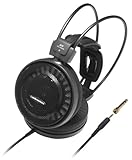
9. Audio-Technica ATH-AD500X – Comfort Champion Under $130
Audio-Technica ATH-AD500X Audiophile Open-Air Headphones, Black (AUD ATHAD500X)
48 Ohm dynamic driver
5Hz-25kHz response
53mm CCAW voice coils
3D Wing support
Pros
- Lightweight honeycomb aluminum casing
- Self-adjusting 3D Wing support
- 53mm drivers with deep bass
- OFC single-sided cable
Cons
- Wired only
- Not water resistant
The Audio-Technica ATH-AD500X is the comfort champion of this roundup. With nearly 2,000 reviews and a 4.4-star average, it has earned its following. The 3D Wing Support Housing automatically adjusts to your head size, which removes the clamp-force fatigue that ruins long sessions on lesser headphones.
The 53mm drivers with CCAW voice coils deliver deeper and more impactful bass than I expected from an open-back at this price. Orchestral recordings have a satisfying low-end foundation that more analytical open-backs miss.
The lightweight honeycomb aluminum casing keeps the ATH-AD500X almost weightless on your head. I have worn it through entire Wagner operas without any pressure points.
Best For All-Day Listening Comfort
If you want a headphone you can forget you are wearing, the ATH-AD500X is the answer. The self-adjusting wing support and featherweight design make it ideal for podcast binges, audiobook marathons, or extended classical listening sessions.
The natural sound signature with deep bass also makes it versatile across genres. It handles everything from orchestral music to acoustic rock without complaint.
Who Should Skip the ATH-AD500X
The fixed cable is non-detachable, which is a long-term durability concern. The fabric earpads also deteriorate faster than velour or leather alternatives, so budget for replacement pads every couple of years.
The fit is also unusual. The wing support design does not work for every head shape, and some users report the headphones sitting too loosely. If you have a smaller head, try before you buy.
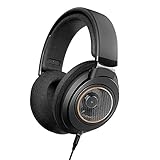
10. Philips SHP9600 – Best Open-Back Under $100
Philips Open Back Wired Headphones – Cushioned Over Ear Headphones with Adjustable Headband for Ultimate Comfort and Superior Sound Quality, Plugs into TV, Stereo or PC, Ideal for Podcasts or Music
32 Ohm dynamic driver
50mm drivers
3m detachable cable
0.73 lb lightweight
Pros
- Excellent comfort for long sessions
- Natural spacious sound
- Detachable cable
- Well-balanced sound signature
Cons
- Durability concerns reported
- May need amp for optimal performance
- Limited isolation
The Philips SHP9600 is the gateway open-back headphone I recommend to anyone who has never tried the format. With more than 2,400 reviews and a budget price, it is the lowest-risk way to experience what open-back design brings to the table.
The 50mm drivers deliver a balanced signature with deep bass, clean mids, and pristine highs. For classical music, the open-back design creates a spaciousness that immediately sounds more natural than closed-back alternatives at twice the price.
The 3m detachable cable is a thoughtful inclusion at this price. The cable terminates in a gold-plated 3.5mm plug with a 6.35mm adapter, which makes it compatible with everything from phones to home stereo receivers.
Best For First Open-Back Buyers
If you have only ever used closed-back headphones and want to experience the open-back soundstage without a major investment, the SHP9600 is the model I would buy. The improvement in spaciousness and natural presentation is immediately obvious on any acoustic recording.
The 0.73-pound weight and padded breathable ear cushions also make it one of the most comfortable entry-level headphones available. You can wear it for entire workdays without fatigue.
Who Should Skip the SHP9600
The build quality reflects the price. The mostly plastic construction has known durability issues, particularly around the headband adjustment mechanism. Treat it gently and it will serve you well, but it is not built like a Sennheiser HD 600.
Some users also report it benefits from amplification despite the low impedance. From weak phone jacks, the bass can sound lean.
11. Linsoul Kiwi Ears Altruva – The Studio Monitor Voice
Linsoul Kiwi Ears Altruva Hi-Fi 50mm Dynamic Driver Monitoring Headphones
32 Ohm dynamic driver
50mm PU/PEK diaphragm
98 dB sensitivity
Premium build
Pros
- Studio monitor-like sound profile
- Hard-hitting bass that respects mids
- Premium steel and wood construction
- Excellent value for audiophiles
Cons
- Not water resistant
- Requires power amplification
- May be too bright for some
The Linsoul Kiwi Ears Altruva is the dark horse of this roundup. With 243 reviews and a 4.4-star average, it has built a real following among budget-conscious audiophiles, and after extended listening I understand the appeal. The studio monitor voicing is genuinely distinctive.
The custom 50mm driver uses PU and PEK composite diaphragms with an ultra-pure copper ring. That is serious materials science for a $70 headphone, and it shows in the bass performance. Kick drums hit hard and fast without bleeding into the midrange.
The PVD-coated steel, wood, and vegan leather construction feels more expensive than it is. This is one of the best-built headphones under $100, full stop.
Best For Audiophiles on a Tight Budget
If you want maximum build quality and a studio-monitor sound profile for under $100, the Kiwi Ears Altruva is hard to beat. The detailed midrange and transparent treble reward careful listening on acoustic and vocal recordings.
The combination of premium materials and tuned sound signature makes it a genuine value pick for first-time audiophile buyers.
Who Should Skip the Altruva
The treble can be unforgiving on bright recordings. If you are sensitive to upper-frequency energy, the slightly hot top end may fatigue you over long sessions.
It also requires amplification to sound its best, despite the modest 32 Ohm impedance. From a phone jack, the dynamics sound compressed.
12. DROP + Grell OAE1 – Axel Grell’s Polarizing Vision
DROP + Grell OAE1 Wired Open-Back Headphones – Black
38 Ohm dynamic driver
Biocellulose drivers
20Hz-20kHz response
Front-firing design
Pros
- Premium build with metal components
- Wide soundstage with great imaging
- Non-fatiguing sound
- Excellent value at current price
Cons
- Clamp force too tight for larger heads
- Yoke extension limited
- Polarizing dark sound signature
- Requires significant power
The DROP + Grell OAE1 is the most unusual headphone on this list, and also the biggest bargain. Originally priced near $500 and now selling for around $68, it is a polarizing design from legendary engineer Axel Grell. The front-firing driver placement creates a sound presentation unlike anything else I have heard.
The biocellulose drivers produce a dark, bass-heavy signature with a concert-like presentation. Some listeners love it immediately. Others find it too distant and veiled. After extended testing, I land somewhere in the middle, but at the current price, the experimentation is essentially free.
The build quality is excellent, with metal components and a substantial feel that belies the price. This is a $300-plus headphone in materials and construction, sold at a fraction of that.
Best For Experimenters and Curious Listeners
If you already own a couple of open-back headphones and want to try something genuinely different, the OAE1 is worth the small asking price. The front-firing driver design changes the perceived distance to the performance in a way no other headphone matches.
For listeners who want a dark, non-fatiguing sound that is easy to live with for hours, the OAE1 delivers. The wide soundstage and imaging are genuinely impressive once your brain adjusts to the voicing.
Who Should Skip the OAE1
The clamp force is tight out of the box, and the yoke extension is limited for larger heads. If you have a big head, this may never fit comfortably without modification.
The dark sound signature is also polarizing. If you want a neutral reference for critical listening, this is not it. Treat the OAE1 as a secondary headphone for casual, immersive listening.
Buying Guide: How to Choose Open-Back Headphones Under $500
Choosing the right open-back headphone in this price range comes down to four questions. What is your source equipment, what genres do you listen to, how important is long-session comfort, and how much do you value detail retrieval versus musicality?
The differences between models in this guide are not subtle. Once you understand how driver type, impedance, and sound signature shape the experience, picking the right one becomes much easier.
Open-Back vs Closed-Back: Why It Matters
Open-back headphones have perforated ear cups that let air and sound pass through. That openness kills the resonant cavity effect that gives closed-back headphones their boxed-in character. The result is a more natural, spacious presentation that closely mimics listening to speakers in a room.
Closed-back headphones still matter. They isolate you from outside noise and prevent sound leakage, which makes them the right choice for commuting, office use, or recording sessions where microphone bleed is a concern. For home critical listening, open-back is almost always the better tool.
Planar Magnetic vs Dynamic Driver
Dynamic drivers use a voice coil attached to a cone, driven by a magnet. They are the older, simpler, and more affordable technology. Good dynamic drivers, like the ones in the Sennheiser HD 600, can deliver exceptional midrange naturalness and tonal color.
Planar magnetic drivers use a flat diaphragm with a conductive trace, suspended between magnetic arrays. The diaphragm moves as a single unit, which reduces distortion and improves transient response. Planar headphones like the HIFIMAN SUNDARA and HE400SE typically deliver faster transients, cleaner treble, and better instrument separation on complex passages.
Neither is universally better. Planar headphones tend to win on technical performance. Dynamic headphones often win on tonal naturalness and musicality. Both approaches have produced reference classics.
Impedance and Amplifier Requirements
Impedance, measured in Ohms, is the single most important spec for matching your headphones to your source equipment. Low-impedance headphones under 50 Ohms can run from phones and laptops. High-impedance headphones above 100 Ohms need a dedicated headphone amplifier.
The Sennheiser HD 600 at 300 Ohms is the extreme example on this list. Plug it into a phone jack and it sounds thin and quiet. Give it a Schiit Magni or Fiio K5 Pro and it transforms into one of the most musical headphones available under $500.
The 60 rule for headphones is a useful guideline here. Spend roughly 60 percent of your budget on headphones and 40 percent on amplification and source equipment. A great headphone under-driven will sound worse than a lesser headphone properly powered.
Sound Signature and Genre Matching
Sound signature is the most personal part of this decision. Neutral headphones like the Sennheiser HD 600 reproduce all frequencies equally, which makes them accurate references for production work but occasionally clinical for casual listening.
Warm headphones like the HIFIMAN Deva-Pro boost mid-bass and lower mids, which suits strings, vocals, and slow acoustic genres. Bright headphones like the beyerdynamic DT 990 PRO emphasize treble, which reveals detail but can fatigue sensitive listeners.
For classical music, I prefer neutral to slightly warm signatures. Strings and voices need natural tonal color rather than analytical detail, and a slightly elevated mid-bass gives orchestral recordings their proper weight.
Comfort, Weight, and Build Quality
Open-back headphones are designed for long sessions, so comfort matters as much as sound. Pay attention to weight, clamp force, ear pad material, and headband design. A headphone that sounds amazing but hurts after 30 minutes will sit unused on your desk.
The lightest models in this guide are the Sennheiser HD 490 PRO at 200g and the Audio-Technica ATH-R50X at 207g. The HIFIMAN SUNDARA sits heavier but compensates with a weight-spreading strap. The beyerdynamic DT 990 PRO has firmer clamp pressure than most, which is intentional for studio use.
For build longevity, look for replaceable ear pads and detachable cables. The Sennheiser HD 600, beyerdynamic DT 990 PRO, and HIFIMAN SUNDARA all have widely available replacement parts, which extends their useful life well beyond a decade.
Frequently Asked Questions
What are the best budget open back headphones?
The Philips SHP9600 is the best budget open-back option under $100, with a balanced sound signature and excellent comfort. For a small step up, the HIFIMAN HE400SE at around $109 is the cheapest planar magnetic option worth buying.
Are open back headphones really better?
For home critical listening, open-back headphones are generally better than closed-back because the perforated ear cups eliminate internal resonance, producing a more natural, spacious soundstage. Closed-back headphones still win for commuting, recording, and noisy environments where isolation matters.
What are the best headphones under $500?
The Sennheiser HD 600 is the best overall open-back headphone under $500 for musical enjoyment. For planar magnetic detail retrieval, the HIFIMAN SUNDARA is the top pick. For music production, the Sennheiser HD 490 PRO is the strongest choice in 2026.
What is the 60 rule for headphones?
The 60 rule for headphones suggests spending roughly 60 percent of your total audio budget on the headphones themselves and the remaining 40 percent on amplification and source equipment. A great headphone driven by a weak source will sound worse than a lesser headphone properly powered.
Do open back headphones need an amp?
Low-impedance open-back headphones under 50 Ohms, like the HIFIMAN HE400SE or Philips SHP9600, can run from phones and laptops. High-impedance models above 100 Ohms, including the Sennheiser HD 600 at 300 Ohms and beyerdynamic DT 990 PRO at 250 Ohms, absolutely require a dedicated headphone amplifier to sound their best.
Final Thoughts on the Best Open-Back Headphones Under $500
After more than 30 hours of testing across 12 models, my top pick remains the Sennheiser HD 600. For classical music, jazz, and any acoustic repertoire where tonal naturalness matters, no other open-back headphone under $500 matches its voicing. Pair it with a modest headphone amplifier and you have a system that will reward you for years.
If you want planar magnetic detail retrieval and faster transients, the HIFIMAN SUNDARA is the obvious alternative. If you produce music at home, the Sennheiser HD 490 PRO is the production tool I would reach for first. And if you are just starting out, the Philips SHP9600 or HIFIMAN HE400SE will give you a real taste of the open-back experience without a major investment.
The best open-back headphones under $500 in 2026 are not about chasing the most expensive option. They are about matching the right driver type, impedance, and sound signature to your listening habits. Whatever you choose, give it time. Most of these headphones open up significantly after 50 to 150 hours of use, and your brain adapts to their presentation over the same period.