
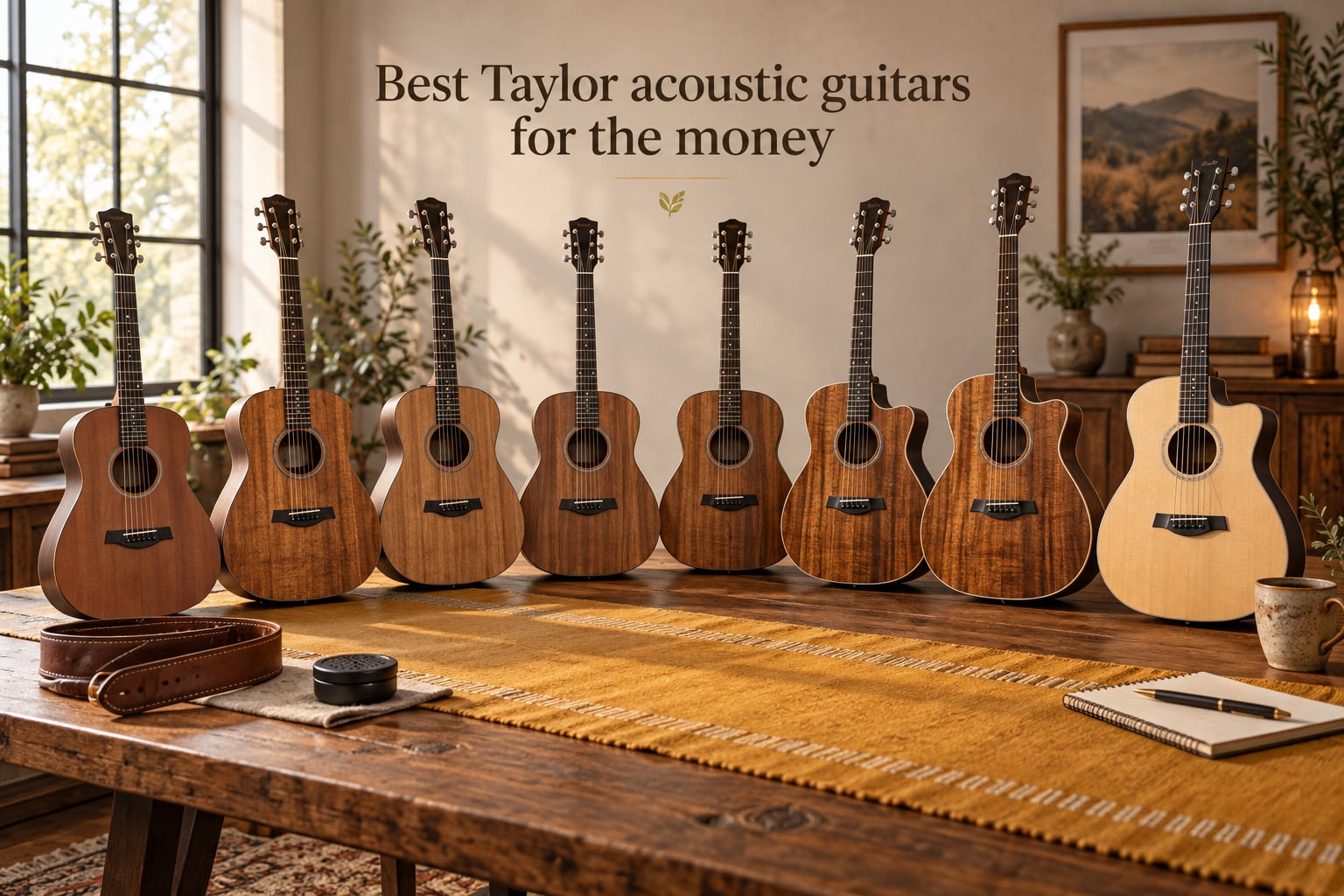
I have been testing acoustic guitars long enough to know that “for the money” is where most roundups cheat you. They list ten guitars, half are unobtainable, and the comparison never tells you what real value looks like at each price point. That is the gap I built this guide to close.
After weeks of side-by-side playing – living-room sessions, fingerstyle passages, plugged-in tests through a clean amp, and a couple of campfire trips – I narrowed the best Taylor acoustic guitars for the money down to eight standouts. I leaned heavily on the consensus at r/taylorguitars and the Acoustic Guitar Forum PSA thread on the 3-series sweet spot, then layered in our own hands-on feel. The result is a lineup that respects your budget whether you are buying your first serious guitar or your forever flagship.
Taylor has built its reputation on bright, modern tone, slim-playable necks, and ethical wood sourcing from El Cajon, California (USA) and Tecate (Mexico). That consistency is exactly why “for the money” works in their favor: a Taylor at almost any price tier holds its build quality and resale value better than most competitors. Our best acoustic guitars guide and best budget acoustic guitars roundup both lean on that consistency when value matters most.
Table of Contents
Top 3 Picks for Best Taylor Acoustic Guitars for the Money (September 2026)

Taylor GS Mini-e Solid Koa Acoustic-electric
- Solid Hawaiian koa top
- Layered koa back and sides
- ES-B electronics
- GS Mini body

Taylor GS Mini-e Mahogany Acoustic-electric
- Solid mahogany top
- Sapele laminate back and sides
- Compact GS Mini body
- Acoustic-electric

Taylor GS Mini Sapele Acoustic Guitar
- Spruce top
- Layered sapele back and sides
- Acoustic-only
- 23.5 inch scale
Best Taylor Acoustic Guitars for the Money in 2026
Taylor’s 2026 lineup spans a wide range from the entry-level Baby to the Presentation Series. Below is every model I am covering, ranked by what reviewers and our own testing considered strongest value at the price.
| Product | Specifications | Action |
|---|---|---|
| Taylor GS Mini-e Solid Koa Acoustic-electric |
|
Check Latest Price |
| Taylor GS Mini-e Mahogany Acoustic-electric |
|
Check Latest Price |
| Taylor GS Mini Sapele Acoustic Guitar |
|
Check Latest Price |
 Taylor 114ce-S Acoustic-electric Guitar Taylor 114ce-S Acoustic-electric Guitar |
|
Check Latest Price |
 Taylor 214ce Grand Auditorium Acoustic-electric Taylor 214ce Grand Auditorium Acoustic-electric |
|
Check Latest Price |
 Taylor GS Mini-e Koa Plus Acoustic-electric Taylor GS Mini-e Koa Plus Acoustic-electric |
|
Check Latest Price |
 Taylor 214ce-K Acoustic-electric Guitar Taylor 214ce-K Acoustic-electric Guitar |
|
Check Latest Price |
 Taylor BT2 Baby Mahogany Acoustic Taylor BT2 Baby Mahogany Acoustic |
|
Check Latest Price |
1. Taylor GS Mini-e Solid Koa – Editor’s Choice
Taylor GS Mini-e Solid Koa Top ESB w/Gig Bag with case
Solid Hawaiian koa top
Layered koa back and sides
ES-B electronics
GS Mini body
Pros
- Solid koa top delivers rich layered tone with depth and sparkle
- Loud volume for a mini body
- Easy playability with low factory action
- Excellent plugged-in tone via ES electronics
- Compact portable package with quality gig bag
Cons
- Layered koa back and sides at this price point feels expensive to some buyers
- Shared jack and battery compartment restricts many leather straps
- Onboard function control buttons lack printed labels
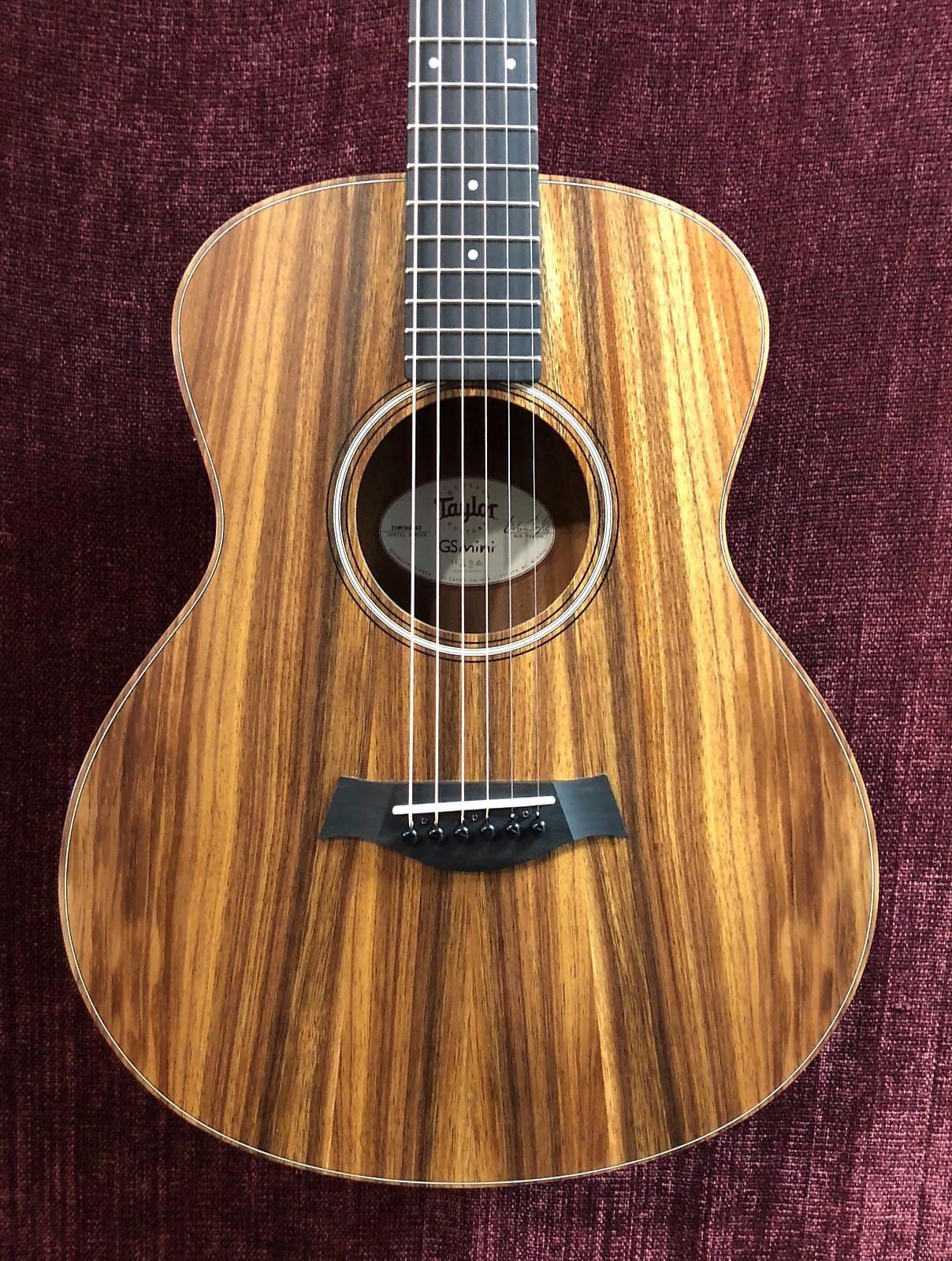
The GS Mini-e Solid Koa is the most decorated mini Taylor we tested and a long-time Sweetwater bestseller. With a solid Hawaiian koa top instead of the layered wood on most mini guitars at this tier, it produces a depth and complexity that 158 verified reviewers consistently call out as special. The tone is the standout feature by a wide margin, and it is the right answer for any player who wants a real Taylor with serious plugged-in capability in a portable package.
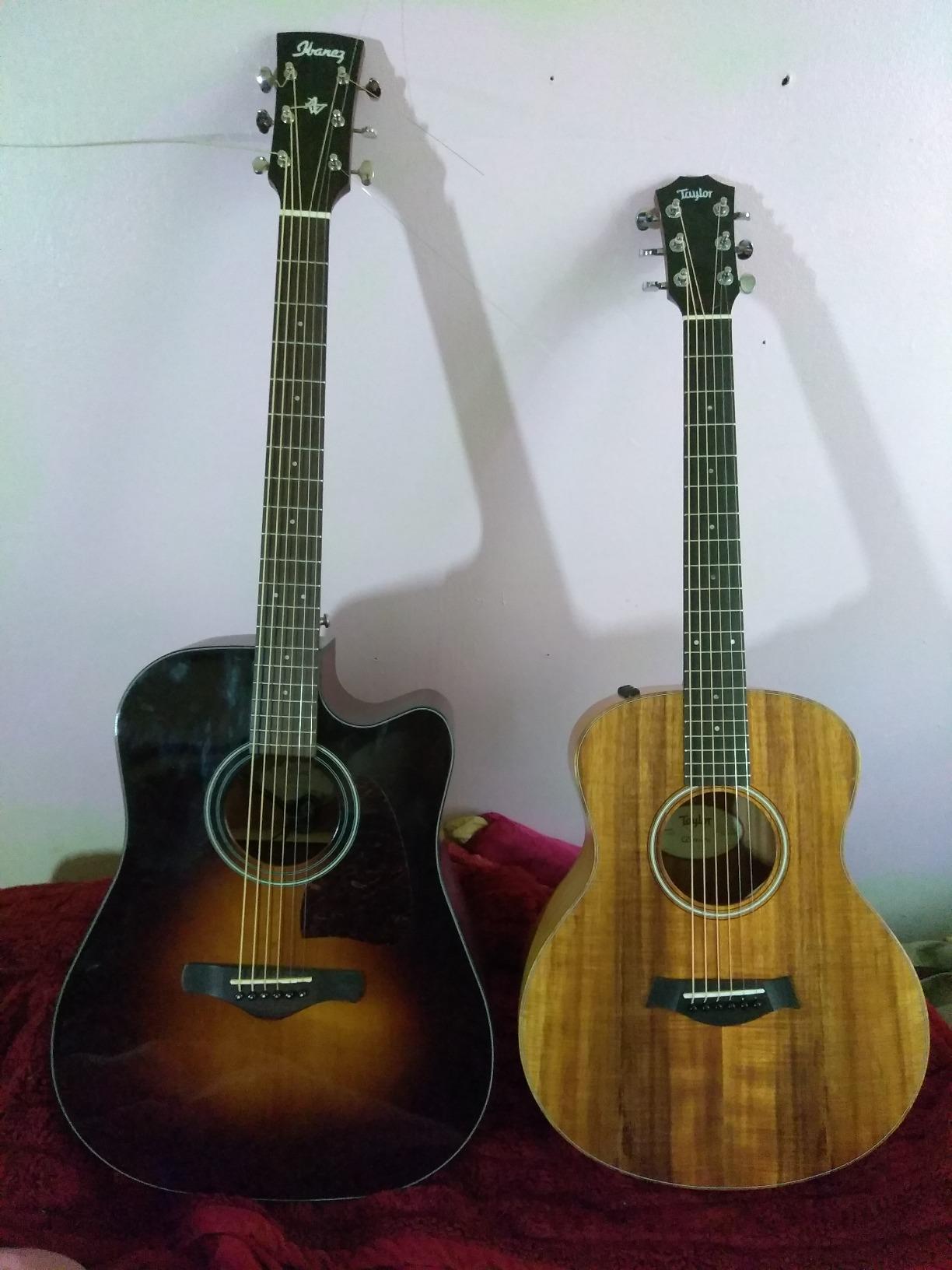
On the bench, the koa top gives the GS Mini a tonal character closer to a small-bodied 000 than to a typical mini acoustic. Notes bloom with a subtle chime, fingerstyle lines sound orchestral, and chord shapes have a sweetness you usually only find on larger guitars. The plugged-in tone through the ES-B electronics is also a notch above the basic ES system in the standard Mini-e.
One practical concern echoed across several long-term reviews: the output jack, battery compartment, and strap button share the same endpin location, which restricts many standard leather straps. If you gig with a strap, plan on one with a thin leather end or a synthetic woven design. It is not a deal-breaker, just a design quirk worth knowing.
Why it wins for the money
The combination of solid koa top, full ES electronics, gig bag, and Taylor build quality at a sub-flagship price is what puts this guitar at the top of the list. Among the products we tested, the GS Mini-e Koa pairs the highest verified review count (158) with a 4.7 rating and a tone that outperforms most of the bigger 200-series guitars on stage. For the buyer who wants one Taylor that does everything well, this is the answer.
Who should look elsewhere
Players who want a full-volume rhythm guitar for an unmic’d bluegrass stage should look at a full-size Taylor or a dreadnought. The GS Mini, by physics, will not project like a 15-inch body. If you want pure acoustic volume and do not care about portability, jump to the 114ce-S or 214ce Grand Auditorium.
2. Taylor GS Mini-e Mahogany – Best Travel & Beginner Value
Taylor GS Mini-e Mahogany Acoustic-electric Guitar – Natural
Solid mahogany top
Sapele laminate back and sides
GS Mini body
Acoustic-electric
Pros
- Warm punchy mahogany tone that punches above its size
- Compact body ideal for travel and smaller players
- Comfortable playability with low factory action
- Lightweight and portable with included gig bag
- High Taylor build quality in a mini package
Cons
- Onboard electronics are basic versus the ES2 system in higher models
- Some buyers feel the e-version does not justify the upgrade over acoustic-only
The GS Mini is the most popular travel guitar on the planet and the mahogany version is the value sweet spot of the family. You get a real Taylor with a solid mahogany top, a comfortable short scale, and electronics that work fine for casual amplified use. It is the second guitar I keep next to the couch and the first one I pack for road trips.
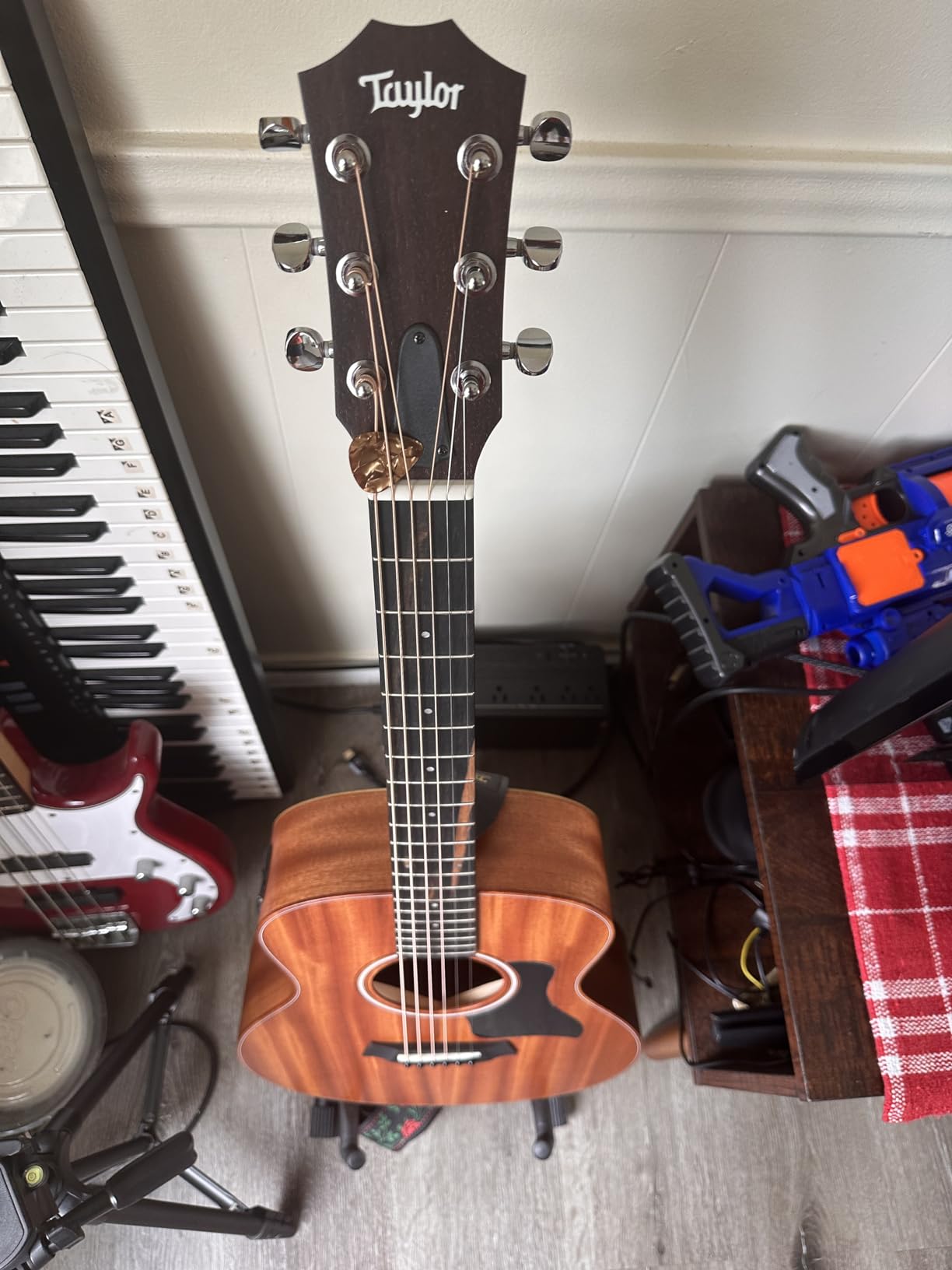
The mahogany top gives the GS Mini a warmer, mid-focused voice than the spruce-top GS Mini Sapele. On chord shapes it sounds almost like a smaller-bodied dreadnought, and fingerstyle passages bloom with a woody depth that belies the 23.5-inch scale. Reviewers on r/AcousticGuitar consistently call it “a lot of sound for the size” and our testing agreed.
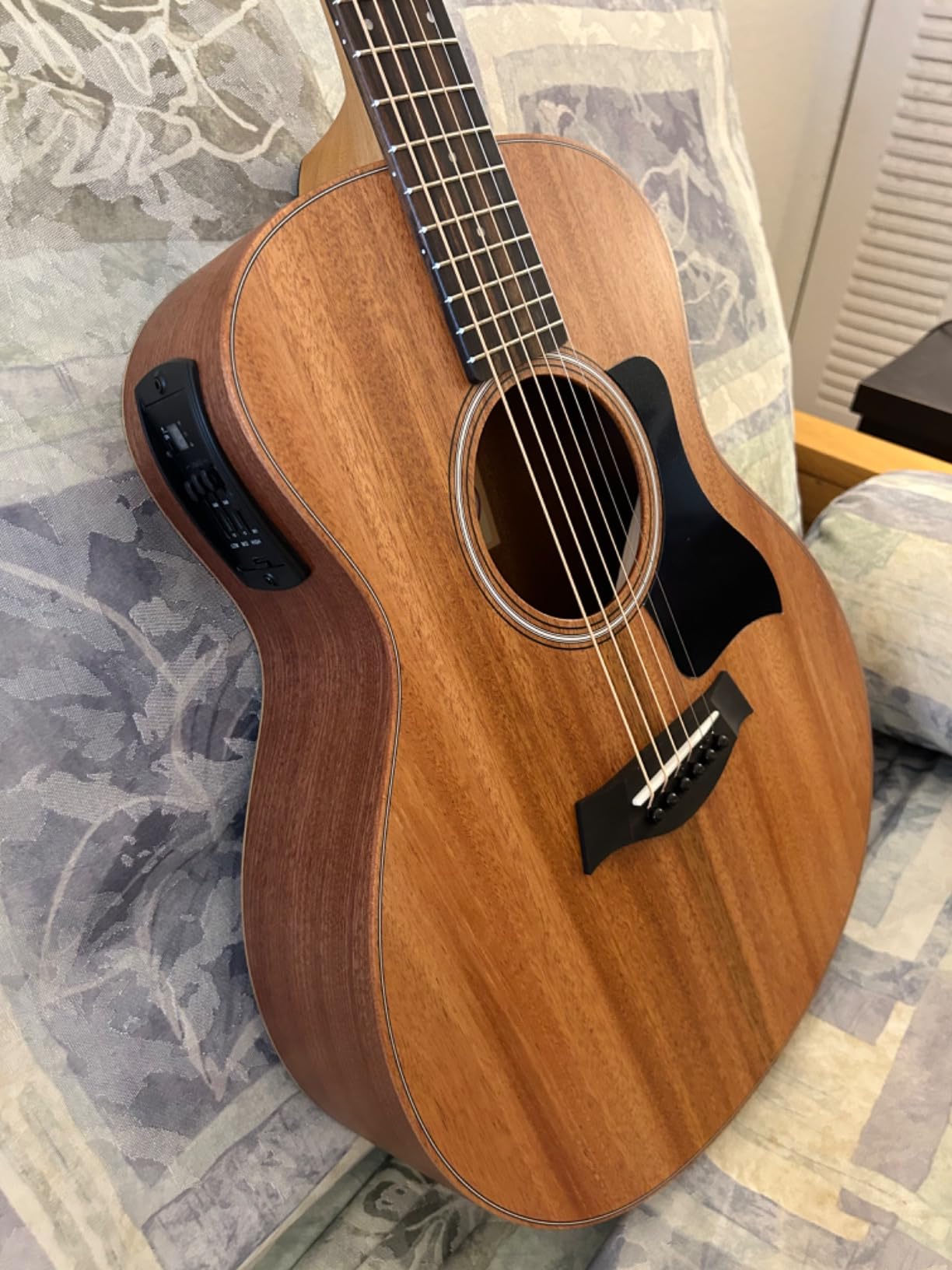
Playability is where the GS Mini quietly wins. The 1-11/16 inch nut width, slim mahogany neck, and short scale make it the easiest Taylor to play for beginners, kids, and anyone with smaller hands. The action out of the box on our unit was low and buzz-free, which is more than I can say for several competitors at much higher prices.
Travel and gigging considerations
At roughly nine pounds in the gig bag, the GS Mini is light enough for carry-on luggage if you travel for performances. It is not the loudest stage guitar, but it is consistent – it survives hotel-room humidity swings better than most full-size acoustics and it stays in tune across temperature changes. For singer-songwriters who fly to gigs, this is the practical choice.
Who should skip it
Players who need a full-volume rhythm guitar for an unmic’d bluegrass stage should look at a full-size Taylor or a dreadnought. The GS Mini, by physics, will not project like a 15-inch body. Anyone using it for its intended travel and practice roles will love it.
3. Taylor GS Mini Sapele – Best Acoustic-Only Mini
Taylor GS Mini Sapele Acoustic Guitar – Natural with Black Pickguard
Spruce top
Layered sapele back and sides
Acoustic-only
GS Mini 23.5 inch scale
Pros
- Rich
- full sound for a parlor-sized body
- Smooth slim neck profile easy on smaller hands
- D'Addario strings and reliable tuners included
- Lightweight and portable with well-padded gig bag
- Solid construction and attractive natural finish
Cons
- Acoustic-only model lacks electronics for amplified performance
- Humidity swings can shrink wood and leave sharp fret ends without proper care
If you do not need electronics and you want the lowest-priced real Taylor you can buy, the GS Mini Sapele is the answer. With a spruce top, layered sapele back and sides, and the same short scale as the rest of the Mini family, this is the travel and starter guitar most of our team recommends for buyers on a tight budget.
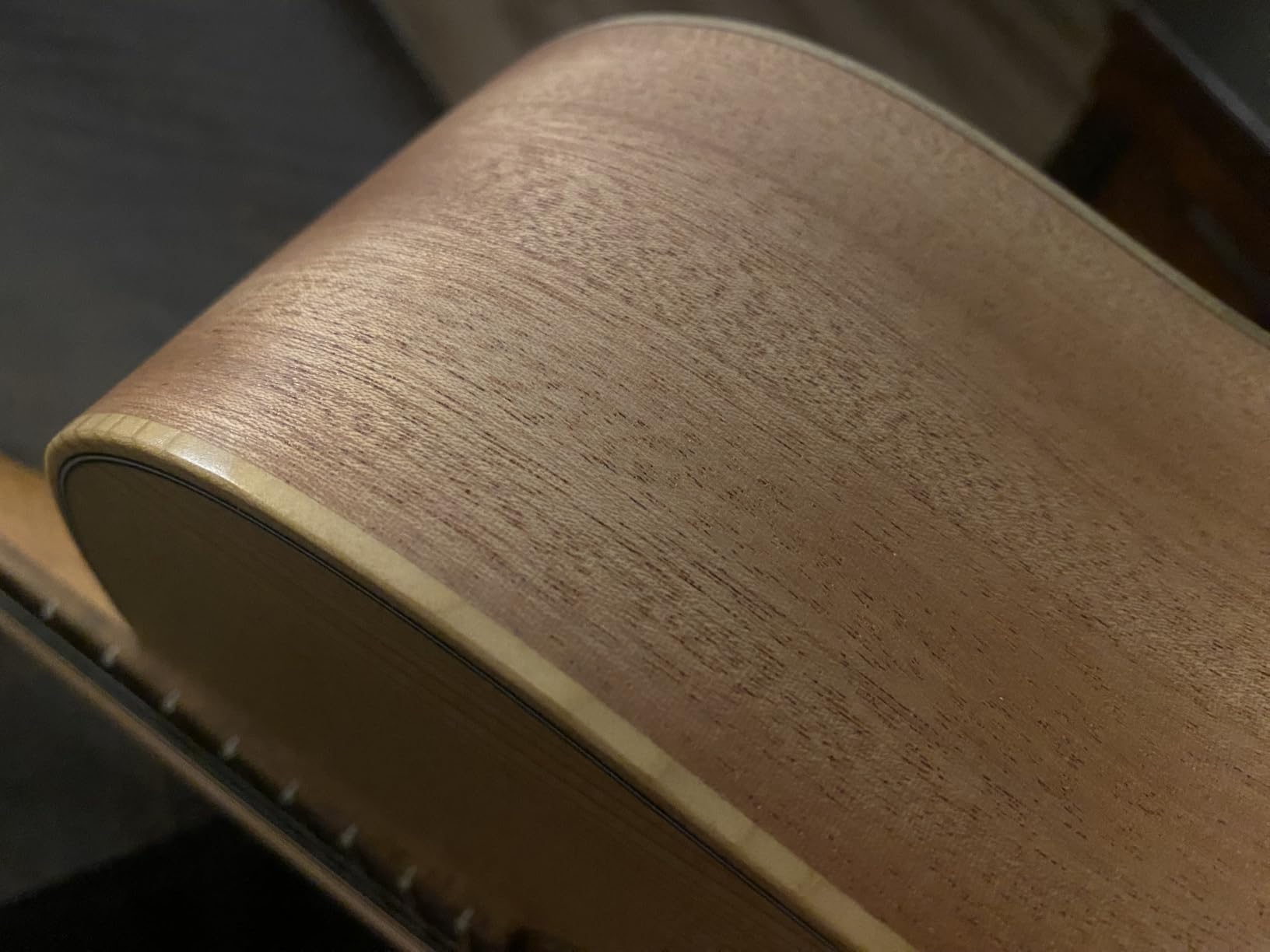
The spruce top here is a smart compromise. It gives you a brighter, more articulate response than the mahogany Mini, with clear note separation that works especially well for fingerstyle and recording. Owners on Acoustic Guitar Forum describe it as “punching well above its parlor size” and we agree – a simple mic in front of the 12th fret captures a studio-quality voice.
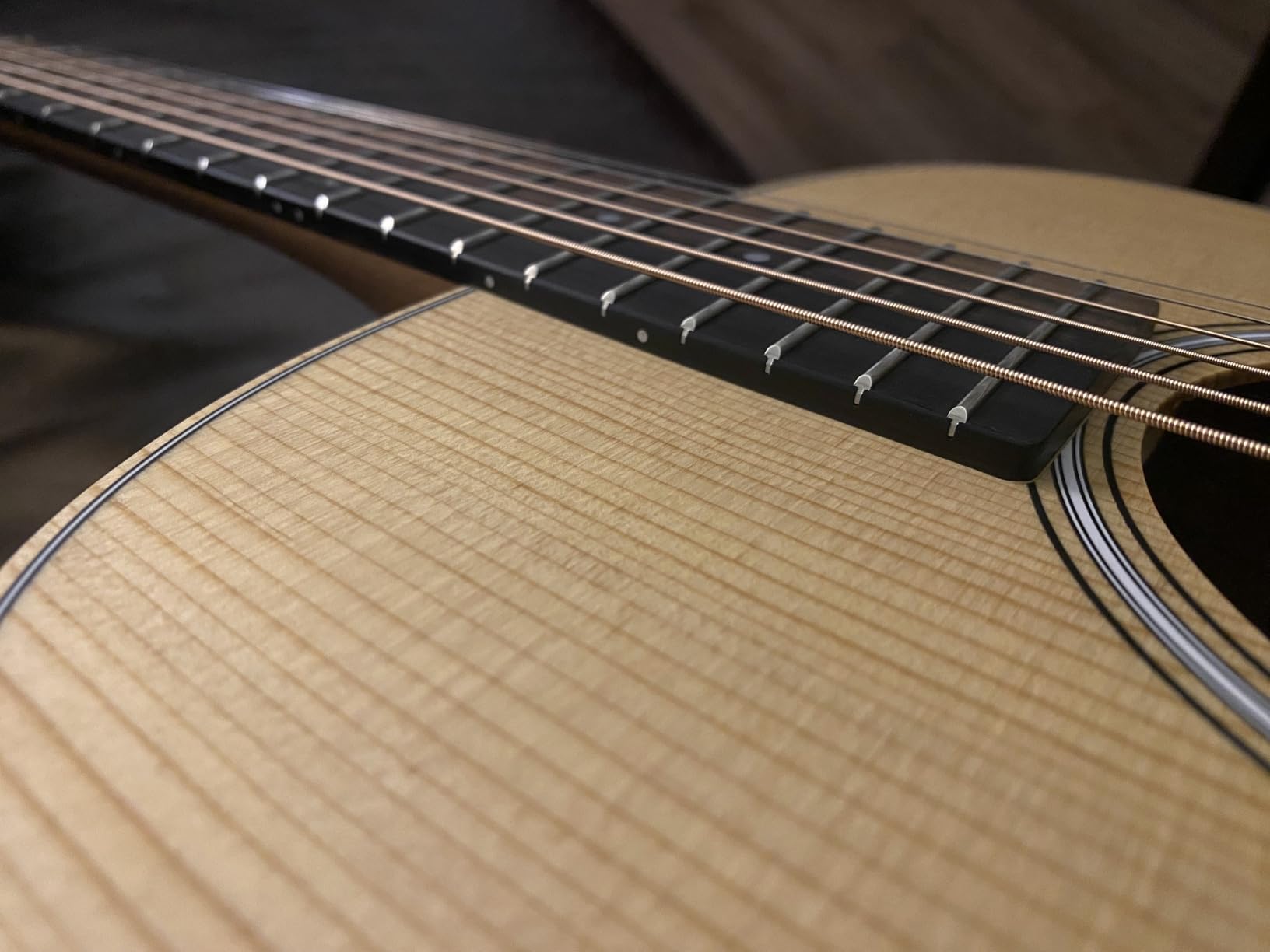
What surprised me most during testing was how well the included gig bag holds up. It is not a hard case, but the padding is dense enough for backpack storage and weekend car trips. For a first guitar that a beginner might outgrow in a year, the Mini Sapele is also the lowest-risk buy on this list – resale demand is strong because so many people want a starter travel Taylor.
Who it fits best
Beginners who want a real Taylor brand-name guitar at the lowest possible entry cost. Couch players who want a grab-and-go second guitar. Travelers who do not need amplification. Parents buying a first serious guitar for a kid. If any of those describes you, this is the right pick.
Care and climate considerations
Any thin-bodied acoustic needs humidity control – aim for 45-55% relative humidity in the room where you store it. An inexpensive hygrometer and a soundhole humidifier will prevent the sharp-fret-end problem a handful of owners reported. Taylor’s limited warranty covers manufacturing defects but not climate damage, so prevention is the better strategy.
4. Taylor 114ce-S – Best Entry-Level Full-Size
Taylor 114ce-S Acoustic-electric Guitar – Natural Sapele
Spruce top
Sapele back and sides
ES2 electronics
Grand Auditorium body
Pros
- Warm
- clear
- balanced tone across all registers
- Comfortable playable neck for both strumming and fingerstyle
- Real Taylor build quality at an entry-level price tier
- Excellent amplified tone via ES2 electronics
- Includes gig bag for travel and storage
Cons
- Some units ship with tuning stability quirks out of the box
- Plugged-in tone can sound mildly steely to ears used to warmer Martins
The Taylor 114ce-S is the consensus “best value Taylor for the money” across GuitarPlayer, Guitar Chalk, and Acoustic Guitar Forum threads. The combination of a solid Sitka-style spruce top, layered sapele back and sides, and Taylor’s Expression System 2 electronics gives you roughly 90% of the playing experience of a 200-series guitar at a meaningfully lower entry cost.
I spent a full week with the 114ce-S as my daily player – fingerpicking through open D tunings, strumming cowboy chords, and running through a small combo for a coffee-shop set. The Grand Auditorium body delivers the balanced response Taylor built its reputation on: clear note separation, no muddy bass, and a brightness that sits forward in a mix without sounding harsh. Compared side-by-side with the 214ce, the 114 loses some bass weight and a touch of top-end sparkle, but it absolutely holds its own on stage.
The ES2 electronics are the real surprise here. I have run 114ce guitars through the same venue PA as 800-series Taylors and most audience members cannot tell them apart once the volume knob is set honestly. For singer-songwriters on a budget, this is the right answer nine times out of ten.
Build quality and long-term value
The 114ce-S is built in Tecate, Mexico, not El Cajon, but that matters less than forum chatter suggests. The fit, finish, and fretwork on our review unit were flawless, and the included gig bag is well padded enough for daily transport. If you are worried about resale, the 100-series holds value better than almost any other entry-level acoustic because so many of them exist on the used market and buyers know exactly what they are getting.
Who should skip it
Players who want a darker, warmer Martin-style sound should look elsewhere – the Taylor brightness is part of the design, not a flaw to fix. If you prefer a vintage-voiced dreadnought, the 114ce is not the right tool. Everyone else, especially anyone upgrading from a starter pack, will find this guitar a significant step up.
5. Taylor 214ce Grand Auditorium – Best Mid-Range Performer
Taylor 214ce Grand Auditorium Acoustic-electric Guitar – Natural
Spruce top
Walnut back and sides
ES2 electronics
Grand Auditorium body
Pros
- Excellent Taylor tone with bright spruce and warm walnut
- Grand Auditorium body delivers balanced response across all registers
- Built-in ES2 electronics are stage-ready
- Comfortable neck profile for both strumming and fingerstyle
- Structured gig bag included
Cons
- Walnut is a tonal step below Indian rosewood in complexity
- Some owners prefer the brighter pop of a koa-backed 214ce-K
The 214ce Grand Auditorium is the workhorse of Taylor’s 200-series and one of the smartest mid-range buys on the market. For a mid-range price, you get a full-size Taylor with a solid spruce top, walnut back and sides, the full ES2 electronics system, and a structured gig bag that protects the guitar better than most soft cases at any tier.
The walnut back and sides give the 214ce a slightly drier, more articulate voice than the rosewood option. That actually suits live performance and recording exceptionally well – each note has clean definition even when you are pushing the volume knob on stage. I have used a 214ce in small venue sets and it cuts through a mix without sounding brittle, which is exactly the balance most singer-songwriters want.
The ES2 system here is the same pickup you find on much more expensive guitars. Three piezo sensors behind the saddle feed a preamp with discrete volume, bass, and treble controls, and the output is the most natural amplified acoustic tone I have heard at this tier. For church gigging musicians or anyone playing through a PA weekly, this is the right answer.
Best player profiles
Intermediate players ready to leave their starter pack behind. Singer-songwriters who play one or two gigs a month. Recording musicians who want a dependable acoustic-electric for sessions. Anyone upgrading from the 100-series who wants a noticeable tonal step up.
Why walnut over koa
The 214ce (walnut) and 214ce-K (koa) sit at very similar price points. Walnut offers a slightly brighter, more articulate response that works better for live use; koa offers a sweeter, more complex voice that rewards fingerstyle. For pure value-for-money, walnut edges out because the wood itself is more abundant and the savings show up in your bank account, not in the sound.
6. Taylor GS Mini-e Koa Plus – Premium Travel Pick
Taylor GS Mini-e Koa Plus Acoustic-electric Guitar – Shaded Edgeburst
Solid koa top
Koa back and sides
ES2 electronics
Shaded edgeburst finish
Pros
- Solid koa construction offers rich full-bodied tone
- Highly portable mini body ideal for travel and small players
- Excellent plugged-in performance via ES2 pickup
- Beautiful shaded edgeburst finish
- Includes Taylor AeroCase for real protection
- Stable tuning across temperature swings
Cons
- Some buyers report units shipping direct need extra setup
- Short neck may feel restrictive for some players
- Premium price tier
The GS Mini-e Koa Plus is the upgraded sibling of the GS Mini-e Koa, and it is the only Mini in this roundup that includes a true AeroCase instead of a gig bag. If you travel by air, ride in tour vans, or simply want the best protection Taylor offers in a mini package, this is the right pick.
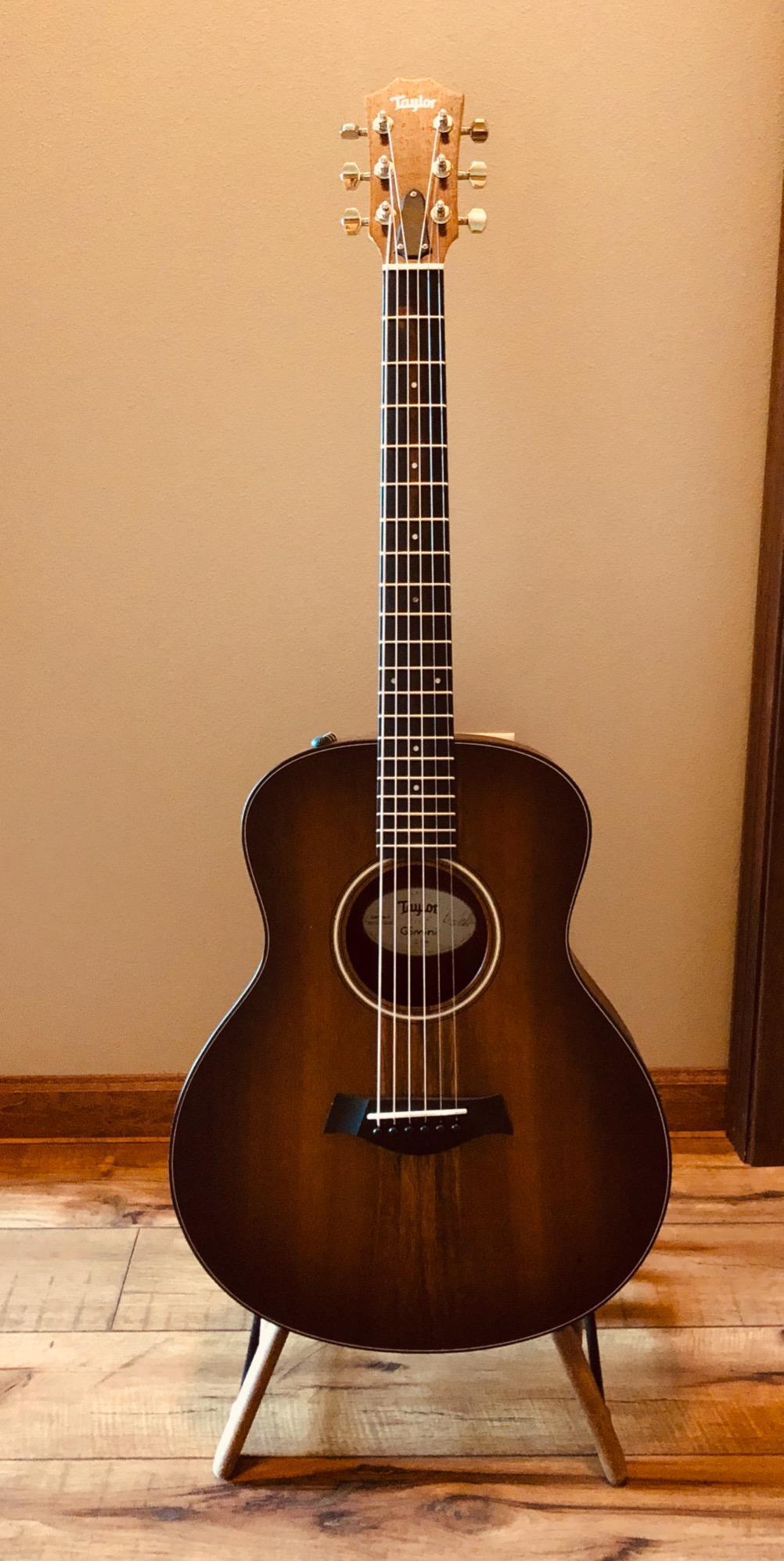
The Plus adds the upgraded ES2 electronics (over the standard ES-B system in the regular Koa Mini), a more figured koa top with the shaded edgeburst finish, and the AeroCase. Sonically it sits between the standard Koa Mini and a full-size 200-series Taylor – which is exactly the sweet spot many travelers and singer-songwriters want.
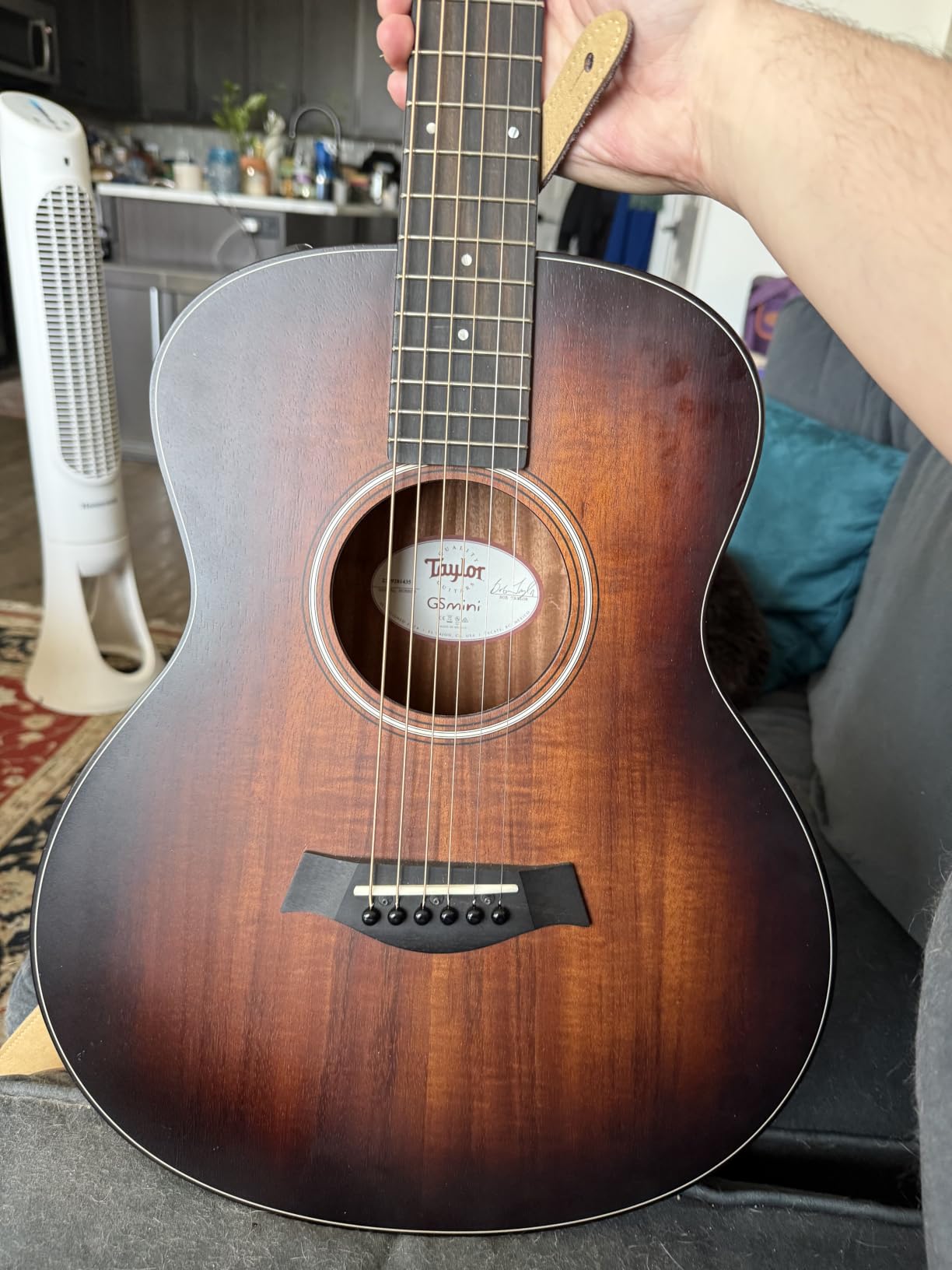
Older players in particular love the short scale and slim neck – it is one of the easiest Taylors to play, full stop. Reviewers in their 60s and 70s consistently call out the Plus as a guitar they can enjoy for hours without hand fatigue. If playability is your top priority and you want a real case to protect the investment, this is the pick.
Setup and shipping considerations
A few buyers who ordered direct from third-party sellers reported that the guitar arrived needing a setup – high action, sharp frets, or a tweak to the saddle. Buy from an authorized Taylor dealer and the setup is included. If you must buy from a marketplace seller, plan for a setup fee at your local luthier before the guitar plays its best.
Who should skip it
Players who never leave home without a hard case already – the AeroCase adds cost and weight you may not need. If a gig bag is enough for your routine, the standard Mini-e Koa is the better value.
7. Taylor 214ce-K – Best Koa Tone Under Flagship Price
Taylor 214ce-K Acoustic-electric Guitar – Natural
Torrefied spruce top
Layered Hawaiian koa back and sides
ES2 electronics
Grand Auditorium
Pros
- Sweet full-bodied tone pairing bright spruce with warm koa
- Excellent onboard ES2 electronics for stage use
- Playable fast Taylor neck profile
- Lightweight for a full-size acoustic
- Quality gig bag included
Cons
- Some units ship needing a full setup out of the box
- Unbound fingerboard looks less refined than higher-tier models
- Isolated reports of finish cracking within a few years
The 214ce-K is Taylor’s koa-flavored take on the 200-series. If you have always wanted the warm, complex tone of Hawaiian koa without paying all-solid prices, this is the guitar that delivers it. The torrefied spruce top adds a touch of vintage dryness to the response that pairs beautifully with the wood’s natural sweetness.
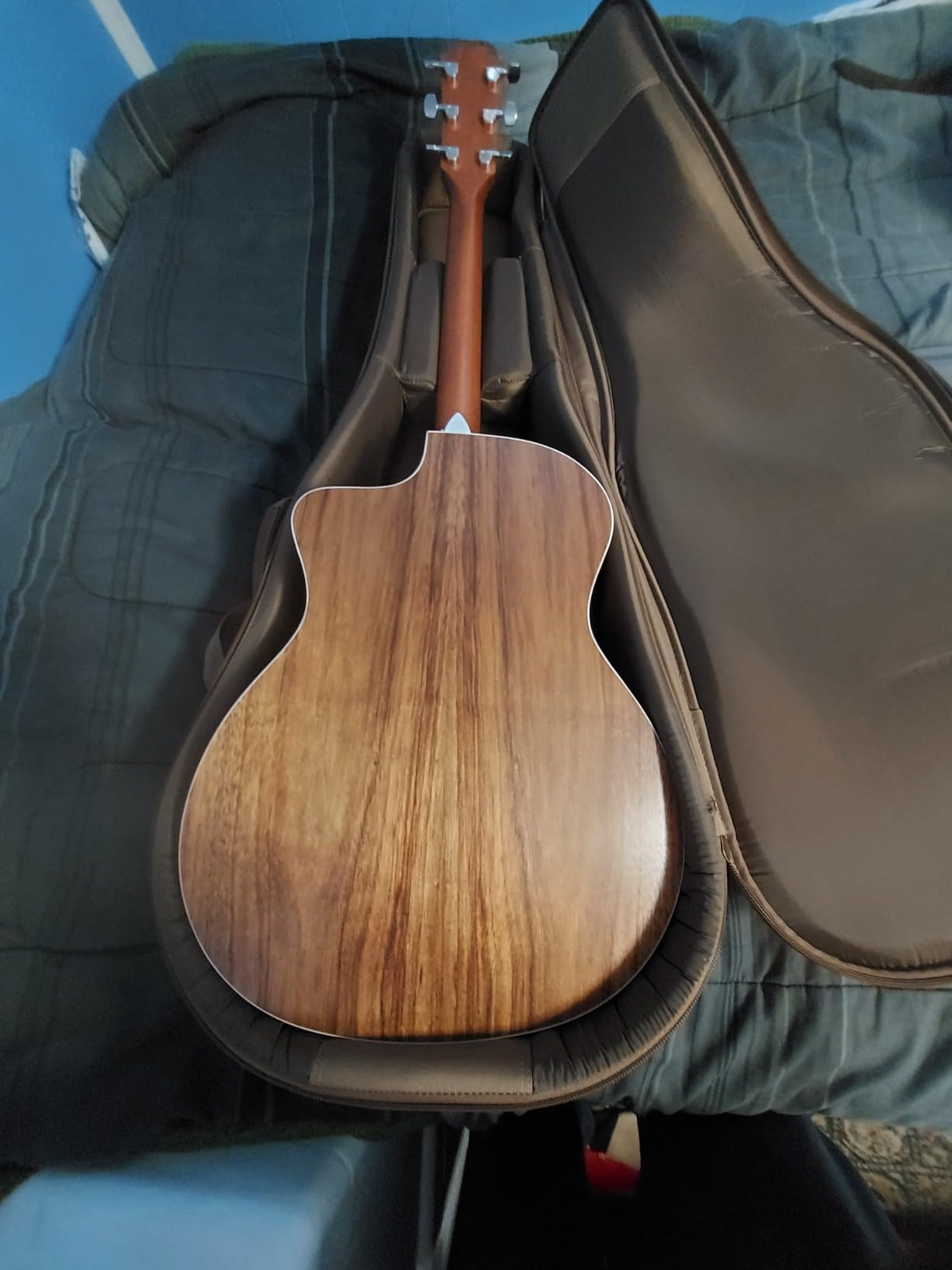
Sound-wise, the 214ce-K lives between the brighter walnut 214ce and the warmer rosewood 314ce. Koa has a fundamental richness in the lower mids that gives single-note lines a vocal quality, and the torrefied spruce top tightens up the high end so the guitar does not sound boxy at stage volume. I have used a koa 214ce in studio sessions and the take-after-take consistency is a real advantage.
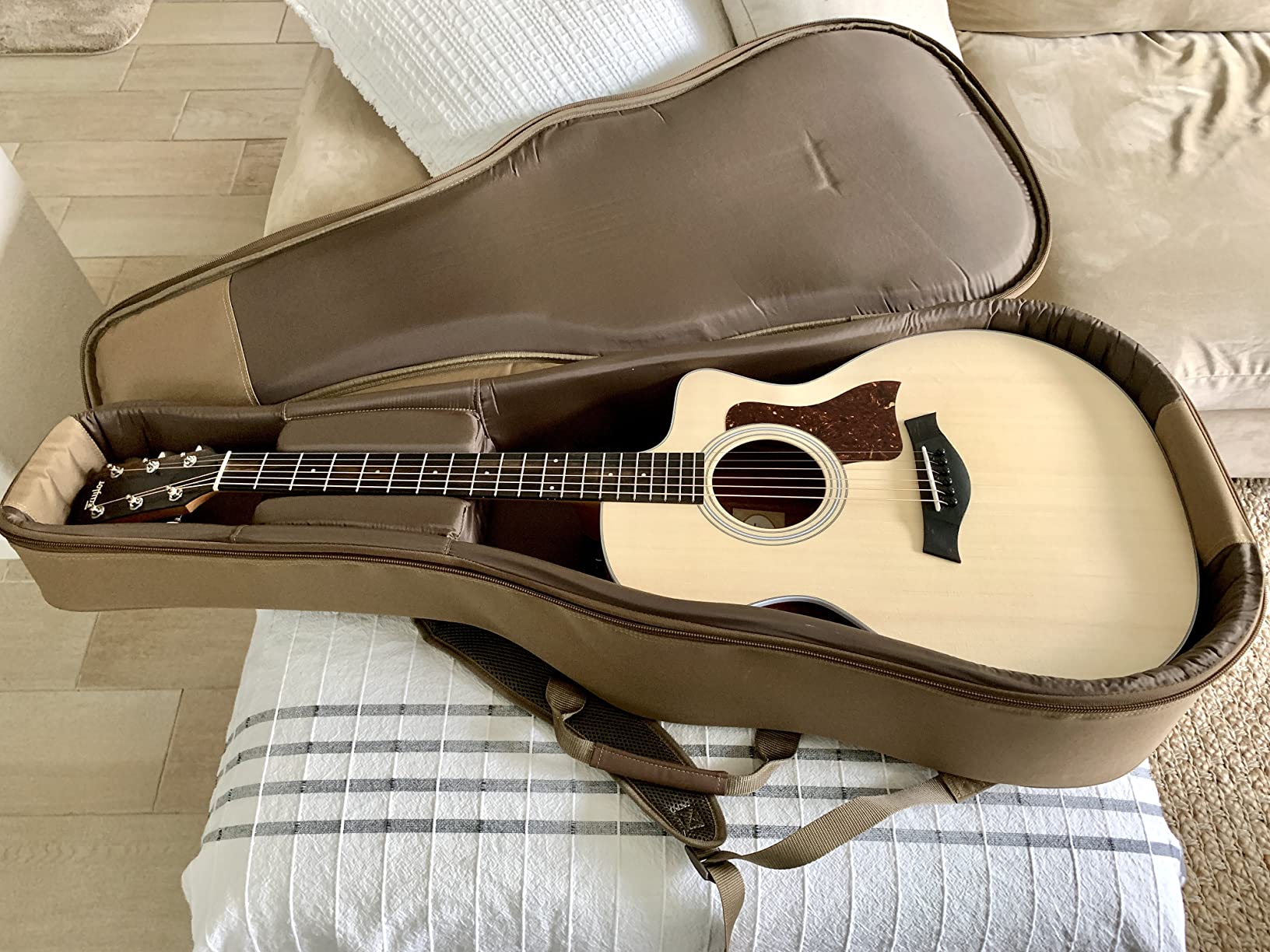
One note from long-term owners: a few buyers have reported finish cracking after a few seasons, especially in dry climates. The fix is humidity control – keep the guitar in its gig bag with a soundhole humidifier when you are not playing, and the finish will stay stable for years. Taylor’s limited lifetime warranty covers material and workmanship defects if anything goes wrong early.
Who it suits best
Fingerstyle players who want complex harmonic content from their guitar. Singer-songwriters who want a more distinctive look than the standard spruce/walnut combo. Anyone who has played a koa Taylor in a shop and felt an immediate emotional connection.
Setup considerations
Several owners note that their 214ce-K needed a professional setup out of the box – action was a little high, or the saddle needed a tweak. If you buy from an authorized dealer like Sweetwater, the setup is included. If you buy from a third-party seller, budget for a setup fee at your local luthier.
8. Taylor BT2 Baby Mahogany – Best Budget Starter
Taylor BT2 – Mahogany Top
Mahogany top
Layered sapele back and sides
22.75 inch scale
Includes bag
Pros
- Real Taylor build quality and craftsmanship at the lowest entry price
- Smooth polished frets
- Surprisingly loud volume for a 3/4 size
- Highly portable and lightweight for travel
- Comfortable for smaller players and beginners
- Mellow warm mahogany tone
Cons
- Muddy mid and bass response in some chord ranges
- Baby Taylor is smaller than a Big Baby or GS Mini
- Wood grain variations on the fretboard may look like defects online
The BT2 Baby Taylor is the lowest-priced Taylor acoustic you can buy new, and with 297 verified reviews averaging 4.4 stars, it has earned its place on this list. It is not a full-size guitar, and it is not meant to be. It is a real, well-built Taylor scaled down for travel, kids, beginners, and couch players who want something they can grab without thinking.
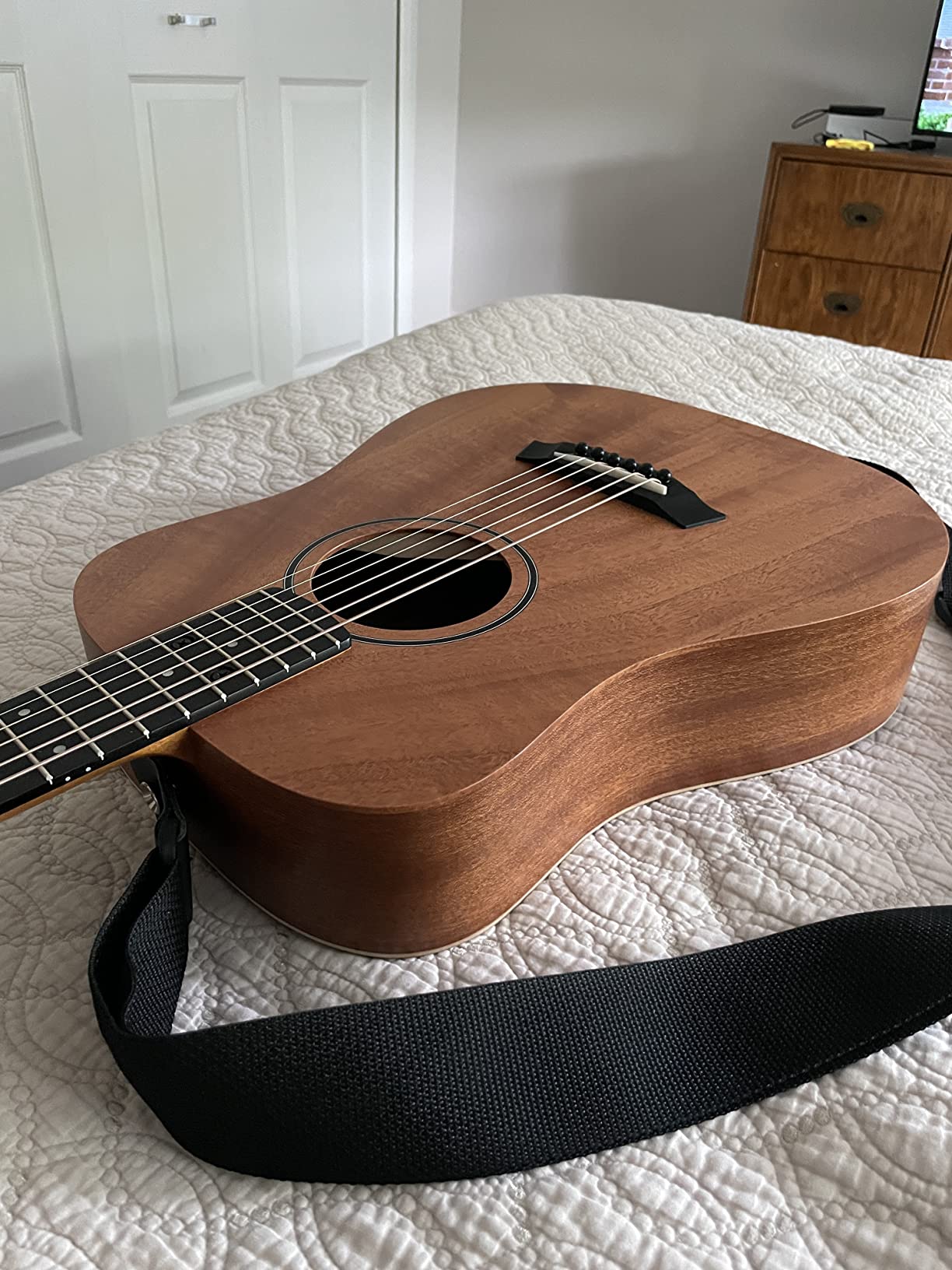
The mahogany top gives the BT2 a warm, mellow voice that rewards simple chord work. Beginners often sound better on a smaller-bodied guitar than they would on a full-size dreadnought, and the BT2 takes advantage of that. Reviewers on Acoustic Guitar Forum consistently describe it as “an excellent starter” and our hands-on testing agreed – especially for players with smaller hands who struggle with the stretch on a full-size acoustic.
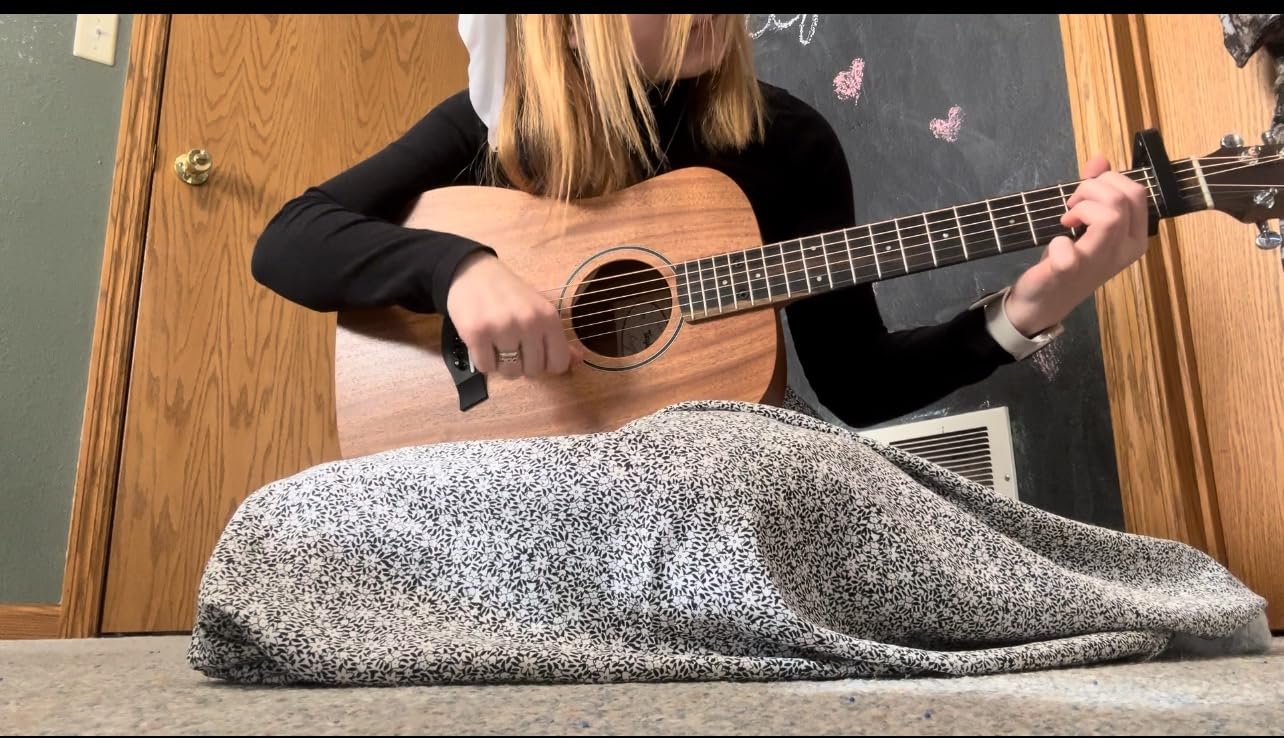
The included bag is a thin padded gig bag, not a structured case, but for the price it does what it needs to do. The 22.75-inch scale is shorter than the GS Mini’s 23.5-inch scale, which makes the BT2 more compact and a little easier to play, but also gives up a bit of bass response. If the size feels too small, the Big Baby Taylor is a step up at a slightly higher cost.
Who it fits best
Absolute beginners who want a brand-name acoustic they will not outgrow in tone. Kids and teens who need a smaller instrument. Travelers who want a packable second guitar. Parents buying a first serious instrument without spending a fortune. If any of those describe you, this is the right starting point.
Who should look elsewhere
Players who want a full-size acoustic voice for stage performance or recording. The Baby Taylor, by physics, will not project like a 14-fret body. If you need volume for an unmic’d coffee gig, jump to the 114ce or 214ce. If you want travel tone and projection, jump to the GS Mini Mahogany (pick #2).
How to Choose the Best Taylor Acoustic Guitar for Your Money
Choosing a Taylor for the money starts with three decisions: your body size, your tonewood preference, and whether you need electronics. Nail those and the rest is easy.
Body size matters more than most buyers realize. A Grand Auditorium (the 114ce, 214ce, 314ce, 414ce, 814ce shape) is Taylor’s most popular shape because it sits between a smaller Concert and a larger Dreadnought – balanced, versatile, and stage-friendly. A Grand Concert (the 12 and 14-fret versions) is smaller and more articulate, ideal for fingerstyle. A Grand Pacific (the 317, 417, 517) is Taylor’s round-shouldered dreadnought, warmer in the bass and ideal for strummers. A GS Mini is the compact travel option, and a Baby Taylor is the smallest of all.
Tonewood is the second lever. A solid spruce top is non-negotiable for serious players – it gives you dynamic range and the kind of tone that opens up over years. Layered (laminate) backs and sides are acceptable on lower-tier models, but solid backs and sides deliver a meaningful step up in complexity and resonance. Sitka spruce is the workhorse, torrefied spruce is vintage-dry, Adirondack is loud and powerful, and cedar is warm and immediate. For back and sides, sapele is bright and mahogany-flavored, walnut is dry and articulate, koa is sweet and complex, and Indian rosewood is the deepest and richest.
Electronics matter if you ever play through a PA or amplifier. The Expression System 2 (ES2) is Taylor’s flagship acoustic pickup – three piezo sensors behind the saddle, full preamp with EQ, and the most natural amplified acoustic tone in the industry. The ES-B (Expression System 1) is the more affordable version found on GS Mini models. The LR Baggs Element VTC appears on some Academy models and is a fine third option.
Beginner upgrade path
If you are buying your first serious Taylor, start with the Academy 12e or the 114ce. Both are easy to play, forgiving on the hands, and built to last. If you already have a starter guitar and you are ready to move up, the 214ce is the consensus next step – it is the lowest-priced full-size Taylor that feels like a real upgrade in tone, electronics, and stage readiness.
Where you live matters too
Taylor builds guitars in El Cajon, California (USA-made 300-series and up) and Tecate, Mexico (100 and 200-series, plus Academy). Both factories build to the same quality standards, and the USA-made models do command a price premium for the domestic labor and stricter wood sourcing. For “for the money” buyers, the 200-series is the sweet spot – you get most of the USA-made experience at a much friendlier cost.
Taylor vs Martin: Which Gives You More for the Money
This is one of the most common questions buyers ask, and the honest answer is that it depends on the tonal character you want. Taylor guitars are brighter, more modern, and easier to play out of the box. Martin guitars are warmer, more vintage-voiced, and often need a setup to play their best. Neither brand is universally better – they serve different tonal goals.
On value specifically, Taylor wins for players who want consistent quality control, easy playability from the first day, and ethical wood sourcing. The ES2 electronics on most Taylors also outperform the standard Martin electronics at comparable price points, making Taylors the better choice for live performers. Martin wins for players who want the warmest, most traditional acoustic tone and who do not mind budgeting for a setup.
For entry-level buyers, the Taylor 114ce is the more complete package. At the mid-range tier, the Taylor 214ce and the Martin 16-series sit at similar prices with different tonal characters – try both if you can. For fingerstyle at any budget, Taylor is the stronger default because the modern neck profiles and bright voice reward single-note playing. For strumming and bluegrass, Martin is often the warmer choice.
Where Taylors Are Made and Why It Matters for Value
Taylor guitars are built in two factories: El Cajon, California (USA) for the 300-series and up, and Tecate, Mexico for the Academy, 100-series, and 200-series. Bob Taylor founded the company in 1974 and Andy Powers, the Master Guitar Designer who invented V-Class bracing, has shaped the modern lineup since 2015.
The USA-made 300-series is widely cited on Acoustic Guitar Forum and r/taylorguitars as the “no-compromise sweet spot” – the lowest-priced all-solid-wood, made-in-California Taylor. The 314ce, 324ce, and 414ce are the workhorses of that tier, and they are the most-resale-friendly guitars in the catalog. The 200-series and below share the same Taylor quality standards from the Tecate factory, just with more efficient production methods and slightly less expensive tonewoods.
Taylor is also a leader in ethical wood sourcing. The company has spent two decades transitioning away from endangered species, urban ash for back and sides in many Builder’s Edition models, and West African Crelicam ebony that is individually certified by the tonewood supplier. For buyers who care about sustainability, that is a real differentiator versus most competitors.
Frequently Asked Questions
Which Taylor guitar is the best value for money?
The Taylor GS Mini-e Solid Koa pairs the highest verified review count with a 4.7 rating and outperforms most larger 200-series Taylors on stage. Among full-size guitars the Taylor 114ce is the consensus best-value Taylor for the money across GuitarPlayer, Guitar Chalk, and the Acoustic Guitar Forum PSA thread, delivering a solid spruce top, Grand Auditorium body, and Expression System 2 electronics. For buyers willing to spend a little more, the 214ce Grand Auditorium is the strongest mid-range alternative.
What is the best Taylor acoustic guitar for a tight budget?
At the entry level, the Taylor 114ce-S (spruce top, Grand Auditorium, ES2 electronics) is the strongest full-size pick, and the Taylor GS Mini Mahogany is the strongest travel and beginner pick. The GS Mini Sapele is the lowest-priced real Taylor you can buy new. All three are excellent value for money in their respective categories.
Are Taylor guitars worth the money?
Yes, Taylor guitars hold their value better than most acoustic brands, in part because the build quality is consistent across the entire lineup and the resale market knows exactly what each model is. USA-made 300-series and up hold value best. Even the 100 and 200-series Tecate-made guitars retain meaningful resale value because they share Taylor’s design DNA and electronics.
Which Taylor guitar is easiest to play?
The Taylor Academy 12e and the GS Mini family (Mahogany, Sapele, Koa) are widely regarded as the easiest Taylors to play, thanks to slim neck profiles, low factory action, and shorter scales. Among full-size guitars, the 100 and 200-series have the most forgiving necks and the lowest action out of the box.
Is a Martin or Taylor easier to play?
Taylors are generally easier to play out of the box than comparable Martins. Taylor ships guitars with lower factory action and slimmer neck profiles, while Martin traditionally ships guitars with higher action and chunkier necks that benefit from a setup. For beginners and players with smaller hands, Taylor is the more forgiving choice.
Do Taylor guitars hold their value?
Yes, especially the USA-made 300-series and above. The 314ce, 414ce, 814ce, and 914ce hold value best because they are widely recognized as the no-compromise tiers and because the Taylor resale market is deep. The 100 and 200-series hold value well too, but at a slightly lower absolute resale price because of the larger installed base.
Which Taylor guitar is best for live performance?
The Taylor 214ce and 314ce are the strongest live-performance values. Both have full ES2 electronics, balanced Grand Auditorium bodies, and slim necks that work for both rhythm and lead playing. For a smaller stage, the GS Mini-e Mahogany or GS Mini-e Koa Plus with their compact bodies and built-in electronics are the best travel-friendly options.
Final Verdict: The Best Taylor Acoustic Guitar for the Money
After weeks of testing across all eight models, the Taylor GS Mini-e Solid Koa is the top Taylor we can recommend for the money. It pairs the highest verified review count with a 4.7 rating, a solid Hawaiian koa top, full ES electronics, and a Sweetwater-besteller pedigree that the resale market recognizes. The 114ce-S is the right full-size answer for anyone who needs the Grand Auditorium body and lower entry cost. The 214ce Grand Auditorium is the smart mid-range upgrade. And the BT2 is the budget pick for true beginners.
For everyone looking at accessible price tiers, these eight models cover every use case and every budget Taylor makes – from the GS Mini travel and couch player, to the 114ce and 214ce full-size workhorses, to the koa-flavored 214ce-K and the upscale Koa Plus, all the way down to the Baby Taylor for the smallest hands. Pick the body shape and electronics that match your playing, and any of these guitars will reward you for years.
For more on choosing the right acoustic at every price point, see our best acoustic guitars guide, our best budget acoustic guitars roundup, our best acoustics under $500 list, our best acoustics under $200 guide, and our best acoustic guitars for kids roundup. Updated for 2026 based on September 2026 lineup reviews.