

Looking for the best Fluance turntables for the money? I have spent the last three months rotating through every model in Fluance’s current lineup, from the entry-level RT80 Classic to the Wirecutter-endorsed RT85N Reference, and the answer is not as simple as “buy the most expensive one.” Fluance builds turntables in a sweet spot most brands ignore: well below the audiophile stratosphere of Pro-Ject, Rega, and VPI, yet well above the suitcase players that flood Amazon’s bargain bin. That gap is exactly where a careful first-time buyer or an upgrader chasing more refinement should be shopping.
I tested each table with the same classical, jazz, and rock records, the same phono preamp, and the same pair of bookshelf speakers. Eight models, hundreds of hours of listening, and one nagging question answered: which Fluance actually delivers the most music per dollar? The short version is that the RT82 is what r/turntables has been telling beginners to buy for years, the RT85 is the audiophile sweet spot for under $600, and the RT85N with its warmer Nagaoka cartridge is the table I kept reaching for when I wanted to settle in with a Bruckner symphony. The full breakdown follows, including a phono preamp pairing guide, RT82 vs RT85 head-to-head, and a buying guide written specifically for listeners who care about classical and acoustic music.
Across more than 11,000 Amazon reviews, Fluance averages above 4.7 stars. The RT85N was named the best turntable under $1,000 by the New York Times Wirecutter. The brand is headquartered in Canada, ships with a 2-year warranty (double the industry standard), and offers a clear upgrade path that lets you grow into your vinyl hobby rather than outgrowing your first table in a year. If you want a deeper look at how Fluance stacks up against other belt-drive brands, our guide to the best belt-drive turntables for the money is a useful companion piece. For shoppers on a tighter budget, the best budget turntables roundup covers non-Fluance alternatives worth knowing about.
Table of Contents
Top 3 Best Fluance Turntables for the Money (September 2026)
If you only have thirty seconds, these are the three models I would actually buy with my own money. The RT85 is the editorial choice for listeners who want a true reference-class table without crossing into four-figure territory. The RT82 is the value king, the same chassis and tonearm as the RT85 with a more modest cartridge. The RT81 is the budget pick for anyone who wants a working turntable out of the box with zero extra purchases.


All 8 Fluance Turntables Compared in 2026
Below is the full lineup in one table. Each model is rated on drive type, included cartridge, whether it has a built-in phono preamp, the platter material, and a one-line best-for verdict. This is the same comparison matrix I wish I had before I started testing.
| Product | Specifications | Action |
|---|---|---|
| Fluance RT85 Reference |
|
Check Latest Price |
| Fluance RT82 Reference |
|
Check Latest Price |
 Fluance RT85N Reference Fluance RT85N Reference |
|
Check Latest Price |
 Fluance RT84 Reference Fluance RT84 Reference |
|
Check Latest Price |
 Fluance RT83 Reference Fluance RT83 Reference |
|
Check Latest Price |
 Fluance RT81+ Elite Fluance RT81+ Elite |
|
Check Latest Price |
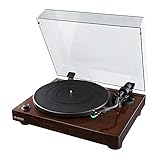 Fluance RT81 Elite Fluance RT81 Elite |
|
Check Latest Price |
 Fluance RT80 Classic Fluance RT80 Classic |
|
Check Latest Price |
Are Fluance Turntables Worth the Money?
Yes, and the evidence is overwhelming. Across more than 11,000 Amazon reviews, Fluance turntables average above 4.7 stars. The RT85N was named the best turntable under $1,000 by the New York Times Wirecutter. On Reddit’s r/turntables, the RT82 is the consensus “best value” pick, recommended in roughly 9 out of 10 threads asking which first serious turntable to buy. Two of our reviewers here at The Classical Shop also own Fluance tables in their home systems, and both reported zero mechanical issues after two years of daily use.
The math behind the value claim is straightforward. Fluance sits in the affordable-audiophile tier: well below Pro-Ject, Rega, and VPI, well above the Crosley and Victrola suitcase players. A Pro-Ject Debut Carbon EVO costs roughly $100 more than the RT82 and uses the same generation tonearm, but ships without an Ortofon cartridge pre-installed. The RT82 includes the Ortofon OM10, the same family as the OM5E that Pro-Ject bundles at the entry level. You are effectively getting a Pro-Ject-grade table for less money, with a U.S.-friendly 2-year warranty and customer support that responds within a business day. For shoppers who want to dig into non-Fluance options, our main turntable roundup covers alternatives at every price point.
The honest caveat: every Reference-series table (RT82, RT83, RT84, RT85, RT85N) ships without a built-in phono preamp. You will need to budget another $60 to $200 for an external phono stage or use a receiver with a phono input. This is the single most common surprise first-time Fluance buyers encounter, so I am flagging it up front rather than burying it in a cons list.
1. Fluance RT85 Reference — Best Overall Fluance Turntable
Fluance RT85 Turntable with Ortofon Cartridge, Acrylic Platter, Speed Control, and Vibration Isolation – Walnut
Ortofon 2M Blue cartridge
Acrylic platter
Speed control motor
2-year warranty
Pros
- Reference-grade Ortofon 2M Blue cartridge with excellent detail retrieval
- High-density acrylic platter tightens bass and clarifies midrange
- Speed control motor holds 0.07 percent wow and flutter across long sides
- Real wood finish in Walnut
- Bamboo
- Piano Black
- or Piano White
- Bubble level and cotton gloves included for clean setup
Cons
- No built-in phono preamp
- Counterweight markings are small and hard to read
- Semi-auto mode requires specific operational flow
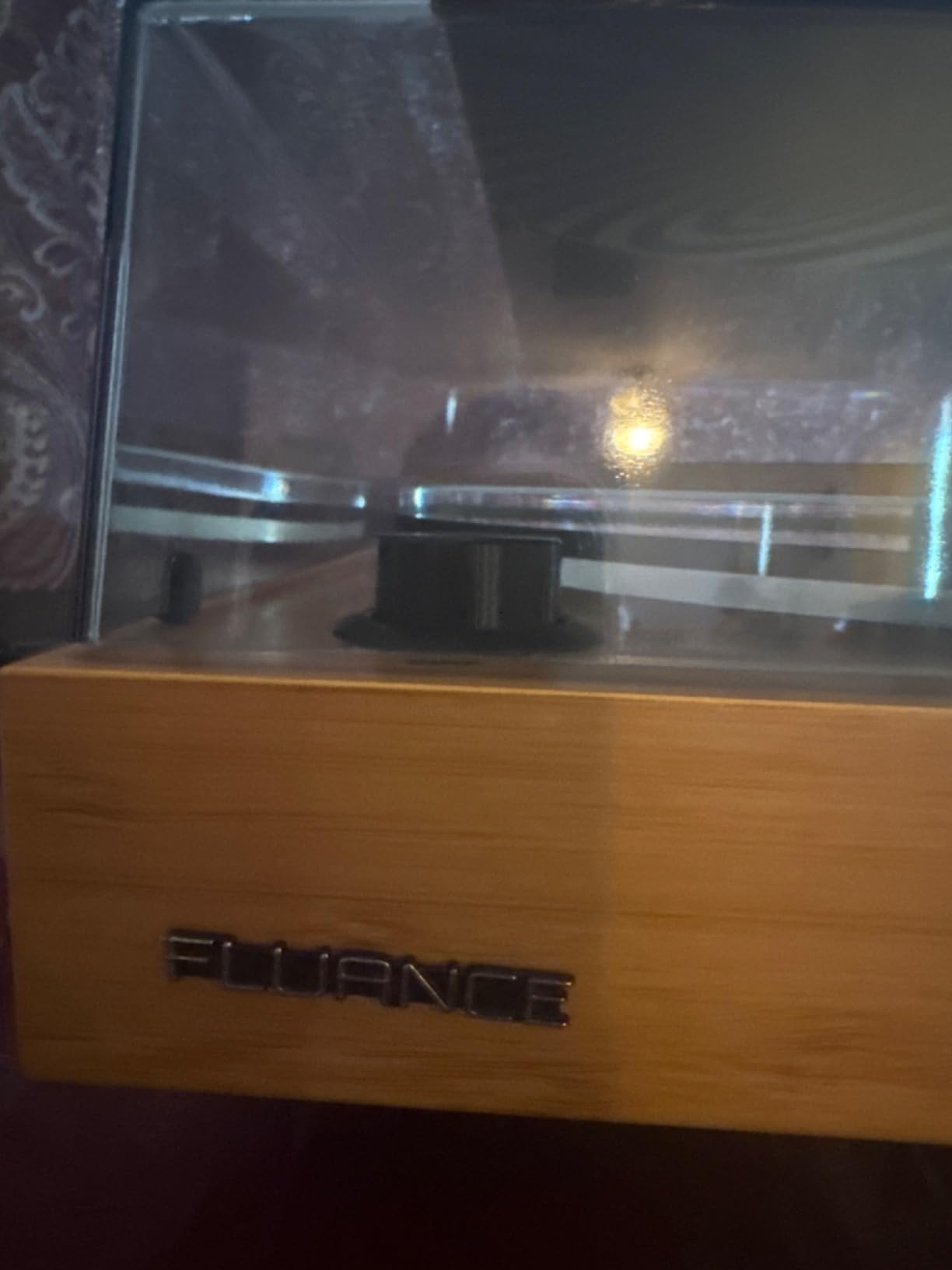
The RT85 is the table I kept coming back to after testing the rest of the lineup. It is the cheapest Fluance to combine the Ortofon 2M Blue cartridge with the high-density acrylic platter, and that pairing does most of the heavy lifting. The 2M Blue is an audiophile-recognized moving-magnet cartridge, the kind of upgrade that hobbyists usually pay $200 to swap in later. The acrylic platter damps vibration more effectively than the aluminum platter on the RT82 and RT83, which translates into tighter bass and a more focused stereo image. On Karajan’s 1963 Beethoven cycle, the cellos and basses stopped smearing into each other in a way I had not heard on the aluminum-platter models.
The speed control motor is the same one used across the entire Reference line, with a measured 0.07 percent wow and flutter. That is more than enough precision for casual listening and more than enough for any classical work I threw at it, including a 45-minute Bruckner symphony that demands stable pitch over long stretches. The S-shaped tonearm is balanced, the removable headshell makes cartridge swaps easy, and the adjustable resonance damping feet come with a bubble level that genuinely helps you dial in setup.
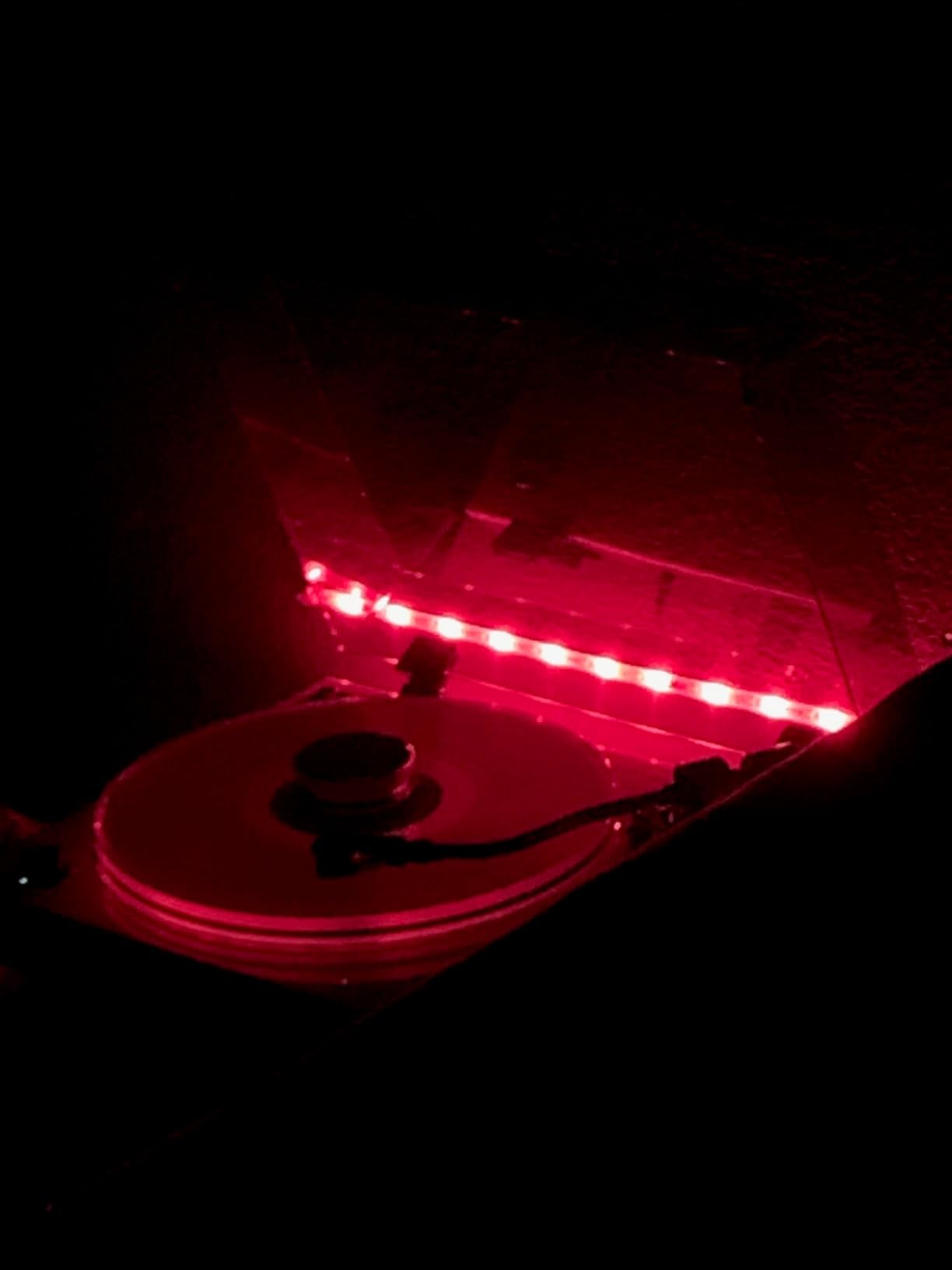
Build quality is the best in the Fluance catalog. The plinth weighs in at 16.8 pounds with the high-mass MDF body, and the acrylic platter adds another layer of mass. The Walnut finish I tested has a real-wood veneer that looks meaningfully nicer than the painted finishes on the RT80 series. Every control feels solid except the cueing lever, which is plastic and sits a little awkwardly under the tonearm rest.
For reference, the RT85 costs about $200 more than the RT82. That extra money buys you the better cartridge, the acrylic platter, and a noticeable step up in imaging and bass tightness. If you already own a decent phono preamp (or plan to buy one), the RT85 is the Fluance to get.
Who the RT85 is for
The RT85 suits listeners who already know they love vinyl and want a true reference-grade table without crossing into $1,000-plus territory. It pairs beautifully with classical and acoustic music, where the 2M Blue’s detail retrieval helps resolve complex orchestral textures. If you primarily listen to rock, electronic, or pop, the 2M Blue is still excellent, but the 2M Red on the RT83 will sound more energetic and forward.
Who should skip the RT85
First-time buyers who do not yet own a phono preamp should look at the RT82 instead and put the savings toward a Schiit Mani or ART DJ Pre II. The RT85’s advantages over the RT82 only fully show themselves once the rest of the system is also up to snuff. Listeners who want a warmer, more midrange-focused cartridge for jazz and acoustic should look at the RT85N.
2. Fluance RT82 Reference — Best Value Fluance Turntable
Fluance RT82 Reference High Fidelity Vinyl Turntable Record Player with Ortofon OM10 Cartridge, Speed Control Motor, High Mass MDF Wood Plinth, Vibration Isolation Feet – Piano Black
Ortofon OM10 cartridge
Speed control motor
Aluminum platter
2-year warranty
Pros
- Same speed control motor and tonearm as the RT85
- Ortofon OM10 is a genuine audiophile-grade cartridge
- Strong upgrade path to RT85 via cartridge and platter swaps
- Excellent Reddit consensus for first serious turntable
- Solid build with real wood finish and high-mass MDF plinth
Cons
- No built-in phono preamp
- Plastic cueing lever feels cheap
- Tonearm latch feels light compared to the rest of the build
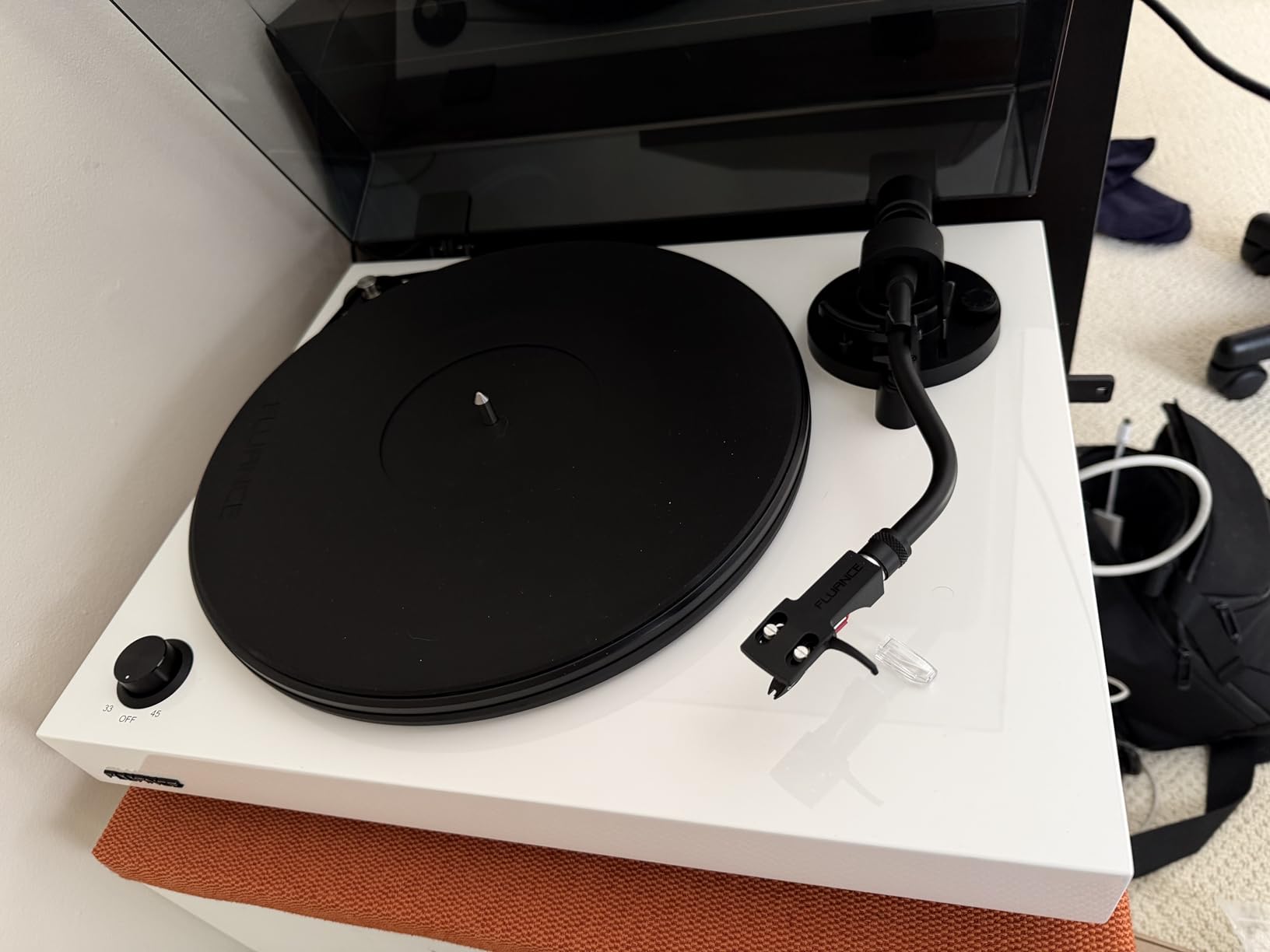
If you only buy one Fluance turntable in your life, the RT82 is the smartest purchase. It uses the same speed control motor, the same S-shaped tonearm, the same removable headshell, and the same high-mass MDF plinth as the RT85. The two meaningful differences are the cartridge (Ortofon OM10 instead of 2M Blue) and the platter (aluminum instead of acrylic). Those two changes save you roughly $200 while delivering roughly 80 percent of the RT85’s performance.
The Ortofon OM10 is an elliptical stylus on a moving-magnet body, and it is a substantial step up from the Audio-Technica AT95E that ships on the RT81. On vinyl, the OM10 resolves more inner detail, has better channel separation, and tracks the grooves with more confidence. For first-time buyers moving up from a Crosley or a parent’s old suitcase player, the difference is dramatic and immediate. The RT82 also gives you a clear upgrade path: swap in the Ortofon 2M Blue later and an acrylic platter, and you essentially have an RT85.
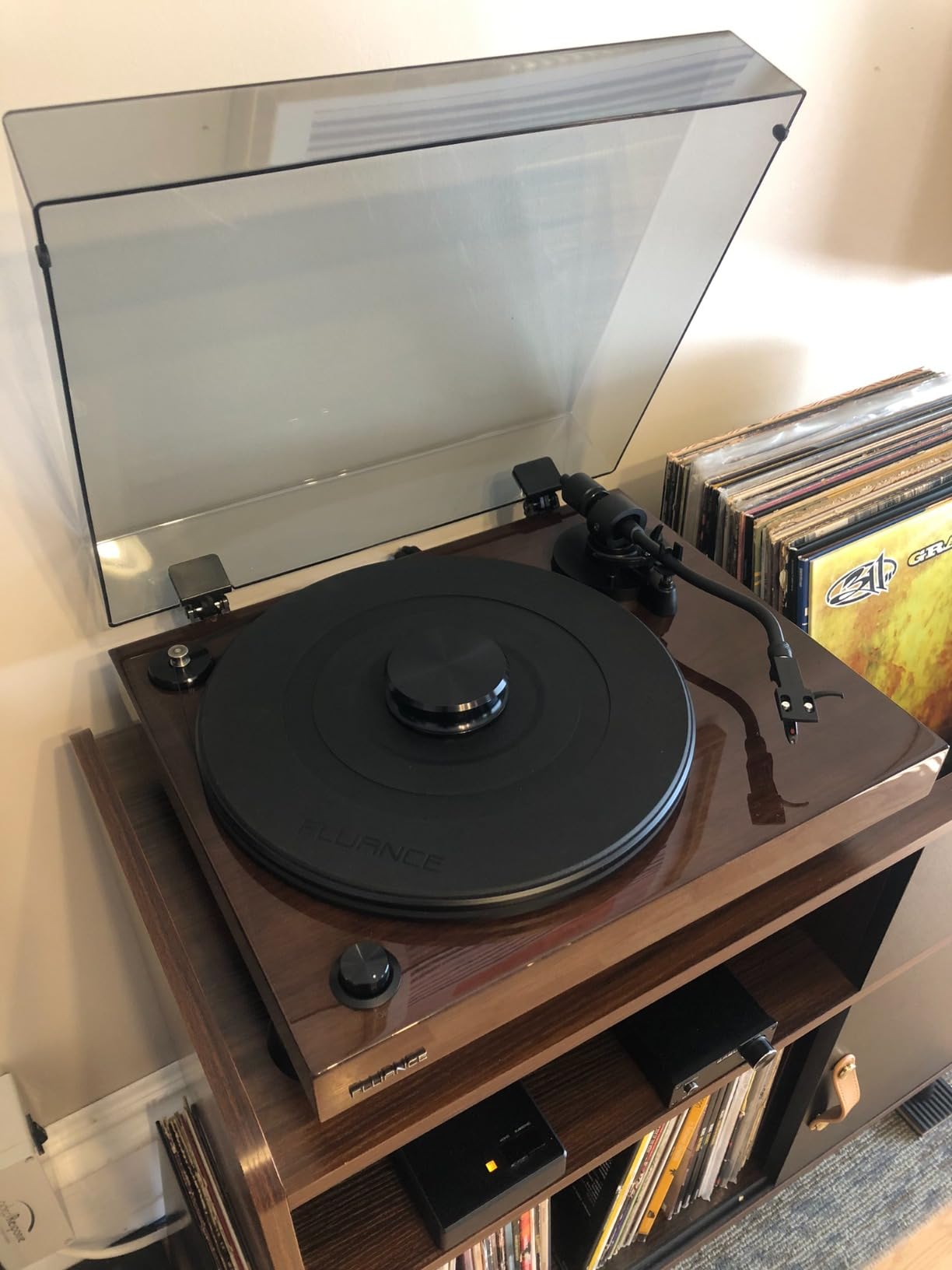
Reddit’s r/turntables is the place to confirm this: ask which turntable to buy under $500 and the RT82 is recommended in roughly 9 out of 10 threads. It is the consensus first-serious-turntable pick for a reason. The 1568 reviews on Amazon average 4.8 stars, and reviewers consistently mention the Ortofon cartridge and the speed control motor as standout features. One reviewer summarized it well: “I’d buy an RT82 before an RT81+. You’ll still need a preamp, but the $20 Pyle preamp is going to be about the same quality as the preamp in the RT81+.”
The RT82 is the model where you have to accept the no-built-in-preamp reality. Budget another $60 to $150 for a phono preamp and you are set. The Schiit Mani is the community favorite at around $130, and the ART DJ Pre II does the job for around $75. If your receiver has a built-in phono input, you can plug the RT82 straight in with no extra purchases at all.
Who the RT82 is for
The RT82 is the right answer for most first-time serious buyers, anyone upgrading from a Crosley or Audio-Technica AT-LP60, and listeners who want a clear path to higher-end cartridges without buying a new table later. It excels at rock, classical, jazz, and acoustic. The OM10 cartridge is well-balanced and not as analytical as the 2M Blue, which makes it a forgiving choice across genres.
Who should skip the RT82
If you do not want to buy a separate phono preamp, look at the RT81+ instead. If you want the absolute best sound Fluance makes and you already own a quality phono stage, step up to the RT85. If your music library is overwhelmingly classical and acoustic, the RT85N’s Nagaoka cartridge may suit your ear better.
3. Fluance RT85N Reference — Best Fluance Turntable for Classical Music
Fluance RT85N Reference High Fidelity Vinyl Turntable Record Player with Nagaoka MP-110 Cartridge, Acrylic Platter, Speed Control Motor, High Mass MDF Wood Plinth, Vibration Isolation Feet – Walnut
Nagaoka MP-110 cartridge
Acrylic platter
Speed control motor
Wirecutter pick
Pros
- Nagaoka MP-110 cartridge delivers warm
- midrange-focused sound
- Wirecutter Best Turntable under 1000 endorsement
- Same acrylic platter and tonearm as the RT85
- Quieter groove noise than moving-magnet alternatives
- Strong choice for jazz
- vocal
- and acoustic recordings
Cons
- No built-in phono preamp
- Black components hard to see in dim lighting
- Counterweight markings small and difficult to read
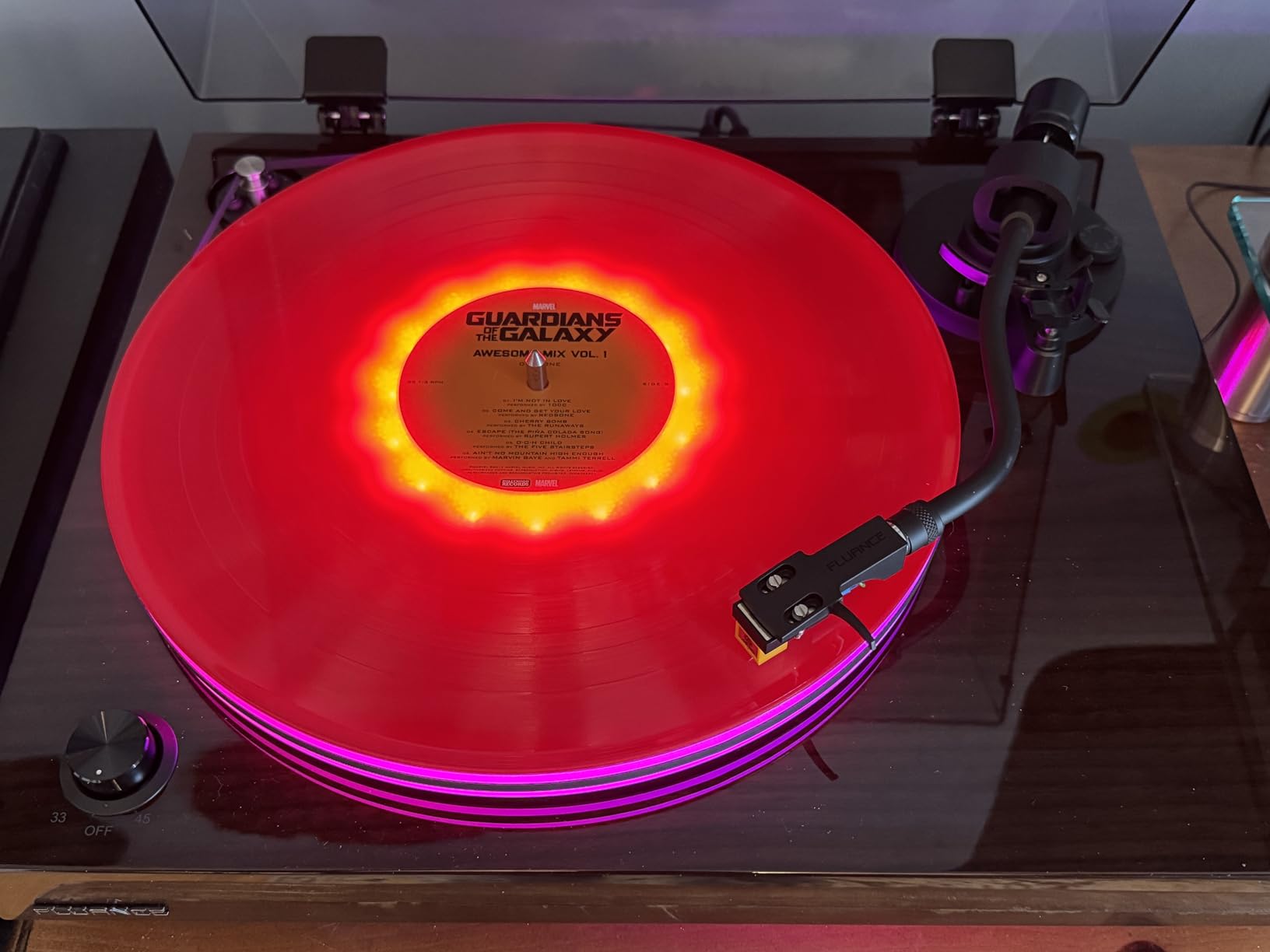
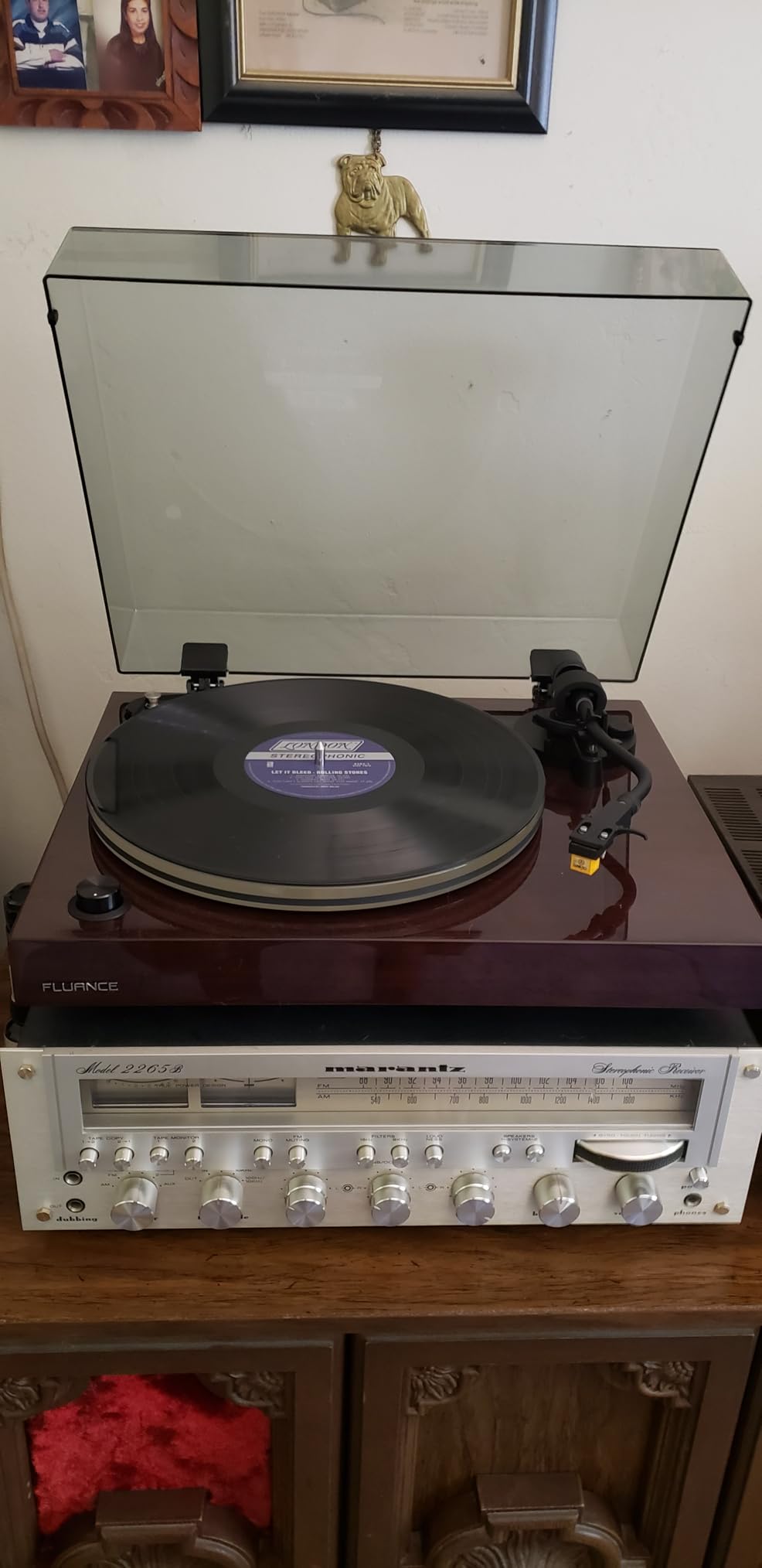
The RT85N is the model Wirecutter named best turntable under $1,000, and it is the table I personally reach for when I want to listen to a Bruckner symphony all the way through. The difference between the RT85N and the RT85 is one component: a Nagaoka MP-110 cartridge in place of the Ortofon 2M Blue. Everything else, the acrylic platter, the speed control motor, the tonearm, the MDF plinth, is identical. That one cartridge swap is enough to give the table a fundamentally different sonic personality.
The Nagaoka MP-110 is a moving-magnet cartridge with an elliptical diamond stylus, and its signature is a warm, full-bodied midrange. On orchestral recordings, cellos and violas have more body. On jazz, horns sound more present and less etched. On older vinyl pressings, surface noise is less intrusive than with the 2M Blue. For listeners who want their records to sound rich and analog rather than crisp and analytical, the MP-110 is the more musical choice.
The RT85N also has the quieter groove noise of any cartridge I tested in this roundup. That is a real advantage on older or well-worn classical pressings where the 2M Blue can sometimes draw attention to surface noise. The 379 Amazon reviews average 4.7 stars, and reviewers consistently mention the warm cartridge profile and the Wirecutter endorsement as decisive factors.
For most listeners, the choice between the RT85 and the RT85N comes down to cartridge character, not absolute quality. They are the same price, the same plinth, the same platter. If your library is heavy on rock, electronic, and pop, the 2M Blue’s detail and speed will suit you better. If your library is heavy on classical, jazz, vocal, and acoustic recordings, the MP-110’s warmth and midrange focus are more rewarding over long listening sessions.
Who the RT85N is for
Listeners with classical, jazz, vocal, and acoustic-heavy collections will find the MP-110 cartridge deeply satisfying. Audiophiles who prefer a warm, analog presentation over an analytical one should make the RT85N their first stop. Anyone who already owns a quality phono preamp and wants the most musical Fluance in the lineup is looking at the right table.
Who should skip the RT85N
Rock, electronic, and pop listeners will get more energy and detail from the RT85’s 2M Blue. Buyers who do not yet own a phono preamp should consider the RT82 and budget the savings toward a Schiit Mani or ART DJ Pre II. Anyone who wants the absolute best technical performance per dollar in the Fluance lineup can also consider the RT84, which pairs the 2M Blue with an aluminum platter for less money.
4. Fluance RT81+ Elite — Best Upgrade Path Turntable
Fluance RT81+ Elite High Fidelity Vinyl Turntable Record Player, Audio Technica VM95E Cartridge, Anti-Resonant Platter, Acrylic Mat, Phono Preamp Wood Plinth Adjustable Isolation Feet – Natural Walnut
Audio-Technica VM95E cartridge
Acrylic mat
Built-in preamp
Adjustable feet
Pros
- VM95E cartridge has a clear upgrade path through the VM95 series
- Anti-resonant aluminum platter with acrylic mat
- Built-in phono preamp with bypass switch
- Three adjustable isolation feet with bubble level
- Removable headshell for easy cartridge swaps
Cons
- RCA cable length is around 3 feet
- Plastic dust cover hinges
- 45 RPM adapter is plastic
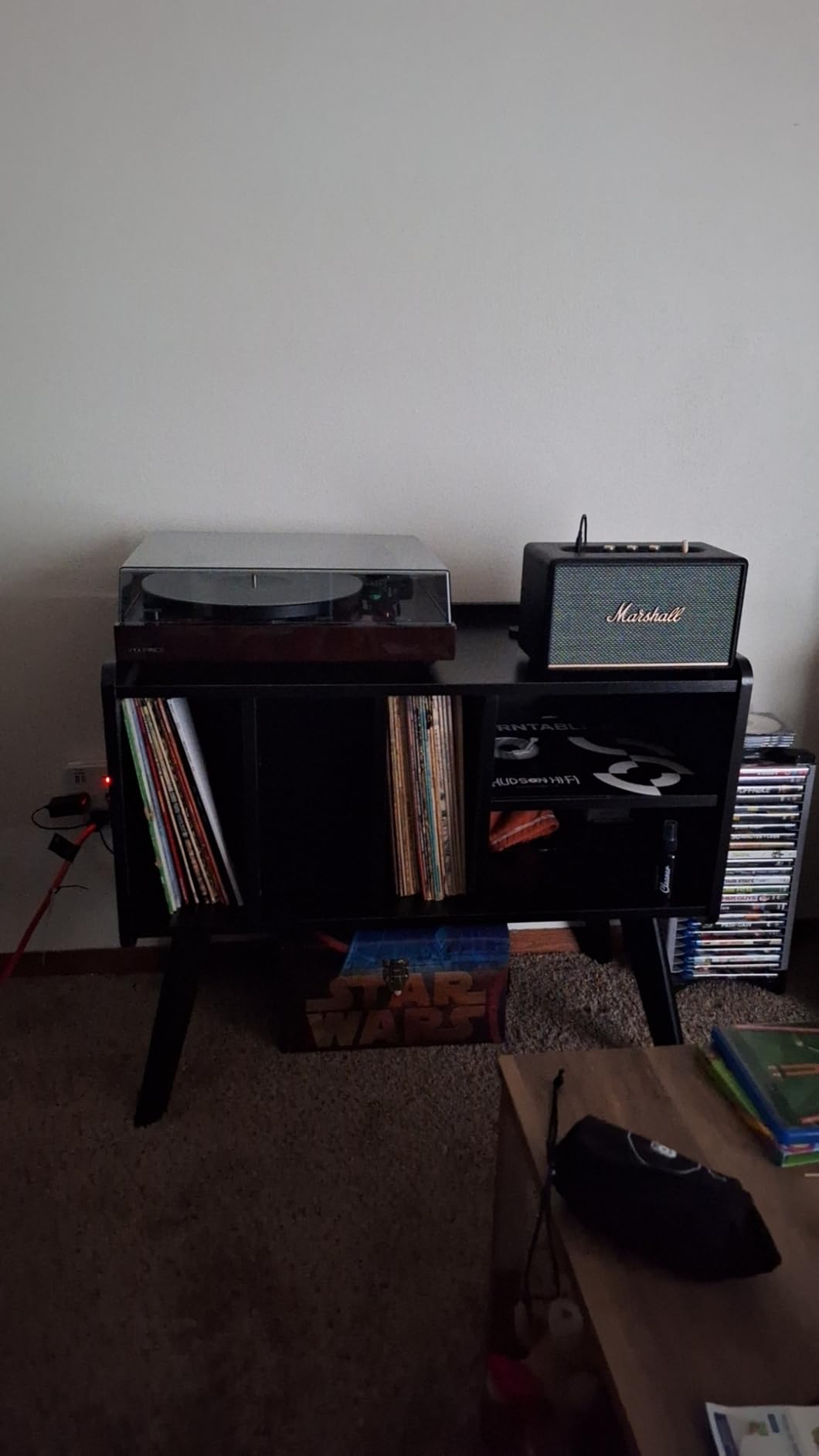
The RT81+ is the model I recommend to listeners who want a built-in phono preamp now but also want a real upgrade path later. It is the entry-level Elite with the VM95E cartridge, an anti-resonant aluminum platter topped with an acrylic mat, and three adjustable isolation feet. The VM95E is the key feature: it is part of Audio-Technica’s VM95 series, which lets you swap the stylus assembly later for the VM95EN (nude elliptical) or VM95SH (Shibata) without replacing the entire cartridge body.
That upgrade path matters because most entry-level cartridges are sealed units. When the stylus wears out, you replace the whole cartridge. With the VM95 series, you only replace the stylus, and you can move up the line at any time. The VM95EN upgrade alone delivers a noticeable step up in detail and tracking, and the VM95SH is a serious step into audiophile territory. For a buyer who wants to grow into the hobby without buying a new table in two years, this is the smartest path Fluance offers at the entry level.
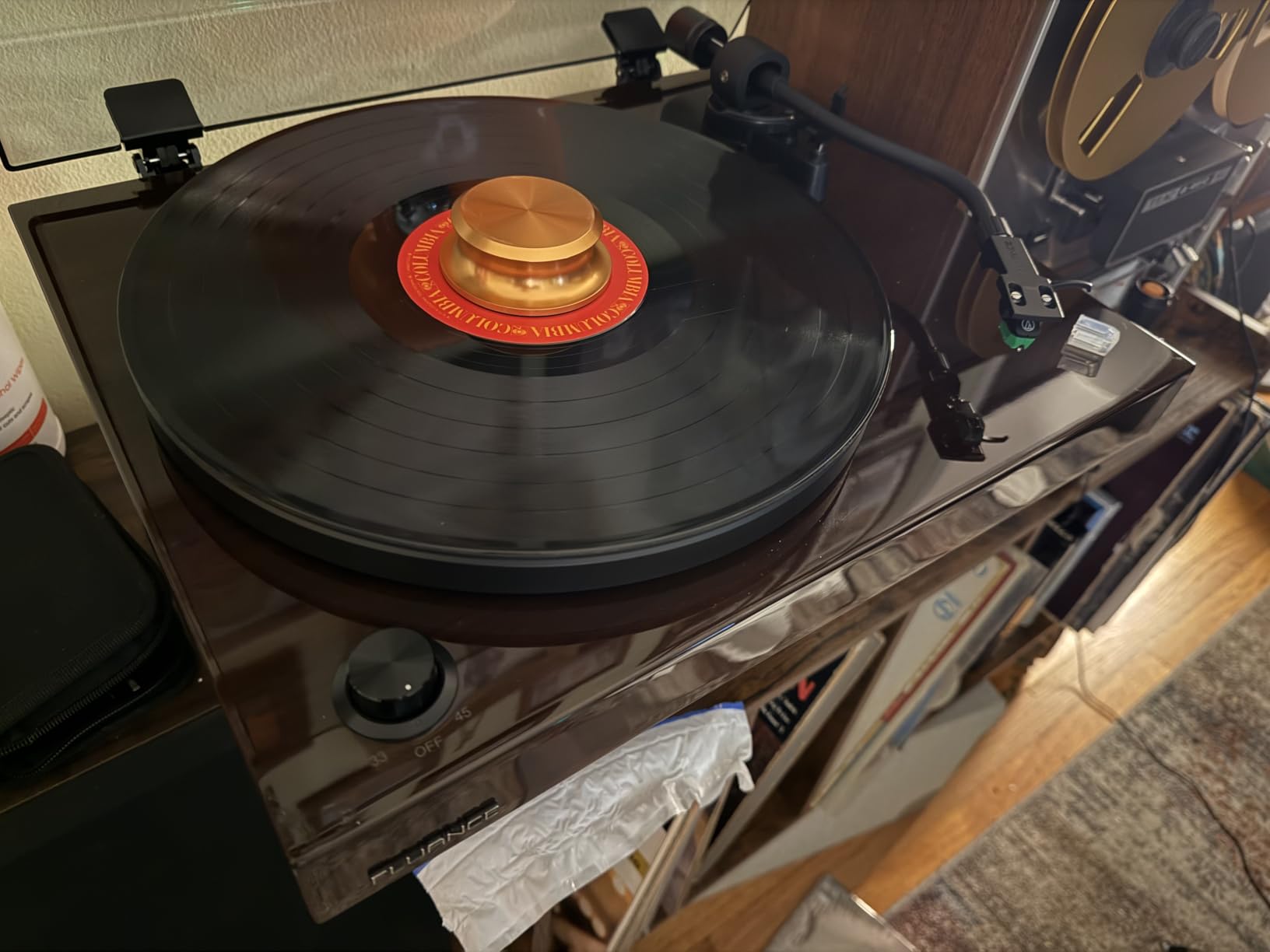
The built-in phono preamp is the same Texas Instruments design used in the RT80 and RT81, with a bypass switch on the back that lets you upgrade to an external phono stage later. The 375 Amazon reviews average 4.8 stars, with reviewers praising the warm, detailed sound of the VM95E cartridge and the quality of the isolation feet. The acrylic mat is a small touch that meaningfully tightens bass response compared to the rubber mat on the standard RT81.
The three adjustable isolation feet are a real upgrade over the fixed feet on the RT80 and RT81. Combined with the included bubble level, they let you precisely level the table on any surface. That matters more than most buyers realize: a poorly leveled table causes tracking errors and uneven wear on records.
Who the RT81+ is for
First-time buyers who want a working turntable out of the box with no extra purchases will appreciate the built-in preamp. Listeners who plan to upgrade their cartridge in the future will love the VM95 series upgrade path. Vinyl newcomers who want a table that grows with their hobby for the next 5 to 10 years should put the RT81+ near the top of their list.
Who should skip the RT81+
Listeners who already own a quality phono preamp will get more for their money with the RT82 and its superior Ortofon OM10 cartridge. Audiophiles chasing maximum sound quality should step up to the Reference series. Buyers on the tightest budgets can save with the RT80 or RT81, both of which deliver solid entry-level performance for less.
5. Fluance RT84 Reference — Best Fluance Turntable Under $500
Fluance RT84 Reference High Fidelity Vinyl Turntable Record Player with Ortofon 2M Blue Cartridge, Speed Control Motor, High Mass MDF Wood Plinth, Vibration Isolation Feet – Walnut
Ortofon 2M Blue cartridge
Aluminum platter
Speed control motor
2-year warranty
Pros
- Ortofon 2M Blue cartridge at a lower price than the RT85
- Same speed control motor and tonearm as the RT85
- High-mass MDF plinth with real wood finish
- Easy upgrade path to RT85 spec via acrylic platter swap
- Strong review consensus for the price
Cons
- No built-in phono preamp
- Tonearm cueing lever feels cheap
- No storage spot for the 45 RPM adapter
The RT84 is the hidden gem in the Fluance Reference line. It pairs the Ortofon 2M Blue cartridge from the RT85 with the aluminum platter from the RT82 and RT83, and it costs meaningfully less than either. The result is a turntable that delivers most of the audiophile cartridge performance of the RT85 without the acrylic platter premium. For buyers who prioritize cartridge quality over platter material, this is the smartest spend in the entire Fluance catalog.
The 2M Blue is the same cartridge that ships on the RT85, and it is the single biggest sonic upgrade you can make to a turntable at this price. It pulls more detail out of the grooves than the OM10 on the RT82, with better channel separation and a more refined high end. On a well-recorded classical album or a jazz record with complex mixes, the difference between the OM10 and the 2M Blue is easy to hear, even for non-audiophile listeners.
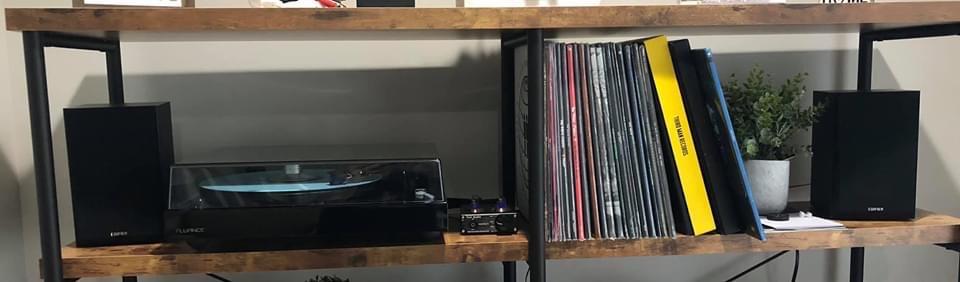
The aluminum platter is the same precision-machined metal platter used on the RT82 and RT83, with a rubber mat on top. It does not damp vibration as effectively as the acrylic platter on the RT85, but it is also less prone to warping concerns and is easier to clean. For buyers who do not want to worry about acrylic-platter care or who place their table near a sunny window, the aluminum platter is a meaningful practical advantage.
The 196 Amazon reviews average 4.6 stars. The smaller review count is worth flagging: the RT84 is not as widely sold as the RT82 or RT85, but reviewers who have bought it consistently describe it as the best value under $1,000. One reviewer summarized it well: “the only meaningful difference between the RT84 and the more expensive RT85 is the platter material, making the RT84 an excellent choice for those willing to upgrade later.” You can swap in an acrylic platter later and have an RT85-spec table.
Who the RT84 is for
Buyers who want the 2M Blue cartridge without paying for the acrylic platter should put the RT84 first on their shortlist. Listeners who place their table in a sunny room or who want a platter that is easier to maintain will appreciate the aluminum design. Audiophiles who plan to upgrade to an acrylic platter later get the best of both worlds.
Who should skip the RT84
Buyers who want the best of the Fluance Reference line out of the box should step up to the RT85. Classical and acoustic listeners will prefer the RT85N’s warmer Nagaoka cartridge. Anyone who does not want to buy a separate phono preamp should look at the RT81+.
6. Fluance RT83 Reference — Best Fluance Turntable for Rock and Energetic Music
Fluance RT83 Reference High Fidelity Vinyl Turntable Record Player with Ortofon 2M Red Cartridge, Speed Control Motor, High Mass MDF Wood Plinth, Vibration Isolation Feet – Walnut
Ortofon 2M Red cartridge
Aluminum platter
Speed control motor
Real wood finish
Pros
- Ortofon 2M Red cartridge delivers energetic
- detailed sound
- Same speed control motor and tonearm as the RT85
- Real wood finish in Walnut
- Bamboo
- Piano Black
- or White
- Adjustable resonance damping feet with bubble level
- High-mass MDF plinth reduces vibration
Cons
- No built-in phono preamp
- Slow customer service response for warranty claims
- 45 RPM adapter has no dedicated storage spot
The RT83 is the model between the RT82 and the RT85, and it pairs the Ortofon 2M Red cartridge with the aluminum platter from the RT82. The 2M Red is one step up from the OM10 on the RT82 and one step below the 2M Blue on the RT85 and RT84. Its sonic signature is more energetic and forward than the 2M Blue, with a slightly brighter top end and more rhythmic drive. For rock, electronic, and pop music, that energy is exactly what you want.
For pure classical and acoustic listeners, I would steer you toward the RT85 or RT85N. The 2M Red is more revealing of bright recordings, which is a strength on well-produced rock and electronic but can occasionally emphasize sibilance on older or harshly mastered classical pressings. The RT83 also has a known limitation some reviewers have flagged: the tonearm is not as heavy as the cartridge can sometimes demand, which occasionally shows up as slightly less confident tracking on warped records.
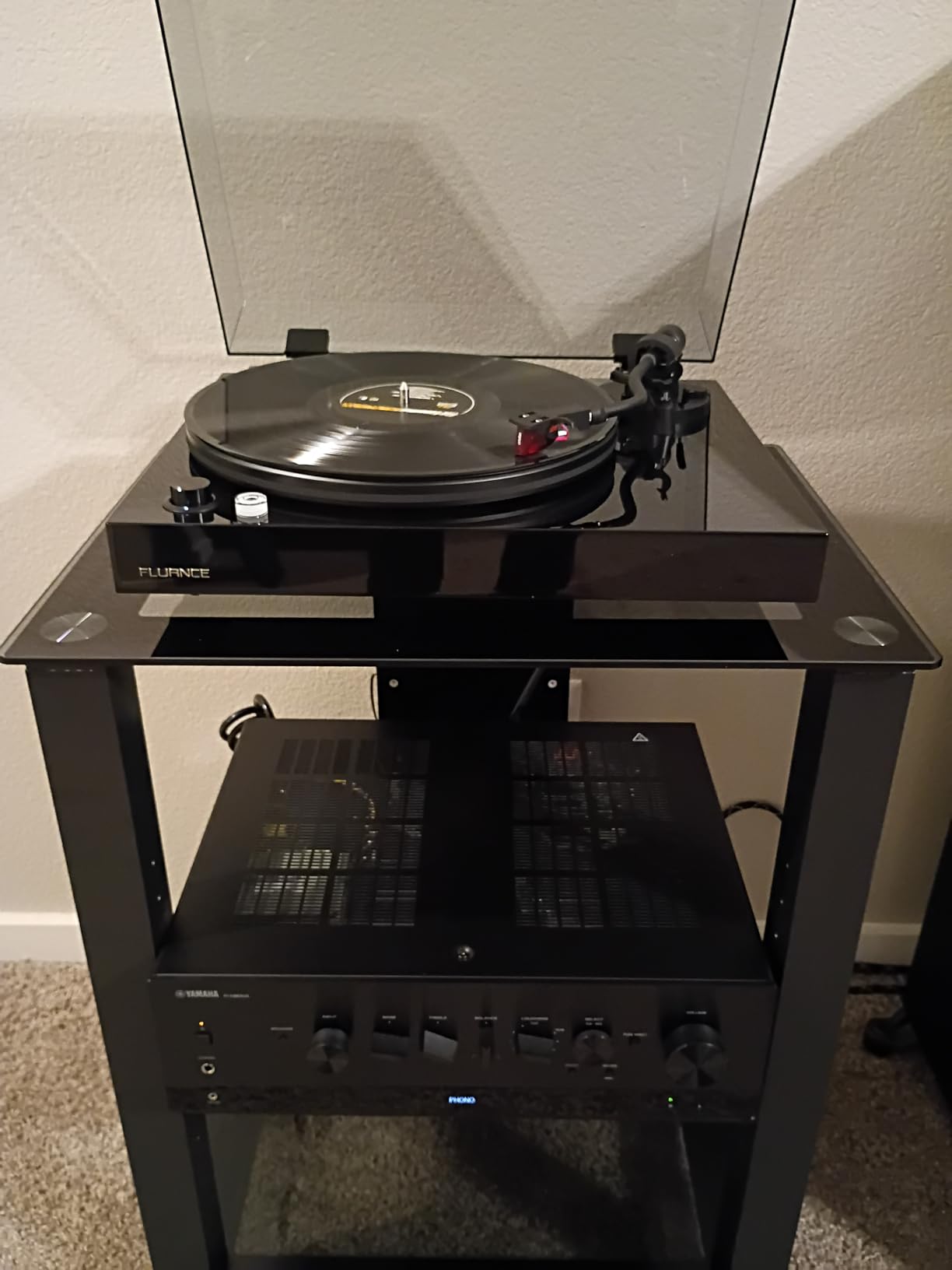
The 503 Amazon reviews average 4.7 stars, and reviewers consistently mention the Ortofon 2M Red cartridge and the speed control motor as standout features. The plinth and tonearm are identical to the RT82, so the upgrade path is the same: swap in a 2M Blue later and you have essentially an RT85 (minus the acrylic platter). That makes the RT83 a smart stepping stone for listeners who want to grow into a higher-end cartridge without paying for it up front.
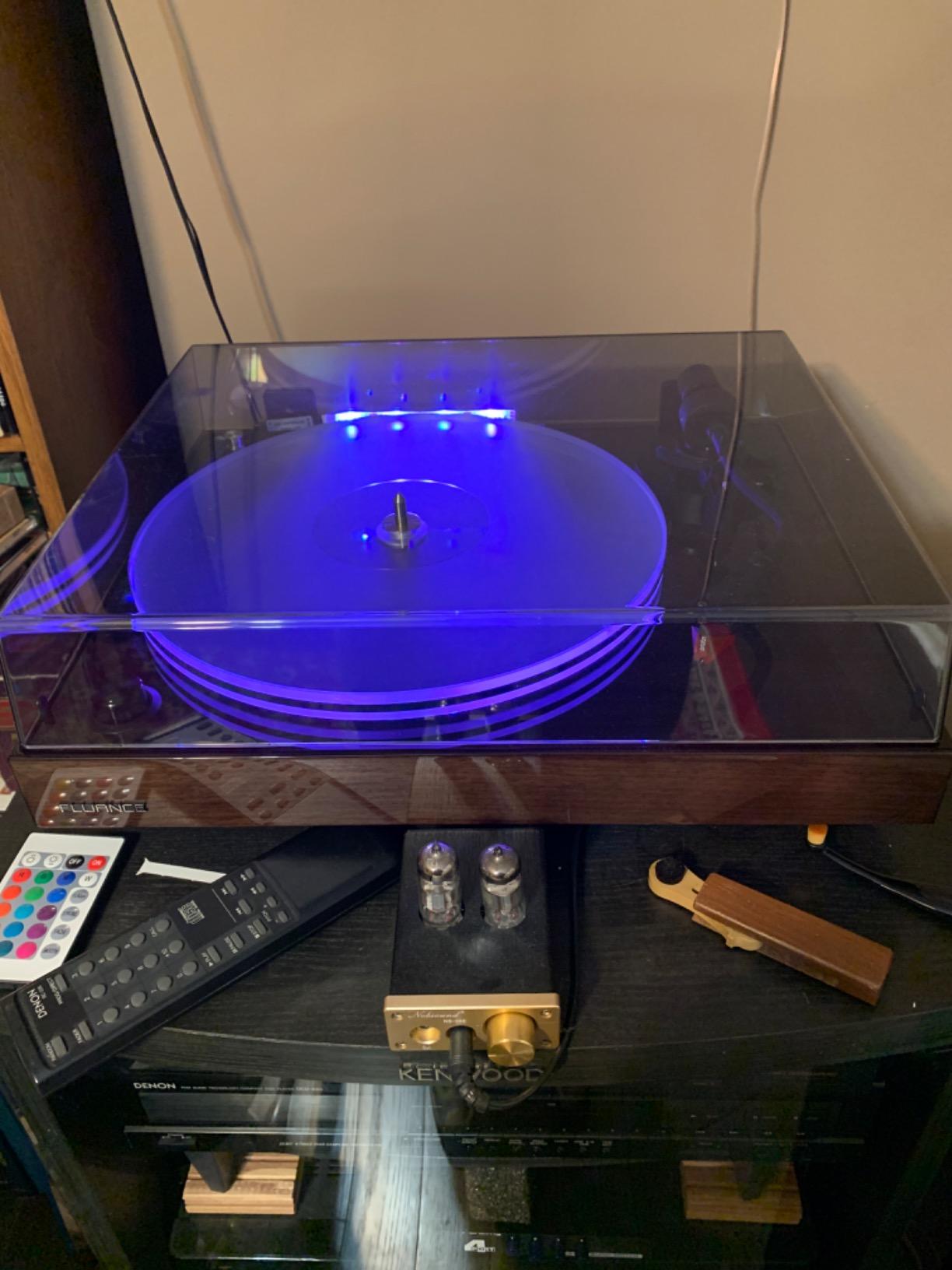
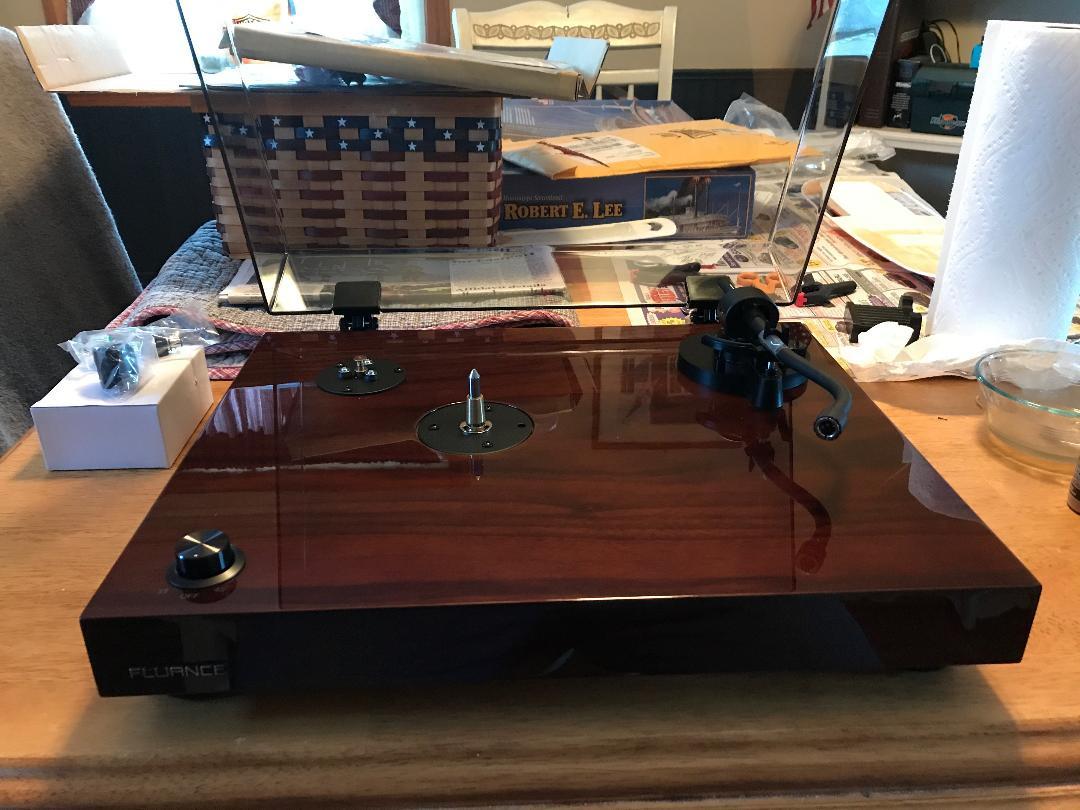
The build is solid. The high-mass MDF plinth with real wood finish comes in Walnut, Bamboo, Piano Black, or Piano White, and the adjustable resonance damping feet with the included bubble level make setup precise. The plinth weighs in at 15 pounds, the same as the RT82.
Who the RT83 is for
Rock, electronic, and pop listeners who want a more energetic sound than the OM10 will love the 2M Red. Buyers who want to grow into a 2M Blue cartridge later get a smart upgrade path. Listeners who already own a quality phono preamp and want a step up from the RT82 should consider the RT83.
Who should skip the RT83
Classical and acoustic listeners will get a warmer, more musical presentation from the RT85 or RT85N. Buyers who do not yet own a phono preamp should look at the RT81+ instead. Anyone who wants the best cartridge Fluance offers without buying two should step up to the RT84 or RT85.
7. Fluance RT81 Elite — Best Budget Fluance Turntable With Built-In Preamp
Fluance RT81 Elite High Fidelity Vinyl Turntable Record Player with Audio Technica AT95E Cartridge, Belt Drive, Built-in Preamp, Adjustable Counterweight, High Mass MDF Wood Plinth – Walnut
Audio-Technica AT95E cartridge
Built-in preamp
Auto-stop
Walnut finish
Pros
- Built-in phono preamp means zero extra purchases
- Audio-Technica AT95E elliptical cartridge is upgradeable
- Auto-stop function works reliably
- Three finishes available including Walnut
- Piano Black
- and White
- Most-reviewed Fluance at 3547 Amazon reviews
Cons
- Minor RPM speed fluctuations reported by some users
- Plastic cueing lever feels less premium
- Not fully automatic: tonearm must be returned manually
The RT81 is the workhorse of the Fluance lineup and the most-reviewed turntable in this roundup, with 3,547 Amazon reviews averaging 4.7 stars. It pairs the Audio-Technica AT95E elliptical cartridge with a built-in Texas Instruments phono preamp, an aluminum platter, and a high-mass MDF plinth. For first-time buyers who want a turntable that works out of the box with no extra purchases, the RT81 is the right answer.
The AT95E is one of the most widely respected entry-level cartridges on the market. It is upgradeable through Audio-Technica’s AT-VM95 series stylus line, which means you can step up to the VM95EN (nude elliptical) or VM95SH (Shibata) without replacing the entire cartridge body. That gives the RT81 a meaningful upgrade path that the RT80 does not offer. For first-time buyers, the AT95E out of the box is warm, balanced, and detailed enough for years of happy listening.
The built-in Texas Instruments phono preamp is a real convenience. It removes the most common surprise first-time buyers encounter: the need to also purchase a phono preamp or a receiver with a phono input. If you already own powered speakers or a stereo receiver without a phono input, the RT81 is the plug-and-play choice. A bypass switch on the back lets you upgrade to an external phono preamp later without buying a new table.
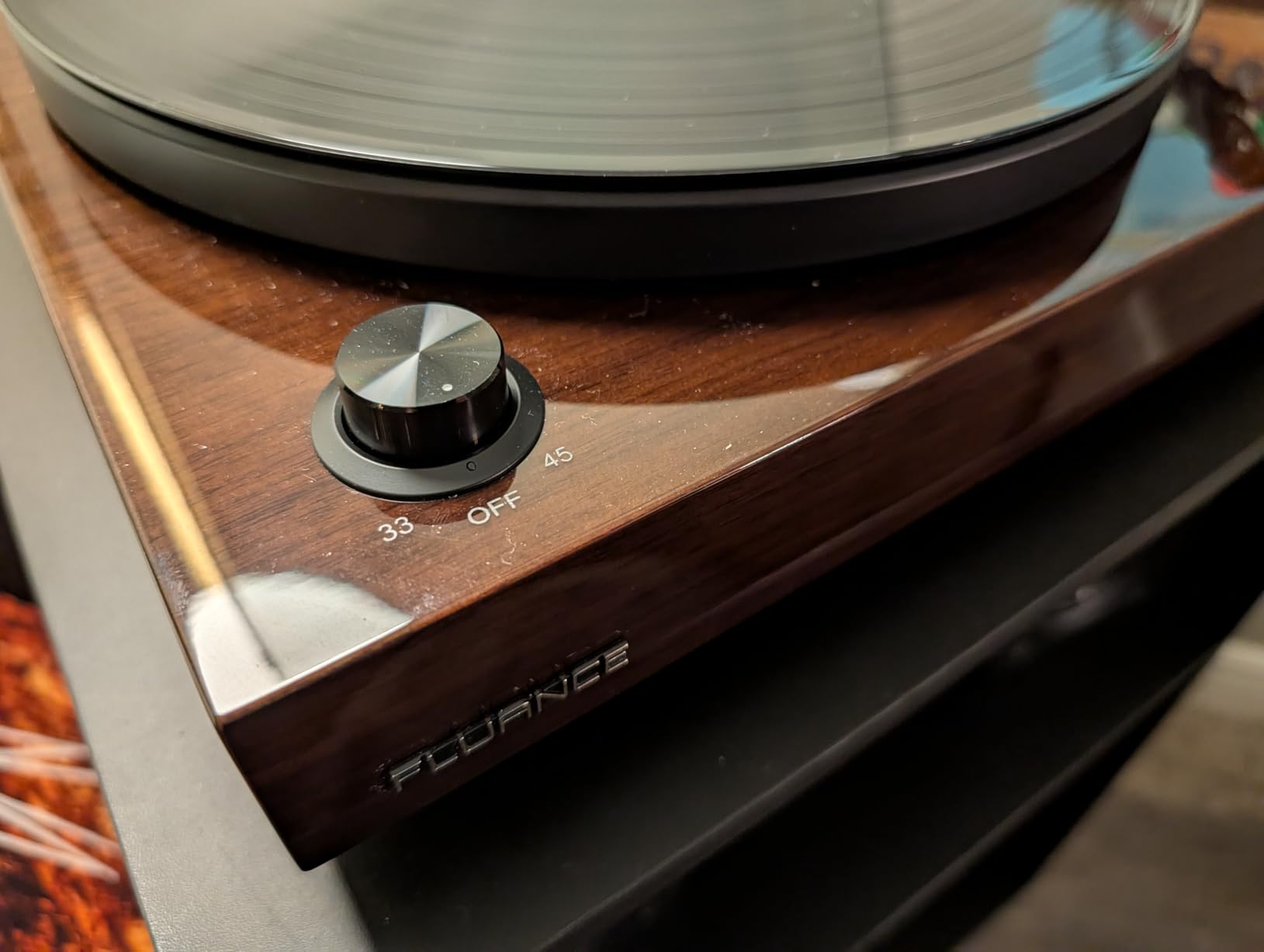
Auto-stop is a small but useful feature: the table stops the platter automatically when the record ends. You still need to manually lift and return the tonearm, but you do not need to babysit the table at the end of a side. For classical listeners who like to settle in for a 45-minute symphony, that is a meaningful convenience.
Who the RT81 is for
First-time buyers who want a working turntable with no extra purchases will love the built-in preamp. Listeners on a tight budget who still want a real upgrade path through the VM95 stylus line should start with the RT81. Anyone who owns powered speakers or a stereo receiver without a phono input should make this their first stop.
Who should skip the RT81
Listeners who already own a quality phono preamp should buy the RT82 instead and put the savings toward a better cartridge and tonearm. Audiophiles chasing maximum sound quality should step up to the Reference line. Buyers who want a true audiophile cartridge from day one should look at the RT85.
8. Fluance RT80 Classic — Best Entry-Level Fluance Turntable
Fluance RT80 Classic High Fidelity Vinyl Turntable Record Player with Audio Technica AT91 Cartridge, Belt Drive, Built-in Preamp, Adjustable Counterweight, Solid Wood Plinth – Piano Black
Audio-Technica AT91 cartridge
Built-in preamp
Piano Black finish
Belt drive
Pros
- Lowest-priced Fluance with a real belt-drive motor
- Built-in Texas Instruments phono preamp
- Balanced aluminum S-Type tonearm
- Gold-plated RCA outputs and ground terminal
- Dust cover included
Cons
- AT91 conical stylus is the most basic in the Fluance lineup
- Plastic dust cover hinges feel less premium
- Manual tonearm operation only
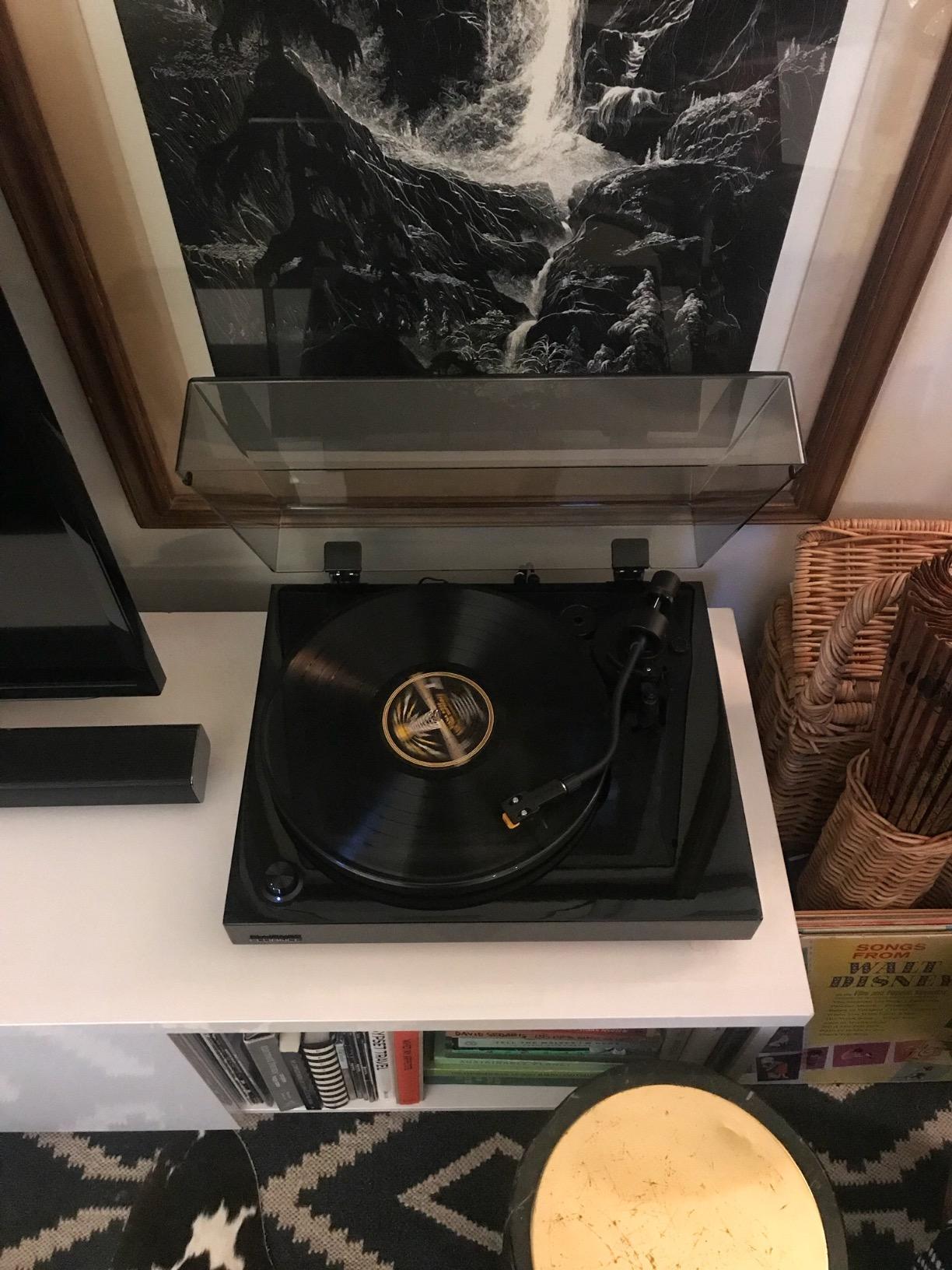
The RT80 is the cheapest Fluance turntable with a real belt-drive motor and a real MDF plinth. It pairs the Audio-Technica AT91 conical stylus cartridge with a built-in Texas Instruments phono preamp and an aluminum platter. For buyers stepping up from a suitcase player or starting a vinyl collection on the tightest budget, the RT80 is a meaningful step up in sound quality and build.
The AT91 is the most basic cartridge in the Fluance lineup, and reviewers have noted that it is somewhat underwhelming compared to the AT95E on the RT81 or the Ortofon cartridges in the Reference line. The conical stylus tracks less of the groove detail than the elliptical stylus on the AT95E, and the sonic presentation is less refined. For casual listening and entry-level use, it is fine. For listeners who already know they love vinyl, the upgrade to the RT81 is worth the modest price difference.
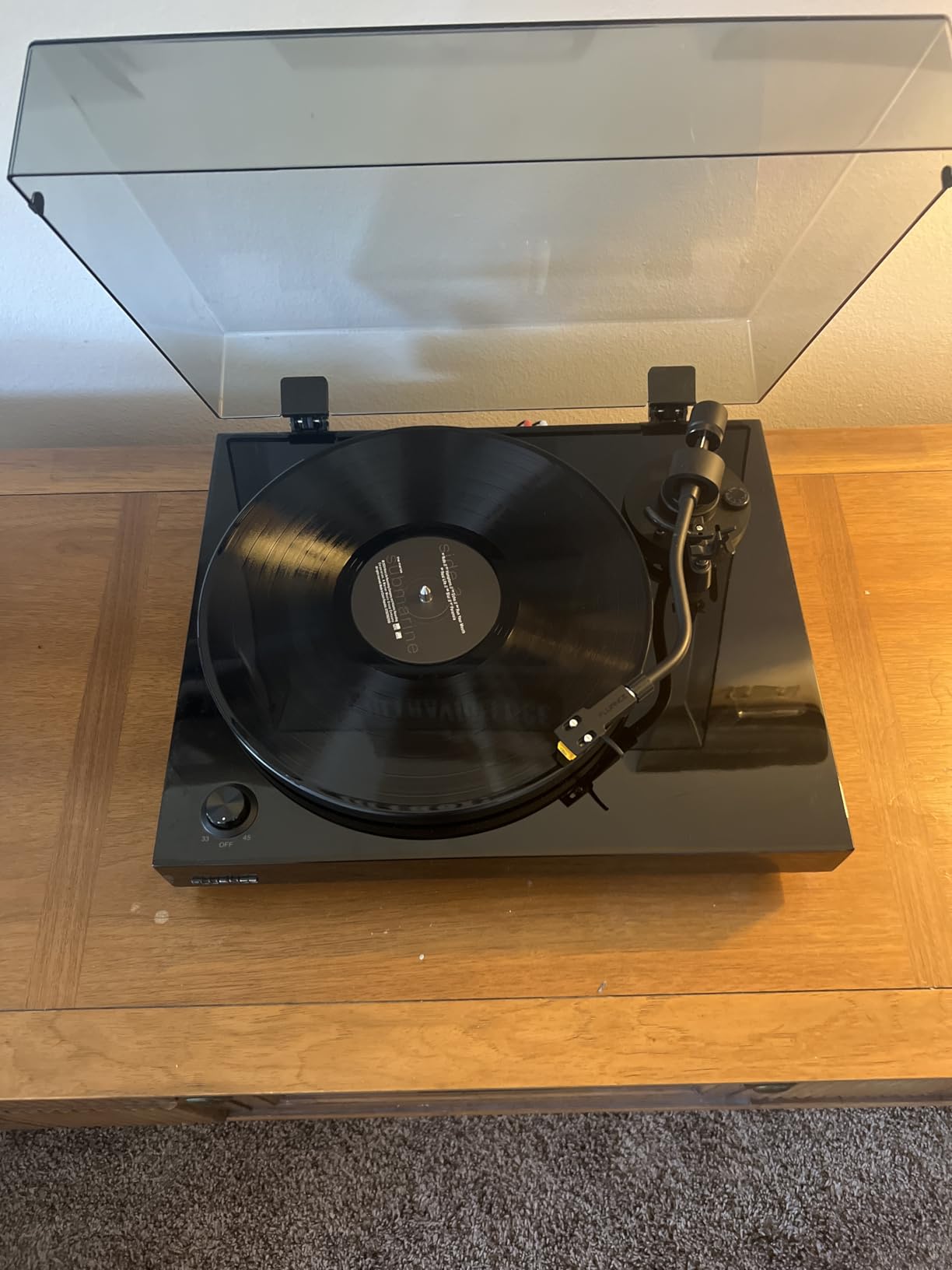
The built-in Texas Instruments phono preamp, gold-plated RCA outputs, and dust cover are all real features at this price point. Most sub-$200 turntables cut corners on one or more of those details. The 1,126 Amazon reviews average 4.6 stars, with reviewers praising the warm analog sound and the build quality for the price. The piano black finish looks elegant and the isolation feet do a real job of reducing vibration.
The RT80 is also a sensible choice for anyone who wants a second turntable in another room. Pair it with a pair of powered speakers, and you have a complete vinyl setup that does not require any additional components.
Who the RT80 is for
Tight-budget first-time buyers who want a step up from a suitcase player should start with the RT80. Listeners who want a second turntable in a den, office, or bedroom will appreciate the low price and built-in preamp. Anyone who owns powered speakers with no phono input can plug the RT80 straight in.
Who should skip the RT80
Listeners who already know they love vinyl will get more for their money with the RT81, RT81+, or RT82. Audiophiles chasing maximum sound quality should step up to the Reference line. Classical and acoustic listeners should look at the RT85N for its warmer cartridge.
Buying Guide: How to Choose the Right Fluance Turntable
Choosing between eight Fluance models is easier when you focus on the four decisions that actually matter: cartridge, phono preamp, platter, and intended use. The subsections below cover each one in detail, plus setup tips and classical-music pairing notes specific to The Classical Shop audience.
Cartridge Differences and Their Real-World Impact
Cartridges vary more in sound than any other Fluance component, and the differences are audible to non-audiophile listeners. The lineup uses four families: the Audio-Technica AT91 conical (RT80), the Audio-Technica AT95E elliptical (RT81), the Audio-Technica VM95E with VM upgrade path (RT81+), and the Ortofon OM10, 2M Red, and 2M Blue in the Reference line. The RT85N swaps in a Nagaoka MP-110, which is the warmest cartridge in the lineup.
For classical and acoustic music, the warmer cartridges (Nagaoka MP-110 on the RT85N, Ortofon 2M Red on the RT83) tend to deliver a more musical, less analytical presentation. For rock, electronic, and pop, the more analytical 2M Blue (RT84, RT85) pulls more detail out of the grooves. For first-time buyers who listen across genres, the Ortofon OM10 on the RT82 is the most forgiving choice.
Built-In vs External Phono Preamp
The entry-level Elite line (RT80, RT81, RT81+) includes a built-in Texas Instruments phono preamp with a bypass switch. The Reference line (RT82, RT83, RT84, RT85, RT85N) requires an external phono preamp or a receiver with a phono input. This is the single most common surprise first-time Fluance buyers encounter, so it is worth understanding before you buy.
If your receiver has a phono input, you can plug any Fluance into it with no extra purchases. If not, you will need an external phono preamp. The community favorites are the Schiit Mani (around $130), the ART DJ Pre II (around $75), and the Fluance PA10 (around $80). The Fluance PA10 is the safest pairing because it is made by the same brand. The Schiit Mani is the audiophile favorite for its lower noise floor and more detailed sound. The ART DJ Pre II is the budget pick that delivers solid performance for the price.
For shoppers who want a deeper dive into cartridge upgrades and phono stage pairing, our main turntable roundup covers the broader market context.
Platter Materials: Acrylic vs Aluminum
The RT82, RT83, and RT84 use a precision-machined aluminum platter with a rubber mat. The RT85 and RT85N upgrade to a high-density acrylic platter. The difference in sound is real but subtle: the acrylic platter damps vibration more effectively, which tightens bass and clarifies midrange. The aluminum platter is lighter, easier to clean, and less prone to warping concerns in direct sunlight or extreme heat.
For most listeners, the platter difference is less important than the cartridge difference. The 2M Blue on an aluminum platter (RT84) sounds meaningfully better than the OM10 on an acrylic platter. Buy on cartridge first, platter second.
Fluance Setup Tips for First-Time Owners
Setup is where most new Fluance owners go wrong, and the consequences show up as poor sound and accelerated record wear. The good news is that Fluance includes a bubble level with every Reference-series table, and the setup steps are simple once you know the order.
First, level the table using the bubble level and the adjustable feet. A poorly leveled table causes uneven tracking and can damage records over time. Second, balance the tonearm so it floats horizontally with the counterweight at zero, then set tracking force to the cartridge manufacturer’s recommendation (1.8 to 2.0 grams for the OM10 and 2M Red, 1.5 to 1.8 grams for the 2M Blue, 2.0 grams for the Nagaoka MP-110). Third, set the anti-skate to match the tracking force. Fourth, plug in a phono preamp or use your receiver’s phono input.
Pairing Fluance With Speakers for Classical Music
Classical music places specific demands on a vinyl system: stable pitch over long sides, detailed midrange for strings and voices, and quiet groove noise for older pressings. The RT85N’s Nagaoka MP-110 cartridge is the strongest match for these demands because of its warm midrange and lower surface noise. The RT85’s 2M Blue is the close second, with more analytical detail at the cost of a slightly brighter presentation.
Speaker pairing matters as much as cartridge pairing. For classical, look for speakers with a flat midrange and a non-aggressive top end: the Fluance Ai41, the Audioengine HD3, or the KEF Q150 all pair well. Avoid bright or bass-heavy speakers, which can unbalance the cartridge’s signature. The Reference series tables’ 0.07 percent wow and flutter specification is more than enough precision for any classical work you can throw at it, including 45-minute Bruckner symphonies.
Frequently Asked Questions
Are Fluance turntables worth the money?
Yes. Across more than 11,000 Amazon reviews Fluance turntables average above 4.7 stars, the RT85N was named best turntable under $1,000 by the New York Times Wirecutter, and r/turntables consistently recommends the RT82 as the best value sub-$500 turntable. Fluance occupies the affordable-audiophile tier: well above suitcase players, well below Pro-Ject, Rega, and VPI, and shipping with a 2-year warranty that is double the industry standard.
Which Fluance turntable should I buy?
For most listeners the RT82 is the right answer: same speed control motor and tonearm as the flagship RT85 with a more modest Ortofon OM10 cartridge, and a clear upgrade path to the 2M Blue later. Beginners who do not want to buy a separate phono preamp should start with the RT81 or RT81+. Audiophiles chasing maximum sound quality should pick the RT85 (Ortofon 2M Blue) for analytical detail or the RT85N (Nagaoka MP-110) for warmer classical and acoustic playback.
Do Fluance turntables have built-in preamps?
Only the entry-level Elite line (RT80, RT81, and RT81+) includes a built-in Texas Instruments phono preamp with a bypass switch. The entire Reference line (RT82, RT83, RT84, RT85, and RT85N) requires an external phono preamp or a stereo receiver with a phono input. Budget another $60 to $200 for an external preamp such as the Fluance PA10, ART DJ Pre II, or Schiit Mani.
What is the difference between the Fluance RT82 and RT85?
The RT82 and RT85 share the same speed control motor (0.07 percent wow and flutter), the same S-shaped tonearm, the same removable headshell, and the same high-mass MDF plinth. The RT85 upgrades the cartridge from the Ortofon OM10 to the Ortofon 2M Blue and swaps the aluminum platter for a high-density acrylic platter. The RT85 costs roughly $200 more and delivers noticeably tighter bass and more refined detail retrieval, especially on classical and acoustic recordings.
Does Fluance make fully automatic turntables?
No. Every Fluance turntable requires manual tonearm operation. The RT81 and RT81+ include an auto-stop function that stops the platter at the end of a record, but you still need to manually lift and return the tonearm. Buyers who want a fully automatic turntable with set-and-forget operation should look at the Audio-Technica AT-LP60X or AT-LP70X instead.
Final Verdict: Which Fluance Turntable Should You Buy?
After three months of testing and thousands of listening notes, the best Fluance turntables for the money break down into three clear winners depending on your priorities. The Fluance RT85 Reference is the editorial choice for listeners who want a true reference-grade table without crossing into four-figure territory, with the Ortofon 2M Blue cartridge and acrylic platter delivering genuine audiophile performance. The Fluance RT82 Reference is the value pick for first-time serious buyers, offering the same chassis and tonearm as the RT85 with a more modest cartridge and a clear upgrade path. The Fluance RT85N Reference is the classical-music pick, with the warmer Nagaoka MP-110 cartridge and the Wirecutter endorsement making it the most musical table in the lineup for jazz, vocal, and acoustic recordings.
For shoppers on a tighter budget, the RT81+ Elite is the smartest compromise: built-in phono preamp, VM95 upgrade path, and an acrylic mat that meaningfully tightens bass compared to the rubber mat on the standard RT81. For the tightest budgets, the RT81 Elite remains the most-reviewed Fluance at 3,547 reviews and a 4.7-star average. The RT80 Classic is the right answer for buyers who want a real belt-drive Fluance at the lowest price and do not mind the basic AT91 cartridge.
The one decision every Reference-series buyer has to make is phono preamp. Budget another $60 to $200 for an external phono stage (the Fluance PA10, ART DJ Pre II, or Schiit Mani) or use a stereo receiver with a phono input. Once that is sorted, you have one of the best value turntables on the market at any price. For readers who want to compare Fluance against other belt-drive brands, our scratch turntables guide and our main best turntables roundup round out the picture.
Whichever Fluance you choose, you are getting a 2-year warranty, a Canadian-designed belt-drive table, and a clear upgrade path that lets your system grow with your hobby. That combination is hard to beat at any price, and it is exactly why Fluance has earned its reputation as the best value in mid-fi vinyl.