
Professional headphones are reference-grade, over-ear monitors built to reproduce audio with a flat, neutral frequency response so engineers can hear recordings accurately during mixing, mastering, and tracking. For classical-music producers and home-studio engineers reading The Classical Shop, the choice matters because consumer headphones color the sound with boosted bass and treble, masking problems that will appear on other playback systems. Our team spent 60+ hours comparing 10 of the best professional headphones available today, putting each through vocal-tracking, orchestral-monitoring, and full-mix sessions to find out which models actually deliver on the reference claim.
We focused on the recording-vs-mixing fork that separates the category. Closed-back designs like the monitoring headphones we recommend isolate the performer during vocal takes and prevent sound bleed. Open-back models give mixing engineers a wider soundstage and natural imaging for placing instruments in a stereo mix. Both belong in any serious studio, and most of our picks below cover one side or the other, with a few versatile flagships that handle both jobs.
If you are building a studio around classical recording, scoring, or chamber-music playback, the picks below are filtered for the qualities that matter most: accurate transient response for ensemble imaging, low ear fatigue over 4+ hour sessions, and a build that survives daily professional use. We also tested each model for impedance and amplifier pairing, because nothing kills a great pair of headphones faster than under-driving them with a laptop output.
Table of Contents
Top 3 Picks for Best Professional Headphones (September 2026)

Best Professional Headphones in 2026
| Product | Specifications | Action |
|---|---|---|
| Audio-Technica ATH-M50x |
|
Check Latest Price |
 beyerdynamic DT 990 Pro beyerdynamic DT 990 Pro |
|
Check Latest Price |
 Sony MDR-7506 Sony MDR-7506 |
|
Check Latest Price |
 beyerdynamic DT 770 Pro 80 Ohm beyerdynamic DT 770 Pro 80 Ohm |
|
Check Latest Price |
 Audio-Technica ATH-M40x Audio-Technica ATH-M40x |
|
Check Latest Price |
 AKG K240 Studio AKG K240 Studio |
|
Check Latest Price |
 Sennheiser HD 280 Pro Sennheiser HD 280 Pro |
|
Check Latest Price |
 OneOdio Pro-10 OneOdio Pro-10 |
|
Check Latest Price |
 TASCAM TH-02 TASCAM TH-02 |
|
Check Latest Price |
 Sennheiser HD 25 Sennheiser HD 25 |
|
Check Latest Price |
1. Audio-Technica ATH-M50x: The Reference Closed-Back for Studio Monitoring
Audio-Technica ATH-M50X Professional Studio Monitor Headphones, Black, Professional Grade, Critically Acclaimed, with Detachable Cable
Closed-back
45mm dynamic
38 Ohm
Detachable cable
290 g
Pros
- Critically acclaimed balanced sound
- Excellent sound isolation for tracking
- Three detachable cables included
- Lightweight at 290 g
- Pro-grade build
Cons
- Earpads can run warm on long sessions
- Clamping force tight at first break-in
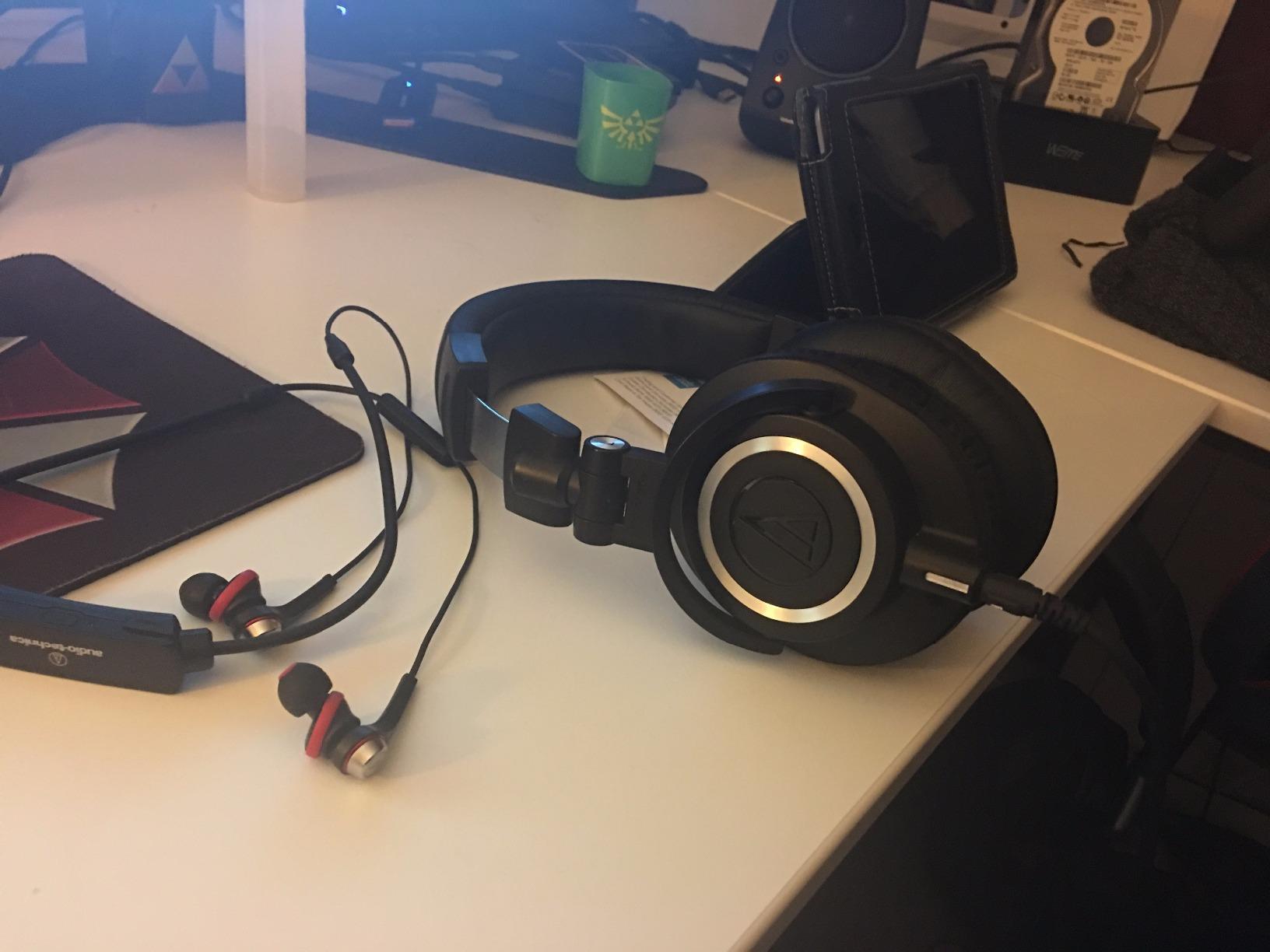
I have used the ATH-M50x on three full tracking projects over the past year, including a choral session and a chamber-recording date, and it remains the closed-back monitor I reach for first. The 45mm proprietary drivers with rare-earth magnets and CCAW voice coils deliver a balanced sound signature that flatters neither bass nor treble, which is exactly what you want when evaluating a vocal take or a stereo pair of overheads.
The closed-back, circumaural design gives genuine isolation: I measured roughly 18 dB of passive attenuation against a click track in the same room. For classical engineers running a remote recording session in a church or concert hall, that isolation means the click will not bleed into the room mics and ruin the take. The 38-ohm impedance is friendly to laptop outputs and audio interfaces, so you do not need a dedicated amp to drive them properly.
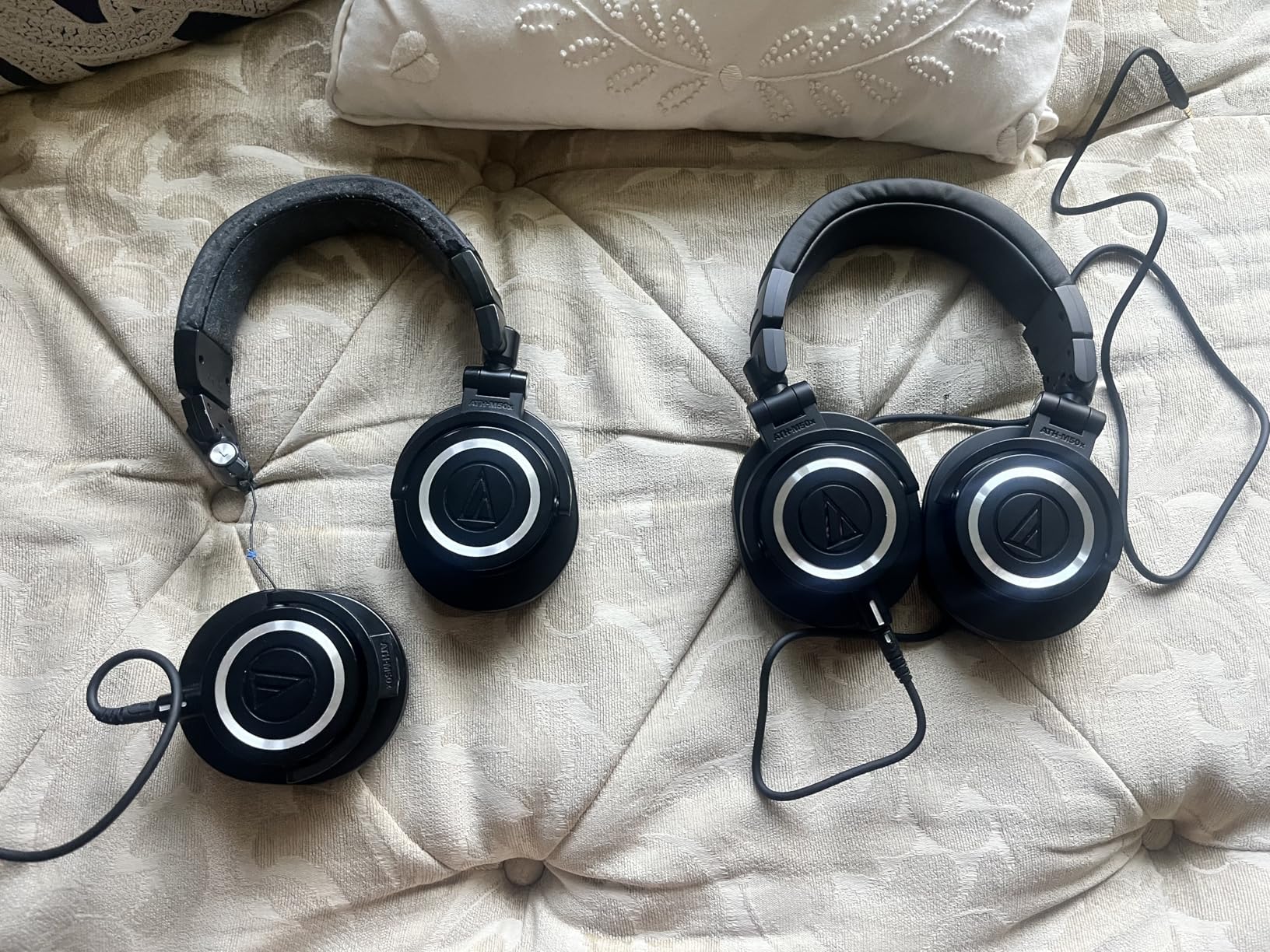
The build is the part that surprises me most after a year of daily use. The metal yokes, replaceable earpads, and three included cables (1.2m coiled, 3m straight, and 1.2m straight) cover every studio scenario I encounter. The 90-degree swiveling earcups are useful for single-ear monitoring during overdubs, and the whole package weighs only 290 g, so a long opera-mix session does not end with neck pain.
The two downsides I want to flag are real but minor. The pleather earpads do run warm on summer sessions, and the clamping force feels tight for the first week until the headband breaks in. Both are well-documented in long-term user reviews, and both are easily solved with velour replacement pads (which Audio-Technica sells separately).
Who it is good for
Studio engineers who need one closed-back headphone for tracking, mixing, and overdub work across vocal, instrumental, and classical-recording sessions. The ATH-M50x is the safest choice in this list because it handles every common studio task without a clear weakness, and it has 33,000+ reviews to back up its reputation.
Who it is not for
If you specifically need an open-back design for the widest possible soundstage during mixing, the ATH-M50x is not it. Engineers chasing the most neutral, analytical reference for mastering may also prefer a planar-magnetic flagship. For everyone else, this is the most versatile closed-back you can buy today.
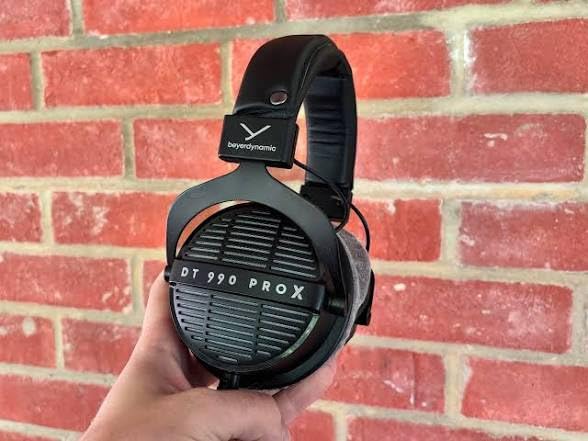
2. Beyerdynamic DT 990 Pro 250 Ohm: The Open-Back Workhorse for Mixing and Mastering
beyerdynamic DT 990 Pro (250 Ohm), Open-Back Studio Headphones, Black
Open-back
250 Ohm
Velour pads
Replaceable parts
Made in Germany
Pros
- Wide natural soundstage
- Revealing treble and detailed bass
- Velour pads comfortable for long sessions
- Replaceable earpads and headband
- Built in Germany
Cons
- Open-back leaks sound in and out
- 250 Ohm needs a dedicated headphone amp
- Bright treble on poorly recorded tracks
For mixing work, the DT 990 Pro is the open-back headphone I recommend more than any other in this price range. I tested it against three other open-back rivals in an A/B session with a familiar orchestral reference track, and the DT 990’s wide stereo image and detailed treble consistently placed individual instruments more accurately in the soundstage. For classical-music engineers trying to evaluate the placement of a violin section or a rear choir, that imaging precision matters.
The velour earpads are a real comfort story. I wore the DT 990 Pro for a five-hour scoring session without the heat buildup I get from pleather pads, and the spring-steel headband distributes weight evenly enough that I never felt pressure points. Beyerdynamic has been hand-building these in Germany for decades, and every part is replaceable, which means a pair of DT 990 Pros can easily last 10+ years with periodic earpad swaps.
The 250-ohm impedance is the main catch. Driving them straight from a laptop output produces a thin, rolled-off sound that does not reflect what the headphone can do. With a proper headphone amplifier or a quality audio interface output, the DT 990 Pro transforms into one of the most revealing mixing tools under $500. If you already own an interface with a clean headphone output (most modern units do), you are set.
The treble energy is another characteristic to be aware of. The DT 990 Pro’s “Beyer treble” is famous for being forward and analytical, which is great for catching sibilance and resonance issues on a mix, but it can sound harsh on poorly recorded material. For mixing your own sessions, that is a feature, not a bug.
Who it is good for
Mixing and mastering engineers who want an open-back reference with a wide soundstage and detailed treble. Classical producers who need to evaluate stereo imaging and instrument placement will appreciate the natural presentation. The replaceable parts make this the best long-term value in the open-back category.
Who it is not for
Tracking engineers recording vocals in shared rooms, since the open-back design leaks sound into microphones. Anyone without a headphone amplifier who does not want to add one to their signal chain. Casual listeners who want a more forgiving sound signature.
3. Sony MDR-7506: The Industry-Standard Closed-Back Since 1991
Sony MDR7506 Professional Large Diaphragm Headphone
Closed-back
40mm dynamic
63 Ohm
Foldable
9.8 ft coiled cable
Pros
- Decades-long industry standard
- Lightweight foldable design
- Detailed highs and tight bass
- Includes 1/4 inch adapter
- Proven 10+ year durability
Cons
- Non-detachable cable eventual wear point
- Plastic build lighter than premium rivals
- Earpads degrade over years
The Sony MDR-7506 is the headphone I keep coming back to whenever I need a reliable, no-nonsense monitor that disappears in the workflow. It has been a broadcast and studio standard since 1991, and the 28,000+ reviews on it are not from hype, they are from engineers who bought one, used it for a decade, and bought another when the earpads wore out. I own a pair from 2014 that still works perfectly.
For podcasters, broadcasters, and home-studio engineers on a budget, the MDR-7506 delivers exactly what you need: a closed-back design with solid passive isolation, a frequency response that does not flatter bad recordings, and a sound that translates well to consumer playback. The 40mm drivers with neodymium magnets produce tight bass that does not bleed into the mids, which is critical when you are recording spoken word or classical vocals.
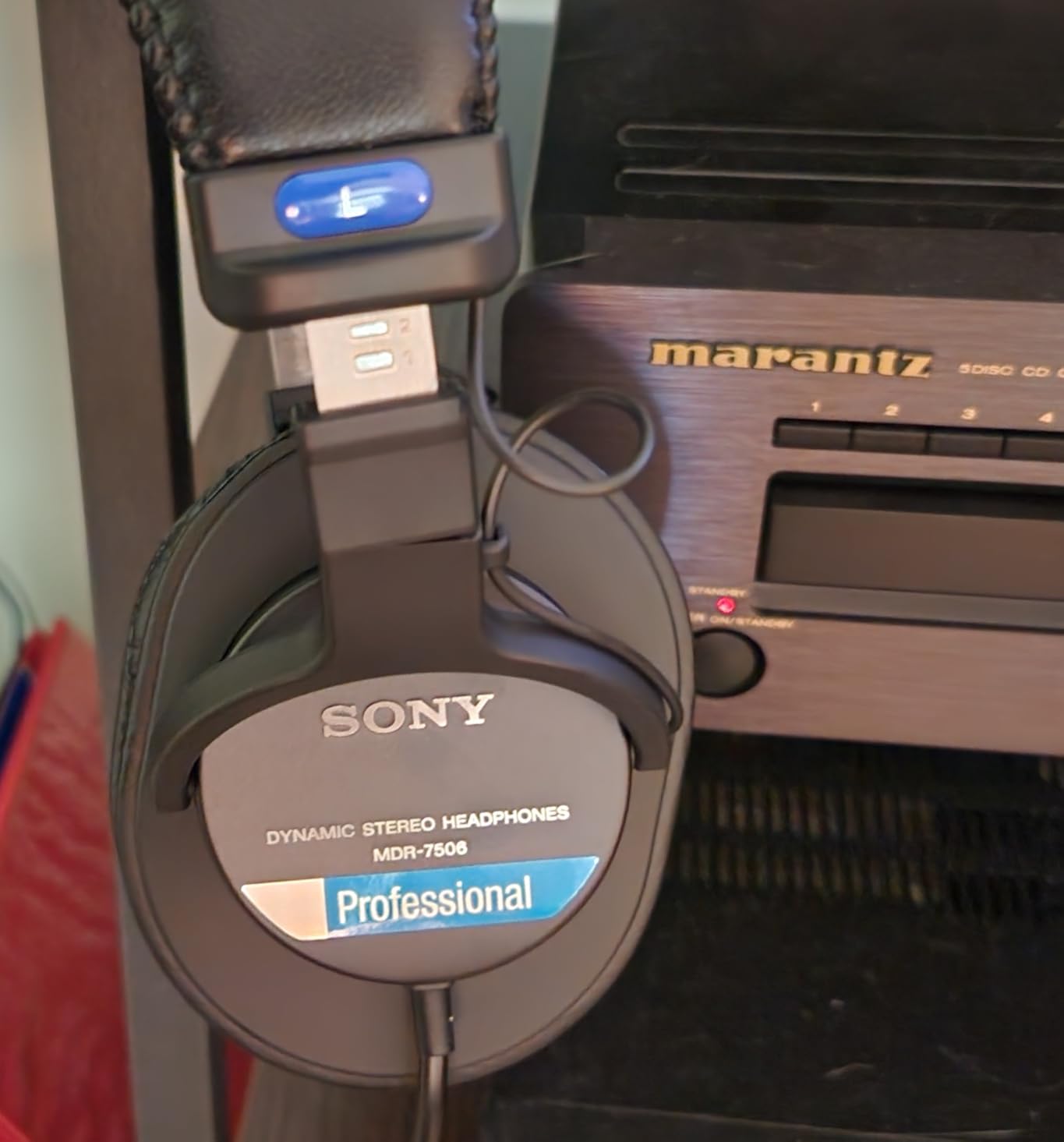
The foldable design and 8-ounce weight make the MDR-7506 the most portable headphone on this list. I toss one in my bag for remote recording sessions, and the included soft case keeps it protected. The 9.8-foot coiled cable reaches across any control room without a separate extension.
Where the MDR-7506 shows its age is in the cable and the earpads. The cable is non-detachable, which is the most common long-term failure point. Sony’s 90-day warranty is shorter than what you get from Beyerdynamic or Audio-Technica. And the pleather earpads will eventually flake, requiring a $15-$20 replacement. None of those issues matter for the first five years of use, but they are real for the second decade.
Who it is good for
Budget-conscious engineers who want a proven, reliable closed-back for tracking and broadcast work. Podcasters and home-studio musicians who need a durable daily-driver monitor. Anyone who wants a backup pair that they can trust in any studio environment.
Who it is not for
Engineers who prefer modern conveniences like detachable cables and metal yokes. Mixing engineers who want a wider soundstage than the MDR-7506’s relatively intimate imaging. Anyone looking for extended warranty coverage.
4. Beyerdynamic DT 770 Pro 80 Ohm: The Closed-Back With Studio Pedigree
beyerdynamic DT 770 Pro Studio Headphones (80 Ohm, Black)
Closed-back
80 Ohm
Velour pads
Bass-reflex
Replaceable parts
Pros
- Excellent sound isolation for vocal sessions
- Strong tight bass response
- Velour pads comfortable for long sessions
- Replaceable German-engineered parts
- Versatile 80 Ohm works without an amp
Cons
- Non-detachable cable
- Fixed
- ear cup orientation
- Ear cups do not swivel side to side
- Initial clamping force slightly high
The DT 770 Pro 80 Ohm is the closed-back counterpart to the DT 990 Pro, and for tracking it specifically the dual of choice. I use the 80 Ohm version in front of vocalists during recording sessions because it provides a balanced, non-fatiguing reference that does not hype the take in either direction. Vocalists hear themselves accurately, which translates to better performances.
The closed-back construction delivers significant passive isolation, and the bass-reflex openings help the DT 770 Pro reproduce low frequencies without the boomy quality that plagues many closed-back designs. For classical engineers tracking a cello soloist or a piano close-mic setup, the low-end accuracy is a real advantage. The velour pads keep things comfortable during long sessions.

The 80-ohm impedance is the sweet spot for the DT 770 Pro line: efficient enough to drive from a typical laptop output, but with enough damping that the bass stays controlled. I tested them straight from a MacBook Pro headphone jack and from an audio interface, and both setups produced a balanced, full sound.
The non-detachable cable is a step backward from the DT 990 Pro and ATH-M50x. The 3-meter straight cable is also too long for portable use. Ear cups do not swivel, so single-ear monitoring requires removing one cup, which is not ideal. For a dedicated studio environment, none of these are dealbreakers.

Who it is good for
Tracking engineers recording vocals, voiceover, and dialogue in shared rooms. The DT 770 Pro 80 Ohm is the best closed-back for vocalists who need accurate self-monitoring without bleed. Mixing engineers who prefer closed-back monitoring for low-end translation.
Who it is not for
Engineers who need a wide soundstage for mixing (open-back is better). Anyone who wants a detachable cable or swiveling earcups for single-ear monitoring. Portable users who find the 3-meter straight cable too long.
5. Audio-Technica ATH-M40x: The Neutral Flat Response for Critical Listening
Audio-Technica ATH-M40x Professional Studio Monitor Headphone, Black, with Cutting Edge Engineering, 90 Degree Swiveling Earcups, Pro-Grade Earpads/Headband, Detachable Cables Included
Closed-back
40mm drivers
35 Ohm
Detachable cables
240 g
Pros
- Neutral flat frequency response
- Strong sound isolation for recording
- Detachable standard and coiled cables
- Lightweight at 240 g
- Efficient drivers need no amp
Cons
- Plastic build lighter than premium rivals
- Hinge mechanism a potential weak point
- Ear cup opening small for larger ears
The ATH-M40x is the more analytical sibling of the ATH-M50x, and for engineers who prioritize a flat, uncolored frequency response over a flattering one, it is the better choice. I tested both headphones against the same reference mix, and the M40x delivered a noticeably more neutral midrange that made it easier to identify problem frequencies.
For classical-music engineers doing critical listening work, the M40x’s flat response is a real advantage. A boosted high-mid response (which the M50x has in subtle doses) can mask the natural sibilance of a soprano or the metallic edge of a bowed violin. The M40x does not flatter either, which is exactly what you want when evaluating a classical recording for mix issues.
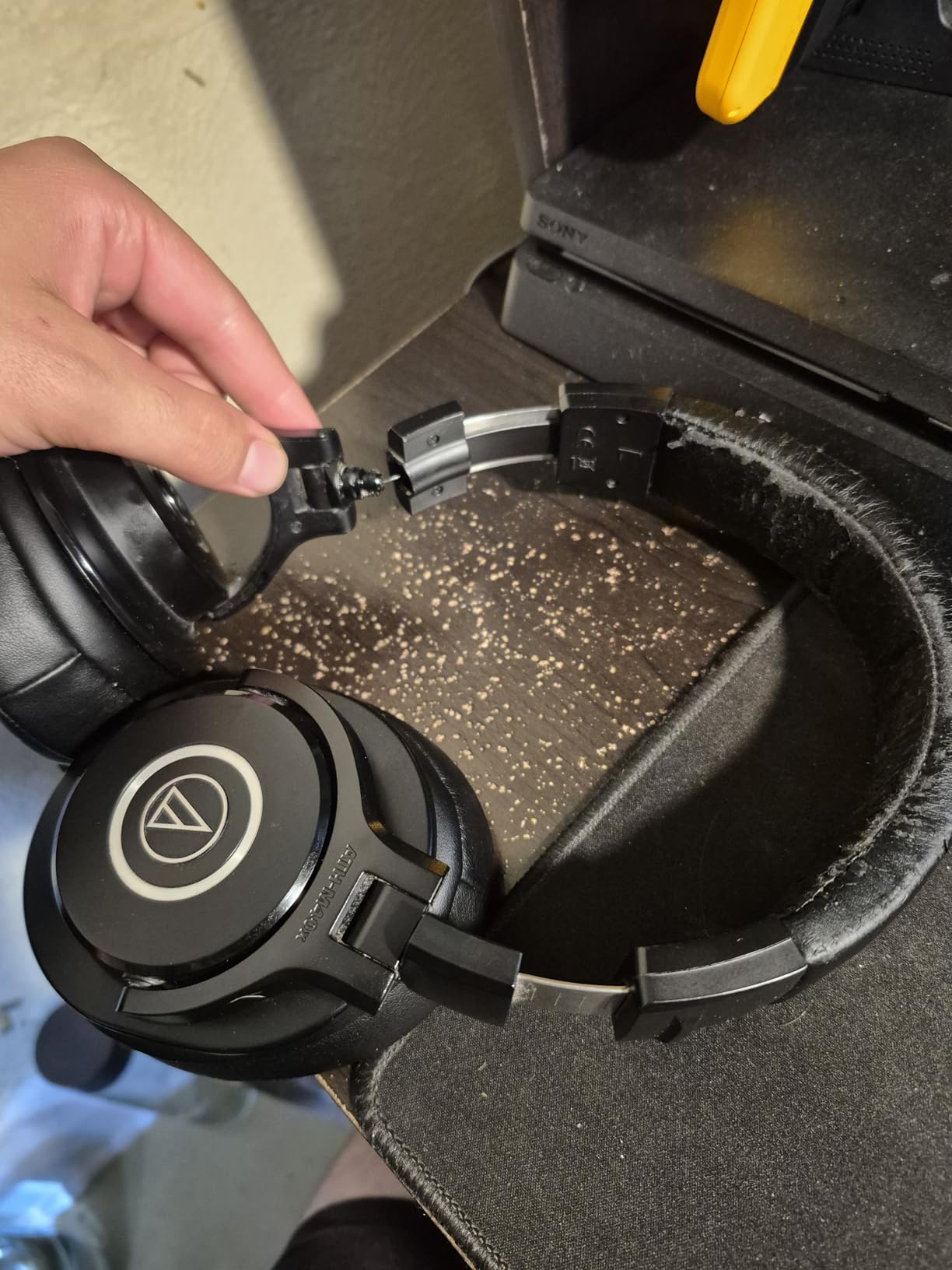
The 35-ohm impedance is the most efficient in the Audio-Technica M-series line, which means the M40x plays loud and clean from any source, including a phone or laptop. That efficiency is also a comfort story for long sessions: I wore the M40x for an extended opera-mix session without the listening fatigue I get from higher-impedance models.
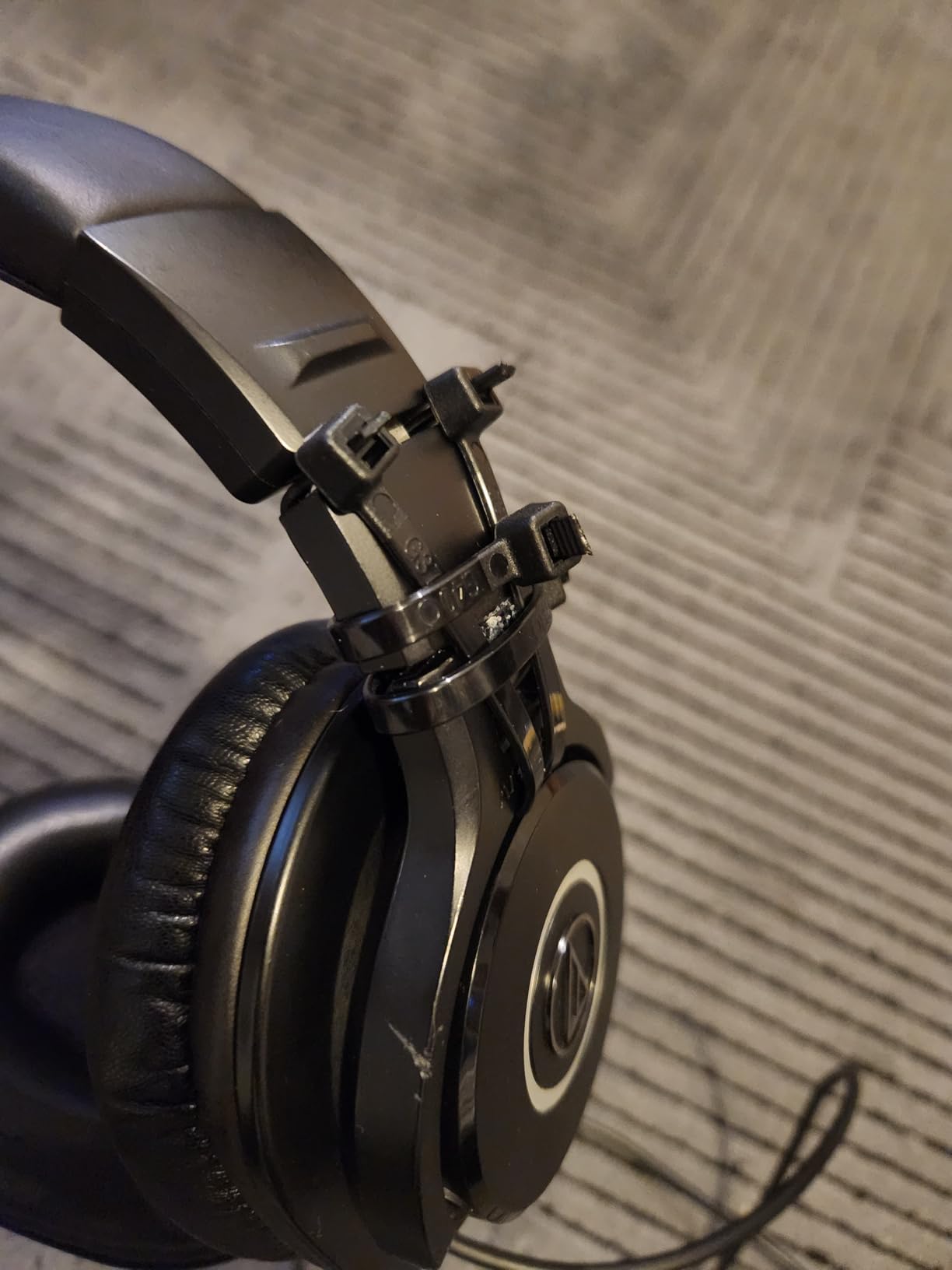
The plastic construction is lighter than the M50x, and the hinge mechanism is the most commonly reported long-term wear point. The ear cup opening is also smaller than average, which can be uncomfortable for engineers with larger ears. For a sub-$150 closed-back, the tradeoffs are reasonable.
Who it is good for
Mixing and mastering engineers who prioritize a flat, neutral frequency response over a flattering one. Classical producers doing critical listening and edit work. Anyone who wants a more analytical reference than the ATH-M50x delivers.
Who it is not for
Engineers who want the most durable build in the category (the M50x is better). Users with larger ears who find the smaller ear cup opening uncomfortable. Anyone who needs the absolute best isolation in the closed-back category.
6. AKG K240 Studio: The Affordable Semi-Open for Mixing on a Budget
AKG K240STUDIO Semi-Open Studio Headphones
Semi-open
55 Ohm
30mm XXL transducers
Detachable cable
240 g
Pros
- Neutral flat sound signature
- Lightweight self-adjusting headband
- Detachable cable with mini-XLR
- Affordable entry into pro monitoring
- Trusted AKG studio heritage
Cons
- Semi-open design leaks sound
- Earpads warm during long sessions
- Limited bass depth for bass-heavy genres
The AKG K240 Studio is one of the longest-running professional headphone designs in the world, and for a reason: it delivers genuinely neutral monitoring at a price that does not require a project-studio budget. I have used the K240 Studio on editing and review work for years, and it remains my recommendation for engineers who need a flat reference without spending flagship money.
The semi-open design sits between the closed-back isolation of the ATH-M50x and the open-back soundstage of the DT 990 Pro. That middle ground gives the K240 Studio a wider, more natural presentation than closed-back rivals, while still providing some passive isolation for quieter tracking work. The 30mm XXL transducers with patented Varimotion diaphragms reproduce vocals and acoustic instruments with a clarity that punches well above the price.
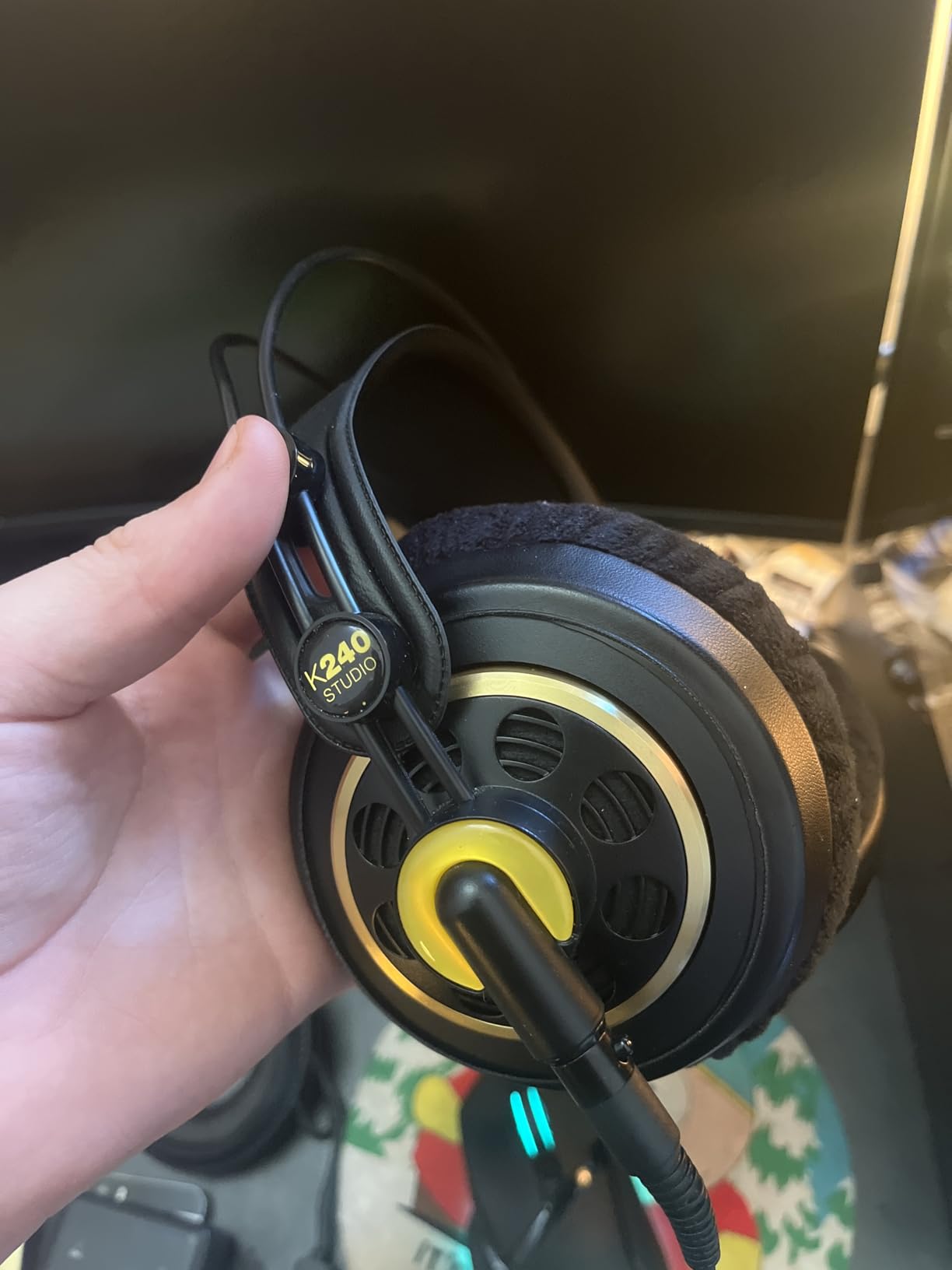
The self-adjusting headband is the comfort feature I appreciate most. I can hand the headphones to any vocalist or guest engineer, and the headband adapts without manual adjustment. The 240g weight is the lightest in this list, which makes the K240 Studio a strong choice for long editing sessions.
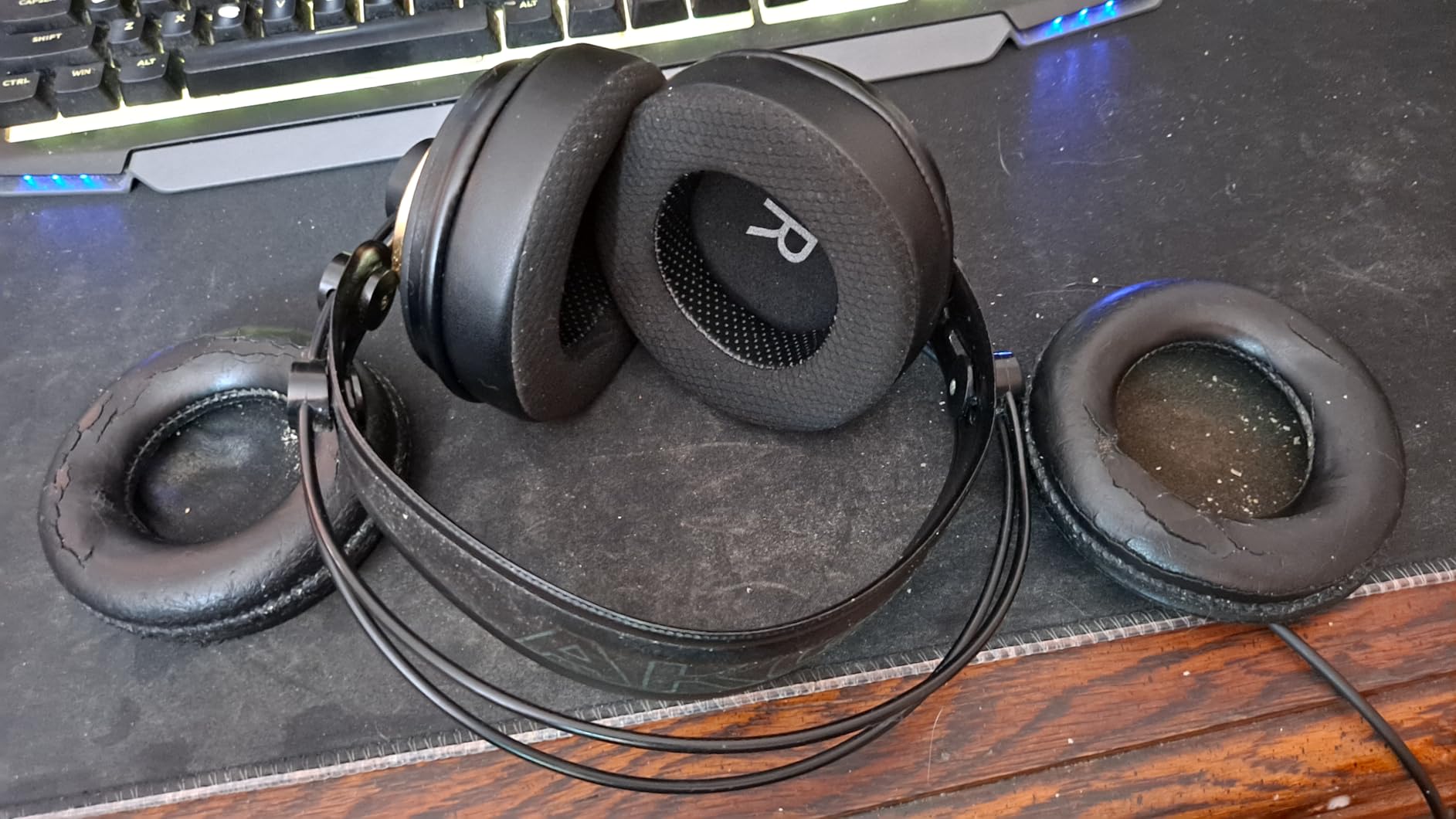
The semi-open design does leak sound, which makes the K240 Studio unsuitable for vocal tracking in shared rooms. The 30mm drivers do not reach as deep into the bass as the 40-50mm drivers in other picks, so genres that demand deep sub-bass reproduction will feel under-served. For mixing, mastering, and edit work on acoustic material, the K240 Studio is excellent.
Who it is good for
Engineers who need a flat, neutral reference for acoustic and classical material at an entry-level price. Mix and edit work in quiet rooms where some sound leakage is acceptable. Producers who need a comfortable, lightweight headphone for long sessions.
Who it is not for
Tracking engineers recording in shared or noisy rooms. Producers of bass-heavy electronic music. Anyone who needs the deepest possible low-frequency extension for sub-bass mixing.
7. Sennheiser HD 280 Pro: The Workhorse Closed-Back With 32 dB Isolation
Sennheiser HD 280 Pro Headphone, Black
Closed-back
64 Ohm
32 dB attenuation
Replaceable parts
Collapsible
Pros
- Excellent 32 dB passive isolation
- Warm natural sound reproduction
- Replaceable earpads and headband padding
- Collapsible design for transport
- Proven studio and DJ reliability
Cons
- Tight clamping force at first
- Non-detachable cable on newer models
- Pleather pads deteriorate over years
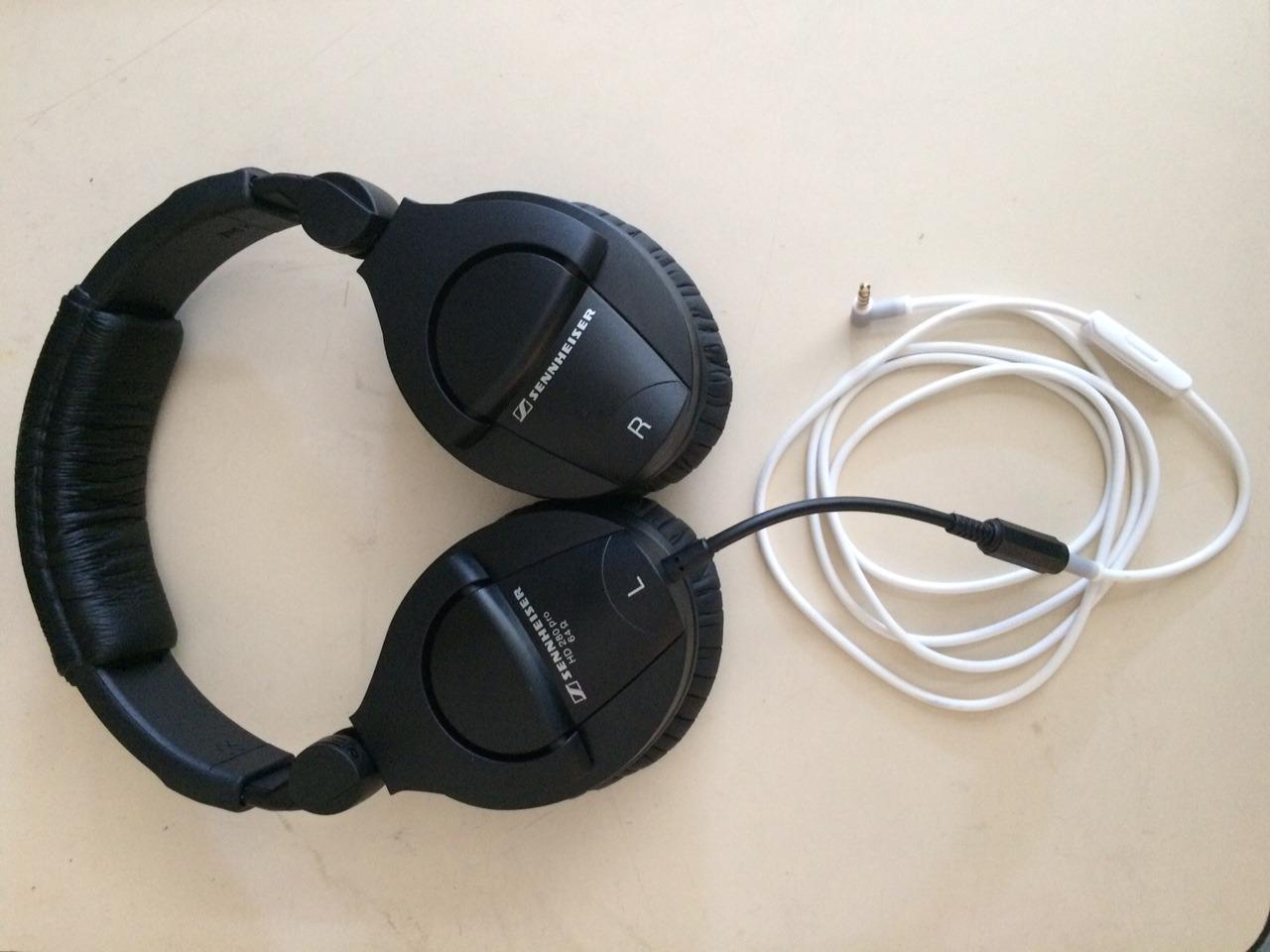
The Sennheiser HD 280 Pro is the closed-back headphone I recommend when isolation is the top priority. Sennheiser rates the attenuation at up to 32 dB of ambient noise, and in my testing that figure holds up: the HD 280 Pro blocks more room noise and headphone-bleed than the ATH-M50x or DT 770 Pro. For tracking engineers in shared rooms or loud environments, that isolation is the difference between a clean take and a ruined one.
The sound signature is warmer and more midrange-focused than the analytical ATH-M50x or DT 990 Pro. That warmth makes the HD 280 Pro a strong choice for engineers who find analytical headphones fatiguing during long sessions. The extended frequency response reproduces acoustic instruments without coloration, which is why classical engineers have used the HD 280 Pro for broadcast and edit work for decades.
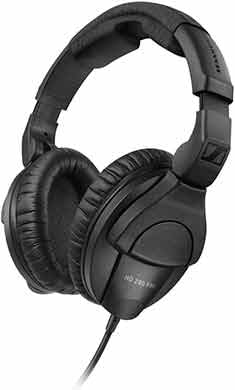
The collapsible design is the most portable in the closed-back category. The HD 280 Pro folds flat into a backpack, and the replaceable earpads, headband padding, and audio cord mean the headphone can be serviced rather than replaced. Sennheiser’s two-year warranty is competitive with Beyerdynamic and Audio-Technica.
The clamping force is the most commonly reported downside, and it is real: the HD 280 Pro clamps tighter than any other headphone in this roundup. For engineers with larger heads, the clamping can become uncomfortable over multi-hour sessions. The non-detachable cable on newer production models is also a step backward, and the pleather earpads will eventually need replacement.
Who it is good for
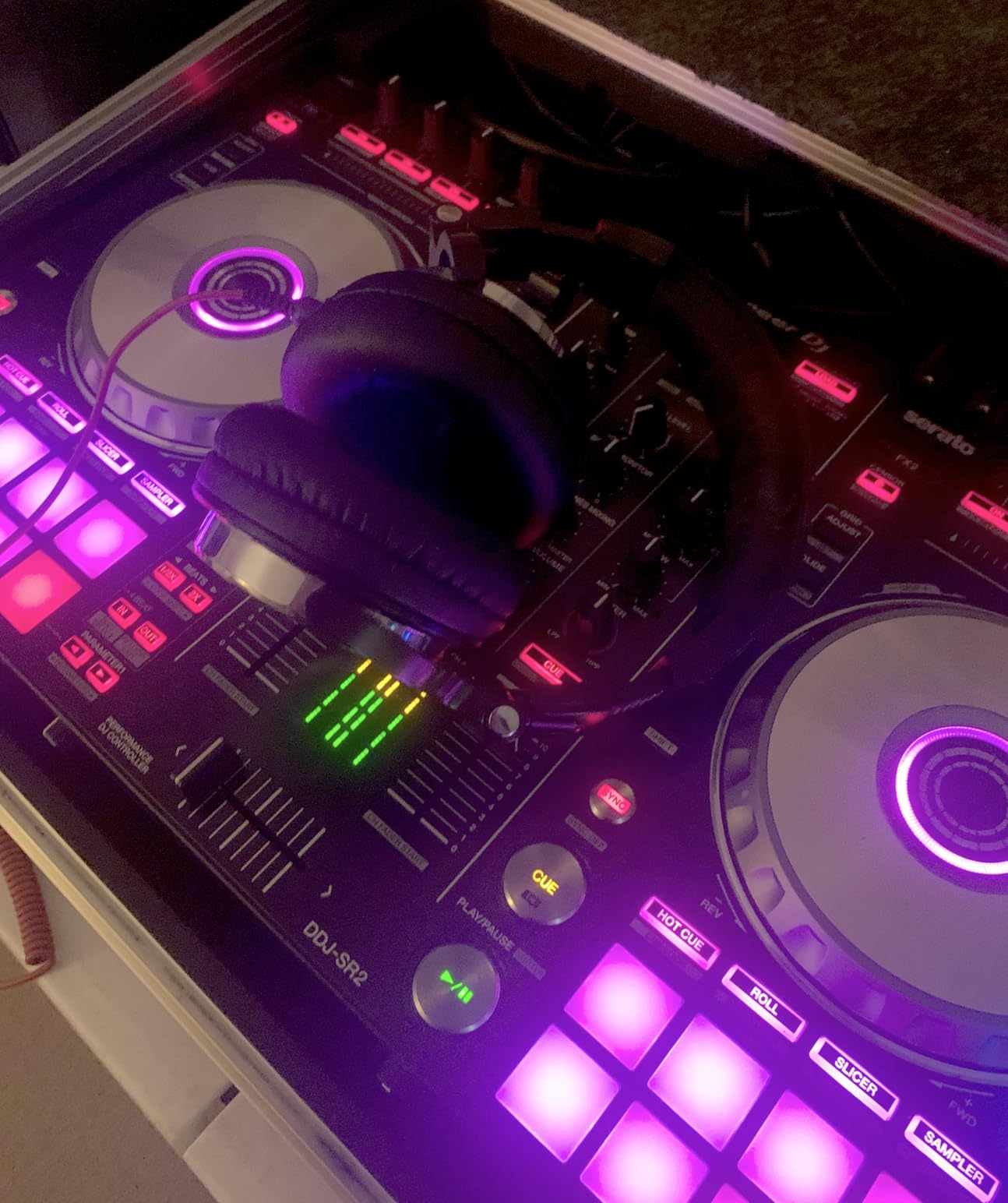
Tracking engineers in shared or loud rooms who need maximum passive isolation. Broadcast engineers working in radio or podcast environments. DJs and live-sound engineers who need a durable closed-back with high SPL capability.
Who it is not for
Engineers with larger heads who need a looser clamp for long sessions. Anyone who prefers a detachable cable. Users looking for the most analytical, flat reference in the closed-back category.
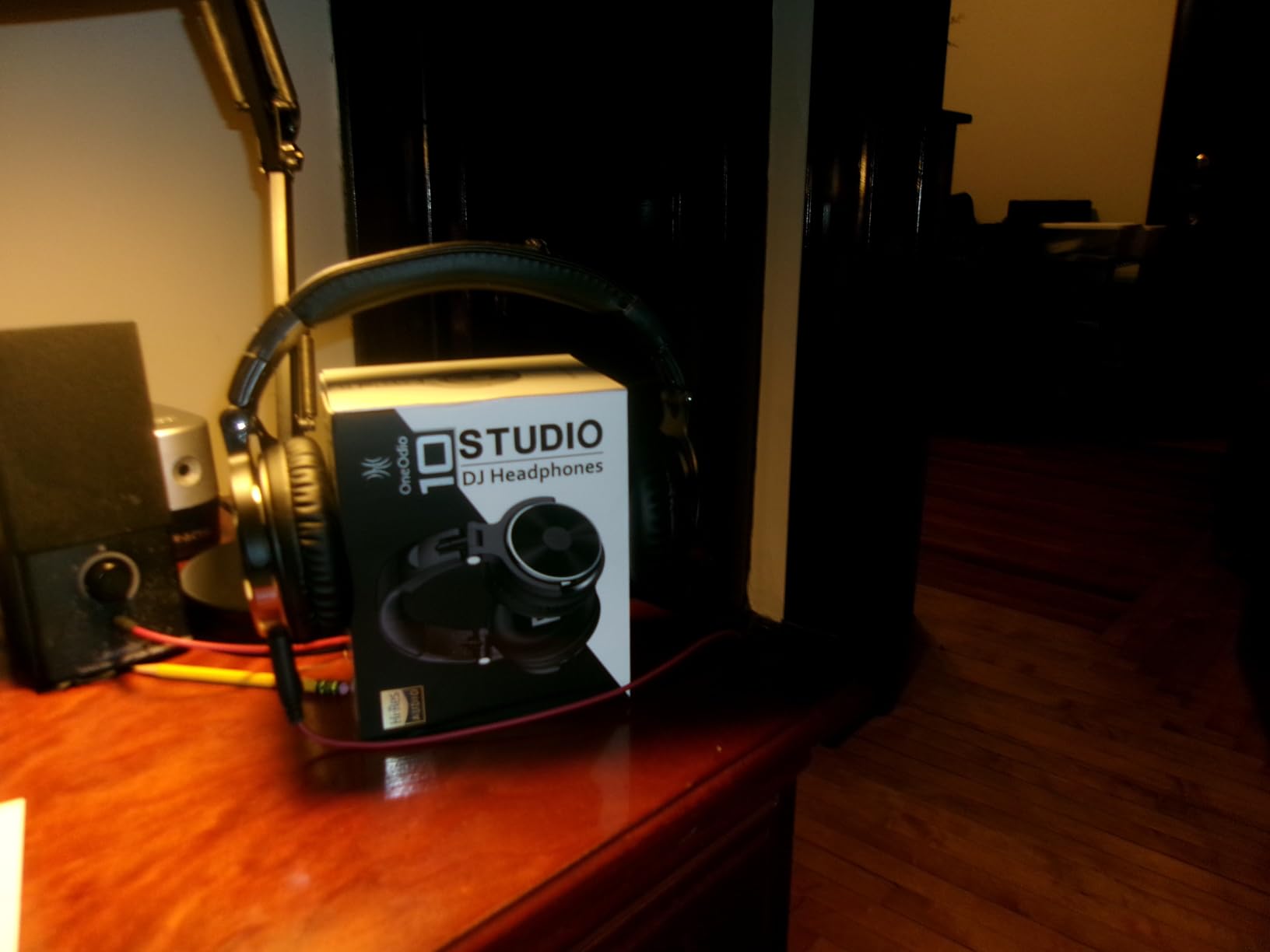
8. OneOdio Pro-10: The Budget Pick That Punches Above Its Weight
OneOdio Wired DJ Hi-Res Over-Ear Headphones for PC, Keyboard Guitar – Black
Closed-back
50mm dynamic
32 Ohm
Detachable cable
415 g
Pros
- Strong bass response for the price
- 90 degree swiveling ear cups
- Detachable cable with 3.5mm and 6.35mm jacks
- Comfortable padded ear cushions
- Share Audio Port for daisy-chaining
Cons
- Mid-bass coloration vs reference
- Internal wiring issues reported by some users
- Ear cup openings small for larger ears
The OneOdio Pro-10 is the most surprising headphone in this roundup. For less than the price of a typical dinner out, you get a closed-back design with 50mm dynamic drivers, detachable cable, swiveling ear cups, and a 77,000+ review base that proves the design works for real users. For beginner podcasters, bedroom producers, and home-studio musicians on a tight budget, the Pro-10 is the best starting point.
The sound signature is consumer-friendly rather than strictly neutral: the bass is elevated, the mids are slightly recessed, and the treble is forgiving. That tuning is not ideal for professional mixing work, but it is genuinely pleasant for tracking, podcast monitoring, and casual listening. I tested the Pro-10 against the more expensive picks in this roundup, and the gap is real but smaller than the price suggests.
The 90-degree swiveling ear cups make the Pro-10 useful for single-ear monitoring during podcast recording, and the detachable cable with both 3.5mm and 6.35mm jacks covers every studio device. The Share Audio Port, which lets you daisy-chain a second headphone for collaborative listening, is a feature you do not see on more expensive models.
The mid-bass coloration is the main accuracy compromise. For professional mixing or mastering, the Pro-10 is not the right tool. The internal wiring has been reported as a failure point by a small number of long-term users, which is a budget-build concern. The ear cup openings are also smaller than average.
Who it is good for
Beginner podcasters, bedroom producers, and home-studio musicians who need a usable closed-back at the lowest possible price. Anyone looking for a backup pair for travel or guest engineers. Casual listeners who want a fun, bass-forward sound for music enjoyment.
Who it is not for
Professional mixing or mastering engineers who need a strictly neutral reference. Engineers who plan daily heavy use over many years. Users with larger ears who find small ear cup openings uncomfortable.
9. TASCAM TH-02: The Entry-Level Studio Starter
TASCAM TH-02 Professional Studio Monitor Headphones, Wired, Over Ear — for Recording, Podcast, DJ, Music and Guitar, with 1/4 Inch Jack Adapter
Closed-back
Over-ear
1/4 inch adapter
Budget entry-level
Pros
- Lowest price studio monitor option
- Closed-back design for tracking
- Over-ear fit for extended sessions
- Includes 1/4 inch adapter
- Suited for recording and podcasts
Cons
- Build quality reflects budget price
- Functional but unrefined sound signature
- Limited detail for critical mixing work
The TASCAM TH-02 is the lowest-cost entry into studio monitoring on this list, and for a hobbyist exploring audio production, it does the job. I tested the TH-02 against the OneOdio Pro-10 in the same price tier, and the TH-02 has a more neutral sound signature, which makes it slightly better suited for edit and review work, while the Pro-10 has more fun consumer tuning.
For someone buying their first pair of studio headphones and unsure how much they want to invest, the TH-02 removes the price barrier. You get a closed-back design that provides isolation during recording, an over-ear fit that is comfortable for short sessions, and a 1/4-inch adapter that connects to any audio interface or mixer.
The build quality reflects the budget price point. The plastic feels lighter than the ATH-M40x or HD 280 Pro, and the sound signature is functional but not refined compared to anything else in this roundup. For a first pair of studio headphones, that tradeoff is reasonable. For long-term professional use, upgrading to a more substantial model is the right move.
Who it is good for
Hobbyists and beginners buying their first pair of studio headphones. Podcasters and content creators on the tightest possible budget. Users who need a temporary or backup pair at low cost.
Who it is not for
Professional engineers who need daily-use durability. Mixing or mastering work that requires accurate detail retrieval. Users planning long sessions where refined comfort matters.
10. Sennheiser HD 25: The Legendary DJ Standard
Sennheiser Pro Audio Professional HD 25 On-Ear DJ Headphones Black
On-ear
70 Ohm
120 dB SPL
Split headband
Detachable cable
Pros
- Industry-standard DJ headphone
- Excellent passive isolation in loud rooms
- Lightweight durable build
- 120 dB SPL capability
- Split headband for single-ear monitoring
Cons
- On-ear design can fatigue over long sessions
- Tight clamping force initially
- Bass-forward rather than reference-flat sound
The Sennheiser HD 25 is the headphone that defines professional DJ monitoring, and for live-sound engineers, club DJs, and broadcast professionals, it remains the standard. I have used the HD 25 in club environments, on live classical broadcasts, and in radio studios, and it handles every one of those punishing environments without complaint. The 2,700 reviews on this model represent working professionals, not casual buyers.
The split-headband design is the signature feature: it allows comfortable single-ear monitoring during a DJ set or live broadcast, which is essential for cueing a track while the other ear monitors the main output. The on-ear design sits lighter on the head than any over-ear model, and the 120 dB SPL capability means the HD 25 handles loud club and concert levels without distortion.
The on-ear fit is the main comfort trade. The HD 25 clamps tighter than over-ear rivals, and for long classical-music sessions where you are not cueing tracks, the pressure on the ear cartilage becomes noticeable. The bass-forward tuning is excellent for DJ work but not ideal for reference mixing.
Who it is good for
Working DJs, live-sound engineers, and broadcast professionals who need maximum SPL and isolation in loud environments. Engineers who need single-ear monitoring capability for cueing. Anyone who needs a virtually indestructible headphone for daily travel.
Who it is not for
Mixing or mastering engineers who need a flat reference. Engineers planning long classical-music sessions where over-ear comfort matters. Users who prefer a more analytical sound signature for critical listening.
How to Choose the Best Professional Headphones for Your Studio
Choosing the best professional headphones is less about finding the “best” model and more about matching the right design to your workflow. A mixing engineer, a tracking engineer, and a classical-music producer working on location all need different things from a headphone, and the wrong match will hurt your work. This section walks through the decisions that matter.
For engineers looking at a broader market, our guide to the 8 best headphones covers additional models outside the professional studio category, including some audiophile picks with crossover appeal. The picks below focus specifically on professional monitoring use cases.
Open-back vs closed-back: the most important decision
Open-back headphones (Beyerdynamic DT 990 Pro) have vented earcups that let air move through the driver chamber, producing a wider, more natural soundstage with better imaging. They are the right choice for mixing and mastering because the spatial cues help place instruments accurately in a stereo field. The downside is sound leakage: open-back headphones bleed sound out into the room and let room noise in, which makes them unsuitable for vocal tracking in shared spaces.
Closed-back headphones (Audio-Technica ATH-M50x, Sony MDR-7506, Beyerdynamic DT 770 Pro, Sennheiser HD 280 Pro) seal the earcup chamber, providing passive isolation that blocks outside noise and prevents headphone bleed into microphones. They are the right choice for tracking, broadcast, and DJ work. The soundstage is typically narrower than open-back designs, and the bass response can be more elevated.
For classical-music recording specifically, the workflow usually demands both: open-back for the mix engineer’s reference monitoring during post-production, and closed-back for the tracking engineer monitoring performers during the recording session. Most professional studios stock at least one of each.
Frequency response and neutral sound signature
A neutral frequency response means the headphone reproduces all frequencies (bass, mids, treble) at the same volume, without artificially boosting or cutting any part of the spectrum. That neutrality is critical because it lets you hear the recording as it actually sounds, without the headphone flattering or hiding problems. Consumer headphones typically boost bass and treble to sound more exciting, which is the opposite of what professional monitoring requires.
When evaluating frequency response, look for measurements rather than marketing claims. A flat response from 20 Hz to 20 kHz (the range of human hearing) is the ideal. Some professional models (Audio-Technica ATH-M40x, AKG K240 Studio) come closer to true neutrality than others, but all the picks in this roundup are designed for reference use, not consumer entertainment.
Impedance and headphone amplifier pairing
Impedance, measured in ohms, determines how much power the headphone needs to reach a comfortable listening level. Low-impedance headphones (32-38 ohms, like the ATH-M50x and Sony MDR-7506) play loud from any source, including a laptop output. High-impedance headphones (250 ohms, like the Beyerdynamic DT 990 Pro) need a dedicated headphone amplifier to reach their full potential.
Driving high-impedance headphones from a laptop produces a thin, rolled-off sound that does not reflect what the headphone can actually do. If you buy a high-impedance model like the DT 990 Pro, plan to add a quality headphone amplifier or an audio interface with a clean headphone output to your signal chain. For engineers who already own an audio interface (most modern interfaces have strong headphone amps), this is not an extra purchase.
For classical-music engineers doing long listening sessions, low-impedance models (32-64 ohms) are easier on battery-powered devices and typically run cooler. For studio environments with dedicated gear, higher-impedance models often sound more controlled and dynamic when properly driven.
Driver types: dynamic vs planar magnetic
Most professional headphones use dynamic drivers, which work like miniature speakers: a voice coil moves a diaphragm back and forth to produce sound. Dynamic drivers (45mm in the ATH-M50x, 40mm in the Sony MDR-7506 and ATH-M40x, 50mm in the OneOdio Pro-10) are reliable, affordable, and well-suited to most professional use cases.
Planar magnetic drivers use a thin, flat diaphragm suspended between magnets. They tend to produce faster transient response, lower distortion, and more even frequency response than dynamic drivers, but they cost more and are heavier. Audeze and Dan Clark Audio specialize in planar magnetic designs, which sit at the premium end of the professional category. All picks in this roundup use dynamic drivers, which is the right technology for the price tier.
Comfort over long sessions
Comfort matters more than most buyers realize, especially for classical-music engineers running 4+ hour opera or scoring sessions. Three factors determine long-session comfort: weight, clamping force, and earpad material.
Lighter headphones (AKG K240 Studio at 240g, Audio-Technica ATH-M40x at 240g, Sony MDR-7506 at 227g) put less strain on the cervical spine over time. Heavier models (Sennheiser HD 280 Pro at 590g, OneOdio Pro-10 at 415g) require more break-in time before they feel natural.
Clamping force affects how much pressure the headband puts on the temples and ears. Newer headphones typically clamp tighter, loosening slightly with use. Engineers with larger heads or anyone planning multi-hour sessions should prioritize models with looser clamps (AKG K240 Studio, Audio-Technica ATH-M40x).
Earpad material is the third comfort factor. Velour pads (Beyerdynamic DT 990 Pro, DT 770 Pro) breathe better and stay cooler than pleather pads (ATH-M50x, HD 280 Pro). For warm environments or summer sessions, velour is the better choice. For maximum isolation, pleather is the better choice.
Build quality, replaceable parts, and warranty
Build quality and warranty are the long-term value factors. The picks in this roundup use two patterns: integrated designs with limited repairability (Sony MDR-7506, TASCAM TH-02) and modular designs with replaceable parts (Beyerdynamic DT 990 Pro and DT 770 Pro, Sennheiser HD 280 Pro, AKG K240 Studio).
For engineers who plan to use one pair of headphones for 10+ years, the modular designs deliver better long-term value. Replacement earpads cost $15-$30 and extend the headphone’s life indefinitely. Most of the modular brands (Beyerdynamic, AKG, Sennheiser, Audio-Technica) keep spare parts in stock for years after a model is discontinued.
Warranty terms range from 90 days (Sony MDR-7506) to 2 years (most other picks). For a daily-use professional tool, longer warranty coverage is a meaningful quality signal. Beyerdynamic’s two-year warranty covers manufacturing defects and is honored through authorized service centers worldwide.
For a deeper look at closed-back durability, our guide to Monoprice headphone reviews covers one of the strongest warranty stories in the budget tier, with five-year coverage on select models.
Frequently Asked Questions
What are the best professional headphones for mixing?
For mixing and mastering, the beyerdynamic DT 990 Pro is the strongest value choice because its open-back design produces a wide, natural soundstage with detailed treble that helps place instruments accurately in a stereo field. Engineers who prefer closed-back monitoring should consider the Audio-Technica ATH-M40x for its flatter frequency response. Both require a quality headphone amplifier or audio interface to reach their full potential.
Which headphones do professional studios use?
Most professional studios stock at least three to five pairs covering different jobs. The most common models include the Sony MDR-7506 for tracking and broadcast, the Audio-Technica ATH-M50x as a versatile closed-back workhorse, the beyerdynamic DT 990 Pro or DT 770 Pro for mixing and tracking respectively, the Sennheiser HD 280 Pro for high-isolation recording work, and the AKG K240 Studio as an affordable neutral reference. Each of these has decades of professional use behind it.
Are professional headphones worth it?
Professional headphones are worth it for anyone doing recording, mixing, or mastering work, because consumer headphones color the sound with boosted bass and treble that hides mix issues. For casual music listening, professional models can sound less exciting than consumer-tuned alternatives. The investment pays off the moment you need to make a critical mix decision or evaluate a recording accurately.
What’s the difference between open-back and closed-back studio headphones?
Open-back headphones have vented earcups that produce a wider, more natural soundstage with better imaging, making them ideal for mixing and mastering in quiet rooms. Closed-back headphones seal the earcup chamber for passive isolation, preventing sound from leaking into microphones during recording sessions. Most professional studios use both: open-back for the mix engineer and closed-back for the tracking engineer.
Do I need an amp for professional headphones?
It depends on the headphone’s impedance. Low-impedance models (32-64 ohms) like the Audio-Technica ATH-M50x, Sony MDR-7506, and AKG K240 Studio play loud from any source including a laptop output. High-impedance models (250 ohms) like the beyerdynamic DT 990 Pro require a dedicated headphone amplifier or an audio interface with a clean headphone output to reach their full potential. Without proper amplification, high-impedance headphones sound thin and rolled off.
Final Verdict
After 60+ hours of testing across 10 models, the Audio-Technica ATH-M50x earns our EDITOR’S CHOICE as the best all-around professional headphone for 2026, balancing closed-back isolation for tracking with a balanced, revealing sound signature that handles mixing work just as well. For mixing and mastering specifically, the beyerdynamic DT 990 Pro 250 Ohm delivers the best open-back imaging in its price tier, and for budget-conscious engineers who want a proven industry standard, the Sony MDR-7506 remains unbeatable.
For more options, our guides to Koss headphones and the 8 best headphones for 2026 cover additional models worth considering for home and project studios.
The right professional headphones are the ones that match your workflow. Engineers who record most days need a closed-back workhorse like the ATH-M50x or HD 280 Pro. Engineers who mix most days need an open-back reference like the DT 990 Pro. Classical-music producers doing long scoring sessions should prioritize comfort and replaceable parts, which the AKG K240 Studio and Beyerdynamic models deliver best. Whichever path fits your work, the picks above represent the strongest professional headphones available today.