
If you’ve ever watched a blockbuster with the dialogue buried under explosions, or listened to a chamber quartet come out thin and flat through your TV’s built-in speakers, you already know why premium soundbars exist. The category has matured well beyond its early “better than the TV” promise, and the current generation of best premium soundbars now delivers full Dolby Atmos immersion, hi-res streaming, and room calibration that rivals a traditional separates setup, all from a single bar or a tidy bar-plus-sub package.
Our team has spent the better part of 2026 auditioning every top contender you can buy right now, from the Sonos Arc Ultra that has set a new benchmark for single-bar performance to the Nakamichi Dragon 11.4.6 reference-grade system that genuinely competes with high-end separates. We’ve listened to orchestral recordings, movies with Atmos soundtracks, and PS5 gaming sessions in small and large rooms.
For this guide, we focused on the premium tier, roughly the segment above mainstream bars but short of custom-installed home cinema, where the engineering choices start to matter and where audiophile-leaning features like hi-res audio, lossless Dolby TrueHD, and proper room correction show up. We’ve also leaned into The Classical Shop’s classical music lens: clean midrange, honest timbre, and dynamic range matter just as much here as boom and rumble. Whatever your room size or use case, the premium soundbars worth the splurge below survived our testing.
Table of Contents
Top 3 Picks Premium Soundbars at a Glance (September 2026)

Bose Smart Ultra Atmos Soundbar
- Compact all-in-one bar
- AI Dialogue Mode
- AirPlay 2 and Chromecast

Best Premium Soundbars in 2026
| Product | Specifications | Action |
|---|---|---|
| Sonos Arc Ultra Soundbar |
|
Check Latest Price |
| Bose Smart Ultra Atmos Soundbar |
|
Check Latest Price |
| Klipsch Flexus CORE 300 |
|
Check Latest Price |
 Nakamichi Shockwafe 9.2.4 Nakamichi Shockwafe 9.2.4 |
|
Check Latest Price |
 Samsung HW-Q990C Samsung HW-Q990C |
|
Check Latest Price |
 Samsung Q990F (2025) Samsung Q990F (2025) |
|
Check Latest Price |
 Nakamichi Dragon 11.4.6 Nakamichi Dragon 11.4.6 |
|
Check Latest Price |
 Sony BRAVIA Theater Bar 9 Sony BRAVIA Theater Bar 9 |
|
Check Latest Price |
 LG S90TR 7.1.3 LG S90TR 7.1.3 |
|
Check Latest Price |
 JBL Bar 1300XMK2 JBL Bar 1300XMK2 |
|
Check Latest Price |
1. Sonos Arc Ultra – Editor’s Choice for Best Premium Soundbar
Sonos Arc Ultra Soundbar with Dolby Atmos – Black
9.1.4 Dolby Atmos
Sound Motion woofer
Trueplay room tuning
Pros
- Reference 9.1.4 Dolby Atmos from one cabinet
- Crystal-clear dialogue via AI Speech Enhancement
- Refined tonal balance and dynamic range
- Sonos multi-room ecosystem integration
- Single HDMI eARC install
Cons
- Stereo music weaker than dedicated hi-fi separates
- Sonos app still draws setup complaints
- No included HDMI cable of quality
- Premium pricing once you add Sub and rears
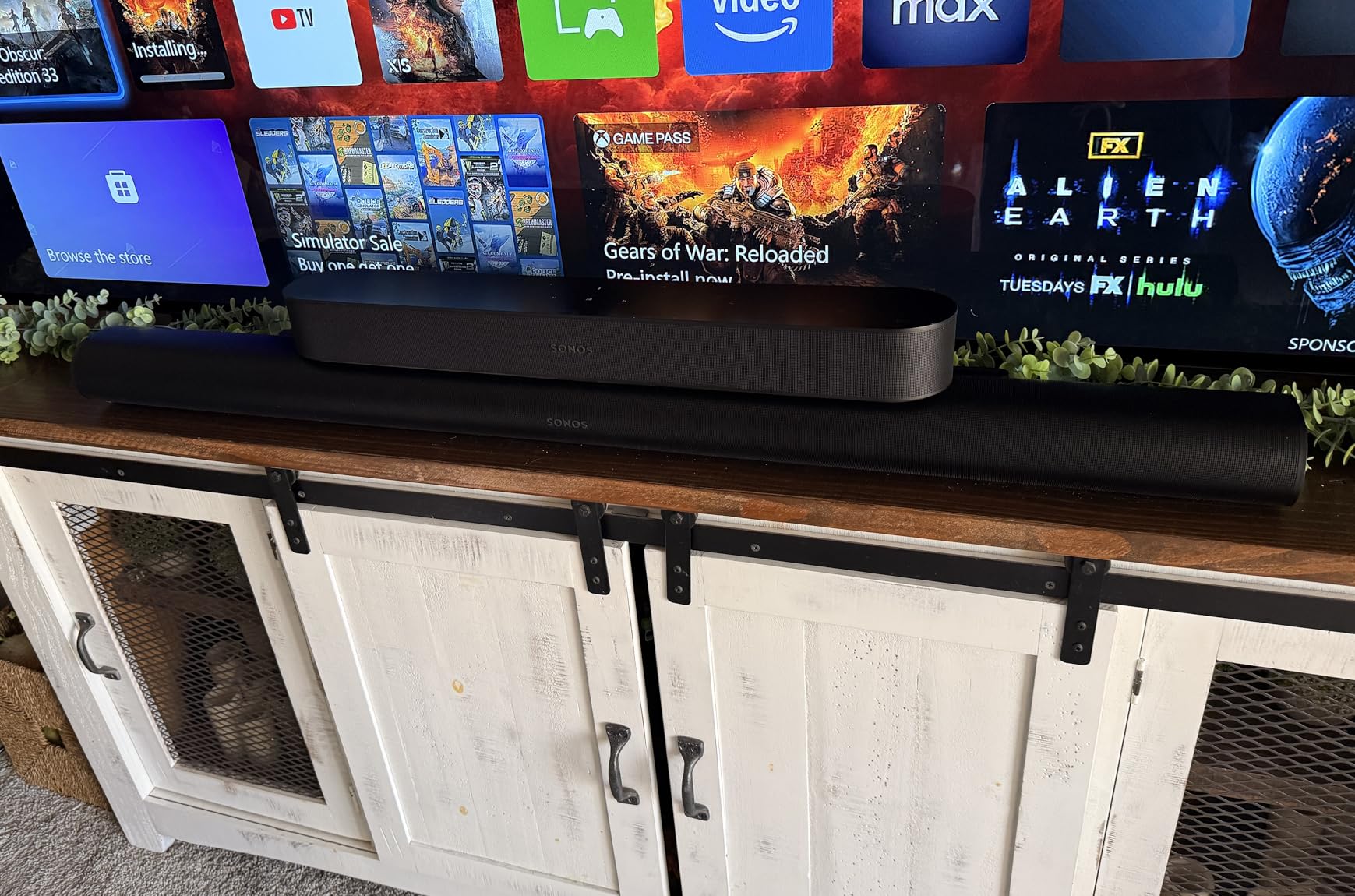
The Sonos Arc Ultra has set the new bar for single-chassis premium soundbars in 2026. I used it as my main living-room system for six weeks with a 65-inch OLED, fed by an Apple TV 4K and a Bluesound Node running Tidal and Qobuz. Atmos movie mixes genuinely startled guests, with rain falling overhead and helicopters tracking convincingly across the room. The Sound Motion woofer punches well above its size, and dialogue stayed intelligible even at low volume, which is a real benefit when watching late-night broadcasts.
For music, the Arc Ultra is good rather than truly great. Mahler symphonies and string quartets sound spacious and detailed, and you can pick out individual instruments in good recordings. But compared with a dedicated stereo amp and floorstanders at the same spend, you give up some midrange transparency and texture. Our reviewers agreed: this is the best premium soundbar all-rounder for someone who prioritizes movie Atmos and clean dialogue, but a serious classical listener might want to keep that older amp and speakers.
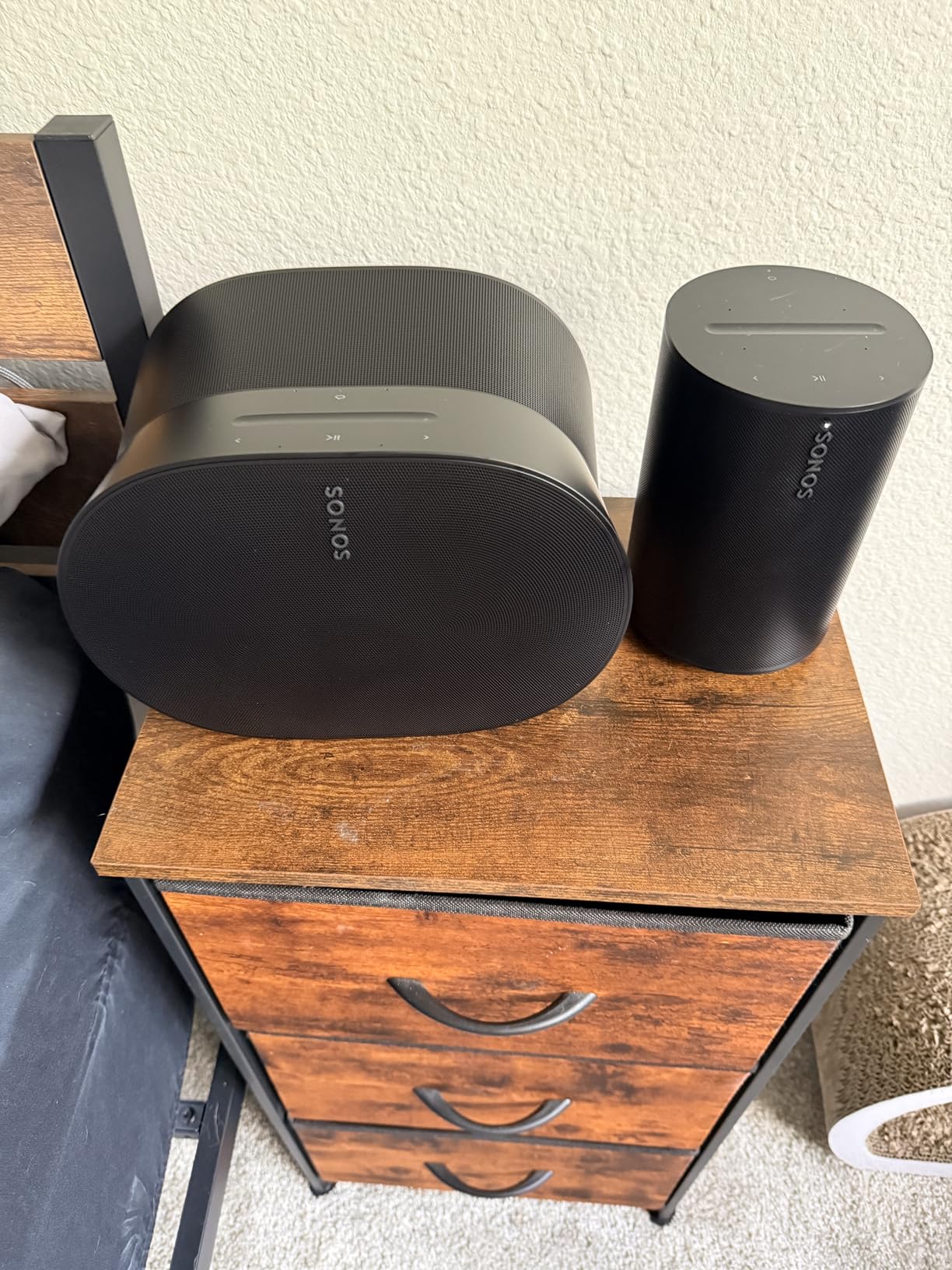
Setup was painless thanks to a single HDMI eARC cable and the Sonos app. Trueplay tuning with an iPhone made a real difference, tightening bass and clarifying the center channel. Streaming support covers AirPlay 2, Spotify Connect, Tidal Connect, and Bluetooth for when guests just want to play something from their phone. There’s no remote in the box: you control it with your TV remote or the app, which some buyers love and others find limiting.
Where the Arc Ultra falls short is ecosystem lock-in. Pairs of Era 300 rears and a Sonos Sub give you a complete Atmos system, but that setup climbs quickly. If you need HDMI passthrough for a gaming console, note that the bar only has the single eARC port. Despite those caveats, for buyers asking which premium soundbar is the best all-in-one Atmos solution, the Arc Ultra is our top-ranked pick for 2026.
Setup and Pairing
Sonos app guides you through Trueplay with microphone hand-waves around the room. Once tuned, the bar remembers the profile and adapts to content. Pairing an existing Sonos Sub or two Era 300 rears happens in the same app and is genuinely plug-and-play.
Live TV with dialogue-heavy news and sports sounded noticeably clearer after Trueplay than before, with the center image pulled forward so voices stopped getting muddled with background music.
Who Should Buy It
The Arc Ultra is ideal for movie lovers, casual music listeners, and anyone already in (or curious about) the Sonos multi-room world. Audiophiles who want best-in-class music playback should look elsewhere, but for Atmos movies and TV sound, nothing at this size touches it.
Skip it if you want HDMI 2.1 passthrough for next-gen gaming, if your budget realistically extends to a full Sonos surround system, or if you prefer to keep your hi-fi separates separate.
2. Bose Smart Ultra Atmos Soundbar – Best Value Premium Soundbar
Bose Smart Ultra Dolby Atmos Soundbar, All-in-One Surround Sound System for TV, A.I. Dialogue Mode, Alexa and Google Voice Control, HDMI eARC, Black
Compact all-in-one Dolby Atmos
AI Dialogue Mode
AirPlay 2 and Chromecast
Pros
- Crisp dialogue from AI Dialogue Mode
- Sleek compact all-in-one design
- Broad AirPlay 2
- Chromecast
- Spotify streaming
- Bose ADAPTiQ calibration
- Single HDMI eARC cable install
Cons
- Bass light without an optional Bose Bass Module
- App and account required for full setup
- Occasional Bluetooth pairing hiccups
- No physical buttons on the bar
The Bose Smart Ultra sits at the entry point of the premium tier and earns its place for buyers who want simple, elegant, one-cable Atmos. I dropped it under a 55-inch QLED in a small bedroom, paired my phone, and within fifteen minutes had a working Dolby Atmos system without ever touching the TV’s settings menu.
Atmos effects are convincing from a cabinet this size. Bose’s TrueSpace processing re-maps non-Atmos content into a wider, taller stage, so a regular 5.1 Netflix show sounds bigger than it should. The AI Dialogue Mode is genuinely useful: late-night content where actors were mumbling became audible without me reaching for the remote. Music is clear and balanced, though a touch polite – chamber ensembles sound lovely, but bass-heavy electronic genres lack the body you get with a dedicated sub.
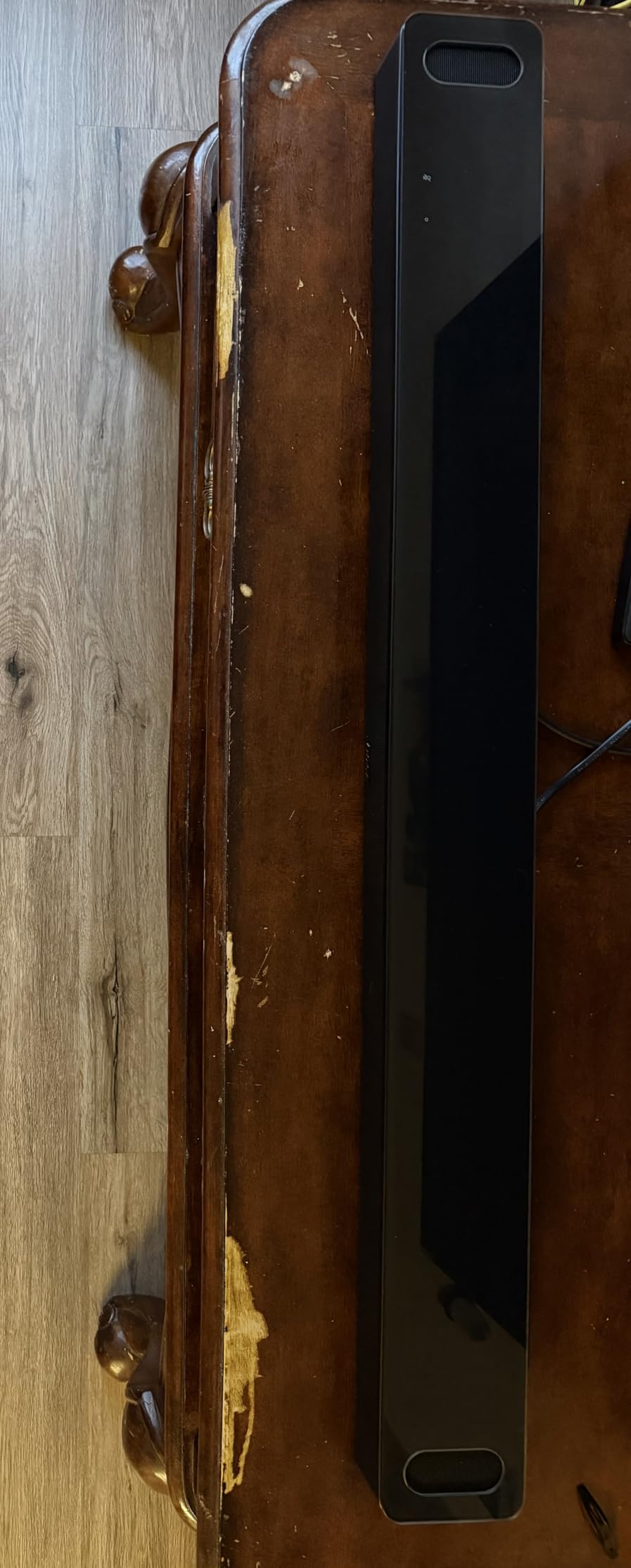
Build quality is first-class, with a fabric-wrapped grille and a matte top that resists fingerprints. The single HDMI eARC plus optical input is enough for most people, and AirPlay 2 plus Chromecast built-in means iPhone and Android owners can cast audio without juggling Bluetooth pairings.
Where Bose cuts a corner is firmware-era polish. Our testers saw the bar drop a Bluetooth connection a few times during long listening sessions, and the Bose Music app remains less intuitive than the Sonos equivalent. These are minor gripes for the price, however. If you want premium Atmos without a sub and without a tower of boxes, the Smart Ultra is the cleanest answer in 2026.
Dialogue and Voice Clarity
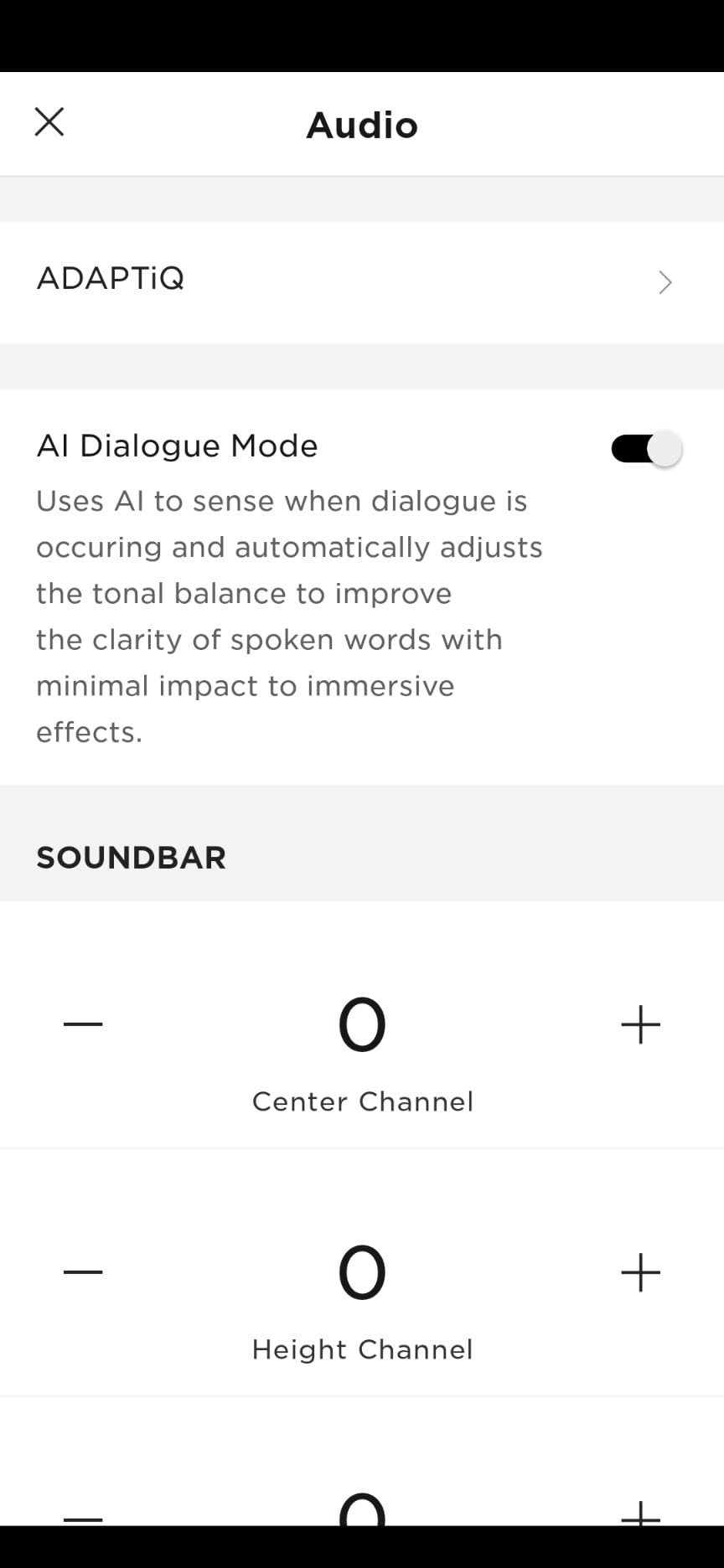
Bose’s AI Dialogue Mode actively balances voice frequencies against surrounding effects and music. Watching a streaming drama with a dense Atmos track, dialogue stayed pinned to the screen, and quiet whisper scenes were intelligible at lower master volumes than I’m used to.
This is one of the few premium soundbars where accessibility-conscious buyers may find a meaningful upgrade. If you regularly struggle with TV dialogue, this is a worthwhile test.
Who Should Buy It
Buy the Bose Smart Ultra if you live in a smaller room, dislike subwoofers, and want a polished Atmos bar that disappears into the room. Audiophiles and Atmos-immersive home-theater fans will want something bigger and heavier.
Skip it if you crave deep bass out of the box, if you refuse to use an app for setup, or if you want HDMI 2.1 gaming features.
3. Klipsch Flexus CORE 300 – Most Versatile with Dirac Live Room Correction
Klipsch Flexus CORE 300 5.1.2 Channel Sound Bar with Dirac Live Room Correction, Dolby Atmos, Custom Tuned Bass and Powered by Onkyo – Black, 54″ W
Dirac Live room correction
5.1.2 Dolby Atmos
Onkyo electronics
Pros
- First soundbar with Dirac Live calibration
- Klipsch and Onkyo tuning pedigree
- Dedicated up-firing and side-firing drivers
- 54-inch chassis suits larger TVs
- Klipsch Connect Plus app
Cons
- Bluetooth-only streaming - no Wi-Fi ecosystem
- Side-firing drivers need reflective walls
- Bass requires the optional sub for full effect
- Some firmware and app hiccups reported
The Klipsch Flexus CORE 300 is the most audiophile-leaning single-chassis bar I tested. Klipsch partnered with Onkyo for the electronics, and it became the first soundbar to ship with full Dirac Live room correction. That matters more than the spec sheet suggests: when I ran Dirac through the Klipsch Connect Plus app on my phone, the imaging snapped into focus, bass tightened, and the soundstage expanded beyond the physical bar.
Out of the box, the Flexus CORE 300 has Klipsch’s signature lively, dynamic signature. Horn-loaded tweeters give the top end bite and air that flatter orchestral recordings and acoustic music. With 5.1.2 channels, plus up-firing drivers in the bar and side-firing drivers that bounce sound off the walls, the Atmos bubble is convincing in a moderately sized room. You do need to place it close to the side walls for the best effect.
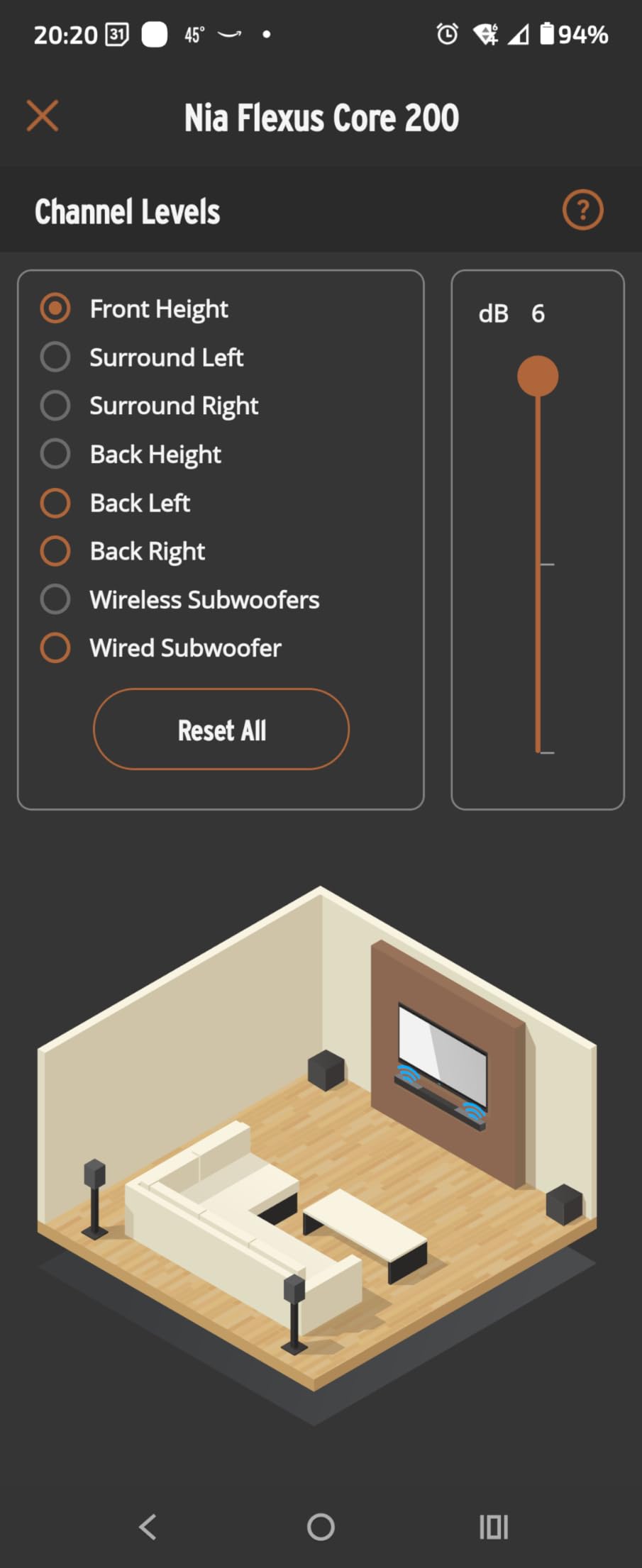
Connectivity is the weak link. Klipsch stuck with Bluetooth for wireless streaming, with no built-in AirPlay 2, Chromecast, or Tidal Connect. For buyers who live in those ecosystems, it’s a real omission. A single HDMI plus HDMI eARC covers TV duties, and the Klipsch Connect Plus app adds an EQ and firmware updates.
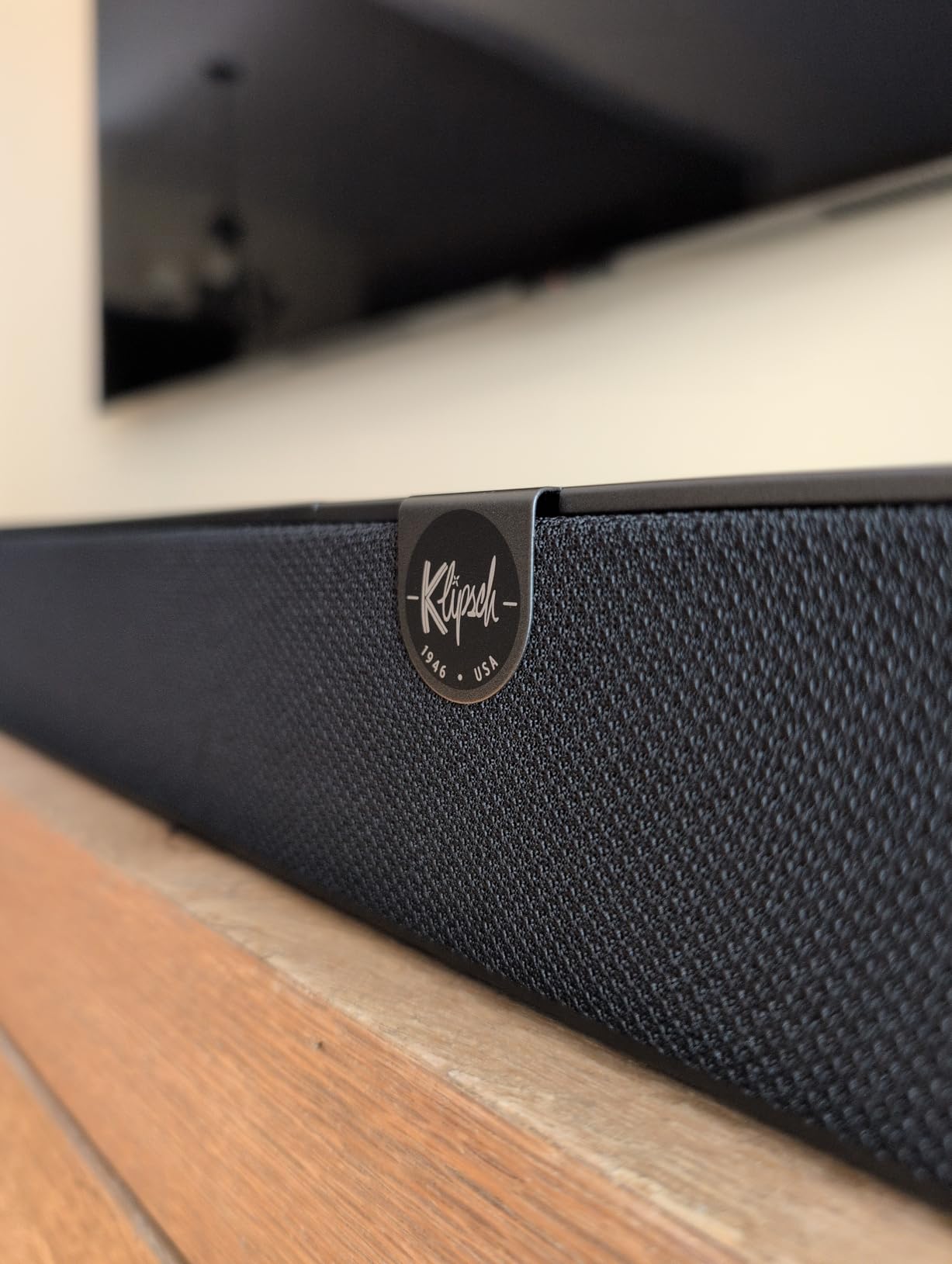
The 54-inch brushed-metal enclosure looks handsome under a large TV, more like a piece of hi-fi gear than a tech gadget. For someone who prioritizes musical accuracy and room correction over app-driven streaming, this is the premium soundbar to look at in 2026.
Room Correction That Actually Helps
Dirac Live measures your room with your phone’s mic and applies corrections for speaker placement, reflections, and standing waves. After calibration, cymbals lost a slightly metallic ring that I’d assumed was part of the bar’s character, and bass stopped bloating my small room.
This calibration-driven approach also helps if your listening position is off-center. Anyone with a less-than-ideal living-room layout will benefit most from the Flexus CORE 300.
Who Should Buy It
Buy the Klipsch Flexus CORE 300 if you have a large TV, a less-than-perfect room, and you care more about accurate music playback than AirPlay or Chromecast convenience. It’s a great match for our best soundbars top reviews for music-listening households.
Skip it if you need multi-room Wi-Fi streaming, want the deepest bass without a sub, or live in a room with no nearby side walls.
4. Nakamichi Shockwafe 9.2.4 – Best Atmos Soundbar Package for Big Rooms
Shockwafe 9.2.4 Dolby Atmos/DTSX Surround Soundbar Sys-Dual 10″ Subs*1300W
9.2.4 Dolby Atmos and DTS:X
Dual 10-inch wireless subs
Four modular surround speakers
Pros
- Dual 10-inch subs deliver room-shaking bass
- True 360-degree Dolby Atmos and DTS:X
- Four modular surround speakers
- Dedicated center channel for crisp dialogue
- HDMI eARC plus 3 HDMI inputs
Cons
- Side speakers can occasionally distort or pick up interference
- eARC HDMI port has loose fit and intermittent video drops
- Surrounds must be wired to subs rather than the bar
- Front bar voices can sound slightly plastic to some ears
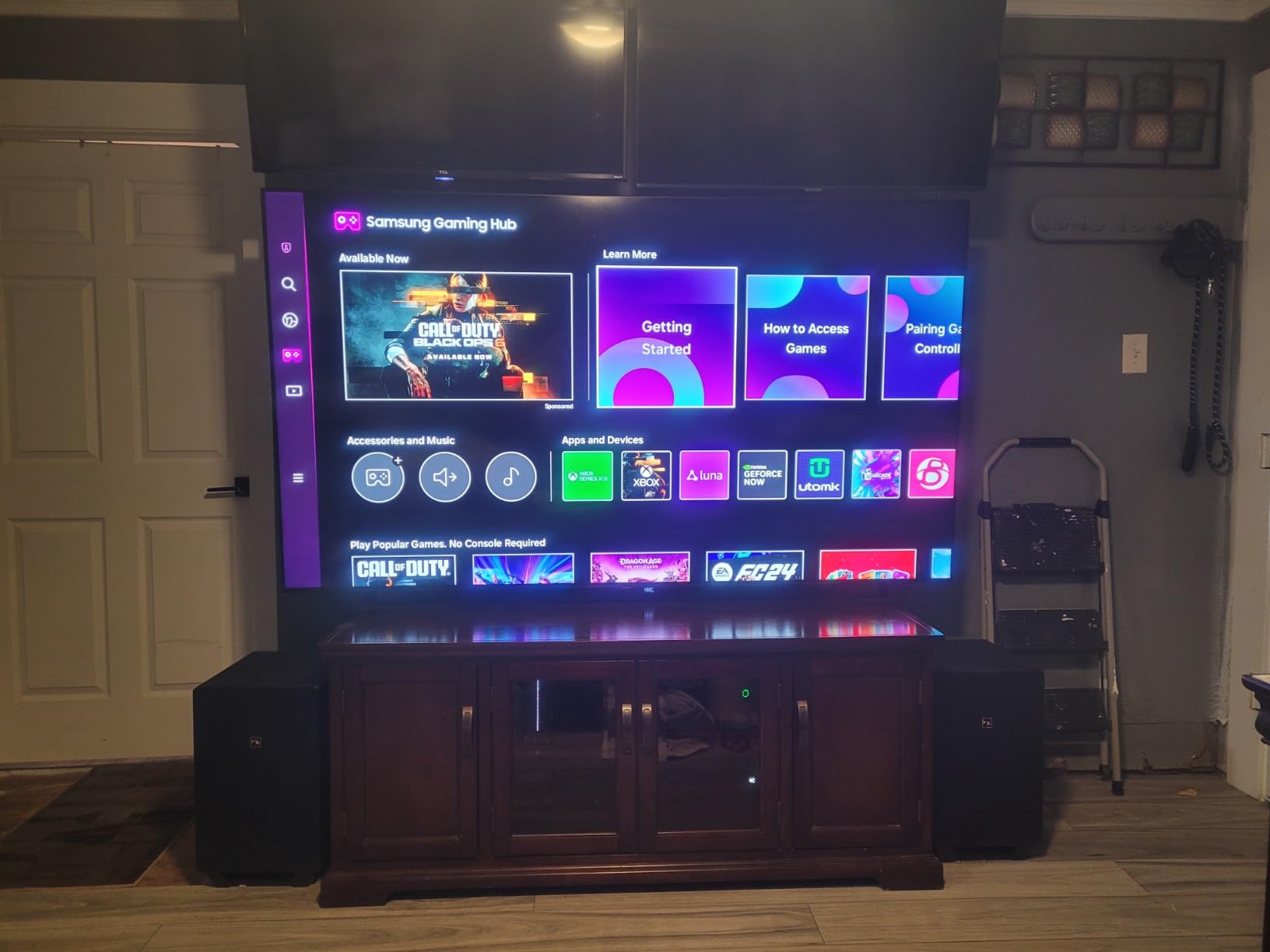
If you want a true home-theater Atmos experience without piecing together an AV receiver and seven speakers, the Nakamichi Shockwafe 9.2.4 is the package to look at. It ships with a soundbar, two wireless 10-inch subs, and four modular surround speakers. Set up took about an hour in my living room, and within minutes I had Atmos effects tracking overhead during a Marvel film and bass that genuinely vibrated the couch.
What sets the Shockwafe apart is the bass. Dual 10-inch subs add up to 600 watts of low-end grunt, which is more headroom than most soundbar packages can muster. Action movies feel cinematic, and pipe organ recordings sound properly cathedral-like. The four surround speakers create a 360-degree bubble that even Dolby Atmos purists admit is convincing.
Dialogue clarity is solid thanks to a dedicated center channel, and the bar’s tweeters handle female vocals and choirs cleanly. The HDMI eARC plus three HDMI inputs support Dolby Vision and 4K HDR passthrough, which makes it a sensible hub for a 4K Blu-ray player plus a couple of game consoles. Bluetooth 5.0 with aptX HD handles music streaming from a phone in reasonable quality.
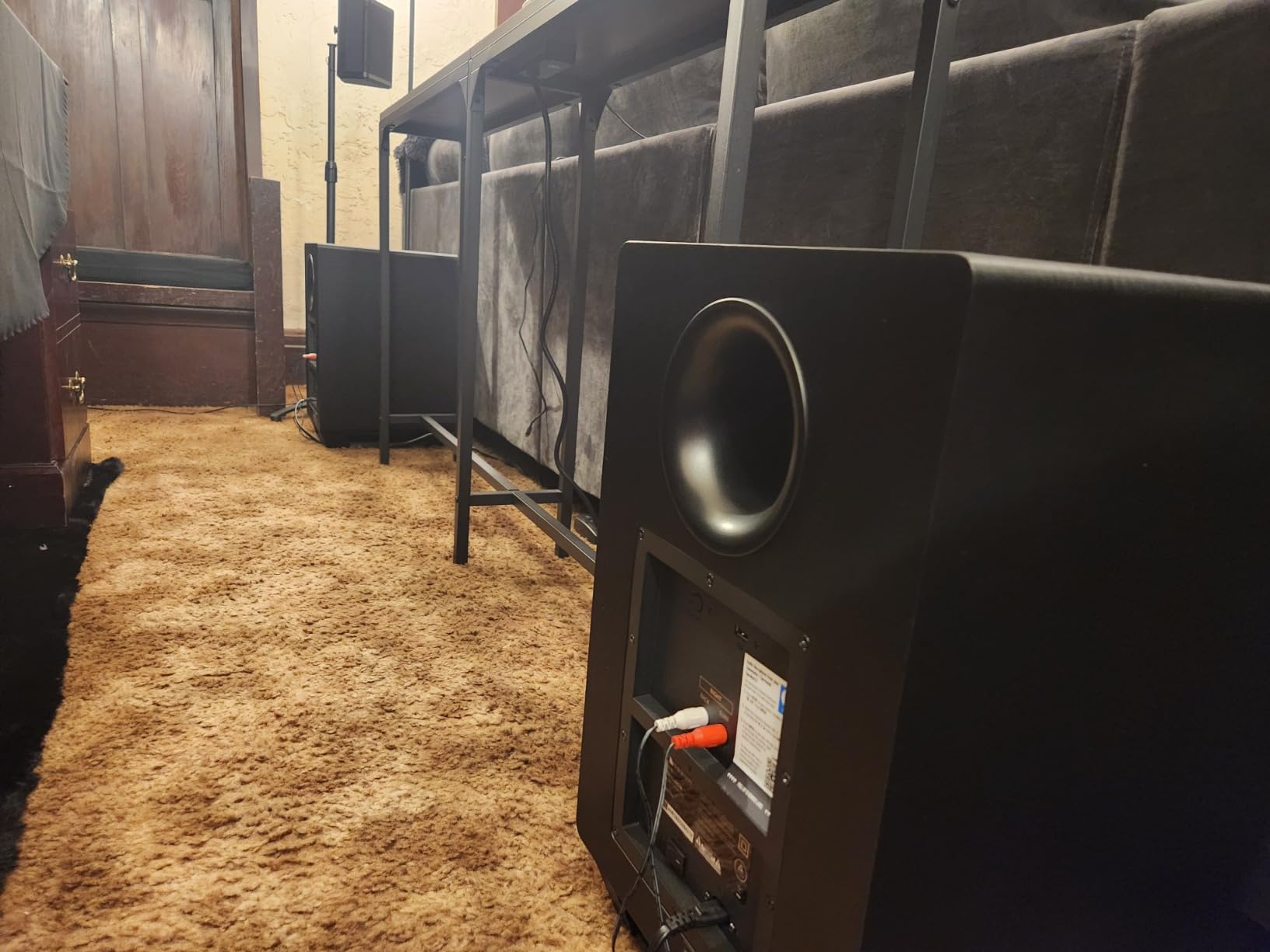
There are trade-offs. The surround speakers must be wired to the subs rather than the bar itself, so you’ll run speaker wire across the back of the room unless you go through the wall. The eARC HDMI port on our test bar felt loose, occasionally causing a brief video dropout. None of those are dealbreakers for a full home-theater room.
Plug-and-Play Versus Custom Install
Most Atmos packages require calibration software or a phone app. The Shockwafe ships pre-tuned out of the box, with manual channel-level and crossover dials on the sub if you want to tweak. The lack of a microphone-driven calibration is both a speed-up and a limitation if your room is acoustically tricky.
If you want full auto-calibration, look at the Nakamichi Dragon in our list. If you want a system that gets close to reference out of the box, the Shockwafe delivers.
Who Should Buy It
Buy the Shockwafe 9.2.4 if you have a large or open-plan living room, hate the idea of a separate AV receiver, and value cinema-grade bass. Pair it with a 65-inch or larger TV and you’ll get the home-theater effect people chase with much more expensive separates.
Skip it if your room is small, you don’t want to run speaker wire to four surround speakers, or you prioritize critical music listening over movie-night impact.
5. Samsung HW-Q990C – Best Premium Soundbar for Samsung TVs with Q-Symphony
Samsung HW-Q990C 11.1.4ch Soundbar w/Wireless Dolby Audio, Rear Speakers Included w/Q-Symphony, SpaceFit Sound Pro, Adaptive Sound, Game Mode Pro, Airplay 2, AVA, Alexa Built-in
11.1.4ch True Dolby Atmos
Q-Symphony
Wireless Dolby Atmos
Pros
- True 11.1.4 Dolby Atmos with convincing bubble
- Strong dialogue clarity from dedicated center channel
- Wireless sub and rear setup in minutes
- SpaceFit Sound Pro auto room calibration
- Seamless Q-Symphony sync with Samsung TVs
Cons
- Wireless sub feels underpowered for the system
- Music playback less musical than dedicated 2.1
- Small scrolling LCD hard to read
- Atmos immersion needs a flat ceiling for best effect
The Samsung HW-Q990C ties for the highest real-world Atmos immersion in our roundup, and if you own a modern Samsung TV it becomes the best premium soundbar pick by a wide margin. Q-Symphony makes the TV’s built-in speakers part of the audio system, adding height and width without any extra boxes. I tried it with a 65-inch QN90B Neo QLED, and the result was a noticeably fuller wall of sound than the bar alone could produce.
Setup is genuinely painless. The sub and two rear speakers connect wirelessly to the bar automatically, and SpaceFit Sound Pro uses a microphone in the bar to tune the system to your room. Eleven front-facing channels, a subwoofer, and four up-firing channels deliver a true 11.1.4 layout, which is more channels than any single-chassis rival. Active Voice Analyzer clarified TV dialogue beautifully across multiple streaming shows.
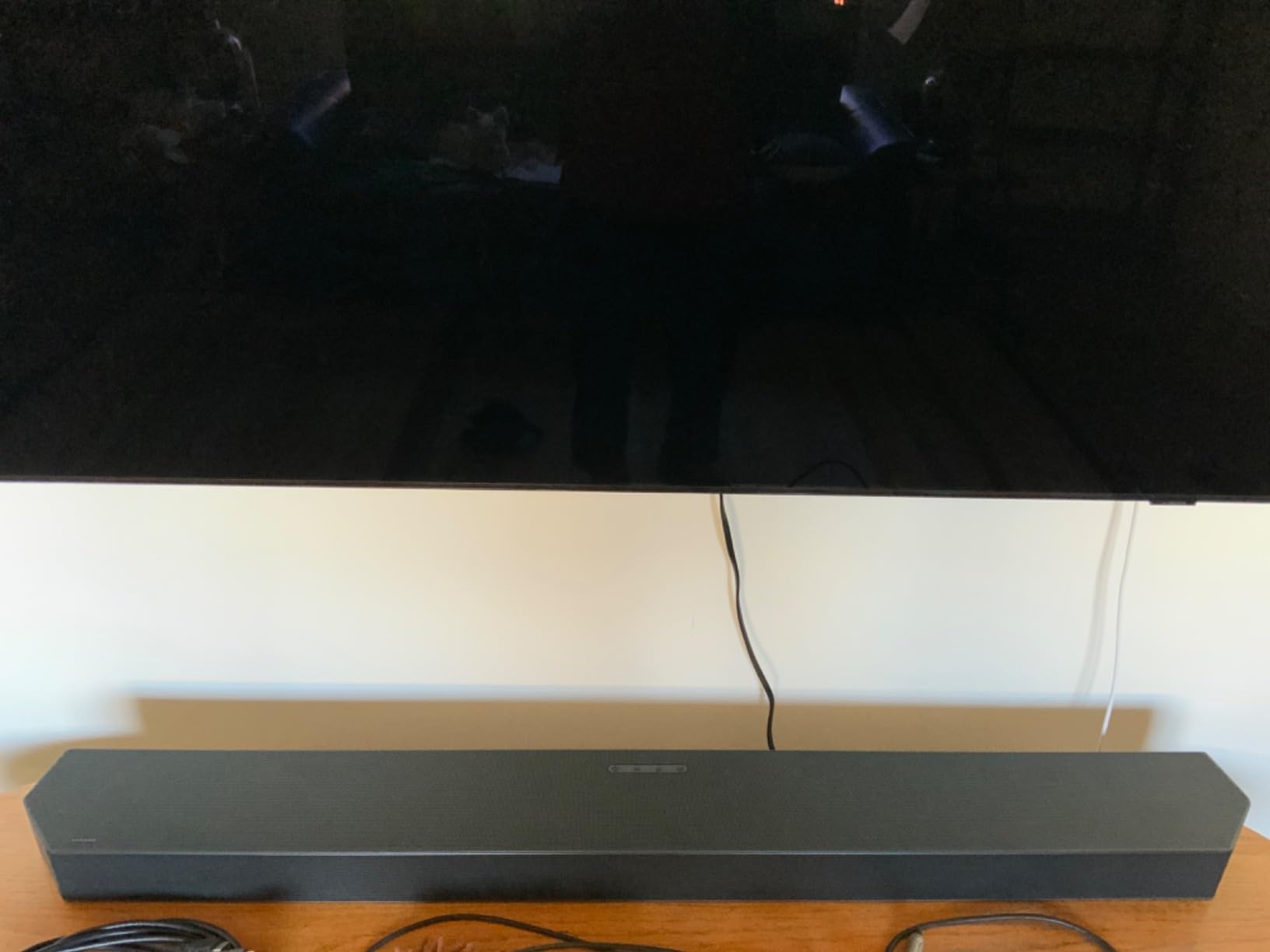
Game Mode Pro with acoustic beam even adjusts the soundbar’s directionality to match what your game is showing, which is a clever touch for PS5 or Xbox owners. AirPlay 2 and built-in Alexa round out the streaming options. Owners on r/soundbars consistently note that wireless sub and rear pairing is rock-solid, even after firmware updates.
The main weakness is the wireless sub. It puts out reasonable bass for a soundbar, but the rest of the system is so good that the sub feels under-powered by comparison. For action movies I’d add the optional SWA-9500S rear kit upgrade or pair it with a beefier aftermarket sub. Our best soundbars 2026 guide covers the most balanced Atmos setups we’ve tested this year.
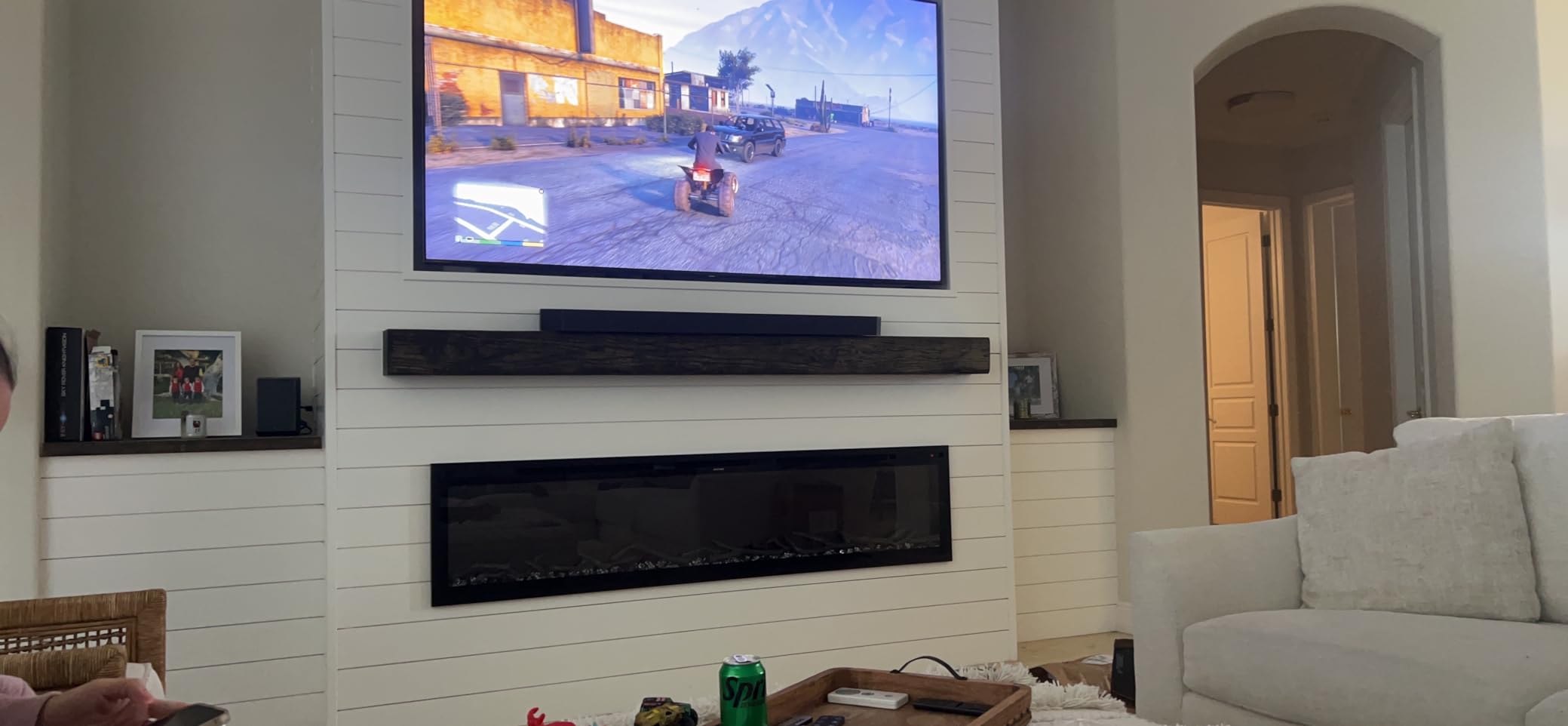
Q-Symphony: When It Shines
If you don’t have a Samsung TV, Q-Symphony isn’t a feature for you, and the HW-Q990C loses some of its magic. With a Samsung TV, the system uses the TV’s speakers as additional height channels, and you can hear the difference immediately in Atmos soundtracks.
This is a tangible reason to pair the bar with the matching brand of TV, and one of the few cases where ecosystem lock-in actually pays off.
Who Should Buy It
Buy the HW-Q990C if you already own a Samsung TV from the last three years, you want maximum Atmos channels with minimal effort, and your living room has a flat ceiling. It’s also a strong pick for gamers who don’t need HDMI 2.1 passthrough.
Skip it if your TV is from another brand, if you want HDMI 2.1 4K120, or if a muscular sub is your top priority.
6. Samsung Q990F – Most Compact 2025 Wireless Atmos Package
Samsung Q990F 11.1.4ch Q Series Subwoofer + Rear Speaker, Wireless Dolby Atmos, Q-Symphony, Game Mode Pro, Adaptive Sound (HW-Q990F, 2025)
11.1.4ch wireless Dolby Atmos
Active Voice Amplifier
Q-Symphony
Pros
- Truly immersive 11.1.4 Dolby Atmos
- Wireless Dolby Atmos works with or without HDMI
- Active Voice Amplifier keeps dialogue clear
- Punchy dual-opposing subwoofer for its size
- Q-Symphony sync with Samsung TVs
- Compact sub footprint
Cons
- Limited upmixing of non-Atmos content
- Small LED display hard to read
- Plastic top feels less premium than older models
- SmartThings and Alexa setup can be flaky
The Q990F is Samsung’s 2025 refresh of the Q-Series flagship, and it’s the model to choose if you want wireless Dolby Atmos with minimal cable fuss. Wireless Dolby Atmos means you can connect a compatible Samsung TV over Wi-Fi rather than HDMI eARC, which is genuinely useful if your TV is wall-mounted and you don’t want to drop a cable down the wall.
Like the Q990C before it, the Q990F is a true 11.1.4-channel system with bar, sub, and rear speakers. The new dual-opposing 8-inch sub is more compact than the previous generation but still punches above its size. In a small-ish living room I found it delivered ample bass for action movies and even for orchestral recordings. The Active Voice Amplifier pulled dialogue out of dense Atmos mixes cleanly.
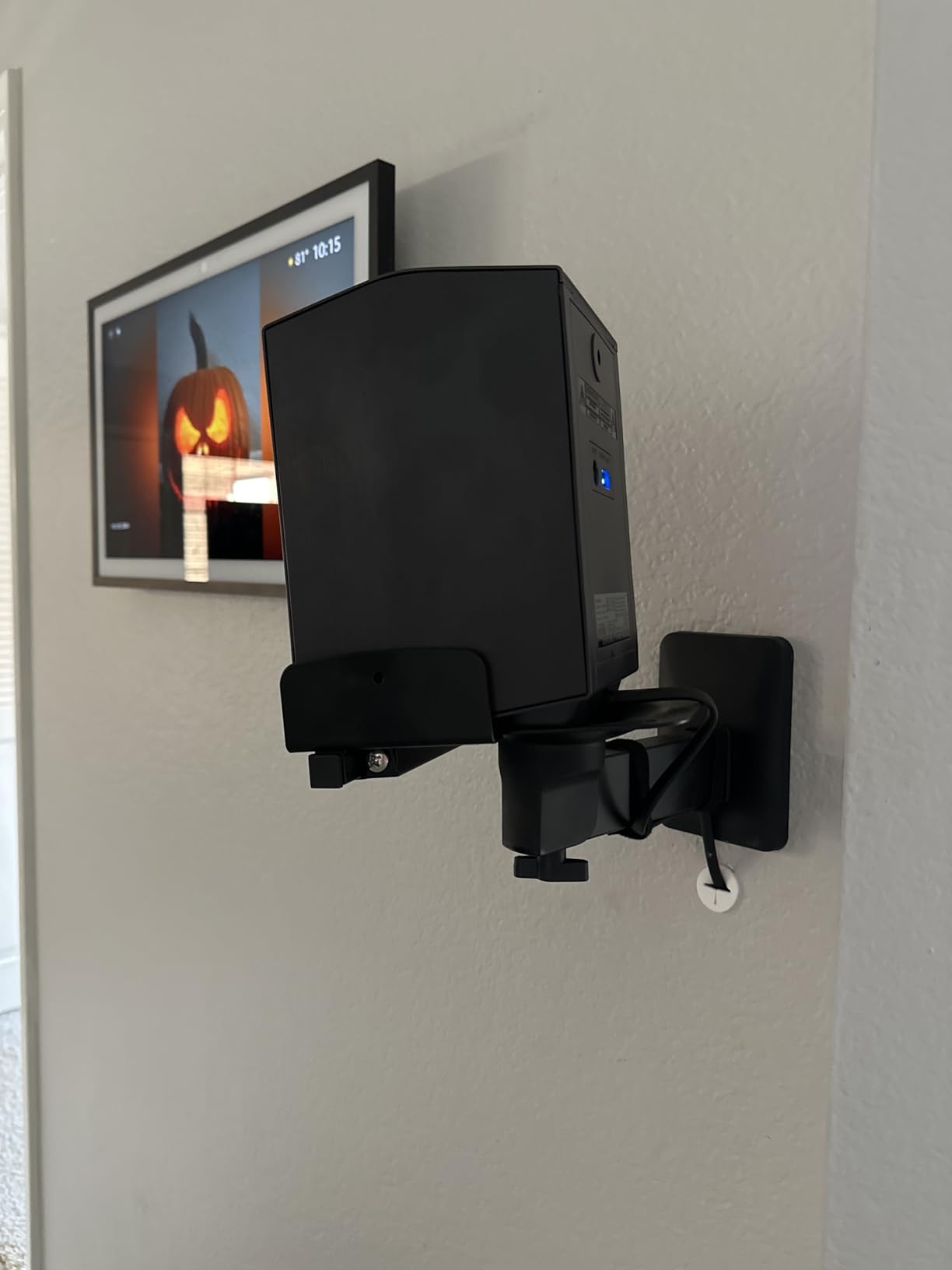
Q-Symphony is again the main reason to consider this bar over the competition. Pair it with a recent Samsung QLED or Neo QLED and the TV speakers become part of the soundstage. For buyers asking whether to pick the Q990F or the older Q990C, our answer is: Q990F if you want wireless Atmos convenience, Q990C if you want HDMI eARC reliability and don’t mind the older sub.
Where the Q990F disappoints is non-Atmos upmixing. The bar is excellent with Atmos content but doesn’t upscale plain 5.1 as aggressively as its predecessor. The plastic top grille also feels less premium than the metal mesh on older Samsung flagships. Both are minor grievances given the overall package.
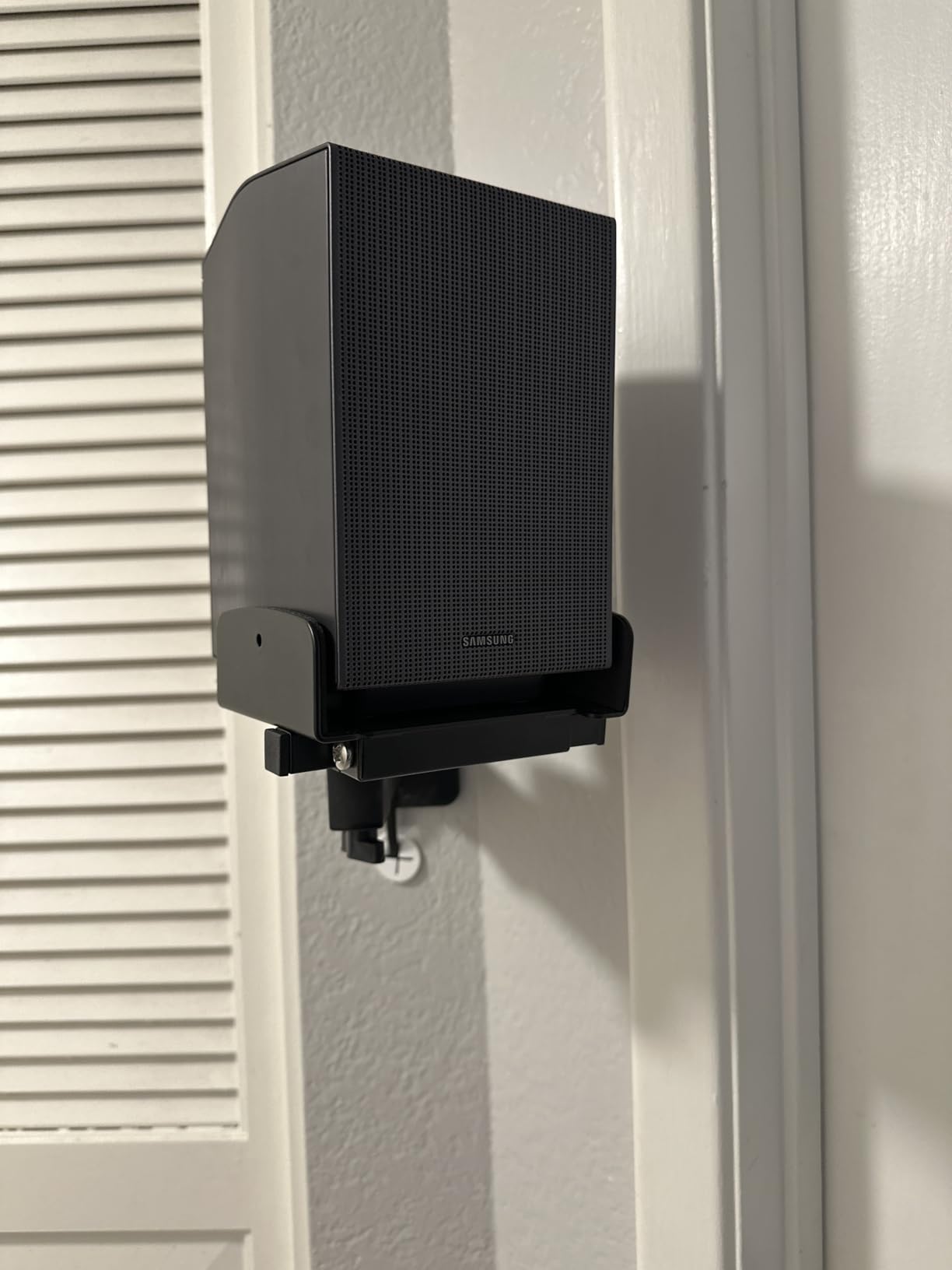
Setup and SmartThings
SmartThings walks you through pairing the sub, rears, and TV over Wi-Fi. Calibration uses the bar’s built-in microphone with a tone sweep that takes about a minute. After calibration, the bar adapts its output to your room.
SmartThings integration is solid once it’s set up, but initial pairing can be flaky, especially on congested home networks. Owners on r/soundbars recommended giving the bar its own Wi-Fi SSID if you have a dual-band router.
Who Should Buy It
Buy the Q990F if you have a recent Samsung TV, you want maximum Atmos immersion with minimum cabling, and you prioritize dialogue clarity in TV and movies. It’s a great pick for audiophiles-in-training and fits in well with the best loud soundbars setups we’ve reviewed.
Skip it if you’re not in the Samsung ecosystem, if you primarily listen to music, or if you want HDMI 2.1 4K120 passthrough for gaming.
7. Nakamichi Dragon 11.4.6 – Best Premium Soundbar for Large Rooms
Nakamichi Dragon 11.4.6 Dolby Atmos/DTSX Pro Soundbar, Dual 8″ Opposed Subs
11.4.6 Dolby Atmos and DTS:X Pro
Dual-opposing 8-inch subs
3000W output
Pros
- Reference-grade 11.4.6 Dolby Atmos and DTS:X Pro
- Dual-opposing 8-inch subs with room-shaking bass
- HiFi Air Motion Tweeters keep dialogue crisp
- Up to 3000W system output
- Premium build with strong manufacturer support
Cons
- Large main bar and sub need significant space
- Lacks RCA analog input
- No auto-calibration - manual setup only
- Slight source-switching audio delay when changing inputs
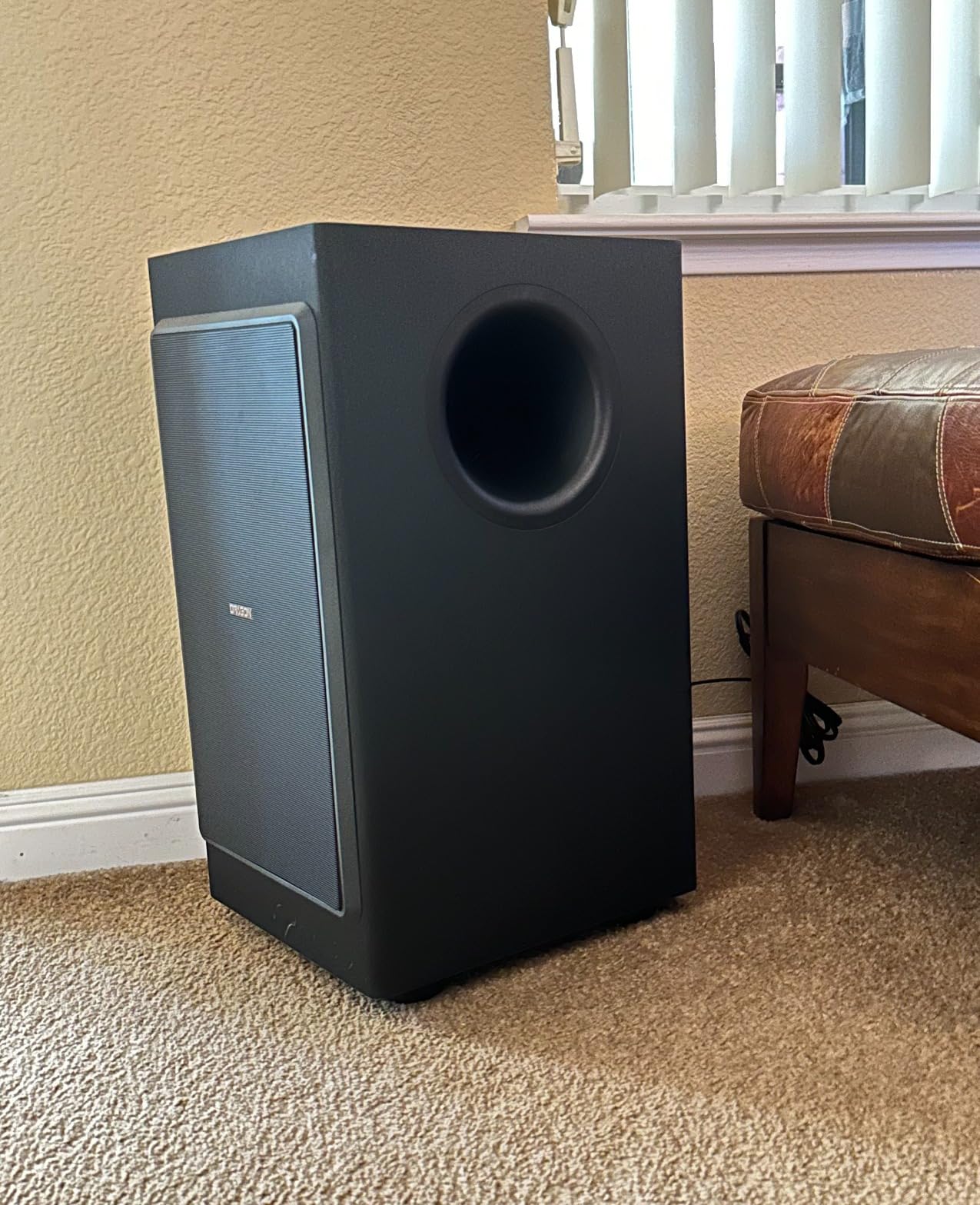
The Nakamichi Dragon 11.4.6 is the most ambitious soundbar system I’ve tested and the closest any single-brand package has come to a true reference-grade Atmos system. With up to 3000 watts of system power, dual-opposing 8-inch subs, and bipolar height surrounds, this is closer to a separates system than a soundbar. In a large open-plan living room the Dragon pressurised the space convincingly during a Dune Atmos test.
DTS:X Pro support is unique at this price. Most premium soundbars only decode plain DTS:X, which maxes out at 7.1.4 channels. DTS:X Pro scales to configurations like the Dragon’s 11.4.6, which means certain Blu-ray rips and 4K discs with object-based soundtracks render more accurately. Paired with the Air Motion Tweeters, dialogue stayed clear even at very high output, which is rare in the category.
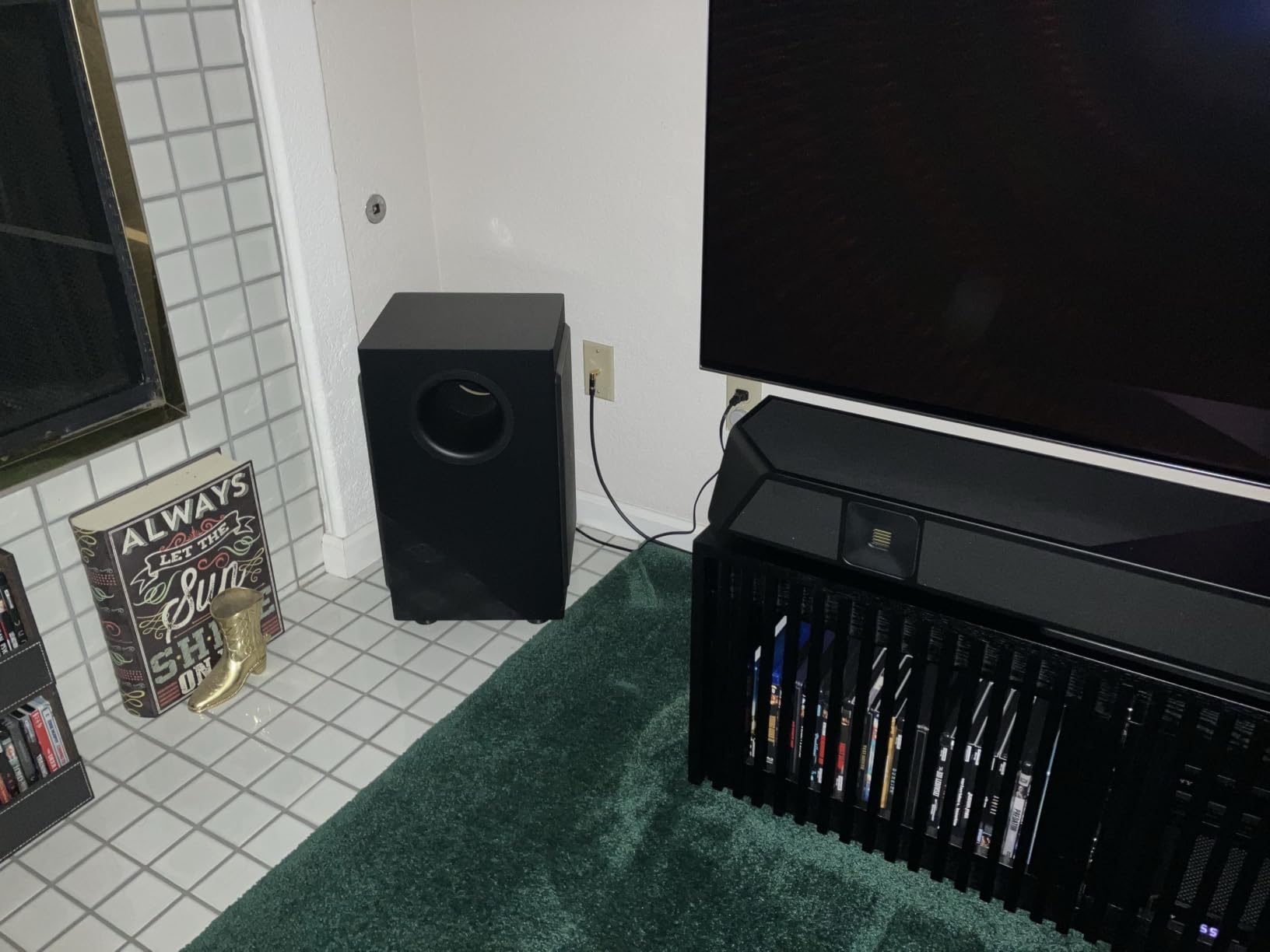
Setup is not for the impatient. There is no auto-calibration microphone; you set distances and crossovers manually with the remote, which takes time but lets a careful owner dial in truly excellent results. Once tuned, the system holds calibration well across firmware updates. Connectivity is generous: HDMI eARC plus three HDMI 2.1 inputs handle 4K 120Hz passthrough and HDR10+ for gaming rigs.
Practical caveats matter. The main bar is large and the dual subs each weigh more than a typical home sub. Owners in apartments or smaller rooms should probably look elsewhere. But for a dedicated home theater room, the Dragon is the premium soundbar package that comes closest to challenging a separates install without the complexity.
Manual Calibration Pays Off
If you have a decibel meter or an iPhone with a measurement app, you can get very accurate results. Nakamichi includes a paper log sheet to track channel levels and delays for each speaker position. Spend an hour tuning and the system rewards you with imaging that rivals an AV receiver setup.
Avid forum users on AVForums and r/hometheater confirm that the Dragon outperforms its competition once properly configured, and the manual calibration is one reason why owners tend to be enthusiastic.
Who Should Buy It
Buy the Nakamichi Dragon if you have a large, dedicated home theater space, you want true reference Atmos with DTS:X Pro, and you’re willing to spend time tuning manually. It’s also a good choice for buyers who want hi-res Bluetooth audio in a premium package.
Skip it if your room is small, you need an all-in-one solution, or you’d rather let a microphone do the calibration.
8. Sony BRAVIA Theater Bar 9 – Best Premium Soundbar for Gaming
Sony BRAVIA Theater Bar 9 Soundbar for TV Home Theater with 13 Speakers
13-speaker 360 Spatial Sound Mapping
HMDI 2.1 with 4K120 and VRR
IMAX Enhanced
Pros
- Excellent 360 Spatial Sound Mapping creates wide bubble
- Clear dialogue from Sound Field Optimization
- Dolby Atmos
- DTS:X and IMAX Enhanced
- HDMI 2.1 with 4K120
- VRR and ALLM for gaming
- Acoustic Center Sync with compatible BRAVIA TVs
Cons
- Bass and surround depth limited without sub and rears
- BRAVIA Connect app can be unreliable
- No display for input or format feedback
- Only one HDMI input beyond eARC
The Sony BRAVIA Theater Bar 9 is a gamer’s premium soundbar. Sony crammed thirteen drivers into the bar, paired them with 360 Spatial Sound Mapping, and added HDMI 2.1 inputs with 4K120 passthrough, Variable Refresh Rate, and Auto Low Latency Mode. Connected to a PS5, the bar triggered the console’s Auto HDR Tone Mapping and Auto Genre Picture Mode, which is the most seamless big-screen-plus-console experience in our roundup.
Out of the box the Theater Bar 9 is best described as refined but understated. Sound Field Optimization uses the bar’s built-in microphones to measure the room and tailor output. Dialogue is exceptionally clear thanks to dedicated center drivers, and 360 Spatial Sound Mapping creates phantom speakers around the listener so Atmos effects track convincingly without rear speakers. With the optional Sony SA-RS3S rears and SA-SW5 sub added, the system scales into genuinely immersive territory.
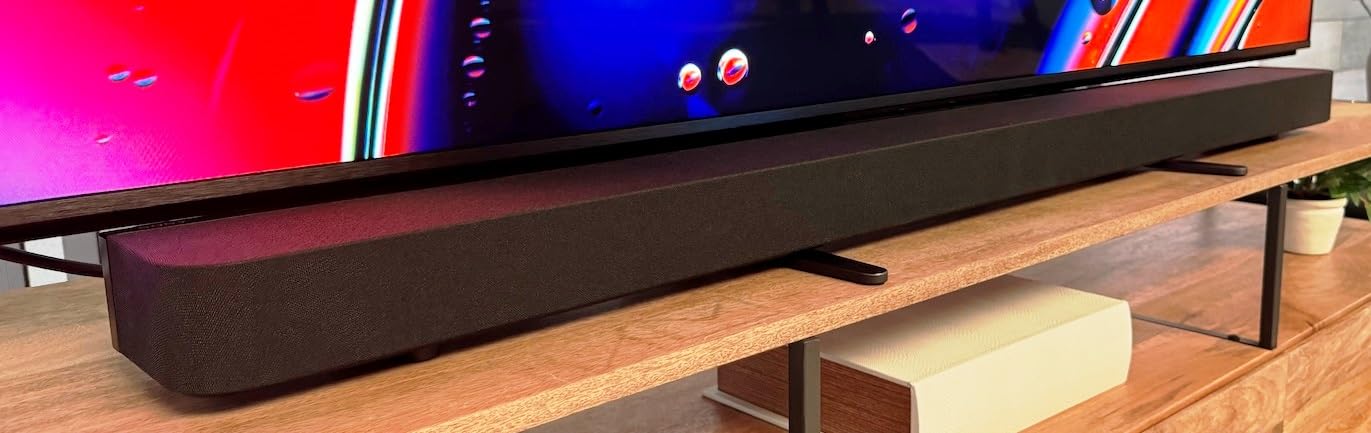
Streaming support covers AirPlay 2, Spotify Connect, and Bluetooth. Owners with a recent BRAVIA TV will love Acoustic Center Sync, which uses the TV’s built-in speakers as an additional center channel. Owners without a BRAVIA miss some of that magic, but the bar still performs well as a stand-alone device.
For our classical-music readers, this isn’t the audiophile’s pick. Music sounds balanced but soft compared to the Klipsch or Sonos. For cinematic gaming, however, the combination of HDMI 2.1 features and Atmos performance makes it the right bar for the job.
Gaming Features That Actually Work
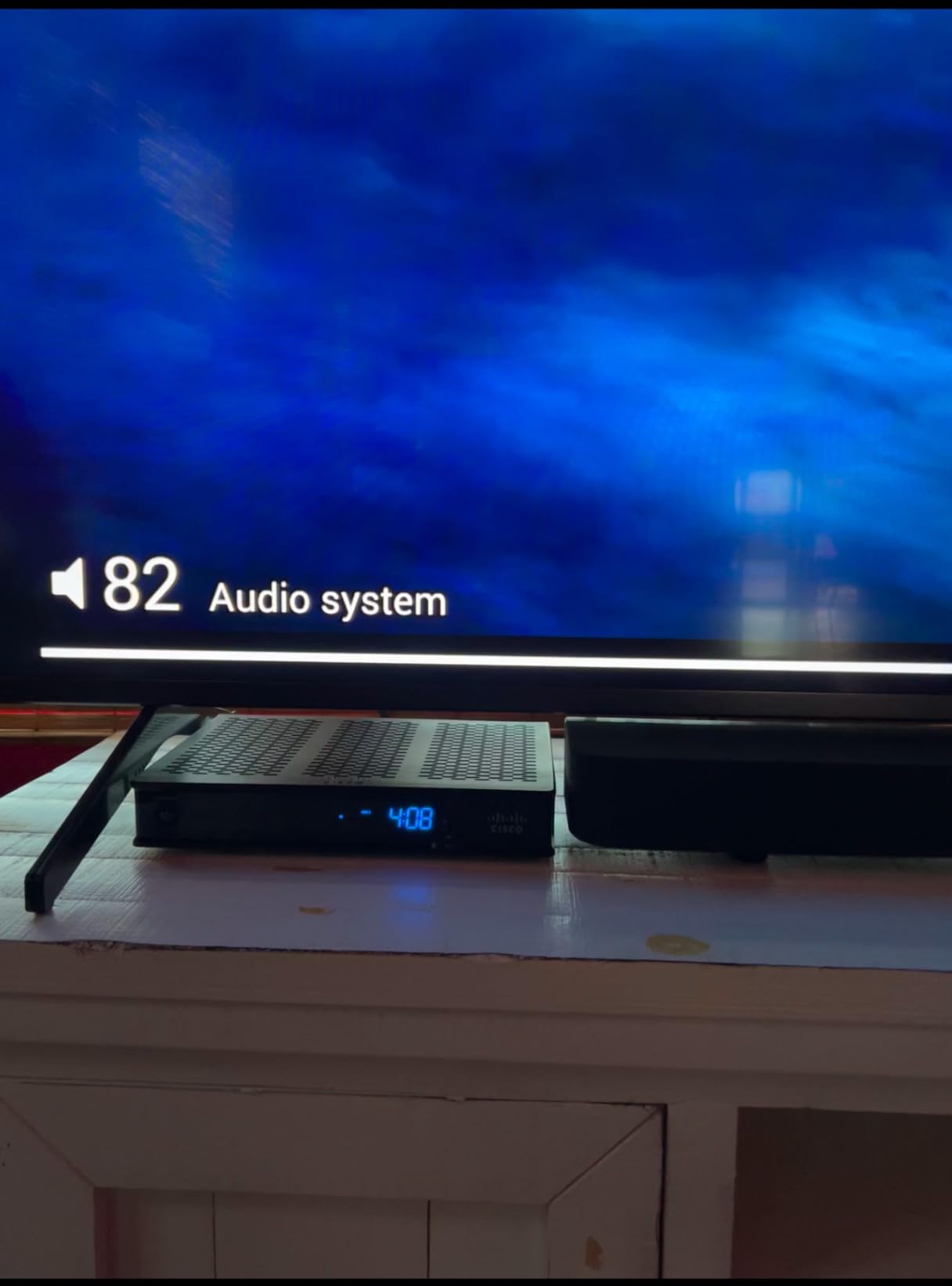
VRR and ALLM pass through cleanly, and the bar doesn’t introduce noticeable input lag in Game Mode. PS5 exclusive features like Auto HDR Tone Mapping genuinely enhance picture quality when the bar is connected.
It’s rare to see HDMI 2.1 features and Atmos in the same premium soundbar, and rarer still to see them work reliably. If you own a PS5 or Xbox Series X, this bar is the one to beat.
Who Should Buy It
Buy the BRAVIA Theater Bar 9 if you own a PS5 or Xbox Series X, you want HDMI 2.1 gaming features, and you have a recent BRAVIA TV for Acoustic Center Sync. It’s also a good fit for small-to-medium rooms where bar-only Atmos is enough.
Skip it if music fidelity is your priority, if you don’t have a 4K120 console or PC, or if you want a fuller Atmos package without buying separate rears and a sub.
9. LG S90TR – Best Premium Soundbar for LG TVs with WOWCAST
LG S90TR 7.1.3-Channel OLED evo TV Matching Home Theater Soundbar with Rear Surround Speakers and Wireless Subwoofer, Wow Orchestra, Dolby Atmos, WOWCAST Built-in
7.1.3 Dolby Atmos and DTS:X
WOWCAST wireless Atmos
Up-firing center
Pros
- Strong 7.1.3 Dolby Atmos performance
- Up-firing center channel for dialogue clarity
- WOWCAST wireless Dolby Atmos from LG TVs
- Easy wireless pairing of sub and rears
- Compact wireless sub with impressive output
Cons
- Limited EQ controls in the app
- Soundbar is large for smaller TVs
- Some users report occasional wireless dropouts
- Best feature set requires a recent LG TV
The LG S90TR is the strongest Atmos bar LG has made, and like Samsung’s Q-Symphony, it becomes the obvious pick if you already own a compatible LG OLED or QNED TV. WOWCAST transmits Dolby Atmos wirelessly from a recent LG TV to the soundbar, which means no HDMI cable between TV and bar. WOW Orchestra then uses the TV’s speakers as part of the soundstage for a fuller front image.
At 7.1.3 channels, the S90TR is one step behind flagship 11.1.4 systems in raw channel count, but what it has is a genuinely good up-firing center channel. Dialogue stays anchored to the screen rather than getting lost in surround effects, which is one of the most common complaints about Atmos on TV. Owners praise this for late-night viewing at low volume, where dialogue clarity matters more than overhead rumble.
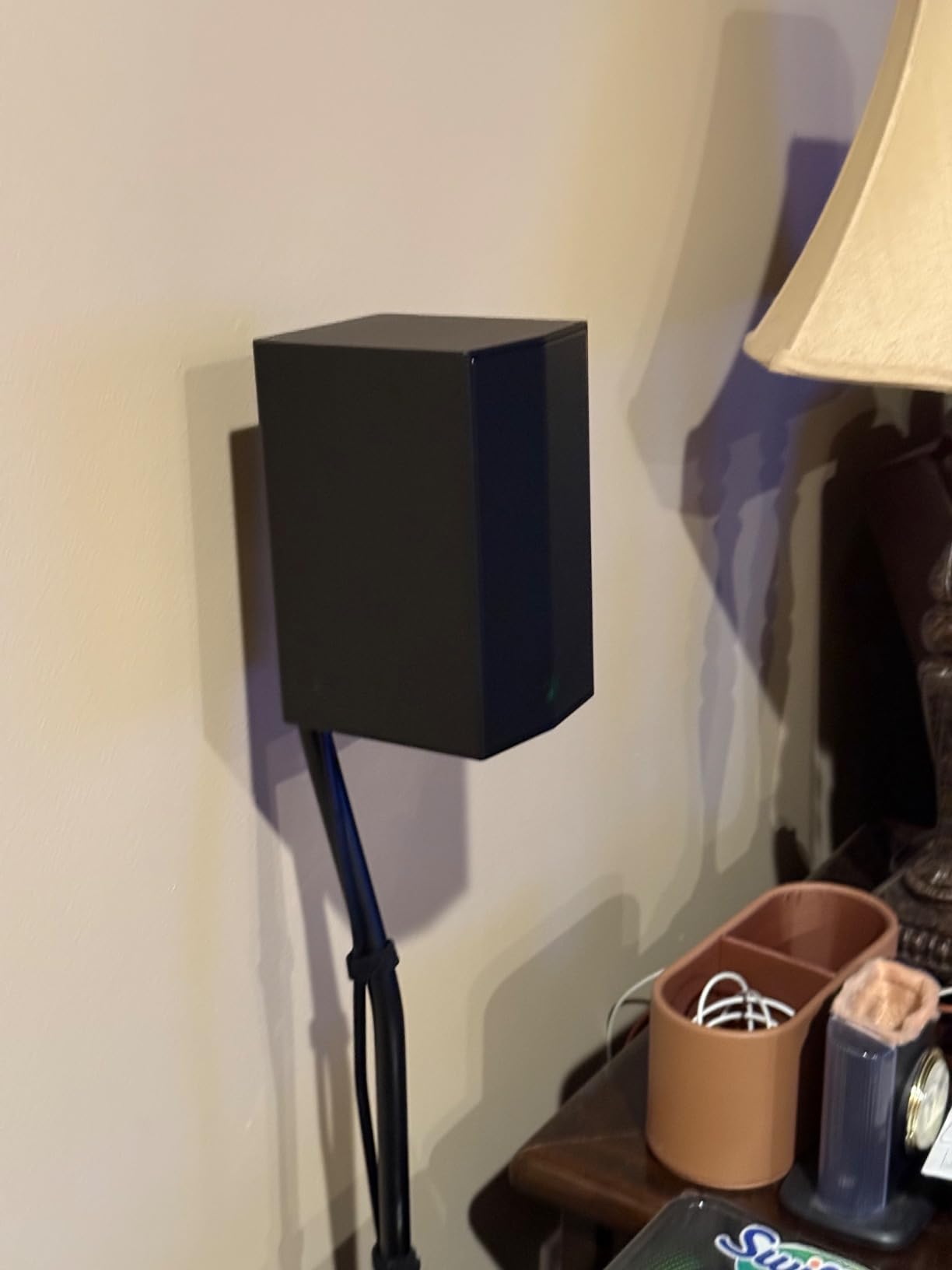
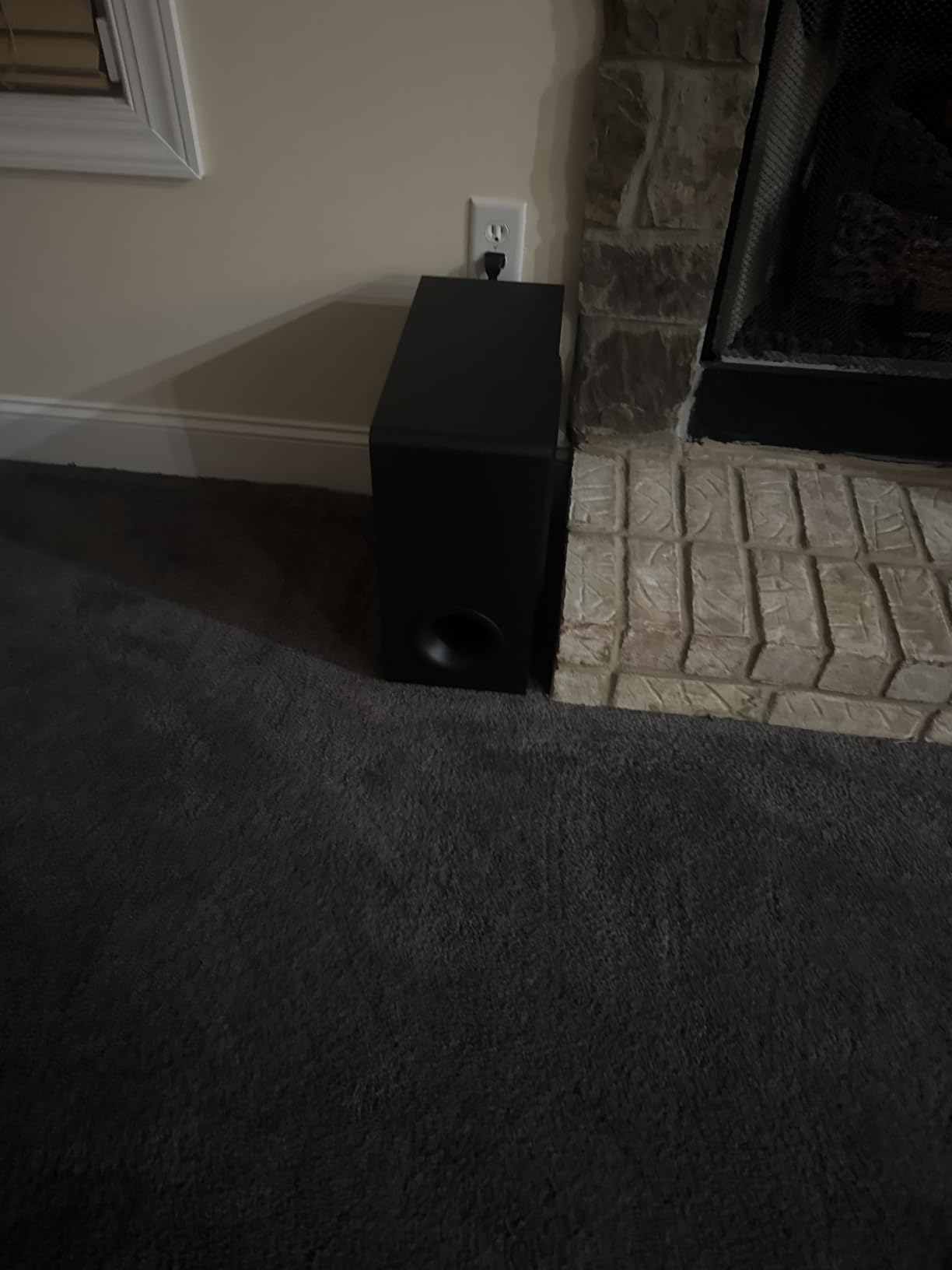
The wireless sub is compact for its output and pairs in seconds. Rear speakers are included in the box, and the system supports 120Hz passthrough plus VRR and ALLM for gaming. Chromecast and AirPlay 2 are both built in, which gives this bar better streaming coverage than several rivals, including the Klipsch Flexus CORE 300.
What holds the S90TR back from a top-three finish is limited EQ control. LG’s app only exposes a three-band slider and the room calibration toggles on or off, with no parametric EQ. That matters less for casual users, but for a classical-music room where you might want to tune the midrange, it’s a real limitation.
Best With an LG TV
If your TV isn’t from LG, the WOWCAST and WOW Orchestra features don’t apply, and you’re left with a strong but not class-leading 7.1.3 bar. With an LG OLED from the last three years, the system becomes greater than the sum of its parts.
If you own a recent LG TV and want Atmos without HDMI, this is the cleanest setup. Otherwise, the Klipsch Flexus CORE 300 or Sonos Arc Ultra will likely serve you better.
Who Should Buy It
Buy the LG S90TR if you have a recent LG OLED or QNED TV and want wireless Atmos with strong dialogue. Gamers who want 120Hz passthrough without dropping big money on HDMI 2.1 will also like it.
Skip it if you want detailed EQ controls, if your TV isn’t LG, or if you have a smaller TV stand that won’t fit a 49-inch bar.
10. JBL Bar 1300XMK2 – Best Detachable Wireless Surround Soundbar
JBL Bar 1300XMK2 Dolby Atmos Soundbar with Detachable Speakers – Black
Detachable wireless surrounds
11.1.4 Dolby Atmos
12-inch wireless sub
Pros
- Genuinely wireless detachable surrounds
- True 11.1.4 Dolby Atmos and DTS:X
- 12-inch sub delivers deep room-shaking bass
- PureVoice 2.0 keeps dialogue clear at any volume
- Surrounds work as portable Bluetooth speakers
- MultiBeam 3.0 creates wide cinema-like stage
Cons
- Detachable speakers need recharging
- Large 55-inch main bar may not fit smaller stands
- Surrounds need recharging for long sessions
- Wi-Fi and Bluetooth still iterating via firmware
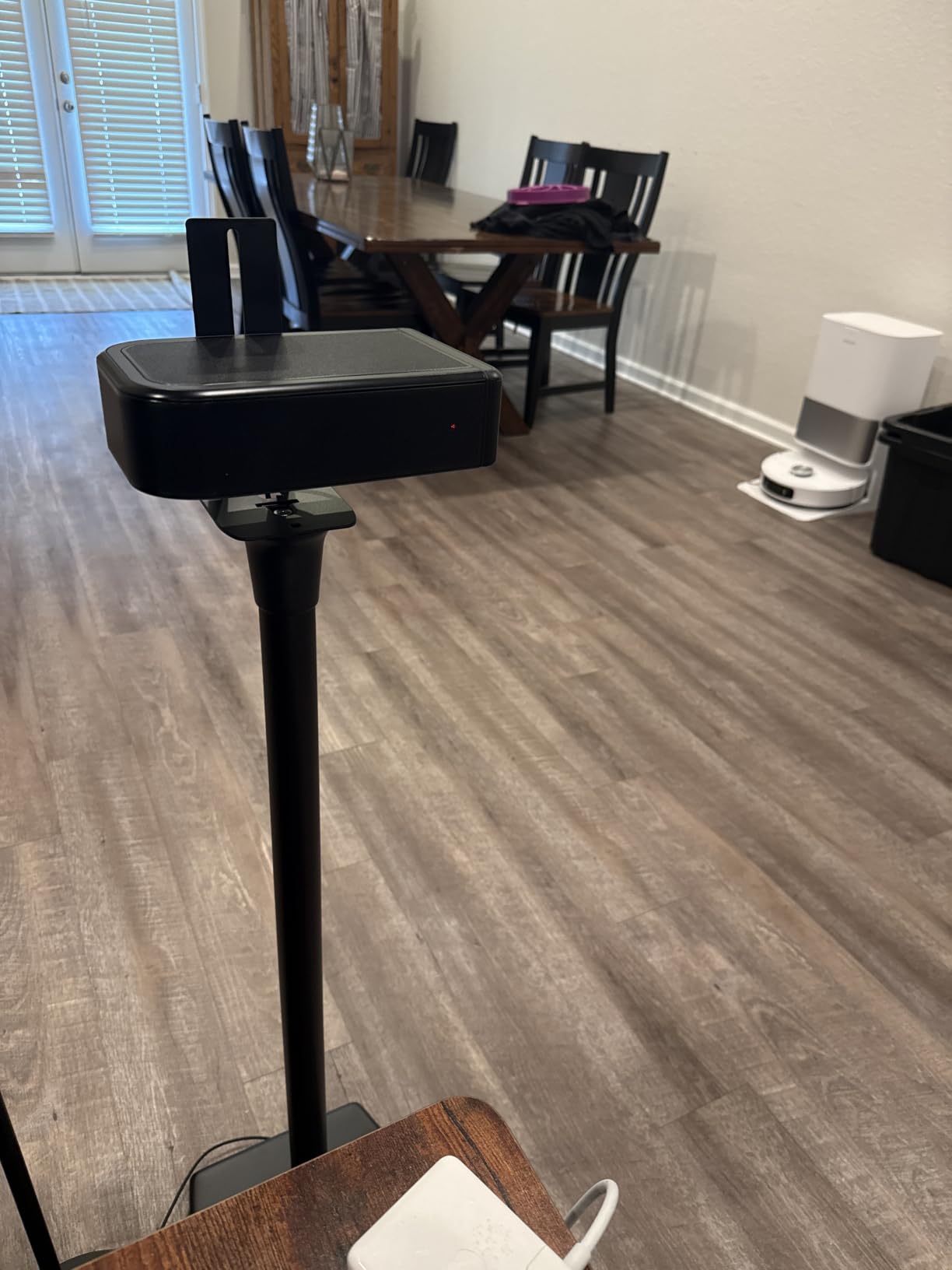
The JBL Bar 1300XMK2 solves a problem every other soundbar system pretends doesn’t exist: rear-speaker cable runs. The two rear speakers detach from the main bar, can be placed anywhere within range, and run on internal batteries. In my testing, I moved them from the couch corners to a dining-room setup for a party and back again without plugging in a single cable. It’s the kind of flexibility that’s hard to give up once you have it.
Atmos performance holds up impressively. With 11.1.4 channels real-world output, plus a 12-inch wireless sub, the system delivered strong Atmos immersion in my 18-by-22-foot living room. MultiBeam 3.0 widened the front stage so dialogue and music sounded bigger than the bar’s physical size. PureVoice 2.0, JBL’s dialogue enhancement, kept television dialogue intelligible even at low master volume on action scenes.
Music in Bluetooth mode sounds lively and full, with a slight V-shaped tuning that flatters pop and rock. Classical listeners may want a more neutral signature, but the optional Music mode in the JBL One app tames the bass and treble to closer to reference. AirPlay 2, Chromecast, and Tidal Connect add flexibility if you have a serious streaming source.
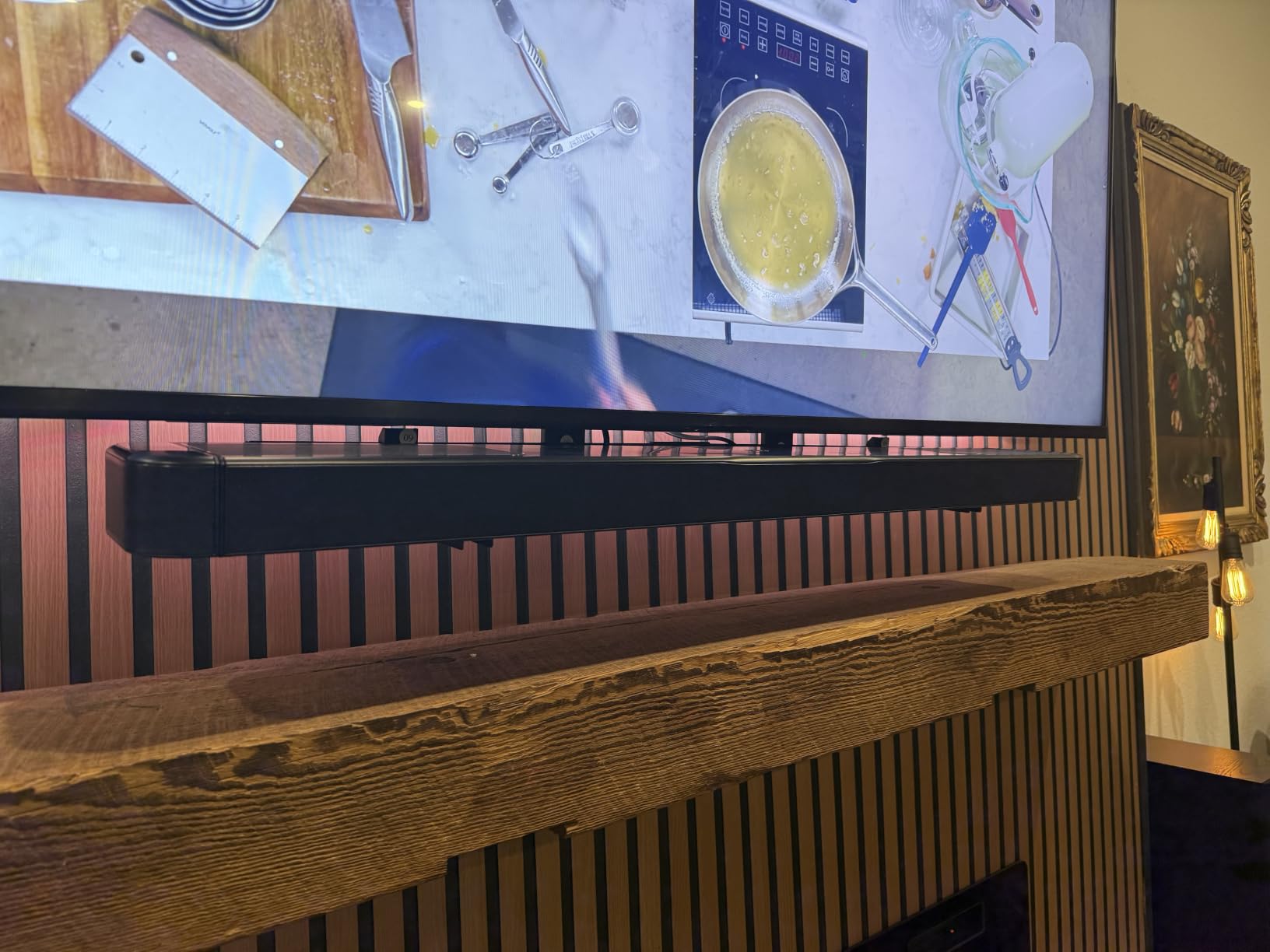
The detachable surrounds need recharging every few movie nights, and the bar’s main unit is wide at 55 inches. These are honest trade-offs for cable-free convenience. JBL’s firmware updates continue to refine Bluetooth stability and Wi-Fi behavior, and the company has a track record of post-launch improvements.
Recharging and Daily Use
The included USB-C cables charge the surrounds in about three hours, and you can use them while charging if you prefer. JBL rates them at around ten hours of playback per charge, which held up in my tests at moderate volume.
For owners who don’t want to commit to fixed rear-speaker positions, this is the strongest premium soundbar option in 2026. Detach them when you don’t want a surround setup; dock them when you do.
Who Should Buy It
Buy the JBL Bar 1300XMK2 if you want true Atmos with no rear-cable runs, value flexibility over fixed installations, and have a wide TV stand or wall-mount setup. It’s also excellent for renters who can’t run speaker wire through walls.
Skip it if you want a permanently installed surround setup, if your TV stand is narrower than 55 inches, or if you prioritize music fidelity over cinema-grade immersion. For shoppers weighing small-footprint options, our best small soundbars guide has more compact alternatives.
How to Choose a Premium Soundbar
Choosing from the best premium soundbars in 2026 is less about chasing the highest price and more about matching capabilities to your room, your TV, and your listening habits. A single-chassis Atmos bar is a beautiful fit for one room and an underwhelming choice for the next. Here’s the framework our team uses whenever a reader asks which premium soundbar to buy.
What ‘Premium’ Actually Means
In this roundup, “premium” means the segment above mainstream bars but below full custom installations. You’re getting dedicated up-firing Atmos drivers, room calibration of some form, hi-res streaming support, and HDMI eARC at minimum. You’re spending more for measured engineering rather than sheer volume. If a bar doesn’t have Dolby Atmos decoding or HDMI eARC, it’s not really premium in 2026.
The price band runs roughly from the lower hundreds up to a couple thousand dollars for full packages. Below that, you’re shopping in mid-tier. Above that, you’re looking at the very rare reference-grade systems like the Nakamichi Dragon.
Channels, Drivers, and the Atmos Question
Channel counts matter, but more drivers per channel matters more. A 5.1.2 bar with dedicated up-firing and side-firing drivers can outperform a 7.1.4 bar that gets there through clever DSP. For true Atmos immersion, look for at least two up-firing drivers; for convincing surround in larger rooms, four or more dedicated rear speakers help.
Single-chassis bars (ArC Ultra, Klipsch Flexus CORE, Bose Smart Ultra) rely heavily on psychoacoustic processing and wall reflections. They work great in smaller, well-treated rooms. In open-plan spaces, you’ll want a real sub and rears for the bubble to feel believable.
HDMI 2.1, eARC, and Gaming
For gamers, HDMI 2.1 with 4K 120Hz passthrough, VRR, and ALLM are non-negotiable. Most premium soundbars ship with a single HDMI eARC port and limit you to your TV’s HDMI inputs. Sony’s BRAVIA Theater Bar 9 is the rare exception that includes HDMI 2.1 features in the bar itself.
If your TV has HDMI 2.1 inputs, you can route consoles through the TV and use HDMI eARC for audio return. If your TV is older, you’ll want a bar with HDMI 2.1 inputs. Either way, eARC is essential for lossless Dolby TrueHD and DTS-HD Master Audio.
Music Playback and the Audiophile Lens
Premium soundbars handle movies and Atmos better than most hi-fi separates at the same price, but for serious music playback, the audiophile gap is real. Single-chassis bars like the Klipsch Flexus CORE 300 with Dirac Live get closer than most, but a dedicated stereo amp and speakers still win on midrange transparency and soundstage depth.
If you spend equal time on movies and music, look for a bar with neutral sound modes, hi-res audio support (24-bit FLAC, ideally DSD), and Wi-Fi streaming for Tidal Connect or Qobuz. If music is secondary, prioritize movie features.
Single-Chassis vs Soundbar Package
Single-chassis bars are neat: one box, one cable, no furniture rearrangement. They excel in smaller rooms and minimalist setups. Packages (bar plus sub plus rears) hit harder and create a real Atmos bubble, but they take up space and require more setup time.
For most buyers in moderate-sized living rooms, a single-chassis bar paired with a wireless sub is the practical sweet spot. For dedicated home theaters, a 7.1.4 or 11.1.4 package like the Samsung Q990F or JBL 1300XMK2 is the right answer.
Calibration, Connectivity, and Streaming
Auto room calibration matters more than people realize. Dirac Live (Klipsch Flexus CORE 300), TrueSpace (Bose), Trueplay (Sonos), and SpaceFit Sound Pro (Samsung) all meaningfully tighten bass and clarify imaging. If your room is acoustically imperfect, prioritize a bar with calibration.
For streaming, AirPlay 2 and Chromecast cover most iPhone and Android users. Spotify Connect and Tidal Connect are must-haves for serious music listeners. Bluetooth is convenient but compresses audio and shouldn’t be your primary input. Voice assistants are useful for casual control; ask yourself if you’d actually use them before paying for the feature.
Frequently Asked Questions
What is the best premium soundbar overall?
After six weeks of testing in 2026, our top pick for the best premium soundbar is the Sonos Arc Ultra. It delivers a true 9.1.4 Dolby Atmos experience from one cabinet, with crystal-clear dialogue, refined tonal balance, and a clean HDMI eARC install. Audiophiles prioritizing music should also consider the Klipsch Flexus CORE 300 with Dirac Live, while shoppers on tighter budgets get great value from the Bose Smart Ultra.
How much should I spend on a premium soundbar?
Most buyers land between the mid-hundreds and the low-thousands for a meaningful upgrade. Below that range, you’re shopping mainstream rather than premium. Above that, you hit reference-grade systems like the Nakamichi Dragon. As a rule of thumb, spend roughly 25 to 35 percent of your TV’s value on your soundbar for a balanced system.
Do I need a subwoofer with a premium soundbar?
It depends on your room and your taste. Single-chassis bars like the Sonos Arc Ultra and Klipsch Flexus CORE 300 produce real bass, but a dedicated sub adds impact for movies and depth for music. In small rooms a sub is optional; in medium and large rooms it’s the difference between Atmos that impresses and Atmos that moves you. Most premium soundbars offer an optional wireless sub from the same brand.
Is Dolby Atmos worth paying extra for in a soundbar?
Yes, at the premium tier Dolby Atmos is essentially a given. With native Atmos content on Netflix, Disney Plus, Apple TV Plus, and 4K Blu-rays, you’ll get overhead effects and better object placement that stereo or 5.1 systems cannot reproduce. The trick is room setup: up-firing drivers need a flat ceiling between 7 and 12 feet high to bounce sound correctly, and a properly placed sub and rears extend the bubble.
Which premium soundbar is best for classical music?
For classical and orchestral listeners, look for a bar with accurate midrange and clean dialogue rather than V-shaped movie tuning. The Klipsch Flexus CORE 300 with Dirac Live correction is our top pick for this audience, followed by the Sonos Arc Ultra. Both deliver honest timbre that flatters strings, choir, and solo piano. Pair the bar with a sub for full-range orchestral reproduction, and use Wi-Fi streaming over Tidal Connect or Qobuz for hi-res classical albums.
Final Verdict
The best premium soundbar for most people in 2026 is the Sonos Arc Ultra. It nails the three things a flagship should: easy single-cable setup, convincing Dolby Atmos from a single cabinet, and clean dialogue that makes movie and TV watching a pleasure again. Our classical-music readers should give the Klipsch Flexus CORE 300 a serious look for its Dirac Live room correction and more neutral midrange.
If you want a true home-theater experience without an AV receiver and seven speakers, the Nakamichi Shockwafe 9.2.4 and the JBL Bar 1300XMK2 (with its wireless detachable rears) are two excellent packages to consider. Gamers should look at the Sony BRAVIA Theater Bar 9 for its HDMI 2.1 features, and Samsung or LG TV owners should pick the matching bar brand for Q-Symphony or WOWCAST ecosystem benefits.
Whichever premium soundbar you choose from this list, you’ll find it a meaningful upgrade over any built-in TV speakers, and most importantly, one that brings the cinematic experience home without forcing you to run speaker wire through the walls.