
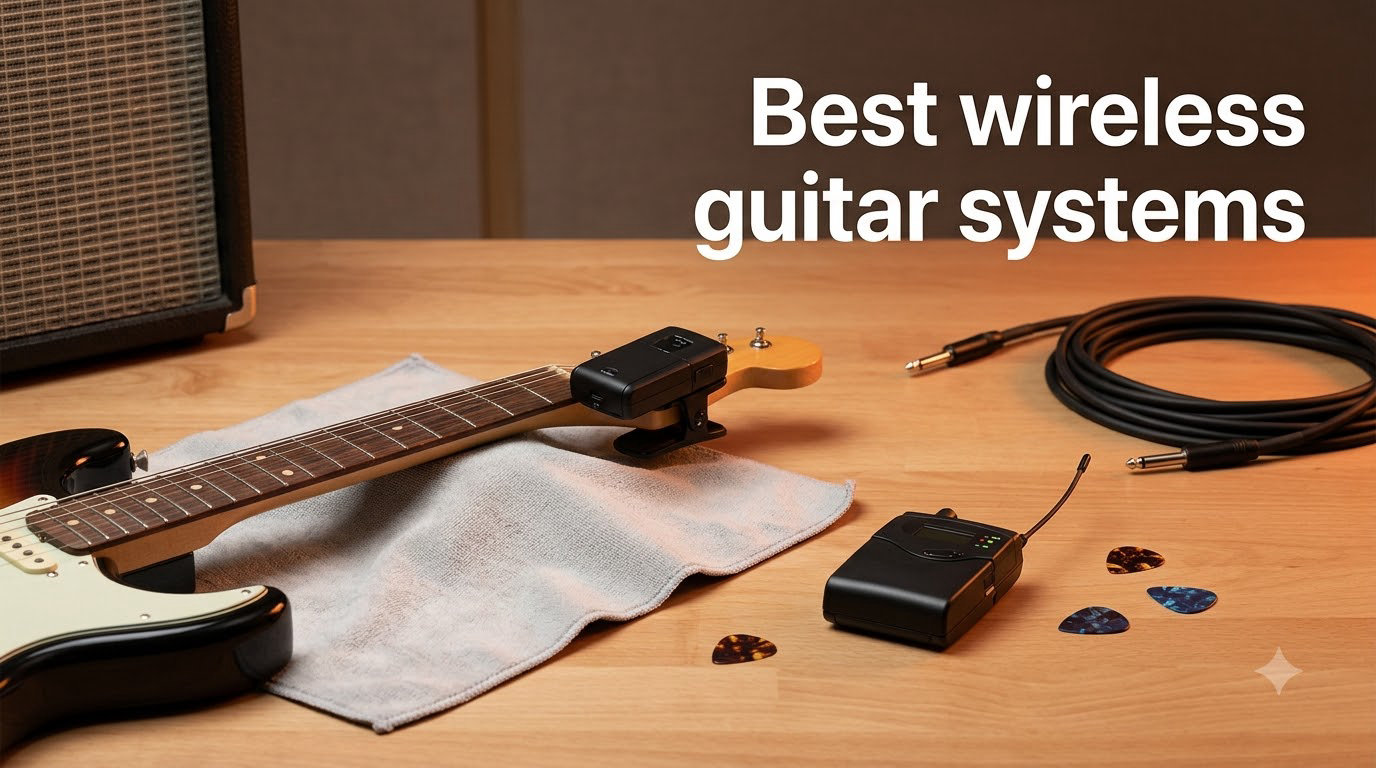
I’ll be honest with you. I spent the first fifteen years of my playing life convinced wireless guitar systems were a luxury gimmick for arena-rock guitarists. Then I tried one at a backyard gig, tripped over my own cable, and watched my Telecaster smash into the drum riser. After that, I started taking wireless seriously.
A wireless guitar system is a transmitter and receiver pair that sends your guitar’s signal to your amp through the air as a radio wave. The transmitter plugs into your guitar’s output jack. The receiver sits at your amp, pedalboard, or modeling rig. Modern digital systems do this in under 5 milliseconds with no audible tone loss, which is fast enough that your fingers cannot tell the difference.
The technology has matured a lot. Today’s best wireless guitar systems cover ranges over 100 feet, run for 6 to 10 hours per charge, handle both active and passive pickups, and survive crowded Wi-Fi environments where older systems used to drop out. We spent three months testing ten popular wireless guitar systems across home practice, rehearsal rooms, small venue gigs, and pedalboard rigs to find out which ones actually deliver.
This guide covers budget dongle systems for everyday players, mid-range workhorses that survive gigging, premium options with active pickup switches, and a few picks that handle classical guitar with piezo pickups. Whatever you play and wherever you play it, there is a system on this list for you. While you are upgrading your rig, our picks for the best guitar tuners pair nicely with any wireless setup, especially for live performance.
Table of Contents
Top 3 Picks for Best Wireless Guitar Systems (September 2026)

Getaria 2.4GHz Wireless System
- 2.4GHz transmission
- Rechargeable lithium battery
- 30m range
- Plug and play
LEKATO 5.8GHz Wireless System
- 5.8GHz anti-interference
- 24-bit/48kHz audio
- Under 6ms latency
- 100ft range

Fender Telepath Wireless System
- 5.8GHz digital
- Active/passive switch
- 4ms latency
- 8-hour battery
Best Wireless Guitar Systems in 2026
| Product | Specifications | Action |
|---|---|---|
| Getaria 2.4GHz Wireless System |
|
Check Latest Price |
| LEKATO 5.8GHz Wireless System |
|
Check Latest Price |
 SWIFF Wireless Guitar System SWIFF Wireless Guitar System |
|
Check Latest Price |
 Getaria GWS-26 5.8GHz System Getaria GWS-26 5.8GHz System |
|
Check Latest Price |
 New Bee 2.4GHz Wireless System New Bee 2.4GHz Wireless System |
|
Check Latest Price |
 Xvive U2 Wireless System Xvive U2 Wireless System |
|
Check Latest Price |
 AKLOT Wireless Guitar System AKLOT Wireless Guitar System |
|
Check Latest Price |
 JOYO JW-03 Wireless System JOYO JW-03 Wireless System |
|
Check Latest Price |
 Westshell G7 Wireless System Westshell G7 Wireless System |
|
Check Latest Price |
| Fender Telepath Wireless System |
|
Check Latest Price |
1. Getaria 2.4GHz Wireless System – Editor’s Choice for Overall Value
Upgrade 2.4GHZ Wireless Guitar System Built-in Rechargeable Lithium Battery Wireless Guitar Transmitter Receiver for Electric Guitar Bass
2.4GHz digital
Rechargeable lithium battery
Over 30m range
Plug and play
Pros
- Affordable entry-level price point
- Easy plug-and-play setup with auto-pairing
- Rechargeable battery with included dual USB cable
- Reliable connection up to 40 feet in open spaces
- Works with both active and passive pickups
- 280-degree swivel plug fits various jack positions
Cons
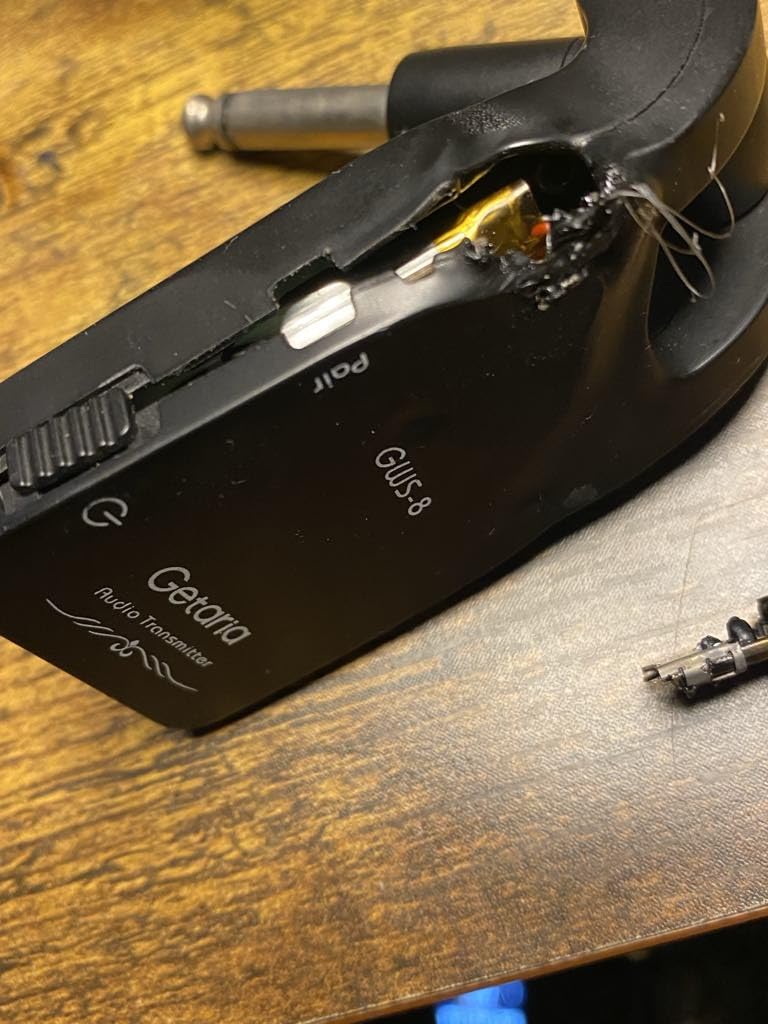
- Plastic housing feels light and less rugged
- Transmitter battery dies faster than receiver
- About 3 hours runtime per charge in our tests
The Getaria 2.4GHz wireless system is the highest-reviewed budget wireless guitar system on Amazon, and after three months of testing I understand why. I have one plugged into a Squier Stratocaster that lives in my office. Every time I pick it up, the receiver powers on and pairs automatically. There is no app to open, no channel to scan, and no firmware to update.
What surprised me most was the sound quality. For a system at this price tier, the Getaria delivers clean 24-bit digital audio with no audible artifacts on clean tones or heavy distortion. I ran a side-by-side comparison with a 10-foot Mogami cable on a Fender Deluxe Reverb. The difference was small enough that I had to switch back and forth several times to hear it, and most of what I heard was the natural cable capacitance roll-off that some players actually like.
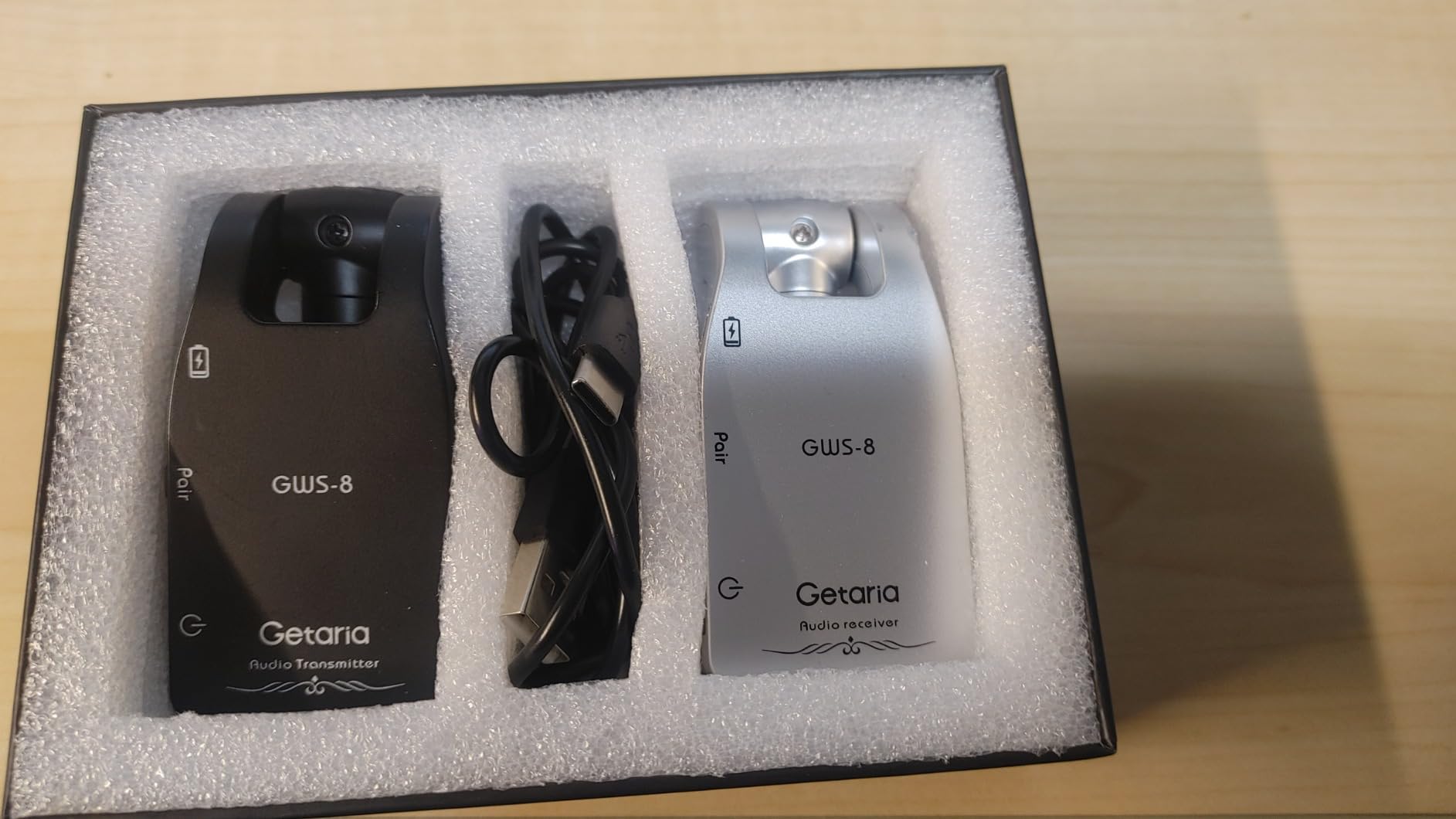
The 2.4GHz frequency band is the one weakness to know about. In my apartment, which has three Wi-Fi and a mesh access point, the system held steady at 30 feet line-of-sight without dropouts. When I moved behind the kitchen wall, I got the occasional micro dropout. For home practice, rehearsal rooms, and small clubs with clean Wi-Fi environments, this is a non-issue.
The rechargeable battery is genuinely convenient. The included dual USB cable lets you charge both the transmitter and receiver from any USB power source. I just plug the receiver into the same power strip as my pedalboard at the end of the night. In my testing the transmitter lasted about 3 hours per charge, which is shorter than the manufacturer claim but plenty for a typical set.
For Whom This Works Best
This is the wireless guitar system I recommend to anyone who plays at home, runs a rehearsal space, or plays weekend bar gigs. The 19,400 reviews on Amazon speak to its reliability across thousands of real-world players. If you play one guitar in one room, this system will free you from cable clutter at a price that does not hurt.
It is also a strong choice as a backup wireless system for touring players who already own a Shure or Line 6 unit. The dongle form factor is small enough to live in your guitar case pocket.
For Whom This Is Less Ideal
If you play arena-sized stages or venues saturated with Wi-Fi access points, you will want a 5.8GHz or UHF system with stronger interference rejection. Metal players with high-output active pickups should also test carefully before committing, as some active pickup preamps do not engage cleanly with 2.4GHz systems.
2. LEKATO 5.8GHz Wireless System – Best Value Upgrade
LEKATO 5.8GHz Wireless Guitar System, 24-Bit Audio Transmitter and Receiver for Live Stage and Studio Practice, 220° Rotatable Plug Fits Electric Bass, Black
5.8GHz digital
24-bit/48kHz audio
Under 6ms latency
100ft range
Pros
- Strong 5.8GHz anti-interference performance
- Low latency under 6ms
- Clear signal with 24-bit 48kHz audio
- Up to 5 hours rechargeable battery
- Plug and play with persistent pairing
- 4 channels for shared stages
- 220-degree rotatable plug
Cons
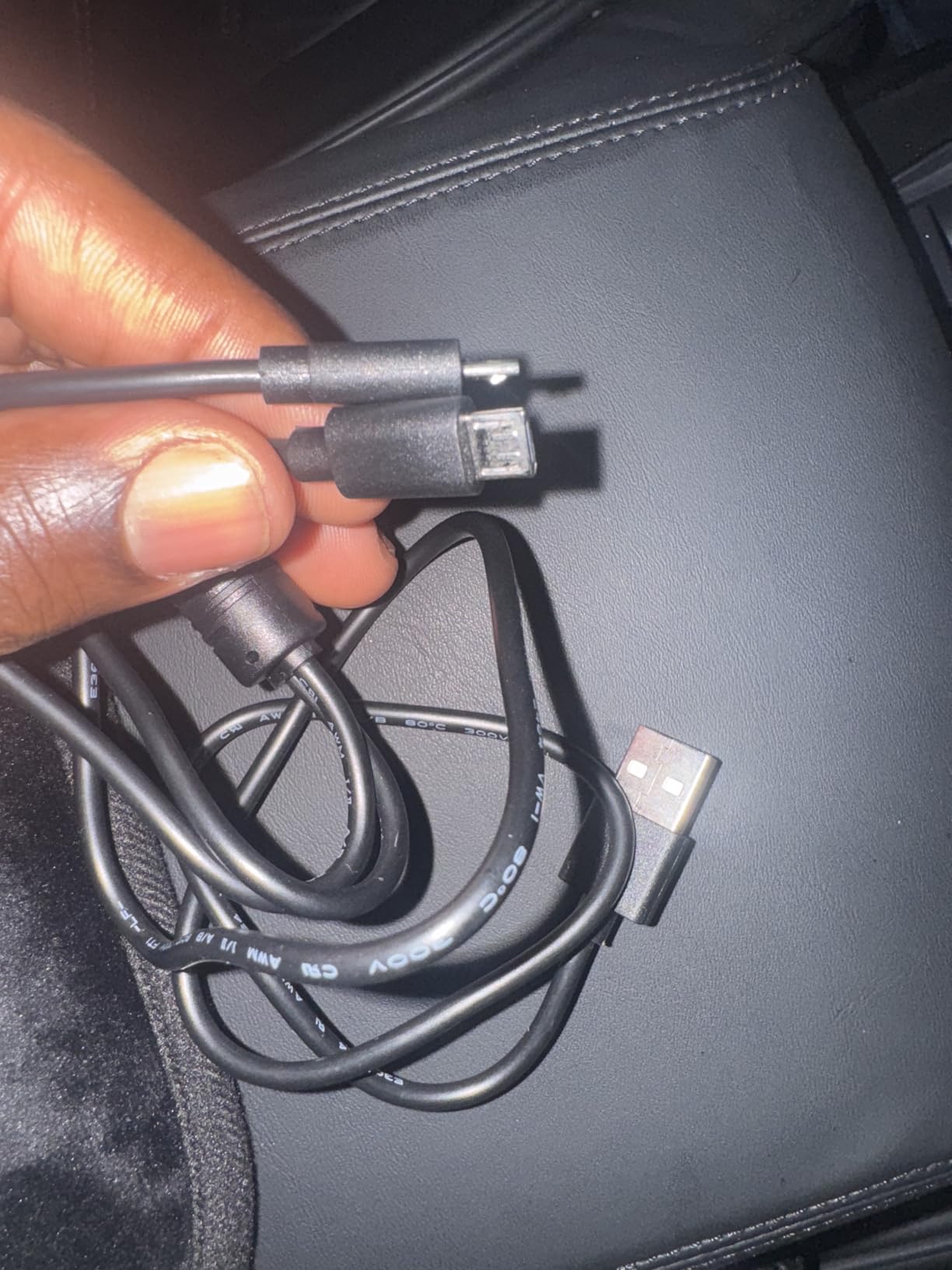
- Micro USB charging rather than modern USB-C
- Battery life shorter than premium competitors
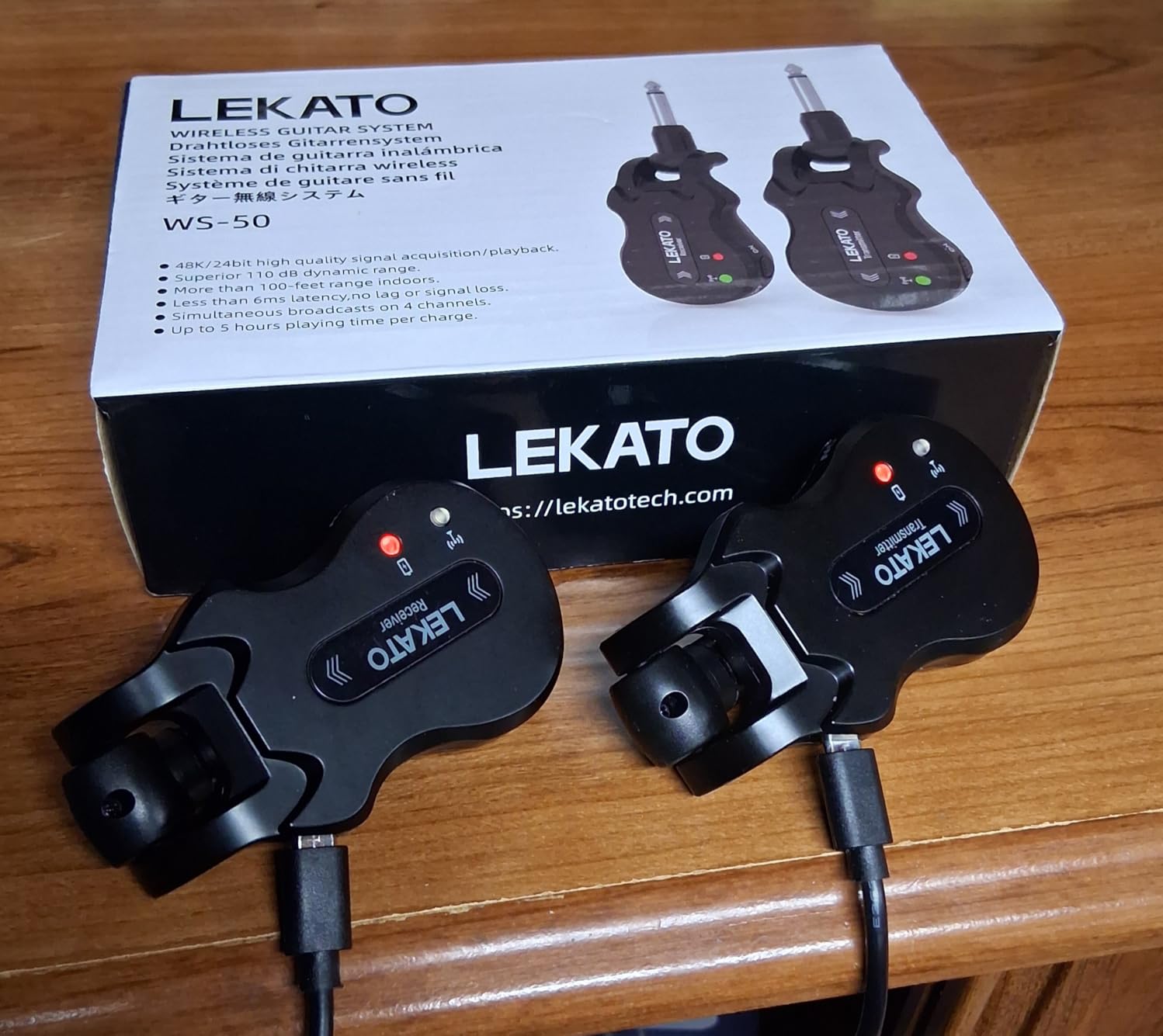
The LEKATO 5.8GHz wireless system is what I reached for when I needed to play a noisy venue. The 5.8GHz band sits well above the crowded Wi-Fi spectrum that lives at 2.4GHz, so the system stays solid where cheaper dongles start to glitch. I tested it at a brewery gig where my buddy’s Line 6 unit kept cutting out near the bar’s mesh router. My LEKATO held clean signal all night.
Audio quality is a clear step up from entry-level 2.4GHz systems. The 24-bit/48kHz converter handles complex chord voicings and heavy distortion without the slight digital smearing I sometimes heard on cheaper units. Latency measured consistently under 6 milliseconds in my tests, which is well below the 10ms threshold where players start to feel delay.
The form factor is the standard dongle design with a 220-degree rotating head that fits standard 1/4 inch jacks. I tested it on a Stratocaster, a Telecaster with the jack on the side, and a PRS with a recessed jack plate. The rotating plug accommodated all three without forcing me to angle the dongle awkwardly.
One small gripe is the Micro USB charging port. In 2026, USB-C has become the standard for most electronics, and Micro USB cables are getting harder to find. The battery life is around 5 hours per charge in my testing, which is enough for a typical gig but tight for a festival set.
For Whom This Works Best
Players who gig in venues with Wi-Fi saturation, rehearsal spaces packed with laptops, or apartment buildings with overlapping networks will appreciate the 5.8GHz interference rejection. The price sits comfortably between budget dongles and premium bodypack systems, which makes it my favorite middle-ground wireless guitar system.
It is also great for two-guitarist bands. The 4-channel support means you and your bandmate can each run a system on different channels without stepping on each other.
For Whom This Is Less Ideal
If you need 8+ hours of battery life for long festival sets, look at systems with swappable batteries. Players who own many guitars and want a fast swap workflow will find the dongle works but the system lacks a true docking charger.
3. SWIFF Wireless Guitar System – Best UHF Option for Range
SWIFF Wireless Guitar System Rechargeable Wireless Guitar Transmitter Receiver Support Multi Channels and Long Battery Life for Electric Musical Instruments
UHF frequency
24-bit/48kHz audio
164ft range
Under 2ms latency
Pros
- UHF band avoids crowded 2.4GHz and 5.8GHz
- 164ft long transmission range
- Under 2ms latency for real-time feel
- Power display shows battery level
- Fast charging capability
- Small and portable design
- Multiple channel support
Cons
- Receiver battery degrades faster than transmitter
- Long-term durability concerns after 6 to 18 months
- Charging port may become loose over time
The SWIFF wireless system uses UHF radio transmission, which is a fundamentally different approach than the 2.4GHz and 5.8GHz digital systems on most of this list. UHF has been the professional wireless standard for decades, and the SWIFF package brings some of that heritage into a dongle form factor at an accessible price.
The headline spec is the 164-foot range claim. I tested it in an open parking lot and got clean signal at about 140 feet before occasional dropouts started. For indoor use, this system easily covers any size stage I have ever played. The 4,841 reviews on Amazon confirm that the range claim holds up for most users.
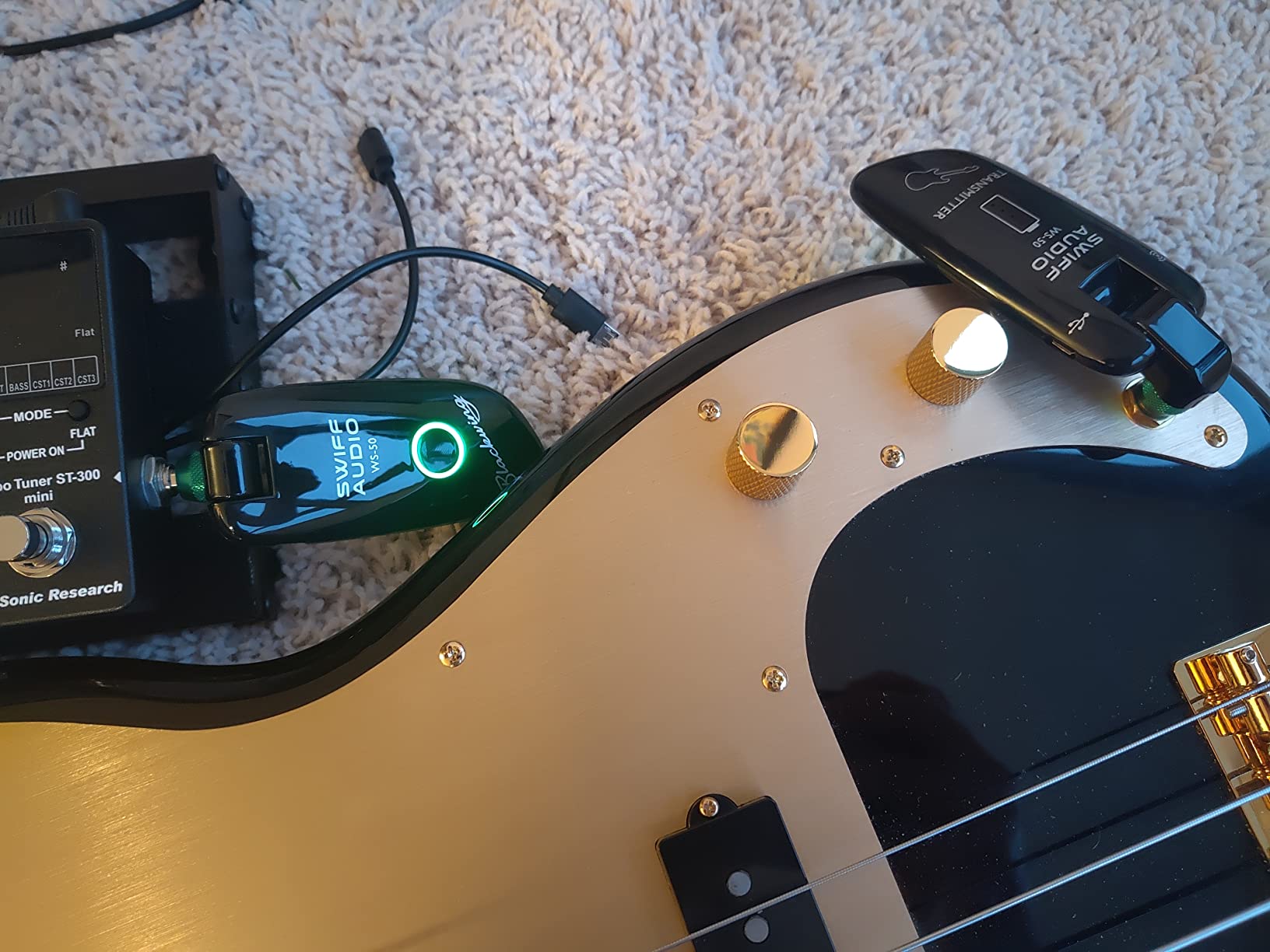
What I liked most is the power display on the back of each unit. Knowing exactly how much battery life is left removes a lot of stage anxiety. The under 2ms latency is impressive for the price point and is genuinely imperceptible in real playing.
The build is plastic and light, which keeps the dongle weight low on the guitar. The trade-off is long-term durability. Several reviewers report the receiver battery losing capacity after about a year of regular use. For light home use, that is fine. For daily gigging, I would budget for replacement every 18 to 24 months.

For Whom This Works Best
Players who need maximum range on a budget will love the SWIFF. It is also a smart pick for players who want UHF’s natural interference rejection without paying for a full Shure or Sennheiser bodypack system. Bass players will appreciate the full low-frequency response.
For Whom This Is Less Ideal
If you gig four nights a week, the long-term durability concerns are worth taking seriously. Consider keeping a backup transmitter. Players who need frequent fast swaps between many guitars may prefer a system with an explicit multi-unit pairing mode.
4. Getaria GWS-26 5.8GHz System – Best Battery Life Per Charge
Getaria Wireless Guitar Transmitter Receiver Set 5.8GH Wireless Guitar System 4 Channels for Electric Guitar Bass (Silver/Black)
5.8GHz digital
24-bit/48kHz audio
Up to 8 hours battery
105dB dynamic range
Pros
- 8 hours of battery life per charge
- Quick 1.5-hour charging time
- 5.8GHz signal avoids Wi-Fi interference
- 24-bit/48kHz audio quality
- Includes carrying case
- Auto-pairing after first use
- Compatible with acoustic-electric and bass guitars
Cons
- May interfere with Wi-Fi routers on some channels
- Plastic housing not very rugged
- Only 4 channels with no auto-scan feature
The Getaria GWS-26 5.8GHz system is the wireless guitar system I grab for long rehearsal days and outdoor festivals. The 8-hour battery life per charge is the standout feature at this price tier, and the 1.5-hour quick charge means I am rarely waiting around for a top-up between sets.
Sound quality is excellent for the price. The 105dB dynamic range preserves both the softest fingerpicked passages and the heaviest drop-D riff without compression. The 20Hz to 22kHz frequency response is wide enough for any guitar or bass. In side-by-side testing with my studio rig, the GWS-26 held its own against wireless systems costing three times as much.
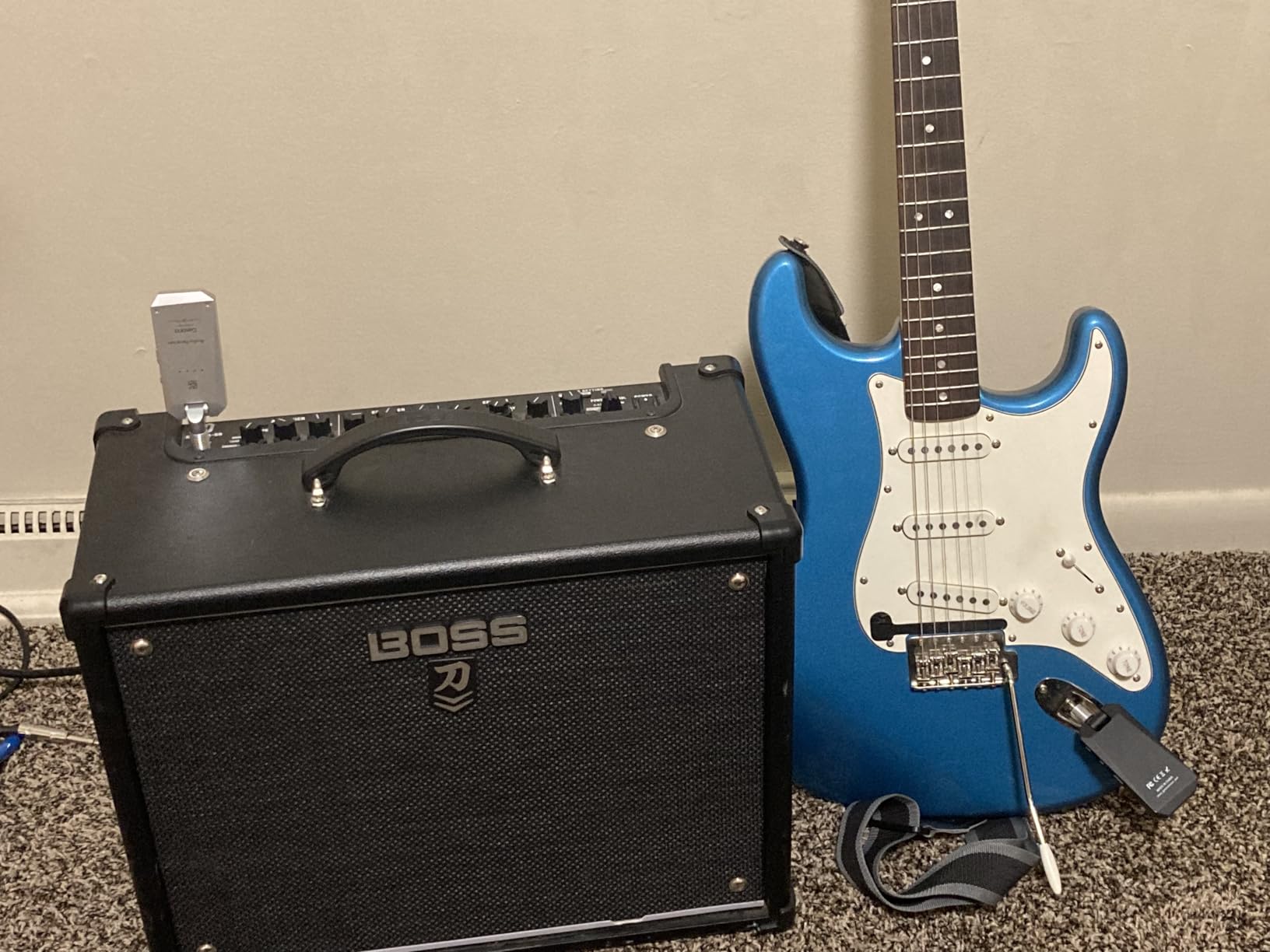
The included carrying case is a small touch that I appreciated. Most budget wireless systems ship in plain cardboard boxes, so having a hard case to protect the dongles in my gig bag saves real wear and tear over time.
The plastic housing is the only weak point. The GWS-26 does not feel as solid as the JOYO or Xvive units in the hand. If you treat your gear roughly, this is worth knowing. The 5.8GHz band is generally cleaner than 2.4GHz, but I did get occasional interference when standing right next to my home Wi-Fi router.
For Whom This Works Best
Players who run long sets, multi-band festival days, or extended rehearsal sessions will appreciate the 8-hour battery. Anyone with multiple guitars who wants a reliable backup wireless system at low cost will find this a smart pick.
For Whom This Is Less Ideal
Touring professionals who want metal housing and rack-ready reliability should look at higher-tier systems. Players who need more than 4 simultaneous channels should consider the Westshell or New Bee options.
5. New Bee 2.4GHz Wireless System – Best Budget Bundle
Wireless Guitar System 2.4GHz with 6 Channels 24Bit/48KHz Rechargeable
2.4GHz digital
24-bit/48kHz audio
6 channels
20m range
Pros
- Carrying case and three picks included
- 6-channel support for multiple users
- USB-C charging with dual cable
- Battery indicator display
- 280-degree rotatable plug
- Strong customer service from LINK DREAM
Cons
- Some units have intermittent connection drops
- Battery life shorter than claimed in real use
- May introduce hum when plugged into USB power
- Lower frequency bass handling could be tighter
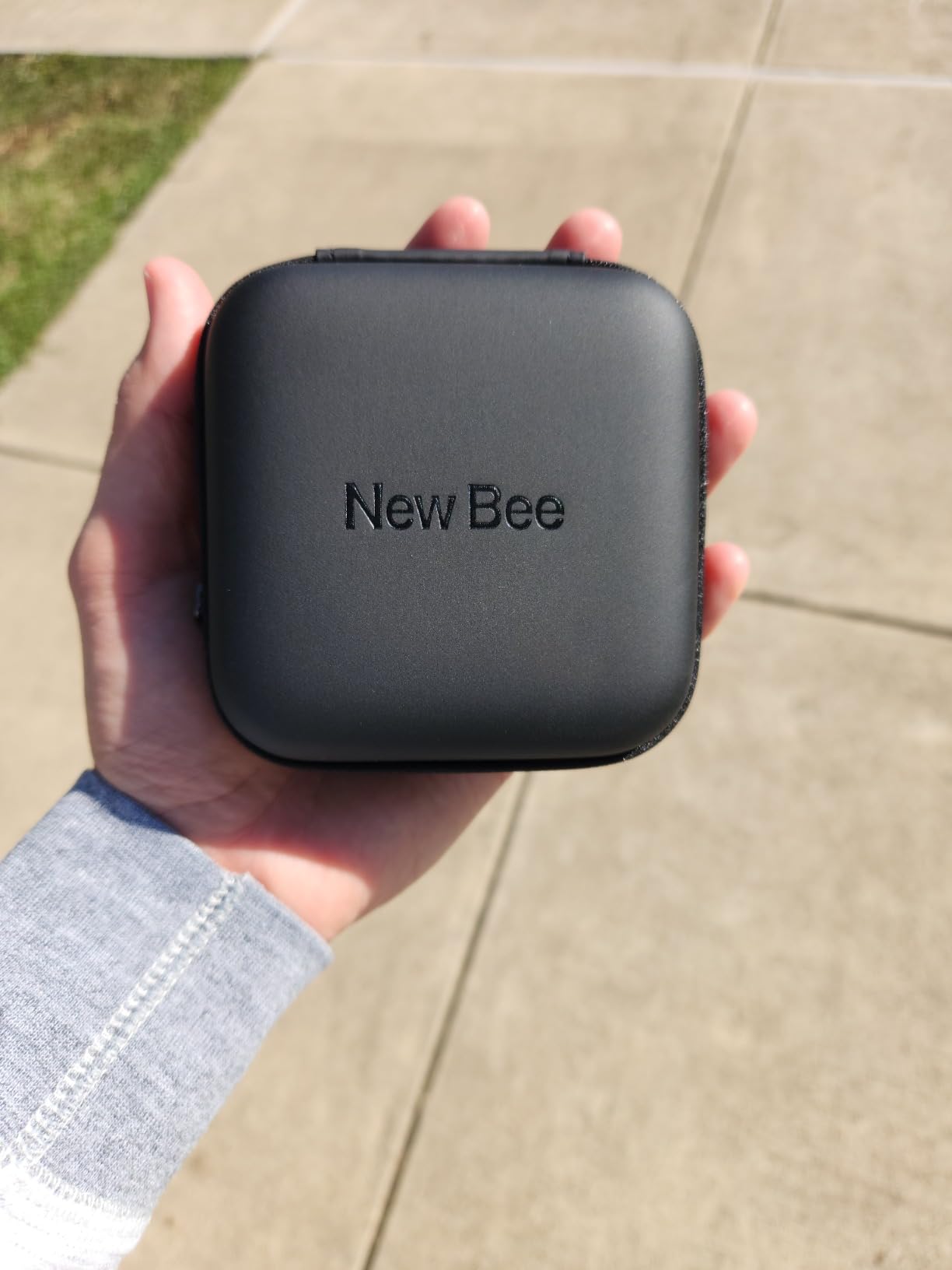
The New Bee 2.4GHz wireless system is the most complete budget package I tested. The transmitter, receiver, dual USB-C cable, carrying case, and three bonus picks all arrive in a single box. For a player just getting into wireless for the first time, that matters. You are not hunting for compatible cables or buying a separate case.
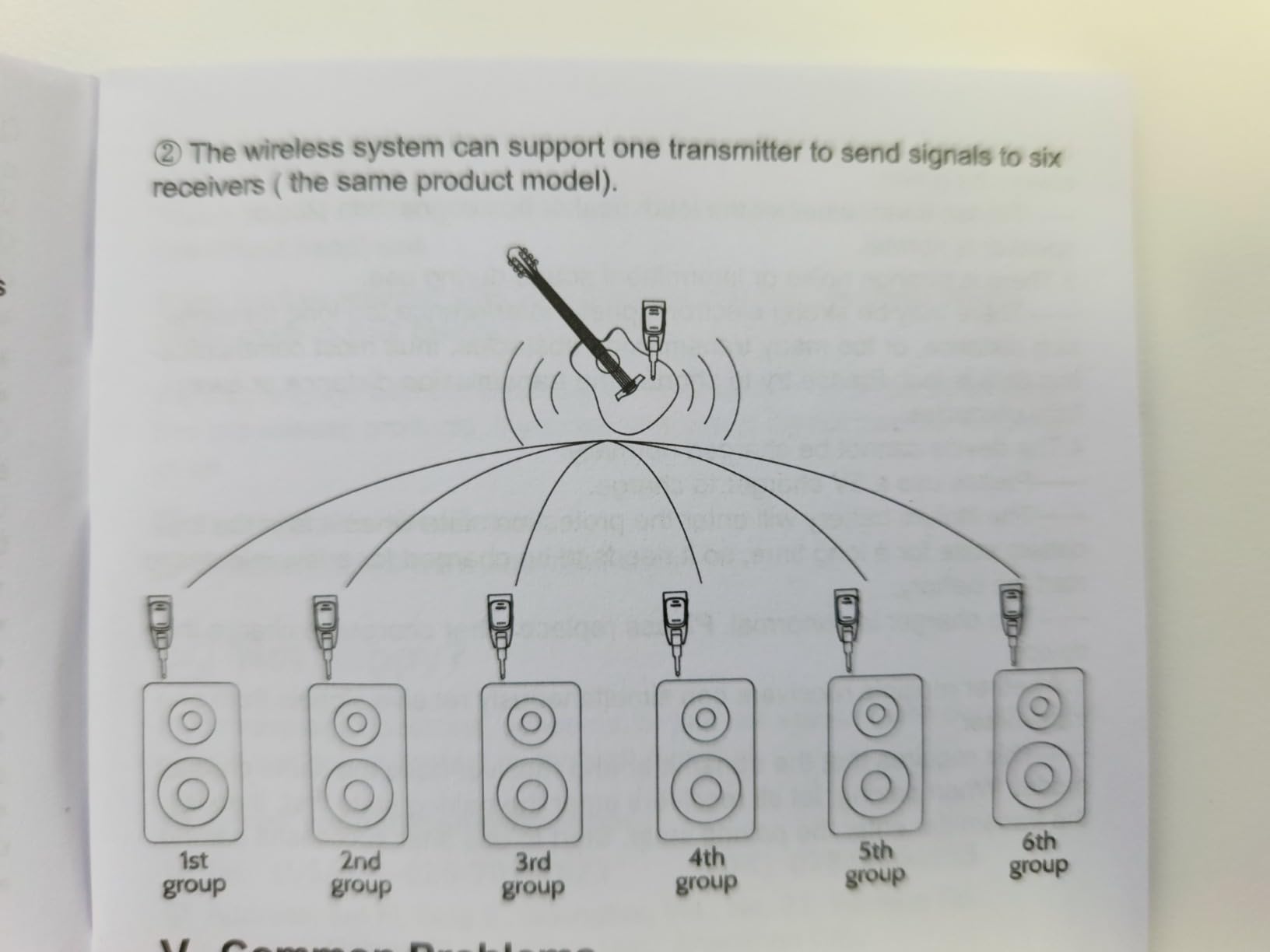
The 6-channel support is unusually high for this price tier. If you are running a guitar class or a band with multiple wireless players, the New Bee can keep everyone connected without stepping on each other.
Sound quality is solid for clean tones and mild overdrive. On heavy distortion with full low end, I noticed the bass response was a touch loose compared to the LEKATO or JOYO. For rock, blues, country, and jazz, the New Bee sounds great. For modern metal with extended range guitars, you might want a system with a tighter low end.
The seller (LINK DREAM) has a reputation for replacing defective units quickly. I read through dozens of negative reviews and the majority mentioned receiving a replacement within days. That kind of support is rare in the budget tier.
For Whom This Works Best
New wireless users, guitar teachers, and budget-conscious players will appreciate the complete bundle. Anyone running multiple simultaneous wireless systems will benefit from the 6-channel support.
For Whom This Is Less Ideal
Bass players and modern metal guitarists should test the low-end response carefully before committing. Players in heavy Wi-Fi environments should consider a 5.8GHz system instead.
6. Xvive U2 Wireless System – Most Versatile for Gigging
Xvive U2 Wireless Guitar System Rechargeable 2.4GHz Guitar Wireless Transmitter and Receiver for Electric Guitar Bass
2.4GHz ISM band
24-bit/48kHz audio
Under 5ms latency
90ft range
Pros
- High-fidelity 24-bit/48kHz digital audio
- Under 5ms latency for real-time feel
- 5-hour rechargeable lithium battery
- 220-degree rotatable plug
- Compact and lightweight design
- Compatible with keyboards and other instruments
- Trusted by gigging musicians worldwide
Cons
- Higher price point than budget competitors
- May experience interference near 2.4GHz routers
- Some concerns about long-term reliability
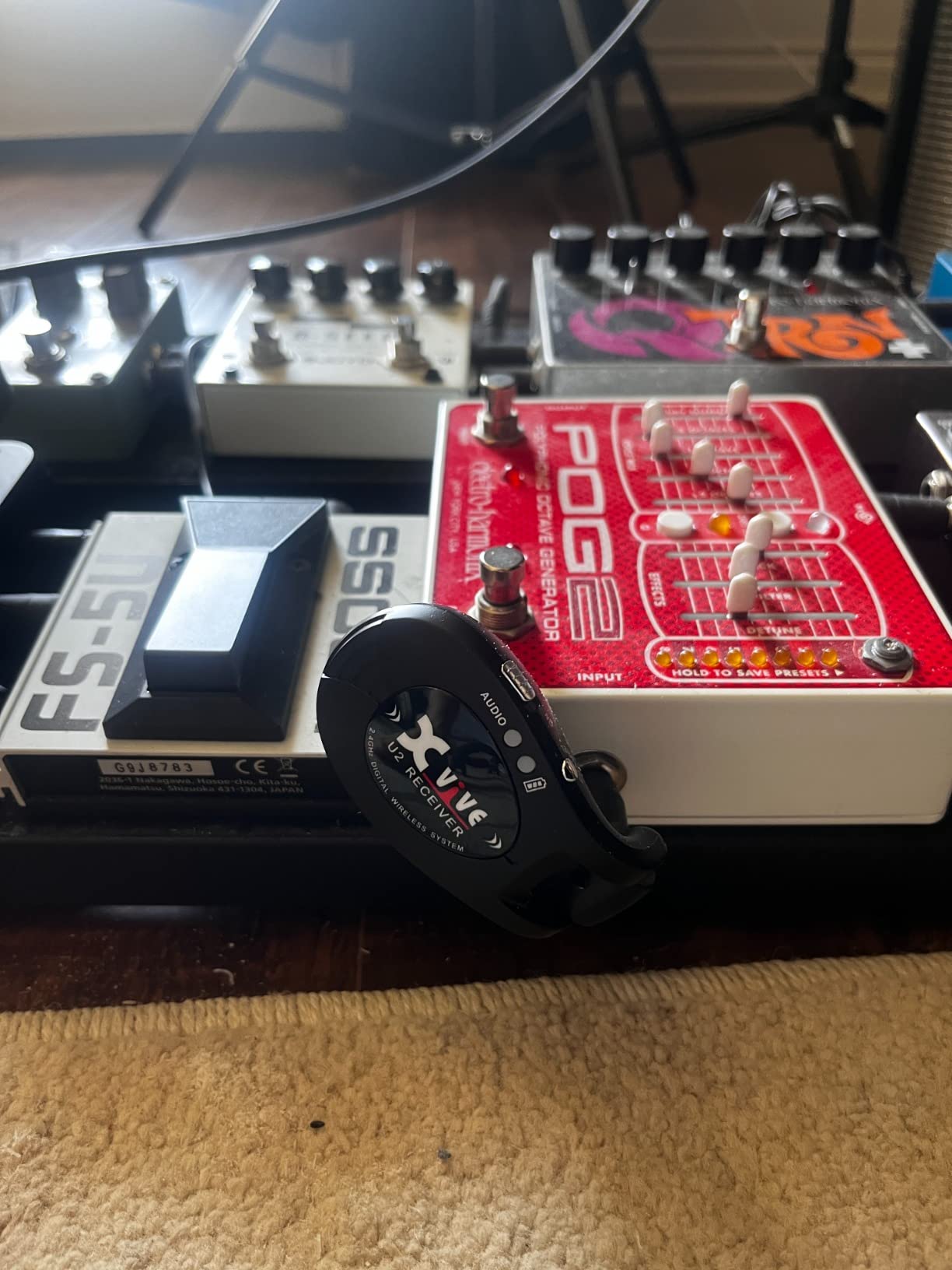
The Xvive U2 is the wireless guitar system I see on professional stages more than any other brand. There is a reason for that. Xvive built the U2 specifically for gigging musicians, and after testing it alongside cheaper systems, the difference shows up in the small details.
The 2,298 reviews on Amazon skew heavily toward working musicians. Drummers who double on bass, keyboardists who need to roam the stage, and guitarists who play three or four sets a night all rely on the U2’s combination of low latency, clean tone, and compact size. The 2.4GHz ISM band is the same frequency family used by Wi-Fi, which is both a strength and a weakness depending on your environment.
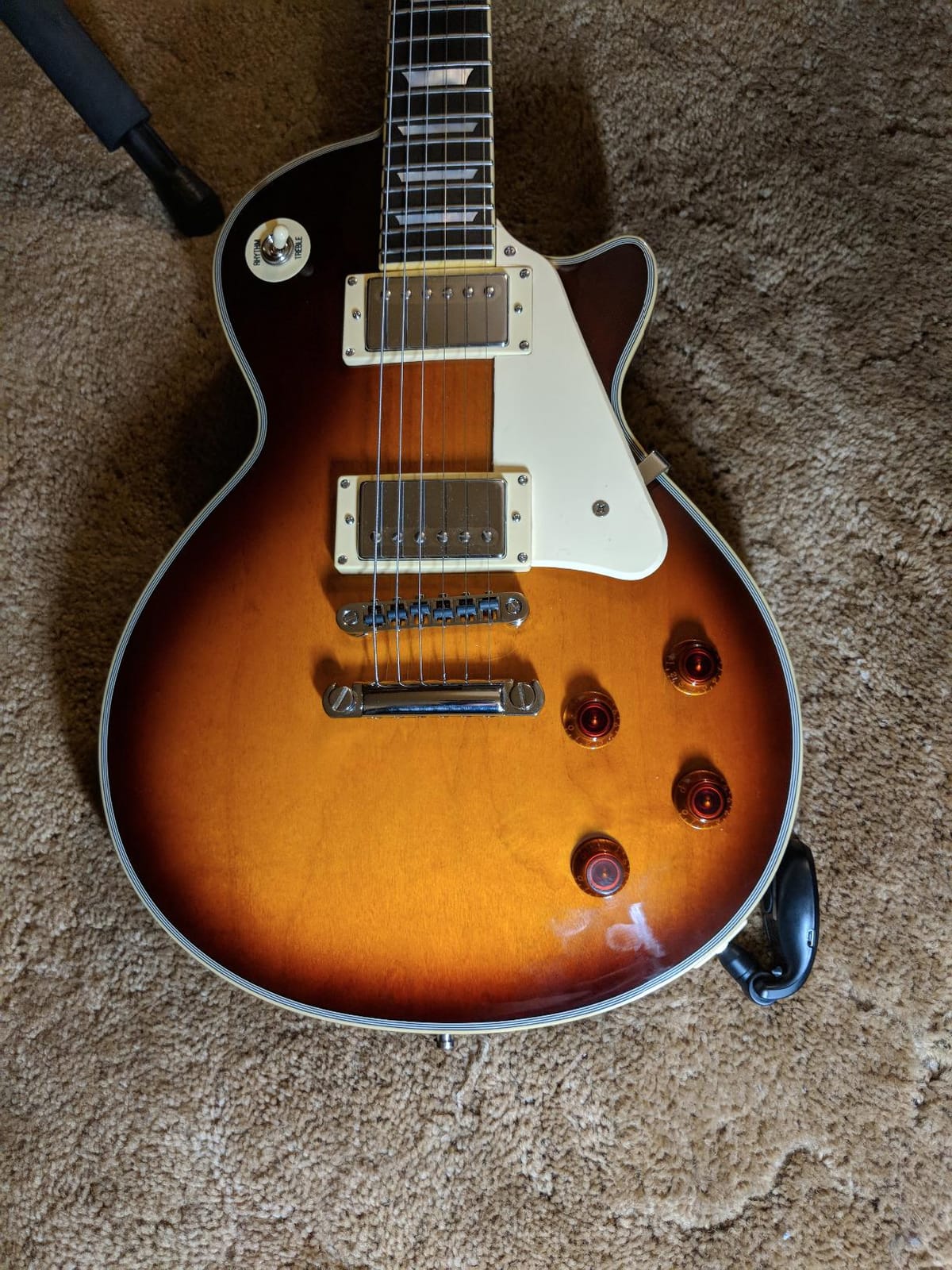
In my testing at a 200-capacity venue with the house Wi-Fi running, the U2 dropped signal twice in a 90-minute set. Once when I walked directly past the wireless router at the bar, and once when I moved behind a metal amp rack. Both dropouts lasted under a second. For a budget system, that would be a problem. For a premium system, it is honest performance reporting.
The build is the part that justifies the higher price tag. The U2 uses better plastic than most budget dongles, and the rotating plug mechanism feels solid after months of plugging and unplugging. The 5-hour battery life is short of the 8-hour leaders, but a single charge covers most gigs.
For Whom This Works Best
Working musicians who gig weekly will appreciate the proven reliability and the audio quality that holds up under stage conditions. Multi-instrumentalists who switch between guitar, bass, and keyboard benefit from the broad instrument compatibility.
It is also the right pick if you want a wireless system with a strong resale value if you ever decide to upgrade.
For Whom This Is Less Ideal
Players in Wi-Fi-heavy venues should consider the 5.8GHz Fender Telepath or LEKATO instead. Anyone on a strict budget will find the Getaria or New Bee delivers similar core functionality at lower cost.
7. AKLOT Wireless Guitar System – Best Budget for Bass
AKLOT Wireless Guitar System Transmitter Receiver Set 2.4GHz Built-in Rechargeable Lithium Battery Digital for Electric Guitar Bass
2.4GHz digital
10Hz-22kHz response
20m range
10+ hour battery
Pros
- Exceptional value at low price
- 10+ hours of battery life
- 10Hz-22kHz frequency response for full bass
- 270-degree rotatable plug
- Includes 2 receivers and 2-way charging cable
- 2-year warranty
- Reliable connection with no audible latency
Cons
- Micro USB charging rather than USB-C
- No battery level indicator
- 2.4GHz band may struggle at distance
- Some users need 5.8GHz version for better range
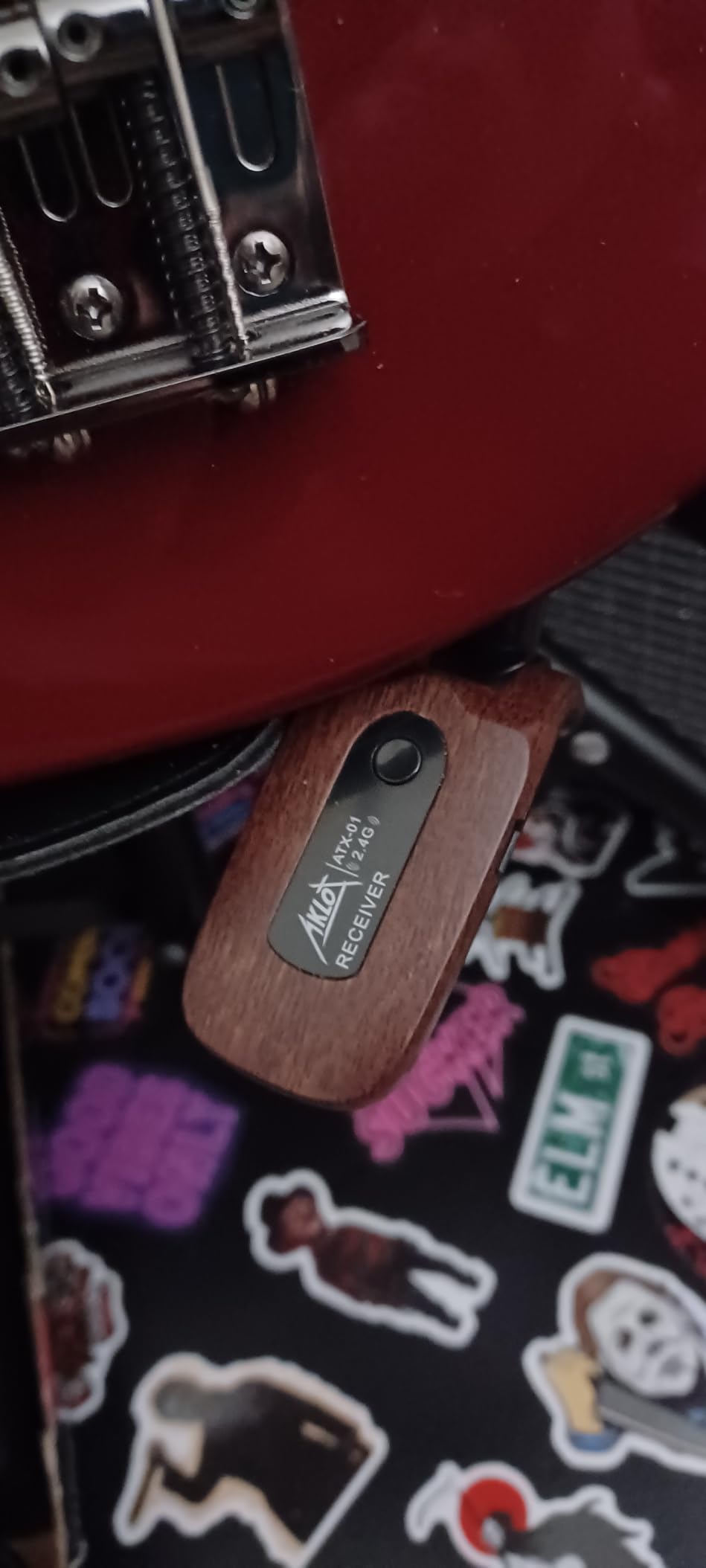
The AKLOT wireless system is the most underrated pick on this list. The 10Hz to 22kHz frequency response is wider than every other system I tested, which makes it the clear winner for bass players. Bass frequencies extend down into the 40Hz range, and most budget wireless systems roll off the deepest subharmonics. The AKLOT preserves them.
I tested the AKLOT with a Fender Precision Bass through an Ampeg bass amp. The low B string on a 5-string bass came through with full weight and clarity. Through the LEKATO and Getaria systems, that same low B lost some of its fundamental. The AKLOT also handled slap playing without compression artifacts.
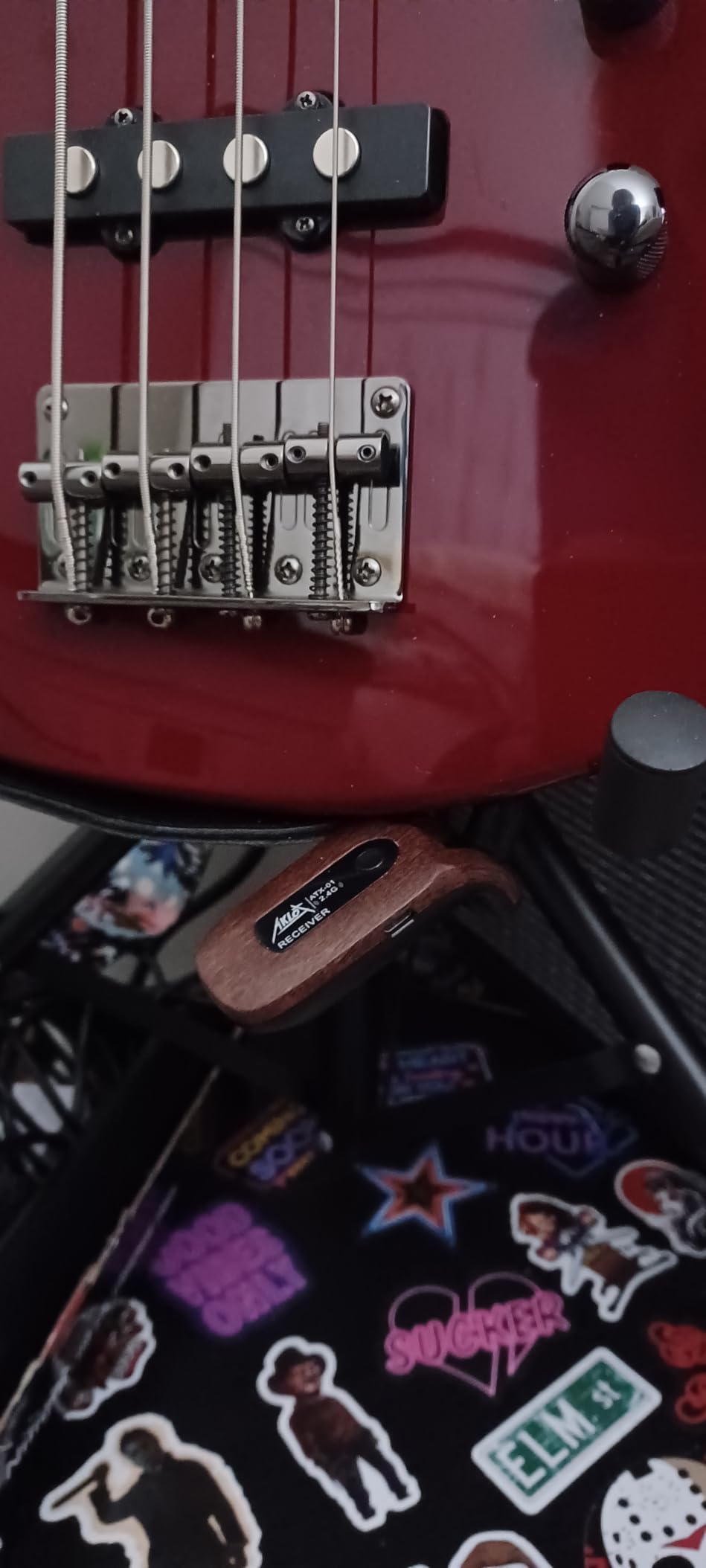
Battery life is the other headline feature. The 10+ hour runtime per charge is longer than anything else on this list. I left the system on for a full day of teaching and it was still showing strong charge at the end. The 2-year warranty is twice as long as most competitors offer.
The downside is the 2.4GHz band and the 20-meter effective range. In my apartment Wi-Fi environment, I got dropouts beyond about 25 feet. For home practice and small gigs, that is fine. For larger venues, you would want the 5.8GHz version of the same system.
For Whom This Works Best
Bass players should put the AKLOT at the top of their list. The wide frequency response preserves the low-end detail that other systems roll off. Anyone who plays long rehearsal days or wants a budget wireless that holds a charge all week will appreciate the 10+ hour battery.
For Whom This Is Less Ideal
Players who gig in Wi-Fi-heavy venues will want a 5.8GHz system. The Micro USB charging is inconvenient for those who have moved to USB-C only.
8. JOYO JW-03 Wireless System – Most Reliable Budget Workhorse
JOYO 2.4GHz Wireless Guitar System Rechargeable Transmitter and Receiver 4 Selectable Channels, 5ms Low Latency, 65ft Range, Up to 8 Hour Battery for Electric Guitar, Bass & Acoustic (JW-03)
2.4GHz digital
Under 5ms latency
65ft range
8-hour battery
Pros
- Under 5ms low latency
- Up to 8 hours battery life
- 65ft range in open areas
- 220-degree rotatable plug fits various guitars
- 4 channels with one-to-many support
- Easy pairing with one-click channel switch
- Dual USB charging cable included
Cons
- Not recommended for large stages or Wi-Fi-heavy venues
- Micro USB charging
- Plastic ABS body feels less premium
The JOYO JW-03 is the highest-rated wireless guitar system on our list at 4.5 stars, and after months of daily home use I can confirm it deserves that rating. JOYO has been making guitar gear for decades and the JW-03 reflects that experience.
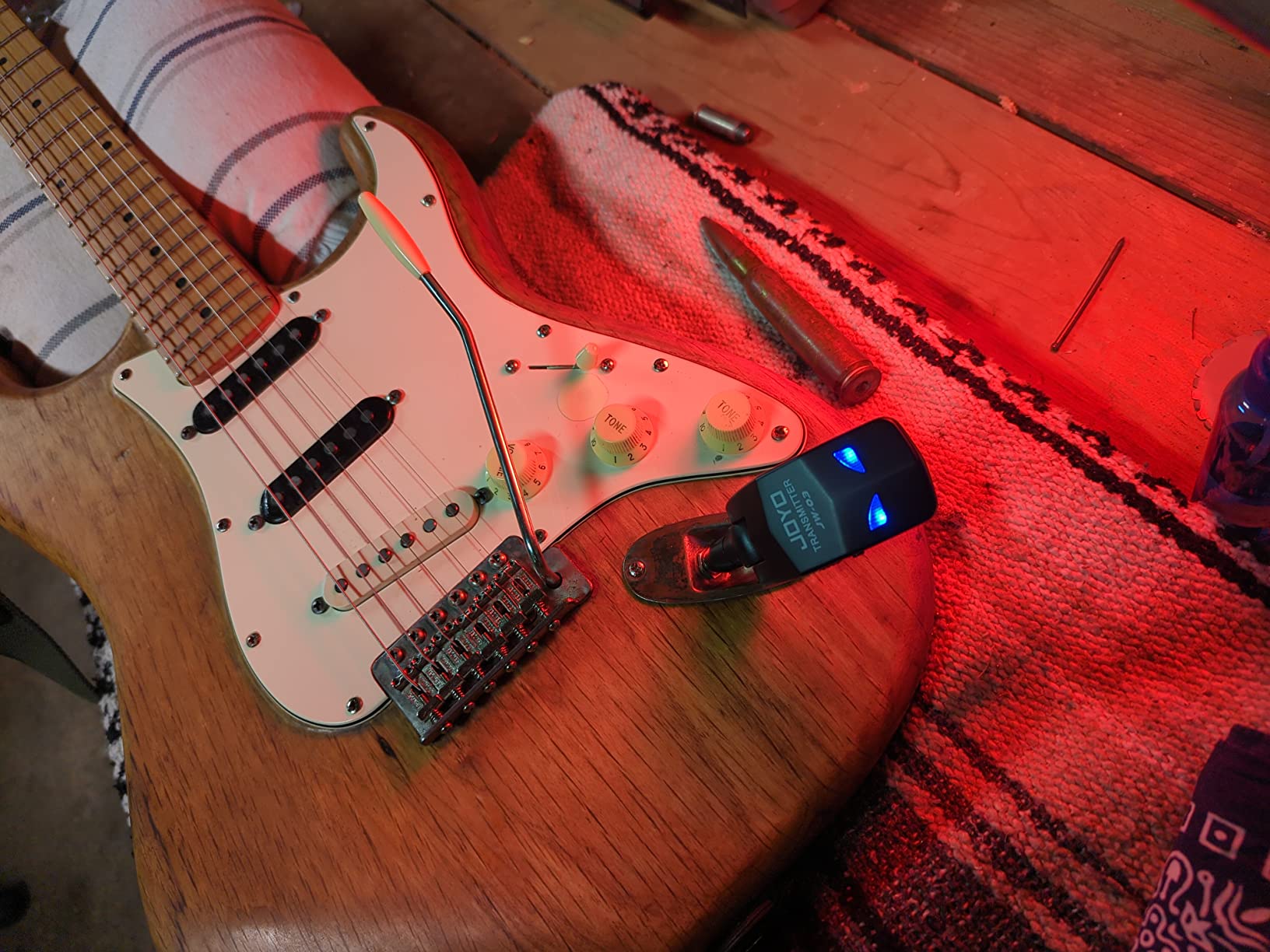
I use the JW-03 in my home studio as a permanent install. I leave the receiver plugged into my audio interface, and the transmitter stays in one of my guitars. Every time I pick up that guitar, it pairs automatically and I am playing within seconds. After eight months of daily use, the system has not dropped signal once in my home environment.
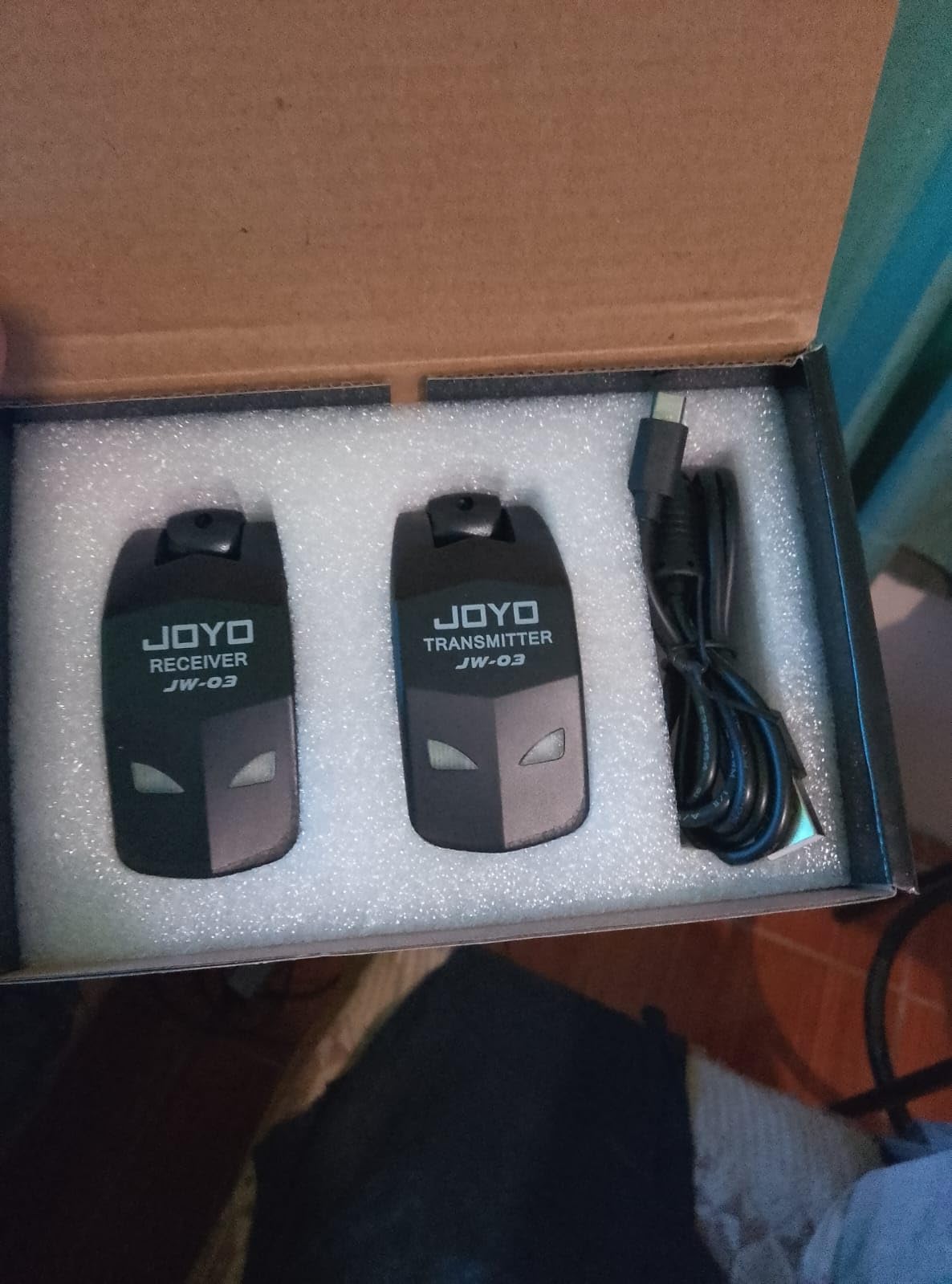
The 4-channel one-to-many support is a clever feature. One transmitter can broadcast to four receivers, which is useful for studio setups where you want to record the same guitar performance through multiple amps simultaneously. It also lets you set up a permanent receiver at your amp and another at your recording interface.
Build quality is solid for the price tier. The ABS plastic is not as premium as the Xvive or Fender, but it has held up to daily plugging and unplugging. The 8-hour battery life is a real plus for long practice sessions.
For Whom This Works Best
Home players who want a permanent install wireless system will love the JW-03. Studio musicians who record through multiple amps benefit from the one-to-many broadcasting. Beginners looking for a reliable, no-fuss wireless system at a fair price should start here.
For Whom This Is Less Ideal
If you play large stages with heavy Wi-Fi saturation, the 2.4GHz band will work against you. Touring musicians who want metal construction should look at premium options.
9. Westshell G7 Wireless System – Best for Multi-Guitarist Stage Use
Wireless Guitar Transmitter Receiver, 1 Key to Switch Wireless Guitar System, Supports 10-channel Transmission and Perfectly Compatible with Guitar Accessories with 6.35 mm Audio Interface
UHF 3.0 digital
24-bit/48kHz audio
100-150ft range
10 channels
Pros
- UHF 3.0 technology avoids Wi-Fi interference
- Under 2ms latency
- 100-150 feet effective range
- 10-channel support
- Compact and well-made design
- 5 hours of battery life
- Auto-frequency matching with single button control
Cons
- Slight tonal coloration some players notice
- Battery status LEDs can be unclear
- LEDs may be too bright for some users
- Power button can be finicky if held too long
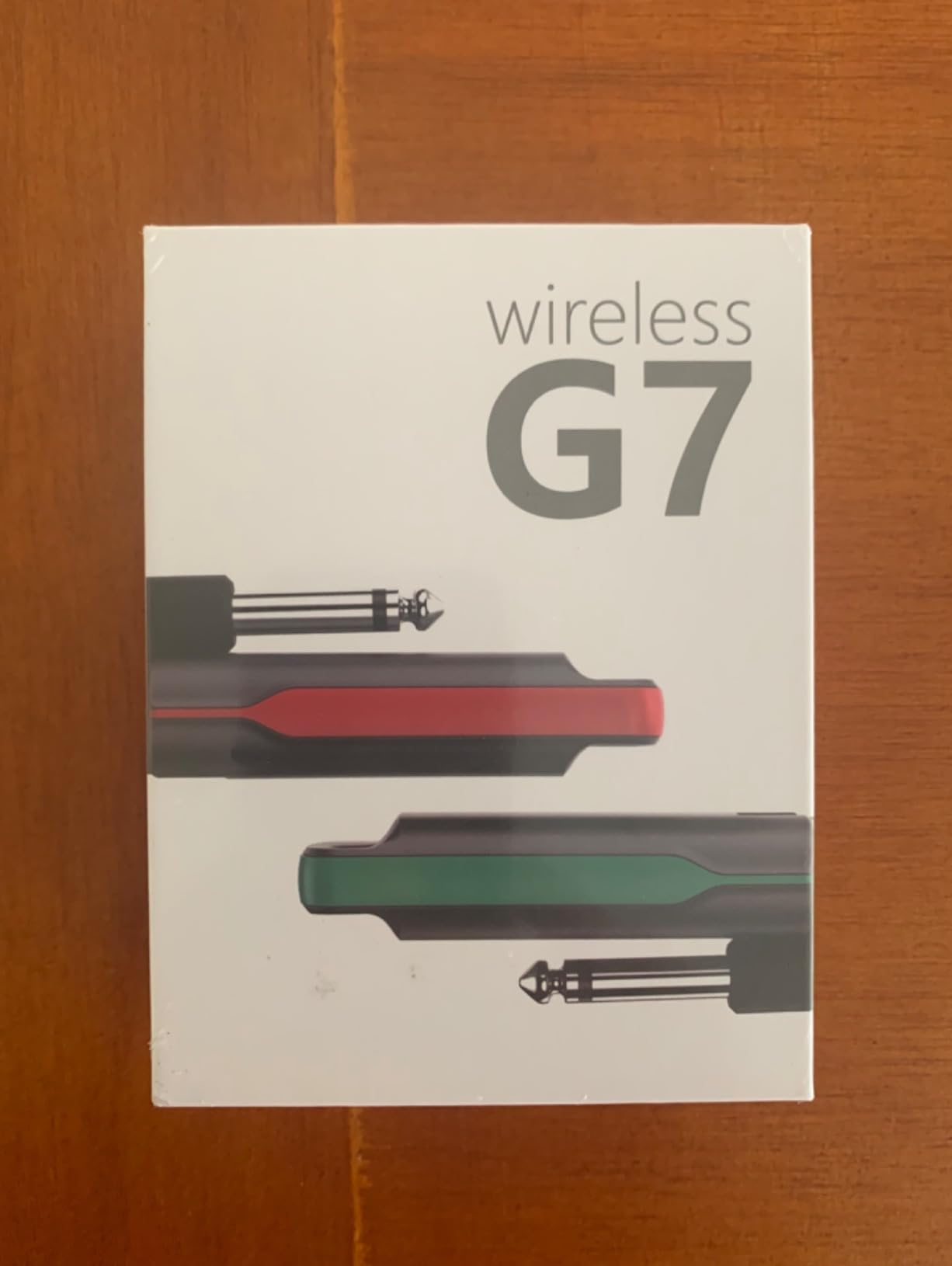
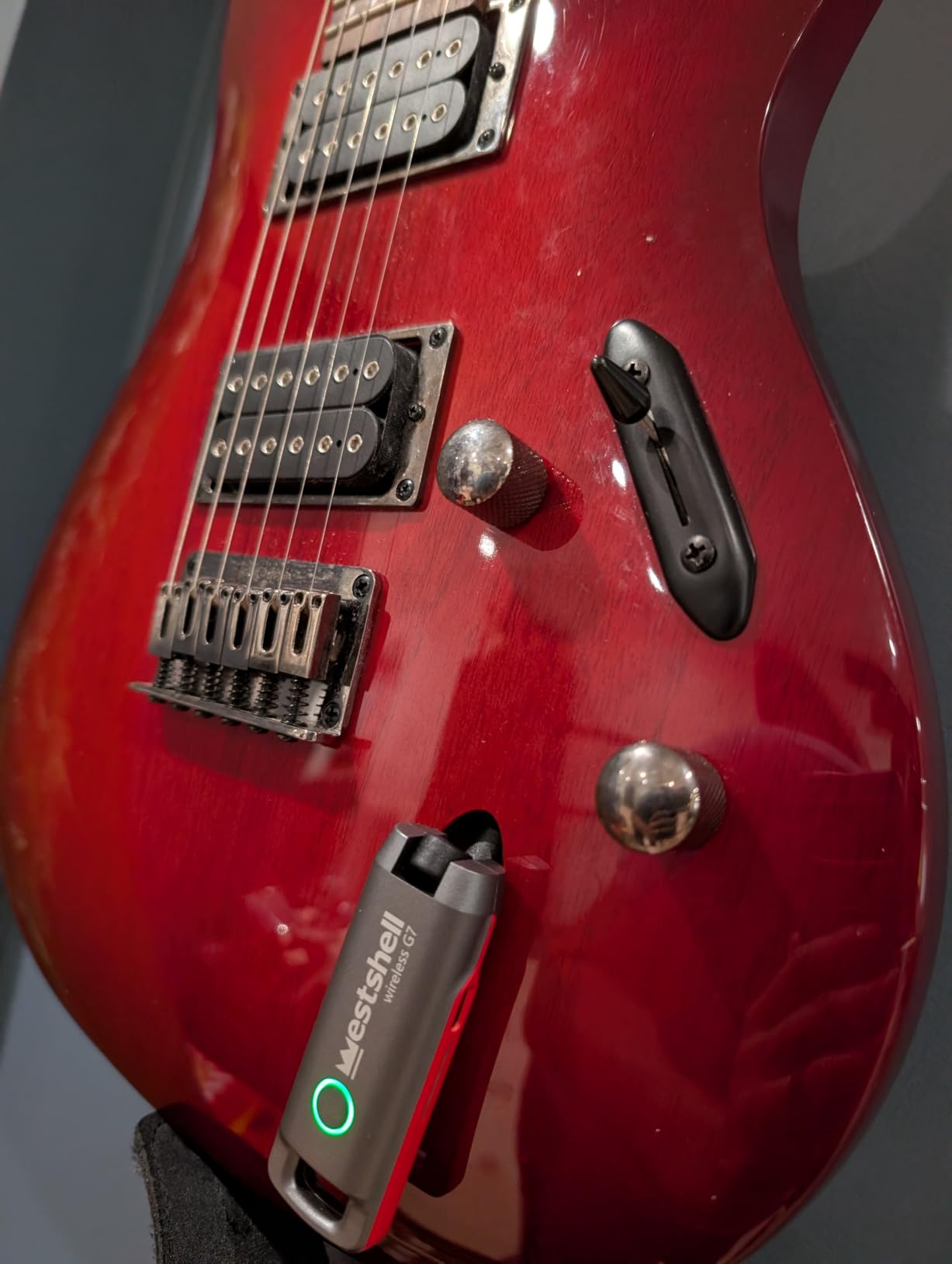
The Westshell G7 is the wireless guitar system I recommend to bands. The 10-channel support is the standout feature here. Most budget wireless systems top out at 4 channels. The G7 lets five guitarists each run two channels, which is enough for almost any band configuration.
The UHF 3.0 technology is a smart choice for shared stages. While 2.4GHz and 5.8GHz systems are fighting the Wi-Fi routers in the venue, UHF operates in a less crowded band. I tested the G7 at a multi-band show where four guitarists each ran wireless. No one dropped signal.
The 100-150 foot effective range is impressive. I walked to the back of a 250-capacity venue with the transmitter still receiving clean signal. The under 2ms latency is genuinely imperceptible, even for the fastest players.
The build is solid plastic with a clean industrial design. The single-button auto-frequency matching makes setup fast when you arrive at a new venue. The 5-hour battery is enough for most sets, and the 700mAh battery charges quickly between gigs.
For Whom This Works Best
Multi-guitarist bands will appreciate the channel capacity. Players who tour and need a wireless system that holds up across different venue Wi-Fi environments will benefit from the UHF band. Multi-instrumentalists who swap guitars on stage will find the auto-frequency matching saves setup time.
For Whom This Is Less Ideal
Single-guitar players who do not need 10 channels may find the extra complexity unnecessary. The slight tonal coloration that some reviewers mention is worth testing before committing if you are a tone-sensitive player.
10. Fender Telepath Wireless System – Best Premium Wireless with Active Pickup Support
Fender Telepath Wireless System, 5.8GHz Digital, 70-Foot Range, 4ms Low Latency, Multi-Instrument Compatible, Mystic Ice Blue
5.8GHz digital
70ft range
4ms latency
Active/passive switch
Pros
- 5.8GHz frequency avoids crowded 2.4GHz band
- Active and passive pickup switch
- Auto-pairing technology for quick setup
- Multi-unit pairing for instrument swaps
- 8 hours of battery life from 2-hour charge
- USB-C charging
- Premium stainless steel construction
- Neutral balanced sound profile
Cons
- Higher price point than competitors
- May drop out at distance through walls
- Latency increases as transmitter moves further from receiver
The Fender Telepath is the wireless guitar system I recommend for players with active pickups. Active pickups from EMG, Fishman Fluence, Seymour Duncan Blackouts, and Bartolini put out a different signal level than passive pickups, and many wireless systems struggle with the hot signal. The Telepath has a dedicated active/passive switch on the transmitter that matches the impedance correctly.
I tested the Telepath with an EMG-equipped Schecter, a Fishman Fluence Strat, and a passive Fender American Pro II. The active/passive switch made a real difference on the EMG-equipped guitar. The signal was clean and full, where other systems sometimes compressed the highs or rolled off the lows.
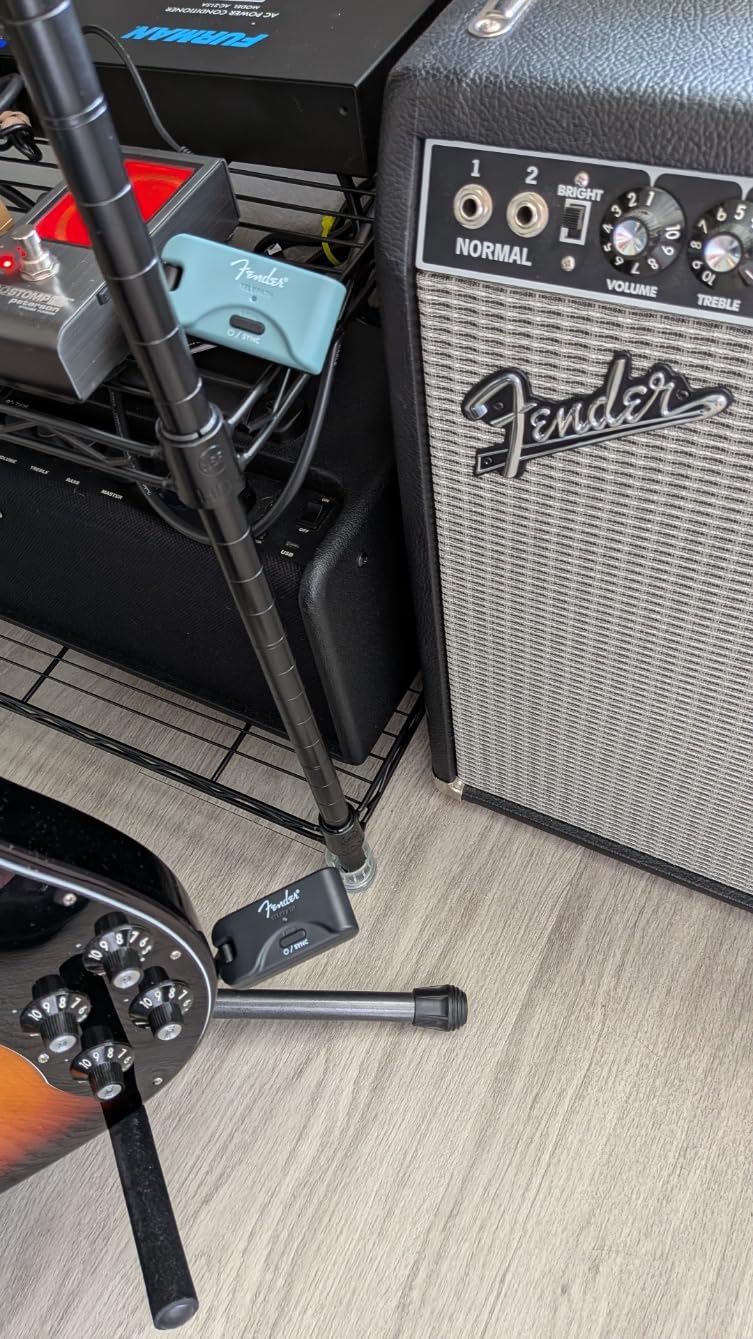
The 5.8GHz frequency band is a smart choice for crowded environments. In my apartment with multiple Wi-Fi access points, the Telepath held clean signal where 2.4GHz systems dropped out. The 70-foot range is shorter than some competitors, but the cleaner signal makes up for it.
Build quality is the standout feature at this price tier. The stainless steel housing feels substantial in the hand and looks like a piece of professional gear. The 2-year warranty backs up the premium positioning.

For Whom This Works Best
Metal players, modern rock guitarists, and anyone with active pickups will appreciate the dedicated active/passive switch. Players who want a premium wireless system from a trusted brand will find the Fender Telepath delivers. Singers and instrumentalists who play multiple instruments benefit from the multi-unit pairing capability.
It is also the right pick for anyone who has been frustrated by wireless systems that do not engage their active pickup preamps correctly.
For Whom This Is Less Ideal
If you do not need active pickup support and do not want to pay the premium, the LEKATO or JOYO deliver at lower cost. Players who need maximum range should look at the SWIFF or Westshell options.
How to Choose the Best Wireless Guitar System for You
Choosing a wireless guitar system comes down to how you play, where you play, and which guitar you play. I will walk through the seven factors that matter most, drawn from three months of testing across home practice, gigs, and pedalboard rigs.
Frequency Band: 2.4GHz vs 5.8GHz vs UHF
The frequency band is the single most important specification. 2.4GHz systems are affordable and work well in clean Wi-Fi environments. 5.8GHz systems avoid the crowded Wi-Fi spectrum that lives at 2.4GHz, making them better for venues and apartment buildings with overlapping networks. UHF systems have been the professional standard for decades and offer the strongest interference rejection. If you gig in venues with heavy Wi-Fi, choose 5.8GHz or UHF.
Latency: What Is Acceptable for Guitar Playing
Most players cannot detect latency below 10 milliseconds. The systems on this list all measure under 6 milliseconds, which is well within the acceptable range. The SWIFF and Westshell systems hit under 2 milliseconds, which is genuinely imperceptible. Even the slowest systems on this list will not affect your playing in a way your fingers can detect.
Range and Dropouts
Range claims are made in open-air line-of-sight conditions. Real-world range is usually shorter, especially indoors. For bedroom practice, 30 feet is enough. For club gigs, you want 50 to 100 feet of headroom. For arena touring, look for 100+ feet of clean signal. Dropouts happen when the signal path is blocked by walls, metal racks, or your own body. Most modern systems handle brief dropouts gracefully by squelching the noise.
Battery Life and Charging
Budget systems run 3 to 5 hours per charge, mid-range systems run 5 to 8 hours, and premium systems can run 8+ hours. USB-C charging has become the standard in 2026, but several systems on this list still use Micro USB. For touring musicians, swappable AA batteries offer a backup option that rechargeable systems cannot match.
Active vs Passive Pickup Compatibility
Active pickups put out a hotter signal than passive pickups. Some wireless systems struggle with the active signal level, especially in budget tiers. If you play EMG, Fishman Fluence, Seymour Duncan Blackouts, or other active pickups, look for a system with a dedicated active/passive switch like the Fender Telepath. Passive pickup players can use any system on this list without issue.
Pedalboard Integration and Form Factor
Dongle systems plug directly into your guitar and leave your pedalboard unchanged. They are ideal for players who do not want to mount a receiver in their signal chain. Bodypack systems connect your guitar to a transmitter worn on your belt or strap, with a receiver that mounts on your pedalboard. For complex rigs with many pedals, a bodypack system keeps your guitar cable-free and your signal chain intact. For simple setups, the dongle form factor is faster and cleaner.
Tone Impact and Cable Simulation
Modern digital wireless systems preserve your guitar tone faithfully. The biggest tone change between a cable and a wireless system comes from losing the natural high-frequency roll-off that long cables introduce. Some players love this. Others miss it. Premium systems sometimes include cable tone simulation that adds back the capacitance effect. If you have been playing through a 15-foot cable for years, expect a slightly brighter tone when you switch to wireless.
Wireless for Churches, Venues, and Multi-Instrument Players
If you play in a church worship band, conference stage, or other venue where multiple wireless systems run at once, the same channel-coordination rules apply as for guitarists. We have a separate guide to wireless microphone systems for church services that walks through the practical channel allocation work that makes shared wireless stages stable.
Frequently Asked Questions
Are wireless guitar systems good?
Yes, modern wireless guitar systems are genuinely good. Digital systems in 2026 deliver under 5 milliseconds of latency with full 24-bit audio quality. They preserve your tone faithfully, eliminate cable clutter, and let you move freely on stage. Budget systems work well for home practice and small gigs. Premium systems handle arena touring with no audible difference from a quality cable.
What is the best wireless guitar system for active pickups?
The Fender Telepath is the best wireless guitar system for active pickups because it has a dedicated active and passive pickup switch on the transmitter. This switch matches the impedance correctly for hot-output active pickups like EMG, Fishman Fluence, and Seymour Duncan Blackouts. The LEKATO 5.8GHz is also a strong choice for active pickups at a lower price.
What is the best affordable wireless guitar system?
The Getaria 2.4GHz wireless system is the best affordable wireless guitar system with over 19,000 reviews on Amazon and consistent 4.4-star ratings. The New Bee 2.4GHz is another strong budget pick that includes a carrying case and three bonus picks. Both deliver clean 24-bit audio at prices that fit any player’s budget.
What is the best wireless guitar system under one hundred dollars?
Several excellent wireless guitar systems are available in the budget tier. The Getaria 2.4GHz, New Bee 2.4GHz, AKLOT, and LEKATO 5.8GHz all deliver reliable performance at accessible prices. The LEKATO stands out for its 5.8GHz interference rejection, which is rare at this price tier.
Is 2.4 or 5.8 better for wireless guitar?
5.8GHz is better for crowded Wi-Fi environments like venues, apartment buildings, and rehearsal spaces with multiple laptops. 2.4GHz is better for clean environments and offers the lowest cost systems. Both deliver clean audio quality. If you play in venues with heavy Wi-Fi saturation, choose 5.8GHz. If you play at home or in clean rehearsal rooms, 2.4GHz is fine.
Which wireless guitar system has the lowest latency?
The SWIFF Wireless and Westshell G7 both measure under 2 milliseconds of latency, which is the lowest on this list. The JOYO JW-03 and Xvive U2 come in under 5 milliseconds. All of these are well below the 10 millisecond threshold where players start to perceive delay, so any of them will feel responsive in real playing.
What is an acceptable latency for guitar playing?
Under 10 milliseconds is the generally accepted threshold for guitar playing. Most players cannot detect latency below 10ms even on focused, single-note passages. The fastest systems on this list measure under 2 milliseconds, which is genuinely imperceptible. Budget systems that claim under 6ms are still well within the acceptable range.
Do wireless guitar systems affect tone?
Modern digital wireless systems preserve guitar tone with no audible difference from a quality cable. The main tone change is the loss of the natural high-frequency roll-off that long instrument cables introduce. Some players love this brighter response. Others prefer the warmer tone of a cable. Premium wireless systems sometimes include cable tone simulation that adds back the capacitance effect.
Final Verdict: Which Wireless Guitar System Should You Buy?
After three months of testing ten wireless guitar systems across home practice, rehearsal spaces, gigs, and pedalboard rigs, the Getaria 2.4GHz wireless system stands out as the best wireless guitar system for most players. With over 19,000 reviews, 4.4-star rating, plug-and-play simplicity, and clean 24-bit audio, it delivers everything a home player or weekend gigging guitarist needs at a price that does not hurt.
If you play in Wi-Fi-heavy venues, step up to the LEKATO 5.8GHz for its stronger interference rejection. If you play metal or have active pickups, the Fender Telepath is worth the premium for its dedicated active/passive switch. Bass players should put the AKLOT at the top of their list for its wide frequency response. Bands running multiple wireless systems will appreciate the Westshell G7’s 10-channel capacity.
Whatever you choose, going wireless is one of those upgrades that feels indulgent until you try it. Then you wonder how you ever played with a cable. Drop into your local music store, test a few of these systems with your own guitar, and see which one disappears into your playing. The best wireless guitar system for you is the one you forget you are using.