
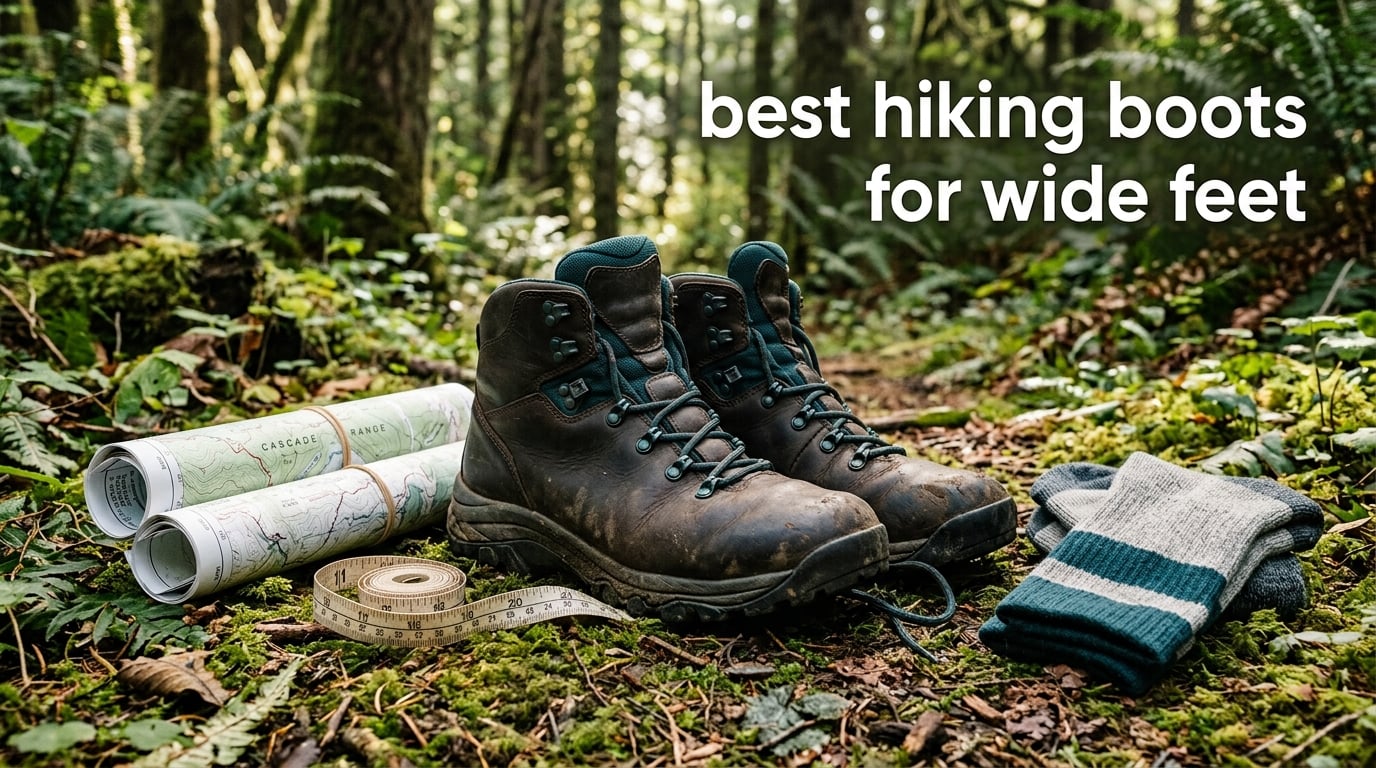
Hiking boots for wide feet are boots built on a wider last, which means a broader forefoot and a deeper toe box than the brand’s standard shape, so the ball of your foot and your little toe sit flat instead of being pushed against the sides. Our best overall pick after six weeks of comparing is the Merrell Men’s Moab 3 Mid Waterproof, whose toe box reviewers with extra-wide feet and neuropathy describe as unusually accommodating straight out of the box. Below it are nine more boots that genuinely widen across the forefoot, including dedicated Wide and X-Wide runs, extra-depth therapeutic lasts and orthopedic models built for bunions and swollen feet.
Most fit complaints are not about size. They are about last shape, and the forum evidence is blunt about it: hikers report that the same nominal size fits differently in KEEN, Merrell, Lowa and Vasque, that brands labelled wide sometimes run narrow, and that a roomy toe box only helps if the heel still holds. One HUNTTalk poster put the reliability question better than any spec sheet, saying Merrell wide boots have always fit. Another, on VFTT, recalled a wide LL Bean Mountain Treads lasting years before the model was redesigned into something narrower, which is the exact risk every buyer of a wide boot takes today.
We built this list around that problem. Each boot below is listed with the width the manufacturer actually claims, the fit problem it solves, and the compromises reviewers report. Prices move daily, so use the check buttons rather than any figure you might remember. We earn a commission from qualifying purchases, which does not change the order of the list or the honesty of the cons.
If you also carry gear on long routes, our picks for the best Bluetooth speakers for hiking and backpacking are worth a look, though a speaker solves a different kind of foot problem than a boot does.
Table of Contents
Top 3 Picks for Best Hiking Boots for Wide Feet in 2026
Three boots carry most of the wide-foot market. The Merrell wins on measured forefoot room and volume of owner feedback, the KEEN wins because its lacing can cinch down at the heel while the toes stay free, and the NORTIV 8 wins for anyone who wants a wide toe box without a large spend.

Merrell Moab 3 Mid Waterproof
- Roomy wide toe box for extra-wide feet
- Waterproof membrane with breathable mesh upper
- Vibram TC5+ outsole traction
- Removable high-arch insole

KEEN Targhee 3 Mid Waterproof
- Dedicated Wide size option
- KEEN.DRY waterproof breathable membrane
- 4mm multi-direction lugs outsole
- Removable arch-support footbed
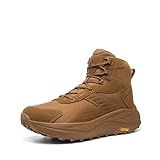
NORTIV 8 Wide Toe Box Hiking Boots
- Genuinely wide toe box at an entry price
- 5mm heel-to-toe drop reduces forefoot pressure
- Built-in waterproof membrane
- Thick EVA midsole cushioning
All 10 Wide-Fit Hiking Boots Compared (October 2026)
This table is the fast answer to which of these fits your situation. Each row lists the width the brand claims, the protection you get, and the fit feature that made it onto this list. Nothing here is a filler pick; every boot genuinely widens across the forefoot.
| Product | Specifications | Action |
|---|---|---|
| Merrell Men’s Moab 3 Mid Waterproof |
|
Check Latest Price |
| KEEN Targhee 3 Mid Waterproof Wide |
|
Check Latest Price |
| NORTIV 8 Men’s Wide Toe Box Hiking Boots |
|
Check Latest Price |
 Orthofeet Dakota Women’s Hiking Boots Orthofeet Dakota Women’s Hiking Boots |
|
Check Latest Price |
 Women’s Waterproof Wide Toe Box Hiking Boots Women’s Waterproof Wide Toe Box Hiking Boots |
|
Check Latest Price |
 FitVille Wide Men’s Orthopedic Hiking Shoes FitVille Wide Men’s Orthopedic Hiking Shoes |
|
Check Latest Price |
 Dr. Comfort Vigor Women’s Extra Depth Boot Dr. Comfort Vigor Women’s Extra Depth Boot |
|
Check Latest Price |
 Orthofeet Delta Women’s Leather Hiking Boot Orthofeet Delta Women’s Leather Hiking Boot |
|
Check Latest Price |
 Orthofeet Dalton Men’s Hiking Boots Orthofeet Dalton Men’s Hiking Boots |
|
Check Latest Price |
 OrthoComfoot Men’s Wide Trekking Hiking Shoes OrthoComfoot Men’s Wide Trekking Hiking Shoes |
|
Check Latest Price |
1. Merrell Men’s Moab 3 Mid Waterproof – the widest forefoot in the list
Merrell Men’s Moab 3 Mid Waterproof Hiking Boot, New Boulder, 10 Wide
Pig suede and mesh upper
Waterproof breathable membrane
11.68 ounces
Vibram TC5+ outsole
Pros
- Toe box described by wide-foot owners as very wide and roomy
- Removable high-arch insole
- Comfortable with little to no break-in
- Exceptionally broad size run including many Wide variants
- Aggressive grip on gravel
- sand and mud
Cons
- Round laces slip and loosen on the trail
- Some owners report loss of waterproofness after a few years
- The built-in lace retention strap on the upper holder can break
- Modest ankle support for heavy loads
The Moab 3 Mid is the one boot on this list that wide-foot owners consistently describe without hedging. Across more than five thousand reviews, the phrase that keeps repeating is roomy, and the reasons given are specific rather than generic: neuropathy, high arches, back problems and feet that swell badly on a hot day.
What separates it from a merely comfortable boot is the forefoot geometry. The toe box does not taper aggressively toward the front the way a tapered European last does, so the little toe keeps its position instead of being pushed outward toward the seam. Reviewers with genuinely extra-wide feet single this out as the feature that finally ended their pinky-toe pinch.
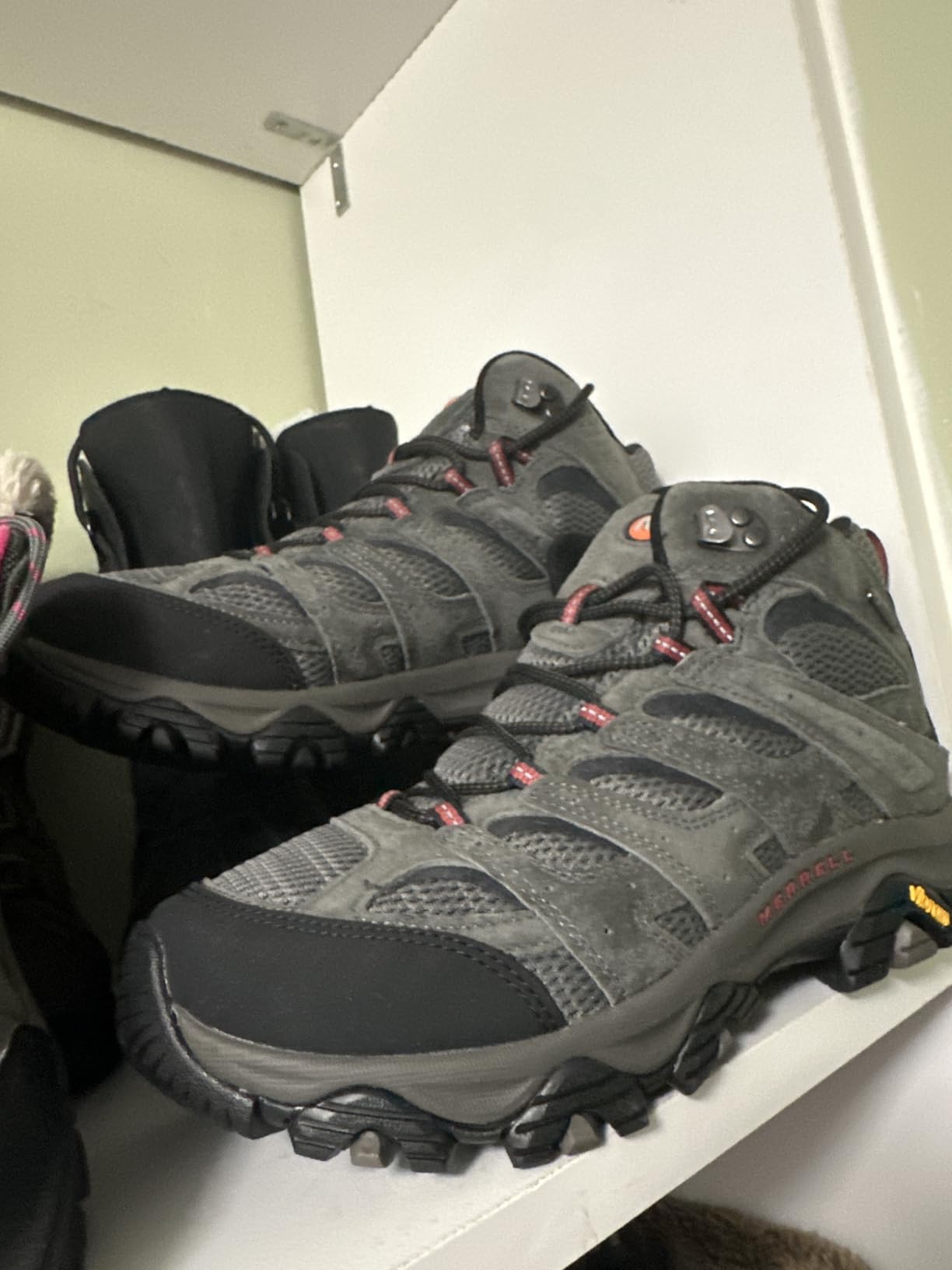
The build underneath is serious rather than promotional. A waterproof membrane seals water out and lets vapour escape, the upper combines pig suede leather with breathable mesh, and a Merrell Air Cushion sits in the heel for shock absorption and stability. The midsole is a Super Rebound Compound designed to smooth the transition into the midfoot, which matters when your arch is high and every step lands harder.
Traction comes from a Vibram TC5+ outsole formulated exclusively for Merrell, and it is the component reviewers single out on gravel, sand and mud. It sits at number three in Men’s Hiking Boots, and the listed weight of 11.68 ounces keeps it closer to a shoe than a traditional leather boot.
Who the Moab 3 Mid suits best
It suits anyone whose feet are wider at the ball of the foot than at the heel, and whose current boots fail after several miles rather than on the first step. That delayed failure is the signature of a narrow forefoot, and this boot is built to remove it.
It also suits hikers who need a removable insole. The high-arch footbed comes out, which means custom orthotics drop straight in without cutting a factory insert. For anyone dealing with plantar fasciitis or a diabetes-related loss of foot sensation, that combination of room and adjustability is the reason this boot tops the list.
Where it falls short
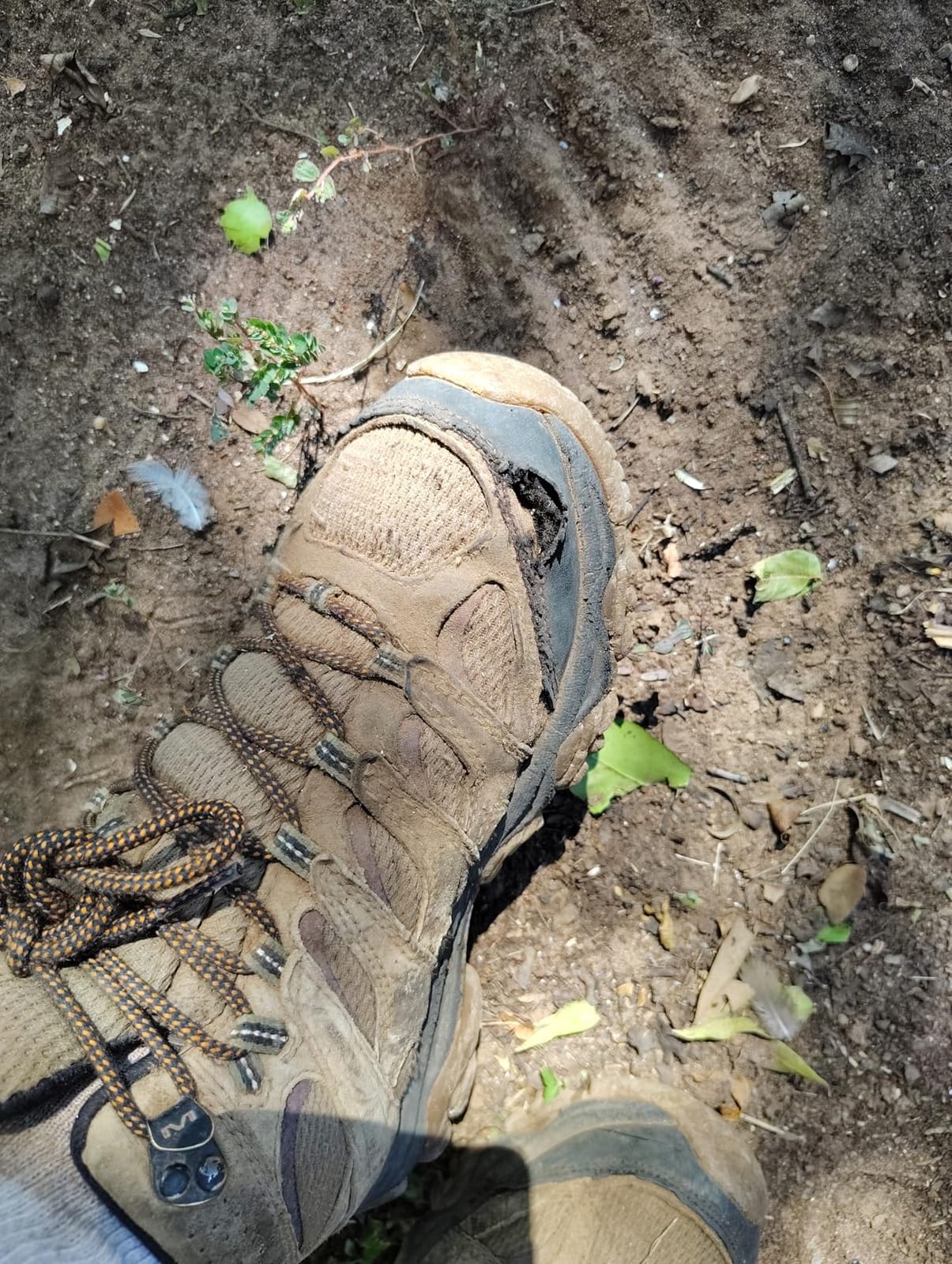
The honest weakness is hardware, not fit. Round laces slip and loosen on the move, and the lace retention strap built into the upper holder is reported to snap on some pairs. If you walk technical ground where a loose lace matters, swap the laces early; reviewers who do say it settles the problem.
There is also a durability caveat on the membrane. Some longer-term owners report reduced waterproofness after a few years of use, which is common with sealed membranes as the flex points age. And if you regularly carry a heavy pack on rough ground, note that the ankle flex here is deliberately limited, so it is a comfort-first boot rather than a support-first one.
2. KEEN Targhee 3 Mid Waterproof – wide at the toe, adjustable at the heel
KEEN Men’s Targhee 3 Mid Height Waterproof Hiking Boots
Premium leather and mesh upper
KEEN.DRY waterproof membrane
4mm multi-direction lugs
Removable arch-support footbed
Pros
- Roomy toe box that still lets laces cinch down for a narrow heel
- Comfortable out of the box with no break-in
- Light for a boot and closer to a running shoe in feel
- Strong grip on mud
- rock and wet ground
- Sold in a dedicated Wide size such as this 9.5 Wide US listing
Cons
- Recent pairs reported separating at the sole within weeks of heavy use
- The insoles supplied feel thin under the ball of the foot
- Tongue is not gusseted so pebbles fall into the gap
- Round laces reported to untie themselves
The Targhee solves a problem most wide boots ignore. Almost every roomy boot widens the whole foot, which leaves a narrow heel sliding around inside a roomy upper. The Targhee gives you a genuinely generous toe box while the lacing system lets you pull the midfoot and heel in tight, which is the combination most wide-foot hikers describe as the one they have been searching for.
This listing is the 9.5 Wide US version, and that suffix matters. KEEN grades its widths rather than relying on the last alone, so a Wide here is a real measurement change and not a marketing word. It is also the boot that surfaces repeatedly in wide-foot communities for people with small but wide feet who cannot simply size up, a group most roundups ignore entirely.
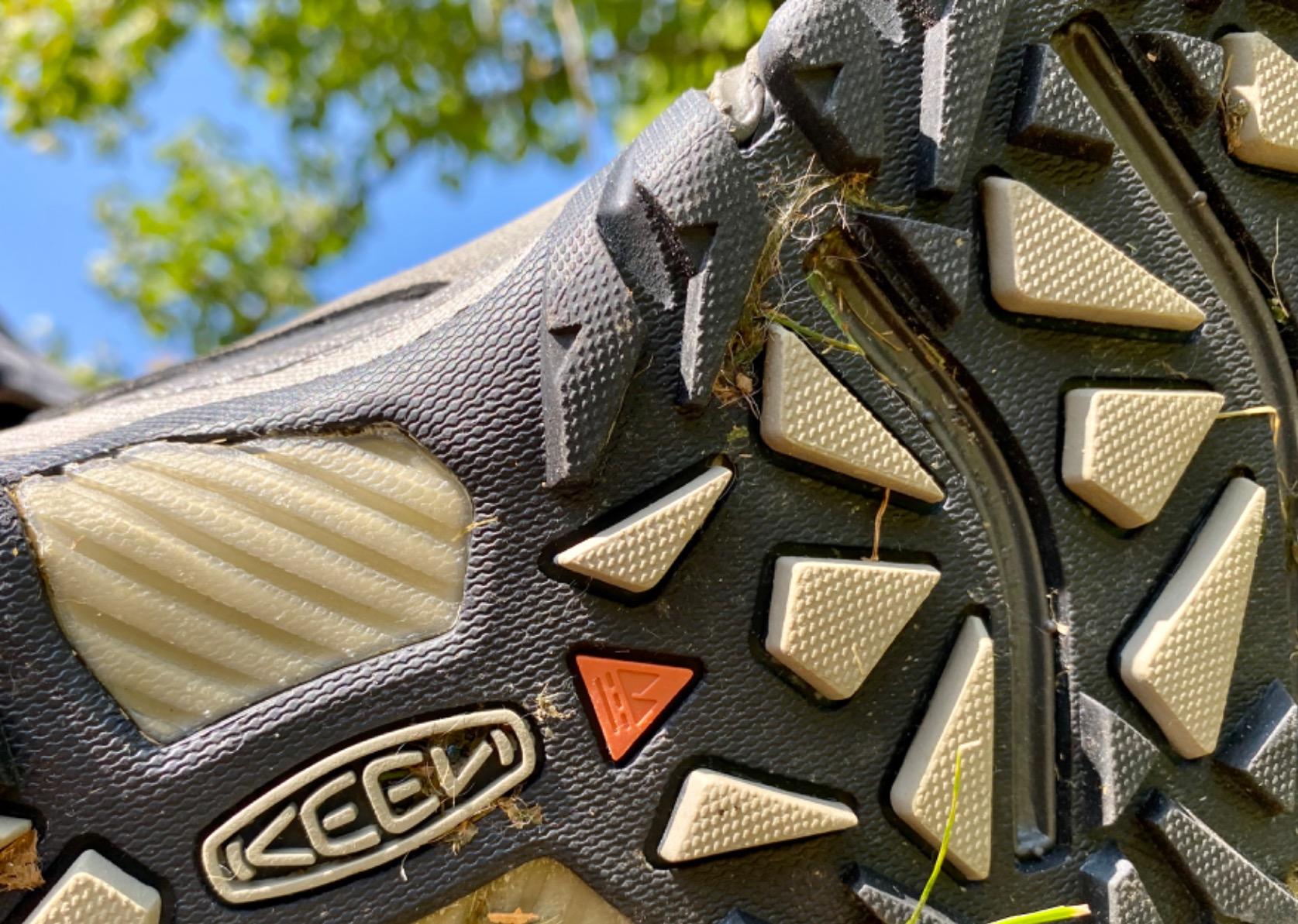
Protection comes from a KEEN.DRY membrane that moves vapour out while keeping water in, and the upper pairs premium leather with performance mesh over a quick-dry lining. A bruise plate handles uneven ground, and a high-abrasion rubber toe guard protects the front of the boot where rock strikes land. Underfoot, KEEN ALL-TERRAIN rubber with 4mm multi-direction lugs gives traction across mud, rock and wet stone.
Inside, an external support shank and the mid-cut height add balance and ankle support, and the removable footbed cradles the arch with a heel cradle for stability. Long-standing owners describe multi-year use in these boots, which is rarer than the ratings alone would suggest.
Who the Targhee suits best
It suits hikers with a wide forefoot and a normal or narrow heel, which is the most common wide-foot shape in practice. If you have ever bought a roomy boot and then found your heel lifting inside it, this is the boot that addresses both problems at once.
It also suits small-but-wide feet. One Facebook hiking group thread describes a wearer who spent roughly five years in the Targhee in a 5W with very little toe space to spare. Boots like that are hard to find, and the Wide grade here is why they exist at all.
Where it falls short
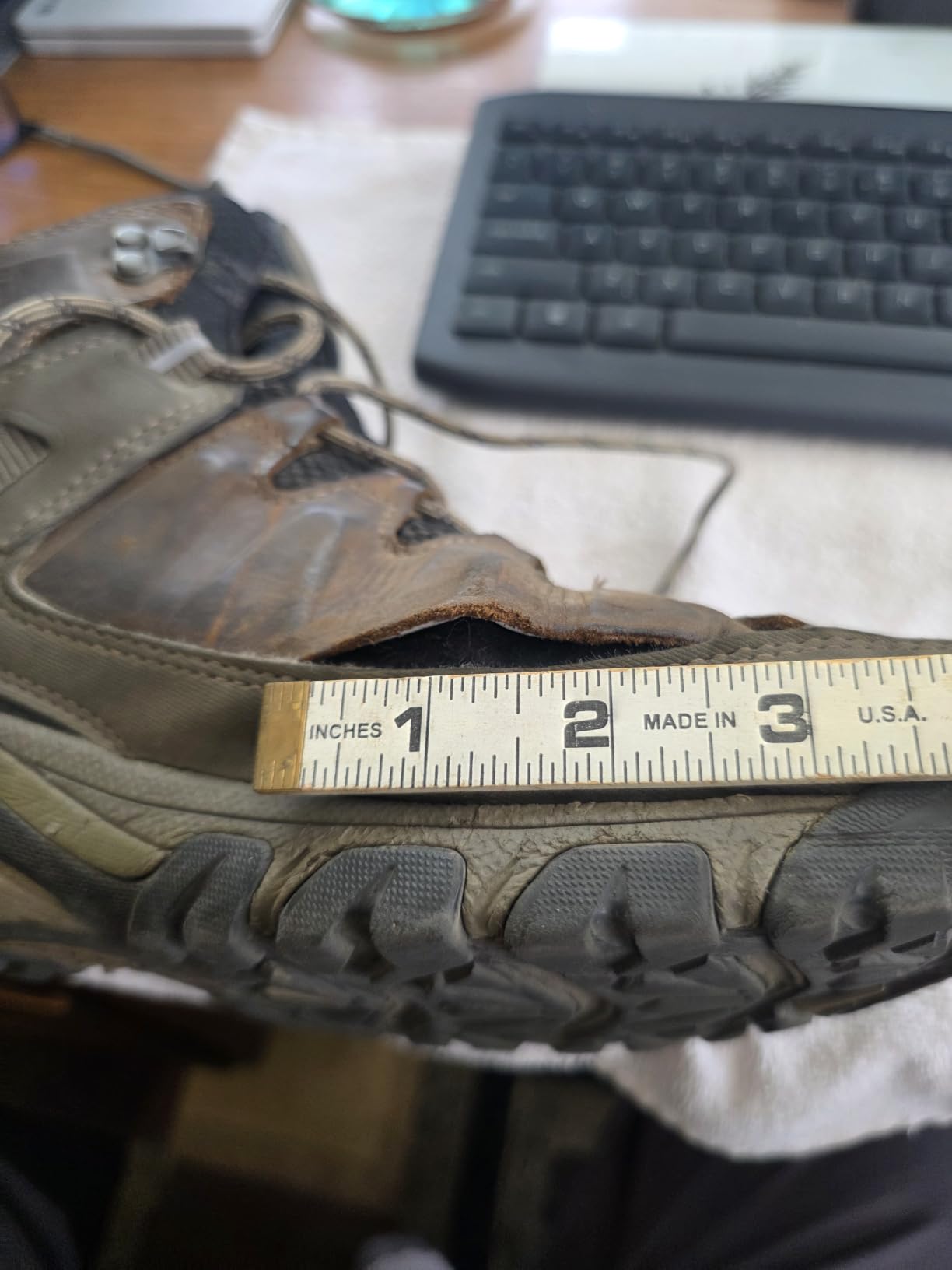
The rating tells the story: 4 stars across nearly four thousand reviews, which trails the roomiest boots on this list. Newer reviews raise quality control complaints, including sole separation within weeks under heavy use and insoles that feel thin beneath the ball of the foot. If you carry heavy loads often, inspect the flex point early.
Two smaller issues come up repeatedly. The tongue is not gusseted to the upper, so grit and bark find their way into the gap on loose trails, and the round laces untie themselves. Both are cheap to fix and neither affects the fit.
3. NORTIV 8 Men’s Wide Toe Box Hiking Boots – the budget wide toe box
NORTIV 8 Men’s Wide Toe Box Hiking Boots,Coyote,11
Wide toe box
5mm heel-to-toe drop
Built-in waterproof membrane
Thick EVA midsole
Pros
- Genuinely wide toe box at an entry-level price
- 5mm drop reduces forefoot pressure on long walks
- Waterproof membrane holds up in wet trail conditions
- Thick EVA midsole gives a springy cushioned stride
Cons
- Waterproofing is entry-level and not built for prolonged submersion
- Less established brand with fewer long-term owner reports
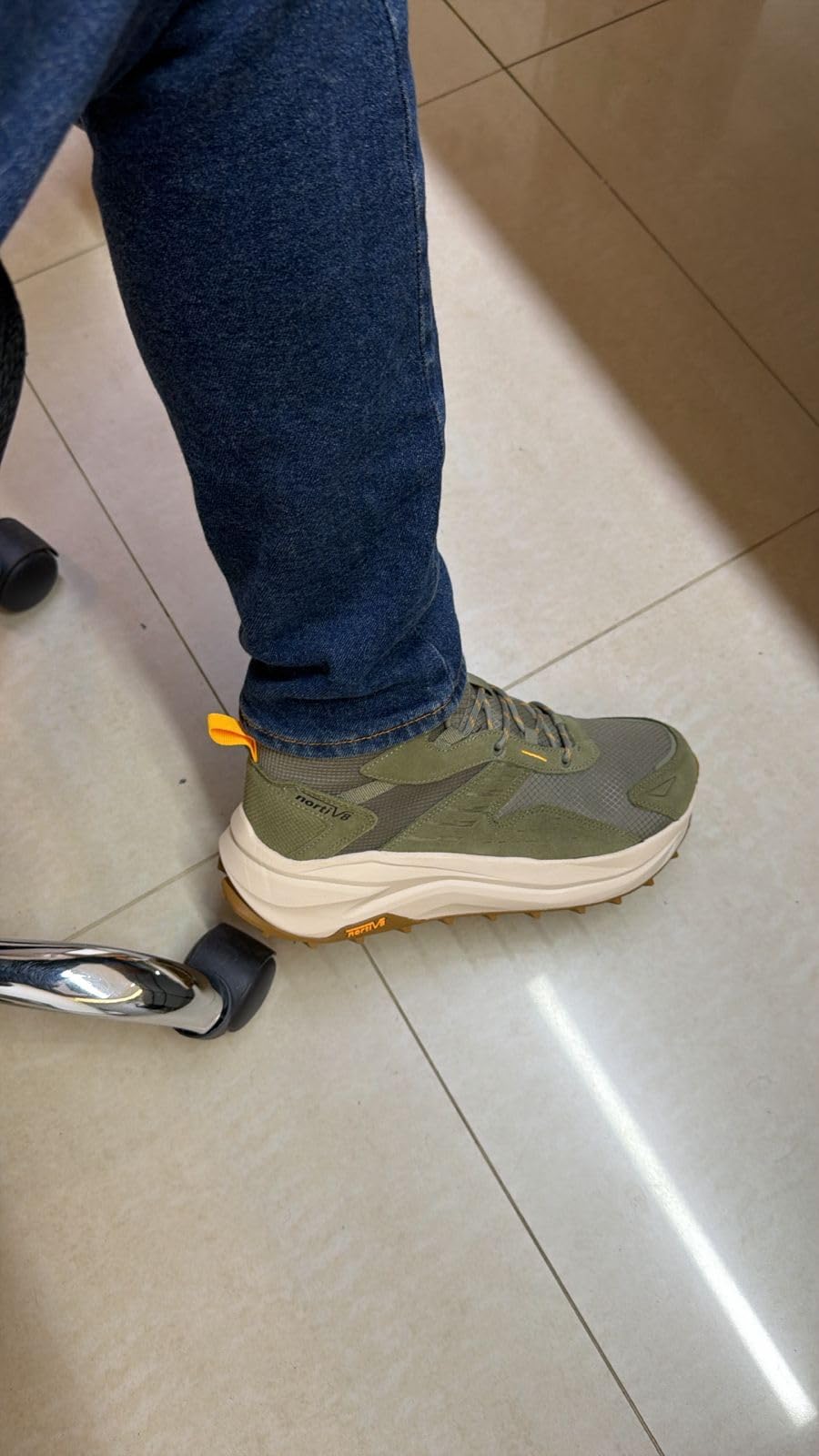
The NORTIV 8 exists for a simple reason: most wide toe boxes cost far more than they need to. Reviewers describe the toe box as wide across the forefoot with room for toes to spread naturally, and they do not mention pinching in a way that suggests the shape is compromised to hit the price.
The detail that impressed us most is the 5mm heel-to-toe drop. A low drop keeps the foot closer to a natural angle and takes pressure off the forefoot on long walks, which is exactly the pressure point that causes pain for people with wide feet. Reviewers single it out as the reason their feet feel better at the end of a day.
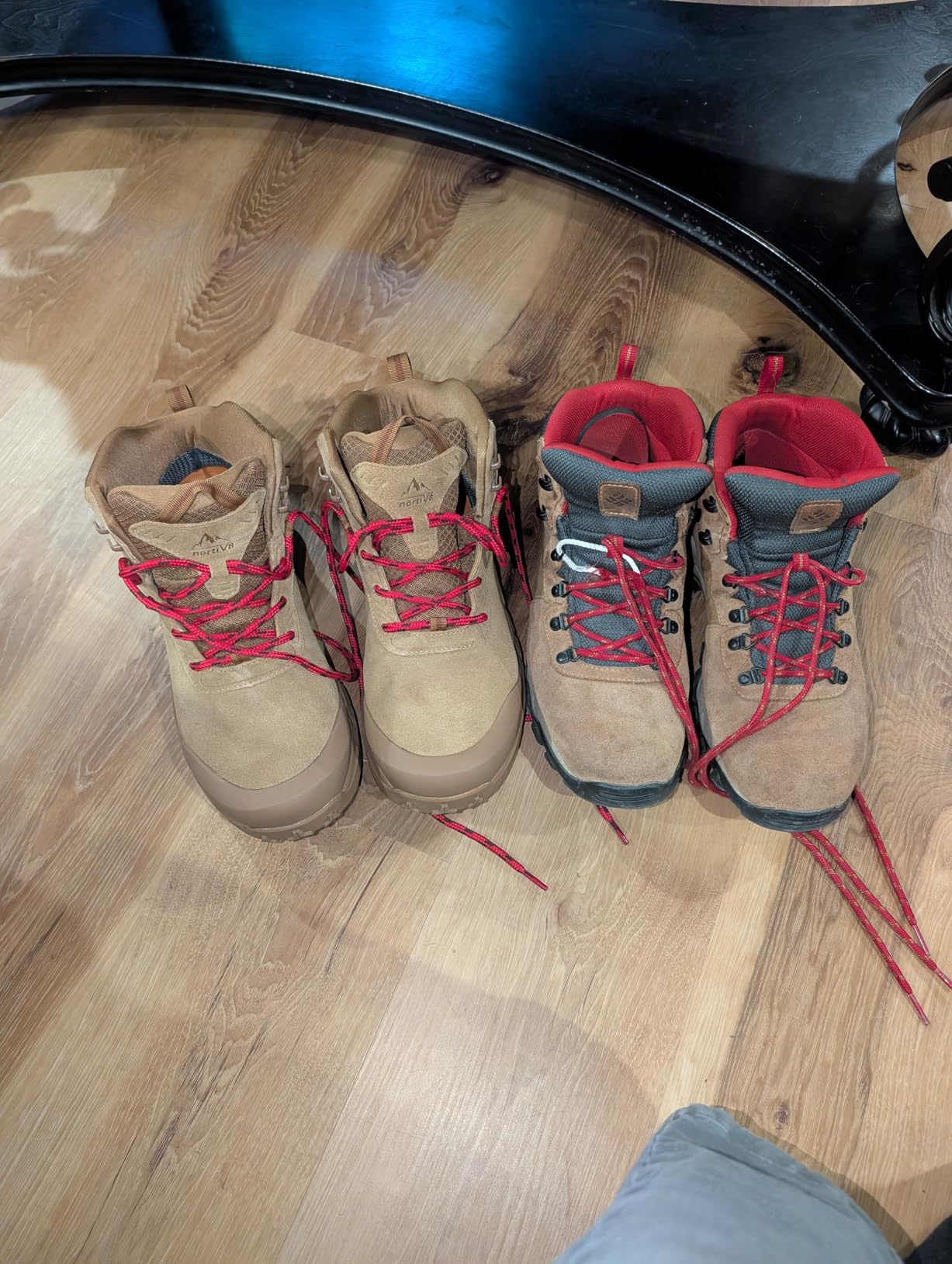
Construction is a wear-resistant upper combining leather, nylon fabric and supportive TPU, sitting on a thick EVA midsole with a lugged rubber outsole. A built-in waterproof membrane keeps water out in wet trail conditions, which is more than many similarly placed shoes offer.
This is one of the newest releases on this list, so long-term durability data is thinner than for the Merrell or the KEEN. Buyers so far rate waterproofing, traction and cushioning as solid for the tier.
Who the NORTIV 8 suits best
It suits first-time buyers who know they need a wide toe box but are not ready to commit to a premium boot or to a brand with a repair network. If your wide feet cause discomfort on day hikes and you want the problem solved without a large spend, this is the shortest route.
It also suits long walking days on maintained trail rather than technical backcountry, where the springy EVA midsole does more good than a stiff support platform would.
Where it falls short
The waterproofing is entry-level. Reviewers describe it holding up in wet trail conditions but not rated for prolonged submersion, so keep it out of deep water crossings where a sock can fill and stay wet.
The second limitation is evidence rather than product. With a smaller review base than the boots above, you have less long-term history to lean on. If you expect to keep the same boot for a decade, weigh that against the cheaper upfront outlay.
4. Orthofeet Dakota Women’s Hiking Boots – the pick for bunions and high arches
Orthofeet Dakota Orthopedic Women’s Hiking Boots, Blue, Size 9 Wide
Waterproof leather upper
Moisture-venting membrane
All-terrain lug sole
Model 894
Pros
- Wide toe box that handles bunions and high arches without pressure
- Interchangeable foam soles and arch inserts let you dial in the fit
- Kept feet warm and dry through rain and snow over multi-day trips
- Soles flexible yet grippy on wet ground
Cons
- Sole could be thicker for rocky terrain
- Occasional reports of poor construction and separation after a couple of hikes
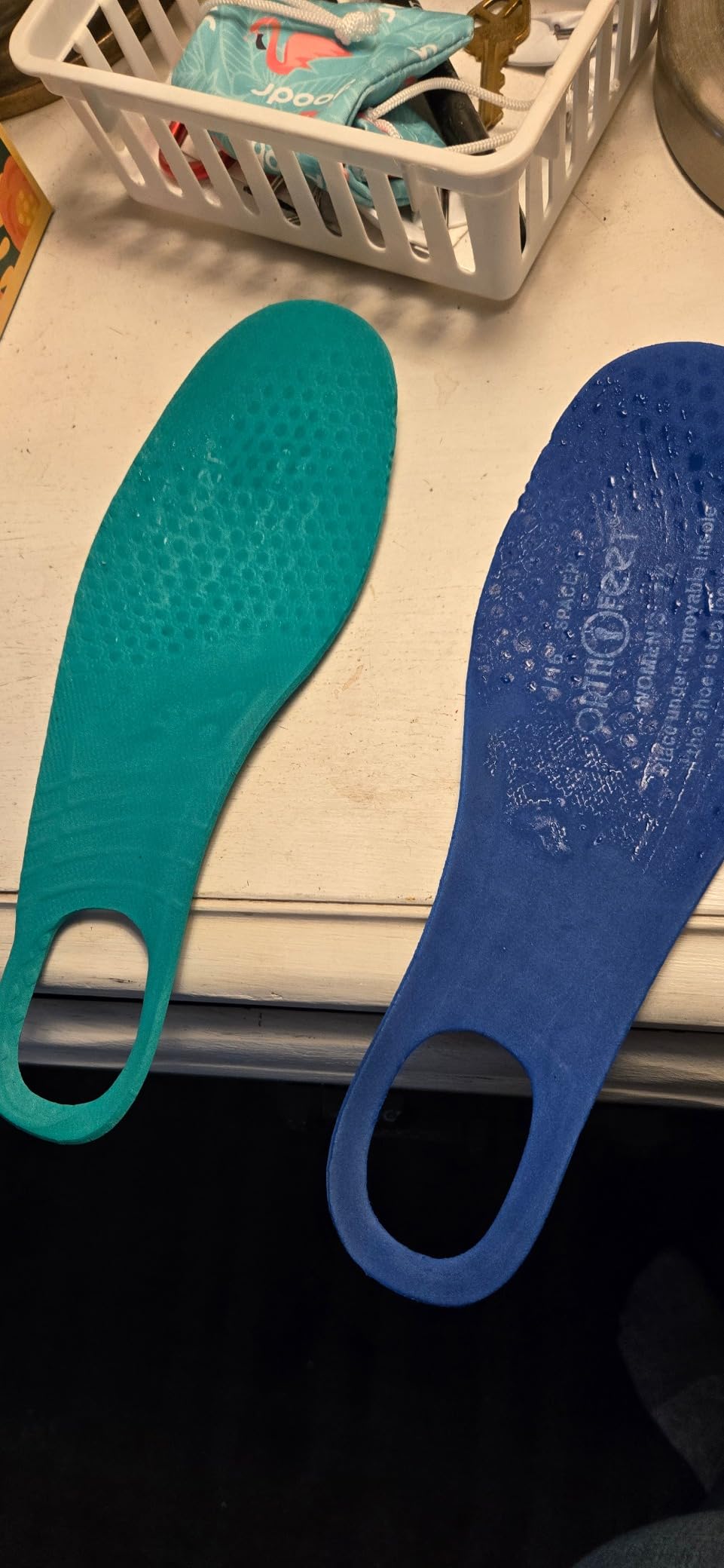
The Dakota is built around a simple premise: if your foot shape has changed because of a bunion or a high arch, a boot with fixed cushioning will not work no matter how wide the toe box is. So Orthofeet makes the interior adjustable instead. Interchangeable foam soles and arch inserts let you change the support inside the boot without changing the boot.
Reviewers with bunions, high arches, flat feet and overpronation consistently report that the wide toe box accommodates their shape without pressure, which is the single hardest thing to find. Boots that are genuinely wide tend to be floppy, and these are not: the outsole is a lugged all-terrain sole that grips rocky, wet and uneven ground.
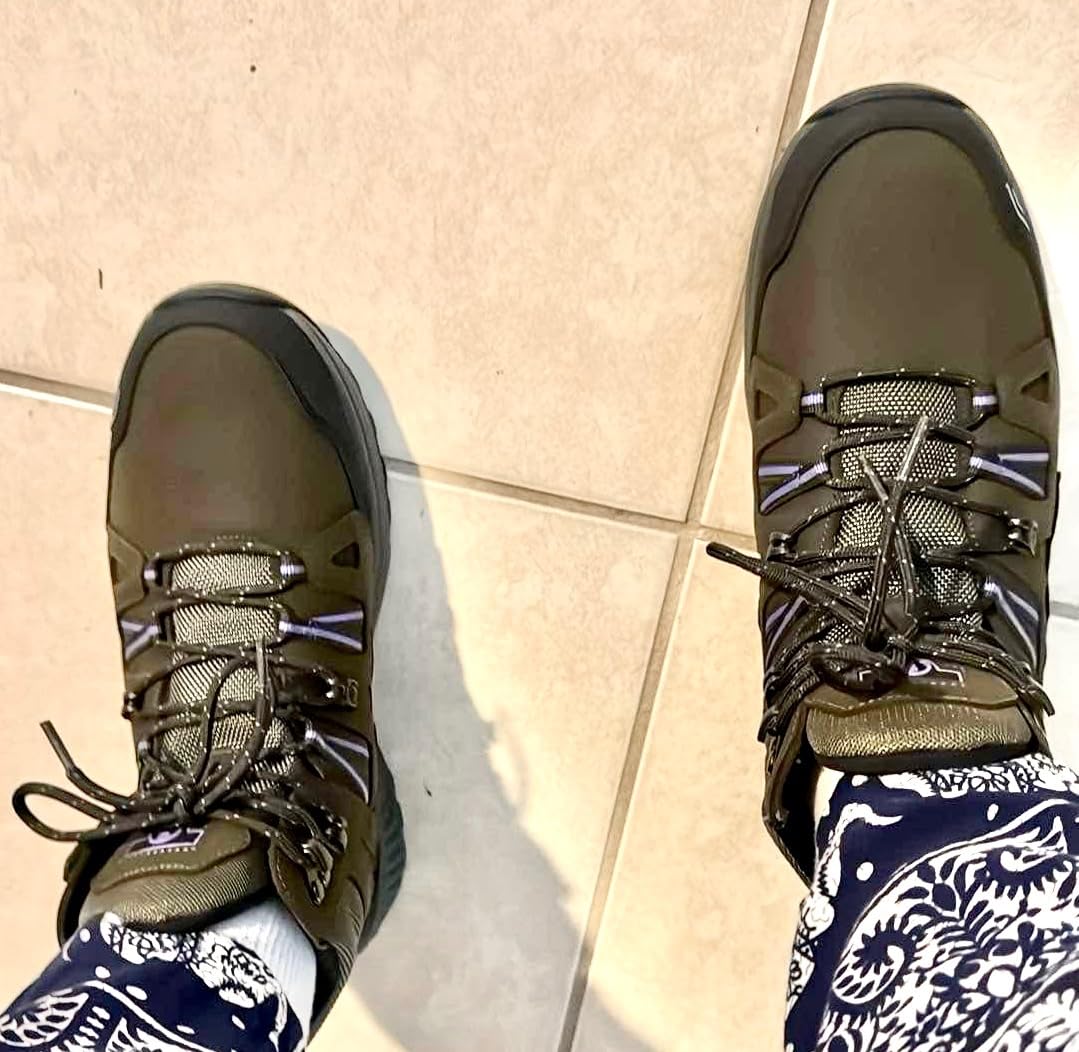
The upper is premium waterproof leather with a moisture-venting membrane, so it blocks water while moving vapour out. Inside sits a premium orthotic insole with anatomical arch support and multilayered cushioning. The listing states true to size with a wide toe box, which means the width is built into the shape rather than added on top.
Owners report keeping their feet warm and dry through rain and snow across multi-day trips. For hikers who need support more than speed, that combination is the reason this boot keeps showing up in orthopedic circles.
Who the Dakota suits best
It suits hikers whose feet are wide because of a bunion, a high arch or prior injury rather than because of bone structure alone. Adjustable interiors matter enormously here, because pressure points move as the day goes on and a fixed insole cannot follow them.
It also suits anyone who uses custom orthotics and wants them to sit inside a hiking boot rather than being taped into a shoe. Several reviewers describe exactly that swap working.
Where it falls short
The sole is thinner than some buyers would like on sharp rock, so it is a better choice for trail than for talus fields. A small number of reviewers also report separation after only a couple of hikes, which is worth checking on arrival and again after the first month.
Buy with return in mind. A boot with adjustable internals is only right for you if the adjustment actually moves your pressure points, and that is hard to predict from a photograph.
5. Women’s Waterproof Wide Toe Box Hiking Boots – the simplest wide-fit package
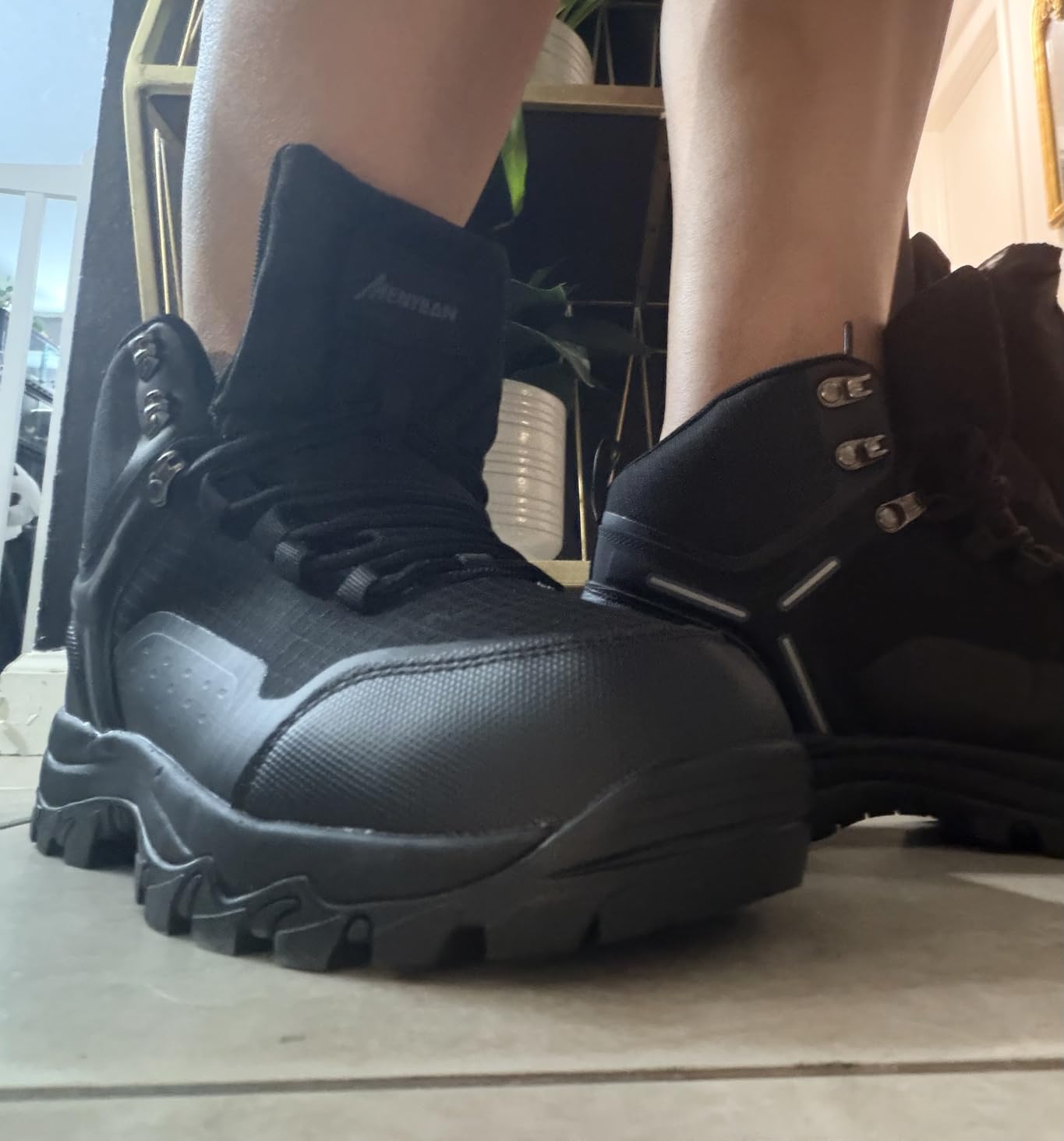
MENYBAN Women’s Waterproof Wide Toe Box Hiking Boots,Black,10.5W
Waterproof for rain and snow
Widened toe box for toe splay
Extra insole supplied
Lugged traction outsole
Pros
- Wide toe box gives natural toe splay with no crowding
- Lightweight yet stable underfoot with good tread
- Kept feet dry walking through water
- Extra insole supplied allows a better fit
Cons
- Runs small and several buyers had to size up
- Loose toe-box lining can bunch in front of the toes
- Tongue is poorly attached so it bunches when laced tight
- Sizing can jump between sizes
This is the most straightforwardly wide boot on the list. The toe box is widened deliberately so toes splay the way they do barefoot, with no shaping that pushes the little toe outward. Buyers report no crowding at all, and several describe wearing the boots for a full day, or out on a multi-mile hike, without a single blister.
Waterproofing is the other draw. The construction is rated for rain, snow and puddles, and owners confirm their feet stayed dry walking through water. The outsole is lugged for stability and grip on varied terrain, and the colour options work on trail and in town, which matters if these are your everyday outdoor shoes.
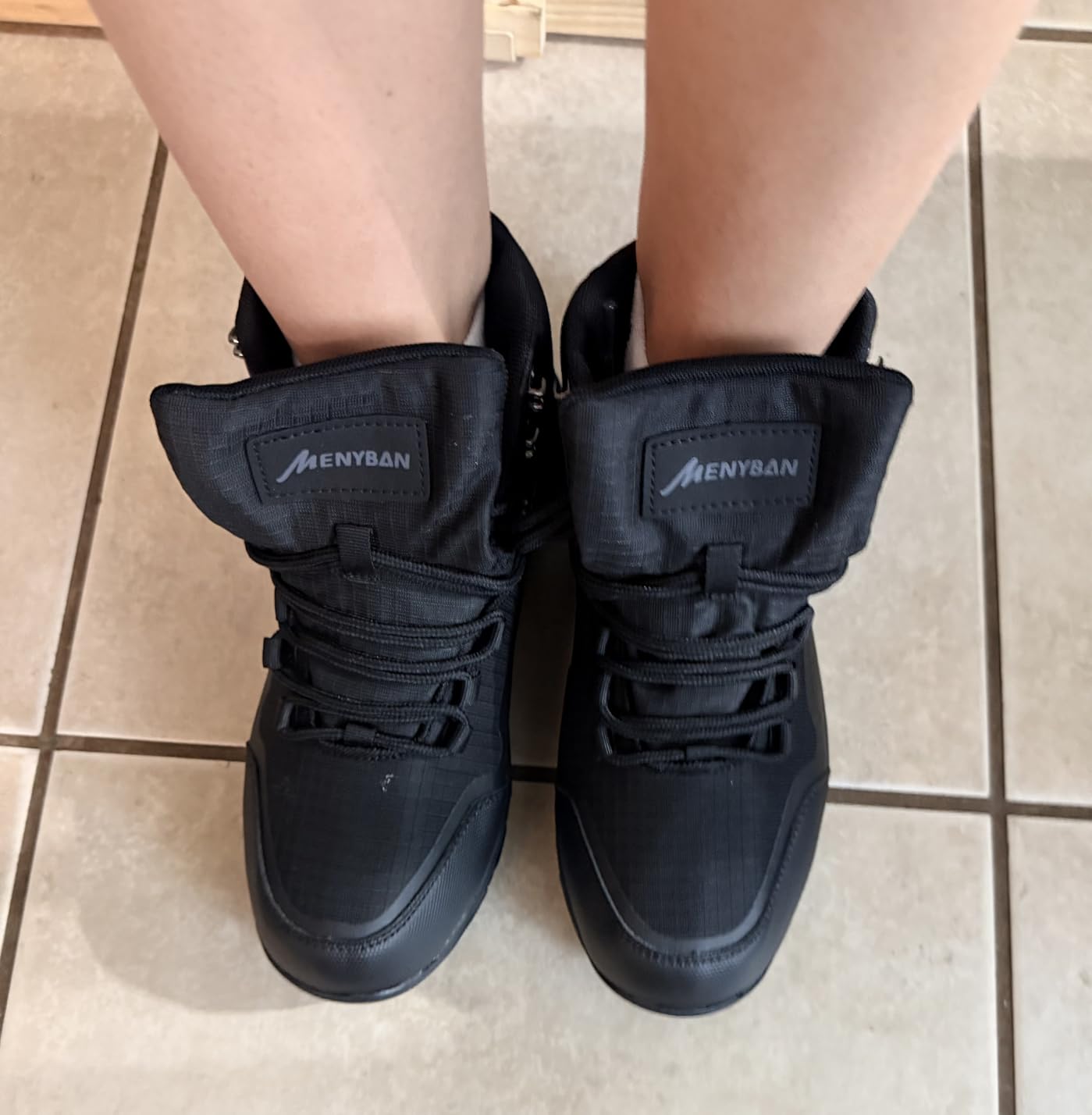
One extra insole ships in the box, a thin insert you can add or leave out to change the internal volume. That matters more than it sounds: it is a cheap way to tune fit without changing size.
The catch is sizing consistency. This boot runs small, and several buyers had to size up. Because it is graded on width rather than length, sizing up here makes the boot longer before it makes it wider, which is exactly the trade-off the buying guide below explains.
Who these boots suit best
They suit hikers who want a genuinely wide toe box at the simplest possible level of engineering. If your current problem is pinky-toe crowding that shows up after a few miles, this boot removes it and asks little in return.
They also suit anyone who walks on maintained trail and mixed pavement in wet weather rather than carrying a pack on rough terrain. That is the environment where the lack of ankle structure costs nothing.
Where they fall short
Sizing is inconsistent and several buyers report an unpredictable jump between adjacent sizes. If you are between sizes, treat the listed size as a starting point rather than a verdict, and expect to return once.
Two internal construction issues recur: the toe-box lining can bunch in front of the toes, and the tongue is poorly attached so it gathers when you lace the boot tight. If you plan to lace firmly for downhill descents, be aware of that second one before you rely on it.
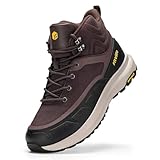
6. FitVille Wide Men’s Orthopedic Hiking Shoes – the off-the-shelf X-Wide option
FitVille Wide Mens Boots Orthopedic Hiking Shoes with Arch Support for Men
Wide and X-Wide toe box
High-instep construction
Removable ArchCore insoles
Mid-cut with heel collar
Pros
- Genuinely wide and X-wide toe box confirmed by post-surgical wide-foot wearers
- Easy all-day comfort over 8 hours or more
- Accurate sizing and supportive fit for orthopedic issues
- Water resistance comparable to boots costing far more
- Sold in both Wide and X-Wide options
Cons
- Some find the sole hard and lacking cushion
- Top two metal lace holders sit too close together making tightening awkward
- The supplied insoles are the weakest element for some buyers
- Can still feel tight at the 14 X-Wide size
The X-Wide grade is the reason this boot earns a place. Extra-wide hiking footwear is genuinely hard to buy off the shelf, and most of what circulates under that label is a standard boot with the word wide on the box. Here the width is graded, and the owners confirming it are people with genuinely difficult feet, including some recovering from foot surgery.
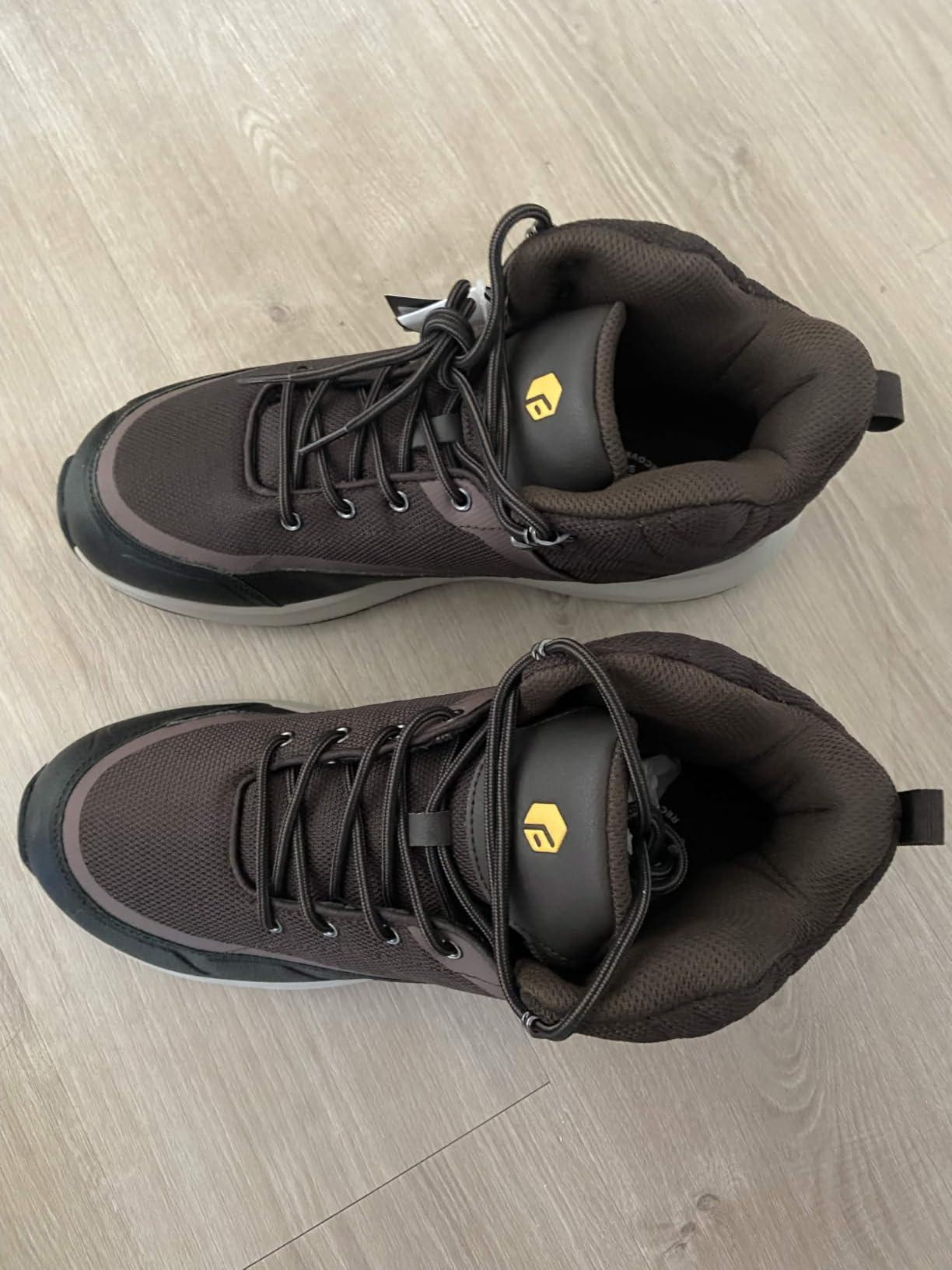
Construction targets the two things that go wrong with wide boots: crowding at the toes and pressure across the instep. A roomy wide toe box and high-instep construction relieve toe crowding, bunions, hammertoes, plantar fasciitis and flat feet, according to the manufacturer. The mid-cut design and external support heel collar keep the ankle stable despite the roomy upper.
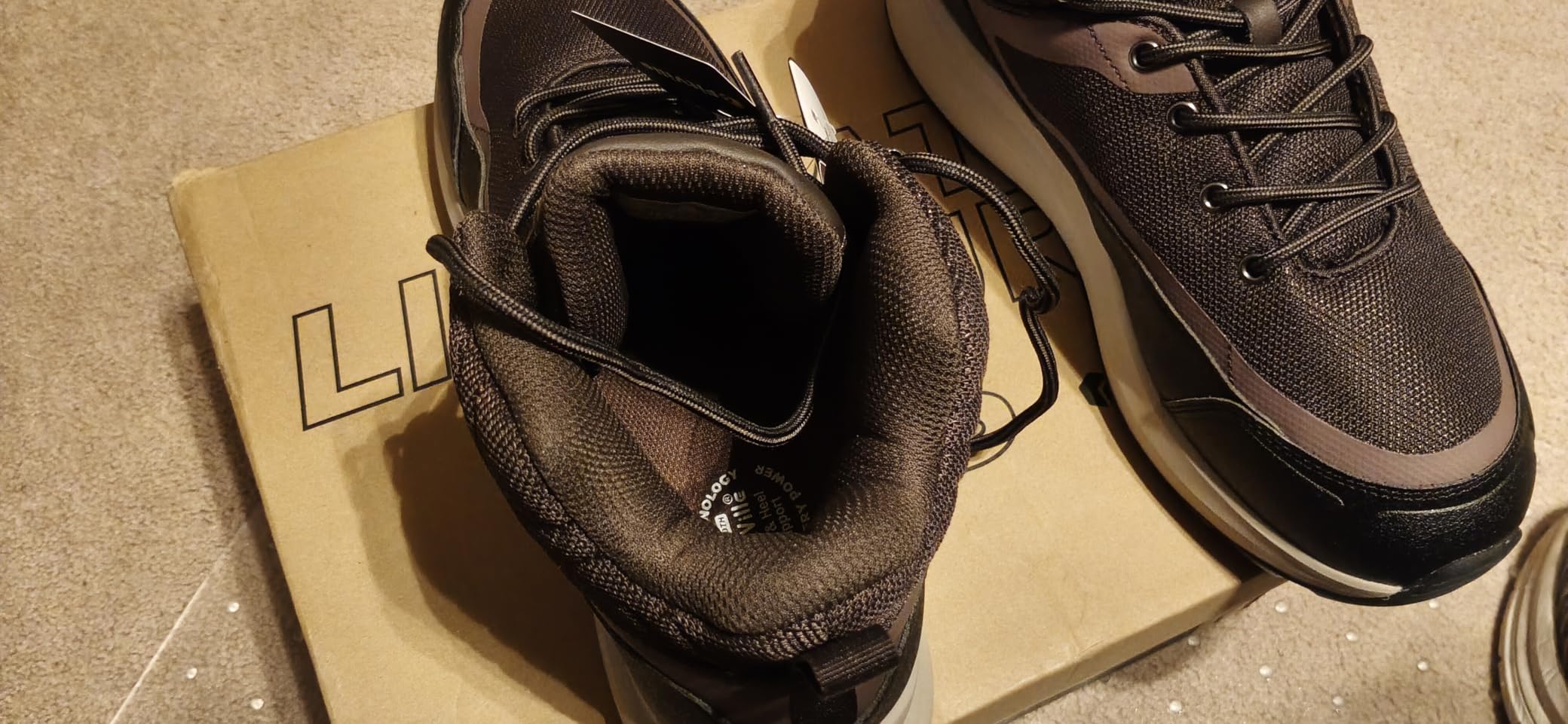
Underfoot, a responsive EVA midsole pairs with removable ArchCore insoles that add moisture-wicking fabric, arch support and a heel cup. A water-resistant membrane and abrasion-resistant upper handle wet ground, and the slip-resistant rugged outsole uses specialized tread for mixed terrain.
Users report comfortable all-day wear past eight hours and accurate sizing, which is not a combination we expect from this category. It is the closest off-the-shelf answer on the list for someone whose feet run past a standard X-Wide.
Who the FitVille suits best
It suits hikers whose feet are wide because of surgery, injury or a bone shape that has no equivalent elsewhere in the running market. Owners with severe orthopedic issues describe accurate sizing and a supportive fit, which is the rarest combination of praise in this category.
It also suits anyone who needs a genuinely high instep. Most wide boots are wide at the ball of the foot and still tight across the top of the foot, and the high-instep construction here is aimed squarely at that gap.
Where it falls short
The sole is the most common complaint. Some reviewers describe it as hard and lacking cushion, likening it to a brick, which matters for anyone on long days with a heavy pack. If you spend hours on trail, budget for an aftermarket insole.
Even at the 14 X-Wide size some buyers report the fit still runs snug, so verify sizing against the brand chart rather than assuming a wider grade solves everything. The upper two metal lace holders also sit too close together, making fine tightening awkward on steep ground.
7. Dr. Comfort Vigor Women’s Extra Depth Hiking Boot – built around depth, not width alone
Dr. Comfort Vigor Women’s Therapeutic Diabetic Extra Depth Hiking Boot: Chestnut 8 X-Wide (E-2E) Lace
Extra depth construction
Leather upper
Seam-free padded interior
Contact closure plus elastic lace
Pros
- Extra depth and wide toe box let toes move
- solving shoes that squeeze top to bottom
- Seam-free lightly padded interior is gentle on sensitive feet
- Works with AFO braces and custom orthotics
- Cushioning and arch support suit high-arch arthritic feet
- Lace-free contact closure is easy to adjust
Cons
- Loose fit can let the midfoot pronate
- reducing arch control
- Sole is thinner than the price suggests
Most wide boots widen the boot horizontally. This one adds depth as well, and that distinction explains why it appears in diabetic and brace-wearing communities. Reviewers describe shoes that squeeze the foot from top to bottom, and extra depth construction solves that by giving vertical room the toe box alone cannot.
The interior is seam-free and lightly padded, which matters more than it sounds for feet with reduced sensation. There are no hard internal seams to create a pressure point you will not feel until it has damaged skin. Owners using AFO braces and custom orthotics report that both fit inside without the boot collapsing around them.
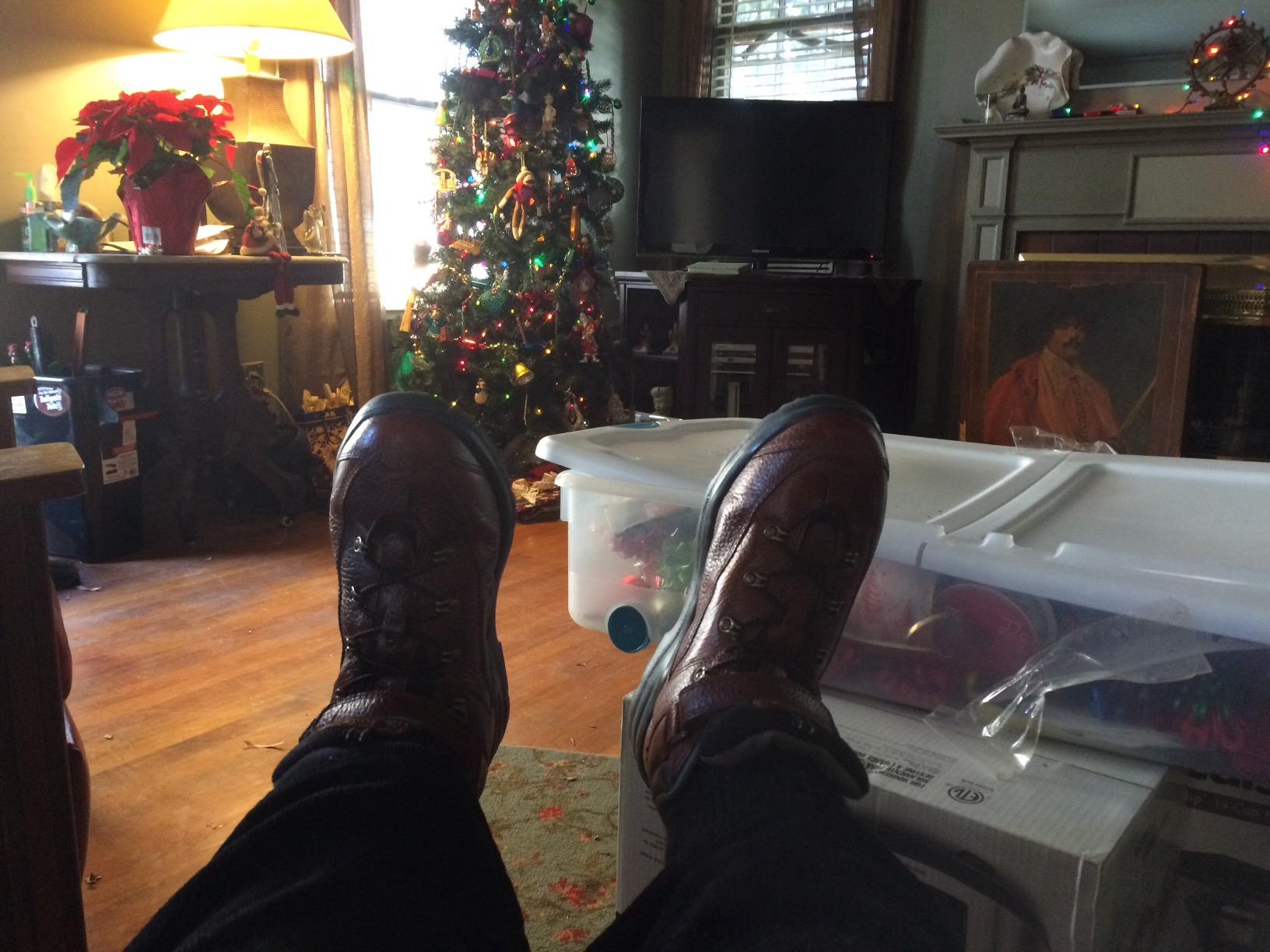
A protective toe box guards against stubbing on rock and roots, and the natural leather upper regulates heat and keeps feet cool and dry on warm climbs. Closure is handled by an adjustable contact fastener plus a no-tie elastic lace, so you can change the tension through the day without stopping to untie anything.
This is a work and hiking boot rather than a lightweight trail shoe, and it is built to that brief. It has been in production for well over a decade, which means fit is settled rather than experimental.
Who the Vigor suits best
It suits hikers with diabetes, arthritis or reduced foot sensation who need genuine internal volume rather than just a wider front end. The seam-free padded interior and adjustable closure are designed for feet that bruise easily, and reviewers with those needs describe it as one of very few boots that work.
It also suits brace and orthotic users, because the extra depth leaves space for hardware that a conventional boot would sit on top of.
Where it falls short
Extra depth creates looseness at the midfoot, and some owners report that this lets pronation happen, which is not ideal if you need snug arch control. If you overpronate and rely on the boot to hold your alignment, test carefully or add an insole that fills the void.
The sole is thinner than the price suggests, so it is a boot for maintained trail and everyday walking rather than sharp rocky ground. Because the interior is deliberately roomy, the adjustable closure does more of the fitting work here than the laces do, so it is worth dialling in before a long day rather than after.
8. Orthofeet Delta Women’s Leather Hiking Boot – the cold and wet weather option
Orthofeet Delta Orthopedic Women Leather Hiking Boot, Black, Size 9 Wide
Waterproof leather upper
Rugged lug sole
Orthotic insole with arch support
Model 882
Pros
- Wide toe box stays roomy even with bunions and custom orthotics
- Comfortable out of the box with good arch support and a cushy insole
- Waterproof version handled cold snowy winters
- Not bulkier than ordinary work boots
- Soft leather that wears in without a hard break-in
Cons
- Toe box less rounded than buyers expect so bunion relief is limited
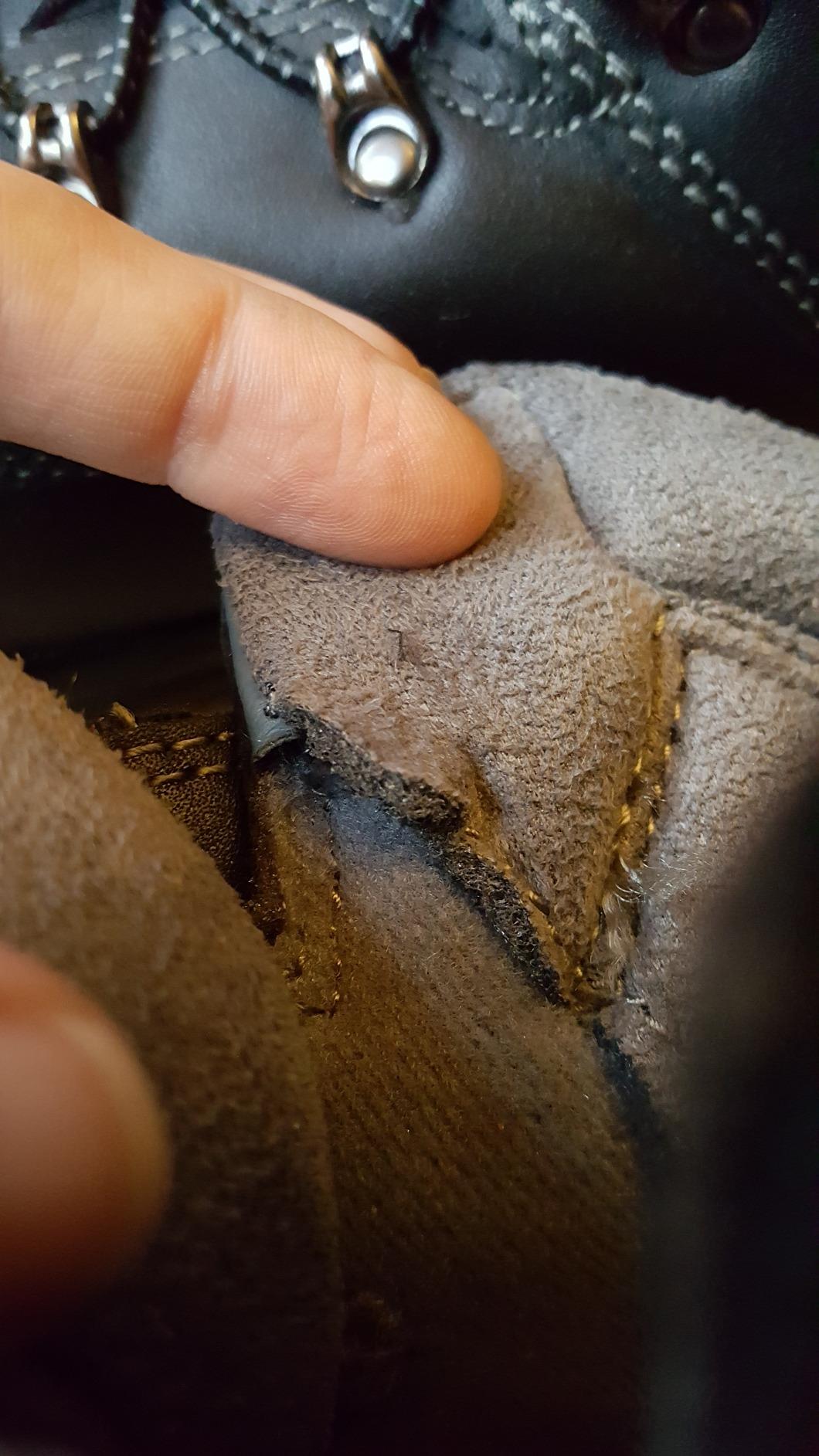
- An eyelet can pull loose before the boot is fully worn out
- Fit is not universal and some users found the shape wrong for their foot
The Delta is the winter answer on this list. Owners of the waterproof version describe using it through cold, snowy winters, and the leather upper plus lug sole handles both the cold and the slush that comes with it. Soft leather means it wears in without a hard break-in, so it is usable early in the season rather than after a month of walking it in.
Fit is the selling point. The wide toe box stays roomy even when you fit a custom orthotic inside it, which is a genuine test of a boot’s width. Many boots are wide when empty and tight once you add an insole, and owners with wide feet, bunions and prior injuries specifically confirm this one holds up.
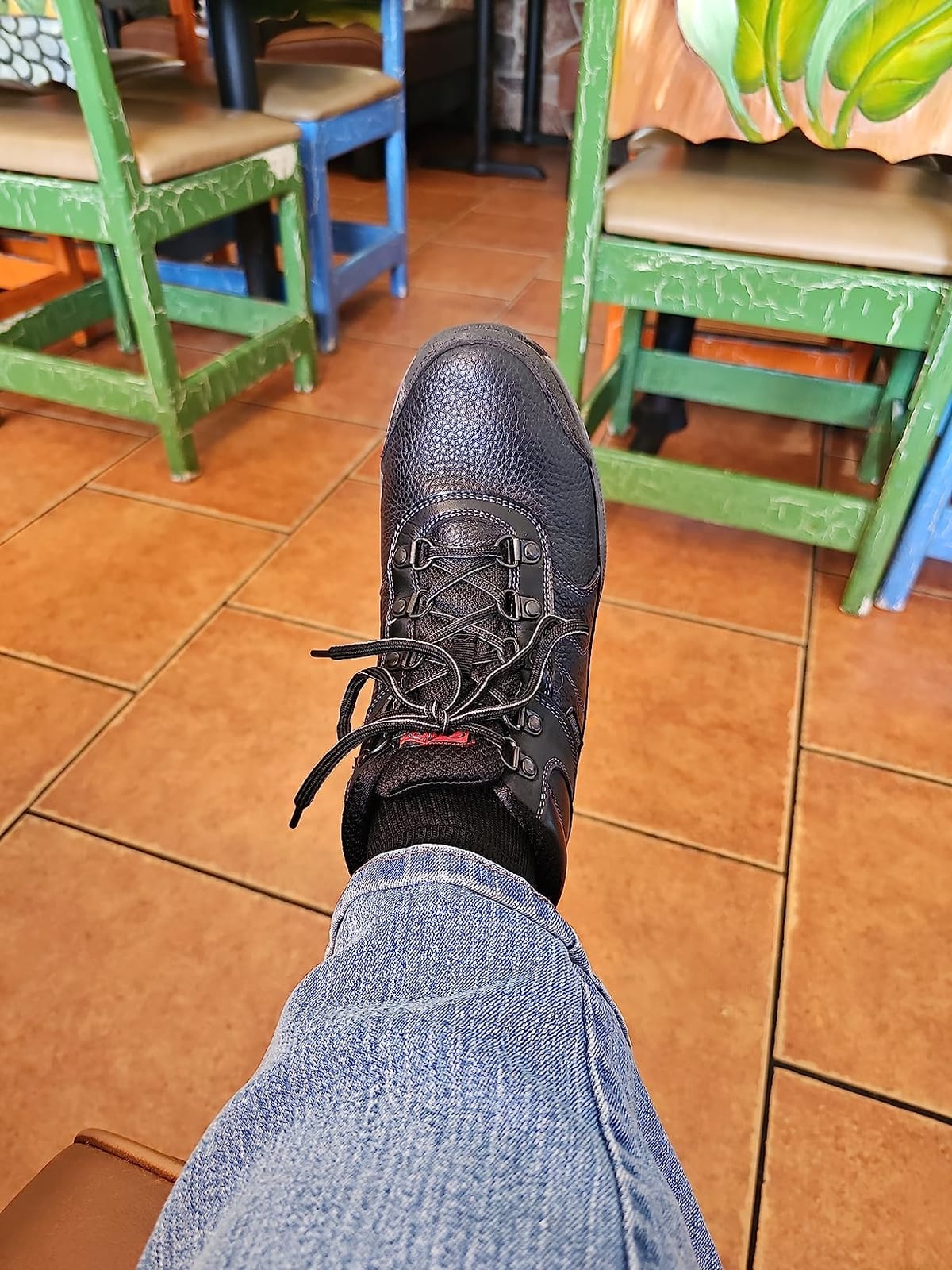
The premium orthotic insole provides anatomical arch support with multilayered cushioning, and the boot is designed to ease plantar fasciitis, diabetes, bunions, flat feet, heel pain and overpronation. Owners like that it is not bulkier than an ordinary work boot, so it moves like one.
With more than four hundred reviews on a model that has been around for years, the pattern of feedback is stable, which is useful information in a category where many listings are new and thin.
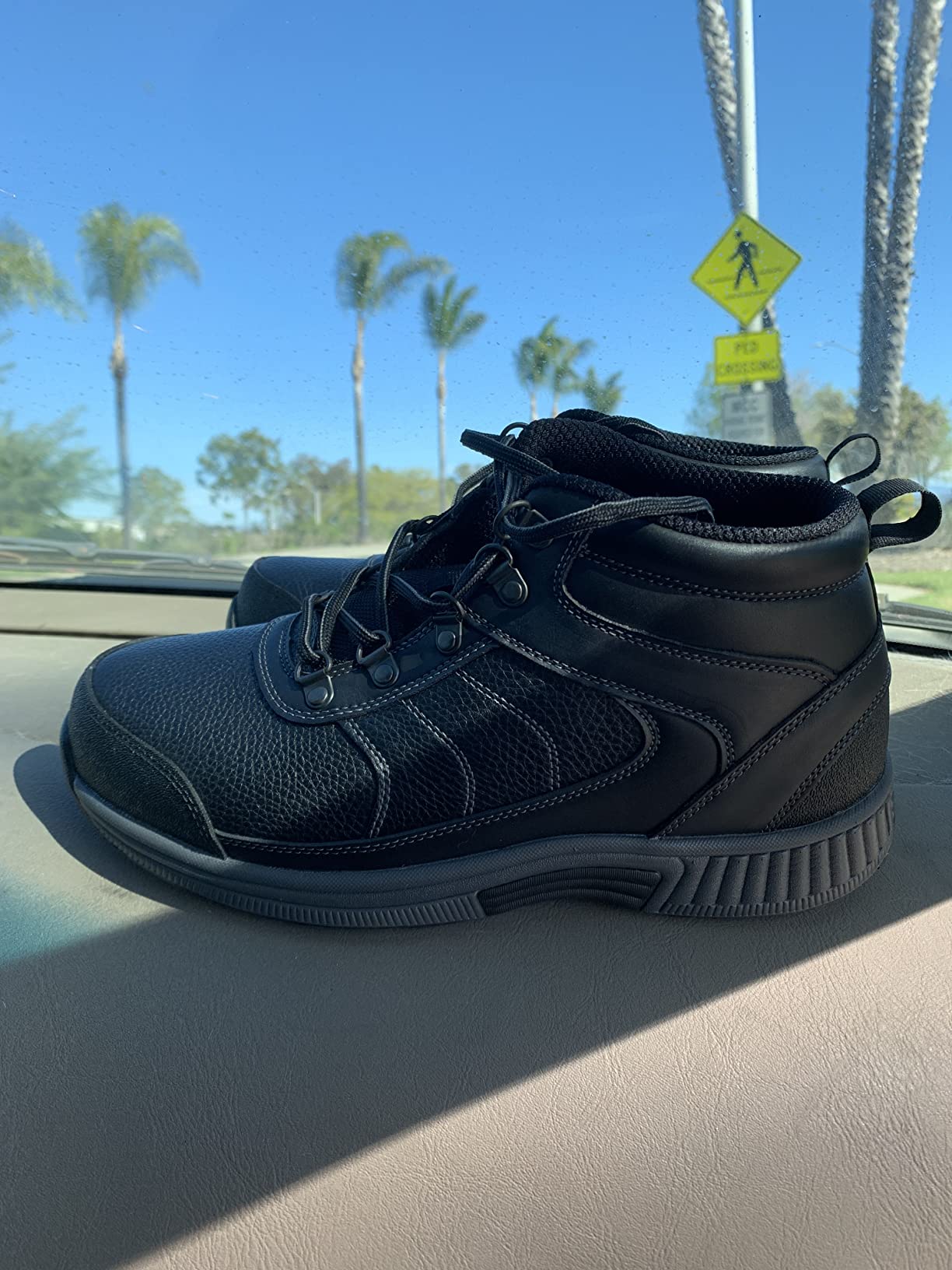
Who the Delta suits best
It suits hikers who walk in cold, wet conditions and need a boot that stays dry and warm through snow rather than just rain. Among the wide-fit options here, it has the most direct owner evidence for winter use.
It suits anyone combining bunions or a wide forefoot with orthotics, since the toe box holds its width once the insole goes in. It also works as an everyday work boot for people who stand a lot.
Where it falls short
The most common complaint is about the shape of the toe box. It is less rounded than the wide box toe description implies, so if your problem is a bunion pressing on the side of the boot rather than general crowding, expect only partial relief.
Durability of the hardware is also criticised: an eyelet can pull loose before the boot is fully worn out, and the fit is not universal, with some users finding the shape simply wrong for their foot. Treat this as one to try on rather than one to order blind.
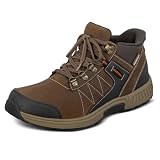
9. Orthofeet Dalton Men’s Hiking Boots – wide fit without tying laces
Orthofeet Dalton Orthopedic Men’s Hiking Boots, Brown, Size 10.5 Wide
Hands-free slip-on entry
Waterproof leather upper
Lug sole traction
Wide and X-Wide sizes
Pros
- Roomy toe box that stops toe crunching from the first wear
- Hands-free slip-on design suits limited back or hip mobility
- Soft well-cushioned sole with solid arch support
- Wide and X-Wide sizes available across the full run
Cons
- One owner reported the heel scuffing and inserts surfacing after about a month
- Premium price for the orthopedic category
The Dalton’s distinguishing feature is entry. Patented slip-on technology lets you get the boot on without bending down to tie laces, and for hikers with limited back or hip mobility, or simply an early start in the dark, that removes a genuine daily obstacle. Fit is otherwise conventional: laces are there for adjustment, but they are not the mechanism you depend on.
On width, reviewers with flat feet, peripheral neuropathy and orthopedic arthritis rate these as comfortable from the first wear, specifically calling out an uncluttered toe box that ends the crunching immediately. The listing states true to size with a wide toe box, and the premium orthotic insole adds anatomical arch support with multilayered cushioning.
The upper is waterproof leather and the sole is a lug pattern for traction on rocky, wet and uneven ground, so it handles the conditions wide feet tend to meet in bad weather. Cushioning and arch support are aimed at plantar fasciitis, diabetes, bunions, flat feet, heel pain and overpronation.
Wide and X-Wide sizes run across the full range, which is the point of including it here. The listed weight is 3.6 pounds for the pair, so it is a substantial boot rather than a light one.
Who the Dalton suits best
It suits hikers who cannot or will not deal with laces, whether because of a back, hip or mobility limitation, or because a wet or frozen lace is a genuine hazard on an early start. The toe box is uncluttered, and owners with neuropathy and arthritis describe the fit as comfortable immediately rather than after adjustment.
It suits extra-wide feet specifically, since the X-Wide run is available across the full size range rather than at selected sizes only.
Where it falls short
The evidence base here is small at 61 reviews, so treat the pattern as provisional. One detailed review reports the heel scuffing and the inserts under the insole surfacing after about a month, which is worth inspecting early.
It is also priced at the top of the orthopedic category, which makes it harder to justify as a first wide boot. If money is the constraint, the NORTIV 8 solves the width problem for much less.
10. OrthoComfoot Men’s Wide Trekking Hiking Shoes – all-day comfort without a boot shaft
Men’s Orthopedic Extra Wide Width Toe Box Hiking Shoes: Arch Support Plantar Fasciitis Orthotic Hammer Toes High Instep Walking Shoes, Fashion Camping Nature Walks Trail Sneaker Black Size 10
Wide and extra wide toe box
Built-in arch support orthotic insole
Non-slip all-terrain outsole
Breathable mesh upper
Pros
- Extra wide toe box leaves obvious room across the forefoot
- Arch support and metatarsal support reduce foot fatigue on long walks
- Gentle on diabetic feet that hurt after a full day of walking
- Grip holds on loose dirt and damp pavement
- Breathable mesh keeps feet cool in warm weather
Cons
- Stiff for the first few wears and needs a break-in period
- More of a light hiking and walking shoe than a boot
Including a shoe on a list of boots is deliberate, because for a large share of hikers a boot is the wrong tool. On maintained trail, pavement and fire roads, an ankle-free shoe removes stiffness, speeds up walking and fits a wide foot with no shaft to fight. This one pairs a wide and extra wide toe box with an orthotic insole built in, and wearers report noticeably less foot fatigue at the end of a day.
The insole is a real feature rather than a comfort word. It disperses plantar pressure and stabilises gait, and metatarsal support takes load off the ball of the foot, which is precisely where wide feet ache. Buyers with diabetic feet that hurt after a full day of walking describe the fit as gentle on sensitive skin, helped by a soft, non-binding construction.
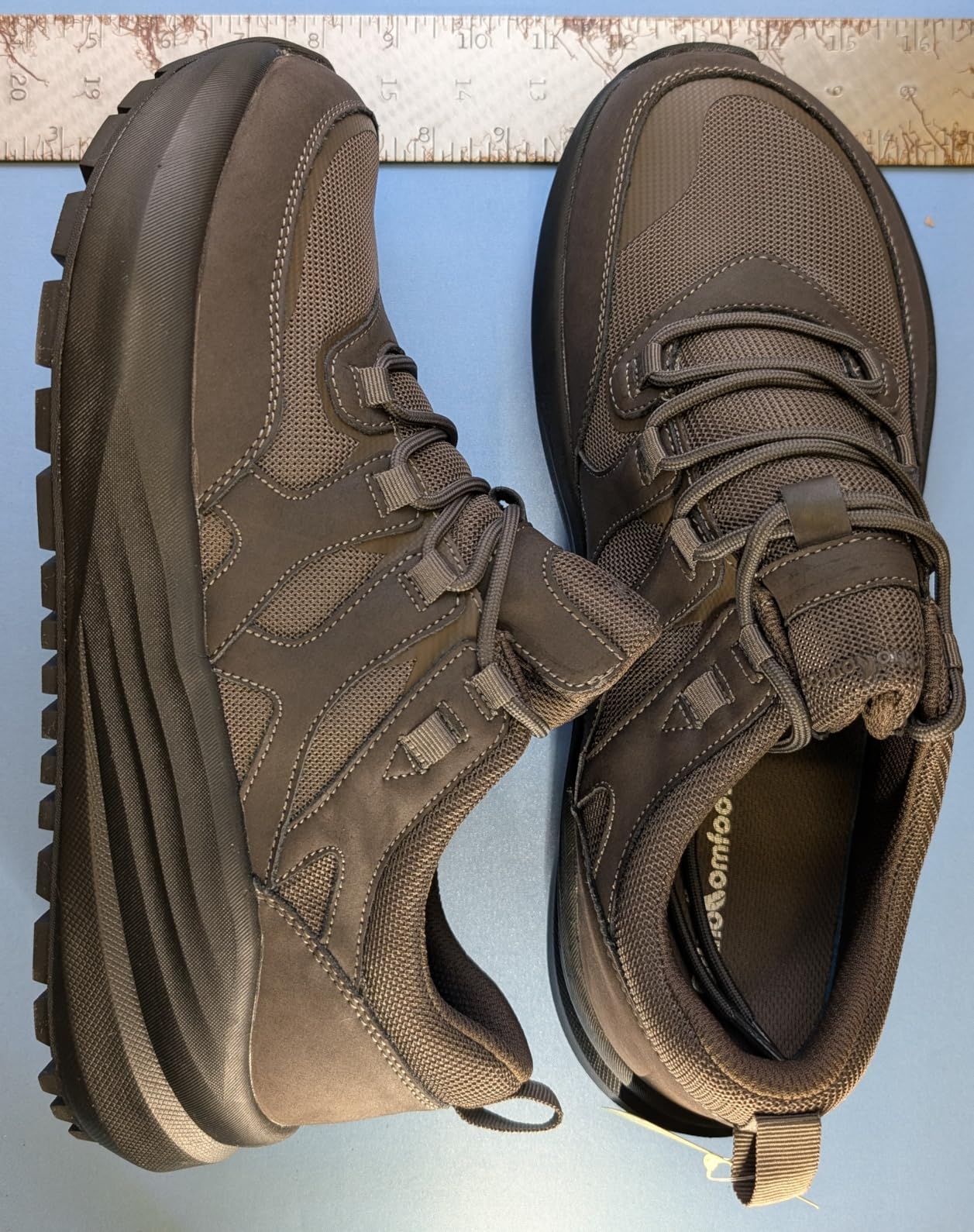
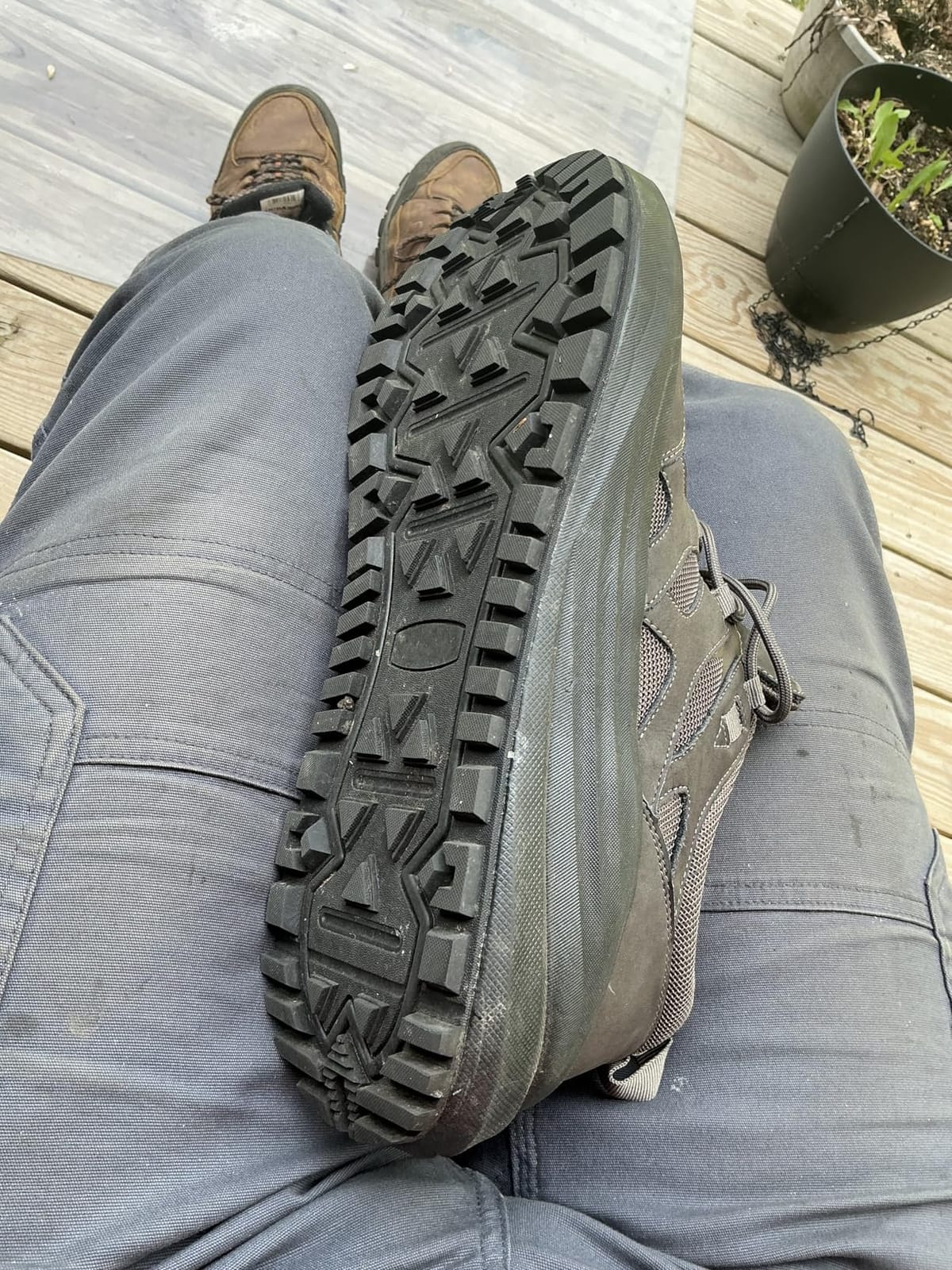
Traction comes from a non-slip rubber outsole with rugged tread that holds on loose dirt and damp pavement as well as trail. The breathable mesh upper with reinforced overlays keeps feet cool in warm weather, which matters more than it sounds on exposed summer ridges.
It is the newest item on this list, and it is also the one to buy with the most caution: 48 reviews is a thin record, and the break-in stiffness is real.
Who the OrthoComfoot suits best
It suits hikers on maintained trail and long walking days who want forefoot room without a boot shaft. If your feet are wide and your route does not involve loose rock or heavy loads, this shoe solves the fit problem and nothing else is required.
It also suits warm-weather walking and anyone who overheat in leather boots, since the breathable mesh upper runs cooler than any waterproof leather here.
Where it falls short
It is stiff for the first few wears and needs a break-in period. That matters for a shoe, because a stiff shoe is exactly what wide-foot hikers are trying to avoid wearing. Test it on carpet first and return it early if it does not soften.
Second, it is a light hiking and walking shoe rather than a boot, so it offers no ankle support for rocky or off-trail terrain, and it is not waterproof. Treat it as a complement to a boot rather than a replacement if your routes go rough.
What Makes a Hiking Boot Fit Wide Feet?
Hiking boots for wide feet are built on a wider last, meaning the internal shape has a broader forefoot and toe box than the standard version of the same brand, so toes sit flat rather than compressed. In practice that means the ball of the foot and the little toe are not pushed against the sides of the boot, which is what causes the pinky pinch and blackened toenails that bring hikers back to the shop.
A last is the mould the boot is built around, and it is the single most important variable in how a boot feels. On a standard last the forefoot narrows sharply toward the front, so as your foot swells on a long climb, toes get pushed together. A wide last keeps the forefoot wide and gives the toe box more vertical depth, letting toes spread naturally while the heel is still held in place.
Here is the vocabulary you need. Forefoot width is the measurement across the ball of your foot, and it is the number that decides whether you will be comfortable. Toe box width is the space at the front of the boot. Instep depth is the height of the boot over the top of your foot, which catches people who are wide but not deep. Heel hold is how securely the back of the foot is retained. Last shape is the outline itself: foot-shaped or tapered.
This is why the same nominal size fits differently across brands. Some companies also add an explicit width grade on top of the last, which means a size 10 Wide in one brand is a materially different boot from a size 10 in another. If a brand publishes its width chart, use it rather than guessing from the word wide on the box.
How to measure your own foot width in 5 steps
First, stand on a sheet of paper with your weight fully on the foot and trace around it while standing, because a seated trace understates both length and width. Second, measure the widest point of the forefoot, which is at the ball of the foot just below the big toe joint.
Third, do both feet and fit the larger one, since it is very common for one foot to be wider than the other by a noticeable margin. Fourth, check the resulting measurement against the clearance rule: you want one to two fingers of space in front of your longest toe when you are standing in the boot with weight forward.
Fifth, confirm against the brand’s own width chart before you order. Foot tracing gives you the number, but only the manufacturer knows how their last maps to it.
Size up or go wide?
Size up only when the problem is length. Go wide, or change last, when the problem is side pressure. Adding a size to a narrow last gives you a longer boot that is still just as pinched at the ball of the foot, and it may add slip at the heel.
The exception is a small but wide foot. If your foot length is short and your width is wide, sizing up makes the mismatch worse in every direction. In that case you need a genuinely wide or X-Wide grade at your true length, which is why the graded widths on the KEEN Targhee matter so much to that group.
Wide versus extra wide: understanding 2E and 4E
US footwear uses letters for width grading. B is narrow, D is standard for men’s and most women’s, 2E is wide and 4E is extra wide. Extra wide is roughly a quarter inch wider than a standard shoe at the ball of the foot, and that difference is what stops the pinch rather than a mere half size.
Not every brand offers every grade, and the letters are not always printed on hiking footwear. Some brands express width through the last alone, others through a graded run. FitVille offers Wide and X-Wide, the Orthofeet Dalton runs Wide and X-Wide across the full range, and the KEEN Targhee is sold in graded widths including 5W, which is the specific grade the small-but-wide community relies on.
Foot-shaped lasts versus tapered European lasts
Foot-shaped lasts follow the outline of a foot, including the space at the base of the little toe. Tapered European lasts narrow toward the front for a sleeker profile, which is why they look elegant and why they pinch. KEEN, Altra, Topo Athletic, New Balance and Orthofeet build on the wider end of that spectrum; Lowa and Vasque sit toward the tapered end.
This distinction matters most for the little toe. On a tapered last, the pinky is pushed outward against the upper on every step, and because the pressure builds slowly, the pain often only appears several miles into a hike when you cannot change boots. Nothing in the sizing chart will fix a taper; the last has to change.
Waterproof versus breathable: the trade-off for wide feet
Waterproof membranes keep rain, puddles and mud out, and they are essential in wet climates and for snow. The cost is heat: the same membrane that blocks water also slows moisture escape, so feet warm up, swell, and press harder against the toe box by the afternoon. A wide boot that is not genuinely wide can still cause pain on a hot day simply because your feet grew.
Breathable mesh uppers vent heat far better and suit hot, dry terrain. Among these ten, the OrthoComfoot shoe and the NORTIV 8 sit toward that end. If you hike in rain, the Merrell Moab 3 Mid and the KEEN Targhee are the strongest combination of waterproofing and room, and both ventilate through mesh panels as well.
Matching the boot to your terrain
Smooth trail and fire roads reward light, flexible footwear, which is why a wide-fit walking shoe beats a stiff boot. Rocky backcountry, talus and off-trail routes reward a mid-cut shaft, a support shank and an aggressive outsole such as the Vibram TC5+ on the Merrell.
Winter and snow reward waterproof leather and insulation rather than mesh. Multi-day backpacking rewards support and outsole durability over all-day comfort, because a boot that fails on day four costs far more than a heavier one that lasts. Match the boot to the route first, then to the width.
Why over-wide boots cause blisters too
Yes, a wide boot can cause blisters, and this surprises people. A boot with a roomy forefoot and a loose heel creates friction at the back of the foot with every step, which is the exact outcome wide-fit buyers are trying to avoid. The fix is not a narrower boot; it is a secure heel.
The second cause is over-lacing. Pulling the laces hard to force a fit restricts circulation and produces blisters, and it makes the toe box narrower in the process. Lace evenly, leave the top eyelet loose when walking, and only tighten for descents. If a boot requires painful pressure to fit, it is the wrong boot.
When to stop shopping and see a specialist fitter
If every pair pinches, re-measure both feet standing, check your socks, and confirm whether your insole setup is adding volume. Then try a foot-shaped last rather than another size of the same narrow shape.
If you still cannot find a fit, or if you have persistent pain, numbness or skin damage, see a specialist fitter or a podiatrist. Reduced sensation in the feet, whether from diabetes or nerve conditions, changes the risk calculus entirely, because pain stops being a reliable warning that something is wrong. In that situation a professional fitting is not a nicety.
One warning from the forums is worth repeating here: brands do redesign wide lasts. A wide model that fit perfectly years ago may have been narrowed in a later version, which is why we check current listings rather than repeating older roundup recommendations.
Frequently Asked Questions
What are the best hiking shoes for people with wide feet?
The best hiking boots for wide feet are those built on a wider last rather than simply a larger size. Our overall pick is the Merrell Men’s Moab 3 Mid Waterproof, whose roomy toe box, removable high-arch insole and broad size run including many Wide variants suit extra-wide feet. Other strong options are the KEEN Targhee 3 Mid in a graded Wide size, the NORTIV 8 for value, and the FitVille model in Wide and X-Wide.
What are the most comfortable boots for wide feet?
Comfort for wide feet comes from three things: room across the forefoot, depth at the toe box and cushioning under the ball of the foot. The Merrell Moab 3 Mid scores best on forefoot room, the KEEN Targhee 3 Mid wins when you also need a narrow heel held securely, and the Orthofeet Dalton and OrthoComfoot score best when an orthotic insole matters more than ankle structure.
Which boot is best for wide feet?
The Merrell Men’s Moab 3 Mid Waterproof is the best overall boot for wide feet, and the KEEN Targhee 3 Mid in a Wide size is the best choice for hikers who need both a roomy toe box and a narrow, secure heel. Pick by terrain and waterproofing after that: a breathable shoe for hot maintained trail, a waterproof mid-cut for wet rock.
What are some good hiking shoes with a wide width?
Look for an explicit width grade rather than a marketing word. The KEEN Targhee is sold in graded widths including 5W and 9.5 Wide, the FitVille boot runs Wide and X-Wide, and the Orthofeet Dalton offers Wide and X-Wide across the full size run. For extra-wide grading, 2E is wide and 4E is extra wide, roughly a quarter inch wider than standard at the ball of the foot.
How do I know if I have wide feet?
Stand on paper and trace your foot while bearing full weight, then measure the widest point of the forefoot at the ball of the foot. If the toe area is wider than the heel, you likely have a wide or very wide forefoot. Measure both feet and fit the larger one, then check the number against the brand’s published width chart rather than guessing from the label.
Should I size up or buy wide hiking boots?
Size up only if your problem is length. If the pressure is on the sides of your foot, go wide or change last, because a larger size on a narrow last gives you a longer boot that is still pinched. Small but wide feet need a true width grade at their real length, since sizing up makes the length mismatch worse.
What is the difference between wide and extra wide hiking boots?
US width grading runs B narrow, D standard, 2E wide and 4E extra wide. Extra wide is roughly a quarter inch wider than a standard shoe at the ball of the foot, which is often the difference between comfort and pinky pinch. Not every hiking brand offers every grade, so check the brand’s size chart before ordering.
Can wide hiking boots cause blisters?
They can, if the heel slips. A wide forefoot with a loose heel creates friction at the back of the foot with every step, which is what wide-fit buyers are trying to avoid. Over-lacing causes the same result by restricting circulation. Fix it with a secure heel and even lacing rather than a narrower boot.
How long does it take to break in wide hiking boots?
Leather boots such as the Orthofeet Delta and the Dr. Comfort Vigor wear in without a hard break-in. Synthetic and mesh boots need little or none, which is why the Merrell and KEEN are comfortable out of the box. A break-in should mean flex points softening, never pain that requires forcing the foot in. The OrthoComfoot shoe is the exception here and needs a short period of softening.
Final Verdict: Which Wide-Fit Boot Should You Buy?
Start with the Merrell Men’s Moab 3 Mid Waterproof if you want the widest forefoot we found and the deepest pool of owner evidence behind it. Choose the KEEN Targhee 3 Mid in a graded Wide size when you need a roomy toe box that still cinches down at the heel. Go with the FitVille model or the Orthofeet Dalton if you need a genuine X-Wide grade, and the Orthofeet Dakota or the Dr. Comfort Vigor if bunions, diabetes or orthotics are part of the picture.
Whichever you pick, try it on late in the day in your hiking socks with your usual insoles, and check the clearance in front of your longest toe while standing with your weight forward. A boot that feels acceptable at a shop counter in the morning can feel entirely different after ten miles in August.
For the gear side of a long day, we round up the best mini Bluetooth speakers for travel and hiking and the best isolation feet for turntables, which has nothing to do with boots and everything to do with keeping your setup steady.