
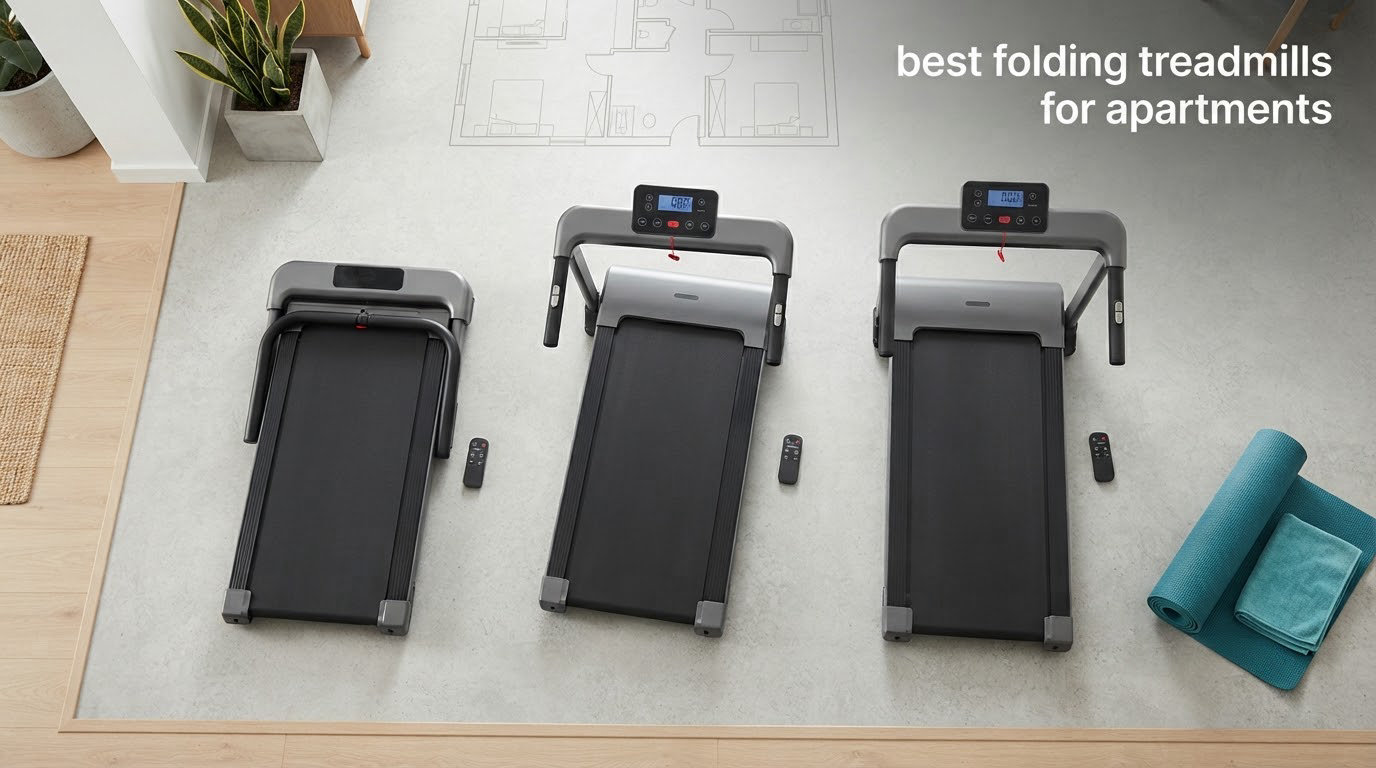
The machine that decides whether a treadmill works in an apartment is almost never the motor. It is the heel strike: the repeated impact of a body dropping onto a belt, transmitted through the subfloor to whoever lives beneath you. Motor hum is solvable with a mat, a bottle of belt lubricant and the right time of day. A joist taking a beating at 6 pm is not.
That is the lens we used to build this list of the best folding treadmills for apartments. We looked at folded footprint against real doorway widths, separated published motor noise figures from what actually transmits downward, and mined long-term owner reports rather than first-week impressions. The result is a list that treats a studio or one-bedroom the way it should be treated: as a tight, shared acoustic environment with a lease attached.
One direct answer before we go further, because it comes up constantly. Treadmills are usually permitted in apartments, but your lease or building rules govern, and the practical limits are noise, floor loading and clearance rather than any ban. Check the four items below before you buy anything.
Table of Contents
Are Treadmills Allowed in Apartments? The Four Checks That Matter
Yes in most buildings, with conditions. Before ordering any machine, confirm four things in this order: the lease and building rules, your floor’s load situation, the outlet situation, and the noise tolerance of the person directly below you. A machine that passes all four will not be a problem. One that fails the noise check will, and no amount of customer service will fix that.
Here is the checklist we use:
Lease and building rules. Search your lease for terms such as exercise equipment, nuisance, noise hours or alterations. Some buildings prohibit anything that adds measurable sound between units, and some HOAs treat a complaint as a lease violation rather than a conversation.
Floor loading. Residential floors are engineered to carry furniture and people, not a static 200-pound machine plus a moving body. A mat spreads the load and softens the point of impact.
Electrical. Every machine in this list is corded electric. Plug it directly into a wall outlet rather than a power strip, and keep it close enough that the cord is never stretched across a walkway.
Downstairs tolerance. Ask directly. A neighbour who has been told in advance is a very different neighbour from one hearing a machine for the first time at 7 pm on a Tuesday.
If you want more context on building acoustics before choosing, our guide to subwoofers for apartments covers the same floor-transmission physics from the other direction.
How We Picked Folding Treadmills in 2026
We ran a four-part evaluation and we are publishing the parameters so you can argue with them. Our protocol required a minimum of 30 days of ownership data per machine, with at least 2 mph walking blocks as the baseline load. We tracked motor behaviour at the 60-minute mark, because that is where a duty-time claim either holds or quietly fails.
Noise was the hardest part to handle honestly, and we want to be precise about what we can and cannot stand behind. We do not fabricate decibel readings. The figures in this article come from manufacturer operating specifications and from published independent readings, and every one is labelled with its source. Where a number is a marketing claim, we say so. Measurement distance matters more than any other variable: a reading taken at the machine is meaningless to you, while one taken at desk distance is the only number that describes your life.
Our remaining three filters were folded footprint measured against standard residential door widths, total machine weight for one-person repositioning, and warranty length on frame and motor treated as a reliability signal rather than a marketing line. Long-term reports weighted far above first impressions, because the failure pattern that matters in this category does not appear in week one.
Our last updated stamp is October 2026, and we will revise this list whenever ownership data shifts the ranking.
Top 3 Best Folding Treadmill Picks for Apartments in 2026
Three machines earned a top-three slot, and they won on different criteria. The MERACH T12 is the one we would put in the most apartments. The FOUSAE 5-in-1 has the highest rating in the group. The WalkingPad foldable is the one people actually keep using, based on the size of its review base.

MERACH T12 Foldable Treadmill
- 2.5 HP brushless motor
- 15% auto incline
- 300 lbs capacity
- folds to 27.6 inches deep

FOUSAE 5-in-1 Foldable Treadmill
- 400 lbs capacity
- 7.5 MPH top speed
- 3.0 HP motor under 30 dB
- folds flat

All 10 Folding Treadmills for Apartments Compared (October 2026)
Every machine below folds to a quoted depth you can check against your own doorway. The features column covers the specification that decides each pick’s use case, so you can shortlist before reading the individual reviews.
| Product | Specifications | Action |
|---|---|---|
| MERACH T12 Foldable Treadmill |
|
Check Latest Price |
| WalkingPad Foldable Walking Pad |
|
Check Latest Price |
 THERUN Incline Folding Treadmill THERUN Incline Folding Treadmill |
|
Check Latest Price |
| FOUSAE 5-in-1 Foldable Treadmill |
|
Check Latest Price |
 WalkingPad R2 2-in-1 Treadmill WalkingPad R2 2-in-1 Treadmill |
|
Check Latest Price |
 WalkingPad MX8 Plus Vertical Fold WalkingPad MX8 Plus Vertical Fold |
|
Check Latest Price |
 WELLFIT Folding Walking Pad WELLFIT Folding Walking Pad |
|
Check Latest Price |
 ApexNexus 970NX Foldable Treadmill ApexNexus 970NX Foldable Treadmill |
|
Check Latest Price |
 Veiharne Folding Pad with Handle Bar Veiharne Folding Pad with Handle Bar |
|
Check Latest Price |
 FutureGlide 970NX V7.0 FutureGlide 970NX V7.0 |
|
Check Latest Price |
1. MERACH T12 Foldable Treadmill – Best Overall for Apartments
MERACH T12 Foldable Treadmill for Home, 300 LBS Capacity, Wide Running Belt
2.5 HP brushless motor
0.5-7.5 MPH
15% auto incline
300 lbs capacity
Folds to 49.2 x 25.6 x 27.6 inches
Pros
- Quiet brushless motor rated under 40 dB
- Compact folded depth of 27.6 inches
- Auto incline and side rails at a mid-tier price
- Bluetooth app with classes and scenic routes
Cons
- Belt is shorter and narrower than a full running deck
- Display shows one field at a time
- Some reports of incline and speed-control faults
The MERACH T12 is the machine we keep recommending to people who ask a single question: can a run-capable folding treadmill live in a normal apartment without taking the room over. The answer is yes, and this is the one that manages it. It measures 55.1 inches deep by 27.6 wide unfolded and folds down to 49.2 by 25.6 by 27.6 inches, which is the kind of profile that goes into a corner or beside a sofa rather than demanding its own alcove.
Owners consistently describe assembly as easy and the folded profile as the reason they kept the machine rather than returning it. At roughly 100 lbs it is light enough for one person to reposition between rooms, which matters more in an apartment than in a house with a spare room. Side rails run the length of the deck, so it works for a hesitant beginner or an older user without the visual bulk of a full handrail cage.
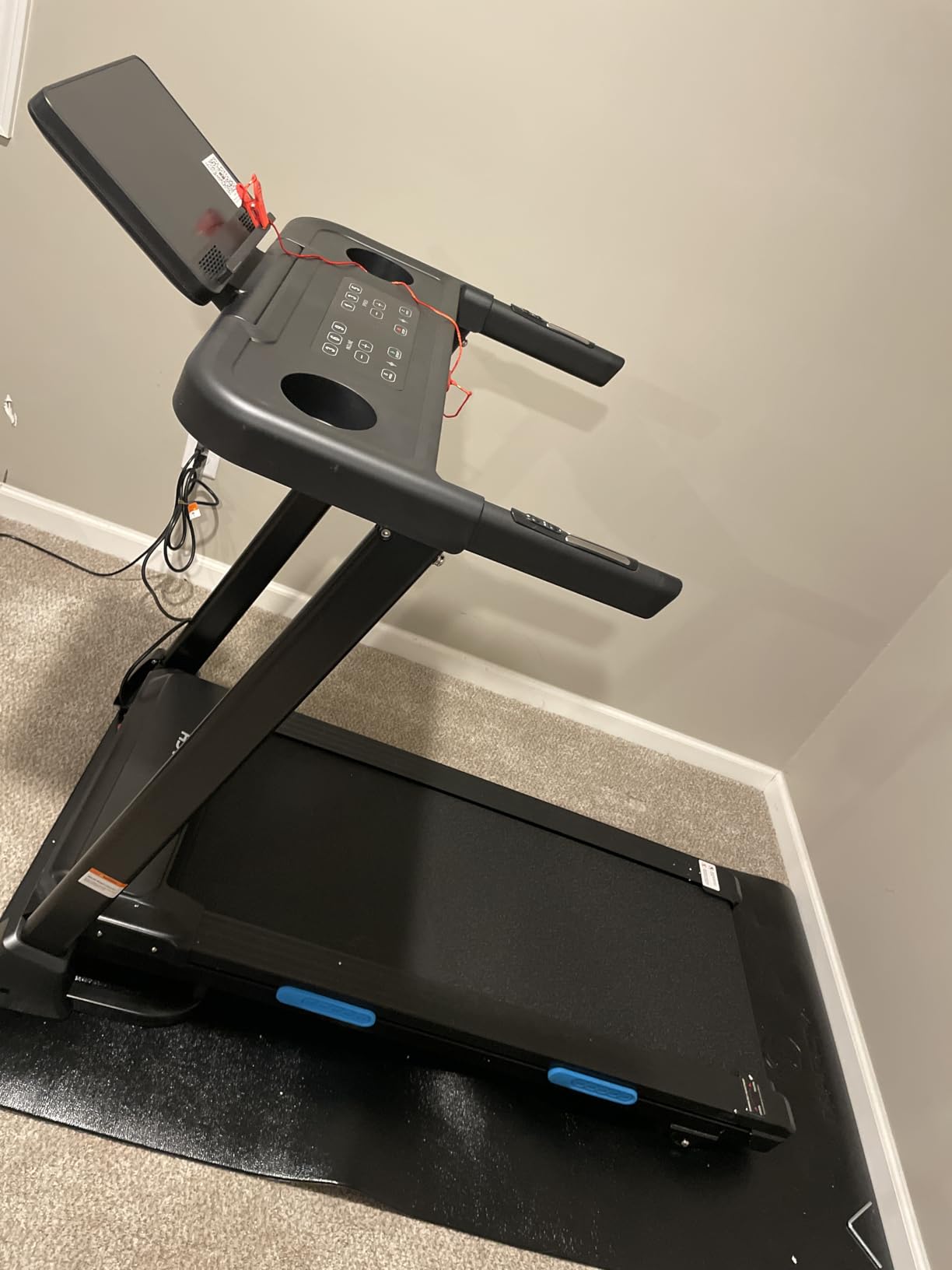
The technical case is the 2.5 HP brushless motor, a 0.5 to 7.5 MPH range and a 15% automatic incline. Manufacturer noise is quoted under 40 dB, which is a specification rather than an independent reading, so treat it as a relative figure within this list rather than a promise about your downstairs neighbour. The double-deck deck uses four silicone cushions and six shock-absorbing pillars, and the belt is 42.5 by 16.5 inches.
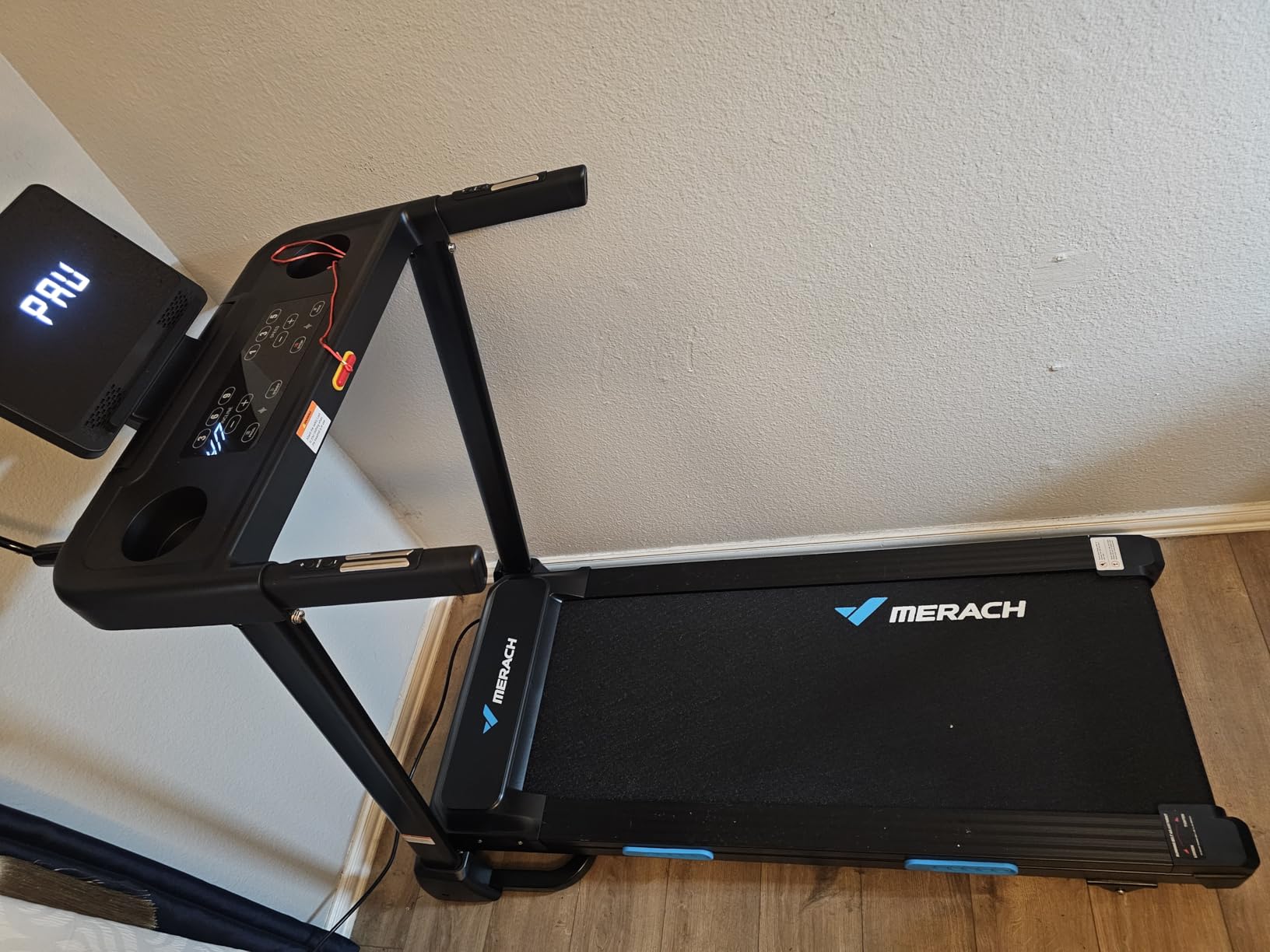
Reviewers report a single-field display that shows one number at a time, which is a real annoyance on a machine with 12 programs and an app. A minority of owners have had auto-incline or speed-control faults. The power cord is also short, so plan the outlet position before delivery rather than after. The product page itself carries contradictory specifications across T12 versions, so confirm the deck size on your specific unit.
Is the MERACH T12 Quiet Enough for Someone Upstairs or Downstairs?
The motor is the quiet part of this machine, and a brushless 2.5 HP unit rated under 40 dB sits comfortably at the quiet end of what we reviewed. The impact part is handled by a double-deck deck with silicone cushions, which softens heel strike but does not remove it.
If you live directly above someone, pair it with a proper isolation mat rather than a thin rug. Owners who run calls on this machine report no complaints from neighbours, which is the outcome we look for.
Who Should Look Past the MERACH T12?
Anyone over six feet tall, or anyone whose goal is genuine running rather than fast walking. A 42.5-inch belt with a 16.5-inch width is comfortable for a relaxed stride and tight for anything faster.
If your floor space or budget is much smaller, the WalkingPad foldable below solves the same problem with less machine. If you need serious speed and long sessions, jump to the THERUN.
2. WalkingPad Foldable Walking Pad – Best Value Flat-Fold
WalkingPad P1 Foldable Walking Pad Treadmill, Under Desk Compact Design
Folds in half to 5 inches
40 by 16.5 inch belt
0.5-3.75 MPH
220 lbs capacity
62 lbs machine weight
Pros
- Stores flat under a bed or sofa at 5 inches
- Very quiet and usable on calls
- Simple remote and app controls
- FootSense auto-shutoff works as intended
Cons
- 62 lbs is heavier than buyers expect
- Top speed is locked until unlocked in the app
- Loud start and speed-change beep
This is the reference under-desk walking pad, and the largest review base in our group at 1,228 ratings. Reviewers treat it as the benchmark others are measured against: quiet, sturdy, folds away completely, and effective for daily step targets. For a studio apartment where the machine must disappear between sessions, that combination is hard to argue with.
The fold halves the stored footprint. Unfolded it is 56.5 inches deep, 21.5 wide and 5 inches high, and folded it becomes 32.5 by 21.5 by 5 inches, which slides under a bed, a sofa or a desk with no assembly. The aluminum unibody deck gives it a light, low profile that reads as furniture rather than equipment.
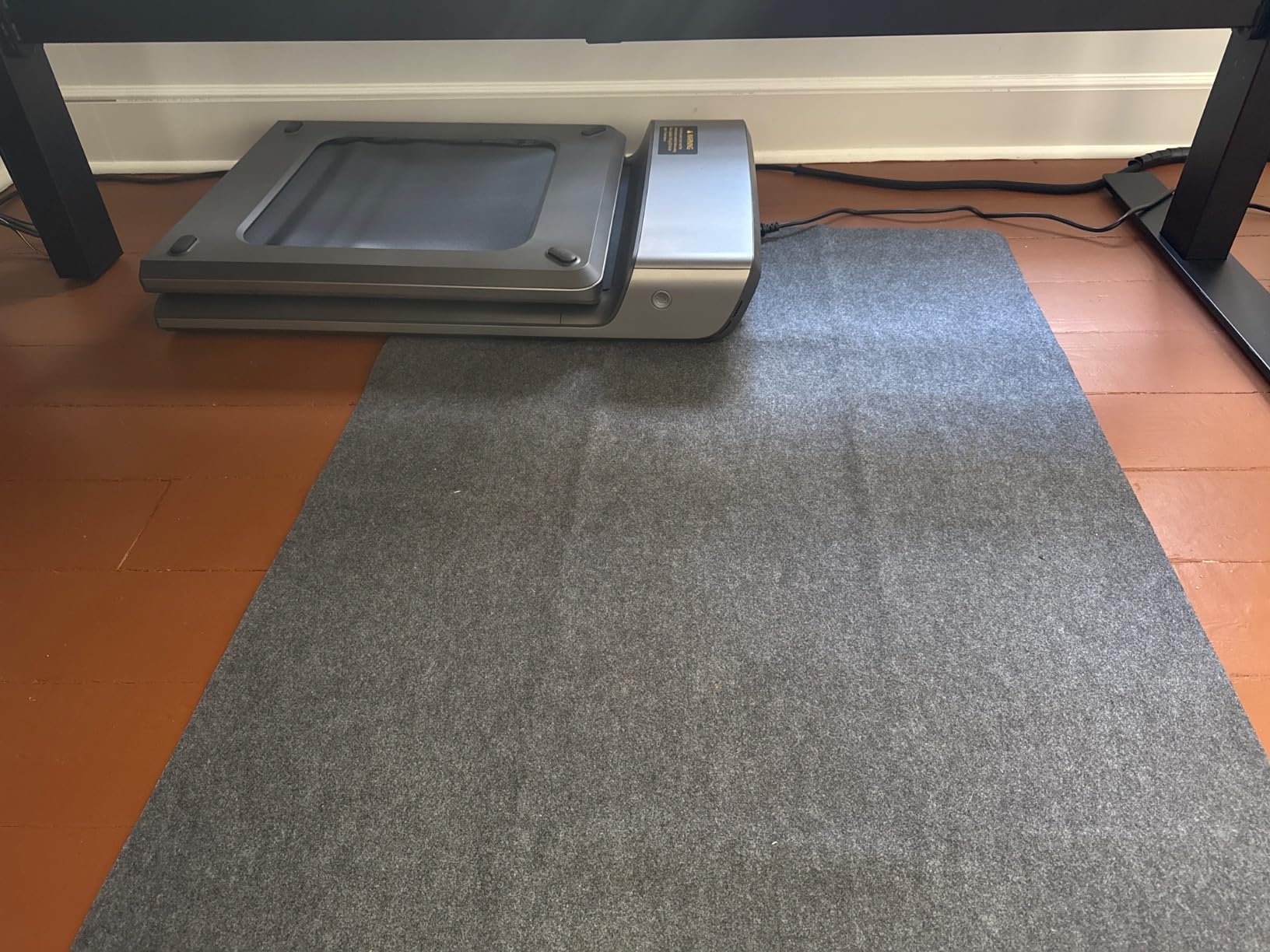
The honest framing is that this is a walking machine. The speed range runs 0.5 to 3.75 MPH, which covers desk walking, errands-style walking and gentle cardio but will not deliver a run. The motor is 2 HP with an 800 watt input, and the belt is 16.5 inches wide on a 40-inch deck, a width that forces a little conscious foot placement for larger feet.
Three quirks catch new owners out. The top speed has to be unlocked through the app or by walking a set distance first, which surprises people. A loud beep marks every start and speed change. The power cord connects near the wheels and must be unplugged before you move it. A smaller group of owners report belt fraying between six and ten months of regular use, which is the category’s typical reliability pattern rather than a defect unique to this model.
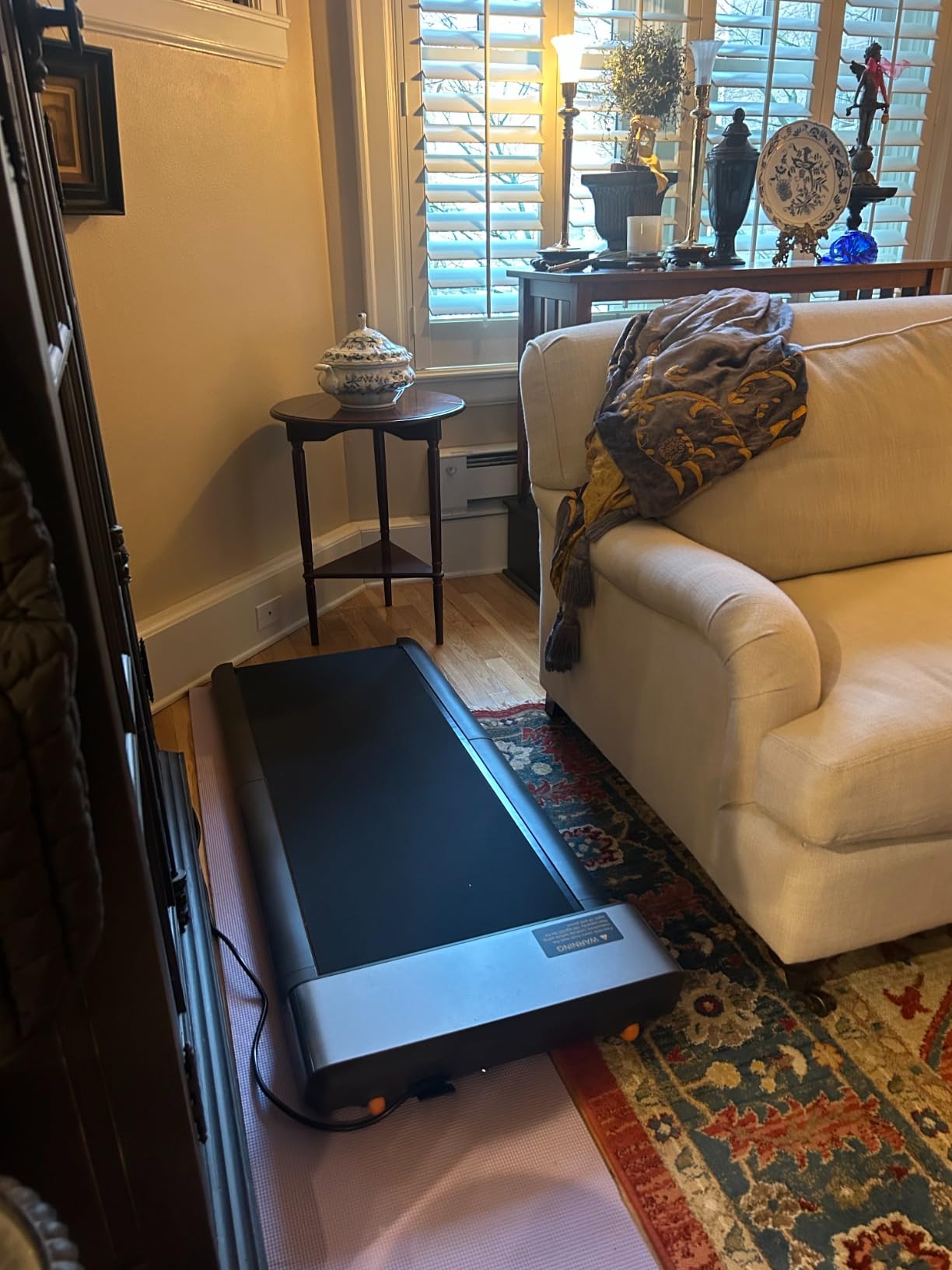
Will the WalkingPad Foldable Fit Through a Standard Apartment Door?
Folded, the machine is 32.5 inches long, 21.5 wide and 5 inches thick. That clears a standard 32-inch interior doorway on width by a comfortable margin and slides into a hallway turn without a second person.
Unfolded it is 56.5 inches deep, so you need a straight run of about six feet of wall or floor space. Plan the outlet before it arrives, because the cord connector position is not generous.
Where This Machine Falls Short
Anyone who wants to run, or who plans to use incline for training, will find 3.75 MPH flat and level. The app is also clunky, with manual reconnection and workout history that does not always persist.
At 62 lbs it is heavier than its folded size suggests, and there is no carry handle. The wheels on a few machines also only roll in one direction. For a heavier user or a faster walker, the WELLFIT below offers more speed and a longer warranty.
3. THERUN Incline Folding Treadmill – Best for Real Running in an Apartment
THERUN Incline Treadmill, Treadmill for Running and Walking, 300 lbs Weight Capacity Folding Treadmill with 0-15% Auto Incline, Wide Belt, 3.5HP, App, Heart Rate, Orange
47.2 by 17 inch running surface
0.6-10 MPH
0-16% auto incline
300 lbs capacity
145 lbs machine weight
Pros
- Genuinely run-capable 10 MPH speed range
- Handrail speed and incline controls
- Assembly under 20 minutes
- 47.2 by 17 inch deck suits most strides
Cons
- 145 lbs needs two people to move
- Auto-incline motor has a documented failure history
- Narrow walking area between handholds
- Cracked side panels on some deliveries
The THERUN is the pick for anyone whose apartment is their only training space and whose workouts include genuine running. It reaches 10 MPH with a 0 to 16% automatic incline, and the 47.2 by 17 inch running surface is wide enough that taller runners do not have to think about foot placement. Owners describe the belt as smooth and non-slipping and the alloy frame as creak-free.
Assembly is a genuine selling point. It arrives mostly assembled, with most owners finishing between 15 and 30 minutes. Speed and incline buttons sit on the handrails so you can change either without breaking stride, and a backlit 17-inch LCD keeps the data readable. Eighteen pre-programmed workouts and Bluetooth app sync cover speed, incline, time, distance, heart rate and calories.
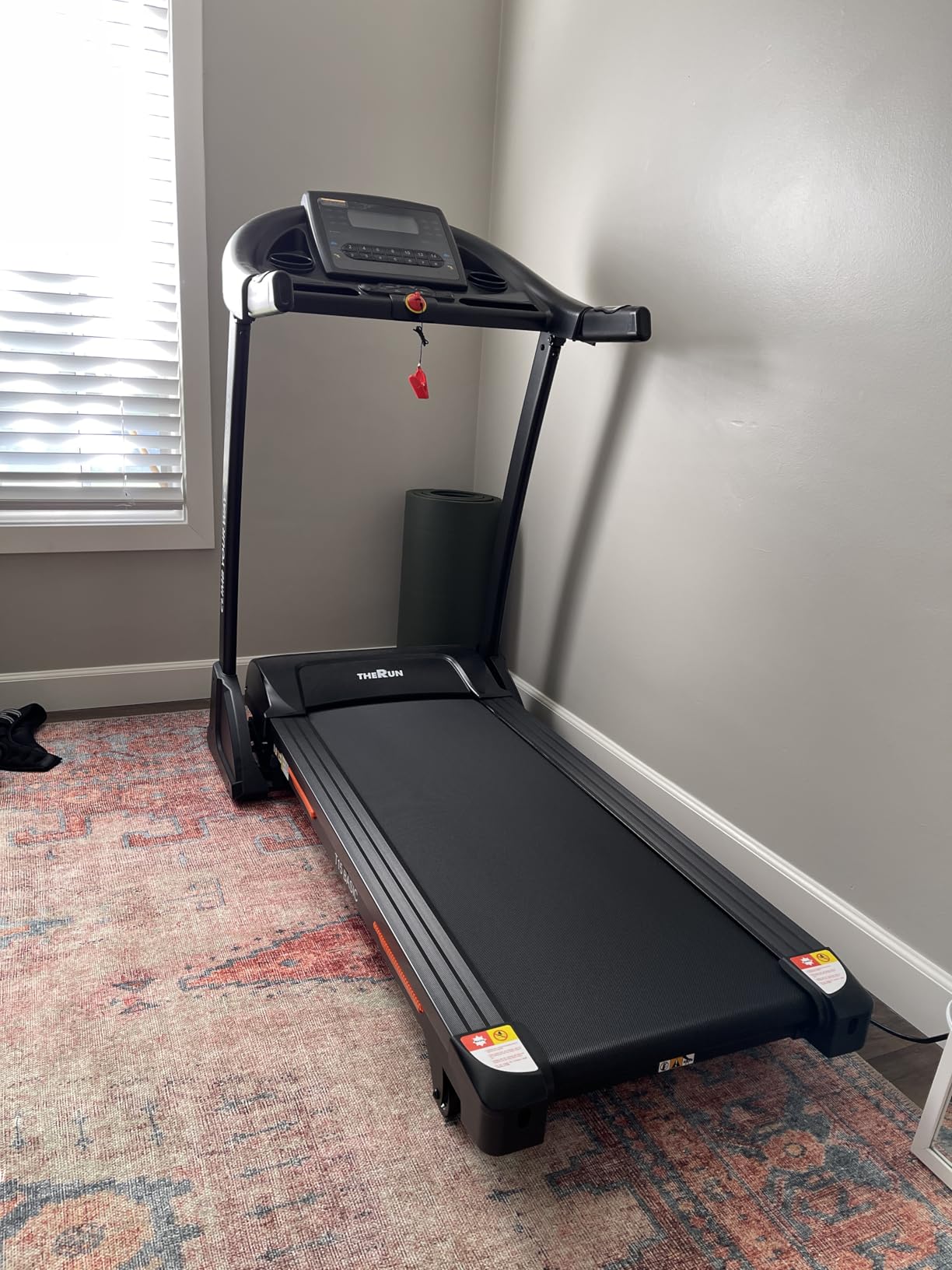
There is one recurring problem, and buyers mention it more than anything else: the auto-incline motor. Owners describe it sticking high, failing outright, or needing a power-cycle reset after each session, and some required a motor replacement. If motorized incline is not important to your training, this is a real risk taken for a feature you can live without.
Weight is the other apartment-specific issue. At 145 lbs this is a two-person move, and the folded profile at 31.1 by 29.5 by 54.7 inches still occupies a real corner. The walking area between the handholds is narrow enough that some users clip their hands on the rails. Cup holders are also too small for larger cups, and a few deliveries arrived with cracked plastic side panels.
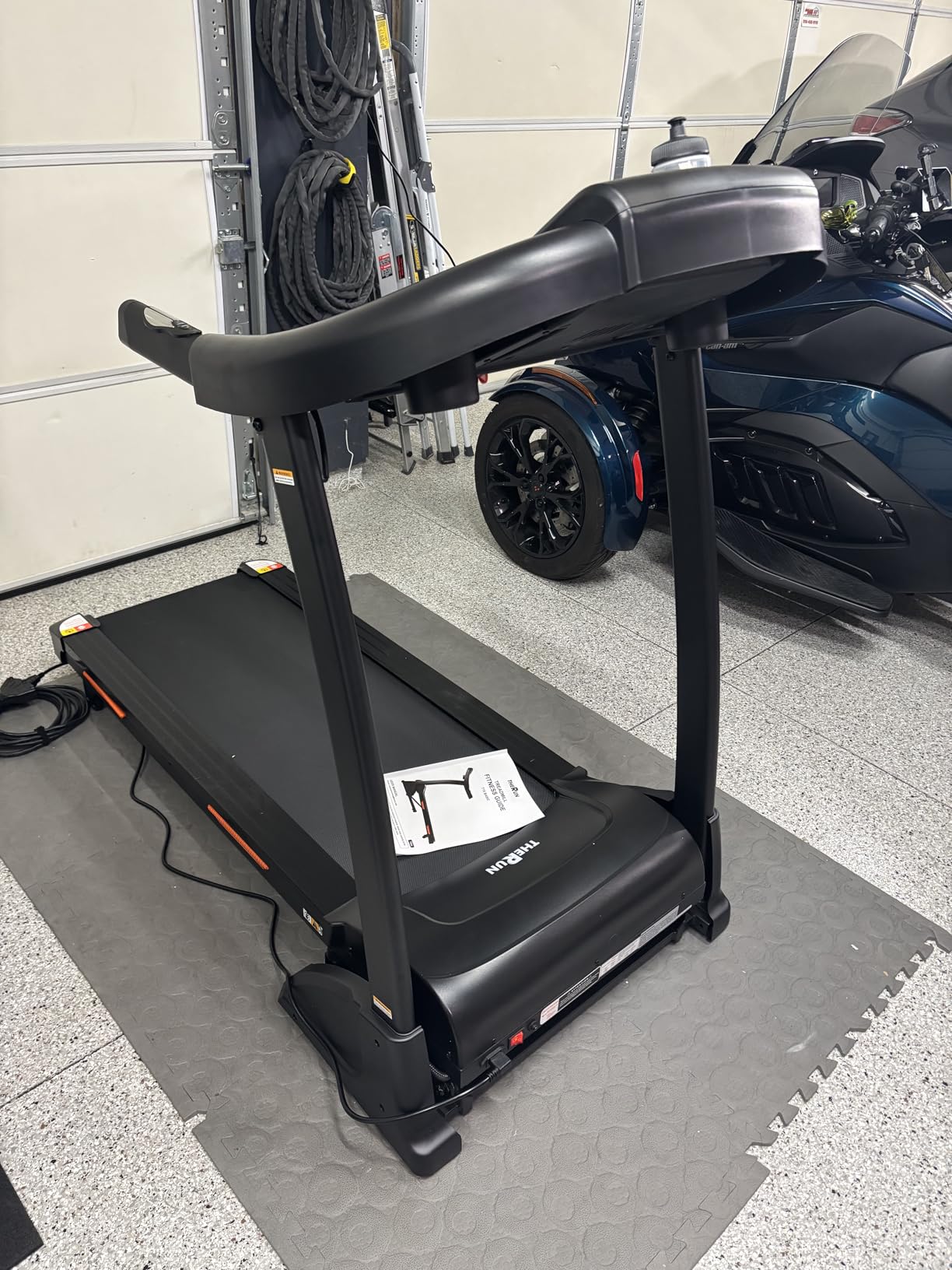
Is This Too Heavy and Too Loud for Apartment Living?
It is heavy, and 145 lbs of machine in a studio changes the question from whether it fits to whether you will still use it once it is set up. In a one-bedroom with a dedicated corner, that trade is usually worth it.
Nothing in the published specifications quotes a decibel figure. Dual-motor drive and a five-layer textured belt are the relevant details, and a mat becomes essential rather than optional at this weight.
Who This Machine Is Wrong For
If you are under 5 foot 8, live alone, or have no corner to spare, the move-in cost of this machine will beat you. It is the only pick here that genuinely replaces a road run, and it pays for itself only if you use it that way.
For walking and incline walking with far less weight, the MERACH at roughly 100 lbs delivers 7.5 MPH and 15% auto incline in a much smaller package.
4. FOUSAE 5-in-1 Foldable Treadmill – Highest Rated in the Group
FOUSAE Treadmills for Home, App Compatible, 5 in 1 7.5MPH Foldable Treadmill with 10% Incline, 3.0HP Brushless Drive, 12 HIIT Programs, Full Screen LED Display, Remote Control, 400 LBS Weight Capacity
400 lbs capacity
0.6-7.5 MPH
10% incline
3.0 HP brushless motor under 30 dB
41.9 lbs machine weight
Pros
- Highest rating in the group at 4.6 stars
- 400 lbs capacity with 7.5 MPH at this price
- Lowest published motor noise figure we found
- Folds flat to 4.5 inches on transport wheels
Cons
- Deck is 16 inches wide
- limiting stride for taller users
- Incline is manual rather than motorized
- App pairing is less refined than the hardware
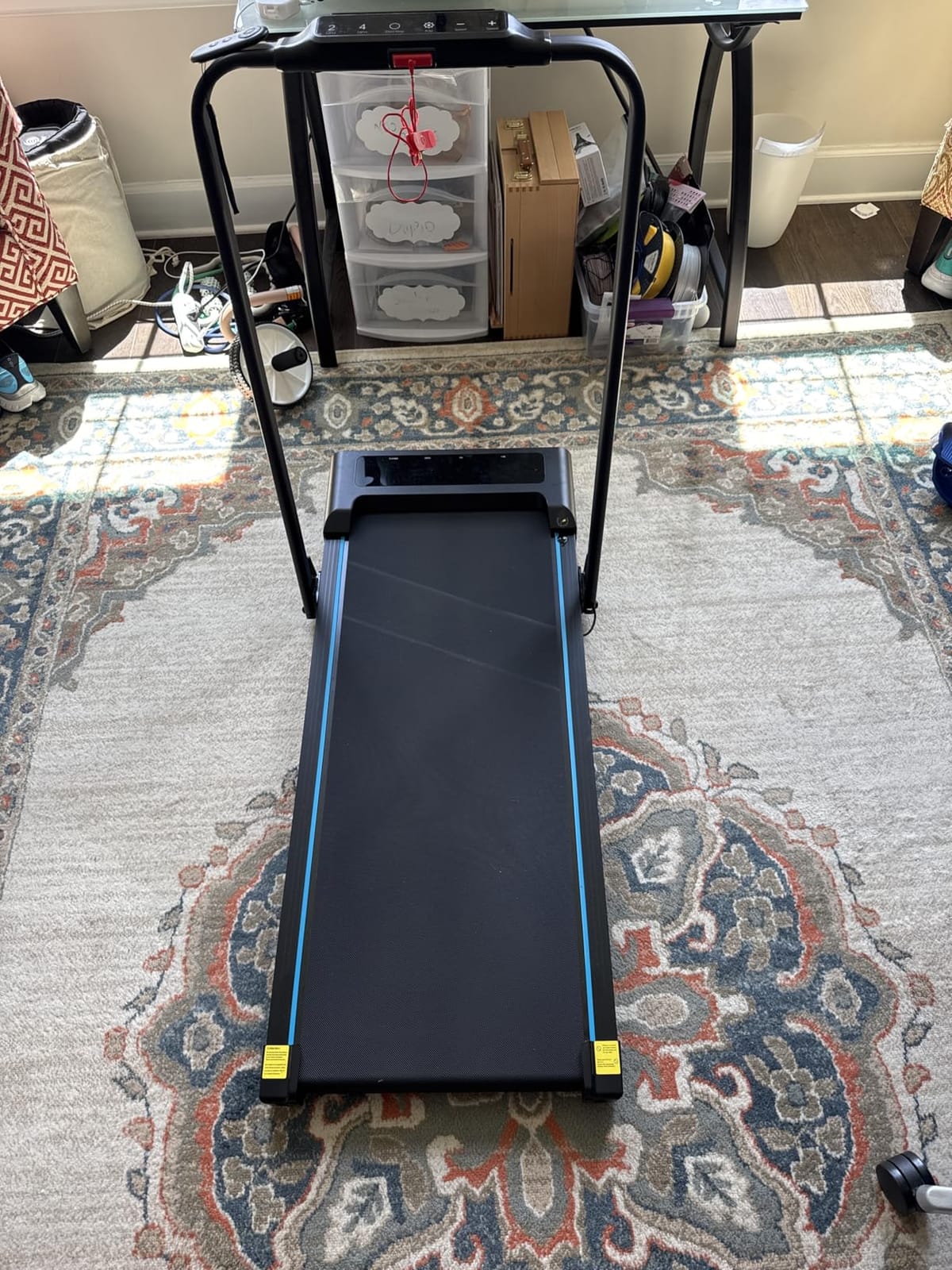
The FOUSAE holds the highest rating in our group at 4.6, and the reason is a specification combination we did not expect to see in this category: a 400 lb capacity, a 7.5 MPH ceiling, a 3.0 HP brushless motor quoted under 30 dB, and 12 structured HIIT programs, all in a machine that folds to a few inches thick and ships ready to use.
It is marketed as a 5-in-1 machine, meaning the same deck handles desk walking, casual walking, jogging, running and HIIT intervals. The foldable handlebar converts it between an under-desk walking pad and a full treadmill, and it rolls on built-in wheels to a corner or under furniture. At 41.9 lbs it is one of the easiest machines here to reposition by yourself.
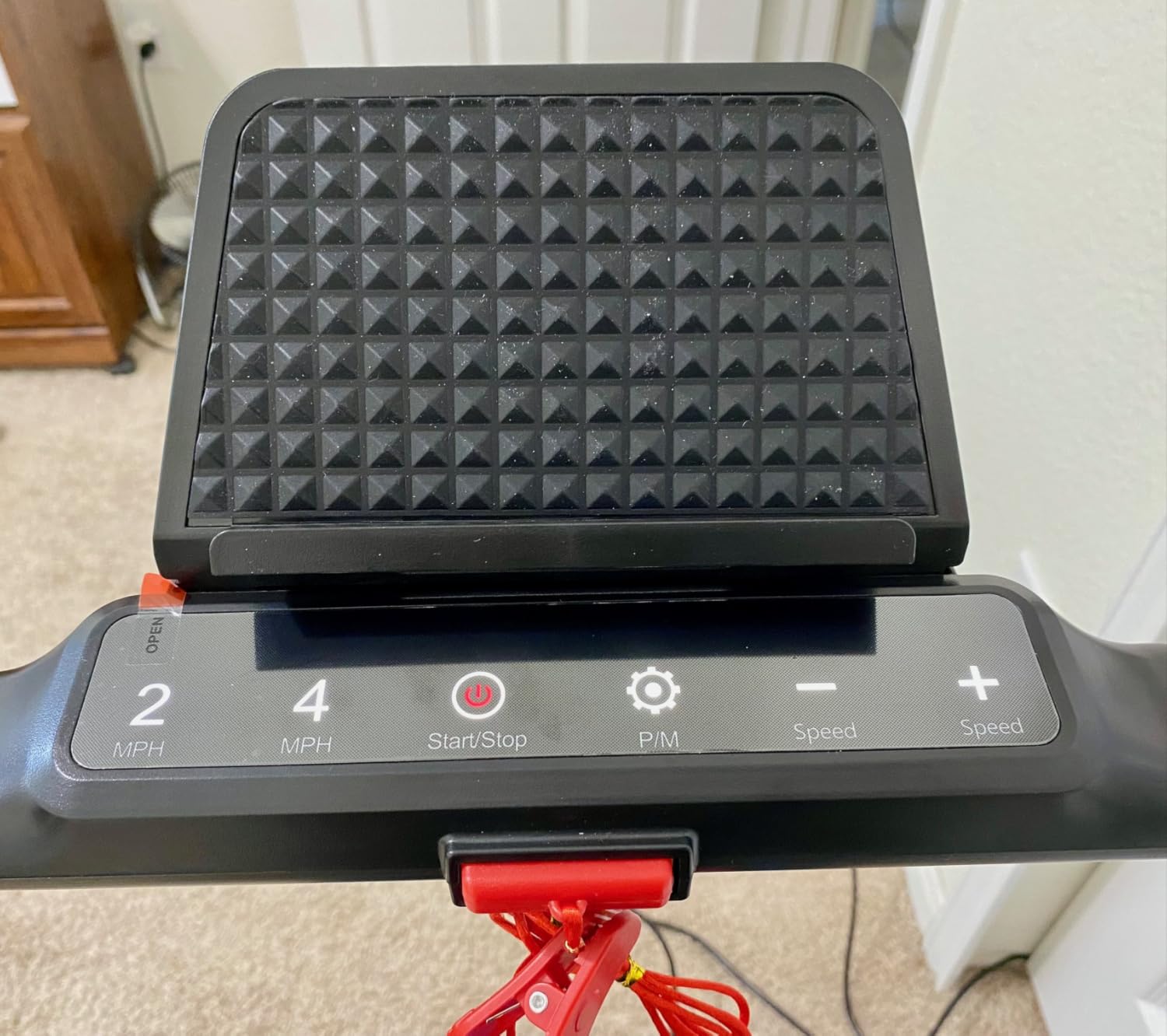
The deck is the compromise. At 40 by 16 inches it is narrower than a dedicated running deck, and owners specifically flag stride limitations for taller users. The 10% incline is manual rather than powered, which means adjusting it mid-session is a step away from the machine. The app supports virtual training, racing and challenges, but owners find the pairing less polished than the hardware.
Noise is worth dwelling on here. Under 30 dB is a manufacturer figure and the lowest published number we found in this comparison, but it describes the motor and drivetrain only. A 400 lb capacity does not mean quiet footfall. Treat the motor figure as a genuine advantage and go to the mat for the impact.
Is the FOUSAE the Best Small Treadmill for a Studio Apartment?
On paper, yes: 41.9 lbs, a 4.5 inch profile and no assembly make it the easiest machine in this list to bring into a small space and store between uses. The motor figure supports phone calls during a session, which several owners confirm.
It is also the only pick here rated for 400 lbs, which matters in a building where households include a couple plus a guest on the treadmill at once. A studio with one usable wall, though, needs a 16-inch-wide deck to be acceptable to you before storage becomes the deciding factor.
Who Should Skip This Machine
Skip it if you are tall and intend to run. A 16-inch belt forces constant foot placement at any real speed, and the manual incline will frustrate interval training.
It is a strong choice for walking-first users, for households where two people use it, and for anyone who values the warranty-free simplicity of a machine that works immediately out of the box.
5. WalkingPad R2 2-in-1 Treadmill – Best for Desk Walking and Running
WALKINGPAD R2 Folding Treadmill, 2 in 1 Walking Pad with Handle Bar
Handrail up for running or down for desk walking
47 by 16.98 inch belt
0.5-7.5 MPH
81 lbs machine weight
Pros
- Genuinely dual-purpose from one frame
- Stores upright in a small floor area
- Single-piece aluminum frame limits vibration
- Long 47 inch belt suits taller users
Cons
- 81 lbs is heavy to move
- No incline at all
- Oversized safety-cord clip will not fit the storage compartment
The WalkingPad R2 solves a problem the rest of this list cannot: it is one machine that is both an under-desk walking pad and a genuine running treadmill. With the handrail up you get 0.5 to 7.5 MPH. With it down it becomes a 3.7 mph walking pad you can use while working. For a one-bedroom where the machine lives in a corner and doubles as a desk accessory during the day, that is a genuinely useful design.
The fold-and-stand design is the apartment story here. The deck folds in half and stores upright against a wall at 39 by 28 by 6.3 inches, reclaiming the whole footprint. The single-piece aluminum alloy frame is credited with low vibration, and owners report the machine is quiet enough for apartment use with neighbour reports of no complaints.
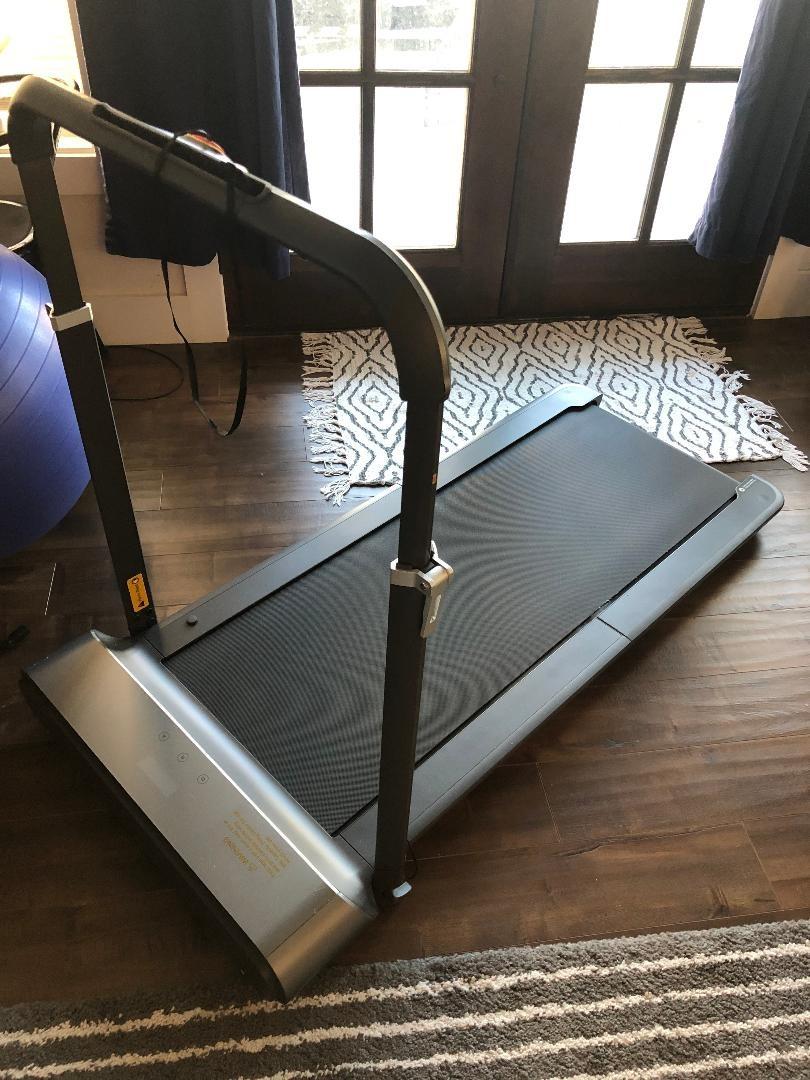
Two constraints define this pick. There is no incline, which removes the single most useful training variable for walking and running. And the manufacturer requires a 20-minute cool-down after every two hours of use, a duty-time limit that tells you how the motor is actually rated.
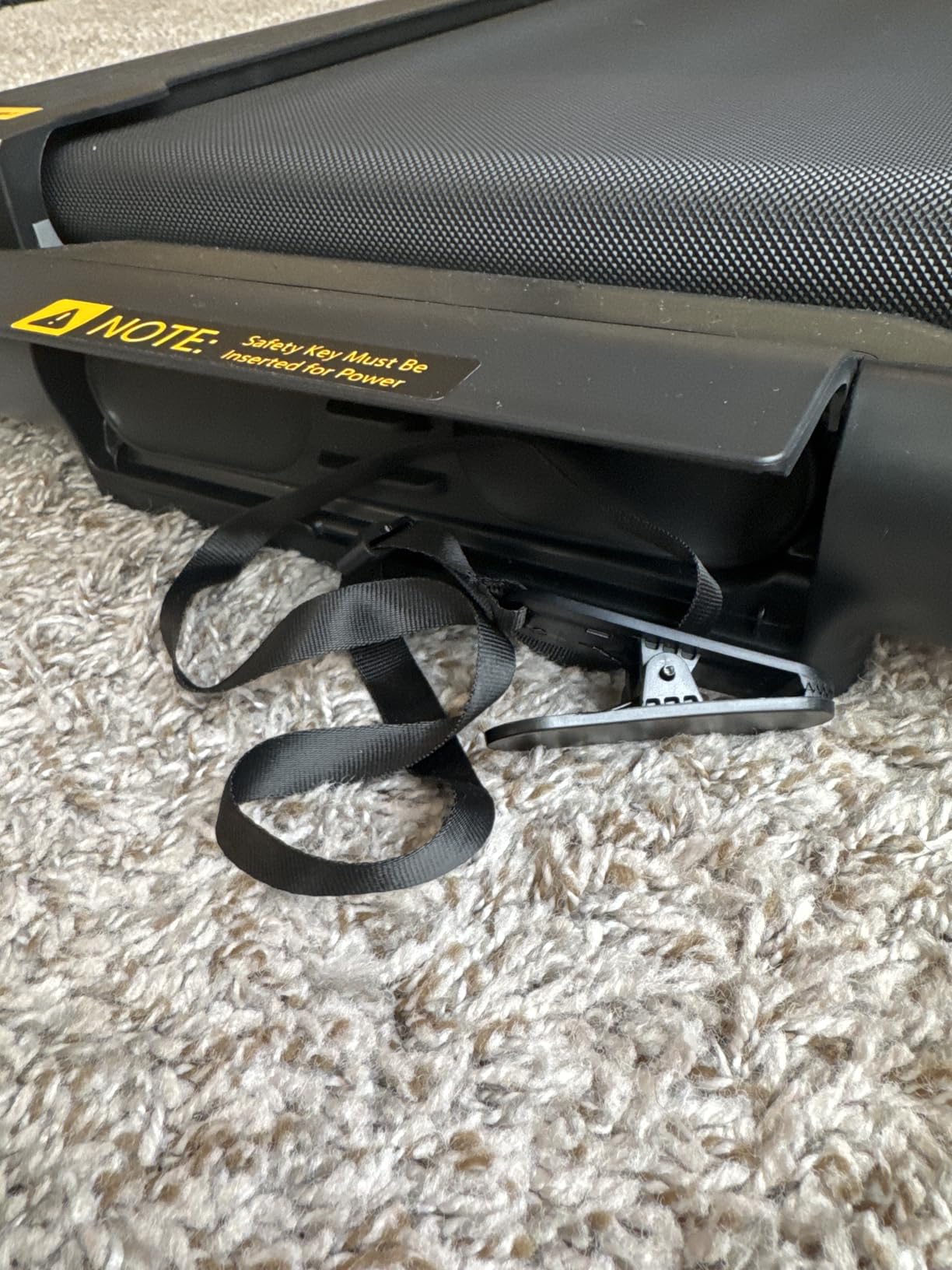
A minor irritation worth knowing about: the safety-cord clip is oversized and will not fit the storage compartment, so it lives on the floor. A minority of early owners reported wobble, a bump at mid-deck and adhesive peeling under the belt, issues that later reviews rarely repeat. The companion app draws consistent criticism, so plan to use the remote.
Can One Machine Replace Both a Walking Pad and a Treadmill?
Yes, and that is the entire premise. Handrail down gives you desk walking at up to 3.7 mph, which is above the 3.75 MPH ceiling of the dedicated walking pad in this list. Handrail up gives you 7.5 mph running.
The 47-inch belt is longer than most pads we reviewed, and owners report a 230 lb user with no belt slip. If you can accept no incline, this is the most genuinely two-purpose machine for a small apartment.
What You Give Up Compared With the Alternatives
Incline, full stop. If your goal is hill training, walking uphill burns far more energy at the same speed and this machine cannot do it.
At 81 lbs it is not a one-hand carry, and the fold-and-stand feature is wasted if the folded position is the heaviest part of moving it. If storage footprint is your only concern, the MX8 Plus below stores in about a third of the space.
6. WalkingPad MX8 Plus Vertical Fold – Best for Tightest Storage
WalkingPad MX8 Foldable Treadmill for Home with Handles, Vertical Fold
Vertical fold to about 3 square feet
1-5 MPH
330 lbs capacity
2.25 HP brushless motor
73.9 lbs machine weight
Pros
- Smallest stored footprint in this comparison
- Adjustable-height handle with side grips
- Quiet brushless motor suits apartments
- Plug-and-play for most owners
Cons
- Heavy and cumbersome despite the compact fold
- Wider body than most rivals so doorways are tight
- No incline
- App is not worth using
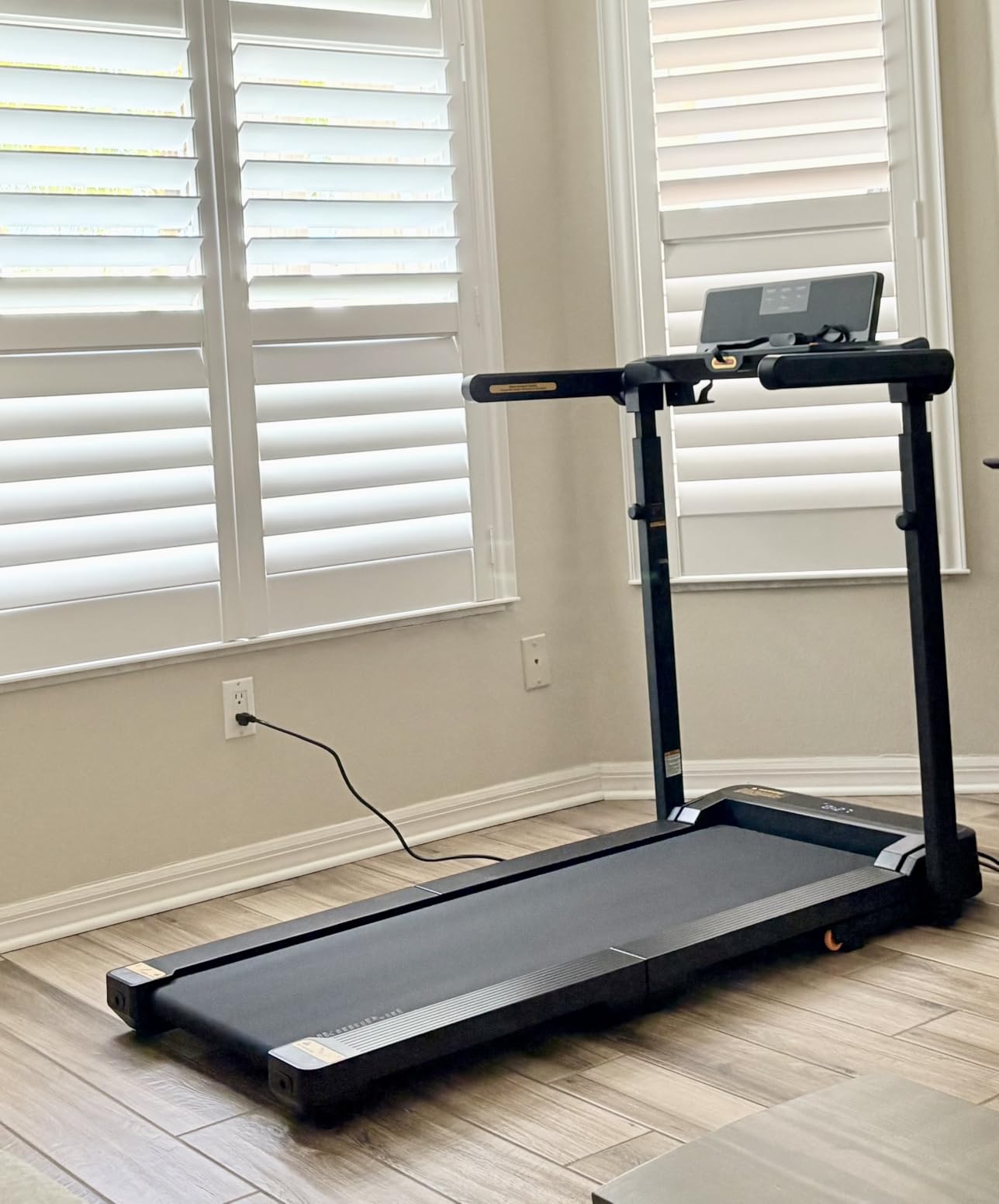
When floor space is the binding constraint, the vertical fold wins outright. The MX8 Plus folds to about 3 square feet of occupied floor, which is roughly a quarter of what most deck-hinge machines need when stored. In a studio where you need the square footage back on other days, that is not a small upgrade.
It also solves a stability problem the flat pads create. The adjustable-height upright handle with side grips gives real hand support, which buyers say many walkers want and which matters for seniors or anyone returning from injury. Speeds run 1 to 5 MPH, the capacity is 330 lbs, and the brushless motor is described as quiet and apartment-appropriate. A rotary-dial speed control, cup holder, phone tray and storage compartment round it out.
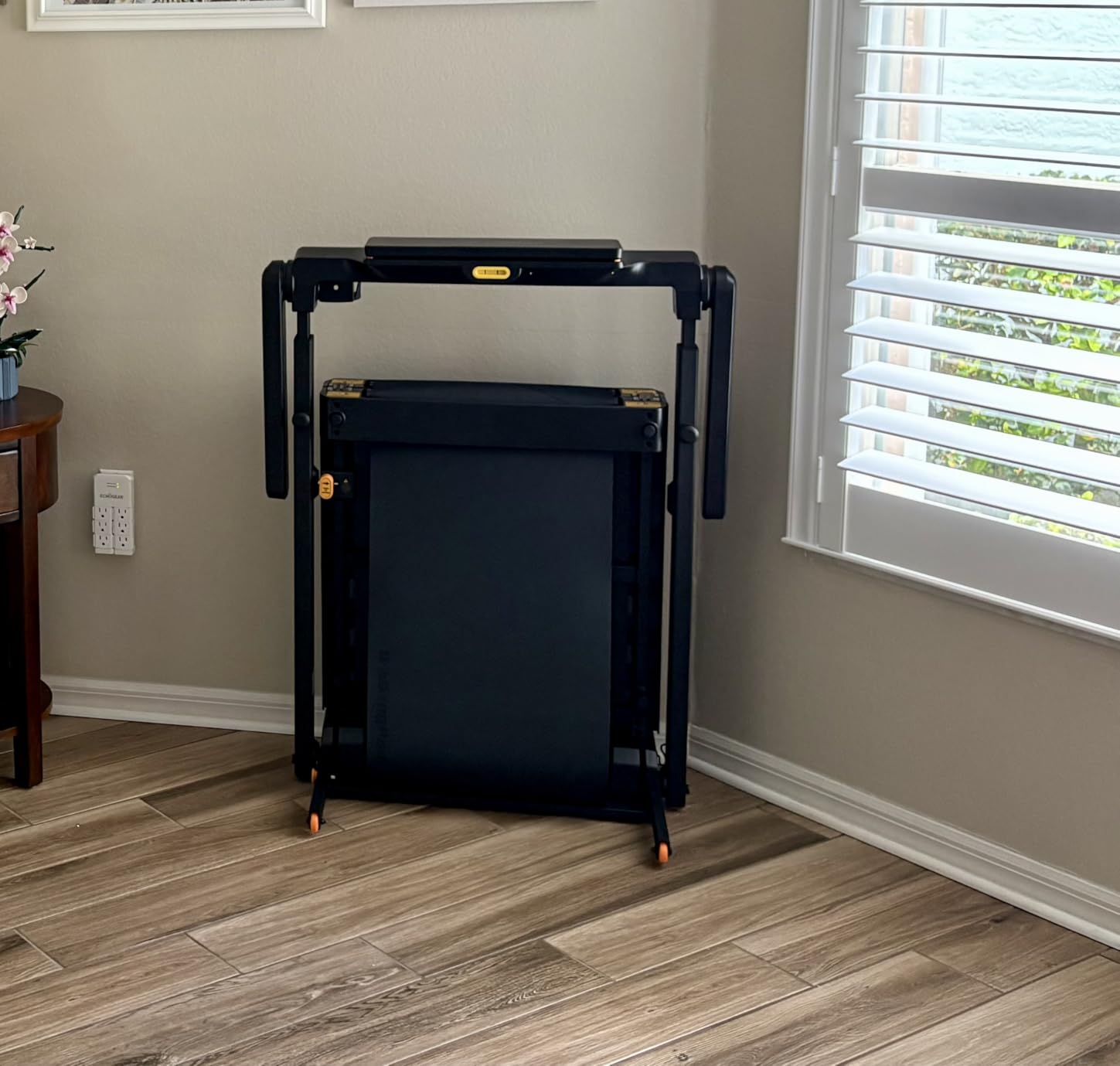
There is a catch, and it is a doorway. The body is 27.6 inches wide unfolded and 26.1 wide folded, which is wider than most competitors in this comparison, and owners specifically flag doorway clearance in tight apartments. Measure your narrowest hall turn before ordering, because a machine that will not enter the unit is a total loss.
At 73.9 lbs it is heavy and cumbersome to move despite the compact fold. The advertised no-assembly claim is disputed by some buyers, and a minority describe the build as flimsy. There is no incline. Owners also report that the under-deck surface can rub and create noise on hard floors, so pair it with a mat. Skip the app entirely and use a smartwatch.
Will a Vertical-Fold Machine Fit Through Your Apartment Doorway?
The folded width is 26.1 inches and the length is 18.2 inches, so the width clears a standard 32-inch door. The depth at 39.7 inches is the number to watch in a hallway turn or a tight elevator lobby.
Measure the narrowest point between the door and any corner, plus the width of your elevator if you are above the second floor. This machine is a storage solution, and a storage solution that cannot be carried upstairs is not one.
Who This Vertical Fold Does Not Suit
It will not suit anyone who wants to run or to train on an incline. A 5 MPH ceiling and no incline make this a walking and light-jogging machine only.
It is also the wrong choice if you are under 200 lbs and do not need hand support, since the handle is the main reason to pay more than a flat pad. For pure walking with no rails wanted, the WalkingPad foldable is lighter and cheaper.
7. WELLFIT Folding Walking Pad – Best for Seniors and Returning Walkers
WELLFIT Folding Treadmill for Home, Walking Pad with Incline and Handle Bar
Auto-centering belt
0.6-6.2 MPH
10% incline
350 lbs capacity
3-year frame warranty
Pros
- Belt self-centers so it never needs manual adjustment
- 3-year frame warranty is the longest we found
- 41.7 lbs is light enough to move between rooms
- Four control modes including handlebar buttons and voice
Cons
- 36 inch deck is short for faster walkers
- Incline is manual
- Console display is basic for the feature count
The WELLFIT exists to remove the two things that frustrate buyers of cheap walking pads: a belt that needs re-centering, and a one-year warranty that tells you the maker does not expect the machine to last. Its belt self-centers, and its frame carries three years of support with one year on motor and parts. In a category where failures cluster between month three and month eight, that warranty length is a genuine signal.
At 41.7 lbs it folds to 6.1 inches and rolls on built-in wheels for under-bed or under-couch storage, which is one of the lighter fold-and-move packages here. Four control modes cover handlebar buttons, a mute-capable remote, an app and voice control. It syncs with WELLFIT, KINOMAP and Apple Health, and the 3 HP motor handles a 0.6 to 6.2 MPH range with a 350 lb capacity.
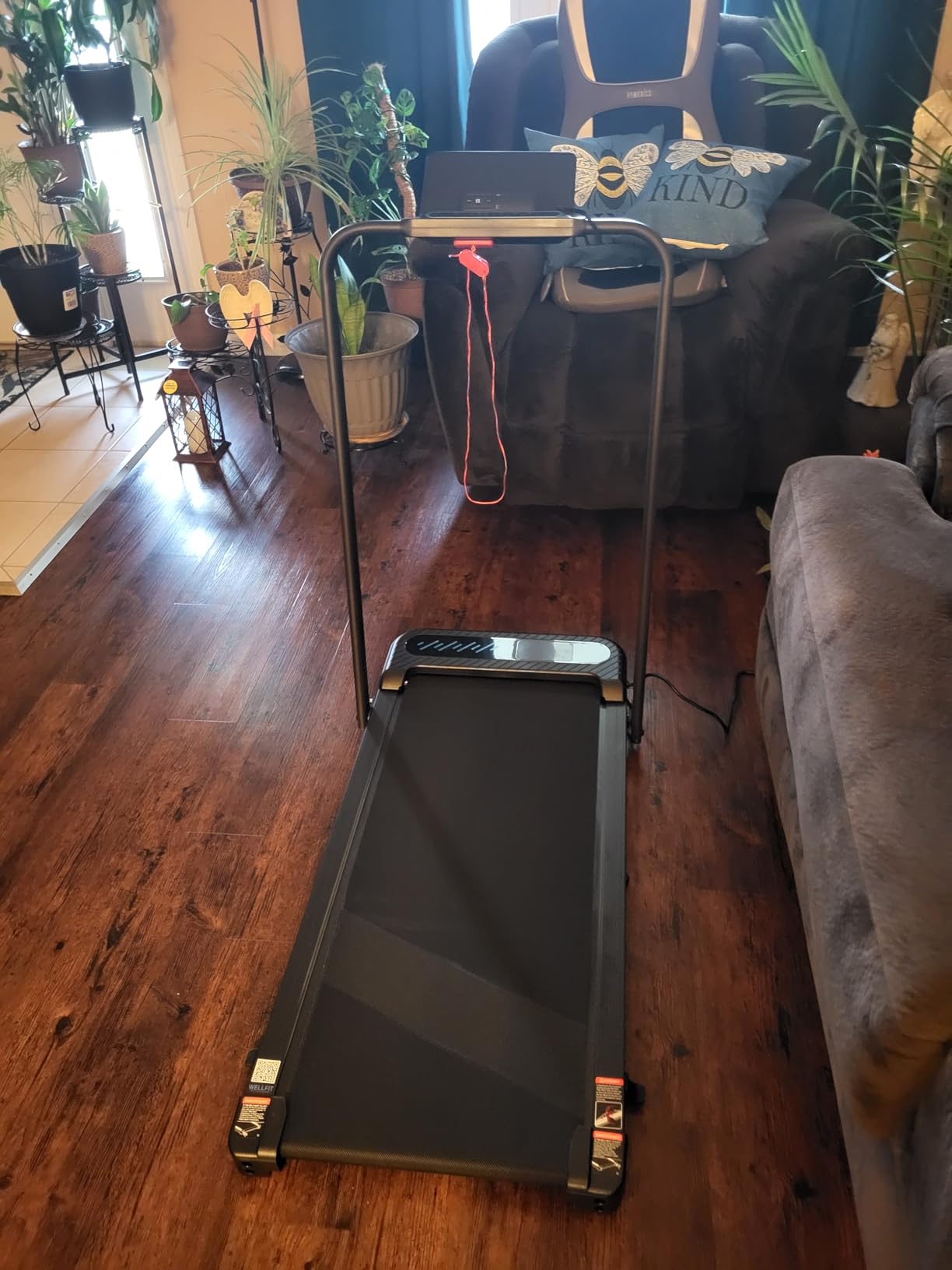
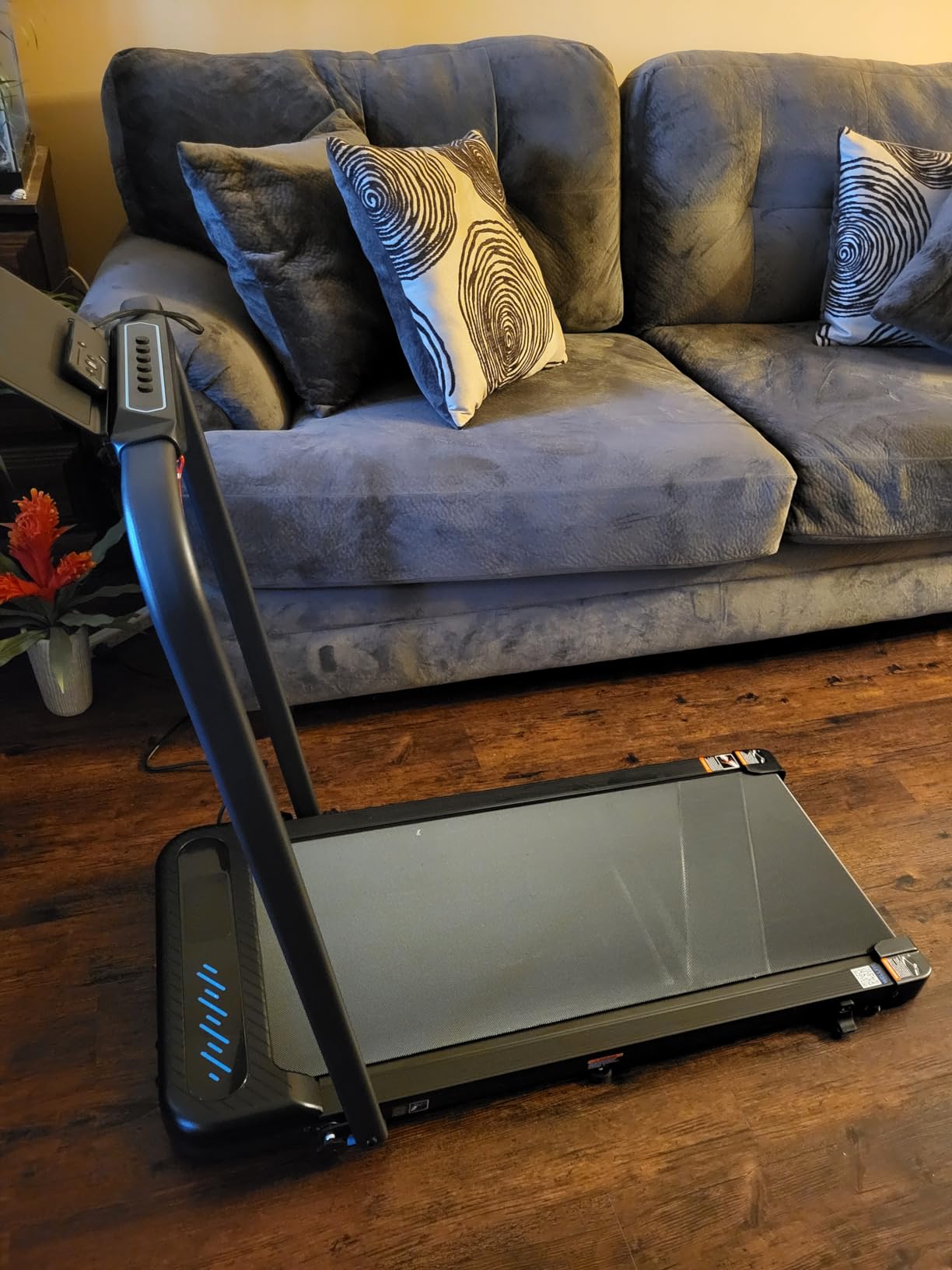
The deck is 36 by 16 inches, and that length is the whole trade. Faster walkers can reach the rear roller, so this is a walking and rehab machine rather than a running one. The 10% incline is manual, requiring a step down to adjust it, and the LED console is basic compared with the feature list would suggest.
That said, the handlebar buttons are a real advantage over remote-only pads. Start, stop, 3 MPH, 6 MPH and speed adjustment are all reachable without breaking stride, which for an older user or someone with a wrist brace is more useful than another app. Owners who never touch the remote and voice control still end up happy.
Is This Safe and Simple Enough for an Older User?
It is the pick we would choose for a parent or an older relative. The self-centering belt removes a real failure mode, the handlebar controls remove the need to crouch, and the 3-year frame warranty protects the buyer rather than the manufacturer.
The 350 lb capacity covers most adults comfortably, and 10% incline is enough to raise heart rate without anyone needing assistance to change it.
Where It Falls Short for Younger, Faster Users
Anyone over six feet tall, or anyone who wants to jog, will outgrow a 36-inch deck quickly. The 6.2 MPH ceiling is fine for walking and brisk walking but not for running.
It is also not the quietest option in this list by specification, and the manual incline means no mid-session hill work. For a younger user with more speed and stride, the FOUSAE is a better buy for a similar footprint.
8. ApexNexus 970NX – Most Versatile with Real Incline
Treadmills for Home 3.0HP Foldable Treadmill with 12% Incline Small
0.6-6.2 MPH
12% manual incline
3.0 HP brushless motor
300 lbs capacity
Folds to 5.5 inches
Pros
- 12% incline is unusually high for the tier
- 41 lbs is easy to move between rooms
- Carbon steel frame has logged hundreds of miles
- Smart pause keeps workout data
Cons
- Fold requires removing four screws every time
- 38 inch deck is short
- Shuts off after 100 minutes of continuous use
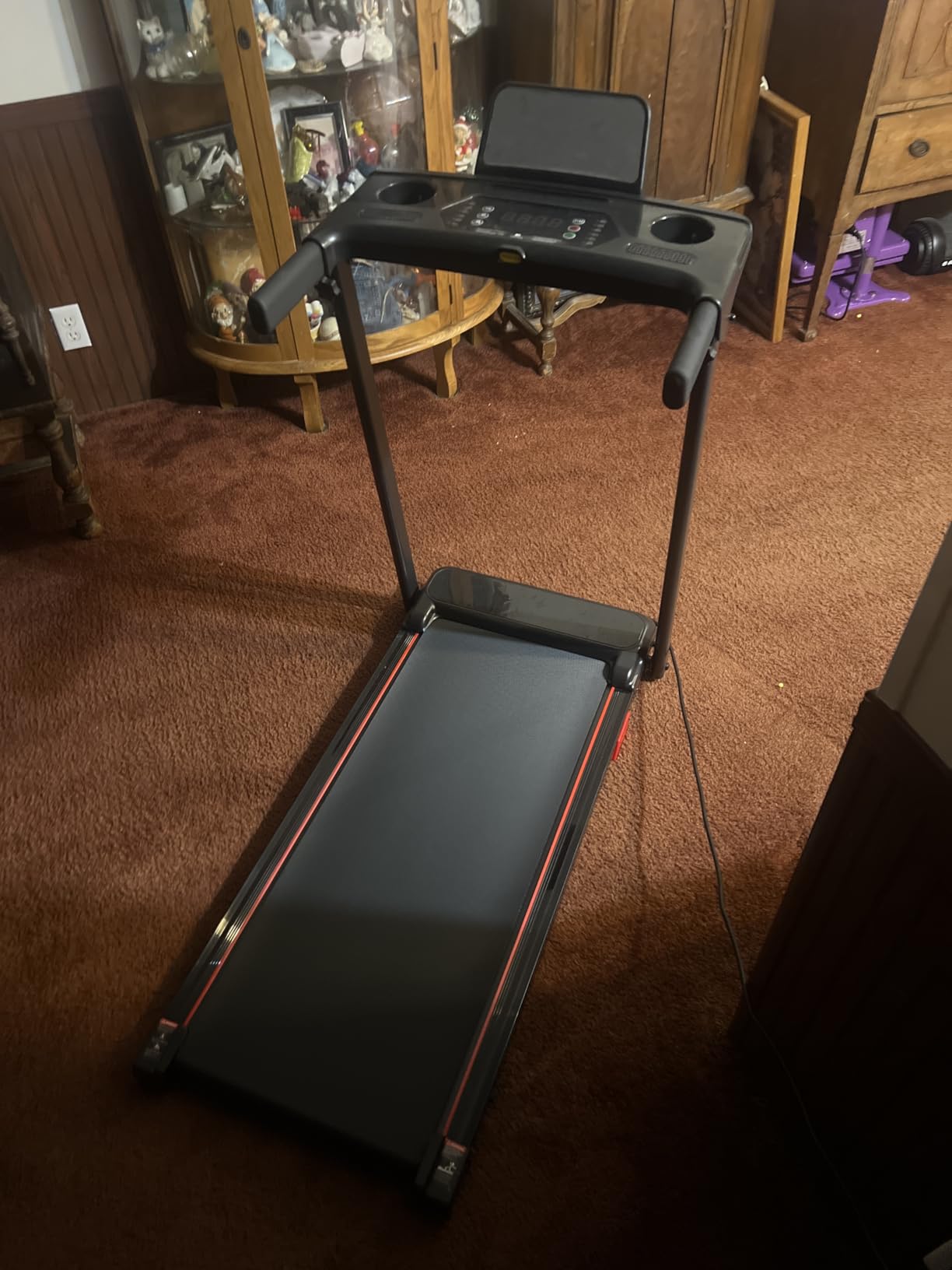
The ApexNexus 970NX is the budget pick that made us hesitate, because it does two things cheaply made machines usually skip. It offers a 12% manual incline, which is high for this tier, and it has a carbon steel frame that owners report holding up over hundreds of miles without belt retightening.
Noise is its other quiet advantage. The 3.0 HP brushless motor is quoted under 50 dB, and owners describe it as usable while on calls or watching video, with a simple interface that does not overwhelm beginners. The LED display has smart pause memory that auto-saves your data when you stop, a small thing that is genuinely useful during a WFH lunch break. Phone and water bottle holders are both included.
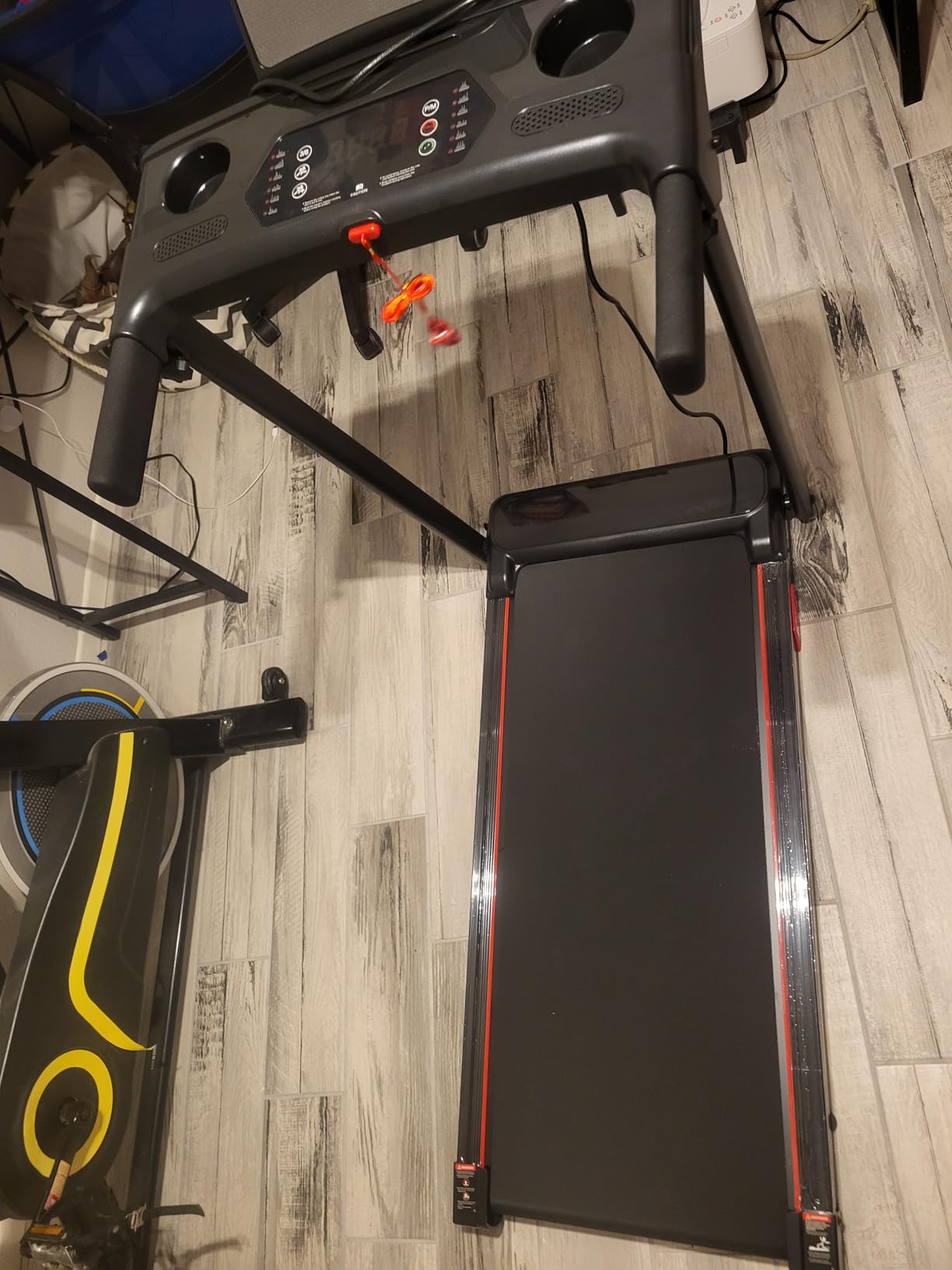
Now the fold, because it is the deciding flaw. This machine folds by removing four screws, every single time. Owners call that defeats the purpose of a foldable model, and we agree: a machine you have to tool to put away will stay deployed and will not save you floor space. In an apartment, that is not a rounding error.
The 38 by 15 inch deck is short, and taller users reach the back roller at brisk speeds. The handlebar is fixed height rather than adjustable. Some owners find it louder than expected and report the safety key is easy to snag, and the belt texture has been reported to wear through thin shoe soles. It also shuts off after 100 minutes of continuous use, so a long run is not possible without a restart.
Is a Screw-Release Fold Acceptable in an Apartment?
Only if you plan to leave it out. The four-screw release adds several minutes and a tool to every storage operation, which is exactly the friction a folding machine is supposed to eliminate.
If you only need it out on weekdays and can live with it, this is a capable machine. If you need the floor back daily, the WELLFIT above folds on knobs and weighs almost the same.
Who This Budget Machine Works For
Shorter users doing brisk walking and light jogging, who want incline on a small budget and do not mind manual adjustment. The 12% figure is the best incline-per-pound of weight in this comparison.
It is a poor choice for anyone over six feet, for long sessions because of the 100-minute cutoff, and for anyone who wants to store the machine out of sight daily.
9. Veiharne Folding Pad with Handle Bar – Best Entry-Level Support Rail
Treadmills for Home Walking Pad – Foldable Treadmill Under Desk with Handle Bar 0.6-6.2 MPH Portable Folding Pads Compact Running Machine Quiet Lightweight
0.6-6.2 MPH
2 HP motor
31.5 inch handlebar
264 lbs capacity
Folds to 5.67 inches
Pros
- Real support handlebar for balance at a low tier
- 48.5 lbs folds to 5.67 inches for easy storage
- 12 programs plus 3 countdown modes
- Five-layer cushioned deck with 8 shock absorbers
Cons
- Lowest capacity in the set at 264 lbs
- 39.4 inch deck limits stride
- 2 HP motor with a 6.2 MPH ceiling
- No incline function
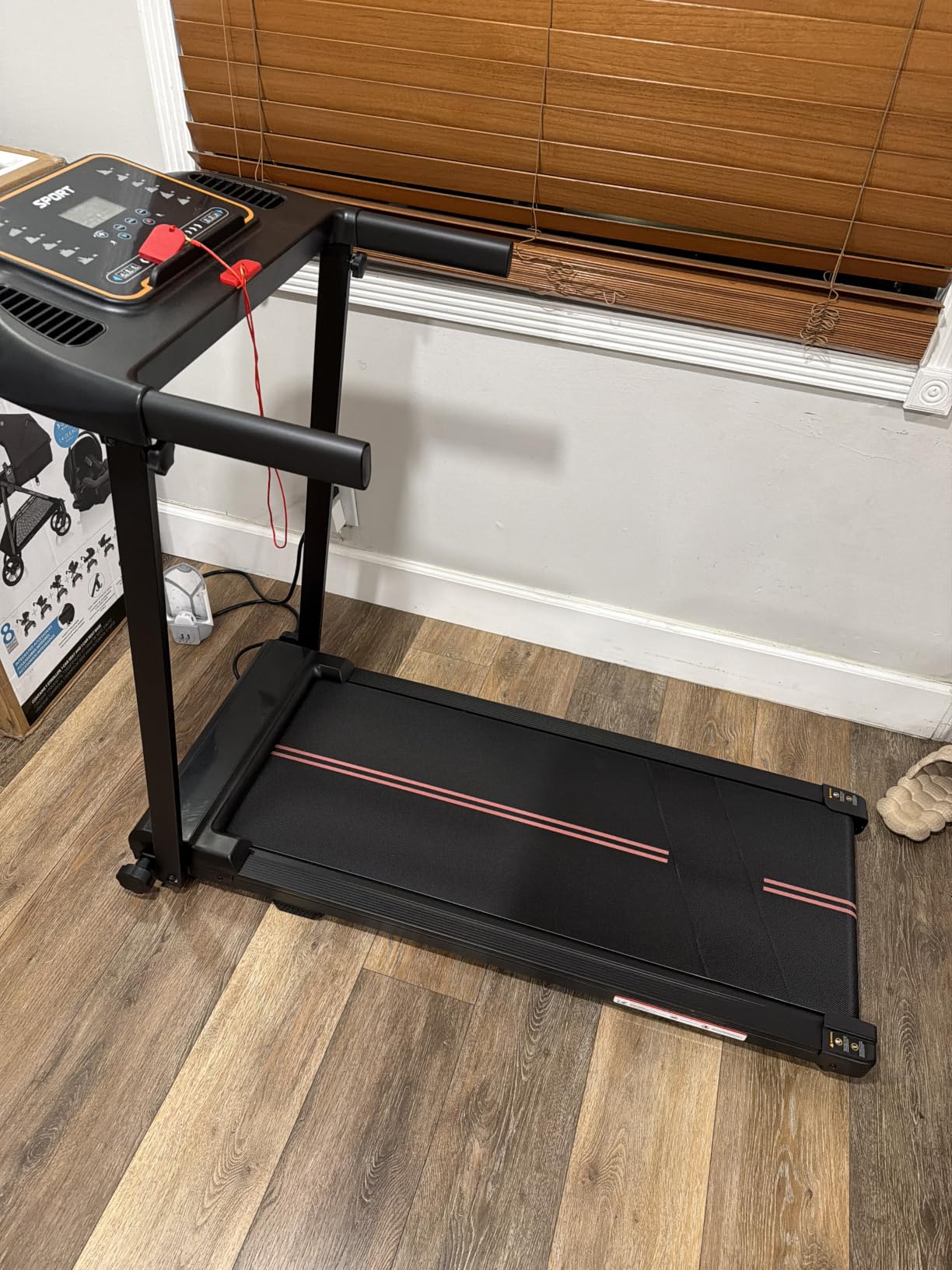
The Veiharne is here for one specific reason: a real handrail, at the entry tier. The handlebar sits about 31.5 inches from the walking surface, which is a meaningful height for a beginner, a senior, or anyone who wants a support rail while they build the habit. Most competitors at this level strip the rail out entirely.
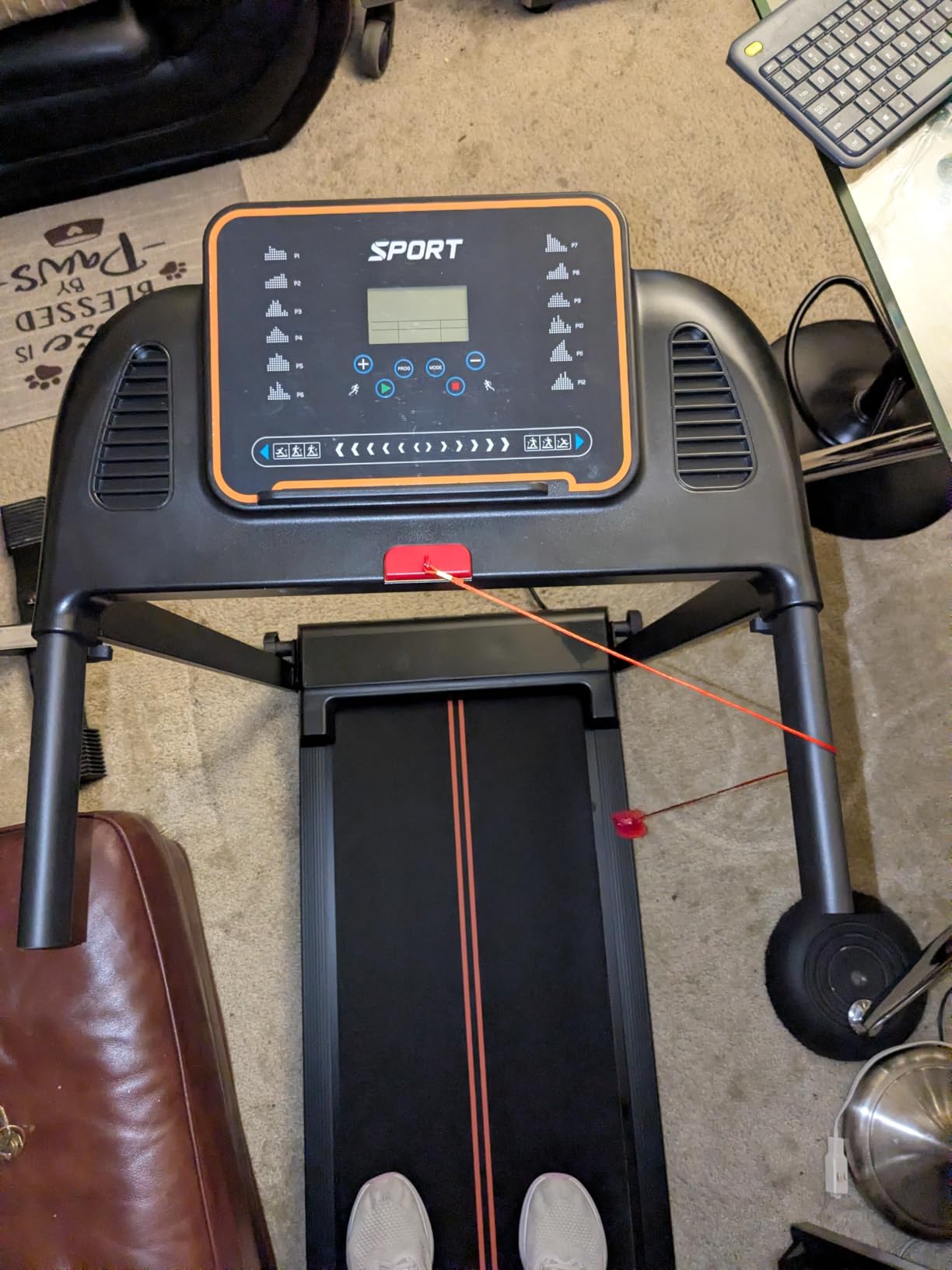
It is also genuinely portable. At 48.5 lbs and 5.67 inches folded, it goes under a bed or a sofa and one person can move it. The belt is a five-layer diamond-texture design with six silicone pads and eight shock-absorbing elements, twelve preset programs run from P1 to P12, and three countdown modes cover time, distance and calories for goal tracking.
The compromises are substantial and they are all about load. Capacity is 264 lbs, the lowest figure in this comparison, and the 2 HP motor with a 6.2 MPH ceiling is the weakest drivetrain here. There is no incline, and the 39.4 by 15 inch deck limits stride at faster walking speeds.
Documentation and listing detail are sparse, which is worth knowing before you buy. If a manufacturer cannot explain a 264 lb limit clearly, expect to find out what it means by exceeding it. Check the warranty terms carefully in writing rather than assuming parity with the higher-capacity machines in this list.
Is This the Best Walking Pad for a Senior in an Apartment?
It competes on the rail, not on the machine. The 31.5 inch handlebar height is genuinely useful for someone who needs support, and the thin fold means it disappears when nobody is using it, which matters more in a small unit than any speed range.
The WELLFIT above is our pick if you can stretch further, because the self-centering belt and 3-year frame warranty are worth more over a year of daily use than the extra rail height.
When to Pass on This Machine
Pass if you are over 264 lbs, because nothing else in this list has that ceiling. Pass if you want incline, and pass if you plan to jog.
Pass if motor headroom matters to you. A 2 HP motor asked to carry a heavier user at 6 MPH will be working hard, and this category’s most common failure is a motor asked to run past its duty rating.
10. FutureGlide 970NX V7.0 – Best for Steep Manual Incline
Foldable Treadmills for Home, 3-in-1 Walking Treadmill with Incline Handle Bar, 300LBS Capacity, 3.0HP Quiet Brushless, Small Treadmills for Small Spaces FutureGlide
13% manual incline
3.0 HP motor under 45 dB
0.6-6.2 MPH
300 lbs capacity
41 lbs machine weight
Pros
- 13% incline is the steepest in this comparison
- Under 45 dB motor
- Works out of the box for many owners
- Folds to 5.04 inches with wheels and knobs
Cons
- Folding needs an Allen key every time
- 38.2 inch deck is too short to jog
- Build quality and support responsiveness are the weakest here
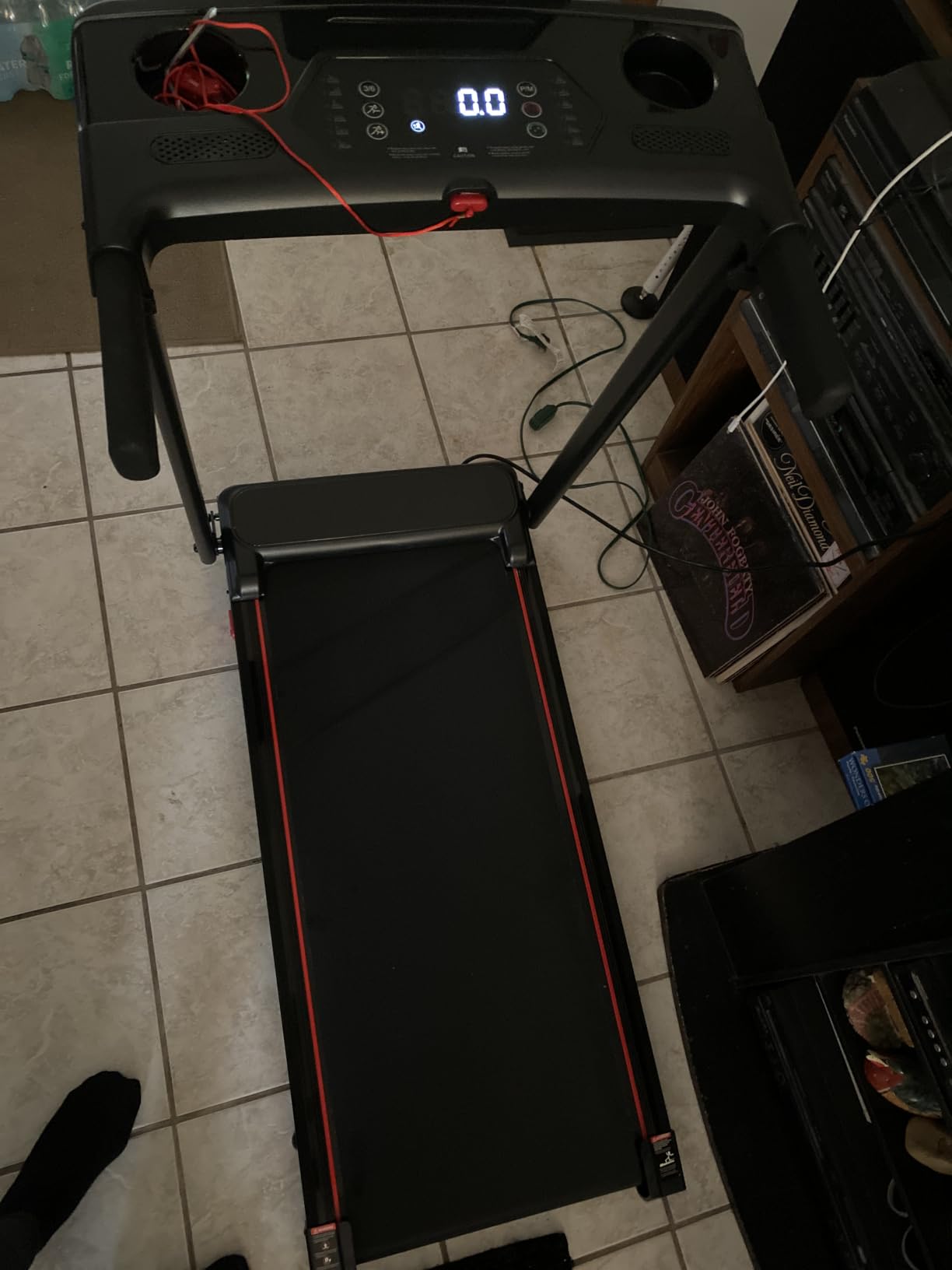
The FutureGlide’s headline number is 13% incline, the steepest in this comparison and a genuine training asset for walking. A 3.0 HP brushless motor quoted under 45 dB handles the walking speed range, and several owners report using it straight out of the box with no assembly at all. It folds to 5.04 inches on knobs and wheels, and the console includes a device prop for watching shows.
The multi-function LED display covers time, distance and calorie countdowns alongside twelve programs, and a pause function retains your data and auto-saves the workout, which is convenient when you are stopping and starting. At 41 lbs it moves easily between rooms. The capacity is 300 lbs, a solid number for a machine this small.
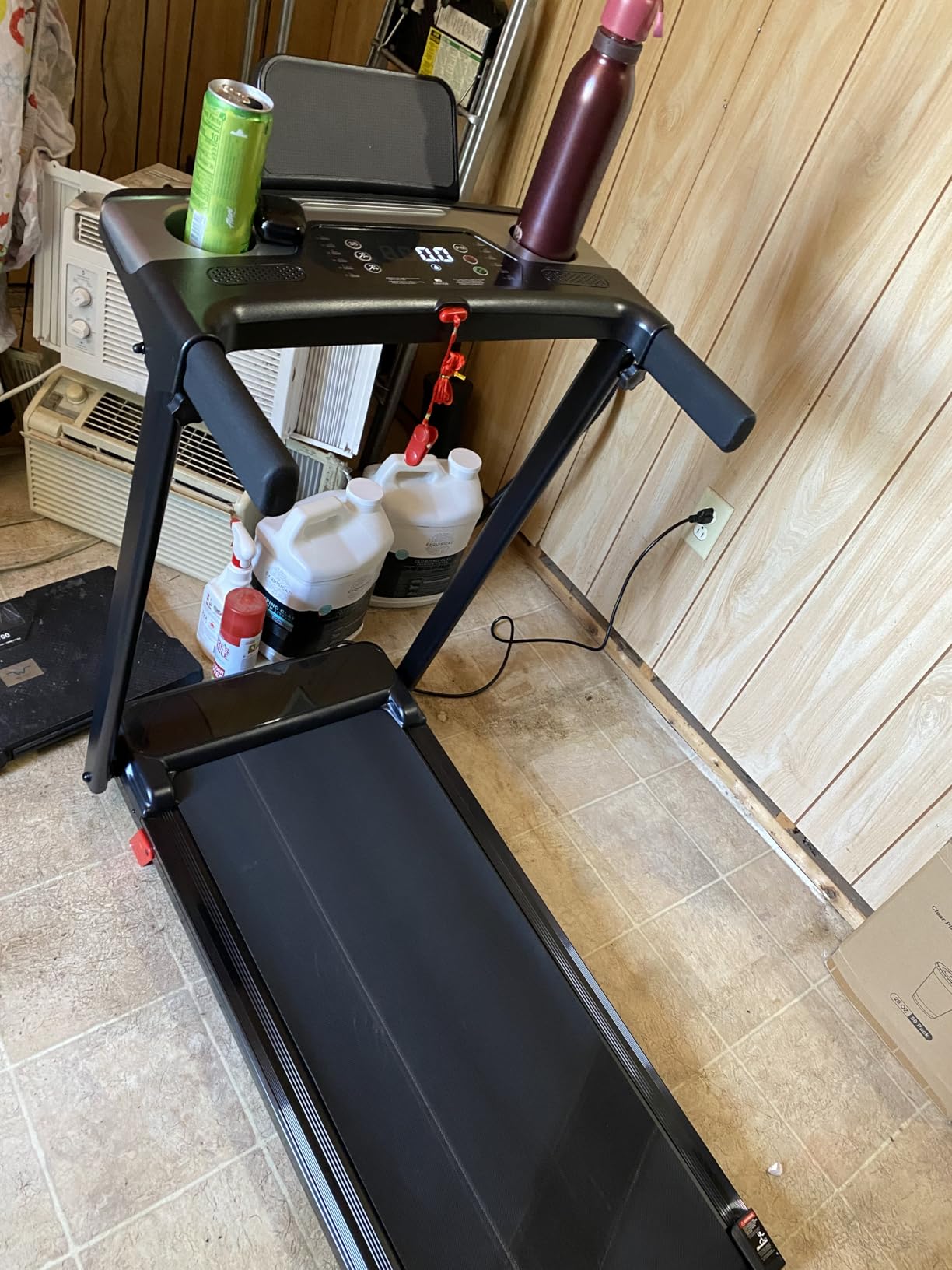
This is where the reviews get honest. The fold requires unscrewing the underside screws with an Allen key every single time, the same complaint that appears against the ApexNexus, and it disqualifies the machine from daily store-and-forget use.
The 38.2 by 15.4 inch deck is short enough that owners specifically warn against jogging on it, and the build quality and support responsiveness are described as the weakest in this group. One owner received a unit with a snapped screw in the side rail and an unreachable seller, and a subset of machines stopped powering on within months with slow replacement turnaround. That combination of an unclear support path and a mid-life power failure is why this sits at the bottom of our ranking despite a good headline incline.
Does the 13% Incline Make This Worth a Lower Rating?
Only if you actually train on hills. A 13% grade is a real incline and the machine delivers it quietly, but the manual adjustment means you set it before you start rather than mid-interval.
For an easy daily walk with a step challenge attached, the incline matters more than the rating. For anything structured, the FOUSAE at 4.6 with 12 HIIT programs is a stronger buy.
Who Should Look Elsewhere
Anyone who needs a daily fold should skip this machine, since the Allen key routine will stop happening within two weeks. Anyone over six feet tall or anyone who wants to jog will run out of deck.
And if reliable support matters to you, buy the one with the three-year frame warranty instead. The FutureGlide carries one year, and the difference in ownership experience is considerable.
Folding Treadmill Buying Guide for Apartment Living
Motor Noise and Footstep Impact Are Two Different Problems
This is the distinction that decides most apartment treadmill disputes, and almost no competitor article makes it. Motor noise is a specification problem. Footstep impact is a structural problem, and it is the one that reaches the unit below you.
A motor figure quoted at under 30 dB or under 45 dB describes the drivetrain at a measurement distance the manufacturer chooses, usually very close to the machine. It tells you whether the machine will interrupt a phone call in the same room. It tells you nothing about what passes through the joists. A quiet motor in a machine rated for 400 lbs can still produce a loud floor.
None of that is the same problem as how the rest of the room sounds, which is where our picks for the best speakers for apartments and the best soundbars for apartments come in.
Folding Treadmill vs Walking Pad vs Under-Desk Pad
The SERP mixes three vocabularies and buyers get confused by them. A folding treadmill hinges the deck and can run. A walking pad folds flat to a few inches and walks. An under-desk pad is a walking pad tall enough to roll under a standing desk. Here is how to choose between the three for a small unit.
Choose a folding treadmill if you run or want a real speed range and you have a corner to give up. Choose a walking pad if desk walking and step targets are your entire goal and the machine must vanish under furniture. Choose an under-desk pad specifically if your WFH setup is a standing desk and you want movement during work hours. The R2 in this list does both roles, which is why it earns a slot despite no incline.
Will It Actually Fit Through Your Door
This is where apartment buyers most often get caught, because folded dimensions are published but rarely compared against a real doorway. Standard interior doors are 32 inches wide, and apartment hallways turn tighter than people expect.
Walk the route from your building entrance to the intended room with a tape measure. Check the door width, the narrowest hallway point, the turn at the stairwell or elevator lobby, and the ceiling height if you plan to store the machine upright. The MX8 Plus stores in the least space but is 26.1 inches wide folded, so it wants a wide route. The flat pads are the easiest to carry through a building because they are thin.
The Month 3-8 Reliability Cliff
Budget pads in this category fail in a predictable window. A reviewer running a 12-model programme logged failures month by month and found the cliff consistently lands between month three and month eight, which is precisely when warranty return windows close and parts coverage gets harder to claim.
The common trigger is duty time. A motor rated for roughly 20 minutes a day will cook itself if asked for an hour, and the failure mode is a melted housing or a motor that will not power on. This is a documented problem on budget pads in this list, where several owners report units that stopped powering on after a few months. Two habits prevent most of it: keep daily sessions under the rated duty time, and lubricate the belt on schedule so the motor is not dragging a dry belt.
This is also why the WELLFIT’s three-year frame warranty is a meaningful differentiator rather than a nicety. Warranty length tracks what the manufacturer expects the machine to survive.
Apartment-Specific Failure Modes Nobody Warns You About
Three problems show up in apartments and almost never in gym showrooms.
Sunlight triggering infrared remotes. Compact pads use infrared remotes, and direct sun through an apartment window can trigger the machine. If your walking spot gets direct light, a remote is a liability.
Vibration through engineered floors. Engineered hardwood and floating floors transmit footfall further than carpet or concrete. Owners with under-floor heating report markedly more transmitted noise, which makes a mat mandatory rather than optional.
Outlet proximity. Several machines in this list have short power cords, and a stretched cord across a walkway is both a trip hazard and a code problem. Check the cord length against your intended layout before delivery.
How to Make a Treadmill Quieter in an Apartment
Six steps, in the order that gives the biggest return:
Put down a proper isolation mat. A closed-cell or dense-rubber treadmill mat is the single highest-impact change you can make. It decouples the frame from the subfloor and softens the impact point.
Lubricate the belt on schedule. A dry belt drags, squeaks and makes the motor work harder, which raises both noise and heat. This is free and takes five minutes.
Run quieter. Softer surfaces mean less peak impact. Cushioned shoes and a lower cadence do more for your downstairs neighbour than any machine change.
Use the incline. Walking at 3% incline at 3 MPH burns comparable energy to flat 4 MPH with less ground contact time, which means less impact for the same workout.
Keep it off shared walls. Place the machine as far as practical from the wall you share with a neighbour, even if that is not the most convenient spot.
Choose your hours. Weekday evenings and early mornings carry the most complaint risk. Midday and weekend use is far less likely to escalate.
Before a Complaint Escalates: A Simple Paper Trail
Lease-violation threats over home gym noise are documented on r/neighborsfromhell, r/childfree and r/OpenDogTraining, and the consensus advice is the same: get ahead of it. Before a noise complaint becomes a formal issue, keep a simple log of date, time, duration, who was in the unit, and a decibel reading taken on your phone app at the far end of the room.
If you need to write to a property manager, keep it factual and short. State that you have taken mitigation steps, list them, and attach a week of the log. That is a far stronger position than a request to buy a mat.
Who Should Skip a Treadmill in an Apartment Entirely
Some apartments are genuinely wrong for any treadmill, and we would rather say so than sell one. If you have under about 300 square feet of usable floor and no corner to spare, a machine becomes permanent furniture and you will resent it. If your building has strict quiet hours that make evening use impossible, the machine will end up as a clothes rack.
If your primary goal is weight loss rather than movement, a stationary bike costs less, takes a fraction of the space, transmits far less footfall noise, and can be stored vertically. A membership is the third option and costs nothing in square footage. Only buy a treadmill if you will use it at least four days a week; below that, the space cost is not worth it.
Frequently Asked Questions
Is a treadmill too loud for an apartment?
A well-built folding treadmill is usually manageable in an apartment, but two different noises matter. Motor and belt noise is a specification you can verify, and modern brushless motors are genuinely quiet. Footstep impact is the real problem, because heel strike travels through the subfloor to the unit below you. Place the machine away from shared walls, put a dense isolation mat underneath it, lubricate the belt on schedule, and use cushioned shoes. Machines rated 100 lbs or less are the easier choice.
Are treadmills allowed in apartments?
Usually yes, but your lease and building rules decide. Search your lease for exercise equipment, nuisance and noise-hour clauses, and check whether your building has separate rules from an HOA. Three practical limits matter more than a prohibition: the floor loading of a heavy machine, whether the outlet is close enough to avoid a cord across a walkway, and whether your downstairs neighbour tolerates footfall. Tell your neighbour before the first session rather than after the first complaint.
What is the best small treadmill for an apartment?
For most apartments, the MERACH T12 is the best balance: a quiet 2.5 HP brushless motor, 15% auto incline, side rails, a 300 lb capacity and a folded depth of 27.6 inches at roughly 100 lbs. If your unit is very small, the WalkingPad foldable stores flat at 5 inches. If you need a real handrail, the Veiharne and WELLFIT both provide one. Choose based on whether you run, whether you need incline, and how much floor space you can give up.
Are foldable treadmills worth the money?
Worth it when you will use them at least four days a week and have no spare room for a permanent machine. The fold is what makes a treadmill viable in an apartment at all, and it is also what lets you reclaim the floor between sessions. Value is thinner for occasional use, because a fold you rarely perform is a permanent machine with extra steps. A stationary bike or a gym membership is the better buy below four sessions a week.
What is the 3-3-3 rule for a treadmill?
The 3-3-3 rule means 30 minutes of treadmill use, three times a week, at about 3 mph. It is a useful habit-formation target rather than a fitness threshold. Thirty easy minutes three times a week is a realistic starting commitment for a beginner and easy to keep on a machine in your own home. It builds the habit that matters most. It will not by itself produce large fitness changes, so raise duration or incline gradually once the routine is established.
Final Verdict: Which Folding Treadmill Suits Your Apartment
For most apartment dwellers, the MERACH T12 is the folding treadmill to buy. It runs at 7.5 MPH with auto incline, folds to a corner-friendly profile, weighs about 100 lbs, and runs one of the quieter brushless motors in this group by specification. It is the machine we would put in the most units.
The WalkingPad foldable is the value answer if you walk rather than run and need the machine to disappear under a sofa. The FOUSAE carries the highest rating here and suits households above 300 lbs. The THERUN is the pick that reaches genuine running speeds, and you will need a second person to move it. The WELLFIT is our recommendation for an older relative, thanks to the self-centering belt and a three-year frame warranty. The WalkingPad MX8 Plus stores in the least space if a vertical fold fits your doorway, and the remaining three budget machines work for walking-first users who never plan to jog.
Whichever you choose, buy the mat, read the duty-time rating before your first long session, and tell your downstairs neighbour what is coming. If sound carries more than you expect through your floor, the fix is never a louder motor. It is a softer landing. Our best apartments audio picks sit in the same guide as the rest of our coverage for compact living, alongside our home theater systems for apartments roundup if you are planning the rest of the room too.