
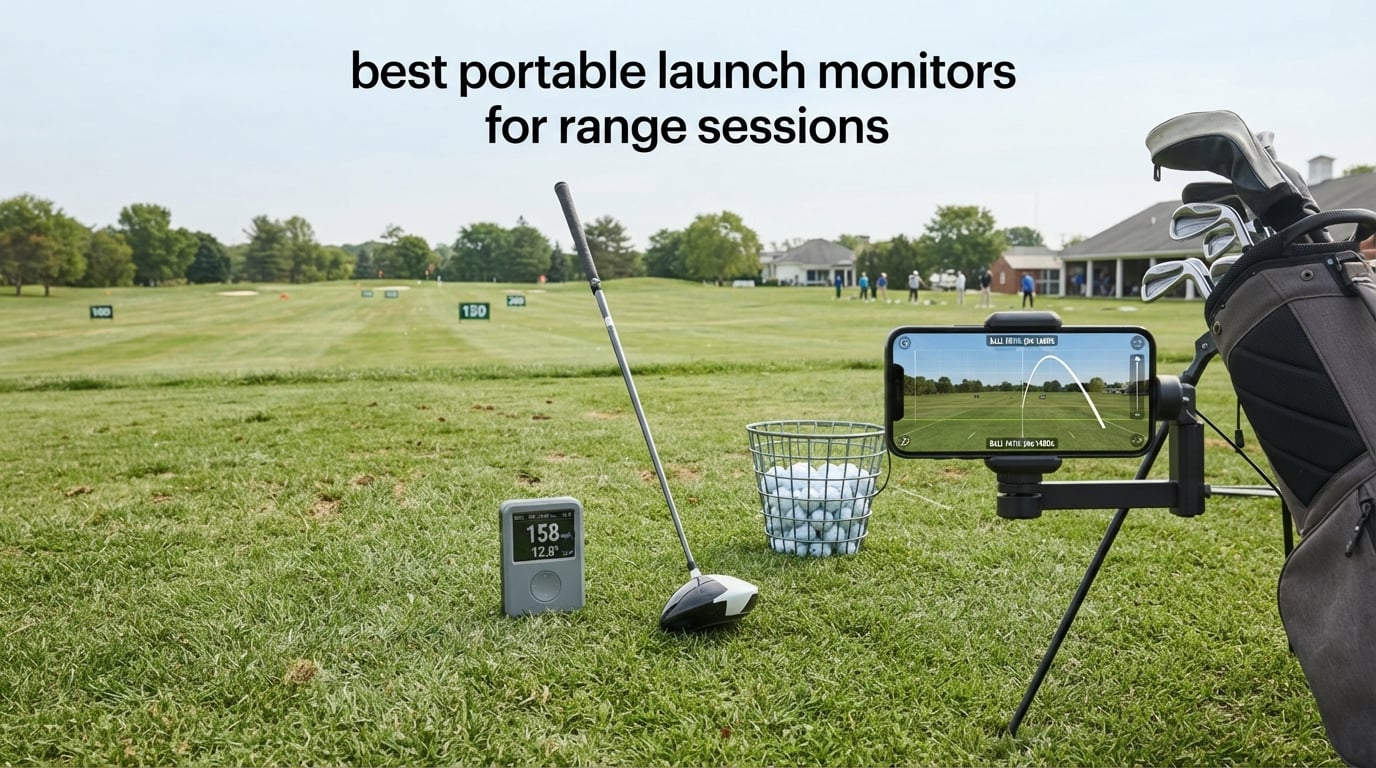
Most golfers buy a portable launch monitor for one reason: they want the range to stop lying to them. You hit a drive, glance at a placard 30 yards away, guess, and hit another. A launch monitor replaces the guess with ball speed, launch angle, carry distance, and a dispersion pattern you can actually practice against. The problem is that most of the shiny options assume a permanent indoor bay, and the ones built for the range range from a pocket radar wand to a full radar-and-camera rig.
We spent weeks working through the current field to find the best portable launch monitor for range sessions. This guide covers ten devices that run on battery, survive a golf bag, and produce shot data outdoors without permanent installation. We looked hard at the details that decide whether a unit works on an open-air range: shot detection rate, sunlight behaviour, battery runtime, whether it works without your phone, and what the numbers drift toward when you move the device between sessions.
Short answer: the best launch monitor to take to the range is the Rapsodo MLM. It is the only device here that combines a large review history, dependable outdoor shot detection, ball speed, launch angle, carry distance, and video replay with an on-screen shot tracer, and it does all of it from a unit that fits in a bag pocket. If you want tournament-grade metrics instead, the Rapsodo MLM2PRO is the step up. If you only care about club speed and want zero fuss, the Swing Speed Radar is the cheapest honest answer.
Two quick definitions before we get into the picks. A portable launch monitor is a device small and light enough to carry in a golf bag, that runs on battery, works outdoors at the range without being mounted, and measures shot data such as ball speed, launch angle, spin rate, and carry distance using radar, camera, or a hybrid of both. A standalone unit prints its numbers on its own screen with no phone involved. An app-based unit shows everything on your phone or tablet and stops working when the phone dies. That single distinction drives most of the satisfaction and most of the complaints in this roundup.
Table of Contents
Top 3 Best Portable Launch Monitors for Range Sessions (October 2026)
Rapsodo MLM Mobile Launch Monitor
- Ball speed and launch angle data
- Video replay with shot tracer
- GPS dispersion mapping
- iOS only app

Swing Speed Radar
- Club speed with no ball required
- 20 to 200 mph range
- One button start
- No app or phone needed
Garmin Approach R10
- Radar tracking with 10 hour battery
- IPX7 waterproof for wet grass
- Per club dispersion charts
- Works at range and home
The Rapsodo MLM takes the top spot because the total package holds up outdoors. Owners on r/Golfsimulator repeatedly single out the Garmin R10 and the radar-based Mevo family for consistent range data, and the MLM sits in that same reliability tier with a much larger installed base than anything else in this list. More than 3,000 reviews is a meaningful signal on a device whose whole job is to be trusted on shot 40 of a bucket session, not shot 4.
The Swing Speed Radar takes the number two slot on a completely different promise. It measures one thing, club speed, and it does it for a fraction of the cost of anything else here, with no phone, no account, and no subscription. The Garmin R10 is number three because it is the rare device that genuinely does double duty between the range and a garage net, and because a 10-hour battery with IPX7 waterproofing removes two of the three things that normally ruin an outdoor session.
All 10 Picks Best Portable Launch Monitors for Range Sessions in 2026
Every product below appears in this table with its tracking method, its power source, and the one job it does best. Use it to narrow the field before you read the individual reviews.
| Product | Specifications | Action |
|---|---|---|
| Rapsodo MLM Mobile Launch Monitor |
|
Check Latest Price |
 PRGR HS 130-A Portable Launch Monitor PRGR HS 130-A Portable Launch Monitor |
|
Check Latest Price |
| Swing Speed Radar |
|
Check Latest Price |
| Garmin Approach R10 |
|
Check Latest Price |
 Voice Caddie SC200Plus Voice Caddie SC200Plus |
|
Check Latest Price |
 Garmin Approach G80 Garmin Approach G80 |
|
Check Latest Price |
 Rapsodo MLM2PRO Rapsodo MLM2PRO |
|
Check Latest Price |
 SkyTrak Golf Launch Monitor SkyTrak Golf Launch Monitor |
|
Check Latest Price |
 TAGCMC GX-10 Portable Launch Monitor TAGCMC GX-10 Portable Launch Monitor |
|
Check Latest Price |
 Izzo Launch Master Izzo Launch Master |
|
Check Latest Price |
Two patterns jump out immediately. First, the devices that show data on their own screen (the PRGR, the Voice Caddie, the Izzo, and the MLM2PRO) never leave you stranded at the range with a dead phone. Second, the devices that unlock the richest analytics (the R10, the MLM2PRO, the SkyTrak) all push some of their best features behind a paid membership, which is a running cost nobody mentions in the sales listing.
1. Rapsodo MLM Mobile Launch Monitor – Best Overall for Range Sessions
Rapsodo Mobile Launch Monitor Golf Simulator | MLM iPhone & iPad Only
Radar tracking in the Rapsodo app
Ball speed, launch angle and carry
Video replay with shot tracer
Pros
- Automatic shot detection on every swing
- Video replay with an on-screen shot tracer
- GPS dispersion mapping by club
- Lightweight enough for a golf bag
- Large established user base
Cons
- iPhone and iPad only with no Android support
- Alignment and calibration take practice to dial in
- Can overheat in direct sun and the screen is hard to read in bright light
The Rapsodo MLM is the most complete answer to the question we set out to answer. Turn it on, pair your phone, calibrate at the marked distance, and every swing produces ball speed, club speed, launch angle, carry distance, and shot shape without you touching anything. That turn-on-and-hit workflow is the reason it has accumulated more reviews than every other product in this roundup combined, and it holds up in a way that cheaper phone-based units do not.
What separates it from a generic swing camera is the shot tracer. After each swing you get a replay with the flight path drawn over the video, which is the fastest way to see that your misses are a consistent pull or a face that is open on every second swing. Owners consistently credit the video with speeding up improvement rather than just producing numbers to look at afterwards.
The GPS satellite view is the sleeper feature for range work. Because the unit knows the layout of the range you are standing on, it plots your dispersion pattern club by club, so you can see whether your 7-iron grouping is a tight ellipse or a mess of outliers. That view is what turns a bucket of balls into a practice plan.
The catch is the platform. This is an iPhone and iPad only device, and if your phone is Android it simply will not pair. Buyers also report that the first alignment and calibration pass takes a few attempts to get right, and the setup instructions are vague about the exact calibration distance, so plan to spend ten minutes on it before your first real session rather than during it. In bright midday sun the screen is hard to read and reviewers note the unit can overheat during long sessions in direct light. If you want the metric depth of a premium rig but not its bulk, the portable studio monitor roundup is a useful reminder that measurement devices are easier to trust when you can see them clearly.
Who the Rapsodo MLM suits
It suits an iPhone owner who wants ball speed, launch angle, and carry data plus a video they can actually study, and who does not need spin rate. It also suits golfers who split their practice between the range and a backyard or garage net, because the same hardware and the same app work in both places. Golfers who already use a Garmin watch will find its data familiar in structure even though the hardware is different.
Where the Rapsodo MLM falls short
It falls short for Android users, full stop, and for anyone who needs true spin rate or spin axis data. It also falls short on physical screen quality in hard sunlight, and the reported overheating in long direct-sun sessions is worth planning around. If spin is your deciding metric, move up to the MLM2PRO instead.
2. PRGR HS 130-A Portable Launch Monitor – Best Budget Radar With No Fuss
PRGR HS 130-A Portable Golf Launch Monitor | Doppler Radar Measures Club & Ball Speed, Smash Factor, Total & Carry Distance | Tracks Swing Speed Training Aids
Doppler radar in a 4.9 ounce body
Ball speed, smash factor and carry
500 swings stored on unit
Pros
- Measures club head speed with or without hitting a ball
- No app Wi-Fi or Bluetooth needed so you turn it on and swing
- Pocket sized at 4.9 ounces and slips into a golf bag
- Stores 500 previous swings for session to session comparison
- Also works for baseball tennis soccer and hockey
Cons
- Doppler reads the club so struck-ball numbers can run high
- No spin rate launch angle or shot shape data
- Short LCD limits the metrics shown per swing
The PRGR is the anti-app. No Bluetooth, no Wi-Fi, no account, no phone in your pocket at all. It runs on AAA batteries, measures club head speed with or without a ball, and stores 500 previous swings in memory so you can compare this week’s session to last week’s. At 4.9 ounces and roughly the size of a marker pen, it is the easiest device here to forget you packed.
For pure speed training it is excellent. The best use is pointing it at a swing trainer and reading club head speed off every rep without a ball in the way, which is exactly how golfers build speed. It also does a credible job on struck balls for ball speed, smash factor, and carry and total distance, and the IP54 rating means a sudden shower is not a catastrophe.
Be clear-eyed about the Doppler limitation, because it is the one thing that trips people up. The unit measures the club, and the ball reading is inferred, so ball-struck numbers commonly sit above true ball speed by a percentage offset. That is fine for tracking change over weeks, which is what most buyers use it for, and it is not fine if you intend to compare it against a tour-grade reference. There is also no spin, no launch angle, and no shot shape, and the LCD is small enough that you only see a few numbers at a time.
Reviewers are consistent on the right framing: this is a progress tracker, not a measurement instrument. Used that way it is one of the best values in golf training, and the multi-sport capability means it doubles as a bat and racquet speed tool if you play other sports.
Who the PRGR HS 130-A suits
It suits golfers training club speed with a swing trainer, coaches running large groups where every extra phone pairing is friction, and anyone who refuses to let a dead battery end a session. It also suits golfers who want a device they can hand to a playing partner without explaining an app. The 500-swing memory is more than most range sessions need.
Where the PRGR HS 130-A falls short
It falls short the moment you want to know why a shot went where it went. No spin, no launch angle, no shot shape, no video means you get a number and a guess. It also falls short for anyone comparing distance against a ball tracer, because the club-based reading skews high on struck shots. If you want data that matches a fitter’s screen, this is not the device.
3. Swing Speed Radar – Best Cheap Way to Track Club Speed Progress
Swing Speed Radar – Achieve Longer Drives – Delivers Precise Golf Club Swing Speeds from 20 to 200 MPH. Master Consistency with Our US Made Doppler Radar Training Tool for Instant Speed Results
Doppler radar from 20 to 200 mph
Plus or minus 1 mph accuracy
No ball required for training
Pros
- One button start with no pairing app or account
- No ball needed so you can train with a wiffle or foam ball
- Consistent readings that show real progress week to week
- Also doubles as a bat speed radar for baseball training
- Comes with a carry pouch and auto shutoff
Cons
- Reads the club so numbers typically run several percent high
- Interference from fluorescent lights wifi and cell signals
- Batteries are not included
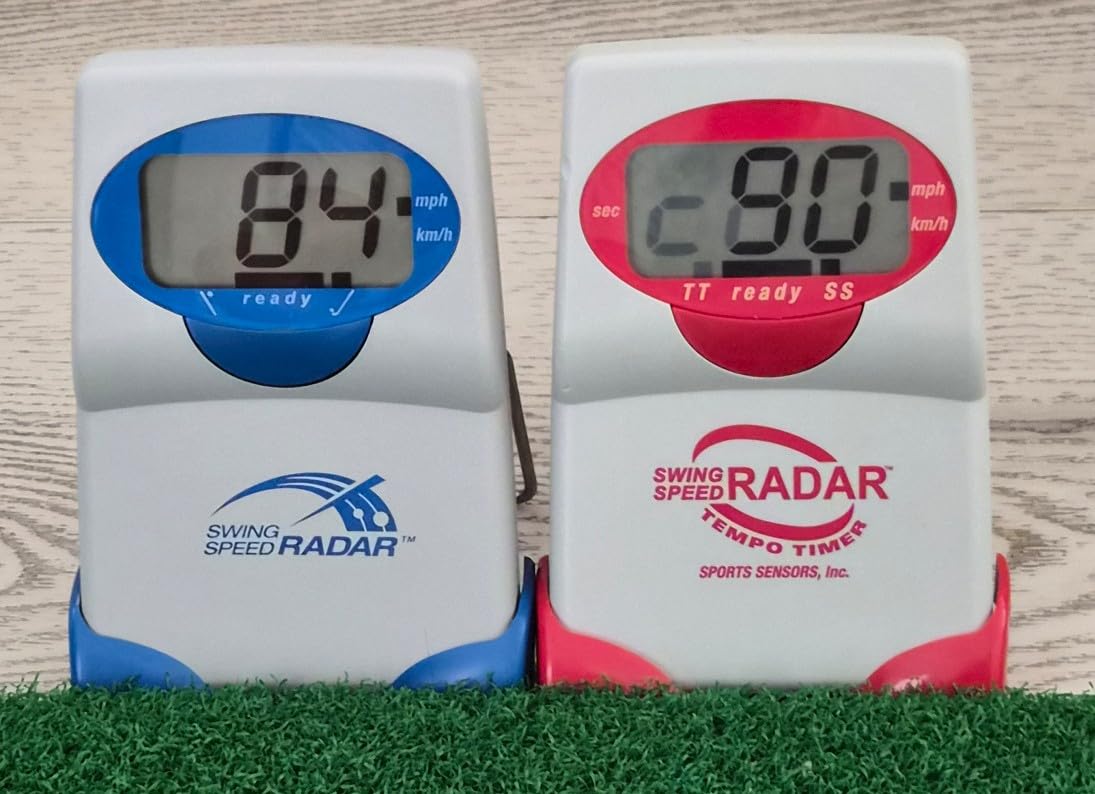
Among the highest-rated products in this roundup, the Swing Speed Radar does the least and gets the highest score, and that is not a contradiction. It is a 9.44 ounce Doppler unit rated plus or minus 1 mph across a 20 to 200 mph range, it starts with one button, and it has been trusted by athletes for 25 years. There is no pairing, no account, no phone, and no learning curve at all.
Because it works without a ball, you can pair it with a Stack System, a RypStick, or a SuperSpeed Stick and build club speed in a garage, a hotel room, or a bay behind the house. To use it with a swing trainer you elevate the unit up to 8 inches off the ground and keep the club level with the radar, which is the one setup step that trips beginners. Reviewers report meaningful speed gains after a few weeks of consistent use, and the auto shutoff plus included pouch make it genuinely grab-and-go.
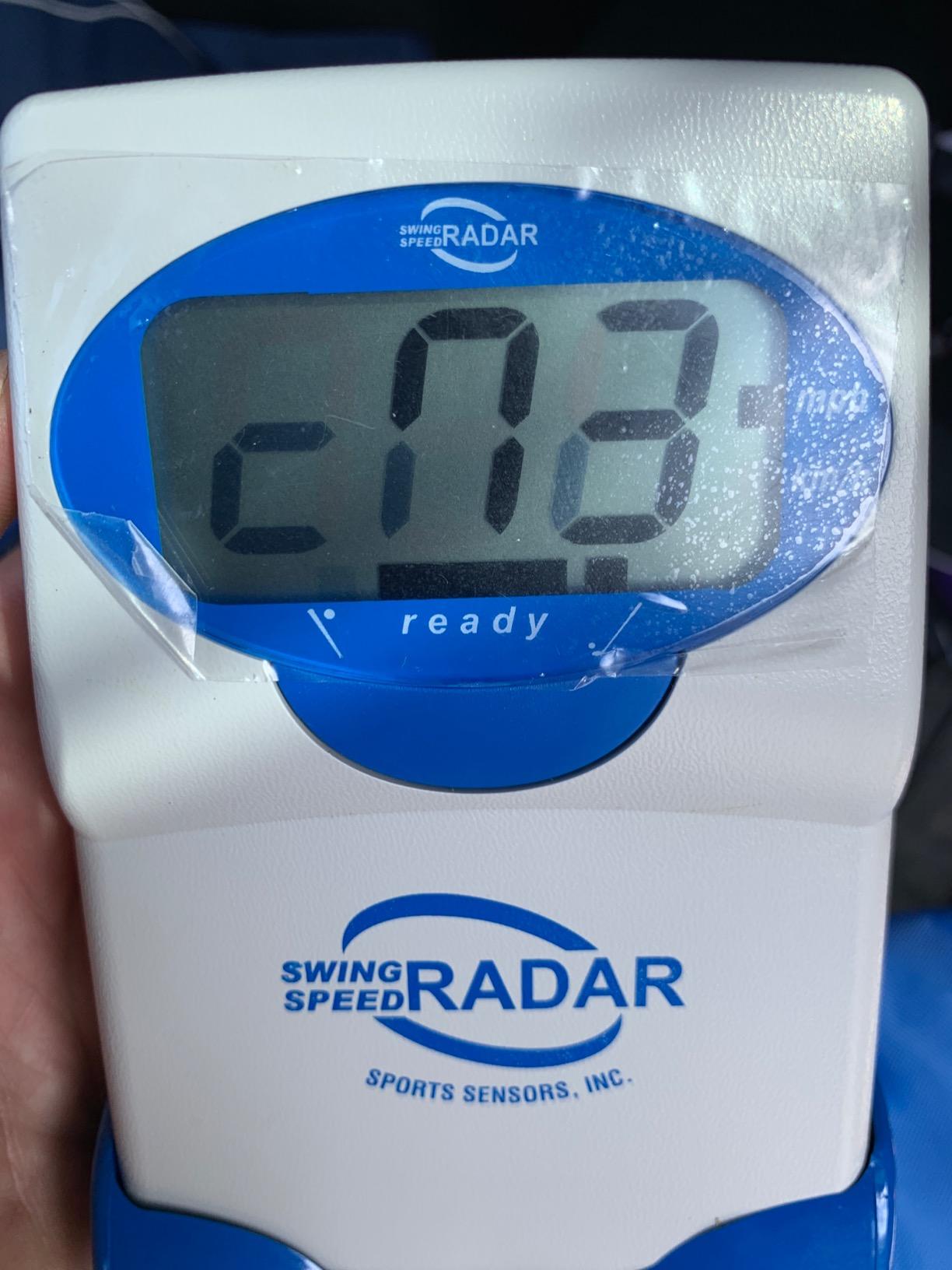
The honest limitation is the same one as the PRGR: it reads the club, so ball-struck numbers run several percent high. The second limitation is environmental, and it matters at an open-air range specifically. Fluorescent lights, wifi, and cell signals can all interfere with the Doppler reading, so if your range has a bank of lights or a strong cell signal near the tee you may get the occasional no-read flash. Outdoors with open sky it is generally clean.
Treat it as a progress instrument rather than a measuring one. Stand in the same spot, hit the same club, write the number down, and repeat in two weeks. Done that way, this is the highest-rated device in the group and the cheapest way to get a number instead of a feeling.
Who the Swing Speed Radar suits
It suits golfers working on speed who want zero technology friction, indoor trainers who need something that works without a ball, and families sharing one device across multiple sports. It also suits players who want to know whether a new shaft or grip actually helped, because the same measurement repeated under the same conditions will show you.
Where the Swing Speed Radar falls short
It falls short for every question except speed. There is no distance, no launch angle, no spin, and no video, so it cannot tell you where a ball went or why. It also falls short in electrically noisy indoor spaces, and you will need to buy batteries separately. Anyone hoping for a full metric set should look past it.
4. Garmin Approach R10 – Best Value for Range and Home Use
Garmin Approach R10, Portable Golf Launch Monitor, Take Your Game Home, Indoors or to The Driving Range, Up to 10 Hours Battery Life – 010-02356-00
Radar with plus or minus 1 mph ball speed
10 hour battery, IPX7 waterproof
Phone mount included
Pros
- Compact and light enough to carry in a golf bag
- Up to 10 hours of battery covers a full practice session
- IPX7 waterproofing holds up in wet range conditions
- Training mode gives per club stats and a dispersion chart
- Included phone mount makes the app easy to read mid session
Cons
- Several headline features need an active Garmin Golf subscription
- No built-in display so every metric shows on your paired phone
- Cannot be used at all without a phone and the app
The Garmin Approach R10 is the device most range-only buyers should actually consider first, and it is a close second to the MLM. It measures club head speed, ball speed, swing tempo, ball spin, and launch angle over radar, it runs up to 10 hours on a charge, and it carries an IPX7 rating that means wet grass, spilled water, and a forgotten bag in the rain are all survivable. Owners on r/Golfsimulator specifically call out reliable shot detection in open-air conditions, which is the number one failure mode for camera-based devices.
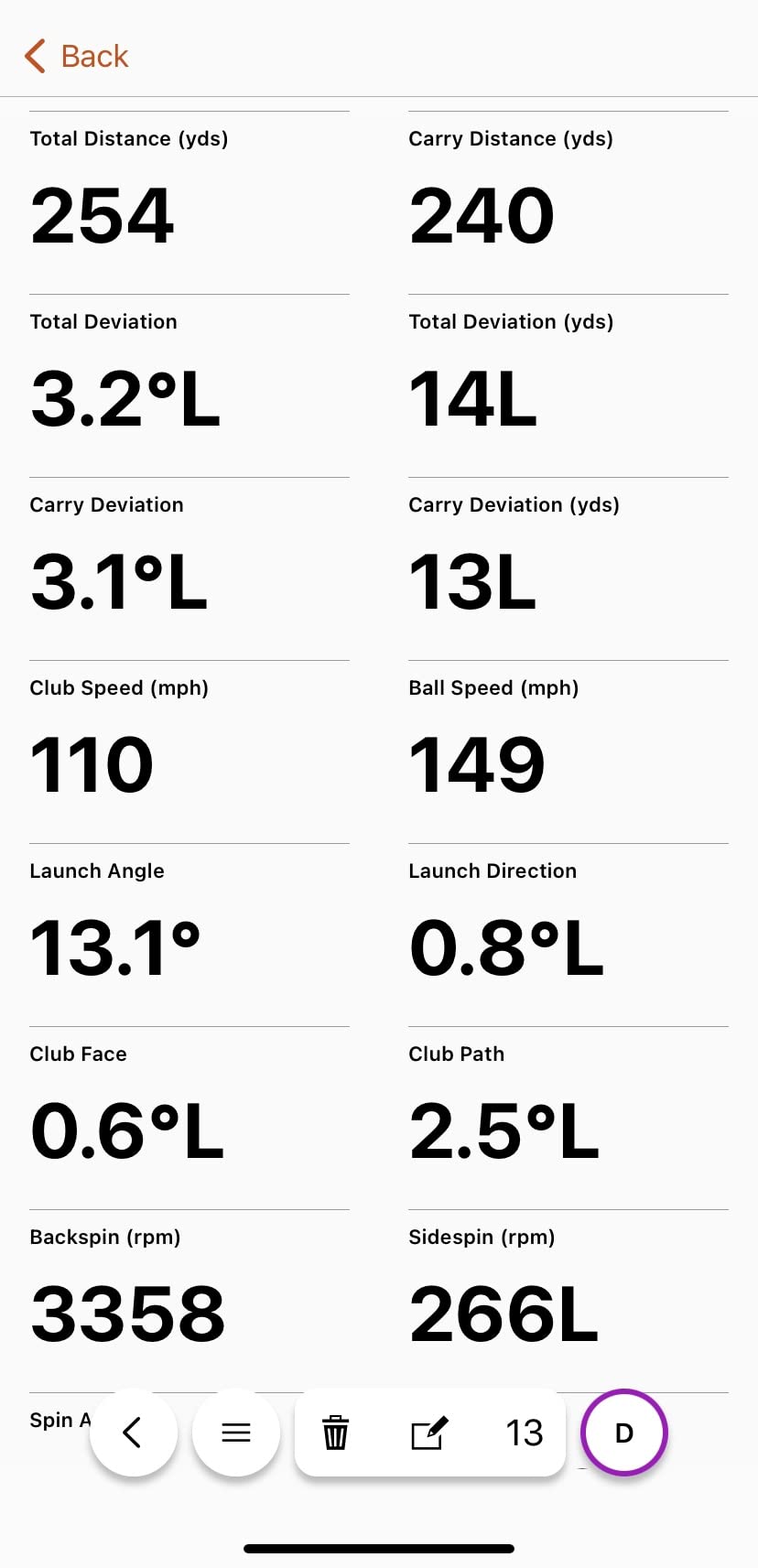
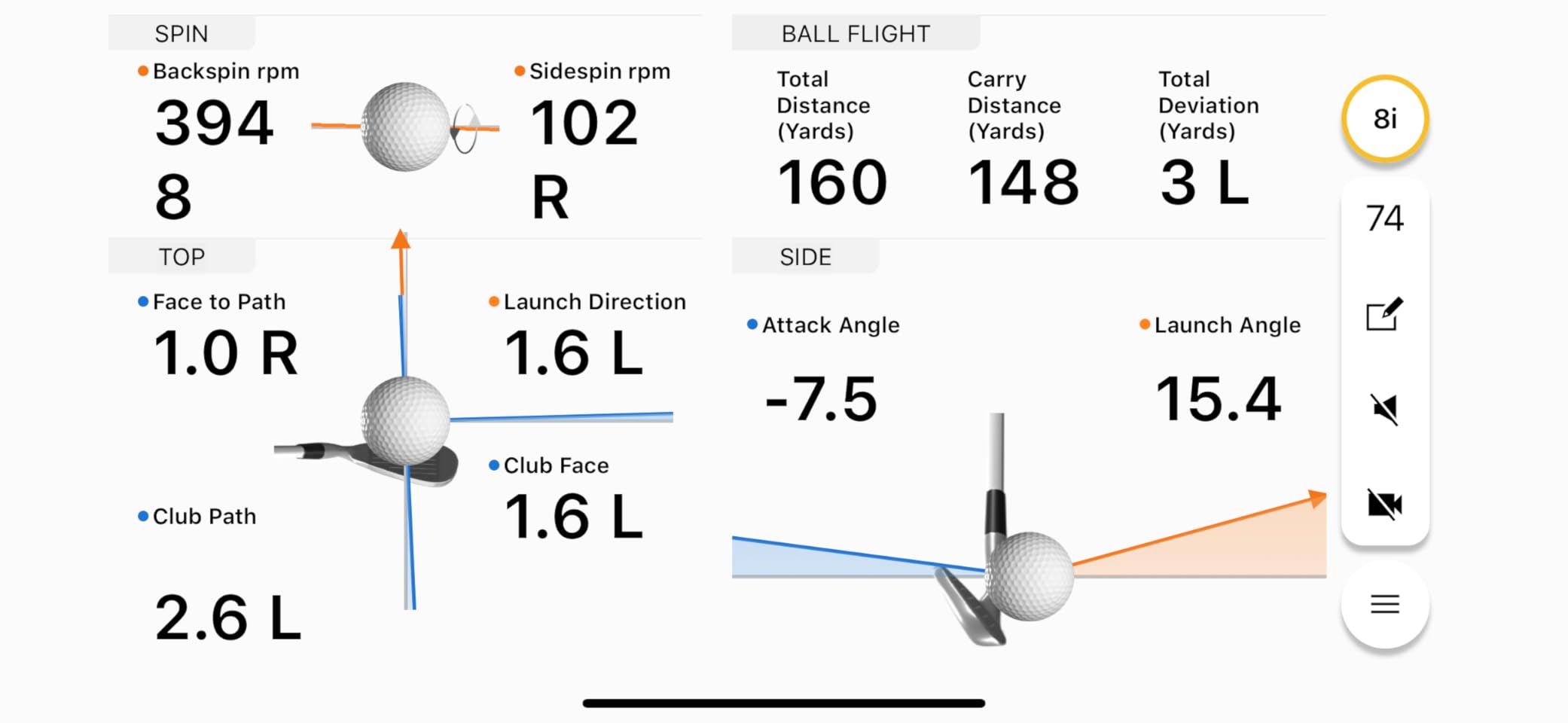
Training mode is where it earns its keep. Per-club statistics and a shot dispersion chart turn a bucket session into a picture of your misses, and the device records video clips automatically with the swing metrics overlaid. Because there is no built-in screen, all of that lives on your phone, and the included mount attaches to a golf bag so the phone sits at a readable angle while you swing. At 340 grams and roughly the footprint of a deck of cards, it is genuinely bag portable.
Now the part that stings: several of the most attractive features sit behind a Garmin Golf membership. Simulated course play is limited without a subscription, and reviewers repeatedly point out that headline features are locked rather than included. You are also fully dependent on a paired phone. If your phone dies mid-session, the R10 dies with it, which is precisely the scenario the PRGR and the Voice Caddie were built to survive.
Accuracy figures are honest and modest: club head speed within plus or minus 3 mph, ball speed within plus or minus 1 mph, and launch angle and direction within one degree. That is more than good enough to change a practice plan, and it is far more consistent across sessions than a camera system that loses reads in bright light.
Who the Garmin Approach R10 suits
It suits golfers who want one device for the range and a garage net, who already live inside the Garmin ecosystem, and who want a dispersion chart and swing video without a subscription for the core metrics. It also suits anyone who cares about weather resistance. Reviewers who use it for both range and home sessions report the data stays consistent between the two, which is the whole point of buying portable.
Where the Garmin Approach R10 falls short
It falls short if you refuse to carry a phone and a charger to the range, and it falls short if you want a built-in screen you can glance at between shots. The subscription is the other soft spot, since owners feel the value gap most when they realise how many features unlock only with membership. There is no physical unit to check if you want a quick look mid-round without the app.
5. Voice Caddie SC200Plus – Best for Long Sessions and Ball-Free Drills
Voice Caddie SC200Plus Portable Golf Launch Monitor and Swing Analyzer with Real-Time Shot Data Tracking – 12-Hour Battery Life
Doppler radar with voice read-out
Swing speed mode needs no ball
Up to 20 hours of battery
Pros
- Spoken read-out lets you swing without watching a screen
- Swing speed mode trains you with no ball at all
- Adjustable loft angles simulate different clubs
- Up to 20 hours of battery is the longest runtime in this group
- Simple LCD and radar keep setup straightforward
Cons
- No app connectivity or video capture
- No spin rate launch angle or shot shape measurements
- Stored club stats can only be viewed on the device
The Voice Caddie SC200Plus wins on one number that matters more than any spec: up to 20 hours of battery life. Nothing else in this roundup comes close, and at a range where you might hit four hundred balls across two sessions, a device that never asks for a charger removes an entire category of annoyance. It is also the only unit here that reads your numbers out loud.
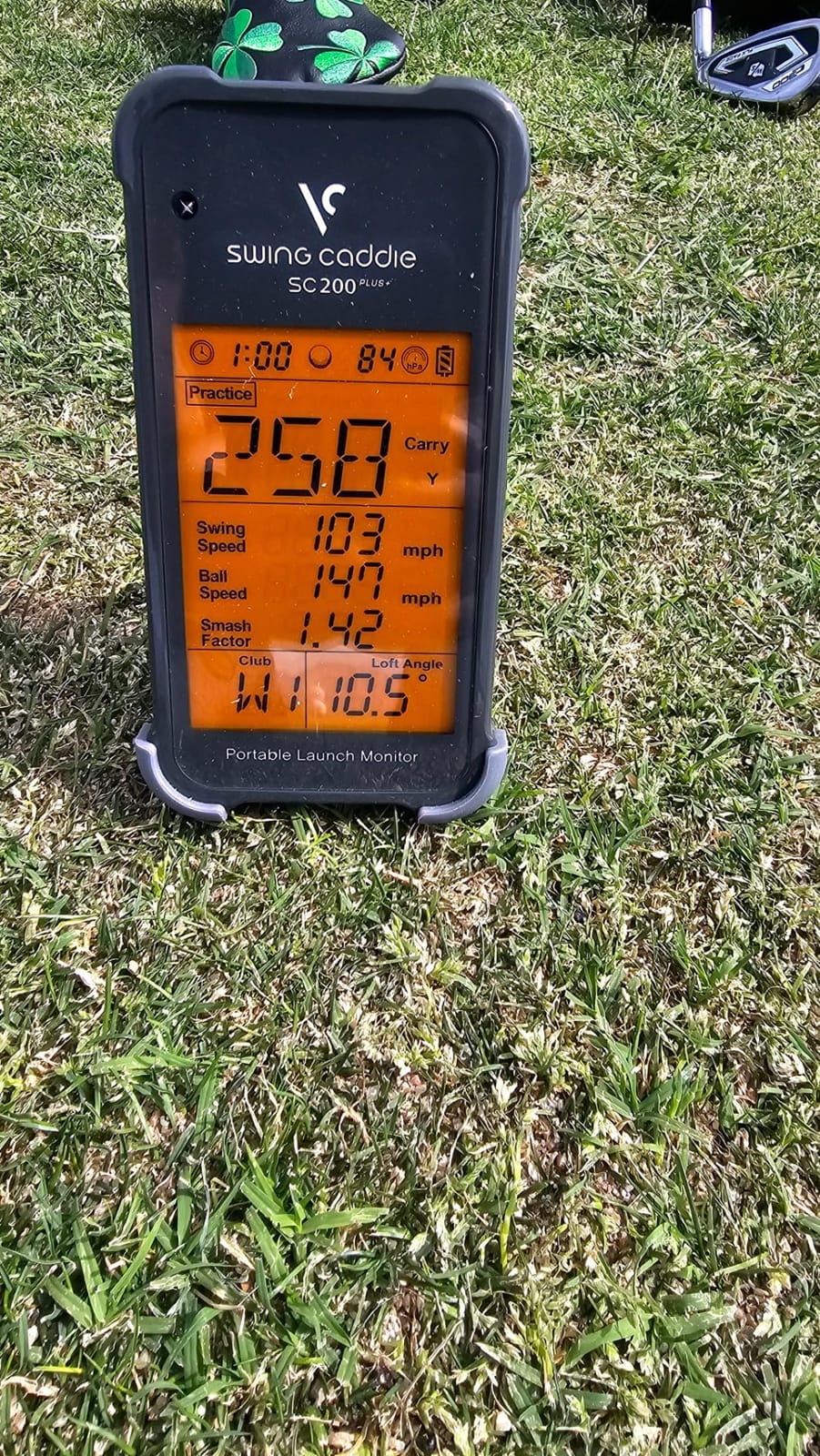
That voice output is more useful than it sounds. You can stand over the ball, swing, and hear your club speed or carry distance without breaking your routine or walking over to look at a screen. Combined with the swing speed mode, which trains you with no ball in the way, it makes for genuinely good indoor work in a garage or a hotel room. The adjustable loft angles let you simulate different clubs rather than hunting for them.
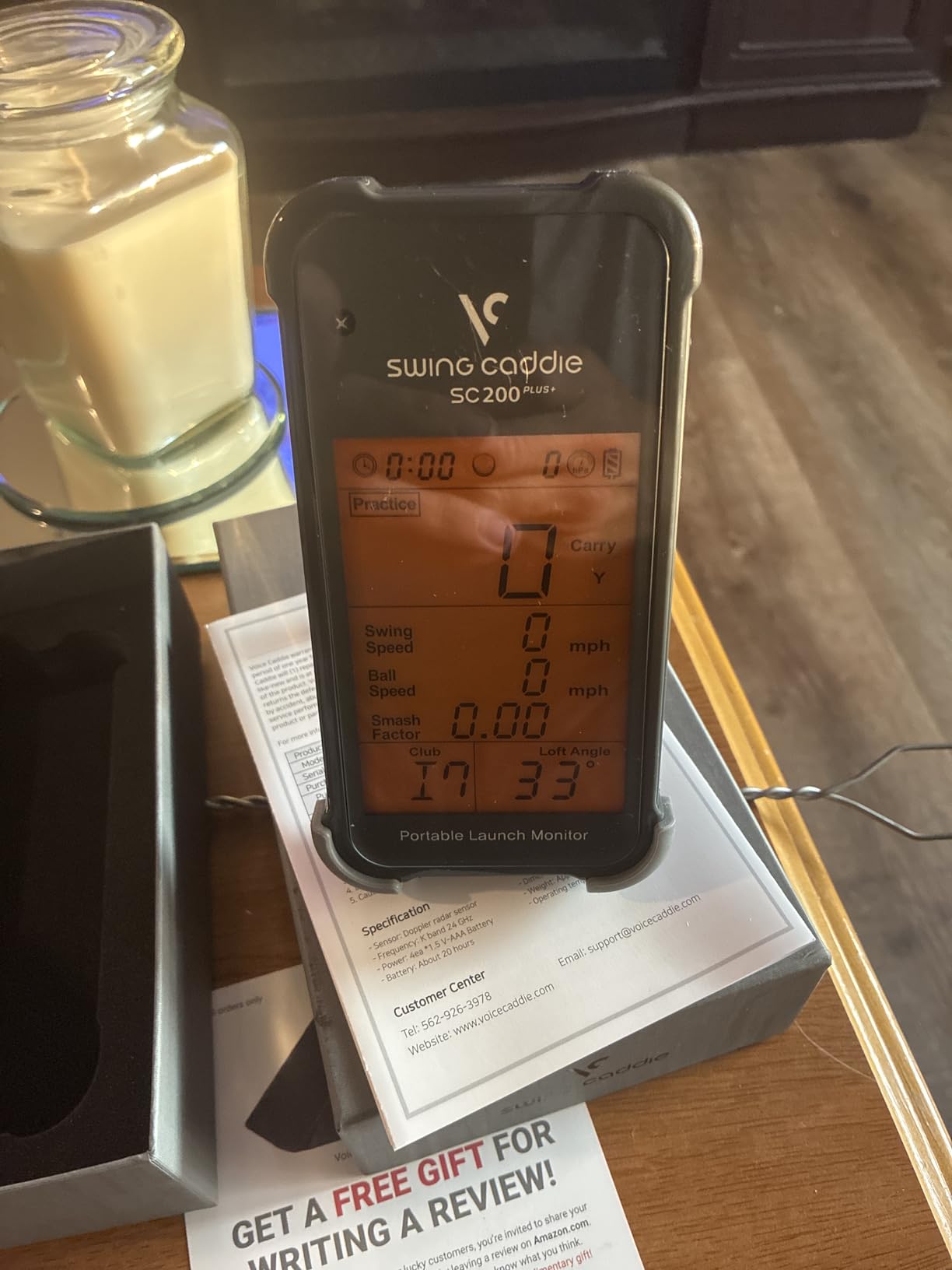
The data set is intentionally narrow, and the reviews are honest about it. You get speed and carry distance per club, stored on the unit with per-club averages, and Doppler radar with atmospheric pressure calibration sensors to help it hold up as conditions change. There is no app, no connectivity, and no video, so stored club statistics can only be reviewed on the device itself, and there is no spin rate, launch angle, or shot shape.
One more honest caveat: Doppler readings can drift with environmental conditions and altitude, so if you change elevation or hit in very different weather, expect the numbers to shift a little. For a golfer who wants a consistent long-range speed and distance baseline without any technology overhead, that is an acceptable trade. For a golfer trying to change ball flight, it is not enough.
Who the Voice Caddie SC200Plus suits
It suits golfers who want a full day or a full week of sessions on one charge, coaches running ball-free speed drills in a group, and anyone who prefers spoken feedback to screen watching. It also suits golfers who practise indoors with a swing trainer, since the swing speed mode and adjustable lofts cover the full range of clubs without a bag full of irons.
Where the Voice Caddie SC200Plus falls short
It falls short for anyone who wants to review data later on a phone or export a session, because there is no connectivity at all. It also falls short for ball flight work, since there is no spin, no launch angle, and no shot shape. And it falls short if you want to see a dispersion pattern rather than an average per club.
6. Garmin Approach G80 – Best All-in-One GPS Handheld With a Built-In Radar
Garmin Approach G80, All-in-One Premium GPS Golf Handheld with Integrated Launch Monitor, 3.5″ Touchscreen
Integrated radar launch monitor
3.5 inch sunlight readable screen
41000 maps, 15 hour battery
Pros
- One device works as a full GPS handheld and a launch monitor
- Sunlight readable 3.5 inch touchscreen is easy to read at the range
- Over 41000 preloaded course maps
- Tracks club speed ball speed smash factor and tempo
- Rechargeable battery runs up to 15 hours in GPS mode
Cons
- No spin rate measurement
- Distance readings are estimated rather than measured carry and total
- Bulkier than a dedicated launch monitor when you only want range data
The G80 solves a specific problem that dedicated launch monitors cannot: what do you do when you want range data on one device and course data on the same one? The answer is a 4.16 ounce handheld with a 3.5 inch transflective TFT touchscreen, more than 41,000 preloaded course maps, and a built-in radar that measures club head speed, ball speed, smash factor, swing tempo, and estimated distance, reachable with a quick button press from the course screen.
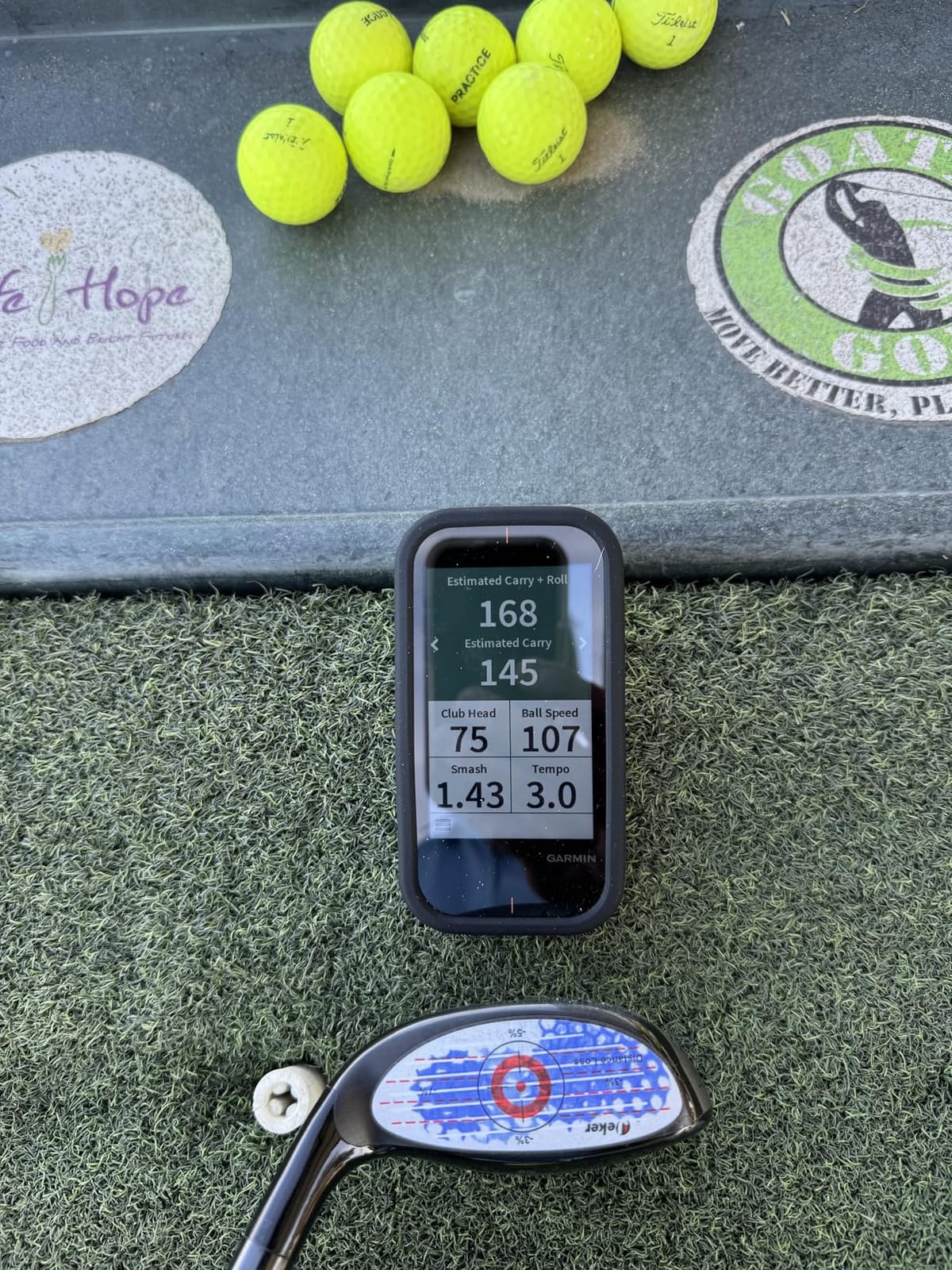
That transflective screen is the detail that matters at an open-air range. Transflective panels stay readable in direct sun because they use ambient light rather than emitting their own, and combined with the quick-access radar button it means you can check a number between shots without shielding a glossy display with your hand. The battery runs up to 15 hours in GPS mode, which is longer than most dedicated units, and Bluetooth lets you store and transfer shot data.
As a training tool it has real limits, and owners say so clearly. There is no spin rate, distance is estimated rather than a true measured carry and total, and there is no video capture. Those three gaps are exactly what separates it from the Rapsodo and Garmin radar devices in this list. It is also bulkier than a dedicated launch monitor, which matters if your golf bag pockets are already full.
Its real strength is that it reduces the number of things you carry. Golfers who walk the course and then hit a bucket after nine will find one device covering both jobs more convenient than two, and the 282 x 470 resolution with a colour map set makes it a genuinely useful scorecard tool between range sessions. Treat the radar side as a club speed and tempo trainer, which is what it is.
Who the Garmin Approach G80 suits
It suits golfers who want one device for course play and range work, who care about screen readability in direct sun, and who want long battery life measured in full rounds rather than full sessions. It also suits golfers who already own a Garmin handheld and would rather not add a second device to the bag.
Where the Garmin Approach G80 falls short
It falls short as a launch monitor rather than a handheld, because distance is estimated and spin is absent. It also falls short if you want swing video, which none of the onboard features provide. Carrying a 3.5 inch screen device purely for range work adds bulk with no accuracy advantage over a dedicated radar unit.
7. Rapsodo MLM2PRO – Best for Full Tournament-Style Metric Data
Rapsodo MLM2PRO Mobile Launch Monitor Golf Simulator | 3 Chrome Tour Balls
Radar plus dual cameras
15 metrics with spin rate and axis
3 inch LCD and tripod
Pros
- Doppler radar and dual cameras land close to high-end system readings
- 15 metrics including true spin rate spin axis and club path
- Impact vision and slow motion contact footage make strikes obvious
- Shot tracer and Combine mode focus sessions on weak clubs
- Works at the range and in a home net with the same setup
Cons
- Shared Wi-Fi pairing is unreliable and direct Wi-Fi eats phone data
- Most software features need an ongoing premium subscription
- iPhone shows three metrics at a time while tablets show six
If you want the same metric set a club fitter sees, the MLM2PRO is the only device in this roundup that delivers it at a size you can still carry. Doppler radar and a dual camera setup work together to produce 15 key metrics, including true spin rate, spin axis, club path, launch angle, carry distance, and club speed. Reviewers consistently say the readings land within a few percent of high-end systems, which is the closest any portable unit gets to tour-grade data.
The video side is genuinely strong. You can capture the swing from any angle, and the impact vision in slow motion makes contact errors obvious in a way numbers never do. If your miss is a thin strike or a mishit rate, this shows it to you directly. The shot tracer and the Combine practice mode let you build a session around your worst clubs rather than hitting everything once, which is exactly how range time should be used.
The hardware is good. The software is where owners get frustrated. Shared Wi-Fi connectivity is unreliable and direct Wi-Fi mode drains phone data quickly. Most of the software features require an ongoing premium subscription, and a 45-day premium trial is included so you can decide before paying. On an iPhone the display shows only three metrics at a time, while a tablet shows six, so the device experience depends heavily on what you carry to the range.
Two more practical notes. Simulated courses share a repetitive background and read as flat compared with the MLM’s satellite view. Chipping within about 10 yards of a target is hard to register accurately, so this is a full-swing and approach tool rather than a short-game tool. It ships with a tripod, a carrying case, a charging cable, and three Callaway RPT Chrome Soft X balls, and those marked balls wear out, which matters because spin reads depend on ball condition.
Who the Rapsodo MLM2PRO suits
It suits golfers who want spin rate, spin axis, and club path at the range without installing a permanent bay. It also suits club fitters and coaches who need numbers comparable to professional equipment, and golfers with a tablet who can see the full six-metric display. Anyone doing meaningful practice changes based on ball flight data will get the most from it.
Where the Rapsodo MLM2PRO falls short
It falls short for golfers unwilling to pay a membership, and the trial is the only free window you get. It also falls short on connectivity reliability, and for short-game work near a target. Carrying a tripod to a public range adds setup time, and the marked balls need replacing regularly if you care about accurate spin reads.
8. SkyTrak Golf Launch Monitor – Best for Tight Indoor Spaces
SKYTRAK Golf Launch Monitor | Photometric Technology for Ball Speed, Carry & Total Distance, Spin Rates, Launch & Shot Shape Data | Golf Simulator & Practice
Camera based photometric tracking
3D ball flight, spin and shape
5.75 inch screen, 4 hour battery
Pros
- Photometric camera watches the ball so waggles do not cause misreads
- Works in tight indoor spaces where radar units struggle
- Gives 3D ball flight spin rate launch and shape in one view
- Quiet enough for home use with foam balls and a net
Cons
- No-read and misread shots happen on a regular share of swings
- Direction data goes wrong if the unit is not perfectly level
- Only about 4 hours of continuous internal battery
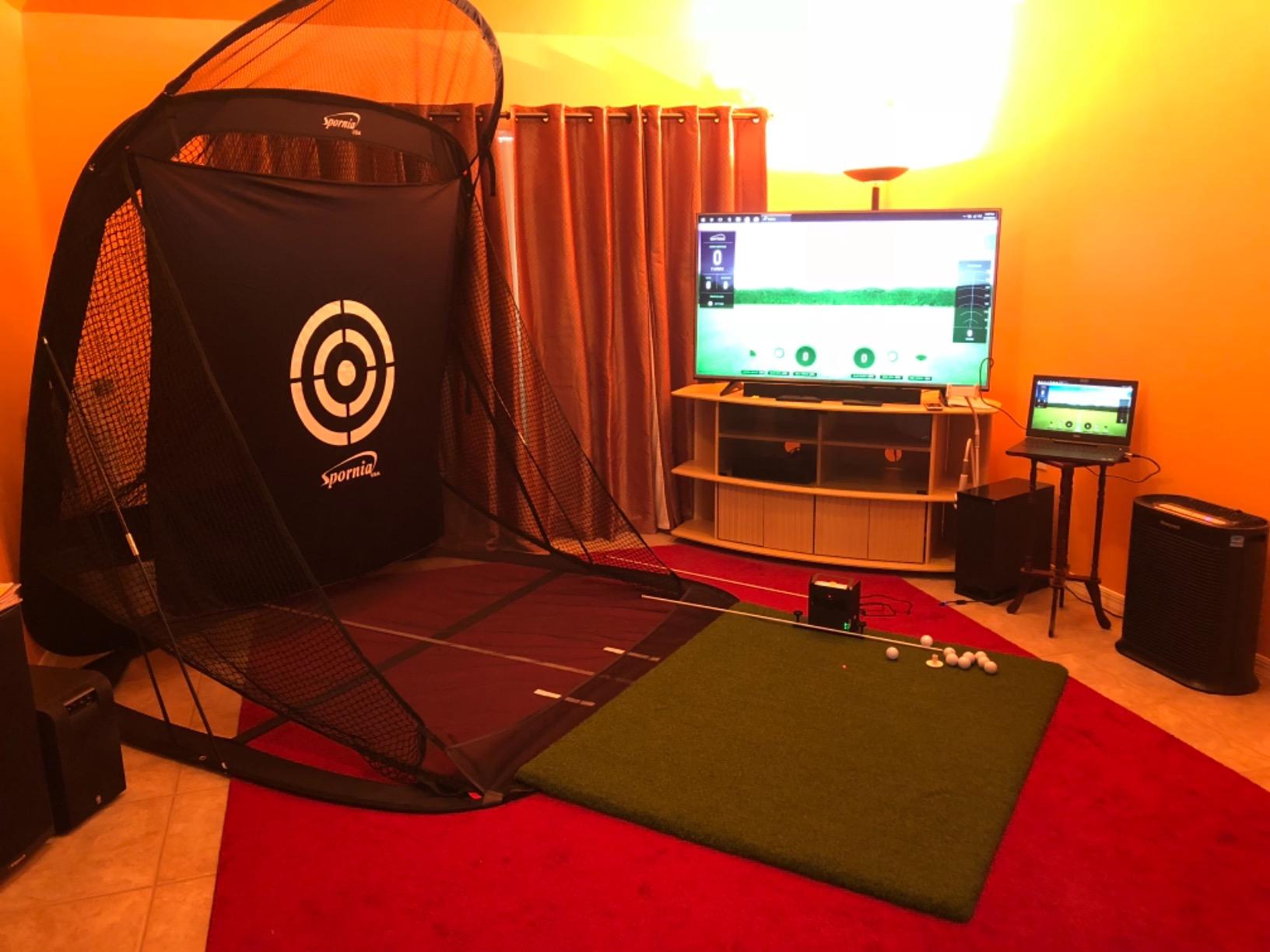
The SkyTrak measures the ball rather than the club, using a camera-based photometric system with high-speed photography. That single design choice explains both its strengths and its frustrations. Because it is watching the ball in flight, pre-swing waggles do not cause misreads the way club-tracking Doppler units can, and it works in tight indoor spaces where radar units struggle with a wall a few feet behind the hitting position.
The output is good too. You get ball speed, launch angle, spin rates, carry and total distance, shot shape, and a 3D ball flight visual that makes dispersion easy to read at a glance. It is quiet enough for a house with foam balls and a net, it works with iOS, Android, and PC, and initial setup is straightforward with a reliable direct connection. For indoor work in a 12 to 14 foot room it is one of the more practical options on the market.
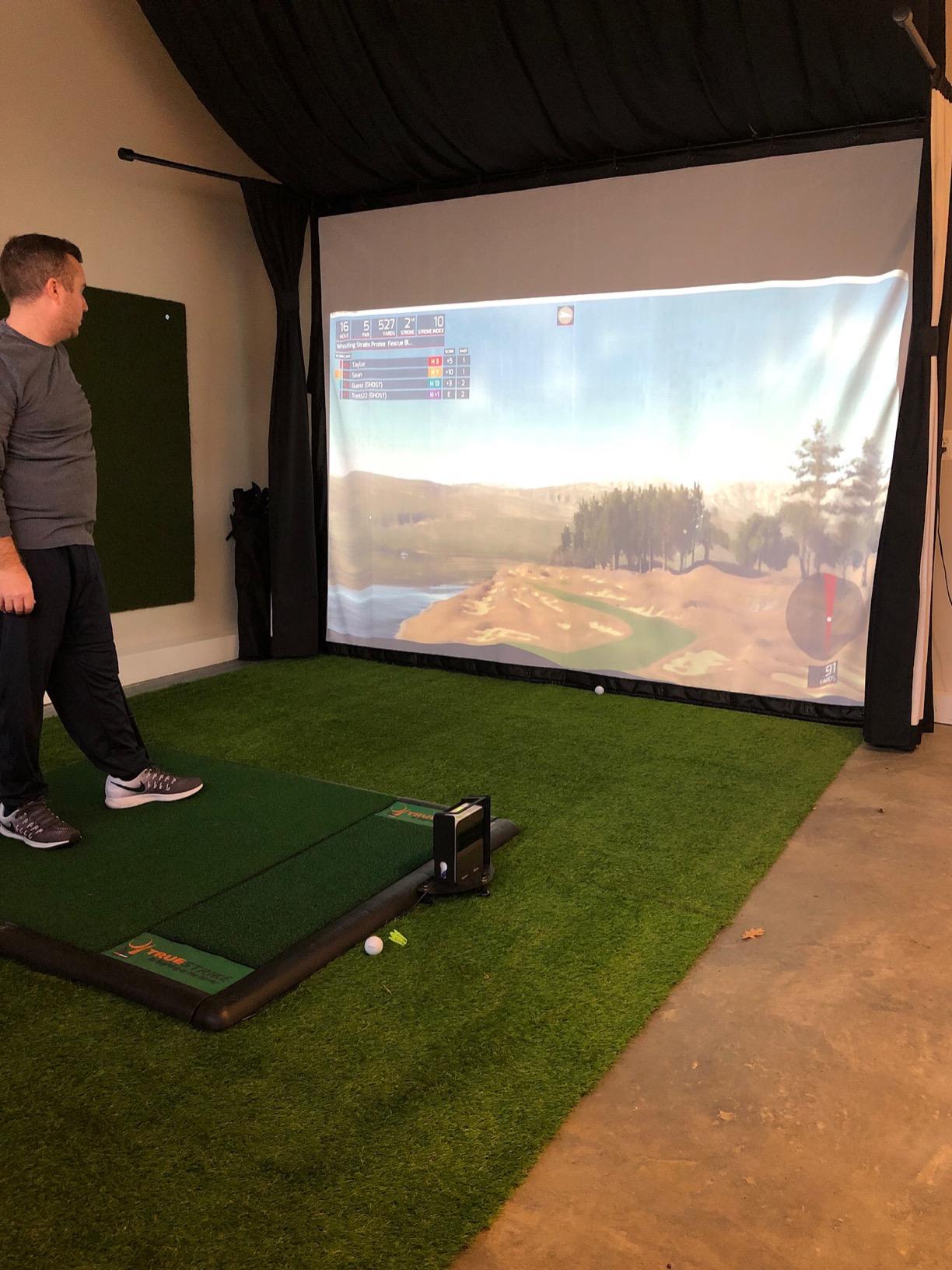
Outdoors it is the weakest of the serious units here, and the reason is sunlight. A camera photometric system needs consistent, controlled light to find a small white ball in flight, and reviewers regularly report no-reads and misreads on a regular share of swings in open-air conditions. On top of that, horizontal launch angle and shot direction can be wrong if the unit is not perfectly level and aligned, and distance readings can run 10 to 15 yards short of actual playing distance. Add only about 4 hours of continuous internal battery and the picture is clear.
It also shares the subscription pattern of its competitors: the full course and challenge software needs an additional annual membership, and a trial membership is included.
Owners who nail the alignment and tee position rate it much higher than the 3.8 average suggests. Poorly aligned, it is frustrating.
Who the SkyTrak suits
It suits golfers with a small indoor space, a garage, or a short room where a radar unit cannot get a clean read, and anyone practising with foam balls who wants a quiet device. It also suits golfers who want 3D ball flight visualisation as a learning tool rather than a list of numbers, and Android users who want a camera-based option.
Where the SkyTrak falls short
It falls short at the open-air range, which is the entire subject of this guide, because bright outdoor light degrades shot detection. It also falls short for anyone who cares about direction accuracy without fussing with level and alignment, and the 4 hour internal battery will not cover a long day. The paid membership for the richer software is a further knock.
9. TAGCMC GX-10 – Best for No-Subscription Apps on iOS and Android
Golf Launch Monitor & Portable Simulator, Tracks 13+ Metrics Swing Analysis
Spin rate and spin axis
Environmental and pressure sensors
3D range, no subscription needed
Pros
- Environmental sensors correct readings for temperature humidity and pressure
- Reports spin rate spin axis and swing speed
- No subscription needed for the app or simulation features
- Works on both iOS and Android
- Adjustable sensitivity lets you match a reference monitor you trust
Cons
- Out of the box speed readings run high and need manual calibration
- Some devices struggle to connect to the app right after setup
- Small brand with a low review count and limited support
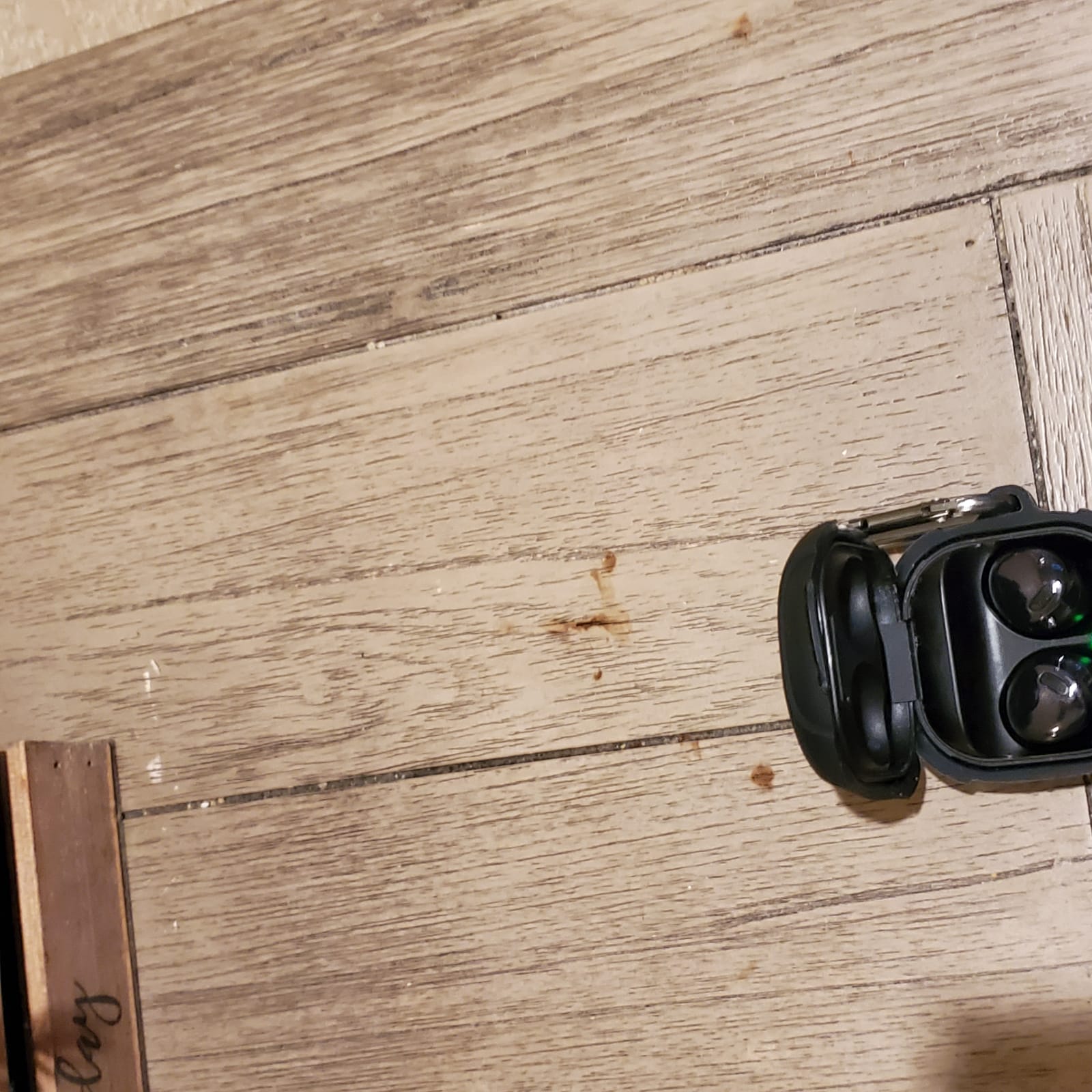
The GX-10 is the interesting one in this roundup, because it does two things most of its competitors charge for. It reports spin rate and spin axis, which puts it in the same metric tier as the MLM2PRO, and it requires no subscription for the app or the simulation features. It also works on both iOS and Android, which rules out the platform lock on the Rapsodo MLM.
The built-in temperature, humidity, and barometric pressure sensors adjust shot data to real-time conditions, which is a genuinely thoughtful feature for an outdoor device where heat and pressure shift through a session. On top of spin rate, spin axis, and swing speed, you get attack angle, launch angle, a swing-only mode, and clubface impact visuals, plus a 3D virtual driving range with 45-degree and 90-degree viewing options and video recording.
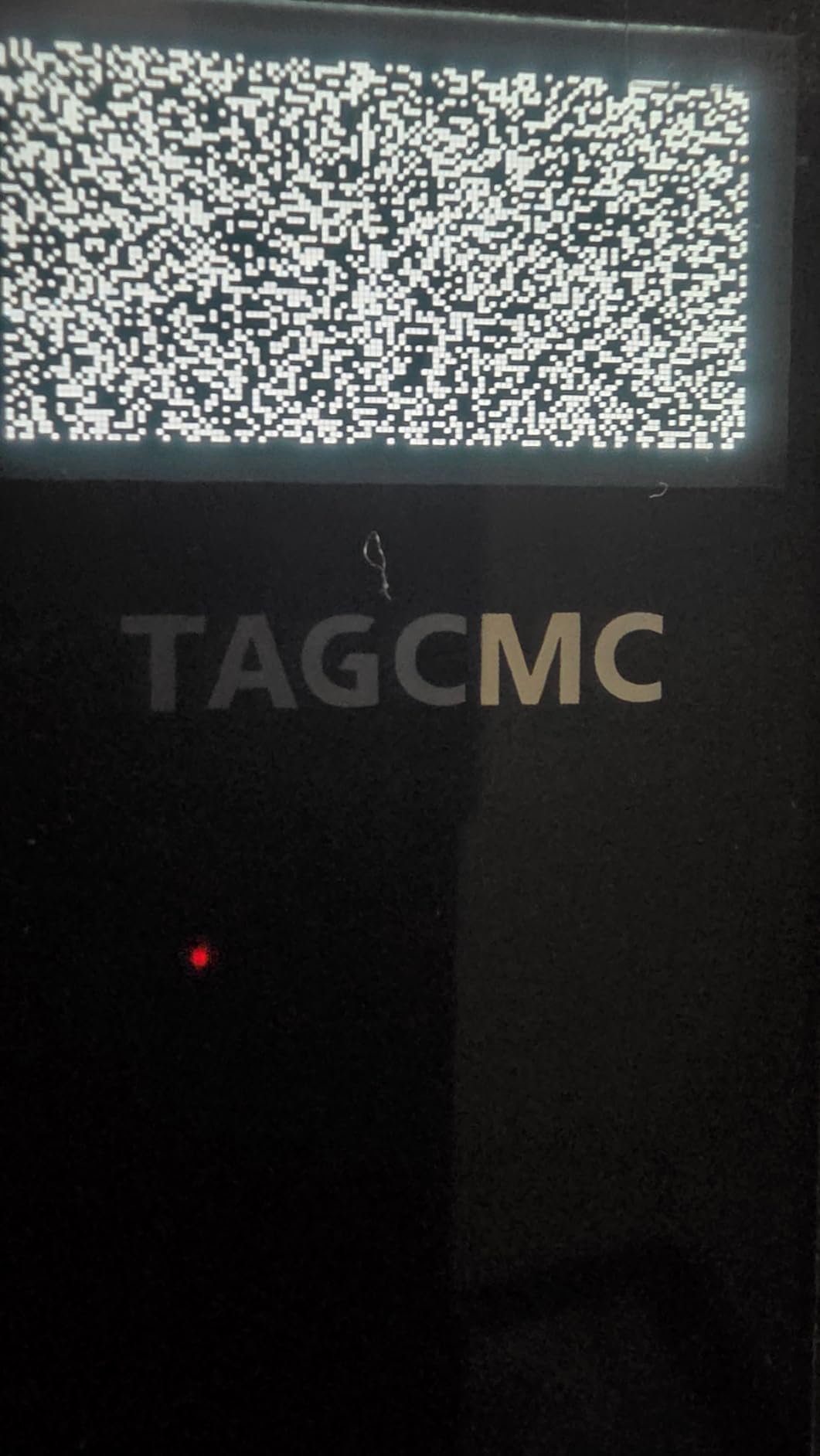
The catch is that you have to earn your numbers. Out of the box, speed readings run high and need manual sensitivity calibration, and the adjustable sensitivity control exists precisely so you can dial the unit to match a reference monitor you already trust. Owners who persist with that calibration get a capable and good-value device; owners who hit ten balls and compare against another monitor will conclude it is wrong.
Be realistic about the brand. With 94 reviews and a small company behind it, there is little independent support and a limited track record, and some owners report connection difficulty right after setup plus unreliable charging that leaves a static screen until you plug it in. That is a real risk with any small manufacturer, and it is worth weighing against the fact that the core metrics on offer are unusually ambitious for this class of device. It supports iOS 11 and later, Android 11 and later, and HarmonyOS, in English, Chinese, and Japanese.
Who the TAGCMC GX-10 suits
It suits golfers who refuse to pay a subscription but still want spin data, and Android users who feel locked out of the iOS-only options. It also suits golfers who already own a trusted reference monitor and are willing to spend one session calibrating against it, and anyone practising in extreme heat or altitude where environmental compensation actually matters.
Where the TAGCMC GX-10 falls short
It falls short on out-of-the-box accuracy, since readings arrive high until you calibrate. It also falls short on support and longevity, because a small brand with 94 reviews offers no guarantee of firmware updates or parts. Buyers who want a warranty handled by a major company should think twice, and connection and charging issues are reported often enough to factor into the decision.
10. Izzo Launch Master – Best No-Fuss Doppler Unit With Audible Read-Out
Izzo Golf Swami Launch Master Golf Launch Simulator – Golf Training Aid, Standard
Doppler radar in a compact body
Ball speed, smash factor, carry
User entered lofts, voice read-out
Pros
- Measures club speed ball speed smash factor and carry in a compact unit
- Audible read-out calls your distance so you stay in your swing
- User entered club lofts make the numbers more personal
- Batteries and a hard carry case are in the box
Cons
- No spin rate launch angle or shot shape data
- Not water resistant which matters in wet range conditions
- Data stays on the unit with no app or export
The Izzo Launch Master is a straightforward Doppler unit that gives you club head speed, ball speed, smash factor, and carry distance on an easy-to-read LCD, with an audible read-out option so you never have to break your stance to check a number. Two details set it apart among the pocket units: you can enter your own club lofts to make the numbers more personal, and the box includes four AA batteries and a hard carry case.
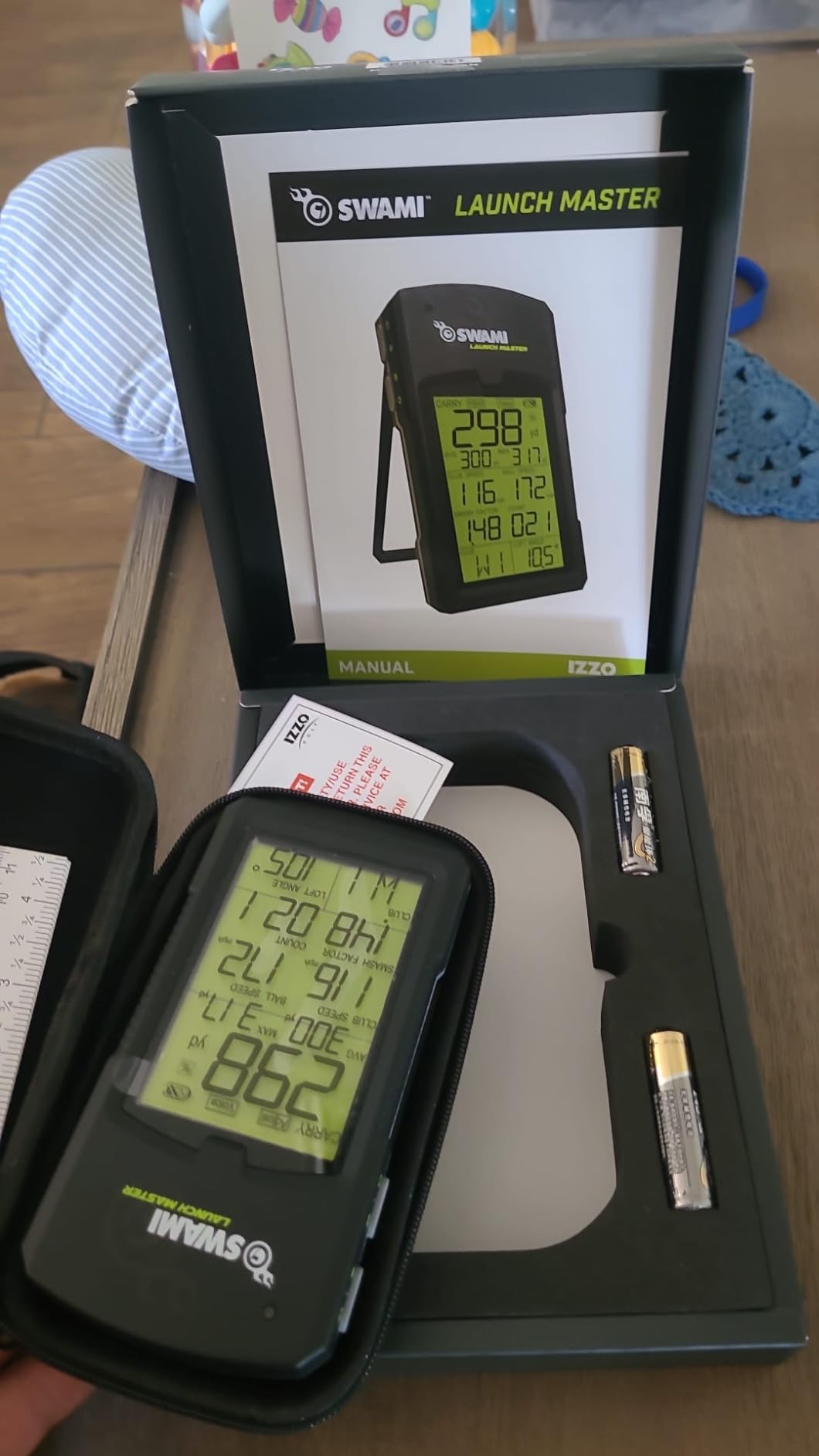
For a golfer who wants carry distance and smash factor without an app, an account, or a phone, that is a complete enough package. The club loft entry is more useful than it sounds, because the device uses your real lofts to estimate distance rather than a generic club chart, which tightens up the numbers for golfers who play older or mixed sets.
Where it falls short is significant, and the 3.7 average with 17 percent one-star reviews reflects it. There is no spin rate, no launch angle, and no shot shape. There is no app, no video, and no connectivity, so all data is read on the unit and never goes anywhere. It is also not water resistant, which is a genuine problem at an outdoor range when the forecast turns, and at 454 grams it is more than three times the weight of the PRGR in the same category.
Owners also report some inconsistency in readings between individual units, so treat the numbers as a relative guide rather than a reference standard. For a beginner building a first sense of distance and smash factor, that is enough. For a low-handicap player chasing ball flight changes, it is not.
Who the Izzo Launch Master suits
It suits golfers who want distance and smash factor numbers without any app, any account, or any phone, and who like hearing the result rather than reading it. It also suits players with mixed or older club sets who benefit from entering their own lofts, and anyone who prefers a device that works immediately out of the box with batteries included.
Where the Izzo Launch Master falls short
It falls short on weather resistance, which matters outdoors, and on weight, since it is the heaviest pocket-style Doppler here. It also falls short for any ball flight analysis, since there is no spin, no launch angle, and no shot shape, and for anyone who wants their data stored anywhere other than the unit. With only 70 reviews, the long-term reliability record is short.
What Actually Makes a Launch Monitor Portable at the Range
Portability is not a weight limit, it is a list of things that can go wrong in a car park at 8am. The four criteria that actually decide whether a device works for range sessions are power, light, detection, and independence.
Power. A device that runs on AA or AAA batteries can be picked up on the way out of the house with zero thought. A device with an internal battery that lasts four hours needs a charge the night before, every time. The Voice Caddie SC200Plus runs up to 20 hours, the Garmin G80 up to 15 hours in GPS mode, and the Garmin R10 up to 10 hours. SkyTrak manages about 4 hours of continuous internal use, which is the number most likely to end a long session early.
Light. This is where most buyers get caught. Radar devices measure reflected waves and are indifferent to sunlight. Camera and photometric devices need a consistent, controlled light to find a small white ball in flight, and an open-air range at midday is the worst possible environment. If your primary practice location is outdoors, radar is the safer default, and the SkyTrak sits at the bottom of this list for range use for exactly that reason.
Detection rate. Owners on r/Golfsimulator cite shot detection rate, the percentage of swings actually picked up, as the single most important real-world metric, and reliability across repeated sessions matters more to them than peak accuracy. A device that reads 95 percent of your shots correctly every week is more useful than one that reads 99 percent occasionally and drops ten balls in a row when the light shifts.
Independence. Do you want to look at a screen between shots, or would you rather not? A built-in display with voice or audible output means you can stay in your routine. An app-based device means phone battery, phone storage, and a data connection all become part of your session. Both are valid, but they are different products for different golfers, and the forums are full of buyers who regret the app-only choice for a different reason than the one they expected.
Radar vs Camera vs Hybrid at an Outdoor Range
Radar, camera, and hybrid systems all produce the same headline numbers, but they get there differently and they fail differently outdoors. Understanding the difference is the single most useful thing you can do before spending anything.
Radar units bounce a microwave or millimetre-wave signal off the club or ball and calculate speed from the Doppler shift. They are fast, they work in any light, they are cheap to make, and they do not care about weather. The limitation is what they can measure. A basic radar unit that reads the club gives you club speed and little else. A premium radar unit reading the ball can give ball speed, launch angle, and carry, and can add spin through algorithms. In this roundup the Rapsodo MLM, the Garmin R10, the Garmin G80, the PRGR, the Voice Caddie, and the Izzo are radar-based.
Camera-based units film the ball and work out its flight from high-speed photography. They can be extremely accurate on the ball, they are quiet, and photometric systems do not care about a waffle before impact. The limitation is light. Direct sun, cloud shadow, and backlighting all degrade detection, and the misreads happen silently. The SkyTrak is the camera-based unit here, and it is the one we would not put at the top of a range-only list.
Hybrid systems fuse radar with cameras, and that is where the accuracy ceiling sits. The Rapsodo MLM2PRO uses Doppler radar plus a dual camera setup, and it is the only device in this roundup whose readings reviewers compare to high-end systems within a few percent. The cost is complexity, more moving parts to align, and a software layer that depends on a phone connection. It is also the biggest ask of any buyer here in setup time, handling, and ongoing cost, which is the trade the whole premium tier is built on.
For a range-only buyer, our rule is simple: radar first, hybrid if you need spin, camera only if your practice is mostly indoors. If you are choosing between a camera unit and a radar unit of similar capability, take the radar one to the range. If your indoor room is under 14 feet deep, the camera unit becomes the more sensible option instead, because radar units struggle when a wall is a few feet behind the ball.
How to Set Up a Launch Monitor at the Range
Most disappointing first sessions are setup failures, not hardware failures. A ten-minute setup routine removes nearly all of them, and the order matters.
1. Set a consistent reference point. Mark where the device sits, not where you stand. If you reposition the unit between sessions, your distance numbers shift slightly and you lose the ability to compare weeks. Owners on r/Golfsimulator describe this repositioning drift as one of the most common complaints about portable units, and the fix is boring: tape a mark on the grass or the mat.
2. Calibrate before the first shot. Camera-based units need the tee positioned at an exact distance, and radar units need to know your club lofts if they are estimating. The Rapsodo MLM asks for a calibration pass at a marked distance that first-time buyers frequently misjudge, so do it twice. The Izzo lets you enter your own lofts, and the TAGCMC lets you adjust sensitivity against a monitor you already trust. Do all of this before you are tired, not after your twentieth shot.
3. Check the tee surface. Grass and mats behave differently, and the difference is not subtle. Firm mats give a consistent, slightly lower reading, while grass gives you variable contact and more spin. If you use a mat at the range and grass at home, your numbers will not transfer cleanly. Pick one surface for tracked practice, and if you practise on grass in wet months, expect a firmware update and a re-check of alignment before you trust the data again, which is what users on the forums report.
4. Protect the phone session. If your unit is app-based, start with a full phone charge, connect before you leave the car, and confirm the app sees the device before you hit anything. Bring a cable. The MLM2PRO in particular performs better on a direct Wi-Fi connection than a shared one, and direct mode uses noticeably more phone data.
5. Decide what you are measuring before you start. A session with no goal produces a lot of data and no change. Decide in advance whether you are chasing club speed, carry distance, or ball flight dispersion, and set the number of balls for each. Reading a swing video back later works better with proper audio and a comfortable setup, and our guides to over-ear headphones for long sessions and headphones built for long listening cover the playback side if you film at the range.
Buying Guide: Specs That Matter Most at the Range
Beyond tracking technology, five specifications decide whether a portable launch monitor will earn its place in your bag.
Battery life. Match the runtime to a realistic session. Two hours covers a focused practice session. Four hours covers a morning. Fifteen to twenty hours covers a week of range work without thinking about a charger. Anything under four hours of internal battery is a nuisance unless you are comfortable charging overnight every time, and note that units taking AA or AAA batteries sidestep the issue entirely at the cost of ongoing battery expense.
Phone and app dependency. This is the biggest source of buyer regret. Ask one question: if my phone dies at the range, does the device still work? The PRGR, the Voice Caddie, the Swing Speed Radar, the Izzo, and the MLM2PRO all have a screen you can read on its own. The MLM, the Garmin R10, the SkyTrak, and the TAGCMC are app-driven, which is fine if you enjoy the video and dispersion features and frustrating if you want a number and nothing else.
Ongoing cost. Several devices here gate their best software behind a membership: the Garmin R10, the Rapsodo MLM2PRO, and the SkyTrak. The R10 includes a trial, the MLM2PRO includes a 45-day premium trial, and the SkyTrak includes a trial membership. The TAGCMC GX-10 explicitly requires no subscription, which is a genuine advantage if you plan to use it for years. Budget for the membership if you will use the video and simulation features, and ignore it if you only want the core metrics.
Environmental and weather rating. An IPX7 rating such as the Garmin R10’s means the device survives immersion, which covers wet grass and an over-eager bag. The PRGR carries an IP54 rating, which protects against dust and splashing. The Izzo is not water resistant, which is a genuine limitation outdoors. At an open-air range in a wet climate, this single spec can rule a device in or out.
Room depth for dual use. If you also want a home simulator, radar units generally need more space behind the ball than camera systems, and buyers with 12 to 14 foot rooms report that 16 foot radar-rated units behave inconsistently at that depth. A camera-based unit like the SkyTrak is the more workable choice in a tight garage. If your home use is a net in a longer space, the radar units in this list are all fine.
One last piece of advice from the forums: value matters more than an accuracy ceiling for most range-only buyers. A unit you actually take to the range twice a month and use consistently will beat a more accurate unit that sits in a closet because the setup was too fiddly. Reliability across repeated sessions is the metric that changes your scores.
Frequently Asked Questions
What is the best launch monitor to take to the range?
The Rapsodo MLM is the best launch monitor to take to the range for most golfers. It gives ball speed, club speed, launch angle, carry distance, and shot shape, records a video replay with an on-screen shot tracer, and packs into a golf bag pocket. It does require an iPhone or iPad. The Garmin Approach R10 is the alternative if you want spin data and one device for the range and a garage net.
What is the best golf analyzer for driving range?
For a driving range, a portable golf analyzer should prioritise shot detection outdoors, battery life, and data you can review between shots. The Rapsodo MLM and the Garmin Approach R10 both meet that standard over radar. If you want spin rate and spin axis as well, the Rapsodo MLM2PRO adds dual cameras and 15 metrics. If you only need club speed, the Swing Speed Radar runs for a fraction of the cost with no phone.
Is SkyTrak or FlightScope better?
Only the SkyTrak appears in this roundup. It uses a camera-based photometric system, which is quiet and works in tight indoor rooms but struggles in bright outdoor light, and it offers a 3D ball flight view with spin and shot shape. FlightScope portable units use radar and are generally preferred outdoors for that reason. For range sessions, radar wins. For a small indoor room, the SkyTrak is the more practical of the two types.
Do I need a phone to use a portable launch monitor at the range?
It depends on the unit. The Rapsodo MLM, the Garmin Approach R10, the SkyTrak, and the TAGCMC GX-10 need a paired phone, and they stop working when the phone does. The PRGR, the Voice Caddie SC200Plus, the Swing Speed Radar, the Izzo Launch Master, and the Rapsodo MLM2PRO all display numbers on their own screen or built-in display. The Garmin Approach G80 works standalone as a handheld with a built-in touchscreen.
How long does a launch monitor battery last?
Runtime in this roundup ranges from about 4 hours on the SkyTrak internal battery to 20 hours on the Voice Caddie SC200Plus. The Garmin Approach G80 runs up to 15 hours in GPS mode and the Garmin Approach R10 up to 10 hours. The PRGR, the Swing Speed Radar, and the Izzo Launch Master run on AA or AAA batteries, so the limit is how often you remember to swap them rather than a fixed number of hours.
Final Verdict: Which Portable Launch Monitor Should You Buy in 2026?
After working through all ten, the Rapsodo MLM is the best portable launch monitor for range sessions in 2026. It is the only device in this group that combines a large body of owner feedback, dependable outdoor shot detection, and a video replay with a shot tracer, and it stays out of your way once it is set up. For iPhone owners who want club speed, launch angle, carry, and dispersion in one bag, it is the pick.
Buy the Garmin Approach R10 instead if you want one device that works at the range and in a garage net, if you care about wet weather, or if you want training-mode dispersion charts and swing video in the Garmin app. Buy the Rapsodo MLM2PRO if you need true spin rate, spin axis, and club path and you will pay a membership for the software. Buy the Swing Speed Radar if club speed is the only number you want and you would rather not carry a phone at all.
Whatever you choose, the device only helps if you use it consistently. Mark your spot, calibrate once, and hit the same clubs in the same order every session. That habit is worth more than any accuracy difference between the units on this list.