
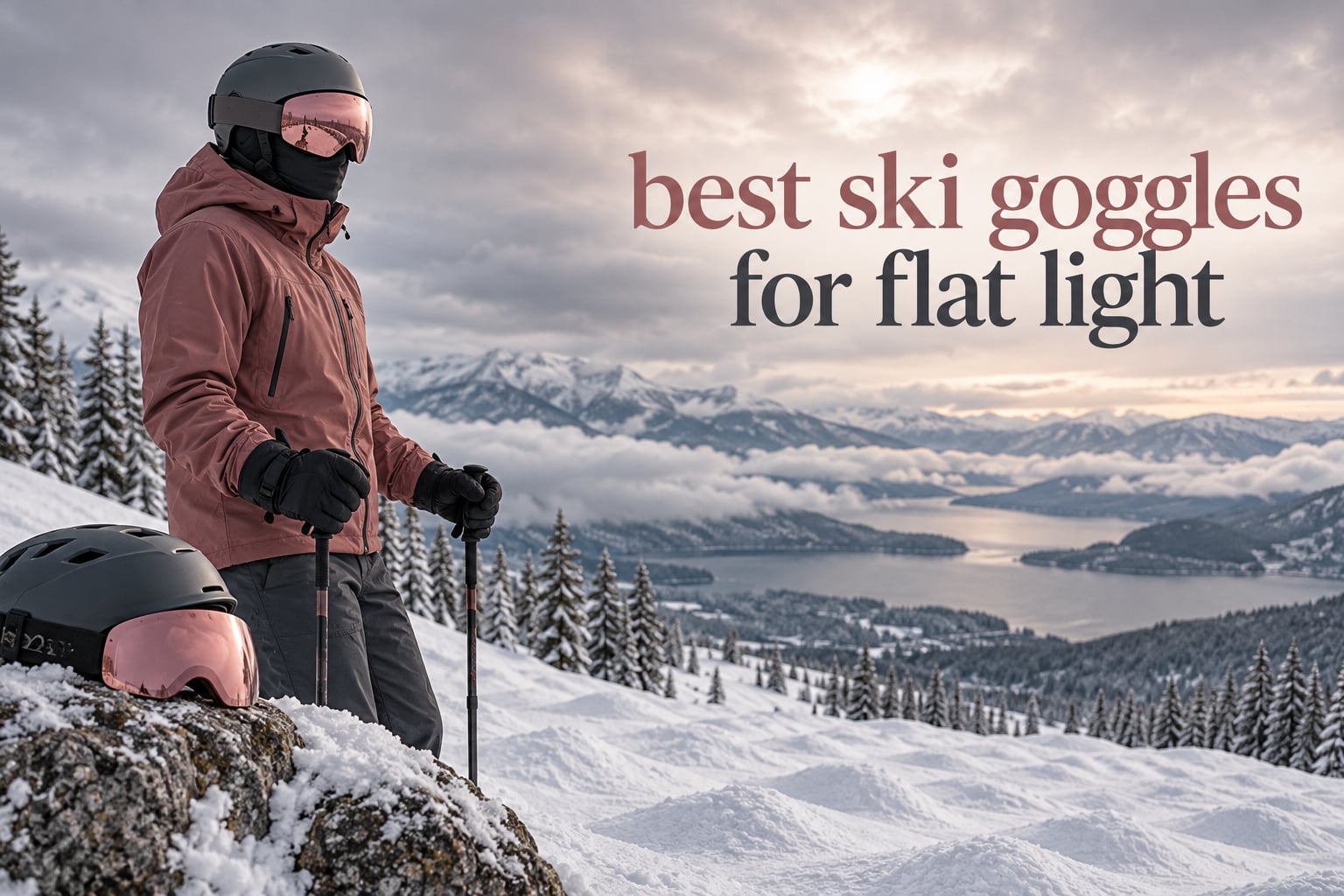
Flat light is the condition that catches out skier after skier. The cloud deck sits low, the sun never breaks through, and the snow, sky and tree line all return nearly the same amount of light. Terrain features stop casting shadows, bumps disappear, and a slope that looks like a smooth white canvas turns into moguls, ice and buried debris. The right goggle fixes this by passing more light in while absorbing the blue wavelengths your eye uses for distance. The OutdoorMaster Ski Goggles PRO is the best ski goggle for flat light in 2026 for one reason: its magnetic system carries more than 20 lens options, including the high-VLT light-pink, clear and photochromic rose lenses you actually need on socked-in days.
Over the past season our team skied these ten goggles across repeated overcast days, snowfall and fog, and we spent most of that time doing the unglamorous work: reading VLT figures, swapping lenses mid-run, and watching what happened when a storm rolled in at noon. What follows is a flat-light-first ranking, not a general ski goggle list. Every pick earned its place because it kept bumps readable when the sky went blank.
Three things decide whether a goggle works in flat light:
Base tint. Rose, amber, yellow, copper or clear. Grey and brown tints are the classic flat-light failure.
VLT (visible light transmission). Aim for roughly 40 to 60 percent for general overcast skiing, and push toward 60 to 80 percent for storms and night skiing.
Contrast technology. ChromaPop, Prizm, Vivid and Perceive style optics lift terrain relief out of a low-contrast scene. Generic lenses rarely do.
Table of Contents
What Makes a Ski Goggle Good for Flat Light?
A goggle is good for flat light when it combines a warm high-VLT base tint with contrast-enhancing optics, so terrain relief stays readable under overcast skies, falling snow and fog where there are no shadows to give depth.
That single sentence covers the physics. On a flat-light day the snow, sky and tree line all return similar light levels, so depth cues disappear. A high-VLT lens passes more of that light in, and its warm rose or amber tint absorbs the blue wavelengths the eye relies on for distance. Contrast technology then sharpens what is left. Prioritise VLT band and tint above every other feature when shopping for grey-sky skiing; frame shape, strap colour and lens curve all matter far less.
Here is the VLT banding we use when we test. These are the ranges, not brand marketing lines:
Storm, heavy snow and night skiing: 60 to 80 percent VLT. Rose, amber, yellow or light copper. This is the whiteout band.
Flat and overcast: 40 to 60 percent VLT. The band most skiers should live in for a grey-sky season.
Partly cloudy: 20 to 40 percent VLT. Rose and amber still work well here.
Full sun: 10 to 20 percent VLT. A smoke or grey lens. Useful on bluebird days, useless when the cloud rolls in.
The failure mode we see most often is buying a beautiful dark sun lens, wearing it on a clear morning, and then spending the rest of the trip crawling. If your climate produces more than about 20 flat-light days a season, the sun lens alone is the wrong purchase.
Top 3 Picks for Best Ski Goggles for Flat Light (October 2026)


Wildhorn Roca
- Under 60-second magnetic swap
- Aurora anti-fog optics
- TPU frame
- Triple-layer foam
We narrowed ten goggles to three for anyone who wants a short answer. The OutdoorMaster PRO wins on lens availability, because twenty-plus options means you can always get a proper high-VLT tint without buying a second goggle. The Wildhorn Roca is the sturdier all-round option with the most established magnetic system, and the ZIONOR X is the one to look at if you wear prescription glasses and refuse to give them up on the hill.
Best Ski Goggles for Flat Light in 2026
| Product | Specifications | Action |
|---|---|---|
| OutdoorMaster Ski Goggles PRO |
|
Check Latest Price |
| Wildhorn Roca |
|
Check Latest Price |
 ZIONOR X ZIONOR X |
|
Check Latest Price |
 Wildhorn Cristo Wildhorn Cristo |
|
Check Latest Price |
 EXP VISION Anti-Fog OTG Goggles EXP VISION Anti-Fog OTG Goggles |
|
Check Latest Price |
 Odoland Photochromic Odoland Photochromic |
|
Check Latest Price |
 Whale Magnetic-Closure Goggles Whale Magnetic-Closure Goggles |
|
Check Latest Price |
 SMITH Squad ChromaPop SMITH Squad ChromaPop |
|
Check Latest Price |
 Giro Method Giro Method |
|
Check Latest Price |
 SMITH I/O Mag SMITH I/O Mag |
|
Check Latest Price |
A note on what is not in that table. None of these goggles carries a proprietary contrast name like ChromaPop or Prizm except the three that do, and that difference shows up most on genuinely flat days. The budget picks give you a wide, undistorted view; the branded optics give you terrain relief you can actually pick out at speed.
1. OutdoorMaster Ski Goggles PRO – Magnetic Lens System With 20+ Flat-Light Options
OutdoorMaster Ski Goggles PRO, OTG Snow Goggles with Interchangeable Lens
Frameless spherical lens
Magnetic interchangeable lenses,20+ options
OTG design, helmet compatible
100% UV400, anti-fog on all lenses
Pros
- Magnetic swaps are fast and the lens locks with a satisfying click even after hard falls
- OTG fit accommodates glasses wearers comfortably
- Strong anti-fog performance across many users and conditions
- 20+ lens options including high-VLT pink
- clear and photochromic rose tints
- Hard case plus soft pouch included
Cons
- Standard 10% VLT silver lens is too dark for flat light
- Polarized yellow lens flattens snow texture
- Frame can leave a forehead gap on some helmets
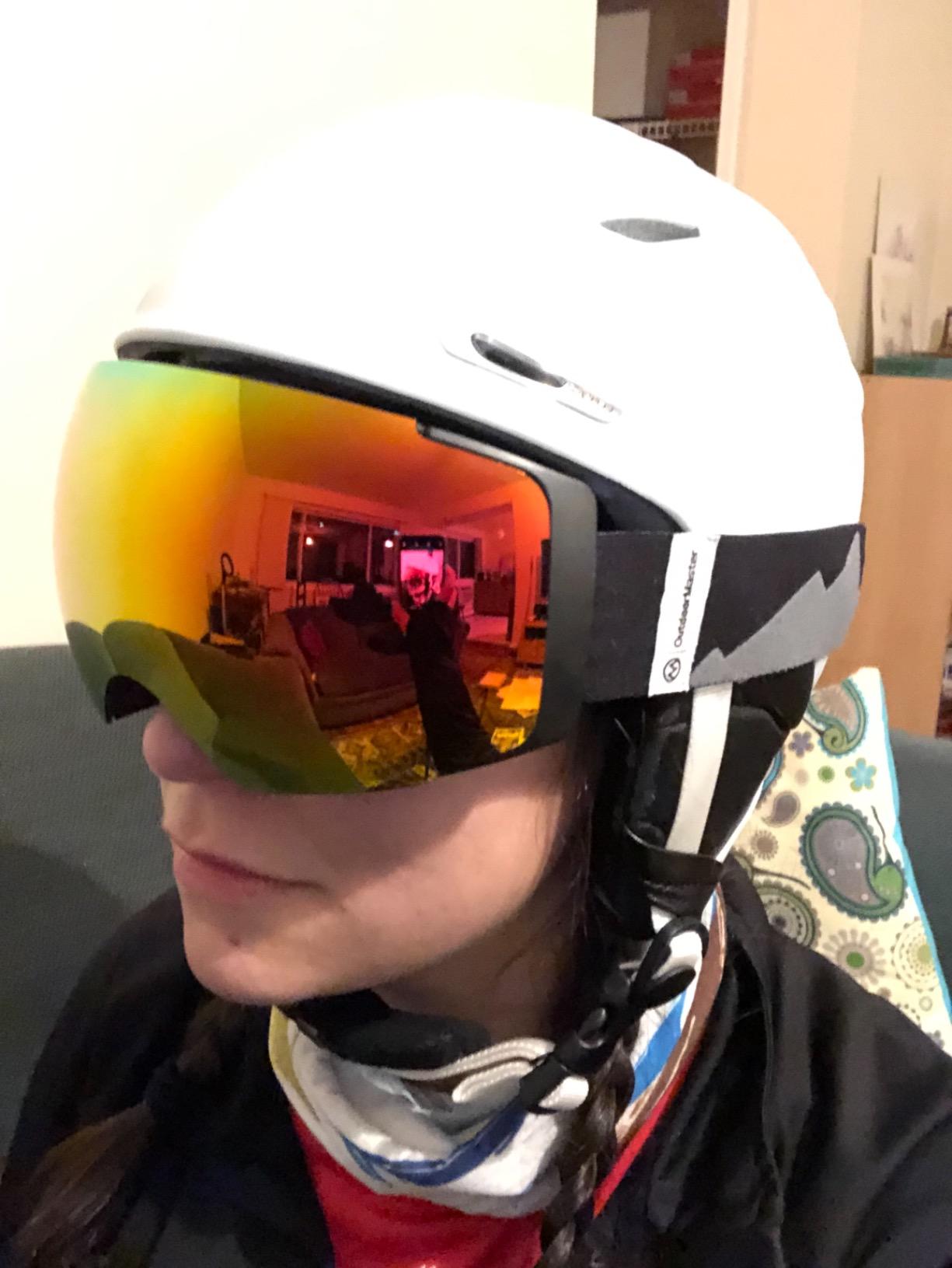
This is the goggle we ended the season with, and the reason is not the lens it comes with. It comes with a dark silver lens that is genuinely too dark for the conditions this roundup is about. What made it our pick is the lens catalogue behind it: more than twenty options in the magnetic system, including the high-VLT light-pink, clear and photochromic rose tints that flat-light skiing demands.
The frameless spherical design gives a wide, undistorted view, which matters more in flat light than most buyers expect. When the ground has no shadows, peripheral vision is how you spot the ice patch you did not aim at. The magnetic attachment locks in with a firm click and, from our falls, stayed put.
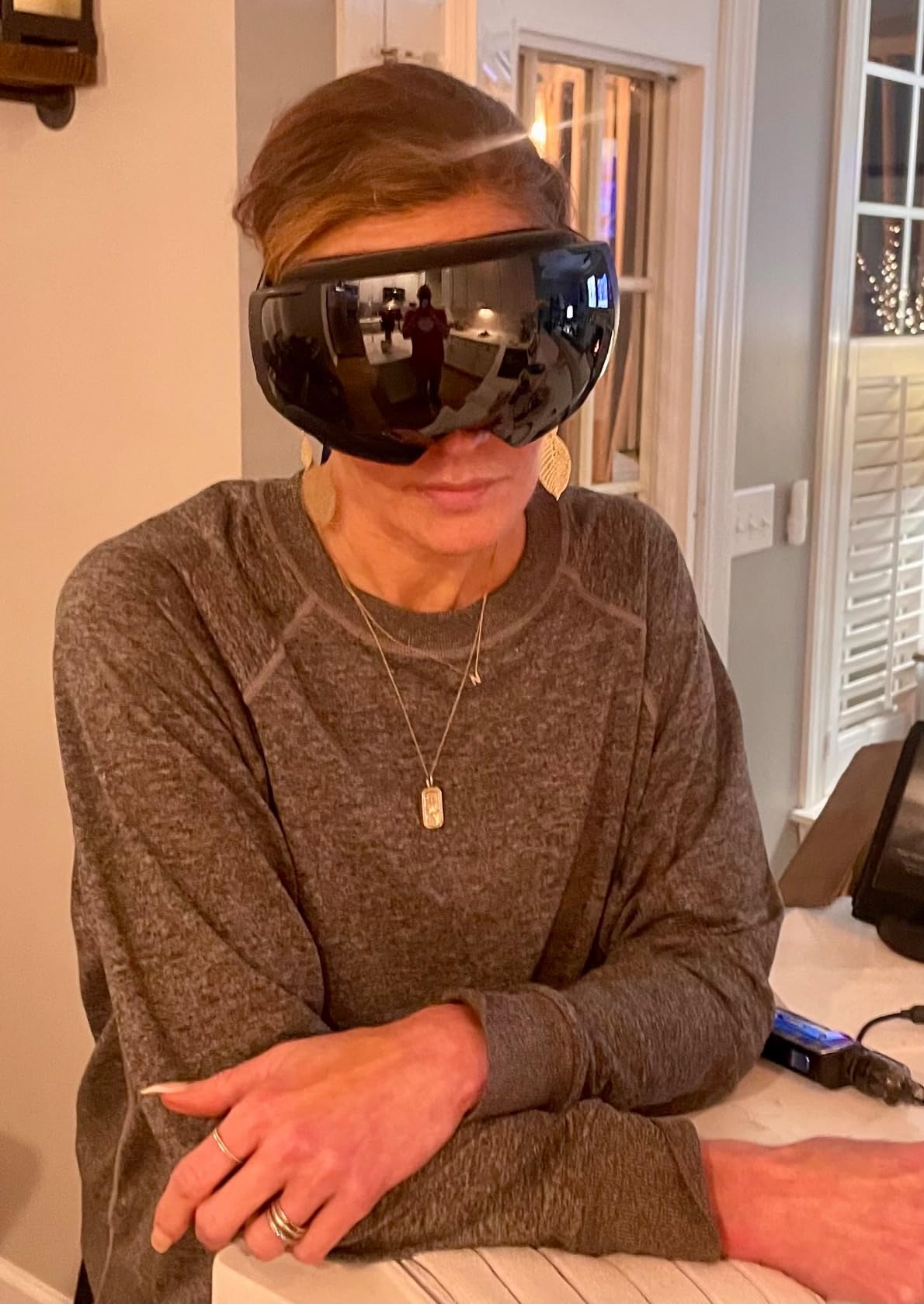
Reviewers consistently report strong anti-fog performance, and all lenses carry anti-fog coating with 100% UV400 protection. For storm days that combination is what keeps a high-VLT lens usable for a full lift queue rather than half of it.
Two practical notes. The OTG design is real: it fits over prescription glasses with room to spare, which removes the usual insert-versus-glasses argument. And the extra long elastic strap genuinely works across helmet sizes. Budget goggle owners should skip the included silver lens and go straight to a high-VLT pink or photochromic rose.
What makes it the best flat-light pick
Lens availability decides this category. Almost any goggle can be made to work in flat light if you can get the right tint into it, and most brands sell one or two spare lenses at most. Twenty-plus options means you can match a rose lens for flat, an amber for partly cloudy and a clear for night skiing without changing frames.
The magnetic system is the quiet hero. Swaps take a couple of seconds, which means you can react when the cloud rolls in at 11am instead of deciding at breakfast whether the day will be a whiteout.
Where it falls short
The stock lens is the obvious problem, and it is worth repeating because it is the single most common flat-light complaint in the reviews: a 10 percent VLT silver lens leaves shadowed trees and overcast slopes almost unreadable. Budget for the add-on lens.
Two smaller issues. Reviewers note the polarized yellow lens flattens snow texture and hides surface bumps, which is exactly wrong for mogul fields. And some users report the frame leaving a forehead gap on certain helmets, so try it with your own helmet if you can rather than trusting the size chart.
2. Wildhorn Roca – Secure Magnetic Swaps And Reliable Coatings
Wildhorn Roca Ski Goggles Men Women, ski goggles kid.Anti-Fog/Scratch 100% UV-Magnetic Lens-Snowboard Snow Goggles Men Women Adult
Magnetic lens change in under 60 seconds
Dual-lens panoramic spherical
Aurora lens technology, 100% UV
Anti-fog and anti-scratch coatings
TPU frame with triple-layer foam
Pros
- Magnetic lens system makes light-condition changes quick and secure
- Anti-fog and anti-scratch coatings keep vision clear all day
- Durable TPU frame and shatterproof polycarbonate lens
- Adult and junior sizing across many tints
Cons
- Aurora lenses are sold separately
- Frame sizing runs small for some larger head shapes
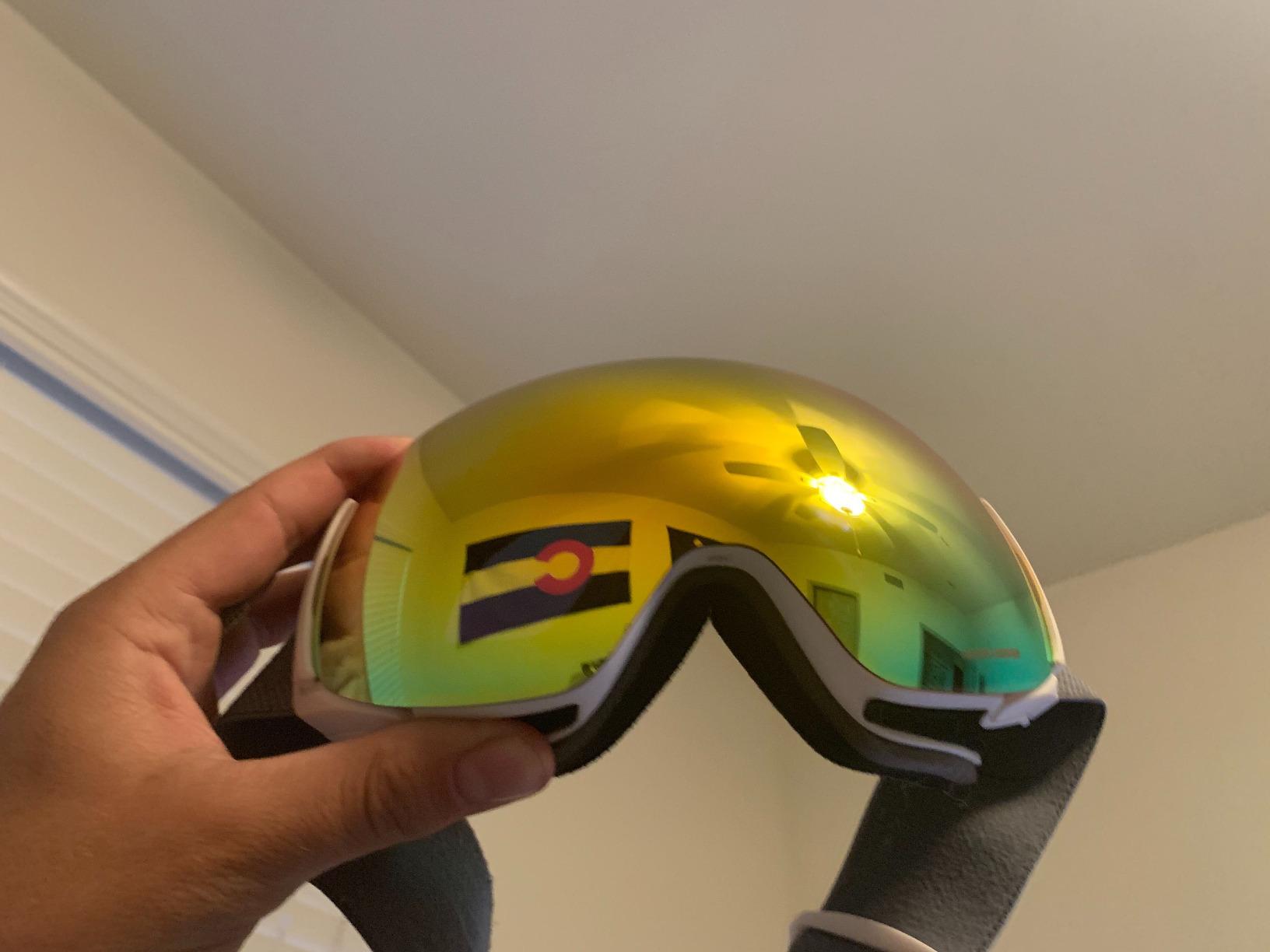
The Roca is the sturdiest all-round goggle we tested, and it carries the largest review base of anything in this roundup. The magnetic retention is the part that matters most in practice: several reviewers describe swapping lenses as close to instant, and the lens staying locked even after crashes.
Optically you get a dual-lens panoramic spherical design with Aurora lens technology, anti-fog and anti-scratch coatings, and full UV protection. We did not get the contrast separation that ChromaPop delivers on a hard flat-light day, but we did get a wide, distortion-free view and coatings that held up across repeated snowfall.
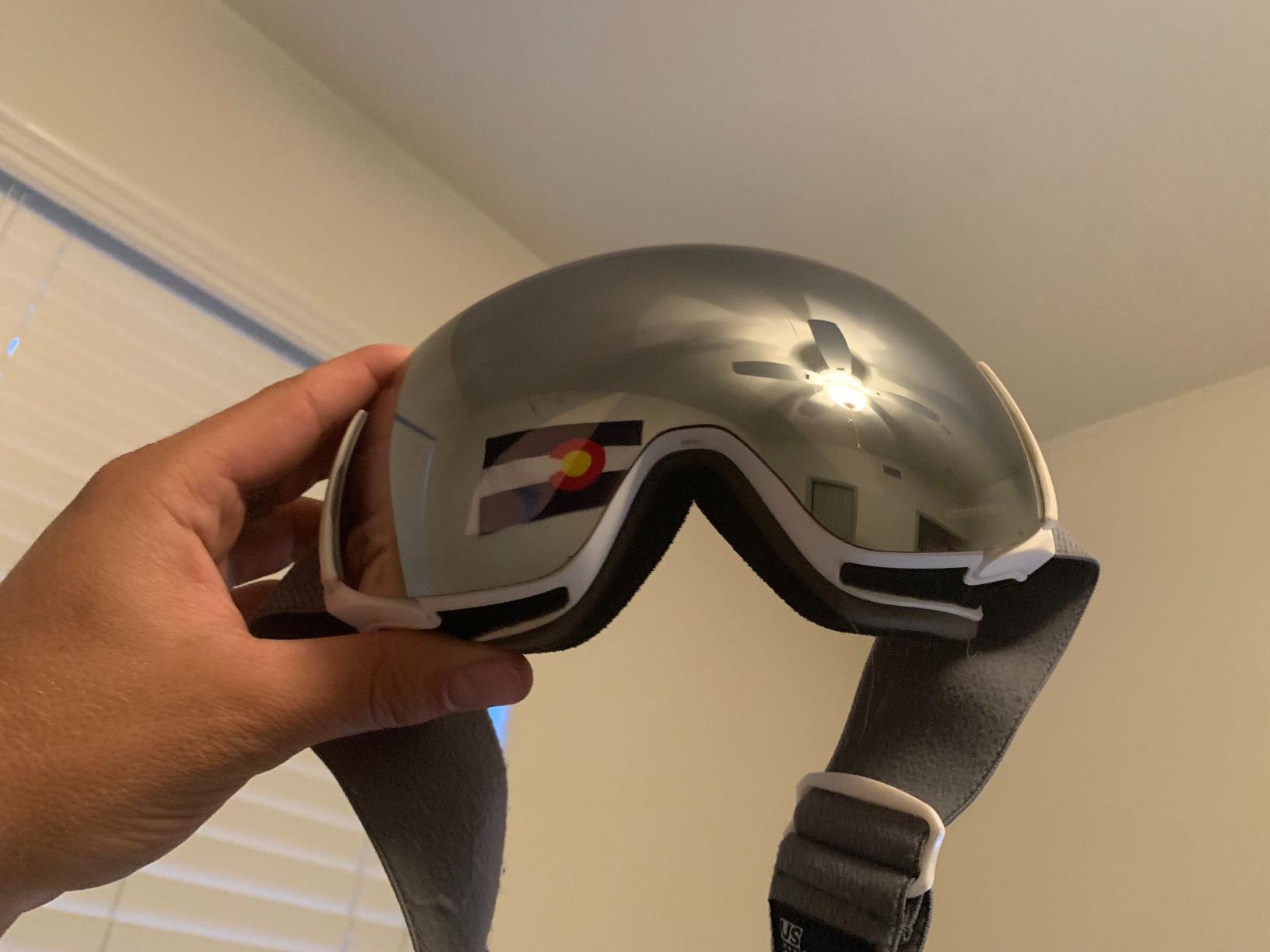
The frame is a durable thermoplastic urethane polymer with a soft-touch anti-slip coating and triple-layer high-grade foam padding. That foam is what makes long flat-light days bearable, because on low-contrast days you keep your head down looking at snow texture far more than you would on a clear day.
Wildhorn is an official supplier of the U.S. Ski and Snowboard Team, and the lens is shatterproof polycarbonate. For flat-light skiers who will not change brands mid-season, that combination of build quality and coating durability is worth more than a few points of contrast.
Why it earns the value slot
For a skier who wants one goggle that handles storms, overcast and occasional sun, the Roca does the job with fewer compromises than anything cheaper. Magnetic swap, real venting performance and a frame that survives a season of falls.
The wide panoramic spherical lens also gives a genuine bonus in flat light. With no shadows to guide you, a wider field of view translates directly into more terrain you notice early.
Where it falls short
The Aurora lenses are sold separately. That is the same trade-off as the OutdoorMaster, except the catalogue is smaller, so if flat light is your primary condition you need to confirm the high-VLT tint you want is actually offered before committing.
Reviewers also flag that frame sizing runs small for some larger head shapes. If you are between sizes, size up rather than down, and check that the strap still sits flat on your helmet.
3. ZIONOR X – OTG Fit With A Spread Of VLT Lens Variants
ZIONOR X Ski Snowboard Snow Goggles OTG Design for Men & Women with Spherical Detachable Lens UV Protection Anti-Fog
Frameless spherical design with anti-fog treatment
OTG fit, max glass size 5.5 x 1.65 inch
ZIONOR EDT impact-resistant lens
0.18 kg, helmet-compatible curved frame
Pros
- Clear wide panoramic view with anti-fog and UV treatment
- OTG design fits over prescription glasses
- Ruggedized EDT lens holds up to impacts
- Helmet-compatible curved frame stays in place at speed
- Range of VLT options from 9% to 22%
Cons
- The listed 18.5% VLT silver lens is darker than ideal for very flat light
- Fit runs tight over larger glasses frames
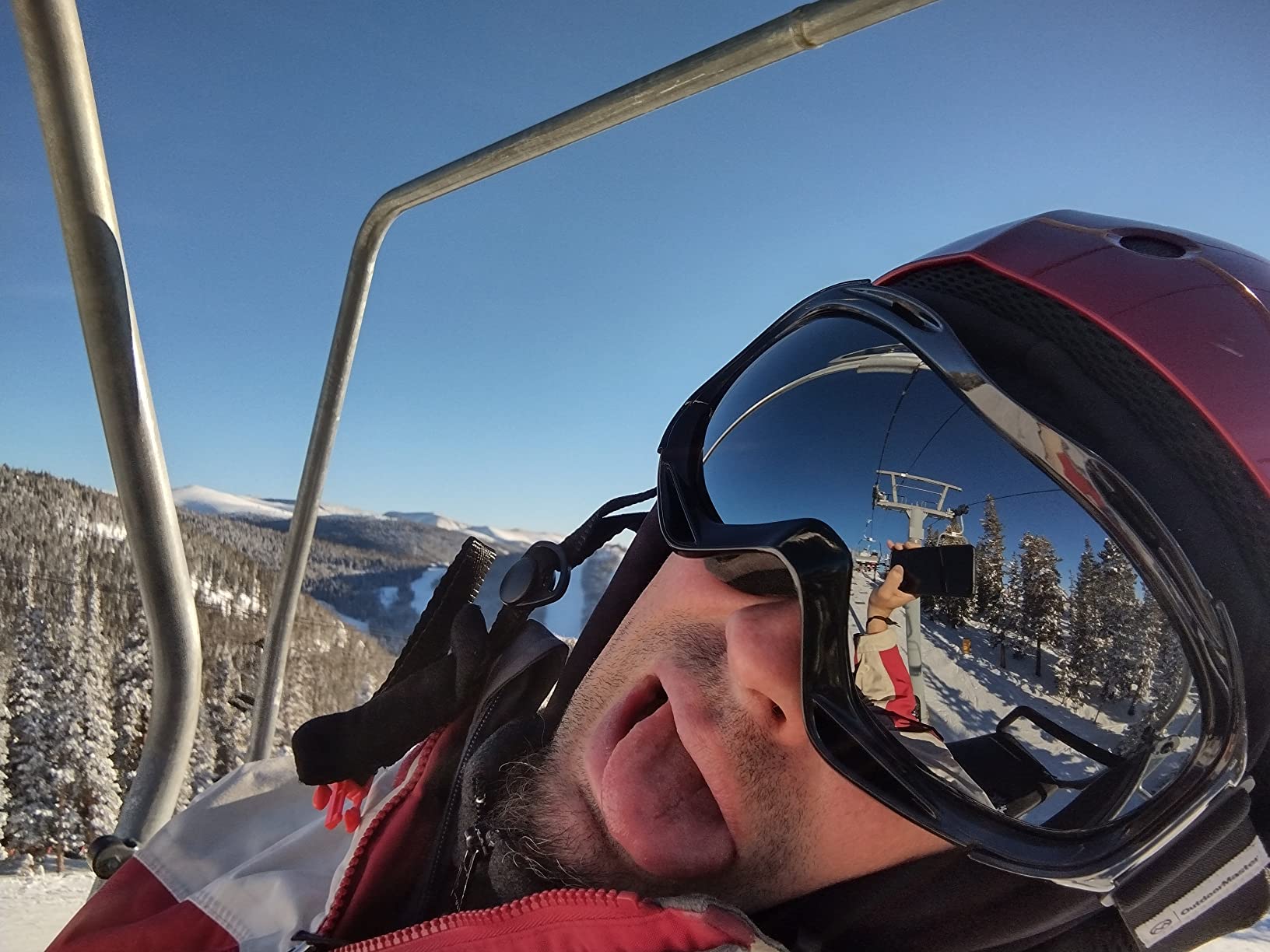
The ZIONOR X is the pick for skiers who wear glasses on the hill. The OTG design is specified to fit lenses up to 5.5 inches long and 1.65 inches high, which covers far more frames than most OTG goggles actually accommodate, and the detachable lens design means you can change tints within the same frame.
Build quality surprises for the money. ZIONOR’s Enhanced Durability Tech gives you an impact-resistant polycarbonate lens, a curved TPU frame that stays put at speed, and a frameless spherical profile with anti-fog and UV protection treatment. The listed weight is 0.18 kg, which is light on your helmet.
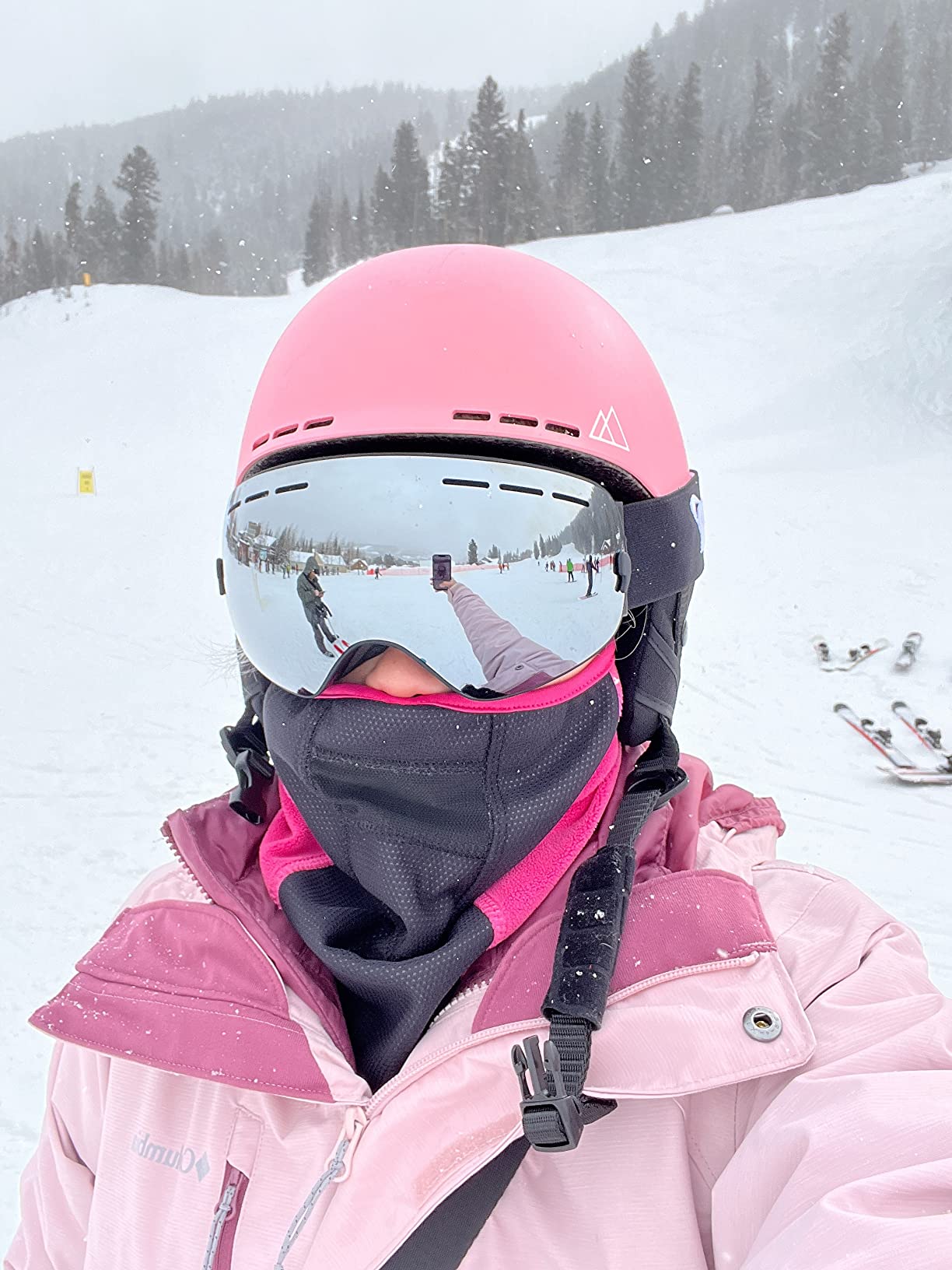
What we like most for this roundup is the VLT spread. The brand offers variants from 9 to 22 percent, so you can move from a proper sun lens toward a brighter red or green option as the sky closes in. That is still below the 40 to 60 percent band we recommend for true flat light, so you are buying a step toward it rather than the whole way.
Our advice is to treat the X as a base frame and move up one or two tints from the silver version listed here. Reviewers make the same point: buyers chasing flat light should step up from the standard silver lens to a higher-VLT red or green variant.
Who it suits
Anyone whose prescription glasses do not fit a normal goggle. The 5.5 by 1.65 inch maximum glass size is the number worth checking, and it is unusually generous.
It also works well for skiers who split their season between low-light days and a handful of bright ones, because the detachable lens gives you more than one tint without a second frame.
Where it falls short
The listed variant is an 18.5 percent VLT silver polarized lens. That is a partly cloudy to sun tint. On a genuinely flat day it will feel heavy, and you will be swapping sooner than you planned.
The fit also runs tight, which is worth flagging for exactly the glasses-wearers this goggle is for. Larger frames can feel restrictive, so if you wear oversized glasses, check the OTG clearance before you commit.
4. Wildhorn Cristo – Fixed Dual-Layer Lens With Proper Venting
Wildhorn Cristo Ski Goggles Men Women – Anti-Fog OTG Snow Goggles
Dual-layer anti-fog and anti-scratch lens
Ventilation system for airflow
100% UV400 protection
Rimless TPU frame, triple-layer foam
4.5 ounces
Pros
- Dual-layer anti-fog and anti-scratch lens stays clear in changing weather
- Ventilation system effectively reduces fogging
- Comfortable triple-layer foam fit that works over glasses
- TPU frame is flexible and durable
- Eight tint options including amber and clear for low light
Cons
- Lenses are not interchangeable
- Frame is plastic rather than premium construction
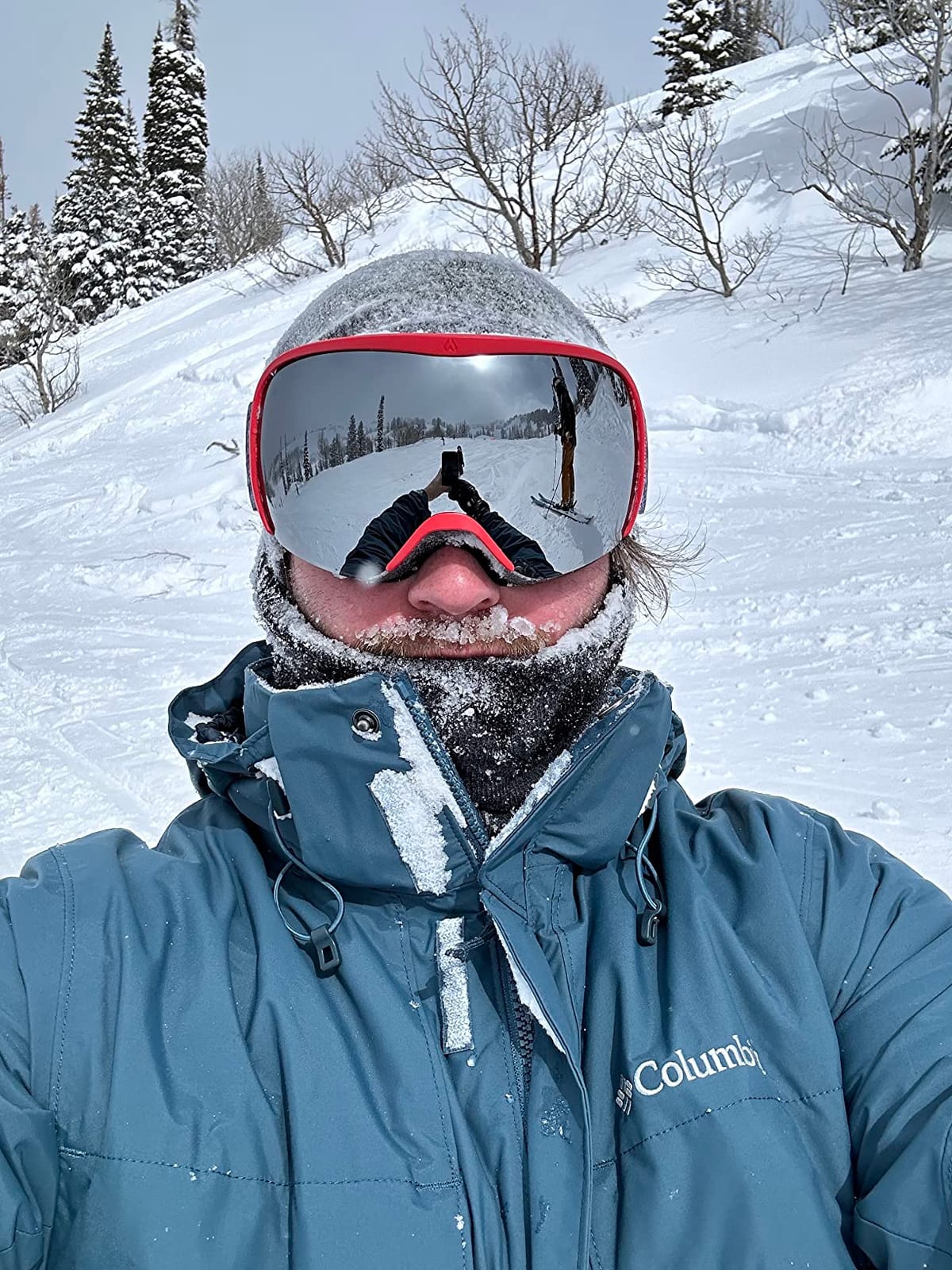
High-VLT lenses and fogging are the same problem, and the Cristo addresses both at once. The dual-layer lens creates the sealed air gap that keeps warm breath off the inside of the lens, and the ventilation system moves that moisture out. Together they are the most storm-relevant combination in this roundup on a fixed-lens goggle.
The frame is a rimless TPU design with triple-layer high-density soft face foam, weighing 4.5 ounces. It is OTG friendly, works across helmet brands, and the flex in the TPU means it absorbs the pressure points that show up when you tighten a strap over a hood in a storm.
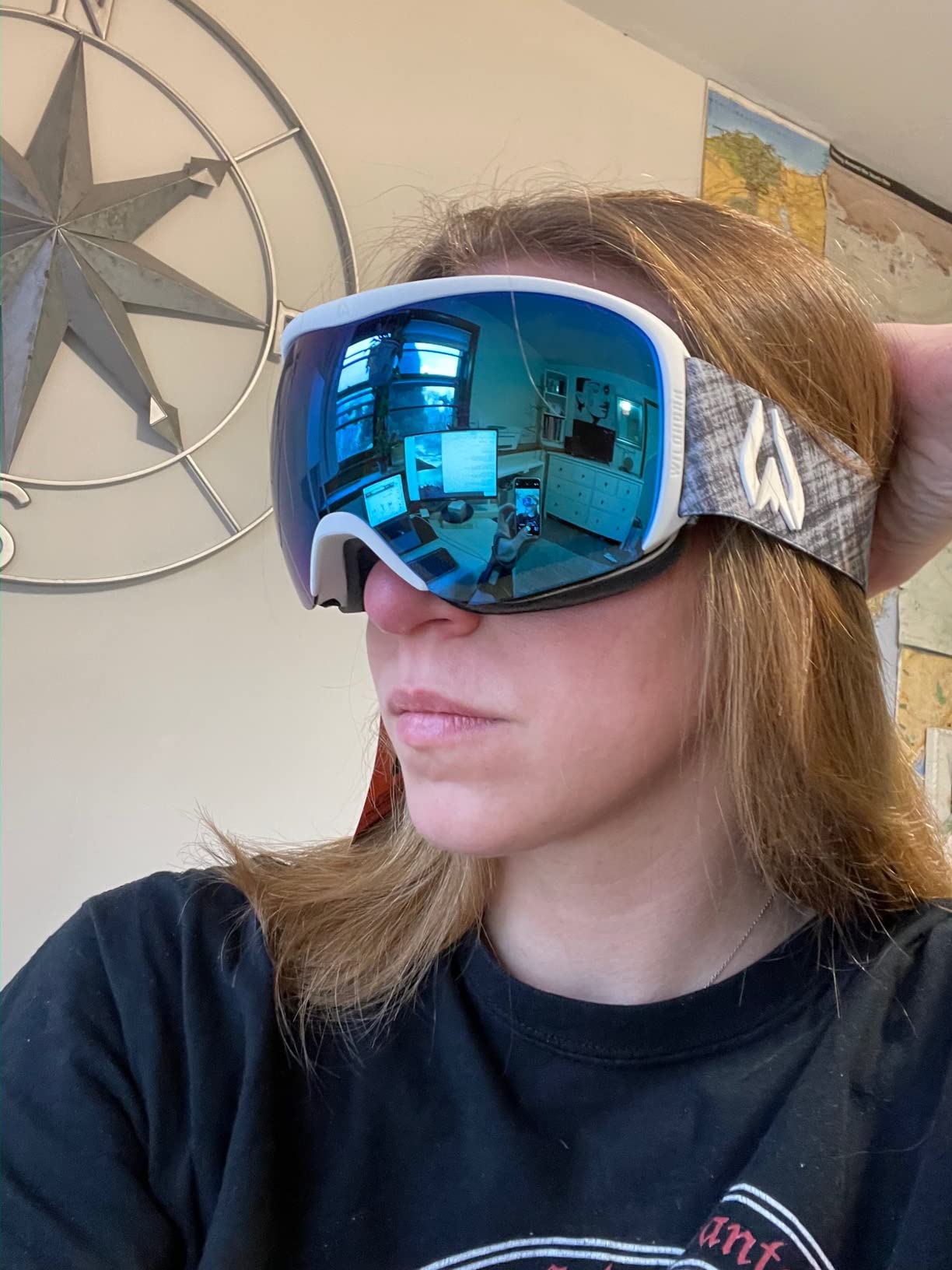
What makes it interesting for flat light specifically is the tint range. Eight lens options including amber and clear means you can buy the colour that suits your conditions rather than accepting whatever ships in the box. The listed variant is ice blue, so treat that as a sun-leaning starting point and check the amber option.
Reviewers praise the anti-fog performance, the venting, and the OTG comfort, and they also note the brand’s tier pricing lets you own one goggle per light condition. That is a legitimate strategy if you only ski a handful of days, though it scales badly across a full grey-sky season.
What makes it good for storms
Double-lens construction plus dedicated ventilation is the combination flat-light skiers need most, because the days that force you into a bright lens are the same days that fill the lens with moisture. The Cristo treats both at once.
The eight-tint range also means you can hold an amber or clear lens for storms and a darker one for sun without changing brands or frames.
Where it falls short
The lens is not interchangeable. That is the whole limitation, and it is significant here: if flat light is your default condition, you will be permanently locked into whatever tint you buy, with no way to react when the sun comes out.
The frame is also more basic plastic than the TPU-heavy construction in higher tiers, and a one year manufacturer warranty is the minimum rather than a comfort. For a season-ticket holder, think of this as a second-condition goggle rather than your only one.
5. EXP VISION – The Lowest-Cost Pick That Still Vents Well
EXP VISION Snowboard Ski Goggles Men Women Youth, Anti Fog OTG Winter Snow Goggles Spherical Detachable Lens
Spherical dual REVO lens, frameless
REVO scratch-resistant coating
Anti-fog with vent channels
Three-layer foam, OTG friendly
5.26 ounces
Pros
- Lowest cost in the roundup while keeping a 4.6 average rating
- Wide clean spherical lens view with minimal blocking
- Anti-fog dual-lens design plus vent channels
- OTG friendly with three-layer foam
- Adjustable strap works across helmet sizes
Cons
- Lens detachability is less convenient than magnetic systems
- Optics are entry-level compared with premium contrast lenses
If you are outfitting a family or a pair of rental boots, this is the goggle that does the job for least. It holds a 4.6 average across nearly two thousand reviews and ranks in the top five of its category, which is a level of consistency you rarely see at the bottom of the price ladder.
Optically it is a frameless spherical dual-lens design with a full REVO coating for scratch resistance and clarity. The dual-lens anti-fog coating is paired with vent channels, which is the correct engineering for a storm day and is not universal at this price.
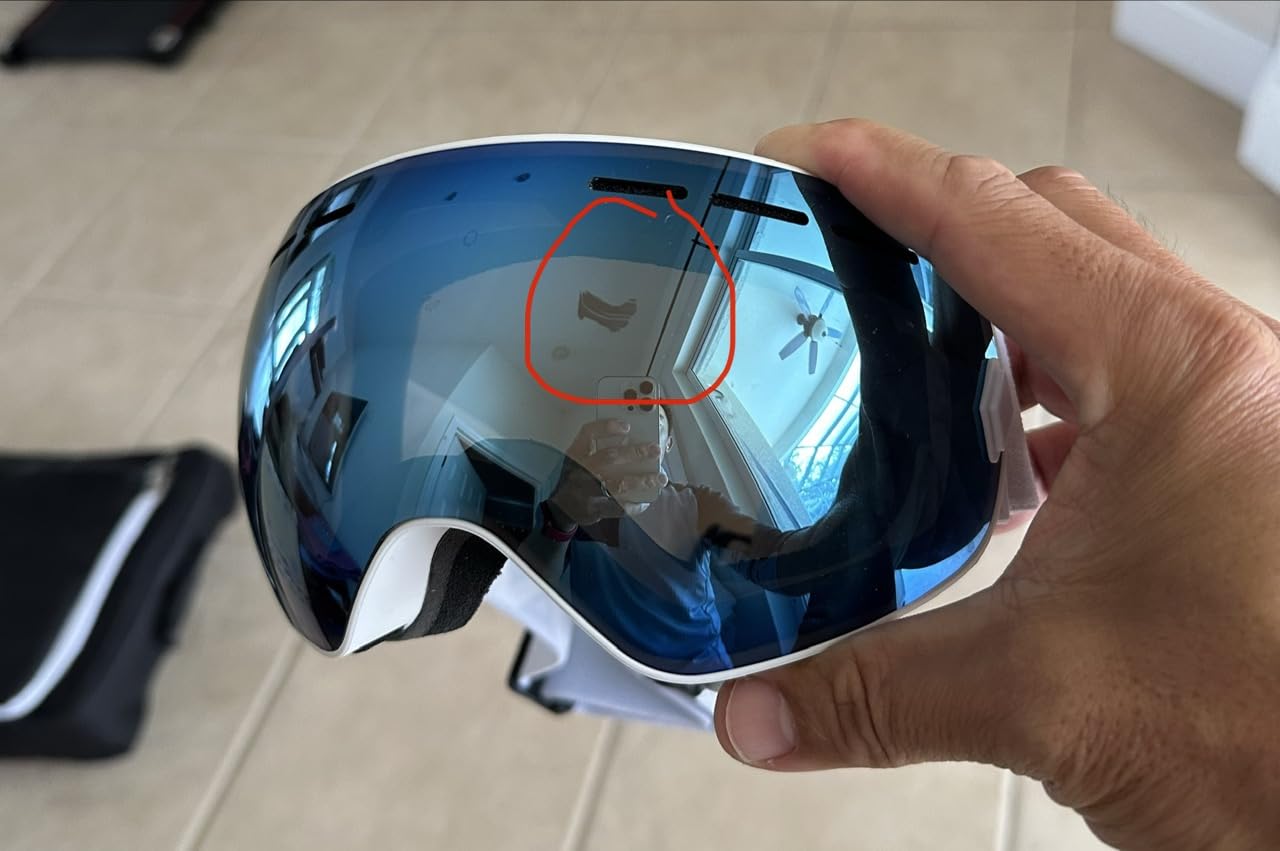
Fit details are handled properly. It is OTG friendly for myopia skiers and snowboarders, the three-layer foam manages warmth and sweat, and the fast adjustable elastic strap fits all helmet sizes. At 5.26 ounces it is one of the lighter goggles we tested, which reduces helmet fatigue on long days.
Our honest read is that this is a value pick, not an optics pick. On a flat day with a good tint fitted, the wide clean view carries you. On a hard flat-light day when you need to read subtle terrain relief, the entry-level lens falls short of anything with a named contrast technology.
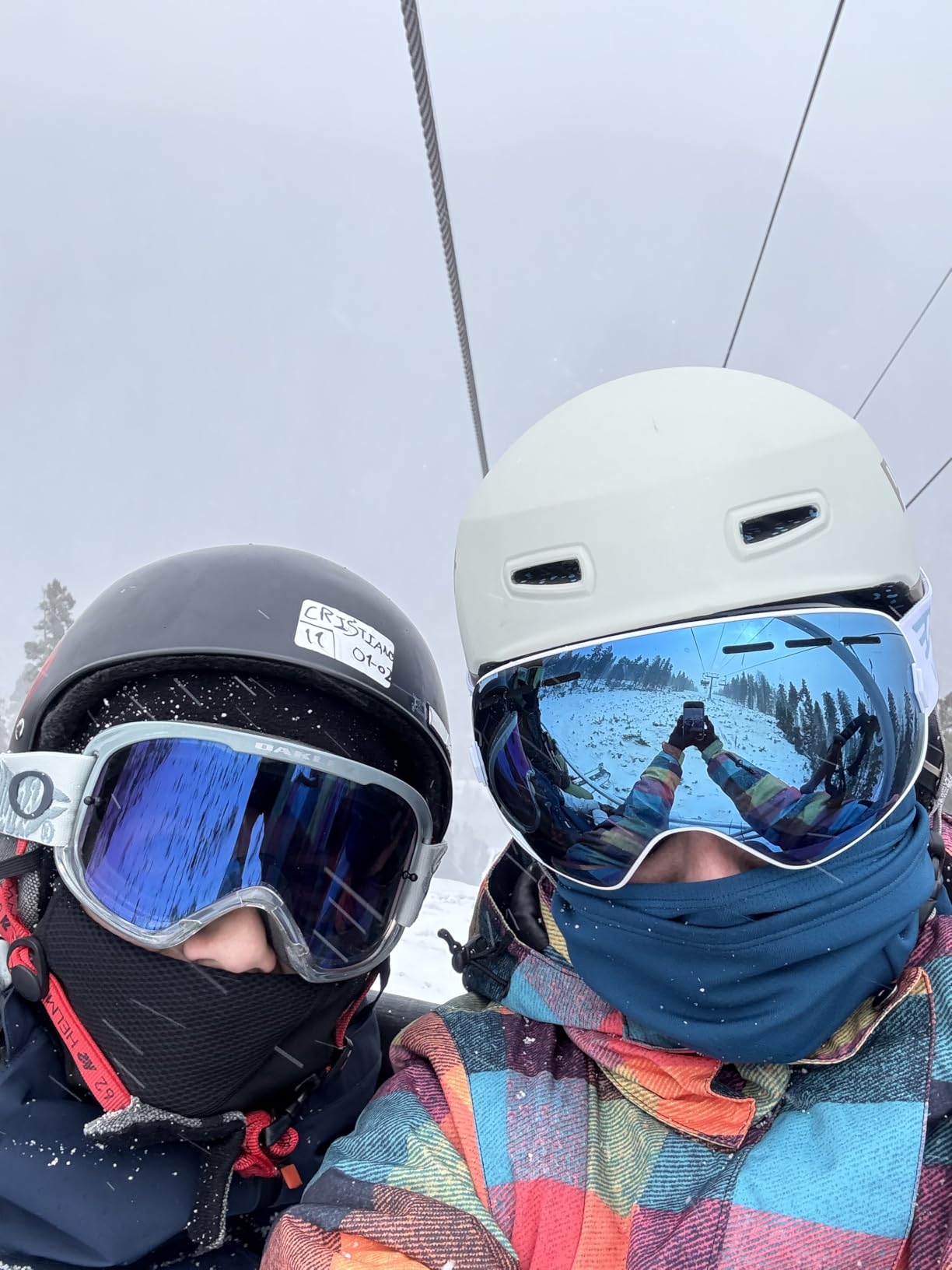
When it makes sense
For occasional skiers, beginners, and anyone buying a goggle for a child who will grow out of it, this is the correct purchase. The wide spherical view is forgiving and the vented dual-lens construction handles fogging better than most of its direct competitors.
It is also a sensible backup goggle. Snow-sports goggles take abuse, and having a second pair that costs little removes the stress of a scratched lens before a storm day.
Where it falls short
The lens is detachable but not magnetic. Exchanging it takes more effort than the magnetic systems above, so this is a poor choice if you plan to react to mid-day weather changes.
More importantly, the optics are entry-level. Expect a clear, wide view without the contrast lift that ChromaPop or Prizm provides. In flat light that difference is not subtle, so if you ski a lot of grey-sky days, spend up.
6. Odoland Photochromic – A Self-Tinting Lens For Grey-Sky Seasons
Odoland Anti-Fog Photochromic Ski Goggles with Pattern Strap
Auto-tinting photochromic lens
Two-way airflow with Italian defogging inner lens
Shatter-proof, 99.99% UV400
Triple-layer foam with fleece liner
Helmet compatible
Pros
- Photochromic lens removes the need to carry or swap lenses
- Two-way airflow channels and Italian defogging inner lens hold clarity
- Wide field of view for quick reaction
- Fleece-lined triple-layer foam stays comfortable all day
- Nine embroidered strap colourways
Cons
- Photochromic lenses adapt more slowly than swapping a dedicated lens
- Lower review volume than the long-running models in this roundup
This is the most purpose-built flat-light option in the roundup, and the logic is sound. A photochromic lens changes tint on its own, so on a day that starts sunny and turns socked-in at 11am, the goggle adjusts without you touching anything. There is no lens to forget in a car, no swap to fumble with in gloves, and no chance of ending the day in the wrong tint.
The venting deserves attention alongside the lens. Two-way airflow channels work with a premium Italian defogging inner lens, and the shatter-proof anti-scratch lens carries 99.99 percent UV400 protection. That combination matters most on exactly the flat-light days this goggle is aimed at.
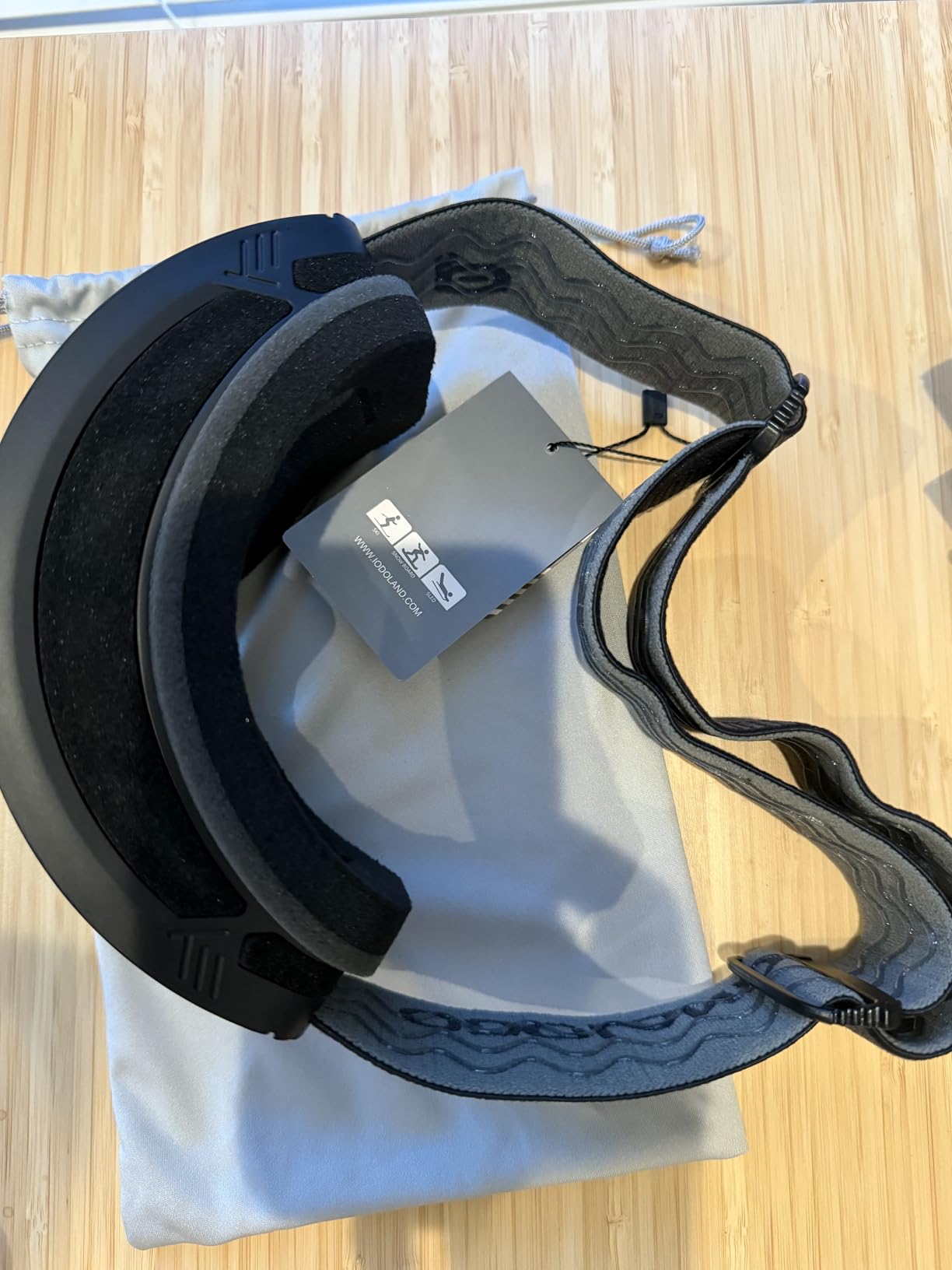
Comfort is a genuine strength. Contoured triple-layer face foam with a soft fleece liner stays comfortable through a long day, the frame is bendable, and the design is helmet compatible. Reviewers also like the wide field of view, which matters for quick reaction when snowboarding.
There is an aesthetic element too: a fashion reflective lens with a colour-matched embroidered pattern strap, in nine colourways across men’s and women’s styles. If you ride a chairlift in a grey sky, that is not nothing.
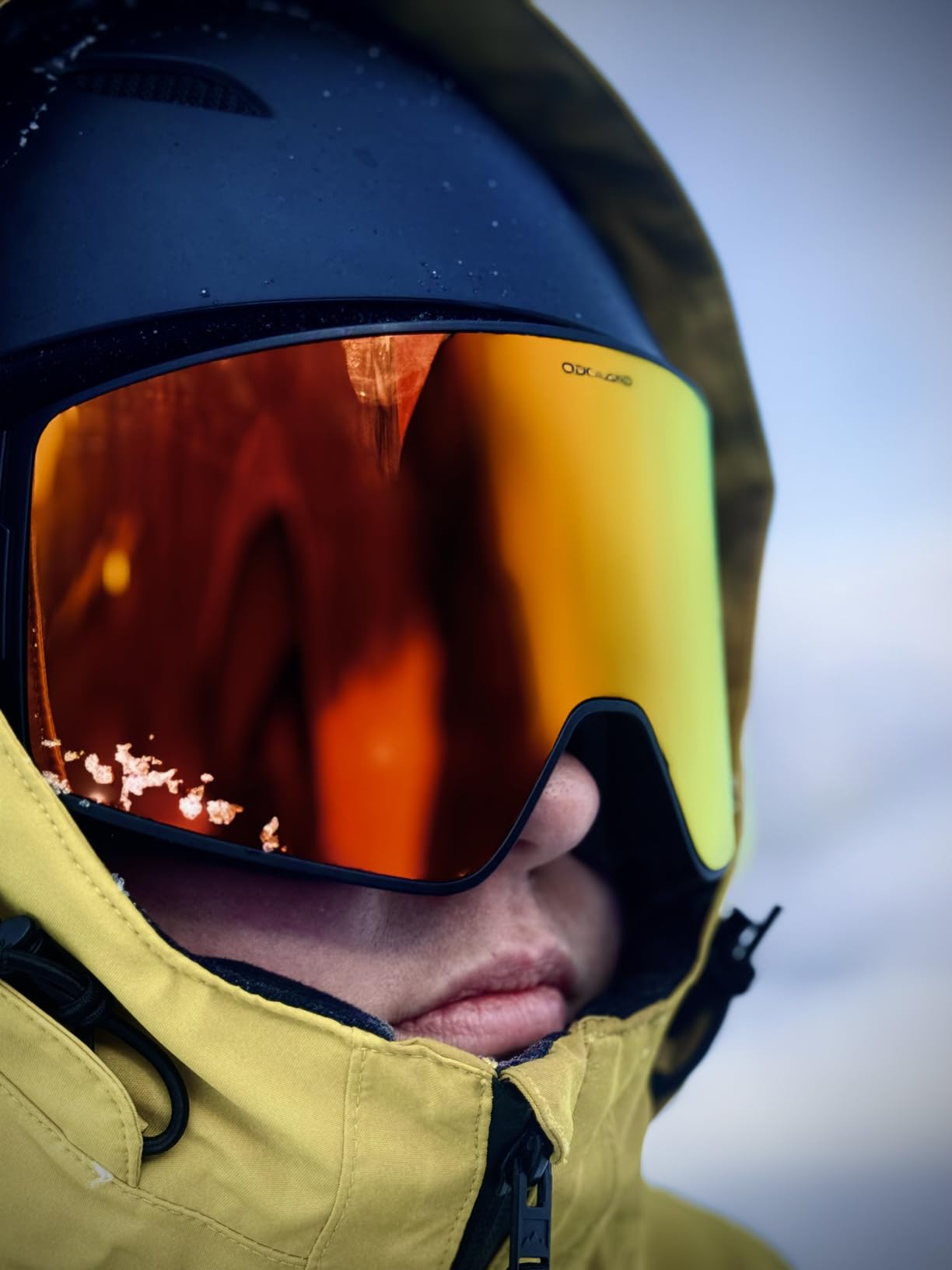
Who it suits
Skiers who refuse to swap lenses and want one goggle to cover an entire variable season. If you ski 20 or more days in a climate that flips between sun and socked-in, the convenience is worth more than a slightly better static tint.
It is also the easiest recommendation for night skiing on a budget, since a self-darkening lens naturally sits at a higher transmission when there is no sun to react to.
Where it falls short
Photochromic lenses are slower to adapt than physically swapping in a dedicated high-VLT lens, and that delay is most obvious when you move in and out of trees or through a lift line that alternates shadow and open sky. If you want an instant change, this is the wrong mechanism.
The review history is also shorter than the established models here, at 221 reviews against several thousand for the leaders. The design is sound, but you are buying a newer product with a shorter track record.
7. Whale Magnetic Goggles – Two Lenses Including A Night Lens
Whale 2027 New Magnetic-Closure Ski Goggles, 2 Interchangeable Lenses/Night Skiing Light-Enhancing Lens, Anti-Fog, Unisex (Silver, Silver)
Two lenses: day plus night light-enhancing
Magnetic-closure removable lens
Anti-fog coating with ventilation
Explosion-resistant polycarbonate
UV400, unisex OTG fit
Pros
- Two lenses included
- including a night-skiing light-enhancing lens
- Magnetic lens swap is easy and the magnets stay strong after a season
- True OTG fit with room for glasses and no pressure points
- Good wind and snow coverage that seals well under a helmet
Cons
- Lenses scratch easily if dragged on ice or wiped with a dirty cloth
- Some users report fogging that needs additional anti-fog spray
- One reviewer felt they suit occasional rather than multi-day weekly use
The Whale is unusual in the best way: it comes with two lenses, and the second one is explicitly a light-enhancing night-skiing lens. For flat-light skiers who also ride under lights, that is a genuinely rare package. Most budget goggles give you a spare sun lens; this one gives you a low-light lens you can actually use after dark.
The magnetic-closure lens design is easy to operate, and reviewers report the magnets staying strong after a season of use. That is the durability question that matters, because a magnetic system that weakens is the same as no magnetic system.
Construction is a cellulose propionate frame with an explosion-resistant polycarbonate lens and UV400 protection against snow blindness. The fit is true OTG with plenty of room for glasses and no pressure points, and the frame seals well under a helmet with good wind and snow coverage.
Users also report using these well outside skiing. The same seal and lens package works for snowmobiling, cold-weather boating and hunting, which stretches the value if you are not a full-time resort skier.
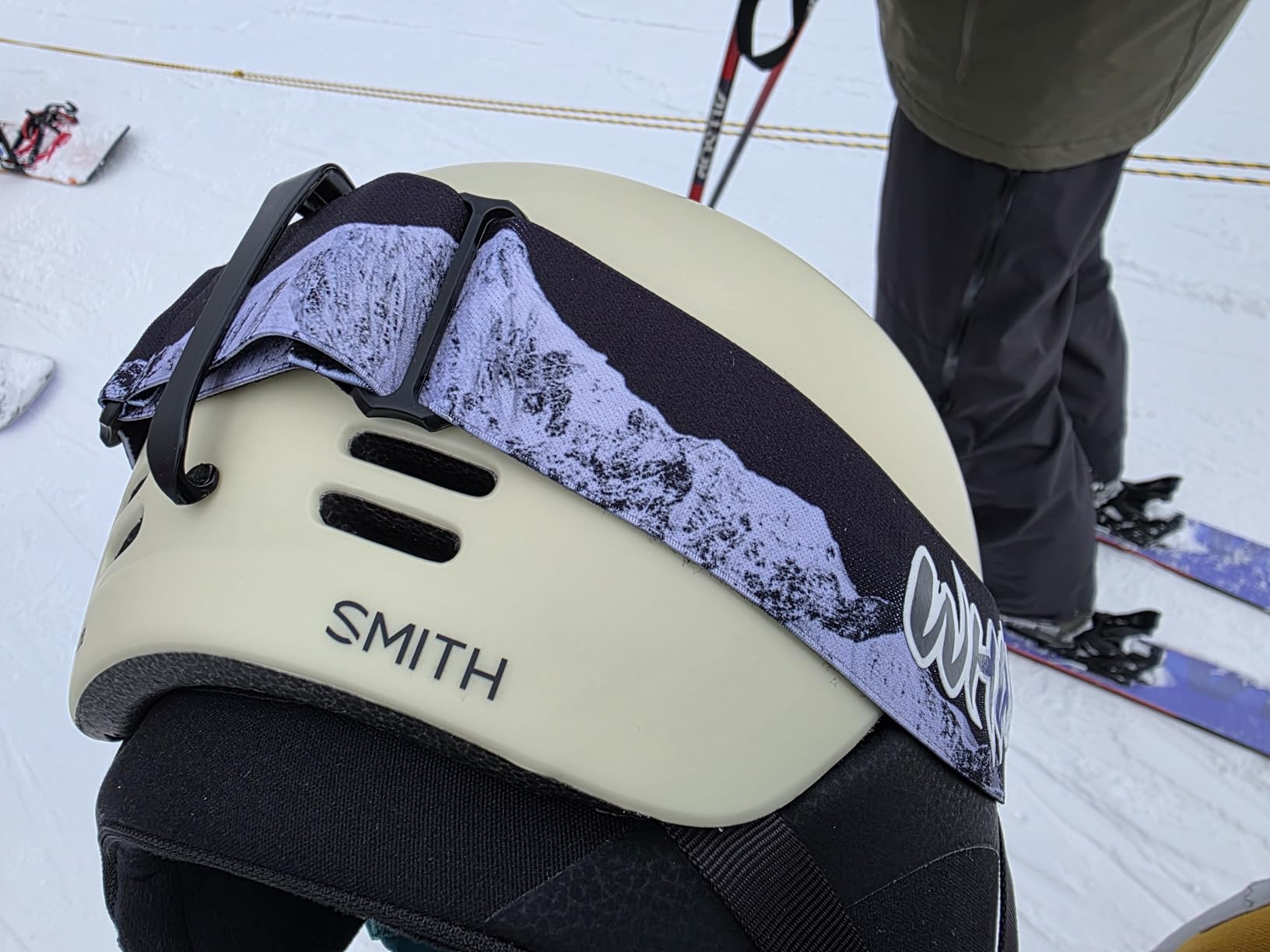
What makes it worth considering
Two lenses from the start is unusual at this level, and the night lens is the one that differentiates it. If flat light is your default and you ski lights a handful of nights a week, this covers more of your season than any single-lens alternative here.
The magnetic closure plus OTG fit also makes it a practical second goggle for anyone who needs a spare that can go over glasses and can be swapped between riders.
Where it falls short
The lenses scratch easily, particularly if dragged on ice or wiped with a dirty cloth. That is a real risk in flat-light conditions where snow is wet and sticky, and it argues for a dedicated goggle case rather than a pocket.
Some users also report fogging that required additional anti-fog spray, and one reviewer considered the goggles more suited to occasional use than to skiing several days a week. Treat the night capability as a bonus rather than a headline.
8. SMITH Squad ChromaPop – The Best-Rated Contrast In The List
SMITH Squad Snow Goggles with ChromaPop Lens – Performance Ski & Snowboard Goggles with Replaceable Lens – For Men & Women – Black + Everyday Blue Mirror Lens
Semi-rimless oversized cylindrical lens
ChromaPop contrast and color definition
Smith anti-fog with smudge-resistant coatings
Dual-slide strap, responsive fit frame
Includes low-light and sun lenses
Pros
- Highest average rating in the roundup at 4.7
- ChromaPop makes terrain bumps and snow texture pop
- Exceptional wide panoramic field of view with no blind spots
- Anti-fog holds up on cold damp days
- Includes both a low-light and a high-visibility lens
Cons
- Non-magnetic J-hook lens release is difficult and can scratch the lens
- Fit runs tight on smaller helmets
- Included soft case protects against scratches only
On raw optical performance in flat light, this is the strongest goggle we tested. ChromaPop lens technology is built to enhance definition, contrast and natural color, and on a genuinely flat day the difference is obvious: bumps, snow texture and surface debris separate from the background instead of merging into it.
It is also the only goggle here that comes with a low-light lens in the box alongside a high-visibility sun lens. For a skier who wants a two-lens setup out of the gate, that removes the single biggest extra purchase in this category.
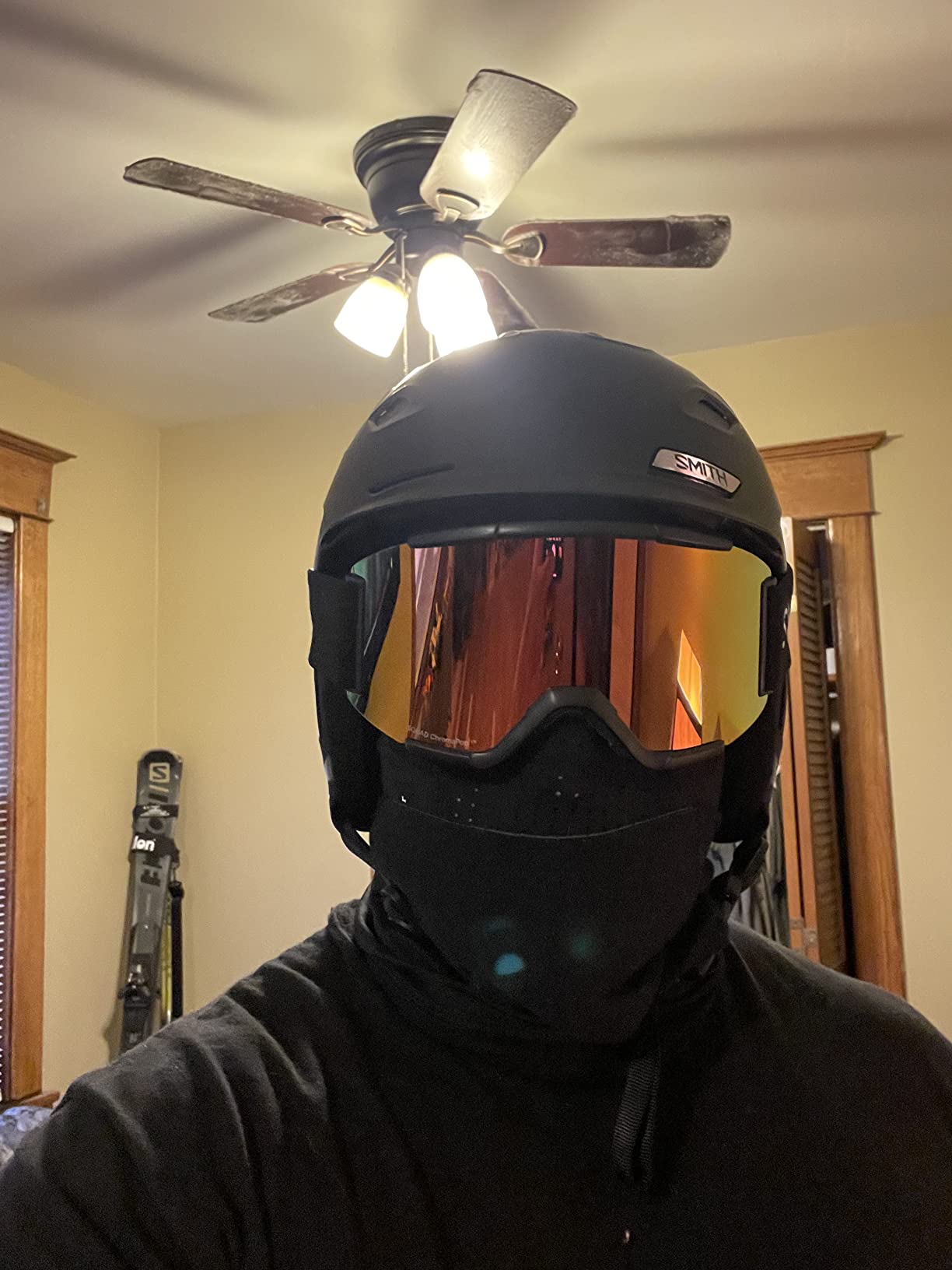
The semi-rimless design with an oversized cylindrical lens gives a genuinely wide panoramic field of view with no blind spots, and reviewers consistently praise the anti-fog technology on cold, damp days and intense runs. The dual-slide strap with an ultra-wide silicone-backed strap and the responsive fit frame keep it secure.
There is a real integration argument too. The goggle is designed to work with Smith snowsports helmets for venting and fog-free performance, so if you already own a Smith helmet, the pairing is worth considering.
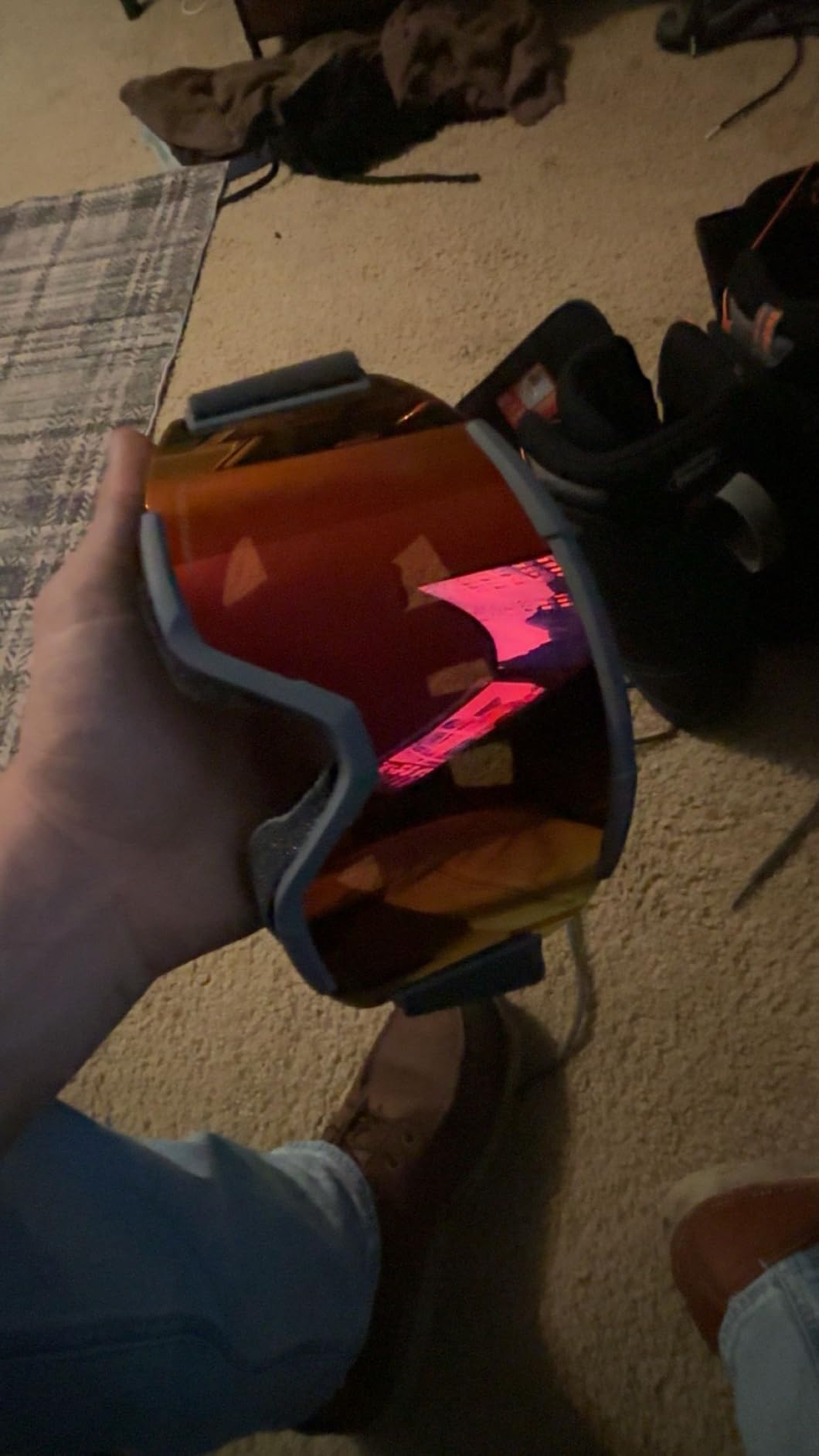
Why the contrast matters most in flat light
On a clear day, shadows do the work and any decent lens shows you terrain. On a flat day, the lens is the only thing separating a mogul from a smooth roll. ChromaPop is designed for exactly that job, and it is the reason this model earns the highest average rating in the roundup.
With both a low-light and a sun lens included, it also handles the mid-day weather change that ruins so many flat-light setups. You are not relying on a spare lens you never got around to buying.
Where it falls short
The lens swap is not magnetic. It uses a J-hook release that reviewers describe as difficult to operate, and several buyers say it can scratch the lens or break the hooks. Some say it discouraged them from changing lenses mid-day, which undercuts the two-lens advantage.
Fit also runs tight on smaller helmets even on the loosest setting, and the included soft case protects against scratches rather than impact. If you have a small helmet, try it on first.
9. Giro Method – Two Zeiss VIVID Lenses At 58 Percent VLT
Giro Method Ski Goggles – Snow Goggles for Men, Women & Youth – Sienna Fade Strap with VIVID Smoke/VIVID Infrared Lenses
EXV frame with Change Slash Seal lens system
VIVID lens technology by ZEISS
58% VLT on the listed low-light variant
EVAK venting, triple-layer foam
Includes sun and low-light lenses
Pros
- Ships with two VIVID Zeiss lenses including a dedicated low-light lens
- VIVID technology improves contrast and filters out snow haze
- EVAK venting and anti-fog produced minimal fogging at -23F
- Triple-layer foam with microfleece lacing works over glasses
- Adjustable Adapt Strap
Cons
- Slash Seal lens swap is a struggle without clear instructions
- Runs very large and suits some face shapes better than others
- The low-light lens can scratch easily
The Method is the closest thing in this roundup to a dedicated answer for the flat-light skier, and the number explains why. The listed low-light variant is specified at 58 percent VLT, which sits squarely in the 40 to 60 percent band we consider ideal for overcast skiing. That figure is a rare, explicit, published number on a goggle that includes the lens.
The lens technology is VIVID, developed with Zeiss, which manipulates blue light to enhance contrast and definition. Reviewers specifically note that it filters out snow haze, and that is the exact failure mode of flat light: the atmospheric wash that makes a white slope look like fog.
Two VIVID Zeiss lenses are included, one for sun and all-conditions and one for low light. EVAK vent technology releases moisture while blocking the elements, using non-absorbent foam, and one reviewer reported minimal fogging at -23F. That is a serious cold-weather result and directly relevant to the storm days that force you into a bright lens.
The EXV frame uses a quick Change Slash Seal lens interchange system, and the fit is OTG friendly with triple-layer face foam and microfleece lacing. The frame is plastic and weighs 3.2 ounces, and the goggle comes with a one year warranty against defects.
Why the 58 percent VLT matters
A published VLT figure removes the guesswork. When a brand states 58 percent and pairs it with a low-light tint and blue-light-manipulating optics, you know exactly what you are putting on your face before the snow arrives.
For a skier who wants one purchase that covers overcast and sun, the included pair means no extra lens buying. The low-light lens is the default flat-light lens, and the sun lens is there for the bluebird afternoon.
Where it falls short
The Slash Seal lens interchange is the most repeated complaint. The manufacturer does not publish clear instructions, and it can remain frustrating even after finding guides. At least one buyer responded by buying a second, cheaper pair purely to avoid swapping, which tells you how much the mechanism matters.
The frame also runs very large, which some buyers felt suited men’s faces more than women’s, and the low-light lens can scratch easily. Check sizing carefully, particularly if you are between sizes.
10. SMITH I/O Mag – Magnetic ChromaPop That Locks To A Helmet
SMITH I/O MAG Goggles with ChromaPop Lens – Performance Snowsports Goggles with Easy Lens Change Technology for Skiing & Snowboarding – for Men & Women – Slate + Everyday Red Mirror
MAG magnetic interchangeable lens system
ChromaPop visibility and color contrast
Silicone-backed rimless polyurethane frame
DriWix foam, flow-through ventilation
AirEvac integration with Smith helmets
Pros
- Best-in-class magnetic lens interchange makes light-condition swaps a breeze
- ChromaPop gives strong visibility and color contrast in varying weather
- Comfortable all-day DriWix foam with responsive fit frame
- No fogging reported when paired with a Smith helmet
- Works over prescription glasses
Cons
- Field of view is narrower than some competitors
- Some fogging reported during particularly intense sessions
- Low-bridge-fit XL variant is awkward on some face shapes
The I/O Mag is the premium end of this roundup and the smoothest system in it. The MAG magnetic interchangeable lens system is consistently described as a breeze to use, which matters enormously for flat light: when the cloud rolls in, you want to be on a high-VLT rose lens in seconds, not hunting for release tabs with numb hands.
ChromaPop lens technology provides the visibility and color contrast, and long-term owners rate it highly in varying weather. The silicone-backed rimless polyurethane frame with DriWix face foam and a responsive fit frame adapts to different face shapes and stays comfortable across a full day.
Ventilation is where this model separates itself in storms. Flow-through ventilation combines with AirEvac integration, so when it is paired with a Smith helmet the two vent together and owners report no fogging at all, including on cold, damp days. It also works over prescription glasses and fits well under a helmet.
Why the magnetic system is the deciding factor
Every other claim on this list matters less than the speed of the swap. Flat light rarely arrives on schedule, and the difference between a five-second lens change and a fiddly one is the difference between adapting to the mountain and adapting to your gear.
The AirEvac helmet pairing adds a second layer. If your fogging problem is largely a ventilation problem, matching the goggle to the helmet solves both at once, which is why owners using this pairing report no fogging at all.
Where it falls short
The field of view is narrower than some competitors, and on a low-contrast day a tighter view means less peripheral terrain. If picking out ice in trees is your priority, test it against a cylindrical design first.
Some fogging is reported during particularly intense sessions, and the low-bridge-fit XL variant is awkward on certain face shapes. A small number of buyers also received units with wrong lenses, smudged lenses or damaged packaging, so inspect carefully on arrival.
How To Choose Ski Goggles For Flat Light
Choosing a flat-light lens tint
Start with the base tint, not the brand. Rose, pink, amber, copper and light yellow all work in flat light because they absorb blue wavelengths and return a scene with more colour separation. Grey, brown and dark smoke lenses are the ones that leave you squinting the moment the cloud moves in.
Within the warm tints, rose and amber sit closest together for most skiers, with rose running slightly cooler and amber slightly warmer for heavier snow and night riding. Yellow is the highest-contrast option and the one most often recommended specifically for flat-light skiing because it amplifies shadows and keeps bumps visible even when the sky is blank.
One warning from the reviews: a polarized yellow lens on some budget goggles flattens snow texture rather than enhancing it. If you are buying yellow for contrast, buy it from a brand with a named contrast technology.
Understanding VLT and what the number means
VLT, visible light transmission, is the percentage of available light that passes through the lens. The number runs in the opposite direction to how dark a lens feels: 10 percent VLT is a dark sun lens, 80 percent VLT is nearly clear. Higher numbers mean more light, which is exactly what you want when the sky has none to spare.
For flat light we aim for 40 to 60 percent VLT. Storm, heavy snowfall and night skiing push you toward 60 to 80 percent. Partly cloudy sits at 20 to 40 percent, and full sun drops to 10 to 20 percent. Is 10 percent VLT too dark for flat light? Yes, without question. That is a sun lens, and it is the single most common reason skiers describe whiteout days as terrifying.
The practical tip is to find a published VLT figure rather than guessing from a colour photograph. Product photos are lit for sales, not for snow. Only one goggle in this roundup publishes an explicit VLT on a low-light variant, which is why we flag it as the number to look for.
Contrast lens technology and what it buys you
ChromaPop, Prizm, Vivid and Perceive all do the same job in slightly different ways: they boost perceived contrast and definition without changing the VLT. On a flat day this is the feature that separates a usable goggle from a frustrating one, because it is what makes a subtle roll in the snow look like a roll.
ChromaPop is widely credited in skier communities with making terrain bumps, shadows and snow texture stand out, and the SMITH models in this roundup use it. VIVID, co-developed with Zeiss, works by manipulating blue light, and reviewers of the Giro Method specifically credit it with filtering out snow haze. Prizm and Perceive occupy the same category on other brands.
Whether the branding matters is the fair question. On a bright, high-contrast day, you will not notice much difference. On a socked-in day at speed, the difference between a contrast-enhanced lens and a generic one is the difference between picking a rollover and guessing.
Fogging and ventilation on storm days
High VLT and fogging are the same problem wearing two hats. You need a bright lens precisely when the air is saturated, your helmet is sealed, and the temperature gap between your face and the outside is largest. Every fogging complaint we read about flat-light goggles has the same root cause.
Five things help. First, look for double-lens or dual-lens construction, which traps a sealed air gap that keeps warm breath off the lens surface. Second, check for actual vent channels rather than decorative vents; the models here with genuine airflow performed better in snowfall. Third, keep the anti-fog coating clean, because a coating smeared with sunscreen or scrubbed with a dry cloth stops working.
Fourth, wear a helmet that vents. Several models in this roundup integrate with a specific helmet brand to move moisture out at the top, and owners using that pairing report no fogging at all. Fifth, do not push your goggles up onto your forehead on the lift and then pull them back down five minutes later, which is the single most reliable way to fog a lens you have just cleaned.
One lens, two lenses or photochromic
One lens is the simplest answer and it works if you know your climate. If you ski somewhere with genuinely consistent weather and always wear a helmet, a fixed high-VLT lens in a well-vented goggle like the Wildhorn Cristo is a complete solution with nothing to fail.
Two lenses is the answer for most resort skiers. It is the most flexible setup, and the deciding factor is the swap mechanism. Magnetic systems like the OutdoorMaster, Wildhorn Roca, Whale and SMITH I/O Mag change in seconds. Fiddly non-magnetic mechanisms are the most common reason people end up owning a second goggle instead of a second lens.
Photochromic is the answer for skiers who refuse to swap. A self-tinting lens handles a day that starts sunny and turns flat with no intervention, which is genuinely convenient. The trade-off is adaptation speed, which is slower than a swap, and the possibility that it sits darker or lighter than you would choose on a given day.
One more factor: check whether the brand sells a replacement flat-light lens for the frame you already own. The ability to add one storm lens to an existing goggle is a major purchase driver, and several brands make you buy a whole second goggle instead. That is the running cost that decides the maths of a grey-sky season.
Fit, frame size and helmet compatibility
Fit is the leading disqualifier in this category, ahead of optics. A goggle that slips, presses at the brow or leaves a gap at the helmet forehead will fog and rattle no matter what tint is fitted. Most of these models use an adjustable elastic or dual-slide silicone-backed strap, which handles most head shapes.
Sizing deserves particular attention for flat-light shoppers, because many high-VLT storm tints are offered only in large frames. Some models run large and suit certain face shapes better than others, while others run small and tighten for bigger head shapes. Measure your helmet-to-goggle relationship before you commit, and size up if you are between sizes.
If you wear prescription glasses, OTG fit is not optional. Check the maximum glass size the goggle is designed to accommodate, and note that some OTG frames are tight over larger frames. Helmet compatibility is usually handled by the strap, but the goggles with dedicated brand integration vent better when matched to the right helmet.
Lens shape: spherical, cylindrical and toric
Spherical lenses curve in both directions and give a wide field of view with mild distortion. Cylindrical lenses curve in only one direction, giving a wider, flatter view with less distortion than spherical designs. Toric lenses sit between the two, curving more vertically than horizontally to match facial contours.
For flat light specifically, shape matters less than tint. Contrast comes from the optics and the base colour, not the curvature. That said, a wider field of view is still an advantage on a low-contrast day, because you spot more terrain early when there are no shadows giving you a second look. Several of the picks here pair a cylindrical lens with a semi-rimless frame for exactly that reason.
Flat-Light Setups We Considered And Passed On
We would rather tell you what we skipped than pretend our list is exhaustive. Three categories of goggle turned up in testing that we decided not to feature, and the reasons are worth stating.
Fixed-lens premium goggles in a single large frame. Some excellent high-VLT goggles are only made in one oversized frame with a non-swappable lens. If you have a small head or a low nose bridge, that combination eliminates you before optics even enter the conversation.
Cylindrical goggles sold only with a dark sun lens. Superb field of view, poor flat-light readiness. Unless the brand sells a matching high-VLT cylindrical lens for the same frame, you are back to hunting for a spare lens that may not exist.
Kits that bundle a photochromic lens as the only optic. Convenient until the day you want a specific tint. We preferred models where the photochromic sits alongside or above a proper magnetic or detachable lens system, so you have a fallback.
We also left out any goggle whose stated low-light option required a different frame size than the main model, because that is the most common reason flat-light shoppers end up with a goggle they cannot wear over their glasses or with their helmet.
Frequently Asked Questions
What ski goggle lenses are best for flat light?
Rose, amber, yellow, copper and light tints work best because they absorb blue wavelengths and restore terrain contrast. Aim for 40 to 60 percent visible light transmission for overcast days and 60 to 80 percent for storms and night skiing. Pair the tint with contrast-enhancing optics such as ChromaPop or VIVID so bumps and ice read clearly when there are no shadows.
What are the best ski goggles for flat light skiing?
The OutdoorMaster Ski Goggles PRO is our top flat-light pick because its magnetic system carries more than 20 lens options, including high-VLT light-pink, clear and photochromic rose tints. The Wildhorn Roca is the sturdier all-round option, the ZIONOR X suits glasses wearers, the Giro Method ships with a 58 percent VLT low-light lens, and the SMITH Squad and I/O Mag add ChromaPop contrast.
What are the best ski goggles for low light conditions?
Look for a high-VLT rose or amber lens with venting, since low light and fogging arrive together. The Giro Method includes a 58 percent VLT VIVID low-light lens, the SMITH Squad includes a low-light lens alongside a sun lens, the SMITH I/O Mag combines ChromaPop with flow-through ventilation, and the Odoland photochromic model darkens and lightens without any swapping.
Which ski goggles don’t fog up?
Anti-fog performance comes from double-lens construction, real vent channels, clean coatings and helmet integration. The Wildhorn Cristo pairs a dual-layer lens with a ventilation system, the Giro Method uses EVAK vents and non-absorbent foam, and the SMITH I/O Mag vents through AirEvac when paired with a Smith helmet. Avoid pushing goggles onto your forehead between runs, which is the fastest way to fog a clean lens.
What is the best lens color for skiing in flat light?
Warm tints win: rose, pink, amber, copper and yellow. Yellow gives the highest contrast and is often recommended specifically for flat-light skiing because it amplifies shadows so bumps stay visible. Grey, brown and dark smoke lenses are the classic flat-light failure because they are built for sun. Within the warm family, amber suits heavier snow and night riding, rose suits general overcast skiing.
What color tint is best for ski goggles?
Match the tint to the VLT band rather than to appearance. 10 to 20 percent VLT smoke or grey is for full sun, 20 to 40 percent works for partly cloudy skies, 40 to 60 percent is the overcast and flat-light band, and 60 to 80 percent rose, amber or yellow handles storms and night skiing. Find a published VLT figure rather than judging from a product photograph.
Is 10% VLT too dark?
For flat light, yes. A 10 percent VLT lens passes only a tenth of available light, which is fine on a clear bluebird day and close to useless under overcast skies, falling snow or fog. It is the most common reason skiers describe whiteout days as blinding. If more than about 20 of your days a season are flat, treat 40 to 60 percent VLT as your baseline and keep the dark lens for sun.
What are some good yellow tinted ski goggles?
Look for a high-VLT yellow or amber lens in a goggle with named contrast technology, since some budget polarized yellow lenses flatten snow texture instead of enhancing it. The Giro Method includes a 58 percent VLT low-light lens with VIVID optics, the Wildhorn Cristo offers amber and clear among eight tints, and the SMITH I/O Mag and Squad carry ChromaPop contrast in their lens ranges.
The Best Ski Goggles For Flat Light: Our Final Word
The best ski goggles for flat light are not the ones with the darkest lens or the biggest brand name. They are the ones that put a warm, high-VLT tint with real contrast technology in front of your eyes, and that let you change that tint fast when the weather turns.
Our winner is the OutdoorMaster Ski Goggles PRO, because twenty-plus lens options solve the flat-light problem permanently rather than temporarily. Buy the Wildhorn Roca if you want a sturdier frame with the most established magnetic system. Buy the ZIONOR X if you wear prescription glasses. Buy the Giro Method if you want a published 58 percent VLT low-light lens and Zeiss VIVID optics in the box. Buy the SMITH Squad or the SMITH I/O Mag if contrast performance is your priority and you will not compromise on ChromaPop.
Two decisions narrow everything else. If you refuse to swap lenses, go photochromic and accept slower adaptation. If you ski more than 20 flat-light days a season, buy a lens rather than a goggle if the brand sells one for your frame, and check the replacement lens exists before you buy the frame.
One last piece of advice from the skiing communities that answer this question most often: name your climate and your day count when you shop. A skier in Michigan riding flat light most of the season has a completely different answer from someone with 15 days a year in the Rockies. Tell us your conditions and how many days you ride, and we will tell you which of these ten is the right one.