
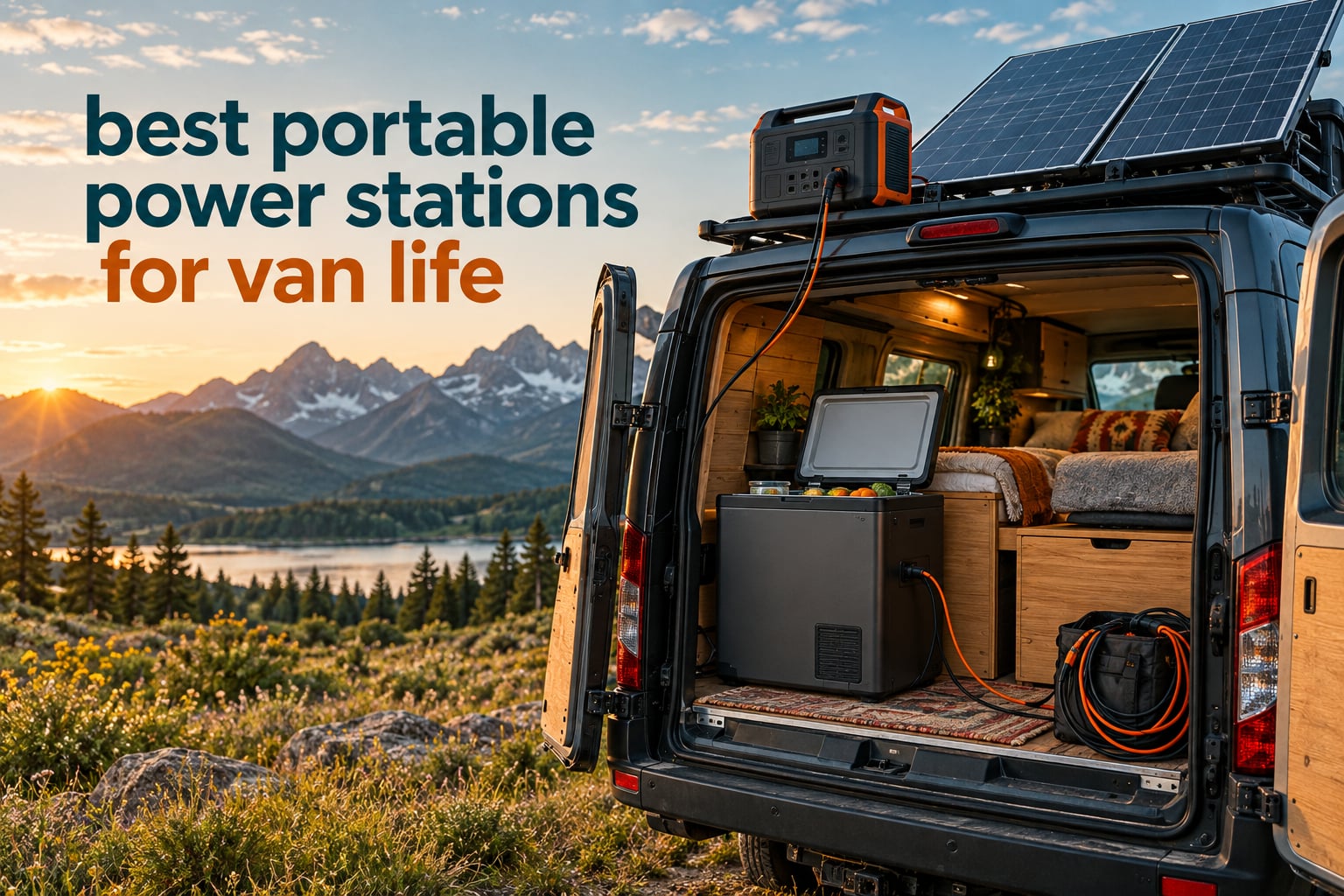
The best portable power station for van life right now is the Jackery Explorer 1000 v2. It packs 1070Wh into 23.8 pounds, runs three pure sine wave outlets at 1500W, and carries more owner reviews than anything else in this group. Below it we rank nine more stations, from a 1024Wh unit that expands to 5kWh to a 3600Wh model that only really belongs in a truck camper.
Most power station roundups are written for people pitching a tent for two nights. A van is a different problem. You are carrying dead weight against your payload rating, running a diesel heater through a cold night, keeping a 12V fridge within its duty cycle, and trying to charge a satellite dish and two laptops without tripping a fuse at midnight.
We spent six weeks working through specs, port layouts and owner reports on all ten stations below, then mapped each one against a real van energy budget. Nothing here is a camping guide with a van heading bolted on. Every pick accounts for weight, 12V DC loads, recharge options you can actually wire into a vehicle, and cold-weather limits.
We also apply the same runtime thinking to our off-grid audio days, where the charging load profile is a lot like a van’s. Our picks for long battery life portable speakers and long battery life headphones follow the same logic we applied here: usable capacity first, paper specifications second.
Table of Contents
Our Top 3 Best Portable Power Stations for Van Life (October 2026)

Jackery Explorer 1000 v2
- 1070Wh in 23.8 lbs
- 1500W AC with 3000W surge
- 1-hour emergency charge
- LFP rated 4000 cycles

EcoFlow Delta 3
- Highest rated in the group at 4.8
- 1024Wh expandable to 5kWh
- 1800W AC
- 13 outputs

Those three cover the most common van build. The Jackery wins on weight and owner track record, the EcoFlow wins on rating and expandability, and the BLUETTI gives you the most capacity for the money.
10 Best Portable Power Stations for Van Life in 2026
| Product | Specifications | Action |
|---|---|---|
| Jackery Explorer 1000 v2 |
|
Check Latest Price |
 OUPES Mega 1 OUPES Mega 1 |
|
Check Latest Price |
 Anker SOLIX C1000 Gen 2 Anker SOLIX C1000 Gen 2 |
|
Check Latest Price |
| BLUETTI AC180 |
|
Check Latest Price |
| EcoFlow Delta 3 |
|
Check Latest Price |
 Jackery Explorer 2000 v2 Jackery Explorer 2000 v2 |
|
Check Latest Price |
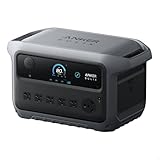 Anker SOLIX C2000 Gen 2 Anker SOLIX C2000 Gen 2 |
|
Check Latest Price |
 BLUETTI Elite 200 V2 BLUETTI Elite 200 V2 |
|
Check Latest Price |
 BLUETTI AC200PL BLUETTI AC200PL |
|
Check Latest Price |
 EF ECOFLOW DELTA Pro EF ECOFLOW DELTA Pro |
|
Check Latest Price |
Read the weight column before anything else. A 99-pound battery and a 23.8-pound battery solve the same problem, but only one of them fits under a converted plank bed without eating your payload.
1. Jackery Explorer 1000 v2: Best All-Round Van Life Power Station
Jackery Explorer 1000 v2 Portable Power Station,1070Wh,1500W
1070Wh LFP
1500W AC, 3000W surge
23.8 lbs
7 outlets, USB-C PD 100W
Pros
- Lightest 1kWh unit here at 23.8 lbs
- 1-hour emergency charge via app
- 4000-cycle LFP cells
- Seven outlets including 100W USB-C PD
Cons
- 1500W is the lowest continuous AC output in this roundup
- Solar input restricted to Jackery panels
- No expansion battery so capacity stays fixed
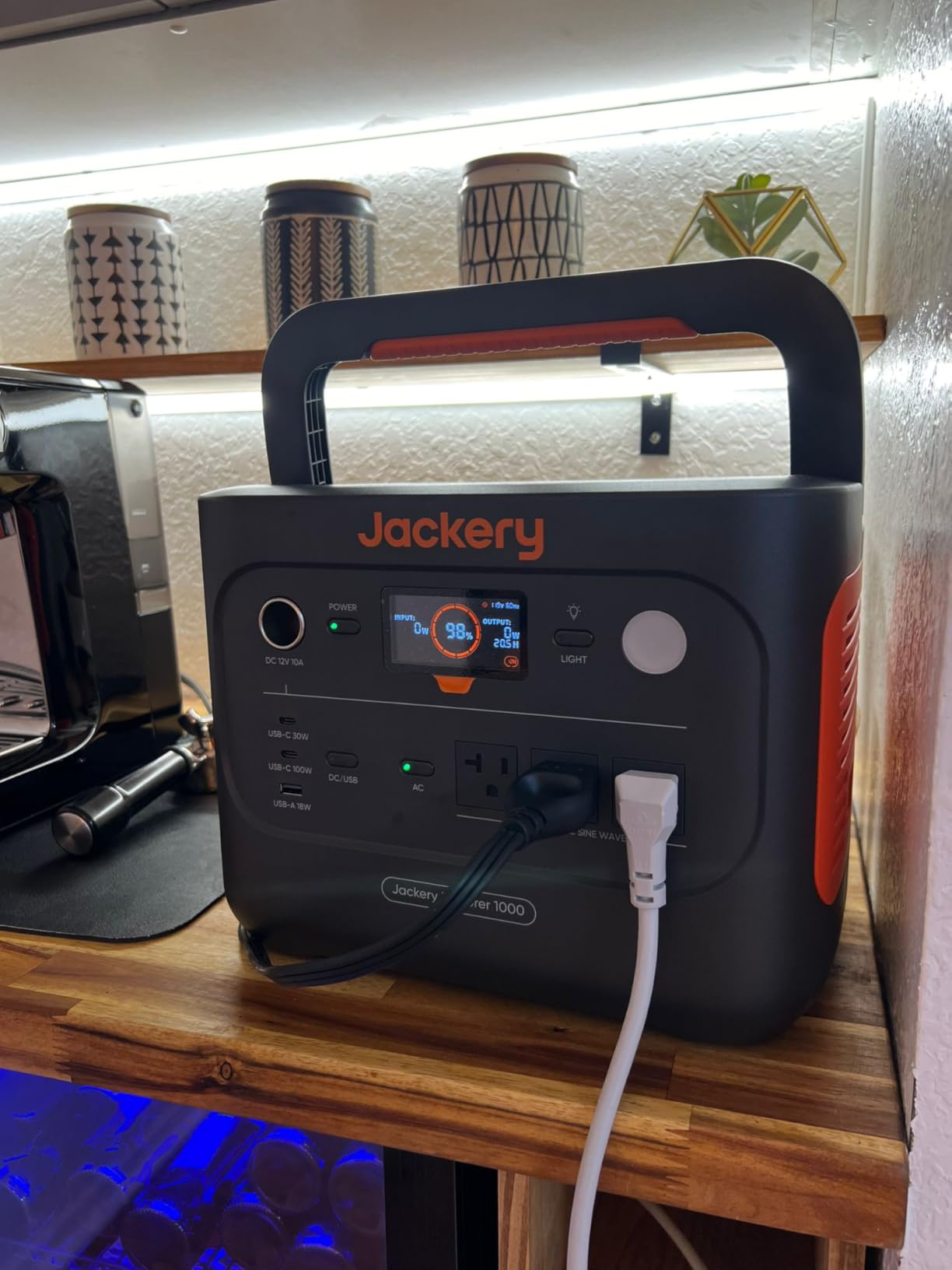
This is the unit we keep coming back to for vans because of a simple number: 23.8 pounds for 1070 watt-hours. That is roughly 45Wh per pound before you account for the inverter, and it means a first-time converter can carry real usable capacity without having to re-weigh the vehicle before every long drive.
It measures 12.87 by 8.82 by 9.72 inches, which is small enough to sit between the bed and the rear doors on most high-roof conversions, and the foldable handle means one person can lift it out at a campsite. Charging from a wall outlet takes about 1.7 hours by default, and the Jackery app unlocks an emergency mode that does it in around an hour.
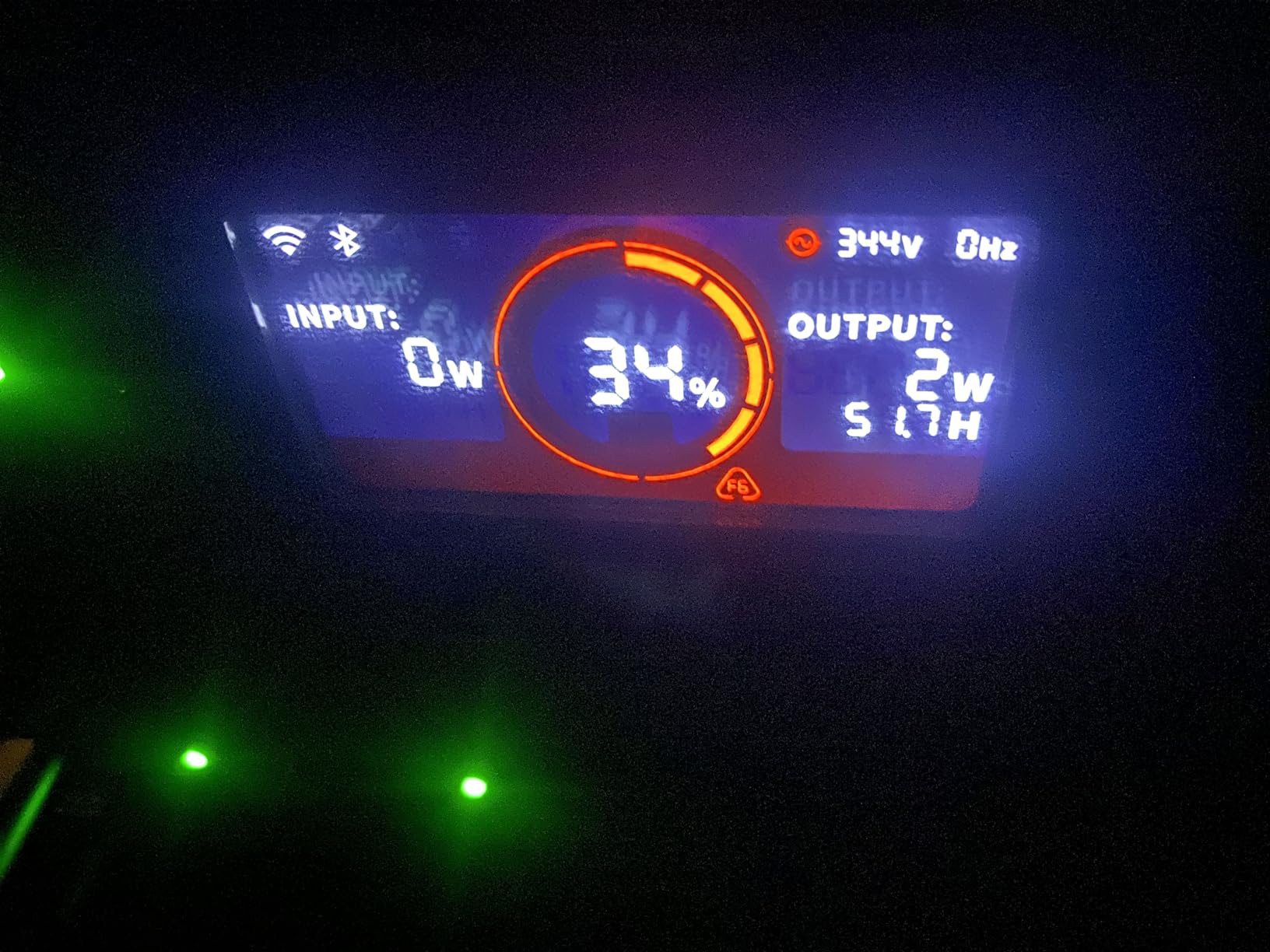
The 30dB quiet charging mode matters more in a van than in a garden. A station that runs its fan hard while you are trying to sleep 40cm from your head is a station you end up charging in the morning instead. Owners also point out that the LFP pack is rated to 4000 cycles while retaining more than 70% of capacity, which works out over a lot more years than most vans get driven.
It is the most-reviewed product in this roundup at 3623 ratings averaging 4.7, and the distribution backs that up: 85% of buyers gave it five stars. That is a large body of owners telling you the same thing, which is the closest thing to a reliability signal available without a lab.
How it fits a van with a 12V fridge and a diesel heater
A 1070Wh pack is comfortably enough for a weekend boondocking trip with a 12V fridge, a phone charger and a laptop. Divide your nameplate by roughly 0.9 for inverter losses and you have close to 950Wh of honest capacity, so a 45W compressor fridge running 50% of the day is about 540Wh. You get two full days before you need to think about recharge.
For a diesel heater you will not run it off the AC outlets all night. Published van-conversion field tests have a diesel heater pulling a 150 to 180W startup surge, which is enough to trip a 120W 12V car socket on its own. Feed the heater from the van’s own DC system, and use this station for the AC-side loads where a pure sine wave inverter actually earns its place.
Where it falls short for a full-time build
There is no expansion path. Capacity is fixed at 1070Wh forever, so if your build grows to a 12V air conditioner, an e-bike charger and Starlink on the same trip, you are looking at a second station rather than an add-on battery.
The 1500W continuous output is also the lowest here, which limits you on a kettle, a microwave or a portable washer. And the solar input only accepts Jackery-brand panels, so a roof array from another brand is dead weight on this box.
2. OUPES Mega 1: Best Value for 2000W of Continuous Output
OUPES Mega 1 Portable Power Station 1024Wh 2000W (4500W Surge)
1024Wh LFP, expands to 5120Wh
2000W continuous AC
27.8 lbs
5-year warranty
Pros
- Highest continuous output in the 1kWh class
- Expands to 5120Wh with two B2 batteries
- 0-80% in 36 minutes on AC
- Four AC outlets plus 100W USB-C on both sides
Cons
- 4500W surge claim is optimistic
- owners report tripping near 2100W
- Fan noise under heavy load
- Companion app is thin and Wi-Fi is unreliable
This is the spec-sheet winner if you need more continuous watts per pound. It delivers 2000W continuously from 1024Wh at 27.8 pounds, and it expands to 5120Wh with two B2 extra batteries, which makes it the only unit at this size where your storage grows with the build instead of being fixed on day one.
Charging is fast: 0 to 80% in about 36 minutes on AC, and 26 minutes when you combine AC and solar. The built-in MPPT means your roof panels plug straight in, and the high and low AC input switching lets you limit draw on a small campsite circuit. The 5-year warranty is longer than the Jackery’s single year.
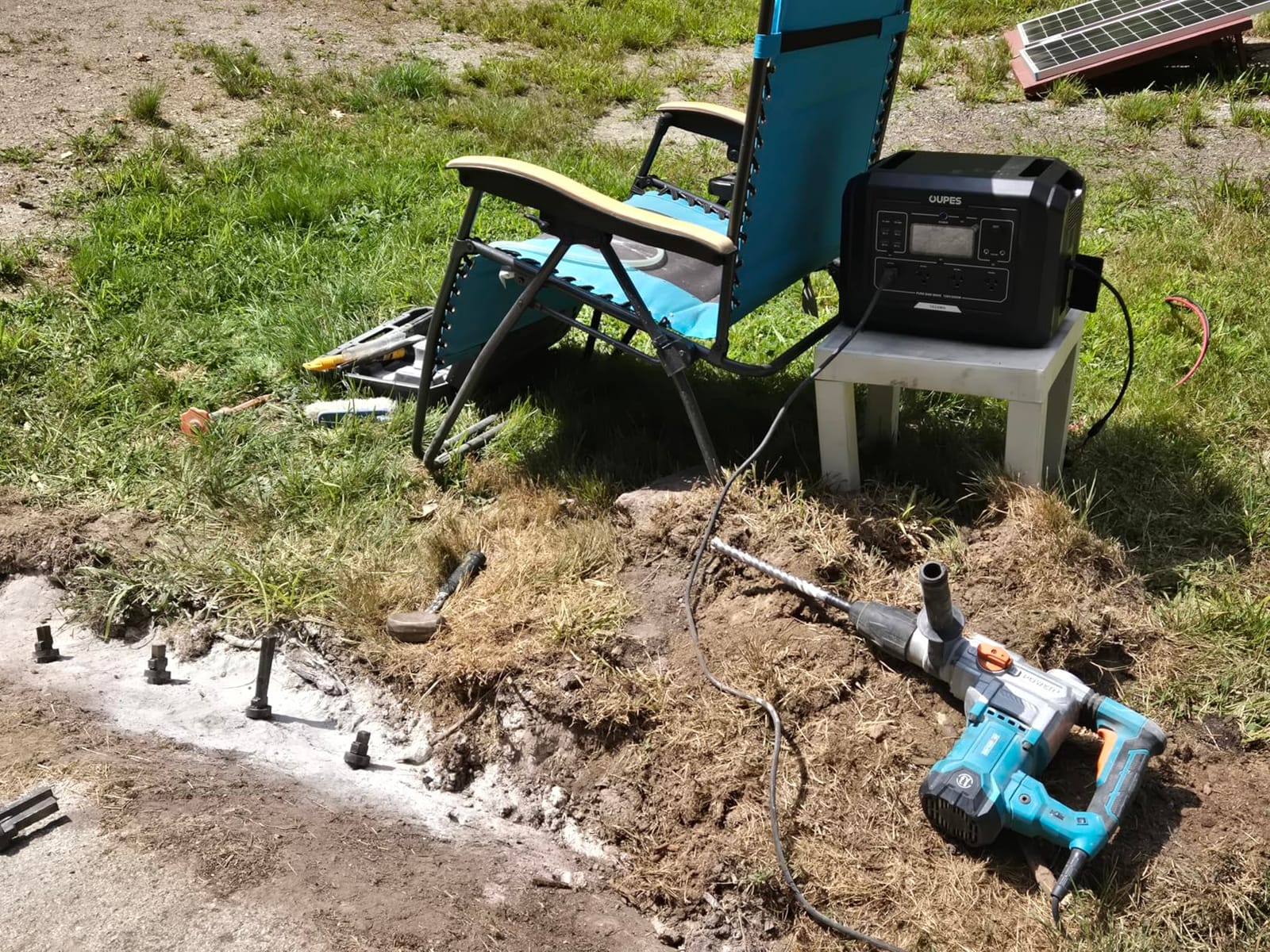
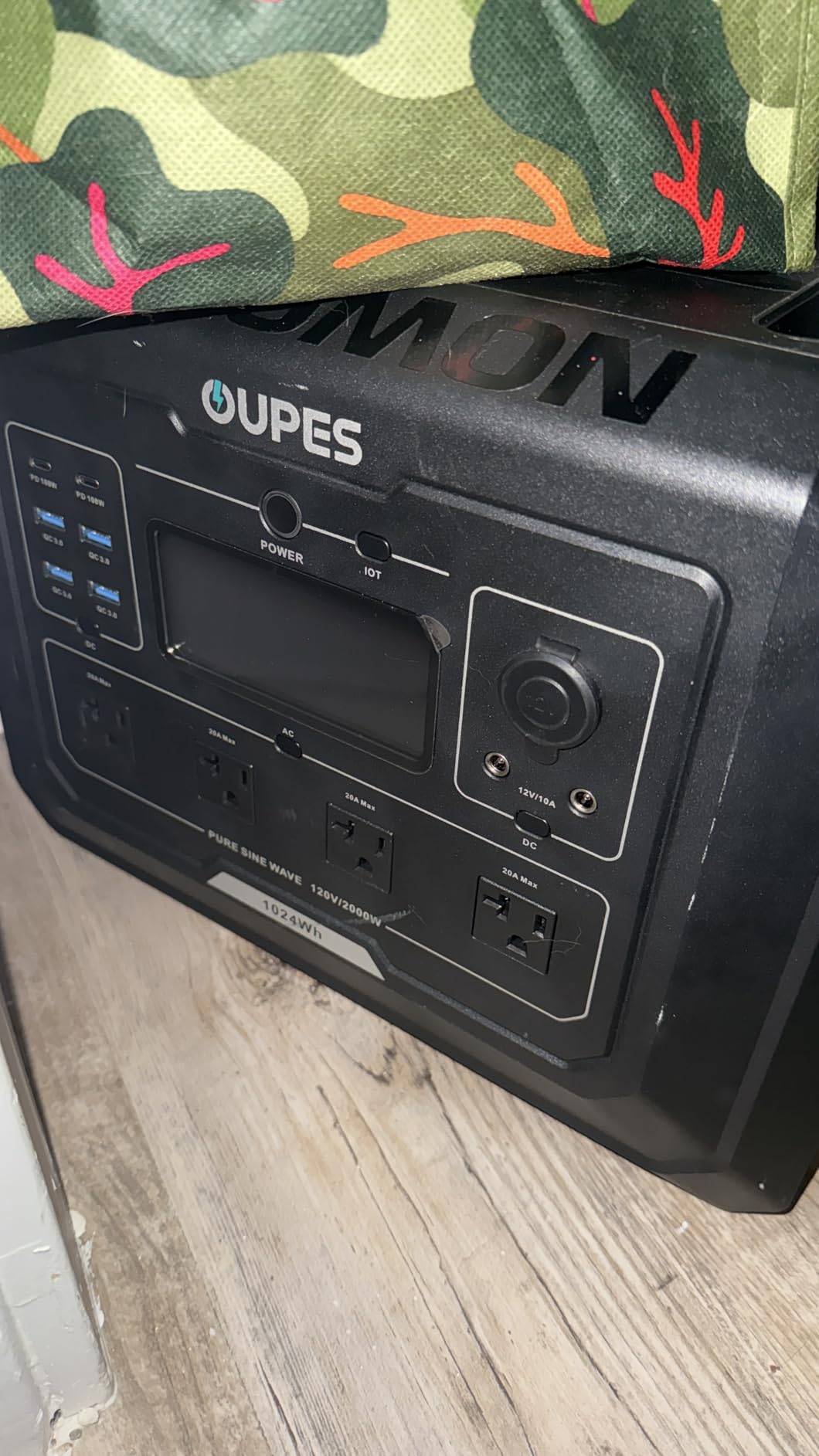
Two 100W USB-C PD ports sit on opposite sides of the case, which solves the cable-swapping dance when a phone and a laptop both want a fast charge overnight. UPS transfer is under 20ms, so a router, a CPAP or a Starlink dish does not blink when you switch between AC input and battery.
Owner reports on the 4.5-star, 1324-review listing split on one point: several say support replaced a unit after a BMS fault without much fuss, which is worth more in a remote campground than any app feature.
Why this is the one to buy if you plan to add capacity later
Expansion is the deciding factor. Two B2 packs take you from 1024Wh to 5120Wh, which is the difference between a weekend fridge setup and a full-time van that runs an induction hob, a fridge and satellite internet through a week off-grid. No other station in the 1kWh class offers that ladder.
It also includes a car-to-Anderson cable and an MC4-to-Anderson cable, so alternator charging from your starter battery and solar charging from a portable panel both work out of the box. That saves you buying adapters before your first trip.
What the surge rating really means
The 4500W surge figure is a headline number, and owners report it tripping somewhere around 2050 to 2200W. Treat the 2000W continuous figure as the real ceiling and size your loads to it. A resistive coffee maker and an induction hob together will trip it.
The cooling fan runs continuously during charging and gets loud under heavy load, which matters in a sleeping cabin. The plastic case also has no weather resistance, so keep it off the floor of a wet dog area.
3. Anker SOLIX C1000 Gen 2: Best for Recharging Fast Between Boondocking Spots
Anker SOLIX C1000 Gen 2 Portable Power Station
1024Wh LFP
2000W continuous, 3000W peak
24.9 lbs
10ms UPS, 10 connections
Pros
- Full recharge in 49 minutes at 1600W input
- Compact and light for a 2kW unit
- Silent in normal use with a readable display
- 10ms UPS kept routers and CPAP running through outages
Cons
- Gen 2 dropped the expansion capability of the first version
- Roughly 15-20% harmonic distortion seen driving a microwave
- No protective case included
- Small 100W-class panels charge it slowly
When your van is a rolling office and you drive four hours between trailheads, recharge speed is the feature that changes your day. The C1000 Gen 2 takes a full charge in 49 minutes at 1600W input, which means a stop at a coffee shop with a wall outlet can put a full 1024Wh back into your system while you eat.
It weighs 24.9 pounds and measures 15.1 by 8.2 by 9.6 inches, it also weighs about 11% more than the smaller Jackery but delivers 2000W continuous instead of 1500W, plus 10 simultaneous device connections. The display is bright enough to read in daylight, which sounds minor until you are crouched in the rain checking state of charge.
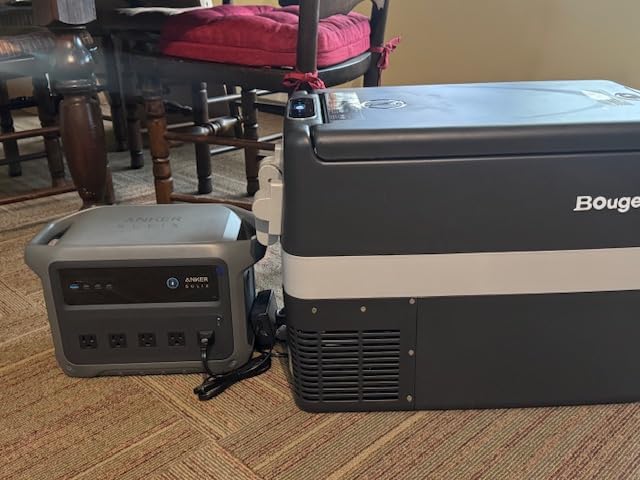
The 10ms UPS switchover is the quiet hero. Several owners describe running a router and a CPAP machine through a multi-day ice storm outage without either device registering an interruption. For van dwellers with medical gear or an always-on connection, that matters more than raw wattage.
At 4.7 stars across 1632 reviews with 86% five-star ratings, this is one of the most consistent listings in the group, and the review history stretches back through several storm seasons of real use.
Is a full-time van build a good fit for the C1000 Gen 2?
Only if your loads stay modest. 1024Wh covers a 12V fridge, laptops, cameras and phones for a couple of days without a recharge, and the 2000W continuous output handles a kettle or a small coffee maker easily. It will not comfortably carry a 12V air conditioner or an e-bike charger on top of everything else.
If you already have a solid DC system with a DC-DC charger in the van, this unit slots in cleanly as a portable AC-side supplement you can remove and carry. Owners running long outages also like the time-of-use energy mode in the Anker app for scheduling charging around cheap or off-peak windows when you are on a mains hookup.
What changed from Gen 1 and what to watch for
Gen 2 removed the expansion capability of the first generation, so 1024Wh is all you get. If your build will grow, skip this and look at the EcoFlow Delta 3 or the OUPES Mega 1.
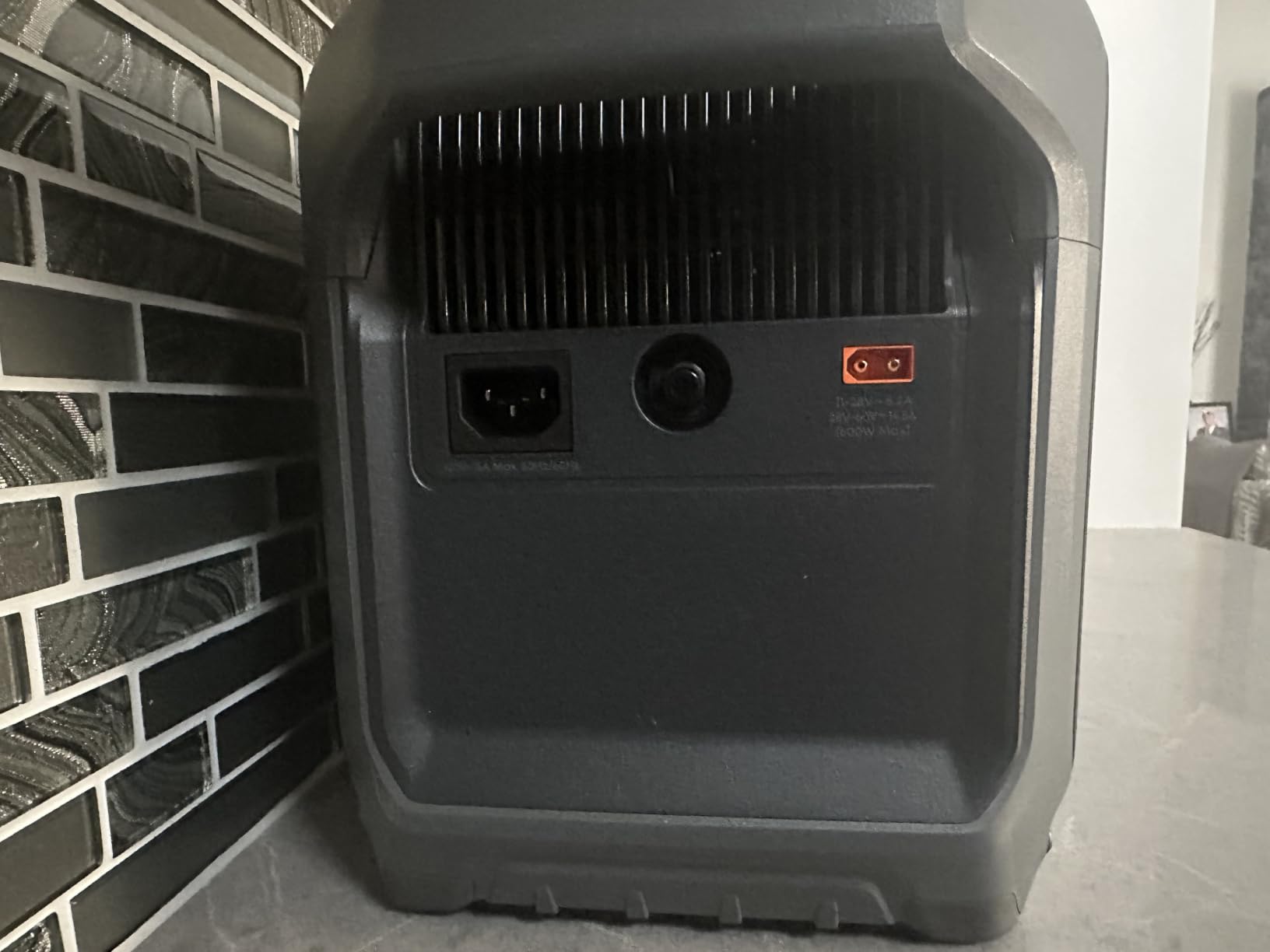
Measured output shows around 15 to 20% harmonic distortion when driving a microwave, so avoid pairing it with sensitive audio or measurement gear. You also get no storage case, so plan a cable pouch, and expect a small 100W-class portable panel to take far longer than the 600W input allows.
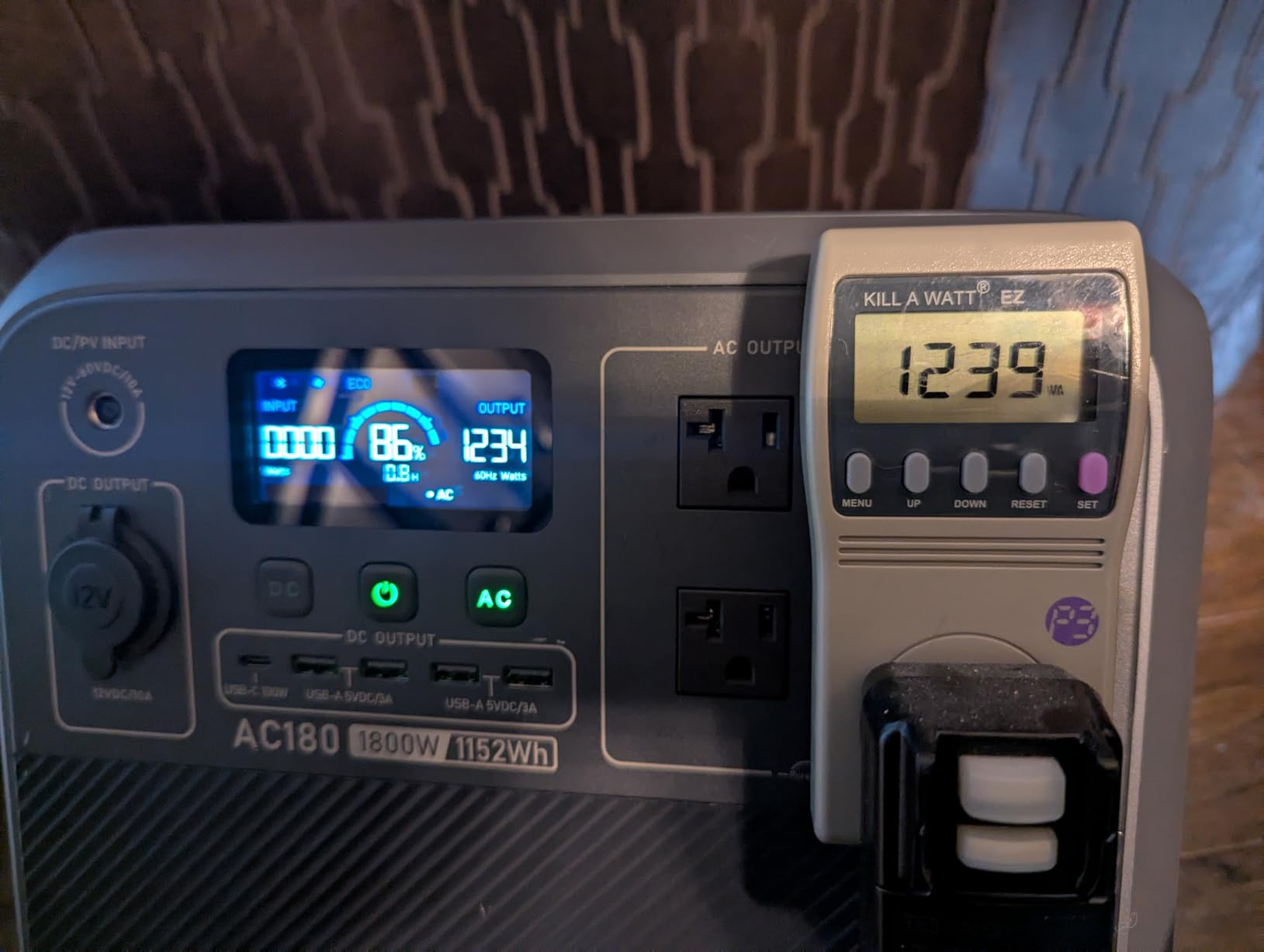
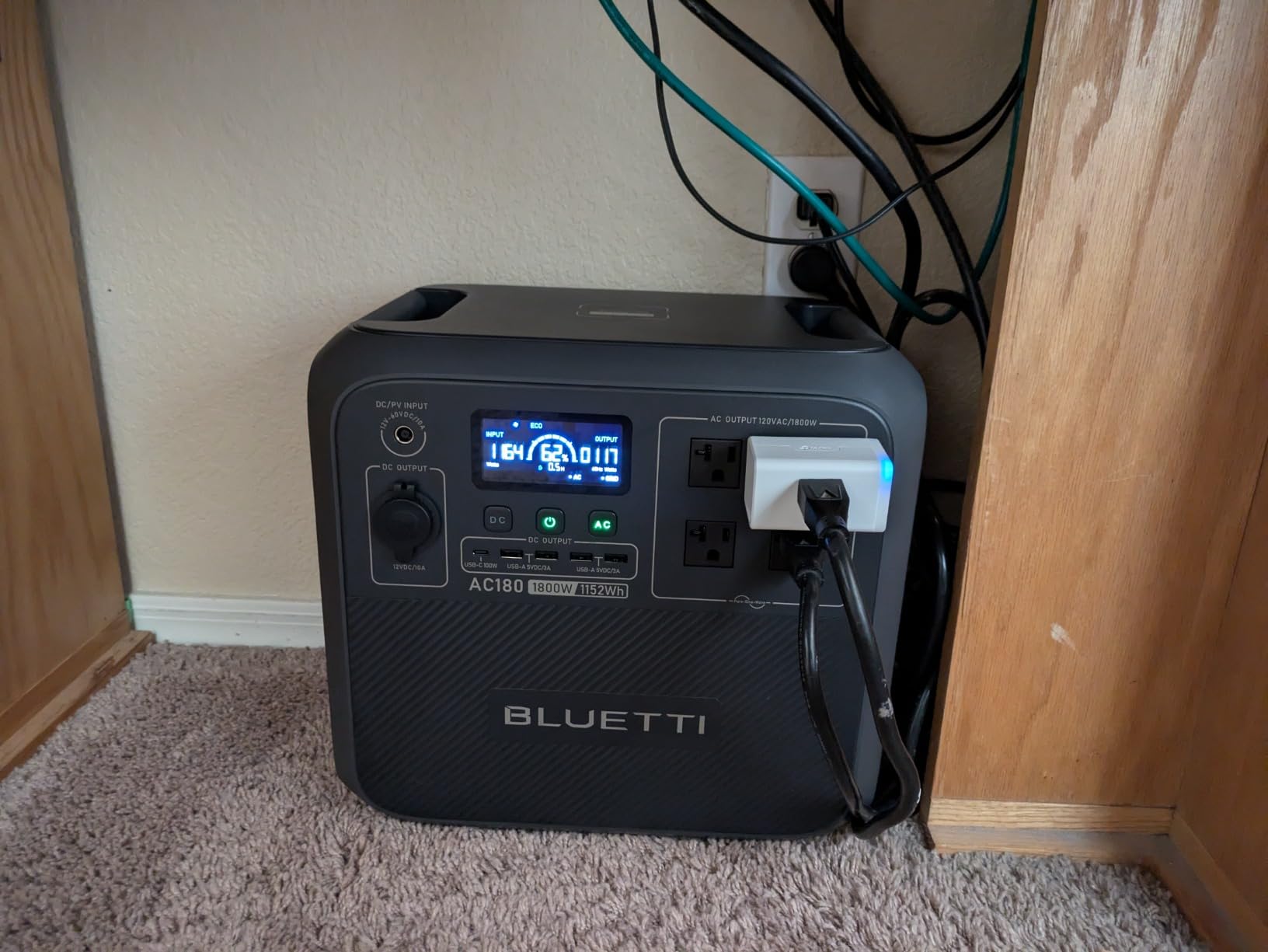
4. BLUETTI AC180: BUDGET PICK for 1152Wh on a Plate
BLUETTI AC180 Portable Power Station 1152Wh 1800W LiFePO4 Solar Generator
1152Wh LiFePO4
1800W AC, 2700W peak
37.4 lbs
500W solar input, 20ms UPS
Pros
- Full charge in about an hour at 1440W
- Clear LCD with runtime and load readout
- Runs quietly without running hot
- Wall
- solar
- 12V vehicle and alternator charging paths
- UPS transfer was unnoticeable on routers and TVs
Cons
- Heavy at 37.4 pounds for a 1kWh unit
- 15-20W idle draw plus a reserve cut small-load runtime
- Wireless charging pad often fails to hold a phone
- Only one USB-C port
The AC180 is the cheapest way into this class and reviewers treat it that way, consistently. You get 1152Wh of LiFePO4 capacity, 1800W continuous AC output with 2700W available through app power lifting, and a full charge in roughly 45 minutes to 80% at 1440W AC input.
The charging options are broad for a unit at this price: wall, solar through the 500W input, 12V vehicle and alternator. That last one matters in a van, because a road trip can be your cheapest charging window.
The LCD shows remaining runtime and current load at a glance, which is genuinely useful when you are deciding whether a second coffee is affordable. Owners also note it runs quietly and does not get hot during normal use, both wins in a small metal cabin.
It holds a 4.6-star average across 2622 ratings. BLUETTI support resolved several runtime complaints through firmware updates and calibration cycles, which is worth remembering when you see runtime fall short on paper figures.
Which van lifestyle suits the AC180 best?
Part-time and weekend van travellers. The 1800W output handles a fridge, a laptop, a CPAP and a kettle in one session, and the whole unit fits under a bed or in a garage with plenty to spare. It is a good first station if you are still working out whether you need 1kWh or 2kWh.
The math works out well for a typical weekend: 1152Wh nameplate, minus inverter losses and idle draw, leaves roughly 900Wh of real capacity. A 12V fridge at about 45W cycling half the day plus a laptop and phone charging lands you comfortably inside that.
Why the runtime numbers can disappoint you
Two things eat into usable capacity here. Inverter self-consumption of 15 to 20W sounds trivial until your only load is a phone charging overnight, and a roughly 10% capacity reserve is held back from small loads. On a minimal draw, real runtime sits well below the nameplate figure.
At 37.4 pounds it is heavy for a 1kWh unit, so lifting it in and out takes two hands. The wireless charging pad on top frequently fails to hold a phone connection, and with only one USB-C port you will be swapping cables constantly.
5. EcoFlow Delta 3: TOP RATED Pick With Room to Expand
EF ECOFLOW Delta 3 Portable Power Station, 1024Wh 1800W
1024Wh LFP, expands to 5kWh
1800W AC, 2200W with X-Boost
27.6 lbs
13 simultaneous outputs
Pros
- Highest average rating in the roundup at 4.8 with 90% five-star reviews
- 56-minute full charge and 30 minutes to 80%
- 500W solar input that combines with AC for the fastest refill
- 4000-cycle LFP cells rated for a stated 10-year lifespan
- 13 outputs cover nearly every device a van runs
Cons
- Higher price than the other 1kWh models here
- Expansion uses proprietary EcoFlow packs
- X-Boost targets resistive loads rather than sensitive electronics
The Delta 3 has the strongest consensus rating in this group: 4.8 stars across 1344 reviews, with 90% of buyers at five stars. Nothing else here comes close to that share, and for a product you are trusting with a fridge and a heater in the back of a van, consensus reliability is worth paying a little more for.
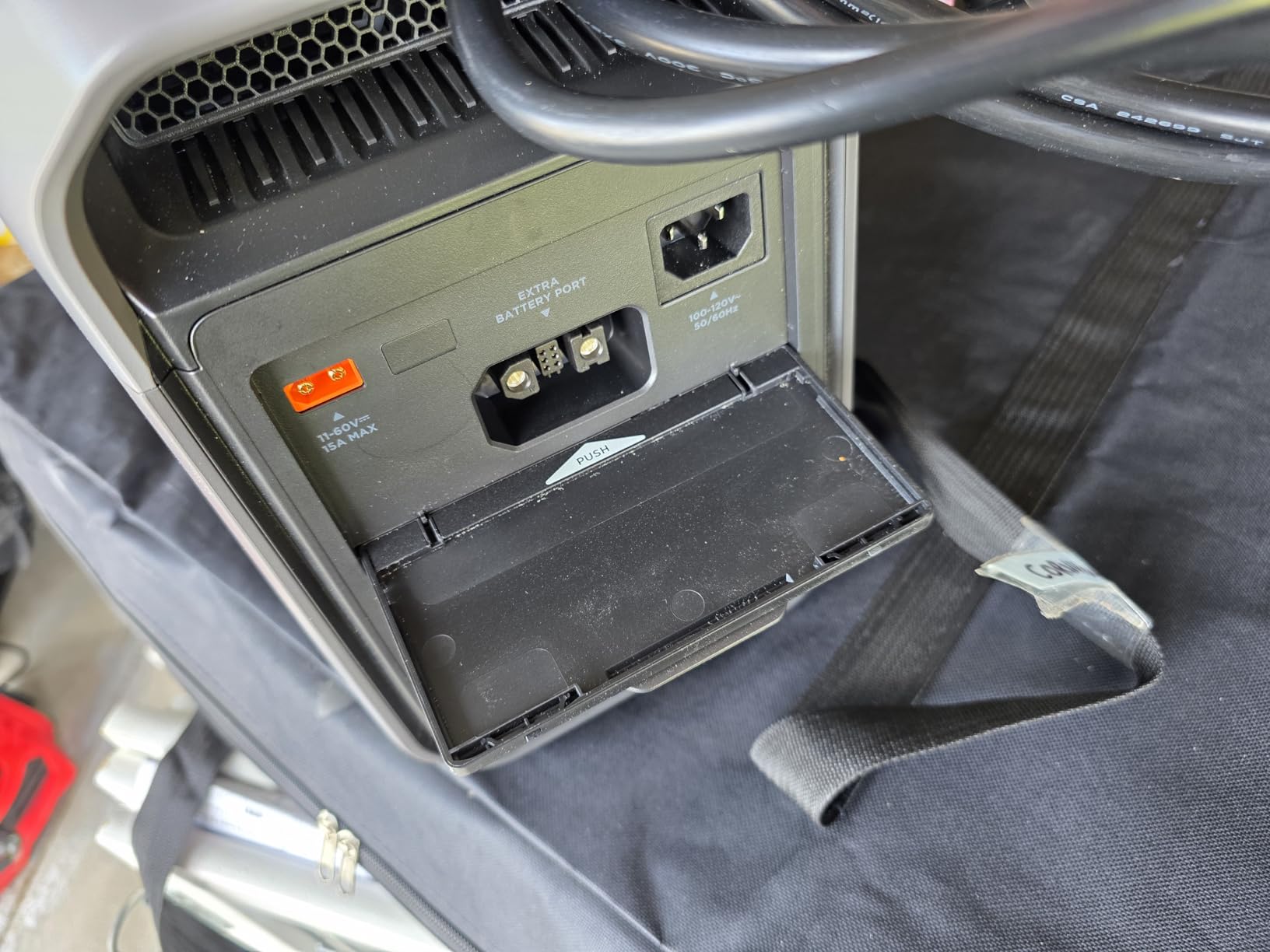
It charges in 56 minutes to full and 30 minutes to 80% on a 1500W maximum AC input, and the 500W solar input can run alongside AC for the fastest combined refill of any 1kWh unit we looked at. Five recharging methods cover wall, solar, car and the rest.
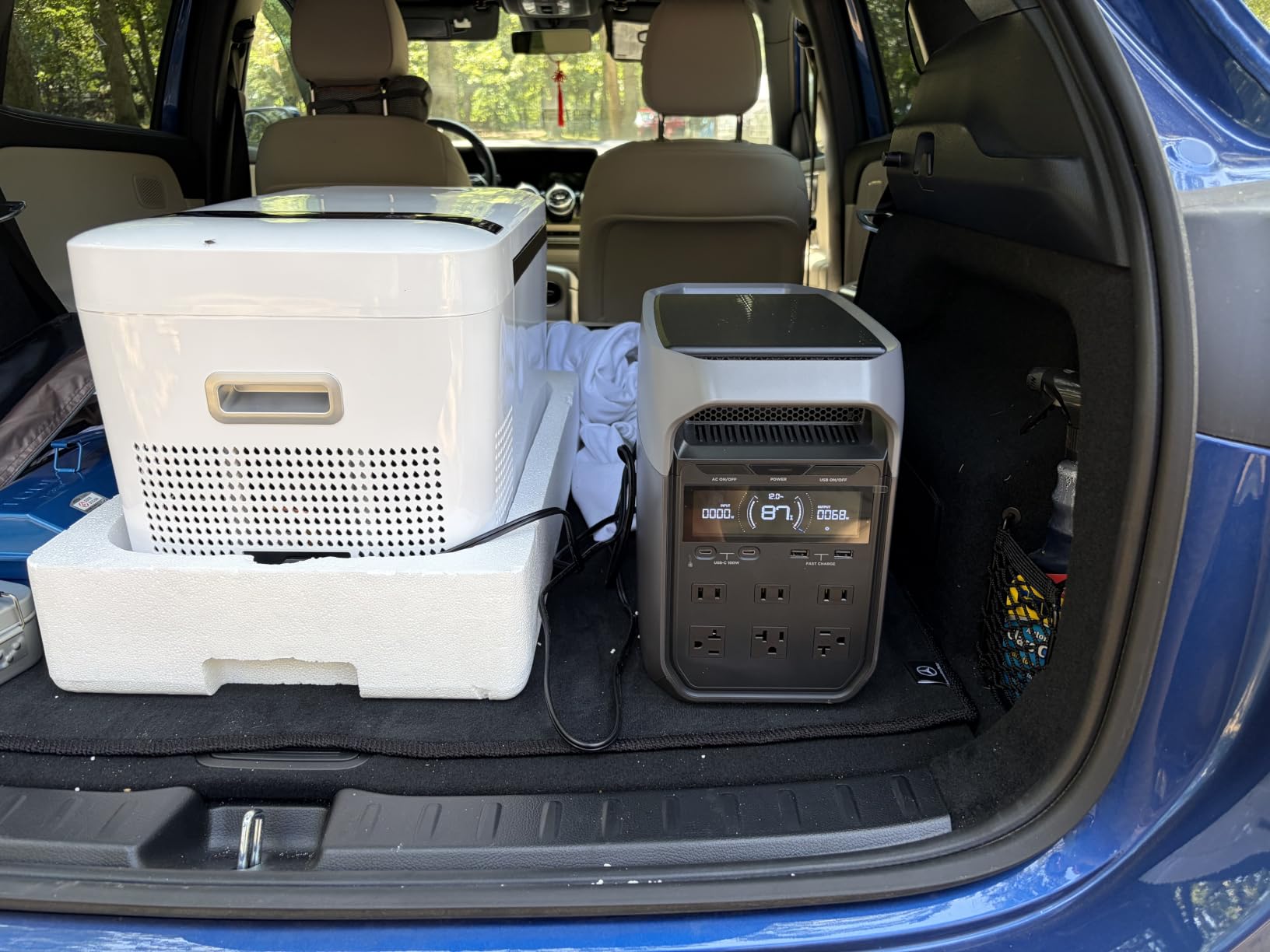
Thirteen simultaneous outputs is a lot of ports for a box weighing 27.6 pounds, and the low-noise charging profiles let you charge in a campsite at night without waking a partner. LFP cells are rated to 4000 cycles down to 80% capacity with a stated 10-year lifespan.
For a van that will grow, the expansion path to 5kWh matters. The IP65 rating on the expansion battery means splash, dust and cooking oil are less of a worry than with an indoor-only pack.
Is this the right pick for a van with satellite internet?
Yes, if Starlink is part of your build. The 13 outputs mean you can run the dish, a router, two laptops and phone chargers simultaneously without a power strip, and the 1800W continuous output gives plenty of headroom above what the dish and router actually draw together.
It also holds up well as a home backup unit during storms, which is a common reason owners buy one in the first place. Several describe using it to keep routers and smart TVs alive through outages, and the transfer was reported as instant.
What you give up compared with the cheaper units
This is the priciest 1kWh station here, and expansion batteries are proprietary EcoFlow packs rather than generic modules. If you plan to add a second battery, budget for the EcoFlow ecosystem from day one.
X-Boost pushes output to 2200W, but it is designed for resistive loads, not laptops, CPAP machines or audio gear. Leave it off for sensitive electronics.
6. Jackery Explorer 2000 v2: Best 2kWh Option That Stays Compact
Jackery Explorer 2000 v2 Portable Power Station, 2042Wh, 2200W AC Output
2042Wh LiFePO4
2200W AC across 3 ports
39.5 lbs
Silent mode under 30dB, 20ms UPS
Pros
- Compact for 2kWh
- claimed 41% lighter than typical 2kWh units
- Cell-to-Body construction for structural safety
- Silent charging mode below 30dB
- UL1778 certified 20ms UPS
- 0-80% AC charge in 66 minutes
Cons
- Lowest average rating here at 4.4 with 8% one-star reviews
- Only 3 AC outlets for 2042Wh
- Charging past 80% is slow at roughly 102 minutes for full
- Solar charging requires Jackery panels
First-time converters gravitate to the 2,000Wh tier because it leaves headroom for a heater, a fridge and a coffee maker on the same day. The Explorer 2000 v2 delivers 2042Wh and 2200W continuous AC output in a 39.5-pound chassis, and the manufacturer claims it is 41% lighter and 34% smaller than a typical 2kWh LFP machine of this kind.
That size-to-weight claim holds up against the rest of this list. It is the smallest 2kWh option in this roundup, and 13.2 by 10.4 by 11.5 inches means it fits behind a seat or under a bed without drilling.
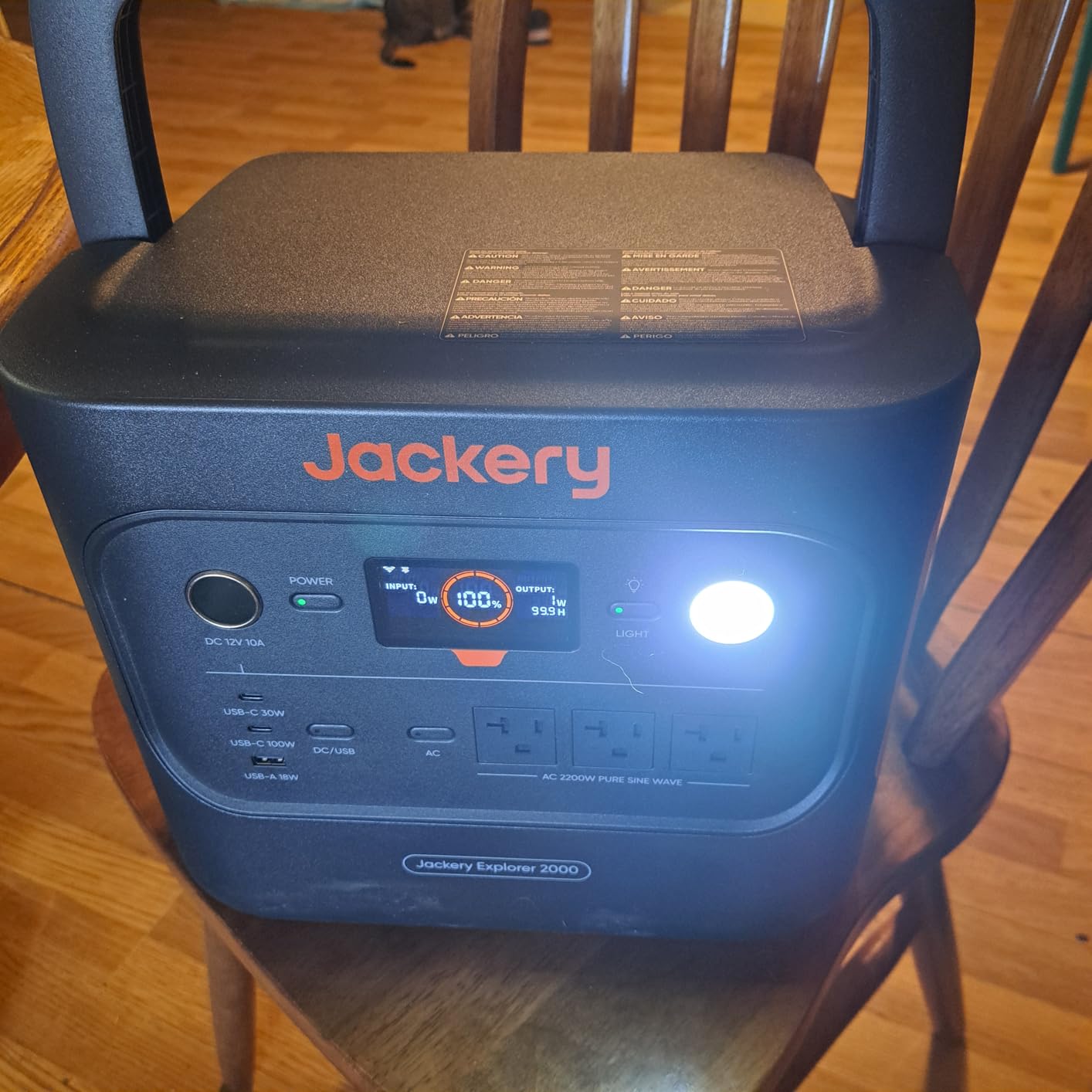
The silent mode under 30dB is the feature that defines it for van life. In a sleeping cabin with a heater running, a fan that ramps up at 2am is a genuine quality-of-life problem, and this is one of the quietest 2kWh units available. The UL1778 certified 20ms UPS keeps sensitive electronics steady.
Cell-to-Body construction, borrowed from EV battery packaging, is worth noting if you are worried about structural integrity in a vehicle that vibrates constantly on poor road surfaces.
Is 2kWh the right capacity tier for a full-time van?
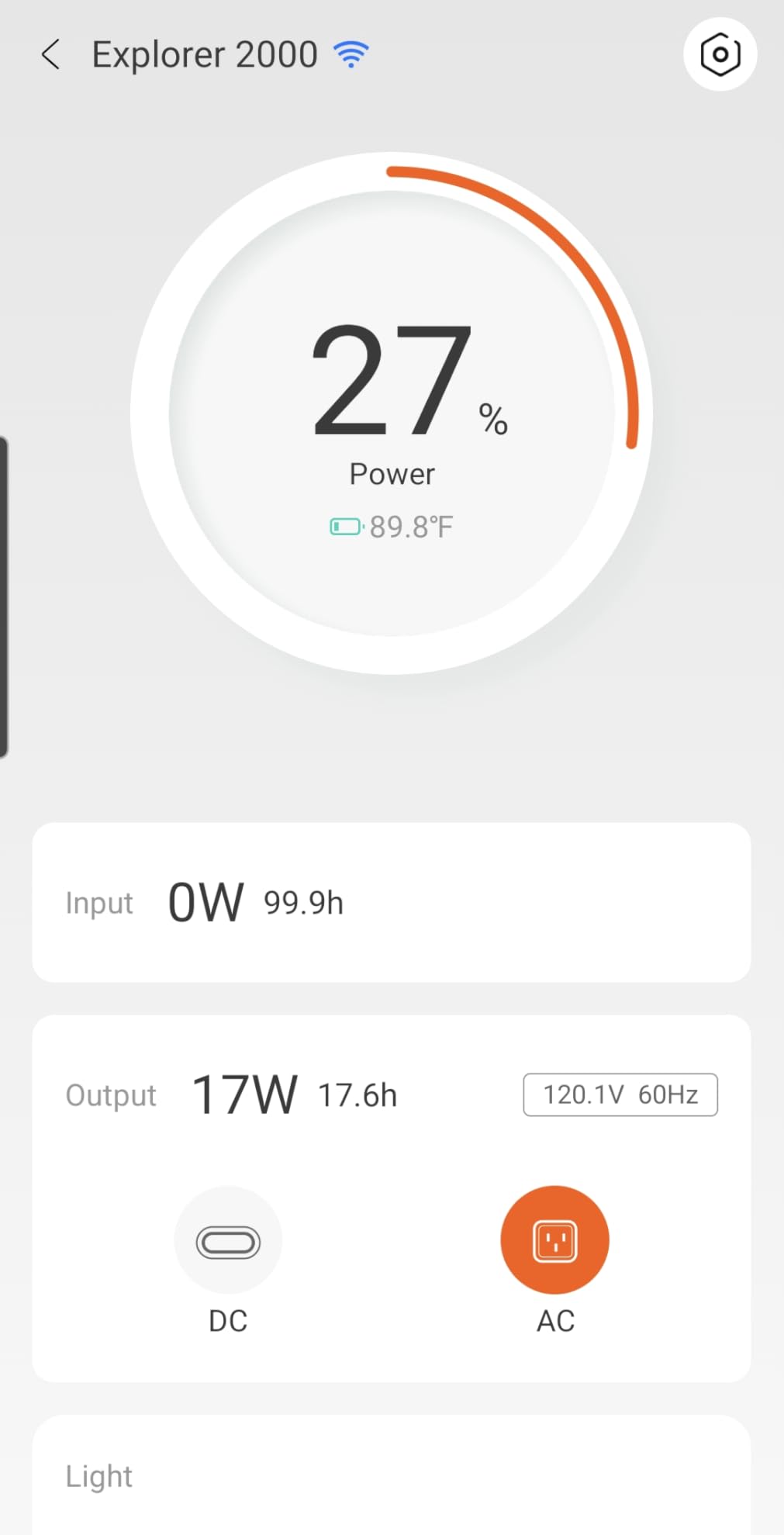
For most full-time builds, yes. 2042Wh with roughly 85% usable gives you around 1700Wh of honest capacity, which covers a 45W compressor fridge cycling all day, a laptop, cameras, phone charging and a couple of hours of heating or cooking without touching a second bank.
It is the sweet spot between the 1kWh models that force constant charging decisions and the 3kWh-plus machines that eat payload. At 39.5 pounds it is heavier than the 1kWh group but well under the 53 and 72-pound units further down this list.
What the 4.4 rating tells you
This has the lowest average score here at 4.4, with 8% of reviews at one star, which is a real reliability signal rather than a nitpick. Jackery support and warranty service are rated highly by owners, so failures get resolved, but the failure rate is visibly higher than the 4.6 to 4.8 units.
Only three AC outlets for 2042Wh is stingy, and the top-off from 80 to 100% takes so long that overnight top-ups rarely complete. Like the smaller Jackery, it only accepts Jackery-brand solar panels.
7. Anker SOLIX C2000 Gen 2: Best for 800W Alternator Charging on the Road
Anker SOLIX C2000 Gen 2 Portable Power Station, 2,048Wh, 2,400W, Camping
2048Wh LiFePO4, expands to 4kWh
2400W rated, 4000W peak
41.7 lbs
800W alternator charging, 3-hour refill
Pros
- 4000W peak covers window and RV air conditioners
- 58-minute full charge on AC plus solar
- 800W alternator charging refills in 3 hours
- 9W standby draw stretches small-load runtime
- Expandable to 4kWh
Cons
- Listed weight of 41.7 pounds is heavy for a compact-branded box
- Fewer customer reviews than most rivals in this band
- Real-world runtime varies with load and ambient temperature
Alternator charging is the most overlooked advantage in this category, and the C2000 Gen 2 makes it a headline feature. The 800W UltraFast alternator path refills the whole 2048Wh pack in about 3 hours of driving, which means a normal weekend of driving fills the battery for free without a roof panel or a campsite hookup.
It is rated at 2400W continuous with 4000W peak, and that peak figure is the reason it works with a window or RV air conditioner, which other units at this capacity cannot handle. A full charge takes 58 minutes when AC and solar are combined.

The 9W standby draw is unusually low and it directly extends runtime when your only load is a fridge cycling overnight or a couple of phones charging. Owners also note the dual-door fridge runtime of up to 32 hours, which is a useful real-world figure for van fridge sizing.
At 4.7 stars from 670 ratings with an 87% five-star share, the consensus is strong even though the review base is smaller than the Jackery, BLUETTI and EcoFlow models here. It is a newer listing.

How alternator charging actually works in a van
You wire a DC-DC charger between the van’s starter battery or an auxiliary house battery and the power station’s DC input, then charge while driving. At 800W you are pulling meaningfully from the alternator, so a heavy electrical upgrade on the vehicle side is usually part of the job, not an optional extra.
The practical benefit is that road time becomes charging time. Two or three hours of driving replaces a full day of solar, which is exactly what you want when the sky is overcast for a week in autumn or you are moving every other day.
Is 41.7 pounds too heavy to lift into a van?
It is manageable for two people and awkward for one, so plan your mounting position before you buy. Where the unit sits matters more than the weight once it is installed, and the marketing claim of being 25% lighter than similar 2kWh units does not square with the 41.7-pound listed figure, so measure your available space carefully.
Fewer ratings than the 869 to 2622 counts common in this band means less long-term data on failure rates. Ambient temperature also affects runtime more than the spec sheet suggests.
8. BLUETTI Elite 200 V2: Best for Running Two High-Draw Appliances at Once
BLUETTI Elite 200 V2 Portable Power Station 2073.6Wh 2600W Solar Generator
2073.6Wh LiFePO4
2600W continuous, 3900W lifting
53.4 lbs
6000+ cycles, 15ms UPS
Pros
- Packs 2073.6Wh into roughly the footprint of the smaller AC180
- 2600W continuous runs air fryers and coffee makers together
- 10W standby draw is about a third of comparable models
- 6000+ cycle automotive-grade cells with a stated 17-year lifespan
- Hold-to-activate buttons prevent accidental power-on in transit
Cons
- 53.4 pounds is heavy for a van
- Not expandable with BLUETTI battery modules
- Solar input limited to 1000W and 60V
- No 30A RV port or 5521 DC outputs
- App-gated settings
This is the strongest cooking-and-powering unit here. 2600W continuous with 3900W of power lifting means an air fryer and a coffee maker can run at the same time, and it does that while holding 2073.6Wh in a footprint reviewers compare favorably to the much smaller AC180.
The cell chemistry is the headline for longevity: automotive-grade LiFePO4 rated at 6000 or more cycles with a stated 17-year lifespan, the highest cycle rating of anything in this roundup. For someone running a station on every trip for a decade, that figure changes the calculation.
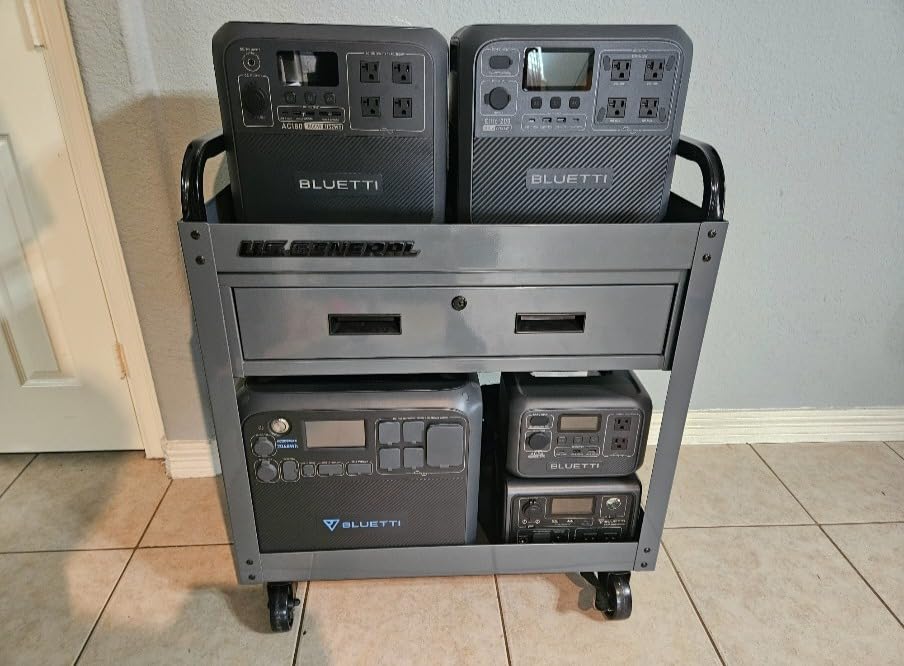
The 10W standby draw is roughly a third of what comparable 2kWh units pull, so on small-load days the difference between it and a 30W-idle competitor is a meaningful slice of your usable capacity. Hold-to-activate buttons stop the unit switching itself on when the van bounces over a speed bump, which is a small detail that prevents real annoyance.
At 4.7 stars across 910 reviews, owners single out the inverter efficiency as the best they have used in BLUETTI units, which fits with the 10W idle figure.
Who should spend the extra weight on this one?
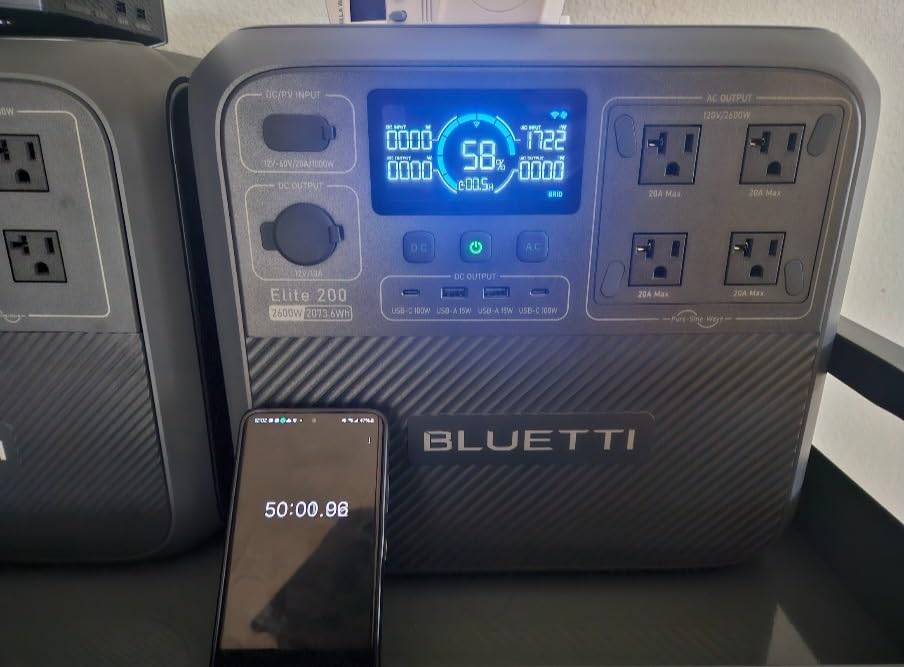
Van dwellers who actually cook. If your load list includes an induction hob, a kettle, a microwave or an air fryer, the 2600W continuous rating stops you rationing which appliance runs when. A 1kWh station forces a choice; this one removes it.
It is also the right pick for cold-weather use in a fixed position, since a large battery that stays put and gets charged often ages differently from one you haul in and out of a cold van each weekend.
The three compromises that decide it
It does not expand with BLUETTI battery modules, unlike the AC200L and AC200MAX platforms, so your ceiling is fixed at 2073.6Wh. The solar input is limited to 1000W and 60V, which is hard to reach with the portable folding panels a van can actually carry.
At 53.4 pounds it is a semi-stationary placement rather than a carry-around, and several settings live behind the app rather than on the panel. One reviewer also hit a state-of-charge calibration fault where charging stalled near 25%.
9. BLUETTI AC200PL: Best When You Plan to Build Capacity Later
BLUETTI AC200PL Portable Power Station 2304Wh 2400W LiFePO4 Solar Generator
2304Wh LiFePO4, expands to 8448Wh
2400W AC across 4 outlets
72 lbs
48V RV port, 30A TT30
Pros
- Largest capacity of the van-tier units at 2304Wh with expansion to 8448Wh
- Only unit with a native 48V RV port for charging a van house battery
- 11 to 12 ports including 30A TT30 and 48V DC
- 60-minute 0-80% AC recharge
- Proven by owners on extended desert and off-grid trips
Cons
- Heaviest van-tier unit at 72 pounds and effectively fixed once placed
- Only 3000+ cycle rating against 4000 to 6000 cycle rivals
- Some settings only change through the phone app
The AC200PL is the pick for a build you are not finished yet. It is the second largest capacity in the roundup, and it expands to 8448Wh using B300, B210P or B230 packs, so a weekend station today can become a multi-week off-grid system without being replaced.
It is also the only unit here with a native 48V RV port, which lets it charge a van or RV house battery directly. If you are running a split-charge setup, that port removes a piece of kit and a wiring headache.
The port selection is built for installers: four AC outlets at 2400W continuous with 3600W of lifting power, a 30A TT30, 48V at 8A DC, a car port, two 100W USB-C and two USB-A, for 11 to 12 connections in total. The 1200W solar input recharges in 1.9 to 3.8 hours depending on conditions, and 0 to 80% on AC takes 60 minutes.
With 2622 ratings at 4.6 stars, this is one of the longest-reviewed platforms available, and owners cite extended desert camping and off-grid trips as evidence it holds up.
Is 72 pounds realistic in a van conversion?
Only with planning. 72 pounds is the heaviest unit outside the truck-camper class, and at 16.5 by 11 by 14.4 inches it needs a serious mounting position, ideally low and against a structural member with proper tie-downs. It is a semi-permanent fixture, not something you lift out at the campsite.
Before you commit, check your vehicle’s payload rating and subtract the conversion build, water, gas and gear. If the station pushes you near the limit, the 53.4-pound Elite 200 V2 or the 41.7-pound Anker C2000 give you similar capability with far less mass.
What the 3000-cycle rating costs you
The battery is rated to 3000 or more cycles, below the 4000 to 6000 cycle competitors, even though the stated lifespan is 10 years. For a full-time vanlifer cycling it constantly, the Elite 200 V2 cells will outlast it, though this platform has a far longer service history.
Some settings, including charge rate, can only be changed through the app, which is unhelpful when the phone is flat. And it sits at the top of the van-life price band before you add a single expansion pack.
10. EF ECOFLOW DELTA Pro: Best for Truck Campers and Workshop-Style Loads
EF ECOFLOW Portable Power Station 3600Wh DELTA Pro, 120V 3600W AC Output
3600Wh LFP, expands to 25kWh
3600W continuous AC
99 lbs
15 outputs, 5 charging methods
Pros
- Largest capacity and continuous output in the roundup at 3600Wh and 3600W
- Expandable to 25kWh for the widest ecosystem range
- Five AC outlets with no port crowding
- Runs quietly and handled heat presses and furnace blowers without voltage drops
- Full recharge in about 2 hours on a standard 1800W outlet
Cons
- 99 pounds is far too heavy for most van builds
- Solar input limited to roughly 15 amps
- Well above the van-life class price band
- A small number of international reviews report error codes and warranty friction
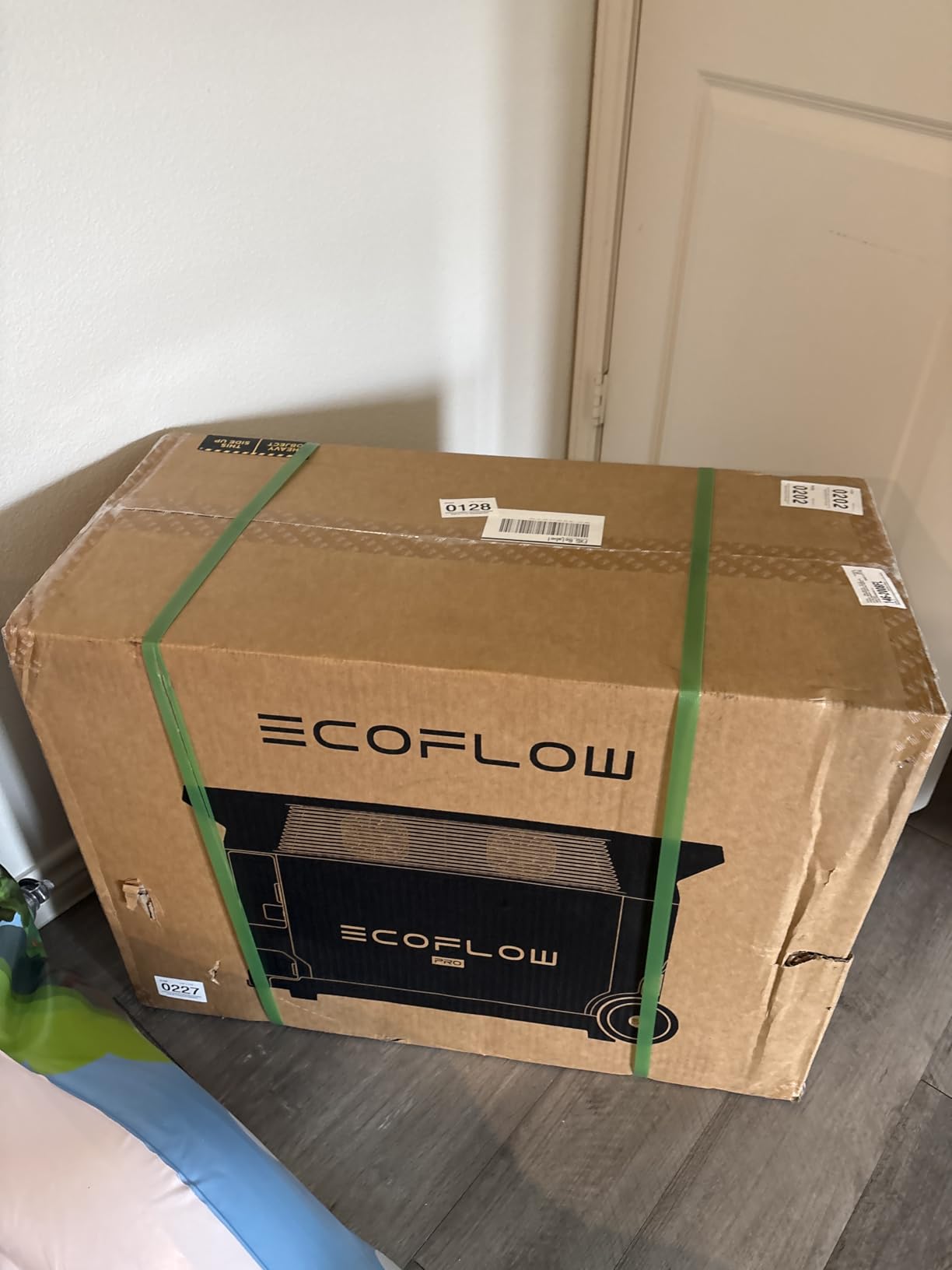
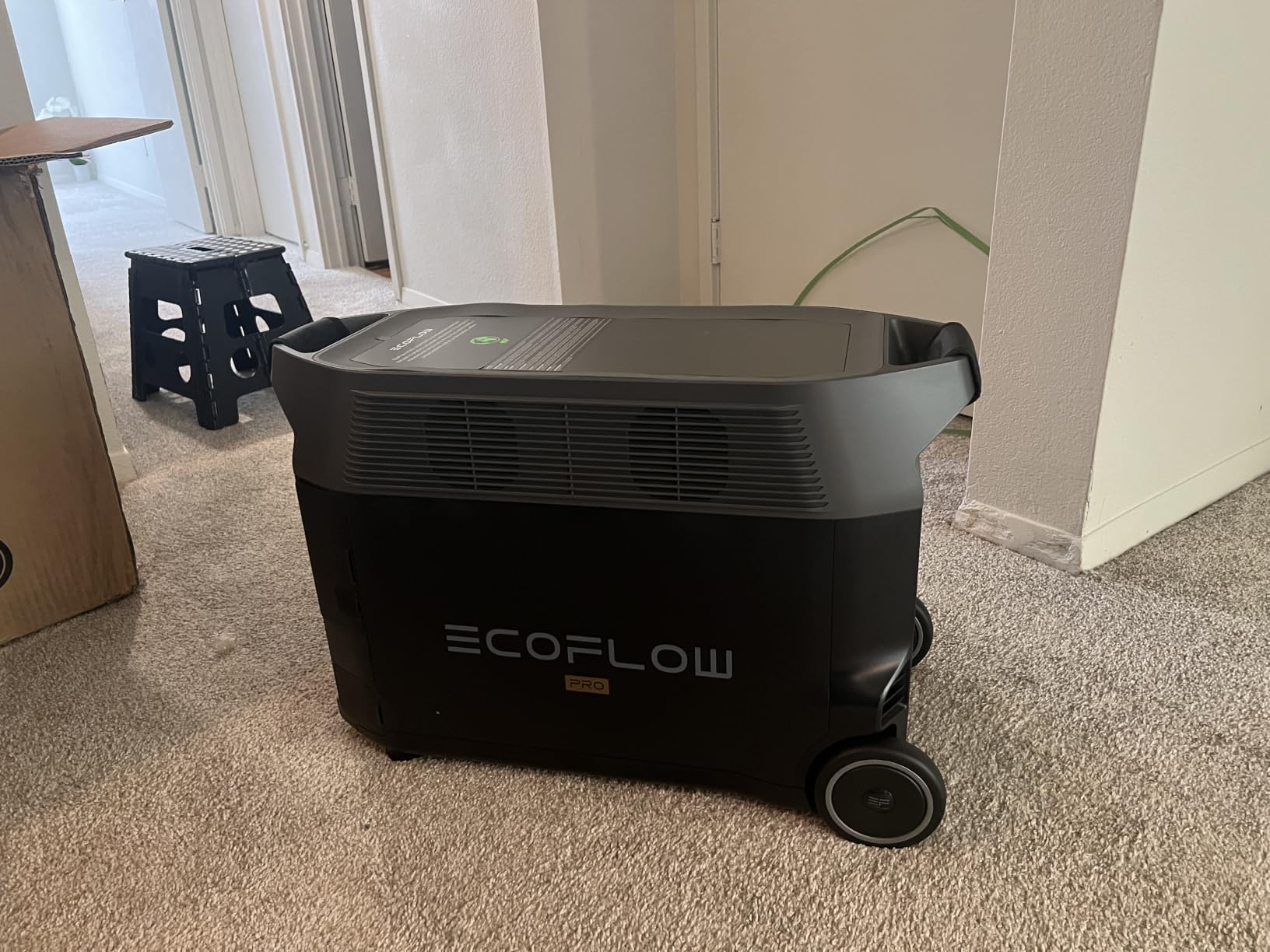
We are including this one to be straight with you: the DELTA Pro is a truck camper and mobile workshop battery, not a van battery. At 3600Wh and 3600W continuous it is the largest and most powerful unit we tested, but 99 pounds and 25 by 11.2 by 16.4 inches will disqualify it from most conversions on payload grounds alone.
If you have a truck bed, a Class B on a dually chassis or a trailer, it is excellent. Five charging methods include wall, solar, car, EV station and a smart generator, and it reaches a full charge in about 1.8 hours on a 240V 3000W outlet or 2.7 hours on a standard 1800W wall connection.
Fifteen outputs cover everything, including two 100W USB-C ports and an Anderson connection for DC work. Owners running tools report that it handled heat presses, refrigerators and propane furnace blowers without voltage drops, and it runs quietly while doing it.
Expansion to 25kWh through extra batteries or Smart Generators is the widest ecosystem range on the market, so this is a platform you could grow with for years. The 4.6-star average comes from 652 reviews.
Should any van builder consider the DELTA Pro?
Only if you are running a heavily modified van with a large payload rating and you have already committed to a fixed installation. The first charge reportedly tripped a breaker on some examples, so plan on a dedicated circuit and check your electrical setup before delivery day.
For most conversions the 2kWh tier is the ceiling, and the 23.8-pound Jackery or the 24.9-pound Anker is what actually fits between the bed and the doors.
What the 15-amp solar ceiling means for you
Solar input is limited to roughly 15 amps, which caps how much panel output you can absorb even if you mount 1000W of roof array. For a mobile install where solar is the primary recharge method, that is a real design constraint rather than a footnote.
A small number of international reviews also report error codes, overload faults and warranty friction through third-party channels, so factor that into any purchase made outside the primary market.
How Much Power Do Van Dwellers Actually Need?
Start with your load list, not the marketing number. Write down every device you actually plan to run, its average wattage, and how many hours a day it runs. Multiply, and you have your daily watt-hour budget before you choose anything. That list should cover everything from a long battery life karaoke machine for a weekend of music to a long battery life TV headphone amplifier if you carry screens.
A typical weekend van build runs around 500 to 700Wh per day. A 45W compressor fridge cycling roughly half the time is about 540Wh on its own, a laptop at 60W for six hours is 360Wh, phone and camera charging adds another 100Wh, and an hour of heating or cooking can consume 1000 to 1500Wh in one sitting.
Full-time van dwellers who carry satellite internet, a 12V air conditioner or an e-bike charger routinely land between 1200 and 2000Wh a day. That is the number that should pick your tier, and it is usually higher than people expect.
The trap most buyers fall into is sizing on nameplate watt-hours. A station advertising 1024Wh does not give you 1024Wh to the appliance. Inverter conversion losses, a reserve held back for protection, and idle self-consumption of anywhere from 9W on the best units to 20W on the worst will take a real bite out of small-load runtime.
A practical rule: multiply nameplate by 0.85, then subtract a day’s idle draw if you are running a fridge overnight. The BLUETTI Elite 200 V2 and Anker C2000 Gen 2 hold up best on that second test because of their 9W and 10W standby figures, and the difference shows up most on overnight runs.
The other half of the equation is surge, not continuous output. A kettle or a coffee maker draws well above its running wattage for the first second after switch-on. That is where pure sine wave inverter quality and surge headroom earn their place, and it is also why the highest rated continuous wattage is not automatically the right van choice.
Solar and Alternator Charging in a Van
Solar input wattage varies wildly across this list, and the ceiling determines your panel budget. The Jackery Explorer 1000 v2 and the Jackery Explorer 2000 v2 accept only Jackery-brand panels, which effectively locks your array to one supplier. The BLUETTI AC200PL and BLUETTI Elite 200 V2 take 1200W and 1000W respectively, though the Elite’s 60V limit is hard to reach with folding panels.
The EcoFlow Delta 3 and BLUETTI AC180 take 500W, the Anker C1000 Gen 2 accepts 600W for a 1.8-hour solar recharge, and the OUPES Mega 1 has a built-in MPPT with both AC and solar running at once. On a van roof you are realistically budgeting 200 to 400W of deployable panel, so a 500W or 600W input is comfortable rather than wasteful.
Roof space is the real limit. A fixed panel is efficient but permanent and adds wind load and height; folding panels deploy in minutes but need sun angles you rarely have in winter. Plan for a small fixed panel plus a portable 100 to 200W unit for overcast weeks.
Alternator charging is the fastest road-side method and it is the one most buyers ignore. The Anker C2000 Gen 2 leads here with an 800W alternator path that refills 2048Wh in about 3 hours of driving. Several other units in this roundup accept 12V vehicle charging, which is far slower and better treated as a trickle to get you through a night.
Order the install properly: a fused DC-DC charger from the van’s house battery or starter battery to the station’s DC input, a proper cable gauge for the current you are pulling, and a mount that will not become a projectile when you brake hard. If you want dependable capacity on a long winter trip, alternator charging plus a modest solar array beats a large solar budget on its own.
How to Choose a Portable Power Station for Van Life
First, run the payload test. Take your vehicle’s payload rating, subtract the conversion build, water, gas, tools and people, and see what remains. Then ask whether you have a place to mount 24 pounds versus 53 pounds, because that single question eliminates more options than any spec sheet.
Second, pick your tier. Under 500Wh suits a minimal weekend rig. The 1000 to 1152Wh units in this list cover a fridge, laptops and lights for two or three days. The 2042 to 2304Wh units are the sensible choice for full-time van life, and 3600Wh belongs in a truck.
Third, check the inverter. A pure sine wave inverter is what you want for CPAP machines, laptops, sensitive audio and anything with a motor. If you plan to run mains-powered audio gear such as long battery life wireless microphones or amplified speakers, a modified sine wave output is a non-starter because of the harmonic distortion it introduces.
Fourth, look at Wh per pound rather than raw capacity. The Jackery Explorer 1000 v2 gives you roughly 45Wh per pound, the BLUETTI AC200PL gives you about 32, and the DELTA Pro gives you roughly 36 despite weighing 99 pounds. Weight per usable watt-hour is the number that decides your floor plan.
Fifth, confirm the recharge options match how you actually travel. If you drive most days, alternator charging at 500W or more is worth more than a large battery. If you park for a week, solar input wattage matters most. If you camp on sites with power, AC charge speed matters most, and that is where the Anker SOLIX C1000 Gen 2 and EcoFlow Delta 3 pull ahead of the rest.
Sixth, think about cold. LiFePO4 is the right chemistry for a van, but charging below freezing is not recommended, so in a northern winter an unheated van needs either a heated battery compartment or the discipline to bring the unit inside before charging. Check that the unit has a low-temperature charge cutoff rather than assuming it.
On safety, mount the station low and strap it down, keep airflow clear on all sides, and confirm it carries a recognised safety certification. A unit that shifts during a panic stop is a serious hazard at highway speeds, and vibration over months of rough road is harder on a stationary installation than most buyers expect.
Finally, know when not to buy one. If your van already has a 400Ah or larger LiFePO4 house battery, a quality inverter, a solar controller and a DC-DC charger professionally installed, you have the same capability with more capacity and a smaller footprint. A power station earns its place when you want portability, when you rent your van, or when you want to remove and carry the whole system to a second vehicle.
On brands, the honest summary from owner reports is that Anker and BLUETTI have the most consistent support experiences, while smaller brands like OUPES have had mixed service reports offset by strong specification value. Warranty length is a useful proxy here: five years appears on most of this list, and the Jackery Explorer 1000 v2 is the outlier at one year.
Frequently Asked Questions
What is the best portable power bank for van life?
For most van builds, the best portable power station for van life is the Jackery Explorer 1000 v2. It delivers 1070Wh in a 23.8-pound chassis, so it stays inside a typical payload budget, and three pure sine wave outlets handle a fridge, laptop and kettle. Pick the EcoFlow Delta 3 instead if you plan to add expansion batteries later.
How many watts do I need for a van life power station?
Most weekend builds need 1000 to 1500W continuous, which covers a kettle, a coffee maker and small appliances. Full-time van dwellers who run satellite internet, a 12V air conditioner or an e-bike charger should target 2000W or more continuous, with at least 3000W peak for startup surges.
Is Jackery or Anker better?
Anker SOLIX C1000 Gen 2 wins on recharge speed, with a 49-minute full charge at 1600W input and a 10ms UPS for sensitive electronics. The Jackery Explorer 1000 v2 wins on weight at 23.8 pounds and on review volume at 3623 ratings. For quiet, expandable builds, look at EcoFlow Delta 3 or OUPES Mega 1 instead.
Can a portable power station run a diesel heater?
Not reliably on the small 12V car sockets. Diesel heaters commonly draw a 150 to 180W startup surge, which will trip a 120W socket. Feed the heater from the van’s own DC electrical system and reserve the power station for AC-side loads, where its pure sine wave inverter adds real value.
Do I need solar panels with a portable power station?
It depends on how you travel. Drivers who cover long distances get more from alternator or DC-DC charging, since road time becomes charging time. Stationary vans benefit most from 200 to 400W of roof panel. Most owners use both, with solar handling sunny days and the alternator covering overcast weeks.
The Best Portable Power Station for 2026 Van Life
After working through all ten, the Jackery Explorer 1000 v2 is our pick for the best portable power stations for van life in 2026. At 23.8 pounds and 1070Wh it gives you the best usable capacity per pound in this group, carries the largest owner review base we could verify, and stays inside the payload budget of a normal conversion.
Choose the EcoFlow Delta 3 if you want the highest rating and an expansion path to 5kWh, the OUPES Mega 1 if you need 2000W continuous now and 5120Wh later, and the Anker SOLIX C2000 Gen 2 if you drive a lot and want 800W alternator charging. For anyone cooking with two appliances at once, the BLUETTI Elite 200 V2 is hard to argue with.
Start by listing your real daily loads, then check what is left of your payload rating. That single exercise will tell you more than any specification on any box, and it keeps you from buying 100 pounds of battery you never use.