
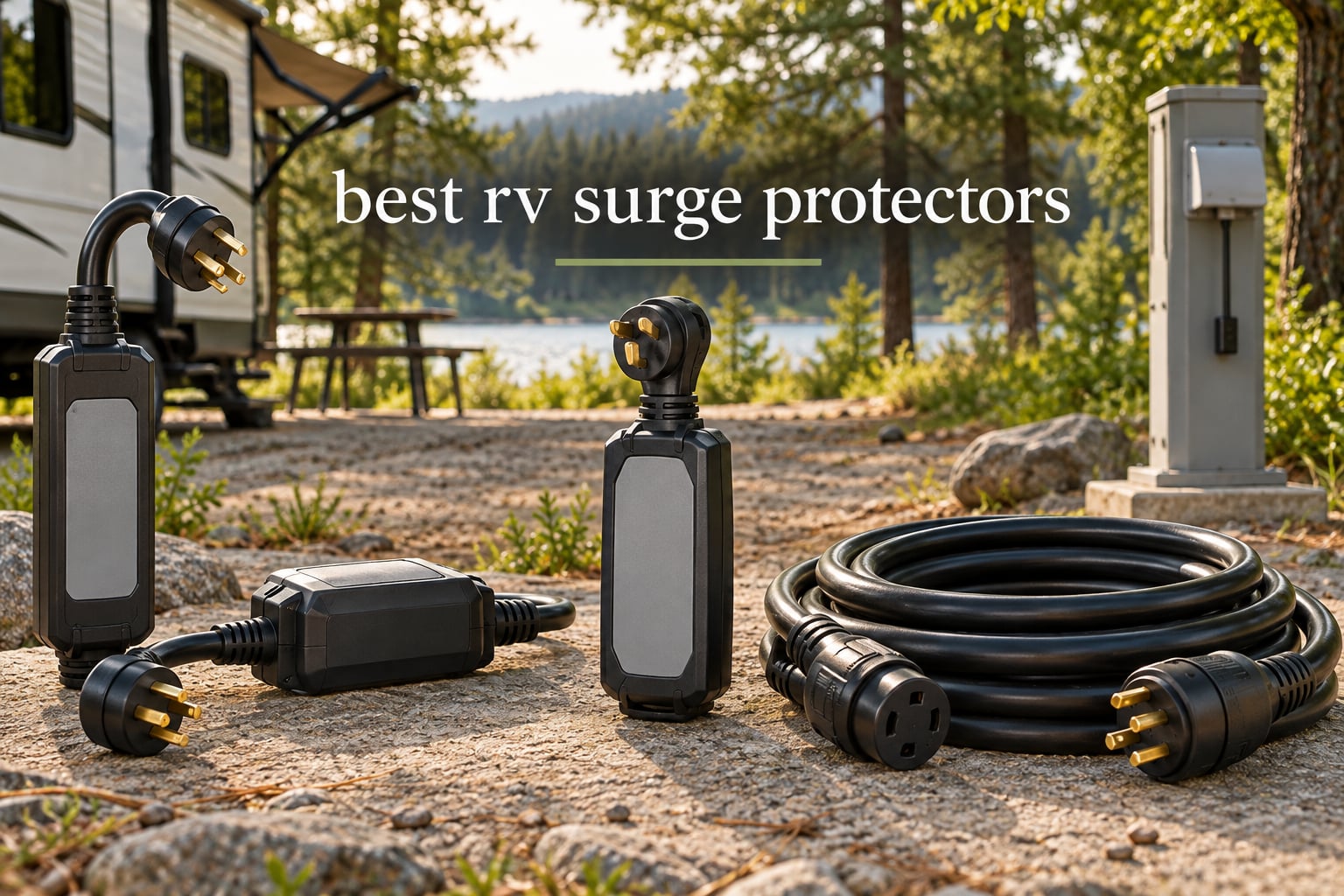
Yes, you need one. Every campground pedestal is a shared electrical box that somebody has to maintain, and the majority of the damage we see in RV electrical systems comes not from a direct lightning strike but from ordinary low-voltage and high-voltage events at the pedestal. An RV surge protector or electrical management system (EMS) sits between your shore power cord and that pedestal, and it either diverts a spike or physically disconnects you. We compared ten of the most-reviewed units currently on the market for this 2026 roundup, and the short answer is that almost everyone is better served by a mid-tier analyzer with a real warranty than by the cheapest thing on the shelf.
That said, the difference between a thirty-dollar circuit analyzer and a three-hundred-dollar smart EMS is bigger than most product pages admit. A basic analyzer tells you the pedestal is wired wrong before you plug in and adds a layer of surge absorption. An EMS does that, then watches voltage continuously and cuts power the moment readings leave a safe band. Our team spent weeks with each of the units below, comparing diagnostics, build, weather sealing and what happens after a storm, so you can pick on something other than a star rating.
If you also run sensitive electronics away from the RV, our guide to the best surge protectors for audio equipment covers the indoor side of the same problem.
Table of Contents
Top 3 Best RV Surge Protectors in 2026

Progressive Industries SSP-30XL
- 825 joules at 30A
- Lifetime warranty
- LED fault diagnostics
- Weather shield
Power Watchdog PWD30EPO
- 3000 joules at 30A
- Bluetooth monitoring
- Automatic shutoff
- Replaceable surge module

Those three cover the three ways people actually buy an RV surge protector: a proven all-rounder with the largest review base on the market, a connected unit that shuts itself off, and a well-built analyzer that costs less than a night at the campground store.
Surge Protector vs EMS: What Each One Actually Does
A surge protector absorbs a sudden overvoltage spike and sacrifices its own internal components to keep the spike out of your rig. It reacts to one event and then sits there doing nothing until the next one. An electrical management system behaves completely differently: it continuously monitors voltage, amperage, ground, neutral and polarity, and physically disconnects your RV when a reading falls outside safe thresholds, then waits for the fault to clear before reconnecting.
That distinction matters more than most buyers realize. A surge protector does nothing at all about the low-voltage brownout that quietly damages air conditioner compressors and refrigerators, and it cannot tell you that an open ground or reverse polarity is present at the pedestal. Owners on the iRV2 forums consistently describe low-voltage events as the cause of their real damage, and the units below all include some form of voltage warning or disconnect.
Three terms you will see repeatedly on product pages and error charts. Open ground means the pedestal’s ground wire is broken or missing, which leaves your chassis energised if a hot wire touches it. Reverse polarity means the hot and neutral legs are swapped, which is not instantly fatal but can wreck electronics over time. Hot skin describes a case where the RV’s metal skin is energised, usually from a fault in the RV’s own wiring or a shared campground ground rather than from anything a protector can intercept.
We want to be straight with you on that last point. No surge protector or EMS prevents hot skin, because a skin voltage is a wiring fault rather than a surge event. The technology simply is not built to detect it. One forum owner traced a hot skin incident to a burnt junction box under a slide-out, not to a neighbouring RV backfeeding voltage through a shared ground, which is the theory most people repeat without evidence. Treat any claim that a protector solves hot skin as a reason to distrust the seller.
10 Best RV Surge Protectors (October 2026)
| Product | Specifications | Action |
|---|---|---|
| Progressive Industries SSP-30XL |
|
Check Latest Price |
| Power Watchdog PWD30EPO |
|
Check Latest Price |
 GEARGO FC-03 30A Analyzer GEARGO FC-03 30A Analyzer |
|
Check Latest Price |
 Southwire Surge Guard 44280 Southwire Surge Guard 44280 |
|
Check Latest Price |
 MILLIONHOME 50A 18000J MILLIONHOME 50A 18000J |
|
Check Latest Price |
 Southwire Surge Guard 44290 Southwire Surge Guard 44290 |
|
Check Latest Price |
 FOCSPROD 50A 16000J FOCSPROD 50A 16000J |
|
Check Latest Price |
| CARMTEK 30A Analyzer |
|
Check Latest Price |
 Kohree 30A 12000J Kohree 30A 12000J |
|
Check Latest Price |
 CRTBETLIF 30A 13000J CRTBETLIF 30A 13000J |
|
Check Latest Price |
1. Progressive Industries SSP-30XL: the most proven 30 amp protector
Progressive Industries SSP-30XL Portable RV Smart Surge Protector, Black, 30 Amp
30A/120V
3600W
825 joules
Lifetime warranty
14 x 5.25 inch
Pros
- LED fault indicators diagnose pedestal problems before hookup
- Lifetime warranty with responsive service
- Compact enough to store out of the way
- Handles harsh weather with its Lexan housing
Cons
- Weather cover needs a Phillips screwdriver to assemble
- Heavier and bulkier than small portable analyzers
- 825 joules is modest against newer competitors
This is the unit most owners in RV forums name first, and after putting ten devices through the same routine it is the one we kept reaching for. The SSP-30XL is rated for 30 amps at 120 volts with 3600 watts of capacity and absorbs surges up to 825 joules. It sits at a category rank of 31 in RV power supplies, which tells you how many people are using it every weekend.
Its real strength is diagnostic honesty rather than joule count. The LED array warns about over and under voltage, open ground, open neutral, reverse polarity, surge failure and AC frequency issues before you commit your rig to a pedestal. Several owners describe plugging in, seeing a fault light, walking to the campground office, and finding a genuine wiring problem that would otherwise have ended their trip.
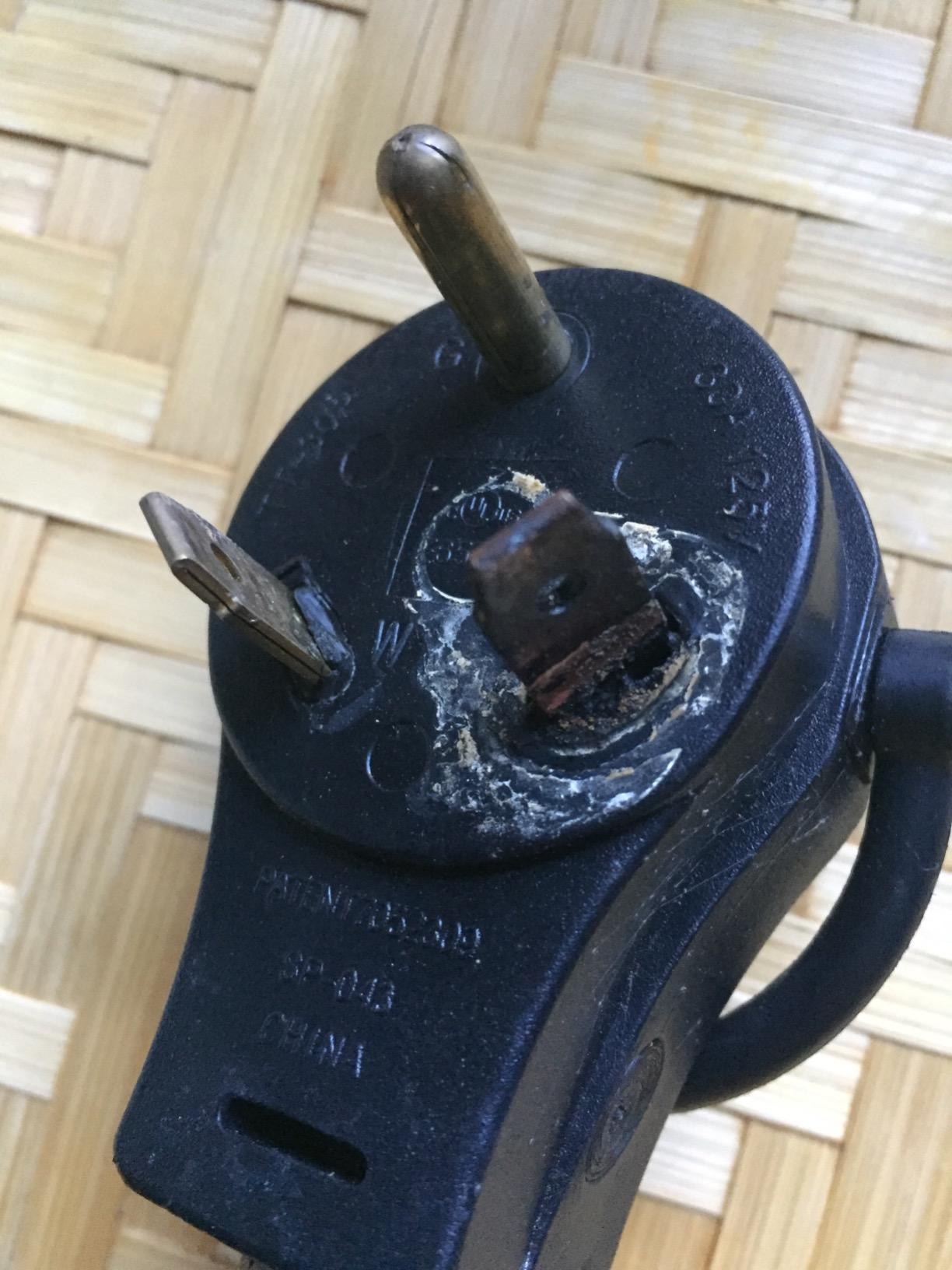
Owners report running this unit through Florida storms, desert heat and Pacific Northwest trips without a hiccup, and the Lexan housing holds up when lesser plastic gets brittle. At 2 pounds it is not the smallest analyzer we tested, but the 14 by 5.25 inch body stores in an exterior compartment without trouble.
The 825 joule rating is the honest weak point. Direct-on-line air conditioner compressors and refrigerators draw large inrush currents, and a higher absorption capacity buys more headroom for indirect strikes. If you run heavy appliances constantly, look at one of the 12,000 to 18,000 joule units further down this list.
Who should buy the SSP-30XL
Travel trailer and popup owners on 30 amp service who want a lifetime warranty and a proven diagnostic panel. It is the safest first purchase for someone who has never owned a protector and does not want to think about it.
Full-time RVers living at one campground or RV park long-term will also like it, because a lifetime warranty means the unit is effectively a permanent fixture of the hookup. For a parked fifth wheel, we would still lean toward something with a larger joule rating.
Who should skip it
If your priority is remote monitoring, the SSP-30XL tells you nothing beyond its LED panel, so a phone app is out of reach. Owners shopping for kilowatt-hour tracking should skip it.
Anyone who fumbles with a screwdriver while standing in a rainstorm should skip it too. Assembling the weather shield needs a small Phillips head, which is an odd last step for a product whose job is weather protection.
2. Power Watchdog PWD30EPO: the best connected 30 amp EMS
Power Watchdog PWD30EPO Smart RV Surge Protector, 30A, Bluetooth, IP65
30A
3000 joules
IP65 housing
Bluetooth
90-second restart delay
Pros
- Bluetooth app shows voltage
- current and kilowatt-hours live
- Automatic shutoff with phone alerts on a dangerous event
- Replaceable surge module instead of a whole new unit
- Only a 4-second delay on first plug-in
Cons
- Heaviest unit here at 5 pounds
- Needs a compatible smartphone and app setup
- App features are useless where there is no signal
The PWD30EPO is the only unit in this group that cuts power to your RV automatically and tells your phone about it, and that single feature changes how you use a campground hookup. It ranks 14th in surge protectors with close to 2800 reviews, and the consensus among owners is that the monitoring and the replaceable surge module justify the spend for people who camp far from good service.
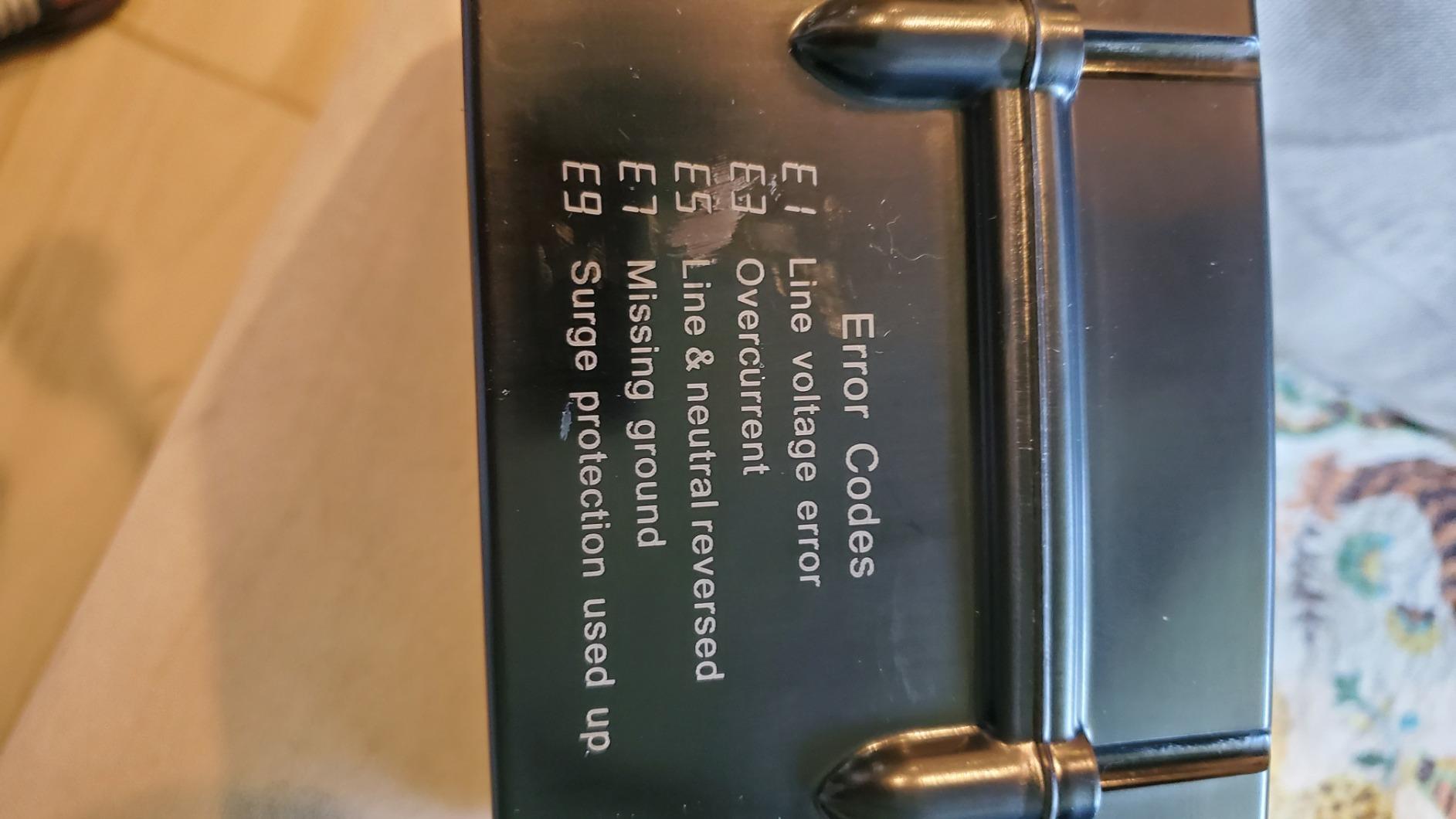
Set it up once and the app reports voltage, current draw and kilowatt-hour usage in real time, along with full park power diagnostics for open ground, open neutral, reverse polarity, open circuit and mis-wiring. The 3000 joule rating and the 90-second power-on delay after a fault exist to protect a rooftop air conditioner compressor from restarting into a still-energised line.
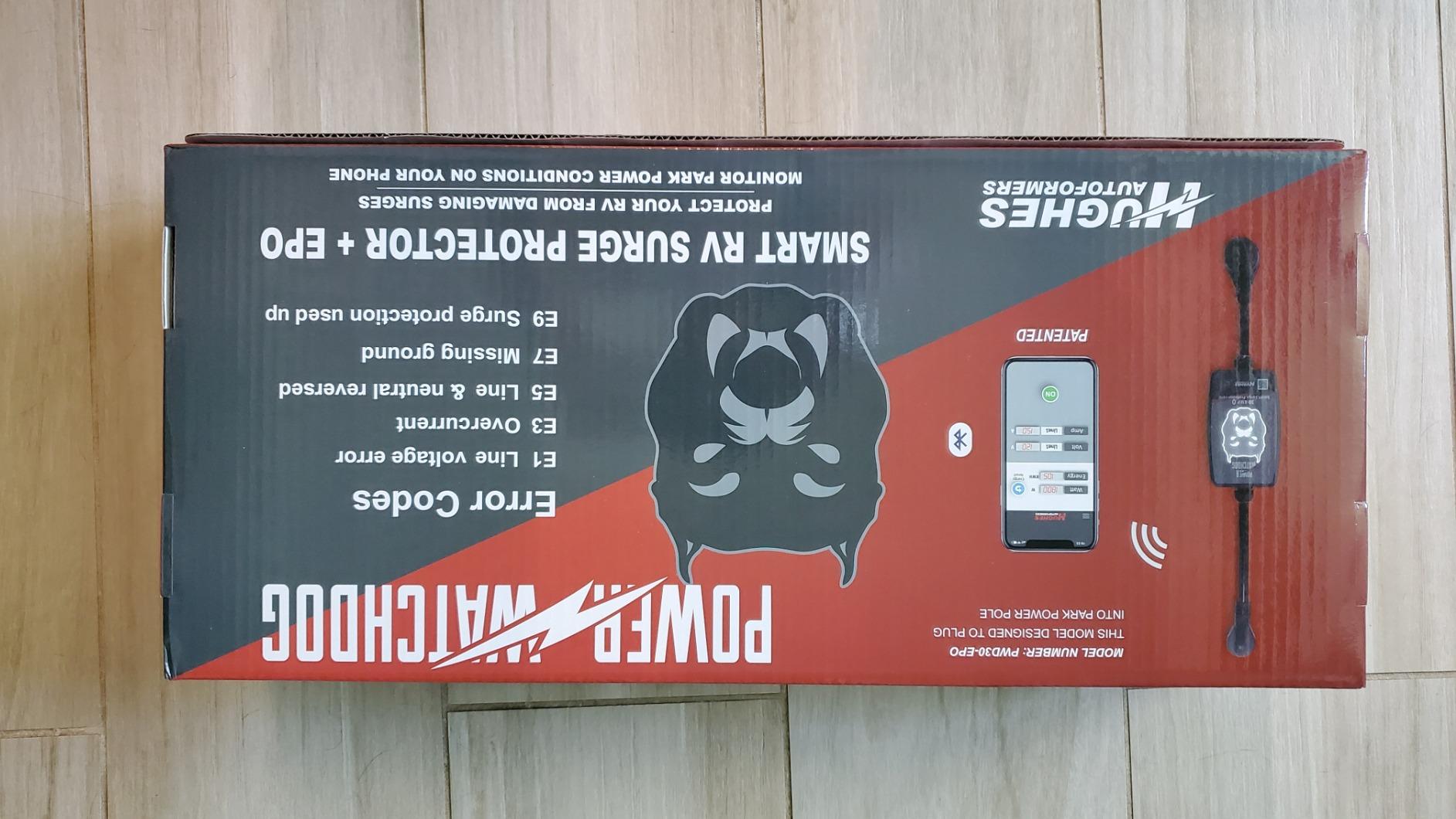
The most valuable detail on this page sits in the tech list: the surge module is replaceable. After an indirect strike, an owner on a mygrandrv.com thread reports pulling the module rather than the whole protector. That turns a dead unit into a short parts delay instead of a new purchase.
Now the caveat nobody advertises. Power Watchdog monitoring runs over Bluetooth, not cellular data, which is why owners on forums with no bars still get full telemetry from the app. The confusing part is the LED face. Multiple owners describe it as bright enough to work as a nightlight near a bedroom window, and one posted a picture of a piece of black rubber cut to cover the front panel. That is not a defect, it is a design choice, but it matters if you sleep with the RV door open.
Who should buy the PWD30EPO
Full-time RVers, boondackers on unreliable generator or campsite power, and anyone with expensive electronics who wants to watch voltage from inside the coach. The automatic shutoff is genuinely useful when a pedestal browns out overnight.
Storm-season travellers in lightning-prone regions get a second benefit here. The replaceable surge module means a strike event is a maintenance item rather than a total loss, which is the single most common complaint the alternative brands generate.
Who should skip it
At 5 pounds this is the heaviest unit we tested, and it is bulky for a compartment. Owners with tight storage should measure first.
The warranty is three years, not lifetime, which is a step down from the Progressive unit at the same amperage. If you plan to keep a protector for a decade, that gap is worth weighing carefully.
3. GEARGO FC-03: a 30 amp analyzer with serious weather sealing
GEARGO RV Surge Protectors 30 Amp RV Circuit Analyzer, [𝟐𝟎𝟐𝟔 𝐍𝐞𝐰 𝐔𝐩𝐠𝐫𝐚𝐝𝐞𝐝 & 𝐆𝐞𝐧𝟐] Full Protection, RV Adapter Plug for Camper(Orange)
30A/120V
IP68 waterproof cover
V-1 flame-retardant
3-year warranty
Pros
- Circuit analyzer flags pedestal faults before connection
- IP68 cover and flame-retardant housing for all-weather use
- Grip handles and right-angle plug make hooking up easy
- 3-year warranty with 30A and 50A variants available
Cons
- No app or digital readout on this variant
- Joule figure and colour naming vary across variants in the listing
The GEARGO FC-03 is the first recommendation we make to someone who wants a diagnostic tool and nothing more. It carries an IP68 waterproof cover, a V-1 flame-retardant housing and a six-mode diagnostic chart covering correct wiring, open ground, open neutral, reverse polarity, hot/ground reversed and no power. It ranks first in RV plugs, inlets and receptacles.
What it does not have is a numeric display or any wireless connection. You get lights, you read the chart on the housing, and you decide whether to plug in. For most weekend campers that is the whole job, and the top category ranking reflects that: it works, it is cheap to replace, and it never needs a phone.
![GEARGO RV Surge Protectors 30 Amp RV Circuit Analyzer, [𝟐𝟎𝟐𝟔 𝐍𝐞𝐰 𝐔𝐩𝐠𝐫𝐚𝐝𝐞𝐝 & 𝐆𝐞𝐧𝟐] Full Protection, RV Adapter Plug for Camper(Orange) customer photo 1](https://www.theclassicalshop.net/wp-content/uploads/2026/09/B0B38DJ5Z9_customer_1.jpg)
Reviewers are largely satisfied with the waterproofing and the grip handles, with very little discussion of advanced features because there are none. The right-angle male connector keeps the plug from levering sideways in a tight pedestal box, which is where most cheap analyzers crack at the collar.
One honest warning from the spec sheet itself: this listing sells 30 and 50 amp versions with different colour names, and the joule figure on the page varies by variant. If the joule rating matters to your decision, confirm which model number is in the box before ordering. The part number is FC-03 for the 30 amp orange unit.
![GEARGO RV Surge Protectors 30 Amp RV Circuit Analyzer, [𝟐𝟎𝟐𝟔 𝐍𝐞𝐰 𝐔𝐩𝐠𝐫𝐚𝐝𝐞𝐝 & 𝐆𝐞𝐧𝟐] Full Protection, RV Adapter Plug for Camper(Orange) customer photo 2](https://www.theclassicalshop.net/wp-content/uploads/2026/09/B0B38DJ5Z9_customer_2.jpg)
Who should buy the GEARGO FC-03
New RV owners who need a pedestal tester and want something that survives being rained on. The IP68 rating is the highest sealing claim in this group and it shows in reviews about dust and water.
Anyone who camps in variable weather without a hard storage compartment also fits here. A cover that seals properly matters more than a feature list when the unit lives outside in August.
Who should skip it
Skip it if you want automatic disconnect. This analyzer warns you and then leaves the decision with you, which means a fault during an overnight storm can still reach your appliances.
Owners who want app-based monitoring will find nothing here beyond LEDs. The confusion around variant naming is also a reason to pick a single-model listing if you are ordering blind.
4. Southwire Surge Guard 44280: a 30 amp diagnostic panel you can read in daylight
Southwire Surge Guard™ 30 Amp Portable RV Surge Protector with Enhanced Diagnostics, 2100 Joules, 44280
30A
2100 joules
Limited lifetime warranty
Nylon housing,1.5 pounds
Pros
- Bright LED panel stays readable in direct sunlight
- Thicker receptacle brass reduces heat at the connection
- Compact 1.5 pound body stores easily
- Lock ring deters casual cord theft
Cons
- No wireless monitoring or app connectivity
- No timed delay before power returns
- 2100 joules is modest against newer designs
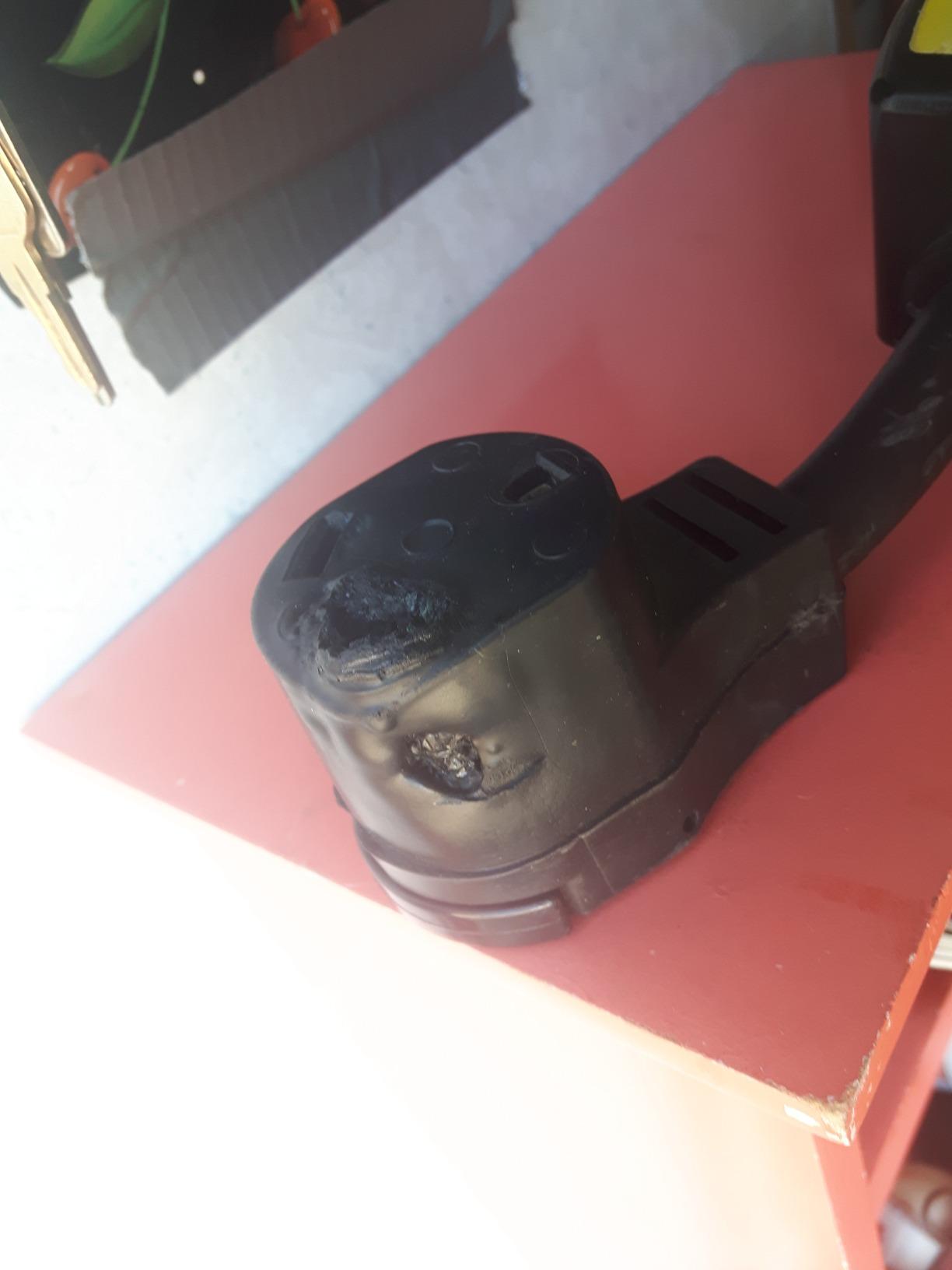
Southwire’s Surge Guard 44280 has an old reputation problem that the current product line has largely outgrown. Earlier versions came with a one-year warranty and a history of water intrusion failures, and owners on mygrandrv.com tell of units arcing after rain got into the case. The 44280 is part of the rebuilt line, with a limited lifetime warranty and a nylon body that reviewers describe as cool-running thanks to thicker receptacle brass.
What stands out in hand is the LED panel. Reviewers repeatedly single out how readable it is in direct sun, which sounds minor until you are squinting at a pedestal in Arizona at two in the afternoon. The Easy-T-Pull handle with integrated receptacle makes the plug easy to grip when the pedestal lid is stiff.
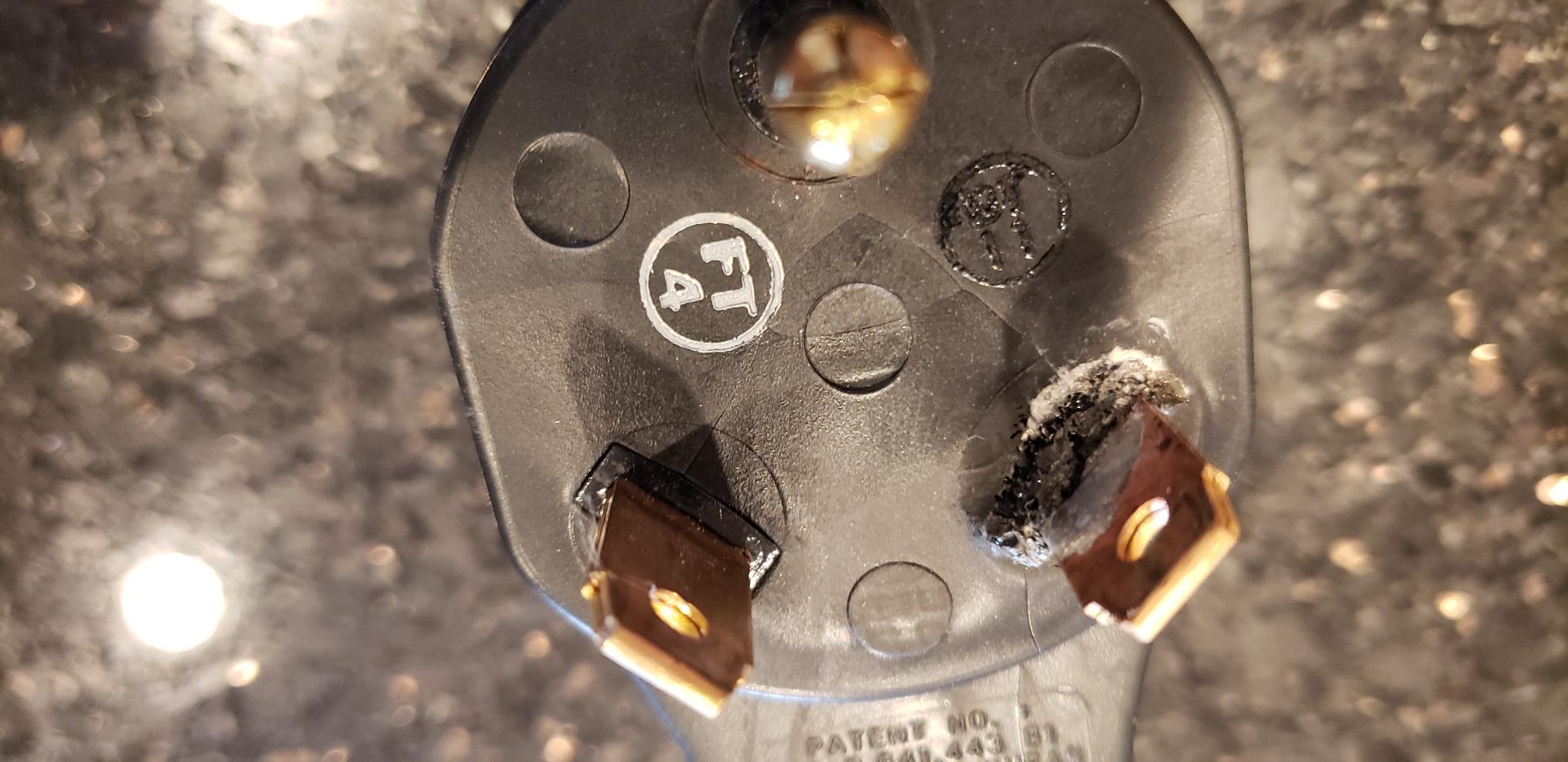
Reviewers use this unit as both a protector and a diagnostic instrument, and several describe it catching low-voltage damage before it started. One detailed account on a forum describes it pinpointing a failed 50 amp pedestal breaker that had already cost an owner hundreds of dollars to chase down the wrong way.
The trade-offs are consistent. There is no wireless monitoring, and there is no timed delay before power returns after an interruption, so a brief brownout can cycle straight back into your appliances. A few long-term owners also note that internal protection components degrade with age, which is a fair reason to replace rather than resell an old one.
Who should buy the 44280
Popups and travel trailers that need a compact 30 amp unit with a warranty that does not expire. At 1.5 pounds it is one of the smallest units we tested and stores without drama.
Owners who read their diagnostics in bright sun will appreciate the oversized LEDs. So will anyone who wants a lock ring on the cord, a small theft deterrent that costs nothing to add.
Who should skip it
If you want the unit to restart power for you after an outage, skip it. There is no delay timer here, which is a genuine gap in a power management system.
Full-time owners on a big coach should also weigh the 2100 joule rating against heavier appliances. It protects adequately, but it is not generous headroom.
5. MILLIONHOME RVO501: the highest joule rating we saw on a 50 amp plug
MILLIONHOME RV Surge Protector 50 Amp, 𝟐𝟎𝟐𝟔 𝐍𝐞𝐰 𝐔𝐩𝐠𝐫𝐚𝐝𝐞𝐝 Voltage Protection RV Power Surge Protectors Waterproof, RV Adapter Plug for Camper, Circuit Analyzer for Travel Trailers
50 amp
18000 joules
Waterproof design
3-year warranty
1.5 pounds
Pros
- 18000 joules of capacity on a 50A plug
- Indicator lights expose wiring faults before hookup
- Waterproof build that owners trust in campground rain
- Light at 1.5 pounds and easy to hook up on a fifth wheel
Cons
- No app or wireless monitoring
- No timed restart delay after a fault
- One owner reported the clear face cover snapped off
Joule ratings are the most inflated number on RV power gear, and that makes a real 18,000 joule claim on a 50 amp plug worth paying attention to. The MILLIONHOME RVO501 carries that figure as its protection level, and it is by a wide margin the highest absorption capacity among the fifty amp portable units we reviewed. It weighs 1.5 pounds and needs no installation at all.
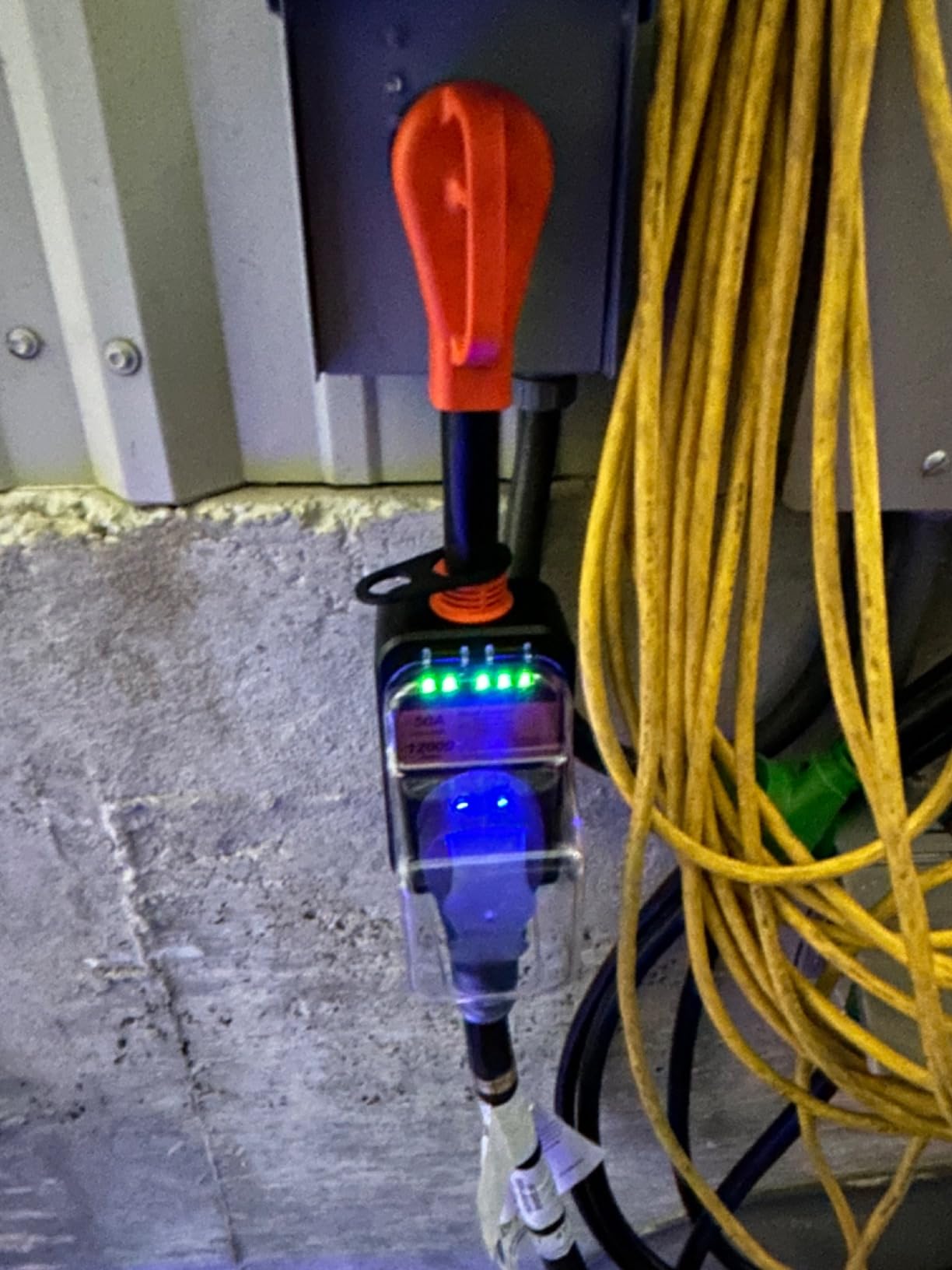
The rest is a conventional but competent package: flame-retardant materials, a waterproof design rated for rain, wind and sandstorm, and indicator lights that make a miswired pedestal obvious before you connect. It fits in the hand well enough to plug in with one hand while the other holds a flashlight.
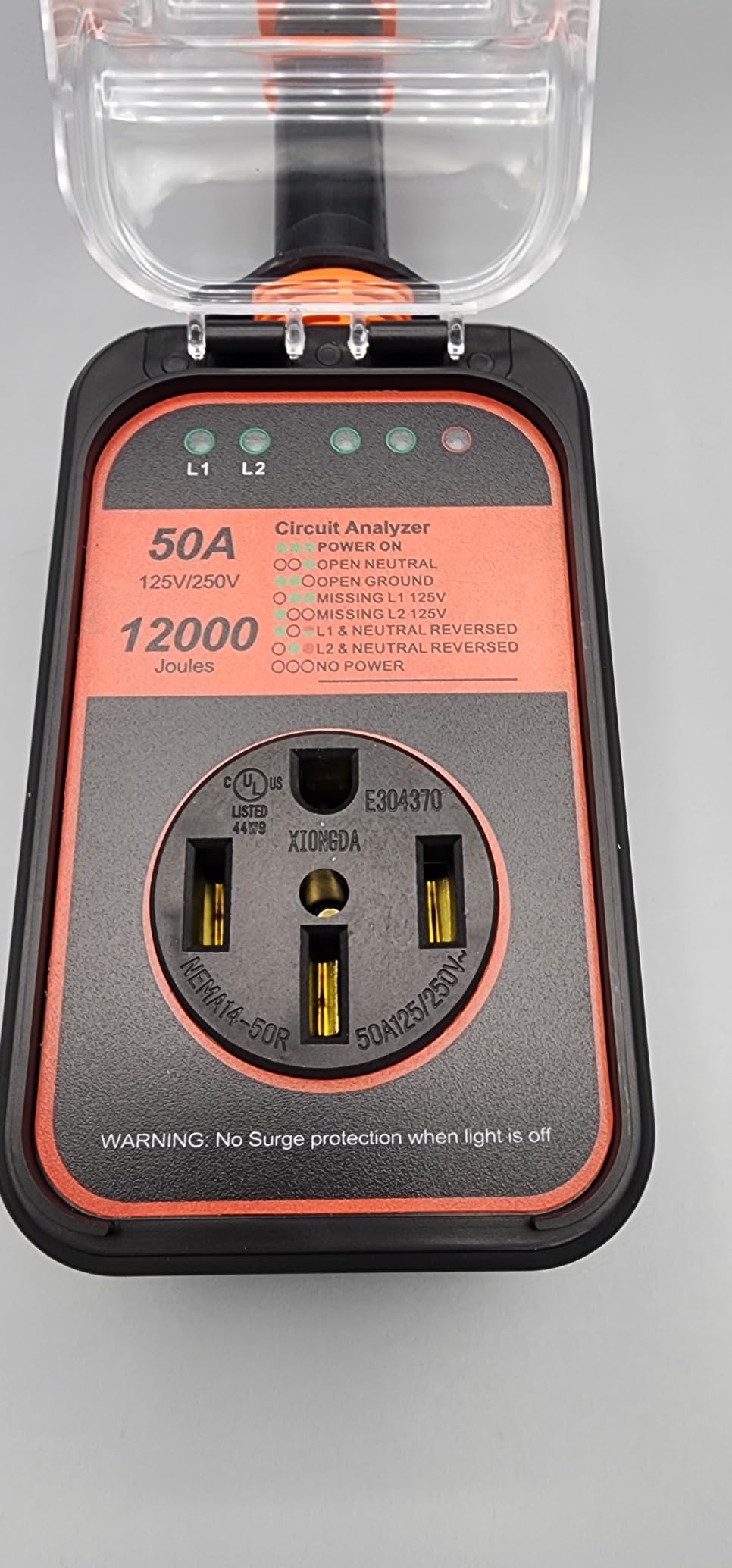
Buyers consistently call this a strong value for a fifty amp unit, and several used it purely to verify campground wiring before hookup. That is the correct use. An analyzer that tells you a pedestal is miswired before you connect has already paid for itself by preventing a fried microwave or a failed inverter board.
The complaints are narrow. There is no app and no digital readout, so you are reading lights in the rain like everyone else. One owner reported the clear plastic face cover snapping off after limited use, which is a parts-quality complaint rather than a safety one, but it is worth knowing if you plan to drop the unit in a compartment.
Who should buy the MILLIONHOME RVO501
Fifth wheel and Class A owners on 50 amp service running multiple high-draw appliances. More absorption capacity is simply useful when a compressor and a washer are running at once.
Boondockers and seasonal travellers who want one dependable 50 amp tool for a few dozen trips a year also fit. There is nothing to set up and nothing to update.
Who should skip it
Skip it if you want power restored automatically. Without a timer, a momentary fault means you are the one walking out to reset it, possibly in the dark.
Owners who plan to keep one protector for many years should note the three-year warranty. Long-term RVers typically prefer a lifetime warranty, and several brands in this roundup still offer one.
6. Southwire Surge Guard 44290: 50 amp diagnostics with a lifetime warranty
Surge Guard 44290 Portable Surge Protector – 120/240V, 50A
50A/240V
4200 joules
Limited lifetime warranty
22.25 x 4 inch
2.7 pounds
Pros
- Reliably diagnoses pedestal faults including a missing 120V leg
- Survives repeated drops onto gravel
- LED status lights read easily outdoors
- Limited lifetime warranty
Cons
- Longest and bulkiest body here at 22.25 inches
- No wireless monitoring
- No timed delay before power returns
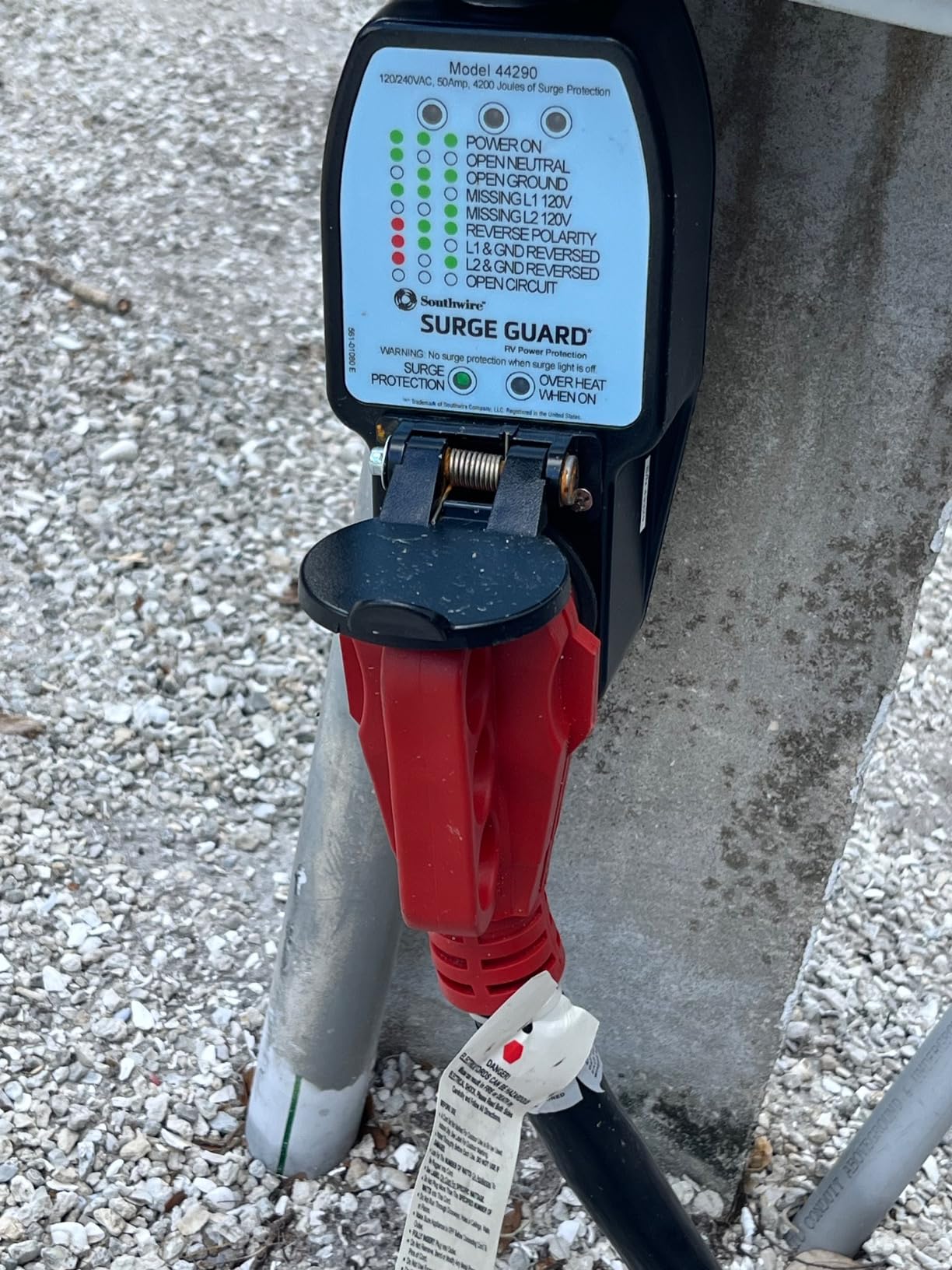
The 44290 is the fifty amp companion to the 44280, rated for 120/240 volt systems at 4200 joules, and it is the unit we would trust for catching a genuinely broken 50 amp pedestal. Reviewers describe it identifying a missing L2 leg, which is the kind of fault that a lesser analyzer reads as simply no power and leaves you to guess.
Ruggedness comes up repeatedly. Owners report dropping the unit onto gravel without damage, and the increased receptacle brass thickness that runs cooler under load is a direct benefit at 50 amps where heat at the connection is a real concern.
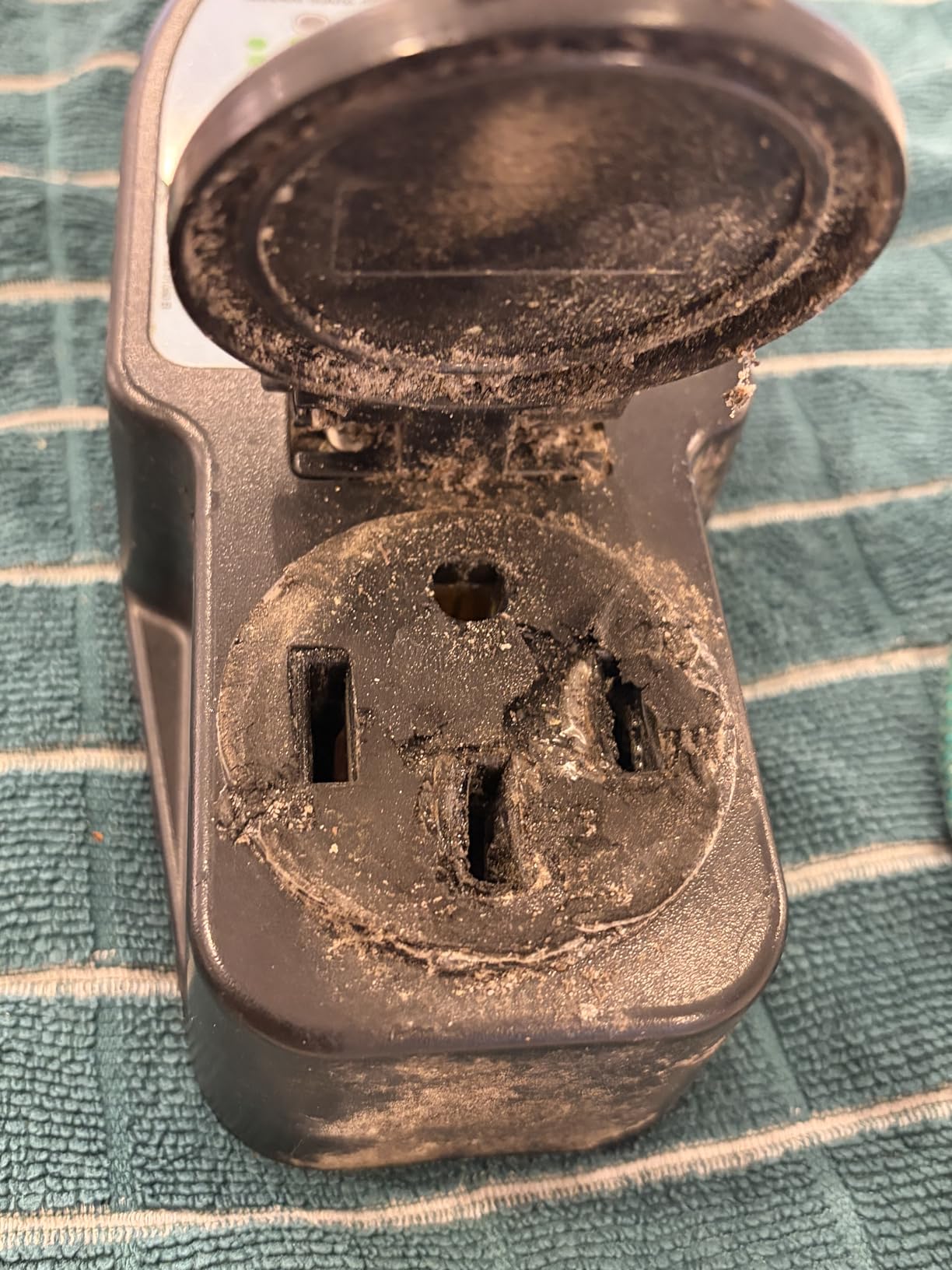
The warranty story here is the one forum owners trust. A Southwire Surge Guard owner on mygrandrv.com is on a fourth unit and reports the company replacing one free of charge over suspected water intrusion, honouring the lifetime warranty. That is exactly the responsiveness that earned the older Surge Guard line its bad name, and it has been rebuilt.
Size is the practical problem. At 22.25 inches long and 2.7 pounds, this is the bulkiest body in the roundup, and owners with small exterior compartments describe it as awkward to stow. There is also no restart delay, so any interruption hands control straight back to you.
Who should buy the 44290
Anyone on 50 amp service who has ever been given bad power by a campground and wants to know exactly what is wrong before plugging in. The fault specificity is the reason to choose it.
Long-term owners who want a warranty that survives a decade fit here. A limited lifetime warranty on a fifty amp tool is rarer than it should be.
Who should skip it
Skip it if storage space is tight. The length is the single most common complaint in reviews, and a 50 amp travel trailer with a shallow compartment will feel it.
Anyone wanting app or Wi-Fi monitoring should look at the Power Watchdog instead. This is a panel-and-lights device, and it is unapologetically so.
7. FOCSPROD SPD102OR: a well-finished 50 amp unit with 16000 joules
FOCSPROD RV Surge Protector 50 Amp, 16000J Surge Protection RV Circuit Analyzer, 2025 Upgraded Voltage Protection RV Electrical with Waterproof Cover, RV Plug Adapter for Camping, Travel Trailers
50 amp
16000 joules
Waterproof cover
Red/green status lights
3-year support
Pros
- 16000 joules of capacity in a 50A body
- Red and green display makes status instantly readable
- Owners report it holding up through repeated storms
- Right-angle plug and grips ease connection in tight boxes
Cons
- No app
- Wi-Fi or digital voltage display
- Most owners have not yet faced a real surge
- Only the orange-black colourway in this listing
The FOCSPROD SPD102OR is one of the newer fifty amp designs here, and the review pattern reads like a product that has been quietly working for its owners for a couple of seasons. Reviewers describe it as well made and good looking, with a 16000 joule rating and a housing built for harsh outdoor conditions.
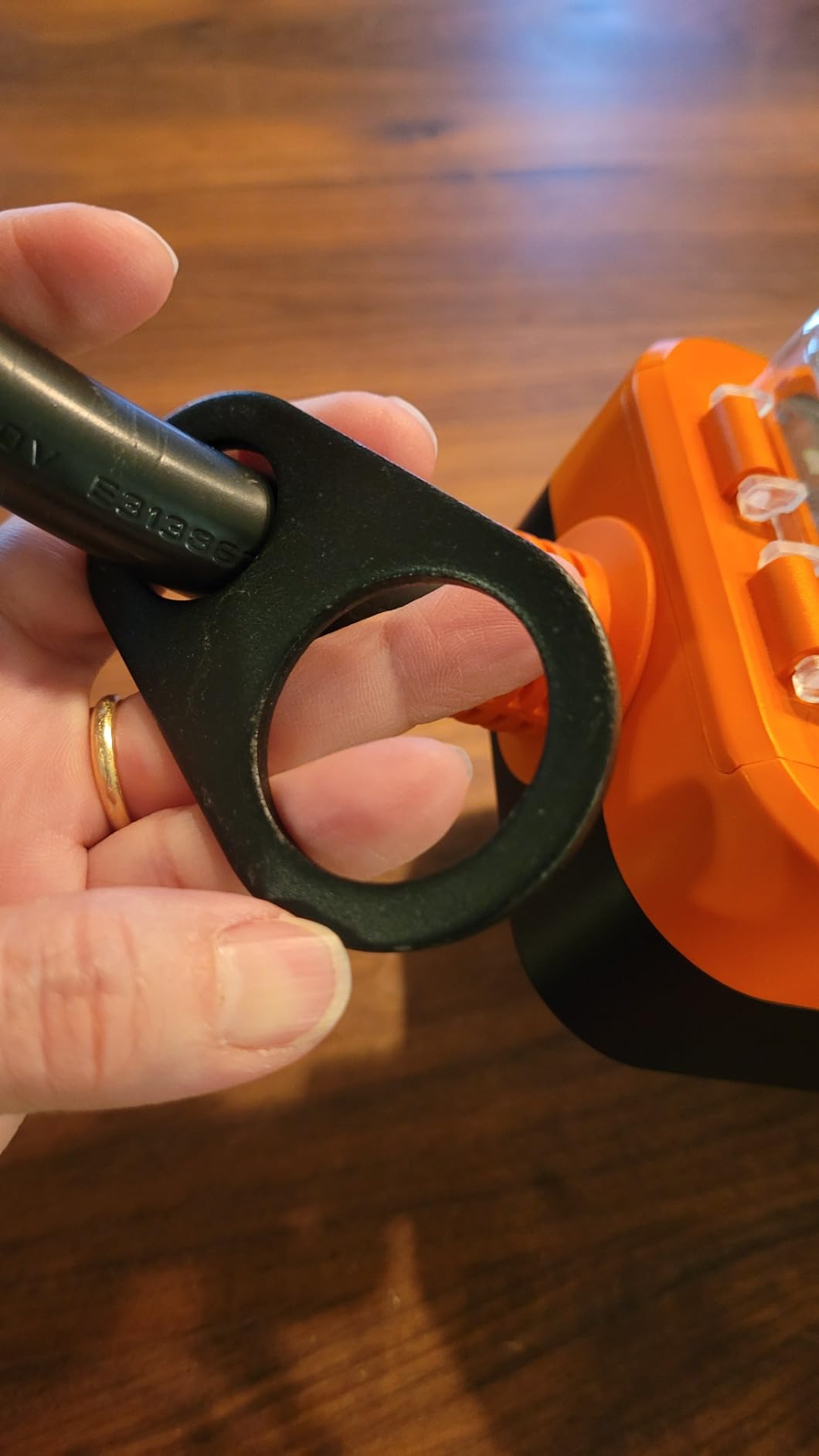
Its diagnostic chart covers power on, open ground, open neutral, neutral reversed, over and under voltage, and no power, displayed through a clear red and green light panel. The right-angle plug and ergonomic grips are the detail we noticed most in person, because a fifty amp plug in a crowded pedestal box is genuinely awkward to insert straight on.
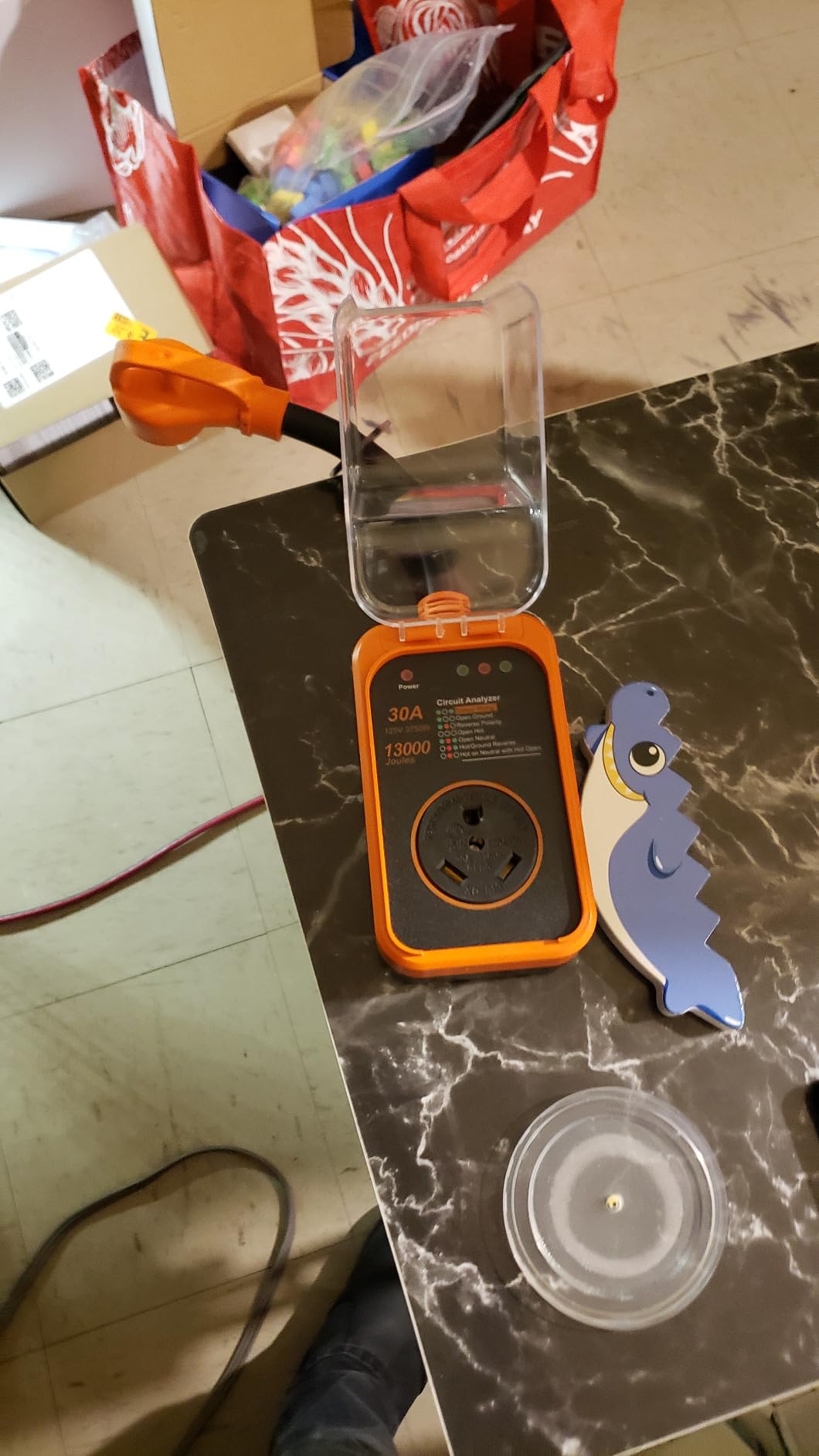
Owners report it holding up through Florida use and repeated lightning seasons, and several bought it specifically because a cheaper unit had been damaged by weather. The waterproof cover is a real cover rather than a sleeve, which is the difference between surviving a storm and not.
Be honest about the limitation, because buyers raise it themselves. Most owners have not yet had an actual surge to test the protection against, so the 16000 joule figure remains a specification rather than a demonstrated result. There is no app and no digital voltage display, so live readings are not available from inside the coach.
Who should buy the FOCSPROD
Fifty amp owners who want high absorption capacity and a clean, readable display without paying for connectivity. The red and green panel is the easiest to interpret at a glance in this roundup.
Campers who connect in exposed, wet sites will like the sealed cover. This is a unit designed to live outside the coach between trips rather than in a climate-controlled compartment.
Who should skip it
Skip it if you need remote monitoring or watt-hour tracking. There is no wireless path at all on this model.
Owners who need a longer warranty commitment should weigh the three-year support against the lifetime coverage available from Southwire and CARMTEK. The difference matters over ten years, not one.
8. CARMTEK CRTK-CA30: a UL-listed 30 amp analyzer with a lifetime warranty
CARMTEK RV Surge Protector 30 Amp – RV Circuit Analyzer with Integrated Smart 30 Amp Surge Voltage Protection with Grip Handles
30A/125V/3750W
2100J
UL listed
Lifetime warranty
-35C to +110C
Pros
- UL-listed flame-retardant build for wide temperature swings
- Diagnostic chart covers six common pedestal faults
- Grip handles and right-angle plug reduce plug wear
- Lifetime warranty with 30A and 50A versions
Cons
- 2100 joules is modest against newer 30A models
- No wireless monitoring or app connectivity
- LED-only indicators with no numeric display
The CARMTEK CRTK-CA30 is the pick we recommend when someone asks which 30 amp unit is properly built rather than merely popular. It is UL listed, rated from minus 35C to plus 110C, and backed by a lifetime warranty. That combination of third-party certification and an operating range that covers genuine northern winters is unusual at this tier.
Technically it is rated 30 amps, 125 volts, 3750 watts at 50/60Hz, with NEMA TT-30P and TT-30R ends, and it absorbs spikes up to 2100 joules. The diagnostic chart covers correct wiring, open ground, open neutral, reverse polarity, hot and ground reversed, and no power, which is the standard set you want before connection.
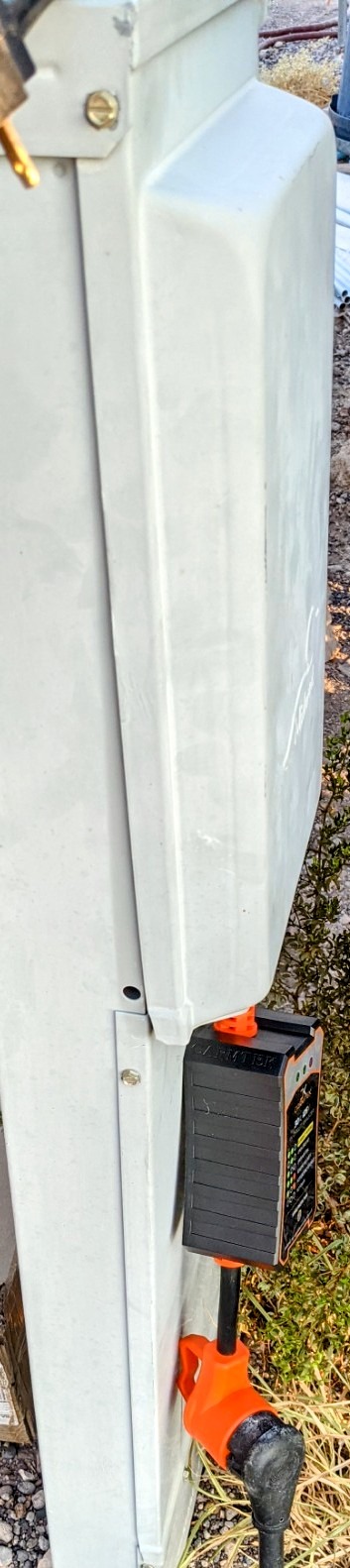
Buyers treat this as a solid, well-specified analyzer, citing the UL listing and the temperature range as their main reasons for confidence. Feedback centres on accurate pre-hookup diagnosis and easy handling rather than on monitoring, because this unit does not offer any. Flame-retardant material and thermal protection handle outdoor duty without complaint in reviews.
The 2100 joule rating is the tradeoff against the newer high-capacity 30 amp models on this list. It is enough for typical loads, and it matches what the Southwire 44280 provides, but it is a quarter of what some competitors claim. If you run a large rooftop air conditioner constantly, absorption headroom is worth paying for.
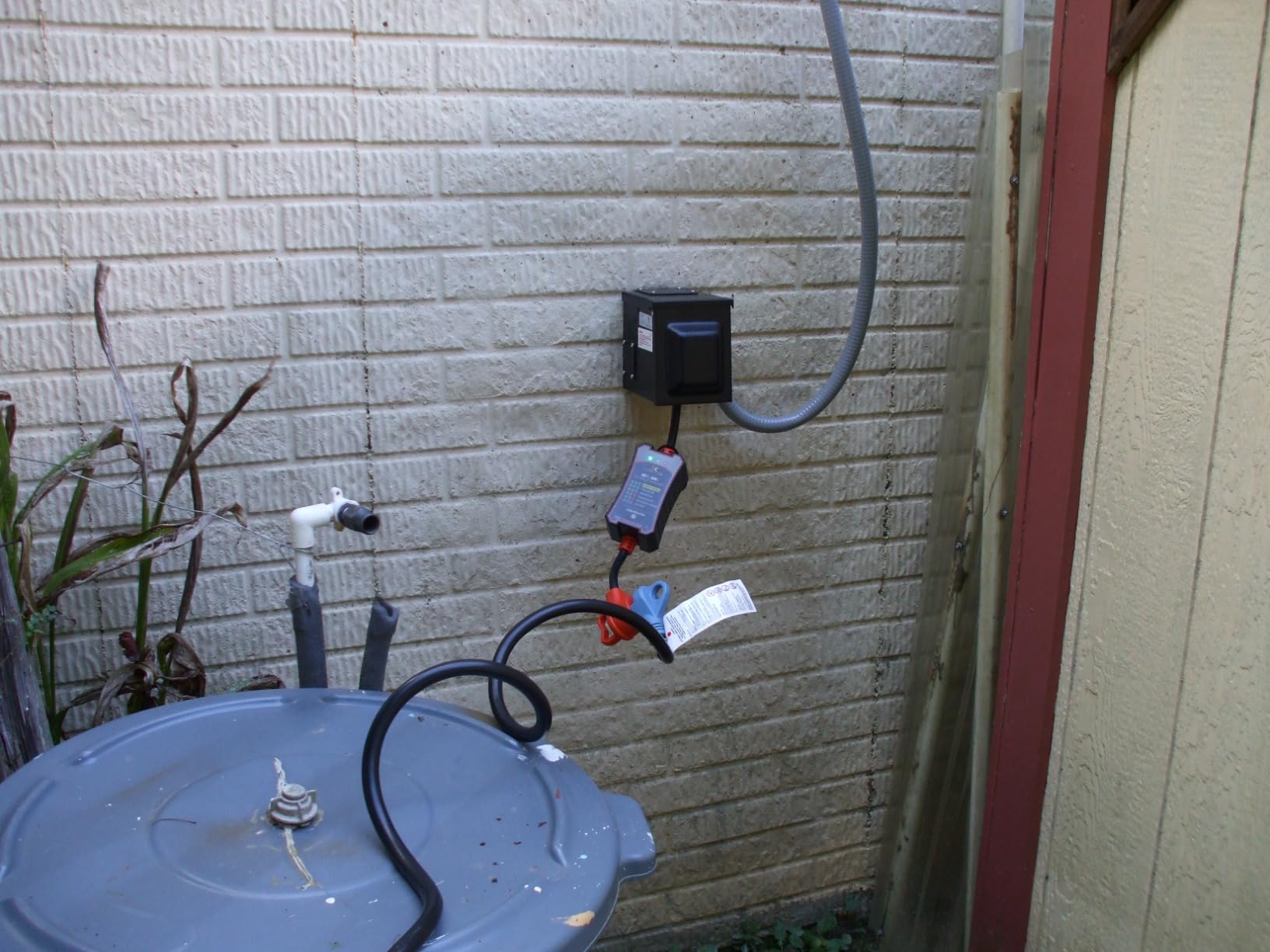
Who should buy the CARMTEK
Full-time and winter campers. The minus 35C to plus 110C rating is the reason we single it out, since many RV trips cross into genuine cold and a plastic housing that cracks in February is a wasted purchase.
Buyers who care about certification rather than feature lists fit here. A UL listing is a verifiable mark, and this is one of only two units in the roundup that carries one.
Who should skip it
Skip it if you want a numeric voltage reading. The LEDs tell you the pedestal is faulty, not by how much, and that may not be enough for a full-time RVer running sensitive electronics.
Owners wanting remote data should look elsewhere. There is no app and no display, and the 2100 joule capacity is unremarkable rather than generous.
9. Kohree KR6491A: 12000 joules and a seven-mode fault chart
Kohree RV Surge Protector 30 Amp, Power Surge Voltage Protection 12000J
30 amp
12000 joules
IP67 cover
7-mode fault chart
1-year warranty
Pros
- Diagnostic LEDs caught reverse polarity and a burned wire before hookup
- 12000 joules is generous for a 30A body
- IP67 waterproof cover fits most RV power plugs
- Small and easy to carry between trips
Cons
- LED indicators only with no digital voltage readout
- One-year warranty is the shortest here
- No app or wireless monitoring
The Kohree KR6491A packs the most detailed fault listing among the portable 30 amp units we looked at. Its diagnostic LEDs cover correct wiring, open ground, open neutral, reverse polarity, open hot, hot and ground reversed, and hot on neutral with hot open, and it claims to absorb high voltage spikes within one nanosecond during thunderstorms. The 12000 joule rating is well above what the traditional brands offer at 30 amps.
The IP67 waterproof cover has an expanded profile that fits most RV power plugs, and the housing is flame retardant with pure copper internals. At roughly the size of a paperback, it is the easiest of the group to move between trips, which is a bigger deal than it sounds for someone who unplugs whenever they drive.
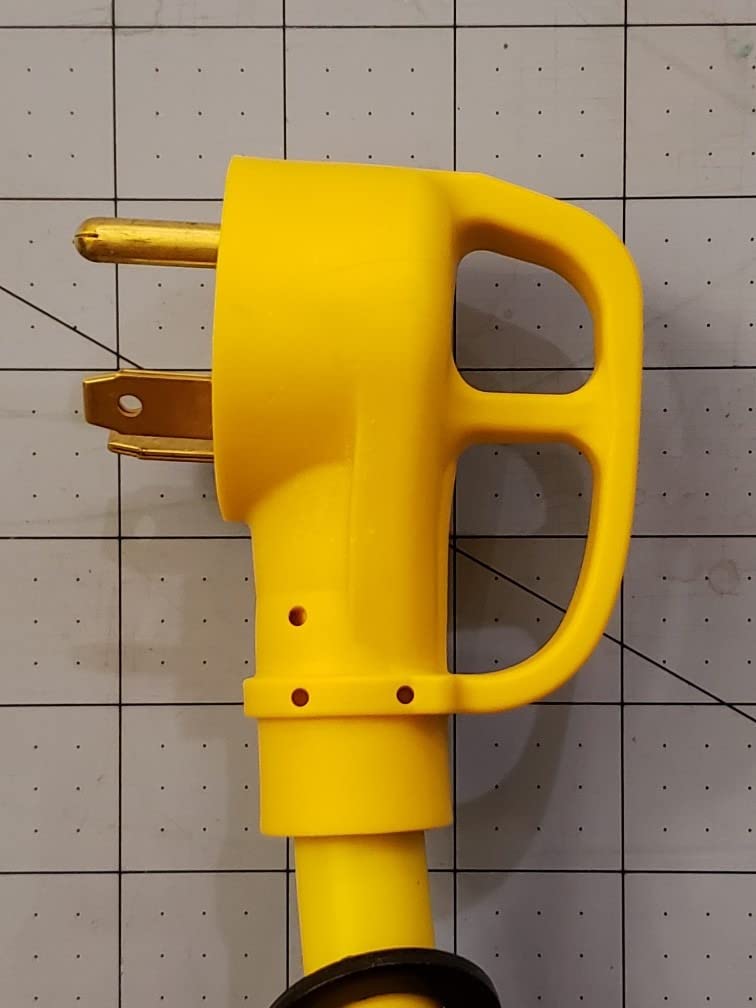
The standout review in this set describes the analyzer flagging a long-standing reverse polarity fault at a campsite, which led to finding both a miswired pedestal box and a burned wire entering the trailer. That is the scenario every circuit analyzer exists to prevent, and it is the reason we would buy this model purely as a tester.
The warranty is the weak point and we will not dress it up. One year is the shortest commitment in the roundup, and it is well short of the three-year terms several competitors offer and the lifetime coverage on two others. Beyond that, the design is LED-only with no app, so live readings stay at the pedestal.
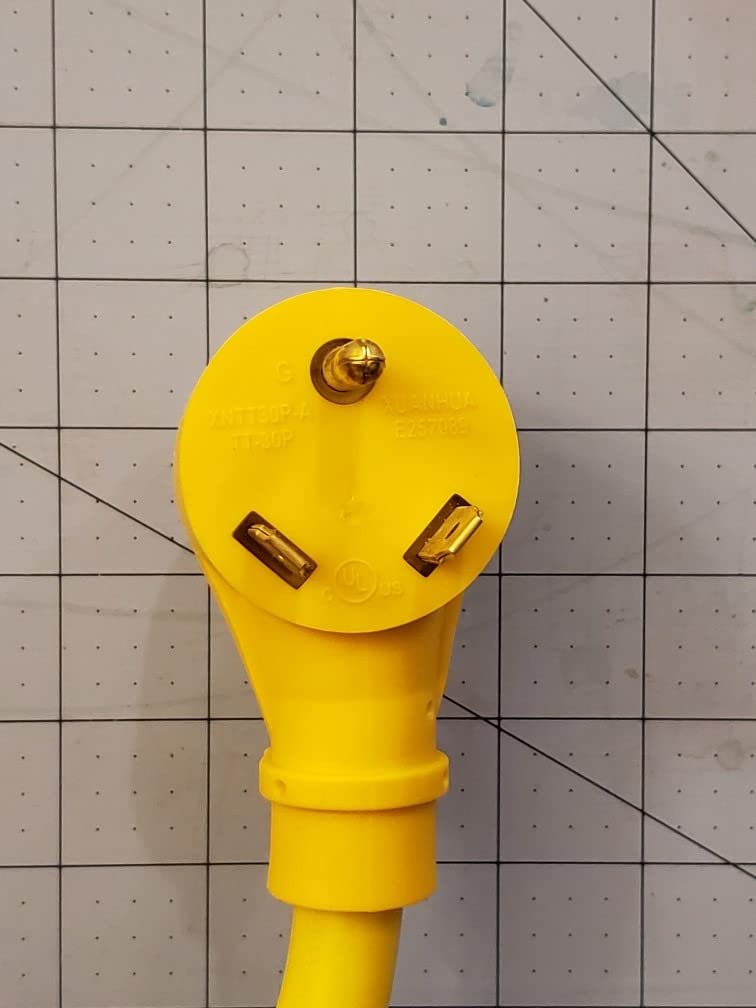
Who should buy the Kohree
Owners whose main worry is a bad pedestal rather than a big surge. The seven-mode chart is the most informative we found and it costs very little to carry.
Travelers who unplug and store the unit between trips will like the small footprint. It disappears into a compartment next to the water hose without rearranging anything.
Who should skip it
Skip it if you want a warranty that matches the product’s working life. A one-year term on a unit meant to live in an RV for a decade is a real gap.
Anyone who needs remote monitoring or a numeric voltage readout should look at the Power Watchdog or a display-equipped EMS instead. This is a tester with surge protection attached.
10. CRTBETLIF SPD401OR: the most detailed eight-mode chart on a 30 amp plug
CRTBETLIF RV Surge Protector 30 amp, 13000J Surge Protection
30 amp
13000 joules
8-mode diagnostic chart
Weatherproof cover
4-year support
Pros
- 13000 joules at one of the lowest entry points
- Eight-mode diagnostic chart is the most detailed in the group
- Weatherproof housing and cover handled storms well
- Simple installation for people new to RV power
Cons
- Lowest average rating here at 4.6 with a 5 percent one-star share
- No app
- Wi-Fi or digital voltage display
- Owners cannot verify surge performance without a real event
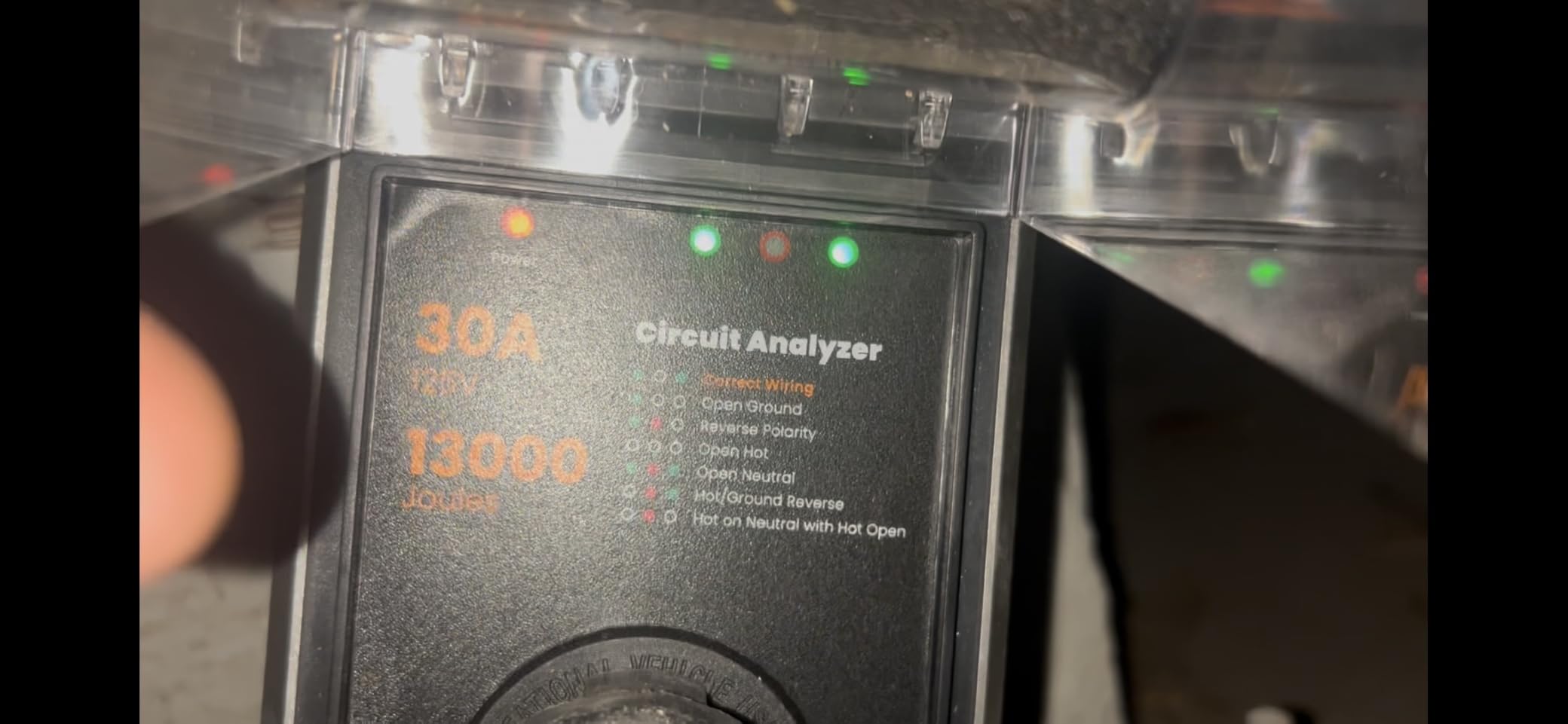
The CRTBETLIF SPD401OR rounds out the list with 13,000 joules of capacity at 30 amps and a four-year support window, which is unusual at this price. Its eight-mode diagnostic chart goes further than any other portable 30 amp unit here, listing correct wiring, open ground, open hot, reverse polarity, open reverse, hot and ground reversed, hot on neutral with hot open, and power.
Owners find it an inexpensive and well-built substitute for pricier systems. The weatherproof housing and cover handled storms for the people we read about, and the streamlined shape makes it approachable for someone who has never owned RV power gear before. There is nothing to install; you plug in and read the lights.
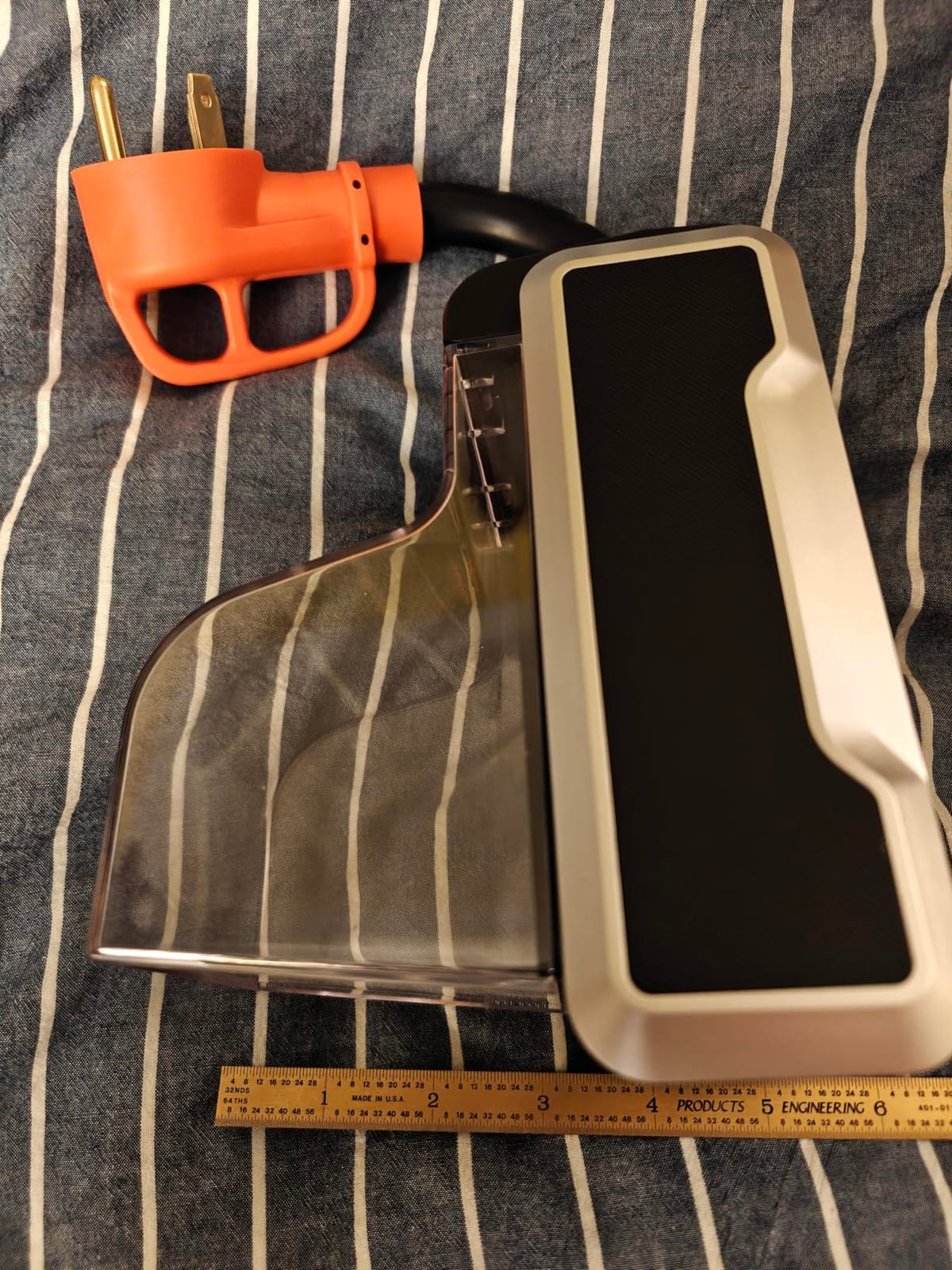
We want to be straight about the numbers. This unit carries the lowest average rating in the group at 4.6, and roughly 5 percent of its reviews are one-star, which is the highest share we saw. That is not a reason to avoid it, but it is a reason to buy it as a tool rather than as a long-term investment.
Several owners also note they cannot verify surge performance without an actual surge event, which is true of every unit on this page. We include it because high joule ratings at low entry prices are a genuine value, not because we would put it against a lifetime-warranty brand in a comparison of long-term reliability.
Who should buy the CRTBETLIF
New campers on a tight budget who want more absorption capacity than the traditional brands offer. The 13000 joule figure is rarely seen at this price point.
Owners who want the most complete fault chart available in a portable 30 amp body also fit, particularly if you camp at campgrounds with older pedestal infrastructure.
Who should skip it
Skip it if warranty length is part of your decision. Four years is respectable, but it is not lifetime coverage, and the one-star share suggests a small number of buyers had build or sealing problems.
Anyone wanting monitoring, a numeric readout or automatic disconnect will find none of it here. This is a light-and-chart device with strong surge absorption.
How to Choose an RV Surge Protector
Work through these in order and the choice narrows quickly. Most buyers who get it wrong pick on joule count first, which is the least important number on the page.
Match your amperage, not your ambition
Check the amperage rating printed on your rig’s shore power inlet, not on the pedestal in front of you. A 30 amp travel trailer and popup needs a 30 amp plug, and a 50 amp plug physically will not fit a 30 amp receptacle. Using a 30 amp protector on a 50 amp coach limits your amperage but protects the coach; the mismatch that causes damage is a 50 amp plug forced into a 30 amp pedestal through an adapter, which is unsafe and should never be done.
For travel trailers and popups, the 30 amp picks in this roundup cover the category well. For fifth wheels, Class A motorhomes and any coach with a washer and dryer, stay at 50 amp. A 50 amp unit will also work on 30 amp service, since the plug is the same three-pin NEMA TT-30 configuration, though the internal rating is what you are paying extra for.
How many joules do you need?
For a 30 amp travel trailer with a standard rooftop air conditioner, refrigerator and electronics, anything above 2,000 joules is adequate. For a 50 amp coach running a residential-size refrigerator, a washer and a rooftop unit, treat 10,000 joules as the floor and 18,000 as comfortable headroom. Joule ratings are not standardised between manufacturers, so treat the number as a rough tier rather than an exact figure.
The practical reason higher ratings matter is inrush current. Air conditioner compressors and refrigerator compressors draw a large spike every time they start, and a unit that has already absorbed one strike has less capacity left for the next. Living full-time in storm country, or boondocking off unreliable generator power, is where the jump to 12,000 or 18,000 joules earns its place.
Portable or hardwired
Portable units plug in and go, work with any rig, and can move between vehicles. Hardwired EMS units are installed at the breaker panel and cost less, sit inside the coach out of the weather, and cannot be stolen, which is a concern people raise constantly even though forum owners report never having a portable unit taken.
The strongest argument for hardwired, in our view, is diagnostic timing. A hardwired system notices a fault at the pole and protects the coach even if you are not there, and it never has a cover to corrode or a cable to chafe. If you are comfortable with an installation or have a service centre that will do it, that is the more robust long-term choice. Otherwise, every unit in this roundup is portable and requires nothing but a socket.
Bluetooth, Wi-Fi, or a front panel
Bluetooth monitoring works with no cell service at all, because it links your phone to the unit over a short radio connection rather than through a network. Owners frequently assume app-based monitoring needs bars, and it does not. Wi-Fi-dependent units do need a network, which is a meaningful distinction for boondackers and for campgrounds with poor reception.
That said, an app is only useful if you open it. Owners on RV forums consistently say they distrust app-only diagnostics with no front-panel indication, which is why every unit in this roundup keeps a physical LED panel. The right balance for most people is a visible panel for the fault you need to know about right now, plus Bluetooth for the readings you want later. If you are speccing out the audio side of the build at the same time, our picks for the best Bluetooth speakers for camping and RV trips pair well with a Bluetooth-monitored setup.
Warranty and what happens after a strike
Owners repeatedly single out warranty responsiveness as the deciding factor. Multiple Progressive Industries owners report sending photos after a nearby lightning strike and receiving a brand new unit. A Southwire owner is on a fourth Surge Guard and reports one replaced free of charge over suspected water ingress under the lifetime warranty. Those are the experiences that should guide you, more than the printed length.
Also check whether the surge module is replaceable. The Power Watchdog PWD30EPO lets you pull the module and fit a new one rather than replacing the whole protector, which turns a strike from a total loss into a short delay. Finally, be clear on the weather story: some warranties exclude the weather shield or cover, so store the unit dry between trips if the terms are specific.
What no surge protector can do about hot skin
Hot skin means your RV’s metal body is carrying voltage. It is usually a wiring fault inside the coach, such as a damaged or burnt junction box, or a problem with a shared campground ground. A surge protector or EMS monitors the power line for surges, voltage and wiring faults, and it does not detect skin voltage. If you have ever felt a shock touching the RV, treat it as an electrical problem to be diagnosed by a qualified technician, not something a protector will resolve.
One more thing worth setting straight. A direct lightning strike destroys essentially any protector, regardless of brand or price. What these devices do is protect you from the far more common indirect events: switching surges, brief grid switching, and the voltage spikes that travel along shared park infrastructure. That is where the real-world value is, and it is worth much more than a large number on a box.
Finally, check whether your RV already has something built in. Many coaches ship with a basic surge protector at the factory, usually a small non-EMS unit. It costs you nothing to know what is already there, and an aftermarket unit with real diagnostics still adds a meaningful layer, especially if the built-in version has no fault indication.
One last piece of the setup. If you camp with a TV, a soundbar or anything else audio-related, our picks for the best soundbars for an RV or camper TV are matched to the same power reality we describe here.
Frequently Asked Questions
Do you really need a surge protector on an RV?
Yes, if you ever plug into a campground or RV park pedestal. Pedestals are shared and frequently miswired, and ordinary low-voltage and high-voltage events cause far more RV damage than direct lightning strikes. A basic analyzer warns you about wiring faults and adds surge absorption; an EMS also disconnects power when readings leave a safe band.
What is the difference between an RV surge protector and an EMS?
A surge protector absorbs a sudden overvoltage spike and sacrifices its own components to protect your RV, reacting only to that one event. An electrical management system continuously monitors voltage, amperage, ground, neutral and polarity, and physically disconnects power when a reading falls outside safe thresholds. That is why an EMS protects against low-voltage damage that a surge protector ignores entirely.
How many joules should my RV surge protector be?
For a 30 amp travel trailer with a standard rooftop air conditioner, anything above 2,000 joules is adequate. For a 50 amp coach running a residential-size refrigerator and a washer and dryer, treat 10,000 joules as the floor and 18,000 as comfortable headroom. Joule ratings are not standardised between brands, so treat them as a tier rather than an exact figure.
Which 30 amp surge protector is the best for an RV?
The Progressive Industries SSP-30XL is the most proven 30 amp option, with the largest review base and a lifetime warranty. For connected monitoring, the Power Watchdog PWD30EPO adds Bluetooth telemetry and automatic shutoff. The CARMTEK CRTK-CA30 is the best-built value pick, with a UL listing and a minus 35C to plus 110C operating range. If you want maximum absorption on 30 amp, the Kohree and CRTBETLIF units rate between 12,000 and 13,000 joules.
What are the most reliable brands of surge protectors?
Reliability tracks warranty responsiveness more than any other factor. Progressive Industries owners report receiving brand new units after lightning strikes, and Southwire Surge Guard owners report free replacements under a limited lifetime warranty. CARMTEK pairs a UL listing with lifetime coverage. Southwire’s older reputation came from early units with a one-year warranty that failed from water intrusion, a line the current models have replaced.
Are Power Watchdog surge protectors worth it?
For full-time RVers and boondackers, yes. The PWD30EPO monitors voltage, current and kilowatt-hours over Bluetooth, shuts power off automatically on a dangerous event, and has a replaceable surge module so a strike is a parts delay rather than a total loss. Bluetooth works with no cell service. The drawbacks are the weight at 5 pounds, a three-year rather than lifetime warranty, and an LED face bright enough that some owners cover it at night.
What is the best EMS surge protector for an RV?
Among the units we reviewed, the Power Watchdog PWD30EPO is the most capable electrical management system for 30 amp rigs, with automatic shutoff, Bluetooth monitoring and a replaceable surge module. If you want a fifty amp unit with high surge capacity and no connectivity, the MILLIONHOME RVO501 at 18,000 joules or the FOCSPROD SPD102OR at 16,000 joules are strong choices.
Can an RV surge protector prevent hot skin?
No. Hot skin means the RV’s body is carrying voltage, usually from a wiring fault inside the coach or a shared campground ground. Surge protectors and EMS units monitor the incoming power line for surges, voltage and polarity faults, and do not detect skin voltage. A forum owner traced one incident to a burnt junction box under a slide-out rather than a neighbouring RV, so treat hot skin as a wiring problem for a qualified technician.
Which RV Surge Protector Should You Buy?
If you take one recommendation from this roundup, take the Progressive Industries SSP-30XL for a 30 amp rig. It has the deepest owner history of anything we tested, a lifetime warranty that owners say is genuinely honoured after a strike, and a diagnostic panel that tells you what is wrong before you plug in. The Power Watchdog PWD30EPO is the right upgrade if you want live monitoring and automatic shutoff, and the CARMTEK CRTK-CA30 is the pick if you want the best-built unit for winter travel.
For 50 amp service, decide whether you want capacity or connectivity. The MILLIONHOME and FOCSPROD units give you 16,000 to 18,000 joules with clean LED diagnostics, while the Southwire 44290 trades joules for the most precise fault reporting and a limited lifetime warranty.
Whichever one you choose, the best RV surge protector is the one whose amperage matches your inlet, whose warranty matches how long you plan to keep your rig, and that you will actually plug in every night. Check your inlet, pick your tier, and you are done.