
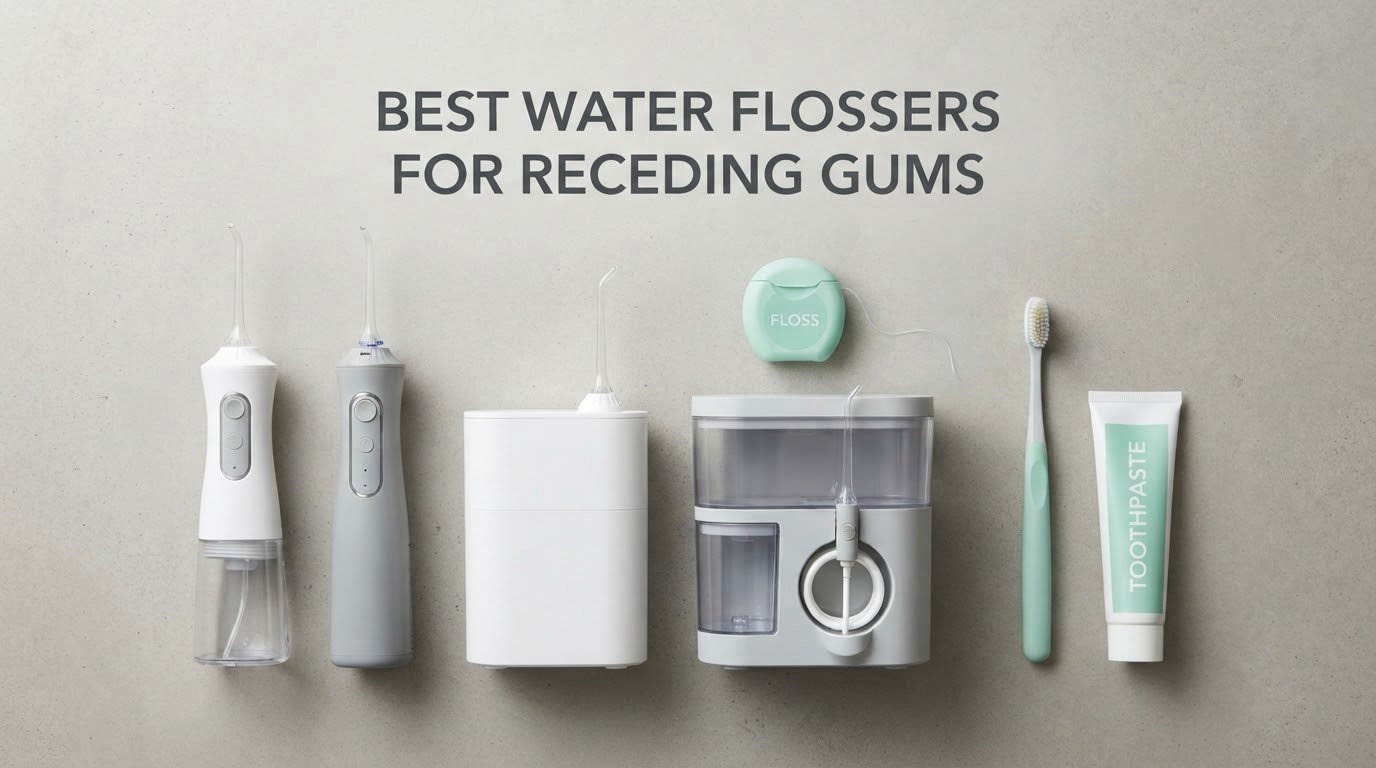
Yes, you can use a water flosser with receding gums, as long as you start on the lowest pressure setting, angle the tip 90 degrees into the gumline, and use lukewarm water. The best water flossers for receding gums are the ones with fine low-end pressure control, a tip designed to sit in the pocket rather than blast the exposed root, and enough reservoir capacity to finish a full mouth clean without stopping halfway.
That matters more than it sounds. When gums recede, the root surface is no longer covered by tissue, and exposed dentin is softer and more sensitive than enamel. It stains faster, decays faster, and reacts harder to temperature and to friction. A water flosser is genuinely useful here because it flushes plaque out of the pocket with water instead of dragging fibre across the root, which is the single most common way people make recession worse at home.
We spent six weeks comparing eight oral irrigators, weighing each one against the same question: how gentle is this thing on a gumline that no longer has gum over it? The spec sheets rarely answer that, so we read the review data for signs of exposed-root complaints, runaway jets, and reservoirs that run out mid-session. What follows is the short answer up top, then a full review of each model, then the pressure protocol we would give a friend.
One thing to clear up before we start. A water flosser is an addition to your routine, not a replacement for it. String floss and interdental brushes still do things a water jet does not, and a periodontist will tell you the same. We are covering the devices here because for many people with recession it is the tool they will actually use every night, and a tool you skip does nothing.
Table of Contents
Top 3 Picks for Best Water Flossers for Receding Gums (October 2026)

Waterpik Aquarius
- 10 pressure settings
- Massage mode for gum stimulation
- 22 oz reservoir
- ADA Seal of Acceptance

Waterpik Cordless Advanced
- Three pressure settings
- Waterproof cordless body
- 7 oz tank
- Travel bag included

The Aquarius wins because it gives you the widest low-end control of any countertop unit, plus a dedicated massage mode that pulses rather than blasts. The Cordless Advanced is the one to buy if the hose on your counter is a non-starter. The COSLUS C20 has the biggest tank of the cordless group, which matters when you do not want to stop a session halfway through.
8 Water Flossers for Receding Gums in 2026
| Product | Specifications | Action |
|---|---|---|
| Waterpik Aquarius |
|
Check Latest Price |
| Waterpik Cordless Advanced |
|
Check Latest Price |
| COSLUS C20 |
|
Check Latest Price |
 Nicwell F5025 Nicwell F5025 |
|
Check Latest Price |
 Bitvae C5 Bitvae C5 |
|
Check Latest Price |
 AquaSonic Aqua Flosser AquaSonic Aqua Flosser |
|
Check Latest Price |
 TUREWELL FC162 TUREWELL FC162 |
|
Check Latest Price |
 Philips Sonicare Power Flosser 3000 Philips Sonicare Power Flosser 3000 |
|
Check Latest Price |
1. Waterpik Aquarius: The Best Overall Pick for Exposed Roots
Waterpik Aquarius Countertop Water Flosser with 10 Settings, 7 Tips, White
10 pressure settings plus massage mode
22 oz removable reservoir
7 tips
3-year warranty
Pros
- Widest low-end pressure control in the group
- Nine numbered settings start genuinely soft
- Dedicated massage mode for gum stimulation
- 22 oz tank covers 90+ seconds per fill
- ADA Seal of Acceptance
Cons
- Countertop body and hose take up space
- North America 120VAC power only
- Not usable while traveling
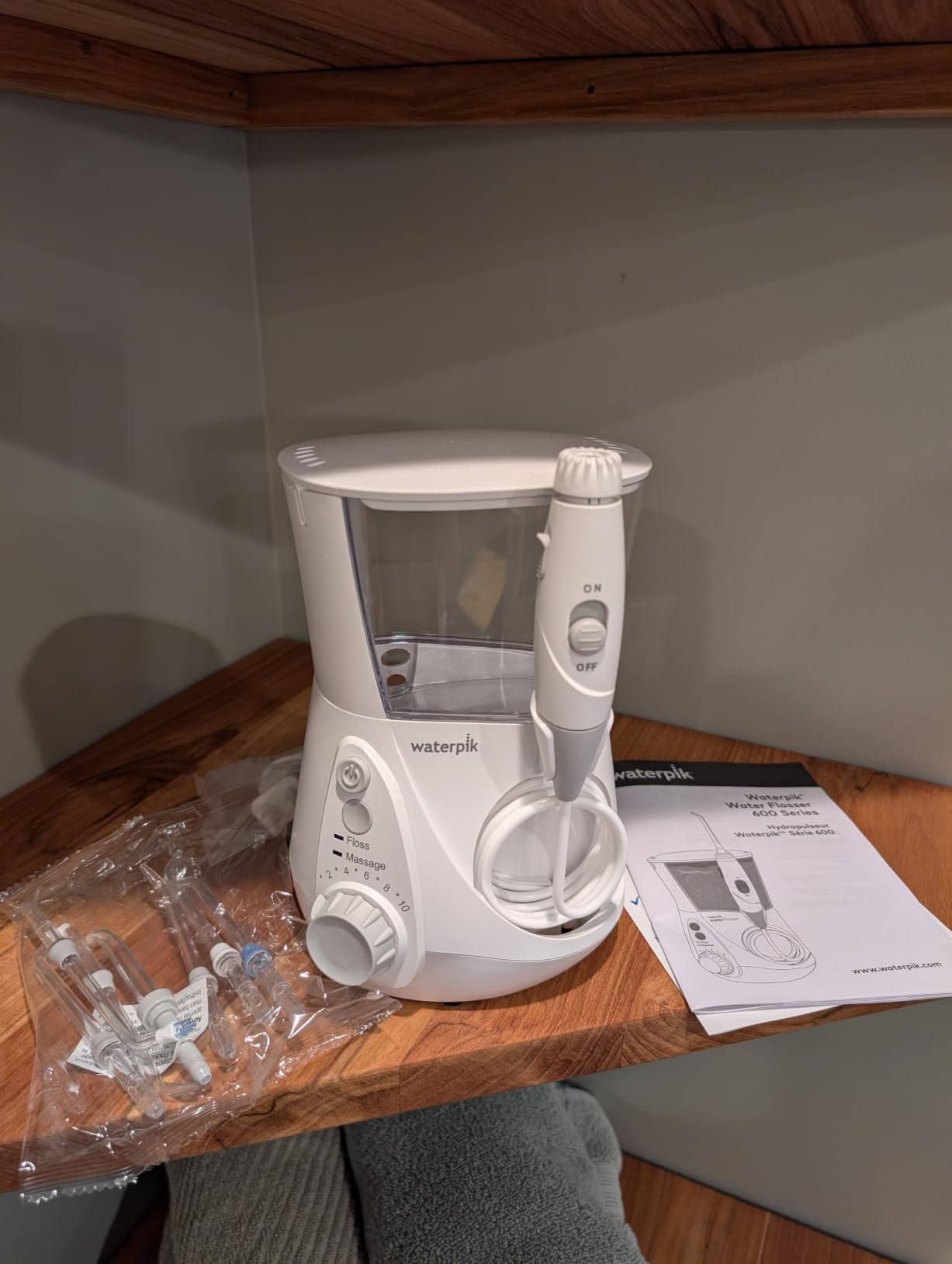
This is the unit I keep coming back to for this particular problem. Ten numbered pressure settings means the difference between setting two and setting three is something you can actually feel, and for exposed root surfaces that granularity is the whole game. You can find a level that flushes the pocket and then stop climbing.
The massage mode is the under-rated part. Instead of a continuous blast it pulses, and owners with inflamed or receded tissue consistently single that mode out as the one they use on tender areas. Several reviewers describe using it along the receded line as their default rather than treating it as a novelty.
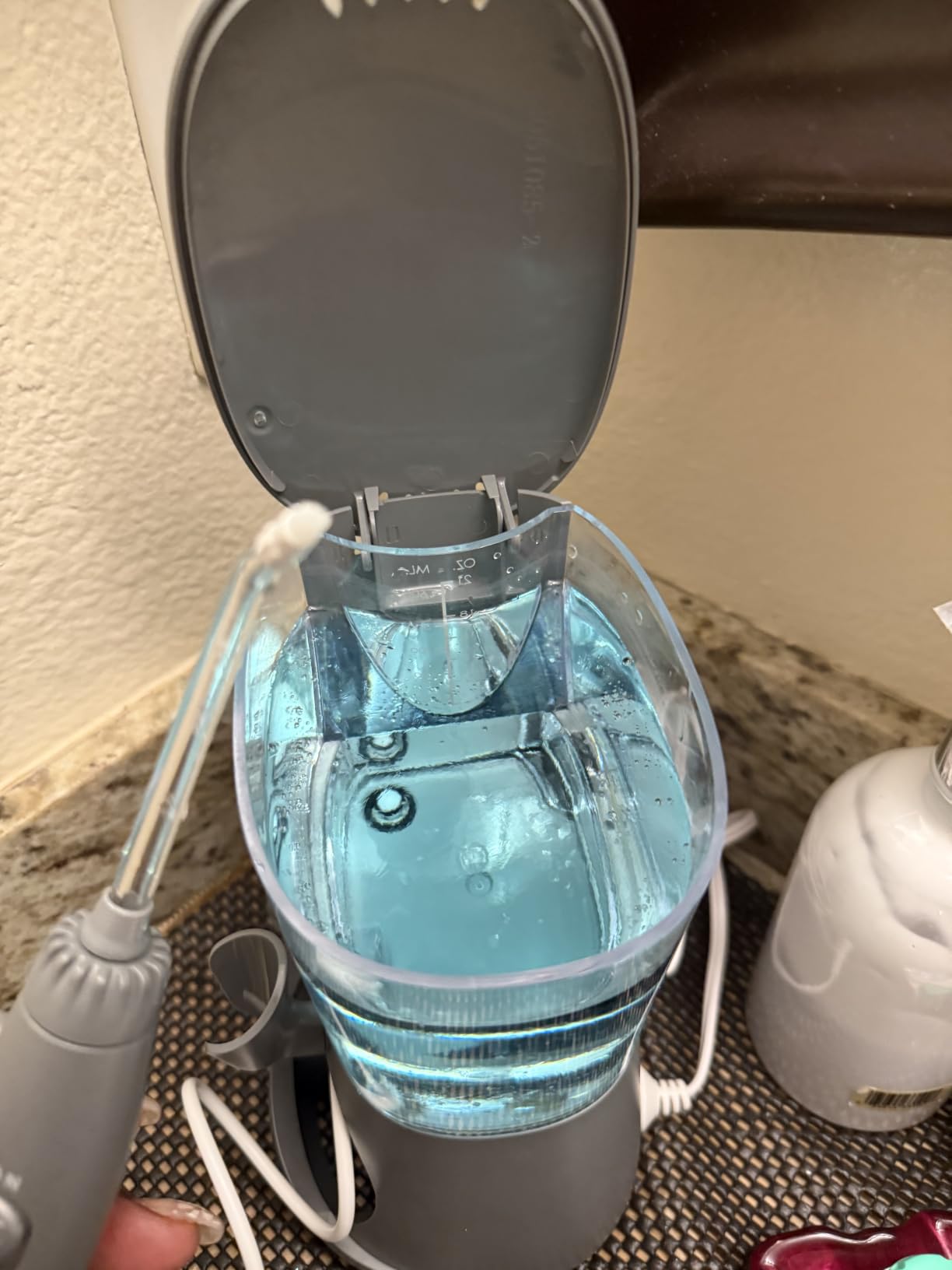
The 22 oz removable reservoir is the practical hero here. You fill it once with lukewarm water and have more than 90 seconds of flow, which is enough for a full mouth plus a second pass over the problem areas without standing at the tap. The reservoir lifts out and goes in the top rack, which matters more than it sounds once you are the person cleaning the tank.
It is also the only unit in this group where the weight of evidence behind it is overwhelming: a 4.6 average across more than 157,000 reviews, with 78 percent of those at five stars. That is the kind of sample size where product-specific problems have already surfaced, so you are not gambling on an unknown failure mode. The PrecisionPulse technology and the ADA Seal of Acceptance are both on the box, and the 360-degree tip rotation makes it easy to trace the gumline without contorting your wrist.
Who this suits
This suits anyone whose recession is diagnosed or suspected and who wants the most control available without fussing. If you can plug something in beside the sink and tolerate a hose, the ten-step range means you will never feel forced up to a pressure your tissue cannot take.
It also suits households. Seven tips cover multiple people, and the colour variants mean each person can have their own. For an adult child with early gumline changes who is not ready to commit to a countertop unit, the price barrier here is the main thing, not the features.
Who should skip it
Skip it if countertop hardware is a problem. A mains unit with a 1.46 pound body and a hose is not going to a hotel room, a small apartment where counter space is scarce, or a bathroom shared with someone who is already annoyed by the noise.
Also skip it if you plan to use it in the shower. This one is meant to stay dry. If you are traveling or renting, the cordless group below makes more sense even with fewer pressure steps.
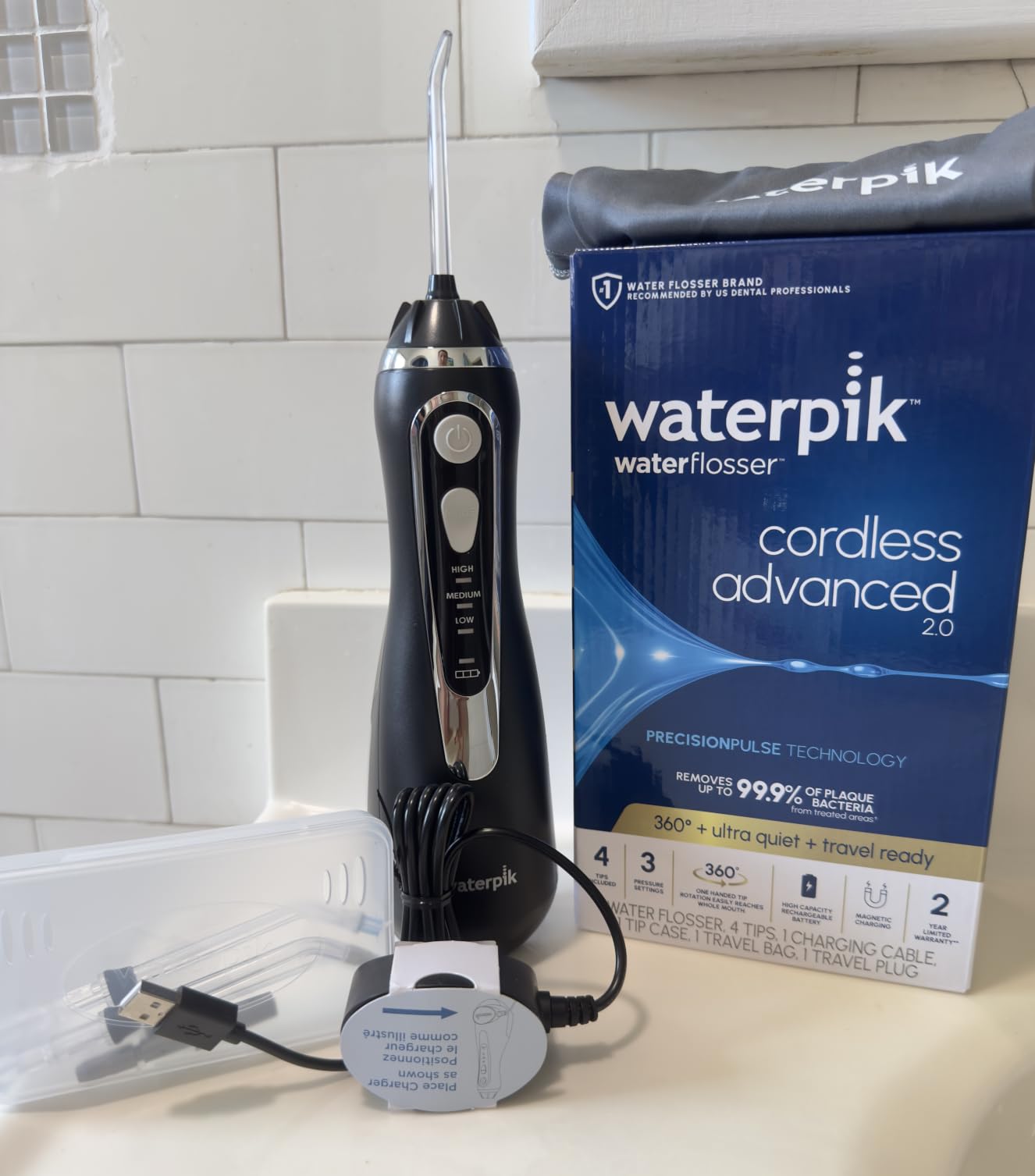
2. Waterpik Cordless Advanced: Best Cordless Pick for Receding Gums
Waterpik Cordless Advanced Portable Water Flosser, Rechargeable, White
3 pressure settings
7 oz removable tank
Waterproof cordless body
4 tips plus case
Pros
- Low setting is comfortable on sensitive tissue
- Waterproof for shower use and travel
- Up to 4 weeks of use per charge
- Magnetic charger and LED indicator
- Travel bag and tip case included
Cons
- 7 oz tank gives roughly 45 seconds per fill
- Tip and reservoir plastics crack after drops
- Only three pressure settings
- Battery runtime fades after a year or two
This is the model dental hygienists in the forum threads keep pointing periodontal patients toward when they need something portable, and the reviews back that up. Owners with gum issues and recent dental work report less bleeding and visibly healthier tissue within a few weeks, and the low setting is specifically described as comfortable on sensitive or receded gums.
Three pressure settings is not much, but for a receded gumline you are realistically living on the lowest one and occasionally nudging to the middle. The control is coarse, not dangerous. What you give up in range, you get back in convenience: this is waterproof, so you can run it in the shower, which removes the awkward walk to the sink with a dripping wand.
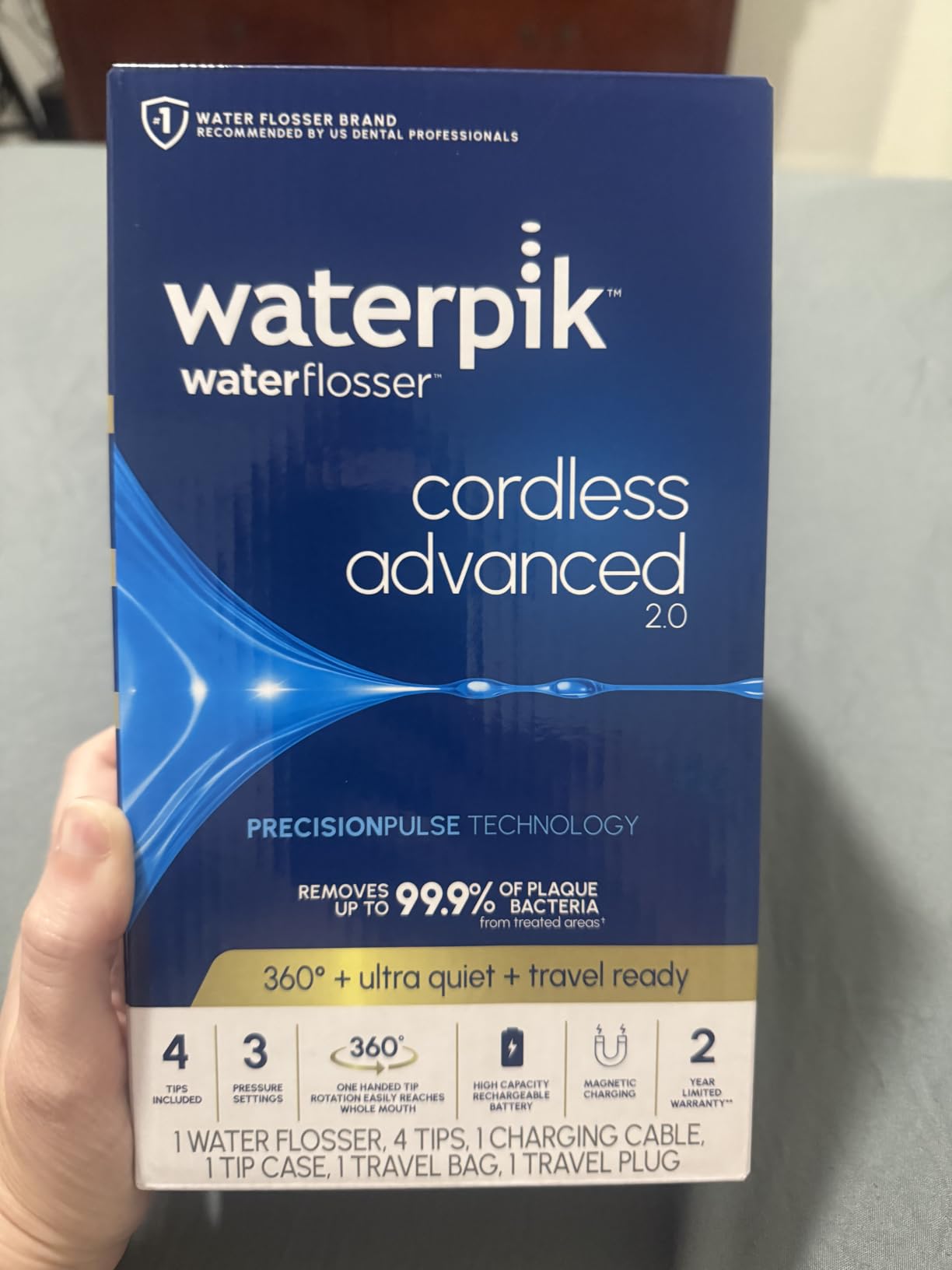
The trade-off is the tank. Seven ounces works out to about 45 seconds of floss time, so a careful full-mouth clean means two or three refills. Forum users name this as a habit-breaker, and it is a fair criticism: a device you have to keep topping up is a device you skip. On the other hand, the refill loop is genuinely painless here because the tank lifts out.
Roughly 9 percent of reviews are one-star, and the pattern is durability rather than function. Tips and the reservoir door plastics crack or detach after drops, and battery runtime declines after a year or two of daily use. The unit itself is 12.8 ounces and 11.6 inches long, so it is slim and comfortable to hold at the gumline. The 2-year warranty is shorter than the Aquarius but longer than most in the cordless group.
Who this suits
This suits anyone who travels, rents, or simply will not have a machine bolted to their bathroom counter. It is also the easiest unit here to use in the shower, which is where a lot of people with sensitive gums actually prefer to do it, because the warm water is a comfort rather than an extra step.
It suits smaller hands too. At 12.8 ounces this is one of the lighter units, and the four included tips plus the storage case mean you are not losing pieces of the kit on a trip.
Who should skip it
Skip it if you want fine pressure control, because three steps is not a dial. If your recession is severe and your tissue reacts to almost any pressure, you want the range, not the portability.
Skip it too if you get clumsy with the wand. Durability complaints concentrate around drops and the tip popping loose, and a device that ends up on a tiled floor has a shortened life. If you already know you are the type to knock things over, the countertop option is the safer buy.
3. COSLUS C20: Best Cordless Pick With a Big Tank
COSLUS ADA Accepted C20 Water Dental Flosser Pick, Professional Set Black
300 ml tank
Three modes with Soft setting
ADA accepted
IPX7 waterproof
Pros
- Largest reservoir in the cordless group
- Quiet motor with no counter pump vibration
- Soft mode supports a gradual ramp
- IPX7 waterproof with 30-day battery
- Five interchangeable tips
Cons
- Lowest setting still feels strong for tender gums
- Handle is wide and awkward in smaller hands
- Proprietary charging port and a loose port cover
- A minority stopped working within 12 to 18 months
The 300 ml tank is the reason this one earns a place in a list built around a specific dental condition. A full-mouth clean on a receded gumline takes longer than a quick one, because you are tracing a longer exposed edge and pausing on tender spots. Being able to fill once and finish is worth more here than a spec-sheet extra pressure step.
The dual-thread pulse technology runs 1400 to 1800 pulses per minute, and the manufacturer advises starting new users in Soft mode. That guidance matters for this article specifically, because a surprising number of reviewers report that even the lowest setting feels more powerful than they anticipated. Read as a caution rather than a dealbreaker, but a real one.
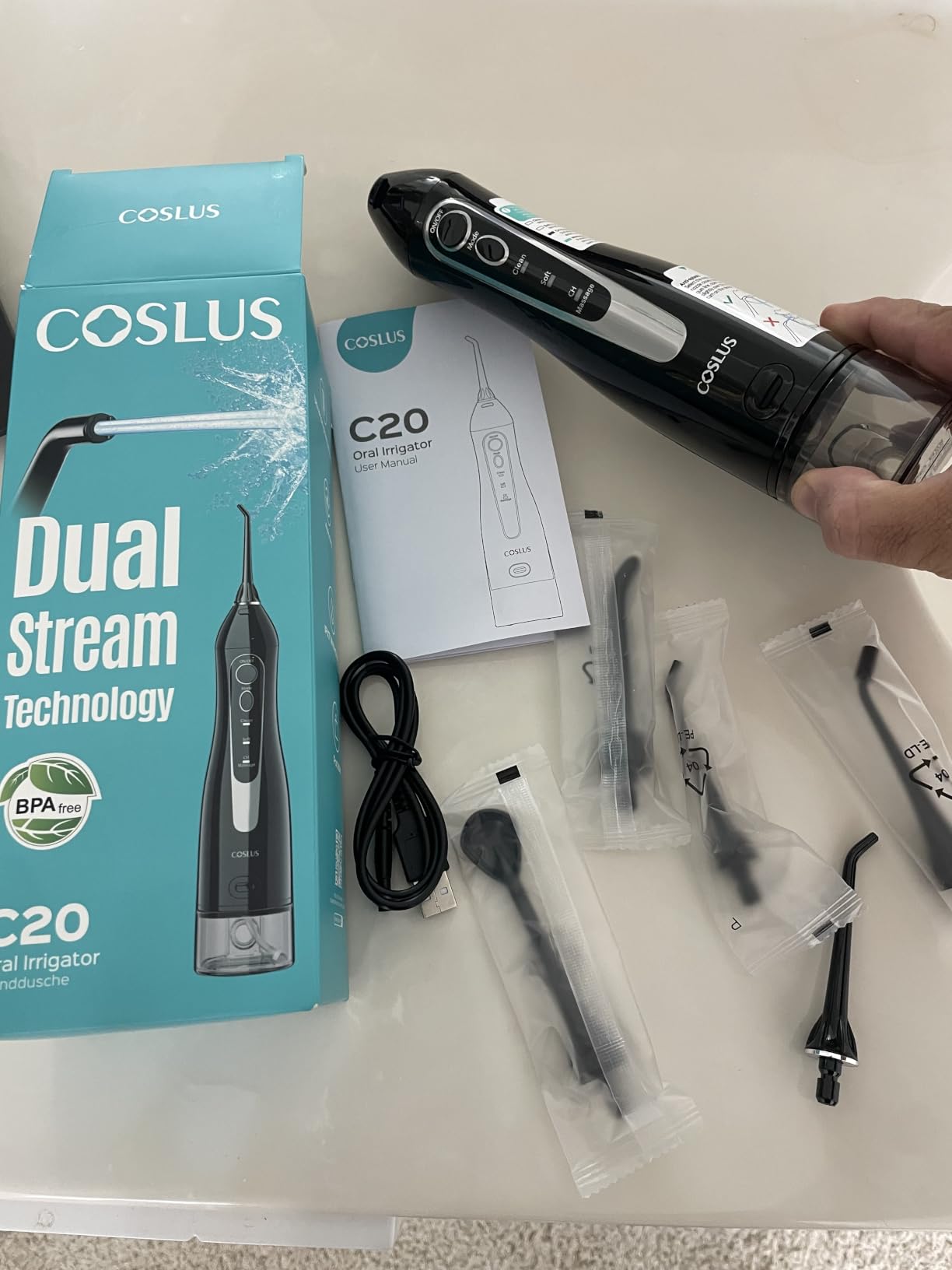
It carries ADA Scientific Council Accepted status with a manufacturer claim of healthier gums in 15 days, and one dental hygienist reviewer describes recommending it to patients and buying one for each of their adult children. It is quiet, which matters in a small apartment or a shared bathroom, and the motor is rated for three years of typical use.
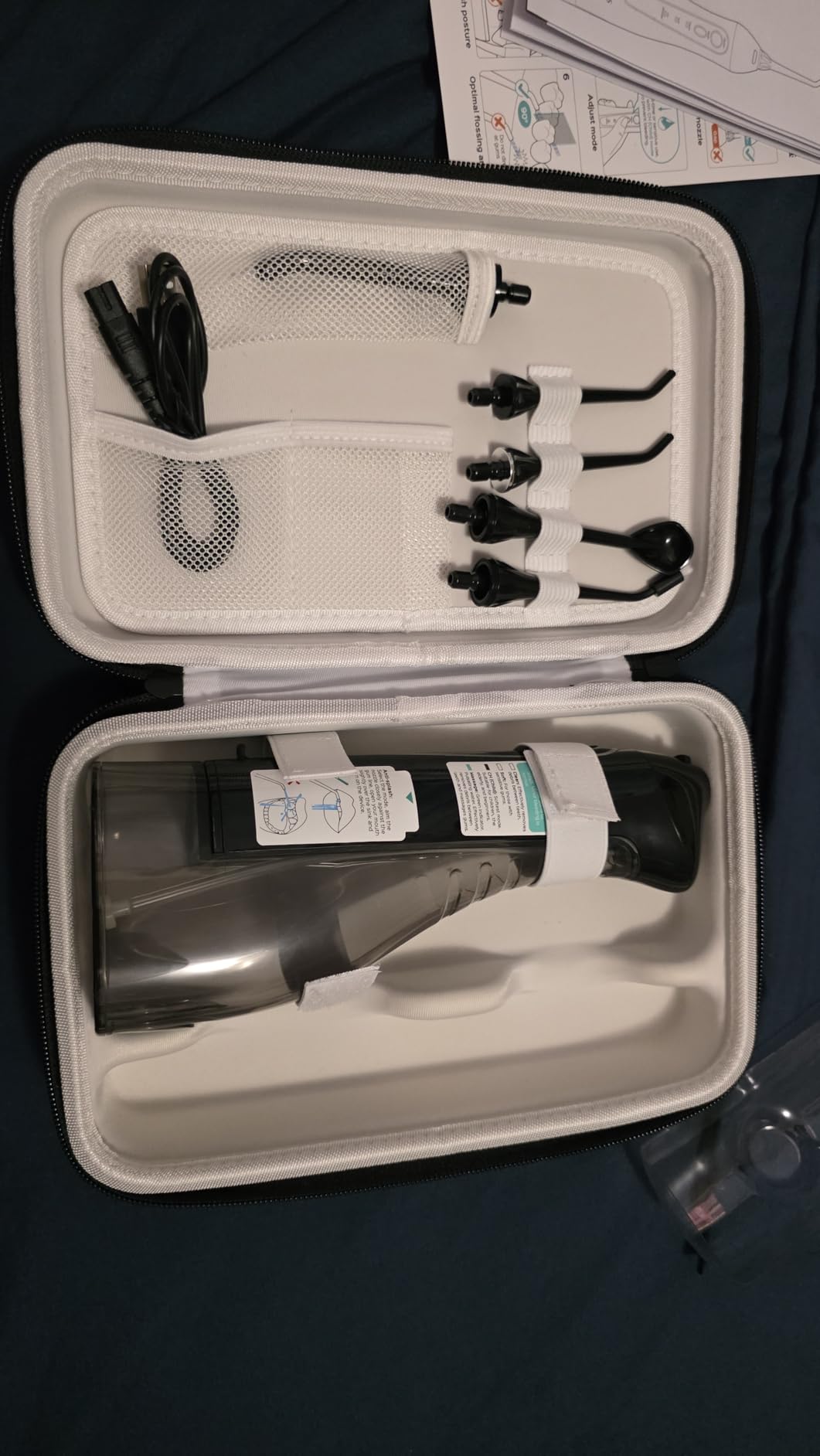
The 4.4 average sits across more than 53,000 reviews, and reviewers repeatedly flag the same two gripes: the handle is wide and can slip out of smaller hands, and newer models use a proprietary charging connector with a small port cover that is easy to lose. A minority of units stopped working between 12 and 18 months, so the failure curve is the thing to watch if you buy it.
Who this suits
This suits anyone who wants cordless freedom without the refill break. The combination of a large tank, a quiet motor, and a real Soft mode covers the three complaints that come up most often in the recessed-gumline community: interruptions, noise, and pressure that is too strong on day one.
It also suits people who are put off by the Waterpik name or price. This delivers an ADA-accepted cordless experience at a very different spend level, and the seven colour options make it easy to give one as a gift without it looking like a medical device.
Who should skip it
Skip it if your tissue is genuinely tender right now. Reviews are unusually direct that the lowest setting can still be too much, and someone in the first weeks of treatment should prioritise the gentlest possible stream over tank capacity.
Skip it if you have small hands or limited grip strength. The handle is 15.2 ounces and noticeably wide, and there are repeat reports of it slipping mid-session, which is a bad combination with water and exposed roots.
4. Nicwell F5025: Best Pressure Control in a Cordless Body
Nicwell Water Dental Flosser for Teeth – 4 Modes & 11 Pressure Settings Cordless Portable Oral Irrigator, IPX7 Waterproof Rechargeable with 5 Tips for Braces Cleaning, Travel, Deep Teeth Cleaning
4 modes and 11 pressure levels
Smart memory
USB-C charging
IPX7 waterproof
Pros
- Widest low-end control in the cordless group
- Level 1 is specified for sensitive gums
- Smart memory recalls your last setting
- Whisper-quiet motor works in small bathrooms
- USB-C charging with no proprietary adapter
Cons
- Small reservoir runs out partway through
- Some failed after one to three years
- Jet sprays forcefully if switched on early
- Stream is aggressive out of the box
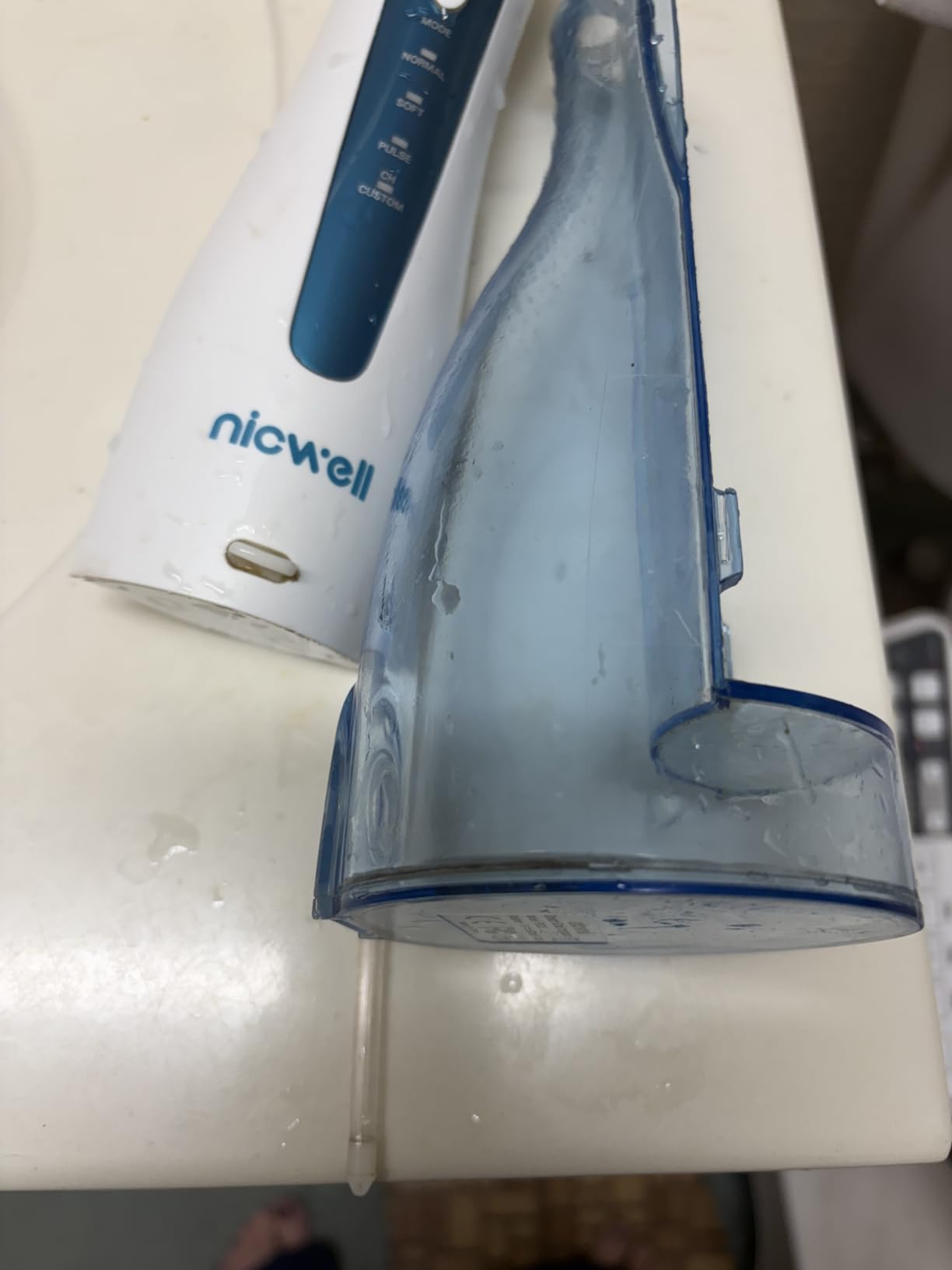
Eleven pressure levels across four modes is the most granular control available in a cordless body right now, and it is why this model shows up on lists about receding gums specifically. Level 1 is named in the manufacturer’s own guidance for sensitive gums, and the Smart Memory function recalls your last setting so you are not re-dialling every morning.
That memory function is more useful than it looks. With recession, your tolerance changes week to week as inflammation settles, and a device that silently reverts to a harder setting is a bad partner. This one remembers that you are living at level 1, which means you only climb when you decide to.
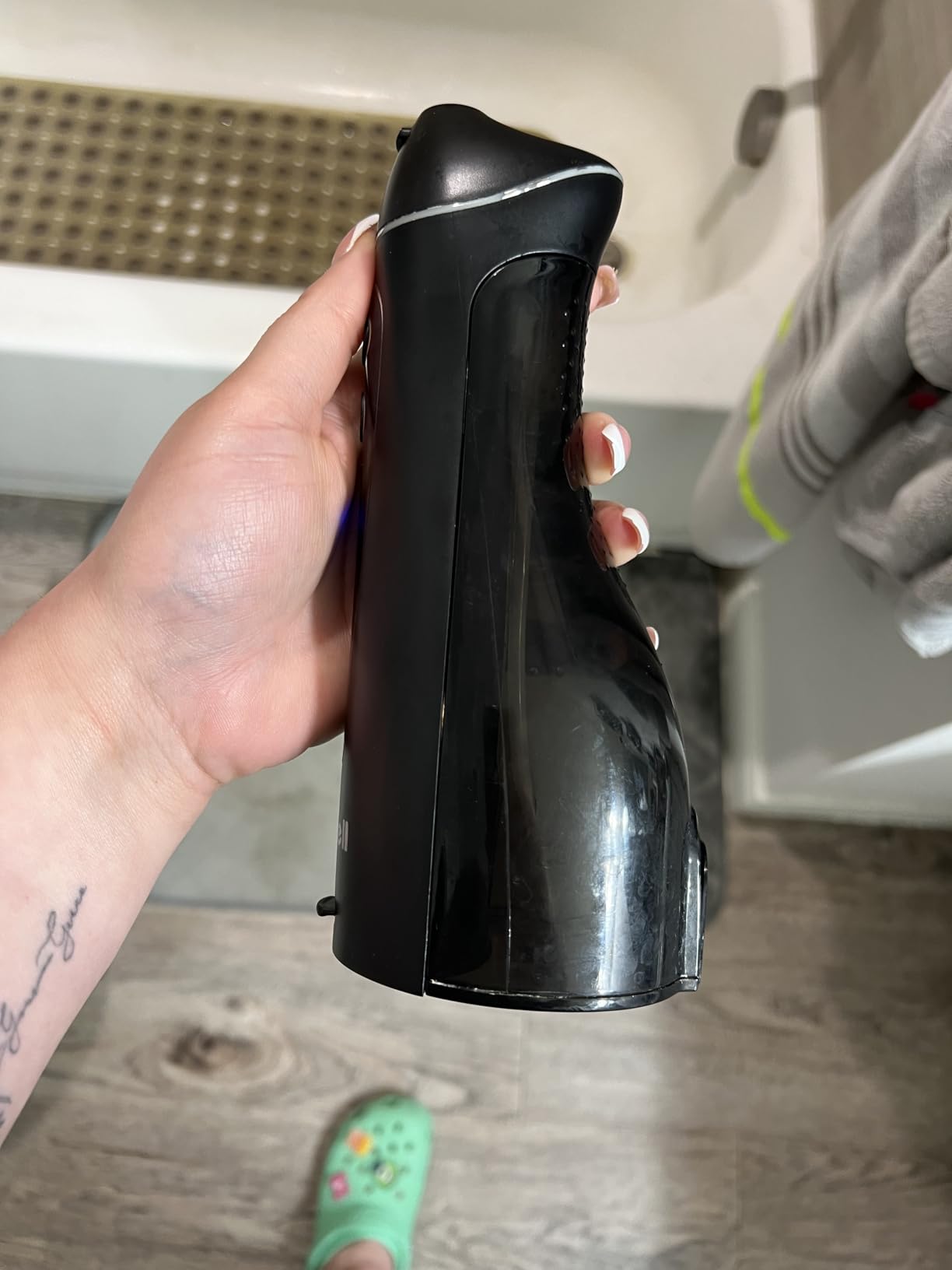
The five included tips cover braces, retainers, and bridges, and all of them rotate 360 degrees for back teeth. Charging is plain USB-C with no dock and no adapter, which removes the single most annoying failure mode in this category, where a lost proprietary cable means the device is finished. Roughly 67 percent of reviews are five stars.
The honest caveat is the jet itself. Several reviewers warn that switching the unit on before the nozzle is in your mouth produces a forceful spray, and that the stream is aggressive straight out of the box. There is no gentle-start ramp on this model. Learn the power button position before you put it near a receded gumline, and stay on level 1 for the first fortnight.
Who this suits
This suits anyone whose recession is mild to moderate and who wants to dial in precisely rather than settle for the lowest of three presets. The eleven levels let you stay in a comfortable band indefinitely instead of oscillating between too soft and too strong.
It also suits anyone with mixed dental work. The orthodontic tip and the tongue scraper come in the box, and if you have a crown, a bridge, or a retainer alongside the recession, the tip variety means one device covers the whole mouth.
Who should skip it
Skip it if you want a long session without stopping. The tank is small and runs out partway through a full clean, and refilling a small cordless tank mid-routine is exactly the habit-breaking interruption that makes people give up.
Skip it if you are not confident about controlling the spray. There is no ramp-up here, so a stray power-button press is a real event. If you want the device to ease itself into pressure rather than relying on your timing, choose one with a gentle-start mode.
5. Bitvae C5: Best Budget Pick for Receding Gums
Bitvae Water Dental Flosser for Teeth, Cordless Water Teeth Cleaner Picks
2-second gentle start
3 modes and 5 levels
261 ml tank
6-tip set
Pros
- Gentle start ramp is built for sensitive gums
- Five intensity levels give real control
- 261 ml tank covers a 60-second clean
- Quiet and IPX7 waterproof for the shower
- Press-and-hold stops the jet when you release
Cons
- Jet splatters if used outside the shower
- A tongue-cleaner tip broke within a week
- No travel bag included
- One owner reported a unit dying at two years
The 2-second gentle start is the feature that makes this unit interesting for this particular list. The motor ramps up from a soft flow rather than firing at full pressure the instant you press the button, which is the exact failure mode that makes nervous users quit water flossing in week one. It removes the need for careful hand positioning while the jet is still stabilising.
Five intensity levels across three modes give enough range to stay low permanently and still have somewhere to go later. The 261 ml wide-mouth reservoir holds roughly a 60-second full-mouth clean, so you are not refilling, and the wide opening is genuinely easier to scrub than a narrow-necked tank, which reduces the biofilm problem we will come back to later.
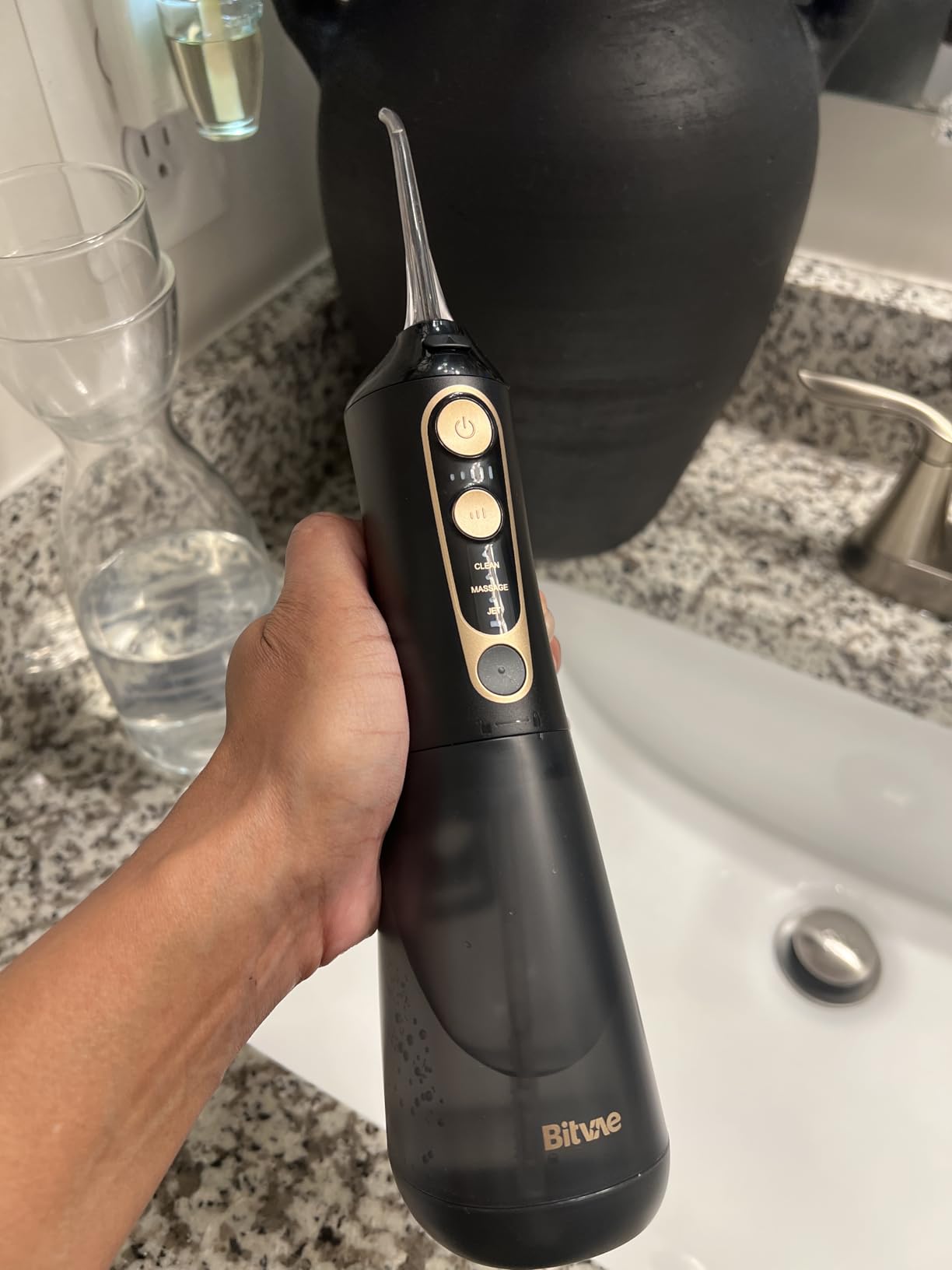
The 6-tip set includes an orthodontic tip, a tongue cleaner, and colour-coded nozzles for family hygiene. It is IPX7 waterproof with a 40-day battery from a four-hour charge, and reviewers with braces and bridges report effective cleaning around them. A 4.4 average across more than 23,000 reviews puts it level with several more expensive units.
Max pressure is intense. Several users note it splatters if you use it outside the shower or with your mouth open, and one owner reported a tongue-cleaner tip breaking within a week of normal use. Treat the top end of the range as off-limits for exposed roots and this becomes a very capable low-cost tool. The wide-mouth tank also dries faster than narrow designs, which is a quiet daily win.
Who this suits
This suits anyone starting out who is nervous about the first few sessions, because the gentle start does part of the work for you. It also suits anyone who wants a full clean from a single fill on a cordless body, which is rarer than the marketing suggests.
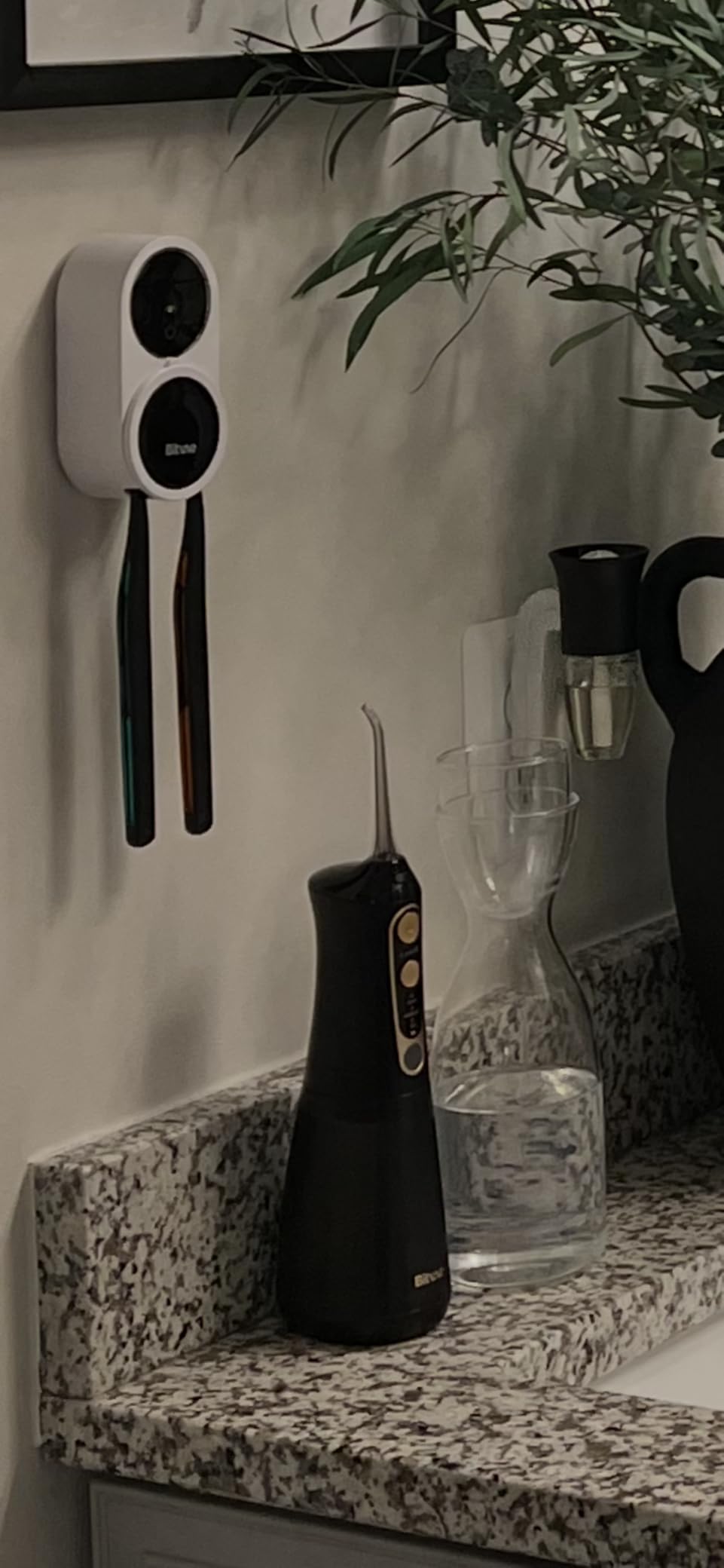
It suits shared bathrooms, since the IPX7 rating means shower use is fine and the colour-coded nozzles stop two people swapping tips by accident. The 13.55 ounce weight sits in the comfortable middle of the cordless group.
Who should skip it
Skip it if you travel regularly. There is no travel bag, spare-nozzle packaging is minimal, and losing the tips on a trip is a real cost. If portability is the goal, a bundled case is worth paying for.
Skip it if you need the gentlest stream physically available. Five levels starting at a gentle ramp still starts higher than a dedicated three-mode clinical unit, so if your tissue is in an active flare, this is not the first device we would reach for.
6. AquaSonic Aqua Flosser: ADA Seal Earned Through a Clinical Trial
AquaSonic Aqua Flosser Water Flosser, ADA Accepted, White
ADA Seal of Acceptance
3 modes including gentle
5 tips with periodontal tip
3 oz body
Pros
- ADA seal backed by a formal clinical study
- Dedicated periodontal tip for the gumline
- Gentlest setting suits sensitive tissue
- Lightest body here at roughly 3 ounces
- Quiet and cordless with a travel bag
Cons
- Small tank needs two or three refills per session
- Only 3 preset modes with no fine adjustment
- Standard tip can pop off the handle
- Power-up defaults to the same pulse setting
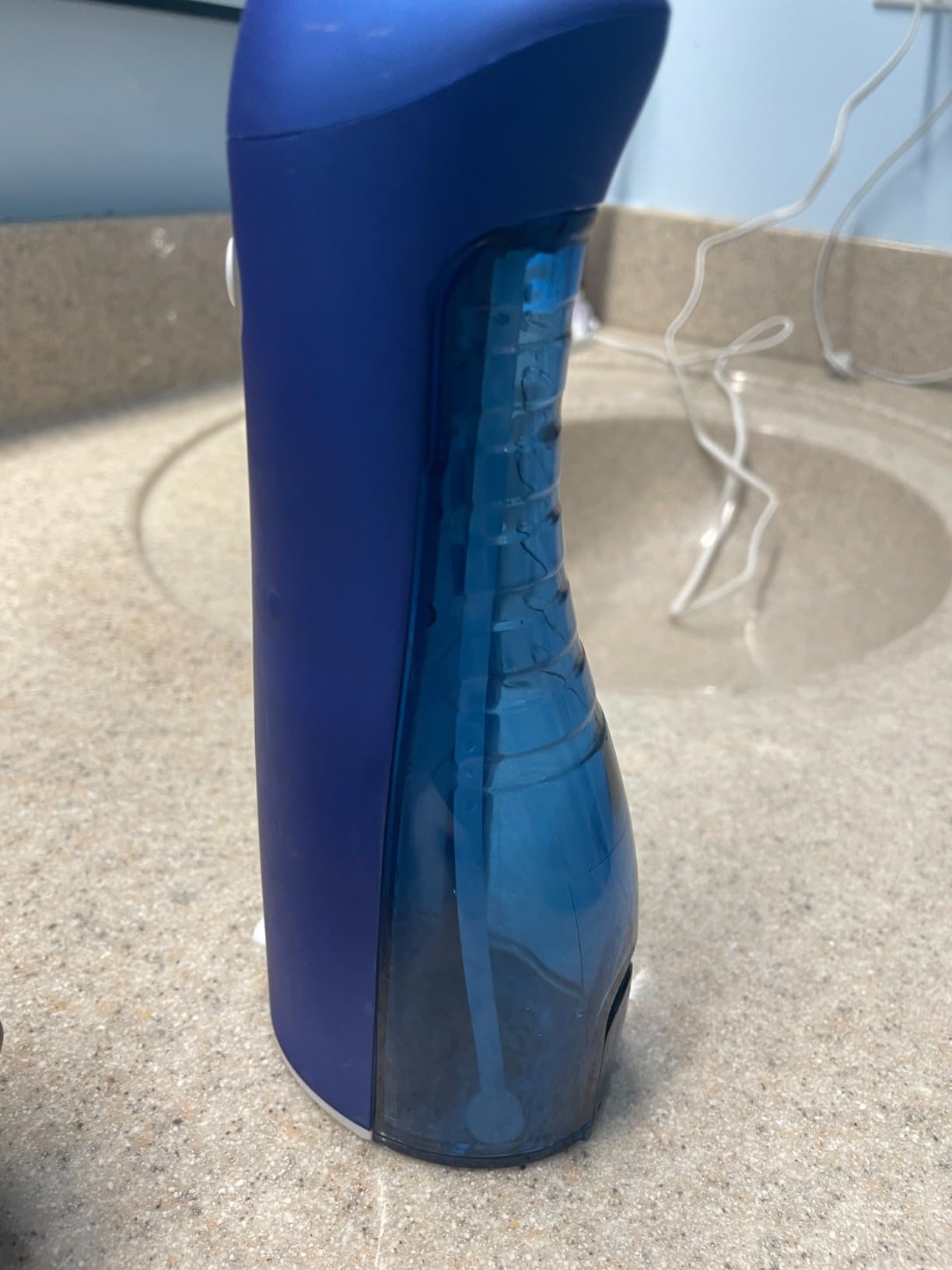
This is the unit with the most unusually specific credential in the group. The ADA Seal of Acceptance here was earned through its own formal 30-day randomized controlled clinical study with 30 supervised subjects, with a claimed 87.1 percent reduction in plaque and 93.8 percent improvement in gum health. Most seals in this category are worth something, but very few come with the study attached, and for a person who has been told to take gum disease seriously that is meaningful.
It ships with five interchangeable 360-degree tips, including a dedicated periodontal tip made for the gumline, which is the tip you want tracing a receded edge rather than blasting it. Three modes run from a gentle setting through to a stronger clean, and owners with sensitive gums report using the gentlest one with no discomfort at all.
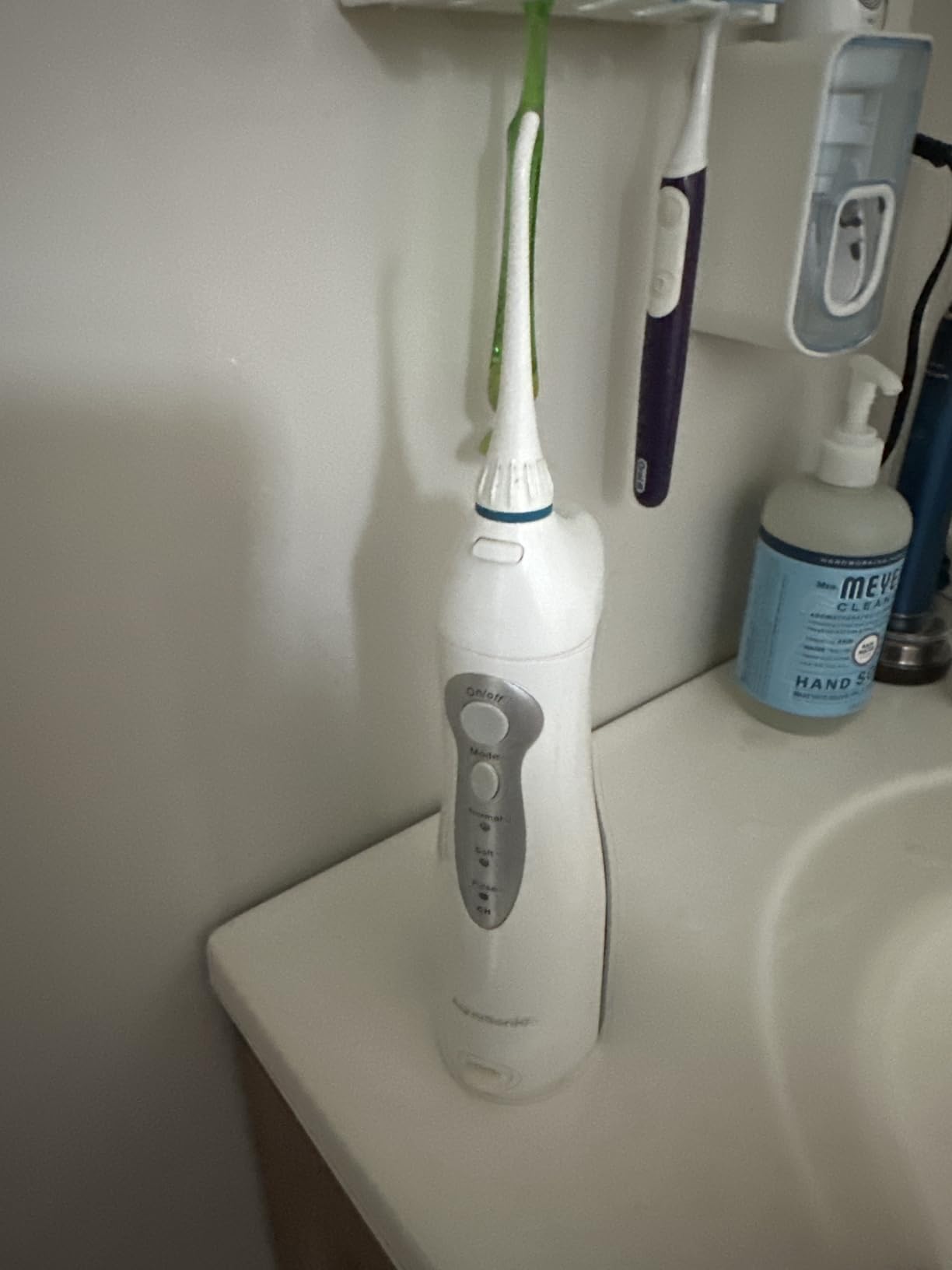
At roughly 3 ounces this is the lightest body in the group, which matters if you have limited grip strength or a hand that tires quickly when you are holding anything up to your mouth for a minute and a half. The body is waterproof and cordless, and a travel bag is included. This is also one of the quieter units, so it works in a shared bathroom.
The 4.2 average comes with the largest one-star share here at 8 percent, and the complaints are consistent: the small tank empties partway through a clean, there are only three preset flows with no fine adjustment, and the standard tip can pop off the handle if you press the button before seating it properly. It also defaults to the same pulse setting on power-up, so reaching for the gentle mode wastes water while you do it.
Who this suits
This suits anyone who is reassured by clinical evidence more than by marketing language. The seal, the study, and the periodontal tip make it the easiest recommendation to bring to a dental appointment, because you can describe exactly what certification the device carries.
It also suits people with reduced hand strength or joint pain. The weight is a fraction of the other cordless units here, and holding a light tool at your own gumline for a full session is meaningfully easier than holding a heavy one.
Who should skip it
Skip it if you dislike refilling. The small tank typically means two or three fills for a proper clean, and that is the number one habit-breaker reported across the whole category in the forum discussions. You can work around it, but you will work around it every single day.
Skip it if you need graduated pressure. Three presets with no variable adjustment is a coarser instrument than it appears, and anyone whose tolerance sits between two of the settings has nowhere to land. Nothing here is a reason to avoid it, but it is not the tool for fine tuning.
7. TUREWELL FC162: Best Smooth Pressure Ramp for Receding Gums
TUREWELL Water Dental Flosser for Teeth/Braces, Water Teeth Cleaner
10 settings across 30-125 PSI
600 ml reservoir
8 tips with periodontal tip
100V-240V
Pros
- Ten settings that ramp smoothly rather than jump
- Manufacturer directs settings 1-4 to sensitive teeth
- Largest reservoir in the group at 600 ml
- Quieter than most countertop units
- Owners report units lasting 2 to 4 years
Cons
- Handle switch also controls intensity
- Weaker top-end pressure than a Waterpik
- Minimal cleaning instructions
- Some tip and pump failures after 8 months
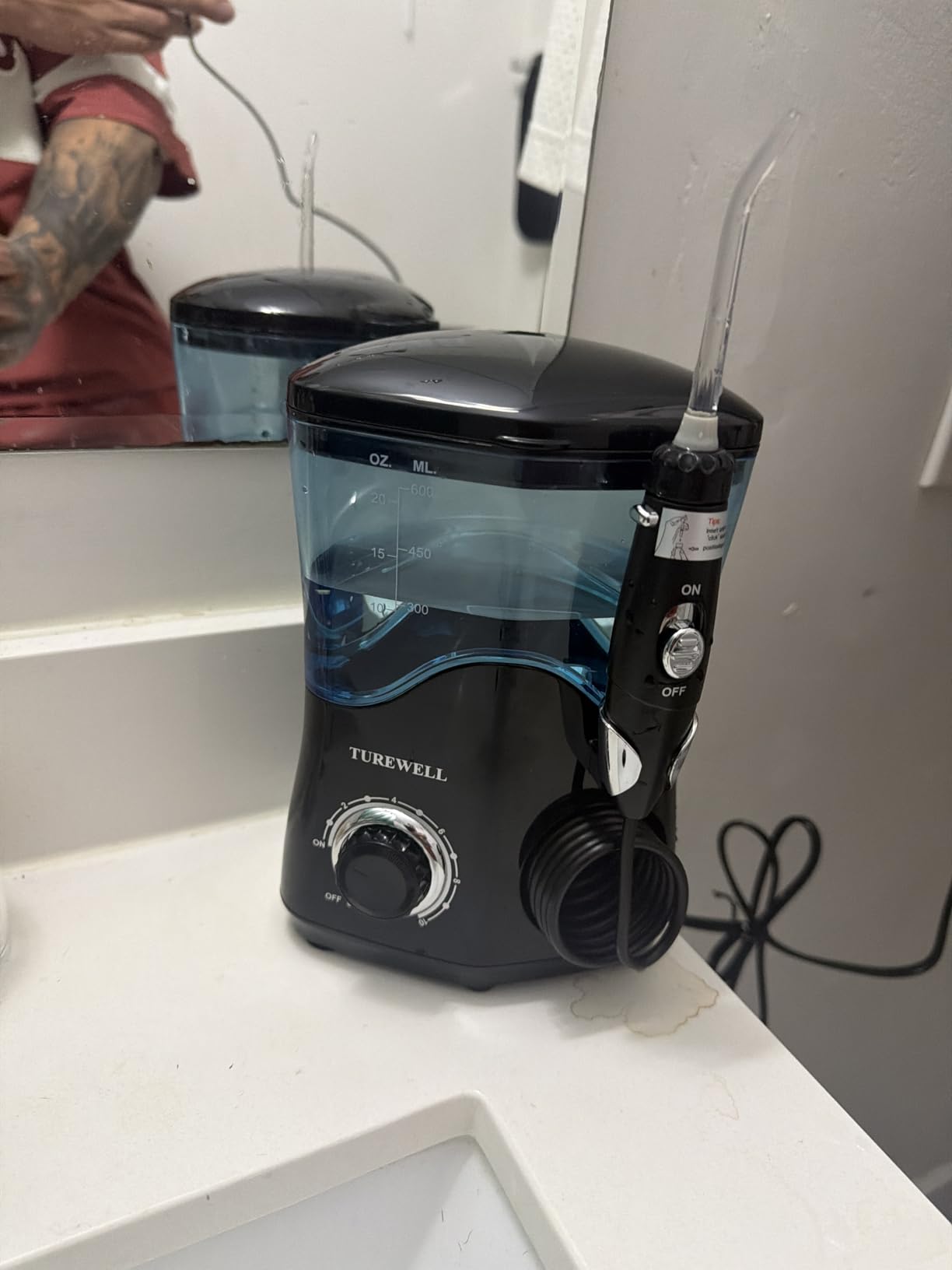
The 30 to 125 PSI range across ten settings is the smoothest graduated control in this group, and the manufacturer publishes the guidance explicitly: settings 1 to 4 for kids, sensitive teeth, and beginners, 5 to 6 for most people, 7 to 10 for experienced adults. For someone standing at the start of a periodontal routine, having a printed ramp removes all the guesswork.
That ramp also answers the question that worries people most in the forum threads, which is whether pressure causes or worsens recession. It is the number of steps, not the top of the range, that matters for exposed roots, and this dial gives you the most room at the bottom.
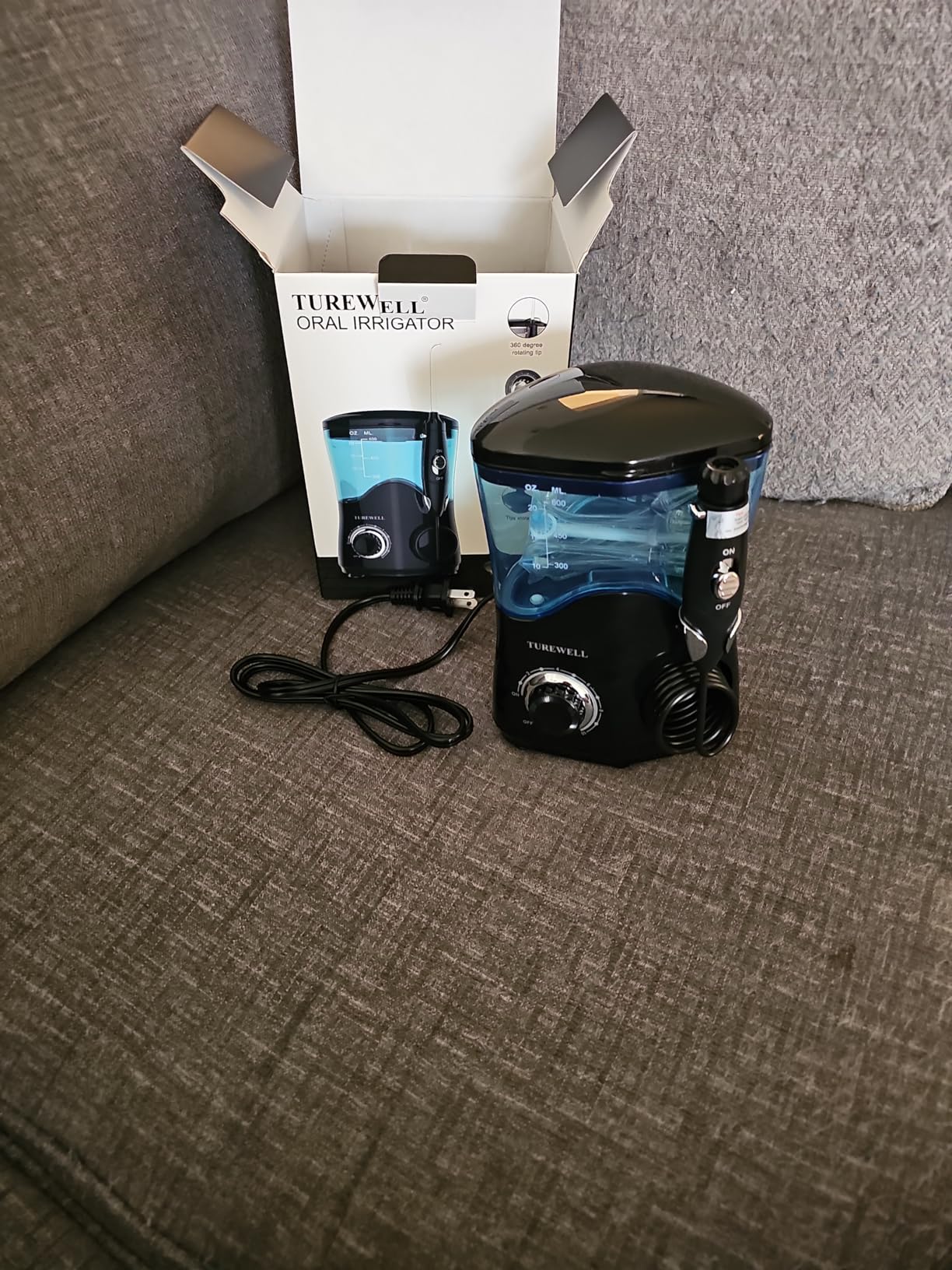
The 600 ml reservoir with a one-metre hose gives about 90 seconds of uninterrupted flow, the largest in the group, and a 100V to 240V voltage range means it works outside North America unlike most countertop units. The 8-tip set includes a periodontal tip, a toothbrush tip, and a tooth-stain tip, and suction cups on the base keep it steady on the counter.
Owners frequently compare it to a Waterpik on both performance and spend, and several report units lasting two to nearly four years, outlasting name-brand models they replaced. The drawbacks are real but specific: the on-off switch on the handle also controls intensity, so your preferred level cannot be locked in and must be reset each session, and the maximum pressure is weaker than a Waterpik’s. A small number report tips popping out and the pump grinding after eight or nine months.
Who this suits
This suits anyone who wants a gentle ceiling and does not care about raw top-end power. If your gums are inflamed, healing, or post-scaling, the bottom third of this dial is where you should be living, and there is more of it here than anywhere else we tested.
It also suits larger households or anyone who does a long clean. A 600 ml tank means one fill, no break, and enough flow for a slow trace of every quadrant plus a second pass. Quieter than most countertop pumps, it is a reasonable choice in a bathroom where noise is a factor.
Who should skip it
Skip it if you need serious pressure for deep periodontal pockets. Owners compare the maximum favourably to a Waterpik on value but not on force, and if your cleaning is being prescribed at a higher pressure than a gentle routine, this is the wrong end of the range to lean on.
Skip it if you dislike re-setting a dial every morning. The handle switch doubling as intensity control is an irritant, and people who value a device that just works will resent it within a week.
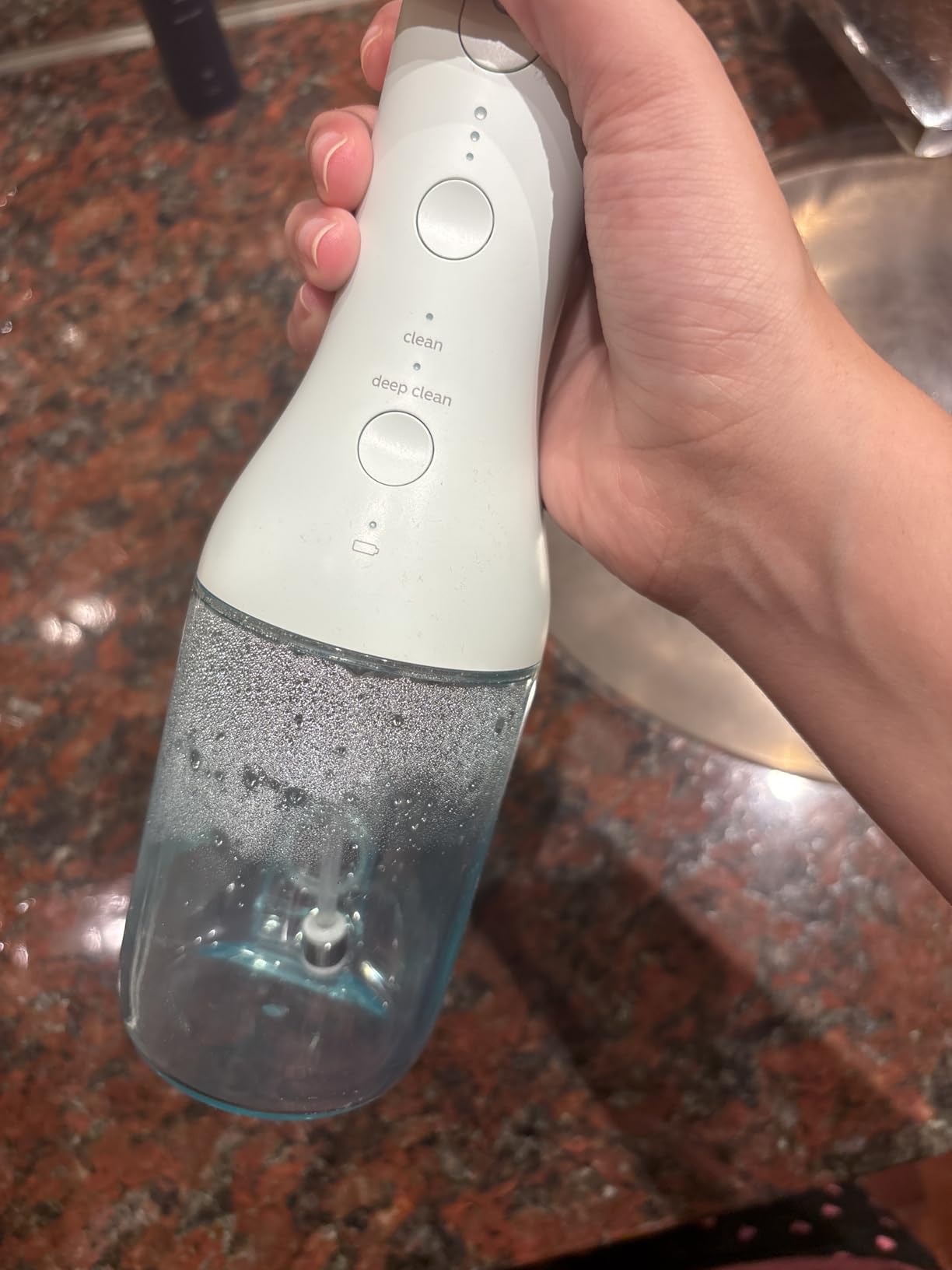
8. Philips Sonicare Power Flosser 3000: Best Non-Waterpik Pick for Broad Gentle Coverage
Philips Sonicare Cordless Power Flosser 3000, Water Flosser, 2 Nozzles
Quad Stream X-shaped tip
Clean and Deep Clean modes
250 ml tank
40 days per charge
Pros
- X-shaped tip covers a wide strip of gumline in one pass
- Deep Clean Pulse Wave mode for tender tissue
- Easy-clean tank with top and side fill ports
- Spare nozzle stores inside the reservoir
- Quieter than most cordless units
Cons
- Tank forces at least one refill per session
- Rear leak reported on some units
- Stream reads as weak and stutters
- Exterior crevices collect hard water and mold
The Quad Stream tip is an X-shaped nozzle that covers a wider strip of the gumline per pass than a single straight jet, and that changes how a receded gumline feels. You are tracing the exposed edge with fewer passes and less fiddly aiming, which matters when every extra second of hunting is a chance to hit a tender spot with the stream.
Two modes run across three pressure settings: Clean gives constant pressure, and Deep Clean uses Pulse Wave. For recession, Deep Clean is the one most people will want on sensitive days, because the pulsing pattern is gentler on tissue than a flat continuous stream at the same nominal pressure. The QuadPacer pauses the water every 15 seconds to guide you through a 60-second routine.
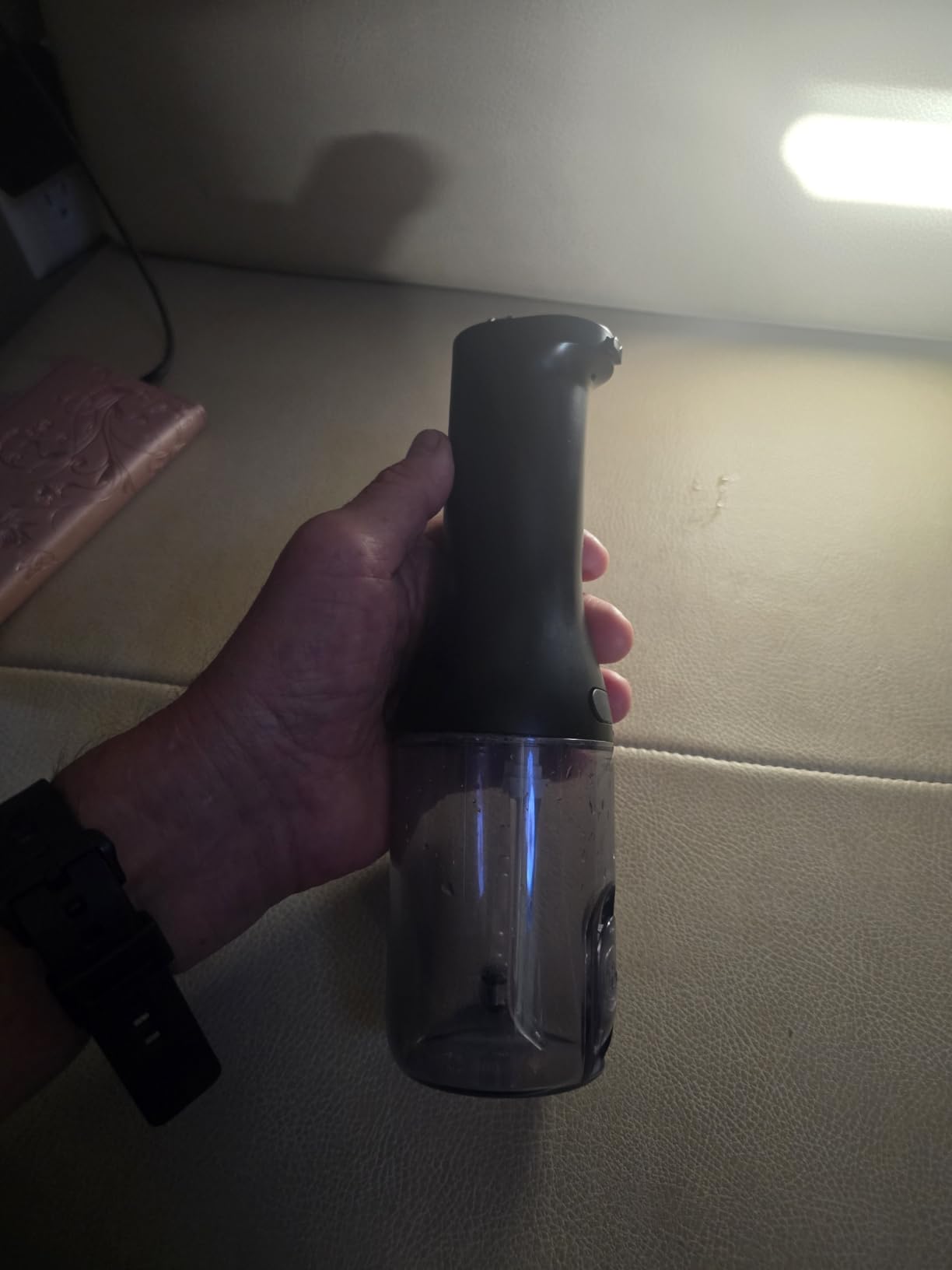
Ownership details are unusually thoughtful. The 250 ml tank is removable and fills from the top or through a side port, it cleans without the pink-ring staining some competitors develop, and the spare nozzle stores inside the reservoir so parts do not go missing in a bag. One charge lasts about 40 days, and both tips rotate 360 degrees.
This is also the most polarised unit here, with the smallest review base at roughly 4,800 and a 10 percent one-star share, the highest in the group. The complaints are consistent: water can leak from a hole at the back of the unit and reduce effective pressure, the stream reads as weak and can vibrate and stutter mid-use, and the exterior has many crevices that collect hard water and mold. Replacement nozzles are also hard to source because the part number is not well documented.
Who this suits
This suits anyone who dislikes aiming. If you have limited dexterity, a dentist who recommended an irrigator and suggested a broad, low-effort pass, or you simply find tracing a gumline fiddly, the X-shaped tip does more work per pass than anything else in this list.
It also suits anyone who wants a non-Waterpik option with a real manufacturer behind the warranty and nozzle supply. A Philips unit is the easiest of the eight here to get serviced or replaced long-term, which matters more than most buyers consider.
Who should skip it
Skip it if you need strong pressure to flush deep pockets. A weak, stuttering stream is the wrong tool when the goal is volume of water at a given pressure, and the reported rear leak makes that worse.
Skip it if you are in a humid bathroom or hard-water area and do not want to clean crevices weekly. The tank cleans well, but the exterior is the problem, and mold collecting around a device you put in your mouth twice a day is not a trade-off we would suggest to someone with a periodontal diagnosis.
How to Use a Water Flosser With Receding Gums Without Making It Worse
This is the section we would read first if the receded gumline were ours. None of the eight devices above is dangerous in itself, and the thing that makes recession worse is technique, almost every time.
Start at the lowest setting, not the one that feels satisfying
Fill the tank with lukewarm water, lean over the sink with your mouth slightly open, and start on setting one. Most people start on the highest number because the low setting feels ineffective, and that instinct is backwards for exposed roots. Give it four or five seconds on a single tooth before you decide it is not working.
Build over two weeks rather than days. Week one is levels 1 and 2 only, twice daily, tracing the gumline. Week two moves to 3 or 4 if and only if week one produced no lasting soreness. After that, stay wherever is comfortable. You are looking for a level that flushes the pocket and never stings, not the highest one you can tolerate for ten seconds.
Aim into the pocket at 90 degrees, not at the root surface
The most common mistake, and the one raised repeatedly in the periodontal forum threads, is pointing the jet straight at the gumline or at the exposed root. That is a direct blast onto sensitive dentin, and it is exactly the technique that makes people believe pressure causes recession.
Instead, place the tip against the tooth at a 90-degree angle so the stream washes upward and slightly outward into the sulcus. The tip should be at the tooth, not at the gum. Move slowly along the gumline one tooth at a time, letting the water do the work rather than pushing the tip into the tissue. A full trace is about 90 seconds.
Use lukewarm water and keep the tank plain
Exposed dentin reacts to temperature as well as pressure, and cold water on a receded line is a fast route to not using the device. Lukewarm is the setting most recommended unprompted in the forum discussions, and one useful rule of thumb from those threads is simple: if you can comfortably swish cold water, a water flosser is likely tolerable for you.
Keep the reservoir to plain water. Some people use a mild fluoride rinse, which is fine occasionally, but anything with alcohol or a strong flavour tends to sting exposed tissue and makes you associate the routine with pain. Change the water every session. Nobody wants a day-old tank smell attached to the one habit you are trying to build.
Clean the tank so you are not rinsing biofilm back onto tender tissue
This is the step most people skip, and it is genuinely unhygienic. Run a full fill through the wand once a week with the tip off, detach the tank, scrub it with a soft brush and a drop of dish soap, rinse it well, and leave it open on a towel to dry completely before you reassemble it. The Aquarius reservoir and the Bitvae wide-mouth tank are both straightforward to scrub.
A narrow tank that never fully dries is where biofilm and mold establish themselves, and then you are putting that water back onto a gumline that has no protective tissue. If your device has crevices around the body rather than a removable tank, treat exterior cleaning as a weekly job too, since the Philips unit in particular draws complaints on exactly this point.
Know the four stop signals
Bleeding in the first several sessions is normal and usually reduces as inflammation settles. It is not a reason to stop, and it is not a sign you are hurting yourself. Warm water, a lower setting, and time handle it.
Stop and reassess if you notice any of these: pain that lasts more than an hour after a session, gum tissue that looks white or blistered where the stream touched, recession that visibly progresses over weeks, or bleeding that gets worse rather than better after a fortnight. Any of those mean a dentist or periodontist, not a different pressure setting. And if you have pockets of 5 mm or more, that is a clinical measurement a home device cannot address and should not be expected to.
For a related note on protecting delicate gear around water, we also keep a guide to waterproof earbuds for open-water swimming, since the same warm-water and post-session drying logic applies to anything you rinse and reuse.
Buying Guide: What Actually Matters for Receding Gums
Countertop or cordless: the honest trade-off
Countertop units win on pressure range and reservoir size. The Aquarius gives you ten settings and 90-plus seconds per fill, and the TUREWELL gives you a smooth 30 to 125 PSI dial across 600 ml. That is a real advantage when you are cleaning a long exposed edge and pausing on tender spots, because you never have to stop to refill.
Cordless units win on everything except those two things. They are waterproof, so shower use is fine, and they travel. The trade is reservoir size and pressure granularity, since a 7 oz tank and three settings is a fraction of what a countertop machine offers. Our read: if you have one bathroom and a counter, buy countertop. If you travel, rent, or have counter friction, buy cordless and accept the refills.
Pressure steps matter more than maximum PSI
Maximum PSI is a marketing number and it means very little for this condition. A device that can hit 125 PSI is irrelevant if its lowest setting is already uncomfortable, and a device with a soft 30 PSI floor can be better for exposed roots than a stronger one.
What you want is several steps clustered at the bottom of the range. Count the settings, then ask whether the manufacturer names the low end for sensitive gums. The TUREWELL publishes a 1-to-4 band for sensitive teeth and beginners. The Nicwell has 11 levels with an explicit Level 1 for sensitive gums. The COSLUS advises starting in Soft mode. Guidance printed by the maker is the single most useful signal on a box.
Continuous stream versus pulsing massage mode
Continuous stream is simpler and cleans well, but it is a constant load on exposed dentin. Pulsing and massage modes interrupt the flow, which some people find noticeably easier to tolerate on tender tissue, and a hygienicist in one of the forum threads makes the point that the buildup which feels worst is the stuff sitting below the gumline, which is precisely where a directed water jet helps.
Our advice is to use a continuous low setting for routine tracing and drop to the pulse or massage mode for days when the tissue is angry, after a dental cleaning, or while you are in the first two weeks. Having both available on the same device is a genuine advantage, and only some of these models give you both.
Tips: fewer, softer, and aimed at the pocket
Look for a periodontal or gumline tip and tips that rotate 360 degrees so you can follow the curve of the arch without twisting your wrist. A toothbrush-style tip is a bonus for polishing but is not a gumline tool. The models here that include a dedicated periodontal tip are the TUREWELL, the AquaSonic, and the Waterpik range, and that is not a coincidence.
On the bigger question of what goes between the teeth, do not let a flosser take over that job. Forum users consistently correct each other on this point, and a water jet does not physically compress the contact between two teeth the way floss or an interdental brush does. Use the flosser for the pocket and the gumline, keep floss or brushes for the contacts, and your hygienist will have nothing to complain about.
Reservoir, noise, seal, and warranty
Reservoir is the one people underestimate. Anything under about 200 ml means at least one refill per clean for most people, and refills are the single most commonly reported habit-breaker. If you can live with a counter unit, take the biggest tank available.
Noise is worth checking if you have a small apartment or a shared bathroom. Countertop pump units are the loudest, which is the main argument for cordless. The COSLUS and the Bitvae are both praised for quiet motors, and several users switched from cheap cordless units to a countertop model specifically because they felt the control was steadier, which is a preference rather than a rule.
On certification, know what the ADA Seal of Acceptance does and does not mean. It certifies that a product demonstrated evidence of safety and efficacy through independent testing. It does not certify that the product is right for your specific periodontal condition, and it is not a treatment for recession. The Aquarius and the AquaSonic carry the seal, and the COSLUS C20 carries ADA Scientific Council Accepted status, which is a related but distinct mark. Note the difference between them rather than treating any mention of ADA as interchangeable.
Warranty runs from 2 years on the cordless units to 3 years on the Aquarius. Longer is better in this category because the most common failures are the reservoir door, the tip mount, and the battery, and none of those are cheap to replace with a proprietary part.
What a water flosser cannot do
It cannot regrow gum tissue. Recession is permanent in the sense that lost gum does not grow back, and treating it means controlling inflammation, removing plaque, protecting the exposed root, and in some cases a graft procedure. A water flosser is a plaque-control tool that makes the rest of that plan work better, not a treatment.
It also cannot reverse bone loss or close a 5 mm pocket on its own. Deep pockets usually need professional scaling, root planing, or ongoing periodontal maintenance, and a device at home is maintenance between appointments rather than a substitute for them. The ADA-approved claims on several of these products, including plaque reduction figures, describe what happens in treated areas during a study period. They are not a promise about recession outcomes.
Frequently Asked Questions
Can I use a water flosser if I have receding gums?
Yes. A water flosser is considered safe for receding gums when you start on the lowest pressure setting, aim the tip at 90 degrees into the gumline rather than at the exposed root, and use lukewarm water. Receding gums expose dentin, which is more sensitive than enamel, so the technique matters more than the brand. Keep to the lowest settings for the first two weeks, and see a dentist if bleeding or soreness gets worse instead of better.
Can a water flosser make receding gums worse?
Poorly aimed pressure can irritate exposed tissue, but a water flosser is not a common cause of recession. The problem is usually pointing the jet straight at the exposed root or starting at a high setting. Angle the tip against the tooth so the stream washes up into the pocket, and trace the gumline slowly one tooth at a time. Plaque-driven inflammation, not water pressure, is what drives recession.
Which pressure setting is safe for exposed tooth roots?
Start at setting 1 or the soft or massage mode and stay there for the first week. Move up one step per week only if the previous week produced no lasting soreness. The number of low-end steps matters more than the maximum PSI, so prefer a device with several settings clustered at the bottom, such as the Waterpik Aquarius with 10 settings or the Nicwell with 11 levels.
Do I still need string floss if I use a water flosser every day?
Yes. A water flosser flushes plaque from the gum pocket and along the gumline, but it does not physically clean the contact points between teeth the way floss or interdental brushes do. Dental professionals consistently recommend using both. Think of the flosser as an addition to your routine, not a replacement, and the two together work better than either one alone.
Why do my gums bleed when I first use a water flosser?
Bleeding in the first several sessions is common, because inflamed tissue bleeds when it is touched and water flossing reaches areas your previous routine missed. It usually reduces within one to two weeks as the inflammation settles. See a dentist if bleeding is heavy, lasts beyond a couple of weeks, is accompanied by pus or bad taste, or if any tooth has become loose.
Conclusion
After six weeks of comparing these eight, the Waterpik Aquarius is our best water flosser for receding gums, and the reason is the bottom of its dial rather than the top. Ten settings plus a massage mode give you somewhere safe to sit for as long as your tissue needs, the 22 oz reservoir means no mid-session refills on a long exposed edge, and a 4.6 average across more than 157,000 reviews is the most proven data in the group.
Pick the Cordless Advanced if a hose on your counter is a dealbreaker, the COSLUS C20 if you want a cordless body with a tank big enough to finish a session, the Nicwell if you want the most pressure steps available, and the AquaSonic if the ADA seal backed by a formal clinical study is the thing that would convince you. What none of them replace is string floss, a professional periodontal assessment, or the conversation with the dentist who knows how far your recession has progressed.
Start at level one tonight, use lukewarm water, aim into the pocket at 90 degrees, and give it two weeks before you decide whether it is helping. Last reviewed in 2026, and the advice here is general information rather than a diagnosis, so if you have pockets of 5 mm or more, ongoing bleeding, or a tooth that has become loose, book the appointment.