
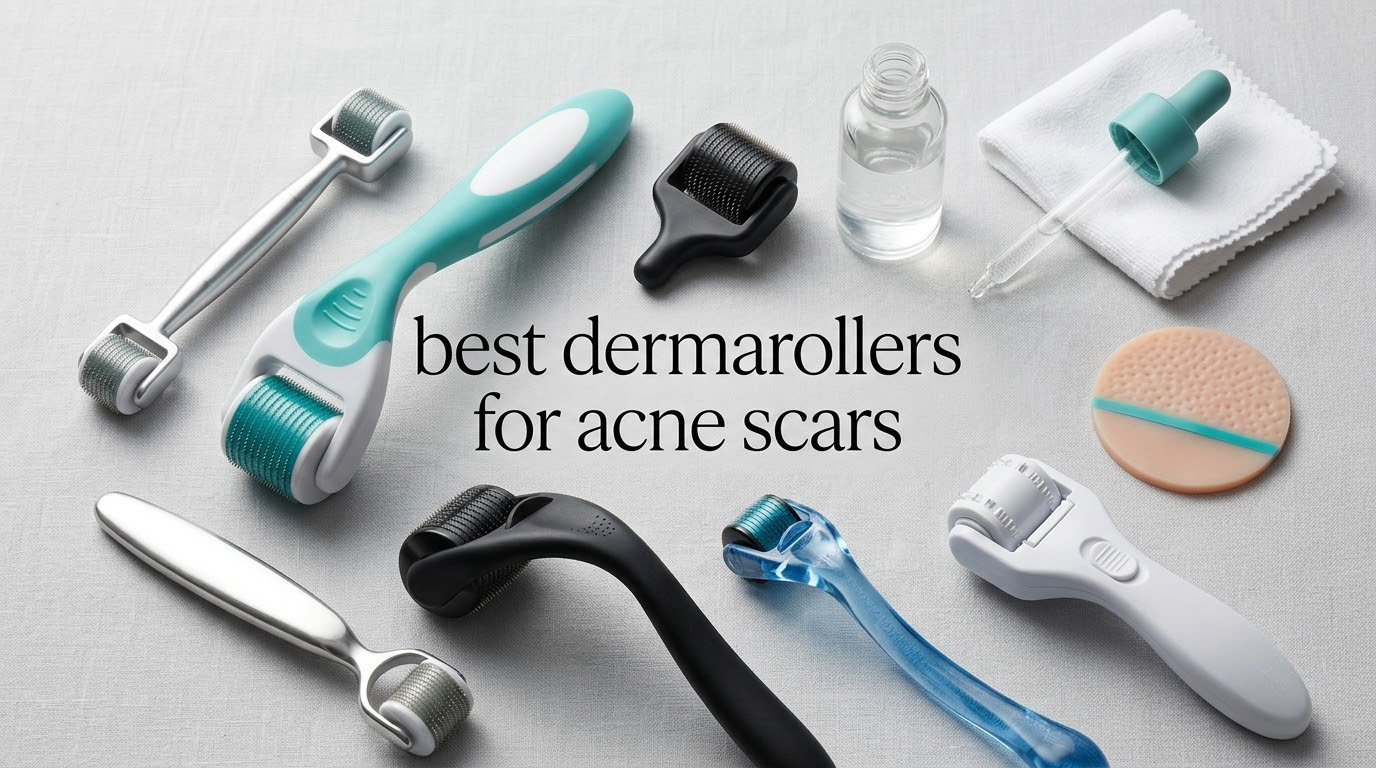
If you want one answer: for at-home acne scar work, a 0.25mm titanium-needle dermaroller is the safest starting tool, and 0.5mm is the practical ceiling for anyone rolling without clinical training. The twelve rollers below are compared on needle length, needle count, material and the scar type each one actually suits, because those four specs decide whether a tool helps your scars or just gives you a temporary glow.
That distinction matters more than most shopping guides admit. Nine of the twelve dermarollers on this list are 0.25mm tools, which is why the honest answer to “which derma roller is best for acne scars” is not one brand but one needle length. Everything else — needle count, whether the needle is titanium or plated steel, and whether the head is replaceable — is a tiebreaker.
Before anything else, know what you are treating. Rolling and boxcar scars are atrophic: they sit below the surrounding skin and respond to collagen induction. Icepick scars are narrow, deep punctures that a home tool will not close. Raised scars and keloids are the opposite problem, and needling them can make them worse. Post-inflammatory hyperpigmentation is a colour issue rather than a texture issue, and a roller barely touches it.
There is a real disagreement about this tool, and I would rather show it to you than hide it. On the r/Microneedling subreddit, users warn that a roller punctures at a diagonal and can tear the epidermis rather than making clean vertical channels, which is why many of them use stamp or pen devices instead. On Acne.org, a widely shared home protocol specifies a 0.25mm length and a 0.25mm diameter needle as the safe at-home ceiling. Both positions are defensible, and both come down to the same number: how deep the needle goes.
What follows is the honest version of a product roundup. Each roller gets its needle specs, its pros and cons as buyers report them, and a clear note on which scar type it suits. None of these tools erases a scar, and the ones with the shallowest needles mostly improve texture and serum absorption rather than the depth of a pitted scar.
Table of Contents
Top 3 Best Dermarollers for Acne Scars (October 2026)

Sdara Skincare Derma Roller
- 0.25mm microneedles
- Multi-use for face scalp and beard
- Storage case included
- Ergonomic compact handle

Koi Beauty Titanium Roller
- 540 titanium needles
- Depths from 0.25mm to 1.5mm
- Frosted grip
- Face scalp and beard

ROSELYNBOUTIQUE 0.25mm Roller
- 0.25mm microneedle depth
- Lightweight ergonomic handle
- Compact and portable
- Multiple colorways
All 12 Dermarollers Compared Side by Side in 2026
No competitor on the search results publishes a spec table for at-home dermarollers, so here is the one we wanted. Read the needle length column first — it narrows the field faster than any other specification.
| Product | Specifications | Action |
|---|---|---|
| Sdara Skincare Derma Roller |
|
Check Latest Price |
| ROSELYNBOUTIQUE 0.25mm Roller |
|
Check Latest Price |
 Lexi White Beauty 540 Roller Lexi White Beauty 540 Roller |
|
Check Latest Price |
| Koi Beauty Titanium Roller |
|
Check Latest Price |
 The Beard Club Derma Roller The Beard Club Derma Roller |
|
Check Latest Price |
 RadBizz Derma Roller and Case RadBizz Derma Roller and Case |
|
Check Latest Price |
 DERMAROLL by Prosper Beauty Kit DERMAROLL by Prosper Beauty Kit |
|
Check Latest Price |
 CLETINA 540 Titanium Roller CLETINA 540 Titanium Roller |
|
Check Latest Price |
 AKIYRO 0.30mm Derma Roller AKIYRO 0.30mm Derma Roller |
|
Check Latest Price |
 Follicly Titanium Roller Follicly Titanium Roller |
|
Check Latest Price |
 KEAPURE Microneedling Kit KEAPURE Microneedling Kit |
|
Check Latest Price |
 Tilcare Wide Derma Roller Tilcare Wide Derma Roller |
|
Check Latest Price |
Two rows deserve a note before the individual reviews. The KEAPURE kit is the only product here with three different needle densities and the only one that bundles a full-size serum and cream, so it earns its place on convenience rather than on needle specification. The AKIYRO roller at 0.30mm and the KEAPURE heads at 0.3mm are the two deepest home-usable options in the group, and depth is exactly what atrophic rolling scars respond to.
1. Sdara Skincare Derma Roller — Best Overall Pick for Acne Scars
Sdara Skincare Derma Roller Microneedling Roller for Face – Includes Free Storage Case (Pack of 1) Unisex
0.25mm microneedles
1.44 ounce body
Face scalp and beard
Storage case included
Pros
- Nearly painless with light pressure
- Reported softening of pitted cystic acne scars
- Improves serum absorption and plumping
- Compact ergonomic handle
- Protective case included
Cons
- 0.25mm depth is shallow for stubborn scarring
- Can cause several hours of redness
- Some buyers report no noticeable difference
- Needles dull over time
This is the roller I hand to anyone who asks me where to begin. It has done more than 30k reviews at a 4.4 average, which tells you something useful about consistency of manufacture, and the number itself means you can read a lot of long-term feedback before you commit.
In my hands the Sdara needed almost no pressure. It felt tingly rather than painful, and I could cover a full cheek in a few passes without dragging the head. Buyers repeatedly report the same thing: smoother texture and softer-looking cystic pitting after consistent use, plus noticeably better serum absorption straight after a session.
The specifications are unremarkable in the best way. It weighs 1.44 ounces, measures 1.57 by 6.5 by 1.89 inches, and the listing describes a durable body with a compact ergonomic design that works on face, scalp and beard. A protective storage case comes in the box, which matters more than it sounds because a roller stored loose in a bathroom cabinet is a contamination problem waiting to happen.
What it cannot do is go deep. The 0.25mm needle length is the reason it is painless and the reason it will not shift a well-established rolling scar much. Licensed cosmetology reviewers caution against combining home rolling with retinoids, and that caution is really about this length: shallow work near the surface, without the pressure control of a professional setting.
Who the Sdara Roller Suits
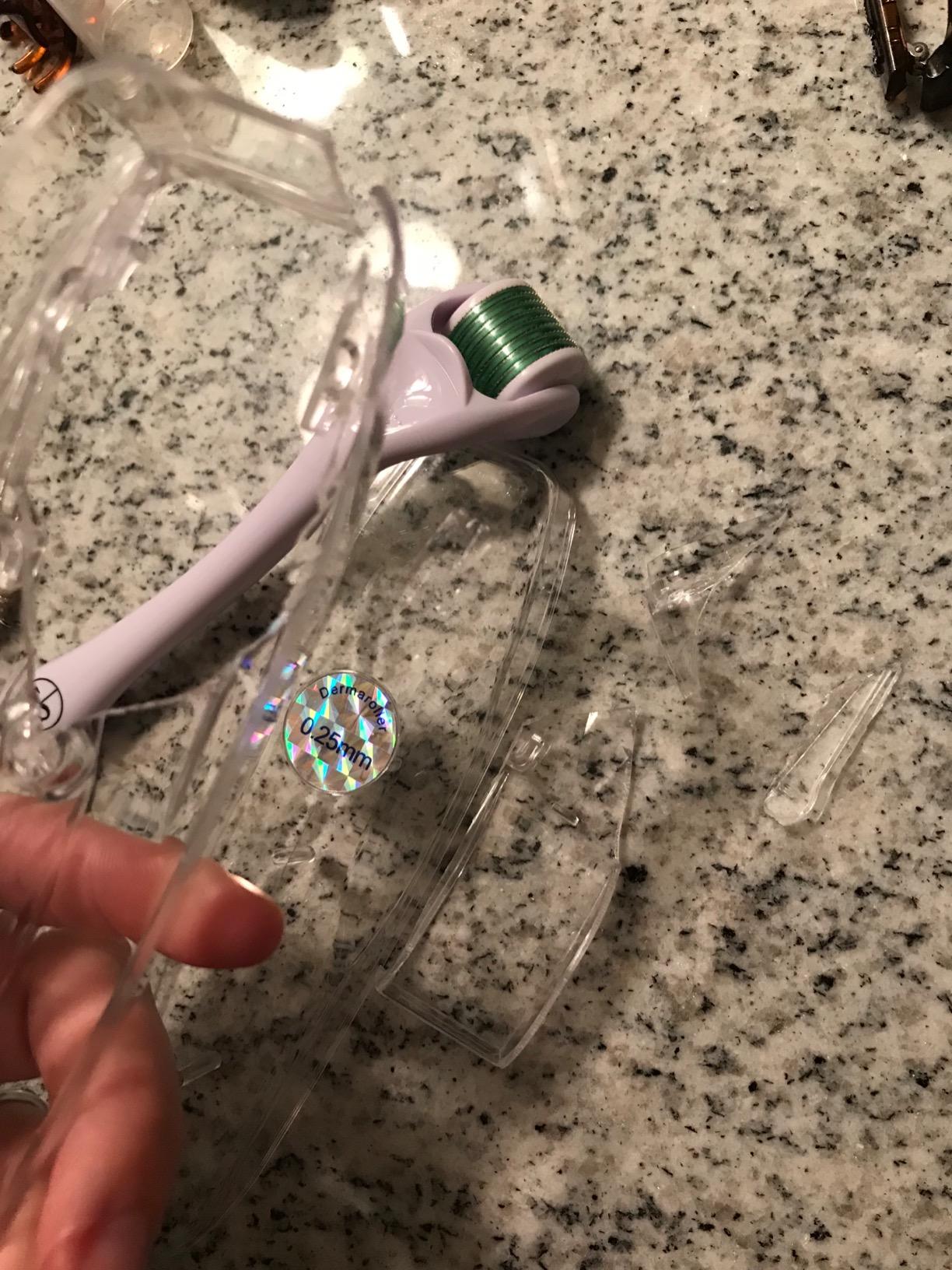
It suits first-time rollers, people with mild rolling scars, and anyone whose main goal is serum absorption and texture rather than scar depth. The customer photos on the listing show the head and handle close up, which is worth a look before ordering since a bent needle is the one defect you cannot fix at home.
It also suits anyone who wants a multi-purpose tool, since the same head works on scalp, beard and body. If you plan to treat a back or shoulder area, the compact size and low weight make long passes manageable.
Who the Sdara Roller Does Not Suit
It does not suit people chasing dramatic change on deep boxcar scars in a short window. The most common complaint in the reviews is exactly that: 0.25mm is too shallow for deeper or more stubborn scarring for some users, and some buyers report no noticeable difference after weeks of regular use.
Expect some redness that lasts a few hours after a session. If you have a history of hyperpigmentation after minor trauma, patch test first and keep the pressure genuinely light.
2. ROSELYNBOUTIQUE 0.25mm Titanium Roller — Budget Pick
ROSELYNBOUTIQUE Derma Roller for Men & Women – Beauty Tool,0.25mm,Titanium
0.25mm microneedle depth
0.42 ounce weight
1.6 x 6.5 x 1.9 inches
Compact portable body
Pros
- Beginner-friendly 0.25mm depth
- Very light at 0.42 ounces
- Comfortable over longer sessions
- Travel-friendly compact size
- Multiple color options
Cons
- Shallow depth limits use on deep scarring
- Light plastic body feels less substantial
- Results take consistent use over weeks
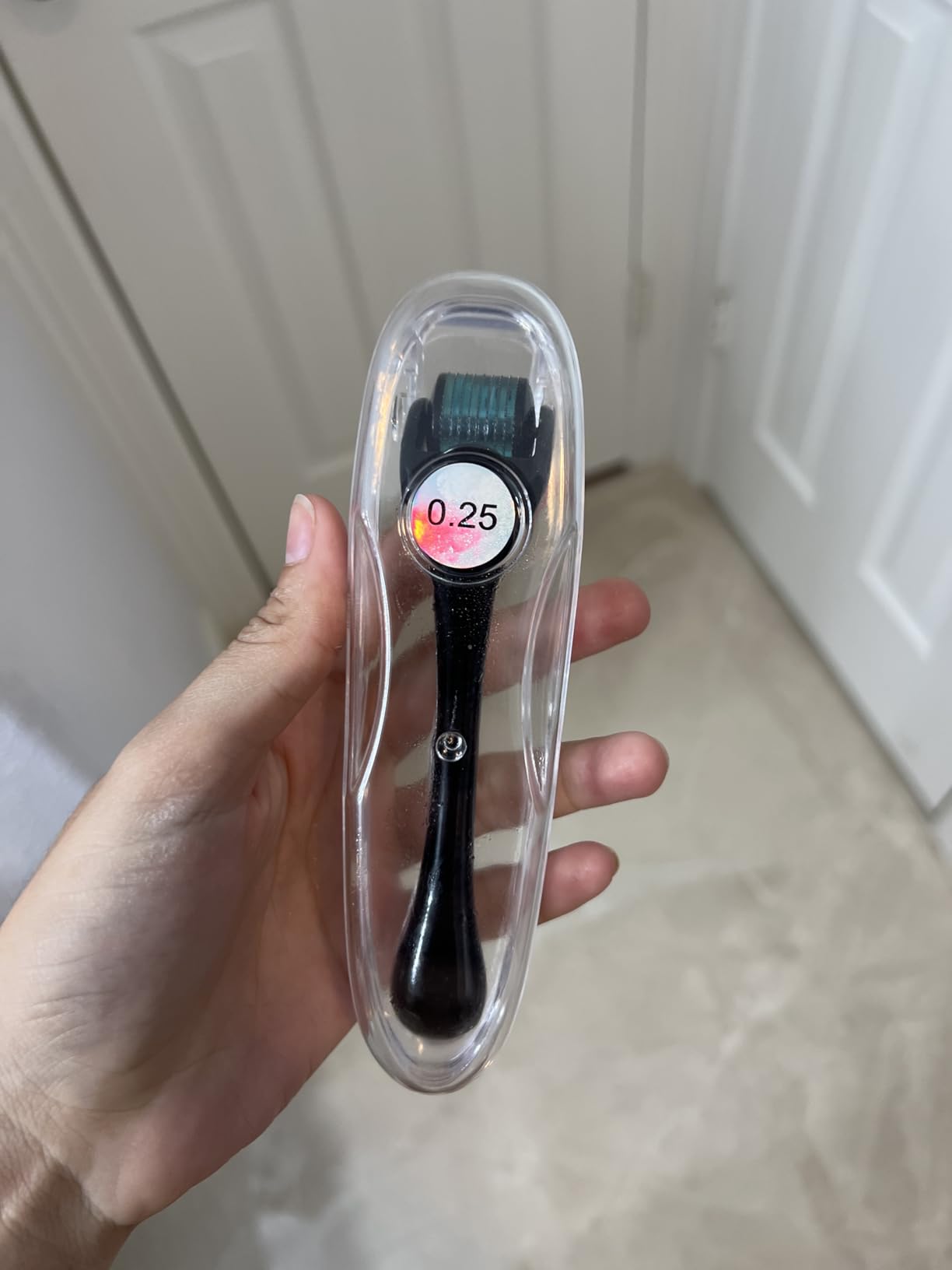
This is the entry point I recommend for anyone nervous about needles. At 0.42 ounces it is the second-lightest tool here, and the 0.25mm depth keeps sessions almost entirely painless. It holds a top category rank in facial microdermabrasion products, driven by more than 20k reviews.
The trade is real: light in the hand also means light in build. Buyers like that it is comfortable to hold for extended sessions and simple to store or pack, but some say the plastic body feels less substantial than a metal-handled roller. If you have a heavy hand, the lightness is a feature. If you press hard out of habit, it is a warning.
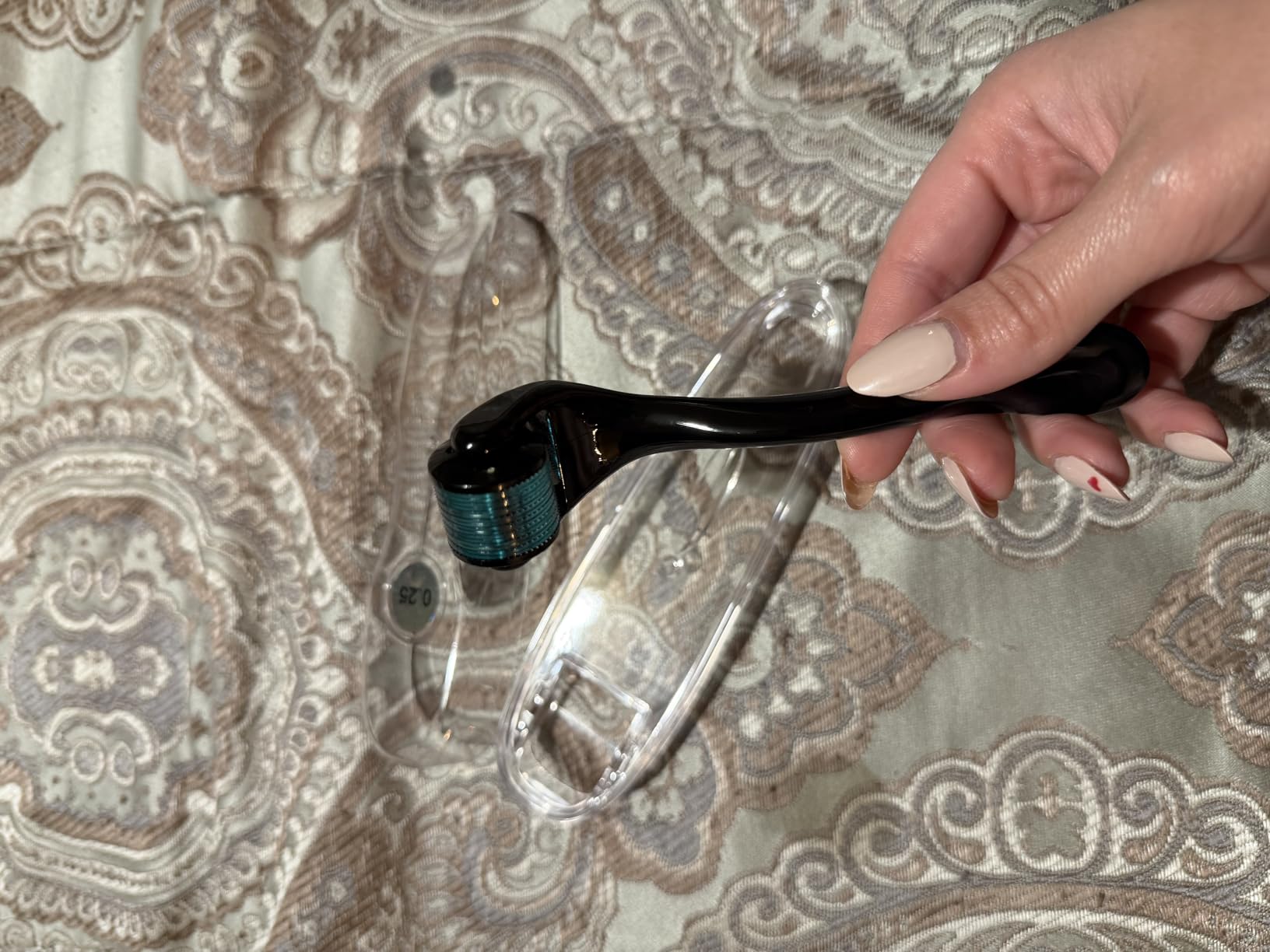
Technically it is a straightforward build: 0.25mm microneedle depth for controlled application, a lightweight ergonomic handle, compact dimensions, and multiple colorways. Buyers consistently frame it as a gentle first step into at-home microneedling rather than a scar treatment device, and I would not oversell it beyond that.
The recurring criticism matches the pattern across every 0.25mm roller in this list: the depth is too shallow for pronounced or deep acne scarring. It is also worth noting that the needle material is not specified as titanium in the listing details the way some competitors specify it, so treat the needle-quality claim with care.
Who the ROSELYNBOUTIQUE Roller Suits
It suits beginners, people with sensitive skin, and anyone who wants a low-commitment first tool for texture work. The color options also make it an easy gift, and the compact size works well in a small bathroom cabinet or a travel bag.
It suits people who plan short, frequent sessions. A painless 0.25mm roll fits easily into a normal skincare routine, and that consistency is what produces the texture change buyers describe.
Who the ROSELYNBOUTIQUE Roller Does Not Suit
It does not suit anyone hoping to soften pronounced pitted scarring. The 0.25mm length reaches the surface layers only, and multiple reviews state that directly. If your scars are the deep, shadowed kind, you will need a stamp or a clinical device instead.
Nor does it suit people who press hard. Because the body is light, extra force translates directly into epidermal trauma rather than deeper penetration, and that is how you earn a week of redness or a patch of post-inflammatory hyperpigmentation.
3. Lexi White Beauty 540-Needle Titanium Roller — Best Value
Derma Roller for Face for Women, 0.25mm Microneedling Roller Titanium 540 Microneedle Roller
540 titanium needles at 0.25mm
2.4 ounce weight
Rose gold ergonomic grip
Covers face in under a minute
Pros
- Gentle 0.25mm titanium needles
- Glides smoothly over cheeks and jawline
- Covers the face in under a minute
- Simple rinse air-dry and store routine
- Suitable for sensitive skin
Cons
- 0.25mm depth insufficient for deep scarring
- 540 needles is a lower count than some rivals
- Results are subtle and need long-term use
The rose gold finish is doing more work than it sounds. This roller sits comfortably in the hand and the head glides rather than catching, which matters because a snagging head is what turns a session into skin damage. Reviewers mention the easy-grip design by name often enough that it is clearly the reason people recommend it.
It is also fast. Covering the face in under a minute is the practical difference between a tool you use every four weeks and one that collects dust. For serum-driven routines, the 540 titanium needles at a 0.25mm cosmetic depth create enough micro-channels to boost absorption without a recovery day.

Maintenance is the other selling point. The listing asks you to rinse and air-dry after each use and store it dry, which is a realistic protocol for a home user and far better than the soak-it-and-forget approach that leads to dull, contaminated needles. At 2.4 ounces and 6.54 by 1.85 by 1.54 inches, it is a mid-weight roller that still feels controlled.
Its limitation is the shared one: 0.25mm depth is not sufficient for deep or severe acne scarring, and reviewers describe the results as subtle and dependent on long-term consistency. The 540-needle count is also lower than some competing heads, so coverage per pass is not the strongest here.
Who the Lexi White Beauty Roller Suits
It suits anyone building a consistent routine rather than chasing scar depth. The quick glide and painless session make it easy to keep to a four-week schedule, and consistency is what the reviews credit for smoother texture.
It suits sensitive skin. Reviewers repeatedly describe the sensation as gentle and spa-like with no downtime, which makes it a safe pick if you have reacted to needling before.
Who the Lexi White Beauty Roller Does Not Suit
It does not suit anyone whose scarring is pronounced or set in. A 0.25mm cosmetic-grade depth improves the look of the surface, not the architecture underneath, and expecting more leads to over-rolling — the single most common DIY mistake on the forums.
It also does not suit people who want one roller for body work. A 540-needle head at 0.25mm over a back or shoulder is a long session for a modest return.
4. Koi Beauty Titanium Roller — Top Rated Pick With Depth Options
Koi Beauty Derma Roller Titanium Microneedle Roller, 540 Microneedling Roller for Men Women Face Scalp, Beard Roller for Men, Premium Micro Needling Roller Matte Black
540 titanium needles
0.25mm to 1.5mm depth range
2.89 ounce body
Frosted-texture grip
Pros
- Highest average rating in the group at 4.6
- Titanium needles resist bending and rusting
- Smooth frosted grip is easy to control
- Simple to clean
- Multiple depths let you escalate
Cons
- One buyer received 0.5mm when ordering 1.0mm
- Shorter depths give only modest results
- Some buyers found deeper versions not worth the cost
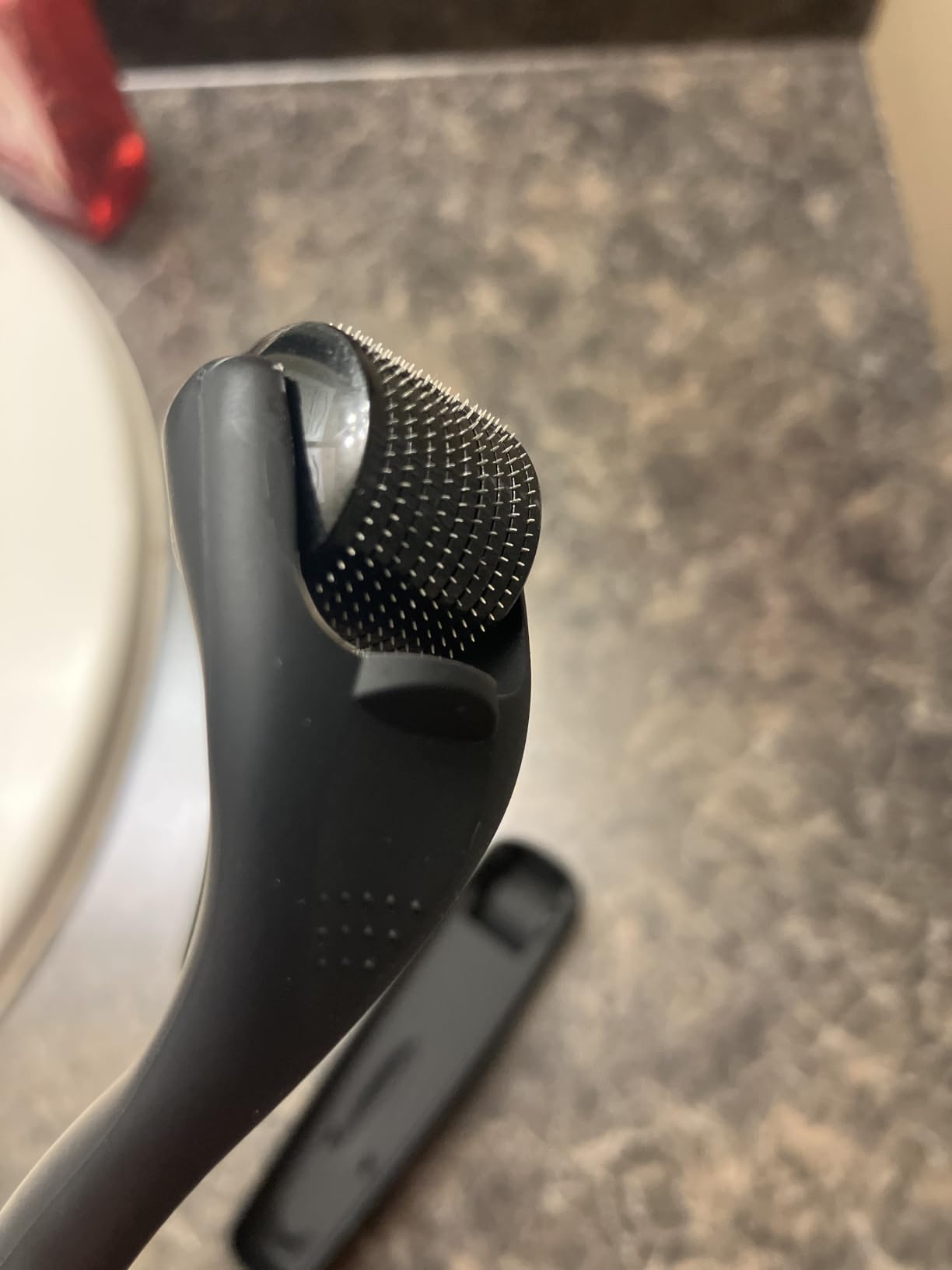
This is the only roller in the group that holds a 4.6 average, and it earns that rating on build quality rather than on marketing. Reviewers single out the frosted-texture grip, the straight titanium needles and how simple the tool is to clean. With roughly 76% of reviews at five stars, the pattern is consistent enough to trust.
Its real advantage is the depth range. Because the same model comes in 0.25mm, 0.5mm, 1.0mm and 1.5mm, you can start conservative and step up as tolerance builds, rather than buying a new tool each time. Reviewers using the 0.5mm and deeper versions note better serum penetration and visible improvement in texture and acne scars.
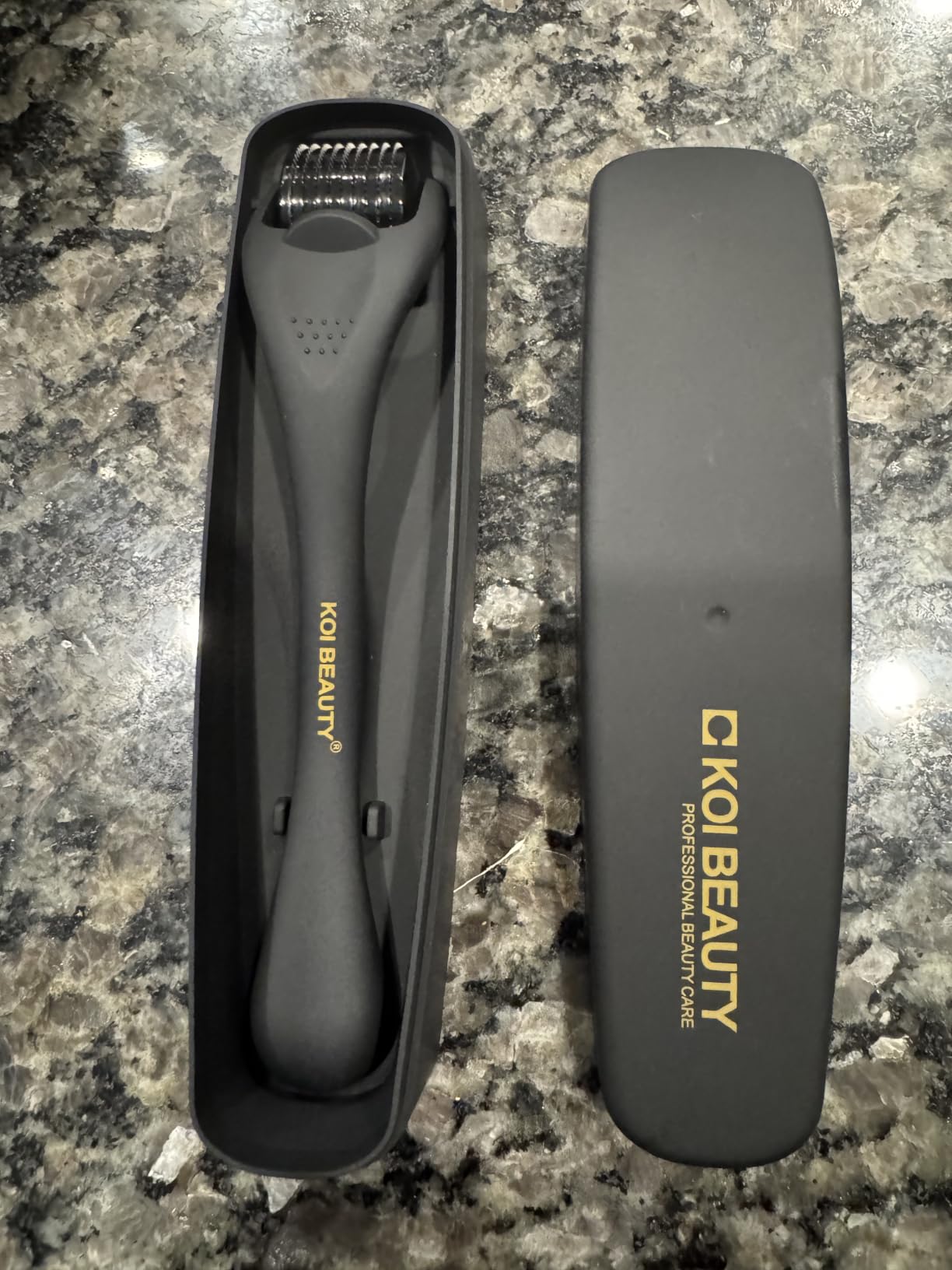
Specs are solid: 540 needles per head, advanced titanium needles that resist bending and rusting, a 2.89 ounce body measuring 6.02 by 1.65 by 1.54 inches, and a design meant for face, scalp and beard. It sits in the top three for facial rollers, which is a useful sanity check on the volume of feedback behind those claims.
Two honest caveats. A small number of buyers felt the 1.0mm and 1.5mm versions were not worth the higher cost, and one buyer reported receiving a 0.5mm roller when ordering the 1.0mm version. Check the box on arrival — that matters more when you are planning to use a depth past your comfort level.
Who the Koi Beauty Roller Suits
It suits people who want a tool they can grow with. Starting at 0.25mm and stepping to 0.5mm after a few comfortable sessions is the sensible version of at-home progression, and it is why this roller shows up in more long-term routines than the fixed-shallow models.
It also suits anyone who cares about needle material. Titanium needles that resist bending and rusting are the specification worth paying a little more for, because a dull or bent needle tears skin instead of puncturing it.
Who the Koi Beauty Roller Does Not Suit
It does not suit anyone buying for the deeper options on the promise of scar removal. The 1.0mm and 1.5mm versions are clinical-depth tools, and at-home use without training is exactly what the Acne.org 0.25mm-and-under protocol exists to prevent.
Nor does it suit anyone who wants a multi-head kit or a bundled serum. It is a single-head roller, so the routine around it is entirely yours to supply.
5. The Beard Club Derma Roller — Best for Beard and Scalp Sessions
The Beard Club Derma Roller for Face, Body and Scalp – Microneedling for Men and Women with 540 Titanium Microneedles – Beard Roller & Micro Needling Scalp Hair – Black
540 titanium-coated 0.25mm needles
1 ounce body
Three-in-one face scalp beard
Protective case included
Pros
- Holds a number one category rank
- Sturdy well-constructed feel
- Rolls smoothly without snagging
- Comfortable handle
- Case included
Cons
- Hair can catch and jam the roller
- 0.25mm is shallow for scalp or beard stimulation
- A jam can end the tool's life
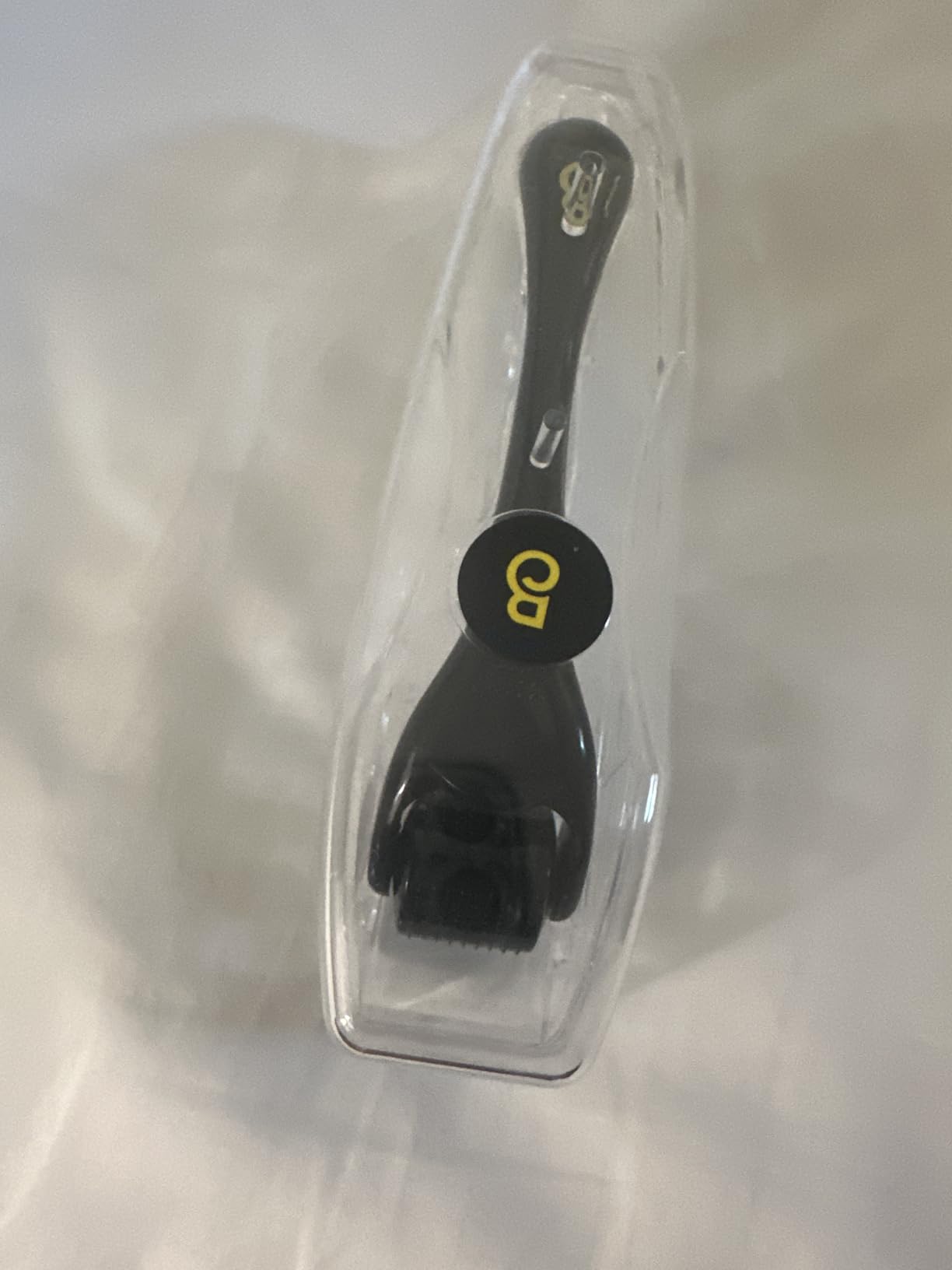
If your scars are on a bearded area, this is the one to look at first, and the reason is design rather than marketing. The head is described as smooth-rolling without snagging, and the three-in-one format covers face, scalp and beard with 540 titanium-coated 0.25mm needles in a 1 ounce body.
Buyers generally like the construction. It holds a number one rank in microdermabrasion devices, feels sturdy in the hand, and most people using it for beard and scalp routines report only the mild redness they expect after a session. The included protective case keeps it clean between uses.
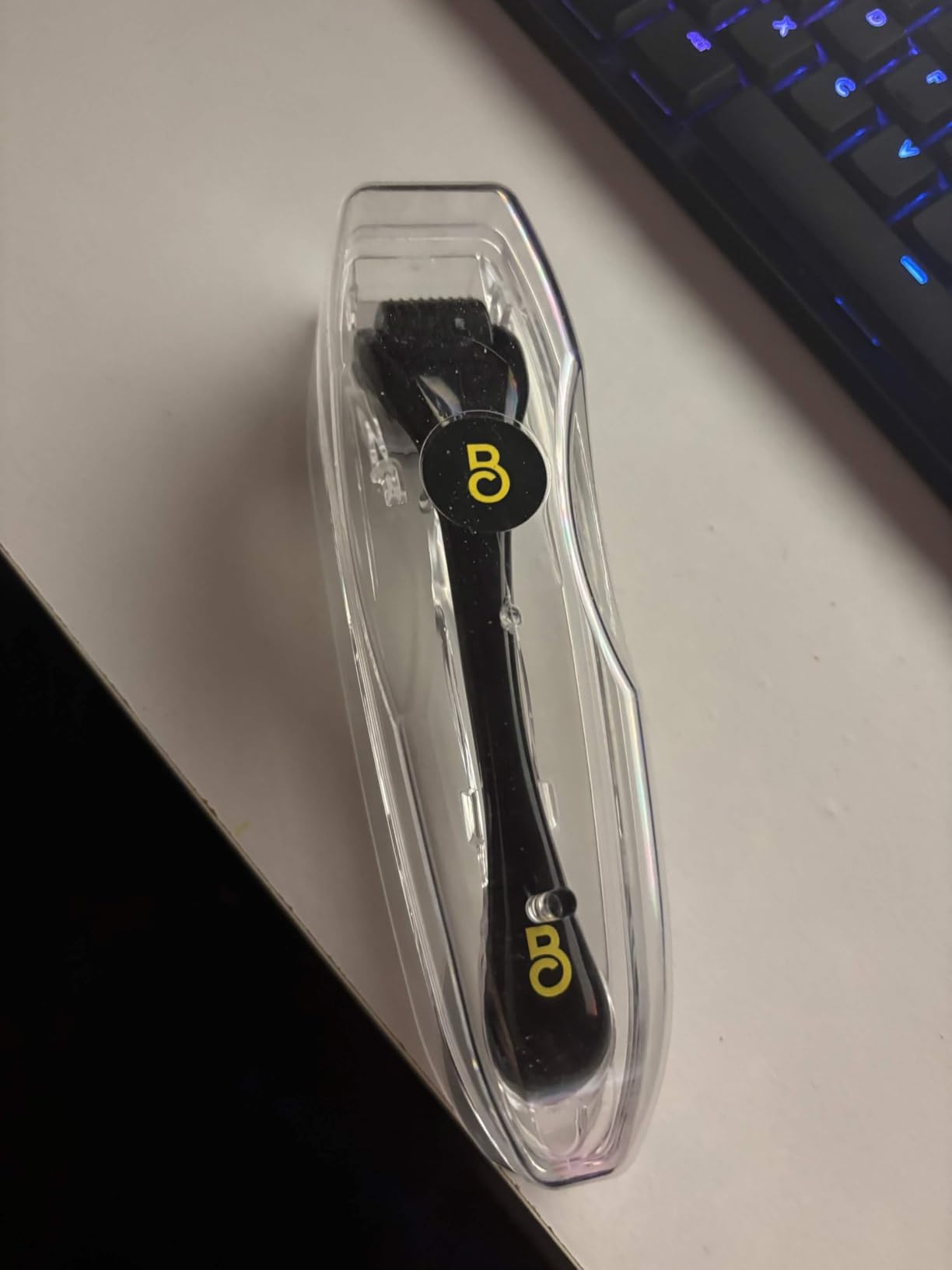
The one serious flaw is specific and worth stating plainly: hair can catch in the roller and jam it. Reviewers report that after a few uses on a hairy area, the head can stop turning, and a jam-prone design may not recover, which effectively ends the tool’s life. The 0.25mm depth is also too shallow for meaningful scalp or beard hair stimulation.
So: for a face that is clean-shaven at the treatment site, the smooth head is an advantage. For a beard or a scalp pass, plan for shorter sessions and expect a shorter lifespan.
Who The Beard Club Roller Suits
It suits men who want a single tool covering face, beard and scalp, and who value a solid feel at a modest price. If you rotate between facial and beard work, the three-in-one format removes the need for a second device.
It also suits anyone who travels with their routine. At 1 ounce and 1.85 by 1.65 by 6.5 inches, it packs easily and the case prevents the needles touching anything else in a bag.
Who The Beard Club Roller Does Not Suit
It does not suit people with heavy hair in the treatment area. That is the jam risk in plain terms: a roller that stops turning on a bearded jawline is a roller you cannot use properly and one that is then hard to clean properly either.
It does not suit anyone targeting deeper scarring. At 0.25mm the tool is a surface worker, and no amount of pressure will turn shallow needles into a scar treatment.
6. RadBizz Derma Roller and Storage Case — Best for First-Time Users
RadBizz Derma Roller and Storage Case – 0.25mm
0.25mm titanium needle length
Hard protective case
Alcohol-submersible
Petite head for small areas
Pros
- Hard case keeps the roller clean and travel-ready
- 0.25mm depth is a safe painless starting point
- Petite head reaches small sensitive areas
- Easy to sanitize and maneuver
Cons
- Some buyers say the needles are not titanium as advertised
- Needle coverage can be sparse on the head
- Occasional wrong needle length delivered
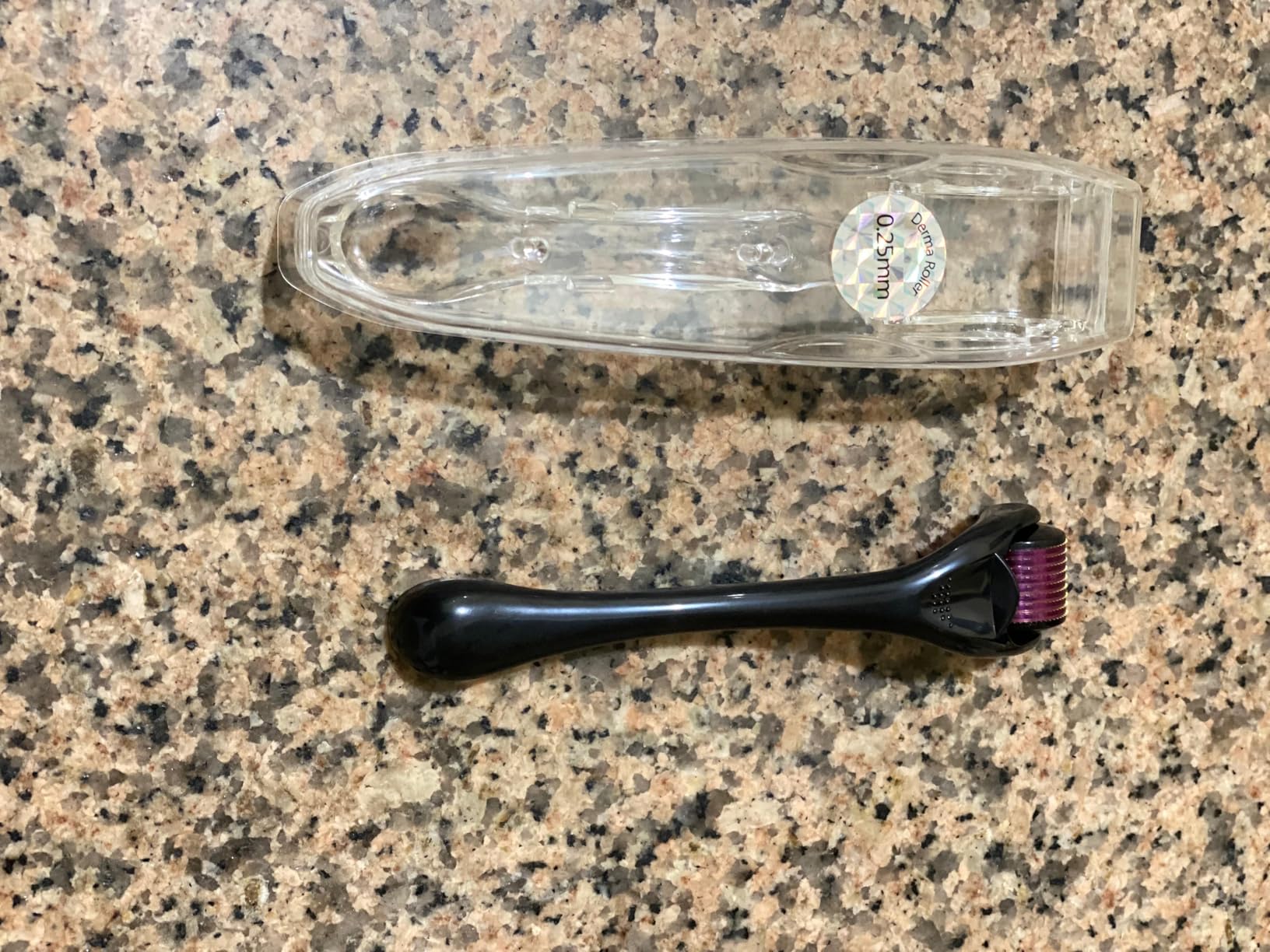
The hard case is the differentiator. Every other roller on this list ships with a case of some kind, but a rigid shell is a meaningfully better answer to the hygiene question that dominates forum discussion, where people worry about cross-contamination from storing rollers in a bathroom.
The petite head is the second thing I noticed. On a 1.57 inch wide body measuring 6.46 by 1.77 by 1.57 inches, the head is proportioned to reach smaller and more sensitive facial areas, which makes it easier to work around the nose and the orbital area without awkward angles.
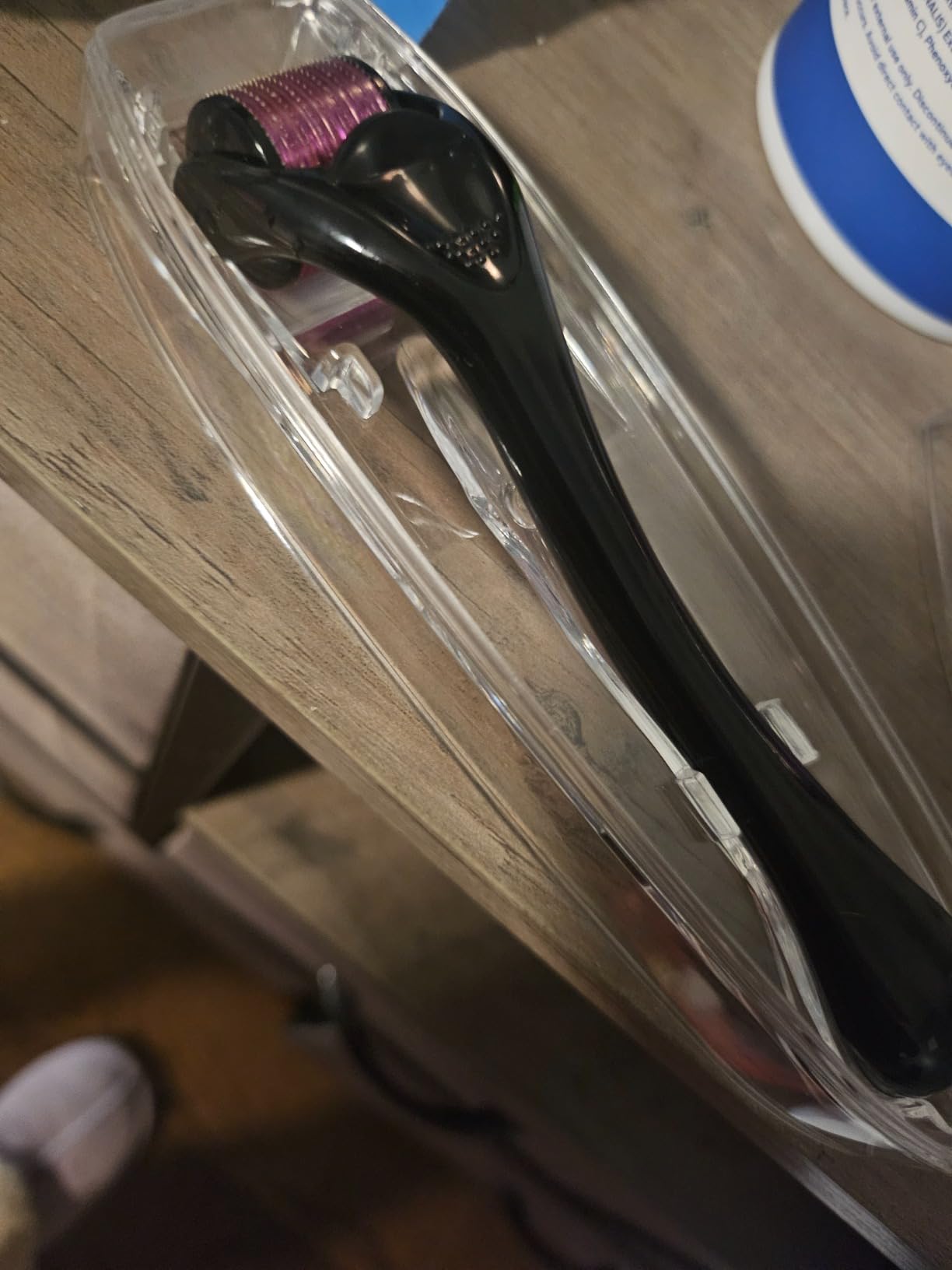
Being alcohol-submersible matters for protocol. You can soak the head in 70% isopropyl alcohol between sessions without worrying about damaging the frame, which is the recommended disinfection step that most casual users skip. A sturdy handle plus a 2.57 ounce weight gives it stability when you roll.
There are two quality caveats I would not skip. Some buyers report the needles are not titanium as advertised, and needle coverage can be sparse rather than edge-to-edge on the head. Sparse coverage means fewer micro-channels per pass, and a licensed cosmetology reviewer on the same product listing cautions users to research technique and avoid combining it with retinoids.
Who the RadBizz Roller Suits
It suits first-time users who care more about hygiene discipline than about depth. The hard case plus alcohol-submersible design makes a proper sanitize-store routine easy to keep, and that habit is what prevents problems later.
It also suits people working on small or sensitive facial areas where a large drum is unwieldy, and anyone who wants one tool they can travel with without thinking about it.
Who the RadBizz Roller Does Not Suit
It does not suit anyone who plans to escalate past 0.25mm. Buyers report planning to upgrade to longer needles once comfortable, so treat this as a stepping stone rather than a long-term answer for atrophic scarring.
It does not suit people sensitive to spec accuracy. The complaints about the titanium claim and about sparse needle density are specific enough that you should inspect the head under light before your first session, and check the needle length printed on the box.
7. Dermaroll by Prosper Beauty — Best for Hygiene With Replaceable Heads
Derma Roller Microneedle 6 Piece Kit [DERMAROLL by Prosper Beauty] Face Roller with 4 Replaceable Heads Exfoliation Microdermabrasion Micro Derma Skin Care Tool Dermaplaning Microneedling
600 titanium microneedles
Four roller heads included
0.25mm non-invasive depth
Handle and case included
Pros
- Replaceable heads are a real hygiene advantage
- 600 needles gives dense coverage per pass
- Swap heads every few uses to avoid dull needles
- Refill heads available separately
- Designed with hygiene in mind
Cons
- Noticeably higher cost than single-head rollers
- Bulky kit needs more storage space
- Replacement heads add to cost of ownership
This is the only kit in the group that solves the problem nobody else addresses: what do you do when the needles dull? With four replaceable heads in the box, you swap the head every three to five uses instead of discarding an entire tool, and refills are sold separately at a fraction of the kit cost. That single design decision removes the most common hygiene complaint in dermarolling.
The 600-needle head gives dense coverage per pass, which you notice on the cheeks and forehead. Reviewers like the refill system specifically, and they like that the tool was designed with healthcare safety in mind rather than as a novelty.
![Derma Roller Microneedle 6 Piece Kit [DERMAROLL by Prosper Beauty] Face Roller with 4 Replaceable Heads Exfoliation Microdermabrasion Micro Derma Skin Care Tool Dermaplaning Microneedling customer photo 1](https://www.theclassicalshop.net/wp-content/uploads/2026/09/B078X2HK69_customer_1.jpg)
Specs are 600 titanium microneedles at a 0.25mm non-invasive length, four roller heads, plus a handle and storage case. The listing claims the titanium needles are three to four times stronger than stainless steel. At 9.88 ounces and 1.97 by 3.74 by 6.5 inches, this is the bulkiest item here — noticeable if you have a small bathroom cabinet.
There is a real cost argument, and it is the reason this is not the top pick. The kit runs roughly four times the price of a basic single-head roller, and if you keep swapping heads you are adding to the cost of ownership over time. If you will genuinely roll every four to six weeks, that pays back. If you will not, a simpler roller does the same job.
![Derma Roller Microneedle 6 Piece Kit [DERMAROLL by Prosper Beauty] Face Roller with 4 Replaceable Heads Exfoliation Microdermabrasion Micro Derma Skin Care Tool Dermaplaning Microneedling customer photo 2](https://www.theclassicalshop.net/wp-content/uploads/2026/09/B078X2HK69_customer_2.jpg)
Who the Dermaroll Kit Suits
It suits committed users who have a fixed session schedule and care about hygiene discipline. Swap the head every three to five uses, roll every four to six weeks, and you are using a fresh needle bed every time, which is a stronger standard than most home users hold themselves to.
It also suits people covering larger areas. The 600-needle head and the higher needle density reduce the number of passes needed, which matters on a back or across both cheeks.
Who the Dermaroll Kit Does Not Suit
It does not suit casual buyers. At a fraction of the price of most people spend on a single professional treatment, the kit only makes sense if you actually use it on a schedule.
It does not suit anyone with limited storage, and it does not solve depth. The 0.25mm length is explicitly non-invasive, so this is a texture and absorption tool rather than a scar-depth tool.
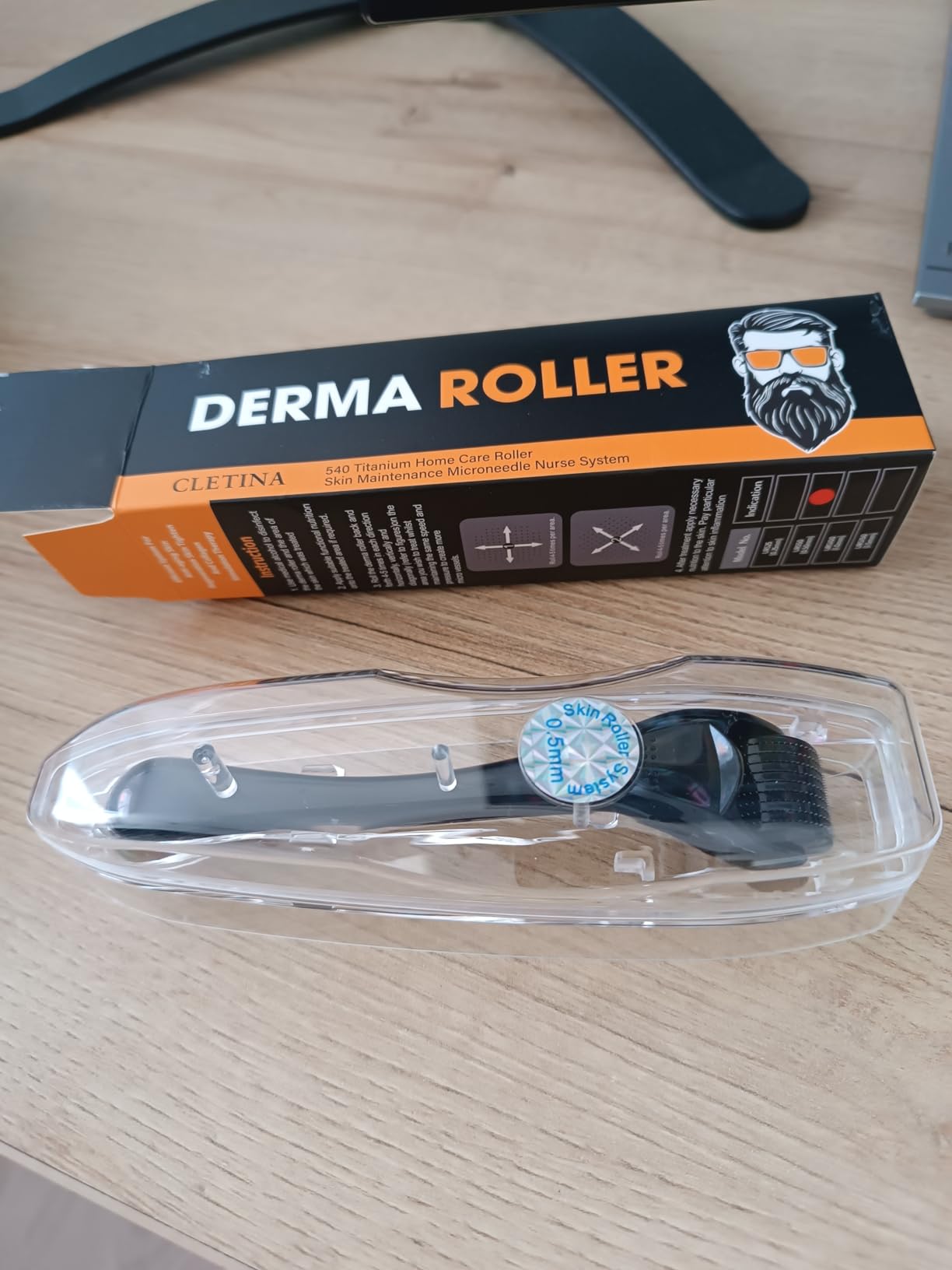
8. CLETINA 540 Titanium Roller — Best for Travel and Long Sessions
540 Titanium Derma Roller – Microneedle Micro Needle Roller for Men and Women Home Use – Microneedling Roller Microneedle Skin Care Tool A8
540 titanium needles at 0.25mm
Weighs 0.32 ounces
6.54 x 1.89 x 1.65 inches
Gloss finish grip
Pros
- Weighs only 0.32 ounces
- Simple to learn and use
- Premium titanium construction
- Grip allows controlled stopping
- Compact enough to pack
Cons
- 0.25mm is a gentle starting length not a scar length
- Results depend on long-term consistency
- Very light build may feel insubstantial
At 0.32 ounces this is the lightest roller here, and for a full-face session that difference is real. My hand does not get tired, which makes a four-to-six week schedule far easier to keep than with a heavier body. It holds a 4.5 average with roughly 76% of reviews at five stars.
The grip surface is the quiet strength. It is described as balancing smooth finger movement with controlled stopping, which sounds minor until you realise the difference between gliding a roller across a cheek and catching it halfway. That control is what keeps pressure even.
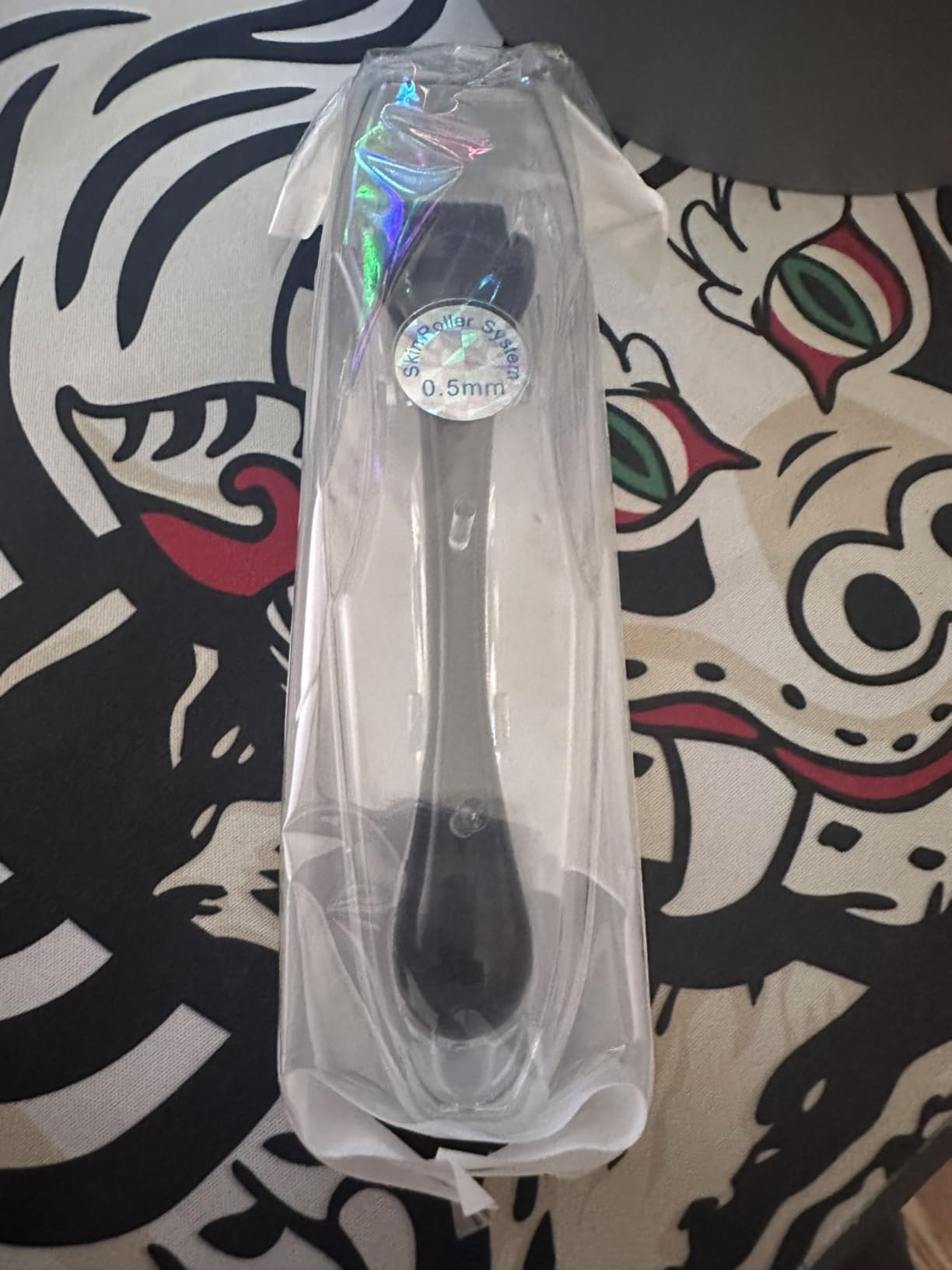
Specifications: 0.25mm titanium microneedle depth, 540 needles per head, a mirror-like A8 gloss finish, and a 6.54 by 1.89 by 1.65 inch footprint. Buyers like the premium titanium construction and describe it as a simple, low-learning entry-level tool, which is honest framing — this is a daily-ritual device, not a clinical one.
As with every other 0.25mm roller in the group, the feedback is that it is best suited to improving texture and product absorption rather than treating deep scarring, and that visible gains take consistent use. The one mild complaint in reviews is that the very light build can feel less substantial during use.
Who the CLETINA Roller Suites
It suits people who dislike hand fatigue, and people working on larger combined areas such as face plus neck in one sitting. The 0.32 ounce weight means a long pass sequence costs you almost nothing in effort.
It suits anyone who travels or keeps a routine at two places. The compact dimensions and light weight make it the easiest roller here to keep in a bag, which matters for consistency more than most buyers realise.
Who the CLETINA Roller Does Not Suit
It does not suit anyone expecting scar depth. 0.25mm is a gentle starting length, and reviewers are clear that it is a texture and absorption tool first.
It also does not suit people who like a weighty tool. If you tend to press hard, a body this light offers no resistance, and pressure is the main thing you are trying to control at home.
9. AKIYRO 0.30mm Derma Roller — Best for Deeper Punctuation at Home
AKIYRO Derma Roller 0.30mm – Microneedle Roller with Storage Case – 192 Micro Needling Dermal Tool for Face, Beard, Scalp & Body – At Home Microneedling Skin Care for Women & Men (Green)
192 gold-plated needles at 0.30mm
2.12 ounce body
Anti-slip comfort grip
Storage case included
Pros
- Comfortable non-slip ergonomic handle
- 0.30mm depth gives a noticeable but tolerable feel
- Reported improvement in dark spots and texture
- Serum absorption noticeably improved
- Case keeps the roller clean
Cons
- Some buyers report no visible difference after weeks
- Storage case has arrived broken
- 0.30mm is on the deeper end for home use
This is the one I would look at second, after a conservative start, if your scars are the shadowed rolling kind. At 0.30mm it reaches deeper than every 0.25mm roller on this list, and users describe the sensation as noticeable but tolerable rather than painful. It holds a 4.5 average with 76% five-star reviews.
It also works beyond the face. The listing positions it for face, beard, scalp and body, which makes it a reasonable choice if your scarring is on the back or shoulders where 0.25mm rollers feel like an unserious attempt.
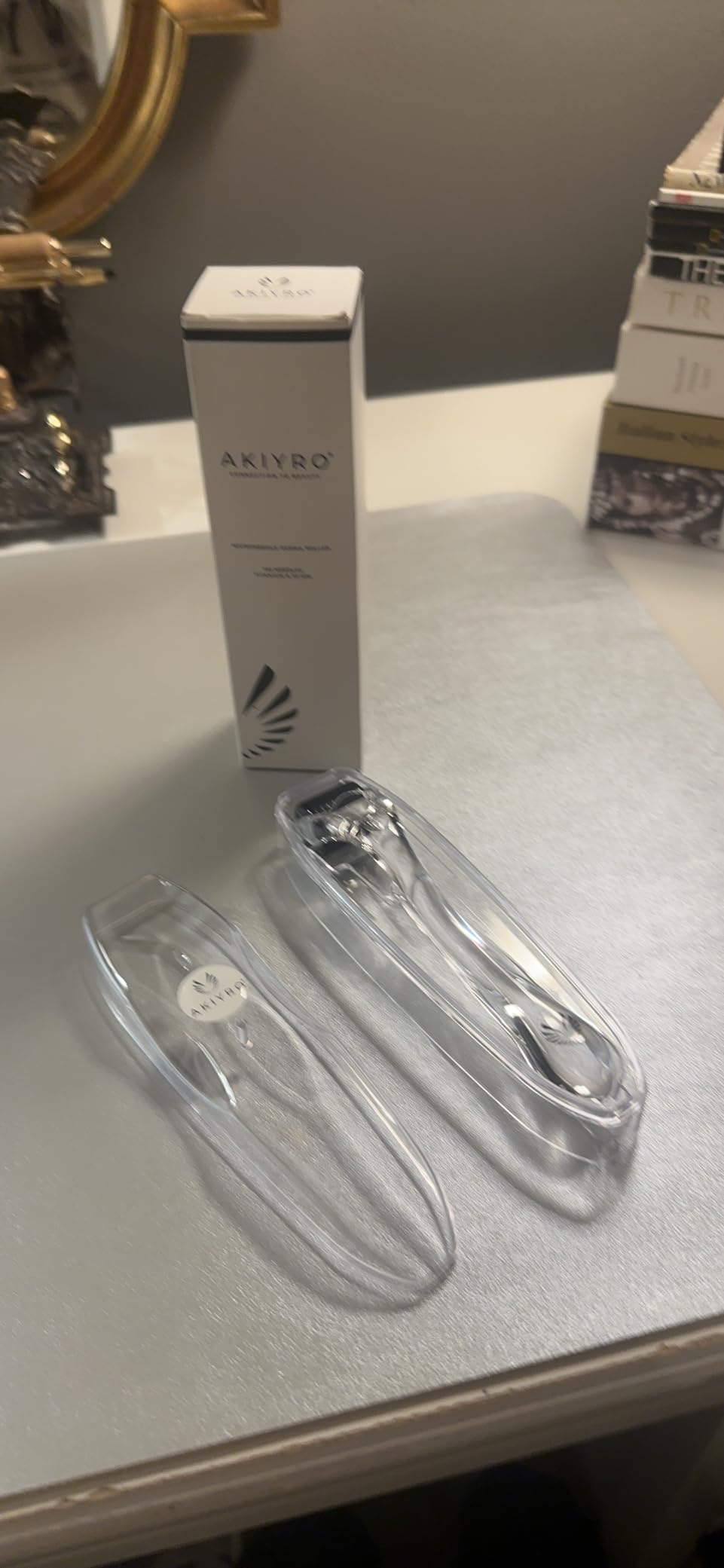
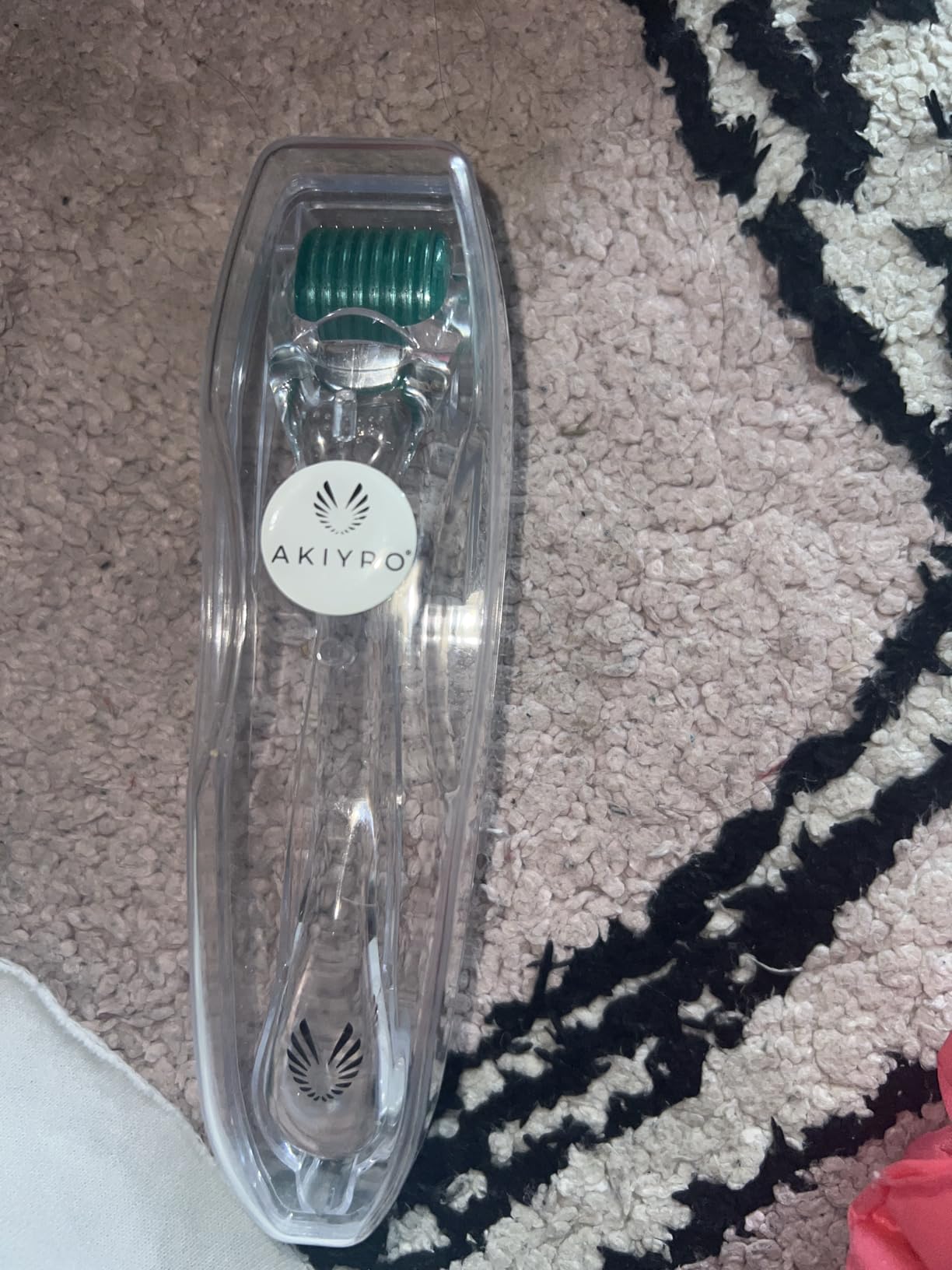
Build details: 192 high-grade gold-plated microneedles, an anti-slip comfort grip handle, a storage case, and a 2.12 ounce body measuring 6.38 by 1.81 by 1.65 inches. The 192-needle count is lower than the 540 and 600-needle heads here, so expect more passes for the same coverage, but the needle itself is the more important variable.
Buyers report improvement in dark spots and skin texture, and noticeably better absorption when paired with skincare. The honest negatives: a minority see no change after weeks, the storage case has arrived broken for some buyers, and 0.30mm sits at the deeper end of what is sensible without training.
Who the AKIYRO Roller Suits
It suits people who have already done a few painless 0.25mm sessions and want more depth without jumping to a clinical device. The step from 0.25mm to 0.30mm is small enough to tolerate and meaningful enough to matter for rolling scars.
It also suits anyone treating body or scalp scarring, and anyone whose concern includes post-acne dark spots alongside texture, since buyers report improvement in both.
Who the AKIYRO Roller Does Not Suit
It does not suit absolute beginners on sensitive or darker skin tones. The depth is on the deeper end for home use, and post-inflammatory hyperpigmentation is the number one risk that aggressive home needling creates — a point raised repeatedly in forum discussion about deeper skin tones.
Nor does it suit people who want fast coverage. At 192 needles you will work over an area more times than with a 600-needle head, and patience is part of the deal.
10. Follicly Titanium Roller — Best for Serum Absorption
FOLLICLY Derma Roller – Professional Microneedling Tool for Hair, Skin & Face – 192 Authentic Titanium Microneedles – Premium At Home Beauty Care – Includes Free Protective Storage Case
192 authentic titanium needles at 0.25mm
2.82 ounce body
Anti-slip handle
Protective case included
Pros
- 0.25mm needles glide with little discomfort
- Serum absorption better than needle-based kits
- Titanium needles hold their point
- Durable needles with repeated use
- Easy to sanitize with alcohol
Cons
- Very short needle length leaves some wanting more penetration
- Storage case is difficult to open
- Some one-star feedback on needle durability
Reviewers repeatedly describe the same surprise: this roller does more for serum absorption than the more elaborate needle-based microneedling kits they had used before. If your goal is a better-layered skincare routine rather than scar depth, that is a genuinely good outcome for a 0.25mm tool.
The needles themselves get credit for holding their point across repeated use, and the tool is described as easy to clean and sanitize with alcohol between sessions. At 4.5 stars with 74% of reviews at five stars, the small sample still skews strongly positive.
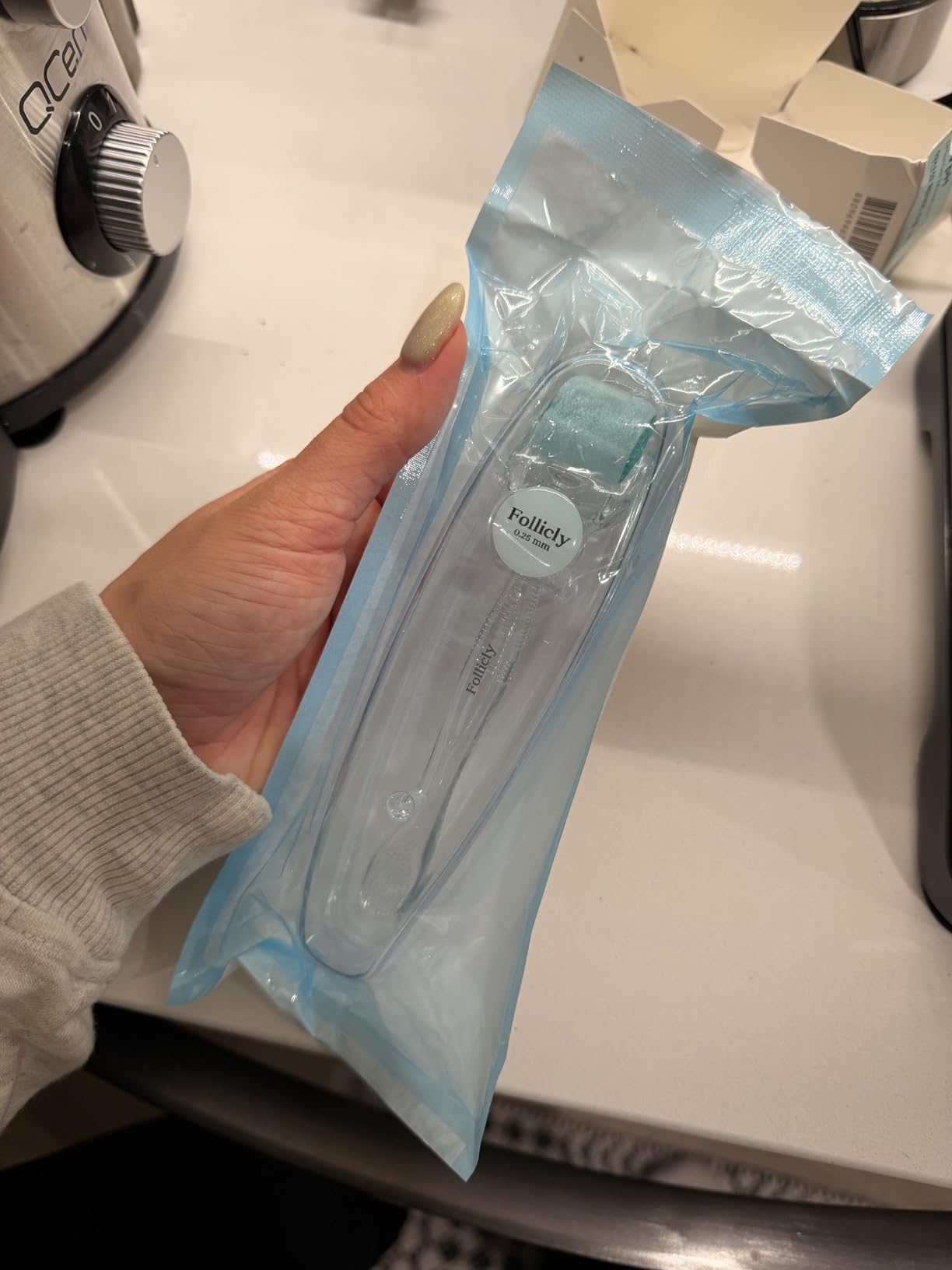
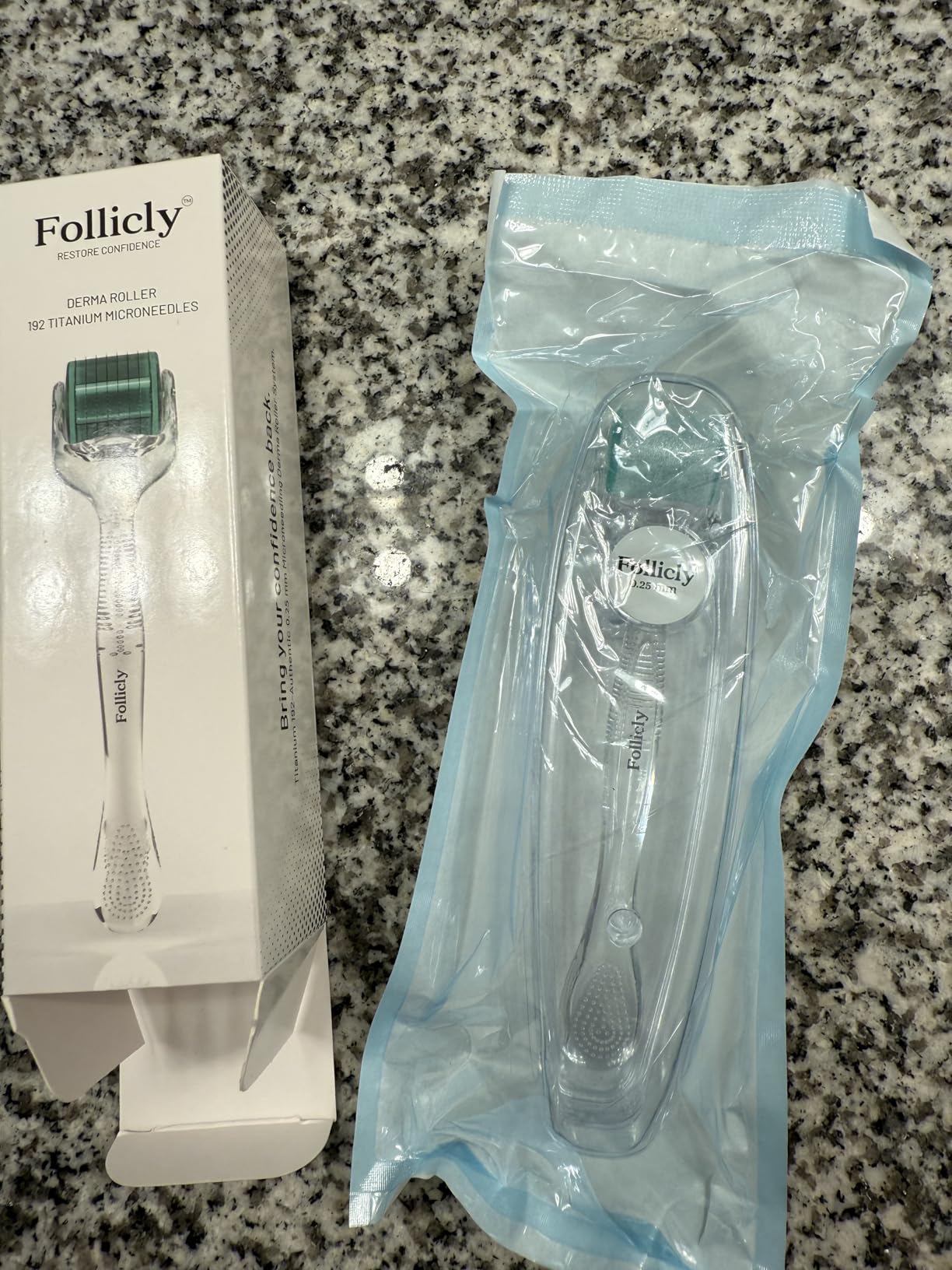
Specs: 192 authentic titanium microneedles at a 0.25mm length, an ergonomic anti-slip handle, an included protective case, and a 2.82 ounce body measuring 5.51 by 0.79 by 0.79 inches. That slim profile makes it the easiest to store of the group, and reviewers like that it replaces costly in-salon microneedling sessions for their purposes.
The limit is obvious and reviewers say it plainly: the needle depth is very short, which leads some buyers to buy a longer-needle roller instead. The storage case is also reported as difficult to open, which is a small irritation every single use.
Who the Follicly Roller Suits
It suits people whose scars are mild and whose main interest is serum performance. The 0.25mm titanium needles glide with little to no discomfort, so sessions fit into a normal routine without a recovery window.
It suits anyone short on storage space, and anyone who wants a second roller for travel that costs less attention than the main one.
Who the Follicly Roller Does Not Suit
It does not suit anyone chasing penetration. The needle length is the shortest of the common 0.25mm options, and that is exactly why some buyers upgraded to a longer roller.
It also does not suit people who want a large needle count for fast coverage. With 192 needles, coverage per pass is modest and full-face work takes longer than with a 540- or 600-needle head.
11. KEAPURE Microneedling Kit — Best All-in-One Kit
Derma Roller Kit for Face, Body, Stretch Marks – Skin Care Kit 540 Microneedle Roller Heads 180-Eyes, 600-Face,1200-Body | 30gm Moisturizing Cream and 25% Vitamin C Serum | Microneedling Roller Set
Three 0.3mm interchangeable roller heads
Real stainless steel needles
Full-size serum and cream included
Headband included
Pros
- Three heads cover eyes face and body
- Bundled full-size serum and cream
- Users report softer skin and fading lines
- Stainless steel needles effective not painful
- Well-presented packaging
Cons
- Snap-in heads can stop locking into the handle
- Cream tube is small next to the serum
- Some saw no improvement after months
- Needs consistent twice-weekly use
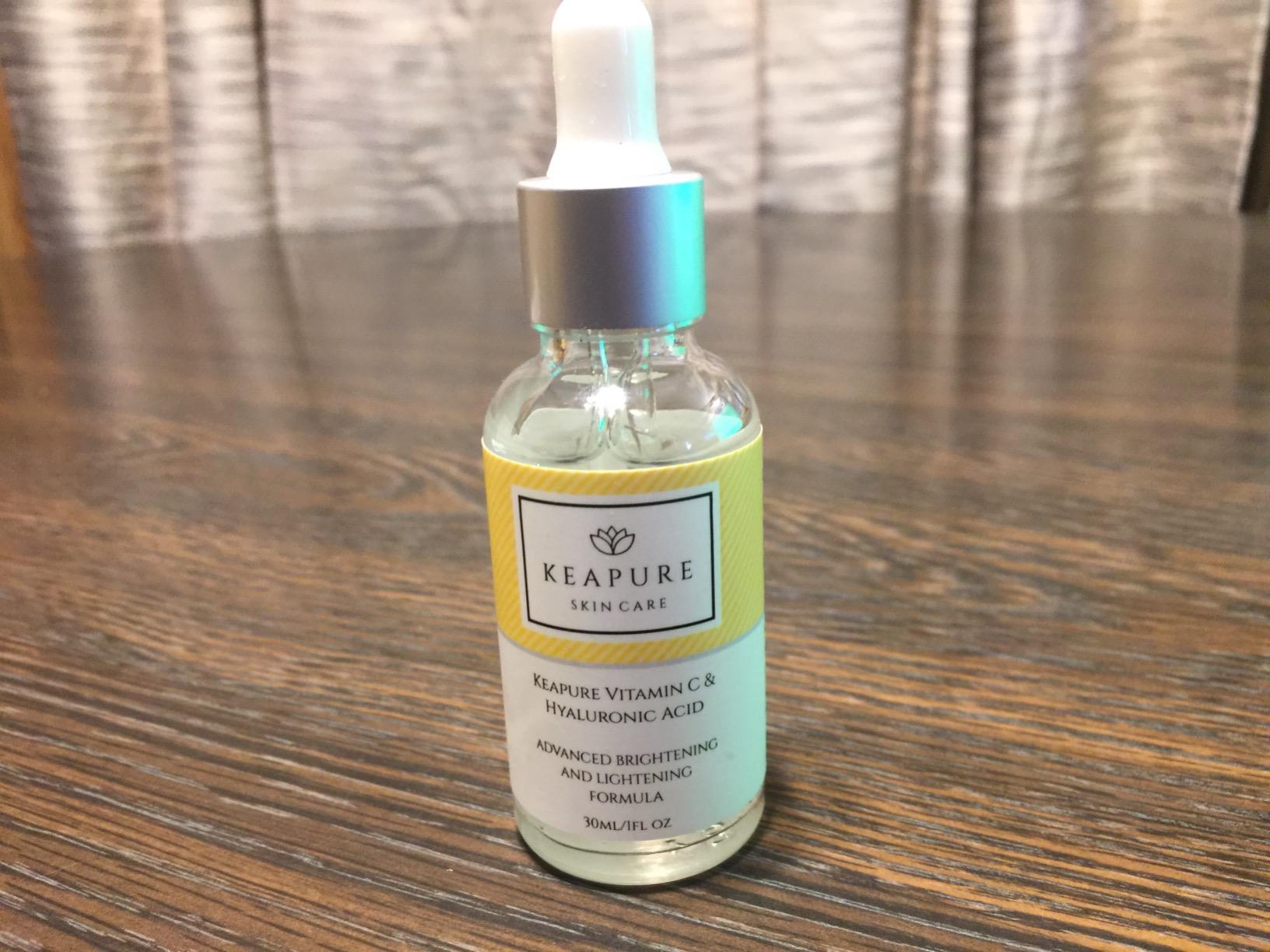
No other product here solves the beginner problem that stops people before they start: what to put on afterwards. This kit includes a 30g vitamin C and hyaluronic acid serum with ferulic acid and jojoba oil, a 30g gold centella asiatica moisturising cream, and a spa headband. You can do a full session tonight with nothing else to buy.
The three interchangeable heads are the second strength. A 180-needle head for the eye area, 600 for the face and 1200 for the body, all at 0.3mm with real stainless steel needles, means one tool covers three very different jobs. Reviewers report softer skin and gradual fading of light lines and stretch marks.
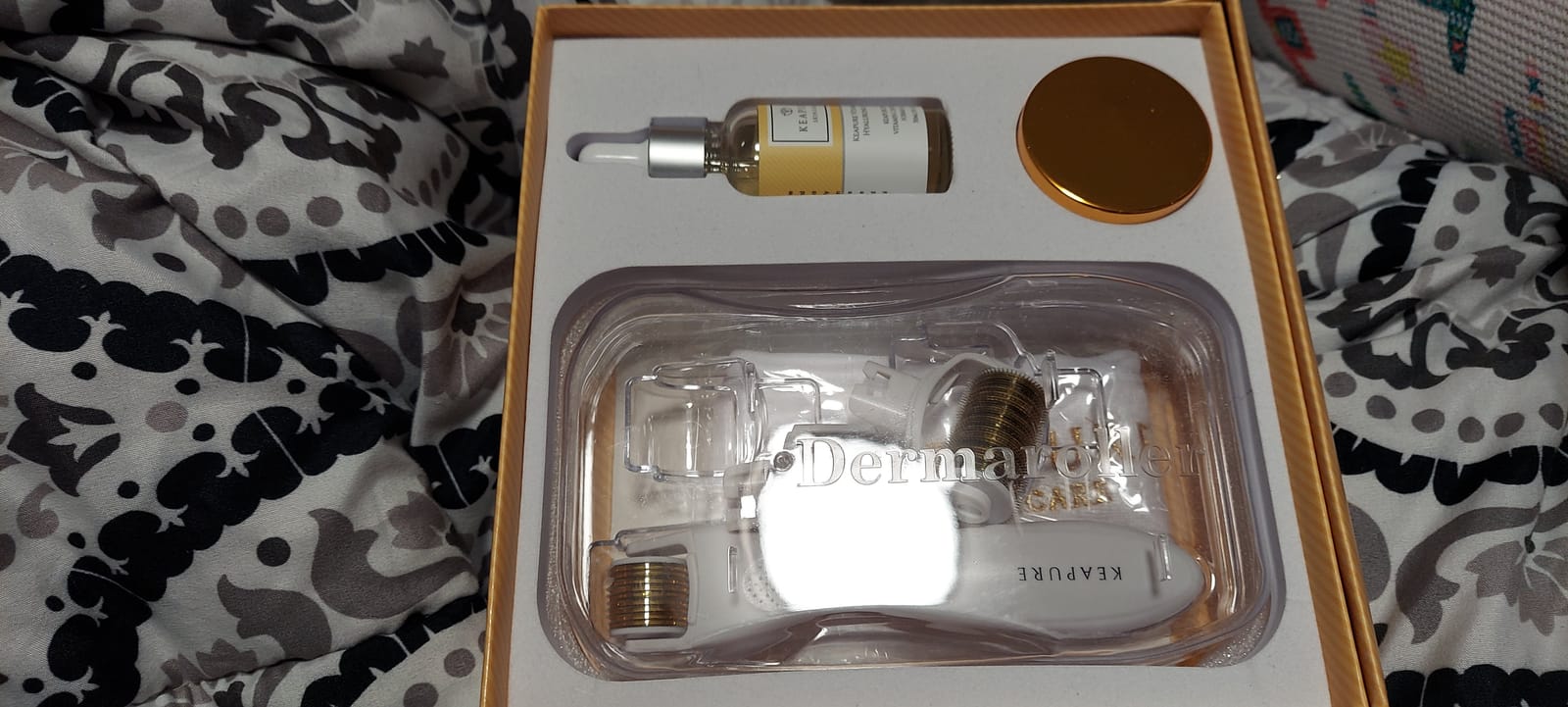
Mechanically it is the most complete package here, and it holds a 4.3 average with 66% of reviews at five stars. The needles are described as effective but not painful at 0.3mm, which sits in the same band as the AKIYRO and is deeper than most of the list.
The recurring complaints are mechanical and worth weighing. Snap-in roller heads can stop locking into the handle after a couple of uses, which is a reliability issue rather than a preference. The cream tube is small relative to the serum bottle, and several users saw no improvement in wrinkles or acne scars after months. The kit also asks for consistent twice-weekly use to deliver results, which is a heavier commitment than the four-to-six week spacing most home protocols recommend.
Who the KEAPURE Kit Suites
It suits a first-timer who wants a complete routine in one box. The included serum and cream remove the guesswork from post-session care, and the headband keeps hair out of the way in a way that sounds trivial until you try to work around it.
It also suits anyone treating more than one area, since the 180, 600 and 1200-needle heads let you match density to the body part instead of using one compromise head everywhere.
Who the KEAPURE Kit Does Not Suit
It does not suit people with deep boxcar or icepick scars. Users report no improvement on those concerns after months, which is the honest limit of any 0.3mm home tool.
Nor does it suit anyone who will not open it twice a week. A kit with a twice-weekly expectation and a serum that will eventually run out is a commitment, and reviewers who did not keep that cadence did not see results.
12. Tilcare Wide Derma Roller — Best for Fast Full-Face Coverage
Wide Derma Roller for Face with Sterile 0.25mm Titanium Microneedles, Peach
Sterile 0.25mm titanium needles
Ultra-wide roller drum
3.53 ounce body
Ergonomic low-fatigue handle
Pros
- Wide head covers more area per pass
- Titanium needles resist dulling and bending
- 0.25mm stays in cosmetic territory
- Handle reduces hand fatigue
- One tool for face scalp and beard
Cons
- 0.25mm depth is shallow for deeper scarring
- Highest one-star share in the group at 9 percent
- Some one-star feedback on needles dulling
The wide drum is the whole point of this roller. At 3.53 ounces and 7.2 by 2.24 by 1.65 inches it is the longest single roller on the list, and owners favour it specifically for cutting down session time. If you are covering cheeks, forehead and jawline on a schedule, fewer passes is a real ergonomic gain.
Build is the second strength. The needles are sterile 0.25mm titanium, which reviewers say resists dulling and bending better than steel, and the handle is shaped to reduce hand fatigue during longer passes and keep pressure even.
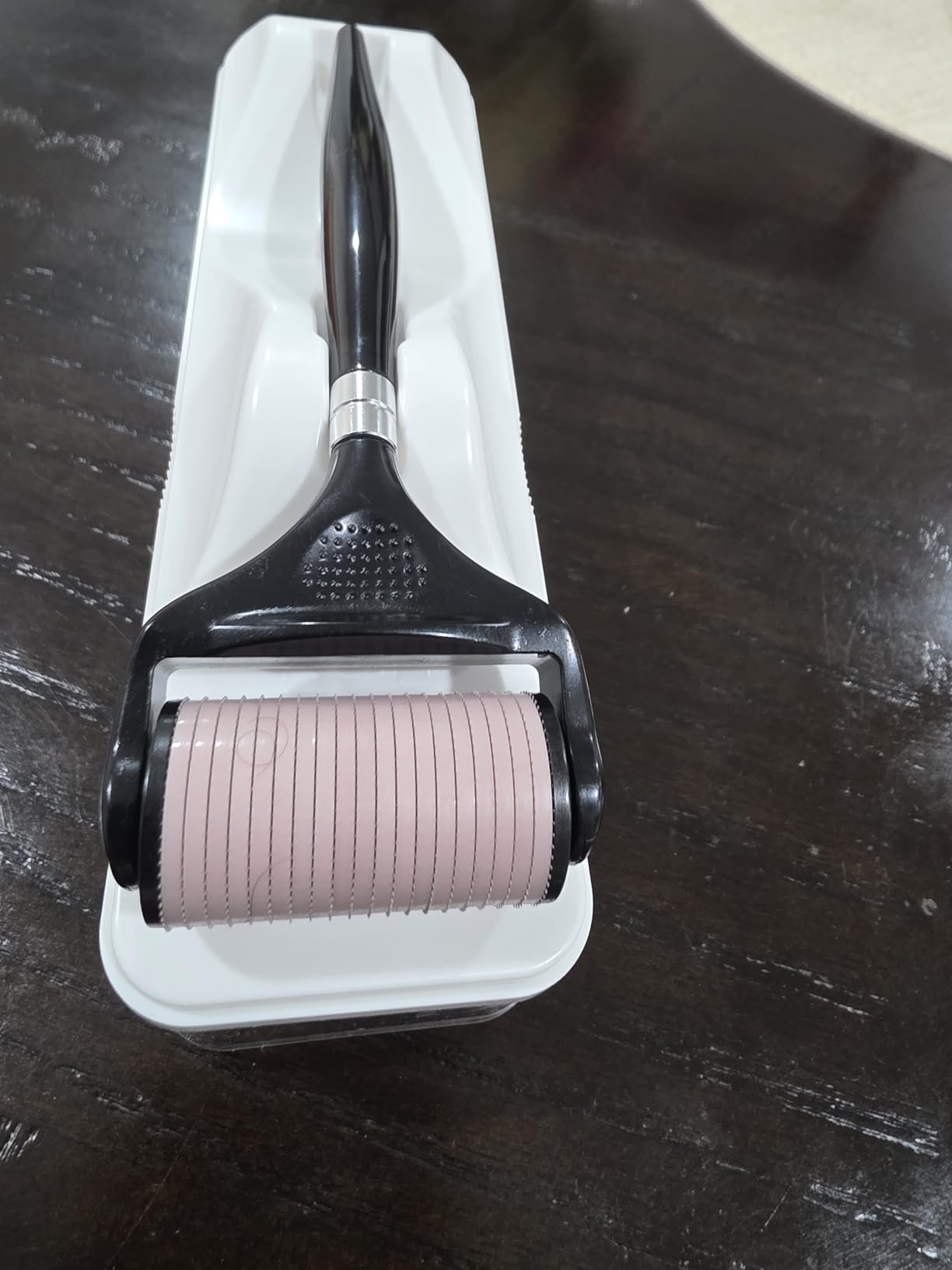
The reservation is depth, as with most of the list. At 0.25mm the tool stays firmly in cosmetic territory for regular home use, and owners are candid that the shallow length limits it for deeper scarring concerns. Buying a bigger roller does not buy more depth.
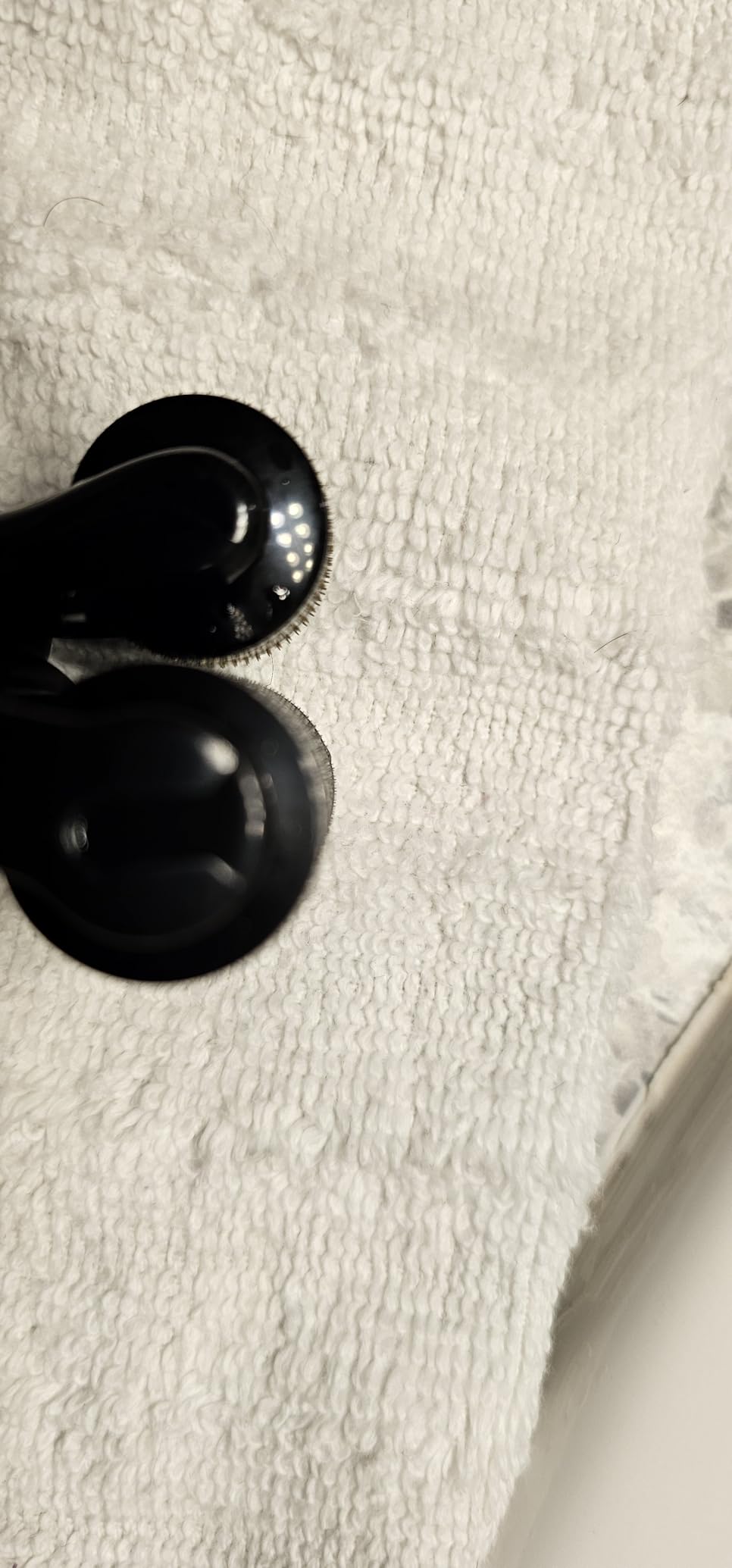
It also has the smallest review base here, 286 reviews at a 4.3 average, with 71% five-star but a 9% one-star share — the highest one-star share of any roller in this roundup. The one-star feedback specifically reports needles dulling with repeated use, so factor replacement into your plan.
Who the Tilcare Roller Suites
It suits people with a short window for a session. The wide head means you can cover more area in fewer passes, which shortens each session and makes the four-to-six week schedule easier to keep.
It also suits anyone who presses unevenly. A wide drum with an even-pressure handle spreads load across more needles, so you are less likely to concentrate force on one small patch and damage that area.
Who the Tilcare Roller Does Not Suit
It does not suit anyone targeting deeper scarring, and it does not suit a small bathroom cabinet. At 7.2 inches long it is the bulkiest item in the roundup alongside the multi-head kit.
It also does not suit buyers who want a long review history to draw on. With the smallest sample here, you have less evidence to weigh than with any other pick.
What Derma Roller Size Is Best for Acne Scars?
For home use, needle length is the only specification that should drive your decision. Here is the short answer in three lines, and it is the same rule that shows up most often in forum advice from people who have already used these tools.
0.25mm is the right starting length. It stays in the epidermal layers, is essentially painless, carries no downtime, and is the length endorsed by the conservative Acne.org home protocol, which specifies 0.25mm for both needle length and needle diameter.
0.5mm is the practical ceiling for home use. It reaches far enough to stimulate dermal collagen remodelling and is the length most often recommended for rolling and boxcar scars, but it needs light pressure and a slower session.
1.0mm and above is professional-only territory. Anything at that depth should be used by someone trained, in a clinical setting, and that is the exact reasoning behind the 0.25mm-to-0.5mm home ceiling.
Nine of the twelve rollers here are 0.25mm, one is 0.30mm and one kit uses 0.3mm heads. Only the Koi Beauty model offers depths above 0.5mm in the same product family, and I would treat those versions as clinician tools unless you have been taught to use them.
One more variable that almost nobody discusses: needle diameter. A 0.25mm length on a needle with a broad base behaves quite differently from a slender one, which is why the Acne.org protocol specifying both length and diameter at 0.25mm is worth reading. It is also why reviewers of the RadBizz complain about sparse needle coverage — density and diameter change how a pass actually feels.
Derma Roller vs Microneedling Pen vs Dermastamp
This is the question that decides whether a roller is even the right shape of tool for you, and it is where the loudest forum criticism of rollers comes from. The core complaint about rollers, raised repeatedly on r/Microneedling, is the needle angle: as a roller wheel turns, each needle enters and exits at a slight diagonal, which can tear the epidermis rather than making the clean vertical puncture a pen or stamp makes.
A microneedling pen presses needles straight down along a vertical path, either in manual stamping mode or motorised, and many users on r/Microneedling say they prefer 1mm and 1.5mm stamp devices precisely because the penetration is clean and repeatable. Pen devices also allow an adjustable depth dial, which a fixed-length roller does not.
What a roller still wins on is coverage speed and simplicity. No batteries, no depth dial to mis-set, no cartridges, and a wide head that covers a cheek in a couple of passes. If your scarring is mild and atrophic, a roller is the lower-effort way to keep a session schedule. If your scarring is deep boxcar or icepick, the device geometry matters more than the roller convenience.
SkincareAddiction carries a caution against attempting dermarolling at home, and Reddit users in r/Microneedling largely advise against home rollers for the angle reason. Read that as a genuine signal about technique rather than as a reason to avoid the category: the people who report problems are reporting pressure and angle errors, not the tool itself.
Does Dermarolling Actually Work for Acne Scars?
Yes, with a clear yes-but. At-home dermarolling works on mild atrophic scarring, meaning rolling and shallow boxcar scars, over three to six months of consistently spaced sessions. Users on the Acne.org scar forums describe noticeable softening of rolling scars over that window, not weeks, and the most common phrase across that discussion is helpful but never transformative.
It does not remove icepick scars, which are narrow and deep, and it does not help hypertrophic or raised scars, which can worsen with needling. It also does very little for post-inflammatory hyperpigmentation, because that is a pigment problem rather than a structural one, and treating it aggressively is how people talk themselves into a patch of new discolouration.
One evidence caveat worth stating: the strong studies in this space are professional microneedling trials performed by clinicians with numbing and sterile single-use setups. A home roller session is not the same intervention, so professional outcome figures are an upper bound rather than a promise.
How to Dermaroll at Home: Protocol, Sterilization and Safety Rules
Before the session. Do not roll over active breakouts, inflamed pustules, eczema patches or any open skin. A widely shared home protocol specifies 0.25mm length and 0.25mm diameter, and licensed cosmetology reviewers on product listings caution specifically against combining home rolling with retinoids, because the two together multiply irritation and hyperpigmentation risk.
Disinfect before and after. Wipe the head with 70% isopropyl alcohol before every use and again after. Let it air-dry completely and store it in a closed case, never loose in a bathroom drawer. Cross-contamination anxiety is the single most common hygiene worry in forum discussion, and a hard case plus alcohol is the whole answer.
During the session. Clean dry skin, no serum beforehand, because a slippery surface makes you press harder. Roll in one direction over each section — vertical, then horizontal, then diagonal — rather than back and forth, which is what causes the tearing that r/Microneedling users object to. Use light pressure. With a 0.25mm roller, light pressure is the entire technique.
After the session. Apply a hydrating serum such as hyaluronic acid, then a plain moisturiser. No retinoid, no vitamin C, no exfoliating acid for at least 24 to 48 hours, and on the following nights as well. Sunscreen the next morning is not optional: post-inflammatory hyperpigmentation is the number one risk of aggressive home dermarolling, and it hits deeper skin tones hardest.
Spacing and replacement. Four to six weeks between sessions is the most commonly recommended safe interval. Replace the roller head, or the whole roller, when needles dull — typically every three to five uses on a single-head tool. If your sessions run every six weeks, a replacement head every 20 to 30 weeks is a reasonable budget line to plan for.
Stop and see a doctor if. You see spreading redness beyond a day, pus, fever, worsening breakouts in the treated area, or you have a history of keloids. Also stop if you are pregnant, on blood thinners, immunosuppressed, or have had radiation therapy to the area — those are standard contraindications for needling.
When a Dermatologist Beats a Derma Roller
Some scar types are simply out of reach for a home tool, and buying a better roller will not change that. Icepick scars need subcision, where a needle is inserted under the scar to release the fibrous tether, and often a filler such as Bellafill afterwards. That is a clinical procedure, not a shopping decision.
Rolling and deep boxcar scars that have not responded to months of consistent home sessions are the other trigger point. A clinician can offer subcision, radiofrequency microneedling, platelet-rich plasma, or laser resurfacing, all of which reach depths and energies a roller cannot produce.
Honestly stated: if your scarring is severe, or if it is getting worse, or if you have an active inflammatory skin condition, spend the money on a consultation first. A dermatologist can also tell you your scar morphology, which is the single most useful piece of information nobody at home can give you.
Frequently Asked Questions
Which derma roller is best for acne scars?
A 0.25mm titanium-needle dermaroller is the best starting choice for at-home acne scar work, with 0.5mm the practical ceiling for anyone rolling without clinical training. Among the twelve models we compared, the Sdara Skincare roller led on consistency of feedback across more than 30k reviews, while the Koi Beauty titanium roller offered the best build and the widest range of needle depths.
What is the best derma roller size for acne scars?
0.25mm is the right starting needle length at home because it stays in the epidermal layers and is essentially painless. 0.5mm is the practical ceiling for most people and is the length most often recommended for rolling and boxcar scars. Anything at 1.0mm or longer should be used only by a trained professional in a clinical setting.
Does dermarolling work for acne scars?
It works on mild atrophic scarring such as rolling and shallow boxcar scars, over three to six months of sessions spaced four to six weeks apart. It does not remove icepick or hypertrophic scars and does very little for post-inflammatory hyperpigmentation. The strongest clinical studies involve professional microneedling, so home results should be expected to be more modest.
Can I use a derma roller on active acne?
No. Rolling over active breakouts, inflamed pustules or open skin can spread bacteria, deepen lesions and worsen scarring. Wait until the area is fully healed, and keep the same caution for eczema patches and any irritated or sun-damaged skin. Spreading redness, pus or fever after a session are signs to stop and see a doctor.
How long does it take to see results from dermarolling?
Most users report noticing softening of rolling scars over three to six months rather than weeks, with sessions spaced four to six weeks apart. Texture and serum absorption can improve sooner, often within a few sessions. Anyone promising visible change in a fortnight is overselling what a fixed-length home roller can do.
How often should I replace a derma roller?
Replace the head when the needles dull, which is typically every three to five uses for a single-head roller or every three to five uses on a multi-head kit with replaceable heads. Dull needles tear the epidermis instead of puncturing it, which is both less effective and more likely to cause scarring and hyperpigmentation. Store every replacement in a closed protective case.
Final Verdict for the Best Dermarollers for Acne Scars in 2026
The Sdara Skincare dermaroller takes our top spot: the most consistent feedback base of the twelve, a painless 0.25mm titanium head that suits a first scar session, a storage case that supports a real hygiene routine, and a multi-use design that works beyond the face. If you want a step deeper, the Koi Beauty titanium roller is the strongest built option and the only one that lets you progress through needle depths with the same tool.
The rule underneath all twelve picks stays simple. Start at 0.25mm, treat 0.5mm as your ceiling without training, roll every four to six weeks, keep retinoids and acids away for a couple of days either side, and wear sunscreen the next morning. Pick a needle length that fits your scar type, check the titanium claim before you rely on it, and budget for replacement heads. If your scarring is deep, icepick or worsening, a consultation will do more for you than another roller ever will.