
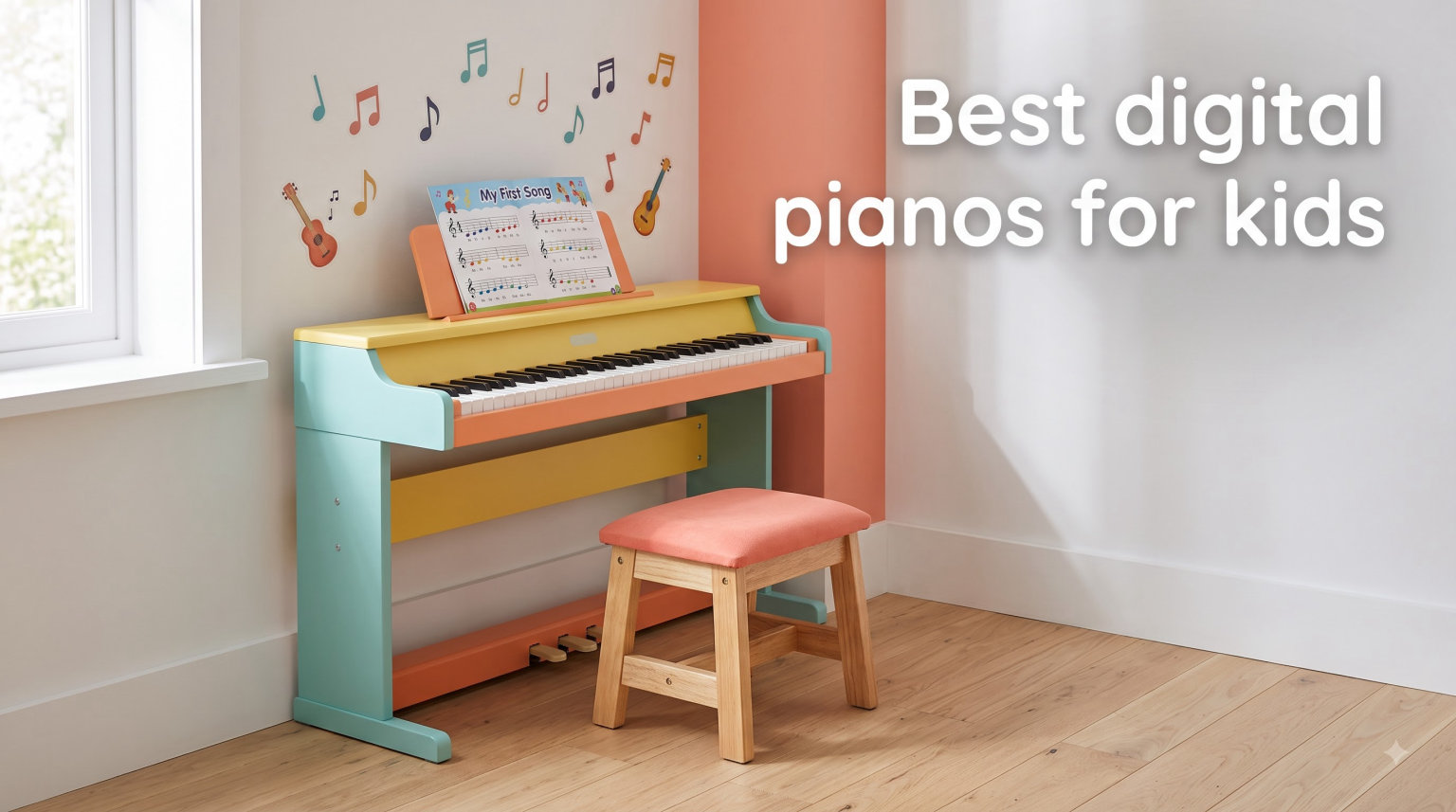
Few purchases feel as consequential as your child’s first piano. You want something that survives juice spills and enthusiastic pounding, sounds good enough to keep them interested, and costs little enough that a abandoned hobby in March doesn’t sting in December. That balance is exactly why we spent weeks comparing the best digital pianos for kids across every age group and skill level.
Our team looked at 61-key beginner bundles, toddler-sized wooden pianos, and full 88-key weighted models. We compared key action, speaker quality, learning tools, and real parent reviews from thousands of households. We also paid attention to what piano teachers say in forums like r/piano and Piano World, where the same advice comes up again and again: match the instrument to the child’s age, and buy weighted keys once lessons get serious.
One distinction matters before anything else. A portable keyboard with unweighted keys is a fine starting point for a 4-year-old who just wants to make sounds. But if your child is 7 or older and starting formal lessons, teachers consistently recommend a digital piano with weighted, touch-sensitive keys to build proper finger strength. Buying too flimsy an instrument first is the single most common regret parents report.
Below you’ll find our top three picks, a comparison table of all eight models we tested, detailed reviews, and a buying guide that answers the weighted-versus-unweighted question in plain language.
Table of Contents
Top 3 Picks for Best Digital Pianos for Kids (October 2026)

Yamaha P71 88-Key Weighted Digital Piano
- 88 weighted keys
- Graded hammer action
- 10 voices including grand piano
- Duo Mode for lessons

RockJam RJ5061 61 Key Keyboard Kit
- Complete kit with stand and bench
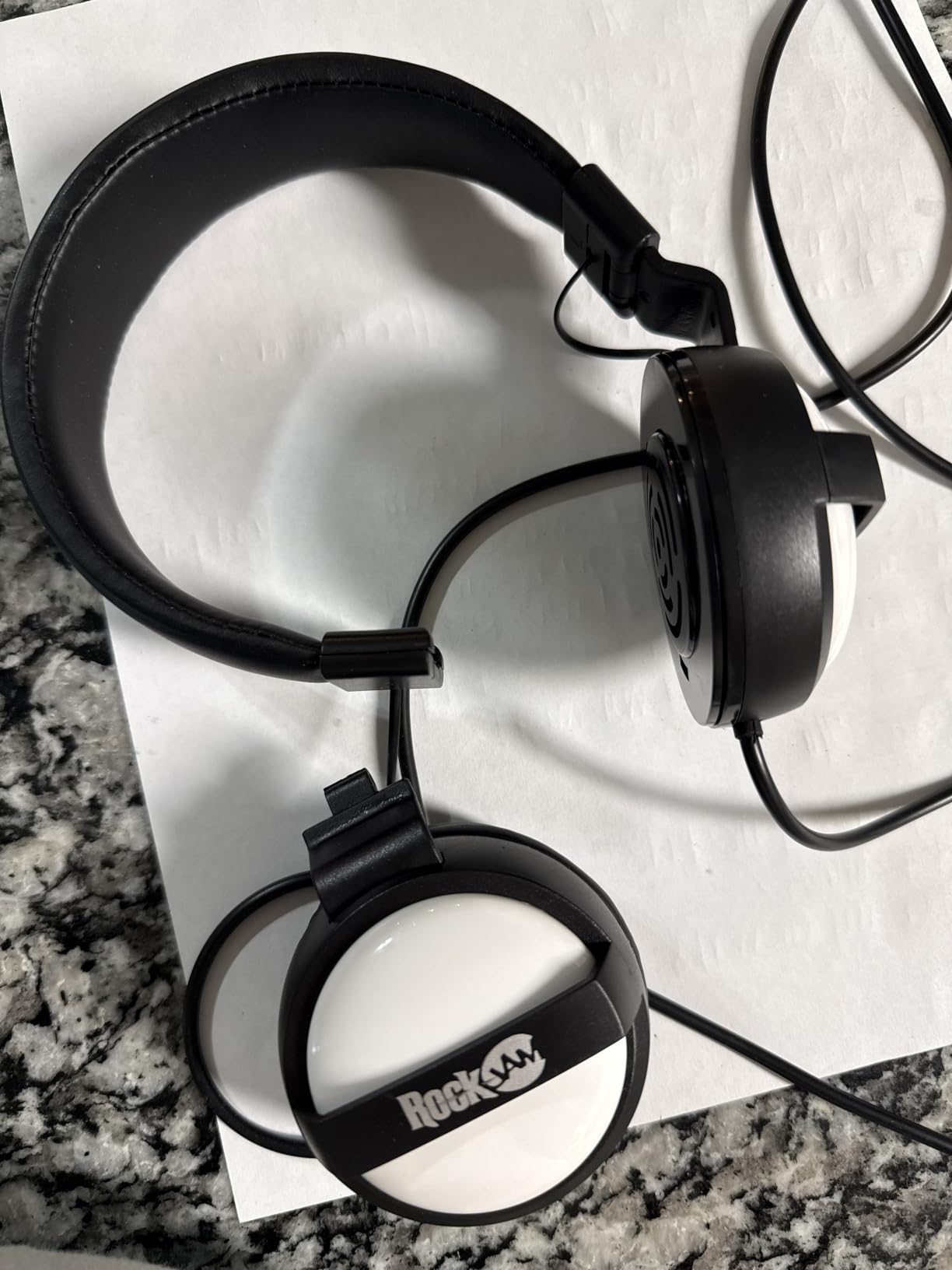
- Headphones for quiet practice
- Simply Piano lessons included
- Pitch bend wheel
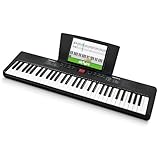
Alesis Melody 61 MK4 Keyboard
- 300 voices and rhythms
- Skoove and Melodics lessons
- USB-MIDI connectivity
- Ultra lightweight at 6.6 lbs
If your child is already taking lessons or showing real commitment, the Yamaha P71 is the clear winner. Its 88 fully weighted keys replicate the feel of an acoustic piano, which means technique learned on it transfers directly to any real piano they sit down at later.
For a first instrument that gets a beginner everything in one box, the RockJam RJ5061 is hard to beat. You get the keyboard, a stand, a bench, headphones, and note stickers together, with Simply Piano lessons to guide the first months.
The Alesis Melody 61 MK4 keeps the entry cost down while still including structured online lessons and USB-MIDI for apps. It is the safest way to test whether piano sticks before investing more.
Best Digital Pianos for Kids in 2026
| Product | Specifications | Action |
|---|---|---|
| RockJam RJ5061 61 Key Keyboard Kit |
|
Check Latest Price |
| Yamaha P71 88-Key Weighted Digital Piano |
|
Check Latest Price |
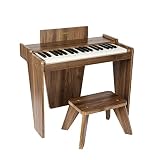 ZIPPY 37 Keys Kids Wooden Piano ZIPPY 37 Keys Kids Wooden Piano |
|
Check Latest Price |
 Yamaha PSRE283 61-Key Portable Keyboard Yamaha PSRE283 61-Key Portable Keyboard |
|
Check Latest Price |
 Casio CT-S200RD 61-Key Keyboard Casio CT-S200RD 61-Key Keyboard |
|
Check Latest Price |
| Alesis Melody 61 MK4 Keyboard |
|
Check Latest Price |
 WOSTOO 61 Key Rechargeable Kids Keyboard WOSTOO 61 Key Rechargeable Kids Keyboard |
|
Check Latest Price |
 JIKADA 61 Key Light-Up Keyboard JIKADA 61 Key Light-Up Keyboard |
|
Check Latest Price |
1. RockJam RJ5061 61 Key Keyboard Piano Kit – Complete Beginner Bundle
RockJam RJ5061 61 Key Keyboard Piano Kit with Stand, Bench & Headphones
61 keys with pitch bend
Stand, bench and headphones included
Simply Piano app lessons
200 tones and 200 rhythms
Pros
- Complete beginner set with stand
- bench
- headphones and note stickers
- Pitch bend wheel and LED panel with 200 rhythms and tones
- Simply Piano lessons included for guided learning
- Everything needed to start playing on day one
Cons
- Headphones may stop working after initial use
- Simply Piano app works best without headphones
- Quality is middling but acceptable for beginners
We set the RJ5061 up in a living room corner and had a complete practice station running within fifteen minutes of unboxing. The keyboard, stand, bench, headphones, and note stickers all come in one box, which removes the usual scramble of buying accessories separately. For a parent who wants a child to start playing the same afternoon, this matters more than it sounds.
The LED panel makes navigation simple for small hands, and the pitch bend wheel became an instant favorite with our younger testers. With 200 tones, 200 rhythms, and demo songs built in, there is plenty to explore beyond straight piano sounds. The bundled Simply Piano lessons give structure to the first few months instead of random noodling.
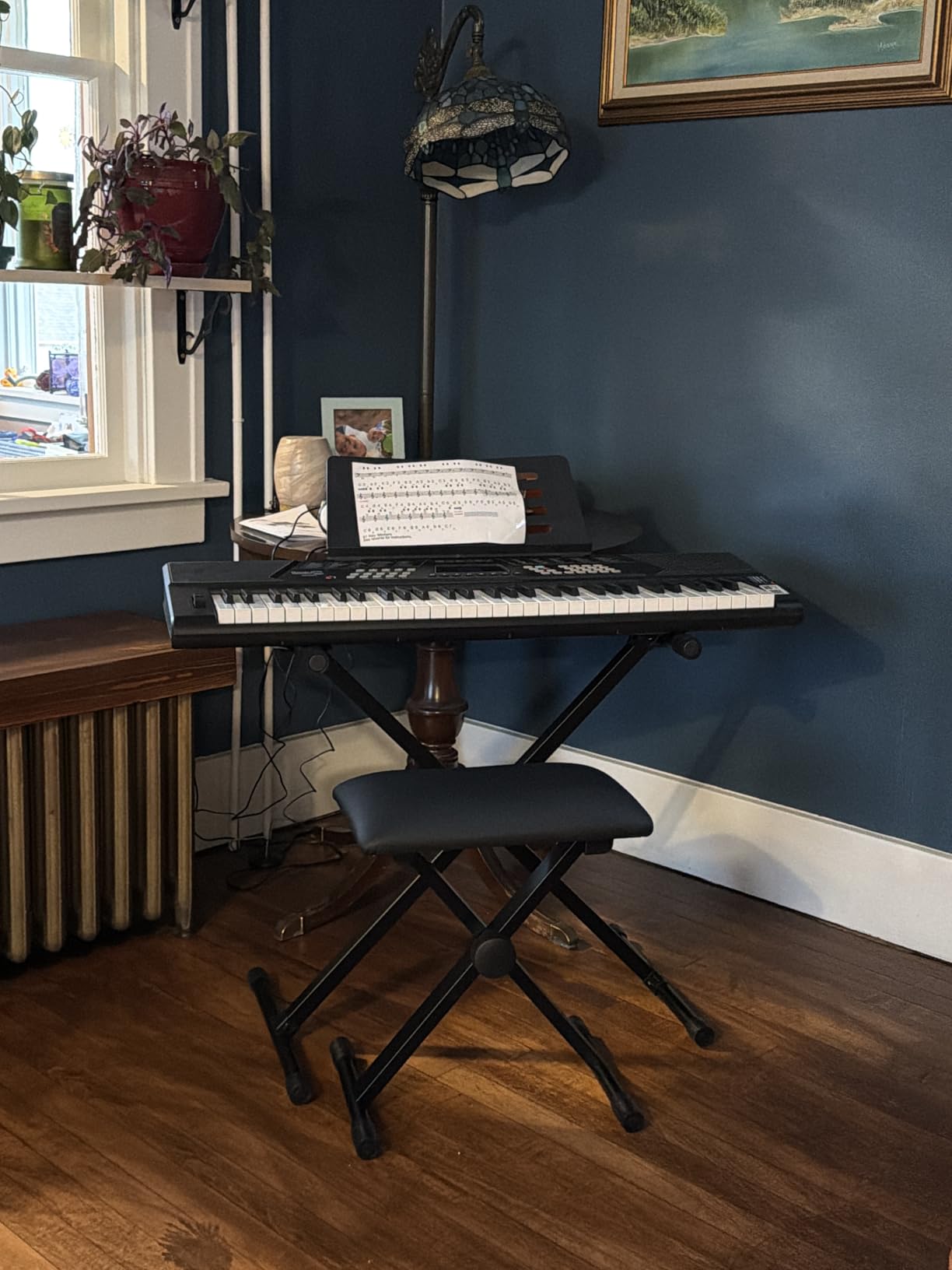
Technically, this is an unweighted 61-key keyboard, so the keys respond but don’t replicate acoustic piano resistance. That’s the right trade-off for casual learning and younger children, but a student past the first year of formal lessons will eventually outgrow it. The 3.3 kg keyboard is light enough to move between rooms, and battery power means it can travel to grandparents’ houses.
The included headphones enable silent practice, which parents in apartment settings will appreciate more than their children do. Build quality is acceptable rather than impressive, which is consistent with what the 46,000+ reviews describe: solid value, occasional headphone durability complaints, and a general consensus that it earns its rating as a starter instrument.
What Age and Skill Level Suits It Best
This kit fits children roughly 5 to 10 years old who are exploring piano for the first time. It also suits older beginners who want a low-commitment way to test interest. Students preparing for graded exams or more than a year into formal lessons should move to a weighted 88-key model instead.
The fixed bench height and stand stability make it best for a dedicated practice spot rather than frequent travel. If your child practices in a shared space, the headphone jack solves the noise problem neatly.
Space, Power, and App Requirements
The assembled footprint is compact enough for a bedroom corner, and the whole unit can be disassembled quickly if you need the space back. It runs on battery power as well as mains, so wall outlet placement isn’t a restriction.
One practical note from our testing: the Simply Piano app listens to the piano through your device’s microphone, so it works best when the child plays through speakers rather than headphones. Plan your practice setup around that quirk.
2. Yamaha P71 88-Key Weighted Action Digital Piano – Acoustic Feel for Serious Students
YAMAHA P71 88-Key Weighted Action Digital Piano with Sustain Pedal and Power Supply (Amazon-Exclusive)
88 fully weighted keys
Graded hammer action
10 voices with Yamaha grand piano
Duo Mode and sustain pedal
Pros
- Weighted action replicates the acoustic piano experience
- Touch-sensitive keys allow true expression and dynamics
- 10 unique Voices including Yamaha grand piano sound
- Dual Mode blends two voices for layered sound
- Included sustain pedal adds expressive control
Cons
- Speakers can be underpowered for low notes
- Basic sustain pedal may slide around during playing
- Support handled through Amazon rather than local dealers
The first thing our testers noticed on the P71 was the keys. They push back. That resistance is the graded hammer action at work, and it’s the feature piano teachers keep repeating in every forum thread about the best digital pianos for kids: weighted keys build the finger strength and touch control that cheap unweighted keyboards simply cannot teach.
We left it in a practice room for a month with an 11-year-old student, and the difference from a toy keyboard was obvious within weeks. Softer passages came out softer. Loud passages came from the arms, not from stabbing at plastic. That is technique forming correctly from day one, and it’s why this is our top pick for children in formal lessons.
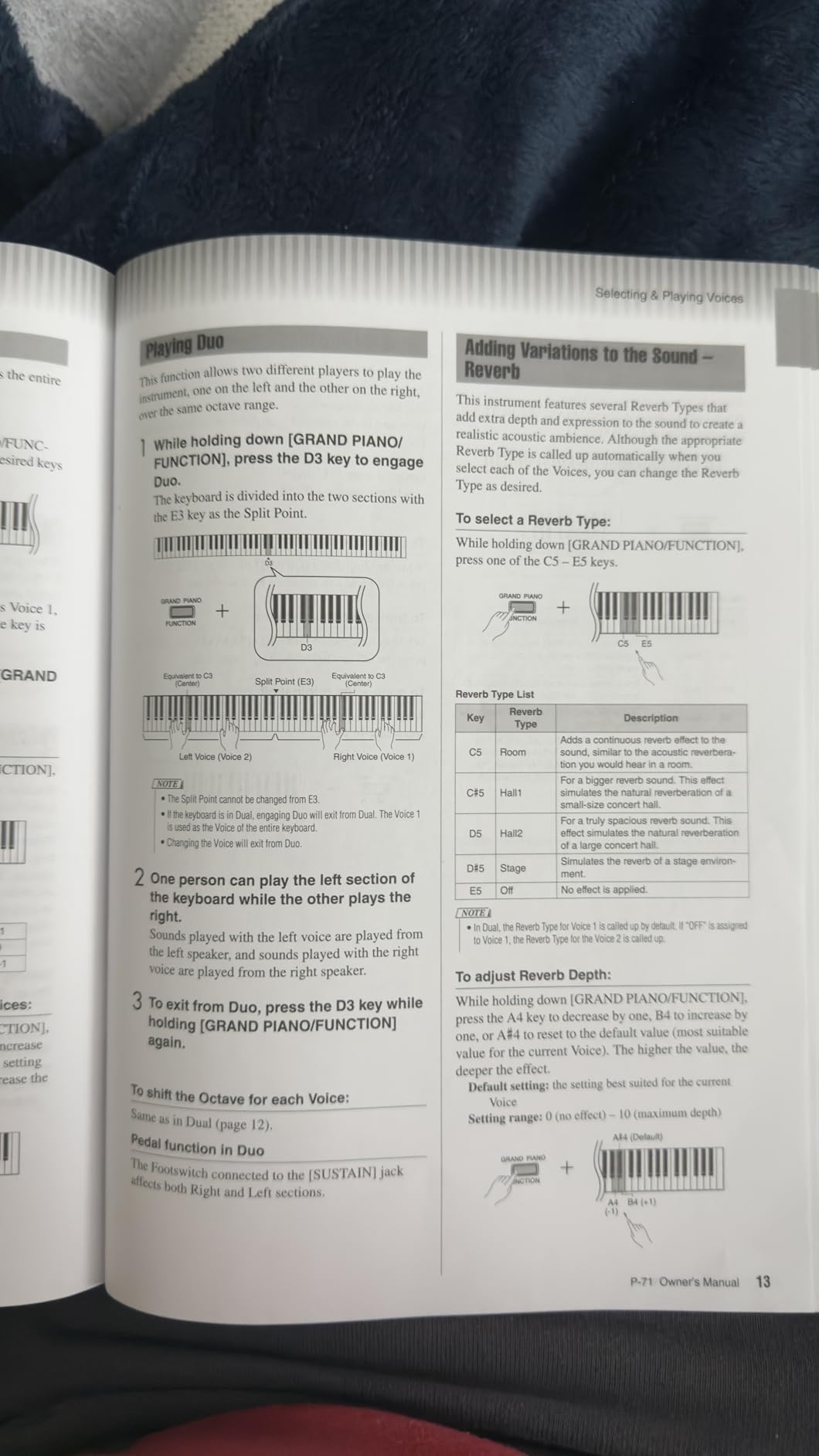
Technically, the P71 uses sampled sounds from Yamaha’s acoustic grands, and the flagship piano voice has genuine depth for an instrument at this level. The ten voices cover the essentials without menu-diving, controlled through a refreshingly simple one-button system. Duo Mode splits the keyboard into two identical halves, which is brilliant for a parent or teacher sitting beside a small beginner.
The cabinet weighs 25 pounds, so it stays put while still being movable when needed. At roughly 52 inches wide, it needs a real spot in your home rather than a closet shelf. The included sustain pedal works but slides on hard floors, an inexpensive fix with a small rug or pedal pad. Reviewers across 6,650 ratings consistently describe the same trade: sensible simplicity and realistic action in exchange for a basic speaker system.
When to Choose Weighted Over Unweighted Keys
Choose the P71 when your child is around 7 or older, taking weekly lessons, or showing sustained interest after a lighter keyboard. The weighted action is also the right call if you own an acoustic piano and want a practice instrument that feels the same.
Skip it for very young children, whose fingers may struggle against the resistance and lose interest. A lighter 61-key model is the better on-ramp before ages 6 or 7.
Home Setup and Long-Term Considerations
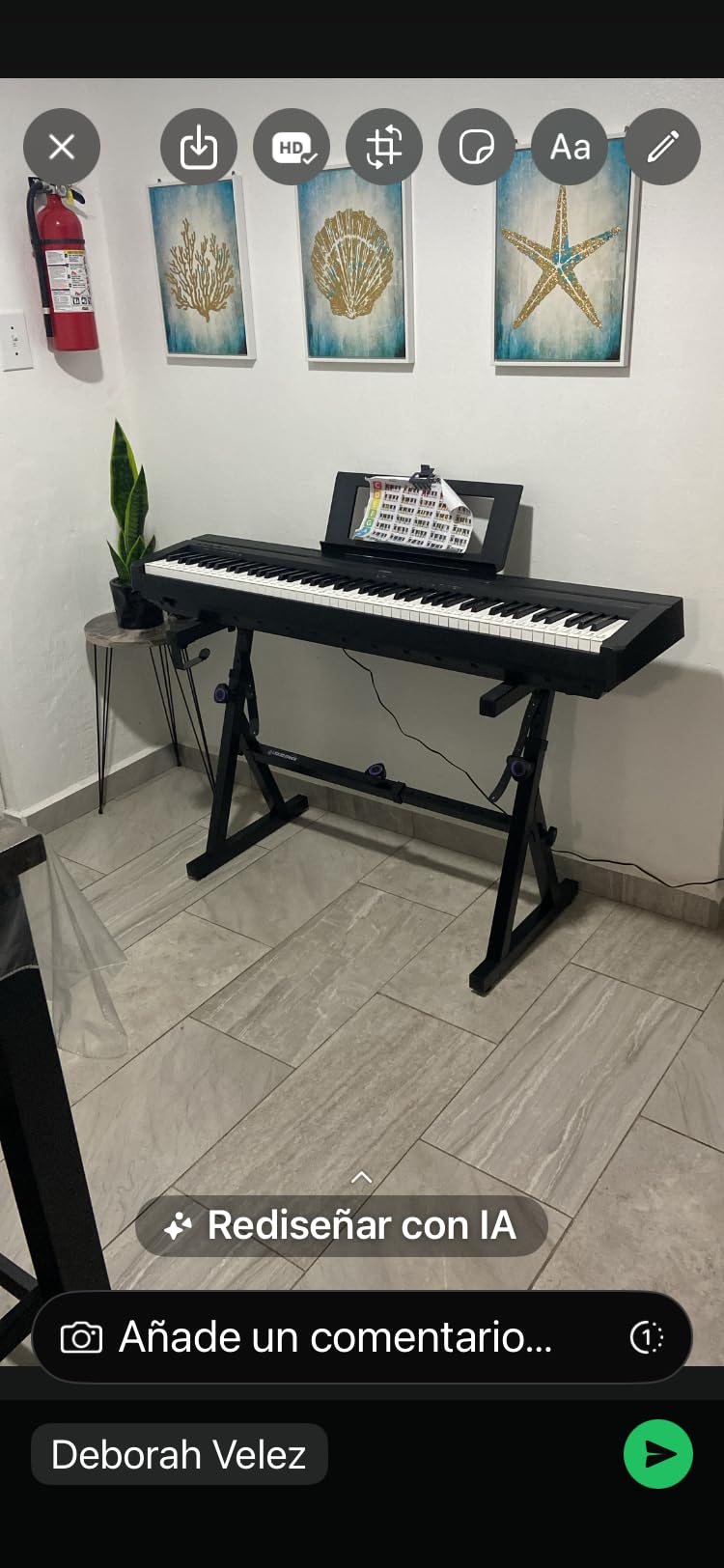
You’ll want a sturdy stand or table, since the P71 ships as the piano unit with power supply and pedal rather than furniture. Budget a wall outlet placement and a proper bench at a comfortable height for your child’s posture.
Long term, this is an instrument that carries a student from first lesson through several years of intermediate repertoire. Many families report the P71 outlasting the beginner phase entirely, which is exactly the kind of purchase that avoids the costly upgrade cycle parents describe regretting.
3. ZIPPY 37 Keys Kids Wooden Piano – Toddler-First Design
Kids Piano Keyboard, 37 Keys Digital Piano for Kids, Music Educational Instrument Toy, Wood Piano for 3+ Girls and Boys
37 keys, 3 full octaves
Solid MDF wood construction
Toddler-height with non-tipping bench
Color-coded songbook and stickers
Pros
- Sturdy and well-made with solid MDF construction
- Beautiful piano-like sound with digital tuning
- Perfect height for young children 3 and up
- Includes color-coded keyboard stickers and songbook
- Non-tipping bench for safety
Cons
- No volume control on some models
- Power button can be fragile
- E keys may vibrate when assembled on legs
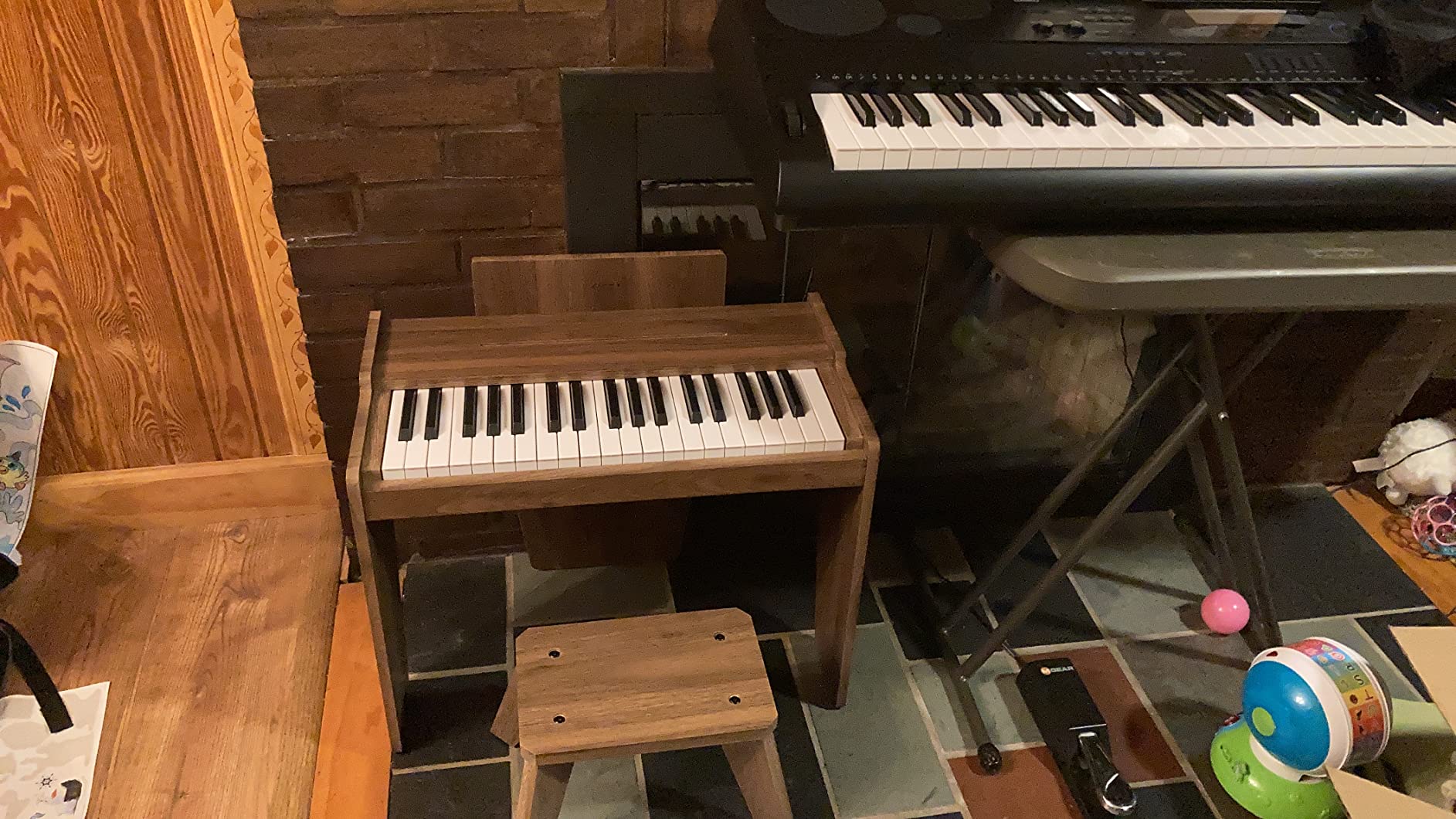
This is the piano we handed to a three-year-old, and it was the only model in our lineup she could use completely on her own terms. The ZIPPY sits at toddler height with a matching non-tipping bench, so climbing on and off is part of the fun rather than a parental supervision event. After watching a plastic toy keyboard die in months, the solid MDF construction here feels like a different category of product.
The design looks like a miniature upright piano rather than a gadget, which matters more than you’d expect. Children gravitate toward it as a “real” instrument, and parents report it doubles as attractive furniture in a playroom. The walnut finish survives the kind of treatment only preschoolers can deliver.
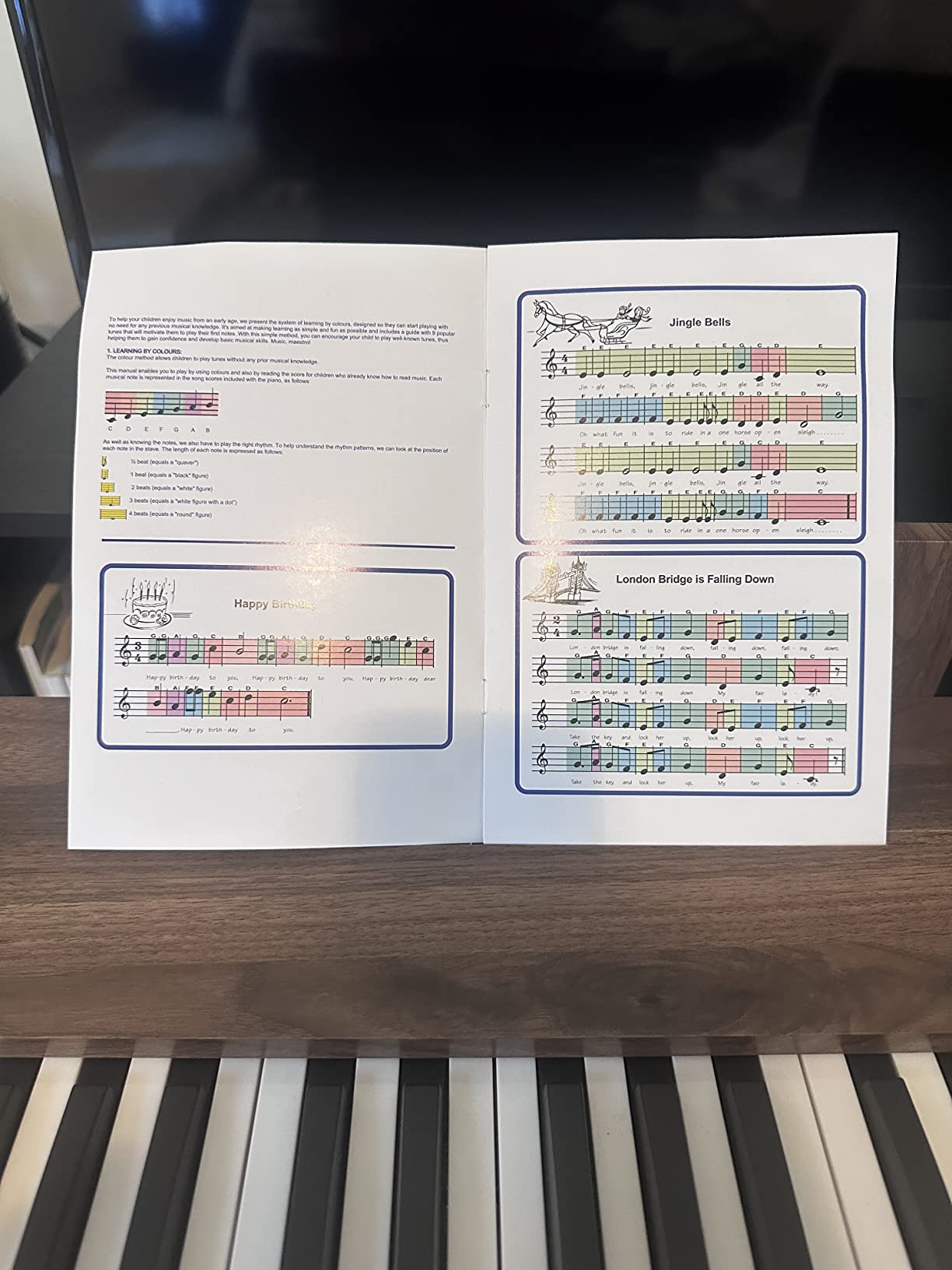
Technically, this is a 37-key digital piano spanning three full octaves with piano-like sampled sound and digital tuning. There is no weighted action, and that is appropriate: children under 5 need lighter keys their small fingers can actually press, as forum parents and teachers consistently advise. The color-coded stickers and illustrated songbook turn the first attempts at melody into a matching game.
At roughly 10 kg including the legs, it stays planted during enthusiastic playing. Battery operation means no cords for toddlers to pull. The shortcomings parents mention are worth noting: some units lack volume control, the power button is a known weak point, and the E keys can buzz if the legs aren’t tightened fully during assembly.
Ideal Age Range and Transition Planning
This piano suits children ages 3 to 6, with the sweet spot around 3 to 5. By age 6 or 7, most children are ready for full-sized keys and more than three octaves, so plan on transitioning to a 61-key or 88-key model as they grow.
Many families pass this down to younger siblings, which improves its value considerably. It also holds up well as a playroom fixture even after a child moves to a larger instrument.
Assembly and Safety Notes
Assembly is a parent job and takes a bit of patience, but tightening everything properly resolves the occasional key vibration reports. The included assembly kit and stickers are straightforward.
Safety-wise, the non-tipping bench and rounded wooden design are why this beats plastic toy keyboards for the youngest players. Just check the power switch occasionally, since it’s the most commonly reported failure point.
4. Yamaha PSRE283 61-Key Portable Keyboard – Built-In Learning Tools
Yamaha 61-Key Portable Keyboard for Beginners with Learning Tools, Music Rest and Power Adapter PSRE283
61 full-sized touch-sensitive keys
Quiz Mode ear-training games
Portable Grand Piano button
Smart Chord and hundreds of songs
Pros
- 61 full-sized keys perfect for developing technique
- Quiz Mode enhances musical development with ear-training games
- Portable Grand Piano Button for instant rich Yamaha piano sound
- Built-in songs including popular hits and children's songs
- Lightweight at 8.8 lbs and highly portable
Cons
- Stand mounting system may not fit standard stands
- Some users reported missing power adapter in earlier versions
The PSRE283 is what happens when a company that builds concert grands designs a beginner keyboard. The sounds carry genuine Yamaha pedigree, and pressing the Portable Grand button instantly delivers a rich, expressive piano tone rather than the thin approximation common at this level. Our young testers kept pressing that button just to hear it.
What sets this model apart pedagogically is Quiz Mode, which turns ear training into a game with two built-in exercises. Children guess notes and intervals, building listening skills that normally require a teacher to drill. Combined with Smart Chord, which produces full-sounding chords from a single finger, it makes a beginner sound good fast, and sounding good is what keeps kids practicing.
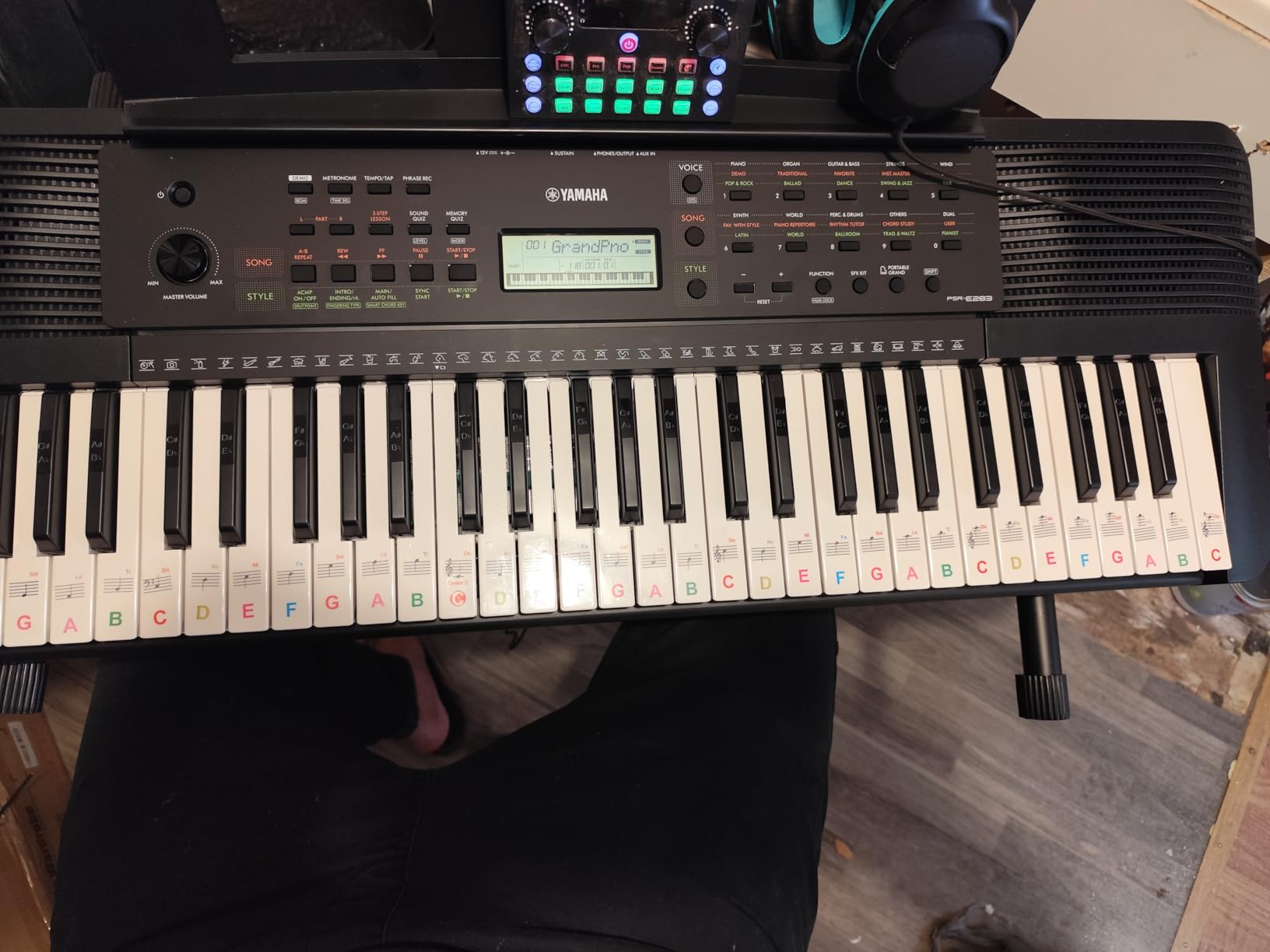
Technically, the 61 keys are full-sized and touch-sensitive, meaning harder presses produce louder notes. That sensitivity is a meaningful step toward expressive playing, even without full weighted hammer action. At 8.8 pounds with an optional battery operation, it moves between rooms, cars, and classrooms easily.
The keyboard includes hundreds of built-in songs spanning popular hits, children’s songs, and classics, plus compatibility with Flowkey for structured lessons. Two practical cautions from user reviews: the stand mounting holes don’t match every standard stand, so check compatibility before buying one, and verify the power adapter is in the box on arrival.
Learning Features Compared to App-Based Lessons
The PSRE283 works well as a self-teaching tool through Quiz Mode and built-in songs, requiring no tablet or subscription to get started. Families who prefer app-guided learning can add Flowkey, which Yamaha supports directly.
If you’re choosing between this and a cheaper keyboard plus a paid app subscription, the built-in educational content here often comes out ahead over the first year.
Portability and Practice Setup
This is one of the easiest models to relocate, fitting car trips and grandma’s house without drama. It works as a tabletop keyboard or on a compatible stand.
Headphone practice is supported, making it apartment-friendly. Just plan for a stable stand or dedicated table, since the unconventional mounting points can limit your options.
5. Casio Casiotone CT-S200RD 61-Key Keyboard – Creative Sound Playground
Casio Casiotone CT-S200RD – 61-Key Portable Keyboard for Beginners | 400 Tones, 77 Rhythms, LCD Display, Dance Music Mode, USB-MIDI, Stereo Speakers | Includes Power Supply & Music Rest | Red
400 tones and 77 rhythms
Dance Music Mode for live remixing
USB-MIDI with audio input
Built-in handle, battery powered
Pros
- 400 Tones and 77 Rhythms with 10 reverb types
- Dance Music Mode for creating and remixing EDM tracks live
- USB-MIDI and audio input for connecting to devices
- Built-in handle for easy portability
- Battery power for music anywhere
Cons
- Internal speaker quality can be poor for bass notes
- Micro-USB MIDI port can feel fragile
- Some complaints about missing AC adaptor in certain batches
The CT-S200 is the keyboard our testers fought over. Casio’s 400 tones invite exploration, from convincing pianos to synths, strings, and sound effects. But Dance Music Mode is the real hook: children trigger drums, basslines, and synth parts live to build their own EDM tracks, which feels closer to a game than practice. Anything that makes a child voluntarily sit down at the keyboard is doing something right.
We brought it to a family gathering and it became the afternoon’s entertainment, passed between cousins aged 6 to 12. The built-in carry handle genuinely helps here, because this is an instrument designed to leave the house. Battery power means a park bench works as well as a desk.
Technically, the 61 full-size keys are touch-sensitive and the LCD display keeps settings readable. USB-MIDI connects to the Casio Music Space app or popular learning apps like Simply Piano, and the aux input lets children play along with songs from a phone. Reverb types and 60 built-in songs round out a surprisingly deep feature set.
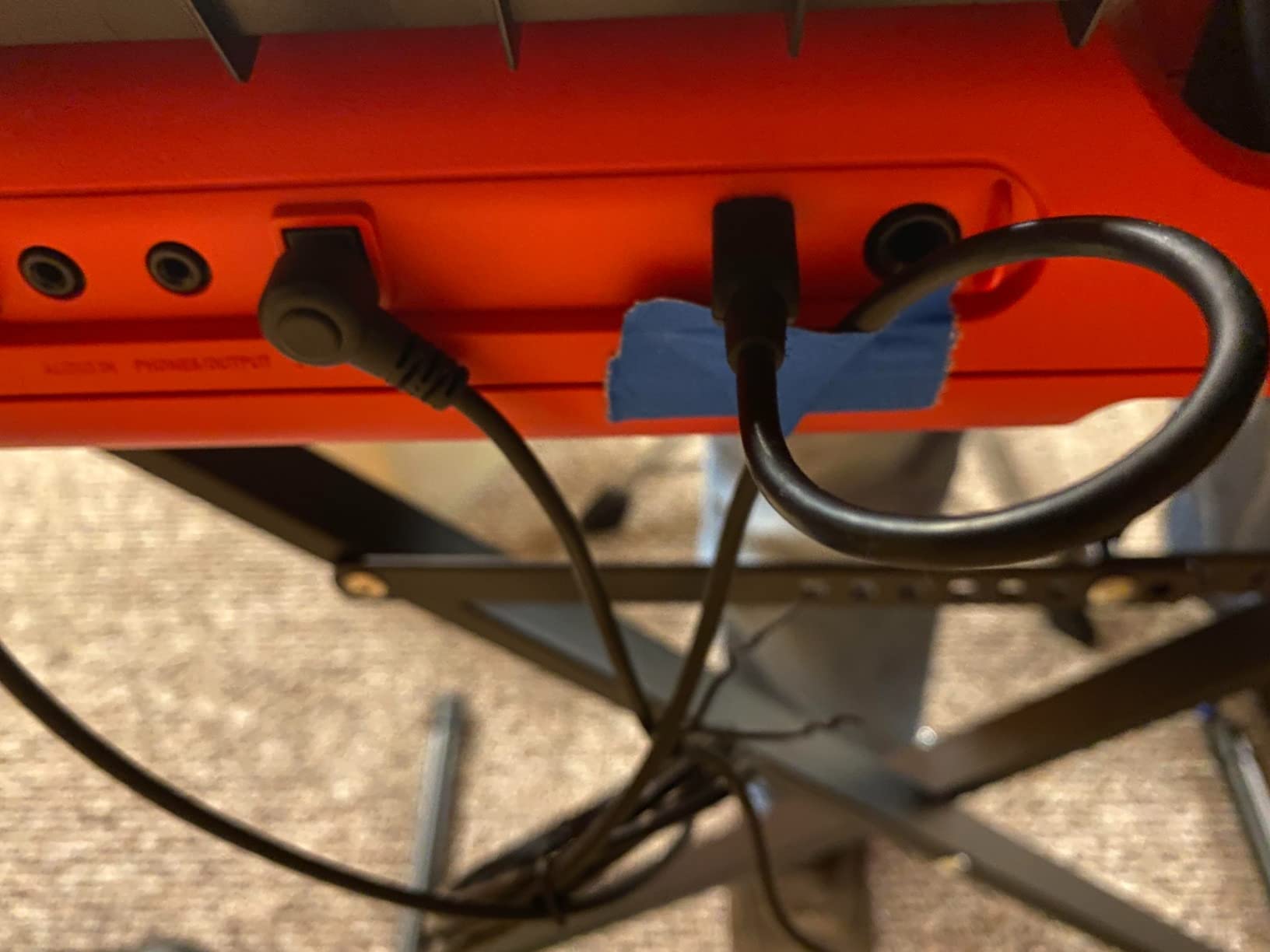
The weaknesses are the flip side of the price: the small internal speakers struggle with bass notes, so the piano voice sounds better through headphones or an external speaker. The micro-USB MIDI port feels fragile, so treat the cable gently. And check the box on arrival, since some batches shipped without the AC adapter.
Keeping a Child Engaged Past the First Month
This is where the CT-S200 outperforms most competitors. The sheer variety of tones and the remix-style Dance Music Mode give children something new to discover long after traditional practice loses its shine.
Parents of easily-bored children report this model holds attention better than plainer keyboards. Consider it if enthusiasm, rather than technique, is your primary challenge.
App and Device Connectivity
USB-MIDI makes this a capable controller for learning apps on a tablet, which extends its usefulness well beyond the built-in sounds. The aux input supports playing along with recordings.
Just supply a decent pair of headphones, since the internal speakers are the weakest link. Doing so also enables silent practice for apartment households.
6. Alesis Melody 61 MK4 61-Key Keyboard – Lowest-Cost Real Starter
Alesis Melody 61 MK4 61-Key Piano Keyboard
61 keys with 300 voices
Skoove and Melodics lessons included
USB-MIDI and record mode
Sustain pedal input, 6.6 lbs
Pros
- Lightweight and portable at 6.6 lbs
- 300 built-in sounds and accompaniment rhythms
- Includes online lessons from Skoove and Melodics
- Built-in metronome and recording mode
- USB-MIDI connectivity for recording software
Cons
- Keys are not velocity-sensitive
- Some sounds may feel synthetic
- Basic piano sound not perfect for demanding users
The Melody 61 MK4 answers the question every cautious parent asks: what if my child quits in two months? It is the least expensive way to put a legitimate learning instrument with structured lessons in front of a beginner, and it includes Skoove and Melodics lesson access rather than leaving you to find teaching materials yourself.
Our testing found it does the fundamentals honestly. The 61 keys are full-sized and playable, the included power adapter and music rest are in the box, and at 6.6 pounds it is light enough for a child to carry themselves. For pure trial-run value, nothing else in our lineup comes close.
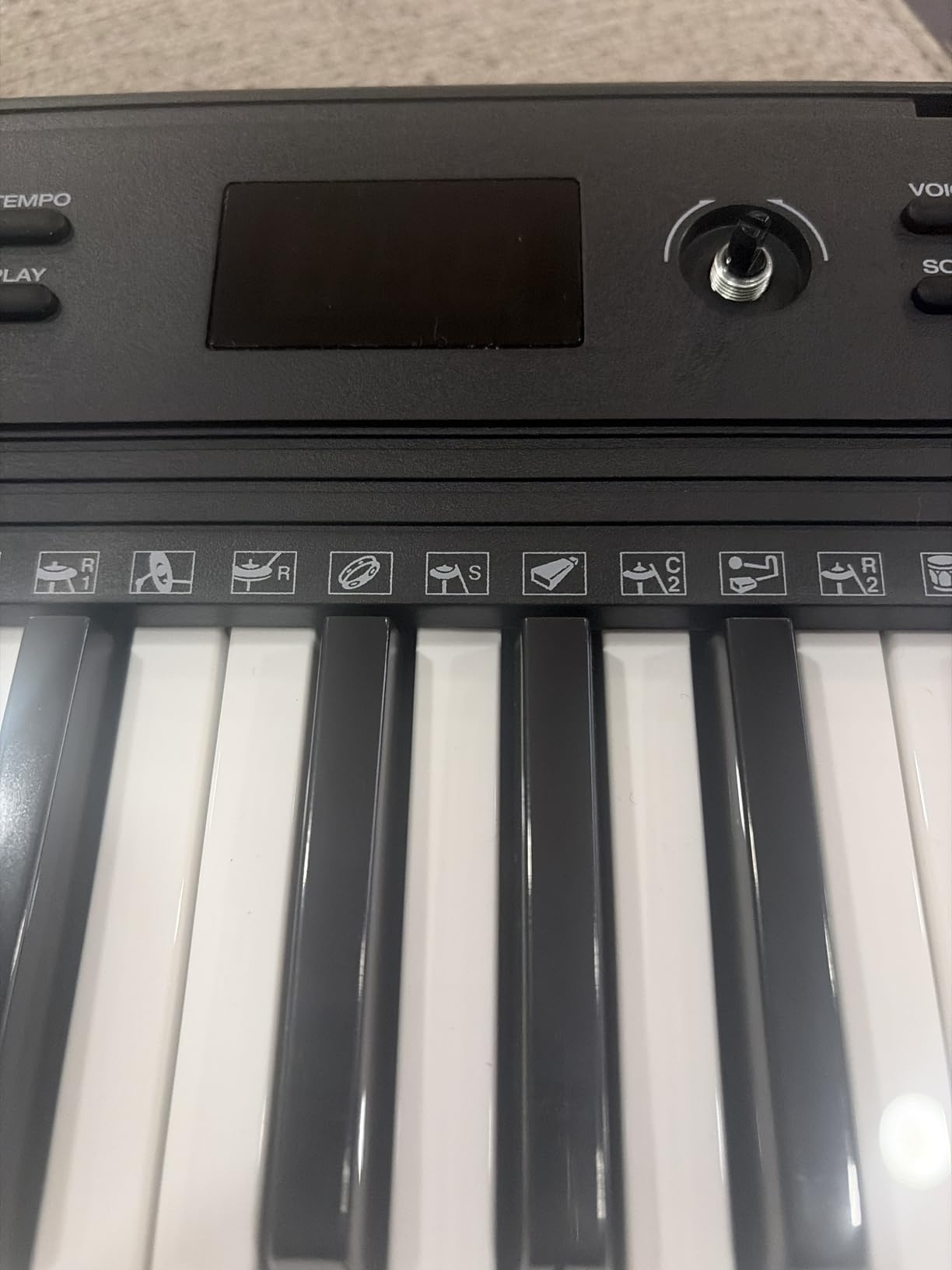
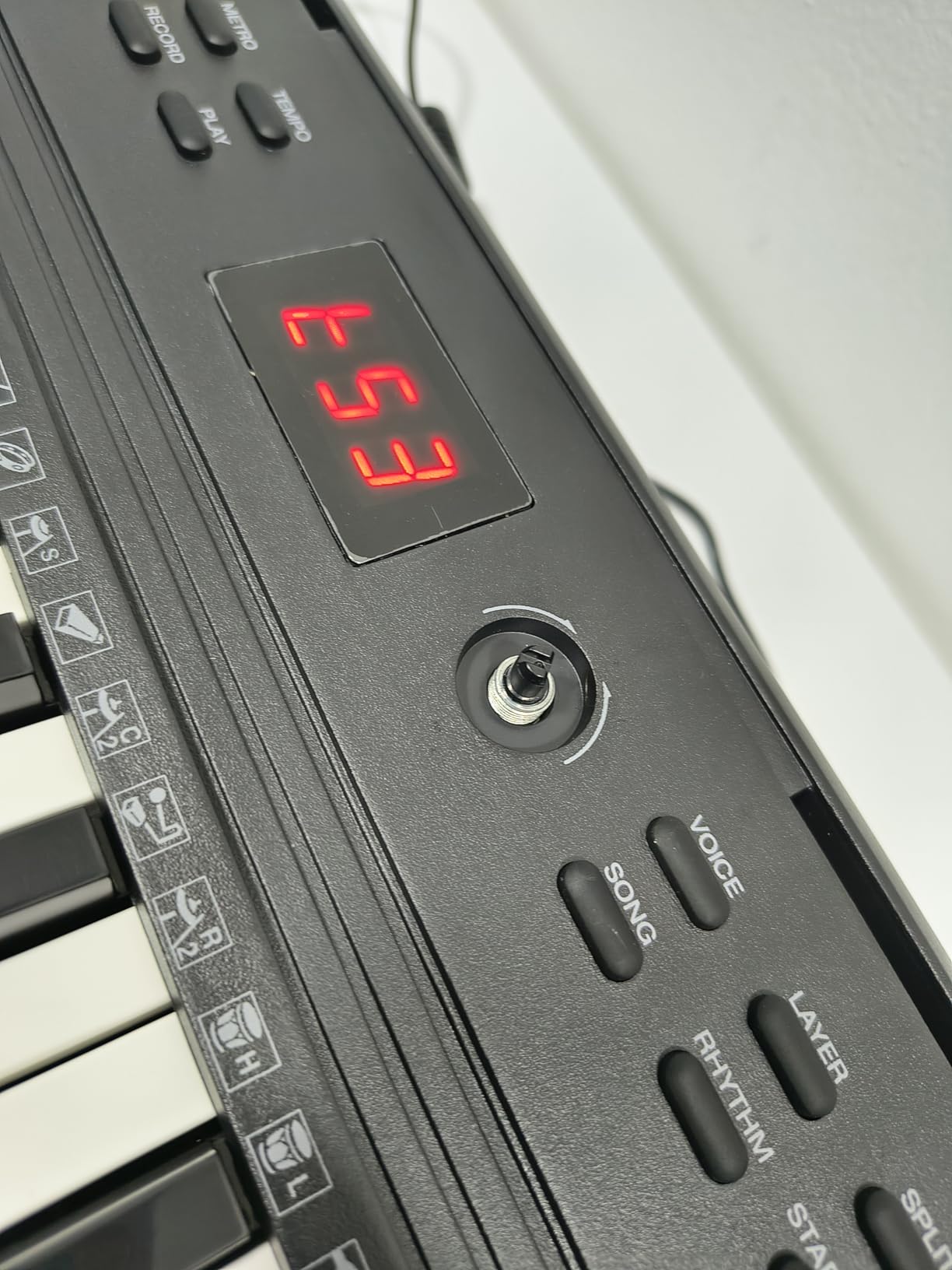
Technically, this is a straightforward unweighted keyboard with 300 voices, 300 accompaniment rhythms, and 30 demo songs. Layer and split modes are included, which is generous at this level, along with a built-in metronome, record mode, sustain pedal input, and USB-MIDI. Headphone output enables quiet practice.
The honest limitations: the keys are not velocity-sensitive, so hard and soft presses produce identical volume. That removes the dynamic expression that builds touch control, which is why we recommend this for interest-testing rather than long-term lessons. Some of the 300 sounds are synthetic-leaning too, though the core piano patch is serviceable for practice.
Is It Enough for Formal Piano Lessons
It can carry a child through the first several months of a beginner method book. Once lessons introduce dynamics and finger strength work, a touch-sensitive or weighted model becomes necessary.
Our suggestion: start here if you’re unsure, then upgrade to a weighted 88-key piano like our top pick once your child demonstrates six months of sustained interest. That two-step path costs less overall than an immediate big purchase that goes unused.
What the Included Lessons Cover
Skoove provides interactive piano courses that listen to your playing and adapt, while Melodics focuses on rhythm and timing. Both normally require subscriptions, so the bundled access has real value.
Between the lessons, the metronome, and record mode, a self-motivated child can make genuine progress without a teacher at first. That makes this a low-risk entry point into the best digital pianos for kids category.
7. WOSTOO 61 Key Rechargeable Kids Keyboard – Grab-and-Go Fun
Kids Piano Keyboard, 61 Key Portable Electronic Piano with Teaching Mode
61 keys with 100 tones
Rechargeable battery, 10+ hours
Detachable microphone
Recording and playback
Pros
- Rechargeable battery lasting 10+ hours
- Lightweight and portable at 2.5 lbs
- Includes microphone for singing along
- 100 tones and 100 rhythms
- Great for young children
Cons
- Keys may be too small for older children
- Cannot press three keys at once for chords
- Feels flimsy to some users
- Microphone volume cannot be controlled separately
The WOSTOO wins on sheer convenience. At 2.5 pounds with a rechargeable battery good for more than 10 hours of play, it’s a keyboard children can genuinely take anywhere. Ours traveled to a backyard, a car ride, and a friend’s house in the first week without anyone asking for a power outlet.
The detachable microphone is the feature children love most, converting practice sessions into full concerts. Singing along while playing is legitimately educational too, building pitch awareness and rhythm. For a child who treats music as performance rather than study, this is the right tool.
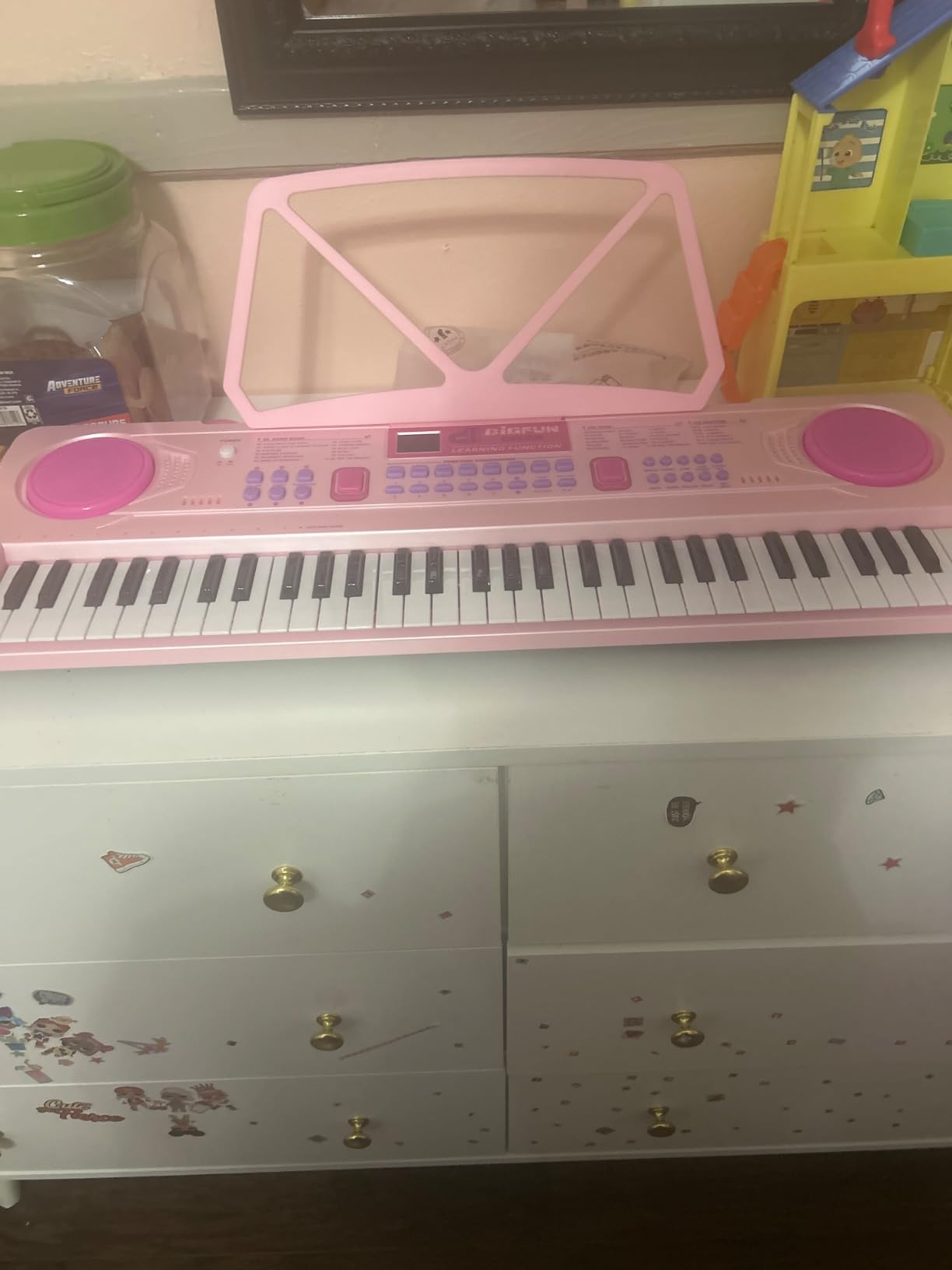
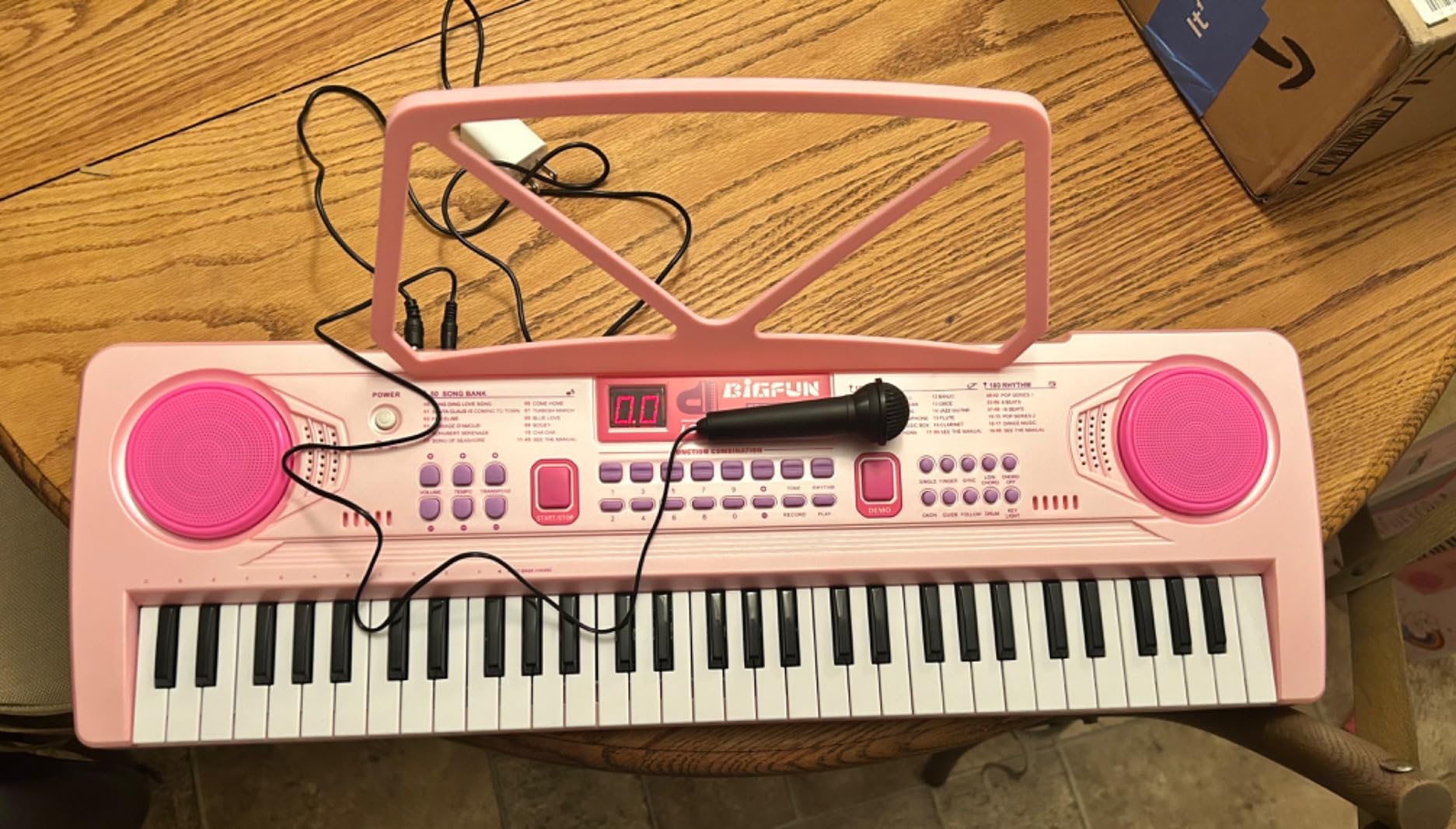
Technically, this sits at the toy end of the spectrum: 61 smaller-than-full-size keys, 100 tones, 100 rhythms, and 50 demo songs, with dual speakers and a recording function. Battery operation and the light plastic build are the design priorities, not sound fidelity or key action.
The important limitation is that the keys cannot register three simultaneous presses, so real chords are impossible. This is an exploration and fun instrument for young children, not a technique builder. The pink finish and light weight make it a hit with the target age group, and 1,150 reviewers rate the fun-per-dollar highly.
Age Range and Realistic Expectations
This suits children roughly 3 to 8 years old, especially those drawn to singing and performing. The smaller key size actually helps very young fingers, though children over 8 will find them cramped.
Treat this as a musical toy that teaches rhythm, note recognition, and enthusiasm. It is not a substitute for a proper student keyboard once lessons begin.
Battery Life and Travel Usefulness
The rechargeable lithium-ion battery is the standout: a four-hour charge yields more than ten hours of playing, which covers a week of typical practice sessions.
For families who travel or practice in varied spots around the house, this untethered design is more practical than any corded option. Just manage expectations about the sound quality, which is bright and toy-like rather than rich.
8. JIKADA 61 Key Light-Up Keyboard – Guided Teaching Keys
JIKADA 61 Key Portable Electronic Keyboard Piano,3 Teaching Modes
61 full-size light-up keys
3 teaching modes
255 tones and 255 rhythms
Stand, stool, headphones, microphone included
Pros
- Light-up keys with 3 teaching modes
- Complete bundle with stand
- stool
- headphones and microphone
- 255 tones and 255 rhythms
- Sturdy X-shaped stand
- LCD display for function status
Cons
- Not battery compatible
- Keys can be slippery
- Stool is small but comfortable
- Instructions not very helpful
The JIKADA takes a different teaching approach: the keys light up to show children which notes to play next. Across three teaching modes, the keyboard demonstrates a song, waits for the correct key, then gradually removes the training wheels. Our six-year-old tester learned a simple melody within an hour without any adult help, which is exactly the independence this design aims for.
Like the RockJam, this arrives as a complete package: X-shaped stand, folding stool, headphones, microphone, power adapter, and note stickers. Setting it up took us under twenty minutes, and the resulting station looks and functions like a proper little practice corner.
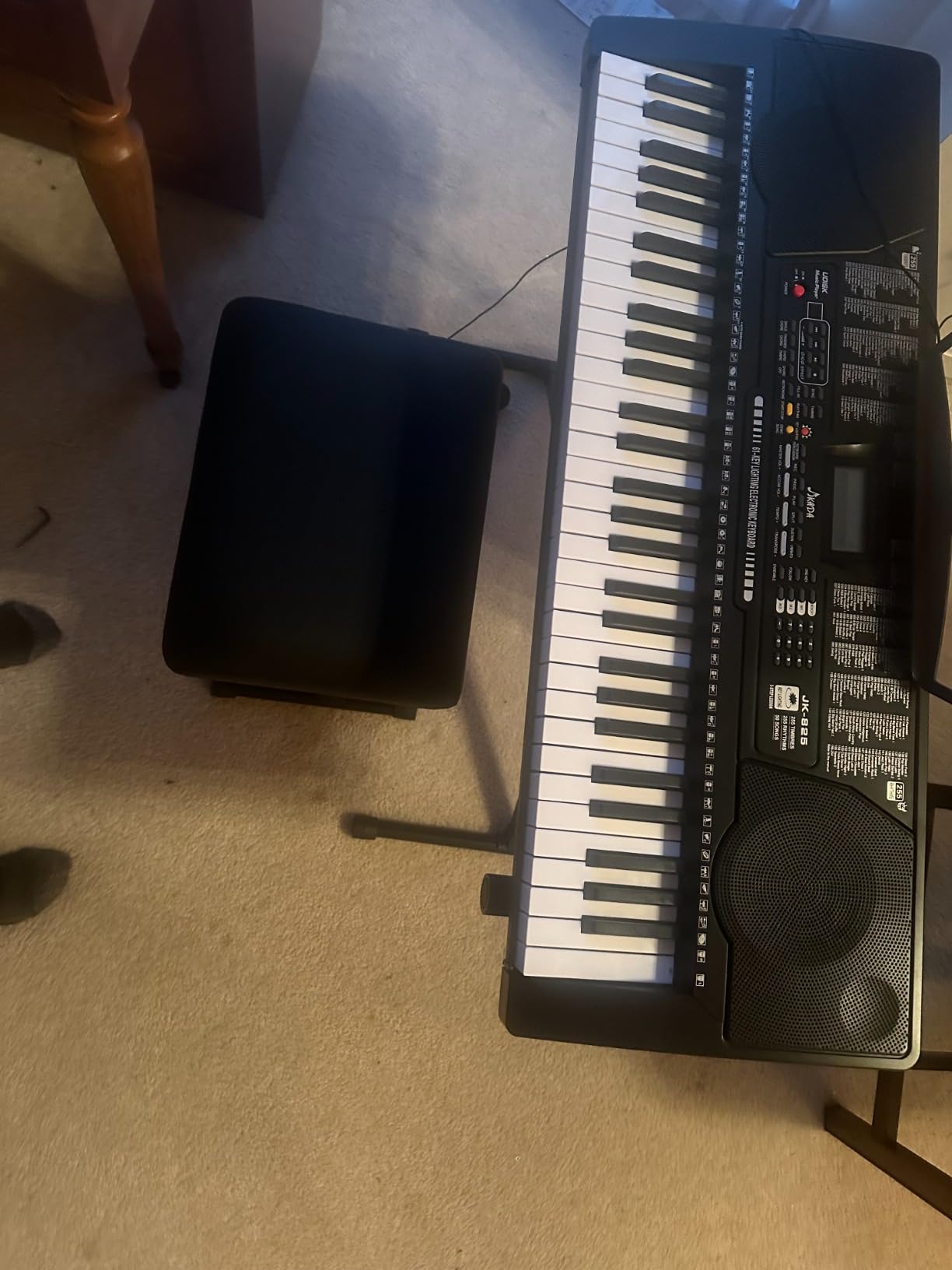
Technically, the 61 full-size keys carry 255 tones, 255 rhythms, and 50 demo songs, plus keyboard percussion modes, record and playback, a metronome, and a status memory function that recalls your settings between sessions. The LCD screen keeps track of what mode and voice are active.
The critiques from our testing mirror the review trends: the printed instructions are nearly useless, so learning the menu system is trial and error. The keys have a slightly slippery finish, and the whole unit requires wall power since there’s no battery option. The stool is small, though fine for children.
How Well the Light-Up Teaching System Works
The three-step teaching modes genuinely help beginners learn songs by following the lights, then playing with hints, then unaided. It builds confidence quickly, especially for children who can’t yet read sheet music.
The limitation is that following lights teaches songs, not reading or theory. It’s a strong engagement tool to pair with lessons or an app, rather than a complete method on its own.
Bundle Quality and Daily Use
The X-shaped stand is sturdier than the folding stands in most beginner kits, holding steady through enthusiastic playing. The included headphones and microphone round out a complete setup.
Since it needs constant mains power, plan a fixed practice location near an outlet. For a dedicated corner in a family room or bedroom, this bundle covers everything a beginner needs to start same-day.
How to Choose the Best Digital Piano for Your Child
Choosing well comes down to five decisions: your child’s age, key action, key count, sound system, and connectivity. Here is how we’d work through each one.
Match the Instrument to Your Child’s Age
Ages 3 to 5 do best with small, light instruments like the ZIPPY wooden piano or the WOSTOO, where the goal is familiarity and fun rather than technique. Their fingers simply cannot handle weighted resistance yet, and forum parents consistently confirm children under 5 need lighter keys.
Ages 6 to 8 are ready for 61 full-sized keys with touch sensitivity, making the PSRE283, CT-S200, or RockJam appropriate. Ages 8 and up in formal lessons should move to an 88-key weighted piano like the Yamaha P71, because that is when technique demands realistic key resistance.
Weighted Keys vs Unweighted Keys
Weighted keys physically resist your fingers the way acoustic piano hammers do, and graded weighting makes lower keys slightly heavier than higher ones. This resistance is how students develop finger strength, dynamic control, and proper touch. Every piano teacher source we reviewed treats weighted keys as non-negotiable for serious learning.
Unweighted keys are lighter, cheaper, and easier for small children to press. They’re fine for exploration, casual learning, and the first year of interest-testing. The honest summary from parent forums: buying too cheap initially and being forced to upgrade is a common regret, but buying weighted too early for a 4-year-old is also a mistake.
How Many Keys Does a Child Need
A 37-key instrument covers three octaves, enough for toddler melodies. A 61-key keyboard spans most beginner and intermediate repertoire and is the standard starting point for lessons. A full 88 keys matches an acoustic piano and removes any future limitation.
For a child under 8 who is not yet in formal lessons, 61 keys is plenty. Once a student commits to lessons, 88 keys means you never have to buy again.
Sound Quality and Speakers
Speaker power determines whether the piano voice sounds rich or thin, and it’s where budget models cut corners. The Yamaha P71 delivers genuine depth, while compact models like the CT-S200 and Melody 61 MK4 sound noticeably better through headphones than their internal speakers.
For apartment families, the headphone jack is arguably the most valuable feature on any of these instruments. Silent practice keeps neighbors happy and lets children practice early mornings or late evenings.
Learning Features and Connectivity
Bundged lesson access differs meaningfully: RockJam includes Simply Piano, Alesis includes Skoove and Melodics, and Casio supports the Casio Music Space app. The JIKADA and Yamaha PSRE283 take a hardware approach with light-up keys and Quiz Mode respectively.
USB-MIDI, present on the Casio, Alesis, and Yamaha models, lets the keyboard talk to learning apps and recording software. It future-proofs the instrument as your child advances.
Durability and Longevity
Parents in every forum thread worry about instruments breaking or being abandoned. Wooden constructions like the ZIPPY survive toddler treatment better than plastic toys, and the Yamaha P71 carries a student for years rather than months.
Our practical advice for minimizing waste: pair an inexpensive exploration keyboard with a plan to upgrade after six months of sustained interest. That single rule prevents most regretted purchases.
Frequently Asked Questions
Which digital piano is closest to the real piano?
The Yamaha P71 is the closest to an acoustic piano among kids’ models, with 88 fully weighted keys using graded hammer action that replicates the resistance and feel of a real piano. Its sampled Yamaha grand piano voice adds realistic tone. Any 88-key weighted hammer-action digital piano will feel far closer to the real thing than an unweighted keyboard.
What are some good digital pianos for kids?
Good options depend on age: the ZIPPY 37-key wooden piano for ages 3 to 5, the RockJam RJ5061, Yamaha PSRE283, or Casio CT-S200 for ages 5 to 10, and the Yamaha P71 88-key weighted piano for children aged 7 and up in formal lessons. The Alesis Melody 61 MK4 is a strong low-cost starting point for testing interest.
Which digital piano has the best sound quality?
The Yamaha P71 has the best sound quality in this group, using samples of Yamaha acoustic grand pianos with rich resonance and deep bass. Yamaha’s PSRE283 also offers notably warm piano tone for a portable keyboard. For the most authentic sound at any level, look for models sampling concert grand pianos paired with stronger speaker systems.
What are the downsides of a digital piano?
Digital pianos have limitations: speakers on portable models can sound thin, unweighted keys don’t build finger strength for classical technique, and cheap keyboards lack touch sensitivity entirely. They also never fully replicate acoustic piano nuance, resale value is lower, and very inexpensive models may have durability issues with ports, pedals, or power buttons.
Conclusion
After weeks of hands-on comparison, our recommendations are clear. The Yamaha P71 is the best digital pianos for kids choice overall, delivering weighted 88-key realism that carries a serious student for years. The RockJam RJ5061 offers the best complete starter bundle, and the Alesis Melody 61 MK4 is the smartest low-risk way to test a child’s interest.
For the youngest musicians, the ZIPPY wooden piano and the WOSTOO rechargeable keyboard make music feel like play. Creative children gravitate toward the Casio CT-S200’s Dance Music Mode, while the light-up JIKADA and the Quiz Mode-equipped Yamaha PSRE283 teach through interaction.
Whichever you choose, the guideline that matters most: match the instrument to your child’s age today, and upgrade when their interest earns it. Check current prices through the links above, and enjoy the sound of your home filling with music in 2026.