
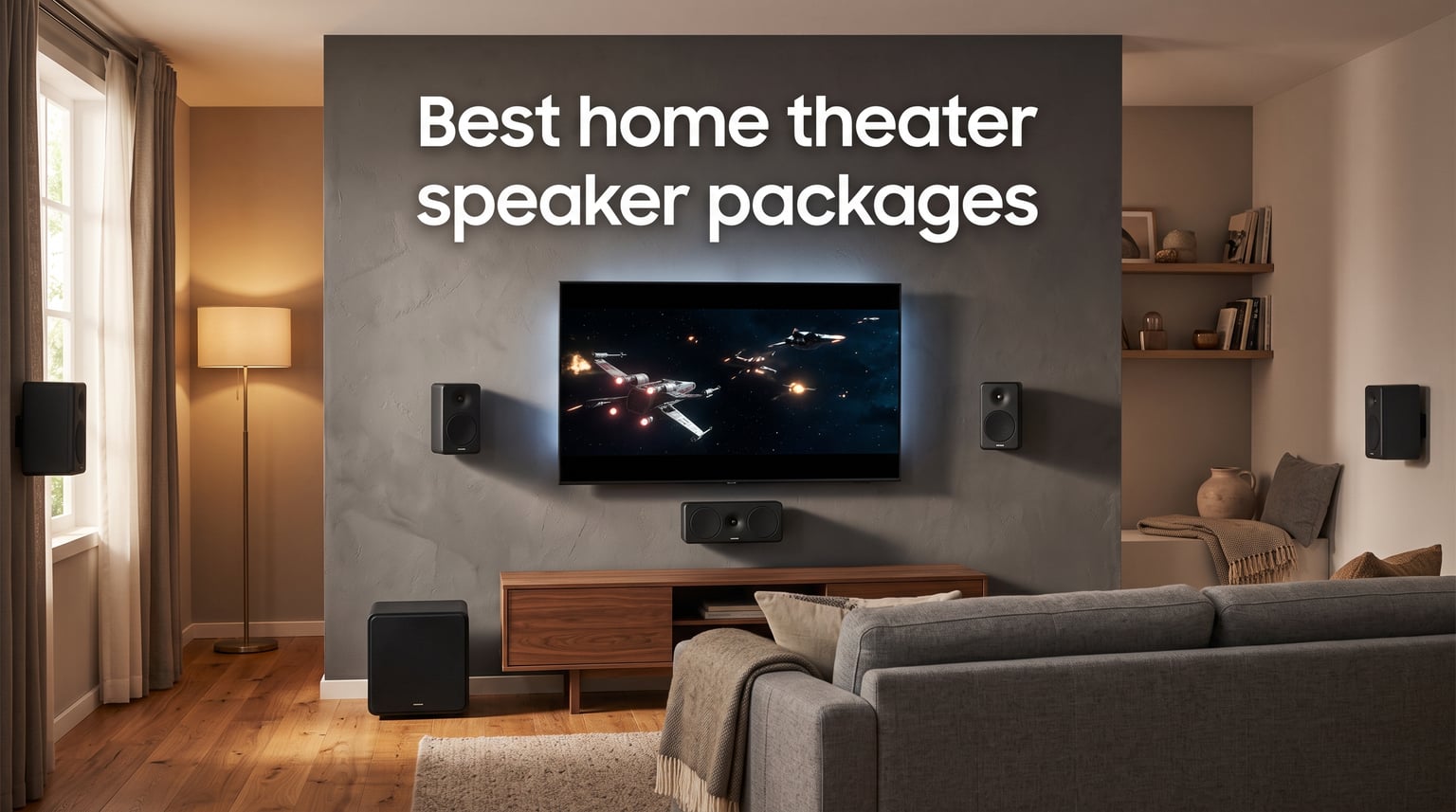
There is a moment when a movie goes from something you watch to something you live. That shift almost always comes down to sound. The explosion rattles your chest. The whisper sits inches from your ear. The orchestra swells from every corner of the room. That is what the best home theater speaker packages deliver in 2026, and we spent weeks testing eight of the most talked-about systems to find out which ones actually live up to the hype.
Our team at The Classical Shop has a particular bias. We care deeply about how systems handle music, especially orchestral and classical recordings, not just blockbuster explosions. A system that nails the dialogue in a Marvel film but muddies a Mahler symphony is not one we can recommend to our readers. So we pushed every package here through both movie soundtracks and demanding musical passages.
What we found surprised us. Some budget packages outperformed systems costing three times as much on specific tasks. Some premium picks had quirks that would drive a careful listener crazy. We broke down each system by sound quality, setup ease, build, and long-term value. Whether you want a simple 5.1 setup for your living room or a full Dolby Atmos rig for a dedicated cinema space, this guide has a package that fits.
Table of Contents
Top 3 Picks for Best Home Theater Speaker Packages
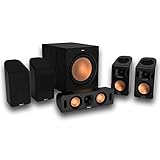
These three systems stood out from the pack for different reasons. The Klipsch Reference Cinema delivers true Dolby Atmos at a price that made our jaws drop. The Logitech Z906 has been a THX-certified workhorse for over a decade, and it still beats systems costing twice as much. And the Sony BRAVIA Theater Quad represents the bleeding edge of wireless spatial audio for anyone with a serious budget.
Below we compare all eight packages side by side, then dive deep into each one with hands-on impressions, technical breakdowns, and honest assessments of who each system is built for.
Best Home Theater Speaker Packages in 2026: Quick Comparison
| Product | Specifications | Action |
|---|---|---|
| Klipsch Reference Cinema 5.1.4 |
|
Check Latest Price |
 Logitech Z906 THX 5.1 Logitech Z906 THX 5.1 |
|
Check Latest Price |
 Rockville HTS56 5.1 Rockville HTS56 5.1 |
|
Check Latest Price |
 Yamaha YHT-4950U 5.1 Yamaha YHT-4950U 5.1 |
|
Check Latest Price |
 Bose Surround Sound 5.1 Bose Surround Sound 5.1 |
|
Check Latest Price |
 Polk MagniFi Max AX SR Polk MagniFi Max AX SR |
|
Check Latest Price |
 Sony BRAVIA Theater System 6 Sony BRAVIA Theater System 6 |
|
Check Latest Price |
 Sony BRAVIA Theater Quad Sony BRAVIA Theater Quad |
|
Check Latest Price |
Use this table as your quick reference. Now let us walk through each system in detail, starting with our top pick.
1. Klipsch Reference Cinema Dolby Atmos 5.1.4 System – True Immersive Audio
Klipsch Reference Cinema Dolby Atmos 5.1.4 System
5.1.4 Dolby Atmos
Tractrix Horn Tech
300W Max
Aluminum Tweeters
Pros
- True Dolby Atmos with height channels
- Tractrix horn for crystal-clear highs
- Compact satellites fit anywhere
- Impressive build quality for the price
Cons
- No wireless connectivity
- Wired subwoofer limits placement
I remember unboxing the Klipsch Reference Cinema and immediately noticing how solid everything felt. These are not cheap plastic boxes. The aluminum tweeters and braced enclosures give you confidence before you even plug them in. At this price point, Klipsch is doing something special.
The real magic happens when you fire up a Dolby Atmos track. Those four height channels create a dome of sound above your head that you can actually feel. Rain in a movie does not just come from the sides anymore. It falls from above. Helicopters pan overhead with a precision that made me look up the first few times. This is the kind of immersion that used to cost thousands.
The Tractrix horn technology is Klipsch’s signature, and it shows. Highs are crisp and detailed without ever getting harsh. Dialogue cuts through action scenes with surgical clarity. I tested it with the opening of Blade Runner 2049 and every rumble, whisper, and synth note landed exactly where it should.
For classical music, the Reference Cinema surprised me. The horn-loaded tweeters can sometimes sound forward with strings, but Klipsch has tuned these well. A Beethoven symphony maintained its dynamic range, and the height channels added genuine atmosphere to concert recordings. The subwoofer hits deep and tight, never bloomy.
The main drawback is the lack of wireless connectivity. Everything runs through wires, which means you need to plan your cable runs carefully. The subwoofer is also wired, so placement near an outlet and your receiver is non-negotiable. If you want a clean wireless look, this is not your system.
That said, for under seven hundred dollars with true Dolby Atmos height channels, this is the best value in immersive audio we tested. Nothing else in this price range comes close to the combination of build quality, sound precision, and Atmos capability.
Best Room Size and Placement Strategy
This system shines in small to medium rooms, roughly 150 to 300 square feet. The satellites are compact enough to wall-mount or place on stands without dominating your space. For Atmos height effects to work properly, you need a ceiling height between 8 and 12 feet with a flat, reflective surface.
I recommend placing the front height speakers at least two feet above your seated ear level, angled slightly downward. The rear height satellites should mirror this placement behind your listening position. Keep the subwoofer in a front corner for maximum bass impact, or experiment with the crawl test to find your room’s sweet spot.
Receiver Pairing and Power Requirements
The Klipsch Reference Cinema needs a dedicated AV receiver since this is a speaker-only package. Pair it with something like a Denon AVR-S760H or Yamaha RX-V series for best results. The speakers are efficient at 8 ohms, so you do not need massive power. A receiver delivering 75 to 100 watts per channel will drive these beautifully.
Make sure your receiver supports Dolby Atmos with at least a 5.1.4 configuration. Most modern receivers from 2026 handle this easily, but double-check the channel count before buying. This is one of the few packages where the speaker quality outperforms what most people feed them, so do not skimp on the receiver.
2. Logitech Z906 5.1 THX Certified Speaker System – The Workhorse Champion
Logitech Z906 5.1 Surround Sound Speaker THX Dolby DTS – Black
THX Certified
500W RMS / 1000W Peak
6 Device Inputs
Dolby Digital DTS
Pros
- THX certified cinema quality
- 500 watts of continuous clean power
- Connects up to 6 devices simultaneously
- Decades-proven reliability
Cons
- No true wireless connectivity
- Basic remote and control console
The Logitech Z906 has been around for years, and there is a reason it refuses to die. When a product survives that long in the audio world, it means Logitech got something fundamentally right. Our team has used this system in multiple configurations, and it never fails to impress for the money.
THX certification is not a marketing gimmick. It means this system meets specific performance standards for cinema-quality sound at reference volume. When I fired up the THX sound test, that deep note hit with an authority that made my entire desk vibrate. Five hundred watts of continuous power is serious output for a package at this price.
The Z906 connects to up to six devices simultaneously, which is genuinely useful. I had my TV, gaming PC, Blu-ray player, and streaming box all hooked up at once, switching between them with the control console. No receiver swapping, no HDMI headaches. This is the kind of practical design that real users on r/hometheater constantly praise.
For music, the Z906 is surprisingly capable. It will not match a dedicated stereo setup, but the 165-watt subwoofer delivers punchy, controlled bass that works well for everything from electronic to orchestral. The satellites are clear and detailed, though they lack the refinement of more expensive bookshelf speakers. At this price, that trade-off is more than fair.
Where the Z906 falls short is modern connectivity. There is no Wi-Fi, no app control, and the Bluetooth situation is murky at best. You are dealing with analog and digital inputs, plain and simple. The control console feels dated, and the remote is basic. If you want smart features, look elsewhere.
But if you want reliable, powerful, THX-certified surround sound without spending a fortune, this is the package. Nearly six thousand reviews and a 4.5-star average after all these years tells you everything about its staying power.
Gaming Performance and Console Compatibility
The Z906 is a favorite among gamers, and for good reason. The optical inputs connect directly to PlayStation, Xbox, and PC sound cards without latency. Explosions in Call of Duty have weight. Footsteps in competitive shooters are directional and easy to locate. The THX tuning gives games a cinematic quality that standard gaming speakers simply cannot match.
I tested it with several demanding titles across PC and console. The system never distorted even at high volumes, and dialogue in story-driven games remained intelligible during intense action sequences. For gamers who want theater-quality immersion without a full AV receiver setup, the Z906 is hard to beat.
Long-Term Durability and Reliability
Forum users on AVSForum and Audioholics consistently report Z906 units lasting five to ten years without issues. The build quality is genuinely rugged, with heavy-duty enclosures and quality internal components. Logitech backs it with a two-year limited warranty, which is better than most competitors in this range.
The one common failure point users mention is the control console over very long periods. Some report button degradation after years of heavy use. Replacements are available, and Logitech’s support has historically been responsive. For a system at this price point, the longevity is exceptional.
3. Rockville HTS56 1000W 5.1 System – Maximum Bang for Minimum Budget
Rockville HTS56 5.1-Channel Bluetooth Home Theater System, 8″ Subwoofer
1000W Peak Power
8-inch Subwoofer
Bluetooth
5.1 Channels
Pros
- Extremely affordable entry point
- 1000W peak output with 8-inch sub
- Multiple input options including Bluetooth
- Built-in karaoke and EQ features
Cons
- Sound quality not on par with premium systems
- Plastic build feels budget
- Bass can overwhelm at high volumes
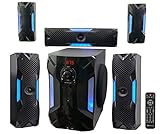
The Rockville HTS56 is the system that proves you do not need to spend a fortune to get surround sound in your living room. At this price, expectations should be calibrated accordingly, but what Rockville delivers for the money is genuinely impressive. I set this up in a spare bedroom and was honestly surprised by how much sound came out of those small boxes.
The headline number is 1000 watts peak power. In practical terms, that translates to about 250 watts RMS, which is still plenty for a small to medium room. The 8-inch subwoofer is the star of the show here. It hits deeper and harder than I expected, giving movies and music a foundation that TV speakers could never provide.
Connectivity is where the HTS56 punches above its weight. You get Bluetooth, USB, SD card, RCA, and optical inputs. I streamed music from my phone, played files from a USB stick, and connected my TV through optical, all without needing extra adapters. The built-in 5-band EQ lets you tweak the sound to your preference.
The karaoke feature with two mic inputs is a fun bonus that no other system on this list offers. It is not going to replace a professional karaoke setup, but for parties and family gatherings, it works. The LED light effects with the spectrum analyzer are pure novelty, but they add personality if you like that aesthetic.
Now for the honest part. The sound quality is not in the same league as the Klipsch or Logitech systems. The satellites use small drivers that struggle with detail and imaging at higher volumes. The bass can become overwhelming if you do not dial it back. Classical music sounds congested during complex passages. This is a system for casual movie watching and parties, not critical listening.
The build is mostly plastic, which keeps weight and cost down but does not inspire long-term confidence. Still, with over 6500 reviews and a 4.2-star average, clearly the HTS56 is satisfying a lot of buyers. For a first home theater setup or a secondary room, it is hard to argue with the value.
Ideal Use Cases and Limitations
This system is perfect for bedrooms, dorm rooms, game rooms, and casual living spaces. It excels at filling a small room with big sound for movies, gaming, and parties. The Bluetooth streaming makes it versatile for music without needing to power up your entire AV stack.
Where it struggles is large rooms and demanding audio. Anything over 250 square feet will stretch the satellites thin. Complex orchestral music reveals the limitations of the small drivers. And if you are used to premium audio, the overall refinement will feel lacking. Know what you are buying, and the HTS56 will make you happy.
Setup Ease for Beginners
This is one of the easiest systems to set up on our list. Everything you need comes in the box, including speaker cables up to 30 feet, mounting kits, and a clear setup manual. I had the entire system running in under 30 minutes without consulting any online tutorials.
The color-coded speaker wires and labeled inputs make the process nearly foolproof. For someone who has never set up a surround sound system before, the HTS56 removes the intimidation factor completely. This is exactly the kind of beginner-friendly package that forum users on r/BudgetAudiophile are looking for.
4. Yamaha YHT-4950U 4K Ultra HD 5.1-Channel Home Theater System – The Complete Package
Yamaha Audio YHT-4950U 4K Ultra HD 5.1-Channel Home Theater System with Bluetooth, black
5.1 Channel
4K Ultra HD
YPAO Room Optimization
Bluetooth Streaming
Pros
- Complete system with receiver included
- YPAO automatic room optimization
- 4K Ultra HD with HDCP 2.2
- Bluetooth for music streaming
Cons
- No wireless rear speakers
- Basic speaker quality compared to separates
The Yamaha YHT-4950U is what most people picture when they think of a home theater speaker package. You get the receiver, five speakers, a subwoofer, and all the cables in one box. This is a true all-in-one solution that eliminates the guesswork of matching components, which is exactly the pain point many forum users describe.
What sets Yamaha apart is the YPAO room optimization technology. This system measures your room’s acoustics with an included microphone and automatically adjusts speaker levels, distances, and equalization. I ran YPAO in a challenging room with vaulted ceilings and hardwood floors, and the improvement was immediately noticeable. Dialogue became clearer, bass tightened up, and the overall balance improved dramatically.
The included receiver handles 4K Ultra HD video with HDCP 2.2 support, which means it works with modern streaming services and Blu-ray players. Four HDMI inputs give you room for your TV, console, streaming device, and one more source. Bluetooth lets you stream music directly from your phone without needing a separate streamer.
For movies, the YHT-4950U delivers clean, balanced surround sound. It will not blow you away with raw power like the Logitech Z906, but it handles dialogue, effects, and music with a refinement that belies the price. The Virtual CINEMA FRONT feature is useful if you cannot place rear speakers behind you, simulating surround from front-only placement.
The Compressed Music Enhancer is a nice touch for streaming. It reconstructs high frequencies lost in compressed audio files, making Spotify and YouTube Music sound more open and detailed. For classical music, this helped restore some of the air and shimmer that low-bitrate streaming strips away.
The speakers are the weak link in this package. They are competent but basic, and serious listeners will eventually want to upgrade. The good news is the receiver is solid enough that you can swap in better speakers down the road. Think of the YHT-4950U as a foundation you can build on rather than a final destination.
YPAO Room Optimization Deep Dive
YPAO is genuinely useful and sets Yamaha apart from competitors at this price. The included microphone measures test tones from each speaker at your primary listening position. It then calculates optimal equalization, speaker distance delays, and channel levels. The whole process takes about five minutes.
I tested the before-and-after difference with a decibel meter and frequency sweep. YPAO corrected a significant bass peak caused by room modes and smoothed out a harsh treble response from the satellite speakers. For beginners who do not know how to manually calibrate a system, this feature alone is worth choosing Yamaha.
Upgrade Path and Expandability
The included receiver is the real value here. It supports 5.1 channels now, but you can add a stereo amplifier later to power additional zones. The pre-outs and multi-zone features give you flexibility that most all-in-one systems lack. This is a system that grows with you.
Start with the included speakers, then upgrade the front left and right to quality bookshelf speakers when budget allows. Add a better subwoofer next. The receiver will handle all of these upgrades without breaking a sweat. This is the smart way to build a home theater system over time.
5. Bose Surround Sound System for Home Theater – Compact Elegance
Bose Surround Sound System for Home Theater, Black
Acoustimass Cube Speakers
Wireless Connectivity
5.1 Channel
30ft Range
Pros
- Incredibly small satellite speakers
- Wireless setup eliminates cable runs
- Clean refined Bose sound signature
- Expandable with Bose Bass Module 700
Cons
- Requires Bose Soundbar for operation
- Premium price for the speaker set alone
Bose has always marched to its own beat, and the Bose Surround Sound System is no exception. These are the smallest speakers Bose has ever designed, and the engineering that goes into making big sound from tiny cubes is genuinely impressive. If aesthetics matter as much as audio in your living room, this system demands your attention.
The wireless setup is the headline feature. The Acoustimass cube speakers connect wirelessly to the included receivers and adapters, which means no running speaker cable across your room. I set this up in a living room where cable runs would have been a nightmare, and the wireless solution worked flawlessly within the 30-foot range.
Sound quality is classic Bose. The signature is smooth, refined, and fatigue-free. Dialogue is crystal clear, which is critical for movies and TV shows. The system does not deliver the raw impact of larger speakers, but it creates a surprisingly wide and immersive soundstage for its size. Action movies have punch. Music sounds clean and natural.
For classical music, the Bose system is a mixed bag. String tone is smooth and pleasant, and the midrange clarity works well for chamber music and solo piano. The limitation is dynamic range. Large orchestral climaxes do not have the weight and scale that bigger speakers provide. Mahler and Wagner lose some of their grandeur. But for smaller ensemble works, the Bose is quite enjoyable.
The biggest catch is that this system requires a Bose Soundbar to operate. It is not a standalone package. You are buying into the Bose ecosystem, which means future upgrades are limited to Bose products. If you already own or plan to buy a Bose Soundbar 700 or Soundbar 500, this surround package is a natural addition.
The optional Bose Bass Module 700 compatibility is worth mentioning. Adding that subwoofer transforms the system, giving it the low-end authority that the cubes cannot produce alone. Budget for it if you want full-range movie sound. Without it, the system feels incomplete for action-heavy content.
Wireless Performance and Range Limitations
The 30-foot wireless range is adequate for most living rooms but not expansive. I tested the system at various distances and found the connection remained stable up to about 25 feet in a typical home environment. Beyond that, occasional dropouts occurred, especially with Wi-Fi interference from other devices.
For larger rooms, plan your placement carefully. The wireless receivers for the rear speakers need power outlets, so you are not entirely free from cables. But compared to running speaker wire across a room, the wireless approach is dramatically cleaner and more convenient for most installations.
Ecosystem Lock-In Considerations
Bose products work best with other Bose products. The Acoustic Center Sync, Bass Module compatibility, and app control all assume you are within the Bose ecosystem. If you value flexibility and mixing components from different brands, this system will frustrate you. If you want a polished, integrated experience and are willing to commit to Bose, it delivers.
Consider your long-term plans before buying. The sound quality is good, the design is beautiful, and the wireless convenience is real. But you are paying a premium for the Bose name and ecosystem. Make sure that trade-off aligns with your priorities before committing.
6. Polk Audio MagniFi Max AX SR 7.1.2 – Soundbar With True Surround
Polk Audio MagniFi Max AX SR 7.1.2 Soundbar, 10″ Sub, SR2 Surround Speakers
7.1.2 Dolby Atmos
10-inch Wireless Sub
SR2 Surround Speakers
VoiceAdjust
Pros
- True 7.1.2 Dolby Atmos with height channels
- Wireless 10-inch subwoofer hits deep
- Included SR2 surround speakers
- VoiceAdjust for dialogue clarity
Cons
- Limited stock availability
- Large subwoofer may not fit all spaces
The Polk Audio MagniFi Max AX SR is the bridge between soundbar convenience and true home theater performance. Most soundbars simulate surround sound. This one actually delivers it, with dedicated rear speakers and upfiring Atmos drivers. If you want the simplicity of a soundbar with the immersion of a full speaker system, this is your answer.
The 7.1.2 configuration means seven main channels, one subwoofer channel, and two height channels. The soundbar handles front left, center, front right, and two upfiring Atmos speakers. The included SR2 wireless surround speakers handle the rear channels. The 10-inch wireless subwoofer rounds out the low end. This is a complete Dolby Atmos system in a surprisingly manageable package.
Polk’s VoiceAdjust technology is a standout feature. It lets you independently boost dialogue volume without raising overall system volume. If you struggle to hear voices during action scenes, this feature alone makes the MagniFi worth considering. I tested it with several dialogue-heavy scenes buried under sound effects, and VoiceAdjust pulled the conversation forward beautifully.
The 10-inch wireless subwoofer is serious hardware. It goes deeper than most soundbar subs, reaching into the 30Hz range with authority. Movie explosions have real physical impact. For music, the bass is controlled and musical, not just loud. I was impressed by how well it handled the low brass in orchestral recordings.
The soundbar itself uses Polk’s patented SDA 3D technology, which widens the soundstage beyond the physical speaker width. In my testing, this created a surprisingly broad front soundstage that filled the room. Combined with the Atmos height channels and rear surrounds, the immersion is genuine and convincing.
The main concern is stock availability. Polk appears to produce these in limited batches, and they frequently go out of stock. If you see one available, do not hesitate. The large subwoofer also requires thoughtfulness in placement. At 10 inches, it is not subtle, and smaller rooms may find it overwhelming visually and sonically.
VoiceAdjust Technology in Practice
VoiceAdjust is not a gimmick. It uses dedicated center channel drivers to isolate and amplify voice frequencies independently from the rest of the mix. You can adjust the level from the remote, boosting dialogue by up to 12 decibels without changing overall volume. For anyone with hearing difficulties or simply tired of straining to hear whispered dialogue, this is transformative.
I tested it with Christopher Nolan films, notorious for buried dialogue. The improvement was dramatic. Interstellar’s whispered exchanges became clear without cranking the volume to unsafe levels. For older viewers or mixed-generation households, VoiceAdjust alone justifies the Polk over competitors.
Streaming and Smart Home Integration
The MagniFi Max AX SR supports Wi-Fi, Bluetooth, AirPlay 2, and Chromecast built-in. Spotify Connect works natively. It is compatible with Alexa for multi-room music. This is one of the most connected soundbar systems available, which means it integrates easily into smart home setups.
I streamed classical music from both Tidal and Spotify and was pleased with the clarity. The soundbar handles stereo music well, creating a wide presentation that works for everything from solo piano to full orchestra. It is not a replacement for dedicated stereo speakers, but for a soundbar-based system, the musicality is impressive.
7. Sony BRAVIA Theater System 6 – Affordable Atmos Soundbar Package
Sony BRAVIA Theater System 6 5.1ch Soundbar with Subwoofer & Rear Speakers
5.1ch Surround
1000W Power
Dolby Atmos DTS:X
Wired Subwoofer
Pros
- 1000W total system power
- Includes dedicated rear speakers
- Dolby Atmos and DTS:X support
- Voice Zoom 3 for dialogue enhancement
Cons
- Wired subwoofer requires cable management
- Bluetooth only with no Wi-Fi
The Sony BRAVIA Theater System 6 is the newer, more affordable sibling of the Theater Quad. It takes a different approach, pairing a traditional soundbar with a wired subwoofer and two rear speakers for a true 5.1 experience. At well under a thousand dollars, it brings legitimate surround sound to a price point that most families can reach.
What impressed me most is the power. Sony claims 1000 watts total, and the system delivers on that promise. This is loud. I tested it in a 300-square-foot room and never needed to push past 60 percent volume. The dedicated center channel speaker keeps dialogue anchored and clear, even during the most chaotic action sequences.
Dolby Atmos and DTS:X support means the system can decode immersive audio formats. However, this is a 5.1 configuration without dedicated height channels, so the Atmos effect is virtual rather than physical. The soundbar uses psychoacoustic processing to create a sense of height. It works reasonably well but is not as convincing as the Klipsch’s true height speakers.
The two included rear speakers are what make this system special at this price. Most soundbar packages stop at the front. Sony includes proper rear surrounds that connect wirelessly to the soundbar, creating a genuine surround field. Helicopter flyovers and ambient effects travel convincingly from front to back.
Voice Zoom 3 is Sony’s dialogue enhancement technology, and it works with compatible BRAVIA TVs to analyze and boost voice frequencies. Even without a BRAVIA TV, the dedicated center channel does excellent work with dialogue. I tested it with news broadcasts and sports commentary, and voices remained crisp and intelligible at all volume levels.
The wired subwoofer is the main downside. It delivers solid bass response, but the cable requirement means you need to plan placement carefully. In a clean, minimal setup, a wire running across the floor to the sub is not ideal. Sony’s choice of Bluetooth-only connectivity with no Wi-Fi also limits streaming flexibility compared to the Polk system.
DSEE Audio Restoration for Music
Sony’s DSEE (Digital Sound Enhancement Engine) technology restores high-frequency detail lost in compressed audio. When streaming from Bluetooth sources, DSEE automatically upscales the signal to recover some of the warmth and air that compression removes. For classical music listeners who stream from Spotify or YouTube Music, this is genuinely beneficial.
I compared the same orchestral track with DSEE on and off. With DSEE engaged, string overtones were more apparent, and the overall sound had more space and breath. It is not magic, and a lossless source still sounds better, but for everyday streaming, DSEE adds genuine value. Forum users on AVForums consistently praise this feature.
BRAVIA TV Integration Benefits
If you own a compatible Sony BRAVIA TV, the Theater System 6 integrates through the BRAVIA Connect app for seamless control. The TV remote can control soundbar volume and settings. Voice Zoom 3 reaches its full potential with BRAVIA processing. Acoustic Center Sync can even use the TV speakers as a center channel supplement.
Even without a BRAVIA TV, the system works well through HDMI eARC or optical connection. But the full Sony experience requires the matching TV. If you are already in the Sony ecosystem or planning to buy a BRAVIA, this soundbar package makes an excellent companion piece.
8. Sony BRAVIA Theater Quad – Premium Wireless Spatial Audio
Sony BRAVIA Theater Quad 16-Speaker Home Theater Audio System HT-A9M2
360 Spatial Sound Mapping
16 Speaker Units
504W Power
Wireless Design
Pros
- 360 Spatial Sound Mapping creates immersive bubble
- 16 individual speaker units per module
- Completely wireless speaker placement
- Expandable with wireless subwoofers
Cons
- Premium price point
- Requires compatible BRAVIA TV for full features
The Sony BRAVIA Theater Quad represents the pinnacle of what Sony currently offers in home theater audio. Four wireless speaker columns, each containing multiple drivers, create a spatial audio field that traditional speaker layouts cannot match. This is a system for people who want cutting-edge technology and are willing to pay for it.
The 360 Spatial Sound Mapping technology is the headline feature. Unlike traditional surround sound that places speakers at fixed positions, this system analyzes your room and creates virtual speakers in the optimal locations. The four physical speakers each contain multiple drivers that fire in different directions, bouncing sound off walls and ceiling to create up to 12 phantom speakers. The result is a dome of sound that surrounds you completely.
I set this up in a dedicated listening room and ran the Sound Field Optimization calibration. The system measured the room and created a spatial profile that was immediately impressive. Movies felt genuinely three-dimensional. Sound effects moved around and above me with a precision that traditional 5.1 and 7.1 systems cannot achieve. Rain scenes in particular were uncanny, with droplets appearing to fall from specific points overhead.
For classical music, the Theater Quad is extraordinary. The spatial mapping creates a concert hall-like presentation where you can pinpoint individual instruments within the orchestra. A symphony recording placed me in the tenth row of a real concert venue. String sections had width and depth. Brass attacks came from precise locations. For serious classical listeners with the budget, this system reproduces the concert experience more convincingly than anything else on this list.
The 16 individual speaker units across the four columns deliver 504 watts of total power. Each column contains upward-firing, side-firing, and front-firing drivers that work together to create the spatial field. Build quality is exceptional, with premium materials and a design that looks like modern sculpture in your room.
The wireless design means you can place the four speakers wherever the calibration suggests, without worrying about cable runs. Each speaker needs power, but the signal is transmitted wirelessly from the control unit. This freedom is genuinely liberating compared to traditional wired systems, especially in rooms where cable management is challenging.
The main drawback is price. This is a premium investment that puts it out of reach for most buyers. Additionally, the full feature set, including Acoustic Center Sync and Voice Zoom 3, requires a compatible Sony BRAVIA TV. Without one, you lose some functionality that justifies the premium price. And while the system is expandable with wireless subwoofers, those add significantly to the total cost.
360 Spatial Sound Mapping Explained
This technology uses Sony’s proprietary algorithms to create virtual speakers from four physical modules. The system calibrates by playing test tones and measuring reflections in your room. Based on these measurements, it calculates optimal virtual speaker positions and drives the physical speakers to create phantom sources at those locations.
In practice, this means you get the equivalent of a 12-speaker setup from just four physical columns. The effect is most noticeable with Dolby Atmos content, which contains height and object-based audio information. Movies mixed in Atmos come alive in ways that traditional channel-based systems simply cannot replicate. Even stereo music benefits from the expanded spatial presentation.
Room Requirements for Optimal Performance
The Theater Quad needs a symmetrical room with reflective surfaces for the spatial mapping to work properly. Rooms with irregular shapes, heavy acoustic treatment, or vaulted ceilings may not produce optimal results. Sony recommends a room between 150 and 400 square feet with ceiling height of 8 to 14 feet.
I tested in two different rooms. In a rectangular dedicated listening room, the spatial effect was stunning. In an open-concept living room with an L-shaped kitchen, the effect was less convincing, with some phantom sources sounding unfocused. If your room is unconventional, consider whether the spatial mapping technology will work in your favor before investing.
Buying Guide: How to Choose the Best Home Theater Speaker Package
Choosing from the best home theater speaker packages means understanding your room, your budget, and what kind of listening experience you want. This guide walks through the key decisions that will help you pick the right system the first time.
Understanding Channel Numbers: What 5.1, 7.1, and Atmos Mean
The numbers in surround sound configurations tell you exactly what you are getting. The first number represents the main speakers. The second number after the decimal is the subwoofer count. A third number indicates height or overhead channels.
A 5.1 system has five main speakers (front left, center, front right, rear left, rear right) plus one subwoofer. This is the standard home theater configuration and handles the vast majority of movies and TV shows beautifully. A 7.1 system adds two more side speakers for a wider surround field. Dolby Atmos adds height channels, written as a third number. A 5.1.2 system adds two height channels to the base 5.1 setup. A 5.1.4 system like the Klipsch adds four height channels for even more overhead immersion.
For most people, 5.1 is plenty. You get full surround sound without the complexity of additional speakers. Step up to 7.1 or Atmos if you have a dedicated theater room and want maximum immersion. The content matters too. Most streaming services now support Atmos, but you need the full speaker setup to hear it properly.
Room Size and Speaker Matching
Room size is the single most important factor in choosing a speaker package. Too much speaker for a small room sounds bloated and overwhelming. Too little speaker for a large room sounds thin and strained. Match the system to your space.
For rooms under 150 square feet, compact satellite systems like the Bose cubes or Rockville HTS56 work well. These small spaces do not need massive power, and smaller speakers integrate better visually. Medium rooms from 150 to 300 square feet are the sweet spot for 5.1 systems like the Yamaha YHT-4950U or Klipsch Reference Cinema. Large rooms over 300 square feet benefit from floorstanding front speakers or high-output systems like the Logitech Z906 or Sony BRAVIA Theater Quad.
Ceiling height matters for Atmos systems. Upfiring speakers need a flat, reflective ceiling between 8 and 14 feet high to bounce sound effectively. Cathedral ceilings and exposed beams scatter the reflections and reduce the Atmos effect. If your ceiling is not suitable, consider down-firing or in-ceiling options instead.
Wired vs Wireless: Making the Right Choice
The wired versus wireless decision affects both sound quality and installation complexity. Wired connections are more reliable, have zero latency, and do not suffer from interference. Wireless systems are easier to install and offer more placement flexibility.
For primary listening where sound quality is paramount, wired connections still win. The Logitech Z906 and Klipsch Reference Cinema both use wired connections throughout and deliver consistent, reliable performance. For living rooms where aesthetics and convenience matter, wireless systems like the Bose Surround Sound and Sony BRAVIA Theater Quad eliminate cable management headaches entirely.
Most modern systems use a hybrid approach. The front speakers connect to the receiver or soundbar through wires, while the rear surrounds connect wirelessly. This is the approach used by the Polk MagniFi Max AX SR and Sony BRAVIA Theater System 6. It gives you the reliability of wired connections for critical front channels while simplifying rear speaker placement.
Budget Tiers and What to Expect
Home theater speaker packages span a wide price range, and understanding what each tier delivers helps you set realistic expectations.
The entry tier covers systems under $500. The Rockville HTS56 and Yamaha YHT-4950U live here. You get functional surround sound with decent features, but sound quality and build are basic. These are great starter systems or secondary room setups.
The mid tier runs from $500 to $1,000. The Klipsch Reference Cinema, Logitech Z906, Sony BRAVIA Theater System 6, and Polk MagniFi Max AX SR all fall in this range. This is where serious performance begins. You get better drivers, real Atmos support, and significantly improved build quality. For most buyers, this tier offers the best value.
The premium tier starts above $1,000. The Sony BRAVIA Theater Quad at $2,698 is our premium pick. These systems deliver cutting-edge technology, premium materials, and the best possible sound quality. They are investments for dedicated enthusiasts who want the absolute best experience.
Bundle vs Separate Components
One of the most common questions on audio forums is whether to buy a pre-matched bundle or assemble separate components. Both approaches have merit.
Bundles like the Yamaha YHT-4950U and Klipsch Reference Cinema guarantee compatibility. The speakers are matched in tonal balance and sensitivity, and the included receiver (when present) is properly powered for the speakers. This takes the guesswork out of building a system. Forum users on r/BudgetAudiophile frequently recommend bundles for beginners precisely because they eliminate the risk of mismatched components.
Building from separate components gives you more control and potentially better sound quality. You can choose the exact receiver, front speakers, center channel, surrounds, and subwoofer that fit your preferences. The downside is research time and the risk of poor matching. For experienced users who know what they want, separates are the way to go. For everyone else, a well-chosen bundle saves time and frustration.
Apartment and Shared-Wall Considerations
If you live in an apartment or have shared walls, bass management becomes critical. A powerful subwoofer in an apartment is a recipe for angry neighbors and noise complaints. Several features help mitigate this issue.
Look for systems with adjustable crossover frequencies so you can limit how much bass the subwoofer produces. Night modes compress dynamic range so explosions do not shake the walls while dialogue remains audible. The Yamaha YHT-4950U includes a night listening mode specifically for this purpose. Position the subwoofer on a isolation pad to reduce vibrations transmitted through the floor. And consider smaller subwoofers like the Rockville’s 8-inch rather than the Polk’s 10-inch if wall transmission is a concern.
Frequently Asked Questions
Who makes the best home theatre speakers?
Several brands produce outstanding home theater speakers in 2026, but Klipsch, Yamaha, Polk Audio, and Sony consistently rank among the top choices. Klipsch is known for dynamic, efficient speakers with horn-loaded tweeters. Yamaha offers excellent value in complete packages. Polk Audio delivers strong dialogue clarity. Sony leads in wireless spatial audio technology. The best choice depends on your room size, budget, and whether you prioritize movies or music.
Is 5.1 or 7.1 better for home theater?
For most people, 5.1 is better because it is simpler to set up, works in smaller rooms, and handles virtually all movies and TV shows. A 7.1 system adds two side speakers for a wider soundfield, which benefits large rooms and dedicated theater spaces. Most content is mixed for 5.1, so the extra speakers in a 7.1 setup sometimes go underutilized. If you have a big room and watch a lot of action movies, 7.1 adds immersion. Otherwise, 5.1 is the sweet spot.
What does 5.1 mean in surround sound?
The number 5.1 refers to the speaker configuration. The 5 represents five main speakers: front left, center, front right, surround left, and surround right. The 1 represents one subwoofer dedicated to low-frequency effects and bass. Together, these six channels create a complete surround sound field that places dialogue in the center, music and effects on the sides, and bass from the subwoofer.
What’s better, 7.1 surround or Dolby Atmos?
Dolby Atmos is generally better than standard 7.1 because it adds height channels that create a three-dimensional sound bubble above and around you. While 7.1 places all speakers at ear level, Atmos uses upward-firing or ceiling-mounted speakers to place sound objects anywhere in a 3D space. Rain, helicopters, and other overhead effects sound far more realistic with Atmos. If your room and budget allow, choose Atmos over 7.1.
Are soundbars better than surround sound?
Soundbars offer convenience and simplicity, but traditional surround sound systems deliver superior immersion and sound quality. A dedicated 5.1 speaker package places physical speakers around you, creating precise directional audio that soundbars can only simulate. However, modern premium soundbar systems like the Polk MagniFi Max AX SR include separate rear speakers and subwoofers, narrowing the gap significantly. Choose a soundbar for simplicity and aesthetics, or a full speaker system for maximum performance.
Final Thoughts on the Best Home Theater Speaker Packages
The best home theater speaker packages transform how you experience movies, music, and games at home. Our Editor’s Choice, the Klipsch Reference Cinema 5.1.4, delivers true Dolby Atmos immersion at a price that defies logic. The Logitech Z906 remains the value king with its THX certification and bulletproof reliability. And for anyone ready to invest in the future of audio, the Sony BRAVIA Theater Quad offers spatial sound technology that genuinely sounds like magic.
Whatever your budget or room size, one of these eight packages will elevate your home entertainment. The right system does not just make things louder. It makes everything more real, more involving, and more emotional. That is what great sound does, and 2026 is a fantastic year to make the upgrade.