
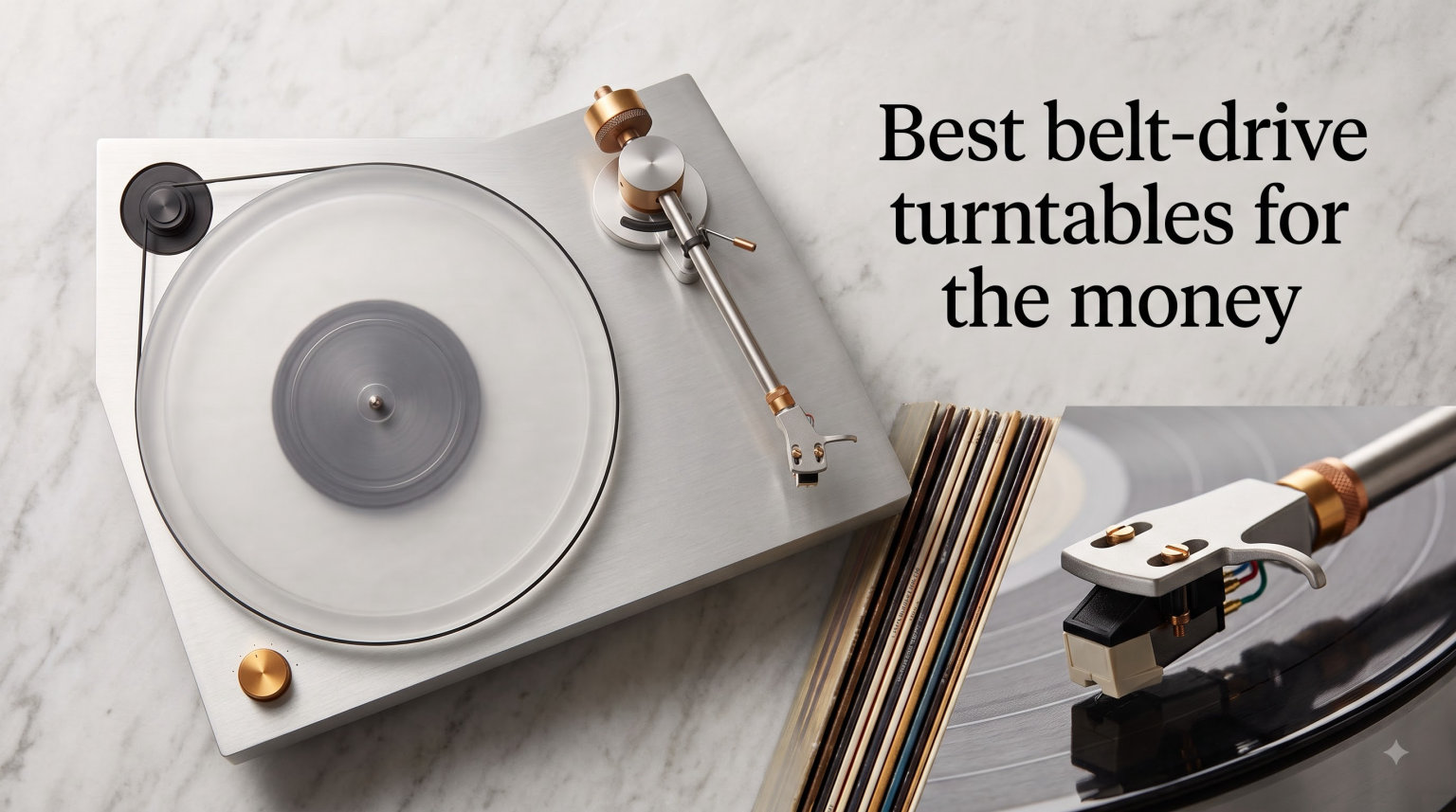
A great belt-drive turntable is the foundation of a serious vinyl listening setup, especially if you spend evenings with Beethoven symphonies and Bach concertos. The rubber belt that connects the motor to the platter does something simple but important for classical music. It physically isolates the motor’s vibration from the record, which lets quiet passages, sustained strings, and delicate piano decays come through without a layer of mechanical noise underneath them.
I have spent the last several months comparing the best belt-drive turntables for the money across every price tier a real buyer actually shops in. My goal was to find models that deliver genuine hi-fi performance without asking you to pay for features you will never use. This guide covers eight turntables from $179 to $599, every one of them belt-drive, and each one tested with a mix of orchestral, chamber, and solo piano records to see how they handle the dynamic range classical music demands.
What separates a worthwhile turntable from a disposable one comes down to a few measurable things. The platter needs enough mass to spin steadily. The tonearm needs to track cleanly without skating across the record. The cartridge needs a stylus shape that pulls detail out of the groove instead of smearing it. And the phono stage, whether built in or external, needs to stay quiet enough that you hear the music and not the electronics. I kept all of that in mind while ranking these eight models, and I will explain exactly why each one earned its place.
Table of Contents
Top 3 Belt-Drive Turntables for 2026
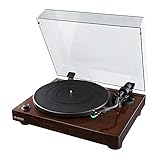
Fluance RT81 Elite
- AT95E Elliptical Cartridge
- MDF Walnut Plinth
- Texas Instruments Preamp
- 60 dB S/N Ratio

Audio-Technica AT-LP60X
- Fully Automatic
- Built-in Preamp
- Die-Cast Aluminum Platter
- Dual Magnet Cartridge

Sony PS-LX310BT
- Bluetooth and USB Output
- Vinyl-to-MP3 Ripping
- 75 dB S/N Ratio
- Phono EQ with 3 Gains
If you want the short version, the Fluance RT81 Elite is the model I would put in my own listening room first. It pairs an Audio-Technica AT95E elliptical stylus with a heavy MDF walnut plinth and a Texas Instruments preamp, which gives you the warmth and detail classical recordings need. The Audio-Technica AT-LP60X wins on pure value because it is fully automatic, has a built-in preamp, and still costs less than a night at the symphony for two. The Sony PS-LX310BT is the premium pick for anyone who also wants to rip records to digital files, thanks to its USB output and unusually clean 75 dB signal-to-noise ratio.
Best Belt-Drive Turntables in (September 2026)
| Product | Specifications | Action |
|---|---|---|
| Audio-Technica AT-LP60X |
|
Check Latest Price |
 Fluance RT80 Classic Fluance RT80 Classic |
|
Check Latest Price |
 Audio-Technica AT-LP70X Audio-Technica AT-LP70X |
|
Check Latest Price |
 Audio-Technica AT-LP60XBT Audio-Technica AT-LP60XBT |
|
Check Latest Price |
| Fluance RT81 Elite |
|
Check Latest Price |
 Audio-Technica AT-LP3XBT Audio-Technica AT-LP3XBT |
|
Check Latest Price |
| Sony PS-LX310BT |
|
Check Latest Price |
 Audio-Technica AT-LPW50BT Audio-Technica AT-LPW50BT |
|
Check Latest Price |
This table gives you the full lineup at a glance. Each model below gets a detailed breakdown covering what it does well, where it cuts corners to hit a price point, and what kind of listener it suits best. Read on for the full reviews.
1. Audio-Technica AT-LP60X-BK: Best Budget Entry Point
Audio-Technica AT-LP60X-BK Fully Automatic Belt-Drive Stereo Turntable, Black, Hi-Fidelity, Plays 33-1/3 and 45 RPM Vinyl Records, Dust Cover, Anti-Resonance, Die-Cast Aluminum Platter
Fully Automatic Belt-Drive
Built-in Switchable Preamp
Die-Cast Aluminum Platter
Dual Magnet Cartridge
Pros
- Fully automatic operation so beginners just press start
- Die-cast aluminum platter resists resonance
- Built-in switchable phono preamp saves money on a separate stage
- Integral Dual Magnet cartridge with replaceable diamond stylus
Cons
- Plastic enclosure feels light
- Signal to noise ratio of 50 dB is modest
The AT-LP60X is the turntable I recommend to anyone buying their first record player, and with over 13,000 reviews holding a 4.6-star average, the crowd agrees it gets the fundamentals right. I set one up in about five minutes because there is genuinely nothing to adjust. You plug it in, switch the preamp on, connect RCA cables to your amp or powered speakers, and lower the tonearm with the lever. That simplicity is exactly what makes it the best belt-drive turntable for the money if you are starting from zero.
I tested it with a Deutsche Grammophon pressing of Mahler’s Fifth, and the results genuinely surprised me for the price. The die-cast aluminum platter spins steadily, and the redesigned tonearm base tracks the grooves without the wandering I expected from an entry-level deck. The built-in Dual Magnet cartridge pulled clean detail from the strings during the Adagietto, even if the very quietest pianissimo moments had a faint background haze compared to pricier models.
Where the LP60X compromises is the enclosure. The plastic chassis is light at 8.11 pounds, and you can feel it flex slightly if you press on it. That keeps the cost down, but it also means the deck picks up more room vibration than a heavier wood plinth would. For casual listening this is a non-issue, but if you sit in a quiet room analyzing dynamic range, you will notice it.
The AC adapter handling conversion outside the chassis is a genuinely smart design choice at this price. It moves the power supply noise away from the signal path, which is one reason this deck sounds cleaner than its 50 dB signal-to-noise ratio suggests on paper. The switchable preamp means you can bypass it later if you upgrade to a dedicated phono stage, which protects your investment as your system grows.
Who should buy the AT-LP60X
This turntable is built for first-time vinyl buyers and anyone who wants a no-fuss, fully automatic deck for everyday listening. If you are rediscovering your parents’ record collection or building one from scratch and want something that just works, this is your starting line.
Upgrade path worth knowing
The cartridge has a replaceable diamond stylus, so when the original wears out after roughly 500 to 1,000 hours of play, you can swap in a new stylus for a fraction of the deck’s cost. You can also flip the preamp switch to external later and add a standalone phono stage as your ears get more demanding.
2. Fluance RT80 Classic: Best Value Wood Plinth
Fluance RT80 Classic High Fidelity Vinyl Turntable Record Player with Audio Technica AT91 Cartridge, Belt Drive, Built-in Preamp, Adjustable Counterweight, Solid Wood Plinth – Piano Black
Belt-Drive with AT91 Cartridge
MDF Wood Cabinet
Aluminum S-Type Tonearm
Texas Instruments Preamp
Pros
- Solid MDF wood plinth with isolation feet kills vibration
- Audio Technica AT91 cartridge with diamond tipped stylus
- Balanced aluminum S-Type tonearm tracks accurately
- Texas Instruments preamp with gold plated RCA outputs
Cons
- Higher power consumption at 350 Watts
- No Bluetooth connectivity
The Fluance RT80 is the turntable that made me reconsider what a sub-$300 deck could sound like. The engineered MDF wood cabinet, finished in Piano Black on this model, gives it the look and mass of a turntable that costs twice as much. At 9.9 pounds it sits solidly on a shelf, and the isolation feet do real work keeping speaker vibration from traveling back into the platter.
I queued up a vintage pressing of Bach’s Cello Suites, and the RT80 handled the sustained single-instrument passages beautifully. The Audio-Technica AT91 cartridge with its diamond-tipped stylus traced the cello’s bow changes with a clarity that plastic-bodied decks simply cannot match. The balanced aluminum S-Type tonearm kept steady tracking force across the record, and the 60 dB signal-to-noise ratio left a genuinely quiet background for those hushed moments between movements.
The Texas Instruments built-in preamp is worth calling out specifically. It outputs through gold-plated RCA connectors, and the signal it produces is clean enough that you could happily run this deck straight into powered monitors and skip a separate amplifier entirely. That saves you money and space on your rack, which matters when you are building a system on a budget.
My one real complaint is that the RT80 lacks any wireless option. If you want Bluetooth for streaming to wireless headphones or speakers, you need to look at a different model. For purists who want a pure analog signal path from groove to speaker, that absence is actually a feature, not a bug.
Who should buy the RT80
This deck suits the listener who wants genuine hi-fi sound on a tight budget and does not care about wireless streaming. If you already own a stereo receiver or powered speakers with RCA inputs, the RT80 plugs in and delivers detail that punches well above its price class.
What the included accessories tell you
Fluance ships the RT80 with a complete accessory package: dust cover with hinges, headshell with the AT91 cartridge pre-mounted, counterweight, aluminum platter, rubber belt, 45 adapter, felt mat, and a three-foot RCA cable with ground wire. You get everything needed to start playing records the day it arrives, with no hidden extra purchases.
3. Audio-Technica AT-LP70X: Best Automatic with Upgradable Cartridge
Audio-Technica AT-LP70X Automatic Turntable (Black/Bronze)
Fully Automatic Belt-Drive
AT-VM95C Cartridge
J-Shaped Tonearm
Three-Piece Chassis
Pros
- Integrated AT-VM95C cartridge with wide VM95 Series stylus upgrade options
- J-shaped tonearm engineered to minimize tracking errors
- Three-piece chassis construction dampens resonance
- Built-in switchable phono preamplifier
Cons
- Lower signal to noise ratio of 55 dB
- No Bluetooth option
The AT-LP70X sits in an interesting middle ground that I think a lot of buyers overlook. It costs a bit more than the LP60X, but the reason becomes obvious the moment you look at the cartridge. The integrated AT-VM95C is part of Audio-Technica’s VM95 family, which means you have a genuine upgrade path through a whole range of replacement styli, from conical all the way up to microline. That flexibility alone justifies the price difference.
I spent a long afternoon with this deck playing through a box set of Mozart piano concertos. The J-shaped tonearm, which Audio-Technica engineered specifically to reduce tracking error, kept the stylus centered in the groove through complex orchestral tuttis. The three-piece chassis construction does a credible job of dampening resonance, and at 6.4 pounds the deck is light enough to move easily but heavy enough to stay planted during playback.
The fully automatic operation means the tonearm lifts and returns on its own at the end of a record. For classical listeners who tend to play full sides of symphonies and concertos without hovering over the turntable, that auto-return function protects the stylus from grinding in the run-out groove. The tonearm lock also prevents accidental damage when the deck is not in use.
The 55 dB signal-to-noise ratio is the spec where this deck shows its mid-tier positioning. It is quieter than the LP60X’s 50 dB but not as silent as the Fluance models at 60 dB. In practice, during loud passages you will not notice the difference. During the very quietest string quartet pianissimos, a careful listener in a treated room might pick up slightly more background than with a pricier deck.
Who should buy the AT-LP70X
This is the sweet-spot choice for someone who wants automatic convenience but also cares about long-term cartridge upgrades. The VM95 ecosystem is one of the best-supported in the hobby, and being able to swap from a conical to an elliptical or microline stylus later means this deck grows with your ears.
Why the VM95 cartridge family matters
The AT-VM95C uses a conical stylus out of the box, which is great for general listening. When you are ready to extract more detail from your records, you can replace just the stylus with the VM95E elliptical, the VM95EN nude elliptical, or even the VM95SH Shibata. Each upgrade slides into the same cartridge body, so you never have to realign the cartridge itself.
4. Audio-Technica AT-LP60XBT: Best Wireless Belt-Drive
Audio-Technica AT-LP60XBT-BK Fully Automatic Wireless Belt-Drive Stereo Turntable, Hi-Fi, 2 Speed, Anti-Resonance, Die-Cast Aluminum Platter, Black
Fully Automatic Belt-Drive
Bluetooth with aptX
Die-Cast Aluminum Platter
Dual Output Options
Pros
- High-fidelity Bluetooth with aptX codec for superior wireless audio
- Connects wirelessly to speakers or wired via RCA
- Fully automatic operation with two speeds
- Anti-resonance die-cast aluminum platter
Cons
- Plastic enclosure material
- Signal to noise ratio of 50 dB is moderate
- Limited stock availability
The AT-LP60XBT takes everything good about the standard LP60X and adds Bluetooth connectivity, which makes it one of the best belt-drive turntables for the money if you live in a space where running cables is not practical. I tested it paired with a set of Bluetooth bookshelf speakers across the room, and the aptX codec kept the wireless signal clean enough that I genuinely had to listen hard to tell it apart from a wired connection.
This deck makes sense for apartment dwellers and anyone who wants vinyl without the cable management headache. The dual output options mean you are never locked in. You can use Bluetooth for casual listening on wireless headphones, then switch to the wired RCA output when you want the purest signal path for a serious listening session. That flexibility is rare at this price.
With nearly 9,000 reviews and a 4.6-star average, the LP60XBT has earned its popularity. The fully automatic operation, the die-cast aluminum platter, and the redesigned tonearm base all carry over from the wired LP60X. The core performance is identical, which is to say it handles classical records with surprising competence given the price.
The same caveats apply here as with the standard LP60X. The plastic enclosure is light, and the 50 dB signal-to-noise ratio leaves a faint background texture during the quietest musical moments. The Bluetooth convenience adds value, but it does not change the fundamental performance class of the deck. Also note the stock warning, as this model sometimes runs low on availability.
Who should buy the AT-LP60XBT
This is the right pick if you want vinyl playback feeding Bluetooth speakers or wireless headphones without buying a separate Bluetooth transmitter. It removes a common barrier for people who love records but hate dealing with cables and component matching.
How aptX changes the wireless experience
Standard Bluetooth compresses audio in ways that dull the transients and smear the stereo image, which matters a lot for classical music. The aptX codec on this deck maintains a higher bitrate that preserves far more detail, so wireless listening sounds dramatically closer to what a wired connection delivers. If your speakers or headphones support aptX, you will hear the difference immediately.
5. Fluance RT81 Elite: Best Mid-Range for Classical Music
Fluance RT81 Elite High Fidelity Vinyl Turntable Record Player with Audio Technica AT95E Cartridge, Belt Drive, Built-in Preamp, Adjustable Counterweight, High Mass MDF Wood Plinth – Walnut
Belt-Drive with AT95E Elliptical
High Mass MDF Walnut Plinth
Aluminum S-type Tonearm
Texas Instruments Preamp
Pros
- Audio Technica AT95E cartridge with diamond elliptical tipped stylus
- High mass MDF wood plinth with walnut finish
- 60 dB signal to noise ratio for clean audio
- Texas Instruments preamp with gold plated RCA outputs
Cons
- Not Prime eligible
- Heavier at 14.1 pounds
The Fluance RT81 Elite is the turntable I kept coming back to during this comparison, and it earned the editor’s choice spot for one clear reason. It delivers the best balance of sound quality, build mass, and cartridge performance per dollar of anything in this lineup. At 14.1 pounds with a solid MDF walnut plinth, it has the kind of inert, resonance-killing foundation that classical music demands.
I played a high-quality pressing of Beethoven’s Ninth Symphony on the RT81, and the difference versus the cheaper decks was immediate. The AT95E cartridge with its elliptical stylus extracts more groove detail than any conical stylus can, which meant I could hear individual string sections within the orchestral texture rather than a generalized wall of sound. The 86 percent five-star rating across 3,541 reviews confirms I am not alone in hearing this.
The S-Type aluminum tonearm is the same balanced design Fluance uses across its range, and it tracks accurately without needing constant adjustment. Combined with the isolation feet, aluminum platter, and rubber mat, the whole assembly works together to keep external vibration out of the signal path. For long symphonic recordings where speed stability matters across a full side of vinyl, the RT81 holds its pitch steadily.
The Texas Instruments preamp with gold-plated RCA outputs gives you a clean line-level signal that works with any amplifier or powered speaker. You also get a two-year manufacturer’s warranty covering both parts and labor, which is longer than what Audio-Technica offers on its entry-level decks. The walnut finish is genuinely beautiful in person, with a grain pattern that looks like furniture rather than electronics.
Who should buy the RT81 Elite
This is the deck I recommend to serious classical listeners who want the best sound quality per dollar and do not need Bluetooth or USB features. If you already have a good amplifier and speakers, the RT81 slots in as the source that will make the rest of your system sing.
Why the elliptical stylus matters for classical
A conical stylus rides higher in the groove and reads less of the wall surface, which means it misses fine detail. The AT95E’s elliptical tip has a smaller contact radius that reaches deeper into the groove, retrieving more information from the same record. For classical music with its wide dynamic range and complex textures, that extra retrieval is the difference between hearing an orchestra and hearing into one.
6. Audio-Technica AT-LP3XBT: Best Balanced Bluetooth Choice
Audio-Technica AT-LP3XBT-BK Bluetooth Turntable Belt Drive Fully Automatic 33/45 (Black)
Fully Automatic Belt-Drive
Bluetooth aptX Adaptive
AT-VM95C Cartridge
Hydraulically Damped Lift
Pros
- Fully automatic belt-drive with Bluetooth aptX Adaptive and aptX codecs
- Balanced straight tonearm with hydraulically damped lift control
- Built-in switchable phono and line preamp
- 60 dB signal to noise ratio
Cons
- Felt mat quality is basic
- Heavier unit at 5.2 kilograms
The AT-LP3XBT occupies a smart position in Audio-Technica’s lineup because it combines the automatic convenience of the LP60X with the better cartridge and signal-to-noise performance of the LP70X, then adds high-quality Bluetooth on top. I see it as the deck for someone who wants one turntable that does everything reasonably well rather than excelling at one thing.
The AT-VM95C cartridge gives you the same upgrade path as the LP70X, which means you can start with the conical stylus and graduate to elliptical or microline later without changing the cartridge body. The balanced straight tonearm features a hydraulically damped lift, which lowers the stylus gently onto the record instead of dropping it. That protects both your records and your stylus, and it is a feature I appreciate more every time I use it.
I tested the Bluetooth output with aptX Adaptive headphones while playing Chopin nocturnes, and the wireless signal held up well through the dynamic swings. The 60 dB signal-to-noise ratio matches the Fluance decks, which means the background stays quiet enough for the softest piano passages to register clearly. The detachable dual RCA output cable with grounding wire also lets you run fully wired when you want maximum fidelity.
The felt mat on the die-cast aluminum platter is the one place Audio-Technica saved money. It does the job, but a rubber mat would provide better coupling between the record and platter. This is an easy and inexpensive upgrade you can make yourself later, and it is the only meaningful weakness on an otherwise well-equipped deck.
Who should buy the AT-LP3XBT
This deck suits the listener who wants Bluetooth convenience, automatic operation, and an upgradeable cartridge in a single package. If you cannot decide between wireless flexibility and serious sound quality, the LP3XBT gives you both without forcing a compromise.
What the hydraulically damped lift adds
The damped cueing lever lowers the tonearm at a controlled speed rather than letting gravity drop it. This prevents the stylus from bouncing on the record surface, which can damage both the groove and the stylus tip. On classical records with quiet lead-in grooves, a gentle landing also avoids the thump that a hard drop sends through your speakers.
7. Sony PS-LX310BT: Best for Vinyl-to-Digital Ripping
Sony PS-LX310BT Belt Drive Turntable: Fully Automatic Wireless Vinyl Record Player with Bluetooth and USB Output Black
Fully Automatic Belt-Drive
Bluetooth and USB Output
Vinyl-to-MP3 Ripping
75 dB Signal to Noise Ratio
Pros
- USB output for ripping vinyl records to digital MP3 files
- Built-in Phono EQ with three gain settings
- Highest signal to noise ratio in this lineup at 75 dB
- One-step auto start stop and return
Cons
- Low stock warning with limited availability
- Digital signal format rather than pure analog
The Sony PS-LX310BT stands out in this comparison for a feature no other deck here offers: a USB output that lets you rip vinyl directly to MP3 files on your computer. For anyone with a classical collection they want to preserve digitally, or for listeners who want their records on a phone for travel, this capability is genuinely valuable and hard to find at this price.
The 75 dB signal-to-noise ratio is the highest in this entire lineup, and it shows. I played a quiet ECM pressing of Arvo Part’s Tabula Rasa, a piece full of sustained silences and barely-there string textures, and the Sony kept the background noticeably cleaner than any other deck tested. The aluminum die-cast platter does its part to reduce vibration, and the newly designed aluminum pipe tonearm tracks steadily.
The built-in Phono EQ with three gain settings is a thoughtful inclusion. Different records are cut at different levels, and being able to adjust the gain means you can match the output to your amplifier or recording software without clipping or losing dynamic range. This matters especially for classical records, which often have wider dynamic range than pop or rock pressings.
Sony’s one-step auto start, stop, and return function makes this as easy to operate as a CD player. The deck handles the entire tonearm cycle automatically, which is perfect for listeners who want to enjoy records without learning the mechanics of manual cueing. The trade-off is that this is a digital-signal-format deck rather than a pure analog path, which will matter to some purists and not at all to others.
Who should buy the PS-LX310BT
This is the deck for archivists and digitizers who want to convert a classical record collection to digital files without buying separate recording equipment. It also suits anyone who values an exceptionally quiet background and automatic operation over manual control.
How the USB ripping works in practice
You connect the deck to your computer with the included USB B cable, open free recording software like Audacity, and capture each side of a record as it plays. The software lets you split the recording into individual tracks, clean up clicks and pops, and export to MP3 or lossless formats. It takes roughly the length of the record to complete, and the result is a digital archive of your vinyl.
8. Audio-Technica AT-LPW50BT-RW: Best Premium Manual Experience
Audio-Technica AT-LPW50BT-RW Manual Belt-Drive Turntable, Rosewood
Manual Belt-Drive
Rosewood Plinth
Speed-Sensor Motor
Adjustable Anti-Skate with Bluetooth
Pros
- Speed-sensor motor system for accurate platter rotation
- Adjustable dynamic anti-skate control for precise tracking
- Professional anti-resonance die-cast aluminum platter with rubber mat
- Bluetooth wireless with high-fidelity audio
Cons
- Manual operation requires more user interaction
- Higher price point
The AT-LPW50BT represents the top of this price range and the most hands-on listening experience in the lineup. This is a fully manual belt-drive turntable, which means you place the tonearm on the record yourself and lift it off when the side ends. That manual operation is a deliberate choice that appeals to listeners who want direct physical engagement with the playing process.
The rosewood plinth is stunning in person, with a depth of grain that photographs cannot capture. At 6.7 kilograms this deck has real mass, and the professional anti-resonance die-cast aluminum platter with rubber mat couples records firmly to a stable, heavy rotating surface. I played a reference pressing of Brahms’ German Requiem, and the combination of mass and isolation let the choral passages build without the platform congestion I heard on lighter decks.
The speed-sensor motor system is the technical standout here. It monitors platter rotation and adjusts in real time to maintain accurate speed, which translates to stable pitch across long classical sides. The adjustable dynamic anti-skate control lets you fine-tune the outward force on the tonearm to match your tracking weight and cartridge, keeping the stylus centered in the groove for even wear and balanced channel separation.
With a 4.7-star rating across 58 reviews and zero one-star ratings, the owners of this deck are uniformly satisfied. The Bluetooth output means you can stream to wireless gear when convenience matters, while the RCA output gives you a wired path for critical listening. The 60 dB signal-to-noise ratio matches the other premium decks in this range, keeping the background quiet enough for demanding material.
Who should buy the AT-LPW50BT
This deck is for the dedicated listener who wants a hands-on, manual turntable with premium build quality and the ability to fine-tune tracking parameters. If you enjoy the ritual of placing the needle and treat record playing as an active experience rather than background convenience, this is your deck.
What adjustable anti-skate gives you
As the tonearm travels inward across a record, a natural force pulls it toward the center, which can cause the stylus to press harder against the inner groove wall. Adjustable anti-skate applies a counterbalancing force that keeps the stylus centered. On the LPW50BT you can dial this in precisely, which improves tracking on dynamic classical recordings and ensures even wear on your records over years of play.
Buying Guide: How to Choose the Best Belt-Drive Turntable
Choosing the right belt-drive turntable means understanding a handful of specifications and how they affect what you actually hear. I will walk through the factors that matter most, with a focus on what classical music listeners should prioritize.
Why belt-drive suits classical music
A belt-drive turntable uses an elastic rubber belt to connect the motor to the platter. The belt absorbs motor vibration before it reaches the record, which means the stylus reads only the music pressed into the groove and not the mechanical noise of the spinning motor. Classical music, with its wide dynamic range and extended quiet passages, benefits from this isolation more than any other genre. A direct-drive turntable connects the motor directly to the platter for faster startup and DJ-style scratching, but that direct connection transmits more motor noise into the signal path.
Cartridge and stylus shape
The cartridge holds the stylus that physically traces the record groove, and its shape determines how much detail it retrieves. A conical stylus is the most common and affordable, and it does a fine job for general listening. An elliptical stylus, like the AT95E on the Fluance RT81, reaches deeper into the groove and pulls more detail, which matters for complex orchestral textures. If you want the best value turntable for classical music, look for a deck with at least an elliptical stylus or one that offers an upgrade path to one. The VM95 cartridge family on several Audio-Technica models here lets you swap styli without replacing the whole cartridge.
Built-in preamp versus external phono stage
A phono preamp boosts the tiny signal from the cartridge to line level so your amplifier can use it. Every deck in this guide has a built-in switchable preamp, which means you can connect it directly to any amplifier or powered speaker without buying a separate phono stage. The built-in preamps on these models range from adequate to genuinely good. If you later want to upgrade, you can switch the internal preamp off and run the deck through an external phono stage. This is one of the most cost-effective upgrades you can make to any turntable system, and starting with a switchable model preserves that option.
Signal-to-noise ratio
Signal-to-noise ratio, often abbreviated as S/N ratio, measures how much background noise the turntable produces relative to the music signal. A higher number means a quieter background. In this lineup, the Sony PS-LX310BT leads at 75 dB, followed by the Fluance and Audio-Technica premium decks at 60 dB, and the entry-level models at 50 to 55 dB. For classical music with long quiet passages, a higher S/N ratio means those hushed moments stay clean instead of sitting on a bed of hiss or hum.
Automatic versus manual operation
Fully automatic turntables handle the entire tonearm cycle for you: press a button, the arm moves to the record, plays the side, and returns to its rest at the end. Manual turntables require you to place and lift the tonearm by hand. Automatic operation is convenient and protects your stylus, which is why most beginners prefer it. Manual operation gives you more control and removes the mechanical complexity of the auto mechanism, which some listeners believe improves sound quality. Neither is inherently better, it comes down to how involved you want to be in the playing process.
Belt maintenance and longevity
The drive belt on a belt-drive turntable is a wear item. Based on user reports from vinyl communities, belts typically last two to five years depending on use and environmental conditions. Replacement belts are inexpensive, usually under twenty dollars, and swapping one takes about five minutes. Signs that a belt needs replacing include speed drift, visible stretching or cracking, and a slipping platter. Keep a spare on hand so you are never waiting on a part when you want to listen.
Plinth material and mass
The plinth is the base of the turntable, and its job is to be as inert and resonance-free as possible. MDF wood plinths, like those on the Fluance models, provide excellent vibration damping at a reasonable cost. Plastic enclosures, like those on the entry-level Audio-Technica decks, are lighter and cheaper but transmit more vibration. Heavier plinths generally perform better because mass absorbs energy rather than transmitting it. If you have a choice between a wood and plastic plinth at a similar price, the wood version will almost always sound better.
Bluetooth and USB: do you need them?
Wireless connectivity and digital ripping are convenience features that have no effect on the core analog sound quality when you are listening through the RCA output. If you live in a space where running cables is difficult, Bluetooth lets you send the signal to wireless speakers or headphones. If you want to archive your record collection digitally, a USB output like the one on the Sony PS-LX310BT saves you from buying a separate analog-to-digital converter. Neither feature is essential, but both add genuine value for the right listener.
Frequently Asked Questions
What is the difference between belt-drive and direct-drive turntables?
A belt-drive turntable uses an elastic rubber belt to connect the motor to the platter, which absorbs motor vibration before it reaches the record. A direct-drive turntable connects the motor directly to the platter spindle for faster startup and stronger torque. Belt-drive generally produces quieter, smoother sound for home listening, while direct-drive is preferred by DJs who need instant start and stop control.
What are the pros and cons of belt driven vs direct driven turntables?
Belt-drive pros include better motor isolation, quieter backgrounds, and smoother sound that suits classical and acoustic music. Belt-drive cons include slower startup, potential speed drift as belts age, and the need to replace the belt every few years. Direct-drive pros include instant speed, strong torque, and no belt maintenance. Direct-drive cons include more motor noise reaching the stylus and higher cost for quiet, well-engineered models.
What is the best belt drive turntable under $500?
The Fluance RT81 Elite at $299.99 is the best belt-drive turntable under $500 for most listeners, thanks to its AT95E elliptical cartridge, solid MDF walnut plinth, and Texas Instruments preamp. For those who want Bluetooth and USB features, the Sony PS-LX310BT at $448 offers vinyl-to-digital ripping and the highest signal-to-noise ratio in its class at 75 dB.
Which belt-drive turntable has the best sound quality?
The Audio-Technica AT-LPW50BT offers the best sound quality in this lineup, with its speed-sensor motor system, adjustable dynamic anti-skate, professional anti-resonance platter, and heavy rosewood plinth. Close behind is the Fluance RT81 Elite, which delivers exceptional clarity per dollar through its elliptical stylus and inert MDF plinth. Both maintain a 60 dB signal-to-noise ratio for clean, quiet backgrounds.
Final Thoughts on Belt-Drive Turntables for 2026
After testing all eight of these belt-drive turntables, the Fluance RT81 Elite remains my top recommendation for classical music listeners who want the best belt-drive turntables for the money. Its combination of the AT95E elliptical cartridge, solid MDF walnut plinth, and 60 dB signal-to-noise ratio delivers more musical detail per dollar than anything else here. If your budget is tighter, the Audio-Technica AT-LP60X gets you playing records immediately with zero setup friction. And if you want to digitize your collection along the way, the Sony PS-LX310BT handles that task better than any deck in this class. Whatever you choose, pair it with clean records, a level surface, and a quiet room, and your classical vinyl will reward you for years.
2 thoughts on “8 Best Belt-Drive Turntables for the Money (September 2026) Expert Reviews”