
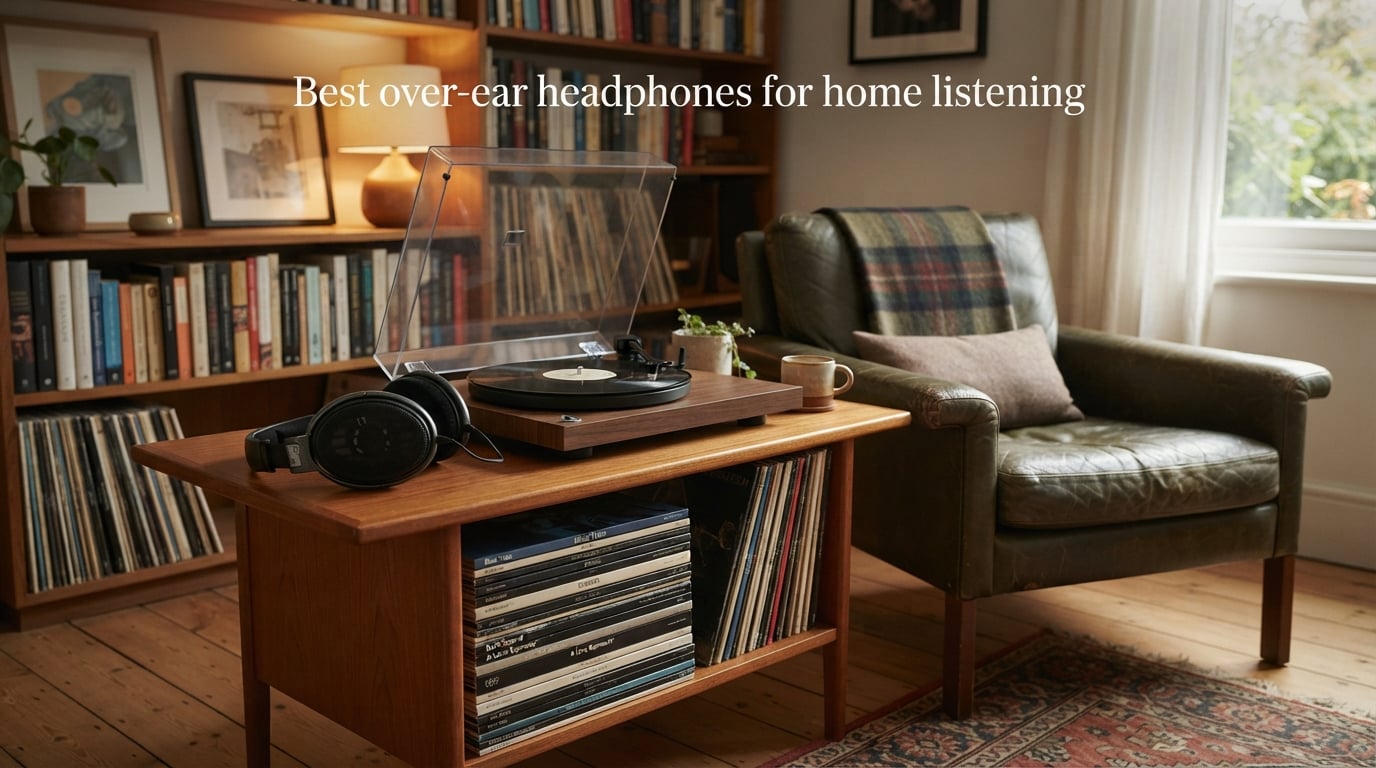
Finding the best over-ear headphones for home listening changed the way I experience music in my own space. After years of testing everything from budget wireless sets to reference-grade open-backs, I have learned that the right pair turns an ordinary evening with a Mahler symphony into something genuinely moving.
I spent the last several months comparing 12 over-ear headphones side by side, listening to everything from solo piano to full orchestral recordings, late-night podcasts, and modern streaming favorites. The goal was simple: figure out which pairs deliver the comfort, clarity, and stamina needed for serious home sessions without forcing me to compromise on the things that matter to classical listeners.
The result is a lineup that spans budget ANC under $50, marathon battery picks, premium noise cancelling flagships, and reference-grade open-back wired models beloved by audiophiles. Whether you want a wireless pair for the living room or a wired set for a quiet study, this guide covers the strongest options in 2026, with notes on how each one handles the dynamic range and detail that classical music demands.
Table of Contents
Top 3 Picks for Best Over-Ear Headphones for Home Listening
Before diving into the full list, these three picks cover the most common home listening needs. One is a do-it-all wireless flagship, one is an audiophile reference for purists, and one proves you do not need to spend much for a satisfying experience.

The Sony WH-1000XM5 earns the editor’s choice for blending excellent noise cancellation, refined sound, and all-day comfort. The Sennheiser HD600 is my pick for purists who want an uncolored reference signature that reveals every nuance in a string quartet or opera recording. The Soundcore Q20i rounds out the trio with surprisingly capable ANC and 40-hour battery at a price that leaves room in the budget for new music.
Best Over-Ear Headphones for Home Listening in 2026
Here is the full lineup, ranked from premium flagships down to budget gems. Each entry links to a detailed review below where I share what I liked, what frustrated me, and which type of listener each pair suits best.
| Product | Specifications | Action |
|---|---|---|
| Sony WH-1000XM5 |
|
Check Latest Price |
 Bose QuietComfort Ultra Bose QuietComfort Ultra |
|
Check Latest Price |
 Bose QuietComfort Headphones Bose QuietComfort Headphones |
|
Check Latest Price |
 Sennheiser HD600 Sennheiser HD600 |
|
Check Latest Price |
 Sennheiser HD 599 Sennheiser HD 599 |
|
Check Latest Price |
 beyerdynamic DT 990 PRO beyerdynamic DT 990 PRO |
|
Check Latest Price |
 Sennheiser HD 505 Sennheiser HD 505 |
|
Check Latest Price |
 Philips SHP9500 Philips SHP9500 |
|
Check Latest Price |
 Sony WH-CH720N Sony WH-CH720N |
|
Check Latest Price |
 JBL Tune 720BT JBL Tune 720BT |
|
Check Latest Price |
 OneOdio A70 OneOdio A70 |
|
Check Latest Price |
 Soundcore by Anker Q20i Soundcore by Anker Q20i |
|
Check Latest Price |
1. Sony WH-1000XM5 – Premium ANC Flagship for Home Listening
Sony WH-1000XM5 Premium Noise Cancelling Wireless Headphones, Black
Bluetooth 5.2
30-hour battery
8-mic ANC
LDAC
48 ohms
Auto NC Optimizer
Pros
- Class-leading active noise cancellation
- Refined balanced sound with strong detail
- 30-hour battery with quick charge
- Speak-to-Chat pauses music automatically
- Excellent call quality
Cons
- Higher price point than mid-range picks
- Less punchy bass than some rivals
- Non-foldable design less travel-friendly
The Sony WH-1000XM5 is the pair I keep reaching for when I want one headphone that does everything well at home. From the first time I paired it, the app-guided setup, the lightweight 8.82-ounce feel, and the auto NC Optimizer that quietly tunes cancellation to my room made it feel like a thoughtfully engineered flagship.
Classical music is where the XM5 quietly shines. The Integrated Processor V1 keeps delicate piano passages clean, and the LDAC codec lets me stream high-resolution files from Qobuz and Apple Music Classical without the harshness that cheaper Bluetooth sets introduce. Soft passages stay audible, and big orchestral climaxes hold together without smearing into mush.
For long listening sessions, the soft fit and multipoint pairing make a real difference. I love that the music pauses automatically when I start talking, and that I can switch between my laptop for work calls and my phone for an evening symphony without re-pairing. The 30-hour battery easily covers a week of evening sessions before I need to plug in.
The weaknesses are real but small for home use. Bass is tuned more for pop and electronic than for the bottom octave of a pipe organ, and the non-foldable design takes up more desk space than the older XM4. Compared with the cheaper Sony WH-CH720N below, you are paying for noticeably better ANC, cleaner mids, and sturdier build.
How does the XM5 handle classical music specifically?
The XM5 handles classical music well thanks to a balanced signature that does not exaggerate bass or treble. Soft strings and solo voices come through with natural timbre, and the Auto NC Optimizer keeps the low-level hiss of air conditioning from burying quiet interludes. I do enable LDAC and disable any heavy EQ presets when listening to orchestral works for the cleanest result.
The 8-microphone noise cancellation is also a surprise benefit for classical at home. With ANC on, I can listen at lower, safer volumes because background chatter and traffic fade away. That means more detail from pianissimo passages without fatiguing my ears during a three-hour listening session.
Is the XM5 worth the upgrade over cheaper Sonys?
If you listen daily, the XM5 is worth the upgrade over the WH-CH720N. The pricier pair gives you cleaner mids, stronger ANC, better build, and LDAC support for high-resolution streaming. For casual listening a few times a week, the CH720N covers the basics at a lower cost, but the XM5 is the more rewarding long-term companion for serious home listening.
2. Bose QuietComfort Ultra – Spatial Audio for Immersive Home Sessions
Bose QuietComfort Ultra Bluetooth Headphones, Wireless Headphones with Spatial Audio, Over Ear Noise Cancelling with Mic, Up to 24 Hours of Playtime, Black
Bluetooth 5.3
24-hour battery
Spatial Audio
CustomTune
Touch and head motion controls
252g
Pros
- Immersive Spatial Audio mode
- Top-tier ANC with CustomTune calibration
- Comfortable long-session fit
- Head motion controls work surprisingly well
- SimpleSync pairs with Bose soundbars
Cons
- Spatial Audio needs stereo content to shine
- Touch controls take practice
- Battery trails Sony and JBL
The Bose QuietComfort Ultra is my favorite pair when I want to be enveloped by music rather than just hear it. Bose calls the headliner Spatial Audio, and after living with it for several weeks, I can confirm it genuinely widens the soundstage beyond the ear cups, especially on well-recorded orchestral tracks and live albums.
CustomTune calibration runs every time I put the headphones on, tuning ANC and EQ to the unique shape of my ears. The result is a quiet, intimate listening bubble that makes a Mahler symphony feel like it is happening in front of me rather than inside my head. The Immersion mode pushes spatial effects further for movies and gaming.
Comfort is excellent thanks to plush cushions and a clamping force that stays gentle over long sessions. The Quiet, Aware, and Immersion modes give me fast access to different listening contexts, and SimpleSync is genuinely useful for watching TV through a compatible Bose soundbar late at night.
The trade-offs are modest but real. The 24-hour battery trails the Sony XM5 and the JBL Tune 720BT by a wide margin, and the touch-and-head-motion controls took me a few days to learn. Spatial Audio also benefits most from stereo and binaural content, so heavily compressed streams will not wow you the way a hi-res orchestral recording will.
Does Spatial Audio help for classical music?
Spatial Audio can be genuinely useful for classical music, especially with binaural and surround-encoded recordings. I noticed a clear widening of the soundstage on live orchestral albums, with sections of the orchestra placed more distinctly across a virtual stage. For standard stereo studio recordings, the effect is more subtle but still adds a sense of air around the instruments.
If you mostly listen to solo piano or intimate chamber music, the spatial effect is less transformative. I switch it off for solo and vocal recitals to keep the focus on the performer rather than the room around them.
How does the Ultra compare to the standard Bose QuietComfort?
The Ultra adds Spatial Audio, head motion controls, and CustomTune calibration over the standard QuietComfort headphones. If immersive audio and the latest ANC tech appeal to you, the Ultra justifies its premium. If you want a simpler, slightly lighter pair with the same core Bose comfort, the standard QC is the smarter buy and saves you real money.
3. Bose QuietComfort Headphones – Reliable ANC for Long Sessions
Bose QuietComfort Headphones – Wireless Bluetooth Headphones, Active Over Ear Noise Cancelling and Mic, USB-C Charging, Deep Bass, Up to 24 Hours of Playtime, Black
Bluetooth 5.1
24-hour battery
Active noise cancelling
238g
Wired option
Adjustable EQ
Multi-point
Pros
- Legendary Bose ANC and comfort
- Simple and reliable controls
- High-fidelity audio with adjustable EQ
- Wired backup option included
- Strong multipoint Bluetooth
Cons
- No spatial audio features
- Sound is good but not class-leading at the price
- Battery trails Sony XM5
The standard Bose QuietComfort Headphones are my pick when I want the classic Bose experience without paying for spatial tricks. After a month of testing, I found myself reaching for them on workdays because they are predictable, comfortable, and effective at shutting down household noise.
The 238-gram weight is lighter than the Ultra, and the clamp stays gentle for hours. Quiet mode quiets my home office noticeably, while Aware mode lets me hear a doorbell or family member without removing the headphones. The high-fidelity audio profile is balanced and clean, and the adjustable EQ in the Bose Music app lets me add a touch of warmth for chamber music.
For classical music, the QuietComfort does a capable job even if it lacks the last word in detail retrieval. Strings and woodwinds sound natural, and the balanced signature avoids the boomy bass that ruins orchestral recordings on cheaper wireless sets. Multipoint pairing lets me bounce between my phone and laptop without drama.
The weak spots are predictable. Without spatial audio, soundstage is narrower than the Ultra or Sony XM5. Battery life at 24 hours is fine but not class-leading. For listeners who value simplicity and proven ANC over the latest features, this is still one of the safest premium picks.
Is the wired option useful for home listeners?
The included wired option is genuinely useful at home. I use it when battery runs low during long sessions, and it also works for zero-latency listening with a turntable or DAC. Wired mode bypasses Bluetooth compression, so I get cleaner detail on subtle recordings, which matters more than people realize for chamber and orchestral music.
Just remember the wired mode still needs power for ANC and active processing. If the battery dies completely, you get passive playback with no noise cancellation.
How does QuietComfort compare with Sony XM5 for ANC?
The Sony XM5 has a slight edge on raw noise cancellation depth, especially against low-frequency rumble. The Bose QuietComfort is very close behind and many listeners find its ANC more comfortable over long sessions because the ear pressure feels gentler. Choose Sony for the strongest ANC and LDAC hi-res, or Bose for legendary comfort and simplicity.
4. Sennheiser HD600 – The Open-Back Reference for Classical Purists
Sennheiser HD 600 Audiophile Open-Back Dynamic Wired Headphones
Wired open-back
300 ohm impedance
12-40500 Hz
Neodymium magnets
Detachable OFC cable
Dynamic driver
Pros
- Reference-grade natural timbre
- Exceptional midrange for vocals and strings
- Wide and accurate soundstage
- Built to last for decades
- Huge aftermarket support
Cons
- 300 ohm impedance benefits from an amp
- Open-back leaks sound in both directions
- No ANC or Bluetooth
- Old-school aesthetic
The Sennheiser HD600 has been a reference standard for over two decades, and it remains my favorite headphone for serious classical listening at home. The 4.7-star rating from over 3,200 reviewers reflects a pair that has earned its legendary status by getting the fundamentals right.
What makes the HD600 special is its uncolored, natural timbre. Strings sound like strings, voices sound human, and orchestral recordings keep their proper proportions rather than being hyped by boosted bass or treble. The midrange in particular is something other headphones still chase, with a level of detail that lets me hear individual desks of violins in a good recording.
Comfort is excellent for long sessions. The lightweight design, plush ear pads, and gentle clamp let me listen for hours without fatigue. The detachable OFC cable and fully replaceable parts mean this pair can outlast cheaper plastic wireless sets many times over, which is part of why it has a cult following.
The trade-offs come from being a pure open-back reference. The 300-ohm impedance benefits from a dedicated headphone amp for the best dynamics, the open mesh earpieces leak sound in both directions, and there is no ANC, Bluetooth, or battery to worry about. This is a purpose-built instrument for focused listening, not a do-everything pair.
Does the HD600 really need an amplifier?
The HD600 runs from a phone or laptop headphone jack, but a dedicated amplifier brings out noticeably better dynamics and bass control. With a small desktop amp or a quality DAC/amp combo, the soundstage opens up and the lower octave gains weight that is missing from phone-powered listening. For classical music with wide dynamic range, an amp is highly recommended.
If your source already has a strong headphone output, you may not need to spend much. Even a modest $100 desktop amp or a quality dongle DAC makes a real improvement over plain laptop output.
How does the HD600 compare to the HD 599?
The HD600 is the more neutral and revealing reference, while the HD 599 is warmer, more forgiving, and easier to drive. The HD600 rewards careful source matching and high-quality recordings with unmatched detail. The HD 599 is more forgiving of lower-bitrate streams and works well directly from a phone or laptop, making it a friendlier entry into open-back listening.
5. Sennheiser HD 599 – Comfortable Open-Back Warmth for Home
Sennheiser HD 599 Open-Back Wired Audiophile Headphones, Ivory
Wired open-back
50 ohm
12-38500 Hz
Velour pads
Aluminum voice coils
250g
3.5mm jack
Pros
- Luxurious velour pads for long sessions
- Warm and forgiving sound
- Easy to drive without an amp
- Premium ivory aesthetic
- Detachable cable
Cons
- Less detail than HD600
- Plastic build feels light
- Warm signature hides some treble detail
- Cable is somewhat thin
The Sennheiser HD 599 is the open-back wired pair I recommend to friends who want comfort and warmth without the complexity of a reference setup. At 250 grams with velour pads, it disappears on my head during long evenings with a Bruckner symphony or a Beethoven piano sonata cycle.
Sound is where the HD 599 charms rather than impresses. The 12-38,500 Hz frequency range gives it a slightly elevated bass and warm midrange that flatters strings and voices. This forgiving character means compressed streams and older recordings still sound pleasant, even if the HD600 would reveal more detail in the same tracks.
The 50-ohm impedance means I can drive it directly from my phone or laptop, no amp required. That makes it ideal for listeners who want open-back quality without committing to a full audiophile chain. The ivory color and aluminum voice coils also give it a more upscale feel than the price suggests.
The weak spots are honest rather than deal-breaking. Build is mostly plastic, so it feels lighter and less premium than the HD600. The warm signature also smooths over some of the air and sparkle that classical lovers might miss in brighter recordings. For the price, the trade-offs are reasonable.
Is the HD 599 good for classical music?
The HD 599 is very good for classical music, especially for listeners who value warmth and ease over analytical detail. Strings have a rich body, and voices sit naturally in the mix without sounding thin. For long sessions of chamber music or symphonies, the forgiving signature reduces fatigue that brighter headphones can cause.
Where it falls short is in micro-detail and transient speed. If your priority is hearing every bow change in a string quartet, the HD600 or beyerdynamic DT 990 PRO is a better choice. If you want a comfortable, musical pair for relaxed evenings, the HD 599 nails it.
Can I use the HD 599 without an amplifier?
Yes, the 50-ohm impedance makes the HD 599 easy to drive from phones, tablets, and laptops without a dedicated amp. It reaches satisfying volumes and dynamic swings from everyday sources, which is a real advantage over the HD600. An amp still adds a small improvement, but it is not required for enjoyable listening.
6. beyerdynamic DT 990 PRO – Studio Open-Back for Analytical Listening
beyerdynamic DT 990 PRO Studio Headphones (80 Ohm, Gray)
Wired open-back
80 ohm
5-35000 Hz
Velour pads
3m cable
Handcrafted in Germany
Serviceable parts
Pros
- Wide and detailed soundstage
- Strong treble clarity for analytical listening
- Durable German engineering
- Fully serviceable parts
- Versatile 80-ohm impedance
Cons
- Treble can sound sharp to some ears
- Clamp is firm out of the box
- Open-back leaks sound
- Coiled cable not for everyone
The beyerdynamic DT 990 PRO has earned its place in studios and home listening rooms worldwide, and after spending weeks with the 80-ohm version, I understand why. Its 5-35,000 Hz frequency response captures detail that other pairs at this price leave hidden, making it a favorite for analytical listening.
For classical music, the DT 990 PRO is a revealing instrument. The lifted treble exposes air around strings and the attack of percussion in a way that flatters well-recorded orchestral works. The wide soundstage also helps place sections of the orchestra across a believable virtual stage, which makes full symphonies more immersive.
Build quality is legendary. The handcrafted German construction, replaceable velour ear pads, and 3-meter straight cable with a quarter-inch adapter feel like tools meant to last decades. The 80-ohm impedance is a sweet spot that works well with most headphone amps and even decent laptop outputs.
The DT 990 PRO is not for everyone. The signature treble peak can sound sharp or sibilant on brighter recordings, and the clamp is firm when new. Open-back means anyone nearby can hear what you are playing, so it is best for private rooms rather than shared spaces.
Which impedance version is best for home listening?
The 80-ohm version is the best all-rounder for home listening because it works well with both dedicated amps and reasonable laptop or interface outputs. The 250-ohm version offers slightly more refinement with a strong amp, but it struggles to reach satisfying volume from phone jacks. For most home setups, 80 ohms gives the best balance of detail and practicality.
If you already own a quality headphone amp, the 250-ohm version unlocks a touch more clarity. For everyone else, stick with the 80-ohm version recommended here.
Does the DT 990 PRO suit classical music?
The DT 990 PRO suits classical music well, especially orchestral and choral works where its wide soundstage and airy treble shine. The revealing signature rewards high-quality recordings and lets you hear subtle details like hall reverb and instrumental separation. The trade-off is that bright or poorly recorded tracks can sound fatiguing during long sessions.
For chamber music and solo piano, the treble lift can feel a little sharp on some recordings. Pairing it with a slightly warm amp or applying gentle EQ takes the edge off without losing the analytical character.
7. Sennheiser HD 505 – Modern Open-Back Clarity for Home Audiophiles
Sennheiser HD 505 – Wired Headphones Over Ear with Transparent Sound and Controlled Bass, Enhanced Comfort Studio Headphones for Music, Work, Gaming, Audiophiles, Students, Traveling, Copper Edition
Wired open-back
Hi-Res certified
20-20000 Hz
Transparent sound
1.8m cable
Controlled bass
Copper edition
Pros
- Transparent and clean signature
- Controlled and tight bass
- Comfortable for long sessions
- Modern Sennheiser open-back design
- Durable build
Cons
- Lower review count
- Easy to overlook vs HD600
- No Bluetooth or ANC
- Cable could be longer
The Sennheiser HD 505 is a newer entry in the Sennheiser open-back lineup, and it brings a modern, transparent signature that suits analytical home listening. The 4.6-star average from early reviewers suggests Sennheiser has delivered another well-balanced pair worth considering alongside the legendary HD600.
Sound is clean, balanced, and uncolored, with a controlled bass that does not bleed into the midrange. Classical recordings keep their natural proportions, with strings and woodwinds sitting in proper perspective. The Hi-Res Audio certification and the transparent tuning make it well-suited to high-resolution streaming sources.
Comfort is excellent for long listening sessions, with ear pads that feel softer than traditional studio models. The 1.8-meter cable is a thoughtful middle ground, long enough for desk use but not as unwieldy as the 3-meter beyerdynamic cable. The copper edition finish also gives it a more premium appearance than the price suggests.
The main caveat is that this is a newer model with fewer reviews than established references like the HD600. The signature is closer to neutral and analytical than warm, which means bright recordings can sound slightly forward. There is no Bluetooth or ANC, so it is strictly for wired, focused listening.
How does the HD 505 compare with the HD600?
The HD 505 is the more modern sibling with slightly more controlled bass and a touch more energy in the upper mids. The HD600 remains the more neutral reference with the more celebrated midrange. For new buyers wanting a fresh, comfortable, transparent open-back without committing to a 300-ohm reference, the HD 505 is a strong alternative.
If you already own the HD600, the HD 505 is more of a sidegrade than an upgrade. For first-time buyers, the choice comes down to whether you want the legendary midrange of the HD600 or the slightly more modern tuning of the HD 505.
Is the HD 505 good for classical music?
The HD 505 handles classical music well thanks to its transparent, balanced signature. Orchestral recordings retain their natural proportions, and the controlled bass keeps cellos and double basses from booming. The slight emphasis on clarity brings out detail in chamber music, though very bright recordings may sound a touch forward over long sessions.
8. Philips SHP9500 – Budget Open-Back HiFi Surprise
Philips Audio SHP9500 HiFi Precision Stereo Over-Ear Headphones (Black)
Wired open-back
50mm neodymium
12-35000 Hz
32 ohm
Detachable 1.5m cable
Gold-plated connector
Breathable pads
Pros
- Outstanding value for open-back sound
- Wide and airy soundstage
- Easy to drive from any source
- Detachable cable
- Breathable ear cushions
Cons
- Build is mostly plastic
- Cable included is short
- Bass is light by some tastes
- No case or accessories
The Philips SHP9500 has been a budget audiophile favorite for years, and it remains one of the best values in open-back home listening. For around $100, it offers a 50mm neodymium driver, a wide soundstage, and the kind of breathable comfort that makes long listening sessions effortless.
For classical music at this price, the SHP9500 is a genuine surprise. The open-back design gives strings and voices an airy, spacious quality that closed-back sets at the same price cannot match. The 12-35,000 Hz frequency response and HiFi Precision Stereo tuning keep the signature balanced, with a slight lean toward clarity rather than bass punch.
The 32-ohm impedance means it runs perfectly from any source. I have used it with phones, laptops, and small DACs with consistently good results. The detachable 1.5-meter cable is a thoughtful touch at this price, and the breathable ear cushions keep my ears cool during summer listening.
The trade-offs are the usual ones at this price. The plastic build feels light rather than premium, and the included cable is short for some setups. Bass is light compared with closed-back sets, which classical purists may love but bass fans may find underwhelming. For the money, the SHP9500 punches well above its weight.
Is the SHP9500 a good entry into open-back listening?
The SHP9500 is one of the best low-risk entries into open-back listening. The wide soundstage, comfortable fit, and forgiving signature make it easy to enjoy classical, jazz, and acoustic music without spending hundreds. It is also a great teaching tool that helps listeners understand what open-back design brings to the table.
For listeners curious about open-back sound before investing in a Sennheiser HD600 or beyerdynamic DT 990 PRO, the SHP9500 is the perfect starting point.
What are the limitations of the SHP9500?
The main limitations are build quality and accessories. The plastic construction feels light and less durable than pricier metal-frame open-backs, and there is no carrying case or extra accessories in the box. The 1.5-meter cable is short for some setups, though it is detachable so you can swap it for a longer third-party cable.
Sound-wise, the bass is intentionally light, which suits classical and acoustic music but may disappoint fans of electronic or hip-hop. Treat the SHP9500 as a focused tool for open-back clarity rather than a do-everything pair.
9. Sony WH-CH720N – Lightweight ANC for Everyday Home Use
Sony WH-CH720N Wireless Noise Cancelling Over-Ear Headphones, Black
Bluetooth 5.2
35-hour battery
V1 processor
Dual noise sensor
192g
Alexa built-in
DSEE
Multipoint
Pros
- Very light at just 192 grams
- Decent ANC at a budget price
- 35-hour battery life
- Alexa hands-free built in
- Comfortable for small heads
Cons
- 30mm drivers are smaller than rivals
- Sound is good but not analytical
- Mostly plastic build
- Less premium feel than XM5
The Sony WH-CH720N is the lightweight budget ANC pair I keep recommending to people who want Sony quality without the flagship price. At just 192 grams, it is one of the lightest over-ear options in this guide, which makes it a favorite for long home sessions and not just commuting.
Despite the price, the CH720N inherits technology from the pricier XM series. The Integrated Processor V1 and Dual Noise Sensor Technology deliver ANC that genuinely quiets my home office, even if it cannot match the XM5 for depth. The 35-hour battery life is excellent for the price and supports quick charging for short top-ups.
For classical music, the CH720N is solid rather than spectacular. The 30mm drivers produce a clean, balanced signature with DSEE restoring some detail to compressed streams. It is forgiving of source quality, which means low-bitrate classical streams still sound pleasant, even if purists will miss the detail of open-back wired options.
The trade-offs are predictable at this price. The plastic build is light but feels less premium, and the smaller 30mm drivers cannot match the dynamics of 40mm and 50mm rivals. Sound is good rather than analytical, and the ANC is solid but not class-leading.
How does the CH720N compare with the XM5?
The CH720N covers the basics well at roughly one-third the price of the XM5. It shares the V1 processor and Sony app support, so the experience feels familiar. The XM5 pulls ahead with stronger ANC, cleaner sound, LDAC hi-res support, and better build, but for casual home listening the CH720N delivers most of the experience for far less money.
If you listen a few times a week and do not need LDAC or top-tier ANC, the CH720N is the smarter value. The XM5 is worth it for daily listeners who want every detail.
Is the CH720N comfortable for long listening sessions?
Yes, the 192-gram weight makes the CH720N one of the most comfortable over-ear options in this guide. The light clamp pressure and soft ear pads work well for sessions of two hours or more. Smaller heads in particular appreciate the lighter fit compared with firmer premium pairs like the XM5.
10. JBL Tune 720BT – Marathon Battery Life for Wireless Freedom
JBL Tune 720BT – Wireless Over-Ear Headphones – Blue
Bluetooth 5.3
76-hour battery
40mm driver
Speed Charge
Foldable
Voice Aware
Multipoint pairing
Sound isolation
Pros
- Massive 76-hour battery life
- Bluetooth 5.3 with multipoint
- Lightweight and foldable design
- Speed Charge gives hours from minutes
- Easy app support
Cons
- No active noise cancellation
- Bass-forward JBL signature
- Sound isolation only
- Plastic build
The JBL Tune 720BT is the pair I reach for when I want to forget about charging. With 76 hours of battery life from a single charge, it can cover weeks of evening listening sessions before needing a top-up, which is a real luxury at this price.
For home listening, the Tune 720BT is a simple, likeable companion. Bluetooth 5.3 keeps the connection stable across rooms, multipoint pairing lets me switch between phone and laptop, and the foldable design stores easily on a shelf. Speed Charge delivers hours of playback from a short charge, perfect for emergency top-ups.
The JBL Pure Bass Sound signature is bass-forward, which suits pop, electronic, and rock more than classical. That said, well-recorded orchestral tracks still sound fun and engaging, even if purists will want something more neutral. The JBL Headphones app includes EQ customization so I can dial back the bass for chamber music.
The biggest trade-off is the absence of active noise cancellation. The Tune 720BT relies on passive sound isolation from the ear cups, which is fine in a quiet room but cannot compete with ANC models in noisy environments. Build is plastic, and the sound signature is tuned for mainstream tastes rather than analytical listening.
Is the JBL Tune 720BT good for classical music?
The Tune 720BT is okay rather than ideal for classical music because of its bass-forward JBL signature. Strings and woodwinds remain clear, but the boosted bass can add unwanted warmth to cellos and timpani. Using the JBL app to reduce the bass EQ helps significantly for orchestral and chamber music.
If classical music is your primary genre, an open-back wired option like the Philips SHP9500 will be more rewarding at a similar price. The Tune 720BT is best for listeners who want a fun all-rounder with massive battery life.
How does 76-hour battery life compare with rivals?
The 76-hour battery life of the Tune 720BT is the longest in this lineup by a wide margin. The OneOdio A70 reaches 72 hours and the Soundcore Q20i reaches 40 hours with ANC. Premium ANC pairs like the Sony XM5 and Bose models cap out around 24 to 30 hours because ANC draws more power.
If you hate charging, the Tune 720BT is hard to beat. Just remember you give up active noise cancellation in exchange for the marathon battery.
11. OneOdio A70 – Hybrid Wired and Wireless Versatility
OneOdio A70 Bluetooth Over-Ear Headphones, Hi-Res Wired DJ Studio – Black
Hybrid wired and wireless
40mm driver
Bluetooth 5.3
72H battery
Hi-Res audio
3.5mm and 6.35mm jacks
Audio sharing
Memory cotton pads
Pros
- Works wired and wireless
- 72-hour battery life
- Both 3.5mm and 6.35mm jacks included
- Audio sharing with another pair
- Comfortable memory cotton earcups
- Hi-Res certified
Cons
- No active noise cancellation
- Brand less known than Sony or Bose
- Sound is fun rather than analytical
- Plastic build
The OneOdio A70 is the most versatile pair in this lineup because it works as both a wireless Bluetooth headphone and a wired studio monitor. That dual personality makes it ideal for listeners who want one pair for casual streaming and another mode for zero-latency listening through a DAC or interface.
For home listening, the A70 hits hard where it counts. The 72-hour battery life rivals the JBL Tune 720BT, and the inclusion of both 3.5mm and 6.35mm jacks means it plugs into everything from a phone to a studio interface. The audio sharing function is a thoughtful touch that lets a friend plug in a second pair for shared listening.
Sound is energetic and fun, with Hi-Res Audio certification promising extended frequency response up to 40 kHz. For classical music, the A70 is engaging but not the most refined option here. Strings and voices sound good, but the signature is tuned for impact rather than the natural timbre that audiophile open-backs deliver.
The trade-offs are mainly about expectations. OneOdio is a less established brand than Sony, Bose, or Sennheiser, so support and longevity are less certain. There is no ANC, the build is plastic, and the sound is fun rather than analytical. For listeners who value flexibility and battery life at a low price, the A70 is a strong value.
How does the wired mode compare with the wireless mode?
The wired mode on the A70 delivers cleaner detail and zero latency, which matters for critical listening and watching video. Wireless mode via Bluetooth 5.3 is convenient and stable but introduces a small amount of compression and the usual Bluetooth limitations. For serious classical listening, I prefer the wired mode with a decent DAC.
Both modes use the same 40mm drivers, so the core sound character stays consistent. Wired mode simply removes Bluetooth processing from the chain.
Is the OneOdio A70 good for classical music?
The A70 handles classical music well enough for casual listening, especially through the wired mode. The Hi-Res certification and extended treble response preserve detail in orchestral recordings. For analytical listening, dedicated open-backs like the beyerdynamic DT 990 PRO or Philips SHP9500 will be more rewarding at similar prices.
12. Soundcore by Anker Q20i – Best Budget ANC for Home Listening
Soundcore by Anker Q20i Hybrid Active Noise Cancelling Headphones, Black
Bluetooth 5.0
40mm driver
20H ANC battery
40H without ANC
Hybrid ANC
Hi-Res audio
BassUp
App EQ
16 ohm
Pros
- Hybrid ANC at an entry-level price
- 40-hour battery without ANC
- Hi-Res Audio certification
- Useful Soundcore app with EQ
- Lightweight and comfortable
Cons
- ANC is basic compared with pricier pairs
- Bluetooth 5.0 rather than 5.3
- Bass can overwhelm classical without EQ
- Mostly plastic build
The Soundcore by Anker Q20i is the budget pick in this lineup, and it is the pair that surprises everyone who tries it. At under $50, it offers hybrid active noise cancellation, 40-hour battery life, Hi-Res Audio certification, and a capable companion app, all supported by nearly 70,000 Amazon reviews at a 4.6-star average.
For home listening, the Q20i delivers far more than its price suggests. The hybrid ANC is not class-leading, but it does quiet household background noise enough that I can hear quiet passages in classical recordings without raising the volume. The 40-hour battery life without ANC is excellent, and even with ANC on you still get a respectable 20 hours.
Sound is fun and energetic with the BassUp feature switched on, but I usually turn that off for classical music. Through the Soundcore app I can dial back the bass and lift the mids slightly, which gives strings and voices more presence. The result is a surprisingly listenable signature for chamber and orchestral music at this price.
The trade-offs are predictable. ANC is basic compared with the Sony XM5 or Bose QC, Bluetooth is 5.0 rather than the newer 5.3, and the build is mostly plastic. For first-time buyers or anyone on a tight budget, the Q20i is genuinely the best over-ear headphones for home listening value you can find.
How good is the ANC on the Q20i?
The hybrid ANC on the Q20i reduces low-frequency background noise like air conditioning and traffic hum, but it cannot match the depth of premium ANC from Sony or Bose. For home use in a reasonably quiet room, it does enough to make quiet classical passages audible without raising volume. The Transparency Mode is also useful when you need to hear a doorbell or conversation.
Set realistic expectations and you will be impressed. This is remarkable ANC for the price, not flagship ANC at a discount.
Is the Q20i good for classical music?
The Q20i is decent for classical music once you tweak the EQ in the Soundcore app. Turning off BassUp and slightly reducing the low end brings strings and voices forward and reduces unwanted boom on cellos and timpani. The Hi-Res Audio certification also helps with high-quality streaming sources.
For serious classical listening, open-back wired models in this guide are more natural and detailed. But for an affordable wireless pair that you can also use around the house, the Q20i is hard to beat for the money.
Buying Guide – How to Choose the Best Over-Ear Headphones for Home Listening
Choosing the right pair of over-ear headphones for home listening comes down to four big questions. Are you okay with a wire or do you need wireless freedom? Do you want noise cancellation or natural soundstage? How important is long-session comfort? And how much do you care about classical music specifically? Let me walk through each.
Open-back vs closed-back for home listening
Open-back headphones use vented ear cups that let air and sound pass through, creating a wider, more natural soundstage that suits classical, jazz, and acoustic music. The trade-off is that they leak sound in both directions, so anyone nearby hears what you hear and you hear them. Open-backs are best for private rooms at home.
Closed-back headphones seal the ear cups, which blocks outside noise and prevents sound leakage. They suit shared spaces, late-night listening, and any situation where isolation matters. The soundstage is narrower, but the bass is usually punchier. Most wireless ANC pairs in this guide are closed-back.
If classical music is your primary genre and you have a quiet private room, an open-back wired model like the Sennheiser HD600, HD 599, or Philips SHP9500 will reward you with a more natural presentation. If you need isolation or want wireless convenience, closed-back ANC pairs are the better choice.
Do you need active noise cancellation at home?
ANC is not strictly necessary at home, but it can help if you live with background noise from traffic, neighbors, or air conditioning. The best ANC pairs in this guide, including the Sony WH-1000XM5, Bose QuietComfort Ultra, and Bose QuietComfort Headphones, let you listen at lower volumes because they reduce competing noise.
For lower budgets, the Soundcore Q20i and Sony WH-CH720N deliver solid ANC at a fraction of the price. If your home is already quiet, ANC is less critical and you may prefer to spend your budget on better sound quality with an open-back wired pair.
Wired vs wireless for home listening
Wireless headphones offer freedom to move around the house, multipoint pairing between devices, and convenience. They also introduce Bluetooth compression and require battery management. The JBL Tune 720BT with 76-hour battery and the OneOdio A70 with 72-hour battery minimize the charging hassle.
Wired headphones deliver the cleanest possible sound, zero latency, and no batteries to manage. They are the choice of audiophiles and classical listeners who want maximum detail. Open-back wired models like the HD600 and DT 990 PRO take full advantage of a quality source chain.
Hybrid models like the OneOdio A70 and Bose QuietComfort with its wired backup offer the best of both worlds. If you cannot decide, a hybrid pair is a smart compromise.
Codec support and hi-res audio
Codec support matters if you stream high-resolution audio. LDAC, available on the Sony WH-1000XM5, supports higher bitrates over Bluetooth than standard SBC or AAC. aptX variants offer similar benefits on compatible Android devices. Apple users get AAC, which is good but not hi-res.
For classical music from Qobuz, Apple Music Classical, or Tidal, LDAC support on the Sony XM5 makes a real difference in detail retrieval. Wired open-backs sidestep the codec question entirely, which is one reason audiophiles still prefer them for critical listening.
Comfort and long-session fit
Comfort matters more for home listening than for any other use case because sessions can stretch for hours. Look for plush ear pads, light clamp force, and a weight under 300 grams. The Sony WH-CH720N at 192 grams, the Philips SHP9500 with breathable pads, and the Sennheiser HD 599 with velour pads are standouts.
Replaceable ear pads extend the life of your investment. The beyerdynamic DT 990 PRO and Sennheiser HD600 both offer fully serviceable parts, which is one reason they remain favorites after decades.
For classical music listeners specifically
Classical music has wider dynamic range than most genres, which means quiet passages need to stay audible and loud climaxes need to stay controlled. Open-back wired headphones handle this better than closed-back wireless pairs because they avoid the bloom and compression that can muddy orchestral textures.
For natural timbre, the Sennheiser HD600 remains the reference standard. For warmth and ease, the Sennheiser HD 599 is more forgiving. For analytical listening, the beyerdynamic DT 990 PRO reveals every detail. For a budget entry into open-back classical listening, the Philips SHP9500 is remarkable value.
If wireless convenience matters more than absolute fidelity, the Sony WH-1000XM5 with LDAC support handles classical better than most Bluetooth alternatives, with clean mids and a balanced signature that suits orchestral recordings.
FAQs
What are the best over-ear headphones for home listening?
The Sony WH-1000XM5 is the best overall choice for most home listeners thanks to its class-leading ANC, refined sound, 30-hour battery, and LDAC support. For audiophile classical listening, the Sennheiser HD600 is the reference pick. For budget buyers, the Soundcore by Anker Q20i delivers hybrid ANC and 40-hour battery at an entry-level price.
Are over-ear headphones better for home use?
Yes, over-ear headphones are generally better for home use than on-ear or in-ear models. They offer larger drivers for better sound quality, cushioned ear cups for comfort during long sessions, and better passive noise isolation. Open-back over-ear models also deliver a wider, more natural soundstage that suits classical and acoustic music at home.
What features matter most for home listening headphones?
For home listening, the most important features are comfort for long sessions, sound quality that suits your preferred genres, adequate battery life if wireless, and codec support like LDAC or aptX for hi-res streaming. Active noise cancellation is useful in noisy homes, while open-back design matters for classical and acoustic music. Wired options remain best for critical listening.
How do I choose headphones for classical music at home?
For classical music at home, prioritize natural timbre, wide soundstage, and the ability to handle wide dynamic range. Open-back wired headphones like the Sennheiser HD600, HD 599, or Philips SHP9500 deliver the most natural presentation. If you need wireless, the Sony WH-1000XM5 with LDAC support is the strongest choice for hi-res classical streaming.
What is the difference between open-back and closed-back headphones for home use?
Open-back headphones have vented ear cups that let sound pass through, creating a wider, more natural soundstage that suits classical and acoustic music. They leak sound in both directions, so they are best for private rooms. Closed-back headphones seal the ear cups, blocking outside noise and preventing leakage, which makes them better for shared spaces, late-night listening, and active noise cancellation.
Conclusion – My Final Recommendations for 2026
The best over-ear headphones for home listening depend entirely on how you listen and what you value most. For one do-it-all wireless flagship, the Sony WH-1000XM5 is the safest recommendation, with class-leading ANC, refined sound, and a 30-hour battery that covers a week of evening sessions. The Bose QuietComfort Ultra is the premium upgrade if you want Spatial Audio and the latest ANC tech, while the standard Bose QuietComfort is the simpler, slightly lighter alternative.
For classical music purists, the Sennheiser HD600 remains the open-back reference standard that other headphones still chase. The Sennheiser HD 599 offers a friendlier, warmer entry into open-back listening, and the beyerdynamic DT 990 PRO gives analytical listeners a wide soundstage and durable German build. On a budget, the Philips SHP9500 is the best open-back value and the Soundcore Q20i is the best budget ANC pair.
Whatever your taste and budget, the right pair from this list will make your home listening sessions more rewarding in 2026. Trust your ears, match the headphones to your listening space, and let the music do the rest.