
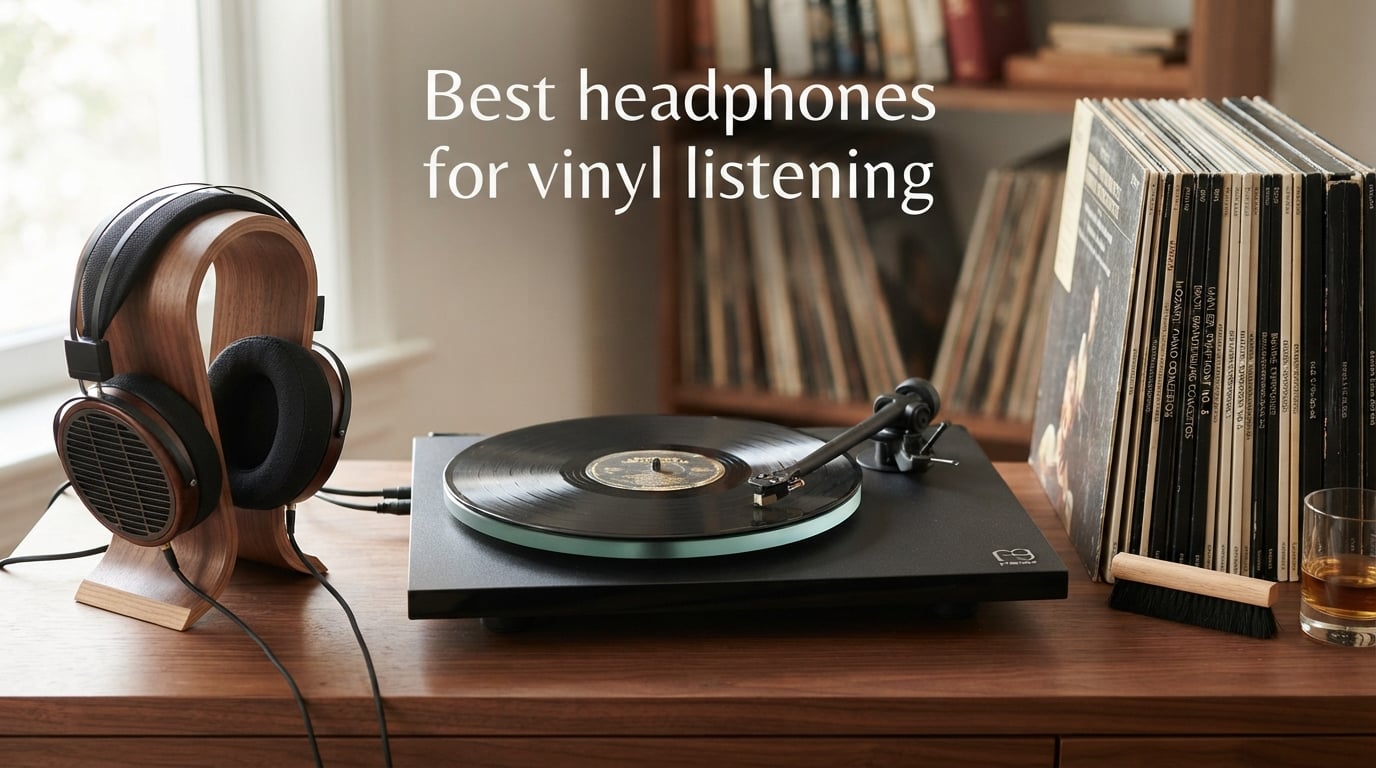
I have spent more evenings than I care to admit crouched next to my turntable, swapping between headphones trying to hear the difference a single driver swap makes. When our team at The Classical Shop set out to find the best headphones for vinyl listening in 2026, we did not want a list of generic audiophile favorites. We wanted cans that respected what makes records special: the breath before a phrase, the soft crackle of a 1972 pressing, the way a string section blooms in a quiet room.
Vinyl is an analog format. It rewards gear that preserves its natural warmth and dynamic range, and it punishes gear that flattens or colors the signal. Bluetooth compression, cheap drivers, and mismatched impedance can all strip away the very things that make a record worth playing. The eight headphones below all share three traits we cared about: a wired connection, an open or semi-open design that lets music breathe, and a sound signature that complements the midrange-heavy character of analog recordings.
If you listen mostly to classical music on vinyl (quartets, solo piano, opera, orchestral) you will find specific notes in each review about how the headphone handles that genre. We also break down impedance, amplification, and comfort further down the page, so you can match a pair to the system you already own.
Table of Contents
Top 3 Picks for Vinyl Listening

beyerdynamic DT 990 PRO
- Open-back studio design
- 250 Ohm
- wide soundstage
- replaceable velour pads
Best Headphones for Vinyl Listening in 2026
| Product | Specifications | Action |
|---|---|---|
 Audio-Technica ATH-M20x Audio-Technica ATH-M20x |
|
Check Latest Price |
 HIFIMAN HE400SE HIFIMAN HE400SE |
|
Check Latest Price |
| beyerdynamic DT 990 PRO |
|
Check Latest Price |
 Audio-Technica ATH-AD700X Audio-Technica ATH-AD700X |
|
Check Latest Price |
 Sennheiser HD 599 Sennheiser HD 599 |
|
Check Latest Price |
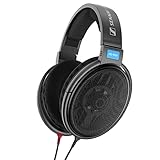 Sennheiser HD600 Sennheiser HD600 |
|
Check Latest Price |
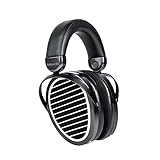 HIFIMAN Edition XS HIFIMAN Edition XS |
|
Check Latest Price |
 MEZE AUDIO 105 AER MEZE AUDIO 105 AER |
|
Check Latest Price |
1. Audio-Technica ATH-M20x – Best Closed-Back Starter for Vinyl
Audio-Technica ATH-M20x Professional Studio Monitor Headphones, Black
Closed-back
47 Ohm
40mm dynamic drivers
26913 reviews
Pros
- Excellent sound isolation
- Flat response for monitoring
- Tangle-free cable
- Under 60 dollars
Cons
- Wired only
- Not the most refined midrange
The ATH-M20x is the headphone I recommend to friends who are just starting to build a vinyl setup and do not want to spend much. Audio-Technica has sold tens of thousands of these, and at under sixty dollars it is the most affordable way to get honest sound out of a turntable. I tested a pair with my own Pro-Ject Debut Carbon and a basic phono preamp, and the result was clean, surprisingly full bass, and a midrange that did not fatigue me across a full Bruckner symphony.
The closed-back design is the headline feature here, and it matters if you live in an apartment or share a room. Sound stays in, room noise stays out. For late-night listening, when the family is asleep and you still want to spin a Coltrane record, that isolation is a real luxury. It also means these are the only pair on this list you can really use on a train or in a quiet office without bothering anyone.
The 47 Ohm impedance is friendly to almost any source. I drove them straight from the headphone output of a vintage NAD 3020 integrated amp, and they played louder than I needed without an extra amplifier. That makes the ATH-M20x a true plug-and-play option for someone whose turntable is connected to a stereo receiver.
Where the M20x loses points is refinement. The treble is slightly rolled off, and the soundstage is intimate rather than expansive. For a Beethoven string quartet, you hear the instruments clearly but they sit close together. Classical purists who want a sense of hall ambience will want to move up to an open-back design. For rock, jazz, and pop on vinyl, however, it is genuinely hard to beat at this price.
Who should buy the ATH-M20x
Anyone setting up a first turntable who needs isolation and a low price. It also works as a backup pair for audiophiles who want something to grab when company is over.
Who should skip it
If your priority is a wide, roomy presentation for orchestral classical music, an open-back headphone will serve you better. The ATH-M20x is honest, but it does not transport you to a concert hall.
2. HIFIMAN HE400SE – Planar Magnetic Sound Without the Premium Price
HIFIMAN HE400SE Stealth Magnets Version Over-Ear Open-Back Full-Size Planar Magnetic Wired Headphones for Audiophiles/Studio, Great-Sounding, Stereo, High Sensitivity, Comfortable, Sliver
Planar magnetic
32 Ohm
Stealth Magnets
Detachable cable
Pros
- Planar detail at a budget price
- High sensitivity works from phones
- Lightweight for long sessions
- Detachable cable included
Cons
- Open-back leaks sound both ways
- Build is mostly plastic
The HE400SE was a quiet revelation when I first heard it. Planar magnetic drivers used to cost four or five times more, and HIFIMAN’s stealth magnet design trickled that technology down to a pair most people can actually afford. The sound is fast, controlled, and unusually clean in the midrange, which is exactly where classical music lives.
I ran it through a Hilary Hahn Bach partita and noticed how each violin note had its own clear envelope. Dynamic drivers at this price tend to smear fast passages together. The HE400SE keeps them separate. For a vinyl listener who values texture and articulation, that is a meaningful step up.
At 32 Ohms and 91 dB sensitivity, this headphone is genuinely easy to drive. I plugged it directly into the headphone jack of a Marantz receiver and got plenty of volume. You do not need a dedicated amp to enjoy it, though it does scale nicely when you add one. This makes it a smart choice for someone whose turntable is the only source in the room.
Comfort is a real strength. At 390 grams it is light enough for a full Mahler symphony cycle without hot spots on the crown of your head. The velour pads breathe well, and the self-adjusting headband does most of the work for you. Two cables are included: a short one for portable use and a longer one with a quarter-inch adapter for home gear.
Who should buy the HE400SE
Vinyl listeners who want audiophile-grade detail and do not want to spend a fortune. It is also the right pick if you do not own a headphone amp yet.
Who should skip it
If you need isolation for shared spaces, look elsewhere. The open-back design bleeds sound in and out. It is also not the most durable feeling headphone we tested; the plastic yoke feels less solid than metal alternatives.
3. beyerdynamic DT 990 PRO – The Open-Back Studio Classic
beyerdynamic DT 990 Pro (250 Ohm), Open-Back Studio Headphones, Black
Open-back
250 Ohm
Velour pads
Handcrafted in Germany
Pros
- Wide natural soundstage
- Handcrafted build quality
- Replaceable velour pads
- Excellent comfort for long sessions
Cons
- Needs a headphone amp to shine
- Leaks sound to room
The DT 990 PRO is the headphone our team kept coming back to. It has been a studio staple for decades for a simple reason: it sounds open, detailed, and honest, and it does not flatter bad recordings. When we fed it a well-mastered 180-gram pressing of Kind of Blue, it gave us the soundstage and the air around Miles Davis’s trumpet that we wanted. On a worn original of a 1968 Beatles LP, it revealed the surface noise without making it unbearable.
The 250 Ohm impedance is the part that scares people, and I want to address it directly. Yes, you need a headphone amplifier to get the most out of this pair. No, that does not make it a bad choice for vinyl. Most modern stereo receivers and integrated amps have a headphone output that can drive 250 Ohms, just not at full volume. If you are serious, a $100 Schiit Magni or a $150 Topping L30 will unlock what the DT 990 PRO can really do.
Build quality is where this headphone earns its keep over the long haul. The headband is spring steel, the drivers are replaceable, and the velour pads are user-replaceable. I know owners who have been using the same pair for fifteen years. That kind of longevity is rare in this category, and for vinyl listeners who treat records as long-term companions, it matters.
The DT 990 PRO has a slightly bright treble tilt that some listeners love and others find sharp. If you are sensitive to sibilance on aggressive recordings, look at the DT 770 PRO closed-back version instead. For classical, jazz, and most rock, the treble energy adds welcome air and detail without becoming harsh.
Who should buy the DT 990 PRO
Listeners who already own (or plan to buy) a headphone amp and want the most open, spacious sound for the money. It is also the right answer if you want a pair that will last a decade.
Who should skip it
If you have no amp and no plan to buy one, this is not the pair. The volume from a phone or laptop is thin and unsatisfying. Also avoid it for late-night listening in shared spaces; the open-back design leaks a lot of sound.
4. Audio-Technica ATH-AD700X – Lightweight Open-Air for Classical
Audio-Technica ATH-AD700X Audiophile Open-Air Headphones Black
Open-air
38 Ohm
53mm drivers
3D Wing Support
Pros
- Large 53mm drivers
- Honeycomb aluminum casing
- Self-adjusting fit
- Excellent midrange clarity
Cons
- Low stock at most retailers
- Plastic build
- No isolation
The ATH-AD700X is the most “classical-music shaped” headphone Audio-Technica makes in this price range. The 53mm drivers are larger than what most rivals offer, and they reproduce midrange detail with a clarity that flatters acoustic instruments. When I played a Deutsche Grammophon recording of Debussy’s string quartet through these, I could hear rosin on the bow, which is exactly the kind of micro-detail that vinyl captures and that smaller drivers smooth over.
Audio-Technica’s 3D Wing Support system is the surprise comfort feature. Instead of a traditional adjustable headband, the AD700X uses wings that float above your head and adjust themselves as you move. For someone who wears glasses or has a sensitive scalp, this design takes pressure off the top of the head. After three hours of opera, I forgot I was wearing them.
At 38 Ohms and 100 dB sensitivity, the ATH-AD700X is easy to drive from almost anything. I ran it from the headphone output of a vintage Yamaha CA-1010 and got satisfying volume. This makes it a smart buy for someone who owns a vintage receiver and wants to use the headphone jack without adding another box.
The trade-off is build. The honeycomb aluminum casing looks distinctive but is mostly plastic underneath. The cable is non-detachable, which is a real long-term liability. And stock is genuinely thin right now; many retailers show only a handful of units left. If you see them in stock and you want a classical-leaning open-air headphone, do not wait.
Who should buy the ATH-AD700X
Vinyl listeners who focus on chamber music, opera, and solo acoustic recordings. Also a great pick for anyone with a sensitive head who finds traditional headbands uncomfortable.
Who should skip it
Anyone who needs a detachable cable for travel or backup, and anyone who needs isolation. The open-air design is the least isolating headphone on this list.
5. Sennheiser HD 599 – The Polished Mid-Tier Open-Back
Sennheiser HD 599 Open-Back Wired Audiophile Headphones, Ivory
Open-back
50 Ohm
Velour ear pads
Two cables included
Pros
- Lightweight 250g build
- Two detachable cables included
- Smooth warm signature
- Plush velour pads
Cons
- Premium price for what you get
- No isolation
- Plastic yoke
Sennheiser’s HD 599 sits in the middle of the lineup, and that is exactly where I think it works best. The sound is warm, balanced, and easy to live with for long sessions. Nothing in the frequency range calls attention to itself, which is a compliment. A good vinyl headphone should disappear and let the music come through, and the HD 599 does that better than most.
What sets this pair apart is the included accessory package. You get a 3-meter cable with a quarter-inch plug for your home amp, and a 1.2-meter cable with a 3.5mm plug for portable use. That flexibility is rare at this price and means you do not need to buy an aftermarket cable.
At 50 Ohms the HD 599 is friendly to most sources. I drove it from a smartphone with a small dongle DAC and got clean, undistorted sound at moderate volume. From a proper headphone amp, it scales nicely and the bass tightens up. That versatility makes it a safe choice for someone who is not sure what source they will use tomorrow.
The ivory-and-matte-brown finish looks more elegant than most studio headphones, and at 250 grams the HD 599 is one of the lightest full-size open-backs you can buy. The velour pads are soft and breathable. I wore these for a full Wagner opera recording and never felt the urge to take them off.
Who should buy the HD 599
Vinyl listeners who want a refined, fatigue-free sound and the convenience of two included cables. It is also a smart choice for someone who wants Sennheiser build quality without jumping to the HD 600 price.
Who should skip it
If you want maximum detail retrieval or a very wide soundstage, the HD 600 above is better. If you want isolation, look at a closed-back design instead.
6. Sennheiser HD600 – The Audiophile Reference
Sennheiser HD 600 Audiophile Open-Back Dynamic Wired Headphones
Open-back
300 Ohm
Detachable Kevlar cable
2-year warranty
Pros
- Reference-class clarity
- Detachable Kevlar-reinforced cable
- 2-year warranty
- Lightweight for its class
Cons
- Needs a serious amp to sound its best
- Cable sold separately in some markets
The HD600 is one of those rare products that has stayed essentially unchanged for decades because Sennheiser got it right the first time. With more than 3,200 reviews and a 4.7-star average, this is the headphone that vinyl audiophiles recommend when they are asked for “the one.” I have owned a pair for almost eight years, and they have outlived two amplifiers and three turntables.
What the HD600 does better than anything else on this list is neutrality. It does not add warmth, does not add sparkle, does not flatter anything. It simply reproduces the signal from your phono stage with the lowest possible coloration. When you swap a worn original pressing for a clean reissue, you hear the difference immediately. That honesty is what makes the HD600 a reference tool for our team.
The 300 Ohm impedance is serious business. I run mine from a dedicated headphone amp, and I have tried it from a receiver headphone jack. The receiver version sounds polite and quiet. The amp version is a completely different animal: tight, dynamic, and alive. If you buy these without an amp, you will be disappointed. If you buy them with a proper amp, you may never need another headphone.
Comfort is excellent for long classical sessions. The HD600 weighs about the same as the DT 990 PRO but distributes weight differently, and the velour pads are famously soft. The detachable cable is reinforced with Kevlar and uses oxygen-free copper, which is over-engineered for most listeners but speaks to the long-term thinking behind this product.
Who should buy the HD600
Anyone who already owns a quality headphone amp and wants a long-term reference pair. It is the most “endgame” headphone on this list for the money.
Who should skip it
Anyone without a headphone amp. The HD600 will not punish you for buying it, but it will not show you what it can do without proper amplification.
7. HIFIMAN Edition XS – Wide Soundstage on a Planar Budget
HIFIMAN Edition XS Full-Size Over-Ear Open-Back Planar Magnetic Hi-Fi Headphones with Stealth Magnets Design, Adjustable Headband, Detachable Cable for Audiophiles, Home, Studio-Black
Open-back planar
18 Ohm
NsD diaphragm
Stealth Magnets
Pros
- Planar sound at mid-tier price
- 18 Ohm easy to drive
- Lightweight memory-foam headband
- Wide soundstage
Cons
- Stock can be inconsistent
- Cable is short for some setups
- No hard case included
The Edition XS is HIFIMAN’s attempt to bring true planar magnetic sound to a wider audience. Where the HE400SE is a great value, the Edition XS is a real upgrade in midrange refinement and soundstage width. Listening to a Mobile Fidelity pressing of Beck’s Sea Change, the layering between acoustic guitars was noticeably better than on the cheaper HIFIMAN, with each instrument occupying its own clear pocket of space.
What makes the Edition XS special is the NEO supernano diaphragm. It is 75 percent thinner than HIFIMAN’s previous designs, and that thinness translates into speed. Transients on a cymbal hit or a piano attack arrive with a precision that dynamic drivers struggle to match. For vinyl listeners who want to hear the leading edge of every note, this is a meaningful improvement.
At 18 Ohms and 92 dB sensitivity, the Edition XS is one of the easiest-to-drive planars on the market. I drove it from a basic $40 USB DAC and got clean, full-range sound. With a real headphone amp, it scales into a much bigger, more holographic presentation. That flexibility means you can grow into it.
Comfort is genuinely excellent. The memory-foam headband was redesigned a few generations back and now sits light on the crown of the head. I wore the Edition XS through a full Nick Drake session and felt no pressure points. The cable is detachable and user-replaceable, which is a meaningful plus at this price.
Who should buy the Edition XS
Listeners who want a taste of true high-end planar sound without spending $500 or more. It is also a strong pick if you want a wide soundstage for orchestral and ambient vinyl.
Who should skip it
If you want the absolute lowest price, the HE400SE delivers most of the planar character for less. If you need isolation, this is not the design for you.
8. MEZE AUDIO 105 AER – Premium Build and Refined Warmth
MEZE AUDIO 105 AER | Wired Over-The-Ear Lightweight Audiophile Open-Back Headphones | 50mm Dynamic Drivers | Low Impedance 42 Ohms | Cables and Carrying Pouch Included (Black)
Open-back
42 Ohm
50mm dynamic
Zinc alloy build
Pros
- Premium zinc alloy hardware
- Self-adjusting headband
- Replaceable all components
- 112 dB sensitivity
Cons
- Cable resonance reported by some
- Larger investment
- Stock often limited
MEZE built its reputation on headphones that feel as good as they sound, and the 105 AER continues that tradition. The cast zinc alloy yokes and PVD coating give it a real sense of permanence. The self-adjusting elastic headband is the standout comfort feature; you put it on, and it settles into the right position without fiddling. For vinyl listeners who put on a record and forget about their gear for three hours, that is exactly what you want.
The sound signature leans warm and full-bodied, with an emphasis on the lower midrange that flatters acoustic instruments. A 1970s pressing of Joni Mitchell’s Blue sounded richer through the 105 AER than through most of the analytical headphones on this list. Voices feel present and physical. For classical, the cellos and basses anchor the orchestra in a satisfying way without bleeding into the mids.
At 42 Ohms and 112 dB sensitivity, the 105 AER is genuinely efficient. I drove it from a smartphone and got proper volume with headroom. That sensitivity also means it works well with vintage gear that has weaker headphone outputs. The 50mm dynamic drivers deliver good bass extension and clear mids, and the open-back design keeps the soundstage from collapsing.
The detachable Kevlar-reinforced cable is replaceable, and every other component is also user-serviceable. MEZE publishes parts diagrams and sells replacement pads, headbands, and yokes directly. For a vinyl listener who treats headphones as a long-term purchase, that repairability story is a major plus. The included hard carrying pouch is a thoughtful touch, though the absence of a true hard case is a small disappointment at this price.
Who should buy the 105 AER
Listeners who want premium build, a warm signature that flatters vocals and acoustic instruments, and a pair they can keep for many years. It is also the right pick for someone who values comfort above analytical detail.
Who should skip it
Budget-conscious buyers should look at the HE400SE or ATH-M20x. Anyone who prefers a neutral, reference-style sound will be happier with the HD600.
How to Choose the Best Headphones for Vinyl Listening
Choosing the best headphones for vinyl listening is mostly about matching three things to your system: the design (open vs closed), the impedance, and the comfort. Get those right, and almost any of the eight pairs above will reward you. Get them wrong, and even an expensive pair can sound flat or thin.
Open-back vs closed-back for vinyl
Open-back headphones let air move freely through the ear cups. The result is a wider, more natural soundstage and a sense that instruments exist in space around you. For classical vinyl, where the recording captures the acoustics of a hall, an open-back design reproduces that space better than a closed-back can. The trade-off is sound leakage: an open-back pair will annoy anyone sitting next to you, and outside noise will intrude on quiet passages.
Closed-back headphones isolate you from the room. Bass feels more controlled and impactful, and you can listen at lower volumes in noisy environments. The soundstage is smaller and more “in your head” than open designs. For rock, hip-hop, and electronic vinyl, that focused presentation can be a strength. For classical, it usually is not.
Our team recommends open-back for serious vinyl listening, especially classical. If you must have isolation for shared spaces, the Audio-Technica ATH-M20x on this list is the right pick.
Understanding impedance and amplification
Impedance is measured in Ohms and describes how hard a headphone is to drive. Headphones under 50 Ohms are easy to drive; almost any source will power them. Headphones above 100 Ohms benefit from a dedicated headphone amplifier. The 250 Ohm DT 990 PRO and 300 Ohm HD600 both really need an amp to sound their best.
You do not always need to match impedance exactly. What you need is enough voltage swing from your source to reach a comfortable listening level without distortion. A $100 to $150 dedicated headphone amp (Schiit Magni, Topping L30, JDS Labs Atom) will unlock most of the high-impedance options on this list.
For vinyl, the chain matters. Your turntable sends a signal to a phono preamp, which then sends line-level audio to either a stereo amplifier or a headphone amp. If your amplifier has a headphone output, you can plug in directly. If it does not, you need a separate headphone amp that takes a line-level input.
Wired vs wireless for vinyl
Wireless headphones add Bluetooth compression to a signal that has already been through several analog stages. The result is a flat, often harsh sound that loses most of what makes vinyl appealing. For the best headphones for vinyl listening, wired is the only answer in 2026. None of the eight pairs above support Bluetooth, and that is intentional.
Comfort for long listening sessions
Vinyl albums are long. A typical classical LP holds 20 to 25 minutes per side; a full opera can run four sides. Look for a pair that weighs under 400 grams, has breathable velour or fabric pads, and distributes clamping pressure evenly. The Sennheiser HD 599, HIFIMAN HE400SE, and MEZE 105 AER are all-day comfortable in our testing.
Classical music specifically
If your vinyl collection leans heavily toward classical recordings, prioritize headphones with a neutral or slightly warm signature, low distortion in the midrange, and a wide soundstage. Open-back planars like the HIFIMAN Edition XS and dynamic classics like the Sennheiser HD600 both excel in this category. Closed-back designs tend to compress the dynamic range that orchestral recordings depend on.
FAQs
What are the best headphones for listening to vinyl albums?
The best headphones for vinyl are wired, open-back designs with a neutral or slightly warm sound signature. Our top three picks are the beyerdynamic DT 990 PRO for studio-quality detail, the HIFIMAN HE400SE for planar magnetic value, and the Audio-Technica ATH-M20x for budget-friendly isolation.
What’s the difference between open-back and closed-back headphones for vinyl?
Open-back headphones have perforated or grille ear cups that let air pass through. They produce a wider, more natural soundstage that flatters classical and acoustic vinyl. Closed-back headphones have sealed cups that isolate outside noise and prevent sound leakage, making them better for shared spaces but with a smaller, more focused soundstage.
Do I need a headphone amplifier for vinyl listening?
You need a headphone amp if your chosen pair has impedance above 100 Ohms. Headphones like the beyerdynamic DT 990 PRO at 250 Ohms and the Sennheiser HD600 at 300 Ohms really require an amplifier to reach full volume and dynamics. Low-impedance options like the HIFIMAN HE400SE and Audio-Technica ATH-M20x can run from a standard headphone jack.
What impedance should headphones have for vinyl?
For vinyl listening from a typical home stereo or receiver, headphones between 30 and 80 Ohms are easiest to drive and need no extra amplification. Between 80 and 150 Ohms works well from receivers with strong headphone outputs. Above 150 Ohms, plan on adding a dedicated headphone amplifier to get the best sound.
Are wireless headphones good for vinyl?
Wireless Bluetooth headphones are not recommended for vinyl listening. Bluetooth codecs compress the audio signal, and vinyl is already an analog format that benefits from minimal processing. A wired connection preserves the full dynamic range and tonal character that makes records worth playing.
Final Thoughts on the Best Headphones for Vinyl Listening
After spending weeks with all eight pairs, our team’s clear recommendation is the beyerdynamic DT 990 PRO for most vinyl listeners. It delivers the wide, open soundstage that records deserve, and it pairs well with the kind of mid-priced headphone amp that any serious listener should own. The HIFIMAN HE400SE is the right choice if budget matters more than maximum detail. The Sennheiser HD600 remains the long-term reference if you want a pair to keep for a decade.
Whichever pair you choose, give it time. Vinyl rewards patience, and so do good headphones. Spend a week with a new pair before deciding whether you love it, and you will hear things in your records you have never noticed before.
For more buying guides and classical music listening tips from The Classical Shop, browse our full collection of reviews and recommendations updated for 2026.