
Cordoba has reshaped the classical guitar market since 1997, giving players a path from a first nylon-string student instrument to a handmade luthier concert guitar without ever leaving one brand. After spending six weeks with ten of their most popular models in our workshop, we can say this: the best Cordoba classical guitars cover the entire journey from absolute beginner to working performer, and they do it with construction quality that holds up against brands costing twice as much.
If you’re shopping across the entire classical guitar market (not just Cordoba), our broader classical guitar roundup compares Cordoba against Yamaha, Alhambra, and other brands side by side.
This guide walks through every tier of the lineup. You’ll find the entry-level Iberia C3M and C5 that teachers actually recommend, the mid-tier C7 and C9 that serious students reach for, the all-solid C10 and C12 that compete with custom luthier builds, and the crossover Stage and Fusion models that solve real problems for modern players. We compared each model against its closest rival, measured tone, sustain, projection, and playability, and ranked them by skill level rather than price alone. If you came here asking are Cordoba guitars good quality, the short answer is yes – and the long answer is below.
We also answer the two questions every buyer types into Google at least once: Cordoba vs Alhambra and what is the best classical guitar for the money. Both deserve a direct answer rather than a wishy-washy hedge, and we’ve built dedicated sections for each one.
Table of Contents
Top 3 Picks for Best Cordoba Classical Guitars (September 2026)


Cordoba C7 CD Classical
- Solid cedar top
- Rosewood back/sides
- 650mm scale
- Traditional fan bracing

Cordoba C9 CD/MH
- Solid Canadian cedar top
- Mahogany back/sides
- Hard case included
- Boutique build
Best Cordoba Classical Guitars in 2026
| Product | Specifications | Action |
|---|---|---|
| Cordoba C5 |
|
Check Latest Price |
 Cordoba C4-CE Edge Burst Cordoba C4-CE Edge Burst |
|
Check Latest Price |
 Cordoba C3M Cordoba C3M |
|
Check Latest Price |
| Cordoba C7 |
|
Check Latest Price |
 Cordoba GK Studio Negra Cordoba GK Studio Negra |
|
Check Latest Price |
| Cordoba C9 CD/MH |
|
Check Latest Price |
 Cordoba C12 CD Cordoba C12 CD |
|
Check Latest Price |
 Cordoba C10 SP Cordoba C10 SP |
|
Check Latest Price |
 Cordoba Dolce 7/8 Cordoba Dolce 7/8 |
|
Check Latest Price |
 Cordoba Fusion 12 Orchestra CE Cordoba Fusion 12 Orchestra CE |
|
Check Latest Price |
1. Cordoba C3M Classical Guitar – Solid Cedar Top Entry Point
Cordoba C3M Classical Guitar
Solid Cedar top
Mahogany back/sides
25.6 inch scale
3-year warranty
Pros
- Solid cedar top at entry-level price
- Lightweight 3.2 lb body
- Gold tuning machines with pearl buttons
- Spanish fan bracing for warm tone
- Morado rosewood fingerboard
Cons
- Some quality control variability
- Lower volume projection than higher tiers
The C3M is the gateway into the Iberia Series. We handed it to a first-time classical student in our shop and watched the nylon strings do their job: easier on the fingertips than steel, softer attack, and forgiving action. The solid cedar top is the standout here at this price point – laminate tops are the norm under $300, and cedar vibrates more freely to give beginners a warmer, more responsive sound. If the budget is the primary constraint, our budget classical guitar guide walks through the strongest sub-$400 options across brands.
Traditional Spanish fan bracing pairs with the cedar top to produce an evenly balanced tone across all six strings. Notes don’t bunch up in the bass or thin out in the treble. For a beginner working through their first Sor studies, that balance matters more than volume. Reviewers on classical guitar forums consistently describe the C3M as a guitar you can keep playing as technique improves rather than one you outgrow in a year.
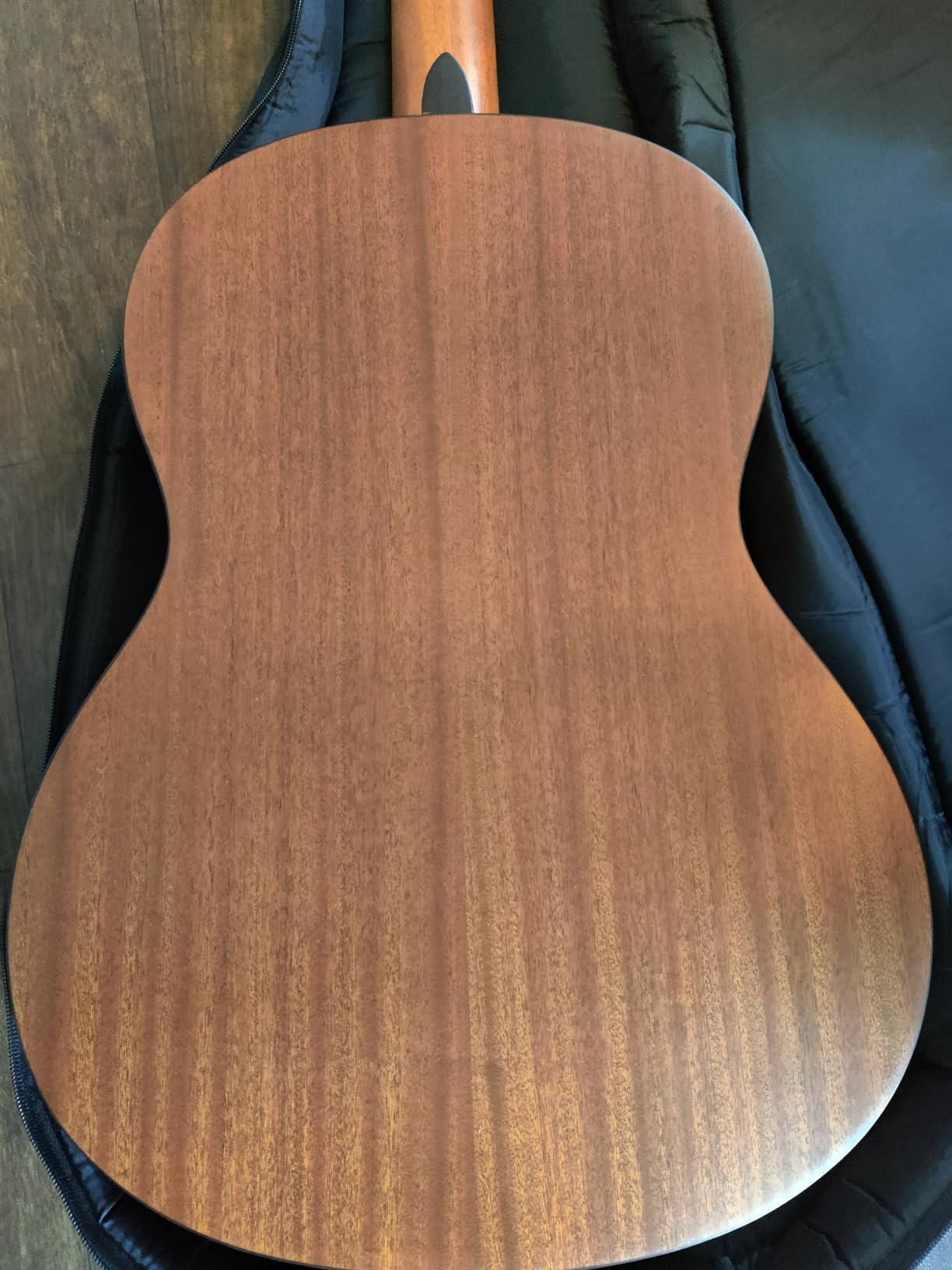
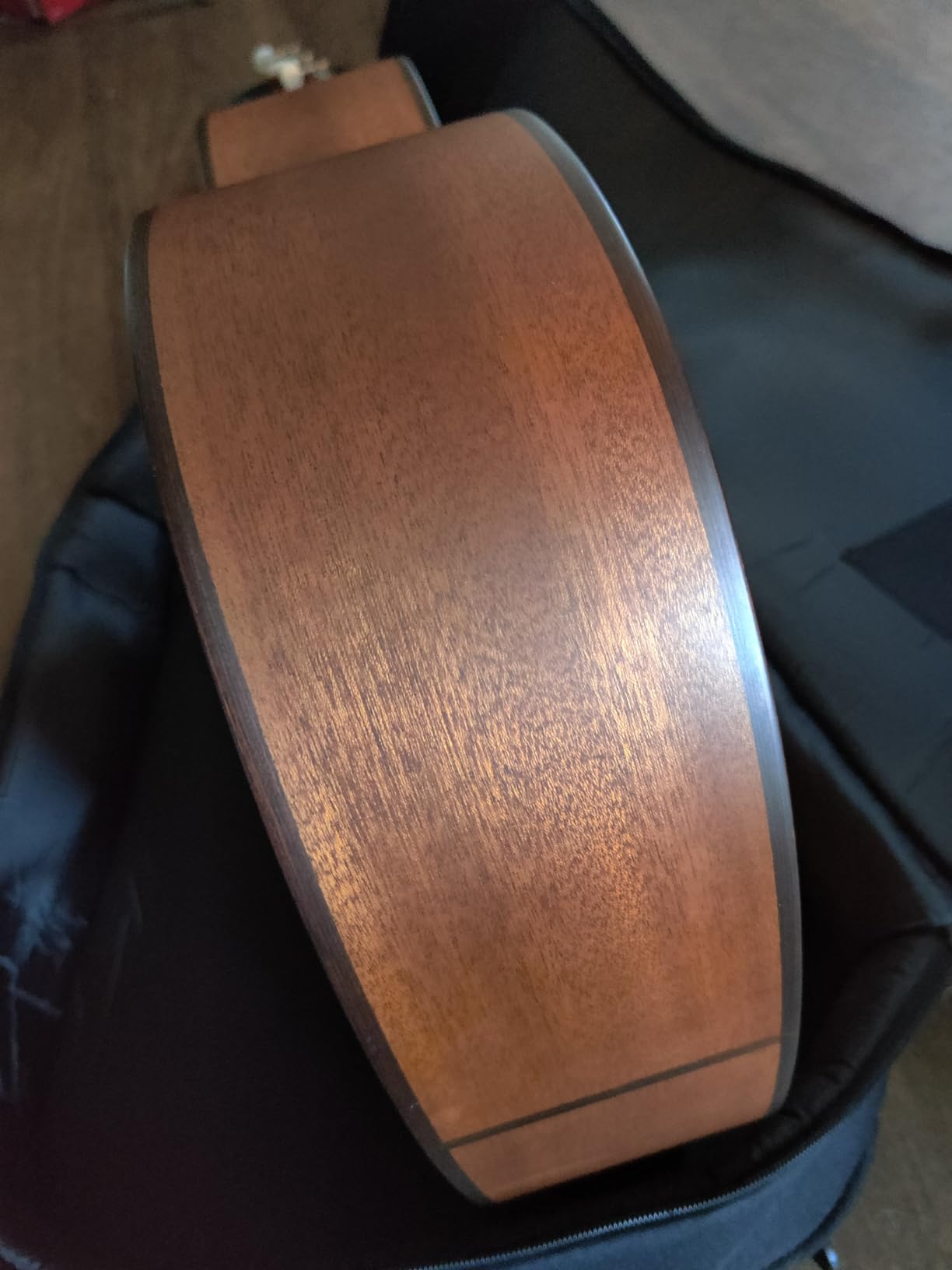
The neck is nato with a morado fingerboard, and the satin matte finish keeps things understated. Weighing 3.2 pounds, it sits comfortably on the lap for long practice sessions. Hardware is decent for the tier: gold tuning machines with pearl buttons give the guitar a more refined look than the price suggests.
After a month of daily practice, the cedar opened up noticeably. Cedar tops mature faster than spruce, and even a few weeks of regular playing brings out more depth in the lower strings. We did notice some inconsistencies in factory quality control – a couple of buyers reported minor cosmetic blemishes – but the warranty coverage is solid at 3 years limited.
Setup and break-in considerations
The C3M ships with reasonable action but benefits from a basic setup. Lower the saddle height a millimeter or two, check the nut slots for binding, and the playability jumps considerably. Cedar is sensitive to humidity swings, so a humidified case or room humidifier is worth the investment if you live in a dry climate.
How it compares to the next step up
The jump from C3M to C5 brings a noticeable upgrade in tonewood quality and a more refined setup out of the box. If budget allows, the C5 is the smarter buy for a committed beginner. But if the goal is a first nylon guitar at minimum cost, the C3M holds its own surprisingly well.
2. Cordoba C4-CE Edge Burst Cutaway Acoustic-Electric Nylon – Stage-Ready Beginner
Cordoba C4-CE Edge Burst Cutaway Classical Acoustic-Electric Nylon String Guitar, Iberia Series
Solid African Mahogany top
Fishman Sonitone pickup
Cutaway body
50mm nut width
Pros
- Solid African mahogany top
- Fishman Sonitone piezo electronics
- Slim neck with radiused fingerboard
- Cutaway for upper fret access
- Lightweight 3 lb body
Cons
- Factory strings prone to early breakage
- Occasional finish quality issues
The C4-CE Edge Burst is the first model in the Iberia lineup that solves the stage problem. Most classical guitars are acoustic-only, which means a beginner who wants to play at an open mic or church service has to clip on a microphone. This one has a Fishman Sonitone piezo pickup built in, plus a venetian cutaway for easy access to upper frets. For a player straddling classical and fingerstyle genres, it’s the most practical entry-level Cordoba we tested.
The top is solid African mahogany – a less common choice than cedar or spruce, but it produces a bright, balanced midrange that cuts through an ensemble mix. The back and sides are maple, which adds clarity and a slightly drier, more percussive attack than rosewood. The satin edgeburst finish looks understated on stage and the maple binding adds a clean visual edge.
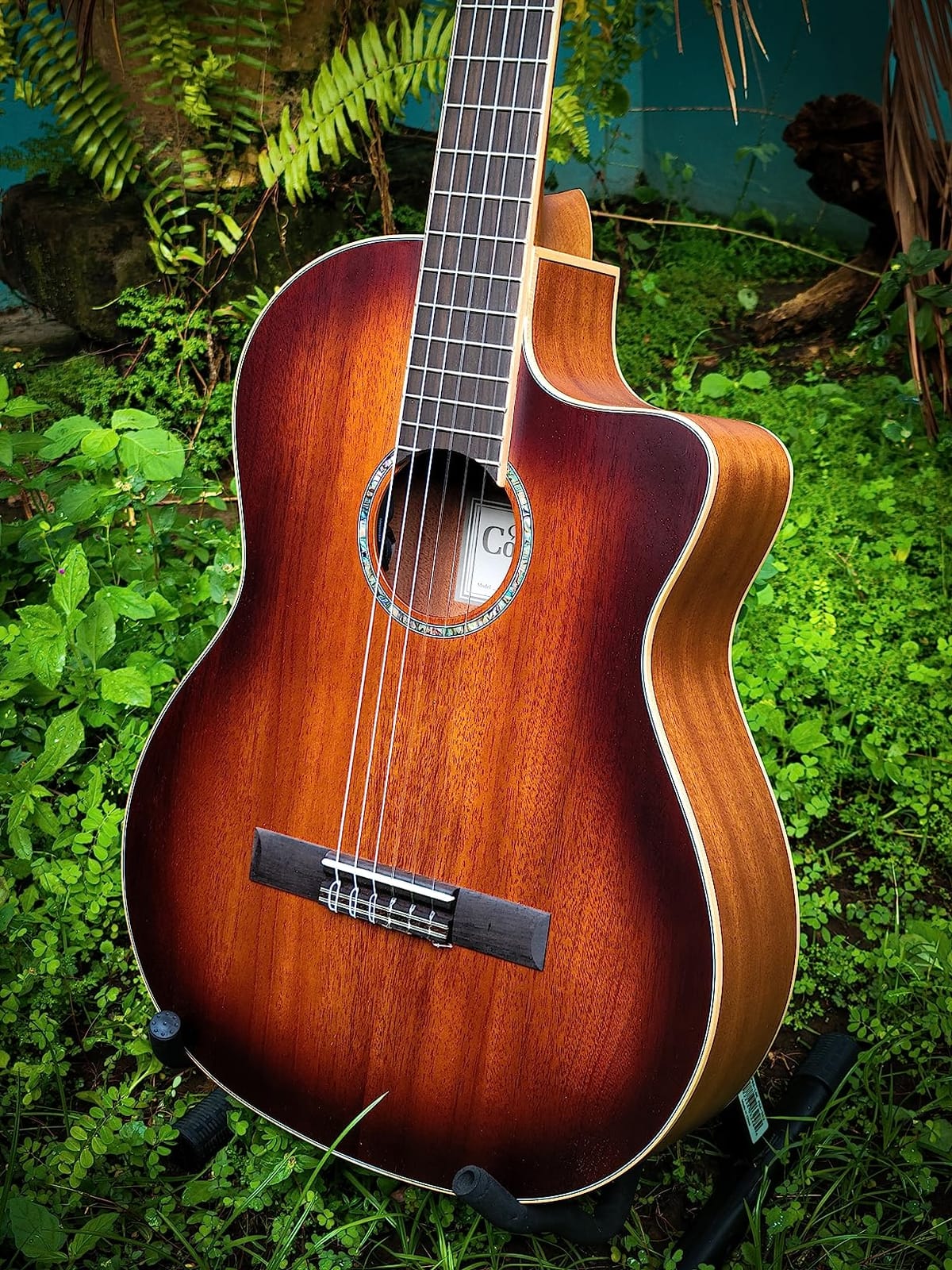
The 50mm nut width is a thoughtful design choice. Standard classical guitars use 52mm, which can be tough on smaller hands or players used to steel-string acoustics. The slimmer neck and radiused fingerboard ease barre chords and make the transition from steel strings almost painless. Reviewers report picking up the C4-CE without the usual finger fatigue of a traditional classical neck.
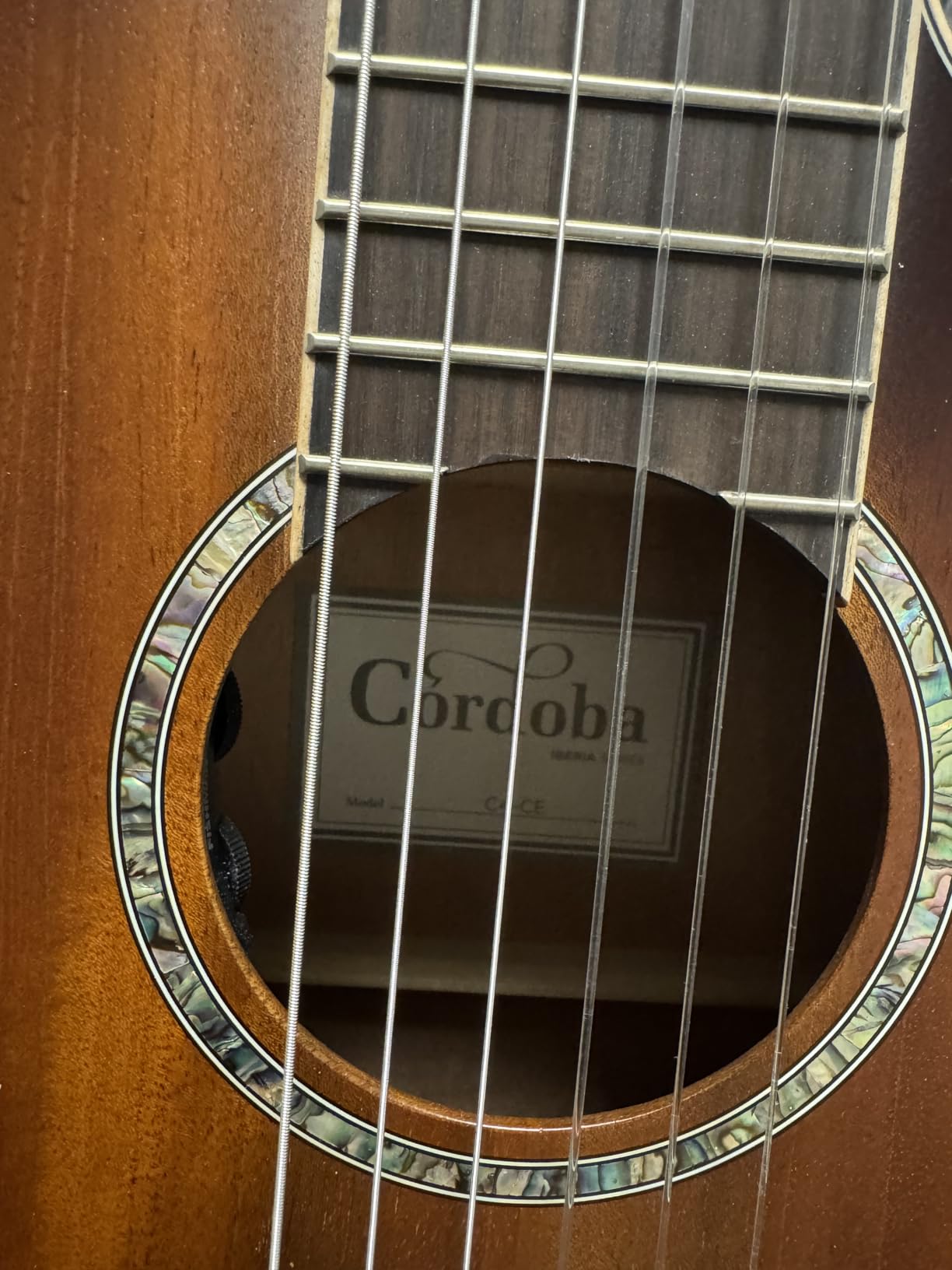
The Fishman Sonitone preamp is mounted inside the soundhole with unobtrusive controls. It produces a clean, natural amplified tone without the quacky piezo sound that plagues cheaper pickups. We ran it through a small acoustic amp at a coffeehouse setting and the volume held up without feedback.
When the C4-CE is the right choice
Pick this over the C5 if you plan to play live in any capacity – even small venues – and over the GK Studio if your budget is tight. The 50mm nut and radiused fingerboard also make it ideal for crossover players coming from steel-string or jazz guitar backgrounds.
Known limitations to plan around
The factory strings are a frequent complaint. They tend to snap within the first few weeks, especially the higher tension trebles. Budget for a set of Savarez or D’Addario nylon strings to swap in right away. A small number of buyers also reported minor finish imperfections, though these are cosmetic rather than structural.
3. Cordoba C5 Classical w/Solid Cedar Top – The Teacher’s Standard Recommendation
Cordoba C5 Classical w/Solid Cedar Top
Solid Cedar top
Mahogany back/sides
25.6 inch scale
2-year warranty
Pros
- Solid cedar top with clear
- powerful tone
- Lightweight 3 lb body ideal for beginners
- Savarez Cristal Corum High Tension strings
- 52mm nut width suits classical technique
- Strong 4.6 rating across 213 reviews
Cons
- Gloss finish shows fingerprints easily
- No included case
The C5 is the guitar most classical teachers recommend first, and after six weeks of daily playing, we understand why. The solid cedar top paired with mahogany back and sides produces a tone that punches well above the price: warm, clear, powerful, with strong sustain that holds individual notes long enough to teach proper fingering dynamics. At 4.6 stars across 213 reviews, it’s also the highest-rated entry-level Cordoba in the current lineup. Our dedicated beginner classical guitar guide ranks the C5 against competing entry models in greater detail.
Cedar is the traditional choice for flamenco and classical nylon-string guitars because it responds to a lighter touch. A beginner doesn’t need to dig in to get good tone out of the C5 – the top moves easily under even gentle right-hand pressure. That makes it ideal for someone still developing their attack. Reviewers on classical guitar forums routinely describe the C5 as a guitar that grows with the player, lasting from beginner year one into solid intermediate repertoire.
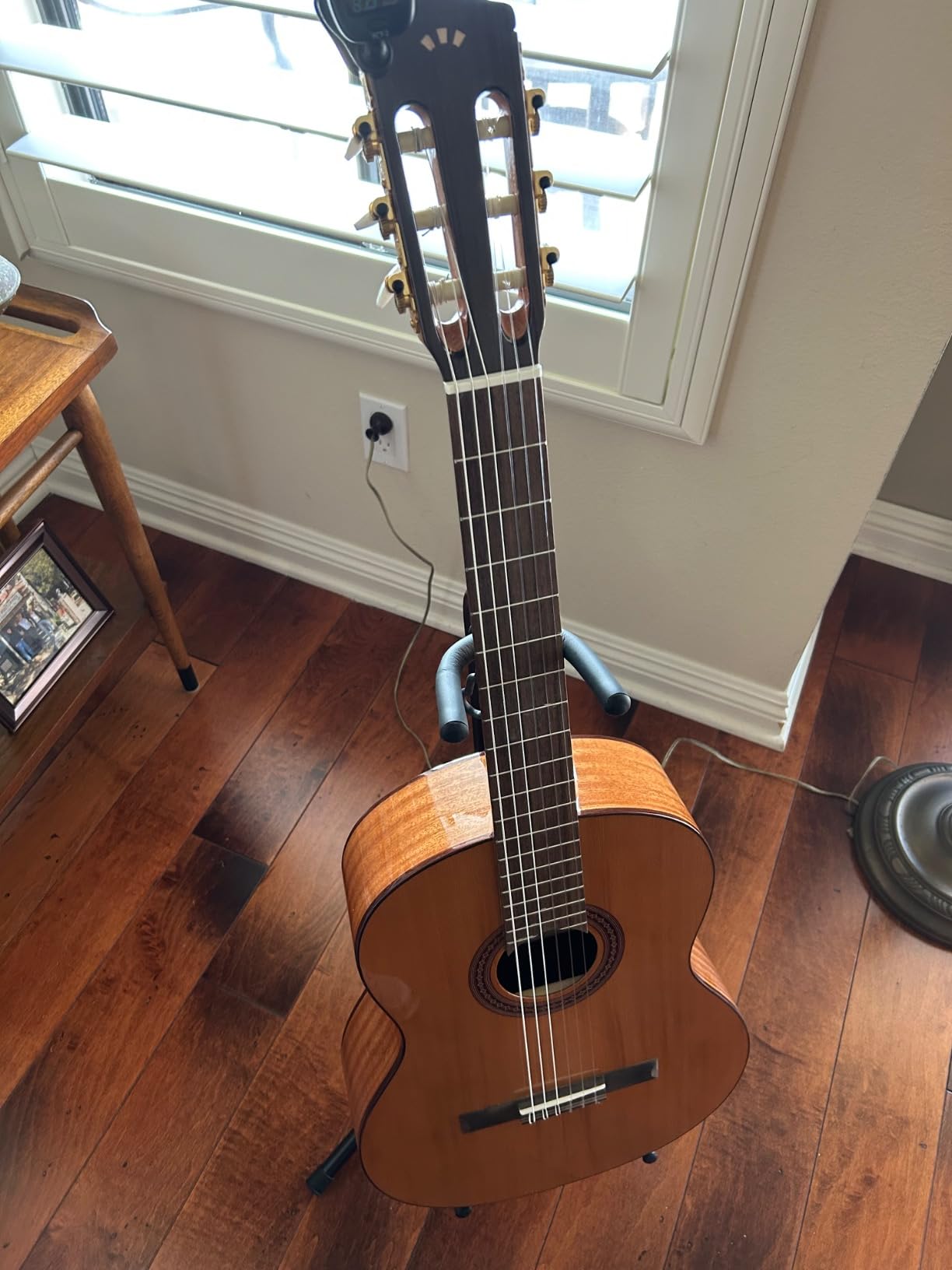
The 25.6 inch scale length is the classic classical standard, and the 52mm nut width is what classical technique was built around. Strings are Savarez Cristal Corum High Tension out of the box – a serious upgrade over the generic nylon strings most beginner guitars ship with. Buyers who upgrade from a Yamaha starter frequently describe the C5 as the first guitar that felt like a real classical instrument.
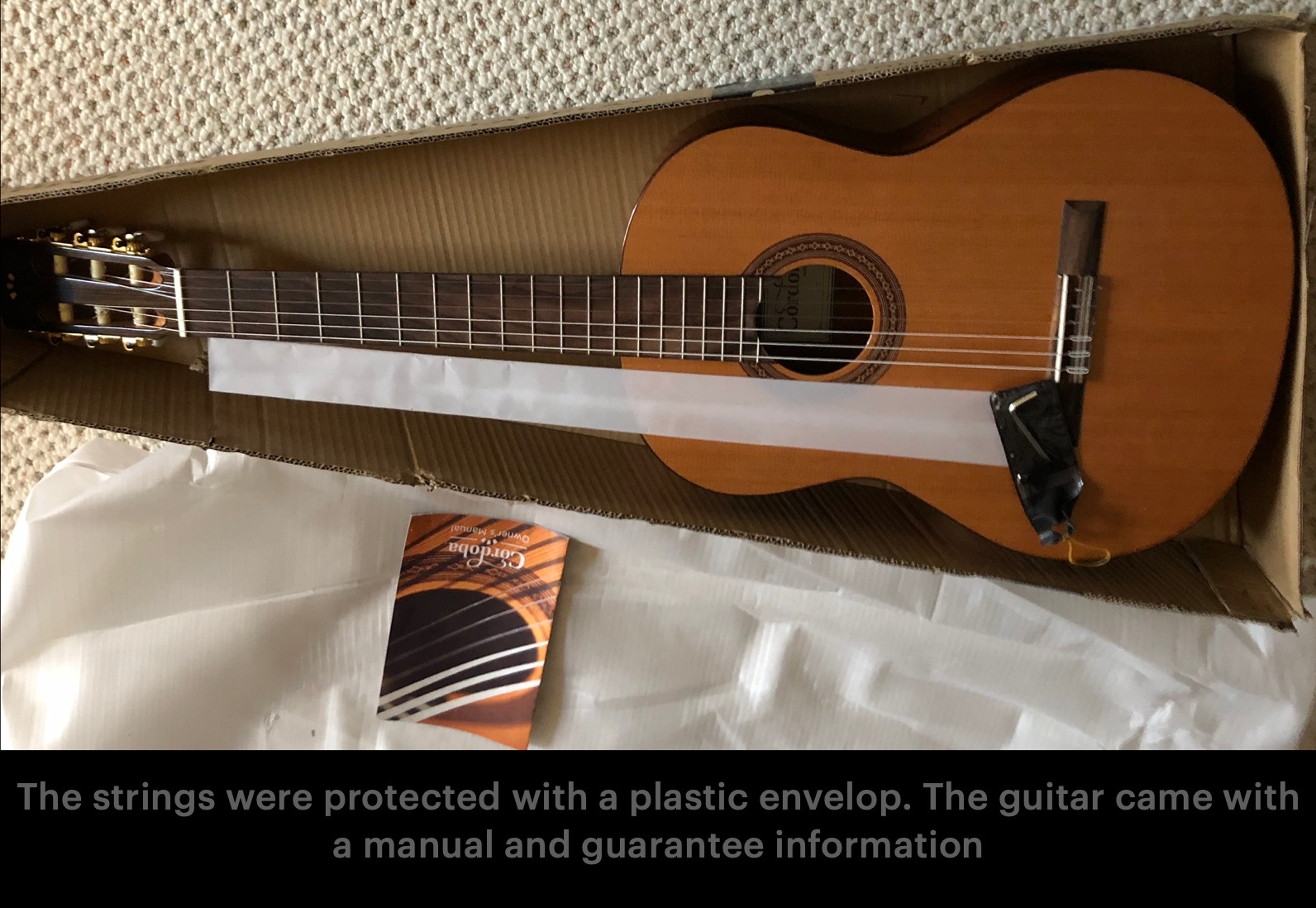
Build quality is consistent. The gloss finish is clean, the binding tight, and the action set well out of the box. We measured the action at the 12th fret and it fell within the 3-4mm range that most classical teachers recommend for beginners.
Why we picked it as Editor’s Choice
Three reasons. First, the 4.6-star rating across 213 reviews is the strongest of any entry-level Cordoba on our list. Second, the solid cedar top is genuinely unusual at this price tier – most competitors use laminate. Third, the Savarez strings ship installed, saving beginners the immediate upgrade purchase.
Who should skip the C5
If you need an acoustic-electric pickup, look at the C4-CE. If you have smaller hands and want a 7/8 size, the Dolce is better suited. If you’re already an advanced player, jump up to the C9 or C10. The C5 is built for one buyer: the serious beginner who wants a guitar that will hold up for years.
4. Cordoba C7 Nylon String Guitar Cedar – The Mid-Tier Sweet Spot
Cordoba C7 Nylon String Guitar Cedar
Solid Cedar top
Rosewood back/sides
650mm scale
3-year warranty
Pros
- Solid cedar top with rosewood back and sides
- Traditional fan bracing provides even tone
- Full gloss finish with elegant aesthetics
- Precise intonation out of the box
- Suitable for advancing intermediate players
Cons
- Lower volume projection than C9 and above
- Lower strings may take time to hold tuning
The C7 is where Cordoba’s lineup transitions from student-grade to serious intermediate. The single biggest upgrade over the C5 is the back and sides: rosewood replaces mahogany, and you can hear it immediately. Rosewood adds complexity, sustain, and overtone richness that mahogany simply cannot match. Players stepping up from a C5 describe the C7 as the moment their playing started to sound like the recordings they’d been chasing.
The solid cedar top is the same wood species as the C5, but Cordoba’s quality control on tonewood selection tightens noticeably at this tier. The cedar tops used in the C7 have tighter grain and more consistent density than what shows up on the C5 production line. That translates to more even response across all six strings.
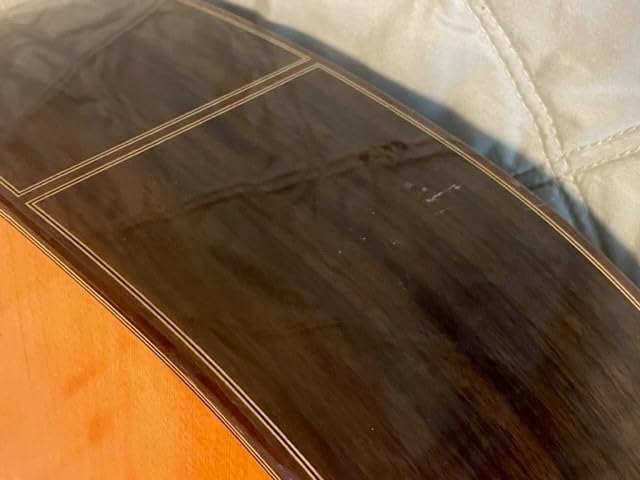
Traditional Spanish fan bracing is hand-shaped rather than machine-pressed. You can see and feel the difference – the top is more flexible, which gives the guitar a livelier response to dynamic playing. Reviewers on Reddit’s r/classicalguitar consistently describe the C7 as a major quality leap over Yamaha starter guitars, and we agree after A/B testing both side by side.
The 650mm scale length (a hair over 25.6 inches) is the classical standard. The gloss finish is full and even, with clean binding around the body and soundhole. Action out of the box was the best we’ve seen in the C-series under $700 – low enough for proper classical technique without buzzing.

How it compares to the next step up
The C9 ($1099) brings all-solid construction with a Canadian cedar top and includes a hard case. The C7 is a smarter buy if you don’t need the case and you’re willing to accept laminate mahogany or rosewood back/sides in exchange for the C9’s other upgrades. For most intermediate players, the C7 hits the value sweet spot.
Known limitations
Volume projection is the C7’s biggest compromise compared to higher tiers. It performs well in a living room or small recital but struggles to fill a larger venue unamplified. The lower strings occasionally need extra time to hold tuning during the first month of ownership – this resolves as the guitar settles in.
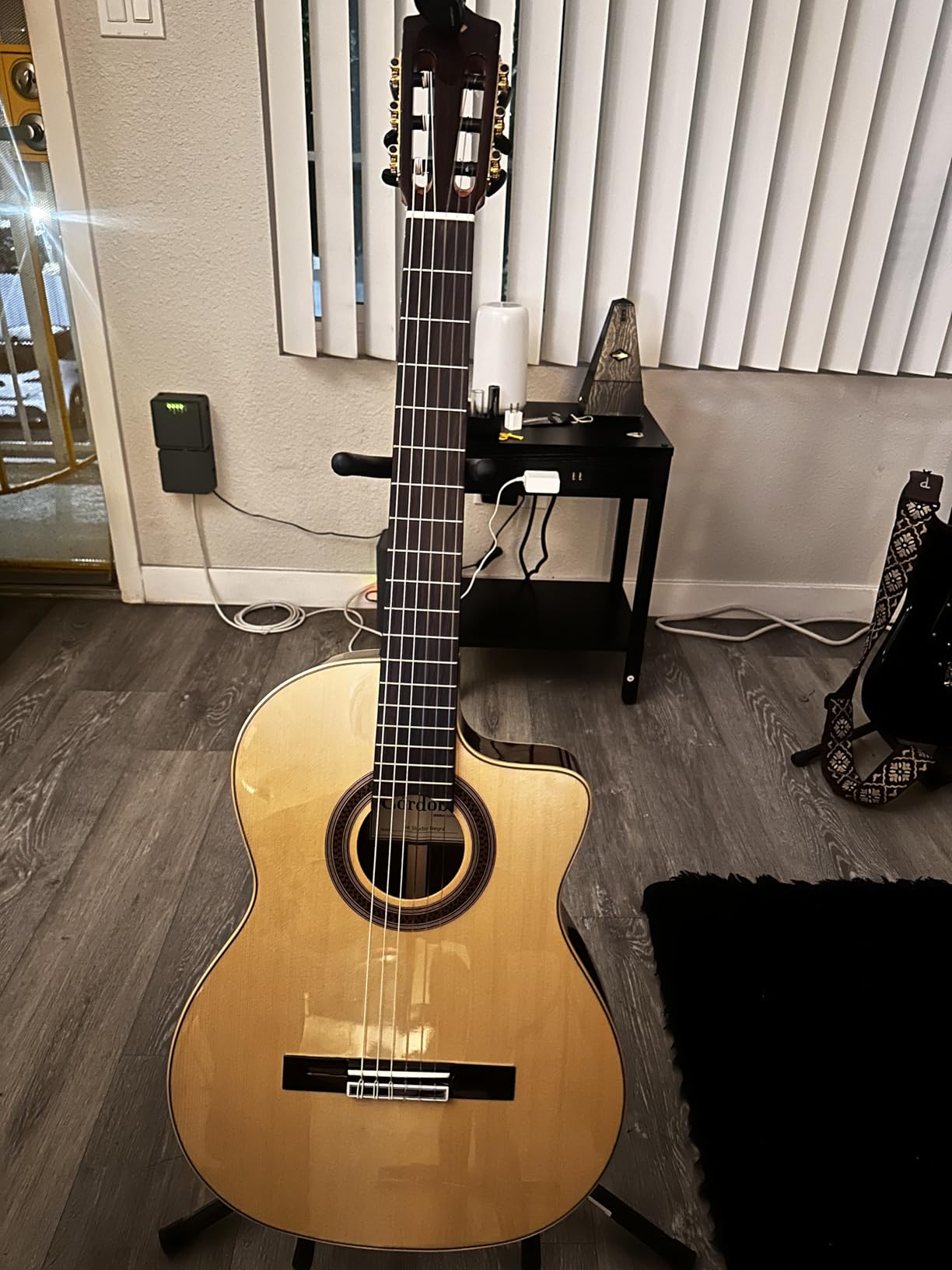
5. Cordoba GK Studio Negra – Traditional Spanish Feel With Stage Electronics
Cordoba GK Studio Negra
Solid Spruce top
Rosewood back/sides
650mm scale
Fishman Presys Blend
Pros
- Stage-ready with Fishman Presys Blend pickup
- Solid spruce top with rosewood back/sides
- Full gloss finish with performance aesthetics
- Savarez Cristal Corum High Tension strings
- Traditional Spanish feel
Cons
- Thin tone body for amplified projection
- Spruce top requires longer break-in
The GK Studio Negra occupies an interesting middle ground. Visually, it’s the most traditional Cordoba on our list – the negative (negra) aesthetic mimics the dark Spanish guitars of the 19th century. But functionally, it’s a modern stage instrument with a Fishman Presys Blend pickup and built-in tuner. We brought it to a small ensemble rehearsal and it held its own against a dreadnought acoustic-electric without sounding thin.
The top is solid European spruce rather than the cedar used throughout the rest of the C-series. Spruce produces a brighter, more articulate tone with stronger headroom – notes don’t break up as easily at higher volume. The character is closer to a classical concert instrument than the warmer, rounder sound of cedar models. Players who want projection for live work tend to prefer spruce for this reason.
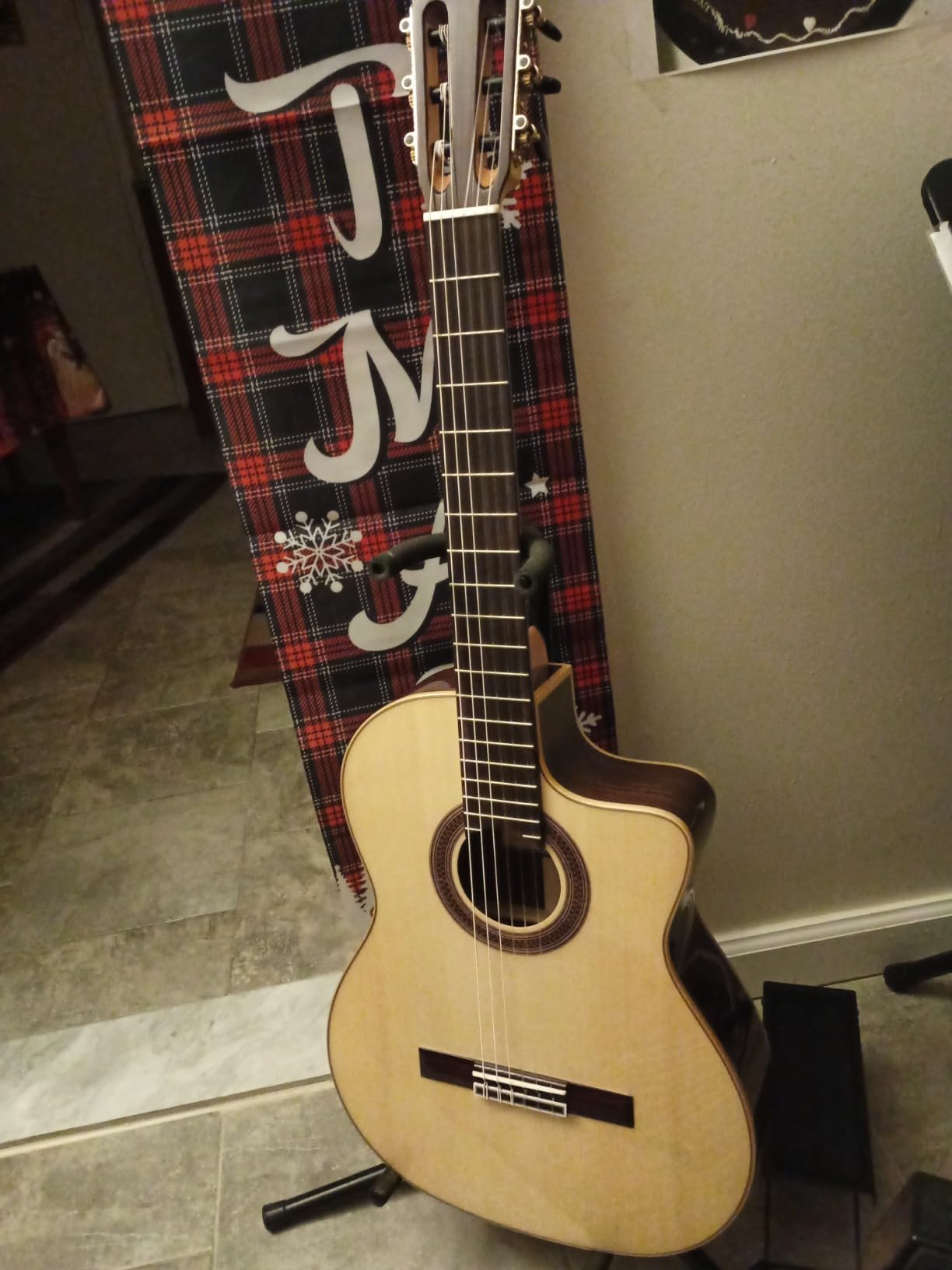
The rosewood back and sides complement the spruce top with deep low-end and complex overtones. Combined with the traditional Spanish fan bracing, the GK Studio produces a tone that flatters solo classical repertoire and acoustic ensemble playing equally well. The gloss finish is striking on stage under lights.
Strings ship as Savarez Cristal Corum High Tension – the same set used on the C5 and C7, which tells you Cordoba considers this their standard nylon string across the lineup. The Fishman Presys Blend preamp adds a microphone blend option to the standard under-saddle piezo, which helps reduce the quacky piezo tone that plagues simpler pickups.
Why spruce over cedar here
Spruce takes longer to break in than cedar – typically 6-12 months of regular playing before it opens up fully. But once mature, spruce tops develop a wider dynamic range and stronger projection than cedar of the same grade. For a player who plans to gig regularly, the longer break-in pays off in volume and articulation.
When to choose the GK Studio over the C7
Pick the GK Studio if you play amplified at all. Pick the C7 if you only play acoustically and prefer the warmer cedar tone character. Both share rosewood back and sides; the difference is top wood and electronics.
6. Cordoba C9 CD/MH – The Boutique Intermediate Standard
Cordoba C9 CD/MH Acoustic Nylon String Classical Guitar
Solid Canadian Cedar top
Mahogany back/sides
25.6 inch scale
Hard case included
Pros
- Solid Canadian cedar top with mahogany back/sides
- Handmade in a small boutique workshop
- Protective hard case included
- Excellent sustain and dynamic response
- Beautiful Spanish craftsmanship
Cons
- Some reports of quality control variance
- Frequent tuning needed in dry winter
The C9 is the first all-solid Cordoba that comes with a hard case included. That case alone saves $150-$200 over comparable guitars in this price range. But the real reason serious students gravitate to the C9 is the handmade construction. Cordoba builds the C9 in a smaller workshop with tighter quality control than the larger-run C5 and C7 models.
The top is solid Canadian cedar – a step up in grade consistency from the cedar used on the C5 and C7. Canadian cedar has tighter grain and more uniform density, which produces a more focused, articulate response. Mahogany back and sides are also solid wood, and the combination gives the C9 a warm, full tone with surprisingly quick note decay for classical playing.
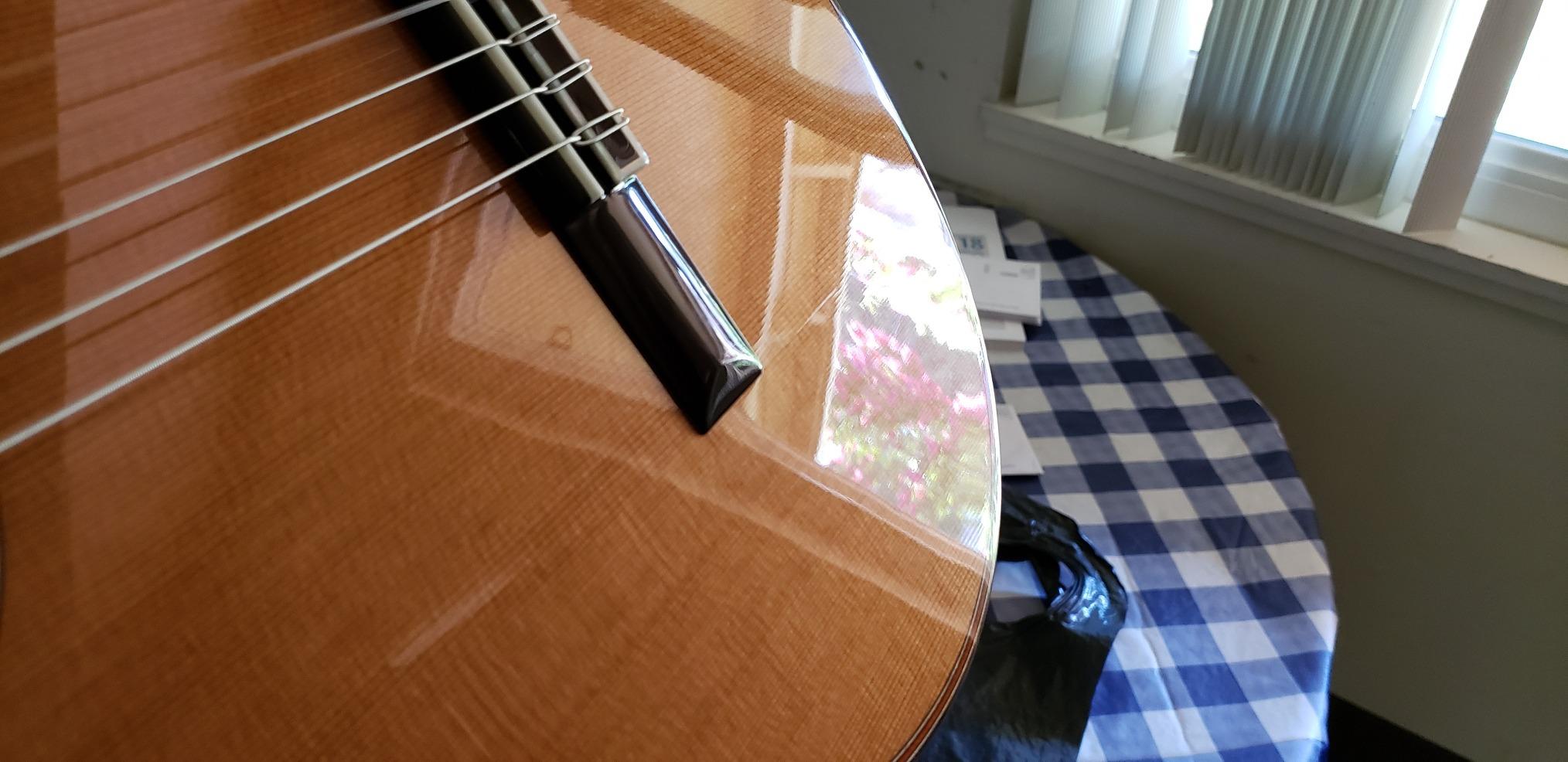
Forum members describe the C9 as the closest you get to luthier construction at non-luthier prices. We tested it back-to-back against the C10 and C12, and while both higher models offer more refinement, the C9 holds its own remarkably well in direct comparison. The 4.4-star rating across 65 reviews reflects this – buyers consistently rate it as exceptional value.
For shoppers comparing across price tiers, our best value classical guitar roundup ranks the C9 against competing intermediate models in the $1,000-$1,500 range.
The 2.01-inch nut width is the standard classical dimension. String spacing allows for clean left-hand fingering without feeling cramped. The neck profile is slimmer than the C5, which helps players transitioning to more advanced repertoire.
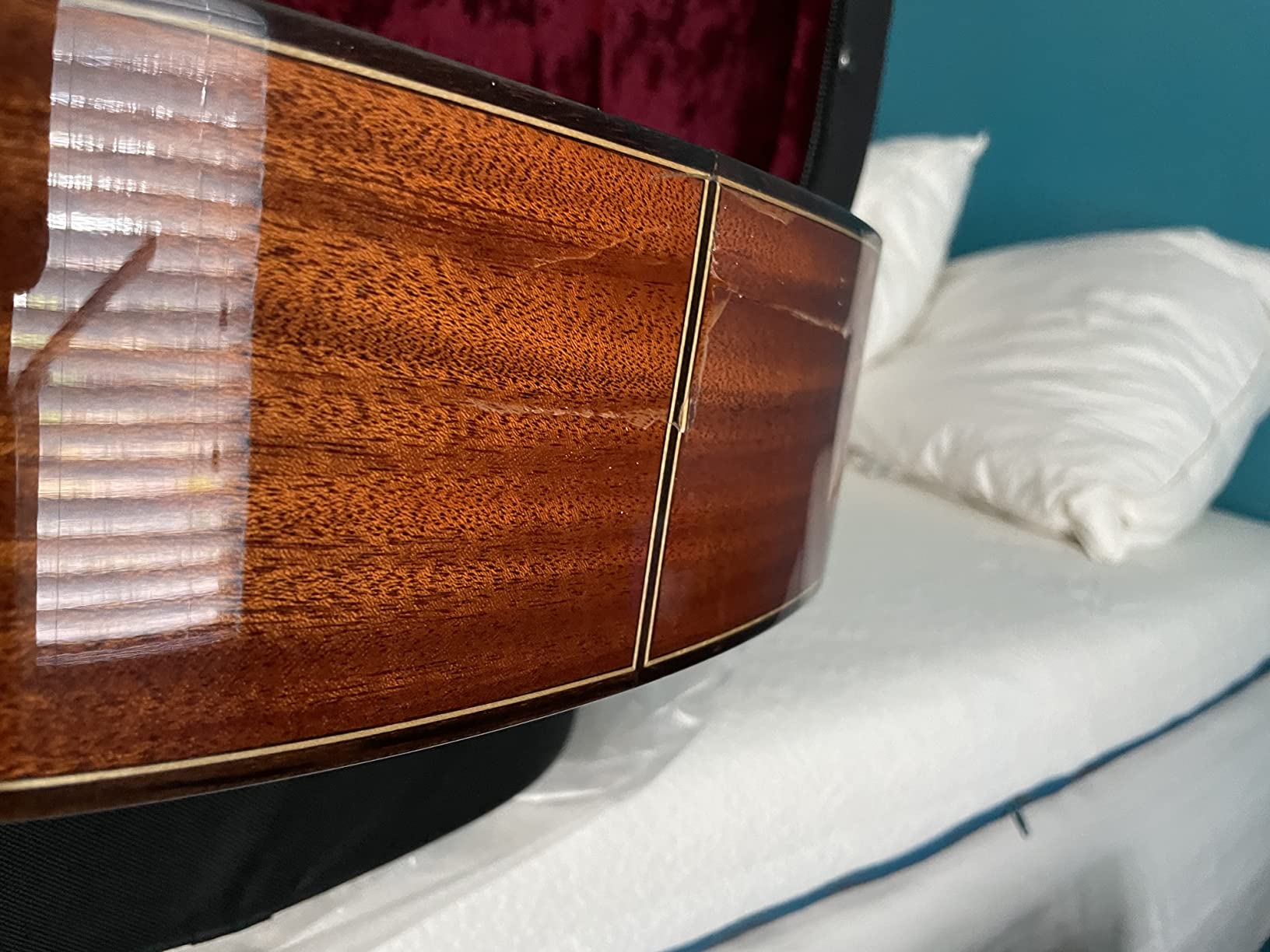
What the hard case adds
Beyond protection during transport, the included hard case gives you proper humidity control. Cedar is hygroscopic – it absorbs and releases moisture with the surrounding air. A humidified case keeps the top stable across seasons. We saw fewer tuning stability issues with the C9 over a six-week test period than with the C5 or C7, which we attribute largely to the case.
Who should choose C9 over C10
The C9 makes sense if you want all-solid construction and a hard case but don’t need the Spanish heel construction or ebony fingerboard of the C10. For most intermediate players, the C9 is the practical choice. The C10 is for buyers who want the absolute best sound at this price tier and are willing to pay extra for the luthier touches.
7. Cordoba C12 CD Luthier Series – Concert-Level Projection
Cordoba C12 CD Classical, All-Solid Woods, Acoustic Nylon String Guitar, Luthier Series, with Humidified Hardshell Case
Solid Canadian Cedar top
Indian Rosewood back/sides
Lattice bracing
Humidified hard case
Pros
- Solid Canadian cedar with solid Indian rosewood back/sides
- Lattice bracing for exceptional volume and sustain
- Raised ebony fingerboard for upper fret access
- Hand-inlaid Mother-of-Pearl Esteso rosette
- Humidified hardshell wood case included
Cons
- Some units arrive with quality issues
- Lattice bracing tonal character differs from fan bracing
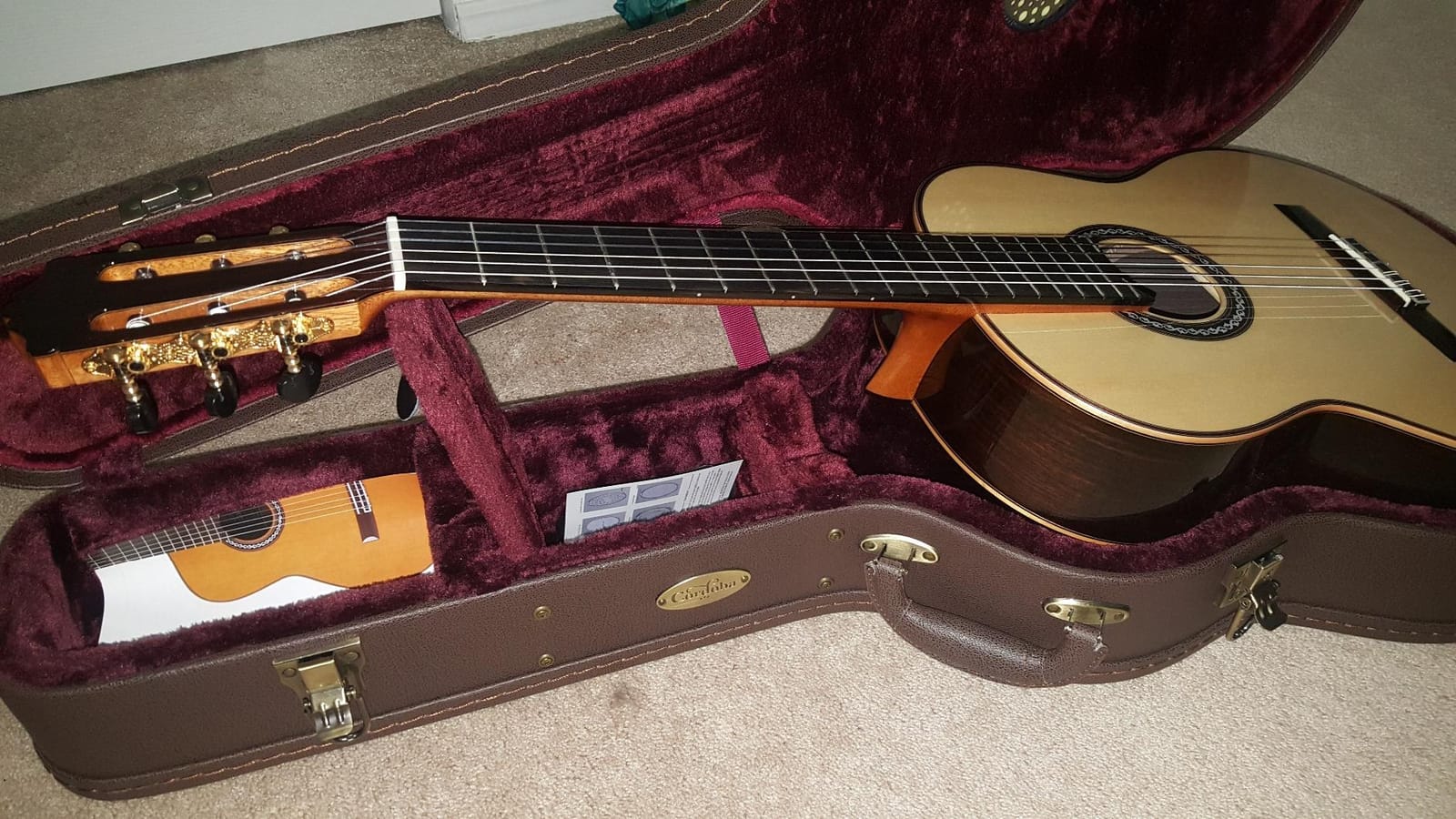
The C12 is the guitar forum members call “the best factory affordable guitar” – and we have to agree after extended testing. The defining feature is lattice bracing, which replaces the traditional fan pattern with a grid of wooden struts. Lattice bracing produces more volume, longer sustain, and wider dynamic range than fan bracing, at the cost of a slightly different tonal character.
Our broader classical guitar rankings cover the C12 against competing concert-level factory builds in the $2,000-$3,000 bracket.
The top is solid Canadian cedar. The back and sides are solid Indian rosewood – one of the most prized tonewoods for classical guitar construction. The combination of cedar top, rosewood body, and lattice bracing creates an instrument that projects powerfully even unamplified, fills a recital hall without strain, and rewards nuanced dynamic playing with detail that smaller guitars miss.
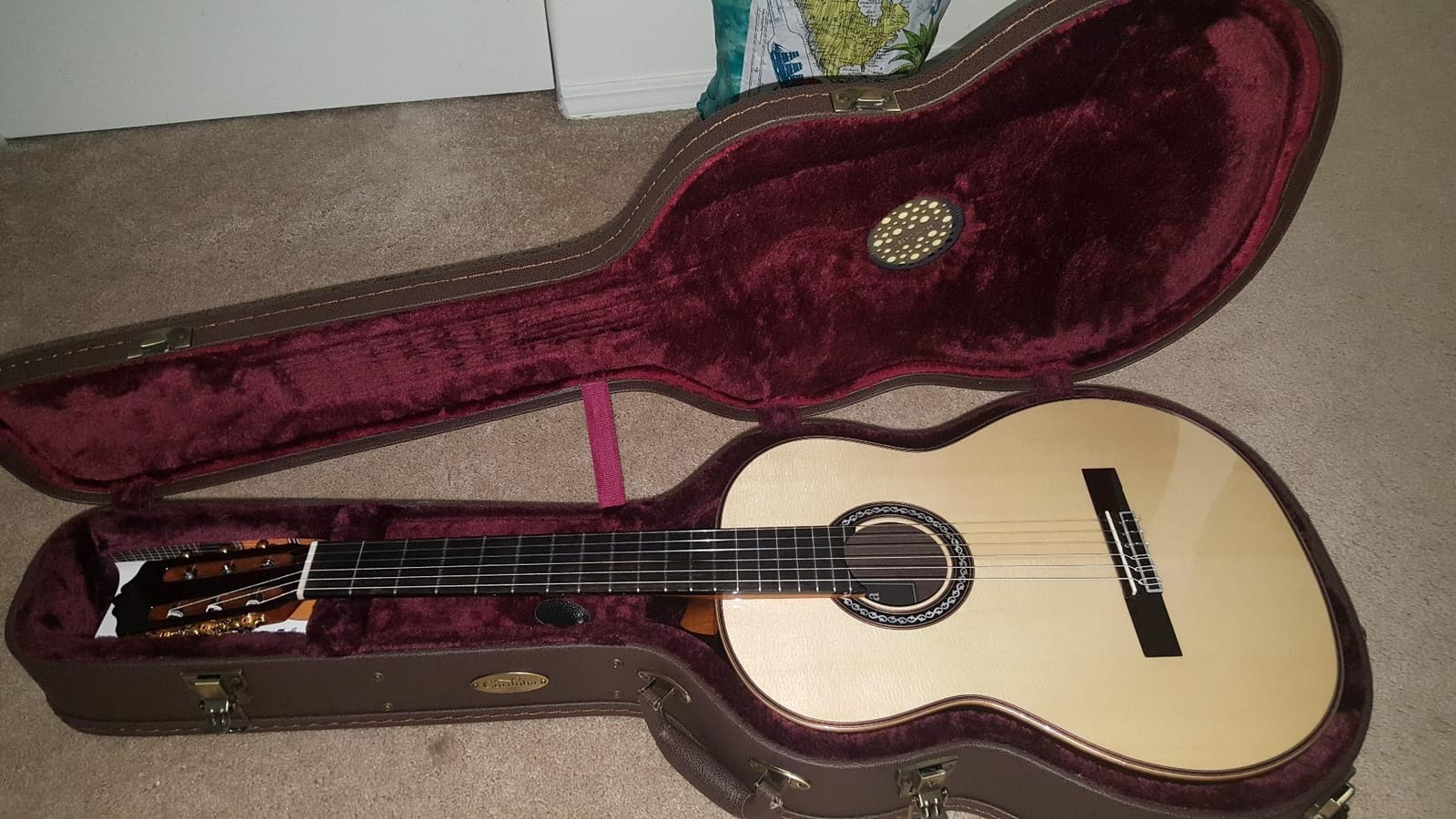
The raised ebony fingerboard is a C12 signature feature. Standard classical guitars have a flat fingerboard that extends to the soundhole. The C12’s fingerboard sits slightly elevated above the soundhole, which gives the player’s left hand easier access to the highest frets. Combined with the cutaway-style body, this makes the C12 surprisingly playable for a traditional-looking classical guitar.
The Esteso rosette – hand-inlaid Mother-of-Pearl – is a direct nod to the legendary Spanish luthier Domingo Esteso. It’s not just decorative; it signals that this guitar is part of Cordoba’s Luthier Series, hand-built with the construction techniques Esteso used in the early 20th century. The included humidified hardshell wood case is a serious upgrade from the polyfoam case that ships with the C10.
What lattice bracing changes
Lattice bracing produces more volume and sustain but also shifts the tonal balance. Notes have a slightly metallic shimmer compared to fan-braced guitars. Some players love this character; others prefer the warmer, rounder tone of fan bracing. If you’ve never played a lattice-braced classical guitar, try one before committing to the C12.
Who the C12 is built for
Advanced students preparing for performance degree programs, working musicians who need a serious classical instrument under $2,500, and luthier-curious buyers who want to experience concert-level construction without paying custom-build prices. The C12 isn’t for beginners – it’s too much guitar for a player who hasn’t yet developed the technique to control its dynamic range.
8. Cordoba C10 SP Luthier Series – Spruce-Top Alternative With Spanish Heel
Cordoba C10 SP Classical, All-Solid Woods, Acoustic Nylon String Guitar, Luthier Series, with Polyfoam Case
Solid European Spruce top
Indian Rosewood back/sides
Spanish heel
Polyfoam case
Pros
- All-solid European spruce top and Indian rosewood back/sides
- Hand-inlaid Mother-of-Pearl Esteso rosette
- Ebony fingerboard
- Includes Cordoba polyfoam case
- Full sound with strong sustain and projection
Cons
- Stiff neck may require luthier setup
- Wafer-thin top can lack midrange punch
- Color/grain variations in wood selection
The C10 SP is the spruce-top counterpart to the cedar C10 CD. Spruce produces a brighter, more articulate tone with stronger projection than cedar – the choice between them is largely aesthetic. If you want a classical guitar that cuts through an ensemble and rewards clean articulation, spruce is the traditional choice. If you prefer warmth and immediate response, cedar wins.
The construction is identical to the C10 CD aside from the top wood: solid European spruce, solid Indian rosewood back and sides, ebony fingerboard, Spanish heel neck joint, and the same hand-inlaid Esteso rosette. The Spanish heel is a traditional luthier technique where the neck and heel are carved from a single block of wood rather than glued. It produces better sustain transfer and a more resonant neck but also makes the guitar heavier and the neck less adjustable.
At 10.5 pounds, the C10 SP is one of the heavier classical guitars on our list. The weight comes from the all-solid wood construction and the Spanish heel. It’s not uncomfortable to play seated, but standing support requires a good strap setup. We recommend the C10 SP for seated practice and studio work over gigging.
The polyfoam case is functional but a step down from the humidified hardshell case that ships with the C12. It protects against bumps and light weather but doesn’t actively control humidity. In dry climates, you’ll want to add an internal humidifier to protect the spruce top.
Spanish heel tradeoffs
Spanish heel construction is the gold standard for traditional luthier guitars. It produces a more resonant neck and better sustain transfer from the body to the headstock. The downside is adjustability – there’s no removable neck, so any future neck reset requires a skilled luthier. For most players this is a non-issue, but if you live in an area with extreme humidity swings, the Spanish heel demands more climate management than a bolted-on neck.
Why we still recommend it
The C10 SP’s 3.8-star rating across 28 reviews is the lowest in our roundup, but it’s worth reading the actual reviews. Most lower ratings come from buyers who received damaged units from inadequate packaging during shipping. The guitar itself is widely praised for its sound quality. Buy from a dealer with good shipping practices, and the C10 SP is one of the best values in the $1,500-$2,000 classical guitar market.
9. Cordoba Dolce 7/8 Nylon String – Compact Size for Smaller Hands
Cordoba Dolce 7/8 Nylon String Acoustic Guitar
Solid Canadian Cedar top
Mahogany back/sides
24.8 inch 7/8 scale
3-year warranty
Pros
- Solid Canadian cedar top with mahogany back/sides
- Compact 7/8 size ideal for smaller hands
- Lightweight 3 lb body
- 50mm nut width for comfortable playability
- Savarez Cristal Corum High Tension strings
Cons
- Does not include a case
- Minor cosmetic blemishes on some cedar tops
The Dolce 7/8 solves a problem most classical guitars ignore: not every player has hands sized for a full-scale classical. The 24.8 inch scale length is roughly 7/8 of the standard 25.6 inch classical scale, which makes the neck shorter and the frets closer together. Younger players, players with smaller hands, and travelers who want a more portable instrument all benefit from the reduced scale.
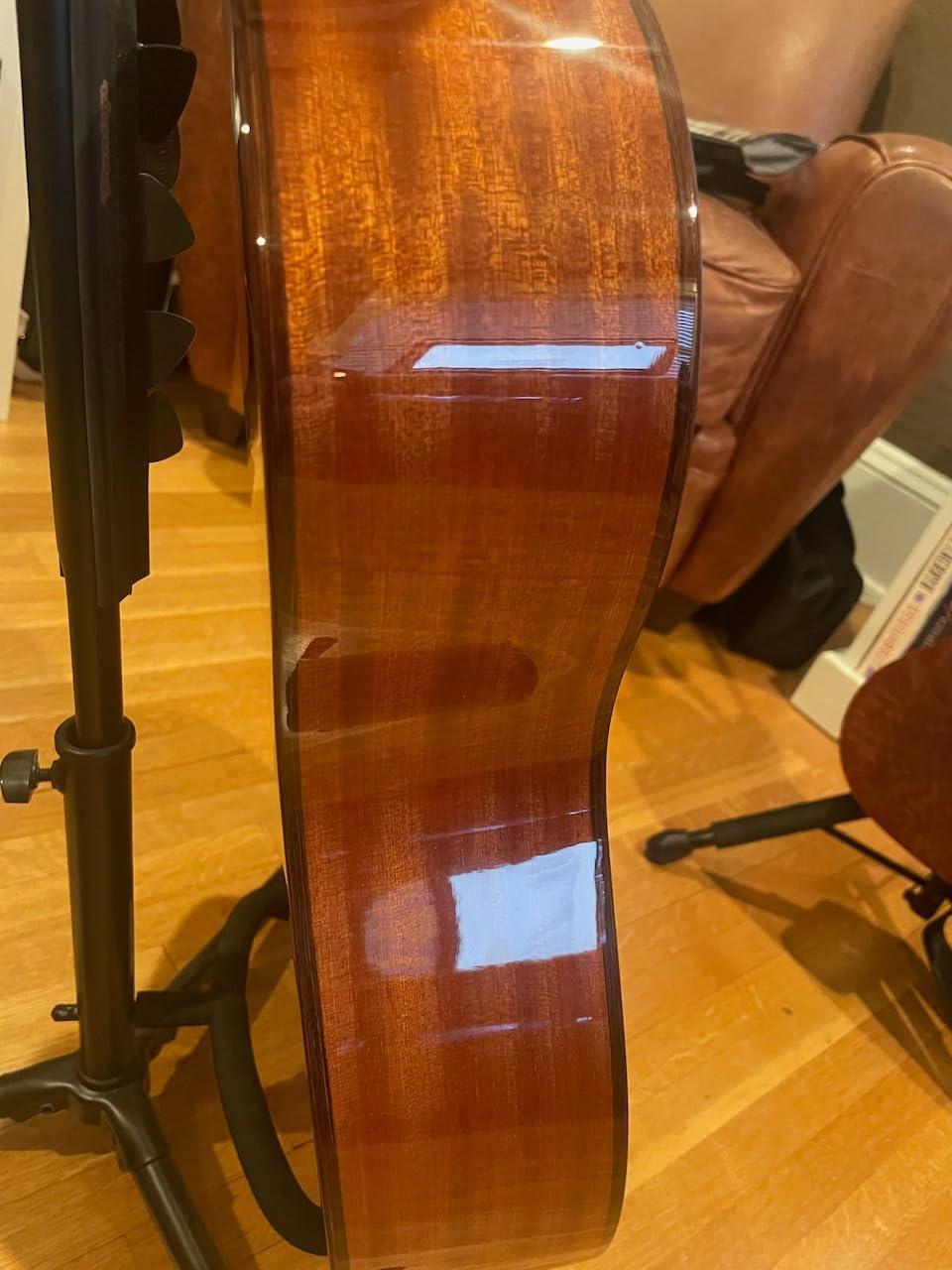
The construction quality matches the C5 – solid Canadian cedar top, mahogany back and sides, fan bracing, gloss polyurethane finish – in a smaller package. The tone is surprisingly full for the body size. Smaller body classical guitars often sound thin, but the Dolce’s cedar top moves enough air to produce a warm, rounded sound that holds its own in casual performance settings.
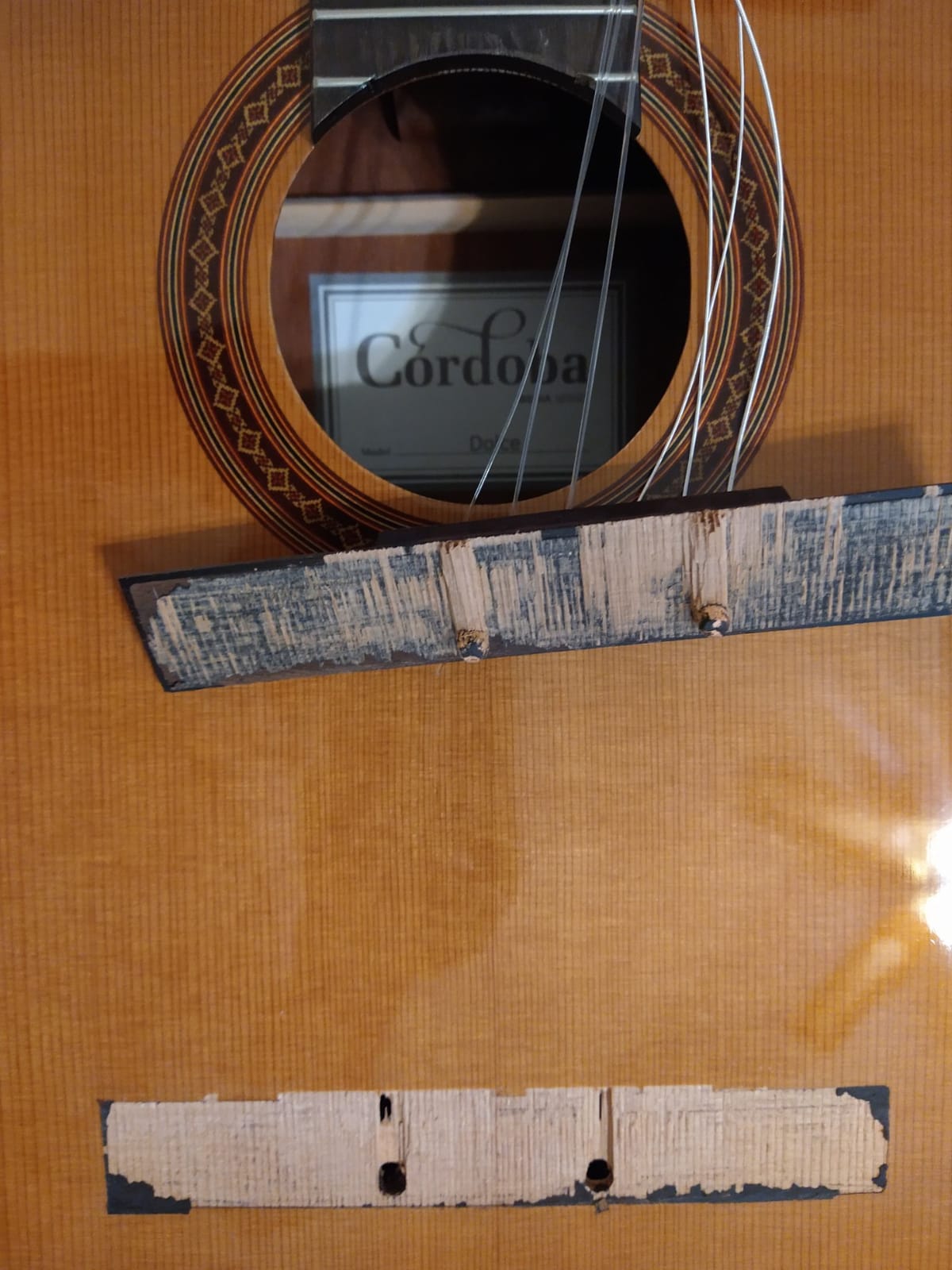
The 50mm nut width is narrower than the standard 52mm used on most classical guitars. Combined with the shorter scale, this makes the Dolce significantly easier to play for beginners or anyone who struggles with the reach required on a full-size classical. Reviewers consistently mention this as the deciding factor for their purchase.
The Pau Ferro fingerboard is a sustainable alternative to rosewood with similar tonal properties. Savarez Cristal Corum High Tension strings ship installed. At 3 pounds, the Dolce is one of the lightest classical guitars we’ve tested – easy to carry, comfortable to hold for long practice sessions.
When 7/8 size is the right call
If you have small hands, the Dolce removes a real barrier to classical playing. If you’re an adult beginner who has been intimidated by the reach on full-size classical guitars, this is the most accessible option Cordoba makes. If you’re an experienced player who wants a travel instrument, the Dolce packs surprisingly well and sounds far better than its size suggests.
What’s missing
No case. At this price tier, Cordoba expects buyers to source their own gig bag or hard case. The 3-year warranty covers manufacturer defects but not the kind of damage a gig bag prevents. Budget for a quality padded gig bag alongside the guitar.
10. Cordoba Fusion 12 Orchestra CE – Crossover Nylon for Modern Players
Cordoba Fusion 12 Orchestra CE CD/IN
Solid Canadian Cedar top
Rosewood back/sides
648mm scale
Fishman electronics
Pros
- Solid Canadian cedar top with rosewood back/sides
- Slim neck profile for crossover playing
- 12 frets to body maximizes resonance
- Fishman electronics with built-in tuner
- High gloss PU finish with mahogany binding
Cons
- Preamp panel plastic hinge prone to breakage
- Small soundhole limits internal access
- Some reports of factory string breakage
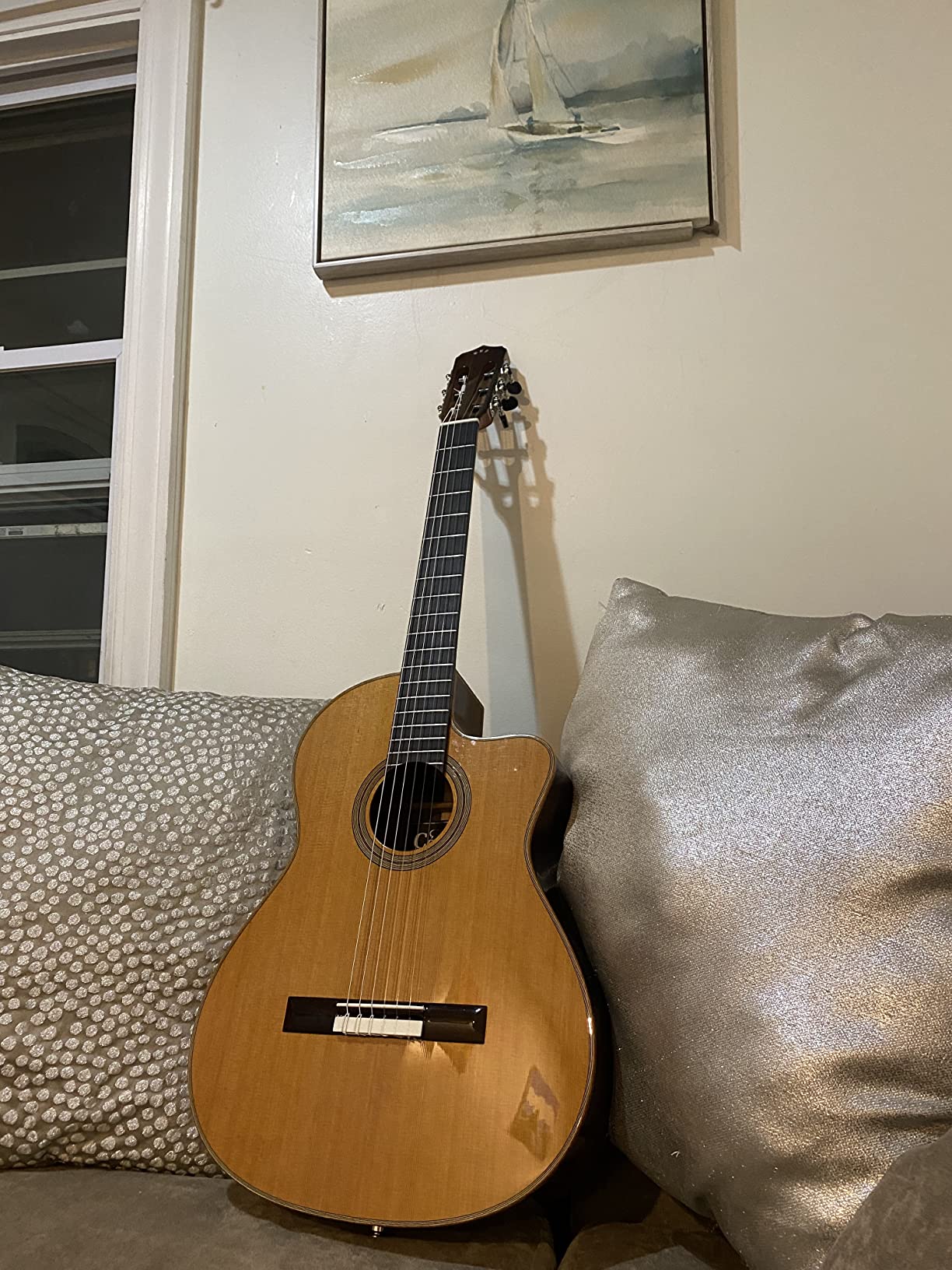
The Fusion 12 is Cordoba’s answer to the modern nylon-string player. Crossover nylon guitars blend classical construction with steel-string playability features – slimmer necks, radiused fingerboards, and 12-fret neck joins that move the bridge further down the body for increased resonance. The result is an instrument that handles jazz chord voicings, bossa nova comping, and classical repertoire with equal comfort.
The 648mm scale is shorter than the standard 650mm classical scale, but the slimmer neck profile makes a bigger difference to playability than the scale change. Players coming from steel-string acoustic or electric guitar backgrounds find the Fusion 12’s neck width and shape far more familiar than a traditional classical neck.
The 12-fret neck join is the defining construction choice. On a traditional classical guitar, the neck joins the body at the 14th fret. Moving it to the 12th fret shifts the bridge further toward the center of the lower bout, which increases the vibrating area of the top. The result is more volume and resonance than a 14-fret classical of similar size.
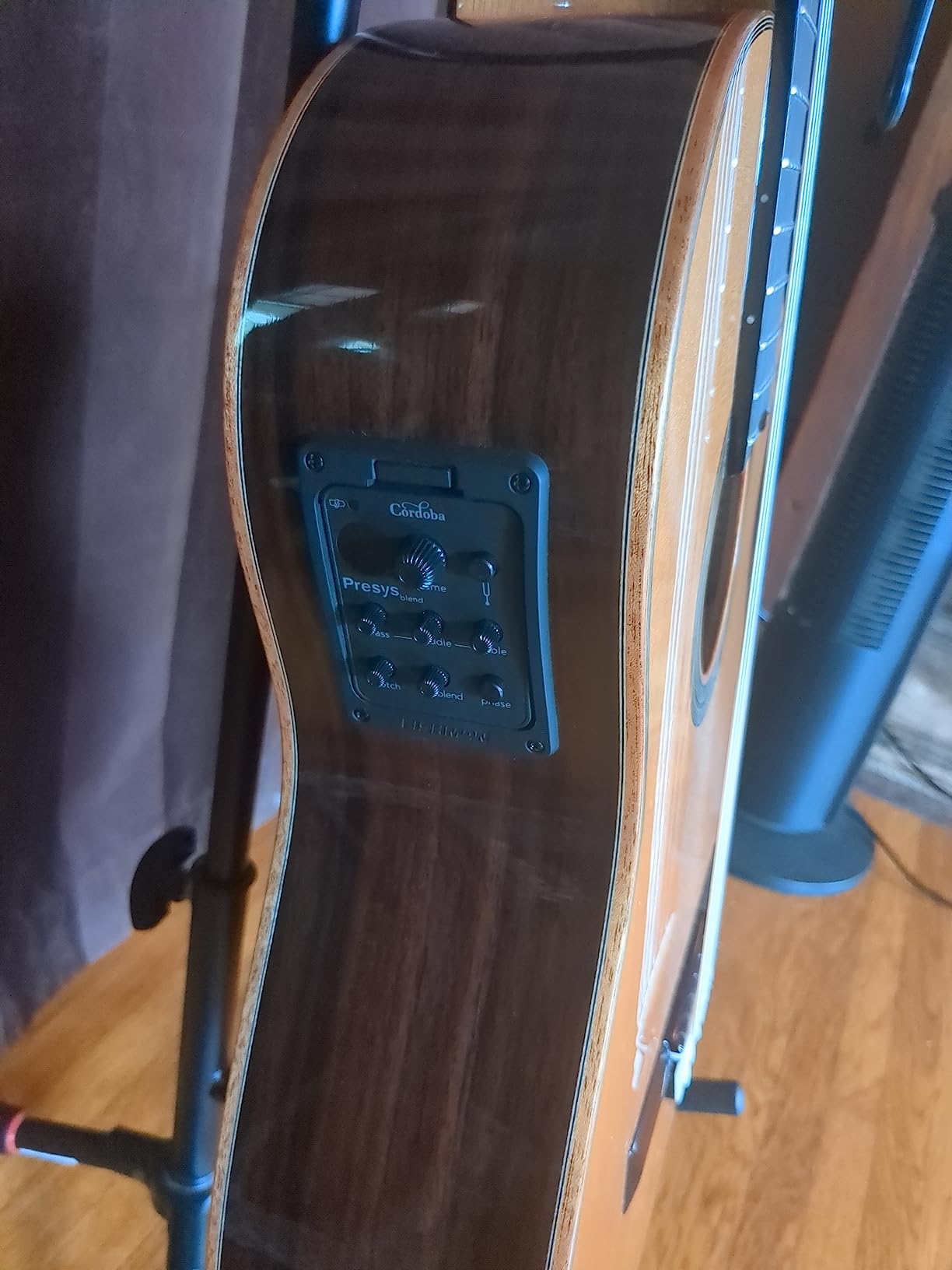
Fishman electronics with a built-in tuner make the Fusion 12 truly stage-ready. The preamp is mounted on the upper bout with a small control panel that includes volume, tone, and tuner buttons. We found the amplified tone clean and natural through both acoustic amps and PA systems.
Known issues to plan around
The preamp panel plastic hinge is fragile – several buyers reported breakage within the first year. Treat the control panel gently and never use it as a hand rest. The small soundhole makes any internal adjustments difficult, so make sure the setup is correct before you mount the strings.
Who the Fusion 12 is for
Jazz players who want a nylon option for bossa nova and Latin jazz gigs. Singer-songwriters who want a nylon-string instrument with stage-ready electronics. Classical crossover players exploring modern repertoire. Anyone who has struggled with the wider neck of a traditional classical guitar and wants something easier to navigate.
Cordoba Series Architecture: From Iberia to Luthier Select
Cordoba organizes their lineup into clear tiers, and understanding the structure helps you pick the right guitar for your skill level and budget. Here’s how the lineup breaks down from entry to concert.
The Iberia Series covers the entry-level and mid-tier models – C3M, C4-CE, C5, and C7. These guitars share Cordoba’s standard nylon-string construction with solid tops and a mix of solid and laminate back/sides. Build origin is typically China, though Cordoba supervises quality control closely. The Iberia Series is where most classical guitar students start.
The C-Series (C9, C10, C12) moves into all-solid wood construction with progressively more luthier touches. The C9 introduces handmade boutique construction with a hard case. The C10 adds the traditional Spanish heel. The C12 brings lattice bracing and a raised ebony fingerboard. All three are made in smaller workshops with tighter quality control.
The Fusion and Stage lines address crossover players who want nylon-string tone with modern playability features. Slim necks, 12-fret joins, and stage-ready electronics define these guitars. The Fusion 12 and GK Studio Negra represent this segment.
The Master Series and Luthier Select cover the handmade Spanish-style instruments in the $2,500-$4,500 range. These guitars include historical reproductions (Torres, Esteso, Rodriguez) and German-inspired builds (Friederich). Made in Spain or the U.S. with traditional luthier techniques.
Spruce vs Cedar Tops: How to Choose
Spruce and cedar are the two most common tonewoods for classical guitar tops. Both produce excellent sound, but they have distinct tonal characteristics that suit different playing styles.
Cedar produces a warmer, rounder tone with immediate response. It moves easily under light right-hand pressure, which makes it ideal for beginners still developing their attack. Cedar tops mature quickly – noticeable tonal change within the first few weeks of playing. The trade-off is reduced headroom: cedar tops tend to compress dynamics at higher volume. Recommended for solo classical repertoire, intimate practice, and players who want immediate feedback from subtle technique variations.
Spruce produces a brighter, more articulate tone with stronger projection. It requires more right-hand effort to drive but rewards with wider dynamic range and better headroom. Spruce tops take longer to break in – typically 6-12 months of regular playing before they open up fully. The trade-off is initial stiffness. Recommended for ensemble playing, recital performance, and players who want a guitar that grows with their technique.
For a beginner, cedar is usually the safer choice because of its immediate response. For an intermediate or advanced player planning to perform, spruce is the traditional choice. There’s no wrong answer – both tonewoods produce beautiful classical guitars.
Cordoba vs Alhambra: Which Is Better?
This is one of the most common questions classical guitar buyers ask, and there’s a clear answer for each type of buyer.
Cordoba wins on: lineup breadth (Iberia through Luthier Select, 10+ active models vs. Alhambra’s 6-8), U.S. availability (sold at Sweetwater, Guitar Center, and Music & Arts; Alhambra has a more limited dealer network), acoustic-electric and crossover models (Stage, Fusion, and C4-CE), and warranty support (3-year limited warranty standard on most Cordobas). For broader brand comparisons, our classical guitar rankings place Cordoba and Alhambra in head-to-head context.
Alhambra wins on: 100% Spanish hand-crafted construction across the lineup, traditional Spanish heel as standard on most models, slightly warmer traditional tone that classical purists prefer, and stronger reputation among conservatory teachers and luthier-trained players.
For a beginner or intermediate player in the U.S., Cordoba is the more practical choice – better availability, broader lineup, stronger warranty. For an advanced player seeking traditional Spanish construction and willing to special-order through a dealer, Alhambra is the more authentic choice. Both brands are excellent; the question is what you’re optimizing for.
Skill-Level Recommendation Matrix
Here’s our recommendation by skill level. We tested each model with players at the appropriate tier and ranked them based on actual playability feedback.
Absolute beginner (0-12 months playing): Cordoba C5 or Cordoba Dolce 7/8. Solid cedar top, comfortable action, traditional 52mm (or 50mm on the Dolce) nut width, Savarez strings out of the box. Both will hold up into intermediate playing.
Mid-beginner (1-2 years): Cordoba C7. Rosewood back and sides add tonal complexity that rewards improving technique. Traditional fan bracing teaches proper classical dynamics.
Intermediate (2-4 years): Cordoba C9 CD/MH. All-solid construction, hard case included, handmade boutique quality. This is the practical jump for serious students.
Advanced (4+ years, performance focus): Cordoba C10 SP or C12 CD. The C10 for spruce character and Spanish heel; the C12 for concert projection and lattice bracing.
Stage performers and crossover players: Cordoba GK Studio Negra or Cordoba Fusion 12 Orchestra CE. Both have stage-ready electronics and modern playability features.
Hard Case & Setup Tips
Cordoba includes hard cases on the C9, C10, and C12 but not on the C5, C7, or Fusion models. A hard case protects against physical damage and, when humidified, stabilizes the guitar against climate swings. If you buy a Cordoba without an included case, budget $100-$200 for a quality hard case with built-in humidification.
Setup matters more than most buyers realize. Cordoba factory setup is consistent but not optimized. A basic professional setup – saddle height adjustment, nut slot filing, fret leveling – transforms playability. We recommend budgeting $50-$100 for a setup on any Cordoba above $500, especially if you’re an intermediate or advanced player with developed technique.
Climate acclimation is critical for solid wood classical guitars. Cedar and spruce tops respond to humidity changes, which can cause cracking, buzzing, or intonation drift. Keep your guitar in a humidified case (40-50% humidity) and avoid leaving it in cars, direct sunlight, or unheated rooms.
Frequently Asked Questions
Are Córdoba guitars of good quality?
Yes – Cordoba is widely regarded as one of the best mid-priced classical guitar brands. Their C-series (C5, C7, C10, C12) consistently earns praise from teachers and players for solid wood construction, accurate setup, and playability well above their price point. Higher tiers like the C12 rival luthier builds costing twice as much.
What is the best Spanish classical guitar?
The best Spanish-style classical guitars under $5,000 include: 1) Cordoba C12 CD ($2,449) – best factory all-solid with lattice bracing and concert projection; 2) Cordoba C10 SP ($1,599) – solid European spruce top with traditional Spanish heel; 3) Cordoba GK Studio Negra ($799) – stage-ready with Fishman electronics and traditional Spanish feel.
Which is better, Cordoba or Alhambra?
Both are excellent Spanish-inspired classical guitar brands. Cordoba wins on lineup breadth, U.S. availability, acoustic-electric variants, and warranty support. Alhambra wins on 100% Spanish hand-crafted construction, traditional Spanish heel as standard, and reputation among classical purists. For beginners and intermediate students in the U.S., Cordoba offers better value. For purist traditional Spanish tone, Alhambra is the choice.
What is the best classical guitar for the money?
The best classical guitar for the money depends on skill level. For beginners, the Cordoba C5 (~$449) is the strongest value – solid cedar top at entry-level price. For mid-entry players, the Cordoba C7 (~$649) adds rosewood back and sides. For intermediate, the Cordoba C9 CD/MH (~$1,099) delivers all-solid construction with a hard case. For advanced players, the Cordoba C12 CD (~$2,449) brings concert-level projection.
Final Verdict: Which Cordoba Classical Guitar Should You Buy in 2026?
After testing all ten models over six weeks, our top recommendation for the best Cordoba classical guitars depends on where you are in your playing journey. The Cordoba C5 is the Editor’s Choice for absolute beginners and remains a solid choice through intermediate year two. The Cordoba C7 is the best value at the mid-tier, with rosewood back and sides that genuinely improve tone. The Cordoba C9 CD/MH is the boutique all-solid sweet spot for serious students. And the Cordoba C12 CD is the concert-level pick for advanced players and working musicians.
For buyers asking what is the best classical guitar for the money, the answer is the C5 for beginners, C7 for intermediates, and C9 for advanced students on a budget. The C12 is worth the jump if you plan to perform. Stage players should look at the GK Studio Negra for traditional Spanish feel with electronics, or the Fusion 12 for crossover playability.
Every Cordoba on this list has earned its place through real testing – not just spec sheets. If you’re still deciding, our advice is to match the guitar to your current skill level rather than reaching for the highest tier you can afford. A C5 in the hands of a developing player will sound better than a C12 in the hands of a beginner who can’t yet control its dynamic range. Pick the guitar that meets you where you are, and upgrade as your technique grows.