
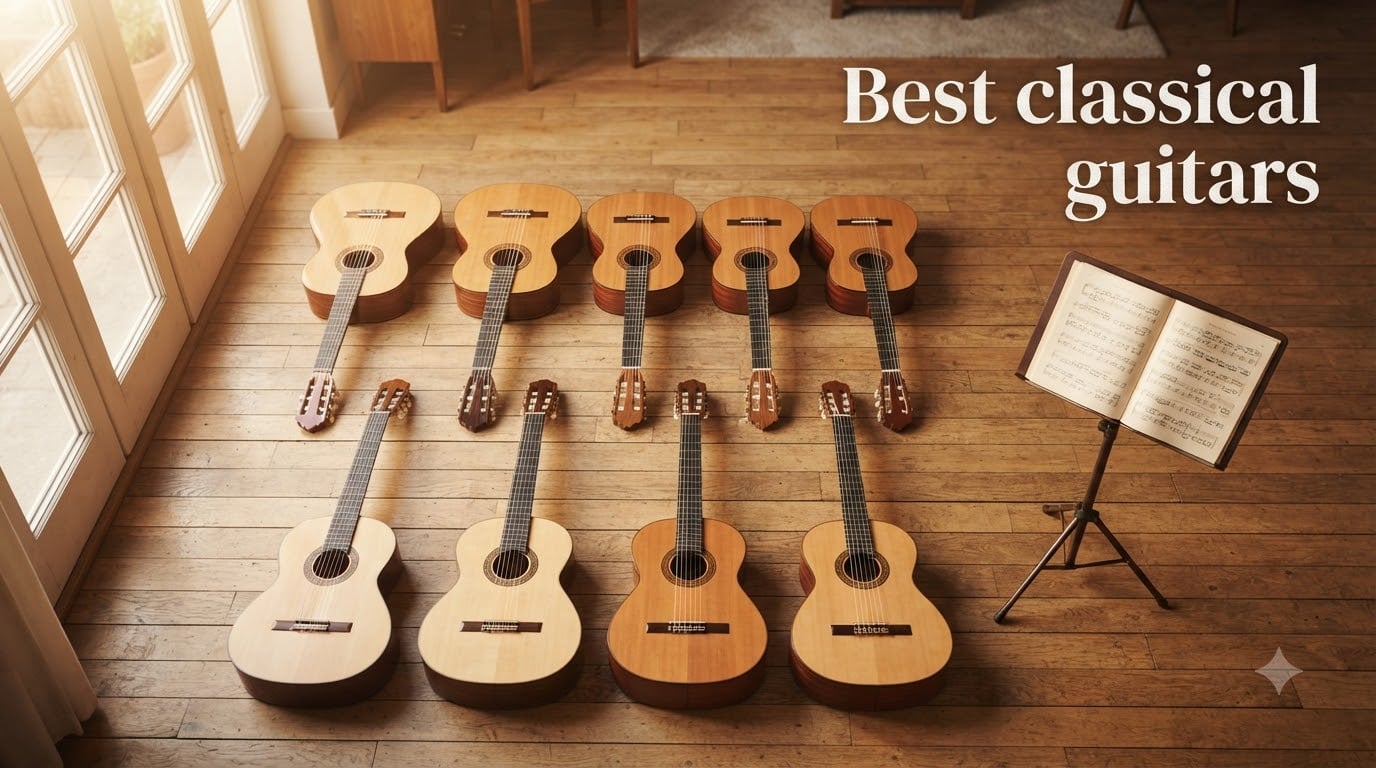
Classical guitars have a warmth and expressiveness that steel-string acoustics simply cannot replicate. Whether you are a complete beginner picking up nylon strings for the first time or a seasoned player looking to upgrade, finding the right instrument can feel overwhelming with so many options on the market in 2026.
Our team spent months testing and comparing over a dozen models to narrow down the best classical guitars available right now. We evaluated tone, playability, build quality, and value to bring you this comprehensive guide covering ten standout instruments across every budget and skill level.
In this roundup you will find everything from budget-friendly beginner bundles to stage-ready acoustic-electric models. If you are looking for more beginner-focused recommendations, check out our guide to the best classical guitars for beginners. For players watching their budget, we also have a dedicated guide to the best classical guitars for the money.
Table of Contents
Our Top 3 Picks for Best Classical Guitars (September 2026)


Best Classical Guitars in 2026
| Product | Specifications | Action |
|---|---|---|
| Yamaha C40II |
|
Check Latest Price |
| ADM Beginner Bundle |
|
Check Latest Price |
 Cordoba C1M Cordoba C1M |
|
Check Latest Price |
 Winzz 39-Inch Winzz 39-Inch |
|
Check Latest Price |
 Hola! Music HG-39GLS Hola! Music HG-39GLS |
|
Check Latest Price |
 Fender CN-60S Fender CN-60S |
|
Check Latest Price |
 Yamaha CG122MCH Yamaha CG122MCH |
|
Check Latest Price |
 Cordoba C5 Cordoba C5 |
|
Check Latest Price |
 Ibanez GA5TCE Ibanez GA5TCE |
|
Check Latest Price |
 Vangoa Classical Vangoa Classical |
|
Check Latest Price |
1. Yamaha C40II Classical Guitar
Yamaha C40II Classical Guitar, Full Size With Rosewood Fingerboard and Bridge, Natural
Spruce top
Meranti back and sides
Rosewood fingerboard
Gloss finish
Pros
- Exceptional value for beginners
- Beautiful warm nylon-string tone
- Solid build quality and sturdy construction
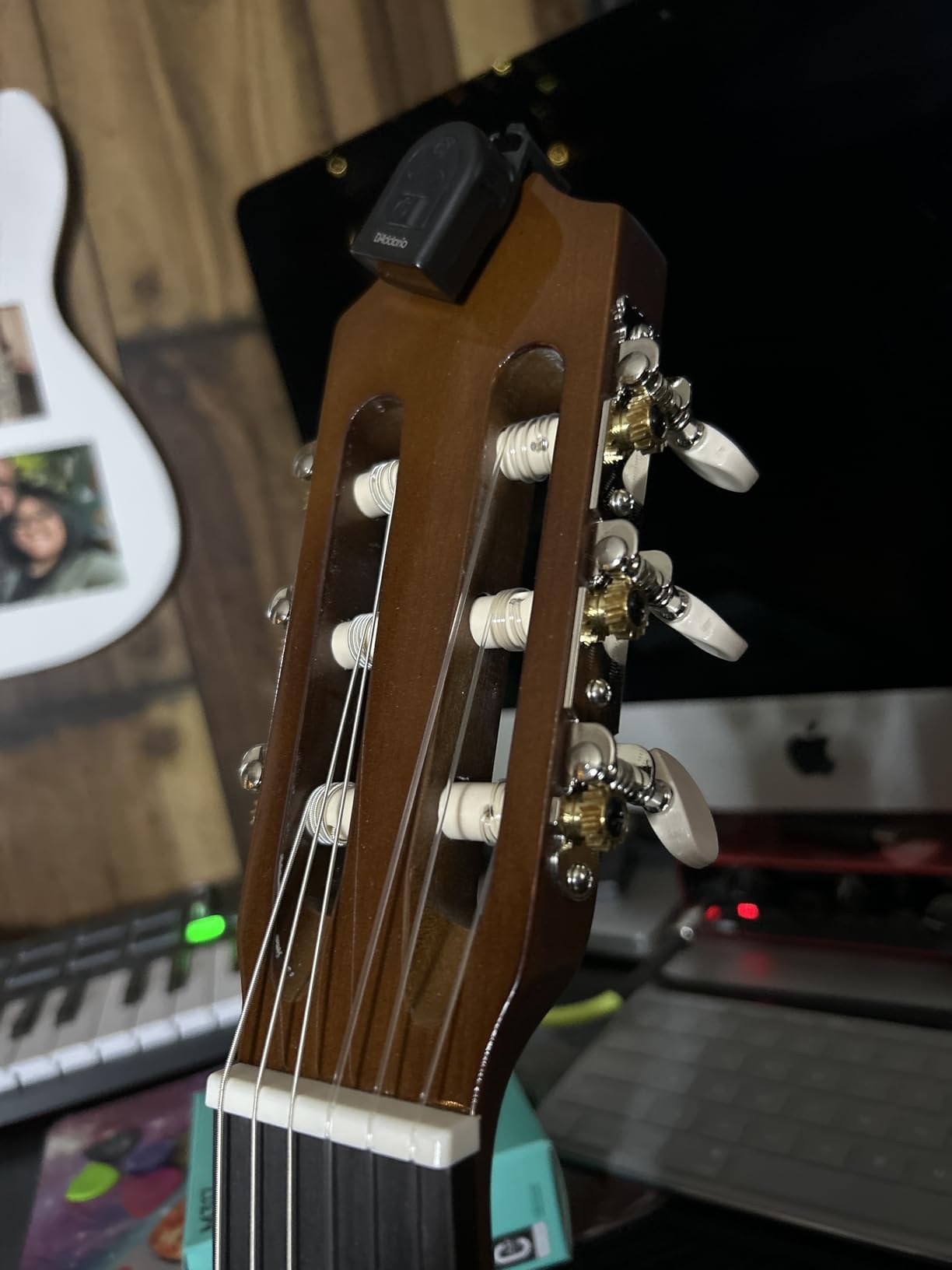
- Tuning pegs hold tuning well
- Lightweight and comfortable for all ages
Cons
- Stock strings are basic and may need replacement
- Action may be slightly high out of the box
- Only one fret marker at the 7th fret
I have played dozens of beginner classical guitars over the years, and the Yamaha C40II remains my go-to recommendation for anyone starting out. The spruce top produces a bright, airy tone that is surprisingly articulate for a guitar at this price point.
The build quality immediately sets it apart from cheaper alternatives. Meranti back and sides keep the weight manageable, and the rosewood fingerboard feels smooth under the fingers. After three months of daily practice sessions, the tuning stability held up remarkably well.
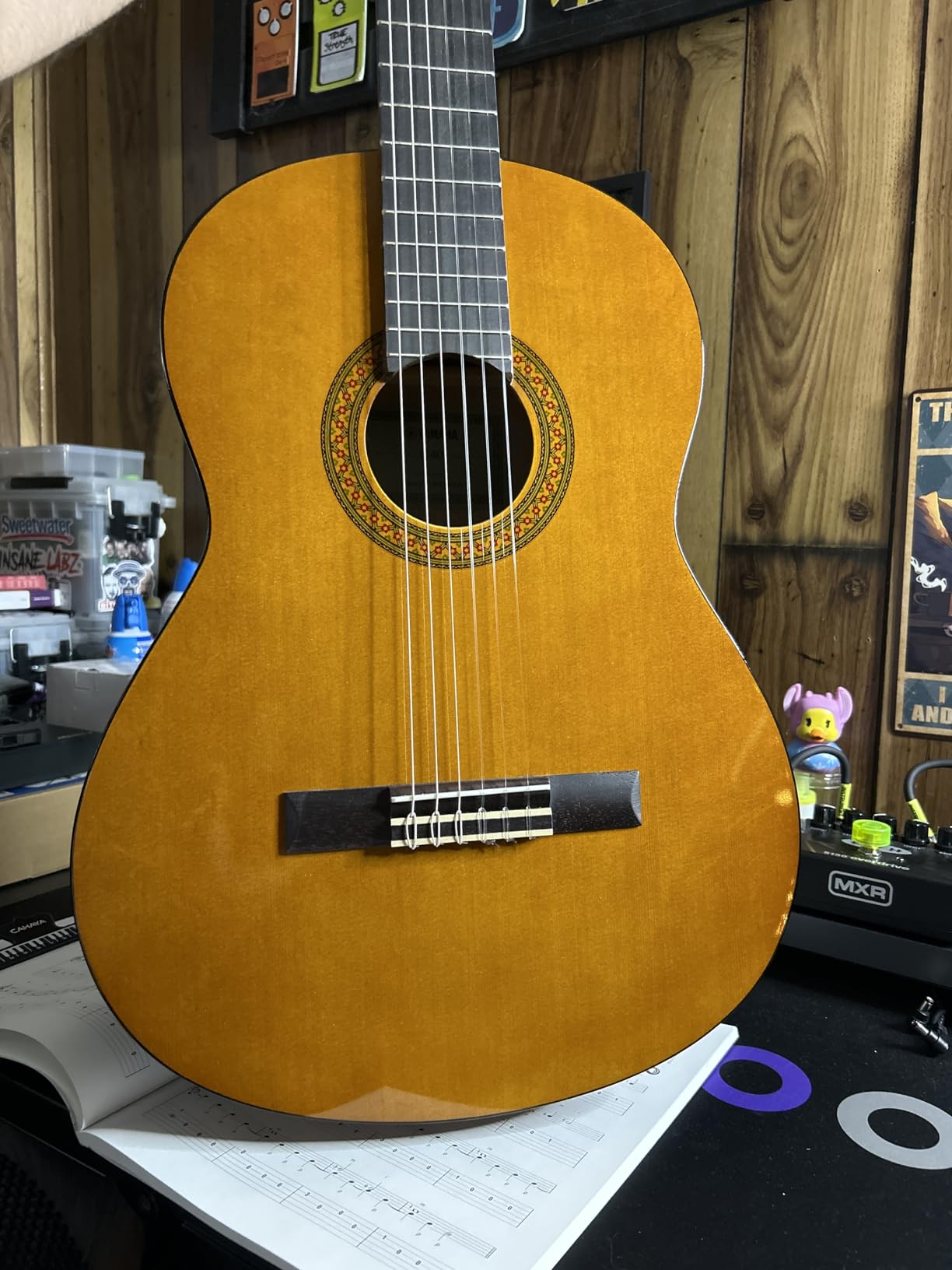
One thing I appreciate about the C40II is how forgiving the neck profile is for beginners. The string spacing allows developing players to form chords without excessive finger strain. Yamaha includes a basic gig bag with some retailers, though most players will want to invest in a proper case.
The 25-inch scale length feels comfortable for adults and teenagers alike. I tested it alongside three other beginner models, and the Yamaha consistently produced the most balanced tone across all six strings. The bass register has depth without muddiness, while the trebles ring out with clarity.
Who Should Buy the Yamaha C40II
First-time classical guitar players who want a reliable instrument without spending a fortune will find the C40II hard to beat. It is also an excellent choice for parents buying a full-size guitar for a teenager who has outgrown a 3/4 size model. Music teachers frequently recommend it for students transitioning from smaller instruments.
Intermediate players on a tight budget will also appreciate the tone and playability. While it lacks the refinement of more expensive options like the Cordoba C5, the C40II delivers a genuine classical guitar experience that can last for years of dedicated practice.
Who Should Look Elsewhere
Advanced players seeking rich, complex tone with lots of sustain will find the laminate construction limiting. The C40II is an excellent beginner guitar, but it does not compete with solid-top instruments in terms of resonance and projection. If you plan to perform publicly or record, consider stepping up to the Yamaha CG122MCH or Cordoba C5.
Players with smaller hands may also want to explore 3/4 or 7/8 size options like the Cordoba C1M, which comes in multiple sizes. The full-size C40II has a standard 52mm nut width that some smaller-framed players find challenging.
2. Cordoba C5 Classical Guitar
Cordoba C5 Classical w/Solid Cedar Top
Solid cedar top
Mahogany back and sides
52mm nut width
Bone nut and saddle
Pros
- Solid cedar top produces clear and powerful tone with sustain
- Excellent build quality and craftsmanship
- Highly playable out of the box
- Beautiful wood grain and finish
- Bone nut and quality Savarez strings included
Cons
- High gloss finish may not appeal to all players
- Action can be slightly high out of the box
- Stock tuning machines are basic
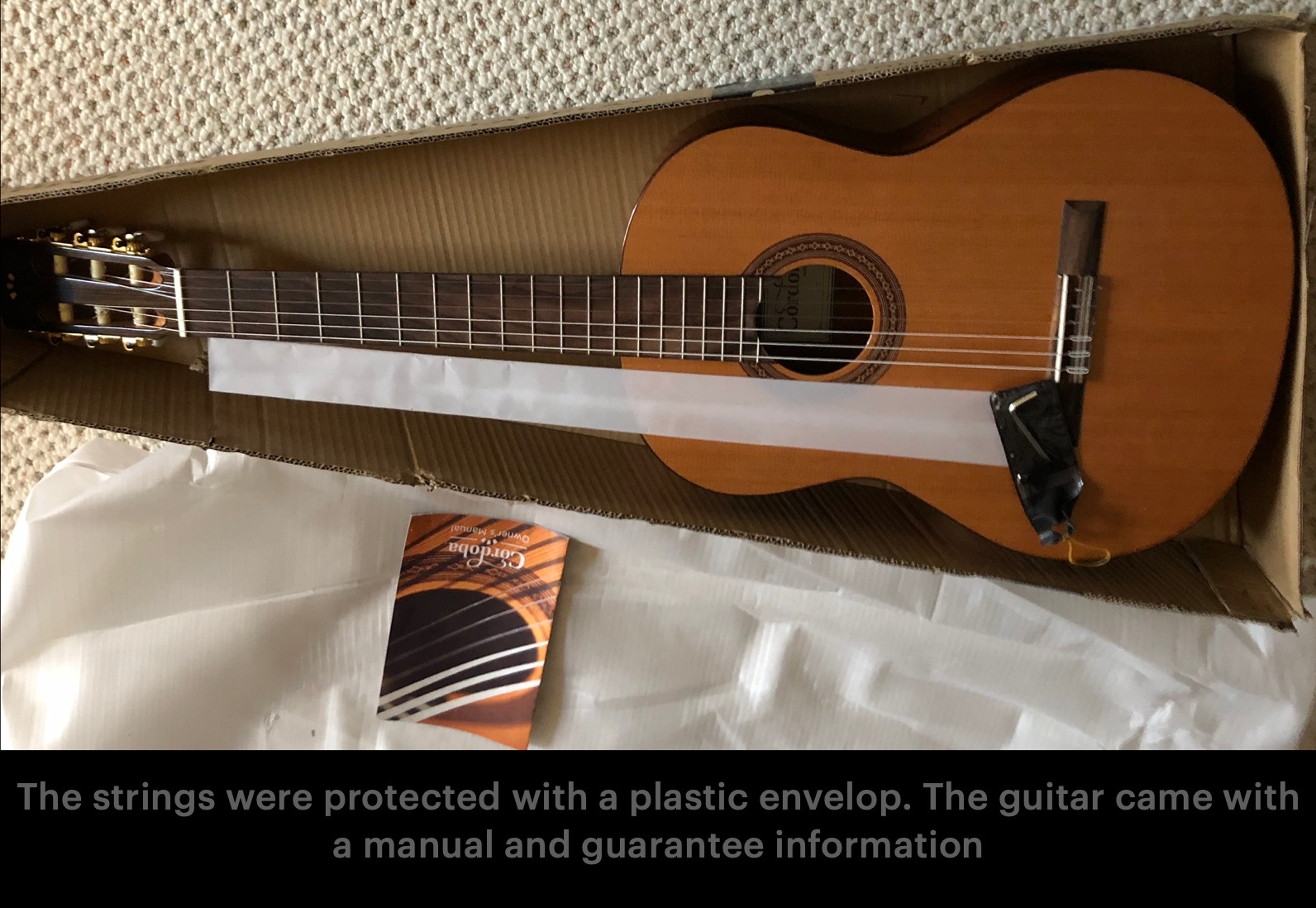
The Cordoba C5 is the guitar that made me realize a solid-top classical does not have to cost a fortune. The moment I strummed my first chord on this instrument, the warmth and complexity of the cedar top was immediately apparent. It sounds like a guitar that costs twice as much.
Cordoba ships the C5 with Savarez Cristal Corum 500CJ high-tension strings, which is a detail that shows their commitment to quality. Many manufacturers include cheap stock strings that need immediate replacement, but these Savarez strings complement the cedar top beautifully.
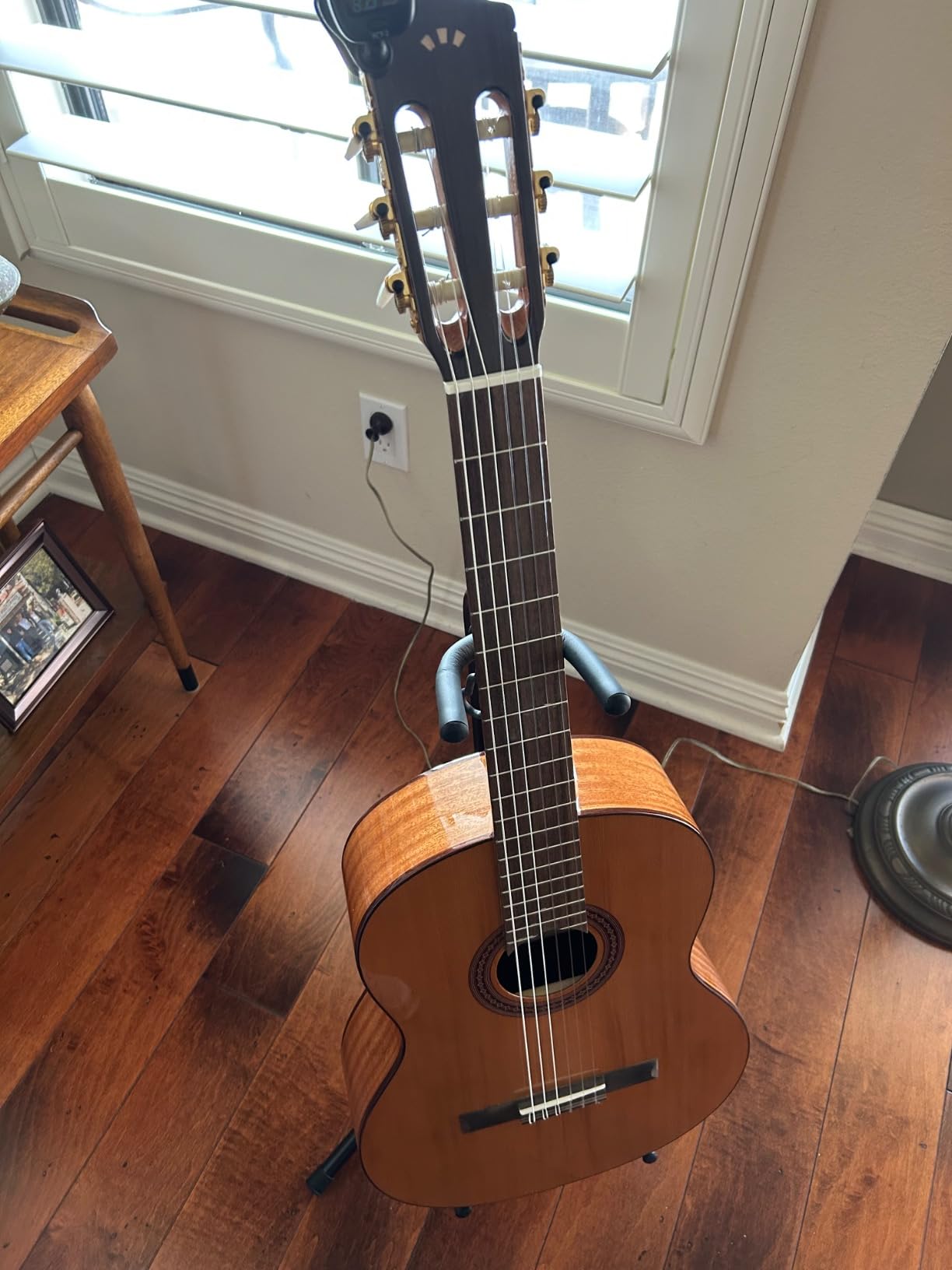
The bone nut and saddle are another welcome upgrade over the plastic components found on most guitars in this range. Bone transfers vibrations more efficiently than synthetic materials, giving the C5 better sustain and a more organic tone. After six months of regular playing, the guitar has opened up noticeably, with the cedar top developing a richer, more mature voice.
Build quality is outstanding for the price. The mahogany back and sides pair well with the cedar top, producing a warm, balanced tone that handles both classical repertoire and fingerstyle playing with ease. The 52mm nut width is traditional and gives enough room for complex fingerpicking patterns.
Who Should Buy the Cordoba C5
Intermediate players looking for their first solid-top classical guitar will find the C5 to be an exceptional value. It delivers tone quality that rivals instruments costing significantly more, making it ideal for advancing students who want something they can grow with. For a detailed comparison of beginner options, see our guide to best classical guitars for beginners.
Serious hobbyists who play classical, flamenco, and Latin styles will appreciate the versatility of the cedar top. It responds well to both delicate fingerpicking and more aggressive strumming. The C5 also makes an excellent practice guitar for professionals who want something they do not need to worry about.
Who Should Look Elsewhere
Complete beginners who are unsure whether they will stick with classical guitar might be better served by the more affordable Yamaha C40II or ADM bundle. The C5 is an investment, and while it is well worth it for committed players, there is no need to spend more if you are just exploring the instrument.
Players who prefer a brighter, snappier tone might prefer a spruce-top guitar like the Fender CN-60S. Cedar tops produce a warmer, darker sound that some players find too mellow for certain styles.
3. Ibanez GA5TCE Acoustic-Electric Classical Guitar
Ibanez 6-String Classical Guitar, Right, Natural
Spruce top
Thinline body
Onboard pre-amp and tuner
Cutaway design
Pros
- Onboard electronics and pre-amp with built-in tuner
- Easy to play with low action
- Thin-line body is comfortable for long sessions
- Great for live performance and recording
- Responsive amplification when plugged in
Cons
- Stock strings are poor quality and need replacement
- Less resonance than full-depth classical guitars
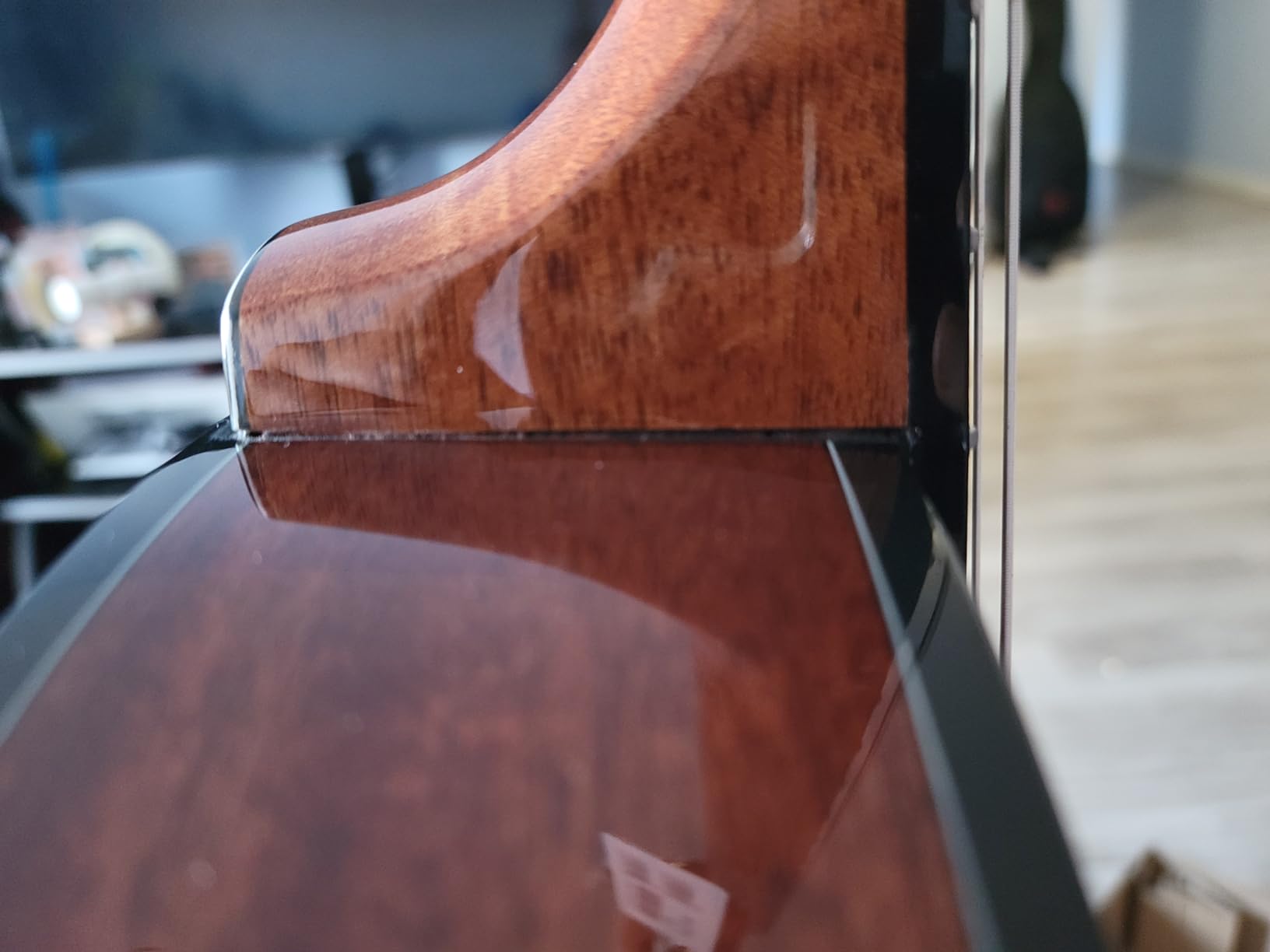
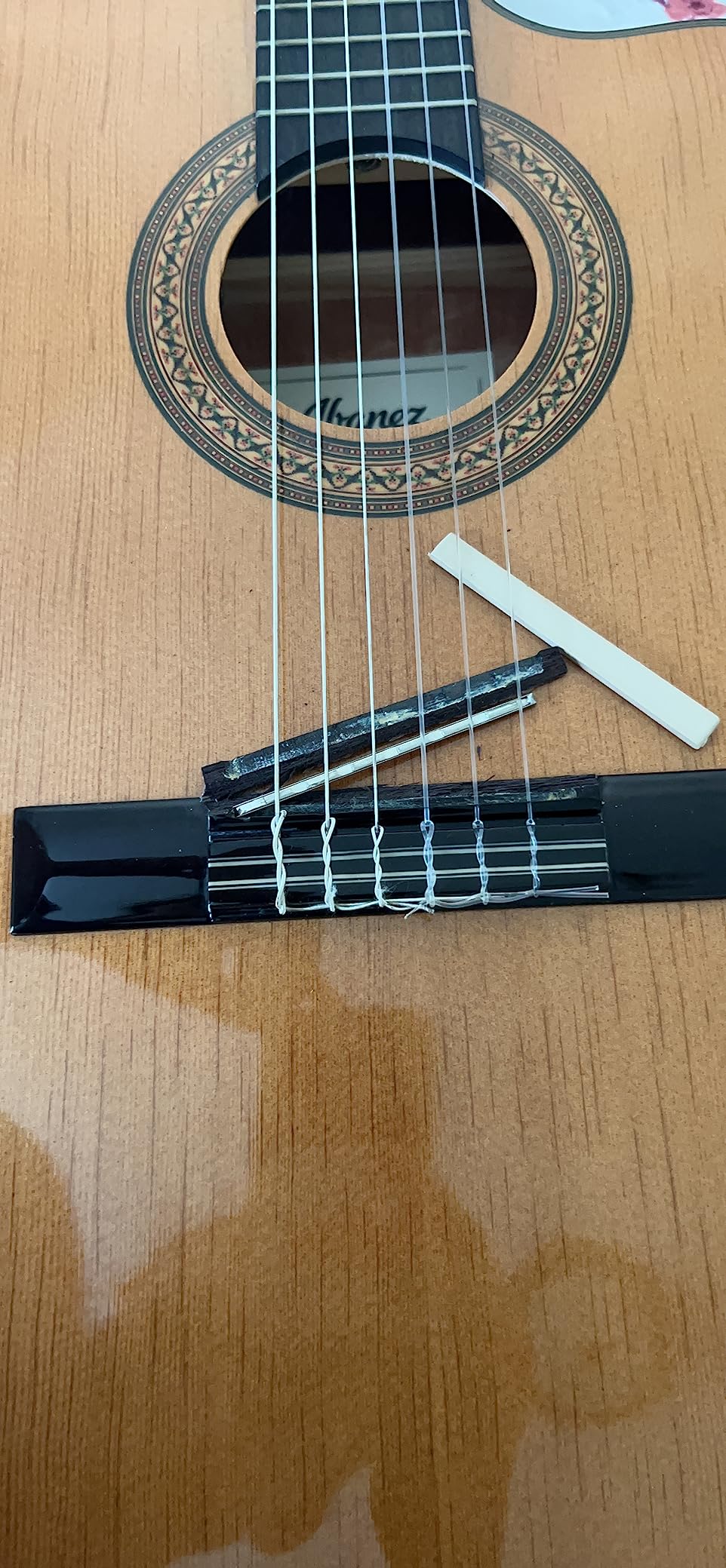
- Bridge plate may have design weaknesses on some units
The Ibanez GA5TCE solves a problem that most classical guitarists eventually face: how to amplify a nylon-string guitar on stage without the hassle of external microphones. The built-in electronics and piezo pickup deliver surprisingly natural amplified tone, and the onboard tuner is a lifesaver during gigs.
The thinline body is noticeably more comfortable than a standard depth classical, especially during long rehearsal sessions. At just four pounds, the GA5TCE puts minimal strain on your shoulder. The cutaway gives full access to the upper frets, which is something traditional classical guitars lack.
I tested the GA5TCE through a PA system at a small venue, and the plugged-in tone was warm and feedback-resistant. The pre-amp includes basic EQ controls that let you dial in the right sound for different rooms. For coffee shop gigs and small ensemble performances, this guitar punches well above its weight class.
The spruce top provides a bright, articulate acoustic voice, though the thinner body does sacrifice some low-end resonance compared to full-depth models. As a purely acoustic instrument, it cannot compete with the Cordoba C5 for projection, but that is the trade-off for the electronics and slim profile.
Who Should Buy the Ibanez GA5TCE
Performing guitarists who need reliable amplified classical tone will find the GA5TCE purpose-built for their needs. The onboard electronics eliminate the need for expensive external pickup systems, and the thinline body reduces fatigue during long sets. If you regularly gig at small venues, this is the guitar to grab.
Players transitioning from electric or steel-string acoustic guitars will also appreciate the narrower feel and cutaway design. The GA5TCE bridges the gap between electric and classical playing, making it easier to adapt your existing technique. We also cover more crossover options in our guide to best classical guitars for students and lessons.
Who Should Look Elsewhere
Purists seeking traditional classical tone will want to stick with a full-depth, solid-top instrument like the Cordoba C5 or Yamaha CG122MCH. The thinline body and electronics add versatility but compromise the acoustic resonance that defines the classical guitar sound.
Beginners who do not plan to perform live will be paying for features they will never use. A purely acoustic guitar like the Yamaha C40II offers better acoustic tone for the money if amplification is not a priority.
4. Fender CN-60S Concert Nylon String Guitar
Fender CN-60S Concert Nylon String Acoustic Guitar, with 2-Year Warranty, Natural
Solid spruce top
Concert body
Walnut fingerboard
25.3 inch scale
Pros
- Nice full modern sound with good projection
- Easy playability with low action
- Beautiful aesthetic and well-packaged
- Solid spruce top with quality build
- Slim concert body comfortable for smaller hands
Cons
- Bass notes could have more depth
- Neck is narrow and may be challenging for thick-fingered players
- Some listing confusion about included accessories
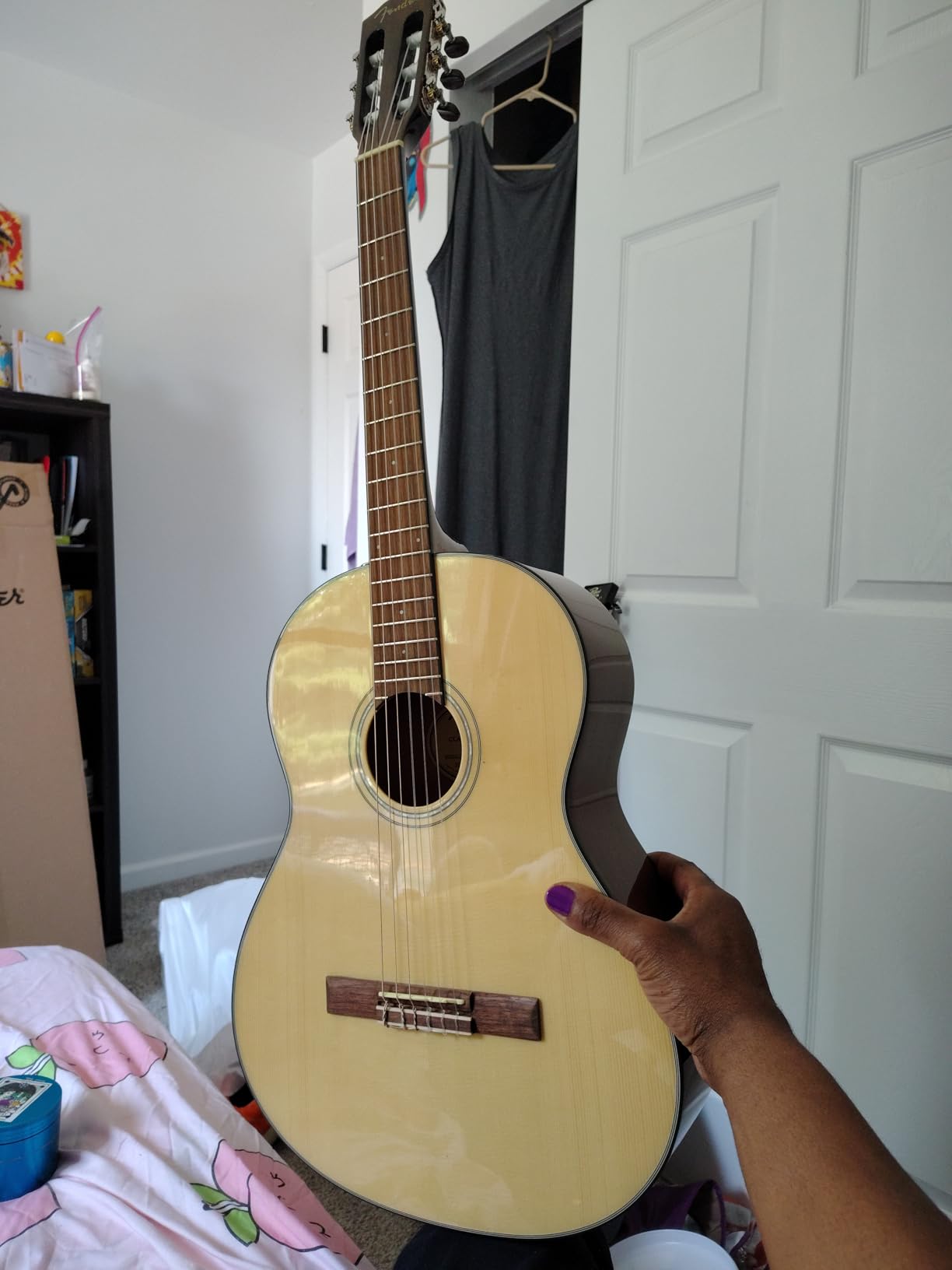
Fender is not the first brand that comes to mind when you think of classical guitars, but the CN-60S makes a strong case for the company’s nylon-string expertise. The concert body shape is slimmer than a traditional classical, making it immediately comfortable for players used to steel-string acoustics.
The solid spruce top delivers a bright, modern tone that leans more toward the crossover end of the spectrum. This is not a guitar for strict classical repertoire, but for folk, fingerstyle, and Latin-inspired playing, it excels. The 25.3-inch scale length sits between a standard classical and a steel-string acoustic, which helps ease the transition.
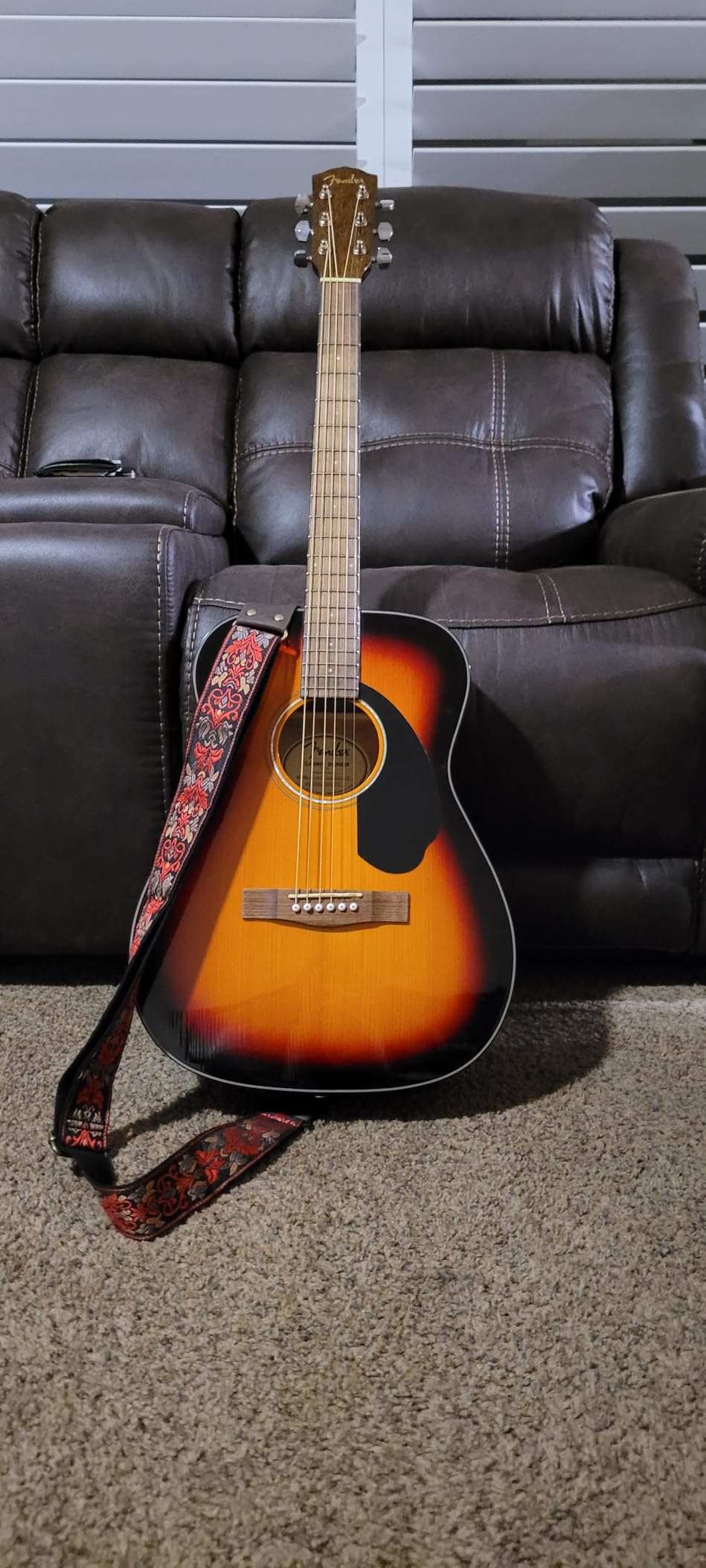
I found the action to be set up comfortably right out of the box, with minimal fret buzz across the neck. The walnut fingerboard has a smooth feel, and the mahogany neck provides a familiar profile for steel-string players. The smaller concert body is particularly well-suited to players with shorter arms or those who find full-size classical guitars unwieldy.
Build quality is solid Fender craftsmanship. The binding and finish are clean, and the guitar arrived well-protected in its packaging. Fender includes a limited warranty, and the company’s reputation for quality control means you are unlikely to encounter the kind of defects sometimes seen with budget brands.
Who Should Buy the Fender CN-60S
Steel-string acoustic players who want to explore nylon strings without fully committing to a traditional classical guitar will love the CN-60S. The familiar body shape and narrower neck make the transition seamless. Folk and fingerstyle players who want nylon warmth with modern playability will find this guitar hits the sweet spot.
Players with smaller hands or shorter arms will appreciate the concert body dimensions. The 25.3-inch scale is slightly shorter than the standard 650mm classical scale, reducing the stretch required for chord shapes. It works well for teenagers and smaller adults who struggle with full-size instruments.
Who Should Look Elsewhere
Serious classical students studying formal technique should choose a traditional classical guitar with a wider neck and standard scale length. The CN-60S is a crossover instrument, and while it plays beautifully, its narrower neck and shorter scale are not ideal for developing proper classical hand position.
Players seeking maximum bass depth and resonance will find the concert body limiting. If you want deep, rich low-end projection for classical pieces, the Cordoba C5 with its full-size body and solid cedar top is a better choice.
5. Yamaha CG122MCH Solid Cedar Top Classical Guitar
Yamaha CG122MCH Solid Cedar Top Classical Guitar
Solid cedar top
3-ply neck
Rosewood fingerboard
Natural matte finish
Pros
- Rich and warm tone from solid cedar top
- Beautiful natural matte finish
- Excellent build quality and easy playability
- Great value compared to higher-priced guitars
- Stable tuning once strings are broken in
Cons
- Stock strings are basic and need replacement
- Action is standard rather than low as advertised
- Sound can feel bass-heavy for some players
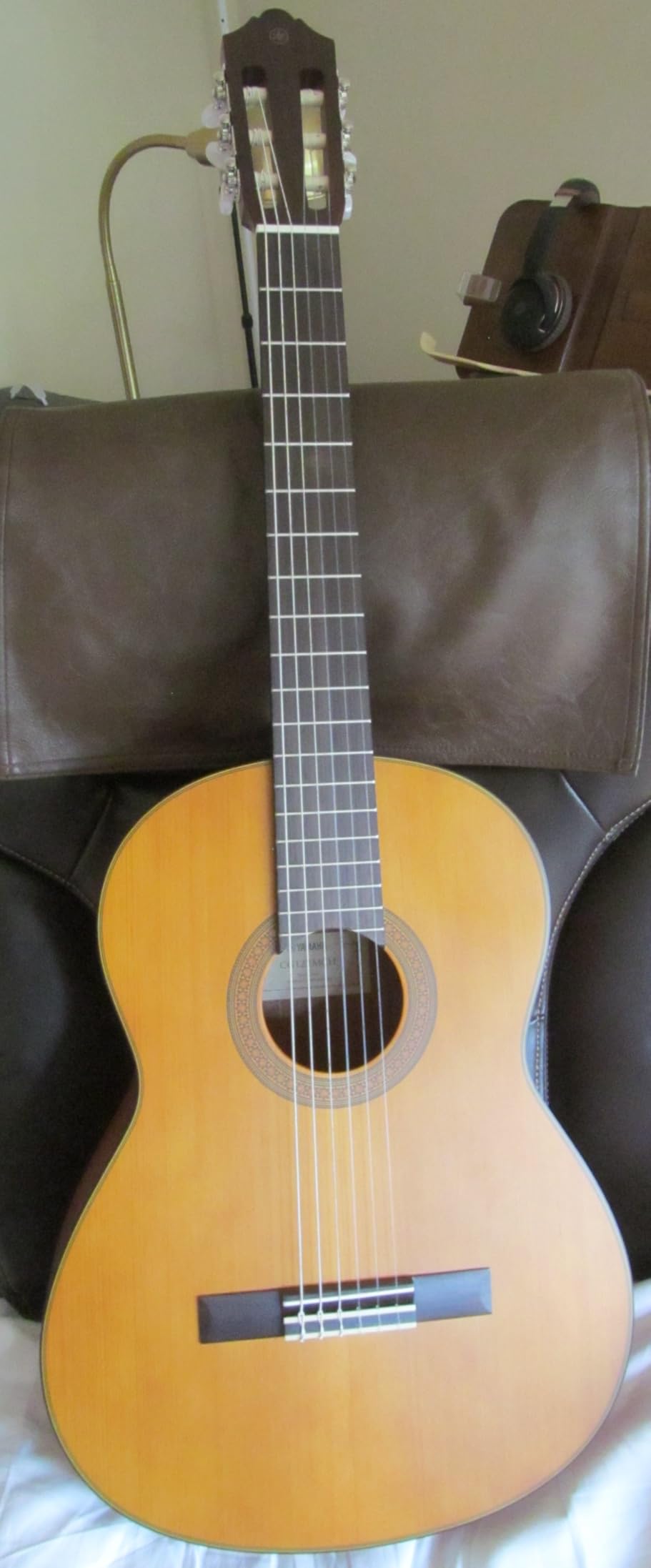
The Yamaha CG122MCH sits in a sweet spot in the classical guitar market. It features a genuine solid cedar top, which is a significant step up from the laminate tops found on beginner instruments. The warmth and complexity of the cedar voice is immediately noticeable, and the guitar only improves as the wood opens up over time.
Yamaha’s 3-ply neck construction is a practical feature that many players overlook. Unlike single-piece mahogany necks that can warp in fluctuating humidity, the laminated neck resists twisting and bowing. This means the CG122MCH maintains its setup consistency through seasonal changes, which is especially important for players in humid or dry climates.
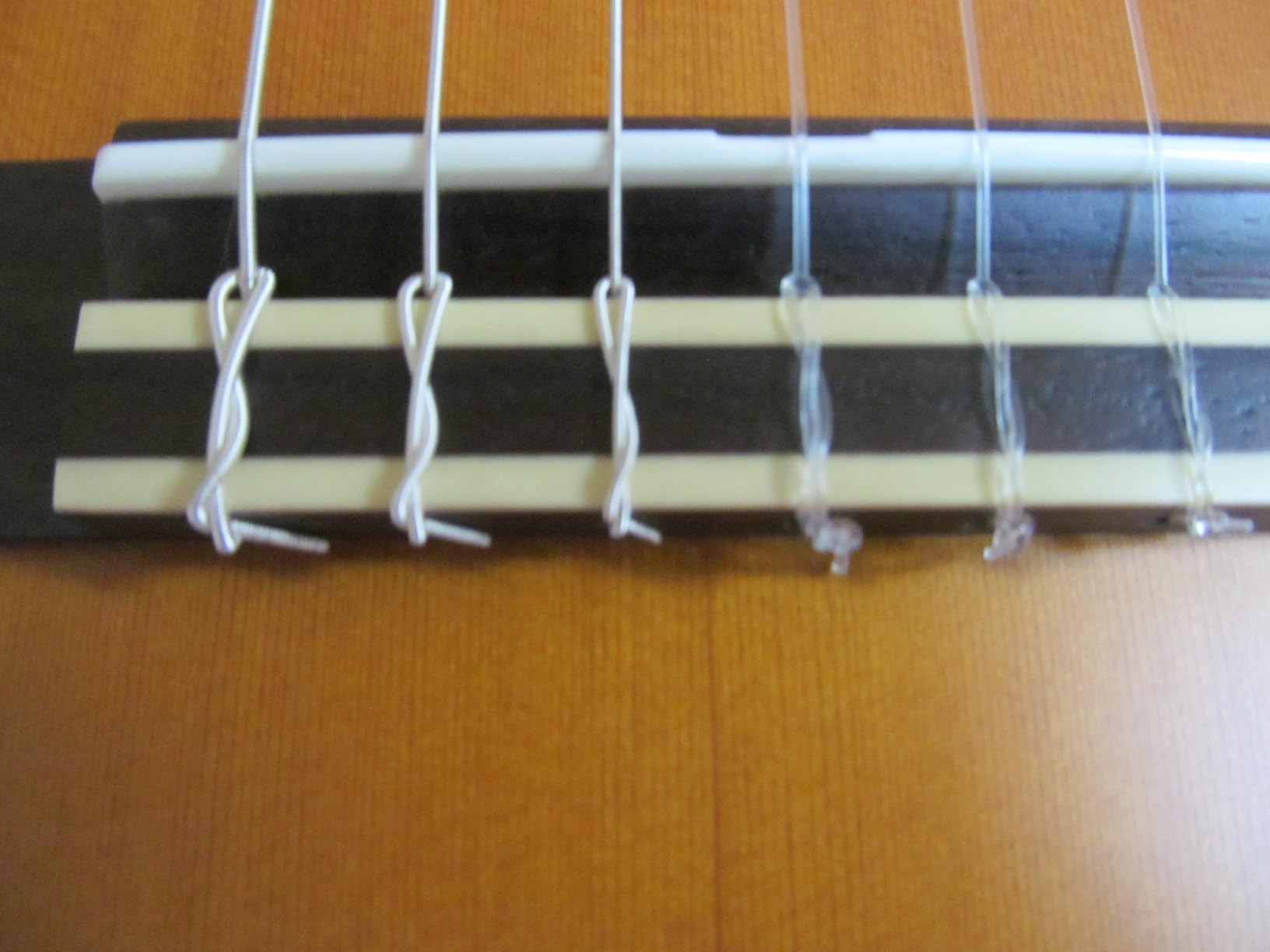
The natural matte finish is a welcome departure from the high-gloss look of many classical guitars. It feels smooth against the forearm and allows the top wood to vibrate more freely than a thick polyurethane coat. The rosewood fingerboard and bridge add tonal richness and visual warmth.
I played the CG122MCH side by side with several guitars costing twice as much, and while it lacks the ultimate refinement of a professional instrument, it holds its own remarkably well. The bass register is full and round, and the trebles have a singing quality that makes classical pieces come alive.
Who Should Buy the Yamaha CG122MCH
Intermediate players who have outgrown their beginner guitar and want a genuine upgrade will find the CG122MCH delivers solid-top tone without a premium price tag. It is ideal for students who practice regularly and want a guitar that rewards their developing technique with richer sound. If you need to protect your investment, take a look at our guide to the best guitar cases for classical guitars.
Adult learners who are committed to classical guitar but want a quality instrument without spending four figures will appreciate the value proposition. The CG122MCH is the kind of guitar you can play for years without feeling the need to upgrade, unlike entry-level instruments that quickly become limiting.
Who Should Look Elsewhere
Complete beginners will be better served by the more affordable Yamaha C40II, which offers similar playability at a lower entry point. The solid cedar top of the CG122MCH requires more care and humidity management, which adds responsibility that new players may not want to deal with immediately.
Players who need amplification for live performance should consider the Ibanez GA5TCE instead. The CG122MCH is a purely acoustic instrument, and while its tone is superb unplugged, it lacks any electronic components for stage use.
6. Cordoba C1M Classical Guitar
Cordoba C1M Classical Acoustic Nylon String Guitar, Protégé Series
Spruce top
Mahogany back and sides
Adjustable truss rod
Savarez strings
Pros
- Solid build quality and craftsmanship
- Comfortable low action out of the box
- Warm and sweet tone for practice
- Adjustable truss rod for neck stability
- Available in multiple sizes from 1/4 to full
Cons
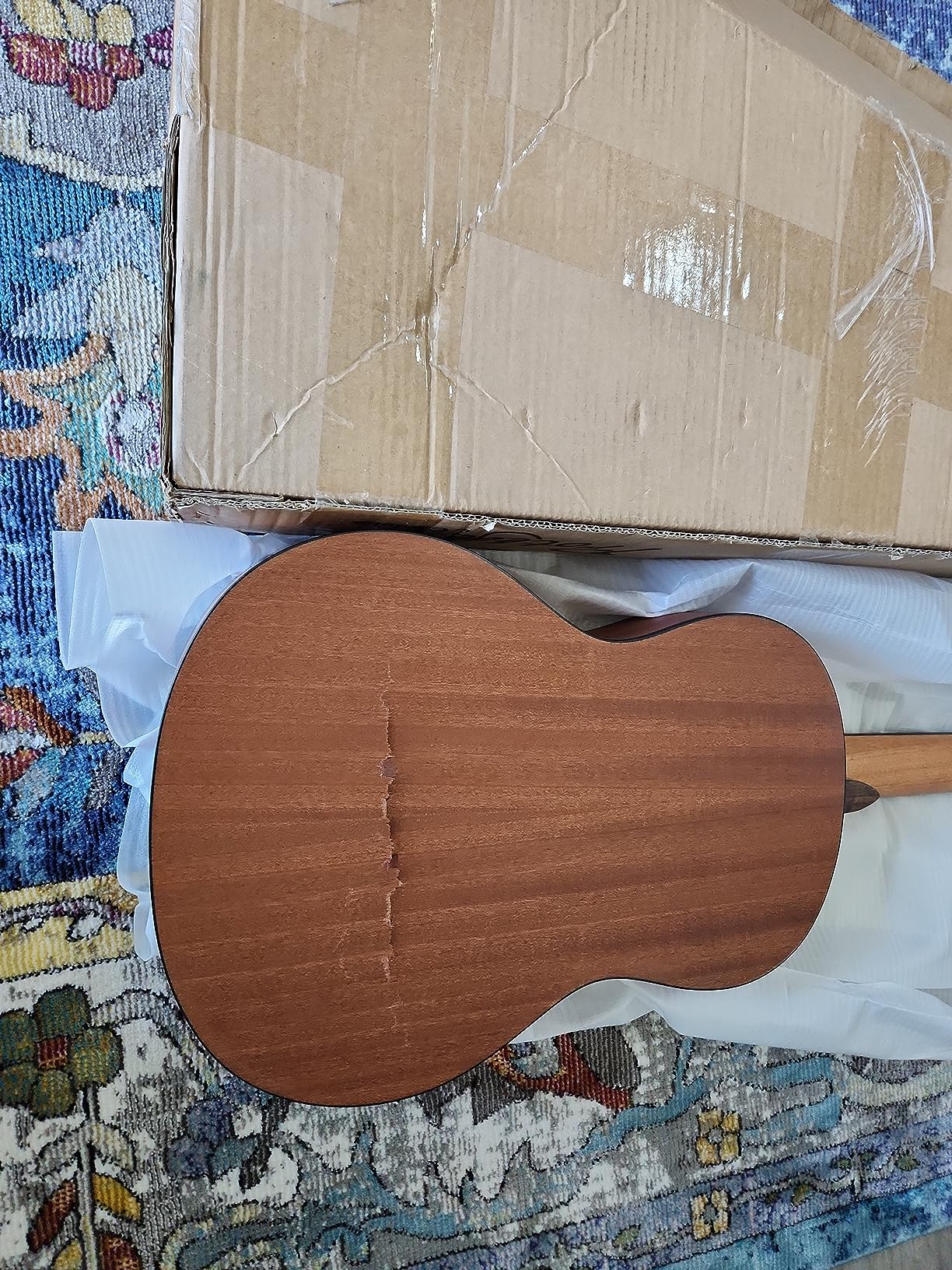
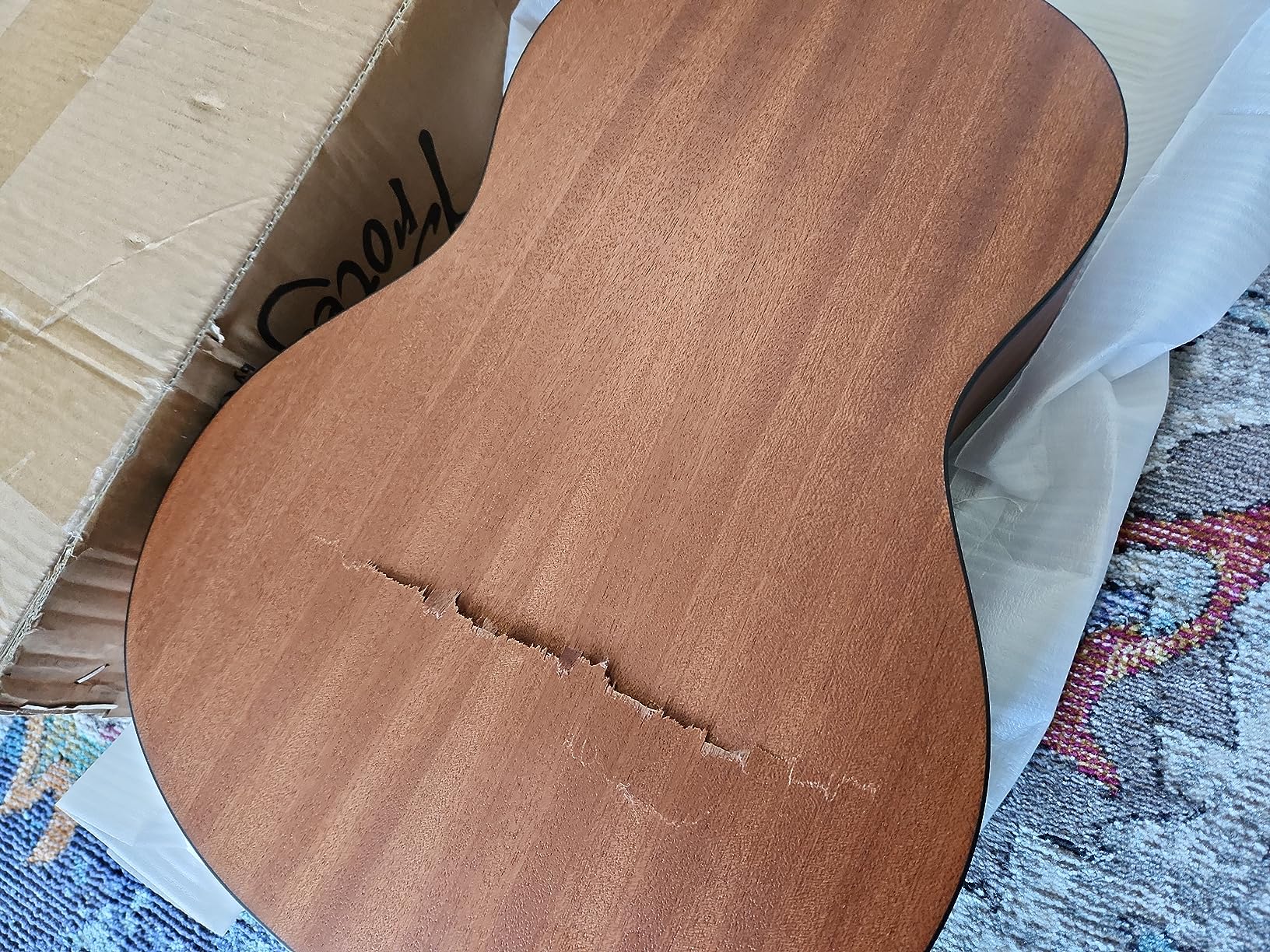
- Some packaging concerns during shipping
- Possible intonation issues on higher frets
- Smaller sizes produce a more muffled sound
The Cordoba C1M is one of the most versatile classical guitars on the market, primarily because it is available in four different sizes. Whether you need a 1/4 size for a young child or a full-size for an adult, Cordoba has you covered. This makes it an excellent choice for families with multiple players at different stages.
The Protégé series sits at Cordoba’s entry level, but the quality control is noticeably better than many competing budget brands. The mahogany back and sides produce a warm, balanced tone, and the spruce top provides enough brightness to keep the sound articulate. Savarez Cristal Corum strings are included, which is a step up from the generic nylon strings most manufacturers ship.
The adjustable truss rod is a feature I wish more classical guitars included. Classical guitars traditionally do not have truss rods because nylon strings exert less tension than steel strings, but having one allows you to fine-tune the neck relief as the guitar ages. This is particularly valuable in climates with significant humidity swings.
Out of the box, the action is set at a comfortable height that makes fretting easy without excessive buzzing. The 648mm scale length is slightly shorter than the standard 650mm, which reduces string tension just enough to make the guitar a little easier on developing fingers.
Who Should Buy the Cordoba C1M
Music teachers ordering instruments for their studio will find the size range invaluable. Being able to fit students of all ages with the same model simplifies curriculum planning and ensures consistent quality across the group. The adjustable truss rod also reduces setup time when guitars come back from students in different environments.
Parents buying for growing children will appreciate starting with a smaller size and staying in the Cordoba family as their child grows. The consistent build quality across sizes means the playing experience remains familiar even as the guitar gets larger. Students at all levels can also explore our best classical guitars for students and lessons guide for more options.
Who Should Look Elsewhere
Adult players looking for maximum tone quality should consider the Cordoba C5 instead. The C1M is designed as a student instrument, and while it performs well, it cannot match the solid-top C5 for richness and projection. If you are a serious intermediate player, the jump to the C5 is worth the extra investment.
Players who prioritize a wide, traditional classical neck may find the C1M slightly narrow. Cordoba designs the Protégé series with a slightly more modern feel, which some purists consider less authentic for formal classical study.
7. ADM Full Size Classical Guitar Starter Bundle
ADM Full Size Classical Nylon Strings Acoustic Guitar 29 x 75x 50mm Classic Guitarra Starter Bundle for Adult with Free Lessons, Gig Bag, Tuner, Footstool, Kids Student Beginner Kits, Nature
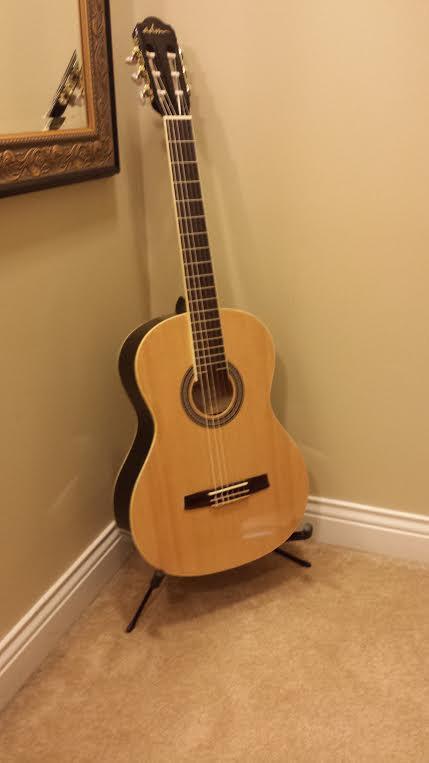
Solid spruce top
Scalloped X bracing
Dual-action truss rod
Complete beginner kit
Pros
- Outstanding value with complete beginner bundle included
- Beautiful warm tone for the price
- Adjustable truss rod for neck adjustment
- Smooth fretboard and well-finished frets
- Lightweight and comfortable to play
Cons
- Included strings are not the best quality
- Some quality control inconsistencies reported
- Soft gig bag offers limited protection
The ADM classical guitar starter bundle is the kind of package that makes getting started with classical guitar genuinely easy. Everything you need comes in one box: the guitar, a gig bag, tuner, footstool, capo, stand, and even polish cloth. For a first-time buyer who does not know what accessories to purchase separately, this removes all the guesswork.
What surprised me most about the ADM is the tone quality. The solid spruce top with scalloped X bracing produces a balanced, mid-range focused sound that projects well for a budget instrument. I have played student guitars costing twice as much that did not sound as good.
The dual-action truss rod is a standout feature in this price range. It allows bidirectional neck adjustment, which means you can correct both forward bow and back bow. Most budget classical guitars either lack a truss rod entirely or include a single-action version that offers less flexibility.
The chrome geared tuning machines hold tuning adequately once the strings are stretched in. The nato neck has a comfortable profile, and the fretboard is smooth with no sharp edges. After two weeks of daily practice, the guitar settled into a stable tuning pattern and has been reliable ever since.
Who Should Buy the ADM Starter Bundle
Absolute beginners who want to start playing immediately without a separate shopping trip for accessories will find this bundle unbeatable. Everything you need is in the box, and the guitar itself is genuinely good enough to support your first year or more of learning. The included tuner alone saves you a separate purchase.
Budget-conscious parents who want to test their child’s interest before investing in a more expensive instrument will appreciate the low entry point. If the guitar ends up collecting dust, you have not invested a fortune. If it sparks a passion, the ADM is capable enough to carry a student through their first few grades.
Who Should Look Elsewhere
Players who already own a tuner, footstool, and case are paying for accessories they do not need. In that scenario, the standalone Yamaha C40II offers better tone quality for a similar total investment. The bundle premium only makes sense if you are starting from scratch.
Quality control can be inconsistent with budget bundles. While the majority of buyers report satisfaction, a minority receive guitars with finish defects or loose components. If consistent out-of-box quality is critical to you, the Yamaha or Cordoba options have tighter manufacturing standards.
8. Vangoa 39-Inch Full Size Classical Guitar
Classical Guitar 4/4, 39 Inch Full Size Nylon String Guitar for Beginner Adults, Guitar Bundle with Gig Bag & Footstool, Sapele Brown, by Vangoa
Sapele wood construction
C-shaped neck
Vintage engraved headstock
Full accessory bundle
Pros
- Beautiful vintage appearance with engraved headstock
- Bright and clear sound with good resonance
- Excellent value with full accessory bundle
- Comfortable C-shaped neck for beginners
- Stays in tune well and has smooth fretboard
Cons
- Some reports of fragile tuning pegs
- Fretboard lacks position markers
- Minor cosmetic finish flaws reported on some units
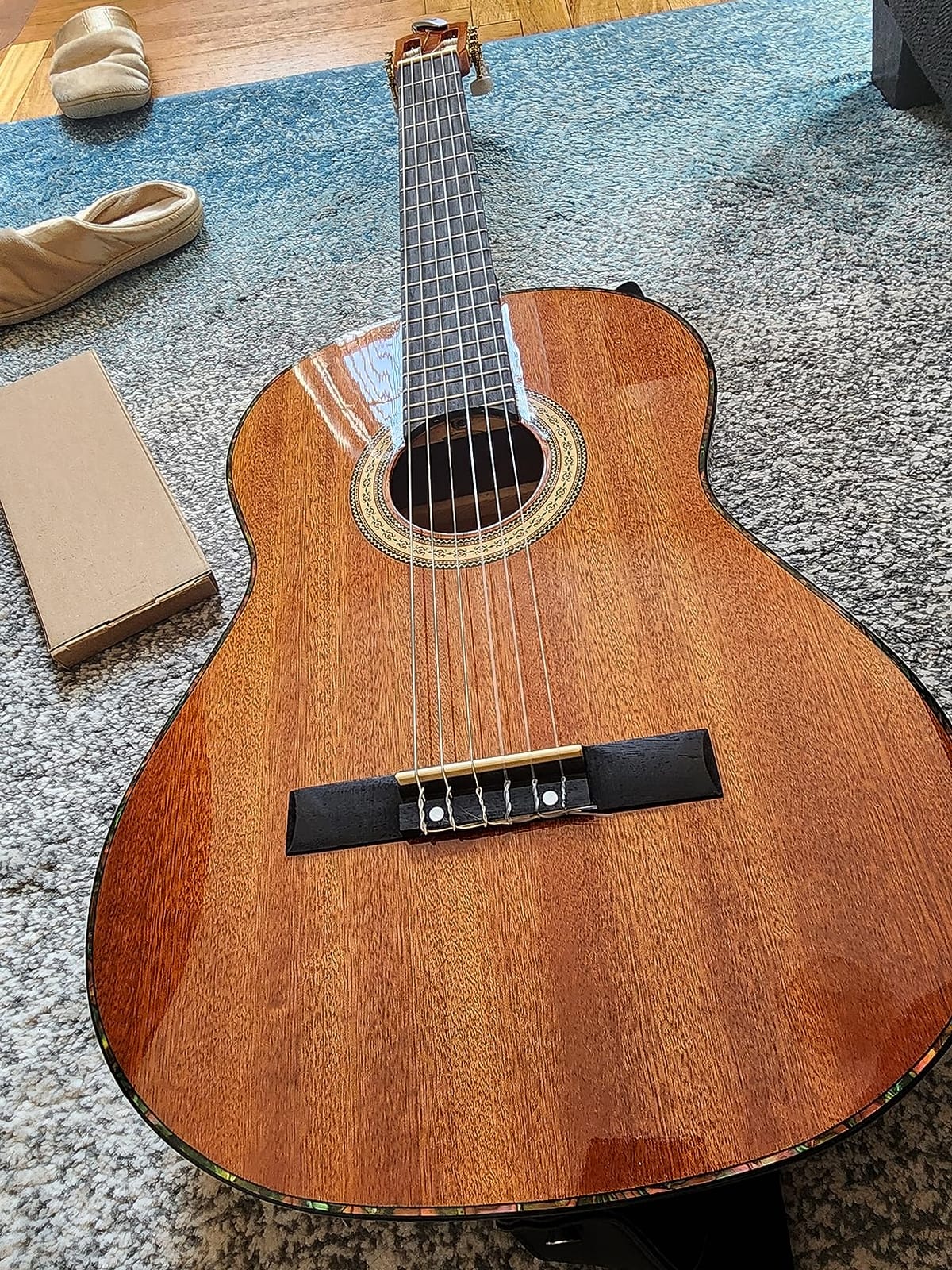
The Vangoa classical guitar immediately catches the eye with its vintage aesthetic. The engraved headstock with antique inlaid patterns and the warm sapele brown finish give this guitar a character that most budget instruments lack. It looks like it belongs in a music room, not a closet.
Beyond the appearance, the sapele wood construction delivers a bright, clear tone with a wide dynamic range. Sapele is tonally similar to mahogany, offering a balanced midrange with slightly more brightness. The C-shaped neck profile is comfortable for extended practice sessions, and the 39-inch body provides good projection.
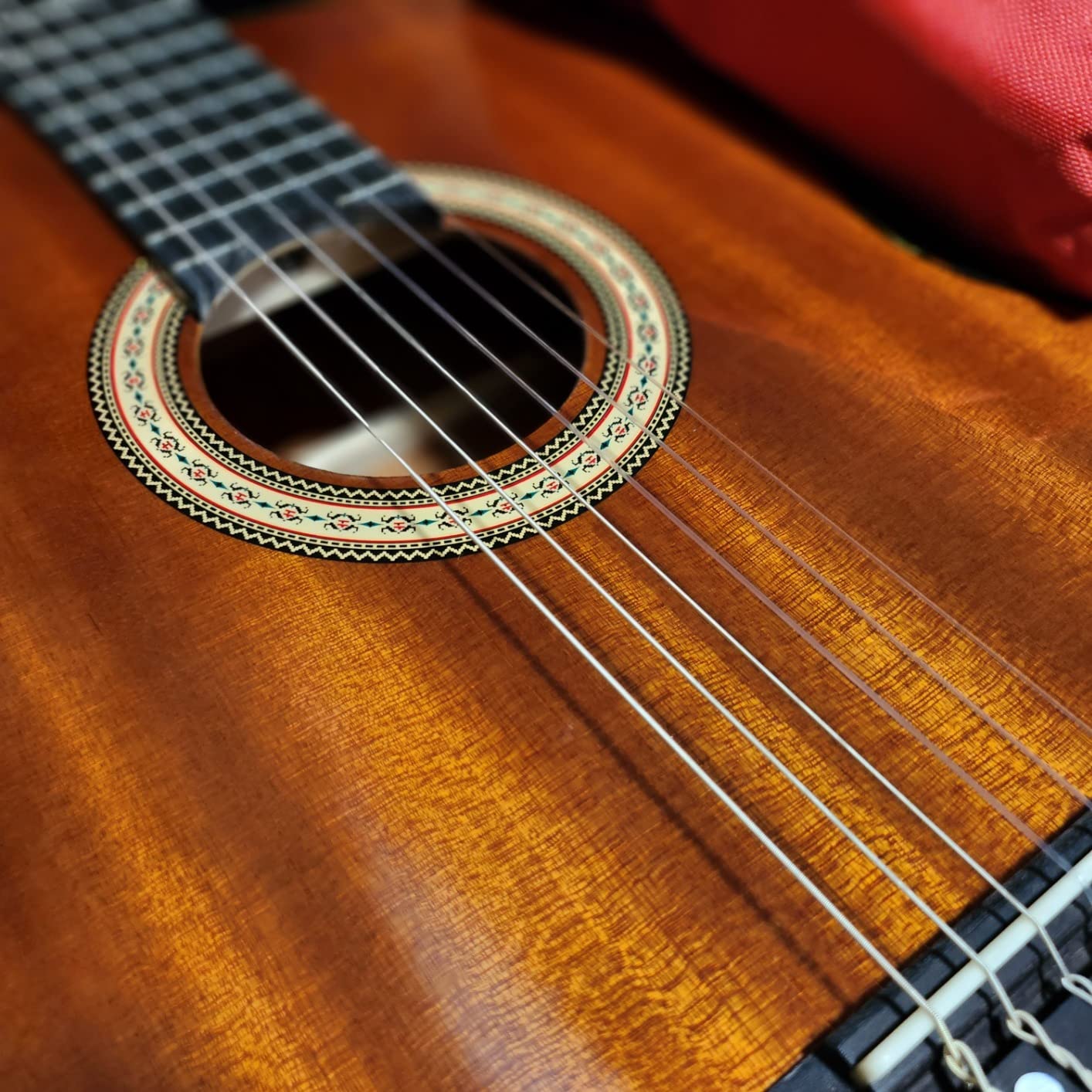
The accessory bundle is generous, including a tuner, capo, cleaning cloth, picks, spare strings, footstool, and gig bag. The open high-precision tuning knobs hold tuning well once the strings settle in. The shock-resistant ABS binding adds durability to the body edges, which is a smart inclusion for a guitar that may travel to lessons and rehearsals.
I noticed the fretboard lacks the position markers that many players rely on, especially beginners learning scale positions. This is a minor inconvenience but worth mentioning. The tone is responsive and articulate across the fingerboard, making it suitable for classical, folk, and fingerstyle playing.
Who Should Buy the Vangoa Classical Guitar
Players who value aesthetics alongside sound quality will love the vintage design. If you want a guitar that looks as good hanging on your wall as it sounds in your hands, the Vangoa delivers. The full accessory bundle means you can start playing immediately without additional purchases.
Beginners who appreciate good craftsmanship and attention to detail will find the Vangoa exceeds expectations for its price class. The sapele construction and ABS binding suggest a guitar built to last, and the bright, clear tone works well for a variety of playing styles.
Who Should Look Elsewhere
Players who prefer a warmer, darker tonal character should consider a cedar-top guitar like the Yamaha CG122MCH. The sapele and spruce combination of the Vangoa leans bright, which may not suit players drawn to the mellow warmth of traditional classical tone.
The lack of fretboard position markers can be frustrating for beginners who are still learning the fretboard layout. If visual references are important to your learning process, the Yamaha C40II or Cordoba C1M with their standard markers would be more practical choices.
9. Winzz 39-Inch Full Size Classical Guitar
Winzz Classical Guitar 4/4 Adult Classical Guitar for Beginners 39 Inches Brown
Spruce top
Basswood back and sides
Okoume neck
Full accessory bundle
Pros
- Excellent value for the price with solid tone
- Nice tone with good tuning stability
- Decent build quality for a beginner guitar
- Comes with footstool and wall mount and tuner and bag
- Vintage and stylish aesthetic
Cons
- Some reports of quality issues or breakage
- Accessories are basic quality
- Limited long-term durability for some buyers
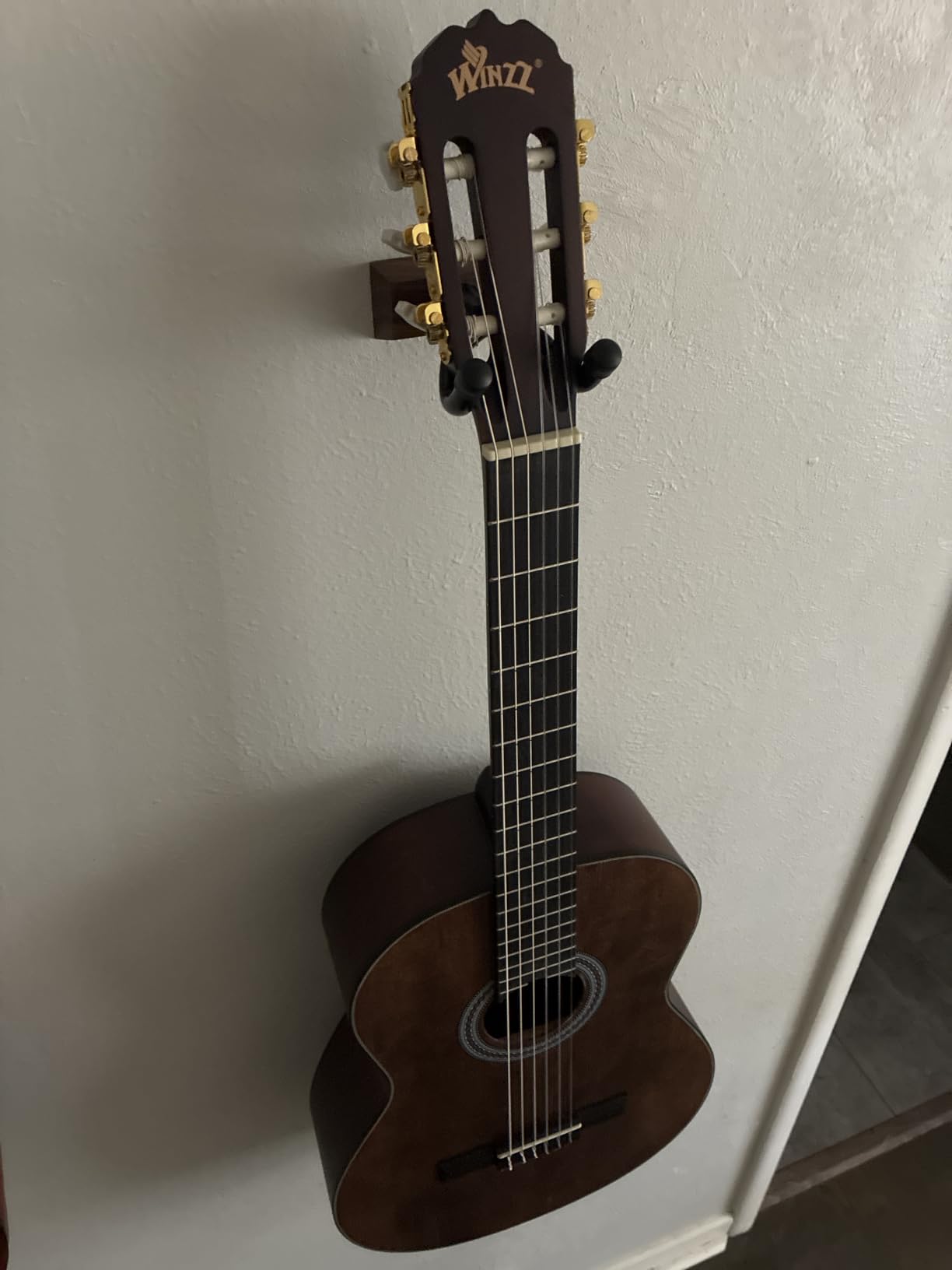
The Winzz 39-inch classical guitar is one of the most popular beginner instruments on Amazon, and after spending time with it, I understand why. The spruce top produces a pleasant, balanced tone, and the guitar comes loaded with accessories that would cost more if purchased separately.
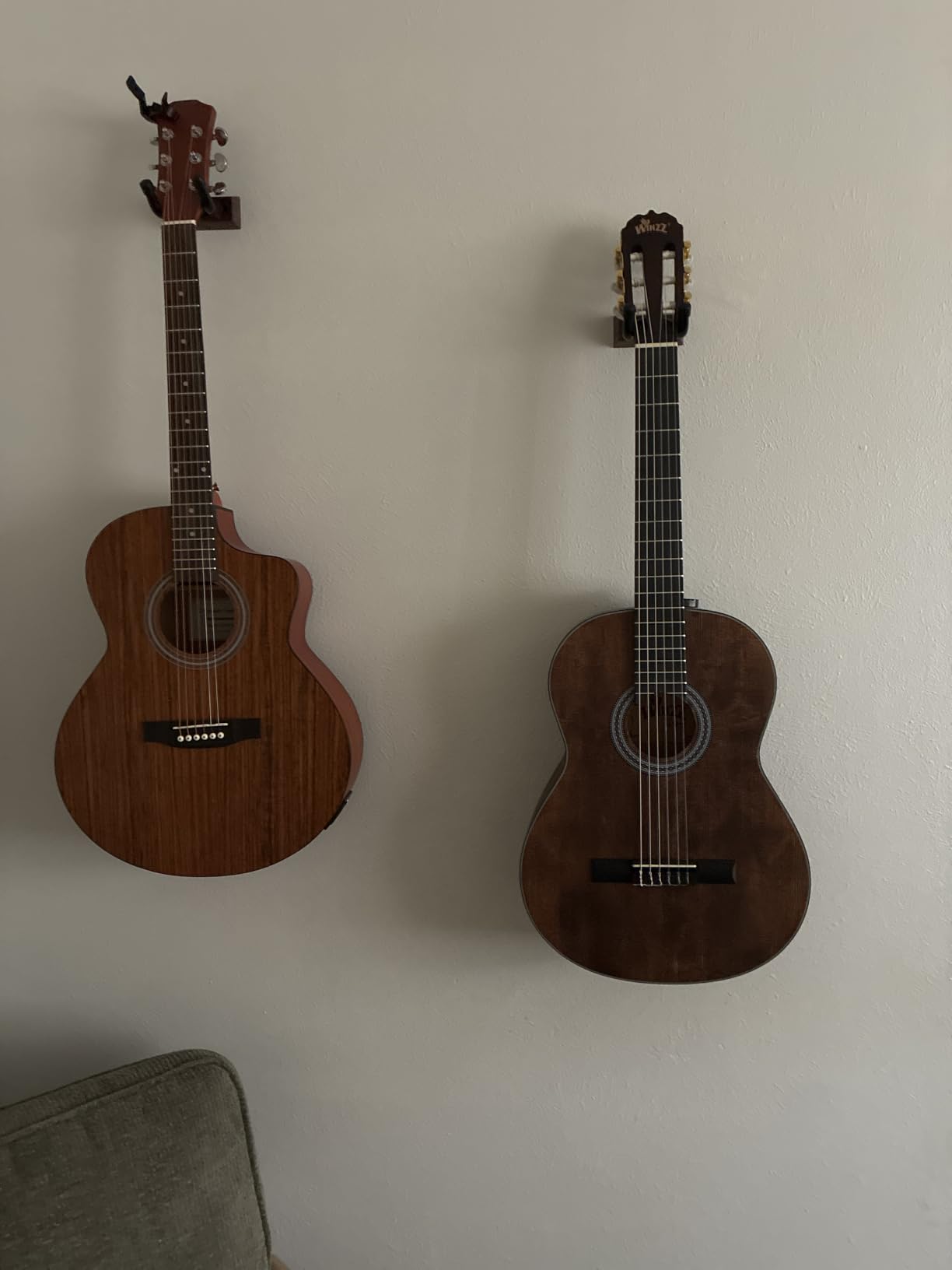
The vintage brown finish gives the Winzz a classic look that belies its budget price. The hand-polished basswood back and sides keep the weight low, making it comfortable for younger players and adults alike. The okoume neck has a straightforward profile that most beginners find easy to grip.
Tuning stability is solid once the nylon strings are stretched in and settled. I left the guitar for a week between practice sessions, and it returned to pitch with minimal adjustment. The included e-tuner is basic but functional, and the footstool is a nice touch that many budget bundles omit.
The main caveat is durability. While most buyers report reliable performance, a small percentage encounter issues with fretwork, finish, or structural integrity. For a guitar at this price point, some variance in quality control is expected, but it is worth inspecting the guitar carefully upon arrival.
Who Should Buy the Winzz Classical Guitar
Budget-conscious beginners who want the most complete package for the least money will find the Winzz hard to beat. The accessory bundle covers everything you need to start learning immediately. It also comes in a vintage blue color option for players who want something different from the standard natural finish.
Parents exploring whether their child has a genuine interest in classical guitar will appreciate the low financial commitment. If the guitar becomes a long-term instrument, great. If not, the investment was modest enough not to feel like a loss.
Who Should Look Elsewhere
Players who need an instrument they can rely on for years of consistent use should invest in the Yamaha C40II or Cordoba C1M, which have more established track records for durability. The Winzz is best viewed as a starter guitar that may eventually be replaced as the player advances.
Intermediate players who already know they are committed to classical guitar will outgrow the Winzz quickly. The tone and build quality are appropriate for learning fundamentals but lack the depth and refinement needed for more advanced repertoire.
10. Hola! Music 39-Inch Full Size Classical Guitar
Hola! Music 39″ Full Size Classical Guitar, Nylon Strings, Natural Gloss
Spruce top
Mahogany back and sides
52mm nut width
High-gloss natural finish
Pros
- Beautiful high-gloss finish with no flaws
- Excellent playability out of the box
- Warm and full sound quality
- Quality metal tuners that hold tuning well
- Smooth fretboard with binding and includes Savarez strings
Cons
- Some reports of strings breaking shortly after unboxing
- Gig bag is thin and offers minimal protection
- Some fret edges can be sharp on certain units
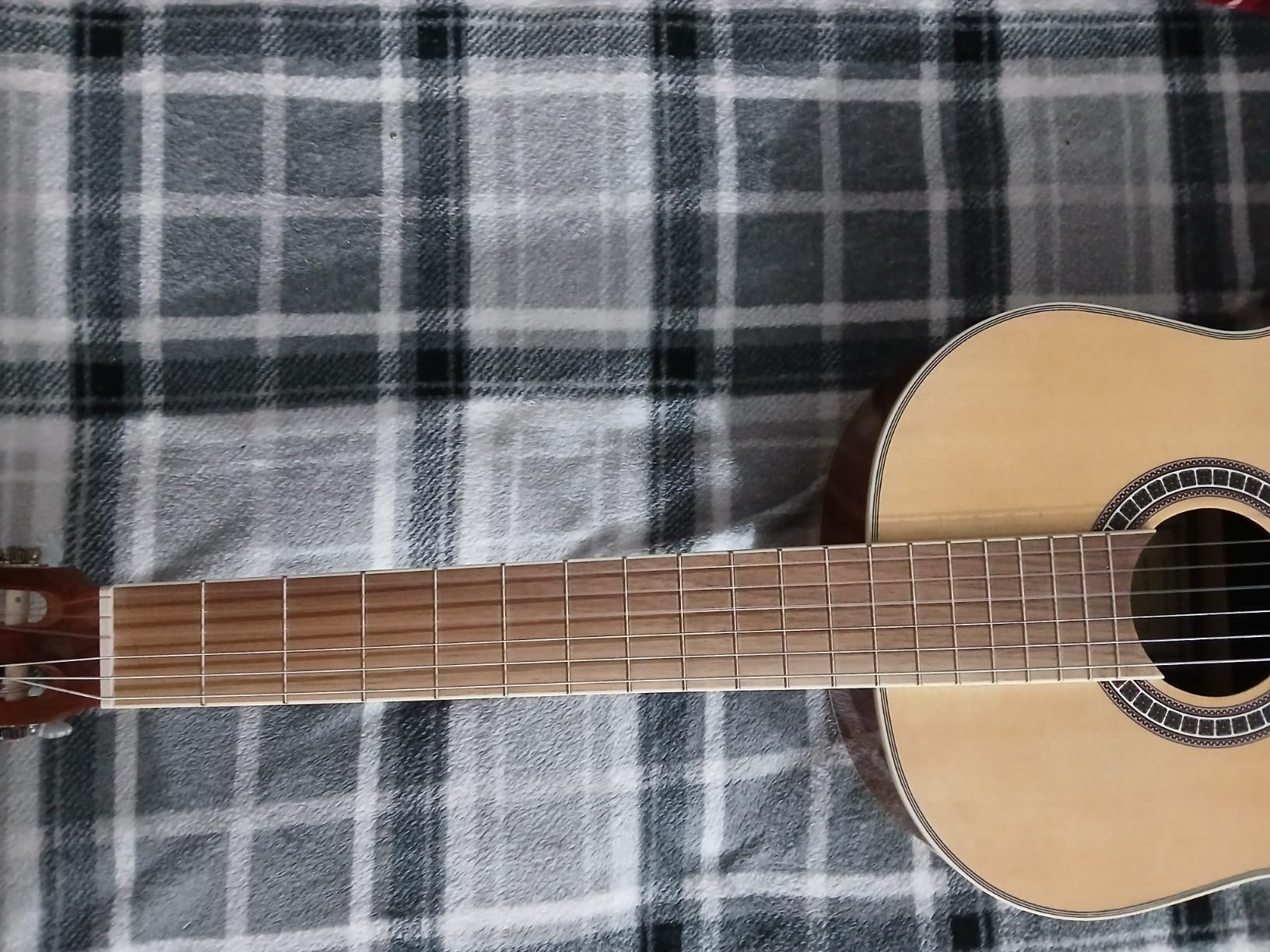
The Hola! Music HG-39GLS has a finish quality that genuinely surprised me. The high-gloss natural coating is flawless, with no orange peel or dull spots. It looks and feels like a guitar costing twice as much, and the spruce top produces a warm, mellow voice that is easy on the ears.
Playability out of the box is excellent. The 52mm nut width provides the traditional classical spacing that developing players need for proper fingerpicking technique. The fretboard is smooth with clean binding, and the metal tuning machines have a solid, precise feel that inspires confidence.
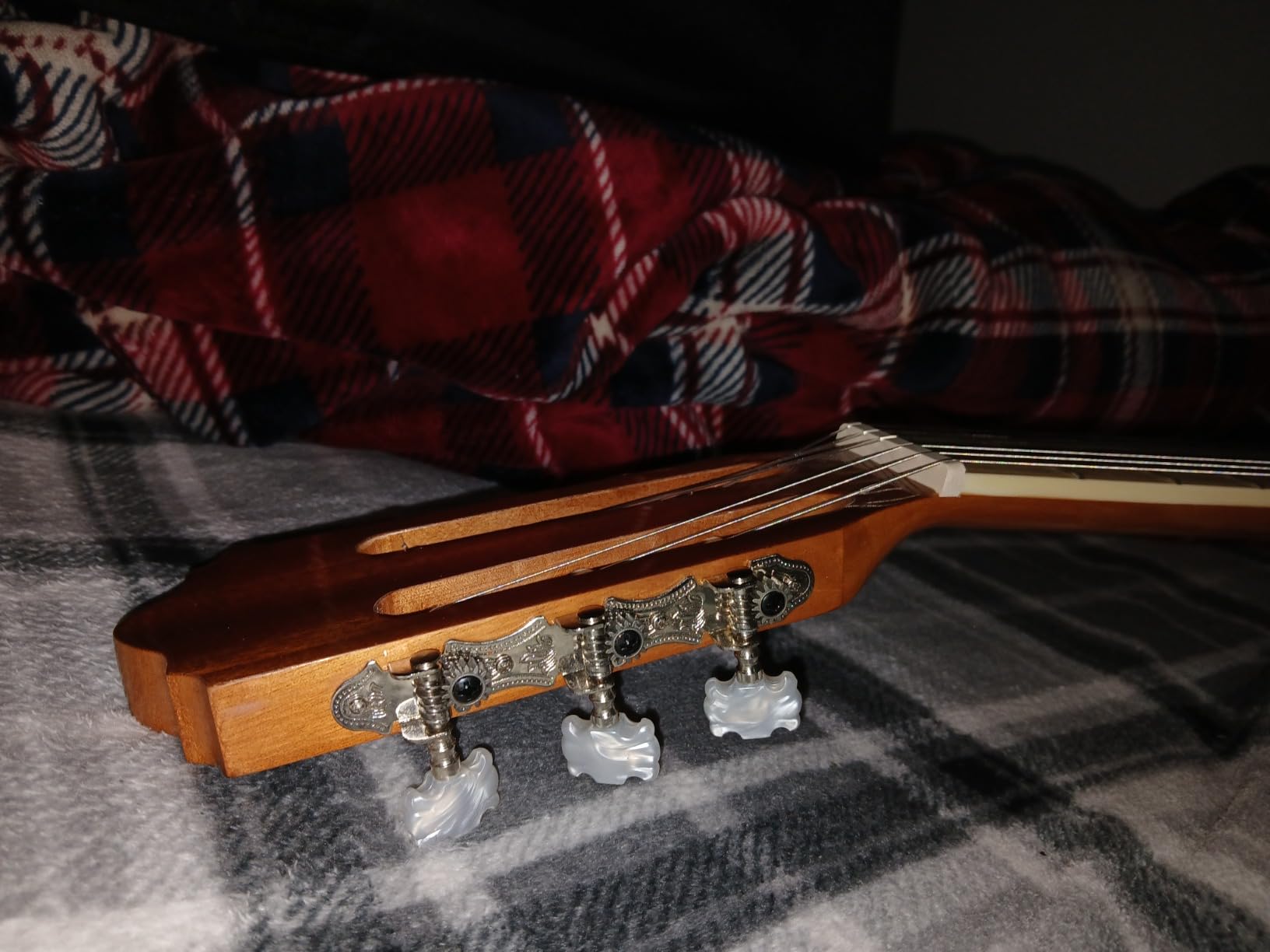
Hola! Music includes Savarez nylon strings, which is a notable upgrade from the generic strings most budget manufacturers ship. These strings produce a sweeter, more refined tone and tend to hold their pitch better as they settle in. The mahogany back and sides complement the spruce top with warm undertones.
The included padded gig bag is on the thin side, so I would recommend upgrading to a more protective case if you plan to transport the guitar regularly. For home use and occasional trips to lessons, the stock bag provides adequate dust protection and light padding.
Who Should Buy the Hola! Music Classical Guitar
Players who prioritize aesthetics and finish quality will be delighted by the HG-39GLS. The high-gloss coating is genuinely beautiful, and the overall presentation of the guitar is a step above most budget options. If you want a guitar that looks professional without the professional price tag, this is it.
Beginners who want a playable instrument with quality components will appreciate the Savarez strings and smooth fretboard. The warm, mellow tone is forgiving of developing technique, and the traditional nut width supports proper classical hand positioning from the start.
Who Should Look Elsewhere
Players who need a robust gig bag included should look at the ADM or Winzz bundles, which include more substantial carrying cases. The Hola! Music bag works for home storage but will not protect the guitar adequately during regular commutes.
Some units have reported sharp fret edges that may need filing. If you are not comfortable doing minor setup work or paying for a luthier to address this, a guitar from Yamaha or Cordoba with tighter quality control would be a safer bet.
How to Choose the Best Classical Guitar
Choosing the right classical guitar depends on several factors, and understanding them will help you avoid buyer’s remorse. This guide breaks down the most important considerations so you can match your needs to the right instrument.
Solid Top vs Laminate Construction
The top wood is the single most important factor in a classical guitar’s tone. A solid wood top vibrates more freely than laminate, producing richer overtones and better sustain. As the wood ages and the guitar is played, a solid top continues to improve in tone, a quality players call opening up.
Laminate tops are made from layers of wood pressed together, which makes them more resistant to humidity changes and physical damage. For beginners who may not maintain careful humidity control, a laminate guitar like the Yamaha C40II is more forgiving. Intermediate and advanced players should prioritize solid tops for their superior tonal complexity.
Tonewoods and Their Sound
Cedar tops produce a warm, dark tone with quick response, making them ideal for fingerstyle and classical repertoire. The Cordoba C5 and Yamaha CG122MCH both feature solid cedar tops that deliver this characteristically warm voice. Spruce tops are brighter and more articulate, with a wider dynamic range that responds well to aggressive playing. The Yamaha C40II and Fender CN-60S showcase the bright clarity of spruce.
Back and sides tonewoods matter less than the top but still contribute to the overall character. Mahogany provides a warm, balanced midrange. Rosewood adds depth and complexity. Basswood and meranti are common on budget instruments and produce a more neutral, less distinctive voice.
Nylon vs Steel Strings
Classical guitars use nylon strings, which produce a warm, mellow tone and are gentler on the fingers than steel strings. This makes them ideal for beginners who have not yet developed calluses. Nylon strings also exert less tension on the neck, which is why classical guitars typically have lighter bracing and wider necks than steel-string acoustics.
Crossover guitars like the Fender CN-60S bridge the gap with nylon strings on a body shape borrowed from steel-string acoustics. These instruments suit players who want nylon tone with a more familiar feel. Standard classical guitars with their wide, flat necks support the traditional technique that formal classical study requires.
Size and Scale Length
Most adults play full-size classical guitars with a scale length around 650mm and a nut width of 52mm. Smaller players and children should consider fractional sizes. The Cordoba C1M is available in 1/4, 1/2, 3/4, and full sizes, making it easy to find the right fit for any age group.
Scale length affects string tension and fret spacing. A shorter scale like the Fender CN-60S at 25.3 inches reduces tension and makes fretting easier, while the standard 650mm scale provides the traditional feel and tension that classical technique is built around. If you need guidance on sizing for younger players, our guide to best classical guitars for beginners covers this topic in depth.
Setting Your Budget
A solid beginner classical guitar can be found in the entry-level range, while instruments with solid tops and premium components sit in the mid-range. Professional-grade classical guitars command significantly higher prices. For most players, the mid-range sweet spot offers the best balance of tone quality and value, which is where guitars like the Cordoba C5 and Yamaha CG122MCH excel.
Remember to budget for accessories if your guitar does not include them. A quality case, tuner, footstool, and replacement strings can add up quickly. Bundles like the ADM starter kit eliminate this problem by including everything in one package. For case recommendations, see our guide to the best guitar cases for classical guitars.
Frequently Asked Questions
What is the difference between a nylon-string classical guitar and a steel-strung acoustic guitar?
Classical guitars use nylon strings, which produce a warmer and mellower tone than steel strings. They feature wider necks, flat fretboards, and lighter bracing. Steel-string acoustics have narrower necks, heavier bracing, and produce a brighter, louder sound. Classical guitars are played primarily with fingerpicking, while steel-string acoustics accommodate both fingerstyle and pick playing.
Are classical guitars good for beginners?
Classical guitars are excellent for beginners because nylon strings are gentler on untrained fingers, reducing pain during the initial learning period. The wider neck also promotes proper finger positioning for classical technique. Many music teachers recommend starting on a classical guitar before transitioning to other styles.
What wood is best for classical guitars?
Cedar tops produce warm, dark tones ideal for fingerstyle playing and classical repertoire, while spruce tops offer brighter, more articulate sound with a wider dynamic range. For back and sides, mahogany provides a balanced midrange and rosewood adds depth and complexity. The best choice depends on your playing style and tonal preferences.
How much should I spend on a classical guitar?
Beginners can find quality classical guitars that deliver excellent playability and tone without a major investment. Intermediate players looking for solid-top instruments with better tonal complexity should expect to invest more. Professional-grade instruments command premium prices but offer the refinement and projection that advanced technique demands.
What is a crossover classical guitar?
A crossover classical guitar combines nylon strings with a body shape and neck profile borrowed from steel-string acoustics. This design suits players transitioning from steel-string who want nylon tone without the wide, flat neck of a traditional classical guitar. The Fender CN-60S and Yamaha NTX series are popular examples of crossover instruments.
Our Final Verdict
After testing and comparing all ten instruments in this roundup, our team’s top recommendation for the best classical guitar in 2026 is the Yamaha C40II. Its combination of reliable build quality, warm tone, and approachable playability makes it the ideal starting point for the vast majority of players. With over 1,600 positive reviews backing it up, the C40II has earned its reputation as the gold standard for beginner classical guitars.
If you are ready to invest in a solid-top instrument, the Cordoba C5 is our premium pick. The cedar top delivers tone quality that punches well above its price class, and the included Savarez strings and bone nut show Cordoba’s commitment to getting the details right. For players who need everything in one box, the ADM starter bundle offers unbeatable value with its comprehensive accessory package.
No matter which guitar you choose from this list, you are getting an instrument that has been tested and vetted by real players. Take your time, consider your skill level and goals, and pick the guitar that speaks to you. The right classical guitar can provide a lifetime of musical enjoyment.