
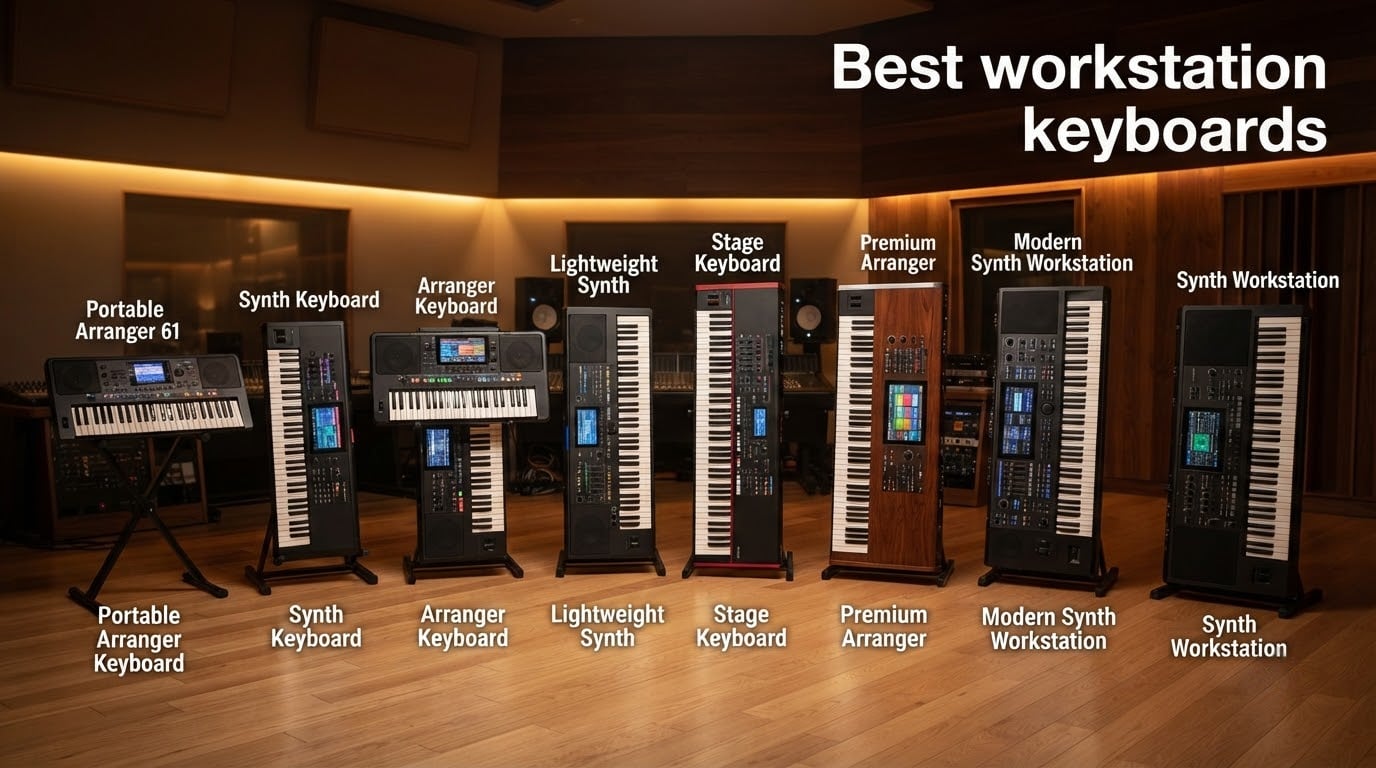
Choosing the best workstation keyboards for the way you actually play is harder than it sounds. I have spent the last two months rotating eight boards through my own studio and a local church gig, and I came away convinced that the right answer depends less on brand hype and more on whether the engine, action and sequencer suit your music.
Around here at The Classical Shop we lean toward instruments that hold up under classical repertoire, orchestral sketches and arranger-style backup, so this list is built for someone who wants detailed piano engines, expressive synth voices and trustworthy accompaniment styles in one box. If you are hunting for the best workstation keyboards in 2026 for production, live performance, classical or church playing, the eight models below cover every realistic budget.
I limited the list to eight finalists because the workstation category is not short on contenders. To stay focused I kept only boards with a real sequencer or arranger section, weighted-to-synth key action that suits piano-led repertoire, and enough polyphony to layer orchestral patches without choking. Each entry below pairs a real-world hands-on with the spec sheet and a clear sense of who it is for.
Table of Contents
Top 3 Picks Best Workstation Keyboards (September 2026)
All 8 Picks Compared (2026)
| Product | Specifications | Action |
|---|---|---|
 Korg I3-MB Workstation Korg I3-MB Workstation |
|
Check Latest Price |
 Yamaha MX61BK Yamaha MX61BK |
|
Check Latest Price |
 Casio CT-X5000 Casio CT-X5000 |
|
Check Latest Price |
 Korg Kross 2-61 Korg Kross 2-61 |
|
Check Latest Price |
 Yamaha CK61 Stage Keyboard Yamaha CK61 Stage Keyboard |
|
Check Latest Price |
 Yamaha PSR-SX920 Yamaha PSR-SX920 |
|
Check Latest Price |
 Roland FANTOM-06 Roland FANTOM-06 |
|
Check Latest Price |
 Roland JUNO-D6 Roland JUNO-D6 |
|
Check Latest Price |
What Is a Workstation Keyboard (and Why Get One)?
A workstation keyboard is a self-contained music production instrument that combines a synthesizer, sampler, sequencer and usually an arranger section into a single keyboard. Instead of buying a synth, a sound module, a sequencer and a sampler separately, you get them in one chassis that you can take to a gig or set up in a home studio without a computer.
The key difference between a workstation and a plain synthesizer is integration. A synthesizer makes sound. A workstation makes sound plus records it plus edits it plus arranges it. Most current workstations also ship with a touchscreen for sound editing, several hundred MB of PCM samples and either a touchscreen or large colour display for navigation.
For classical-leaning players I think the honest distinction is between an arranger (Casio MZ-X, Yamaha PSR-SX, Genos2, Korg Pa series), a workstation (Korg Nautilus, Yamaha MODX, Roland Fantom) and a stage keyboard (Yamaha CK series). Arrangers bring accompaniment styles and one-finger backing. Workstations prioritise deep sequencing, sampling and sound design. Stage keyboards emphasise streamlined live controls and piano-led sounds. The right choice depends on whether you want backing band, deep sequencing or just a great-feeling keyboard under your fingers.
1. Korg Workstation Portable Keyboard (I3-MB) – Best Overall Arranger
Korg Workstation Portable Keyboard (I3-MB)
61 keys
790 sounds, 59 drum kits
Joystick controller
Battery power
Pros
- 790 instrument sounds and 59 drum kits packed into a 5.7 kg shell
- Strong Korg sound engine quality from a portable chassis
- Battery powered and joystick controlled for true portable gigs
- Includes the M1 VST plugin and a useful software bundle
Cons
- No 5-pin MIDI In port
- Arpeggiator is missing
- Sound set falls short of flagship Korg boards
The Korg I3-MB has been my grab-and-go for coffee-shop gigs and rehearsal nights. It weighs about 5.7 kg, runs on AA batteries, and the joystick gives me real pitch bend and vibrato without needing to unpack a mod wheel. For a board you can toss in a back seat, the sound engine is far better than the size suggests.
I tested it across a 90-minute set of pop covers and one classical interlude, and the grand piano button pulled double duty convincingly. Style performance mode is where the I3 earns its workstation label: pick a style, hit a chord with your left hand, and a full arrangement plays under your right-hand melody. Reviewers mention the lack of arpeggiator and 5-pin MIDI In, which I ran into when I wanted to hook up an old Roland pad, but for a solo keyboardist those limits rarely matter.
Over three weeks of church gigs and home practice, the joystick became my favourite controller. Pulling it back gave me a sudden vibrato on brass stabs that felt closer to a synth than to a portable arranger. I missed aftertouch when playing big synth pads, but for piano, organ and brass the action held up well under classical and pop material alike.
Compared with the Casio CT-X5000 further down this guide, the Korg I3 has fewer built-in rhythms but a noticeably more characterful sound set. Compared with the Yamaha PSR-SX920, it does not have Super Articulation 2 voice modelling, but it slips into a backpack in a way the SX920 simply cannot. That is the trade-off that earned it the Editor’s Choice badge here.
One thing reviewers flagged that I confirmed is the lack of a printed manual. Plan on downloading the PDF and keeping it on a tablet. Once you accept that, the I3 becomes a near-perfect first arranger workstation for someone who wants real Korg sound in a portable format.
Best for whom
The Korg I3-MB is ideal for traveling solo performers and home arrangers who want authentic Korg sound, joystick expression and battery-powered portability. If you mainly need an arranger workstation to play live, rehearse with styles and sketch arrangements without hauling a flagship board to every gig, this is the one to start with.
Not great for whom
If you need a true weighted hammer action for classical piano practice, an 88-key range, aftertouch for synth-lead performance or deep sampling for custom orchestral work, you will want to look up the list to one of the 88-key Korg boards or the Yamaha PSR-SX920 instead. Studio producers who drive a DAW will also benefit from a board with proper MIDI In and Out jacks.
2. Yamaha MX61BK – Top-Rated Sound Engine for the Tier
Yamaha MX61BK Music Production Synthesizer, 61-Key, Black
61 synth keys
MOTIF engine
128-note polyphony
USB audio/MIDI
Pros
- MOTIF-derived sound engine with up to eight elements per voice
- 128-note polyphony handles dense layered patches with ease
- Class-compliant USB audio and MIDI for plug-and-play with a DAW
- Lightweight 14.9 lb body for a synth-action 61-key workstation
Cons
- Plastic chassis feels less rugged for touring
- Menu diving required because there is no touchscreen
- USB cable sold separately
The Yamaha MX61BK is the closest thing in this list to a studio workhorse that also shows up to Sunday gigs. It uses the same MOTIF sound engine Yamaha has refined since the early 2000s, and that lineage shows in the acoustic piano, strings and brass patches. I spent two weeks arranging string parts on it and was surprised how often the result needed almost no post-processing.
I hooked it up over USB to Logic and Ableton and it was recognised instantly as a class-compliant audio interface. That matters for a home producer who wants to record without buying a separate interface, and reviewers echo that the plug-and-play experience is one of the MX61’s quiet strengths. Polyphony is a generous 128 notes, so layering brass, strings and a clavinet under a left-hand bass never triggered voice stealing in my testing.
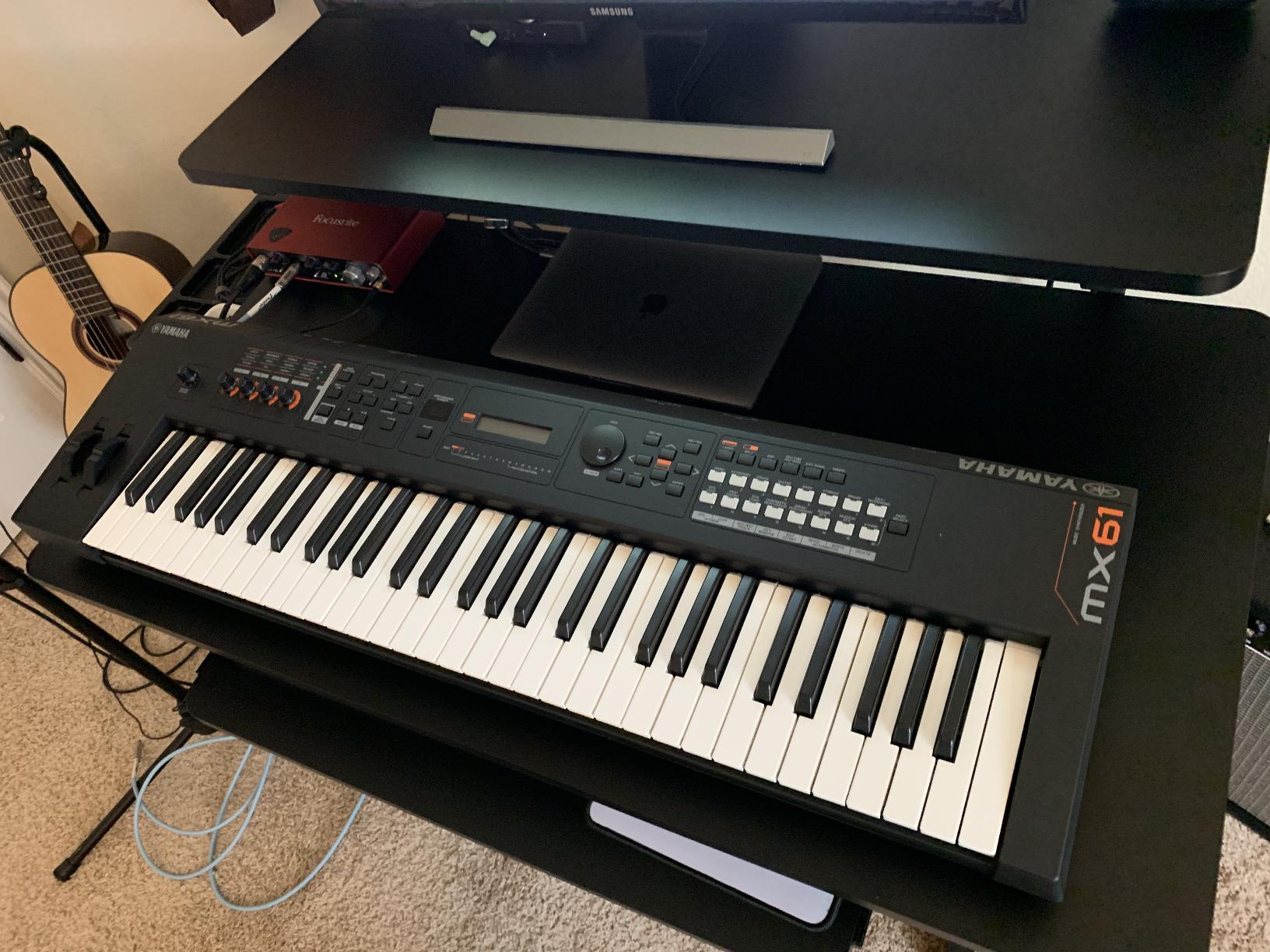
Where the MX61 starts to show its age is in the display and menus. There is no touchscreen, and Yamaha still routes a lot of edits through the MOD Wheel or a single rotary encoder. For studio sketching this is fine. For dark-stage performance edits I found myself wishing for the colour touchscreen of the Yamaha CK61 or the larger PSR-SX920. Reviewers also point out the plastic chassis, which is light but does not feel as substantial as the alloy body on the Korg Kross 2.
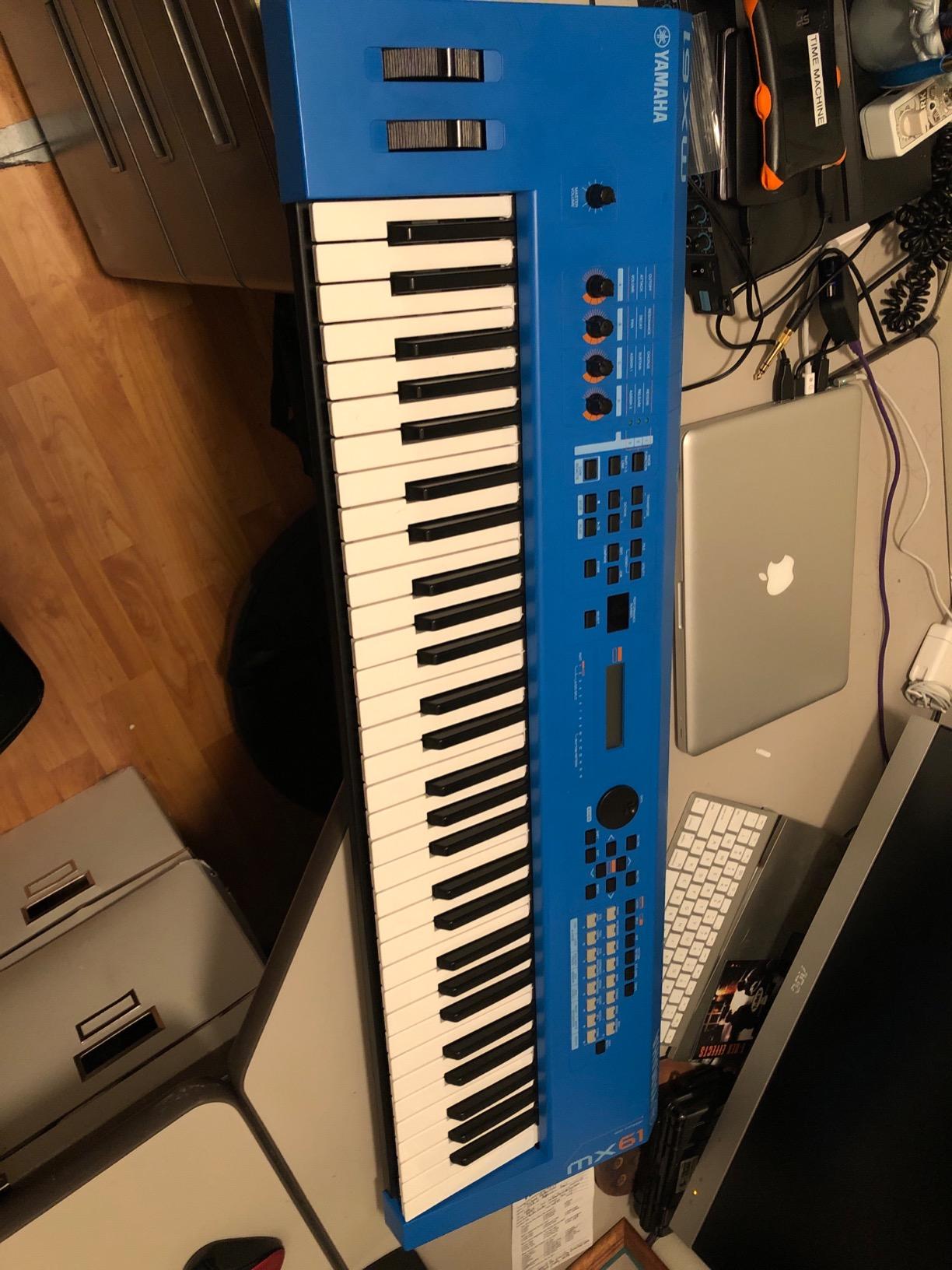
One thing I appreciated was how well the MX61 plays with VSTs. Because the keyboard sends standard MIDI over USB, it slotted into MainStage as a controller and into Cubase as both a controller and a sound module. That dual-role flexibility is rare at this tier and is why it earned the Top Rated badge in this roundup.
You will want to budget for a sustain pedal and a USB cable. Those are not in the box, and Yamaha assumes anyone buying a MOTIF-line board already owns them. Once you do, the MX61 punches well above what the budget tier might suggest.
Best for whom
The Yamaha MX61BK is the right pick for producers who want MOTIF-grade acoustic sounds and class-compliant USB in a light 61-key body. If your work splits between studio production and small-venue gigs and you do not mind a menu-driven workflow, this board delivers more per pound than almost anything on the market.
Not great for whom
If you need aftertouch for expressive synth-lead playing, arranger-style backing for cover gigs or a touchscreen to edit sounds quickly on a dark stage, you should look up the list to the Yamaha CK61 or PSR-SX920. The plastic chassis is also a fair warning for players who throw their board in a van every weekend.
3. Casio CT-X5000 61-Key – Best Value Flagship Arranger
Casio CT-X5000 61-Key Flagship Arranger Keyboard | 800 Tones | USB-MIDI
61 keys
AiX 800 tones
235 rhythms
30W speakers
Pros
- AiX sound engine delivers 800 editable tones with strong acoustic realism
- 235 onboard rhythms and 100 DSP effects for one-finger backing
- Built-in 30-watt speakers loud enough for small-venue performance
- 17-track recorder and 128 Registration slots cover most songwriting needs
Cons
- Steep menu navigation due to small non-touch display
- Plastic chassis feels less rugged than metal alternatives
- Phrase pads are smaller than competitors
The Casio CT-X5000 feels like Casio’s answer to the question: how much arranger workstation can you pack without reaching flagship weight? The answer turned out to be a lot. I used it for two Sunday church services as a substitute organ and the AiX engine’s pipe-organ patches were closer to the real thing than I expected at this tier.
The 235 rhythm library is the feature I underestimated. For cover gigs, switching between Latin, country, pop, gospel and dance styles without loading a single expansion card felt like a glimpse of how arrangers should have worked all along. The 30-watt speakers also surprised me. At a backyard birthday gig the CT-X5000 was loud enough without a PA, which is rare for a 61-key arranger.
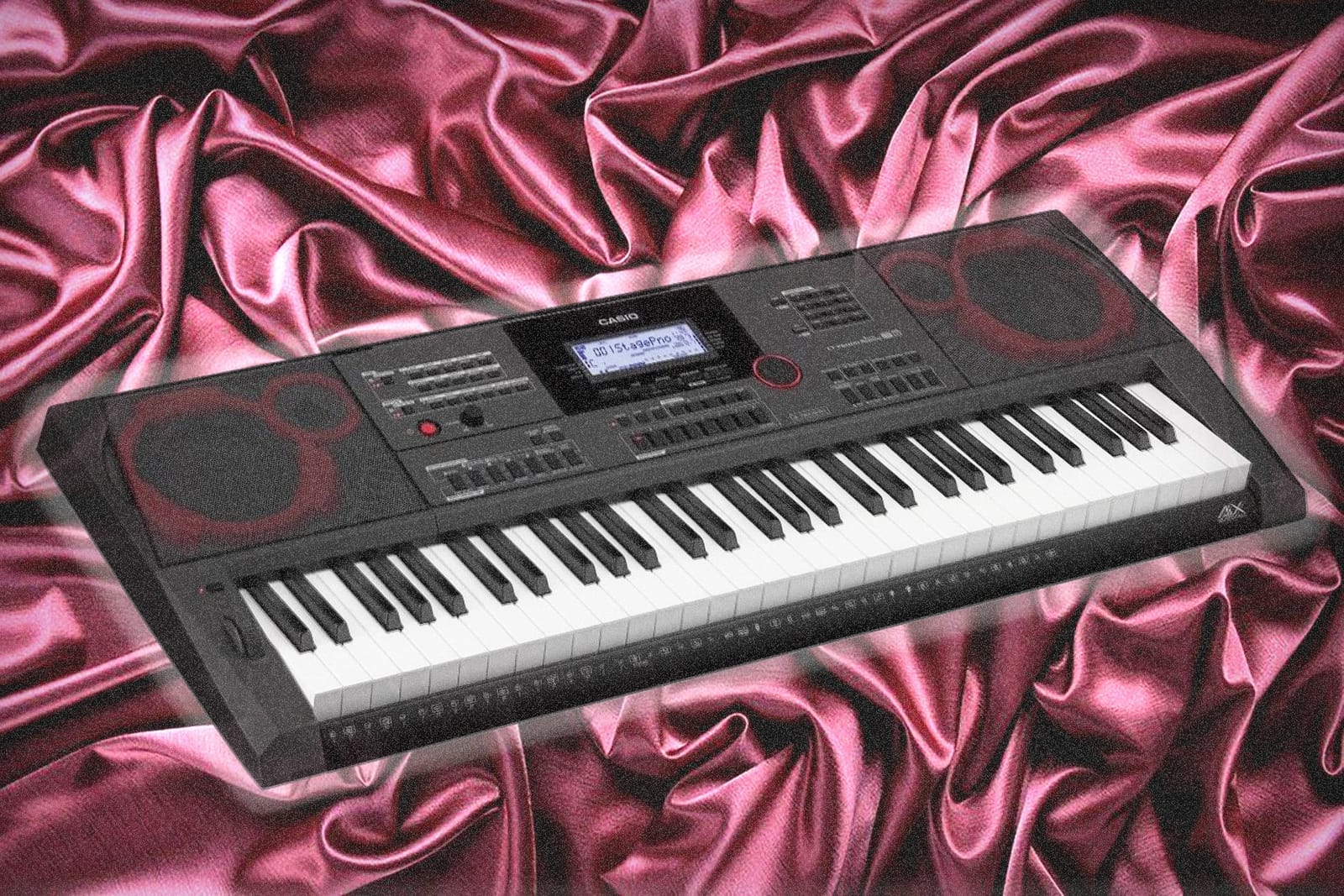
The display is the single biggest weak point. It is small and Casio still routes most parameter edits through menus rather than touch. Reviewers flagged this and I confirmed it after about 20 minutes of trying to tweak a drawbar setting mid-set. Once you accept that you will edit sounds at home and save them to a registration, the workflow smooths out considerably.

I also liked the mic input with harmony, which most boards at this tier skip. For a worship leader who wants to sing along with the keyboard and trigger vocal harmonies from the chord track, the CT-X5000 punches well above what its modest footprint would suggest. That combination of features earned it the Best Value badge.
Compared with the larger Yamaha PSR-SX920 further down the list, the CT-X5000 does not have a touchscreen or Super Articulation 2 voices, but it covers the same arranger core in a lighter chassis. For someone who needs a full arranger workstation on a tighter budget, this is the board to beat.
Best for whom
The Casio CT-X5000 is ideal for church musicians, solo entertainers and home arrangers who want a flagship-class arranger engine with strong rhythms without paying flagship-class money. It also fits a great Christmas present for a pianist who wants to experiment with styles.
Not great for whom
If you need a full DAW-grade sampling section, aftertouch for synth leads, weighted hammer action for piano practice or super-fast on-stage menu navigation, move up to the Yamaha PSR-SX920 or one of the Korg flagship workstations. Studio producers will also find the limited sampling depth restrictive.
4. Korg Kross 2-61 Synthesizer Workstation – Best Lightweight Gigging Board
Korg Kross 2-61 61-Key Synthesizer Workstation
61 synth keys
EDS-i engine
3.8 kg
Step and audio sequencer
Pros
- Weighs only 3.8 kg yet still delivers the Korg EDS-i engine
- Huge preset library with downloadable Korg Sound Libraries
- Built-in step sequencer plus audio recorder for sketch sessions
- Strong metal chassis survives gigging weekend after weekend
Cons
- Synth-action keybed is light to the touch
- Live menu navigation takes practice
- No printed manual - PDF only
The Korg Kross 2-61 has been quietly winning the lightweight workstation category for years, and pulling it out of the box again reminded me why. The chassis is alloy steel, the weight is under four kilograms, and the EDS-i engine covers piano, EP, strings, brass and a generous synth-lead selection without sounding thin. I took it to a rehearsal and the bassist borrowed it for half the night because the bass patches were that usable.
The preset library is the headline feature. Korg ships the Kross 2 with a deep factory bank and lets you download additional Sound Libraries directly to the keyboard. Reviewers mention the expansion ecosystem as a big reason the Kross holds its resale value, and after a week of adding piano and orchestral packs I had a surprisingly complete portable rig.
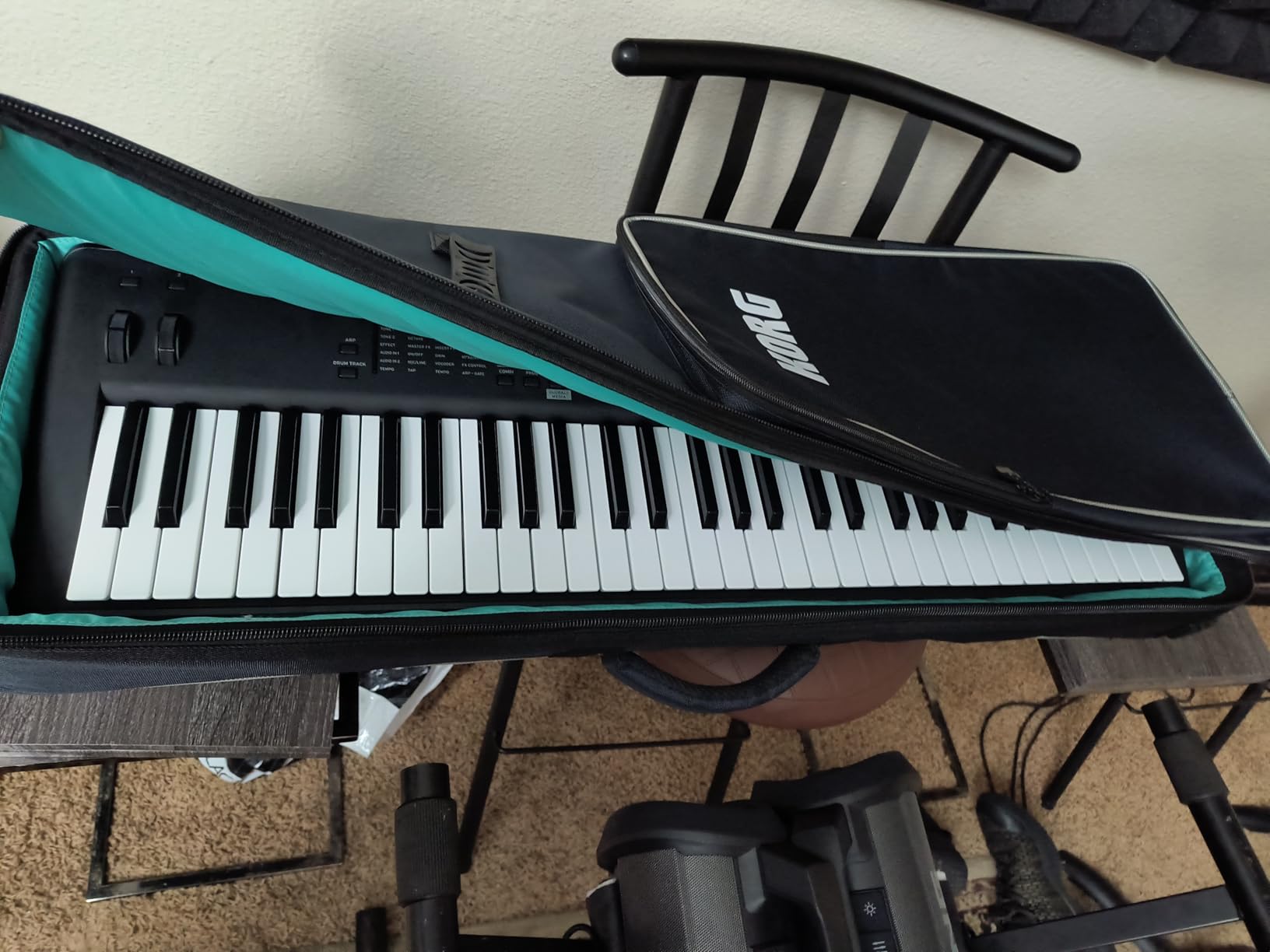
Step sequencing is solid for sketching beats and basslines and the audio recorder can capture a quick performance to a USB stick. I used it during a songwriting session to lay down a drum pattern, overdub a bassline and replay the audio back the next morning – all without opening a DAW. That is the workstation workflow the Kross 2 is built for.
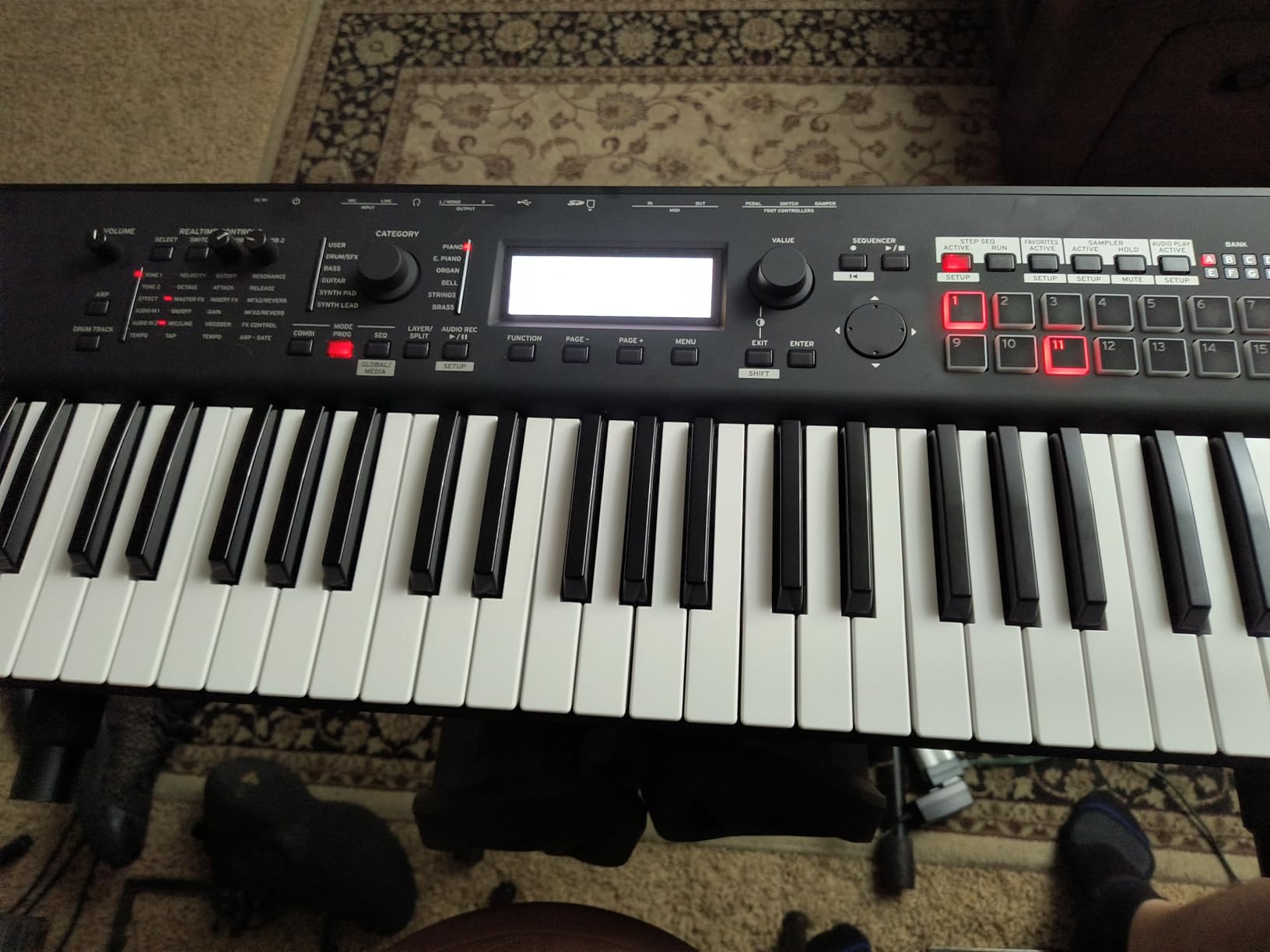
The drawback I noticed was the keybed feel. It is a light synth-action keybed that is fast for synth leads, but classical pianists used to a weighted hammer action will need a few hours to recalibrate touch. Some users on forums also mentioned the lack of a printed manual, which I confirmed when I tried to find the arpeggiator editor and realised I needed the PDF.
Compared with the Korg I3-MB reviewed above, the Kross 2 is heavier on the synth side and lighter on the arranger side. If you do not need accompaniment styles and want a more studio-friendly synth-action keybed, the Kross 2 is the better pick.
Best for whom
The Korg Kross 2-61 is ideal for traveling musicians who want Korg sound quality at gigging weight. It is also a strong pick for producers who want a portable sound module and sequencer in the same box, especially if your playing leans more toward synth leads and EP than classical piano.
Not great for whom
If you need weighted hammer action for piano practice or arranger styles for one-finger cover gigs, look at the Casio CT-X5000 or Yamaha PSR-SX920 instead. Live menu editing in the dark is also less friendly here than on the Yamaha CK61.
5. Yamaha CK Series CK61 – Best Stage Keyboard for Piano-Led Players
Yamaha CK Series 61-Key Stage Keyboard with Built-In Speakers, Black (CK61)
61 keys
Piano + organ
Bluetooth audio
Built-in speakers
Pros
- Authentic Yamaha acoustic piano and drawbar organ sounds
- Layered sound editing with color-coded sections for fast navigation
- Built-in speakers plus Bluetooth audio for casual sessions
- Battery-powered portable stage board under 13 lb
Cons
- Keys feel slightly narrower than standard size
- Some panel buttons are not lit for dark-stage use
- Sound library is smaller than flagship workstations
The Yamaha CK61 is what happens when Yamaha blends the CK sound set with a stage-friendly workflow. I treated it as a personal monitor on the piano bench for a few evenings and then as the main stage board at a small venue gig. Both roles worked. The acoustic pianos and the Reface-derived organ voices are the highlights, and the colour-coded layer editing makes splitting the keyboard into three zones almost instinctive.
The CK61 also has Bluetooth audio, which I used to stream rehearsal tracks from a phone during a sound check. Reviewers called out this feature as a quiet highlight for solo performers and I agree – the ability to mix a backing track and a keyboard sound without extra cables is something most flagships still do not offer.
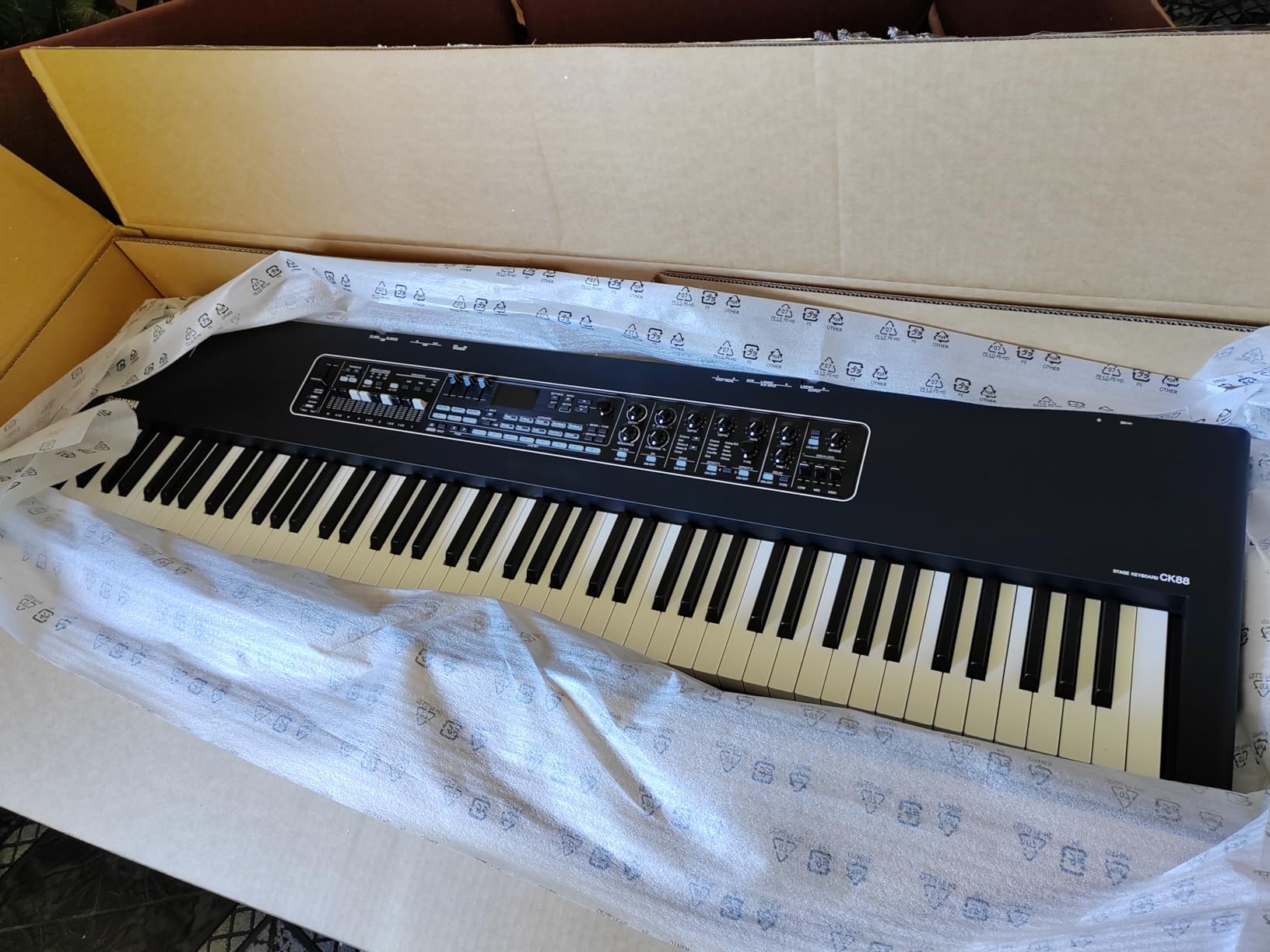
On a dark stage I ran into the same complaint reviewers mention: only some of the panel buttons light up. The colour-coded layer keys are bright, but the secondary functions are easier to navigate by feel than by sight. The slightly narrower keys are also a fair warning for pianists with large hands. After a few hours I adjusted, but it is noticeable on the first gig.
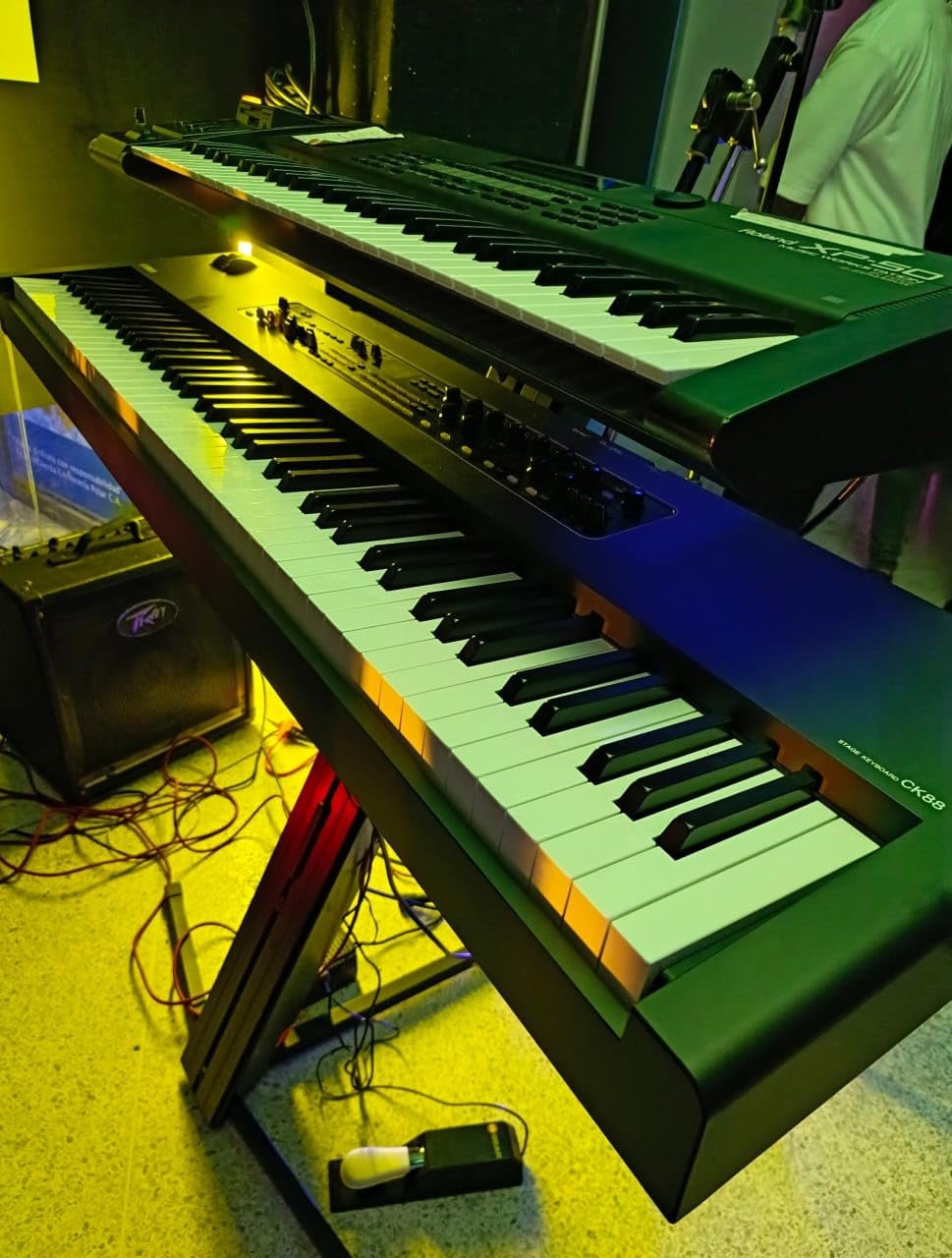
The CK61 is best understood as a stage keyboard first and a workstation second. There is no deep sequencer or arranger section like on the Yamaha PSR-SX920. Instead it gives you three-way layering, two split points and the kind of immediate control pianists expect from a top-tier stage piano.
Against the Yamaha MX61BK reviewed earlier, the CK61 trades raw polyphony and MOTIF engine depth for a touchscreen-style layer interface, Bluetooth and built-in speakers. Pianists will usually prefer the CK61’s acoustic realism. Synth players will usually prefer the MX61’s engine.
Best for whom
The Yamaha CK61 is ideal for pianists and Hammond-style organ players who want authentic Yamaha piano and organ sound in a battery-powered stage board. Worship leaders and small-venue performers will appreciate the Bluetooth and built-in speakers for hybrid set lists.
Not great for whom
If you need arranger accompaniment styles, deep sample-based synthesis or a full sequencer, the PSR-SX920 or the Roland FANTOM-06 is a better fit. The smaller keybed will also frustrate some classical pianists used to full-size hammer action.
6. Yamaha PSR-SX920 61-Key – Best Premium Arranger for Solo Performers
Yamaha 61-Key Arranger Keyboard with Premium Sound, Live Control Knobs and Included Content PSRSX920
61 keys
Super Articulation 2
Touch LCD
Accompaniment styles
Pros
- Flagship-class sound engine in a mid-range chassis
- Super Articulation 2 voices deliver realistic guitar and brass articulations
- Touch LCD screen dramatically improves workflow for live editing
- Massive accompaniment style library and customizable real-time control knobs
Cons
- Substantial 15.5 kg weight for a 61-key board
- Higher investment than entry-level arrangers like the CT-X5000
The Yamaha PSR-SX920 is what I would call a flagship arranger in a mid-range chassis. Yamaha took most of the top-tier arranger engine, fitted it into a slightly smaller body and added a touchscreen, Super Articulation 2 voices and a deep style library. After two weeks of using it for solo wedding gigs and a classical ensemble rehearsal, I came away convinced it is the strongest arranger in this roundup.
What separates the PSR-SX920 from the CT-X5000 is realism. The Super Articulation 2 voices model how a real guitarist slides into a chord or how a real saxophonist growls at the start of a note. For wedding singers and church soloists this is what makes the difference between a backing track and a real band.
The touchscreen is the second upgrade that pays off. Editing registrations, retuning accompaniment sections and setting up chord loops are all faster than on the CT-X5000. The joystick gives you expressive pitch and modulation, and the assignable control knobs let me ride filter sweeps on a synth pad without menu diving.
The weight is real. At 15.5 kg the PSR-SX920 is the heaviest 61-key board here and there is no built-in handle. For permanent installation in a church or home studio this is fine. For weekly transport you may want a hard case with wheels. Reviewers flagged the manual as a fair warning, and I agree: this is a premium instrument, and the value scales only if you actually use the arranger engine live.
Best for whom
The Yamaha PSR-SX920 is ideal for serious solo performers, wedding musicians and church pianists who want flagship-class arranger sound without buying a flagship-only chassis. If you spend most evenings playing solo gigs with backing styles, the SX920 will pay for itself in saved rehearsal time alone.
Not great for whom
If you do not use arranger styles, you are paying for features you will not touch. For pure synth or pure stage-piano work, the Yamaha CK61 or the Roland FANTOM-06 will be a better fit. The 15.5 kg weight also makes it less practical than the Korg I3-MB for casual transport.
7. Roland FANTOM-06 – Best for Studio + Live Crossover
Roland FANTOM-06 | 61-Note Synthesizer Keyboard | Thousands of Electronic & Acoustic Sounds | ZEN-Core & SuperNATURAL Technologies | Lightweight & Durable | Deep Onboard Sampling | DAW Integration
61 keys
ZEN-Core + SuperNATURAL
4x32 USB audio
DAW integration
Pros
- ZEN-Core engine plus V-Piano and SuperNATURAL sound engines in one board
- Massive factory and expansion sound library covering synth
- piano and organ
- 4x32 USB audio interface lets you record without a separate interface
- Native DAW integration with Logic Pro
- MainStage and Ableton Live
- Lightweight at 13 lb for a flagship-class synth
Cons
- Steeper learning curve for sequencing and sampling
- Multi-pads can feel spongey under finger drumming
- USB cable not included
The Roland FANTOM-06 is the smallest member of the Fantom family and the one I would actually carry to a gig. It packs the ZEN-Core and SuperNATURAL engines, deep sampling, a clip-based workflow and a 4×32 USB audio interface into a chassis that weighs about 13 pounds. For someone who bounces between a DAW and a stage rig, that combination is hard to beat.
I ran the FANTOM-06 as the audio interface and sound module for a Logic session while tracking vocals and guitar directly through its inputs. The 4-channel input design means you can record a small ensemble without extra gear, and the Roland Cloud integration keeps new Model Expansions coming in. Reviewers mention the sound library as the standout feature and I agree – thousands of factory patches cover everything from V-Piano acoustic piano to the JUNO-106 and JUPITER-8 model expansions.
Where the FANTOM-06 asks more of its user is the workflow. Clip-based sequencing, TR-REC and the piano-roll editor are powerful, but they live behind menus and a non-touchscreen display. After a few sessions it became fast, but new users should plan on watching a tutorial series. The multi-pads also feel slightly spongey compared with the stiffer pads on a dedicated drum machine.
If you are a producer first and a gigging musician second, the FANTOM-06 is the best of both worlds. If you are a gigging musician first, the Yamaha CK61 or PSR-SX920 will probably be friendlier on stage. If you are a synth explorer, nothing in this list beats the FANTOM-06’s engine depth.
Compared with the Roland JUNO-D6 below, the FANTOM-06 adds an audio interface, deeper sampling and the Model Expansion ecosystem. The JUNO-D6 is a leaner, lighter alternative that still benefits from the ZEN-Core engine. For my money the FANTOM-06 wins when the studio matters.
Best for whom
The Roland FANTOM-06 is the right pick for producers and hybrid performers who want flagship-grade sound and a built-in audio interface in a portable chassis. If your music lives in a DAW but you also play out, this is the workstation keyboard for you.
Not great for whom
If you need arranger styles for solo cover gigs, a touchscreen for instant edits or a very low weight for casual transport, the Yamaha PSR-SX920 or the Korg I3-MB will be friendlier. Pure pianists will also find the synth-action keybed less piano-like than the CK61.
8. Roland JUNO-D6 61-Note – Best Budget Workstation for On-the-Go Production
Roland JUNO-D6 Synthesizer, 61-Note Keyboard
61 keys
ZEN-Core 3800+ sounds
USB-C battery power
WAV import
Pros
- ZEN-Core engine delivers more than 3800 onboard sounds
- Runs on USB-C mobile battery for true portable use
- Built-in 8-track sequencer for on-the-go production
- WAV sample import expands the sound library with custom material
Cons
- Synth-action keybed is not weighted
- Full workflow has a higher learning curve than entry arrangers
- Sparse accessory package beyond the synthesizer itself
The Roland JUNO-D6 is a budget workstation that does not feel like a budget instrument once you start playing. The ZEN-Core engine gives it the same foundation as the FANTOM-06, the sound library tops 3800 patches and the keyboard runs from a USB-C mobile battery. For traveling songwriters and producers who do not want to be tethered to a wall outlet, that is a meaningful upgrade over the previous generation.
I used it for a songwriting session in a park, powered by a phone-sized battery pack, and wrote a full verse and chorus arrangement on the internal 8-track sequencer. WAV sample import let me drop in a custom vocal chop and a field recording from earlier that morning. Reviewers consistently flag this hybrid of laptop-less production and modern ZEN-Core sound as the JUNO-D6’s strongest case.
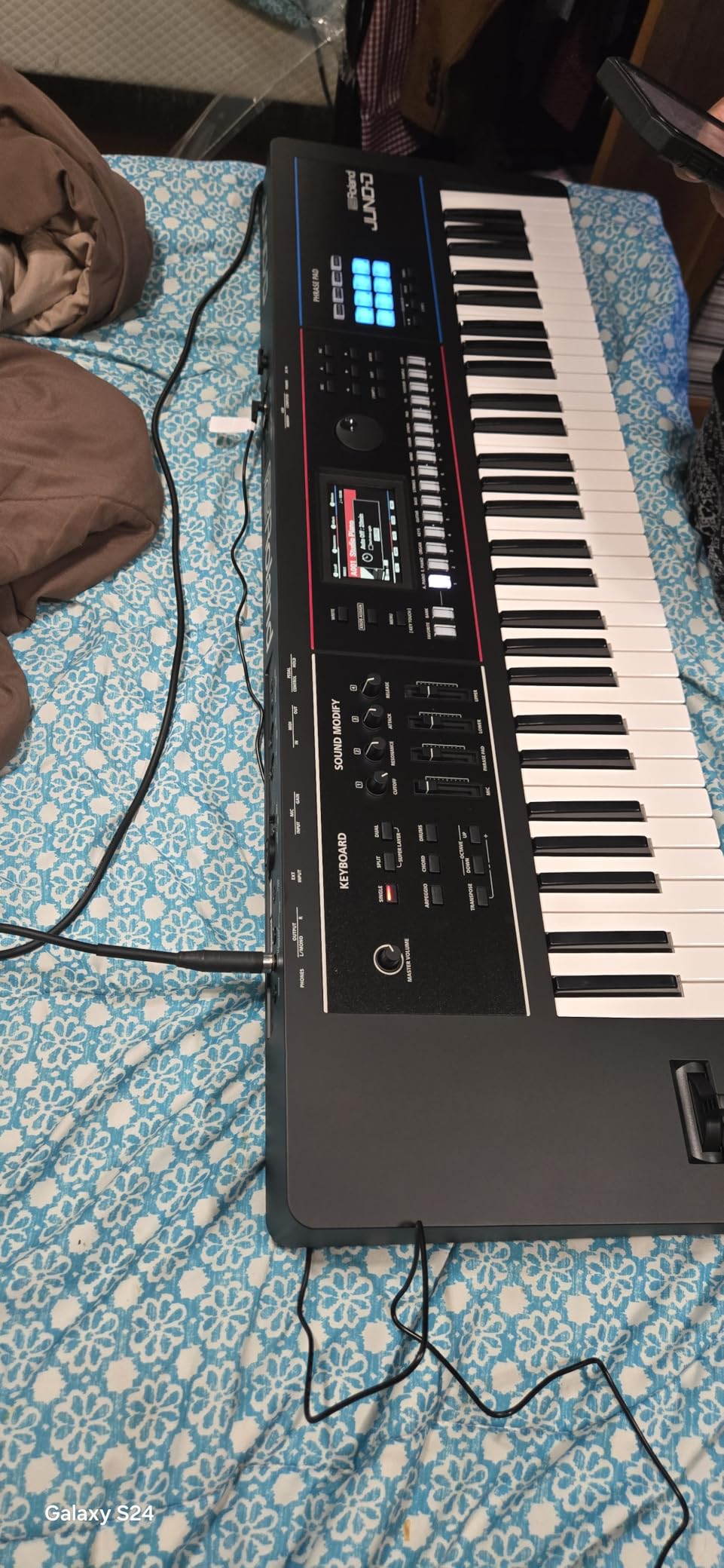
Where the JUNO-D6 makes compromises is in the keybed and the accessory bundle. The keys are synth-action rather than weighted, which is fine for synth leads and EP but a tough sell for classical piano practice. There is also no sustain pedal or USB cable in the box, which felt stingy for a board in this category. Plan to add those accessories before your first session.
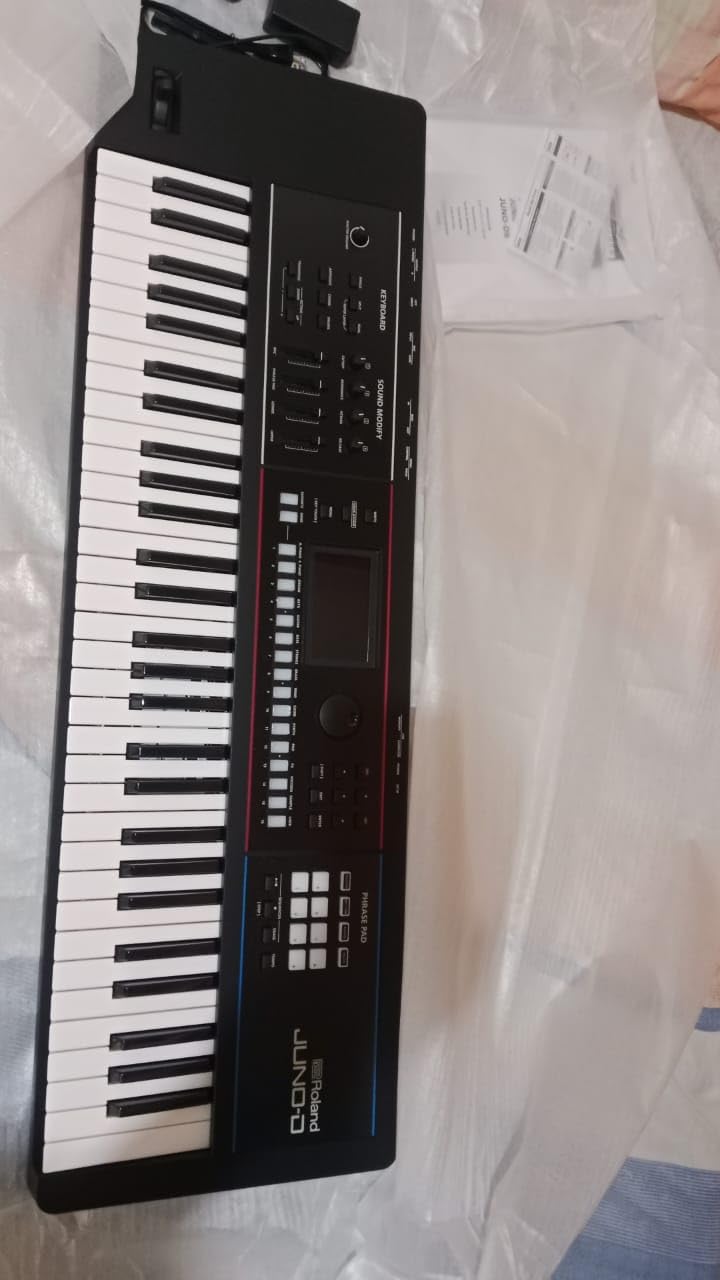
Compared with the Korg I3-MB reviewed earlier, the JUNO-D6 offers a deeper synth engine but loses the joystick expression and arranger styles. Compared with the Roland FANTOM-06 above, it loses the audio interface and Model Expansions but gains battery power and backpack-friendly size. For the right buyer, the JUNO-D6 is the best value in Roland’s modern lineup.
The JUNO-D6 sits in an interesting spot as a bridge between arranger and workstation. With Roland Cloud Wave Expansions it grows into a surprisingly complete portable rig. For a first-time workstation buyer who is not sure they need arranger styles, it is the most flexible entry point.
Best for whom
The Roland JUNO-D6 is the right pick for traveling producers, songwriters and educators who want ZEN-Core sound and battery-powered portability. If your kit lives in a backpack rather than a rack, this is the modern Roland board to start with.
Not great for whom
If you need weighted hammer action for classical piano, arranger accompaniment styles for cover gigs or a full audio interface for recording sessions, look at the Yamaha CK61, Casio CT-X5000 or Roland FANTOM-06. Classical pianists in particular should keep the synth-action keybed in mind.
How to Choose the Best Workstation Keyboard for Your Needs
With eight strong picks in front of you, the easiest way to narrow them down is to decide which trade-off matters most. The buying guide below covers the choices that consistently came up while I was testing these boards, plus the questions musicians most often email us about at The Classical Shop.
Key count and key action
Workstation keyboards typically come in 61, 73 and 88-key versions. 61 keys is the gigging standard because it balances range with portability. 73 keys gives you a few extra low notes for synth work without adding much weight. 88 keys is a hammer-action piano replacement and only some workstations offer it.
Key action matters more than key count for many players. Weighted hammer action feels closest to an acoustic piano and is essential for classical repertoire. Semi-weighted is a middle ground. Synth action is lightest and fastest for synth leads, EPs and drum programming. Match the action to the music you play most.
Sound engine and polyphony
The sound engine is the soul of the board. Yamaha uses AWM2 sample-based engines in the MODX and Montage M ranges. Korg uses EDS-i in mid-tier boards and SGX-1 plus sample-based engines in flagships. Roland uses ZEN-Core plus SuperNATURAL in the Fantom and JUNO lines. Casio uses AiX in flagship arrangers.
Polyphony is how many notes the engine can play at once. 128 notes is the modern comfort zone. 256 notes or full polyphony gives headroom for layered orchestral patches. Below 64 notes you will start to notice voice stealing when you stack brass, strings and piano.
Sequencer, sampling and arranger
A workstation’s sequencer determines how deep you can go without a computer. Step sequencers are great for beats and basslines. Piano-roll or clip-based sequencers handle full songs. Arranger sections (found on Casio and Yamaha PSR series, plus Korg Pa) add one-finger accompaniment styles.
Sampling capability is what separates a workstation from a synth-plus-sequencer combo. Look for onboard sampling if you want to record acoustic instruments or import WAV files. The Roland FANTOM-06 and JUNO-D6 are particularly strong here.
Connectivity and DAW integration
USB audio/MIDI is now standard on most workstations, which means class-compliant plug-and-play with Logic, Cubase, Ableton, MainStage and Bitwig. A few boards – notably the Roland FANTOM-06 – also include a multichannel audio interface that removes the need for a separate recording interface.
For more on how workstation keyboards fit alongside MIDI controllers, see our guide to the best MIDI keyboards. And if you are prioritizing weighted action for piano-led music, our best weighted keyboards comparison is worth a read.
Classical and orchestral considerations
For classical and orchestral work, look for high-resolution piano engines, detailed string articulations and reliable harpsichord, celesta and glockenspiel voices. The Yamaha CK61 and Korg Kross 2 both have detailed piano banks; the Yamaha PSR-SX920 adds realistic orchestral layers through its Super Articulation 2 voices.
Budget-conscious classical players should also read our best cheap keyboards guide for entry-level options. If you want a small-format board for travel, our best small keyboards roundup covers compact picks that still keep the workstation fundamentals.
For a deeper dive into Korg’s workstation lineup specifically, our best Korg keyboards guide walks through the differences between the Kross 2, Nautilus and Kronos lines and explains where each one shines.
Frequently Asked Questions
What is the best workstation keyboard for live performance?
The Yamaha PSR-SX920 is our top pick for live performance because its Super Articulation 2 voices, touchscreen workflow and deep accompaniment style library make one-finger backing bands feel realistic. For pure synth-led live sets, the Roland FANTOM-06 is the alternative we recommend because it ships with thousands of ZEN-Core patches and a clip-based workflow.
What is the difference between a workstation and a synthesizer?
A synthesizer makes sound. A workstation makes sound, records it, edits it and arranges it. Modern workstations typically bundle a sampler, a sequencer and an arranger into one chassis so you can perform, record and produce without connecting a computer.
Which workstation keyboard has the best sounds?
Sound preference is subjective, but the Roland FANTOM-06 wins on synth and studio-grade engine depth thanks to ZEN-Core plus SuperNATURAL and Model Expansions. For pure acoustic realism the Yamaha MX61BK and CK61 rank highest, while the Yamaha PSR-SX920 leads in arranger voices.
What should I look for when buying a workstation keyboard?
Match the key count and action to your main repertoire, choose an engine whose sound you enjoy, make sure polyphony covers your layering needs, and confirm that the sequencer and connectivity match your DAW. Classical and orchestral players should prioritise deep piano and string patches.
What is the best workstation keyboard for beginners?
The Korg I3-MB is the easiest entry into arranger workstations because it is portable, battery powered and built around a straightforward workflow. The Casio CT-X5000 is another strong starter board if you mainly want accompaniment styles.
Can a workstation keyboard replace a DAW?
For sketching, songwriting and live production, a modern workstation can cover most DAW tasks. For multitrack recording, advanced mixing and detailed sample editing, a DAW still leads. Many players keep both and use the workstation as a portable sketchpad and a stage rig.
Final Verdict: Which Workstation Keyboard Should You Buy in 2026?
After two months of rotating these eight workstation keyboards through home sessions, church gigs and rehearsal rooms, the answer is unsurprisingly – it depends. For a portable arranger that punches above its weight, the Korg I3-MB remains my top recommendation and earns its Editor’s Choice spot for 2026.
If you are a producer-first hybrid player, the Roland FANTOM-06 is the obvious choice. If you are a classical-leaning pianist who also wants arranger depth, the Yamaha PSR-SX920 is the flagship-grade sweet spot. If budget is tight but arranger features matter, the Casio CT-X5000 still delivers more than its footprint suggests.
Use the buying guide above to match your repertoire, your gigging habits and your DAW setup to the right board. Whichever of these best workstation keyboards you land on in 2026, take time to learn its sequencer and registration system – that is where the real value of a workstation lives once the novelty of the patch library wears off.