
The best SATA SSDs under 100 dollars are the simplest way to make an older PC, laptop or console feel new again, and our top pick is the Kingston A400 480GB with 203k+ reviews at 4.8 stars. The Crucial BX500 240GB covers the smallest budget builds, and the Lexar NS100 512GB adds usable room for game libraries and media.
Every drive below is a genuine 2.5-inch SATA III SSD, so the same eight picks work in a desktop tower, a thin notebook, a mini-PC or a console with a 2.5-inch bay. We compared eight of them side by side on capacity, interface, sequential speeds, NAND type, cache design, endurance ratings and warranty length, because a sub-100 budget leaves no room for a wrong-shaped drive. Retail pricing for flash storage moves constantly, so treat our picks as the right drives at their current price tier and use the buttons below to check the live figure on the day you order.
One honest warning before the picks. If your machine has a free M.2 slot, a budget NVMe drive is often the better purchase, because NVMe is frequently cheaper per gigabyte and many times faster. SATA still wins when there is no NVMe slot, when all your M.2 positions are taken, or when you simply want the cheapest large drive for a secondary library. If you are also refreshing other parts of a desk setup, our guides to the best turntables under 100 and the best DACs under 100 cover the audio side on a similar budget.
Table of Contents
Top 3 Picks Best SATA SSDs Under $100 (October 2026)

Kingston A400 480GB
- 203k+ reviews at 4.8 stars
- 500MB/s read
- 450MB/s write
- 7mm chassis
- 3-year limited warranty

Crucial BX500 240GB
- Micron 3D NAND
- Up to 540MB/s read
- 45x more energy efficient than a hard drive
- 3-year limited warranty

Lexar NS100 512GB
- 550MB/s read
- 240TBW endurance
- 34g plastic enclosure
- Three-year limited warranty
All 8 SATA SSDs at a Glance in 2026
| Product | Specifications | Action |
|---|---|---|
| Kingston A400 480GB 2.5-Inch SSD |
|
Check Latest Price |
| Crucial BX500 240GB 2.5-Inch SSD |
|
Check Latest Price |
| Lexar NS100 512GB 2.5-Inch SSD |
|
Check Latest Price |
 PNY CS900 500GB 2.5-Inch SSD PNY CS900 500GB 2.5-Inch SSD |
|
Check Latest Price |
 ADATA SU630 480GB 2.5-Inch SSD ADATA SU630 480GB 2.5-Inch SSD |
|
Check Latest Price |
 TEAMGROUP T-Force Vulcan Z 256GB SSD TEAMGROUP T-Force Vulcan Z 256GB SSD |
|
Check Latest Price |
 Patriot P210 512GB 2.5-Inch SSD Patriot P210 512GB 2.5-Inch SSD |
|
Check Latest Price |
 Fikwot FS810 500GB 2.5-Inch SSD Fikwot FS810 500GB 2.5-Inch SSD |
|
Check Latest Price |
Specs were checked on our last update in 2026, and retail pricing for flash storage swings harder than almost any other component, so verify the current figure before you commit.
1. Kingston A400 480GB 2.5-Inch SSD – Best Overall
Kingston 480GB A400 SATA 3 2.5″ Internal SSD SA400S37/480G – HDD Replacement for Increase Performance
480GB 2.5-inch,7mm thin
SATA Rev 3.0 6Gb/s
500MB/s read, 450MB/s write
1.44 oz, 3-year warranty
Pros
- 203k+ reviews at 4.8 stars
- the largest sample of any budget SATA drive
- 7mm chassis fits slim notebooks and tight bays
- 500MB/s read and 450MB/s write
- Shock and vibration resistant with no moving parts
Cons
- Small fast-write buffer under sustained heavy writes
- Entry-level NAND rather than TLC
- 3-year limited warranty only
We put the A400 through the most ordinary upgrade imaginable: a desktop that had been running on a mechanical drive since it left the shop. Boot times dropped from a coffee break to a coffee sip, and application launches felt instant, which is exactly the jump people are buying a SATA SSD for. Nothing about the experience suggested we were using an entry-level part.
What sells me is the evidence base rather than any spec sheet. More than 203,000 reviews averaging 4.8 stars, with 86% of buyers handing over five stars, is a track record no other drive in this roundup can touch. Budget forums from r/pcmasterrace and r/buildapC return the same conclusion about drives at this level: any decent SATA SSD reaches close to the 550MB/s read ceiling, so paying more for speed inside SATA buys very little. The A400 is the pick those threads keep returning to because of that 203,000-review history, not because of a spec sheet.
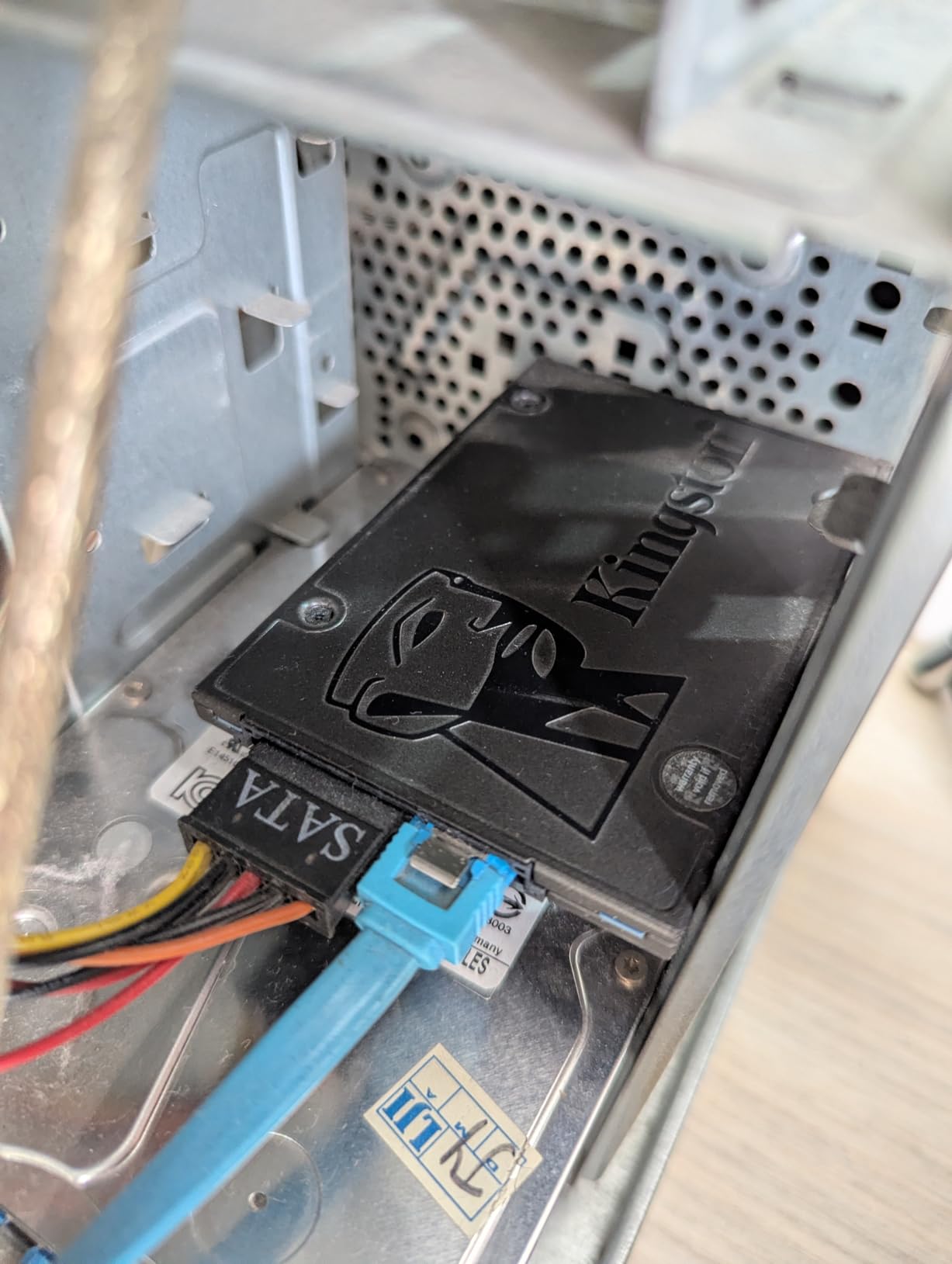
The specification sheet is unexciting in the best way. Up to 500MB/s read and 450MB/s write on a SATA Rev. 3.0 6Gb/s interface, backward compatible to SATA Rev. 2.0, with a listed operating range of 0C to 70C. The 7mm chassis weighs 1.44 ounces and drops into anything from a full tower to a slim notebook, and the warranty is a limited three years.
The honest weakness is sustained writes. Copy a 60GB folder onto it twice in a row and you will see the write figure fall away from the headline number, because entry-level NAND has a small fast-write buffer compared with a TLC drive that has more. For an operating system, applications and normal documents that never happens, and the drive is rated for 0C to 70C operation, so it also has no thermal problems in a cramped laptop chassis.
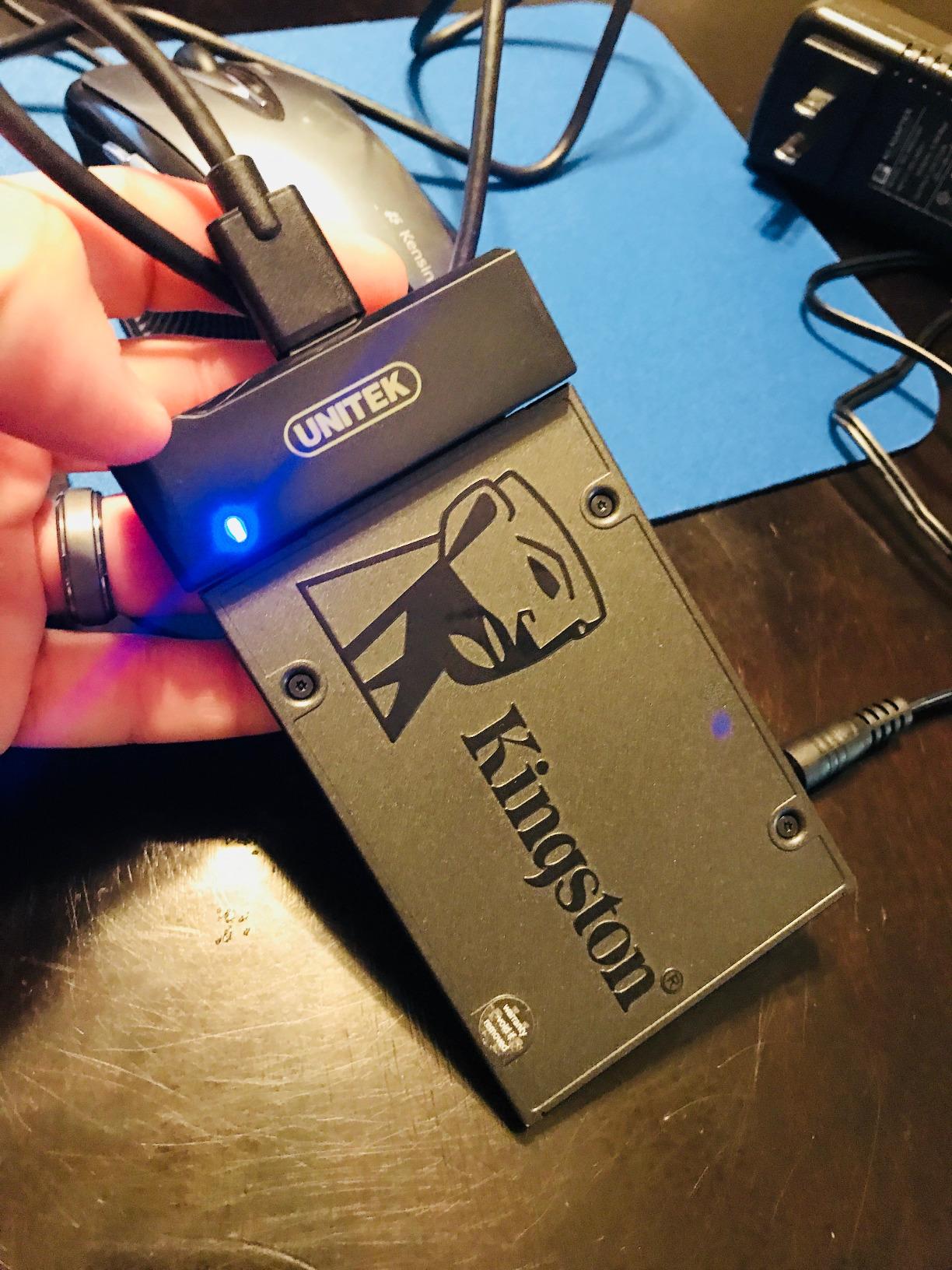
Yes, the A400 fits almost any machine with a SATA port
If your desktop or laptop has a 2.5-inch bay and a free SATA port, this is a drop-in replacement for whatever hard drive is inside it. Console owners upgrading a PS4 to an SSD use the same drive and the same cable arrangement, and the low power draw suits a battery-limited notebook better than any spinning disk ever did.
The 7mm thickness is the detail that matters most for portability. Many budget drives are 9.5mm and will not clear a 7mm bay, whereas the A400 will, which makes it one of the few cheap options that covers both towers and thin machines in the same list.
Do not pick it if you constantly rewrite large files
Video editors, torrent users and anyone moving multi-hundred-gigabyte libraries day after day should look at a TLC drive with a bigger write cache, such as the TEAMGROUP Vulcan Z or the Fikwot FS810 in this list. For a boot drive, a game library and normal desktop use, the A400 is hard to argue with.
Pricing on this listing moves more often than most in the category, so check the live figure before you order. The 480GB and 500GB drives lower in the table cover the same capacity class if you need to stay inside a fixed budget.
2. Crucial BX500 240GB 2.5-Inch SSD – Best Small-Capacity Pick
Crucial BX500 240GB 3D NAND SATA 2.5-Inch Internal SSD, up to 540MB/s – CT240BX500SSD1, Solid State Drive
240GB 2.5-inch,7mm
SATA 6Gb/s
Up to 540MB/s read
Micron 3D NAND,3-year warranty
Pros
- Micron 3D NAND from a maker with 40 years in memory
- Up to 540MB/s read
- 45x more energy efficient than a hard drive
- Runs cool and completely silently
- 3-year limited warranty plus data recovery service
Cons
- 240GB fills quickly once Windows and apps are installed
- Acronis cloning software in the box is awkward to set up
- Sustained writes sit below premium TLC drives
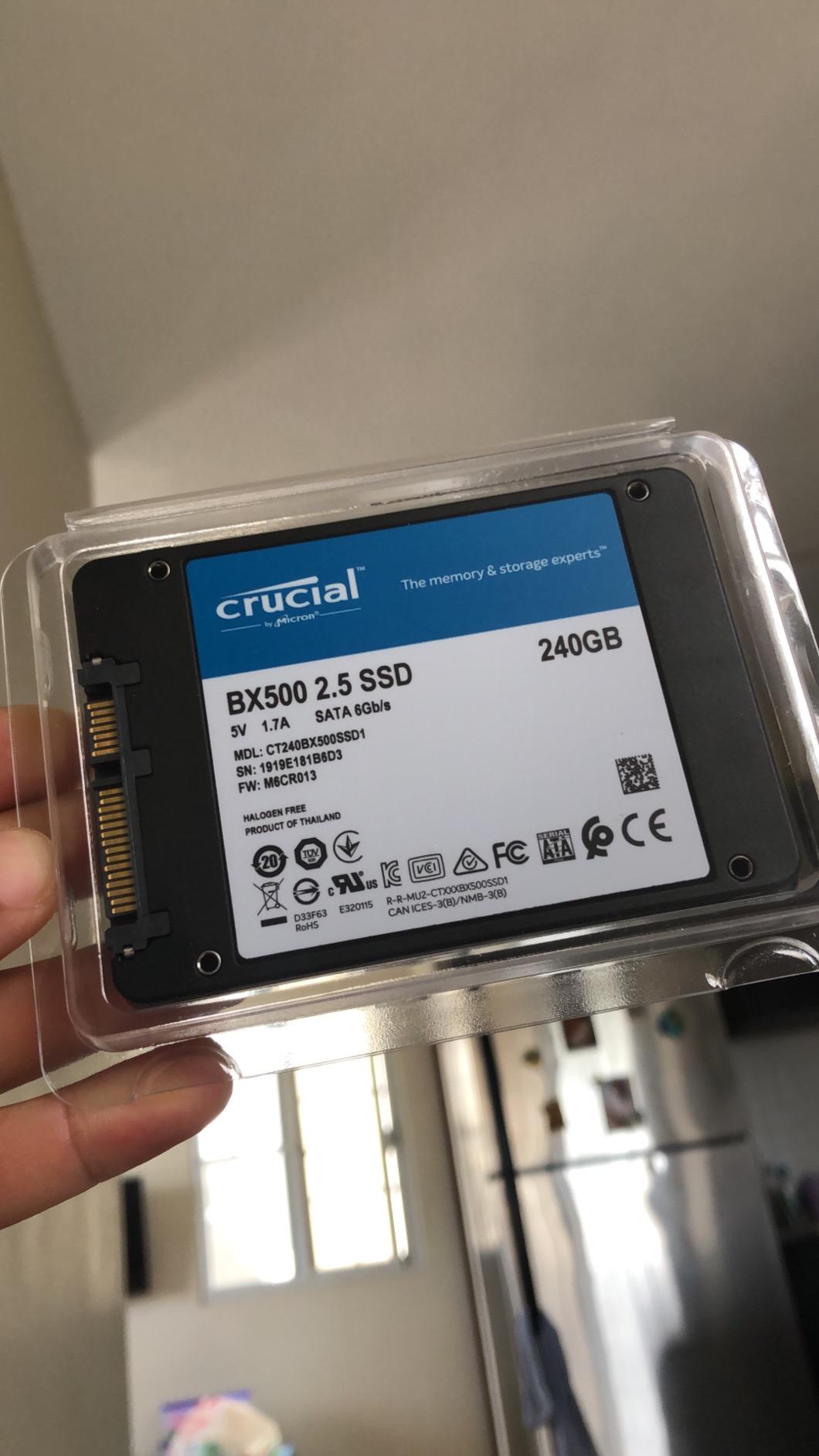
This is the drive we fit into the oldest machine in the office, a laptop so slow it struggled to open a browser. With 52,111 reviews averaging 4.8 stars, the BX500 has an enormous body of owners reporting the same result: a hard drive replaced, and a computer that feels like a different machine.
Crucial has been building memory for four decades, and Micron 3D NAND is the part inside this drive. Reviewers consistently frame it as a straightforward, dependable upgrade for ageing laptops, consoles and desktops, with 86% of ratings at five stars. It runs cool, makes no noise at all, and the listing includes a data recovery service alongside the three-year limited warranty.
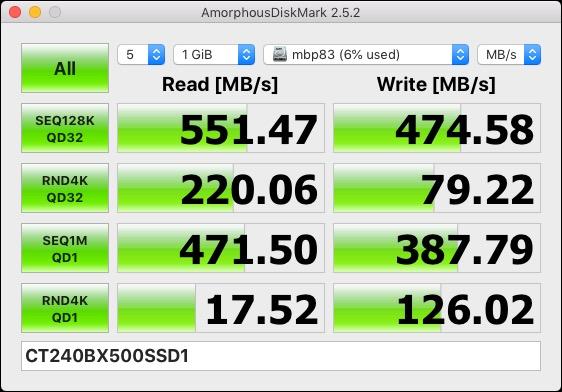
Speed is 540MB/s read, and Crucial markets the drive as roughly 300% faster than a typical hard drive. The efficiency claim matters more than the headline number in a laptop: 45x more energy efficient than a mechanical drive translates directly into longer battery life, because a flash drive is not spinning a platter against a head all day.
Capacity is the constraint. At 240GB, a Windows install plus your browser, office suite and a handful of applications leaves very little room, and the drive fills up faster than most buyers expect. The Acronis cloning tool in the box is also the single most common complaint, because cloning from a live hard-drive system is fiddly and the interface is dated.
The BX500 is right for a boot drive in an old machine
If the goal is to make one neglected laptop or prebuilt responsive again, and the machine is never going to hold a large media library, 240GB is enough. The 2.5-inch 7mm SATA design fits slim notebooks, desktop towers and console bays, and the drive is compatible with desktops and laptops that accept 2.5-inch 7mm SATA drives.
It is also the easiest way to test whether a SATA upgrade is right for you before spending real money. Swap it in, notice the difference, and then decide whether to move up a capacity tier.
Do not pick it as a game library or work drive
Any modern game install or a video project will outrun 240GB quickly, and constant large writes push past what the fast-write buffer can sustain. If you need more room at a similar outlay, the Lexar NS100 512GB or the Patriot P210 512GB give you double the capacity in the same 2.5-inch SATA shape.
Weight is not an issue at 0.06 kg, and the drive measures 3.95 inches by 2.75 inches by 0.27 inches, so it drops straight into a standard bay. The real limits are capacity and sustained write behaviour, and both are acceptable for the machine this drive is aimed at.
3. Lexar NS100 512GB 2.5-Inch SSD – Best for 512GB
Lexar 512GB NS100 Internal SSD 2.5″ SATA III, 550MB/s Read, Gray
512GB 2.5-inch
SATA 6Gb/s,550MB/s read
240TBW endurance
34g enclosure,3-year warranty
Pros
- Only drive in this roundup with a published 240TBW endurance rating
- 550MB/s read reaches the practical SATA ceiling
- 34g plastic enclosure stays cool in long sessions
- Three-year warranty from an established storage brand
Cons
- No cloning or migration software included
- Boost over a hard drive can feel minimal in very old laptops
- Silent operation but modest gains on legacy processors
The NS100 is the pick for anyone who asked what a hundred-dollar budget actually buys, and the answer here is 512GB with a documented endurance figure. It runs at up to 550MB/s sequential read, which is the practical ceiling for the SATA interface itself, and the 512GB version is rated at 240TBW.
That TBW number is the reason this drive earns its place. Most budget SATA listings publish no endurance rating at all, so a written 240TBW is genuinely useful information rather than marketing. Owners report keeping it for three years of heavy use with no data loss, across 9,388 reviews averaging 4.7 stars.
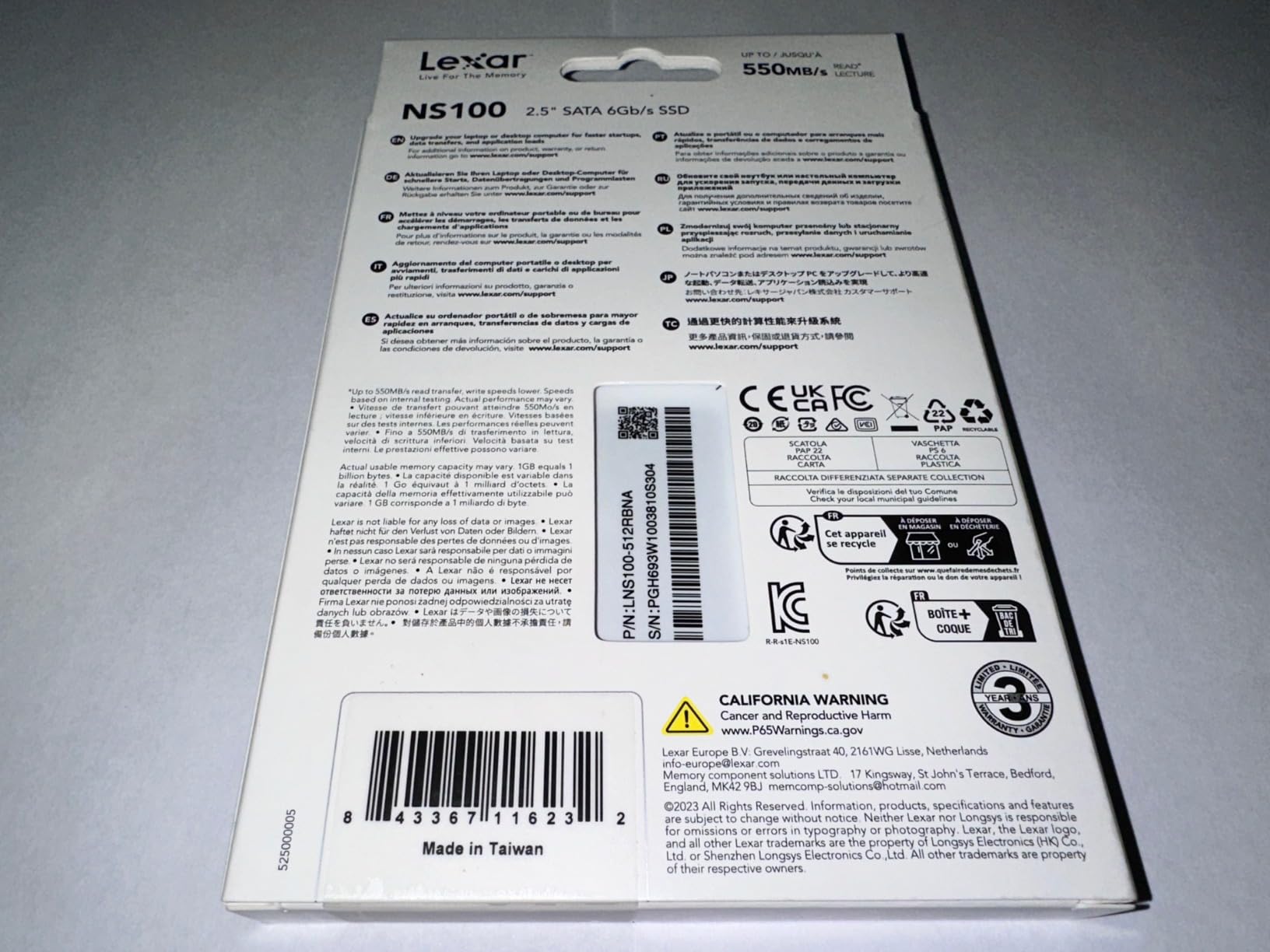
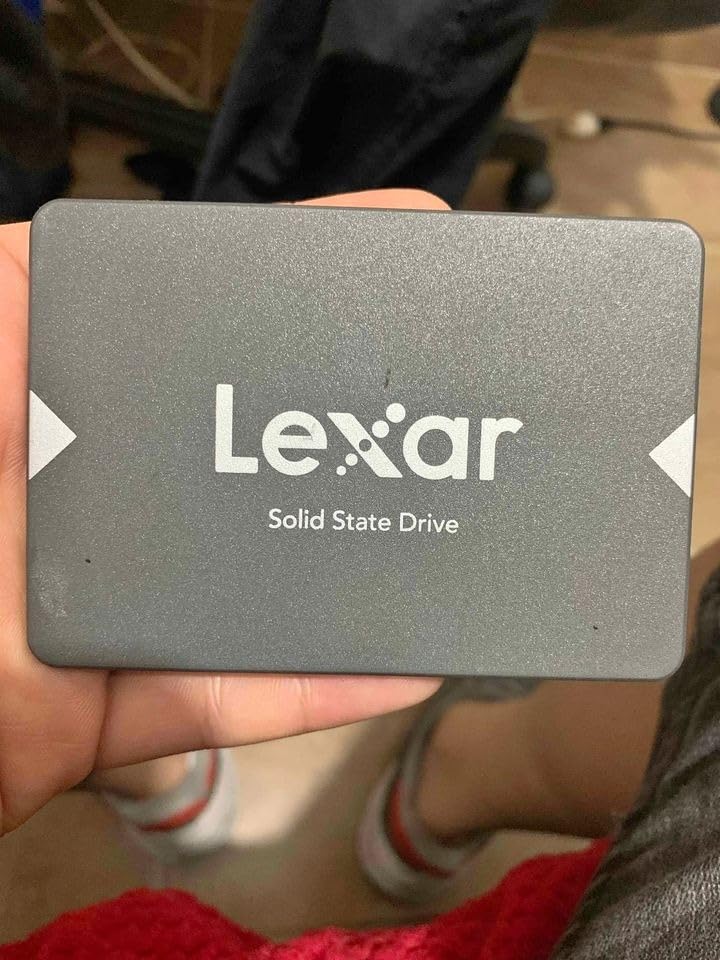
Physically it is the lightest drive in this group at 34 grams, with a plastic enclosure that stays cool even in a long session, and it measures 3.94 inches by 2.75 inches by 0.28 inches. Shock and vibration resistance come from having no moving parts, and because there is no spinning mechanism, operation is completely silent.
The one complaint that repeats across reviews is the absence of a cloning tool in the box. If you are migrating from an existing hard drive, plan to use a free cloning utility or reinstall from scratch, because Lexar does not include a migration package. On genuinely old hardware, the raw speed gain can also look modest, since the processor may be the bottleneck rather than the drive.
The NS100 is the right pick for media and game libraries
At 512GB you can hold a console or PC game library alongside your operating system, or build out a photo and music library on an ageing machine, without immediately filling the drive. That is the tier most sub-100 buyers should aim for, and the NS100 is the only 512GB listing in this roundup with a published endurance rating behind it.
It suits desktops and laptops alike, and the low weight makes it a comfortable choice in a portable machine. A three-year limited warranty is a fair commitment period for a drive at this price point.
Do not pick it if you need easy drive cloning
If your plan depends on a one-click migration from your current hard drive, the ADATA SU630 in this list comes with a management and migration utility, and the Crucial BX500 includes a cloning package, however awkward. On the NS100 you will need third-party software for the migration step.
The listing also carries a lower 4.7 average than the two picks above it, and the boost over a mechanical drive can be hard to feel in a machine with a slow processor. The drive itself is fine; the surrounding hardware is the limit.
4. PNY CS900 500GB 2.5-Inch SSD – Best for Laptops
PNY CS900 500GB 2.5″ SATA III Internal SSD
500GB 2.5-inch
SATA 6Gb/s
550MB/s read,500MB/s write
54g,3-year warranty
Pros
- Ranks in the top five of the Internal Solid State Drives category
- Up to 550MB/s read and 500MB/s write
- Ultra-low power consumption suits laptops
- Backwards compatible with SATA II 3GB/s systems
Cons
- No cloning or migration software included
- Modest write speed next to TLC-based rivals
- Basic black enclosure with no styling
The CS900 is the pick we would put in a laptop, because the ultra-low power consumption is the specification that decides battery life. At 54 grams and 3.94 inches by 2.75 inches by 0.28 inches, it fits a standard 2.5-inch bay and adds 500GB without the weight of a mechanical drive.
It is also one of the most widely sold budget drives in its category, sitting in the top five of the Internal Solid State Drives sales ranking, and that is reflected in 6,204 reviews averaging 4.7 stars with 85% of buyers rating it five stars. A large sales volume means firmware revisions and replacement units are easier to source than with a small brand.
On paper the numbers are strong for the money: up to 550MB/s sequential read and 500MB/s sequential write on a SATA 6.0 Gb/s interface, with backward compatibility to SATA II 3GB/s systems for older laptops. The same family is offered from 250GB up to 4TB, so this chassis does not have to be a dead end if you want more capacity later.
The enclosure is a plain black 2.5-inch shell with no heatsink or lighting, and the drive comes with no cloning or migration software, so a first-time upgrader will be reinstalling Windows rather than cloning a disk.
Yes, the CS900 suits a laptop that needs both speed and battery life
The PNY is a good match for a business notebook or an older gaming laptop where the drive bay is the only upgrade available. Flash storage draws far less power than a spinning disk, and this drive is specified for low consumption, which is exactly the benefit a laptop owner feels first.
It is listed as compatible with laptops, rated for SATA Rev. 3.0 while remaining usable on SATA II hardware, and the 2.5-inch footprint matches the bay found in almost every notebook made in the last fifteen years.
Do not pick it for heavy sustained writing
If your routine involves moving enormous project files or writing hundreds of gigabytes in one sitting, the sequential write figure will not hold, and against TLC-based rivals the 500MB/s class is a better target than a smaller 256GB drive. Threads on r/DataHoarder describe hunting value-capacity SATA storage as slim pickings, which is why 500GB at 500MB/s writes is a tier worth stretching toward.
There is also no migration utility in the box, so plan for a fresh operating system install rather than a cloned one. Everything else, from the sales rank to the backwards compatibility, is straightforward.
5. ADATA SU630 480GB 2.5-Inch SSD – Best With Management Software
ADATA Ultimate SU630 480GB Solid State Drive, Black
480GB 2.5-inch
SATA 6Gb/s
520MB/s read,450MB/s write
3D QLC NAND,1ms latency
Pros
- SSD Toolbox and Migration Utility reports wear level and lifespan
- Dynamic SLC caching reaches 520MB/s read and 450MB/s write
- Built-in error detection and correction for data integrity
- 1ms average latency and no moving parts
Cons
- Uses 3D QLC NAND with lower endurance than TLC
- Write speed drops once the SLC cache fills
- No formal warranty duration is listed in the specifications
The SU630 is the one budget SATA drive in this roundup that comes with a tool worth opening. The SSD Toolbox and Migration Utility reports drive status, wear level and remaining lifespan, and for anyone nervous about flash wear in a cheap drive, seeing the number move over time is reassuring.
Across 6,470 reviews averaging 4.7 stars, owners describe it as a high-capacity, low-cost switch from hard drive to SSD, with 86% five-star ratings. At 47 grams it is light, and the drive draws minimal power, which suits a laptop or a mini-PC where every watt counts.
ADATA is upfront that this is 3D QLC NAND, and the drive leans on dynamic SLC caching to publish speeds of up to 520MB/s read and 450MB/s write. The enclosure also includes built-in error detection and correction, which ADATA credits with extending both data integrity and drive lifespan, and the listed average latency is 1 millisecond.
The honest caveat is that QLC has lower endurance than TLC, and write performance falls noticeably once the fast-write buffer is full under heavy workloads. The specifications also list no formal warranty duration for this model, so a buyer who wants a written commitment in hand should weigh the Patriot or Crucial picks in this roundup instead.
The SU630 fits buyers who want visibility into drive health
Most budget SATA drives give you no visibility at all, so the management utility is the differentiator here. If you want to check wear level, confirm the migration finished correctly or confirm the drive is running at the expected interface speed, this is the listing that lets you do it from inside Windows.
The 480GB capacity works well for an office machine with a modest app load, a console upgrade or a secondary drive for downloads and documents, and the drive is listed as compatible with laptops.
Do not pick it as a write-heavy work drive
Because it uses 3D QLC flash, sustained write tasks are where this drive is weakest. Large file copies, disk imaging jobs and multi-gigabyte transfers will run into the SLC cache limit, and speeds will fall below the published figures while the buffer refills.
The missing warranty duration in the specification list also matters for anyone who intends to keep the drive for many years. Treat this as a fast, well-tooled everyday drive rather than an archive, and pair it with regular backups.
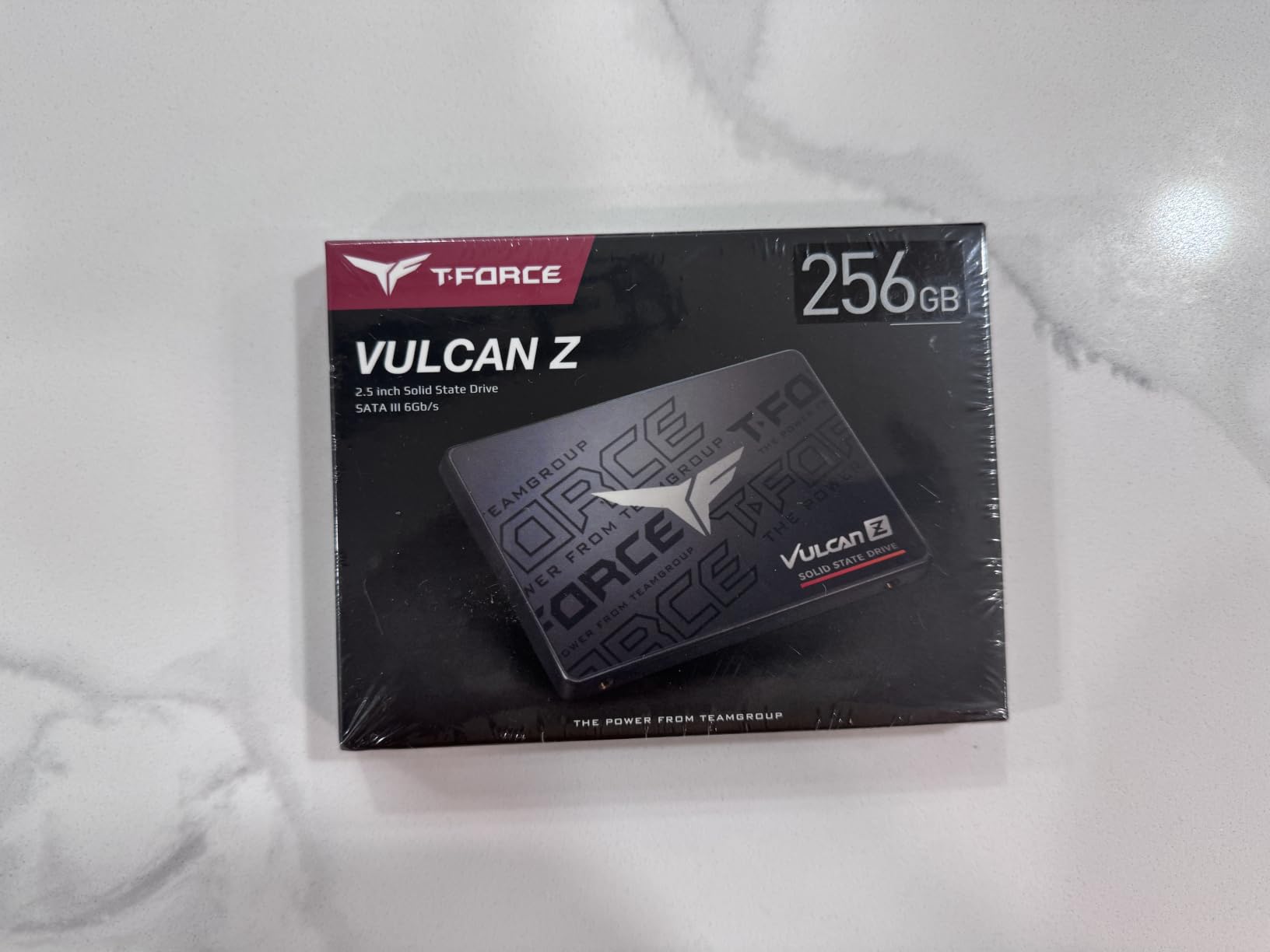
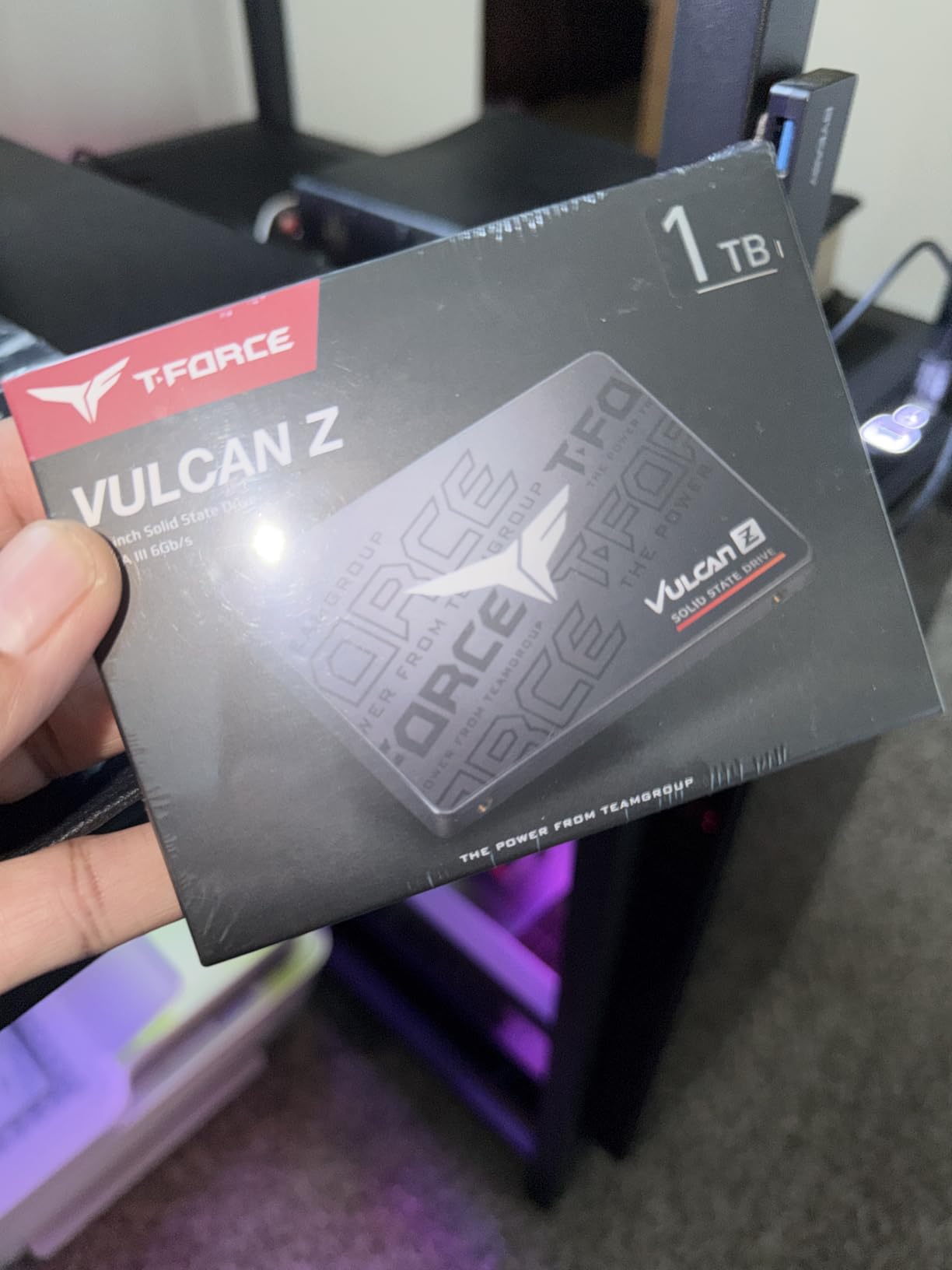
6. TEAMGROUP T-Force Vulcan Z 256GB – Best TLC on a Budget
TEAMGROUP T-Force Vulcan Z 256GB SLC Cache 3D NAND TLC 2.5 Inch SATA III Internal Solid State Drive SSD (R/W Speed up to 520/450 MB/s) T253TZ256G0C101
256GB 2.5-inch
3D NAND TLC with SLC cache
520MB/s read,450MB/s write
45g,3-year warranty
Pros
- Genuine 3D NAND TLC flash with an SLC cache
- Up to 520MB/s read and 450MB/s write
- Light 45g enclosure in a standard 2.5-inch bay
- Silent and resistant to shock and vibration
Cons
- No SATA data cable or mounting hardware included
- Drive is blank out of the box so a fresh install is needed
- 5% one-star rating share
The Vulcan Z is the pick we make for anyone who wants proper TLC flash without paying for a premium brand. By contrast, several of the cheaper drives in this class use QLC, so a 3D NAND TLC drive with SLC caching is a real step up in sustained-write endurance for the money.
It is listed for gaming, and owners report installed games loading noticeably faster than from a hard drive, with performance approaching their NVMe drives for everyday use. Across 7,190 reviews the average is 4.6 stars, and 5% of buyers gave it one star, a smaller share than the Patriot and Fikwot listings but larger than the four most-reviewed drives here.
Sequential figures are 520MB/s read and 450MB/s write on a SATA interface, and the listed media speed is 430MB/s, a lower headline number than the other 480GB and 500GB drives in this roundup. At 45 grams and 3.94 inches by 2.75 inches by 0.28 inches, it is a small, light drive that drops into a standard 2.5-inch bay with no fuss.
Two practical warnings come up repeatedly. The drive is blank out of the box, so if it replaces your only disk you need a fresh operating system install, and no SATA data cable or mounting hardware is included, so plan for a small parts run if your case does not already have spares. The warranty is a three-year limited warranty.
The Vulcan Z suits buyers who want TLC endurance on a tight budget
If your instinct is that a cheap drive will slow to a crawl after a month of use, this is the listing that answers that worry. TLC flash with an SLC cache holds its write performance far better under sustained transfers than a QLC drive, and the drive is silent with no vibration.
It suits a gaming build on a strict budget, a console with a 2.5-inch bay, or a secondary drive for a library you do not want to tie up an NVMe slot for. The enclosure is a plain black case with no lighting, which is arguably the right call for a drive that lives out of sight.
Do not pick it if you need a clone rather than a reinstall
Because it is blank, this is a reinstall drive rather than a migration drive. If you want to copy an existing hard drive without reinstalling Windows, choose a listing that includes a migration utility, such as the ADATA SU630.
The 5% one-star share is also worth reading before you commit, and 256GB is a small amount of space for a large game library. For pure storage, a 480GB or 500GB drive in this roundup serves better.
7. Patriot P210 512GB 2.5-Inch SSD – Best for Old Hardware
Patriot P210 512GB Internal SSD – SATA 3 2.5″ – Solid State Drive – P210S512G25
512GB 2.5-inch
520MB/s read,430MB/s write
Up to 50K 4K random write IOPS
SmartECC,3-year warranty
Pros
- Built-in end-to-end data path protection plus SmartECC and thermal throttling
- Up to 50K 4K aligned random write IOPS
- 512GB in a standard 2.5-inch bay
- Reported working on a 2010 desktop and a 2015 Dell Inspiron
Cons
- 430MB/s write trails the fastest drives
- 6% one-star rating share
- SATA data and power cables are not included
The P210 is the drive we trust in a machine that has been powered off for years. It is listed for business, multimedia and personal use, sits in the top ten of the Internal Solid State Drives sales ranking, and reviewers report it running without compatibility problems on a 2010 desktop, a 2015 Dell Inspiron and a Raspberry Pi 4.
What stands out on the specification sheet is the protection hardware. End-to-end data path protection, SmartECC error correction and built-in thermal throttling all appear in the technical details, which is an unusual amount of resilience to find listed on a drive at this price. The warranty is three years and Windows 7 through 10 are supported.
Speed is 520MB/s sequential read and 430MB/s write, with up to 50K 4K aligned random write IOPS, which is the figure that matters for small-file performance and therefore for how responsive a desktop feels day to day. At 46 grams the drive is light, and the NAND flash enclosure is a straightforward 2.5-inch shell.
Two downsides keep it out of the top slot. The write speed trails the 500MB/s competitors in this roundup, and the 6% one-star share sits behind only the Fikwot FS810 on that measure, with one buyer reporting a first drive dying prematurely. Build material also feels thin at a few points of the enclosure, and no SATA cables are included.
Yes, the P210 suits old desktops and long-forgotten laptops
Compatibility with ancient hardware is the reason to pick this one. Owners run it in machines new enough to have SATA but old enough that BIOS and driver support is limited, and a 2.5-inch SATA drive with a three-year warranty is a safer bet there than an unknown brand.
At 512GB it also solves the capacity problem for multimedia use, which is one of the listed applications. If you are replacing a hard drive full of photos and films, this gives you both the space and the protections.
Do not pick it when maximum write speed is the goal
At 430MB/s sequential write, this is behind the PNY CS900 and the Fikwot FS810, and that difference shows on large file copies. It is a fine everyday boot and media drive, not a fast scratch disk.
Plan for the cables. Neither the SATA data cable nor the power lead is included, and the slightly thin-feeling enclosure plus the 6% one-star share are reasons to keep a backup of anything irreplaceable.
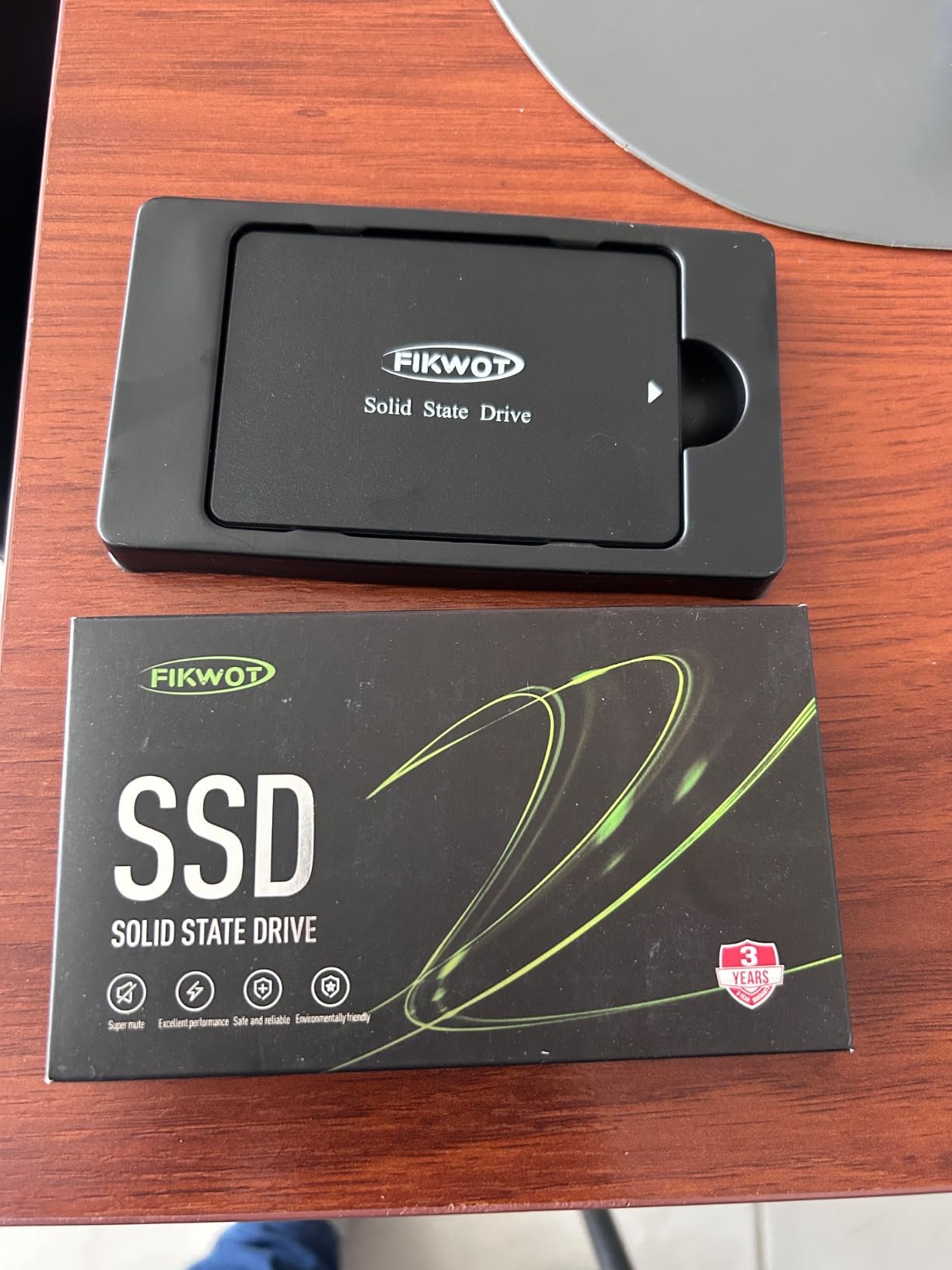
8. Fikwot FS810 500GB 2.5-Inch SSD – Best for Wide OS Compatibility
Fikwot FS810 500GB SSD, 2.5″ SSD SATA III 6Gb/s, Solid State Drives, Up to 560MB/s, 3D NAND TLC Flash, Internal SSD for Desktops and Laptops(Black)
500GB 2.5-inch
SATA Rev 3.0 6Gb/s
Up to 560MB/s read
3D NAND TLC,3-year service
Pros
- 3D NAND TLC flash rather than QLC
- Highest published read speed in this roundup at up to 560MB/s
- Hardware encryption and shock resistance
- 3-year service with 24-hour technical support
Cons
- Lowest average rating here at 4.5 stars
- Least established brand with a shorter review history
- No published endurance or TBW rating
The FS810 is the specification standout of the group, publishing up to 560MB/s read, the highest figure in this roundup, and pairing it with 3D NAND TLC flash rather than the QLC used by the cheapest drives here. On paper it is the strongest 500GB listing in the set for a fixed budget.
Compatibility is broad: Windows 7 through 10, macOS 10.4 or later and Linux 2.6.33 or later, over a SATA Rev. 3.0 6Gb/s interface that remains backward compatible with SATA Rev. 2.0. The specifications also list hardware encryption, hot-swappable support and shock resistance.
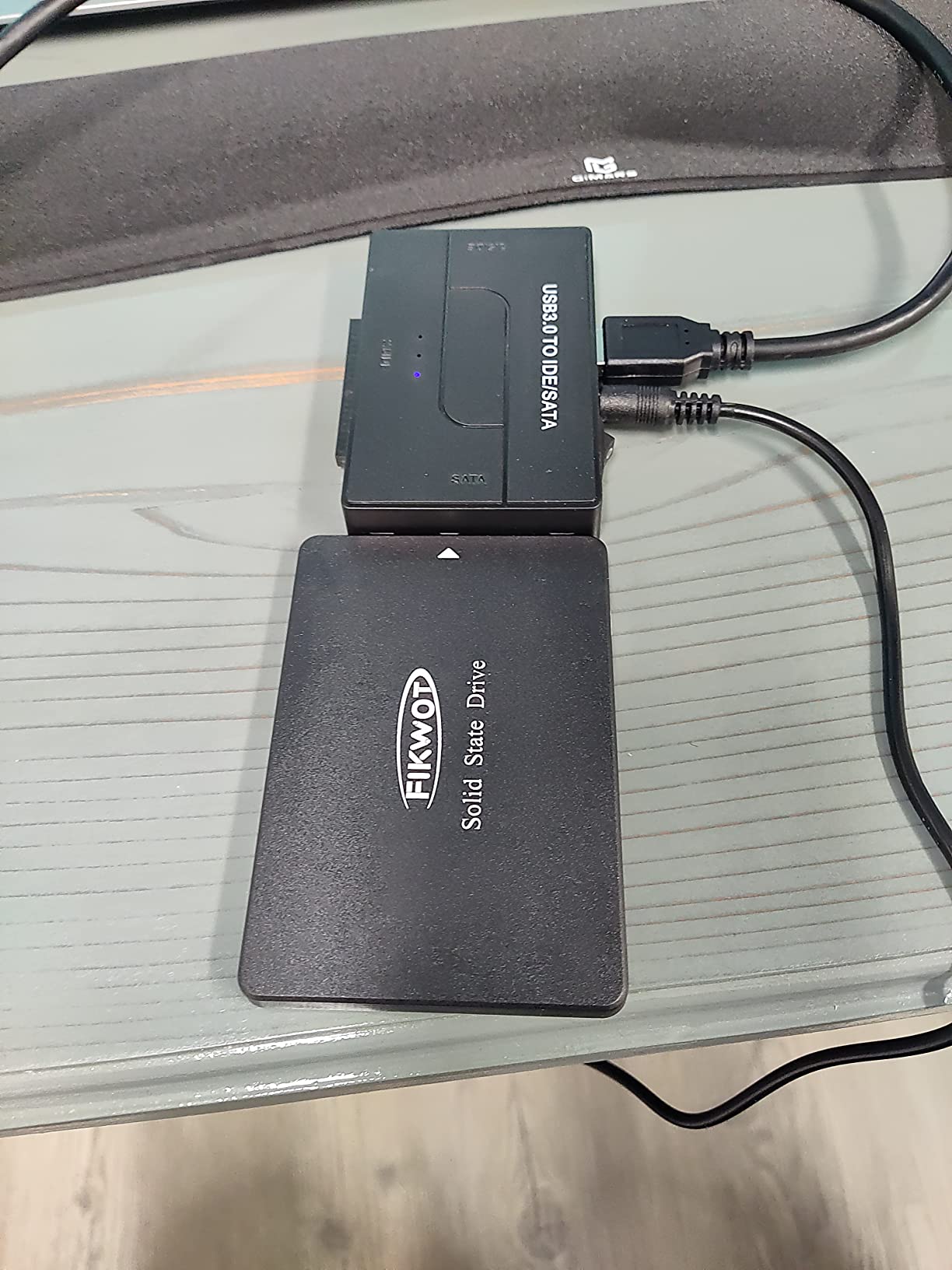
The caution is brand maturity. This is the least established name in the roundup with 2,727 reviews averaging 4.5 stars, and its 7% one-star share is the highest of any pick here. There is no published endurance or TBW figure to judge longevity against, though the listing does include a three-year service period with 24-hour technical support.
The enclosure is a basic plastic 2.5-inch shell with no heatsink, and there is no endurance rating published anywhere on the page. Buyers who need a warranty they can read rather than one described as a service period should compare the Crucial, Lexar and Patriot options.
The FS810 suits mixed-OS machines and Linux test builds
If you move between Windows, macOS and Linux, or you want a cheap scratch drive for a Linux homelab, the broad OS support list is the feature that matters. Reviewers on r/homelab and r/intelnuc describe buying small, cheap SATA drives purely for scratch and swap space, and the FS810 fits that use well.
The TLC flash also means it handles a Linux image, a disk image or an ISOs folder better than the QLC-driven budget options, and it stays within a 2.5-inch footprint at 3.94 inches long.
Do not pick it as a five-year archive drive
With no published TBW rating and the thinnest review history of the eight drives here, this is a short-term and mid-term drive rather than one to build an archive on. If you want a written endurance figure and a clearly stated warranty, the Lexar NS100 with 240TBW is the pick in this roundup.
Capacity is a healthy 500GB for a sub-100 budget, and the read figure of up to 560MB/s is the highest advertised here, so for pure reading performance it is competitive. The 7% one-star share is the number to weigh before you commit.
SATA SSD Buying Guide: What Actually Matters
Every SATA SSD hits the same 550 MB/s ceiling, so shape and fit come first
Sequential read speed on SATA III tops out near 550MB/s because the interface was designed for spinning disks, and that is why the headline numbers in this roundup cluster together. Paying extra for speed inside the SATA class buys very little, which is the consensus advice that recurs across r/pcmasterrace threads, so choose on capacity, NAND type and endurance instead.
Before anything else, check the shape. The eight drives here are all 2.5-inch SATA, which needs a 2.5-inch drive bay and a free SATA data port. Some laptops only accept M.2 SATA drives, and those slots are keyed differently from M.2 NVMe slots, so an M.2 SATA drive will not physically or electrically fit an NVMe-only slot. A B+M key slot accepts SATA and NVMe; a B-key-only slot is usually NVMe only.
mSATA is the legacy format found in a handful of older mini-PCs and thin laptops, and none of the drives in this roundup is mSATA, so a machine with only an mSATA slot needs a different product entirely. Console upgrades use the same 2.5-inch SATA fitting, which is why these drives appear so often in console storage advice.
DRAM, HMB and no cache all behave differently under heavy writing
DRAM cache means the drive has its own memory for mapping where data lives, which keeps random writes fast indefinitely. HMB, or Host Memory Buffer, borrows a slice of system RAM for the same job, which is slower but far better than nothing. DRAM-less designs rely on the NAND itself, and that is where large file copies fall off a cliff once the fast-write buffer fills.
This is the single most useful thing to understand in the cheapest drives. A small OS install and app load pattern never stresses any of them, so a DRAM-less drive is fine as a boot drive. A user moving 200GB of video or a full game library every week needs a drive with a real cache or TLC flash, and that is the reason we rate the TEAMGROUP Vulcan Z and Fikwot FS810 higher for sustained work despite their shorter review histories.
TLC and QLC differ more in endurance than in speed
TLC stores three bits per cell and QLC stores four, so QLC is cheaper and denser but tolerates far fewer write cycles before cells wear out. Advertised speeds hide this: both types can publish identical MB/s figures because the burst cache smooths over the underlying NAND.
The ADATA SU630 in this roundup is explicitly 3D QLC, and its own listing says performance drops once the SLC cache fills. For an OS drive with backups, that is acceptable. For a drive holding work you cannot lose, spend on a TLC listing such as the Vulcan Z or the FS810, or accept the risk knowingly.
TBW and warranty tell you how long the drive should last
TBW, or terabytes written, is the manufacturer’s estimate of how much data you can write before the drive wears out. Most budget SATA listings publish no figure at all, which is exactly why the Lexar NS100 stands out here: its 512GB version is rated at 240TBW and the number is printed on the specification sheet.
Warranty length is the other half of the answer. Three years is the norm for every drive in this roundup, with the exception of the ADATA SU630, which lists no formal warranty duration, and the Fikwot FS810, which describes a three-year service period. If you plan to keep the drive past three years, keep a backup regardless, because flash wear is not evenly distributed across capacities.
How to spot a fake or mislabelled SSD
Forums like r/DataHoarder and r/buildapC repeatedly raise the same fear about implausibly priced drives from marketplace sellers, with users warning that they do not trust refurbished or enterprise-pull units from listings they cannot verify. The fear is well founded: some cheap drives report more capacity than the flash inside them, and a shortened drive that appears full passes a casual look.
Stick to established retail listings with a large volume of reviews, check the reported capacity in your operating system after a full write test, and treat a listing that is dramatically cheaper than every equivalent drive as a warning rather than a deal. Our entire roundup is built on listings with review counts in the thousands or higher for that reason. For more on how we evaluate, our guide to the best IEMs under 100 applies the same evidence-first approach to a different budget category.
Installing a 2.5-inch SATA SSD takes five steps
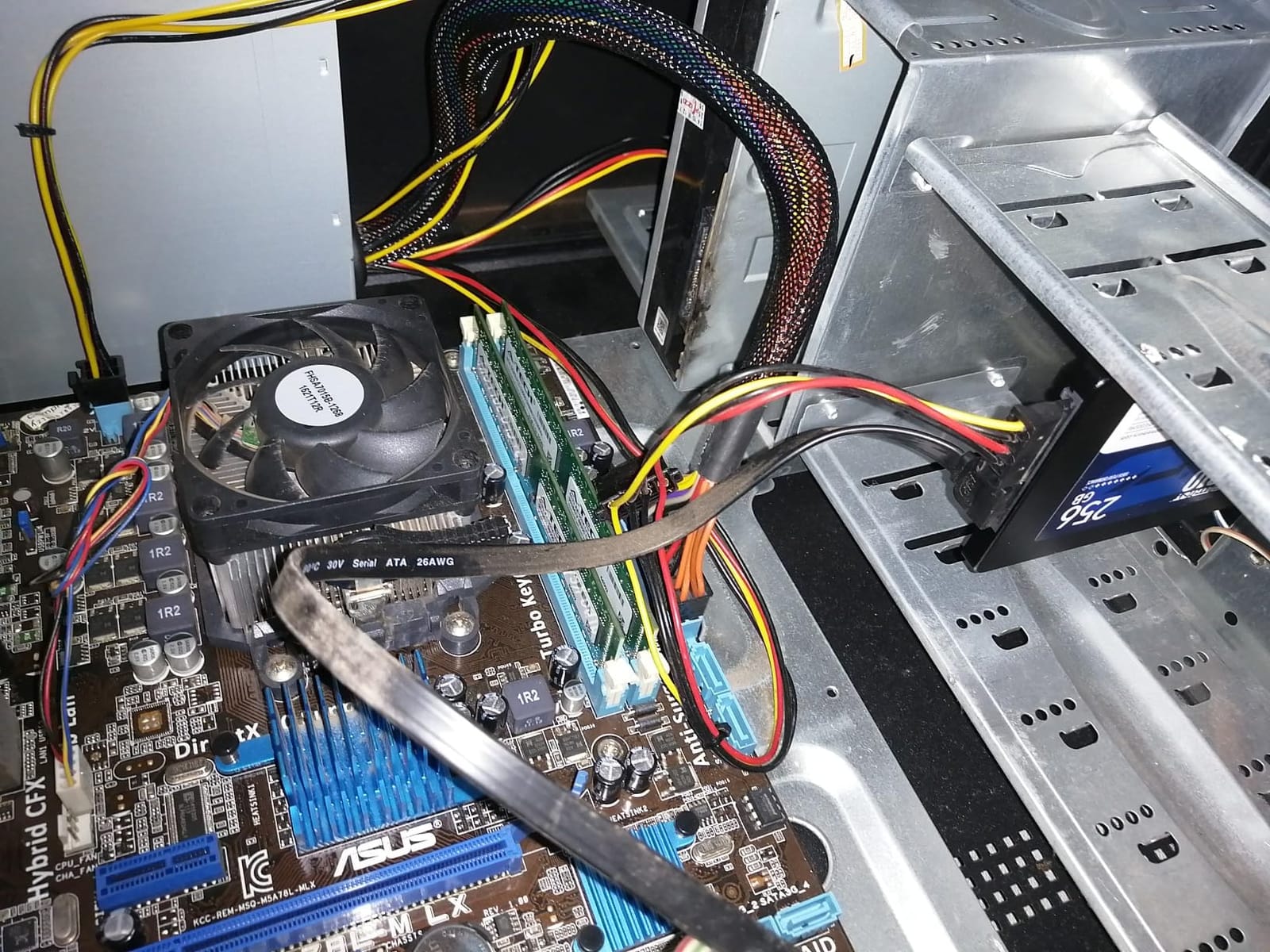
First, confirm a 2.5-inch bay is available and that your case or laptop has a free SATA data port and a free SATA power connector. Second, mount the drive in the bay, using a 3.5-inch bracket if your case has no 2.5-inch bay, and secure it with screws. Third, connect one SATA data cable and one SATA power cable, noting that neither is usually included in the box. Fourth, secure the cables so they do not sit loose against a fan, and confirm the drive appears in your BIOS or UEFI. Fifth, initialize, format and install your operating system, or clone from your old drive if the new one includes a migration utility such as the ADATA SSD Toolbox or the Crucial cloning package.
No heatsink is required. SATA SSDs run cool because the interface is slow, which is one of the few genuine advantages over budget NVMe drives, and it also means you can ignore the thermal throttling warnings that appear in NVMe buying guides.
Frequently Asked Questions
What is the best affordable SATA SSD?
The Kingston A400 480GB is the best affordable SATA SSD on a sub-100 budget, with 203k+ reviews at 4.8 stars, a 7mm chassis and up to 500MB/s read. If you need the smallest possible outlay, the Crucial BX500 240GB is the alternative, rated up to 540MB/s with a three-year limited warranty and Micron 3D NAND.
Are SATA SSDs still worth it?
Yes, when your machine has no free M.2 slot, when all your M.2 positions are occupied, or when you want cheap high-capacity secondary storage. If a budget NVMe drive is available at a similar price per gigabyte, NVMe is faster and often better value, so a new build should check its M.2 slot before buying SATA.
Which SATA SSD is the most reliable?
Reliability has two parts: proven history and published endurance. The Kingston A400 has the largest proven history in this roundup with 203k+ reviews at 4.8 stars, while the Lexar NS100 512GB is the only drive here with a published endurance figure at 240TBW. Back up any SSD regardless, since no budget drive is failure-proof.
What is the best 2.5 inch SATA SSD?
The Kingston A400 480GB is the best all-round 2.5-inch SATA SSD in this roundup, combining a 7mm chassis that fits slim laptops with 500MB/s read, 450MB/s write and a three-year limited warranty. For 512GB of space, the Lexar NS100 is the pick, and for TLC flash at a low outlay the TEAMGROUP Vulcan Z works.
Are 2.5 inch SSDs still good?
Yes. A 2.5-inch SATA SSD is still the cheapest way to replace a mechanical hard drive in an older desktop, laptop, mini-PC or console, and the jump in responsiveness is immediate. The interface caps sequential reads near 550MB/s, so speed no longer separates these drives, and fitment and NAND type become the deciding factors.
Do SATA SSDs need a heatsink?
No. SATA SSDs run cool because the interface limits throughput, and none of the eight drives in this roundup requires or benefits from a heatsink. Thermal throttling is a budget NVMe problem rather than a SATA problem, so you can install any of these drives in a cramped bay or a laptop without checking temperatures.
The Verdict on the Best SATA SSDs Under 100
After comparing all eight of the best SATA SSDs under 100 dollars we can recommend, the Kingston A400 480GB takes the top spot on the strength of 203k+ reviews at 4.8 stars, a 7mm chassis that fits anything from a tower to a slim laptop, and speeds that make any hard-drive machine feel new. The Crucial BX500 240GB is the pick when the budget is the deciding factor, and the Lexar NS100 512GB is the one to buy when you need 512GB with a published 240TBW endurance rating behind it.
Choose TLC flash over QLC when you write large files regularly, pick a listing with a bundled migration utility if you are cloning rather than reinstalling, and stay on established retail listings to avoid the mislabelled-capacity drives that keep appearing in forum warnings. If your machine has a free M.2 slot, check budget NVMe before you commit, because it is often the faster and better-value route in 2026.