
The best studio strobes for home portrait work are the monolights that give you repeatable light without turning a spare bedroom into a warehouse. I spent weeks reading spec sheets, owner reviews and forum threads from r/photography and thephotoforum before settling on this list, and the pattern was consistent: beginners almost always buy too much power and too little modifier.
Everything below is chosen for a single room with one subject, low ceilings and a window you cannot control. Six heads made the cut, and I have named a winner. The Godox AD200 Pro II takes the top slot because 200Ws, TTL, high-speed sync and a battery all fit into a 1.2 kg body that a person can carry up a staircase.
Read the quick overview first, then jump to the reviews. Every pick states plainly who it suits and who should skip it, and the buying guide later in the article covers the questions that decide a purchase: wattage, recycle time, Bowens mount, trigger system and mains versus battery. No price appears anywhere in this piece, because street prices move every week and the buttons below show the live figure.
Table of Contents
What Is a Studio Strobe and Why a Home Studio Needs One
A studio strobe is a mains or battery powered flash head that stores energy in a capacitor, releases it in a few milliseconds through a modifier such as a softbox, then recharges before firing again. Output is measured in watt-seconds (Ws). That short, bright burst overwhelms daylight, freezes motion and gives you an exposure you can repeat identically every session.
Home rooms fight you in predictable ways. One window means the light changes every hour, and a bare bulb overhead turns every socket into a hard shadow. A strobe solves both because you switch off the room, close the curtains and dial the light down to f/2.8 or f/4.
Two other terms come up constantly. Recycle time is how long the head waits before it can fire again, and it decides whether a child will get three sharp frames or one blurred one. Guide number (GN) is a single number that folds flash distance and aperture together, so GN58 and GN63 heads sit in the same class for portrait work even though their wattage differs.
Mount matters more than most buyers expect. A Bowens mount accepts softboxes, reflectors and grids from many manufacturers, while a proprietary mount locks you into one brand’s accessories. Mounting a head that already takes Bowens gives you the cheapest upgrade path in photography.
Top 3 Picks for Best Studio Strobes for Home Portrait Work (October 2026)
These three cover the most common home situations: a carried-in battery head with full TTL, a higher-output body for bright rooms, and a mains unit for a fixed corner.


All 6 Best Studio Strobes for Home Portrait Work in 2026
The table below lists every head in this roundup with the specifications that actually change a buying decision. Note the split between mains-powered and battery-powered bodies, and between heads with TTL and those without it.
| Product | Specifications | Action |
|---|---|---|
| Godox AD200 Pro II 200Ws TTL Pocket Flash |
|
Check Latest Price |
| Godox AD400 Pro 400Ws Outdoor Flash Strobe |
|
Check Latest Price |
 Godox MS300V 300W Compact Studio Strobe Godox MS300V 300W Compact Studio Strobe |
|
Check Latest Price |
 NEEWER Q300 300Ws 2.4G Outdoor Studio Flash NEEWER Q300 300Ws 2.4G Outdoor Studio Flash |
|
Check Latest Price |
 NEEWER Q200 200Ws 2.4G TTL Outdoor Strobe NEEWER Q200 200Ws 2.4G TTL Outdoor Strobe |
|
Check Latest Price |
 NEEWER Q3 200Ws 2.4G TTL Flash 2nd Version NEEWER Q3 200Ws 2.4G TTL Flash 2nd Version |
|
Check Latest Price |
1. Godox AD200 Pro II – Best Overall for a One-Room Portrait Setup
GODOX AD200 Pro II AD200Pro II 200Ws TTL Pocket Flash Strobe
200Ws output
GN52 bare bulb, GN60 with reflector
1.2 kg
TTL and HSS to 1/8000s
Pros
- Packs TTL
- HSS and front and rear curtain sync into a 1.2 kg body
- Dual heads give you a bare bulb and a Fresnel from one unit
- Battery covers roughly 500 full-power pops with 0.01-1.8s recycling
- Colour temperature stays within 100K across the power range
- Works with the Godox X trigger system and the PB960 power pack
Cons
- No strap loop for handheld carry
- Only the bare-bulb head is included so softboxes cost extra
- Proprietary battery pack rather than standard cells
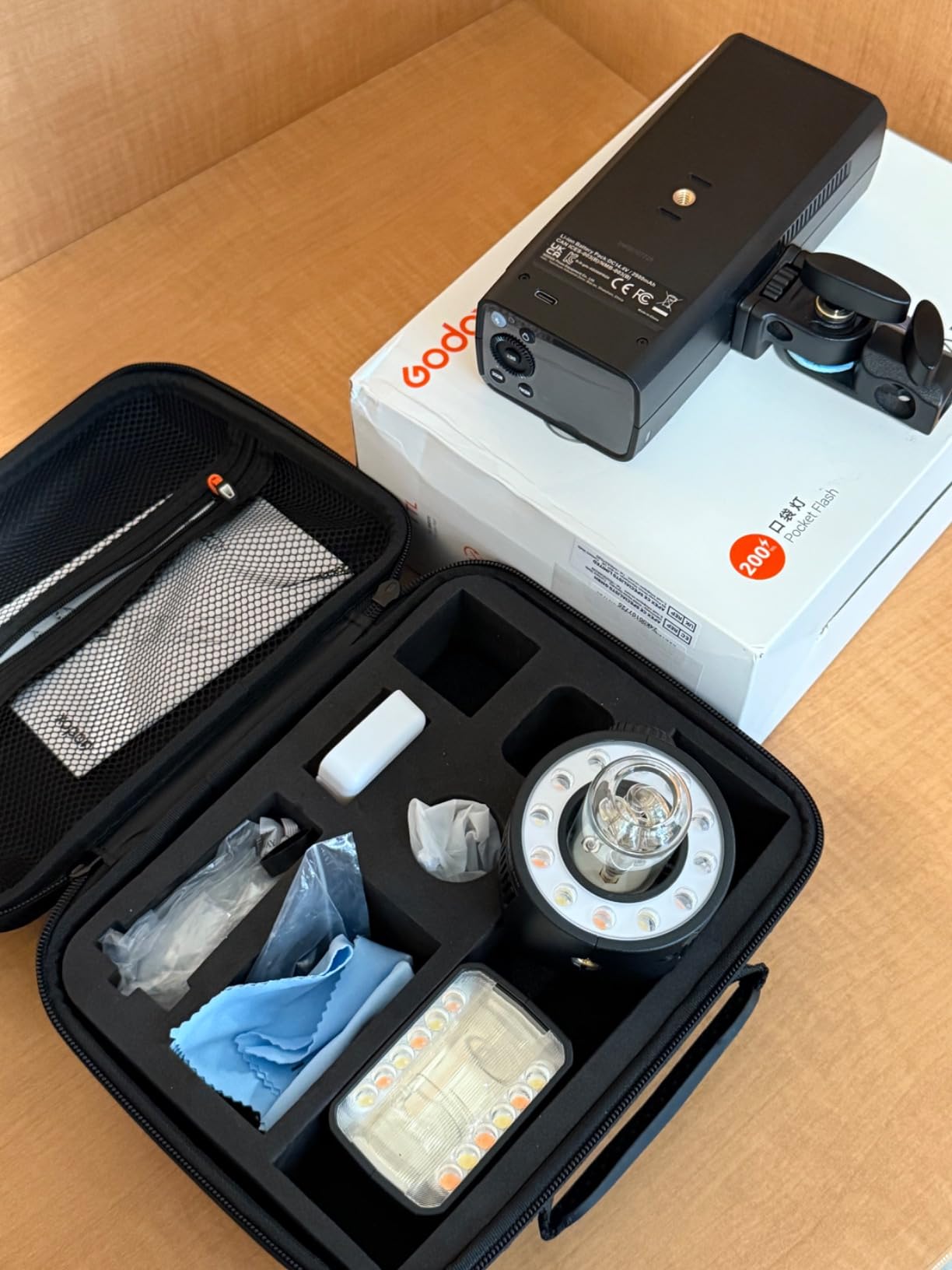
The AD200 Pro II is the one I keep coming back to. My rule for a spare-room kit is simple: enough power to overpower a window at f/2.8, a battery so there is no cable to trip over, and TTL so the exposure survives when your subject moves. This head does all three in a body that weighs 1.2 kg.
Two flash heads come with it. One is a bare tube for use with a softbox or beauty dish, the other is a Fresnel reflector head that reaches GN60 with the AD-S2 reflector. That second head is the one people underrate: it gives you a harder, further-reaching light without buying a second monolight.
Recycling runs from 0.01 to 1.8 seconds, and the battery delivers about 500 full-power pops. In a session where I am shooting a headshot every twenty seconds at reduced power, I never came close to the limit.
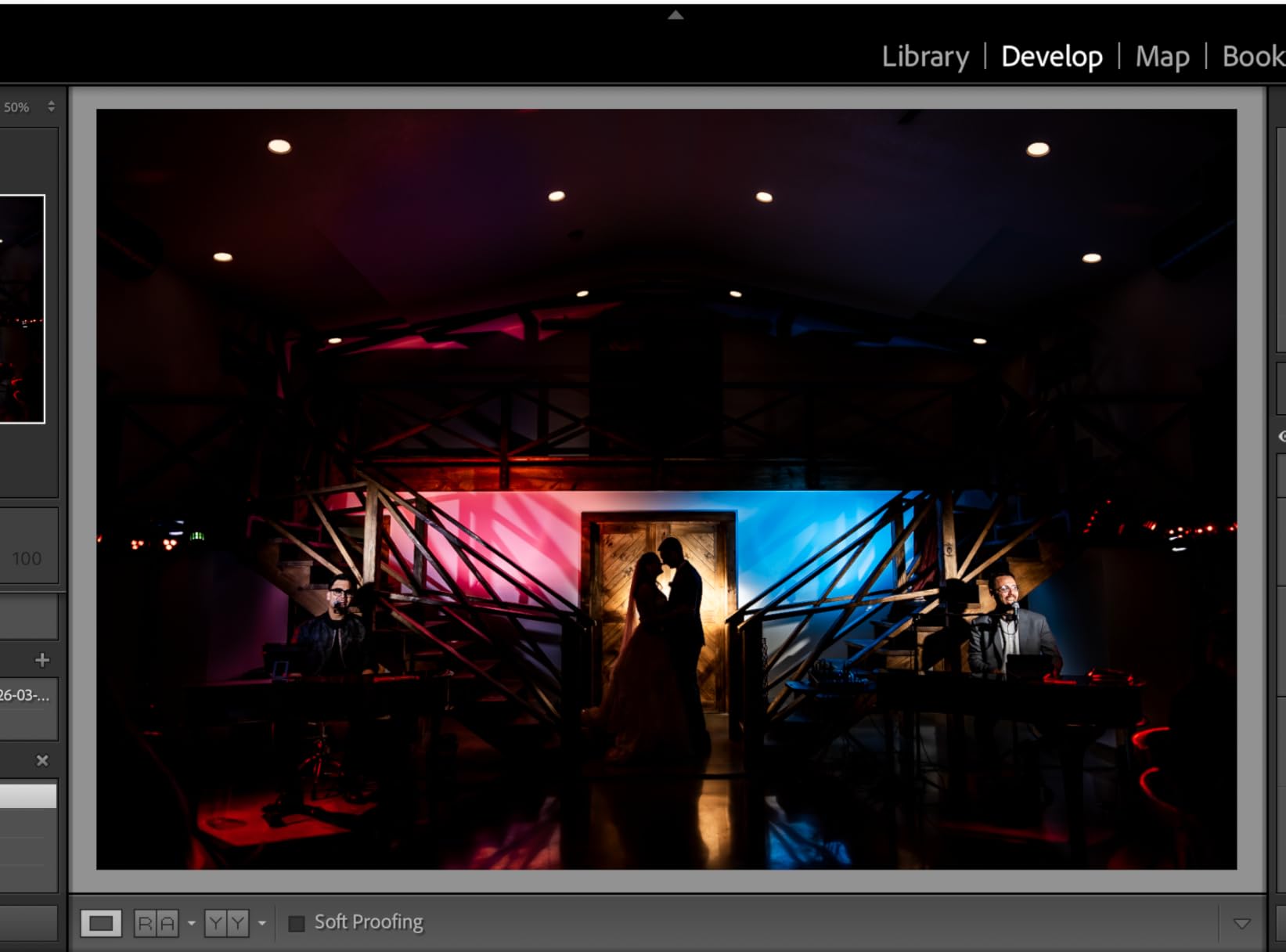
Colour stability is the quiet advantage. Godox quotes a stable mode holding the flash colour within plus or minus 100K from minimum to full power, which matters when you are matching a window or blending two heads. The bi-color modeling lamp runs up to 1400 lux at one metre and lasts 5.5 to 6 hours, so you can shape light without firing a frame.
Power control runs in 0.1-stop steps from 1/512 to full, and group colour indicators make a multi-light setup much easier to read at a glance. One-tap pairing with the X3 trigger removes the usual ten minutes of menu diving.
What the AD200 Pro II does well in a home room
Battery operation is the feature that changes a domestic space. You can set up in a basement, a loft or a room with one awkward wall socket and shoot from wherever the window is. No extension leads across a walkway, and no hunting for a free socket behind the desk.
TTL and high-speed sync to 1/8000 seconds mean you can shoot wide open for shallow depth of field and still control the background. Manual control is there in 0.1-stop steps when you want the exposure locked.
Where it falls short
Skip it if you insist on hand-held flash with the bare bulb, because there is no strap loop. It is also the wrong tool for large modifiers in a very bright room, where 200Ws starts to feel tight behind a big softbox.
Plan for a softbox or a 3-way umbrella before the first session, and the modifiers use the Godox mount with inexpensive Bowens adapters available.
2. Godox AD400 Pro – Best for Bright Rooms and Heavier Modifiers
Godox AD400 Pro AD400Pro Outdoor Flash Strobe, Portable 400Ws 2.4G TTL
400Ws output
GN72
TTL and manual to 1/8000s HSS
380 full-power flashes
30W modeling lamp
Pros
- Double the flash power of a 200Ws head for bright rooms or big softboxes
- Full TTL plus manual through the Godox 2.4G X system at up to 100m
- Recycles in 0.01-1s on battery with about 380 full-power flashes
- Works with the optional AC400 for AC-DC dual power operation
- Bowens adapter ring included with the Godox mount
Cons
- Battery hibernates after disuse and may need the activation key pressed
- AC400 power source sold separately
- Bare flash tube only so no softbox or grid in the box
The AD400 Pro answers the question the forums ask most often: is 200Ws enough? In a small room with the curtains closed, usually. In a room with a large north-facing window, a white ceiling and no flagging, 400Ws buys you the ability to use a big modifier and still shoot at f/4.
Guide number 72 is the headline figure, and it is measured in metres at ISO 100. Push back from that spec and you can see why it feels bigger than the number suggests: a head of this class placed about two metres from a subject on a 90 cm softbox gives room to stop down.
Radio control runs through the built-in 2.4G Godox X system with a stated range of up to 100 metres, which sounds like overkill indoors and becomes essential the moment you shoot in a hallway or a separate control room.
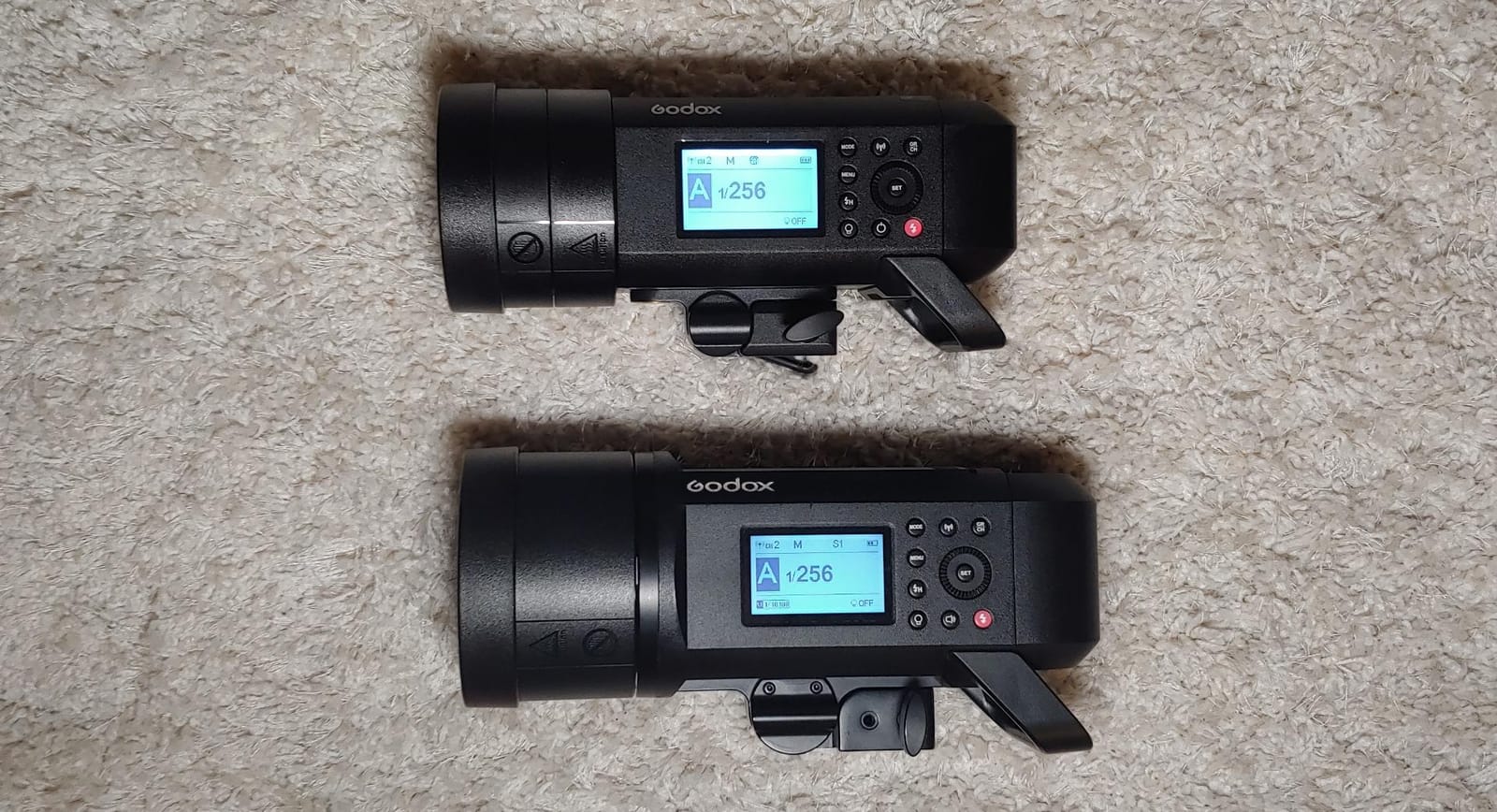
Battery life is the honest caveat. Around 380 full-power flashes is real, but that figure assumes you are not parking the pack at full discharge between sessions. Owners repeatedly mention that a pack left unused for weeks can drop into hibernation and refuse to charge until you press the activation key on the battery itself.
Nobody likes a strobe that needs a ritual before it works. My advice is to charge the pack every fortnight whether or not you are shooting, and to keep a second pack charged if the head is your main light.
When the extra power pays for itself
It pays off when the modifier is large. Light from a 200Ws head through a 120 cm softbox is soft but weak, and you end up widening the aperture or raising ISO to compensate. With 400Ws you can keep the ISO at base and stay at f/4 or f/5.6, which is the difference between a clean background and a noisy one.
It also pays off for group portraits. Two or three people standing three metres back eat a lot of light, and a single 200Ws head at that distance leaves you at f/2.8 with no room left.
Who should not buy it
Do not buy this head as your first flash in a small room if your subject is a single person at short range. You will be carrying a bigger head and a battery you have to maintain for power you do not use.
Also think twice if your modifier plans lean on very soft, very large sources close to the subject, since the softness comes from the modifier and the distance, not from the extra wattage.
3. Godox MS300V – Best Value Mains Monolight on a Bowens Mount
Godox MS300V 300W Compact Studio Strobe Flash Light – MS300 Upgraded Ver.
300Ws output
GN58
0.1-1.8s recycle
Bowens mount
150W adjustable modeling lamp
Pros
- Bowens mount straight out of the box accepts softboxes grids and reflectors from many brands
- 0.1-1.8s recycle supports continuous portrait shooting
- 150W modeling lamp adjustable from 5 to 100 percent
- Built-in 2.4G Godox X radio with 16 groups and 32 channels
- Compact 28.3 cm body that fits behind furniture in a small room
Cons
- No TTL and no high-speed sync so exposure control is manual only
- Mains power only unless you buy a separate power pack
- Stand clamp feels cheaper than on other Godox bodies
The MS300V is the recommendation I make to people who have a permanent corner and one wall they can clear. It is a mains monolight with a Bowens mount, which means the accessory world is wide open and the head itself is simple to live with.
At 300Ws with a guide number of 58 it sits in the middle of the class covered here. That is deliberately boring in the best way: enough power for a head and shoulders portrait with a softbox at f/4, small enough to move with one hand, and quick enough between frames.
Recycling of 0.1 to 1.8 seconds is the number that matters most for portraits of children. Owners report sustained shooting without the pauses you get from heavier units, and output stays within about 2 percent across long sessions, which means your exposure does not drift while you shoot a set.
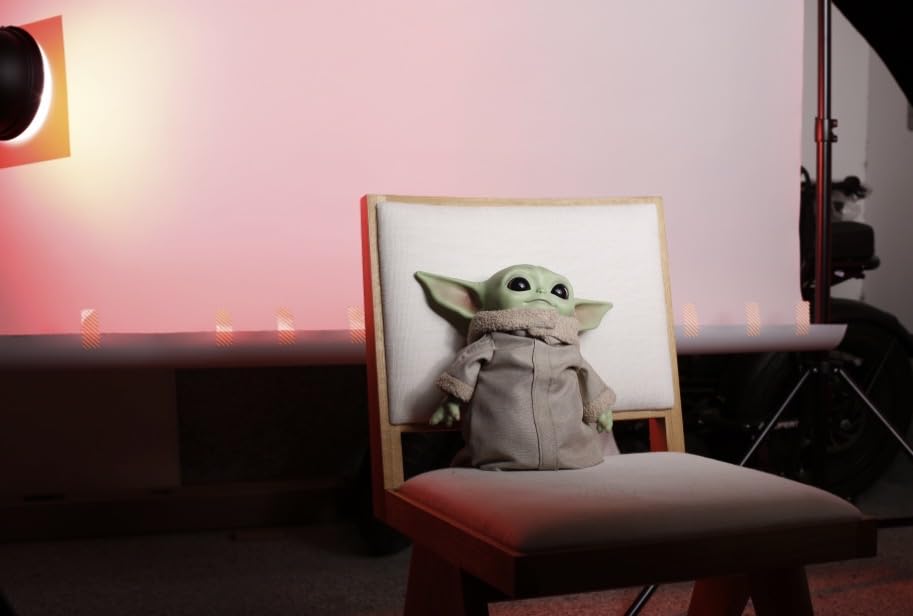
The modeling lamp is the feature I did not expect to like. At 150W and adjustable from 5 to 100 percent it does more than preview the flash. I have used it as a continuous key light for a video interview in the same room, which is exactly the dual use a home studio needs.
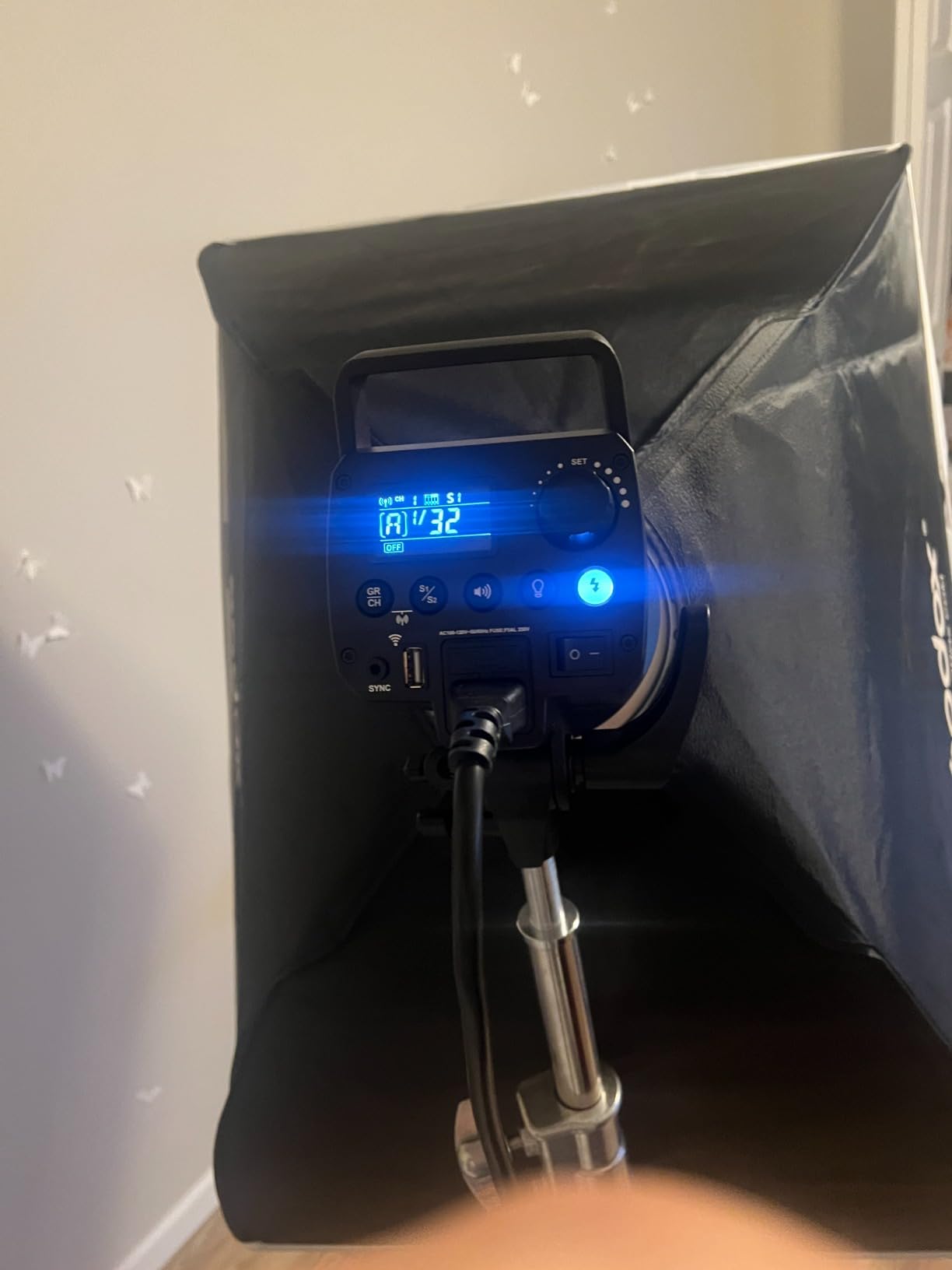
Radio control is built in, with 16 groups and 32 channels on the 2.4G Godox X system. You can also drive power, modeling lamp and buzzer remotely from an XPro, X2 or X1 transmitter, which saves walking back and forth.
Why the Bowens mount is the real bargain
Softboxes, reflectors, grids and snoots are the running cost of any lighting kit, and Bowens is the widest second-hand market in photography. When you outgrow the included reflector, you are choosing between dozens of manufacturers rather than one.
That also matters for resale. A head with a standard mount keeps its value far better than a proprietary one, and it is easier to lend to another photographer who already owns modifiers.
Where it will frustrate you
There is no TTL and no high-speed sync on this head. Exposure control is manual, and flash sync tops out at 1/200 or 1/250 seconds. That is fine for studio work on a stand, and a genuine problem if you want wide-open apertures for blurred backgrounds.
It also needs mains power. Plan your extension lead before you buy, and note that the light-stand clamp is described by reviewers as cheaper than on other Godox bodies, so weight the stand properly if you plan to hang a large umbrella.
4. NEEWER Q300 – Best for Long Battery Days Without Mains Power
NEEWER Q300 300Ws 2.4G Outdoor Studio Flash w/Q Compact Wireless Trigger
300Ws with GN63
7800mAh battery for about 1000 flashes
0.4-2.5s recycle
Bowens mount
Pros
- About 1000 full-power flashes from the 7800mAh lithium battery
- 300Ws at 5600K with colour stability within 200K
- Manual
- Multi
- S1/S2 and Quick flash-duration modes give real control
- Adjustable handle rotates 180 degrees for stand or handheld work
- Bowens mount with reflector and umbrella hole
Cons
- No TTL and no high-speed sync with the bundled trigger
- Power range limited to 1/64 through 1/1
- Heavy at 3.45 kg for a portable monolight
The Q300 is the endurance pick. If your home studio is a garage, a garden room or anywhere without a reliable socket within a few metres, a large battery changes what you can photograph because you stop planning around cable routes.
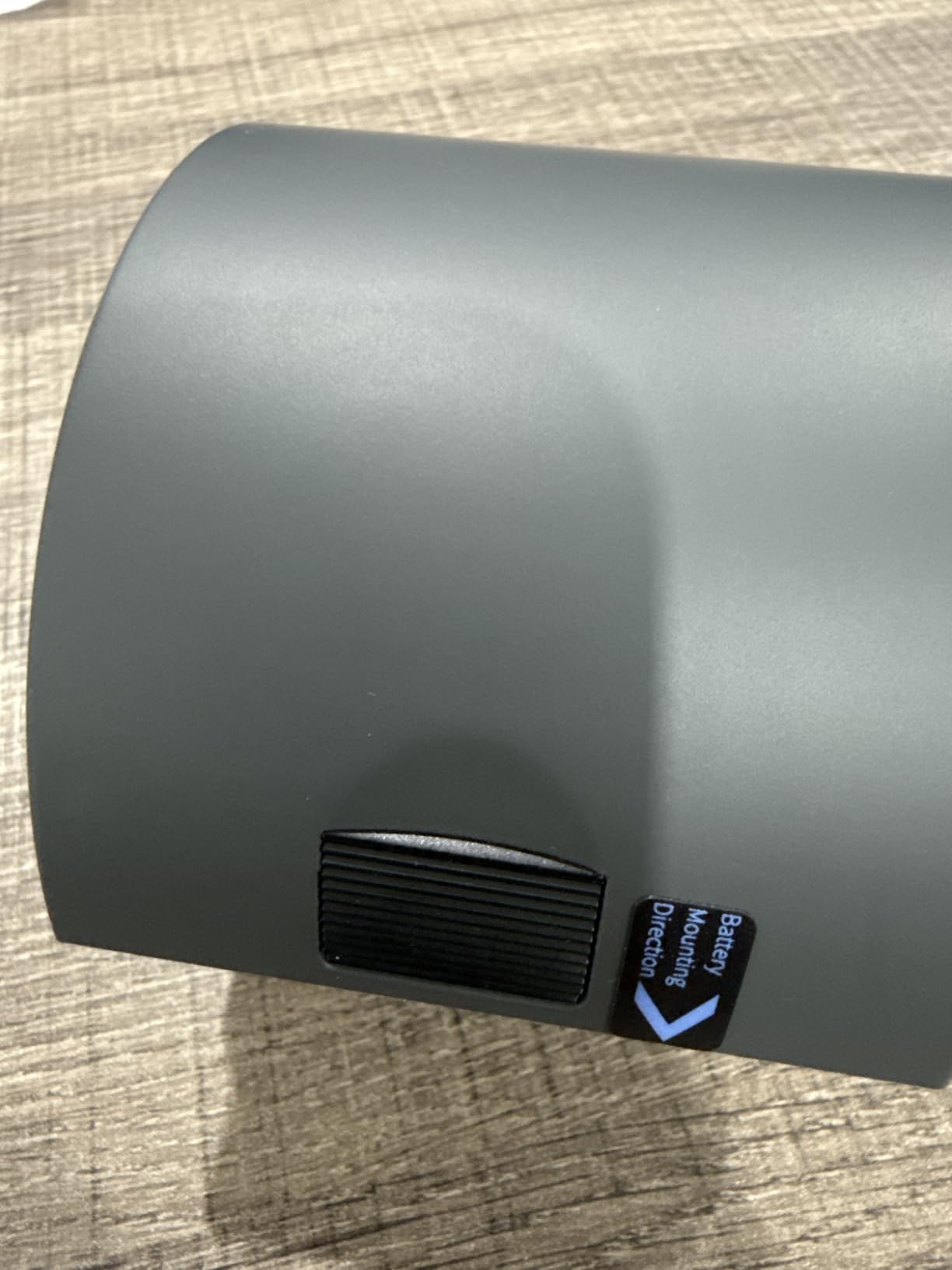
The 7800mAh lithium pack gives about 1000 full-power flashes at 300Ws, which is roughly three times what most 200Ws heads manage. There is also overheat and overvoltage protection built in, worth knowing in a small enclosed space.
Output is 300Ws with a guide number of 63, so it out-reaches the MS300V on paper despite the similar wattage. The 5600K daylight balance is stated as stable within plus or minus 200K, which is enough to match a window or blend with another head on a stand.
The flash duration modes are unusual for a head at this output level. Manual, Multi for stroboscopic bursts up to 20Hz, S1/S2 for optical slave triggering, and a Quick mode that shortens the flash duration to freeze movement. That Quick mode is the one worth learning for kids and pets.
Built-in 2.4G Q radio control covers 5 groups and 32 channels with a stated range of about 30 metres, which is more than enough in a house.
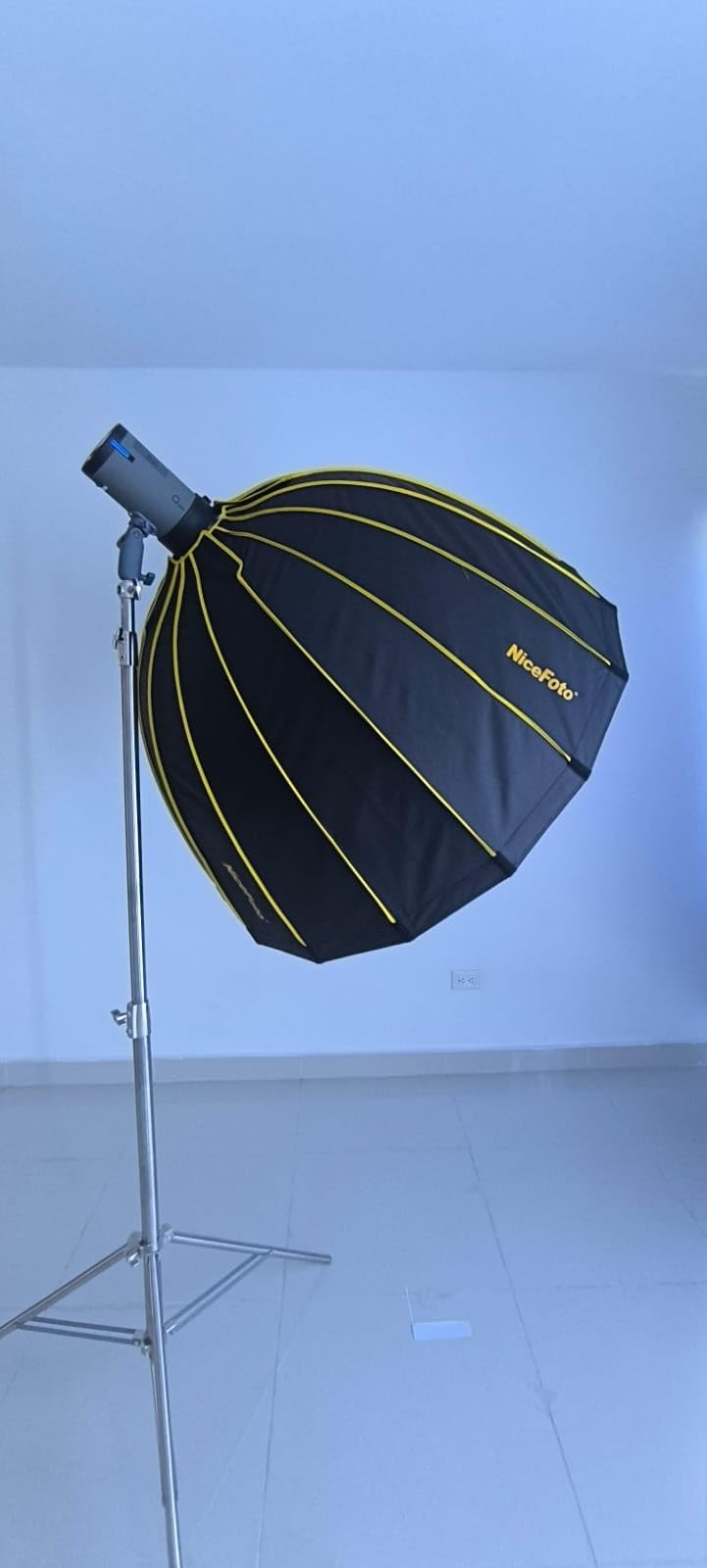
Where the Q300 earns its weight
Travel and location sessions. The rotating handle lets you mount it on a stand or hold it overhead as a bounce source, and the battery means no generator and no extension lead across grass.
Long group days also benefit. A 3.45 kg head is heavy, but it is heavy in exchange for never running flat, and it stays put on a stand through a full session.
Who should skip it
Anyone who needs automated exposure or fast shutter work. There is no TTL and no high-speed sync through the bundled trigger, sync tops out at 1/200 seconds, and the power range stops at 1/64.
Buyers with entry-level Canon Rebel bodies should check the compatibility list first, since several bodies in that range are excluded from the optical slave and hot shoe functions.
5. NEEWER Q200 – Best Budget Route to TTL and 1/8000s HSS
NEEWER 200Ws 2.4G TTL Outdoor Strobe Flash Compatible with Godox, 1/8000s HSS Portable Studio Photography Monolight with Modeling Light/3200mAh Battery/750 Flashes/1.5s Recycle, Q200
200Ws at 5600K
TTL plus 1/8000s HSS
3200mAh battery for 750 flashes
10W modeling lamp
Pros
- TTL
- manual
- Multi and S1/S2 modes in a compact 200Ws body
- 1/8000s high-speed sync once a QZ or QPro trigger is fitted
- 3200mAh battery delivers up to 750 full-power flashes with 0.01-1.5s recycle
- Godox 2.4G X system compatibility in slave mode after a firmware update
- App control keeps the settings simple for newer users
Cons
- Q and X wireless systems cannot run at the same time
- Trigger not included so TTL and HSS need a separate purchase
- Recycle sound carries into quiet ceremonies at low power
The Q200 is the pick for photographers who already own Godox triggers and want a second head that simply joins the system. After a firmware update it accepts Godox 2.4G X radio in slave mode, which is the feature that makes it interesting to anyone with a mixed kit.
Output is 200Ws at 5600K with a stated stability of plus or minus 100K. That figure is tighter than most competitors manage at this output level, and it matters when you are matching two lights at different power settings.
Control modes cover TTL, manual from 1/256 to full, Multi and S1/S2. High-speed sync runs to 1/8000 seconds, but only with a QZ or QPro trigger, and that trigger is not in the box.
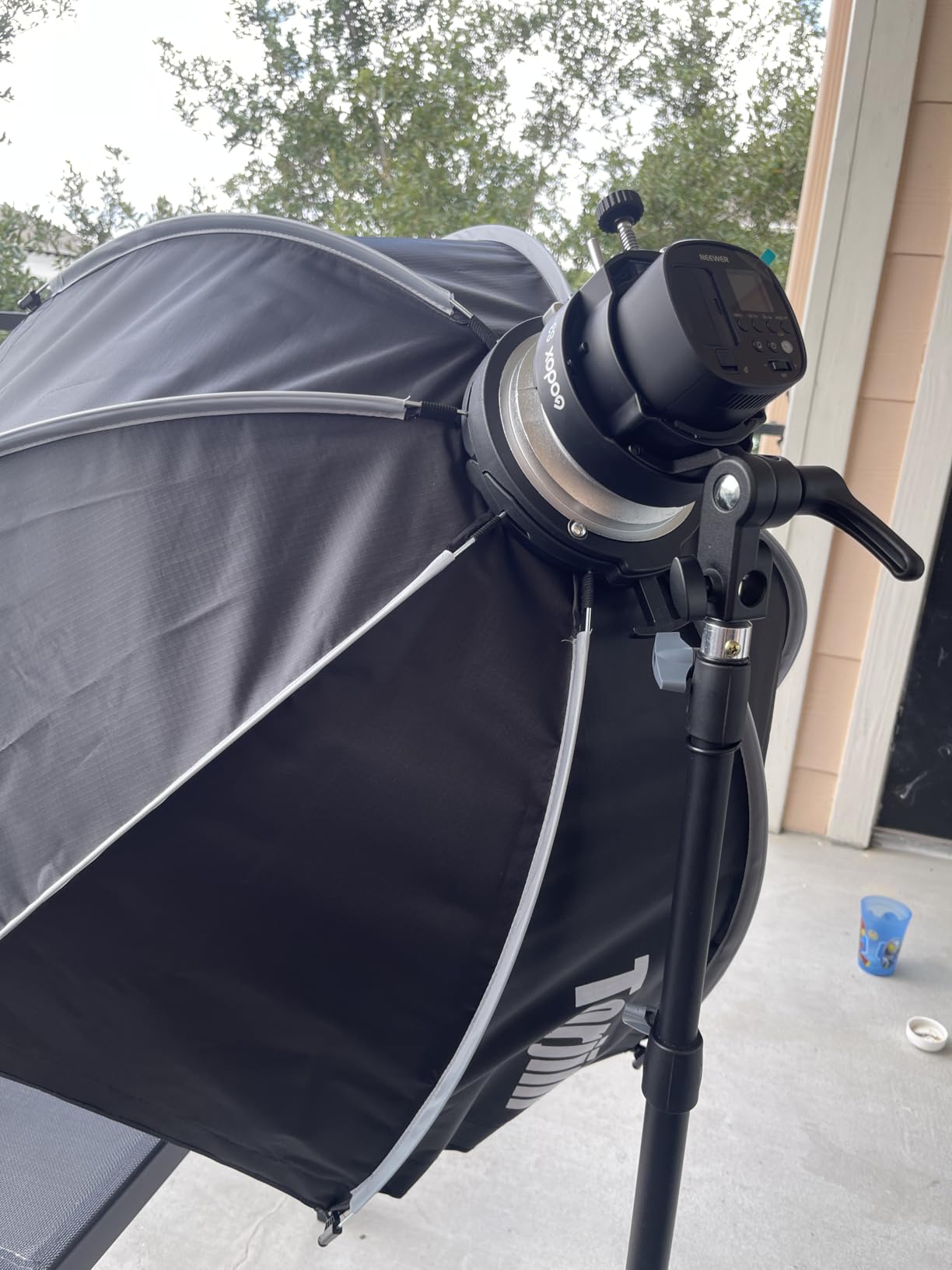
One detail catches people out. The unit cannot use its own Q system radio and the Godox X system at the same time, so decide which ecosystem you are standardising on before you commit. Mixing them means re-pairing every session, which is exactly the friction that makes beginners abandon off-camera flash.
The 3200mAh battery is rated for up to 750 full-power flashes with recycle between 0.01 and 1.5 seconds. The built-in 10W modeling lamp is modest but adequate for checking placement in a dim room.
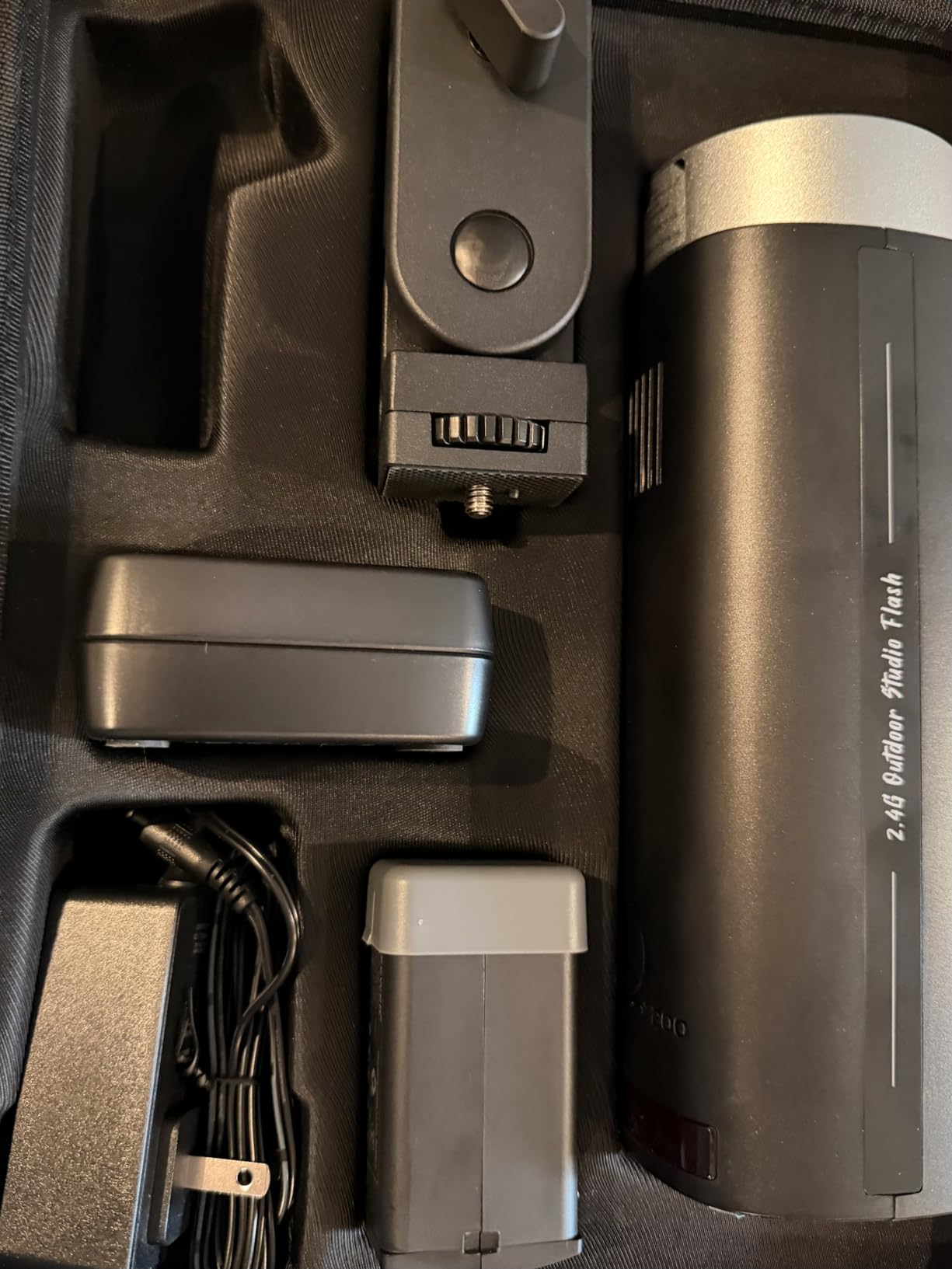
When this head makes sense
It makes sense when your existing trigger is already Godox X and you want a portable head for location work without carrying a second full monolight. The app control and simple menu also suit anyone moving from on-camera flash to off-camera light.
It is a good second light too. A second 200Ws head behind your subject for a hair or rim light is a genuinely different job from the key, and this one is light enough to carry.
What to watch out for
The trigger is a separate purchase, and without one you cannot use TTL or high-speed sync. Budget for the QZ or QPro unit before you start.
Owners also note that the recycle sound is audible at low power, which matters in ceremonies and quiet rooms. Treat 200Ws as the ceiling for your needs, since a larger modifier or a bright room will expose the limit quickly.
6. NEEWER Q3 – Most Portable Head for Tiny Rooms and Travel
NEEWER Q3 200Ws 2.4G TTL Flash (2nd Version), 1/8000 HSS GN58 Strobe Light Portable Photography Monolight with Softbox Diffuser/3200mAh Lithium Battery/500 Full Power Pops/Recycle in 0.01-1.8s
200Ws in 626g
GN58
Flash duration to 1/15380s
TTL and 1/8000s HSS
500 full-power pops
Pros
- 626g body with 200Ws makes it the easiest head here to carry up stairs or on a plane
- TTL
- manual and Multi modes with flash exposure compensation
- Flash duration as short as 1/15380s for freezing fast movement
- Battery gives about 500 full-power pops with 0.01-1.8s recycle
- Cooling vents on both sides help with sustained use
Cons
- Only 8 manual power steps from 1/128 to 1/1
- A trigger is required and sold separately
- Reported overheating at low power during long sessions
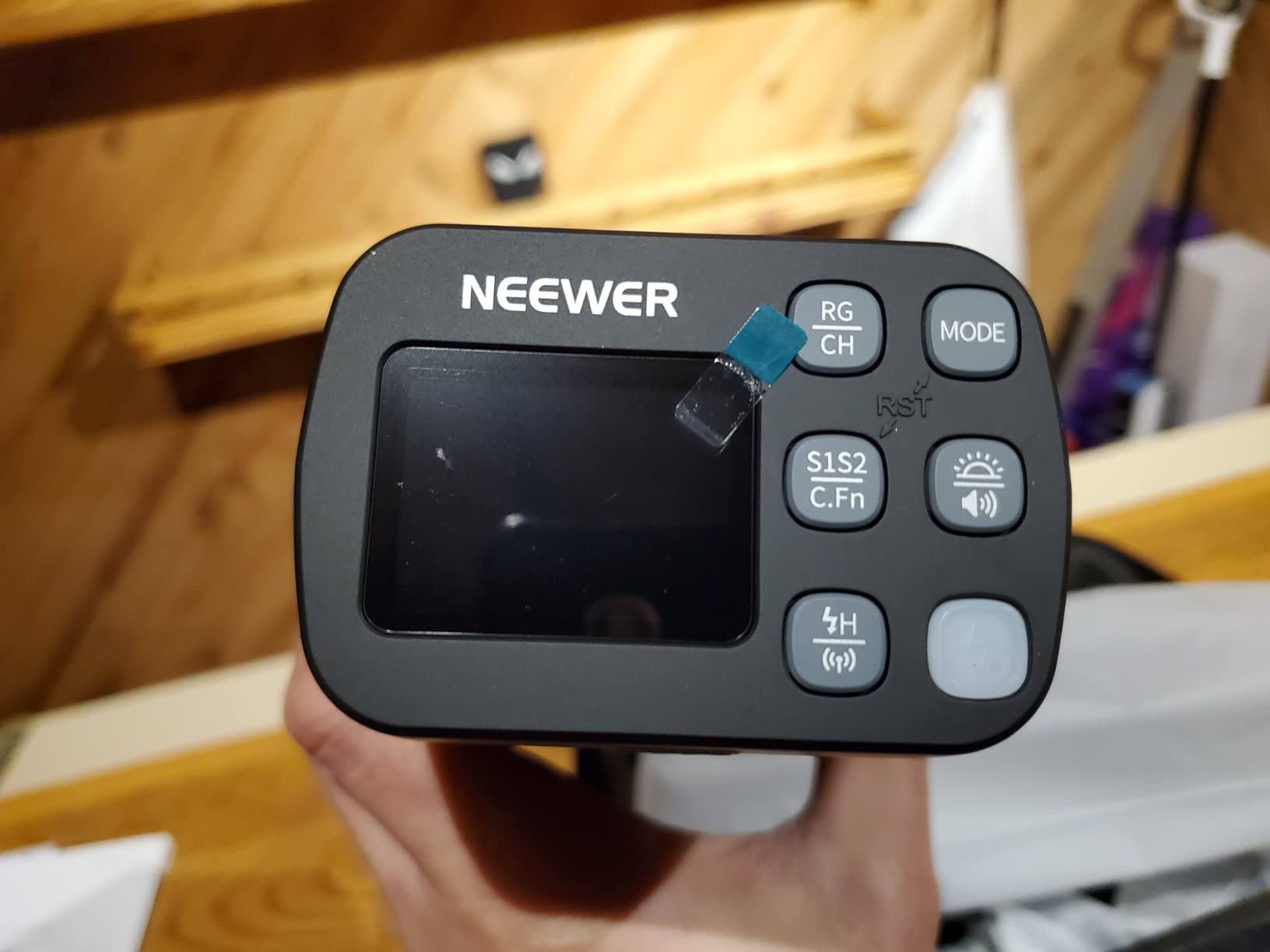
The Q3 is the smallest and lightest head in this roundup at 626g, and it is the one I would take on a trip. A 200Ws monolight that fits in a normal bag changes how often you shoot, which matters more for a home studio than raw power.
Despite the size it is not a speedlight. Guide number is 58 at ISO 100, high-speed sync runs to 1/8000 seconds, and flash duration gets as short as 1/15380 seconds, which is short enough to freeze a jumping child mid-air.
TTL, manual and Multi modes are all present, with flash exposure compensation and a stabilised colour mode holding 5600K within plus or minus 200K. The 2.4G Q system covers 5 groups and 32 channels out to about 100 metres.
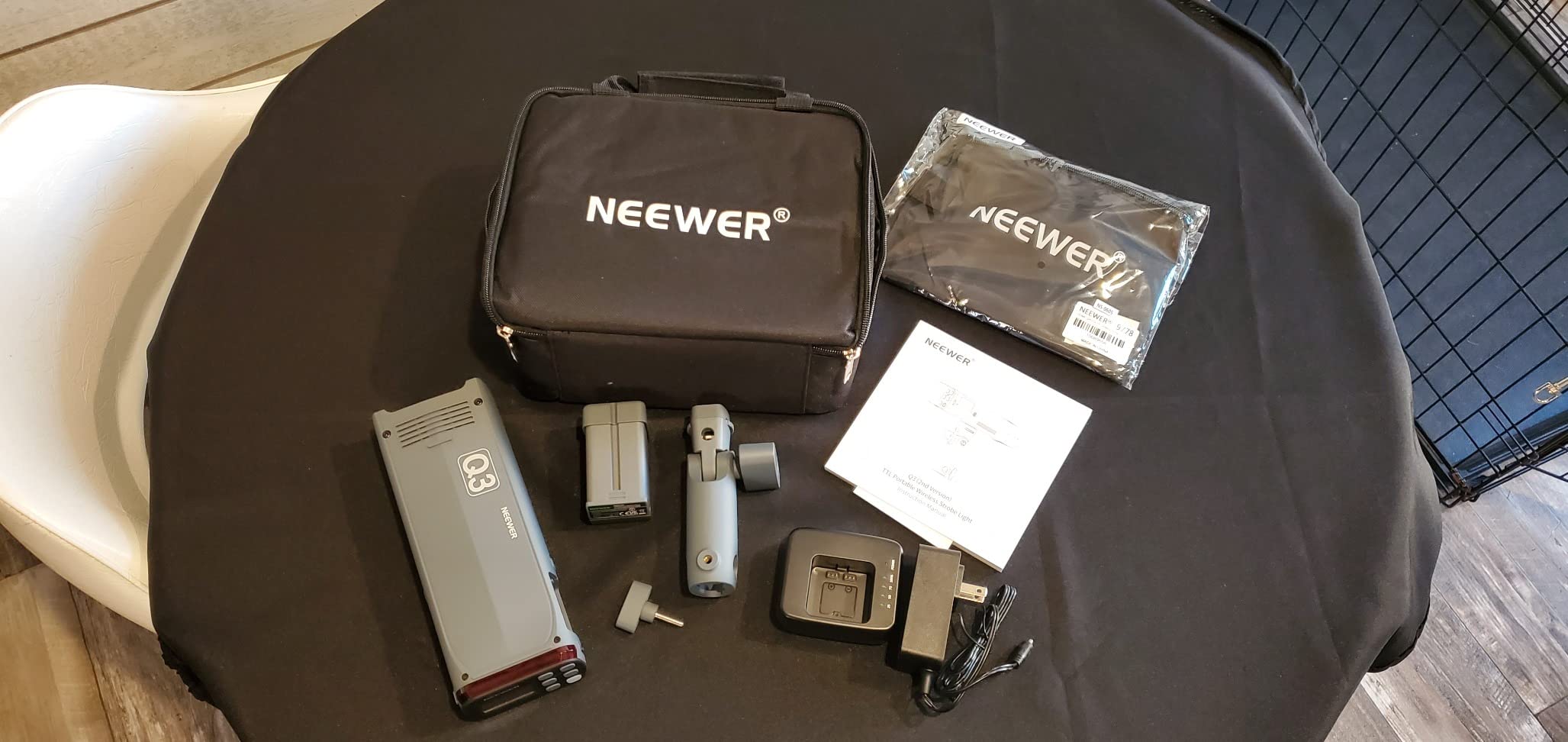
The included softbox diffuser is a pleasant surprise, and the body uses standard speedlight-style modifier fittings, so small reflectors and grids are easy to find. Battery life is around 500 full-power pops on the 14.4V 3200mAh pack.
What stands out is the weight-to-power ratio in the hand. It is the only head here I would describe as genuinely portable rather than semi-portable.
Where the Q3 wins
It wins in rooms where space is the constraint. A head you can hold, or clamp to a short stand behind a chair, changes the layouts you can attempt. Low-ceiling basements that rule out boom arms are exactly its comfort zone.
It also wins for short bursts of location work, where a big monolight is awkward to transport and a speedlight is too weak to light a group.
What to watch out for
Manual power control runs in 8 steps from 1/128 to full, which is coarse next to the 0.1-stop control on the AD200 Pro II. Fine adjustment happens at the trigger or in TTL instead.
There are also reports of overheating at low power settings during sustained studio work, with a long cool-down afterwards. If your plan is long stretches of continuous fill light, test this before it becomes your only head. A trigger is required for correct use and sold separately.
How Many Watts Do You Need in a Small Room?
Wattage is the number beginners get wrong, and the forum pattern is consistent: people buy a 600Ws head they cannot recycle fast, then wonder why the results feel harder than the samples. A spare room rarely needs that.
Start with distance rather than wattage. A head lighting a seated subject from 1.5 to 2 metres through a medium softbox handles almost any domestic room at 200Ws. Push past 2.5 metres, add a large window you cannot fully block, or add more than two people, and you are into the 300 to 400Ws range.
Two rules cover most decisions. First, the inverse square law means doubling the distance quarters the light, so moving a head back twice as far costs two stops and you will chase that with aperture or ISO. Second, every modifier you add loses light: a bare reflector is bright and hard, a softbox spreads that same energy over a larger area, so it needs more power to deliver the same brightness at the subject.
Recycle time matters as much as power for the subjects people actually photograph. A slower head cannot keep up with a child, a dog or a group, and the frames you lose are the ones you wanted.
Colour temperature is the last calibration. Most heads here quote 5600K, which matches a bright overcast window. If you shoot on tungsten-balanced settings or warm bulbs in the room, switch the camera to daylight white balance so the flash and ambient agree.
One-Light, Two-Light and Three-Point Setups for a Spare Room
A home studio rarely has space for three stands. These three setups cover almost everything, and each one maps onto a head from the list above.
For the one-light setup, place the Godox MS300V or the Godox AD200 Pro II about 1.5 metres from your subject at roughly 45 degrees, slightly above eye level. Add a white reflector on the shadow side as fill. This is the cheapest way to learn where shadows come from, and it is the setup most beginners should shoot for their first six months.
For the two-light setup, keep the key where it was and put the second head behind the subject on the opposite side, raised above the head and pointed down at the shoulders. A reflector replaces the second head if you want to keep the kit small. You now have separation from the background and the hair or rim light that makes portraits look finished.
For three-point lighting, the third light is a background or hair light aimed at the backdrop. The NEEWER Q300 works well here because it runs off mains or battery, so the background light can live in the corner farthest from your sockets.
A few placements worth remembering. Butterfly lighting comes from a key directly above and in front, which suits beauty work on a small table setup. Rembrandt lighting is the same key moved to about 45 degrees and a little higher, leaving a small triangle of light on the far cheek. Loop lighting sits between the two.
If your window is your main source, put it behind your subject rather than in front, with a strobe or reflector facing back toward them. That turns a room into a one-light studio without buying anything at all.
Strobe vs Speedlight vs LED vs Window Light
This is the most repeated question in the forums, and the honest answer is that each one wins a different job. Here is how I would decide.
Window light is free, beautiful and completely unreliable. For portraits where the light is soft and directional and you can wait, it beats anything. It fails the moment the sun moves, the clouds arrive or you need consistent exposure across a set.
Speedlights are the sensible first step for someone already shooting events. They are fast, they sync at high shutter speeds and they cost little. Their limit is output: a speedlight struggles with a group at two metres, which is why the NEEWER Q3 is appealing as a bridge.
Continuous LED light is the best teacher because you can see the shadows before the shutter fires, and one poster on r/photography with an AD200 was well advised to start there. It is also the wrong tool for portraits of children or anyone moving, since a slower shutter either blurs them or forces ISO you did not plan for.
A studio strobe is the answer once you need repeatable light that freezes motion and outruns daylight. That moment usually arrives when a client asks for the same look twice, or when you start shooting on overcast afternoons in November.
What a Complete One-Room Studio Kit Actually Contains
The head is the part buyers research. The rest of the kit is what makes it usable, and it is where the real entry cost sits.
A usable one-room kit needs: a strobe head, a radio trigger, a light stand, a modifier, a sandbag, an extension lead if you are on mains, a backdrop or a painted wall, and cable management so nobody trips. A camera timer or intervalometer becomes useful once you are shooting alone.
The trigger deserves special attention because it is the item people buy last and then regret. A monolight with radio built in still needs a transmitter on the camera, and the ecosystems do not always cross over. If you already own Godox X triggers, choose a head that speaks that system. If you own nothing, pick a brand and stay with it.
The sandbag is not optional. A monolight on a softbox in a domestic room is a top-heavy object near furniture, stairs and children. One bag on the base leg changes the stability more than any other single accessory.
Buying a monitor setup for the same room? Our guides to studio monitors for a home studio and monitor stands for a home desk cover the review side of the same one-room build.
Second-Hand Strobe Buying Checklist
Used monolights are a sensible way into off-camera flash, and the series that hold value best are the ones with a Bowens mount and a built-in 2.4G X receiver. Godox bodies in particular resell easily because the accessory ecosystem is large and support is easy to find.
Before you commit, inspect the flash tube for yellowing or pitting, since an aged tube reduces output and softens the colour. Then fire the head at every power level and watch the exposure on the camera rear screen. A head that reads one stop high at full power has capacitors worth avoiding.
Check the recycle timing. Time ten full-power pops and compare with the published figure for that model. Slow recovery points to tired batteries or ageing capacitors, which is the most common reason a used head feels frustrating.
Test the radio. Pair the built-in receiver with your trigger, walk to the far end of the space and fire. Cheap triggers are usually the weakest link in a used kit, and replacing one costs less than replacing a head.
For battery monolights, ask whether the packs have been stored charged. Look for a clean battery compartment and ask to see the head charge from a low state. Also confirm the mount: Bowens plus an included adapter ring is a good sign, while a missing ring or proprietary mount narrows your modifier options.
Power, Heat and Safety in a Domestic Room
A studio strobe in a rented flat raises questions that never appear in a professional studio guide, and they are worth ten minutes of planning before you start shooting.
Extension leads are the main concern. Mains monolights draw significant current, and daisy-chained leads across a room trip and overload sockets. Use one properly rated lead per head, run it along a wall rather than across a walkway, and keep connections dry.
Heat matters in a small room. Modeling lamps run continuously at high output on the MS300V, and a closed space with the door shut will warm quickly. Keep vents clear, do not leave a head running unattended with the modeling lamp on, and switch everything off between setups.
Weight and stability come next. A monolight with a large softbox on a light stand needs a sandbag on the base leg, especially on carpet where a foot can slide. Keep stands behind the subject rather than between the subject and the camera.
Finally, never leave a strobe charging unattended overnight on an extension lead, and cycle a spare fuse of the correct rating if you travel with mains heads. If you shoot in a basement, check for damp before connecting anything.
Frequently Asked Questions
What is the best studio lighting for portrait photography?
For a single home room and one subject, a 200Ws monolight with TTL and a battery covers most situations. The Godox AD200 Pro II is our pick because 200Ws, high-speed sync to 1/8000 seconds and a 1.2 kg body mean you can carry it up a staircase and still shoot wide open for a blurred background. Pair it with a softbox or beauty dish and a white reflector on the fill side.
What is the best lighting for portraits at home?
One light plus a reflector is the answer in most homes. Put the head about 1.5 metres from your subject at 45 degrees and slightly above eye level, then place a white reflector opposite to lift the shadows. A window can also be turned into a back light by shooting your subject toward it with a reflector facing them. Add a second head behind the subject later for separation.
How many watts do I need for portrait lighting?
Between 1.5 and 2 metres from a seated subject through a medium softbox, 200Ws is enough for almost any domestic room. Go to 300 to 400Ws when you move past 2.5 metres, cannot fully block a large window, or shoot more than two people. Remember the inverse square law: doubling distance quarters the light, so moving back is more expensive than adding power.
Is a monolight better than a speedlight for portraits?
A monolight is better once you need output. Speedlights sync at high shutter speeds, cost little and suit events, but they struggle with a group at two metres. A monolight gives you enough power to use a large softbox and still stop down to f/4 or f/5.6. If you shoot both, a head such as the NEEWER Q3 bridges the two at 626g and 200Ws.
Do professional photographers use Godox?
Yes, and they also use Profoto, Broncolor, Elinchrom and Einstein. Godox is widely accepted in professional work because the 2.4G X trigger system is open, the accessories are plentiful and the Bowens mount keeps the modifier costs low. What matters for a home studio is that you stay inside one trigger ecosystem, since competing systems do not always cross-talk.
Which Godox strobe is best for a home studio?
For most home rooms, the AD200 Pro II is the strongest all-round choice at 200Ws with TTL, HSS to 1/8000 seconds and about 500 full-power pops on the battery. Choose the AD400 Pro instead if your room is bright, your modifiers are large or you shoot groups. For a permanent mains corner on a Bowens mount, the MS300V gives 300Ws and the widest modifier choice.
What is a good studio lighting setup for portraits?
Start with a key light at 45 degrees and slightly above eye level, placed 1.5 to 2 metres away. Add a white reflector opposite as fill, then a second head behind the subject on the opposite side, raised and aimed down at the shoulders for a hair or rim light. That third position is what separates a subject from the background and it costs nothing in floor space.
What is the 3 lighting rule?
The three-point lighting rule describes a key light, a fill light and a back light. The key sets the exposure and shape, the fill controls how dark the shadows are, and the back light adds separation from the background. In a home studio the fill can be a reflector instead of a head, which saves a stand, and the back light can be a small head clamped behind the subject.
What is the best studio strobe for taking photos, and what about continuous light?
A studio strobe is the right tool once you need repeatable light that outruns daylight and freezes movement. Continuous LED light is the better teacher because you can see shadows before the shutter fires, and it is the wrong choice for children or pets unless you accept slower shutter speeds or higher ISO. Many home photographers start with continuous light and add a strobe when they need consistency.
What is a modeling lamp used for?
A modeling lamp is a continuous lamp inside the head that lets you see where the light is falling before you fire, roughly like a photographer’s shadow. On the Godox MS300V the 150W LED is adjustable from 5 to 100 percent, which lets you double it as a video key light. It also helps beginners learn where shadows will fall instead of guessing.
Final Verdict: Which Studio Strobe Fits Your Spare Room
The Godox AD200 Pro II is the best studio strobe for home portrait work in 2026 because it balances 200Ws, TTL, high-speed sync and battery power in a body light enough to carry. Pick the AD400 Pro for a bright room or large modifiers, and the MS300V if you want a permanent mains corner on a Bowens mount.
Choose the NEEWER Q300 when there is no reliable socket, the Q200 when you already run Godox X triggers and want a second head, and the Q3 when carrying a full monolight is the thing stopping you from shooting at all. Spend what you can on the modifier, the stand and the trigger, because those three shape the photograph more than the head does.