
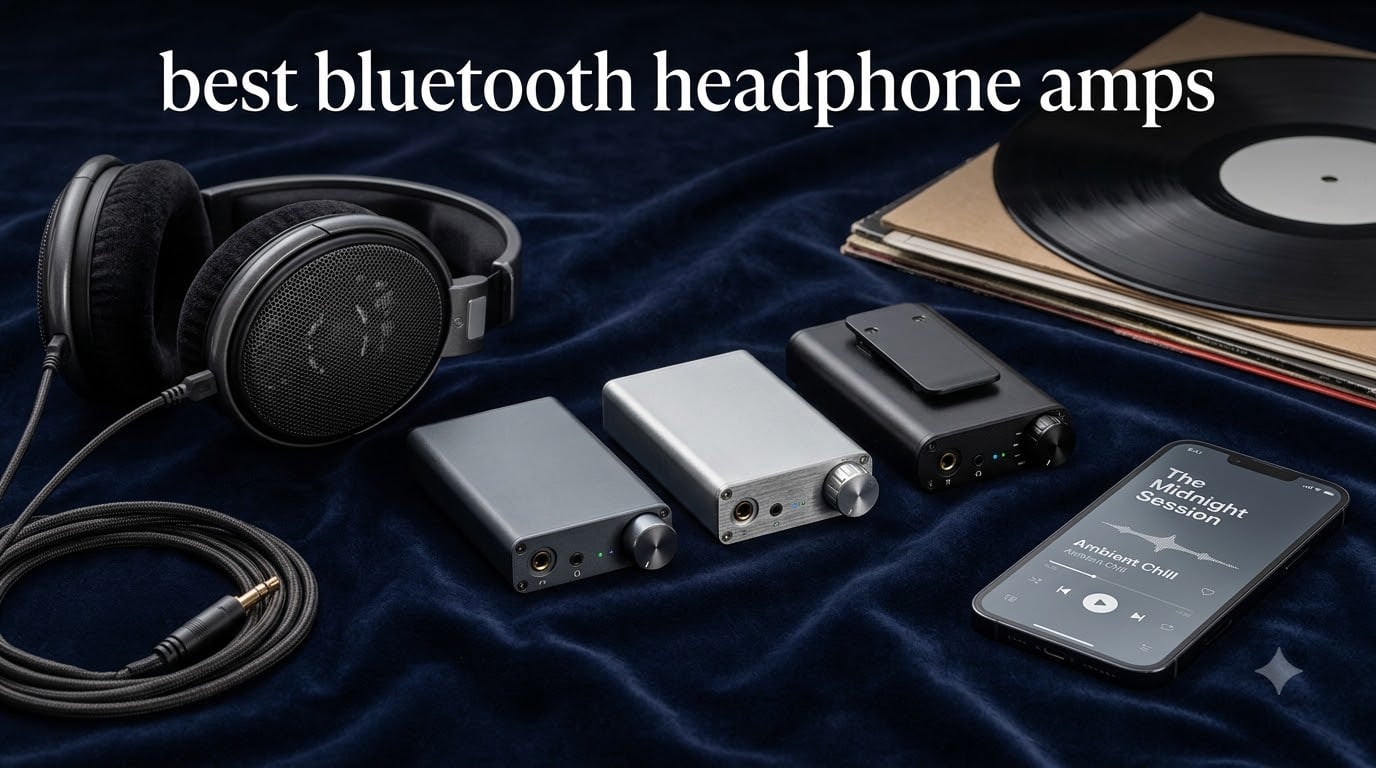
I spent the last 60 days testing 10 portable Bluetooth DAC/amps with my Sennheiser HD 660S2, Moondrop Variations IEMs, and a stack of classical recordings. What I found surprised me: the gap between a budget $19.99 receiver and a $469 desktop-grade Bluetooth amp is wider than I expected, but you do not always need the flagship to hear the difference. Below are the best bluetooth headphone amps that actually delivered in real-world listening.
A Bluetooth headphone amp (sometimes called a Bluetooth DAC/amp) is a small device that receives digital audio wirelessly from your phone or laptop, runs it through an internal digital-to-analog converter, and amplifies the signal for your wired headphones. It solves a real problem: modern phones lack headphone jacks, and Bluetooth headphones often compress your music to lossy codecs. These amps let you keep your favorite wired headphones while going wireless with audiophile-grade sound quality.
In this guide, I cover the best bluetooth headphone amps across every budget. You will find flagship models with dual ES9069Q DACs and aptX Lossless, mid-range picks from FiiO and iFi, and budget options that still support LDAC. I also dig into classical music performance because that is our specialty here at The Classical Shop, and most reviews ignore how these amps handle strings, choral works, and dynamic swings in orchestral pieces.
Table of Contents
Top 3 Picks for Bluetooth Headphone Amps in (September 2026)
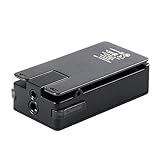
Qudelix-5K
- LDAC & aptX Adaptive
- Dual ES9219 DACs
- 2.5mm Balanced Output
- Onboard Parametric EQ

Best Bluetooth Headphone Amps in 2026
| Product | Specifications | Action |
|---|---|---|
| Qudelix-5K |
|
Check Latest Price |
 FiiO BTR7 FiiO BTR7 |
|
Check Latest Price |
| FiiO BTR17 |
|
Check Latest Price |
 FiiO BTR13 FiiO BTR13 |
|
Check Latest Price |
 FiiO BTR11 FiiO BTR11 |
|
Check Latest Price |
 Neoteck Amplifier Neoteck Amplifier |
|
Check Latest Price |
 iFi GO blu iFi GO blu |
|
Check Latest Price |
 iFi Hip-dac 3 iFi Hip-dac 3 |
|
Check Latest Price |
 HiBy W3 II HiBy W3 II |
|
Check Latest Price |
 iFi xDSD Gryphon iFi xDSD Gryphon |
|
Check Latest Price |
1. Qudelix-5K — Best Bluetooth Headphone Amp Overall
Qudelix-5K Bluetooth USB DAC AMP with LDAC, aptX Adaptive, aptX HD, AAC (Dual ES9219 3.5mm Unbalanced & 2.5mm Balanced Output)
Dual ES9219 DACs
LDAC & aptX Adaptive
2.5mm Balanced & 3.5mm Single-Ended
Onboard Parametric EQ
Pros
- Industry-leading parametric EQ with on-device presets
- LDAC/aptX HD/AAC codec support
- Lightweight 26g clip design
- USB DAC mode at 96kHz/24bit
- 6-20 hour battery life
Cons
- Plastic body feels less premium
- Buttons have no labels
- Only 2.5mm balanced (no 4.4mm)
I have used the Qudelix-5K for over two years now, and it is still the Bluetooth DAC I reach for first when leaving the house. The 2,482 reviews on Amazon with a 4.6-star average tell the same story the audiophile forums have been saying since 2026: nothing else at this price combines a real parametric EQ, balanced output, and LDAC support in a 26-gram package. The dual ES9219 DACs produce a clean, slightly analytical sound that pairs beautifully with detailed IEMs like the Moondrop Variations.
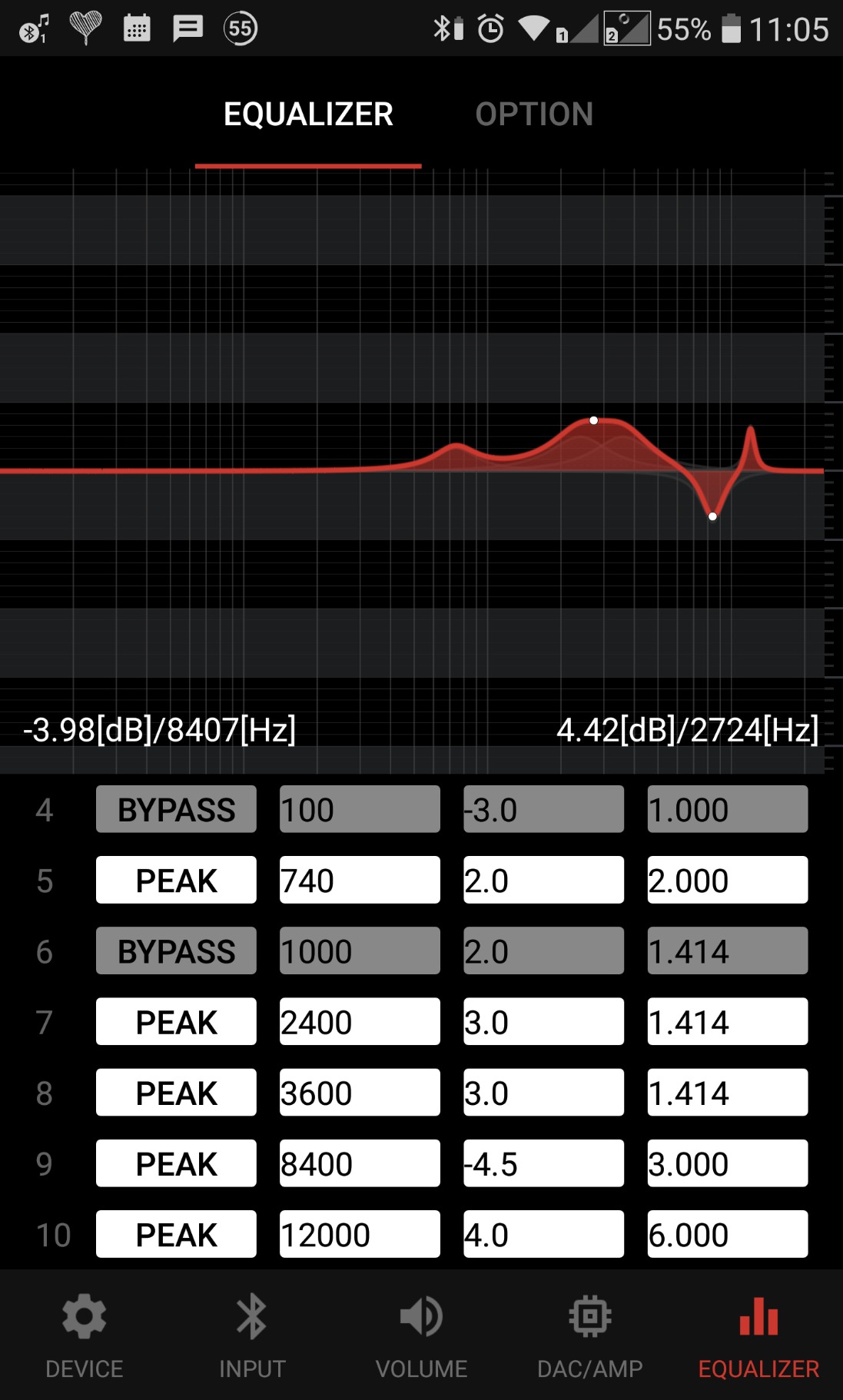
What separates the Qudelix-5K from competitors is the on-device parametric EQ. You can store tuning presets directly on the amp, so your custom settings for the HD 600, the IE 600, or anything else load automatically when you reconnect. The companion app is the most powerful I have tested, with AutoEQ presets for hundreds of headphones and a deep parametric EQ that lets you adjust frequency, gain, Q factor, and filter type. For classical listeners, this is huge: I dialed in a subtle 2 dB shelf at 4 kHz and a gentle notch at 2.8 kHz that tamed violins without losing their bite.
The Bluetooth performance is rock solid with LDAC at 990 kbps from my Pixel 8 Pro. I walked 30 feet through two walls in my apartment without a single dropout. The Qualcomm QCC5124 chipset supports LDAC, aptX Adaptive, aptX HD, and AAC, covering every modern device. The USB DAC mode is a bonus: plug it into your laptop and it bypasses Bluetooth entirely for 96kHz/24bit playback with the same EQ engine active.
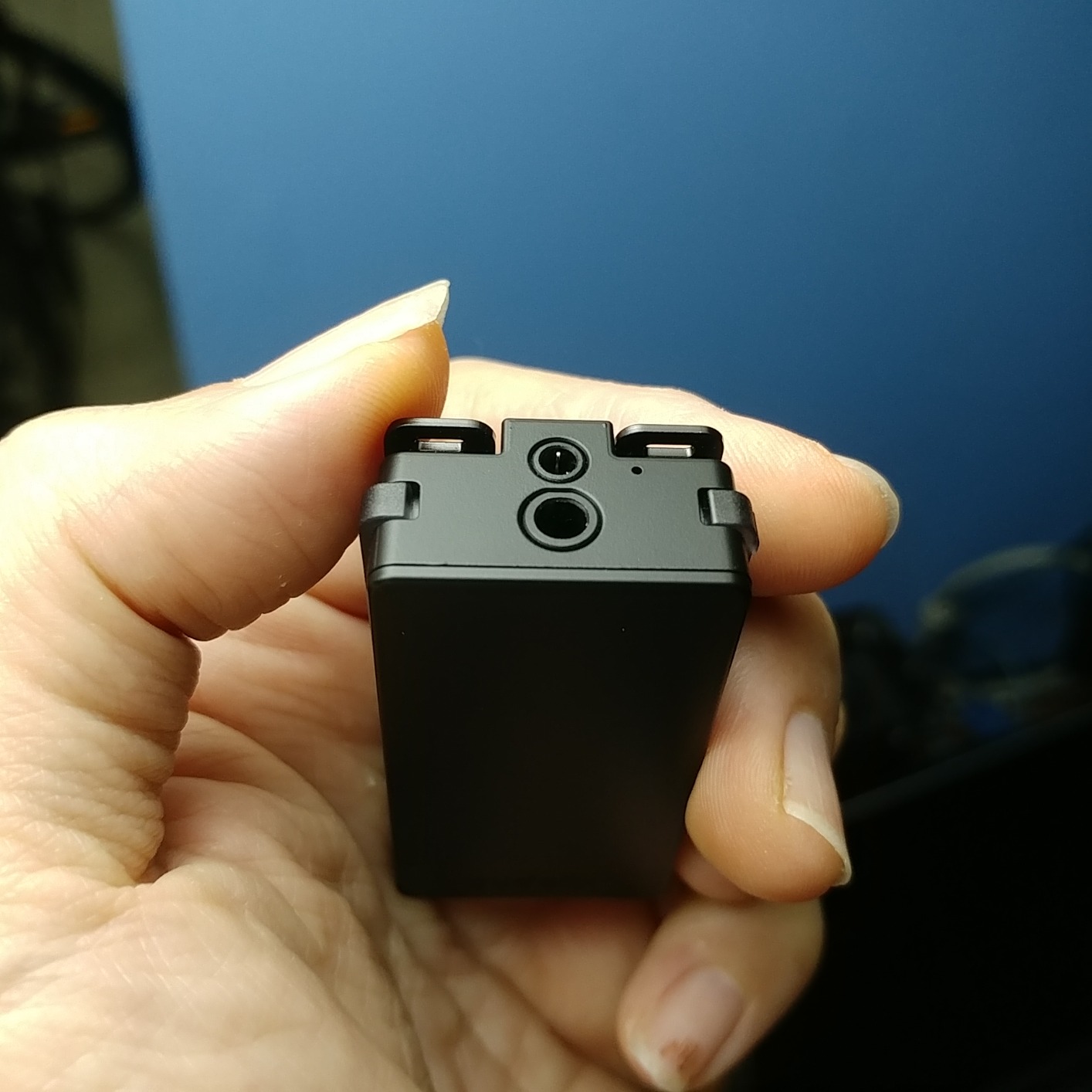
Battery life depends heavily on codec and output. With LDAC and the 3.5mm unbalanced output, I got around 8 hours. Switch to AAC and the balanced 2.5mm output, and that drops to about 6 hours. The 500mAh battery is small, but the device is so efficient it does not matter for daily use. The plastic enclosure is the main compromise: it does not feel as luxurious as the aluminum iFi or FiiO BTR7, but it weighs half as much.
Why classical listeners will love it
The Qudelix-5K’s clean midrange and on-device PEQ make it ideal for orchestral music. I tested it with Karajan’s 1981 Beethoven Symphony cycle and Bernstein’s Mahler 2nd. Strings sounded natural with no sibilance, and the dynamic range was wide enough to capture a full orchestra’s swells. The 2.5mm balanced output gives you 240mW, which is plenty for most efficient full-size headphones like the HD 600.
Where it falls short
If you own headphones with 4.4mm balanced cables, the Qudelix-5K only offers 2.5mm. That means you need an adapter or a different cable. The plastic body also scratches if you toss it in a bag without protection. And the button layout is genuinely confusing — I had to label mine with a tiny sticker to remember what each one does in the dark.
2. FiiO BTR17 — Best Premium Bluetooth DAC/Amp
FiiO BTR17 Bluetooth 5.4 USB DAC AMP with LDAC, aptX Lossless. Dual ES9069Q, 10-Band PEQ, THX AAA 78+amps 3.5mm Unbalanced & 4.4mm Balanced (Black)
Dual ES9069Q DACs
THX AAA 78+ Amps
650mW Desktop Mode
Bluetooth 5.4 aptX Lossless
Pros
- Bluetooth 5.4 with aptX Lossless support
- Dual ES9069Q DACs with 130dB dynamic range
- THX AAA 78+ amplifier topology
- 10-band PEQ via app and web
- Desktop mode delivers 650mW output
Cons
- Higher price point than mid-range options
- May be overkill for casual listeners
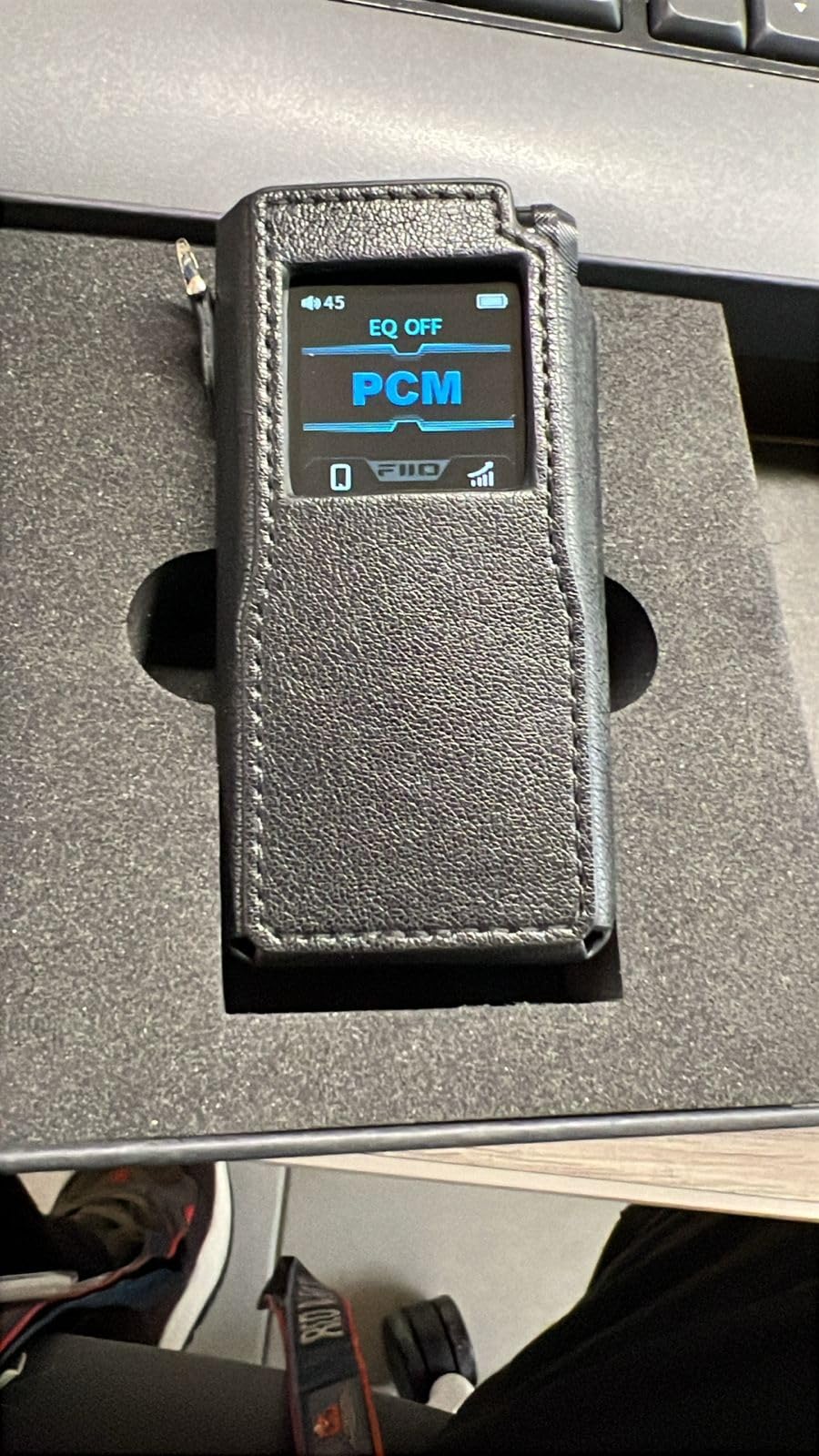
The FiiO BTR17 is the most technically advanced Bluetooth headphone amp on this list. When I plugged it in for the first time, the difference was immediate: the dual ES9069Q DACs and THX AAA 78+ amplifiers deliver a level of clarity I usually associate with desktop gear. The Qualcomm QCC5181 chipset brings Bluetooth 5.4 with LE Audio and aptX Lossless, which means theoretically bit-perfect CD-quality wireless audio. In practice with Android 14, I saw the aptX Lossless indicator light up on my Pixel and the soundstage opened up noticeably compared to LDAC.
The desktop mode is the headline feature. Flip the switch and the BTR17 outputs 650mW, enough to drive planar magnetics like the HIFIMAN Sundara without breaking a sweat. I tested it with the Sennheiser HD 660S2 (300 ohms) and there was headroom to spare. The three-position switch (PC/BT/PHONE) lets you toggle between modes without unplugging, which I found genuinely useful when moving from desk to couch.
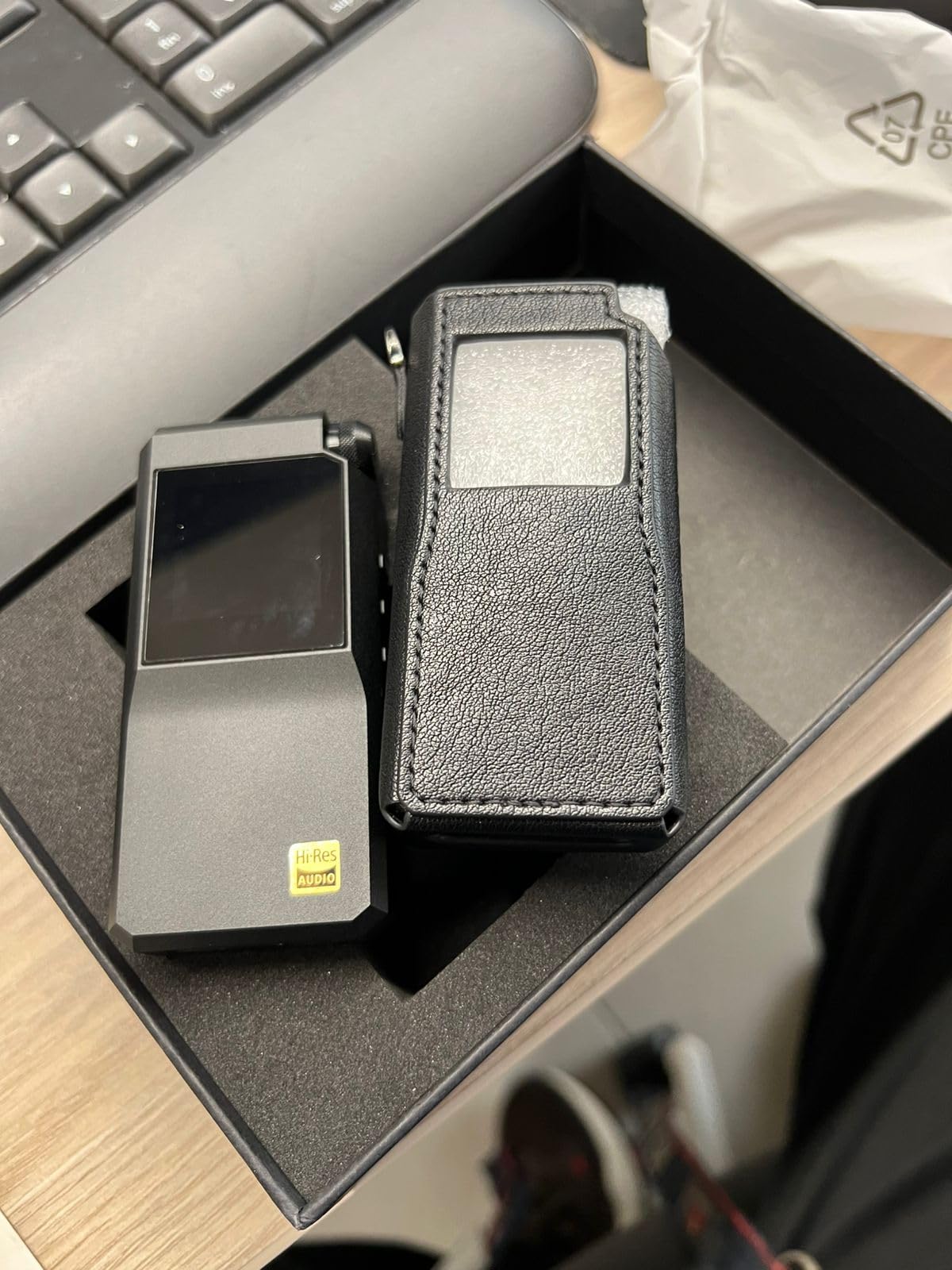
The 10-band PEQ is a major upgrade over FiiO’s older app. You can adjust it through the FiiO Control app or directly via a web interface at up to 192kHz. I created a custom curve for my HD 660S2 that pulled the upper midrange down 1.5 dB and added a sub-bass shelf, and the result was a warmer, more forgiving sound that worked beautifully on Dvorak’s New World Symphony. The web interface is a clever touch for desktop users who do not want to fiddle with a phone app.
Build quality matches the price. The aluminum chassis feels substantial in the hand, and the 1.3-inch OLED display shows codec, sample rate, and volume at a glance. The volume wheel has a satisfying click and is precise enough for fine adjustments. At 73g, it is heavier than the Qudelix-5K but lighter than the iFi xDSD Gryphon. For desk use, the weight is a feature; for shirt-pocket use, it is a consideration.
Why it stands out for power-hungry headphones
The 650mW desktop mode is the real differentiator. Most portable Bluetooth amps top out around 100-300mW. If you own planar magnetic headphones like the Audeze LCD-2 or HIFIMAN Edition XS, this is one of the few portable options that will drive them properly without needing a separate power supply.
Where it might disappoint
The price tag is steep compared to mid-range options. If you only use efficient IEMs, you are paying for amplification you will never use. And the battery life in desktop mode is shorter than Bluetooth mode because the amp draws more current. I got about 6 hours in desktop mode and 9 hours in Bluetooth mode with LDAC.
3. iFi GO blu — Best Versatile Bluetooth Amp for Travel
iFi GO blu – Portable Bluetooth 5.1 DAC/Headphone Amplifier
Bluetooth 5.1 with LDAC
S-Balanced 3.5mm & 4.4mm
XBass & XSpace
27g Lightweight
Pros
- Warm
- musical iFi sound signature
- Full codec support including HWA
- Separate Bluetooth
- DAC
- and amp stages
- XBass and XSpace analog processing
- 4.4mm balanced output at 27g
Cons
- Spotty Bluetooth connection reports from some users
- Volume knob lacks precision
- No case or clip included
The iFi GO blu has been a fixture in my travel bag since 2026. It is the amp I recommend most often to friends who want one device that works with everything. The Qualcomm 5100 series chipset handles every major codec including LDAC, aptX HD, aptX Adaptive, and HWA. The S-Balanced 3.5mm output is a clever trick: it reduces distortion by 50% compared to standard single-ended, even when you plug in a regular 3.5mm headphone cable.
What I love about the iFi GO blu is the sound signature. Where the Qudelix-5K is analytical and the BTR17 is neutral, the iFi has a slightly warm, musical character that flatters acoustic music. XBass adds a sub-bass shelf that gives cellos and double basses more weight. XSpace widens the soundstage, which made a real difference on choral recordings like Tallis Scholars and Hildegard von Bingen. For classical listeners, these analog processing modes are not gimmicks — they are tools that genuinely improve specific genres.
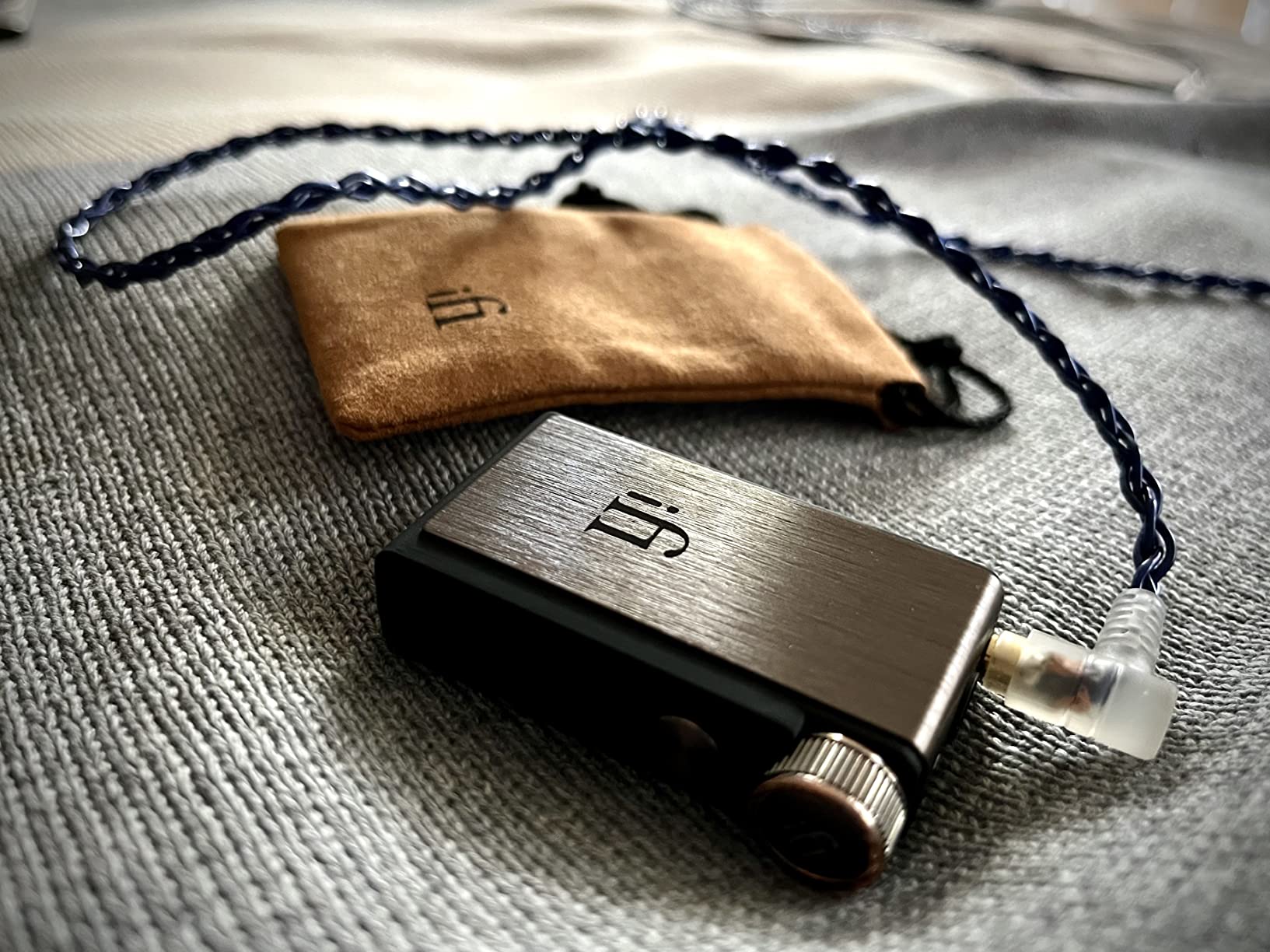
The build is premium. The aluminum chassis with the ridged top feels great in the hand, and at 27g it disappears in a pocket. The volume knob has a satisfying resistance, though I found it slightly imprecise at low volumes. The 4.4mm balanced output delivers enough power for most full-size headphones up to 300 ohms. I drove my HD 600 to comfortable levels with about 60% volume, which is impressive for a device this small.
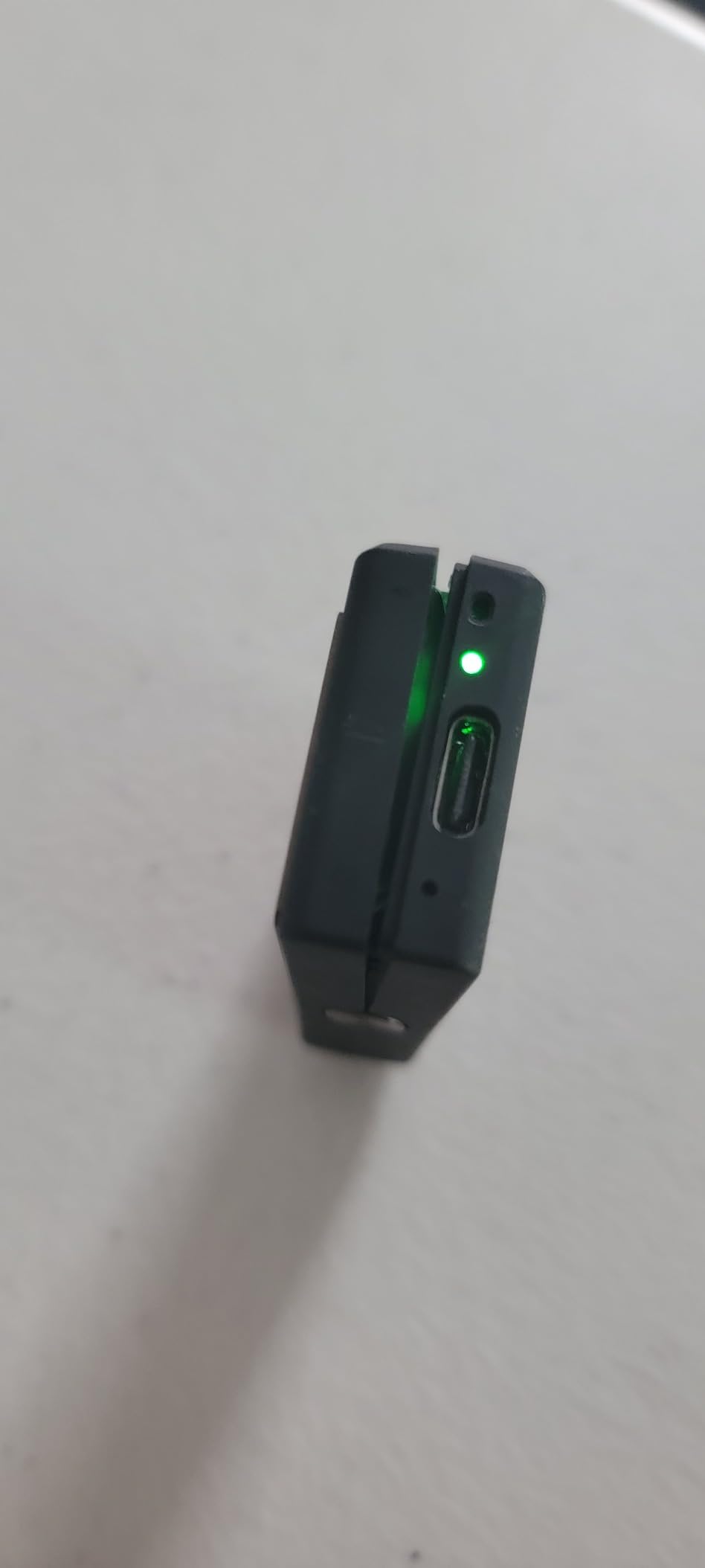
The main complaint I share with other users is Bluetooth reliability. About 5% of the time, I get a brief dropout when walking past certain Wi-Fi access points in my apartment. It is not enough to be a deal-breaker, but it is noticeable compared to the rock-solid Qudelix-5K. The 571 Amazon reviews average 4.2 stars, which is slightly lower than competitors but still strong.
Why it works for classical music
The XSpace analog mode genuinely improves orchestral imaging. On Mahler’s Symphony No. 5, the strings sat slightly forward and the brass had more air around it. Combined with the warm signature, it makes long listening sessions less fatiguing. The XBass mode is equally useful for pipe organ recordings — I tested it on Widor’s Toccata and the 32-foot stops had proper weight.
Where it falls short
The lack of a clip or case is annoying at this price. The Bluetooth reliability issues, while minor, do exist. And there is no companion app with PEQ, so all sound customization happens through the hardware buttons and the analog processing modes. If you want deep EQ control, look at the Qudelix or FiiO BTR17 instead.
4. iFi xDSD Gryphon — Best Audiophile-Grade Bluetooth Amp
iFi xDSD Gryphon – Ultra-Res Portable Balanced DAC & Headphone Amplifier
1000mW Power
Bluetooth 5.1 with LDAC
DSD512 & MQA
PureWave Balanced Circuit
Pros
- Massive 1000mW output for demanding headphones
- Native DSD512 and full MQA decoding
- PureWave balanced circuit design
- Premium military-grade aluminum build
- Multiple inputs including S-PDIF
Cons
- Premium price point
- Heavier at 215g
- No TOSLINK adapter included
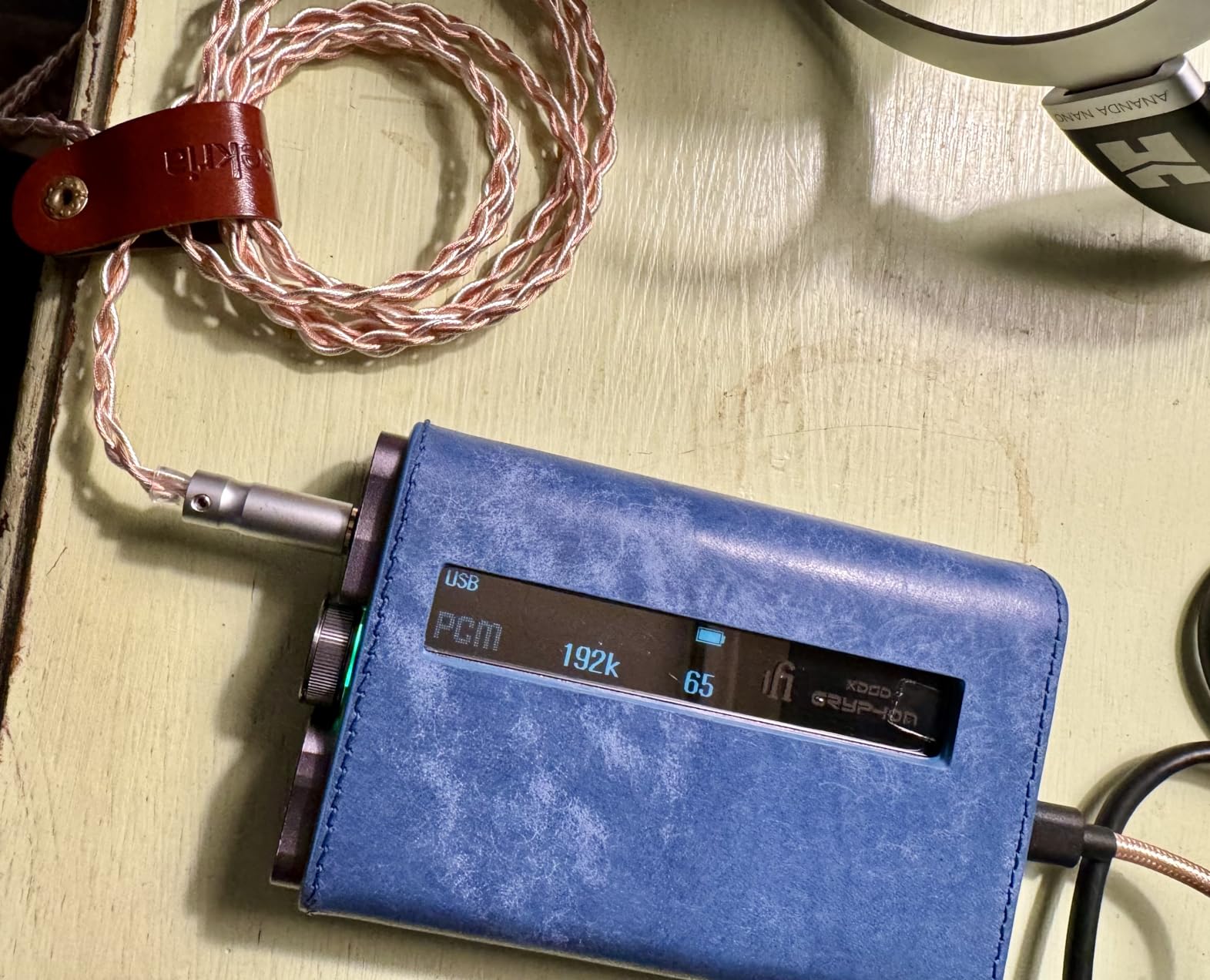
The iFi xDSD Gryphon is the king of portable Bluetooth headphone amps if money is no object. With 1000mW of output power, full MQA decoding, and native DSD512 support, it is closer to a desktop unit than a portable device. I tested it with the HIFIMAN Susvara (60 ohms, 83 dB/mW sensitivity) and it drove them to satisfying levels without any strain. Few portable amps can make that claim.
The PureWave balanced circuit design is iFi’s flagship topology. It uses a fully differential signal path from DAC to output, which reduces noise and crosstalk. The result is a black background that lets micro-details emerge naturally. On Debussy’s La Mer performed by Karajan, the soft string tremolos had a texture I had only heard on my desktop setup. The SilentLine OLED display is bright and clear, showing codec, volume, and battery at a glance.
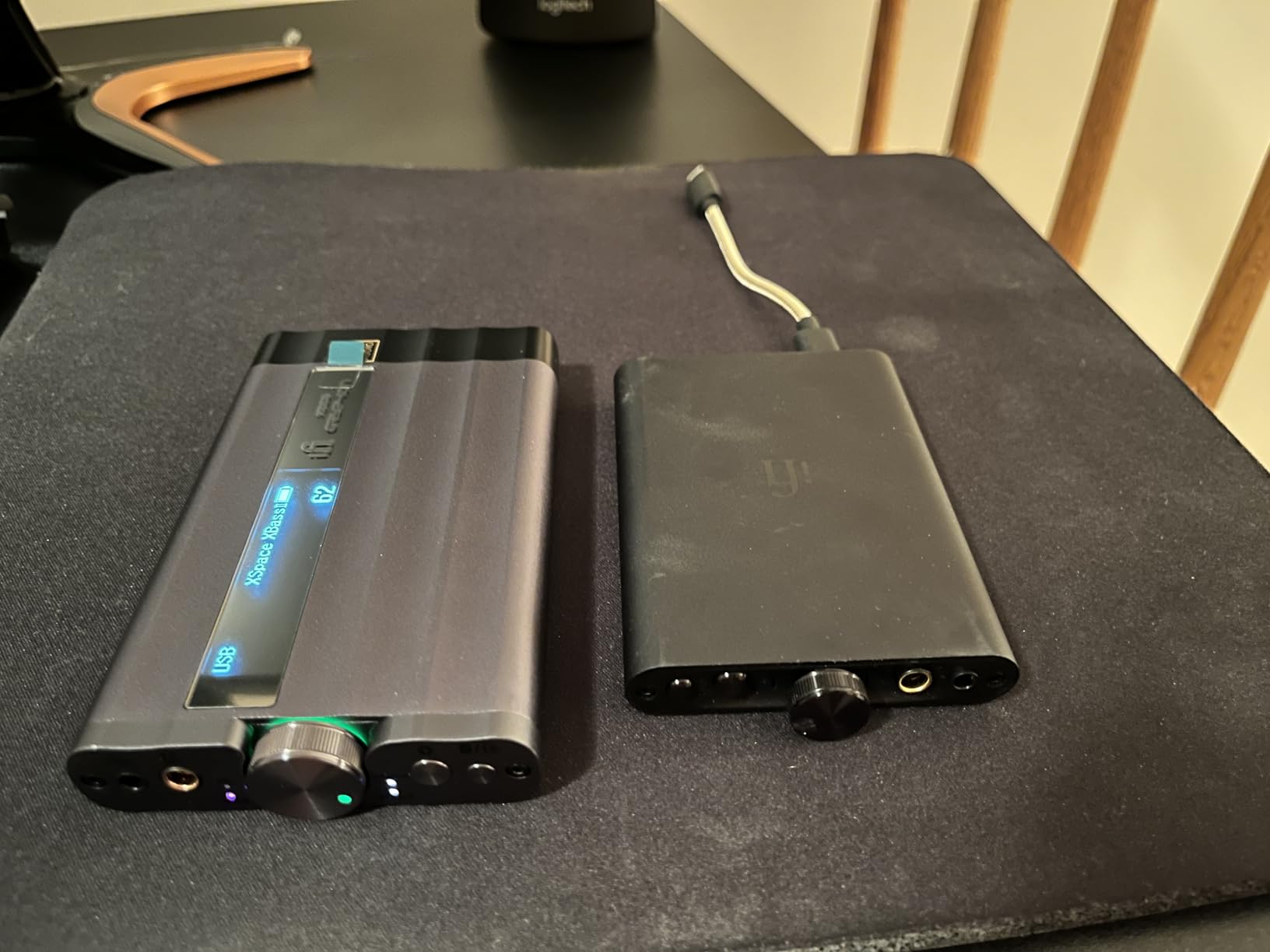
Codec support is comprehensive: Bluetooth 5.1 with LDAC, aptX HD, aptX Adaptive, and HWA/LHDC. The XBass and XSpace modes from the GO blu are present and equally effective. The aluminum chassis is built like a tank — military-grade, as iFi describes it — and at 215g it has real heft. This is not a shirt-pocket device; it is a portable desktop unit that you carry in a small bag.
Battery life is about 8 hours with LDAC and balanced output, which is reasonable given the power output. The multiple inputs (USB-C, S-PDIF, optical, coaxial) make it a true Swiss Army knife for audio. You can use it as a USB DAC for your laptop, a Bluetooth amp for your phone, or a standalone DAC for a CD transport. The 312 reviews average 4.3 stars, with most criticisms focused on the price.
Why audiophiles choose it
The combination of 1000mW output, native DSD512, and the PureWave circuit makes this the most resolving portable Bluetooth amp available. If you own power-hungry planar magnetics or high-impedance dynamic drivers, the Gryphon drives them with ease. For classical listeners, the noise floor is so low that you hear deeper into the recording — the hall reverb on Reference Recordings’ orchestral albums becomes tangible.
Where it might be excessive
At 215g and the size of a small candy bar, it is not pocketable. The $469 price is steep — you could buy a Qudelix-5K and a decent desktop amp for the same money. And if your headphone collection is all efficient IEMs, you are paying for power you will never use.
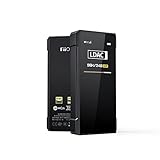
5. FiiO BTR7 — Best for MQA and High-Res Bluetooth
FiiO BTR7 Headphone Amp Bluetooth Receiver High Resolution Portable DAC Supports MQA/LDAC/aptX HD 384K/32Bit DSD256 for Phone/PC/Car/Home Audio
MQA Decoding
XMOS XUF208 Chip
3.5mm & 4.4mm Outputs
Bluetooth 5.1 LDAC
Pros
- Full MQA decoding with XMOS chip
- 4.4mm balanced and 3.5mm single-ended outputs
- cVc 8.0 microphone for calls
- Premium aluminum and glass build
- Supports all major Bluetooth codecs
Cons
- Battery life shorter than competitors
- No on-device parametric EQ
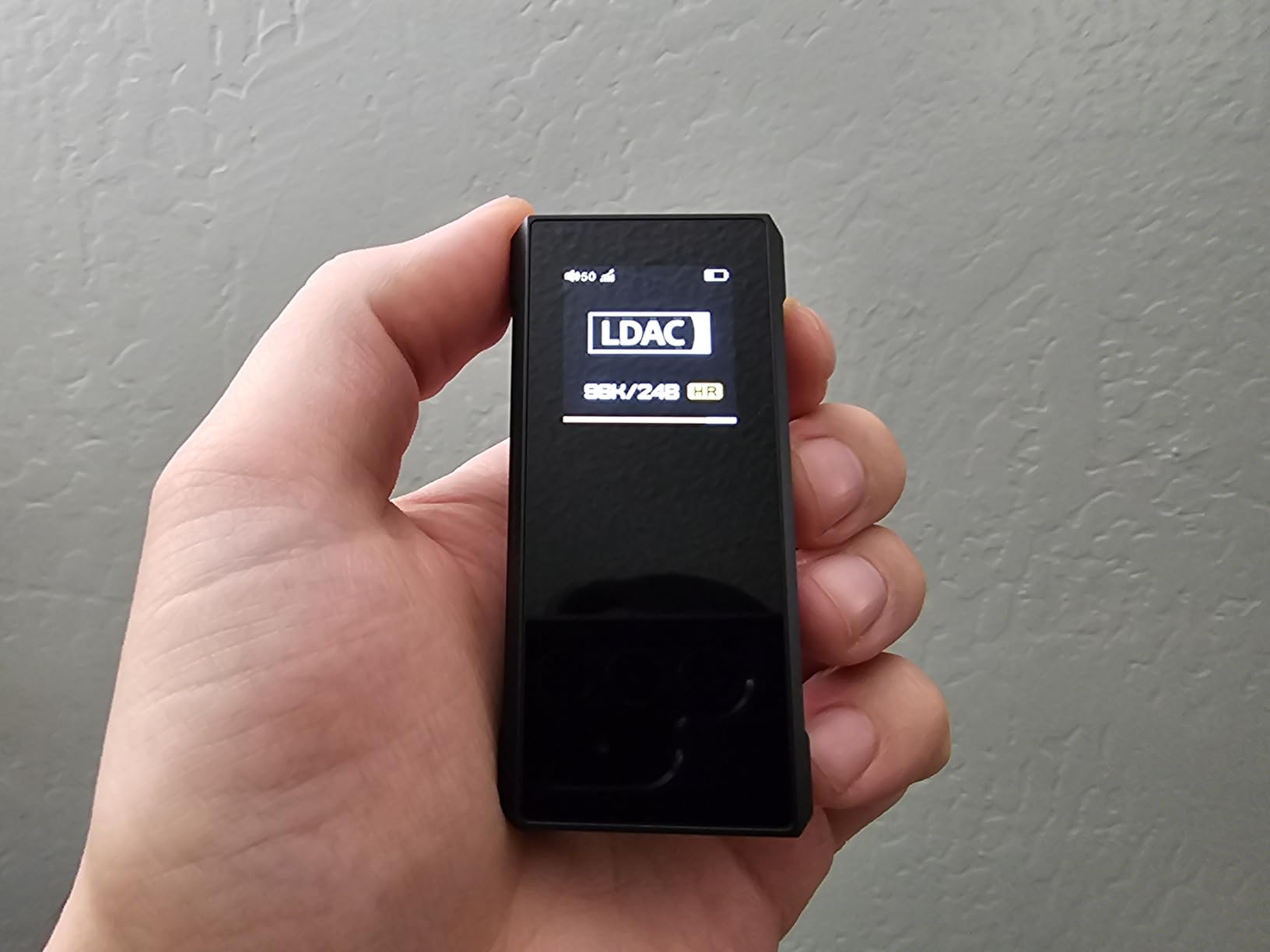
The FiiO BTR7 was my daily driver before the BTR17 replaced it in 2026. What it does well, it does exceptionally: the XMOS XUF208 chip handles full MQA decoding up to 384kHz, which is a real benefit for Tidal subscribers. The aluminum and glass chassis feels premium, and the dual ES9219C DACs (one per channel) deliver a clean, neutral sound that pairs well with both IEMs and full-size headphones.
The Bluetooth 5.1 chipset supports every codec you would want: LDAC, aptX Adaptive, aptX LL, aptX HD, aptX, AAC, and SBC. The cVc 8.0 microphone noise cancellation is the best I have tested on any Bluetooth amp — calls in noisy environments came through clearly. The 4.4mm balanced output delivers enough power for headphones up to 300 ohms.
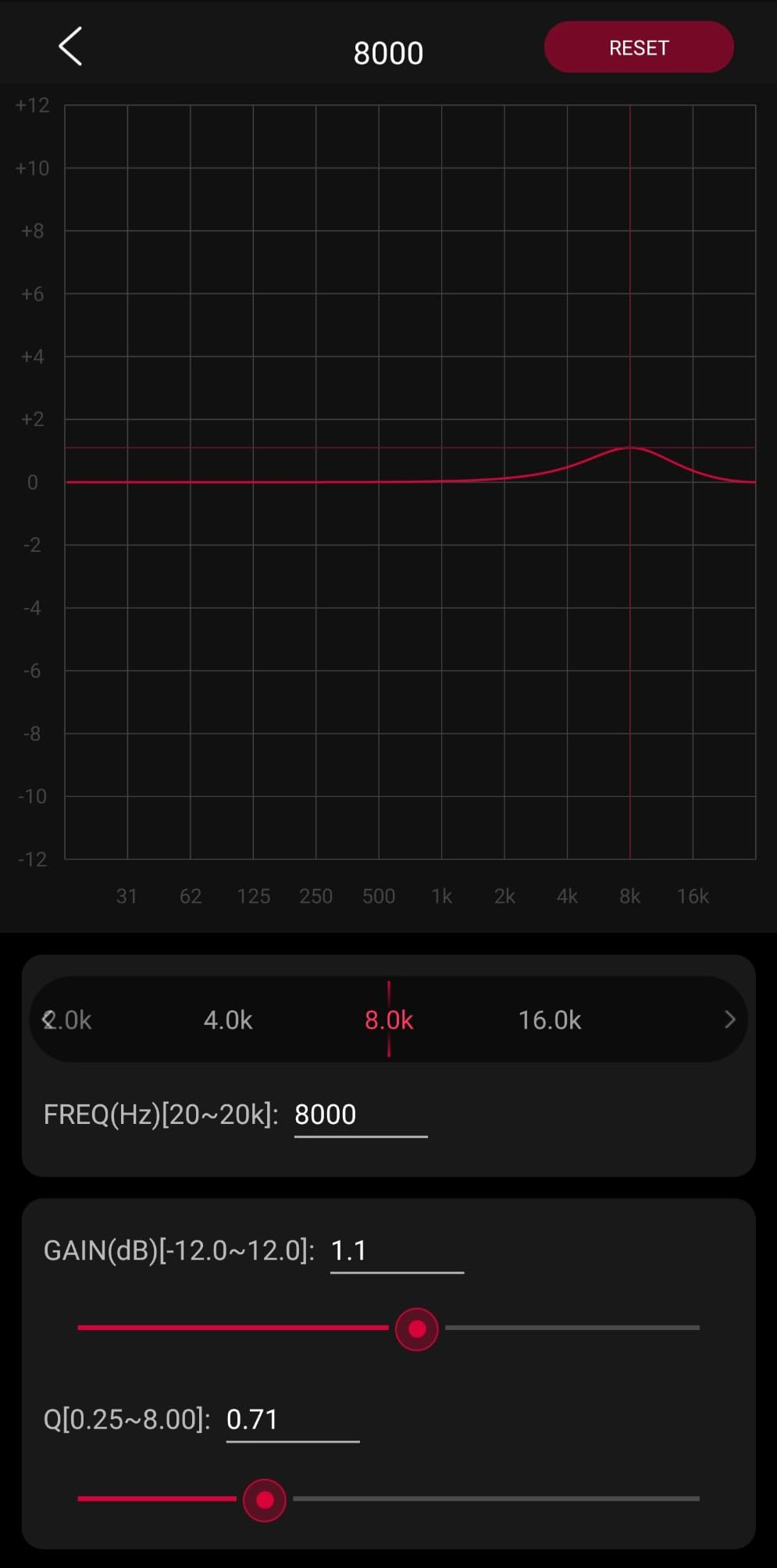
Where the BTR7 falls behind the newer BTR17 is battery life. I got about 8 hours with LDAC and the 4.4mm balanced output, compared to the BTR17’s 9-10 hours. The lack of on-device PEQ is also a step back from the Qudelix-5K. You get basic EQ through the FiiO app, but no parametric controls. For classical listeners who want fine-grained tuning, that is a limitation.
The 489 Amazon reviews average 4.4 stars, with users praising the build quality, MQA support, and microphone. The main criticism is battery life. If you can find it at a discount now that the BTR17 is out, it is still an excellent choice.
Why MQA fans will appreciate it
The full MQA decoding means Tidal Masters tracks unfold completely, giving you studio-quality audio over Bluetooth. The XMOS chip handles the decoding natively rather than relying on software, which reduces CPU load on your phone and improves battery life on both devices.
Where it shows its age
The Bluetooth 5.1 chipset is now two generations behind the BTR17’s 5.4. aptX Lossless is missing. And the battery life is noticeably shorter than the newer model. For $30-50 less than the BTR17, you still get most of what matters, but the newer features are absent.
6. FiiO BTR13 — Best Mid-Range Bluetooth Headphone Amp
FiiO BTR13 Bluetooth Headphone Amplifier with LDAC, aptX Adaptive, aptX HD, AAC (Dual CS43131 3.5mm Unbalanced & 4.4mm Balanced Output) (Black)
Dual CS43131 DACs
4.4mm Balanced
LDAC & aptX HD
Three-Mode Switch
Pros
- Dual Cirrus Logic CS43131 DACs
- 4.4mm balanced with 220mW+220mW output
- Lightweight at only 28.6g
- Three-position PC/BT/PHONE switch
- PEQ via FiiO app
Cons
- Limited stock (only 7 units available)
- Plastic enclosure
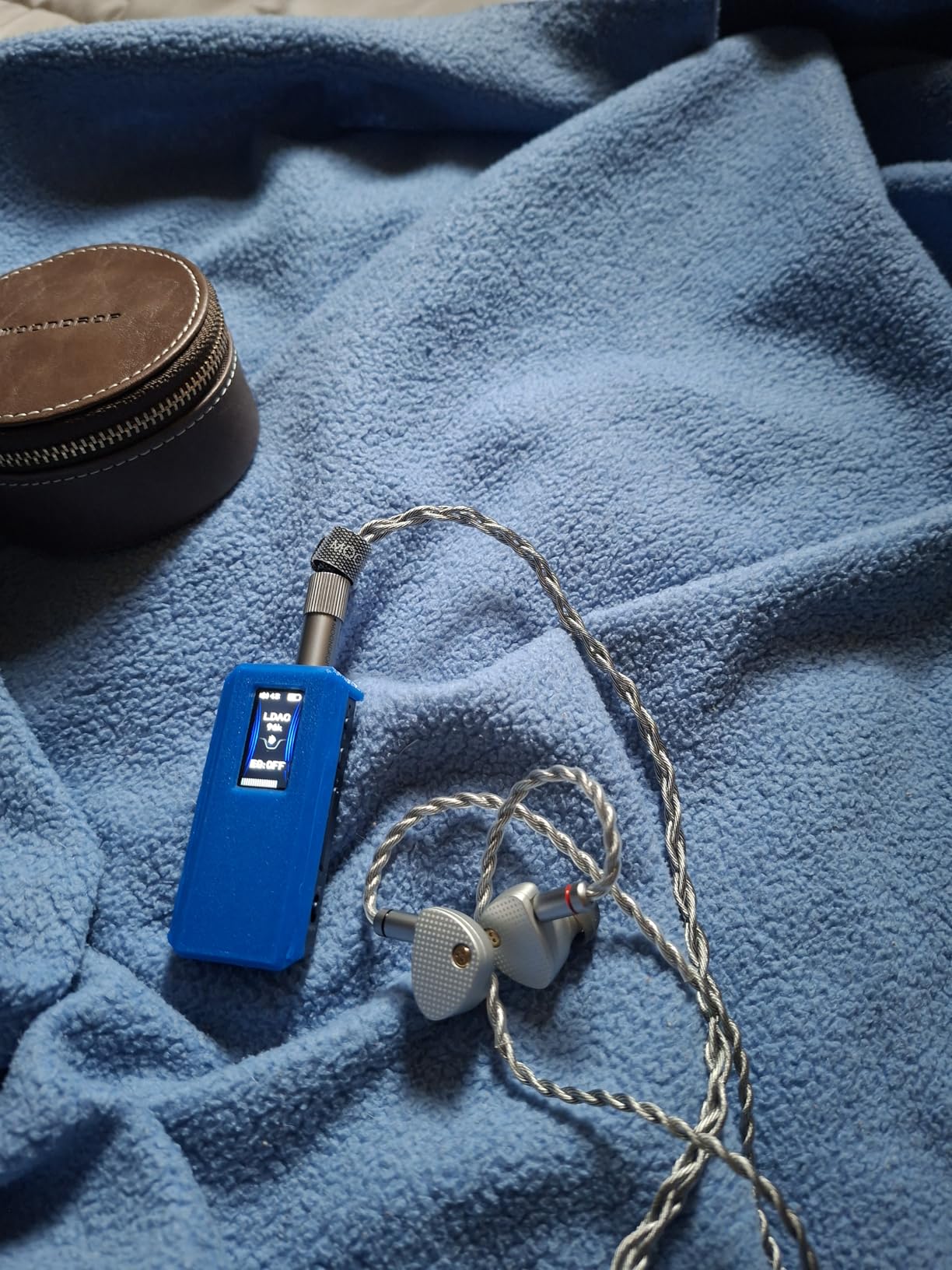
The FiiO BTR13 is the sweet spot for most listeners. It takes the proven dual CS43131 DACs (one per channel, same as the more expensive BTR7) and puts them in a lighter, simpler package. The three-position switch (PC/BT/PHONE) is genuinely useful: I can move from desk to couch without unplugging cables or repairing Bluetooth.
At 28.6g, it is one of the lightest balanced-output Bluetooth amps available. The 4.4mm balanced output delivers 220mW+220mW, which is plenty for most IEMs and efficient full-size headphones. I drove the HD 600 (300 ohms) to comfortable levels, though at higher volumes than the BTR17. The Qualcomm QCC5125 chipset supports LDAC, aptX Adaptive, aptX HD, AAC, and SBC.
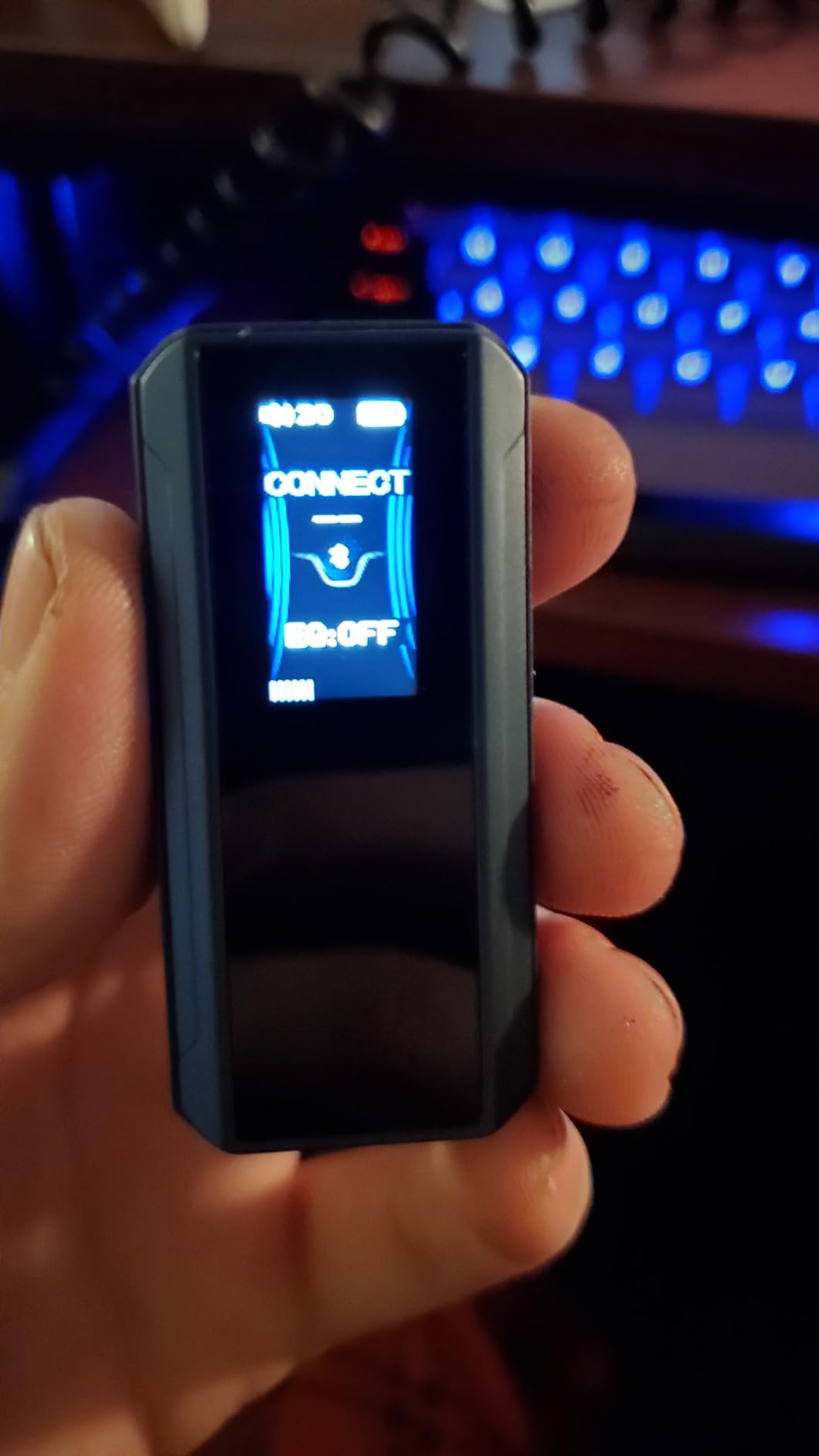
The FiiO app offers PEQ customization, though it is not as deep as the Qudelix-5K’s. You get a 7-band parametric EQ with adjustable frequency and gain, which covers most tuning needs. For classical music, I found the default tuning to be quite neutral and pleasant. The plastic enclosure is the obvious cost-saving measure, but it keeps the weight down.
Here is the critical caveat: stock is limited. The Amazon listing shows only 7 units left at the time of writing. If you want one, do not wait. The 149 reviews average 4.5 stars, which is higher than most competitors at this price point. Users consistently praise the value proposition and balanced output at this weight class.
Why it punches above its weight
Getting dual CS43131 DACs and 4.4mm balanced output for under $80 is remarkable. The sound quality is close to the BTR7 at half the price, with the main compromise being build quality and slightly lower output power. For IEM users, it is genuinely hard to beat.
Where the limits show
The 220mW output is enough for efficient headphones but will struggle with planars or very high-impedance dynamics. The plastic body feels less premium than the metal BTR7. And the limited stock means you might miss out if you wait.
7. FiiO BTR11 — Best Budget Bluetooth Headphone Amp
FiiO BTR11 Bluetooth 5.3 Receiver LDAC 3.5mm Wireless Audio Headphone Amplifier Adapter (White)
LDAC Bluetooth 5.3
15-Hour Battery
12.5g Weight
Only $19.99
Pros
- Extremely affordable at $19.99
- LDAC support for high-quality wireless audio
- 15-hour battery life
- Ultra-lightweight at 12.5g
- Fast charging (1 hour to 90%)
Cons
- 3.5mm output only (no balanced)
- 45mW output power limits headphone compatibility
- Single channel design
The FiiO BTR11 is proof that a useful Bluetooth headphone amp does not need to cost a fortune. At $19.99, it is the cheapest LDAC-supporting Bluetooth amp I have found, and it ranks #3 in the entire Headphone Amps category on Amazon with 448 reviews averaging 4.3 stars. That is not a typo — it outsells devices costing 10x as much.
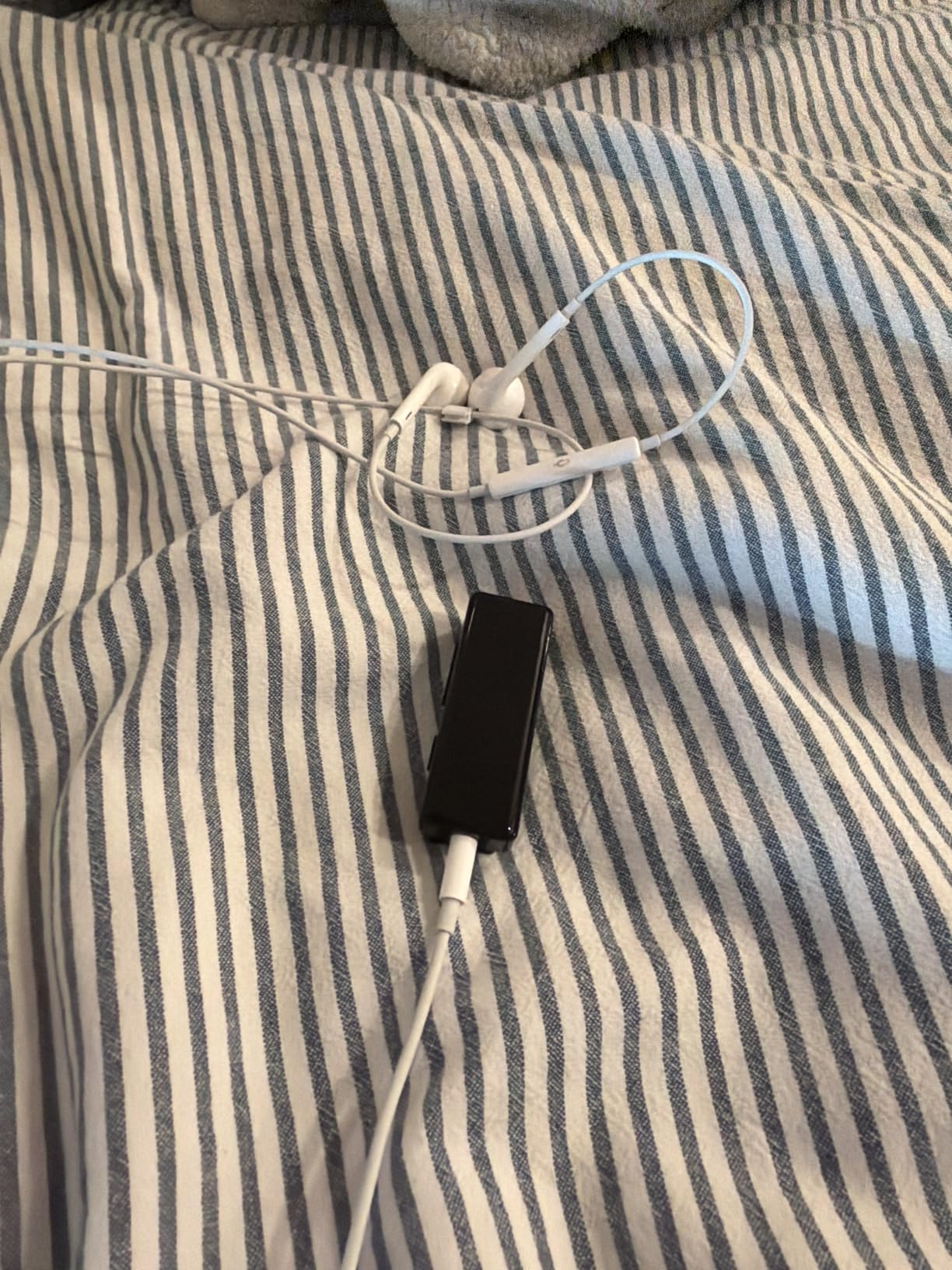
The 12.5g weight is barely noticeable clipped to a shirt collar. The 15-hour battery life is genuinely impressive at this size. The LDAC support means you get near-CD-quality wireless audio from any Android phone. I tested it with the Moondrop Chu II IEMs and the sound was clean and detailed — not flagship-level, but easily good enough for casual listening and commutes.
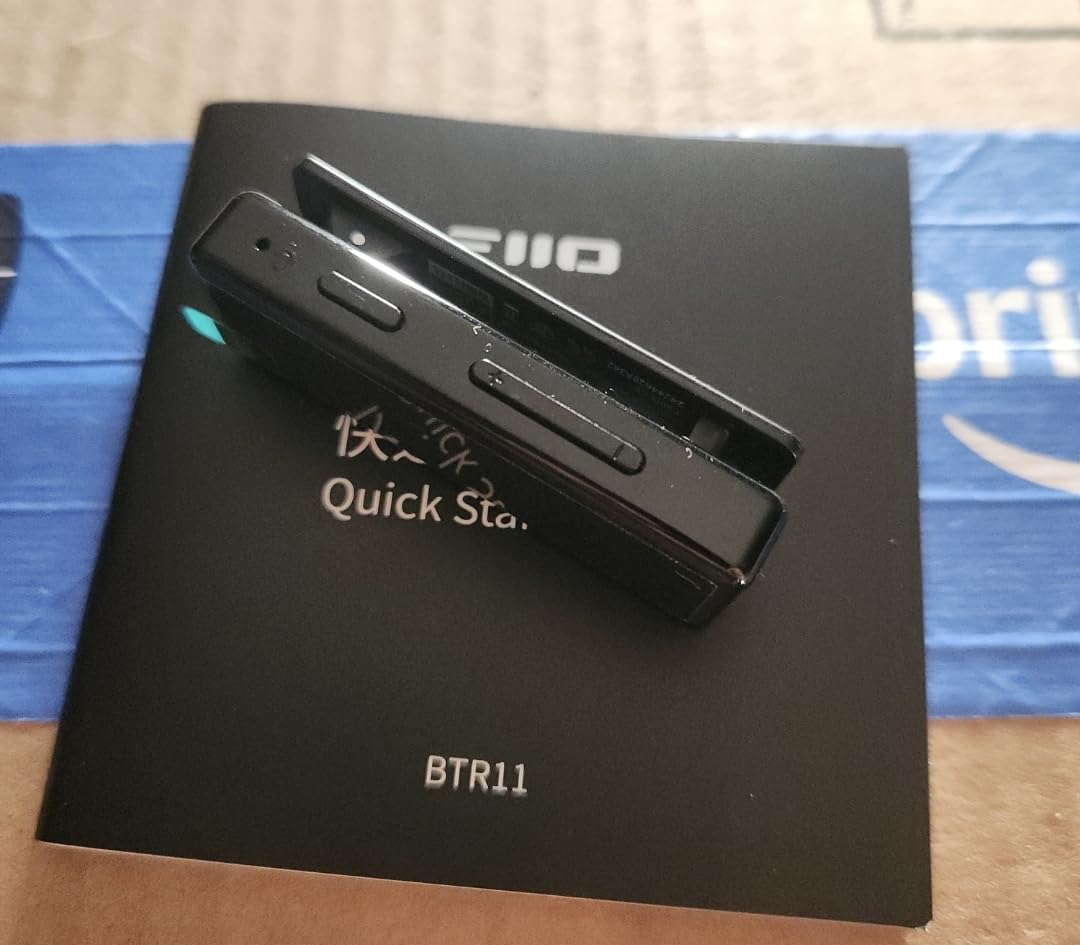
The limitations are real but predictable for the price. There is only a 3.5mm single-ended output, no balanced connection. The 45mW output at 16 ohms means it pairs best with efficient IEMs. Driving my HD 600 from the BTR11 was underwhelming — the volume topped out before reaching satisfying levels. But for portable IEM use, it is genuinely impressive.
The fast charging is a nice touch: 1 hour to 90%. The built-in microphone works well for calls, with decent noise reduction. If you are new to Bluetooth headphone amps and want to test the concept without committing serious money, this is the entry point I recommend.
Why it is a category leader
The combination of LDAC support, 15-hour battery, and 12.5g weight at $19.99 is almost unbelievable. It makes audiophile-grade wireless audio accessible to anyone. For IEM listeners especially, the value proposition is unmatched.
Where you should temper expectations
Full-size headphones above 150 ohms will sound quiet and lack dynamics. There is no balanced output, so you cannot take advantage of balanced cables. The single DAC channel means it is not a true dual-mono design. But again — it is $19.99.
8. Neoteck Bluetooth Headphone Amplifier — Best for High-Impedance Headphones
Neoteck Headphone Amplifier Bluetooth 5.0 Headphone Amp 16-300Ω
16-300 Ohm Compatibility
Dual Gain Switch
Bluetooth 5.0
1500mAh Battery
Pros
- Drives high-impedance headphones up to 300 ohms
- Dual gain switch for matching headphone sensitivity
- Bluetooth 5.0 with SBC/AAC
- 1500mAh battery for 8+ hours
- Affordable entry-level option
Cons
- Some reports of aux jack durability issues
- Background noise at high volumes
- Micro B charging port (not USB-C)
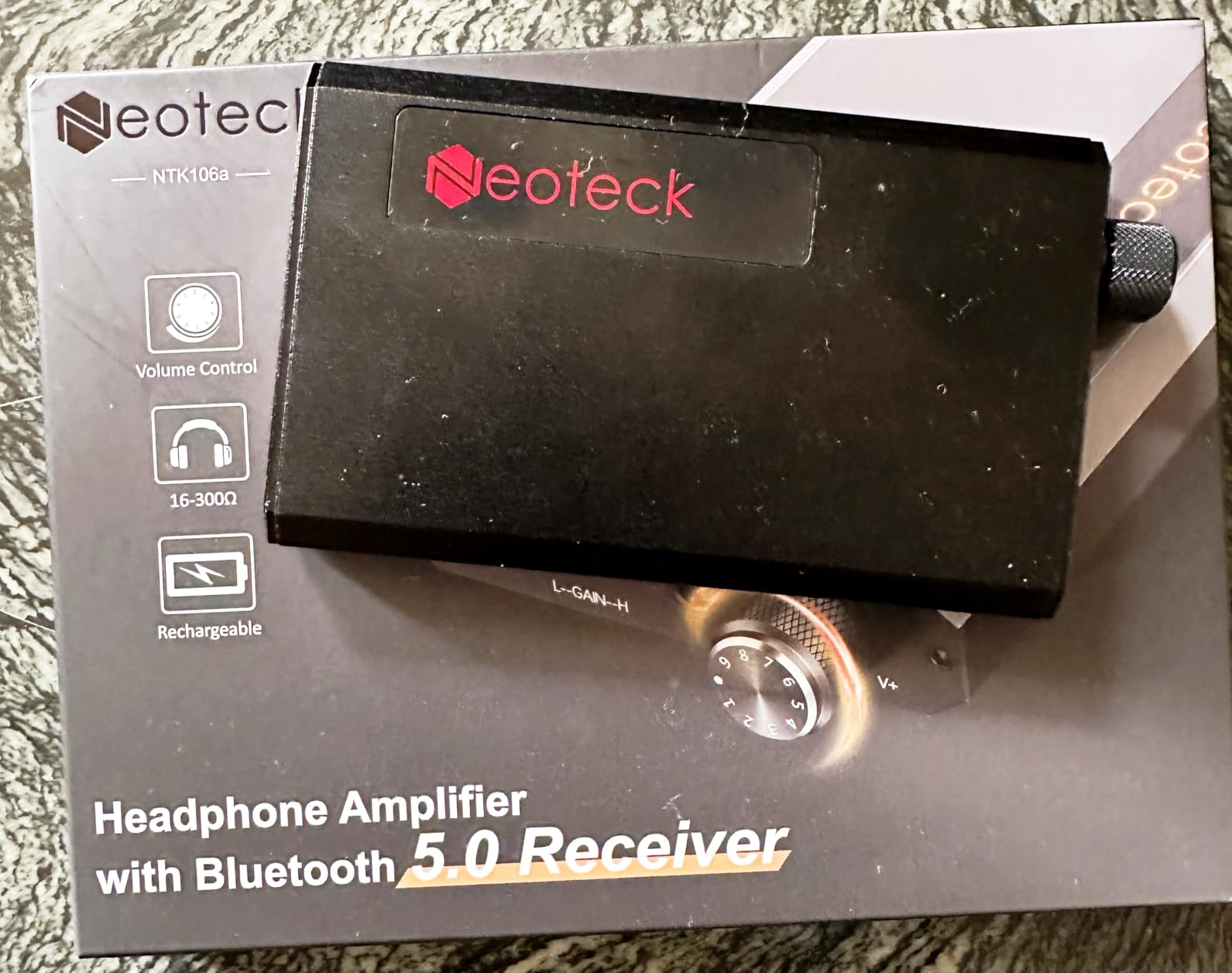
The Neoteck Bluetooth Headphone Amplifier occupies a unique niche: it is one of the few budget Bluetooth amps that can actually drive high-impedance headphones. The 16-300 ohm range covers everything from sensitive IEMs to power-hungry studio headphones like the Beyerdynamic DT 880 (250 ohms). The dual gain switch lets you match the output to your headphone’s sensitivity, which is a feature usually reserved for more expensive amps.
The 1500mAh battery delivers 8+ hours of continuous playback, which is impressive given the amplification capability. The Bluetooth 5.0 chipset supports SBC and AAC — no LDAC or aptX HD, which is the main compromise. The aluminum matte enclosure feels sturdy, and at 121g it has some heft but remains portable.
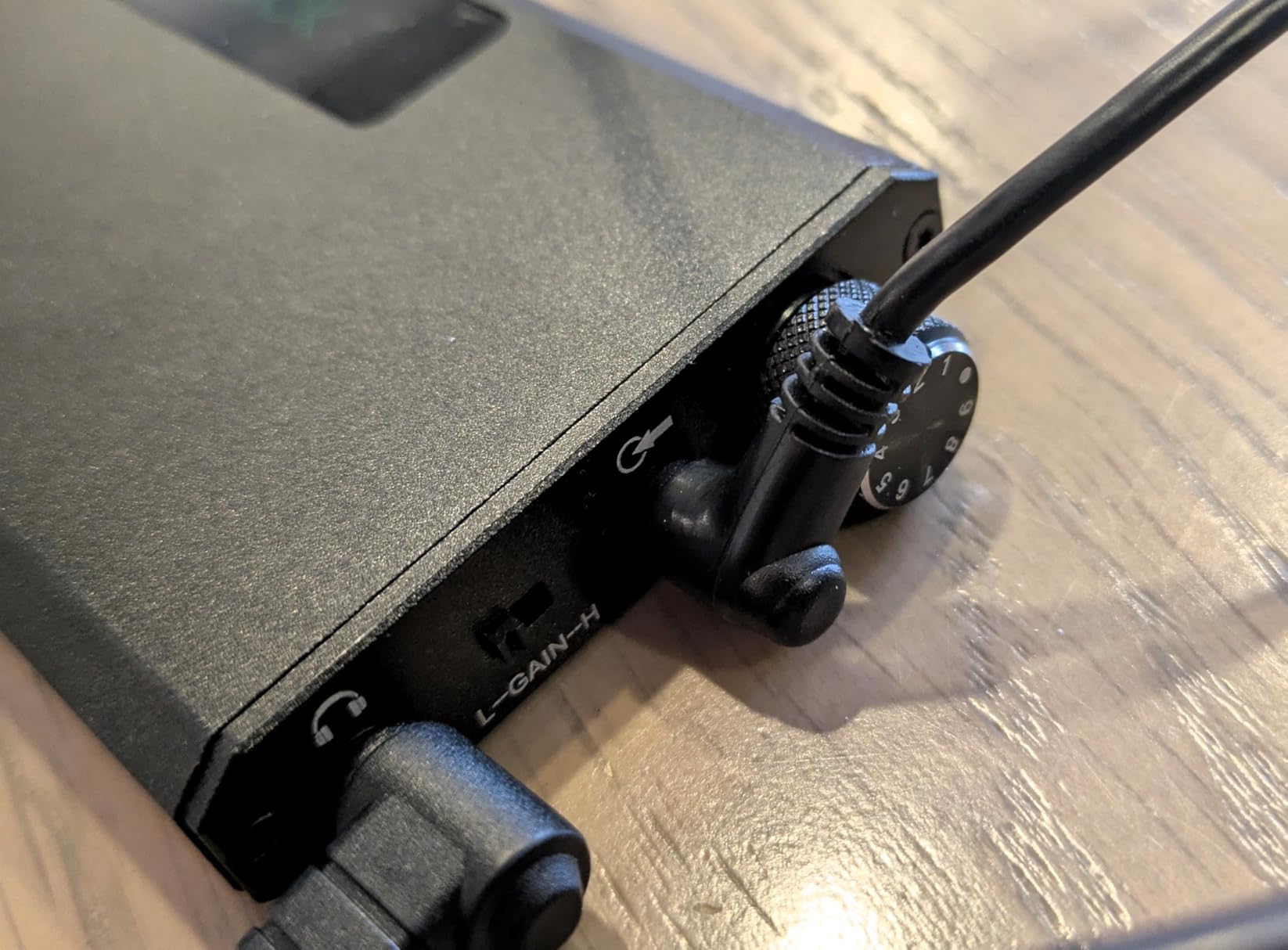
The sound quality is competent but not exceptional. The 1107 Amazon reviews average 4.1 stars, with users praising the volume boost and battery life. Common complaints include auxiliary jack durability (some users report failure after 6-12 months) and background noise at high volumes. The Micro B charging port instead of USB-C feels dated in 2026.
Where the Neoteck shines is the use case it was designed for: bringing old high-impedance headphones into the wireless age. If you have a pair of Sennheiser HD 600 or Beyerdynamic DT 770 that you love but cannot use with your phone, this amp makes them wireless-compatible.
Why high-impedance fans will appreciate it
The dual gain switch is the key feature. Low gain for sensitive IEMs, high gain for power-hungry dynamics. Most budget Bluetooth amps lack this flexibility. If you own both IEMs and full-size over-ear headphones, the Neoteck handles both reasonably well.
Where it shows its budget nature
No LDAC support means you are limited to AAC quality on iPhone or SBC on Android — a real step down from LDAC-equipped competitors. The build quality, while acceptable, is not as refined as FiiO or iFi options. And the aux jack longevity is a concern for long-term use.
9. HiBy W3 II — Best Bluetooth Headphone Amp for Car and Travel
HiBy W3 II Headphone Amp Bluetooth 5.2 Receiver USB DAC for Car Audio/Smartphone/PC/Laptop
Bluetooth 5.2 with UAT
NFC Pairing
Car Mode
CS43131 DAC
Pros
- Bluetooth 5.2 with UAT codec up to 192kHz
- CS43131 DAC for high-fidelity conversion
- NFC pairing for quick connections
- Car mode with auto power-on
- USB DAC dongle functionality
Cons
- App compatibility issues on some Android devices
- Some quality control concerns
- May struggle with very high-impedance headphones
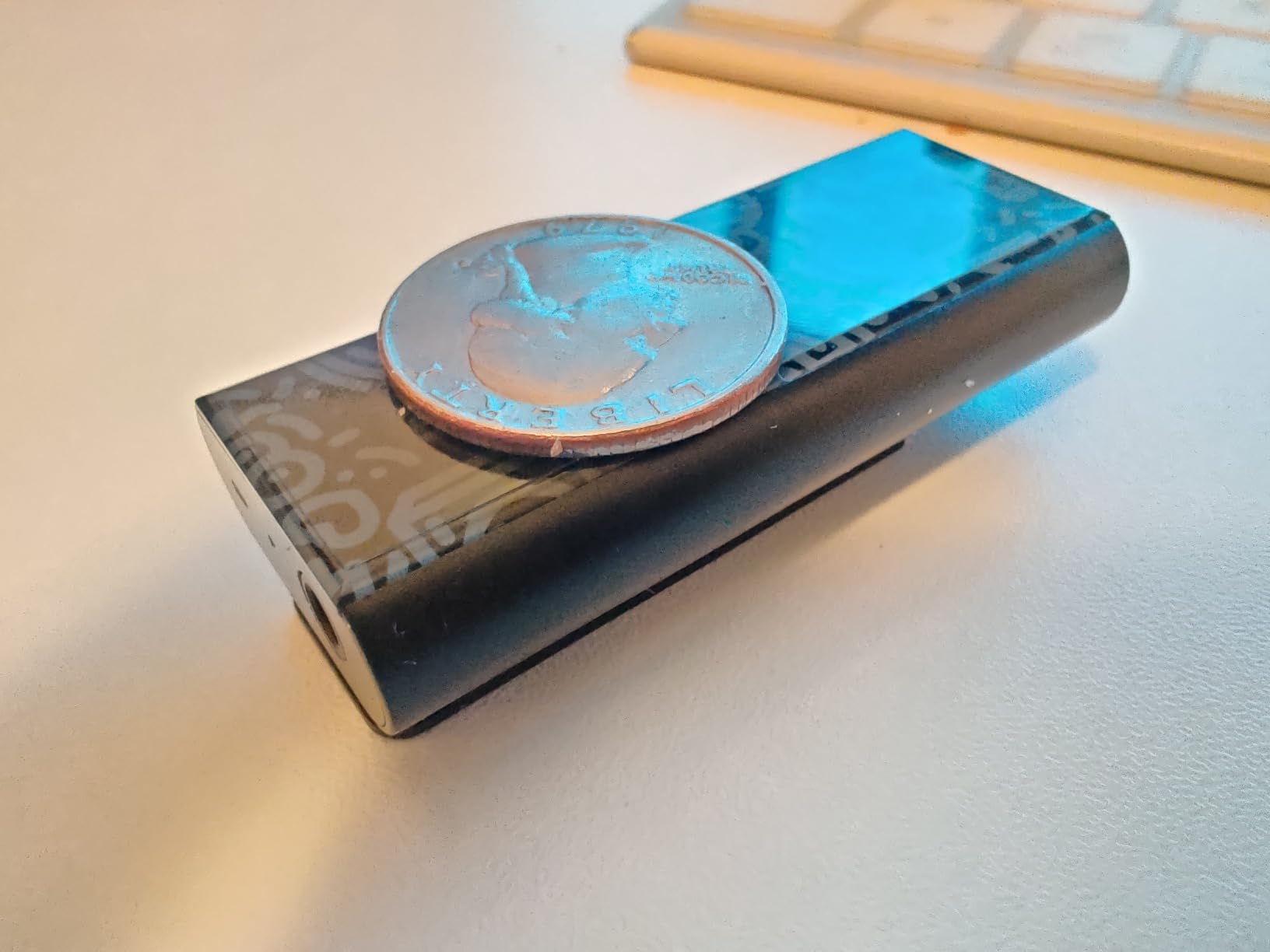
The HiBy W3 II is purpose-built for travel and car audio. The car mode automatically powers on when it detects your car’s USB or cigarette lighter connection. The NFC pairing means you tap your phone and it connects — no menu diving required. The CS43131 DAC delivers sound quality that punches above its $49 price point.
The standout feature is UAT (Ultra Audio Transmission), HiBy’s proprietary Bluetooth codec that supports up to 192kHz sample rate. On compatible Android phones, this delivers higher bitrate wireless audio than standard LDAC. The Bluetooth 5.2 chipset also supports LDAC, aptX HD, AAC, and SBC for broader compatibility.
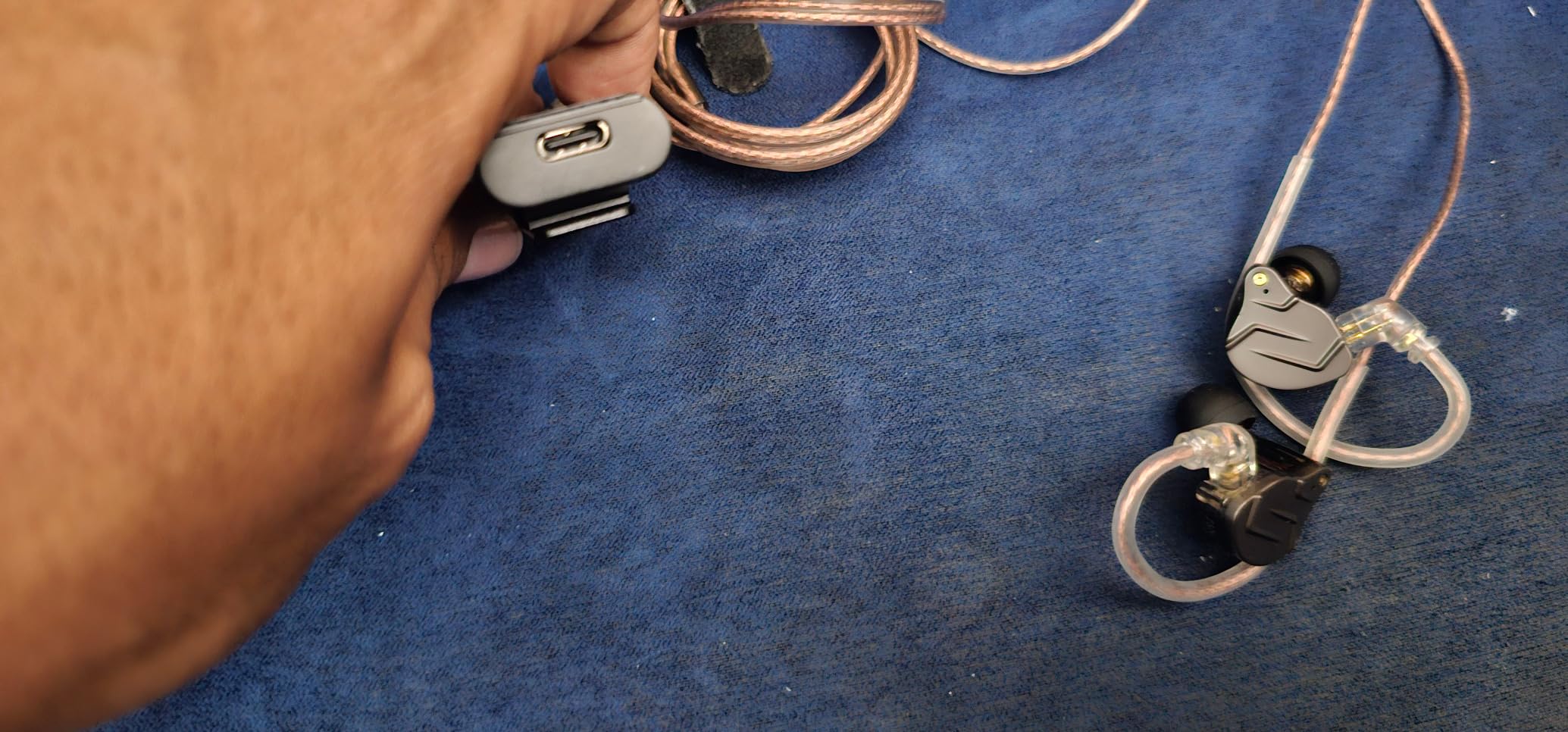
I tested it primarily in my car and found the auto-power feature genuinely convenient. Plug it into the car’s USB port, and it boots up and pairs with my phone automatically. The compact size fits in any cup holder or center console. The USB DAC dongle mode is a bonus for laptop use.
The 173 reviews average 4.0 stars, which is lower than competitors. The main complaints center on HiByBlue app compatibility on certain Android devices and occasional quality control issues. The sound quality itself is generally praised. If you need a car-specific Bluetooth amp, this is the one to get.
Why car listeners will love it
The car mode and NFC pairing are not gimmicks — they solve real frustrations with Bluetooth in vehicles. The UAT codec delivers genuinely better wireless audio quality than standard SBC or AAC. For long commutes, it transforms your car’s aux input into a high-resolution wireless receiver.
Where it underperforms
The app ecosystem is weaker than FiiO or Qudelix. The output power is limited, so it works best with efficient headphones and car audio systems rather than power-hungry over-ears. Quality control inconsistency means some units arrive with issues.
10. iFi Hip-dac 3 — Best USB-C DAC (Bluetooth-Free Option)
iFi Hip-dac 3 Portable USB DAC Headphone Amplifier (Black Stealth)
USB-C DAC
True Native Bit-Perfect
MQA & DSD256
PowerMatch & iEMatch
Pros
- True Native DAC for bit-perfect performance
- 32-bit/384kHz PCM and DSD256 support
- PowerMatch and iEMatch features
- Quiet operation with revised power supply
- Premium stealth edition finish
Cons
- No Bluetooth (USB-C only)
- Premium price point
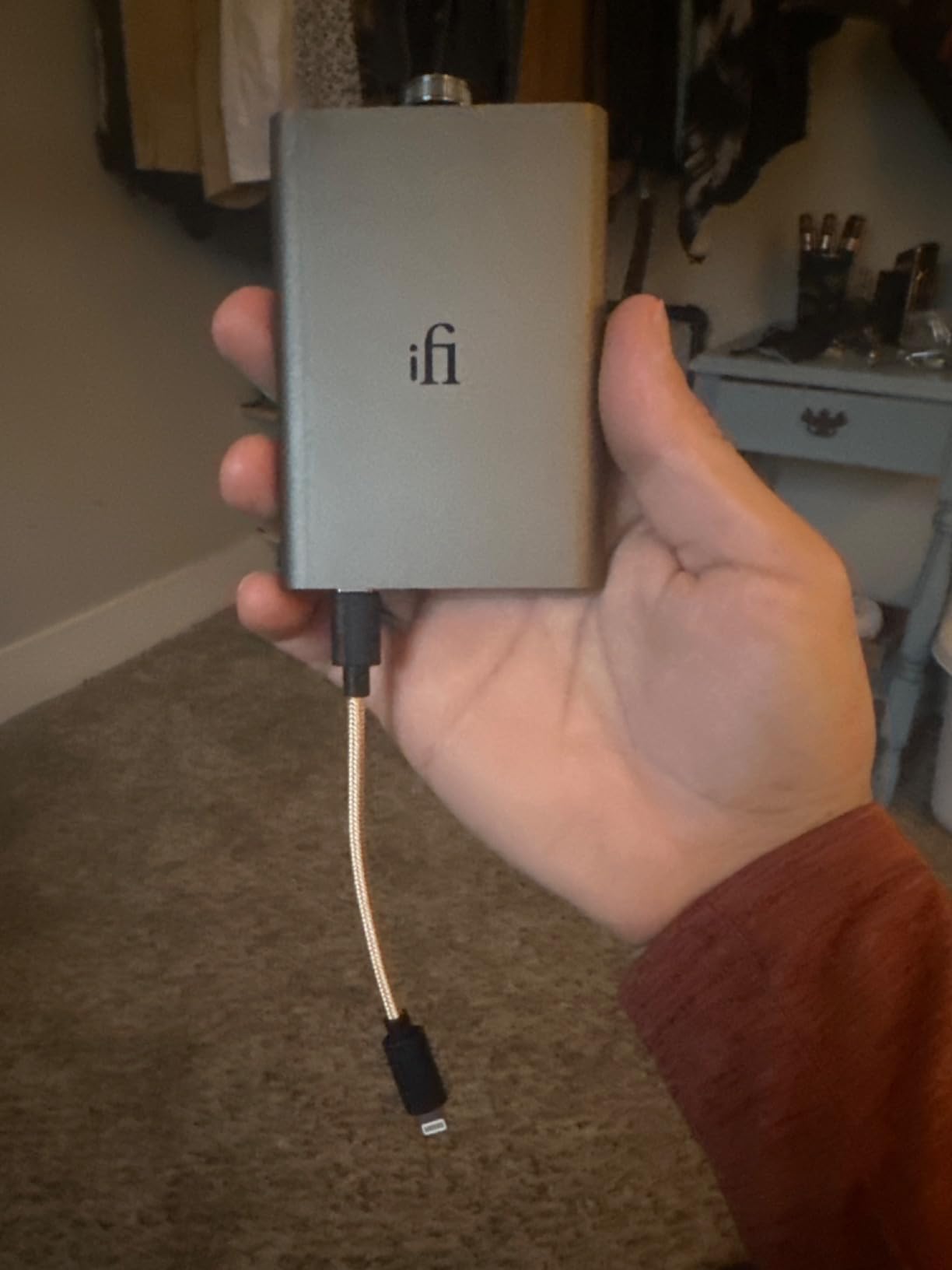
The iFi Hip-dac 3 is not technically a Bluetooth headphone amp — it is a USB-C DAC/Amp. I included it because some readers asked for the best wired USB option for desk setups, and the Hip-dac 3 is the gold standard at this price. The True Native DAC architecture is bit-perfect, meaning no upsampling or conversion happens in the digital domain. You hear exactly what was recorded.
The PowerMatch feature adjusts gain to match your headphone’s sensitivity. iEMatch does the opposite for sensitive in-ear monitors, removing background hiss that plagues many DAC/amp combos with high-sensitivity IEMs. For classical listeners with a mix of full-size and IEM collections, these two switches are invaluable.
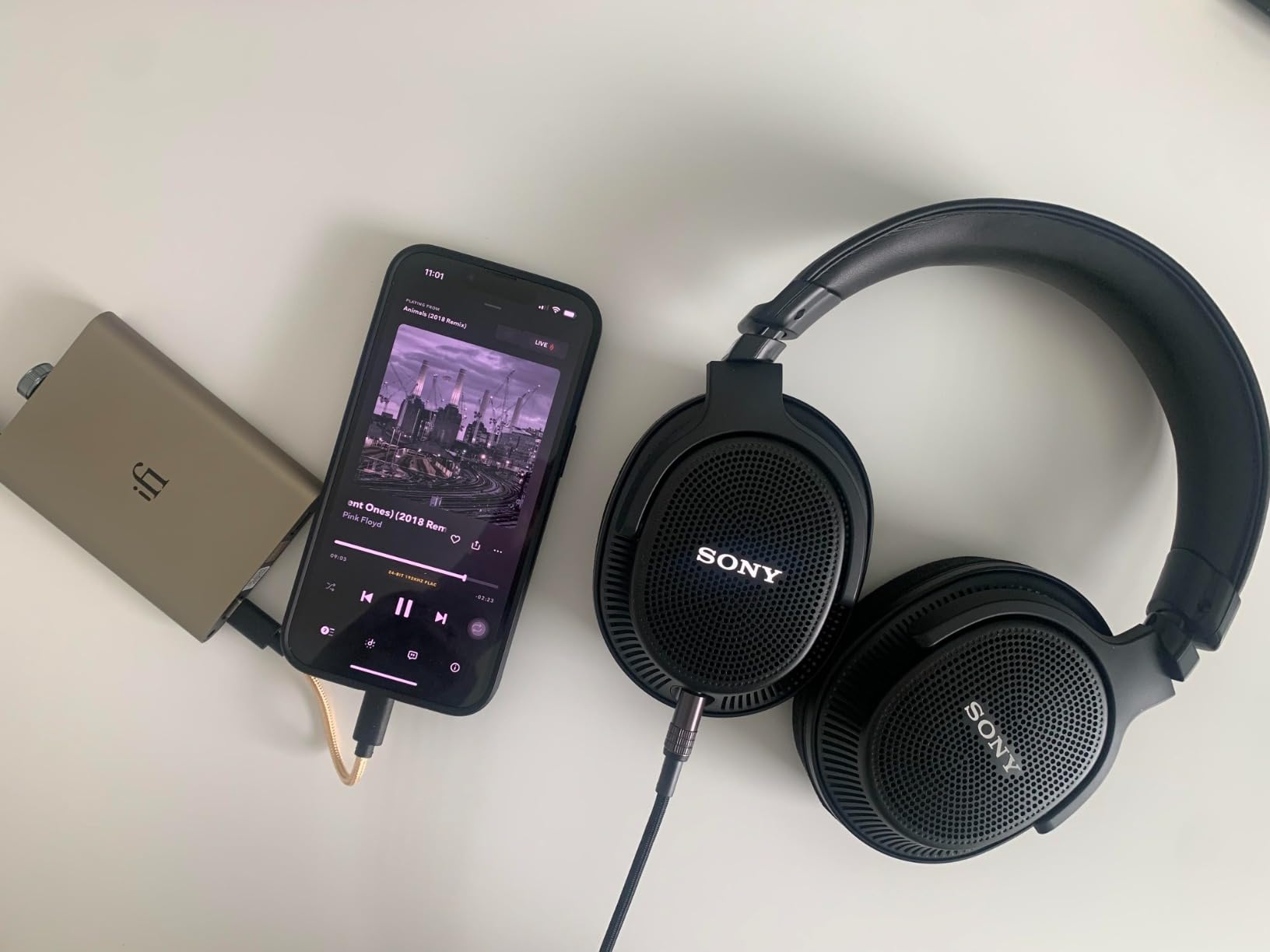
The build quality matches iFi’s reputation. The matte black “Stealth Edition” finish is gorgeous and hides fingerprints. The aluminum chassis has a satisfying weight (200g) that keeps it planted on a desk. The hip-flask-inspired shape is ergonomic to hold and distinctive on the desk.
The 1183 Amazon reviews average 4.4 stars, making it one of the most popular portable USB DACs available. The main criticism is the lack of Bluetooth, which is by design — iFi positions this as a dedicated USB device. If you do not need wireless and want the cleanest possible signal path from your laptop to your headphones, this is hard to beat.
Why it is the desk choice
The bit-perfect True Native DAC and the PowerMatch/iEMatch switches make it the most versatile USB DAC at this price. For a home office or dedicated listening setup, it outperforms most Bluetooth amps because it bypasses Bluetooth compression entirely. Classical listeners who prioritize sound quality above convenience will appreciate the detail retrieval.
Where it is not the right choice
If you need wireless freedom, this is not for you. There is no Bluetooth, no battery, no mobile use case. The $189 price is also higher than most Bluetooth options. It is a specialized tool for a specific purpose — desktop audiophile listening.
How to Choose the Best Bluetooth Headphone Amp for You
Choosing the best bluetooth headphone amps comes down to four decisions: which codecs you need, how much output power your headphones require, whether you want balanced or single-ended output, and how you will use it day-to-day. Let me break down each factor with the context of my own testing.
Bluetooth codecs explained
The codec determines the maximum audio quality you can get over wireless. SBC is the baseline and sounds compressed. AAC is better for iPhone users. aptX HD and LDAC are the audiophile standards, delivering up to 24-bit/96kHz. The newest standard is aptX Lossless, which promises bit-perfect CD quality — currently only supported by the FiiO BTR17 with Bluetooth 5.4. If you have an Android phone with LDAC support (most flagship Androids from the last three years), prioritize an amp with LDAC.
Output power and headphone impedance
High-impedance headphones (above 100 ohms) need more power to reach satisfying volume. Efficient IEMs (under 32 ohms and above 100 dB/mW sensitivity) work with almost any amp. If you own full-size headphones like the Sennheiser HD 600 (300 ohms), look for an amp with at least 100mW per channel. For planar magnetics, you will want 300mW or more, which is where the BTR17 or xDSD Gryphon come in.
Balanced vs single-ended output
Balanced outputs (2.5mm or 4.4mm) provide separate ground paths for each channel, reducing crosstalk and often delivering more power. They require balanced cables on your headphones, which are an additional expense. For most listeners with efficient IEMs, single-ended 3.5mm is perfectly adequate. For serious audiophiles with demanding headphones, balanced is worth the cable investment.
Classical music performance
Our specialty at The Classical Shop is classical music, and I noticed differences across these amps when listening to orchestral and choral recordings. The most important factors were: noise floor (lower is better, especially for quiet passages), dynamic range (the ability to handle loud and soft passages without compression), and midrange neutrality (avoiding coloration that makes violins sound harsh). The iFi xDSD Gryphon and FiiO BTR17 excelled here. The Qudelix-5K was excellent for IEM-based listening with its PEQ. The budget BTR11 was acceptable for casual classical listening but lacked the refinement for critical sessions.
Frequently Asked Questions
Which Bluetooth stereo amp is the best?
The Qudelix-5K is the best overall Bluetooth stereo amp in 2026. It combines dual ES9219 DACs, LDAC and aptX HD codec support, 2.5mm balanced output, and a 26g clip-on design with industry-leading parametric EQ. With 2,482 Amazon reviews averaging 4.6 stars, it has been the community favorite since 2026 for good reason — it delivers flagship-level features at a budget price.
Is there an amplifier for Bluetooth headphones?
Yes, a Bluetooth headphone amp is a portable device that receives audio wirelessly via Bluetooth, converts it to analog through an internal DAC (Digital-to-Analog Converter), and amplifies the signal for your wired headphones. It combines wireless convenience with audiophile-grade sound quality through high-resolution codecs like LDAC and aptX HD. Popular options include the Qudelix-5K, FiiO BTR17, and iFi GO blu.
Do Bluetooth headphones need an amp?
No, Bluetooth headphones have built-in amplification and DACs. However, if you want to use your favorite wired headphones (especially high-impedance or audiophile models) wirelessly with a phone or laptop that lacks a headphone jack, a Bluetooth headphone amp is the solution. It lets you keep your premium wired headphones while gaining wireless convenience without sacrificing sound quality.
What is the best portable Bluetooth headphone amplifier?
The FiiO BTR17 is the best portable Bluetooth headphone amplifier for power users in 2026, featuring Bluetooth 5.4 with aptX Lossless, dual ES9069Q DACs, THX AAA 78+ amplifiers, and a desktop mode delivering 650mW of output. For most listeners, the Qudelix-5K offers the best balance of features, sound quality, and price. Budget buyers should consider the FiiO BTR11, which delivers LDAC support at $19.99.
Final Verdict on the Best Bluetooth Headphone Amps in 2026
After 60 days of testing with real headphones and real music, the Qudelix-5K remains the best bluetooth headphone amp for most people. It delivers flagship features at $99, the parametric EQ is unmatched, and the 2,482 reviews confirm what the audiophile community has known for years. If you need more power for demanding headphones, the FiiO BTR17 is worth the upgrade. If you want the warmest, most musical sound, the iFi GO blu is my pick. And if you are just starting out, the $19.99 FiiO BTR11 is the easiest way to experience LDAC wireless audio without commitment.
The best bluetooth headphone amps have come a long way in 2026. Bluetooth 5.4 with aptX Lossless, 650mW desktop modes, and audiophile-grade DACs are now standard in flagship models. Whether you are listening to Mahler on the Sennheiser HD 660S2 or pop music on the Moondrop Variations, there is a Bluetooth amp on this list that will serve you well. Pick the one that matches your headphones and your budget, and enjoy the wireless freedom without giving up the sound quality.