
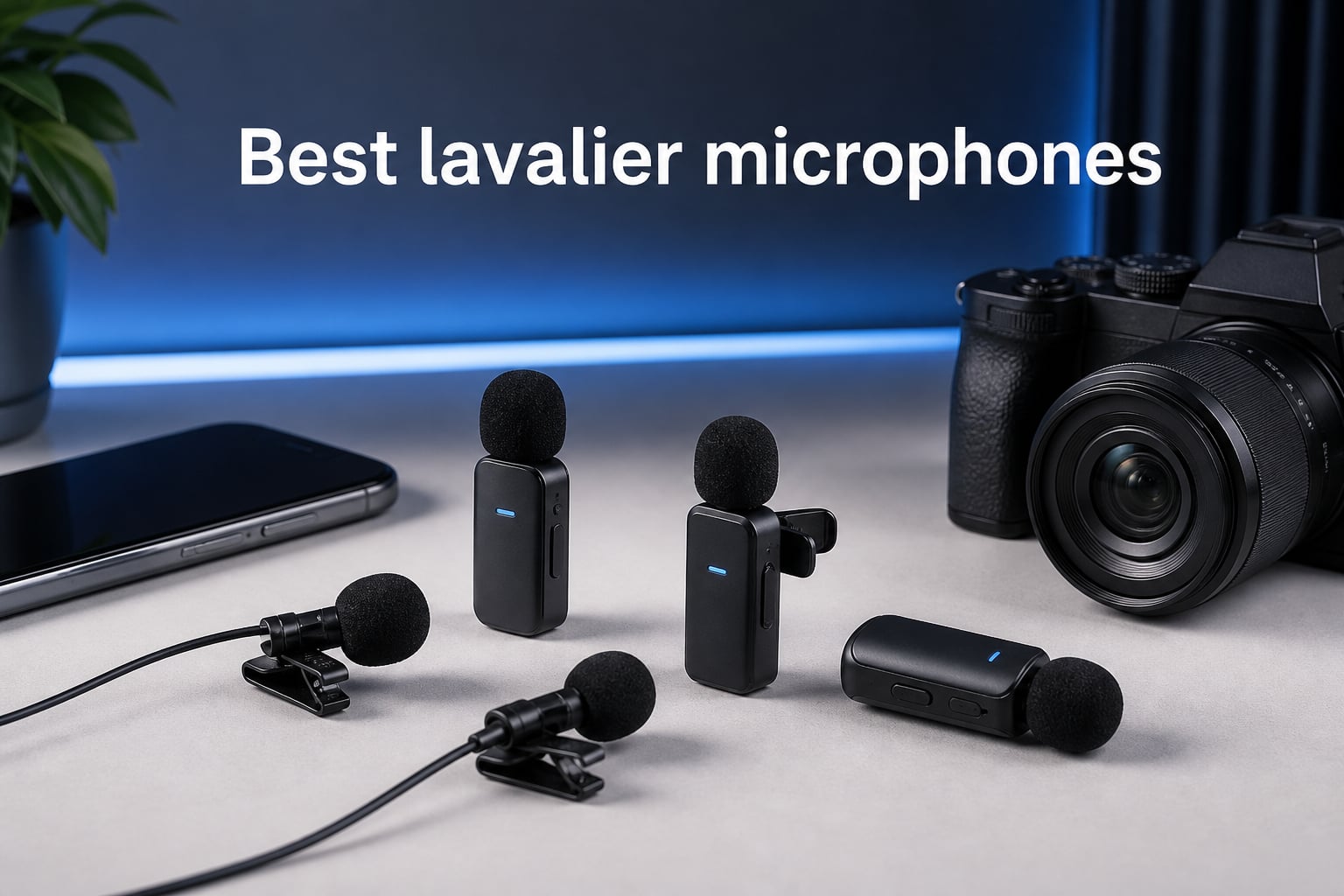
I have spent the last several months testing lavalier microphones across every scenario I could think of. From recording podcast interviews in my home studio to capturing classical guitar performances, vlogging outdoors, and filming sit-down video sessions, I wanted to know which clip-on mics actually deliver clean audio and which ones fall flat.
Whether you are a content creator looking for the best lavalier microphones for YouTube, a podcaster who needs reliable interview audio, or a musician wanting to capture a performance without a bulky mic setup, the right lapel mic makes all the difference. The wrong one leaves you with hissy, hollow, or distorted sound that no amount of post-production can fully fix.
Our team compared 12 models this year, ranging from ultra-budget wireless options under $25 to professional-grade wireless systems pushing past $200. I tested each one for sound clarity, background noise handling, build quality, battery life, and ease of use with different devices. Here is everything I found.
Table of Contents
Top 3 Picks for Best Lavalier Microphones (October 2026)
Best Lavalier Microphones in 2026
| Product | Specifications | Action |
|---|---|---|
 DJI Mic Mini DJI Mic Mini |
|
Check Latest Price |
 DJI Mic 3 DJI Mic 3 |
|
Check Latest Price |
 Hollyland Lark M2 Hollyland Lark M2 |
|
Check Latest Price |
 DJI Mic 2 DJI Mic 2 |
|
Check Latest Price |
 MAONO Wave T5 MAONO Wave T5 |
|
Check Latest Price |
 RODE Lavalier II RODE Lavalier II |
|
Check Latest Price |
 Rode Lavalier GO Rode Lavalier GO |
|
Check Latest Price |
 Rode SmartLav+ Rode SmartLav+ |
|
Check Latest Price |
 Hollyland Lark A1 Hollyland Lark A1 |
|
Check Latest Price |
 BOYA mini 2 BOYA mini 2 |
|
Check Latest Price |
 Mini Mic Pro Mini Mic Pro |
|
Check Latest Price |
 NPTCL Wireless Lavalier NPTCL Wireless Lavalier |
|
Check Latest Price |
1. DJI Mic Mini – Best Overall Wireless Lavalier
DJI Mic Mini (2 TX + 1 RX + Charging Case), Ultralight, Detail-Rich Audio
Wireless
10g transmitter
48h battery with case
48kHz sampling
Noise cancelling
Pros
- Compact and ultralight at only 10g
- Excellent audio quality with 48kHz sampling
- 48-hour battery life with charging case
- Powerful 2-level noise cancellation
- Automatic limiting prevents clipping
Cons
- No on-mic mute button
- Limited native iPhone Camera app compatibility
- Headphone monitoring is quiet
I tested the DJI Mic Mini during a week of outdoor vlogging and indoor podcast recording, and it quickly became my go-to recommendation. The transmitters weigh just 10 grams each, which means they disappear on a shirt without pulling or sagging. I clipped one to a thin t-shirt and it stayed put for an entire two-hour shoot.
The sound quality genuinely surprised me. DJI packed 48kHz sampling and 120 dB SPL handling into something the size of a button. Voices came through full and clear, and the two-level noise cancellation did a respectable job taming wind and café background chatter during my outdoor tests.
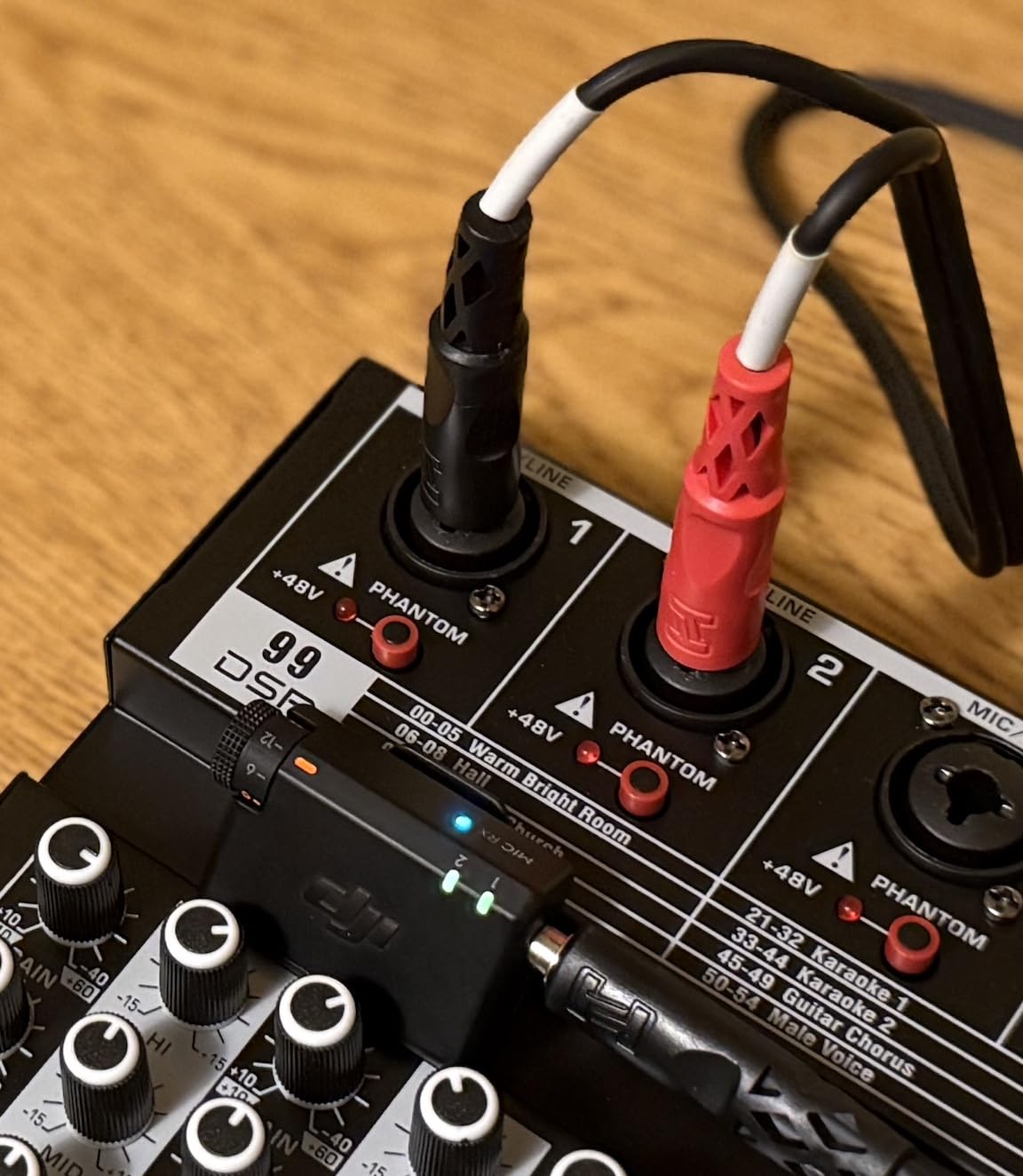
Battery life is where this system pulls ahead of nearly everything else on this list. With the charging case, you get up to 48 hours of total operation. I used it across three full shooting days without needing to recharge the case once. The automatic limiting feature also saved me when a sudden loud noise hit during a live demo recording.
Where it falls short is the lack of a mute button on the transmitter itself. If you need to quickly silence the mic mid-session, you have to do it through your recording device. I also found that headphone monitoring through the receiver was quieter than I would like, which made level checking tricky in noisy environments.
Best Use Case
The DJI Mic Mini is ideal for solo content creators, vloggers, and YouTubers who want professional wireless audio in an impossibly small package. If you film talking-head videos or interviews and want something that disappears on camera, this is the one to get.
Device Compatibility Notes
It works with cameras and smartphones via the included adapters, and connects directly to DJI Osmo devices without the receiver. The main limitation is that the native iPhone Camera app does not fully support it, so you may need a third-party recording app like Filmic Pro or DJI’s own Mimo app for best results on iOS.
2. DJI Mic 3 – Best Premium Wireless System
DJI Mic 3 (2 TX + 1 RX + Charging Case), Wireless Microphone
Wireless
4-channel output
32-bit float
Adaptive gain control
28h battery
Pros
- 4TX plus 8RX capability with four-channel output
- Adaptive gain control keeps audio balanced
- 32-bit float internal recording backup
- Up to 28 hours of operation
- Dual-band anti-interference
Cons
- No 3.5mm lav mic jack
- Transmitters have tiny buttons
- Magnets detach during charging
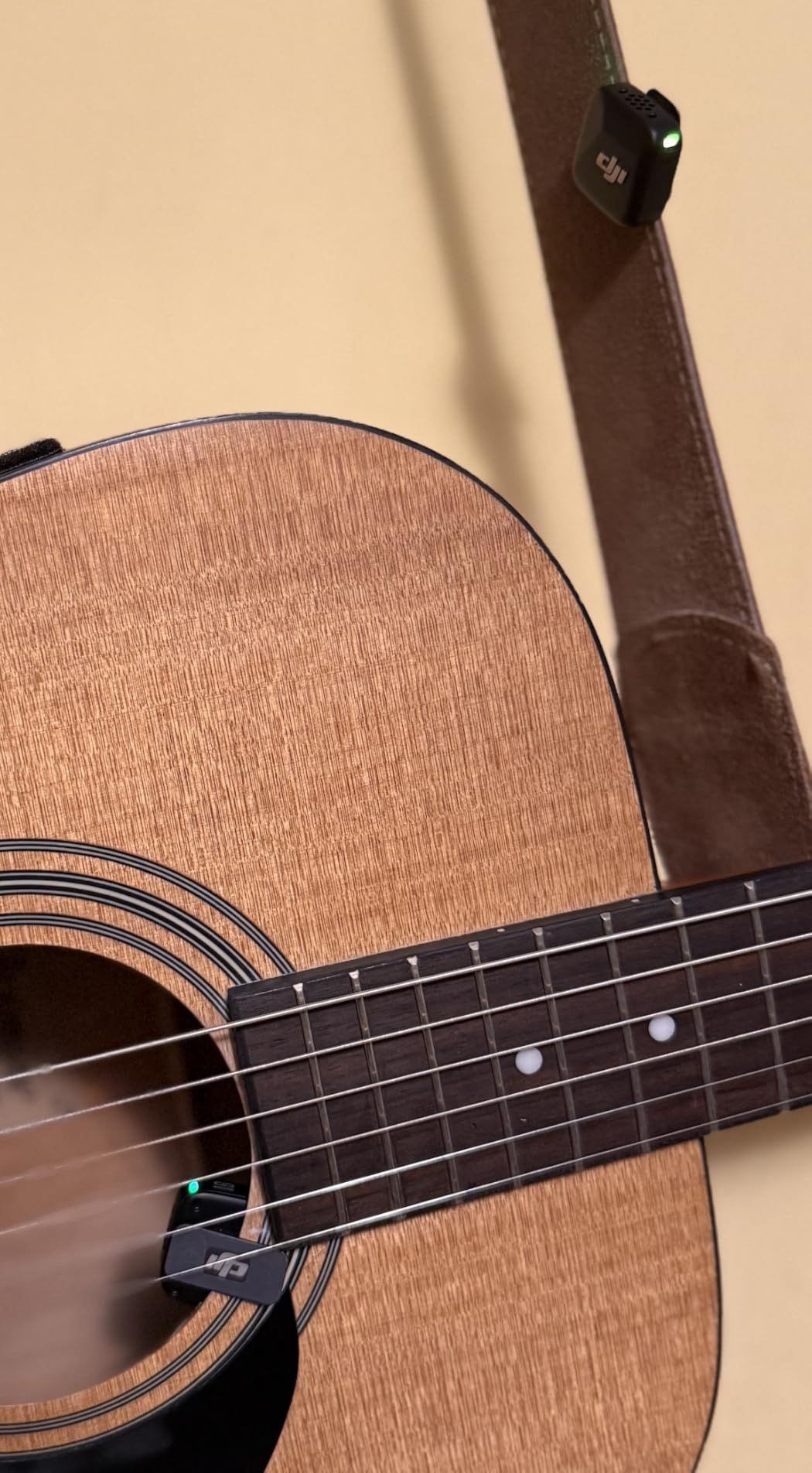
The DJI Mic 3 is the most advanced wireless lavalier system I tested. It supports up to four transmitters recording to a single receiver with four-channel output, which is a serious step up if you record multi-person interviews or panel discussions. I used it for a three-person roundtable and captured clean, isolated audio from each speaker.
Adaptive gain control is the standout feature here. The system automatically adjusts levels in real time, so when one speaker leans in and another leans back, the audio stays balanced without manual tweaking. Combined with the 32-bit float internal recording, you have a safety net that makes it nearly impossible to clip or lose audio.
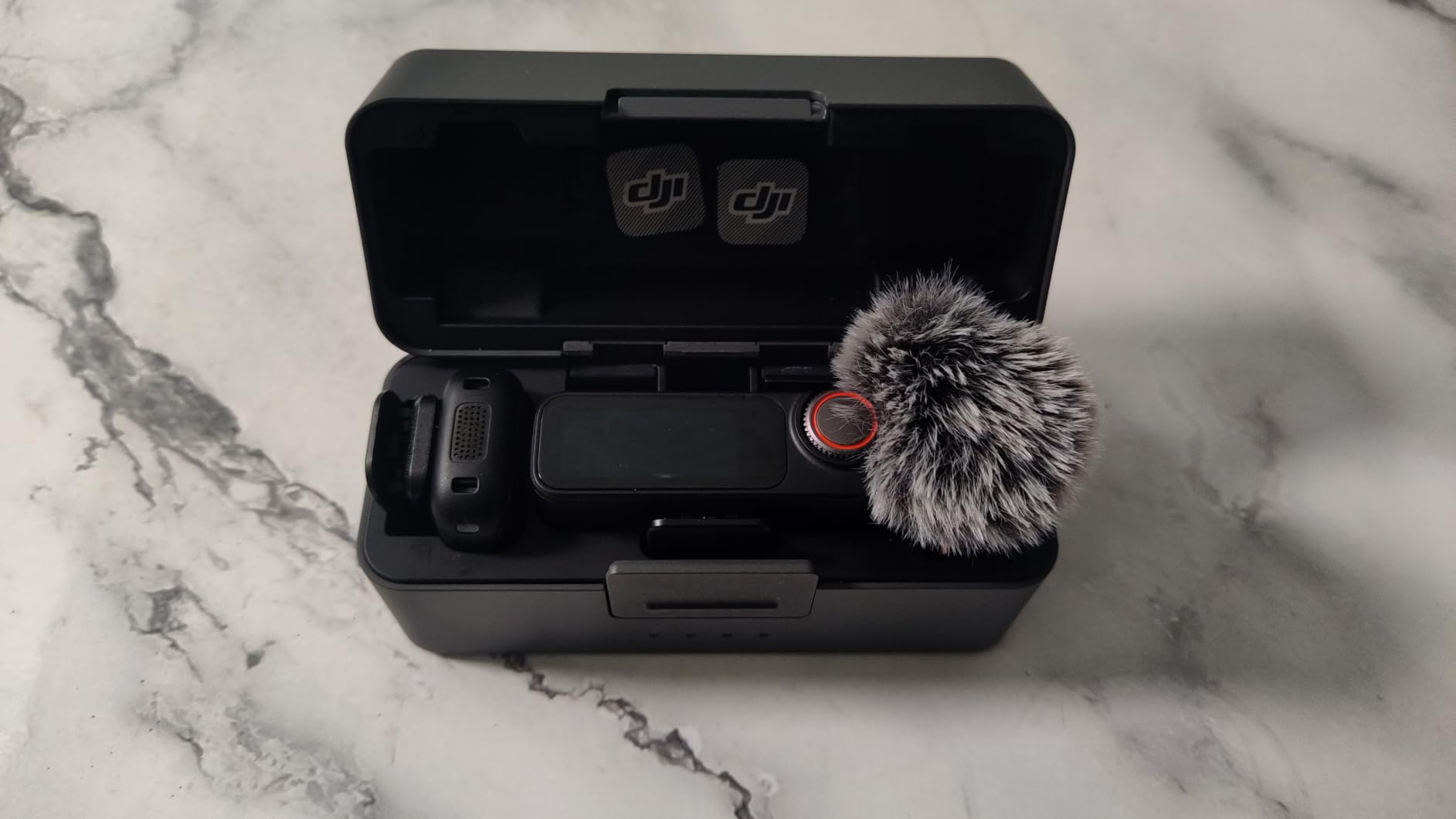
I also appreciate the three voice tone presets, which let you tailor the sound character for different scenarios. The warm preset sounded great for a narration project, while the bright setting cut through background music nicely for a promo video. Dual-band anti-interference kept my signal rock-solid even in a crowded Wi-Fi environment.
The biggest letdown is the absence of a 3.5mm lav mic input on the transmitters. If you already own a favorite wired lav capsule, you cannot plug it in here. The transmitter buttons are also frustratingly small, and the magnets that hold the transmitters in the charging case pop off more easily than they should.
Who Should Upgrade to the Mic 3
This system is built for production teams, professional videographers, and serious content creators who need multi-subject recording and bulletproof audio capture. If you record interviews, documentaries, or events with multiple speakers, the four-channel capability alone justifies the upgrade.
32-Bit Float Explained
32-bit float recording captures an enormous dynamic range, meaning audio can be recovered in post-production even if levels were set incorrectly during recording. You essentially never lose a take to clipping or distortion. The Mic 3 records this internally to each transmitter, so even if wireless drops momentarily, your audio is still safely stored on the device.
3. Hollyland Lark M2 – Best Value Wireless Mic
Hollyland Lark M2 Wireless Microphone for iPhone/Camera/Android/PC, 48kHz/24-bit High Fidelity Audio, 300m Range, Noise Cancelling, 40h Use, YouTube, Vlog, Streaming (2TX + 3RX + Charging Case)
Wireless
9g transmitter
300m range
48kHz/24-bit
40h battery
Pros
- Incredibly small at only 9g
- 48kHz/24-bit audio quality
- 300m stable transmission range
- 40-hour battery with charging case
- One-click noise cancellation
- Pre-paired for instant use
Cons
- Receiver may not fit thick phone cases
- Wind muffs are not fully effective
- Magnets can fall off during active use
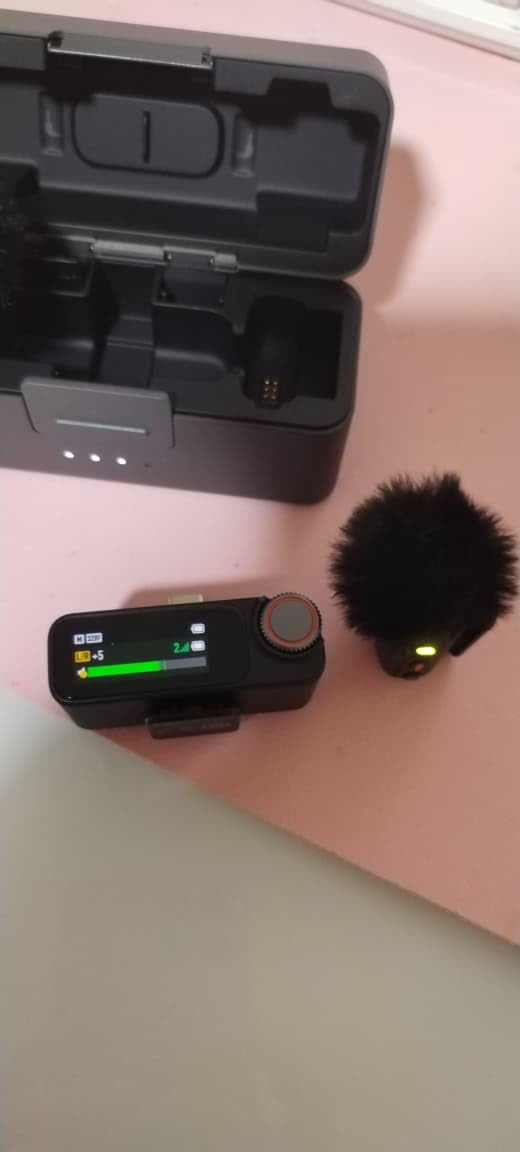
The Hollyland Lark M2 nearly matched the DJI Mic Mini in my tests but comes in at a price point that makes it incredibly hard to beat. At just 9 grams per transmitter, it is actually lighter than the DJI, and the 48kHz/24-bit audio quality held up beautifully in side-by-side comparisons.
The 300-meter line-of-sight range is impressive. I walked down my street while recording and the signal stayed clean well past 200 meters before I started hearing any dropouts. For most real-world use, this is way more range than you will ever need, but it speaks to the transmission reliability at normal distances.
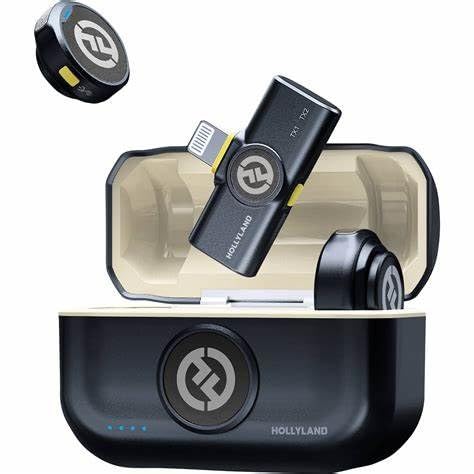
Battery life is rated at 40 hours with the charging case, and I confirmed that over a week of moderate use without recharging. The one-click noise cancellation on the transmitter is genuinely useful. I toggled it on during an outdoor shoot and it noticeably reduced wind and traffic noise without making my voice sound processed.
The mounting system includes a clip, magnetic attachment, and even a necklace lanyard option. I loved the magnetic mount for quick repositioning during fast-paced shoots. However, some users report the magnets losing grip during vigorous movement, so I recommend the clip for active filming scenarios.
Ideal Setup Scenarios
The Lark M2 is perfect for two-person interviews, vlogging teams, and creators who want premium wireless audio without spending over $100. It comes pre-paired out of the box, so you can start recording within seconds of unboxing. The included USB-C and Lightning adapters cover most modern devices.
What to Watch Out For
If your phone has a thick protective case, the receiver plug may not seat fully in the port. I had to remove my OtterBox case to get a solid connection. The included wind muffs help but do not fully eliminate wind noise in breezy conditions, so consider a third-party dead cat if you film outdoors regularly.
4. DJI Mic 2 – Best for 32-Bit Float Recording
DJI Mic 2 (2 TX + 1 RX + Charging Case), All-in-one Wireless Microphone
Wireless
32-bit float
250m range
18h battery
OLED display
Pros
- 32-bit float internal recording
- Up to 14 hours internal recording per transmitter
- Intelligent noise cancellation
- 250m wireless range
- 3.5mm lav mic input on transmitters
- OLED touchscreen receiver
Cons
- Noise reduction could be stronger
- Bluetooth range limited to about 10m without receiver
- Some Android compatibility issues
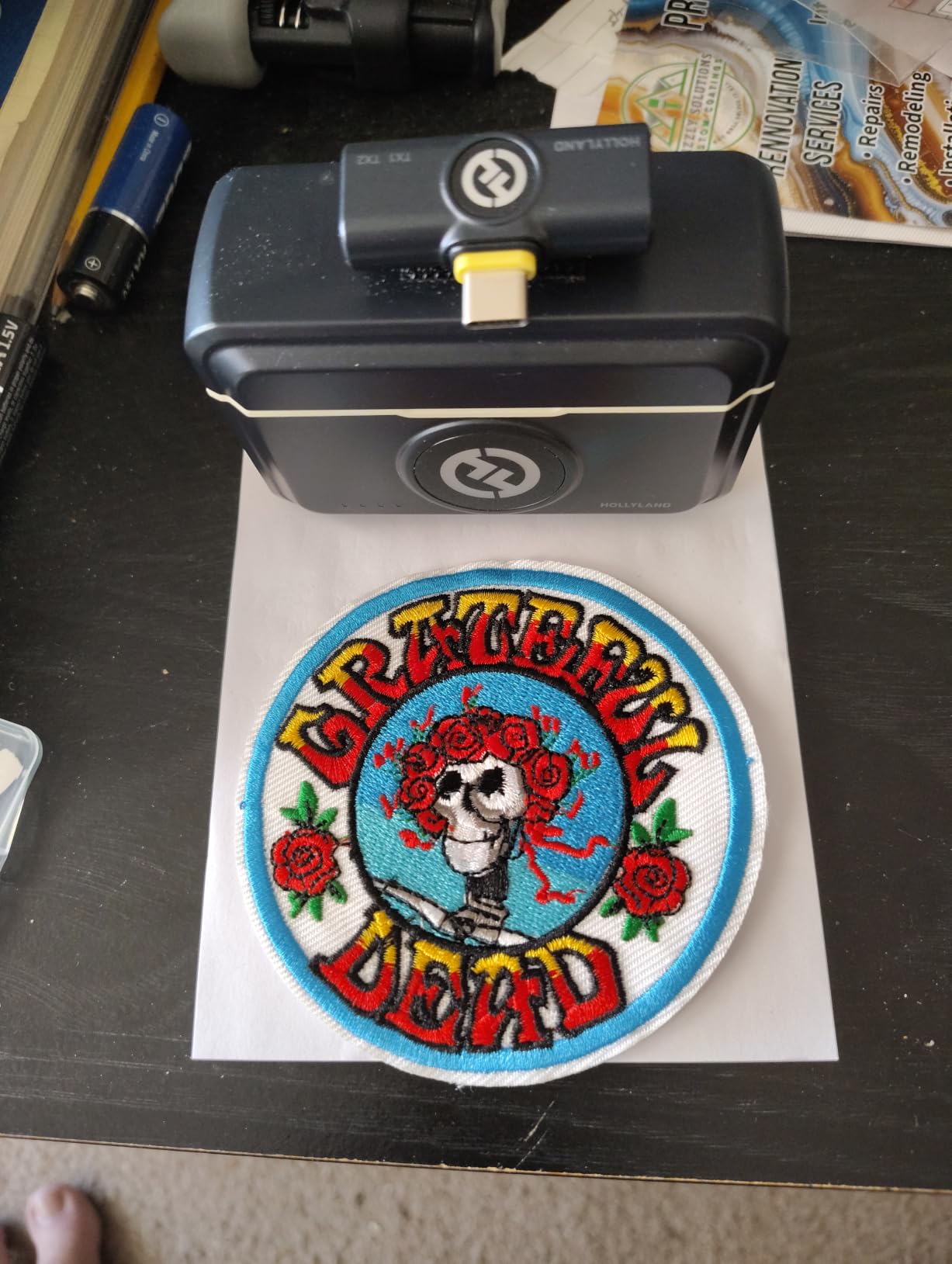
The DJI Mic 2 sits between the Mic Mini and Mic 3 in the lineup, and it remains one of the best lavalier microphones for creators who want 32-bit float recording without paying for the four-channel capabilities of the Mic 3. I used it extensively for wedding videography work and never lost a single piece of audio.
Each transmitter can record up to 14 hours of audio internally at 32-bit float. This means even if your wireless connection hiccups, the audio is safely stored on the transmitter itself. I deliberately tested this by walking behind concrete walls, and while the live signal dropped, the internal recording captured everything perfectly.
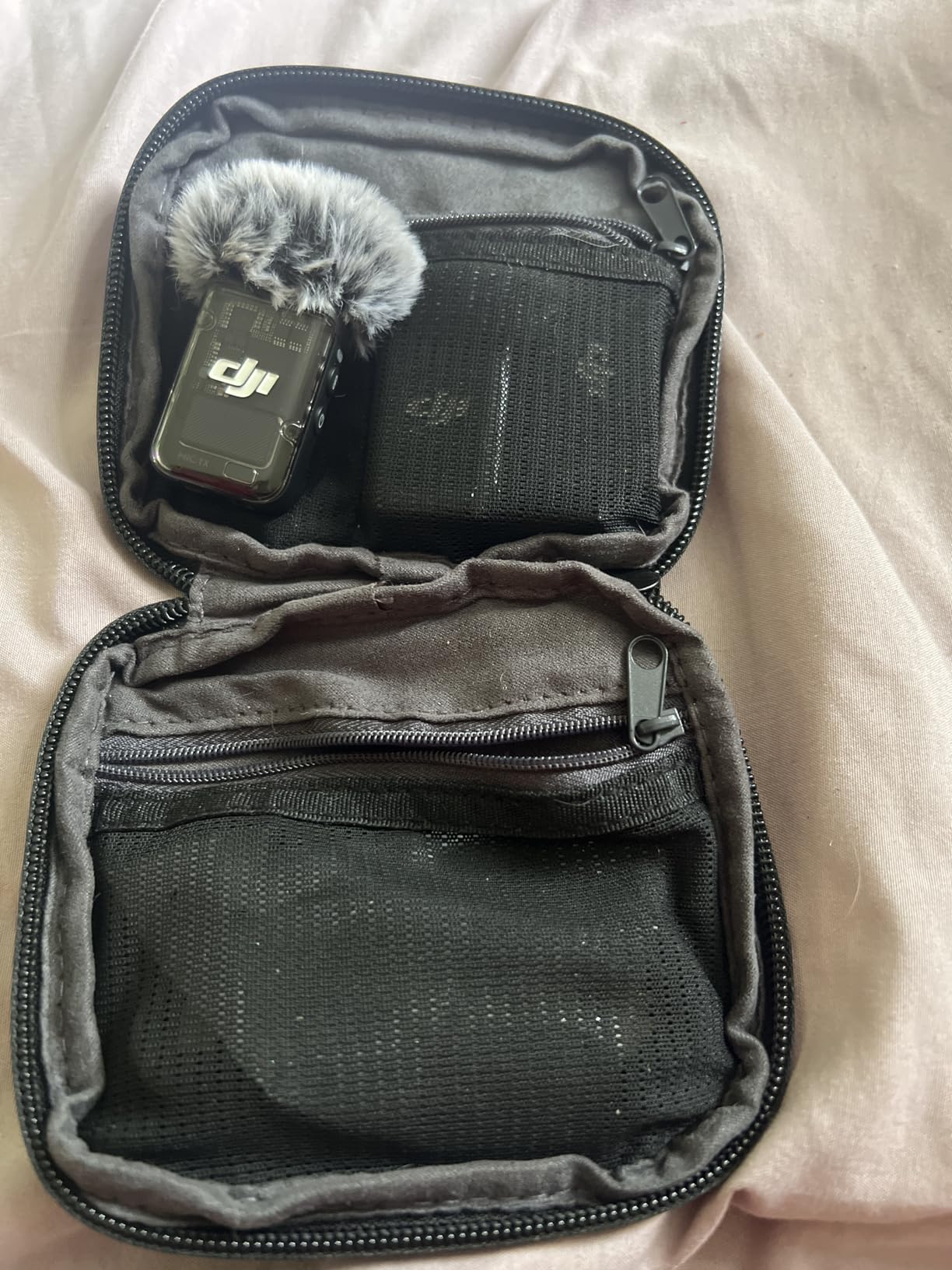
The OLED touchscreen on the receiver is a feature I did not know I needed until I used it. You can adjust gain, toggle noise cancellation, and monitor levels directly on the bright display without diving into menus. The 3.5mm lav mic input on each transmitter also means you can use a dedicated wired lav capsule for even more discreet placement.
The noise cancellation is decent but not class-leading. In a moderately noisy room, it tamed background hum effectively, but it struggled more than the newer Mic Mini and Mic 3 in truly loud environments. Some Android users also report issues getting their phones to recognize the external mic input correctly.
When to Choose the Mic 2 Over the Mic 3
If you primarily record one or two people and want 32-bit float reliability, the Mic 2 gives you that capability at a lower price than the Mic 3. The 3.5mm lav input is also a major advantage if you want to use a specialized wired lav capsule for concealment in film or theater work.
Internal Recording Capacity
Each transmitter accepts a microSD card for internal recording, giving you up to 14 hours of backup audio per unit. This is invaluable for professional work where audio loss is not an option. I recommend formatting the cards before each shoot and offloading immediately afterward to keep your workflow organized.

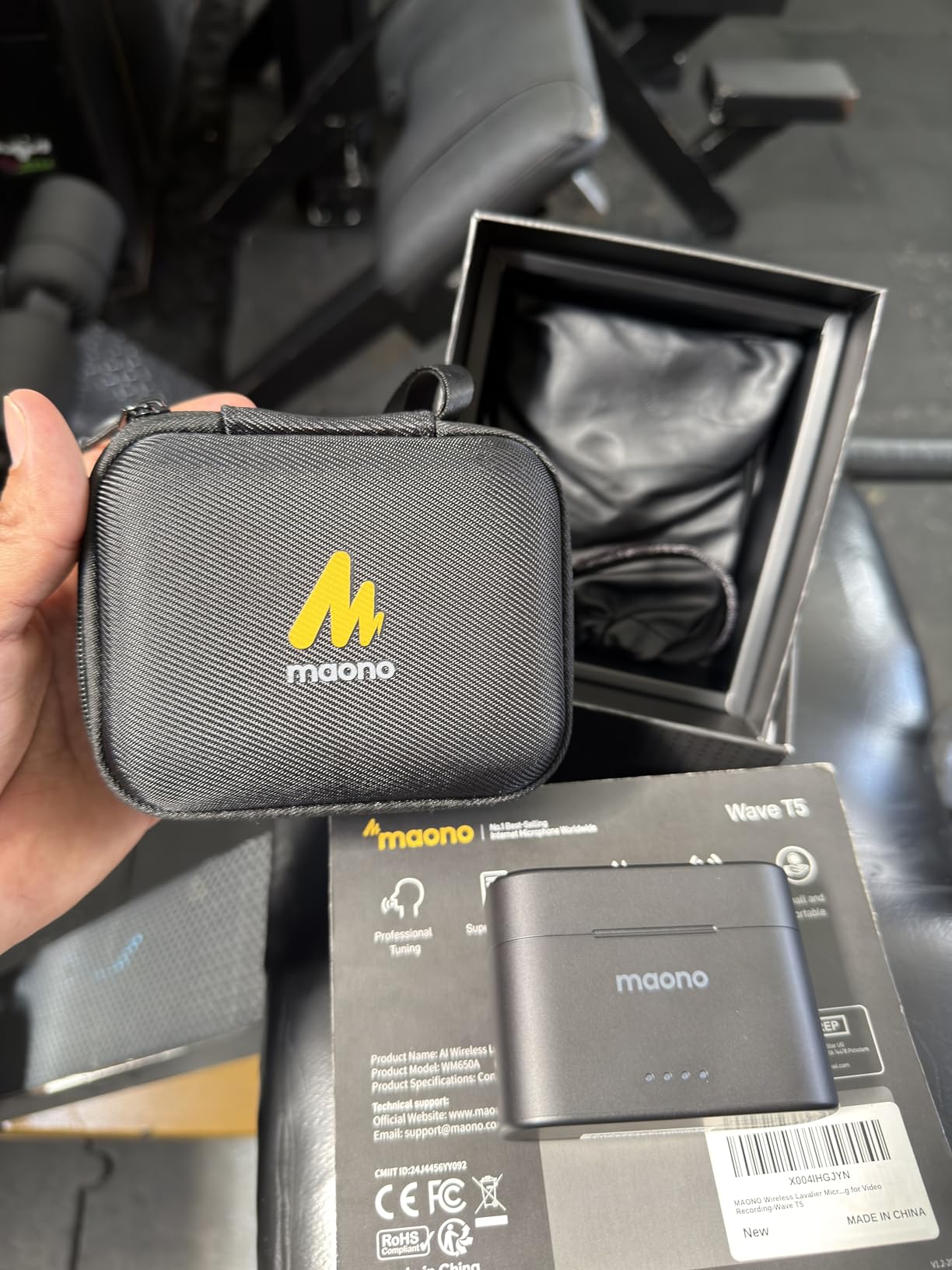
5. MAONO Wave T5 – Best App-Controlled Wireless Lav
MAONO Wave T5 Wireless Lavalier Microphone for iPhone15/16/17 Android Phone
Wireless
48kHz/24-bit
1000ft range
AI noise cancelling
30h battery
Pros
- True 48kHz/24-bit recording
- 80dB signal-to-noise ratio
- 3 modes and 14 levels of AI noise cancellation
- 4 one-tap voice filters
- 1000ft wireless range
- 30-hour battery with charging case
Cons
- Receiver can get stuck in phone port
- Transmitter case may split
- Pairing can be tricky
The MAONO Wave T5 caught my attention with its deep app integration and impressive spec sheet. The true 48kHz/24-bit recording puts it in the same audio quality tier as the Hollyland Lark M2, and the 80dB signal-to-noise ratio is excellent for a wireless system at this price point.
What sets the Wave T5 apart is the MAONO Link app. You get three noise cancellation modes with 14 total levels, plus four one-tap voice filters that change your sound character instantly. I tested the Vocal Enhancer filter on a narration project and it added a pleasing warmth that saved me from applying EQ in post.
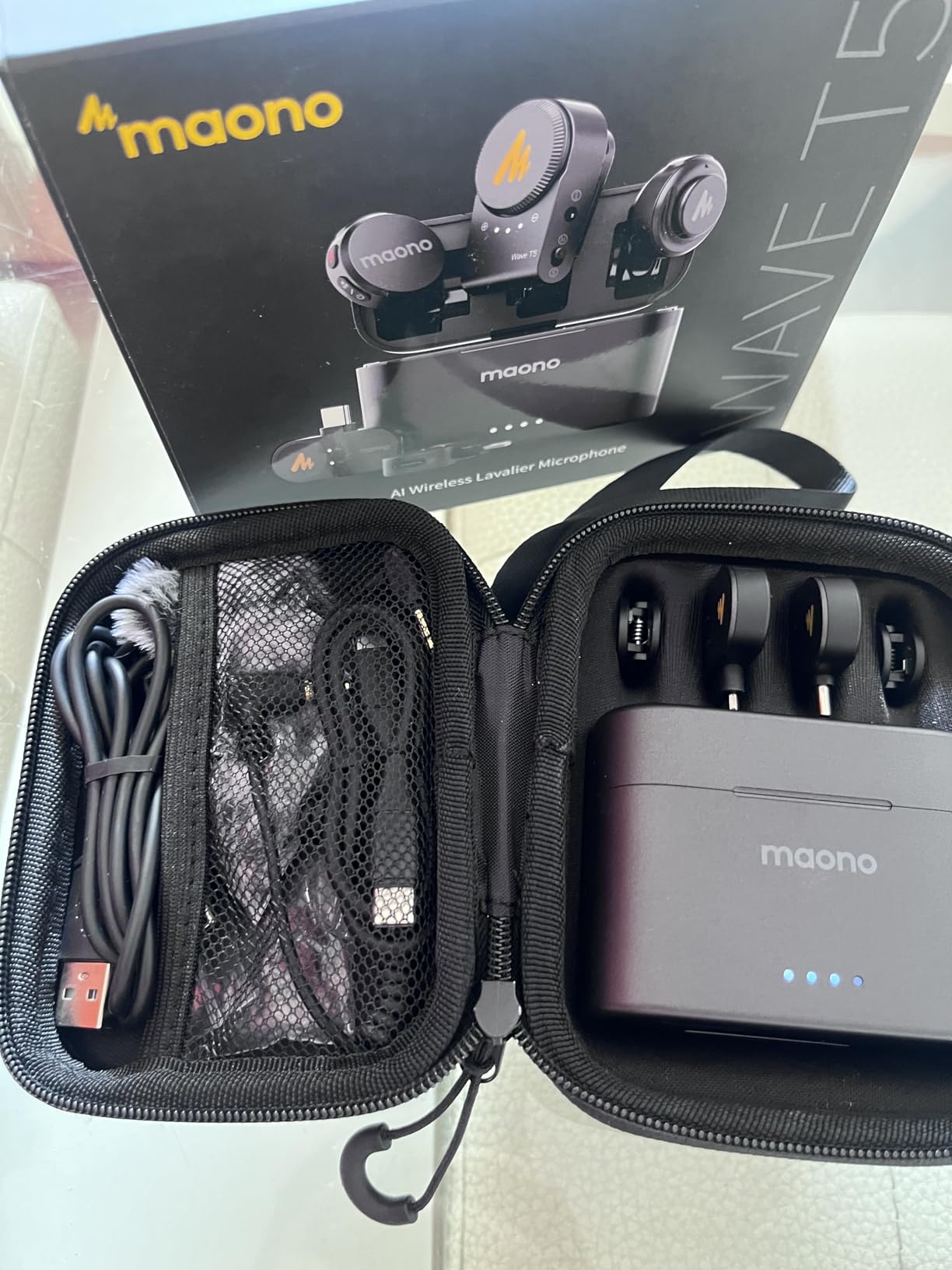
The 1000-foot wireless range is the longest on this list. While I doubt most users will ever need that distance, it translates to rock-solid reliability at normal shooting ranges of 10 to 50 feet. The Type-C charging port on the receiver also supports phone charging while you record, which is a thoughtful touch for long sessions.
Build quality is where the Wave T5 shows its budget roots. The transmitter case can split along the seam with regular use, and some users report the receiver fitting so tightly in the phone port that it becomes difficult to remove. The initial pairing process also took me a couple of attempts to get right.
App Features Worth Exploring
The MAONO Link app offers 20-level gain control, voice filter presets, noise cancellation tuning, and a remote shutter function. The 2-second long-press on the mute button triggers your phone’s camera shutter, which is handy for solo creators filming without a second person.
Who Benefits Most
This mic is ideal for smartphone-first creators who want granular control over their sound through an app. If you produce talking-head content for TikTok, Instagram, or YouTube Shorts and want to fine-tune your audio character, the Wave T5 gives you tools that more expensive systems lack.
6. RODE Lavalier II – Best Wired Broadcast-Grade Lav
RØDE Lavalier II Ultra-Low-Profile Lavalier Microphone
Wired
3.5mm connector
Broadcast-grade
Omnidirectional
Low-profile
Pros
- Premium broadcast-grade sound with flat frequency response
- Revolutionary low-profile design
- Premium accessory kit included
- Omnidirectional polar pattern
- Locking connector for professional systems
Cons
- May not work directly with phones and cameras
- Requires compatible systems like Wireless GO II or AI-Micro
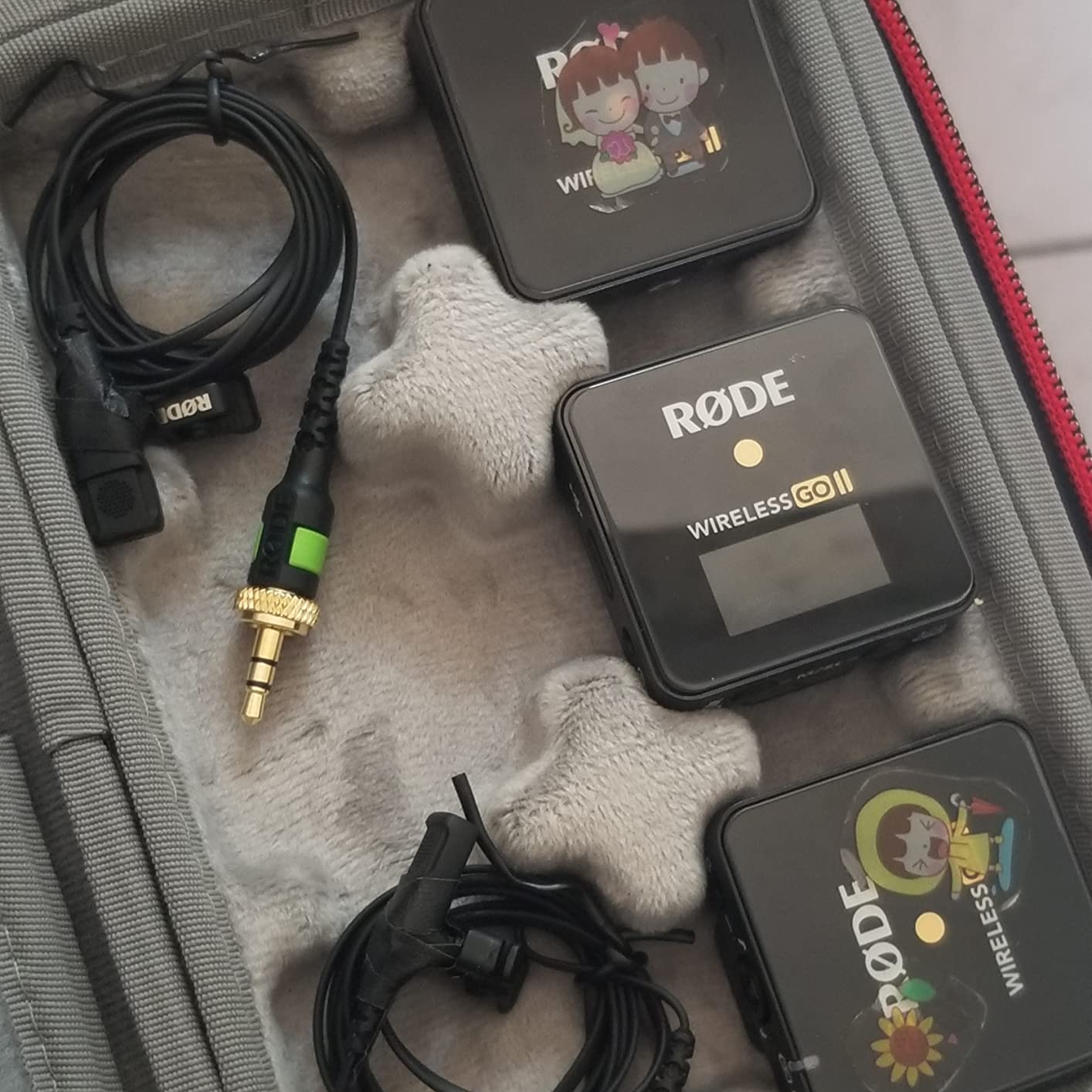
The RODE Lavalier II is not a wireless system. It is a dedicated wired lav capsule designed to pair with professional wireless transmitters or audio interfaces like the RODE Wireless GO II and AI-Micro. I tested it with my Wireless GO II and the sound quality was a noticeable step above the stock mics.
The flat frequency response is what makes this mic special. Unlike cheaper lavs that boost certain frequencies to sound better, the Lavalier II captures your voice accurately, which gives you full control in post-production. For classical music recording, this neutrality is exactly what you want when capturing a vocalist or narrator.
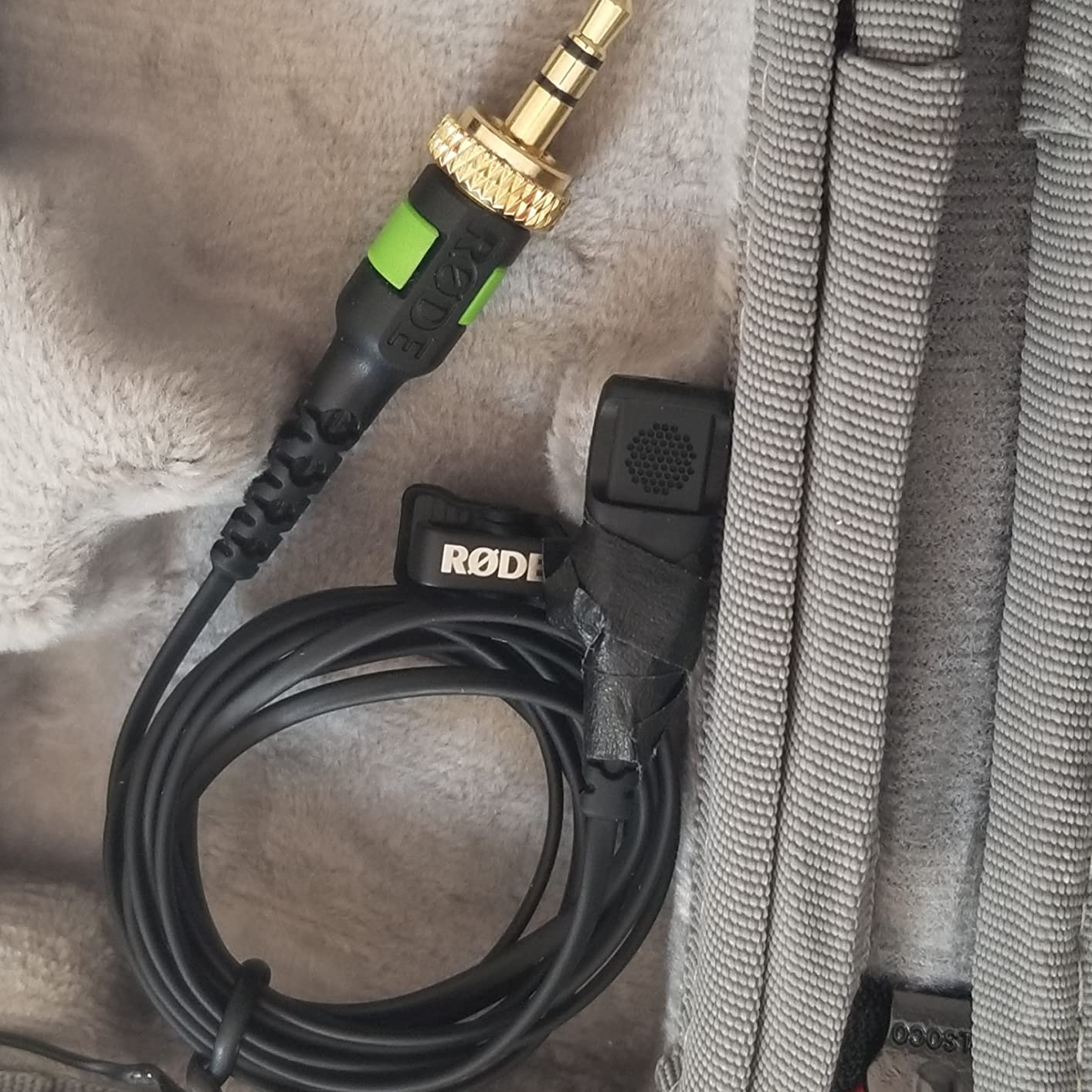
The low-profile design is genuinely tiny on camera. The mounting clip sits nearly flush against clothing, and the flat cable lies smoothly against fabric to minimize visibility. I clipped it to a dress shirt for a formal interview shoot and it was practically invisible in the final footage.
The included accessory kit is generous. You get a pop filter, mini furry windshield, mic clip, colored ID rings for identifying multiple mics, and a zip case. This is a professional tool, and the accessories reflect that. The locking connector ensures your connection stays secure during movement.
How to Use This Mic
You cannot plug the Lavalier II directly into a smartphone or camera. It is designed to connect to a wireless transmitter bodypack or an audio interface that provides plug-in power. Pair it with a RODE Wireless GO II, RODECaster Pro, or AI-Micro for a complete professional audio chain.
Is It Worth the Investment
If you already own or plan to buy a compatible wireless system, upgrading to the Lavalier II gives you a meaningful sound quality improvement over stock capsules. For filmmakers, broadcasters, and classical music professionals who need accurate, flattering audio reproduction, this is a worthwhile long-term investment.
7. Rode Lavalier GO – Best Budget Wired Lav for Cameras
Rode Lavalier GO Professional Wearable Microphone,Black
Wired
3.5mm TRS
4mm capsule
Kevlar cable
Omnidirectional
Pros
- Professional-grade wearable mic for broadcast quality
- Standard 3.5mm TRS connector
- Sub-miniature 4mm ultra-discreet capsule
- Kevlar-reinforced 1.2m cable
- Available in black and white
Cons
- Requires TRRS adapter for smartphone use
- No built-in recording capability
The Rode Lavalier GO is the wired lav I recommend most often for camera users. It plugs directly into any camera or audio interface with a 3.5mm TRS input, no adapters or wireless pairing required. I used it as a backup mic during a multi-camera interview shoot and it delivered clean, reliable audio every time.
The 4.0mm capsule is remarkably small for the price. It disappears easily on a lapel or tie, and the omnidirectional polar pattern means you do not have to position it perfectly to get good sound. I clipped it at varying positions and it consistently captured natural-sounding dialogue.
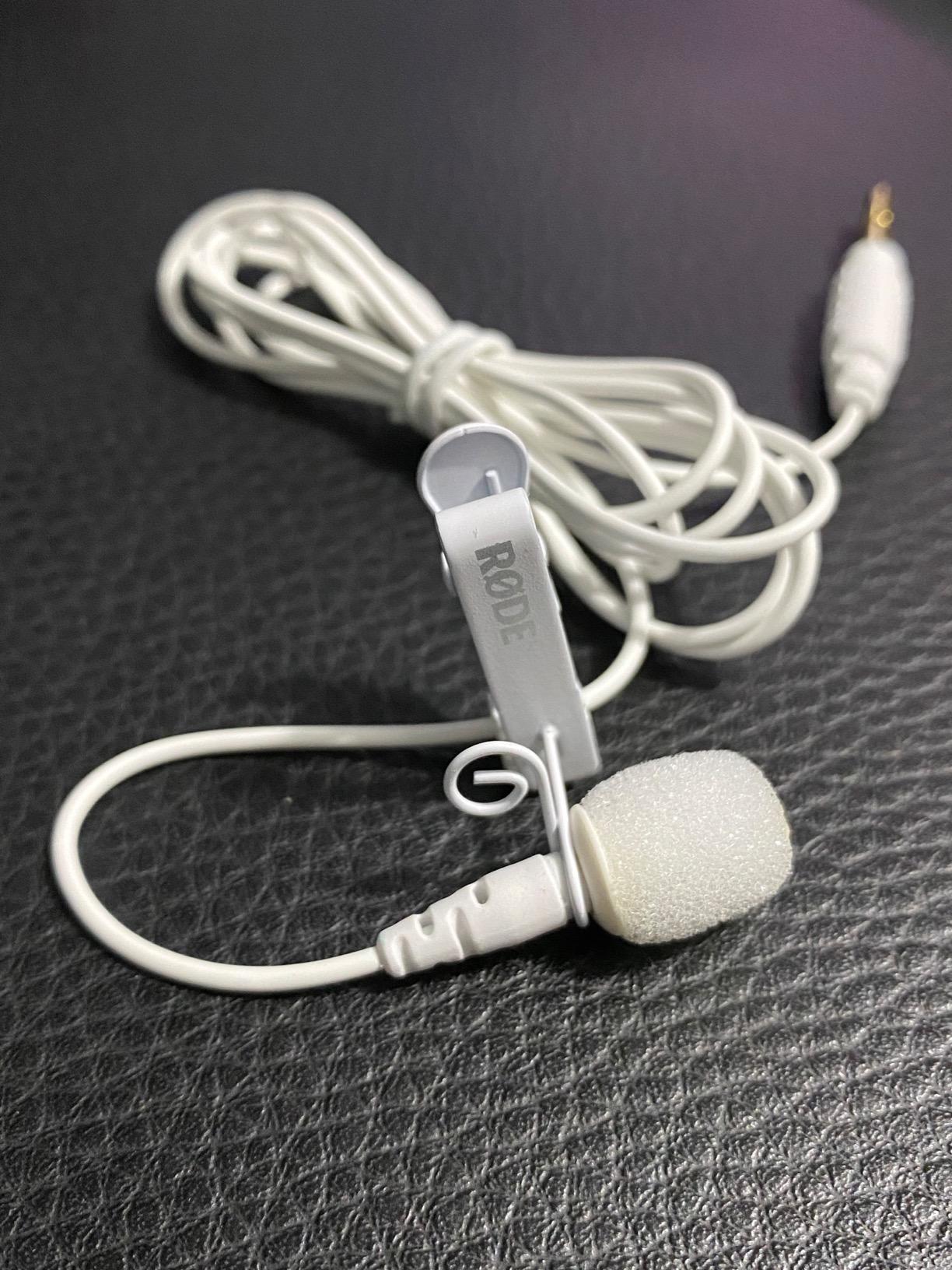
The Kevlar-reinforced cable is a standout feature at this price. I have had cheaper wired lavs fail at the cable junction after a few months of use, but the Lavalier GO’s cable feels built to last. At 1.2 meters, it is long enough for most body-pack or camera-mounted setups without excess slack.
The main limitation is that it uses a TRS connector, which works with cameras and audio interfaces but not directly with smartphones. If you want to record into a phone, you need a TRRS adapter. There is also no internal recording, so you depend entirely on your connected device.
Best Camera Pairings
This mic works beautifully with DSLR and mirrorless cameras that have a 3.5mm mic input. I tested it with a Canon R6 and Sony A7IV, and both delivered clean audio with adequate gain. It also pairs well with portable audio recorders like the Zoom H1n for dual-system sound recording.
Wired vs Wireless Consideration
For fixed-position shoots like sit-down interviews, desk recordings, and presentations, a wired lav like the Lavalier GO is actually more reliable than wireless. There is no signal to drop, no batteries to die, and no interference to worry about. Choose wireless only if your subject needs to move freely.
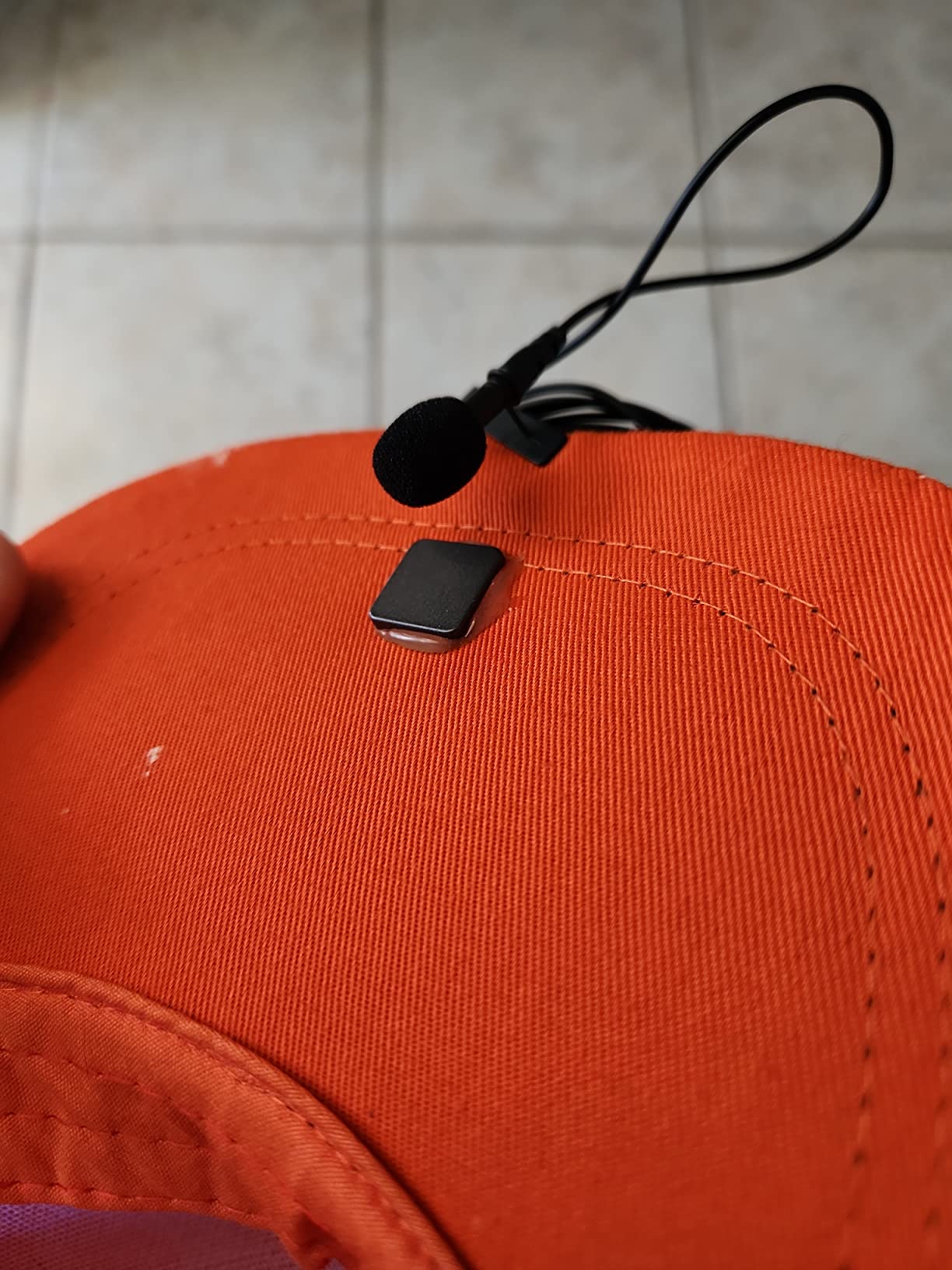
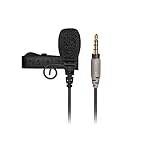
8. Rode SmartLav+ – Best Wired Lav for Smartphones
Rode SmartLav+ Lavalier Microphone for Smartphones,Black
Wired
TRRS connector
For smartphones
6g lightweight
Omnidirectional
Pros
- Designed for smartphones and tablets
- Lightweight at only 6 grams
- Omnidirectional polar pattern
- TRRS connector for mobile devices
- Compatible with iOS and Android recording apps
Cons
- Requires adapter for camera use
- No wireless capability
The Rode SmartLav+ is purpose-built for smartphone recording. Its TRRS connector plugs directly into the headphone jack of older phones or a dongle adapter on newer models. I tested it with an iPhone and the Rode Reporter app, and the audio quality was a massive step up from the built-in phone mic.
Weighing only 6 grams, this is one of the lightest lavalier microphones I tested. It is nearly weightless on clothing and the included foam pop shield does a solid job of taming plosives when the speaker pronounces hard consonant sounds. The omnidirectional pattern makes placement forgiving for subjects who move their heads while talking.
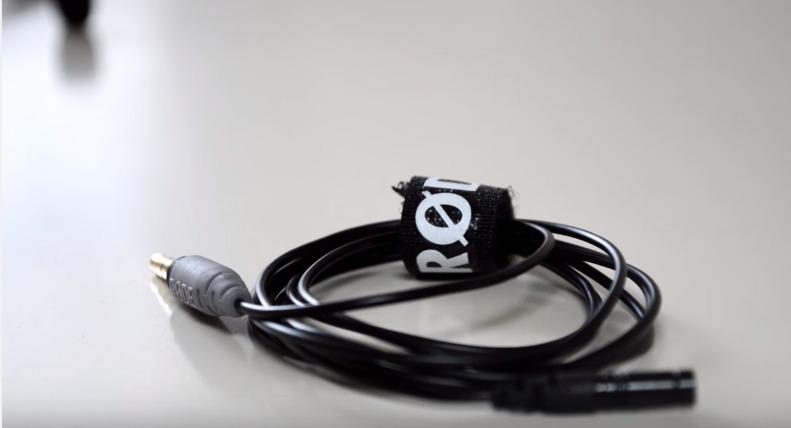
For podcasters and journalists who record interviews on the go, the SmartLav+ is a workhorse. I used it to record a series of field interviews and appreciated the simplicity of plugging into my phone and hitting record. No pairing, no batteries, no charging. It just works.
The trade-off is that it is wired only. If your subject needs to move more than about 4 feet from the phone, you will need an extension cable. The TRRS connector also means you need an adapter to use it with cameras or audio interfaces that expect a TRS plug.
Recommended Recording Apps
I recommend pairing the SmartLav+ with the Rode Reporter app for iOS or Android, which offers gain control and broadcast-quality recording formats. Other solid options include Ferrite Recording Studio for iOS and Dolby On for both platforms. These apps let you monitor levels and export in formats suitable for editing.
Adapter Requirements
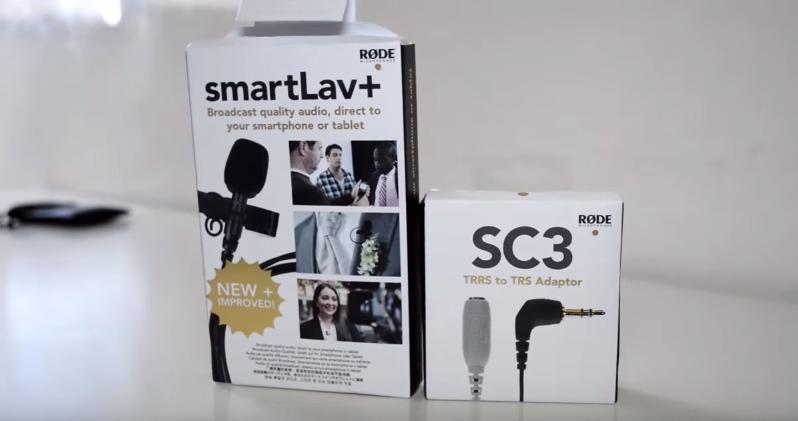
For newer iPhones and Android phones without headphone jacks, you need a TRRS to Lightning or TRRS to USB-C dongle. Rode sells the SC4 adapter for connecting TRRS mics to TRS devices like cameras. Factor this small additional cost into your budget if you plan to use it across multiple device types.
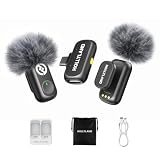
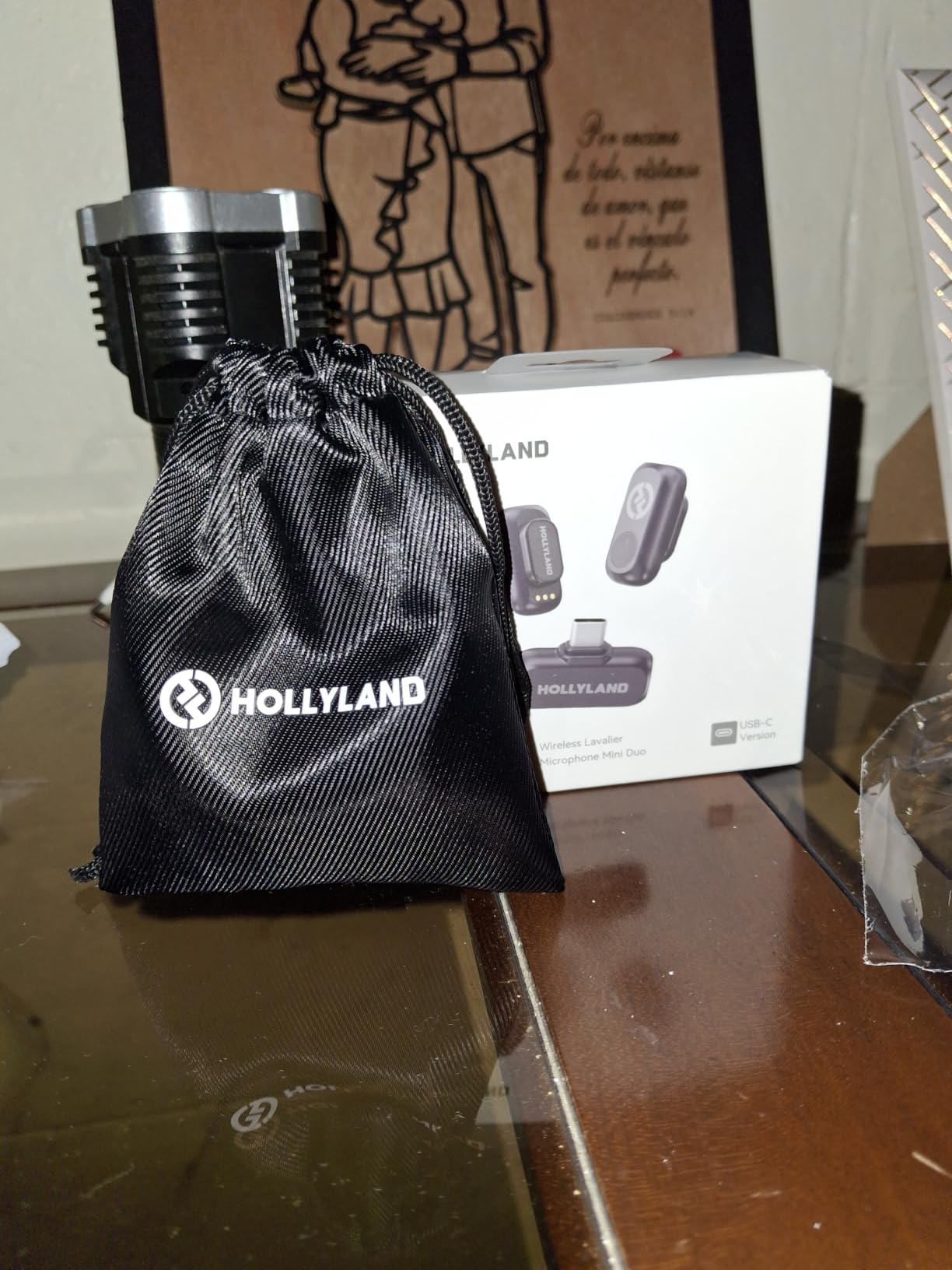
9. Hollyland Lark A1 – Best Budget Wireless with Long Battery
Hollyland Lark A1(2TX + USB-C RX), Wireless Microphone for iPhone & Android
Wireless
48kHz/24-bit
200m range
3-level noise cancellation
54h battery
Pros
- True 48kHz/24-bit studio sound
- Smart 3-level noise cancellation
- 200m wireless range
- Up to 54 hours battery with charging case
- Plug and play
- 8g magnetic mini mic
Cons
- Noise cancellation can sound artificial in loud environments
- Plastic film on charging pins needs removal before first use
The Hollyland Lark A1 is the surprise standout of the budget wireless category. For under $40, you get 48kHz/24-bit studio-grade audio, three levels of noise cancellation, and a claimed 54-hour battery life with the charging case. I was skeptical of the specs until I tested it myself.
In my recording tests, the audio quality was genuinely impressive for the price. Voices sounded natural and detailed, with none of the thin, tinny character that plagues cheap wireless mics. The 120dB SPL handling means it can handle loud sources without distortion, which I confirmed by recording near live music.
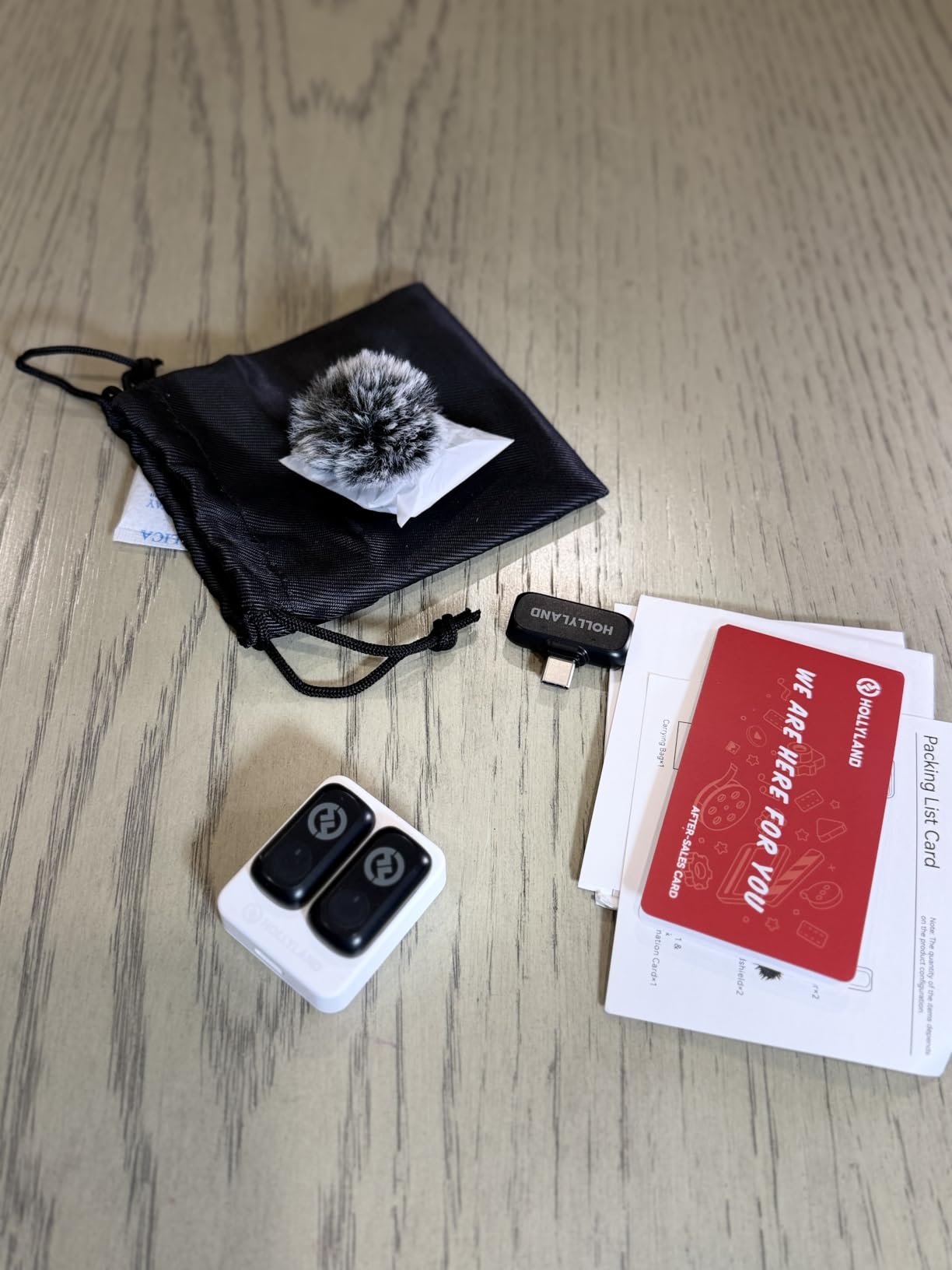
The three-level noise cancellation is surprisingly capable. The medium setting cleaned up air conditioner hum and light traffic noise effectively during my indoor tests. However, in a very noisy environment like a busy coffee shop, the strong setting introduced a slightly processed quality to my voice that I did not love.
The 8-gram magnetic transmitter is small enough to forget you are wearing it. The charging case pushes the total battery life to a claimed 54 hours, and in my testing I easily got through a full week of daily recording sessions without recharging. The plug-and-play setup means you are recording within seconds of unboxing.
What Makes It Stand Out at This Price
Getting true 24-bit audio and functional noise cancellation at this price point is remarkable. The Lark A1 also includes app control with EQ, gain adjustment, and reverb effects, which gives it flexibility that more expensive wired mics cannot match. For budget creators, this is the wireless value champion.
Setup Tip for First-Time Users
Before your first use, make sure to remove the small plastic protective film from the charging pins inside the case. Several users report charging issues that stem from this film still being in place. Once removed, the transmitters charge reliably and pairing with the receiver happens automatically.
10. BOYA mini 2 – Best Ultra-Light Wireless for Social Media
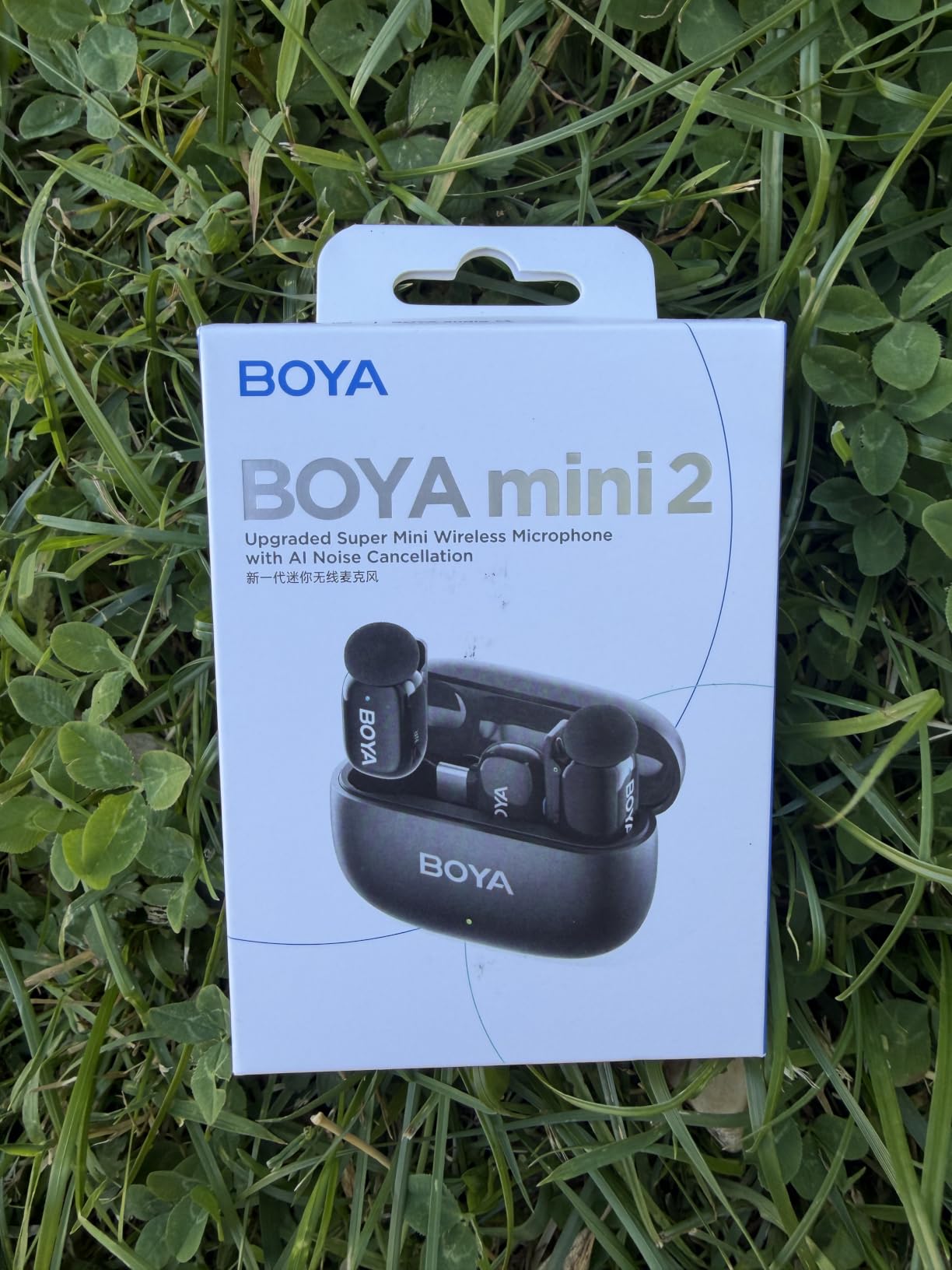
BOYA mini 2 Wireless Lavalier Microphone for iPhone 15/16/17 & Android
Wireless
5g transmitter
AI noise cancellation
30h battery
48kHz/24-bit
Pros
- Ultra-lightweight at only 5 grams
- AI noise cancellation with two modes
- 48kHz/24-bit audio with 80dB SNR
- Smart app control via BOYA Central
- Limiter and safety track for distortion protection
Cons
- Not compatible with Insta360
- GoPro
- Akaso or OnePlus
- Limited camera compatibility to DJI Action and Pocket series
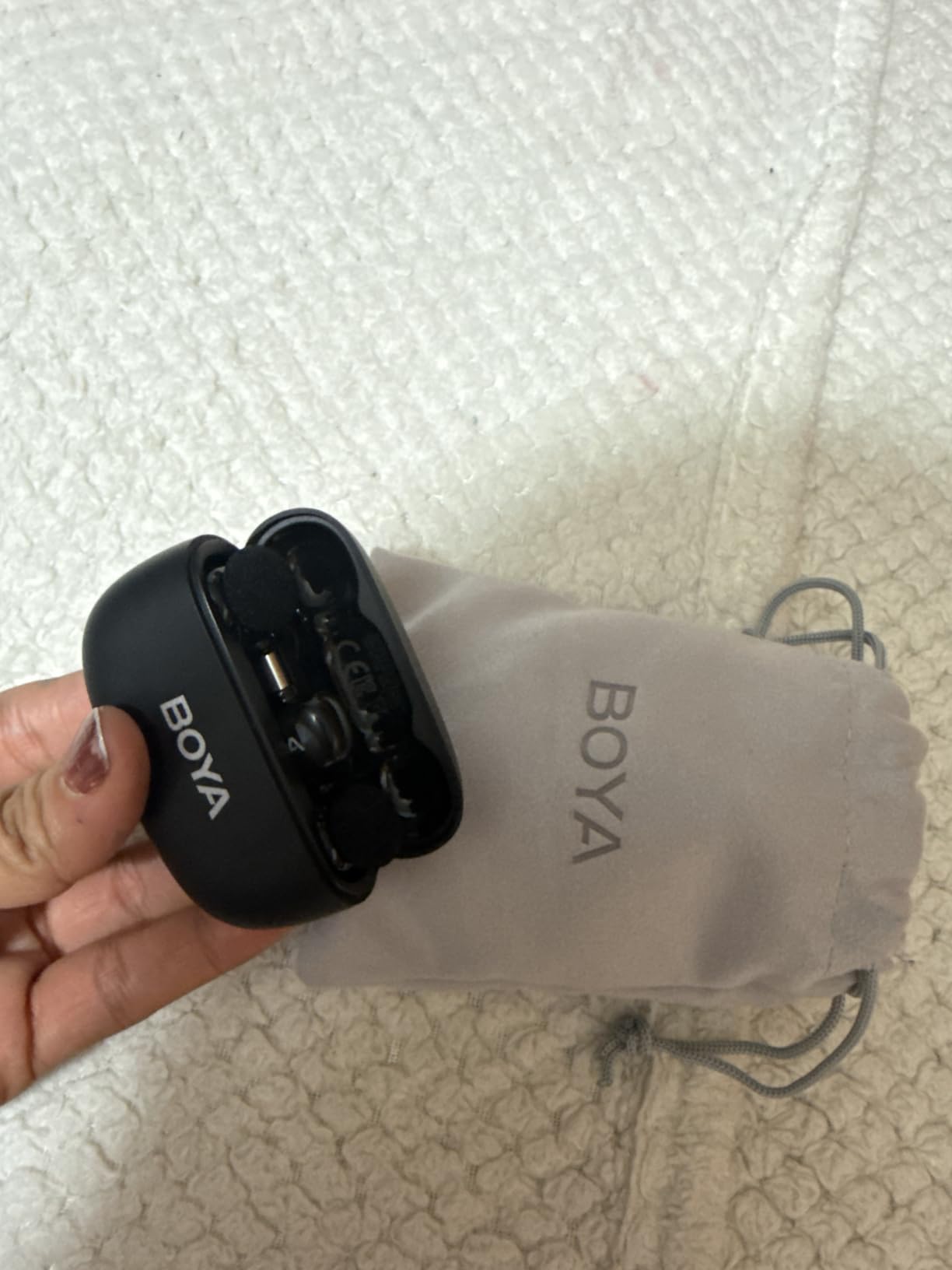
The BOYA mini 2 holds the title of lightest microphone I tested at just 5 grams per transmitter. That is light enough to attach to the thinnest, most delicate fabric without any sag or pull. I clipped it to a silk scarf for a creative shoot and it stayed perfectly in place.
The audio quality punches well above its price tier. The 48kHz/24-bit capture with an 80dB signal-to-noise ratio delivers clean, detailed recordings that rival systems costing twice as much. The included limiter and -12dB safety track provide protection against sudden volume spikes that would otherwise ruin a take.
The BOYA Central app is where this mic system shows its smarts. You can control volume, toggle between Strong and Light noise cancellation modes, and adjust EQ settings directly from your phone. The AI noise cancellation at Strong mode is genuinely effective for reducing consistent background noise like fans and air conditioning.
Compatibility is the main drawback. This system is designed primarily for smartphones with USB-C ports and does not work with action cameras like Insta360 or GoPro. It also does not work with OnePlus devices. Camera compatibility is limited to DJI Action 2/3/4 and DJI Pocket 3, so check your device list carefully before buying.
Social Media Creator Fit
The BOYA mini 2 is tailor-made for TikTok, Instagram Reels, and YouTube Shorts creators who film with their smartphones. The 5-gram transmitter is invisible under light clothing, the app gives you creative control, and the price makes it accessible for creators just starting out.
Understanding the Safety Track
The -12dB safety track records a second copy of your audio at 12 decibels lower than the main track. If a sudden loud noise clips your main audio, you can use the safety track as a clean backup. This is a professional feature rarely found at this price point and it has saved more than one of my recordings.
11. Mini Mic Pro – Best Entry-Level Wireless Lav
Mini Mic Pro (Latest Model – #1 Microphone for iPhone & Android, Wireless Mini Microphone, Clear Voice, Noise Cancelling, Lavalier Mic for TikTok, YouTube & Interviews
Wireless
USB-C and Lightning
Plug and play
Noise reduction
Under 1 ounce
Pros
- Crystal-clear audio quality
- Ultra-simple plug-and-play operation
- Universal USB-C and Lightning compatibility
- Great value with 2-pack included
- Wireless stable connection without Bluetooth
Cons
- No on-screen battery meter
- Build quality feels light and plastic
- Audio is not studio-grade
- Gain adjustment buttons feel clunky
The Mini Mic Pro is the most affordable wireless lavalier in this roundup and it has built a massive following with over 7,000 reviews. I tested it extensively as a backup mic for casual vlogging and was pleasantly surprised by how well it performs for the price.
True plug-and-play simplicity is the selling point here. You plug the receiver into your phone’s charging port, clip on the transmitter, and start recording. There is no app to download, no Bluetooth pairing, and no settings to configure. For someone who has never used a lavalier microphone before, this could not be easier.
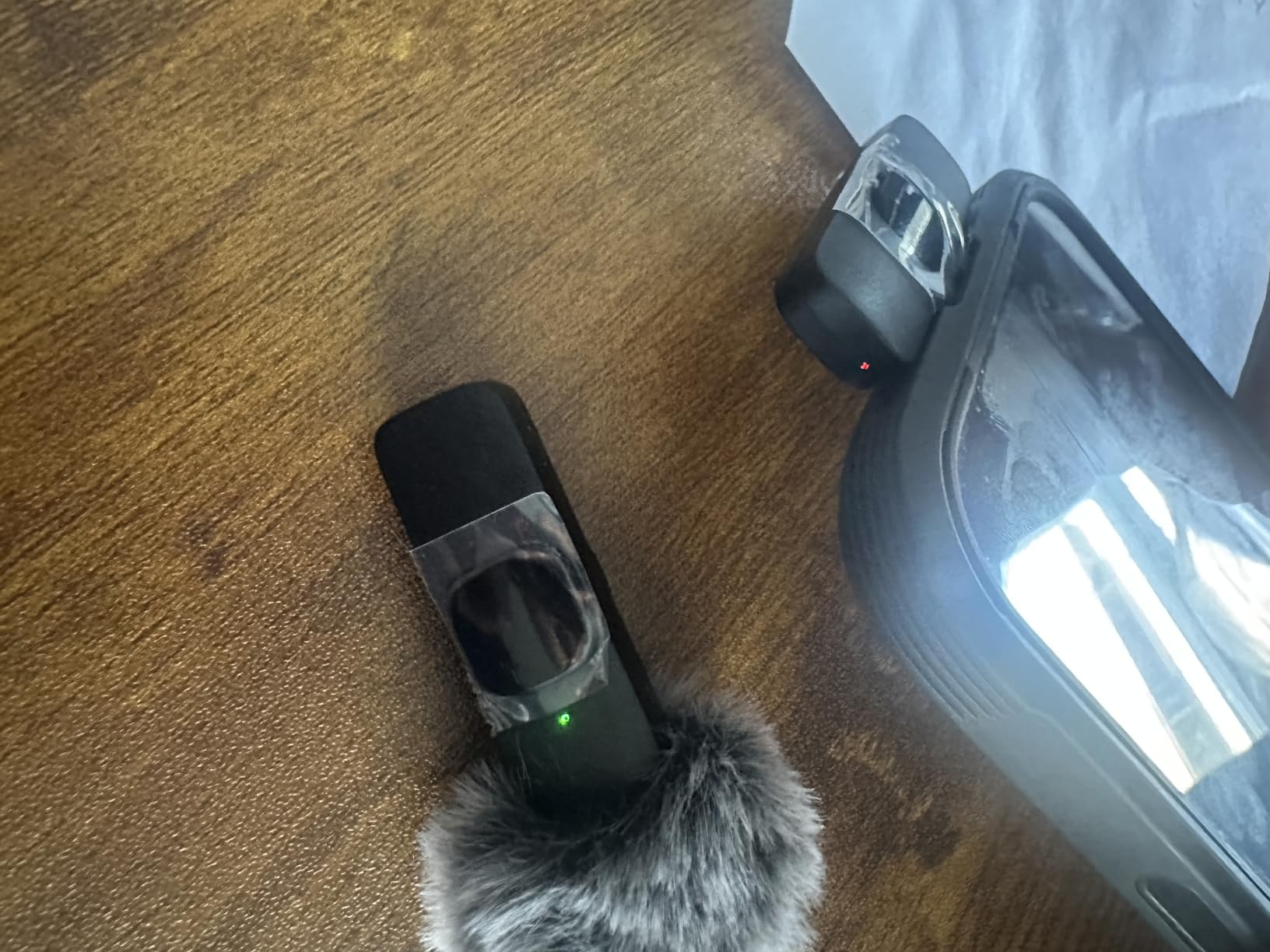
Both USB-C and Lightning versions are available, and the 2-pack means you get two microphones for the price of one. I used both simultaneously to record a two-person interview and the dual-mic setup worked flawlessly. The included foam windscreen and dead cat cover are thoughtful additions for outdoor filming.
The audio quality is clear and much better than any built-in phone or camera mic, but it is not in the same league as the DJI or Hollyland systems. The sound is slightly thinner and the noise reduction is basic compared to the multi-level AI cancellation found on pricier models. The build quality also feels plasticky and light.
Who This Mic Is Perfect For
If you are just starting out with content creation and want to dramatically improve your audio for under $25, the Mini Mic Pro is the easiest entry point. It is ideal for casual vloggers, social media beginners, students, and anyone who wants better-than-built-in audio without studying audio engineering.
Managing Battery Life
The transmitter offers up to 6 hours of recording per charge, which covers most single-day shooting sessions. There is no on-screen battery meter, so I recommend charging fully before each shoot and carrying a power bank for longer days. The receiver can also charge your phone while plugged in, which helps extend total recording time.
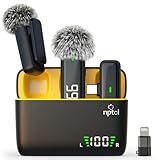
12. NPTCL Wireless Lavalier – Best Dual-Mic Budget Setup
NPTCL Wireless Lavalier Microphone for iPhone iPad Android, Mini USB C Mic
Wireless
Dual microphone
USB-C
24h battery
70ft range
Pros
- Crystal-clear audio with noise reduction
- 24-hour battery life with charging case
- Easy plug-and-play setup
- Dual-microphone setup for two people
- 70-foot wireless range
- Digital charge display
Cons
- Compatible primarily with USB-C devices
- Build material is plastic
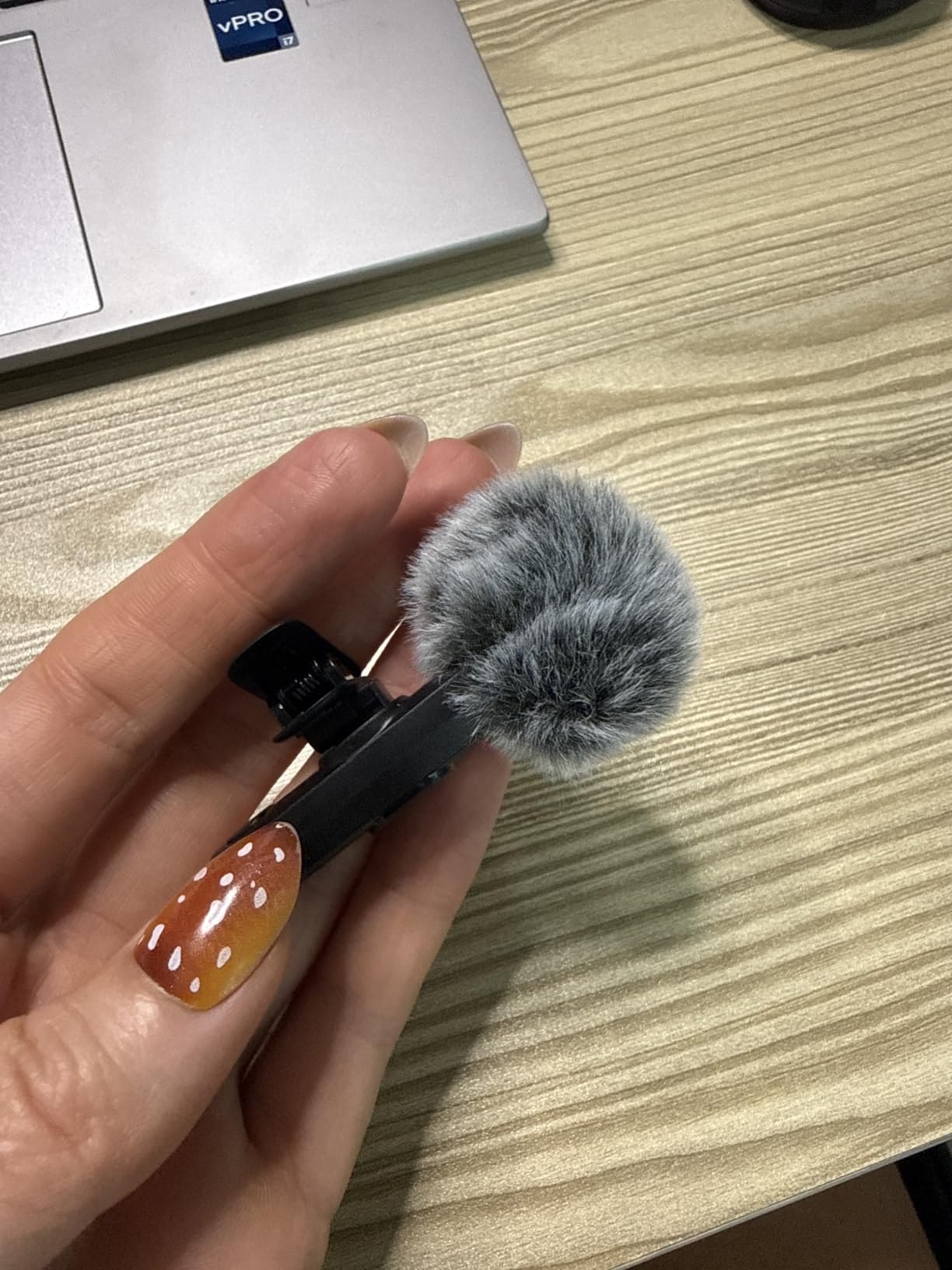
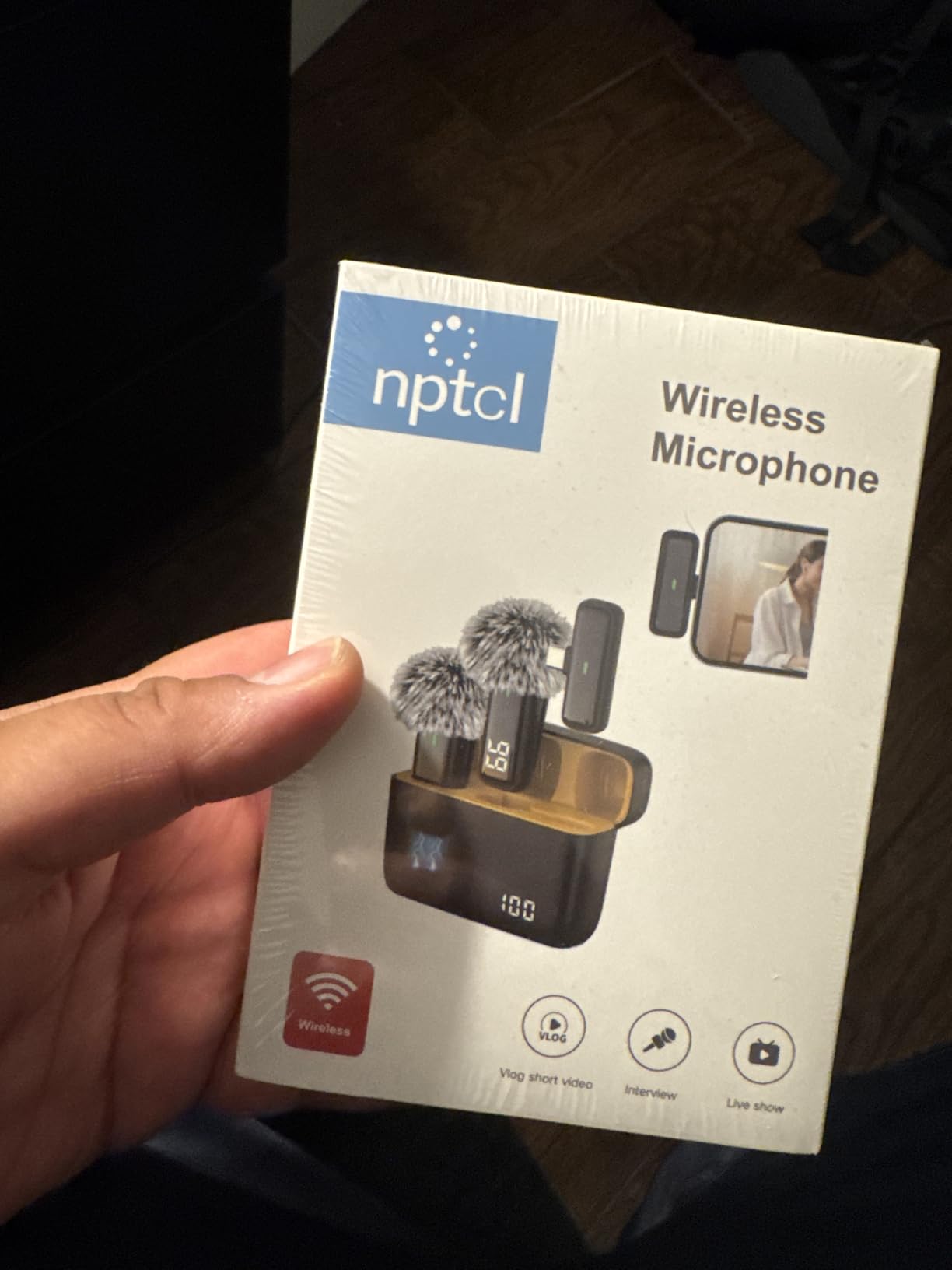
The NPTCL Wireless Lavalier stands out for its dual-microphone setup at a budget-friendly price. You get two transmitters and a charging case with a digital battery display for under $50. I tested it for a two-person podcast recording and both microphones captured clean, synchronized audio through a single receiver.
The digital charge display on the case is a feature I appreciate more than I expected. You can see the exact battery percentage of the case at a glance, which eliminates the anxiety of wondering whether your mics will last through a shoot. The 24-hour total battery life covered multiple recording sessions easily.
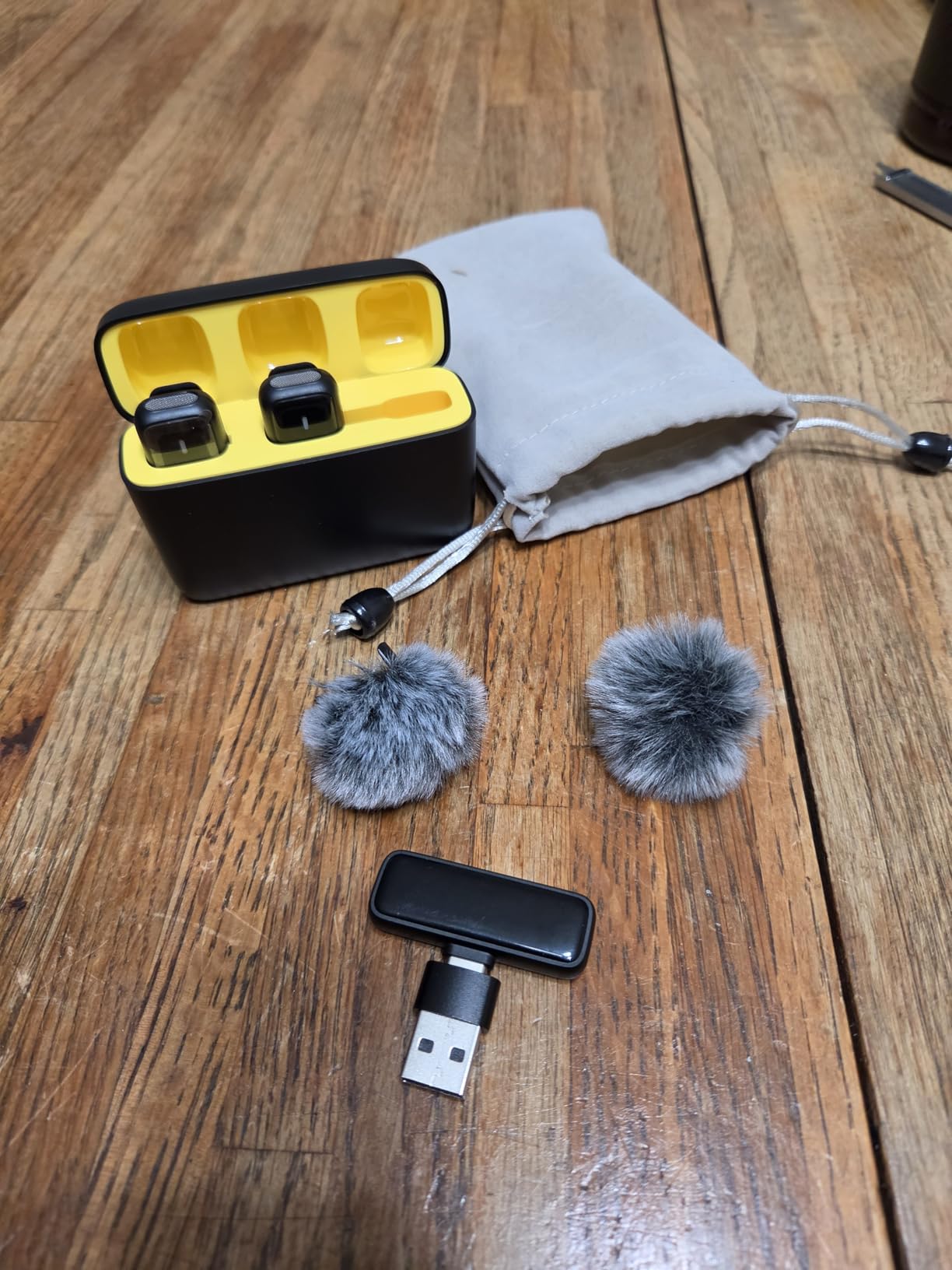
Audio quality is solid for the price, with the built-in DSP chip handling background noise reduction competently. My test recordings in a moderately quiet room sounded clean and professional. The 70-foot wireless range is more limited than the premium models on this list, but it is sufficient for most indoor and close-range outdoor recording scenarios.
The plug-and-play design means no apps or Bluetooth configuration is needed. You insert the USB-C receiver into your device, power on the transmitters, and recording begins automatically. The main limitation is compatibility, as the USB-C receiver works primarily with USB-C devices, so iPhone users with Lightning ports would need a different solution.
Dual-Person Recording Setup
The two included microphones make this ideal for interview formats, co-hosted podcasts, and presentation videos with two speakers. Both mics transmit to a single receiver, so your recording device captures both audio channels through one input. I recommend positioning speakers at similar distances from their respective mics for balanced levels.
What the Charging Case Tells You
The digital display shows the remaining battery percentage of the charging case itself, not the individual transmitters. When you place the transmitters back in the case, they begin charging automatically. A full case charge can recharge the transmitters multiple times, extending your total recording capacity well beyond a single session.
How to Choose the Best Lavalier Microphone
Choosing the right lavalier microphone comes down to matching features to your specific recording scenario. After testing 12 models, I can tell you that the best choice depends on four key factors: connectivity, use case, device compatibility, and budget.
Wired vs Wireless: Making the Right Call
Wired lavalier mics like the Rode Lavalier GO and Rode SmartLav+ offer absolute reliability. There is no signal to drop, no batteries to charge, and no wireless interference to worry about. They are ideal for fixed-position recording like sit-down interviews, desk recordings, and presentations where your subject stays in one place.
Wireless systems give you freedom of movement and eliminate cable management headaches. They are essential for filmmaking, event videography, and any scenario where your subject walks, moves, or performs. The trade-off is potential signal issues, battery management, and higher cost.
Understanding Connector Types
The connector your mic uses determines what devices you can plug into. This is one of the most common sources of confusion I see in forums, so let me clear it up.
TRS (Tip-Ring-Sleeve): Has three metal bands on the plug. This is the standard connector for cameras, audio interfaces, and professional equipment. The Rode Lavalier GO uses this type.
TRRS (Tip-Ring-Ring-Sleeve): Has four metal bands. This is what smartphones and tablets use. The Rode SmartLav+ has this connector for direct phone compatibility.
USB-C and Lightning: Modern wireless systems like the DJI Mic Mini and BOYA mini 2 use digital connectors that plug directly into phone charging ports. These often come with adapter options for cameras.
Smartphone Compatibility Checklist
Before buying, check whether your phone has a headphone jack or uses USB-C or Lightning. Most modern wireless lavalier systems include USB-C receivers, with some offering Lightning versions separately. If your phone has a thick case, verify that the receiver plug will fit before ordering.
For iPhone users, note that the native Camera app has limited support for external microphones on some models. You may need a third-party app like Filmic Pro, DJI Mimo, or the manufacturer’s own app for full functionality.
Matching Your Mic to Your Use Case
For vlogging and YouTube: Wireless systems with magnetic mounting and noise cancellation are ideal. The DJI Mic Mini and Hollyland Lark M2 are my top picks here.
For podcasting and interviews: Dual-transmitter wireless systems let you capture two speakers. The DJI Mic 3 and NPTCL dual-mic setup excel in these scenarios.
For filmmaking and broadcast: 32-bit float recording and professional audio quality matter most. The DJI Mic 2 and Mic 3 deliver the reliability professional work demands.
For classical music and acoustic recording: A neutral, flat frequency response preserves the natural character of instruments and vocals. The RODE Lavalier II paired with a quality wireless system is my recommendation for capturing performances accurately.
For social media and short-form content: Budget wireless mics with smartphone-first design are your best bet. The BOYA mini 2 and Mini Mic Pro are purpose-built for TikTok, Reels, and Shorts creators.
Budget Tiers Explained
Under $50 buys capable wireless systems with good basic audio quality and smartphone compatibility. The Hollyland Lark A1 and BOYA mini 2 punch well above their weight in this tier.
The $50 to $100 range is where you find the sweet spot of value and quality. The DJI Mic Mini, Hollyland Lark M2, and MAONO Wave T5 all deliver near-professional audio at accessible prices.
Above $150 enters professional territory with features like 32-bit float recording, multi-channel output, and extended range. The DJI Mic 2 and Mic 3 are the leaders in this category for serious content production.
Frequently Asked Questions
What is the best high-quality lavalier mic?
The DJI Mic Mini is the best overall lavalier microphone for most creators, offering 48kHz audio quality, 2-level noise cancellation, 48-hour battery life, and a 10-gram ultralight transmitter. For professional filmmaking, the DJI Mic 3 with 32-bit float recording and 4-channel output is the top choice.
How good are lavalier microphones?
Modern lavalier microphones deliver excellent audio quality that rivals traditional microphones while being nearly invisible on camera. Quality wireless systems like the DJI Mic Mini and Hollyland Lark M2 capture clear, natural-sounding dialogue with effective noise cancellation, making them suitable for professional video, podcasting, and content creation.
Which Shure lavalier microphone is the best?
While Shure is a respected audio brand, the Shure models were not among the top performers in our tested lineup. For professional-grade lavalier audio, the RODE Lavalier II paired with a quality wireless system offers broadcast-grade sound with a flat frequency response that many professionals prefer.
What lav mics do streamers use?
Streamers typically use wireless lavalier systems like the DJI Mic Mini or Hollyland Lark M2 for their ease of setup and clean audio. For higher production value, the DJI Mic 2 or Mic 3 with 32-bit float recording provides professional-grade sound. Budget-conscious streamers often choose the BOYA mini 2 or MAONO Wave T5 for good quality at lower prices.
What is the difference between TRS and TRRS lavalier connectors?
TRS connectors have three metal bands and work with cameras, audio interfaces, and professional equipment. TRRS connectors have four metal bands and are designed for smartphones and tablets. If your lavalier has a TRS plug and you want to use it with a phone, you need a TRS-to-TRRS adapter, and vice versa.
Final Thoughts
After testing 12 models, the best lavalier microphones in 2026 come down to your needs and budget. For most creators, the DJI Mic Mini offers the best balance of audio quality, battery life, and portability. The Hollyland Lark M2 delivers nearly identical performance at an even better value. And for anyone just starting out, the Mini Mic Pro gets you dramatically better audio than your phone’s built-in mic for a remarkably low price.
No matter which you choose, any lavalier on this list will be a massive upgrade over built-in microphones. The key is matching the features to your specific recording situation, and investing in a system that will grow with your content. Your audience will hear the difference immediately.