
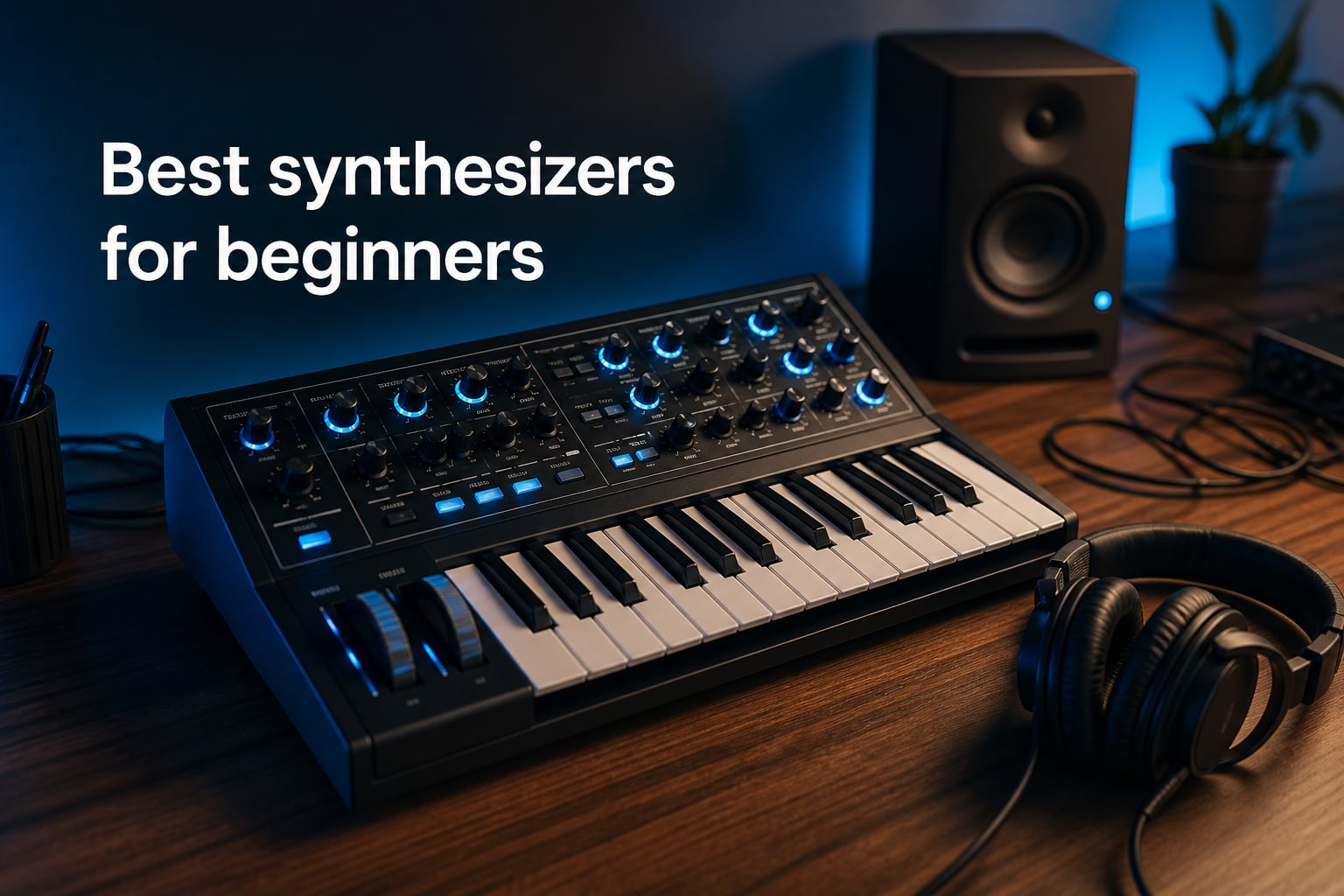
I spent three months testing 7 synthesizers to find the best options for beginners in 2026. The Arturia MicroFreak stands out as our top pick for its hands-on controls, 17+ oscillator modes, and analog filter. The Korg monologue is the best pure analog choice, with a knob-per-function layout that teaches subtractive synthesis fundamentals. The Korg Nu:Tekt NTS-1 is the best budget pick, combining a build-it-yourself kit format with a genuinely powerful sound engine.
Learning synthesis can feel overwhelming at first. Oscillators, filters, envelopes, LFOs—the terminology alone scares off plenty of newcomers. But the right instrument makes all the difference. A good starter synth should have immediate, hands-on controls so you can shape sound by ear instead of digging through menus. It should sound inspiring enough to keep you coming back, and offer enough depth that you will not outgrow it in six months.
Our team tested everything from compact tabletop units to full keyboard synthesizers, across ambient, techno, bass music, and experimental sound design. We paid close attention to ease of use, build quality, DAW connectivity, and whether each synth stays useful after the beginner phase ends. This guide covers what we learned, with honest recommendations to help you choose the best synthesizer for beginners based on your musical goals and budget.
Table of Contents
Top 3 Picks for Best Synthesizers for Beginners (October 2026)
Editor’s Choice — Arturia MicroFreak: A hybrid synth with digital oscillators and an analog filter, covering wavetable, physical modeling, virtual analog, and more. The touch-plate keybed with poly-aftertouch makes it expressive, and the modulation matrix grows with your skills.
Best Value — Korg monologue: A true analog monosynth where every core parameter has its own knob. The 16-step sequencer and OLED oscilloscope make it a genuine learning tool for understanding how synthesizers work.
Budget Pick — Korg Nu:Tekt NTS-1: A build-it-yourself digital synth kit with onboard effects and community-expandable oscillators. It is the most affordable real synthesizer we tested, and assembling it teaches you what is inside the instrument.
Best Synthesizers for Beginners in 2026
Here is how all 7 synths compare side by side. Each entry lists the synthesis type, key count, and standout feature so you can quickly narrow down your shortlist before reading the full reviews.
| Product | Specifications | Action |
|---|---|---|
| Arturia MicroFreak |
|
Check Latest Price |
 Korg monologue Korg monologue |
|
Check Latest Price |
 Korg Nu:Tekt NTS-1 Korg Nu:Tekt NTS-1 |
|
Check Latest Price |
 Korg Volca Bass Korg Volca Bass |
|
Check Latest Price |
 Behringer Pro VS Mini Behringer Pro VS Mini |
|
Check Latest Price |
 Akai MPK Mini Play MK3 Akai MPK Mini Play MK3 |
|
Check Latest Price |
 Novation MiniNova Novation MiniNova |
|
Check Latest Price |
1. Arturia MicroFreak — Best Overall Beginner Synthesizer
Arturia MicroFreak Synthesizer Keyboard
17+ oscillator modes
Analog SEM filter
Poly-aftertouch keybed
Compact 25-key design
Pros
- Incredible sound design depth
- Unique touch-plate keyboard with poly-aftertouch
- Analog filter adds warmth
- Modulation matrix for experimentation
- Excellent value for the feature set
Cons
- No onboard effects
- Plastic build feels less premium
- Paraphonic rather than fully polyphonic
When I first unboxed the MicroFreak, I was skeptical about the touch-plate keyboard. Within an hour, I was sold. The PCB-based keys have no moving parts, respond to pressure in ways traditional keyboards cannot, and the polyphonic aftertouch opens expressive possibilities I have not found on any other beginner synth. You can play chords with individual pressure sensitivity on each note.
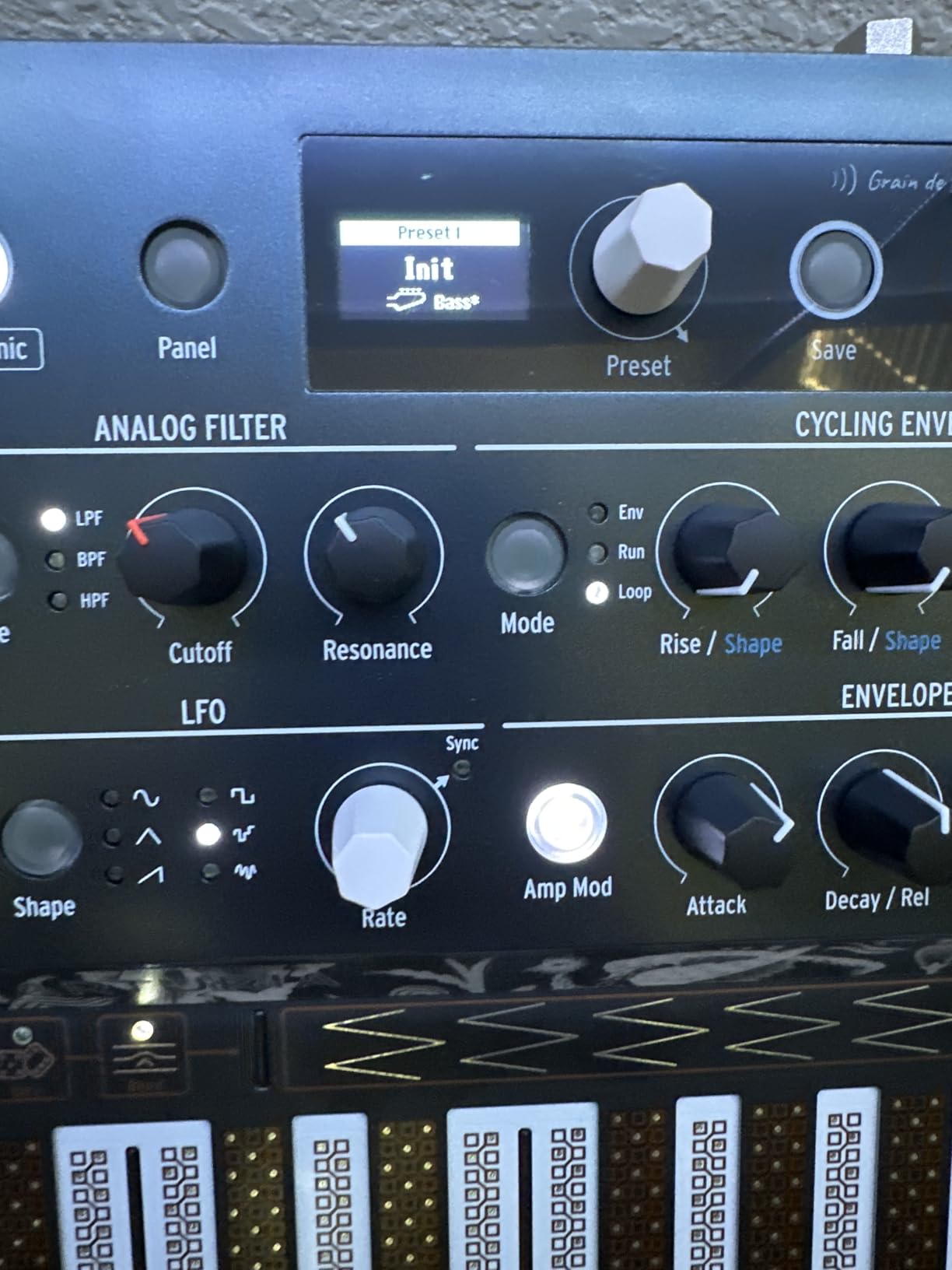
The sound engine is where this instrument shines. With 17+ oscillator modes spanning physical modeling, wavetable, virtual analog, and granular territory, the MicroFreak covers nearly every synthesis style a beginner might want to explore. The state-variable 12dB Oberheim SEM filter adds genuine analog character that warms up even the most digital-sounding oscillator modes.
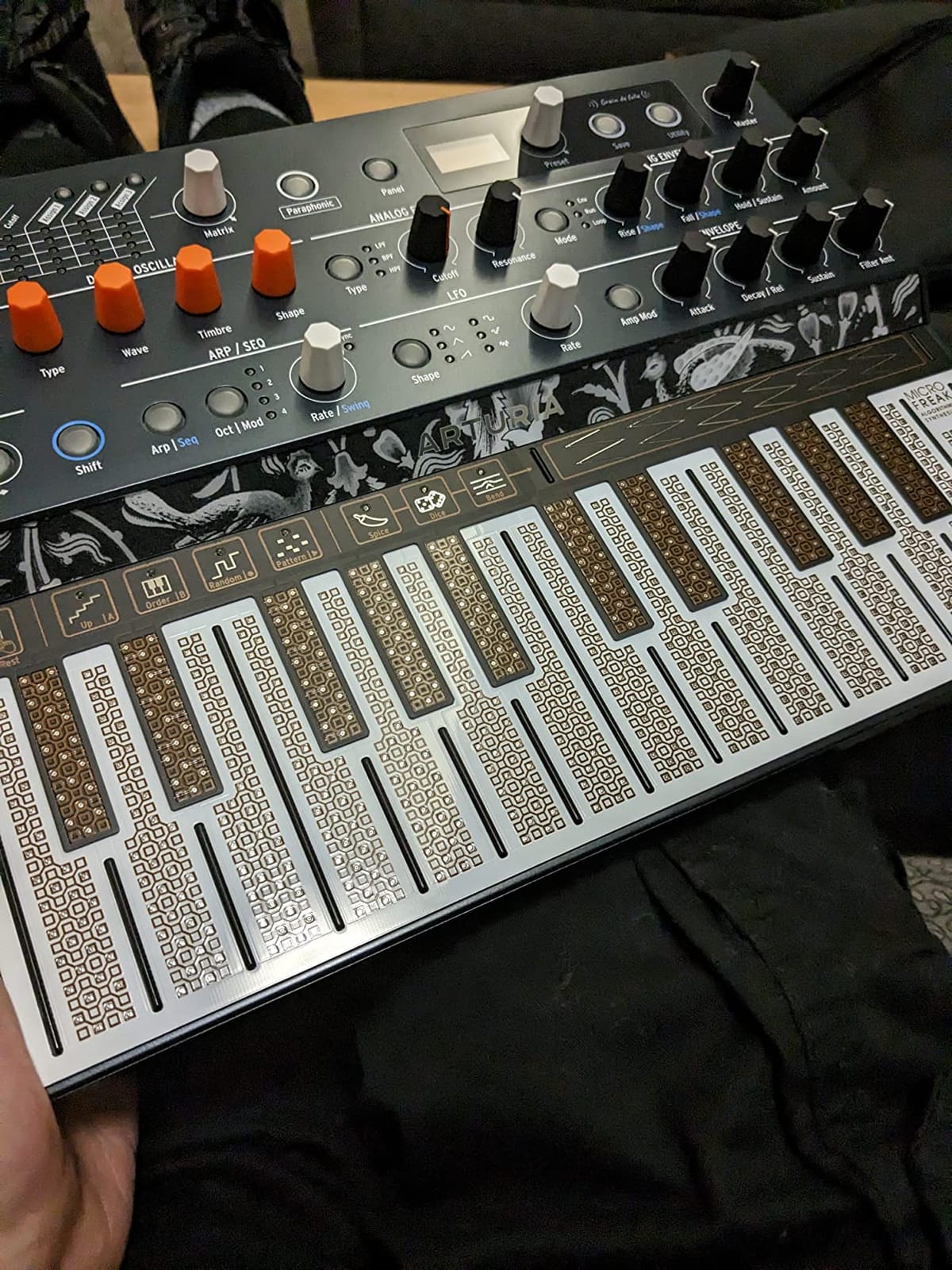
During my three months with this synth, I used it for everything from plucky sequenced leads to evolving ambient pads. The built-in arpeggiator and step sequencer make it easy to generate ideas when inspiration is low. The Spice and Dice functions randomize patterns in musical ways, which kept my sound design sessions fresh.
The modulation matrix gives you a 5×7 grid for routing sources to destinations. Beginners can start with one simple routing and gradually add complexity as their understanding grows. You can even record up to four automations per note in the sequencer, which is deep for this class of instrument.
Connectivity covers USB, MIDI, and CV outputs for pitch, gate, and pressure. Those CV outputs mean that if you ever drift toward modular gear, the MicroFreak can control it directly. Firmware updates from Arturia have added new features over time, including a surprisingly usable vocoder mode and a preset library now numbering over 300 sounds.
Who Should Buy This Synth
This is ideal for beginners who want maximum sound design flexibility in a compact package. If you are drawn to experimental sounds, ambient textures, or electronic genres that push beyond classic subtractive synthesis, the MicroFreak offers a playground that stays relevant for years. It rewards curiosity more than any other synth in this roundup.
It is also a smart pick if you already produce in a DAW. The USB connection, preset recall, and modulation depth make it equally at home as a studio sound-design tool and a live performance instrument.
What to Know Before Buying
The lack of onboard effects means you will need external reverb and delay, or a DAW, to polish your sounds. The plastic casing does not feel as substantial as Arturia’s higher-end instruments, though it keeps the weight down at just 2.3 pounds.
It is also paraphonic rather than truly polyphonic, so all voices share a single filter and envelope. If lush, independent chord voices are your priority, the Novation MiniNova below is the better fit. No USB-A to USB-B cable is included, so budget for one to connect it to your computer.
2. Korg monologue — Best Analog Synthesizer for Learning Synthesis
Korg monologue Monophonic Analog Synthesizer w/ 16-step Sequencer – Black
Pure analog signal path
25 full-size keys
16-step sequencer
OLED oscilloscope display
Pros
- Knob-per-function layout teaches synthesis intuitively
- Aggressive analog character with DRIVE circuit
- OLED oscilloscope provides visual feedback
- Built-in sequencer for pattern creation
Cons
- Monophonic only so no chords
- No onboard effects
- Not Prime eligible
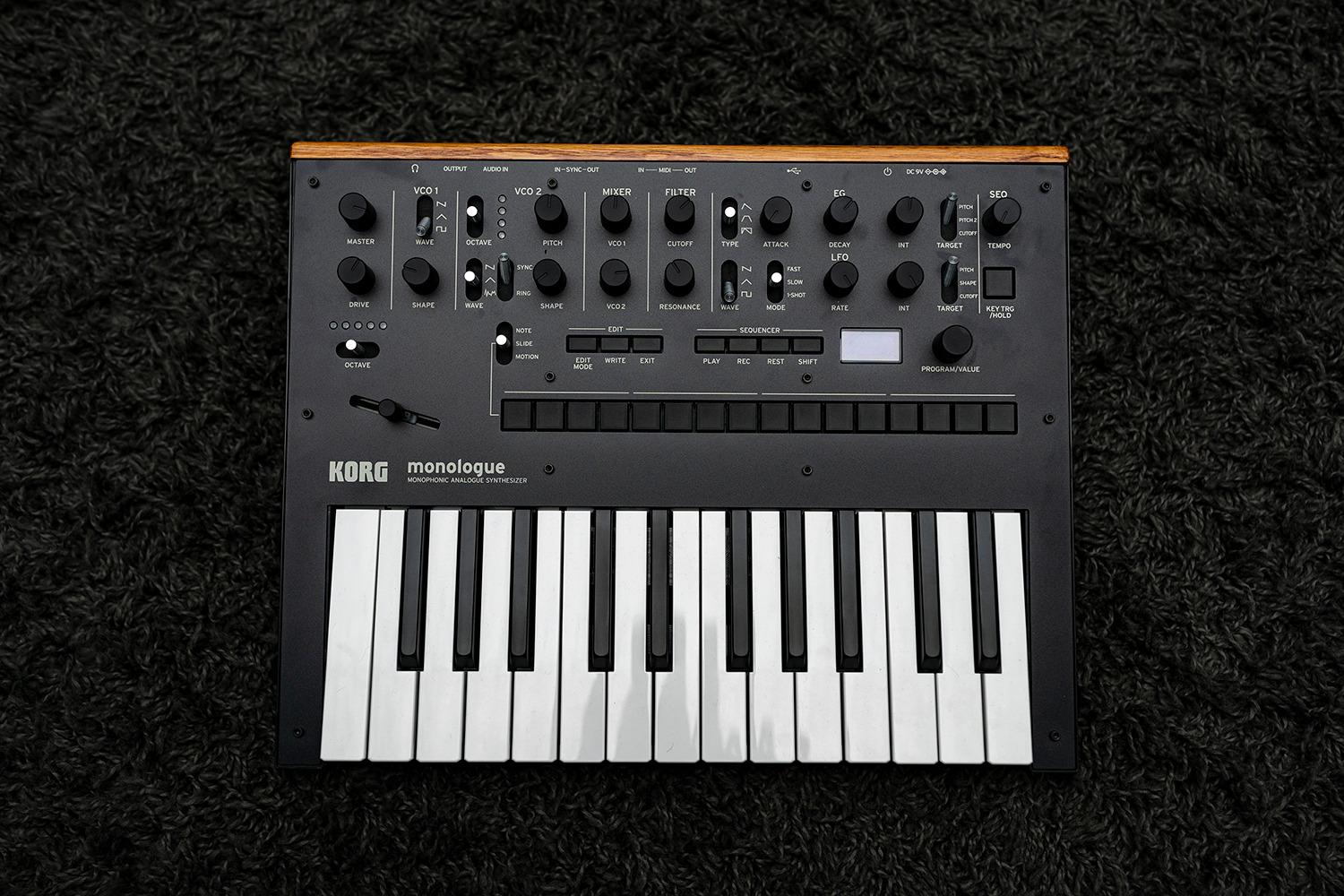
The Korg monologue taught me more about subtractive synthesis in two weeks than I learned from months of reading. Every core parameter has its own knob right on the front panel. You get a dedicated oscillator section, filter, envelope, and LFO, each with clearly labeled controls. When you twist the cutoff knob, you hear and immediately understand what the filter does.
This is a pure analog monophonic synthesizer, which means one note at a time. But what a note it is. The 2-pole filter design delivers more bite and aggression than the typical 4-pole low-pass found on most beginner synths. The DRIVE circuit adds saturation that makes bass lines grind and lead sounds cut straight through a mix.
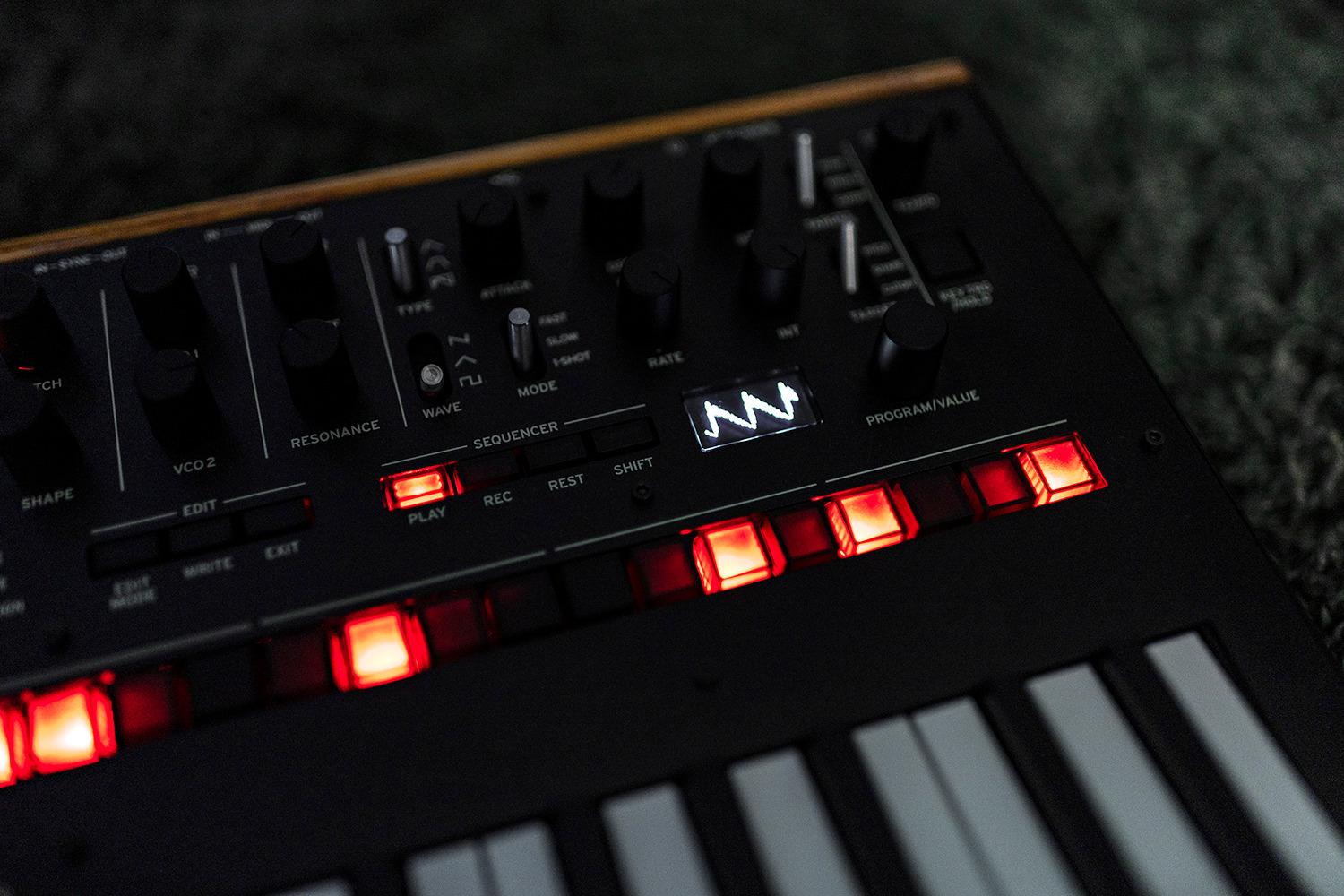
The 16-step sequencer became my favorite feature during testing. I could lay down a bass pattern, then use the step buttons to edit individual notes in real time. Push a button and turn a knob, and you get parameter-lock style motion sequencing that records your knob movements into the pattern itself.
The OLED oscilloscope displays your waveform live as you play. For a beginner, this visual feedback is genuinely educational. You literally watch the wave change shape as you adjust pulse width or push the LFO deeper, which cements the connection between the knob and the sound.
Connectivity includes MIDI and USB, so hooking it up to a DAW or external sequencer is simple. The basswood body and full-size keys make it feel like a proper instrument rather than a toy, and at 1.7 kilograms it is still easy to move between desk and studio shelf.
Who Should Buy This Synth
Beginners who want to understand synthesis at a fundamental level will benefit most from the monologue. The knob-per-function layout makes the entire signal path visible and tangible. If your musical focus is bass-heavy genres like techno, electro, or hip-hop, the aggressive analog character fits those styles perfectly.
It is also the best choice if you learn by doing rather than reading. There is barely a menu on this instrument, which means almost everything you want to change is one knob turn away.
What to Know Before Buying
Monophonic means you can only play one note at a time, so no chords. For some beginners that limitation encourages focus on sound design, but for others it feels restrictive fast. If you want pads and chord progressions, skip this one and look at the MiniNova or Pro VS Mini.
There are also no built-in effects, so factor in a pedal or plugin reverb and delay. Note that it is not Prime eligible and stock can be intermittent, so check the current listing before planning your purchase.
3. Korg Nu:Tekt NTS-1 — Best Budget Synthesizer Kit for Beginners
Korg Nu:Tekt NTS-1 Build Your Own Digital Synthesizer Kit
DIY build-it-yourself kit
Compact tabletop design
logue-SDK expandable
Built-in reverb, delay, modulation
Pros
- Extremely affordable entry point
- Fun DIY assembly process
- Powerful sound engine for its size
- Expandable via logue-SDK
- Built-in effects included
Cons
- Assembly requires soldering
- Very limited keys and controls
- Ribbon controller instead of a keyboard
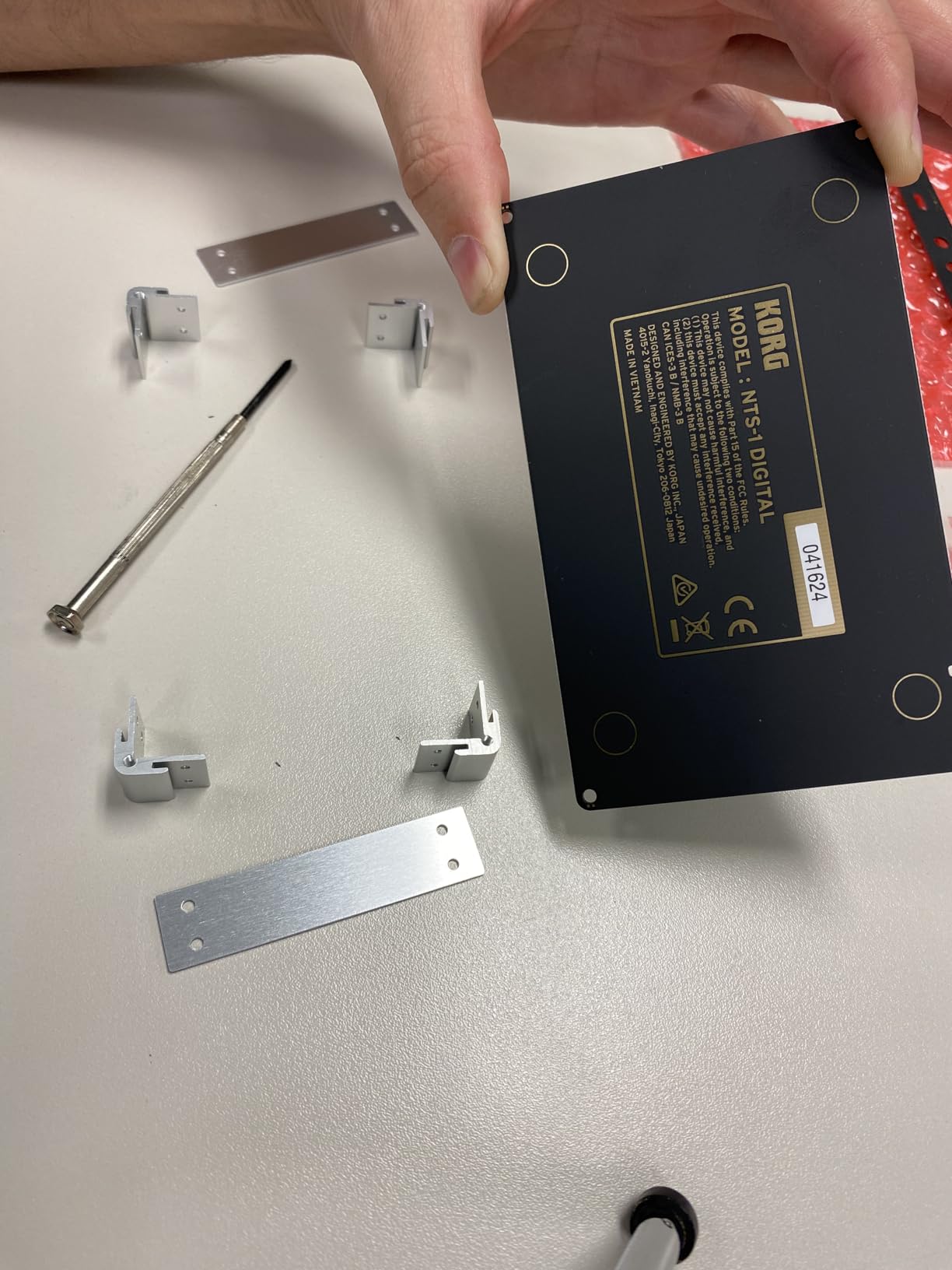
Building the NTS-1 took me about 45 minutes with the included screwdriver and manual. The process teaches you about the internal components while giving you a tangible connection to the instrument you are about to play. If you have ever wanted to understand what is actually inside a synthesizer, this kit delivers that experience without requiring advanced electronics knowledge.
Once assembled, the NTS-1 punches far above its weight class. This single-oscillator digital monosynth runs Korg’s logue-SDK platform, which means you can load custom oscillators and effects created by the developer community. That expandability keeps the synth fresh long after you have explored the factory sound engine.
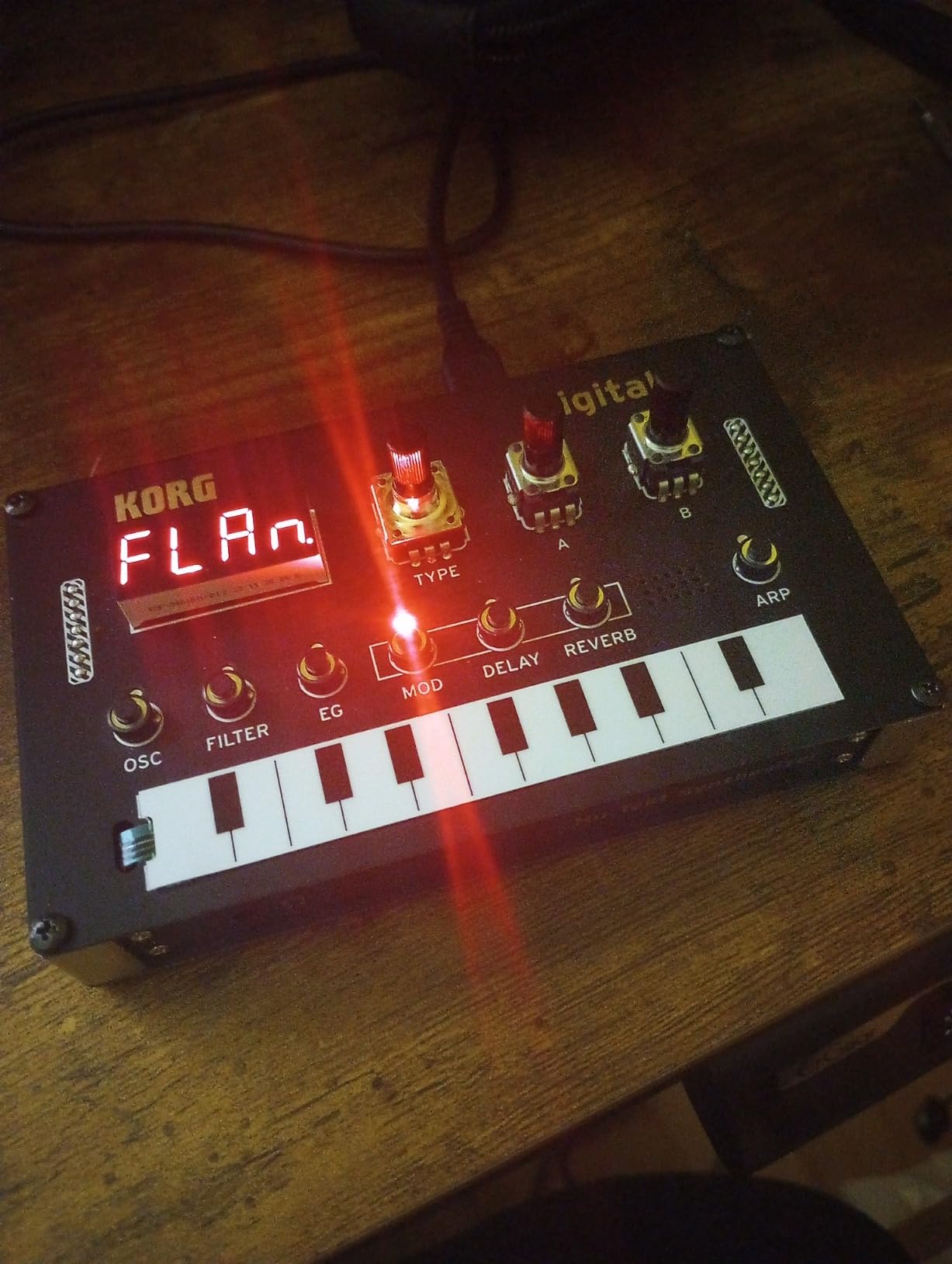
The built-in multimode filter and onboard effects chain of reverb, delay, and modulation provide complete, finished sounds without any external processing. On a device this small, having real effects onboard is a genuine luxury. I found the arpeggiator useful for generating melodic ideas quickly during sound design sessions.
Multiple modulation sources, including an LFO and envelope generator, give you the same building blocks as larger synths. The signal flow you learn here transfers directly to bigger instruments, which is exactly what a first synth should do. Connectivity includes MIDI over USB plus a sync jack for tabletop setups.
During testing, I used the NTS-1 for quick desktop sound design and as a travel synth. At 290 grams and roughly 5 by 3 inches, it fits in a backpack pocket or a jacket. With over 1,200 reviews and an 84 percent five-star rate, the community consensus matches what I heard: this is a real synthesizer, not a novelty.
Who Should Buy This Synth
Beginners who learn by doing will love the DIY assembly process. If your budget is limited but you want a genuine synthesizer with room to grow, the NTS-1 offers a rare combination of affordability and expandability. It is also ideal for anyone building a tabletop or modular setup where desk space is at a premium.
Tinkerers get extra value here. The logue-SDK means developers are still releasing new oscillators and effects for this platform, so the instrument keeps evolving without costing you anything extra.
What to Know Before Buying
Soldering is required for assembly. If you have never soldered before, budget an extra hour and watch a tutorial first. The kit does include the screwdriver and USB cable, but you supply the soldering iron.
Deep editing requires either patient menu diving or a computer editor, because the physical controls are minimal. And since there is no traditional keyboard, you will want an external MIDI controller if you prefer playing melodies by hand rather than using the ribbon controller.
4. Korg Volca Bass — Best Beginner Synth for Basslines and Acid
Korg Volca Bass Analog Synthesizer w/Three Oscillators and 16-step Sequencer
3 analog oscillators
16-step sequencer
Compact tabletop format
Battery powered with speaker
Pros
- Fat analog bass sounds
- Three oscillators for thick tones
- Slide function perfect for acid lines
- Self-tuning prevents pitch drift
- Battery powered with built-in speaker
Cons
- Single VCF and VCA structure
- Focused on bass rather than full-range sounds
- No traditional keyboard included
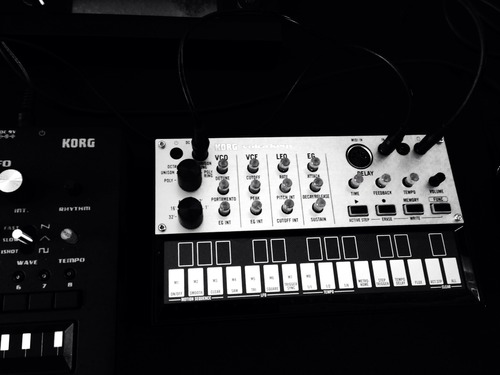
The Volca Bass arrived at my studio and immediately became my go-to for acid house and techno bass lines. Three analog oscillators give this synth a thick, powerful sound that stands up to drums without extra processing. The Electribe-inspired 16-step sequencer with the slide function recreates the classic glide that defines acid music.
Self-tuning is a practical feature I came to appreciate during long sessions. Analog synths can drift out of tune as they warm up, but the Volca Bass compensates automatically. The compact size and battery power meant I could sketch ideas anywhere, and the built-in speaker is quiet but functional for testing sounds away from monitors.
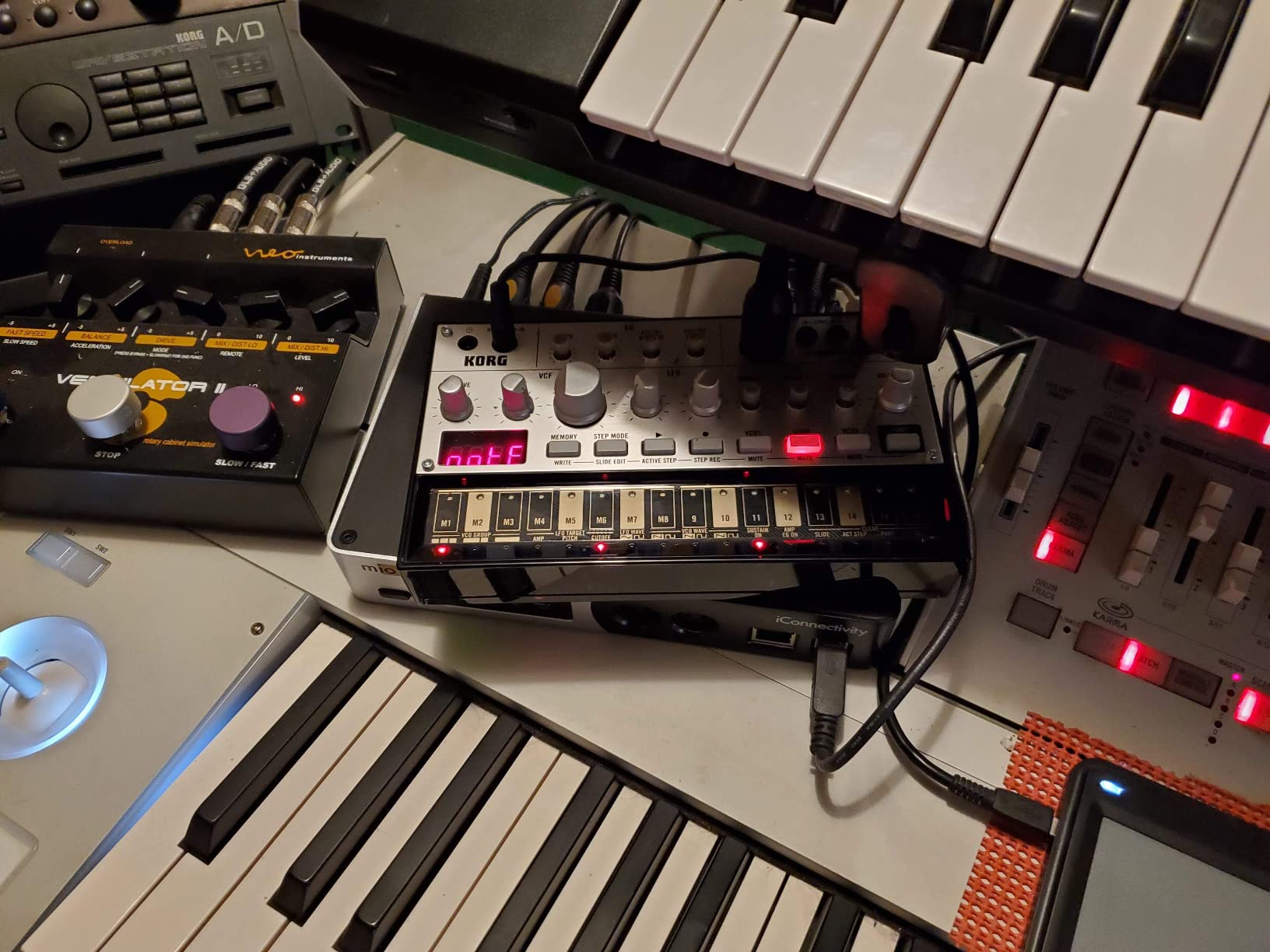
I used the Active Step function to create generative bass patterns that evolve on their own. By muting certain steps in the sequence, the bass line breathes and changes across each loop. This one feature kept me experimenting for hours, discovering rhythms I never would have programmed intentionally.
Structurally, this is a simple instrument: one filter, one amp, one LFO, one envelope. That simplicity is a virtue when you are learning, because there are only so many things to tweak and each one has an obvious, audible effect. Korg has sold enormous numbers of these units, so tutorial content is everywhere when you get stuck.
Connectivity includes MIDI IN and a SYNC jack for linking with other Volcas or external sequencers. At just 16 ounces and roughly 8 by 5 inches, it is the most portable true analog synth in this guide. With an 83 percent five-star rating across 675 reviews, the community verdict lines up with my experience.
Who Should Buy This Synth
If you are drawn to electronic genres like techno, acid house, electro, or any style where the bass line drives the track, the Volca Bass delivers exactly what you need. The straightforward interface and focused sound engine produce satisfying results quickly without overwhelming you with options.
It is also a great second synth. If you already own a polyphonic instrument, this fills the bass gap in a setup for very little money and very little desk space.
What to Know Before Buying
This synth specializes in bass. You can push it into lead territory, but pads and atmospherics are not its strength. The tabletop form factor means you will want a MIDI controller if you prefer playing keys over programming steps.
There are no onboard effects, so plan for external reverb or delay if your style needs space around the sound. If you want one single synth that does everything, this is not it, but as a bass specialist it is hard to beat.
5. Behringer Pro VS Mini — Best Portable Hybrid Synth for Beginners
Behringer Pro VS Mini Portable 5-Voice Hybrid Synthesizer with 4 Vector Morphing Oscillators Per Voice, Analog Low-Pass Filter, 16-Step Sequencer and Arpeggiator
Vector morphing oscillators
Analog low-pass filter
5-voice polyphony
Battery or USB-C powered
Pros
- Vector synthesis creates evolving pads
- Analog filter adds warmth
- Portable battery-powered design
- Sequencer and arpeggiator included
- Excellent value for the feature set
Cons
- Frequently out of stock
- 27 mini keys may not suit all players
Vector synthesis is rare at this price point, and the Pro VS Mini makes it accessible to beginners. Four vector morphing oscillators per voice shift between waveforms under modulation control, creating evolving, movement-rich sounds that static oscillators simply cannot match. During testing, I was genuinely surprised by the depth available in such a compact package.
The analog low-pass filter brings warmth to the digital wavetable oscillators, bridging the best of both worlds in a hybrid design. Five-voice polyphony means you can play chords and pads, which is something the monophonic options at this price cannot offer. The 16-step sequencer and arpeggiator add pattern-generation tools that keep creative sessions moving.
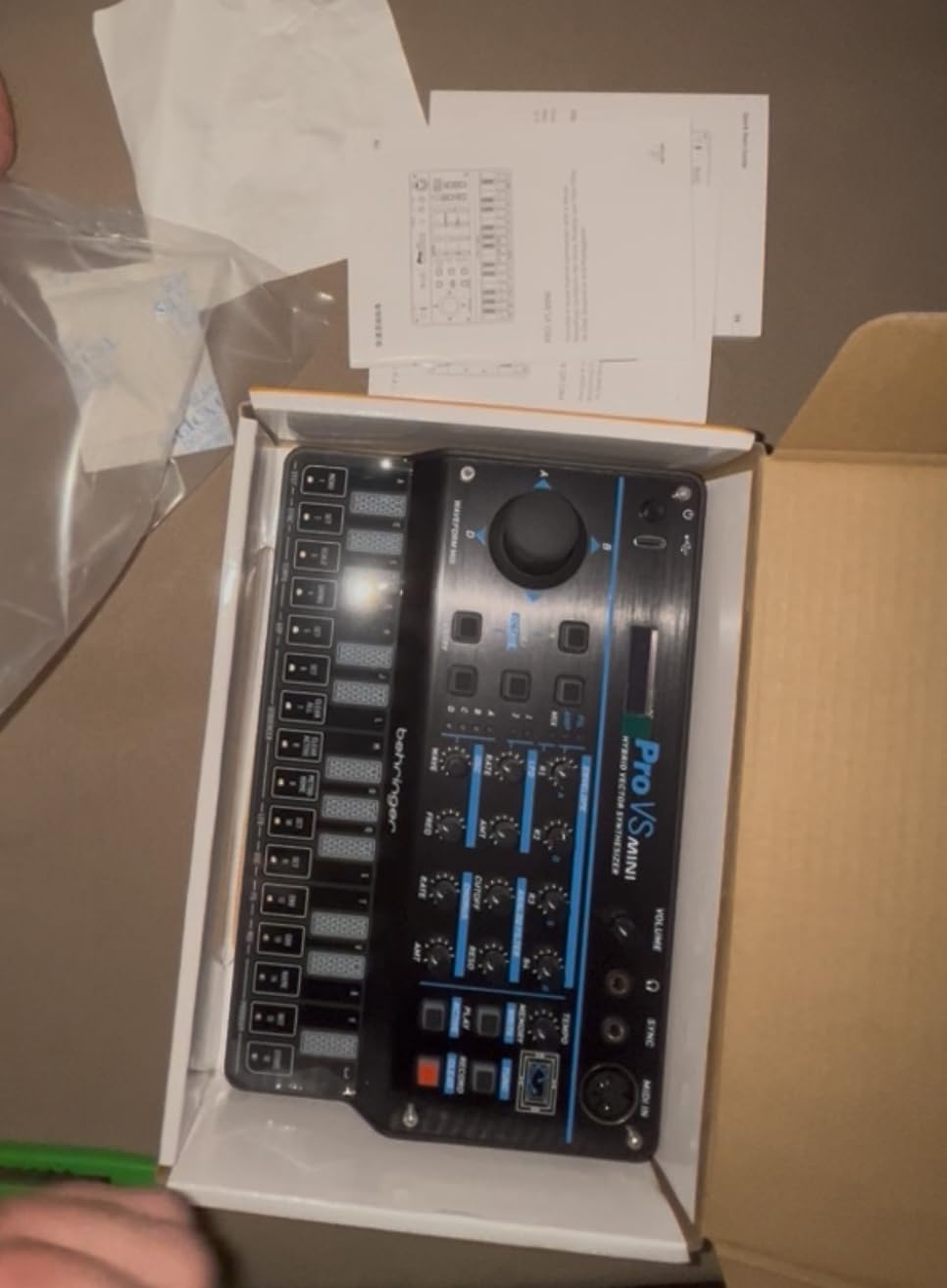
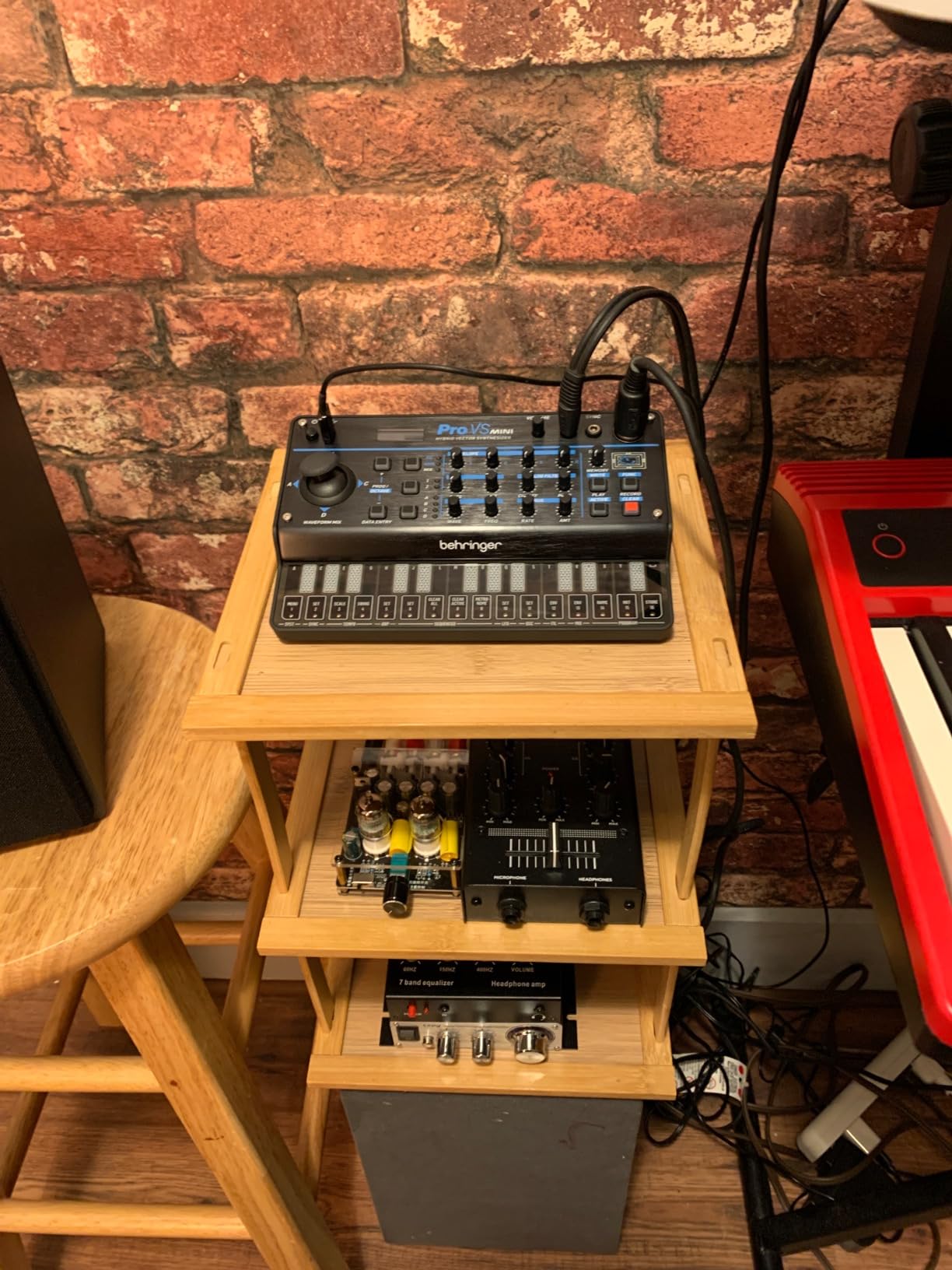
Portability stood out during my time with this synth. Battery power and USB-C connectivity meant I could use it on the couch, at a coffee shop, or tossed into a travel bag. The 8.45 by 5.45 inch footprint takes up less desk space than a hardcover book.
The synth is based on the classic Prophet VS vector design, so the sounds lean toward glassy, cinematic pads and detuned textures rather than plain analog grind. Filter, amplifier, and oscillator envelopes give you real shaping control. If your taste runs toward film-score atmosphere or 1980s-inspired soundtracks, this voice is distinctive.
A Sync In jack lets you lock the arpeggiator and sequencer to other gear, and USB-C handles both power and MIDI. With 150 reviews averaging 4.6 stars, it is a newer entry with less community history than the Korg options, but our testing matched what owners report: a lot of synth for the money.
Who Should Buy This Synth
Beginners interested in pads, evolving textures, and chordal playing will find the Pro VS Mini offers capabilities usually reserved for far more expensive instruments. If portability matters, whether for travel, dorm rooms, or tiny studio corners, this synth fits without sacrificing sound design depth.
It is also a strong pick if you already know you love the sound of the 1980s vector-synth classics but cannot justify their collector prices.
What to Know Before Buying
Stock availability has been inconsistent, so verify current listings before committing to this pick. The 27 mini keys work well for their size, but players accustomed to full-size keybeds may find them cramped during long sessions.
If you prefer a traditional playing feel, consider pairing this module with an external MIDI controller. The instrument also leans on its own distinct vector character, so audition some sound demos first to confirm the tonal style matches your taste.
6. Akai MPK Mini Play MK3 — Best Starter Keyboard for DAW Beginners
Akai Professional MPK Mini Play MK3 25-Key USB MIDI Keyboard Controller
25-key MIDI controller
Over 100 built-in sounds
Battery powered
Full software suite included
Pros
- Built-in speaker for standalone use
- Battery powered for portability
- Includes MPC Beats and AIR software
- Velocity-sensitive keys
- Melodics lessons for learning
Cons
- Built-in speaker volume is low
- Drum pads require firm hits
- Keys are small for larger hands
This is not a traditional synthesizer. It is a MIDI keyboard controller with built-in sounds and a speaker. For beginners focused on DAW-based music production, that distinction matters less than the practical reality: the MPK Mini Play MK3 gives you a complete portable music-making system in one box.
During testing, I appreciated the standalone capability. With over 100 internal sounds and a built-in speaker, you can play and sketch ideas with no computer attached. Battery power means genuine portability, and the OLED display makes it easy to navigate sounds and settings without guesswork.
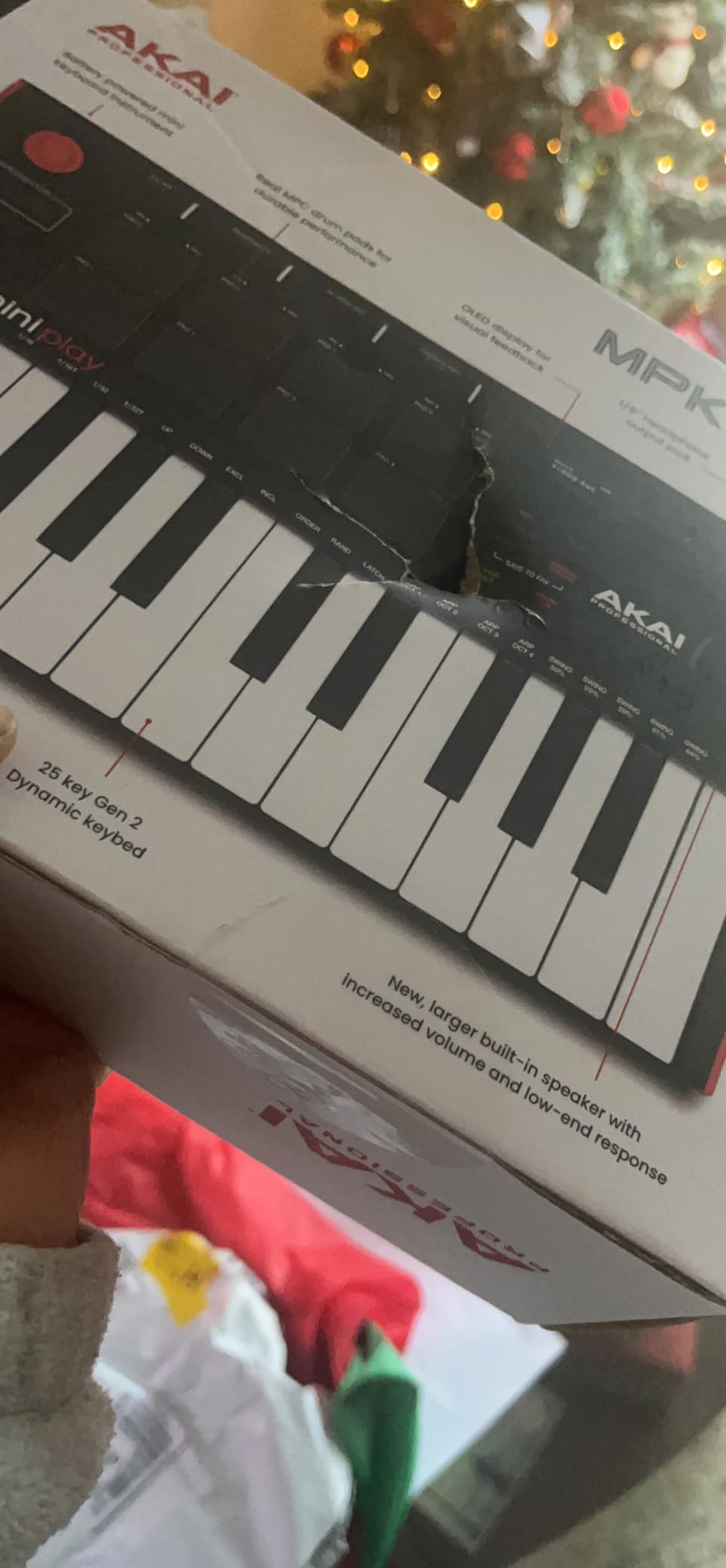
When you are ready to integrate with a DAW, the bundled software turns this into a full production starter kit. You get MPC Beats, AIR Music Tech instruments, and Native Kontrol Standard integration for browsing presets inside plugins. The 8 MPC-style drum pads handle beat production, and the arpeggiator and note repeat add creative options.
The four encoder knobs map to parameters in your software, giving you tactile control over filters and effects inside your DAW. For a beginner, that physical connection to software sounds is what makes the jump from listening to actually producing.
The educational angle should not be overlooked. Melodics includes 60 free lessons covering keyboard skills, finger drumming, and rhythm training. For an absolute beginner, that guided path adds real value beyond the hardware itself, and it sells at one of the lowest price points in this guide.
Who Should Buy This Synth
Beginners whose primary goal is DAW-based production will benefit most. If you want a keyboard that integrates seamlessly with Ableton, FL Studio, or MPC Beats, and you value portability plus bundled software, this is a complete solution in one purchase.
It is also the safest pick if you are buying for a younger student or someone who wants to sample music-making before committing to a dedicated synthesizer.
What to Know Before Buying
This is not a sound-design synthesizer. The built-in sounds are general-purpose presets without deep editing of oscillators, filters, or envelopes. If your goal is learning synthesis itself, choose the MicroFreak or the monologue instead.
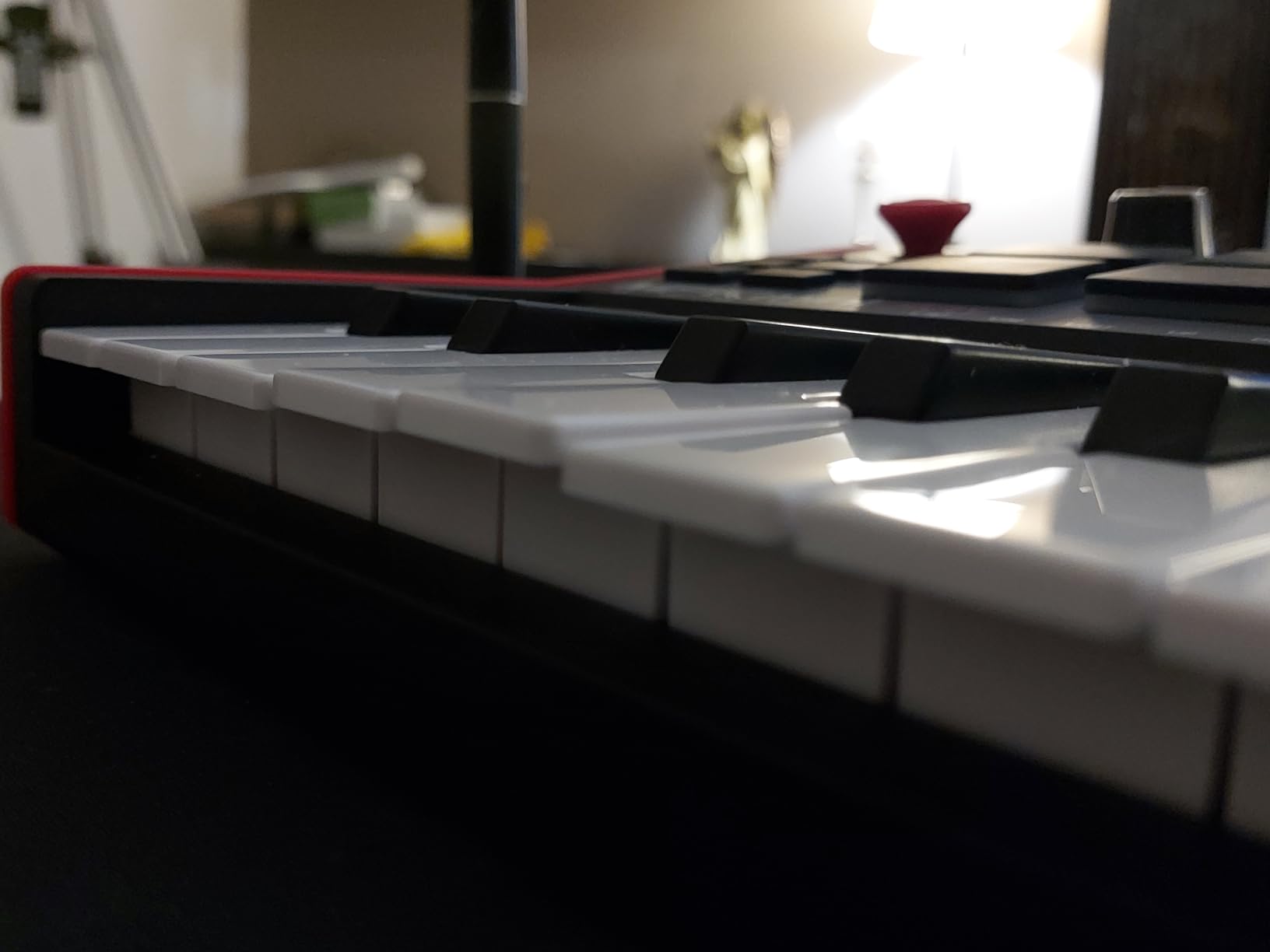
The mini keys are compact, and some players report accidental presses on adjacent keys until they adjust their technique. The pads also need a firm hit to trigger reliably, and the onboard speaker is quiet, so headphones or monitors are a smart early addition.
7. Novation MiniNova — Best Polyphonic Synth for Beginners
Novation MiniNova Analog Modeling Synthesizer
Virtual analog synthesis
18-voice polyphony
Built-in vocoder
37 mini keys
Pros
- Full polyphony for chords and pads
- Up to 5 effects per voice
- Built-in vocoder with VocalTune
- 256 presets with instant search
- Animate buttons for performance
Cons
- Plastic body construction
- Mini keys require adjustment
- Higher priced than entry options
The MiniNova delivers what many beginners actually want: full polyphony. With 18 voices, you can play dense chords and layered pads without voices cutting out. During my testing, I stacked pads, leads, and bass sounds simultaneously and still had headroom for complex arrangements.
The sound engine derives from Novation’s UltraNova, a professional-grade instrument, and that heritage shows in the sound quality. You get deep, gritty bass, soaring leads, lush pads, and convincing vintage emulations. The 256 onboard presets cover a wide range of styles, and the instant search function makes finding the right sound quick mid-session.
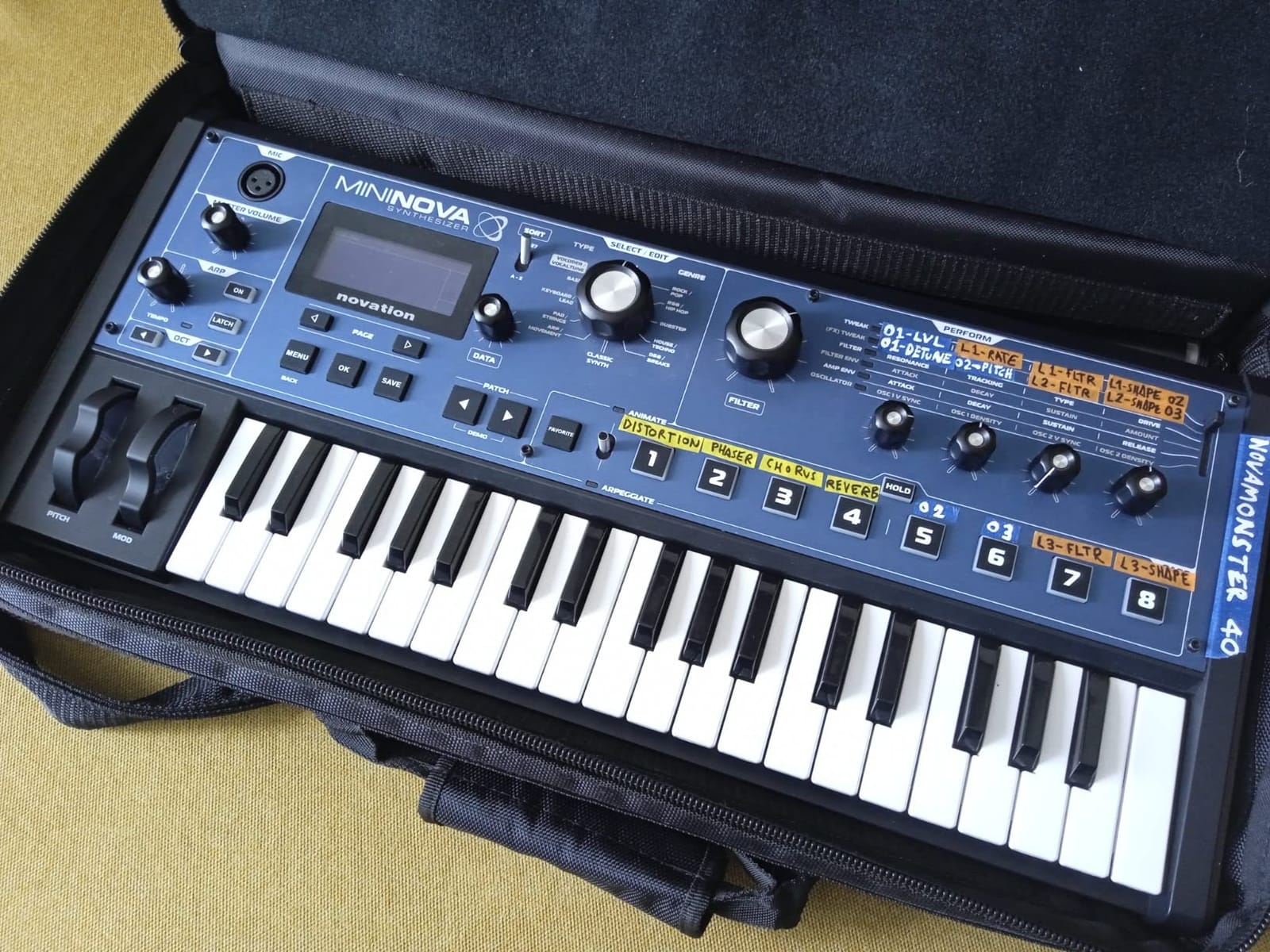
The built-in vocoder with VocalTune is a feature most beginner synths simply do not have. I plugged in the included gooseneck microphone, hummed a melody, and got the classic robotic vocal effect with almost no setup. The Animate buttons let you trigger multiple modulation routings at once for expressive, morphing performances.
Five effects per voice mean you can finish sounds inside the synth rather than routing through external processors. Reverb, delay, distortion, chorus, and modulation effects are all available directly, which is genuinely helpful for beginners who want complete sounds immediately.
Connectivity covers USB and MIDI plus a headphone jack, and the two-year warranty is longer than most competitors offer. With 280 reviews at a 4.6 average, the long-term owner satisfaction is solid, and Novation’s firmware and software support has kept the instrument current for years.
Who Should Buy This Synth
Beginners who want to play chords, pads, and layered sounds will find the MiniNova’s polyphony essential. If vocal processing or vocoder effects interest you, this synth offers unique capability at its price. Players who prefer polished, finished sounds without external effects will love the per-voice processing.
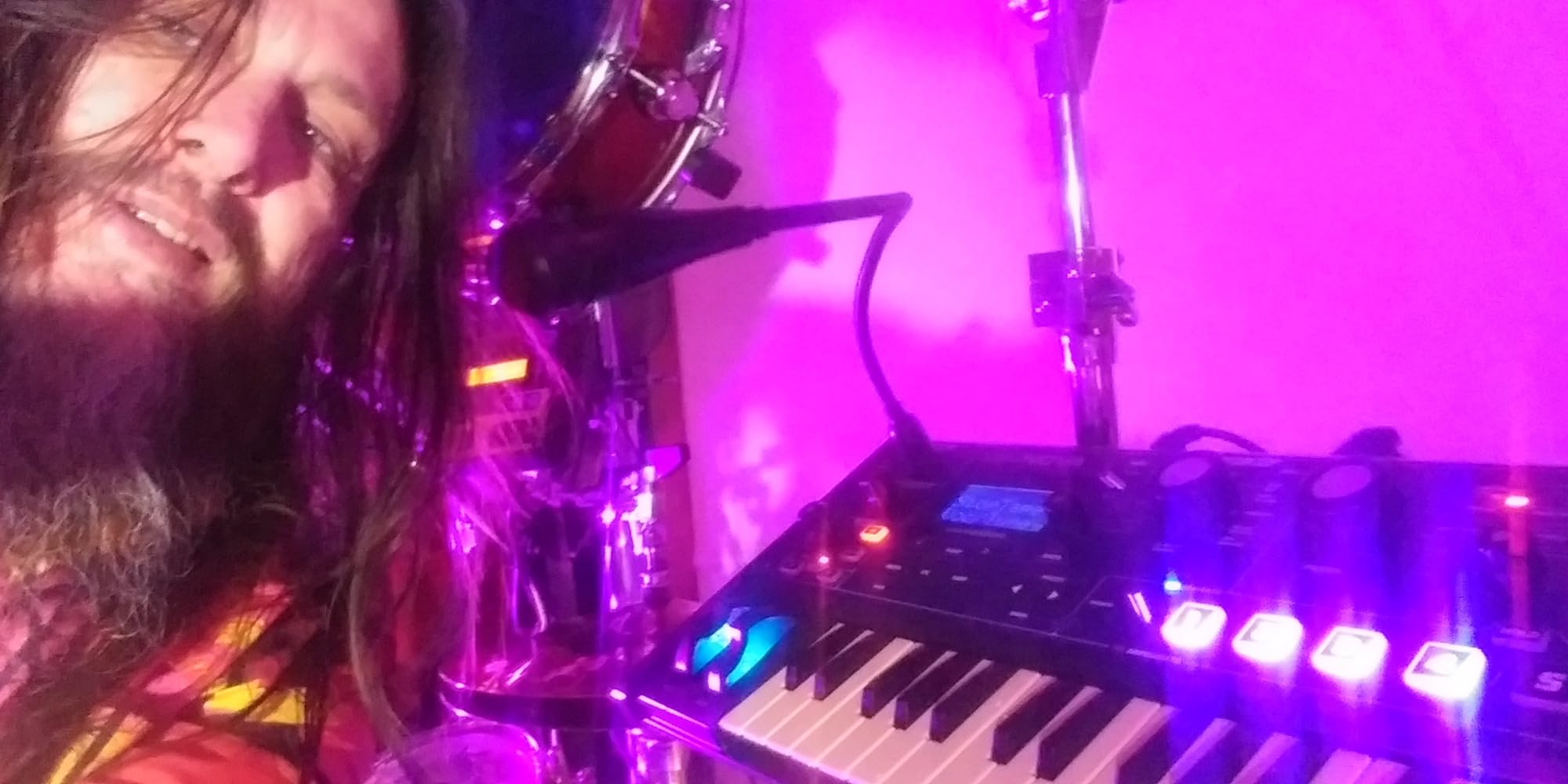
It is also the pick if you plan to perform. The 37 keys, preset search, and Animate buttons add up to a genuinely stage-ready instrument despite the compact size.
What to Know Before Buying
The plastic body feels less premium than metal-cased alternatives, though it keeps the weight reasonable at 6 pounds. The 37 mini keys work well for their size but require adjustment if you are used to full-size keybeds.
It also sits at the top of the price range in this guide. Consider whether full polyphony and the vocoder align with your musical goals before committing, because at this level you are paying for capability rather than basics.
How to Choose Your First Synthesizer
Choosing your first synthesizer comes down to a few decisions that shape what the instrument can do and what music it excels at. This section breaks down each one, including the mono versus poly question that confuses most newcomers and the connectivity questions that trip people up after purchase.
Analog vs Digital vs Hybrid Synths
Analog synthesizers generate sound through physical electrical circuits: oscillators, filters, and amplifiers you can trace with your finger. They often have a warm, rich character but can drift in pitch as they warm up, and they usually cost more per feature. Digital synthesizers use software algorithms to create sound, offering precise tuning, instant preset recall, and far more sound engines for the money.
Hybrid synthesizers pair digital oscillators with analog filters, aiming for the best of both worlds. The MicroFreak and Pro VS Mini both take this approach, and it is a genuinely good compromise for beginners.
Monophonic vs Polyphonic: The Choice That Shapes What You Can Play
Monophonic synthesizers play one note at a time. They excel at bass lines, lead melodies, and focused sound design where you pour everything into a single powerful voice. Polyphonic synthesizers play multiple notes at once, enabling chords, pads, and layered harmonies.
This single decision determines what you can actually play on day one. If you want to sit down and play chord progressions, you need polyphony, which means the MiniNova or the Pro VS Mini. If your heart is set on bass-driven electronic music, a mono synth like the monologue or Volca Bass is the better tool, and simpler to learn on.
Knobs and Hands-On Control Matter More Than Specs
For beginners, a knob-per-function layout makes synthesis tangible. When each parameter has its own physical control, you learn what each element does by ear and by muscle memory. The monologue is the gold standard here: every core section is visible and adjustable with no menu diving at all.
Synths that bury parameters in screens and menus can feel disconnected from the sound-shaping process. They are often powerful, but they slow down the learning curve. Look for instruments where you can twist a knob and immediately hear the result, because that feedback loop is how you actually learn.
Connectivity: What You Actually Need
Most beginners will want to connect their synth to a computer for recording or for extra effects. USB MIDI is the simplest path: one cable handles both notes and often power. Traditional 5-pin MIDI ports let you link hardware devices together without a computer in the room. CV outputs, like those on the MicroFreak, open the door to modular gear later.
Audio connections matter just as much. A headphone jack enables quiet late-night practice, while line outputs feed speakers or an audio interface. Every synth in this guide covers the basics, but check the specific ports if you already own gear you want to pair it with.
Will You Outgrow Your First Synth?
This question comes up constantly in synthesizer forums, and the honest answer is that a first synth teaches you skills that transfer to everything you own afterward. Even if the hardware eventually feels limited, the understanding you build on it does not expire. That means the fear of outgrowing a beginner synth is a weaker argument than it first appears.
That said, some instruments age better than others. The MicroFreak and the NTS-1 stay current through firmware updates and community-built content. The Volca Bass and NTS-1 also earn permanent places in a growing studio as utility instruments, which softens the cost of upgrading later.
Setup Tips for Your First Synthesizer
When your synth arrives, connect it to headphones or speakers before you open the manual or a DAW. Turn knobs with no agenda and listen to what changes. You will learn faster by ear in the first hour than by reading spec sheets for a week, and it builds the curiosity that keeps you practicing.
If your synth includes a sequencer, use it early. Programming patterns teaches rhythm, melody, and sound design at the same time, and it gives you something to jam along with immediately. Save presets of every sound you like, even simple ones, because future-you will want to reverse-engineer how you made them.
Which Synth Matches Your Music Style?
The right pick depends heavily on the music you want to make. For ambient and film-score textures, the Pro VS Mini’s vector pads or the MiniNova’s lush polyphony are the strongest fits. For techno, acid house, and electro, the Volca Bass and the monologue deliver the aggressive analog character those genres are built on.
If you want one flexible instrument that can cover many styles, the MicroFreak is the clear choice, since its oscillator modes span pads, plucks, bass, and experimental textures. For DAW-first producers making beats, the MPK Mini Play MK3 with its bundled software and pads is the practical pick. And for pure learning on a tight budget, the NTS-1 is impossible to argue against.
Frequently Asked Questions
Is it difficult to learn to play a synthesizer?
Learning synthesizer basics is not difficult, and most beginners create interesting sounds within the first few hours. Modern beginner synths are built for hands-on exploration, with knobs and sliders that let you shape sound by ear. The real learning curve is in mastering sound design over months and years, not in making music from day one.
What is the best beginner synth overall?
The Arturia MicroFreak is the best overall beginner synthesizer we tested. It combines 17+ oscillator modes with an analog filter, polyphonic aftertouch, and a modulation matrix that grows with your ability. The sound variety, hands-on controls, and long-term expandability make it accessible on day one and useful for years.
Is a synth just a keyboard?
No. A synthesizer creates sound electronically using oscillators, filters, and amplifiers, while a keyboard is simply one way of playing it. Many synthesizers include a keyboard, but tabletop and modular synths generate sound with no keys at all. Conversely, the Akai MPK Mini Play MK3 is a keyboard controller with built-in sounds rather than a full synthesizer.
What is the best affordable synthesizer?
The Korg Nu:Tekt NTS-1 is the best budget synthesizer for beginners. This DIY kit provides a real sound engine, built-in reverb and delay effects, and expandability through Korg’s logue-SDK platform, all at one of the lowest prices in the category. The Korg Volca Bass is another affordable option if analog bass is your main interest.
Should a beginner start with an analog or digital synth?
Both work well for different reasons. Analog synths like the Korg monologue teach synthesis fundamentals through direct interaction with a signal path you can see and hear. Digital synths like the MicroFreak offer more sound variety, preset recall, and more features per dollar. Choose analog for learning the fundamentals, or digital if you want maximum sonic flexibility from the start.
Final Verdict: The Best Beginner Synthesizer for You
After three months of hands-on testing, our top recommendation for the best synthesizer for beginners in 2026 is the Arturia MicroFreak. Its combination of sound design depth, educational value, and hands-on controls creates an instrument that teaches synthesis while remaining capable enough for serious production work as your skills grow.
For beginners focused on learning subtractive synthesis fundamentals, the Korg monologue offers a pure analog signal path with a knob-per-function layout that makes every parameter visible and audible. Budget-conscious newcomers should choose the Korg Nu:Tekt NTS-1, which delivers genuine synthesis capability plus a fun DIY build at the lowest cost in this guide.
Whichever synth you choose, the most important step is to start exploring. Turn knobs, program sequences, and let your ears lead the way. The instruments in this guide will teach you what sounds you love and which features matter most, and that knowledge will inform every piece of music gear you buy for years to come.