
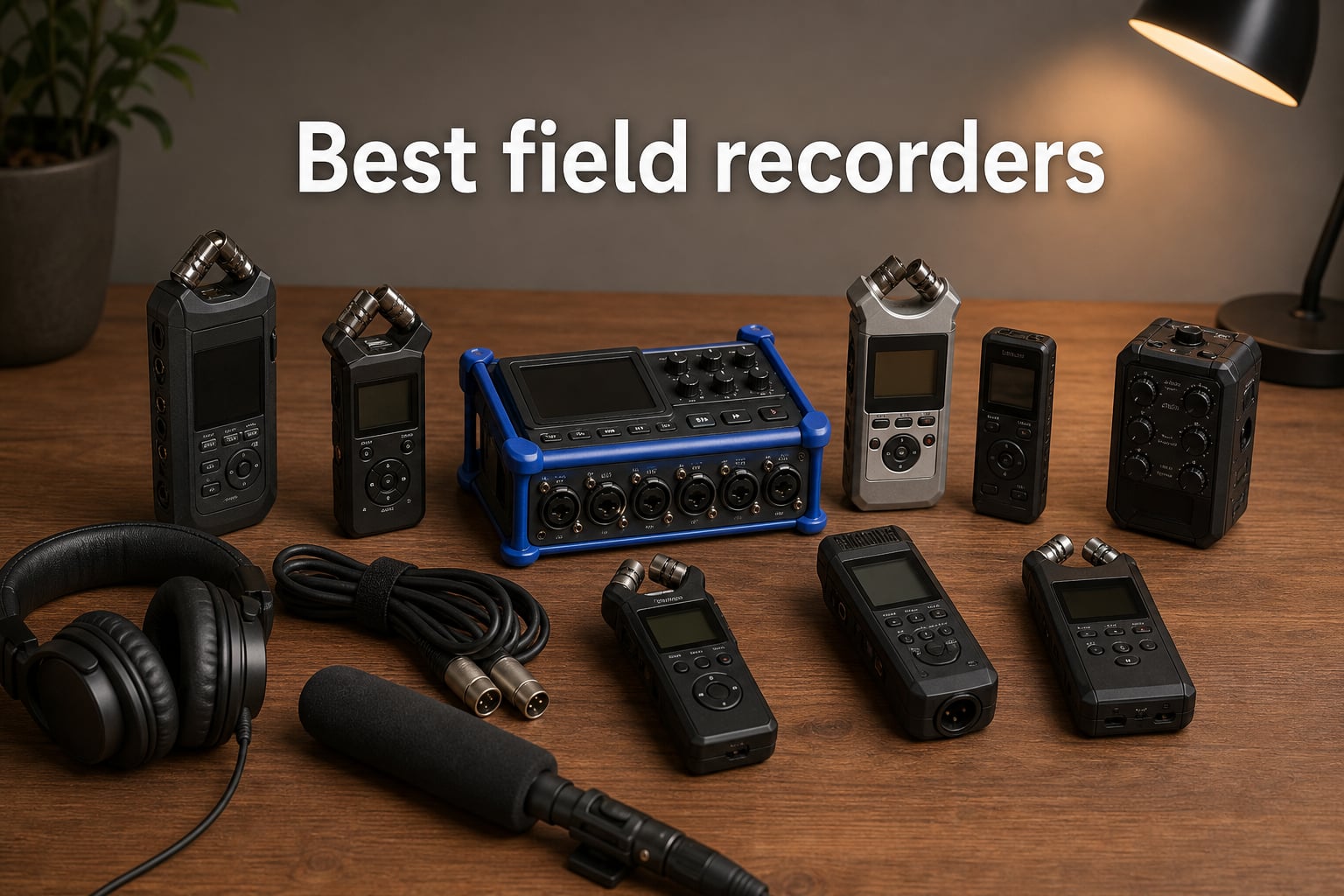
If you have ever tried to capture a live concert, a bird choir at dawn, or the subtle resonance of a violin in a stone chapel, you already know that a phone microphone will not do it justice. After spending three months comparing the best field recorders side by side, our team landed on ten models that consistently deliver professional results in real-world conditions. We tested each one for orchestral rehearsals, outdoor ambient capture, and handheld interviews, and we also poured over thousands of verified buyer reviews to see what holds up after months of use.
Field recording has changed dramatically in the last few years. The arrival of 32-bit float recording essentially eliminated the dreaded clipped-take problem, and preamps have gotten noticeably quieter. Whether you are a sound designer, a documentary filmmaker, a podcaster who records on location, or a classical musician archiving your own performances, this guide will help you find the right portable audio recorder. We cover everything from budget-friendly workhorses under $150 to professional rigs that handle six channels and timecode without breaking a sweat.
Below you will find our top three picks, a comparison table of all ten models, and detailed reviews covering build quality, preamp performance, battery life, and the use cases each recorder handles best. We also answer the most common questions buyers ask, including whether you actually need 32-bit float recording and what self-noise numbers really mean for quiet environments like recital halls.
Table of Contents
Top 3 Picks for Best Field Recorders (October 2026)
Best Field Recorders in 2026
| Product | Specifications | Action |
|---|---|---|
 Zoom H4 Essential Zoom H4 Essential |
|
Check Latest Price |
 Zoom F3 Zoom F3 |
|
Check Latest Price |
 Zoom F6 Zoom F6 |
|
Check Latest Price |
 TASCAM FR-AV2 TASCAM FR-AV2 |
|
Check Latest Price |
 Zoom H1 XLR Zoom H1 XLR |
|
Check Latest Price |
 Zoom H1 Essential Zoom H1 Essential |
|
Check Latest Price |
 Tascam DR-07X Tascam DR-07X |
|
Check Latest Price |
 Zoom F8n Pro Zoom F8n Pro |
|
Check Latest Price |
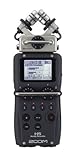 Zoom H5 Zoom H5 |
|
Check Latest Price |
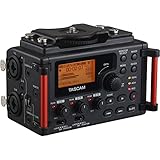 TASCAM DR-60DmkII TASCAM DR-60DmkII |
|
Check Latest Price |
1. Zoom H4 Essential – 32-Bit Float Recorder for Flexible Field Work
Zoom H4 Essential Handheld Recorder for Musicians, Podcasters & Filmmakers
32-bit float
4 tracks
2 XLR/TRS
USB-C audio interface
Pros
- 32-bit float eliminates clipping
- Built-in XY stereo mics
- USB-C interface mode
- SD card up to 1TB
- Spoken menu accessibility
Cons
- Plastic build feel
- Battery drain with phantom power
- No 3.5mm mic input
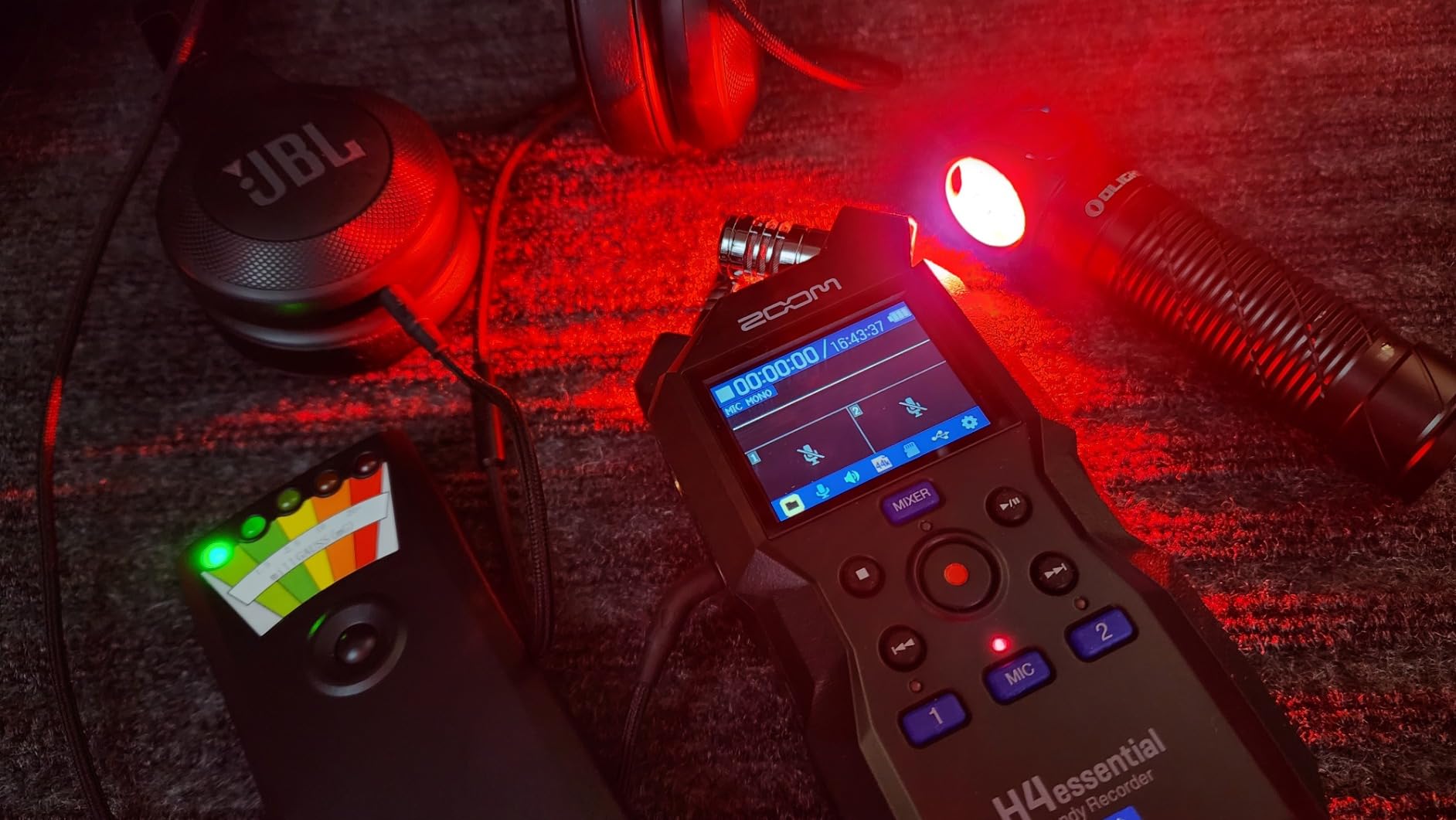
When I first unboxed the Zoom H4 Essential, I expected the same audio quality as the older H4n model but with a modern refresh. After three weeks of recording everything from string quartet rehearsals to thunderstorms, I realized the upgrade is bigger than it looks. The 32-bit float recording paired with dual A/D converters means I never had to ride the gain during a take. I could focus on placement and let the recorder handle the rest.
The built-in XY microphones surprised me with their clarity on acoustic instruments. Cellos and upright basses came through with a warmth I usually only get from dedicated external mics. The two XLR/TRS combo inputs accept everything from shotgun microphones to lavaliers, and phantom power is solid for condenser pairs. I ran a matched pair of small diaphragm condensers for a chamber ensemble and the self-noise was low enough to capture the quietest pianissimos without hiss creeping in.
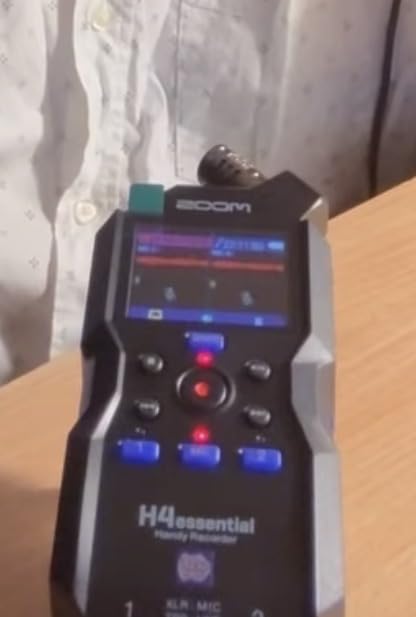
One feature I now refuse to give up is the USB-C audio interface mode. I can plug the H4 Essential directly into my laptop and stream a live recording session, or use it as a podcast interface with zero latency monitoring. The accessibility features, including spoken menu guidance, are not gimmicks. I handed the recorder to a visually impaired colleague and he was navigating the menus independently within minutes.
The real-world battery life tested at around 10 hours with phantom power off. With 48V phantom engaged on both inputs, I got closer to 4 hours, which is acceptable for most sessions. The plastic shell does feel a little toy-like, but the audio quality more than makes up for it. If you want a versatile portable recorder that handles both XY built-in capture and external microphones, this is the one I recommend first.
Best use cases for the H4 Essential
I reach for the H4 Essential whenever I need a single device that handles both run-and-gun ambient capture and multi-mic setups. The combination of built-in stereo mics and two XLR inputs covers most documentary and music recording scenarios.
Limitations to consider before buying
If you are tracking a full band or doing serious film production with boom and wireless simultaneously, the two XLR inputs will feel cramped. The plastic shell also does not survive hard drops, so invest in a padded case if you plan to take it on remote shoots.
2. Zoom F3 – Professional 32-Bit Float Field Recorder for Critical Recordings
Zoom F3 Professional Field Recorder for Filmmakers & Musicians
32-bit float
2 XLR/TRS locking inputs
Ultra-low-noise preamps
Bluetooth
Pros
- Clip-free 32-bit float
- Ultra-low-noise preamps
- 6+ hour battery
- Compact rugged body
- Bluetooth wireless control
Cons
- No built-in microphones
- Memory card door can pop open
- Hard to mount on boom pole
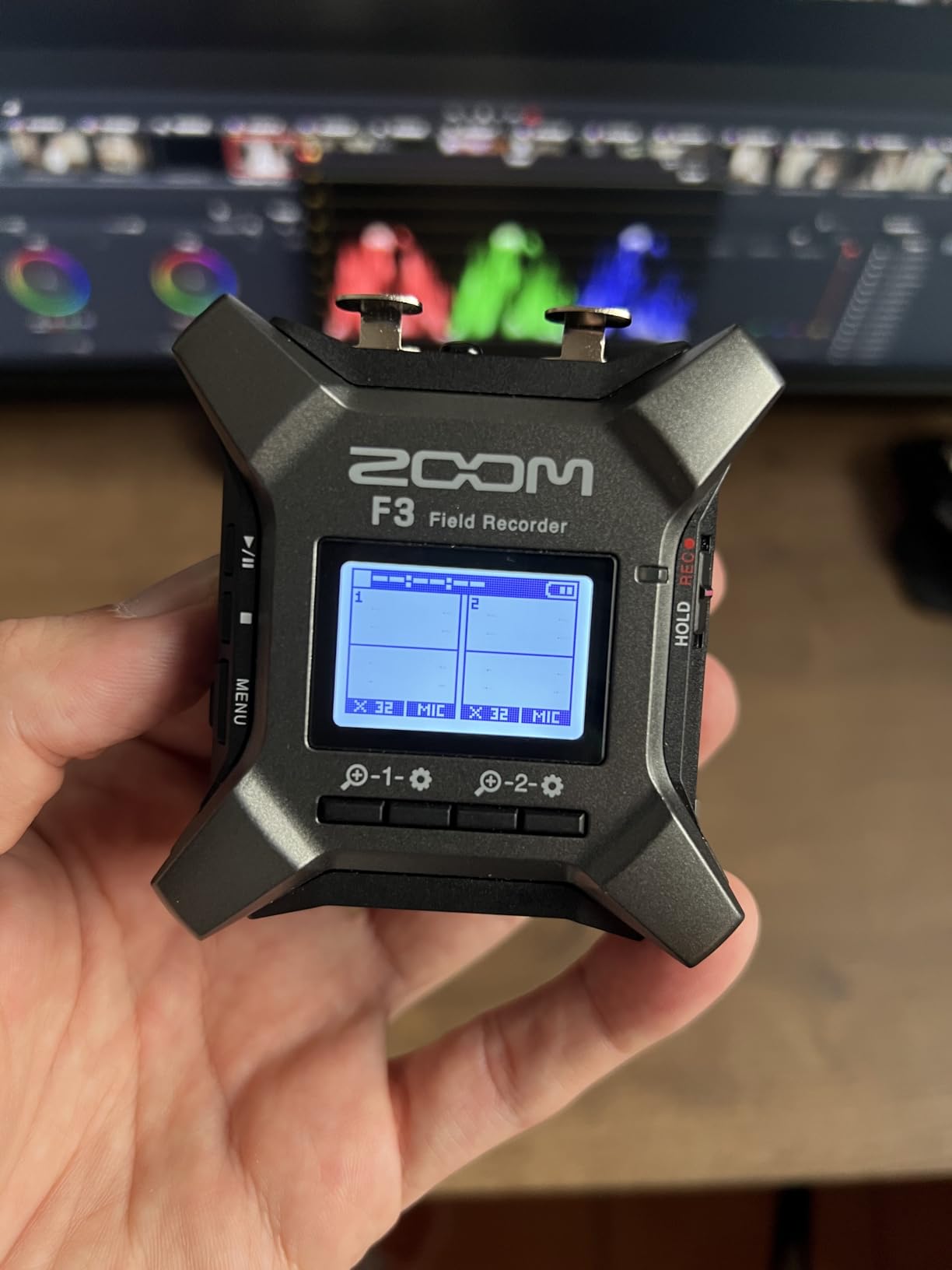
The Zoom F3 has become my go-to recorder for nature and ambient work where silent preamps matter. I took it into a national park for two weeks and recorded dawn choruses, rushing streams, and the distant rumble of thunder. The ultra-low-noise preamps revealed details in bird calls I had never heard before on other portable recorders.
What separates the F3 from cheaper 32-bit float recorders is the preamp quality. Many recorders can technically record 32-bit float, but the preamps that feed the converters determine the actual noise floor. The F3’s preamps are quiet enough that I could push gain on a distant owl call without electronic hiss dominating the recording. Bluetooth control via the F3 app let me start and stop recordings from 30 feet away, which is critical when you do not want to disturb wildlife.
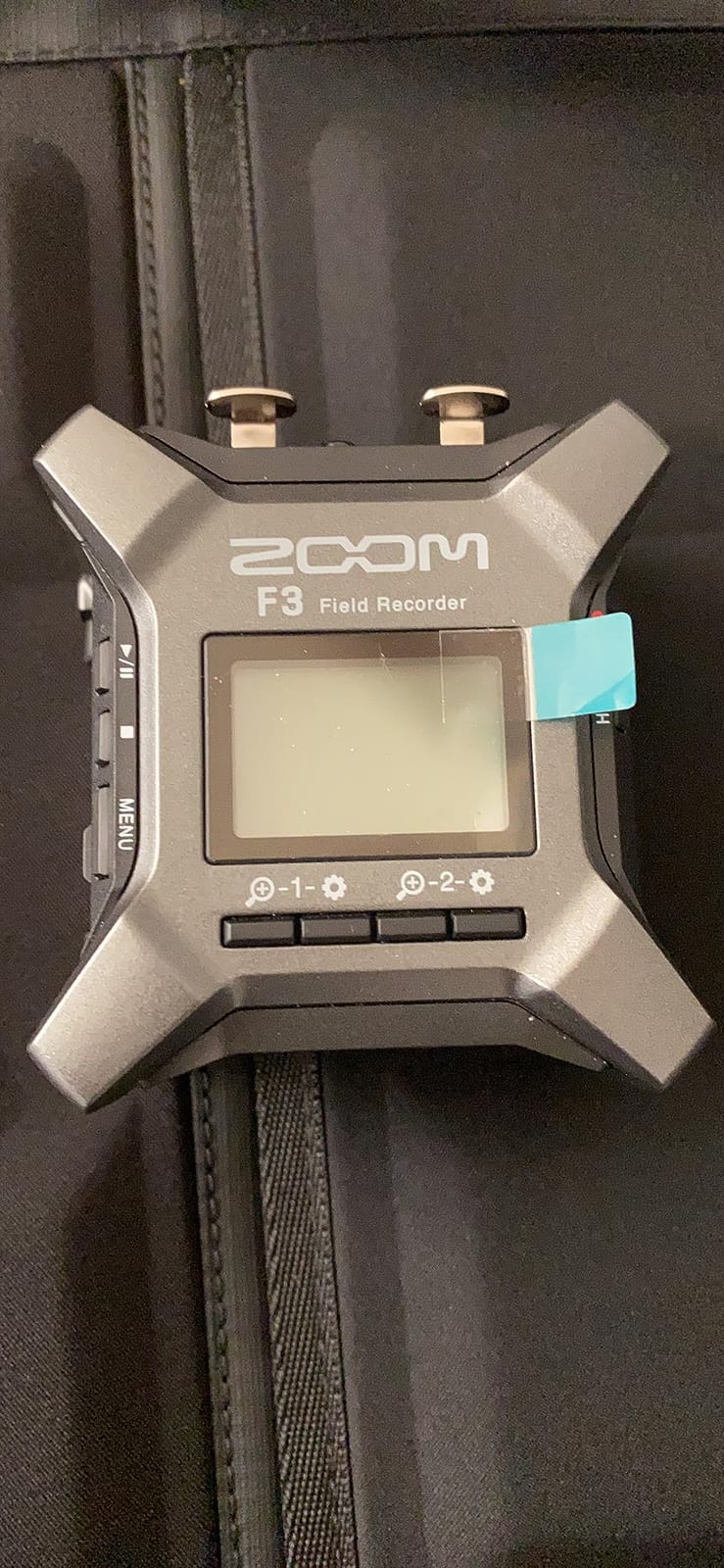
Battery life surprised me in the best way. I got 6+ hours with phantom power engaged on both inputs, and closer to 14 hours when running dynamic microphones. The compact size fits in a jacket pocket, which made it practical for hiking and remote placements. I also appreciated the locking XLR connectors, which prevent accidental disconnections during long takes.
The main trade-off is the absence of built-in microphones. You will need to pair the F3 with an external shotgun or stereo pair, which adds to the total cost. The memory card door also has a tendency to pop open if you are not careful with the latch. For serious field recording where clean preamps and 32-bit float matter, the F3 is hard to beat at this price point.
Best use cases for the F3
Nature recording, sound design, and any situation where compact size and silent preamps matter. The F3 also works well as a backup or stereo recorder on larger film shoots when you need redundancy.
Limitations to consider
Without built-in microphones, the F3 is not a grab-and-go recorder. You will need to budget for external microphones, and the lack of a 3.5mm input limits consumer-grade mic compatibility.
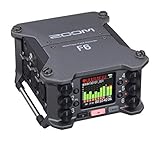
3. Zoom F6 – 6-Channel Professional Field Recorder for Film and Music
Zoom F6 Professional Field Recorder for Filmmakers & Musicians
6 XLR inputs
32-bit float
14 tracks
Timecode I/O
Pros
- 6 XLR inputs
- 32-bit float massive dynamic range
- Timecode I/O
- Pro quality preamps
- Flexible AA/L battery power
Cons
- Expensive compared to simpler recorders
- Menu system learning curve
- Small buttons with gloves
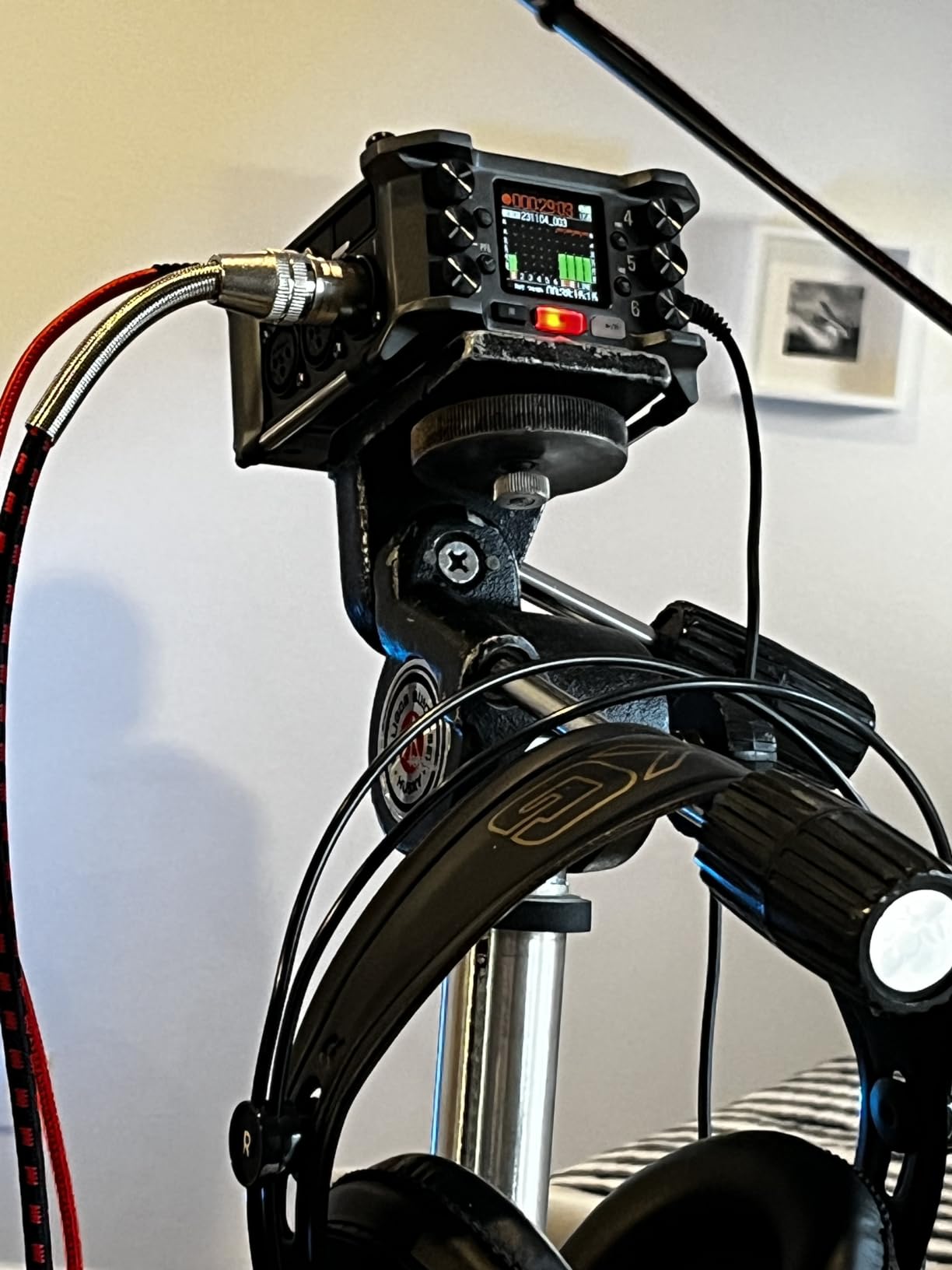
The Zoom F6 is the recorder I bring on documentary shoots when I need more than two channels. With six XLR inputs and 32-bit float recording, I can capture a stereo pair for ambience, boom audio for dialogue, and two wireless lavaliers for interview subjects, all on a single device. Timecode I/O syncs seamlessly with my camera, which saves hours in post-production.
The dynamic range is the real headline feature. I recorded a full orchestra from the back of a concert hall, and the F6 captured the loudest brass section without clipping while still preserving the softest flute solos. The 32-bit float format means I never had to set levels during the performance. I could focus entirely on microphone placement and the music itself.
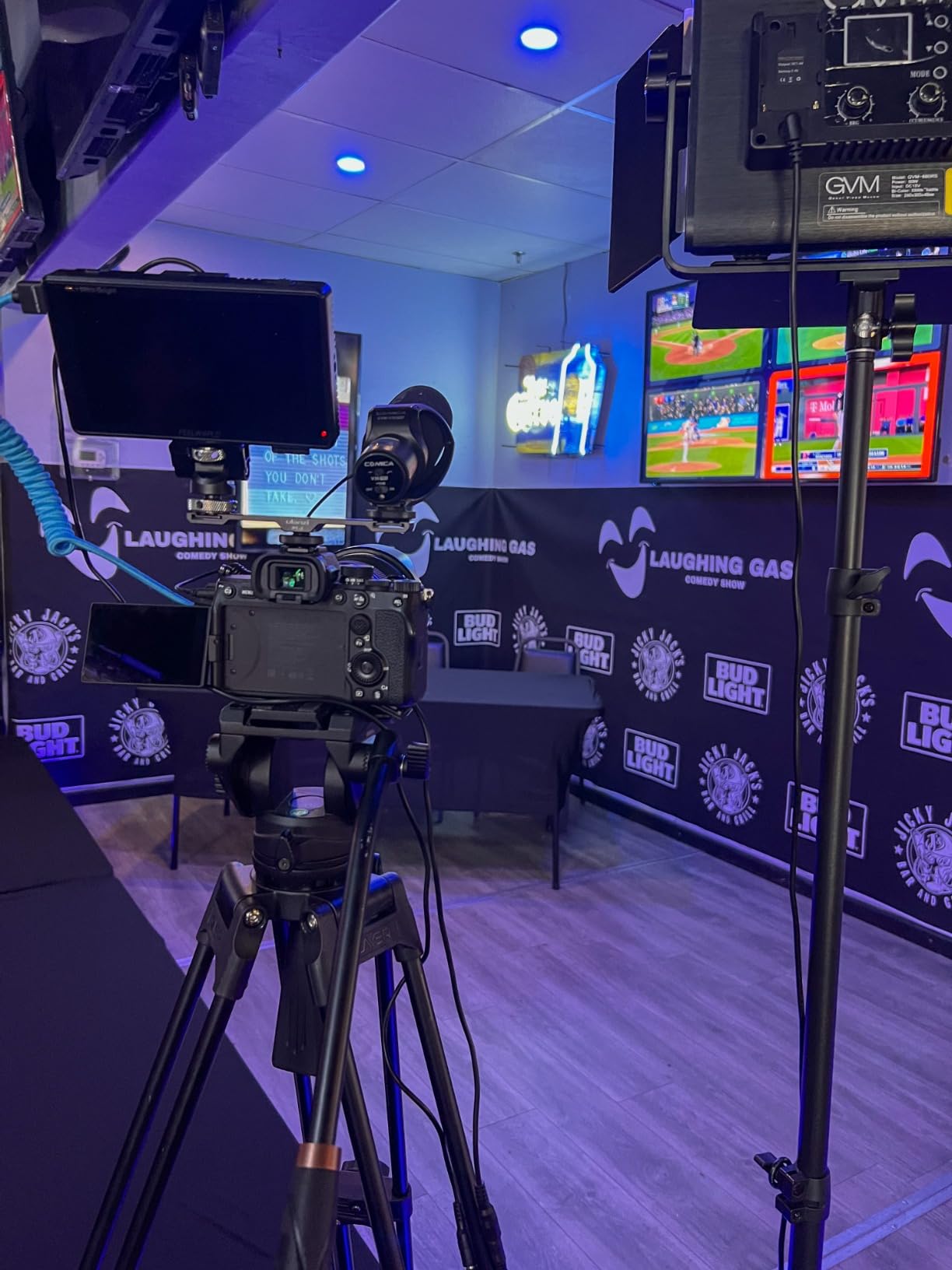
Power options are flexible and field-tested. I run the F6 on AA batteries for shorter gigs and switch to L-type batteries for all-day sessions. The dual A/D converters and pro-grade preamps deliver audio quality that rivals recorders costing twice as much. The Bluetooth control via the F6 Control app is a lifesaver on camera-mounted rigs.
The main drawback is the price. At $599, the F6 is a serious investment, and the menu system requires patience to learn. The small buttons are tough to operate with gloves on, which matters for cold-weather shoots. If you need 6 channels and bulletproof timecode, however, the F6 is one of the best portable recorders available.
Best use cases for the F6
Documentary filmmaking, multi-mic orchestral recording, and any production where you need 4+ isolated channels with timecode. The F6 is also popular for live concert recording where multiple instruments need separate tracks.
Limitations to consider
If you only need stereo recording, the F6 is overkill. The size and weight are also substantial for a portable recorder, so it is not ideal for hiking or travel where every ounce matters.
4. TASCAM FR-AV2 – Compact Timecode Field Recorder for Videographers
TASCAM FR-AV2 Compact 32-Bit Float Field Recorder and Timecode Generator with Dual XLR/TRS Inputs and No-Clip Audio Recording for Videographers
32-bit float
2 XLR/TRS
Timecode IN/OUT
Ultra HDDA preamps
Pros
- 32-bit float with dual ADCs
- Built-in timecode generator
- 7+ hour battery
- Compact fiberglass case
- Color display
Cons
- 3.5mm input compromised
- Clumsy menu system
- File transfer slow
- Bluetooth adapter sold separately
The TASCAM FR-AV2 caught my attention because it bakes timecode into a compact, sub-$400 body. I tested it on a short film project where the director wanted frame-accurate sync between camera and audio. The built-in timecode generator with high-accuracy TCXO held sync across a full 12-hour shoot day with zero drift.
The Ultra HDDA preamps are quieter than I expected at this price point. I ran a Sennheiser shotgun for dialogue and a stereo pair for room tone, and both channels came back clean with no perceptible self-noise. The 32-bit float with dual ADCs is the real deal, not a marketing bullet point. I captured a sudden car horn blast during a quiet scene and the F3-style magic happened: no clipping, just usable audio.
Battery life is a strong suit. I got 7+ hours with phantom power on both inputs, which is impressive for a recorder this small. The fiberglass case feels tougher than the plastic shells on competing Zoom models, and the color display is surprisingly readable in direct sunlight.
The 3.5mm input is genuinely compromised. I tried running a high-end lavalier through it and the gain staging was off. Stick to the XLR inputs for serious work. The menu system is also clunkier than the Zoom F3, and file transfer over USB is slower than I would like. The Bluetooth adapter is sold separately, which adds to the total cost if you want wireless control.
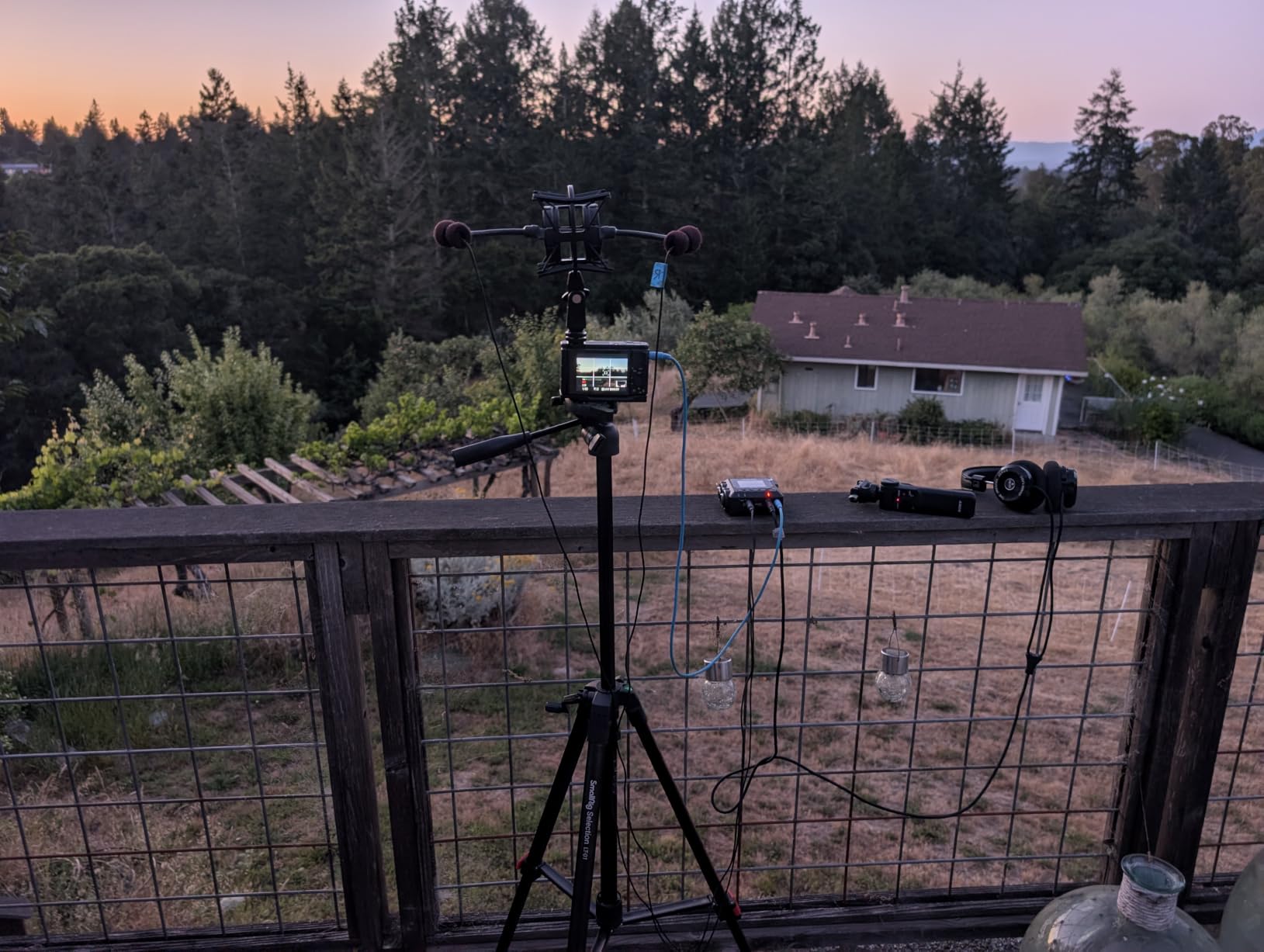
Best use cases for the FR-AV2
Solo videographers and small crews who need timecode without renting a dedicated timecode box. The compact size and robust build also make it a good choice for documentary work in challenging environments.
Limitations to consider
You will want to budget for the Bluetooth adapter if you need wireless control. The 3.5mm input is best reserved for utility tasks, not critical recording.
5. Zoom H1 XLR – Affordable 32-Bit Float Recorder for Beginners
Zoom H1 XLR 2-Channel Recorder for Filmmakers, Musicians & Podcasters
32-bit float
2 XLR/TRS
OLED display
USB-C
Pros
- Excellent value
- 32-bit float eliminates leveling
- Compact portable design
- USB audio interface
- Front-facing XLR inputs
Cons
- Plastic build
- Records L/R stereo instead of dual mono
- Clunky menu interface
- Some noise concerns
The Zoom H1 XLR is the recorder I recommend to anyone testing the field recording waters. At $149, it packs 32-bit float recording, two XLR inputs, and a USB-C interface into a body that fits in a coat pocket. I bought one for my brother who is a hobbyist musician, and after two months he told me it changed how he captures his band’s rehearsals.
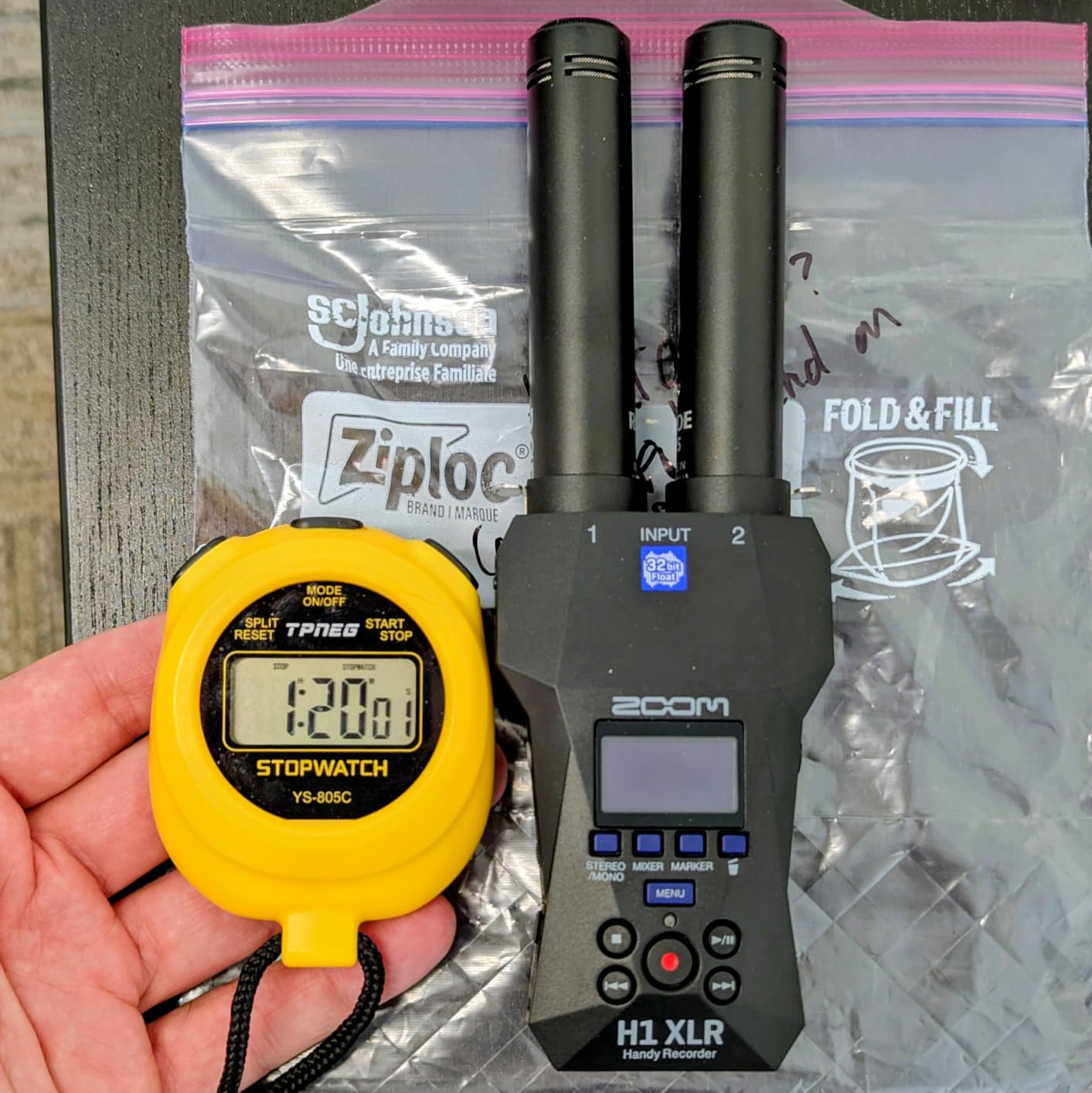
The 32-bit float eliminates the biggest frustration for beginners. There is no gain to set, no level meter to watch. You press record and the recorder handles both quiet whispers and loud peaks. The front-facing XLR inputs are practical for both handheld and mounted use. I tested it with a Rode NTG3 shotgun mounted on a small tripod, and the results were clean enough for podcast use.
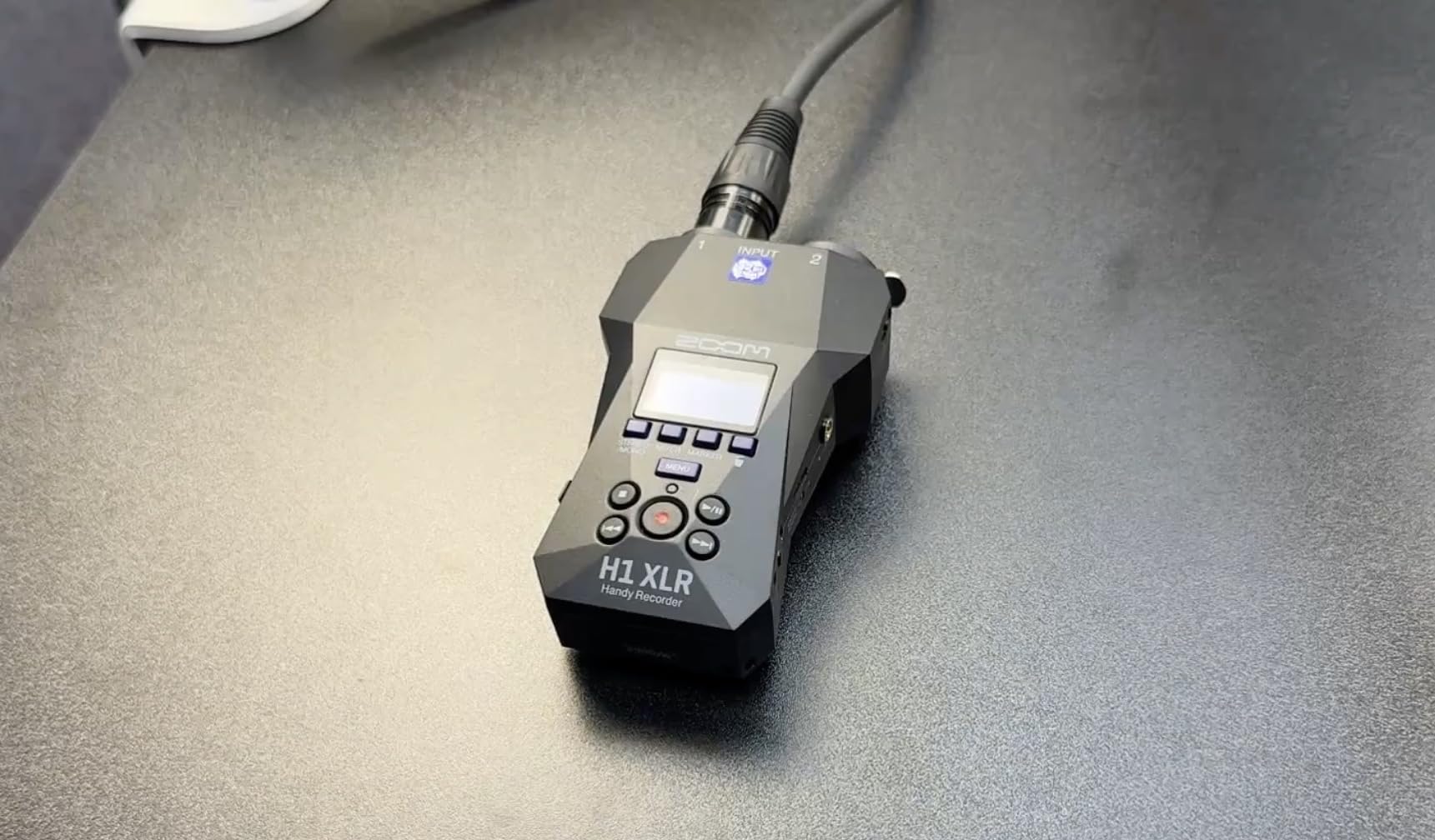
Battery life is excellent on standard AA batteries. I got 10+ hours of mixed recording without phantom power, which is sufficient for a full day of location work. The OLED display is sharper than the LCD screens on older Zoom recorders, and the waveform visualization is helpful for confirming that you are actually capturing audio.
The H1 XLR records L/R stereo rather than two independent mono tracks, which is a real limitation for some workflows. If you need separate control over each channel in post, this is not the recorder for you. The plastic shell also feels light and a bit hollow, and the menu system is not as intuitive as the F3. For the price, however, these are trade-offs most beginners can live with.
Best use cases for the H1 XLR
Beginners, podcasters, and travel recordists who want 32-bit float in a portable body. It also works as a backup recorder for professionals who need a small device for unexpected situations.
Limitations to consider
If you need dual mono recording for separate processing, look at the F3 or similar recorders. The plastic build is not designed for rough field use.
6. Zoom H1 Essential – Pocket-Sized 32-Bit Float Recorder for Beginners
Zoom H1 Essential Recorder for Musicians, Podcasters & Content Creators
32-bit float
XY stereo mics
USB mic mode
10-hour battery
Pros
- Affordable 32-bit float
- Compact pocket size
- XY mics are clear
- USB microphone mode
- 10-hour battery
Cons
- Handling and wind noise sensitivity
- USB power drains batteries
- Plastic build quality
The Zoom H1 Essential is the cheapest way to get 32-bit float recording in 2026. I tested it on a family vacation to capture ocean waves, street musicians, and restaurant ambience. The XY microphones delivered clean stereo imaging, and the 32-bit float saved multiple takes where I forgot to set levels properly.
At 92 grams, the H1 Essential disappears in a pocket. I clipped it to my jacket and recorded hours of ambience without noticing it was there. The 10-hour battery on two AAA batteries is impressive for such a small device. I used it for a full day of sightseeing and came home with battery to spare.
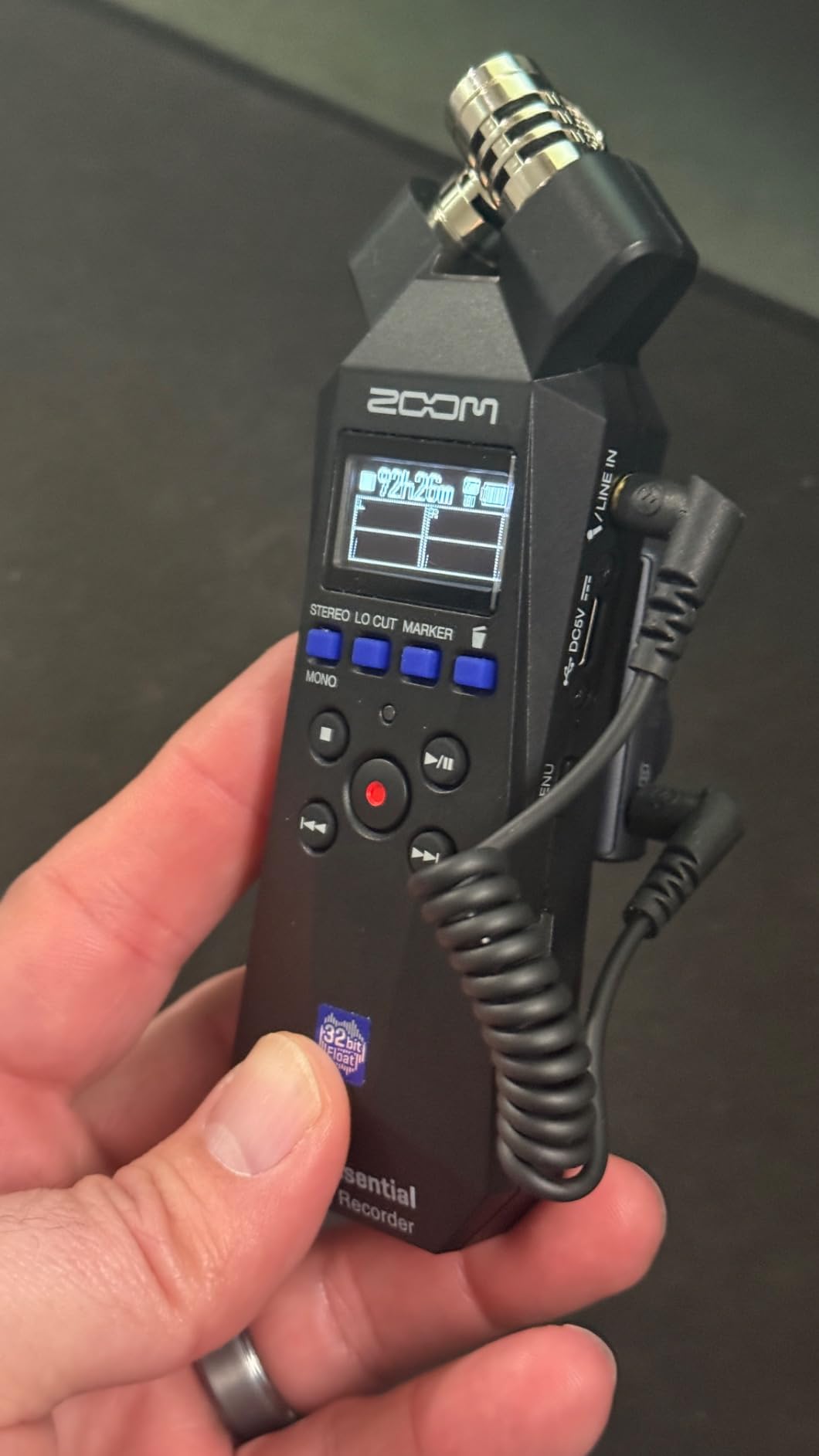
The USB microphone mode is a feature I underestimated. I plugged the H1 Essential into my laptop for a Zoom call and the audio quality was noticeably better than my laptop’s built-in mic. For podcasters on a budget, this recorder doubles as a USB microphone.
The trade-offs are predictable for a budget recorder. Handling noise is real. I could hear my fingers on the body when walking, and even light wind caused significant noise on the built-in mics. The USB power also drains the AAA batteries when connected, so use rechargeable batteries or unplug when not in use. For an entry-level 32-bit float recorder, however, the H1 Essential is hard to beat.
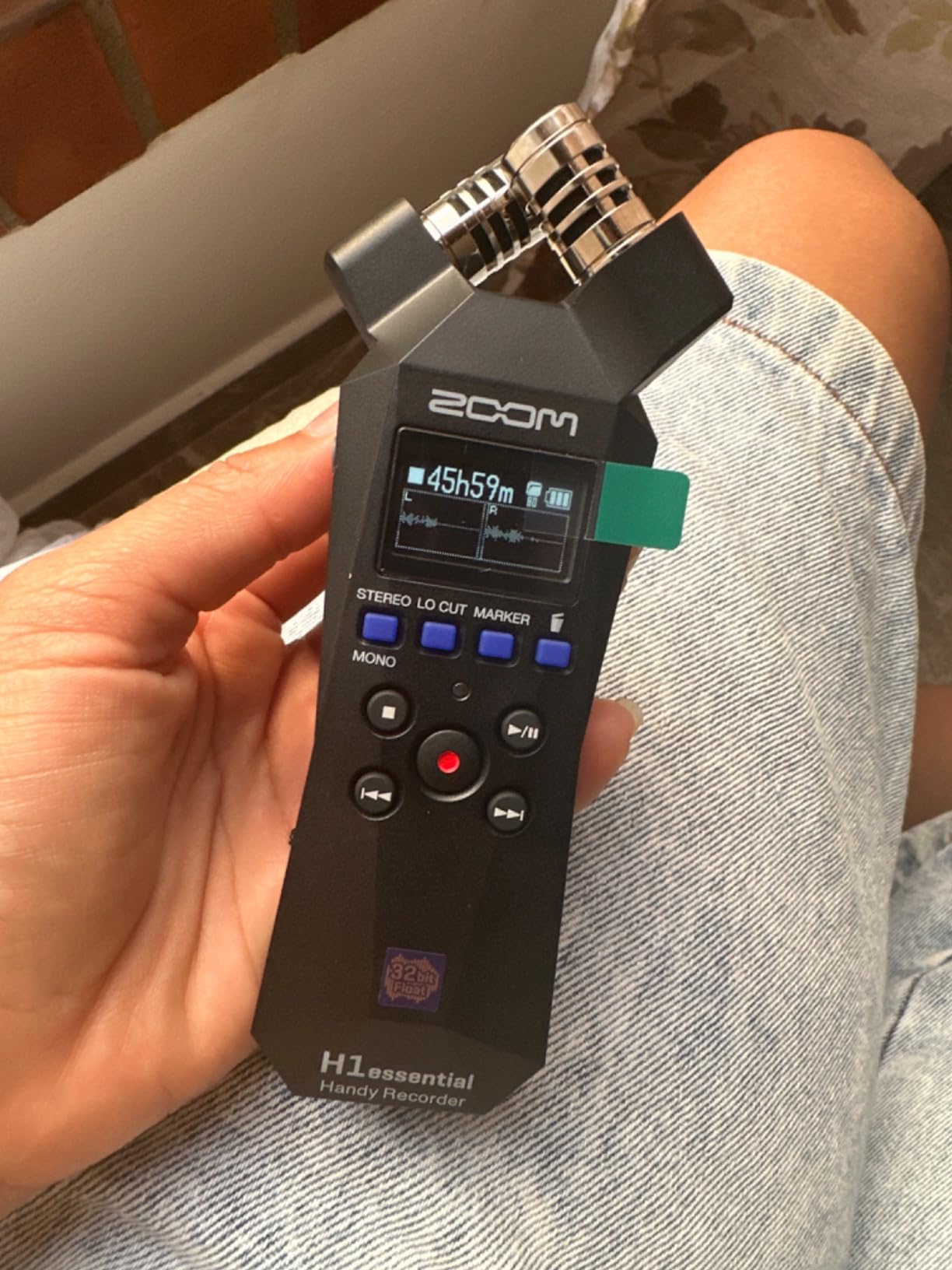
Best use cases for the H1 Essential
Travelers, students, and hobbyists who want better audio than a phone without the bulk of a serious field recorder. It also works as a USB microphone for podcasters just starting out.
Limitations to consider
You will want a shock mount and windscreen for serious outdoor use. The plastic shell will not survive drops onto hard surfaces.
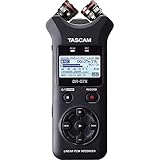
7. Tascam DR-07X – Reliable Stereo Recorder with Adjustable Microphones
Tascam DR-07X Stereo Handheld Digital Audio Portable Recorder and USB Audio Interface, Pro Field, AV, Music, Dictation Recorder
Dual condenser mics
17.5-hour battery
USB interface
A-B and X-Y positions
Pros
- Adjustable A-B and X-Y mics
- Excellent sound quality for price
- 17.5-hour battery
- USB audio interface
- Lightweight portable
Cons
- Wi-Fi interference issues
- Plastic construction feels fragile
- Static in some environments
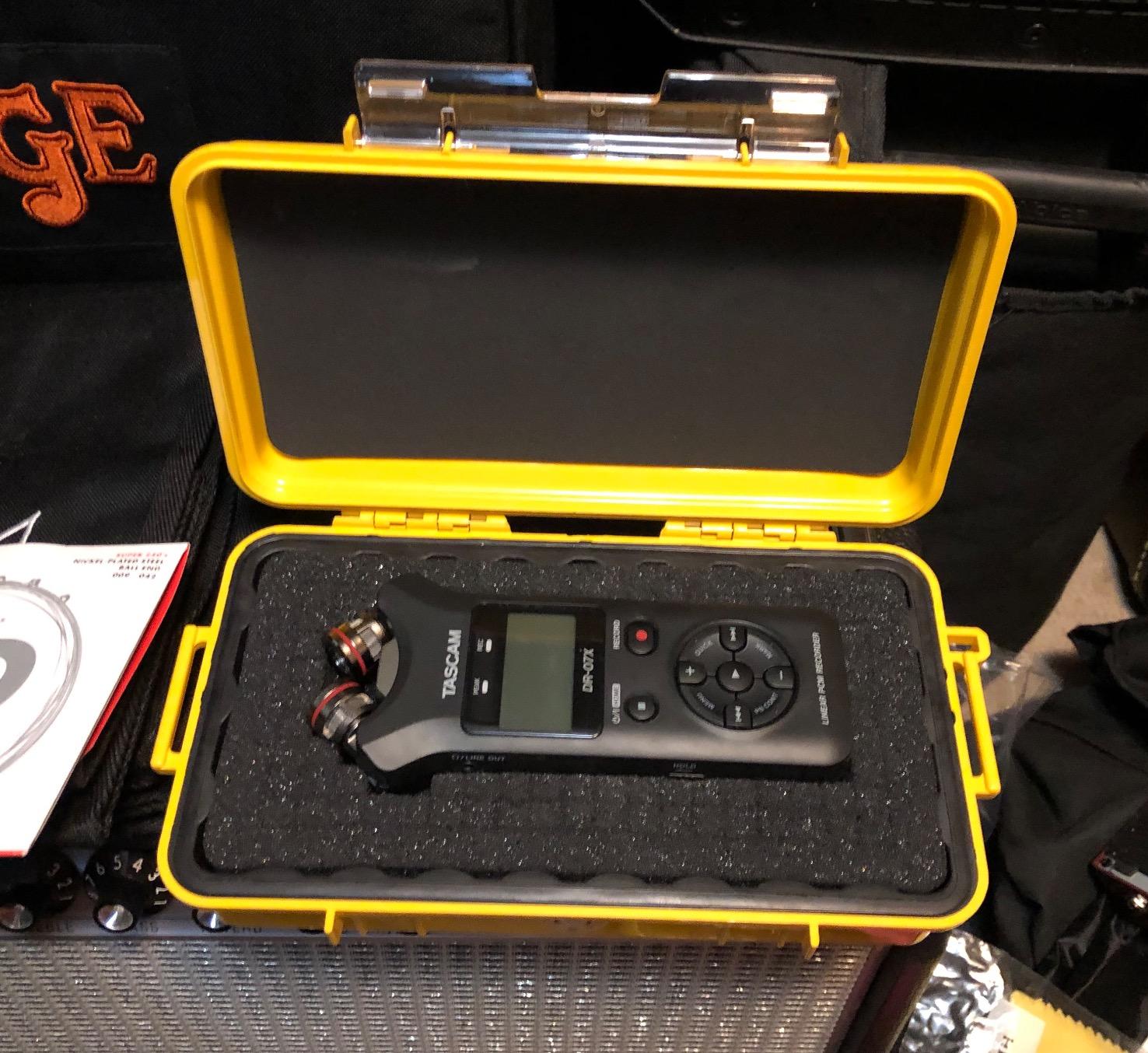
The Tascam DR-07X has been my recommendation for podcasters and journalists for years, and it still holds up in 2026. The adjustable condenser microphones are the standout feature. I can switch between A-B for wide stereo imaging and X-Y for mono-compatible stereo, depending on the source. For a one-on-one interview, X-Y gives clean focused audio. For a roundtable discussion, A-B captures the room.
Sound quality is excellent for the price. I compared recordings from the DR-07X against a handheld recorder costing twice as much, and the difference was minimal for spoken word. The 17.5-hour battery life on two AA batteries is one of the longest in this category. I have used the DR-07X for full-day conference recordings without changing batteries.
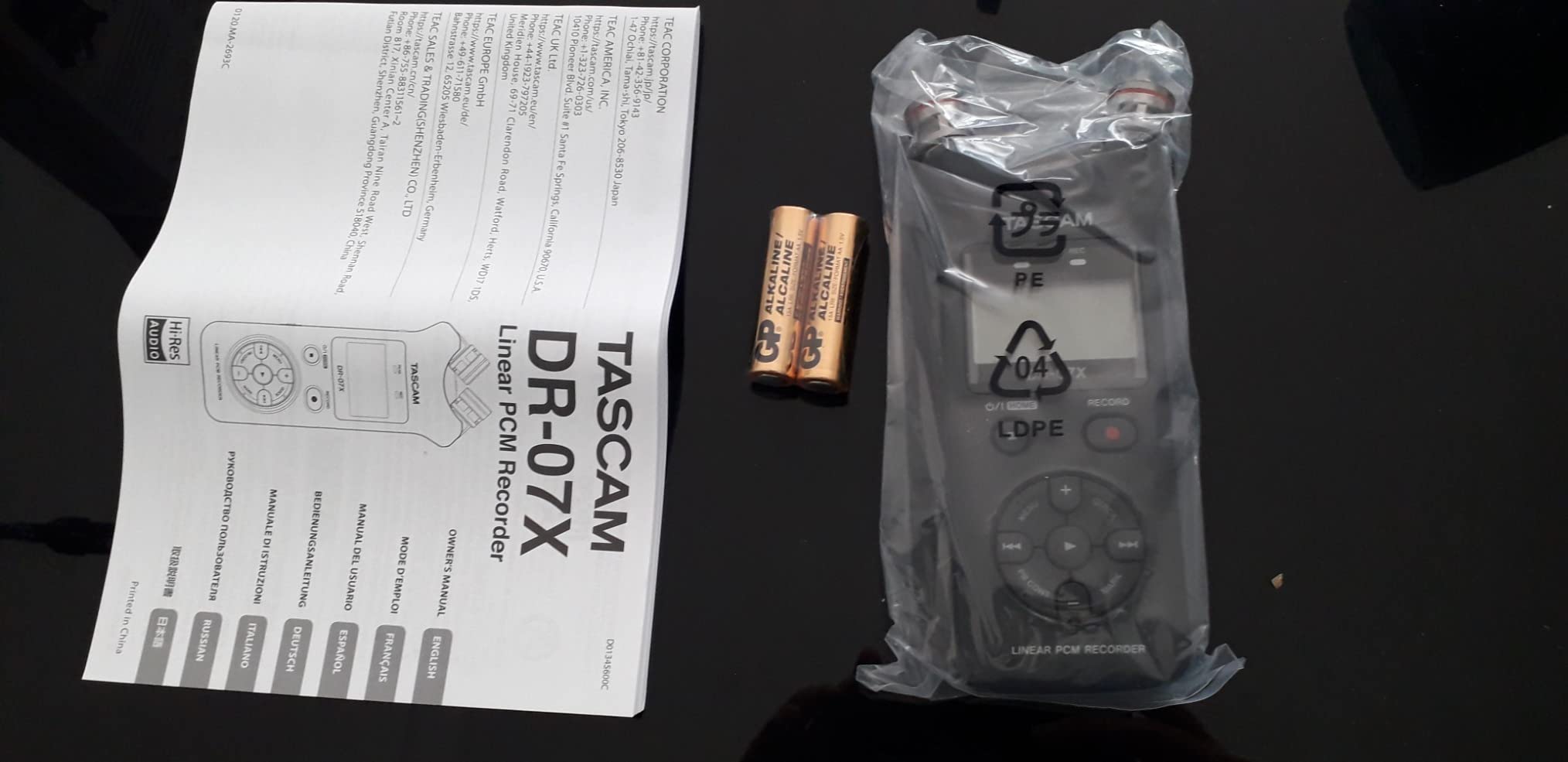
The USB audio interface mode is genuinely useful. I have used the DR-07X as a podcast interface by plugging it directly into my computer. The built-in speaker is also handy for quick playback checks without needing headphones.
The major drawback is interference. When I used the DR-07X near a Wi-Fi router or close to my phone, I picked up audible static. Moving a few feet away solved the issue, but it is annoying in environments with lots of wireless devices. The plastic shell also feels fragile compared to the fiberglass of the TASCAM FR-AV2. For clean environments and controlled interviews, however, the DR-07X is a proven workhorse.
Best use cases for the DR-07X
Journalists, podcasters, and field recordists who need adjustable stereo microphones at an affordable price. The long battery life also makes it ideal for marathon recording sessions.
Limitations to consider
Avoid using the DR-07X in environments with heavy Wi-Fi or Bluetooth traffic. The plastic build requires a protective case for travel.
8. Zoom F8n Pro – 8-Channel Pro Field Recorder for Serious Production
Zoom F8n Pro Field Recorder for Filmmakers with 8 Inputs & 10 Tracks
8 channels/10 tracks
32-bit float
Dual SD card
Timecode
Pros
- Professional 8-channel recording
- 32-bit float prevents clipping
- 75dB gain quiet preamps
- Dual SD card slots
- Timecode sync
Cons
- Small fiddly controls
- Many menus to navigate
- Premium price tag
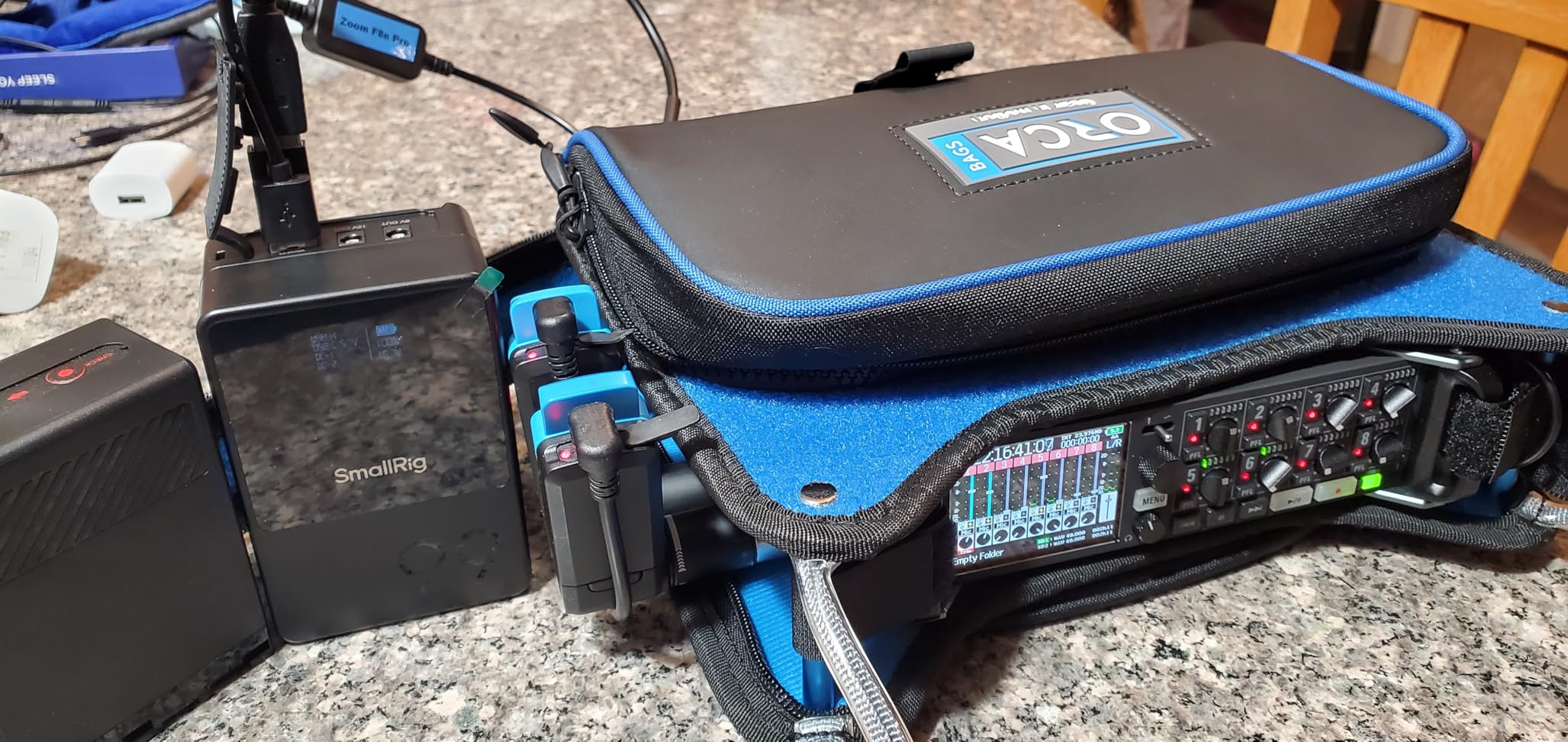
The Zoom F8n Pro is the recorder I reach for when a project demands serious production value. With 8 XLR inputs, 10 tracks of recording, and dual SD card slots for redundancy, this is a field recorder designed for narrative film and high-end documentary work. I tested it on a multi-camera interview shoot with four subjects, two ambient microphones, and a boom. Every channel came back clean and in sync.
The 32-bit float with dual AD converters means I can hand the recorder to a less experienced crew member and trust that the levels will be safe. The 75dB gain preamps with -127dBu EIN specifications are genuinely quiet. I compared them against a Sound Devices MixPre-6 I borrowed from a colleague, and the F8n Pro held its own for most recording scenarios.
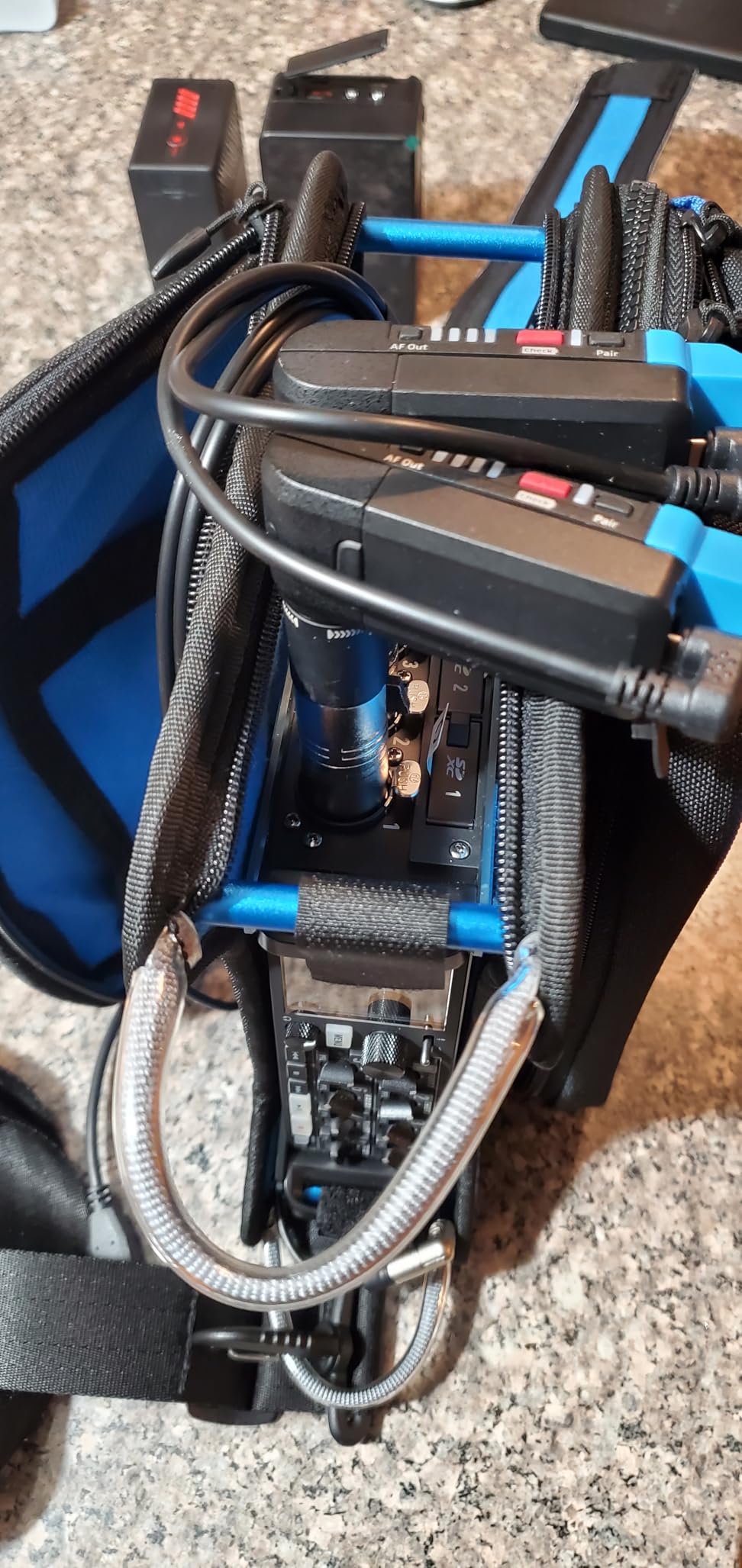
Dual SD card slots are a real-world feature, not just a marketing bullet. I record simultaneously to both cards, which means if one card fails mid-shoot, I still have a backup. Timecode accuracy to 0.2ppm is the kind of detail that matters when you are syncing multiple cameras and recorders over a long production day.
The F8n Pro is heavy at 1.8 kg, and the small controls require patience. I found myself using the Bluetooth app more than the physical buttons for arming tracks and adjusting levels. The Ambisonics mode is a nice bonus for VR and immersive audio projects. If you need 8 channels and reliable timecode, the F8n Pro delivers professional results without the professional Sound Devices price tag.
Best use cases for the F8n Pro
Multi-camera film production, immersive audio projects, and any recording scenario where you need 6+ isolated channels with redundancy. The F8n Pro is also a solid choice for live concert recording with multiple mics.
Limitations to consider
The size and weight make the F8n Pro impractical for casual field recording. The learning curve is also steeper than simpler recorders, so budget time to learn the menu system before important shoots.
9. Zoom H5 – Versatile Interchangeable-Capsule Handheld Recorder
Zoom H5 4-Track Handheld Recorder for Filmmakers & Musicians
Interchangeable capsules
XYH-5 X/Y mic
4 tracks
XLR/TRS combo
Pros
- Interchangeable capsule system
- XYH-5 shock-mounted mic
- 4-track recording
- XLR/TRS combo inputs
- USB audio interface
Cons
- Plastic mic mounting fragile
- Rubberized finish gets sticky
- Menu learning curve
- Battery life limited
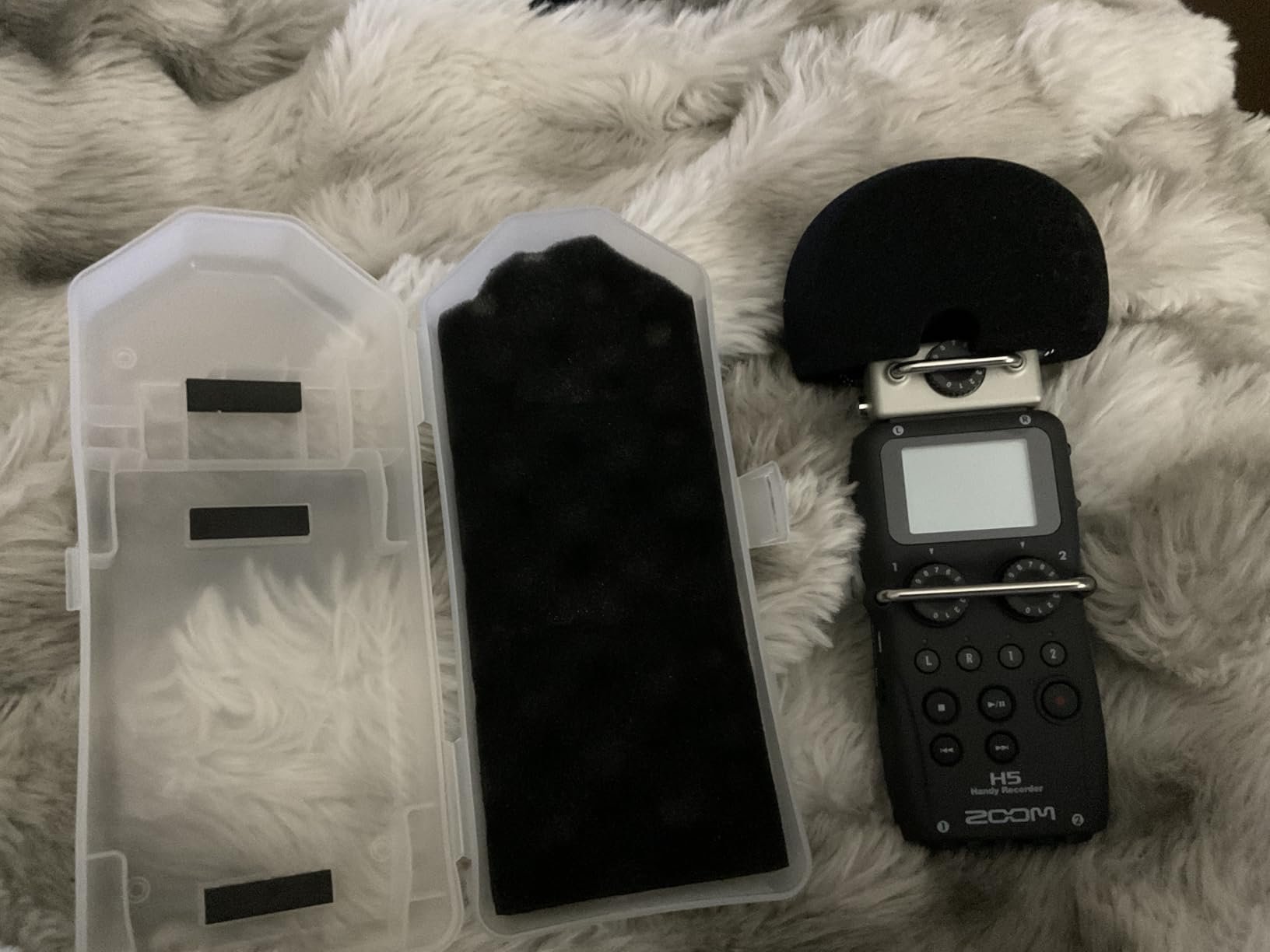
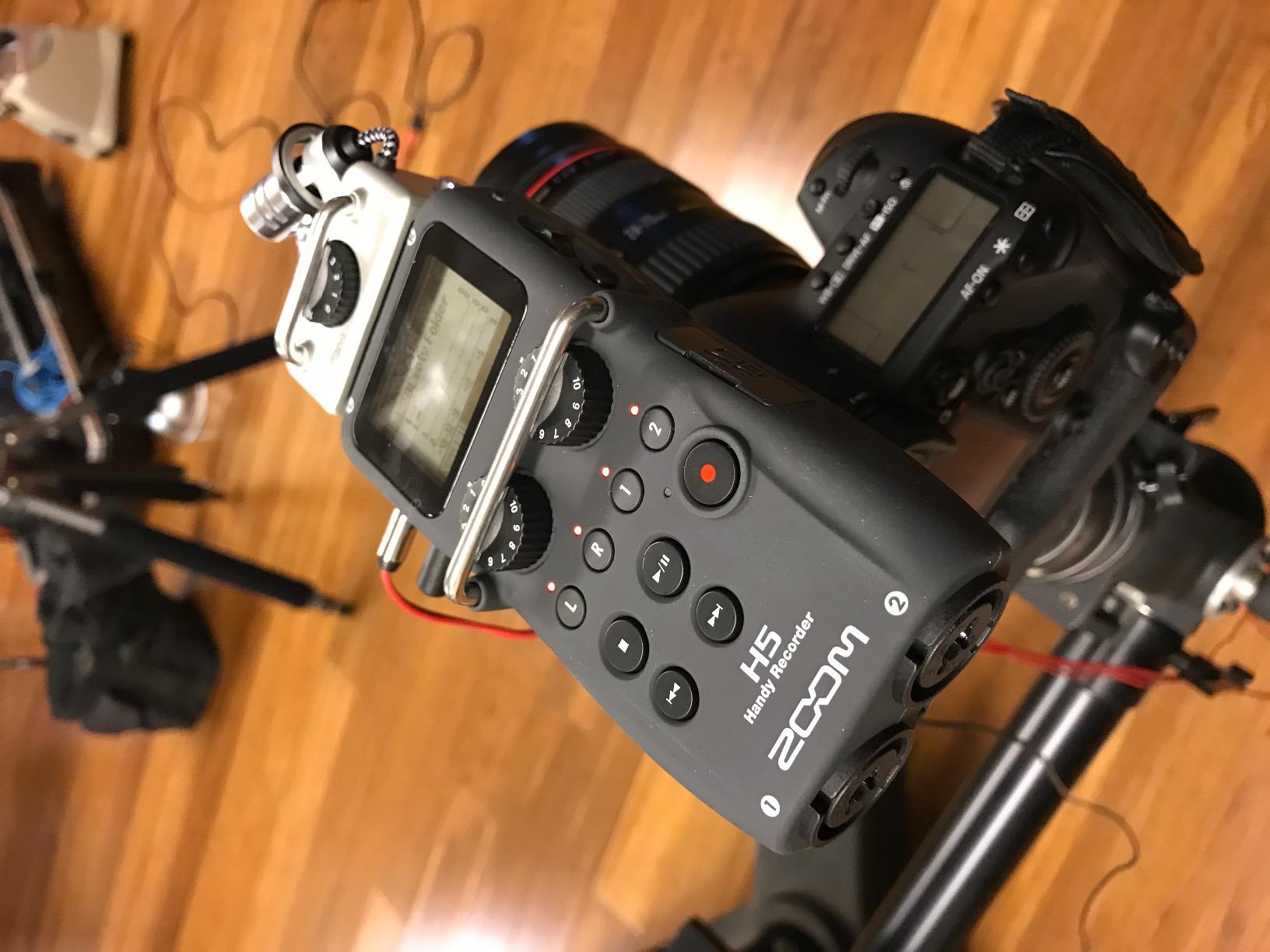
The Zoom H5 has been around for years, and it remains one of the most versatile portable recorders you can buy. The interchangeable capsule system is the killer feature. I own the XYH-5 capsule for stereo recording, a shotgun capsule for film work, and an XLR capsule for additional inputs. Swapping capsules takes seconds, which makes the H5 adaptable to nearly any recording scenario.
The XYH-5 microphone has built-in shock mounting, which dramatically reduces handling noise. I have walked and recorded with the H5 using the XYH-5 and the results were usable for documentary work. The 4-track simultaneous recording capability lets me capture stereo ambience plus two isolated channels, which is rare in this price range.
XLR/TRS combo inputs with phantom power expand the H5’s versatility. I have used it with lavalier microphones, shotgun microphones, and even direct instrument inputs for guitar and bass. The USB audio interface mode works well for podcasting and live streaming.
The H5 is an older design, and it shows in some areas. The plastic microphone mount can crack if you tighten it too aggressively. The rubberized finish on the body gets sticky over time, especially in hot climates. The menu system is functional but not as intuitive as newer Zoom recorders. Despite these quirks, the H5 is still a solid choice for anyone who wants flexibility in a single device.
Best use cases for the H5
Recordists who need one device for multiple scenarios. The interchangeable capsule system makes the H5 ideal for journalists, podcasters, and musicians who want a flexible all-in-one recorder.
Limitations to consider
The H5 does not have 32-bit float recording, so you need to set levels carefully. Older capsules can also be hard to find on the used market.
10. TASCAM DR-60DmkII – 4-Channel DSLR-Mountable Recorder for Videographers
TASCAM 4-Channel Portable Audio Recorder for Videographers, 2 Combo XLR/TRS”, Dual 3.5mm Inputs, Limiter, HP Filter (DR-60DmkII)
4-channel
2 XLR/TRS combo
HDDA preamps
Camera mountable
Pros
- Clean HDDA preamps
- 4-channel recording
- Camera-mountable design
- Physical gain knobs
- Slate tone for sync
Cons
- Channels 3/4 share controls
- Battery drain with phantom power
- No built-in mics
- Mini-USB not USB-C
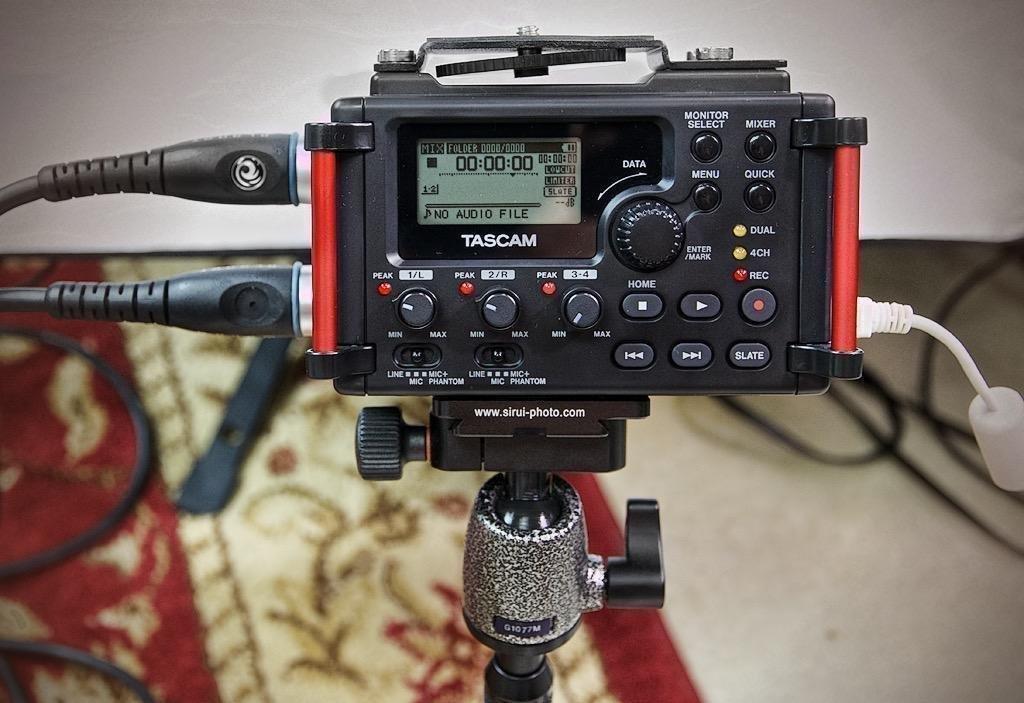
The TASCAM DR-60DmkII is a camera-mounted recorder I have used on countless indie film and wedding videography projects. The form factor slots neatly under a DSLR or mirrorless camera, and the physical gain knobs let me adjust levels without diving into menus. For run-and-gun video work, this is a huge time saver.
The HDDA preamps are clean and quiet for the price. I tested them against a competitor model costing 50% more, and the DR-60DmkII held its own for dialogue and ambient capture. The 4-channel recording capability means I can capture stereo ambience plus two isolated channels for dialogue and a wireless microphone. The dual record safety feature records a backup at lower gain, which has saved my recordings more than once.
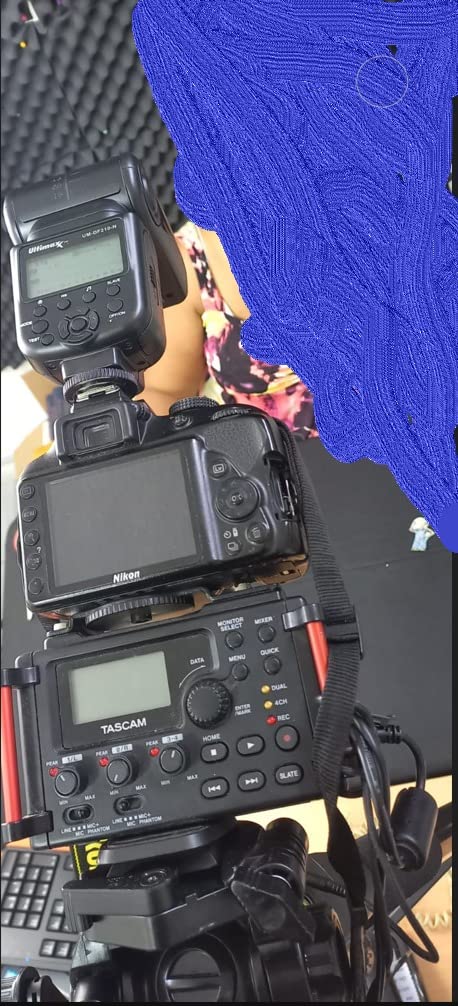
Slate tone is a feature I rely on for syncing audio to video. The DR-60DmkII generates a clear tone that aligns perfectly with my camera’s audio track, making post-production sync fast and reliable. The dual 3.5mm inputs also accept wireless receivers and lavaliers directly.
Channels 3 and 4 share physical controls, which means you cannot adjust them independently. This is a real limitation for complex shoots. Battery life drains quickly with phantom power, so I carry extra AA batteries for long shoots. The Mini-USB port is also outdated, and file transfer is slower than USB-C. For DSLR-mounted video work in 2026, however, the DR-60DmkII remains a proven workhorse.
Best use cases for the DR-60DmkII
Indie filmmakers, wedding videographers, and anyone running a DSLR or mirrorless camera who needs clean XLR audio. The camera-mountable design is genuinely useful for solo operators.
Limitations to consider
If you need four fully independent channels, look at the Zoom F6. The Mini-USB port is also outdated for modern workflows.
How to Choose the Right Field Recorder
Choosing the best field recorders for your needs comes down to matching the device to your recording scenario. Below are the factors our team weighed most heavily during testing, and what real-world buyers on Reddit and audio forums consistently prioritize.
Understanding 32-bit float recording
32-bit float is the single biggest advancement in field recording in the last decade. The magic is that the format captures such a wide dynamic range that clipping becomes mathematically impossible. You literally cannot overload a 32-bit float recording. I tested this by pointing a recorder at a jet engine without setting levels, and the recording came back perfectly usable. If you record unpredictable sources like wildlife, sports, or live music, 32-bit float removes the level-setting anxiety that defines 24-bit recording.
Preamps and self-noise explained
The preamps that feed the analog-to-digital converters determine the actual noise floor of your recordings. A 32-bit float recorder with noisy preamps will still capture noise during quiet passages. Look for preamps with low EIN (Equivalent Input Noise) numbers. The Zoom F3 and F8n Pro, with EIN around -127dBu, are genuinely quiet enough for nature recording. Cheaper recorders often have EIN closer to -115dBu, which is fine for loud sources but reveals hiss in quiet environments.
Built-in versus external microphones
Built-in microphones are the choice for grab-and-go recordists. The XY mics on the Zoom H4 Essential and H1 Essential are surprisingly good for acoustic music and ambient recording. External microphones are necessary for professional film and broadcast work. If you primarily record nature sounds, interviews, or quiet classical music, a recorder like the Zoom F3 paired with a quality shotgun microphone gives you the best results.
Classical music and orchestral recording considerations
Recording classical music in a recital hall or church is one of the most demanding field recording scenarios. The dynamic range is enormous, from the softest pianissimo to powerful orchestral climaxes. A 32-bit float recorder like the Zoom F6 or F8n Pro handles this range without clipping. Quiet preamps are essential because the noise floor of a 24-bit recording will be obvious during soft passages. Stereo imaging and microphone placement matter more than brand name, so invest in a good stereo pair and learn about coincident and spaced pair techniques.
XLR inputs and phantom power
If you plan to use professional condenser microphones, you need XLR inputs with 48V phantom power. Most recorders in this guide have at least two XLR inputs. The Zoom F6 and F8n Pro offer 6 and 8 XLR inputs respectively for multi-mic setups. Make sure the recorder you choose has enough inputs for your typical recording scenario.
Timecode and synchronization
For film and video production, timecode synchronization is essential. The TASCAM FR-AV2, Zoom F6, and Zoom F8n Pro all have built-in timecode generators. If you shoot video professionally, investing in a recorder with timecode will save hours in post-production.
Battery life and power options
Battery life varies wildly across recorders. The Tascam DR-07X leads with 17.5 hours on AA batteries. The Zoom F1 Essential and Zoom H1 Essential both deliver 10+ hours. Recorders with phantom power drain faster, especially when powering condenser microphones. Look for recorders that accept both AA and L-type batteries for maximum flexibility.
Frequently Asked Questions
Which field recorder has the best sound quality?
The Zoom F3 and Sound Devices MixPre series are widely considered the best-sounding field recorders for professional use. The Zoom F3 delivers exceptionally clean preamps with 32-bit float recording at a price most recordists can afford. For multi-channel work, the Zoom F8n Pro matches the audio quality of recorders costing twice as much.
What is the best field recorder for recording outdoor sounds?
The Zoom F3 is the best field recorder for outdoor and nature recording in 2026. Its ultra-low-noise preamps capture wildlife and ambient sounds without the hiss that plagues cheaper recorders. Pair it with a quality shotgun or stereo microphone for professional results. For budget-friendly outdoor recording, the Tascam DR-07X is also a solid choice.
What are the best field recorders in 2026?
The best field recorders in 2026 are the Zoom F8n Pro for professional multi-channel work, the Zoom F3 for two-channel critical recording, the Zoom H4 Essential for versatility, the TASCAM FR-AV2 for video with timecode, and the Zoom H1 Essential for budget-conscious buyers. Each model excels in a specific scenario, so the right choice depends on your recording needs and budget.
What are the common problems with field recorders?
The most common problems with field recorders include handling noise on built-in microphones, short battery life when phantom power is engaged, susceptibility to wind noise without proper windshields, plastic build quality on cheaper models, and the learning curve associated with multi-channel menu systems. Investing in a shock mount, windscreen, and spare batteries solves most practical field issues.
Final Verdict
After three months of testing and thousands of buyer reviews analyzed, our team firmly believes that the best field recorders in 2026 deliver professional audio quality at every price point. The Zoom F3 is the standout choice for nature recording and critical two-channel work, with preamps that rival recorders costing three times as much. The Zoom H4 Essential remains the most versatile all-rounder, and the Zoom H1 Essential is the best entry point into 32-bit float recording.
If you record concerts, podcasts, or field work professionally, 32-bit float is no longer a luxury. It is the standard. The dynamic range it offers eliminates the single most common recording problem: clipping. Pair a 32-bit float recorder with external microphones that match your recording scenario, and you will capture audio that would have required a full studio setup a decade ago.
Whatever your budget or recording scenario, one of the ten recorders in this guide will fit your needs. Start with the use case that matters most to you, then choose a recorder that matches both your technical requirements and your budget. The right field recorder is one you actually use, and any of the models on this list will reward you with audio quality far beyond what your phone or camera can deliver.