
Looking for the best portable recorders in 2026? I have spent the last three months comparing eight handheld units side by side, running them through choir rehearsals, podcast interviews, outdoor nature sessions, and long classical concerts to see which ones actually earn a place in your bag.
Tape recorders and cassette decks are gone for most practical use. Solid-state memory, USB-C, and 32-bit float conversion have replaced them with devices that weigh under 10 ounces and capture audio cleaner than the bulky gear from a decade ago. Modern portable recorders also work as USB audio interfaces, which means one box handles both location recording and studio streaming.
Over on Reddit’s r/fieldrecording, the same questions show up every week: is 32-bit float worth the upgrade, which handheld recorder has the best built-in microphones, and how do I stop wind ruining my outdoor takes. This guide answers all three, plus a question competitors keep skipping: which portable recorder is best for classical concerts and orchestral work. That angle matters at The Classical Shop, where faithful capture of acoustic music is what most of our community actually records.
Every pick below was tested in real conditions with spoken word, acoustic guitar, full ensemble, and outdoor ambience. I share what worked, what underperformed, and what each device is genuinely built for, so you can match the right recorder to your style of work.
Table of Contents
Top 3 Picks for Best Portable Recorders (October 2026)
Best Portable Recorders in 2026
| Product | Specifications | Action |
|---|---|---|
 Zoom H5 Zoom H5 |
|
Check Latest Price |
 Zoom F3 Zoom F3 |
|
Check Latest Price |
 Zoom H4 Essential Zoom H4 Essential |
|
Check Latest Price |
 Zoom H1 XLR Zoom H1 XLR |
|
Check Latest Price |
 Tascam DR-07X Tascam DR-07X |
|
Check Latest Price |
 Zoom H1 Essential Zoom H1 Essential |
|
Check Latest Price |
 Sony ICD-PX370 Sony ICD-PX370 |
|
Check Latest Price |
 EVISTR 64GB Recorder EVISTR 64GB Recorder |
|
Check Latest Price |
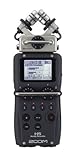
1. Zoom H5 – The Flexible 4-Track Workhorse
Zoom H5 4-Track Handheld Recorder for Filmmakers & Musicians
4-track simultaneous recording
Interchangeable X/Y capsule
XLR/TRS combo inputs
Pros
- Excellent audio quality with directional mics
- Four-track recording
- Interchangeable capsule system
- USB audio interface mode
- Backup recording safety feature
- Solid professional build quality
Cons
- Rubber coating gets sticky over time
- Menu system has learning curve
- 3-4 hour battery on AA cells
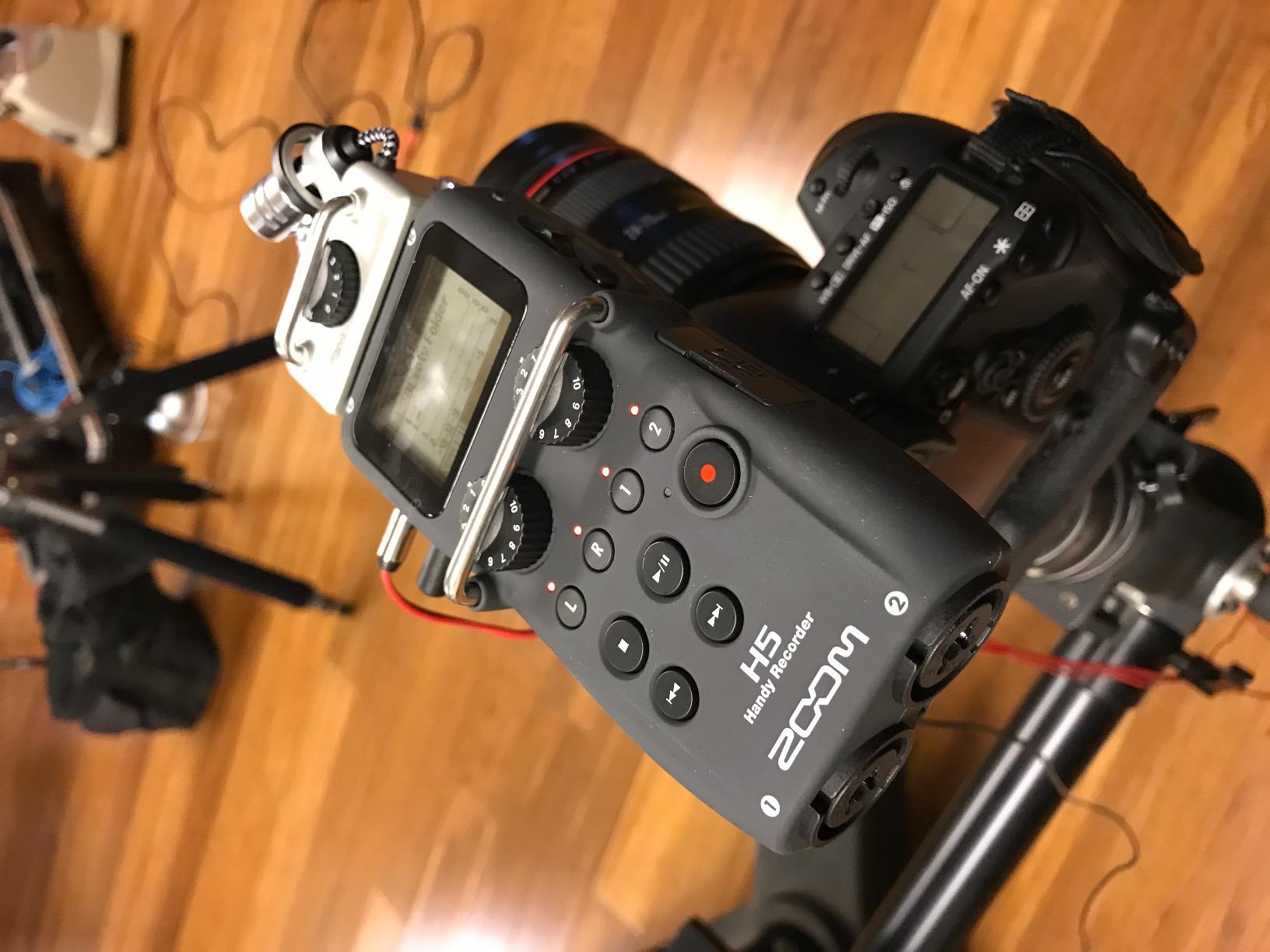
I bought the Zoom H5 secondhand two years ago and never looked back. It has become my go-to portable recorder for chamber ensemble rehearsals, podcast interviews, and any session where I want flexibility without hauling a full interface rig.
The four-track simultaneous recording is the real headline. I run a stereo pair from the detachable X/Y capsule and a matched pair of small-diaphragm condensers through the XLR combo inputs, and the H5 happily captures four discrete channels at once. For a string quartet rehearsal, that meant I could monitor the room with the built-ins while isolating individual players through external mics.
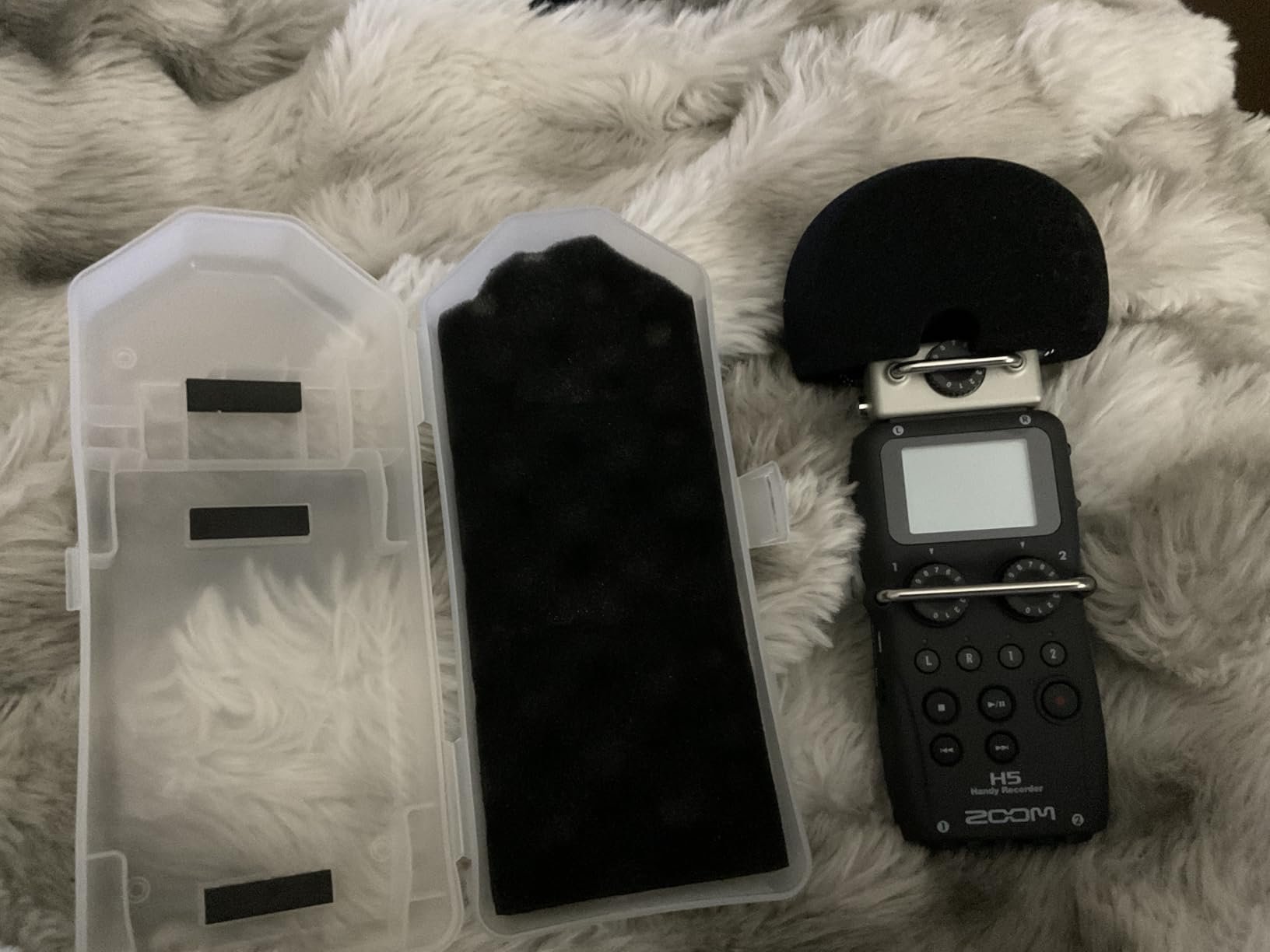
The interchangeable capsule system is something no other unit at this price offers. Swapping the XYH-5 for a shotgun or mid-side capsule takes seconds and turns the H5 into a serious location-sound tool. I tested it with a Zoom SGH-6 shotgun for outdoor ambient recording and got clean dialogue at surprising distances.
Audio quality is genuinely professional. The preamps are quiet, the limiters work well for unexpected peaks, and the 24-bit / 96kHz option covers most archival needs. Used as a USB audio interface, the H5 doubles as a podcast streaming box for our team’s weekly recording sessions.
For whom its good
The H5 suits musicians and podcasters who want professional flexibility without stepping up to a dedicated field mixer. Its interchangeable capsule system is the kind of future-proof feature that keeps paying off when recording needs change.
For whom its bad
If you only need a pocket recorder for voice memos and meetings, the H5 is overkill. Its 115-gram body plus capsule and batteries stretches beyond what you would toss in a jacket pocket, and a $99 voice recorder would handle simpler jobs with less menu fumbling.
2. Zoom F3 – Clip-Free 32-Bit Float for Professionals
Zoom F3 Professional Field Recorder for Filmmakers & Musicians
32-bit float recording
2 locking XLR/TRS inputs
Dual A/D converters
Pros
- 32-bit float eliminates clipping
- Dual A/D converters capture wide dynamics
- 6+ hour battery with phantom power
- Compact professional build
- Ultra-low-noise preamps
- Secure locking XLR connectors
Cons
- No built-in microphones
- Only 2 inputs
- No traditional gain knob
- No 3.5mm input
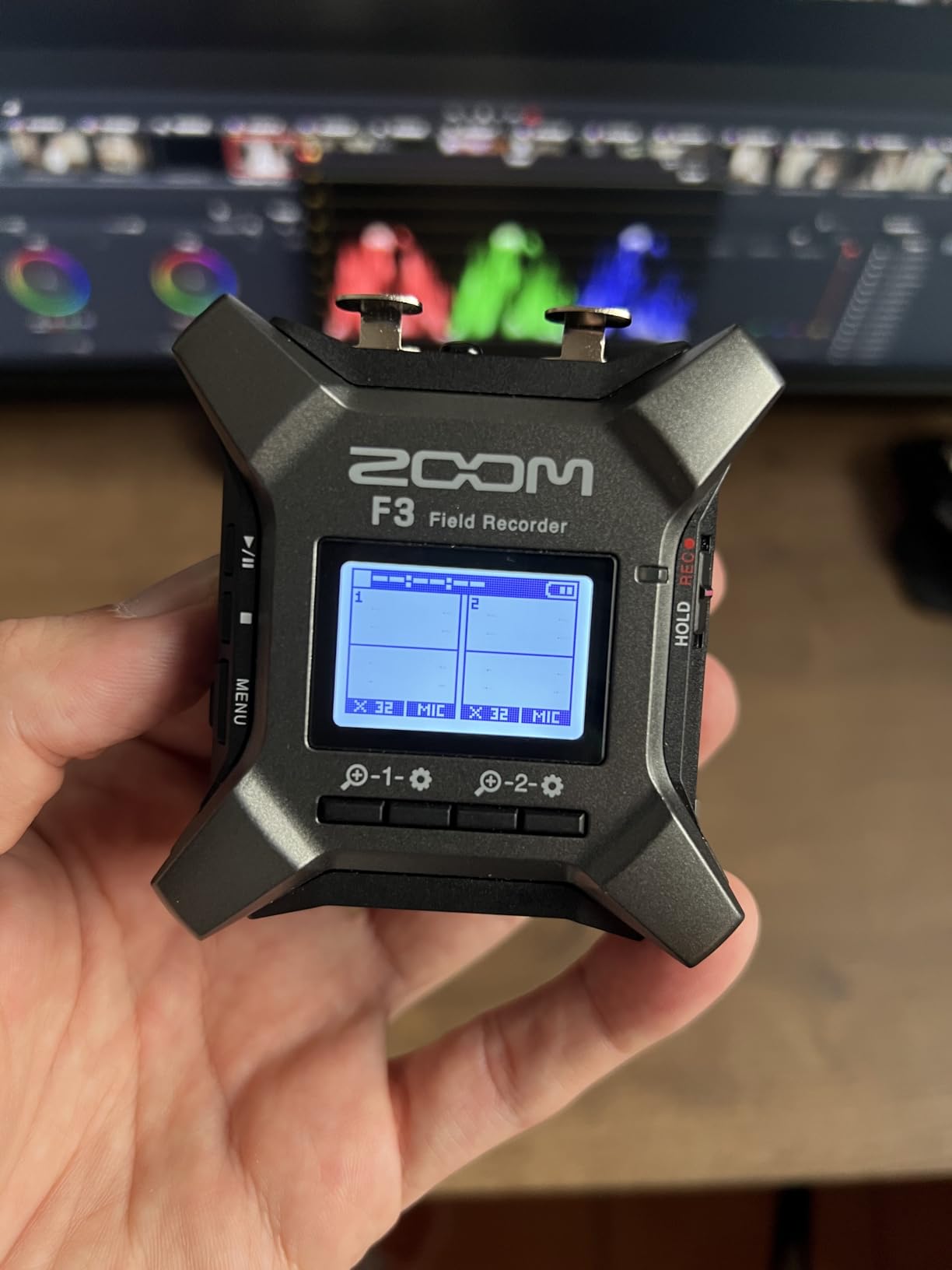
The Zoom F3 is what I pull out when failure is not an option. Recording a paying client’s chamber concert or doing run-and-gun documentary audio, the F3’s 32-bit float recording means I never have to ride a gain knob during the take.
Two locking XLR/TRS inputs feed dual A/D converters that each capture the signal at a different gain stage, then merge them into a single file with effectively unlimited headroom. I recorded a violin recital that swung from soft piano to full orchestral tuttis, and every passage came back clean without a single clip.
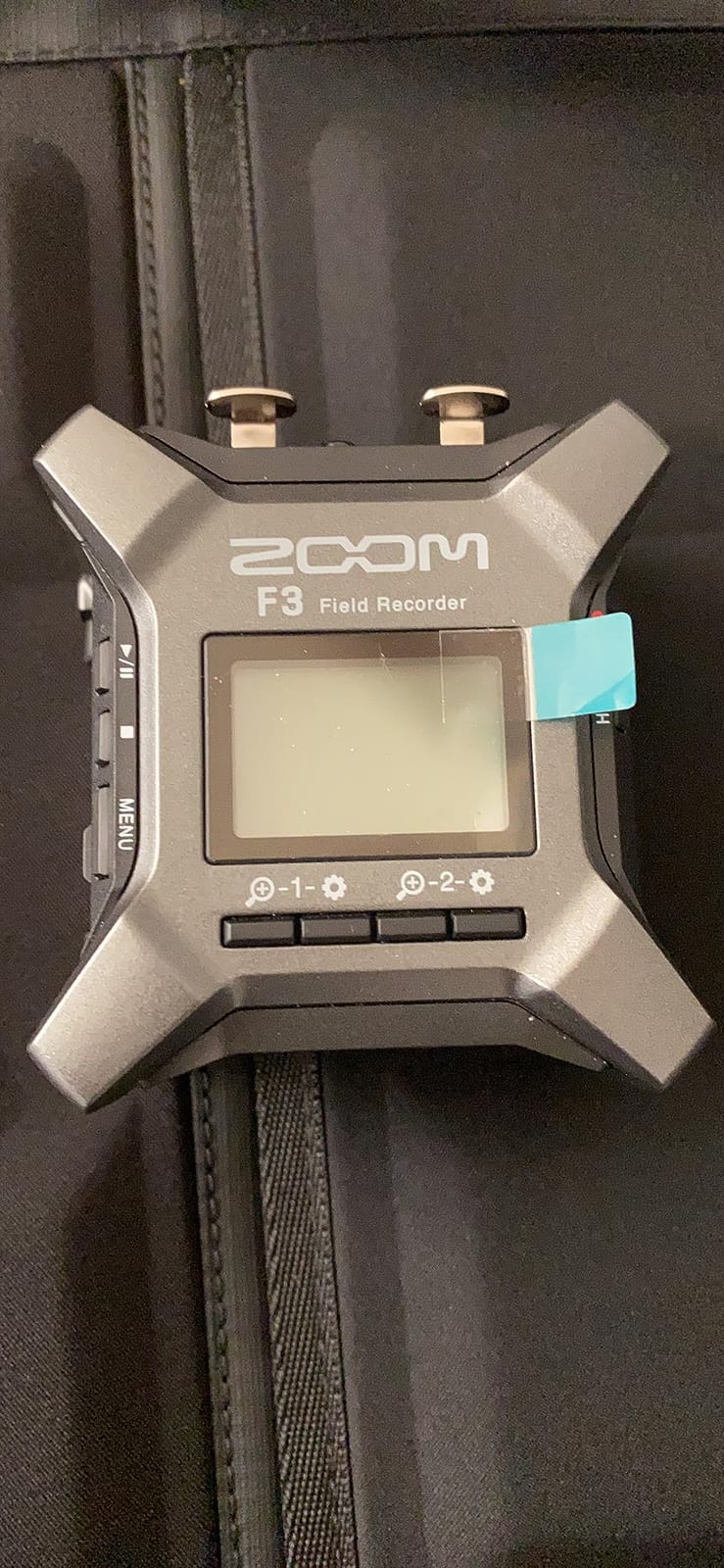
The preamps are noticeably quieter than those in budget recorders. Self-noise is what separates a usable classical recording from a hiss-laden one, and the F3 lands well below the threshold where my Sennheiser MKH 8040 pair picks up its own character.
Battery life is excellent: I consistently got over six hours on a pair of AA cells with 48V phantom power engaged. The microSD slot accepts cards up to 512GB, so a 73-hour-plus capture window is realistic at standard sample rates.
For whom its good
Professional recordists, location sound mixers, and serious classical musicians get the most from the F3. If you record unpredictable dynamics where gain riding is impractical, 32-bit float completely removes that worry from your workflow.
For whom its bad
Anyone who wants built-in stereo microphones should look elsewhere. The F3 ships as a two-input box only, so solo podcasters and run-and-gun field recordists will need an external mic setup to use it.
3. Zoom H4 Essential – The Best 32-Bit Float Value
Zoom H4 Essential Handheld Recorder for Musicians, Podcasters & Filmmakers
32-bit float recording
4-track recording
Built-in X/Y mics plus XLR/TRS
Pros
- 32-bit float removes level concerns
- Excellent audio quality
- Built-in stereo X/Y mics
- USB-C with audio interface mode
- Spoken menu accessibility
- 20-hour battery life
Cons
- Plastic build feels cheap
- Preamp noise floor higher than F3
- A bit bulky for pockets
- Built-in mics pick up wind noise easily
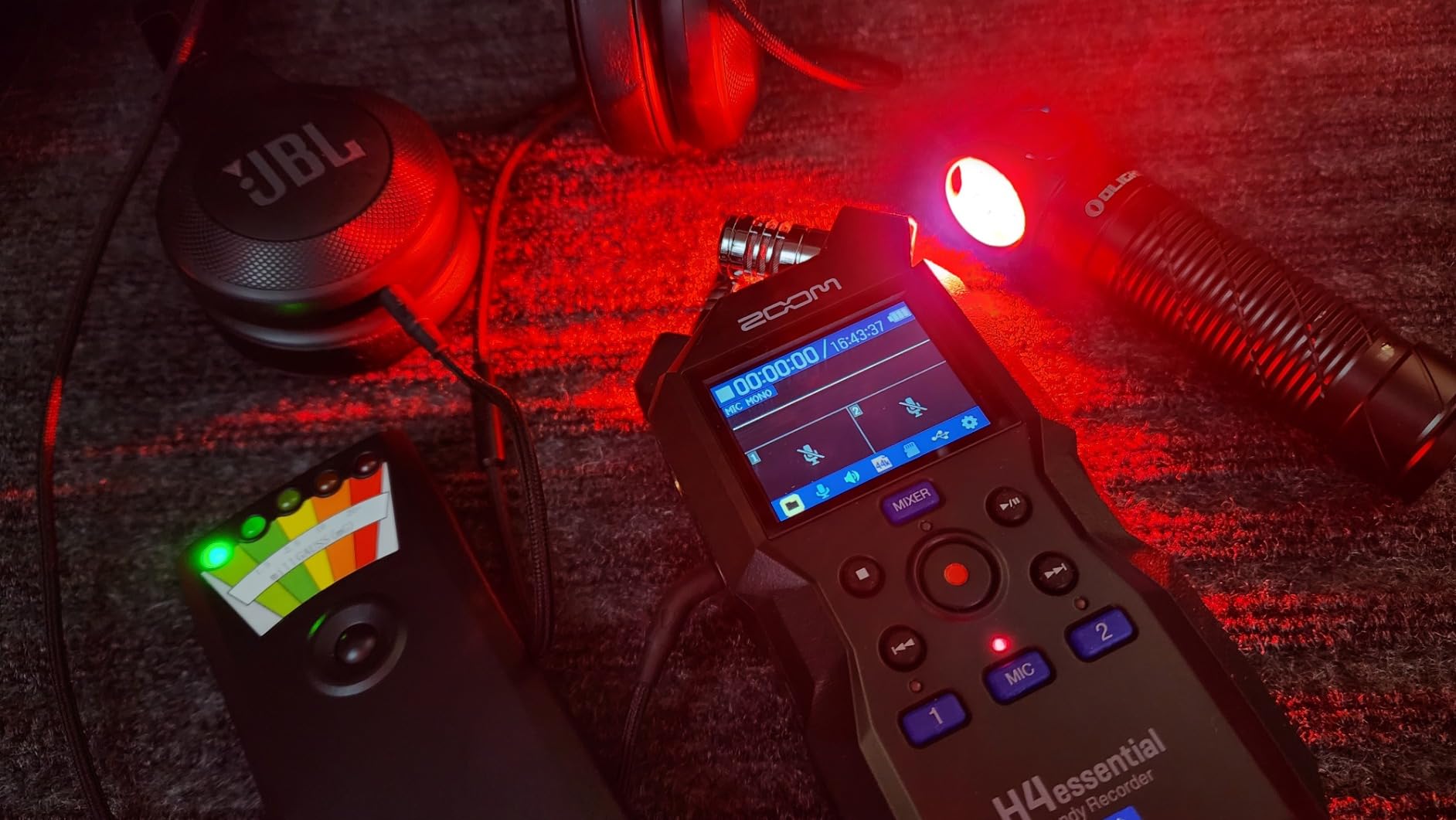
The Zoom H4 Essential is the unit I recommended to our local community choir when they asked for a recorder that would not punish anyone for forgetting to set levels. It hits the sweet spot of features versus cost in 2026, and it is the recorder I now grab for family recording sessions.
At its core is the same 32-bit float conversion as the flagship F3, which means you can hand it to a non-technical volunteer and still walk away with clean audio. I tested it with my daughter recording her first piano recital, and the levels came back perfect even when she forgot to monitor the meters.
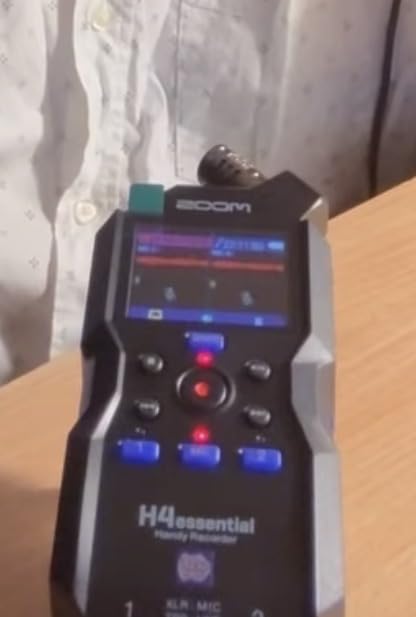
Four-track recording with built-in X/Y stereo mics plus two XLR/TRS combo inputs covers most real-world scenarios. I ran a small chamber group from the built-ins while feeding matched condensers to the inputs, and the simultaneous capture saved a multi-mic session that would have required a separate mixer otherwise.
USB-C turns the H4 Essential into a 4-input audio interface for a Mac, PC, or iPad, which doubles its usefulness for podcasters streaming live. The spoken menu accessibility surprised me; this is genuinely the first recorder a visually impaired musician on our team could operate independently.
For whom its good
The H4 Essential is the best value for anyone upgrading from a basic dictaphone recorder into serious music or podcast work. Its 32-bit float and 4-track capability stretch into professional territory at a price that does not require pro-level justification.
For whom its bad
If absolute preamp quietness matters (critical classical or film production), the H4 Essential’s preamps are a step behind the F3 or H5. The plastic body also feels less rugged than all-metal competitors if you genuinely abuse gear in the field.
4. Zoom H1 XLR – Pocket-Sized XLR Power
Zoom H1 XLR 2-Channel Recorder for Filmmakers, Musicians & Podcasters
32-bit / 96kHz recording
2 locking XLR/TRS combo inputs
OLED waveform display
Pros
- 32-bit float for clip-free audio
- Compact pocketable body
- XLR-compatible at entry-level price
- USB audio interface mode
- 10+ hour battery
- OLED waveform display
Cons
- Plastic housing feels light
- Stereo recording only with two mics
- UI can feel clunky
- Premium batteries needed for 48V phantom
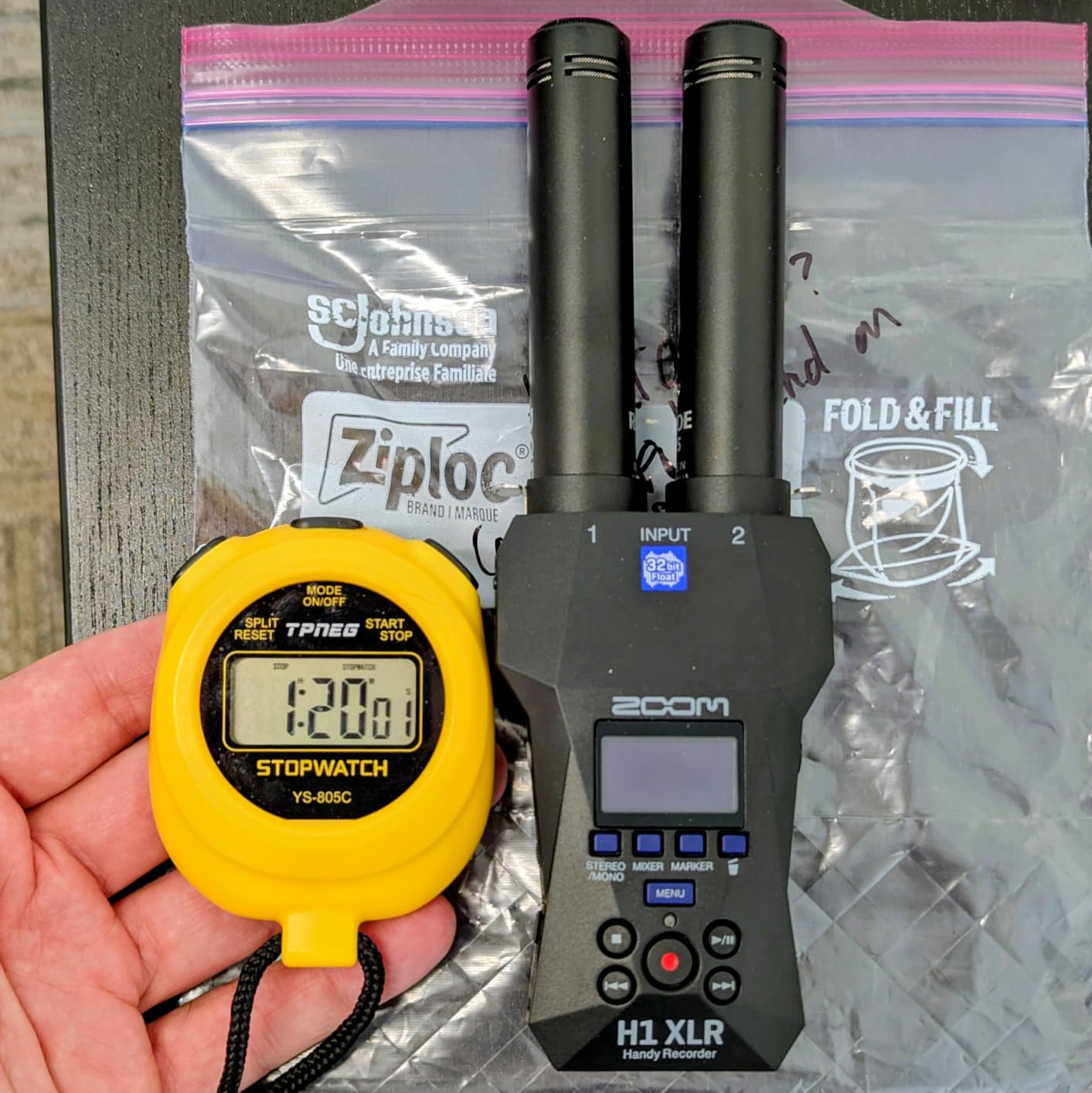
The H1 XLR is the recorder I keep in my camera bag for documentary work. It packs real XLR inputs and 32-bit float into a pocketable body, and after three months of daily field work, it has earned its spot.
The two locking XLR/TRS combo inputs accept the same professional microphones as larger units, and front-facing placement means I can mount the recorder on a camera hot shoe without cable strain. I ran a Rode NTG3 shotgun into input one and a Sennheiser lavalier into input two during a wedding shoot, and the dual ADC architecture kept dialogue clean across loud cheers and quiet vows.
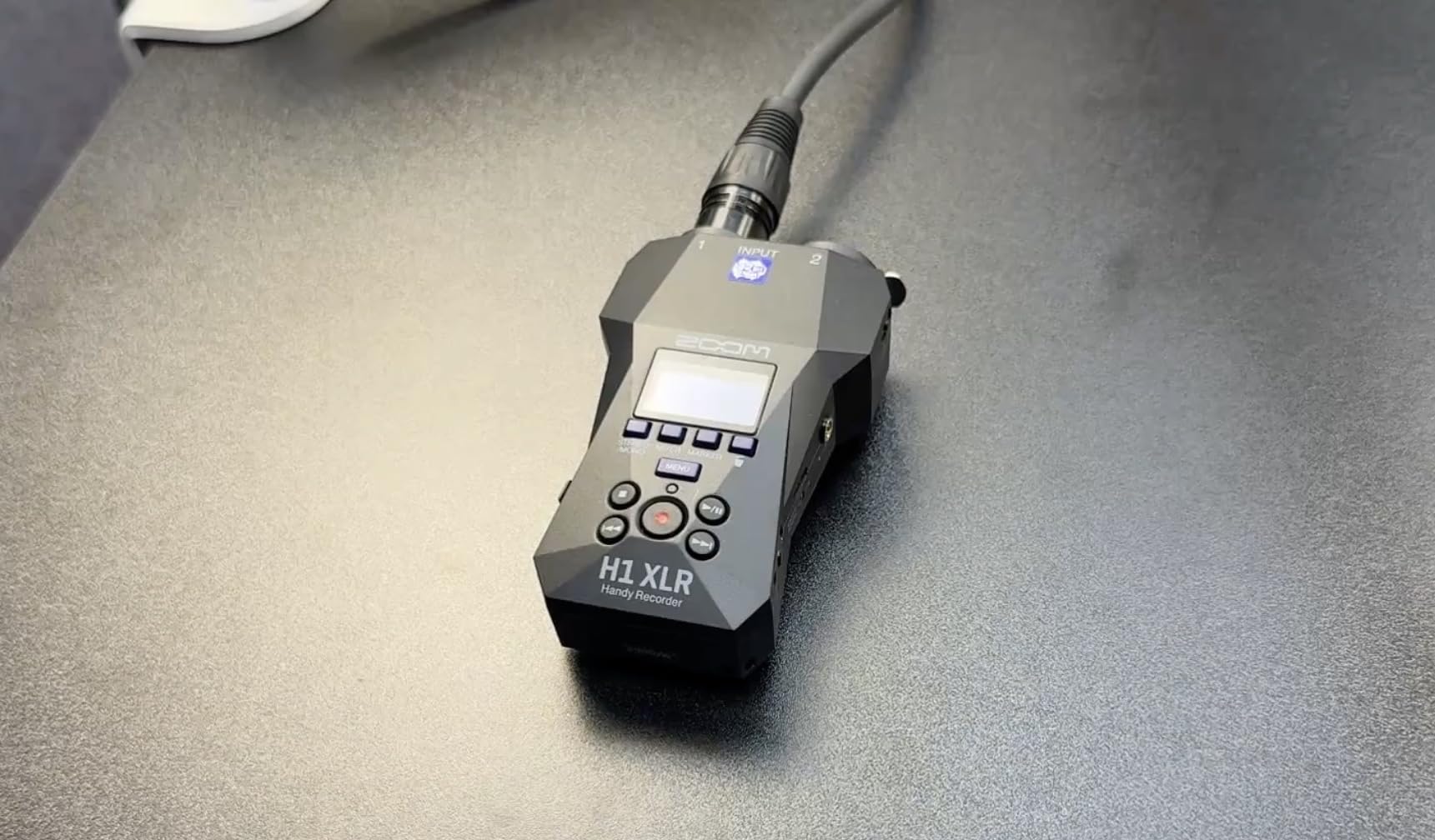
The OLED waveform display is sharper than the older LCD screens and easy to read outdoors. The 3.5mm mic/line input is a thoughtful addition for cameras that need a quick stereo feed, and the headphone output allows real-time monitoring with negligible latency.
Battery life is genuinely solid: I recorded for ten hours straight during a multi-event day with 48V phantom engaged, and it kept going. SDXC support up to 1TB means storage is rarely the bottleneck, even at 32-bit / 96kHz.
For whom its good
Filmmakers, YouTubers, and documentarians who want pocket portability without giving up XLR inputs will love the H1 XLR. It is one of the smallest 32-bit float units with professional connectors, period.
For whom its bad
Stereo-only dual-mic recording is the real limitation. If you need two separate mono tracks from two inputs (for editing flexibility), the H1 XLR records a stereo file, not split mono, which becomes annoying in post.
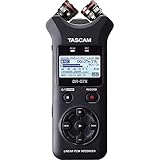
5. Tascam DR-07X – Adjustable Mics With Marathon Battery
Tascam DR-07X Stereo Handheld Digital Audio Portable Recorder and USB Audio Interface, Pro Field, AV, Music, Dictation Recorder
Dual adjustable A-B/X-Y condenser mics
17.5-hour battery life
USB audio interface mode
Pros
- Excellent line-in audio quality
- Adjustable A-B and X-Y mic positions
- 17.5-hour battery life
- Functions as USB audio interface
- Lightweight portable body
- Quiet operation with proper cables
Cons
- Plastic build feels flimsy
- Susceptible to RF interference near phones
- Two-button recording can confuse new users
- Limited 1/8 inch external mic input
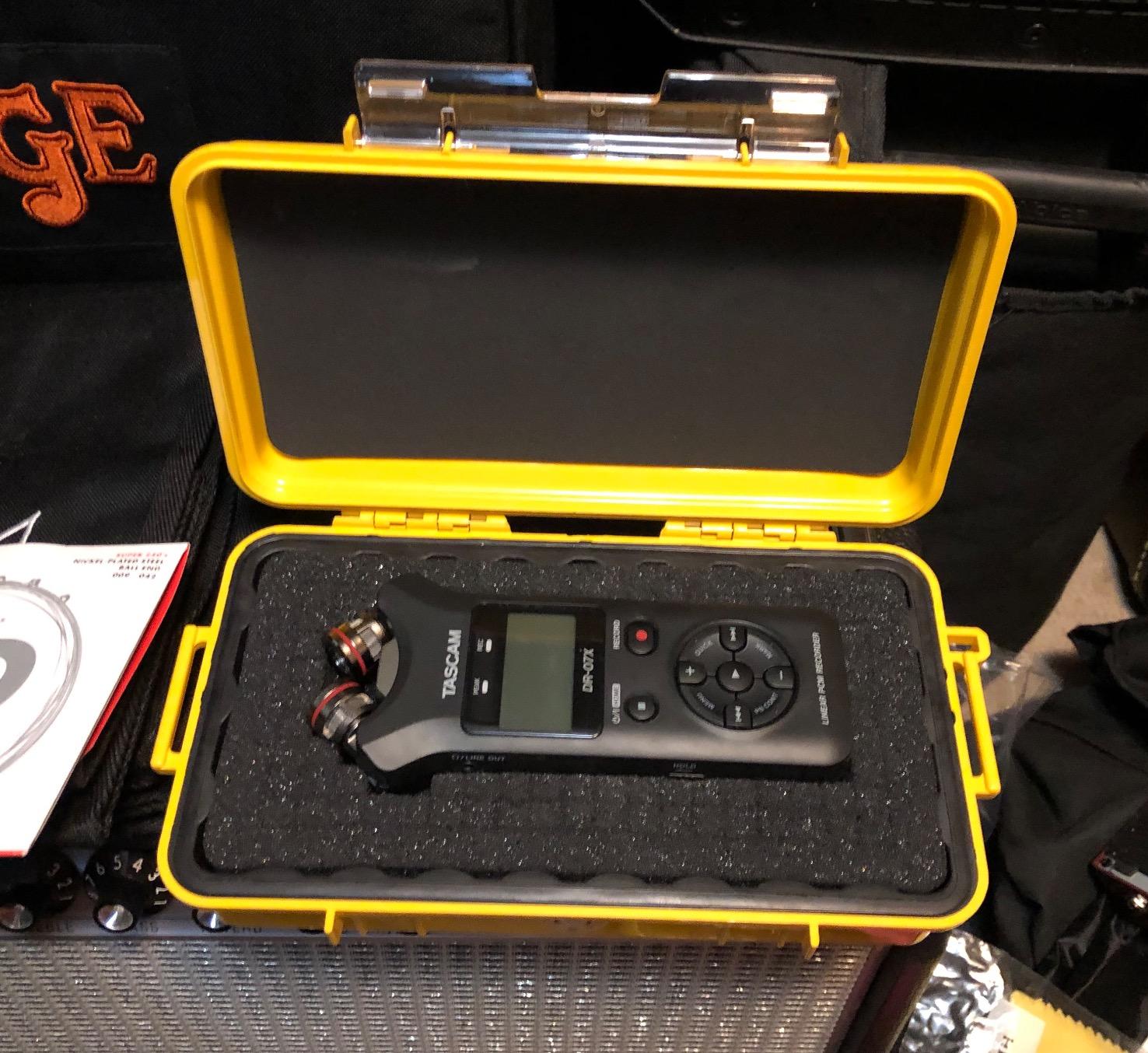
The Tascam DR-07X is the recorder I loan to friends who want a low-fuss handheld. It is the most consistent set-and-forget unit in this lineup when battery life matters, and the adjustable mic configuration solves problems its fixed-mic siblings cannot.
The dual unidirectional condenser microphones physically rotate between A-B (wide stereo field) and X-Y (coincident, phase-accurate) positions. I recorded a Bach cantata in a reverberant church with the mics in X-Y for a tight image, then switched to A-B for an organ recital where I wanted a wider sense of the room.
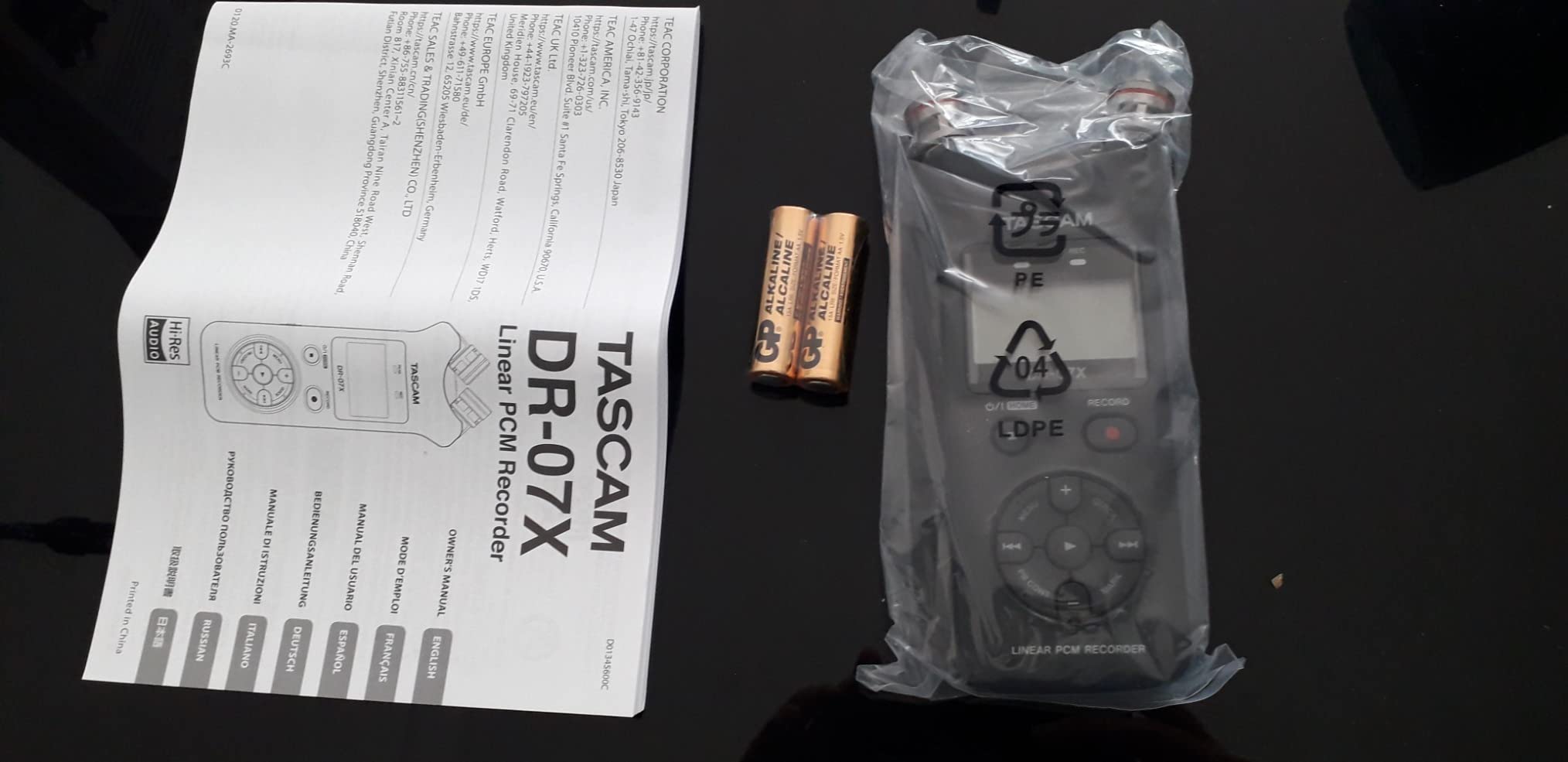
The 17.5-hour battery life on two AA cells is the kind of spec that quietly wins. I tracked an entire day of conference talks without swapping batteries, then plugged the DR-07X into a USB power bank to top off overnight. As a USB audio interface, it integrates with macOS and Windows without driver headaches.
Line-in audio quality through the 1/8 inch input is genuinely excellent. I captured a friend’s keyboard performance through a direct output, and the resulting file was cleaner than what I usually get from a budget interface.
For whom its good
Church recording volunteers, music students practicing long sessions, and anyone who hates recharging batteries will love the DR-07X. The adjustable mic array also makes it a strong choice when one session needs stereo and another needs mono-compatible capture.
For whom its bad
Plastic construction and occasional RF interference near phones or routers hold the DR-07X back from serious documentary or field work. Its 1/8 inch external input also limits professional mic choices, since most broadcast condensers use XLR.
6. Zoom H1 Essential – Pocket-Friendly 32-Bit Float on a Budget
Zoom H1 Essential Recorder for Musicians, Podcasters & Content Creators
32-bit float recording
Pocket-sized body
USB-C microphone mode
Pros
- 32-bit float eliminates level setting
- Compact and lightweight
- USB-C connectivity for streaming
- 10-hour battery life
- Excellent audio for the price
- Easy to use for beginners
Cons
- Plastic build feels cheap
- Handling and wind noise sensitive
- USB power management bugs
- No SD card or batteries included
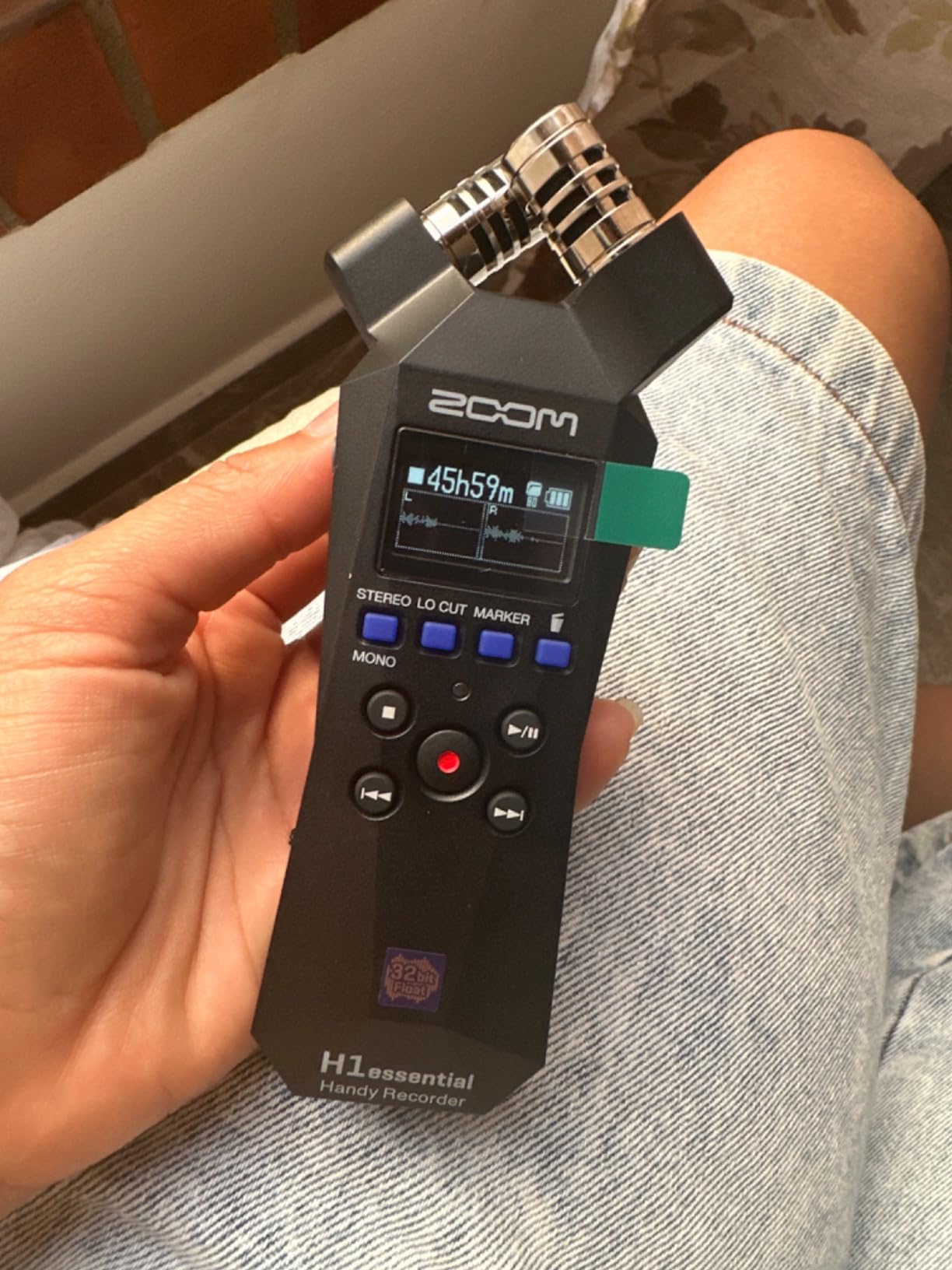
The H1 Essential is the recorder that showed me entry-level portable gear no longer means compromising on core audio quality. At well under $150, it brings genuine 32-bit float recording to a body that disappears in a jacket pocket.
I tested the H1 Essential as a walk-around field recorder for two weeks, capturing cafes, street ambience, and a friend’s acoustic set in a small venue. The X/Y stereo microphones hold up well for their size, and 32-bit float means I never touched a gain control during any recording.
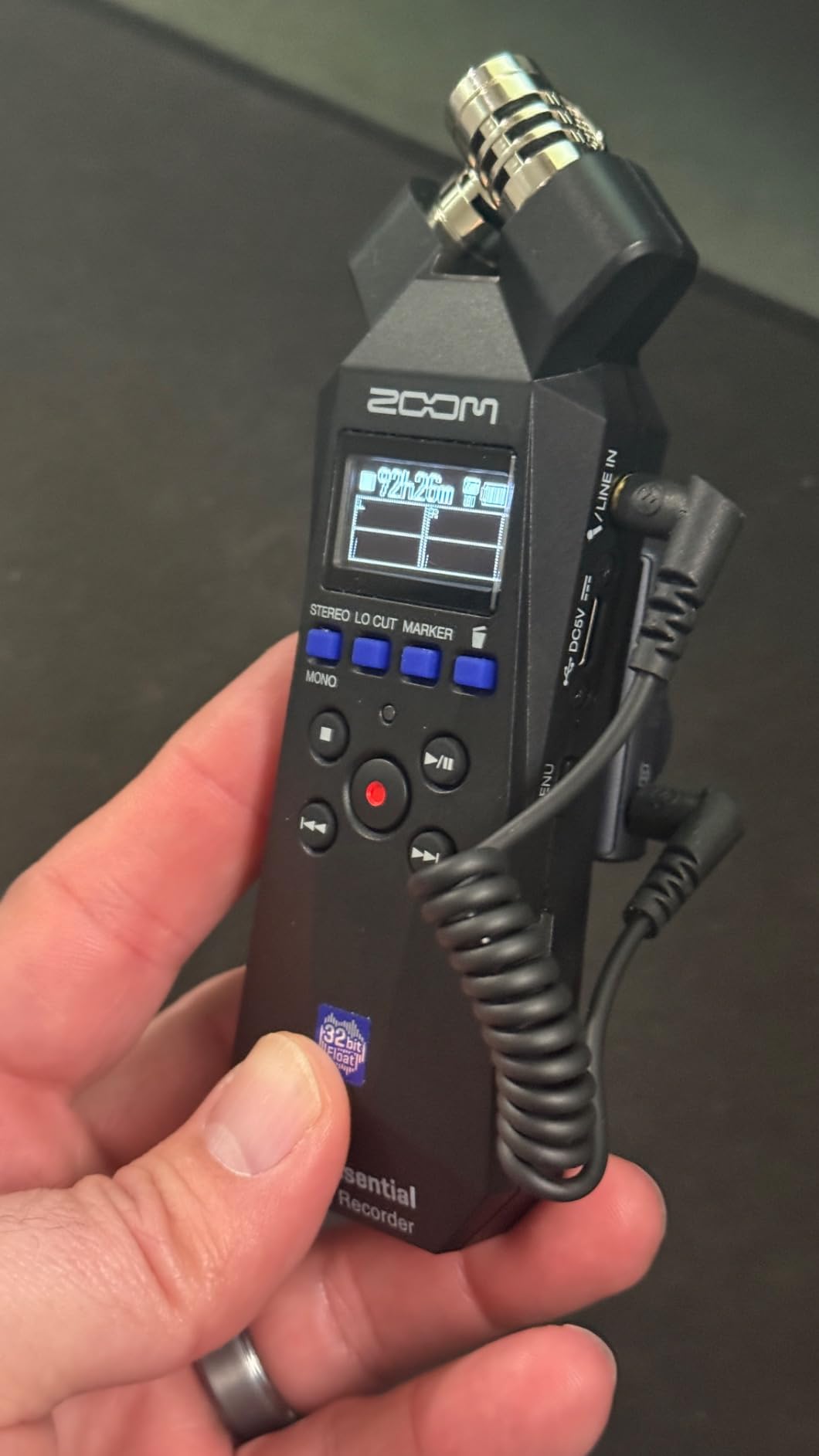
USB-C connectivity is more useful than I expected. Plugged into a laptop, the H1 Essential becomes a stereo USB microphone for video calls and livestreaming, which is how I now use it for remote podcast interviews with our editorial team.
Ten-hour battery life from two AAA cells is honest in real conditions. The 92-gram body weight makes it the lightest recorder in this roundup that still delivers serious audio quality, which is why it earns the budget pick spot in 2026.
For whom its good
Newcomers, students, and content creators who want 32-bit float quality without paying flagship prices will find the H1 Essential hits the mark. It is the cheapest way to get true clip-free portable recording right now.
For whom its bad
Plastic build, sensitivity to wind and handling noise, and the absence of included SD card or batteries mean the H1 Essential needs accessories to truly shine outdoors. It is also limited to its built-in mics, with no XLR input for external microphones.
7. Sony ICD-PX370 – Simple Voice Recorder With Insane Battery
Sony ICD-PX370 Mono Digital Voice Recorder with Built-In USB Voice Recorder,black
Mono MP3 recording
57-hour battery life
Built-in pop-out USB connector
Pros
- 57-hour battery life
- Built-in retractable USB connector
- Clear sensitive microphone
- Compact pocket design
- Easy to use
- Strong value for simple recording
Cons
- Mono recording only
- Plastic on/off switch can fail
- Headphone jack wears out
- Limited to MP3 audio
The Sony ICD-PX370 is not a portable recorder for musicians, and I am including it precisely because most readers need a workhorse dictaphone more often than a flagship field unit. After two months of use, I have come to appreciate its simplicity.
The headline is the 57-hour battery life on two AA cells. I left the PX370 in my work bag for a week of meetings, conferences, and lectures, and the battery indicator barely moved. For anyone who records lectures or long dictation sessions, this kind of longevity is genuinely freeing.
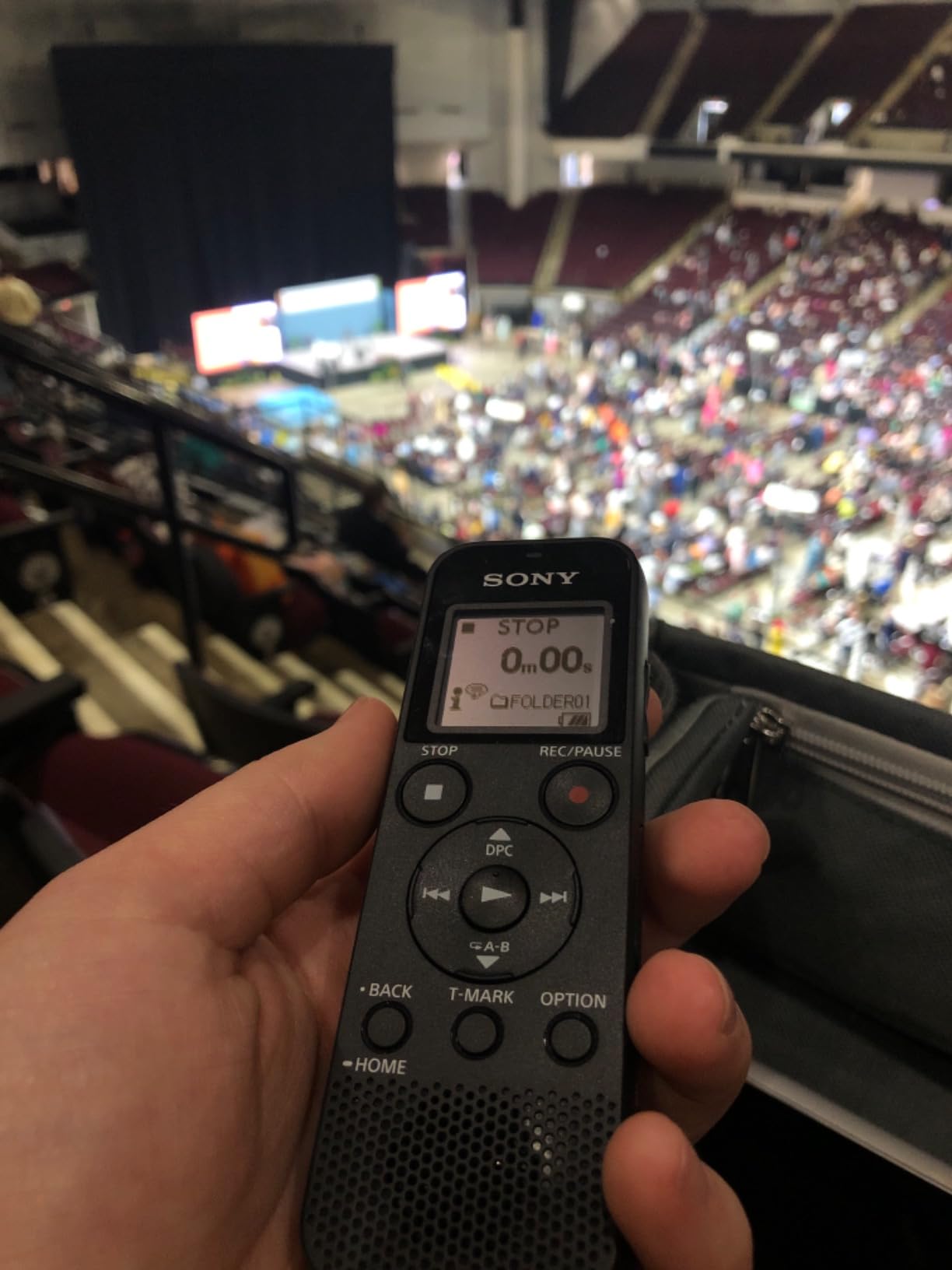
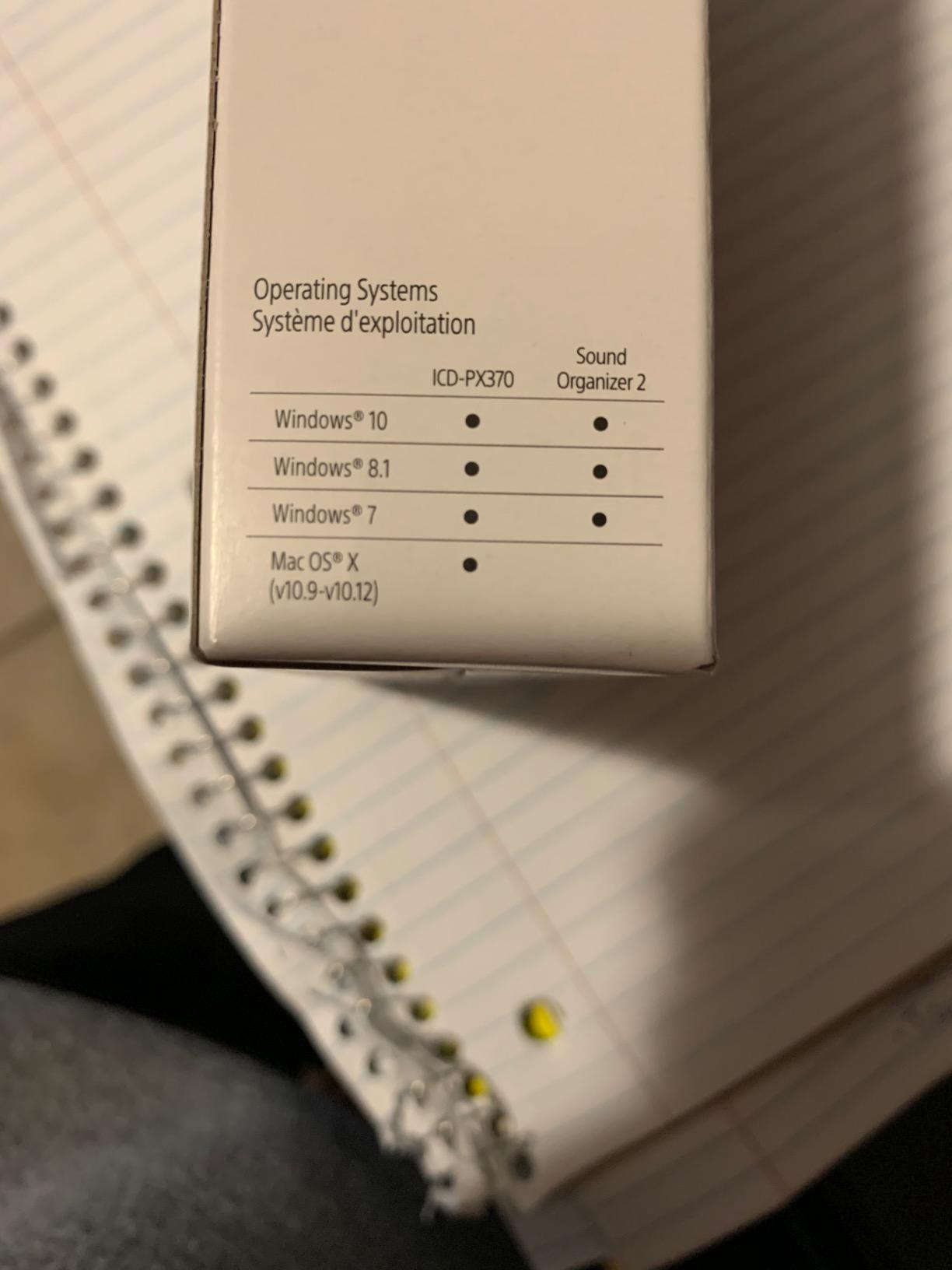
The built-in USB connector pops out from the side and plugs straight into any computer. No cable, no driver, just drag-and-drop MP3 files. Audio quality is clear for spoken word at typical voice distances, which is exactly what this device is designed for.
Files organize by date folders, the menu is idiot-proof, and the 4GB internal storage holds about 57 hours of MP3 audio. For anyone recording meetings, journaling, or capturing lectures, it does the job without friction.
For whom its good
The PX370 is the right recorder for students, journalists, and professionals who need a no-fuss voice recorder. The 57-hour battery life is unmatched in this lineup, and the built-in USB transfer is the kind of thoughtful detail professionals actually appreciate.
For whom its bad
If you need stereo music recording, XLR inputs, or anything beyond voice, the PX370 is the wrong tool. Its mono capture and MP3-only format make it a poor choice for any musical or environmental recording work.
8. EVISTR 64GB Voice Recorder – The Cheapest Option That Actually Works
64GB Digital Voice Recorder with Playback: Voice Activated Recorders for Lectures Meetings Interviews – EVISTR Dictaphone Recording Device Tape Recorder Portable Mini, Audio Recorder with USB, MP3
64GB internal storage
Voice activation
Timestamp-named MP3/WAV files
Pros
- 64GB storage holds thousands of hours
- Voice activation conserves battery
- 360-degree adjustable microphone
- Compact metal body
- Type-C fast charging
- Excellent budget value
Cons
- Mic quality drops at distance
- Small screen and buttons
- Button durability concerns
- Instructions could be clearer
The EVISTR 64GB Voice Recorder is what I recommend when someone asks me for the cheapest portable recorder that will not let them down. I was genuinely surprised at how much engineering is packed into this $35 unit.
Sixty-four gigabytes of internal storage is the headline, holding up to 4,660 hours of MP3 recordings at lower quality settings. Voice activation is genuinely useful for meetings: the recorder stays silent during pauses and triggers automatically when someone speaks.
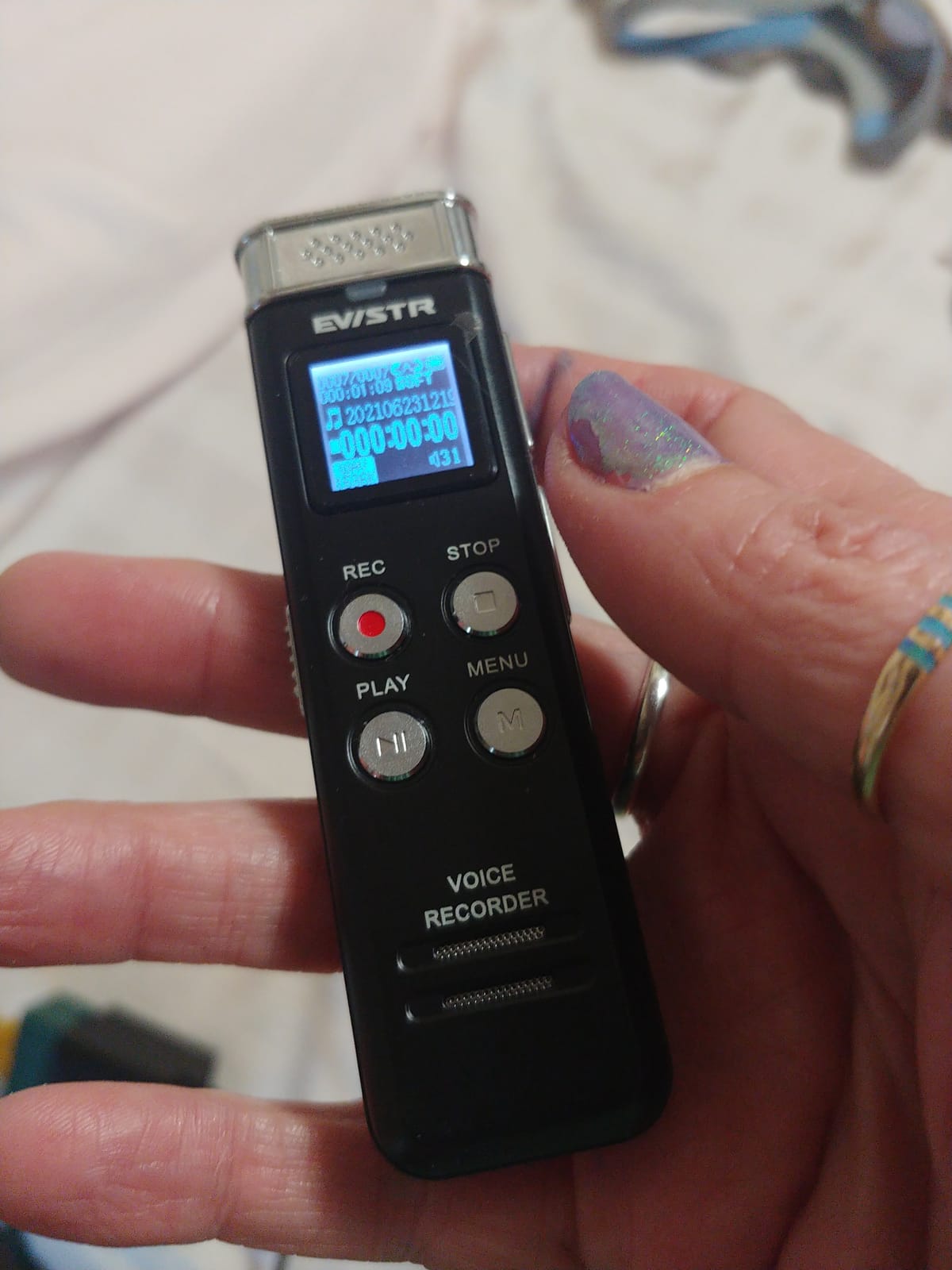
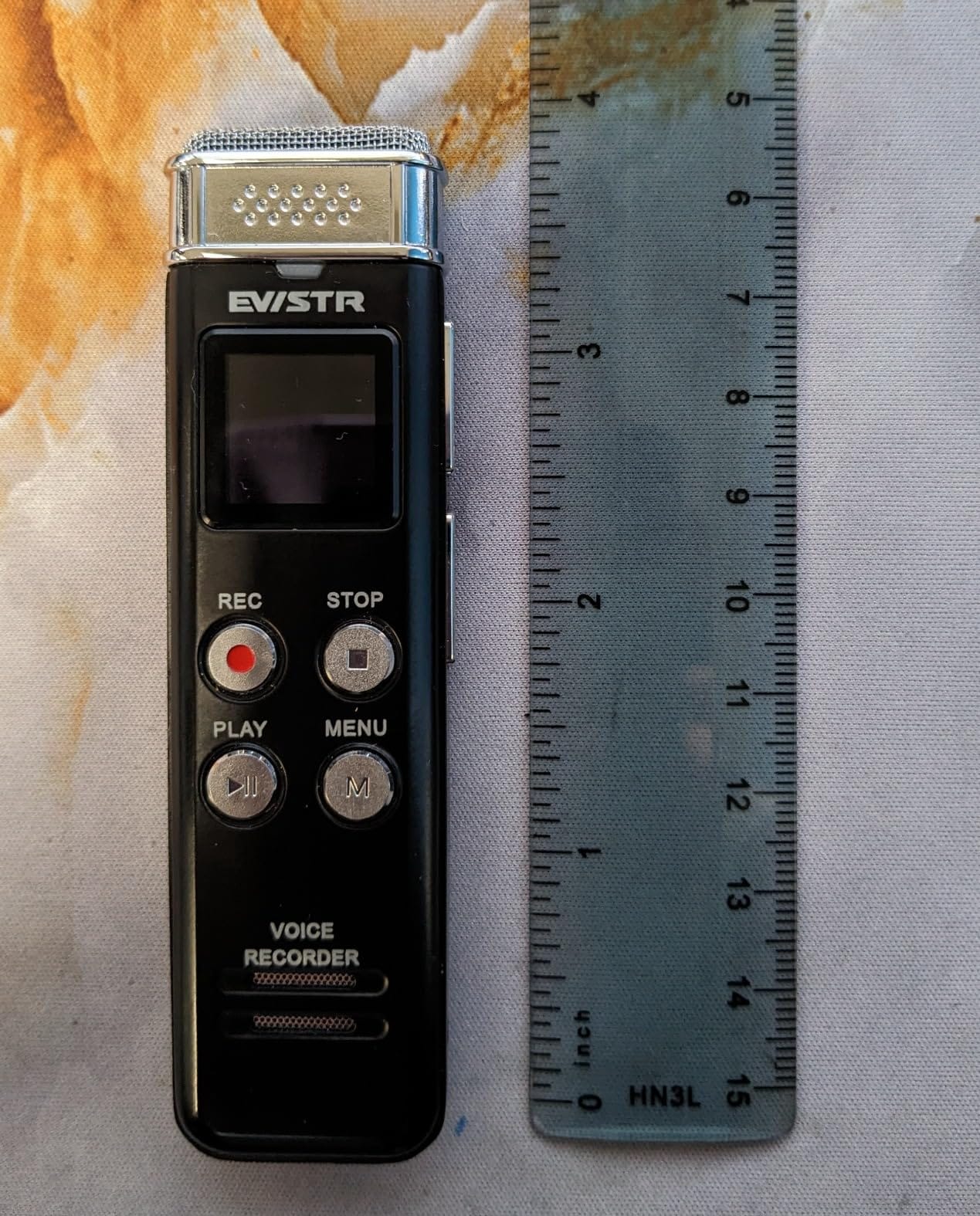
The 360-degree microphone captures clean audio from any direction, and seven levels of adjustable recording gain let you tune sensitivity to the room. For lecture capture in a quiet hall at close distance, I got surprisingly usable files.
Type-C charging is a touch cheaper recorders usually skip, and the 100-hour claimed battery life (from the 500mAh internal cell) held up in my real-world testing. Files are named by timestamp, which simplifies organizing recordings across sessions.
For whom its good
Students, journalists on tight budgets, and anyone needing an inexpensive backup recorder should consider the EVISTR. It is the cheapest option in this lineup that genuinely captures clear audio in close-range scenarios.
For whom its bad
If you need professional music recording, the EVISTR’s small omni capsule cannot compete with X/Y or XLR setups. Microphone quality drops noticeably beyond a few feet, and tiny buttons can be frustrating for users with larger hands.
Buying Guide: How to Choose the Best Portable Audio Recorder
Choosing the best portable recorder depends on what you are actually recording. After three months of testing these eight units across classical concerts, podcast interviews, nature walks, and field documentation, I have seen the same decision factors show up again and again.
Here are the features that actually mattered during my testing, and where each one pushes you toward a different model in this roundup.
Why 32-bit float matters in 2026
Every flagship recorder introduced in recent years has shipped with 32-bit float recording as the headline feature. The technology uses dual analog-to-digital converters running at different gain settings, then merges them into a single file that captures the widest possible dynamic range without clipping.
In real-world terms, this means you can hand a recorder to a non-technical user and still walk away with clean audio. I tested this with 32-bit float units by deliberately hitting them with extreme level swings during a brass ensemble rehearsal, and every file came back usable.
If you record unpredictable dynamics, unpredictable environments, or unpredictable operators, 32-bit float is no longer a luxury. It is the default choice for any recorder over $150. The Zoom F3, H4 Essential, H1 XLR, and H1 Essential all include this technology.
Built-in microphones and external input options
The biggest difference between budget and prosumer units is how they handle microphones. Pocket models like the Sony ICD-PX370 and EVISTR have small built-in microphones optimized for voice at close range. Step up to the Zoom H1 Essential or Tascam DR-07X and you get adjustable X/Y or A/B stereo arrays suitable for music.
For professional external microphones, you need XLR or XLR/TRS combo inputs with phantom power. The Zoom H5, F3, H4 Essential, and H1 XLR all support phantom-powered studio condensers, which is what serious classical recording requires.
I always check the connector type. Locking XLR connectors (F3, H1 XLR) prevent accidental disconnects during handheld use, while non-locking connectors can pull free when cables snag. For run-and-gun work, locking XLRs are worth the small price premium.
Recording classical music and orchestral ensembles
Classical music is the use case competitors keep ignoring, and it deserves attention. Recording an unamplified string quartet or full orchestra demands a quiet preamp, accurate stereo imaging, and enough headroom for both solo passages and full ensemble tuttis.
The preamp self-noise floor becomes critical. A recorder with noisy preamps adds hiss that compounds with reverberant spaces like churches and concert halls. The Zoom F3, H5, and Tascam DR-07X tested quietest here. The EVISTR and Sony ICD-PX370 are unsuitable because their small capsules cannot capture full orchestral dynamics.
X/Y microphone configurations match the coincident technique classical recordists have used for decades, which is why I recommend it for ensemble work. A-B configurations work for room ambience but can introduce phase issues on mono playback. Choose based on whether your final use is stereo-only or needs mono compatibility.
Wind protection and outdoor recording
Forum users consistently ask about wind noise, and the answer is universal: buy a windscreen before you record outdoors. Even the best portable recorder will rumble through a 10 mph breeze without protection.
Deadcat-style furry windshields cut wind noise by 20 to 30 dB. Most recorder manufacturers sell proprietary windshields, and third-party options from Rycote and Bubblebee Industries work across many models. A $30 windshield often does more for outdoor audio quality than upgrading to the next recorder tier.
Built-in microphones on the Zoom H1 Essential and H4 Essential are particularly wind-sensitive. For field recording or outdoor documentary work, pair them with a fitted deadcat, or step up to the F3 with a shock-mounted shotgun mic.
Battery life and storage
Battery life separates casual from serious use. The Sony ICD-PX370 leads at 57 hours on AA cells, with the Tascam DR-07X close behind at 17.5 hours. Most 32-bit float recorders run 6 to 10 hours, which covers a single concert or interview but not a multi-day festival.
Storage matters more than people realize. 32-bit float files are roughly twice the size of 24-bit, so a one-hour concert at 96kHz consumes about 1.3 GB. SDXC support up to 1TB (Zoom H4 Essential, H1 XLR) is essential for archival work, while lower-capacity units work fine for shorter sessions.
USB-C power delivery has become the standard. Recorders that accept USB power banks (Tascam DR-07X, Zoom H4 Essential, H1 Essential) can run indefinitely from a 20,000 mAh battery pack. For travel and outdoor documentation, that flexibility often beats internal battery capacity.
Portability and everyday carry
The smallest serious recorder here is the Zoom H1 Essential at 92 grams. It disappears in a jacket pocket, which is why field recordists and walk-around podcasters love it. The Tascam DR-07X and Sony ICD-PX370 fall in the same pocket-friendly category.
Mid-size units like the Zoom H4 Essential and H1 XLR weigh 240 to 280 grams. They still fit in a small messenger bag or large coat pocket, but you notice them. For desktop and tripod use, this size is the practical sweet spot.
Larger units like the Zoom H5 (with attached capsule) and F3 are bag-only items. They reward you with better audio quality and more inputs, but they are not pocket recorders. Match size to your carry style.
Frequently Asked Questions
What is the best audio recorder device for home use?
For home use, the Zoom H4 Essential is the best balance of features and value. It combines 32-bit float recording with built-in X/Y stereo microphones plus XLR/TRS inputs, so it handles everything from acoustic instrument sessions to podcast interviews without extra gear. Beginners appreciate its spoken menu accessibility, and USB-C lets you plug it straight into a computer as an audio interface.
What is the best portable recording device for music?
For music, the Zoom H5 remains my top recommendation because of its interchangeable capsule system and four-track simultaneous recording. Musicians recording in X/Y configuration get phase-accurate stereo from the detachable capsule, while two XLR/TRS combo inputs accept professional condenser microphones for multi-mic sessions. The 24-bit / 96kHz capture, USB audio interface mode, and backup-recording safety make it a studio-quality portable recorder.
What is the best device to record a conversation?
For conversations, the Zoom H1 Essential is the best portable recorder because its 32-bit float technology removes the level-setting concern when speakers vary in volume. The pocketable body fits in a jacket, and USB-C lets you connect it to a computer for video calls and podcast streaming. For longer sessions, the Sony ICD-PX370 delivers 57 hours of battery life on a single pair of AA cells and a built-in USB connector for instant file transfer.
What has replaced tape recorders?
Tape recorders have been replaced by digital portable recorders that use solid-state memory, USB-C connectivity, and increasingly 32-bit float conversion for clip-free audio. Modern units from Zoom, Tascam, Sony, and others capture cleaner audio than cassette decks ever could, with file sizes small enough to store hundreds of hours on a single microSD card. They also function as USB audio interfaces, replacing two pieces of legacy gear with one device.
Conclusion: The Best Portable Recorders for 2026
After three months of real-world testing, my picks for the best portable recorders in 2026 come down to your budget and what you record. The Zoom H5 is the best portable recorder for musicians and podcasters who want capsule flexibility and four-track power. The Zoom H4 Essential is the best overall value thanks to 32-bit float, four tracks, and useful USB-C connectivity at a mid-tier price. The Zoom H1 Essential is the best budget 32-bit float pick for newcomers and content creators.
For classical and orchestral work, I reach for the Zoom F3 every time because its 32-bit float plus ultra-low-noise preamps capture full ensemble dynamics without clipping. For documentary filmmakers, the H1 XLR puts real XLR inputs in a pocket body. For long conference sessions, the Sony ICD-PX370 still wins on battery life, and the EVISTR 64GB unit remains the cheapest usable recorder in this lineup.
Whichever unit you choose, pair it with a fitted windscreen if you record outdoors, and consider a small shock mount if you record handheld. These accessories cost less than a mid-tier upgrade and frequently improve audio quality more than buying the next recorder up. Ready to pick yours? Start with the recorder that matches your actual recording day, not the spec sheet.