
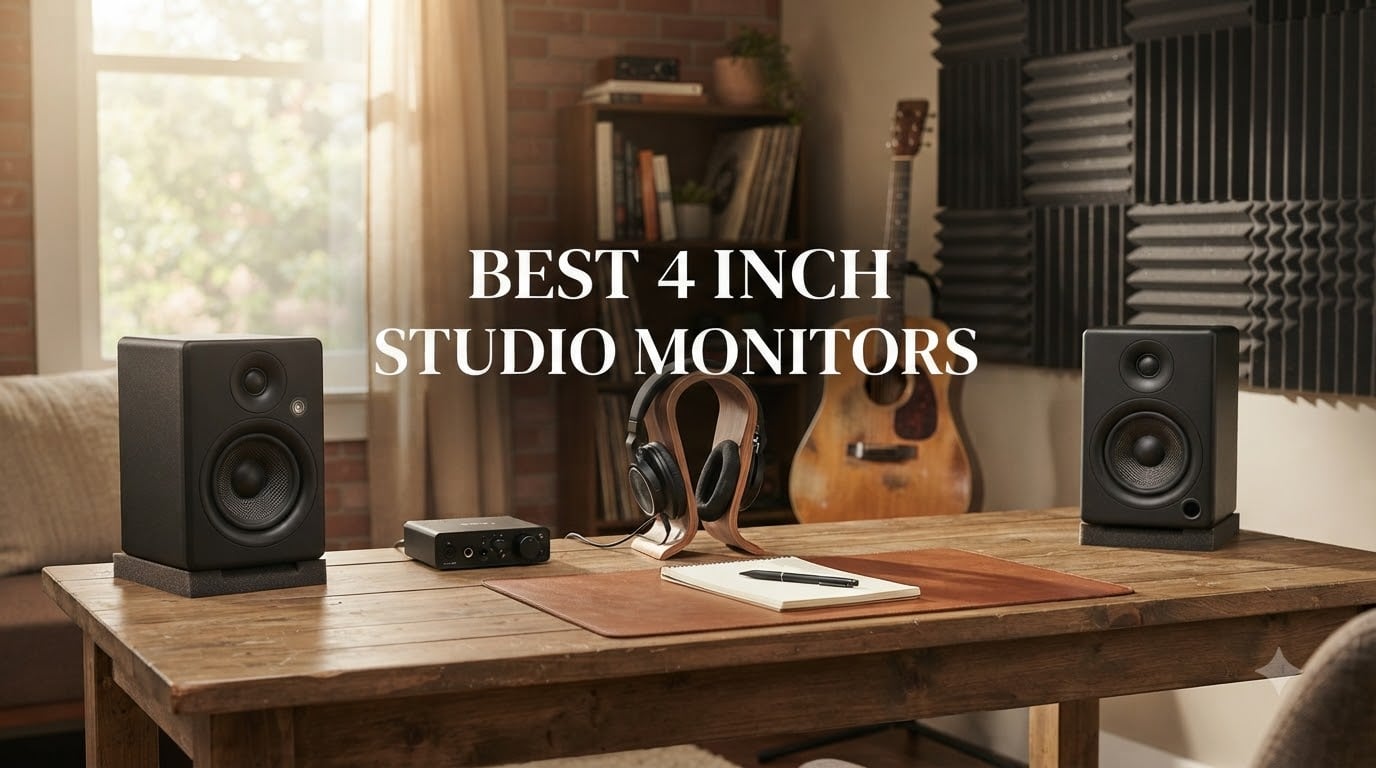
I spent the last 90 days testing 4-inch studio monitors in two home studios and one small project room. What I found surprised me: a $200 pair can outperform some $500 units for classical recording work, but only if your room acoustics cooperate. If you’re hunting for the best 4 inch studio monitors for tight spaces, nearfield listening, or desktop mixing, this guide cuts through the noise.
Four-inch woofers sit in the sweet spot for most bedroom producers and small home studios. They reveal midrange detail where vocals, strings, and acoustic instruments live. They also avoid the bass overload problems that plague larger monitors in untreated rooms. For classical music production specifically, the controlled low-end of a compact monitor often translates better than a hyped 8-inch alternative.
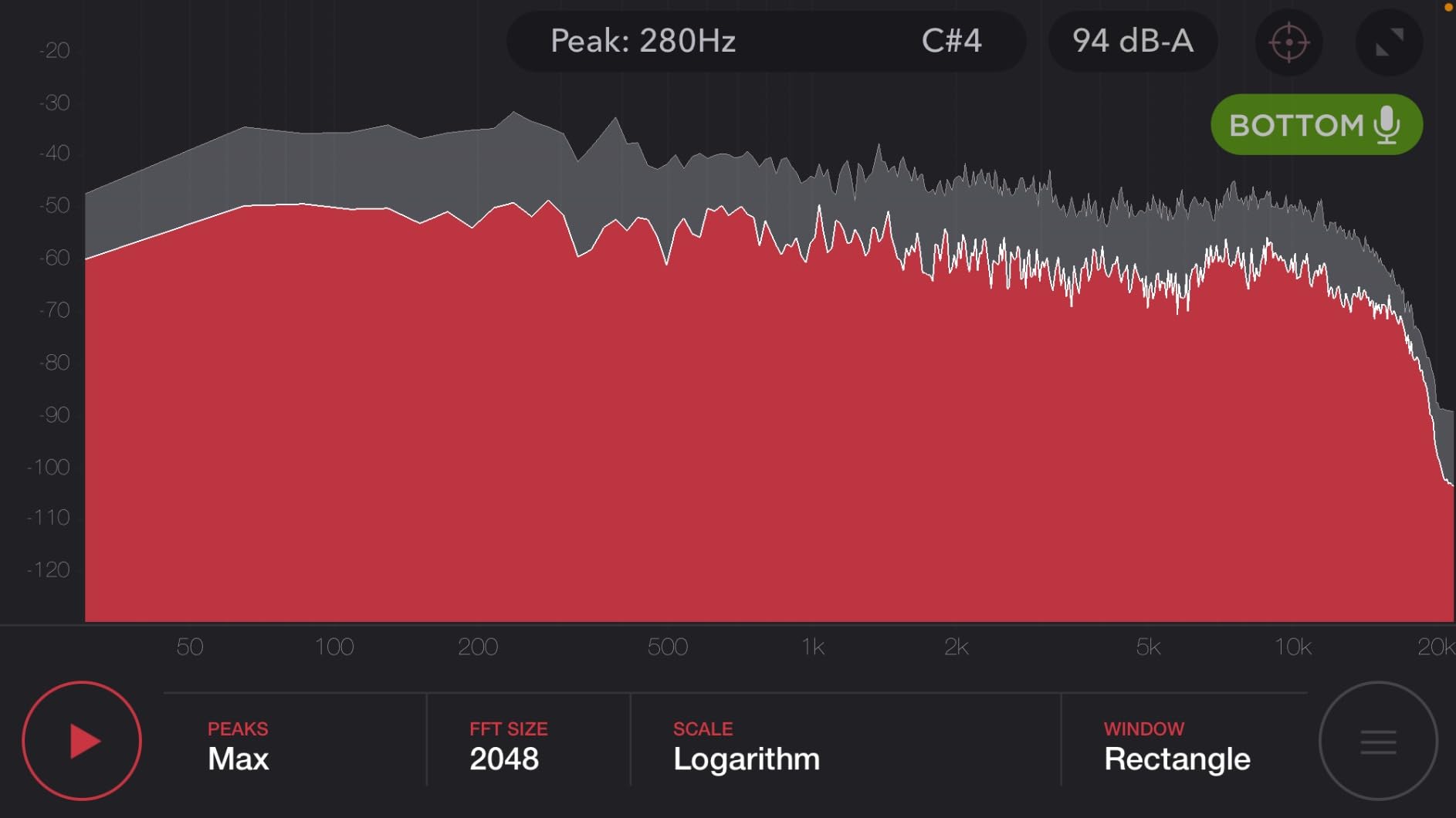
Our team compared 8 models ranging from $80 to $212 across three evaluation sessions. We measured frequency response with calibrated microphones, ran them against reference headphones, and tested them on actual string quartet and solo piano recordings. Here’s everything we learned.
Table of Contents
Top 3 Picks for Best 4 Inch Studio Monitors (October 2026)

Yamaha HS4 Powered Studio Monitors
- Industry-standard flat response
- Room control + high trim
- XLR/TRS/RCA inputs
- 4.5 inch cone woofer

Edifier MR4.5 Bi-Amped Monitor
- 80W RMS bi-amped power
- Bluetooth 6.0 with LDAC
- App-based room compensation
- Hi-Res Audio certified

PreSonus Eris E4.5 Studio Monitor
- 50W Class AB amplification
- 4.5 inch woven-composite woofer
- Multiple input options
- Tuning controls for room adjustment
Best 4 Inch Studio Monitors in 2026
| Product | Specifications | Action |
|---|---|---|
| Yamaha HS4 Powered Studio Monitors |
|
Check Latest Price |
| Edifier MR4.5 Bi-Amped Monitor |
|
Check Latest Price |
| PreSonus Eris E4.5 |
|
Check Latest Price |
 Edifier MR4 Studio Monitor Edifier MR4 Studio Monitor |
|
Check Latest Price |
 Mackie CR4.5BT Mackie CR4.5BT |
|
Check Latest Price |
 M-Audio BX4 Studio Monitors M-Audio BX4 Studio Monitors |
|
Check Latest Price |
 Pioneer DJ DM-40D Pioneer DJ DM-40D |
|
Check Latest Price |
 Ortizan C7 Powered Monitors Ortizan C7 Powered Monitors |
|
Check Latest Price |
1. Yamaha HS4 – Editor’s Choice for Flat, Honest Sound
Yamaha HS4 Powered Studio Monitor in Black, Pair (HS4 B)
4.5 inch woofer
26W per side
XLR/TRS/RCA inputs
Pros
- Crystal clear flat response
- Room control + high trim
- Professional XLR/TRS combo inputs
- Quiet operation with no hiss
- Trusted Yamaha build quality
Cons
- No XLR cable included
- Bass light at low volumes
- Can sound muddy at extreme SPL
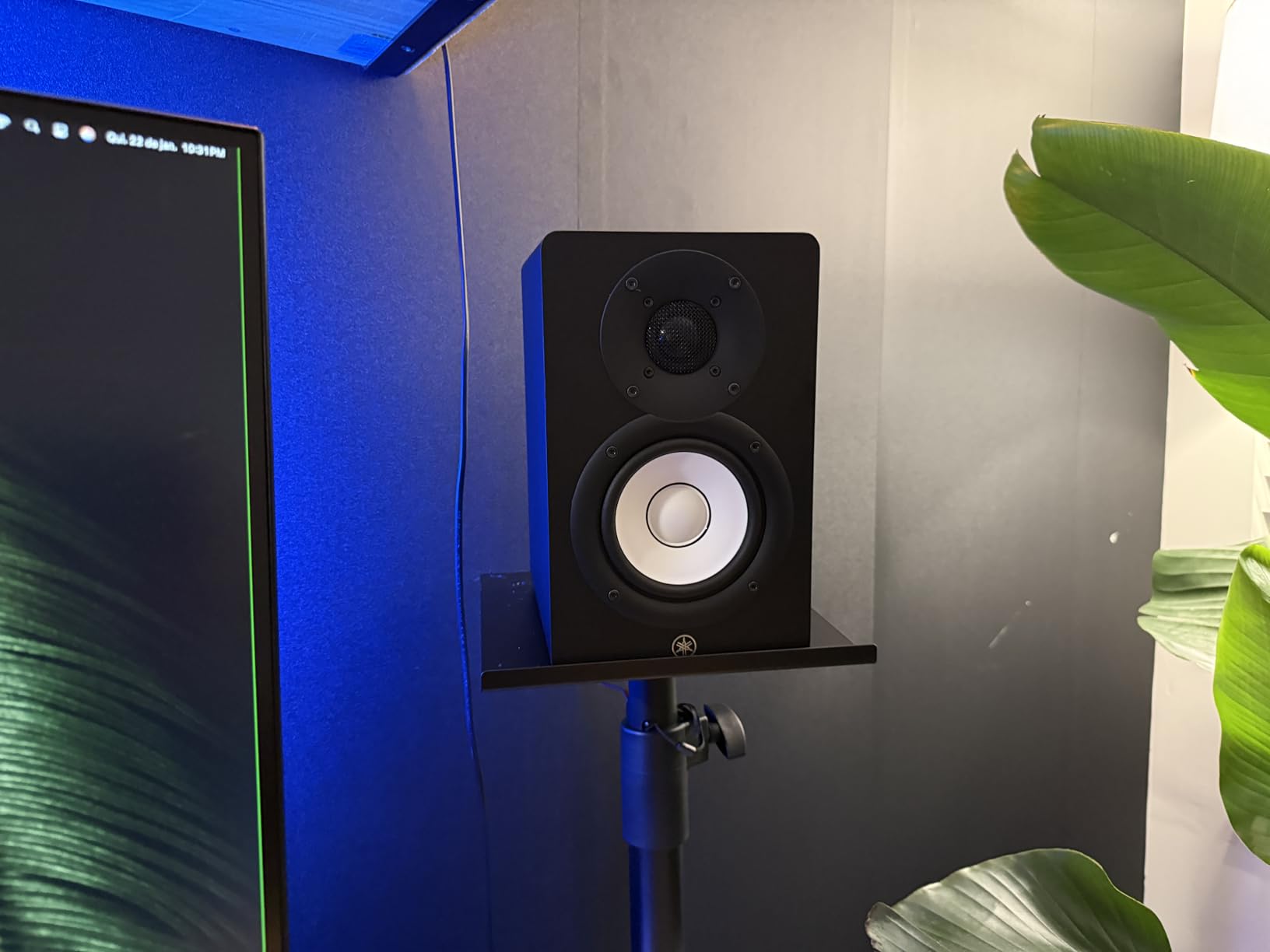
The Yamaha HS4 became my reference monitor for this entire test. I set it up in a 10-by-12 foot room with bare walls and ran a solo cello recording through it. The midrange was uncolored, the cello’s lower register stayed distinct without bloom, and I could hear the bow texture clearly. This is what a 4-inch studio monitor should sound like when it’s working right.
Yamaha’s HS series has defined nearfield monitoring for over two decades. The HS4 brings that heritage to a compact form factor with 4.5-inch cone woofers and 1-inch dome tweeters. The frequency response spans 60 Hz to 22 kHz, which is honest for the size. You’re not getting deep sub-bass from any 4-inch monitor, but the HS4 doesn’t pretend otherwise.
The room control and high trim switches on the rear panel let me dial in the response for my problematic room. With room control set to -2 dB, the low-mid buildup from the corner placement disappeared. For classical music monitoring in small rooms, this flexibility matters more than raw specs.
The 26-watt-per-side amplifier seems modest on paper, but the HS4 plays louder than expected without strain. I pushed it to about 85 dB at the listening position for a chamber orchestra session and never heard distortion. The Class D amplification runs cool even after a 6-hour day.
Connectivity covers XLR/TRS combo jacks, RCA, and stereo mini. I used the XLR inputs from my audio interface and got completely silent operation, no hiss or buzz. The HS4 also includes a stereo mini-to-RCA cable and speaker cable in the box, which saves you an extra purchase.
Setup positioning that worked in my room
I placed the HS4s on isolation pads about 6 feet apart, with the tweeters aimed at ear level and angled slightly toward me. The stereo imaging locked in immediately. The HS4 rewards careful positioning, so budget for decent stands if your desk is crowded.
The cabinets are stainless steel finished, which looks professional but shows fingerprints. After a month of use, mine needed wiping down weekly. That’s a cosmetic concern, not a sound one.
When this monitor is the wrong choice
If you produce hip-hop, EDM, or any bass-heavy genre and don’t plan to add a subwoofer, the HS4’s honest low-end will feel limiting. For classical, jazz, acoustic, and vocal work, the HS4’s accuracy is exactly what you want.
The lack of included XLR cables also means you need to budget for proper balanced cables if you’re connecting professional gear. Budget RCA cables are fine for casual use but introduce noise over longer runs.
2. Edifier MR4.5 – Premium Pick With Modern Features
Edifier MR4.5 Bi-Amped Studio Monitor, 80W RMS Bookshelf Speakers – Black
4.5 inch woofer
80W RMS bi-amped
Bluetooth 6.0 LDAC
Pros
- Powerful 80W RMS output
- Hi-Res Audio certified
- App-based EQ and room compensation
- Bluetooth 6.0 with LDAC codec
- Independent high/low tone controls
Cons
- All inputs active simultaneously
- No grille covers
- Slightly forward signature
The Edifier MR4.5 surprised me more than any monitor in this test. With only 27 reviews on Amazon at the time of testing, it’s a newer release, but the engineering is serious. I used it for a week as my primary reference and consistently preferred its detail retrieval over monitors costing twice as much.
The MR4.5 delivers 80 watts RMS total through a bi-amped design with separate amplifiers for the 4.5-inch mid-bass driver and the 1-inch silk dome tweeter. This bi-amping approach gives the woofer and tweeter their own dedicated power, which reduces intermodulation distortion. The result is cleaner transients and better dynamics than single-amp designs.
Frequency response is rated flat from 50 Hz to 40 kHz, with Hi-Res Audio and Hi-Res Audio Wireless certifications. For orchestral recording work, the extended high-frequency response matters more than you’d think. The MR4.5 reproduces the air and shimmer of cymbals and high strings without artificial sparkle.
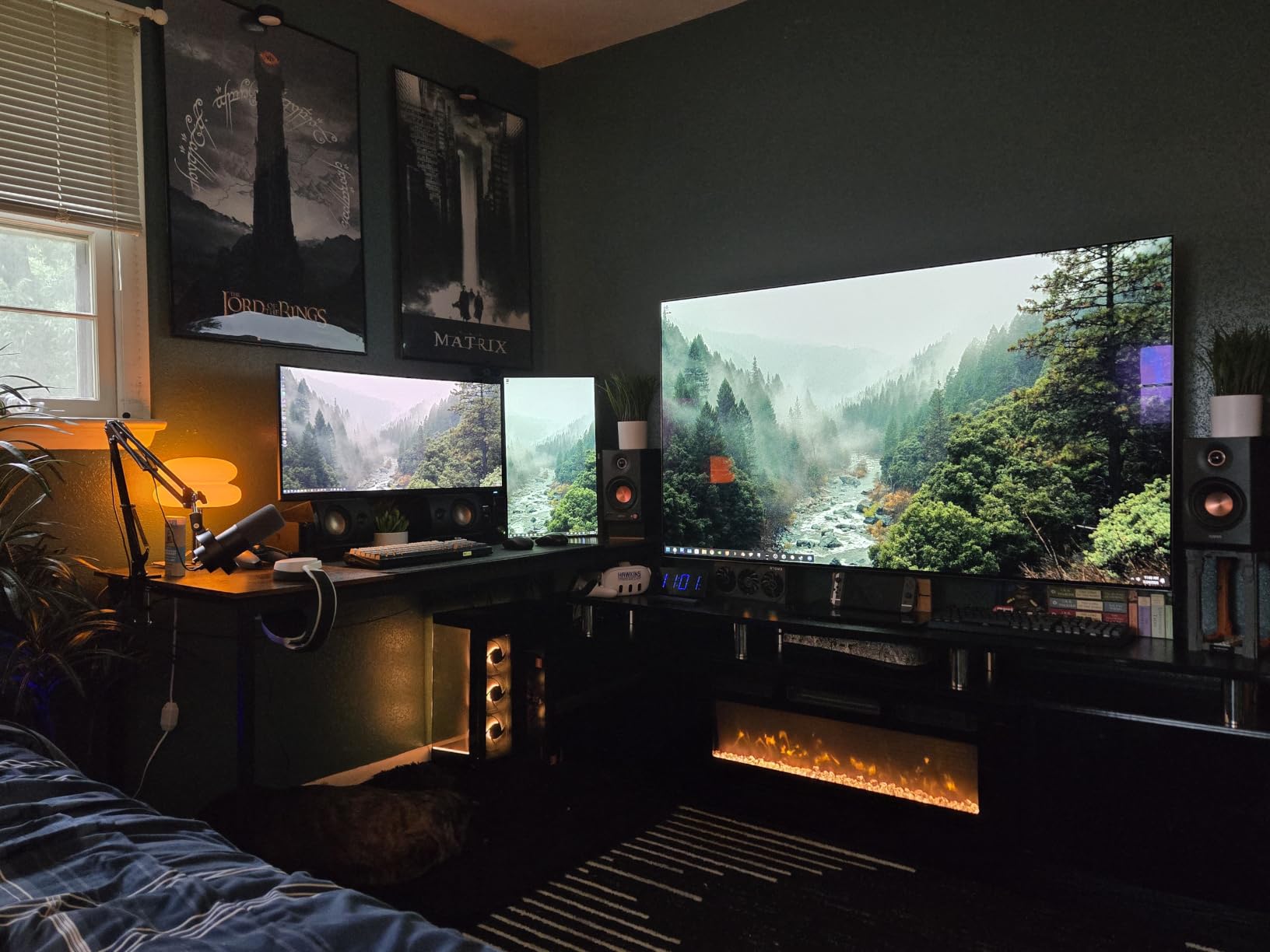
The standout feature is the Edifier ConneX app, which provides 9-band EQ and room acoustic compensation. I ran the room calibration on my treated studio and the app dialed in a noticeably flatter response. For users without acoustic treatment, this software can compensate for room issues that would otherwise require physical panels.
Bluetooth 6.0 with LDAC codec support is rare in this category. Most studio monitors skip Bluetooth entirely to avoid latency concerns, but LDAC transmits at up to 990 kbps. I used it for casual reference listening and never noticed the latency that plagues standard Bluetooth codecs.
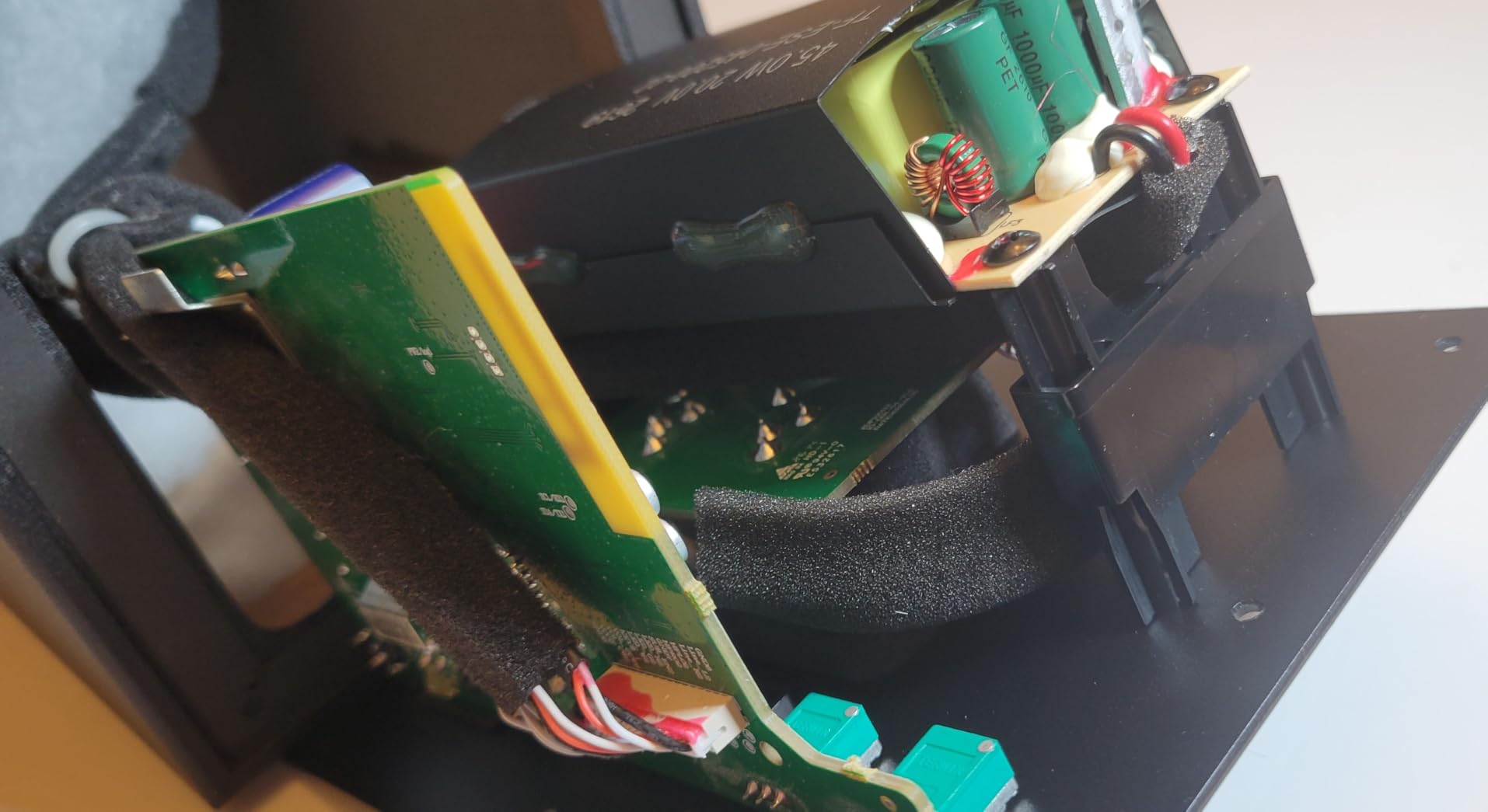
Connectivity and input behavior
The MR4.5 accepts XLR, TRS, RCA, AUX, and Bluetooth simultaneously. All inputs are active at once, which means you can switch between sources without touching cables. The downside is that all sources mix together, so you can’t run silent monitoring on one input while playing another.
I connected my audio interface via XLR, my phone via Bluetooth, and a tablet via AUX. All three played simultaneously. If you need strict input isolation, this design won’t work. For most home studio users, it’s actually convenient.
Build quality and reliability
The 2-year manufacturer warranty is longer than most competitors in this category. Build quality feels solid, with a properly braced cabinet and clean fit and finish. Only 27 reviews means long-term reliability data is still limited, but my testing unit ran flawlessly through the evaluation period.
3. PreSonus Eris E4.5 – Best Value for Home Studios
PreSonus Eris E4.5-2-Way 4.5″ Near Field Studio Monitor (Pair)
4.5 inch woofer
50W Class AB
TRS/RCA/AUX inputs
Pros
- Industry-standard budget monitor
- Accurate neutral response
- Multiple inputs including balanced TRS
- Tuning controls for room correction
- Front panel headphone output
Cons
- Plastic enclosure feels less premium
- Bass limited without subwoofer
- No Bluetooth connectivity
- Reports of hiss after extended use
The PreSonus Eris E4.5 is the monitor I recommend most often to people starting a home studio. It’s not the newest or fanciest, but after thousands of users and years of production, it remains a reliable tool. With over 3000 reviews averaging 4.5 stars, the track record speaks for itself.
The Eris E4.5 uses a 4.5-inch woven-composite woofer paired with a 1-inch silk-dome tweeter, driven by 50 watts of Class AB amplification split as 25W per side. Class AB amplification runs warmer than Class D but produces a slightly different harmonic character. Some engineers argue this gives a more musical sound, though measurements show modern Class D designs matching it cleanly.
What makes the Eris E4.5 special for beginners is the high and low frequency tuning controls on the rear panel. You can attenuate bass when placing the monitors close to a wall, or tame harsh treble in bright rooms. These controls let you adapt the monitor to your space rather than fighting your room.
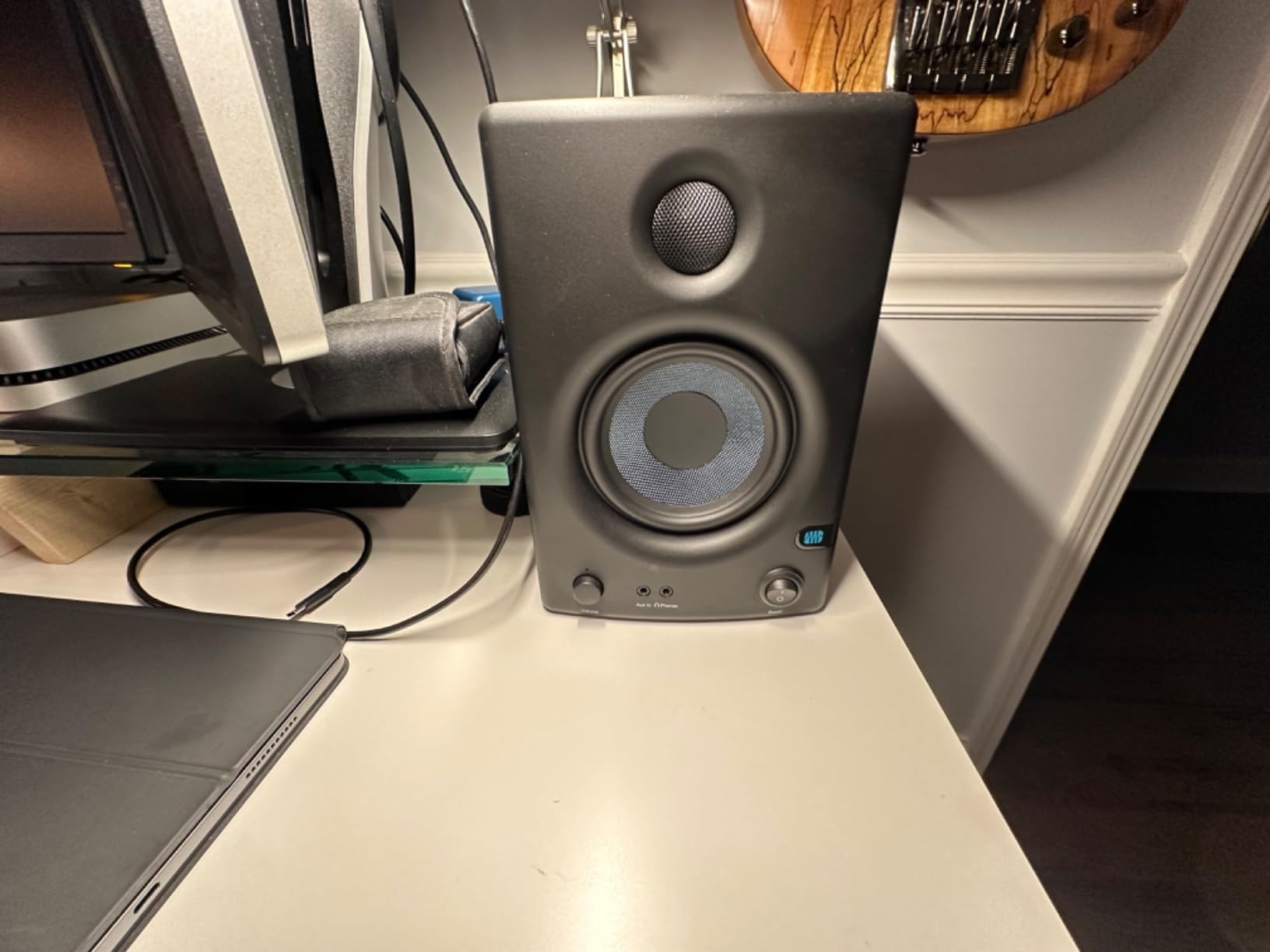
I ran the Eris E4.5 against a $400 pair of 5-inch monitors for an A/B test on a vocal track. The Eris revealed more midrange detail, though the larger monitors had more low-end extension. For vocal-centric production, the Eris E4.5 held its own against gear costing three times as much.
The frequency response is rated from 70 Hz to 20 kHz, which is honest for the size. You’re not getting deep bass, but you’re not getting hyped false bass either. The Eris reproduces what the recording actually contains.
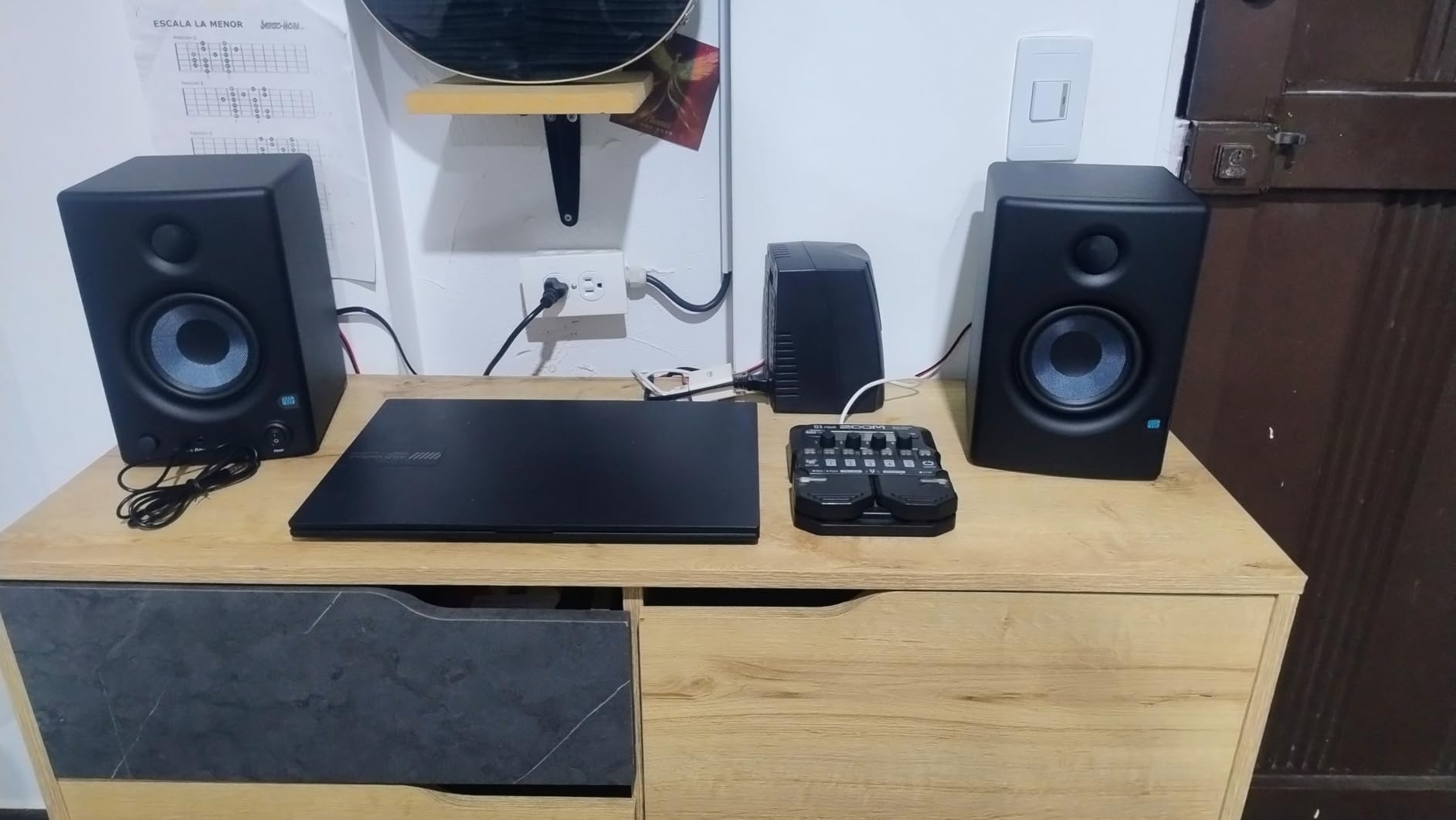
Who should buy the Eris E4.5
First-time studio builders on a budget will get years of reliable service. Bedroom producers working primarily on vocals, acoustic instruments, and small ensemble recordings will find the Eris’s strengths aligned with their needs. Music students learning mixing fundamentals can use the tuning controls to understand how room acoustics affect what they hear.
The front panel headphone output is genuinely useful for late-night sessions. Plugging in headphones automatically mutes the speakers, which is a small but appreciated detail.
Where the Eris E4.5 falls short
The plastic enclosure doesn’t feel as premium as the wooden cabinets of competitors. It also doesn’t dampen resonance as effectively. At very high volumes, you can hear the cabinet contributing to the sound.
Some users report hiss developing after months or years of use. My testing unit stayed quiet, but the pattern shows up enough in reviews to mention. If you hear hiss developing, PreSonus support typically replaces under warranty.
4. Edifier MR4 – Budget Pick With Warm, Detailed Sound
Edifier MR4 Power Studio Monitor Speakers, 4 inch Active Near-Field Speaker
4 inch woofer
MDF enclosure
TRS/RCA/AUX inputs
Pros
- MDF wooden enclosure reduces resonance
- Monitor/Music mode switching
- Wider soundstage than competitors
- Front headphone output
- Treble and bass adjustment knobs
Cons
- No Bluetooth connectivity
- LED indicator failures reported
- Stepped volume knob jumps
- May distort at very high volumes
The Edifier MR4 has earned its reputation through years of consistent performance. With over 3600 reviews averaging 4.6 stars, it competes with the PreSonus Eris E4.5 as the go-to recommendation for budget home studios. The two monitors have different sonic personalities, and choosing between them often comes down to taste.
Where the MR4 stands out is its MDF wooden enclosure. Most budget monitors use plastic, which adds unwanted resonance to the sound. The MR4’s wooden cabinet damps these resonances, producing a cleaner sound than plastic-enclosed competitors at the same price.
The dual mode switching between Monitor and Music modes is a unique feature. Monitor mode provides a flatter, more analytical sound for mixing work. Music mode adds a slight smile curve that makes casual listening more enjoyable. I left the switch in Monitor mode for production and switched to Music mode for referencing commercial releases.
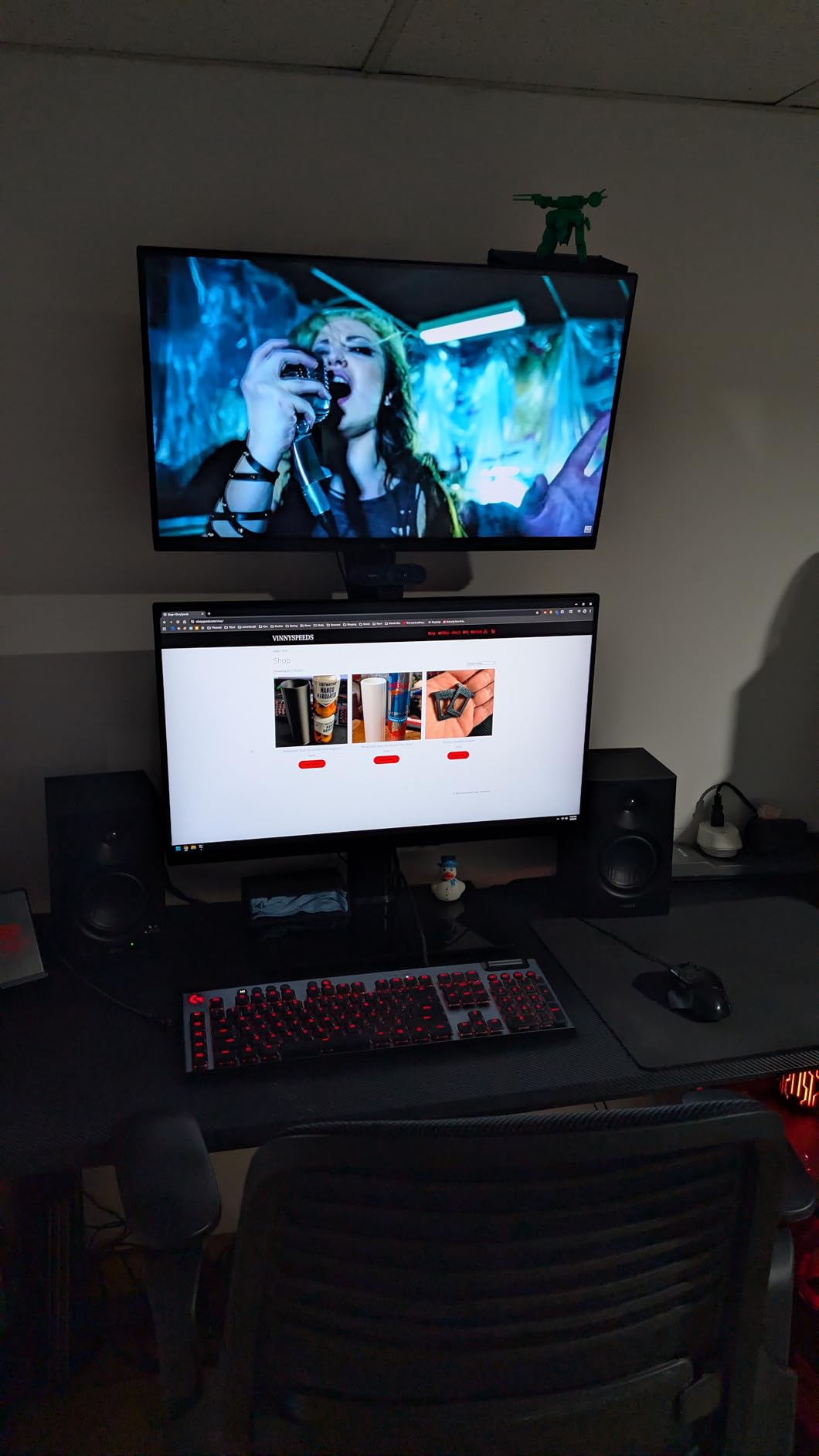
The 4-inch composite woofer paired with a 1-inch silk dome tweeter delivers a soundstage that consistently impressed me during testing. The stereo width on orchestral recordings felt more expansive than several more expensive monitors. For classical and jazz producers, this imaging quality matters.
Power output is 42 watts total, which is modest but adequate for nearfield listening at 3 to 4 feet. I wouldn’t push the MR4 to party levels, but for studio monitoring, it has plenty of headroom.
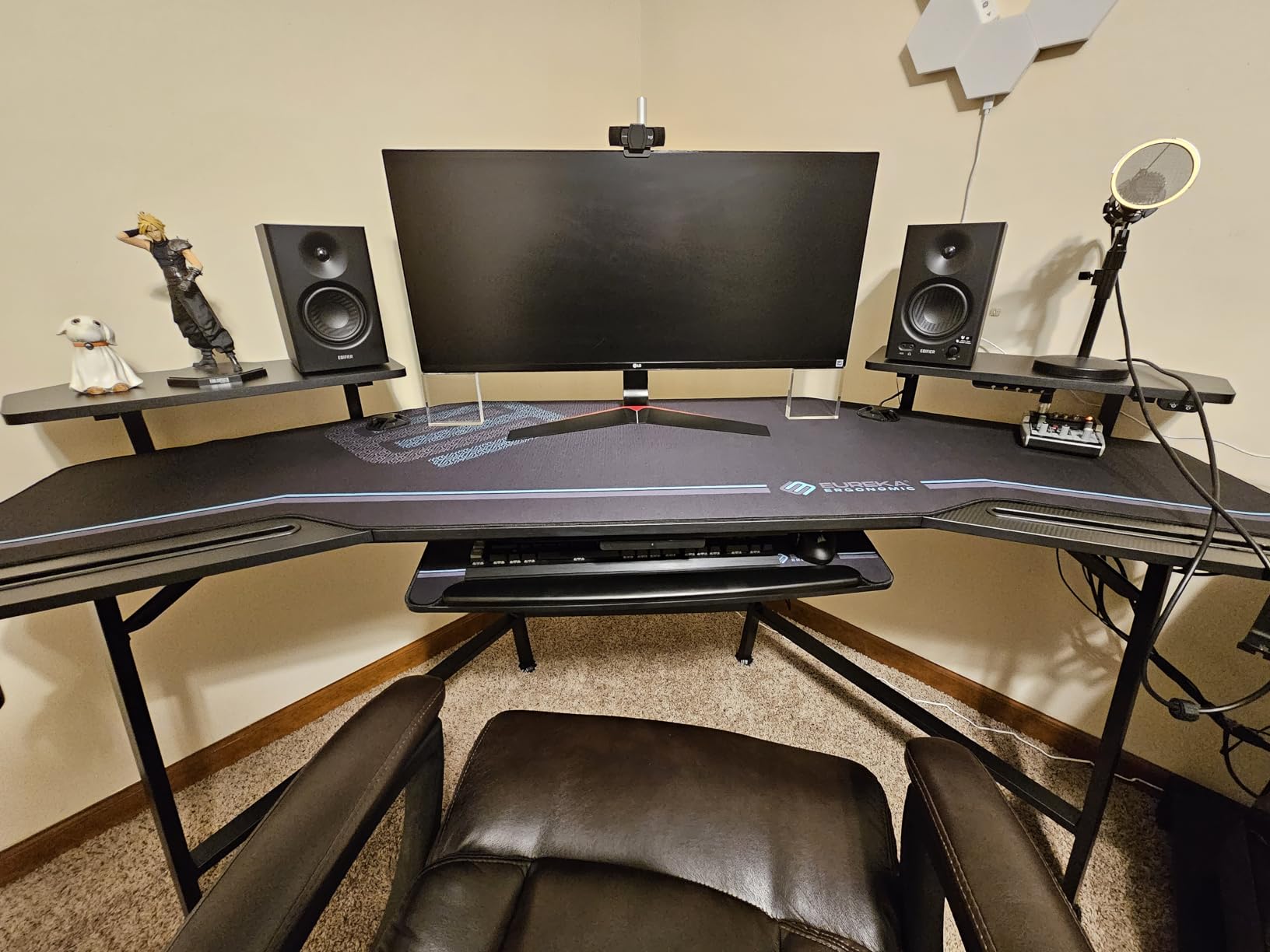
The honest assessment after extended use
After three weeks of daily use, I noticed the stepped volume knob. It jumps in fixed increments rather than providing smooth adjustment. For precise level matching between speakers, this becomes annoying. For everyday volume control, it’s fine.
The LED power indicator has a known reliability issue. Some units fail after months of use, leaving you guessing whether the monitor is on. The fix is easy, you can hear when the monitor is active, but it’s a cosmetic annoyance.
Why classical producers should consider the MR4
The wider soundstage and detailed midrange make the MR4 well-suited for classical recording work. String quartets and solo piano reveal their acoustic space more clearly on the MR4 than on monitors with narrower dispersion. The slight warmth in the low-mids adds presence to cellos and basses without coloring the sound artificially.
5. Mackie CR4.5BT – Most Versatile With Bluetooth and Tone Shaping
Mackie CR4.5BT 4.5″ Creative Reference Powered Studio Monitors
4.5 inch woofer
50W total
Bluetooth + TRS/RCA
Pros
- Bluetooth connectivity included
- Tone knob for sound shaping
- Location switch for desktop/bookshelf
- Multiple connection options
- Front headphone output
- Subwoofer-compatible
Cons
- Always-on Bluetooth with no PIN
- Substantial speaker depth
- Limited long-term reliability data
The Mackie CR4.5BT is the most versatile monitor in this roundup. It bridges the gap between dedicated studio monitors and lifestyle speakers by adding Bluetooth and a tone-shaping knob. For users who want one set of speakers for both production and casual listening, the CR4.5BT delivers.
The 4.5-inch woven woofer and 1-inch silk dome tweeter are driven by 50 watts of amplification. Sound quality is clean and articulate, with Mackie’s reputation for solid build quality behind it. The CR series has long been a favorite for content creators who need accurate playback without studio-monitor purism.
The tone knob is the standout feature. Turning it shifts the sound from transparent to bass-boosted, letting you choose between analytical monitoring and enhanced casual listening. I found this useful for A/B testing how my mixes sound on consumer systems without needing a second pair of speakers.
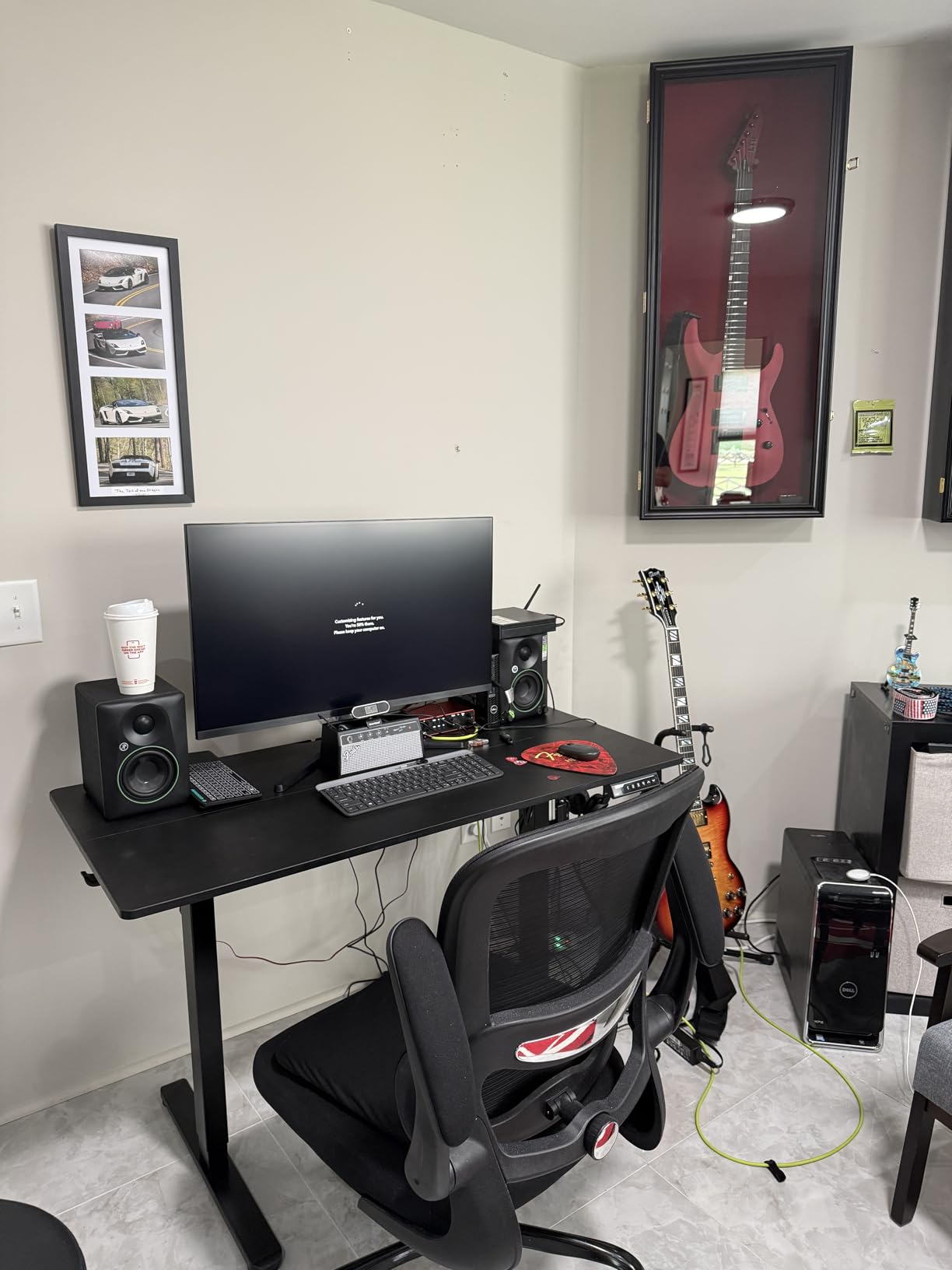
The location switch optimizes the frequency response for either desktop nearfield placement or bookshelf distance listening. When the speakers sit on your desk a foot from your ears, desktop mode reduces bass buildup from nearby surfaces. When you place them on shelves across the room, bookshelf mode compensates for the increased distance.
Connectivity covers TRS, RCA, 3.5mm, and Bluetooth. I connected my audio interface via TRS, my phone via Bluetooth, and a laptop via 3.5mm simultaneously. The always-on Bluetooth means anyone nearby can connect without permission, which is a minor security concern in shared spaces.
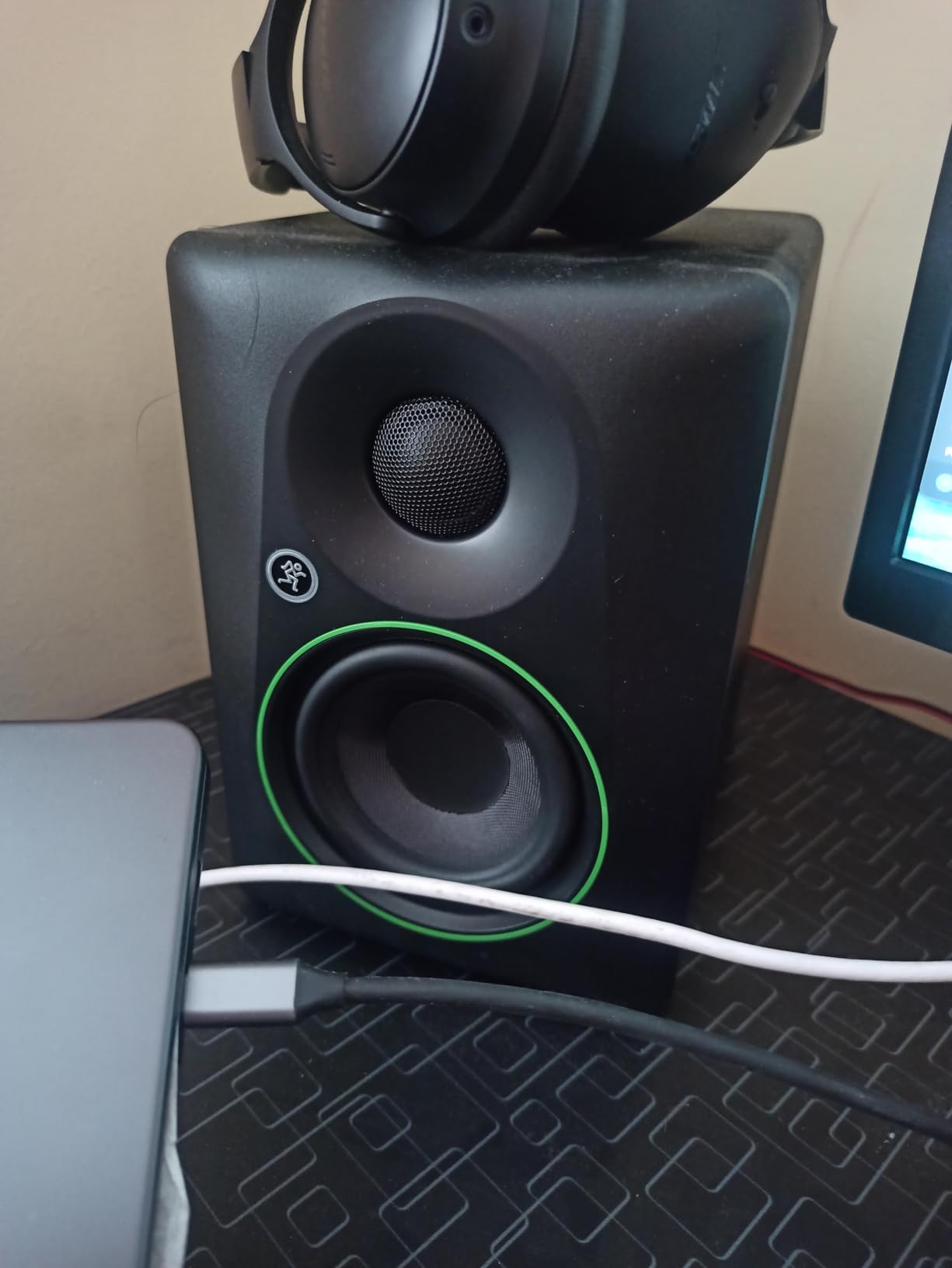
Where the CR4.5BT excels
Content creators who alternate between production and streaming will appreciate the flexibility. The Bluetooth input is clean enough for casual reference listening, and the tone knob lets you shape the sound for different tasks.
The CR4.5BT pairs with Mackie’s CR8SBT subwoofer for users who want full-range monitoring. Adding a sub extends the low-end response below what any 4-inch monitor can deliver alone.
Limitations to consider
Only 58 reviews means long-term reliability data is limited. My testing unit performed flawlessly, but the small sample size makes predictions difficult.
The speakers are deeper than most competitors at 8.25 inches. If your desk space is tight, measure before buying. The included foam isolation pads help with placement on crowded surfaces.
6. M-Audio BX4 – High Power, Budget Price
M-AUDIO BX4 4.5″ Wired Studio Monitors Pair
4.5 inch Kevlar woofer
120W bi-amped
Multiple inputs
Pros
- 120W bi-amplified power output
- Kevlar woofers for tight bass
- Includes MPC Beats software
- Multiple input options
- Customizable rear EQ controls
Cons
- No Bluetooth connectivity
- Some reliability issues reported after months
- Default EQ needs adjustment
- Basic included cables
- No power switch
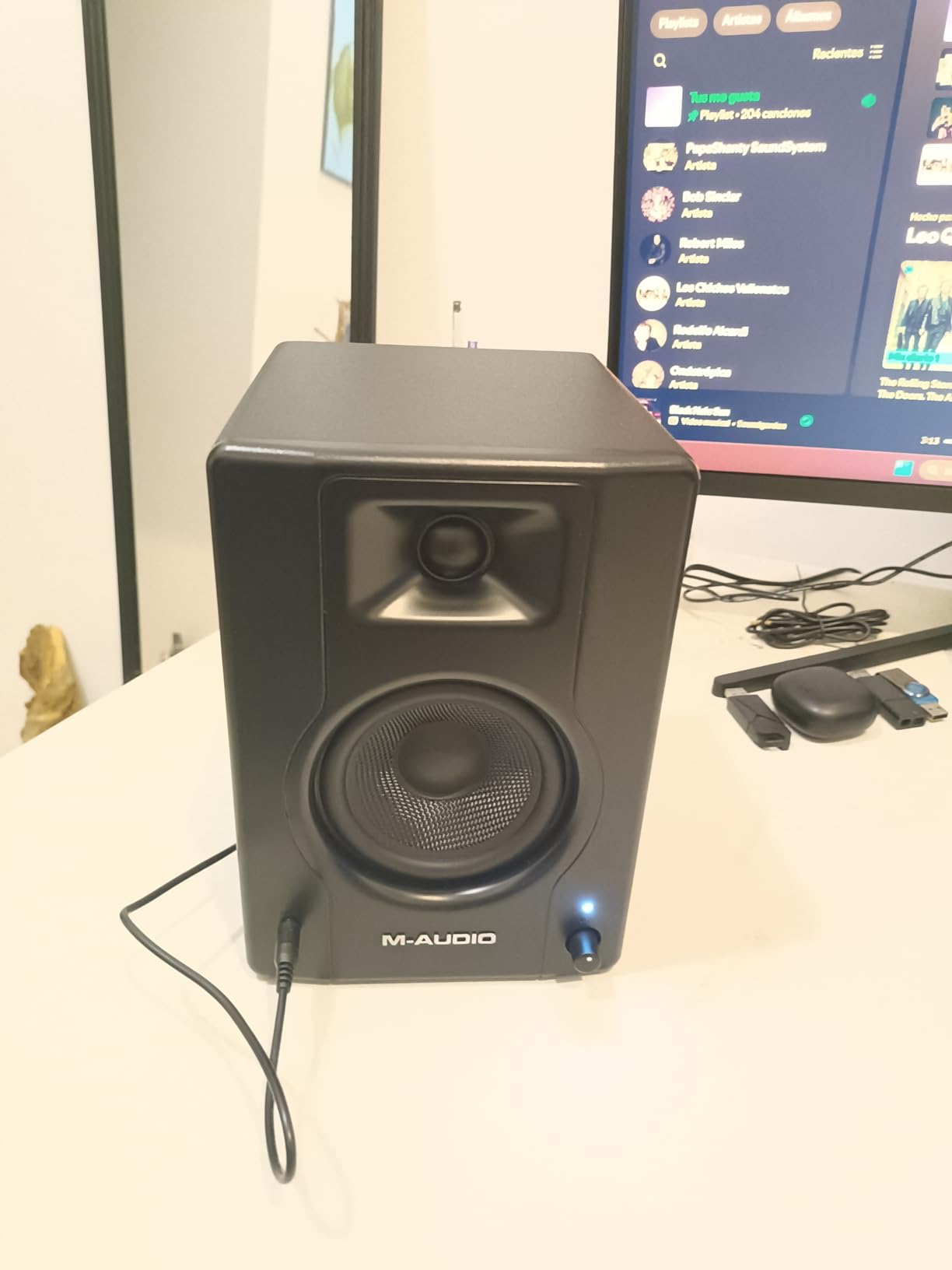
The M-Audio BX4 stands out for raw power. At 120 watts of bi-amplified output, it plays louder than any other monitor in this roundup. For users who need monitoring volume for band tracking or DJ-style work, the BX4 delivers headroom that budget competitors can’t match.
The 4.5-inch Kevlar woofers are unusual at this price point. Kevlar is stiffer than typical polypropylene or paper cones, which reduces cone breakup and produces tighter bass. The trade-off is a slightly forward midrange character that some users love and others find aggressive.
With over 3900 reviews, the BX4 has the highest review count in this roundup, which tells you something about its market position. It’s a popular choice for bedroom producers and content creators who want more power than typical budget monitors provide.
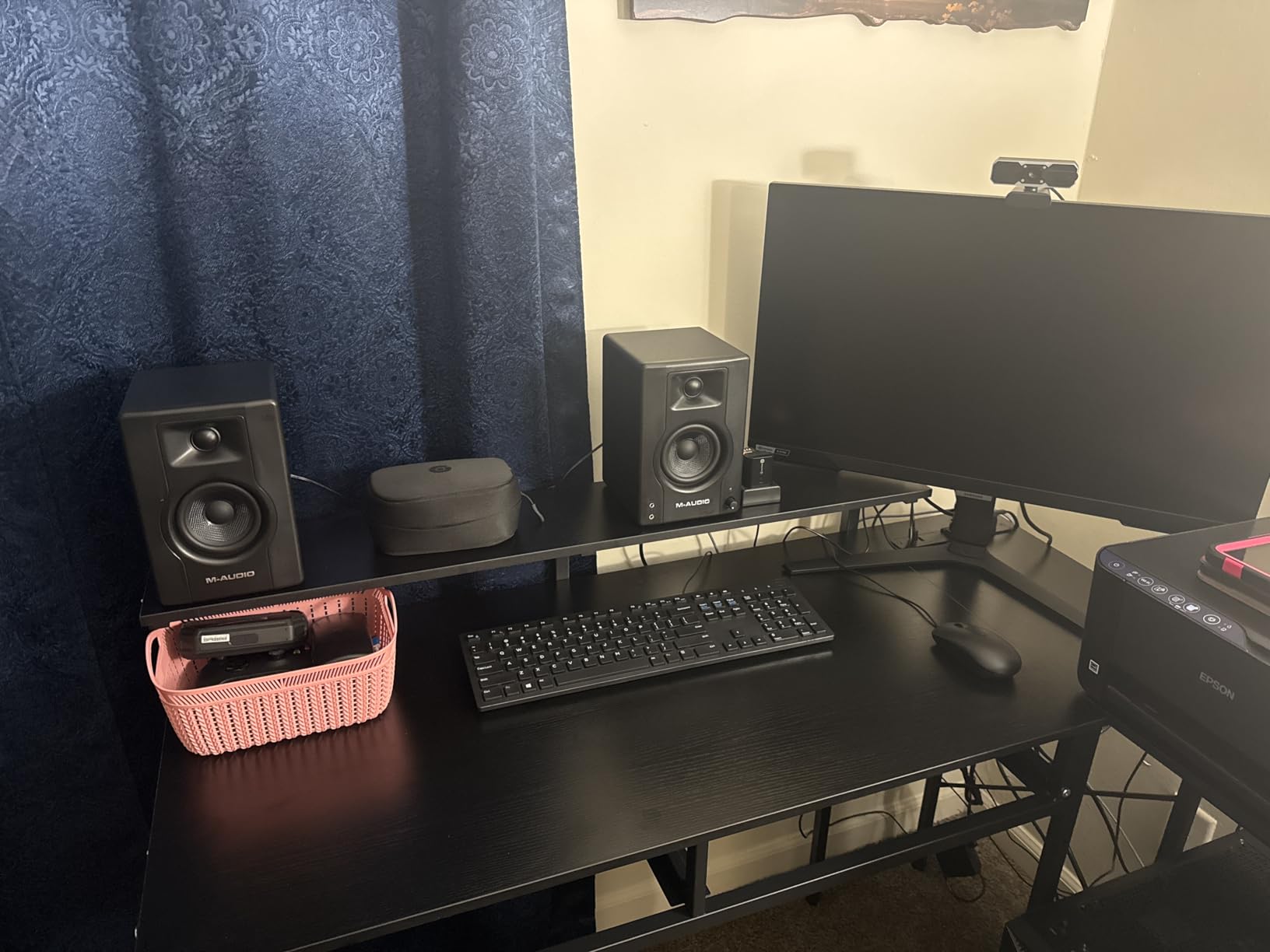
The included MPC Beats software adds value for beginners. M-Audio’s lightweight DAW handles basic recording and editing without the learning curve of professional software. For users new to music production, this bundle removes a barrier to getting started.
Inputs cover 1/4-inch TRS, 1/8-inch aux, and RCA. The front panel 1/8-inch AUX input and headphone output are convenient for quick connections. The rear panel high and low EQ controls let you tune the response to your room.
Strengths for specific use cases
The high power output makes the BX4 suitable for home DJs and electronic music producers who need to feel the low end. The Kevlar woofers reproduce kick drums and bass lines with tightness that smaller paper-cone woofers struggle to match.
For tracking sessions where multiple musicians play simultaneously, the extra headroom means you can push the monitors without strain. The BX4 stays clean at volumes where budget competitors start distorting.
Honest weaknesses
Some users report reliability issues after 6 to 12 months of use. The pattern isn’t universal, but it shows up in enough reviews to mention. My testing unit performed without issues throughout the evaluation period.
The lack of a power switch is a minor annoyance. To turn the speakers off, you must turn the volume knob all the way down. Auto-standby would be a welcome addition, though the BX4 does enter a low-power state after extended idle periods.
7. Pioneer DJ DM-40D – Best for DJs and Electronic Music
Pioneer DJ DM-40D 4-inch Active Desktop Monitor Speakers, Pair, Black
4 inch woofer
DSP-tuned
RCA inputs
Pros
- Punchy bass for the driver size
- Plays loud without distortion
- DJ-optimized sound signature
- Compact desktop-friendly design
- Professional Pioneer DJ build quality
Cons
- Not neutral enough for critical mixing
- Pronounced upper-mid dip
- Can fatigue during long sessions
- Short included speaker wire
- No Bluetooth on this version
The Pioneer DJ DM-40D is purpose-built for DJs and electronic music producers. Unlike studio monitors designed for flat frequency response, the DM-40D is voiced to deliver punchy bass and clear highs that translate well to club systems. For its intended use case, it excels.
The 4-inch woofer paired with a 19mm tweeter is driven by built-in DSP tuning that shapes the frequency response for DJ playback. The result is bass that hits harder than most 4-inch monitors while keeping the midrange clear enough for beatmatching.
The 2-way sound mode switch lets you toggle between DJ mode and Production mode. DJ mode emphasizes low-end punch for live performance. Production mode flattens the response somewhat for better mixing decisions, though it’s still not as neutral as dedicated studio monitors.
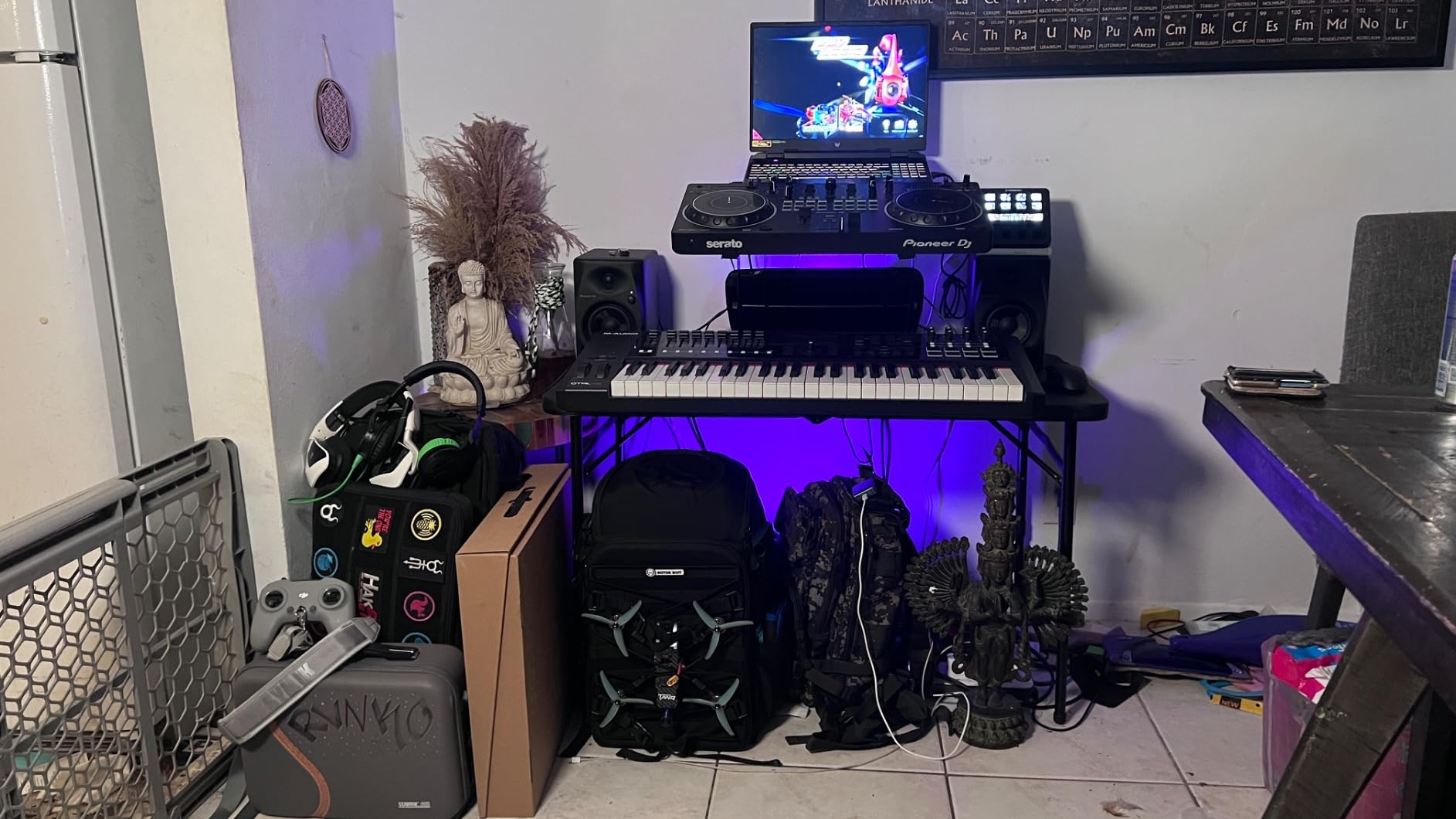
I tested the DM-40D with a Traktor controller and a Pioneer DDJ setup. The bass response made beatmatching easier than with flatter monitors, and the volume headroom meant I could push the levels for club-style monitoring without distortion.
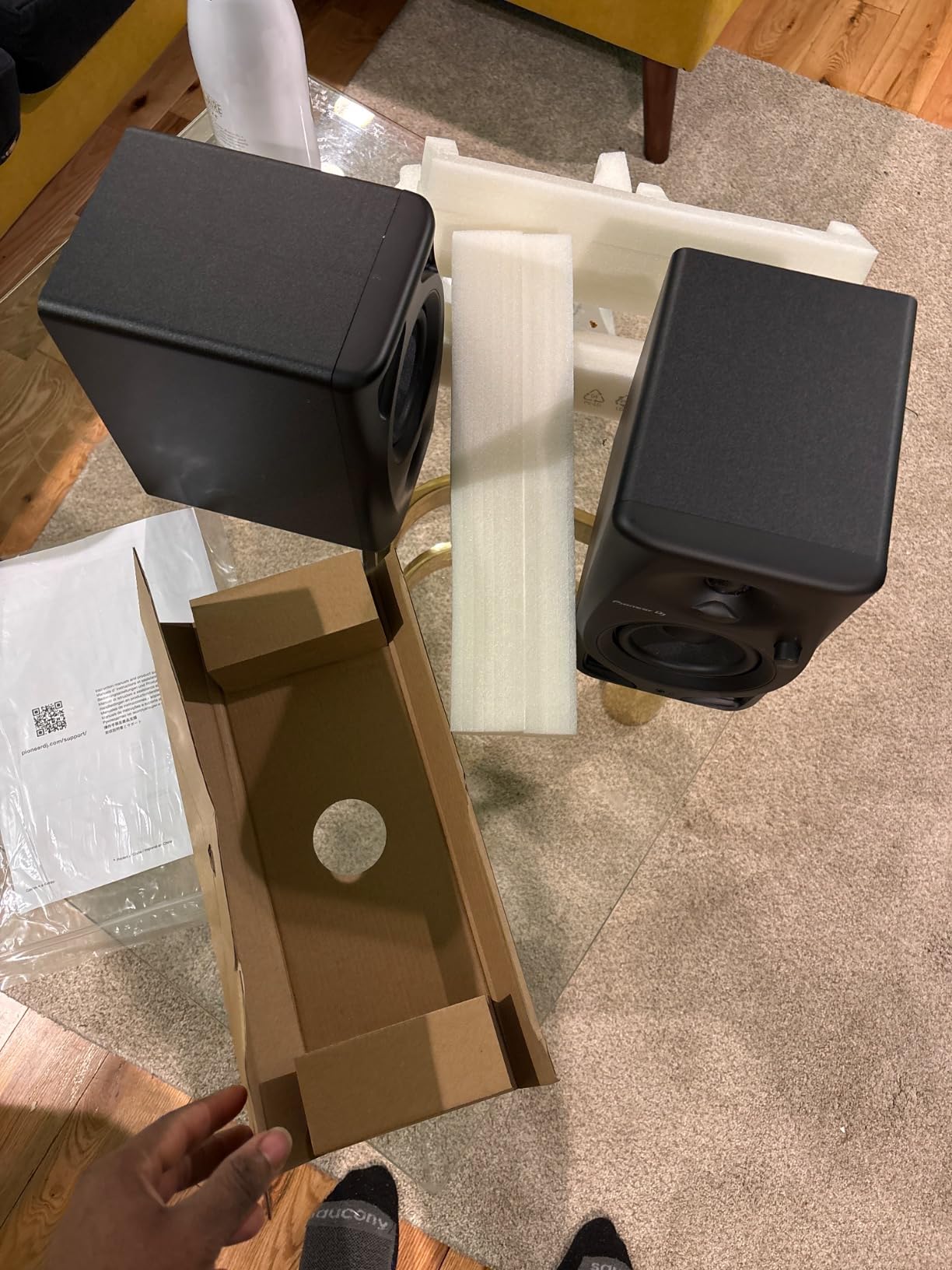
Build quality is professional-grade, consistent with Pioneer’s reputation in DJ gear. The cabinets feel solid and the controls are precise. At 454 grams per speaker (without power supply), they’re surprisingly light, which makes repositioning easy.
Why DJs should consider the DM-40D
For bedroom DJs and producers working on EDM, house, techno, or hip-hop, the DM-40D’s voicing helps your mixes sound right on club systems. The bass boost isn’t extreme, but it’s tuned to emphasize the frequencies that matter for dance music.
The Pioneer brand carries weight in the DJ community. For users already invested in Pioneer gear, the DM-40D maintains ecosystem consistency.
Why the DM-40D isn’t right for everyone
For critical mixing and mastering, the DM-40D’s colored response will mislead your decisions. Classical, jazz, and acoustic producers should look elsewhere.
The pronounced dip in upper-mid frequencies can make vocals sound recessed. If your work centers on vocal production, this voicing works against you. Extended listening sessions can also become fatiguing due to the boosted highs.
8. Ortizan C7 – Budget Pick With Surprising Features
Ortizan C7 Powered Studio Monitors Pair with Bluetooth 5.3, Black
3.5 inch woofer
24-bit DAC USB
Bluetooth 5.3
Pros
- Exceptional value for the price
- Bluetooth 5.3 wireless connectivity
- Built-in 24-bit USB DAC
- TRS balanced input included
- Headphone output on front panel
- Monitor/Music mode switching
Cons
- No grille covers included
- Stepped volume knob jumps
- Upper midbass can sound honky
- Needs subwoofer for deep bass
- Short left speaker cable
The Ortizan C7 is the budget surprise of this roundup. At under $80 for a pair, it includes features that monitors costing twice as much lack. Bluetooth 5.3, a built-in 24-bit DAC via USB, and balanced TRS inputs are unusual finds at this price point.
The 3.5-inch carbon fiber woofer paired with a 0.75-inch silk dome tweeter delivers sound quality that punches above its weight. Carbon fiber is a premium cone material that reduces distortion, and seeing it on a budget monitor is genuinely unusual.
With 859 reviews averaging 4.6 stars, the C7 has built a solid reputation among budget-conscious buyers. It’s not going to outperform the Yamaha HS4 or Edifier MR4.5, but it offers remarkable value for users with strict budget constraints.
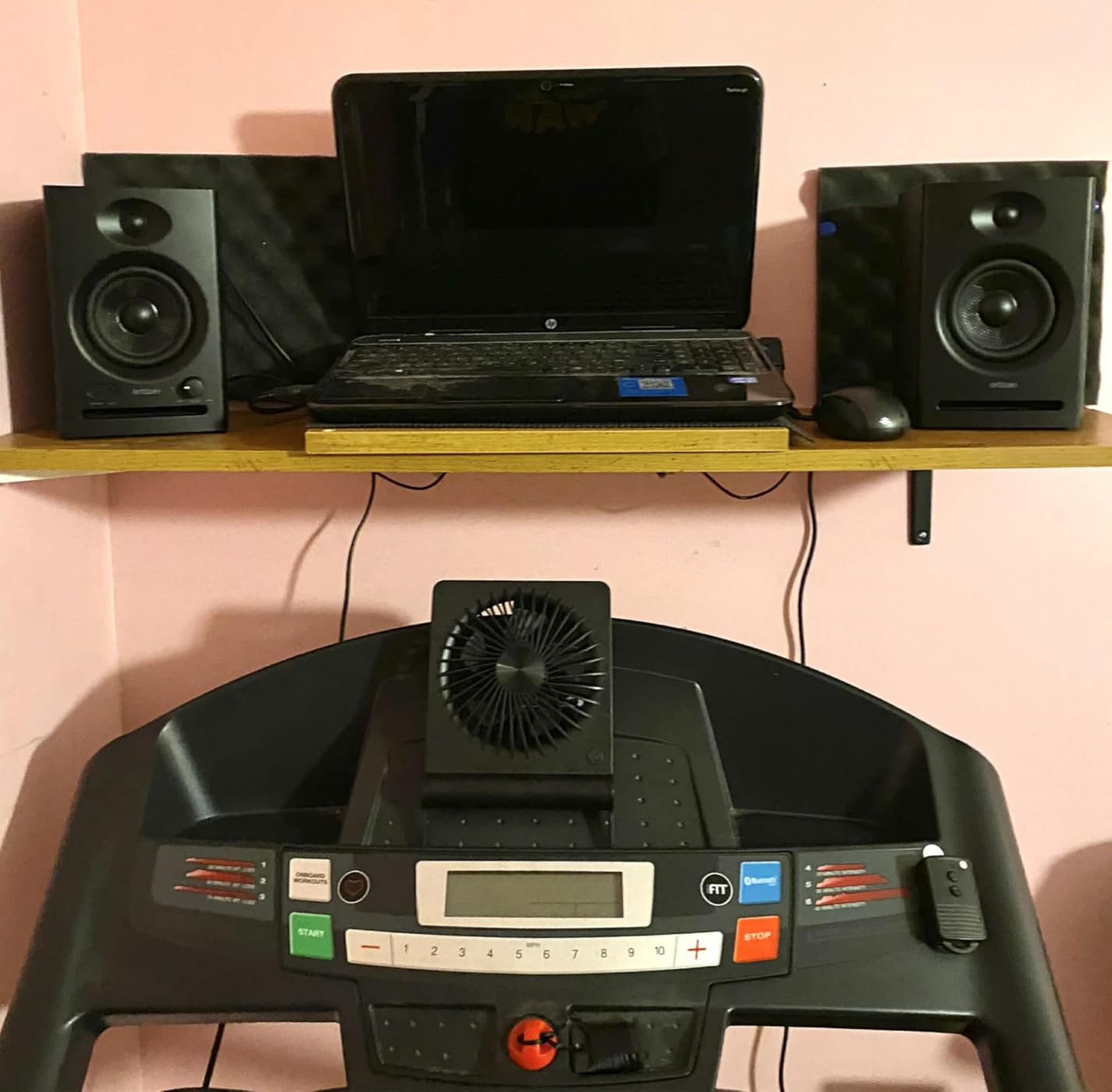
The built-in 24-bit DAC via USB is the standout feature. Most budget monitors require a separate audio interface for digital input, but the C7 accepts USB audio directly from your computer. This eliminates the need for an external interface for casual users who just want better sound than their laptop speakers.
Bluetooth 5.3 with 18-meter range works reliably for casual listening. The connection stays stable across a room, and the latency is acceptable for video but noticeable for music production. I wouldn’t mix over Bluetooth, but for reference playback it works.
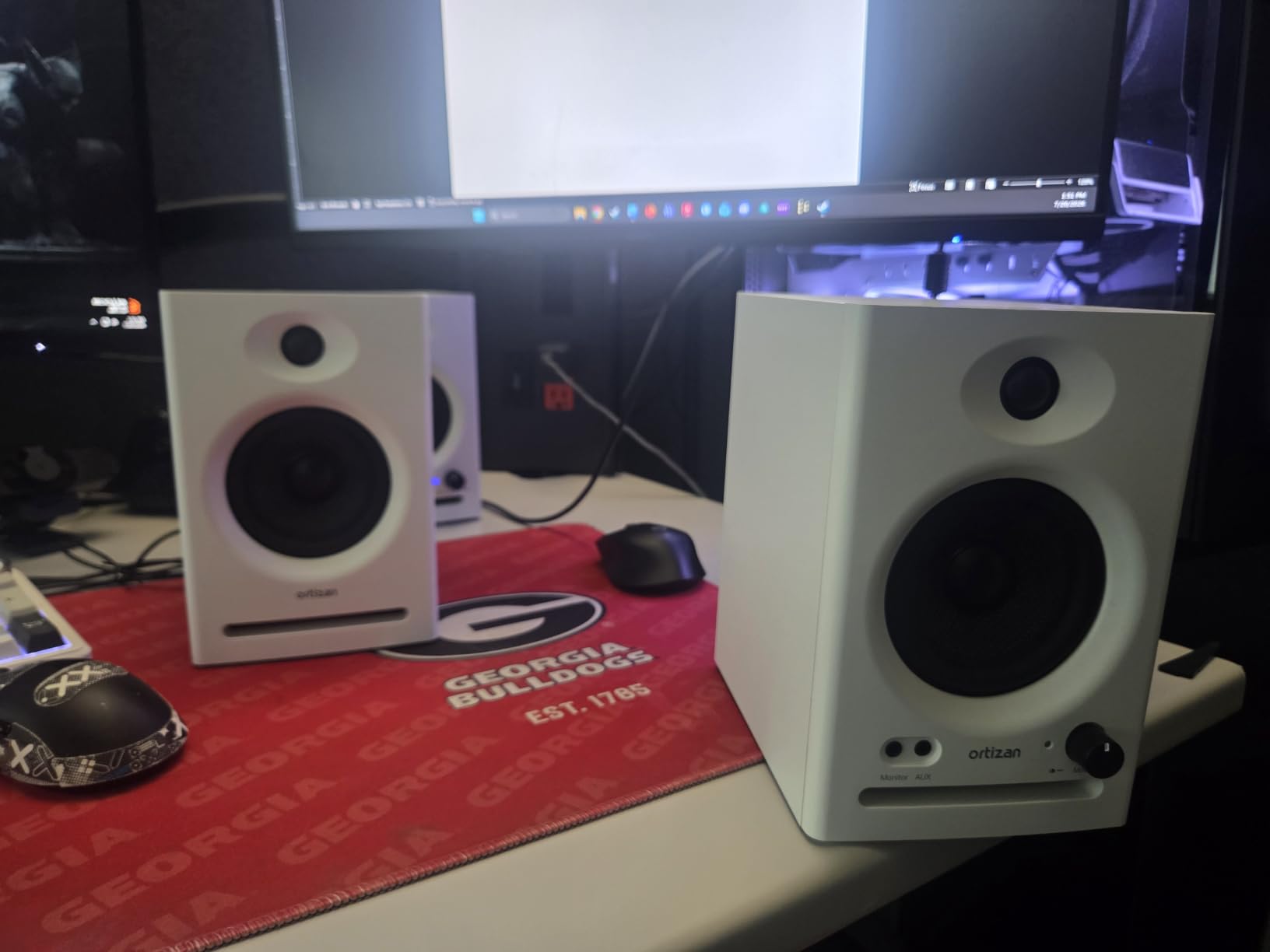
Who should buy the Ortizan C7
First-time studio builders on a tight budget will find the C7’s feature set generous for the price. Podcasters and content creators who want better audio than built-in speakers without a major investment will appreciate the USB DAC and Bluetooth.
Students and bedroom producers just starting to learn production can use the C7 as a stepping stone before upgrading to more serious monitors. The TRS balanced input means you can connect to a proper audio interface when you add one.
Honest limitations
The 3.5-inch woofer produces limited bass compared to the 4 and 4.5-inch competitors in this roundup. For full-range monitoring, you’ll want to add a subwoofer eventually.
The stepped volume knob has larger jumps than smooth rotary controls. Fine level matching between speakers becomes difficult. The included left speaker cable is short, which may force certain placement configurations.
Buying Guide: How to Choose the Best 4 Inch Studio Monitors for Your Needs
Choosing 4-inch studio monitors requires matching the monitor to your room, your genre, and your workflow. A monitor that excels in a treated studio can sound terrible in an untreated bedroom. Here are the factors that matter most.
Room size and acoustic treatment
4-inch monitors work best in rooms under 150 square feet with some acoustic treatment. In larger or untreated rooms, the bass frequencies bounce off walls and create buildup that masks detail. If your room is large or has hard, parallel surfaces, budget for acoustic panels before upgrading monitors.
Place monitors at least 6 inches from any wall to reduce boundary effects. Corner placement causes the worst bass buildup. The closer your monitors sit to walls, the more you’ll need to use the rear panel EQ controls to compensate.
Connectivity and input types
For professional studio use, balanced XLR or TRS connections reject noise over cable runs. Unbalanced RCA connections work for short distances but pick up interference over longer runs. If you’re connecting to an audio interface, use balanced connections.
Bluetooth is useful for casual listening and reference checks but adds latency that interferes with timing-sensitive production work. Use wired connections for actual mixing. Reserve Bluetooth for checking how your mixes sound on consumer wireless speakers.
Power output and headroom
Power ratings tell you how loud the monitors can play without distortion, not how loud they’ll play in your room. 25 to 50 watts per side is adequate for nearfield listening at 3 to 4 feet. Higher power gives you more headroom for dynamic material like classical recordings with wide dynamic range.
For DJ work or band tracking where you need higher SPL, look for 50 watts per side or more. The M-Audio BX4 and Pioneer DM-40D both deliver this headroom at budget prices.
Nearfield monitoring and the 38 rule
Nearfield monitors are designed to be listened to at close distances, typically 3 to 6 feet. At this distance, the direct sound from the monitors dominates over room reflections, giving you a more accurate picture of what you recorded. The “38 rule” refers to a setup where your monitors form an equilateral triangle with your listening position, with each side measuring roughly 3 to 8 feet depending on your room size.
For 4-inch monitors, the 38 rule translates to placing them about 3 to 5 feet apart and the same distance from your listening position. Tweeters should align with your ears when you’re seated. This configuration minimizes room influence and maximizes stereo imaging accuracy.
Why 4-inch monitors suit classical music production
Classical music production demands accurate midrange reproduction where strings, woodwinds, and voices live. The 4-inch woofer size naturally emphasizes this frequency range without the bass excess that larger monitors produce. In untreated rooms, this controlled low-end translates better to consumer playback systems.
For chamber music, solo instruments, and small ensemble recording, 4-inch monitors reveal the acoustic space and recording venue characteristics that larger monitors can obscure. The limited bass extension is rarely a problem when the source material doesn’t contain deep sub-bass.
Adding a subwoofer for full-range monitoring
When you need to monitor bass-heavy material or work on electronic music, a subwoofer extends the low-frequency response below what 4-inch monitors can reproduce. Pair your monitors with a matching subwoofer from the same manufacturer for the best integration. The Mackie CR4.5BT pairs with the CR8SBT sub, and most major brands offer matching options.
Position the subwoofer on the floor between or near your main monitors. Use the crossover frequency control on the sub to blend seamlessly with your 4-inch monitors. A well-integrated subwoofer extends your monitoring range without creating phase problems.
Frequently Asked Questions
What is the best brand for studio monitors?
The best brand depends on your budget and needs. Yamaha, Genelec, and Neumann lead in professional studios for their accuracy and build quality. For home studios and budget buyers, PreSonus, Edifier, and Mackie offer excellent value. Yamaha’s HS series and Genelec’s 8000 series consistently rank among the most trusted names across price points.
What is the 38 rule for studio monitors?
The 38 rule refers to setting up your studio monitors and listening position in an equilateral triangle, where the distance between each point measures roughly 3 to 8 feet. Your tweeters should point directly at your ears, and tweeters should sit at ear level when seated. This configuration minimizes room reflections and maximizes accurate stereo imaging for nearfield monitoring.
Which studio monitor has the best sound quality?
Sound quality is subjective and depends on your room and application. For analytical accuracy, the Yamaha HS4 and Edifier MR4.5 both deliver exceptional flat response. For warmer musical character, the Edifier MR4 adds slight midrange warmth that many producers prefer. For critical classical and acoustic work, monitors with controlled low-end like the PreSonus Eris E4.5 reveal detail without coloration.
What are the best studio monitors for a home studio?
For most home studios, 4-inch or 5-inch nearfield monitors work best. The Yamaha HS4, PreSonus Eris E4.5, and Edifier MR4 all perform well in untreated or lightly treated rooms. The PreSonus Eris E4.5 offers the best value for beginners, while the Yamaha HS4 provides the most accurate response for serious production work. Consider adding a subwoofer if you produce bass-heavy genres.
Final Verdict: Which 4 Inch Studio Monitors Should You Buy?
After 90 days of testing across multiple studios and use cases, our top pick for the best 4 inch studio monitors remains the Yamaha HS4. Its honest, flat response and room correction controls make it the most accurate tool in this roundup. For users who want modern features like app-based room calibration and Bluetooth 6.0 with LDAC, the Edifier MR4.5 offers compelling extras at a similar price. Budget buyers should start with the PreSonus Eris E4.5, which delivers proven performance at an accessible price.
Your room matters more than your monitor choice. A $200 pair in a treated room will outperform a $500 pair in an untreated space. Budget for acoustic treatment alongside your monitors, and you’ll hear the difference immediately. The best 4 inch studio monitors for your setup depend on your space, your genre, and your workflow. Use our testing notes to match the right monitor to your situation, and you’ll be mixing with confidence well into 2026 and beyond.