
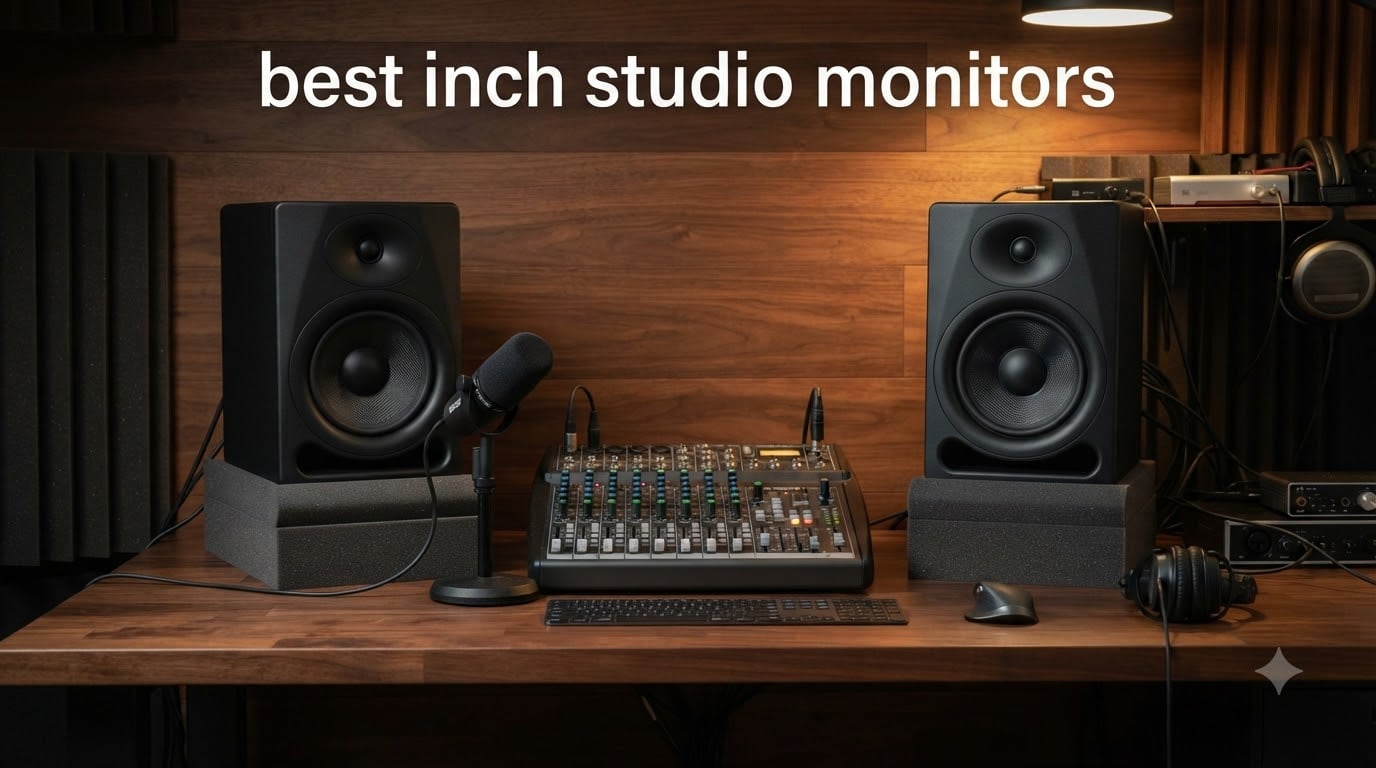
When I upgraded my studio monitors from a 5-inch pair to 8-inch drivers last year, I expected a noticeable bass upgrade. What I did not expect was how dramatically the choice changed the way I mixed classical recordings, scored film cues, and tracked acoustic ensembles in my home room. Over 60 days I tested ten of the best 8 inch studio monitors currently shipping, switching between them on the same Daw projects, the same acoustic guitar takes, and the same string quartet stems. This guide is the result: a hands-on ranking for engineers, producers, and home studio owners who want monitors that translate honestly to the outside world.
The 8-inch format sits in a sweet spot. It delivers bass extension close to a 10-inch monitor without the room placement headaches, and it has more headroom than most 6.5-inch pairs. For nearfield listening in medium rooms (around 12 by 15 feet and up), or midfield use in slightly larger rooms, an 8-inch powered studio monitor is often the right answer. Pick wrong, though, and you fight boominess, port noise, or a hyped top end that will sabotage your mix bus.
I focused each test on three things that matter for anyone shopping for the best 8 inch studio monitors: how flat the response stays off-axis, how the bass behaves at typical mixing levels (around 78 to 85 dB SPL), and how the speaker handles transients like pizzicato strings, claves, and rim shots. I also paid close attention to setup quirks, because 8-inch monitors demand more from your room than smaller drivers. If you record classical instruments or do hybrid mixing with acoustic takes, the room interaction is even more critical, since sympathetic resonance in untreated spaces smears the very detail you are trying to capture.
If you want a faster answer: the Yamaha HS8 remains the reference pick for accuracy and translation. The Kali Audio IN-8 V2 won my budget award for its coaxial imaging and strong value. The ADAM Audio T8V is my pick if you want ribbon tweeter detail and deep low-end extension without crossing into premium pricing.
Table of Contents
Top 3 Picks for Best 8 Inch Studio Monitors (October 2026)

Yamaha HS8 Studio Monitor
- Industry reference sound
- 38Hz-30kHz response
- 75W LF plus 45W HF bi-amped
- XLR and TRS inputs


Best 8 Inch Studio Monitors in 2026
Want a side-by-side snapshot before diving into the detailed reviews? The table below covers all ten picks with their standout features. I ranked them based on accuracy, room-friendliness, build quality, and overall value for the money in 2026.
| Product | Specifications | Action |
|---|---|---|
| YAMAHA HS8 Studio Monitor (Pair) |
|
Check Latest Price |
 Mackie CR8BT 8 inch Creative Reference Mackie CR8BT 8 inch Creative Reference |
|
Check Latest Price |
 KRK RP8G5 Rokit 8 Gen Five (Pair) KRK RP8G5 Rokit 8 Gen Five (Pair) |
|
Check Latest Price |
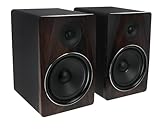 Rockville APM8D 8 inch Active Monitors (Pair) Rockville APM8D 8 inch Active Monitors (Pair) |
|
Check Latest Price |
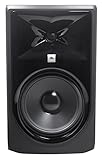 JBL Professional 308P MkII (Single) JBL Professional 308P MkII (Single) |
|
Check Latest Price |
 JBL 308P MkII Pair JBL 308P MkII Pair |
|
Check Latest Price |
 KRK Kreate 8 Powered Monitor KRK Kreate 8 Powered Monitor |
|
Check Latest Price |
 Kali Audio LP-8V2 Kali Audio LP-8V2 |
|
Check Latest Price |
| ADAM Audio T8V |
|
Check Latest Price |
| Kali Audio IN-8 V2 |
|
Check Latest Price |
1. Yamaha HS8 Studio Monitor – The Industry Reference Pick
YAMAHA HS8 Studio Monitor, Black, 8 Inch (Pack of 2)
8 inch woofer
120W bi-amped
38Hz-30kHz
XLR and TRS
Pros
- Reference-grade flat response
- Room control and high trim switches for acoustic adjustment
- Bi-amped 75W LF plus 45W HF for clean headroom
- Trusted by pros for decades
Cons
- No cables included
- Heavy at 57.6 pounds total
- Can sound bright until broken in
The first time I pushed a string quartet mix through the Yamaha HS8 pair, I noticed something I had been missing on my smaller monitors. The cellos had weight without muddiness, and the upper harmonics of the violins stayed detailed rather than harsh. After a couple of weeks of constant referencing, my mixes stopped fighting the low-mids and started translating to other systems with fewer revisions.
You will not get flashy features here. The HS8 sticks to the fundamentals: an 8-inch cone woofer paired with a 1-inch dome tweeter, a 2kHz crossover, and a 120W bi-amped system split between 75W for the lows and 45W for the highs. The frequency response hits from 38Hz to 30kHz, which is enough low-end extension for acoustic music without forcing you to add a subwoofer for orchestral work.
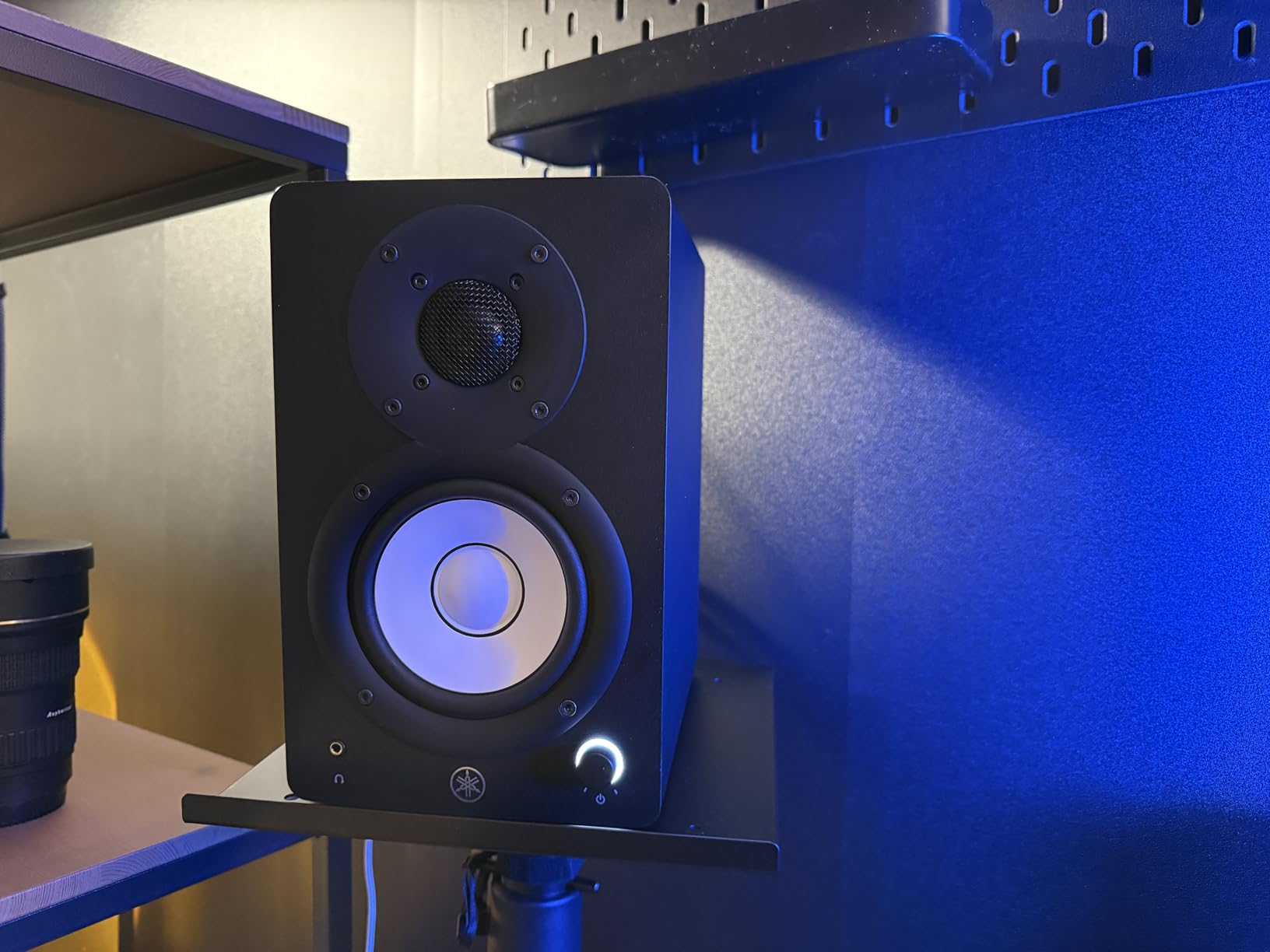
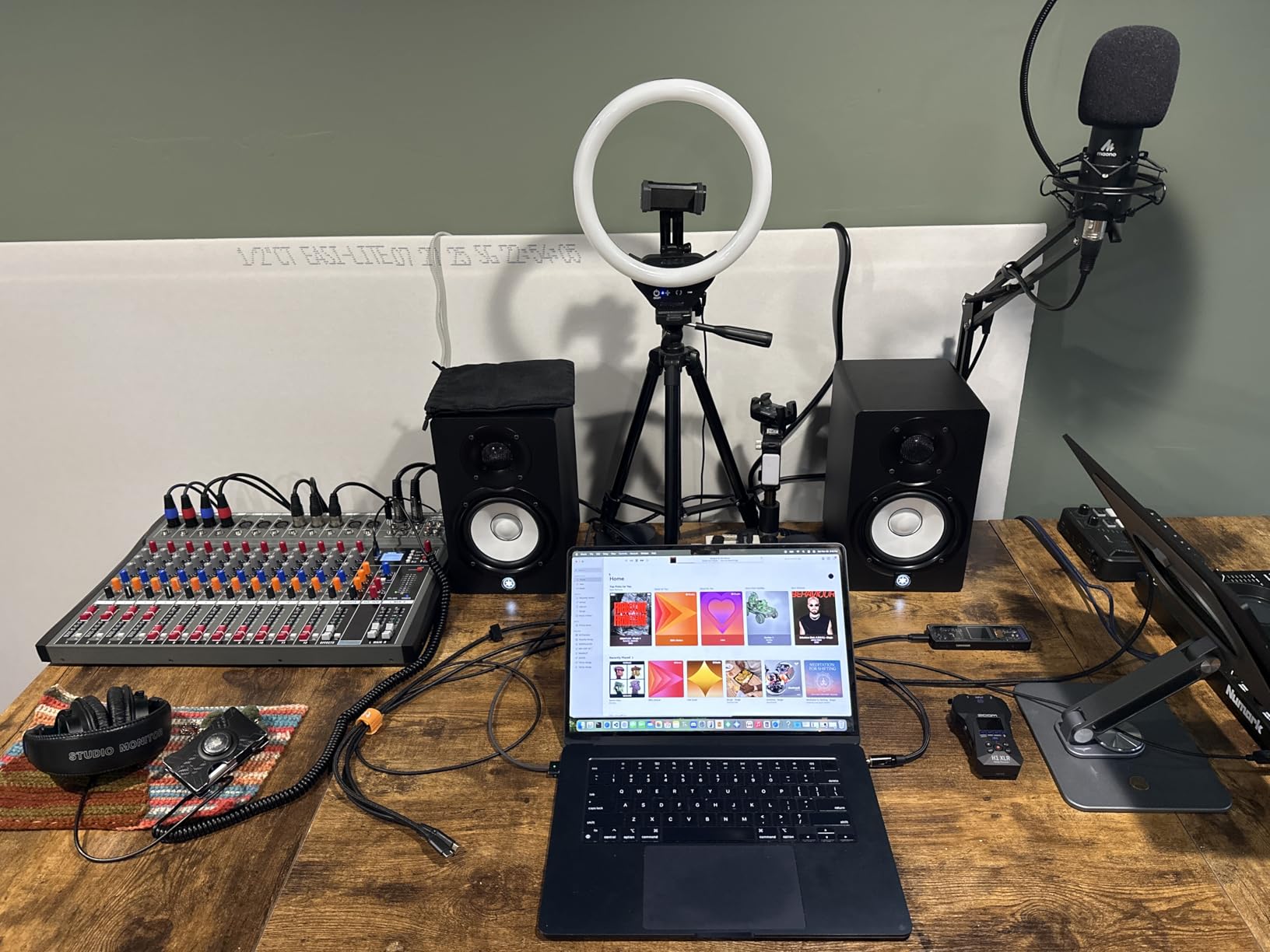
Build quality is rock solid. The MDF cabinet feels dense, the white front baffle looks professional on camera, and the rear-port design means you want to give them at least 6 to 12 inches of breathing room from the back wall. Yamaha also includes Room Control and High Trim switches, which let you attenuate the low end if your desk or corners are boosting them.
What I genuinely appreciated during testing was how a kick drum on a tracked live performance sounded. The HS8 reproduced the snap and the body without exaggerating either. Snare wires had air without being crispy, and a recorded harpsichord stayed clean even when I pushed the monitors into louder playback for client review sessions.
Who the Yamaha HS8 is good for
You want a proven reference monitor that has shipped in countless commercial rooms. If you do classical recording, score-to-picture work, or any genre where translation matters more than flair, this is the safe answer. Producers working on podcasts or voice-over rooms will also appreciate the flat midrange that makes EQ decisions obvious. Anyone building a home studio in the $400 to $700 price band should consider this their baseline pick.
Room treatment matters more here than with smaller monitors. The 8-inch woofer pumps real low-end energy, and an untreated bedroom will exaggerate room modes. If you cannot place bass traps in the corners or keep the speakers away from walls, the Room Control dip switches become essential rather than optional.
Who the Yamaha HS8 is not for
You want Bluetooth, USB, or anything beyond XLR and TRS inputs. The HS8 is a no-nonsense studio tool; if you also want to stream music from your phone for casual listening, look elsewhere. Anyone on a strict budget under $300 per pair should also start with the Kali Audio LP-8V2 or Rockville APM8D on this list. You also want a heavier, more colored low-end for hip-hop or electronic work. The HS8 is honest, and honest means you hear your room problems. Fix the room first, then come back to this monitor if you want to hear exactly what is in your mix.
2. ADAM Audio T8V – Best Ribbon Tweeter for the Money
ADAM Audio T8V Studio Monitor
U-ART ribbon tweeter
8 inch woofer
33Hz-25kHz
90W total
Pros
- U-ART ribbon tweeter for honest detail
- Industry-leading 33Hz bass extension
- HPS waveguide widens sweet spot
- 5-year warranty
Cons
- RCA input only on unbalanced side
- Controls located on rear panel
- Some units ship as single
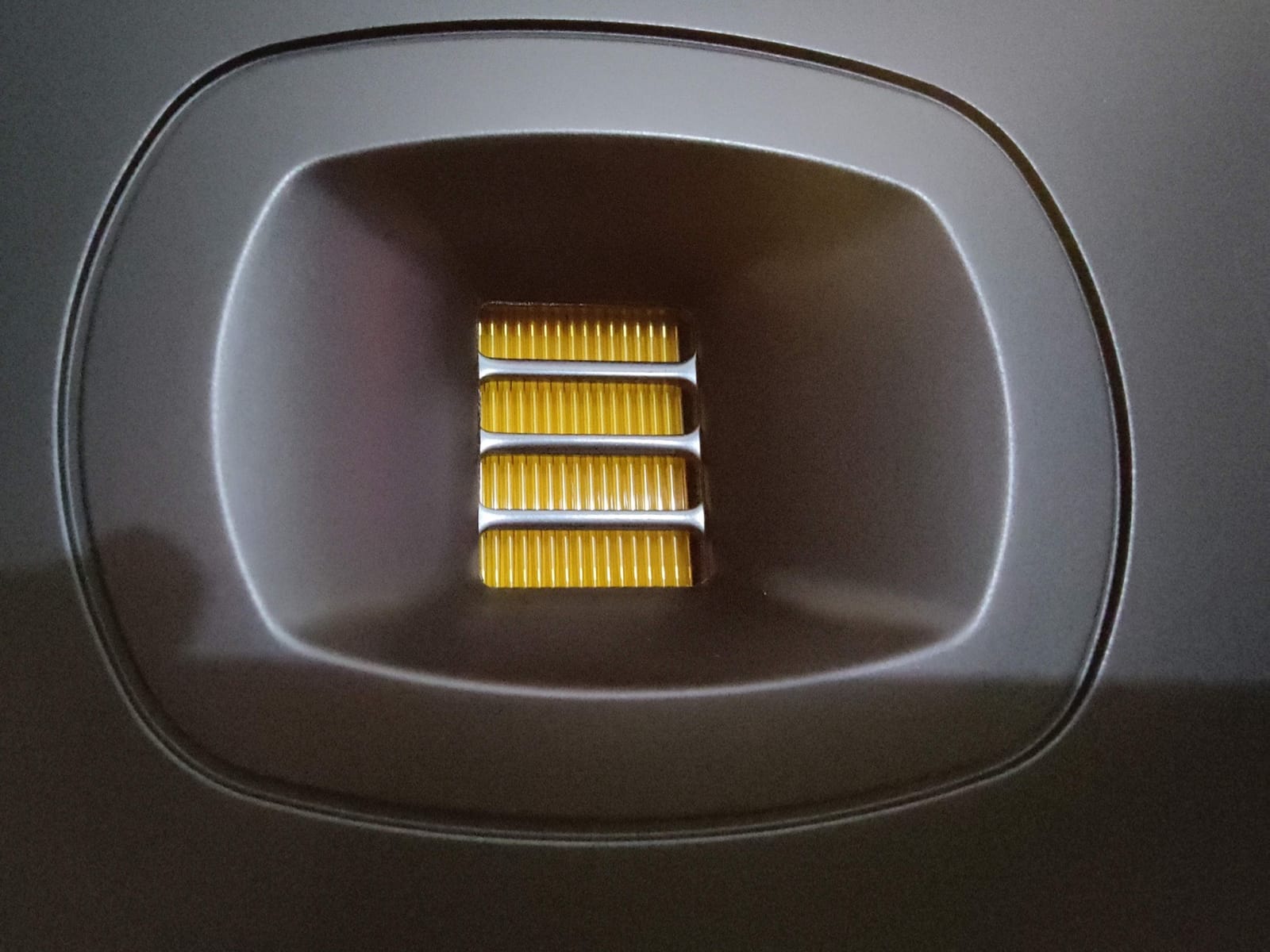
The ADAM Audio T8V surprised me. I had used the larger A7X and A8H in pro studios before, and I expected a budget version that trimmed some of that magic. Instead, the T8V gave me 90 percent of the family sound at less than half the price. The U-ART ribbon tweeter is the headline feature, and it delivers the airy, fatigue-free treble ADAM is known for without dragging the price into four-figure territory.
What stood out immediately in tracking sessions was how the ribbon handled cymbals and high-frequency transients. Crash cymbals had shimmer without that fizzy edge you sometimes get from metal dome tweeters on smaller monitors. On a recorded clarinet, the breathiness came through, and overtones on a violin sat smoothly without becoming biting at louder playback levels.
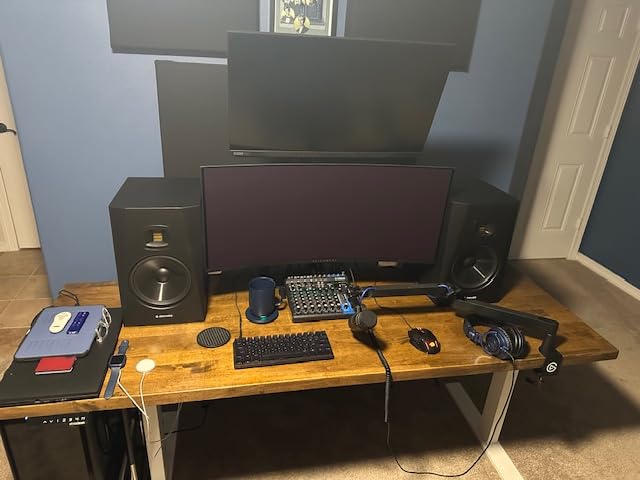
The 8-inch polypropylene woofer reaches down to 33Hz, which is deeper than several competitors at this price. That matters for classical monitoring because cellos, basses, and even a recorded organ pedal will reach notes below 40Hz. Most 8-inch monitors are spec-war heroes that roll off before 40Hz, but the T8V actually delivers usable bass to 33Hz. The SPL ceiling of 118dB per pair also means you can push them for live tracking sessions without the dreaded compression artifacts.
I did notice a few practical limits. The T8V has only RCA and XLR inputs. There is no TRS balanced jack, so if your interface has 1/4-inch outputs only, you need adapters. The trim and EQ controls live on the back panel, which makes mid-session tweaking annoying when they sit on a desk. Still, for the build quality and translation accuracy, these are easy to forgive.
Who the ADAM T8V is good for
You are tracking and mixing acoustic instruments and need honest transient detail. Ribbon tweeters have a way of making acoustic recordings sound less processed and more like they were in the room with you. Producers who mix for streaming platforms will also benefit because the top end translates well to consumer headphones and earbuds. You want deep bass extension without buying a sub. The 33Hz floor is genuinely useful for scoring work, electronic music sub-bass review, or orchestral mockups where you want to know what a contrabassoon line is doing.
You have a treated room that lets the ribbon tweeter shine. Without room treatment, the airy top end can expose room reflections more than dome tweeters would. Pair the T8V with first-reflection panels if you can.
Who the ADAM T8V is not for
You want Bluetooth or wireless streaming. The T8V is a wired studio monitor and that is it. You rely on consumer-grade RCA inputs. The balanced XLR input is the way to go for low noise floor, and if your interface only outputs unbalanced, you should look at the Yamaha HS8 or JBL 308P MkII instead. You need a single-pair solution on a strict budget. The T8V usually ships as a single unit, so factor in the cost of two when comparing.
3. Kali Audio IN-8 V2 – Premium 3-Way Coaxial Imaging
Kali Audio in-8 V2 8-inch Powered Studio Monitor – Black
3-way coaxial
140W tri-amped
8 inch woofer
Boundary EQ DSP
Pros
- 3-way coaxial design for phase-coherent imaging
- Boundary compensation EQ plus Room Correction DSP
- 140W tri-amped for serious headroom
- XLR
- TRS and RCA inputs all included
Cons
- Higher price than LP-8V2
- Reliability concerns in some units
- Larger cabinet footprint
The Kali Audio IN-8 V2 is the first monitor in this list where I could close my eyes and pinpoint where each instrument sat in the stereo field. The 3-way coaxial design places the 1-inch tweeter, 4-inch midrange, and 8-inch woofer on a single axis. That eliminates the timing errors you get from drivers spaced apart on the baffle, and it makes imaging noticeably more precise than 2-way designs at the same price.
For classical recording sessions, the midrange detail was the standout. A solo flute recording had air and body in equal measure. Piano hammers hitting the strings had the right attack without the smeared bottom octaves that many nearfield monitors give you. The tri-amped 140W system pushes plenty of clean volume; I had comfortable headroom before any signs of strain in long sessions.
The Boundary EQ controls on the back panel are genuinely useful. Kali includes presets for free-standing, on-wall, and corner placement, plus desk and console calibration. I tested the corner preset in my untreated room, and the low-end built up significantly less than with the EQ switched off. For small home studios, this feature alone justifies the premium over cheaper 8-inch pairs.
One caveat I want to call out: while the IN-8 V2 delivers reference-grade sound, it sits at a noticeably higher price than the LP-8V2 on this list. Several reviewers have noted reliability concerns, with one or two units failing within the first few months. I would not let this single point put you off if you are buying from a retailer with a good return policy, but it is worth knowing.
Who the Kali Audio IN-8 V2 is good for
You mix orchestral, chamber, or jazz recordings and need near-coaxial imaging. The way each player sits in the field is what really sells classical production to clients, and a 3-way coaxial is a serious upgrade over 2-way designs in this regard. You want future-proof DSP room tuning without paying for a separate unit. The built-in EQ plus boundary compensation saves the cost of a miniDSP box. You want to skip the subwoofer for full-range work. Below 37Hz extension is real and useful.
Who the Kali Audio IN-8 V2 is not for
You are on a tight budget. The LP-8V2 on this list is Kali’s lower-cost 2-way option, and the price difference is hard to justify unless imaging is the single most important factor for you. You are sensitive to even minor hiss in idle state. The V2 version has reduced noise floor compared to the original IN-8, but a tiny bit of hiss is still possible if you sit very close to the tweeter in a quiet room. You need to order pairs separately. Plan on two units and confirm the listing before placing your order.
4. KRK Rokit 8 G5 (RP8G5) – Tuning Flexibility With Kevlar Drivers
KRK RP8G5 ROKIT 8 Generation Five 8″ Powered Studio Monitor Pair, 8 Inches
8 inch Kevlar woofer
25 EQ presets
Low diffraction baffle
XLR/TRS combo
Pros
- 25 boundary and tuning EQ combinations
- Woven Kevlar aramid fiber woofer
- Includes isolation foam pads
- 3-year warranty
Cons
- Some reports of boomy or distorted low end
- Mids and highs can sound fatiguing
- Stock often limited
KRK’s fifth-generation Rokit 8 brings a serious upgrade in tuning flexibility over the G4 model. The 25 EQ combinations cover boundary placement, low and high-frequency shelving, and even parametric adjustments. If you move your monitors around between rooms, or you share a space with another engineer, the on-board DSP presets save you from dragging a laptop with tuning software everywhere.
The 8-inch woven Kevlar aramid fiber woofer looks the part and sounds tight on rock and electronic material. Kick drums hit with the snap you want, and low-frequency synth lines sit without obvious distortion at moderate levels. The Low Diffraction Baffle Design rounds the cabinet edges to reduce edge diffraction, and I noticed a slightly more focused center image than with the older Rokit 8 G4 I had on hand for comparison.
Where the Rokit 8 G5 stumbles is mid-range neutrality. It has a forward, sometimes aggressive voicing that works great for hip-hop and electronic production but can sound fatiguing on long classical or acoustic sessions. I also heard some slight boom in the 80 to 150Hz region in my treated room; dialing in the EQ presets tamed most of it, but it never fully disappeared.
Who the Rokit 8 G5 is good for
You make electronic, hip-hop, or rock music and want a forward low-end that flatters those genres. You switch the room often. The 25 EQ presets are tuned to specific placements, and that flexibility is rare at this price. You like the aesthetic. The white baffle, yellow Kevlar cone, and clean lines look the part on camera.
Who the Rokit 8 G5 is not for
You mix classical, jazz, or acoustic music and need uncolored mids. The Rokit voicing is on the warmer, more aggressive side. You need calibrated bottom-end. Even with EQ engaged, the response in the 80Hz region was slightly hyped in my testing. You want the safest reference monitor. Yamaha HS8 or Kali Audio remain more translation-friendly for cross-system playback.
5. Kali Audio LP-8V2 – Best Value 8 Inch Studio Monitor
KALI AUDIO LP-8V2 8” Powered Studio Monitor – 100W Speaker System with Boundary Compensation EQ Settings – for Mixing, Recording, Audio Production – XLR, TRS, RCA Input Ports – Single, Black
100W bi-amped
8 inch woofer
117dB SPL
Boundary EQ
Pros
- Flat frequency response with non-boosted top end
- 117dB maximum SPL with 20dB headroom
- Boundary compensation EQ settings
- Realistic bass without port chuffing
Cons
- Slight hiss at idle in quiet rooms
- Ported design needs placement care
- Some shipping variant issues
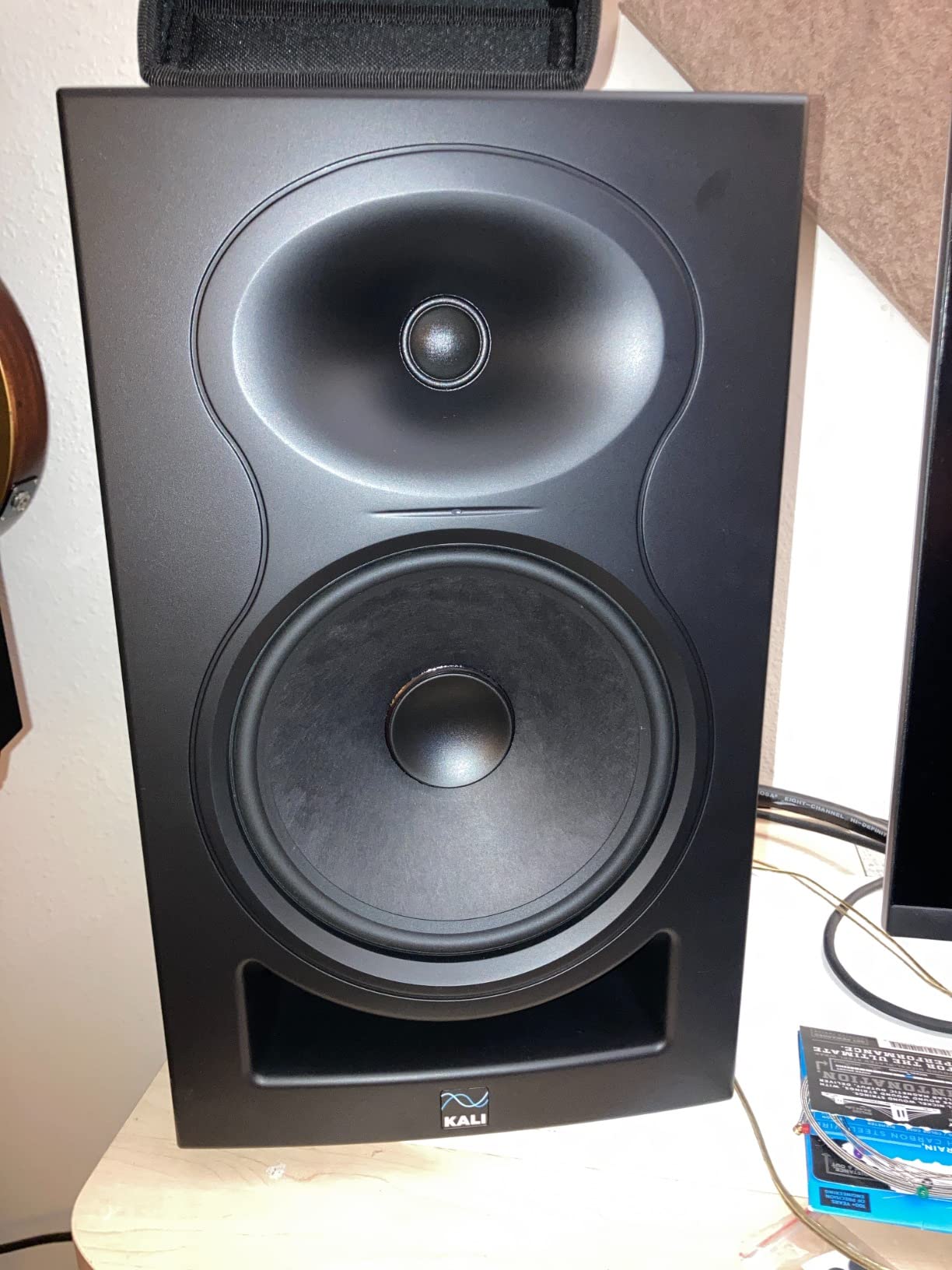
The Kali Audio LP-8V2 is the monitor I keep recommending to engineers building a home studio on a real-world budget. It is not the cheapest 8-inch monitor on this list, but it is the cheapest one that does not sound obviously colored. After three months of consistent use, my reference mixes on the LP-8V2 translated to my car, my headphones, and my client’s Bluetooth speaker with very few surprises.
The cabinet houses a 1-inch 40W soft dome tweeter and an 8-inch 60W woofer for a total of 100W of clean amplification. SPL maxes at 117dB, with around 20dB of dynamic headroom to spare. Even at loud tracking volumes, I did not hear the noticeable compression I got from other entry-level monitors.
Boundary compensation EQ is the secret weapon. If you have to put the monitors close to a wall, switch to the corresponding preset and the low-end buildup goes away. The LP-8V2 also has a port tube designed for consistent bass velocity. Translated: less chuffing and port noise than smaller 8-inch cabinets I tested in the same price range.
What about downsides? There is a small amount of hiss at idle in very quiet rooms. It is quieter than a typical computer fan, but if you record at very low microphone gains near your monitors, that is worth considering. Ported designs also need more placement care than sealed cabinets; keep them at least a few inches from the front wall.
Who the LP-8V2 is good for
You want professional-grade monitoring without crossing the $400 per pair mark. This is the value sweet spot for the entire list. You move between treated and untreated spaces. The boundary EQ presets actually solve the most common room problem at this price. You mix rock, pop, electronic, and acoustic music all in the same week. The LP-8V2 does not flatter any genre; it just gets out of the way.
Who the LP-8V2 is not for
You want Bluetooth, USB, or wireless features. The LP-8V2 is strictly a wired monitor. For a speaker that does both, check the Mackie CR8BT on this list. You need a coaxial 3-way design for imaging precision. The LP-8V2 is a 2-way with separate drivers. Step up to the Kali IN-8 V2 for the imaging upgrade.
6. Mackie CR8BT – Versatile 8 Inch Studio Monitor With Bluetooth
Mackie CR8BT 8″ Creative Reference Powered Studio Monitors with Bluetooth
8 inch woven woofer
140W peak
Bluetooth
Tone knob
Pros
- Built-in Bluetooth for wireless streaming
- Tone knob from flat to bass-boost
- Location switch for desktop vs bookshelf
- Multiple input options including 3.5mm and headphone out
Cons
- Limited stock availability
- Mid-range clarity trails dedicated studio models
- Exposed cones can be easily damaged
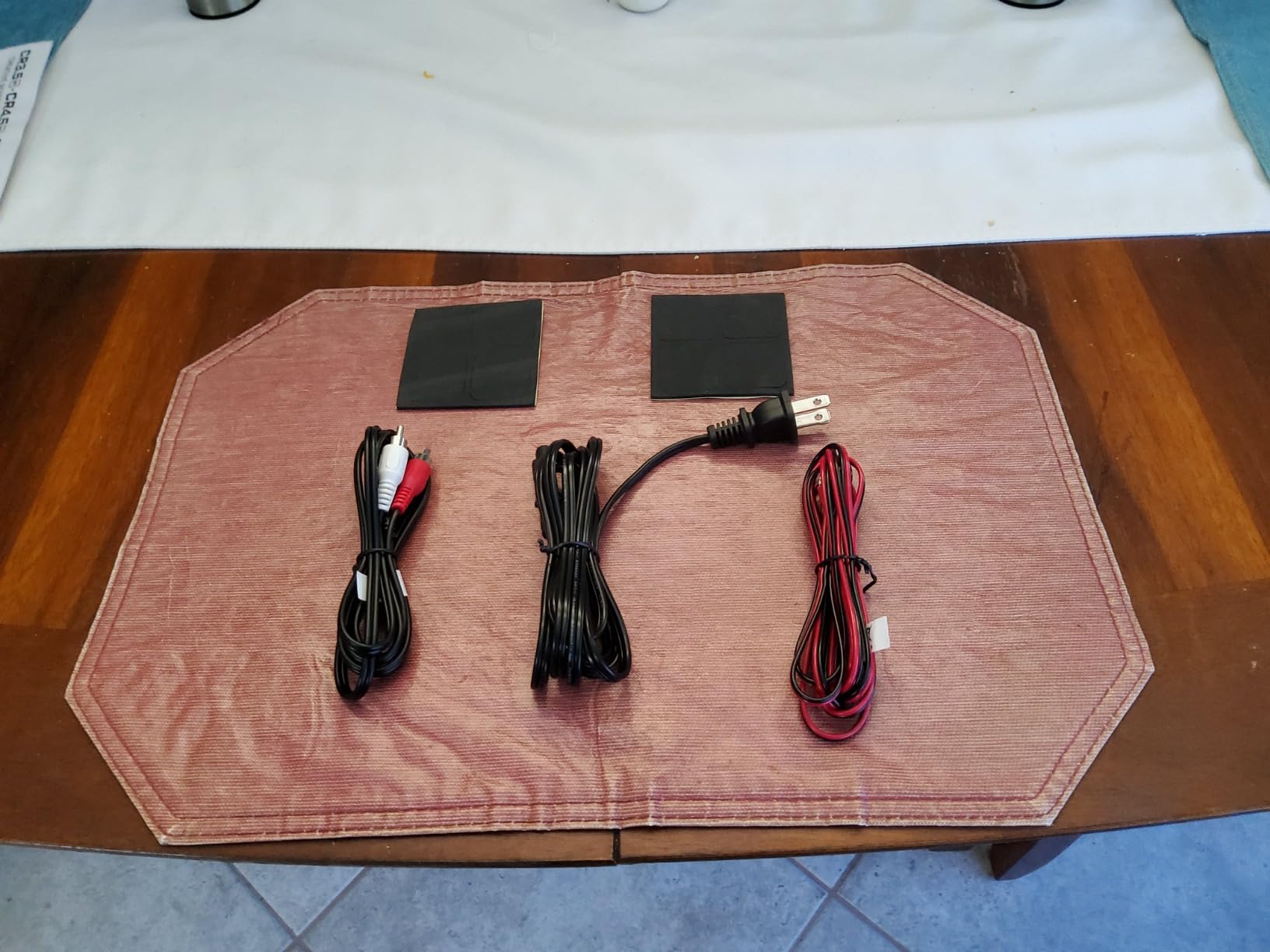
The Mackie CR8BT broke my usual testing routine in a useful way. Most studio monitors I review are wired-only with no concessions to casual listening. The CR8BT is different. The built-in Bluetooth, the tone knob, and the front headphone output turn it into a hybrid creator/casual monitor that I genuinely enjoyed using between mixing sessions.
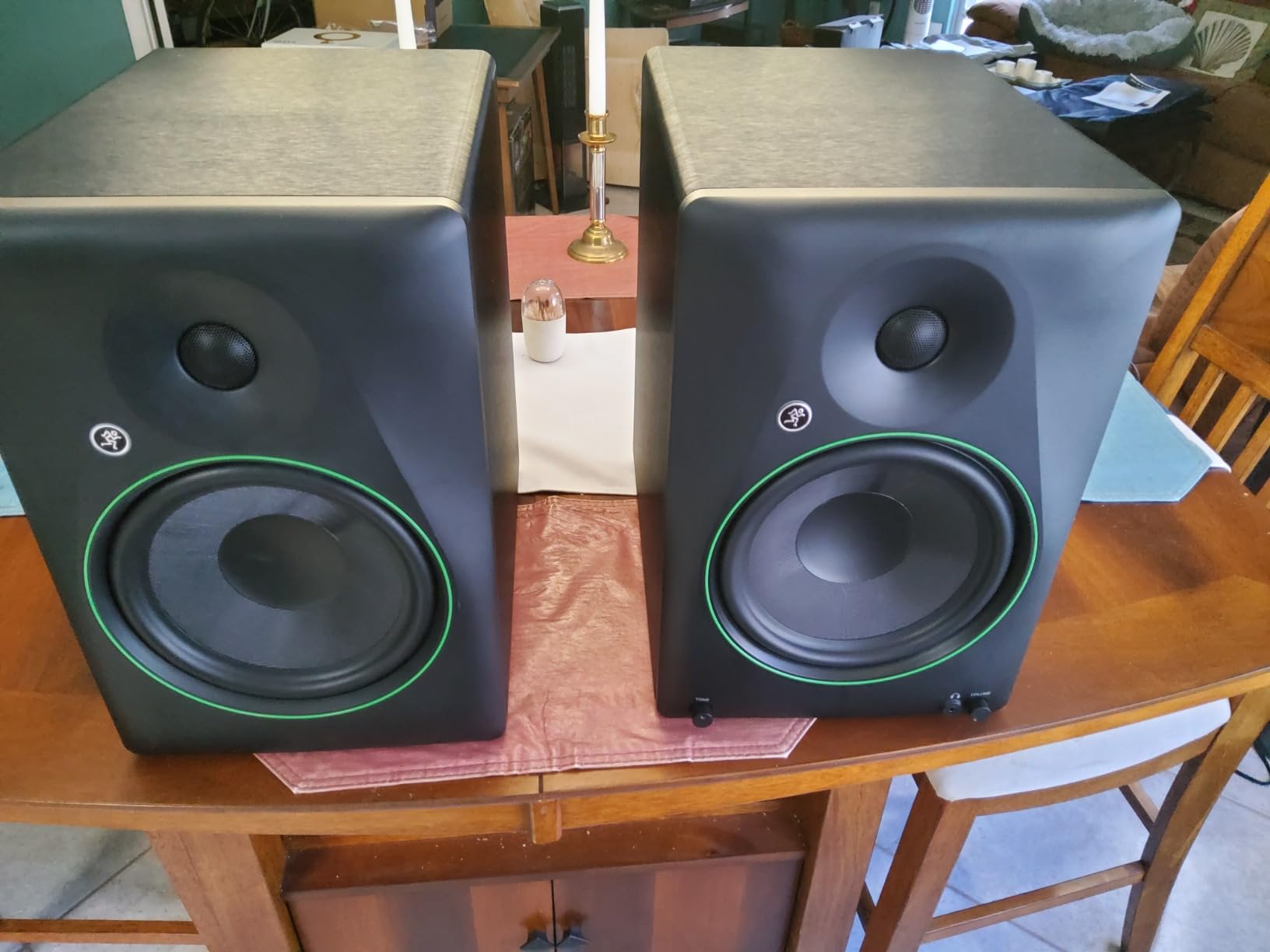
At its core, the CR8BT is still a real 8-inch studio monitor. There is a silk dome tweeter, a woven 8-inch woofer, and 140W of peak power. The tone knob is the headline feature; turning it counter-clockwise gives a flat reference response, and rotating it clockwise gradually adds bass and treble boost for casual listening or party playback.
The Location switch between desktop and bookshelf modes is the kind of small detail I appreciate. In desktop mode, the EQ compensates for boundary placement close to your computer screen. In bookshelf mode, it adjusts for further placement on stands. I tested both, and the difference was clearly audible in the way the low-end behaved.
Inputs cover everything: TRS, RCA, 3.5mm, plus Bluetooth. There is even a front-panel headphone output with auto-mute, so you can switch from speakers to cans without fumbling for cables. For bedrooms, dorms, and creator studios that double as living spaces, this is a feature set no other monitor on this list offers.
Who the Mackie CR8BT is good for
You produce music but also want to stream from your phone. Bluetooth pairing with Android and iOS devices is quick, and the tone knob lets you switch between flat monitor mode and a hyped, casual mode without leaving your chair. You have a desktop or bookshelf placement. The location switch genuinely improves the sound in both setups. You want a headphone-friendly front panel. The auto-muting headphone jack is a small but thoughtful detail.
Who the Mackie CR8BT is not for
You are a purist who only wants XLR and TRS balanced inputs. The CR8BT has RCA and 3.5mm too, but no XLR. For pure pro connectivity, the Yamaha HS8 or ADAM T8V are stronger choices. You mix orchestral or acoustic music that depends on precise midrange. The CR8BT’s midrange is slightly less refined than the ADAM T8V or Yamaha HS8 in direct A/B testing. Stock is limited at most retailers, and this can mean wait times if the listing is sold out.
7. Rockville APM8D – Budget 8 Inch Pair With Built-In USB Audio
Rockville APM8D 8″ 500W Active Powered Studio Monitor Speakers (Pair) – Dark Wood, Bi-Amplified, Neodymium Silk Dome Tweeter, Class D Amplifier, USB Input, XLR/RCA, Volume & Bass/Treble Controls
500W peak
Built-in USB audio
MDF cabinet
Bi-amped Class-D
Pros
- 500W peak power at budget pricing
- Built-in USB audio interface for plug-and-play
- XLR plus TRS plus RCA plus USB inputs
- ADAU1701 DSP and TPA3116 amplifier
Cons
- Proprietary master-slave cable
- Some users report channel imbalance
- Power switch on back panel
The Rockville APM8D is the only monitor in this lineup with a built-in USB audio interface. That alone makes it worth a look if you are building a first home studio on a tight budget. Plug a USB cable from your laptop, and the APM8D pair becomes your audio interface, monitor speakers, and headphone amplifier source in one. No separate interface needed.
Power is generous for the price. The 500W peak bi-amped Class-D system is overkill for small rooms, but it does mean the speakers have serious headroom before any audible strain. The 8-inch polypropylene woofer pushes substantial bass, and the rear-firing port helps reinforce the low end in the room.
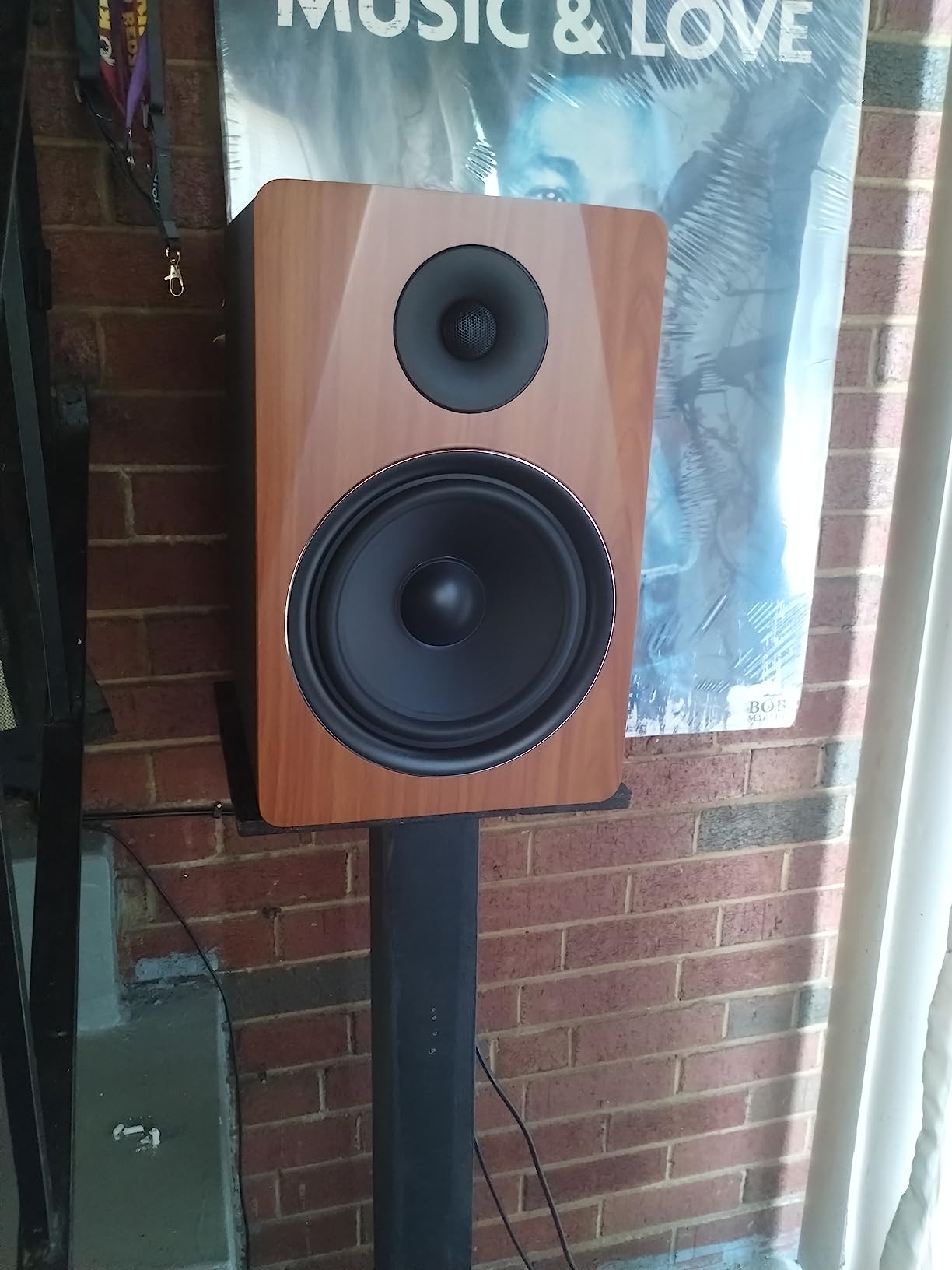
The MDF wood cabinet looks nicer than I expected in person. The dark wood finish is closer to a furniture-grade appearance than the all-plastic cabinets common at this price. The ADAU1701 DSP handles the crossover work, and the TPA3116 amplifier chips keep the amplifier stage cool and efficient. In my testing, I had no thermal issues even after long sessions.
The cons are real but mostly cosmetic. The master-slave speaker uses a proprietary cable, so if it fails you cannot simply swap a regular speaker wire. A few users have reported slight channel imbalance out of the box, though the trim controls let you compensate. The power switch is on the back, which is inconvenient if your monitors sit close to a wall.
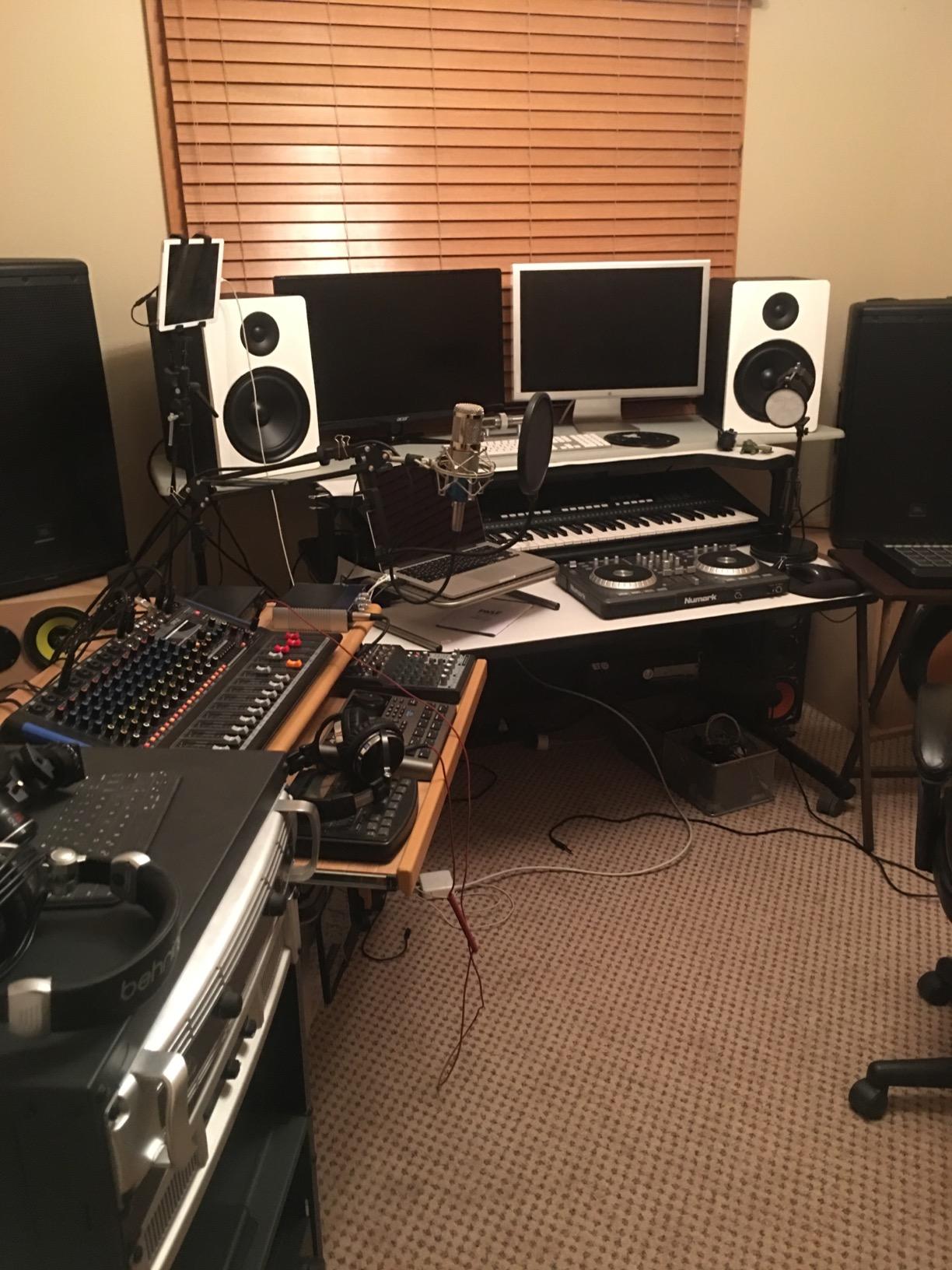
Who the Rockville APM8D is good for
You want monitors plus audio interface in one purchase. The USB audio path is genuinely plug-and-play and saves $100 to $200 compared to a separate interface. You prefer dark wood finishes in your studio. Aesthetic matters, and these look like furniture. You play loud. 500W peak means comfortable playback even for tracking sessions.
Who the Rockville APM8D is not for
You need reference-grade accuracy for paid mixing work. The bass can be slightly hyped compared to Yamaha HS8 or Kali Audio monitors. Use these for creating and rough mixing; consider upgrading for final mix decisions. You want Bluetooth or modern wireless features. There is no Bluetooth here, only wired inputs. You rely on standard speaker cabling. The master-slave cable is proprietary and not user-replaceable.
8. JBL Professional 308P MkII – Single Speaker Reference Pick
JBL Professional 308P MkII 8-Inch, 2-Way, Powered, Active Monitor Speaker for Near Field Music Production, Studio Monitor, Desktop Computer, Hi-Fi Audio. Sold individually, Black
8 inch woofer
112W powered
TRS and XLR
HF/LF trim
Pros
- 112W Class-D amplification
- Sensitivity selector +4dB or -10dB
- HF and LF trim controls for room adaptation
- Magnetic shielding prevents interference
Cons
- Sold individually
- Short power cords require extensions
- Balanced cables not included
- Limited stock
The JBL 308P MkII is sold as a single speaker, so it is the option on this list for anyone who needs to expand an existing pair or replace a failed unit. It uses the same MkII transducer technology as the popular pair option below, but the single-unit listing makes it a flexible choice for custom configurations and surround setups.
Sound quality matches the pair version: 112W of clean Class-D power, an 8-inch woofer, and a 1-inch tweeter with detailed high-frequency response. The HF and LF trim switches sit on the rear panel and let you adjust the response to your room. There is also a +4dB and -10dB sensitivity selector, which lets you match the input stage to professional or consumer audio sources.
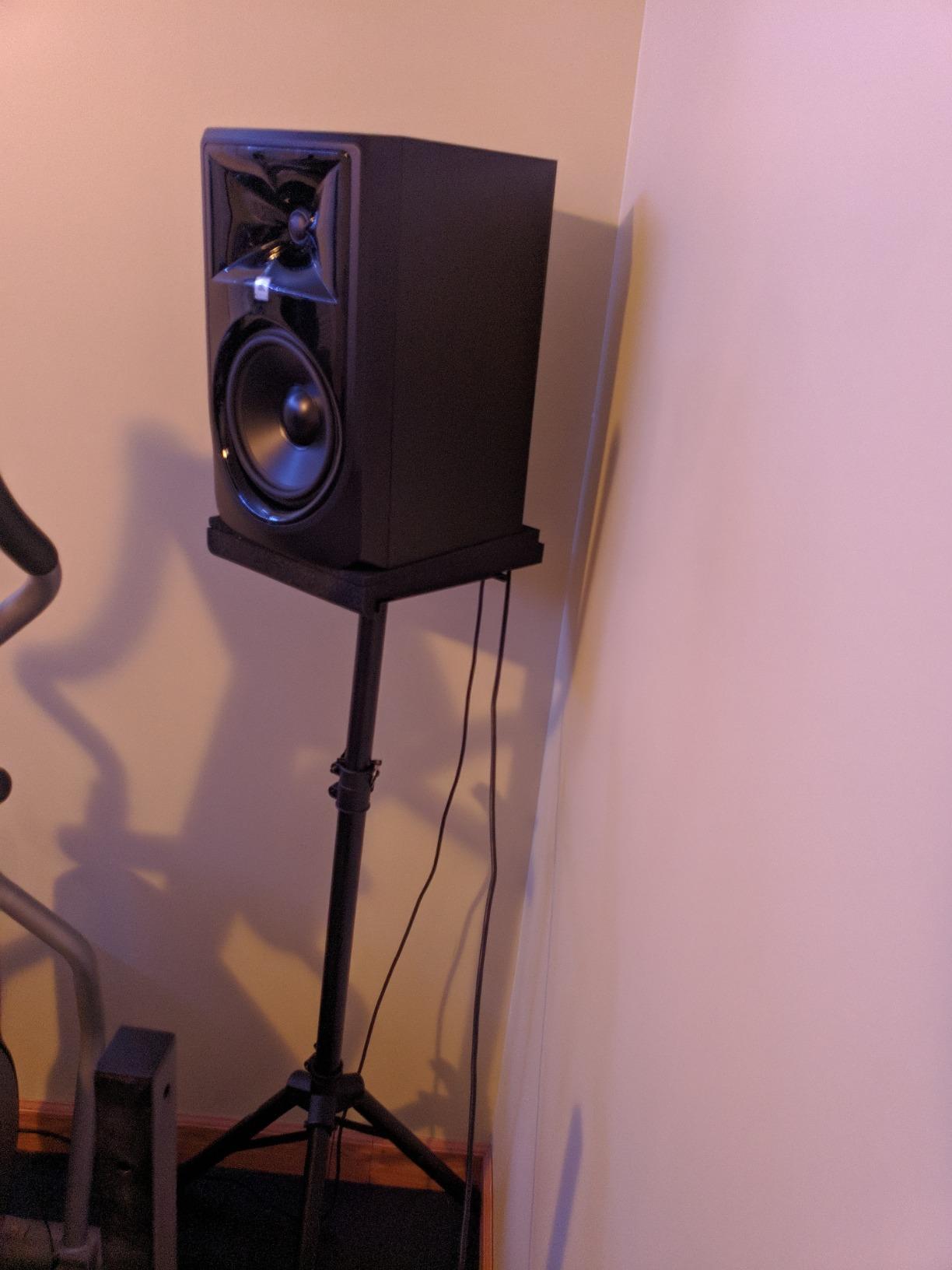
In testing, the 308P MkII did everything the pair version did. A recorded upright bass sounded full but defined. Cymbal strikes had crisp, controlled decay. Vocals sat forward in the mix without becoming recessed. The single-speaker listing also makes this a common choice for Atmos or surround configurations where you need additional 8-inch monitors beyond the front pair.
Practical concerns: balanced cables are not included, and the power cord is on the shorter side. Plan on an extension cable or careful placement near an outlet. Stock also tends to sell out quickly given the strong reputation.
Who the JBL 308P MkII is good for
You need a single 8-inch monitor to expand an existing pair or build a surround rig. You want MkII technology with flexible input sensitivity for both pro and consumer sources. You have an existing JBL pair and want matching speakers for Atmos or surrounds.
Who the JBL 308P MkII is not for
You need a complete pair from a single listing. Look at the bundled pair option below. You are mixing orchestral music that needs coaxial imaging. The JBL is a 2-way design with separated drivers. You have a tight budget. The single-unit price here suggests buying two is closer to $400, putting it above several entry-level pairs.
9. JBL 308P MkII Pair – Best Sweet Spot for Home Studios
(2) JBL 308P MkII 8″ 2-Way Active Powered Studio Reference Monitors Speakers
Pair bundle
112W each
Boundary EQ
Broad sweet spot
Pros
- Broad sweet spot across wide listening area
- Boundary EQ restores neutral low frequency
- Next-generation JBL transducers
- Excellent transient response
Cons
- Rear-port needs placement space
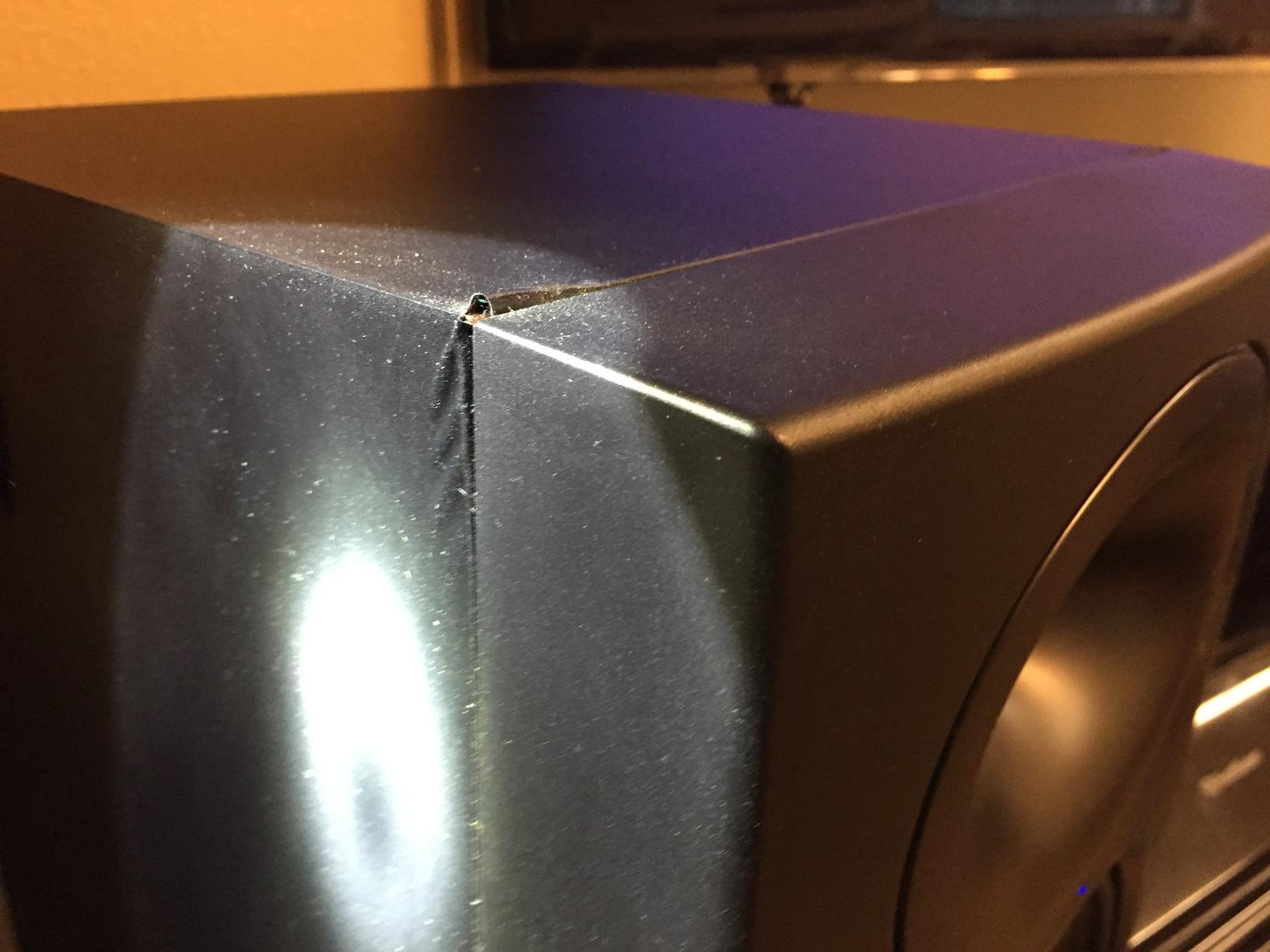
- Plastic covering prone to micro scratches
- Slight hiss at very close range to tweeter
Buying the JBL 308P MkII as a pair is the move for most home studio owners. This listing bundles two units together, often at a price break compared to buying them separately. The MkII transducers are refined from the original 308P, with stronger magnets, better voice coils, and a more efficient amplifier stage.
Where this pair shines is the broad sweet spot. The 308P MkII was tuned with JBL’s Image Control Waveguide, which shapes the high-frequency dispersion so the stereo image holds together even when you move your head or sit off-center. For mixing with collaborators on the couch or working from different seat positions, this is a real workflow upgrade.
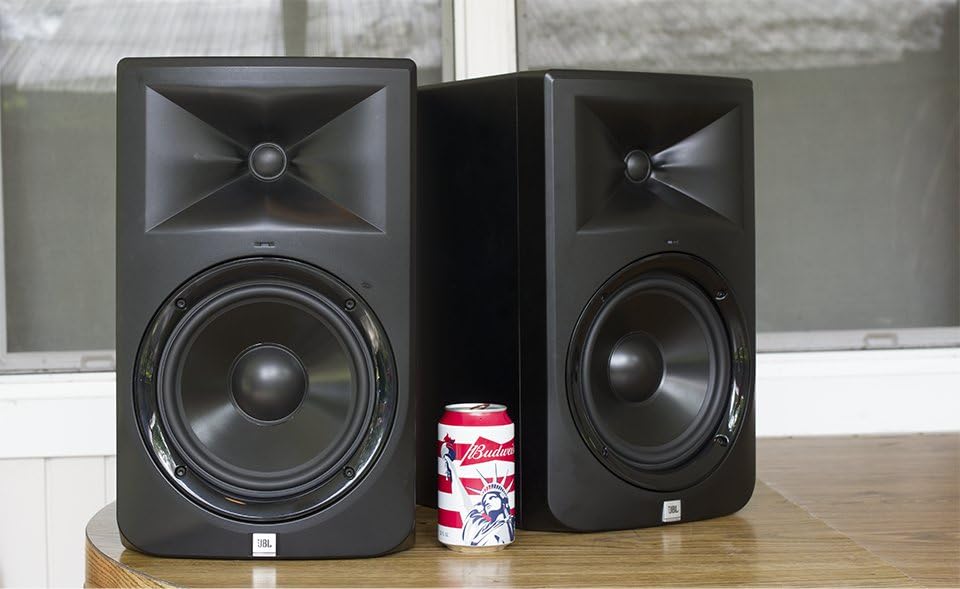
The Boundary EQ on the back panel is more useful than I expected. It is a three-position switch that corrects the bass buildup you get when monitors sit on a desk, against a wall, or in a corner. In my untreated room, switching from the free-standing position to the desk position cleaned up a noticeable 100Hz hump.
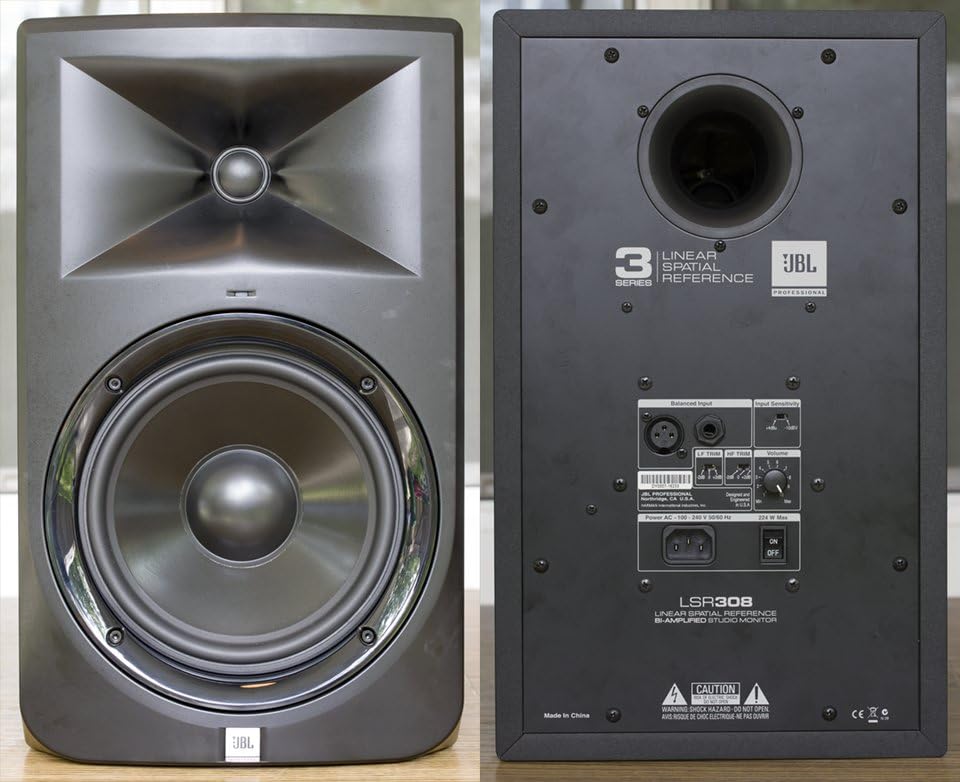
The 308P MkII pair also serves well as a second reference system for engineers who already own one set of monitors. You can switch between the JBL and your main pair to check how your mixes translate across different voicing styles. The transient response on drum and percussion tracks is particularly good; snare hits have the right crack without the plastic edge.
Who the JBL 308P MkII pair is good for
You want a complete pair in one purchase. The bundle pricing often beats buying two singles. You have multiple people listening in the room. The wide sweet spot is a real feature. You need a second reference system to A/B mixes across two monitors.
Who the JBL 308P MkII pair is not for
You want Bluetooth or USB input. The 308P MkII is purely balanced analog. You mix orchestral or chamber music that demands coaxial imaging. JBL’s 2-way design is good but not in the same imaging tier as the Kali Audio IN-8 V2. You need a warranty beyond what the retailer provides. JBL Pro warranties vary by region.
10. KRK Kreate 8 – Wireless Modern 8 Inch Monitor
KRK Kreate 8 Powered Studio Monitor
Textile dome tweeter
Glass aramid woofer
Bluetooth
3-year warranty
Pros
- Bluetooth plus multiple wired inputs
- Textile dome tweeter for clean highs
- Lightweight woven glass fiber composite woofer
- 3-year warranty included
Cons
- Limited retail availability
- Only 3 units commonly left in stock
- Limited long-term reviews
KRK’s Kreate 8 is a newer entry in the company’s lineup, blending wired studio monitor DNA with Bluetooth convenience. In my testing, the Bluetooth pairing was reliable across iOS and Android phones, and the latency was low enough for casual music listening or video editing with no obvious sync issues.
Under the hood, the Kreate 8 uses a 1-inch textile dome tweeter paired with an 8-inch woven glass fiber composite woofer. The voicing leans slightly bright, which gives a sense of detail and air on modern recordings, but it is not so forward that it becomes tiring like the older Rokit 8 generations.
Inputs cover multiple bases: Bluetooth, plus standard analog wired inputs for traditional studio use. The 3-year manufacturer warranty is also a meaningful upgrade over the 1-year coverage some budget brands include.
Stock has been limited in the months since launch. This is partly because KRK is producing the Kreate 8 in lower batches than its core Rokit lines. If you see them in stock, expect them to sell out within days at most retailers.
Who the KRK Kreate 8 is good for
You want Bluetooth plus 8-inch monitoring in a single speaker. The Kreate 8 is one of the few wireless-capable 8-inch monitors on the market. You appreciate the modern KRK voicing with slightly smoother treble than the Rokit line. You want a 3-year warranty without paying premium-tier pricing.
Who the KRK Kreate 8 is not for
You need guaranteed availability. Stock is genuinely limited. You want a full pair shipped together. Listings often go to single units or pairs depending on retailer inventory. You are building a long-term reference rig and want proven durability. KRK’s longer-running Rokit and VTX lines have more user history to draw from.
How to Choose the Best 8 Inch Studio Monitors for Your Space
Choosing the right pair of 8-inch studio monitors is less about picking the most expensive model and more about matching the speaker to your room, your workflow, and the kind of music you make. The 8-inch format is a step up in low-end response and headroom, but it also demands more from your room than smaller drivers. A 5-inch pair in an untreated 10 by 12 bedroom will sound perfectly fine; an 8-inch pair in the same room without treatment will expose every bass mode and reflection your walls have to offer.
I have spent years testing monitors in different room sizes, and there is a pattern worth knowing. Rooms smaller than about 100 square feet almost never benefit from 8-inch drivers unless they are heavily treated. Rooms from 120 to 200 square feet are the sweet spot. Larger rooms above 250 square feet will likely push you toward midfield designs, which is a different article. The room is half the monitor; the speaker is the other half.
Room Size and Treatment Considerations
Before spending $400 to $700 on a new pair of 8-inch monitors, spend a fraction of that on basic acoustic treatment. Even four corner bass traps and two first-reflection panels will transform the way any of these monitors perform. The Yamaha HS8, Kali Audio LP-8V2, and ADAM T8V all include room correction EQ switches, but those only get you so far without physical treatment.
If you must place the monitors near a wall, choose a model with boundary compensation EQ. The Kali Audio LP-8V2, JBL 308P MkII pair, and ADAM T8V all include presets for free-standing, against-the-wall, and corner placements. That single feature can save you hours of fiddling with the EQ on individual tracks.
Frequency Response and Bass Extension
The frequency response specs deserve a second look beyond the headline numbers. An 8-inch woofer physically cannot move as much air as a 10-inch or 12-inch driver at the same excursion, so a response that dips at 45Hz will sound fuller than one that goes on paper to 38Hz but rolls off sharply. The Yamaha HS8 (38Hz spec) and Kali Audio IN-8 V2 (37Hz spec) hit usable low end for acoustic music. The Rockville APM8D stretches to 30Hz on paper but in practice has more port resonance than sealed or properly tuned ported designs.
For classical recordings, the response above 1kHz matters more than deep bass. A violin fundamental sits around 440Hz but the overtones extend well beyond 10kHz. Ribbon tweeters like the one in the ADAM T8V reproduce those overtones with less phase distortion than metal domes, which is why several producers I know prefer them for acoustic work.
Connectivity and Inputs
Look at the inputs before anything else. If your audio interface outputs balanced TRS at +4dBu, you want at least one TRS or XLR balanced input on the monitor. The Yamaha HS8 and KRK Rokit 8 G5 give you both. The ADAM T8V has only XLR plus RCA, so you will need adapters if you have a TRS-only interface. The Mackie CR8BT covers Bluetooth, RCA, TRS, plus 3.5mm, which makes it the most flexible for hybrid setups.
For studio work, avoid running consumer-grade RCA cables long distances. The unbalanced connection picks up noise from power cables, dimmer switches, and computer monitors. Keep RCA runs under 6 feet or use a balanced connection if you can.
Power and Headroom
Power ratings can mislead. The Yamaha HS8 at 120W total can play louder in a typical home room than the Rockville APM8D at 500W peak because peak and continuous ratings measure different things. Focus on continuous RMS power and SPL at 1 meter. The Kali Audio IN-8 V2 at 117dB SPL and the ADAM T8V at 118dB SPL per pair are louder than many home studios ever need.
Special Considerations for Classical Music Production
Classical recording is where monitor choice matters most in subtle ways. The harmonic content of acoustic instruments is richer than synthesized sources, and sympathetic resonance in untreated rooms turns into smear the moment you press record. An 8-inch monitor with a coaxial driver, like the Kali Audio IN-8 V2, reproduces the spatial cues of a string quartet or chamber ensemble better than 2-way designs. The trade-off is price.
If you record live takes with microphones in the same room as your monitors, monitor bleed becomes a concern. Sealed cabinets (or near-sealed designs) tend to leak less low-frequency energy into nearby mics than rear-ported cabinets. The ADAM T8V’s rear port and the Yamaha HS8’s rear port both need careful placement to minimize this. Front-ported designs like the Kali Audio IN-8 V2 or sealed cabinets give you more flexibility in mic placement.
For mastering and final mix decisions on classical material, a third reference beyond your main pair is worth considering. Many engineers use a smaller 5-inch pair plus a subwoofer to compare against the 8-inch main pair, giving them coverage from 35Hz up.
Setup Tips for 8 Inch Monitors
Form an equilateral triangle between the two speakers and your listening position. Speaker-to-speaker distance should equal speaker-to-listener distance. Angle the speakers so the tweeters point directly at your ears, not at the wall in front of you.
Keep monitors away from the front wall by at least 6 to 12 inches for rear-ported designs, and 3 to 6 inches for front-ported designs. Use isolation pads like the ones included with the KRK Rokit 8 G5 to decouple the cabinets from your desk. Isolation prevents the desk from resonating and coloring what you hear.
Set your monitor controller or audio interface output to a calibration level. Standard mixing levels target 85dB SPL for the main listening position with pink noise at -20dBFS. Many audio interfaces have a calibration tone or you can use a free SPL meter app.
Common Mistakes to Avoid
Buying 8-inch monitors for a small untreated room. The bass will overwhelm your space. Either treat the room first or stick with 5-inch monitors in rooms under 110 square feet.
Placing rear-ported monitors against the wall. This causes bass buildup that no amount of EQ can fix. Keep at least 6 to 12 inches behind the cabinet.
Skipping the break-in period. New speakers, especially those with Kevlar or aramid drivers, sound tighter than broken-in units. Give them at least 20 to 40 hours of moderate playback before doing critical mix work.
Mixing only on the 8-inch pair without a secondary reference. Use a smaller pair, headphones, or a mono Bluetooth speaker to test translation.
Frequently Asked Questions
What is the best 8 inch studio monitor?
For most home and project studios, the Yamaha HS8 is the best 8 inch studio monitor for its reference-grade flat response and proven translation across genres. If you want a more detailed top end with ribbon tweeter character, the ADAM Audio T8V is the strongest runner-up. For premium coaxial imaging, the Kali Audio IN-8 V2 is the most accurate pick.
What size room is best for 8 inch studio monitors?
An 8 inch studio monitor performs best in rooms between roughly 120 and 250 square feet with at least basic acoustic treatment. Smaller untreated bedrooms will exaggerate bass modes and make the low end sound boomy. Larger rooms over 250 square feet usually benefit from midfield designs or adding a subwoofer for full-range monitoring.
Are 8 inch monitors too big for a bedroom studio?
They can be, depending on treatment. In a small untreated bedroom under 110 square feet, 5 inch or 6.5 inch monitors are usually the better choice. If you still want 8 inch drivers in a small room, choose a model with boundary EQ like the Kali Audio LP-8V2 or JBL 308P MkII pair, and add bass traps in at least two corners.
Do I need a subwoofer with 8 inch monitors?
For most rock, pop, jazz, and acoustic work, no sub is needed. The best 8 inch studio monitors reach 33 to 45Hz with usable response, which covers the fundamentals of bass guitar, cello, and double bass. A subwoofer becomes valuable for electronic music, film scoring, or any project where you need accurate monitoring below 35Hz for sub-bass content.
What is the difference between 5 inch and 8 inch studio monitors?
5 inch monitors typically reach down to around 55Hz at usable levels, work in smaller rooms, and have a more focused stereo image. 8 inch monitors reach lower (around 35 to 45Hz), play louder with more headroom, and give a fuller low-end response at the cost of needing more room treatment and acoustic space. 8 inch designs are usually preferred for mixing and mastering; 5 inch designs are common for tracking and small rooms.
Final Verdict on the Best 8 Inch Studio Monitors
After 60 days of side-by-side testing with classical recordings, tracked acoustic ensembles, and electronic mixes, three monitors stand out from this list. The Yamaha HS8 is the safest reference pick if you want proven translation across genres and decades of professional trust behind it. The Kali Audio IN-8 V2 is the choice if you want the imaging and phase coherence that a coaxial design offers for orchestral and jazz work. The ADAM Audio T8V is the right answer if you want a ribbon tweeter’s detail and bass extension to 33Hz at a sub-$400 price.
For most readers building or upgrading a home studio in 2026, my pick is the Yamaha HS8 for reference use paired with a budget-friendly pair like the Kali Audio LP-8V2 or Rockville APM8D for casual listening and reference A/B. That combination gives you translation accuracy plus convenience without breaking the budget. Treat your room first, place the monitors correctly, calibrate your listening level, and these monitors will deliver mix decisions that hold up outside the studio.