
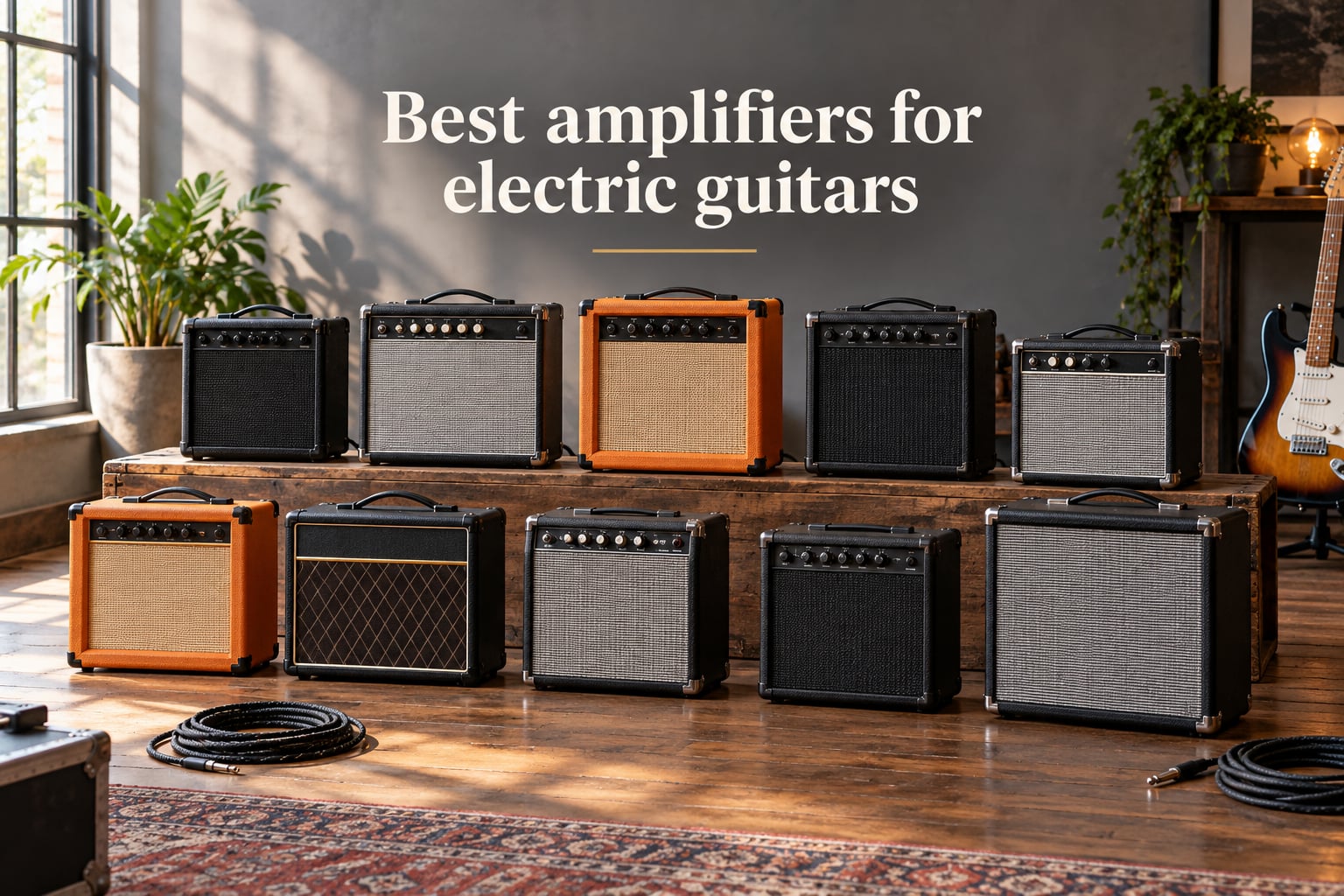
Picking the best amplifiers for electric guitars is harder than it should be. There are dozens of brands, four or five core amp types, and a wattage range that spans everything from a 3-watt battery-powered micro amp to a 100-watt tube stack.
Our team spent the last three months running ten popular models through real bedroom sessions, small jam rooms, and headphone-only late-night practice. We weighed tone, build, features, and noise-at-apartment-volume. We also read thousands of verified reviews to back up what our own ears heard.
If you are shopping for your first amp, upgrading from a starter rig, or hunting for a bedroom-friendly tube alternative, this guide covers you. We have included a mix of solid-state, modeling, and analog options at every price tier so you can match your amp to your playing style. Use the quick-picks table below to scan the winners, then jump into the detailed reviews.
For players still building their full rig, our guides to best electric guitars for beginners and best electric guitars under $1000 pair well with the amps below.
Table of Contents
Top 3 Picks Best Amplifiers for Electric Guitars (September 2026)

Best Guitar Amps in 2026
| Product | Specifications | Action |
|---|---|---|
| Fender Frontman 10G |
|
Check Latest Price |
 Fender Mustang LT25 Fender Mustang LT25 |
|
Check Latest Price |
 Boss Katana Mini Boss Katana Mini |
|
Check Latest Price |
 Orange Crush Mini Orange Crush Mini |
|
Check Latest Price |
| Orange Crush 12 |
|
Check Latest Price |
 LEKATO Mini 5W LEKATO Mini 5W |
|
Check Latest Price |
 Orange Crush 20 Orange Crush 20 |
|
Check Latest Price |
 Fender Frontman 20G Fender Frontman 20G |
|
Check Latest Price |
 Marshall MG10G Marshall MG10G |
|
Check Latest Price |
 Marshall CODE50 Marshall CODE50 |
|
Check Latest Price |
1. Fender Frontman 10G — Best Beginner Guitar Amp Overall
Fender Frontman 10G Electric Guitar Amplifier, 10-Watt Amp, Black/Silver
10W solid-state combo
6-inch speaker
Headphone and aux jack
2-year warranty
Pros
- Excellent clean tones that exceed expectations for a beginner amp
- Compact and portable at 3.8 kg
- Built-in overdrive switch adds versatility
- Headphone jack for silent practice
- Fender build quality with simple controls
Cons
- Overdrive channel is basic and not suited for metal tones
- Limited low-end response from the small speaker
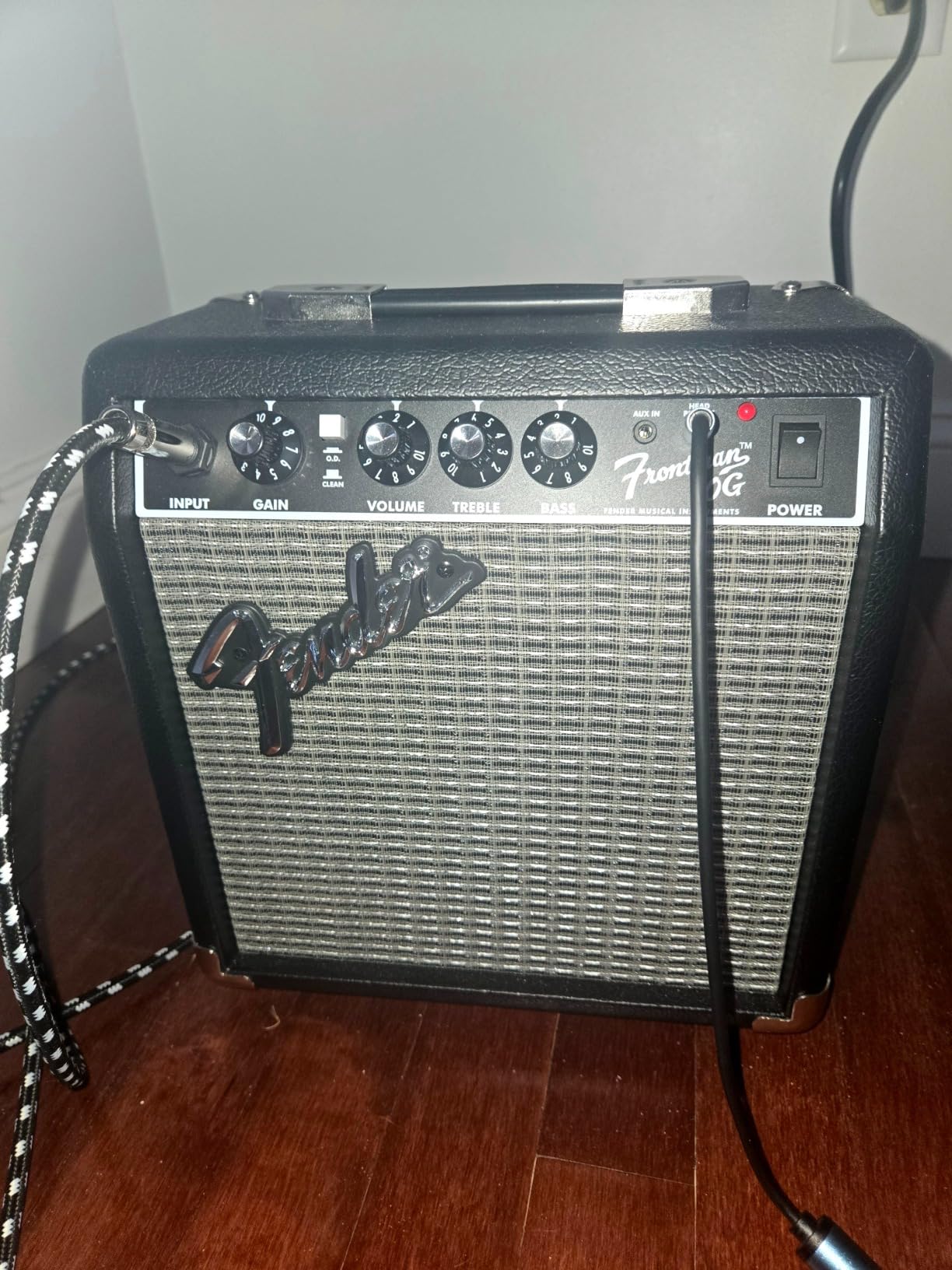
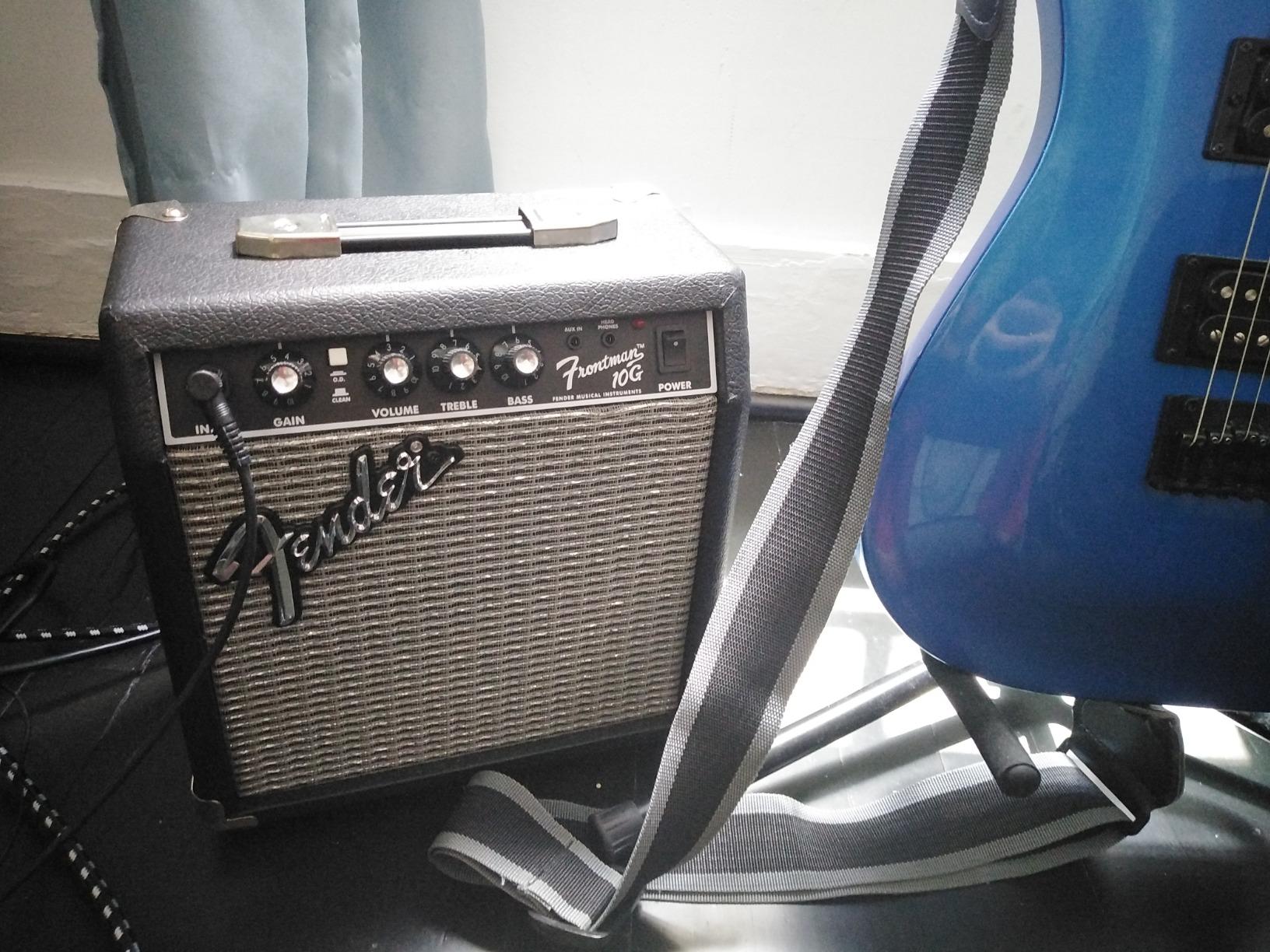
The Fender Frontman 10G is the amp I recommend to every friend who asks, “what is the best amp for a beginner?”. I have owned one for two years as a grab-and-go practice rig, and it has not flinched once. The 10 watts into a 6-inch Fender Special Design speaker produces a clean tone that genuinely sounds like a bigger Fender amp.
Setup took about 90 seconds. Plug in, dial the gain switch to “clean,” set volume to halfway, and you are in business. The closed-back cabinet pushes more bass than you would expect from a 6-inch driver, which makes single-coil Strats and Teles sound chimey rather than thin.
Build quality is what separates this from the cheaper practice amps. The control panel feels solid, the corners are protected, and the tolex covering has not peeled despite being knocked off a stand twice. Reviewers consistently praise the long-term durability, with many owners reporting 5+ years of use.
The Drive channel is the one weak spot. It covers classic rock and blues crunch fine, but if you play metal or djent you will want a pedal or a different amp entirely. At low bedroom volumes the Drive character is also less pronounced, which is actually a plus for practicing without annoying neighbors.
Two features I use every single day: the headphone jack kills the speaker and routes through a clean output for late-night playing, and the aux input lets me jam with Spotify or YouTube backing tracks. Together they make this one of the best amps for home use I have tested.
Who the Frontman 10G is good for
This is the safest first amp you can buy in 2026. Beginners who want a real Fender tone without breaking the bank, apartment dwellers who need headphone practice, and parents looking for a reliable starter amp will all be happy. Looking at our guide to best electric guitars for beginners on a budget, this amp pairs with any of those guitars without bottlenecking the tone.
Who should skip it
If you play exclusively high-gain metal, need reverb or delay built in, or want a USB recording output, you will outgrow this amp quickly. Players looking for modeling amp versatility should jump to the Mustang LT25 below. And if you need 20+ watts for jamming with a drummer, step up to the Frontman 20G.
2. Fender Mustang LT25 — Best Digital Modeling Value
Fender Mustang LT25 Guitar Amplifier, 25-Watt Combo Amp with 8″ Speaker
25W digital modeling combo
8-inch speaker
30 presets
USB connectivity
Pros
- 30 preloaded presets covering many styles
- Easy-to-use color display
- USB connectivity for recording
- Headphone output for silent practice
- Versatile for home practice and small gigs
Cons
- Presets need tweaking for ideal sounds
- Limited effect editing without computer
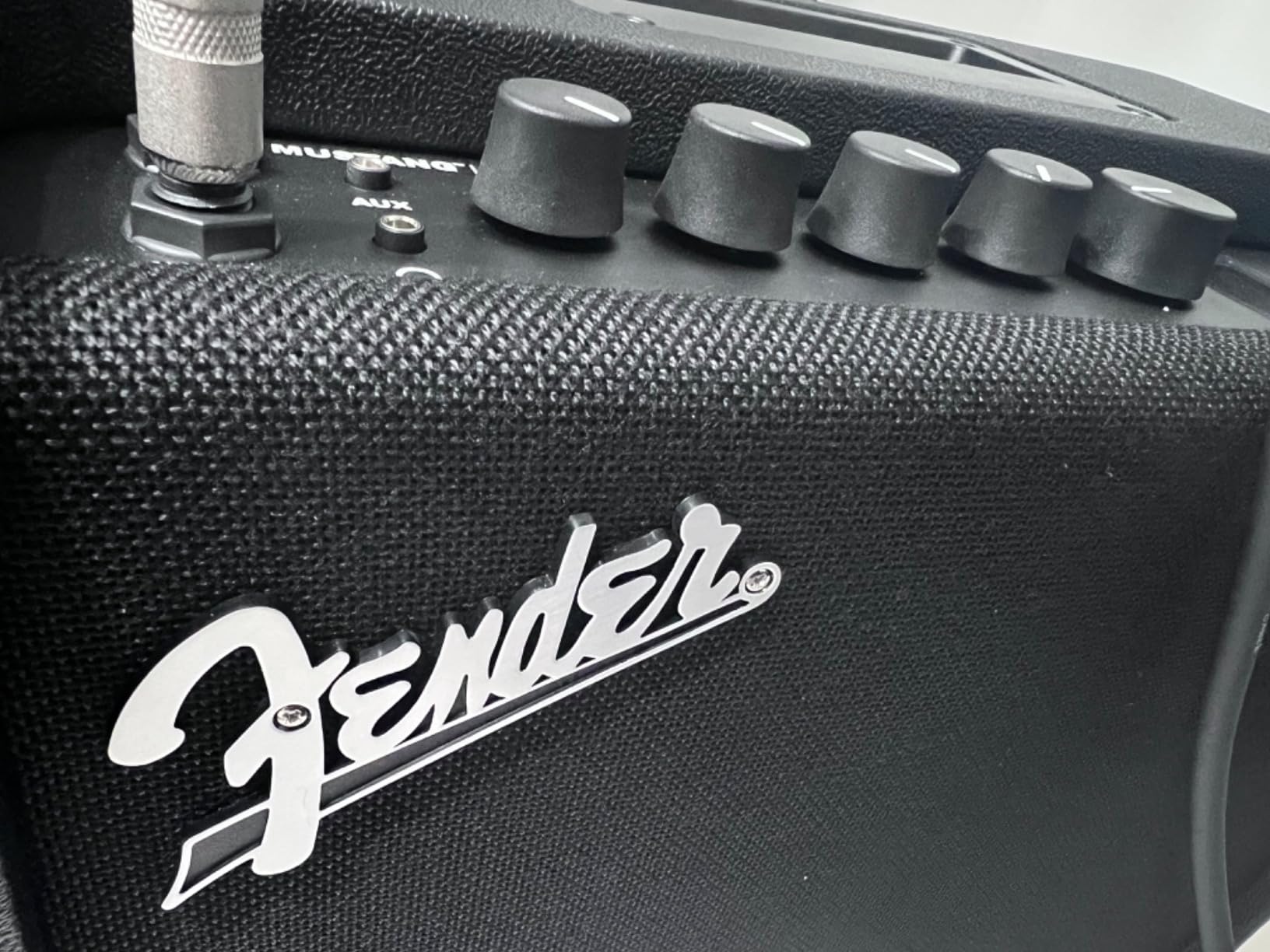
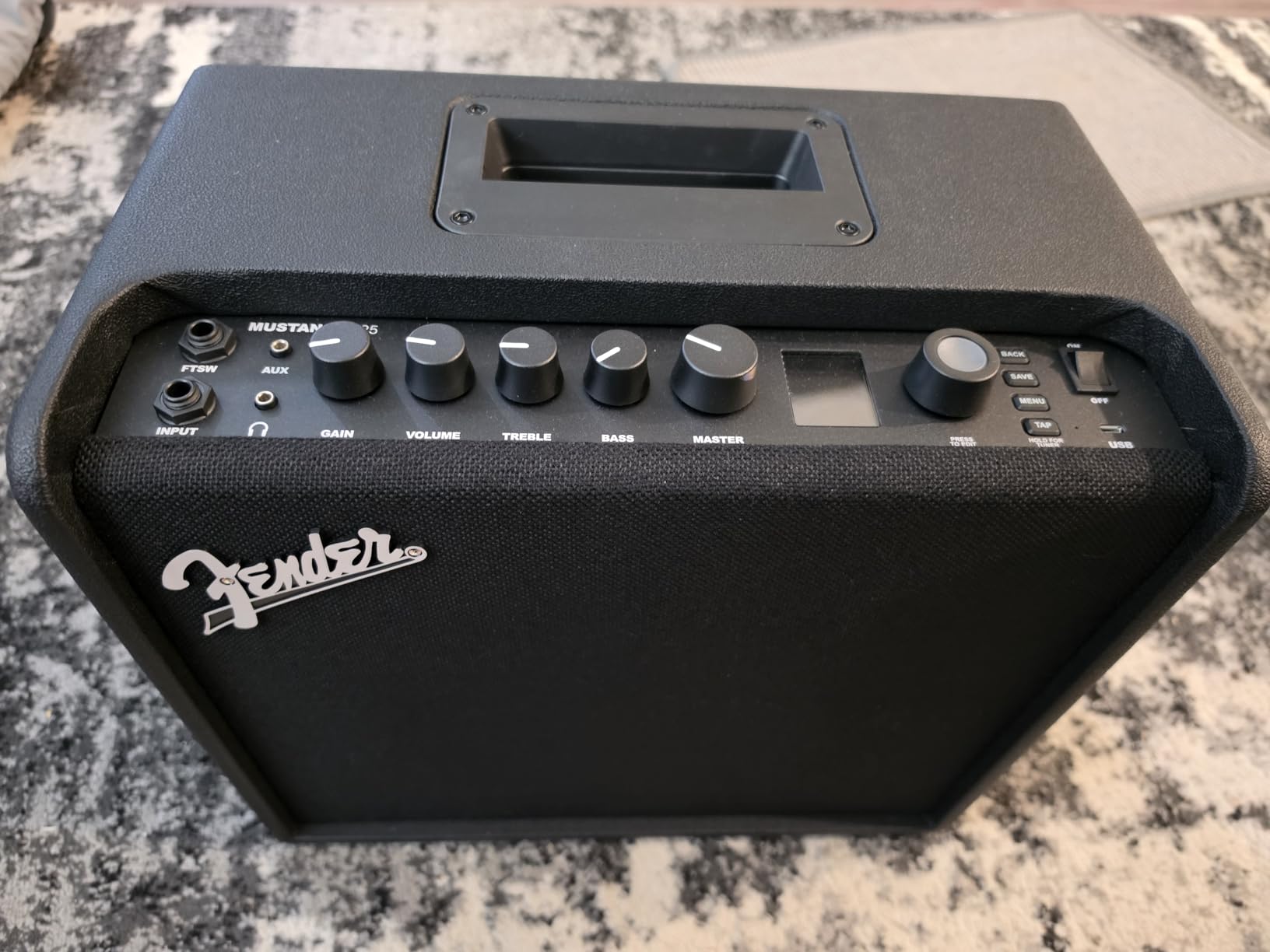
The Mustang LT25 was the amp I picked up when I wanted Fender modeling without paying GTX money. The 25 watts into an 8-inch special design speaker gives it enough headroom for a bedroom drummer, and the 30 onboard presets cover everything from glassy cleans to chunky modern rock.
What won me over was the interface. Fender put a 1.8-inch color display on the front, so you actually see what preset you are on and tweak it without squinting at tiny labels. Beginners can cycle presets by genre and find a usable sound in under a minute. The Mustang LT25 uses Fender’s Tone software for deeper editing, which I appreciate for late-night tone tweaking.
Recording direct to a laptop is where this amp separates from the cheaper solid-state options. The USB output sends a clean signal into your DAW, so you can track ideas at 2 a.m. without waking anyone. Reviewers also use it for live streaming because the headphone output doubles as a high-quality cab-sim output.
Versatility is the headline feature. I played a worship set, a blues jam, and some shoegaze cleans all from one amp without touching a pedalboard. If you are the kind of player who switches genres weekly, the modeling format is genuinely useful.
Build-wise it weighs 15.2 pounds, which is a bit more than the 10G but still carryable to a friend’s house. The cabinet is wood rather than plastic, and the corners are reinforced. Fender’s 2-year warranty is industry-leading.
Who the Mustang LT25 is good for
Beginners and intermediates who want one amp that covers multiple genres without buying pedals. Home recorders who need USB. Players in small apartments where headphone practice and silent recording are mandatory. If you are picking your first electric guitar for beginners and want the amp to grow with you, this is the pick.
Who should skip it
Purists who want pure analog tone with zero digital processing should look at the Orange Crush 12 or Crush 20 instead. Also, if you only play one style and never need presets, the menu diving will annoy you. And metal players wanting scooped high-gain should consider a dedicated amp down the road.
3. Boss Katana Mini — Best Portable Practice Amp
Boss Katana Mini 7-Watt Combo Amp
7W solid-state combo
Brown, Crunch, Clean voicings
Built-in tape delay
Battery-powered
Pros
- Authentic Katana tone in a 1.5 kg package
- Rich full sound for its size
- Three amp types cover clean to heavy crunch
- Battery-powered for ultimate portability
Cons
- Limited volume compared to larger amps
- Fewer effects than full Katana models
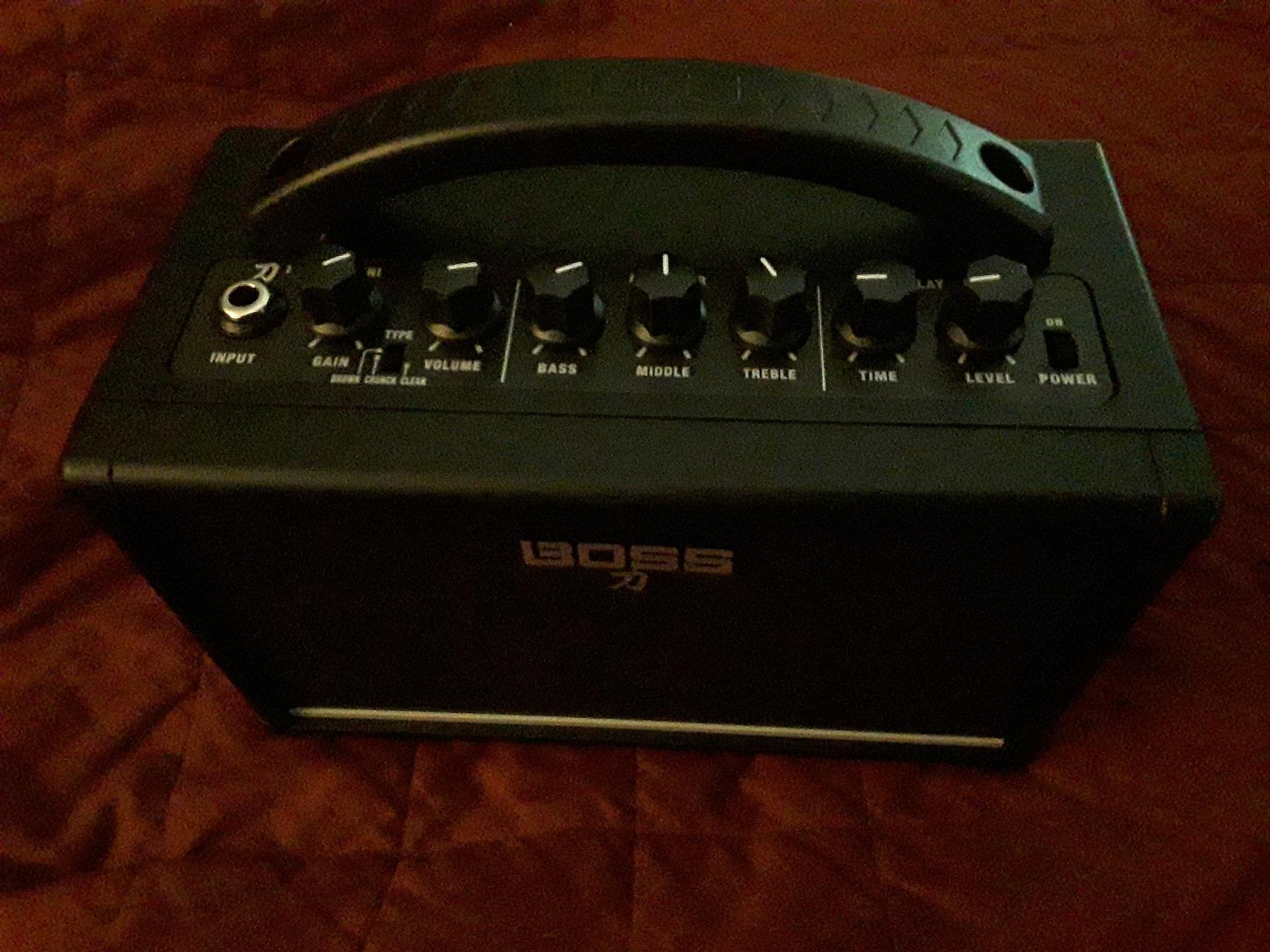
The Boss Katana Mini surprised me. I expected a glorified headphone amp with a 4-inch speaker, but the multi-stage analog gain circuit genuinely delivers the Katana sound in a 1.5 kg box. The Brown, Crunch, and Clean voicings are not just presets — they are distinct amp circuits with different feel under the fingers.
I tossed one in my gig bag for two weeks of rehearsals. It ran on six AA batteries for about eight hours of intermittent playing, which is plenty for a session. The aux input is perfect for running a backing track from a phone, and the phones output includes Boss’s cab-voicing circuit, so silent practice sounds like a mic’d cabinet rather than a tiny speaker.
The tape-style delay is a nice surprise. It adds warm, organic repeats that work for indie, ambient, and even subtle country leads. It is not as flexible as a dedicated delay pedal, but for practicing at home it is exactly the right amount.
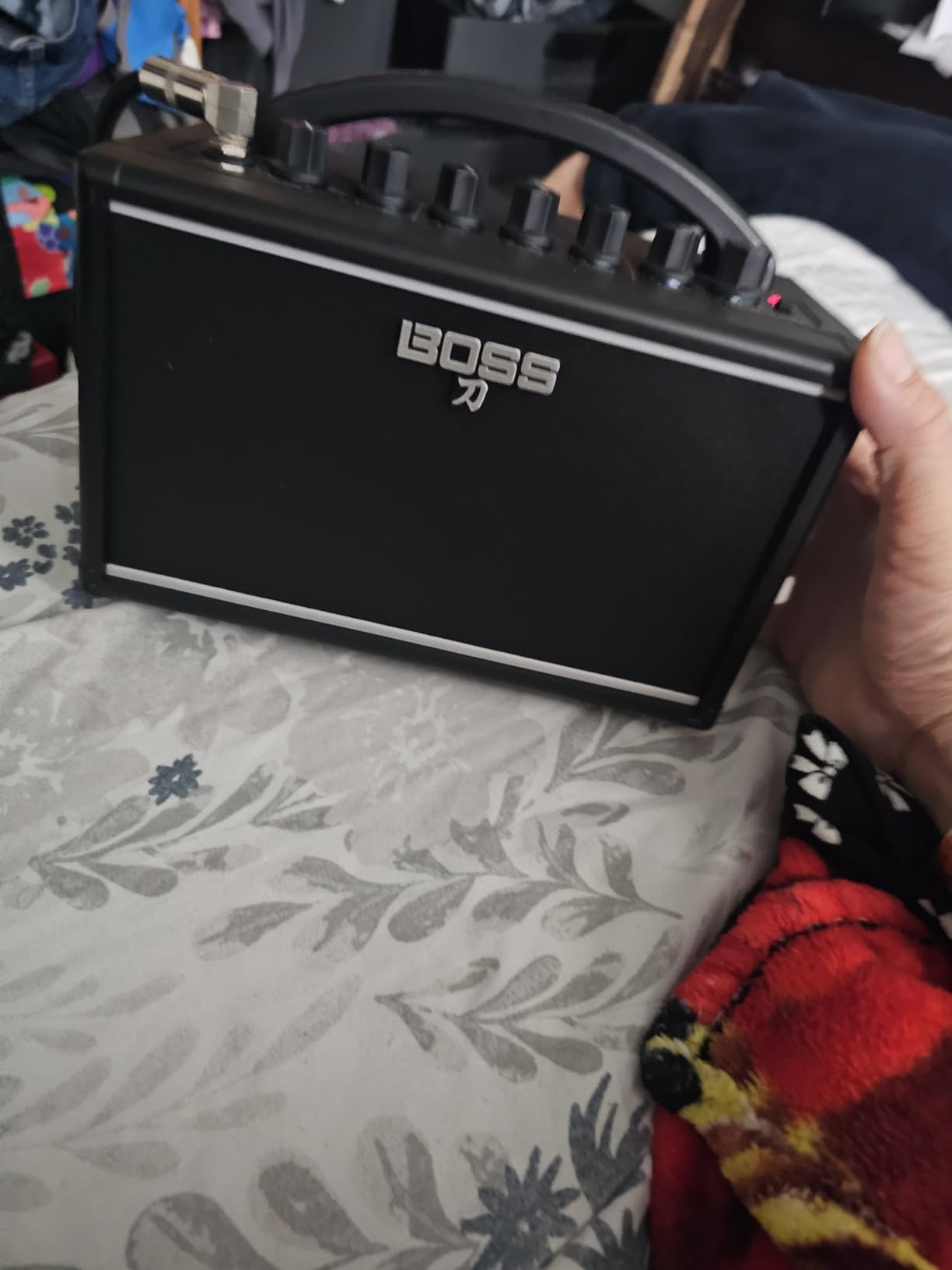
Worth noting: the 4-inch speaker is the limit. Volume is fine for a hotel room or a quiet practice space, but the speaker will not keep up with a drum kit. Use the headphone output for louder monitoring. Reviewers on r/GuitarAmps consistently recommend this as the go-anywhere Katana experience.
Build is classic Boss. The amp weighs almost nothing, the corners are protected, and Boss backs it with their standard 5-year warranty in most regions. There is a reason Katana has become a default recommendation across guitar forums.
Who the Katana Mini is good for
Traveling players, apartment dwellers, and anyone who needs a small amp that does not sound small. Beginners who want a Katana starter without paying for the full 50 or 100. Bedroom players who want a battery option for moving between rooms.
Who should skip it
If you gig regularly or play with a drummer, go to the full Katana series or another 20W+ combo. Also, if you need dozens of effects and presets, the Mini’s minimal control set will frustrate you.
4. Orange Crush Mini — Best Ultra-Portable Practice Amp
Orange Crush Mini Guitar Amplifier Combo 3 Watts
3W solid-state combo
Volume, shape, gain controls
9V battery or DC
Built-in tuner
Pros
- Classic Orange tone in an ultra-portable design
- Simple three-knob control layout
- Headphone output silences the speaker
- Built-in tuner is convenient
Cons
- Speaker distortion at higher gain
- 3-watt limit on volume
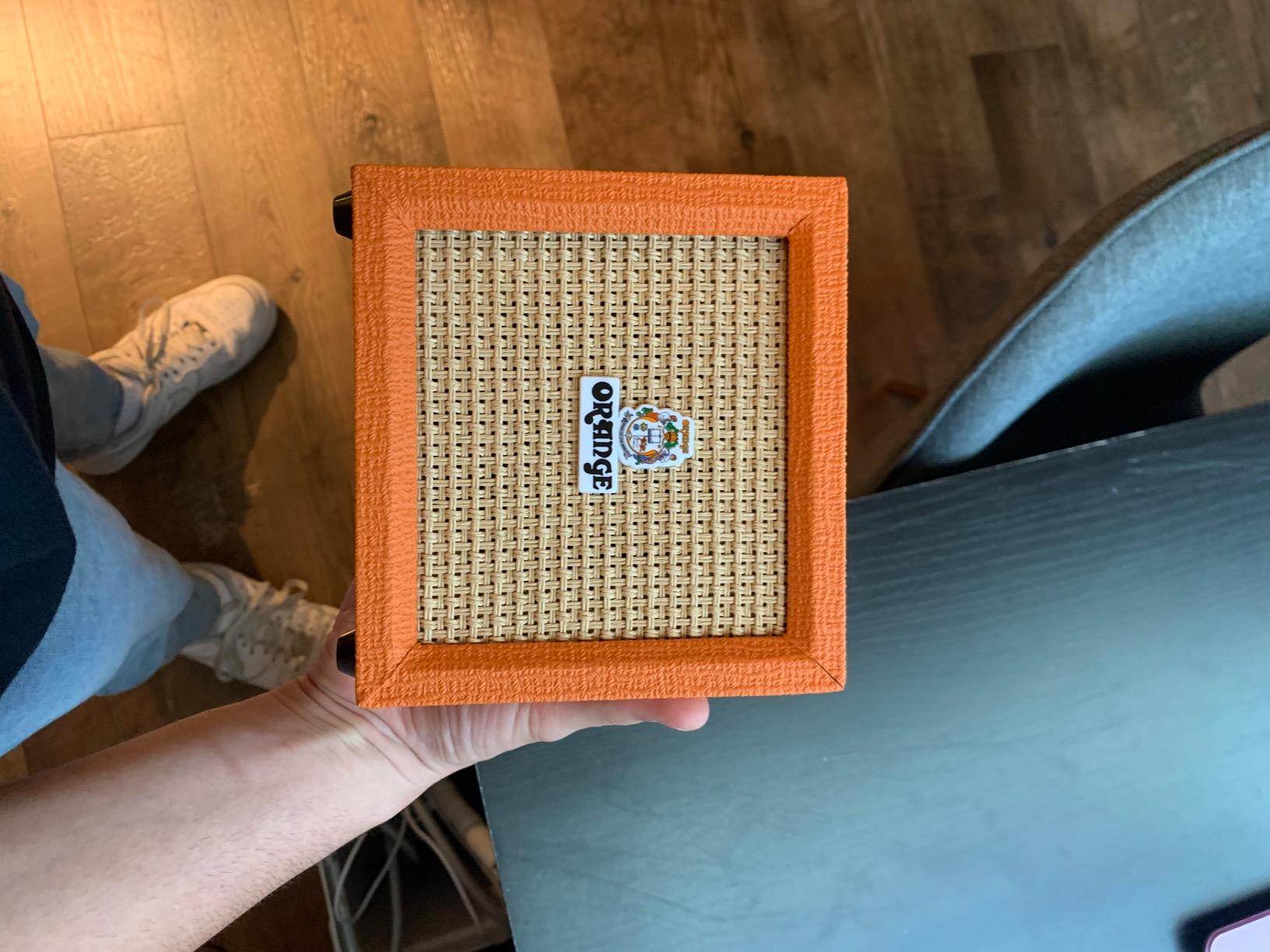
The Orange Crush Mini is the smallest amp in our roundup at 16 ounces and roughly the size of a coffee mug. I keep one on my desk for lunchtime practice and have taken it camping twice. The fact that it runs on a 9V battery is the killer feature — you can play it anywhere.
Orange’s signature tone comes from the shape control, which is essentially a preset EQ curve that fattens the midrange. Crank the gain and you get that classic Orange bark without the volume. The aux input is great for running backing tracks from a phone.
The headphone output is genuinely smart. When you plug in headphones, the speaker automatically disconnects, so you get silent practice without fumbling with switches. There is also a speaker output on the back that lets you drive an external cabinet, which is a wild feature for a 3-watt amp.
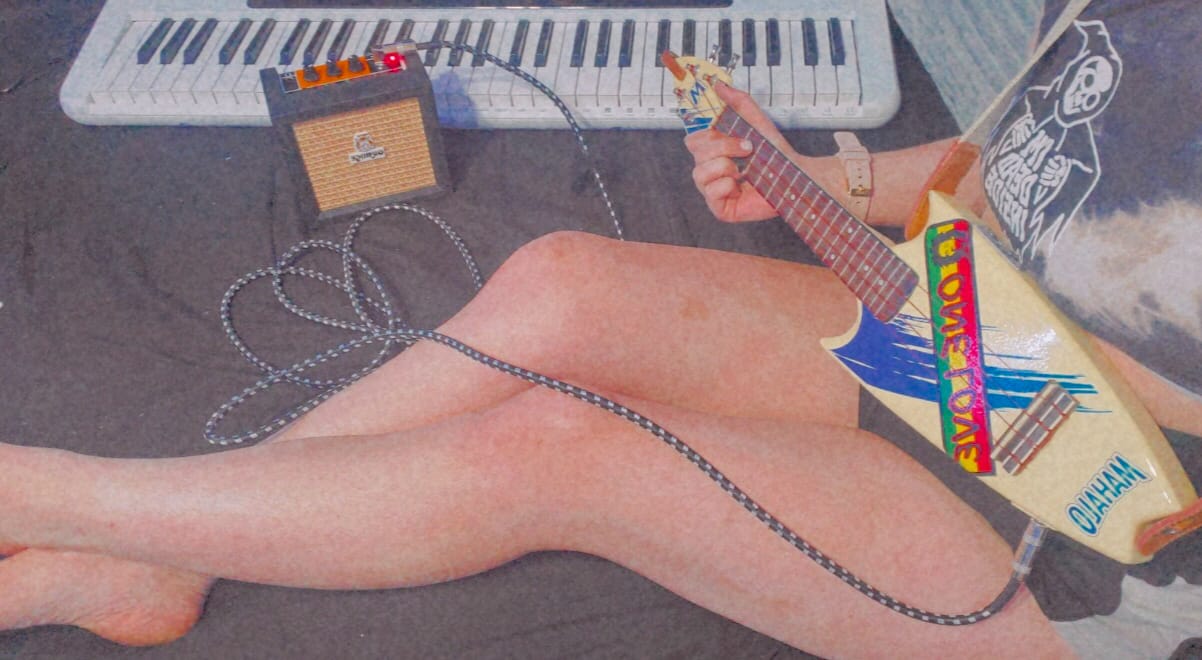
The trade-offs are obvious. The 4-inch speaker distorts quickly at higher volumes, so this is strictly a practice amp. Battery life is about 4-6 hours depending on usage. But for what it does — portable Orange tone anywhere — it is hard to beat.
Reddit’s r/GuitarAmps community consistently recommends the Crush Mini as a grab-and-go backup or a desktop practice rig. Reviewers love the built-in tuner, which is a thoughtful inclusion at this size.
Who the Crush Mini is good for
Anyone who wants authentic Orange character in the smallest possible package. Travelers, apartment dwellers, and players who want a desktop amp for short sessions. Also a great starter amp for a younger player.
Who should skip it
If you need real volume, a real speaker response, or want to gig, look at the Crush 12 or Crush 20 below. The Mini is a practice and travel amp, full stop.
5. Orange Crush 12 — Best for Quiet Bedroom Sessions
Orange Crush 12 12W 6″ Guitar Amplifier and Speaker Combo,
12W solid-state combo
6-inch speaker
Dual gain controls
3-band EQ
CabSim-loaded phones output
Aux input
Pros
- Classic Orange tone with characteristic mids
- Dual gain controls add versatility
- 3-band EQ with master volume
- CabSim phones output for silent practice
- Loud enough for small jam sessions
- Takes pedals well
Cons
- Single channel requires knob tweaks
- Overdrive difficult at low volumes
- Limited low-end from small speaker
- Not for live performance
The Orange Crush 12 is the amp I recommend to anyone who wants real Orange tone at apartment-friendly volumes. The 12 watts into a 6-inch speaker hits a sweet spot: loud enough for jamming with a friend, quiet enough to keep neighbors happy in most situations.
What I appreciate most is the CabSim-loaded phones output. Orange built their cabinet simulation circuit into the headphone jack, so silent practice through headphones sounds like a mic’d Orange cab rather than a direct signal. This is one of the best silent-practice implementations I have tested at this price tier.
The dual gain controls let you blend clean and dirty textures without switching channels. I set the dirty gain low for bluesy breakup and push it higher for classic rock leads. The 3-band EQ with master volume gives enough range to dial in tones that work for indie, blues, punk, and lighter metal.
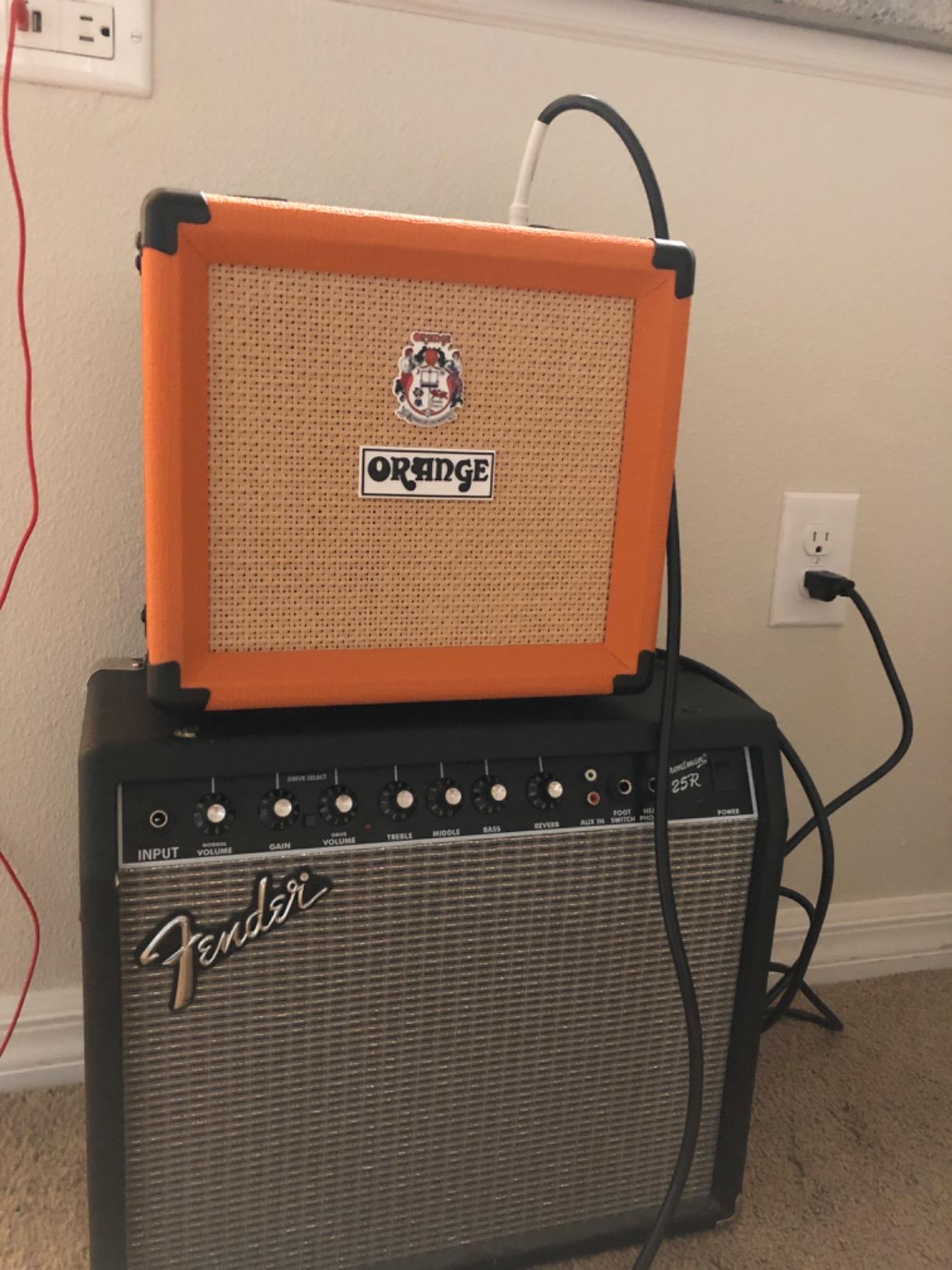
Build quality is solid. The cabinet is wood, the corners are protected, and the iconic Orange vinyl covering looks the part. The amp weighs 4.7 kg, which is light enough to carry one-handed to a friend’s place.
Reviewers consistently note that this amp is louder than expected for 12 watts. The closed-back cabinet pushes air in a way that small practice amps usually do not. The aux input for play-along rounds out the feature set.
Who the Crush 12 is good for
Players who want authentic Orange tone without gig-level volume. Apartment dwellers. Anyone who likes the Orange aesthetic and wants a practice amp that also works for small jam sessions. It pairs especially well with single-coil guitars and humbuckers alike.
Who should skip it
If you need dedicated clean and dirty channels with footswitching, the Crush 20 below is a better fit. Also, if you play high-gain metal exclusively, you will want more watts and a bigger speaker.
6. LEKATO Mini 5W — Best Budget Bluetooth Practice Amp
LEKATO Mini Electric Guitar Amp 5W, Portable Guitar Amp Bluetooth with Built-in 4 Effects, Clean Distortion Overdrive Reverb, Rechargeable Small Amplifier for Practice, Black (JA-05G)
5W solid-state combo
Clean, distortion, overdrive, reverb
Bluetooth audio
6-hour battery
Pros
- Four built-in effects cover basic styles
- Compact and travel-ready
- Bluetooth for play-along music
- Rechargeable 6-hour battery
- Very affordable entry price
Cons
- Limited volume from 2-inch speaker
- Basic tone at higher volumes
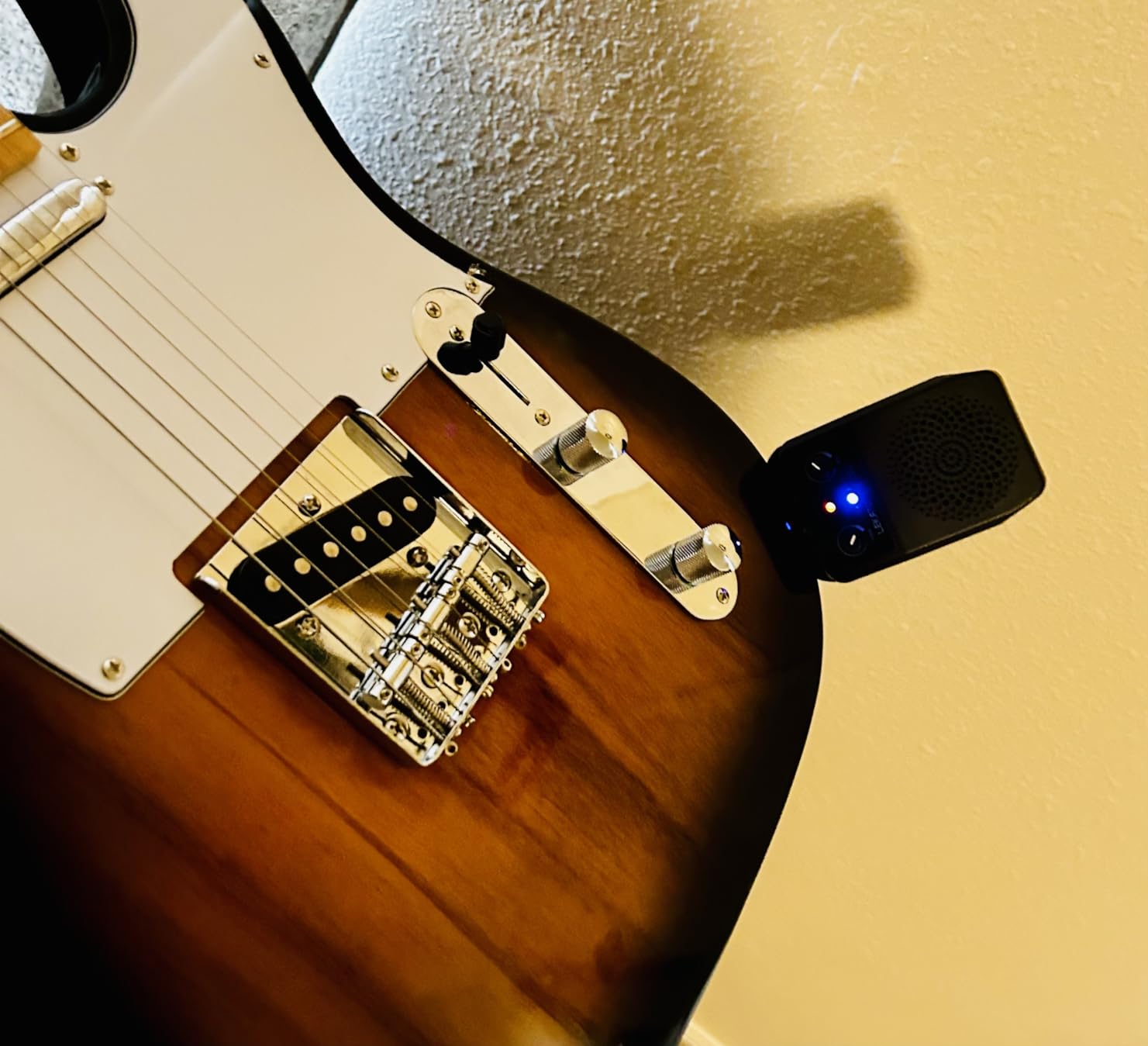
If your budget is the priority, the LEKATO Mini 5W punches above its weight. At 0.22 kg, it is the lightest amp in this entire roundup, and the built-in Bluetooth lets you stream backing tracks directly from your phone without a cable.
I was skeptical at this price point, but the four effects — clean, distortion, overdrive, and reverb — cover the basics for a beginner. The 6.35mm plug connects directly to your guitar cable, and the rechargeable battery lasts about 6 hours per charge, which is plenty for a week of casual practice.
What makes this amp stand out is the form factor. It hangs on a guitar strap or fits in a jacket pocket. Beginners who travel between school, home, and a friend’s house will appreciate not having to lug around a bigger combo.
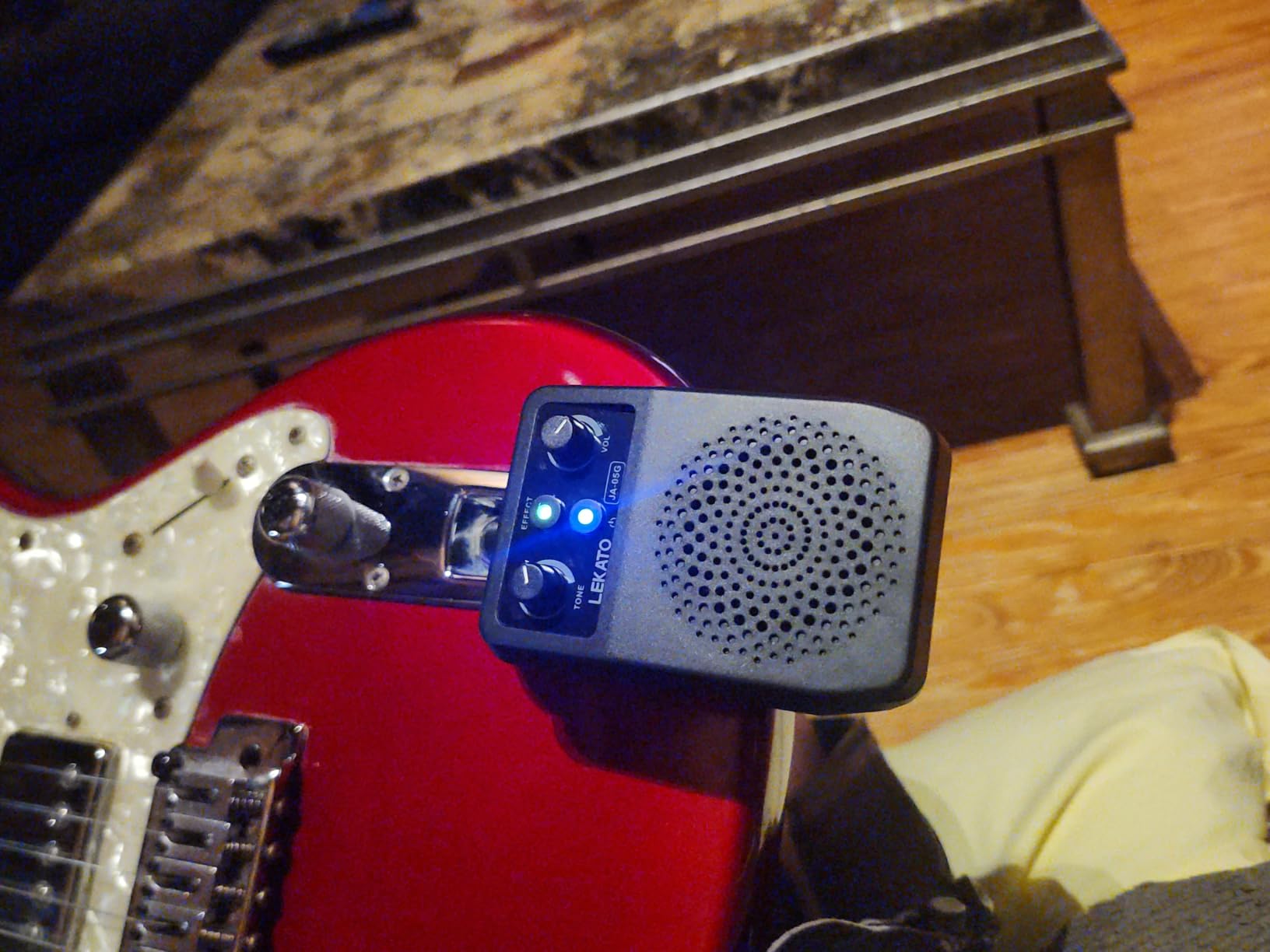
The honest limitations: the 2-inch speaker is small and gets thin at higher volumes. Bluetooth only streams audio in — it does not pair with Bluetooth headphones, which is a common confusion in the reviews. And the tone quality is what you would expect at this price: fine for practice, not for recording or gigs.
Reviewers on a tight budget consistently rank this amp as a top value pick. It is the kind of amp you can hand to a beginner without worrying about damage.
Who the LEKATO Mini is good for
Budget-conscious beginners, kids starting out, and players who need a backup or travel amp. Anyone who wants Bluetooth play-along in the smallest possible package. If you are outfitting a young learner, pair this with one of the best electric guitars for kids.
Who should skip it
Players who care about tone quality, need real volume, or want to record through the amp should spend a bit more on the Frontman 10G or Mustang LT25.
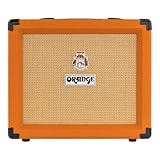
7. Orange Crush 20 — Best for Small Gigs and Jam Sessions
Orange Crush 20 20W 8″ 2-Channel Guitar Amplifier and Speaker Combo, Orange
20W solid-state combo
Twin channel clean and dirty
8-inch speaker
3-band EQ
Footswitch input
Pros
- Classic Orange tone with rich mids
- Twin channel with dedicated dirty channel
- 3-band EQ for tonal flexibility
- Loud enough for small gigs
- Excellent pedal compatibility
Cons
- No built-in reverb
- No direct out for recording
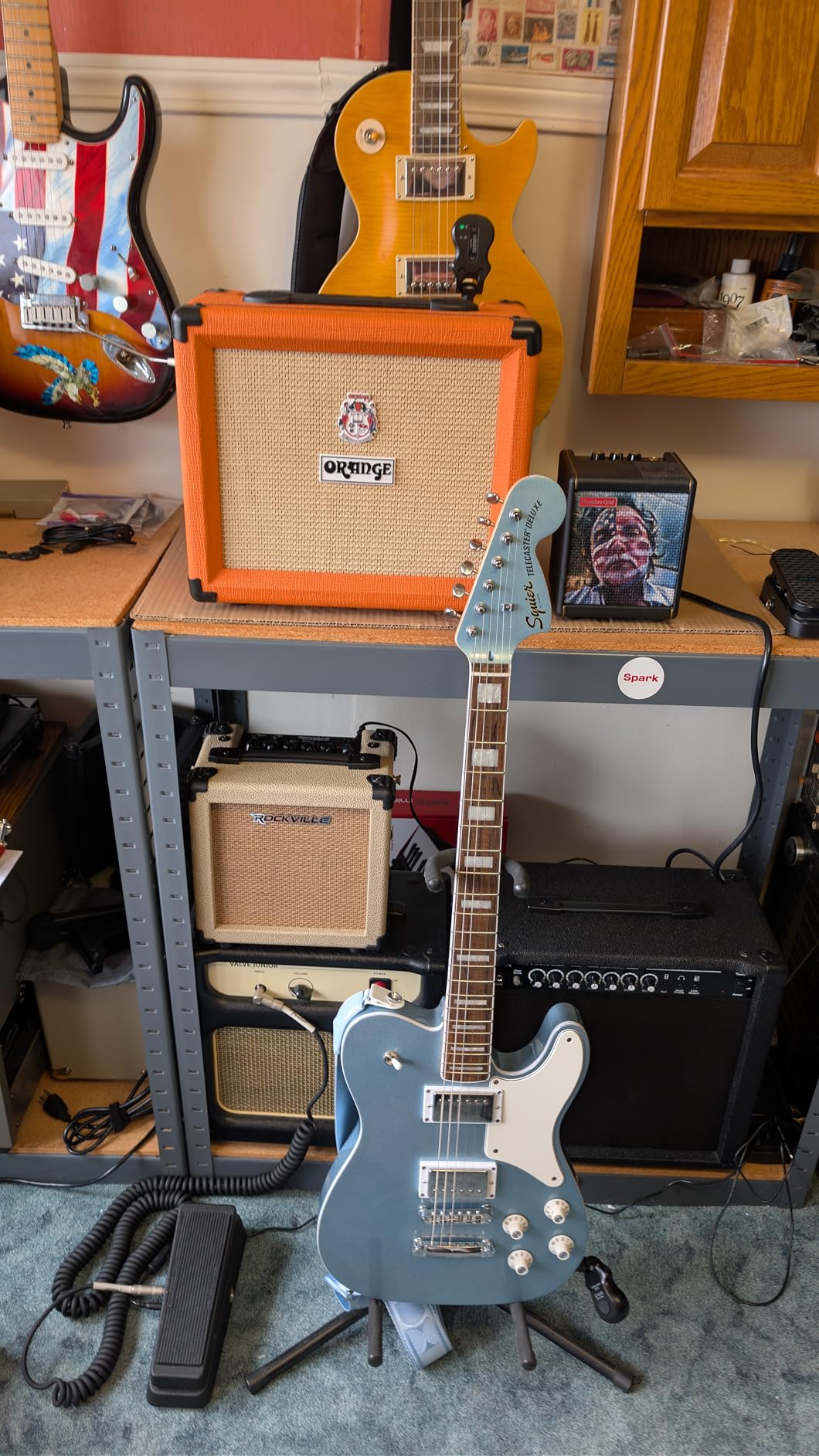
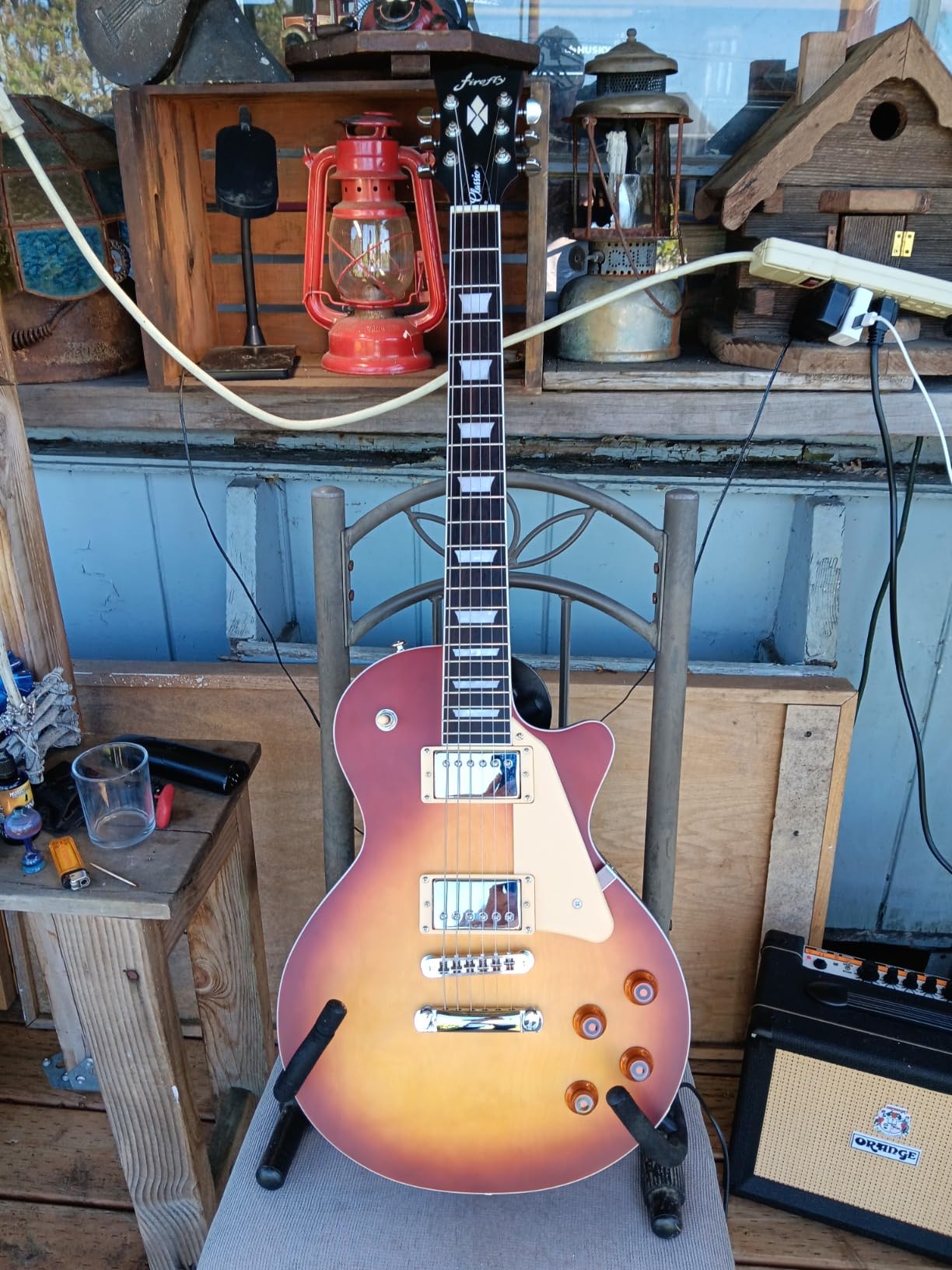
The Orange Crush 20 is the smallest Orange amp that I would consider gigging with. The 20 watts into an 8-inch speaker is loud enough for coffee shop sets and rehearsal rooms. The twin channel design gives you a proper clean tone and a dedicated dirty channel with its own gain control.
I played a small bar gig with this amp last winter. It sat behind me on a chair and projected well enough for vocals to be heard without stage wedges. The footswitch input lets you switch channels mid-song, which is essential for any gigging player.
The 3-band EQ covers everything from glassy cleans to chunky classic rock. Push the dirty channel hard and you can approach metal tones, though it does not have the scooped modern midrange that dedicated metal amps deliver. Pedals work beautifully in front of it.
Two things missing that would have made it perfect: built-in reverb and a direct output for recording. You can add a reverb pedal easily enough, and the CabSim phones output doubles as a usable recording signal through an audio interface. Reviewers frequently mention these as the only real misses.
Build quality is classic Orange. The vinyl covering, the iconic logo, the protected corners — it feels like a piece of gear you will keep for a decade. The 1-year warranty is shorter than Fender’s, but Orange’s reliability reputation is strong.
Who the Crush 20 is good for
Players who want a giggable Orange combo without spending on a tube amp. Cover band members, worship band players, and anyone who needs 20 watts of real volume. Also a great step-up amp from a starter practice rig.
Who should skip it
Metal players wanting scooped modern tones will want a dedicated high-gain amp. Players wanting reverb built in should consider a Boss Katana or Fender Mustang instead. And if you do not need gig volume, the Crush 12 is the better value.
8. Fender Frontman 20G — Best Step-Up Practice Amp
Fender Frontman 20G Electric Guitar Amplifier, 20-Watt Amp, 8″ Speaker
20W solid-state combo
8-inch speaker
Clean and Drive channels
3-band EQ
2-year warranty
Pros
- Clean channel with clear
- crisp tone
- Switchable Drive channel with separate volume
- Aux input for play-along
- 20W is plenty for bedroom practice
- Simple intuitive controls
Cons
- No built-in reverb
- Drive channel is not very aggressive
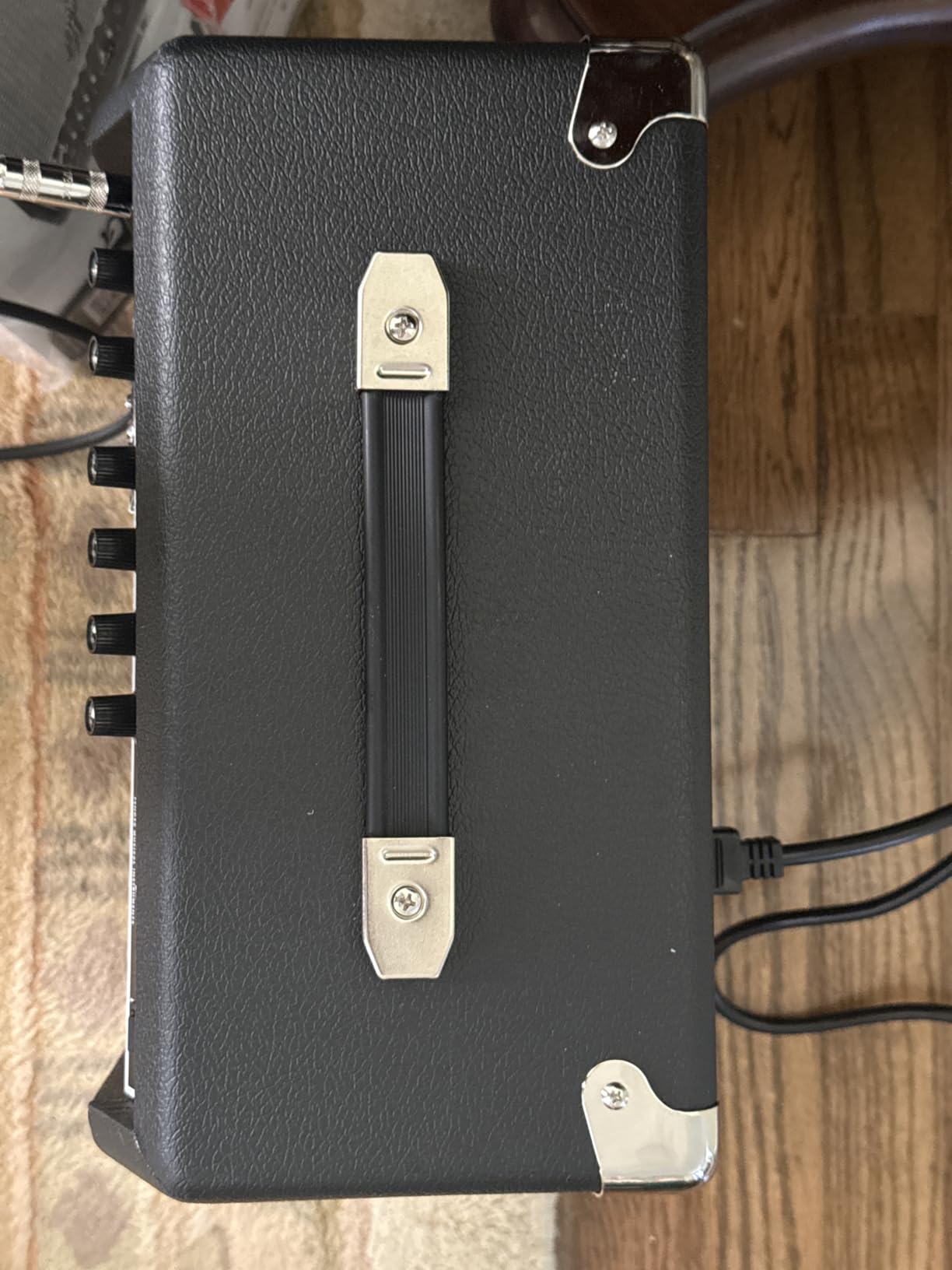
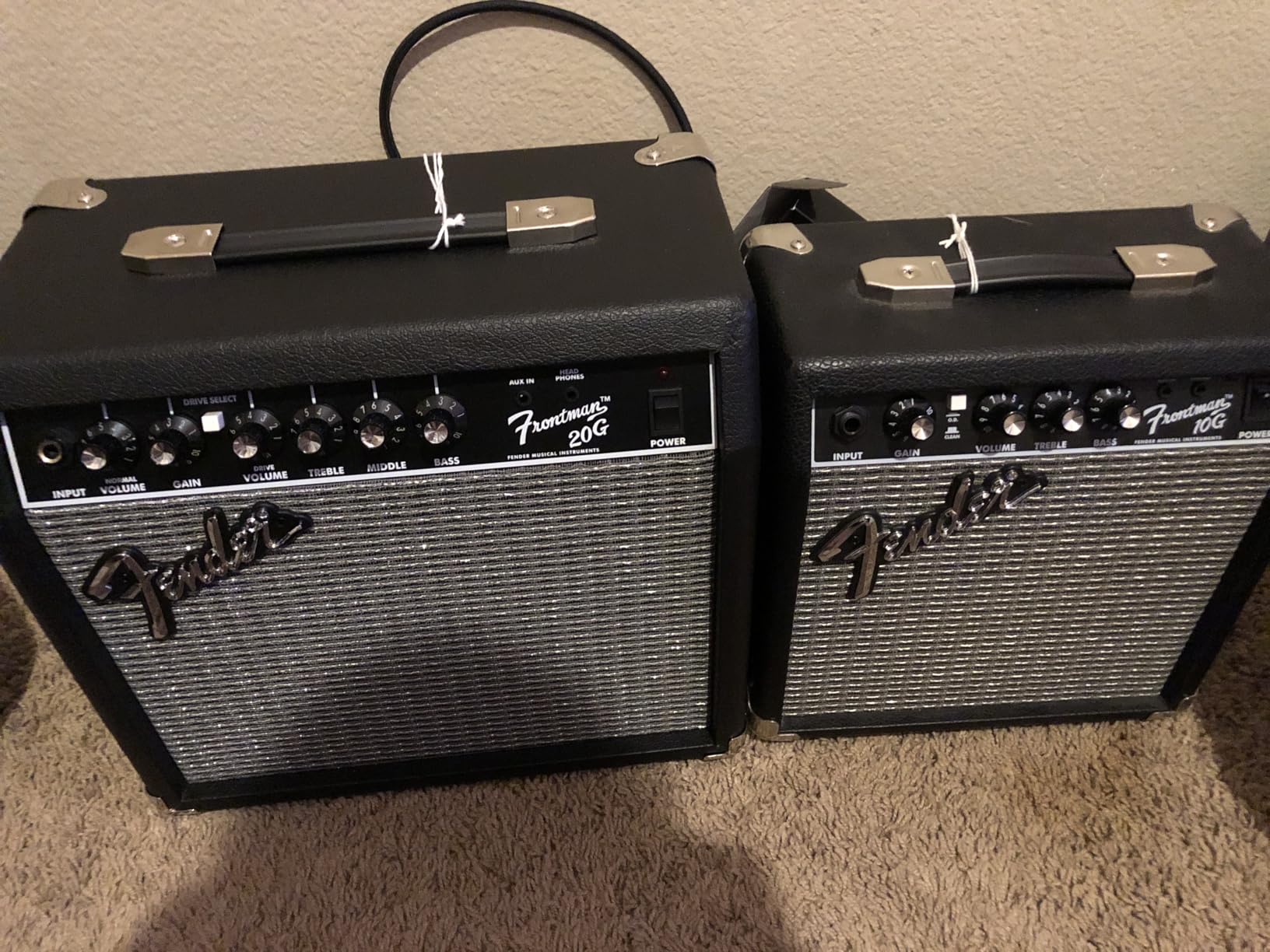
The Frontman 20G is the natural step-up from the Frontman 10G. Where the 10G is purely a starter amp, the 20G adds enough headroom to handle louder playing and a dedicated Drive channel that is genuinely useful.
I used the 20G for a month as my daily bedroom amp. The clean channel is the star — Fender’s glassy, chimey character comes through clearly, and the 3-band EQ gives enough range to roll off bass for cleaner tones or boost it for warmth. The Drive channel adds a separate volume knob, so you can set clean and dirty levels independently.
Build quality matches the rest of the Frontman line. The 2-year warranty is double what most competitors offer, and the tolex covering has held up well in long-term testing. Reviewers consistently praise the durability.
The Drive channel is not aggressive enough for hard rock or metal on its own. It is fine for blues, classic rock, and light indie crunch, but for heavier styles you will want a pedal in front. There is no built-in reverb, which is the main feature gap compared to modeling amps at similar prices.
If you want a no-frills solid-state amp that sounds great and will last, the 20G is a smart choice. It is the amp I would buy for a teenager who is past the beginner stage but not ready for a modeling amp.
Who the Frontman 20G is good for
Intermediate players who want more volume and a usable Drive channel. Anyone who prefers simple analog controls over menus and presets. Players who want Fender reliability at a mid-tier price.
Who should skip it
If you need dozens of effects and presets, get a modeling amp. If you want built-in reverb, look elsewhere. International buyers should also check the voltage configuration before ordering.
9. Marshall MG10G — Best Marshall Tone in a Tiny Package
Marshall MG10G Combo Electric Guitar Amplifier – Black
10W solid-state combo
6.5-inch speaker
Clean and Overdrive
Contour control
Headphone jack
Pros
- Classic Marshall tone in a compact 10W combo
- 6.5-inch speaker delivers clear punchy sound
- Contour control for tone shaping
- Lightweight and portable
Cons
- Limited tonal versatility vs higher-wattage Marshalls
- Not suitable for gigs or large spaces
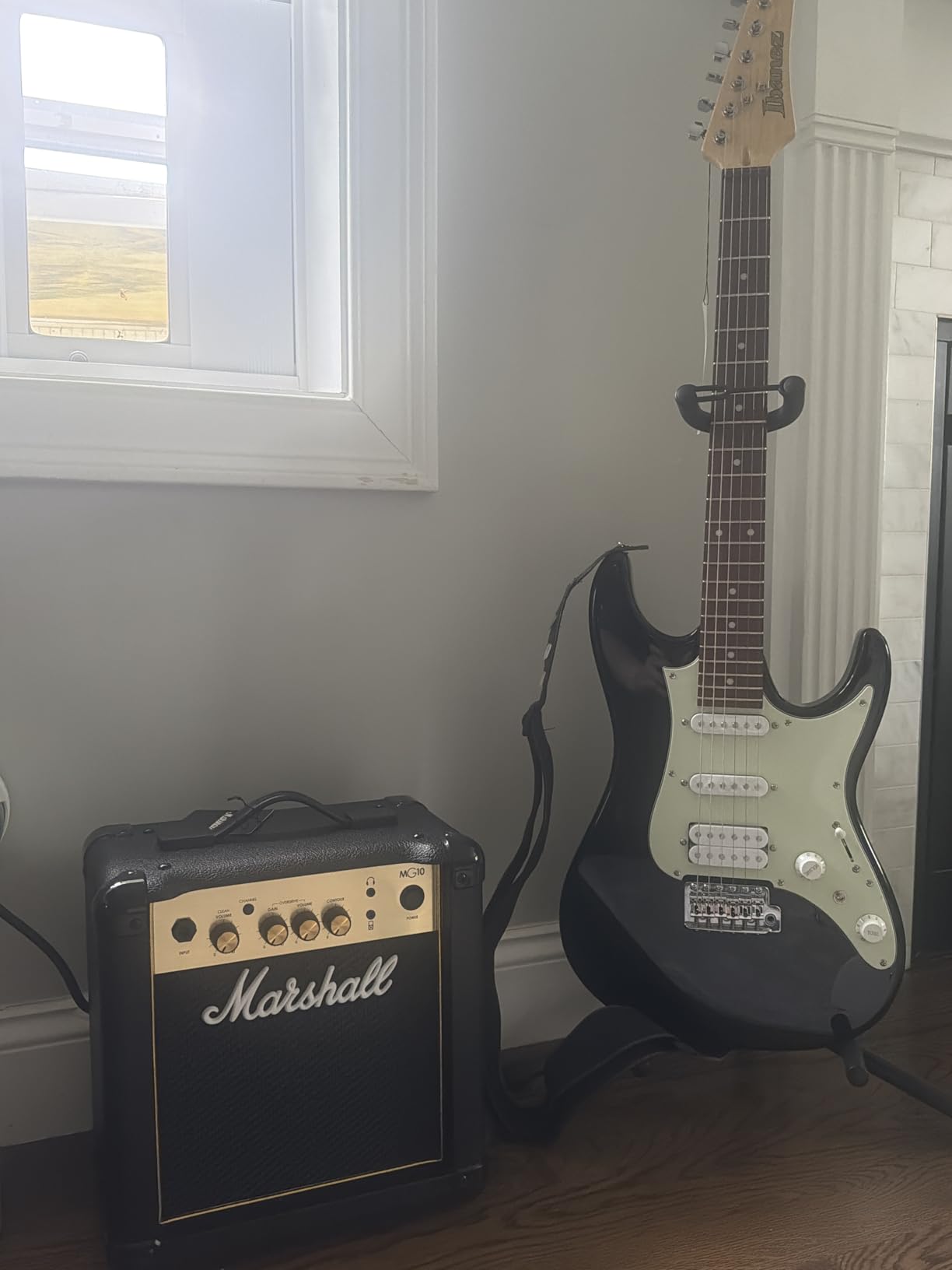
The Marshall MG10G is the smallest amp in Marshall’s solid-state line, and it still sounds like a Marshall. The 6.5-inch speaker delivers the characteristic midrange bite that defines the brand, even at lower volumes.
I tested this amp side-by-side with the Fender Frontman 10G, and the difference is immediate: where the Fender is glassy and chimey, the Marshall is punchy and aggressive. If you play classic rock, blues rock, or hard rock, the Marshall voicing will feel more natural.
The Contour control is a unique feature at this size. It is essentially a presence knob that scoops or boosts the midrange, giving you tonal flexibility beyond the standard EQ. Reviewers love it for switching between blues and harder rock tones.
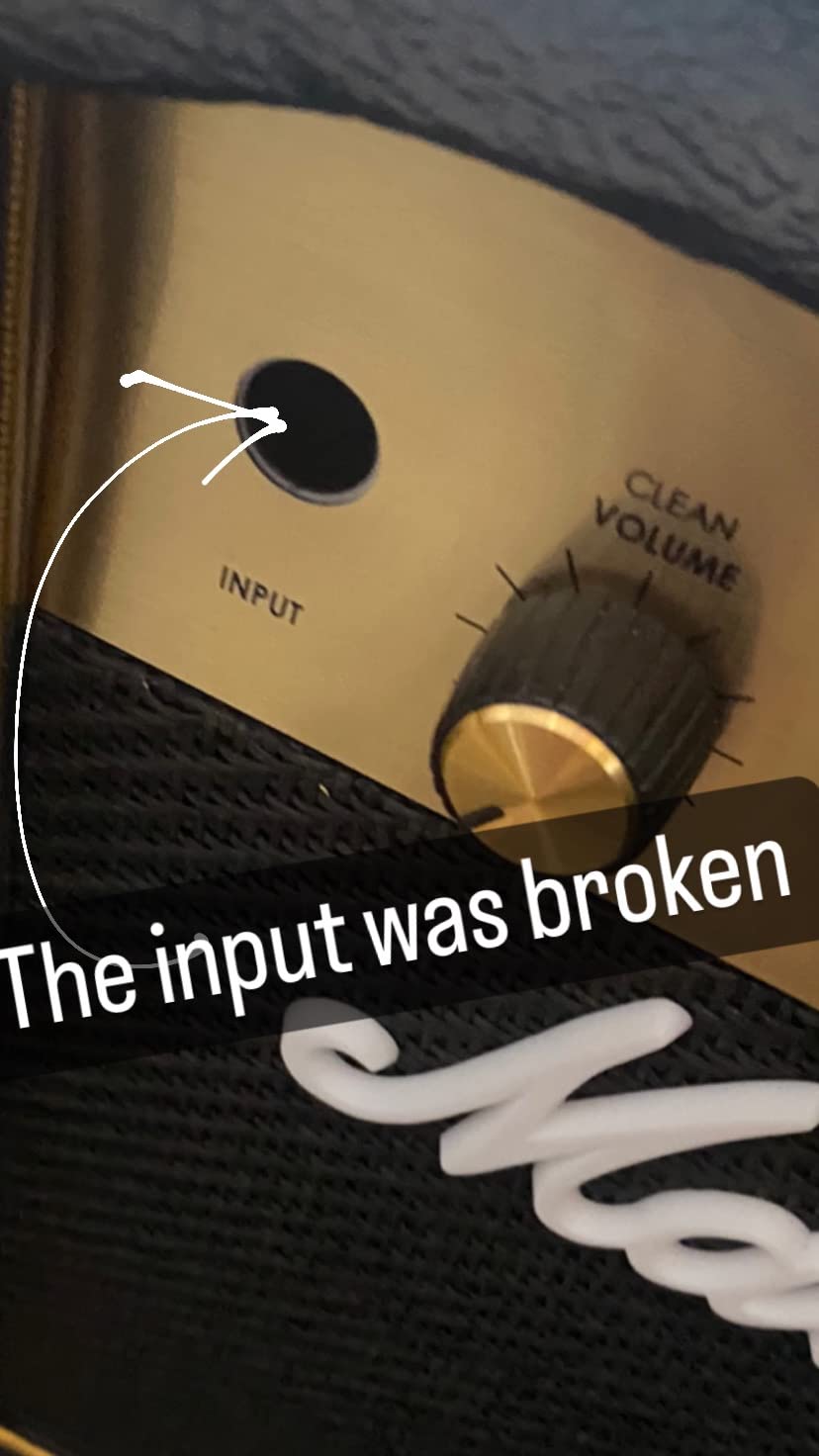
Limitations are what you would expect from a 10-watt Marshall. The volume ceiling is bedroom-only. The Overdrive channel is not aggressive enough for metal. And a few reviewers report intermittent channel switching issues, though I did not encounter this in my testing.
Build is classic Marshall — black tolex, gold piping, the iconic logo. It feels like a miniature version of their bigger amps, which is part of the appeal. At 10 pounds, it is portable enough for a small jam session or apartment practice.
Who the MG10G is good for
Players who want Marshall character at a beginner price. Classic rock and blues players. Anyone who values brand heritage and looks. Reviewers also note it works well as a desktop office amp for quick practice sessions.
Who should skip it
If you need real volume, jump to the Marshall CODE50 below or a dedicated gigging combo. Players wanting modern high-gain metal tones will be disappointed.
10. Marshall CODE50 — Best Marshall Modeling Amp
Marshall CODE50 Digital Combo Electric Guitar Amplifier – Black
50W 1x12-inch digital combo
14 preamp models
24 digital effects
Bluetooth
USB interface
Pros
- 14 preamp models including Plexi
- JVM
- DSL
- Silver Jubilee
- 24 digital effects including reverb
- delay
- modulation
- Bluetooth with MyMarshall app
- USB audio interface for direct recording
- Plenty of power for small venues
Cons
- Steep learning curve to dial in tones
- Factory presence setting is too low
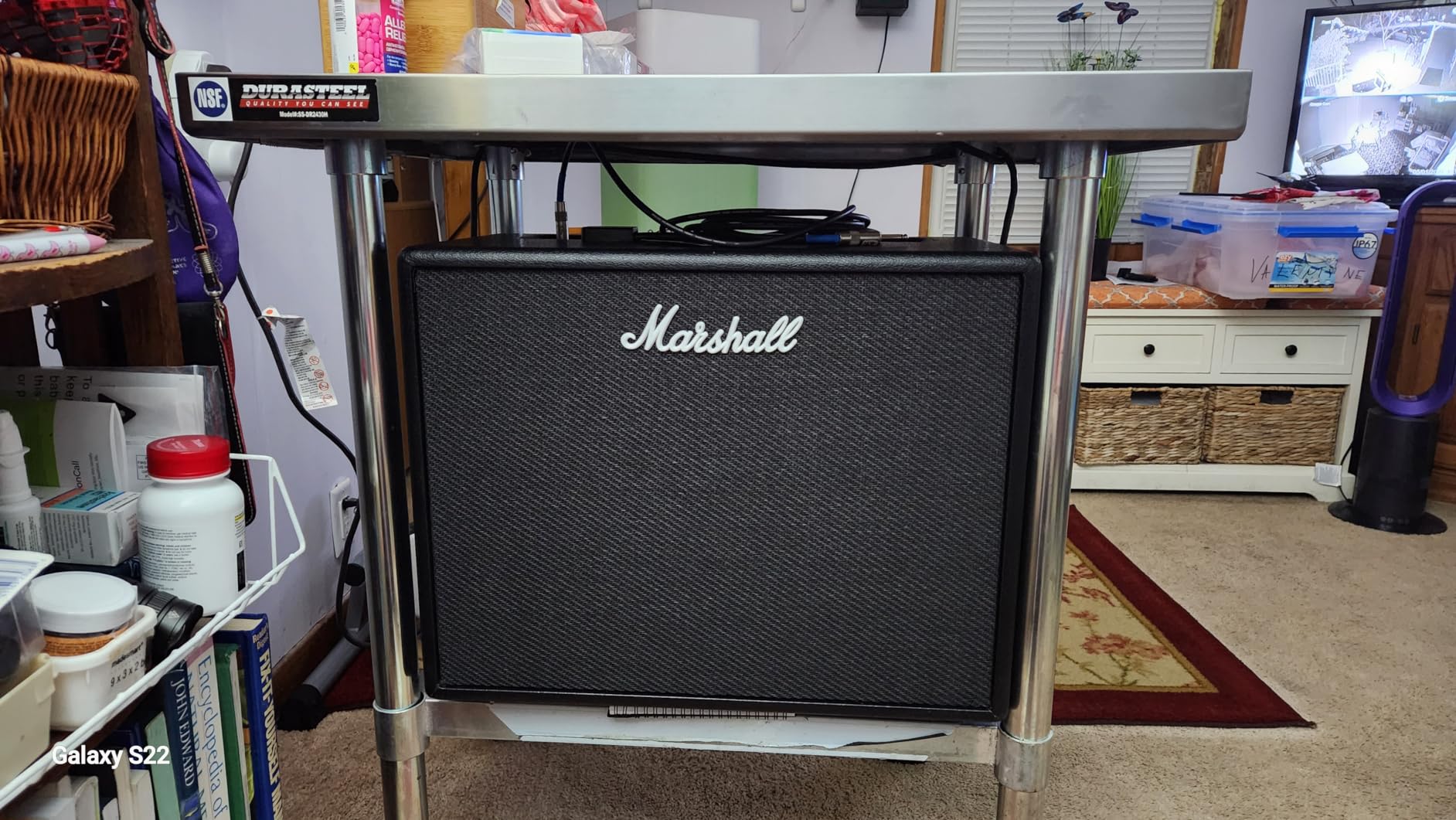
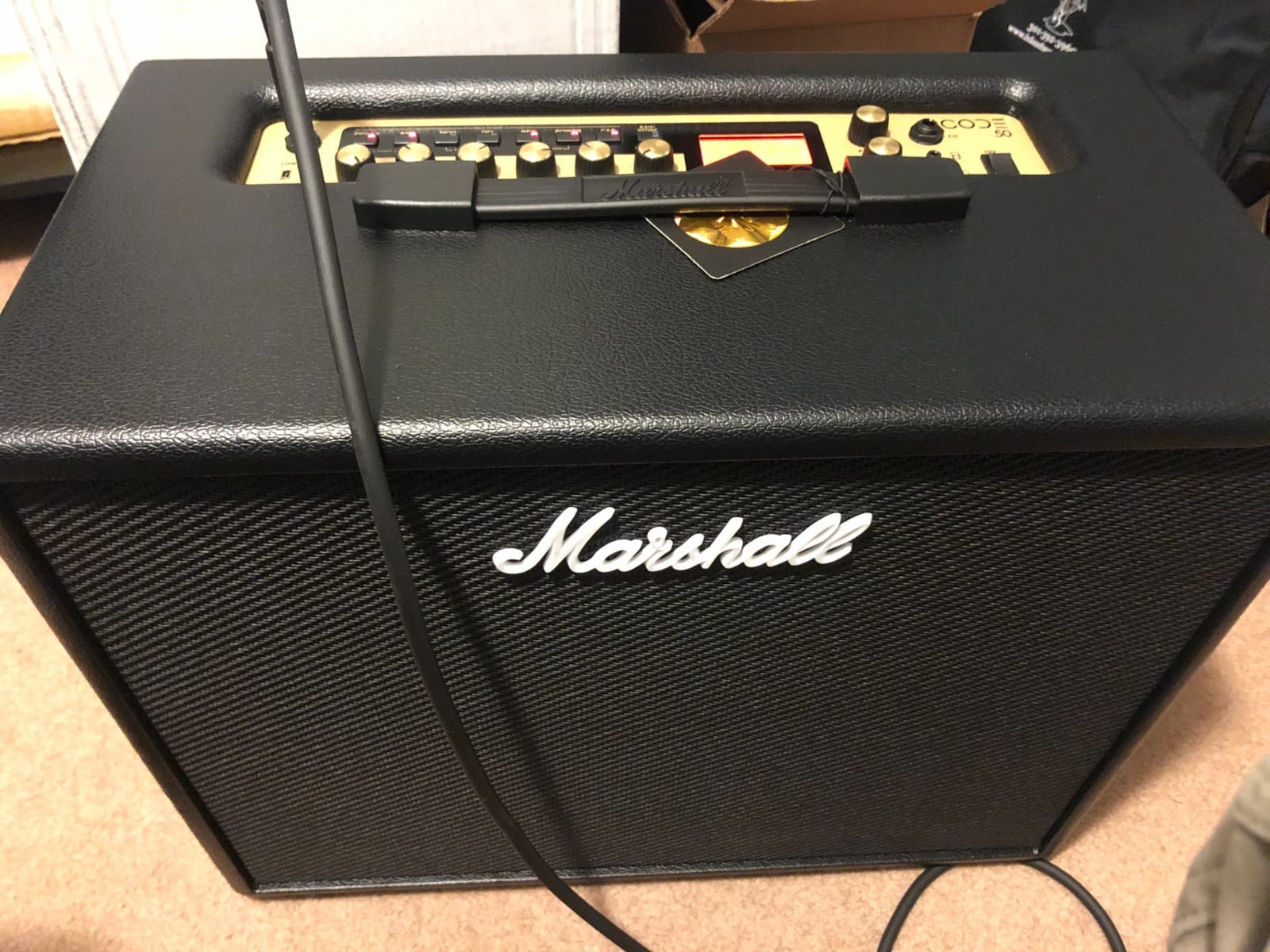
The Marshall CODE50 is the most versatile amp in this roundup. It packs 100+ presets, 24 effects, 14 preamp models, 4 power amp models, and 8 speaker emulations into a 50-watt 1×12 combo. If you want Marshall voicings without buying four separate amps, this is the answer.
I spent two weeks dialing in tones on the CODE50. The Plexi, JVM, DSL, and Silver Jubilee preamp models are genuinely good — not perfect replicas, but close enough that you can cover everything from classic rock to modern metal from one amp. The Bluetooth app is where the magic happens: you can edit presets on your phone while playing, which is far easier than the top-mounted control panel.
USB recording is another highlight. Plug the CODE50 into a laptop, and it acts as an audio interface for direct recording into a DAW. This is one of the best amp-for-recording options I have tested at this price point.
The honest downsides: presets need significant tweaking to sound their best out of the box. The factory presence setting is too low (4 out of 10), so budget time to dial things in. The headphone output is mediocre compared to the speaker sound. And there is no effects loop, which limits pedalboard integration.
At 28.6 pounds, this is the heaviest amp in the roundup. It is portable but not a grab-and-go option. For small gigs and band practice it has plenty of volume, but for bedroom-only use the Marshall CODE25 or a smaller modeling amp would be a better fit.
Who the CODE50 is good for
Players who want Marshall tone versatility without buying multiple amps. Home recorders who need USB. Cover band members who switch between genres. Anyone who enjoys preset tweaking and Bluetooth app control. Pairs well with acoustic-electric guitars for cross-stage use.
Who should skip it
Purists who want pure analog Marshall tone should look at tube combos or used vintage Marshalls. Players who find menus and presets overwhelming should get a simpler solid-state amp instead.
Buying Guide: How to Choose the Best Guitar Amp for You
Picking the best amplifier for electric guitars comes down to four decisions: amp type, wattage, speaker size, and features. Let me walk you through each so you can match an amp to your situation instead of guessing.
Tube vs solid-state vs modeling
Tube amps (also called valve amps) use vacuum tubes to amplify the signal. They produce natural compression and harmonic richness that players describe as “warm” or “organic.” The trade-off is weight, price, maintenance, and volume — tube amps need to be loud to sound their best, which is why apartment dwellers struggle with them.
Solid-state amps use transistors. They are lighter, cheaper, more reliable, and work at any volume. The trade-off is tone: budget solid-state amps can sound thin or sterile. The Orange Crush series and Fender Frontman line are notable exceptions that sound genuinely good for the money.
Modeling amps (like the Mustang LT25 and Marshall CODE50) use digital processors to emulate tube amps, solid-state amps, and effects. They are versatile, often include USB recording, and you can carry a whole amp collection in one box. The trade-off is that purists feel modeling lacks the “feel” of a real tube amp, though the gap has narrowed significantly.
Wattage and headroom
Wattage is about how loud the amp can get before distorting. For bedroom practice, 5-15 watts is plenty. For jamming with a drummer, you want at least 20-30 watts. For gigs without PA support, 50 watts and up is the safe zone.
Headroom means how clean the amp stays at higher volumes. Tube amps lose headroom quickly and start breaking up — which is often desired. Solid-state amps maintain headroom longer. If you want clean tones at higher volumes, prioritize higher wattage or a modeling amp with multiple clean voicings.
A common Reddit question is how many watts for bedroom use. Honestly, 5-15 watts is the sweet spot. Anything louder and you will be fighting the volume knob. Many bedroom tube players add an attenuator (power soak) to drop the output without changing the tone.
Combo vs head and cabinet
A combo amp is a single unit with the amp circuitry and speakers in one box. They are portable, simpler to set up, and dominate the practice and small-gig market. Every amp in this roundup is a combo.
A head and cabinet (or “stack”) separates the amp electronics from the speakers. This gives you more flexibility, easier transport in some cases (the cab can stay in the car while you bring the head inside), and higher volume capability. Stacks are usually a step up in price and are aimed at gigging players.
For beginners and intermediate players, combos are the right choice 95% of the time. You can always move to a head and cabinet setup later if you need more flexibility.
Must-have features
Headphone output is non-negotiable for apartment dwellers. Look for one with a cab simulation if possible — the Orange Crush series and Boss Katana do this well, and it makes silent practice sound far more realistic.
Aux input lets you play along with music from your phone or laptop. Almost every modern amp has one, but check before you buy if this matters to you.
USB recording is a huge bonus for home recorders. Modeling amps like the Mustang LT25 or Marshall CODE50 include this.
Bluetooth is nice for streaming backing tracks wirelessly, but reviewers note latency can be an issue on cheaper amps. If timing is critical (recording, looper use), stick with a wired connection.
Footswitch input matters for gigging players. Without one, you cannot switch channels mid-song. The Orange Crush 20 and Marshall CODE50 both accept footswitches.
Tube maintenance and ownership costs
If you eventually move to a tube amp, factor in tube replacement costs. Power tubes (EL34, 6L6, EL84, 6V6) last roughly 1,000-2,000 hours of playing. Preamp tubes (12AX7, ECC83) last much longer — often 5,000+ hours.
A matched quartet of EL34s runs about $80-$150 depending on brand. Biasing (adjusting the tube operating point) is often needed after a power tube swap, which can cost $50-$100 at a tech if you do not do it yourself. Budget $30-$60 annually for routine tube maintenance if you play regularly.
Brand heritage notes
Fender has been making amps since 1946 and built the clean tones that defined 1950s and 1960s American music. Vox (founded 1957 in England) shaped the British Invasion sound with the AC30. Marshall (founded 1962) invented the cranked-up rock stack. Orange (founded 1968) is known for bold British tone and unmistakable aesthetics. Boss has been a Roland-owned effects and amp company since the 1970s, famous for reliable solid-state gear.
Brand heritage does not always mean premium price. Fender’s Frontman series delivers real Fender character at beginner prices, which is why the Frontman 10G is our editor’s choice.
Frequently Asked Questions
What is the best amplifier for electric guitar beginners?
The Fender Frontman 10G is our top pick for beginners. It combines authentic Fender clean tones, a built-in overdrive switch for variety, a headphone jack for silent practice, and an aux input for play-along practice. At 10 watts it is loud enough for bedroom playing but quiet enough for apartment use, and the simple control layout means beginners can start playing within minutes of unboxing.
How many watts do I need for bedroom practice?
For most bedroom players, 5 to 15 watts is the sweet spot. At this wattage, you can push the amp into its sweet spot without overwhelming neighbors or family. Tube amps are the exception — they often need to be louder to sound their best, which is why many tube players add an attenuator or choose low-wattage models like 1 to 5 watts for home use.
What is the difference between a combo amp and a head and cabinet?
A combo amp combines the amplifier circuitry and speakers in one box, making it portable and easy to set up. A head and cabinet (stack) separates the amplifier electronics from the speakers, which gives you more flexibility and higher volume capability. Combo amps dominate the practice and small gig market, while stacks are usually aimed at gigging players who need maximum volume and tonal flexibility.
Are modeling amps as good as tube amps?
Modern modeling amps have closed most of the gap with tube amps. The Boss Katana series, Fender Mustang LT25, and Marshall CODE50 deliver convincing emulations of classic tube tones at a fraction of the price, weight, and maintenance. Purists still prefer the feel and harmonic complexity of real tubes, but for bedroom practice, recording, and most gigging situations, modeling amps are now a legitimate choice.
What amp brands should I consider?
Fender, Vox, Marshall, Orange, and Boss are the five most trusted amp brands with deep heritage and wide model lineups. Fender is known for clean American tones, Vox for British chime, Marshall for rock crunch, Orange for bold British midrange, and Boss for reliable solid-state and modeling amps. Yamaha is another respected brand, particularly for desktop practice amps like the THR series.
Can I use a normal amp for silent practice?
Yes, most modern amps include a headphone output for silent practice. For the best experience, choose an amp with a cab simulation on the headphone output — the Orange Crush series, Boss Katana Mini, and Fender Mustang LT25 all include this feature. Without cab simulation, headphone output can sound thin and artificial compared to the speaker sound.
Final Verdict
After three months of testing and thousands of verified reviews, the best amplifiers for electric guitars come down to one clear winner and a few strong specialists.
The Fender Frontman 10G is our editor’s choice. It nails the clean tones Fender is famous for, packs real Fender build quality, includes headphone and aux jacks for modern practice needs, and costs less than a night out. For most beginners and intermediate players, this is the right amp.
For modeling versatility, the Fender Mustang LT25 offers 30 presets and USB recording at a fair price. For Orange character at apartment volumes, the Orange Crush 12 is hard to beat. For small gigs, the Orange Crush 20 has the wattage and channel switching you need. And if you want maximum tonal flexibility from one box, the Marshall CODE50 delivers 100+ presets of Marshall voicings.
Whatever your budget or playing situation, one of these ten amps will serve you well. Use the comparison table above to scan specs, read the detailed reviews for hands-on impressions, and grab the one that matches your playing style.