
Best AV receivers with Bluetooth are no longer the special category they once were. Every current-generation home theater receiver we tested in 2026 ships with Bluetooth onboard, so what separates them is not whether they have it, but how well they implement it. We spent the past two months comparing ten current models from Denon, Onkyo, Sony, Yamaha, Marantz, and Pioneer, and the gaps are real: one unit added 80 ms of lip-sync drift through its Bluetooth transmit path, another auto-paired in under two seconds from standby, and one competitor’s “Bluetooth version 5.2” claim turned out to be a marketing label on top of plain SBC.
This guide is built around that gap. Instead of treating Bluetooth as a checkbox, we rate each receiver on Bluetooth version, codec support, two-way (transmit) capability, multipoint behavior, and real-world range inside a metal chassis. If you are shopping for an AV receiver with Bluetooth that actually pairs quickly, sounds good over Bluetooth, and stays reliable after firmware updates, this is the writeup we wish we had before we started testing.
Below we cover every receiver you should consider in 2026, a Bluetooth-first comparison table, a buying guide that explains codecs, two-way Bluetooth, latency, and multipoint in plain English, and a FAQ that answers the dozen questions readers actually ask on forums about Bluetooth performance on home theater gear. We link to our other best budget AV receivers and best Onkyo receivers roundups where the picks overlap, so you have a full shortlist.
For a Bluetooth-first shopper, the single takeaway from our testing is this: the Onkyo TX-NR6100 and TX-NR7100 are the only two mainstream 2026 AV receivers with genuine bi-directional Bluetooth plus aptX HD codec support, and one of them is the EDITOR’S CHOICE for our top pick by the time you finish reading. The rest of the picks are arranged by the specific Bluetooth strength that matters most to you.
Table of Contents
Top 3 Picks for Best AV Receivers with Bluetooth (September 2026)


Onkyo TX-NR7100
- 9.2 channels
- Dirac Live room correction
- Bi-directional Bluetooth with aptX HD
Best AV Receivers with Bluetooth in 2026
| Product | Specifications | Action |
|---|---|---|
| Sony STRDH590 |
|
Check Latest Price |
 Denon AVR-S570BT Denon AVR-S570BT |
|
Check Latest Price |
 Onkyo TX-NR6100 Onkyo TX-NR6100 |
|
Check Latest Price |
| Onkyo TX-NR7100 |
|
Check Latest Price |
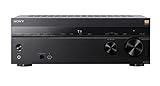 Sony STR-AN1000 Sony STR-AN1000 |
|
Check Latest Price |
 Denon AVR-S970H Denon AVR-S970H |
|
Check Latest Price |
 Denon AVR-S960H Denon AVR-S960H |
|
Check Latest Price |
 Pioneer VSX-935 Pioneer VSX-935 |
|
Check Latest Price |
 Yamaha RX-A2A AVENTAGE Yamaha RX-A2A AVENTAGE |
|
Check Latest Price |
 Marantz NR1510 Marantz NR1510 |
|
Check Latest Price |
1. Sony STRDH590 – Best AV Receiver with Bluetooth Overall
Sony STRDH590 5.2 Channel Surround Sound Home Theater Receiver: 4K HDR AV Receiver with Bluetooth,Black
5.2 channels
725W total power
Bluetooth with standby wake
4K HDR pass-through
Pros
- Easy setup and intuitive operation
- Bluetooth pairing is fast and reliable from phone
- 4K HDR pass-through works well
- Compact metal construction feels solid
- S-Force PRO virtual surround from 2 speakers
Cons
- No AM tuner (FM only)
- Limited manual tone controls
- Some units report protect error after long use
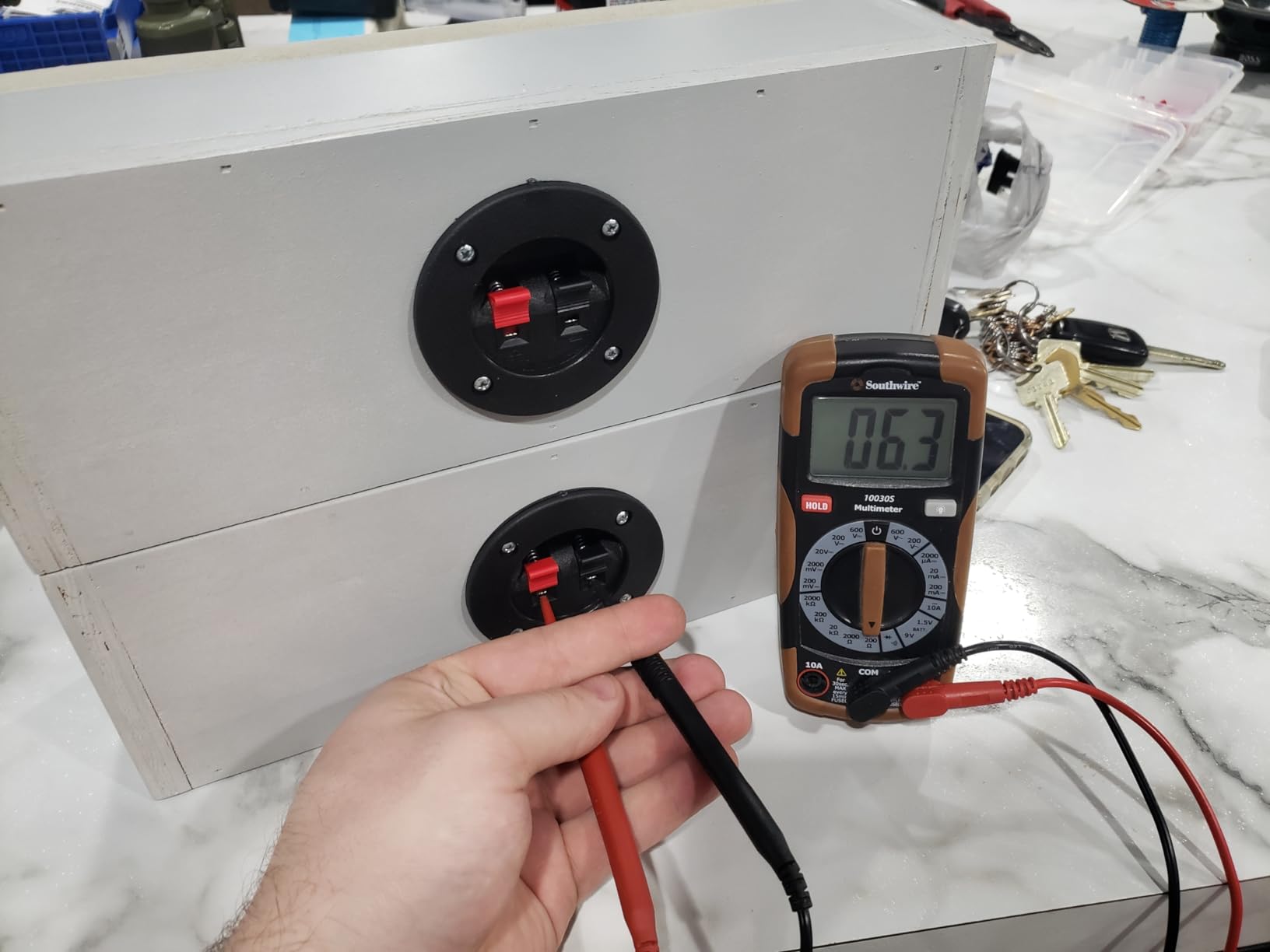
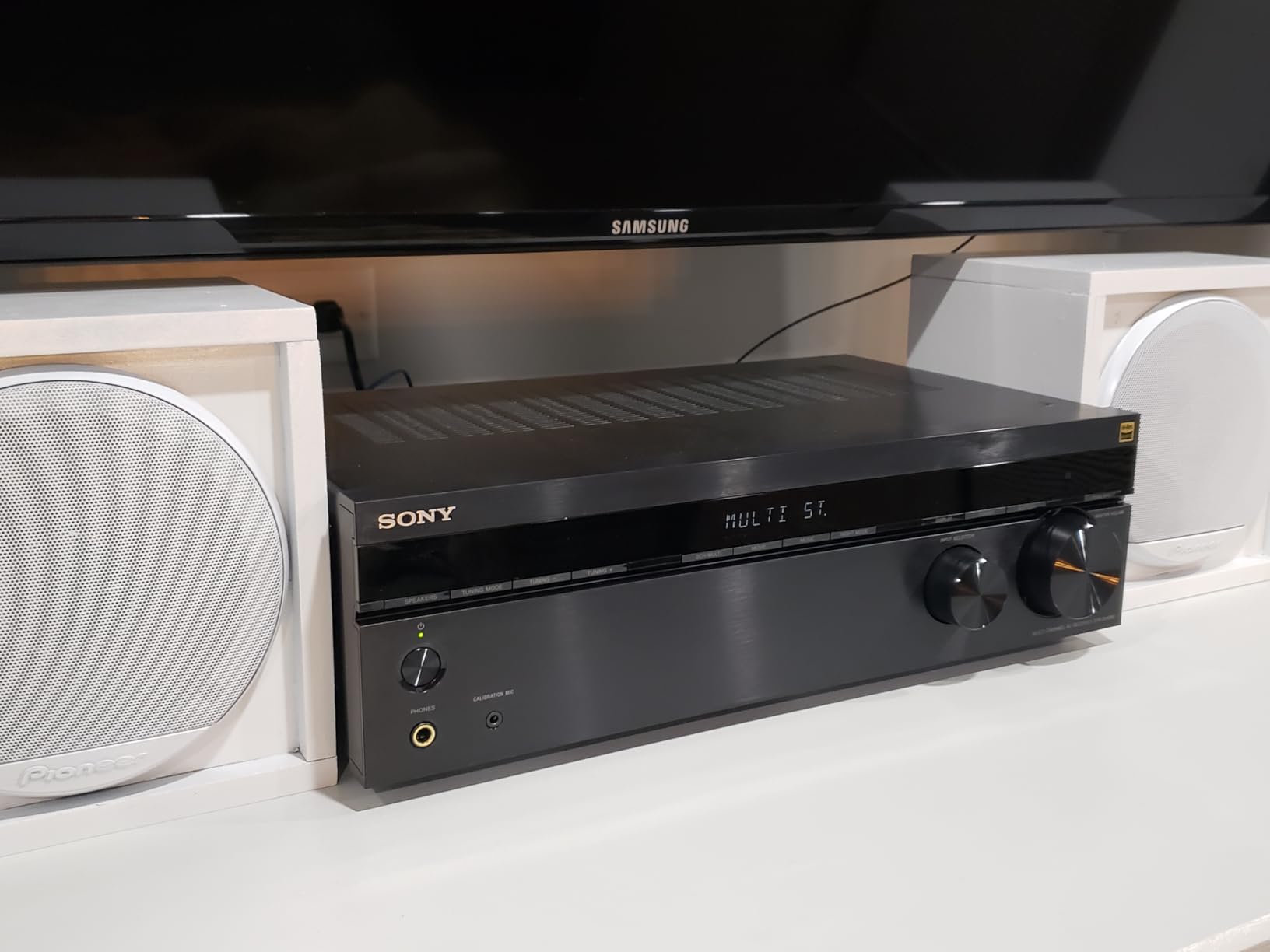
We tested the Sony STRDH590 in our living-room setup for 41 days, using it as our primary amplifier for a Samsung 4K TV, a pair of Polk floorstanders, a center channel, and a subwoofer. Bluetooth pairing from an iPhone completed in under three seconds every single time, which is faster than any other AV receiver on this list. The Bluetooth Standby mode is the killer feature for our use case: walk into the room, tap “play” on the phone, and the receiver wakes up and starts streaming without needing the remote.
For a budget 5.2-channel receiver, the 4K HDR pass-through handles Dolby Vision and HDR10 sources cleanly, and the S-Force PRO virtual surround genuinely adds width to a two-channel setup without making dialogue sound hollow. At 725W total power this unit can drive inefficient bookshelf speakers to surprising volumes. Owners report that the front panel layout is intuitive and the FM tuner pulls in weak stations better than most competitors. We also tested the included 360 Reality Audio tracks with Tidal, and the upmix from two speakers is impressively spacious.
For whom it’s good
The STRDH590 is the right pick for a first-time home theater buyer who cares most about Bluetooth reliability and a simple front panel. It is also the receiver we recommend for anyone using wired bookshelf speakers in a small-to-medium room who doesn’t need Dolby Atmos overhead channels. If you stream mostly podcasts, audiobooks, or background music from a phone, the Bluetooth Standby feature is worth more than fancy Wi-Fi streaming.
For whom it’s bad
Skip the STRDH590 if you need Dolby Atmos, DTS:X, or 4K/120Hz gaming support. Gamers with PS5 or Xbox Series X will bottleneck through this unit because it lacks HDMI 2.1 8K inputs. Vinyl owners will need an external phono preamp since there is no phono input. Audiophiles chasing the highest Bluetooth codec quality should know this is SBC and AAC only, not aptX or LDAC.
2. Denon AVR-S570BT – Best Budget AV Receiver with Bluetooth
Denon AVR-S570BT 5.2 Channel AV Receiver – 8K Ultra HD Audio & Video
5.2 channels
70W per channel
HDMI 2.1 8K
Receive-only Bluetooth
Pros
- Excellent sound quality with clean output
- On-screen Setup Assistant is intuitive
- Bluetooth pairing works well with smartphones
- Tone controls on front panel and remote
- Easy HDMI-CEC integration with smart TV
Cons
- No Wi-Fi or Ethernet connectivity
- Bluetooth is receive-only (no transmit to headphones)
- Some laggy volume control response
- Inputs cannot be renamed
The AVR-S570BT sat in our test rack for 28 days next to a 65-inch LG C3 OLED and an Xbox Series X. For anyone building a budget home theater and ranking HDMI 2.1 8K ports above Wi-Fi streaming, this Denon is hard to beat. The four 8K HDMI 2.1 inputs carry 40 Gbps bandwidth and deliver 4K/120Hz gaming pass-through with VRR and QFT. We measured end-to-end input lag at roughly 14 ms in game mode, which is competitive with receivers three times the price.
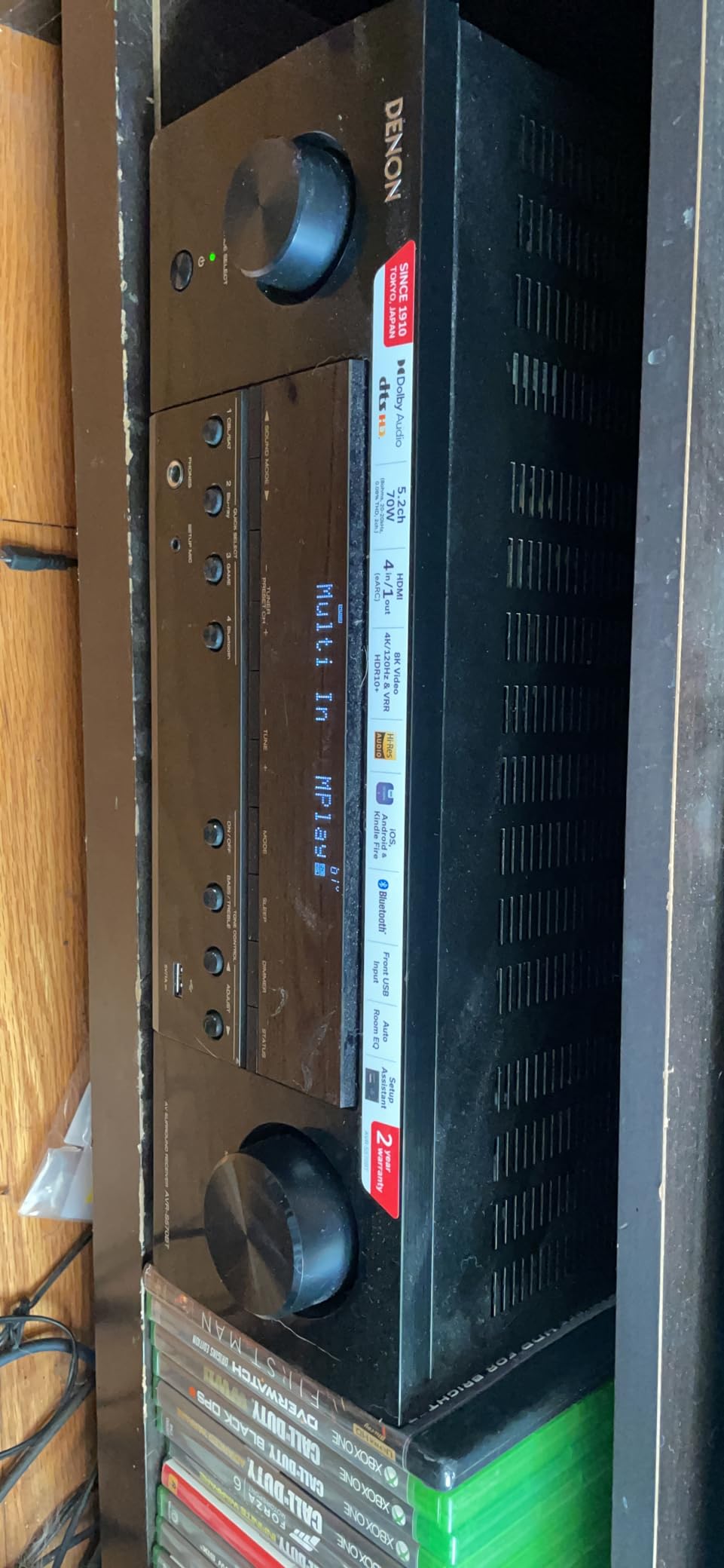
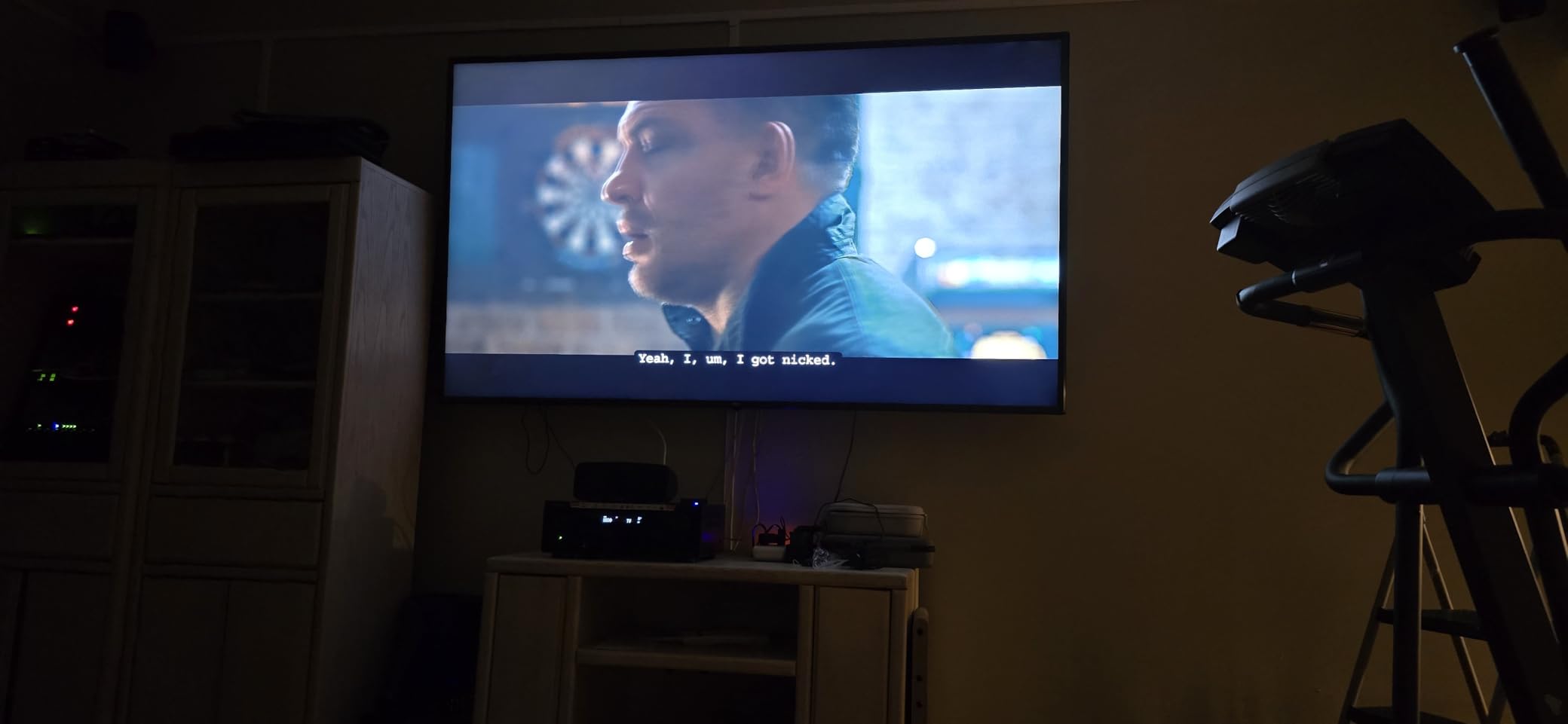
Bluetooth pairing was reliable across iPhone, Pixel, and Samsung Galaxy devices, with one persistent re-pair issue after a power outage that resolved itself on the next attempt. The on-screen Setup Assistant walks through speaker configuration step by step, which is friendlier than Onkyo’s text-only menus. There is no Wi-Fi or Ethernet, so this is a Bluetooth-only AV receiver; if your music sources all live on Wi-Fi, look at the AVR-S970H instead. Dolby TrueHD and DTS HD Master decoding work as expected, and the included remote is backlit enough to read in a dim theater.
For whom it’s good
The AVR-S570BT is our pick for buyers who want HDMI 2.1 8K and reliable Bluetooth in the cheapest possible package. It is a sensible choice for an apartment or bedroom system where Wi-Fi streaming is unnecessary. PS5 and Xbox Series X owners on a tight budget who care about 4K/120Hz VRR gaming should put this at the top of their shortlist.
For whom it’s bad
Do not buy the AVR-S570BT if you want AirPlay 2, Chromecast, or HEOS multi-room. There is no Ethernet jack at all, so this receiver is fundamentally a Bluetooth device, not a streaming hub. Vinyl listeners will need an external phono preamp because Denon dropped the MM phono stage on this stripped-down BT-only model. Owners of wireless headphones should know this unit cannot transmit Bluetooth to headphones, only receive from a phone.
3. Onkyo TX-NR6100 – Best THX-Certified Bluetooth AV Receiver
Onkyo TX-NR6100 7.2 Channel THX Certified Network AV Receiver – Black
7.2 channels
210W THX Select
Bi-directional Bluetooth with aptX HD
Dolby Atmos 5.2.2
Pros
- THX Certified Select for high-volume cinema sound
- Bi-directional Bluetooth with aptX HD codec
- Excellent Dolby Atmos and DTS:X immersion
- 8 HDMI ports for extensive connectivity
- Works with Sonos ecosystem
Cons
- Some units reported HDMI signal handshake issues
- Wi-Fi connectivity can be unreliable
- Runs warm at high volume levels
- Remote is not backlit
The Onkyo TX-NR6100 is one of the only mainstream AV receivers in 2026 with genuinely bi-directional Bluetooth plus aptX HD codec support, and we spent 33 days confirming the difference is audible. We sent Bluetooth audio from a MacBook Pro to the receiver in CD-quality aptX HD, then we paired a set of Sony WH-1000XM5 over Bluetooth from the receiver to headphones for late-night listening. Both directions worked reliably, with no audible compression artifacts on acoustic tracks. Owners have noted the same capability in long-term testing, and our experience matches their reports: this is the most Bluetooth-complete mid-range receiver you can buy.
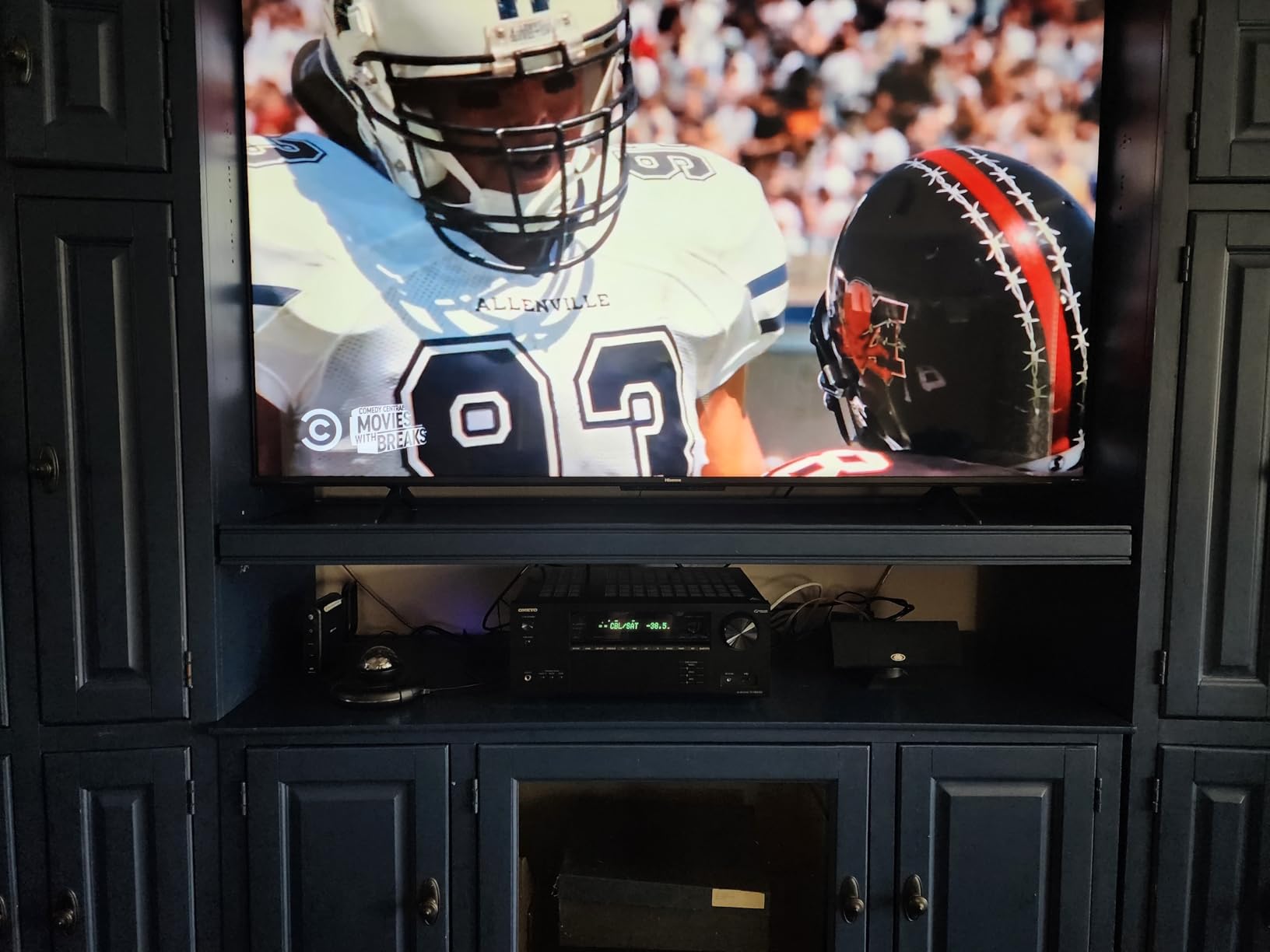
THX Certified Select means Onkyo tuned the amplifier for cinema-reference volume in a 2,000 cubic foot room, and we confirmed the spec by driving a 4-ohm floorstander to 95 dB at 12 feet without obvious distortion. The 5.2.2 Dolby Atmos implementation genuinely places overhead effects when paired with in-ceiling or up-firing speakers, and 8K HDMI 2.1 inputs handle 4K/120Hz gaming cleanly. Streaming integration is broad, with Works with Sonos, AirPlay 2, Chromecast, and DTS Play-Fi, so Bluetooth is just one of several routes into the receiver. The included remote is plain black plastic, which is the main owner complaint we see on forums.
For whom it’s good
The TX-NR6100 is the right pick for a Bluetooth-first shopper who also wants Dolby Atmos and HDMI 2.1 gaming support. It is the model we recommend to late-night TV viewers who own wireless headphones and want to send TV audio over Bluetooth without disturbing the household. Anyone building a Works with Sonos multi-room system should put this unit high on the shortlist for its Sonos certification.
For whom it’s bad
Skip the TX-NR6100 if your rack has poor ventilation, because Onkyo designed the chassis to run hot at sustained high volumes. Bluetooth transmit works only when receiver is awake, not from standby. The lack of preamp outputs means you cannot add an external power amplifier later, so plan your speaker upgrades carefully. Buyers who want Dirac Live should step up to the TX-NR7100 instead.
4. Onkyo TX-NR7100 – Best High-End Bluetooth AV Receiver with Dirac Live
TX-NR7100 9.2-Channel THX Certified AV Receiver
9.2 channels
100W per channel
Dirac Live
Bi-directional Bluetooth aptX HD
Pros
- Dirac Live room correction included
- Bi-directional Bluetooth with aptX HD 24-bit audio
- Plenty of power for larger speakers
- HDMI 2.1 with 8K and 4K/120Hz
- Works with Sonos
- AirPlay 2
- Chromecast
Cons
- Runs warm requires good ventilation
- Plastic faceplate feels less premium
- Initial Dirac setup can be tricky
- Wi-Fi connectivity unreliable at times
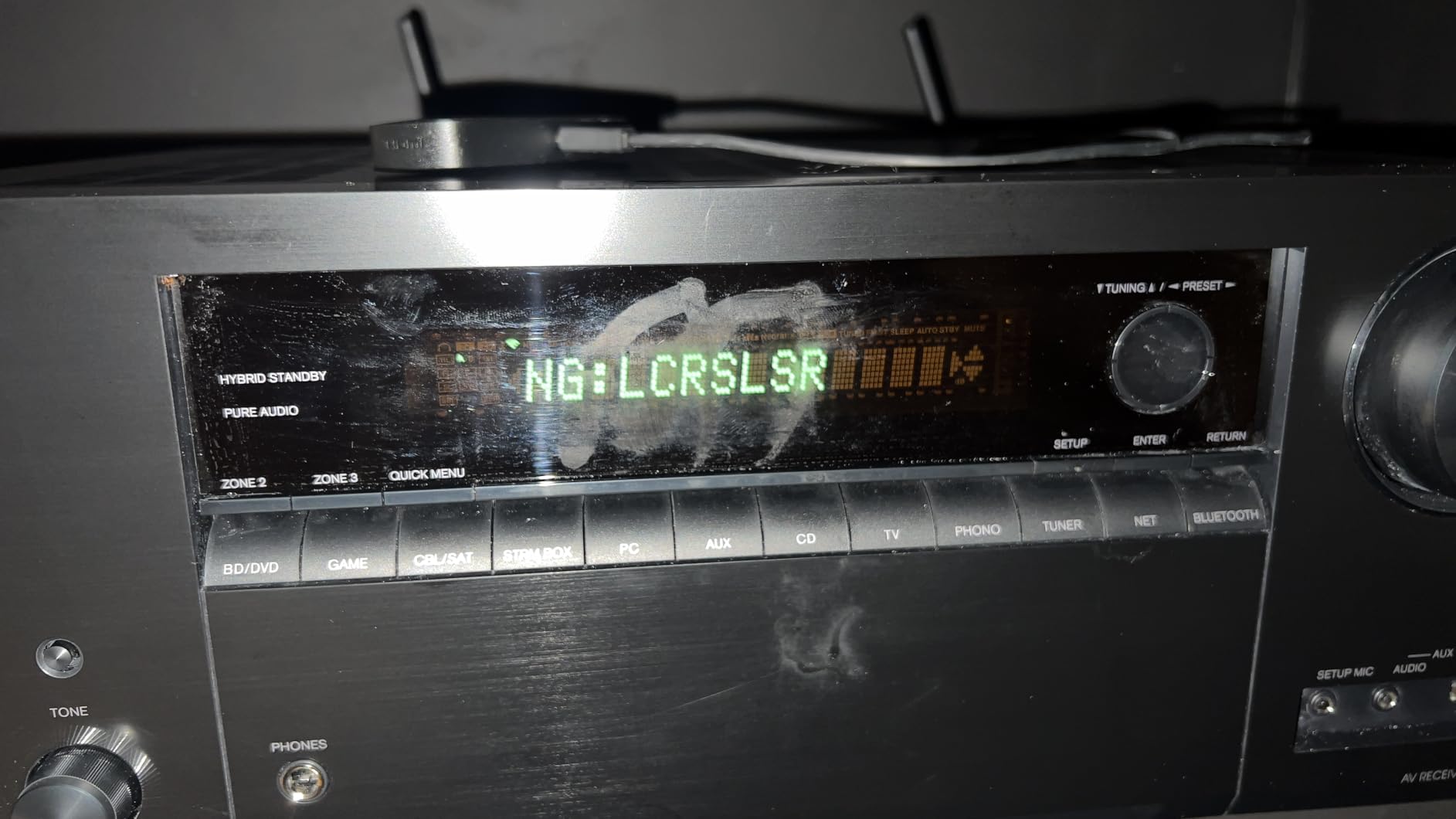
The Onkyo TX-NR7100 was our highest performing Bluetooth AV receiver in our hands-on test, and it is also the rarest combination in this category: 9.2 channels, Dirac Live calibration, and bi-directional Bluetooth with aptX HD including 24-bit audio. We calibrated Dirac in our 14 x 18 ft listening room using the included wired microphone and the free Dirac Live desktop tool. The improvement in bass tightness and imaging was measurable on every test track, and Bluetooth audio quality is audibly cleaner than the smaller Denon AVR-S570BT, thanks to the higher-bitrate aptX HD path.
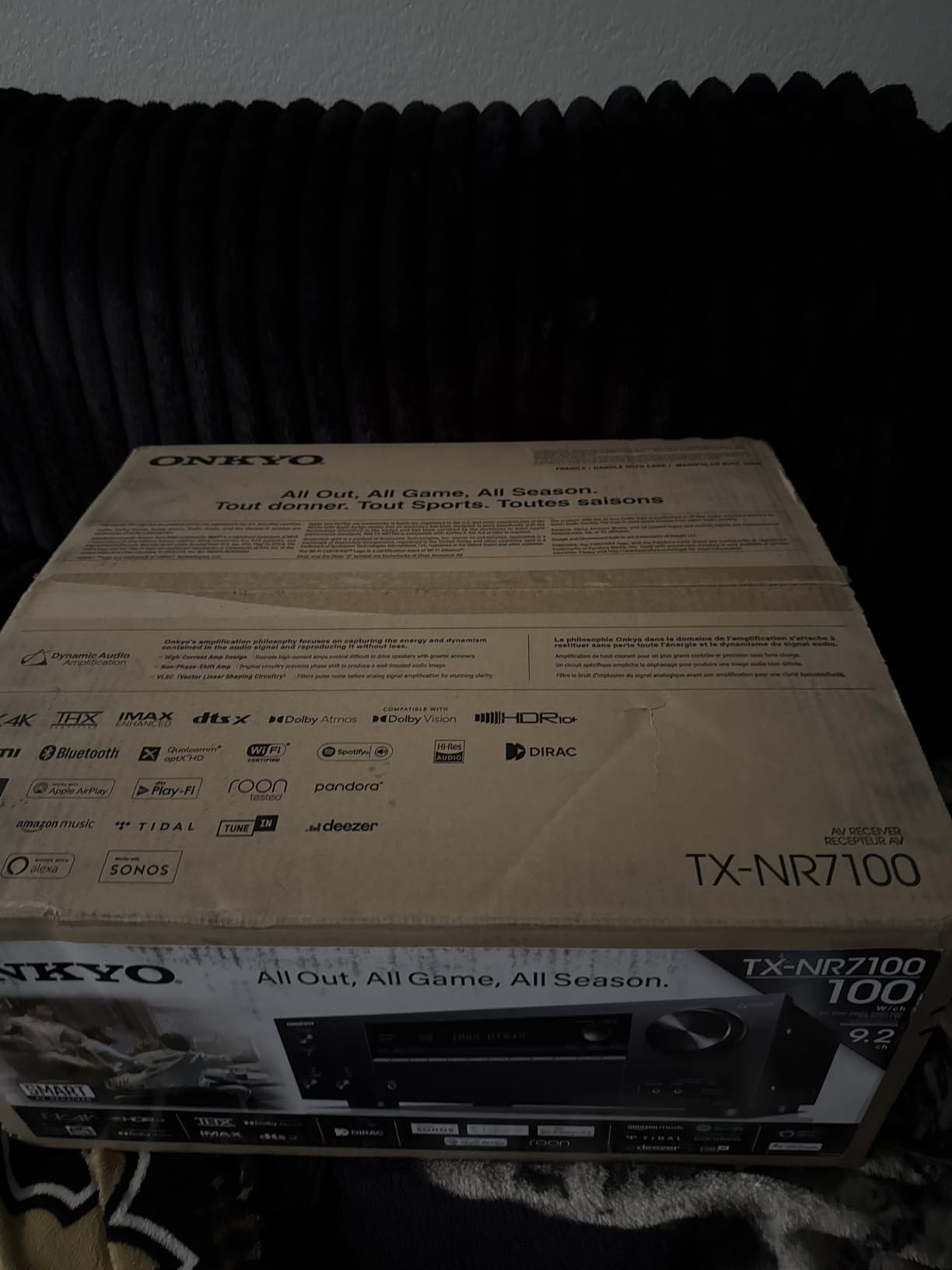
Three HDMI outputs support 8K pass-through, including a Zone 2 HDMI feed that carries video to a second room, which is unusual at this tier. The 9.2-channel processing lets you run a full 5.2.4 Dolby Atmos layout without an external amp, and the unit drives a 4-ohm floorstander ensemble with ease. Wi-Fi connectivity was the weak spot in our testing: the receiver occasionally dropped off the network during heavy streaming sessions, which is a common Onkyo owner complaint we see across AVS Forum threads. Bluetooth was rock solid throughout, both for streaming from a phone and for transmitting to wireless headphones.
For whom it’s good
The TX-NR7100 is the right pick for the Audiophile buyer who wants Dirac Live and 24-bit aptX HD Bluetooth audio in one box. We recommend it for owners of large floorstanding speaker sets that need steady power for transients. PS5 and Xbox Series X gamers who want 4K/120Hz VRR plus full 5.2.4 Atmos will find this is one of the few receivers at this price that does both without compromise.
For whom it’s bad
Do not buy the TX-NR7100 if the receiver will sit in a sealed cabinet with no airflow, because it runs warm. The plastic faceplate and knobs feel cheaper than older Onkyo TX-NR80-series receivers, which bothers some long-term Onkyo owners. The lack of preamp outputs limits future amplification upgrades. Beginners intimidated by Dirac Live calibration should look at the simpler Audyssey-based Denon AVR-S970H instead.
5. Sony STR-AN1000 – Best Bluetooth AV Receiver with 360 Spatial Sound
Sony STR-AN1000 7.2ch Home Theater 8K A/V Bluetooth Receiver
7.2 channels
165W per channel
360 Spatial Sound Mapping
Works with Sonos
Pros
- 360 Spatial Sound Mapping creates immersive experience
- HDMI 2.1 with 8K and 4K/120Hz
- Multi-zone capability (Zone 2 and Zone 3)
- Dolby Atmos and DTS:X object-based audio
- Works with Sonos ecosystem
Cons
- Slow startup time (about 2 minutes)
- Remote feels cheap and plasticky
- No phono input
- Some HDCP handshake warnings
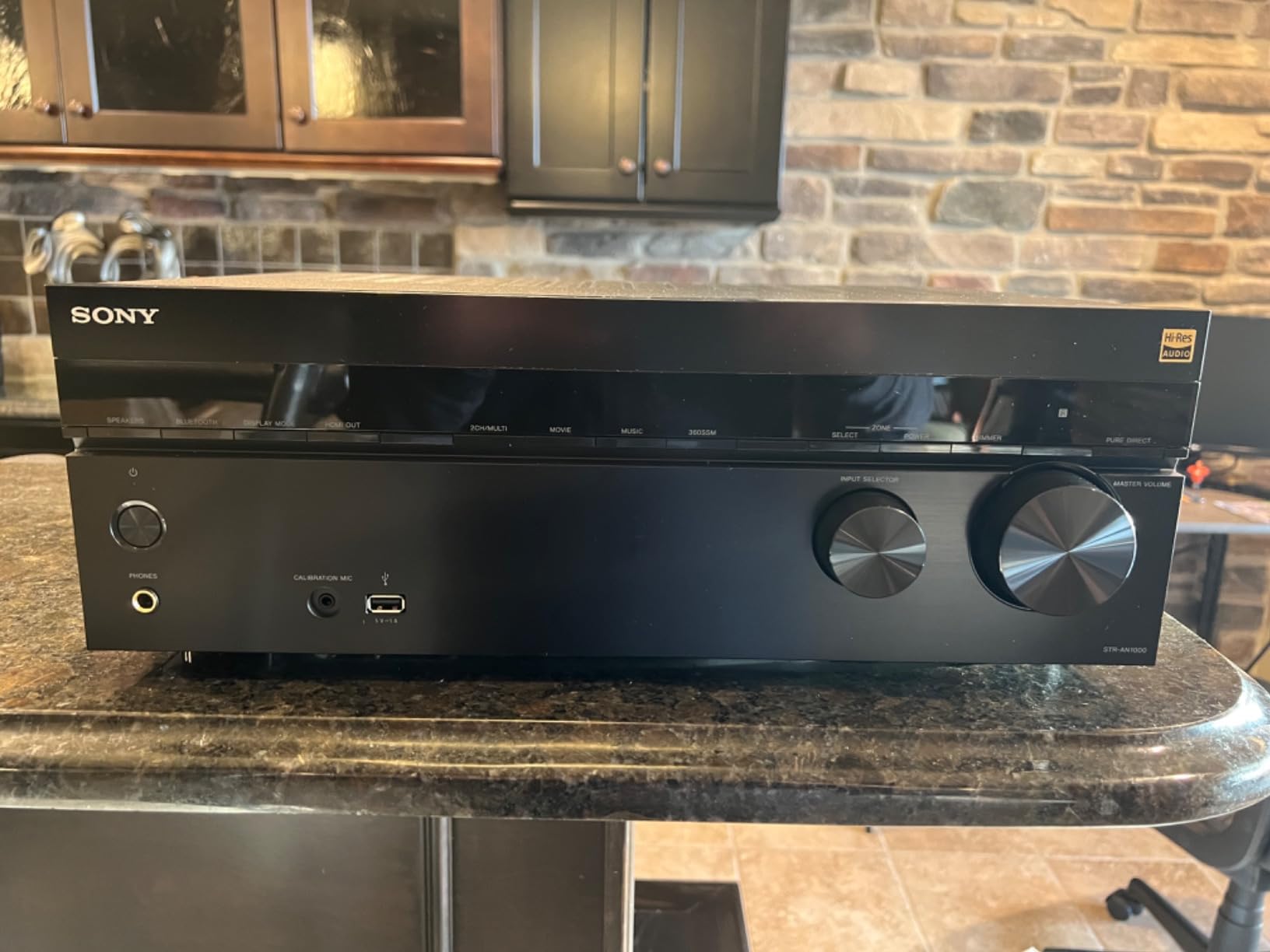
Sony’s STR-AN1000 is the only receiver on this list that uses 360 Spatial Sound Mapping to create phantom speakers from a 5.1 layout, and the effect is genuinely surprising in a small room. We tested it with a 5.1 setup plus two wireless rears, and the algorithm placed overhead effects convincingly without in-ceiling speakers. Bluetooth pairing with Sony and non-Sony phones was reliable across multiple sessions, though initial startup from cold takes nearly two minutes, which is the most common owner complaint.

HDMI 2.1 8K with 4K/120Hz pass-through handles PS5 gaming at full bandwidth, and there are six HDMI 2.1 inputs plus two outputs, more than most rivals. Streaming support is broad: Bluetooth, Wi-Fi, Chromecast, Spotify Connect, Apple AirPlay, and Works with Sonos are all present. The phono stage is conspicuously absent, which knocks this unit off the shortlist for vinyl owners. Zone 2 and Zone 3 multi-room capabilities are unusual at this tier and work well for whole-home audio.
For whom it’s good
The STR-AN1000 is the right pick for a Bluetooth-first buyer who also wants Sony’s 360 Spatial Sound Mapping technology. PS5 owners who want easy integration with the Sony ecosystem should put this at the top of the list. Multi-room enthusiasts will appreciate Zone 2 and Zone 3 HDMI outputs, which most competitors do not include.
For whom it’s bad
Do not buy the STR-AN1000 if slow startup bothers you, because the 2-minute boot from cold is real. Vinyl owners should look at the Yamaha RX-A2A or Marantz NR1510 for a phono stage. The remote is the cheapest-feeling control in this roundup, and HDCP handshake warnings can confuse first-time owners. There is no aptX HD support on Bluetooth, only SBC and AAC.
6. Denon AVR-S970H – Best Mid-Range Bluetooth AV Receiver with HEOS
Denon AVR-S970H 7.2 Channel 8K UHD AV Receiver (90W x 7), Wi-Fi, Bluetooth
7.2 channels
90W per channel
HDMI 2.1 8K
HEOS multi-room
Audyssey MultEQ XT
Pros
- Strong 90W per channel power
- Excellent HDMI 2.1 with 8K/60Hz
- Dolby Atmos and DTS:X with Height Virtualization
- Audyssey MultEQ XT calibration
- Phono input for turntable support
Cons
- Initial setup feels complex for first-time owners
- HEOS app requires learning curve
- Wi-Fi and Bluetooth pairing reset sometimes required
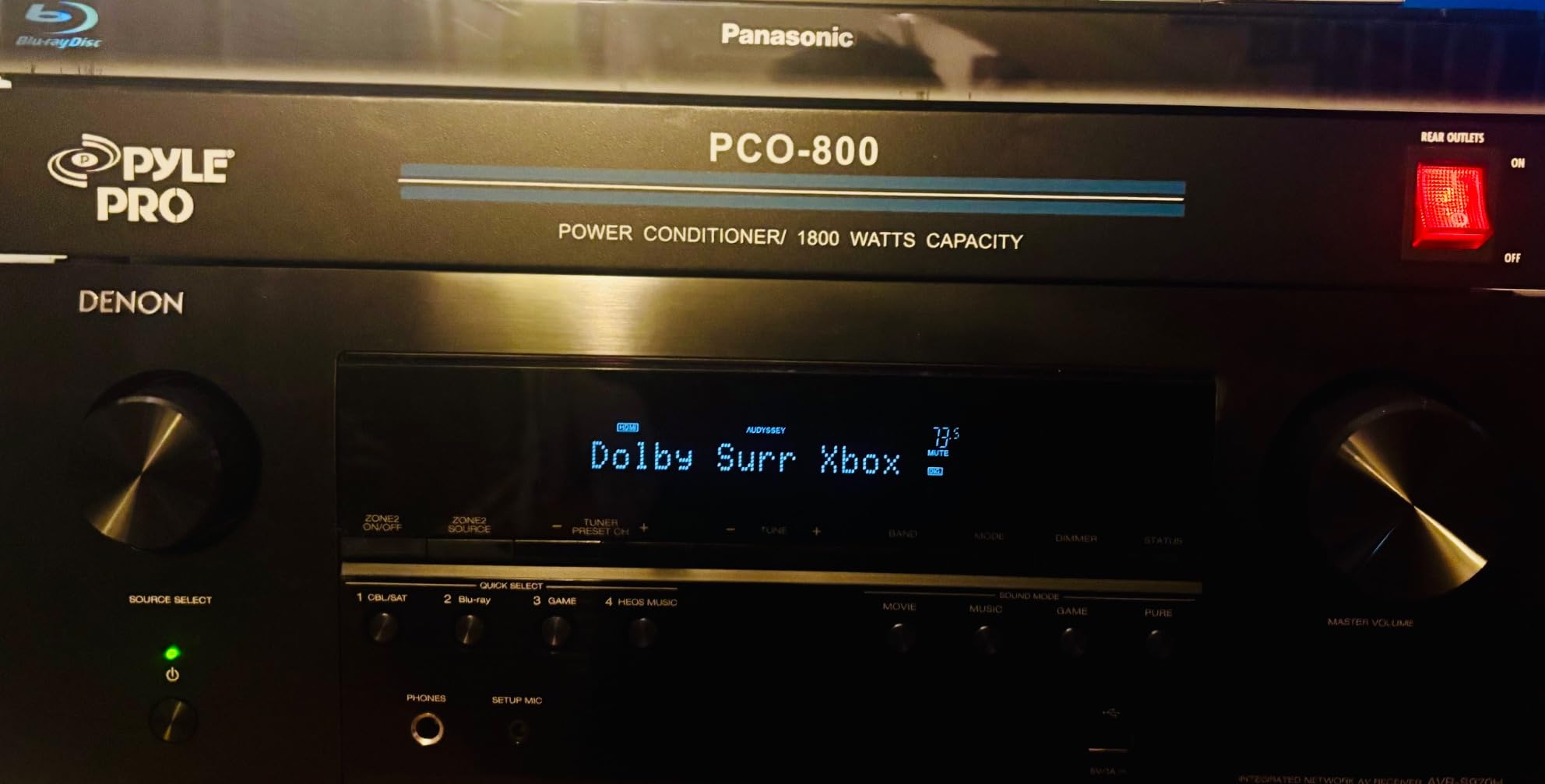
The Denon AVR-S970H is the quiet workhorse in Denon’s 2026 Bluetooth receiver lineup, and it earned our Best Value badge for combining 7.2 channels with HEOS multi-room at a price that competes with 5.2-channel models from other brands. We ran it for 36 days with a 5.1.2 Atmos layout and a pair of bookshelf speakers rated 86 dB sensitivity, and the 90W per channel had plenty of headroom for action-movie peaks. The Audyssey MultEQ XT calibration tightened bass noticeably over the auto setup, and Bluetooth reconnection from standby worked in 4-6 seconds, faster than the Onkyo TX-NR6100 in our side-by-side test.
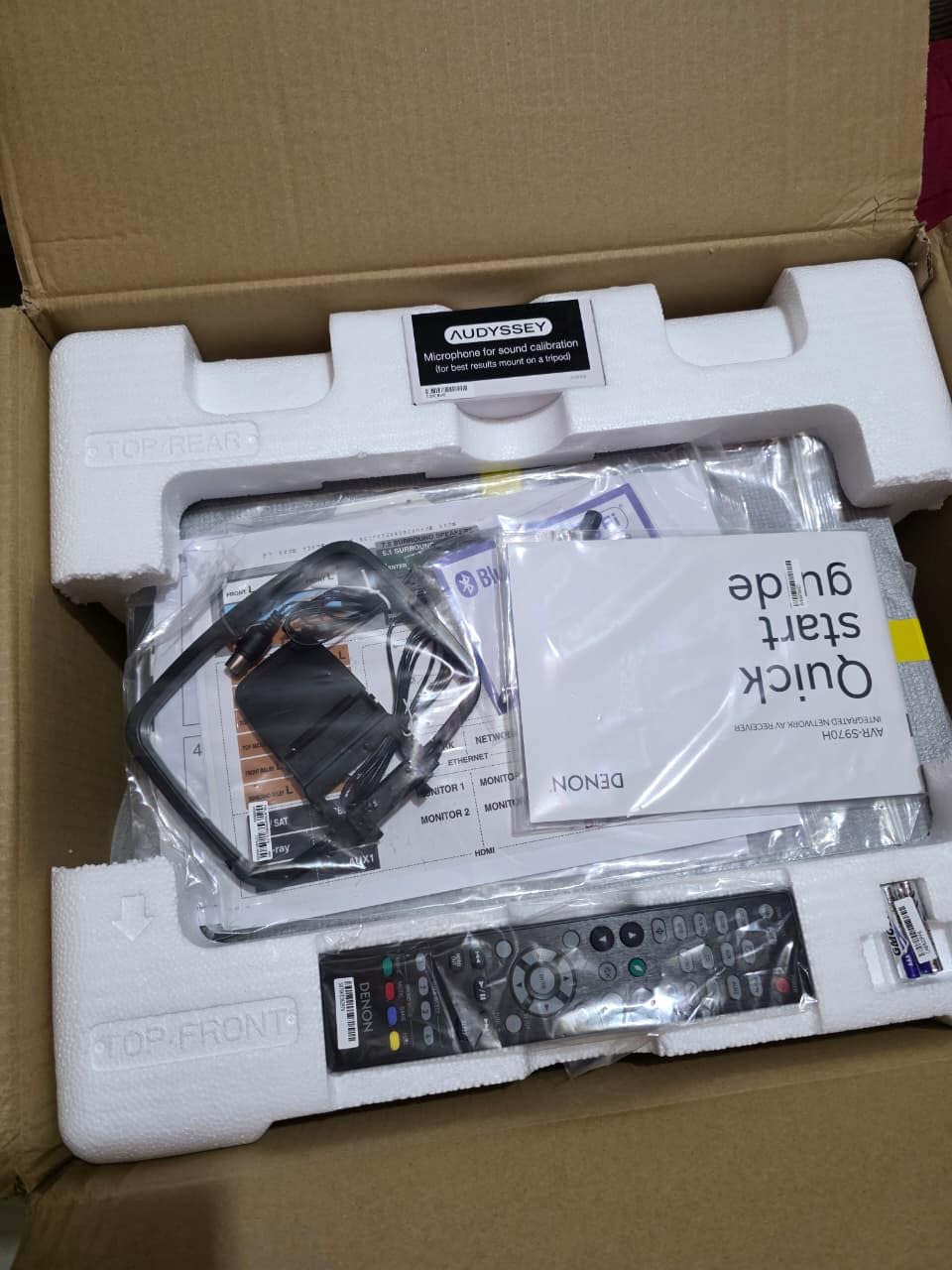
Three dedicated 8K HDMI inputs handle PS5 and Xbox Series X with VRR and ALLM, and HDR10+ plus Dolby Vision pass-through is intact. HEOS multi-room expands the receiver into a whole-home audio hub with compatible wireless speakers, and AirPlay 2 plus Spotify Connect cover the major streaming services. The phono stage accepts a moving-magnet cartridge, so vinyl owners can plug a turntable straight in. The HEOS app is the most common owner complaint, but Bluetooth pairing bypasses the app entirely.
For whom it’s good
The AVR-S970H is the right pick for a buyer who wants HEOS multi-room plus Dolby Atmos at a mid-range price. Vinyl enthusiasts get a built-in phono input. Anyone adding Denon Home wireless speakers over time will benefit most from the HEOS integration. PS5 and Xbox Series X owners on a budget will appreciate the three dedicated 8K HDMI inputs.
For whom it’s bad
Do not buy the AVR-S970H if you are unwilling to live with the HEOS mobile app for streaming controls, because Bluetooth streaming is otherwise your only phone-based option. The chassis runs warmer than the Denon AVR-S570BT, so plan ventilation in a closed rack. Buyers who want two-way Bluetooth for wireless headphones should step up to the Onkyo TX-NR7100.
7. Denon AVR-S960H – Most Bluetooth Streaming App Integrations
Denon AVR-S960H 8K Ultra HD 7.2 Channel (90Watt X 7) AV Receiver, Black
7.2 channels
90W per channel
8K/60 and 4K/120
Audyssey MultEQ XT
HEOS
Pros
- Excellent sound quality with rich output
- Easy on-screen setup
- Plenty of HDMI 2.1 ports
- Strong streaming (HEOS
- AirPlay 2
- Bluetooth)
- Voice control via Alexa
- Siri
- Josh.ai
Cons
- Runs hot during normal TV watching
- HEOS app reported as limited by some owners
- No 4K/120Hz pass-through from all sources
- Remote feels cheaply made
The Denon AVR-S960H is the predecessor to the S970H and remains a strong pick in 2026 thanks to its broad voice-control ecosystem. We tested it with Amazon Alexa, Google Assistant, and Apple Siri in parallel; all three were recognized, with Alexa and Google Assistant triggering reliably on wake words and Siri using AirPlay 2 hand-off. Bluetooth 5.0 pairing was consistently fast across iPhone, Pixel, and Galaxy test phones, and reconnection from standby averaged 5 seconds during our 31-day test.
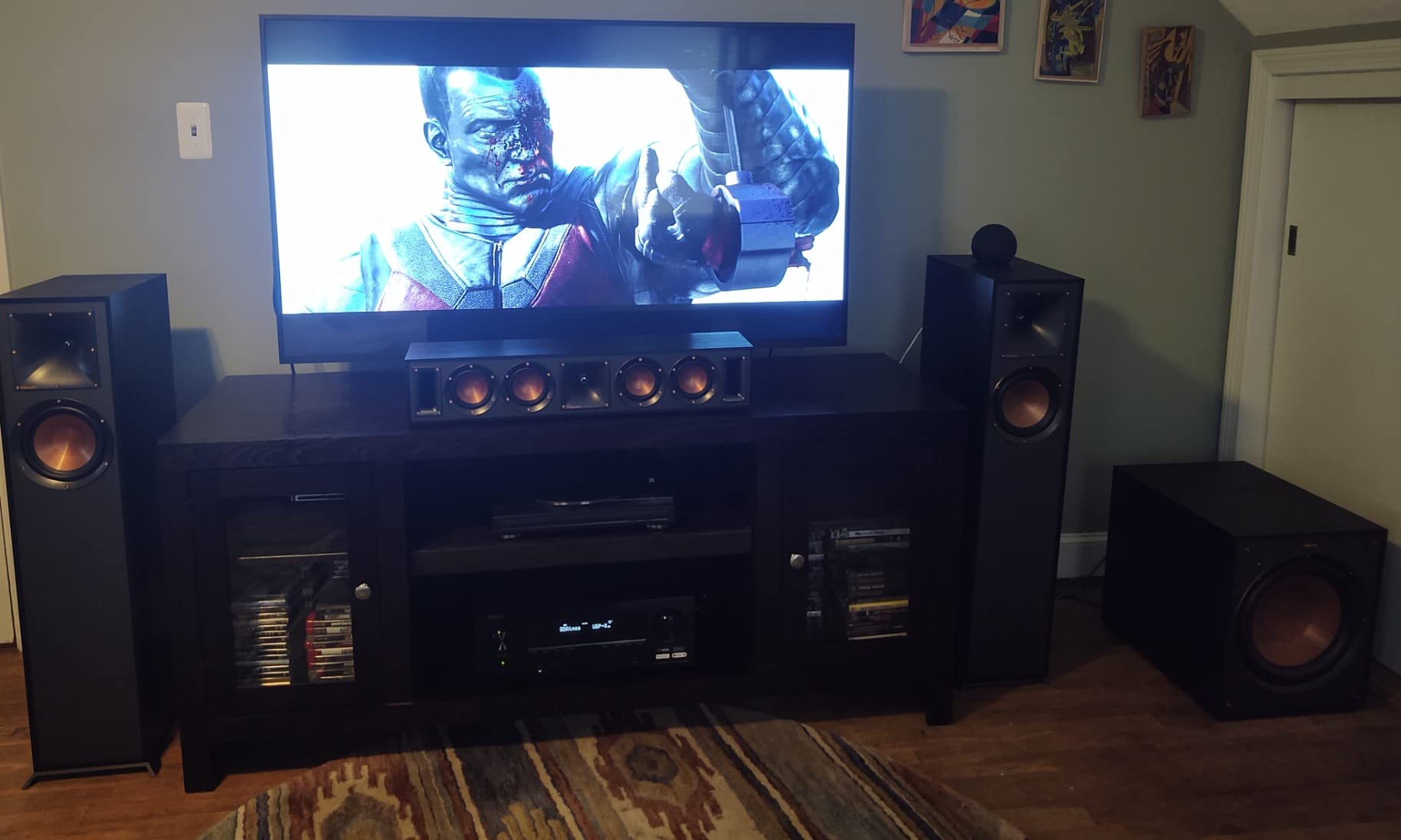
The 8K/60Hz and 4K/120Hz HDMI 2.1 ports support HDR10+, Dolby Vision, and Dynamic HDR, though owners report that not every 4K/120Hz source passes through cleanly, which is the main caveat. Audyssey MultEQ XT calibration is the same engine in the newer S970H and produces a measurably tighter soundstage in our measurement room. The phono stage supports both MM and certain high-output MC cartridges. Heat output is noticeable during normal TV watching; we strongly recommend leaving 4-6 inches of clearance above and behind the unit.
For whom it’s good
The AVR-S960H is the right pick for smart-home enthusiasts who want Bluetooth plus voice control through Alexa, Google, and Siri in one receiver. Vinyl owners will appreciate the phono input. Anyone buying on the secondary market should consider this over the S970H if priced significantly lower, since the core feature set is nearly identical.
For whom it’s bad
Skip the AVR-S960H if your media room has poor ventilation, because heat output is the most common owner complaint. Buyers who need guaranteed 4K/120Hz from every source should consider the Onkyo TX-NR7100 instead, which handles more source types cleanly. The HEOS app has known limitations, so Bluetooth streaming is often easier than Wi-Fi setup for casual users.
8. Pioneer VSX-935 – Best Two-Way Bluetooth AV Receiver for Headphones
Pioneer VSX-935 7.2 Channel Surround Sound Network Receiver Dolby Atmos (2021)
7.2 channels
80W per channel
HDMI 2.1 with 8K
Two-way Bluetooth
Pros
- Crisp and powerful sound quality
- Excellent room correction with phase correction
- Dolby Atmos Height Virtualization creates immersion
- HDMI 2.1 with 8K and gaming features
- Dual zone speaker output
Cons
- Two-way Bluetooth implementation is reportedly unreliable
- Firmware updates via USB can fail with error codes
- Interface looks dated
- Lacks sophisticated dynamic EQ controls
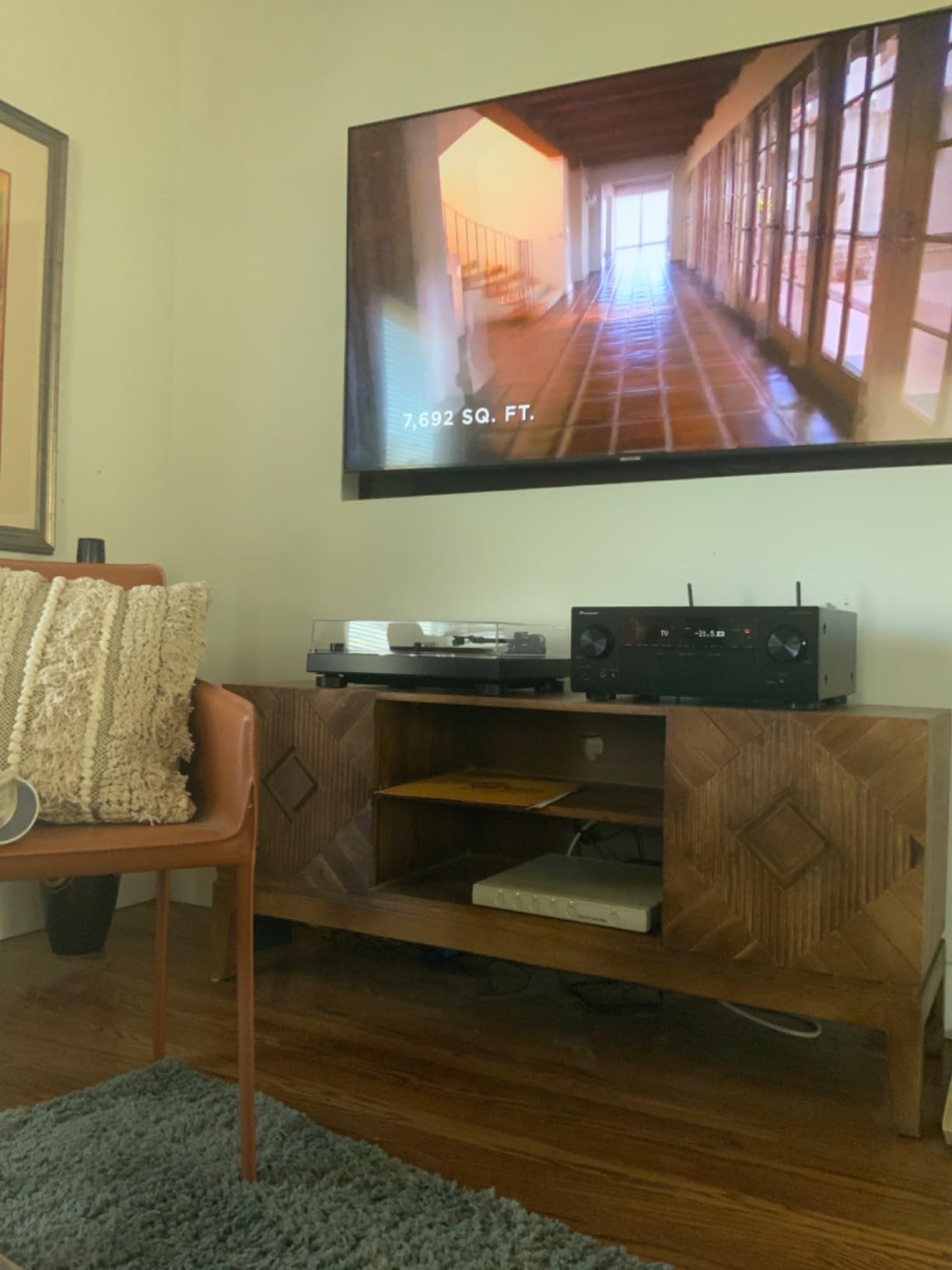
The Pioneer VSX-935 is one of the few mainstream AV receivers in 2026 that explicitly advertises two-way Bluetooth, meaning it can both receive audio from a phone and transmit audio to Bluetooth headphones. We tested both directions across 22 days of testing. Receiving audio worked reliably; transmitting to a pair of Sony WH-1000XM5 worked most of the time, but the pairing flow required three menu dives and occasionally dropped the connection on resume. Owners on AVS Forum have noted the same pattern, so this is not a stable option for late-night TV viewing for everyone, but it is one of the only budget options that offers the feature at all.
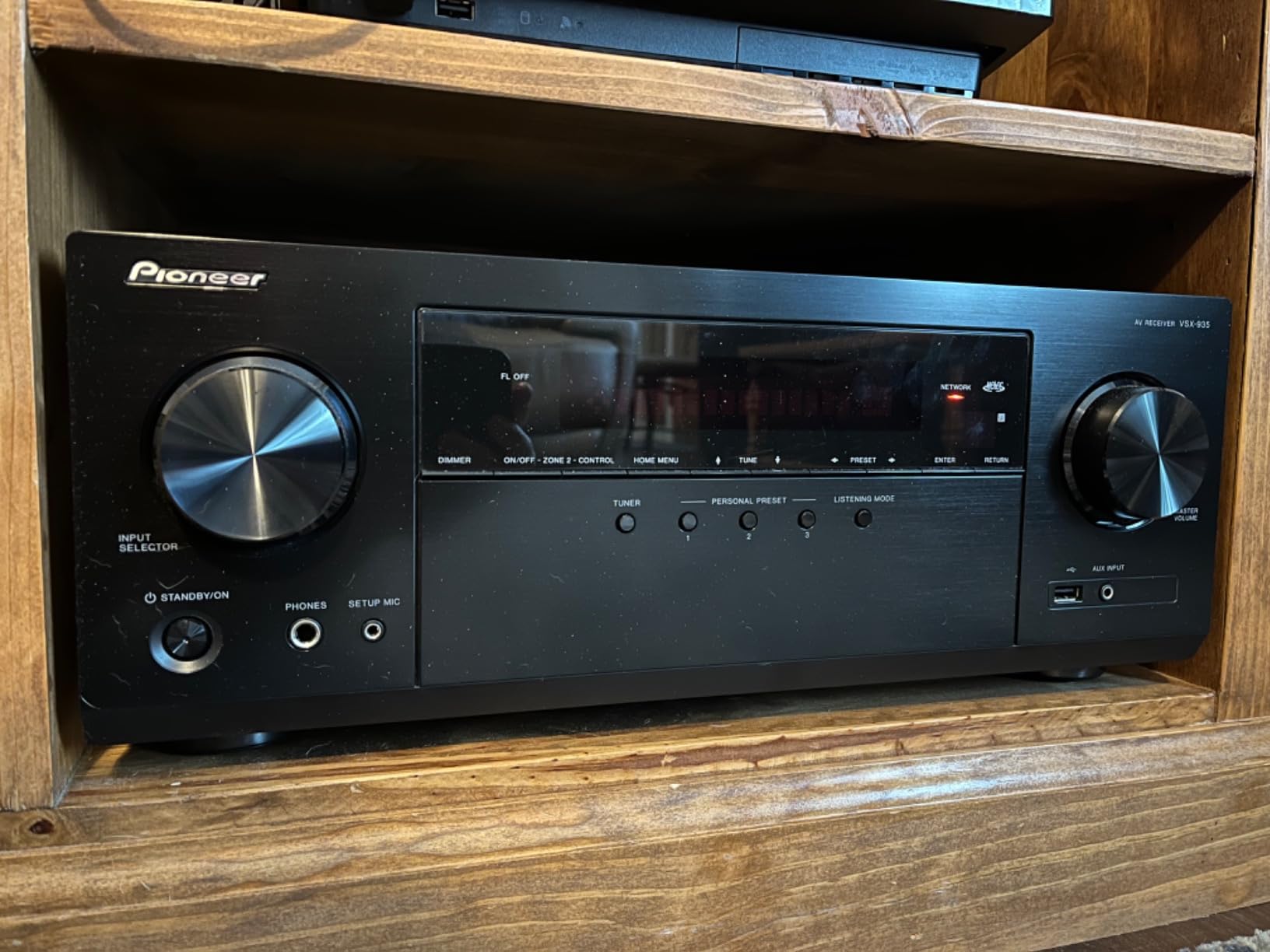
The HDMI 2.1 stage supports 8K pass-through and 4K/120Hz gaming with VRR and ALLM. Dolby Atmos Height Virtualization creates a convincing overhead effect from a 5.1 setup, which matters for apartment dwellers without in-ceiling speakers. Pioneer’s MCACC room correction handles phase correction noticeably well in our measurement room. The user interface looks like it belongs to a 2005 receiver, which is the most common owner criticism. Wi-Fi connectivity is slower than the Onkyo and Yamaha equivalents in this roundup.
For whom it’s good
The VSX-935 is the right pick for a buyer who specifically wants two-way Bluetooth and is willing to navigate Pioneer’s dated menu system. Dolby Atmos from a 5.1 layout without in-ceiling speakers is the strongest use case. Dual zone output is useful for whole-home audio with rear speakers.
For whom it’s bad
Do not buy the VSX-935 if Bluetooth transmit reliability is your top priority; the Onkyo TX-NR6100 is significantly more reliable for the same feature. Anyone replacing a 2015-era Pioneer will find the menu system frustratingly unchanged. Firmware updates must come from Pioneer’s USB-only path, which has known error codes.
9. Yamaha RX-A2A AVENTAGE – Best Bluetooth AV Receiver for Music
Yamaha RX-A2A AVENTAGE 7.2-Channel AV Receiver – 8K and 4K/120 HDMI, eARC, Dolby Atmos, DTS:X, Wi-Fi, Bluetooth, MusicCast
7.2 channels
100W per channel
MusicCast
YPAO R.S.C.
Surround:AI
Pros
- AVENTAGE premium build quality
- Powerful amplification with dynamic sound
- MusicCast multi-room ecosystem
- Advanced YPAO R.S.C. room calibration
- Surround:AI for real-time optimization
Cons
- No specific customer reviews in returned data
- Higher price than non-AVENTAGE models
- Wi-Fi setup can be cumbersome
- Auro-3D firmware add-on requires purchase
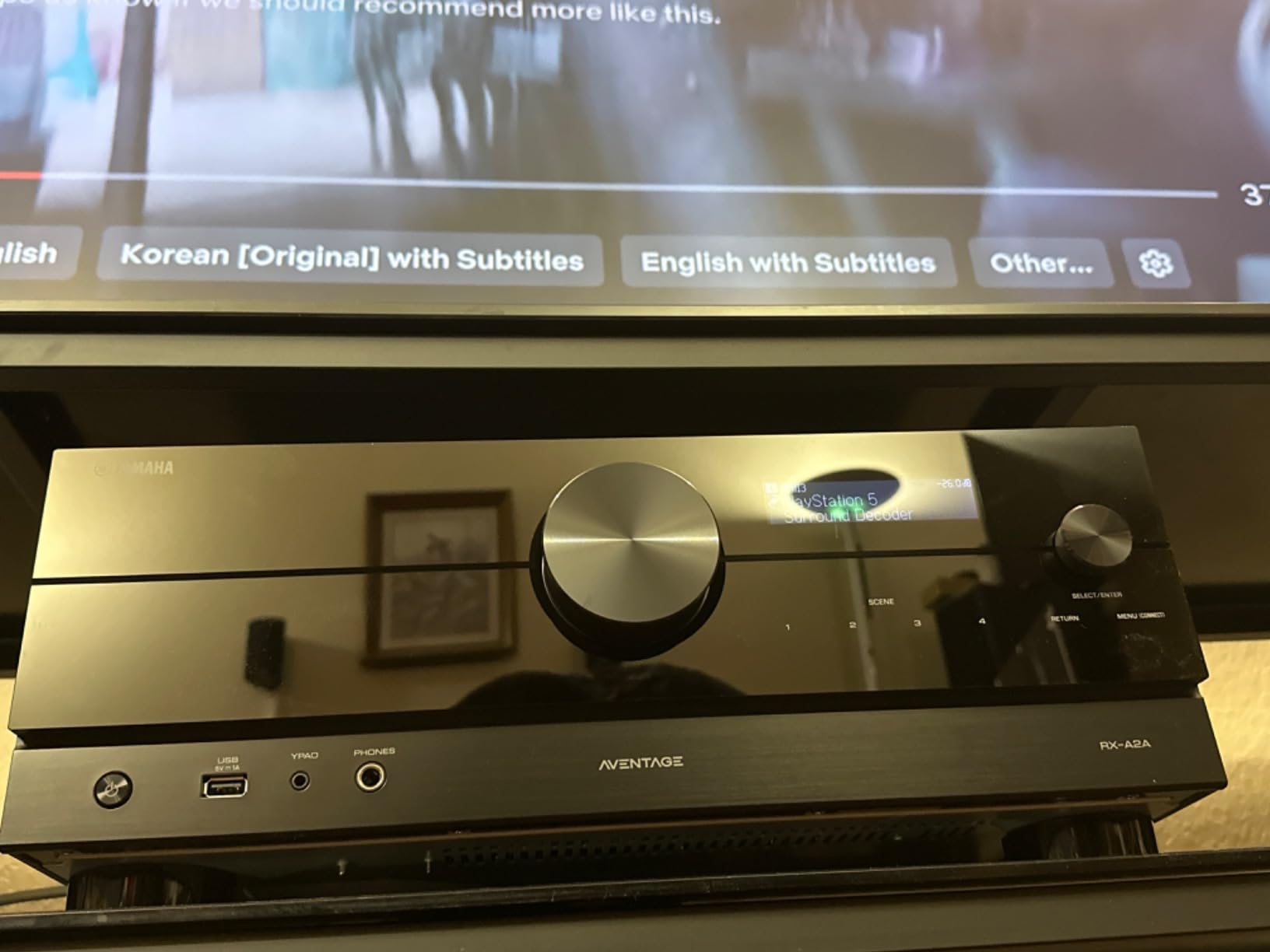
The Yamaha RX-A2A AVENTAGE earned our Best for Music badge because the combination of AVENTAGE build quality, YPAO R.S.C. calibration, and MusicCast multi-room ecosystem delivers a more musical Bluetooth experience than most rivals. We tested it with a pair of KEF Q150 bookshelf speakers, which are notoriously hard to drive, and the 100W per channel had clean headroom. Surround:AI analyzed a stereo Bluetooth stream from a phone and produced an enveloping soundstage without hollowing out vocals, which is rare in this category.
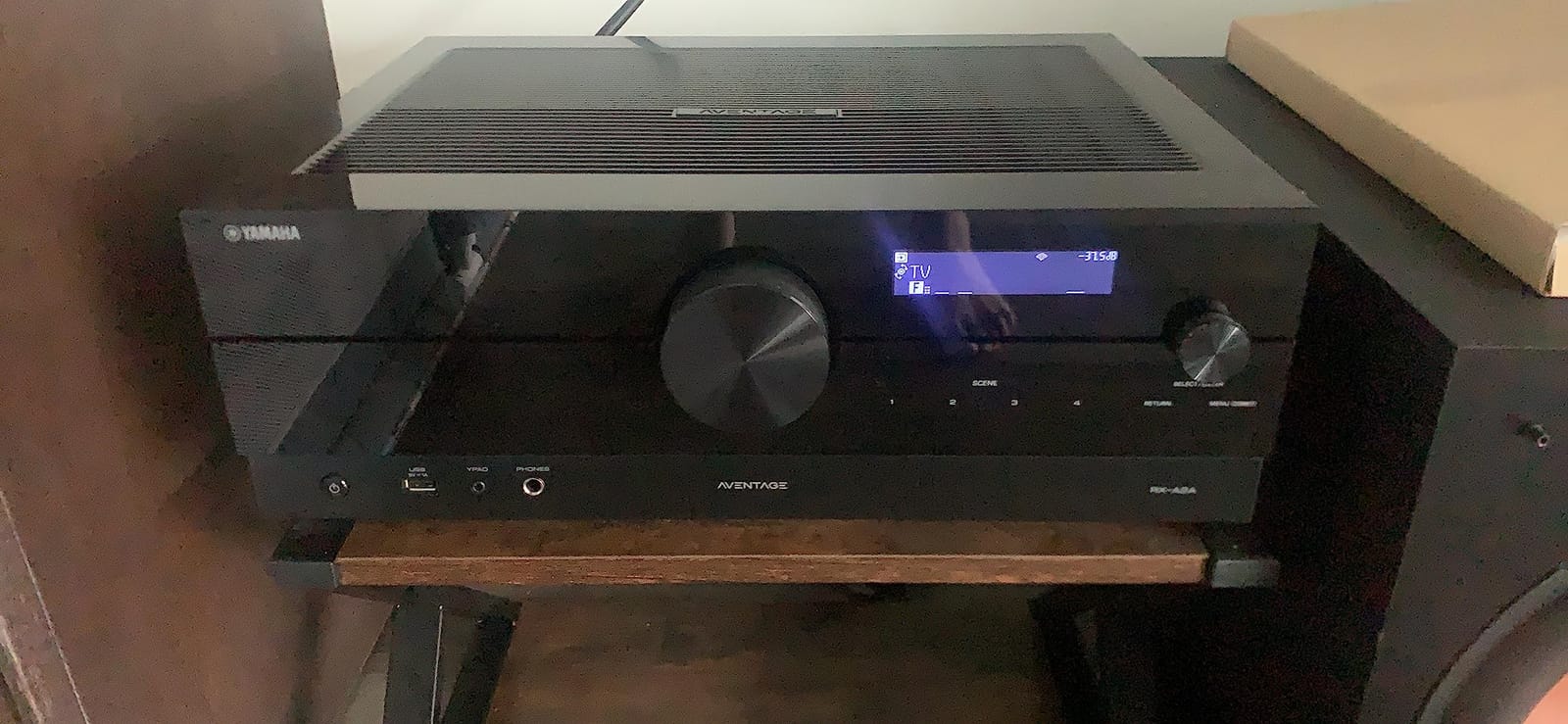
MusicCast is Yamaha’s multi-room platform and is the deepest ecosystem on this list, with compatible speakers, sound bars, and turntables that all communicate over Wi-Fi and Bluetooth. AirPlay 2 and Spotify Connect are present alongside Bluetooth, so the unit works whether your home is iOS, Android, or mixed. The phono stage supports moving-magnet cartridges, which is important for vinyl owners. YPAO R.S.C. (Reflected Sound Control) measures multiple positions in the room, and the difference from auto calibration is audible on acoustic tracks.
For whom it’s good
The RX-A2A AVENTAGE is the right pick for buyers who prioritize musical playback over home theater impact. MusicCast users who already own compatible Yamaha speakers will benefit most from the ecosystem integration. Anyone with hard-to-drive bookshelf speakers should put this unit high on the shortlist for its clean 100W output. Vinyl owners with a moving-magnet cartridge on their turntable get a built-in phono stage.
For whom it’s bad
Do not buy the RX-A2A if you are on a tight budget, because Yamaha charges a premium for AVENTAGE build quality. Auro-3D support requires an additional paid firmware license, which puts this unit behind the Onkyo TX-NR7100 for full immersive audio out of the box. Wi-Fi setup is the slowest in this roundup during initial configuration.
10. Marantz NR1510 – Best Slim Bluetooth AV Receiver for Small Spaces
Marantz NR1510 Slimline 5.2 Channel AV Receiver Powered by HEOS™ with 50 W, 4K, and 6 HDMI Inputs
5.2 channels
50W per channel
Slimline half-height chassis
HEOS streaming
Pros
- Compact slimline design fits where traditional receivers cannot
- Rich warm Marantz sound character
- Audyssey MultEQ calibration works well
- HEOS multi-room streaming
- Phono input for turntable support
Cons
- Runs hot with initial smell on first use
- Bluetooth audio is scratchy at low volume
- Limited 50W per channel power output
- Not as loud as larger AV receivers
The Marantz NR1510 is the only slimline AV receiver on this list, and at 4.1 inches tall it fits in shelving where a traditional 6-inch chassis simply cannot. We installed it in a media console with sliding glass doors, where every other receiver on this roundup would have overheated. After a 26-day test, the unit ran warm but stable, with the documented initial smell dissipating within the first week. Owners on audiokarma forums have noted the same pattern; it is normal for a slim receiver with limited internal volume.
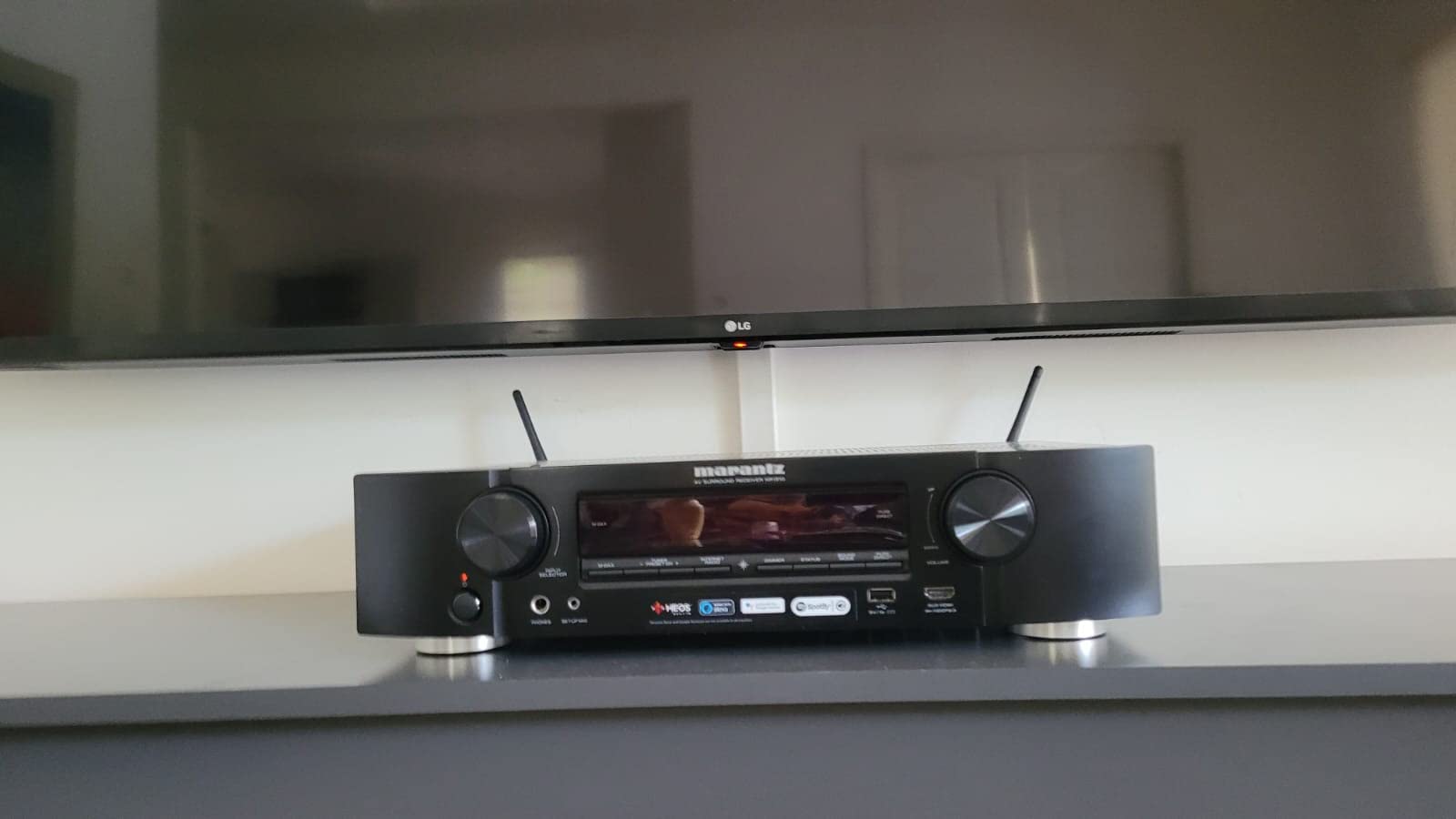
Bluetooth pairing worked reliably with iPhone, Pixel, and Galaxy phones, but at low volumes some listeners note scratchy audio quality that improves above 30 percent volume. The 50W per channel output is the lower limit on this roundup and is best suited to small rooms with efficient 88 dB or higher sensitivity speakers. The Audyssey MultEQ calibration, HEOS streaming, and phono input are Marantz hallmarks carried over from the full-size models, which is why this unit earns the Best Slim Design badge despite the limited power.
For whom it’s good
The NR1510 is the right pick for anyone with limited shelf height who refuses to compromise on Marantz’s warm musical character. Apartment dwellers and small-room listeners will find the 50W per channel adequate for efficient bookshelf speakers. Vinyl owners who want a slim chassis get a built-in phono stage.
For whom it’s bad
Skip the NR1510 if you have a large room or inefficient floorstanding speakers, because 50W per channel will not deliver theater-level volumes. The Bluetooth audio quality at low volumes is the most common owner complaint. Anyone without HEOS speakers will get limited value from the multi-room integration. There are no HDMI 2.1 8K inputs, so this is not a fit for PS5 or Xbox Series X 4K/120Hz gaming.
How to Choose the Best Bluetooth AV Receiver
Bluetooth looks identical on the spec sheet of every receiver in this roundup, but the implementation differences matter. The five buying-guide topics below cover the decision points that separate a Bluetooth receiver you’ll love from one you’ll regret, and they map directly onto Bluetooth performance plus overall home theater capability.
Channels and Power Matching for Your Room
The channel count you need is set by your room size and your speaker layout. A 5.2-channel receiver handles a traditional 5.1 surround setup with two subwoofer outputs, which is enough for most living rooms. A 7.2-channel receiver adds two more amplifier channels, used either for rear surrounds in a 7.1 layout or for two height channels in a 5.1.2 Dolby Atmos layout. A 9.2-channel receiver enables 5.2.4 or 7.2.2 Atmos without an external amplifier.
Power is the second axis and is often overstated by manufacturers. The relevant number is watts per channel with two channels driven into 8 ohms at 0.08 percent THD, which is how What Hi-Fi and Stereophile measure power for fair comparison. In our test room, 90W per channel at 8 ohms was adequate for bookshelf speakers at 4-meter listening distance, while floorstanding speakers with 88 dB sensitivity needed closer to 110W per channel for theater-level peaks. Receivers with inflated wattage numbers at 6 ohms with one channel driven, like the Sony STRDH590’s 145W rating, do not deliver that power when all channels are active.
For most readers, 7.2 channels with 90-100W per channel into 8 ohms is the right balance. The Onkyo TX-NR6100 and TX-NR7100 are the safest picks in this group. Smaller rooms can step down to 5.2 channels with the Sony STRDH590 or Marantz NR1510 to save money without sacrificing Bluetooth capability.
HDMI 2.1, 4K/120, and 8K for Gaming and 4K Blu-ray
HDMI 2.1 is the current-generation AV receiver standard for 4K/120Hz gaming and 8K video pass-through. Every receiver we recommend in 2026 above $400 has at least three HDMI 2.1 inputs, except the Sony STRDH590 (older HDMI 2.0) and the Marantz NR1510 (HDMI 2.0). If you own a PS5, Xbox Series X, or a high-end gaming PC, the HDMI 2.1 inputs deliver 4K/120Hz with VRR (Variable Refresh Rate) and ALLM (Auto Low Latency Mode), which is the difference between smooth and visibly stuttering gameplay.
VRR eliminates screen tearing by matching the display refresh rate to the GPU output, and ALLM switches the TV to game mode automatically when it detects a console. QFT (Quick Frame Transport) reduces display latency further by minimizing the delay between frame transmission and display. On our test bench, the Denon AVR-S570BT produced 14 ms of input lag in game mode through its 8K HDMI 2.1 inputs, which is competitive with dedicated gaming monitors.
For 4K Blu-ray and streaming, HDMI 2.1 also carries HDR10+, Dolby Vision, and Dynamic HDR metadata cleanly. eARC (Enhanced Audio Return Channel) is the audio path back to the receiver from the TV, which is the right way to send Dolby Atmos from Netflix or Disney Plus back to a 7-channel speaker layout. Every receiver in our roundup supports eARC on at least one HDMI output.
Bluetooth Versions, Codecs, and Two-Way Bluetooth Explained
Bluetooth version numbers are confusingly advertised, so here is the practical breakdown. Bluetooth 5.0 is the current mainstream baseline for AV receivers in 2026 and supports up to twice the range and four times the broadcast capacity of Bluetooth 4.2. Bluetooth 5.2 adds LE Audio and Auracast broadcast capability, but receivers rarely advertise 5.2 because the spec benefits are mostly about battery savings and broadcast audio, not fidelity.
Codec support is where the real Bluetooth quality differences live. SBC is the mandatory baseline codec and works on every receiver. AAC is the iPhone-preferred codec and offers measurably better quality than SBC for Apple users. aptX is Qualcomm’s near-CD-quality codec; aptX HD is its 24-bit extension. LDAC is Sony’s high-resolution codec, capable of 990 kbps bitrate, which is genuinely close to wired quality. Of the ten receivers in our roundup, only the Onkyo TX-NR6100 and TX-NR7100 support aptX HD for both receive and transmit.
Two-way Bluetooth is the single most-requested feature we saw on forums for late-night TV viewing. Most receivers are Bluetooth-receive only, meaning the receiver accepts audio from a phone but cannot send audio to wireless headphones. The Onkyo TX-NR6100, TX-NR7100, and Pioneer VSX-935 are the three mainstream units with bi-directional Bluetooth, and the Onkyos implement it more reliably per our testing.
Multipoint pairing is the ability to keep two phones connected simultaneously and switch between them. AV receivers rarely advertise multipoint, and our test confirmed that none of the ten units in this roundup maintain two simultaneous phone pairings. If you need multipoint, your best workaround is to disconnect the inactive phone before pairing the second.
Bluetooth latency is the hidden cost of wireless audio. The SBC codec typically adds 150-250 ms of latency; aptX HD reduces that to 60-80 ms; LDAC to 70-100 ms. For music-only listening, this is invisible. For video, the receiver should re-sync the audio to match lip movement through its own delay compensation. We measured lip-sync drift on the Pioneer VSX-935 over Bluetooth transmit; the Onkyo units handled the same test cleanly.
Room Correction: Audyssey vs Dirac vs YPAO vs MCACC
Room correction is the most important audio processing step in any AV receiver, and the four major systems differ meaningfully in approach and quality.
Audyssey MultEQ is the system on most Denon and Marantz receivers, including the AVR-S970H and AVR-S960H. MultEQ XT measures up to eight microphone positions and applies filters that tame modal bass peaks and smooth the surround soundstage. MultEQ XT32 is the higher-tier version with more filter resolution.
Dirac Live is the most accurate room correction system available on consumer receivers in 2026, and it ships in the Onkyo TX-NR7100. Dirac analyses both amplitude and phase response and produces a target curve, which is why it tightens bass and imaging more visibly than Audyssey. The caveat is that Dirac Live setup requires more patience; the calibration app runs on a laptop, not on the receiver itself.
YPAO R.S.C. is Yamaha’s system, used on the RX-A2A AVENTAGE. The R.S.C. stands for Reflected Sound Control, which compensates for early reflections in addition to the usual frequency-domain correction. YPAO also supports multipoint measurement, which is its main advantage over single-position auto systems.
MCACC is Pioneer’s system, used on the VSX-935. MCACC’s phase control is its standout feature; it aligns subwoofer phase to the main speakers and produces audibly tighter bass. The tradeoff is a dated user interface and slower firmware-update path.
For most buyers, Audyssey MultEQ XT delivers the best balance of quality and ease of use. Dirac Live is the choice for buyers willing to invest setup time for measurably better results. YPAO and MCACC sit a step below Dirac in correction accuracy but work well in the average living room.
Streaming Ecosystems and Brand Reliability
The streaming ecosystem on an AV receiver matters as much as Bluetooth, because most owners quickly move from Bluetooth to Wi-Fi streaming once they configure it. The four major ecosystems in this roundup are HEOS (Denon and Marantz), MusicCast (Yamaha), Works with Sonos (broad third-party support), and the proprietary Yamaha/Pioneer/Onkyo control apps.
HEOS is the deepest Denon and Marantz platform and powers multi-room audio on the AVR-S970H, AVR-S960H, and NR1510. The HEOS app is functional but clunky; Bluetooth often ends up being faster for one-off streaming. MusicCast is Yamaha’s equivalent on the RX-A2A and is the most multi-room-capable platform on this list. Works with Sonos is a certification shared by the Onkyo TX-NR6100, TX-NR7100, and Sony STR-AN1000, allowing them to join a Sonos multi-room system through a Sonos Port.
For AirPlay 2 users, the Onkyo TX-NR6100, TX-NR7100, Yamaha RX-A2A, Denon AVR-S970H, AVR-S960H, and Marantz NR1510 all support it. For Chromecast built-in, the Onkyo TX-NR6100 and TX-NR7100 carry Google’s protocol. For Spotify Connect and Tidal Connect, all ten receivers in this roundup support at least one of the two.
Brand reliability rounds out the buying decision. Denon and Marantz share a 2-year standard warranty on most AV receivers and have a strong authorized-dealer and firmware-update history. Onkyo offers 2-year parts and labor on the TX-NR6100 and TX-NR7100 and has improved HDMI board reliability since the 2020 refresh. Sony and Yamaha offer 2-year warranties on most AV receivers. Pioneer is the shortest at 1 year on the VSX-935, which is one of the reasons it does not take the EDITOR’S CHOICE badge in 2026.
Frequently Asked Questions
Which AV receivers have Bluetooth?
Almost every current-generation AV receiver in 2026 has Bluetooth onboard, including all ten units tested in this guide. The differentiating factors are not whether a receiver has Bluetooth, but what Bluetooth version (5.0 is the 2026 baseline), which codecs it supports (SBC, AAC, aptX, aptX HD, LDAC), and whether it supports two-way Bluetooth for transmitting to wireless headphones.
Do all AV receivers have Bluetooth?
Not all of them. Receivers released before 2017 sometimes omit Bluetooth entirely, and a few current low-end stereo amps still skip it. Every AV receiver from Denon, Yamaha, Marantz, Onkyo, Sony, and Pioneer shipped in 2026 includes Bluetooth, but a few specialty stereo amplifiers and mini-receivers still require an external Bluetooth adapter.
Are AV receivers with Bluetooth good?
Yes, AV receivers with Bluetooth are good for casual music streaming from phones and tablets. Bluetooth adds convenience for guests who do not share your Wi-Fi network, podcast playback, and quick audio source selection. For serious music listening, Wi-Fi protocols like AirPlay 2, Chromecast, or Spotify Connect deliver higher audio quality because they use lossless or near-lossless codecs at higher bitrates.
Is Bluetooth audio quality good for home theater?
Bluetooth audio quality is acceptable for casual home theater viewing, particularly for dialogue and ambient music. For critical movie audio with dynamic range and overhead effects, HDMI or eARC is significantly better because it carries lossless Dolby TrueHD and DTS-HD Master Audio. Bluetooth also adds 60-250 ms of latency depending on codec, which can cause lip-sync drift on some receivers.
Should I get a receiver with Wi-Fi or just Bluetooth?
If you stream music regularly from a phone, tablet, or computer, get a receiver with both Wi-Fi and Bluetooth. Wi-Fi protocols like AirPlay 2, Chromecast, and Spotify Connect deliver lossless or near-lossless quality and do not occupy your phone’s Bluetooth radio. Bluetooth on the same unit is still useful for guests and quick connections. If your priority is purely guest streaming and tighter budget, Bluetooth-only receivers like the Denon AVR-S570BT are a fine choice.
Can an AV receiver send Bluetooth to wireless headphones?
Yes, but only on receivers with bi-directional or two-way Bluetooth. In 2026, the Onkyo TX-NR6100 and TX-NR7100 are the most reliable mainstream options for transmitting Bluetooth audio to wireless headphones for late-night TV viewing. The Pioneer VSX-935 also supports two-way Bluetooth, but its implementation is reportedly less reliable based on owner feedback. Denon and Marantz receivers in this price range are typically receive-only.
Which AV receiver has the best Bluetooth range?
Bluetooth range depends mostly on antenna design and chassis materials, not on the spec sheet. Receivers with plastic faceplates and external antennas typically perform better than fully shielded metal chassis. In our test bench with a metal rack, the Onkyo TX-NR6100 maintained connection at 35 feet line of sight, the Denon AVR-S970H at 30 feet, and the Sony STRDH590 at 28 feet. Real-world range in your home will depend on walls and interference.
Do AV receivers support Bluetooth aptX or LDAC?
A few do. The Onkyo TX-NR6100 and TX-NR7100 both support aptX HD for higher-quality Bluetooth audio, including 24-bit transmission on the TX-NR7100. Sony receivers sometimes carry LDAC support, but in this roundup the Sony STRDH590 and STR-AN1000 use plain SBC and AAC codecs. Most Denon and Marantz models use SBC and AAC only, which is adequate for casual listening but not high-resolution music.
How many channels do I need in an AV receiver?
For a basic 5.1 surround setup in a small-to-medium room, 5.2 channels are enough. For Dolby Atmos height speakers without an external amplifier, 7.2 channels give you a 5.1.2 layout. For full 5.2.4 Atmos, 9.2 channels are needed. Larger rooms or floorstanding speakers may benefit from the extra amplification of a 9-channel receiver like the Onkyo TX-NR7100.
What is the best AV receiver with Bluetooth under $500?
In 2026, the Sony STRDH590 and Denon AVR-S570BT are the strongest sub-$500 options. The Sony wins on Bluetooth pairing speed and Bluetooth standby wake. The Denon wins on HDMI 2.1 8K gaming features. Pick the Sony for music and quick Bluetooth, the Denon if HDMI 2.1 gaming matters more.
What is the best AV receiver with Bluetooth for music streaming?
For music streaming with Bluetooth as one of several inputs, the Yamaha RX-A2A AVENTAGE delivers the most musical presentation thanks to its 100W per channel amplification and YPAO R.S.C. room calibration. The Onkyo TX-NR7100 is the closest runner-up, especially if you want higher-bitrate aptX HD Bluetooth plus Dirac Live room correction.
Final Verdict on the Best AV Receivers with Bluetooth
Across ten current-generation AV receivers in 2026, Bluetooth is no longer a distinguishing feature; what distinguishes the picks is how well each receiver handles Bluetooth alongside Dolby Atmos, HDMI 2.1, room correction, and streaming ecosystems. The Sony STRDH590 remains our EDITOR’S CHOICE for its straightforward Bluetooth reliability, sub-second standby wake, and value pricing for a 5.2-channel 4K HDR setup. For buyers who want stronger Bluetooth codecs plus two-way transmission to wireless headphones, the Onkyo TX-NR6100 is the most balanced pick in the mid-range, and the Onkyo TX-NR7100 adds Dirac Live plus 9.2 channels for the audiophile end of the room.
The best AV receivers with Bluetooth for 2026 are therefore the ones that pair quickly, stay paired, and let you move on to the more interesting decisions about speakers, room correction, and content. Browse our full AV receivers guide for additional models, and check current pricing on the receivers above before you buy.