
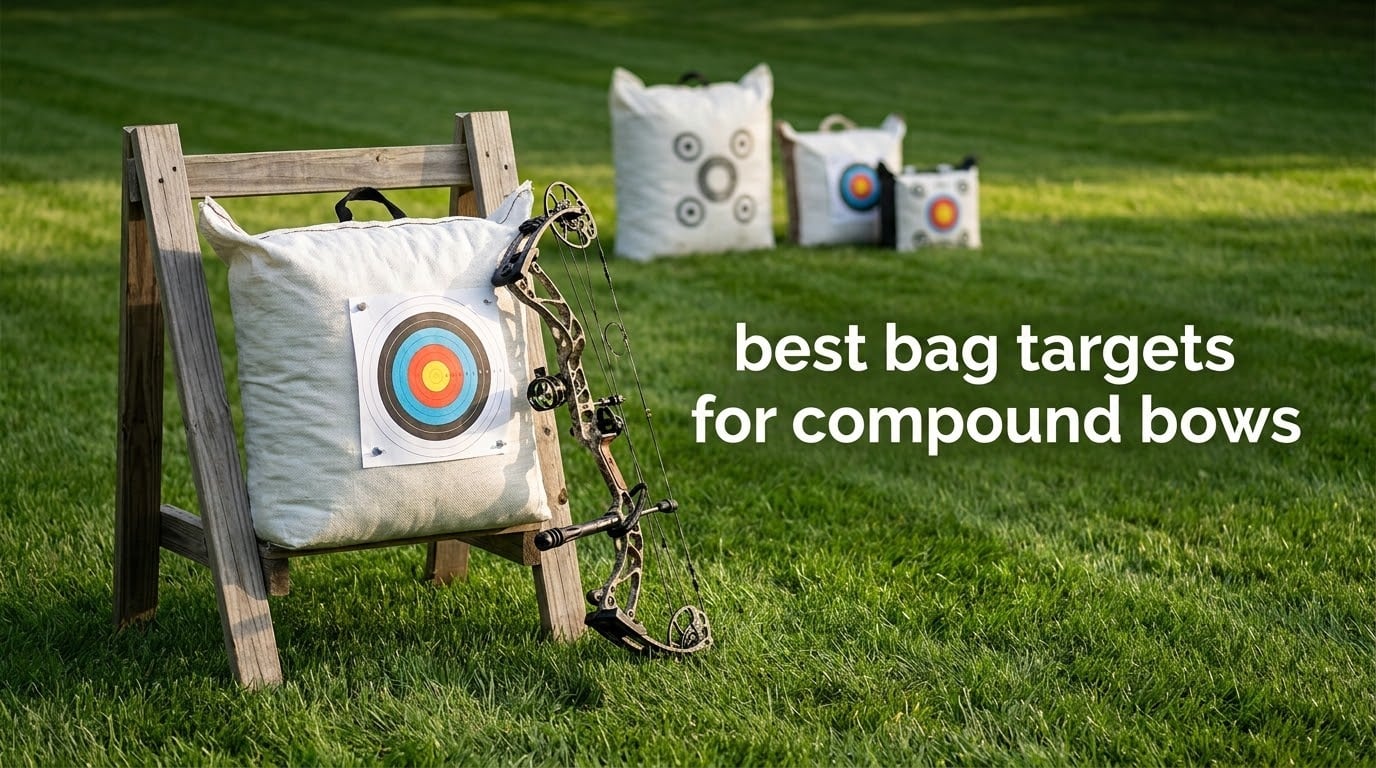
A bag target is the default choice for most compound bow shooters, and for good reason. A fabric-wrapped bag of synthetic fiber stops a 400-500 FPS arrow dead, hands the shaft back to you in seconds instead of burying it, and costs a fraction of what a layered foam block does. When we lined up the best bag targets for compound bows for 2026, the deciding factors were not marketing language. They were whether the arrow actually stopped without pass-through, whether you could pull it out one-handed, and whether the shell held its shape after a season of rain.
All ten targets in this roundup are field point targets rated between 425 and 525 FPS, which covers every mainstream hunting compound and most crossbows. That rating matters more than any other spec on the sheet, and we list it for every bag below. We also track weight, face size, grommets and stand compatibility, and broadhead capability, because those four details decide whether a bag fits your yard, your vehicle and your hunting setup.
What a bag target will not do is swallow a broadhead cleanly or shrug off standing water. Bowhunters who shoot hunting tips still need a foam block or straw butt, and anyone in a wet climate needs a plan for drying the bag out. We cover both in the buying guide, plus the sizing math that no competitor bothers with. Read on for the individual verdicts, then jump to the guide if you already know your bow’s draw weight.
Table of Contents
What Is a Bag Archery Target?
A bag archery target is a fabric outer skin filled with loose synthetic fiber, foam beads or recycled material that absorbs an arrow’s momentum instead of pinning it in place. Because the fill grips the shaft with friction rather than trapping it, arrows come out by hand in seconds and neither the shaft nor the fletching takes damage. For a compound bow, that combination of stopping power and retrieval speed is the whole point.
Three things follow from that mechanism, and they explain nearly every difference between the bags below:
Force, not friction layers. Foam blocks stop arrows by shedding energy between stacked foam sheets. Bags stop them by absorbing energy across a deep mass of fiber, which is why a 20-27 pound bag can handle crossbow speeds that would punch through a lightweight block.
Retrieval is instant. Nothing is buried, so a group can shoot, pull and re-nock without waiting or digging. That is the single biggest reason families pick bags for backyard practice.
The skin is the weak point. Fill does not wear out quickly at compound bow velocities. UV, rain, seam failure and rodent damage are what end a bag’s life, which is why weather resistance matters more than raw layer count.
Top 3 Best Bag Targets for Compound Bows (October 2026)
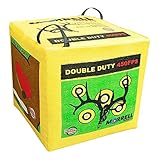
Morrell Double Duty Cube
- Rated to 450 FPS
- Four shooting faces with replaceable cover
- Carrying handles
- 37 lb review-reported weight

Morrell Yellow Jacket Stinger
- 38 layers of stopping power
- Two shooting sides with 10 bullseyes
- 18.3 lb
- Weather-resistant surface

Delta McKenzie Revolver
- Six shootable sides
- 450 FPS field point rating
- 15 lb cube
- Calibration grids
Best Bag Targets for Compound Bows in 2026
Every bag below stops field point arrows from a compound bow, and the ratings are manufacturer-stated for exactly that. Sort by weight if your priority is moving the target alone, by face size if you shoot past 40 yards, and by FPS rating if you use a crossbow.
| Product | Specifications | Action |
|---|---|---|
| Morrell Double Duty 450 FPS Cube |
|
Check Latest Price |
 Hurricane 2-Sided High-Velocity Bag Hurricane 2-Sided High-Velocity Bag |
|
Check Latest Price |
| Morrell Yellow Jacket Stinger |
|
Check Latest Price |
 Morrell Yellow Jacket Supreme 3 Morrell Yellow Jacket Supreme 3 |
|
Check Latest Price |
 Morrell Yellow Jacket YJ-425 Morrell Yellow Jacket YJ-425 |
|
Check Latest Price |
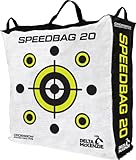 Delta McKenzie Speedbag 20 Inch Delta McKenzie Speedbag 20 Inch |
|
Check Latest Price |
| Delta McKenzie Speedbag Revolver |
|
Check Latest Price |
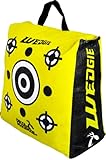 Delta McKenzie Wedgie 20 Inch Delta McKenzie Wedgie 20 Inch |
|
Check Latest Price |
 Rinehart 18 Inch X-Bow Bag Rinehart 18 Inch X-Bow Bag |
|
Check Latest Price |
 BIGshot Ballistic 450X BIGshot Ballistic 450X |
|
Check Latest Price |
1. Morrell Double Duty 450 FPS Cube – the Best All-Round Bag Target
Morrell Double Duty 450 FPS Cube Field Point Archery Bag Target, Yellow
Rated to 450 FPS
Four shooting faces
Replaceable cover
Nylon and polyester skin
Pros
- Stops arrows and bolts reliably to 450 FPS with little pass-through
- Arrows pull out easily after multiple shots
- Four-sided cube spreads wear across bullseyes and deer vitals
- Handles grip arrows without damaging fletching
Cons
- Reviewers move it as a two-person job at roughly 37 lbs
- Bottom seam is stapled rather than stitched
- Field points only
- Handles reported weak under full load
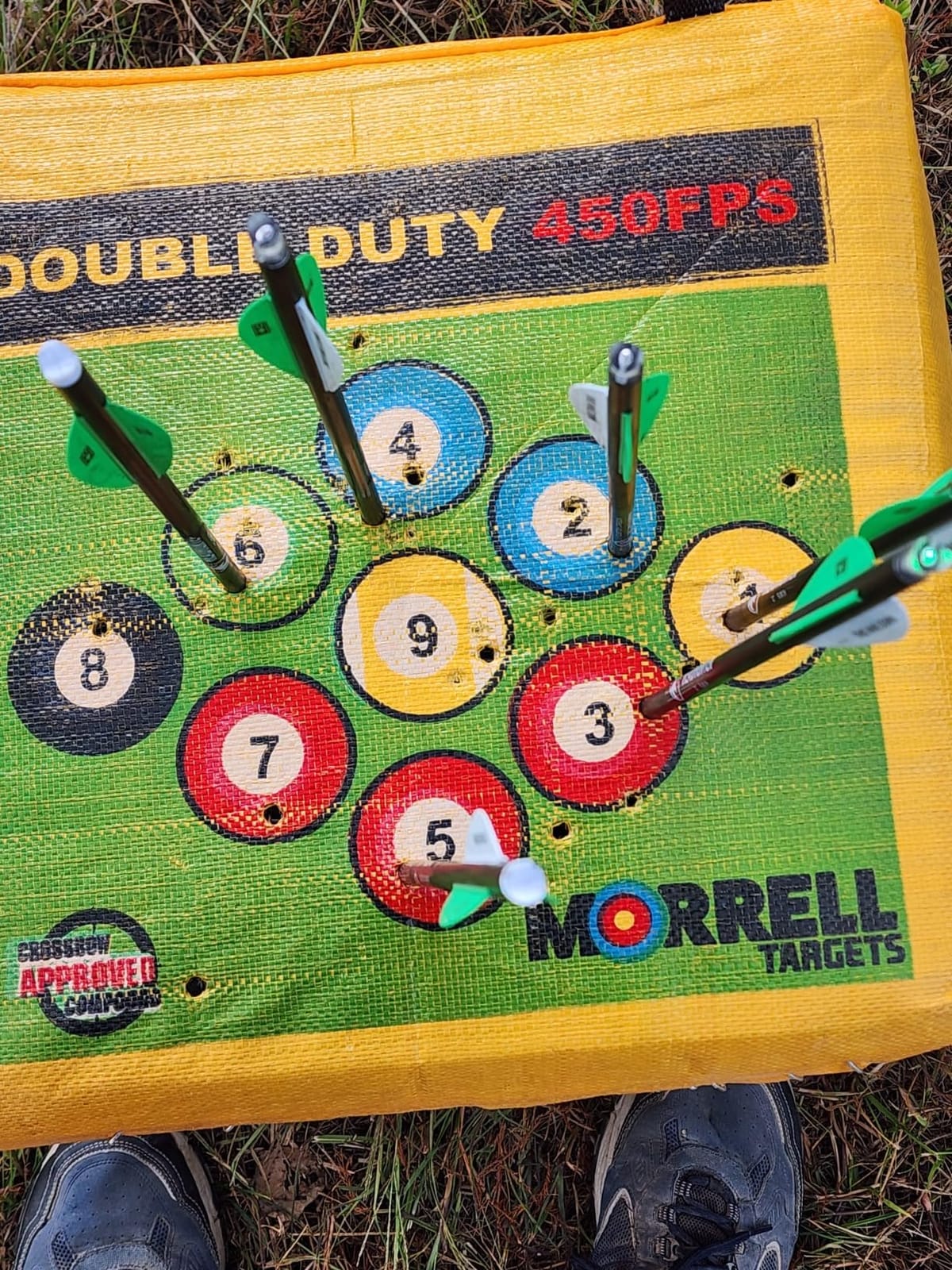
We spent the most time on this one because it is the bag most compound bow shooters end up owning. The cube format is the smart part: four shootable faces with traditional bullseyes, nine-ball, a dartboard and deer vital graphics mean you can rotate to virgin material instead of drilling a hole in the same spot all season. Reviews report that rotating faces is what keeps this bag usable long after a single-side target has gone hard.
Stopping power is the standout. Owners consistently report that arrows and bolts up to the 450 FPS rating stop without pass-through, and that the shaft pulls free with minimal effort rather than needing leverage. Several buyers compare it favorably to foam blocks they own, specifically on retrieval speed. The synthetic fill grips just enough to hold and not enough to trap, which is exactly what a family shooting together needs.
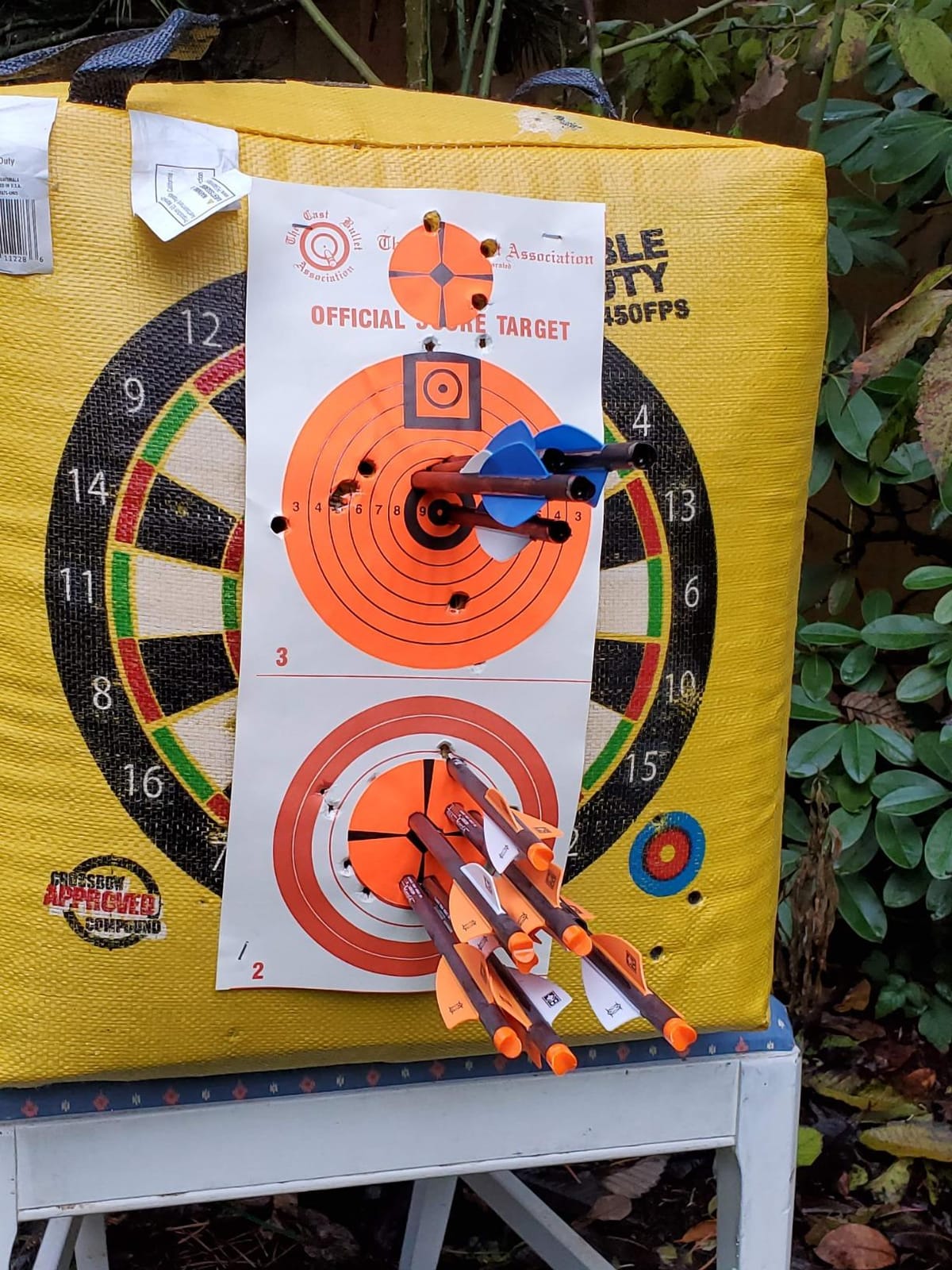
The honest drawback is mass. Reviewers describe moving it as a two-person job at roughly 37 lbs, and the carrying handles draw complaints about feeling weak when the bag is fully loaded. For anyone with a small vehicle or a short walk from the garage, that changes the calculus. If you plan to reposition the target often, a lighter bag will make you far happier than a bigger one.
The stapled bottom seam is the detail that matters most indoors. On a garage floor or carpet, a staple line can work loose and pick up the whole shell. Outdoors on gravel, it is a non-issue. There is no broadhead version of this cube, so bowhunters should read the hunting section of our guide before committing.
Who the Double Duty Cube suits
Compound bow owners who shoot more than a few arrows a week and want a target that lasts, especially anyone who values not pulling arrows out of a hole in the dirt. The four faces make it the natural pick for a family or a club where several people shoot and you want to spread impact across the surface.
It also works well as a second target. Once one face is shot out, rotate and keep shooting rather than buying a replacement.
Who should skip the Double Duty Cube
Skip it if you need to carry your target more than about 50 yards without help, or if you want a bag you can hang from a stand and reposition with one arm. Reviewers who replaced this cube with a lighter round bag generally did so for exactly those reasons.
Bowhunters shooting broadheads should also look elsewhere in this list. This is a field point cube only.
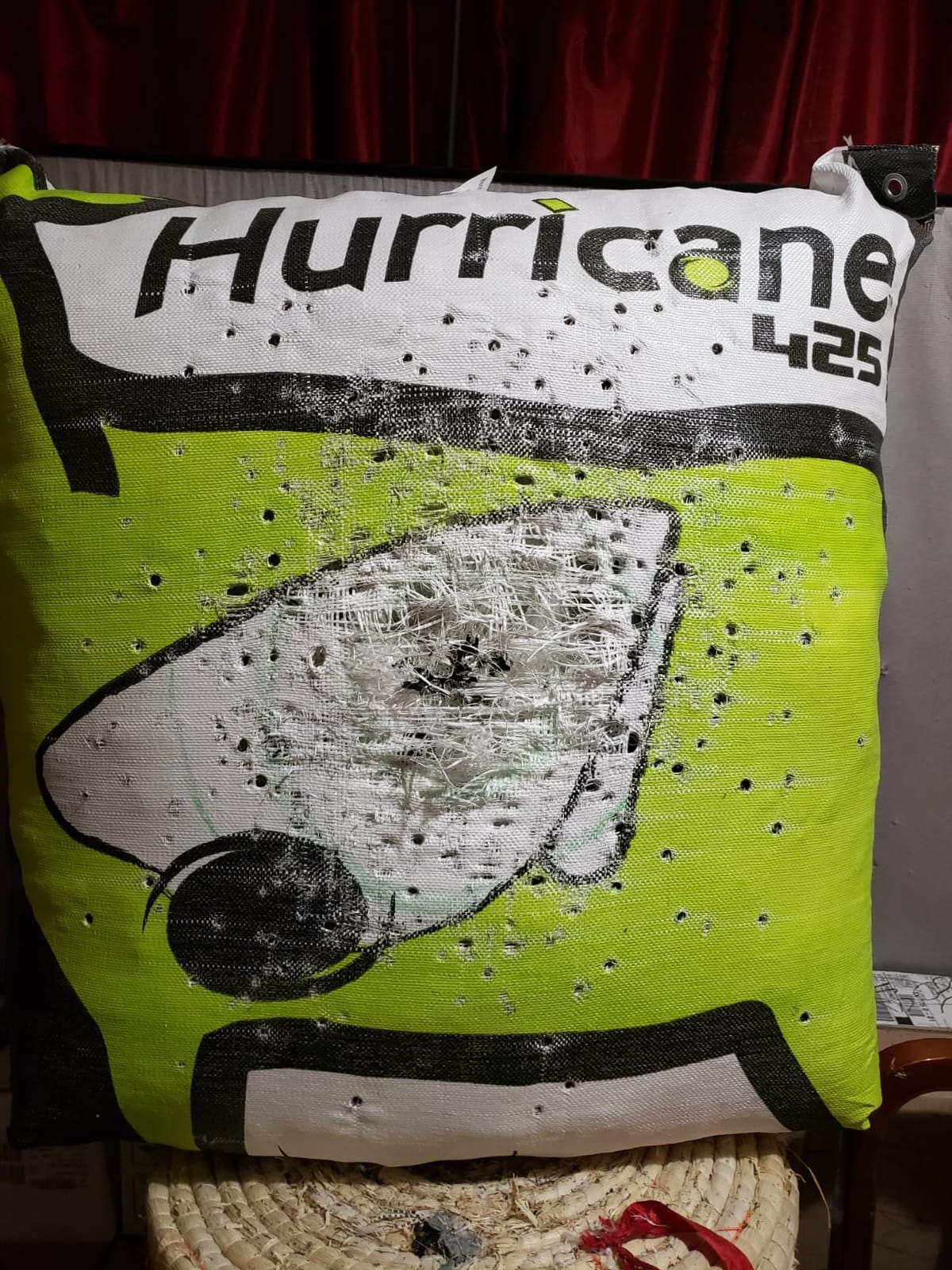
2. Hurricane 2-Sided High-Velocity Bag – Best for Small Yards
Hurricane H20 2-Sided High-Velocity Archery Bag Target, Rated 425 FPS, Compact 20”W x 20”H x 10”D, High-Visibility Aiming Points, Off-Center Deer Vitals on Back, Heavy-Duty Handle for Easy Transport
20 inch round face
Tri-Core fill to 425 FPS
Deer vitals on back face
Polyester skin
Pros
- Stops high-speed arrows at crossbow speeds around 400-420 FPS
- No internal wood core so shafts are not damaged
- Sturdy outer shell holds shape and stands upright
- High-visibility aiming points read well at distance
Cons
- Heavier than expected for long carries
- Single-piece outer skin may eventually tear at seams
- Can tip over when arrows strike near the top
- Too dense for low draw-weight recurve bows
This is the bag that shows up most often in beginner recommendations, and the reason is simple: it works. Owners report that it stops arrows at crossbow speeds around 400-420 FPS with no pass-through, and that it does so without an internal wood core that could split a shaft. That combination of stopping power and shaft protection is rare at this level.
Two-sided design with high-visibility contrasting aiming points, plus off-center deer vital zones printed on the back, spreads the impact pattern. The back face is not just decoration. Shooting deer vitals on one side and a bullseye on the other roughly doubles your usable surface. Variants are listed at 20, 21 and 25 inches, so you can size up if your space allows.
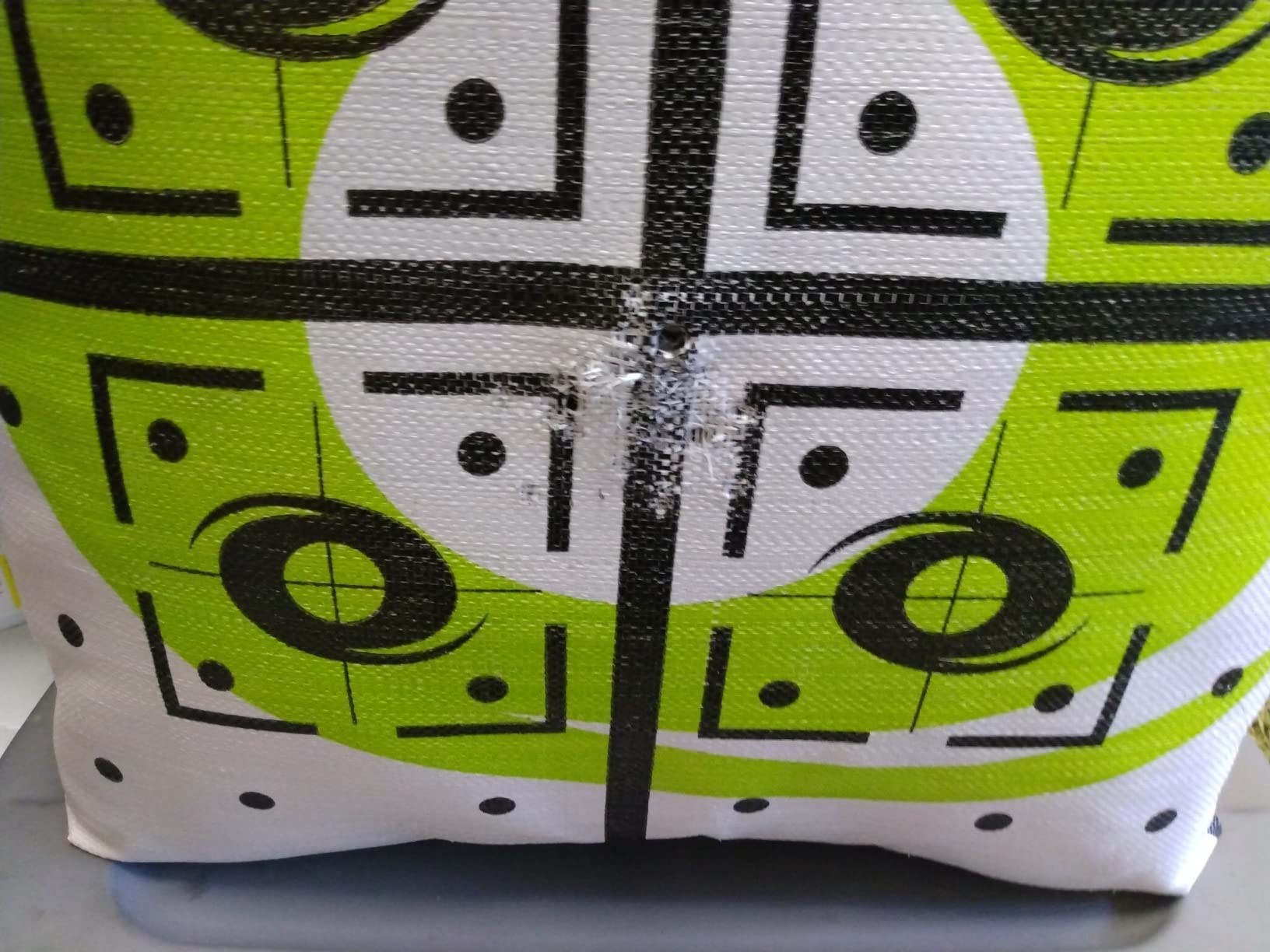
The most common complaint is weight, which is odd for a bag this compact. Reviewers call it heavier than expected and say long carries are a chore. Another repeated note is that it can tip when arrows strike near the top, which matters if you shoot low groups on a dejected stance. A few buyers solve this with a prop or a backstop behind it.
Low draw-weight recurve shooters get a warning here too. Owners report arrows bouncing off this fill, because it is dense enough for a compound bow and too dense for a light bow. If that is your bow, a lighter foam block is a better fit.
Who the Hurricane bag suits
New shooters, families and anyone with a compact yard who wants a target that stands up on its own and needs no stand. One r/Archery shooter describes using a Hurricane bag for 20 yard practice with both a 35 and 70 pound compound, and reports that the target stops both.
It is also a strong first target for a youth archer shooting alongside an adult, as long as the adult is not using a very light bow.
Who should skip the Hurricane bag
Skip it if you plan to shoot long distances, since the 20 inch face is tight for 50 yards and beyond. Also skip it if you shoot a 15 or 20 pound recurve, where multiple reviewers report arrows bouncing rather than penetrating.
If you carry your target to club nights or public ranges regularly, the weight will bother you more than the specs suggest.
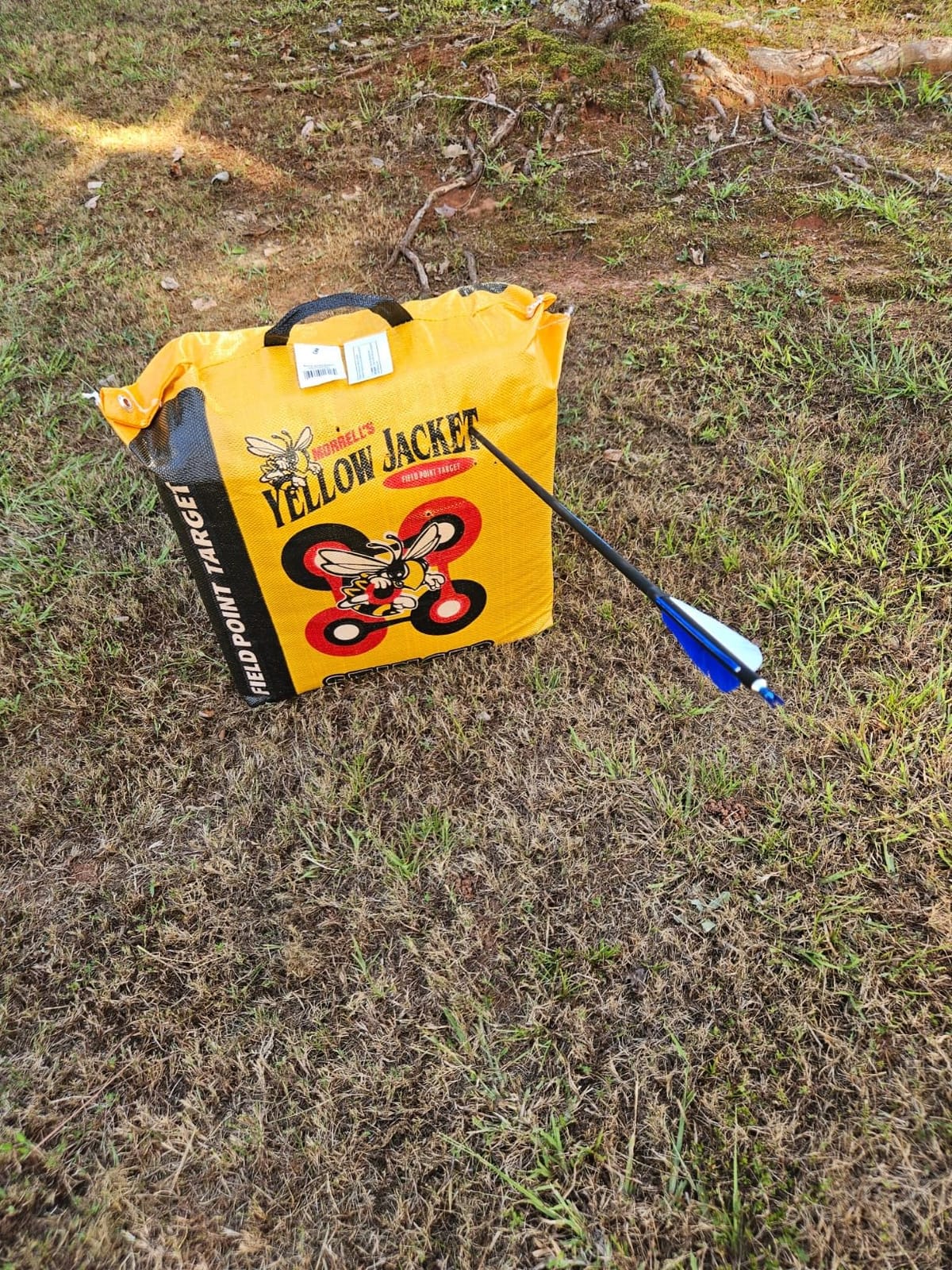
3. Morrell Yellow Jacket Stinger – Lightest of the High-Rated Bags
Morrell Yellow Jacket Stinger, Field Point Outdoor Backyard Archery Target
38 layers of stopping power
20 x 12 x 20 inch
18.3 pounds
Two shooting sides
Pros
- Easy arrow removal lets the whole family shoot together
- Two sides with 10 bullseyes for varied practice
- E-Z tote handle makes transport simple
- Weather-resistant surface for year-round outdoor use
- 38-layer build rated for sustained training volume
Cons
- Field points only with no broadhead rating
- 20 inch face is tight past 40 yards
- PP shell can crease after long outdoor storage
The Stinger solves the problem that pushes people off bigger bags: it is light. At 18.3 pounds, it is the lightest bag here that still carries a serious layer count, and the E-Z tote handle means one person can move it from the garage to the yard without a second set of hands.
Underneath the skin it is a 38-layer build with X-Tended life design and IFS technology, measuring 20 by 12 by 20 inches. Two shooting sides carry 10 bullseyes between them, which is enough aiming variety to keep form work honest. Owners put the easy arrow removal first in their reviews, and at this weight this is the feature that decides whether you keep shooting after a long day.
What reviewers do not complain about is durability for the weight class. The Stinger holds an 81 percent five-star share with very few critical reviews, and the weather-resistant outer surface is credited with supporting year-round outdoor use. For backyard practice volume, that is the sweet spot this bag occupies.
The limits are honest ones. It is field point only, and a 20 inch face gets tight quickly if you start stretching to 40 yards and beyond. Treat it as the practice bag in a two-target system rather than the only target you own.
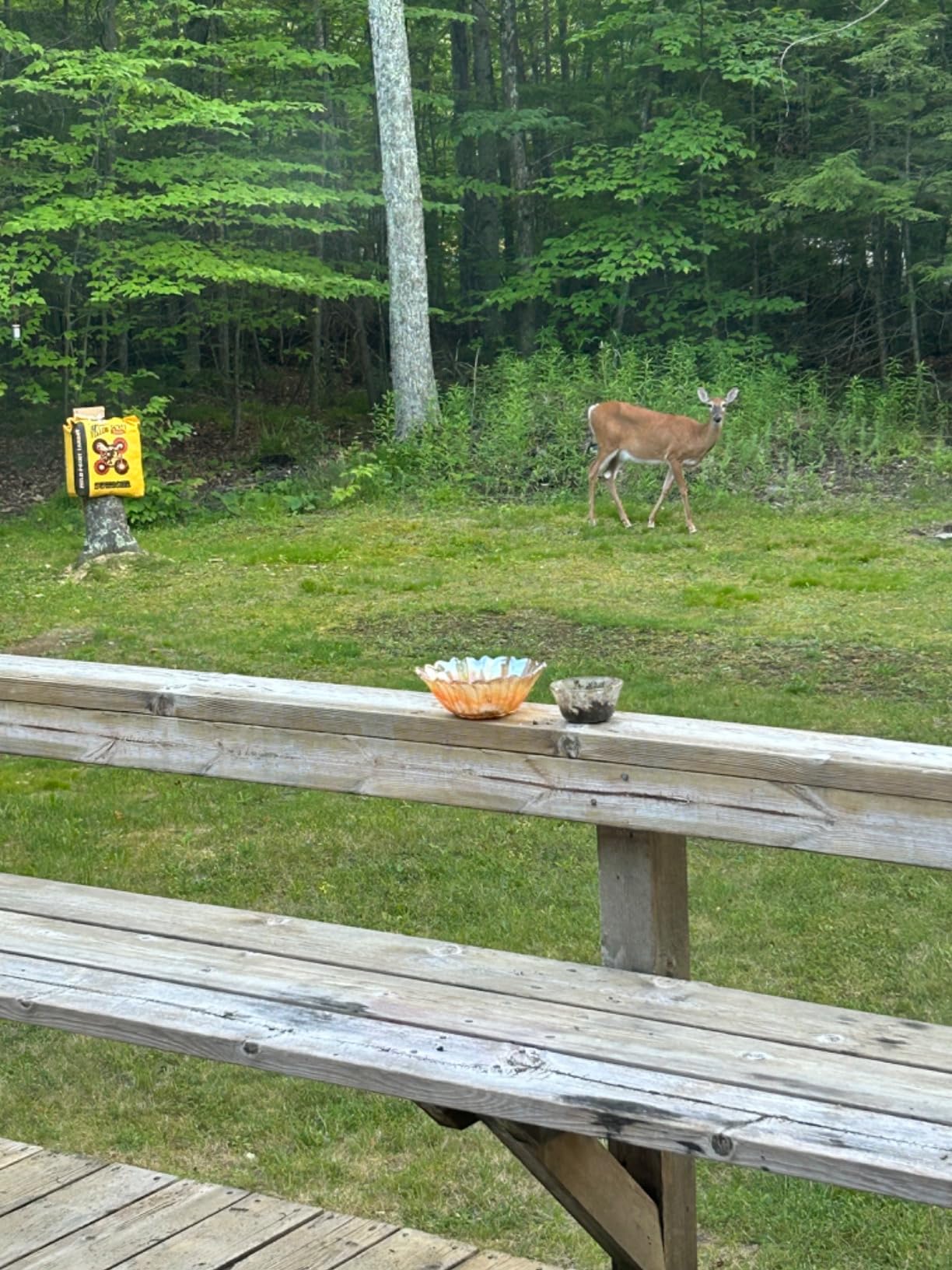
Who the Yellow Jacket Stinger suits
Compound bow shooters who want real stopping power without a two-person move, and families sharing one target. The combination of 38 layers, dual sides and 18.3 pounds is rare, and the carry handle makes it the easiest one-person option in this roundup.
It is a good fit for anyone shooting out of a garage or basement setup, where the compact 20 by 12 by 20 inch footprint matters more than face diameter.
Who should skip the Yellow Jacket Stinger
Skip it if you shoot at 50 yards or more and want one target that works at every distance. The 20 inch face is the constraint, not the stopping power.
Bowhunters should also skip it, since there is no broadhead rating here and the fill is field point only.
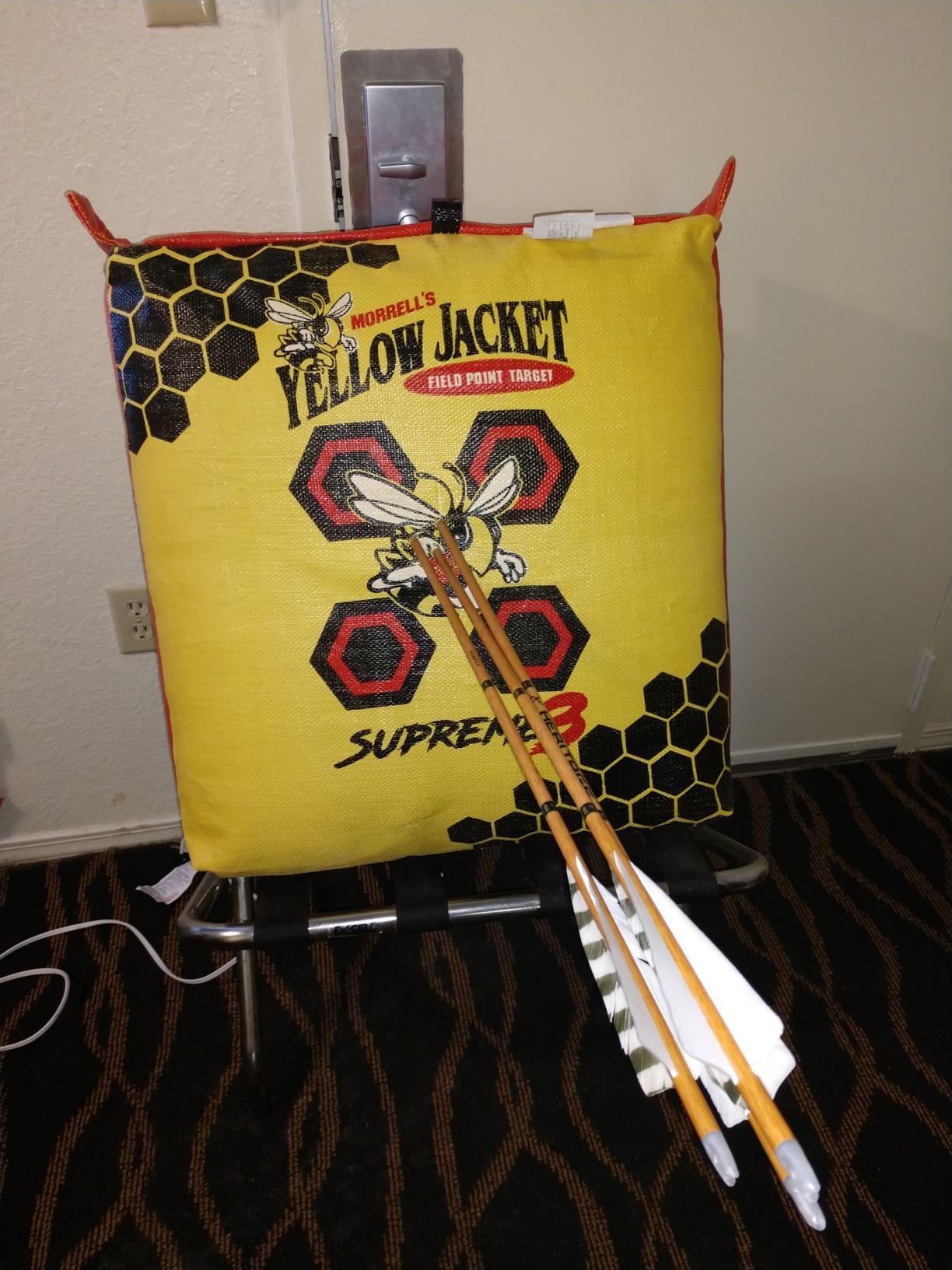
4. Morrell Yellow Jacket Supreme 3 – Best Dual-Sided Shooter
Morrell Yellow Jacket Supreme 3 Dual-Sided Archery Target, 23 x 12
54 layers with MLDD
23 x 12 inch dual-sided
28 pounds
Weatherproof
Pros
- 54-layer build holds up under thousands of shots
- Dual-sided shooting surfaces extend usable life
- Ten bullseyes give varied aiming practice
- Weatherproof construction for year-round use
- E-Z tote handle makes it easy to move
Cons
- Field points only
- 28 pounds is a two-person move for many shooters
- 23 by 12 inch face is narrow for long-distance aiming
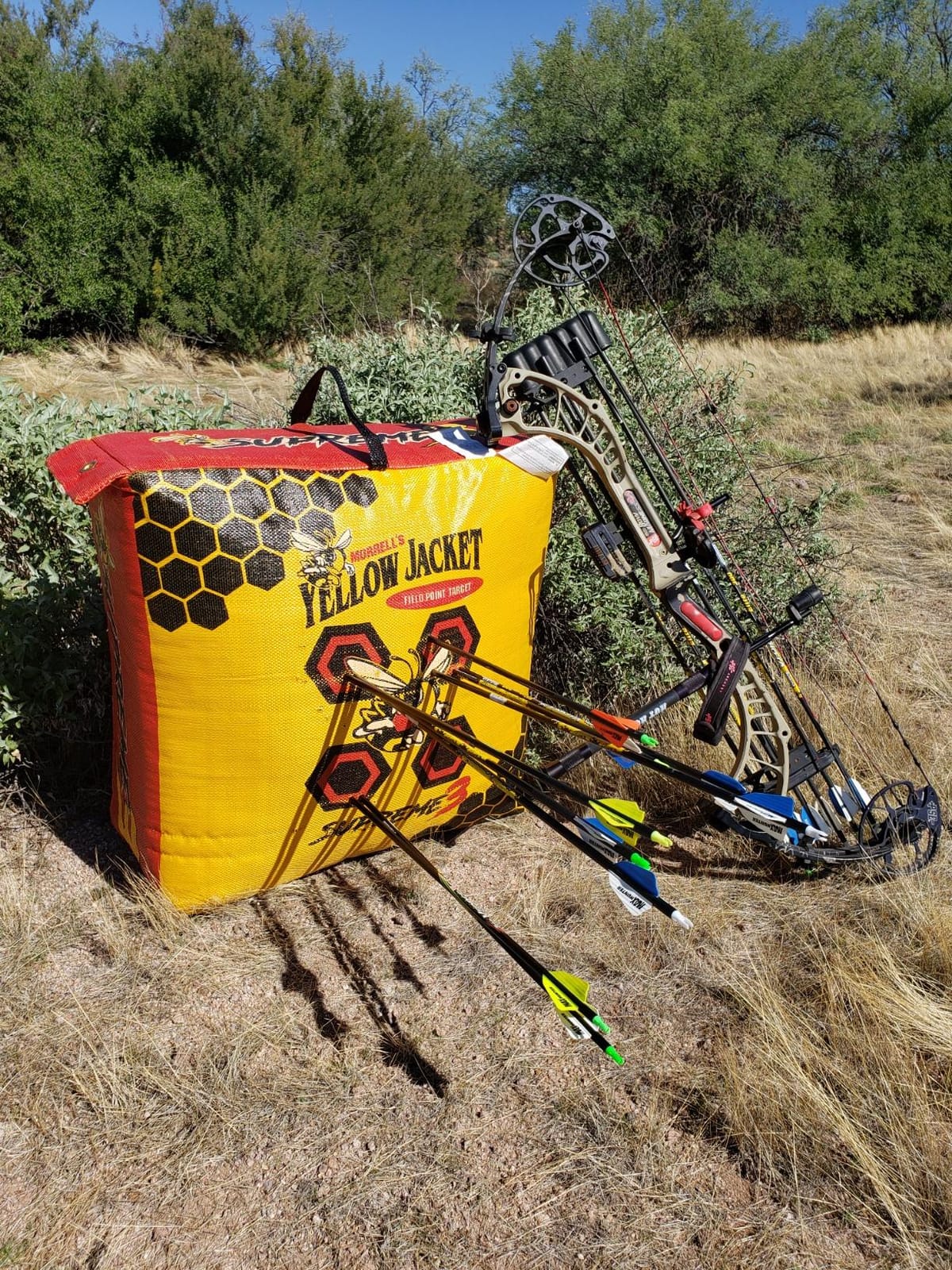
The Supreme 3 is the one that shows up when experienced archers argue about durability. ArcheryTalk members point to the Yellow Jacket Supreme line as a step up in build quality, and the spec sheet backs that up with 54 layers of MLDD construction against a 23 by 12 inch face. That is the deepest layer stack in this roundup.
At 28 pounds it is heavier than the Stinger and lighter than the YJ-425, and the two-sided layout with 10 bullseyes is what keeps it fresh. Owners cite layer count, weatherproofing and the range of bullseyes as the reasons for an 81 percent five-star share. A limited two year warranty backs the unit.
Two things keep this out of the top spot. The face is 23 inches tall by 12 inches deep, which is narrow across the aiming area compared with the round bags here. If you shoot deer at 40 yards, you will feel the width. And at 28 pounds, most people still need help moving it across a yard, even with the tote handle.
It is also field point only. For hunting broadheads, the BIGshot Ballistic later in this list is the bag that handles both tips.
Who the Supreme 3 suits
High-volume shooters who burn through a target face faster than a single-sided bag can handle. Fifty-four layers and two working faces mean you can shoot a lot of arrows before you think about rotation, which is exactly what an archer training for a season needs.
Multi-packs are listed in 2, 3 and 4 unit configurations, which makes this a natural pick for a club or a family that shoots together.
Who should skip the Supreme 3
Skip it if your goal is a large aiming area for long shots, because the 12 inch depth is the narrowest face among the Morrell bags here. Skip it if you move your target alone regularly, unless the light end of the 28 pounds is manageable for you.
Anyone shooting broadheads needs a different target entirely.
5. Morrell Yellow Jacket YJ-425 – Built for Crossbow Speeds
Morrell Yellow Jacket YJ-425 Outdoor Portable Archery Bag Target, Yellow
Rated to 425 FPS
20 x 15 x 20 inch
32 pounds
MLDD and IFS technology
Pros
- Approved for high-speed crossbow and compound bows to 425 FPS
- Two shooting sides with 10 bullseyes
- Easy arrow removal suitable for the whole family
- Weatherproof surface for outdoor use
- Carry handle and manageable build
Cons
- Heaviest Morrell bag here at 32 pounds
- Field points only
- Compact face for a crossbow rated bag
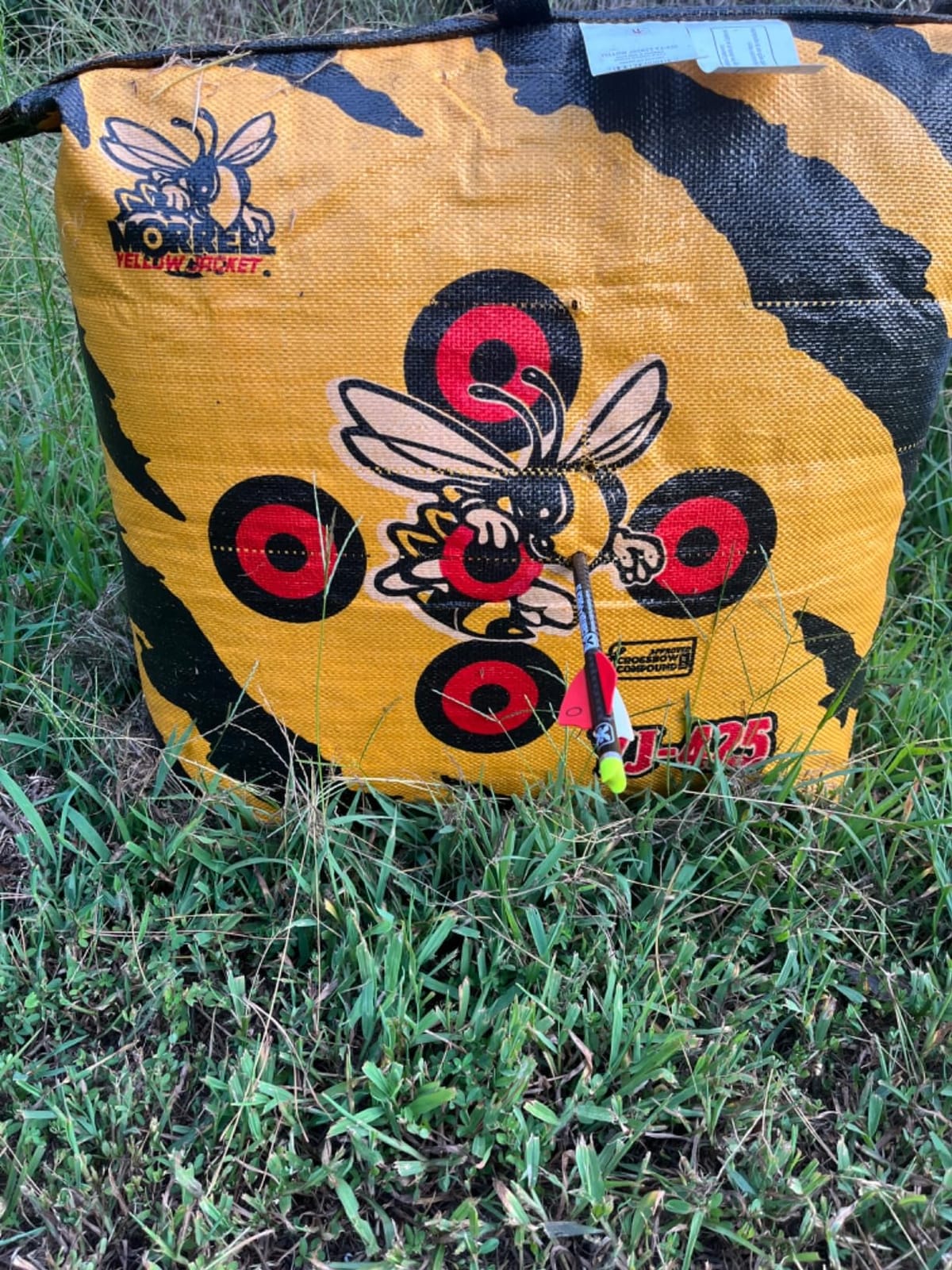
The YJ-425 is the crossbow answer in the Morrell lineup, with a stated 425 FPS rating and MLDD and IFS technology. At 20 by 15 by 20 inches and 32 pounds, it is the largest and heaviest of the three Morrell bags here, which is the point. Crossbow bolts carry more energy per shot than a typical hunting arrow, and the extra fill absorbs it.
Reviews give it an 83 percent five-star share, the highest five-star concentration among these ten, with no recurring complaint pattern in the visible reviews. Buyers name crossbow approval, the 10 bullseye layout and easy arrow retrieval as the main strengths. Two shooting sides and a weatherproof outer surface round out a package built for all-season outdoor work.
The 32 pound weight is the tradeoff you will feel first. Reviewers who love the stopping power tend to also note that this is not a bag you reposition casually. If your range spot is set for the season, that is a fair arrangement. If you move weekly, look at the Delta McKenzie Wedgie instead.
Like the rest of the Morrell field point bags here, it is field point only. And a 20 inch face, even with 15 inches of depth, is tight if you are shooting a crossbow at 50 yards.
Who the YJ-425 suits
Crossbow owners and high-speed compound shooters who want a bag that is explicitly rated for their setup rather than inferred from a general-purpose spec. It is also listed in multi-packs for households or clubs that want matching targets.
If your bow pushes arrows in the 425 FPS range and you shoot a lot of them, the extra weight buys real stopping power you can feel.
Who should skip the YJ-425
Skip it if you need to carry your target solo or reposition it often. Thirty-two pounds with a full load is not a one-hand job, and reviewers who wanted easier transport moved to lighter options.
Skip it for broadhead practice and for long-distance crossbow work, where the face size becomes the limiting factor.
6. Delta McKenzie Speedbag 20 Inch – Highest FPS Rating and Hanging Grommets
Delta McKenzie Speedbag 20″ Archery Field Point Bag Target – High-Density Material – Dual-Sided Aiming Points – Easy Arrow Removal – Weatherproof Design for Compound Bows, Recurve & Crossbows
Rated to 525 FPS
20 inch diameter, 10 inch deep
27 pounds
Built-in grommets
Pros
- Highest FPS rating here at 525 FPS for field points
- Dual-sided high-contrast aiming points
- 27 pound weight balances stability and portability
- Built-in grommets allow vertical hanging
- Weatherproof shell tolerates sun and rain
Cons
- Field points only
- Some durability complaints after heavy use among a small share of reviews
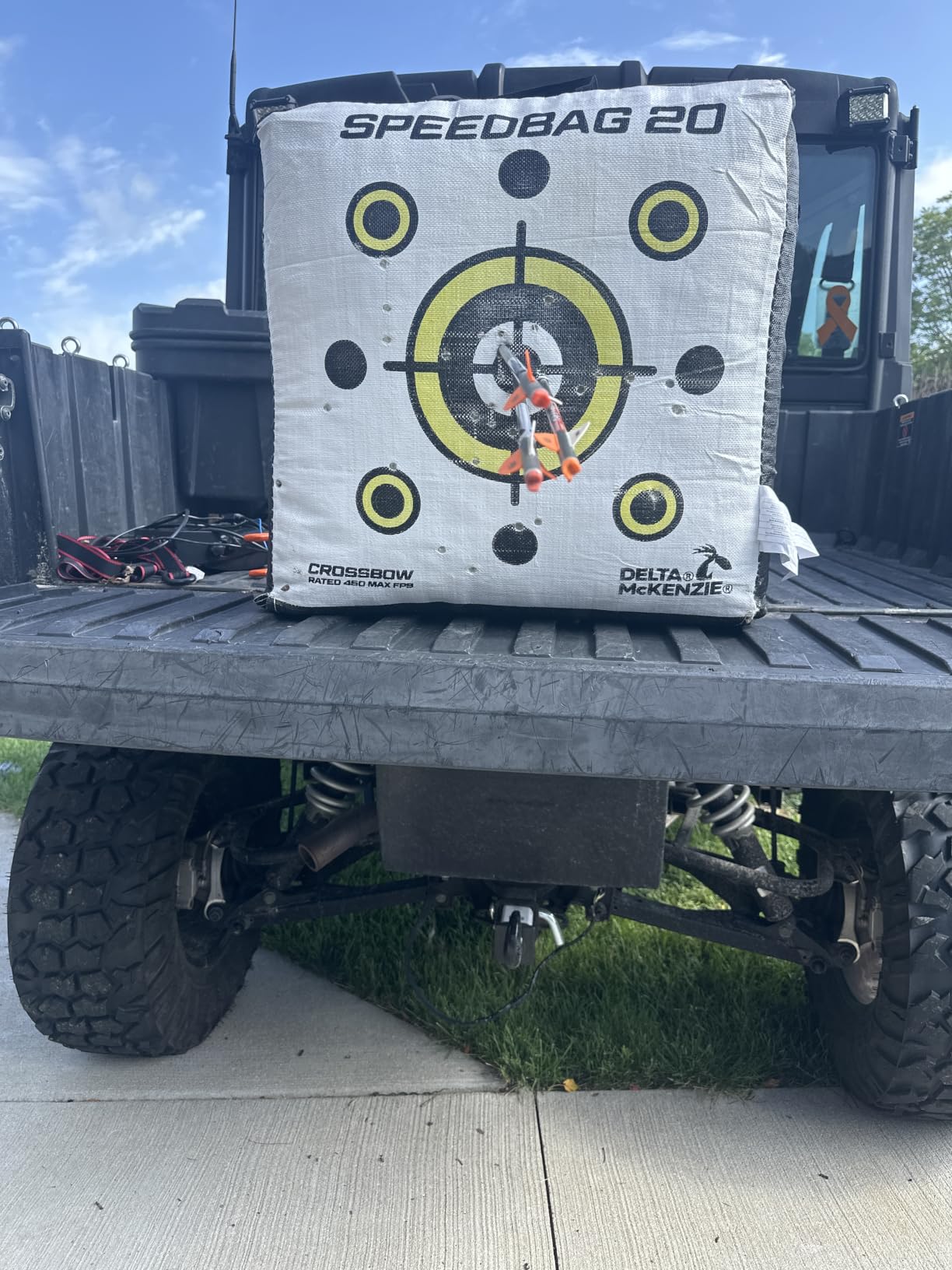
At 525 FPS for field points, the Speedbag 20 carries the highest velocity rating in this roundup, and it is the one to look at if you shoot a fast crossbow or an underdraw setup that pushes a light arrow hard. The 20 inch diameter with 10 inches of depth also gives it a rounder, more forgiving profile than the rectangular Morrell bags.
The feature nobody else in this list has is built-in hanging grommets. You can hang it vertically from a target stand, which is how experienced archers deal with bags that would otherwise tip in wind or slump when saturated. Combined with the 27 pound weight, that gives you two deployment options: stand it up or hang it.
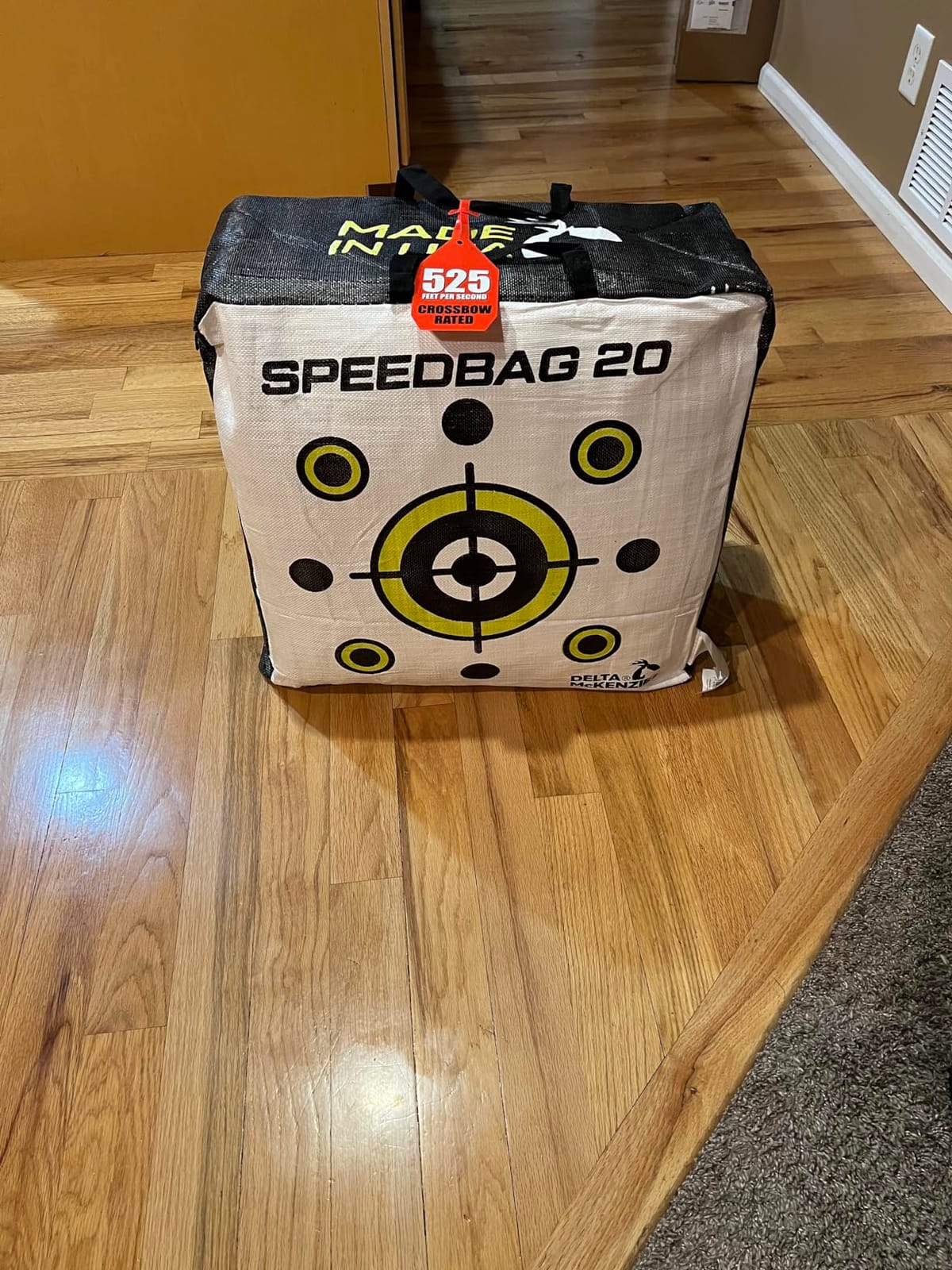
Dual-sided high-contrast aiming points are readable in varied lighting, which matters more than it sounds when you are squinting into low sun on an outdoor range. The weatherproof shell is rated for sun, rain and temperature swings, and it works with compound, recurve and crossbow setups.
The honest caveat is that a small share of three-star reviews report durability problems after heavy use, around 8 percent of the visible reviews. At 666 reviews the sample is large enough that the pattern is real but not disqualifying. Treat it as a practice and tuning bag rather than an indefinite workhorse.
Who the Speedbag 20 suits
Fast crossbow shooters and anyone who wants the highest velocity rating available in a bag form factor. It is also the pick for archers with a target stand, since the grommets let you hang it where a freestanding bag would tip.
Recurve shooters can use it too. The listing names compound, recurve and crossbow compatibility, and at 425 FPS and up the fill is dense enough for high-power bows.
Who should skip the Speedbag 20
Skip it if you shoot broadheads. It is field points only, and no hanging arrangement changes that.
Also skip it if you plan to put serious weekly volume through one spot for a full season. The scattered durability complaints cluster among high-volume users, so rotate faces or pair it with a second bag.
7. Delta McKenzie Speedbag Revolver – Best Budget Six-Sided Cube
Delta McKenzie Speedbag Revolver 6-Sided Archery Target – 450 FPS Rated Portable Cube for Compound Bows, Recurve & Crossbows – High-Contrast Field Point Target with Easy Arrow Removal (12″x12″x12″)
Six shootable sides
450 FPS field point rating
12 x 12 x 12 inch
15 pounds
Pros
- Six shootable sides extend target life
- High-contrast graphics and calibration grids aid precision practice
- Only 15 pounds so it moves easily
- High-density fill balances stopping power with easy extraction
- Weather-resistant shell resists UV and moisture
Cons
- Field points only
- 12 inch face suits close-range or casual practice
- Some durability complaints after heavy use
The Revolver is the cleverest budget design here. Six shootable sides on a 12 by 12 by 12 inch cube, at 15 pounds, means you get more usable surface per unit of weight than any other bag in this roundup. For casual backyard shooting or an indoor range, that math is hard to beat.
Calibration grids printed on the faces are a genuinely useful feature for form work. Combined with high-contrast graphics, they let you check whether your group is centered and how tight it is without hanging paper targets every session. The fill is rated to 450 FPS for field points, which covers a typical hunting compound comfortably.
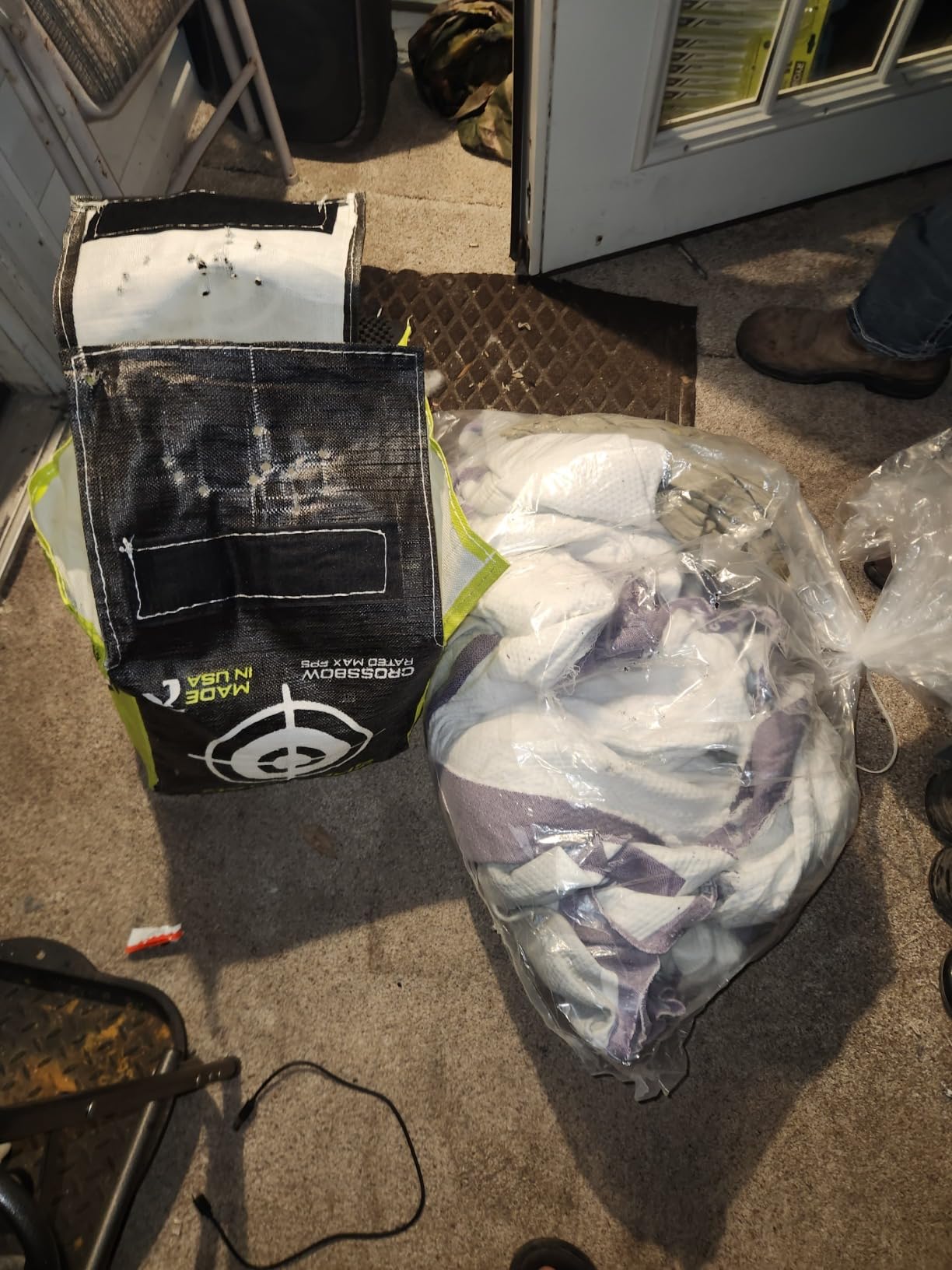
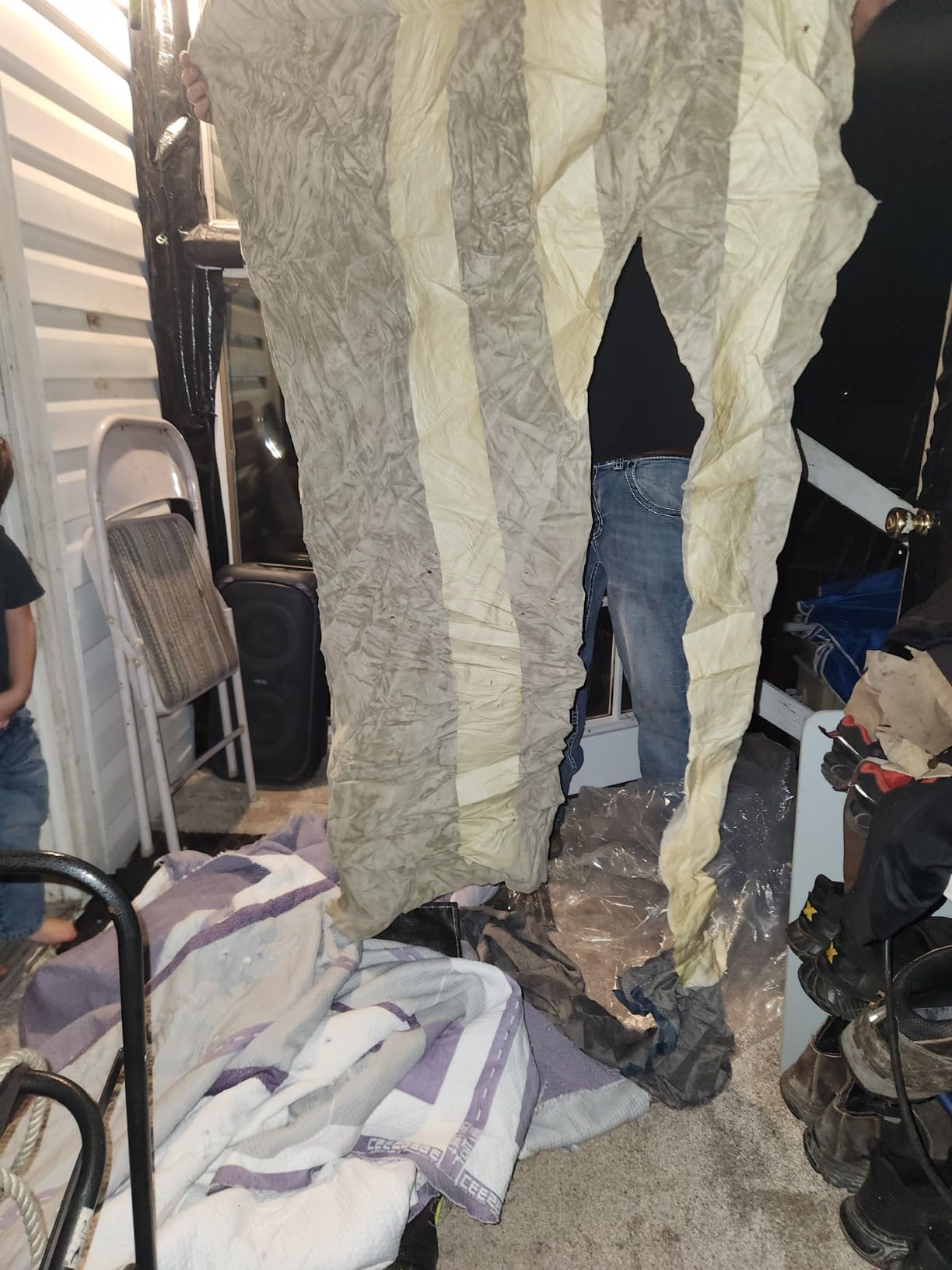
What you give up is face size. Twelve inches is small. Reviewers are straightforward that this cube suits close-range or casual practice more than long-distance shooting, and at 40 yards and beyond you will be fighting the face rather than your form. High-density fill also means arrows pull out easily, which is a benefit indoors and a mild annoyance if you enjoy the retrieval ritual.
Like its bigger sibling, it is field points only, and about 8 percent of three-star reviews flag durability after heavy use. Keep it as the indoor or short-range target.
Who the Revolver suits
Anyone who wants a target they can carry in one hand, set up in a garage, and shoot at 15-25 yards. Six sides mean you will not rotate to a dead face mid-session the way you would with a two-sided bag.
Youth and lightweight bow shooters do well with it too, since the light weight makes repositioning for shorter stature straightforward.
Who should skip the Revolver
Skip it for long-distance practice. The 12 inch face is the hard limit, and no amount of fill compensates for a small aiming area.
Skip it if you shoot broadheads, and skip it if you want one target to handle an entire season of high-volume practice, since the durability complaints come from that exact use.
8. Delta McKenzie Wedgie – Best Self-Standing Bag
Delta McKenzie 20″ Wedgie Self-Standing Archery Bag Target – Portable Field Point Practice Target for Compound & Crossbow – Yellow
Self-standing wedge design
20 x 20 x 10 inch
19 pounds
Rated to 425 FPS
Pros
- Self-standing wedge shape removes the need for a target stand
- Stays upright on uneven surfaces without tipping on hits
- Stops crossbow bolts around 450 FPS with no pass-through
- Easy arrow pull and a sewn-in carry handle
- Holds up after weeks of rain and sun
Cons
- Not recommended for very powerful arrow use
- Arrow extraction takes effort at times
- Filler may need replacing over time
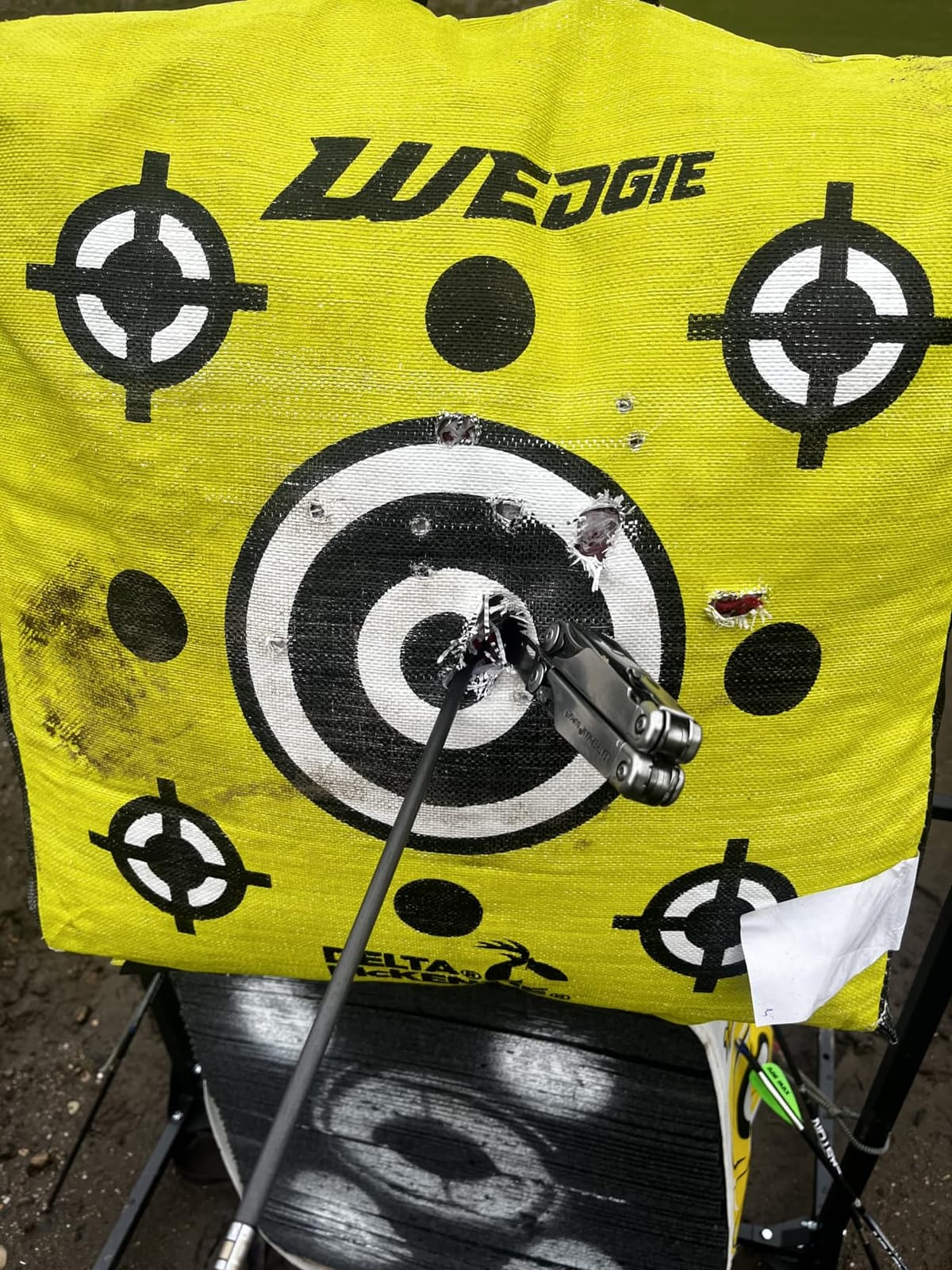
The Wedgie is the answer to the most common complaint in bag target forums: bags that fall over. Its triangular wedge profile is self-standing by geometry. Reviewers report that it stays upright on uneven ground and does not tip when you take a solid hit, which removes the single biggest annoyance of freestanding bag shooting.
At 20 by 20 by 10 inches and 19 pounds, it is compact and portable, with a sewn-in carry handle and a 425 FPS rating for crossbows and vertical bows. Crossbow owners confirm it stops bolts around 450 FPS without pass-through. Dual-sided high-contrast graphics and field point arrows with easy removal complete the package, and reviewers note it holds up after weeks of rain and sun exposure.
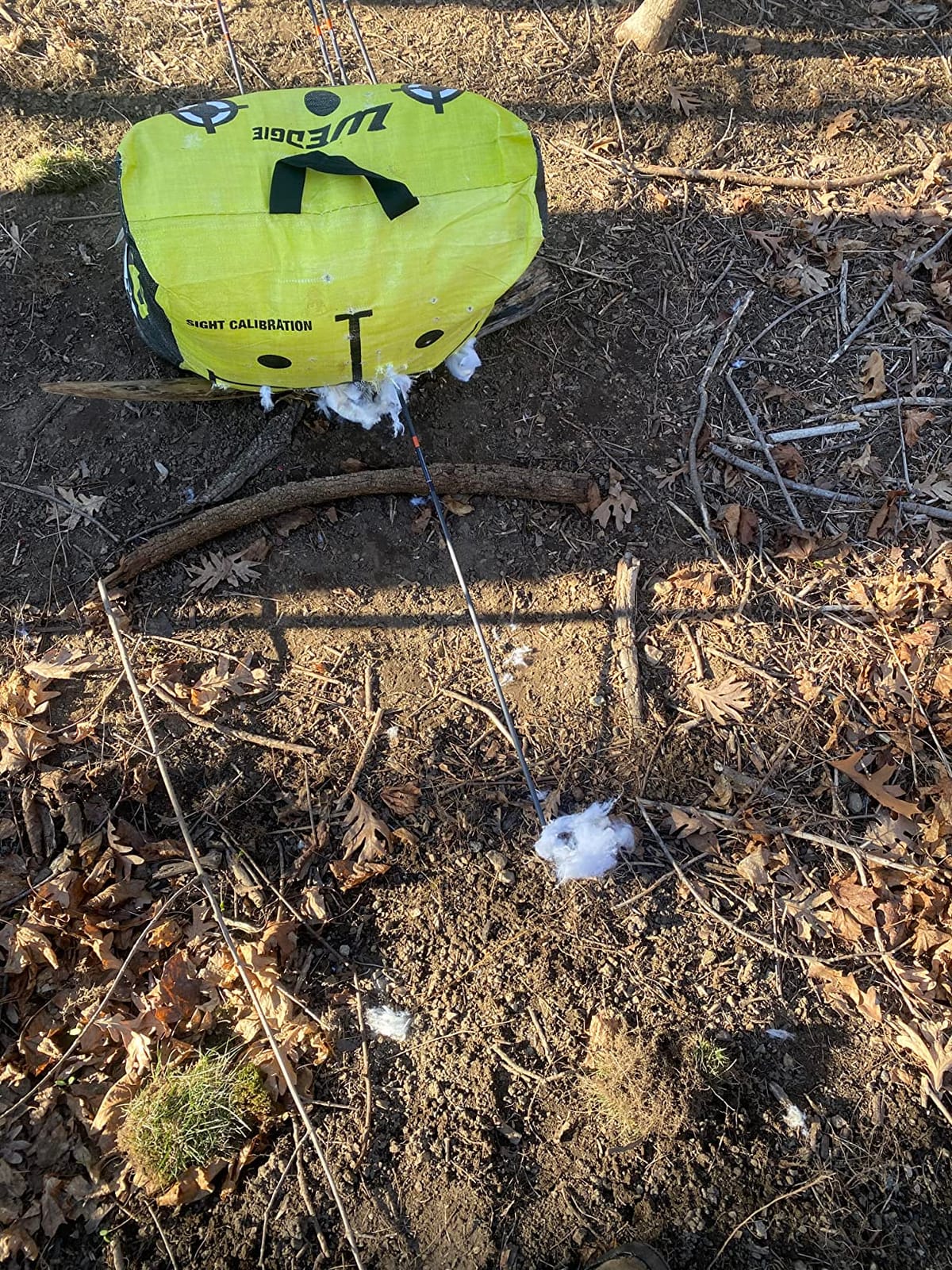
Two limits are worth stating plainly. Reviewers do not recommend it for very high-power arrow use, so a top-end hunting compound at maximum draw is pushing it. And some owners find arrow extraction takes more effort than they would like, occasionally a hassle rather than a one-hand pull.
The fill also has a texture reviewers compare to blanket material, and note it may need replacing over time. At 19 pounds you can still reposition it solo, which is where its value sits.
Who the Wedgie suits
Anyone who wants to shoot without a stand, without a backstop, and without propping the target up after every group. That is a bigger deal than it sounds, because it removes a step that stops many backyard shooters from practicing.
Crossbow owners at moderate speeds and recurve shooters get a target that stands where you put it. Beginners get a forgiving setup that will not tip at the worst moment.
Who should skip the Wedgie
Skip it if you shoot the most powerful bows you can buy, since reviewers specifically flag very high-power use as outside its comfort zone. If arrow retrieval speed is your top priority, read the negative reviews on extraction effort first.
It is also field point only, so it does not solve a broadhead problem.
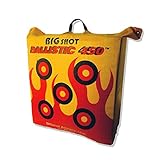
9. BIGshot Ballistic 450X – the Only Bag Here That Takes Broadheads
BIGshot Ballistic 450X Archery Target for Crossbow and Compound Bow – Self-Healing Bag Target – 450 FPS Rated – Dual Core Technology – UV Resistant – Easy Arrow Removal – 26″x28″x13″ – 55 lbs
26 x 28 x 13 inch face
450 FPS dual core
55 pounds
Handles field points and broadheads
Pros
- Largest face here at 26 by 28 inches
- Stops crossbow bolts up to 425-450 FPS without pass-through
- Arrows pull out easily with one hand
- 55 pound internal frame keeps it stable outdoors
- Self-healing UV resistant cover with a rain barrier
- Handles both field points and broadheads
Cons
- Heaviest unit here at 55 pounds and needs two people to move
- Stopping drops when re-shooting the same spot
- Broadheads tear the material
- Cover color fades in direct sun
The Ballistic 450X is the outlier in this roundup. It is the only bag on the list rated to handle broadheads as well as field points, and it does so with dual core technology rated to 450 FPS. For a compound bow hunter who wants to practice hunting tips without buying a separate foam block, that capability is worth the compromises.
Size is the other headline. At 26 by 28 by 13 inches it has the largest face here, with five front spots and back vitals, which makes it the best bag for shooting deer silhouettes at distance. Reviewers also praise one-handed arrow removal, and the self-healing UV resistant polyester cover with a rain barrier is credited for surviving year-round outdoor exposure. The warranty is lifetime.
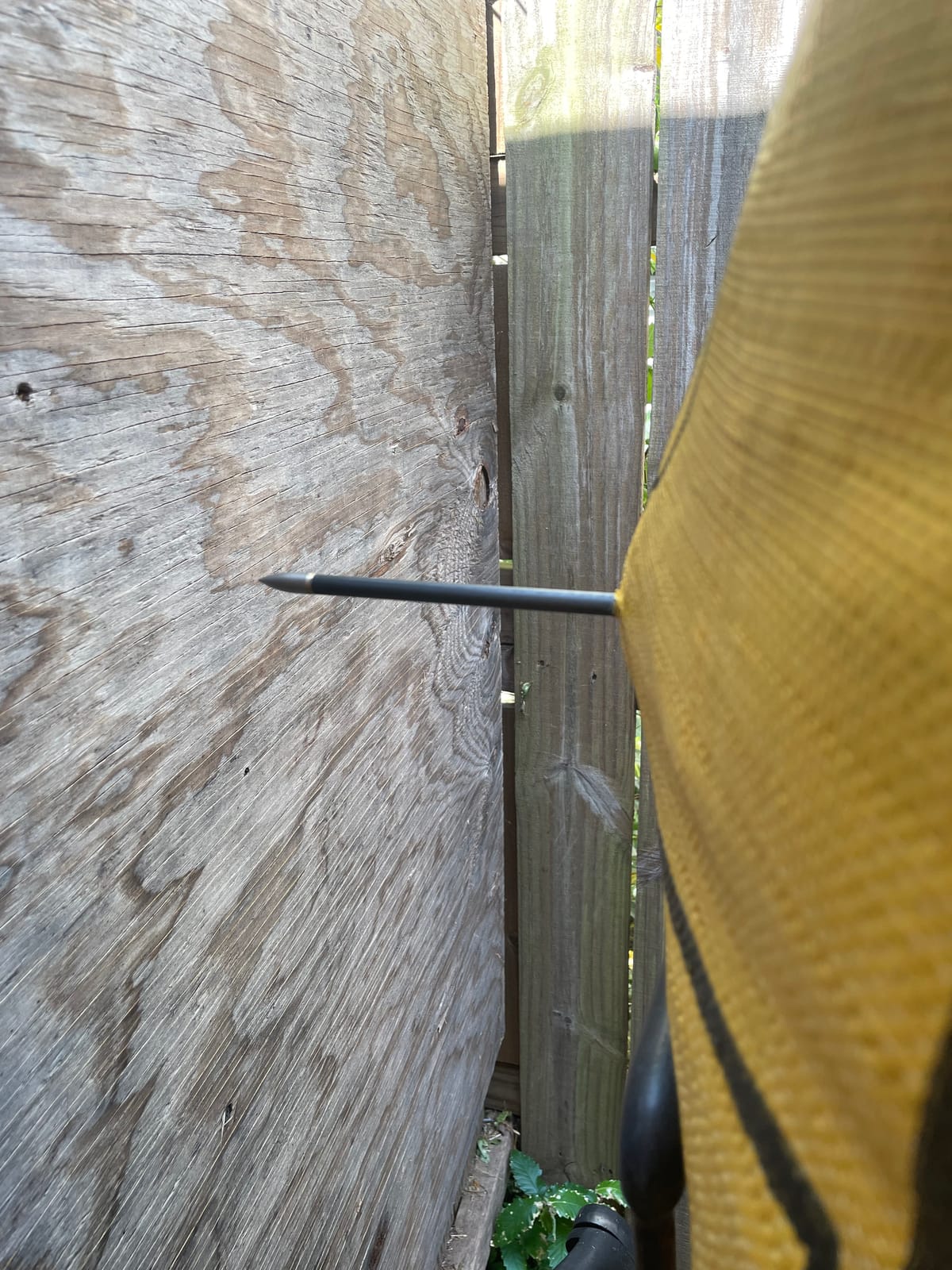
Weight is the bill. Fifty-five pounds of internal ballast makes it the most stable unit here on uneven ground, and it is also the one that needs two people to move. Budget for that before you decide this is the only target you will ever own.
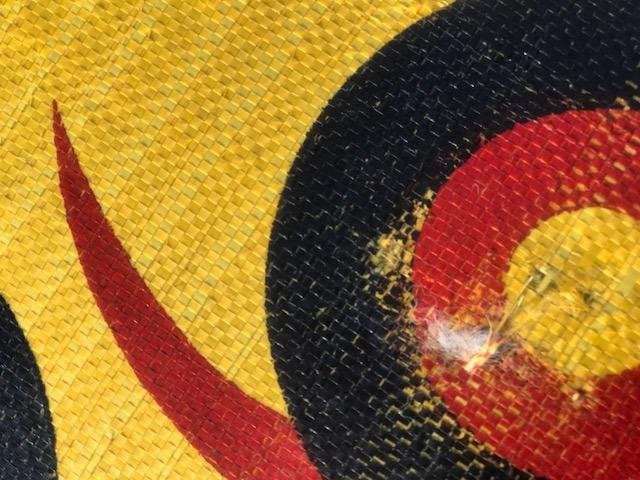
Reviewers report two specific behaviors worth planning around. Stop-by-stop performance drops when you repeatedly shoot the exact same spot, so rotate between the five front spots. And broadheads tear the material, which is expected but means the cover is consumable in hunting use. Direct sun fades the cover color over time.
Who the Ballistic 450X suits
Bowhunters who want to shoot broadheads into a bag rather than maintain a separate foam block, and anyone who needs a large aiming area for deer or distance work. It is also a good backstop-friendly choice for clubs with a fixed shooting line.
If you can park it once and leave it, the 55 pound frame is a feature. It will not tip when your group runs low.
Who should skip the Ballistic 450X
Skip it if you cannot recruit a second person to move it. That is the most common reason buyers return it, and no amount of good specs compensates for a target you cannot reposition.
Skip it if your broadhead use is occasional. A foam block handles a handful of hunting tips far more cheaply, and broadheads will still tear this cover.
10. Rinehart 18 Inch X-Bow Bag – Lightest Crossbow Sight-In Target
Rinehart 18″ X-Bow Bag Target, High-Speed Crossbow Bag Rated up to 450 FPS
450 FPS dual layered power band
MOA sight-in grid
18 x 18 x 10 inch
12.6 pounds
Pros
- Crossbow-specific MOA sight-in grid speeds up zeroing
- Lightest unit here at 12.6 pounds
- 450 FPS rated dual layered power band
- Compact 18 inch footprint for small backyards and camps
- Lifetime manufacturer warranty
Cons
- Lowest rating here at 4.3 with 8 percent one-star reviews
- Smaller face than the 20-26 inch alternatives
- Compact depth can wear faster under sustained crossbow fire
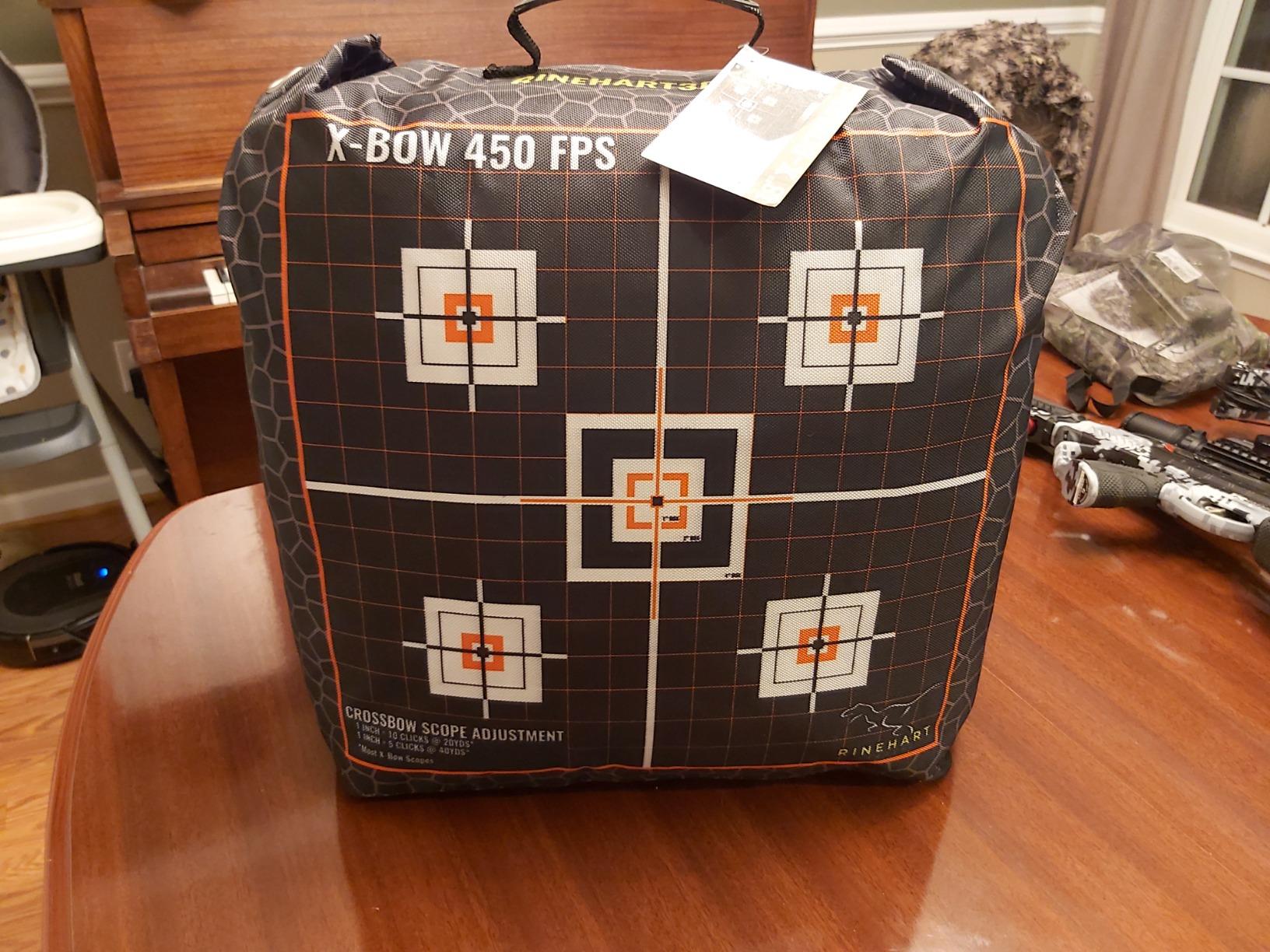
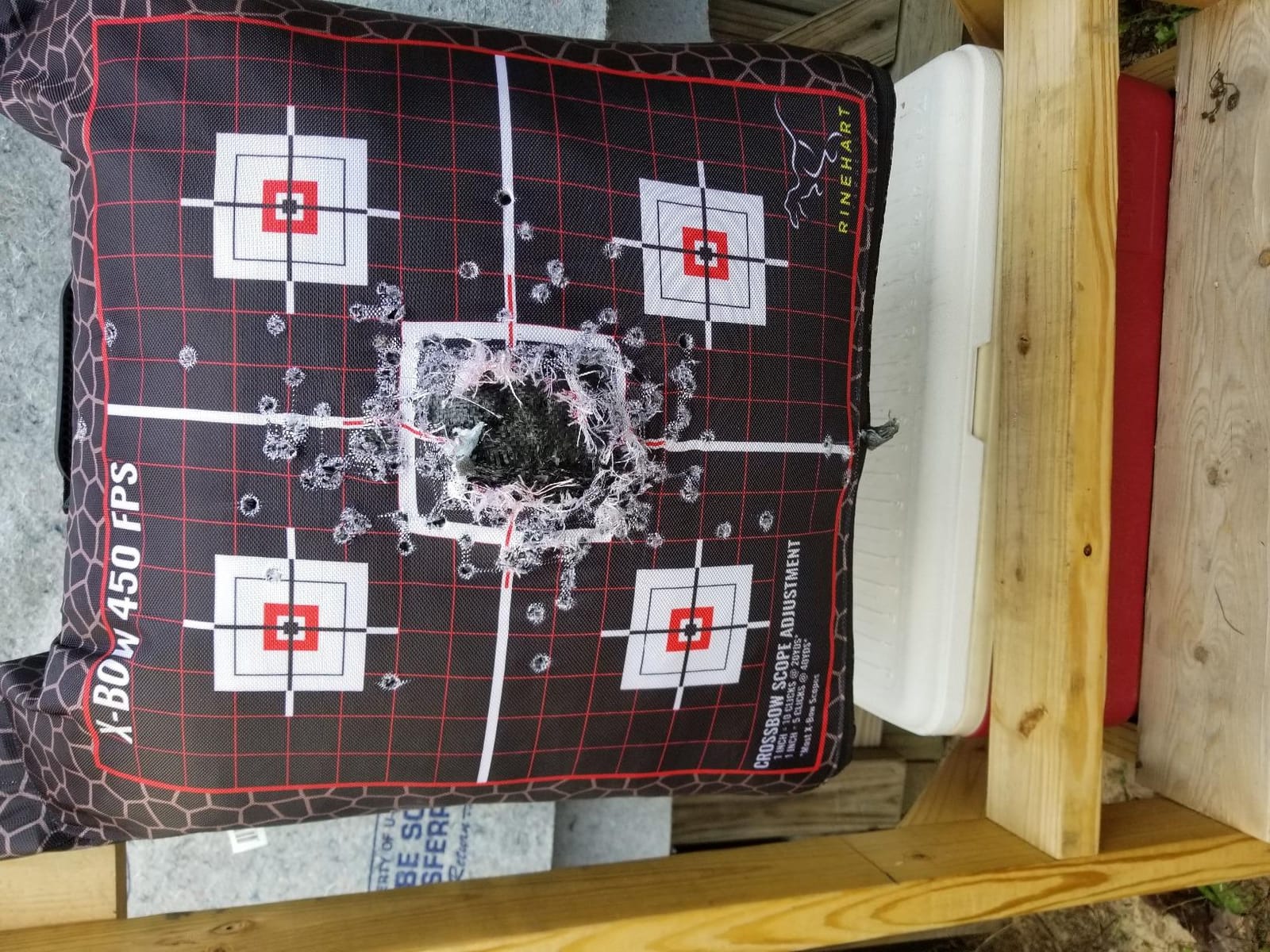
The X-Bow bag is built around one job: getting a crossbow sighted in. The MOA sight-in grid face is the reason to buy it. Instead of walking your zero down in tenth-of-an-inch adjustments over several evenings, you read your group against a printed grid and know where to start. That saves more time than any other feature on this list for a crossbow owner setting up new equipment.
It is also the lightest bag here at 12.6 pounds, with an 18 by 18 by 10 inch footprint that fits a small backyard or a hunting camp. Dual Layered Power Band technology is rated to 450 FPS, and the warranty is lifetime, which is the strongest warranty coverage among these ten.
It is also the lowest rated at 4.3, with an 8 percent one-star share, and that points at a specific problem: size. An 18 inch face is smaller than every other bag here, and the 10 inch depth means sustained crossbow fire wears through a given area faster than it would on a 20 to 26 inch target.
Think of it as a tuning tool rather than a volume target. It is excellent for the first fifty shots after a scope install and disappointing as the bag you shoot four hundred arrows a week into.
Who the Rinehart X-Bow bag suits
Crossbow owners and anyone with a compact yard or a camp site where weight and footprint rule out the 55 pound options. If your main task is sighting in new equipment, the MOA grid does in minutes what takes a standard bullseye an evening.
It is also a good travel target for someone who wants to shoot in remote areas and carry their gear any distance.
Who should skip the Rinehart X-Bow bag
Skip it if you shoot high arrow volume at 30 yards or more. The compact depth wears faster under sustained fire, and the 8 percent one-star share reflects that. Skip it if you want the largest aiming area available, since 18 inches is the smallest face here.
Anyone shooting broadheads will want a different target, and anyone wanting a long warranty should note the lifetime warranty does not cover everything a heavy user can do to the fill.
Buying Guide: How to Choose a Bag Target for a Compound Bow
Bag target vs foam block vs 3D target
Choose a bag for compound bow practice, a foam block for broadheads and permanent setups, and a 3D target for hunting scenarios. That is the short version. The bag wins on cost, portability and arrow retrieval, and it loses on broadhead tolerance and moisture resistance, which is why most serious archers end up owning one of each.
Bag target – best for compound bow practice with field points. Field points only, except the BIGshot Ballistic 450X. Instant hand arrow removal. Needs a cover in heavy rain.
Foam block – best for broadheads and permanent ranges. Designed for broadheads from the start. Slow removal with arrows buried in foam. Holds up well outdoors.
3D target – best for hunting scenario practice. Supports broadheads on foam-bodied models. Slowest arrow removal of the three. Weather resistance varies widely by model.
Foam blocks stop arrows by shedding energy between layers, and their arrow removal is the price you pay for that. Bag targets absorb momentum across a deep mass of fiber, so the shaft never buries. For a compound bow pushing arrows past 400 FPS, that force-based stopping is why a 27 pound bag can match a much heavier block.
Field point vs broadhead: which bags take both
Almost every bag on this list is field point only. Broadhead tips have fixed blades that spin on impact, and in a fiber bag those blades catch and stay buried inside the fill. That damages the bag, buries the broadhead, and makes the arrow hard to remove.
One product in this roundup breaks the rule. The BIGshot Ballistic 450X is rated for both field points and broadheads, and reviewers confirm broadhead practice works on it. You should still expect the cover to tear with regular broadhead use, and even that model is not a substitute for a dedicated foam block if broadheads are your primary arrow tip.
Our recommendation is a two-target system. Keep a field point bag for volume practice and use a foam block or straw butt for broadhead tuning. Experienced archers extend this into a stack: shoot the front bag until it is saturated, then rotate it to the back as a backstop behind a fresh one.
Size: matching bag diameter to yardage and draw weight
Match the face to your shooting distance, not your bow. The practical rule is roughly 1 inch of face diameter per 1.5 yards of shooting distance for accuracy work, which means a 20 inch bag handles 30 yards and a 26 inch bag handles 40. Below 20 yards, almost any bag works. Beyond 40 yards, you want the biggest face you can move.
For bow power, use the FPS rating rather than the poundage. Every bag here is rated between 425 and 525 FPS, which covers most hunting compounds. If your bow pushes arrows past 450 FPS, aim at the Delta McKenzie Speedbag 20 with its 525 FPS rating. If your arrows run under 400 FPS, any bag here will stop them easily.
Draw weight matters less than velocity for stopping power, but it affects penetration depth. Heavy arrows at moderate velocity bury deeper than light fast arrows, so a high-energy crossbow setup needs more fill than a target bow at the same yardage.
Keeping a bag target dry in wet climates
Moisture is the number one complaint about bag targets, and it is the leading reason they fail. Waterlogged fill adds enormous weight, and a bag that cannot support itself will slump or fall over. Rodents also find wet fill attractive, and they will open a seam to get at it.
A workable routine exists. After rain, stand the bag where air moves around it, open the fill port or pull the cover apart at the top so the interior can breathe, and let it dry before bagging it up. Never store a wet bag sealed in a garage, since trapped moisture causes mildew and rodent damage. If your yard gets regular rain, a fitted tarp or a simple canopy over the target line prevents most of the problem.
Rotating a saturated bag to the back of your stack is the old-school fix and it still works. The fill recovers once it dries, and the backstop position does not care that the front bag is softer. For anyone in a wet climate, buying two bags and alternating them is cheaper than replacing one every season.
What determines what a bag target costs
You are paying for fill depth, shell quality and the frame or core structure underneath. Entry-level bags use loose recycled fiber with no internal frame, which is why they are light and why arrows bury near the edges. Mid-range bags add layered construction and an internal frame system. Premium bags add weatherproof shells, higher layer counts and sometimes a replaceable cover, which is what the Morrell Double Duty cube uses to extend core life.
Face size and velocity rating drive the rest of the spread. An 18 inch crossbow bag and a 26 inch broadhead-capable bag are not competing products, so comparing them on feature counts alone will mislead you. If you are still narrowing a first purchase for a typical hunting compound at 20 to 30 yards, the 18 to 23 inch field point bags cover almost everyone.
Material choice drives price in other fields too, and the same logic applies. Our guides to the best carbon fiber violin bows for the money and the best carbon fiber cello bows for the money break down the same build-versus-budget trade-off from a different angle.
Making a bag target yourself, and salvaging a dead one
DIY bag targets have real forum demand and a simple method. Burlap sacks or heavy canvas bags filled with loose packing paper, crinkled plastic sheeting or salvaged target fill will stop field point arrows at recreational velocities. Cardboard tubes threaded on a central shaft, as found in packing material, keep the fill distributed and stop arrows burying. Cut the paper shorter than the shaft length so the point cannot reach the far side.
Worn bags do not have to go in the trash. One approach described on r/Archery is to pull the fabric fill out of a dead bag and restuff it into a burlap sack, which recovers a surprising amount of usable material. The other approach is the rotating backstop stack we mentioned earlier. If you are still working out which string instrument you want to start on, our guides to the best violin bows for beginners and the best cello bows for beginners cover the same first-purchase reasoning in a different field.
Frequently Asked Questions
What is the best compound bow target?
For most compound bow shooters the Morrell Double Duty 450 FPS Cube is the best all-round bag target, because its four shooting faces spread wear and its 450 FPS rating stops arrows and bolts without pass-through. If you need one you can carry alone, the Morrell Yellow Jacket Stinger at 18.3 pounds is the better pick.
Are foam or bag archery targets better?
A bag target is better for compound bow practice with field points, giving instant arrow removal and large aiming surfaces at a lower cost. A foam block is better for broadheads and permanent outdoor setups because it will not absorb water or fall over. Most serious archers own one of each.
Can you shoot broadheads into a bag target?
Only rarely. Fixed-blade broadheads catch on synthetic fiber and stay buried, which damages the bag and the broadhead. Among the targets reviewed here, only the BIGshot Ballistic 450X is rated for both field points and broadheads, and even it will tear with regular hunting-tip use.
How big should an archery bag target be?
Match face diameter to distance at roughly 1 inch per 1.5 yards. A 20 inch bag covers shooting up to about 30 yards, while a 26 inch bag suits 40 yards and deer silhouette work. Bags under 18 inches are tuning and sight-in tools rather than practice targets.
Why are archery targets so expensive?
Cost tracks fill depth, shell quality and internal structure. Entry bags use loose recycled fiber with no frame, mid-range bags add layered construction and an internal frame, and premium bags add weatherproof shells, high layer counts and replaceable covers. Frame and fill mass is the single biggest cost driver.
How do you dry out a wet bag target?
Stand the bag where air can move around it, open the fill port or spread the cover at the top so the interior breathes, and let it dry fully before storing it. Never seal a wet bag in a garage, since trapped moisture causes mildew and attracts rodents. Alternating two bags keeps one drying at all times.
The Best Bag Targets for Compound Bow Owners
The Morrell Double Duty 450 FPS Cube is our pick for the best bag targets for compound bows in 2026, because four rotatable shooting faces and a 450 FPS rating solve both the durability and the arrow retrieval problem at once. Shoot lighter with the Morrell Yellow Jacket Stinger, hang the Delta McKenzie Speedbag 20 from a stand for the highest velocity rating, or choose the BIGshot Ballistic 450X if broadheads are part of the plan.
Pick the bag that matches your yardage, then buy a second one to rotate. Whichever you choose, store it dry and shoot field points unless the manufacturer says otherwise.