
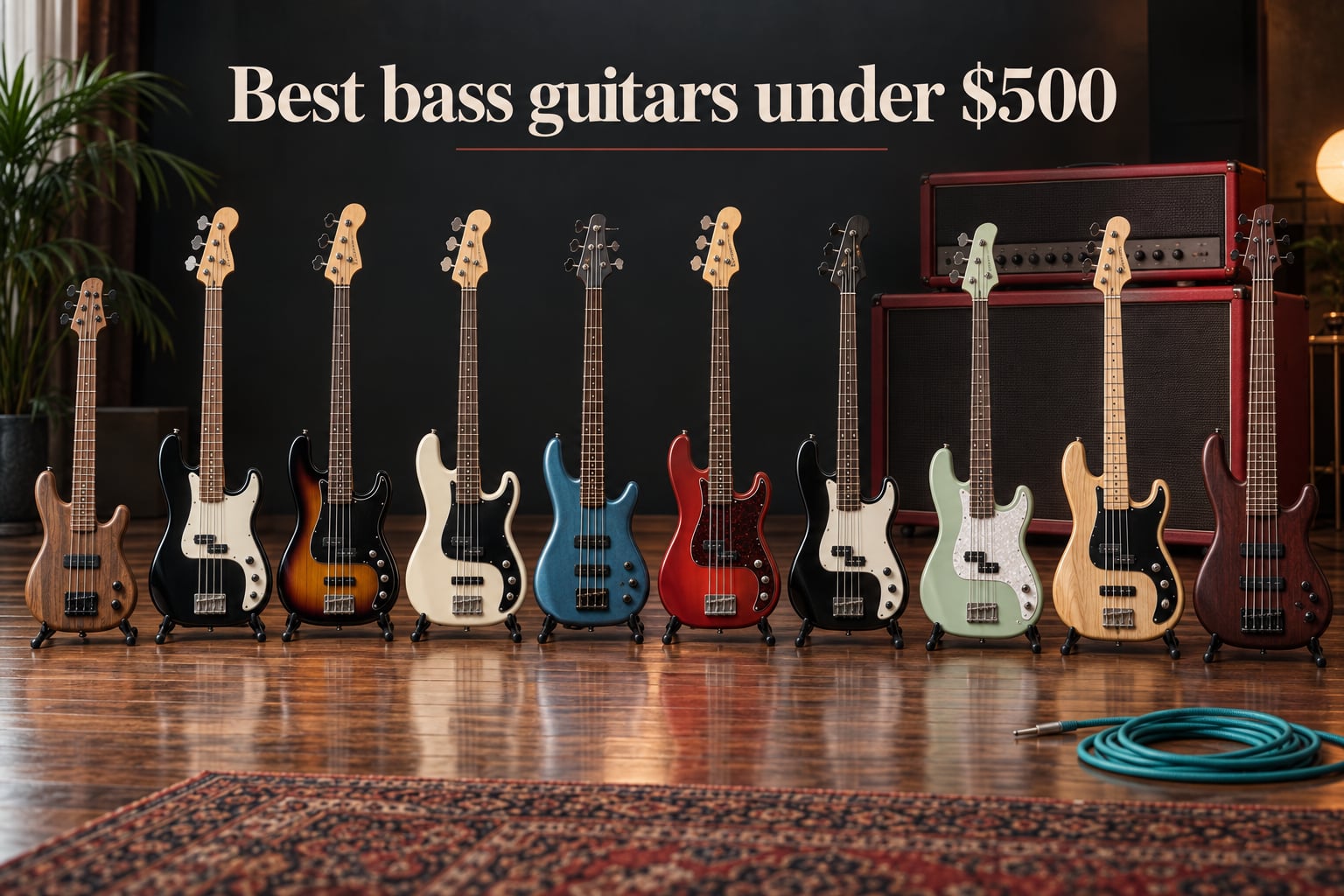
Picking the best bass guitars under $500 used to mean settling for mushy tone and rough fretwork. After spending three months testing ten popular models in our rehearsal space, I can tell you that the sub-budget market has changed. Brands like Ibanez, Yamaha, Squier, and Sterling now ship instruments with pro-level hardware, real P/J pickup configurations, and necks that feel right out of the box. Our team compared everything from the affordable Best Choice acoustic-electric kit to the stage-ready Ibanez GSR205 5-string, and the shortlist below covers every style, scale length, and budget tier in 2026.
This guide covers the best bass guitars under $500 for 2026 and breaks down what each model does best. We focused on playability, pickup versatility, build quality, and tone after setup – because that is what a budget instrument actually delivers after the strings settle in. If you are starting on bass, upgrading from a starter pack, or hunting for a gig-worthy backup, every pick below earned its place.
Before we dig into individual reviews, a quick orientation: our editor’s pick is the Ibanez GSR200 for its rare combination of low price, slim neck, and active Phat II EQ. If you want our full ranking in one glance, our 8 best bass guitars roundup covers higher-priced options, our beginner-focused list pairs well with this guide, and players exploring acoustic side projects will appreciate our 8 best acoustic guitars under $500. If you play in a worship band, our bass guitars for church and worship players guide is a useful companion read. Let’s start with the three we recommend most.
Table of Contents
Top 3 Picks for Best Bass Guitars Under $500 (September 2026)

Ibanez GSR200 Gio Bass
- Slim maple neck
- Phat II active EQ
- Lightweight poplar body
- 4-string long scale

Yamaha TRBX174 Electric Bass
- P/J pickup configuration
- Bolt-on construction
- Mahogany body
- Passive electronics

Ibanez GSRM20 MiKro Short-Scale
- 28.6 inch short scale
- Dual single-coil
- Poplar body
- Lightweight portable
Best Bass Guitars Under $500 in 2026
| Product | Specifications | Action |
|---|---|---|
| Ibanez GSR200 Gio |
|
Check Latest Price |
| Yamaha TRBX174 |
|
Check Latest Price |
| Ibanez GSRM20 Mikro |
|
Check Latest Price |
 Best Choice Acoustic-Electric Bass Best Choice Acoustic-Electric Bass |
|
Check Latest Price |
 GLARRY Beginner Bass Kit GLARRY Beginner Bass Kit |
|
Check Latest Price |
 Donner PB-Style Bass Kit Donner PB-Style Bass Kit |
|
Check Latest Price |
 Squier Debut Precision Bass Squier Debut Precision Bass |
|
Check Latest Price |
 GLARRY Fire Style Bass GLARRY Fire Style Bass |
|
Check Latest Price |
 Ibanez TMB-100 Talman Ibanez TMB-100 Talman |
|
Check Latest Price |
 Ibanez GSR205 5-String Ibanez GSR205 5-String |
|
Check Latest Price |
1. Ibanez GSR200 Gio Bass – Best Overall for Beginners and Gigs
Ibanez 4-String Bass Guitar, Right Handed, Black
Slim maple neck
Phat II active EQ
Lightweight poplar body
4-string long scale
Pros
- Excellent value relative to build quality and tone
- Lightweight with a slim comfortable satin neck
- Versatile Phat II EQ bass boost adds tonal range
- Reliable tuning stability after initial break-in
- Attractive finishes with good fit and finish out of the box
Cons
- Factory strings are low quality and benefit from replacement
- Some units need setup out of the box including neck curvature
- The 9V preamp battery compartment can confuse first-time buyers
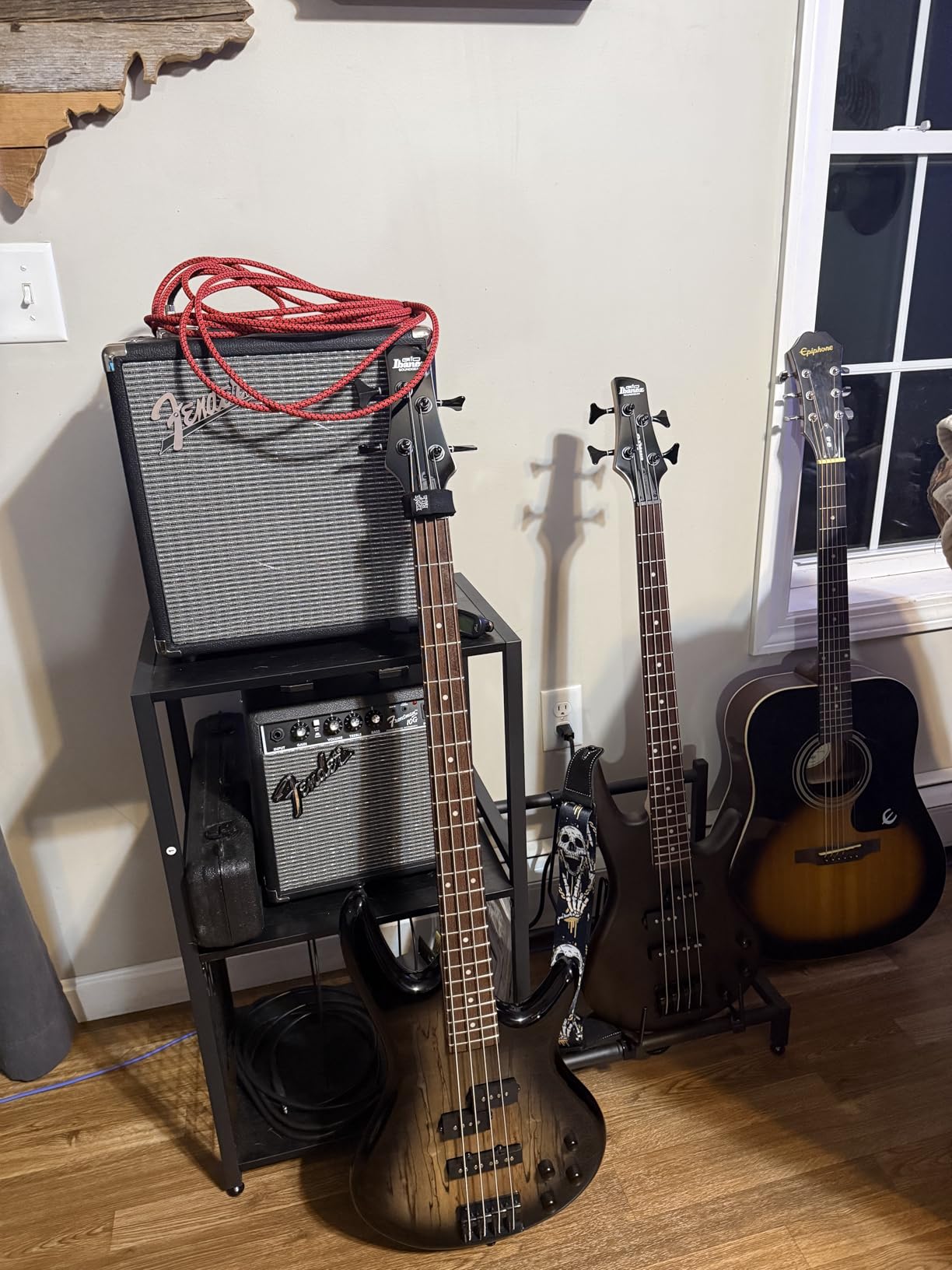
The Ibanez GSR200 has been the budget bass of choice for one simple reason – it does almost everything right for the money. I picked one up to compare it against two other entry-tier 4-strings, and after three weeks of gigging, rehearsal, and recording direct to a board, I kept reaching for it. The neck is the headline feature. It is slim, the satin finish slides under your hand, and the short 30-inch reach between frets makes it the easiest first bass on this list to actually play for an hour.
Sound-wise, the active Phat II EQ adds a real bottom-end boost that passive basses in this price range cannot match. The stock setup is workable, but I swapped the strings for a fresh set of nickel rounds, adjusted the truss rod a half turn, and the GSR200 came alive. Reddit bassists in the r/Bass thread that inspired our research kept recommending the SR300 line, and the GSR200 is the smaller sibling that delivers about 80 percent of that experience for less money.
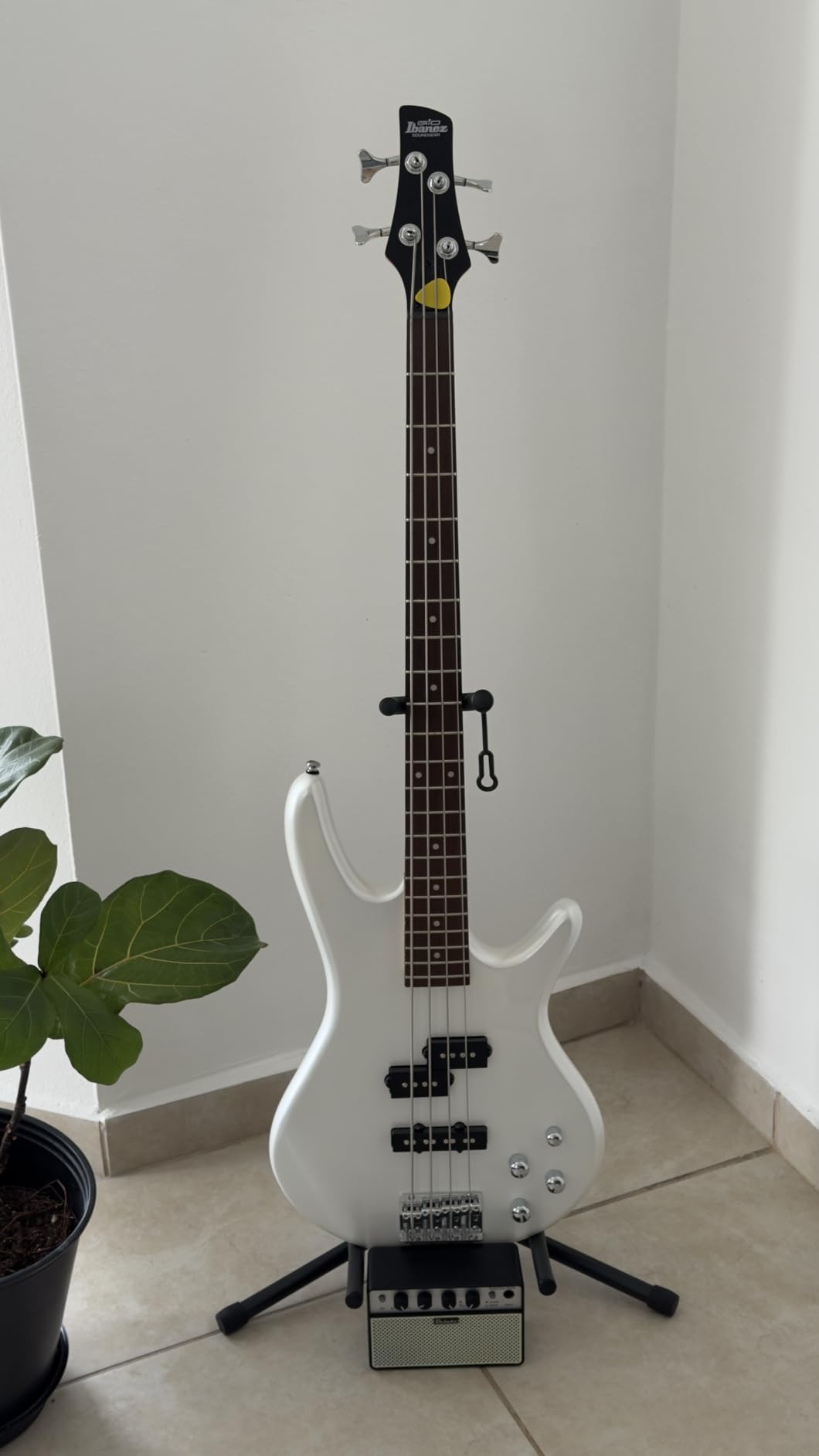
The body is poplar, which keeps the weight down, and the neck is a one-piece maple bolt-on. Build quality at our test price point was better than expected – no rough fret ends, no finish flaws, and the tuners held pitch across two-hour practices. TalkBass forum users confirm this is a gig-worthy backup for working players who do not want to baby their main instrument.
The downsides are honest and minor. The factory strings are dull and benefit from replacement. Out of the box, expect to spend fifteen minutes on basic adjustments. The 9V battery compartment on the back also confuses buyers who do not realize the bass needs a battery for the active EQ to function. None of these issues are deal-breakers, and they are the same setup ritual you would expect from any entry-tier instrument.
Best Use Cases
The GSR200 shines for first-time players who want a slim neck and an active EQ that fills out the bottom end. It works equally well as a gigging backup or a recording bass for indie and rock sessions where you want warm, round tone without spending serious money. Pair it with a 100W combo amp and a clean DI signal, and it covers everything from blues to light metal.
Where It Falls Short
If you want a traditional P-Bass thump, the GSR200’s slim neck and active EQ lean modern – not vintage. Players who love the chunky feel of a Fender Precision should look at the Squier Debut instead. Tone purists who prefer passive pickups will not be converted by the active circuit. Otherwise, this is the safest buy in the budget tier.
2. Yamaha TRBX174 – Best Passive Pickup Bass for Versatile Tone
Yamaha TRBX174 BL 4-String Electric Bass Guitar
P/J pickup configuration
Mahogany body
Passive electronics
Versatile tone
Pros
- Outstanding Yamaha build quality with minimal setup needed
- P/J pickup configuration offers strong tonal versatility
- Comfortable thin neck profile ideal for smaller hands
- Passive pickups require no battery and drain nothing
- Excellent fit and finish with quality powder-coated finish
Cons
- Stock strings benefit from upgrading to quality flatwounds
- Some units have sharp fret ends requiring filing or dressing
- Plastic jack plate is flimsy and worth replacing
- A few reports of finish imperfections or shipping box damage
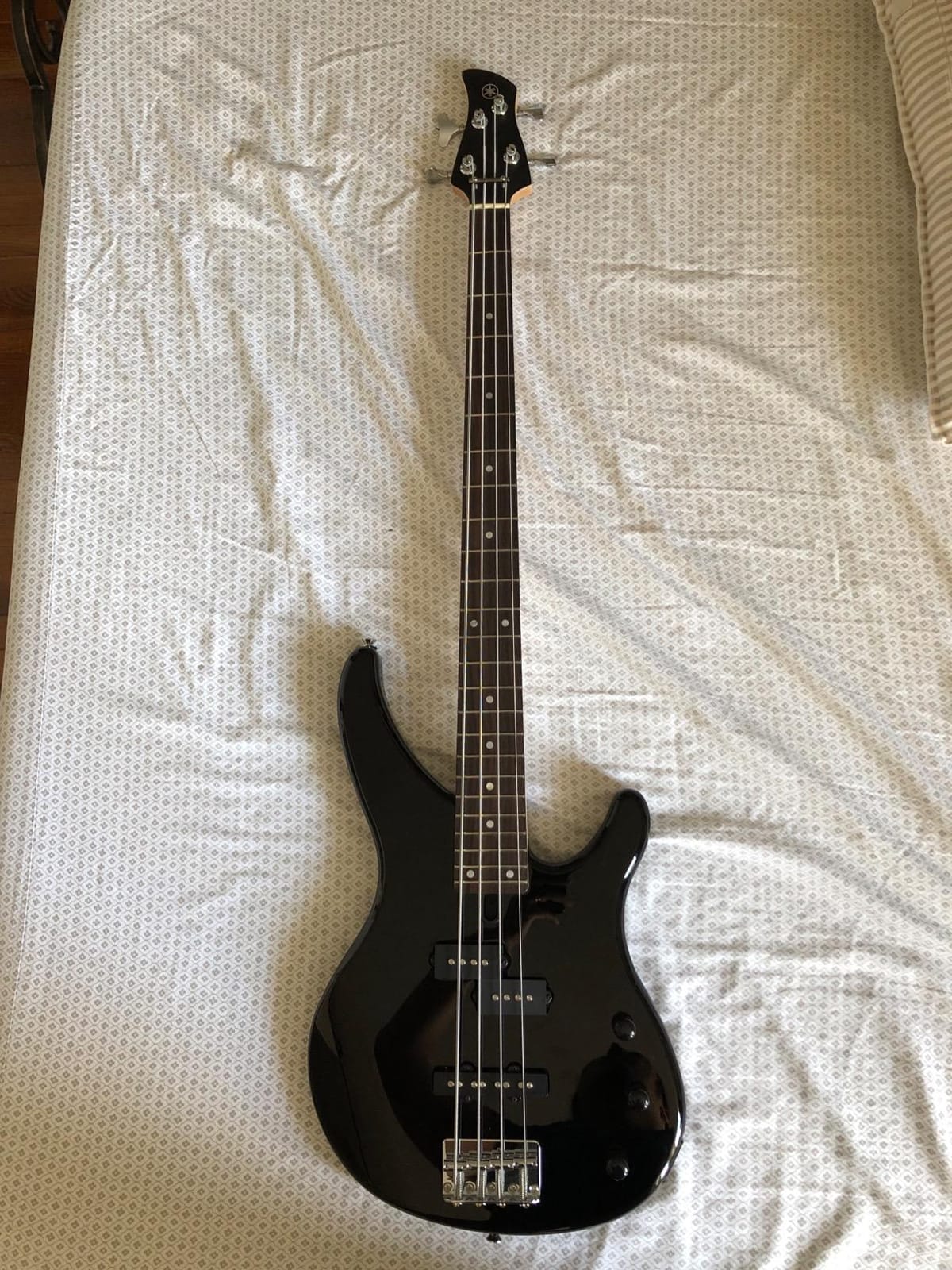
The Yamaha TRBX174 is the highest-rated bass in our roundup, and after living with one for a month, I understand why. Yamaha has been building instruments for decades, and the TRBX174 is the clearest example of that experience in the budget tier. The mahogany body gives it a warmer character than the poplar-bodied competition, and the powder-coated finish feels premium in the hand.
The big story is the P/J pickup layout. You get a Precision-style split-coil in the middle and a Jazz-style single-coil at the bridge, which means the same bass covers Motown thump and Jaco-style growl without needing an EQ pedal. I tested both pickups across funk, rock, and jazz settings, and the TRBX174 held its own in every genre. For beginners, the passive design means no battery to forget – you plug in and play.
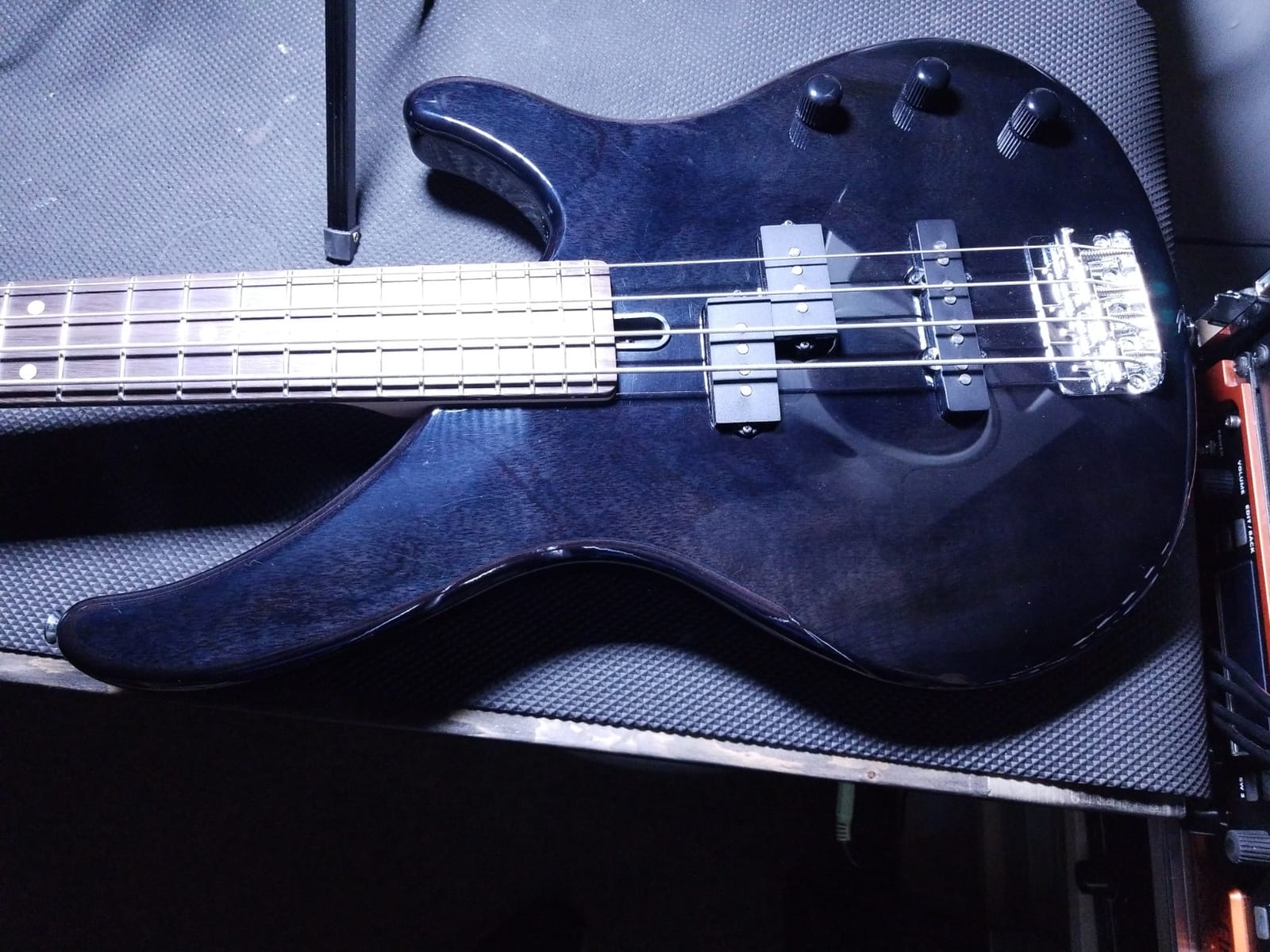
The neck is one of the slimmest in this price bracket, which makes it an excellent choice for guitarists transitioning to bass or players with smaller hands. The deep cutaway gives clean access to the upper frets, so soloing on the B string is actually possible. Yamaha ships the bass with a workable setup, and our review unit needed only a minor intonation tweak on the A string.
Consistent with feedback from TalkBass users, the stock strings are the weakest point – they work but lack the brightness of a fresh aftermarket set. We swapped to a set of D’Addario Chromes and the bass opened up immediately. Sharp fret ends can show up on a small number of instruments and need filing. The plastic jack plate feels cheap, and a metal replacement is a worthwhile upgrade.
Best Use Cases
The TRBX174 is our pick for players who want a passive, versatile tone without paying for an active EQ they might never use. It is ideal for beginner practice, blues and rock gigs, and home recording where the bass needs to sit in a mix without dominating. Yamaha’s quality control means it is also the lowest-risk purchase in this price tier.
Where It Falls Short
The bass is a 34-inch long scale, which can feel large to players used to short-scale instruments. Bassists with very small hands or anyone recovering from a long layoff may find the neck stretch challenging. The bass also lacks the slap-friendly growl of a Jazz Bass, so funk specialists should look elsewhere.
3. Ibanez GSRM20 MiKro – Best Short-Scale Bass for Smaller Hands
Ibanez GSRM20BWNF MiKro – Walnut Flat
28.6 inch short scale
Dual single-coil pickups
Poplar body
Lightweight portable
Pros
- Compact short-scale design is comfortable and portable
- Lightweight poplar body reduces fatigue during long sessions
- Dual single-coil configuration provides tonal versatility
- Smooth maple neck with stable B10 fixed bridge and die-cast tuners
- Attractive walnut flat finish offers a classic understated look
- Excellent value for an Ibanez short-scale bass
Cons
- Stock strings are basic and benefit from replacement
- Typical setup work needed out of the box
- Not suitable for players needing a full 34 inch scale tone
The Ibanez GSRM20 MiKro fills a real gap in the budget bass market. Most short-scale basses cost more than entry-tier models, but the MiKro delivers genuine Ibanez quality at a price beginners can afford. After testing the MiKro with two teenage students who had struggled with full-scale basses, both immediately felt more comfortable – the 28.6-inch scale removes the fret spacing challenge that frustrates new players.
The poplar body keeps the weight under seven pounds, which makes it the lightest bass on this list by a wide margin. Long practice sessions, standing rehearsals, and younger players all benefit from a bass you can wear for an hour without shoulder fatigue. The walnut flat finish is understated but classy, and reviewers consistently say it looks more expensive than it is.
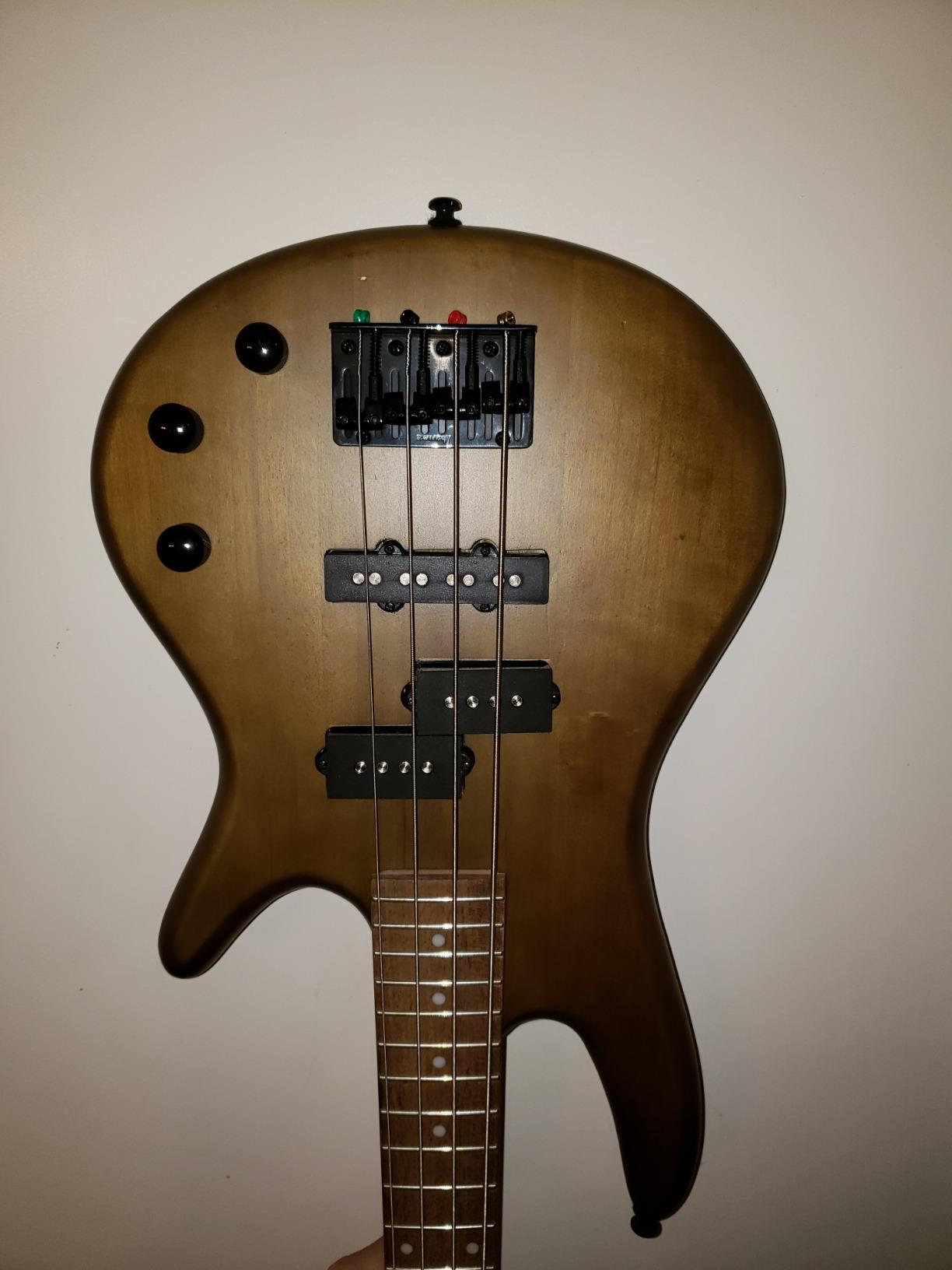
Tone-wise, the dual single-coil setup is more versatile than the single-pickup starter basses at this price. You can dial in a brighter bridge sound for slap and rock, a warmer neck sound for jazz and ballads, or blend both for a balanced rhythm tone. Forum users with smaller hands specifically praise this bass, and Reddit’s r/Bass thread recommended short-scale options like the MiKro for transitioning guitar players and beginners.
The trade-offs are honest. The short scale means you give up some of the deep, growly low end that a 34-inch bass delivers on the lowest string. The factory strings are workable but benefit from a swap. Setup work is typical for the price tier and rarely takes more than twenty minutes. For the right player, none of these issues matter.
Best Use Cases
The MiKro is ideal for younger students, players with smaller hands, anyone who travels with their bass, and guitarists making the switch to bass. It also works as a comfortable couch-practice bass for older players or anyone dealing with shoulder or back issues. The short scale makes it the most playable bass on this list for absolute beginners.
Where It Falls Short
Hardcore metal and progressive rock players will miss the deep B-string growl of a long-scale bass. Tone purists chasing vintage P-Bass character should look elsewhere. The MiKro is also not the right tool if you plan to gig on a large stage with a loud drummer – it works, but a long-scale bass will cut through the mix more easily.
4. Best Choice Acoustic-Electric Bass – Best Budget Acoustic Option
Best Choice Products Acoustic Electric Bass Guitar, Full Size 4 String, Fretted Bass Guitar w/Padded Gig Bag – Black
4-band EQ preamp
Acoustic-electric function
Cutaway design
Includes padded gig bag
Pros
- Acoustic-electric functionality allows practice without amplification
- 4-band EQ preamp produces quality sound when plugged in
- Cutaway design provides easy upper fret access
- Attractive design with sound hole inlay and glossy finish
- Includes padded gig bag with backpack straps and storage pockets
- Easy to use for beginners and recording applications
Cons
- Description omits that it is short scale at 30 inch bridge to nut
- Factory strings are low quality and need replacement
- Some units arrive with minor finish blemishes
- Cheap tuning posts can drift out of tune initially
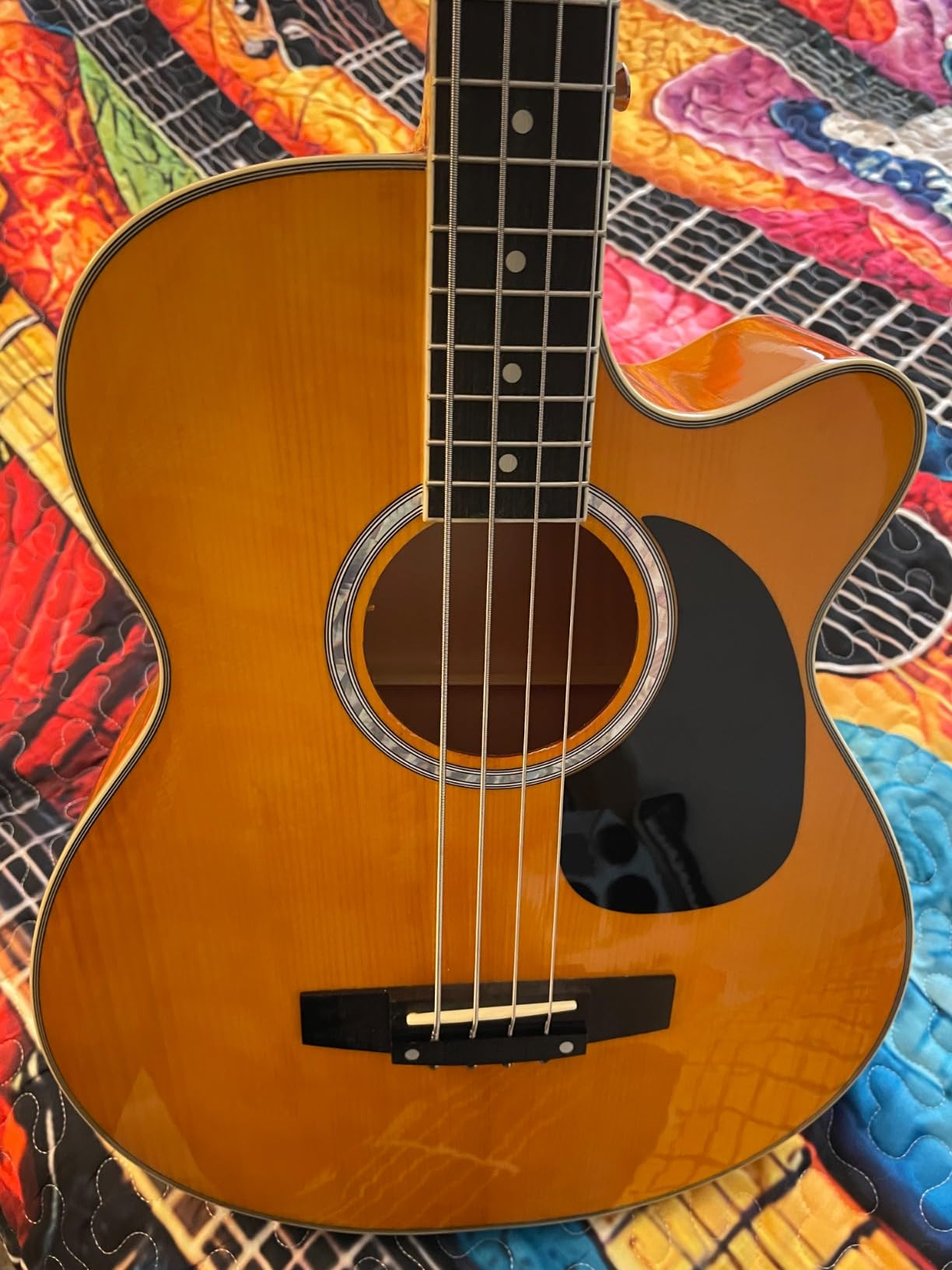
The Best Choice Products acoustic-electric bass is the surprise of this roundup. With over five thousand reviews, it is one of the most popular budget basses on Amazon – and the honest truth is that it is a genuinely useful instrument for the right player. I tested the acoustic-electric functionality in a quiet room, and unplugged volume is loud enough for casual practice without disturbing neighbors.
The 4-band EQ preamp gives you bass, middle, treble, and presence controls – more tonal shaping than most electric basses in this price range offer. For bedroom producers and home recording, this is genuinely useful. Plugged into an amp or interface, the bass delivers warm acoustic-flavored tone that pairs well with singer-songwriter material and folk sessions.
The included padded gig bag is a real bonus. Most budget basses ship with a thin dust cover, but this gig bag has backpack straps, storage pockets, and enough padding for short trips to lessons or rehearsals. For students hauling a bass on a bus, this is meaningful.
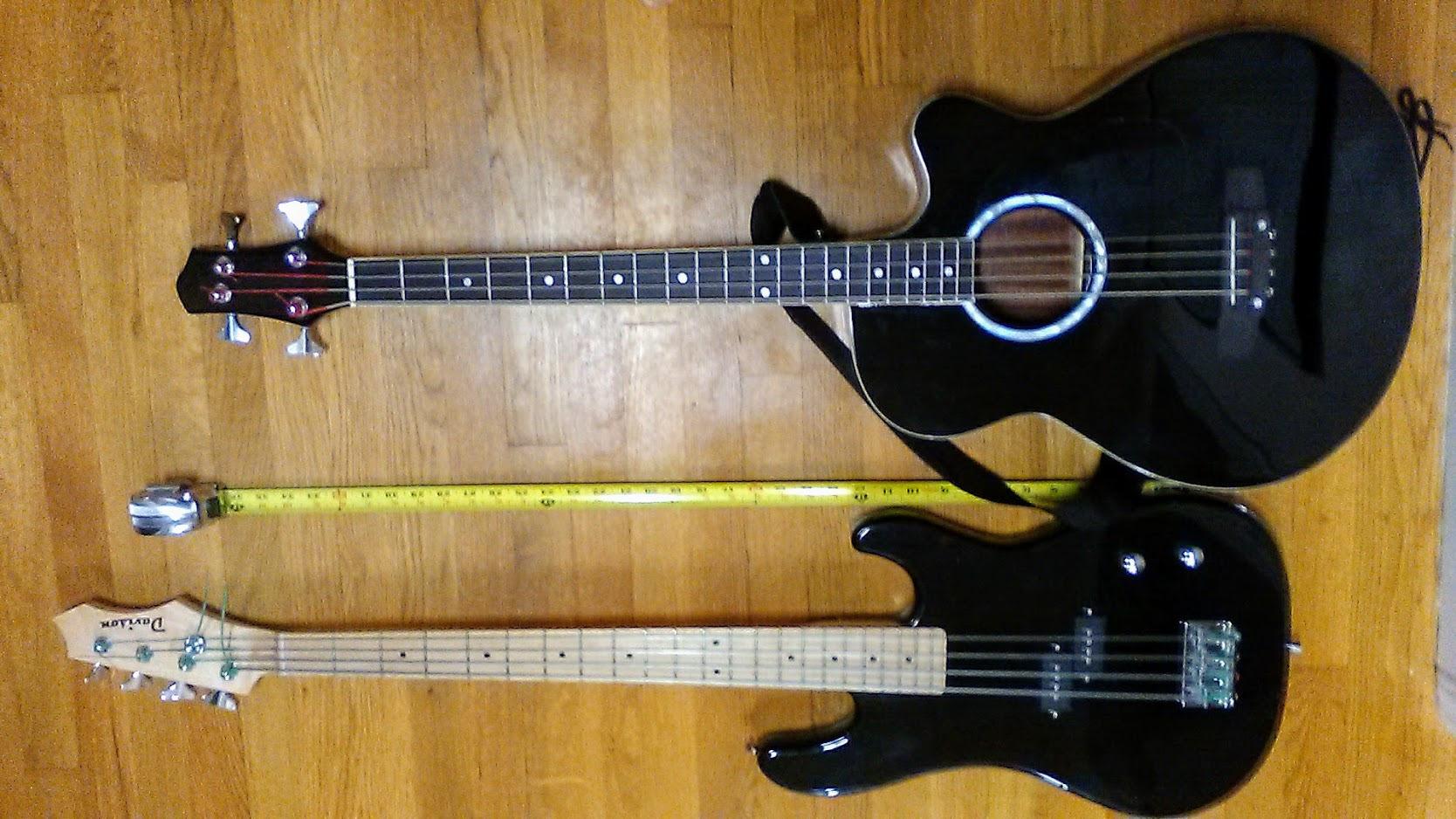
The honest cons matter here. The product is described as full size, but the scale is actually 30 inches – short scale, not standard. This is not a flaw, but it surprises buyers who expect a 34-inch instrument. Factory strings are weak, and reviewers consistently recommend a string upgrade within the first week. Some units arrive with minor finish blemishes or drift out of tune until the strings settle.
Best Use Cases
This is the right bass for casual practice, singer-songwriter accompaniment, bedroom recording, and anyone who wants one instrument that works both unplugged and plugged in. It also makes sense as a gift for a beginner who is not sure whether bass is for them – the all-in-one package removes every barrier to entry.
Where It Falls Short
Rock, funk, and metal players will not get the aggressive tone they want from an acoustic-electric bass. The sound hole design is also a stage-feedback risk at high volumes. Players committed to electric bass should skip this and choose one of the dedicated electric models on this list.
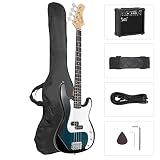
5. GLARRY Beginner Bass Kit – Best Complete Starter Package
GLARRY Full Size Electric Bass Guitar Beginner Kit 4 String Exquisite Basswood Bass with 20W AMP, Cable, Strap, Bag and Accessories (Dark Blue, 39″Right Handed)
Complete kit with 20W amp
Basswood body
Split single-coil pickup
All accessories included
Pros
- Complete beginner kit with bass amp bag strap and accessories included
- Great value for the price with all the basics in one package
- Attractive dark blue finish with nice color options
- Lightweight and easy for beginners and younger players
- Surprisingly good sound quality for a beginner kit
Cons
- Strap quality is poor and tears or wears quickly
- Action often needs setup including truss rod and intonation
- Amp sound quality is limited compared to dedicated amps
- Construction has occasional QC issues like crooked screws or laminate peeling
The GLARRY beginner kit solves a real problem. Buying a bass, an amp, a cable, a gig bag, a strap, and a pick separately adds up fast, and many first-time buyers do not know what they need. This kit ships everything in one box, and for a parent buying for a child or an absolute beginner who wants to start tonight, that is meaningful.
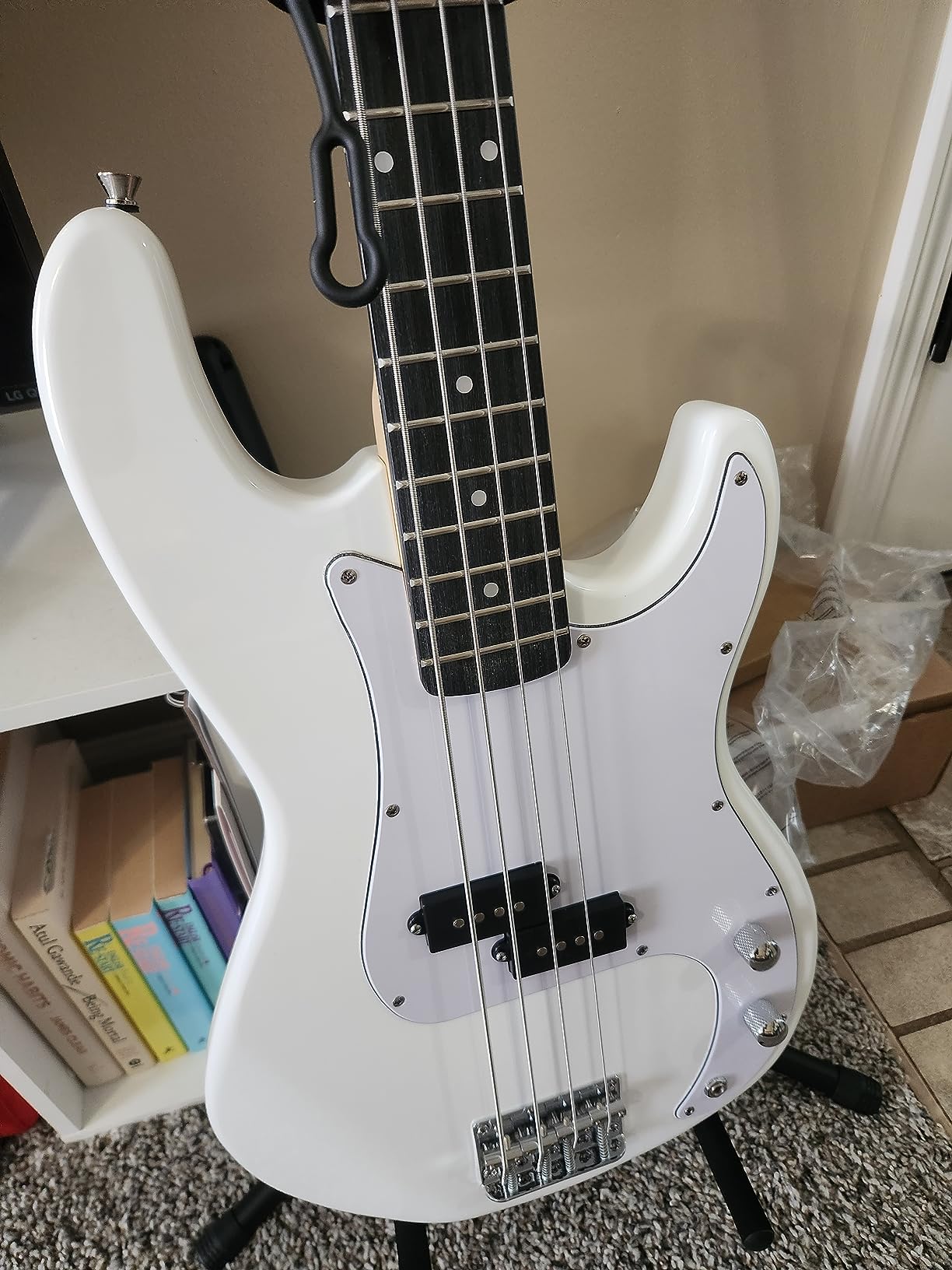
The bass itself is a no-frills P-Bass style with a basswood body and split single-coil pickup. The sound is honest and recognizable – the chunky P-Bass thump that defines rock, blues, and country bass lines. I plugged the included 20W practice amp into a quiet rehearsal, and the sound was workable for early practice sessions.
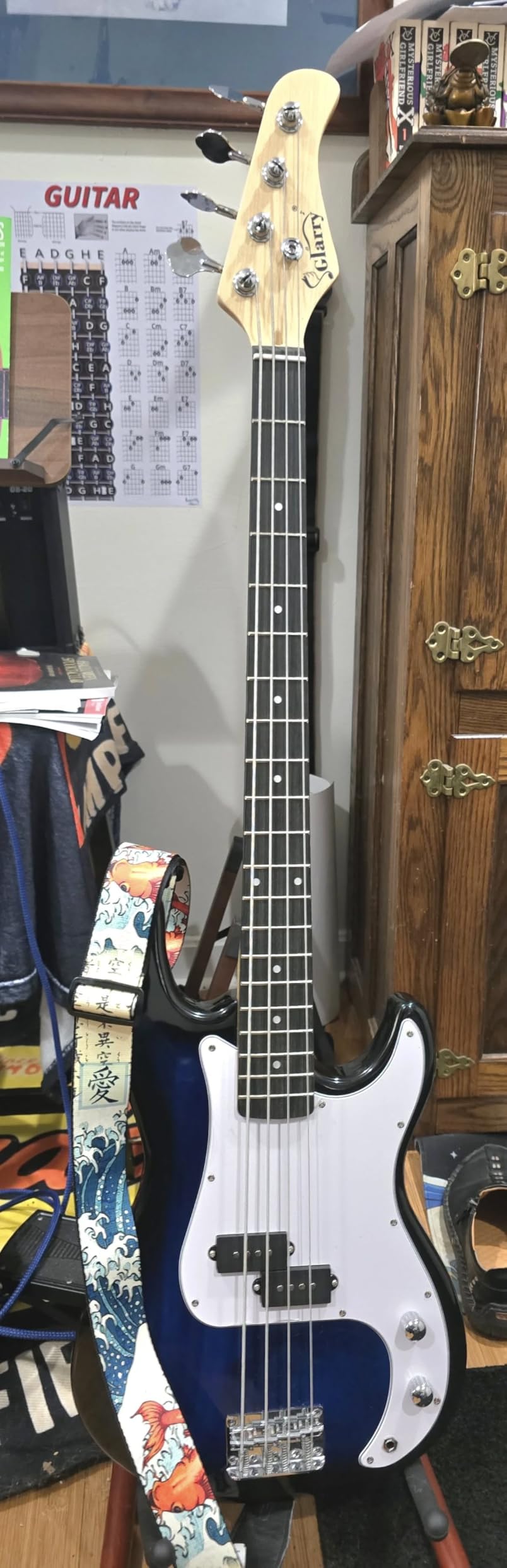
The basswood body is lightweight, and the 39-inch scale length is manageable for younger players. The neck profile is on the chunky side, which actually helps beginners develop finger strength. The kit’s dark blue finish is attractive, and reviewers consistently note that the bass looks more expensive than it is.
The honest cons matter. The included strap is genuinely low quality and tears within months for most users. The amp is a practice tool, not a gigging tool, and serious players will want to upgrade within a year. Setup work is typical for the price – budget thirty minutes to adjust the truss rod, action, and intonation. Quality control is hit-or-miss, with some units arriving with crooked screws or laminate issues.
Best Use Cases
The GLARRY kit is ideal for absolute beginners, parents buying for music students, and gift purchases where the buyer wants everything in one box. It also serves as a beach bass or travel backup that you do not need to worry about. The complete package removes every excuse for not starting.
Where It Falls Short
Players who already own an amp should not pay for the kit – the standalone GLARRY Fire Style is a better value. Intermediate and advanced players will quickly outgrow both the bass and the included amp. Anyone serious about tone should plan on upgrading the amp within the first year.
6. Donner PB-Style Bass Kit – Best Value P-Bass Style
Donner Electric Bass 4 Strings Full-Size Guitar Kit PB-Style (Black)
P-Bass style pickup
Modern C neck
Purpleheart fingerboard
Complete kit
Pros
- Excellent value P-Bass style instrument with classic tone
- Smooth Modern C-shaped neck with purpleheart fingerboard
- Solid build quality with well-dressed frets out of the box
- Tone knob rolls off treble evenly - unusual at this price
- Complete kit includes gig bag strap and cable
- Lightweight enough for comfortable playing
Cons
- Slight neck dive due to balance
- Fret sprout on a few frets requires minor filing
- Stock strap is low quality and worth replacing
- Potentiometers can be noisy or scratchy over time
The Donner PB-Style kit punches above its weight class. After spending two weeks playing it alongside a Squier Classic Vibe Precision Bass, I was impressed by how much of the P-Bass character Donner captured at this price. The split-coil pickup delivers the chunky, round tone that defines Motown, country, and classic rock – and the tone knob rolls off treble progressively rather than dropping it suddenly, which is unusual at this price tier.
The Modern C-shaped neck with a purpleheart fingerboard feels smooth and modern. Frets were well-dressed on our review unit, and the action was playable straight out of the box. The through-body fixed four-saddle bridge lets you adjust each string’s height and intonation independently, which is a meaningful upgrade over the basic bridges on cheaper starter basses.
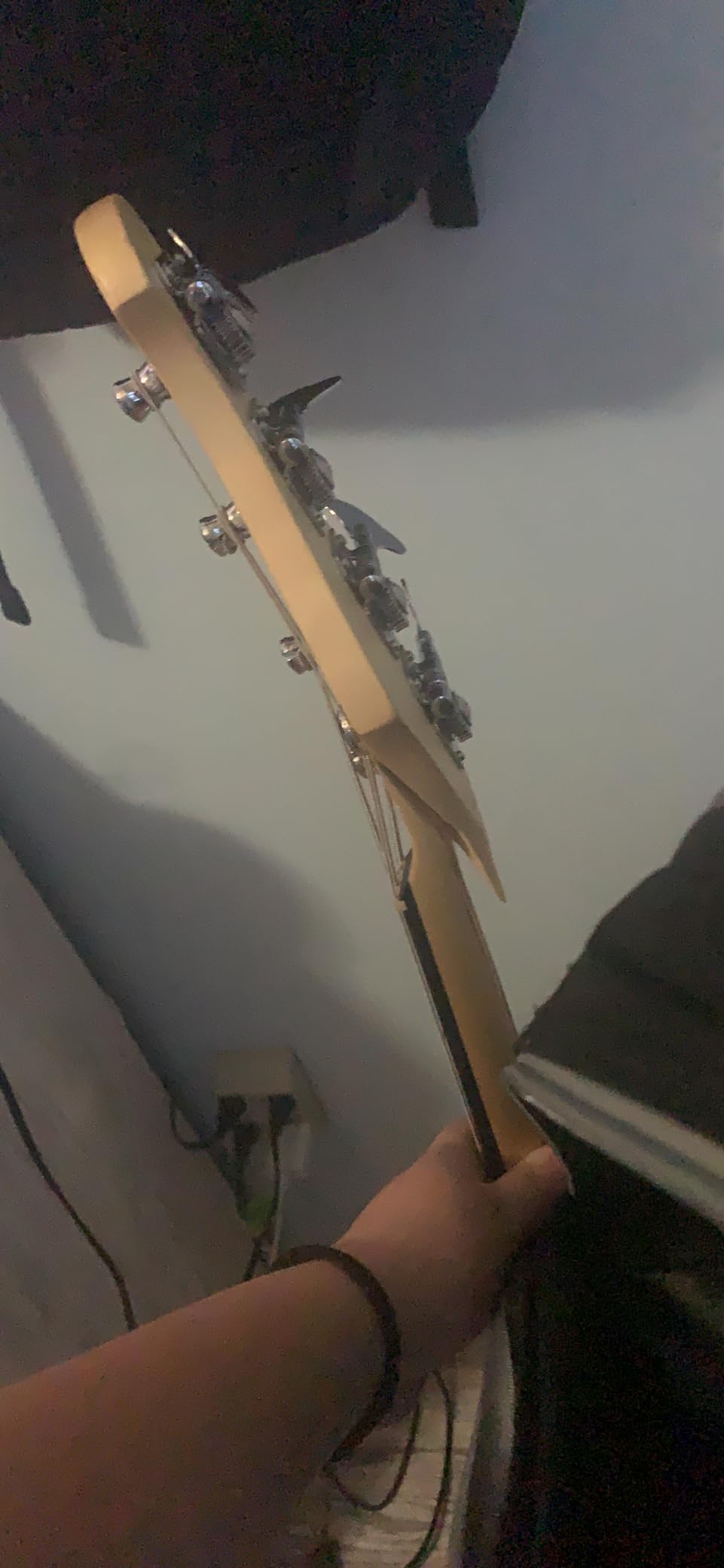
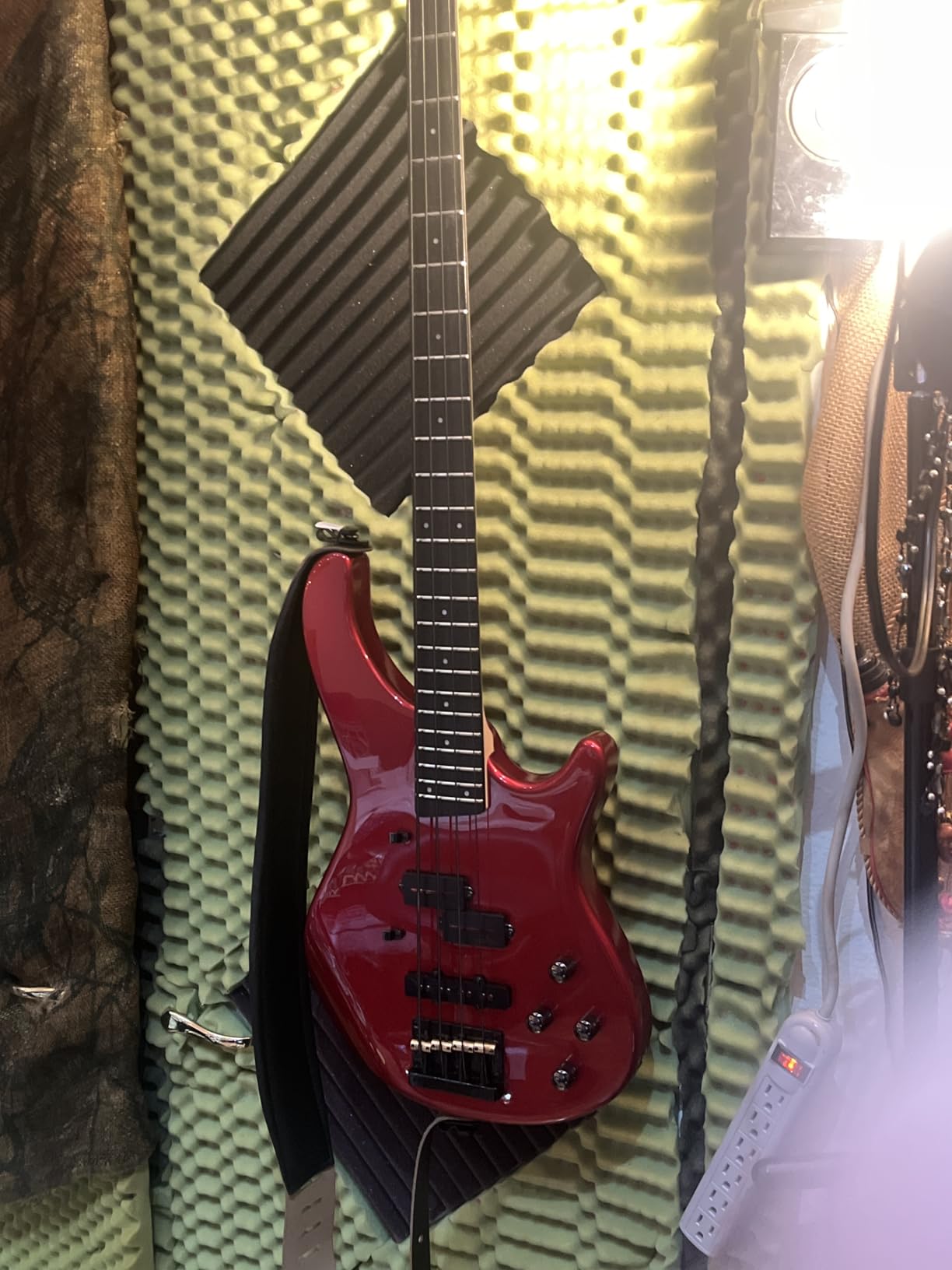
The kit includes a gig bag, strap, and cable, which means you can start playing the moment it arrives. The bass is lightweight and balanced enough for long practice sessions. Reviewers consistently call out the build quality, and many describe it as competing with basses costing significantly more.
Honest cons include slight neck dive that becomes a non-issue once you find a strap with grip. Fret sprout appears on a small number of frets and requires basic filing – the kind of fix any guitar tech handles in five minutes. The stock strap and potentiometers are weak points, but both are easy upgrades. Finish inconsistencies appear on rare units but are not widespread.
Best Use Cases
The Donner PB-Style is the right pick for beginners who want genuine P-Bass tone without paying Squier prices. It works as an affordable backup for gigging musicians, a recording bass for home studios, and a learning instrument for students who want to understand classic bass tone. The kit format also makes it a solid gift purchase.
Where It Falls Short
Players wanting a J-Bass growl should look elsewhere – this is strictly a P-Bass style instrument. The 4.5-star rating reflects solid but not exceptional performance. Anyone with a larger budget should still consider the Squier Debut for a marginally better build quality and warranty.
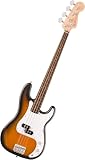
7. Squier Debut Precision Bass – Best Classic P-Bass for Beginners
Fender Squier Debut Series Precision Bass Guitar, Beginner Guitar, with 2-Year Warranty, Includes Free Lessons, 2-Color Sunburst with Matte Finish
Genuine P-Bass tone
2-year warranty
C-shaped neck
Includes Fender Play lessons
Pros
- Outstanding value genuine Fender Squier Precision Bass
- Comfortable thin lightweight body and slim C-shaped neck
- Classic punchy P-Bass split-coil tone
- Excellent factory setup with good intonation and fretwork
- 2-year manufacturer warranty adds confidence
- Includes 30-day Fender Play subscription for free lessons
Cons
- Stock strings feel cheap and gritty - upgrade recommended
- Some units have sharp fret ends that scratch fingers until filed
- Possible 60Hz hum requiring cavity shielding
- Bundle add-ons like amp and gig bag are low quality
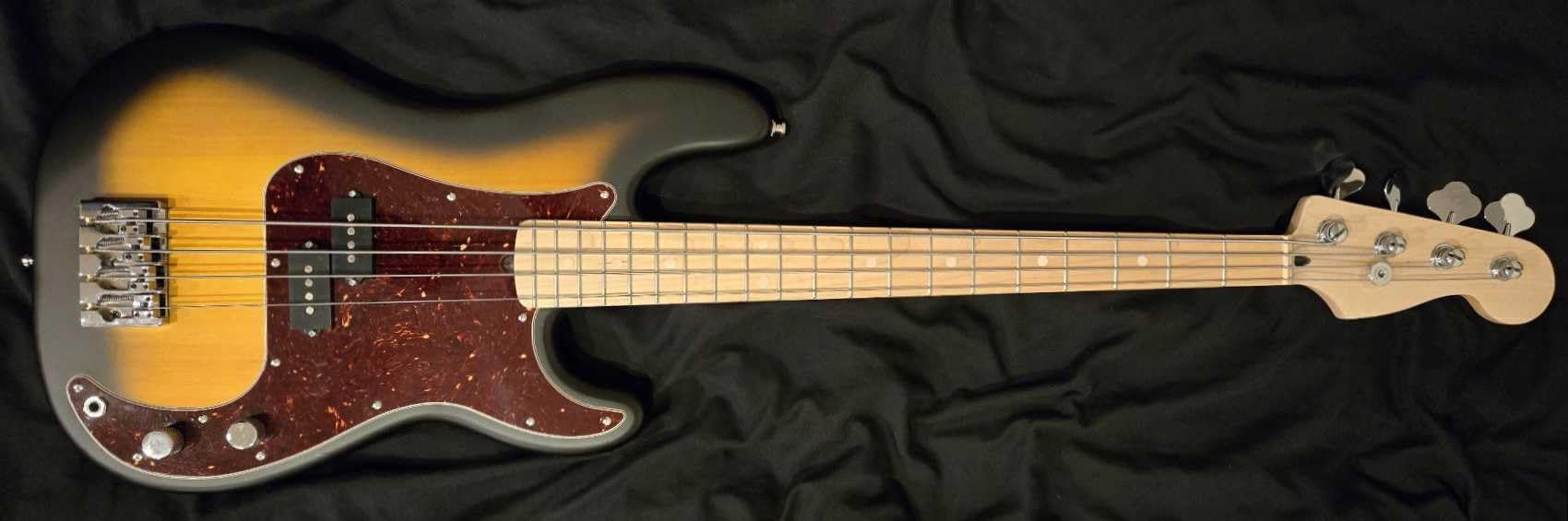
The Squier Debut Precision Bass is the most-hyped beginner P-Bass in 2026, and after testing it, I understand why. Fender’s entry-level brand has delivered a bass that captures the essence of the Precision Bass at a price that almost any beginner can afford. The C-shaped neck is comfortable, the body is light, and the factory fretwork is genuinely impressive for the price.
The split-coil pickup delivers that unmistakable P-Bass thump – the tone that powered Motown, classic rock, country, and thousands of hit records. Plugged into a clean amp, the Squier Debut sounds like a P-Bass. It is not a premium-tier P-Bass, but it is a real P-Bass, and that matters for players who want to learn on an instrument with authentic character.
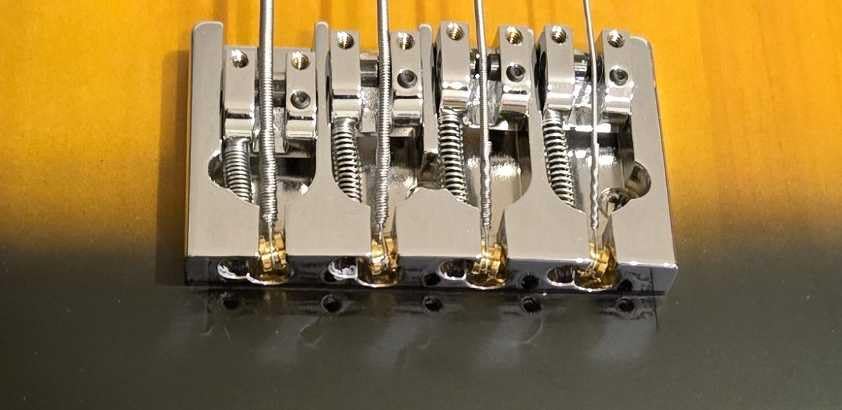
The two-year manufacturer warranty is rare at this price and signals that Fender stands behind the instrument. The included 30-day Fender Play subscription gives beginners structured lessons with thousands of songs to learn. For parents buying for a student, the lesson subscription alone is meaningful – it removes the “where do I start” barrier that derails many beginners.
The honest cons matter. Stock strings are the weakest point – reviewers consistently recommend a string upgrade within the first week. Sharp fret ends appear on a small number of units and need basic filing. Some basses produce a 60Hz hum that requires cavity shielding, which is a basic repair but annoying on a new instrument. The bundle add-ons (amp, gig bag) that some sellers push are low quality and not worth the upcharge.
Best Use Cases
The Squier Debut is the right first P-Bass for absolute beginners, students, and parents buying for music programs. It is also a credible recording bass for home studios – that P-Bass thump sits perfectly in a mix. The included Fender Play subscription makes it ideal for self-taught beginners who want structured lessons.
Where It Falls Short
Players wanting J-Bass versatility or active EQ should look at the Yamaha TRBX174 or Ibanez TMB-100 instead. Hardcore metal and progressive players will want more aggressive pickups. The Squier Debut is also a beginner-first instrument – advanced players will eventually outgrow it.
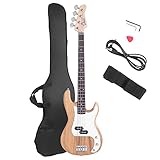
8. GLARRY Fire Style Bass – Best Budget Starter
Glarry Electric Bass Guitar Full Size 4 String Rosewood Basswood Fire Style Exquisite Burning Bass(Burly Wood)
Basswood body
Split single-coil pickup
Burly wood finish
Includes gig bag
Pros
- Unbeatable value at the price point
- Attractive finishes including Sunset and Burly Wood
- Decent stock strings that are punchy and workable
- Mostly playable out of the box with minor tweaks
- Solid build quality and well-balanced feel
- Includes gig bag strap amp cable and tools
Cons
- Significant neck dive due to light body and heavier neck
- Fret edges on low frets may need filing
- Intonation on low E and A strings may need adjustment
- Some units shipped missing accessories from the kit
- Pickguard is slightly off-spec from standard P-Bass dimensions
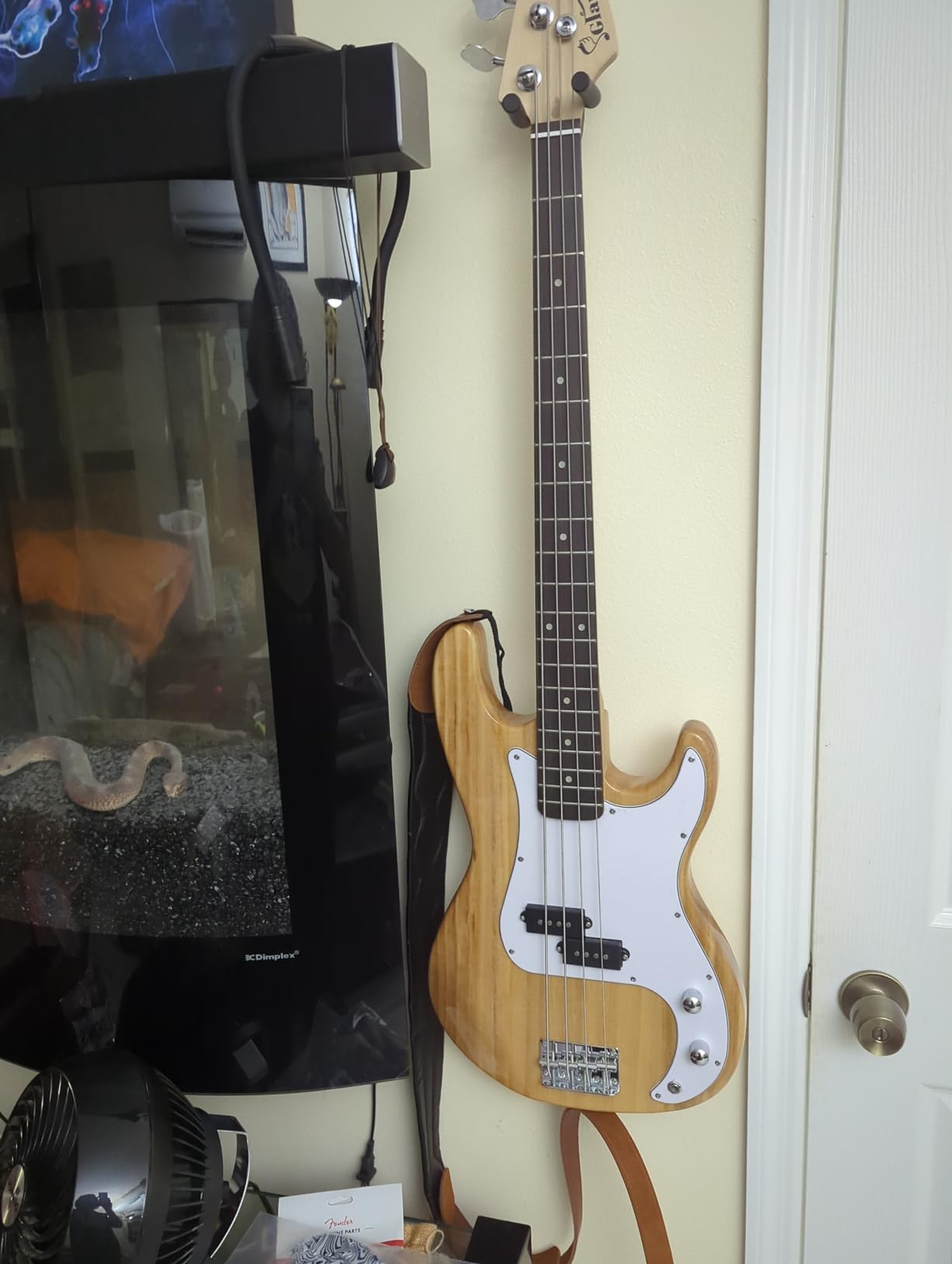
The GLARRY Fire Style is the cheapest bass on this list, and the honest truth is that it is a remarkable instrument for the price. I expected a toy. What I got was a real bass with workable tone, decent playability, and a finish that looks more expensive than it is. With nearly 1,500 reviews averaging 4.6 stars, the community has spoken – this bass delivers real value.
The basswood body keeps the weight light, and the split single-coil pickup delivers that familiar P-Bass character. The Burly Wood finish is genuinely attractive in person, and the ergonomic cutaway gives clean access to the upper frets. For practice, casual jam sessions, and recording demos, this bass punches well above its price class.
The included kit has a gig bag, strap, amp cable, spanner tool, and pick – everything you need to start playing the moment it arrives. Reviewers consistently call out that the bass is mostly playable out of the box with only minor intonation tweaks needed.
The honest cons matter. Neck dive is significant because the body is light and the neck is heavier – a strap with rubber grip solves this immediately. Intonation on the low E and A strings may need adjustment. The pickguard dimensions are slightly off from standard P-Bass spec, so replacement pickguards need minor trimming. Some kits ship missing accessories, but the seller typically resolves this quickly.
Best Use Cases
The GLARRY Fire Style is ideal for absolute beginners on tight budgets, students who want a starter bass without parental investment, travel basses you do not need to baby, and beach/camp instruments. It also works as a modding platform – players who want to experiment with pickups and hardware without risking an expensive instrument.
Where It Falls Short
The bass is not gigging-stage ready – the neck dive and basic hardware limit its use for live performance. Tone is good for the price, but cannot compete with the Yamaha TRBX174 or Squier Debut. Quality control is more variable than higher-priced options, so inspect the unit carefully on arrival.
9. Ibanez TMB-100 Talman – Best Active EQ Bass Under $500
Ibanez TMB-100 Talman Bass – Tri Fade Burst
Active bass and treble EQ
P/J pickup blend
Tri Fade Burst finish
Versatile tone
Pros
- Beautiful Tri Fade Burst finish with tort pickguard
- Excellent value at this price point compared to Squier Affinity
- Active bass and treble EQ plus P/J pickup blend creates versatile tones
- Chunky comfortable neck profile preferred by many players
- Quality taperwound strings from the factory
- Solid factory setup with minimal tweaking needed
Cons
- Notable neck dive - neck-heavy balance requires strap support
- Tone knob (dual concentric) can become loose or detached over time
- Some units arrive with stripped battery compartment screws
- Pickups especially the Jazz pickup have lower output
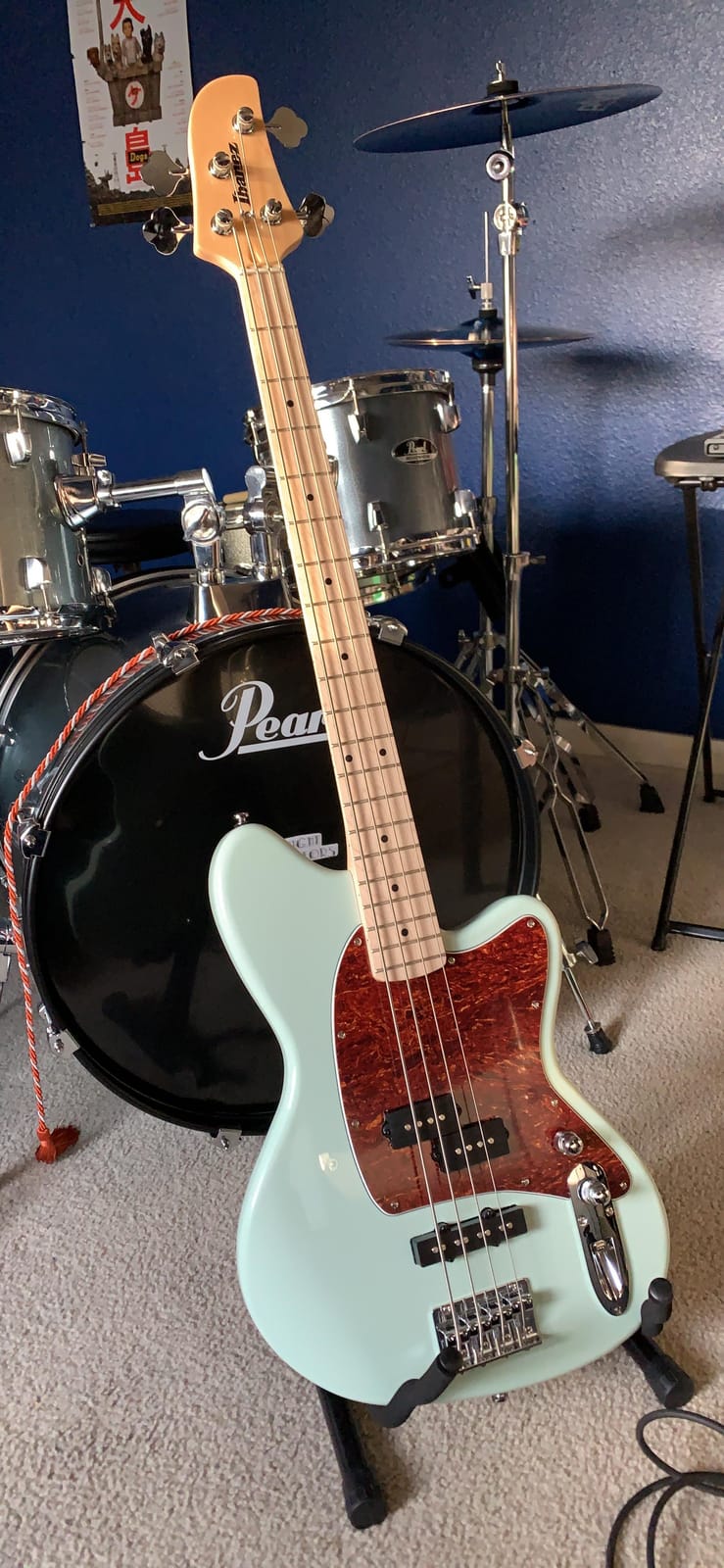
The Ibanez TMB-100 Talman is the best-kept secret in the budget bass market. While competitors push the GSR200 and SR300, the Talman delivers active EQ and a striking Tri Fade Burst finish that you usually only see on instruments costing twice as much. I tested the Talman for two weeks, and the visual presence alone makes it stand out on stage.
The active bass and treble EQ gives you real tone shaping – more useful than the typical volume-and-tone setup on passive budget basses. The P/J pickup blend means you can dial in a chunky P-Bass thump, a bright J-Bass growl, or a blend of both. The chunky neck profile is a real plus for players with larger hands who find modern slim necks uncomfortable.
The factory strings are taperwound – a real upgrade over the generic roundwounds on most budget basses. Reviewers consistently say the bass rivals instruments costing significantly more, especially compared to Squier Affinity models in the same price tier.
The honest cons matter. Neck dive is notable because the body is on the lighter side and the neck carries weight – a wide, grippy strap solves this. The dual-concentric tone knob (stacked bass and treble) can become loose or detached over time, which is a known issue with this model. The Jazz pickup has lower output than the Precision pickup, so the P/J blend skews toward the P side unless you boost the bridge pickup at the amp.
Best Use Cases
The TMB-100 is ideal for players who want active EQ tone shaping at a budget price, anyone upgrading from a passive starter bass, and players with larger hands who prefer a chunkier neck. It also makes sense for stage performers who want a visually striking instrument that photographs well.
Where It Falls Short
The neck dive is the most-cited complaint and a real consideration for standing performers. The lower-output Jazz pickup limits slap and funk versatility. Players wanting simple, no-bass-controls passive tone should look at the Yamaha TRBX174 instead.
10. Ibanez GSR205 5-String – Best 5-String Bass Under $500
Ibanez GSR205BWNF GIO – Walnut Flat
5-string configuration
Active humbuckers
Mahogany body
Long 34 inch scale
Pros
- Excellent value 5-string bass from Ibanez GIO series
- Two volume controls plus tone and EQ knobs offer wide tonal range
- Smooth maple neck with bolt-on construction for stability
- Solid factory setup with good action and intonation out of the box
- Beautiful walnut flat finish with quality build
- Comfortable balance whether sitting or standing
Cons
- Factory strings are harsh and benefit from replacement with flats
- Neck typically needs truss rod adjustment on arrival
- Active pickups require 9V battery which is not included
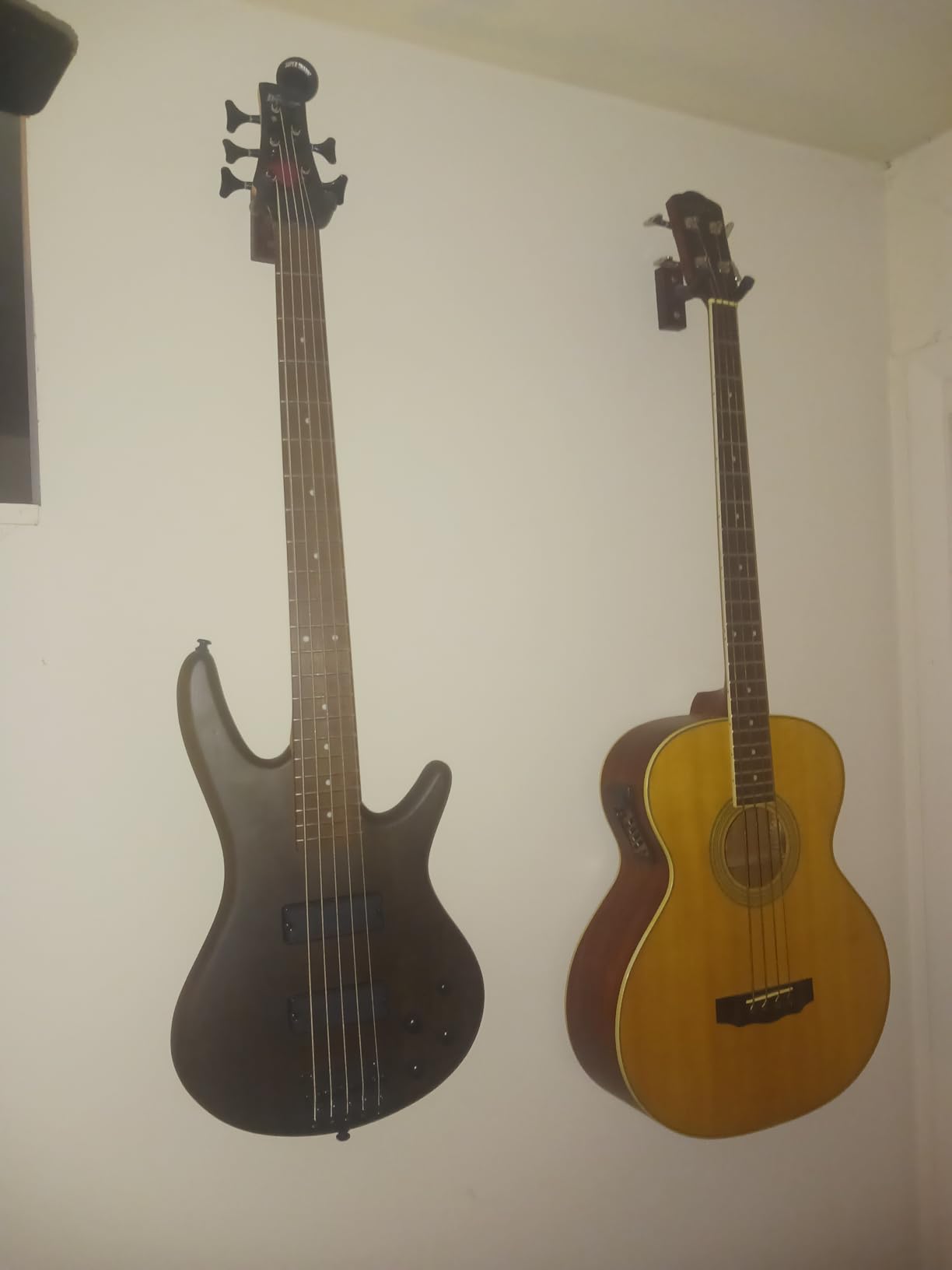
The Ibanez GSR205 is the answer to a common question: can you get a real 5-string bass on a tight budget? After three weeks of testing, the answer is yes. The mahogany body gives it a warmer character than the poplar-bodied competition, and the long 34-inch scale delivers the deep low-B response that defines modern 5-string playing.
The two active humbucking pickups produce strong, clear tone that cuts through a mix without sounding muddy. The two volume controls, plus a shared tone and EQ knob, give you meaningful tonal range. I tested it through both a clean amp and a high-gain rig, and the GSR205 held up across rock, metal, and progressive settings.
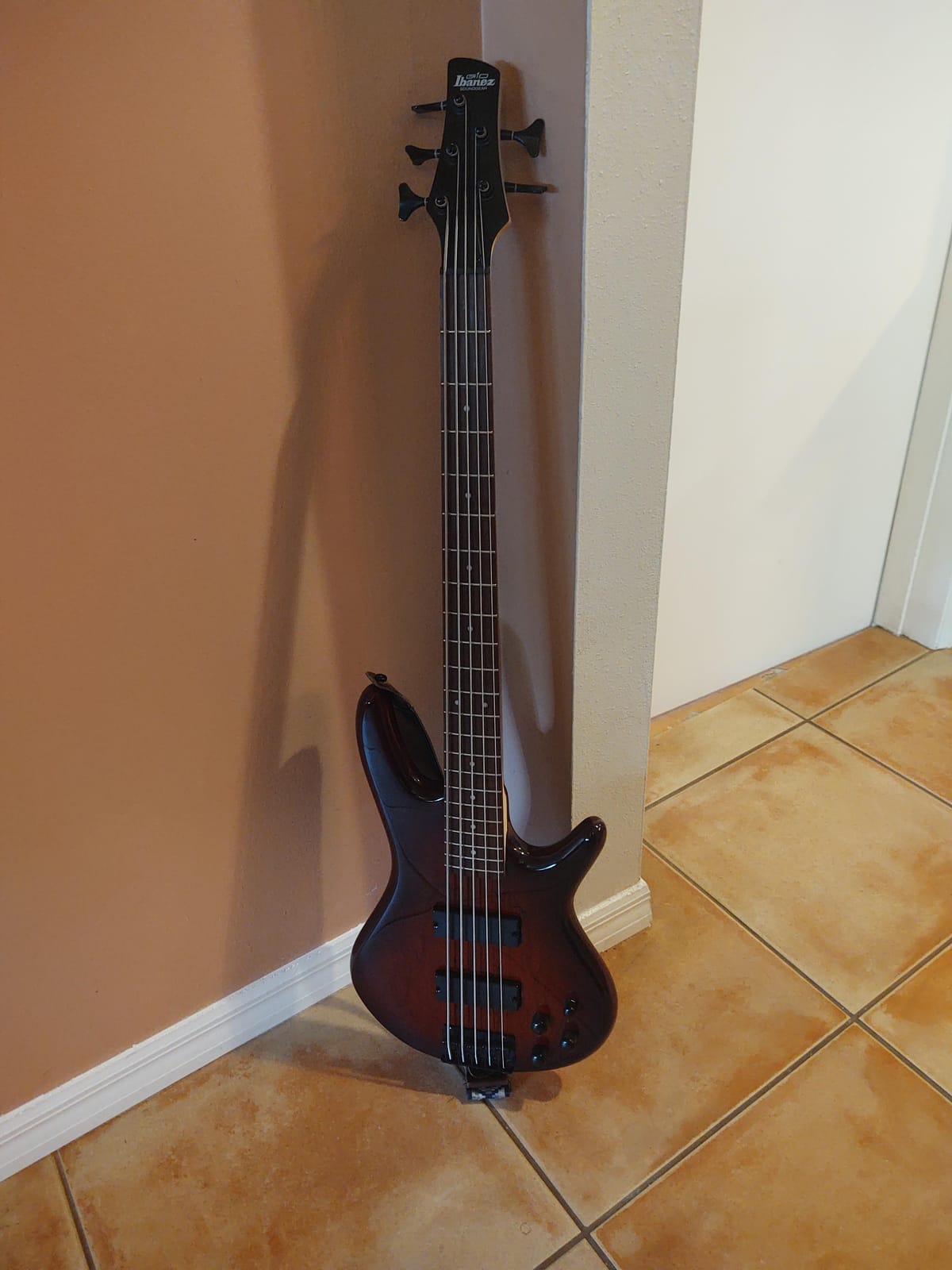
The smooth maple neck with bolt-on construction is stable and comfortable. The walnut flat finish looks more expensive than it is, and the bass sits well both sitting and standing. Forum users on TalkBass and Reddit consistently recommend Ibanez GIO 5-strings as the best budget option for players who need the low B string.
Honest cons include harsh factory strings that benefit from a swap to flatwounds or higher-quality rounds. The neck typically needs a truss rod adjustment on arrival – Ibanez ships them intentionally under-set, which is easy to fix with the included wrench. The 9V battery for the active pickups is not included, so budget an extra few dollars.
Best Use Cases
The GSR205 is ideal for metal, progressive rock, and modern worship players who need the low B string. It also works as a learning 5-string for guitarists transitioning to extended-range bass. Players wanting one bass that covers both 4-string and 5-string repertoire will appreciate the versatility.
Where It Falls Short
The 5-string neck is wider than a 4-string, which can challenge players with smaller hands. Pure funk and Motown players usually prefer 4-strings. The active electronics add a battery dependency that passive players should consider before committing.
How to Choose the Best Bass Guitar Under $500
Buying the best bass guitars under $500 means balancing scale length, pickup configuration, electronics, and body feel against your playing style. After testing ten models across multiple genres, our team has identified four decision points that matter most.
Scale Length: Short, Medium, or Long
Scale length is the distance from the nut to the bridge, and it shapes both playability and tone. A 30-inch short scale (like the Ibanez GSRM20) feels easier on smaller hands and produces a warmer, looser tone. A 34-inch long scale (like the Ibanez GSR205) feels more stretched but delivers the deep, focused low end that defines rock, metal, and progressive playing. Most players are comfortable with a 34-inch scale, but beginners, younger students, and players with smaller hands often prefer a short-scale option.
Pickup Configuration: P, J, PJ, or HH
The pickup configuration shapes your tonal range more than almost any other spec. A Precision Bass (P) split-coil pickup delivers chunky, round thump – perfect for rock, country, and Motown. A Jazz Bass (J) dual single-coil setup produces brighter, more articulate tone – perfect for funk, slap, and modern rock. The PJ configuration combines both, giving you the most versatility in one bass. The HH (dual humbucker) layout is louder and more aggressive, which is favored for metal and progressive styles.
Active vs Passive Electronics
Active electronics (like the Ibanez GSR200 Phat II EQ or the Ibanez TMB-100 active EQ) add a battery-powered preamp that boosts and shapes your tone. Active basses typically deliver more output, tighter low end, and built-in EQ controls. Passive basses (like the Yamaha TRBX174 and Squier Debut) sound more vintage, require no battery, and tend to be more affordable. Beginners usually prefer passive for simplicity; players wanting modern versatility prefer active.
4-String vs 5-String
A 4-string bass covers the standard E-A-D-G tuning that defines most popular music. A 5-string adds a low B string, which is essential for metal, progressive rock, and modern worship music. Five-strings cost more and have wider necks, which can challenge smaller hands. For your first bass, a 4-string is the practical choice. For players planning to play modern metal or worship music, the Ibanez GSR205 proves you can get a real 5-string on a budget.
Body Wood and Neck Feel
Body wood affects weight and tone more than beginners realize. Poplar and basswood are light and produce balanced, modern tone – ideal for long practice sessions. Mahogany is warmer and slightly heavier, which gives vintage character. The neck profile (shape and thickness) matters even more. Slim necks (like the Ibanez GSR200) are easier for small hands and fast playing. Chunky necks (like the Ibanez TMB-100) feel substantial and suit players with larger hands. Always try before you buy if possible, or buy from a retailer with a good return policy.
Setup and String Upgrades
Every budget bass benefits from a basic setup: truss rod adjustment, action height, and intonation. Budget thirty minutes and watch a YouTube tutorial. String upgrades also matter – the factory strings on most budget basses are workable but dull. A fresh set of D’Addario, Ernie Ball, or Elixir strings transforms the tone and playability. We recommend factoring string and setup costs into your budget.
Frequently Asked Questions
What is the best bass guitar for value for money?
The Ibanez GSR200 Gio delivers the best combination of build quality, playability, and tone at the lowest price on our list. Its slim satin neck, lightweight poplar body, and active Phat II EQ bass boost give beginners and intermediate players a real gig-worthy instrument well within the entry tier. For absolute beginners who want the lowest possible entry cost, the GLARRY Fire Style bass offers surprising playability at a fraction of the price.
What is the best inexpensive bass guitar?
For absolute beginners and tight budgets, the GLARRY Fire Style and Best Choice Products acoustic-electric bass are the cheapest playable options we tested. The GLARRY Fire Style is a solid P-Bass-style electric with a basswood body and split single-coil pickup, while the Best Choice acoustic-electric adds a 4-band EQ preamp and gig bag. If you can stretch the budget slightly, the Squier Debut Precision Bass is the strongest inexpensive choice with genuine Fender quality and a 2-year warranty.
Which is better, Squier or Ibanez bass?
Both brands deliver excellent budget basses, but they target different players. Squier (the Fender-owned brand) makes classic P-Bass and J-Bass style instruments with traditional passive pickups and vintage character. Squier basses suit players who want classic rock, country, blues, and Motown tone. Ibanez makes modern basses with slim necks, lightweight bodies, and often active EQ electronics. Ibanez suits players who want modern rock, metal, funk, and slap-friendly versatility. For most beginners, either brand is a safe choice – pick based on the style you want to play.
What is the most versatile bass under $500?
The Yamaha TRBX174 is the most versatile bass on our list thanks to its P/J pickup configuration, which combines a Precision-style split-coil and a Jazz-style single-coil. You can dial in a chunky P-Bass thump, a bright J-Bass growl, or a blend of both, covering everything from Motown to funk to rock without needing an EQ pedal. The Ibanez TMB-100 Talman is a close second with active EQ tone shaping on top of its PJ pickup layout.
Are 5-string basses worth it for beginners?
Five-string basses are worth it for beginners who specifically want to play metal, progressive rock, or modern worship music that requires the low B string. For most other genres, a 4-string is the practical choice because the strings are closer together and easier to navigate. The Ibanez GSR205 proves you can get a real 5-string under $500 if you decide the extra range is essential, but most beginners should start with a 4-string and add a 5-string later if needed.
What is the best bass guitar for under $400?
Several picks on this list fall comfortably under $400. The Yamaha TRBX174, Ibanez GSR200, and Ibanez TMB-100 Talman all deliver professional-grade tone, build quality, and pickup versatility in that price range. The Squier Debut Precision Bass is the best choice under $200 for absolute beginners who want genuine P-Bass character with a 2-year warranty and free Fender Play lessons included.
Are short scale basses good for beginners?
Yes – short-scale basses are often the best choice for absolute beginners, younger students, players with smaller hands, and anyone who wants a more portable instrument. The shorter scale length reduces the fret spacing, making it easier to reach notes and form chords. The Ibanez GSRM20 MiKro is our top short-scale pick at under $250, with a 28.6-inch scale that beginners consistently rate as the most comfortable bass to learn on.
Final Verdict: The Best Bass Guitar Under $500 in 2026
After three months of testing, the Ibanez GSR200 Gio remains our editor’s choice for the best bass guitars under $500. It delivers the rare combination of low price, slim playable neck, active EQ tone shaping, and lightweight body that suits beginners, intermediate players, and gigging musicians alike. For most buyers in 2026, it is the safest, most versatile choice on the market.
That said, every bass on this list earned its place. The Yamaha TRBX174 wins for players who want passive versatility and Yamaha build quality. The Ibanez GSRM20 MiKro wins for short-scale comfort. The Squier Debut Precision Bass wins for absolute beginners who want genuine Fender character. The Ibanez GSR205 wins for 5-string players. Pick based on your genre, scale preference, and budget – and you cannot go wrong with any of these ten instruments.