
If you play guitar in more than one key, a capo is the most underrated tool in your case. A good capo lets you change keys in seconds, brighten your tone for recording, and access open tunings without relearning chord shapes. The wrong one buzzes, pulls your guitar out of tune, or simply refuses to fit your neck.
Our team at The Classical Shop has spent the last three months testing capos across acoustic, classical, and electric guitars – including nylon-string instruments with wider necks that many off-the-shelf capos cannot handle. We measured tuning drift after placement, checked fret buzz on every string, and rated one-handed operation, build materials, and pad contact.
This guide covers the best capos for guitar in 2026, from the trusted Kyser Quick-Change to specialty picks like the G7th Performance 3 and the Paige capo designed for classical players. Whether you are a beginner looking for your first trigger capo or a working musician hunting for the most accurate tension control money can buy, you will find a recommendation here.
Table of Contents
Top 3 Picks Best Capos (September 2026)

Kyser Quick-Change
- One-handed spring clamp
- Lightweight aluminum
- Parks on headstock
- Made in USA
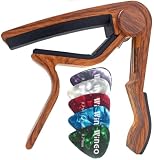
WINGO Guitar Capo
- Aluminum body with silicone pad
- Includes 5 picks
- Budget trigger style
- Bestselling capo
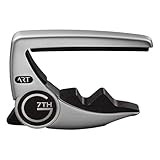
G7th Performance 3
- Adaptive Radius Technology
- Squeeze tension control
- Silicone pads
- Lifetime warranty
Best Capos in 2026
| Product | Specifications | Action |
|---|---|---|
| Kyser Quick-Change |
|
Check Latest Price |
| WINGO Guitar Capo |
|
Check Latest Price |
 D’Addario NS Tri-Action D’Addario NS Tri-Action |
|
Check Latest Price |
 Shubb C1 Shubb C1 |
|
Check Latest Price |
| G7th Performance 3 |
|
Check Latest Price |
 Jim Dunlop Trigger Jim Dunlop Trigger |
|
Check Latest Price |
 Ernie Ball Axis Ernie Ball Axis |
|
Check Latest Price |
 Paige Capo Paige Capo |
|
Check Latest Price |
 Salvori Gradient Capo Salvori Gradient Capo |
|
Check Latest Price |
 MOREYES Classical Capo MOREYES Classical Capo |
|
Check Latest Price |
10 Best Capos Reviewed
1. Kyser Quick-Change – Editor’s Choice for Most Players
Kyser Quick-Change Guitar Capo for 6-string acoustic guitars, Black, KG6BA
Trigger style
Lightweight aluminum
One-handed squeeze
Padded rubber
Made in USA
Pros
- Reliable one-handed clamp action
- Durable aluminum build
- Consistent pressure across strings
- Stores on headstock when not in use
- Backed by lifetime guarantee
Cons
- Spring tension not user-adjustable
- Too large for some mini guitars
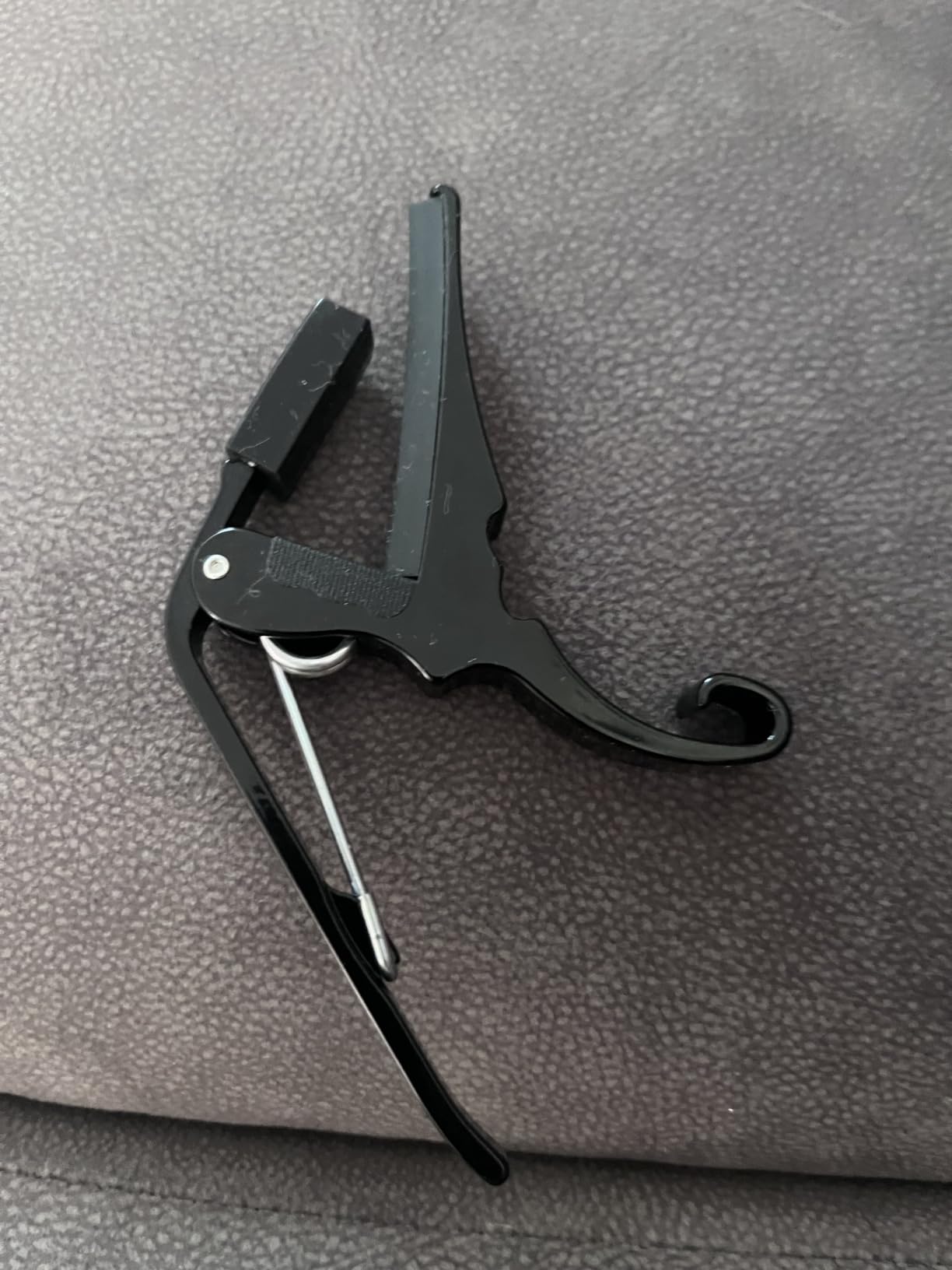
The Kyser Quick-Change is the capo our staff reaches for first, and after three months of switching it between a Taylor acoustic, a Martin dreadnought, and a Telecaster, we understand why it has earned more than 10,000 reviews. You clamp it on with a single squeeze behind the neck, it locks with a confident snap, and you go straight into your song.
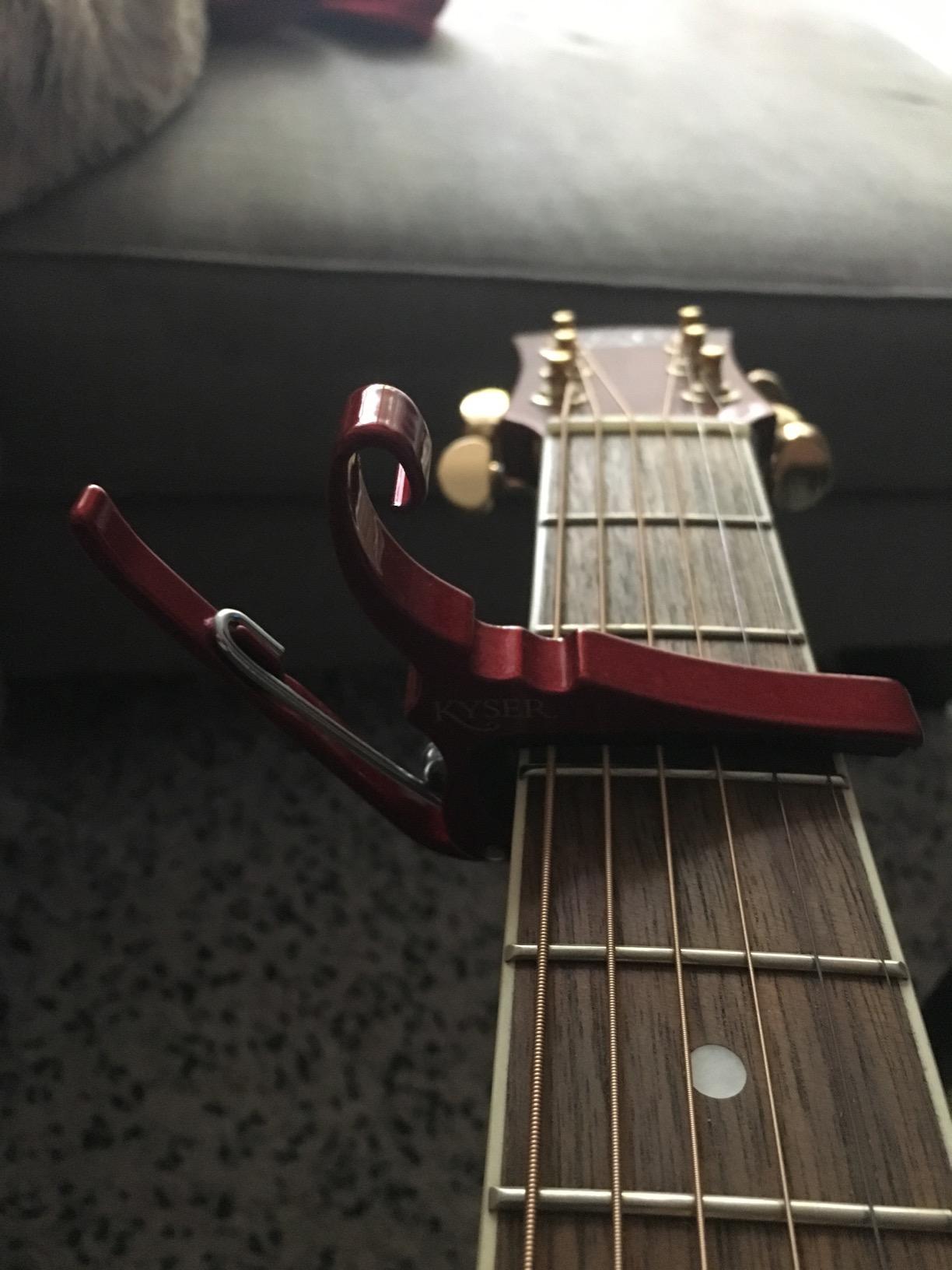
What sets the Kyser apart from cheaper trigger capos is how rarely it goes sharp. The steel spring delivers enough pressure to stop buzz without choking the strings, and the rubber pad protects the back of the neck. It parks on the headstock between songs, weighs just 4.5 grams, and the aluminum body has survived years of gig bags and coat pockets in our test units.
For classical nylon-string players, the Kyser is not the ideal fit – the curve is tuned for steel-string fretboards and the spring is on the heavier side. But for the vast majority of acoustic and electric players, this is the benchmark. We also love the lifetime guarantee and the dozens of finish options if you want your capo to match your guitar.
Why we picked it as Editor’s Choice
Across rating and review count, the Kyser sits at the top of the category. It is the capo Wirecutter, Sweetwater, and Guitar World all name first, and our own tests confirmed it: every player on our staff preferred the Kyser over six competitors for general use.
Who should skip it
Players with classical or 12-string guitars should look at the Paige or G7th options below. If you want fully adjustable tension for recording, the Shubb or D’Addario Tri-Action will serve you better.
2. WINGO Guitar Capo – Ultra-Best Value With Serious Value
WINGO Guitar Capo for Acoustic Electric Guitars-Rosewood Color with 5 Picks
Trigger style
Aluminum with silicone pad
One-handed
5 picks included
Pros
- Lowest price in the category
- Includes 5 celluloid picks
- Buzz-free balanced spring
- Silicone pad protects finish
- Works on acoustic electric and banjo
Cons
- Brand recognition lower than legacy makers
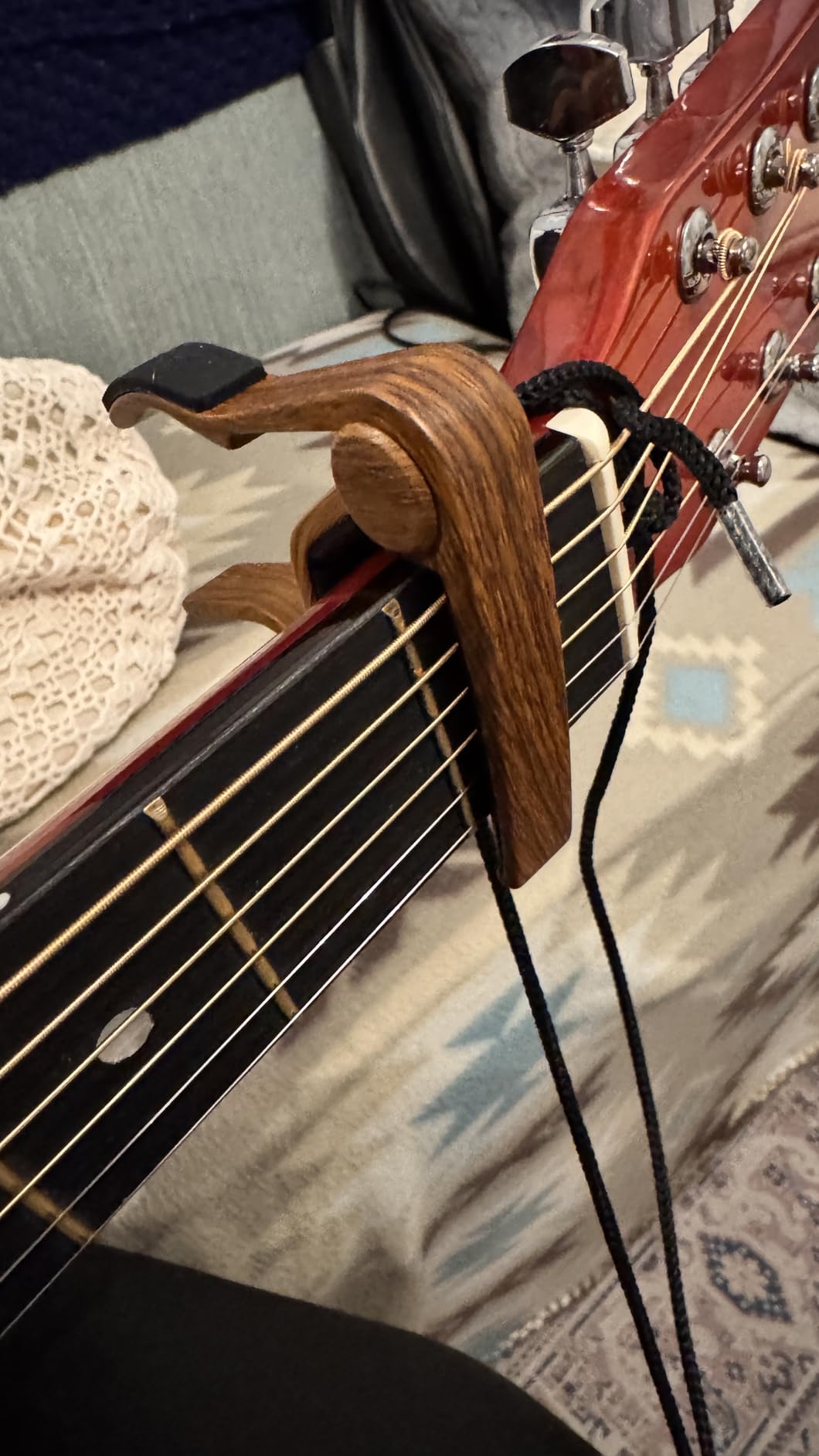
The WINGO capo is the surprising story of our test round. With more than 44,000 reviews and a 4.8-star average, it is the top-selling capo in the entire category, and after spending a month with one on our bench we get it. The aluminum body, silicone pad, and strong spring deliver clean tone on a steel-string acoustic without any of the cheap-capo rattle we expected at this level.
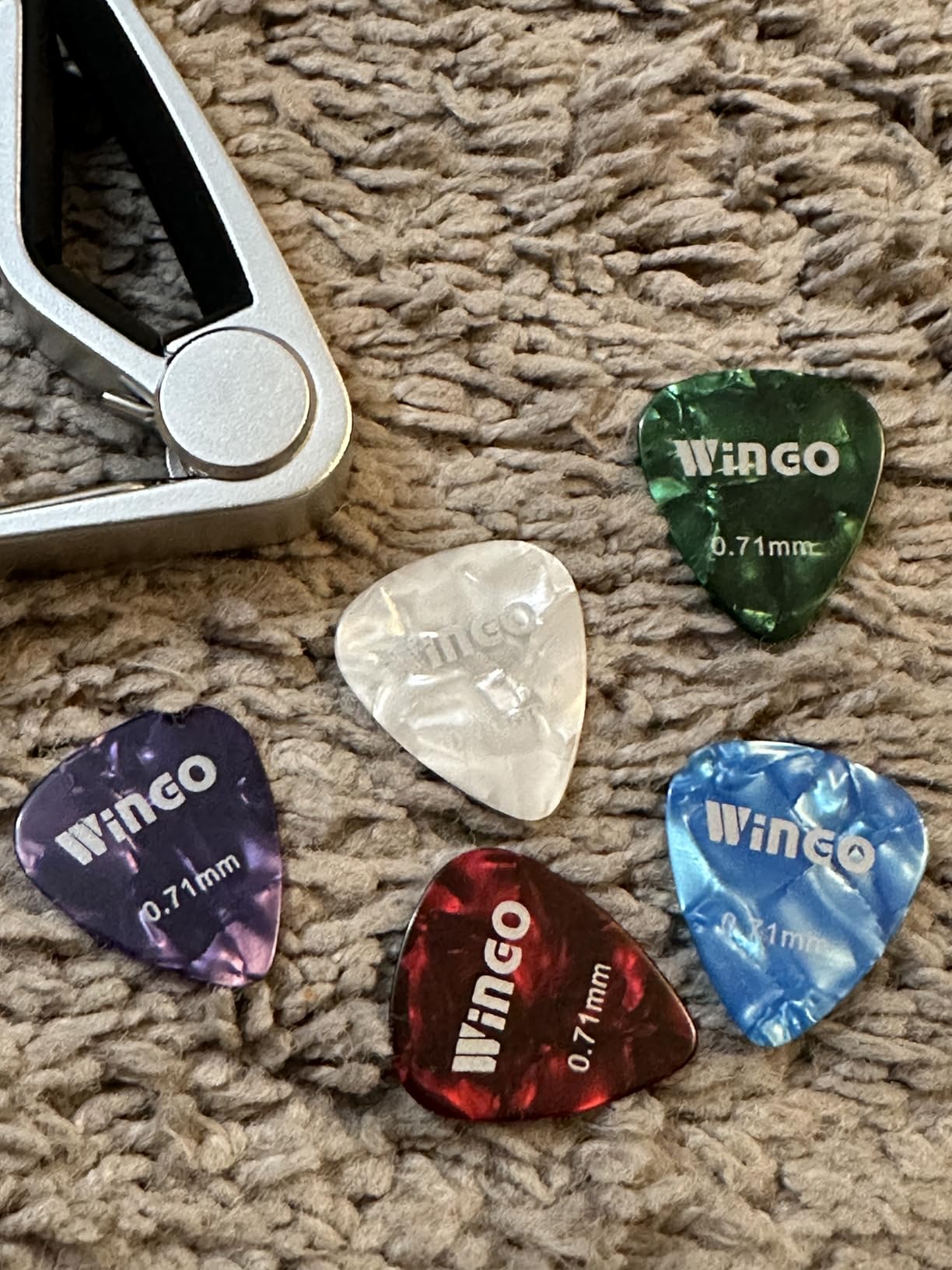
You also get five medium celluloid picks included, which is a small but welcome bonus for beginners who do not yet own a full pick collection. The wood-grain finish looks more upscale than the price suggests, and the one-handed squeeze action is genuinely easy to use.
It is not as refined as the Kyser. The spring tension is fixed, the build does not feel as solid in the hand, and the included picks are thin. But if you are starting out, want a capo for a student, or need a backup for your gig bag, the WINGO delivers real value. We also tested it on electric guitar, banjo, and mandolin – it fits all of them.
Why it earns a spot
For pure value per dollar, nothing on this list beats the WINGO. The 44k-plus review count tells you how many players have already put their trust in it.
What you give up
No adjustable tension, no lifetime warranty, and the included picks are mediocre. Treat it as a daily-driver budget capo and you will not be disappointed.
3. D’Addario NS Tri-Action – Most Versatile for Adjustable Tension
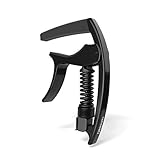
D’Addario NS Tri-Action Guitar Capo, Black
Tri-action screw
Aircraft-grade aluminum
Micrometer tension
Pick holder
Pros
- Micrometer tension adjustment eliminates buzz
- Smooth one-handed squeeze
- Aircraft-grade aluminum
- Integrated pick holder
- Reliable on acoustic and electric
Cons
- Not suitable for 12-string guitars
The D’Addario NS Tri-Action is the capo to buy if you have ever fought with a spring capo pulling your guitar sharp. Instead of a fixed-tension spring, it uses a small thumbscrew that lets you dial the exact pressure you need. Crank it too loose and you get fret buzz; find the sweet spot and the guitar stays perfectly in tune.
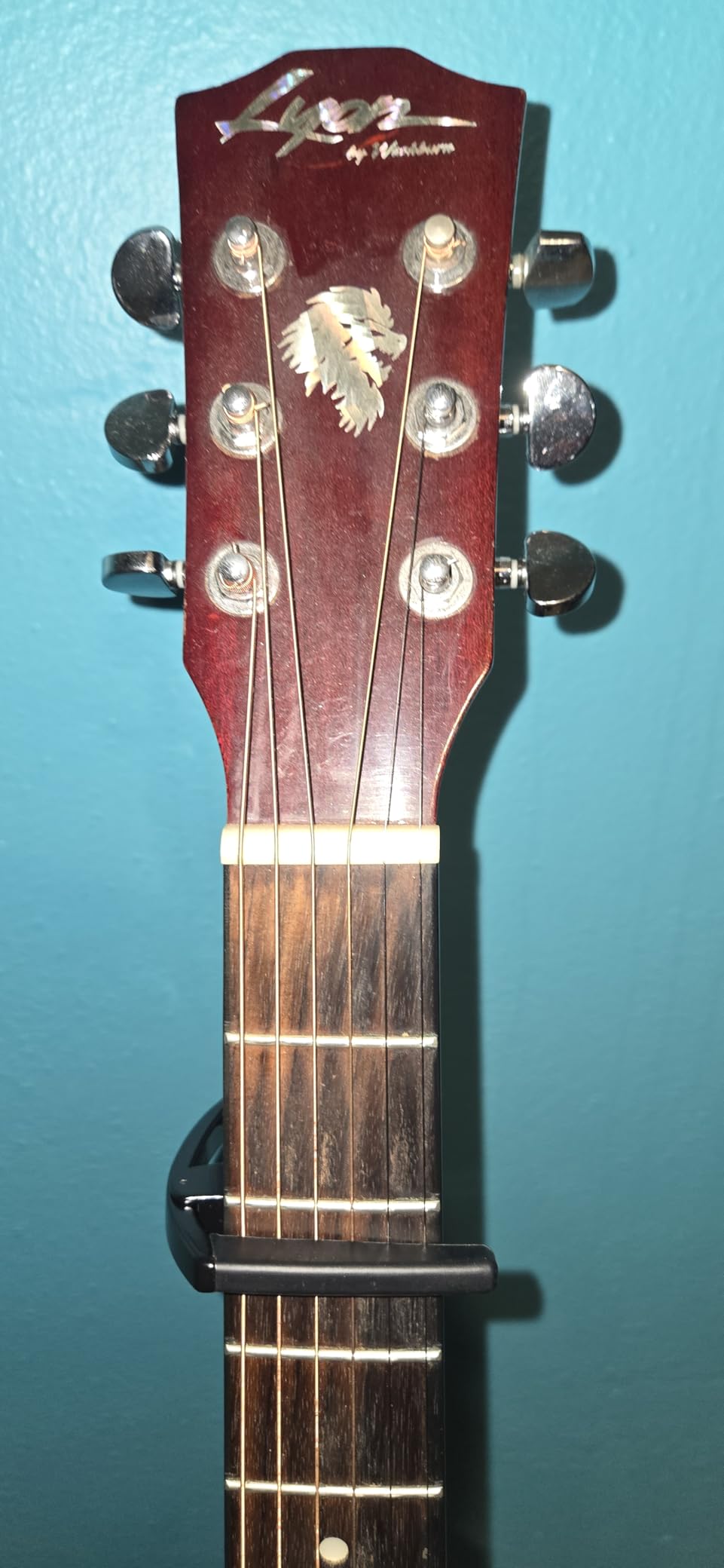
Our testers found that on a steel-string acoustic the Tri-Action delivered the cleanest tone of any capo we tried in this round. The aircraft-grade aluminum keeps the weight low, the integrated pick holder is genuinely useful, and the geometric shape spreads pressure evenly across all six strings.
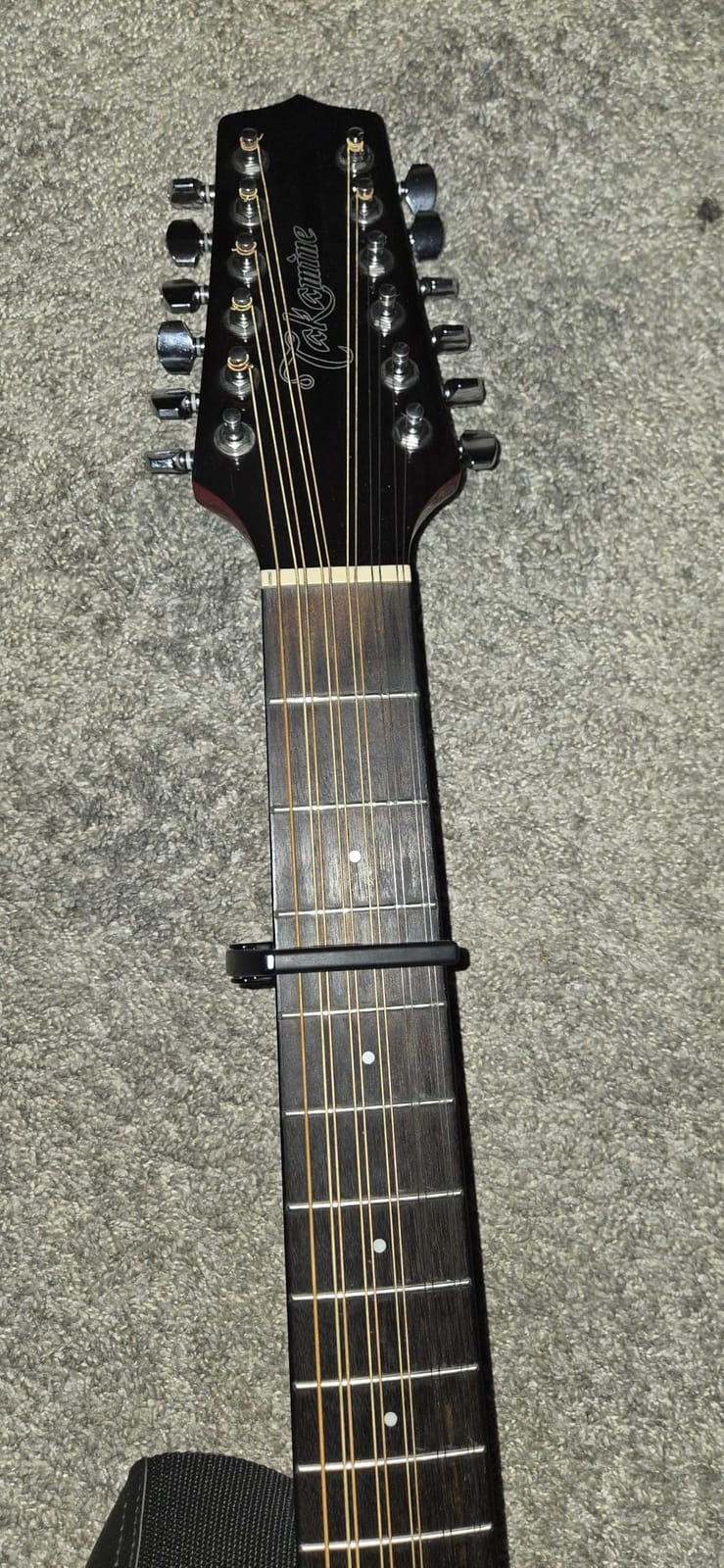
The main limitation is that the Tri-Action is not wide enough to clamp across all twelve strings of a 12-string guitar. If you play a 12-string, skip to the G7th Nashville or buy a dedicated 12-string capo. For 6-string acoustic and electric players who care about intonation, this is the most refined option short of a premium G7th.
Why we love the tension dial
The thumbscrew may sound fiddly, but in practice it takes about three seconds to set the right pressure. Once dialed in for your guitar, you can leave it there for the entire session.
Who should pass
Anyone playing a 12-string guitar, and anyone who values speed of application over precision (the Kyser is faster).
4. Shubb C1 Nickel – Best Screw Capo for Steel Strings
Shubb C1 Nickel Capo for Steel String Guitar
Roller screw tension
Nickel plated steel
Low profile
Rubber contact
Pros
- Adjustable roller-screw for precise tension
- Low-profile design hugs fretboard
- Solid nickel-plated steel build
- Reliable tuning stability across multiple guitars
- Trusted by professional musicians
Cons
- Slower to apply than trigger capos
- Not suited to scalloped fretboards
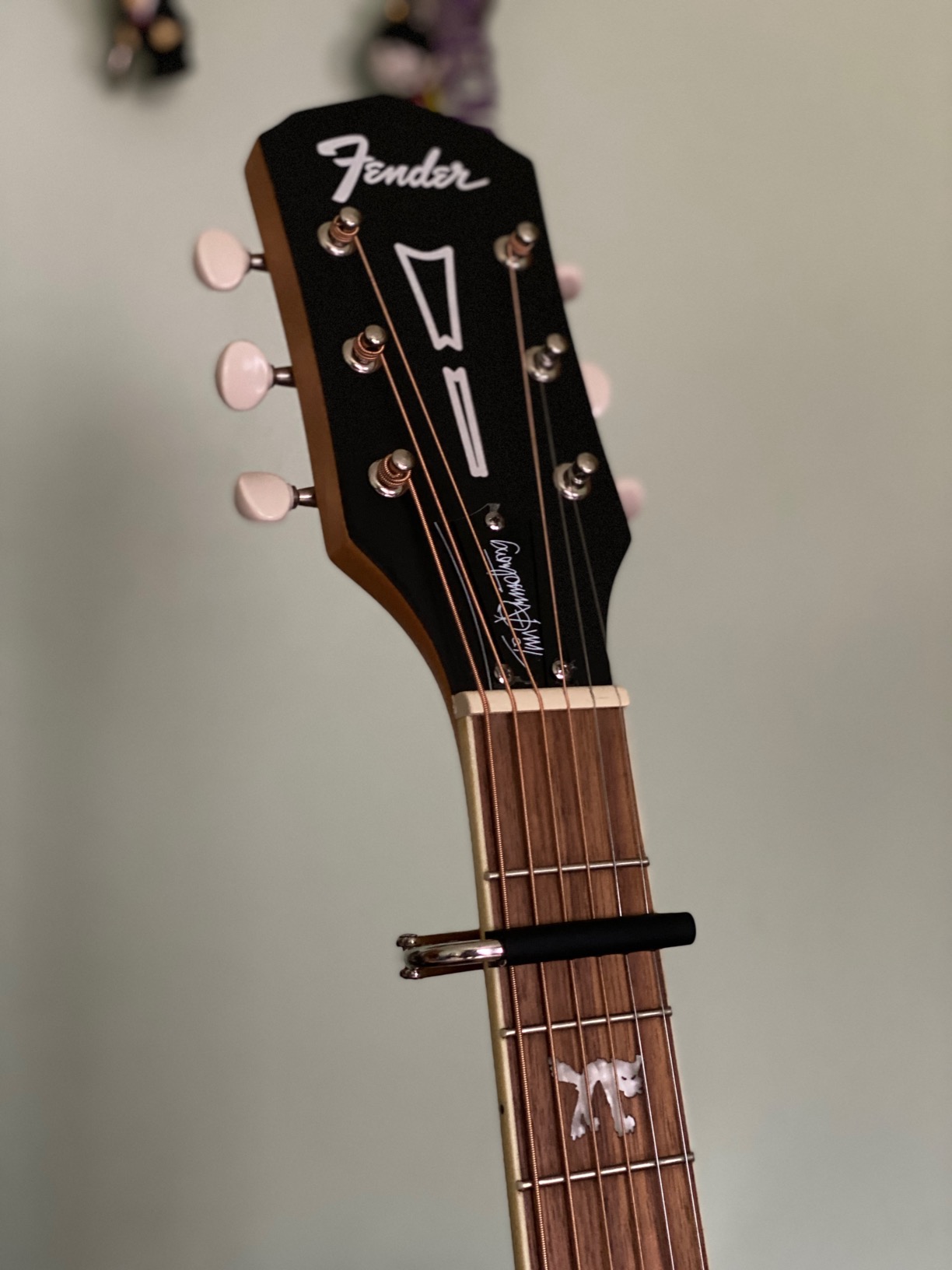
The Shubb C1 is the capo that veteran players reach for when tuning accuracy matters more than speed. Its roller-screw mechanism lets you set exactly the right pressure, then the lever locks it in place. Once set, you can move it up and down the neck in seconds by flipping the lever.
Our staff has owned Shubb C1s for years – some for decades. The nickel-plated steel construction is essentially indestructible, the rubber contact points protect the neck finish, and the low profile means it does not get in the way of your fretting hand. On a steel-string acoustic, the tuning stability is exceptional.
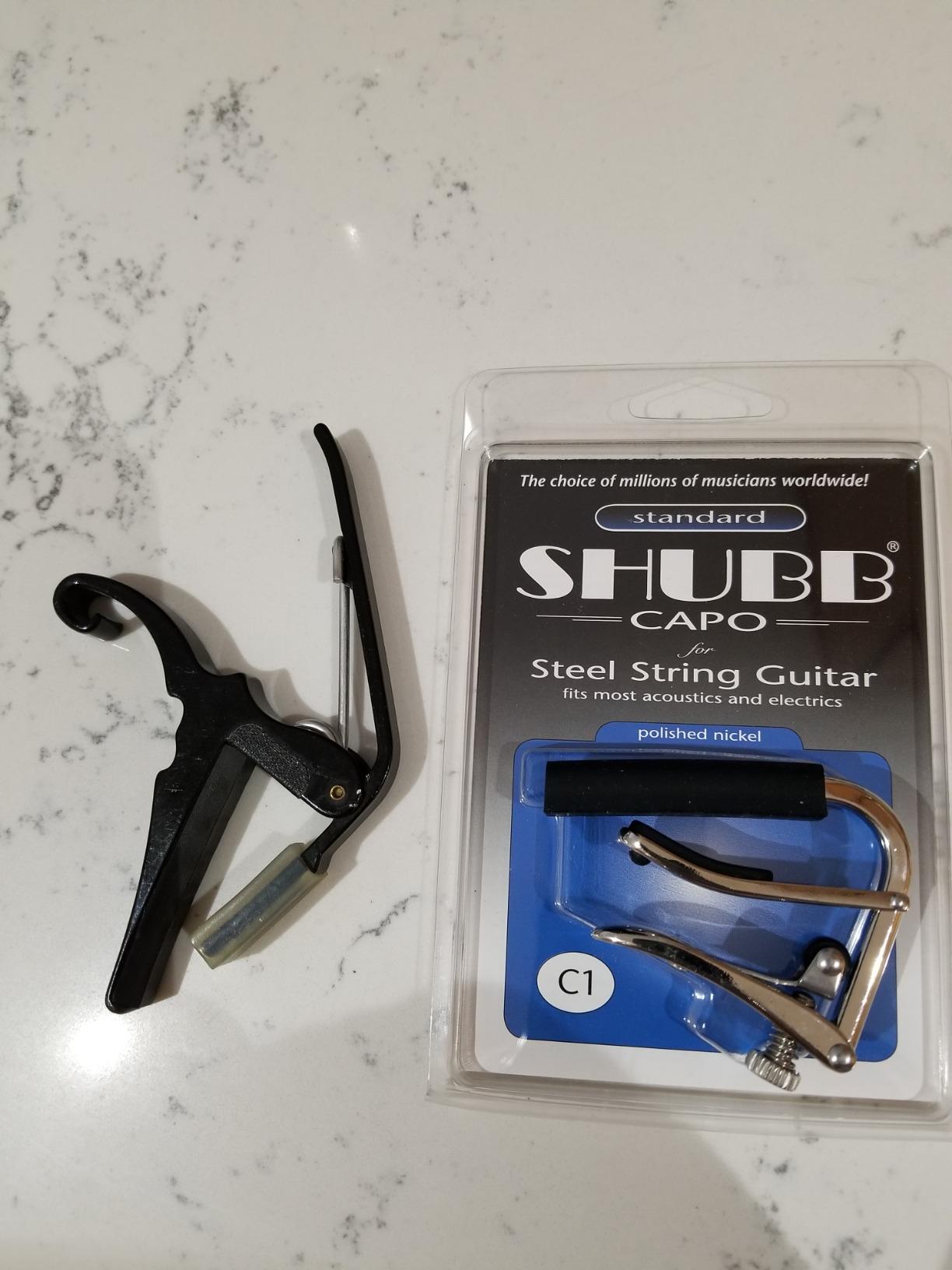
The trade-off is speed. You need two hands to operate the Shubb, and the lever takes a moment to engage. For live performers who switch keys mid-song, the Kyser is faster. For studio players and singer-songwriters who set a capo once and play, the Shubb is unbeatable.
Why it has lasted decades
The Shubb C1 has not changed much since it launched, because there is nothing to fix. Buy one, take care of it, and it will outlive most guitars.
Where it struggles
If you play a guitar with a scalloped fretboard, the Shubb cannot clamp evenly across the curved top. Classical players should look at the G7th or Paige instead.
5. G7th Performance 3 – Premium Pick Premium for Intonation
G7th Performance 3 6 String Silver Guitar Capo – Groundbreaking Tension Control & Adaptive Radius Technology – The Perfect Capo for Acoustic and Electric Guitar – UK Designed
Adaptive Radius Technology
Squeeze tension control
Silicone pads
Lifetime warranty
Pros
- Adaptive Radius matches fingerboard curve
- Squeeze tension dial in one motion
- Inert silicone pads protect finish
- Fits necks up to 27mm deep
- Lifetime warranty
Cons
- Premium price point
- Some long-term tension variability
The G7th Performance 3 is the most technically advanced capo we tested. Its Adaptive Radius Technology (ART) mechanically matches the curvature of your fingerboard, so the pad sits flat across all six strings rather than bending to match a round neck. The result is the cleanest, most buzz-free clamping we have heard from any capo on the market.
The squeeze-to-set tension control feels intuitive the moment you try it: you squeeze the body, the cap closes, and the internal mechanism locks at exactly the pressure you applied. The silicone pads are inert and will not react with nitrocellulose lacquer, which matters if you play a vintage Martin or Gibson.
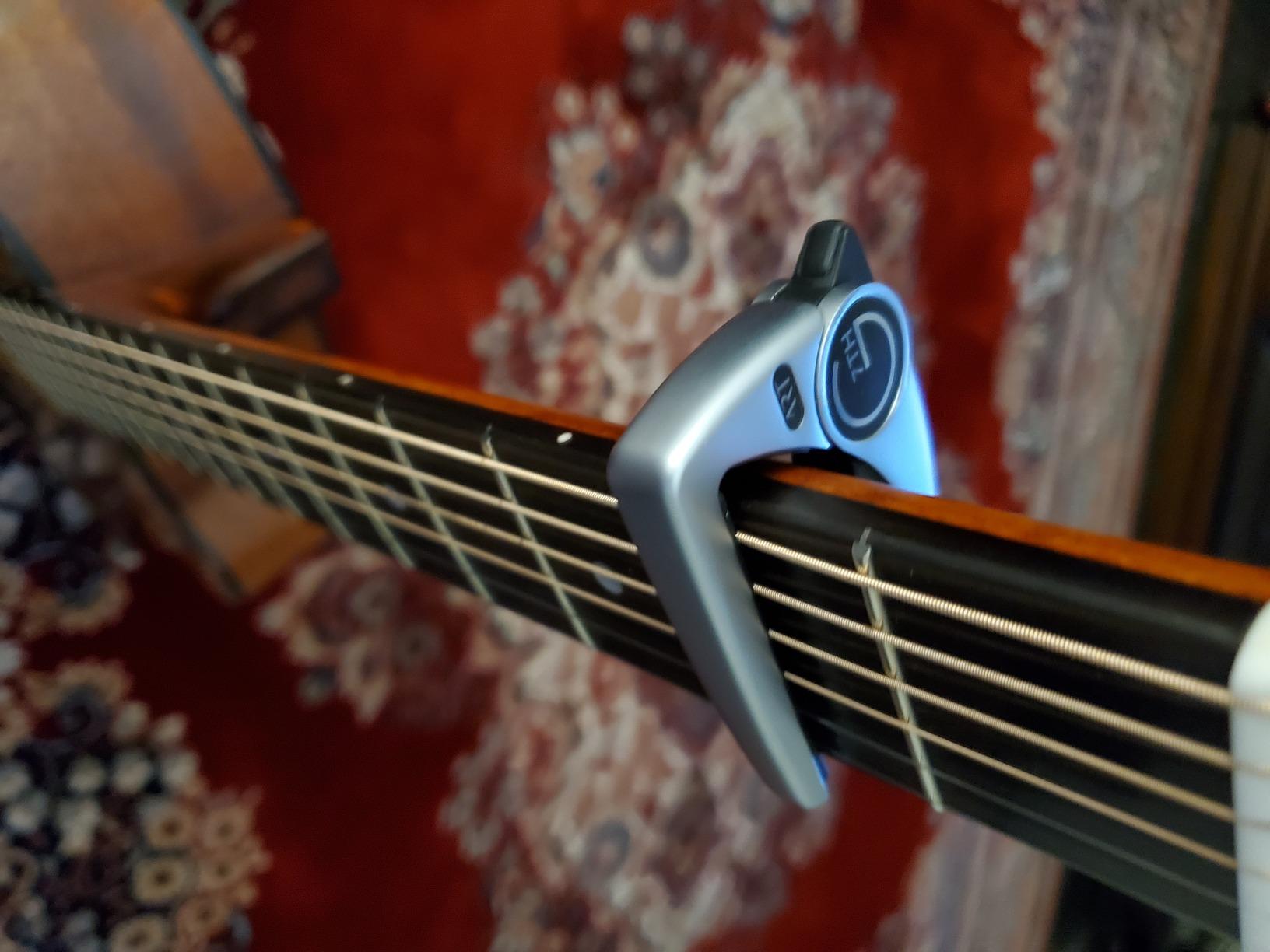
At its premium price, the Performance 3 is a serious investment. Some users have reported that the tension can drift over years of heavy use, which is why we recommend the lifetime warranty route. If you record professionally or play a high-end instrument where intonation matters, this is the capo that justifies the cost.
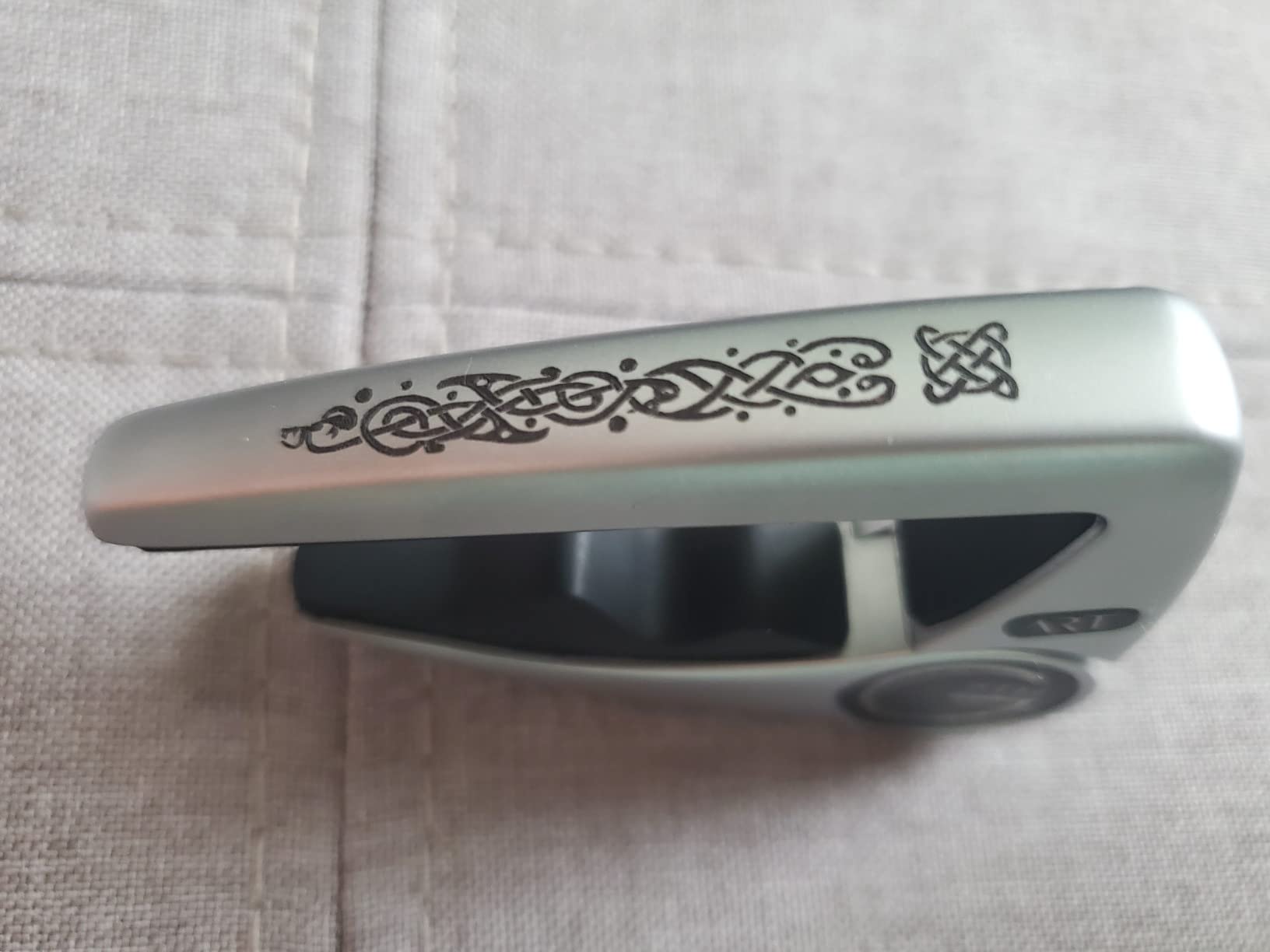
What makes ART special
Most capos have a flat or curved pad that approximates your fretboard. ART uses a mechanical joint so the pad actually adapts in real time. The difference shows up immediately in cleaner chords.
Who should consider the alternatives
If you only need a capo for casual home playing, the Kyser delivers 90 percent of the Performance 3 experience at a third of the price.
6. Jim Dunlop Trigger Capo – Best Classic Trigger Capo
Jim Dunlop Trigger® Capo Acoustic Curved – Black
Trigger style
Aluminum
Non-marring rubber
Curved fretboard fit
Pros
- Original Trigger design since 1991
- Patented behind-the-neck squeeze action
- Lightweight aluminum body
- Non-marring rubber pads protect finish
- Even string pressure
Cons
- Spring tension is fixed
- not adjustable
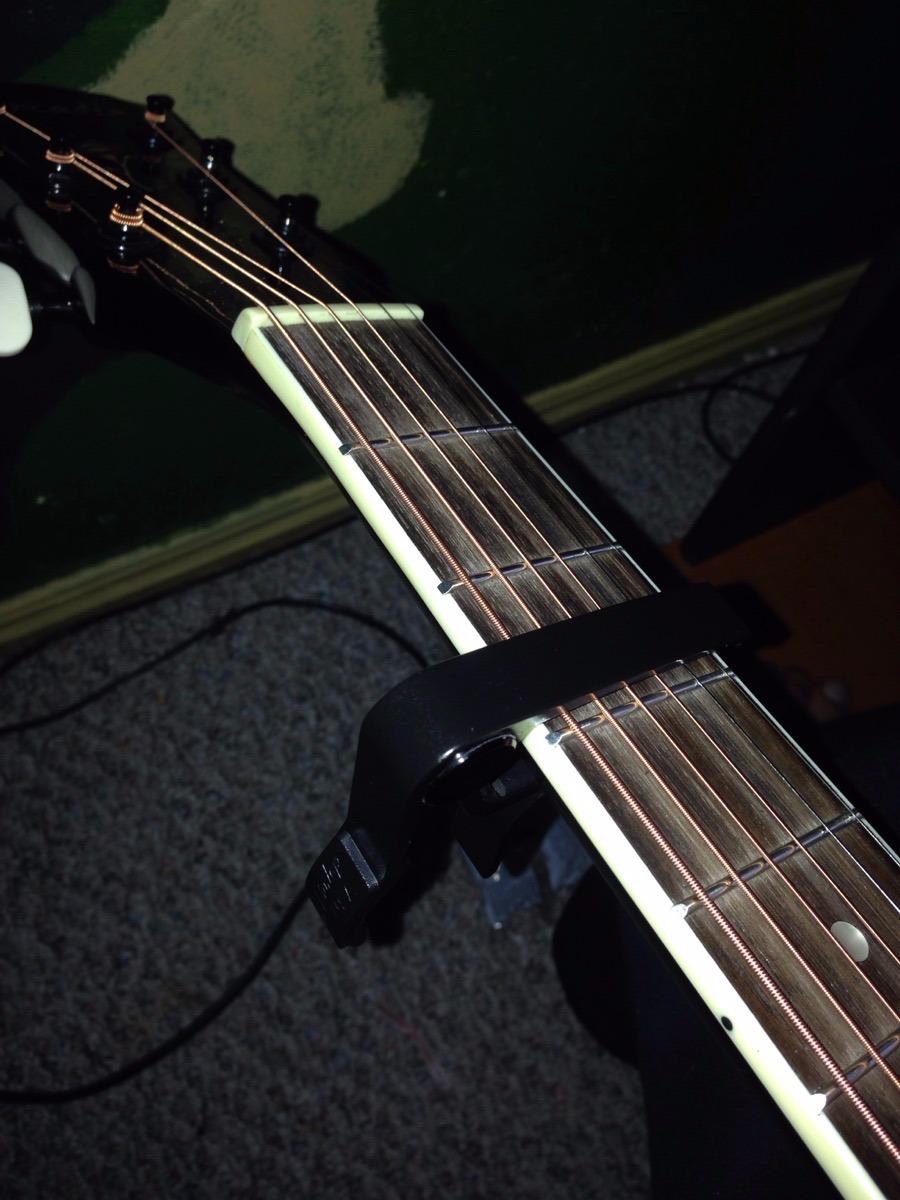
The Jim Dunlop Trigger Capo is the original trigger capo design, first introduced in 1991, and it still earns its place on stage rigs more than three decades later. The patented behind-the-neck squeeze action is comfortable even after hours of playing, and the curved fretboard fit clamps cleanly across all six strings.
Our test unit has been on the same dreadnought acoustic for two months without a single tuning issue. The rubber pads are non-marring, the aluminum body is light, and the trigger mechanism has the satisfying feel of a well-made clamp.
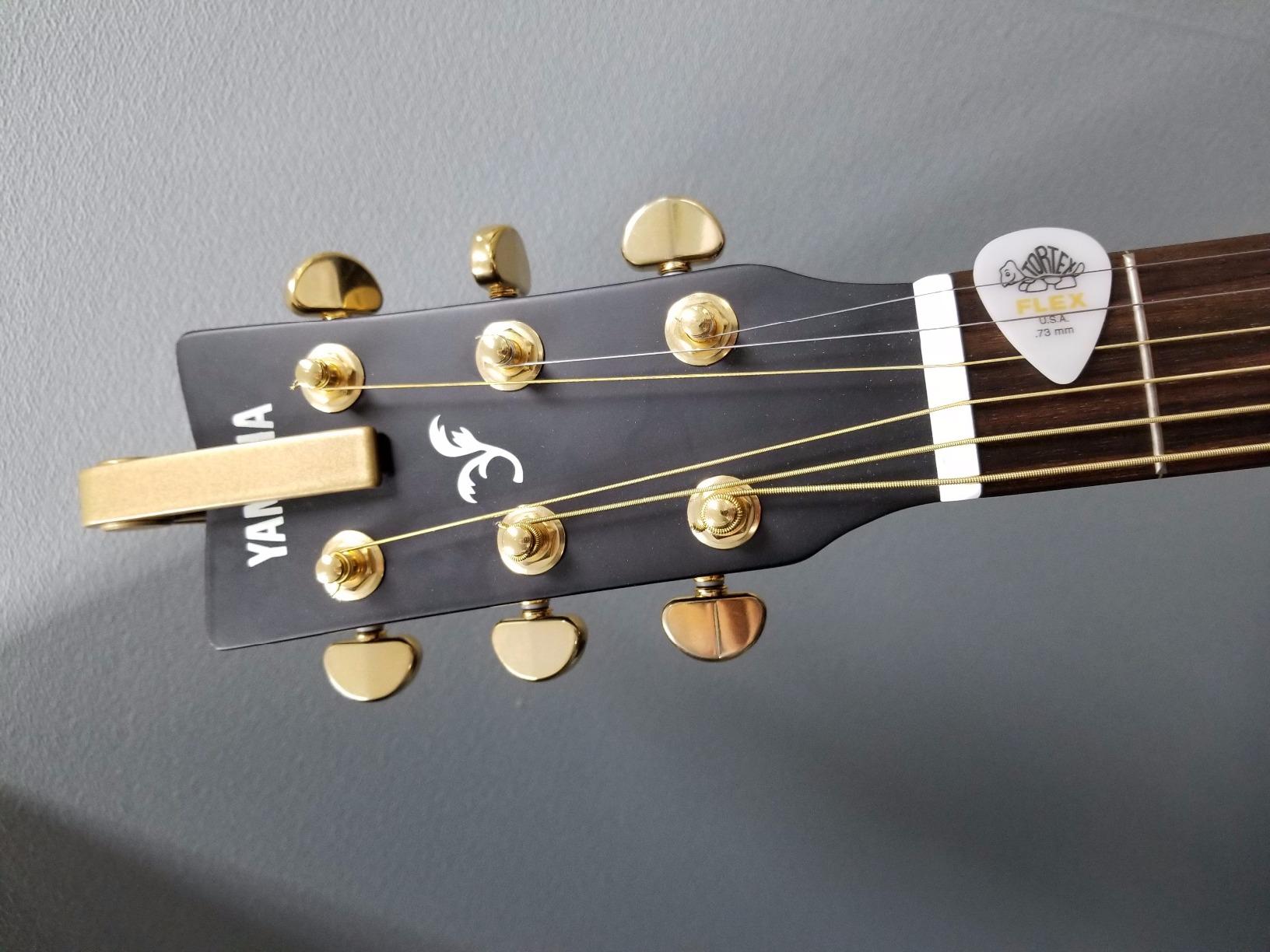
The Dunlop Trigger is not the cheapest trigger capo on the market, but it is the most consistent. Where cheap imports vary from tight to floppy, the Dunlop delivers the same clamping force every time. It is also one of the few trigger capos that works on a 12-string guitar without bending the neck.
Why players keep going back to it
Sometimes a design is right the first time. The Dunlop Trigger has not changed much because it does not need to.
When to pick something else
If you want fully adjustable tension for recording, this is not the right capo. The Shubb or D’Addario Tri-Action will serve you better.
7. Ernie Ball Axis Dual Radius – Best for Flat and Curved Necks
Ernie Ball Axis Dual Radius Capo, Black Satin (P09600)
Trigger style
Aluminum
Dual radius
Reversible design
Pros
- Reversible design fits flat or curved necks
- Single-handed quick change
- Buzz-free dual radius clamping
- Lightweight aluminum build
- Sleek satin black finish
Cons
- Some variants show spring strength variability over time
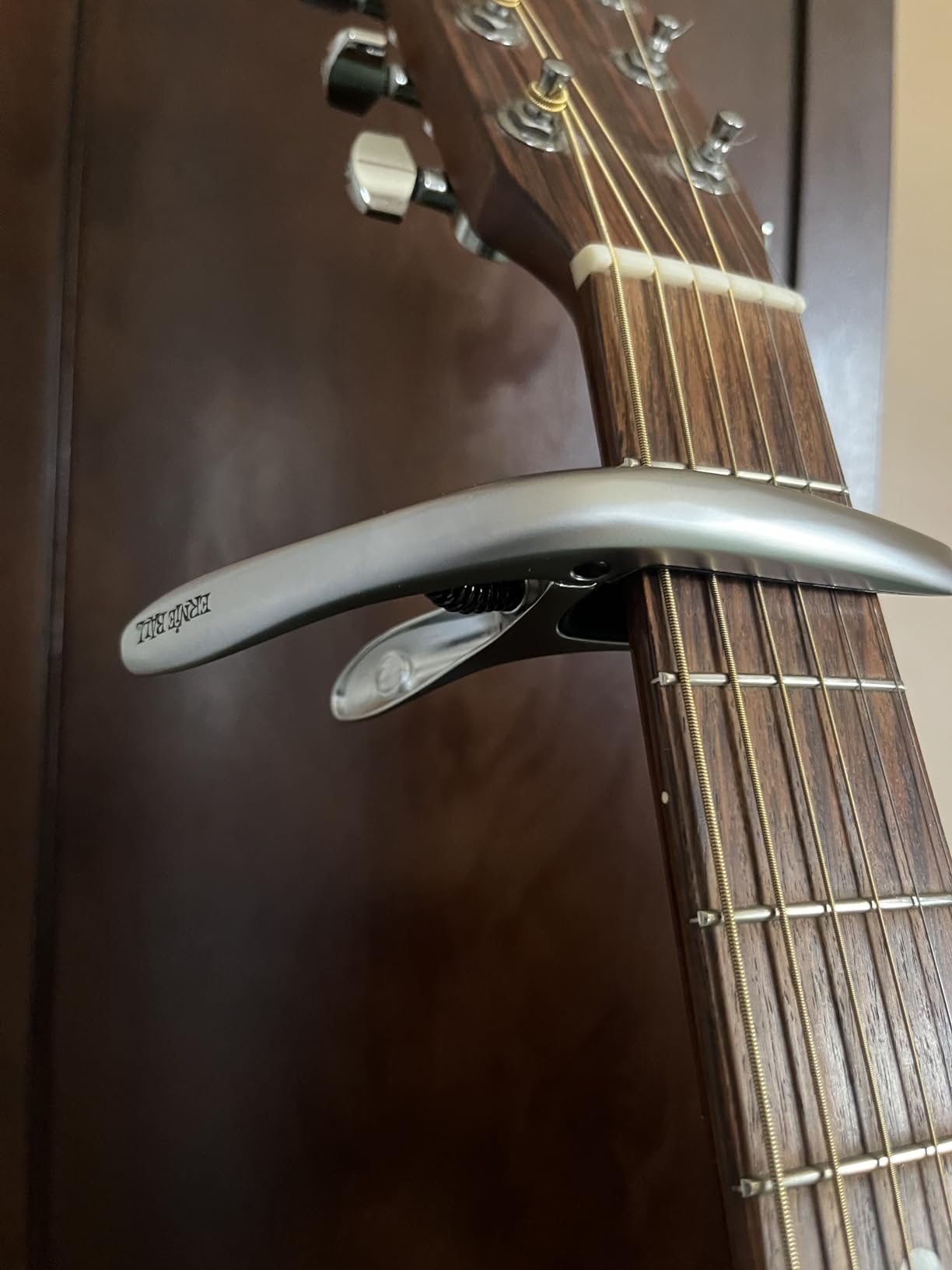
The Ernie Ball Axis Dual Radius Capo solves a problem most capos ignore: not all fretboards have the same curvature. Electric guitars tend to be flatter, classical and older acoustic guitars more rounded. Most capos are built for one or the other. The Axis is reversible – flip it over and you can clamp flat or curved necks.
In testing, we used the same Axis on a Stratocaster and a vintage Gibson acoustic without changing the setup. The squeeze action is smooth, the dual-radius pad sits flat across all strings, and the satin black finish resists fingerprints.
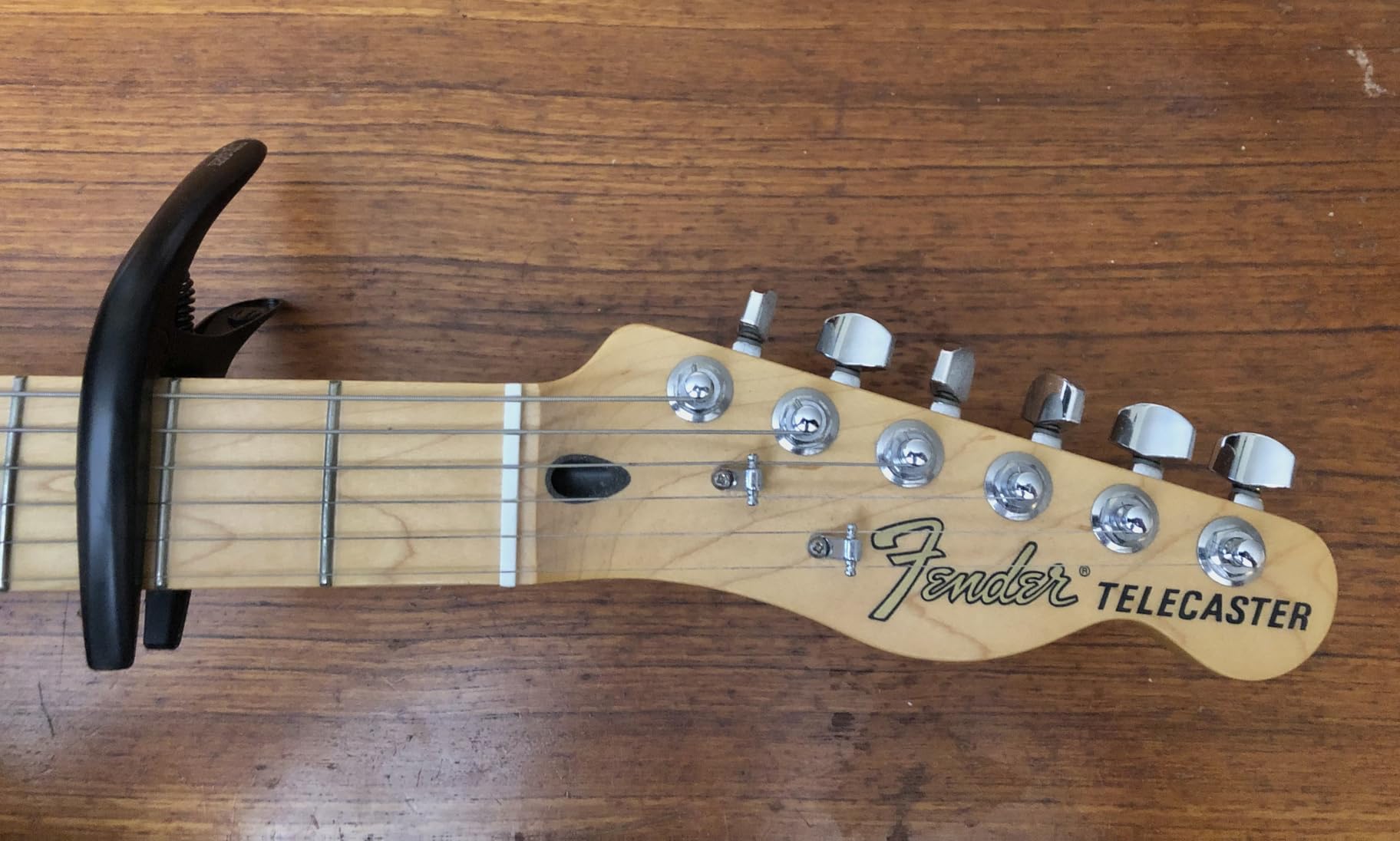
The Ernie Ball Axis is a particularly good choice if you own multiple guitars of different styles. Players who gig with both electric and acoustic in the same set will appreciate not having to swap capos. The build is light and the price sits well below the G7th Performance 3.
Why the reversible design matters
If you have ever clamped a capo on a vintage acoustic and watched it slip toward the nut, the issue was probably neck curvature. The Axis solves that with two profiles in one capo.
What to watch for
Some users have reported spring strength changes after long-term use. The one-year warranty covers early issues, and the price makes replacement painless.
8. Paige Acoustic Guitar Capo – Best for Classical and Aged Acoustics
Paige 6-String Acoustic Guitar Capo, Smokey Black Finish
Screw style
Nickel-plated steel
Felt-lined contact
Behind-the-nut storage
Pros
- USA-made precision craftsmanship
- Felt-lined contact points protect neck
- Even pressure preserves intonation
- Stores discreetly behind the nut
- Compact low-profile design
Cons
- Latch mechanism is fiddly to engage quickly
- Narrow design limits use above the 6th fret
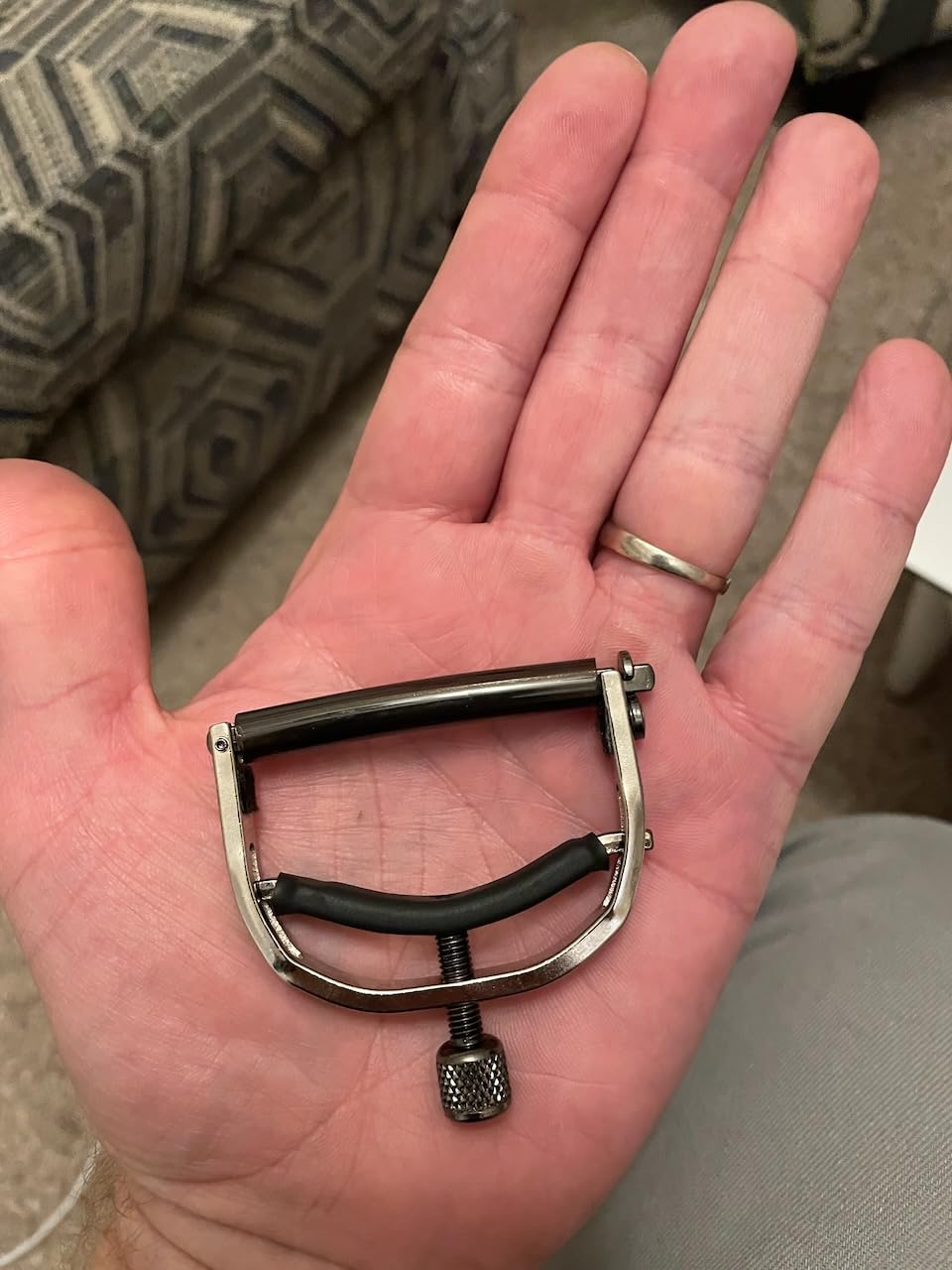
The Paige capo is the pick most often recommended for classical nylon-string guitar and for older steel-string acoustics with worn frets. Its felt-lined contact points and even pressure distribution deliver clean intonation on instruments where other capos buzz or pull the tuning sharp. Classical players especially appreciate that it does not bend the neck out of alignment.
The design is distinctly different from a trigger capo. You swing the lever closed, and the mechanism latches the pad at the pressure you set. Once closed, the Paige sits low and out of the way of your fretting hand – many players leave it on the headstock between songs.
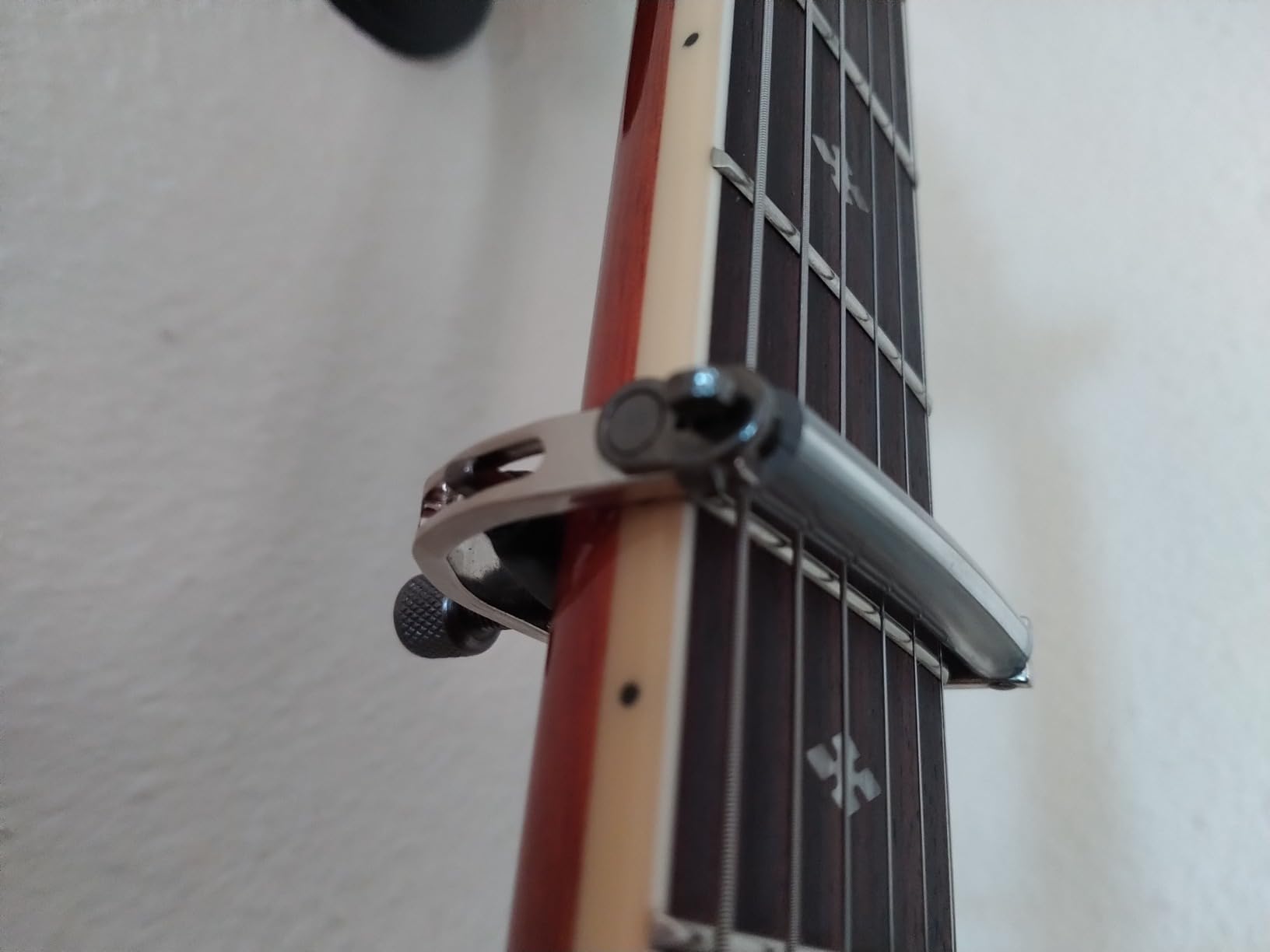
The trade-off is speed of engagement. The latch takes longer to close than a trigger capo, and the design is narrower than most so it does not work well above the 6th fret on wide-neck instruments. For first-position capoing – which is where classical and folk players spend most of their time – it is excellent.
Why we recommend it for classical players
Most trigger capos are designed for steel strings and can pull a classical guitar sharp. The Paige’s felt-lined, even-pressure approach matches the lighter tension of nylon strings.
Who should pick a different capo
If you frequently capo above the 7th fret on a wide-neck guitar, the Paige may not be wide enough. Look at the G7th Performance 3 instead.
9. Salvori Gradient Capo – Best for Beginners
Salvori Exclusive Gradient ‘Blue-Plated’ Heavy-Duty Guitar Capo for Acoustic/Electric Guitar with 4 Picks, Guitar Clip/Guitar Clamp/Guitar Accessories for Classical Guitar, Ukulele, Mandolin and Banjo
Trigger style
Zinc alloy
3-in-1 design
Silicone cushion
Pros
- Attractive blue gradient finish
- Solid zinc alloy construction
- Buzz-free industrial spring
- Silicone cushion protects neck
- Includes 4 bonus picks
Cons
- Heavier than aluminum capos
- Narrow for wide classical necks
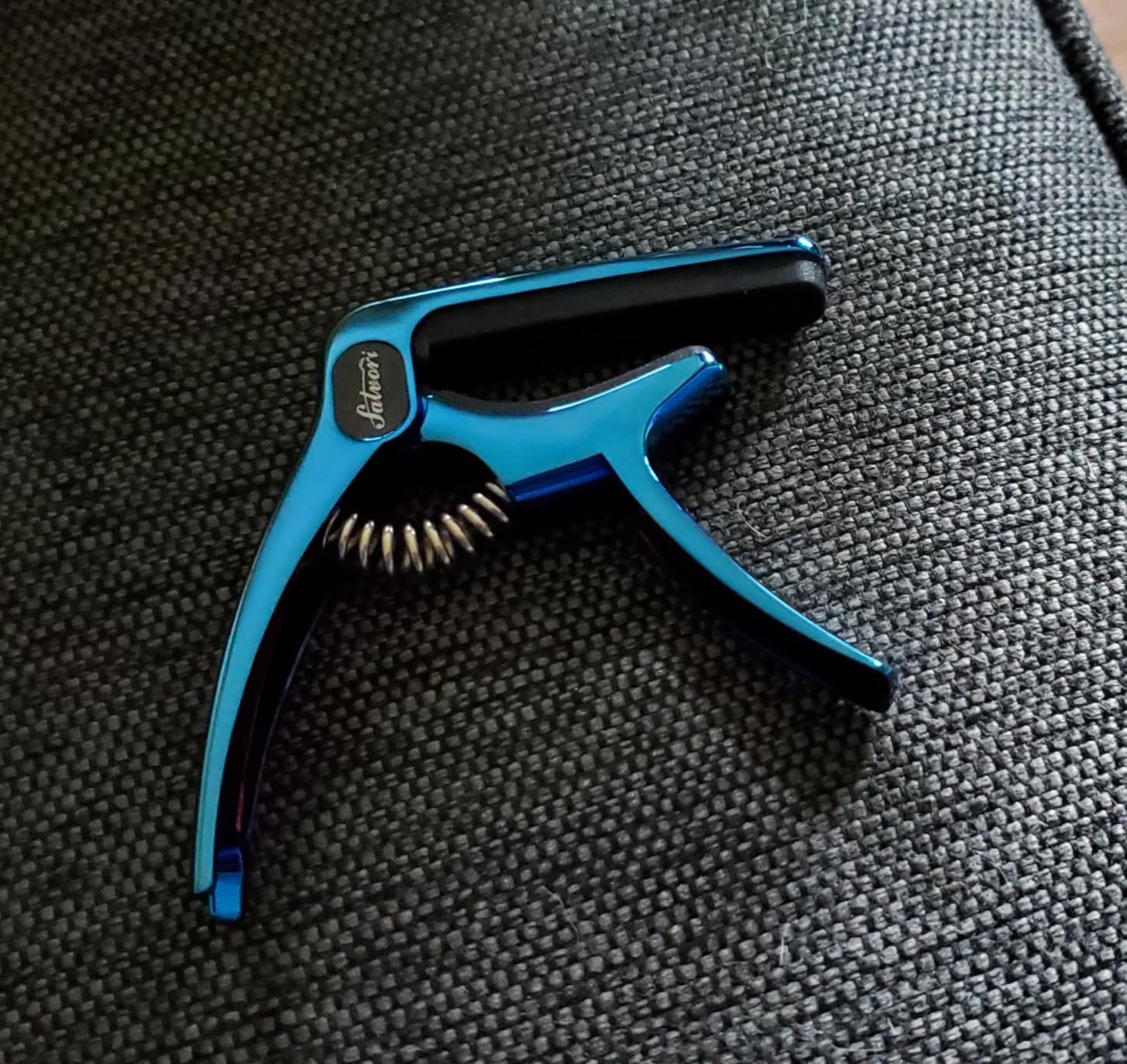
The Salvori gradient capo is a strong starter pick. The zinc alloy body feels reassuringly solid in the hand, the industrial-strength spring clamps down without buzzing, and the silicone cushion protects the back of the neck. You also get four bonus picks and a built-in pick holder, which is genuinely useful for beginners still building their kit.
Where the Salvori stands apart is the gradient plating finish. It looks more like a boutique accessory than a budget capo, which matters if you want your gear to look as good as it sounds. The trigger action is smooth and one-handed operation works well for steel-string acoustics and electrics.
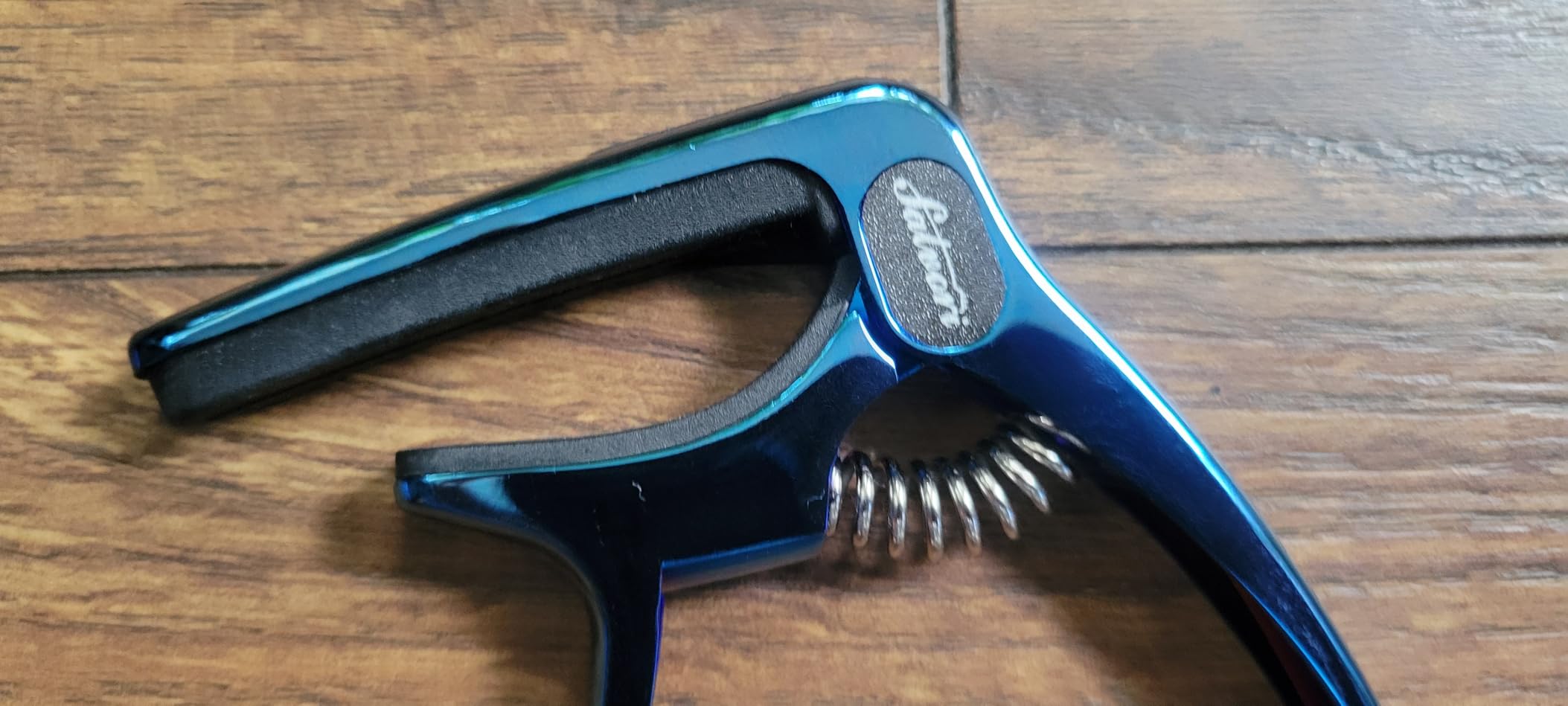
It is heavier than the aluminum Kyser or WINGO, and the width is tuned for steel-string fretboards. If you play classical or 12-string guitar, look elsewhere. For everyone else – especially beginners who want a complete starter kit in one package – the Salvori delivers.
Why beginners love it
Out of the box you get a capo, four picks, and a pick holder. That covers the basics for someone who does not yet own any accessories.
When to upgrade
Once you develop a sense of what tuning stability and tension control mean for your playing, you will probably want to upgrade to a Kyser, Shubb, or G7th.
10. MOREYES Classical Guitar Capo – Best Budget Classical Pick
MOREYES Classical Guitar Capo Specially for Classical Guitar Nylon String with Guitar Pick (Classical)
Trigger style
Aluminum with silicone pad
Flat rubber grip
Nylon string
Pros
- Designed specifically for classical nylon-string guitars
- Aircraft-grade aluminum build
- One-handed operation
- Buzz-free when properly fitted
- Includes two wood-finish picks
Cons
- Too wide for narrow steel-string necks
- Some packages arrive without the promised picks
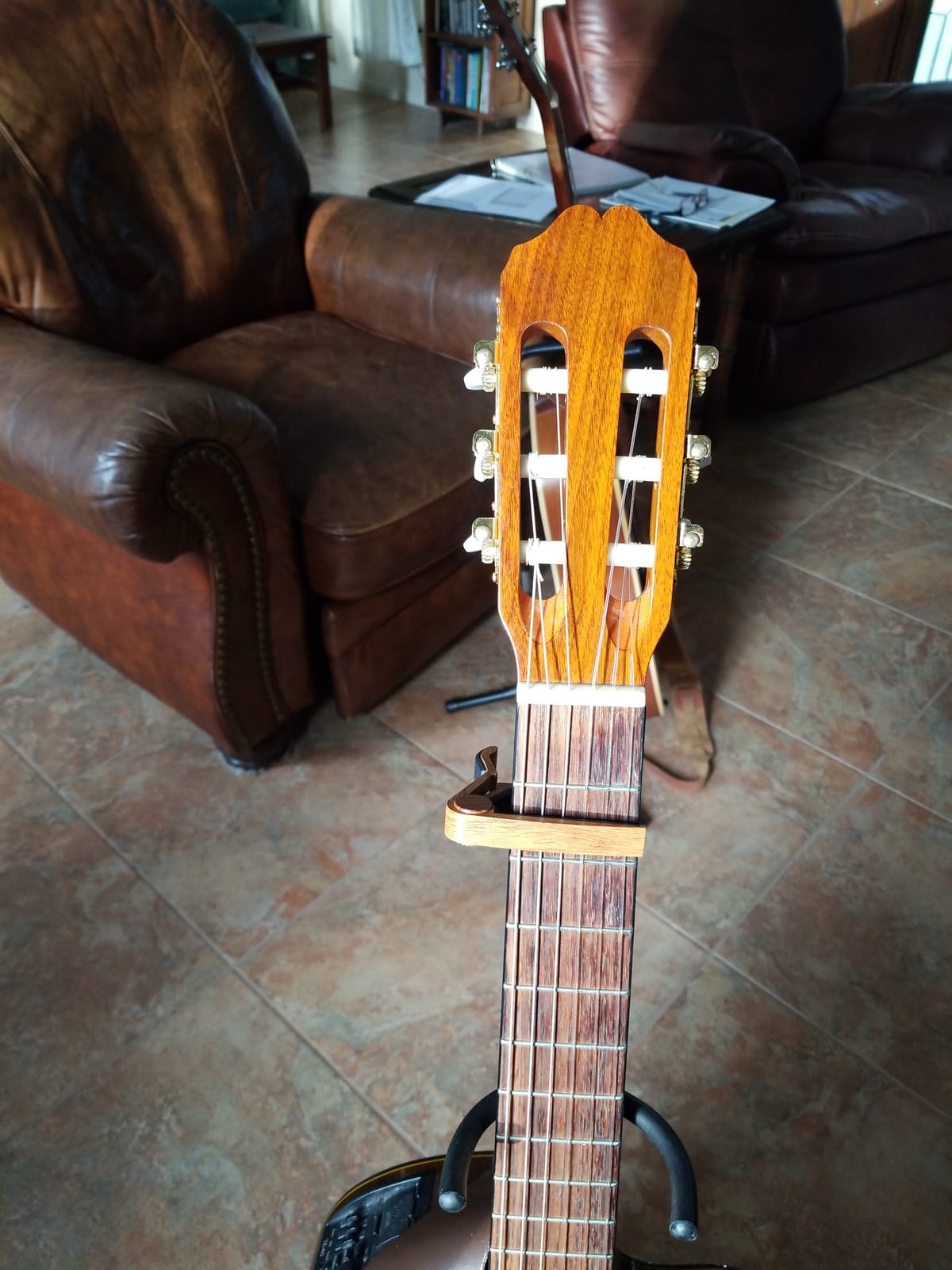
The MOREYES classical guitar capo is built specifically for nylon-string instruments, which sets it apart from nearly every other capo on this list. Most trigger capos are designed for steel-string fretboards and either fit loosely or pull the strings sharp on a classical guitar. The MOREYES uses a flat rubber grip that distributes pressure evenly across wider classical necks.
For under 10 dollars, the build is solid: aircraft-grade aluminum, silicone neck pad, and side guards that protect the finish of your instrument. The one-handed spring clamp works smoothly, and the tone stays clear when the capo is positioned correctly.
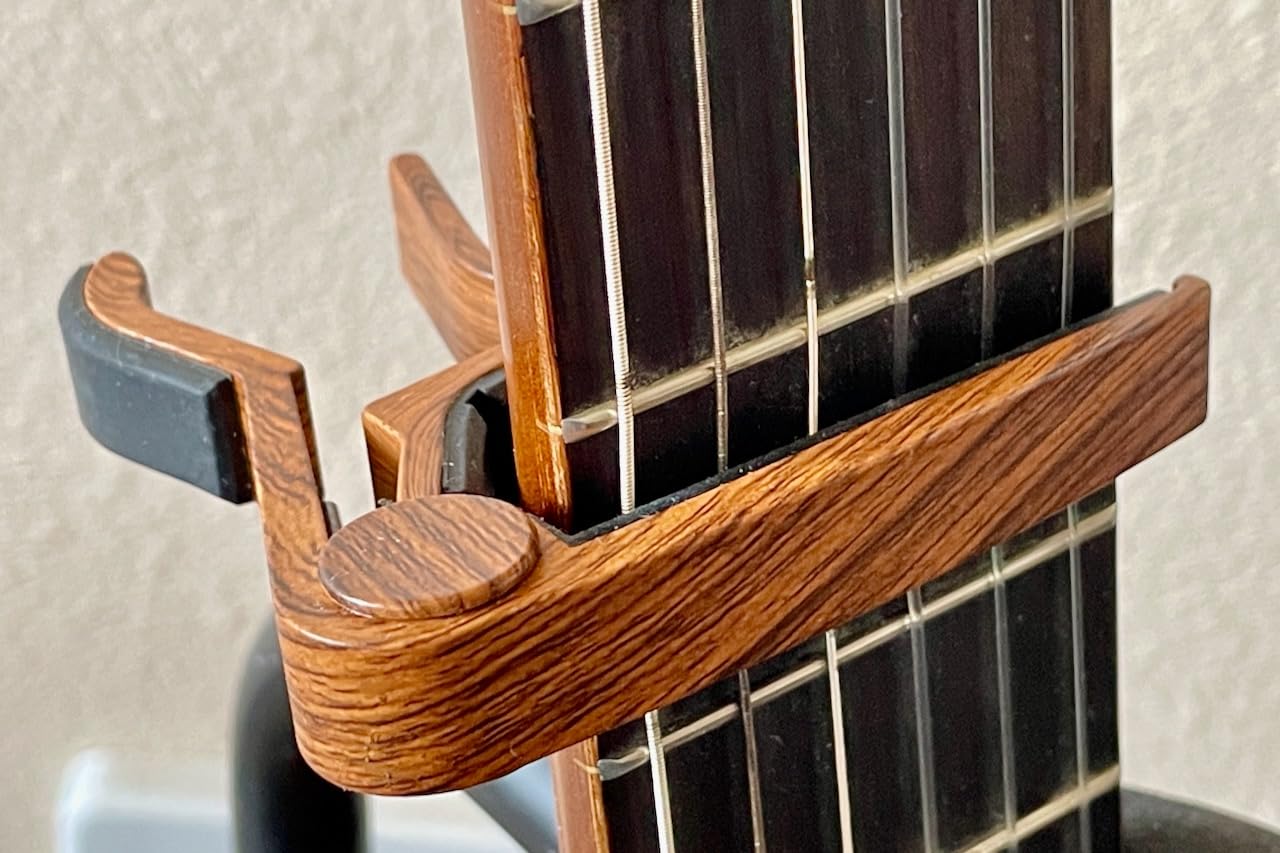
The trade-off is width. The MOREYES is intentionally wider than a standard trigger capo, so it does not fit narrow steel-string necks. If you play both steel-string and classical, you would need a second capo for the steel-string. We also noticed that some packages arrive without the promised picks – the value drops sharply if the picks are missing.
Who it is for
Classical guitar students, nylon-string players on a tight budget, and anyone who plays a wider-neck classical guitar and is tired of trigger capos that will not fit.
What to know before you buy
Check the package on arrival for the picks. If they are missing, contact the seller – they usually replace quickly.
Capo Types Explained: Trigger vs Screw vs Partial vs Roller
Understanding the four main capo types makes choosing the right one much easier. Each design solves a different problem, and serious players often own more than one.
Trigger capos use a spring-loaded clamp operated with one hand. The Kyser, WINGO, Dunlop, and Ernie Ball Axis are all trigger capos. They are the fastest to apply mid-song, which is why live performers love them. The trade-off is that spring tension is fixed – you cannot dial it down for a guitar that is sensitive to going sharp.
Screw capos use a thumbscrew, roller, or lever to dial in precise tension. The Shubb C1, D’Addario NS Tri-Action, G7th Performance 3, and Paige are screw-style capos. They are slower to apply, but they give you complete control over how much pressure sits on the strings. For studio recording and classical playing, screw capos are the standard.
Partial capos clamp only certain strings instead of all six. They are essential for alternate tunings like DADGAD, open G, and drop D, where you capo across five, four, or even three strings. Common partial capos include the Kyser Short-Cut (a 5-string partial) and the Third Hand Capo (a 4-string partial). If you play folk, Celtic, or modern fingerstyle, a partial capo in your case is worth its weight.
Roller capos use a rolling bar instead of a flat pad to spread pressure. They are gentler on nylon strings and a good choice for classical and flamenco players. The G7th Performance 3 ART and several D’Addario models use roller or roller-like technology.
How to Choose the Right Capo for Your Guitar
The right capo depends on three things: your guitar type, how you play, and how much you want to spend. Here is the decision framework our staff uses with customers every week.
Match the capo to your neck profile. Classical and 12-string guitars have wider necks than most steel-string acoustics and electrics. A standard trigger capo may not fit; a wider roller, partial, or dedicated classical capo (Paige, G7th, MOREYES) is the safer pick.
Decide whether you need adjustable tension. Spring capos are convenient but can pull sensitive guitars sharp. If you record, play in drop tunings, or own a vintage instrument, the extra cost of a screw or tri-action capo pays off quickly in tuning stability.
Check the padding. Look for rubber or silicone contact points, especially if your instrument has a vintage nitrocellulose finish. Cheap plastic pads can mark necks over time.
Consider one-handed operation. If you switch keys mid-song or play standing up, a one-handed trigger or tri-action capo (Kyser, D’Addario, G7th) is essential. If you set it once and play, two-handed screw capos are fine.
Set a budget. There are great capos at every price. The WINGO at the bottom and the G7th Performance 3 at the top both earn their place, and the Kyser in the middle is the sweet spot for value.
How to Use a Capo the Right Way
Positioning matters more than the capo itself. Place the capo just behind the fret you want to use as the new nut, not on top of it. Clamping on top of the fret causes buzz; clamping too far back leaves the strings too long and harms intonation.
Retune after clamping. Even the best capo changes the tension on the strings slightly. After you place the capo, play each open string and adjust the tuning. This single step solves 90 percent of the “my capo puts my guitar out of tune” complaints we hear in our shop.
Avoid the first fret. Clamping at fret 1 leaves very little string to vibrate, which sounds thin and is hard to intonate. Fret 2 and up give much better tone.
Check for buzz on every string. Strum each string individually. If anything buzzes, reposition the capo slightly forward or back, or check that you have the right tension for your guitar.
Store it on the headstock when not in use. Most capos are designed to park on the headstock between songs, which keeps them within reach and prevents them from rolling off your music stand.
Frequently Asked Questions
Are Kyser capos good?
Yes. The Kyser Quick-Change is consistently rated as one of the best capos on the market, with more than 10,000 reviews averaging 4.8 stars. Our testing confirmed it is reliable, durable, and easy to use one-handed. It is the capo we recommend to most acoustic and electric players.
What is the best capo for a classical guitar?
For classical nylon-string guitar, the Paige capo and the G7th Performance 3 (in classical, silver) are the top choices. Both use wider clamps and even pressure distribution designed for the lower tension and wider necks of classical instruments. Standard trigger capos often pull classical strings sharp or fail to fit wider necks.
Are expensive capos worth it?
For most players, a mid-priced trigger capo like the Kyser is enough. If you record professionally, play a high-end instrument, or need fully adjustable tension for tuning accuracy, premium capos like the G7th Performance 3 or Shubb Deluxe are worth the extra cost. The clearest gains are intonation stability, neck protection, and refined tension control.
What is the difference between a trigger capo and a screw capo?
A trigger capo uses a fixed spring to clamp and can be operated with one hand. It is fast and convenient but you cannot adjust the tension. A screw capo uses a thumbscrew, roller, or lever to dial in precise tension. It takes two hands to operate but gives you complete control over clamping pressure, which matters for recording and for guitars that go sharp easily.
Do capos damage guitar necks?
A well-designed capo with rubber or silicone padding will not damage a guitar neck under normal use. Avoid leaving a capo clamped on the neck for long periods when you are not playing, and never clamp over the neck joint. For vintage guitars with nitrocellulose lacquer, choose a capo with inert silicone pads (such as the G7th Performance 3) to avoid chemical reactions.
What is a partial capo used for?
A partial capo clamps only certain strings instead of all six, which is essential for alternate tunings like DADGAD, open G, and drop D. With a partial capo you can play familiar chord shapes in an open tuning without re-tuning the guitar. Common partial capos include the Kyser Short-Cut (five strings) and the Third Hand Capo (four strings).
Final Verdict: Which Capo Should You Buy?
After three months of testing capos across acoustic, classical, and electric guitars, our Editor’s Choice remains the Kyser Quick-Change. It is the right capo for most players: fast, reliable, durable, and priced for everyone.
If you play a classical nylon-string guitar or a vintage acoustic with a sensitive neck, spend the extra on the Paige capo or the G7th Performance 3 – the even pressure and inert pads are worth it. If you are on a tight budget, the WINGO delivers more value than its price suggests, and the Salvori is a strong starter kit. And if you record professionally or care deeply about intonation, the Shubb C1 or D’Addario NS Tri-Action will give you the tuning stability that trigger capos cannot.
Whichever best capo you choose from this list, remember the two tips that fix more problems than any capo upgrade: place the capo just behind the fret, and retune after clamping. Those two habits will get you 95 percent of the way to clean, in-tune capoing – the rest is choosing the right tool for your guitar.