
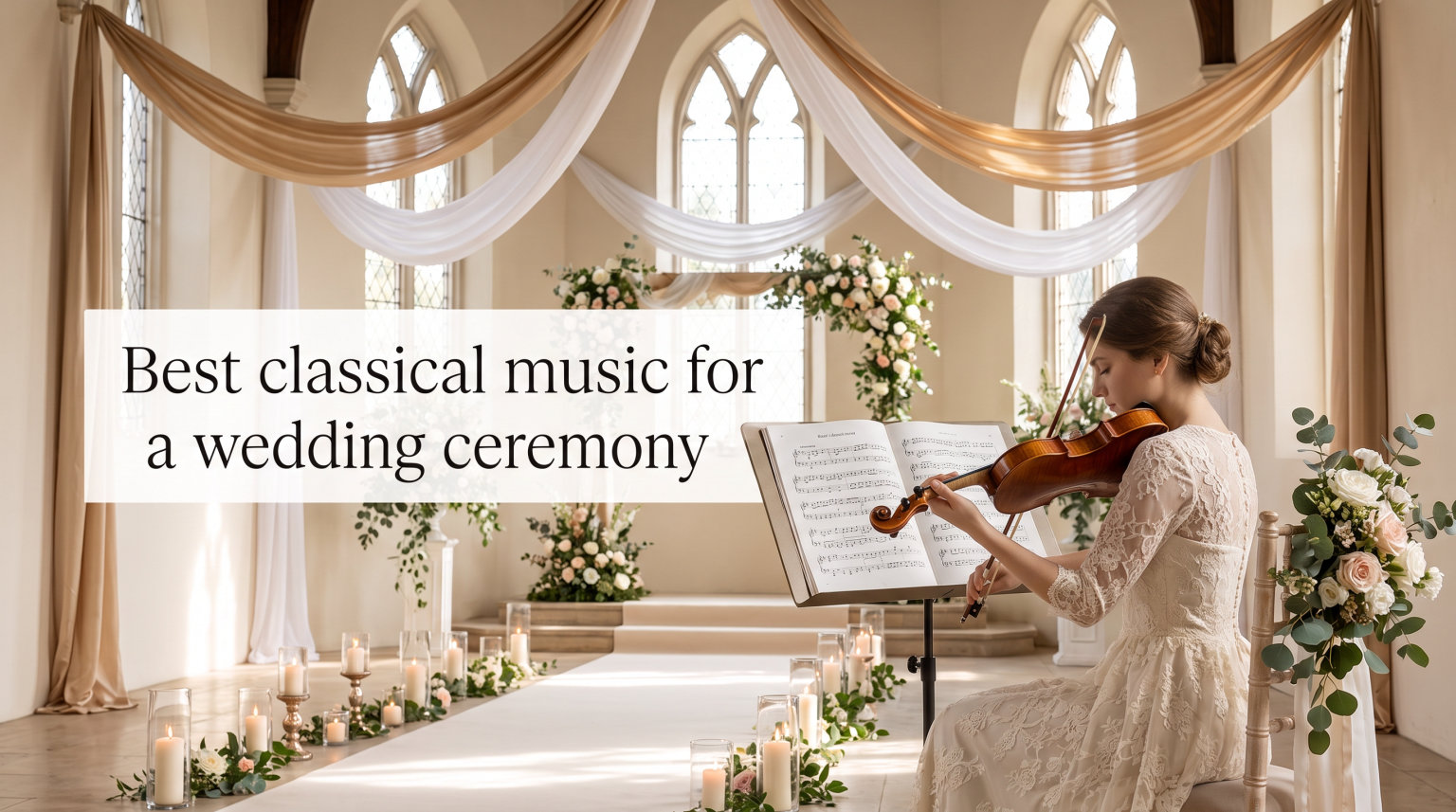
Picking the best classical music for a wedding ceremony is one of the most personal decisions in the entire planning process. I have sat through dozens of weddings as a guest and helped plan two as a family member, and every time the music shaped the moment more than almost anything else. The right piece carries the bride down the aisle, fills the silence while you sign the register, and lifts the room as you walk back out as a married couple.
Our team at The Classical Shop has spent years listening to what actually works in real venues, from grand cathedrals to intimate gardens. We pulled together this guide to help you build a flowing ceremony from the first prelude note to the last recessional chord. You will find timeless staples, modern crossover options, film score suggestions, and practical advice you can use right away.
Table of Contents
Our Top Classical Picks for Wedding Ceremonies at a Glance
If you only have a minute, here are the pieces our team recommends without hesitation for 2026 weddings.
Prelude: Handel Water Music Suite, Pachelbel Canon in D, Bach Air on the G String
Bridal Processional: Pachelbel Canon in D, Wagner Bridal Chorus, Bach Jesu Joy of Man’s Desiring
Hymn (church): Jerusalem, Amazing Grace, All Things Bright and Beautiful
Signing the Register: Handel Largo from Xerxes, Bach Sheep May Safely Graze, Schubert Ave Maria
Recessional: Mendelssohn Wedding March, Handel Hornpipe, Beethoven Ode to Joy
Modern Crossover: Vitamin String Quartet Taylor Swift covers, Bridgerton-style string arrangements
These cover the structure most ceremonies follow, and we expand on each one with timing notes and alternatives below.
Prelude Music Sets the Tone Before Your Ceremony Begins
Prelude music runs from when your first guests arrive until the processional begins, so it usually needs to fill 20 to 30 minutes. The right prelude feels welcoming and gentle without drawing attention away from the people gathering. Our team usually recommends starting with three or four familiar pieces in a flowing order so the volume stays soft and conversational.
Handel’s Water Music Suite No. 1 in F Major is one of the safest opening choices because every movement flows into the next and almost every musician can play it. Pachelbel’s Canon in D also works as prelude music even though many people save it for the processional, and it signals to guests that the ceremony is about to begin.
Bach’s Air on the G String from his Orchestral Suite No. 3 is another reliable prelude piece that sounds beautiful on strings, organ, or piano. Delibes’ Flower Duet from Lakme brings a softer, more romantic color that works especially well in garden venues. We also like Albinoni’s Adagio in G Minor for a more reflective mood during the final minutes before the processional.
The Best Classical Music for Walking Down the Aisle
The processional is the single most photographed musical moment of the ceremony, so the piece needs to feel grand without overwhelming the entrance. Pachelbel’s Canon in D has become the most popular processional of the last forty years for good reason. The repeating bass line gives the bride a steady walking tempo, and the chords build gradually so the music feels like it grows with the moment.
Wagner’s Bridal Chorus from Lohengrin is the traditional alternative and still appears in around a third of weddings we see. Many couples now skip it because it is so closely tied to Western church tradition, and the Reddit classical music community regularly asks for alternatives. If you want something that still reads as formal but feels less expected, Bach’s Prelude in C Major from The Well-Tempered Clavier is a short, stately option that works beautifully on organ or piano.
For string quartet ensembles, Handel’s Arrival of the Queen of Sheba is bright, triumphant, and lasts about three minutes, which fits perfectly with a traditional aisle walk. Bach’s Jesu Joy of Man’s Desiring is our team’s most recommended processional for church services because the congregation often recognizes the melody and it scans as devotional without being heavy.
Several of our most engaged readers also love Beethoven’s Für Elise for the bridal entrance in smaller ceremonies. The pacing works for shorter aisles, and the melody is universally recognized without feeling like a cliché.
Church Hymns Add Sacred Meaning to Religious Wedding Ceremonies
Hymns are how the congregation participates in the music during a church wedding, so the choices should reflect the people in the pews as much as the couple at the altar. The four most-requested hymns at weddings we have seen are Amazing Grace, Jerusalem, All Things Bright and Beautiful, and Guide Me O Thou Great Redeemer.
Jerusalem by Parry has become especially popular over the last decade, partly because of royal wedding traditions and partly because of its soaring, singable chorus. Amazing Grace remains the most requested hymn for the signing of the register because the tune is short, recognizable, and emotionally grounded. All Things Bright and Beautiful works well as a processional hymn when you want something gentler than the standard organ repertoire.
Our team always reminds readers to confirm the hymn words with your officiant ahead of time. Some congregations only know two or three verses, and printing the full set in the order of service removes any hesitation about joining in.
Signing the Register Music Calls for Longer, Reflective Pieces
The signing of the register can take anywhere from three to eight minutes depending on your venue and how many documents you are completing. This is one of the most common pain points we hear from couples on wedding forums. You need classical music that fills the time without sounding repetitive and that holds the room’s attention while everyone watches you sign.
Handel’s Largo from Xerxes (also known as Ombra mai fu) is one of our strongest recommendations for this moment. It lasts over four minutes and has a gentle, hymn-like quality that works perfectly for paperwork. Bach’s Sheep May Safely Graze from the Hunting Cantata is another reliable pick because the melody wanders gracefully without ever feeling rushed.
For something more romantic, Schubert’s Ave Maria gives you a full five minutes of reflective beauty, and the same piece in Bach-Gounod arrangement works if you prefer a slightly lighter sound. Panis Angelicus by Cesar Franck rounds out our top picks for register signing, especially for church ceremonies where the Latin text carries devotional weight.
Recessional Music Keeps the Joy Going as You Exit
The recessional is the easiest moment to get right because almost any upbeat classical piece will work. Mendelssohn’s Wedding March from A Midsummer Night’s Dream is the default choice and still sounds triumphant after 180 years of weddings. Our team loves it for one specific reason: it cues the entire room to stand and smile, which is exactly the energy you want as you walk out.
For a recessional that feels bright without being predictable, the Hornpipe from Handel’s Water Music Suite No. 1 is our favorite alternative. It dances underfoot and feels celebratory in a way that suits the moment perfectly. Beethoven’s Ode to Joy from Symphony No. 9 is another crowd-pleaser that works beautifully on organ or brass when you want a recessional with real volume behind it.
Couples who want something joyful but quieter often choose Vivaldi’s Spring from The Four Seasons. The first movement has clear walking energy, and the melody is recognizable enough that guests often start humming along as the wedding party returns down the aisle.
Modern Classical Crossover Brings a Fresh Sound to Weddings
Modern classical crossover has moved from a niche trend to a wedding staple over the last five years, and our team is firmly on board. The Bridgerton-era string covers introduced a whole generation to what a string quartet can do with familiar melodies, and couples now ask for Vitamin String Quartet arrangements of everything from Taylor Swift to Coldplay.
The Piano Guys, 2CELLOS, and Lindsey Stirling have all built catalogs that translate beautifully to a ceremony moment. We especially like 2CELLOS’ arrangement of Hallelujah for the signing of the register because it sounds classical at first listen but rewards anyone who knows the original melody. Stirling’s cover of A Thousand Years by Christina Perri works surprisingly well as a processional in outdoor venues.
If you are blending traditional and modern, save the crossover pieces for the prelude or post-ceremony reception. Guests read that instantly as your personal taste without feeling like the ceremony strayed from its classical foundation.
Film Scores Make Beautiful Wedding Music Choices
Film scores are a quietly popular category that we think deserves more attention in wedding planning guides. Ennio Morricone’s Cinema Paradiso Love Theme is one of our team’s all-time favorite pieces for the bride’s entrance because it builds slowly without ever reaching a loud peak, which suits the moment perfectly.
Howard Shore’s Concerning Hobbits from The Lord of the Rings brings a quietly epic feel that works outdoors, while the main Lord of the Rings theme works as a recessional in unexpected ways. The piano theme from Pride and Prejudice (2005) by Dario Marianelli is another beautiful signing piece that holds the room’s attention without ever raising the energy too much.
My Heart Will Go On from Titanic has been used at weddings for over two decades, and while it can feel earnest in the wrong setting, it works when paired with a string trio that lets the melody breathe. Composers like Hans Zimmer and Joe Hisaishi have also entered the wedding conversation because their themes translate so well to solo piano.
Royal Weddings Have Shaped the Classical Pieces Couples Choose
Royal weddings have given us some of the most influential classical choices of the last century. Queen Victoria’s 1840 wedding made Wagner’s Bridal Chorus a permanent fixture in Western weddings, and Princess Diana’s 1981 wedding at St Paul’s Cathedral used the Trumpet Voluntary by Jeremiah Clarke as her processional.
Prince Harry and Meghan Markle’s 2026-era wedding featured Stand By Me by Ben E. King for the processional, but the prelude music included several classical pieces that influenced couples who followed. The royal wedding format with choral music, classical hymns, and a string orchestra continues to inspire couples having cathedral ceremonies today.
Even if your venue looks nothing like Windsor Castle, drawing inspiration from royal ceremonies can help you make confident choices about formality and pacing. Our team recommends watching a few full ceremony recordings to hear how the music flows between moments, because royal planners have generations of experience with this structure.
Choosing Between a String Quartet, Organ, and Piano
The instrument you choose changes the entire sound and feel of your ceremony, even when the pieces are the same. A string quartet is our team’s most flexible recommendation because it works in churches, gardens, vineyards, and ballrooms with no amplification adjustments. Two violins, a viola, and a cello can play nearly anything on our recommendation list.
An organ is the right choice for formal church weddings where grandeur matters more than intimacy. The volume can be overwhelming in a small chapel, so we always suggest doing a rehearsal with your organist beforehand. A piano is the most portable option and works beautifully for civil ceremonies and small indoor venues.
A solo harp is a romantic alternative for outdoor ceremonies, though it limits you to pieces specifically arranged for harp. A harp and flute duo is one of our favorite combinations for gardens because the gentle volume complements birds and breezes instead of fighting them.
For very large venues, a chamber ensemble of two to six musicians gives you the volume of an organ with the warmth of strings. Budget-conscious couples often start with a string trio (drop the second violin) and add players back in if budget allows.
Church vs Civil Ceremony Music Needs Different Approaches
Church weddings come with built-in musical traditions, and our team encourages you to lean into them rather than work around them. Most churches have a resident organist who can also recommend hymns that suit your venue’s acoustics. You will usually need to choose two hymns, a processional, a recessional, and signing music for a full church ceremony.
Civil ceremonies give you far more musical freedom. You can use crossover pieces, film scores, secular classical works, and any instrument you can hire and transport. Civil venues rarely provide musicians, so you will usually book a string quartet or solo performer separately, often through a local music agency.
Outdoor weddings sit between the two. You have the same freedom as a civil ceremony, but acoustic challenges matter more. Wind, traffic, and crowd size can swallow solo instruments, which is why we recommend amplified quartets or wind ensembles for open-air venues in 2026.
Practical Tips for Planning Your Classical Wedding Music
Our team has helped enough couples through this process to know that the practical details matter as much as the piece selection. Build your music list in the order the ceremony will actually run, including the prelude, bridesmaids’ entrance, bride’s processional, hymns, signing, recessional, and post-ceremony exit music.
Time every piece on your phone before finalizing. Pachelbel’s Canon in D runs around four and a half minutes, which is plenty for a long aisle, while the Bridal Chorus only lasts about two minutes and can feel rushed in a deep church. Let your musicians know which tempo you prefer for each piece, because the difference between 80 and 100 beats per minute completely changes how Wagner’s Bridal Chorus feels.
Always plan a backup piece for every moment. Weddings rarely run exactly on time, and your musicians may need to fill gaps, hold a cue, or shorten a piece. Most professional string quartets and pianists will know three to five alternatives for each ceremony slot if you give them a sense of the mood you want.
Confirm venue rules about amplification and external musicians at least eight weeks ahead. Some churches only permit organ or approved organists, and some civil venues have noise restrictions that affect live ensembles. Outdoor venues may require permits for amplified music in 2026 depending on your local authority.
Send your final run sheet to the lead musician two weeks before the wedding with timings, key transition cues, and contact details for the day. Our team includes a contact for the planner, the officiant, and the venue coordinator so the musicians can resolve any last-minute questions without bothering the couple.
Finally, do a full sound check at the venue if you can. The acoustics in an empty church on a Tuesday morning sound nothing like a full ceremony on a Saturday afternoon. Even a brief walkthrough with your musicians will reveal whether the string quartet needs a small amplifier or whether the organ alone will carry the room.
FAQs
What is the most beautiful wedding song of all time?
Pachelbel’s Canon in D is the piece most couples and musicians name when asked this question. It combines a steady walking tempo, layered harmonies, and a familiar structure that has made it the most-played wedding processional for over four decades. Schubert’s Ave Maria and Bach’s Air on the G String are close runners-up.
What is the classical song played at weddings?
The two classical pieces most associated with weddings are Wagner’s Bridal Chorus for the processional and Mendelssohn’s Wedding March for the recessional. Both date from the mid-1800s and have become standard choices in Western church and civil ceremonies. Pachelbel’s Canon in D is now a frequent third option for the processional.
What Beethoven song is played at weddings?
Beethoven’s Ode to Joy from Symphony No. 9 is the most common Beethoven piece at weddings, especially as a recessional or church recessional. Für Elise is often played for the bride’s entrance, and the slow movement of Beethoven’s Piano Concerto No. 5 Emperor works beautifully as signing music. The Moonlight Sonata movement 1 is sometimes used during the prelude in intimate ceremonies.
What is the #1 song played at weddings?
Across both classical and modern wedding music, the most-played song overall is Watt’s My Heart Will Go On from Titanic for pop weddings, while the most-played classical piece is Pachelbel’s Canon in D. For processionals specifically, Pachelbel and Wagner’s Bridal Chorus swap places depending on the ceremony type and region.
How long should signing the register music be?
Plan for at least five minutes of register signing music in 2026 weddings. Good length options include Handel’s Largo from Xerxes, Bach’s Sheep May Safely Graze, Schubert’s Ave Maria, and Cesar Franck’s Panis Angelicus. If your ceremony requires more paperwork, Albinoni’s Adagio in G Minor and Mozart’s Piano Concerto No. 21 second movement can run longer.
Can a string quartet play organ wedding music?
Some organ pieces can be arranged for string quartet, but they often lose the grandeur that makes organ music special. For better results, our team recommends saving organ pieces for venues with an actual organ and choosing string-friendly alternatives like Bach’s Air on the G String, Pachelbel’s Canon in D, or Handel for string quartet processionals.
Final Thoughts on Choosing Your Wedding Ceremony Music
The best classical music for a wedding ceremony is the music that lets you forget the music and stay present in the moment. Our team at The Classical Shop has watched couples second-guess their choices until the first note of Pachelbel’s Canon in D, and then everything settles into place. Pick pieces that feel honest to your taste, plan for the timing, trust your musicians, and the ceremony will carry itself.
Start with one or two pieces you already love and build the rest of the list around them. If you want a deeper look at the composers behind these works, our shop includes detailed liner notes and full album recommendations alongside every collection we feature.