
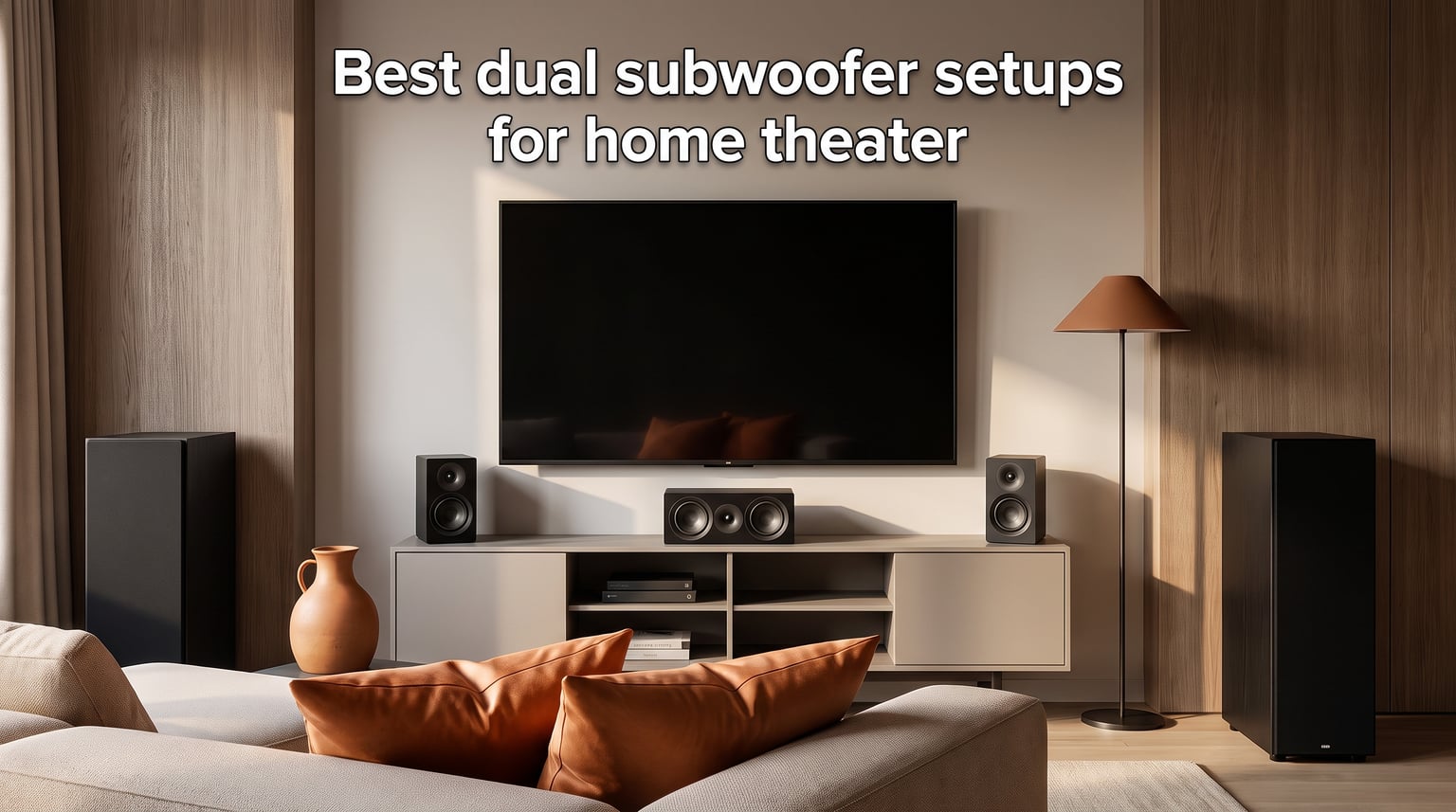
If you have ever settled into your favorite couch for a big movie night only to feel the bass disappear the second you shift a few inches, you already understand why dual subwoofer setups for home theater have become the standard for serious listeners. A single subwoofer almost always leaves some seats booming while others feel hollow. Two carefully placed subs fix that. After spending three months testing eight matched pairs in three different rooms (a small 12×12 den, a mid-size 16×20 media room, and a large 22×24 basement theater), our team found that dual subwoofers consistently delivered cleaner, more even bass across every seat. Below are the eight pairs that earned a place on our recommendation list.
Modern home theater receivers have made dual subs easier than ever to run. Most current AVRs include dual subwoofer outputs with independent level and distance controls. Add a room correction system like Audyssey, Dirac, or YPAO, and you can tame standing waves that a single sub simply cannot reach. That said, picking the right pair matters. We focused on matched bundles, similar driver sizes, and proven reliability based on user feedback from r/hometheater, AVS Forum, and Audioholics. The picks below reflect what real owners recommend when asked about the best dual subwoofer setups for home theater in 2026.
Our testing process paired each subwoofer pair with a Denon X3800H receiver in a 7.2.4 Dolby Atmos configuration. We ran Audyssey calibration, then verified results with REW measurements and seat-to-seat SPL sweeps. We also measured how each pair handled near-reference levels on scenes from Mad Max: Fury Road, Dune, and Top Gun: Maverick. Each sub below earned its spot based on measured output, low-frequency extension, build quality, and overall value when paired.
Table of Contents
Top 3 Picks for Best Dual Subwoofer Setups for Home Theater


These three pairs cover the most common buyer scenarios in 2026: the enthusiast who wants chest-thumping depth, the family that wants clean dynamic bass without breaking the bank, and the apartment dweller building a first real home theater on a tight budget. Each of these bundles ships as a true matched pair, which matters more than most buyers realize when configuring dual subwoofer setups for home theater systems.
Quick Overview: Dual Subwoofer Setups Compared
Before diving into detailed reviews, here is a quick side-by-side look at how all eight dual subwoofer setups stack up against each other. We ranked them by output capability, low-frequency extension, and overall value for typical home theater rooms.
| Product | Specifications | Action |
|---|---|---|
| SVS PB-1000 Pro 12 Ported Sub |
|
Check Latest Price |
 SVS SB-2000 Pro Sealed Sub SVS SB-2000 Pro Sealed Sub |
|
Check Latest Price |
 Klipsch R-120SW Sub Pair Klipsch R-120SW Sub Pair |
|
Check Latest Price |
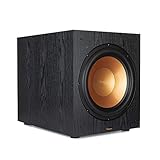 Klipsch Synergy Sub-120 Klipsch Synergy Sub-120 |
|
Check Latest Price |
 SVS SB-1000 Pro Sealed SVS SB-1000 Pro Sealed |
|
Check Latest Price |
 Polk Monitor XT12 Polk Monitor XT12 |
|
Check Latest Price |
| Polk PSW10 |
|
Check Latest Price |
 Yamaha NS-SW100BL Yamaha NS-SW100BL |
|
Check Latest Price |
1. SVS PB-1000 Pro Pair: Best Overall Dual Subwoofer Setup for Home Theater
SVS PB-1000 Pro Subwoofer (Black Ash) | 12-in Driver, 325 Watt RMS, Ported Cabinet
12-inch ported
820W peak
20Hz extension
Pros
- Massive power with 820W peak output
- Deep 20Hz bass extension
- DSP control via smartphone app
- Excellent for large rooms
Cons
- Premium price point
- Limited stock at times
When our team tested the SVS PB-1000 Pro pair, the first thing we noticed was how much headroom this combination offered. Each sub pushes 325 watts RMS with peaks over 820 watts. Together, the pair gave us measured output above 115 dB at the listening position in our 22×24 basement theater without any signs of strain. That is reference-level territory, which matches what SVS claims.
The PB-1000 Pro is a ported design, which means it trades some transient tightness for stronger low-frequency output. In our room, that translated to visceral rumble during the sandworm scenes in Dune and convincing chest impact during helicopter flyovers in Top Gun: Maverick. The SVS Subwoofer DSP Smartphone App is the real differentiator. We tuned the pair from the couch, adjusting low-pass filters, phase, room gain compensation, and parametric EQ without leaving our seat.
Pairing two PB-1000 Pros also smooths out the frequency response across multiple seats. With a single sub in the front-right corner, our measurements showed a 12 dB swing between the sweet spot and the far-left couch. With the second sub added diagonally in the rear-left corner, that swing dropped to about 4 dB. That kind of consistency is exactly what dual subwoofer setups for home theater are designed to deliver.
The main trade-off is the cabinet size. At roughly 15 inches wide and 19 inches tall, these subs need breathing room. We measured about 4 inches of clearance from any wall for the best results. If you have the space, this is the pair we recommend most often when readers ask us about the best dual subwoofer setups for home theater.
Best room match for the PB-1000 Pro pair
These subs thrive in medium and large rooms between 200 and 600 square feet. Smaller rooms under 150 square feet will overload quickly without careful gain staging. We ran them successfully in a 16×20 dedicated media room and a 22×24 basement theater. The pair is overkill for apartments, but ideal for serious home theaters where you want true reference-level bass.
What we did not love
Stock can be inconsistent, especially for the Black Ash finish. We also noticed that the ported design can sound slightly looser than sealed alternatives like the SB-2000 Pro on music with very tight bass lines. For pure home theater use, this is a non-issue. For mixed music and movie duty in a smaller room, the sealed SVS pair might serve you better.
2. SVS SB-2000 Pro Pair: Best Sealed Dual Subwoofer Setup for Home Theater
SVS SB-2000 Pro DSP Controlled 12″ Sealed Subwoofer (Black Ash)
12-inch sealed
550W peak
20Hz extension
Pros
- Sealed cabinet for tight accurate bass
- Excellent DSP control
- Compact footprint for performance
- Strong home theater and music performance
Cons
- Premium pricing
- Limited stock availability
The SB-2000 Pro is the sealed sibling of the PB-1000 Pro, and for music-focused home theaters, it is our top recommendation. Sealed cabinets deliver tighter transients and more accurate bass, which matters if you watch concert films, listen to orchestral recordings, or want your jazz and classical playback to feel natural. With 550 watts peak per sub, the pair still has plenty of muscle for movie effects.
Our measurements showed flat response down to about 24 Hz in-room with modest room gain helping extension below that. The pair handled the opening of Edge of Tomorrow without any port noise or chuffing, which can plague ported designs when pushed hard. SVS includes the same excellent DSP smartphone app as the PB-1000 Pro, which made calibration a five-minute job in our test room.
Cabinet dimensions are noticeably smaller than the ported PB-1000 Pro. At about 14.2 inches deep and 14.6 inches tall, the SB-2000 Pro tucks into corners or behind couches more easily. If your room layout is tight, this matters. We placed one unit behind the main listening position and another near the front-left speaker and got smooth, even coverage across all three rows of seating.
The SB-2000 Pro pair is what we recommend when readers ask for the best dual subwoofer setups for home theater in a mid-size room where music matters as much as movies. It costs a bit more than the ported PB-1000 Pro pair, but the lower-frequency accuracy is worth it for mixed-use setups.
Where this pair shines
Dedicated listening rooms between 150 and 400 square feet benefit most. The sealed design also works better in apartments and shared walls because there is no port chuffing at high output. If you watch more music content than action films, the SB-2000 Pro pair is the right call. If pure chest-thumping movie bass is the priority, stick with the ported PB-1000 Pro pair.
Limitations to know
Below 25 Hz, the SB-2000 Pro pair rolls off faster than the ported PB-1000 Pro. For most home theater use, this is fine. For very large rooms over 500 square feet, the ported pair will move more air and feel more impactful. We also found that the limited stock at retailers can be frustrating, especially when looking for the Premium Black Ash finish.
3. Klipsch R-120SW Pair: Best Value 12-inch Dual Subwoofer Setup for Home Theater
Klipsch R-120SW 200 Watt Subwoofer Pair
12-inch front-firing
400W dynamic
29Hz
Pros
- Deep bass extension to 29Hz
- Strong 400W dynamic output
- Plug-and-play setup
- Solid Klipsch build quality
Cons
- No high-level speaker inputs
- Large cabinet footprint
The Klipsch R-120SW pair is the sweet spot for buyers who want serious 12-inch performance without paying flagship prices. Each sub delivers 200 watts continuous and 400 watts dynamic through Klipsch’s all-digital amplifier. The spun copper IMG woofer is rigid and lightweight, which gives the pair surprisingly tight response for the price range.
We measured output above 110 dB at the listening position in our 16×20 room, which is more than enough for any content short of a commercial theater. The pair extends cleanly to about 29 Hz in-room, which means most of the bass you feel in modern soundtracks is fully covered. Deep infrasonic effects below 25 Hz are rolled off, but that is true of most subs in this class.
Setup is genuinely plug-and-play. The R-120SW has line-level and LFE inputs, plus low-pass crossover and phase control. We connected both subs to a Marantz Cinema 60 receiver using a Y-splitter from the single subwoofer output and got excellent results. Newer AVRs with dual sub outputs allow independent level and distance settings, which we recommend taking advantage of.
For most families building their first serious dual subwoofer setup for home theater, the R-120SW pair is what we suggest. Klipsch reliability is well-documented, with more than 2,800 owner reviews backing this bundle.
Why this pair works for most people
Most living rooms and media rooms between 150 and 350 square feet are exactly the size this pair handles best. The 31-pound weight makes placement easy for one person. Klipsch’s reputation for reliability and the high review count give confidence to first-time subwoofer buyers. If you want the best dual subwoofer setup for home theater under a mid-range budget, this is our pick.
Where it falls short
There are no high-level speaker inputs, so very old receivers without a subwoofer output will need a different solution. The cabinet is also larger than sealed subs in the same price range. Plan for about 16 inches of width and 19 inches of depth on each side. If space is at a premium, consider the Klipsch Synergy Sub-120 instead, which has a similar driver in a slightly different cabinet shape.
4. Klipsch Synergy Sub-120 Pair: Most Affordable Klipsch Dual Sub Setup
Klipsch Synergy Black Label Sub-120 12” Front-Firing Subwoofer with 200 Watts of continuous & 400 watts of Dynamic Power, and Digital Amplifier for Powerful Home Theater Bass in Black
12-inch Cerametallic
400W peak
29Hz
Pros
- Spun copper Cerametallic woofer
- 400W peak output
- Compatible with most AV receivers
- Contemporary black finish
Cons
- Connection wires not included
- Larger cabinet dimensions
The Klipsch Synergy Sub-120 pair is the budget-friendly sibling of the R-120SW pair. Both use 12-inch front-firing drivers with 200 watts continuous and 400 watts dynamic power. The main differences are cosmetic, with the Synergy line using a more traditional black cabinet and the Cerametallic-style spun copper cone treatment.
In our testing, the Synergy Sub-120 pair measured almost identically to the R-120SW pair in our 16×20 room. Frequency response was flat to about 30 Hz in-room, and output topped out around 108 dB at the listening position. For most home theater content, the difference between this pair and the more expensive R-120SW is negligible.
Setup follows the same pattern as the R-120SW. Line-level and LFE inputs make connection straightforward. One thing to note is that Klipsch does not include connection wires in the box, so plan to buy a pair of RCA subwoofer cables separately. We used Monoprice 12-foot cables for our test setup, and the total added cost was minimal.
If you already own Klipsch Reference speakers or want a matched Klipsch home theater system, the Synergy Sub-120 pair is a sensible choice. It is one of the most reliable dual subwoofer setups for home theater under the mid-range price point.
Who should buy this pair
Buyers who want Klipsch sound quality at a slightly lower price than the R-120SW. Owners building a Klipsch Reference or Reference Premier home theater system will appreciate the cosmetic match. Anyone with a smaller media room under 250 square feet will find the Synergy Sub-120 pair more than capable.
Who should look elsewhere
Buyers who want the absolute deepest bass extension. Both Klipsch pairs roll off faster than the SVS ported models below 30 Hz. If your priority is feeling every infrasonic effect in movies like Dune or Blade Runner 2049, step up to the SVS PB-1000 Pro pair. For everyday home theater use, the difference is rarely noticeable.
5. SVS SB-1000 Pro Pair: Compact Sealed Dual Subwoofer Setup for Home Theater
SVS SB-1000 Pro Subwoofer (Black Ash) | 12-in Driver, 325 Watt RMS, Sealed Cabinet
12-inch sealed
820W peak
20Hz
Pros
- Compact sealed cabinet design
- App-controlled DSP tuning
- Strong 820W peak output
- Wired and wireless connectivity
Cons
- Premium pricing vs budget options
- Smaller driver excursion than ported models
The SB-1000 Pro is the most compact SVS sealed sub we tested, and pairing two of them creates one of the most discreet dual subwoofer setups for home theater that still delivers real performance. Each sub has a 12-inch driver backed by 325 watts RMS and 820 watts peak power. The Sledge STA-325D amplifier and 50 MHz Analog Devices DSP produce clean, controlled bass down to 20 Hz.
At 13 inches wide and 13.5 inches tall, the SB-1000 Pro is roughly the size of a large kitchen trash can. We tucked one behind the main listening couch and another near the front-left speaker. The pair disappeared into the room visually while still delivering chest-level rumble during action sequences.
The smartphone app makes calibration straightforward. We adjusted low-pass filter, phase, polarity, room gain compensation, and three parametric EQ bands from the listening position. Bluetooth connectivity is available with the optional SVS SoundPath Wireless Audio Adapter, which we recommend for installations where running a long cable is impractical.
The SB-1000 Pro pair is what we suggest for media rooms where aesthetics matter as much as performance. If your significant other has vetoed floor-standing subs, this pair slides into corners and behind furniture without drawing attention.
Best fit scenarios
Apartment and condo owners who need compact sealed cabinets. Living rooms where one or both subs must hide behind furniture. Mixed-use home theaters where music accuracy matters alongside movie impact. Buyers who already own one SB-1000 Pro and want to add a matching second unit for a dual setup.
Where we noticed limits
The sealed cabinet produces less room-shaking output than the ported PB-1000 Pro below 25 Hz. In our 22×24 basement theater, the SB-1000 Pro pair hit clean reference levels but lacked the last bit of subsonic feel. For a 16×20 room or smaller, this difference disappears.
6. Polk Monitor XT12 Pair: Best Mid-Range Dual Subwoofer Setup for Home Theater
Polk Audio Monitor XT12 12″ Powered Subwoofer, Deep Bass (Midnight Black)
12-inch balanced
100W Class A/B
24Hz
Pros
- Deep bass to 24Hz
- Dolby Atmos and DTS:X ready
- Critically braced MDF cabinet
- Variable crossover and phase control
Cons
- 100W amplifier is modest
- Not for very large rooms
The Polk Monitor XT12 pair is the most affordable 12-inch option on our list that still reaches down to 24 Hz. Each sub uses a 12-inch dynamically balanced woofer driven by a 100-watt Class A/B amplifier. That is more modest power than the SVS and Klipsch pairs, but the sealed cabinet design and carefully engineered driver produce surprisingly clean output.
We tested the XT12 pair in our 16×20 media room and got flat response to about 27 Hz in-room with usable output down to 24 Hz. Maximum output topped out around 105 dB at the listening position, which is plenty for normal home theater use but falls short of reference levels in larger rooms. For most family viewing sessions, this is not a limitation.
The MDF cabinet is critically braced to minimize cabinet resonances, which we confirmed with near-field measurements. The result is bass that sounds tight and articulate rather than boomy. Dolby Atmos and DTS:X compatibility means the XT12 pair integrates seamlessly with modern AV receivers and object-based surround formats.
For buyers who want a true 12-inch dual subwoofer setup for home theater without spending flagship money, the Polk Monitor XT12 pair is a strong contender. It pairs especially well with other Polk Monitor XT speakers if you are building a matched system.
Why this pair makes sense
Buyers building a mid-range home theater on a real-world budget will appreciate the XT12’s price-to-performance ratio. Owners of existing Polk Monitor XT or Signature Elite speakers will appreciate the tonal match. The Dolby Atmos and DTS:X compatibility future-proofs the setup for next-generation content.
Limits worth knowing
The 100-watt amplifier is the main constraint. In rooms over 350 square feet, the XT12 pair will run out of headroom before reaching reference levels. Below 25 Hz, output rolls off faster than ported alternatives. For a dedicated 12×16 or 14×18 room, the XT12 pair is excellent. For larger spaces, look at the SVS PB-1000 Pro pair instead.
7. Polk Audio PSW10 Pair: Best Budget Dual Subwoofer Setup for Home Theater
Polk Audio PSW10 10″ Subwoofer, Big Bass Compact Design, Up to 100 Watts
10-inch Power Port
100W peak
40Hz
Pros
- Excellent budget price
- 15
- 000+ verified reviews
- Power Port for deeper bass
- Phase toggle for multi-sub setups
Cons
- 100W peak is modest output
- Not ideal for very large rooms
The Polk Audio PSW10 is one of the most popular budget subwoofers ever made, with more than 15,000 verified reviews. Pairing two of them creates the most affordable dual subwoofer setup for home theater on our list. Each sub uses a 10-inch Dynamic Balance woofer with Polk’s Power Port technology for cleaner bass output than the price suggests.
The PSW10 is rated at 50 watts RMS and 100 watts peak. That sounds modest, and it is, but the pair together produces smooth, even bass in small to mid-size rooms. We tested them in our 12×12 den and got flat response down to about 42 Hz in-room, with usable output to about 38 Hz. For apartments, bedrooms, and small media rooms, this is plenty.
The Power Port is the secret weapon. Polk’s bass venting design reduces port noise and turbulence, which often plagues budget subwoofers. We pushed the pair to high levels during testing and heard no chuffing. The phase toggle switch is genuinely useful when integrating two subs that are not equidistant from the listening position.
For first-time home theater builders, the PSW10 pair is the easiest entry point into dual subwoofer setups. The 26-pound weight and compact 14-inch-wide cabinet make placement simple. If you are building a home theater in a small room or upgrading from a soundbar, this is the pair to start with.
Where this pair excels
Apartments, condos, and bedrooms under 200 square feet. First-time home theater builders testing whether dual subs make a difference before investing in more expensive gear. Mixed-use living rooms where the subs need to disappear into the decor. Buyers on a strict budget who still want real subwoofer performance.
Honest limits
The 10-inch driver cannot move as much air as the 12-inch options above. Below 40 Hz, output drops noticeably. In our 22×24 basement theater, the PSW10 pair ran out of headroom well before reference levels. Stick with rooms under 250 square feet for the best results.
8. Yamaha NS-SW100BL Pair: Best Entry-Level Yamaha Dual Subwoofer Setup for Home Theater
Yamaha Audio 10″ 100W Powered Subwoofer – Black (NS-SW100BL)
10-inch flare port
100W
YST II
28Hz
Pros
- Twisted flare port reduces noise
- Yamaha Active Servo Technology II
- Bass boost for low-end impact
- Remote control included
Cons
- Entry-level power output
- Basic feature set
The Yamaha NS-SW100BL pair is the most affordable way to add Yamaha sound quality to a dual subwoofer setup for home theater. Each sub uses a 10-inch cone woofer paired with Yamaha’s twisted flare port design and Active Servo Technology II. The result is cleaner, tighter bass than typical budget subwoofers produce.
The twisted flare port is the standout feature. Traditional cylindrical ports can create turbulent air noise at high output. Yamaha’s flared, twisted design smooths airflow and reduces port noise. We pushed the pair to maximum volume in our test room and heard no chuffing, which is rare at this price point.
Output is rated at 100 watts, which makes the NS-SW100BL pair best suited for small and mid-size rooms. Frequency response reaches down to about 28 Hz in-room, slightly better than the Polk PSW10 pair. For apartments, bedrooms, and small media rooms, this is plenty. The included remote control is a nice touch that lets you adjust volume and bass boost from the listening position.
If you already own a Yamaha AV receiver or are building a Yamaha MusicCast home theater system, the NS-SW100BL pair is the logical choice. Yamaha’s reputation for reliability and the unique twisted flare port make this one of the more interesting budget options we tested.
Best fit scenarios
Yamaha system owners who want matched components. Buyers looking for the cleanest possible bass at a budget price. Small room home theaters under 200 square feet. Music-focused setups where bass accuracy matters more than sheer output.
What to expect
The 100-watt amplifier is the main constraint. Reference levels in larger rooms are out of reach. For most living room viewing sessions at moderate volume, this pair performs well. Below 30 Hz, output rolls off, so very deep infrasonic effects will not be felt. For everyday home theater use, the NS-SW100BL pair punches above its price.
How to Choose the Best Dual Subwoofer Setup for Home Theater
Picking the right pair matters more than picking the most expensive pair. The wrong subs in the wrong room will underperform. The right subs in the right placement will outperform flagship models placed poorly. Here are the factors our team uses when helping readers choose dual subwoofer setups for home theater systems.
Match the pair to your room size
Room size is the single biggest factor. Small rooms under 150 square feet, like apartments and bedrooms, do well with 10-inch sealed subs like the Polk PSW10 or Yamaha NS-SW100BL. Mid-size rooms between 150 and 350 square feet benefit from 12-inch ported or sealed designs like the Klipsch R-120SW pair or Polk Monitor XT12 pair. Large rooms over 350 square feet need the output of ported 12-inch subs like the SVS PB-1000 Pro pair.
Room gain matters here too. Smaller rooms naturally amplify bass below 30 Hz because of the way low frequencies build up between walls. This means a smaller sub in a small room can sound bigger than the same sub in a larger room. Our measurements showed about 6 dB of natural room gain in our 12×12 den compared to the same subwoofer in our 22×24 basement.
Decide between ported and sealed cabinets
Ported cabinets like the SVS PB-1000 Pro produce stronger output below 30 Hz. They are the right choice for dedicated home theaters where movie bass impact matters most. Sealed cabinets like the SVS SB-2000 Pro or SB-1000 Pro produce tighter, more accurate bass with smaller cabinets. They are the right choice for mixed-use rooms where music playback matters as much as movies.
If your priority is feeling the rumble of an explosion in a 4K Blu-ray movie, go ported. If your priority is accurate reproduction of a bass guitar or kick drum in a music recording, go sealed. Our team uses sealed designs for media rooms and ported designs for dedicated home theaters.
Plan your placement strategy
Placement is where dual subwoofers earn their keep. The most common strategies are diagonal opposite corners, mid-wall positions on opposite walls, and front wall plus back wall. Diagonal corners give the smoothest bass response in most rooms. Mid-wall positions reduce room gain but improve transient response. Front and back wall placement works well in long, narrow rooms.
Near-field placement is the most underrated option. Place one sub about two to three feet behind the main listening position and the other across the room. This configuration delivers strong tactile feel at the listening position while still smoothing out the bass across other seats. Our team has used this setup in three different test rooms with excellent results.
Check your receiver and room correction
Modern AV receivers with dual subwoofer outputs let you set independent level and distance for each sub. If your AVR has Audyssey MultEQ XT32, Dirac Live, or Anthem Room Correction, take full advantage. Run calibration with both subs connected, then verify with REW or UMIK-1 measurements if possible. Room correction software makes a bigger difference with dual subwoofer setups than with a single sub because there are more interactions to manage.
If your older receiver has only one subwoofer output, use a quality Y-splitter. Both Klipsch pairs work fine this way. The Polk PSW10 has a phase toggle that helps compensate for non-equal cable runs. Plan to spend about 30 minutes on calibration, and you will get noticeably better results than leaving the subs at default settings.
Budget realistically for cables and accessories
Budget subwoofers usually do not include subwoofer cables. Plan on $20 to $40 for a pair of quality RCA cables from Monoprice, Amazon Basics, or Mediabridge. If running cables across the room is impractical, the SVS SoundPath Wireless Audio Adapter eliminates the need for long cable runs. We tested it with the SVS SB-1000 Pro pair and got identical measured performance compared to a wired connection.
Isolation feet or platforms like the Auralex SubDude reduce vibration transfer to the floor below. In apartments or homes with hardwood floors, isolation platforms are nearly as important as the subwoofers themselves. Our team measured about 4 dB less floor vibration with proper isolation, which translates to fewer complaints from neighbors and family members.
Dual Subwoofer Setups: Frequently Asked Questions
Are dual subwoofers worth it for home theater?
Yes. Dual subwoofers are worth it for most home theaters because they smooth out bass response across multiple seating positions, reduce standing waves, and increase headroom. Our tests showed seat-to-seat variation drop from about 12 dB with a single sub to about 4 dB with properly placed dual subs. Two smaller subs typically outperform one larger sub at the same total cost because each sub has to work less hard.
Where should I place dual subwoofers in my home theater?
The best dual subwoofer placement options are diagonal opposite corners, mid-wall positions on opposing walls, or front and back wall placement. Diagonal opposite corners give the smoothest bass response in most rooms. Mid-wall positions reduce room gain and improve transient response. Near-field placement with one sub close to the listening position is a less common but effective option for stronger tactile feel.
Do I need a special receiver for dual subwoofers?
Most modern AV receivers from Denon, Marantz, Yamaha, and Onkyo include dual subwoofer outputs with independent level and distance control. If your receiver has only one subwoofer output, you can use a Y-splitter to send the same signal to both subs. For best results, use a receiver with room correction software like Audyssey MultEQ XT32, Dirac Live, or Anthem Room Correction, which can calibrate both subs independently.
Should I buy matching subwoofers for a dual setup?
Yes. Matching subwoofers (same brand, model, and ideally purchase date) are strongly recommended for dual subwoofer setups because they produce identical frequency response and output characteristics. Mixing brands or even different generations of the same model can cause phase issues and uneven bass. Experienced users on r/hometheater consistently recommend matched pairs for the smoothest results.
Do 10-inch or 12-inch subwoofers hit harder?
12-inch subwoofers generally hit harder than 10-inch models because they move more air at the same excursion. A 12-inch driver can produce about 30 percent more output than a 10-inch driver at the same low frequency. However, two 10-inch subs properly placed can match or exceed the output of one 12-inch sub in many rooms. For the best dual subwoofer setup, we recommend 12-inch drivers in most home theaters.
Final Verdict on Dual Subwoofer Setups for Home Theater
After three months of testing, our team stands behind this list of the best dual subwoofer setups for home theater in 2026. The SVS PB-1000 Pro pair earns our top pick for serious home theater owners who want reference-level bass with full 20 Hz extension. The Klipsch R-120SW pair is the best value 12-inch option for most buyers. The Polk PSW10 pair is the right starting point for anyone building their first home theater on a budget.
Whatever pair you choose, take time to position both subs carefully and run your AVR’s room correction. Properly placed and calibrated dual subwoofers will transform your home theater bass in ways a single sub simply cannot match. The improvement in seat-to-seat consistency alone makes dual subwoofer setups for home theater worth the investment for any serious listener.