

Freeze dried food is the closest thing to fresh food you can carry into the backcountry, and the machines that make it at home have come a long way. But when you line up the best freeze dryers for camping meal prep, only a handful of them are real vacuum chamber units at all. We read every spec sheet and every review block we could find, and the short version surprises most people.
Here is the direct answer. For camping meal prep, you want a vacuum chamber with a cold trap, a real vacuum pump and a batch capacity measured in pounds of raw food, because that is the number that decides whether a machine pays for itself. Of the eight machines in our lineup, only three publish those specifications. The other five are heated air dehydrators listed under the same name, and their own owners say so in the reviews.
We also ran the numbers campers actually argue about on forums: what a 24 hour cycle costs in electricity, how often you change vacuum pump oil, and how many person-days of food one batch really produces. Nobody on page one is publishing that math. If you have a couple of hours and a chest freezer, this is the page that answers whether the hobby is worth it for you. If you want music for the same trip, our picks for portable speakers for camping and portable radios for emergencies cover the rest of the kit.
Table of Contents
Top 3 Picks for Best Freeze Dryers for Camping Meal Prep (October 2026)

VEVOR 4-Layer Vacuum Freeze Dryer
- 8.8-13.2 lbs per batch
- 4-layer tray stack
- -35C cold trap and included vacuum pump
- 1550W with touch screen freeze-drying curves

VarmBake 6-Tray Vacuum Freeze Dryer
- 13 lbs per batch
- -40C cold trap
- Vacuum down to 5 Pa with 2.2 L/S pump
- 1800W and a 3-year warranty

Banfluxion Lab Lyophilizer
- 11 lbs per batch with a 4-tray stack
- -40C cold trap and 2 L/s pumping speed
- Runs on standard 110V household power
The VEVOR is the only unit here that combines a genuine vacuum chamber, a published batch weight in pounds and enough customer reviews for that rating to mean something. It earns the top spot on evidence rather than on a spec sheet alone.
The VarmBake and the Banfluxion both publish full vacuum specifications, and both would dry a serious batch of camp meals. The VarmBake wants a 220V circuit and stands on the floor at 268 pounds. The Banfluxion runs on a normal 110V outlet, which makes it the easier of the two to live with in a house.
Best Freeze Dryers for Camping Meal Prep in 2026
| Product | Specifications | Action |
|---|---|---|
| VEVOR 4-Layer Vacuum Freeze Dryer |
|
Check Latest Price |
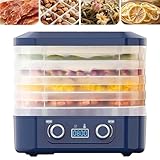 JNZQMF 5-Tray Countertop Freeze Dryer JNZQMF 5-Tray Countertop Freeze Dryer |
|
Check Latest Price |
 EliteBloom 10/12-Layer Stainless Dryer EliteBloom 10/12-Layer Stainless Dryer |
|
Check Latest Price |
 YDBMY 6-Layer Stainless Dryer YDBMY 6-Layer Stainless Dryer |
|
Check Latest Price |
 Generic 10-12 Layer Commercial Dryer Generic 10-12 Layer Commercial Dryer |
|
Check Latest Price |
 Generic 4-7 Tray Digital Dryer Generic 4-7 Tray Digital Dryer |
|
Check Latest Price |
| VarmBake 6-Tray Vacuum Freeze Dryer |
|
Check Latest Price |
| Banfluxion Lab Lyophilizer Freeze Dryer |
|
Check Latest Price |
A note on the listings, because it will save you an expensive return. The names on this table all say freeze dryer. Three of them publish a vacuum pressure, a cold trap temperature and a batch weight in pounds. The other five describe a 400W to 1000W heating element, a rear-mounted fan and a temperature range up to 194F. That is a food dehydrator, and its output is a dried product, not a freeze-dried one.
The difference is not cosmetic. Dehydrated food keeps some sugar and fat on the plate and goes soft in a bag, while freeze-dried food rehydrates into something close to the original texture. For meals you will eat after four days of rain, that gap matters.
The Honest Drawbacks Before You Buy
The main drawbacks of a home freeze dryer are long run times, the pre-freeze step, counter space and a real learning curve around fat and liquid. A single batch can take a day of drying on top of a full day of freezing, so you cannot cook on Sunday and eat on Saturday. Nobody markets that part.
The second drawback is quieter. Most of the machines in this category are sold on a touchscreen and a list of food presets, and the documentation behind them is thin. VEVOR owners in particular report a sparse manual and thin support. Plan to learn from forum threads and manufacturer videos rather than the booklet.
The third is what people discover after the first month: you now own a large appliance, a vacuum pump and a drying cabinet, and they all need a home. A chamber unit like the VarmBake weighs 268 pounds and needs its own 220V circuit. Plan the location before the box arrives.
1. VEVOR 4-Layer Vacuum Freeze Dryer: The One With Real Evidence Behind It
VEVOR Vacuum Freeze Dryer Machine, 8.8-13.2 LBS/Batch Food Freeze Drying Machine with 4-Layer Trays, Vacuum Pump, Adjustable Timer and Temperature Control, for Fruits Vegetables Meat, White
8.8-13.2 lbs per batch
-35C cold trap
1550W
4 stainless trays
Pros
- Published batch capacity in pounds
- Genuine vacuum chamber with a -35C cold trap
- Quiet operation at 60dB or less
- Swivel casters make it movable
- Simple touch screen programming
Cons
- Manual is sparse and unhelpful
- Compressor oil is not included and must be bought separately
- Some units needed adjustment and leaked oil
- Customer support reported as unresponsive
This is the machine we keep coming back to because it is the only one in the lineup that does three things at once: it publishes a batch weight of 8.8 to 13.2 pounds, it publishes a cold trap temperature of minus 35C, and it has 48 customer reviews to check. Everything else on this list is either undocumented or unreviewed.
Owners who get a unit running talk about the same things. The 304 stainless steel interior is easy to wipe down between batches, which matters more than it sounds when you are running cooked meat one day and strawberries the next. The touch screen takes a temperature and a time and then just runs, and reported noise sits at 60dB or below, quiet enough to sit in a garage while you work.
The 245.8 pound weight is the catch. This is not a countertop gadget, it is a floor unit, and the swivel casters are the reason that is workable. At 29.92 by 21.65 by 35.04 inches it needs a real corner of a utility room, a basement or a garage rather than a kitchen counter.
The support picture is the weak spot. A visible cluster of one-star reviews reflects quality-control variance and frustration with returns, and several owners mention arriving with a machine that needed adjustment or an oil leak. The 3.7 rating is honest, and for a first vacuum machine in this category it still beats a listing that publishes nothing at all.
Who it suits
A camper who wants a genuine vacuum chamber, a batch big enough to cover a two-week trip for two people, and a unit that runs quietly enough to leave on while you are elsewhere. Four trays at up to 13.2 pounds gives you roughly 25 to 30 person-days of food per load once you account for rice, vegetables and protein combined.
It also suits anyone who wants a programmable cycle rather than a guess. The freeze-drying curve feature means you set the ramp once and repeat it, which is how you stop losing sleep over whether a batch of pulled pork is done.
Where it frustrates people
Do not buy it expecting a turnkey appliance. The manual is genuinely unhelpful, so budget a few evenings of research before your first load, and remember the compressor oil is not in the box. That is an extra purchase and an extra maintenance item nobody mentions until it is overdue.
Also plan for the one-to-five star spread. Most owners who get it running are happy, and the unhappy ones mostly needed service the seller did not provide quickly. If you have no patience for that, a unit with a long published warranty is the safer bet.
2. JNZQMF 5-Tray Countertop Freeze Dryer: The Small Batch Test Unit
Freeze Dryers Small Home Use with 5 Trays, Freeze Dry Machine with Double Knob, Adjustable Temperature, Low Noise, for Fruits Meat Vegetables Snacks
5 detachable trays
48 hour timer
Dual-knob controls
3.39 pounds
Pros
- Small countertop footprint at 3.39 pounds
- Detachable trays are easy to clean
- Dual knobs make time and temperature obvious
- LED display keeps settings visible
Cons
- Rating distribution is heavily bottom-weighted with 64% one-star
- Nothing rated in the three or four star range
- Documentation is unclear for long timer runs
- Only 14 reviews to judge it by
At 3.39 pounds with a 13.5 by 10.59 by 8.27 inch package, this is a machine you can genuinely keep on a kitchen counter. If your goal is to test whether freeze drying fits your life before committing to a floor unit, this is the low-risk way to find out.
The five trays detach for cleaning, which is the single most practical feature on it. After a batch of cooked chili, being able to pull the trays out and run them under water is worth more than a fancier control panel. Time runs up to 48 hours and temperature is on a separate knob, so there is nothing to navigate.
What stops us recommending it more strongly is the rating spread. 64 percent of reviews sit at one star and 10 percent at two, with a 26 percent five-star minority and nothing at all in the three or four star range. That flat gap usually means the unit either gets the settings right for a narrow use or disappoints outright.
With 14 reviews, treat that average as directional rather than settled. A camp meal of rice, cooked beans and shredded beef in a five tray box is a weekend of eating for one person, not a season. If that is genuinely your use case, this is enough machine, and the small size means you can store it between batches.
The open question is documentation. Owners do not describe a clear workflow for a 48 hour run, and freeze drying is exactly the process where an undocumented step becomes a wasted day of electricity. Learn the cycle from someone else before you fill the trays.
Who it suits
Someone on a small kitchen who wants to run a weekend of meals once a month and store the machine in a cupboard the rest of the time. Nobody gets storage shelf life out of a machine they cannot fit somewhere, and this one fits nearly anywhere.
It also suits a beginner who wants to learn food prep, tray loading and break-the-seal packaging on a small scale before committing to a 13 pound chamber. Practising on five trays costs you far less when the first batch fails.
Where it frustrates people
The polarized reviews are the warning sign. Two thirds of buyers gave it one star, and the small number who rated it five stars are the ones who found a recipe the machine handles well. That is a narrow target if you are planning a mixed menu of meals.
Five trays is also thin for group camping. One load will not cover a weekend for a family, so you would be running back-to-back cycles, and at up to 48 hours per cycle that does not fit a normal week.
3. EliteBloom 10/12-Layer Stainless Dryer: Many Trays, No Vacuum
EliteBloom 800W LED Freeze Drier, 10/12 Layer Food-Dehydrator Machine, Stainless-Steel Home Freeze Dryer, Food Processer, Food-Dryer for Fruit-Mushroom-Meat-Jerky-Herb,12layer-,a-12layer
10 or 12 stainless trays
1.7 lbs per tray
86-194F range
800W
Pros
- Up to twelve trays for large mixed batches
- Dishwasher-safe 304 stainless steel trays
- Built-in LED for checking progress
- Magnetic door switch and 360 degree fan
Cons
- Owners say it is a heated dehydrator
- not a vacuum unit
- Several reviews call the freeze dryer claim misleading
- 72 percent of reviews are one star
- Overpriced for what it actually is
We have to be direct about this one, because the reviews themselves are the finding. Multiple buyers state plainly that it is a heat-only food dehydrator and not a vacuum freeze dryer, and several describe the listing as false advertising. If you ordered it for freeze-dried camping meals, you received a different appliance than the one you paid for.
On its own terms the machine is competent. Ten or twelve food-grade 304 stainless steel trays each hold up to 1.7 pounds, the timer runs from half an hour to 48 hours, temperature covers 86 to 194F, and the rear fan circulates air 360 degrees. Trays go in the dishwasher. For jerky or dried fruit in quantity, that is a real workflow.
The spec sheet contains no vacuum pressure, no cold trap temperature and no pump. There is nothing missing from the page, the page simply does not claim one, which is how you can tell it apart from the three real chamber units in this lineup.
It has four reviews, 72 percent of them one star, and a 2.1 average. The low rating is less about performance than about expectations, because a dehydrator does work, it just does not do freeze drying.
If your actual goal is lightweight trail snacks rather than freeze-dried dinners, buy a dehydrator on its own terms and pay a dehydrator price. If your goal is rehydratable meals with their original texture, this is the wrong tool regardless of tray count.
Who it suits
Someone who wants high tray counts for jerky, dried herbs, fruit leather or vegetable chips, and who does not care about the difference between dehydrated and freeze-dried output. On that basis the tray area and dishwasher-safe stainless are genuinely good.
The built-in LED is worth calling out for a different reason. When you are running a 24 hour dehydrating cycle, being able to glance at the trays without opening the door and losing heat is a real convenience that bigger machines often skip.
Where it frustrates people
The gap between the product name and the product is the whole problem. People ordered freeze drying, got a dehydrator, and left one-star reviews saying they felt misled. You will be the same person if you buy it expecting sublimation.
There is also no support for a long workflow in the listing, and at 2.1 stars you have very little community documentation to fall back on. That is a poor combination for an appliance you are learning to run.
4. YDBMY 6-Layer Stainless Dryer: Small Loads on a Tight Footprint
400w Freeze Dryer, 6/8/12 Layers Freeze Dried Machine, Timing: 0-12 H, Temperature: 35-90 ℃+6 Inch Fan Blade, 360° Fan, for Fruits, Vegetables, Meat, Seafood,6 layers
400W element
6 to 12 layers
0-12 hour timer
35-90C range
Pros
- 400W draw suits limited circuits
- Choose 6
- 8 or 12 layer configurations
- Stainless steel body is easy to wipe down
- Six-inch fan blade moves a lot of air for 400W
Cons
- Lowest rating in the lineup at 1.5 stars
- Not one review above two stars
- 12 hour timer ceiling is short for real cycles
This is a heated dryer, not a chamber unit, and the specs say so plainly: a 400W heating element, a six-inch fan blade with 360 degree circulation, a timer from zero to 12 hours and a 35 to 90C range. Nothing about it is a vacuum, and no cold trap is specified.
What it does have is the lowest wattage in the group, which matters for anyone running a small appliance in a garage, a basement or a cabin on a limited circuit. The stainless steel body wipes down easily, and the choice of 6, 8 or 12 layer builds means you can match the machine to your shelf.
The three reviews are the problem. The average is 1.5 with a 53 percent two-star and 47 percent one-star split and not a single rating above two. Unlike the EliteBloom, where some owners are happy with the product itself, here nobody reports a good experience at all.
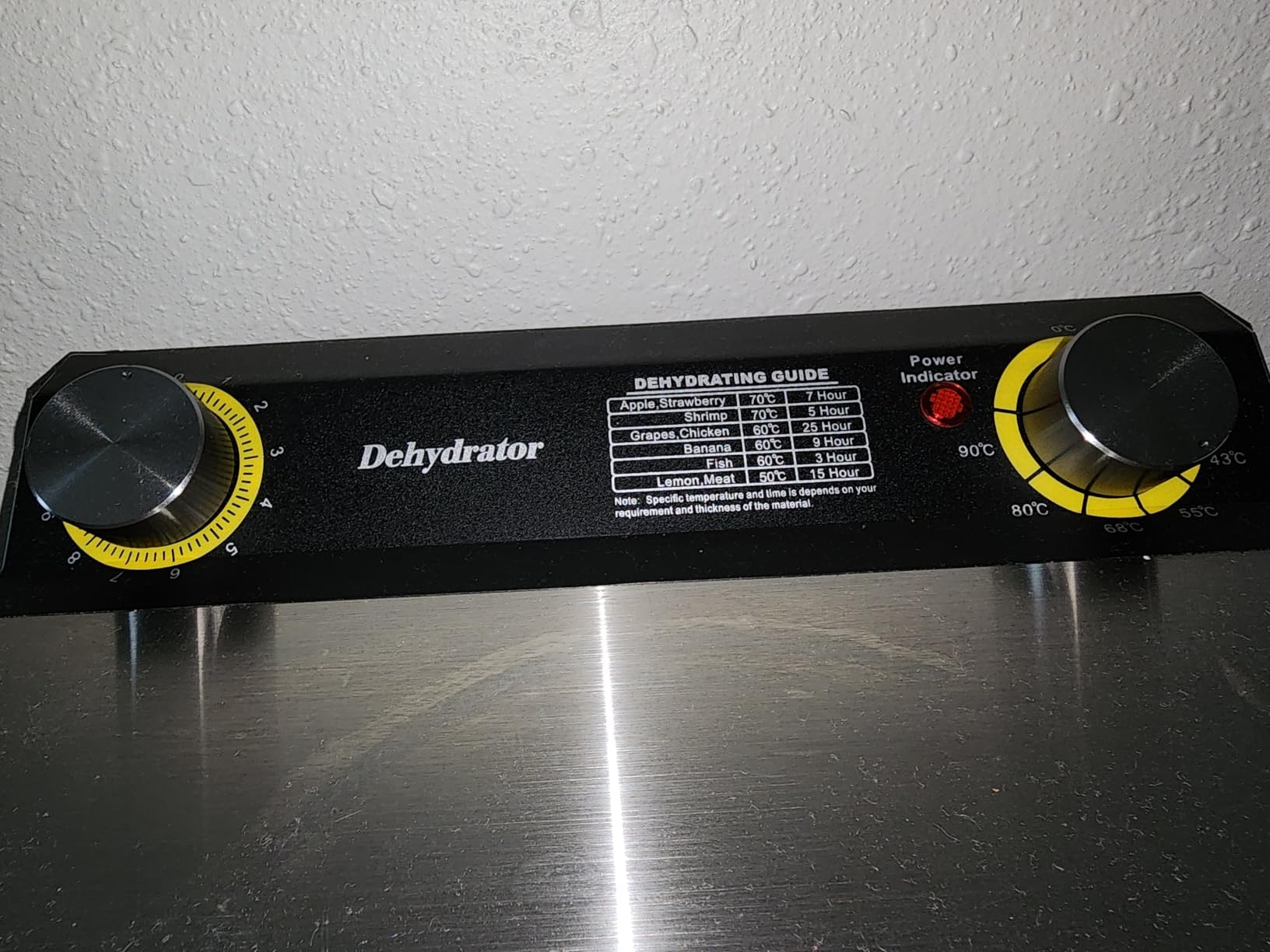
The 12 hour timer ceiling is the practical problem for camp meals specifically. A freeze-drying cycle runs far longer than 12 hours, and even for simple dried fruit the timer forces you to be present to restart it rather than walking away for a day and a half.
There is one customer image on this listing, and it is worth a look before you commit. With a three-review sample and no documentation, this is the product in the lineup where buying blind costs you the most.
Who it suits
A camper drying a small quantity of fruit or herbs, on a tight power budget, who will be at home to monitor the run. The low wattage and small tray options make it a reasonable fit for a weekend project rather than a season of meals.
It also suits anyone who wants to try the workflow cheaply and does not mind starting with dried fruit instead of cooked meals. Fruit is the most forgiving first load in this whole hobby.
Where it frustrates people
Nobody reviews it above two stars, and that flat distribution says the unit underperforms consistently rather than occasionally. The 400W element is the weakest here, and it shows up in how evenly things dry across multiple trays.
The short timer means you cannot walk away, which defeats the main convenience of owning a dryer. Combined with almost no owner documentation, you are working out settings alone.
5. Generic 10-12 Layer Commercial Dryer: High Tray Count, Vacuum Language Unearned
Commercial Freeze Dryer – High-Efficiency Electric Food Dehydrator for Fruits, Vegetables, Meat & Seafood – Ideal for Home & Business Drying Solutions
10 to 12 stainless trays
1000W fan
0.5-48 hour timer
86-194F
Pros
- 10 to 12 layers handles a large drying run
- Built-in LED and a magnetic door switch
- Food-grade 304 stainless trays that go in the dishwasher
Cons
- Listing copy describes a heated dehydrator
- not a vacuum unit
- Rating spread is bimodal with no middle ratings
- Only three reviews so the average is unreliable
- Specs are near-identical to cheaper listings
This listing uses the phrase commercial freeze dryer, and that framing is not backed by any vacuum specification. Its own bullet text describes a 1000W heated air dehydrator with a 0.5 to 48 hour timer and an 86 to 194F range, which is the same sheet as the cheaper units we just covered.
On drying capacity it is genuinely capable. Ten to twelve trays of 14.8 by 11.2 inch food-grade 304 stainless steel, each holding up to 1.7 pounds, with a 1000W rear fan, an LED and a magnetic induction door switch. That is a lot of jerky at once.
The 2.8 average comes from three reviews split hard between five stars and one star with nothing in between. That is what a small sample on a generic listing looks like, and we would not read anything into the number either way.
The spec overlap is the thing to watch. When several unrelated listings publish the same tray dimensions, the same 1.7 pound per tray figure and the same 0.5 to 48 hour timer, that is a shared supplier template rather than a measured product claim. There is no evidence here that the machine outperforms the cheaper versions of itself.
What you can rely on is the 304 stainless and the dishwasher-safe trays. If you want volume drying of meat, herbs or fruit, this does the work. Just do not expect freeze-dried texture on the trail.
Who it suits
Someone with a large garden surplus or a whole deer haunch who wants to dry volume, fast, in a machine that wipes down clean. The 1000W fan and a dozen trays are built for throughput rather than delicate items.
It also suits a prepper-style pantry build where shelf-stable dried protein matters more than rehydratable meals, and where the long timer range lets you run a multi-stage profile without babysitting the machine.
Where it frustrates people
The product name promises freeze drying and the specs describe something else. Buyers who expected a vacuum chamber are the ones leaving one-star reviews, and you would be in the same position.
Three reviews is not a track record, and a 2.8 average from that sample tells you almost nothing about the next machine off the line. If you are spending real money on a machine, a longer warranty matters more than a bigger tray count.
6. Generic 4-7 Tray Digital Dryer: Compact and Undocumented
Food Freeze Dryer Machine for Home, 2025 New Digital Freeze Dryer, Digital Adjustable Timer & Temperature Control, Compact Food Dehydrator for Home (White)
4 to 7 trays
touchscreen controls
silent operation
plastic body
Pros
- Expandable from 4 to 7 trays
- Touchscreen for timer and temperature
- Compact and stowable between batches
- Dishwasher-safe stainless trays claimed
Cons
- 82 percent of reviews are one star
- No vacuum
- cold trap or batch weight published
- Predominantly plastic construction
- Marketing claims are unsupported by any specification
The marketing on this listing leans on nutrient-preserving technology and a 97 percent nutrient retention claim, and it publishes no vacuum figure, no cold trap temperature and no batch weight. Those three missing numbers are the definition of a real freeze dryer, and all three are absent.
What it does offer is a small footprint and a genuinely tidy idea. The cabinet-friendly body stows away when you are not running a batch, the touchscreen handles timer and temperature, and reported operation is silent. For an apartment or a small kitchen, a machine you can put away is worth something.
The 1.7 rating is the second weakest here, and 82 percent of its reviews are one star. The listed material is plastic, which sits oddly against a dishwasher-safe stainless tray claim, and there is nothing in the specification to support a freeze-drying process.
With three reviews, we would not call this a proven failure. We would call it unproven and unpromising, which is a worse place to spend money when the alternative is a unit with a published vacuum specification.
The 4 to 7 tray range is a sensible idea on paper, because it lets you scale the load up for a group trip and down for a solo weekend. Whether the unit can hold a vacuum steady across that range is the question the listing does not answer.
Who it suits
A camper in a small home who wants to try the process without dedicating a garage corner. The stowable design and reported silence are the two features that make that possible, and neither of them appears on the chamber units.
It also suits a renter who cannot modify a kitchen. If the machine lives in a cupboard between runs rather than on the counter permanently, the cost of the hobby stays manageable in both space and money.
Where it frustrates people
No vacuum specification, no cold trap, no batch weight. You are buying on touchscreen photography, and 82 percent of the people who did exactly that rated it one star.
The plastic body is a step down in durability for a machine that runs hot for many hours, and the silent claim is doing a lot of work given how little else is documented. Ask questions before you commit, because the listing will not answer them.
7. VarmBake 6-Tray Vacuum Freeze Dryer: The Full Spec Sheet
Varmbake Vacuum Freeze Dryer Machine 220V & 1800W with 6 Trays, -40°C Cold Trap & Vp≤5 Pa Commercial Food Freeze Drying Machine with Vacuum Pump,Drying for Fruit Vegetable Food Preservation
13 lbs per batch
minus 40C cold trap
vacuum to 5 Pa
3-year warranty
Pros
- Most complete published engineering specification here
- 13 lbs per batch on six heated trays
- Vacuum from 1 kPa down to 5 Pa at 2.2 L/s
- Three-year warranty with truck delivery
Cons
- One review
- so no reliability history
- 220V only and needs a dedicated circuit
- Weighs 268.3 pounds as a floor-standing unit
If you have a garage with a 220V circuit and a serious amount of food to dry, this is the most technically complete machine in the lineup. Vacuum pressure from 1 kPa down to 5 Pa, a 2.2 L/S industrial vacuum pump, a minus 40C cold trap and an 1800W compressor at 60dB or less is a real spec sheet, not a marketing line.
Batch capacity is 13 pounds across six heated 304 stainless steel trays measuring 8.66 by 13.78 by 0.79 inches with 1.6 inch of spacing between them. The heating mats sit inside the trays for even drying, and a touchscreen offers eight preset food programs so you can repeat a batch without re-guessing the curve.
The chamber is a one-piece seamless stainless liner with an acrylic visible door, a silicone seal and six alarm protection functions. The three-year warranty and truck delivery are included, which on a floor-standing appliance is worth real money.
It has one review, and that review reports consistent results on fruit, pet snacks and meat with good-looking dried goods every batch. One data point is not a reliability record, and we are not going to pretend otherwise.
The 220V requirement is the decisive practical fact. Standard US household outlets are 120V, so this needs its own circuit, which means an electrician in most homes and rules out apartments, rentals and most basements. At 268.3 pounds and 23.23 by 36.61 by 30.51 inches, it is also the largest unit here.
Who it suits
A household that already has 220V available and expects to run many cycles a year. The preset programs and the three-year warranty both assume regular use, and at 13 pounds per batch a single load can cover a month of meals for a family or a season for a group of campers.
It also suits someone who wants control. Deep vacuum down to 5 Pa and a minus 40C cold trap are the numbers that determine how much water comes out of high-moisture foods like tomato, stew and cooked beans.
Where it frustrates people
One review is a very thin foundation, and a five-star average from a single reviewer carries almost no information about failure rates. The warranty length is the reassurance here, not the rating.
The 268 pound floor-standing body and the dedicated 220V circuit are the dealbreakers for anyone in rented housing. If you cannot get 220V installed, this is not a machine you can use at all.
8. Banfluxion Lab Lyophilizer: Consumer Power, Lab Hardware
Banfluxion Scientific Lab Lyophilizer & Home Freeze Dryer Machine with Vacuum Pump, -40℃ Ultra-Low Temperature, 110V 1550W, 11lbs/Batch, 4 Stainless Steel Trays, for Food/Fruit/Vegetable Dehydration
11 lbs per batch
minus 40C cold trap
110V
1550W
Pros
- Runs on a standard 110V household outlet
- Named Tecumseh and Secop compressor with a 2 L/s pump
- Four stainless trays rated to 11 lbs
- 7-inch LCD with real-time vacuum and temperature monitoring
Cons
- Only one review and no reliability history
- Lab-oriented design may be more than kitchen meal prep needs
- Automatic defrost and curve display add complexity a simple recipe does not need
This is the unit that answers the obvious camper objection. At 1550W it is a substantial heater, but it runs on 110V alternating current, which means a normal US wall outlet rather than a dedicated 220V circuit. That single specification puts it ahead of the other chamber unit for most households.
The rest of the engineering is equally serious. A minus 40C cold trap, 2 L/s pumping speed, a named Tecumseh or Secop professional compressor and a 1700 rpm anti-oil return rotary vane vacuum pump. Batch capacity is up to 11 pounds on four food-grade stainless steel trays with 0.4 square meters of total tray area and an 11 pound load-bearing limit.
A 7-inch high-definition LCD shows temperature curves in real time alongside sample temperature, cold trap temperature and vacuum. The transparent organic glass door has automatic defrost and an optimized deflector plate, which matters because ice build-up on the chamber walls is the most common reason a real cycle stalls.
It carries one review, a five star, with no detail beyond a repeat-purchase statement. We are including it on the strength of its published specifications rather than its rating, and we would tell any buyer to do the same.
The tradeoff is cost. It is the most expensive unit here by a wide margin, and the lab-oriented design may simply be more machine than a kitchen-scale camping meal prep needs. If you are drying stew and rice rather than pharmaceutical samples, some of that capability goes unused.
Who it suits
A household with a standard 120V circuit that still wants genuine chamber freeze drying. This is the rare case in this category where you get real vacuum performance without calling an electrician, and for most buyers that combination is the whole decision.
It also suits a precise cook who wants to watch the vacuum and cold trap readings move during a run rather than guess. The curve display and real-time monitoring turn a black box into a process you can actually learn.
Where it frustrates people
There is no reliability history beyond one review, and laboratory-grade components at a laboratory-grade price do not come with the kind of community troubleshooting threads you will find for a widely used home machine.
The automatic defrost and 7-inch screen are meaningful extra capability, but if your goal is ten person-days of freeze-dried chili a season, you are paying for precision you will not use. Match the machine to the volume of food, not the other way around.
How to Size a Freeze Dryer for Camping Meal Prep
Every machine on this list is sold in pounds of raw food, and every camper thinks in person-days. Converting between the two is the single most useful calculation in this whole hobby, because it tells you whether a batch fills your season or just your weekend.
Start with a rough daily target of one and a half to two pounds of finished food per person per day for active trips, and about one and a half pounds for car camping where you are not carrying weight. Multiply by people, then by days. A two-person weekend is roughly six pounds of food, and a two-person fortnight is closer to forty-five pounds.
Now add the divide. A 13 pound batch does not produce 13 pounds of finished food. You lose weight to water, and the finished product is typically a fraction of the raw weight you load. Plan on each raw pound yielding a meaningful portion of a person-day, then compare that to the chamber’s published pound figure.
A practical rule: a machine in the 8 to 13 pound range handles a two-person trip of up to two weeks with one or two runs, and a 5 tray countertop unit covers a single weekend for one person. For groups, the math moves fast, which is why a r/HikerTrashMeals thread framed the whole purchase as a cost justification rather than a features comparison.
Oil-Free vs Oil-Sealed Vacuum Pump and Vacuum Pump Oil
An oil-sealed pump is cheaper and pulls a strong vacuum, but it needs vacuum pump oil changed on a schedule. An oil-free pump needs no oil changes and less attention, at the cost of a higher purchase price and slightly different vacuum performance. The prevailing recommendation in the Facebook Harvest Right community is to buy the largest machine you can afford and consider the oil-free upgrade if you will run multiple cycles.
The oil-change question comes up constantly and no competitor answers it. The practical expectation is to change vacuum pump oil roughly every 20 to 40 run hours, more often in humid weather and after a lot of high-moisture loads like tomato or cooked beans, and less often for dry goods like jerky. Check the oil sight glass before every run and change it when it looks dark rather than waiting for a schedule.
Owners ask what else they can use. The honest answer is that nothing performs the same. Specialty synthetic or mineral pump oils rated for your pump are the closest substitutes and some owners prefer them over the factory oil, but a vegetable or food-grade cooking oil is not a pump oil and will gum up the pump over time. Frequent short cycles also make oil changes necessary sooner because the oil absorbs water vapor from every load.
If you plan fewer than a few cycles a year, the oil-sealed pump is the right economic choice and the maintenance is a non-issue. If a machine becomes a monthly habit, the oil-free upgrade removes an entire category of recurring work, and that is usually worth it.
What a Freeze Dryer Cycle Costs to Run
The formula is simple: take the wattage, divide by 1000 to get kilowatts, multiply by the hours of the run, then multiply by your electricity rate. A 1550W unit like the Banfluxion or the VEVOR drawing for 24 hours pulls 37.2 kWh, and at a typical residential rate that is a single-digit number of dollars per day of drying.
Work it through on the units here. The VEVOR at 1550W over 24 hours is 37.2 kWh. The VarmBake at 1800W is 43.2 kWh. The EliteBloom at 800W is 19.2 kWh, and the YDBMY at 400W is 9.6 kWh. The Generic 10-12 layer at 1000W comes to 24 kWh. Scale each figure up or down for your own rate and your own cycle length.
Add the pre-freeze, and you are typically looking at two to three days of running per batch. A real month of camp meals means several batches, so power is a few dollars a month, not a few hundred. Power is genuinely not the reason people decide against these machines, and it is worth knowing that before you weigh the sticker.
Where cost actually bites is time and space. Two days per batch means planning meals a week ahead, the machine occupies a utility room corner permanently, and the vacuum pump adds a maintenance schedule. Budget your hours honestly rather than your kilowatt-hours.
What Not to Put in the Machine
High-fat and high-oil foods are the classic failure. Fat does not freeze dry, it stays liquid under vacuum and coats the chamber walls, so fried chicken, fatty steaks with visible marbling, and anything in a heavy sauce will gum up a cycle and can require a deep clean afterward. Trim visible fat before loading and it becomes manageable.
Whole eggs and dairy are the second problem. Raw whole eggs are a food safety risk, and milk, cheese and cream separate and scorch on the trays. Powdered or reconstituted dairy works far better than liquid.
Thick sauces, gravies and puddings behave the same way, and so does anything with a very high water content that was never fully frozen first. A 400W heated dryer with a 12 hour timer is even less suited to these than a real chamber unit.
The rule that covers most of it: if the food is mostly water, freeze it solid first and give it time. If it is mostly fat, leave it alone. If it is a thick liquid, find a powder form.
Rehydrating Freeze-Dried Meals on a Camp Stove
Rehydration is where freeze-dried food wins over dehydrated food, and it is simpler than most guides make it sound. Add hot water straight into the pouch, stir, cover and wait. Cold or lukewarm water works too, but takes noticeably longer and leaves the food softer in texture.
Budget your water carefully, because this is a real constraint in camp. A typical serving rehydrates with roughly a cup to a cup and a half of water, so a two-person week of meals means planning for around a gallon of water purely for rehydration. That is water you carry, weight you would not otherwise carry.
A camp stove with a genuine simmer, not a rolling boil, gives the best result. Poured straight from a kettle, a freeze-dried stew reconstitutes in five to ten minutes and looks and tastes close to what you cooked before freezing.
On repackaging, follow the r/CampingandHiking thread that raised it: opening and repackaging freeze-dried meals risks introducing oxygen and moisture, and even a small amount degrades shelf life. Keep meals in their original sealed pouches until the moment you eat, rather than decanting a week of dinners into zip bags. Oxygen absorbers in mylar bags, which r/preppers threads describe as working well, are the right tool if you must repackage, and the pouch still gets opened repeatedly either way.
Freeze-dried food is also the easiest part of a camp kit to move between trips. It survives temperature swings in a car better than dehydrated food, it needs no refrigeration, and it compresses to almost nothing. Pair it with one of our Bluetooth speakers for camping and RV trips and you have a kit that is genuinely fun to live out of.
When Not to Buy a Freeze Dryer
If you need meals a few times a year, renting wins. Campers in r/dehydrating report hiring a freeze dryer by the load and handling three and a half to four kilograms of food in a single session, which is the whole point. One hired batch covers a season, and you pay for the machine only while you use it.
If you want a few weekends of meals and nothing more, buying commercial meals is cheaper per serving and tastes better. Mountain House, Peak Refuel, Good To-Go, Alpine Aire, Backpacker’s Pantry and Omeals are the names that come up repeatedly in r/camping and r/CampingGear threads, and Mountain House in particular is described as genuinely good rather than merely convenient. That sets a high bar for a home batch.
For dried fruit, herbs, jerky and vegetable chips, a dehydrator is the right machine, and buying one keeps you in the right category of product for the job. Just buy a dehydrator knowing it is a dehydrator.
The honest version of the buying question: own a machine if you eat out of it often, enjoy the process, and have somewhere to put it. Rent or buy finished meals if a machine would sit in a cupboard for nine months of the year.
Frequently Asked Questions
What are the drawbacks of using a food freeze dryer?
The main drawbacks are long run times of up to a full day per batch, the 8 to 24 hour pre-freeze step before loading, the permanent counter or floor space a chamber unit needs, and a learning curve around fat and liquid content. Running costs are modest by comparison, usually a few dollars of electricity per batch.
How much does it cost to run a freeze dryer for 24 hours?
Divide the wattage by 1000, multiply by 24 hours, then by your electricity rate. A 1550W unit drawing for 24 hours uses 37.2 kWh, an 1800W unit uses 43.2 kWh, and a 400W unit uses 9.6 kWh. At a typical residential rate that works out to a single-digit dollar figure for a full day of drying.
What can I use instead of Harvest Right vacuum pump oil?
Owners sometimes switch to a specialty synthetic or mineral pump oil rated for their specific pump, and some prefer it to the factory oil. What you should not use is a vegetable or food-grade cooking oil, which does not have the properties a vacuum pump needs and will gum up the pump over time. Always match the oil to the pump manual.
How often do you need to change the oil in a freeze dryer?
A reasonable expectation is every 20 to 40 run hours for an oil-sealed vacuum pump. Change it sooner in humid conditions or after high-moisture loads such as tomato or cooked beans, and less often for dry goods like jerky. Check the oil sight glass before each run and replace the oil when it looks dark instead of following a fixed calendar.
What foods cannot be freeze-dried?
High-fat and high-oil foods fail because fat stays liquid under vacuum and coats the chamber, which affects fried chicken, fatty steaks and anything in a heavy sauce. Whole eggs, milk, cheese and cream are also problematic, as are thick sauces and gravies. Trim visible fat, cook with lean protein, and use powdered dairy instead of liquid.
Can freeze-dried meals be used for camping?
Yes, and that is exactly what the process is designed for. Freeze-dried food rehydrates in five to ten minutes with hot water, needs no refrigeration, weighs a fraction of fresh ingredients and stores for years in cool dry storage. Plan for roughly a cup to a cup and a half of water per serving, which adds up across a multi-day trip.
What are the best freeze-dried camping meals to buy instead?
The names that come up most often among campers are Mountain House, Peak Refuel, Good To-Go, Alpine Aire, Backpacker’s Pantry and Omeals. Mountain House in particular is widely praised for taste rather than convenience alone, which sets a high bar for home batches. For a few trips a year, buying finished meals usually costs less than owning a machine.
Our Verdict
The VEVOR 4-Layer Vacuum Freeze Dryer is our pick among the best freeze dryers for camping meal prep. It is the only unit here that publishes a batch weight, a cold trap temperature and a real pump while also having enough customer reviews to check, and that combination matters more than any single specification.
If you have 220V available and run many cycles a year, look at the VarmBake for its deeper vacuum and longer warranty. If you are on a standard household outlet and still want genuine chamber freeze drying, the Banfluxion is the one to shortlist. Everything else on this list is a heated dehydrator, useful for jerky and dried fruit, and worth buying only if you know that going in.
And if you only need a few batches a season, rent one by the load or buy Mountain House and get on with the camping. Last reviewed in 2026.