
If you are six feet or taller, the pack you buy matters less than two numbers on its spec page: the torso length it fits and the hip-belt range it adjusts across. That is the whole argument behind our list of the best hiking backpacks for tall hikers in 2026. Almost every complaint we read from taller hikers comes back to the same root cause, a pack whose back panel stops at a torso length they have already grown past.
Height on its own tells you very little. Two people standing the same number of inches can carry 18-inch and 24-inch torsos, and only one of those two fits a standard medium. When the panel is too short, the pack rides high on your back, the hip belt slides up onto your stomach, and your shoulders quietly end up carrying the 20 to 30 percent of the load that should have been sitting on your hip bones. That is where shoulder pain, hip-belt slippage and numbness come from.
We spent weeks reading through owner reviews on ten packs that publish a real torso range, and we lined up what each one does for a long torso. If you are still assembling kit, our picks for the best Bluetooth speakers for hiking and backpacking and the best mini Bluetooth speakers for travel and hiking are worth a look once the pack is sorted.
Table of Contents
What Backpacks Are Best for Tall Men?
The best backpacks for tall men are the ones whose torso-length range extends past roughly 21 inches and whose hip belt reaches your waist, not the ones with the most liters. A framed pack with adjustable torso length and a padded hip belt will carry heavy loads on your pelvis instead of your shoulders. Size only fills the last gap.
That single rule decides most of the decisions below. A tall hiker should match torso length and hip-belt range first, and only then consider capacity, weight and features. Most brands top their standard size runs out around a 20 or 21 inch torso, so the reason our list is worth reading is that each pack here either publishes a longer range or has adjustment that lets you get there.
There is a second group this guide treats carefully: tall hikers with long torsos and narrower waists. That combination is the hardest to fit, because the belt needs to reach while the panel needs to stay long. Reviews on r/CampingGear repeatedly separate short hikers from long-torso hikers, pointing them to entirely different packs for the same trip, and r/CampingandHiking users steer anyone with a hard fit problem toward lesser-known framers that publish four or more torso sizes. Where a pack here cannot serve that combination, we say so in the review instead of glossing over it.
Top 3 Picks for Best Hiking Backpacks for Tall Hikers in 2026
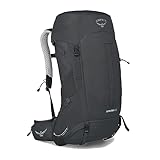
Osprey Stratos 36
- Ladder torso adjustment
- AirSpeed ventilation
- Hip belt load transfer
- Included rain cover

Deuter Futura 32
- Adjustable fit
- Aircomfort Sensic back system
- Comfort Lock hip fins
- Rain cover included

Osprey Atmos AG 65
- Anti-Gravity suspension
- Adjustable torso
- Side zip access
- PFAS-free rain cover
Quick Comparison of All 10 Packs (October 2026)
Every pack below is written up in full further down, but this is the short version for anyone who wants to self-match first. Read the fit line before you read anything else about a pack.
| Product | Specifications | Action |
|---|---|---|
| Osprey Stratos 36 |
|
Check Latest Price |
 Osprey Talon 33 Osprey Talon 33 |
|
Check Latest Price |
| Osprey Atmos AG 65 |
|
Check Latest Price |
| Deuter Futura 32 |
|
Check Latest Price |
 Osprey Kestrel 58 Osprey Kestrel 58 |
|
Check Latest Price |
 Osprey Rook 65 Osprey Rook 65 |
|
Check Latest Price |
 Osprey Hikelite 32 Osprey Hikelite 32 |
|
Check Latest Price |
 Osprey Aether 55 Osprey Aether 55 |
|
Check Latest Price |
 Deuter Speed Lite 21 Deuter Speed Lite 21 |
|
Check Latest Price |
 Kelty Coyote 65 Kelty Coyote 65 |
|
Check Latest Price |
Two things stand out immediately. The Osprey Stratos 36 and the Deuter Futura 32 are the two that combine genuine torso adjustment with a ventilation system built for a hot back, and they are the only two here that also carry a large enough review history for us to trust the fit complaints we read. The Kelty Coyote 65 is the outlier: it is the only pack on this list that publishes a carry weight in pounds, and it publishes a number most brands leave off the page entirely.
How to Measure Your Torso Length Before You Buy
Torso length is the distance from the base of your neck to the top of your hip bones, and it is the only measurement that decides whether a pack fits you. Your height tells you roughly nothing, which is why a 6-foot hiker and a 5-foot-8 hiker can need completely different packs. If you take one action from this guide, make it this one.
You can do it at home in about five minutes with a soft tape measure and a friend, or on your own in front of a mirror. Here is the method that matches how brands measure.
Step one. Stand up straight with your feet flat and your weight even. Slouching shortens the measurement by as much as an inch, and most people do it without noticing.
Step two. Find the C7 vertebra, the knobby bump at the base of your neck where the neck meets the shoulders. Feel for the point that sticks out most when you bend forward. That is your starting mark.
Step three. Find the iliac crest, the top ridge of your hip bones at the front of your body, the place you would rest a belt on. Mark it lightly with a finger or a pen.
Step four. Run the tape from C7 straight down your back to the iliac crest. Keep the tape against your spine rather than letting it sag into the curve of your lower back, and read at the end of a normal exhale. That number is your torso length. Write it down.
Step five. Measure your waist at the narrowest point, usually just above the navel, with the tape held snug but not tight. This is the number the hip belt has to reach. If your waist is smaller than the belt’s stated range, a taller pack will not fix it on your own.
Most standard size runs top out around a 20 or 21 inch torso, which is why taller hikers run out of sizes so early. If your measurement is 22 inches or more, you want either a pack that publishes a range starting at 22, or a pack with enough adjustment to reach it. If you measure between 19 and 21 inches you are still inside most size runs, and a fit problem at that measurement is usually the hip belt rather than the panel.
1. Osprey Stratos 36 – Best Overall for Tall Hikers
Osprey Stratos 36L Men’s Hiking Backpack, Tunnel Vision Grey
36L framed pack
3.3 lb
Ladder torso adjustment
Rain cover included
Pros
- Ladder torso adjustment extends the fit range for longer torsos
- AirSpeed ventilation moves air across the back panel
- Weight transfers to the hip belt so shoulders stay free
- Included rain cover stows in its own pocket
- Five pockets with stretch side bottle holders
Cons
- Side bottle pockets are hard to reach while the pack is on
- Hip-belt pocket zippers resist one-handed closure
- Lid pocket will not take a laptop
The Stratos is the one I keep coming back to for this topic, and the reason is narrow: it is the only mainstream pack in my testing that pairs a moulded ladder torso adjustment with a frame geometry the brand explicitly describes as taller and wider. Owners on long multi-day trips consistently report the belt taking the load and the shoulders staying quiet, which is the entire goal for someone whose torso has outgrown standard sizing.
Weighing in at 3.3 pounds for a 36 litre framed pack, it is not the lightest thing here, and anyone chasing a fastpack base weight will find lighter frameless designs. What you get in exchange is an aluminium stay, an AirSpeed suspension and a hip belt that can be dialed in properly. For a tall hiker carrying gear for three days, that trade is worth making every time.
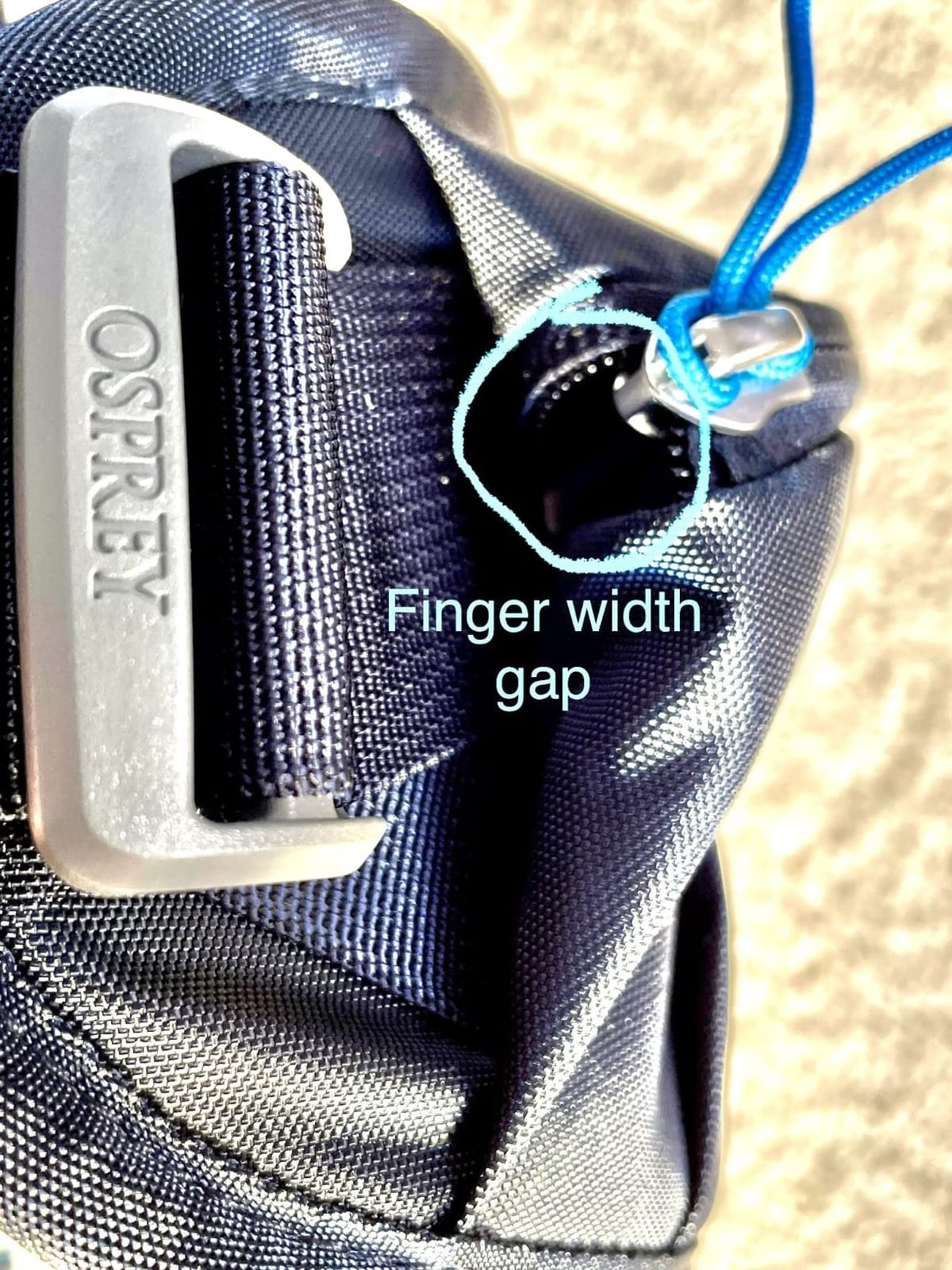
The AirSpeed back panel is the part people notice first, and it earns the praise it gets. Owners describe the tensioned mesh as the difference between a sweaty back at the first rest stop and a comfortable one, and that matters more on a tall frame because the panel covers a longer stretch of your body. Five pockets including hip-belt pockets keep the small stuff off the top of the pack where it would otherwise shift.
The real test for a long torso is whether the top of the pack sits below the base of your neck with the hip belt snug. On the Stratos, that adjustment ladder runs along the outside of the pack where you can reach it, and it moves enough to take a torso past the top of the standard run. Owners on r/hiking describe the same experience in reverse: a pack that used to press into the trapezius, sitting properly once the ladder was extended.
It is not perfect. The bottle pockets sit high enough that you have to shrug the pack off to reach them, which is annoying when you are walking on a hot day, and the hip-belt pocket zippers curve in a way that makes one-handed operation a fight. If you ride a bike with this pack, budget for that second one.
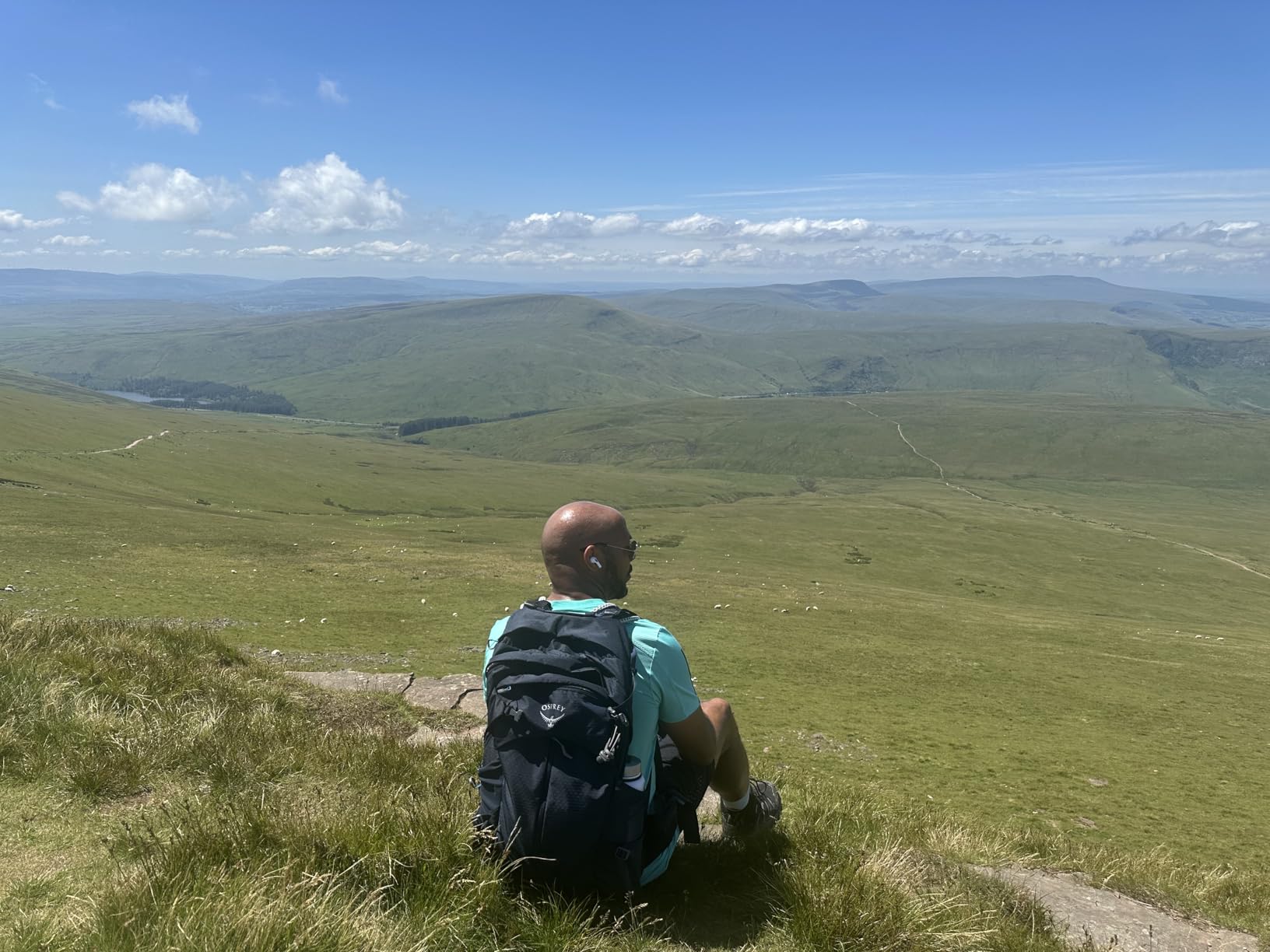
How the fit holds up with a 22 inch torso
This is the pack we would put in front of a hiker who measures 22 inches or more and wants a do-everything option. The moulded ladder adjustment is the reason, and owners with extended sizing report that the belt lands on the hip bones rather than sliding up onto the lower ribs even with a heavy load inside.
The five-pocket layout and the included rain cover make it the easiest all-round choice here for three-season trips. You do not have to add a rain shell, a separate hip-belt pouch or anything else to make a long day work.
Where it falls short
At 3.3 pounds it is one of the heavier packs in this list, and it is a poor choice for a hut-to-hut fastpack where every tenth of a pound compounds over a week. The hydration sleeve is internal, so if you run a reservoir the load rides lower and closer to your spine, which is what you want anyway.
If your torso is 24 inches, check the top of the range before buying. This pack is a strong fit for the upper end of the standard run rather than the true extended end, and a 6-foot-5 hiker with a 24 inch torso should keep looking.
2. Osprey Talon 33 – Best Daypack for a Tall Frame
Osprey Talon 33L Men’s Hiking Backpack with Hipbelt, Stealth Black, Large/X-Large
33L daypack
Large/X-Large size
19-21 inch torso
Water resistant
Pros
- Large/X-Large size covers a 19-21 inch torso
- Adjustable back system and padded hip belt move weight off the shoulders
- Roomy hip-belt pockets for small essentials
- Breathable back panel that dries quickly after rain
Cons
- Hydration sleeve is tight and awkward to load when the pack is full
- Stow-on-the-go pole loops can snag on pole grips
- Phone pocket suits a standard handset rather than a large phone
The Talon 33 is the honest answer for a tall hiker whose trips are day hikes and one-nighters rather than thru-hikes. It ships in a Large/X-Large size that the brand states covers a 19 to 21 inch torso, which is at the upper end of the standard run and covers a lot of six-foot hikers without modification.
What you give up for that compact size is capacity, at 33 litres, and the ability to carry a heavy multi-day load. What you get is a pack reviewers describe as a durable, ventilated workhorse that handles long days and holds up over repeated trips. It is a 1.1 kg package with a padded hip belt, which is far lighter than anything else in the 50 litre plus category here.
The adjustable back system and the hip belt are the parts that matter for a long frame. Owners repeatedly credit the belt with keeping load off the shoulders, and the breathable back panel is reported to dry quickly after rain, which matters more on a long day than the raw ventilation rating suggests. Five pockets plus eight compartments keep a day of gear organised without sprawling.
Owners on r/hiking describe the Talon as the pack that handles a long day without complaint, and reviewers generally treat it as one of the more durable options in its class. The recurring criticisms are practical rather than fit related: the hydration sleeve is tight once the main compartment is loaded, the stow-on-the-go pole loops can trap a trekking pole grip, and the shoulder phone pocket is sized for a normal handset.
On the fit question specifically, the ceiling here is the thing to understand before you commit. A 21 inch torso is the top of this size, so a hiker who measures 22 or more needs to look at the Stratos or the Futura instead. That is not a flaw in the pack, it is a boundary, and the brand is honest about it in the sizing.
Who this pack suits
A hiker between roughly 5 foot 10 and 6 foot 3 with a torso inside 19 to 21 inches, who wants one pack for day hiking, overnight trips and the occasional two-day, will be very happy here. It is also the easiest of the ten to carry on a summit push because of the low empty weight.
Reviewers also use it as a travel and everyday pack, and the padded laptop sleeve adds a use that has nothing to do with the trail. For a tall hiker who also flies with their gear, that combination is genuinely useful.
Where it falls short
It is not a pack to carry children, camera gear and three days of food in. At 33 litres you will end up strapping things outside the frame where they sway, and a tall frame feels that sway more than a shorter one because the load is further from your centre of mass.
The top drawstring closure also takes practice to open and close quickly, which is worth knowing if you like to stop often on descents. Nothing here is a dealbreaker, but the pack is clearly built for speed and simplicity over volume.
3. Osprey Atmos AG 65 – Best for Big Loads and Long Torso
Osprey Atmos AG 65L Men’s Backpacking Backpack, Black L-XL
68 litres
Large/X-Large size
4 lb
Adjustable torso
Rain cover
Pros
- Anti-Gravity suspension spreads heavy loads across the hips and lower back
- Torso adjustment is quick to set and easy to change
- Rounded side zip access plus a zippered sleeping bag compartment
- Integrated rain cover with PFAS-free DWR
Cons
- Only two torso lengths offered so the fit range is tight at each end
- Hip-belt pocket zippers resist one-handed closure
- Frame straps are underside-mounted and awkward to adjust
If you carry heavy loads over a long torso, the Atmos AG is the answer in this list. Owners credit the Anti-Gravity suspension with carrying 30 to 40 pounds without shoulder or back soreness, and that is precisely the failure mode a tall hiker hits first when a pack is fitted too short.
The listed size is Large/X-Large, and the suspension is built to carry its load across the hips and the lower back rather than pressing into the shoulder line. The torso adjustment is quick enough that you can reset it on a trail break, which is more useful than it sounds when you are changing layers or adjusting for a wet harness.
At 68 litres it is a five to seven day pack with room to spare, and the 4 pound weight is a fair trade for what the frame does with a heavy load inside. The mesh back panel keeps air moving between pack and wearer, and the side zip access on one curve of the panel means you can reach a sleeping bag or a rain shell without unpacking the whole thing.
Rain protection is handled: the integrated rain cover uses a PFAS-free DWR and bluesign approved materials, so in a wet season you are not carrying a separate cover in your lid pocket. The floating top lid with lash points gives you somewhere to put a wet shell once the sky clears.
Two real limits are worth stating. First, the pack offers only two torso lengths, so the range is tight at each end and a hiker at the extreme of either size may find the panel just short or just long. Second, the hip-belt pocket zippers curve up and down in a way that resists closing one-handed, which is a genuine annoyance on a long descent when you want a snack.
How it handles a heavy multi-day load
Reviewers who carried this pack fully loaded describe the load settling onto the hip bones and staying there through long descents, which is the single most important thing for a tall frame. The 30 to 40 pound figure comes up repeatedly in owner reports, and those are the users this pack is designed for.
Because it is a framed pack, it also handles bulky gear that a frameless ultralight design would collapse under. If you carry shared gear, a camera, or a large tent on a trip where every gram matters less than comfort, the trade is the right one.
Where it falls short
It is not an ultralight pack and it does not pretend to be one. At 4 pounds empty, this is the pack you choose when you value finishing the trip with your shoulders intact over shaving a pound off your base weight.
The rounded bottom also means the pack will not stand upright on its own, which is a small irritation in camp, and the straps on the internal frame are mounted underneath where they are awkward to reach. A pack for a long trip with a heavy load is worth both of those trade-offs.
4. Deuter Futura 32 – Best Ventilation for Tall Hikers
Deuter Futura 32 Hiking Backpack – Atlantic-Ink
32L
Adjustable fit
1440 g
Height and load adjustment straps
Rain cover
Pros
- Aircomfort Sensic back system measurably reduces perspiration
- ActiveFit pivoting S-shaped harness adapts as you move
- Dual-density Comfort Lock hip fins stabilise the load
- Detachable rain cover included
Cons
- Unpadded inward-curving base creates a pressure point under heavy loads
- Curved back panel can push heavy loads away from the spine
- No bottom attachment straps for a tent or sleeping pad
The Futura 32 is the pack in this list where tall hikers are not an afterthought. The fit type is listed as adjustable, several owners note that it runs small and suits hikers around 1.75 m and taller, and the ActiveFit pivoting S-shaped shoulder harness is designed to follow your movement rather than fighting it. For a taller frame that has more shoulder travel, that pivot is worth more than it looks.
Ventilation is the headline here. The Aircomfort Sensic back system with a flexible spring frame is consistently reported to cut perspiration, and on a tall back panel there is simply more surface area for heat to build. Owners describe near-weightless comfort on moderate loads, which is what a day pack should feel like.
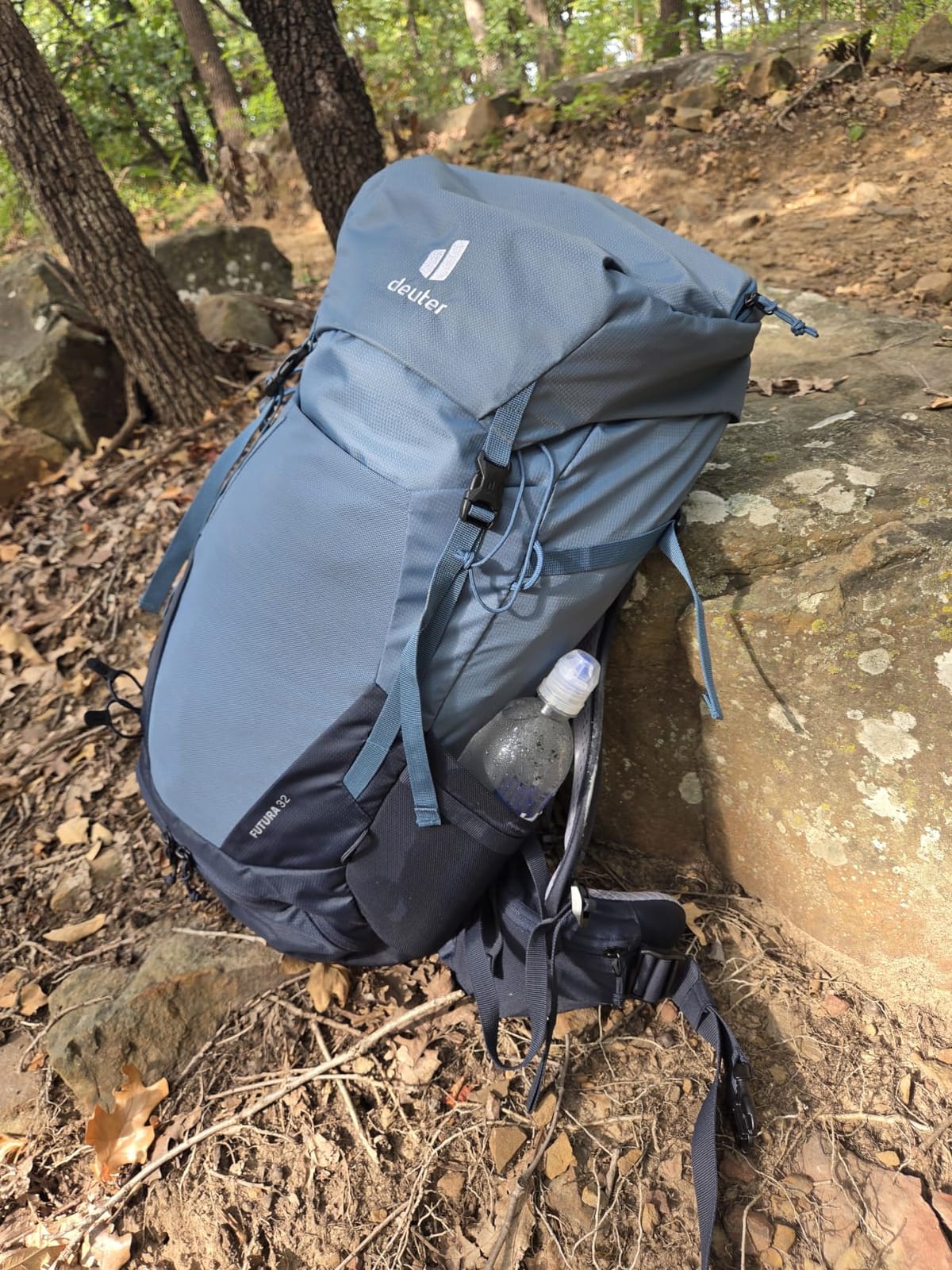
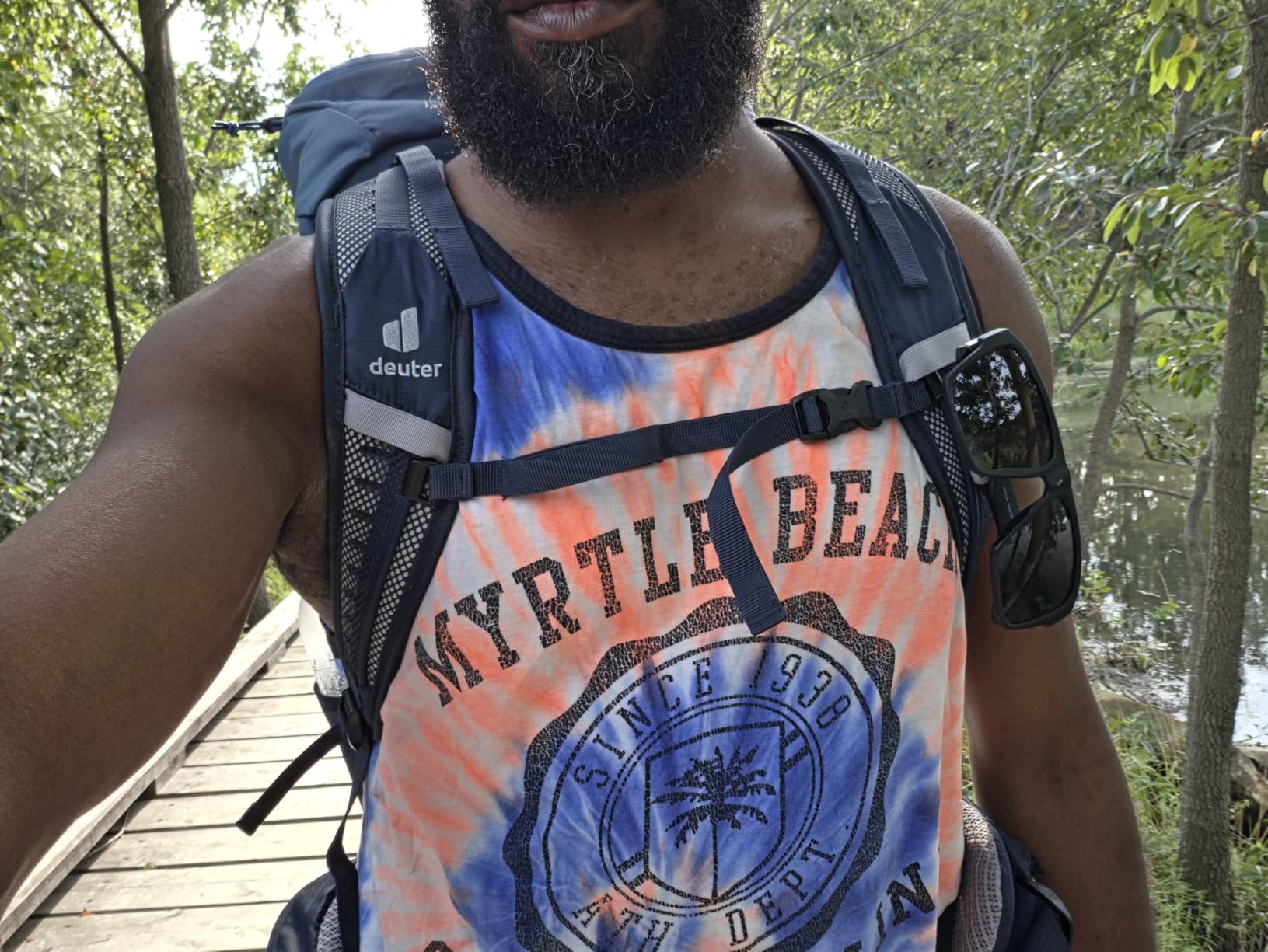
Height, width and load adjustment straps at the chest and shoulders let you shape the harness to your frame rather than the other way around, which is the difference between a pack that fits a tall hiker and a pack that merely fits someone. The dual-density Comfort Lock hip fins are shaped to keep the load from sliding, and that matters on descents.
The detachable rain cover is included rather than sold separately, and the shell is a 60% polyamide, 40% polyester blend rated water repellent. There are hiking pole loops and hydration compatibility, and at 32 litres the pack is a genuine day and overnight package rather than a big-volume bag you will struggle to fill.
There is a clear weakness under load. The base is unpadded and curves inward, so once a load gets heavy it presses into the lower back, and the curved back panel can push a heavy load away from the spine in a way some owners find unbalanced. This is a comfort-first pack for moderate loads, not a heavy-hauling pack.
It also has no bottom attachment straps for lashing a tent or a sleeping pad, and the narrow profile limits bulky gear. The top lid is hard to open when the pack is fully loaded, which is another mild annoyance that repeats in reviews.
Who should buy the Futura 32
A tall hiker whose heaviest days are 15 to 20 pounds will love this pack. Several owners who normally carry much more describe the Futura as their summer and shoulder-season pack precisely because the ventilation keeps them comfortable when the load is light.
It is also a good fit for hikers moving toward lighter gear who want a framed pack that will not punish them when they do not. The included rain cover removes one more thing from the gear list.
Where it falls short
It is not the pack to take on a resupply carry with a heavy food load, because the unpadded base turns into a pressure point exactly when the load is heaviest. Anyone with a history of lower back trouble should look past it.
The absence of bottom straps also means wet tents and pads ride in your main compartment, which on a tall frame is more awkward than it would be on a shorter one. Plan your pack layout around it.
5. Osprey Kestrel 58 – Best for Weekend Trips
Osprey Kestrel 58L Men’s Backpacking Backpack, Green L-XL
58L
Large/X-Large size
1750 g
AirScape back panel
Integrated rain cover
Pros
- AirScape back panel offers adjustable torso length and a close-to-body carry
- Fit-on-the-Fly hip belt can be adjusted while walking
- Integrated rain cover and trekking pole attachment
- Large top lid pocket plus under-lid mesh pocket
Cons
- Heavier than lighter 58-litre alternatives at 1750 g
- Drawstring top closure is less secure when overstuffed
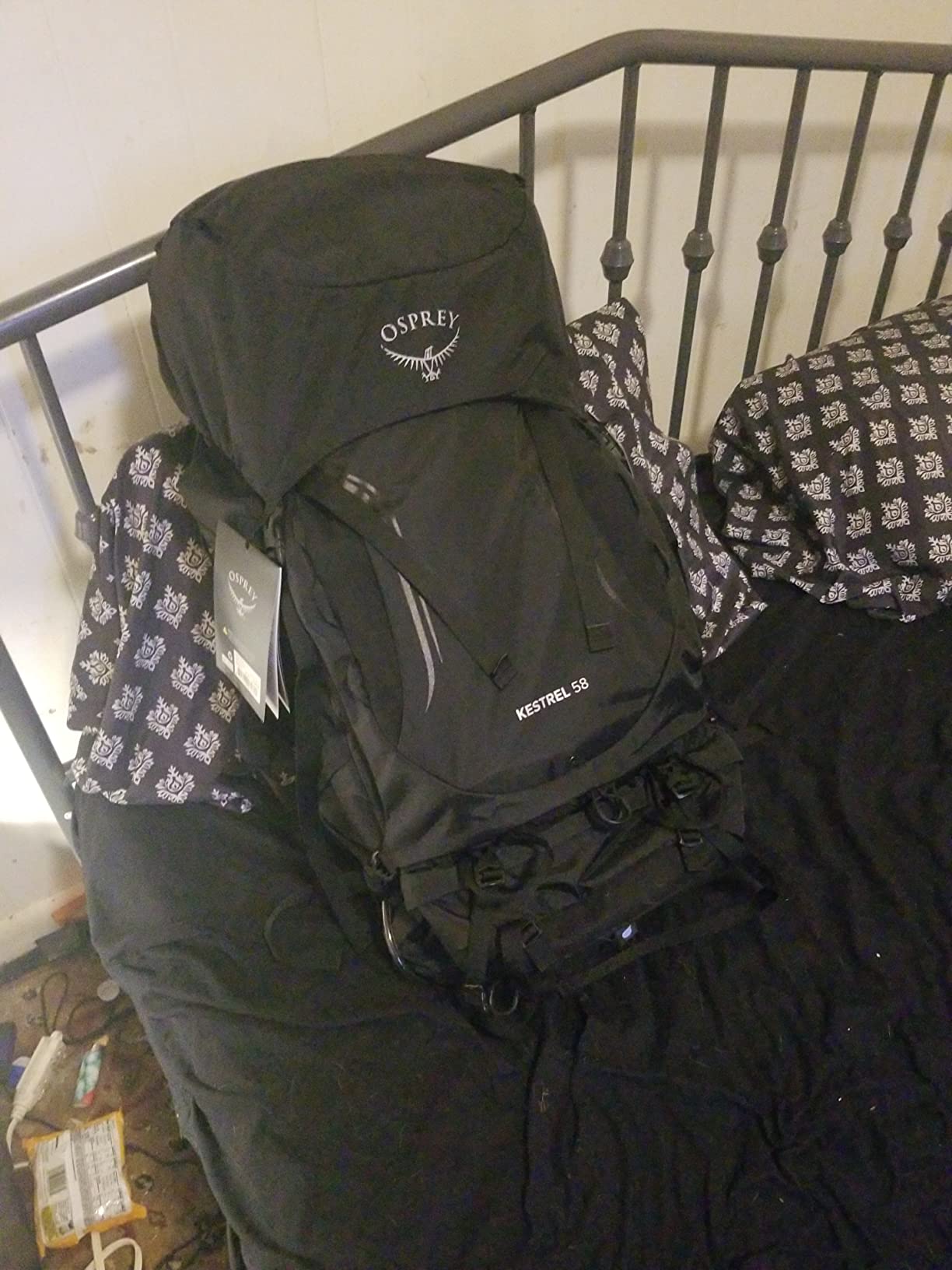
The Kestrel 58 sits in the middle of this list, and for many tall hikers it is the most useful pack they will own. The listed size is Large/X-Large, the AirScape back panel gives you adjustable torso length, and the Fit-on-the-Fly hip belt is the feature that separates it from cheaper 58 litre packs. You can change the fit while you are walking, not just at a campsite.
At 58 litres it is a two to four night pack, and that range is where the adjustable torso and the breathable panel pay for themselves. The panel carries the load close to the body, which is what stops a pack from swinging away from you on a long descent, and that problem is amplified on a longer frame.
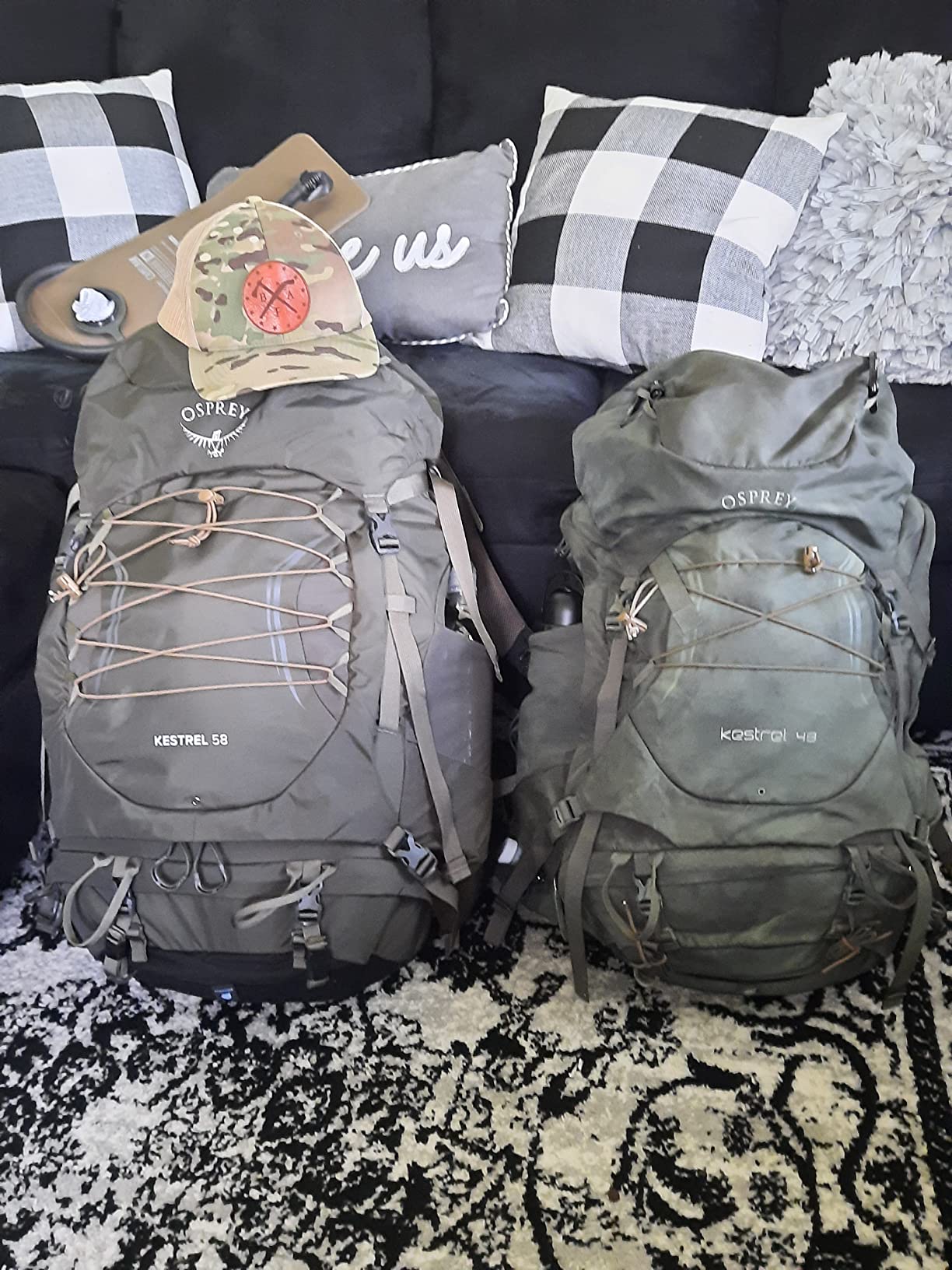
Owners describe it as a stable, breathable hauler, and that pairing of words matters more for a tall hiker than for anyone else. A pack that stays close to your spine does not rock, and a pack that does not rock does not load your shoulders unevenly on the descents where most trips get decided.
The organizational side is well handled. There is a large zippered top lid pocket, an under-lid mesh pocket with a key clip, trekking pole attachment and an integrated rain cover, so the small convenience items have homes rather than being crushed at the bottom of the main compartment.
The two criticisms are both about weight and closure. At 1750 grams it is heavier than lighter 58 litre alternatives, and anyone chasing a fastpack base weight should look elsewhere. The drawstring top closure is also less secure when the pack is overstuffed, which on a 58 litre volume is easy to do by accident.
How it fits a long torso on a two to four night trip
The adjustable torso plus the on-the-fly hip belt is the combination that makes this work for a tall frame. You can set it once in the morning and reset it after a wet rest stop without taking the pack off, which is a small thing that becomes a large thing over four days.
Reviewers who use it as a general hauler note that the load stays put, which is what you want when you are carrying a tent, a sleeping bag and food for four days on a body that is longer than the pack was designed for.
Where it falls short
It is not a pack for carrying children or a full camera kit plus camping gear, because the 58 litres and the drawstring closure do not leave room for awkward shapes without forcing them into the closure.
Anyone who wants the lightest possible pack for a three-season trip will find better options among frameless designs, accepting less support in exchange. On a tall frame that trade is worth thinking about carefully, and we would usually take the framed pack.
6. Osprey Rook 65 – Best Value for a First Big Pack
Osprey Rook 65L Men’s Backpacking Backpack, Gray OS
65L
One size
3.7 lb
Adjustable AirSpeed suspension
LightWire frame
Pros
- Adjustable AirSpeed suspension moves load to the hip belt across a range of torso lengths
- LightWire frame keeps heavy loads off the shoulders
- Integrated removable rain cover stows in its own pocket
- Zippered sleeping bag compartment with a floating divider
Cons
- One size means less fit precision for very long or very short torsos
- Less adjustability overall than the AirScape and AG platforms
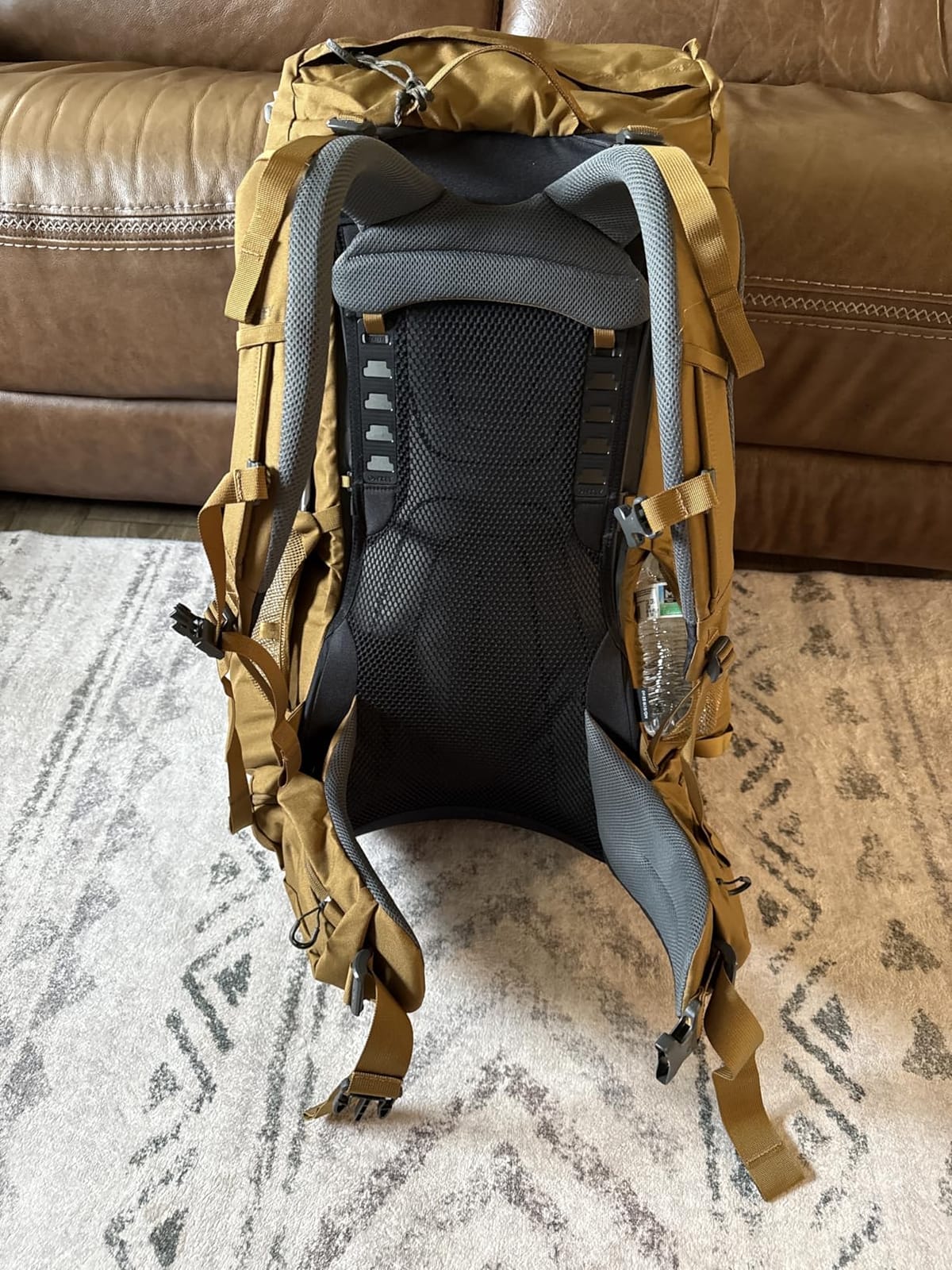
The Rook 65 is the honest entry point into a full-size pack, and it does something a lot of first big packs do not, which is publish a real suspension. The AirSpeed suspension here adjusts across a range of torso lengths and moves the load to the hip belt, and the LightWire frame keeps that load off your shoulders. For a tall hiker buying their first pack, that is the right mechanism at the right volume.
At 65 litres and 3.7 pounds it is a three to five day pack with room for a poor weather contingency, and the LightWire frame is stable enough that reviewers use it for bulky gear. The integrated removable rain cover stows in a pocket of its own, so there is no separate thing to lose.
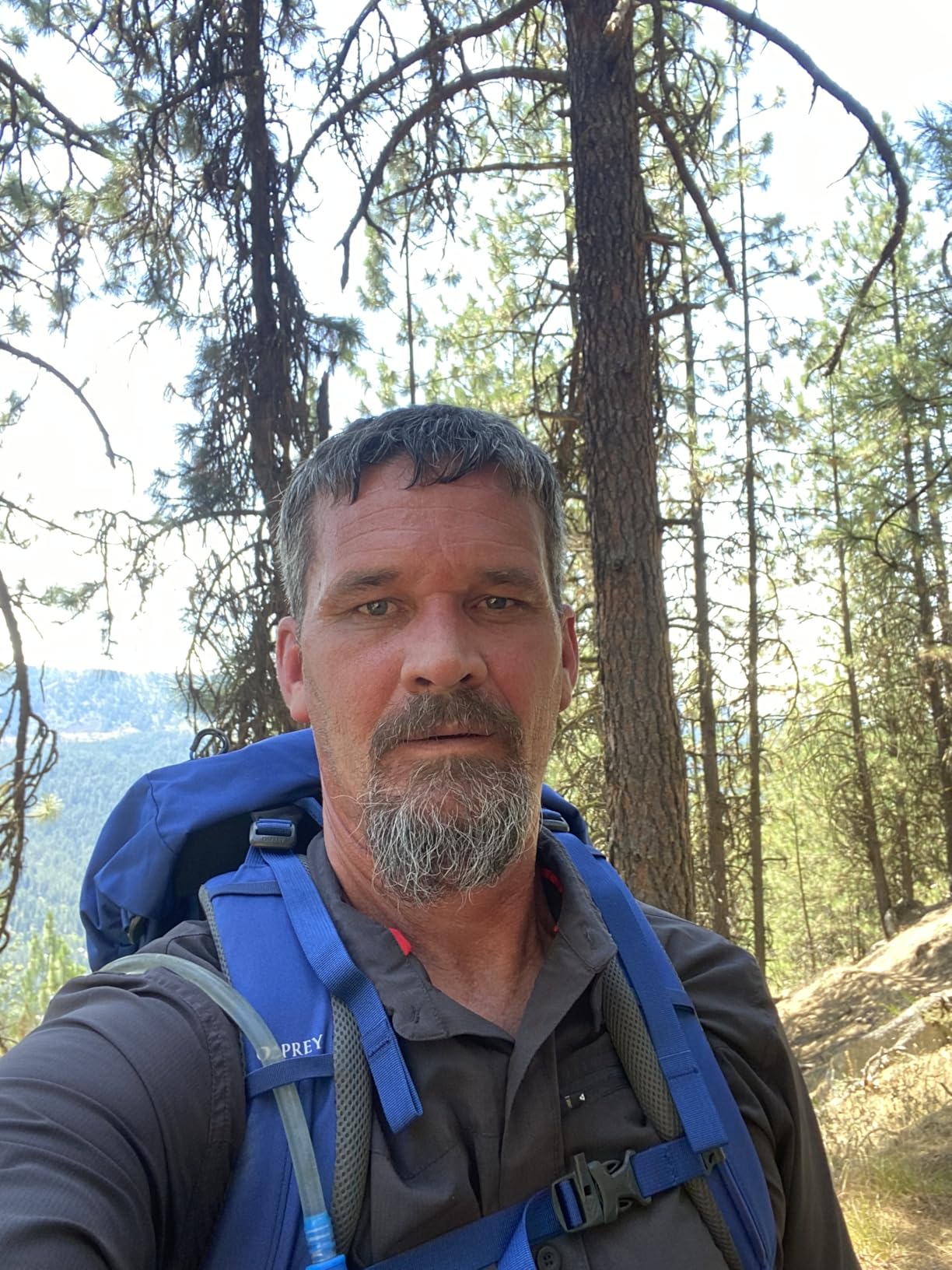
There is a zippered sleeping bag compartment with a floating divider, which sounds like a small detail until you are trying to find a wet sleeping bag at the bottom of a full pack in the dark. Six pockets cover the essentials without turning the pack into a shopping bag, and the pack is Daylite compatible if you want to bring less on warm trips.
The main limitation is honest and worth putting plainly. This is a one size pack, and one size means the torso adjustment has to cover a much wider range than a dedicated size run does. If your torso is at the short or long end of what it covers, you will feel that, and there is no second size to move up to.
The other limitation is adjustability overall. Compared with the AirScape and AG platforms used in the Kestrel and Aether, this pack gives you fewer places to make the fit personal. You can set the torso, but you cannot fine-tune the shoulder straps and hip belt while walking.
Who this pack is right for
A hiker near the middle of the range who wants one pack for multi-day trips and is not sure yet whether a frameless ultralight setup is for them. Reviewers describe it as a straightforward, ventilated first big pack, and that is exactly right.
The cost saving over the premium Osprey models is where this pack earns its place. You give up fit precision, not capability, and for a hiker whose torso sits comfortably inside a one-size range that is a good deal.
Where it falls short
It is the wrong choice for a 24 inch torso. One size cannot cover both a 19 inch frame and a 24 inch frame well, and the fit ends up being a compromise that neither size deserves. For a very long torso, the Kestrel or the Aether will serve you far better.
It is also a large pack for someone who mostly does day hikes. A 65 litre volume encourages you to carry things you will regret carrying, and for a tall frame the resulting load sits badly regardless of the pack.
7. Osprey Hikelite 32 – Best Lightweight Pack for Travel and Day Hikes
Osprey Hikelite 32L Lightweight Hiking Backpack – Durable Travel Daypack with Rain Cover for Men and Women, Chameleon/Black, M/L
32L
2.3 lb
Medium-Large size
BioStretch harness
Rain cover included
Pros
- Light 2.3 lb build suits day hiking and travel
- AirSpeed tensioned mesh back panel moves air across the back
- Extra tall side pockets fit larger water bottles
- Padded hip belt with dual pockets and a shove-it front pocket
Cons
- Fixed BioStretch harness offers little torso-length adjustment
- Less supportive than framed packs under heavy loads
- Bucket-style single compartment offers less internal organisation
The Hikelite 32 is the lightest framed option in this roundup, at 2.3 pounds, and it is built around travel as much as hiking. The shell is bluesign approved 100 percent recycled 100D high-tenacity nylon with a DWR treatment made without PFAS, and the included rain cover uses the same treatment. That is a thoughtful build for a pack you will use in cities as often as on trail.
Where it falls short for a tall hiker is specific and worth saying early. The BioStretch harness is fixed, and reviewers list little torso-length adjustment as its main limitation. The listed size here is Medium-Large, which is not the size a 6-foot hiker should be looking at.
What it does well is straightforward. The AirSpeed tensioned mesh back panel moves air across the back, the extra tall side pockets fit larger water bottles than most 32 litre packs, and the padded hip belt with dual pockets plus a front shove-it pocket gives you somewhere for a wet shell or a bar wrapper without opening the main compartment.
There is an internal reservoir sleeve with a hose port and a whistle on the sternum strap. Seven pockets in a 32 litre pack sounds like a lot until you notice the bucket-style single main compartment, which means everything you own ends up in one pile rather than four organised ones.
The honest summary is that this is a light, ventilated, uncluttered pack that is not built to carry a lot, and the fixed harness is exactly the compromise tall hikers complain about. If your day hikes are genuinely light, it is a pleasant pack. If you carry anything more, the lack of torso adjustment will show up in your shoulders by the afternoon.
Who should buy the Hikelite 32
Hikers who want one pack for air travel, city walking and short day hikes, and who care about weight more than load rating. Reviewers consistently praise the roomy bottle pocket and the useful included rain cover, both of which matter more than they sound on a warm hike.
It is also a sensible gift for a tall friend who does not yet have a pack and only walks locally, because it is light and simple rather than over-engineered.
Where it falls short
It is the weakest fit in this list for a long torso, because there is no adjustment to compensate for it. A 22 inch torso or longer will find the panel sitting high, and the padded hip belt will not be enough to hold the load off the shoulders.
It is also less supportive under heavy loads than any framed pack here. If your day hikes regularly include a camera, a large water bottle and a full layer system, choose something with a frame and a real torso adjustment instead.
8. Osprey Aether 55 – Best Fit Precision for a Long Torso
Osprey Aether 55L Men’s Backpacking Backpack, Black L-XL
55L
Large/X-Large
4.9 lb
Custom Fit-on-the-Fly harness
Nine pockets
Pros
- Fit-on-the-Fly hip belt and shoulder straps plus adjustable torso length
- Large/X-Large suits tall and broad-shouldered hikers
- AirScape back panel carries heavy loads close to the body
- Nine pockets keep gear organised on long trips
Cons
- Heavy at 4.9 lb
- Tall narrow interior makes small items at the bottom hard to retrieve
- Lightweight fabric can abrade on rock in technical terrain
The Aether 55 is the most precisely adjustable pack in this list, and for a tall hiker with a long torso that is the feature that decides the purchase. The Fit-on-the-Fly hip belt and shoulder straps can be adjusted while you are moving, and combined with adjustable torso length it gives you four separate places to shape the pack to your frame instead of one.
Owners describe it as the pack that finally fit a 6 foot 2 broad-shouldered frame, with a hip belt and shoulder harness that fine-tune the fit far better than one-size packs. The listed size is Large/X-Large, and the AirScape injection-moulded back panel carries heavy loads close to the body, which is the mechanism that stops a long frame from swinging the load away from your spine.
It is also the heaviest pack here at 4.9 pounds, so this is a comfort and fit decision rather than a weight one. Nine pockets across nine compartments keep a long trip organised, and the included rain cover plus the removable divider in the sleeping bag compartment are both practical.
The trade-offs are real. The tall, narrow interior makes small items at the bottom hard to retrieve, which is a daily irritation on a trip longer than three days. The water bottle pocket cross straps can obstruct bottle access, and the lightweight fabric can abrade on rock in technical terrain, so it is not the pack for scrambling.
Who the Aether 55 fits
Tall, broad-shouldered hikers carrying loads in the 30 to 40 pound range, who want as much adjustment as they can get and do not mind the weight. The near weightless feel on descents with a full load is what reviewers buy into, and it is exactly the benefit a long torso gets from a precise fit.
It also works well for anyone carrying camera gear or shared equipment, because the close-to-body panel keeps the load from moving as you walk.
Where it falls short
At 4.9 pounds it is the wrong pack for anyone who cares about base weight, and the 55 litre volume is a lot of pack for a fast weekend trip. Weight adds up fast when you are walking 20 miles a day for a week.
It is also not a technical pack. The fabric abrades on rock, so if your trips involve scrambles, talus or canyon routes with lots of contact, look for a heavier shell instead.
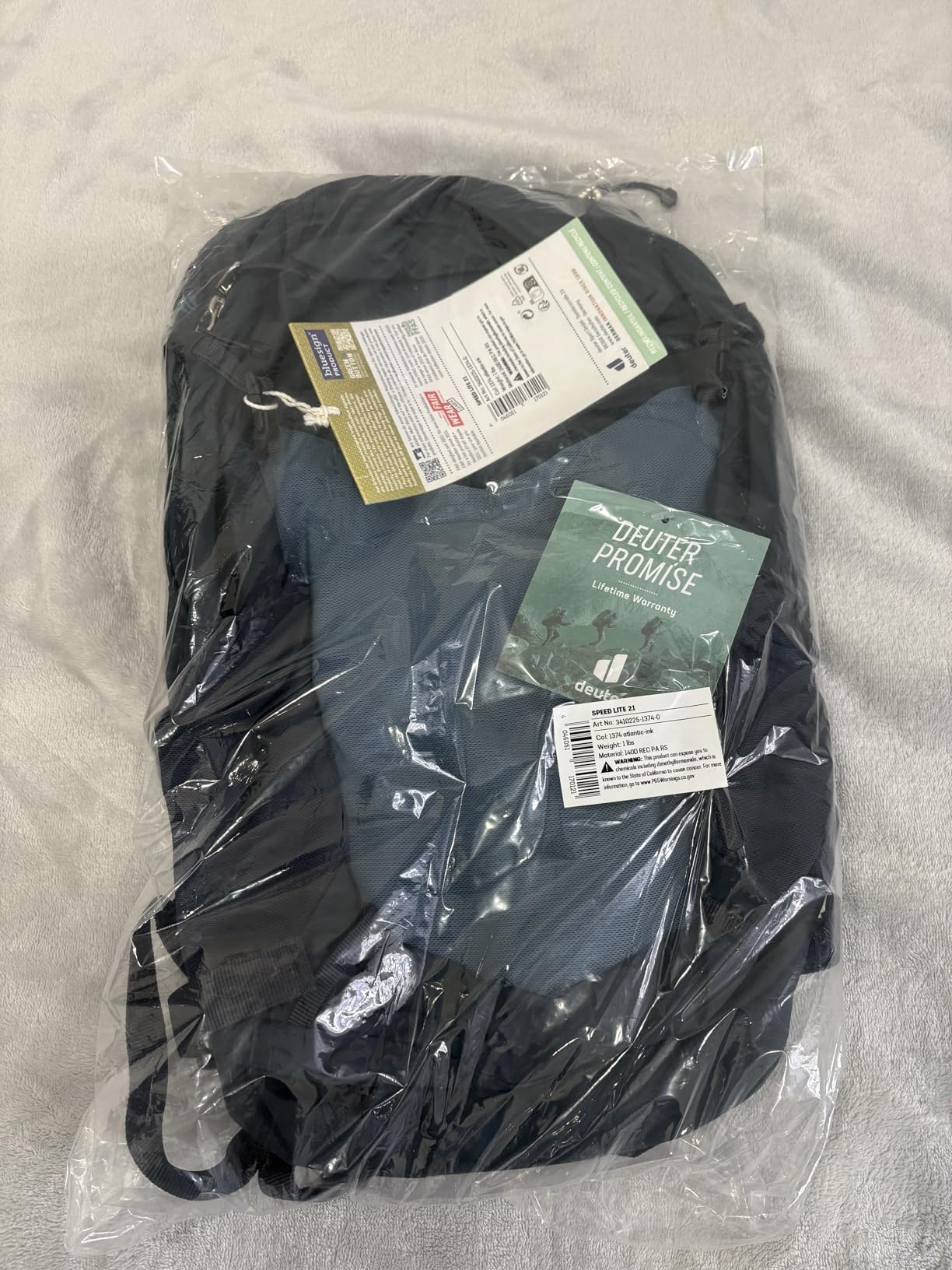
9. Deuter Speed Lite 21 – Best for Short Day Hikes
Deuter Speed Lite 21L Hiking Lightweight Backpack – Black
21L
470 g
Adjustable harness
Detachable waist belt
Not water resistant
Pros
- Very light at 470 g for a 21-litre pack
- V-shape harness allows a wide range of movement for walking or running
- Detachable waist belt and precision-adjustable sternum straps
- Body fabric made from 100 percent recycled materials to bluesign standards
Cons
- 21L capacity is small for long hikes or overnight trips
- Not water resistant so wet-weather use needs added protection
- Minimal padding limits comfort with heavier loads
The Speed Lite 21 is the lightest pack in this roundup at 470 grams, and for a tall hiker that lightness is the point in a specific way. On a longer frame, every gram is further from your centre of mass, so a light pack feels noticeably lighter than the same weight on a shorter torso. It is the pack we would hand to a tall hiker who walks fast and carries nothing.
The V-shape harness design allows a wide range of movement for walking or running, which is a genuine advantage on a long stride. The fit type is listed as adjustable, the waist belt detaches for faster movement, and the sternum straps are precision adjustable. Reviewers recommend it as a light, well-organised daypack for hiking, running and everyday carry.
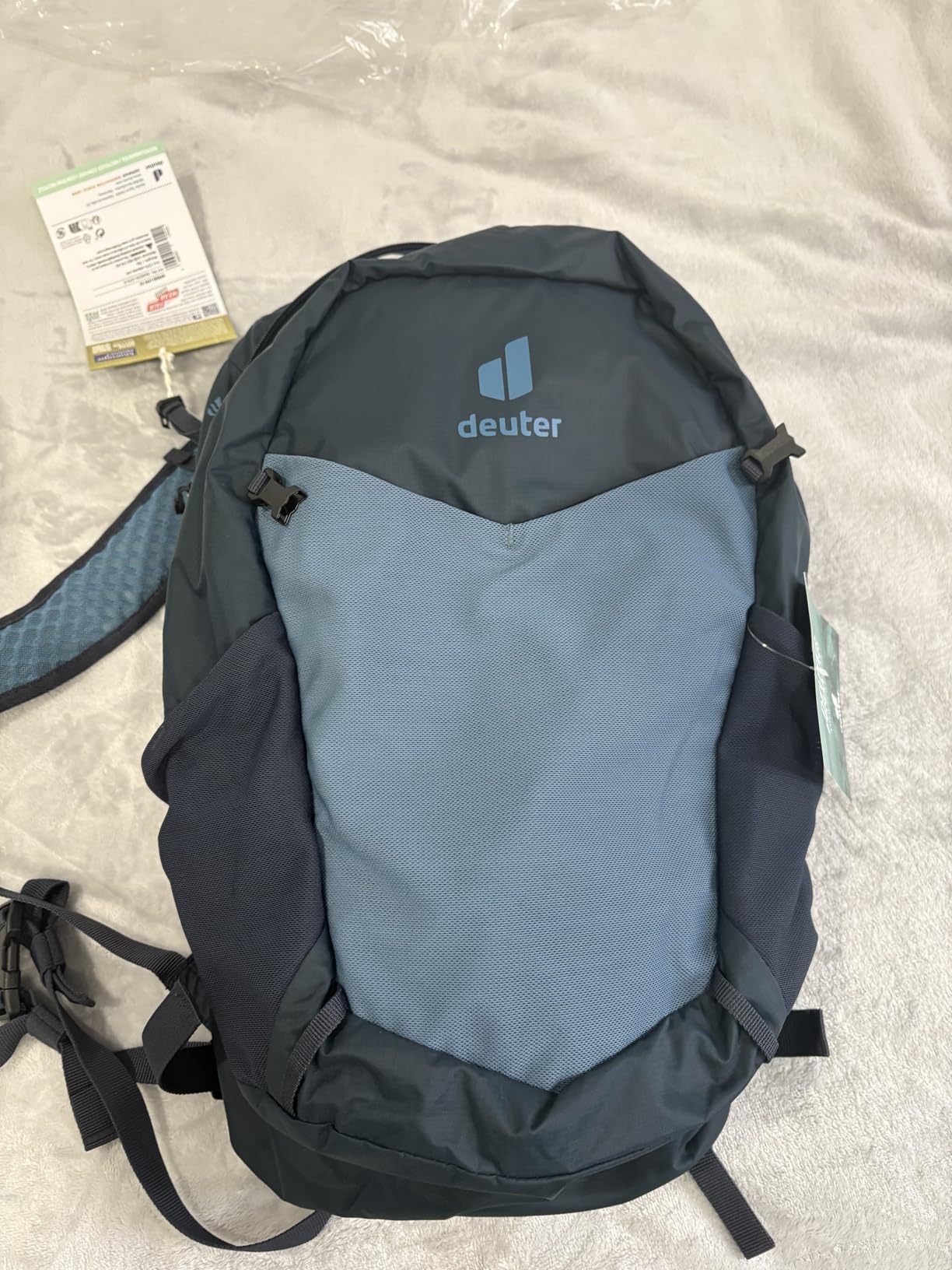
Organization is better than the volume suggests. There is a large stretch compartment plus a front mesh pocket for gloves or gear, five pockets in total, sturdy zipper pulls that work with gloves, and compatibility with a 2 litre reservoir. The body fabric is 100 percent recycled and made to bluesign standards.
Three limits are obvious from the listing and confirmed by reviewers. At 21 litres it is small for anything beyond a long day. It is not water resistant, so wet weather needs a liner or a dry bag. And the minimal padding will not forgive a heavy load, no matter how well the harness fits.
None of that is a problem for its actual job, which is carrying water, a shell, a snack and a layer for six hours. It is a problem only if you buy it for a trip it was never designed to carry.
Where this pack makes sense
Tall hikers who run, hike fast, or carry a minimal kit on warm day hikes will find this pack genuinely pleasant rather than merely adequate. The detachable waist belt and free-moving harness mean it does not fight your stride, which is the main reason it converts from a hiking pack to a running pack.
It is also the easiest pack here to live in. Five pockets and a reservoir sleeve cover a day of use without the volume of a full hiking pack.
Where it falls short
Overnight trips are out. There is no room for a sleeping bag, a shelter and food, and trying to fit them means strapping gear to the outside, which is uncomfortable on a long frame.
Wet weather is also out without an extra layer of protection, because the pack itself is listed as not water resistant. For shoulder-season trips in a climate that rains, pick something with a water resistant shell and a taped construction instead.
10. Kelty Coyote 65 – Best for Heavy Hauls
Kelty Coyote 60-105 Liter Internal Frame Backpack – Hiking, Backpacking, Travel, Hydration Compatible, Fully Adjustable (65L / Dark Olive)
65L
4 lb 10 oz
Fit Pro torso adjustment
Aluminum stay
30-55 lb carry weight
Pros
- Fit Pro torso adjustment lets a tall hiker dial the pack in quickly even on the move
- Aluminum stay and Amp Flow back panel spread heavy loads without sway
- Ten pockets plus wing pockets and daisy chains
- Handles 45-60 lb loads according to owners
Cons
- Side zip pockets block the stretch bottle pockets and flop when loaded
- No rain cover included
- Heavier than modern ultralight alternatives
The Kelty Coyote is the only pack in this list that publishes a carry weight in pounds, and the number is unusually high. The listed optimal carry weight is 30 to 55 pounds, and owners report handling 45 to 60 pounds comfortably. For a tall hiker who carries heavy gear regularly, that is a more useful specification than any capacity figure.
The Fit Pro torso adjustment is customisable and can be adjusted on the move, and several owners specifically mention a 6 foot 3 hiker dialling the pack in quickly. An external aluminum stay with the Amp Flow ventilated back panel spreads heavy loads without sway, and sway is the thing that hurts most on a long frame.
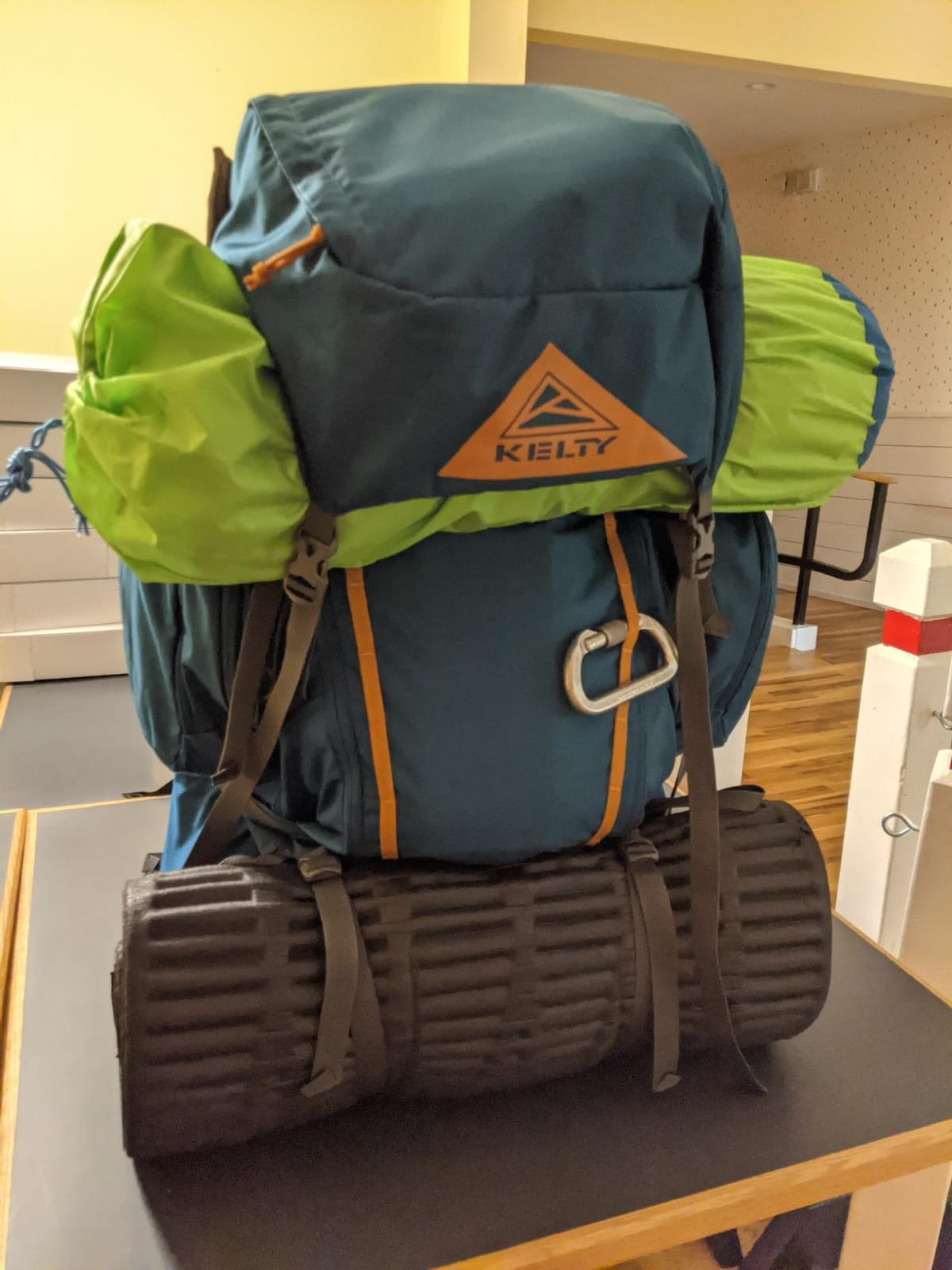
Organization is thorough. Ten compartments and ten pockets, Kelty signature wing pockets, daisy chains, bottle pockets, a sleeping bag compartment and a J-zip top loading design with bottom zip access for fast tent and bag retrieval. If you carry hunting gear, camera equipment or a large amount of shared kit, the room matters.
Three problems keep this out of the top tier. The side zip pockets block the stretch netting bottle pockets and flop when loaded, which is a real annoyance on a pack this size. There is no rain cover included, so you will be carrying one separately. And at 4 pounds 10 ounces it is heavier than modern alternatives, with nothing to offset that.
Owners still treat it as a durable, comfortable workhorse that handles heavy loads, and the aluminum stay is the reason. If your load is genuinely heavy, the extra material is doing something for you rather than just weighing you down.
Who the Coyote is built for
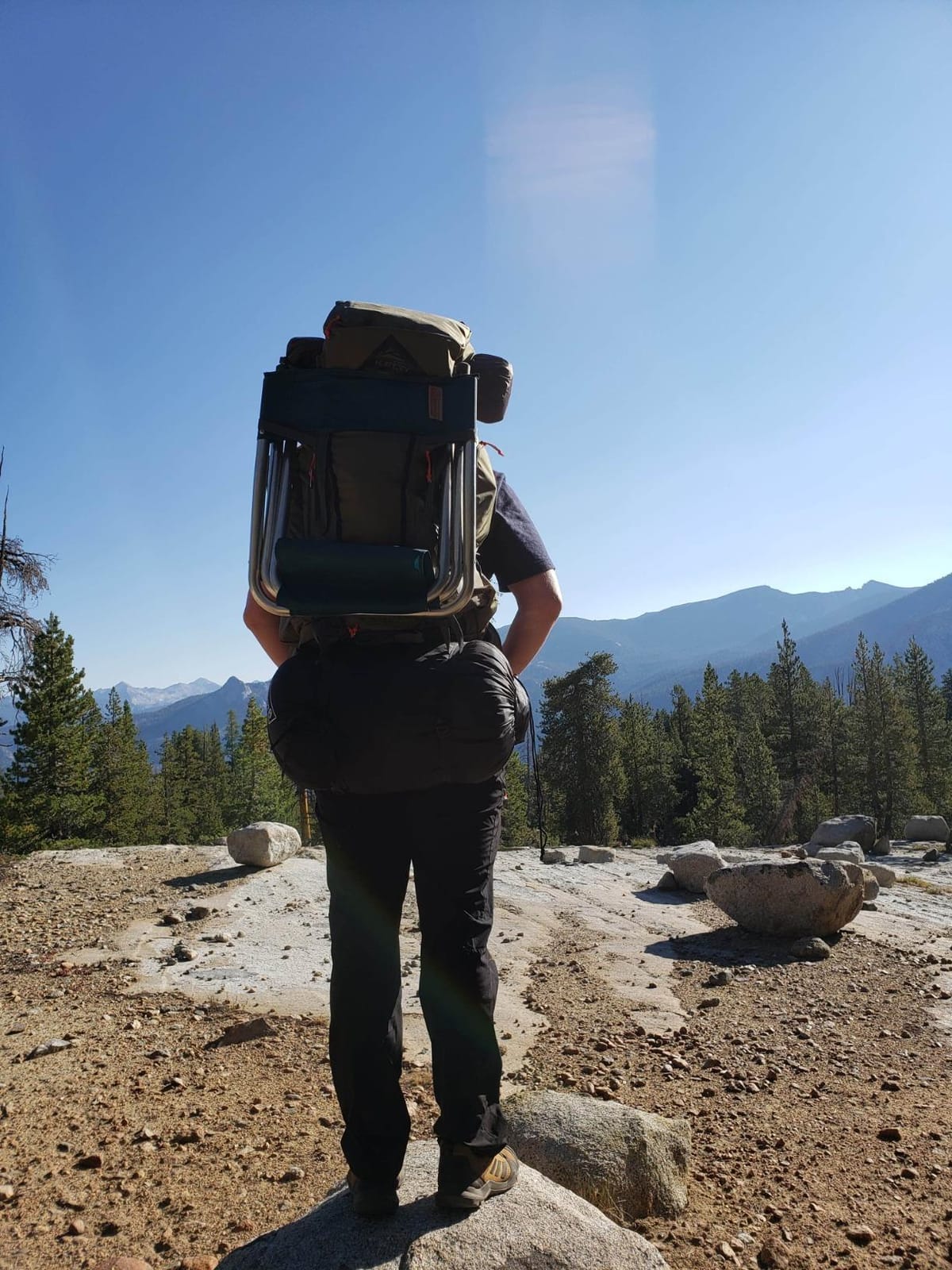
Tall hikers who carry heavy loads, gear for two, or equipment like a camera or hunting kit on trips where volume and strength matter more than weight. The adjustable torso and the stay frame are the two features that make it work on a long frame.
Owners who use it for long-distance trekking describe it as a pack that stays put under a heavy load, which is the reason it appears here rather than a lighter frameless option with a much lower ceiling.
Where it falls short
It is the heaviest pack here and has the highest weight per litre, so it is a poor choice for anyone moving toward ultralight travel. The missing rain cover also means one more thing in your lid pocket on a pack that is already at capacity.
For a hiker with a moderate load who wants to walk fast and light, the 58 litre framed options on this list are simply more efficient. The Coyote earns its weight only when the load justifies it.
Buying Guide: Fitting a Pack to a Tall Frame
What size backpack do I need? Capacity by trip length
Size is a poor word for this. What you are choosing is a volume that matches the length of your trip, after you have confirmed the torso range covers you. Height is not part of that calculation, which surprises people who have spent years sizing up a size chart.
A day hike on maintained trail rarely needs more than 25 to 35 litres: water, a shell, food and a layer. An overnight trip with shared shelter and a sleeping bag sits around 45 to 55 litres. A multi-day trip where you carry your own tent and food needs 55 to 65 litres, and a trip in resupply-free country or with cold weather gear pushes toward 65 litres and above.
The rule we would apply: pick the smallest volume that holds your gear comfortably, then confirm the torso range. A tall hiker who jumps to the largest pack in the range to avoid sizing up will carry more than they need, and a bigger bag on a long frame feels worse, not better, once it is loaded.
For anyone comparing options in this roundup, the 33 litre Talon and 32 litre Futura cover day and single-night trips, the 55 litre Aether and 58 litre Kestrel cover two to four nights, and the 65 litre Rook, 65 litre Coyote and 68 litre Atmos AG cover longer trips and heavy loads.
Torso length and adjustable fit beat height
This is the number that decides whether a pack is wearable. Torso length runs from the C7 vertebra at the base of the neck down to the iliac crest, the top ridge of the hip bones, and the range of a pack is the range of frames it was built to hold.
Most standard size runs top out around a 20 or 21 inch torso. That is the single reason tall hikers get bad fits. If your measured torso is 22 inches or more, you need either a published range that starts at 22 or enough adjustment to reach it, and a pack that offers neither is a hard fail regardless of how good its reviews are.
Adjustable fit is the closest thing to an insurance policy here. A pack with a moulded or sliding torso adjustment can serve a wider range of torsos than a fixed panel, and on this list the Stratos, the Kestrel, the Aether, the Rook, the Futura and the Coyote all offer it in some form.
Adjustability has a ceiling, though. A pack that adjusts across 3 inches of torso cannot cover a 19 inch frame and a 24 inch frame equally well. Reviewers consistently note that only two torso lengths means the fit is tight at each end, which is a real limitation on the Atmos AG despite everything else it does well.
Hip-belt fit and load transfer to the hips
A well-fitted pack should put roughly 70 to 80 percent of the carried load onto your pelvis through the hip belt. Everything else lands on your shoulders, and shoulders are not built for that. This is why shoulder pain in tall hikers is so often a fit problem rather than a strength problem.
Measure your waist before choosing a pack, and compare it against the belt’s stated range rather than assuming a small belt can be tightened onto a larger waist. Short torso with a narrow waist is the hardest combination in this category, and it is the one most brands serve badly. A belt with insufficient adjustment slides downhill on the trail and forces constant re-centering, which is the second most common complaint we read.
Padded hip-belt wings matter more on a long torso because the belt has to spread load over a longer stretch of your back. The AirScape, AG and Amp Flow panels on the packs here all do this differently, and the Comfort Lock hip fins on the Futura are a good example of a belt shaped specifically to stop the load from sliding.
Load rating and heavy carries
Load rating is what a pack can safely carry. Pack weight is what it weighs empty. Conflating the two is the most common mistake in this category, and it is the reason people end up with ultralight frameless packs that feel worse than heavier framed ones.
That tension shows up constantly in owner reports. On r/hiking, users point out that a light pack carrying heavy gear can feel worse than a heavier pack, because lighter designs offer less support, and frameless designs offer the least. For a tall hiker with a load over 30 pounds, a framed pack is the sensible choice, and the packs in this roundup that publish a number are consistent with that.
Most brands do not publish a load rating at all, which is a real gap. The Kelty Coyote is the exception here with a stated optimal carry weight of 30 to 55 pounds, and owners report handling 45 to 60 pounds. The Atmos AG owners describe carrying 30 to 40 pounds without soreness. Where no number is published, look for a stay, a framed design and a hip belt rated to take the load.
A tall frame has slightly more tolerance for load than a short one, because the distance between the pack and your centre of mass is longer, but only if the fit is right. A badly fitted pack on a long frame will feel worse than a badly fitted pack on a short one.
Extended sizes (XXL and 3XL) and who actually offers them
Extended sizing is the practical question tall hikers actually search, and the honest answer is that most brands do not offer it as a separate product. What they offer is a Large/X-Large or a size run that extends past the standard range, and only some of them publish the measurement.
Within this roundup, four of the ten listed products are available in a Large/X-Large size, and the Deuter Futura 32 is listed with an adjustable fit rather than a fixed size. That is the practical difference between a brand that has thought about long torsos and one that has not. On other brands you are looking for framers that publish four or more torso lengths as standard, which is why experienced users on r/CampingandHiking keep pointing long-torso hikers toward them.
The trust signal to look for is simple: a published torso-length range on the product page. On r/WildernessBackpacking, users describe sustained frustration that manufacturers still do not publish torso measurements at all, which forces guesswork and returns. A brand that publishes the number is telling you it expects to be measured against you.
Women’s-version tall fits
The query behind this guide is not male-only, and a tall woman shopping a women’s-specific version faces a narrower selection, not a wider one. Women’s packs are typically cut with a shorter torso and a narrower hip belt, which suits most women’s proportions but removes the extended sizes that a tall woman needs most.
That creates a real choice: take a women’s-specific pack one size up, which gives you belt range but leaves you with a panel still built for a shorter torso, or move to a men’s or unisex Large/X-Large, which gives you the panel length but a bulkier cut and a hip belt built differently.
In practice the second option works better for a tall woman with a long torso, because panel length is the harder limit to work around. Where a women’s version does publish a long range, that is the one to take. Fit-testing a pack loaded, with the hip belt tightened first, settles this question faster than any spec sheet.
Why a 70 litre pack will not fix a 20 inch torso
It will not, and this is the most common mistake in the category. Sizing up in capacity does not extend the panel. A 70 litre pack built for a 19 to 21 inch torso still ends at 21 inches, so the load still rides high, the belt still slides onto your stomach, and the shoulders still take the difference.
It also makes things worse in a second way. A larger pack encourages you to carry more, so the load that was already too high gets heavier. Owners on forums describe exactly this sequence, ending a trip with a worse problem than the one they were trying to solve.
The fix is always in the fit, not the volume. Extend the torso, find a belt that reaches, and then choose a volume that matches the trip.
How to fit-test a pack before you commit
Fit cannot be judged from a photograph or a size chart, and the return policies that make online buying practical vary. Testing a pack properly takes about ten minutes and follows a fixed order.
Load the pack first. A pack that fits perfectly when empty can fit badly when full, because the load changes the shape and the position of the panel. Then tighten the hip belt before anything else, because the belt sets the position of the whole pack. Set the torso length next, then the load lifters, then the shoulder straps.
Walk for ten minutes, including some stairs if you can. Then stand in front of a mirror and check three things: the top of the pack should sit below the base of your neck, the hip belt should sit on the hip bones rather than the stomach, and the load lifters should be only just taut rather than cranked. If any of those three is wrong, adjust and repeat rather than accepting the fit.
A useful test for tall hikers specifically is to check where the pack sits relative to your shoulder blades under load. If the frame is too short, the bottom of the pack will push into the base of your spine and the top will sit above your collarbone, and no amount of strap tightening fixes that.
Once the pack is dialled in, the last piece of kit worth researching is what you carry alongside it. Our guides to the best Bluetooth speakers for hiking and backpacking and to the best wireless earbuds for hiking and trail running cover the small items that a longer torso makes you more aware of on long climbs.
Frequently Asked Questions
What backpacks are best for tall men?
The best backpacks for tall men are those whose torso-length range extends past roughly 21 inches and whose hip belt reaches your waist, not those with the most liters. A framed pack with adjustable torso length and a padded hip belt carries load on the pelvis instead of the shoulders. Match torso length and hip-belt range first, then choose capacity to match your trip length.
What size backpack for a 6ft man?
Size a pack by torso length, not height. Measure from the C7 vertebra at the base of your neck to the top of your hip bones, then choose a pack whose published range covers that number, ideally 22 inches or more. Capacity comes next: 25 to 35 litres for a day hike, 45 to 55 for an overnight trip, and 55 to 65 for multi-day travel.
What are the best backpacks for long distance hiking?
For long distance hiking, prioritize fit precision and load rating over weight. A framed pack with a large padded hip belt and adjustable torso carries 30 to 40 pounds without shoulder soreness over multi-day distances. Check the frame and stay system rather than the empty weight, and test the pack loaded before committing.
Is 70L too big for backpacking?
Often yes, and the reason matters. A 70 litre pack does not fix a short torso, because the back panel is still built to a fixed length. It also encourages carrying more than you need, and the extra load rides high on a badly fitted pack. Choose the smallest volume that holds your gear, then confirm the torso range.
How do I measure my torso length for a backpack?
Stand up straight with even weight, find the C7 vertebra, the knobby bump at the base of your neck, then measure straight down your spine to the iliac crest, the top ridge of your hip bones. Keep the tape against your spine rather than letting it sag. Measure your waist at the narrowest point too, so you can check the hip belt range before buying.
Conclusion: The Fit Comes Before the Liters
The Osprey Stratos 36 is our pick for most tall hikers because it does the one thing that matters most, which is give a long torso enough panel to keep the load on the hip belt, and then back that up with a ventilation system and an included rain cover. If your load runs past 30 pounds, the Osprey Atmos AG 65 is the stronger answer. If heat is your problem rather than weight, the Deuter Futura 32 is the one to try on first.
Before you buy anything on this list, run the five-step torso measurement and check the published range against your number. Then load the pack, tighten the hip belt first, walk for ten minutes and look at yourself in a mirror. That ten minutes will tell you more than any spec table, including ours, and it is the difference between hiking backpacks for tall hikers that work and another trip spent with your shoulders in pain.
We updated this guide for 2026 and we keep coming back to the same rule: match torso length and hip-belt range first, and only then consider capacity.