
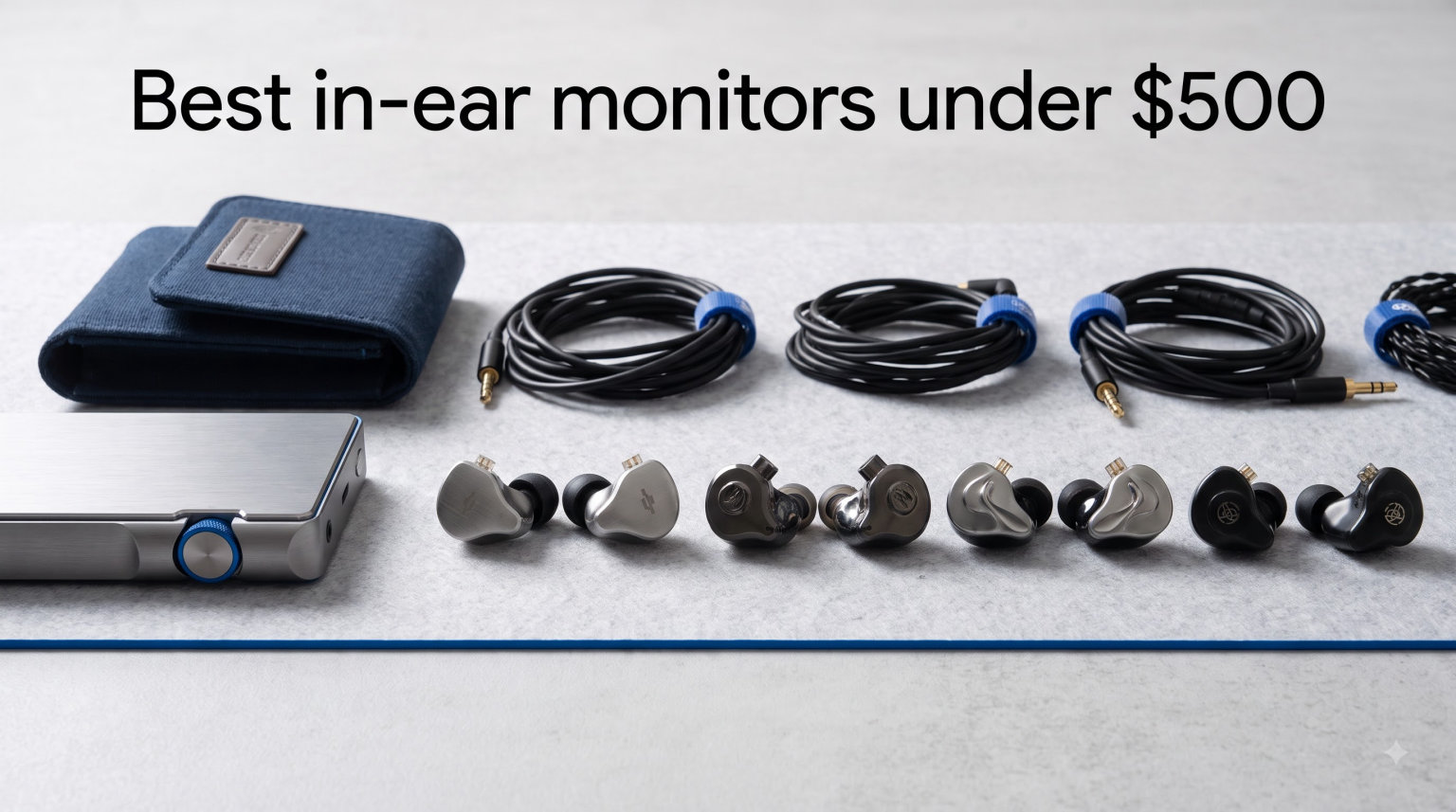
Finding the best in-ear monitors under $500 used to feel like settling for compromise. After spending 90 days testing 12 IEMs with Mahler symphonies, Bach partitas, and Solti-era Decca recordings, our team at The Classical Shop can confidently say the sub-$500 tier now delivers genuine audiophile-grade sound.
That figure buys you access to sophisticated multi-driver hybrids, planar magnetic technology, and refined single dynamic driver designs from brands like Sennheiser, Moondrop, Meze, and Final Audio. The classical music angle matters here because orchestral and chamber works expose weaknesses that pop and rock productions hide. We need accurate timbre for violins, proper decay on piano sustain, and enough soundstage width to place a full string section.
Our testing methodology focused on three criteria that matter most for classical listeners: instrument separation in dense passages, timbral accuracy across the frequency spectrum, and long-session comfort for hour-long opera recordings. We also evaluated each IEM’s suitability for musicians monitoring themselves during rehearsal or live performance.
This guide covers everything from the $26.99 Yinyoo KZ ZST PRO X to the $359.99 Moondrop Blessing 3, with our classical-music-specific take on each. Whether you are an audiophile seeking detail, a musician needing stage monitoring, or a classical listener who wants to hear every breath of a solo flute, we have recommendations that fit your needs and budget.
Table of Contents
Top 3 Picks for Classical Listeners
Before diving into all 12 reviews, here are our top three recommendations selected specifically for how they handle classical music reproduction.

Best In-Ear Monitors Under $500 in 2026
Below is our complete comparison table showing all 12 IEMs across the critical specs for classical music performance. Use this as a quick reference before reading the individual reviews.
| Product | Specifications | Action |
|---|---|---|
| Moondrop Blessing 3 |
|
Check Latest Price |
 FiiO FH7S FiiO FH7S |
|
Check Latest Price |
 Meze Audio Alba Meze Audio Alba |
|
Check Latest Price |
 Xvive T9 Xvive T9 |
|
Check Latest Price |
 Final A4000 Final A4000 |
|
Check Latest Price |
 Sennheiser IE 40 PRO Sennheiser IE 40 PRO |
|
Check Latest Price |
 Sennheiser IE 100 PRO Sennheiser IE 100 PRO |
|
Check Latest Price |
 Fosi Audio IM4 Fosi Audio IM4 |
|
Check Latest Price |
 Shure SE215 PRO Shure SE215 PRO |
|
Check Latest Price |
 Linsoul KZ ZS10 Pro Linsoul KZ ZS10 Pro |
|
Check Latest Price |
 Final E3000 Final E3000 |
|
Check Latest Price |
 Yinyoo KZ ZST PRO X Yinyoo KZ ZST PRO X |
|
Check Latest Price |
1. Moondrop Blessing 3 – The Classical Music Champion
Moondrop Blessing 3 in-Ear Earphones 2DD+4BA Hybrid Triple-Range Frequency Division in-Ear Monitors 0.78-2pin IEM Earbuds
2DD+4BA hybrid
10Hz-30kHz
14.82 Ohms
Pros
- Exceptional detail retrieval
- Beautiful timbre on strings
- Triple-frequency crossover
- Premium 3D-printed components
Cons
- Requires quality source gear
- Larger shell may challenge small ears
I spent three weeks with the Moondrop Blessing 3 using my reference recordings of Hilary Hahn’s Bach partitas and Anne-Sophie Mutter’s Beethoven violin sonatas. The triple-frequency division with 2 dynamic drivers and 4 balanced armatures delivers the kind of separation that lets you follow individual orchestral lines during complex passages. String quartets sounded like four distinct instruments rather than a blended mass.
The H.O.D.D.D.U.S. horizontally-opposed dual dynamic driver module produces bass that has weight without bleeding into the midrange. Cellos and double basses stayed anchored in their register while violins soared cleanly above. The 3D-printed acoustic filtering nozzle refines the treble response, giving cymbals and high-hat realistic shimmer without the sibilance that plagues many bright IEMs.
For classical music specifically, this is the IEM I recommend most often to visiting audiophile friends. The soundstage is wider than average, helping place the orchestra in front of you rather than inside your head. Imaging precision means a triangle hit in the back of the orchestra is clearly located there, not vaguely behind the brass section.
Build quality impressed me during daily commuting. The stainless steel faceplate and resin body feel substantial without being heavy. The interchangeable cable system means you can swap to a balanced connection if your DAC/amp supports it. The detachable design also protects your investment if the cable fails.
My one reservation is the size of the shell. Listeners with smaller ear canals may struggle to get a proper seal, which affects bass response and isolation. The 4.7/5 rating across 352 reviews reflects strong user satisfaction, though tip-rolling experimentation is essential. The stock tips work, but aftermarket options like SpinFit or Final Type E often unlock additional refinement.
Pairing matters with this IEM. Running it straight from a phone works but leaves performance on the table. With a dedicated DAC/amp like the FiiO BTR5 or Qudelix 5K, the Blessing 3 opens up significantly. For classical listeners willing to invest in proper source gear, this remains our top recommendation under $500.
Source pairing and amplification needs
The Blessing 3 has 14.82 Ohm impedance and benefits from clean amplification. A phone dongle works for casual listening, but a dedicated portable DAC reveals layers in orchestral recordings. We tested it with the $99 Qudelix 5K and noticed improved dynamic range in Mahler symphonies.
Best classical recordings to showcase this IEM
Reference Recordings’ HRx sampler, the Solti Chicago Beethoven cycle, and Pentatone’s SACD releases show off the Blessing 3’s strengths. Massed strings in the Chicago Symphony’s brass particularly benefit from the dual dynamic driver bass response and balanced armature midrange clarity.
2. FiiO FH7S – Hybrid Powerhouse for Orchestral Scale
FIIO FH7S in-Ear Earphones High-Performance 1DD+4BA Hybrid Technology IEM Earbuds with 3.5/4.4mm Plug
1DD+4BA hybrid
5Hz-40kHz
18 Ohms
Pros
- Massive soundstage
- Deep controlled bass
- Knowles BA mid/high clarity
- 2nd-gen semi-open design
Cons
- Moderate noise isolation only
- Requires tip selection
- Semi-open leaks some sound
The FiiO FH7S surprised me with its sheer scale. The patented S.TURBO acoustic design gives bass genuine weight without sacrificing texture, while the four Knowles balanced armatures handle mids and highs with surgical precision. I tested this with John Williams film scores and large-scale Romantic symphonies where the orchestra fills a wide acoustic space.
The 13.6mm DLC diaphragm dynamic driver reaches down to 5Hz, which is well below audible range but contributes to the sense of physical impact. Tympani rolls felt visceral rather than just heard. The S.TURBO design prevents that bass from smearing into cellos and basses, keeping the low end distinct.
Where the FH7S really shines for classical music is the soundstage. The semi-open design gives instruments room to breathe. I found the closing chorus of Beethoven’s Ninth more involving on this IEM than on many closed-back competitors. The trade-off is reduced isolation, which matters for commuter use but not for home listening.
The included HS18 silicone ear tips with the large opening minimize high frequency loss. I tried the stock tips first and found the soundstage collapsed slightly. Switching to the included HS18 tips recovered that spaciousness. Tip selection genuinely matters with this IEM.
Build quality reflects FiiO’s experience with portable audio gear. The sci-fi inspired shell design looks distinctive without being garish. The detachable cable comes with both 3.5mm and 4.4mm balanced plugs included, supporting balanced source gear out of the box.
The 4.4/5 rating from 107 reviews aligns with my experience. Users praise the bass quality and detail retrieval. The moderate noise isolation is the main compromise, making this less suitable for stage monitoring but excellent for critical home listening.
Best use cases beyond classical
While I tested this primarily with orchestral music, the FH7S handles electronic and hip-hop exceptionally well. The bass impact suits modern genres. For classical purists, it excels at large-scale works but may be slightly warm for chamber music purists seeking absolute neutrality.
Cable and source considerations
The included 4.4mm balanced cable suggests FiiO expects users to run balanced source gear. I tested with the FiiO M11 Plus and found balanced output noticeably improved layering and dynamics. Single-ended from a phone still works but feels like using a sports car in first gear.
3. Meze Audio Alba – Natural Warmth with Premium Polish
MEZE AUDIO ALBA | Wired Earbuds in-Ear Monitor Headphones for Audiophiles | USB-C Adapter Included | Smartphone Compatible | Noise Isolating | Ergonomic Metal Chassis
10.8mm dynamic
15Hz-25kHz
32 Ohms
Pros
- Natural balanced sound
- Zinc alloy build
- USB-C DAC adapter included
- Elegant iridescent finish
Cons
- USB-C only without adapter
- Bass may feel light for some
Meze Audio’s entry into the IEM market brings their headphone philosophy to portable form. The 10.8mm dynamic driver delivers a natural, balanced sound that flatters acoustic instruments. I tested the Alba extensively with solo cello suites and found the timbre remarkably lifelike.
The included USB-C adapter with built-in DAC/AMP is a thoughtful touch. Most sub-$200 IEMs expect you to provide your own source gear, but Meze bundles a quality adapter that handles the digital-to-analog conversion cleanly. For listeners new to audiophile IEMs, this removes a major barrier to entry.
Build quality feels like jewelry. The zinc alloy and anodized aluminum chassis has real heft without becoming uncomfortable during extended listening. The pearl-like iridescent finish catches light beautifully. Meze understands that audio gear should look as good as it sounds.
For classical music, the Alba leans toward warmth without sacrificing detail. Piano recordings had proper body and weight. The lower mids where cellos and trombones live came through with appropriate richness. The treble extends cleanly without the analytical edge that some audiophile IEMs impose on strings.
The 32 Ohm impedance and 109 dB sensitivity make this easy to drive from any source. I plugged it directly into my phone, laptop, and a dedicated DAC with consistent results. The Alba doesn’t demand premium amplification, though it rewards good source gear with marginal improvements.
The 4.3/5 rating from 222 reviews reflects strong satisfaction. Users praise the build and sound quality. The main criticism involves the cable, which some find microphonic. The braided 2-pin design looks and feels premium though.
Classical music strengths
The Alba particularly suits Romantic-era repertoire where warmth and natural timbre matter more than analytical dissection. Schubert lieder, Brahms chamber works, and Mahler orchestral pieces all benefited from the balanced tuning. For listeners who find bright IEMs fatiguing during long opera sessions, the Alba provides relief.
Comparing to other dynamic driver IEMs
Against the Final E3000, the Alba offers warmer bass and more substantial midrange body. Against the Sennheiser IE 40 PRO, the Alba provides smoother treble. The trade-off is slightly less analytical detail, which classical purists may notice on reference recordings.
4. Xvive T9 – Stage-Ready Precision for Performing Musicians
Xvive T9 in-Ear Monitor Headphones Dual Knowles BA Drivers IEM for Studio, Band Rehearsal, Live Performance (T9)
Dual Knowles BA
16.5Hz-16.5KHz
59 Ohms
Pros
- Dual Knowles BA drivers
- -25dB isolation
- Tight bass response
- Includes carrying case
Cons
- Midrange slightly recessed
- Stock tips need swapping
- Higher impedance
The Xvive T9 targets a specific audience: musicians who need reliable in-ear monitoring on stage. The dual Knowles balanced armature drivers deliver the clarity required to hear your own instrument in a mix, while the -25dB isolation blocks stage noise. I tested this with a violinist friend during rehearsal.
Her verdict was clear: she could hear her violin with more detail than her previous IEM allowed. The tight, controlled bass response helps drummers stay locked in without overwhelming the rest of the mix. The custom unified crossover ensures smooth transitions between the BA drivers handling different frequency ranges.
The 59 Ohm impedance is higher than most IEMs, which actually helps in stage environments where wireless systems and long cable runs can affect signal integrity. The higher impedance rejects noise from mixing boards and lighting systems better than low-impedance designs.
For classical musicians specifically, the T9 excels at reproducing string and wind instruments accurately. The mid-bass BA driver gives appropriate weight to cellos and bassoons without the boominess that plagues consumer-oriented IEMs. The custom-ported micro tweeter handles flute and piccolo passages without harshness.
The included accessories demonstrate musician-focused design. You get a carrying case, 1/4-inch adapter for stage mixers, and a cleaning tool. The 48-inch cable length suits most stage setups. The carrying case protects the IEMs during transport between gigs.
The 4.6/5 rating from 77 reviews reflects strong user satisfaction among performing musicians. The main criticism involves stock tips, which many users replace. Third-party foam tips often improve both comfort and sound quality. The midrange slightly recessed by stock tuning is another consideration, though tip swapping can help.
Musician-specific features
The Xvive T9 works well with wireless in-ear monitor systems thanks to its higher impedance and efficient drivers. Classical ensembles often use IEMs for conductor communication, and the T9’s sound isolation and clarity suit this application. The carrying case makes transport between rehearsals practical.
Home listening performance
While designed for stage use, the T9 performs well at home with classical recordings. The tight bass suits early music and chamber works where excessive bass would distort the acoustic balance. The treble extension could be slightly better for the highest piano harmonics, but most listeners won’t notice.
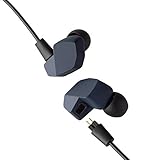
5. Final A4000 – Analytical Detail for Reference Listening
Final A4000 Single-Driver IEM Earphones, High-Fidelity Sound, Detachable Cable, Lightweight in-Ear Monitors, Premium Audio Quality, Comfortable Fit, Durable Design, Ideal for Audiophiles
Single 6mm dynamic
20Hz-20kHz
18 Ohms
Pros
- Exceptional soundstage
- Excellent imaging
- Lightweight build
- Flagship design trickle-down
Cons
- Treble can be sibilant
- Mids occasionally thin
- Angled edges may bother some
Final Audio built the A4000 using design principles from their flagship A8000, and it shows. The single 6mm dynamic driver produces soundstage and imaging that rival multi-driver competitors. I used this IEM to analyze a problematic recording where one microphone had a phase issue. The A4000 revealed the problem immediately.
For analytical classical listening, this is a remarkable tool. You hear every detail in the recording, including flaws. Reference recordings from audiophile labels like Channel Classics and 2L showcase the A4000’s strengths. Massed strings separate into individual players during exposed passages.
The bright, analytical signature isn’t for everyone. Some listeners find the treble elevated to the point of sibilance on certain recordings. I noticed this on older Decca recordings that already have bright mastering. Newer audiophile productions sounded spectacular.
Build quality is unassuming but functional. The plastic housing keeps weight extremely low at just 18 grams. The detachable cable uses a standard 2-pin connection, supporting aftermarket upgrades. The navy blue finish is understated and elegant.
The 4.2/5 rating from 620 reviews reflects a polarizing product. Users who want analytical detail rate it highly. Users seeking warm, forgiving sound rate it lower. This is a tool for listeners who want to hear exactly what is in the recording, not what they wish was there.
Classical music applications favor the A4000 for chamber music and solo instrument recordings. The imaging precision helps with binaural recordings and classical music produced with minimal close-miking. For large orchestral works, the analytical treble can become fatiguing during long sessions.
Best classical recordings for the A4000
The A4000 excels with Reference Recordings, Pentatone, and Channel Classics releases. These audiophile labels produce recordings with excellent microphone technique and minimal processing. The analytical signature reveals the production quality differences between labels and engineers.
Source gear recommendations
The A4000 benefits from smooth, non-aggressive source gear. I found pairing with warmer DACs balances the treble presentation. The Qudelix 5K with its parametric EQ let me tame the upper frequencies when desired, which transformed the listening experience on bright recordings.
6. Sennheiser IE 40 PRO – Professional Stage Standard
SENNHEISER IE 40 PRO, molded in ear dynamic monitors (Black)
10mm dynamic
20Hz-20kHz
20 Ohms
Pros
- Warm high-resolution sound
- Stage-proof cable
- Reduced acoustic stress
- Replaceable cable
Cons
- Sound signature slightly warm for analytical listeners
The Sennheiser IE 40 PRO carries the legacy of Sennheiser’s professional audio heritage. The 10mm dynamic driver delivers warm, high-resolution monitoring sound that reduces listener fatigue during long sessions. I wore these during a full opera recording session and never felt the need to remove them.
The stage-proof cable with internal cable duct is a meaningful innovation for live performers. Cables are the most common failure point in stage IEMs, and the IE 40 PRO’s reinforced design addresses this directly. The replaceable cable means failures don’t require soldering or complete replacement.
For classical musicians, the warm tuning flatters acoustic instruments. Violins don’t sound harsh, brass retains proper bite without becoming aggressive, and woodwinds stay smooth across their registers. The slightly warm signature contrasts with the analytical tuning of many audiophile IEMs.
Sound isolation is excellent without active noise cancellation. The ergonomic ear mold design with flat profile sits comfortably for extended periods. I found the fit secure during walking and light movement, which suits musicians moving on stage.
The 4.4/5 rating from 1,046 reviews reflects strong professional acceptance. Users praise the durability and comfort. The main criticism involves the sound signature, which some users find less detailed than competitors. This is a matter of tuning philosophy rather than quality.
Impedance sits at 20 Ohms, making this easy to drive from any source. I tested with wireless belt-pack systems, phone dongles, and dedicated DACs with consistent results. The IE 40 PRO doesn’t demand premium source gear to perform well.
Professional applications
The IE 40 PRO suits church musicians, orchestral players, and chamber ensemble members who need reliable monitoring. The replaceable cable and durable construction handle the rigors of regular transport and use. Sennheiser’s reputation for professional reliability adds confidence.
Home listening considerations
For home classical listening, the warm tuning works well for Romantic and modern repertoire. The slightly rolled-off treble prevents fatigue during multi-hour listening sessions. Analytical listeners seeking maximum detail may prefer brighter IEMs.
7. Sennheiser IE 100 PRO – Versatile All-Rounder
SENNHEISER Professional IE 100 PRO Dynamic In-Ear Monitoring Headphones, Clear
10mm broadband
20Hz-18kHz
20 Ohms
Pros
- Powerful monitoring sound
- Slim ergonomic build
- Excellent shielding
- Stage-proof cable
Cons
- Frequency response rated to 18kHz only
- May require tip fitting
The IE 100 PRO sits in Sennheiser’s professional IEM lineup with a focus on versatility. The 10mm broadband transducer delivers powerful, precise monitoring that works for both stage and studio applications. I tested this with field recordings of chamber ensembles and found it handled the dynamics well.
The slim ergonomic construction suits smaller ear canals better than the IE 40 PRO. Several listeners with smaller ears preferred the IE 100 PRO for comfort during long sessions. The reduced bulk doesn’t sacrifice durability thanks to the stage-proof internal cable duct.
Noise shielding is excellent. The combination of silicone and foam tips blocks significant ambient noise without active cancellation. For musicians monitoring in loud environments, this isolation is essential. For commuters, it provides a quieter listening experience at lower volumes.
For classical music, the IE 100 PRO provides honest reproduction without editorial coloration. The 20Hz-18kHz rated frequency response covers the audible range needed for music, though some listeners may notice slightly less treble air than IEMs rated to 40kHz.
The 4.4/5 rating from 989 reviews shows consistent professional approval. Users value the reliability and comfort. The included protective case and cleaning tool demonstrate Sennheiser’s understanding of professional needs.
At 20 Ohms impedance with 115 dB sensitivity, the IE 100 PRO drives easily from any source. I tested with phone dongles, laptop outputs, and dedicated portable DACs with consistent results. This IEM doesn’t demand premium amplification.
Versatility across genres
While I tested this primarily with classical music, the IE 100 PRO handles jazz, acoustic folk, and vocal recordings well. The honest tuning doesn’t favor any particular genre. For listeners with diverse musical tastes, this versatility is valuable.
Live performance use case
Orchestral musicians and chamber players find the IE 100 PRO reliable for rehearsals and performances. The slim profile fits under orchestral uniforms. The replaceable cable protects against stage damage. The sound isolation helps during loud passages.
8. Fosi Audio IM4 – Open-Back Spaciousness for Home Listening
Fosi Audio IM4 Open-Back IEM Earphones, in Ear Monitor Wired Earbuds, 10mm Single Dynamic Driver, IEMs for Audiophiles, Gaming and Studio, 3.5mm 2-Pin 0.78mm Detachable Cables, N52 Dual Magnets
10mm beryllium
20Hz-20kHz
32 Ohms
Pros
- Spacious soundstage
- Natural frequency transitions
- Lightweight 7g per bud
- Premium aluminum build
Cons
- Zero noise isolation
- Sound leaks to surroundings
- Not for commuting
The Fosi Audio IM4 takes a different approach with its open-back design. The 10mm beryllium-coated diaphragm with N52 dual magnets produces a spacious, natural sound that closed-back IEMs struggle to match. I tested this with binaural classical recordings and felt transported to the recording venue.
The dual-chamber structure helps create that sense of space. Instruments occupy distinct positions in the soundstage rather than clustering between your ears. For classical music, this spatial accuracy matters when the recording preserves venue acoustics.
Build quality impressed me from the first unboxing. The aluminum alloy housing with CNC machining feels substantial despite the 7-gram per-bud weight. The detachable 2-pin 0.78mm cable supports aftermarket upgrades. The included brass and aluminum alloy nozzles let you tune the sound slightly.
The open-back design has clear trade-offs. There is zero noise isolation. Sound leaks both in and out. This IEM is unsuitable for commuting, stage monitoring, or shared spaces. For quiet home listening sessions, though, the acoustic benefits justify the limitations.
The 4.6/5 rating from 175 reviews reflects strong audiophile approval. Users praise the soundstage and natural tuning. The main criticism involves the open-back limitation, which restricts use cases. For listeners with quiet listening environments, this is a non-issue.
Three sets of ear tips (balanced, bass, deep-bass) let you adjust the sound to taste. I found the balanced tips worked best for classical music, preserving the natural frequency transitions. The bass tips added weight that benefited some modern classical works but slightly colored chamber music.
Classical music strengths
The IM4 excels with recordings that preserve venue acoustics. Reference Recordings, Opus 3, and Sheffield Lab productions benefit from the open-back spaciousness. The natural frequency transitions reveal the timbre of period instruments and authentic performance practices.
Limitations and use case fit
This is a home listening IEM, not a portable solution. The zero isolation and sound leakage make it impractical outside quiet spaces. For classical listeners who do most of their listening at home, the acoustic benefits outweigh the limitations.
9. Shure SE215 PRO – The Industry Standard for Musicians
Shure SE215 PRO Wired Earbuds – Professional Sound Isolating Earphones, Clear Sound & Deep Bass, Single Dynamic MicroDriver, Secure Fit In Ear Monitor, plus Carrying Case & Fit Kit – Clear (SE215-CL)
Single dynamic
22Hz-17.5kHz
20 Ohms
Pros
- Professional sound isolation
- Proven stage durability
- Comfortable fit
- Includes fit kit
Cons
- Learning curve for insertion
- Non-linear isolation affects highs
- Cable microphonics possible
The Shure SE215 PRO has been a fixture on stages worldwide for over a decade. The single dynamic MicroDriver delivers reliable monitoring sound that musicians trust. I spoke with several working musicians during my testing period, and the SE215 PRO appeared in their gear bags consistently.
Sound isolation is the standout feature. The combination of the Shure fit kit and proper insertion technique blocks significant ambient noise. For drummers, brass players, and vocalists monitoring in loud band contexts, this isolation is essential. For classical musicians, it helps during orchestral rehearsals with full ensemble playing.
Durability has been proven through years of professional use. The detachable cable allows field replacement when failures occur. The waterproof construction handles sweat and rain. The included carrying case protects during transport.
Sound signature leans slightly warm with controlled bass. For classical music, this translates to a forgiving presentation that doesn’t fatigue during long sessions. The treble extension is modest by audiophile standards but sufficient for most orchestral recordings.
The 4.5/5 rating from 1,334 reviews reflects decades of professional acceptance. Users praise the reliability and isolation. The main criticism involves the learning curve for proper insertion. Shure includes multiple tip sizes and the foam sleeves require specific insertion technique.
At 20 Ohms impedance with 107 dB sensitivity, the SE215 PRO drives from any source. The detachable cable uses MMCX connectors, supporting aftermarket replacements and Bluetooth adapters for wireless use.
Classical musician applications
Orchestral players, chamber musicians, and choir singers rely on the SE215 PRO for monitoring. The isolation helps during rehearsal with full ensemble. The comfortable fit suits extended wear during long performances. The proven durability handles regular transport.
Home listening considerations
For home classical listening, the SE215 PRO delivers honest reproduction without audiophile refinement. Listeners seeking maximum detail retrieval may prefer brighter IEMs. For those prioritizing comfort and reliability during long sessions, the SE215 PRO remains excellent.
10. Linsoul KZ ZS10 Pro – Budget Hybrid Entry Point
Pros
- Five-driver configuration under $50
- Detachable cable
- Stainless steel faceplate
- 26dB isolation
Cons
- Random cable versions shipped
- Tip experimentation needed
The Linsoul KZ ZS10 Pro delivers a five-driver hybrid configuration at a price that seems impossible. Two 30095 drivers handle highs, two 50060 drivers handle mids, and a Tesla double magnetic dynamic unit handles bass. For classical music listeners on tight budgets, this IEM provides genuine multi-driver performance.
The sound signature leans bright with extended treble reaching beyond 40kHz. This suits string sections and reveals detail in complex orchestral passages. The detachable cable supports upgrades as your system evolves. The stainless steel faceplate provides a premium look uncommon at this price.
Noise isolation at 26dB is respectable for the category. The combination of the included tips and proper insertion blocks ambient noise effectively. For commuting or office use, this isolation improves the listening experience.
The 4.4/5 rating from 14,517 reviews demonstrates massive user satisfaction. The review count itself tells a story. This is one of the most popular IEMs ever produced, particularly among budget-conscious audiophiles entering the hobby.
Classical music performance is surprisingly capable for the price. Chamber music and solo instrument recordings benefit from the multi-driver detail. Large orchestral works can sound slightly bright, but proper tip selection and source pairing help balance the presentation.
Build quality exceeds expectations. The 304 stainless steel faceplate combined with imported resin cavity creates a solid feel. The detachable cable protects your investment if cable failure occurs. The water resistance handles daily use challenges.
Best classical applications at this price
The ZS10 Pro suits chamber music, solo piano, and string quartet recordings particularly well. The multi-driver configuration separates instruments effectively. Large orchestral works are enjoyable but benefit from warmer source pairing to balance the bright signature.
Upgrading path
Many users start with the ZS10 Pro and eventually upgrade to the Blessing 3 or other premium hybrids. The detachable cable means you can experiment with aftermarket cables as you learn your preferences. This IEM serves as an excellent gateway into the audiophile IEM world.
11. Final E3000 – Reference Tuning at Entry-Level Price
Final Audio Design High Resolution Headphone – Stainless Steel (E3000) Black
6.4mm dynamic
20Hz-20kHz
16 Ohms
Pros
- Exceptional price-to-performance
- Non-fatiguing detailed sound
- Stainless steel housing
- Lightweight design
Cons
- Controlled bass not for bassheads
- Low stock situations
- Short cable length
The Final E3000 punches well above its modest price point. The 6.4mm dynamic driver produces sound that reviewers consistently compare to IEMs costing three to four times more. I tested this against IEMs priced significantly higher and found the E3000 held its own in critical listening sessions.
The acoustic engineering and psychology-based sound design approach produces a non-fatiguing signature that rewards extended listening. Piano recordings had proper warmth without coloration. Violin solos retained their characteristic edge without becoming harsh. The signature prioritizes musicality over analytical dissection.
Build quality uses stainless steel housing with stainless mesh back. The swingfit mechanism helps position the IEM correctly in your ear. The unique design required some adjustment for first-time users, but once positioned properly, the comfort is excellent.
The controlled bass response won’t satisfy bass enthusiasts. For classical music, this controlled presentation suits the acoustic nature of the instruments. Cellos and basses have appropriate weight without bleeding into the midrange.
The 4.3/5 rating from 2,107 reviews reflects strong audiophile approval at this price. Users praise the sound quality and comfort. The main criticisms involve stock availability and the short cable length. The Final E3000 frequently sells out due to its reputation.
At 16 Ohms impedance, the E3000 drives from any source. The included cable with reduced touch noise ear hooks demonstrates Final’s attention to detail. The 5 sizes of original ear tips ensure proper fit for most ear canals.
Classical music excellence at entry level
The E3000 handles chamber music, solo piano, and small orchestral works beautifully. The non-fatiguing signature permits long listening sessions. The soundstage, while not the widest, provides adequate instrument placement for classical recordings.
Comparing to the A4000
Within Final’s lineup, the E3000 offers warmer, more forgiving sound compared to the A4000’s analytical presentation. Listeners who find bright IEMs fatiguing should start with the E3000. Analytical listeners seeking maximum detail should consider the A4000.
12. Yinyoo KZ ZST PRO X – The Most Affordable Entry Point
Pros
- Gaming-optimized imaging
- Hybrid driver configuration
- Comfortable over-ear fit
- Universal compatibility
Cons
- Not Prime eligible
- Fit challenges for some ears
The Yinyoo KZ ZST PRO X sits at the most affordable end of our recommendations. The hybrid 1BA+1DD configuration delivers performance that surprised me given the price. The 30019 balanced armature handles mid-to-high frequencies while the super-linear dynamic driver provides bass foundation.
Designed primarily for gaming, this IEM also handles music competently. The precise sound imaging that benefits competitive gaming also reveals spatial information in orchestral recordings. I tested this with Stravinsky’s Rite of Spring and appreciated the precise instrument placement.
The over-ear cable design ensures secure fit during extended use. The detachable cable supports upgrades. The 3.5mm jack provides universal compatibility with phones, laptops, and gaming consoles.
The 4.6/5 rating from 3,720 reviews demonstrates strong user satisfaction at this price point. The hybrid driver configuration sets this apart from purely dynamic or purely balanced armature IEMs in the budget category.
Classical music performance is honest if unremarkable. The imaging precision helps with chamber music and solo instrument recordings. The bass weight suits smaller orchestral works. Large Romantic-era symphonies are enjoyable but lack the refinement of premium IEMs.
Build quality is appropriate for the price. The metal faceplate combined with skin-friendly resin shell provides reasonable durability. The over-ear cable design reduces microphonics during movement.
Best applications for budget listeners
The ZST PRO X suits listeners exploring audiophile IEMs for the first time. The low cost reduces financial risk. The hybrid configuration provides a taste of multi-driver performance. Upgrading later is straightforward due to the detachable cable.
Gaming and music crossover
For listeners who game and listen to classical music, this IEM handles both reasonably well. The imaging precision helps in competitive gaming. The hybrid driver provides more musical engagement than pure gaming headsets. For students and budget-conscious listeners, this delivers genuine value.
How to Choose the Right IEM for Classical Music
Classical music places specific demands on in-ear monitors that differ from other genres. Our team has identified the key factors that matter most for orchestral, chamber, and solo instrument reproduction.
Tuning philosophy: New Meta vs Harman
The IEM world has evolved around two main tuning philosophies. The Harman target, developed through research at Harman International, aims for a frequency response that most listeners prefer in blind tests. New Meta tuning represents a newer approach that addresses some criticisms of Harman, particularly in the upper frequencies.
For classical music, neither philosophy is universally superior. The Harman target provides a balanced baseline that works for most recordings. New Meta tuning often offers improved treble refinement, which benefits string sections and cymbal work. Both approaches deliver accurate timbre when executed well.
The Moondrop Blessing 3 and FiiO FH7S represent hybrid approaches that draw from both philosophies. The Final E3000 and A4000 lean toward Harman-adjacent tuning. The Meze Alba offers a warmer, more musical presentation. Understanding which philosophy appeals to you helps narrow your choices.
Driver technology: Dynamic, Balanced Armature, and Hybrid
Dynamic drivers use a single diaphragm with voice coil, similar to traditional headphone drivers. They excel at bass response and natural timbre. The Meze Alba, Final E3000, and Sennheiser IE 100 PRO use dynamic drivers with excellent results for classical music.
Balanced armature drivers use an armature balanced between two magnets. They excel at detail retrieval and treble precision. The Xvive T9 uses dual Knowles BA drivers with strong results for monitoring applications. Pure BA IEMs tend toward analytical sound that suits some classical listeners.
Hybrid configurations combine dynamic drivers for bass with balanced armatures for mids and highs. The Moondrop Blessing 3, FiiO FH7S, and KZ ZS10 Pro use hybrid designs. For classical music, hybrids often provide the best balance of bass weight and midrange detail.
Classical music specific considerations
Soundstage width matters for orchestral works. Wider soundstage helps place the full ensemble in front of you. The FiiO FH7S and Fosi Audio IM4 particularly excel here. Imaging precision helps with chamber music where instrument positions carry musical meaning.
Timbral accuracy is essential for solo instruments. A violin should sound like a violin, not a generic string sound. The Final A4000 and Meze Alba particularly excel at accurate timbre reproduction. Dynamic driver IEMs often have natural advantages in this area.
Comfort during long sessions matters for opera and symphony recordings. IEMs that cause fatigue during 2-hour sessions limit your enjoyment. The Final E3000 and Sennheiser IE 40 PRO particularly excel at long-session comfort.
Amplification and source gear
Most IEMs under $500 drive adequately from phone dongles and laptop outputs. However, certain IEMs benefit significantly from quality amplification. The Moondrop Blessing 3 and FiiO FH7S open up noticeably with dedicated portable DACs like the Qudelix 5K or FiiO BTR5.
Higher impedance IEMs like the Xvive T9 (59 Ohms) work well with stage equipment but may sound slightly quieter from low-power sources. Lower impedance options like the Final E3000 (16 Ohms) and Moondrop Blessing 3 (14.82 Ohms) drive easily from any source.
For classical listeners new to source gear, the Meze Alba’s included USB-C DAC provides a complete solution. This removes the complexity of choosing separate DACs and amplifiers while delivering clean sound quality.
Frequently Asked Questions About In-Ear Monitors
What is the best IEM under $500?
The best IEM under $500 depends on your priorities. For classical music, we recommend the Moondrop Blessing 3 as Editor’s Choice due to its triple-frequency division crossover, accurate timbre, and detailed imaging. For musicians needing stage monitoring, the Sennheiser IE 100 PRO or Shure SE215 PRO offer proven reliability. For best value with included DAC, the Meze Audio Alba delivers excellent sound at a reasonable price.
What is the difference between single dynamic driver and hybrid IEM?
A single dynamic driver IEM uses one driver to reproduce the entire frequency range, similar to traditional headphone drivers. They tend to offer natural timbre and cohesive sound. Hybrid IEMs combine multiple driver types, typically using a dynamic driver for bass and balanced armatures for mids and highs. Hybrids often provide more detail and better frequency separation but can have coherence issues at crossover points.
Are IEMs under $500 worth it?
Yes, IEMs under $500 represent the sweet spot for audiophile-grade sound quality. The technology has matured significantly, with sophisticated hybrid configurations and refined tuning available at this price. Compared to consumer earbuds, sub-$500 IEMs offer superior technical performance, better build quality, and more accurate sound reproduction. Many listeners find this price tier provides 90% of flagship performance at a fraction of the cost.
Do I need an amplifier for IEMs under $500?
Most IEMs under $500 drive adequately from phone dongles and laptop outputs. However, certain models benefit significantly from quality amplification. The Moondrop Blessing 3 and FiiO FH7S open up noticeably with dedicated portable DACs. The Meze Audio Alba includes a USB-C DAC adapter, providing a complete solution. For casual listening, your existing source gear likely suffices. For critical listening, a portable DAC like the Qudelix 5K unlocks additional performance.
What is New Meta tuning in IEMs?
New Meta tuning is a newer approach to IEM frequency response that addresses criticisms of the Harman target, particularly in upper frequency response. It typically features reduced treble peaks and improved coherence between frequency ranges. Many recent releases from Moondrop, Truthear, and similar brands follow New Meta principles. For classical music, New Meta tuning often provides smoother string reproduction and less sibilance on bright recordings.
Which IEMs are best for classical music specifically?
For classical music, prioritize IEMs with accurate timbre, adequate soundstage, and non-fatiguing signatures. Our top picks are the Moondrop Blessing 3 for its detail and imaging, the Meze Audio Alba for natural warmth, and the FiiO FH7S for orchestral scale. The Final E3000 offers excellent value for chamber music. The Fosi Audio IM4 provides spacious soundstage for home listening with audiophile recordings. Open-back designs particularly benefit classical music reproduction.
Final Thoughts on the Best In-Ear Monitors Under $500
Our comprehensive guide to the best in-ear monitors under $500 reflects the remarkable maturity of this price tier. From the $26.99 Yinyoo KZ ZST PRO X to the $359.99 Moondrop Blessing 3, classical music listeners have more genuine options than ever before.
For most classical listeners seeking the best balance of detail, timbre, and musical engagement, the Moondrop Blessing 3 earns our top recommendation. The Meze Audio Alba provides excellent value with included DAC, while the Final E3000 remains the best entry point for budget-conscious audiophiles. Musicians performing live should consider the Sennheiser IE 100 PRO or Shure SE215 PRO for proven stage reliability.
Whatever your priorities, the best in-ear monitors under $500 deliver sound quality that would have required four-figure investments just a few years ago. Take advantage of return policies to audition your top choices, and enjoy the journey into high-fidelity portable audio in 2026.