
IPL hair removal on dark skin is not a simple yes or no. It works, but only inside a narrow window where your skin holds enough pigment to absorb light and not so much that the light burns you instead of the follicle. Most consumer devices ship with a skin tone chart that quietly stops at Fitzpatrick IV, which is the exact point where a lot of readers with brown and deep brown skin need better answers than a marketing page will give them.
We spent 2026 reading the manuals, the skin tone charts, the cooling systems and the review histories of ten at-home IPL devices built for deeper skin tones, and we put each one through a dark-skin lens rather than a features checklist. Every review below carries the same three things: a Fitzpatrick verdict, who the device suits, and who it is not for.
If you want the short version: only a handful of these devices even attempt to detect skin tone, and the honest truth is that a clinic laser using a 1064nm Nd:YAG wavelength is a safer and more effective route for Fitzpatrick V and VI. We cover that in full further down, because a roundup that only sells you a device is not a recommendation.
Table of Contents
The honest truth about IPL on darker skin
Yes, IPL can work on dark skin, but the margin for error is much thinner than on lighter skin. Both hair and skin contain melanin, so the light pulse that disables a follicle can also heat the surrounding skin. As your baseline melanin rises, that gap narrows. Most consumer devices are certified for Fitzpatrick I to IV, a few stretch into V with a sensor that refuses to fire, and none are certified for VI.
That is the whole problem in two sentences. The technology is not melanin-hostile, but the safety certification on the box usually is.
On Reddit’s r/HairRemoval the consensus is blunt: Nd:YAG and diode are what professionals use on dark skin, and home IPL should be a last resort because it is the least effective of the light-based options. Owners on that forum and on r/muslimgirlswithtaste repeatedly name BoSidin, Silk’n and JOVS as the home devices that have worked for them on deeper skin, which tells you the category is not uniformly hopeless. It tells you the results are owner-dependent, not spec-dependent.
What changed in recent models is the guardrail, not the physics. Devices that once fired at any skin now read the tone with a sensor, dial the power down, or refuse to flash entirely. A refusal is annoying. It is also the safest thing a device can do for you.
Top 3 Best IPL devices for dark skin picks (October 2026)

Braun Silk Expert Pro 5
- SensoAdapt skin tone sensor
- Stops firing on unsuitable skin
- Standard and precision heads


The Braun Silk Expert Pro 5 takes the top slot because it is the only device here whose tone refusal behaviour is documented across thousands of owners rather than a line on a spec sheet. Ulike’s Air 10 runs a close second on cooling comfort and a genuinely automatic sensor. INNZA wins on value and review volume, with the important caveat that it has no sensor at all.
Best ipl hair removal devices for dark skin at a glance in 2026
| Product | Specifications | Action |
|---|---|---|
| Braun Silk Expert Pro 5 |
|
Check Latest Price |
 Xsoul Cooling IPL Xsoul Cooling IPL |
|
Check Latest Price |
| Ulike Air 10 |
|
Check Latest Price |
| INNZA Ice Cooling IPL |
|
Check Latest Price |
 INIA HAUTE Pro INIA HAUTE Pro |
|
Check Latest Price |
 BoSidin 2-in-1 IPL BoSidin 2-in-1 IPL |
|
Check Latest Price |
 Nood Flasher Pro Nood Flasher Pro |
|
Check Latest Price |
 Philips Lumea BRI984/03 Philips Lumea BRI984/03 |
|
Check Latest Price |
 Ubroo 21J Ubroo 21J |
|
Check Latest Price |
 Wavytalk Precision Roller Wavytalk Precision Roller |
|
Check Latest Price |
1. Braun Silk Expert Pro 5 IPL5137 – the only device that reliably says no
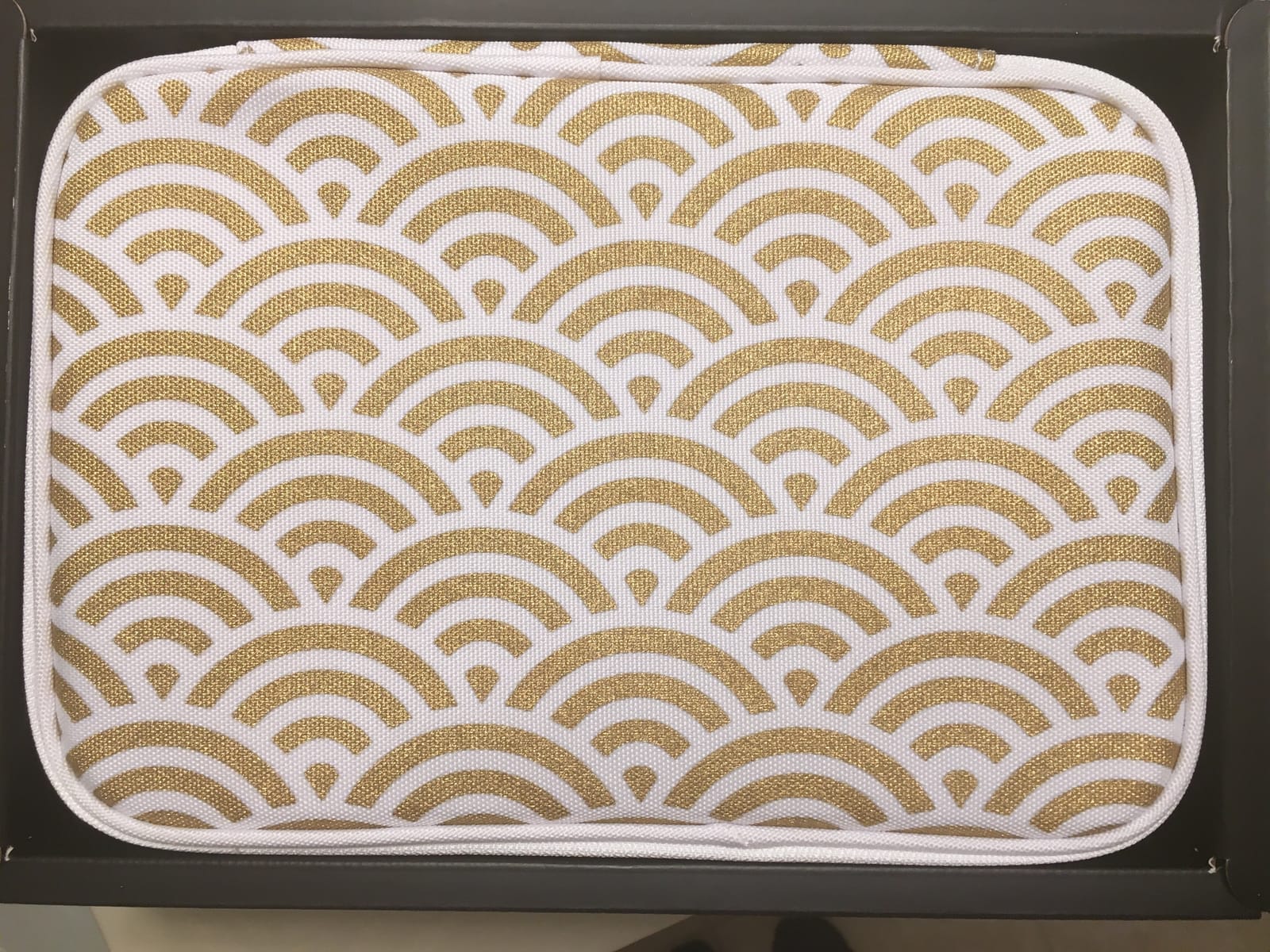
Braun IPL, Silk·Expert Pro 5, IPL Hair Removal for Women and Men, Permanent Laser Hair Reduction At-Home, 2 Heads, Pouch, IPL5137
SensoAdapt skin tone sensor
Two treatment heads
1.89 pounds
2 sessions per month for 3 months
Pros
- Skin tone sensor adjusts each flash and stops firing on unsuitable skin
- Largest verified review base in the group at 7274 ratings
- Two heads plus a razor cover body and intimate areas
- Reportedly far less painful than salon laser
Cons
- Sensor refuses to flash on deeper or freshly tanned skin
- Sessions take far longer than the stated 10 minutes
- Press-and-hold buttons are awkward in contorted positions
- Moles and tattoos can burn if flashed over
The thing that separates this device from the rest is not the flash count or the razor in the box. It is the SensoAdapt sensor, which reads the skin before every flash, adjusts intensity to what it finds, and shuts the lamp off entirely when the tone is outside its range. For a reader with brown skin, that refusal is the feature. A device that declines to fire is doing exactly what the manufacturer promised.
In use, the Pro 5 is unhurried rather than fast. The 10-minute full body claim assumes a pre-shaved, high contrast situation and a person with a good reach. Owners working on a bikini line or underarm with one arm overhead will spend considerably longer, and several report the press-and-hold button style as the most irritating part of that process.
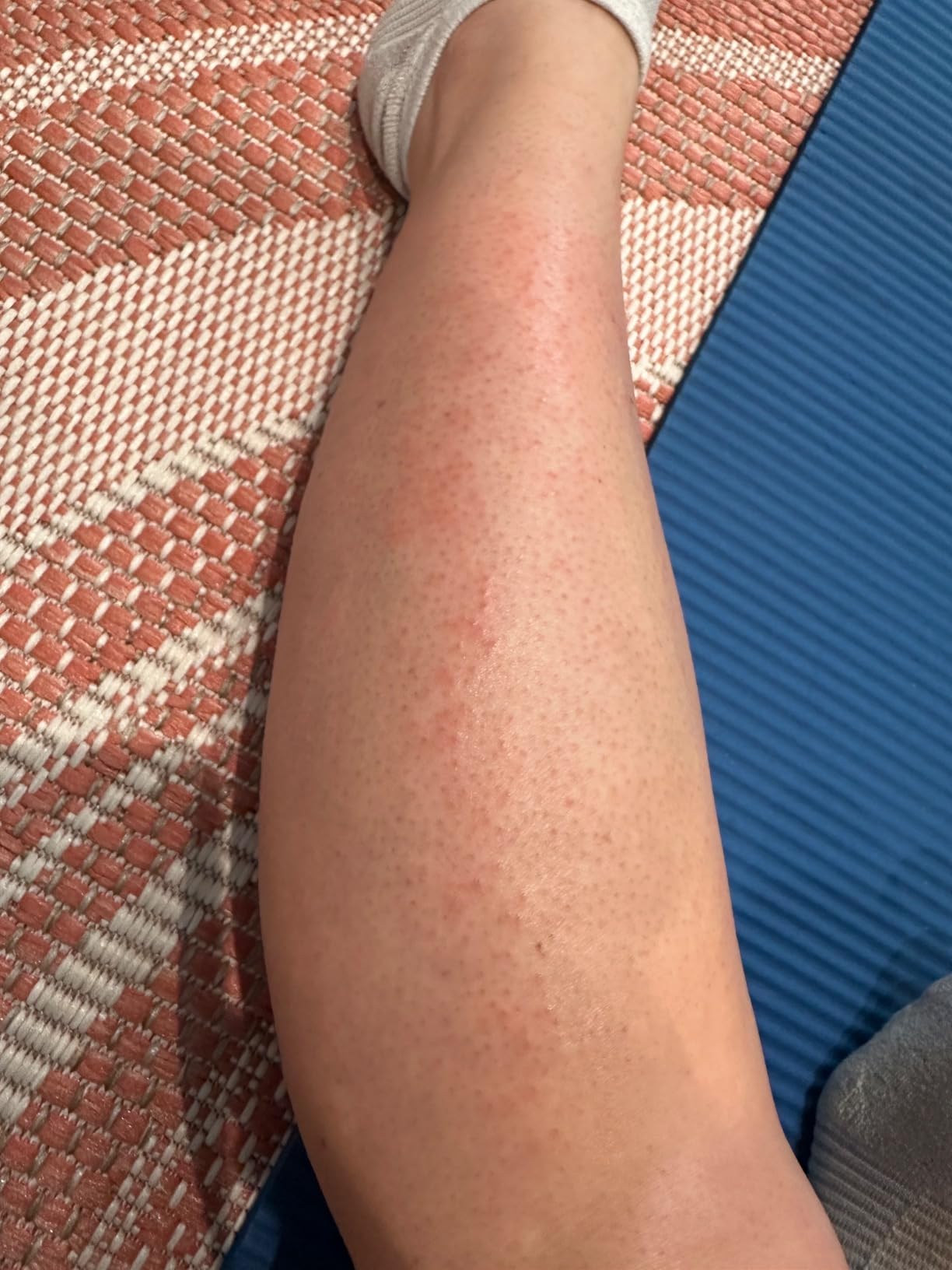
Across 7274 ratings the pattern is consistent. Long-term owners report slower regrowth, fewer ingrowns and clear reduction on high hair-to-skin contrast, with the SensoAdapt limit on tanned or deeper skin as the single most repeated caveat. A minority report little change after twelve to eighteen weeks, and a few describe white ash marks on the reflector window that need cleaning between sessions.
Two safety details deserve your attention before you flash anything. Moles, freckles and tattoos can be burned if you sweep over them, so cover them. And the sensor blocking a flash on tanned skin is not a malfunction, it is a signal to wait out the tan.
Who the Braun Silk Expert Pro 5 suits
It suits anyone who will read the manual and follow the chart, and who wants a device that makes the safe decision automatically when they are tired or in a hurry. The two heads, the razor and the pouch make it a good full-body system rather than a spot tool, and the dermatological and gynaecological approval markings give it a credibility footing that the cheaper devices lack.
It also suits owners who want a long-term record of results rather than a quick promise. With the largest review base in this roundup, you can read hundreds of accounts from people who are many sessions in, which is the only way to judge a device honestly.
Who the Braun Silk Expert Pro 5 is not for
It is not for Fitzpatrick V and VI skin. The sensor will refuse to fire, and if you are looking for a device that works on black skin, this is the wrong purchase no matter how good the sensor is. It is also not for anyone unwilling to shave before each session or to wait out a tan, because both are non-negotiable parts of the protocol.
2. Xsoul IPL with Cooling – budget cooling, and a manufacturer red flag
Xsoul Hair Removal with Cooling, Painless IPL Hair Removal Device for Women and Men, at-home Hair Remover for Armpits, Legs, Face, and Bikini Line
Ice cooling near 50F
9 energy levels
19J total
2.05 pounds
Pros
- Built-in ice cooling holds contact near 50F to limit redness
- Nine energy levels allow gradual tolerance building
- Auto and manual modes for large and small areas
Cons
- Manufacturer explicitly excludes dark brown and black skin
- Only 92 ratings on the listing
- Thin and recent evidence base
This is the device in the roundup whose own documentation answers our question for us. The manufacturer states plainly that the device should not be used on individuals with dark brown, black or very dark skin tones, nor directly over tattoos. We are including it because that honest exclusion is useful information, and because plenty of readers will otherwise buy it from a listing that never surfaces that line.
Set against skin tones it does support, the spec sheet is respectable. Ice cooling holds the contact surface near 50F after each flash, nine energy levels give room to build tolerance gradually, and the 470nm to 1200nm red range targets follicles. The auto and manual mode split is genuinely useful for the bikini line and face.
On evidence, it is the thinnest product here with a real design. Ninety-two ratings is not enough to judge long-term performance, and a noticeable share of the negative sentiment traces to early-use disappointment rather than a specific fault. The 12 percent one-star share is worth reading before you commit.
Who the Xsoul IPL suits
It suits light to medium skin tone readers who want a forgiving, cool first device and do not want to overthink the settings. The nine-level range and the built-in cooling make early sessions painless, and the manual mode handles the small areas that auto glide tends to miss.
It is also a reasonable travel or starter unit if you only need maintenance work on arms and legs after a course of sessions elsewhere.
Who the Xsoul IPL is not for
It is not for brown, deep brown or black skin. The manufacturer’s own safety note rules it out, and no setting or cooling system overrides that. It is also not for anyone who wants a permanent reduction claim backed by a long review history, because 92 ratings cannot show you what happens at month six.
3. Ulike Air 10 – the most comfortable automatic option
Ulike Laser Hair Removal Device Air 10 Ipl Gift for Women and Men, Ice Cool and Permanent Hair Reduction for Nearly Painless, Dual Lights, Skin Sensor & USHR Mode Hair Removal in 10mins from Home
SkinSensor tone detection
Sapphire ice cooling below 65F
26J SHR mode
14.4 ounces
Pros
- SkinSensor adjusts power and refuses to flash on skin judged too dark
- Sapphire cooling keeps SHR mode close to painless
- Dual Lights and AutoGlide make fast full body sessions
- 2855 ratings with heavy international use
Cons
- Several units reported overheating and briefly failing to flash
- Bulky body makes the face and Brazilian area awkward
- Stubble from an imperfect shave causes stinging
- One 28 day tester measured around 30 percent reduction
Comfort is the headline for the Air 10 and it is well earned. The sapphire cooling surface stays below 65F even after thirty minutes of use, which is why reviewers describe the 26J SHR mode as essentially painless despite it being one of the higher energy figures here. For anyone who has previously abandoned IPL because of the sensation, that matters more than any other spec on this list.
The SkinSensor is the second reason to look at it. It reads skin tone, adjusts power automatically, and stops flashing where it judges the skin too dark. That automatic refusal is the behaviour you want in a device, and combined with the cooling it is the most sympathetic combination in the roundup for deeper skin.
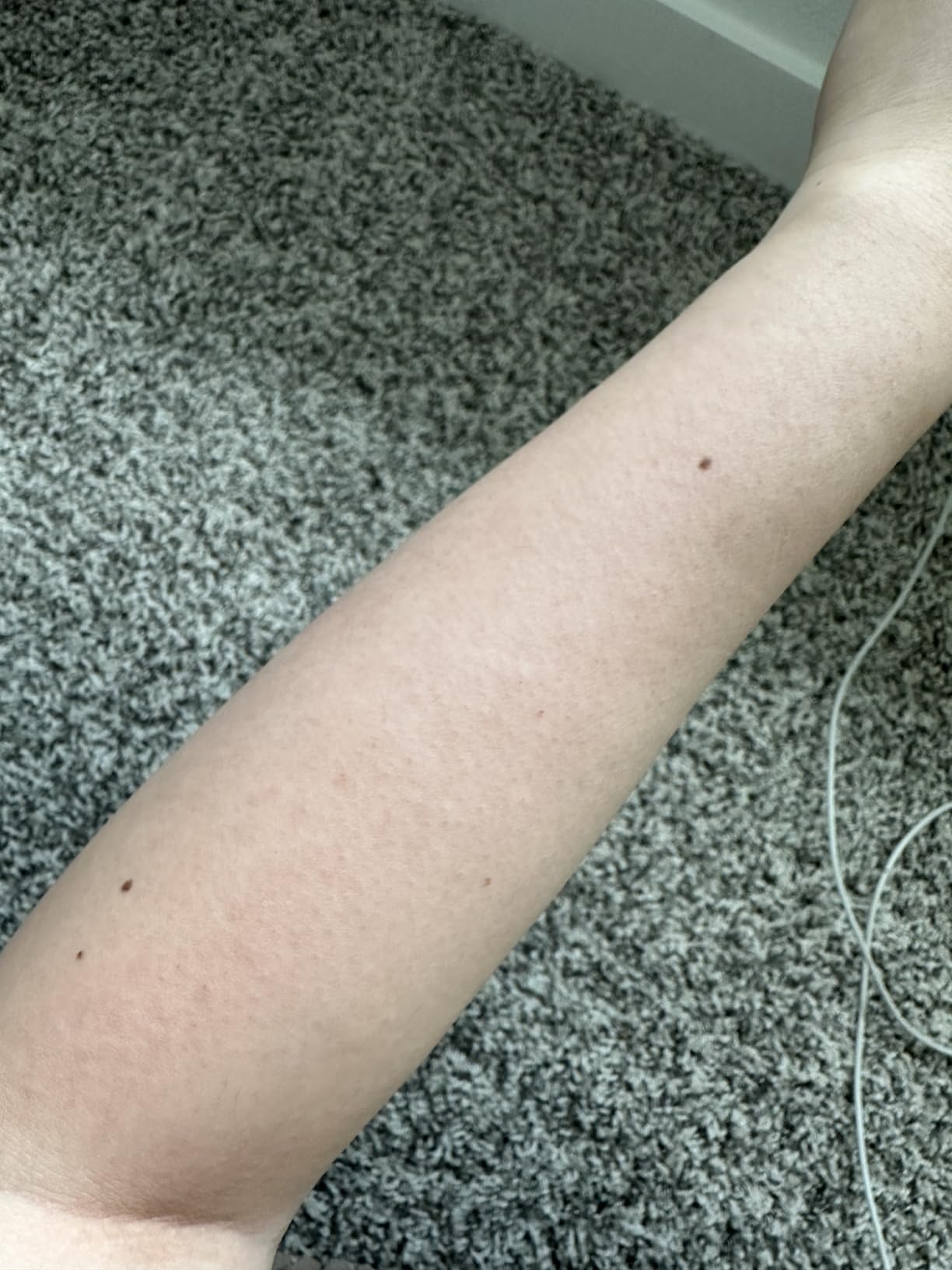
The recurring negative is heat management. Several owners describe the unit running hot on high mode and briefly dropping into a no-flash state until it cools, which is a mechanical complaint rather than a safety one, but it is disruptive mid-session. A 14.4 ounce body with a wide head also makes the Brazilian area and the face genuinely awkward to work through.
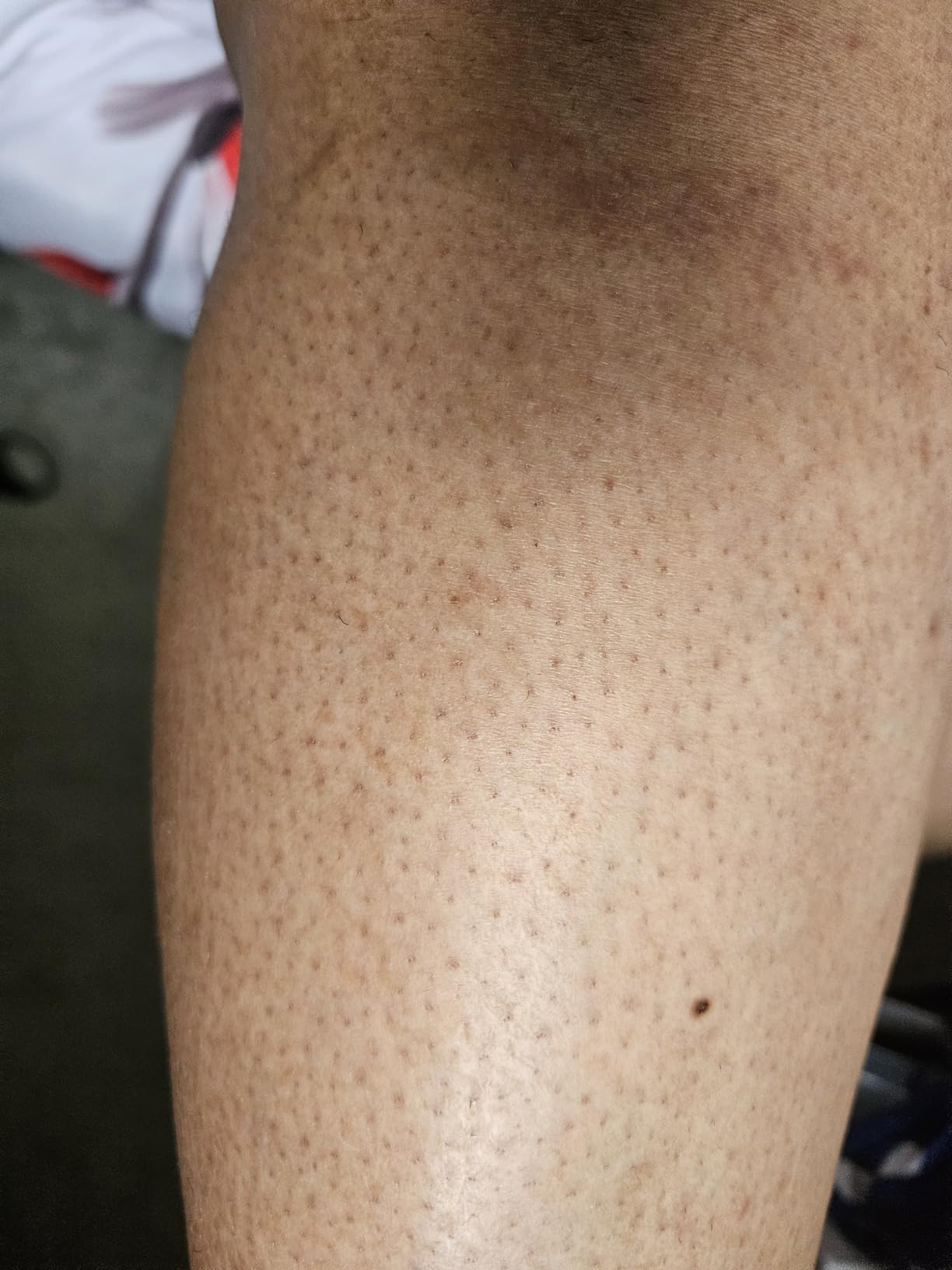
On results, treat the marketing carefully. The listing reports visible reduction in four weeks with every-other-day use, and one long-term tester running a 28 day daily regimen measured closer to 30 percent. Moles and freckles also zap painfully and darken temporarily, so cover them the same way you would with any device.
Who the Ulike Air 10 suits
It suits readers who want the device to make the tone decision for them and who have a low pain tolerance. Anyone treating legs, arms, underarms and a full body at once will like the Dual Lights window and AutoGlide combination, and the light weight helps during longer sessions.
It also suits people who can commit to a consistent twice-daily-ish schedule in the early weeks, because that is the rhythm the visible-results claim is built around.
Who the Ulike Air 10 is not for
It is not a device for Fitzpatrick VI, where the sensor will simply decline. It is also not for anyone treating the face or the Brazilian area alone, because the head size and body shape fight you on those contours. And it is not for people wanting a clinic result, since even the honest testers measured a partial reduction rather than removal.
4. INNZA IPL with Ice Cooling – the value pick with no safety net
INNZA IPL Hair Removal with Ice Cooling Care Function for Women and men
5J/cm2 at 600nm
9 energy levels
Ice cooling care
3122 ratings
Pros
- Best selling rank in the category with 3122 ratings
- Ice cooling reduces redness and swelling during sessions
- Nine levels let you build tolerance from a low start
Cons
- No automatic skin tone sensor at all
- Manufacturer positions the levels for higher tolerance skin
- The 95 percent in three weeks claim is rarely corroborated
The INNZA holds the highest average rating of the well-reviewed devices here and sits at the top of the category sales chart, with 3122 ratings behind it. Reviewers consistently talk about ease of use, cooling comfort and a low entry cost rather than dramatic hair reduction, which tells you the product is selling itself on experience rather than results.
Here is the part that matters for this roundup. There is no automatic skin tone sensor. Tone suitability is entirely a matter of you reading a chart and dialling a level, and the manufacturer’s own framing positions the nine energy levels as suited to beginners and higher-tolerance skin. That is thin protection if you are Fitzpatrick V or VI.
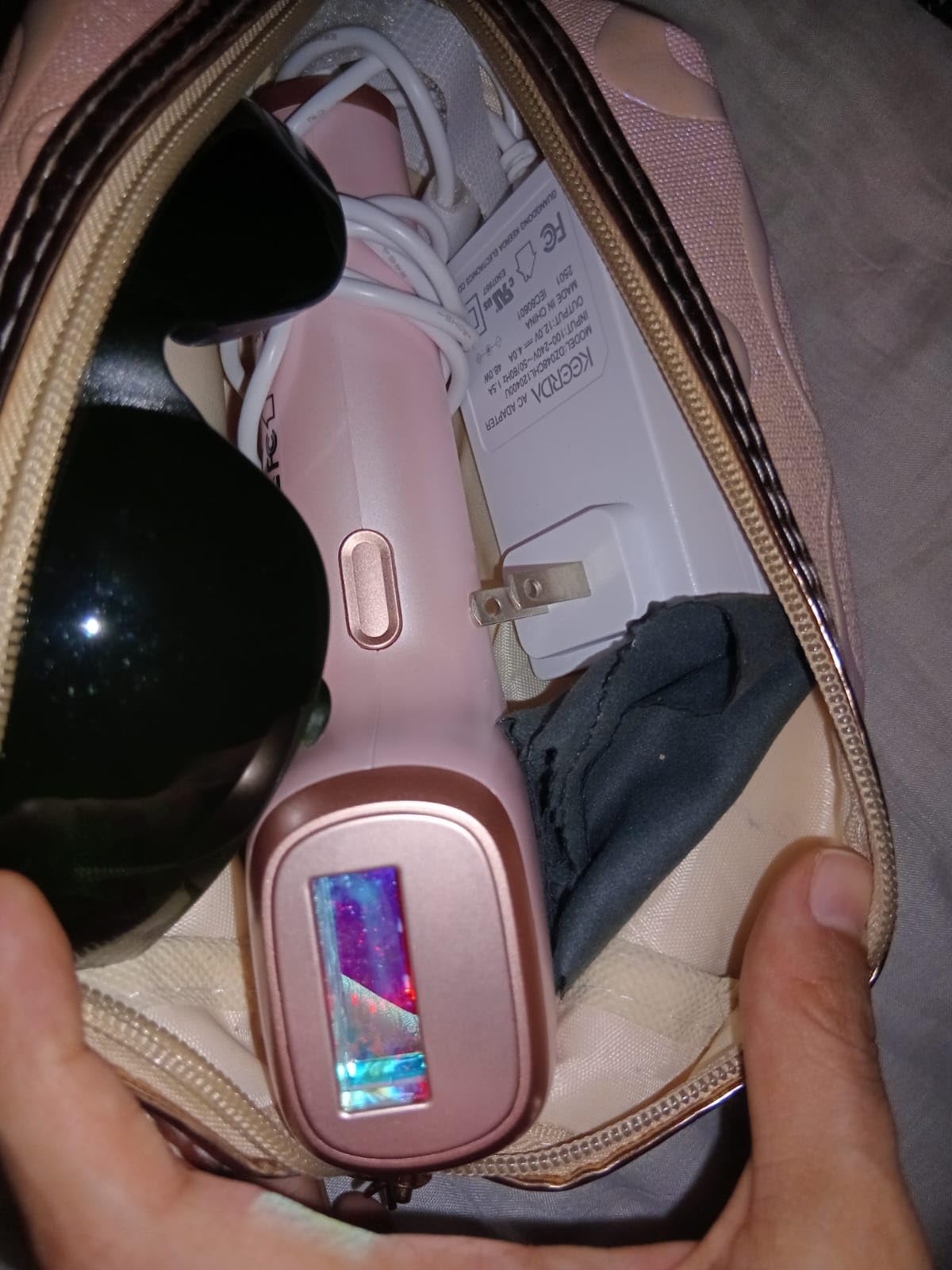
The flash lifespan claim of 999,999 and the ice cooling care function are real conveniences, and the recommended schedule is unusually well specified: two to three times a week for weeks one to three, weekly for weeks four to six, then monthly. Knowing the ramp is what keeps people committed past the novelty period.
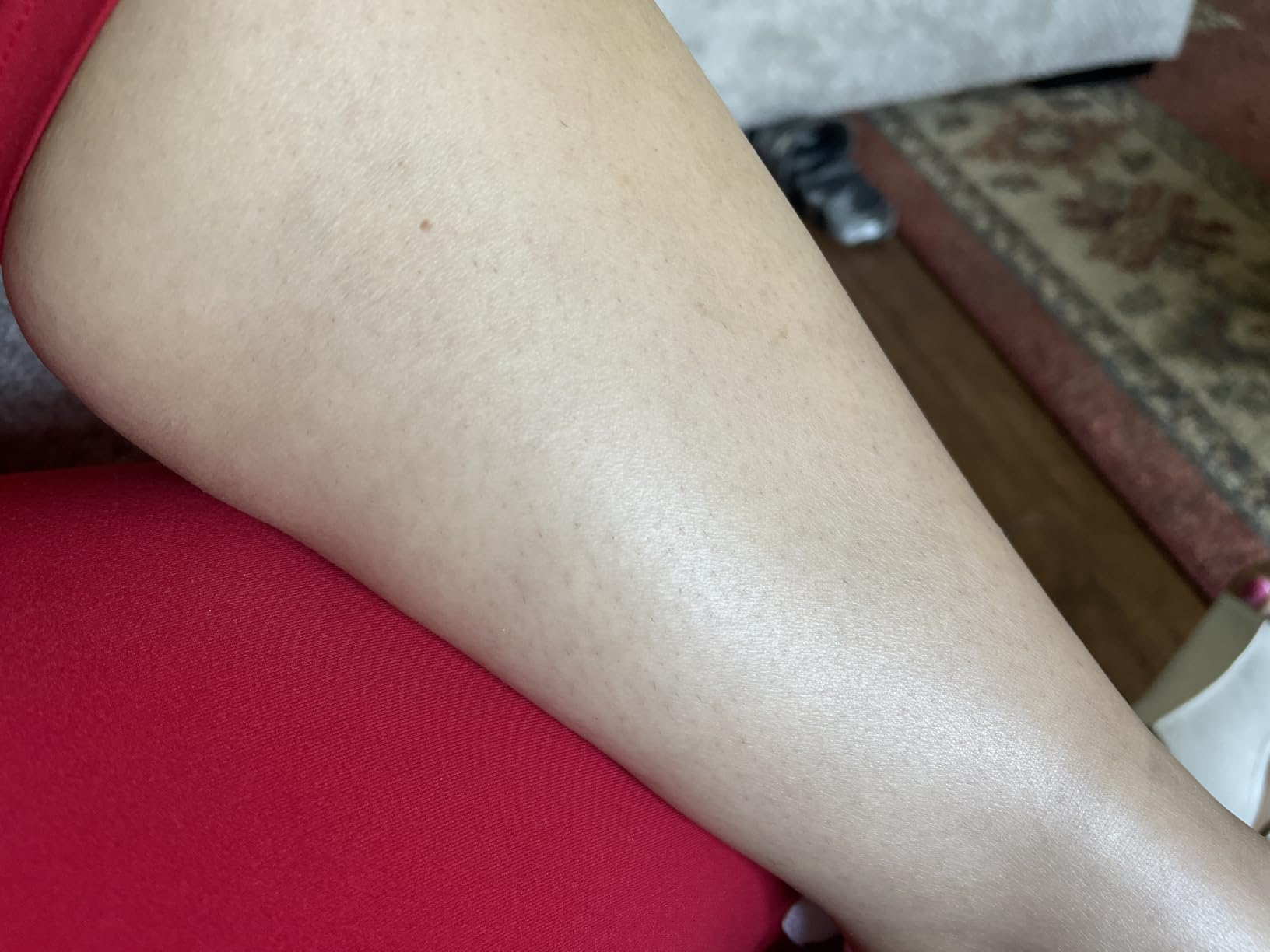
Specs are modest but sane: 5J per square centimetre at 600nm, 1.87 pounds, 8.46 by 7.13 by 2.36 inches. Nothing here is cutting edge, which is a reasonable trade for a device that most owners use on arms and legs at a level they are comfortable with.
Flag the reduction claim. The manufacturer cites up to 95.08 percent hair growth reduction in three weeks, and reviewers very rarely corroborate that timeline. Treat it as marketing and judge the device on the 12 week schedule instead.
Who the INNZA IPL suits
It suits readers on light to medium skin who want a capable device without a large outlay, and who will follow the published schedule rather than chasing the headline number. The ice cooling care function makes it a good first-timer device where comfort is the barrier to starting.
It also suits anyone who has already established their safe level on another device and wants a maintenance unit for ongoing monthly touch-ups.
Who the INNZA IPL is not for
It is not for readers who need the device to police their skin tone, because there is no sensor doing that job. It is also not the right choice if you have very fine or very light hair, since the contrast the light depends on simply is not there, and it is not for anyone who wants a fast result inside three weeks.
5. INIA HAUTE Pro – the coldest contact surface in the set
INIA HAUTE Pro Laser Hair Removal with Ice-Cooling Care for Women and Men
Ice cooling below 37F
Three zone modes
2.18 pounds
10-minute auto mode
Pros
- Ice cooling holds contact below 37F
- the lowest claimed figure here
- Bikini
- body and face modes remove the settings guesswork
- Lightweight with an auto mode that avoids repeated clicking
- Lifetime flash guarantee and a two year warranty option
Cons
- No skin tone sensor
- One unit reported failing after about 3.5 months
- Smaller review base than the higher priced devices
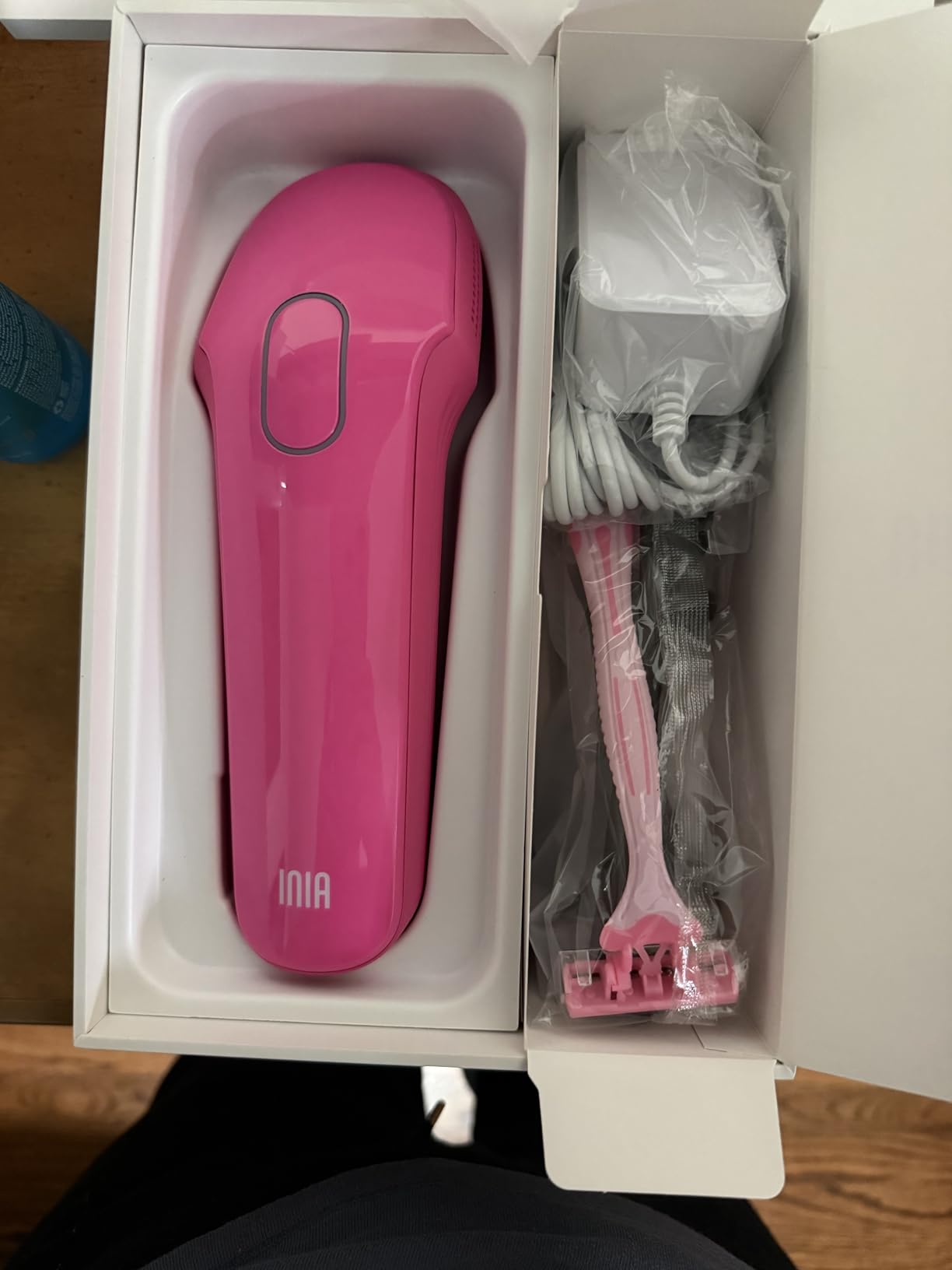
The INIA’s differentiator is temperature. It claims contact cooling below 37F and holds it for thirty minutes, which on paper is the most aggressive cooling figure in this roundup and the closest thing any of these devices gets to a clinic comfort experience. Reviews back the painless part, describing easy setup and a visible slowdown in regrowth in about three weeks.
The three zone modes are quietly the more useful feature. A bikini mode for coarse stubborn hair, a body mode for regular to dense hair and a face mode for fine hair remove the single biggest source of user error, which is running high energy on a sensitive area. Deep-root cartridge technology targets thick follicles, and the auto mode covers a full body in ten minutes without repeated clicking.
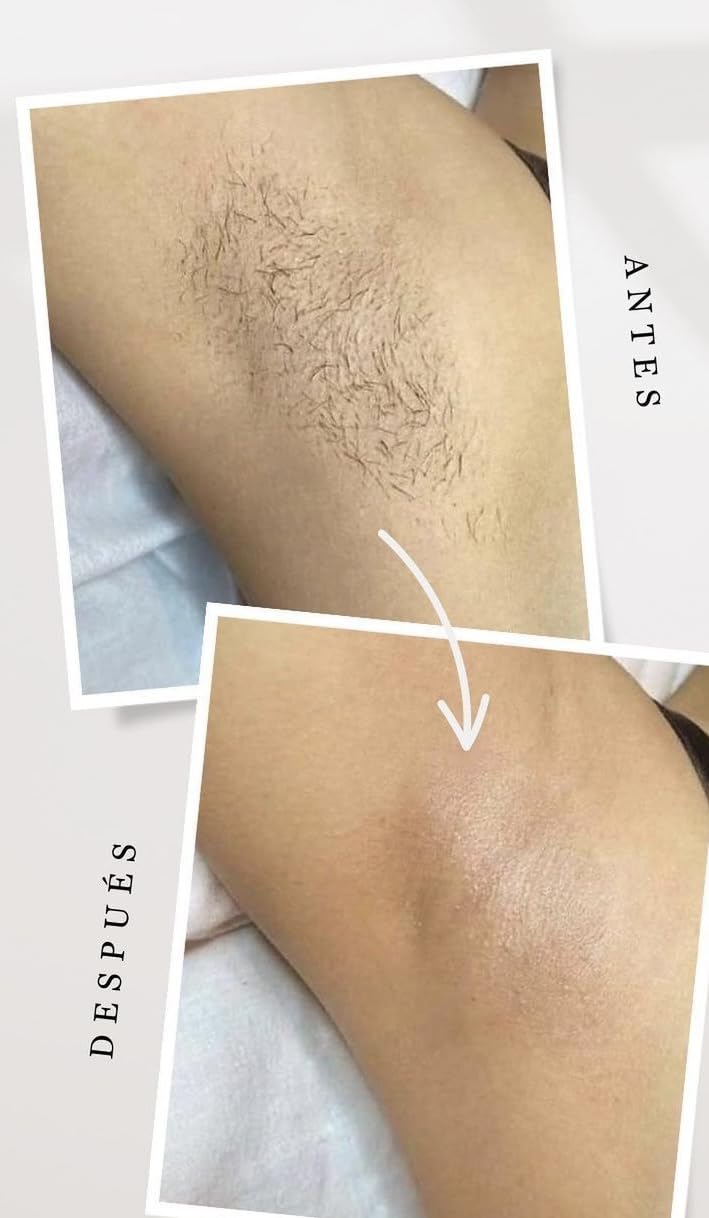
Two cautions. There is no skin tone sensor, so nothing is managing suitability for you, and at least one owner reported the device stopped working after roughly three and a half months of regular use. With a 555-rating base, a single failure is a small share of the total, but it is a reminder that warranty terms matter more than the sticker.
What the brand does offer is a lifetime flash replacement guarantee and a one year warranty that extends to two years with registration. That is the best durability position in the set, and it directly offsets the failure report.
Who the INIA HAUTE Pro suits
It suits readers who are treating more than one body part and want the device to choose the setting for them, especially anyone combining a bikini area course with face work. The cooling figure also makes it a strong option for people who found heat rather than light to be the problem with other devices.
It suits owners who value warranty terms, since the flash guarantee and extendable cover are genuinely better than most of the category.
Who the INIA HAUTE Pro is not for
It is not for readers who want automatic tone protection, since the sensor is absent. It is also not a face-first device, because the zone modes cover face but the body shape still favours larger flats, and it is not a good match for anyone unwilling to raise the warranty when the first session goes wrong.
6. BoSidin 2-in-1 IPL – lightweight, high energy, named by owners
Laser Hair Removal, BoSidin IPL Hair Removal with Painless Ice-Cooling, 2-in-1 Face SR Rejuvenation, 6+1 Modes, 6 Levels Hair Removal for Women Permanent, Laser Hair Removal Kit with Shaver, Goggles
20J max energy
DCD ice cooling to 41F
1.06 pounds
6 energy levels
Pros
- 20J at a 0.7 second flash interval is among the highest energy figures here
- Anti light leakage trigger adds a physical safety layer
- Very light at 1.06 pounds for a full size device
- Doubles as an SR rejuvenation device
- 24-month warranty and 180-day money back period
Cons
- Only 6 energy levels
- No automatic skin tone sensor
- Ice cooling attachment must be removed for ice care mode
- No written customer reviews returned for the listing
BoSidin comes up by name more than almost any other brand when owners on r/HairRemoval describe which home devices have worked on their deeper skin, alongside Silk’n and JOVS. That is a community signal rather than a laboratory one, but it is a signal. The 2-in-1 design also pairs IPL hair removal with a sixth generation SR rejuvenation mode, which you can ignore entirely.
Physically it is the nicest thing to hold here, and the energy figure is genuinely high at 20J with a 0.7 second IGBT flash interval. The DCD ice cooling drops skin contact to 41F, and the anti light-leakage system is the cleverest safety idea in the roundup: the flash only fires when the light exit window is actually in contact with skin, which prevents the accidental airborne discharge that worries people most.
The trade-offs are real. Six energy levels is the fewest of any multi-level device in this set, which is a problem on exactly the skin that needs the finest control. There is no automatic skin tone sensor either, so the levels are yours to choose without any tone guidance, and the ice cooling attachment has to be removed before you can use ice care mode, which is an oddly awkward step mid-session.
On evidence, the 4.5 average rests on a 326-rating base where the sentiment picture leans on the rating distribution rather than written detail. We could not surface substantive customer review text for this listing, so treat the strong score as encouraging but not conclusive.
Who the BoSidin IPL suits
It suits readers who want more energy per flash than the budget devices deliver and who have already established their safe level. The contact trigger is a meaningful safety upgrade for anyone nervous about aiming a light at their skin, and the 24-month warranty with a 180-day money back period is the longest in the set.
It also suits anyone who wants a device small enough to hold one-handed on the upper lip or the bikini line, which is where the low weight earns its place.
Who the BoSidin IPL is not for
It is not for a reader who needs fine-grained intensity control, because six steps is a coarse dial and beginners on deeper skin should have more than that. It is not for anyone relying on an automatic tone check, and it is not the right pick for someone who wants a single-purpose device rather than a combined hair removal and rejuvenation tool.
7. Nood Flasher Pro – the broadest skin tone claim, and the biggest asterisk
Nood™ Flasher Pro | IPL Laser Hair Removal Device, Forbes Best Product 2026
Works on most skin tones
CryoSoothe with 5 comfort levels
3.15 pounds
Skin safety test
Pros
- Manufacturer states suitability for most skin tones
- the broadest claim in the set
- Swappable Ageless Lens adds anti aging treatments
- First use skin safety test gives a structured tone check
- Lifetime flash guarantee and a 90-day satisfaction promise
Cons
- Flash will not fire on uneven or small surfaces
- Heaviest device here at 3.15 pounds
- No written customer reviews returned for the listing
- The broad tone claim is marketing rather than independent confirmation
Nood is the only device in this roundup whose manufacturer states it works on most skin tones, and that statement is the reason it is here. Everything else in this category hedges to Fitzpatrick IV. The first use skin safety test also gives you a structured tone check rather than a manual chart alone, and CryoSoothe cooling with five comfort levels is repeatedly praised for making treatments painless even at low pain tolerance.
Read that claim carefully though. It is manufacturer marketing, and reviewers have not independently confirmed it. The community view of broad-claim devices in this category is generally sceptical, and there is no published Fitzpatrick ceiling on the listing. Absence of a stated limit is not the same as a stated limit of VI.
The MaxPulse technology carries a lifetime flash replacement guarantee, and the 90-day satisfaction promise is a stronger commitment than most. The swappable Ageless Lens is genuinely unique in this set, letting the same handpiece handle an anti ageing treatment alongside hair removal.
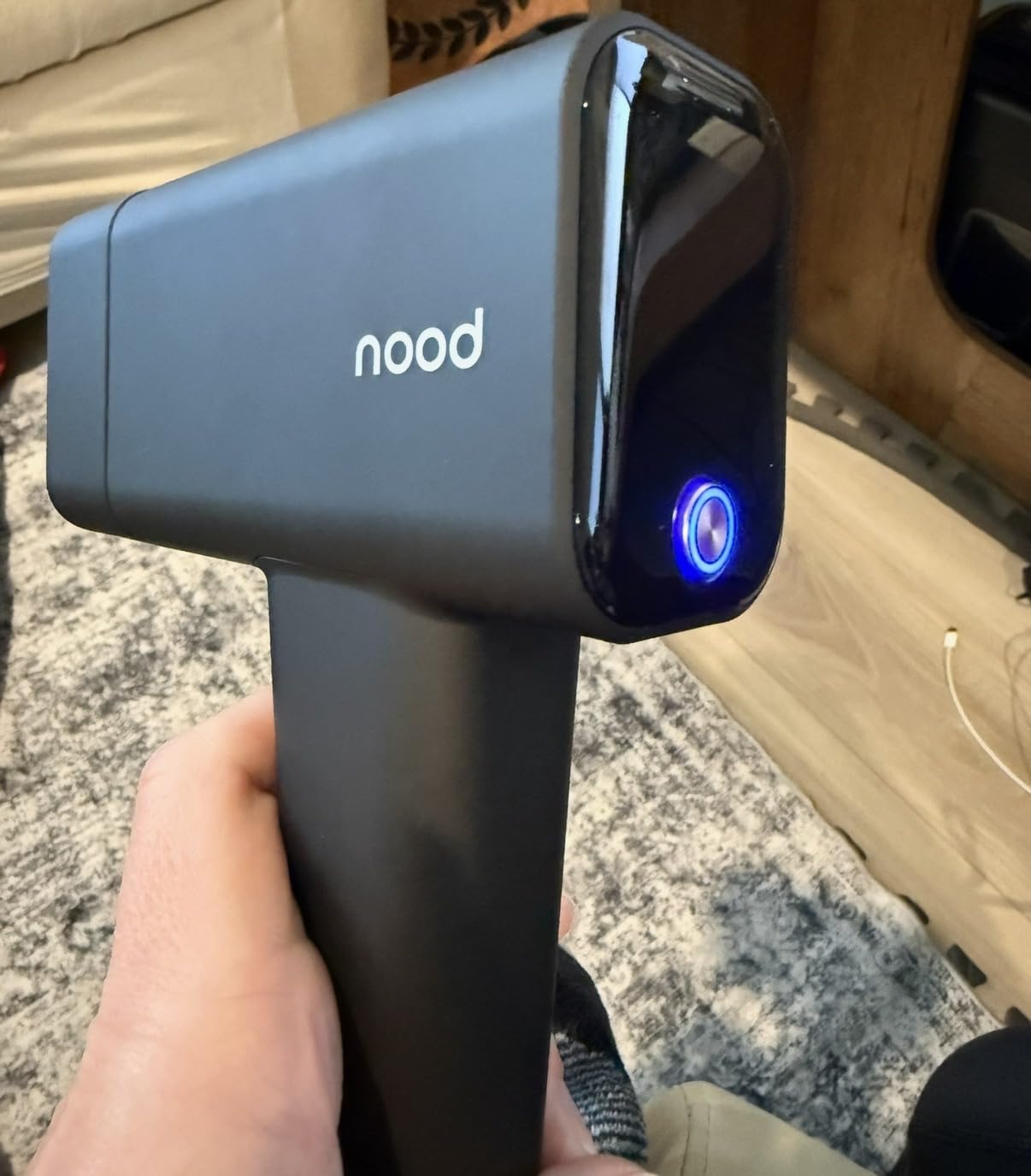
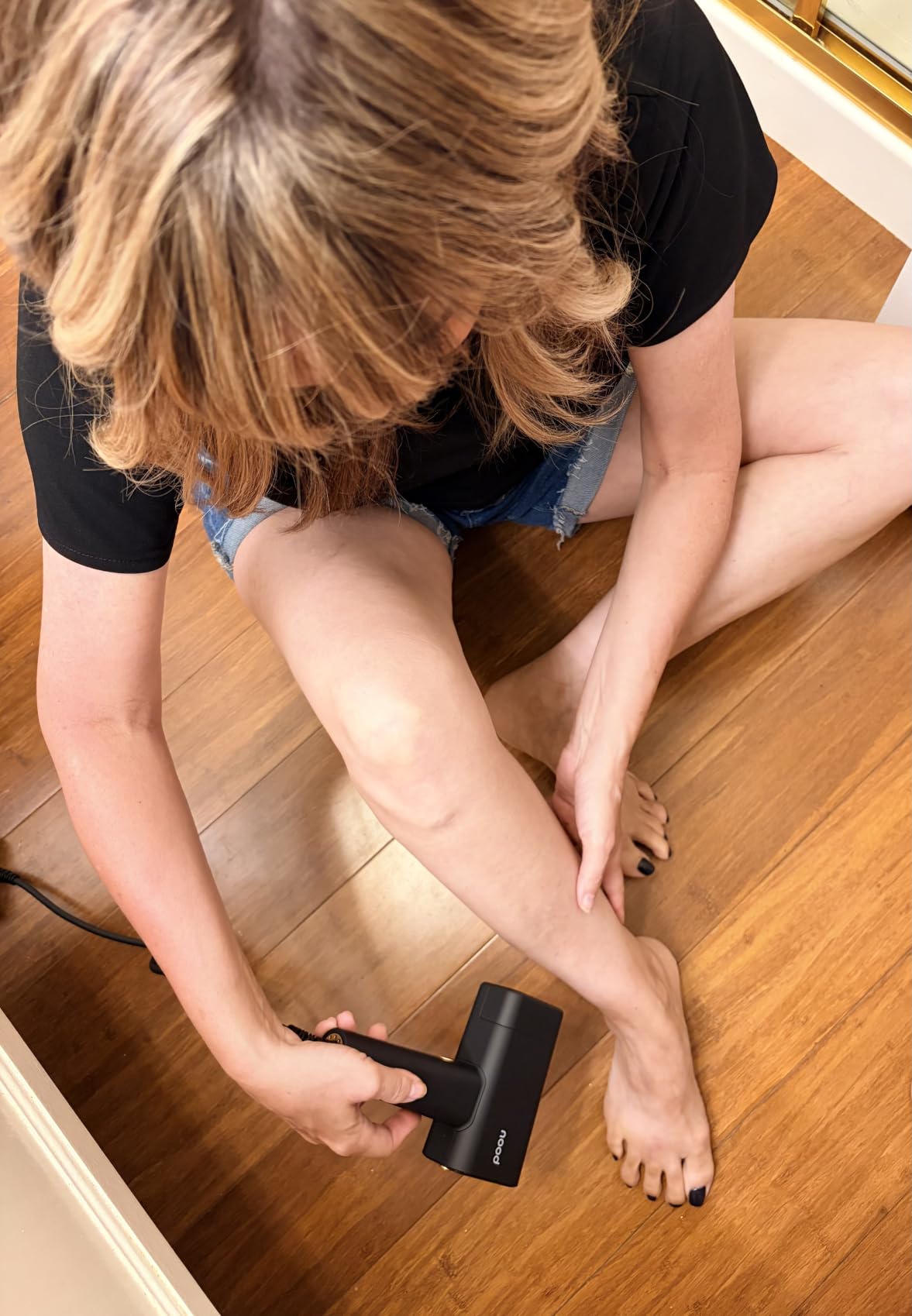
Where it disappoints is geometry. The flash will not fire on uneven or small surfaces, which makes the face, underarms and bikini line very difficult to treat, and that is a structural problem rather than a firmware one. At 3.15 pounds it is also the heaviest device here, which tells you something about how it is built and how you will feel after twenty minutes on a large area.
Owners do report faster than expected slowed regrowth within two to three weeks. As with the other devices in this roundup, we could not surface written customer review text for the listing, so the 4.3 average across 653 ratings is a solid but largely qualitative signal.
Who the Nood Flasher Pro suits
It suits readers on light to medium skin who want a full body device with a long warranty and an extra anti ageing use case, and who will get more out of it treating larger flat areas than small contours. The five comfort levels and first use safety test make it approachable for a nervous beginner.
It also suits anyone who values the guarantee structure, since lifetime flash replacement plus a 90-day satisfaction promise is stronger than most of the category.
Who the Nood Flasher Pro is not for
It is not for anyone treating the face, underarms or bikini line as a priority, because the flash simply will not fire on those surfaces. And it is not a safe recommendation for Fitzpatrick V and VI readers on the strength of a marketing line. If that is you, look for a published chart or a clinic laser instead.
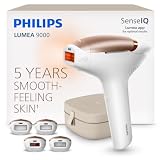
8. Philips Lumea BRI984/03 – the direct answer to the Lumea dark skin question
Philips Lumea 9000 IPL Hair Removal Device for Long-Lasting Smooth Skin
SenseIQ with three sensors
Four curved attachments
5 settings
4.12 pounds
Pros
- Three sensors read skin tone and adjust intensity
- Contact detection stops flashing toward the eyes so no goggles are needed
- Four curved attachments give the best contour coverage
- Over 20 years of IPL research with more than 3000 women
Cons
- Most expensive device in the roundup by a wide margin
- Sensor blocks flashing on darker skin
- Stinging on higher settings in sensitive areas
- Several reviews describe a returns and customer service problem
So, can you use Philips Lumea on dark skin? The honest answer is that the device will not let you push it. SenseIQ smart comfort technology uses three sensors to read skin tone and adjust temperature, and one olive-skinned reviewer reports that inner thigh and underarm areas would not fire at all. That is the sensor doing its job, but it means the answer is functionally no for anyone past the middle of the scale.
For light to medium skin it is the most thoroughly engineered device here. The three-sensor tone reading, the skin contact detection that prevents flashing toward the eyes so no goggles are needed, and four curved attachments for body, face, bikini and underarms add up to the best contour coverage in the roundup. The Lumea app handles routine optimisation and reminders, which matters more than it sounds.
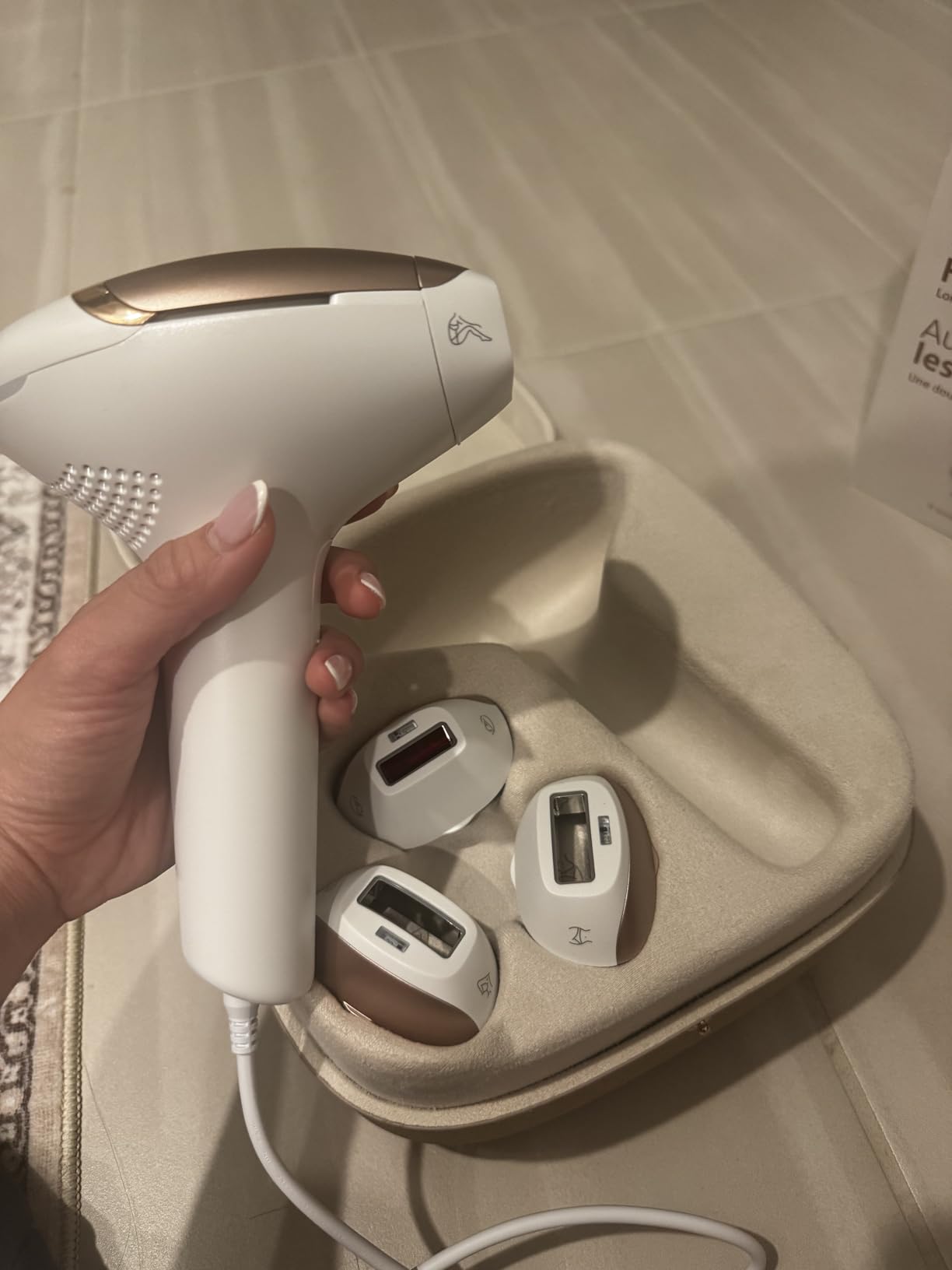
The schedule is sensible: every two weeks to start, then monthly for maintenance. The manufacturer claim of visible results in two sessions and over 90 percent removal in three treatments is aggressive, and several reviewers independently report evening out their shaving frequency within two or three sessions, which is a fairer way to describe it.
The 4.1 average is at the bottom of the roundup range, and the split tracks to fulfillment rather than performance. Multiple reviews describe receiving a unit they believed was used and then friction in the replacement process. That is a service problem, not a device problem, but it is the reason this sits at eighth rather than higher.

Who the Philips Lumea suits
It suits light to medium skin readers who want the most complete attachment system and the best facial coverage, and who would rather pay more for a documented research base and a two-year presence in the category. The no-goggles contact detection also makes it the easiest to use on facial work around the eyes.
It suits people who will follow the two-week-then-monthly schedule, because the app reminders genuinely help with the part of the protocol people abandon.
Who the Philips Lumea is not for
It is not for darker skin, and we want to be direct about that because it is one of the most searched device names for this question. The sensor blocks the flash. It is also not for anyone sensitive to service friction, since the negative tail on this listing is about returns handling rather than results, and it is not the value pick under any reading of the category.
9. Ubroo 21J – touchscreen control at a mid-low price
Ubroo IPL Laser Hair Removal Device, 21J Energy, 41°F Ice Cooling
21J energy
41F ice cooling
Touchscreen display
10.4 ounces
Pros
- 21J energy with touchscreen level control at a mid-low price
- 41F cooling makes level 9 feel like a light zap
- Screen displays remaining flashes which is unusual at this price
- Light at 10.4 ounces
- Reviewers report steady thinning of arm and leg hair
Cons
- Manufacturer states it is not suitable for all skin tones
- At least one unit arrived defective and would not flash above level 1
- Deep rooted underarm and bikini hair responds slowly
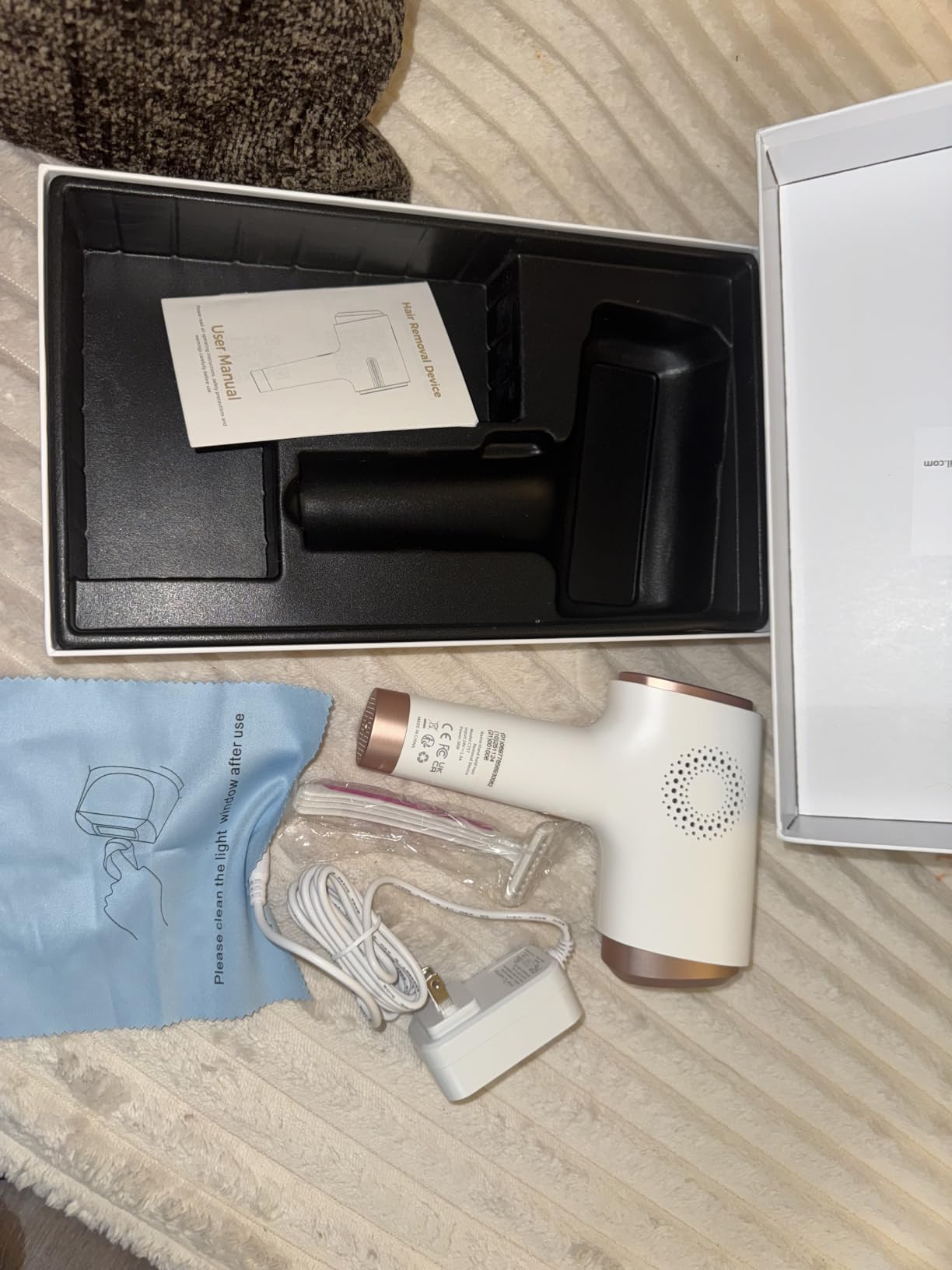
The Ubroo is the rare budget device that feels properly designed. A 21J energy system with a touchscreen showing energy level, treatment mode and remaining flashes is a feature set you would expect higher up the range, and the 41F ice cooling is what makes running level 9 feel like a light zap rather than a punishment. At 10.4 ounces it is one of the lightest devices here.
Owners report fast regrowth slowdown on legs, arms and face within weeks, and a 4.4 average across 499 ratings with 73 percent five star feedback reflects genuine satisfaction rather than novelty. Deep rooted underarm and bikini hair takes noticeably longer, which is normal for the category but worth knowing before you set expectations.
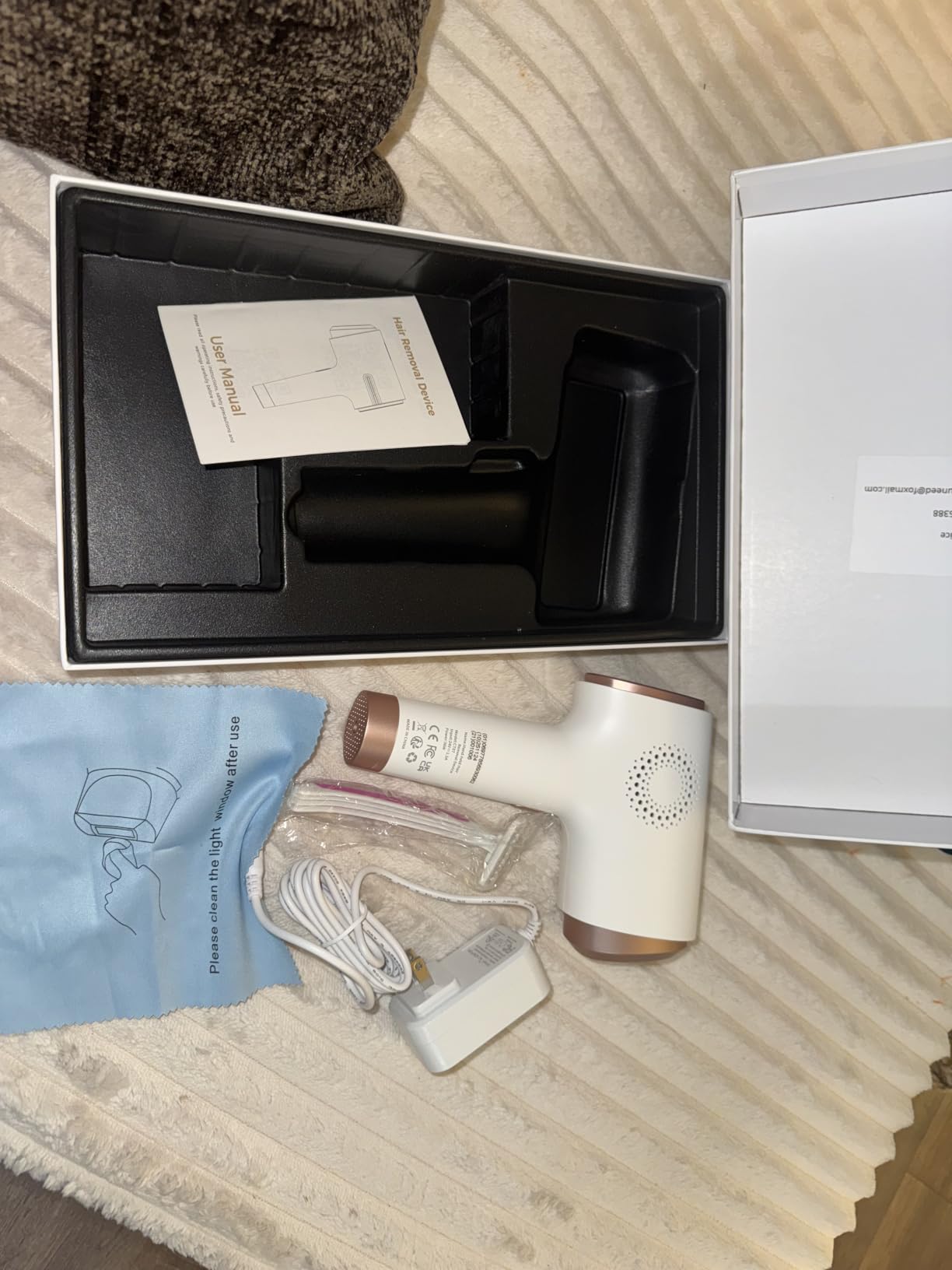
And then there is the sentence on the listing that decides this device’s place in a dark skin roundup: the manufacturer states it is not suitable for all skin tones and hair colours, and advises checking the compatibility chart before purchase. There is no published chart on the page. That is not a disqualifier on its own, but it does mean you are buying without the information this roundup exists to supply.
One practical reliability note too. At least one unit arrived defective and would not flash above level 1, which is the failure mode that makes a cheap device cheap. Check the device works at every level in your first session rather than discovering it in week three.
Who the Ubroo 21J suits
It suits light to medium skin readers who want visible interface control and a flash counter at a modest outlay. The cooling makes it a good device for someone sensitive to heat, and the auto settings for different body parts remove some of the guesswork from a first course.
It also suits owners who will test the full level range on day one and keep the packaging, because that covers the small number of defective units that show up in this segment.
Who the Ubroo 21J is not for
It is not for readers who need a published skin tone chart, because the manufacturer tells you to check one and the listing does not provide it. It is also not the right device for deep rooted bikini or underarm hair wanting a fast turnaround, and it is not a choice for anyone who will not verify that every energy level fires before starting a course.
10. Wavytalk Precision Roller – highest rated, thinnest evidence
Wavytalk IPL Hair Removal,Bare It with Precision Roller for Full Body
24J total energy
Dual-Pulse two pulses per press
Ice cooling below 52F
Precision roller
Pros
- Highest average rating in the roundup at 4.6 with 82 percent five star feedback
- Dual-Pulse delivers two pulses per press at low surface heat
- Precision roller and auto glide cover large areas without repeated clicking
- One owner replaced a discontinued 13-year-old device with it
Cons
- Only 47 ratings
- the thinnest evidence base in the set
- Manufacturer specifies light to medium skin tones
- Most reviews are short and still within the first month of use
The Wavytalk posts the highest average rating in this roundup at 4.6, with 82 percent five star feedback and only a 3 percent one star share. That is an excellent score and we want to be honest about why it is last. Forty-seven ratings is the thinnest evidence base here, most of the reviews are short, and several are still within the first two to four weeks of use, which is before IPL shows anything at all.
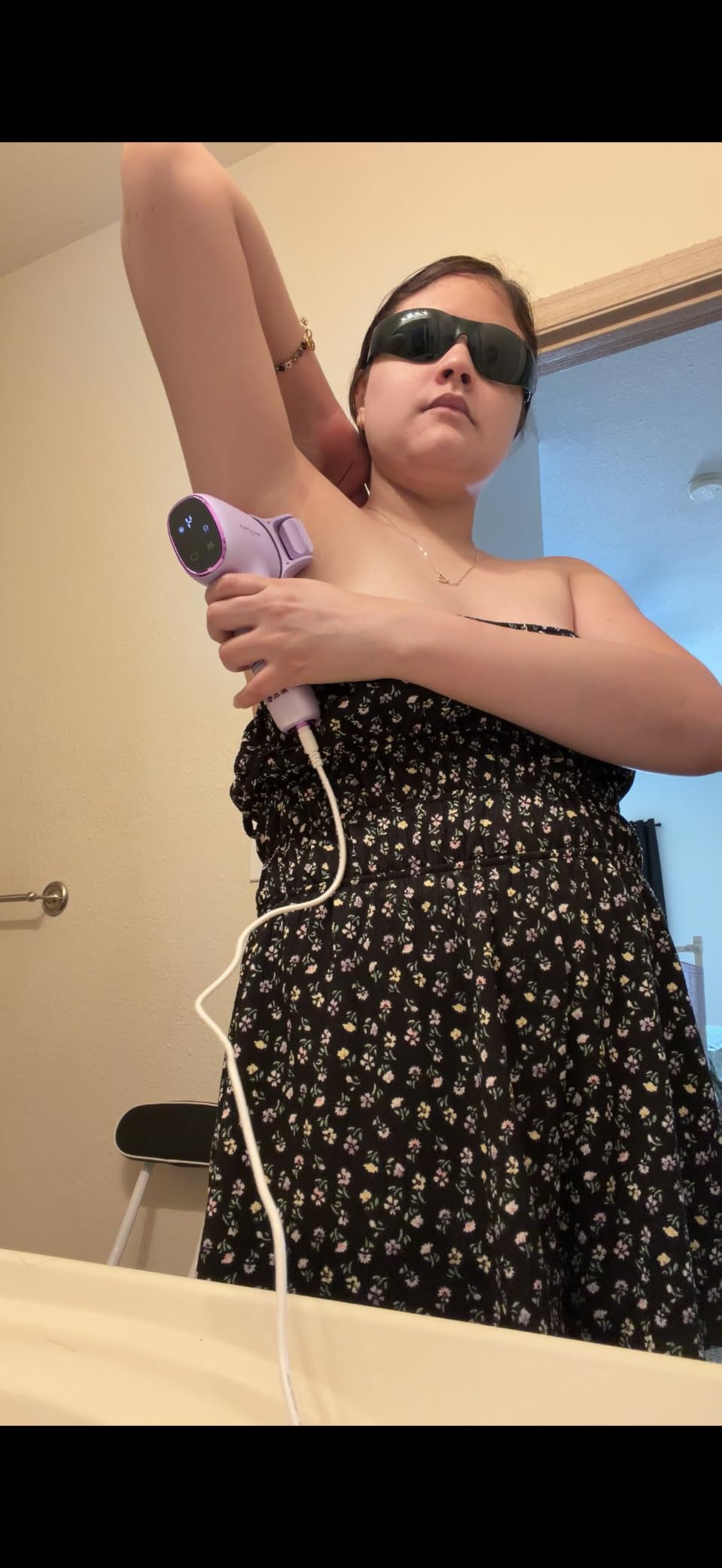
The engineering is more interesting than the review count suggests. Dual-Pulse technology delivers two light pulses per press for double efficiency at low surface heat, the 24J total energy output is among the higher figures in the set, and the precision roller with continuous auto-glide mode produces full body sessions in under ten minutes. Ice cooling holds the touch window below 52F across a 600-1200nm range.
The three modes cover face, body and bikini line with five adjustable energy levels, which is a sensible layout. One long-term user reported successfully replacing a discontinued thirteen-year-old IPL device with it, which says something about how durable the category can be when a manufacturer stays in it.
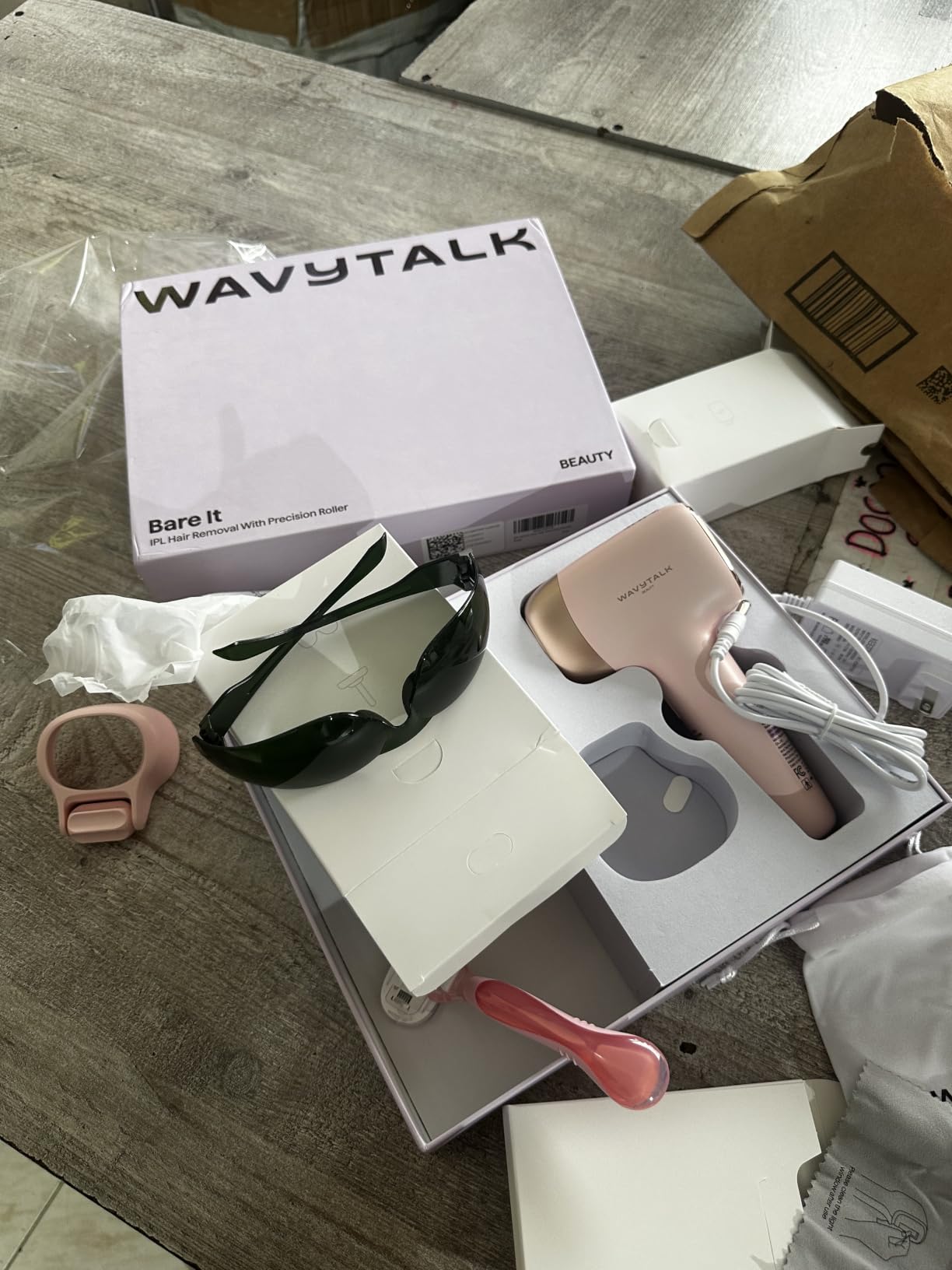
For this roundup the deciding factor is a single line on the listing: the manufacturer states the wavelength design targets hair roots while protecting skin for light to medium skin tones. That excludes deeper skin explicitly, and no amount of dual-pulse engineering changes that.
Users report visible results within two weeks and smooth legs within a month, which is at the optimistic end of the realistic range. Treat the 4.6 as a promise about a first impression rather than as evidence of what happens after a full twelve week course.
Who the Wavytalk Precision Roller suits
It suits light to medium skin readers who treat large areas and want sessions finished quickly. The roller and auto glide combination is the most efficient surface coverage in the roundup, and the dual-pulse approach keeps surface heat low enough to stay comfortable at higher levels.
It also suits anyone starting from scratch on arms and legs who wants a modern replacement for an ageing device of their own.
Who the Wavytalk Precision Roller is not for
It is not for brown, deep brown or black skin, because the manufacturer limits it to light and medium tones. It is also not for anyone who wants to judge long-term performance, because 47 mostly short reviews cannot show you month six, and it is not the right pick if five energy levels feels like too coarse a dial for your comfort.
What skin tone sensor technology does and does not do
A skin tone sensor reads the light reflected back from your skin before the flash fires, then either reduces the energy, blocks the flash entirely, or does nothing at all. The Braun SensoAdapt and the Ulike SkinSensor do the first two. The Philips SenseIQ reads the tone with three sensors and adjusts temperature alongside intensity. The Nood runs a one-time skin safety test at first use. Five of the ten devices here have no sensor of any kind.
Here is what it does not do. A sensor measures the skin in front of the window, not the melanin inside your hair, and it cannot tell a freckle from a mole or a tattoo from your natural tone. That is why every manual tells you to cover dark marks, and why a flash that stopped working over a mole is not a sensor fault.
Sensors also read differently on tanned skin, and a tan is not the same thing as your baseline phototype. The most common reported confusion on r/HairRemoval is a device refusing to fire a week after a holiday, and the answer is always the same: wait for the tan to fade, then patch test again. If a device blocks the flash, that is a feature working, not a warranty claim.
Fitzpatrick scale reference for at-home IPL
The Fitzpatrick scale sorts skin into six phototypes by how it responds to sun. Type I always burns and never tans. Type II burns easily and tans with difficulty. Type III tans after an initial burn. Type IV tans easily and rarely burns. Type V-VI rarely burn, which is exactly the property that makes light-based treatment risky, because those types carry the most melanin in the epidermis.
The practical test is the burn and tan response, not how your skin looks in a photo. Someone who tans deeply in summer without burning is likely a V or VI even if their complexion reads as medium in a flattering light. If you are unsure between two types, treat yourself as the higher one, and if you are unsure between IV and V, treat yourself as a V.
Mapping that onto the category: types I to III can use any device in this roundup comfortably. Type IV is where the sensor devices earn their place, because they will refuse on a deep tan or a dark patch. Type V is where you need a published chart, a low starting level and conservative settings. Type VI is where every device in this roundup falls short, and where the alternatives below are the honest answer.
Safety checklist before your first IPL session
Work out your Fitzpatrick type. Use the burn and tan response, not your complexion in a photo, and round up when you are unsure.
Read the device chart, not the listing headline. A broad claim on the product page is not a certification. Look for a printed range.
Patch test every small area separately. Skin on your inner arm and skin on your upper lip do not behave the same way.
Do not treat tanned skin. Wait until a tan has fully faded, and avoid direct sun for a set period before and after each session.
Cover moles, freckles, tattoos and birthmarks. Sensors cannot distinguish them from pigmented hair.
Start at the lowest energy level. Build up across sessions rather than chasing results on day one.
Shave, do not wax or pluck. Hair needs to be at the surface for the light to reach the follicle.
Two more rules that cost nothing to follow. Do not use retinoids on the area for the window the manual specifies, because they thin the skin and change how it responds to heat. And do not treat skin with an active infection, eczema flare or fresh inflammation, regardless of your Fitzpatrick type.
Buying guide: how to choose an IPL device for brown skin
Start with the chart, not the brand. A device that publishes a Fitzpatrick range tells you something. A device that says it works on all skin types is telling you its marketing department wrote the listing. Five of the ten devices here carry no tone information at all, and two of those explicitly limit themselves to light to medium tones.
Second, treat a sensor refusal as a feature. If you have ever had a device that fired happily across a tanned thigh and left you blotchy for a month, you already know that a refusal beats a result you have to spend a year correcting. The Braun and the Ulike are the two here whose blocking behaviour is documented by owners rather than asserted by marketing.
Third, look at the energy range as your safety margin, not as a power figure. More levels means finer control, which is what you want on skin that has less margin between hair and pigment. Six levels, as on the BoSidin, is coarse. Nine, as on the INNZA and the Xsoul, is workable. Five, as on the Wavytalk, is tight.
Fourth, cooling is not a luxury. Every device in this roundup has some form of it, and on deeper skin it is the difference between a session you finish and a session you abandon. The INIA claims the lowest contact figure, the Ulike is the one reviewers describe as essentially painless at high energy, and the Xsoul holds around 50F.
Fifth, weigh the review base honestly. The Braun has 7274 ratings and the INNZA has 3122, which means you can read what happened at month six. The Wavytalk has 47 and the Xsoul has 92, which means you cannot. A high rating on a thin base tells you very little, and we have weighted our ordering accordingly.
Two related reads may be useful while you research. Our guide to the best assistive listening devices takes the same evidence-led approach to a category where buyer reviews matter more than spec sheets, and our picks for the best media streaming devices for a smart TV cover the other end of the tech buying spectrum.
Better alternatives to IPL for dark skin
For Fitzpatrick V and VI skin, the clinical standard is a 1064nm Nd:YAG laser. The wavelength is the reason. It sits deeper in the spectrum than the alexandrite and diode wavelengths used on lighter skin, so it passes through the pigmented epidermis with less absorption and delivers its energy to the follicle. That is why clinics reach for it on deeper skin and why home IPL cannot compete with it.
A diode laser is the second professional option, and it remains effective across a wider Fitzpatrick range than IPL, though settings still need to be conservative. Both are clinic procedures, which is the trade: you are paying for calibrated settings and a trained operator rather than for a device.
There is also a home laser epilator category, which is a metal tweezer device rather than a light device. It is slower and genuinely painful, but it has no melanin interaction whatsoever, which makes it one of the few at-home options that carries no skin tone restriction at all. For dense hair on a small area it remains a legitimate choice.
For permanent removal with no light involved, professional electrolysis destroys each follicle individually. It is slow, expensive and rarely used on large areas, but it is the only method that can honestly claim permanent removal on any skin tone. Ingrown hair reduction is another reason people choose it, since it treats the cause rather than the symptom.
And for maintenance between appointments, the non-light options remain good. Sugaring and waxing work on every skin tone but pull hair rather than damage follicles, so expect six to eight weeks between sessions. Laser hair removal is not a required step to solve razor bumps and ingrowns, which are often a shaving technique and product problem. A sharp blade, a good gel and a direction of travel solve a surprising share of it.
When to skip IPL entirely
Skip it if you are Fitzpatrick VI. None of the ten devices here is certified for it, and the two that advertise broad skin tone support are doing so without a published ceiling. That is not a judgement about your skin, it is a statement about what these devices have been tested for.
Skip it if you tan easily, burn rarely, and have a history of post-inflammatory hyperpigmentation. Dark marks after a haircut or an insect bite are a strong indicator that your skin over-reacts to inflammation, and IPL adds a controlled burn on purpose.
Skip it if you have a history of keloid scarring, an active skin condition in the treatment area, or are pregnant. Skip it if you have had sun exposure in the two weeks before the session and cannot avoid it afterward, since tan skin plus IPL is the single most reported burn scenario in the forum record.
And skip it if the results do not matter enough to justify twelve weeks. The community frustration with this category is not the pain, it is the slow ramp followed by a disappointing result. If you would rather spend that time and money on a clinic Nd:YAG course, that is a better use of it for deeper skin tones.
Frequently Asked Questions
Can IPL work on dark skin?
Yes, but with a much thinner safety margin. Both hair and skin contain melanin, so as your baseline pigmentation rises the flash that disables a follicle also heats the surrounding skin. Most consumer IPL devices are certified for Fitzpatrick I to IV. A few extend into type V with a sensor that refuses to fire, and none are certified for type VI.
Can you use IPL on black skin?
Not with the consumer devices in this roundup. Fitzpatrick VI skin is outside the certified range of every one of the ten devices reviewed here, and the two that advertise broad skin tone support do so without publishing a Fitzpatrick ceiling. For type V and VI skin the clinical standard is a 1064nm Nd:YAG laser at a clinic, which delivers energy deeper with less absorption in the pigmented epidermis.
Which IPL device is best for dark skin tones?
For light to medium skin, the Braun Silk Expert Pro 5 is the safest choice because its SensoAdapt sensor reads skin tone before every flash and refuses to fire on unsuitable skin, and the Ulike Air 10 is the most comfortable option with Sapphire ice cooling below 65F. For Fitzpatrick V and VI skin, no device in this roundup is certified, so a clinic 1064nm Nd:YAG laser is the honest recommendation.
Can I use Philips Lumea on dark skin?
The device will not let you. SenseIQ smart comfort technology uses three sensors to read skin tone and adjust intensity, and reviewers with olive skin report that inner thigh and underarm areas would not fire at all. For light to medium skin it is the most thoroughly engineered option here, with four curved attachments and contact detection that stops flashing toward the eyes.
Which Fitzpatrick type is most likely to burn and never tan?
Type I. The Fitzpatrick scale runs from type I, which always burns and never tans, through type III which tans after an initial burn, to types V and VI which rarely burn at all. That rare-burn property is exactly what makes light-based treatment risky on deeper skin, because those phototypes carry the most melanin in the epidermis. When unsure between two types, treat yourself as the higher one.
What is the best hair removal method for people with dark skin?
A clinic 1064nm Nd:YAG laser is the clinical standard for Fitzpatrick IV to VI skin, because that wavelength passes through the pigmented epidermis with less absorption and delivers energy to the follicle. A diode laser is the second professional option. At home, a metal laser epilator carries no melanin interaction and therefore no skin tone restriction, while electrolysis is the only method that can honestly claim permanent removal on any skin tone.
Conclusion: the final verdict for dark skin
After ten devices, the picture for the best ipl hair removal devices for dark skin is clearer than the marketing suggests. For light to medium skin and Fitzpatrick IV, the Braun Silk Expert Pro 5 is the pick because it is the only device here that reliably stops itself, and the Ulike Air 10 follows for anyone who wants comfort more than headroom. For value, the INNZA does the job well on tone ranges it suits, provided you accept doing the tone judgement yourself.
For Fitzpatrick V and VI skin, our recommendation is not on this page. A clinic 1064nm Nd:YAG laser is faster, more effective and safer than any of these ten devices, and the r/HairRemoval consensus that home IPL should be a last resort on deeper skin is the correct reading of the evidence in 2026. Check your Fitzpatrick type before you check any shopping list.