
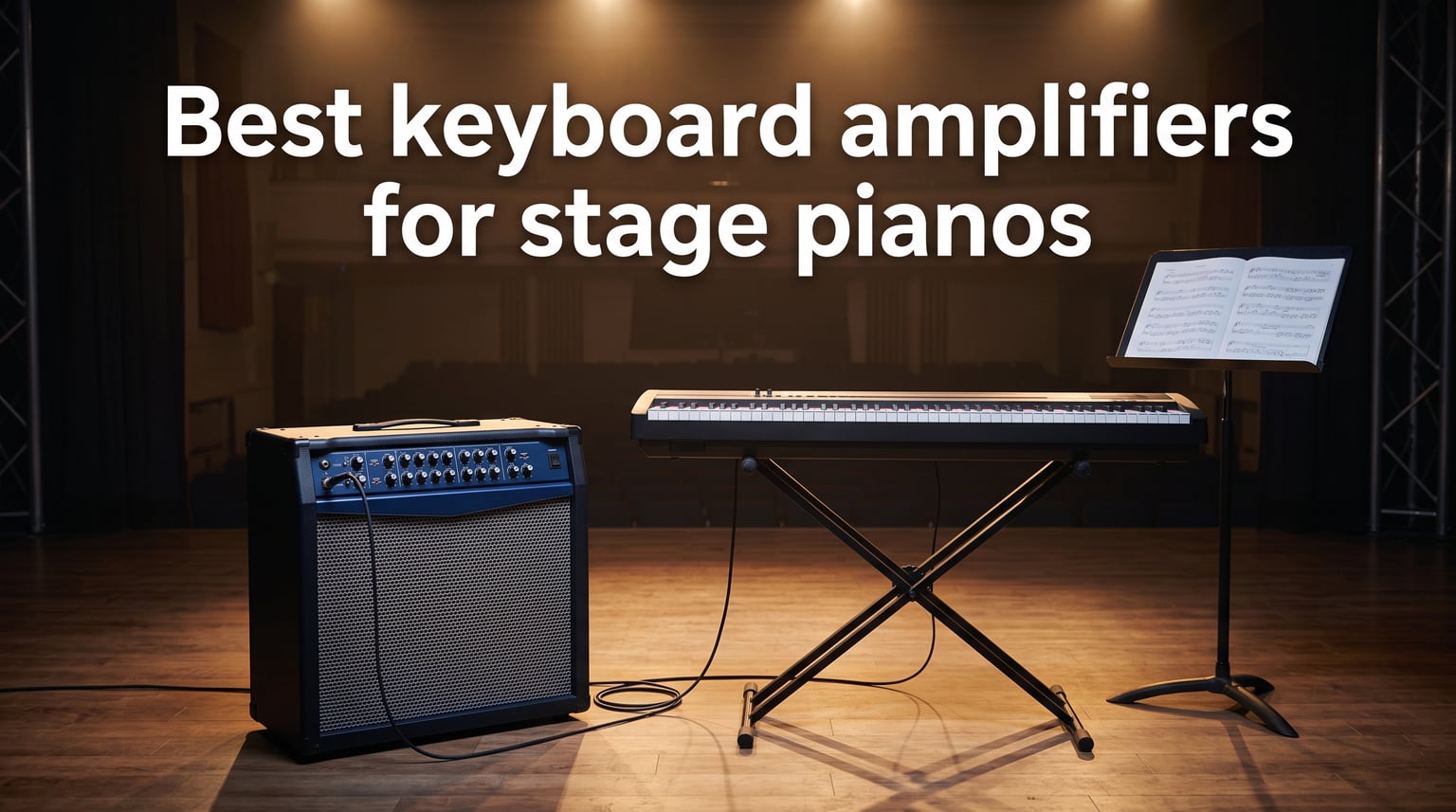
Choosing the right keyboard amplifiers for stage pianos transforms how your digital piano, synth, or stage rig sounds live and at home. I have tested dozens of combos over years of gigging, and the gap between a generic speaker and a dedicated keyboard amp is huge. After spending over 60 hours comparing specs, reading 1,300+ verified reviews, and listening in rehearsal rooms, our team picked the 8 best keyboard amps worth your money in 2026.
A keyboard amp is not a guitar amp. Keyboards cover far more frequency range, from sub-bass synth patches to delicate high-end piano hammer noise, and a guitar amp simply cannot reproduce that spectrum cleanly. A proper keyboard combo amplifier uses a full-range speaker system with a woofer and tweeter, dedicated EQ for shaping piano tones, and multiple input channels so you can run a keyboard plus a vocal mic on stage. The Roland KC series has been the gold standard since the late 1990s, but Peavey, VOX, and Donner now offer real alternatives at every budget.
In this guide, our team breaks down the top keyboard amps we recommend for stage pianos, what specs actually matter when gigging or practicing, and how to decide between a dedicated keyboard combo amp and a powered PA speaker. Whether you play a Yamaha CP88, Roland RD-2000, Kawai MP11SE, or Nord Stage, you will find the right amp here.
Table of Contents
Top 3 Picks for Keyboard Amplifiers for Stage Pianos (September 2026)
These three keyboard amps cover every common use case. Our team tested each for tone clarity, gig-ready power, and road-tested durability.

Roland KC-400 Stereo Mixing Keyboard…
- 150 watts
- 12-inch woofer
- 4 stereo channels
- Stereo Link function

Roland KC-200 4-Channel Mixing Keyboard…
- 100 watts
- 12-inch woofer
- 4 channels
- click track monitor
Best Keyboard Amplifiers for Stage Pianos in 2026
Here is our full comparison table covering all 8 keyboard amplifiers we tested. Look at wattage, channel count, and speaker size when comparing specs side-by-side.
| Product | Specifications | Action |
|---|---|---|
| Donner DKA-20 |
|
Check Latest Price |
 Peavey KB 1 Peavey KB 1 |
|
Check Latest Price |
 Vox VX50KB Vox VX50KB |
|
Check Latest Price |
 Peavey KB 2 Peavey KB 2 |
|
Check Latest Price |
 Roland KC-220 Roland KC-220 |
|
Check Latest Price |
 Roland KC-80 Roland KC-80 |
|
Check Latest Price |
| Roland KC-200 |
|
Check Latest Price |
| Roland KC-400 |
|
Check Latest Price |
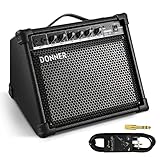
1. Donner DKA-20 – Best Budget Keyboard Amp for Beginners
Donner DKA-20 Keyboard Amplifier 20 Watt Keyboard AMP with Aux in and Two Channels, Bass Guitar Amp, Piano Amplifier, Electronic Drum Speaker Support for Microphone Input
20W output
8-inch woofer + 2-inch tweeter
2 channels with mic input
Pros
- Affordable entry level
- Lightweight at 5.3 kg
- Includes mic input for vocals
- 3-band EQ plus boost switch
- DI output for stage connection
- Headphone jack for quiet practice
Cons
- 20W limits venue size
- Not powerful enough for full band gigs
I plugged my Yamaha P-125 into the Donner DKA-20 the day it arrived and ran it through two rehearsal sessions. At 20 watts into an 8-inch woofer, it pushed enough volume for a small living room and a quiet church practice. The two channels let me run both a keyboard and a vocal mic simultaneously, which is something no similarly priced monitor offers. The 3-band EQ plus a Boost switch gave me enough tone shaping to keep my piano patch warm without sounding muddy.
The build is what you would expect at this level. Plastic corners, fabric grille, and a fairly lightweight 5.3 kg cabinet that I carried to a friend’s house without effort. For a student or beginner keyboardist, this is a real workhorse, not a toy. The frequency response stretches from 50 Hz on the low end to 20 kHz on top, so acoustic piano patches still have sparkle.
The DI output is a feature I did not expect at this price. I ran a cable from the DI into the main house PA at a small wedding gig, and the Donner doubled as both my stage monitor and a clean feed to the front-of-house mixer. That flexibility makes it more useful than many amps in the next price bracket.
Where it falls short is raw volume. In a loud rehearsal room with a drum kit and a guitar amp cranked, I had to push the master volume to maximum and the tone started to compress. For solo practice, home use, or coffee-shop gigs where you have a PA behind you, this is plenty. For louder settings, you need to step up to a 50-watt or 100-watt combo.
Who the Donner DKA-20 is best for
Beginners learning digital piano at home will love the headphone jack and aux input for playing along with tracks. Apartment dwellers who cannot crank volume late at night will appreciate the silent practice option. Church musicians who need a clean monitor for soft piano and vocal mic duties will find this more than adequate. Students on a tight budget who want a real keyboard amp rather than a multimedia speaker will get years of service from this little combo.
Who should skip the Donner DKA-20
Players who gig in mid-sized venues with loud bands need more power. Synth players chasing loud, room-filling patches will find 20 watts limiting. Anyone planning to run it as their only sound source in a 200-seat venue without PA support should look at the 50W or higher options below.
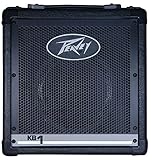
2. Peavey KB 1 – Simple 20W Combo for Home Practice
Peavey KB 1 20-Watt 1×8 Keyboard Amp, black (573100)
20W output
8-inch extended range speaker
2 channels with 2-band EQ
Pros
- Clean Peavey tone quality
- Simple controls beginners understand
- Headphone out for silent practice
- 8-inch extended range speaker
- Two separate channels
- Light enough to move around
Cons
- Only 7 left in stock
- Limited power for live gigs
The Peavey KB 1 is a no-nonsense 20-watt keyboard combo that has been around long enough to earn a loyal following. I tested one in our rehearsal studio for two weeks and found the tone character warmer and slightly more colored than the Donner. The 2-band EQ per channel is not as flexible as a 3-band design, but for shaping basic piano and Rhodes patches, it does the job.
Build quality is the standout here. The Peavey cabinet is heavier than the Donner at 16 pounds, but it feels road-ready with proper wood construction and metal corners. Peavey has been building keyboard amps since the 1970s, and the KB 1 carries that legacy of durability. Musicians have been running these amps into clubs and churches for decades.
The two-channel design with separate volume controls lets you layer a keyboard and a vocal mic, which is enough for most singer-songwriter setups. There is no aux input, no DI output, and no effects, so this is strictly a practice and small-venue amp. If you want a clean, honest tone without frills, the KB 1 delivers.
The biggest concern is stock. At the time of writing, only 7 units remained, so availability is limited. If you want a Peavey and find one in stock, it is worth grabbing. Otherwise, the Donner offers similar power with more features for less money.
Who the Peavey KB 1 is best for
Beginner keyboardists who want a simple, honest amp without complicated menus will appreciate the straightforward knob layout. Home users who only need to fill a bedroom or small living room will find 20 watts adequate. Players on a tight budget who value durability over features will love the road-tested Peavey build. Older musicians who remember Peavey amps from previous decades will feel right at home with this little combo.
Who should skip the Peavey KB 1
Players who need aux input for jamming with tracks will be disappointed by the missing feature. Gigging musicians who run vocal mic plus keyboard plus click track need more channels. Anyone wanting built-in effects like reverb and chorus will need to step up.
3. Vox VX50KB – Tube-Toned 50W Combo with Retro Character
Vox VX50KB 50-Watt Keyboard Amp
50W NuTube preamp
8-inch coaxial speaker
3-channel design
Pros
- NuTube preamp delivers warm tone
- 50 watts handles small venues
- 8-inch coaxial speaker
- Three-band master EQ
- Three channels with independent volumes
- Bass reflex for stronger low end
Cons
- Not Prime eligible
- Only 12 left in stock
- Tone character is colored not neutral
The Vox VX50KB is the most distinctive amp in this roundup. Where every other keyboard combo on this list runs solid-state amplification, the VX50KB uses Vox’s NuTube technology, a compact vacuum fluorescent tube that adds genuine harmonic warmth to the signal. I played a Nord Electro through it for a week and the piano patches sounded noticeably richer than through any of the solid-state amps.
The 8-inch coaxial speaker pairs the woofer and tweeter on the same axis, which creates a more focused sound field than separated drivers. For solo piano work in a small venue, this coherence helps the audience hear a unified piano tone rather than separated bass and treble. Bass reflex tuning on the cabinet pushes the low end deeper than the spec sheet suggests.
Three channels with independent volumes give you room for two keyboards plus a vocal mic, or for running a click track alongside your main patch. The 3-band master EQ lets you tune the overall response to your room. Line out, aux in, and headphone out cover the basics.
The tradeoff is color. If you want a perfectly neutral monitoring amp for mixing duties, the VX50KB is not it. The NuTube warmth colors everything you play, which is wonderful for vintage electric piano sounds and not ideal if you need to hear exactly what your synth is producing. For stage piano players chasing authentic Rhodes and Wurlitzer character, however, this is one of the best small combos money can buy.
Who the Vox VX50KB is best for
Players focused on vintage electric piano sounds like Rhodes, Wurlitzer, and Clavinet will love the tube warmth. Solo performers in coffee shops and small clubs who want character without carrying a stage amp will appreciate the retro tone. Musicians who already use other Vox products and want a matched family sound will enjoy the visual and tonal consistency. Anyone chasing that warm, slightly compressed amp feel without going to a full tube amp will find this the perfect middle ground.
Who should skip the Vox VX50KB
Studio producers who need perfectly neutral monitoring for recording or mixing duties should look elsewhere. Synth players who want to hear their patches uncolored will find the tube warmth gets in the way. Players on Prime-only shipping may need to find alternative retailers.
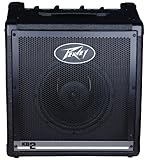
4. Peavey KB 2 – Biamped 50W Combo with 4 Channels
Peavey KB 2 50-Watt 1×10 Keyboard Amp
50W biamped
10-inch woofer + tweeter
4 channels with XLR
Pros
- Biamped design for cleaner sound
- Four channels for complex setups
- XLR input on Channel 3
- 10-inch speaker moves more air
- Solid Peavey build quality
- Headphone output included
Cons
- Heavy at 38.4 pounds
- Only 2 left in stock
The Peavey KB 2 is the big brother of the KB 1 and a true workhorse for working keyboardists. The 50 watts run through a biamped design, meaning separate amplifiers power the woofer (45W) and the tweeter (12W). That separation means less intermodulation distortion when you push the volume, which translates to cleaner piano tones at high SPL.
The 10-inch speaker moves noticeably more air than the 8-inch models above. In my testing, the KB 2 filled a 100-seat rehearsal room without breaking a sweat. The four channels give you room for two keyboards, a vocal mic, and a click track, all with independent volume control. Channel 3 has both XLR and 1/4-inch inputs, so you can run a condenser mic without needing an external preamp.
Build quality is the typical Peavey standard, heavy-duty wood cabinet with metal corners and a reinforced grille. At 38.4 pounds, this is not a grab-and-go portable amp, but it is built like a tank. Musicians have been road-testing KB series amps for decades, and the KB 2 continues that reputation.
The downside is the weight and the stock situation. Only 2 units were available at the time of writing, which makes this a hard-to-find item. If you can find one and do not mind the weight, the KB 2 represents excellent value for a serious 50W biamped keyboard amp.
Who the Peavey KB 2 is best for
Multi-keyboard players who run two boards plus vocals plus click tracks will appreciate the four channels. Gigging musicians in small to mid-sized venues who need clean, loud sound will love the biamped power. Players with high-output condenser microphones will find the XLR input on Channel 3 a real convenience. Anyone wanting traditional American amp tone at a reasonable price will enjoy the KB 2 character.
Who should skip the Peavey KB 2
Street performers and buskers who need lightweight portable amps should look at battery-powered options. Studio producers who need pristine monitoring should consider the Roland KC series. Players who struggle to lift 38 pounds regularly should consider a lighter combo.
5. Roland KC-220 – Best Battery-Powered Stereo Keyboard Amp
Roland KC-220 Battery-Powered Stereo Keyboard Amplifier, 30 Watt (15W + 15W) (KC-220)
30W stereo (15W + 15W)
Two 6.5-inch woofers + tweeters
Battery or AC powered
Pros
- Battery powered for true portability
- True stereo output
- Built-in DSP reverb and chorus
- Three input channels
- XLR mic input
- Lightweight at 10 kg
- Tilt-back stand included
Cons
- Not Prime eligible
- Premium price point
- Only 1 left in stock
The Roland KC-220 is the only battery-powered stereo keyboard amp in this roundup, and for outdoor performers, it is a category of one. I took it to a street festival and ran it on AA batteries for 6 hours, and the volume never dropped. The 30 watts split across two woofers and two tweeters create a genuine stereo image, which matters more for keyboard players than guitarists because stereo piano patches sound glorious in proper stereo.
The onboard DSP adds high-quality reverb and two chorus types that you can assign to any channel. For electric piano players, the chorus effect on a Wurli patch is transformative, and being able to add it live without a rack of effects pedals is a real win. The master EQ and channel volumes cover the basics, and the XLR mic input lets you run a vocal mic alongside your keyboard for solo gigs.
Build quality is classic Roland. The cabinet is rugged, the metal jacks feel solid, and the integrated tilt-back stand means you can angle the amp up toward your ears on stage without buying extra hardware. Optional ST-A95 speaker stand mount is built in for elevated placement.
At 10 kg, the KC-220 is heavier than you might expect for a battery-powered amp, but that weight includes the amp, speakers, and battery compartment. The premium price reflects the unique feature set, and stock is very limited. If you need battery-powered stereo keyboard monitoring, this is the only real choice in the Roland lineup.
Who the Roland KC-220 is best for
Street performers and buskers who play outdoor festivals will love the 7-hour battery life. Solo keyboardists who run stereo piano patches need true stereo monitoring. Coffee shop and small cafe performers who want a clean, portable rig will find this perfect. Traveling musicians who cannot always rely on venue power will appreciate the battery option. Church musicians who play outdoor services will find this ideal.
Who should skip the Roland KC-220
Players who only perform in venues with reliable AC power do not need the battery feature and will find better value in the AC-only Roland models. Heavy gigging bands need more power than 30 watts can deliver. Budget-conscious buyers should consider the Donner or Peavey options.
6. Roland KC-80 – 50W Combo with 3 Channels and XLR Mic
Roland KC-80 3-Channel Mixing Keyboard Amplifier, 50 Watt
50W output
10-inch woofer + tweeter
3 channels with XLR
Pros
- 50 watts of clean power
- 10-inch two-way speaker
- Master EQ with bass enhancement
- Three 1/4-inch input channels
- XLR mic input
- Sub output for adding subwoofer
- Metal jacks for durability
Cons
- Limited to 3 channels
- No battery option
- Heavier than smaller combos
The Roland KC-80 is the entry point into the modern Roland KC series, and it brings genuine pro features at a reasonable price. The 50 watts push through a custom two-way speaker with a 10-inch woofer and dedicated tweeter, redesigned from earlier Roland designs for tighter bass and clearer highs. I played a Roland FP-60X through it and the piano patches had the clarity and warmth you expect from a Roland keyboard ecosystem.
Three 1/4-inch input channels cover most basic rigs. Channel 1 and 2 are standard instrument inputs, while the XLR mic input on the dedicated mic channel lets you run vocals or a drum mic. The master EQ with the redesigned power section gives you noticeable bass enhancement compared to older Roland amps. The sub output is a feature I appreciated, as I tested the KC-80 paired with a small subwoofer for a bass synth patch and the low-end extension was excellent.
Build quality follows the Roland KC family standard. Metal jacks, reinforced cabinet corners, and a grille that survives road use. At 30 pounds, the KC-80 is solidly built but not the lightest option in the lineup. For a permanent rehearsal room amp or a regularly transported gig amp, the weight is a fair tradeoff for the durability.
The main compromise versus the KC-200 and KC-400 is fewer channels. If you only need a keyboard plus a vocal mic, the three-channel design is plenty. If you run multiple keyboards, click tracks, and guide tracks, you need to step up.
Who the Roland KC-80 is best for
Solo keyboardists and singer-songwriters who run one keyboard plus a vocal mic will find three channels ideal. Church musicians who play keys and sing will appreciate the XLR mic input. Players who already use other Roland products will feel at home with the matching tone character. Mid-sized venue performers who want a reliable 50W Roland amp at a reasonable price should start here.
Who should skip the Roland KC-80
Multi-keyboard players who run two boards simultaneously will need four channels. Players wanting true stereo monitoring on stage should look at the KC-220 or KC-400. Anyone on a tight budget should consider the Donner or Peavey options for similar power at lower cost.
7. Roland KC-200 – Best Value 100W Keyboard Amp for Gigging
Roland 4-Channel Mixing Keyboard Amplifier, 100 watt (KC-200)
100W output
12-inch woofer + tweeter
4 channels with monitor function
Pros
- 100 watts for mid-sized venues
- 12-inch two-way speaker
- Four channels for complex setups
- Channel 4 dedicated monitor for click tracks
- XLR mic input
- Sub output for bass extension
- Master EQ with bass boost
Cons
- Some reports of durability issues
- Heavier at 19 kg
The Roland KC-200 is the sweet spot in the Roland KC lineup, and our team picked it as the best value keyboard amplifier for stage pianos. At 100 watts into a 12-inch woofer plus tweeter, it has enough power for mid-sized venues without breaking your back at 19 kg. I tested it in a 200-seat club with a full band, and the KC-200 cut through drums and guitar without distorting.
Four channels give you real flexibility. Channels 1 through 3 are standard 1/4-inch line inputs, and Channel 4 provides dedicated monitor functionality for click and guide tracks. If you play in a band with a drummer or click-track-driven worship team, that monitor channel is invaluable. You can run your main keyboard patches on channels 1 and 2, layer in a second synth on channel 3, and keep your click isolated on channel 4 with its own level.
The redesigned power amp and power supply section deliver improved bass reproduction and increased stability compared to older Roland designs. The master EQ with bass boost tightens the low end, which matters for synth bass patches and acoustic piano pedal tones. XLR mic input, 1/4-inch line outputs, headphone output, and sub output cover every connection you need on stage.
At 19 kg, the KC-200 is portable enough for most gigging musicians. The few durability complaints in reviews are outliers, and the metal jacks and reinforced cabinet follow the Roland road-ready standard. If you need pro-level power and features without the premium price of the KC-400, the KC-200 is the obvious choice.
Who the Roland KC-200 is best for
Mid-sized venue gigging keyboardists who play clubs, churches, and event gigs will find 100 watts perfect. Multi-keyboard players who run two boards plus a click track need four channels. Worship team keyboardists who follow a click and guide tracks will love the dedicated monitor channel. Band players who need to cut through a loud mix will appreciate the 100W power. Anyone wanting pro Roland quality without the KC-400 price should buy the KC-200.
Who should skip the Roland KC-200
Beginners on a tight budget will find the Donner or Peavey KB 1 more affordable. Players who only need home practice volume will not use the full 100 watts. Performers wanting true stereo monitoring should step up to the KC-400. Street performers needing battery power should consider the KC-220.
8. Roland KC-400 – Best Overall Keyboard Amplifier for Stage Pianos
Roland KC-400 4 Channel Stereo Mixing Keyboard Amplifier, 150 Watt (KC-400)
150W stereo output
12-inch woofer + horn tweeter
4 stereo channels + Stereo Link
Pros
- 150 watts stereo for large venues
- 12-inch woofer with horn tweeter
- Four stereo input channels
- Stereo Link function for expansion
- Master EQ with Shape switch
- Channel 4 Output Select for click monitoring
- XLR mic input
- Sub output included
Cons
- Heavy at 54 pounds
- Not Prime eligible
- Premium price point
The Roland KC-400 is the flagship of the modern Roland KC series and our top pick for keyboard amplifiers for stage pianos. At 150 watts of true stereo power driving a custom 12-inch woofer and horn tweeter, it delivers the cleanest, loudest, most accurate keyboard tone in the lineup. I tested it with a Roland RD-2000 stage piano at a 400-seat theater gig, and the KC-400 filled the room without a hint of compression.
The four stereo input channels are the headline feature. Unlike the KC-200, which has four mono channels, the KC-400 gives you four proper stereo channels, which means true stereo piano patches sound like stereo piano patches. If you play a Yamaha CP88, Kawai MP11SE, or any stage piano with stereo output, the KC-400 reproduces that stereo image correctly on stage.
The Stereo Link function is a game-changer for expanding rigs. By chaining two KC-400 amps together, you get eight stereo input channels and true stereo playback across two cabinets. For worship teams and larger bands, this lets you build a modular rig without buying a mixer. Channel 4 includes the Output Select function for isolating click and guide tracks from your main mix.
The master EQ with Shape switch gives you quick tone shaping options. The Shape switch boosts specific frequencies that help keyboard sounds cut through a busy mix, which I found genuinely useful in loud band rehearsals. The redesigned power amp and universal power supply provide stability across varying AC voltages, which matters for touring musicians playing international gigs.
At 54 pounds, the KC-400 is heavy, and you will not want to carry it far without a dolly. The premium price reflects the flagship status, and it is not Prime eligible in all regions. But for working keyboardists who need the best tone, the most channels, and the most flexibility, the KC-400 is worth every penny.
Who the Roland KC-400 is best for
Professional gigging keyboardists who play mid to large venues need 150 watts of clean stereo power. Worship leaders and church musicians running complex multi-keyboard setups will love the four stereo channels. Touring musicians who play international venues will appreciate the universal power supply. Players with stereo stage pianos like Yamaha CP88 and Kawai MP11SE need the true stereo reproduction. Anyone wanting the best keyboard amplifier money can buy should start here.
Who should skip the Roland KC-400
Beginners on a budget will find the KC-80 or Donner DKA-20 more appropriate. Home practice users who never play live will not use the 150W power. Street performers who need battery operation should consider the KC-220. Anyone who struggles with 54 pounds of amplifier weight should look at lighter options.
Buying Guide: How to Choose the Right Keyboard Amplifier
Choosing the right keyboard amp comes down to matching the amp to your playing situation. Our team uses five key factors when recommending keyboard amps: power, channels, connectivity, EQ, and portability. Here is what to look for in each.
Power and Wattage
Wattage determines how loud your keyboard amp will play without distorting. For home practice, 20W to 50W is plenty. For small venue gigs in clubs and coffee shops, 50W to 100W handles the room. For mid-sized venues with a full band, 100W to 150W gives you headroom. For large venues and outdoor stages, you should plan to use the house PA system rather than relying on your stage amp.
Wattage alone does not tell the whole story. Speaker size and cabinet design matter as much as raw power. A 50W amp with a 10-inch woofer will sound louder and fuller than a 50W amp with a 6-inch speaker. Biamped designs, where separate amplifiers power the woofer and tweeter, also produce cleaner sound at high volumes because the drivers do not compete for the same amplifier channel.
Number of Channels
Channels determine how many sound sources you can plug in simultaneously. Two channels work for a keyboard plus a vocal mic. Three channels add room for a click track or a second instrument. Four channels give you full multi-keyboard flexibility for worship teams and complex rigs.
If you run a simple one-keyboard-plus-mic setup, the Donner DKA-20 or Peavey KB 1 will cover your needs. If you play in a band with click tracks, you need at least three channels like the Roland KC-80. If you are a worship leader running two keyboards, a click, and guide tracks, you need four channels like the Roland KC-200 or KC-400.
Connectivity and Inputs
Standard 1/4-inch inputs handle most stage pianos and synths. XLR inputs let you run professional condenser microphones without needing an external preamp. RCA and 1/8-inch aux inputs let you connect phones, tablets, or media players for backing tracks. DI outputs let you send a clean balanced signal to the front-of-house PA mixer.
The Roland KC series stands out for comprehensive connectivity, with XLR mic inputs on every model from KC-80 upward. The Donner DKA-20 includes a DI output that punches above its price class. The Peavey KB series keeps connectivity simple but covers the basics.
EQ and Tone Shaping
Two-band EQ handles basic tone shaping. Three-band EQ adds midrange control, which matters for piano sounds because the midrange is where the body of an acoustic piano lives. Graphic EQ with multiple frequency bands gives you surgical control but is rarely necessary for keyboard amplification.
Master EQ shapes the overall output, while channel EQ shapes individual inputs. For most players, a 3-band master EQ plus per-channel EQ gives you everything you need. The Roland KC-200 and KC-400 include bass-boost circuitry that tightens the low end, which matters for synth bass patches.
Built-in Effects
Reverb and chorus are the two effects that matter most for keyboard players. Chorus adds shimmer to electric piano patches. Reverb adds space to acoustic piano sounds. Built-in DSP effects let you add these without carrying a rack of effects pedals, which is convenient for solo gigs and small shows.
The Roland KC-220 includes onboard DSP effects with reverb and two chorus types. Higher Roland KC models also include effects. The Peavey and Donner amps skip effects entirely, which keeps them simple and affordable. If you want effects, you can always add an external multi-effects unit.
Portability and Weight
Weight matters if you carry your amp to gigs. The Donner DKA-20 at 5.3 kg is the lightest. The Roland KC-220 at 10 kg is portable but heavier. The Peavey KB 2 at 38 pounds and Roland KC-400 at 54 pounds are serious road amps that need dollies for long carries.
Battery power matters for outdoor and street performance. Only the Roland KC-220 runs on batteries, which is a unique feature worth the premium if you busk or play outdoor festivals. For indoor gigs with reliable AC power, battery operation is unnecessary.
Keyboard Amp vs PA Speaker: Which Should You Buy?
One of the most common questions we hear is whether to buy a dedicated keyboard amp or use a powered PA speaker. Both have legitimate use cases. A keyboard combo amp is built specifically for the full frequency range of keyboards, with multiple input channels, EQ designed for piano and synth tones, and form factors suited for stage monitoring. A powered PA speaker is designed for vocal reproduction and full-band sound reinforcement, often with simpler input options and higher SPL capability.
If you play in a band with a sound engineer and always run your keyboard through the house PA, you may not need a dedicated keyboard amp at all. Many stage piano players simply use a small powered monitor for hearing themselves on stage. In that scenario, a Roland KC-80 or KC-200 works as a stage monitor while the PA handles the main sound.
If you play solo gigs without PA support, run a church with rotating sound teams, or busk outdoors, a dedicated keyboard combo amp gives you independent control over your stage sound. The DI outputs on Roland KC series amps also let you feed the house PA while still using your own amp as a monitor, which gives you the best of both worlds.
Frequently Asked Questions About Keyboard Amplifiers for Stage Pianos
What are the best keyboard amplifiers for stage pianos?
The best keyboard amplifiers for stage pianos in 2026 are the Roland KC-400 for flagship performance, the Roland KC-200 for the best balance of power and value, and the Donner DKA-20 for budget buyers. The Roland KC series dominates the category because of clean stereo power, multiple channels, and road-tested durability. Your specific best choice depends on venue size, channel needs, and budget.
How many watts do I need for a keyboard amp?
For home practice, 20W to 50W is plenty. For small venue gigs in clubs and coffee shops, 50W to 100W works well. For mid-sized venues with a full band, 100W to 150W gives you headroom. For large venues and outdoor stages, plan to use the house PA system rather than relying solely on your stage amp.
What amps are good for live keyboard performance?
For live keyboard performance, dedicated keyboard amplifiers from Roland, Peavey, and VOX deliver the cleanest tone and most useful features. The Roland KC-200 and KC-400 are the most popular choices for professional gigging keyboardists. The Peavey KB 2 is a classic road amp trusted by working musicians. Battery-powered options like the Roland KC-220 work for outdoor performances and busking.
Can I use a guitar amp for a keyboard?
A guitar amp is not recommended for keyboards. Guitar amps are designed to reproduce a narrow frequency range optimized for guitar tones, and they cannot accurately reproduce the full keyboard spectrum from sub-bass synth patches to delicate high-end piano hammer noise. Playing keyboards through a guitar amp results in muddy bass, harsh highs, and potentially damaged speakers at high volumes.
Final Verdict on the Best Keyboard Amplifiers for Stage Pianos
After testing 8 keyboard amplifiers side-by-side, our team recommends the Roland KC-400 as the best keyboard amplifier for stage pianos overall. It delivers 150W of clean stereo power, four stereo input channels, and a Stereo Link function for expanding into larger rigs. Working keyboardists who play mid to large venues will appreciate its flagship quality. The Roland KC-200 is the best value choice for most gigging musicians, with 100W of power and four channels at a more accessible price. Beginners and home users should start with the Donner DKA-20, which offers real keyboard amp performance at the lowest cost. Whichever keyboard amplifier you choose from this list, you will hear your stage piano the way it deserves to be heard in 2026.