
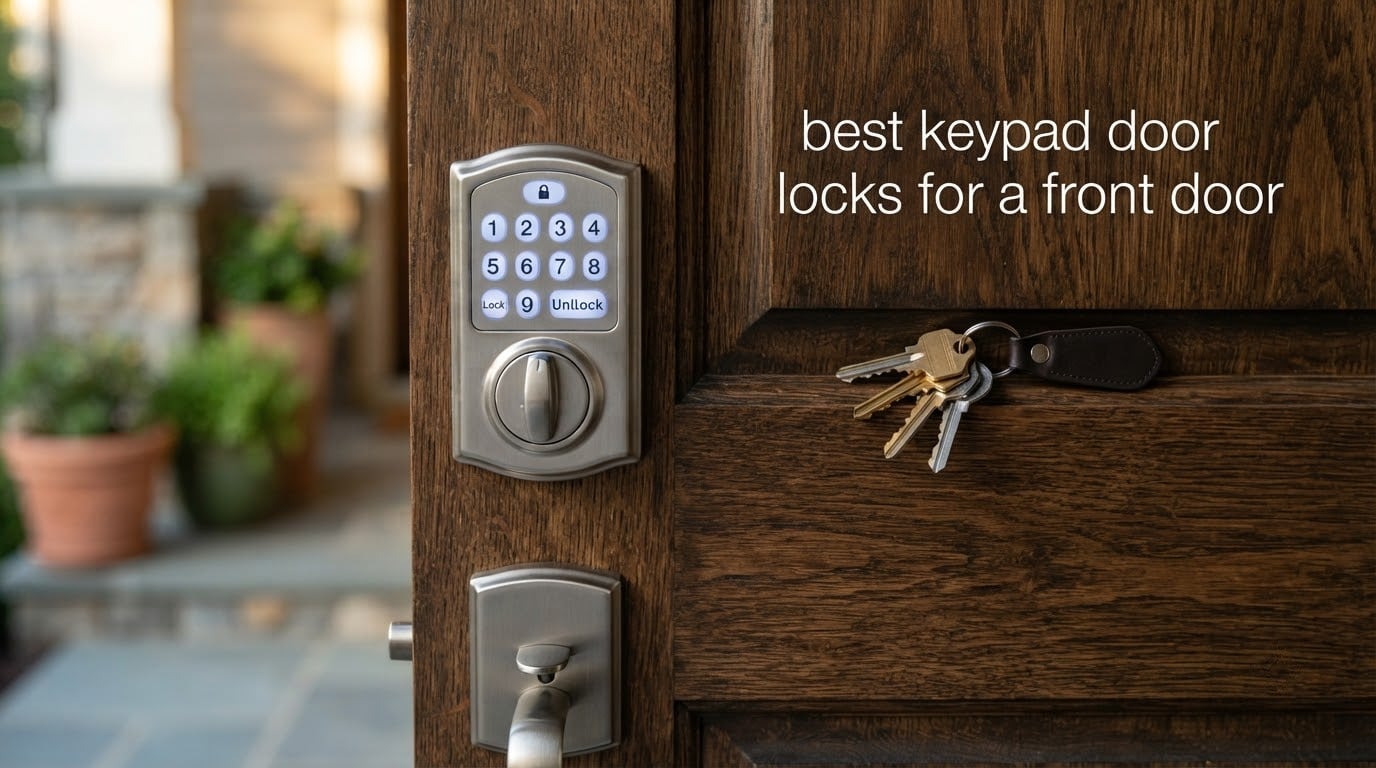
There is one story that comes up again and again when people talk about keypad door locks, and it is not about Wi-Fi. It is about a battery dying in a thunderstorm while everyone is away, and the realization that the front door will not open from the inside either. A homeremodelingforum user described exactly that, and the fix was a window. Every other complaint I read across r/Locksmith, r/HomeImprovement and r/homeautomation circles back to the same two questions: will it open every single time, and what happens the day it does not.
That is why the best keypad door locks for a front door in 2026 are not the flashiest units on the shelf. They are the ones with a physical key override, a low-battery warning that actually fires, and a body that does not depend on a cloud server staying online. We went through the ten highest-reviewed keypad and electronic deadbolts available for a residential front door, weighed the spec sheets against owner reports, and ranked them by reliability first and features a long way second.
A keypad door lock replaces the key cylinder with a numeric pad, so you type a PIN instead of turning a key, and there is no exposed keyway for someone to pick or bump. The best keypad door lock for most front doors is the Schlage Camelot BE365, a mechanical push-button keypad deadbolt with 19 user codes and a nine-volt battery rated for up to two years. Below it sit nine credible alternatives, from a fingerprint deadbolt with a 365-day battery claim to the only lock here that combines built-in Wi-Fi with Matter over Thread.
What follows is a ranked breakdown, a battery-death contingency plan, a printable door compatibility checklist, and an honest look at the problems that show up in owner reviews. Updated for 2026.
Table of Contents
Top 3 Best Keypad Door Locks for a Front Door (October 2026)
These are the three I would put on a front door without hesitation, and the three I would not feel nervous about installing for a family member. Each one earns its place on a different criterion: build quality and brand longevity, value and simplicity, and connected features.

Schlage Camelot BE365
- Grade 2/AAA metal construction
- 19 programmable user codes
- 9V battery up to 2 years
- Screwdriver-only install
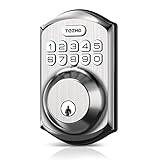
TEEHO TE001 Keypad Deadbolt
- 20 user codes plus one-time PINs
- Up to 365 day battery life
- IP54 weather resistance
- No app to fail
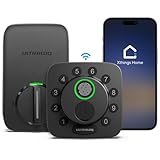
ULTRALOQ Bolt SE Wi-Fi
- Matter over Thread and built-in Wi-Fi
- 50 fingerprints and 50 codes
- Up to 18 months battery
- IP65 waterproof
All 10 Keypad Door Locks Side by Side in 2026
Almost all of the locks below drop into a standard deadbolt bore on a residential front door. The differences are in credential type, weather sealing, battery architecture, and whether you are buying a connected device or a self-contained one.
| Product | Specifications | Action |
|---|---|---|
| Schlage Camelot BE365 Keypad Deadbolt |
|
Check Latest Price |
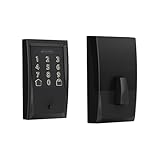 Schlage Encode Smart WiFi Deadbolt Schlage Encode Smart WiFi Deadbolt |
|
Check Latest Price |
 TEEHO TE002 Fingerprint Keypad Deadbolt TEEHO TE002 Fingerprint Keypad Deadbolt |
|
Check Latest Price |
| TEEHO TE001 Keyless Entry Keypad Deadbolt |
|
Check Latest Price |
| ULTRALOQ Bolt SE WiFi Smart Lock |
|
Check Latest Price |
 Veise KS02A Fingerprint Keypad Deadbolt Veise KS02A Fingerprint Keypad Deadbolt |
|
Check Latest Price |
 eufy Smart Lock C220 eufy Smart Lock C220 |
|
Check Latest Price |
 Veise RZ-A Electronic Keypad Deadbolt Veise RZ-A Electronic Keypad Deadbolt |
|
Check Latest Price |
 Yamiry Fingerprint Keypad Door Handle Lock Yamiry Fingerprint Keypad Door Handle Lock |
|
Check Latest Price |
 Kwikset Powerbolt 250 Keypad Deadbolt Kwikset Powerbolt 250 Keypad Deadbolt |
|
Check Latest Price |
Nine deadbolts and a lever lock, four different power designs, three distinct security certification levels, and one recurring pattern: the largest feature lists come with the shortest battery intervals. The next ten sections explain why.
1. Schlage Camelot BE365 Keypad Deadbolt — the best all-round keypad door lock
Schlage Electronic Keypad Deadbolt Lock, Camelot Trim, Satin Nickel
Grade 2/AAA metal
19 user codes
9V battery up to 2 years
Illuminated silicone keypad
Pros
- Limited lifetime mechanical warranty
- Grade 2/AAA metal construction
- 19 programmable user codes
- Illuminated silicone-coated keypad
- Screwdriver-only installation
Cons
- Keypad only with no app or fingerprint reader
- Programming needs the 6-digit code and a default-code deletion step
- Interior thumbturn only with no scheduled locking
Everything that makes a keypad lock great and everything that makes one annoying is a solved problem here. The BE365 is a mechanical push-button keypad deadbolt, meaning the digits are raised domes under your fingers rather than a flat touchscreen. In the dark, in the rain, with groceries in both arms, that difference decides whether you get in on the first try.
The single 9-volt battery is the quiet hero. Schlage rates it at up to two years of typical use, and owners on these listings back that up. Compare that with a four-AA pack that expects a swap every six to eight months, and the annual maintenance burden is simply different. A dedicated low-battery indicator also means the lock warns you before it fails rather than after.
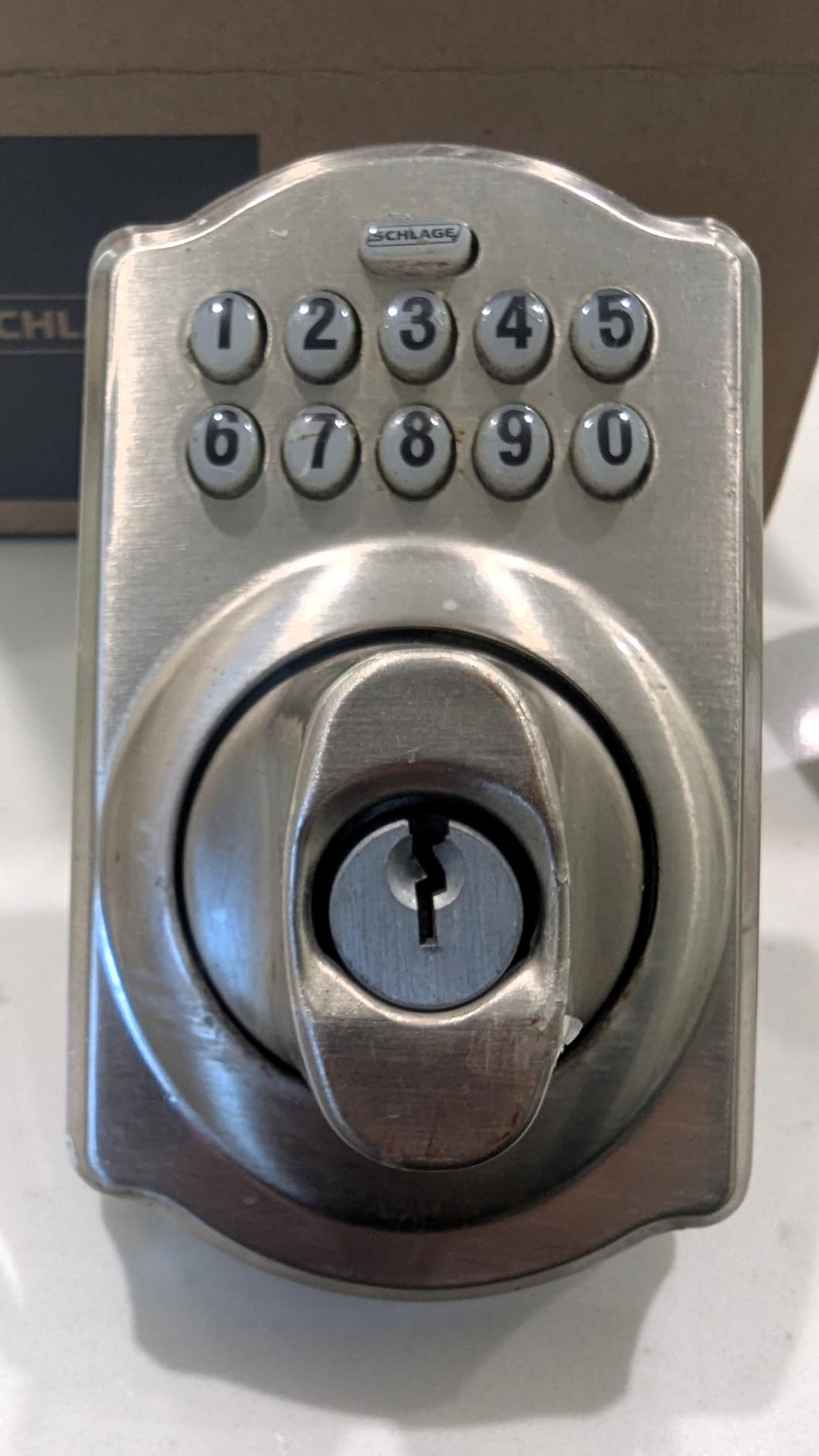
Two codes are programmed out of the box and it stores up to 19 user codes total, which covers a family, a dog walker, a cleaner and a few short-term guests without anyone sharing a single PIN. Self-locking happens from the Schlage button on the interior escutcheon or the outside thumbturn, so you do not need to remember to pull the bolt back.
Installation is a screwdriver and about half an hour. No wiring, no hub, no app account. Schlage lists operating temperatures from -35C to 66C on the outside escutcheon, which covers cold climates and hot summer afternoons, and the limited lifetime mechanical warranty is a real statement about the cylinder and bolt rather than the electronics.
The compromise is real: this is a keypad only. There is no app, no fingerprint reader, no remote locking, and no activity log. The programming sequence asks for a six-digit code and a default-code deletion step, which takes five minutes and then never again. For a front door where reliability is the whole job, I would take that trade every time.
Why the BE365 works on almost any front door
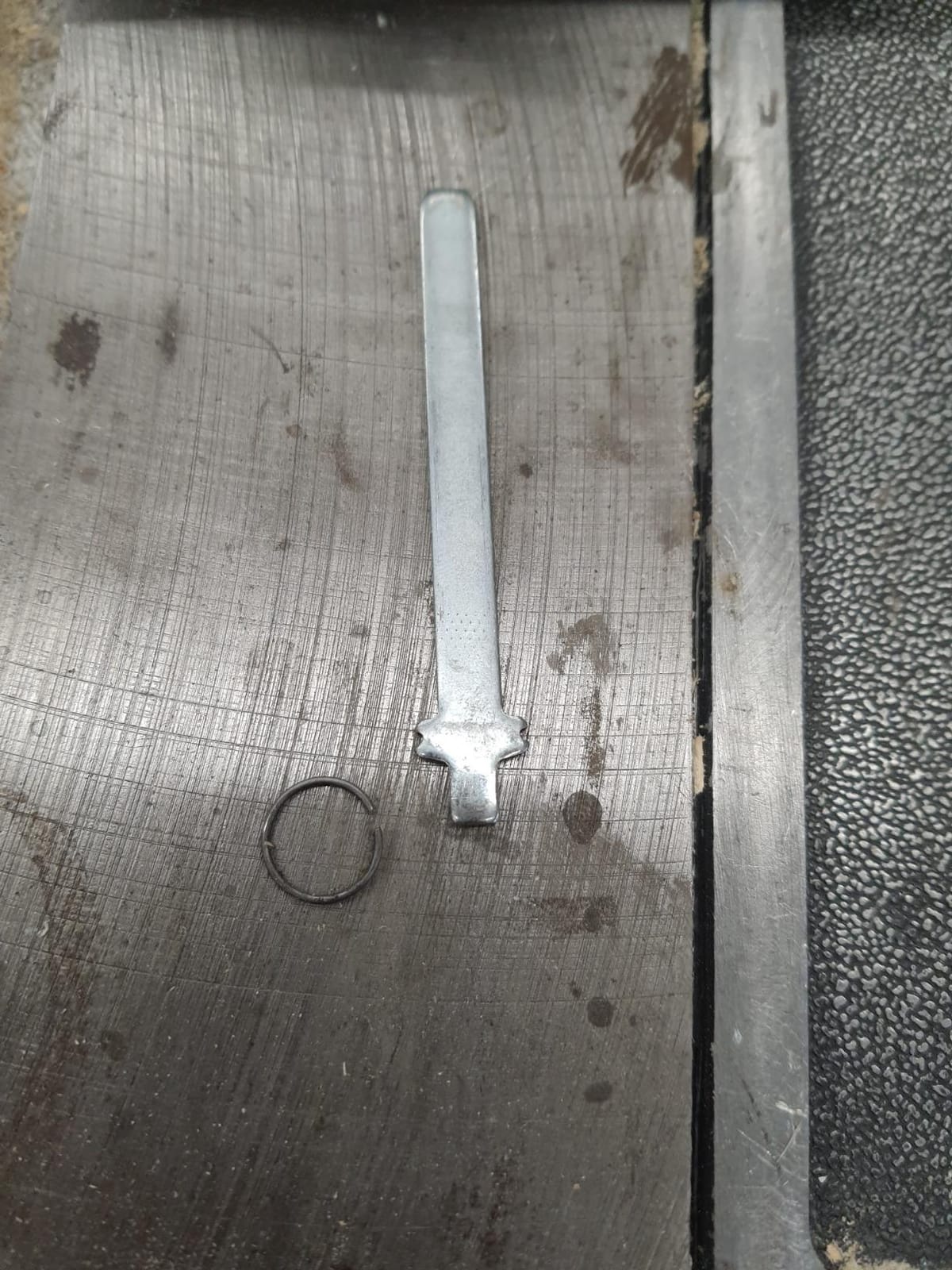
It is a full-replacement deadbolt that drops into a standard 2-1/8 inch bore, so the fit question is the one every keypad lock asks. The bolt adjusts to a shorter throw, which matters on older doors where the strike is not where the manufacturer put it.
Because there is nothing to connect, nothing breaks when your router reboots. The lock is powered by a battery, judged by a nine-volt cell, and operated by three things: your finger, your code, and the thumbturn. That is the entire dependency list.
Where it falls short
Nineteen codes is fewer than the Kwikset Powerbolt 250, and there is no one-time guest code that self-deletes after a single use, which is the feature short-term rental hosts actually want. If you run a vacation rental, that gap is worth thinking about.
It is also keypad only, so a family member who has to remember a PIN is a small daily friction point. If you want a finger or a watch to open the door, this is the wrong pick and the fingerprint options below are the right ones.
2. Schlage Encode Smart WiFi Deadbolt — best connected lock with the most owner history
Schlage Encode Smart WiFi Deadbolt Lock with Century Trim, Matte Black
Built-in Wi-Fi no hub
100 access codes
Touchscreen keypad
4 AA about 6 months
Pros
- Built-in Wi-Fi needs no separate hub
- Up to 100 access codes plus activity history
- Fingerprint-resistant touchscreen
- Works with Alexa and Google Home
- Auto-lock with selectable delay
Cons
- Four AA batteries last about six months on typical use
- Remote features depend on Schlage cloud and app
- Most expensive unit in the group
This is the most reviewed lock in the group by a wide margin, and the review pattern is consistent: people like the install, like the touchscreen, and grumble about batteries. Wi-Fi is built into the body, so there is no hub, bridge or gateway to buy, power or cable, which removes the accessory cost that quietly inflates the true cost of most connected locks.
Code capacity is where it separates: up to 100 access codes managed in the Schlage Home app, each with its own schedule and notification settings. For a household with a nanny, a contractor, three kids and a set of short-term guests, that is more headroom than any other pick here.
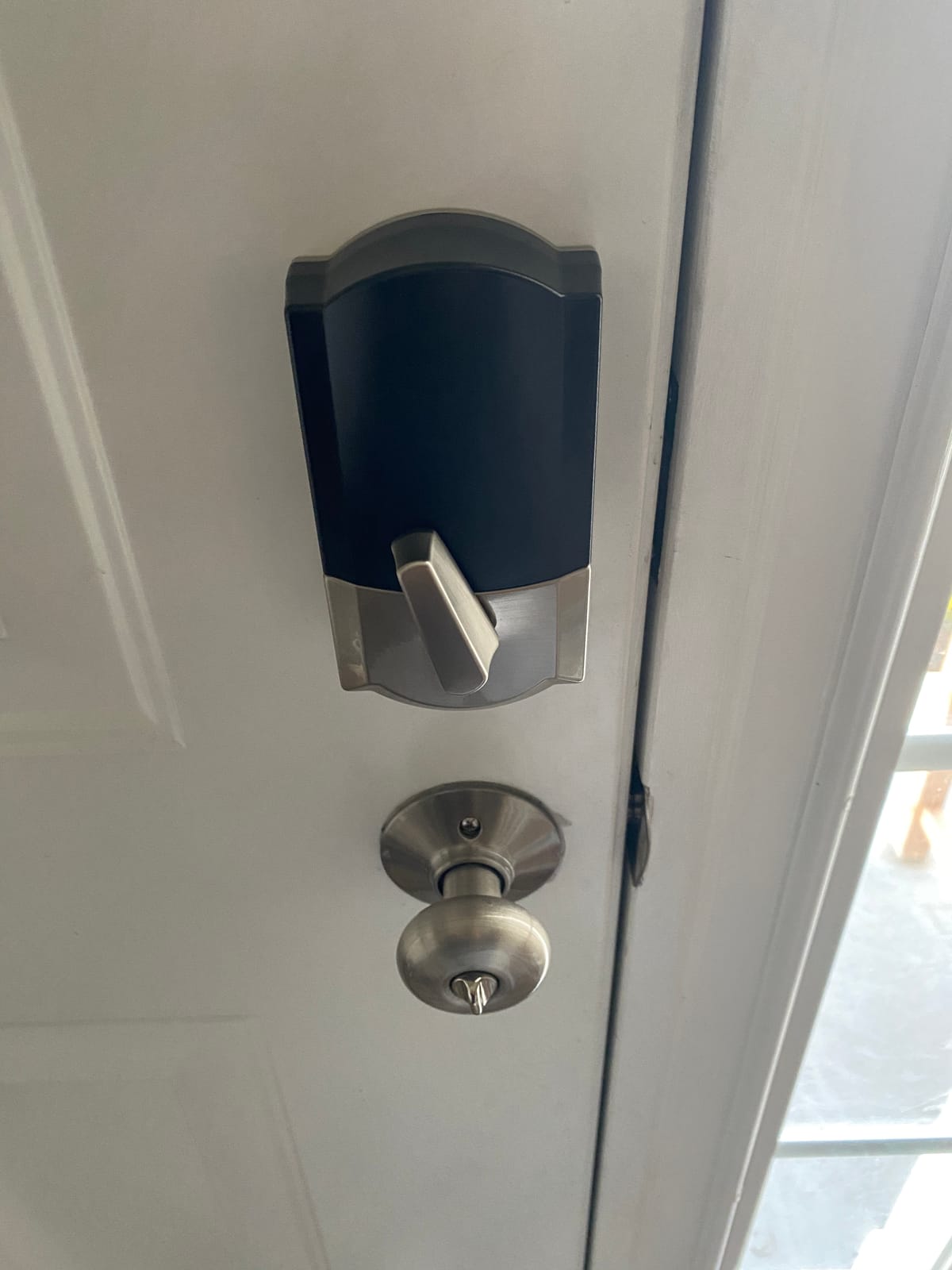
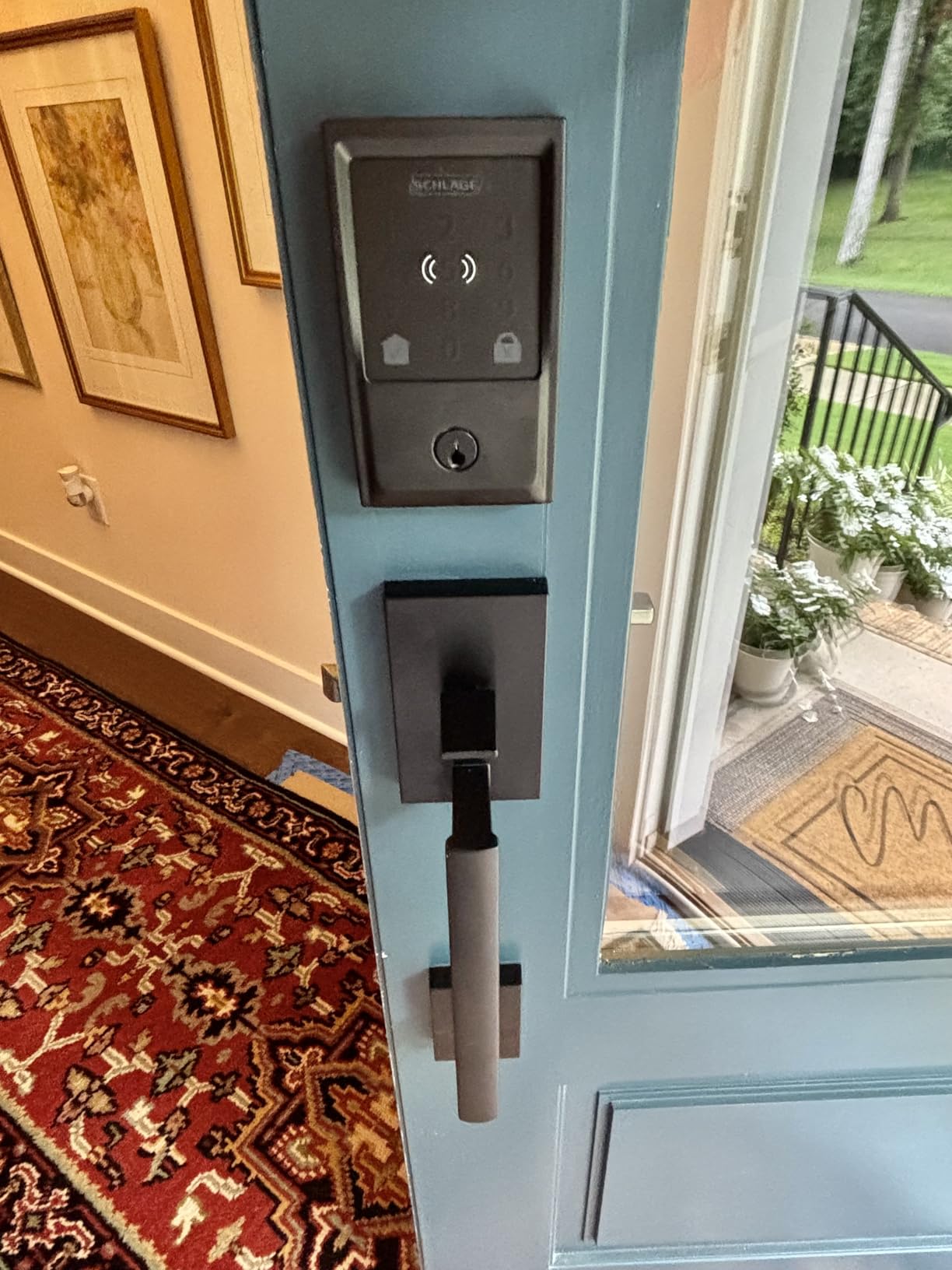
The fingerprint-resistant touchscreen is a meaningful upgrade over exposed mechanical buttons for security, because there is no physical key cylinder to pick at all. Voice control through Alexa and Google Home works hands-free, and the customizable alarm covers door movement and forced entry attempts rather than only keypad tampering.
Fit is well documented by the manufacturer: 1-3/8 to 1-3/4 inch door thickness, and 2-3/8 or 2-3/4 inch backsets. The Snap n Stay design holds the lock on the door while you thread the spindle, which is the difference between a ten-minute job and a half-hour one. One physical backup key is included.
Here is the honest drawback, and it is the reason this lock sits at number two rather than first. Four AA batteries give about six months of typical use. That means two battery changes a year on a front door, and the product reviews for feature-heavy smart locks consistently report 2 to 6 months in real-world conditions, dropping further in cold weather.
Choose this if your door already has smart home wiring habits
If you already run an Alexa or Google Home setup and check your front door from work, the built-in Wi-Fi and 100-code capacity justify the extra maintenance. The activity history in the app is genuinely useful if you want to know when a code was used rather than just whether it was.
It is also a good fit for an Airbnb or rental where turnovers mean issuing and revoking a code many times a year. One backup key in the box keeps a physical fallback for the first code, though you will still want a key strategy beyond it.
Where it falls short
Two battery changes a year is a real chore, and the listed rating of 4.2 sits below the top of this group. Remote features depend on Schlage’s cloud service and your phone app, so a service change would cost you the connected features, though the lock itself would still open on its code and the included key.
The owner evidence still proves that the extra maintenance is worth it only if you will use the connected features. In deep winter, the BE365 above avoids that category of problem entirely.
3. TEEHO TE002 Fingerprint Keypad Deadbolt — best for fingerprint entry without an app
TEEHO TE002 Fingerprint Deadbolt with Keypad for Front Door, Satin Nickel
0.3 sec fingerprint
20 prints 20 PINs
4 AA up to 365 days
BHMA Grade 3 IP54
Pros
- Fast and forgiving fingerprint reader
- Four unlock methods in one body
- Anti-peep passcodes and wrong-attempt lockout
- Reported year-plus battery life on lithium AAs
Cons
- Lightweight aluminum body feels thin next to solid steel
- Auto-lock timer can reset to the minimum setting
- Programming sequences are long and fiddly
The TE002 answers the question that annoys smart-lock buyers most: can I skip the phone entirely and still get fingerprint entry. The answer is yes. The AI sensor reads a print in 0.3 seconds and unlocks in about one, with no app, no hub and no account anywhere in the chain.
Credential storage is generous for an offline lock: 20 fingerprints, 20 passcodes, 2 physical keys, and one-time PINs that delete themselves after a single use. That last feature is the one short-term rental hosts and contractors ask for by name, and having it on a non-connected lock is unusual.
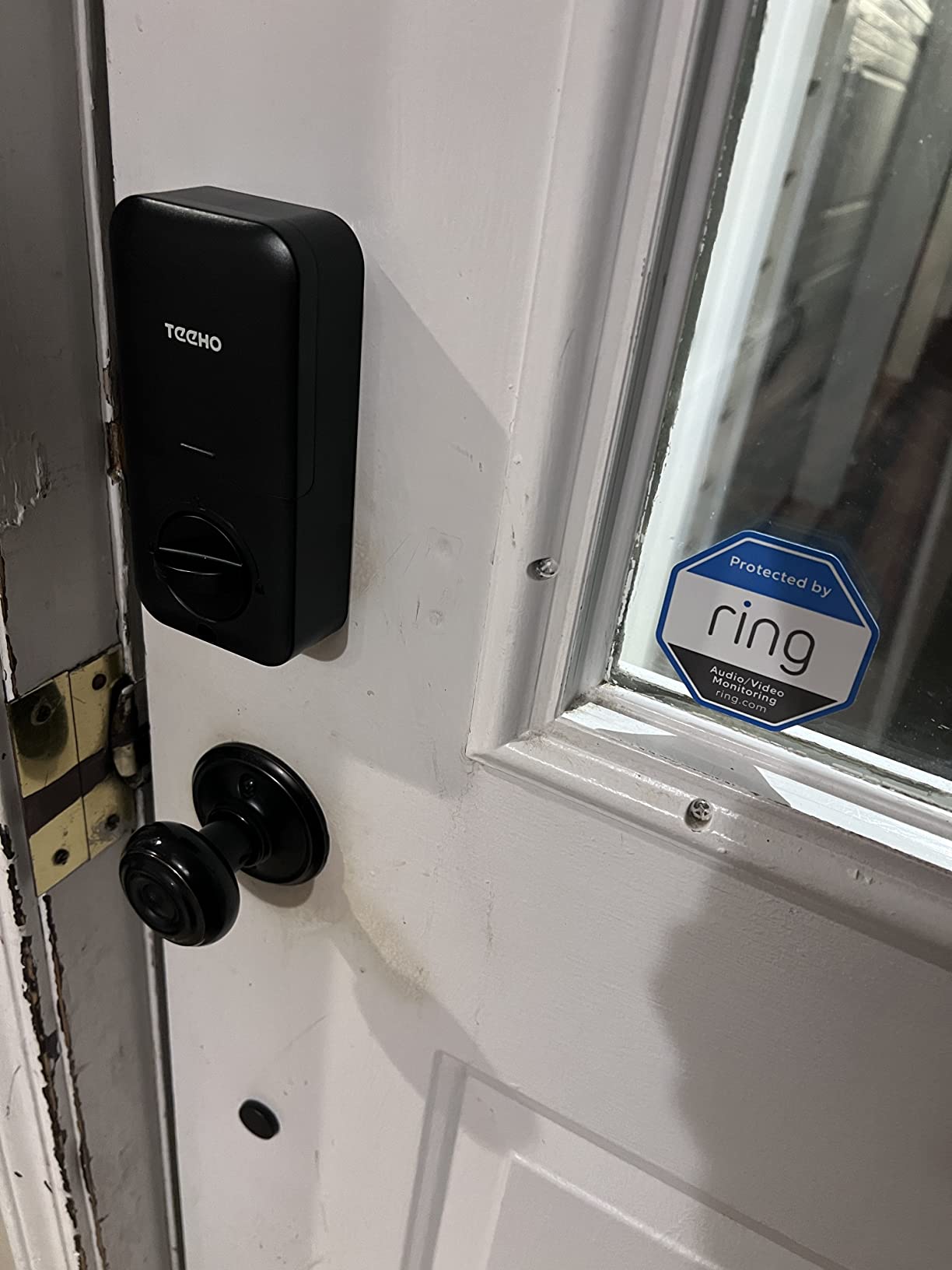
Security extras go beyond the usual: anti-peep passcodes, which let you enter a code plus a decoy digit so a shoulder-surfer sees the wrong number, and a lockout after repeated wrong entries. Owners also report year-plus battery life on quality lithium AA cells, and the red indicator appears below 15 percent.
On fit, it takes a 2-1/8 inch (54mm) bore and doors from 1-3/8 to 2 inches thick, which covers most residential front doors. Certification is BHMA Grade 3 with IP54 weather resistance, and the included kit has the latch, strike plate and both physical keys.
The complaints are consistent enough to plan around. The aluminum alloy body feels thin in the hand next to a solid steel deadbolt, and some owners worry about long-term durability. The auto-lock timer has a habit of resetting to the minimum setting, and deleting a fingerprint requires scanning it again first.
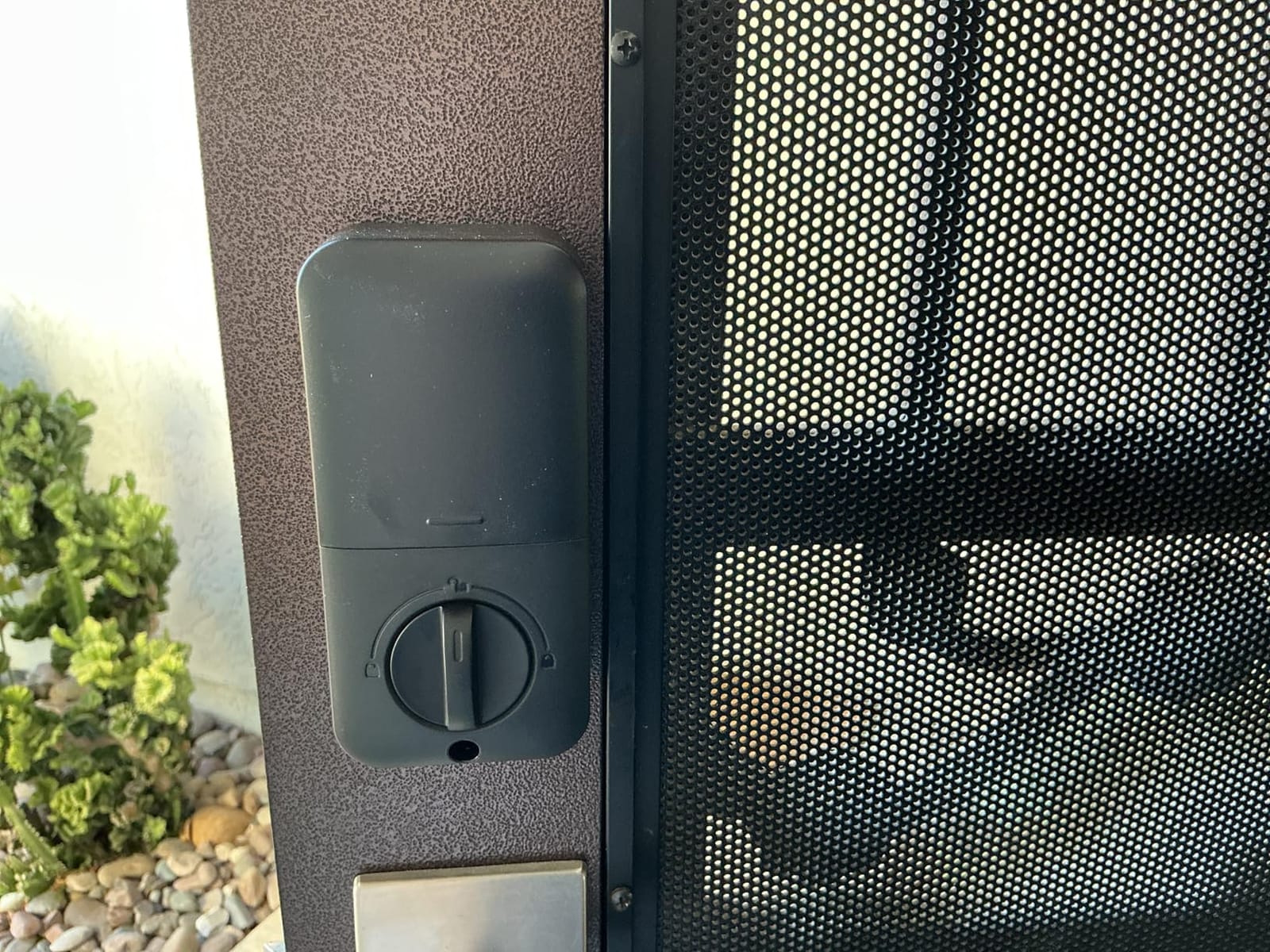
Best fit for a household that is done with codes
If everyone in the house is comfortable with a fingerprint and nobody wants to manage an app, this is the shortest path to that. Four entry methods, including two backup keys, means a failed reader never becomes a locked-out afternoon.
It suits a door used four to ten times a day rather than forty, and it works for a self-contained rental or a cabin with no reliable network. The one-time PINs let you give a contractor a code that dies on its own.
Where it falls short
BHMA Grade 3 is below the Grade 2 certification on the Schlage above, and the aluminum construction is the reason. If your front door is the main attack path into your house, that is a real consideration rather than a technicality.
The fingerprint reader occasionally misses a wet or particular finger, forcing a fallback to the keypad. For most people that is a mild annoyance; for a household member with mobility limits, it may be a dealbreaker.
4. TEEHO TE001 Keyless Entry Keypad Deadbolt — best value keypad door lock
TEEHO TE001 Keyless Entry Deadbolt with Keypad for Front Door, Satin Nickel
20 user codes
4 AA up to 365 days
IP54 back-lit
Reset handing detect
Pros
- Largest five-star review share of any pick here
- No app or connectivity that can fail
- 20 user codes plus one-time guest PINs
- Reset-based door handing detection
- Back-lit keypad with long battery life
Cons
- Fits 2-1/8 inch door holes only and not 38mm holes
- No fingerprint reader
- Must be reset before first use or handing behaves incorrectly
The TE001 sits at number one in Deadbolts by sales rank, and the reason is obvious once you hold it: there is nothing in it that can fail silently. No radio to lose, no firmware to brick, no cloud service to retire. Four AA cells rated up to 365 days, a back-lit keypad, and 20 user codes plus one-time PINs.
Owners describe the fit as the easy part. It swaps into a standard 2-1/8 inch (54mm) door hole, and a reset before first use makes the lock auto-detect door handing, which removes the direction guesswork that trips up first-time installers. Two SC1 backup keys come in the box.
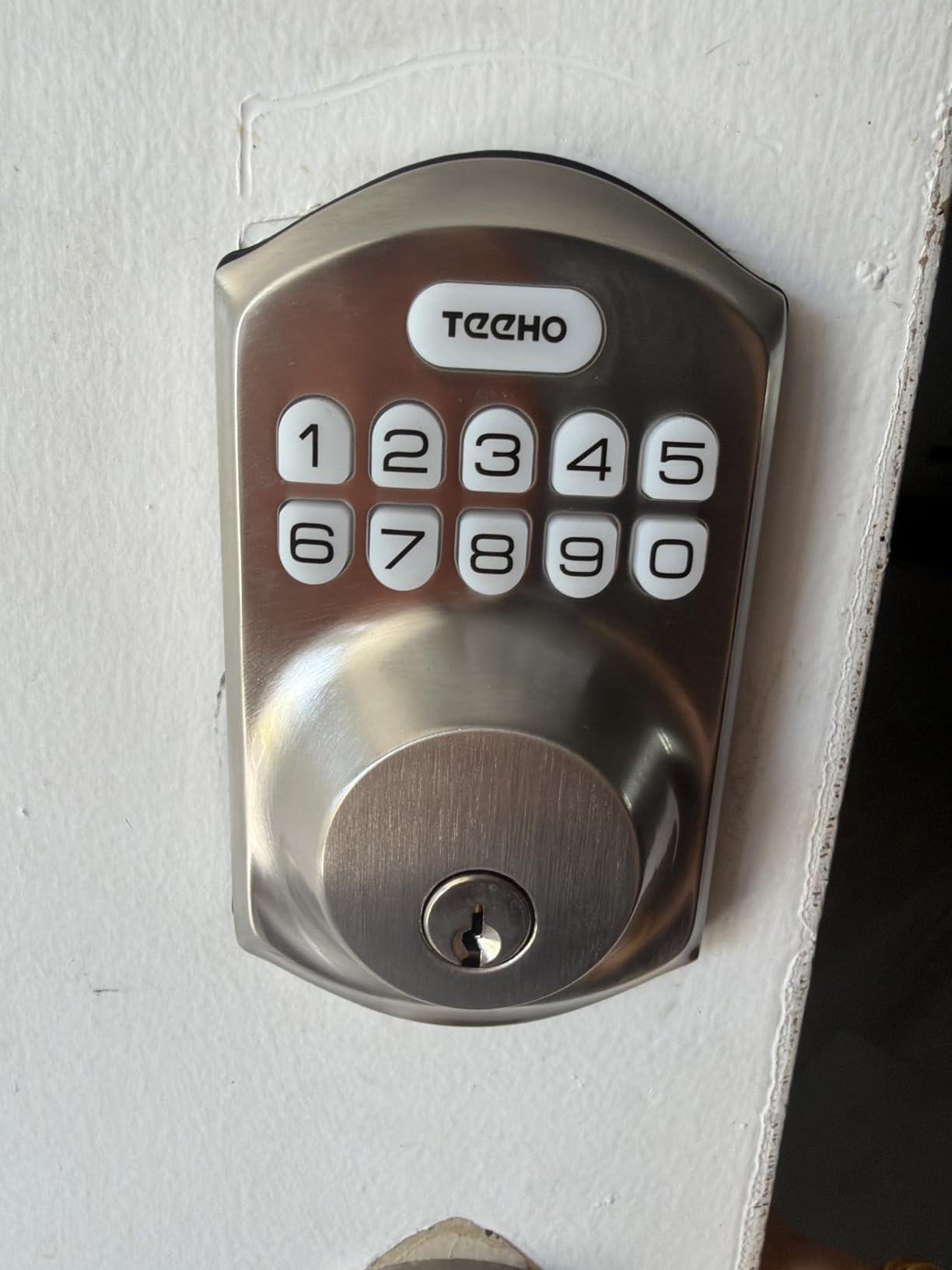
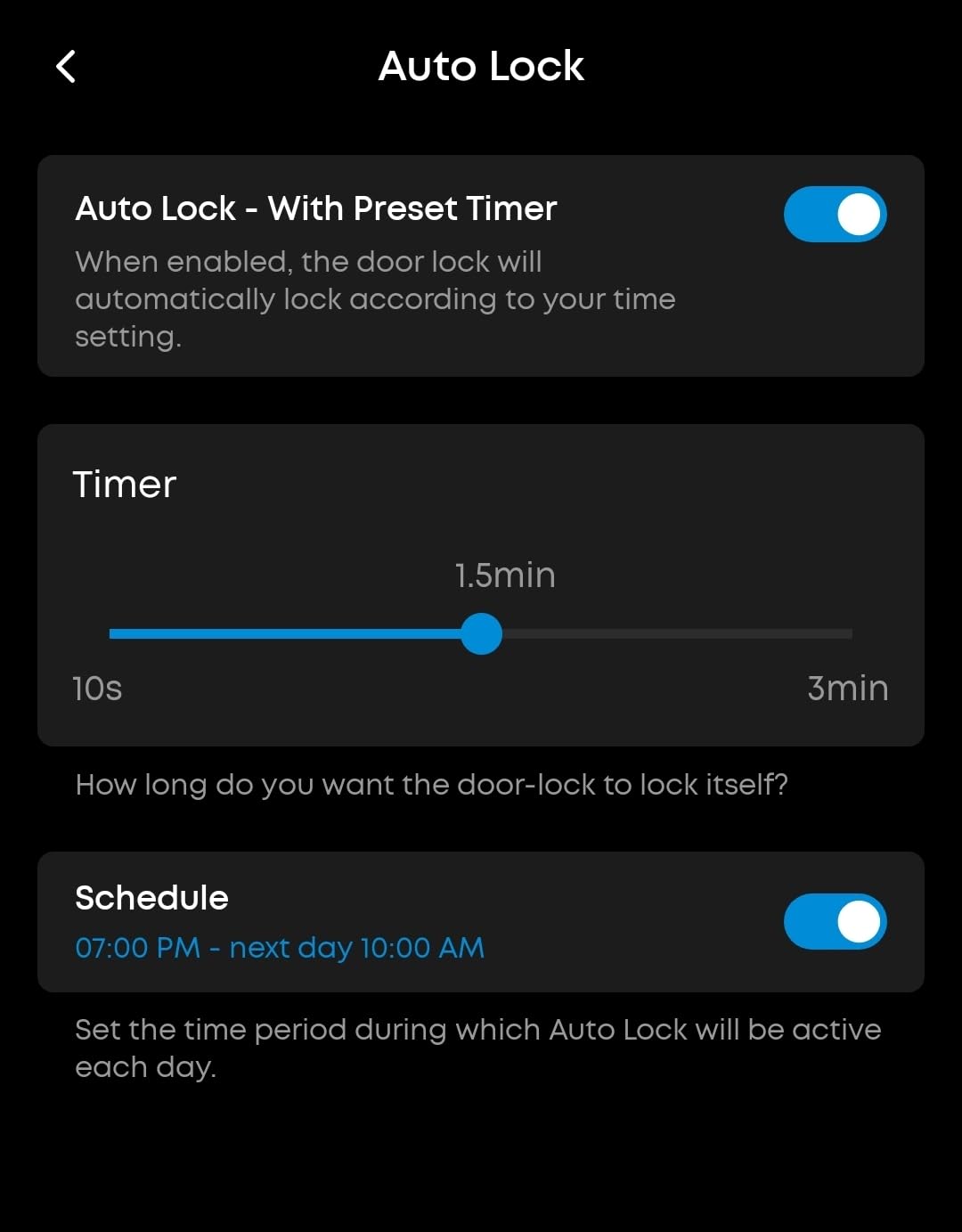
Feature-wise it is more complete than the price suggests: auto-lock configurable from 10 to 99 seconds, a one-touch lock by holding any key for two seconds, anti-peeping user code protection, a wrong entry limit, vacation mode and mute mode. The aluminum alloy body carries IP54 weather resistance, which is adequate for a covered front door in most climates.
Two things to know before you order. It fits 2-1/8 inch (54mm) door holes only and is not compatible with 38mm holes, so measure your existing deadbolt bore before you commit. And it must be reset before first use, or the auto-lock and door handing behave incorrectly.
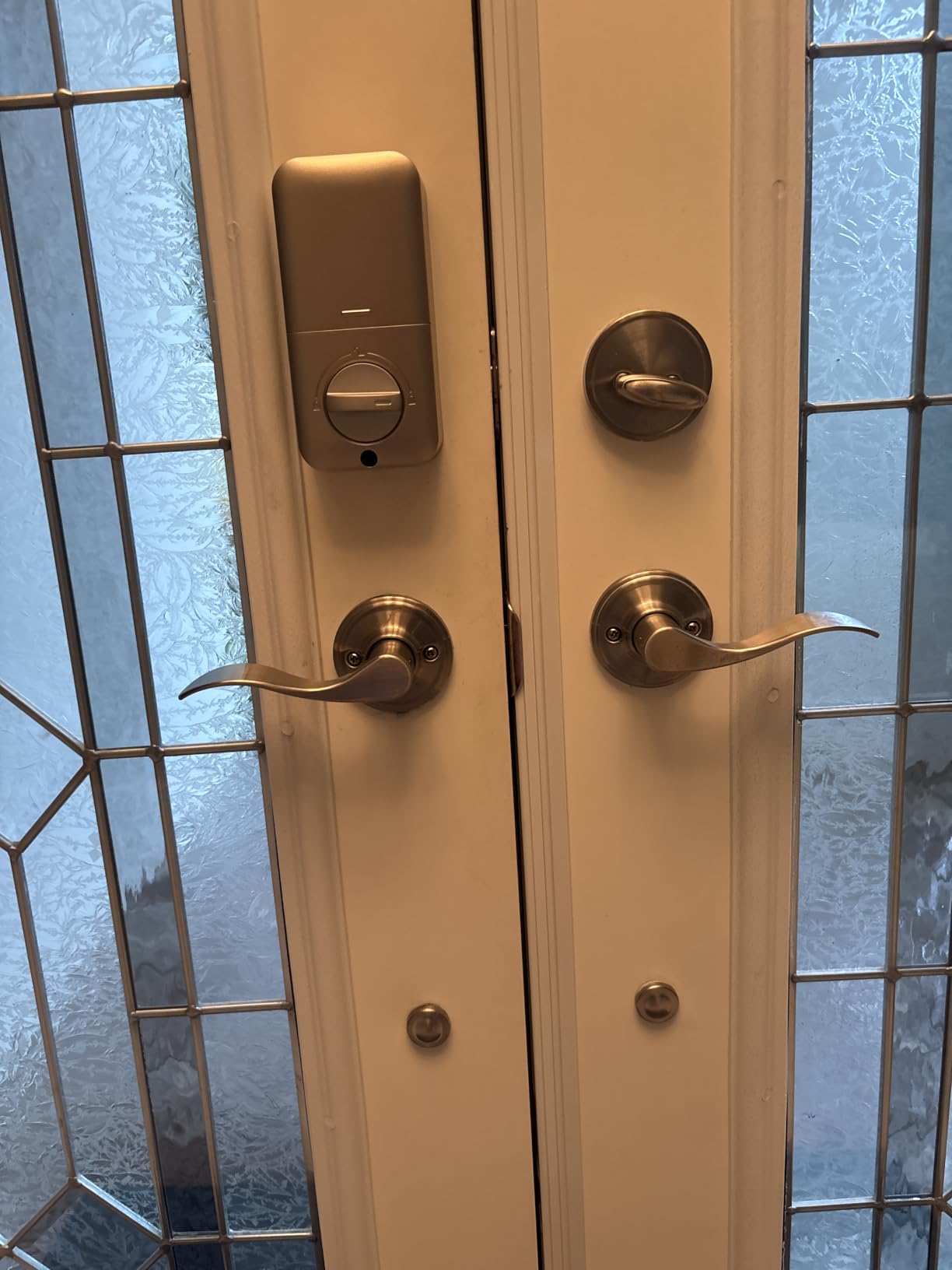
Who this lock is really for
A first apartment, a rental unit, a garage-side entry or a home where the front door already has a deadbolt and just needs keyless convenience added. It is the lowest-effort upgrade in the category and the one most likely to still work in five years, because the manufacturer cannot retire a cloud service you never used.
It also suits anyone who has read one too many smart-lock reviews and concluded that simplicity wins. The keypad has a plain layout, the digits light up, and nothing about the daily routine changes except that you stopped carrying keys.
Where it falls short
There is no fingerprint reader, so a wet hand or a gloved hand means a code. And the 54mm-only bore restriction is the most cited fitment complaint in owner reviews, so it is worth a five-minute measurement with a tape measure before you buy.
It is also a deadbolt, not a handle. If your door needs a lever with a separate latch, this does not solve that problem, which is what the Yamiry at number nine is for.
5. ULTRALOQ Bolt SE — best keypad door lock for Matter and Apple Home
ULTRALOQ Bolt SE Wi-Fi Smart Lock, Matter Over Thread, App Remote Access
Wi-Fi and Matter
50 prints 50 codes
18 month battery
IP65 ANSI certified
Pros
- Only unit with built-in Wi-Fi and Matter over Thread together
- Fifty fingerprints and fifty codes in one body
- 18 month claimed battery life
- IP65 is the best weather sealing in the group
- No hub needed for Wi-Fi control
Cons
- Matter over Thread needs a separate Thread Border Router
- Wi-Fi is 2.4 GHz only and best within 70 ft of the router
- No mechanical key cylinder so a dead battery is a lockout
The Bolt SE is the only lock in this roundup that pairs built-in 2.4 GHz Wi-Fi with Matter over Thread in a single body, and that combination is the reason to look at it. Wi-Fi means remote lock and unlock, code sharing, activity history and notifications with no hub to buy or power. Thread means it can join Apple Home and other Matter apps if your home has a Thread Border Router.
Credential capacity is where it sits at the top: 50 fingerprints and 50 passcodes. No other fingerprint reader in this group holds more. The claimed battery life of up to 18 months on the low-energy Thread mesh is also the longest manufacturer claim here.
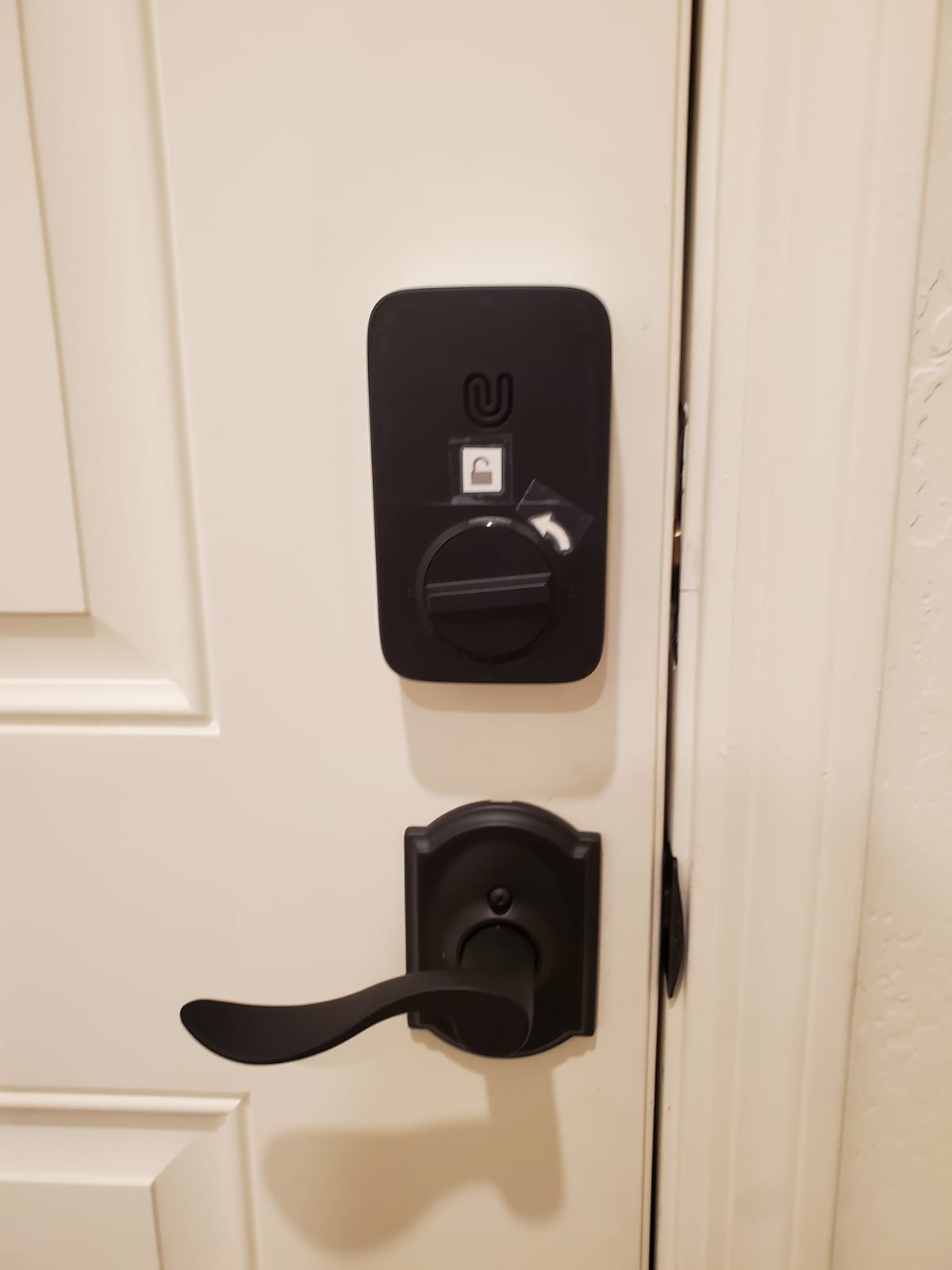
Physical construction is the other strength. It uses an ANSI/BHMA certified zinc alloy body and carries an IP65 waterproof rating, the best weather sealing of the ten, which makes it the most defensible choice for an uncovered or partially exposed front door. A self-healing mesh network reroutes the connection if a device drops off, and a real-time low battery alert is built in.
Installation is about 10 minutes, the auto-lock timer and an instant lock button are both standard, and the mechanical warranty is lifetime with 18 months on the electronics. Silent mode and instant lock are both there for a door that shares a wall with a bedroom.
Now the part that should stop you cold: this unit has no mechanical key cylinder to fall back on, and reviewers single that out as the main drawback. A dead battery is a lockout, full stop. For a front door on a house with no second entry, that is a risk I would not take.
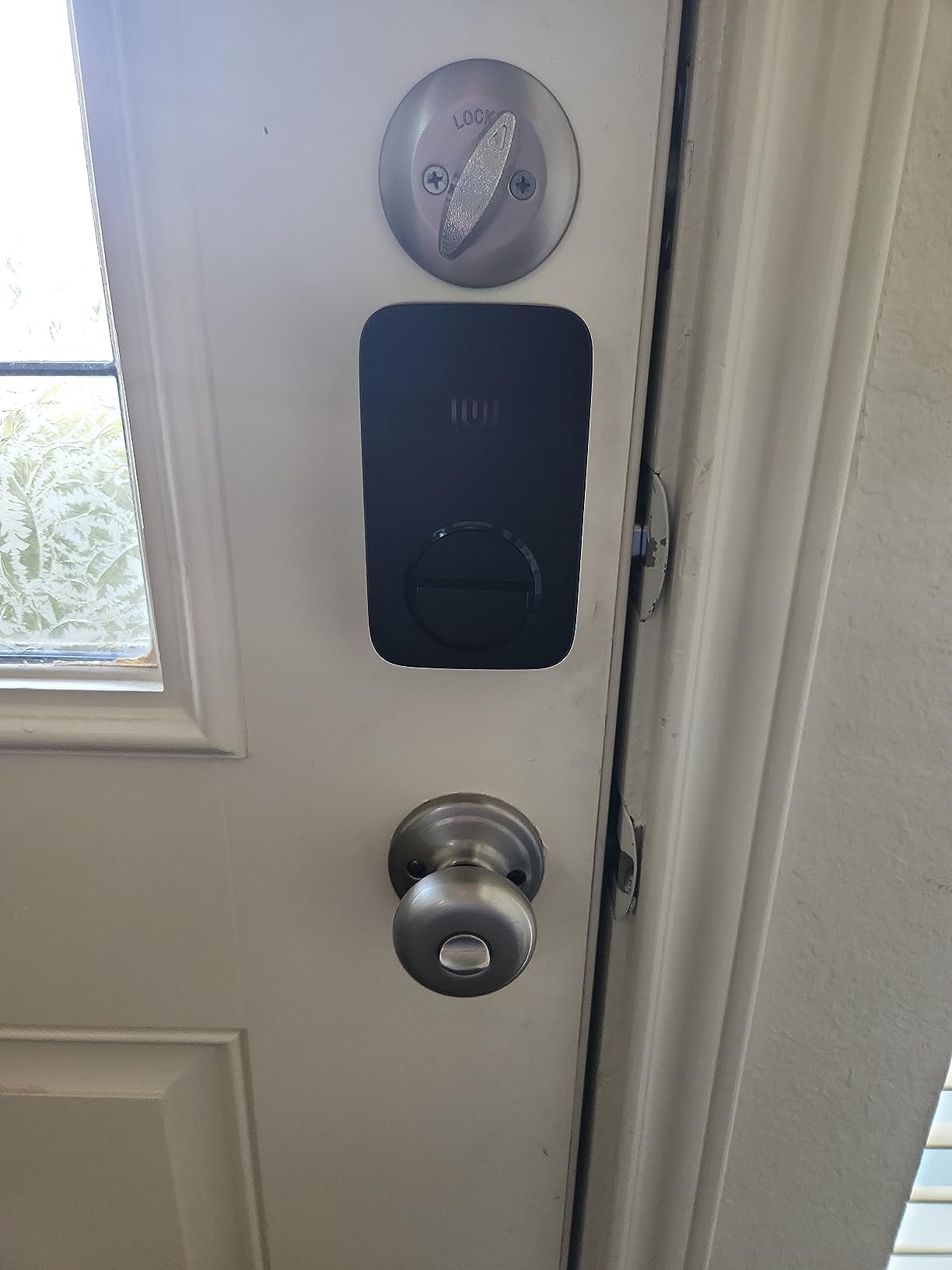
Who should buy the Bolt SE
A household that already runs Apple Home, SmartThings or Google Assistant and wants the front door in the same app as the lights, the thermostat and the cameras. The Matter credential path also matters if you care about whether the lock will still talk to your ecosystem in five years rather than being orphaned by a discontinued app.
It is the right call for a covered porch or a door exposed to rain and sun, because IP65 is meaningfully better sealing than the IP53 and IP54 units further down this list. Fifty fingerprints covers a large family plus staff without reusing a finger.
Where it falls short
Two accessory and range conditions to check. Matter over Thread requires a Thread Border Router in the home, which is a separate purchase, and Wi-Fi is 2.4 GHz only with an optimal range of about 70 ft from the router, so a large home or a detached entry may need help.
A door sensor is not included, so door position monitoring needs extra hardware, and the missing key cylinder means you should only pair it with a secondary entry or a trusted neighbour holding a key.
6. Veise KS02A Fingerprint Keypad Deadbolt — fastest fingerprint unlock on paper
Veise KS02A Fingerprint Door Lock, Keypad Deadbolt, Matte Black
0.2 sec AI fingerprint
20 prints 20 codes
365+ days on 4 AA
Grade 3 IP54
Pros
- Fastest claimed fingerprint unlock in the group
- Credentials encrypted and stored locally on the lock
- Self-learning recognition improves with use
- Full security suite at a budget price
- Zinc alloy body tested past 100000 cycles
Cons
- Panels must be perfectly vertical or the lock misbehaves
- Deadbolt only with no lever handle in the box
- Fits 2-1/8 inch bores only
The KS02A is the fingerprint speed king in this group. The on-device Veise AI chip identifies a print in 0.2 seconds at a claimed 99.99 percent accuracy, and it self-learns, so recognition accuracy is supposed to improve the more you use it. There is no round trip to a server, which is why the credentials can be encrypted and stored locally on the lock itself.
That local storage is a genuine privacy advantage over cloud-dependent locks. Nothing about your fingerprints has to leave the device, which answers a question most buyers never think to ask about a biometric lock on their front door.
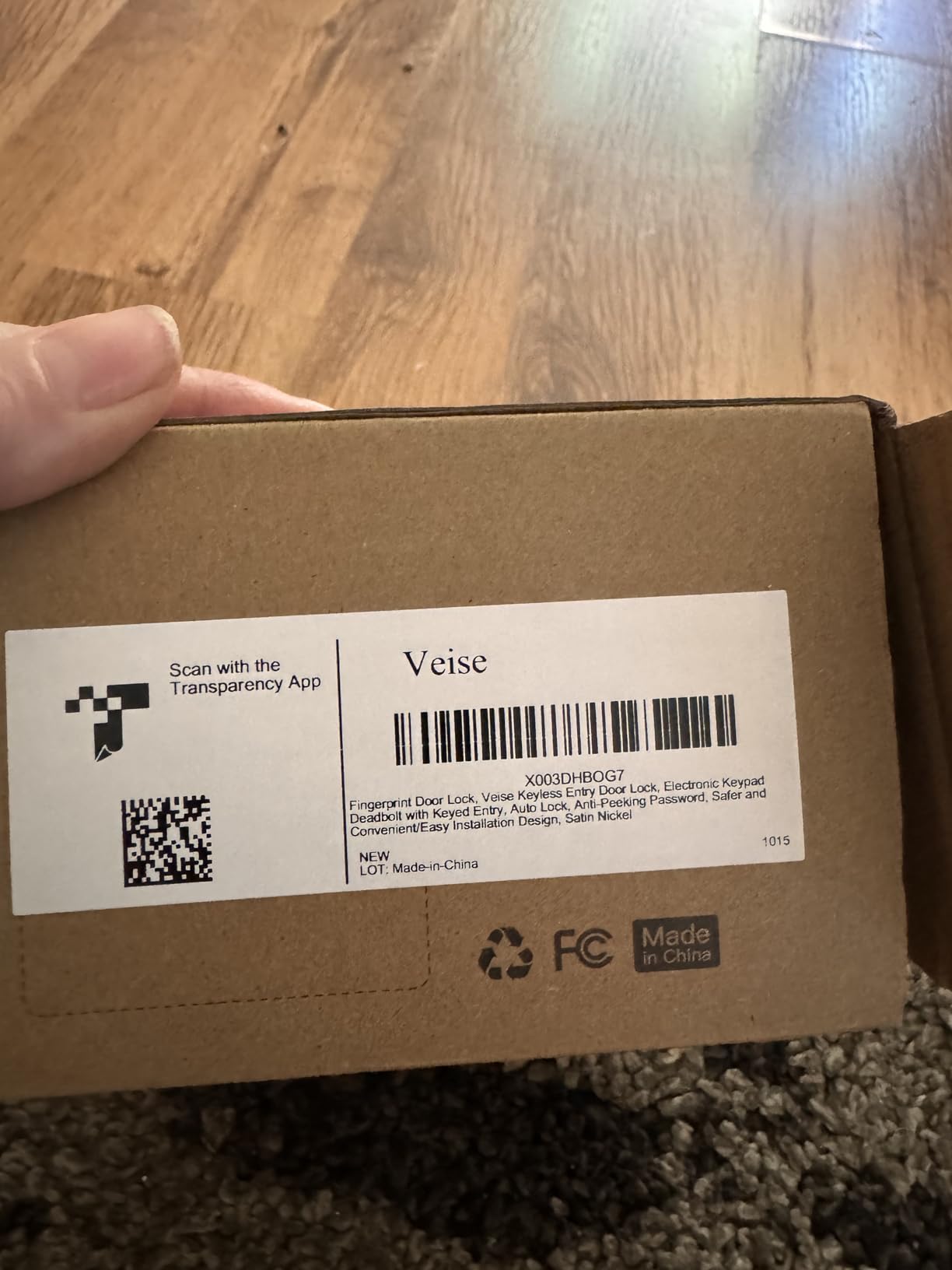
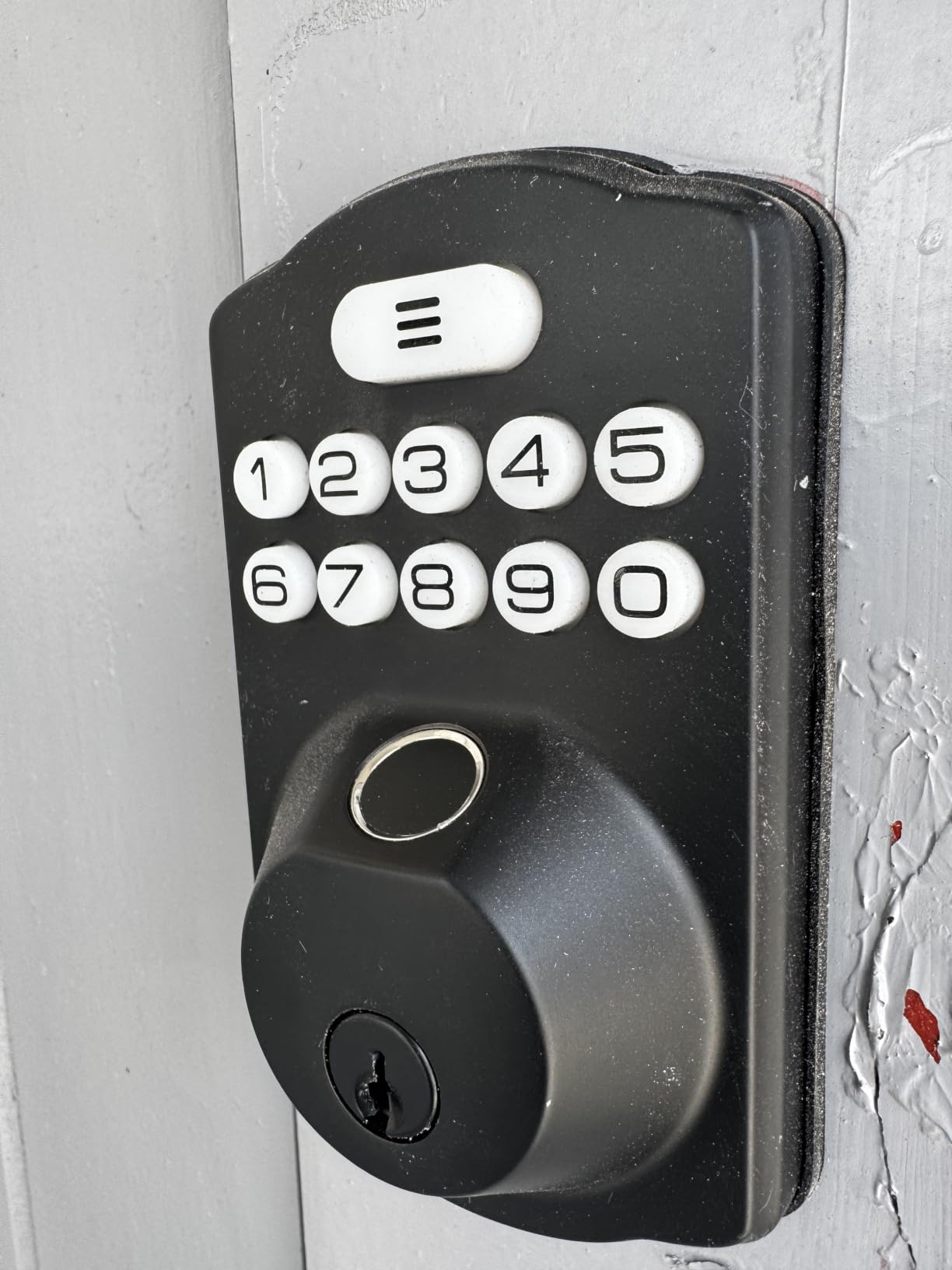
The feature list is unusually complete for the money: 20 fingerprints and 20 user passwords, 2 mechanical keys, auto-deleting one-time codes, anti-peeping codes, vacation mode, silent mode and passage mode. Auto-lock runs 10 to 99 seconds, and one-touch lock works by holding any key for two seconds. The zinc alloy body is rated past 100,000 cycles and certified to ANSI Grade 3 and BHMA, with IP54 water resistance from -31F to 158F.
Battery life is claimed at 365 days or more on four AA alkaline cells with a red LED low-power warning. Batteries are not included, which is a small annoyance but a cheap fix. Installation takes about 15 minutes with a screwdriver on a 2-1/8 inch bore for doors 1-3/8 to 2 inches thick.
Two things catch people out. The front and back panels must be kept perfectly vertical during installation or the lock will not function properly, and the package is a deadbolt with no lever handle, so a door that needs a handle and latch requires a second purchase.
Best fit for a privacy-minded family
Pick this if biometric convenience matters, nobody wants an app account, and the idea of fingerprint data being transmitted to a server bothers you. Twenty fingerprints covers a big family, and twenty passwords plus one-time codes covers visitors without handing out a reusable code.
The zinc alloy body and 100,000-cycle rating make it feel more substantial than its weight class suggests, and passage mode lets you leave the bolt retracted during the day without disabling the whole lock, which is useful for a house with kids.
Where it falls short
That vertical-panel installation requirement is the biggest practical risk. On a door that is out of square, or if the connecting bolts are over-tightened, the motor will not seat properly. Measure twice and follow the alignment note in the instructions.
ANSI Grade 3 is the lowest certification tier in this roundup, and there is no lever handle in the box. If your front door currently has a knob and a latch rather than a deadbolt, this is not a straight swap.
7. eufy Smart Lock C220 — six ways in, including Apple Watch
eufy Security Smart Lock C220, Fingerprint Keyless Entry Door Lock
Six unlock methods
Built-in Wi-Fi no bridge
8 AA about 8 months
Grade 3 IP53
Pros
- Six unlock methods including Apple Watch
- Built-in Wi-Fi with no bridge needed
- Self-learning fingerprint improves over time
- Eight AA batteries included in the box
- Fits most standard deadbolts after removing the spacer
Cons
- IP53 waterproofing trails the best in the group
- About 8 months of battery life is among the shortest
- Ecosystem value depends on other eufy devices
The C220’s headline is entry options. It offers six ways to unlock: fingerprint, the eufy Security app, keypad, physical key, Apple Watch and Alexa or Google voice. Apple Watch unlock is the one no other lock in this roundup offers, and for a household already wearing one, that is a genuinely nicer daily experience than a code or a finger.
Wi-Fi is built in, so there is no bridge to install, power or cable. The app adds access management and routine integration, and if you already run eufy doorbells the two live in the same place. Fingerprint unlock is under a second, with self-learning AI that improves with every touch.
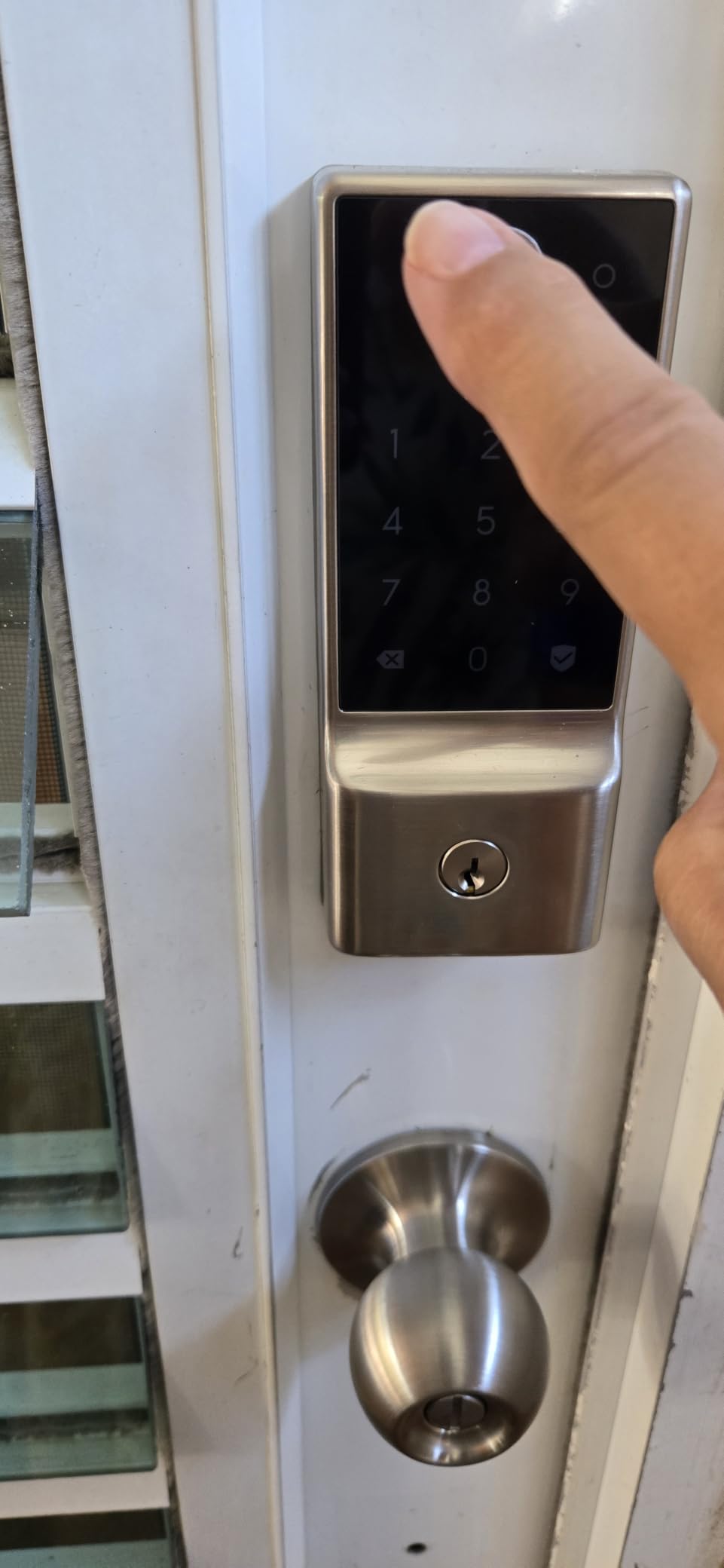
The box includes 8 AA batteries, which is unusual and welcome, and the unit is BHMA Grade 3 certified after more than 100,000 lock cycles. Fit is the flexible part: it handles bores under 54mm by removing a spacer, so it covers more standard deadbolts than the 54mm-only units in this roundup. Installation is about 15 minutes without drilling.
Where it gives ground is power and weather. Eight AA cells deliver roughly 8 months of life and vary with usage, which puts it in the same annual-maintenance bucket as the Schlage Encode. IP53 water resistance is fine for a covered door but trails the IP65 on the ULTRALOQ, and the operating range is -22F to 158F, so extreme cold is outside its comfort zone.
Who benefits most from this lock
Apple households, and anyone who would rather not touch a keypad in the rain. Tap the watch, walk in, and the deadbolt relocks behind you. The physical key and the keypad remain as fallbacks, so a dead watch battery is not a locked-out evening.
It is also a good pick for a landlord or a small property manager, because the app holds the access records and the lock supports scheduled and temporary access without handing out keys.
Where it falls short
Two battery changes a year, and the ecosystem argument. If you do not already own eufy devices and use the eufy app, much of the value of the connected features is theoretical rather than immediate.
For a fully exposed exterior door with driving rain, IP53 is a step back from the ULTRALOQ. And at roughly 8 months of battery life, budget for a calendar reminder in autumn and spring rather than assuming it will run a year.
8. Veise RZ-A Keypad Deadbolt — the budget pick that still carries a grade
Veise RZ-A Electronic Keypad Deadbolt Door Lock, Matte Black
20 codes plus one-time
BHMA ANSI Grade 3
4 AA up to 12 months
IP54 -35F to 160F
Pros
- Entry-level cost with a 4.5 rating and Grade 3 certification
- About 10 minutes to install and program
- 20 codes plus one-time codes
- Blue backlit keypad with lock status lights
- Backup keys included
Cons
- Bore may need enlarging by about 5mm on some doors
- Motor can struggle if the door is not aligned or bolts are over-tightened
- No fingerprint reader or app connectivity
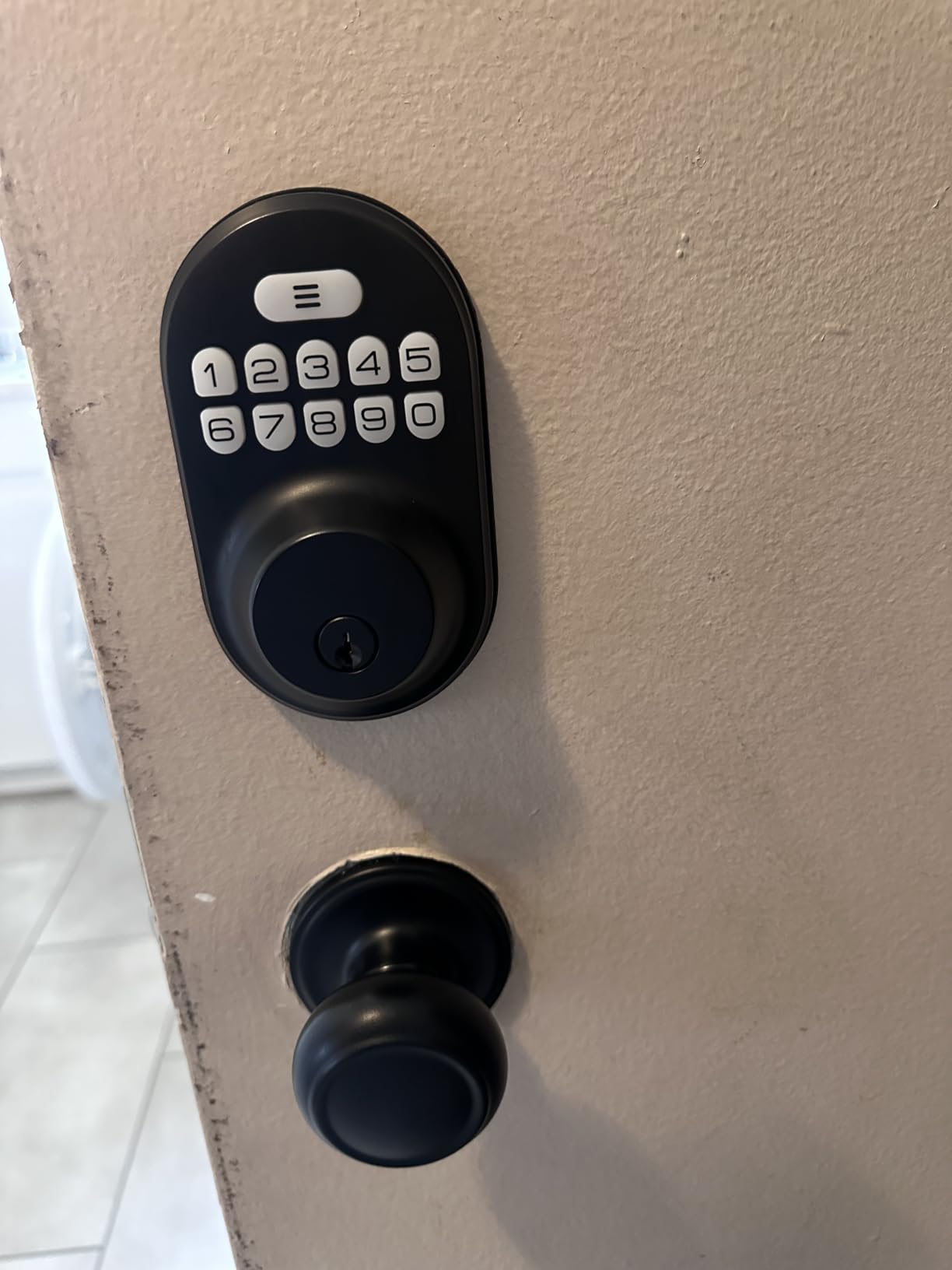
The RZ-A is the most affordable way into this category that still arrives with a real certification. The cylinder is BHMA and ANSI Grade 3 tested with more than 200,000 cycles behind it, which is a meaningful number to have on paper for an entry door. Owner reviews treat it as the value pick of the ten, and a 4.5 rating across more than 4,000 reviews supports that.
Functionally it does not apologise. Twenty permanent codes, one-time passwords that self-delete, and 2 spare keys in the box. Auto-lock is configurable from 10 to 99 seconds after closing, one-touch lock works by holding a key for two seconds, and there is a lockout after 10 failed attempts.
Two modes matter for a shared entry. Vacation mode disables every code except the master code and alarms if the interior thumbturn is turned, which is a real signal that someone is inside. Silent mode mutes the keypad beeps while keeping battery and security alerts, so the door stops announcing every entry at 2am.
Power is 4 AA batteries for up to 12 months of daily use with a backlit low-battery warning, and the operating range is -35F to 160F, the widest in this group. IP54 weatherproofing is adequate for most front doors. Install and programming each take about 10 minutes with a screwdriver.
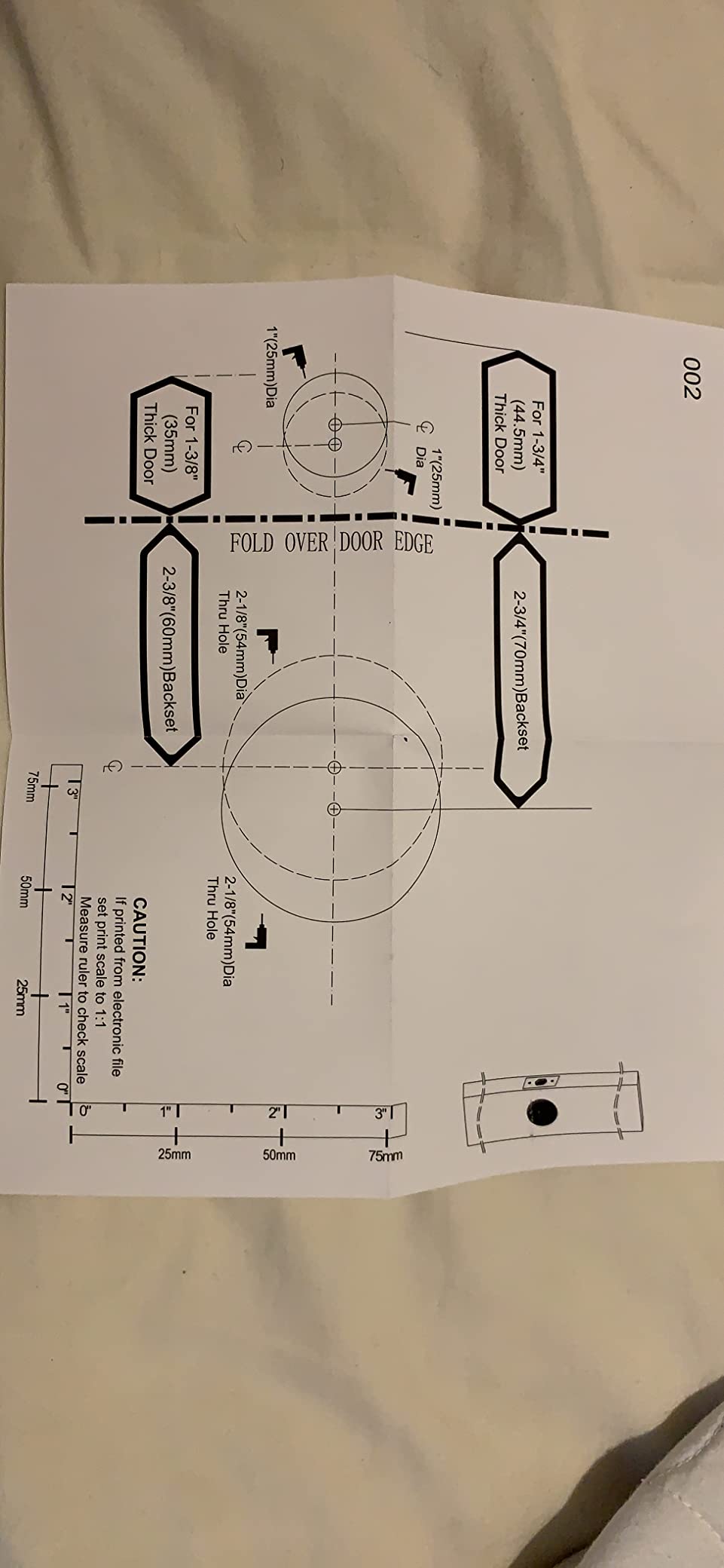
The catch is mechanical fit. On some doors the bore needs enlarging by about 5mm beyond the existing deadbolt hole, and the motor can struggle to complete the throw if the door is not properly aligned or the connecting bolts are over-tightened. Some owners also report chatter through several open and close cycles before the bolt seats.
Good choice for a rental, garage entry or second door
This is the right lock for a landlord handing over a property, a self-contained rental, or a home where the front door needs keyless entry this weekend and nothing more. The included keys mean the tenant is never locked out during a battery change, and vacation mode is a genuinely useful feature for a property left empty between tenants.
It suits a door in a mild climate or under a covered porch. The -35F to 160F operating range suggests it will tolerate cold, but no manufacturer rating substitutes for a sheltered door.
Where it falls short
The 5mm bore enlargement catches people out, and a motor that struggles with the throw turns a 10-minute install into a troubleshooting session. Align the door, do not overtighten the connecting bolts, and test the throw five or six times before you call it done.
There is no fingerprint reader and no app, which is a feature rather than a flaw at this level. But if you want remote control, this is not the lock.
9. Yamiry Fingerprint Keypad Door Handle Lock — the only lever-handle option
Smart Door Handle Lock with Keypad, Yamiry Fingerprint Knob for Front Door
Six unlock methods
Reversible lever
10 min no-drill
App access logs
Pros
- Only lever-style option here so it can replace a handle
- Key fobs plus fingerprint at this price
- Remote lock control and code generation in the app
- Reversible handle for either door swing
- Built for landlords managing several doors
Cons
- Remote and voice features need a separately sold WiFi gateway
- Thinner long-term durability data with fewer reviews
- Not a deadbolt so security rests on the lever and latch
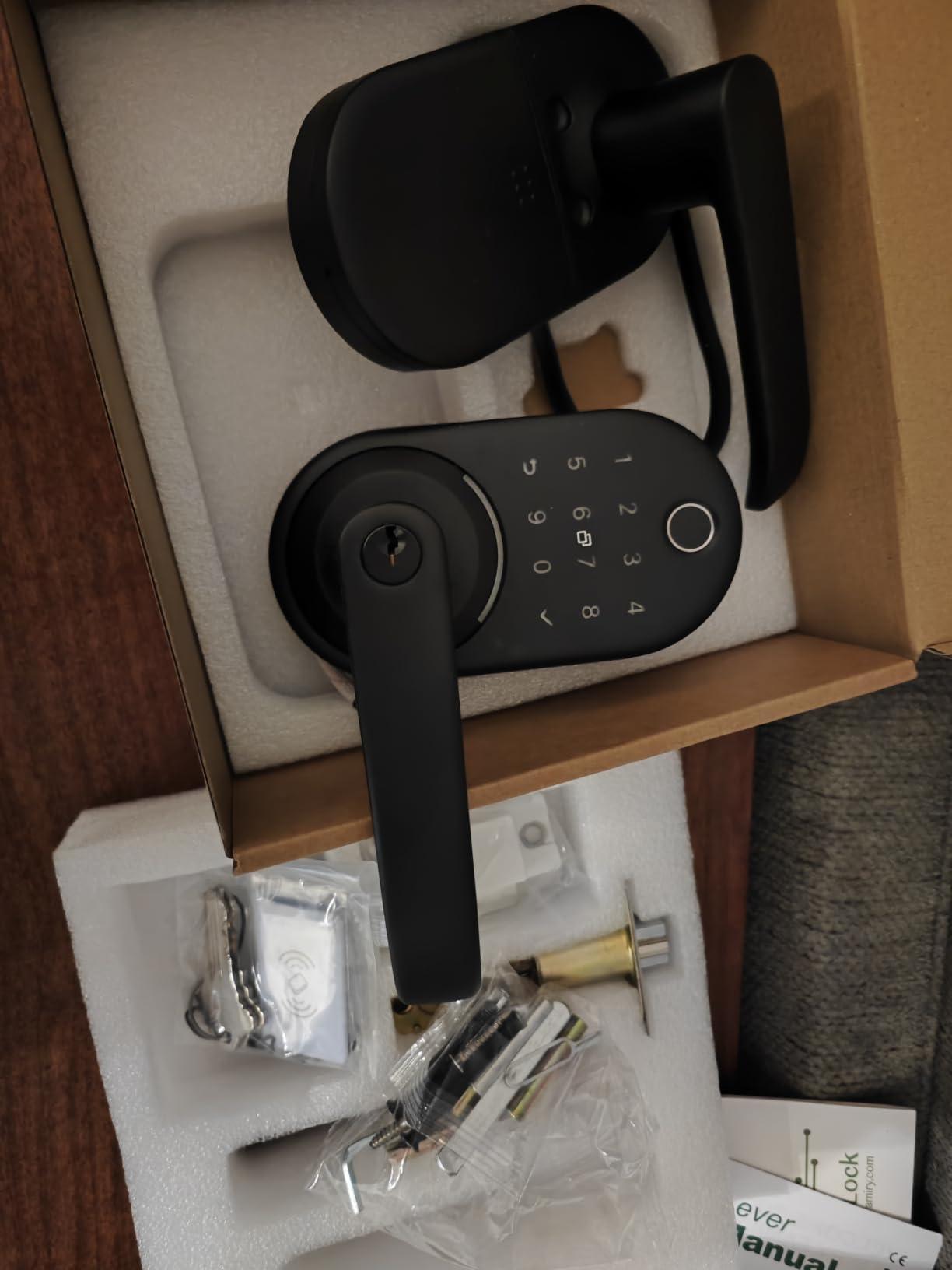
Every other lock in this roundup is a deadbolt, and a deadbolt cannot go on a door that only has a knob, a glass sidelight or an existing lever. The Yamiry YR01 is the exception, and that single fact is the whole reason it is on this list. It is a stainless steel and zinc lever handle lock with a reversible handle, so it suits a door hung to open either way with no drilling.
Entry options are broad: fingerprint, Bluetooth app control, personalised passcodes, key fobs, 2 mechanical keys and Alexa voice unlock. Two key fobs in the box is an unusual inclusion, and for a family with kids or an elderly parent, a fob in a pocket is considerably easier than remembering a code.
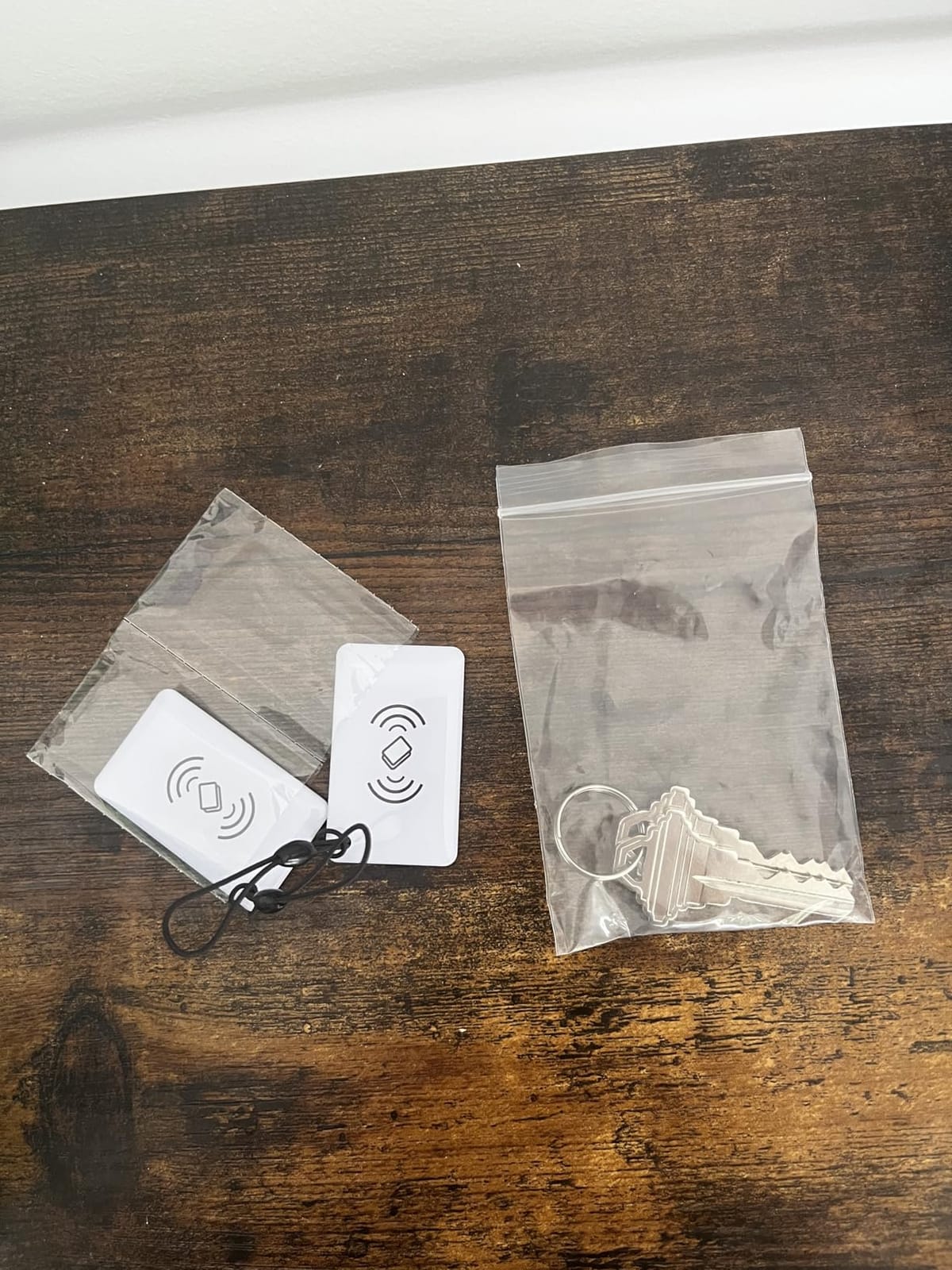
The app is the real draw for property managers. It grants permanent or temporary access per person and logs unlock records, which is exactly the feature a landlord or Airbnb host needs and exactly what a physical key cannot do. Installation is about 10 minutes replacing an existing handle, knob or deadbolt.
Two cautions. Remote lock control and remote passcode generation require a separately sold WiFi gateway that is not in the box, so budget for that before you plan on locking the door from your car. And the physical security ceiling is lower: a lever-and-latch mechanism is not a deadbolt.
Where a lever keypad actually makes sense
A door with a glass or sidelight panel where you cannot fit a deadbolt. An elderly parent’s entry where turning a thumbturn is harder than tapping a fob. Or an interior door to a garage or shop where a deadbolt would be overkill and the retrofit cost is the obstacle.
The reversible handle also makes it the easiest of the ten to install on a door you have not measured carefully, since it suits a door hung to open in either direction as long as the bore lines up.
Where it falls short
The separate WiFi gateway is the dealbreaker for anyone whose main goal is remote control, and it pushes the true cost above the lock price. Review volume is also lower than the rest of this group, so long-term durability data is thinner.
More importantly, the security framing from r/Locksmith is blunt: a latch is not a security device and a deadbolt is. If this is your primary entry, pair it with a deadbolt rather than replacing one.
10. Kwikset Powerbolt 250 — most codes, best re-keying, highest complaint rate
Kwikset Powerbolt 250 Transitional Keyless Entry Keypad Door Lock
25 user codes
SmartKey KW1 re-key
Auto-lock to 10 minutes
12 month battery
Pros
- Highest code capacity among non-connected locks here
- SmartKey re-keys to an existing Kwikset key in seconds
- Auto-lock with more delay choices than rivals
- Mechanical key backup and a simple interior thumbturn
Cons
- Highest share of one-star reviews in the group with reported failures
- Flat rectangular strike plate can leave a visible gap
- Deadbolt may need jamb adjustment or a reinforcing plate
The Powerbolt 250 does two things better than anything else here. It holds 25 user codes plus 5 one-time codes and 1 programming code, the highest capacity among the non-connected locks in this roundup. And SmartKey lets you re-key it to any KW1 key without changing the cylinder, which means you can match it to the rest of your Kwikset hardware in seconds rather than calling a locksmith.
Auto-lock offers more delay choices than the competition, at 30 seconds, 1, 3, 5 or 10 minutes, which matters on a door where a 30-second delay means the lock re-engages while you are still carrying groceries. The intrusion alert disables the keypad for one minute after three consecutive wrong entries, and vacation mode temporarily kills the keypad entirely.
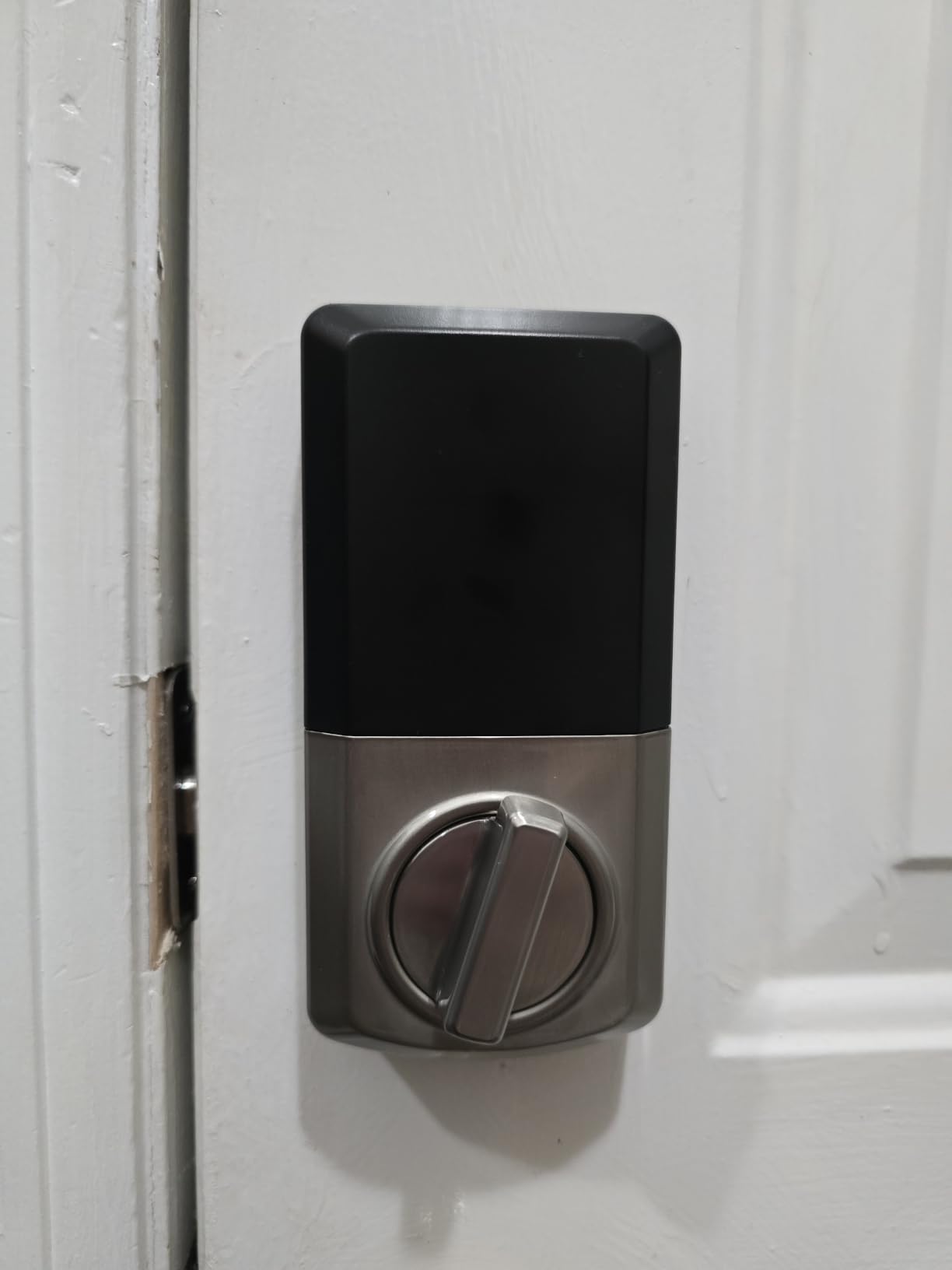
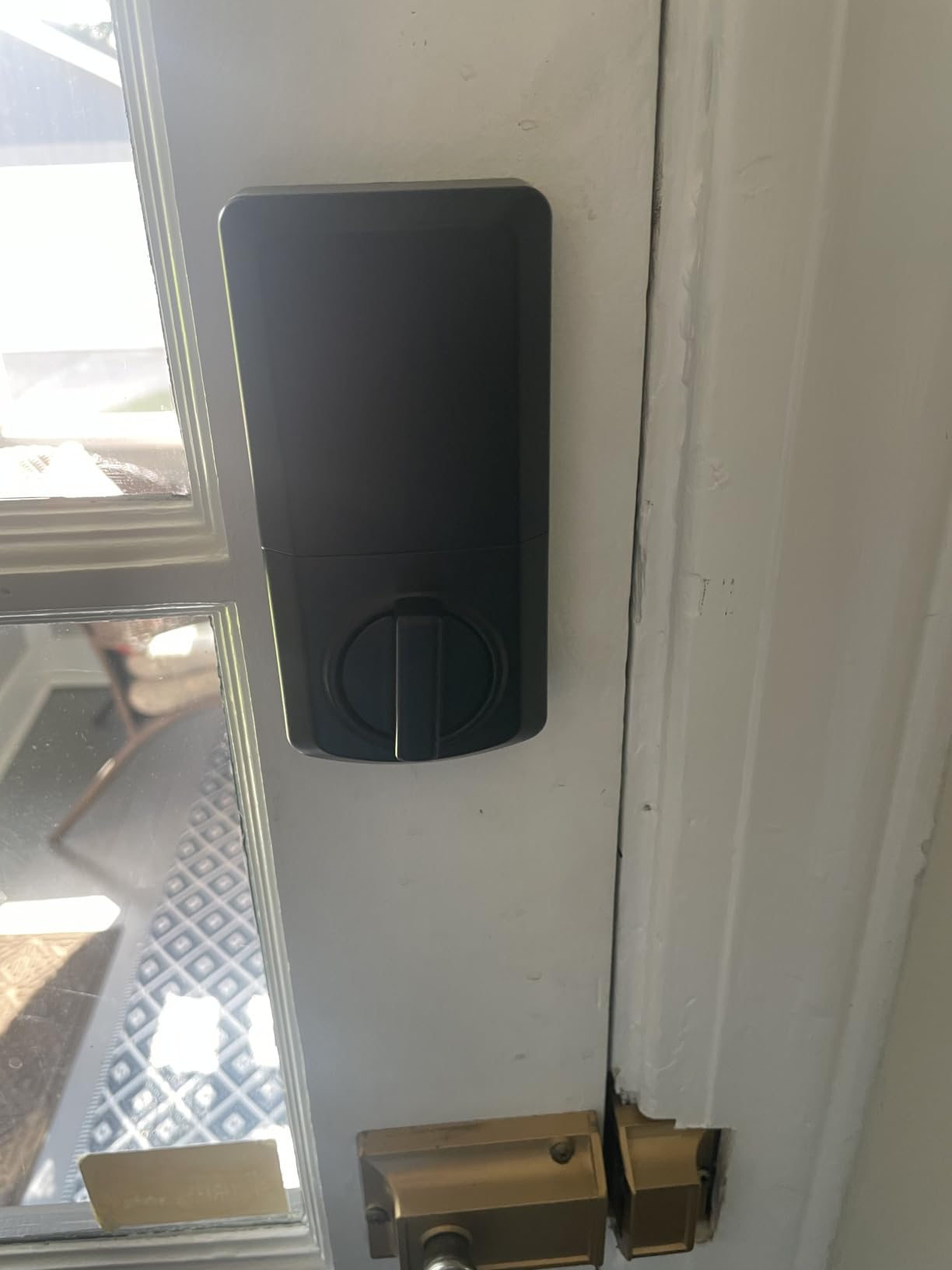
Construction is alloy steel, which is the right material for an entry door, and owners with long Kwikset histories report locks still working after a decade, with one owner measuring roughly two years on alkaline AA batteries against a 12-month minimum spec on four cells. The LED-lit keypad wakes on a tap for low-light entry, and BILT 3D interactive instructions walk you through installation with voice, text and animation.
That all sounds good until you read the one-star share. At 16 percent, it is the highest in this group, and the complaints cluster: locks that fail to program, or stop locking within a year, and repeated battery contact and mechanism failures that generated customer service contacts. A flat rectangular strike plate can also leave a visible gap where the door trim was not previously covered, and the deadbolt may need jamb adjustment or a metal reinforcing plate to engage reliably.
Who should choose it anyway
If your house already runs Kwikset hardware, SmartKey alone justifies the pick. You get one key for the front door, the back door and every interior cylinder that takes a KW1, and re-keying after a tenant moves out takes seconds instead of a locksmith visit.
It is also the right call for a large household or a property with many short-term users, because 25 standing codes plus 5 one-time codes is more headroom than the other non-connected locks here, and the 10-minute auto-lock delay is the longest available.
Where it falls short
The durability cluster is real and it is the reason this sits at number ten rather than higher. A 4.1 rating with 16 percent one-star reviews is the weakest reliability profile in the roundup, and the strike plate gap is a cosmetic problem you will see every day from inside the door.
If the door is not square or the jamb is soft, budget for a reinforcing plate. If you want a lock that simply has not been reported failing repeatedly, the Schlage at number one has a much cleaner record.
Keyed vs Keyless Keypad Locks: Which Should You Choose
For a front door, choose a keypad lock with a physical key override unless you already have a second way in. Fully keyless locks are more secure against picking because there is no keyway at all, but they trade that for a single point of failure: the battery. If it dies while you are away and there is no external power port and no key, you are outside until the battery indicator recovers.
Several of the locks here ship with backup keys, and for a single-entry home that is the safe default to aim for. The Schlage Encode, the TEEHO TE002, the Veise KS02A and the Veise RZ-A all include physical keys.
The ULTRALOQ Bolt SE is the counterexample. It is the most capable connected lock in this roundup, and its own owner reviews flag the absence of a mechanical key cylinder as the main friction point. Pair it with a secondary entry, or hold a key next door, and the objection disappears.
What Happens When the Batteries Die and How to Get Back In
Ranking the recovery options by how quickly they get you back inside: a nine-volt battery backup contact, a USB-C emergency power port, a mechanical key override, a secondary mechanical deadbolt, then a key held by a neighbour. If your lock has no keyway and no external power port, you are relying on option one existing at all, and that is the single biggest reason to keep a backup key strategy.
Battery life varies enormously by type, and competitors rarely reconcile their numbers. The realistic bands are: roughly 12 to 24 months for a mechanical push-button keypad deadbolt on a nine-volt cell, about 8 to 12 months for a keypad-only AA-powered unit, and roughly 6 to 8 months for a feature-heavy Wi-Fi smart lock. Cold weather shortens all of them, and forum reports of 2 to 6 months are what people experience on connected locks in a cold climate.
Here is the practical version. Put a reminder in your phone for the first week of every spring and autumn. Most units on this list have a low-battery indicator that lights up, and a lock that warns you turns a potential lockout into a five-minute battery change. Buy lithium AA cells rather than alkaline if your front door gets cold, because they hold charge far better at low temperatures.
And keep one mechanical key somewhere sensible. Users in the homeremodelingforum thread described the pattern that works: a mechanical deadbolt as the primary lock, a keypad for daily convenience, and a single backup key in a hidden exterior location. That arrangement keeps convenience without ever making the door unopenable.
The 60-Second Door Compatibility Checklist
Measure your door before you order. The list below is the order of operations, and taking five measurements in front of the door takes less than a minute.
Bore size. Measure the diameter of your existing deadbolt hole. A 2-1/8 inch (54mm) bore is standard, but the TEEHO TE001 fits 54mm only and will not work in a 38mm hole. The eufy C220 handles smaller bores by removing a spacer.
Backset. Measure from the door edge to the centre of the bore. Two inches is the common residential figure, and the Schlage Encode is documented for 2-3/8 and 2-3/4 inch backsets, so verify before drilling.
Door thickness. Most locks here cover 1-3/8 to 2 inches. If your door is thicker, a spindle extension or thick-door kit is needed and not always included.
Door swing and handing. Confirm the lock works whichever way the door is hung. The TEEHO TE001 detects handing automatically after a reset; the Kwikset Powerbolt 250 is reversible too.
Clearance. Check the distance from the bolt to the door frame. If the strike is recessed or out of square, a metal reinforcing plate may be required before the motor will seat properly.
Existing hardware. If the door has a lever and latch rather than a deadbolt, only the Yamiry among these ten fits. Everything else needs a deadbolt bore.
Take a photo of the existing strike plate while you are there. It saves a return shipment when the finish does not match.
Common Keypad Door Lock Problems to Avoid
These are the failure patterns that show up repeatedly in owner reviews, and each one has a specific lock or feature to steer away from.
Batteries dying with no warning. Some units simply stop responding with the low-battery indicator never illuminating, and a system that also blocks recalibration behind it. Check that the lock you are buying actually warns you, rather than assuming it does.
Motor torque too low for an out-of-square door. The Veise RZ-A and the Kwikset Powerbolt 250 both draw complaints here. The fix is alignment and a reinforcing plate, not a harder push.
Auto-lock timers that reset. The TEEHO TE002 has a reported habit of reverting to the minimum setting, and the lock can chatter if the door is left ajar.
Smudged, unreadable keypad digits. Greasy palms and rain flatten out a glossy touchscreen over time. The raised domes on the mechanical push-button keypads stay legible for years longer, which is an underrated reason to prefer them.
Forgotten codes and failed programming. The Kwikset Powerbolt 250 carries the highest share of one-star reviews in this group, with locks reported failing to program. Write your master code down and store it away from the door.
Accessories that cost more than you expected. The Yamiry needs a separately sold WiFi gateway for remote features, and the ULTRALOQ needs a Thread Border Router for Matter. Both add cost and setup complexity.
App and cloud dependence. Any lock whose remote features depend on a phone app can lose those features if the service changes. A keypad that opens without a phone can never be bricked that way.
Ice and cold-weather drain. Reviewers report markedly shorter battery life in winter. Lithium cells and a spring-and-autumn reminder are the mitigation.
Schlage vs Kwikset vs Yale: Which Brand Builds Better
Schlage and Kwikset are the two names that dominate the keypad deadbolt aisle, and the honest answer is that Schlage builds better while Kwikset offers more capability per dollar. Yale sits between them on hardware and sits alongside Schlage on brand longevity. Here is how they actually compare on the dimensions that matter for a front door.
On mechanical build, Schlage wins. The Camelot BE365 carries a limited lifetime mechanical warranty and Grade 2/AAA certification, and one locksmith on r/Locksmith described the Schlage electronic deadbolts as far more reliable than alternatives. Kwikset builds in alloy steel and has a decade-plus track record on some owners’ units, but its complaint profile is heavier. Yale has been making locks since the 1840s and holds a comparable reputation for cylinder quality.
On features and flexibility, Kwikset wins. The SmartKey re-keying system is a genuine advantage no Schlage product in this roundup matches, and 25 user codes beat the Schlage BE365’s 19. The Schlage Encode goes the other way entirely, with 100 access codes, built-in Wi-Fi and no hub, which is more than any Kwikset unit here offers.
On app and ecosystem longevity, Schlage wins again, and this is the riskiest axis. When Kwikset discontinued its Kevo line and dropped the supporting app, owners were left with functioning hardware and dead software. Schlage is a century-old manufacturer with no such track record, and Yale is older still. Choosing a lock means choosing a company that will still answer a warranty claim in five years, not just one with the best spec sheet today.
Yale did not make the final ten for this particular search, though its Assure Keypad and Assure Lock 2 lines are the connected equivalents worth looking at if you already run the Yale ecosystem. For a pure keypad deadbolt, the choice is between Schlage for build and Kwikset for flexibility.
What Locksmiths Recommend for a Front Door
What locksmiths recommend, consistently, is a mechanical Grade 1 deadbolt as the primary lock, with a keypad lock layered on as the convenience mechanism. That is the opposite of how most product roundups are organised, and it is worth hearing because the forum consensus on r/Locksmith is that many electronic locks are treated as a secondary convenience layer rather than the primary defence.
The second point is the one most buyers skip. A keypad on a cheap latch is a false sense of security. A latch is not a security device and a deadbolt is, which is why the Yamiry lever-handle lock in this roundup should be paired with a deadbolt rather than relied on alone. The same forum consensus puts the strike plate and the door jamb as the real weak point in an entry, not the lock on the door.
For renters and landlords the advice converges: a retrofit or full-replacement keypad deadbolt that keeps the existing key working. Users overwhelmingly want their current key to continue functioning, whether out of privacy, an HOA rule, or a lease obligation. All ten locks in this roundup are full-replacement deadbolts, so check your tenancy terms and your landlord before ordering.
Frequently Asked Questions
What is the best keypad door lock?
The Schlage Camelot BE365 is the best keypad door lock for most front doors because it combines a Grade 2/AAA metal body, 19 programmable user codes, a nine-volt battery rated for up to two years, and a screwdriver-only install with no app to fail. If you want fingerprint entry, the TEEHO TE002 or Veise KS02A add a sensor without adding connectivity. If you want remote control, the Schlage Encode has built-in Wi-Fi and 100 access codes.
What happens if the battery dies on a keyless lock?
It depends entirely on the lock. If backup keys came in the box, you use the key. A lock with a nine-volt battery contact lets you touch a fresh battery to external terminals. A USB-C emergency power port lets you power it from a cable or a power bank. If a lock has no keyway and no external power port, a dead battery is a genuine lockout until the indicator recovers, which is why a keyless-only lock should only go on a door with a second entry.
How long should batteries last in a smart lock?
Expect roughly 12 to 24 months for a mechanical push-button keypad deadbolt on a nine-volt cell, about 8 to 12 months for a keypad-only unit on four AA batteries, and roughly 6 to 8 months for a Wi-Fi smart lock with a touchscreen and fingerprint reader. Cold weather shortens all of these, which is why cold-climate owners report 2 to 6 months on connected locks.
Why is Schlage better than Kwikset?
Schlage builds heavier and certifies higher, with Grade 2/AAA metal construction and a limited lifetime mechanical warranty on the Camelot BE365, plus Wi-Fi built into the Encode without a hub. Kwikset wins on value and flexibility, with SmartKey re-keying to any KW1 key and 25 user codes on the Powerbolt 250, but that model carries the highest share of one-star reviews in this group at 16 percent. Brand longevity also favours Schlage, whose century-old manufacturer status matters when a company drops an app and orphans its hardware.
What locks do locksmiths recommend?
Locksmiths generally recommend a mechanical Grade 1 deadbolt as the primary lock, with a keypad lock added as the daily convenience layer rather than as the sole defence. The consensus on r/Locksmith is that a latch is not a security device and a deadbolt is, so avoid putting a keypad on a lever handle as your only front door lock. Reinforcing the strike plate and the door jamb matters as much as the lock itself.
The Best Keypad Door Lock for Your Front Door
The best keypad door locks for a front door in 2026 are the ones that open every time. Our pick is the Schlage Camelot BE365, a mechanical push-button keypad deadbolt with 19 user codes, a nine-volt battery that runs up to two years, a low-battery indicator and a limited lifetime mechanical warranty, with nothing in the chain that depends on a phone or a server. If your budget is tighter, the TEEHO TE001 gives you 20 codes and the same no-connectivity reliability for less, with a single 54mm bore fitment to check first.
Buy the ULTRALOQ Bolt SE if you want remote control and Apple Home and already have a second entry, the Schlage Encode if 100 managed access codes matter more to you than two battery changes a year, and the Kwikset Powerbolt 250 only if SmartKey re-keying to your existing keys is worth it despite its weaker reliability record. Measure your bore before any of them, and keep one mechanical key somewhere sensible.