
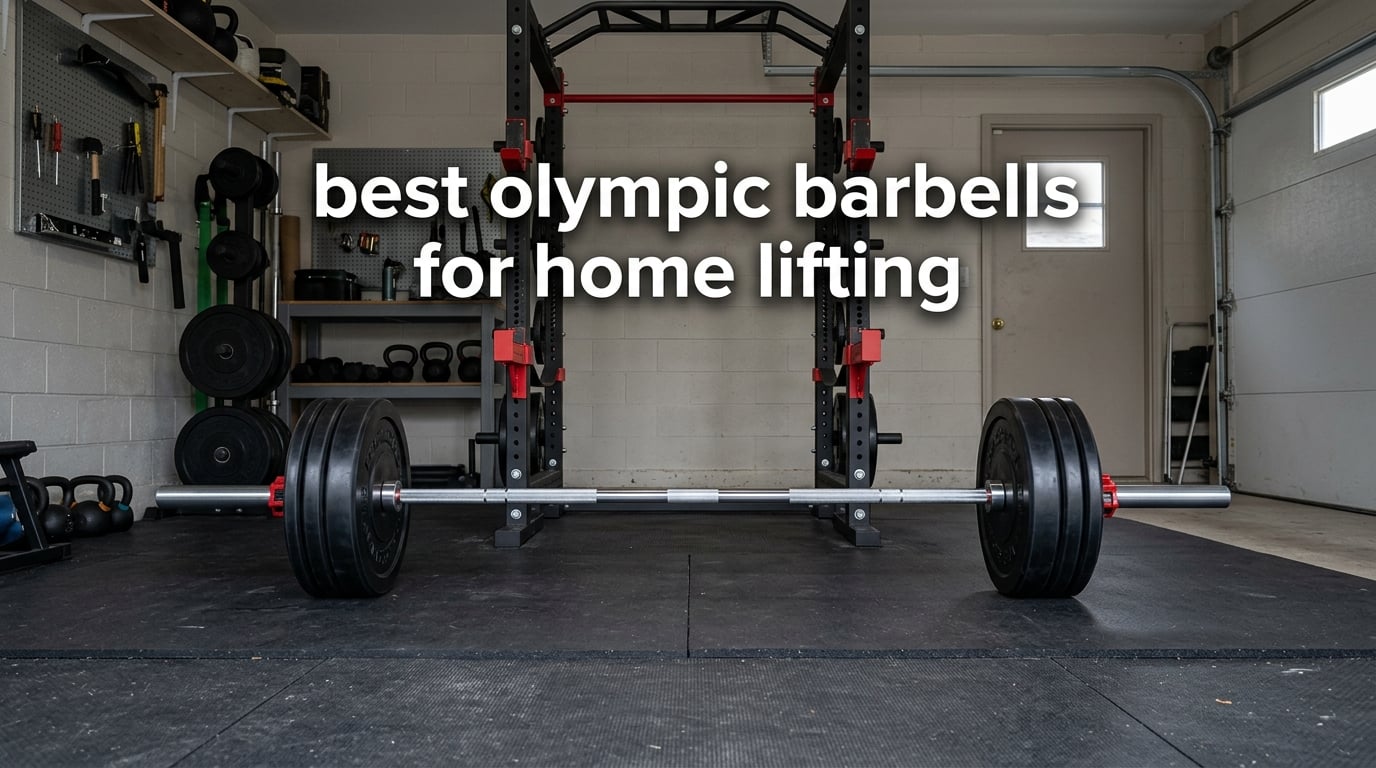
There is a moment in every home gym build-out when the plates are stacked against the wall, the rack is bolted down, and the bar is still sitting in a cardboard tube. Get that one piece right and the rest of the room starts to make sense. The best olympic barbells for home lifting are not exotic equipment, and they do not need competition certification. They are honest steel that racks properly, spins predictably, holds a knurl, and stays straight after a few years of regular work.
We read through the specifications and the owner reviews on twelve of the most widely used bars in the category, then sorted them by what actually matters once the tube is open: sleeve rotation, shaft diameter, knurl layout, whip, finish, rated capacity and warranty length. Four of the twelve are not full-length 7-foot Olympic bars at all, and we have flagged that rather than quietly passing them off as competition-spec equipment. That honesty matters, because the single most common complaint in home gym forums is that a lifter spent good money on a bar that could not handle a real training week.
A few useful ground rules before the picks. A home lifter who squats, benches and deadlifts does not need an IWF bar, and does not need the highest tensile number on the listing. Strength claims in PSI are marketing until they are measured on the shaft you own, so we treat them as reference points rather than buying criteria. The features that change how a bar feels are sleeve design, knurl depth, center knurl presence and whip, and those four are what we lean on. The forum consensus is the same: mid-tier is the sweet spot for almost everybody, and the jump to competition-grade steel buys very little outside a lifting club.
One more practical note. The best olympic barbell for a garage is the one that fits the space you have, and ceiling height is the constraint nobody checks before ordering. A 7-foot bar needs a rack with roughly 52 inches of internal width to sit inside, and a loaded bar needs overhead room to rack at all. Measure first, then buy.
Oh, and if you are training to music rather than counting reps in silence, our picks for wireless earbuds for lifting weights at the gym are worth a look between sets.
Table of Contents
Top 3 Best Olympic Barbells for Home Lifting in 2026
If you want the short answer, start here. The CAP 7ft bar takes our Editor’s Choice because it has the largest owner base in the group, a real center knurl for back squats, and a build that holds up under everyday training. Yaheetech is the value pick for anyone who wants chrome sleeves and a deep grip without stretching the budget. PAPABABE takes Top Rated because a genuine 45 lb bar with 190,000 PSI steel and hybrid bearing sleeves is unusual at its tier.

CAP 7ft Olympic Bar
- 35 lb bar with center knurl
- 500 lb rated capacity
- Bronze bushing sleeves


PAPABABE 7ft 45 lb Bar
- True 45 lb bar weight
- 190000 PSI alloy steel
- Hybrid bearings and bushings
Best Olympic Barbells for Every Budget (October 2026)
All twelve bars in the same frame, so you can compare the decisions instead of the marketing. Capacity ratings below are the manufacturers’ published figures, and they range widely, which tells you more about intended use than any star rating does.
| Product | Specifications | Action |
|---|---|---|
| CAP 7ft Strength Bar |
|
Check Latest Price |
| Yaheetech 7ft Olympic Barbell |
|
Check Latest Price |
 Rage Fitness 6ft Training Bar Rage Fitness 6ft Training Bar |
|
Check Latest Price |
| PAPABABE 7ft 45 lb Bar |
|
Check Latest Price |
 RitFit Short Olympic Bar RitFit Short Olympic Bar |
|
Check Latest Price |
 CAP Pro Series 7ft OBIS-86B CAP Pro Series 7ft OBIS-86B |
|
Check Latest Price |
 LAVVON 57 Inch Straight Bar LAVVON 57 Inch Straight Bar |
|
Check Latest Price |
 RitFit Elite 7ft Olympic Bar RitFit Elite 7ft Olympic Bar |
|
Check Latest Price |
 HANDBODE 7ft 45 lb Olympic Bar HANDBODE 7ft 45 lb Olympic Bar |
|
Check Latest Price |
 Synergee Rhino Power Bar Synergee Rhino Power Bar |
|
Check Latest Price |
 Iron Crush 7ft Multifunction Bar Iron Crush 7ft Multifunction Bar |
|
Check Latest Price |
 Titan Fitness Technique Bar Titan Fitness Technique Bar |
|
Check Latest Price |
What Is an Olympic Barbell?
An Olympic barbell is a 7-foot (2.2 m or 86.4 inch) bar weighing 45 lb (20 kg), built with a roughly 28 mm steel shaft and 2-inch diameter rotating sleeves that hold standard Olympic plates, with a typical rated load capacity of 1,500 lb or more. The rotating sleeves let the plates spin so bar rotation does not twist your wrists during cleans, snatches and jerks.
The dimensions are the standard, not a marketing description. Overall length runs about 86 to 87 inches on a full-size bar, the knurled grip section is roughly 51 to 52 inches collar to collar, and the loadable sleeve section on most designs is 15 to 17 inches per side. Anything shorter than that is a different category of bar, which is fine for accessory work and technique practice but will not sit inside a standard power rack.
That is the honest split in the list below. The CAP, Yaheetech, PAPABABE, CAP Pro Series, RitFit Elite, HANDBODE, Synergee and Iron Crush bars are full-length 7-foot frames. The Rage Fitness 6ft, Titan 6ft, RitFit short and LAVVON 57-inch bars are technique, accessory and space-saving models, and we have given them their own sections rather than pretending they are substitutes for a 7-foot bar.
1. CAP 7ft Strength Bar – The All-Round First Bar for a Home Gym
CAP 35lb 7ft Olympic Barbell, Chrome, Strength Training
35 lb bar
86 inch length
500 lb rated
30 mm grip
Chrome finish
Pros
- Center knurl makes back squat setups secure
- Full 7-foot length racks in a standard power rack
- 30 mm grip feels more substantial than 25-29 mm bars
- Chrome finish resists rust
- Largest owner base in this group at 2567 reviews
Cons
- Weighs about 35 lb rather than 45 lb
- Spin described as coarse with a light load
- One reviewer reported flex around 230 lb
- Only a 30-day warranty
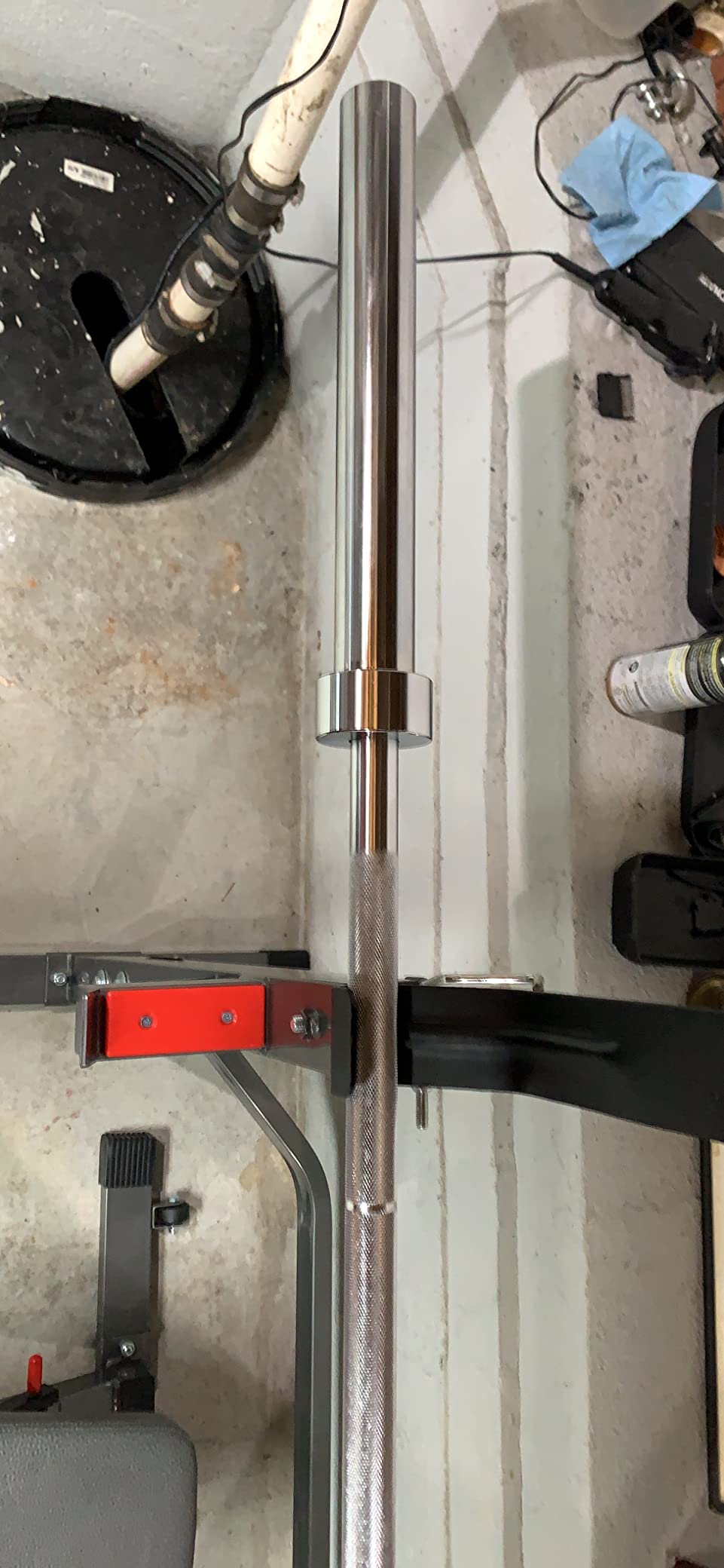
The CAP 7ft Strength Bar is the one I keep coming back to for people building a first home gym. The 30 mm shaft feels noticeably chunkier in the hands than a 28 mm bar, and that extra diameter is the first thing owners mention. The volcano-style knurling with a center knurl is the practical winner for squatting, because the center band gives the bar something to bite into when you walk it back into the uprights.
It measures 86.02 inches long with 15.3 inches of sleeve, and it is built from 100,000 PSI alloy steel with a chrome finish. Bronze bushing sleeves are listed for rotation, and it fits standard 2-inch plates, power racks, squat racks and benches without any adapter work.
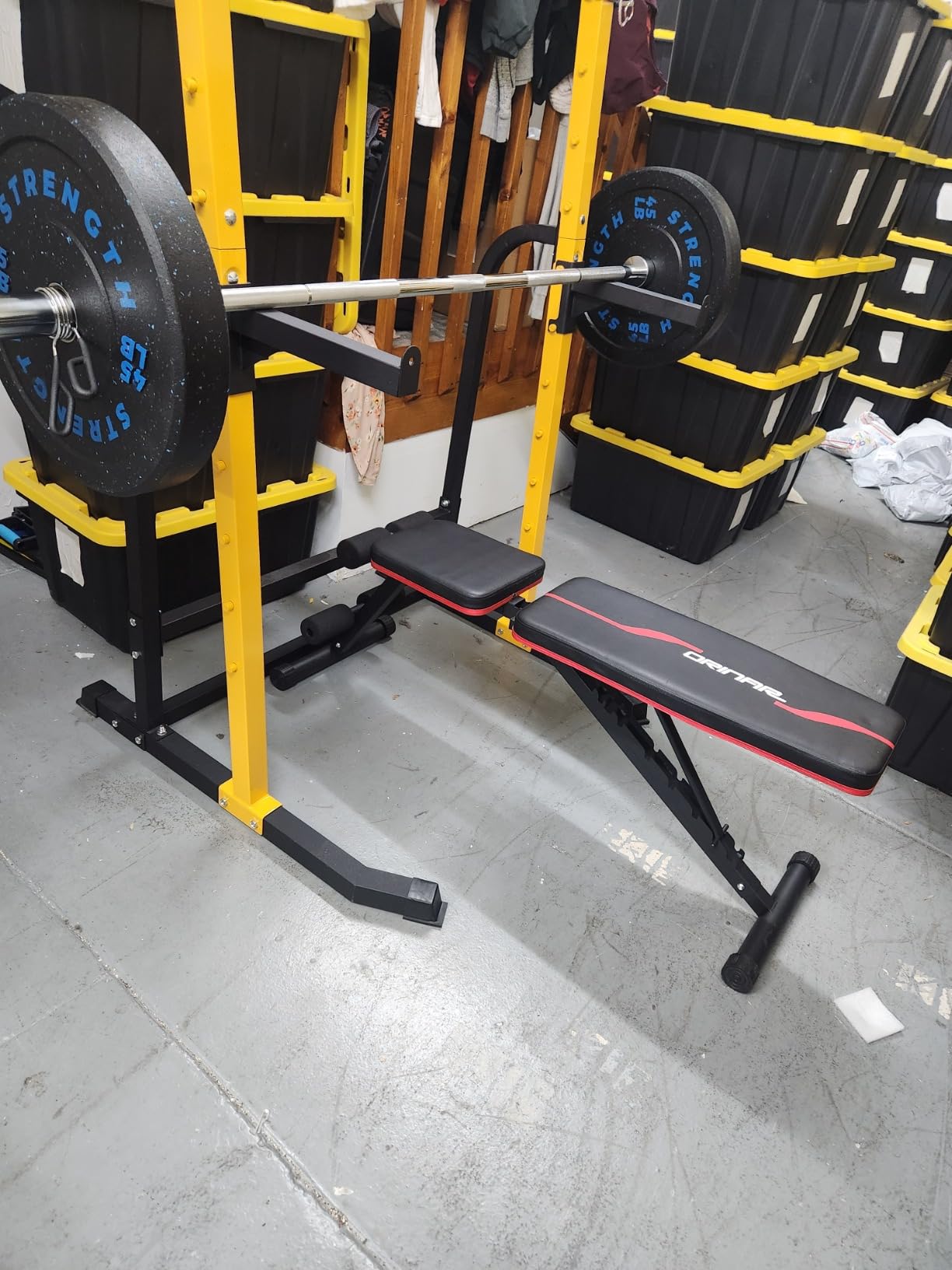
What you give up is weight and warranty. This bar is about 35 lb, not 45 lb, which matters if you are programming percentages or adding 45 lb jump plates for warm-ups. Reviewers also describe the spin as coarser than a true bearing bar, so if you practise Olympic lifts regularly you will feel the difference at the wrist.
Capacity is the other open question. The listing states 500 lb, and at least one owner reported visible flex around a 230 lb load, which is worth knowing before you load it aggressively. CAP also backs this model with a 30-day warranty, the shortest in this roundup, so treat it as a bar you can replace rather than one you keep forever.
Who the CAP 7ft Strength Bar suits
This is the pick for a beginner or intermediate who squats, benches and deadlifts three times a week and wants one bar that racks properly and grips securely. The center knurl alone puts it ahead of several cheaper bars, because a center knurl is the difference between a comfortable squat setup and a bar you are afraid to unrack.
It is also a good second bar for anyone doing landmine work or accessory movements, since the 30 mm grip and moderate knurl handle higher rep movements well. At 2567 reviews it is the most proven bar in the group.
Who should skip it
Skip it if you plan to load past 400 lb regularly, if you need 45 lb of bar weight for percentage-based programming, or if you want a lifetime bar you will never think about again. The 30-day warranty is the real limit here, not the steel.
2. Yaheetech 7ft Olympic Barbell – The Best Value Full-Length Bar
Yaheetech 7FT Olympic Barbell, 330LB Carbon Steel Weight Bar for Home Gym
35.9 lb bar
85.4 inch length
330 lb rated
30 mm grip
Chrome sleeves
Pros
- Medium-depth diamond knurl gives a secure non-slip grip
- Hard chrome sleeves resist oxidation and wear
- Suitable for upper body lower body and cardio work
- Full 7-foot length at an accessible price
Cons
- 330 lb capacity is low for the category
- Sleeves are not specified as bearing-equipped
- Limited customer photo reviews
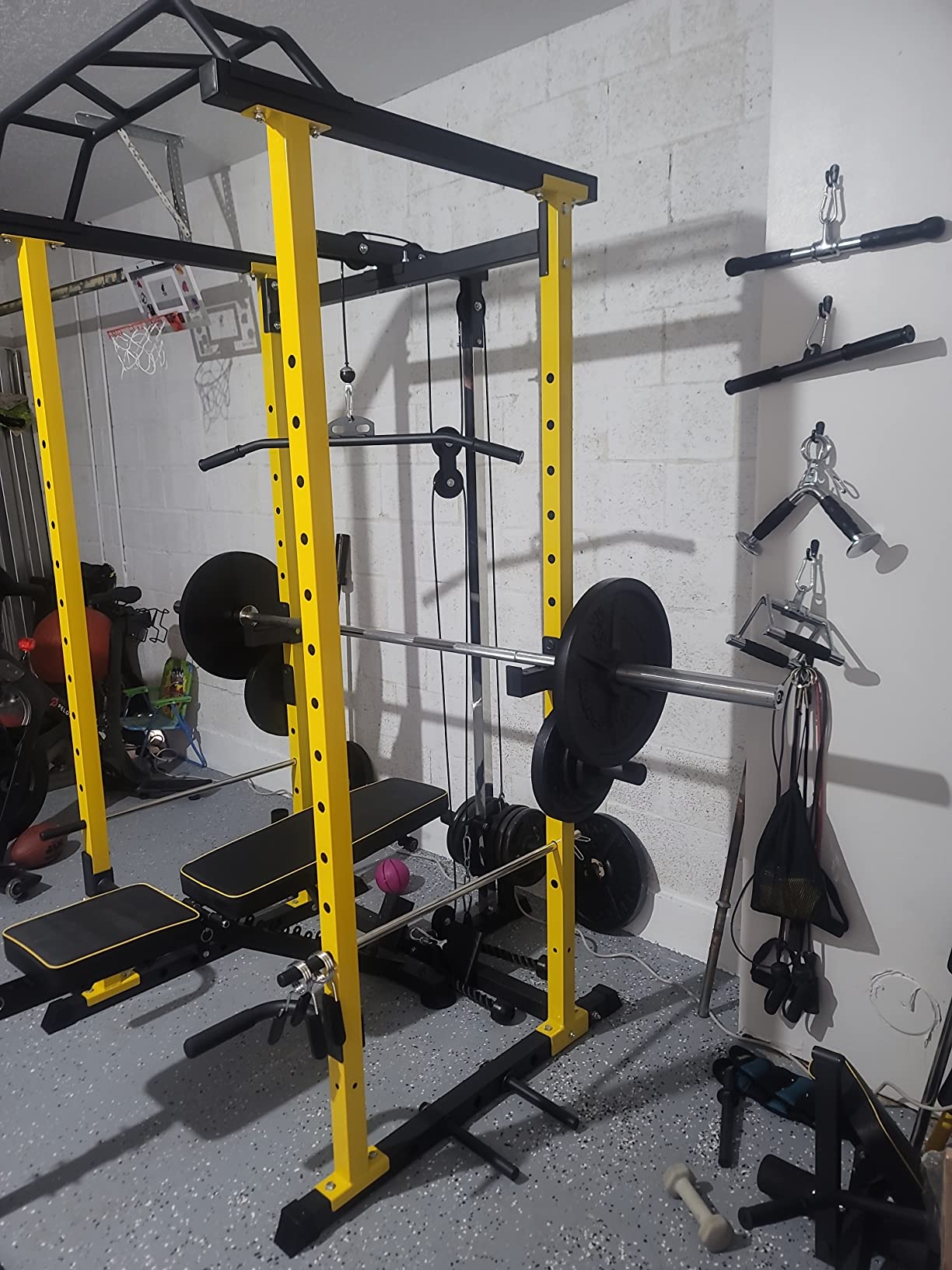
The Yaheetech 7ft is the value pick, and at 4.7 stars across 2024 reviews it is one of the highest-rated bars in this entire comparison. The bar is carbon steel with a wear-resistant coating, chrome-finished sleeves, and a 30 mm grip that matches the CAP in diameter at a lower entry point.
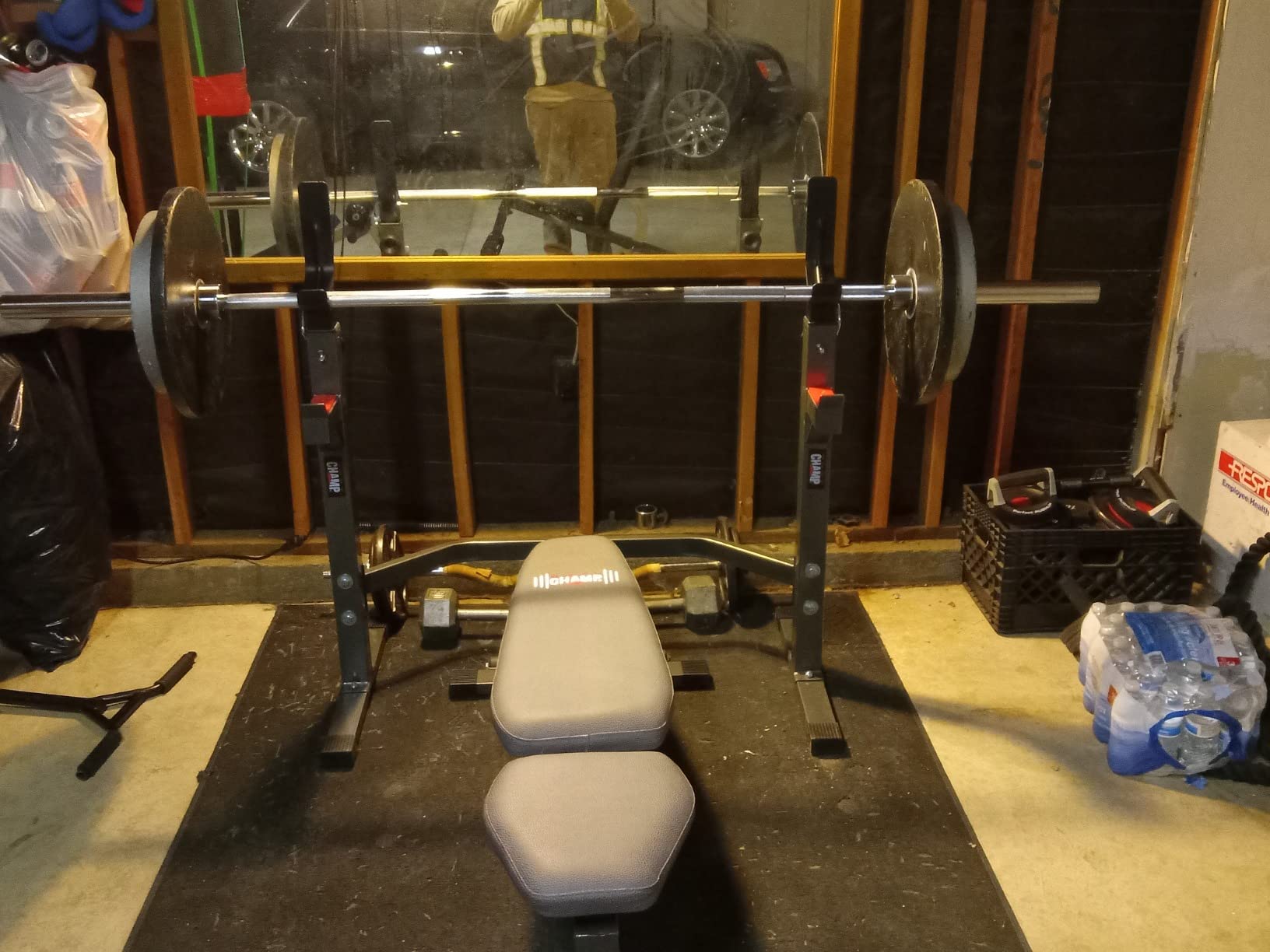
Dimensions are 85.4 inches overall with a 52.5 inch grip length and 15.2 inch sleeves, and it weighs 35.9 lb. Owners describe the medium-depth diamond knurling as firm without being sharp, which is exactly what you want through a long session of presses, rows and curls.
The limit here is capacity. Yaheetech rates this bar at 330 lb, the lowest full-length rating in the group, and that number is not a formality if you are a heavier lifter. For a beginner or a mid-level lifter working with cast iron plates and moderate loads, it is genuinely plenty.
Sleeve rotation is also basic, since the sleeves are not specified as bearing-equipped. That is a non-issue for squats, bench and deadlifts, and only becomes a problem if you start pulling snatches and cleans under load.
Who the Yaheetech 7ft suits
This suits anyone whose training is general strength and bodybuilding rather than maximal loading, and it pairs well with standard cast iron plates. The chrome sleeves resist oxidation, which matters in an unheated garage where condensation is a constant issue.
It is also a good first bar for a shared family gym, since the knurl is deep enough to feel confident but not aggressive enough to shred a T-shirt during high-rep accessory work.
Who should skip it
Skip it if you are already pulling 400 lb or planning to, because the 330 lb rating is a real constraint rather than a marketing number. Competitive lifters who care about sleeve rotation will find the spin underwhelming too.
3. Rage Fitness 6ft Training Bar – The Best Technique Bar for New Lifters
Rage Fitness Olympic Training Barbell 6FT, 15lb Weight, 300LBS Capacity
15 lb aluminum
6 ft length
300 lb rated
28 mm shaft
Bushing and bearing sleeves
Pros
- Compact 6-foot length is easy to rack and store
- Medium knurl with dual collar markings for consistent setup
- Brass bushings and bearings give quiet smooth spin
- Good for teaching younger or lighter lifters
Cons
- Aluminum flexes visibly under load
- Marketed 300 lb capacity is disputed by buyers
- No center knurl for back squats
- Conflicting collar-to-collar measurements in the listing
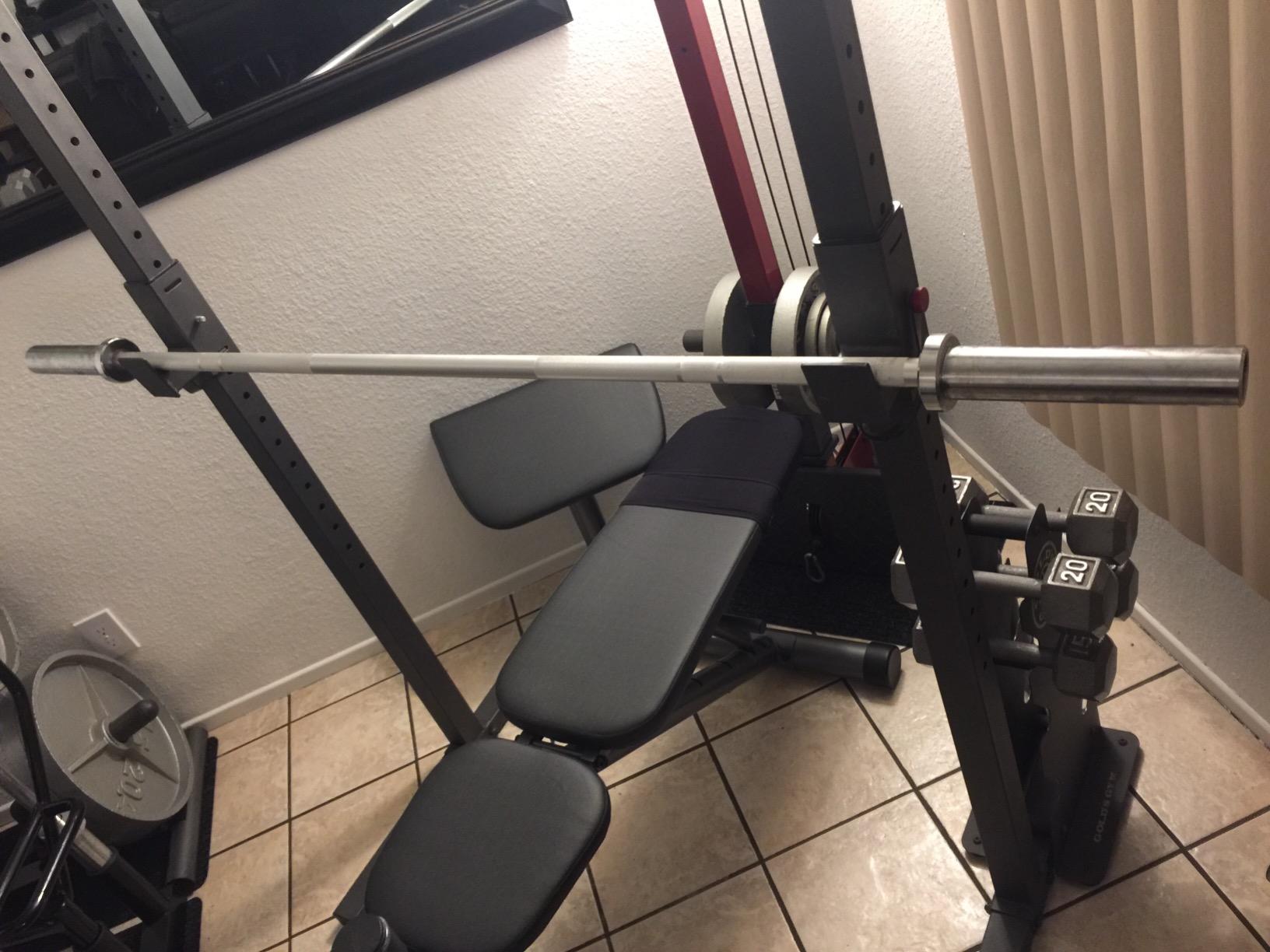
The Rage Fitness 6ft Training Bar answers a question most roundups ignore: what does a beginner actually need? The answer, frequently, is less bar. This one weighs 15 lb, measures 49 inches of grip area, and ships in a package that fits in a closet rather than against a garage wall.
Construction is aluminum with a 28 mm shaft, 1.5 mm deep diamond knurling, and extra thick brass bushings and bearings in the sleeves for rotation. A one-year warranty covers manufacturing and material defects, which is longer than several cheaper bars offer.
The reasons buyers move on from this bar are consistent. Aluminum flexes visibly under load, and multiple owners question the 300 lb rating rather than treating it as a target. There is also no center knurl, so back squatters will want a pad or a different bar.
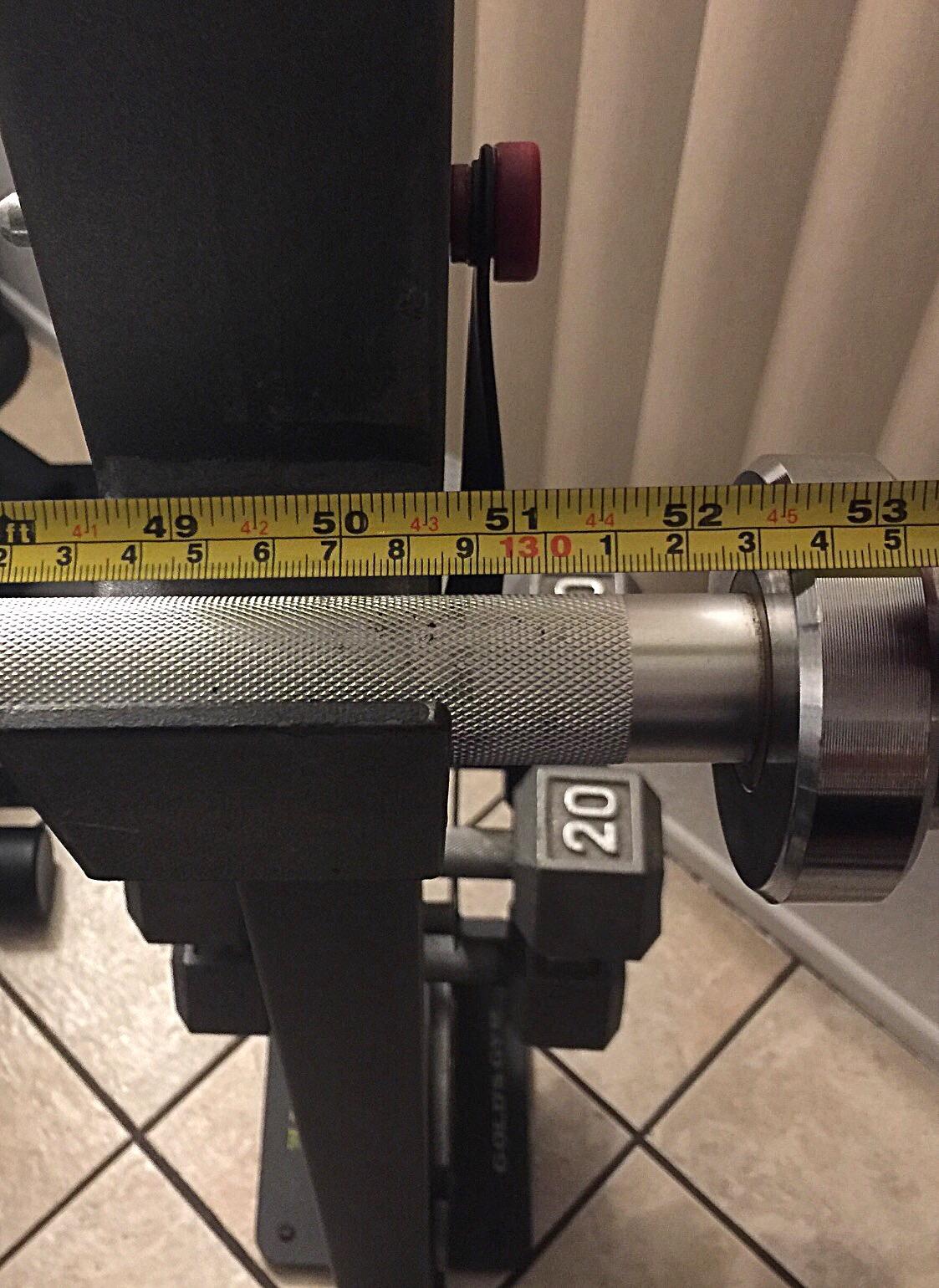
There is a listing inconsistency worth flagging too, with collar-to-collar measurements given as both 49 and 52.5 inches. If you are sizing a rack around this bar, measure the bar rather than trusting the product page.
Who the Rage Fitness 6ft suits
It is built for teenagers, adults returning to lifting after a long break, and anyone who wants to learn the squat, press and deadlift pattern on something light enough to control. The dual collar markings make setup repeatable, which is a real advantage for a coach or a self-coached beginner.
Travel and small-space training also benefit. A 6-foot bar is far easier to move between rooms or load into a vehicle than a 7-foot barbell.
Who should skip it
Skip it the moment your working sets exceed a couple of hundred pounds, because aluminum flex becomes a problem rather than a feature. Anyone who racks a bar for back squats will want the center knurl this one does not have.
4. PAPABABE 7ft 45 lb Bar – Top Rated for Strength Per Unit of Steel
PAPABABE 7ft Barbell 45lb Olympic Barbell 1000lbs Capacity Home Gym Silver
45 lb bar
86 inch length
1000 lb rated
190000 PSI steel
Chrome finish
Pros
- True 45 lb balanced bar weight in a 7-foot frame
- 190000 PSI steel core for the tier
- Hybrid needle bearing and bushing sleeves
- Chrome finish resists rust
- Multiple length grip and capacity variants
Cons
- Knurl is moderate rather than aggressive
- Longer sleeve take-up affects collar-to-collar spacing on some racks
The PAPABABE 7ft is the specification outlier in this group. It is a genuine 45 lb balanced bar in an 86 inch frame, built around a 190,000 PSI alloy steel core, rated to 1000 lb, and it holds a 4.8 rating across 1224 reviews. Very few bars in this roundup pair a true 45 lb weight with steel of that grade.
Sleeve design is a hybrid: needle bearings combined with bushings, which gives you smooth rotation without a loose sleeve on the deadlift. The 30 mm knurled grip runs on a 51.57 inch shaft, and the chrome coating is specified to hold up in humid conditions.
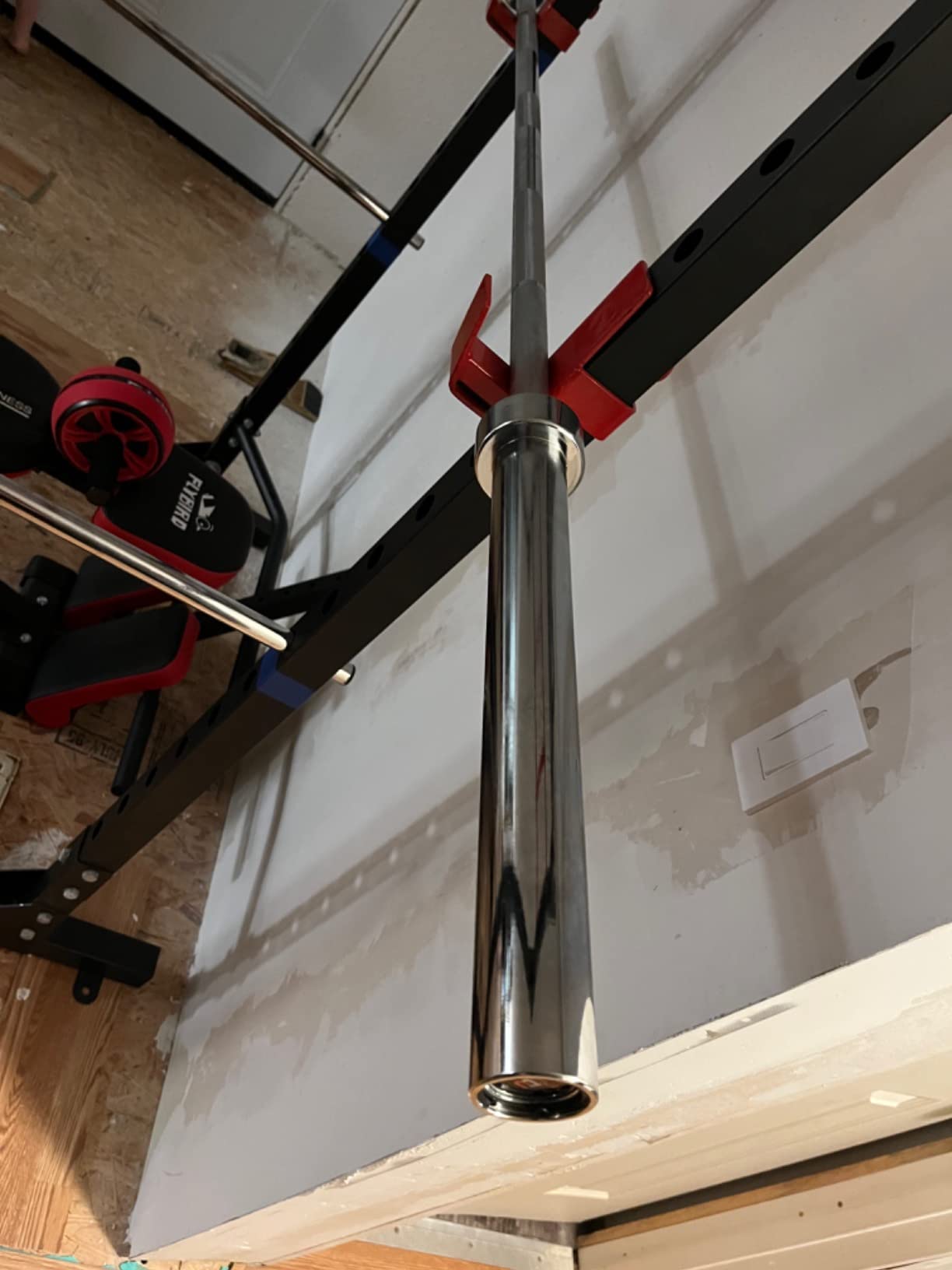
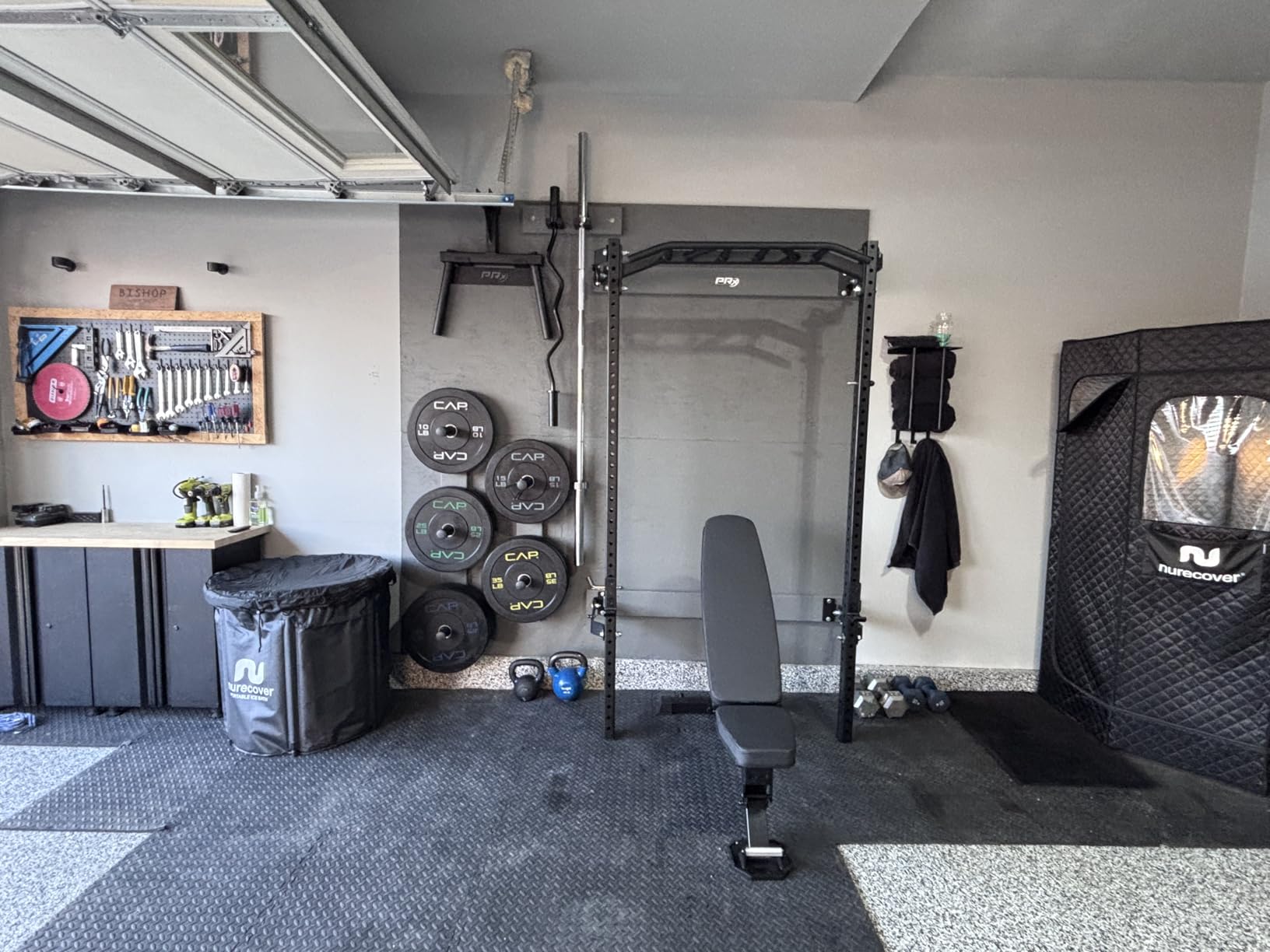
Owners use it across deadlifts, squats, bench and Olympic-style work, and the recurring comment is that it feels far more substantial than the shelf position suggests. Sleeve length is listed at 17.52 inches, which is longer than most and worth measuring against your rack.
The criticism is narrow: the knurl is moderate rather than aggressive, so lifters who want a very aggressive bite for maximal deadlifts may want something more textured. That longer sleeve also eats into collar-to-collar spacing on racks with close uprights.
Who the PAPABABE 7ft suits
It suits the lifter who wants a real 45 lb bar and strong steel numbers without stepping up to a competition-tier price, and it is our pick for anyone whose training mixes powerlifting and faster barbell work. The hybrid sleeve is a sensible middle ground between a free-spinning weightlifting bar and a rigid power bar.
For a garage gym that is not climate controlled, the chrome finish and 1000 lb rating give plenty of headroom for a serious intermediate.
Who should skip it
Skip it if you want an aggressive knurl for heavy deadlift pulls, or if your rack has tight uprights that the longer sleeve will crowd. Maximal lifters chasing a 1500 lb rating should look at the Synergee Rhino instead.
5. RitFit Short Olympic Bar – The Best Choice for Tight Spaces
RitFit 4FT Olympic Barbell, Black/Blue
25 mm shaft
4 ft to 6 ft options
350 lb to 500 lb
Needle bearings
Lifetime warranty
Pros
- Short 4-foot length is ideal for hip thrusts
- Light baseline weight makes loading easy
- Needle bearings give smooth quiet rotation
- Length options include 4 5 6 and 7 foot
- Backed by a lifetime warranty against bending
Cons
- One reviewer reported a chip and beat-up packaging
- Short length limits use in standard rack setups
The RitFit short bar solves a specific problem: a full 7-foot bar is 86 inches of steel that does not fit anywhere in a small apartment. This one is sold in 4, 5, 6 and 7 foot variants, with the short model weighing about 20 lb on a 25 mm shaft and a 350 lb rating.
It comes with needle bearings for smooth, quiet sleeve rotation and an oxide finish on the steel, and it is covered by a lifetime warranty against bending. That warranty is longer than anything else in this roundup, and for a bar that will never see heavy loads it is a genuine differentiator.
Who the short RitFit suits
It is the bar for hip thrusts, Romanian deadlifts, curls, rows and any movement where a compact bar is an advantage. Buyers in small home gyms consistently point out that the short length is the whole reason they bought it, and the 4.8 rating reflects how well the steel and spin hold up for that use.
It is also a sensible loaner or guest bar for a garage that hosts two or three training partners at once.
Who should skip it
Skip it if you squat or bench inside a power rack, because a short bar will not sit properly on the uprights. The 25 mm shaft is also thinner than a full Olympic bar, so grip comfort differs from a 28 mm or 30 mm shaft.
6. CAP Pro Series 7ft OBIS-86B – Best for Bushing Sleeves and Heavy Loading
CAP The Beast 7ft Olympic Barbell, Pro Series, 1,200lb Capacity
44 lb bar
86 inch length
1200 lb rated
Bronze bushings
Phosphate finish
Pros
- Full 44 lb bar weight with 1200 lb rated capacity
- Knurl is firm without tearing up hands
- Bushing sleeves avoid metal-on-metal spin
- Phosphate finish resists rust and holds its look
- Step up from entry CAP bars
Cons
- Finish can chip or scrape after repeated racking
- Some reviews report metal fragments in early use
- Reports of bending at 600 lb and above
The CAP Pro Series 7ft, model OBIS-86B, is the serious bar in CAP’s home gym line. It weighs 44 lb, is rated to 1200 lb, and is built from 120,000 PSI steel with a black phosphate finish and bronze bushing sleeves that avoid metal-on-metal contact inside the sleeve.
The knurl is the same volcano pattern as the entry-level CAP bar, and owners consistently describe it as firm without being punishing. Reviewers call it the natural step up from cheaper CAP bars, which is a common upgrade path in home gyms.
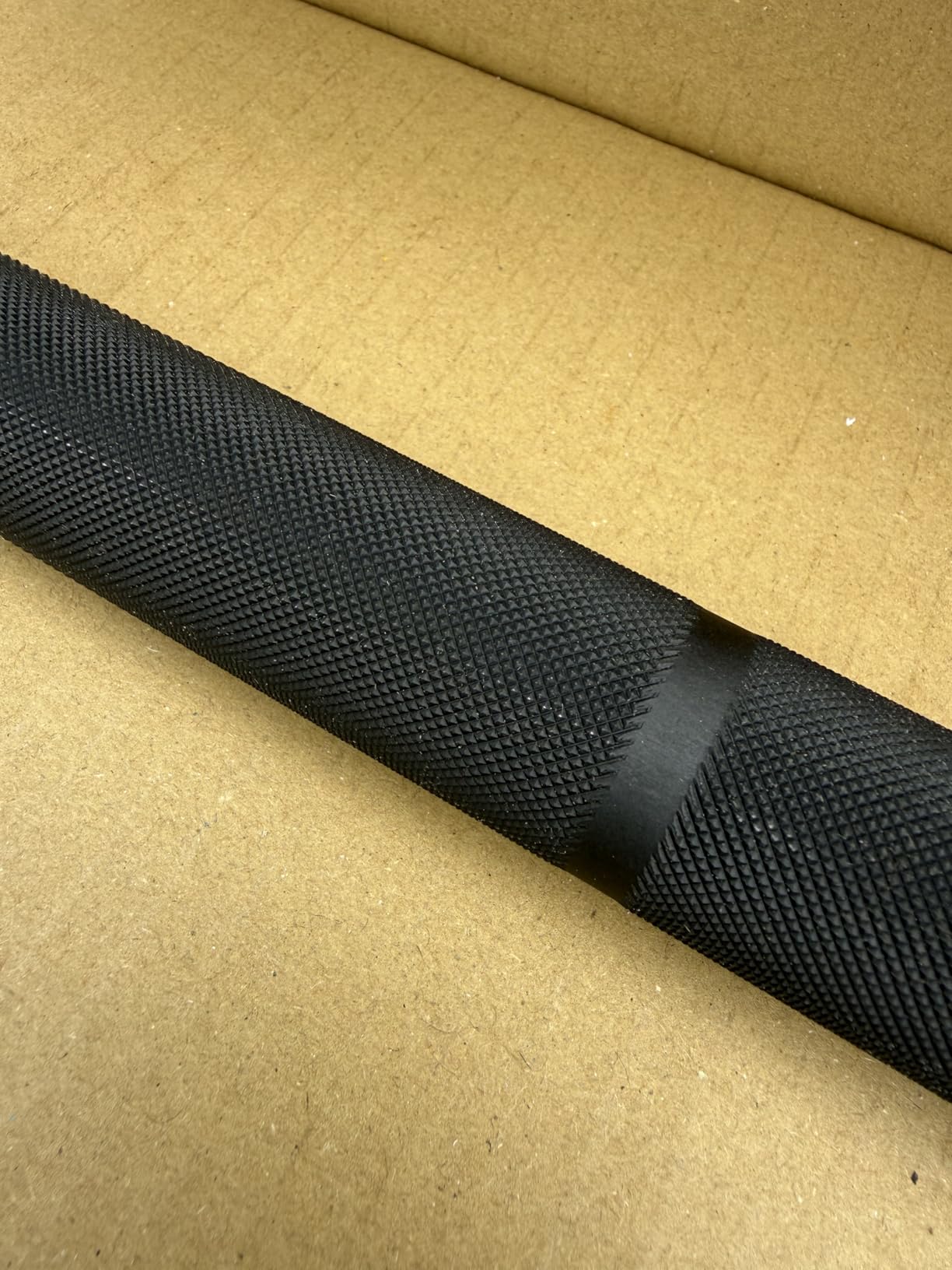
The negatives here are mostly cosmetic. The phosphate finish can chip or scrape off with repeated racking, and a few reviews report small metal fragments early in a bar’s life. There are also reports of bending at loads above 600 lb, though most owners never get near that.
For a home lifter training in the 300 to 500 lb range, the 1200 lb rating leaves a large margin. The 15 inch sleeve length is standard, so plate clearance is unremarkable in the best way.
Who the CAP Pro Series suits
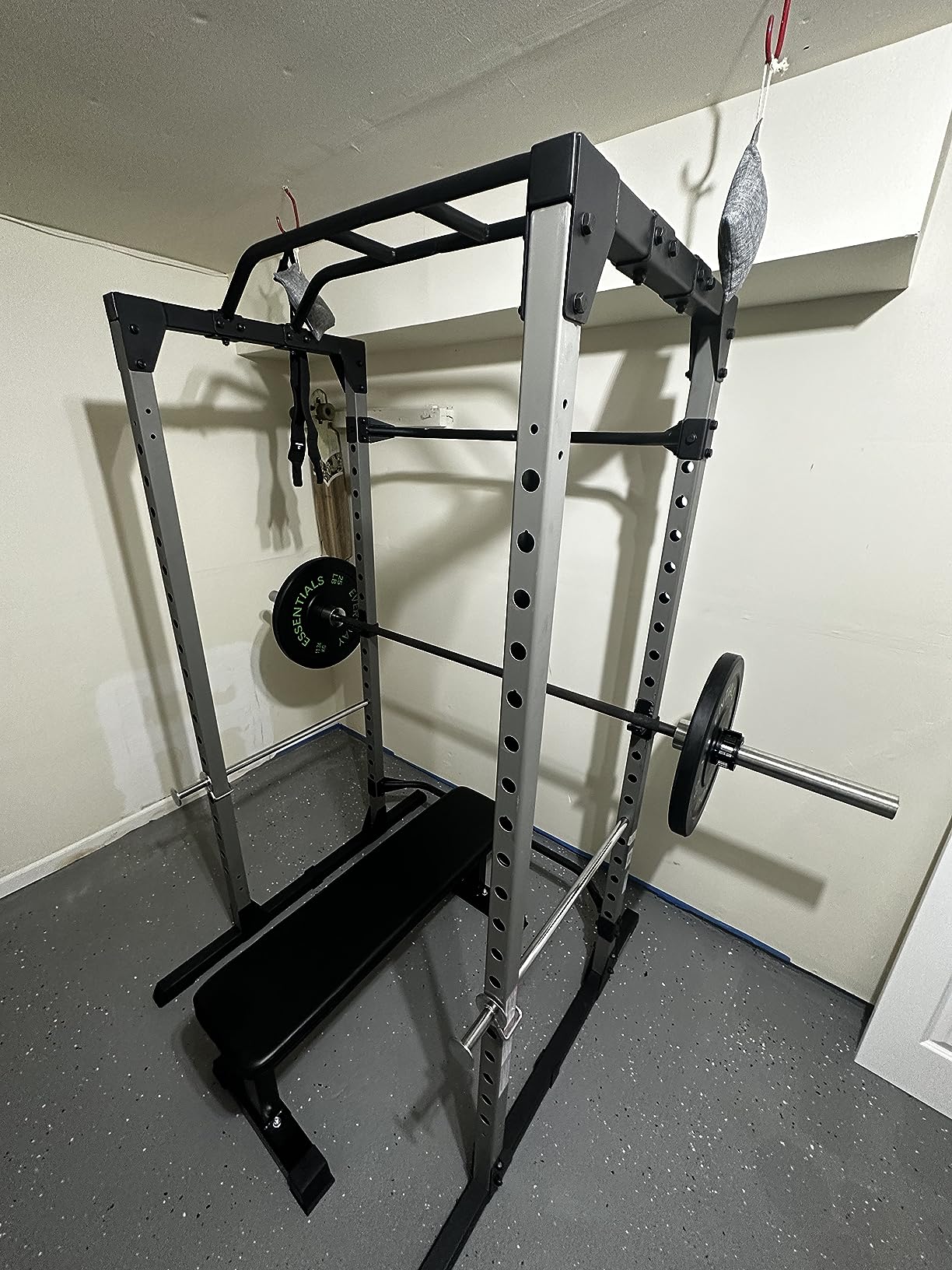
It suits the lifter who has outgrown a 35 lb entry bar and wants real bar weight, a bushing sleeve that will not develop play over time, and a finish that tolerates a scuffed rack. The 44 lb weight is close enough to standard that most loading math still works.
Forum lifters who want a bushing bar for home training often cite this as the sensible middle purchase between a beater bar and a competition bar, and for good reason.
Who should skip it
Skip it if a scratched finish bothers you, since the phosphate coating shows wear in a busy rack room. Very heavy pullers who want a 1500 lb rating and minimal whip have better options in this list.
7. LAVVON 57 Inch Straight Bar – The Best for Small Rooms and Accessories
57″Olympic Barbell Bar, 2″ Standard Straight Bars for Weight Lifting
12 lb bar
57 inch length
500 lb rated
Needle roller bearings
Nickel plated
Pros
- Compact 57-inch length stores anywhere
- Diamond knurl described as grippy without tearing skin
- Needle roller bearings rotate with little wrist effort
- Two spring collars included for fast plate changes
- Two-year unconditional warranty
Cons
- Not a full-length bar so it will not fit a power rack
- Sleeve noise can develop at the shaft without lubrication
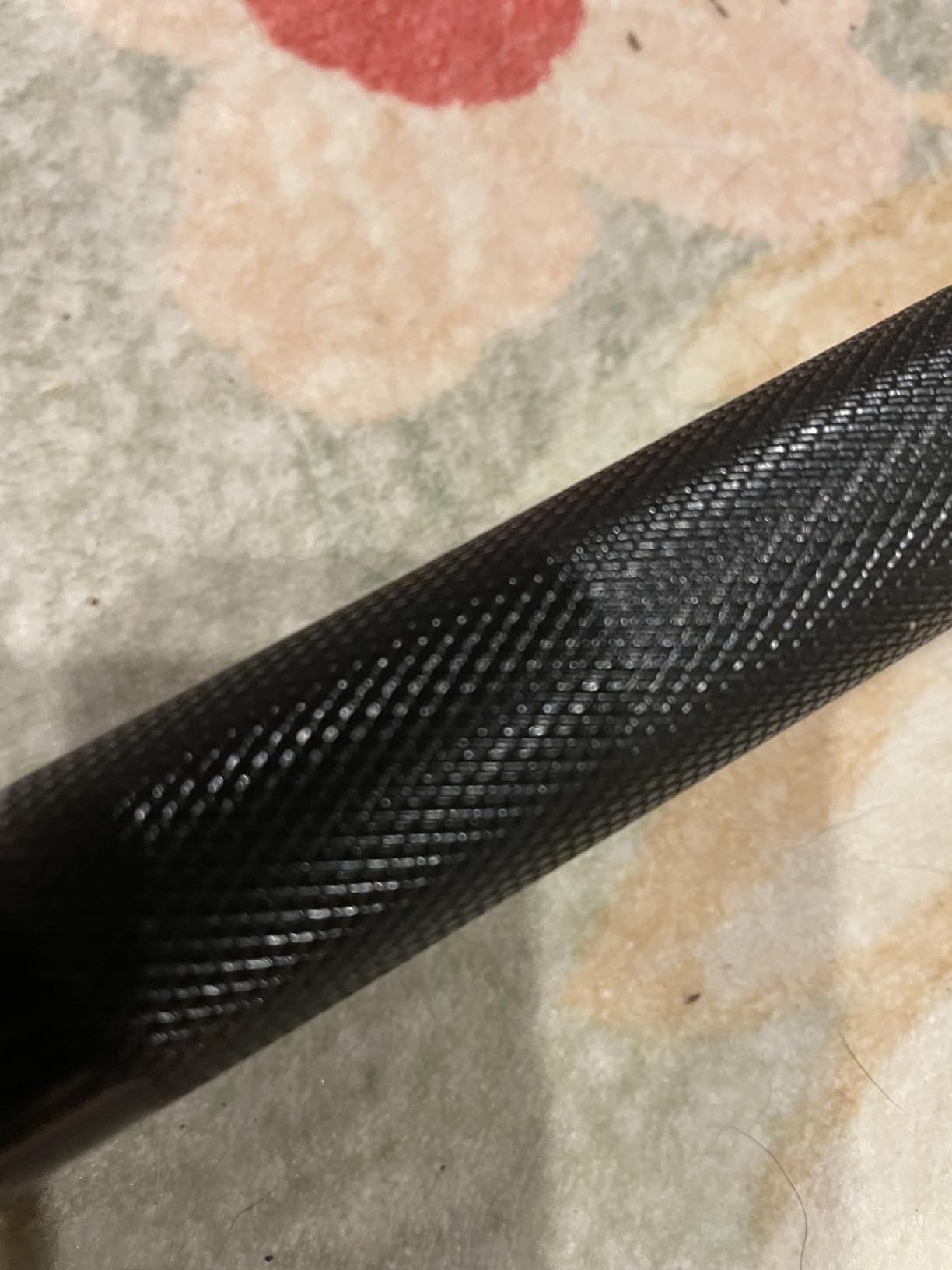
The LAVVON 57 inch straight bar is a 2-inch sleeve bar that is not an Olympic bar in the strict sense, and we would rather say so than pretend otherwise. It weighs 12 lb, measures 56 inches overall, and is rated to 500 lb on hardened nickel-plated steel.
What it does well is storage and accessories. Needle roller bearings give easy rotation, the diamond knurl is described as grippy without tearing skin, and two spring collars are included so you can change plates without hunting for clips. The two-year unconditional warranty is unusually long at this tier.
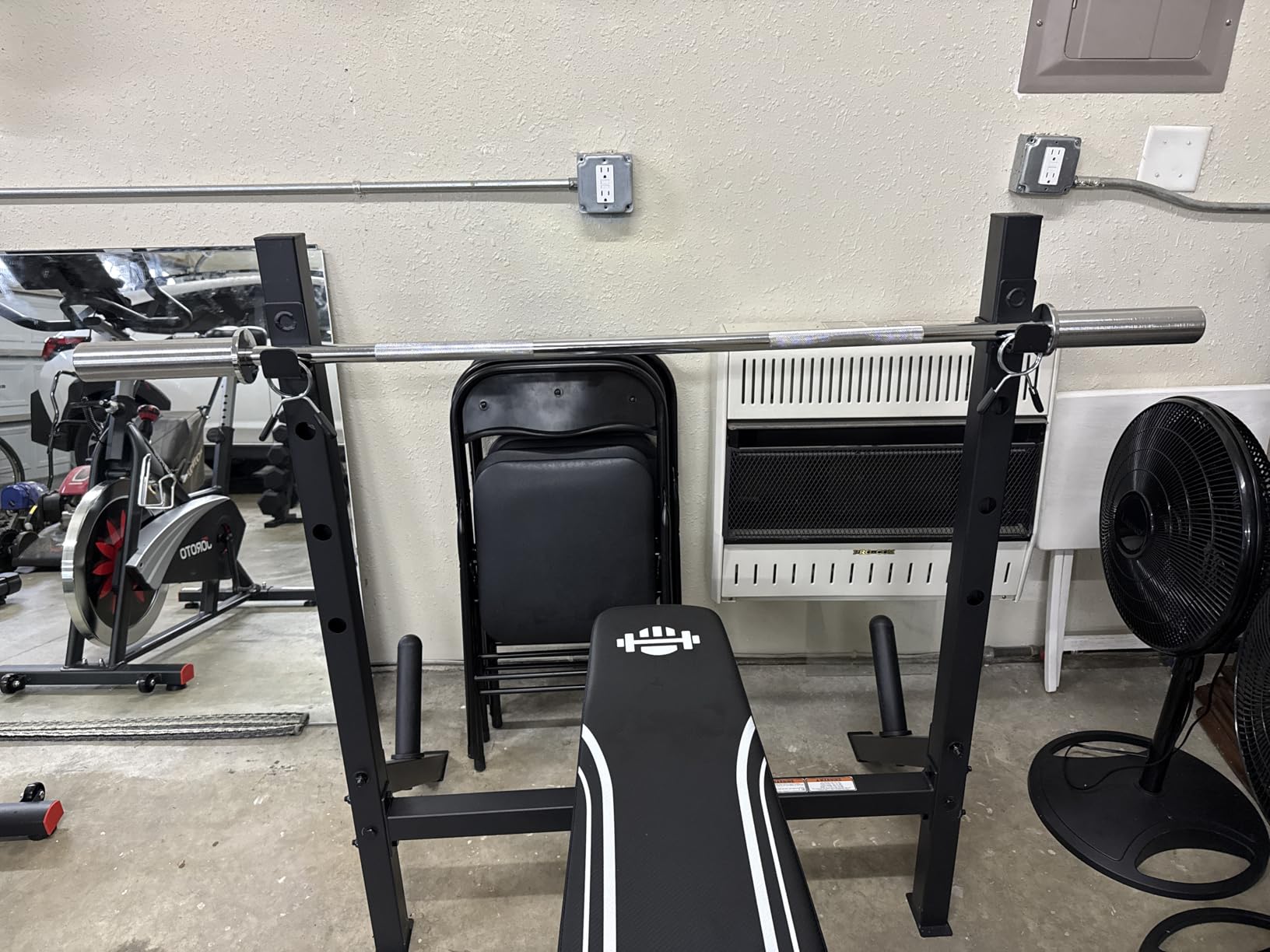
Reviewers position it for curls, isolation work, hip thrusts and general home gym use where a 7-foot bar is simply too big for the room. Spare parts are also offered for two years, which is a small but real service detail.
The one recurring issue is sleeve noise at the shaft connection, which shows up if you never oil the bearing interface. It is a maintenance item, not a defect.
Who the LAVVON straight bar suits
It suits lifters who do most of their barbell work in an apartment or a converted closet, where a 7-foot bar cannot be stored or swung. Curling, rows, hip thrusts and landmine accessory movements are all natural fits.
The included spring collars also make it a good first bar for someone still learning how to load and unload safely.
Who should skip it
Skip it if you squat, bench or deadlift inside a rack, because a 57 inch bar will not span the uprights. It is also not a substitute for a 45 lb bar when you are programming by percentage.
8. RitFit Elite 7ft Olympic Bar – The Best Warranty Coverage
RitFit Elite 7ft Olympic Barbell, 500lbs — Black
45 lb bar
2.2 m length
28 mm shaft
Needle bearings
500 lb to 2000 lb
Pros
- True 45 lb bar weight with a comfortable 28 mm grip
- Holds steady without flex at 225 lb
- Needle bearings give smooth quiet rotation
- Capacity options from 500 lb up to 2000 lb
- Arrives well packed with no scratches
Cons
- Base 500 lb variant is the lowest capacity in the Elite line
- Higher ratings require a different variant
- Can arrive coated in protective oil
The RitFit Elite 7ft is a straightforward 2.2 m bar with a 20 kg weight and a 28 mm shaft, which puts it squarely in Olympic spec. It uses needle bearings for smooth, quiet rotation under load and an oxide finish on alloy steel, and the volcano knurling is described as grippy without being sharp.
The most interesting detail is the range of capacity ratings. The same bar is offered in 500 lb, 1200 lb, 1500 lb and 2000 lb variants, so you can pick the rating that matches your actual loading instead of overpaying for headroom you will never reach.
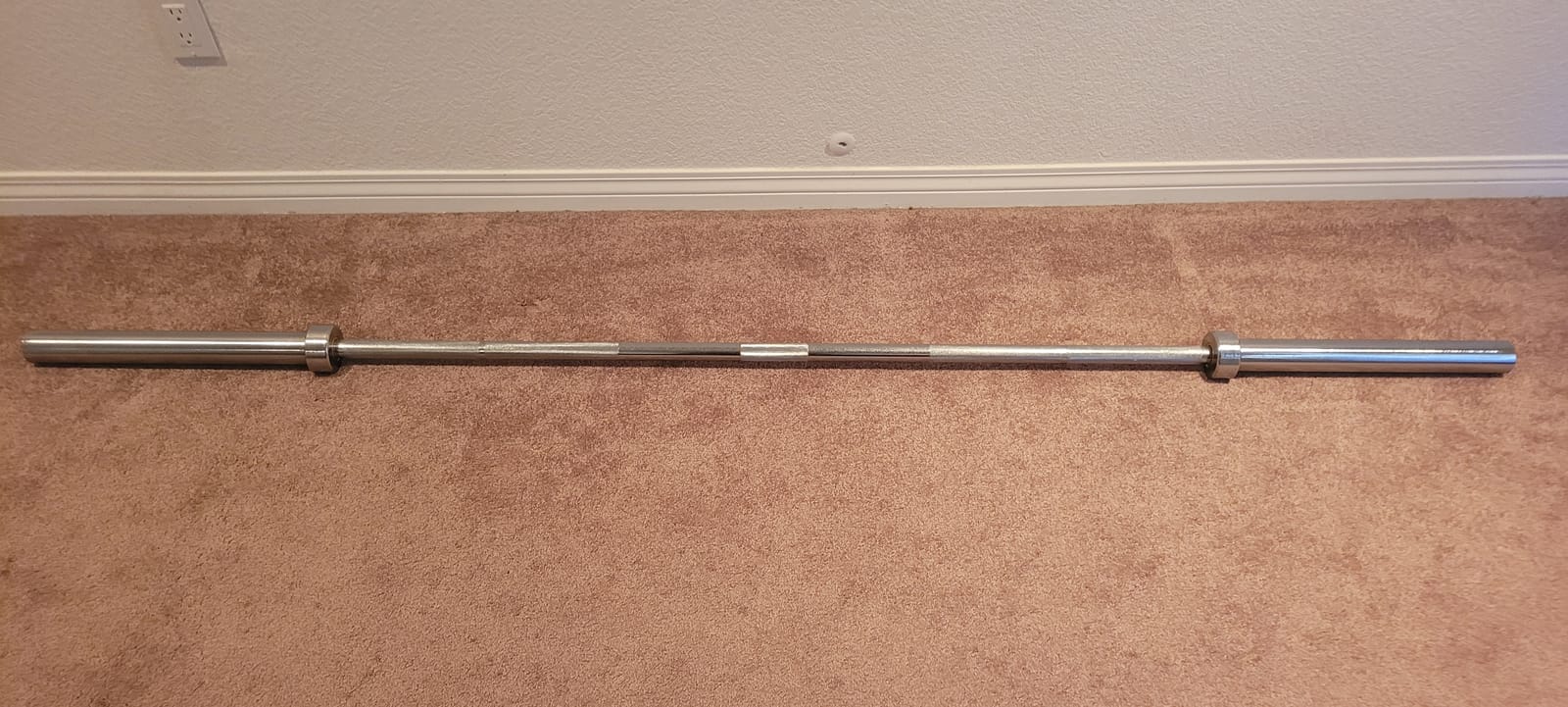
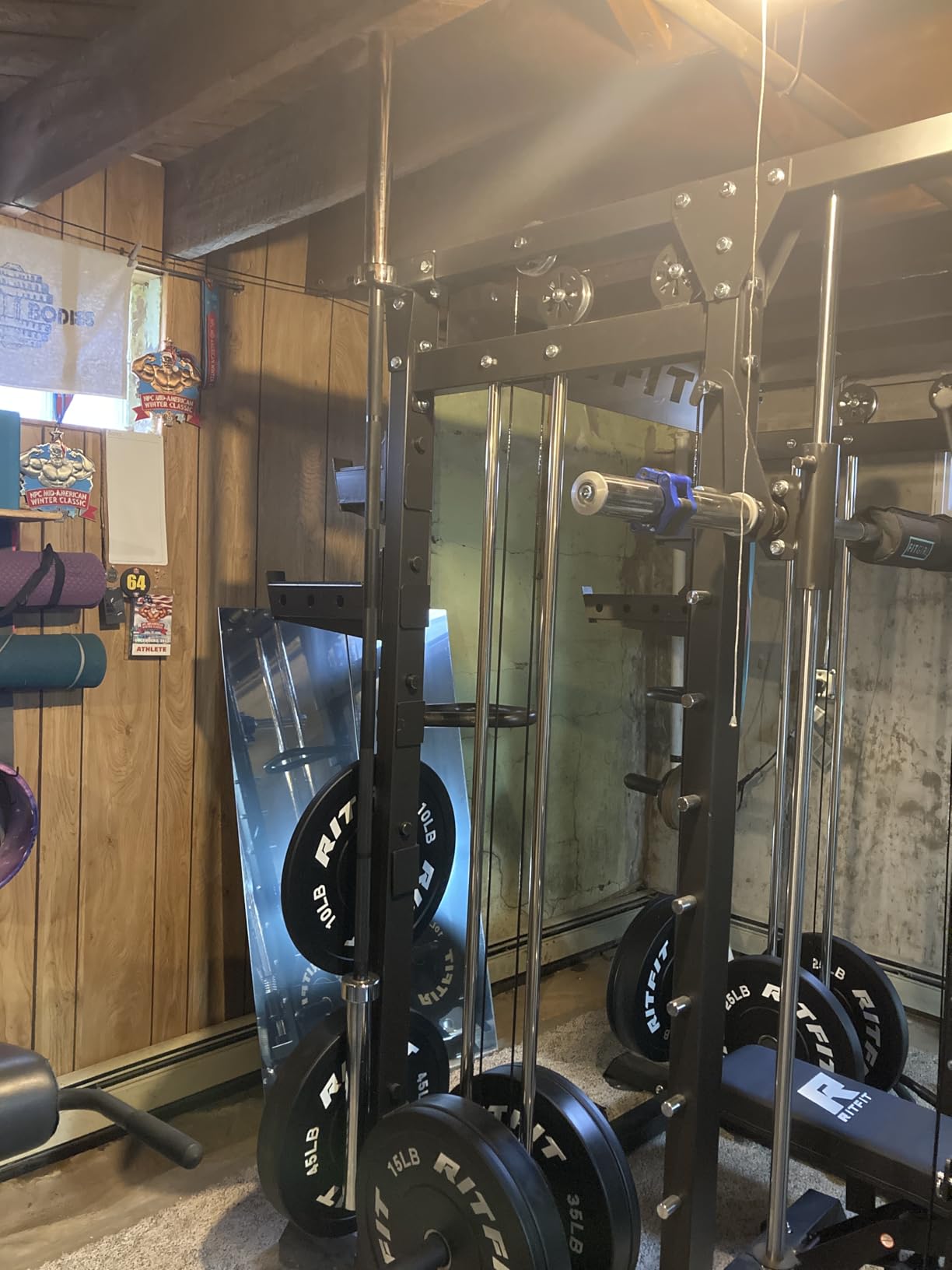
Owners report steady performance at 225 lb with no visible flex, and the packaging is consistently praised, which matters more than it sounds given how many bars arrive scratched. This is a bar that does exactly what the specification says.
The catch is that the base variant people buy most often is the 500 lb one, and several buyers assumed it was higher. Check the variant before you order. A few also mention the bar arriving with protective oil on the shaft, which needs wiping before first use.
Who the RitFit Elite suits
It suits a home lifter who wants standard Olympic geometry, a 28 mm grip that feels conventional, and a lifetime warranty against bending. The multiple capacity variants make it a good option if your loading will grow over the next few years.
Needle bearings also make it a better fit than a bushing bar if you ever add cleans or presses to the programme.
Who should skip it
Skip the base 500 lb variant if you are already working with heavier loads, because the capacity rating is not cosmetic. Those who want a centre knurl for back squats will also need to look elsewhere.
9. HANDBODE 7ft 45 lb Bar – Best for Moderate Whip and Smooth Rotation
HANDBODE 7 ft Olympic Barbell, 45 lb Bar, 2-Inch Sleeves, Black
45 lb bar
86.6 inch length
1000 lb rated
190000 PSI steel
Four hybrid bearings
Pros
- True 45 lb weight with 190000 PSI alloy steel
- Four hybrid needle bearings plus brass bushings
- Medium whip suits powerlifting and faster lifts
- Volcano knurl gives feedback without tearing hands
- Dual IWF and IPF marks for repeatable setup
Cons
- No center knurl for back squats
- Needs a rack with outside width under 51.6 inches
- Loaded bar drops are not damped by the bearings
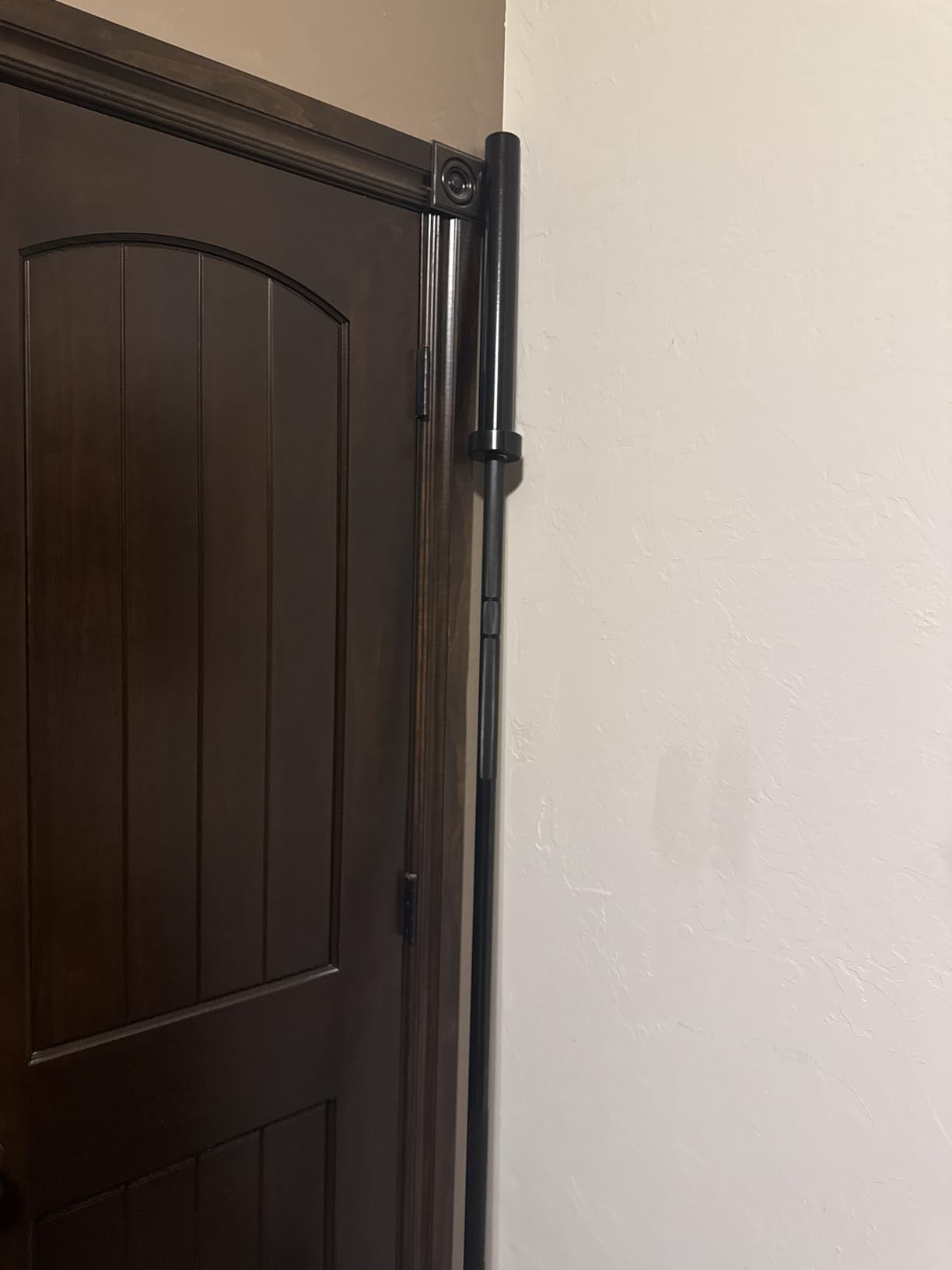
The HANDBODE 7ft is one of the more interesting spec sheets in this group for a home lifter. It is a true 45 lb bar at 86.6 inches long, built from 190,000 PSI tensile alloy steel with a 51.6 inch shaft and 28 mm grip.
Sleeve design gets particular attention: four hybrid needle bearings, two per sleeve, working in combination with brass bushings. That is a deliberate choice to keep rotation smooth while the bushings stop the sleeve from developing slop. The shaft carries an oven-cured finish and the sleeves an E-Coat for corrosion resistance, and dual IWF and IPF marks let you set up repeatably.
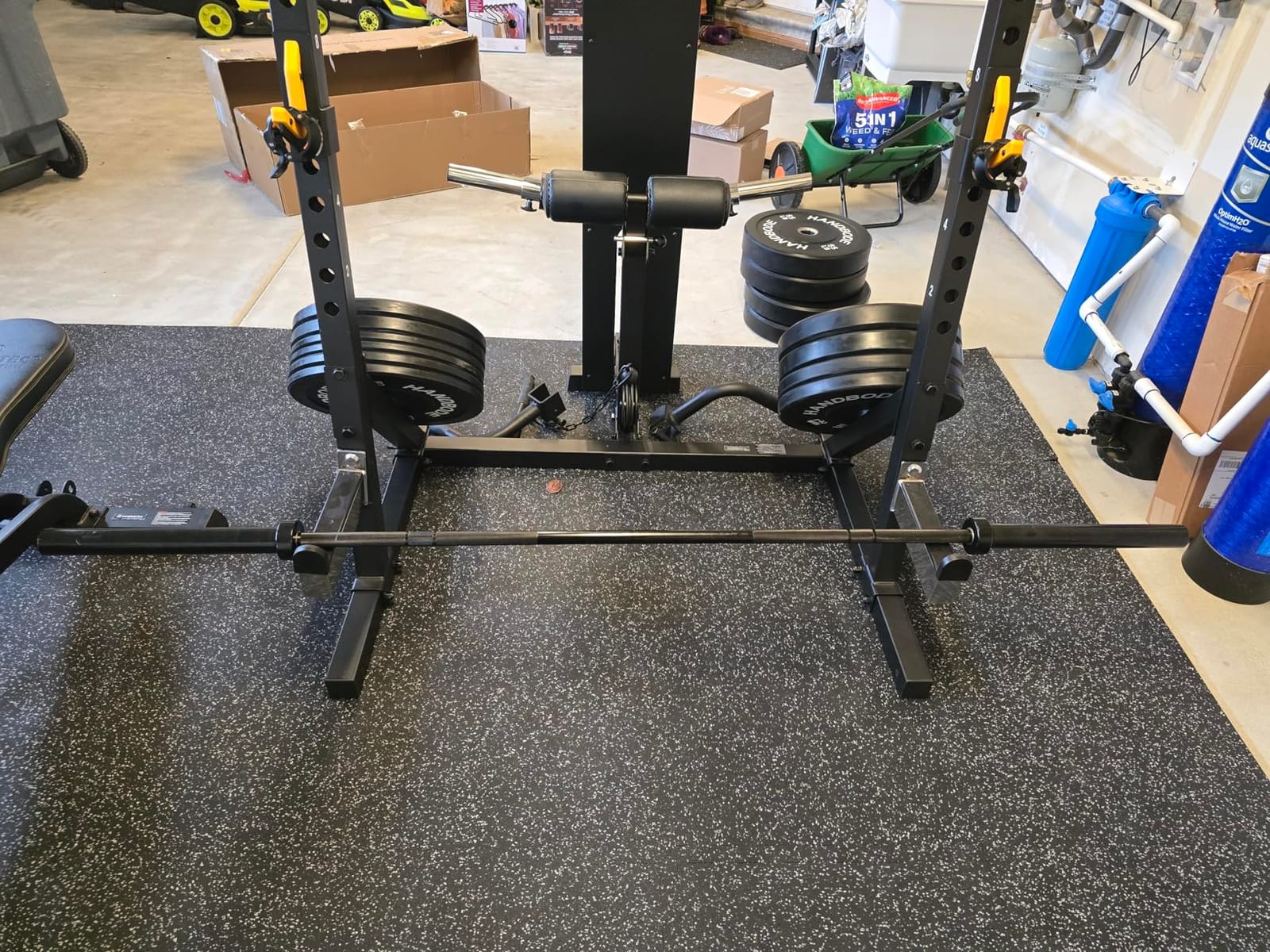
Reviewers highlight the moderate whip as the standout feature, since it is enough to feel alive under a clean or a press without turning a heavy squat into a wobble. Home gym buyers have long named HANDBODE as a sensible low-cost first bar, and the four-bearing sleeve layout backs that up.
There is no center knurl on this model, with two 16.7 inch volcano-pattern knurl sections instead. That is fine for deadlifts, presses and accessory work, and it means squats will need a pad or a different bar.
Who the HANDBODE 7ft suits
It suits the lifter who trains a mix of powerlifting and faster barbell movements and wants one bar that can do both without the loose-sleeve feel of a weightlifting bar. The 1000 lb rating and 190K PSI steel give an intermediate plenty of room.
The 28 mm grip is also a comfortable middle diameter, and the E-Coat sleeves suit an unheated garage better than decorative chrome.
Who should skip it
Skip it if you rack a bar for back squats, since there is no center knurl. Measure your rack first as well, because the bar needs an outside width under 51.6 inches to sit inside properly.
10. Synergee Rhino Power Bar – The Best for Heavy Deadlifts
Synergee 45 lb Rhino Power Bar – Cerakote Finish 1500 lb Rated
45 lb bar
86.16 inch length
1500 lb rated
29 mm grip
Cerakote shaft
Pros
- Very stiff low-whip design for squat bench and press
- True 45 lb weight with a comfortable 29 mm grip
- Aggressive volcano knurl with a secure powerlifting feel
- Cerakote shaft wipes clean easily
- 16.4 inch sleeves give wide low-bar hand placement
Cons
- Not intended for Olympic lifts since the sleeves spin slowly
- One reviewer reported a nicked sleeve end
- One reviewer reported a chip on arrival with no support reply
The Synergee Rhino is a powerlifting bar, and it is included here because a lot of home lifters squat, bench and deadlift and would rather have a stiff platform than a whippy one. It is built without bearings specifically to remove rotation and reduce flex, at 45 lb and 86.16 inches long.
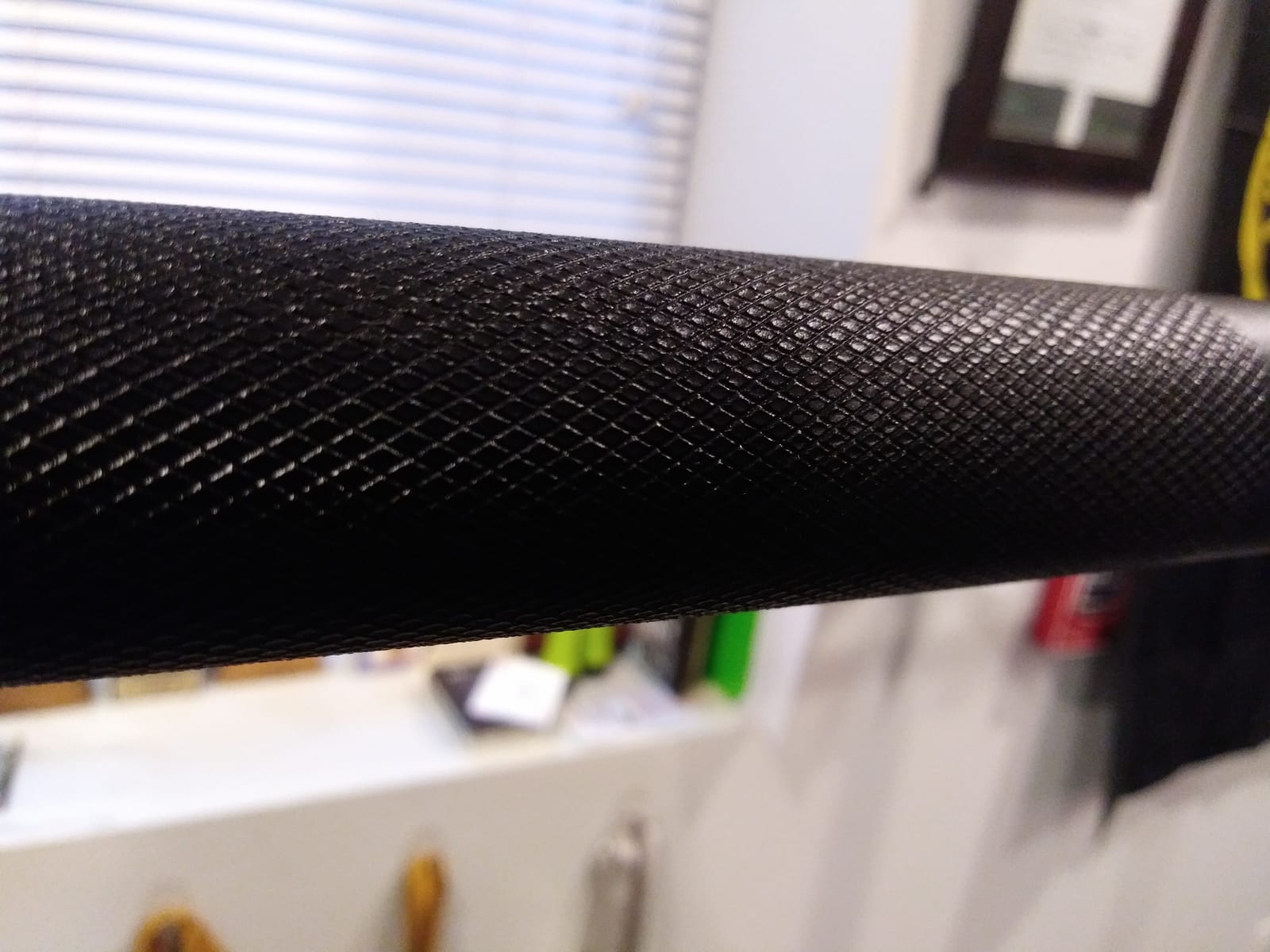
The shaft is cerakote-coated with black phosphate sleeves, rated to 1500 lb at 190,000 PSI tensile strength, and the 29 mm grip with aggressive volcano knurling is tuned for maximal pulling. Sleeves are 16.4 inches on a 51.6 inch shaft, which gives room for a wider low-bar squat hand position.
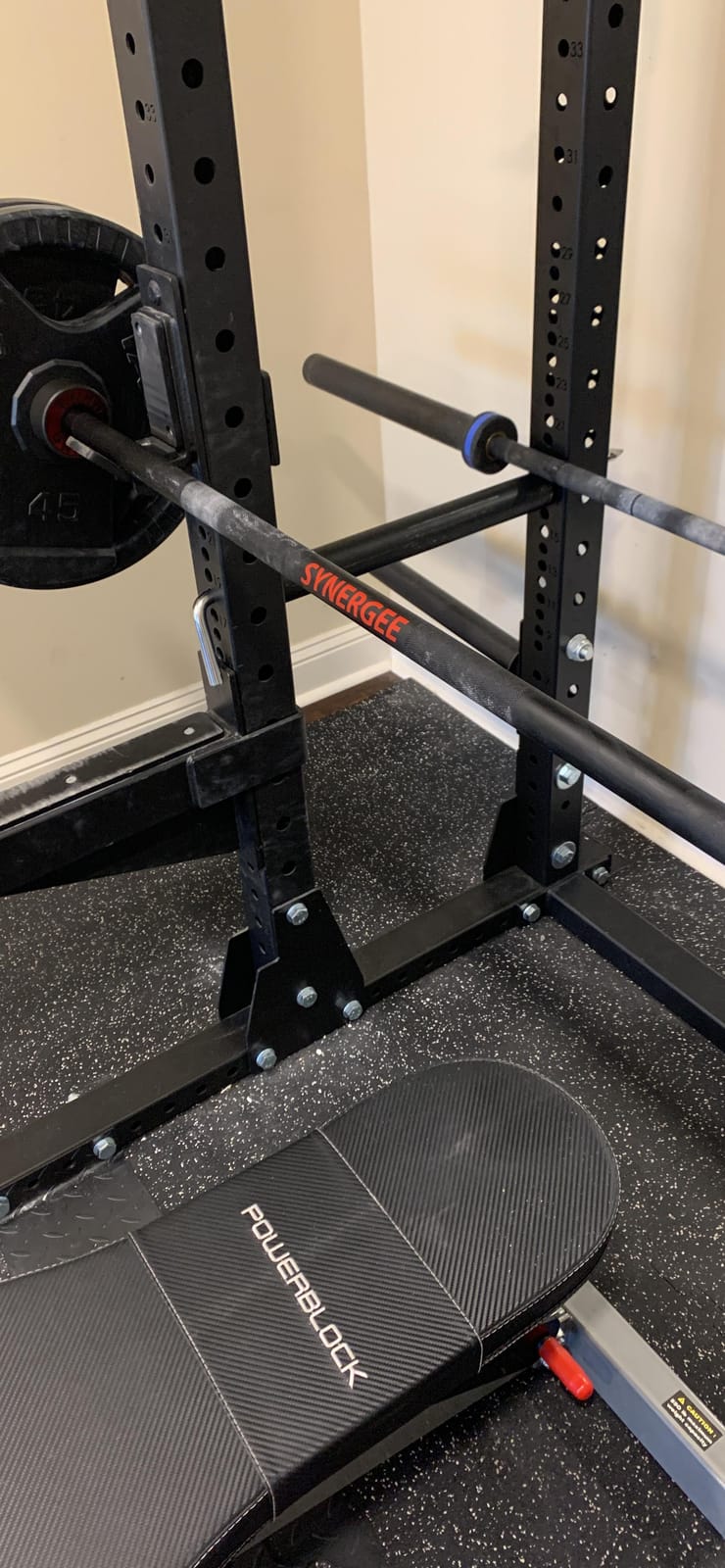
Owners with decades of lifting experience compare it to commercial gym bars and to far more expensive name-brand equipment, and the recurring word is stiff. For a deadlift, that stiffness transfers force into the floor rather than into the bar, which is the entire point of a power bar.
The trade-off is Olympic work. Without bearings the sleeves spin slowly, so cleans and snatches feel dead by comparison. There are also isolated reports of a small defect at one sleeve end and of a chip on arrival with no support response, which is worth watching when you open the tube.
Who the Synergee Rhino suits
It suits the serious home powerlifter who pulls heavy, squats heavy, and wants a bar that stays rigid at the top of a set. The 1500 lb rating and aggressive knurl also make it a good choice for a garage that doubles as a meet prep space.
It is a legitimate alternative to a much more expensive power bar, and buyers say so directly in reviews.
Who should skip it
Skip it if you practise Olympic lifts, because the slow sleeve rotation will feel wrong immediately. It is also the wrong pick for a lifter who enjoys high-rep barbell work and wants a lively whip.
11. Iron Crush 7ft Multifunction Bar – The Best for CrossFit and Mixed Training
Iron Crush Olympic Barbell – Multifunction 7-Foot Weight Bar for Weightlifting, Powerlifting, CrossFit Training – No. 45 Steel, Chrome Finish – 750 lbs Max Load Capacity – Home Gym Fitness Equipment
45 lb bar
87 inch length
750 lb rated
170000 PSI steel
Chrome finish
Pros
- Sturdy solid feel reviewers describe as premium quality
- Knurling placed where lifters want it
- Rotating bearings let collars spin smoothly
- Standard 45 lb and 28 mm sizing for varied lifts
- Well packaged with no damage reported on arrival
Cons
- No center knurling for squatting
- Some units arrived with a slippery oily residue
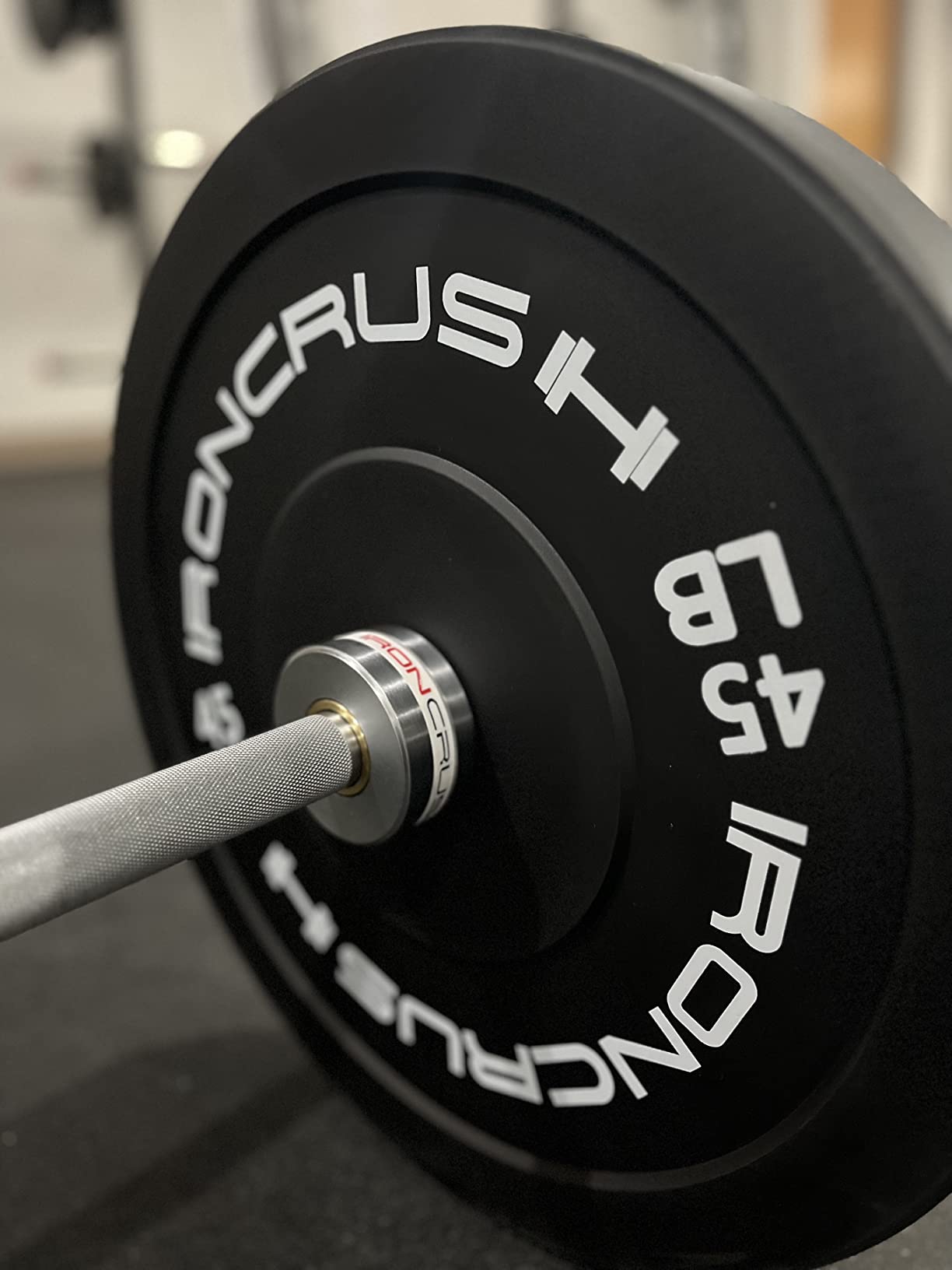
The Iron Crush 7ft is built for people who train for both. It is 87 inches long, weighs 45 lb, has a 28 mm shaft, and is made from cold-rolled No. 45 steel with a chrome finish at 170,000 PSI tensile strength and a 750 lb rating.
Unlike most bars in this list, it uses bearing rotation rather than bushings, and the listing positions the knurl, whip, spin and sleeve rotation as tuned for both powerlifting and functional fitness. The 1.2 mm medium-depth knurl rings sit where lifters grip rather than covering the whole shaft, and there is no center knurl.
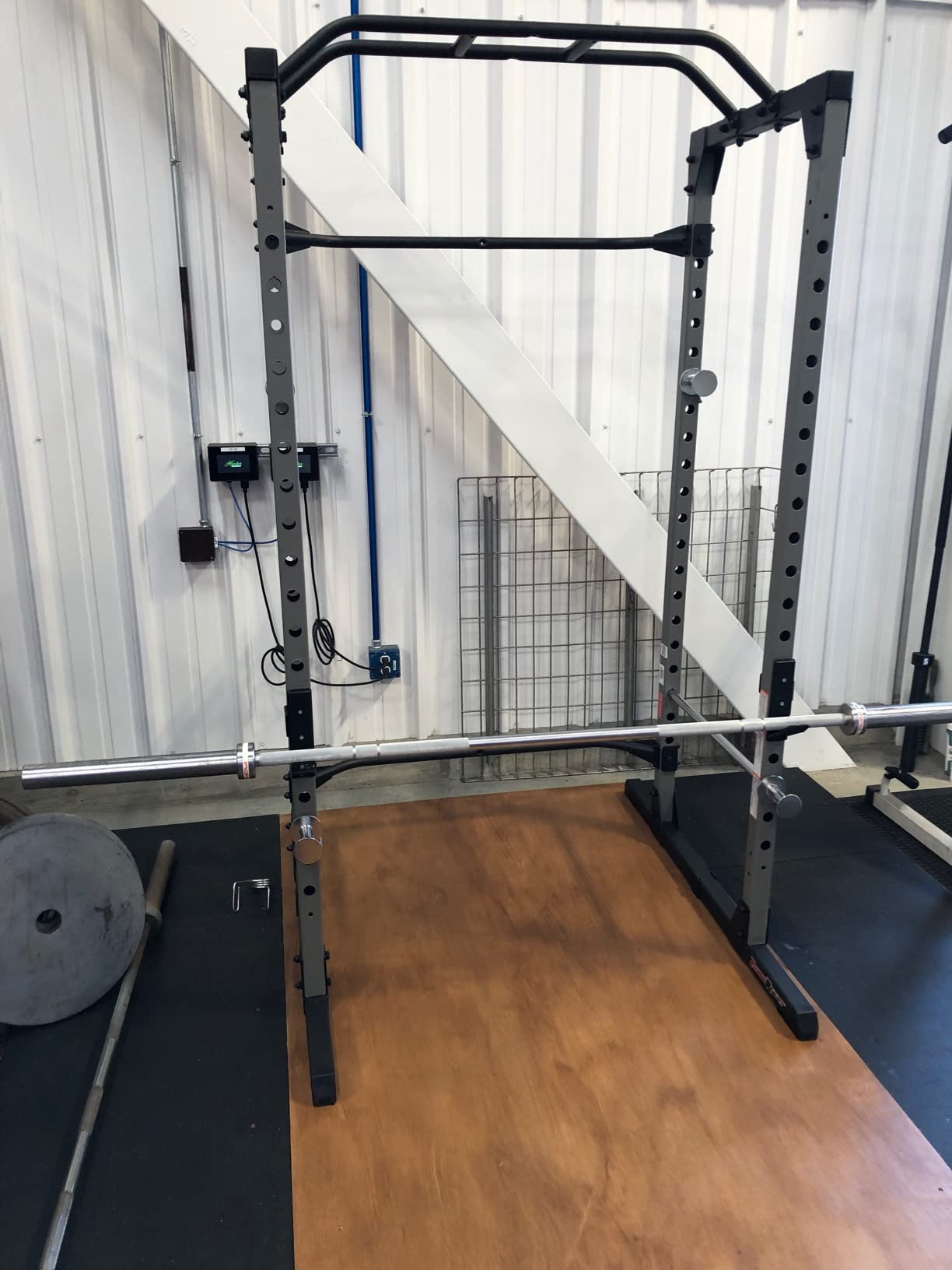
With a 4.8 rating across 298 reviews and a rating distribution where 86 percent of owners gave five stars, the feedback is unusually consistent. Buyers call it sturdy, well packaged, and premium in feel for the money, and they note the bearing rotation makes collar changes smooth.
The two recurring complaints are the lack of center knurling, which matters for squatting, and units arriving with a slippery oily protective coating that has to be wiped down before use.
Who the Iron Crush 7ft suits
It suits a CrossFit or functional fitness athlete who cleans, jerks, squats and deadlifts in the same week and wants rotation that works for both. The 45 lb standard weight and 28 mm shaft make it familiar to anyone coming from a commercial gym rack.
The 750 lb rating is ample for a home gym that is not chasing platform numbers, and the steel grade is well above what most bars at this tier use.
Who should skip it
Skip it if you need a center knurl, since a bar pad is the only workaround. Very heavy pullers who want a 1500 lb rating should step up as well.
12. Titan Fitness Technique Bar – The Best Starter Bar for the Big Three Lifts
Titan Fitness Olympic Technique Training Barbell, 6 FT Chrome Finish, 15 KG(33lb) 28MM Shaft, Rated 500 LB, Weightlifting Bar
33 lb bar
72 inch length
500 lb rated
28 mm shaft
Brass bushing sleeves
Pros
- Single knurl mark tuned for bench squat and deadlift
- Hard chrome coating resists scratches and corrosion
- Brass bushings give smooth consistent rotation
- No center knurl is comfortable on neck and chest
- Each shaft is ground polished and individually tested
Cons
- 500 lb capacity is below many full-size bars
- 6 ft length leaves less plate loading space
- No center knurl for lifters who want one
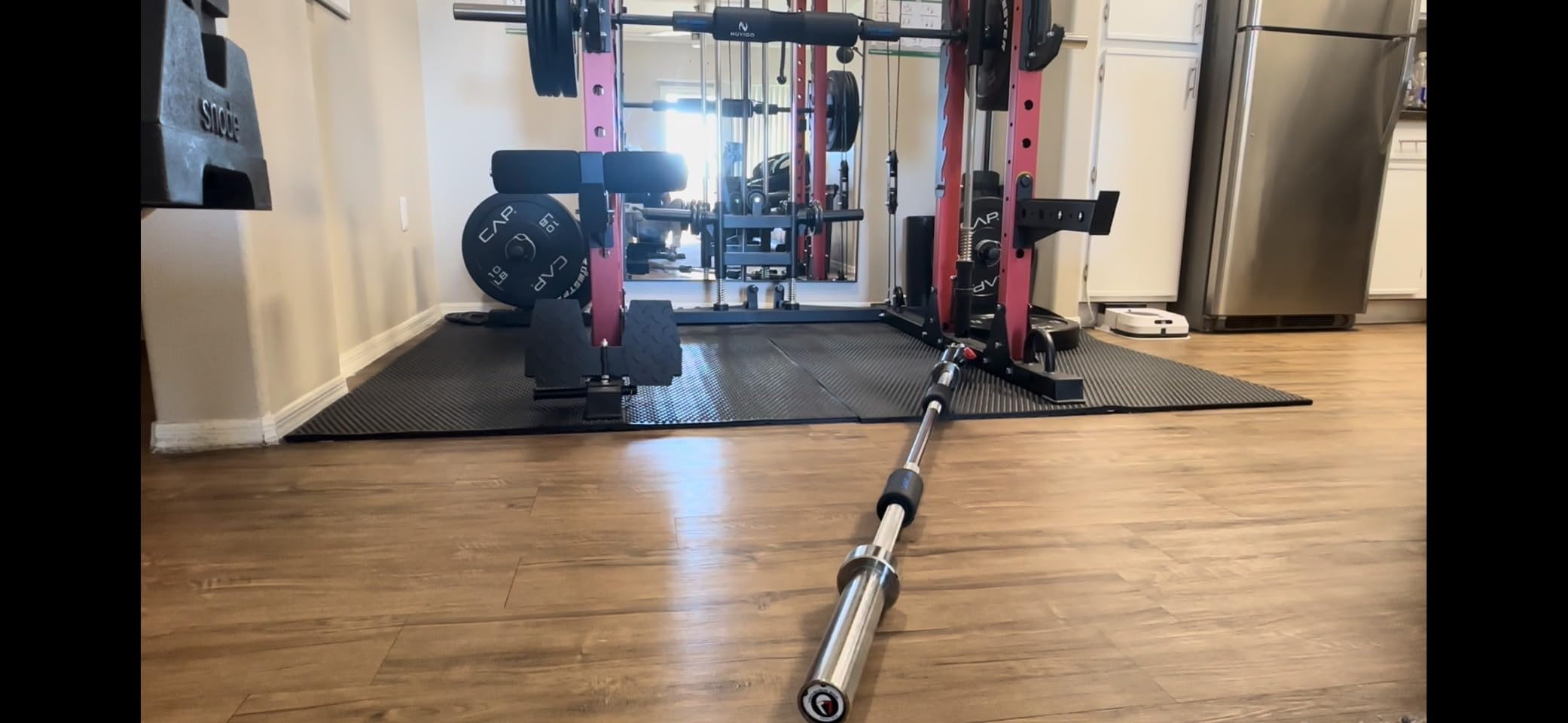
The Titan Fitness Technique Bar is built around a single idea: put one knurl mark where the three powerlifting lifts need it and leave the rest of the shaft smooth. It weighs 33 lb, measures 72 inches overall, and is rated to 500 lb with a 28 mm shaft.
Sleeves are 50 mm in diameter with 9.75 inches of loadable length, and brass bushings sit between the shaft and sleeve for consistent rotation. The hard chrome coating covers shaft and sleeves, and every shaft is individually ground, polished and tested for whip and flex before it ships.
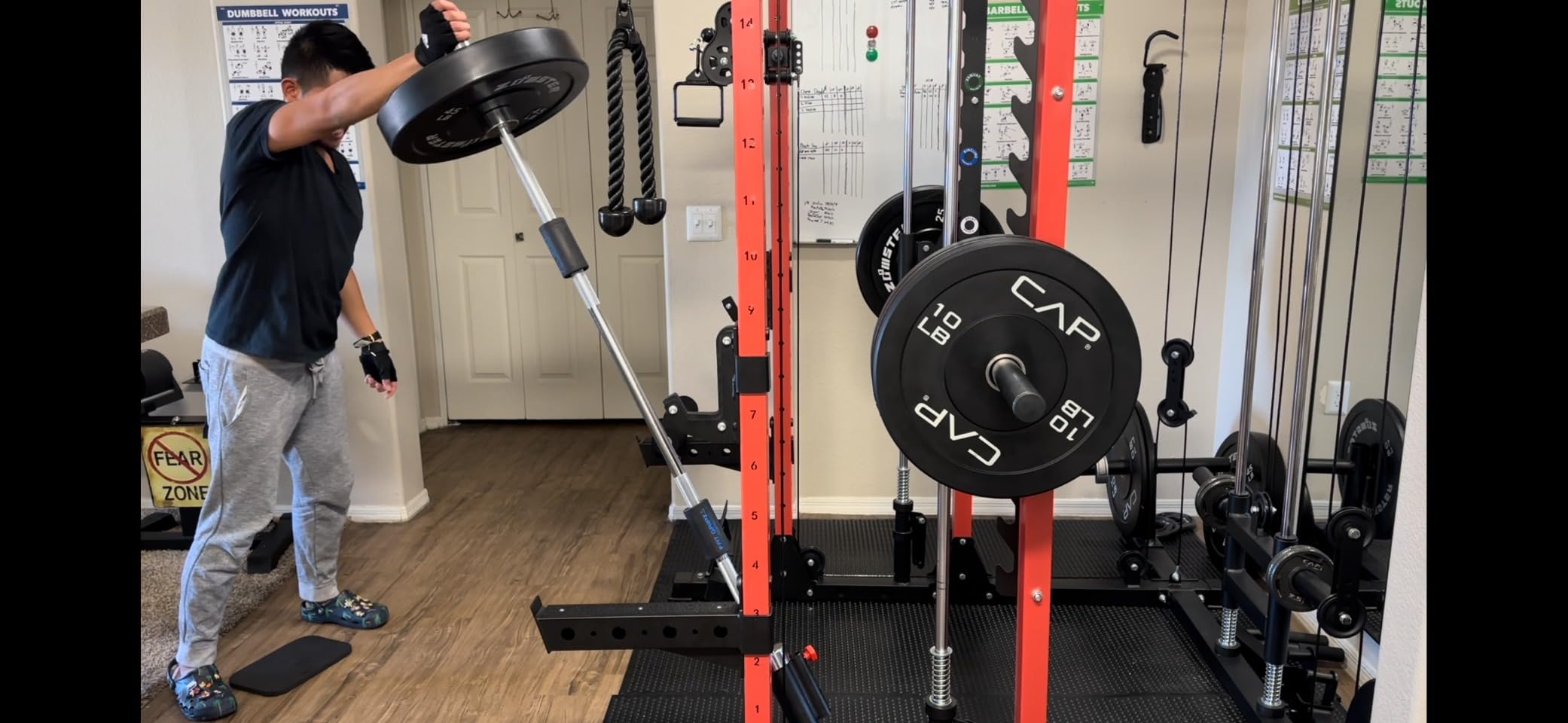
Owners rate it highly for build quality, grip and smooth bushing rotation, and the 4.7 rating with 83 percent five-star responses reflects a consistent experience. The absence of a center knurl is described as a comfort feature, since it stops abrasion on the neck and chest during squats and presses.
Two practical limits stand out. The 500 lb rating is below what most full-size Olympic bars carry, and the 9.75 inch loadable sleeve length is short, so you can stack fewer plates per side than on a 15 to 17 inch sleeve.
Who the Titan Technique Bar suits
It suits a beginner who wants one bar for the bench, squat and deadlift and does not want to think about knurl placement. The lighter 33 lb weight also makes it easier to control while learning, and the smooth centre section is comfortable in the back squat position.
It also works well as a second bar in a busy garage, because a 6-foot bar is much easier to move than a 7-foot one and it stores in half the space.
Who should skip it
Skip it if you are already training heavy, because 500 lb is a real ceiling and the 9.75 inch sleeve limits plate options. Anyone who wants a center knurl for back squats should choose a different bar.
Olympic vs Powerlifting Barbell: Which Do Home Lifters Need?
For most home lifters, the answer is the Olympic bar, because it is the more versatile of the two. A 7-foot Olympic bar with rotating sleeves handles squats, bench, deadlifts, presses, rows, cleans and snatches. A powerlifting bar is stiffer, usually has no bearings at all, carries a more aggressive knurl, and is built for stability under maximal loads rather than for rotation.
Stiffness is the real trade-off. A rigid bar like the Synergee Rhino transfers deadlift force into the platform rather than absorbing it in flex, which is why powerlifters like it. A bar with more whip, such as the HANDBODE, stores a little energy and returns it, which feels better in a fast press or a clean but can make a heavy squat feel unstable if the whip is excessive.
The middle ground for a garage gym is a bar like the Titan technique bar or the PAPABABE, which sit between the two extremes. Middle-ground design is why the best olympic barbell for a mixed programme usually is not the most specialised piece of steel on the shelf.
How to Choose an Olympic Barbell: 7 Checks Before You Buy
Measure first, buy second. A 7-foot bar is 86.4 inches long and a loaded bar needs well over seven feet of clearance to rack at full height, so a low garage ceiling can rule out a full-length bar before any specification matters. Most power racks hold a 7-foot bar when the outside width of the uprights is under roughly 52 inches. This is the single most common home gym mistake, and it is a five-minute tape-measure check that saves a 86 inch return.
Second, decide whether you need sleeve rotation at all. The recurring argument in home gym forums is that bushing sleeves are unsafe, and that is simply not true for squats and deadlifts. Bushings are quieter, stiffer under load and need no oil, and they are what most power bars use deliberately. Needle bearings matter when you are doing cleans, snatches, jerks or high-rep barbell circuits where sleeve spin saves your wrists. The Synergee Rhino is a reminder that running without bearings is a valid design choice rather than a compromise. Buy on the movements you actually do.
Third, check the shaft diameter, which changes the feel more than buyers expect. A 25 mm shaft feels noticeably thinner and is typically found on shorter technique bars, a 28 mm shaft is the modern standard, and a 30 mm shaft feels chunkier in the hands and is common on older and budget full-length bars. There is no correct answer here, only what your hands prefer across a long session.
Fourth, look at the knurl, and specifically at whether there is a center knurl. A center knurl gives the back squat a secure bite; without one you will need a bar pad. Deep knurling grips harder and rakes the skin more during high-rep sets, while moderate knurling is easier on hands and shirts. Deep and moderate is a personal preference, not a quality difference.
Fifth, factor in whip. Moderate whip is the sweet spot for most home lifters, since it stays out of the way under heavy triples and still feels responsive on presses. Excessive whip makes a heavy squat feel unstable, and almost no whip makes fast Olympic work feel dead.
Sixth, consider the finish and your garage climate. Chrome and bare steel are the most common and they will spot and pit in a damp, unheated space unless you wipe them down and add a light oil. Phosphate, E-coat, oxide and cerakote finishes are generally more forgiving, and the cerakote shaft on the Synergee Rhino wipes clean without effort.
Seventh, read the capacity rating and the warranty together. Capacity is what the manufacturer will stand behind, and ratings in this roundup run from 330 lb on the Yaheetech to 1500 lb on the Synergee. Warranty length varies even more, from 30 days on the CAP 7ft to a lifetime warranty against bending on both RitFit bars. A longer warranty is the cheapest insurance on the market for a piece of steel that touches your hands on every rep. If you also train with audio, our [best earbuds for lifting weights](https://www.theclassicalshop.net/best-earbuds-for-lifting-weights/) roundup is a reasonable side project while the bar soaks in.
What to Do If Your Barbell Arrives Bent
Bars arriving bent or damaged is one of the most repeated complaints in home gym forums, and it is more common than it should be. The good news is that almost every product in this roundup has a warranty that covers it, and the process is straightforward if you act early.
First, photograph the bar before you use it. Lay it on a flat floor and check the sleeve line for a visible curve, and photograph any dents, sleeve-end nicks or finish chips alongside the packaging. The Synergee Rhino and Iron Crush reviews both mention occasional cosmetic defects on arrival, which is exactly the kind of thing a photo settles in seconds.
Second, do not load it. A bent shaft concentrates load in one spot and is a genuine safety problem, not a cosmetic one. Keep the bar in the packaging and keep the shipping material until the issue is resolved.
Third, contact the seller the same week and describe the defect in the seller’s own terms, with your photos attached. Mention the warranty length for that specific model, which ranges from 30 days on the CAP 7ft to a lifetime warranty against bending on the RitFit bars, because that changes what the seller can offer you.
Fourth, if a replacement arrives, check it before the first session the same way. Wipe off any protective oil, run the sleeve line against a flat surface, and confirm the collars seat fully on both ends before you load anything.
Frequently Asked Questions
Which barbell is best for a home workout?
For most home lifters the CAP 7ft Strength Bar is the best starting point, because it is a full-length bar with a center knurl for back squats, a 30 mm grip, and the largest owner base of any bar in our comparison. If you are lifting lighter weights or teaching the basic lifts, the Titan Fitness 6ft technique bar is a lighter 33 lb alternative.
What size barbell should I buy for a home gym?
Buy a 7-foot bar, which is 86.4 inches long and 45 lb, if you squat and bench inside a power rack. Choose a 6-foot bar such as the Titan technique bar or the Rage Fitness training bar if space is tight or you are a beginner learning the lifts with less weight. A 4-foot or 57-inch bar only covers accessory work.
Is a bushing barbell good enough for home use?
Yes. Bushing sleeves are quieter, stiffer under load and need no lubrication, and they are the correct choice for squats, bench and deadlifts at home. Needle bearings are worth having only if you practise cleans, snatches, jerks or high-rep barbell circuits where faster sleeve rotation reduces wrist stress.
How much weight fits on an Olympic barbell?
It depends on the sleeve length rather than the bar length. Most 7-foot bars give 15 to 17 inches of loadable sleeve per side, so three 45 lb plates and a change plate fit comfortably on each end, while shorter bars such as the Titan technique bar allow only about 9.75 inches per side. Always check the plate diameter as well, since 2-inch Olympic plates are the standard fit.
What is the difference between an Olympic bar and a powerlifting bar?
An Olympic bar is a 7-foot 45 lb bar with rotating sleeves designed to handle squats, bench, deadlifts, presses and Olympic lifts. A powerlifting bar is stiffer, often has no bearings, and uses a more aggressive knurl for stability under maximal loads. Home lifters who train mostly the big three can use either, and mixed trainees usually prefer a moderate-whip bar.
Do I need a competition barbell for home lifting?
No. IWF certification and competition-spec steel offer very little for home strength training, and most forum consensus puts the mid-tier bars at the sweet spot. Competition-grade steel only starts to matter if you compete in weightlifting, and a home lifter squatting a few hundred pounds will never reach a meaningful portion of a 1,500 lb rating.
Final Verdict: Which Olympic Barbell Should You Buy?
The best olympic barbells for home lifting come down to what you train and how much you load. The CAP 7ft Strength Bar is the pick we would buy first, with a center knurl, a 30 mm grip and the most owner history in the category. Yaheetech is the value route, PAPABABE is the best-rated true 45 lb option, and the Synergee Rhino is the right call if your training is heavy powerlifting. Measure your ceiling and rack width, then order.