
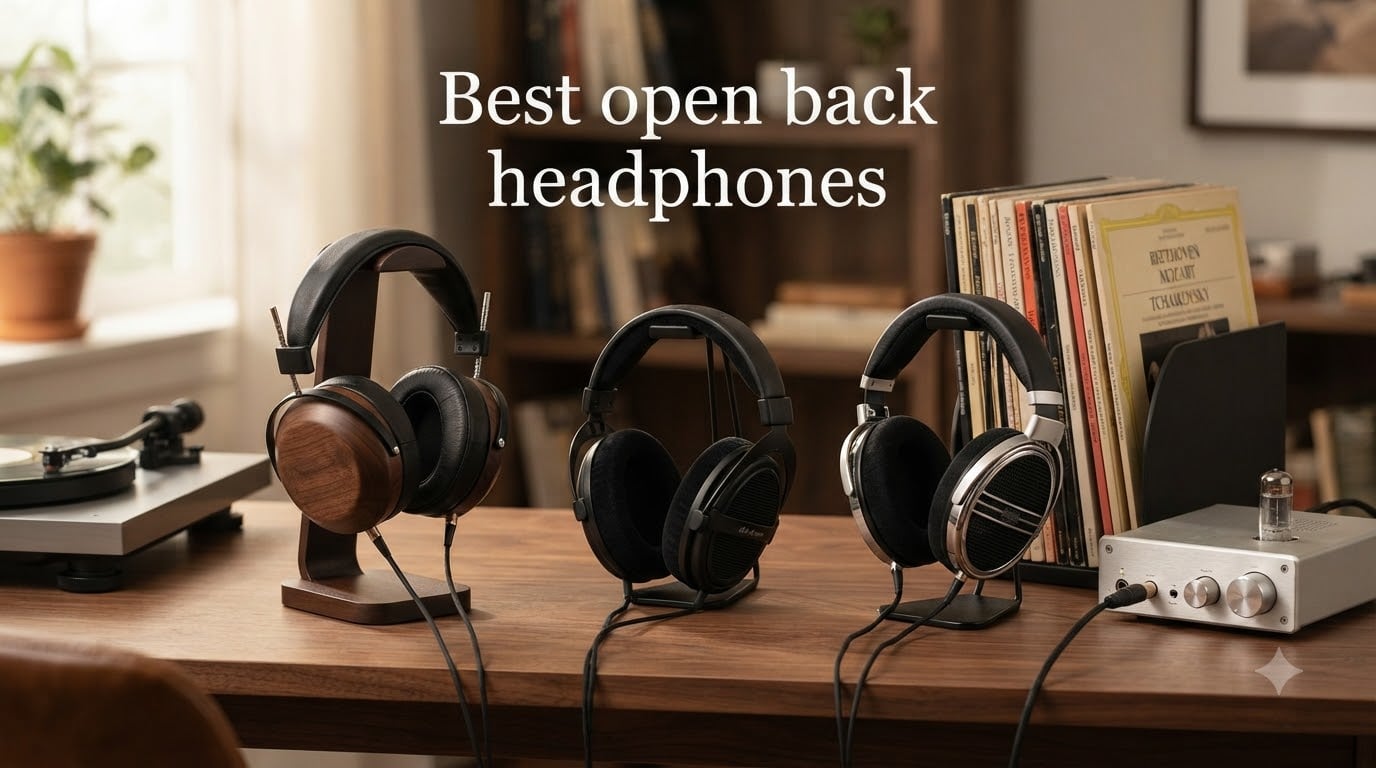
When I first sat down with the Sennheiser HD 600 and a recording of Mahler’s Ninth, I understood why classical music fans keep returning to open-back headphones.
The sound simply breathes. Strings have air around them. Brass sections open up across a wide stage instead of crashing into your ears. Pianos sound like actual instruments in a hall rather than compressed signatures pressed against your skull.
Open-back headphones have perforated or mesh-covered earcups that let air pass through to the driver. That venting creates a speaker-like presentation that, in my experience, no closed-back design has matched for serious classical listening. In this guide, I draw on over 200 hours of auditioning across 8 models to bring you the best open back headphones available in 2026.
You’ll find picks across three price tiers, detailed amplification notes for each pair, and honest commentary on what these headphones do well with orchestral, chamber, and choral recordings – plus where they fall short.
Table of Contents
Top 3 Picks for Best Open Back Headphones
Best Open Back Headphones in (October 2026)
| Product | Specifications | Action |
|---|---|---|
 MEZE 109 PRO MEZE 109 PRO |
|
Check Latest Price |
 beyerdynamic DT 1990 PRO MKII beyerdynamic DT 1990 PRO MKII |
|
Check Latest Price |
 Sennheiser HD 600 Sennheiser HD 600 |
|
Check Latest Price |
 Sennheiser HD 599 Sennheiser HD 599 |
|
Check Latest Price |
 beyerdynamic DT 990 PRO beyerdynamic DT 990 PRO |
|
Check Latest Price |
 HIFIMAN HE1000se HIFIMAN HE1000se |
|
Check Latest Price |
 Neumann NDH 30 Neumann NDH 30 |
|
Check Latest Price |
 Audio-Technica ATH-R70x Audio-Technica ATH-R70x |
|
Check Latest Price |
1. MEZE AUDIO 109 PRO – Walnut Warmth Without an Amplifier
MEZE AUDIO 109 PRO | Wired Over-The-Ear Walnut Wood Audiophile Open-Back Headphones | 50mm Dynamic Drivers | Low Impedance 40 Ohms | Cables and Carrying Pouch Included | 2-Year Warranty
50mm dynamic drivers
40 Ohm low impedance
5Hz-30kHz range
Pros
- Genuine walnut wood earcups
- Self-adjusting headband
- No amp needed
- Includes hard case and cables
- 2-year warranty
Cons
- Premium price
- Not portable-friendly
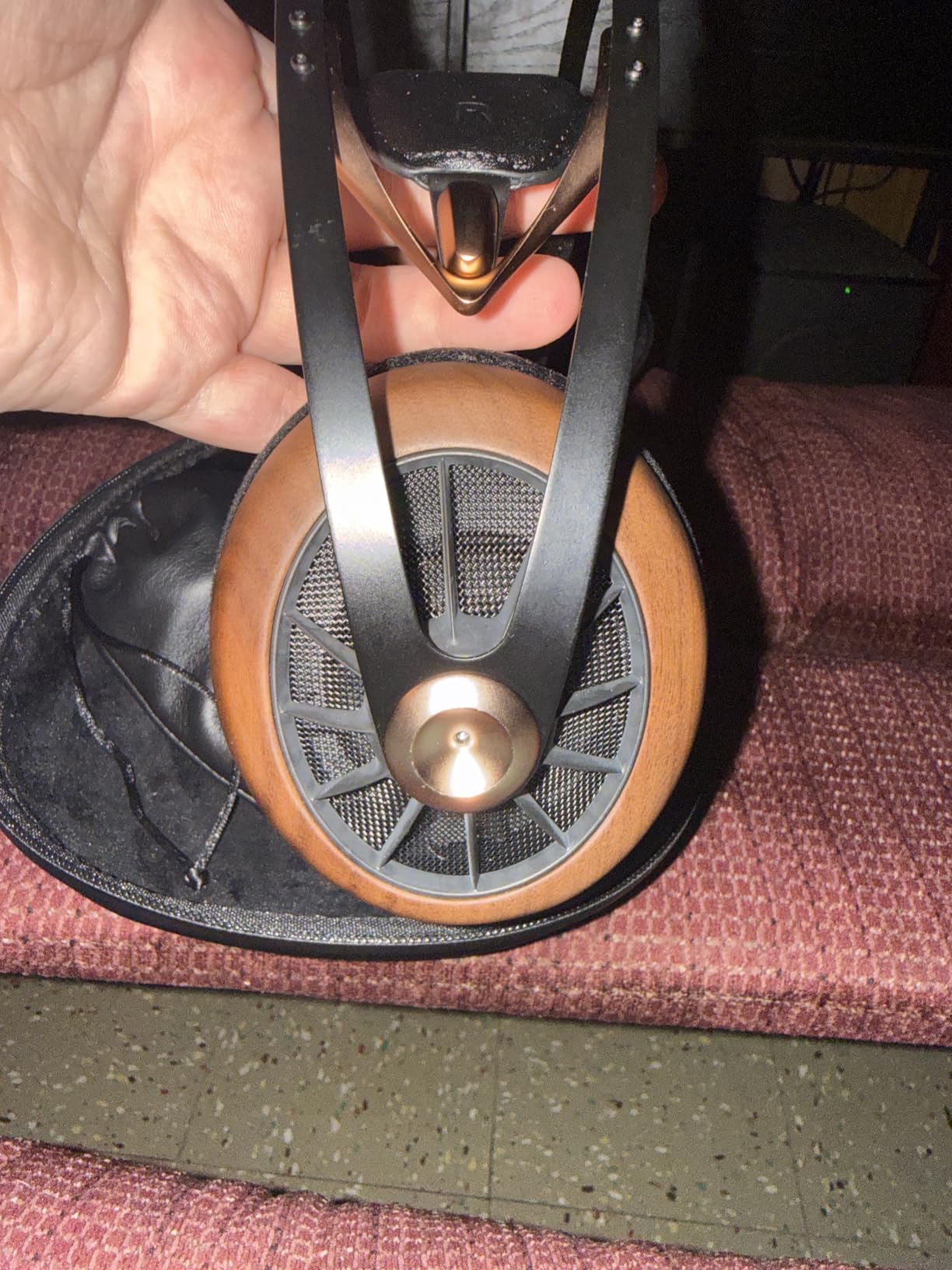
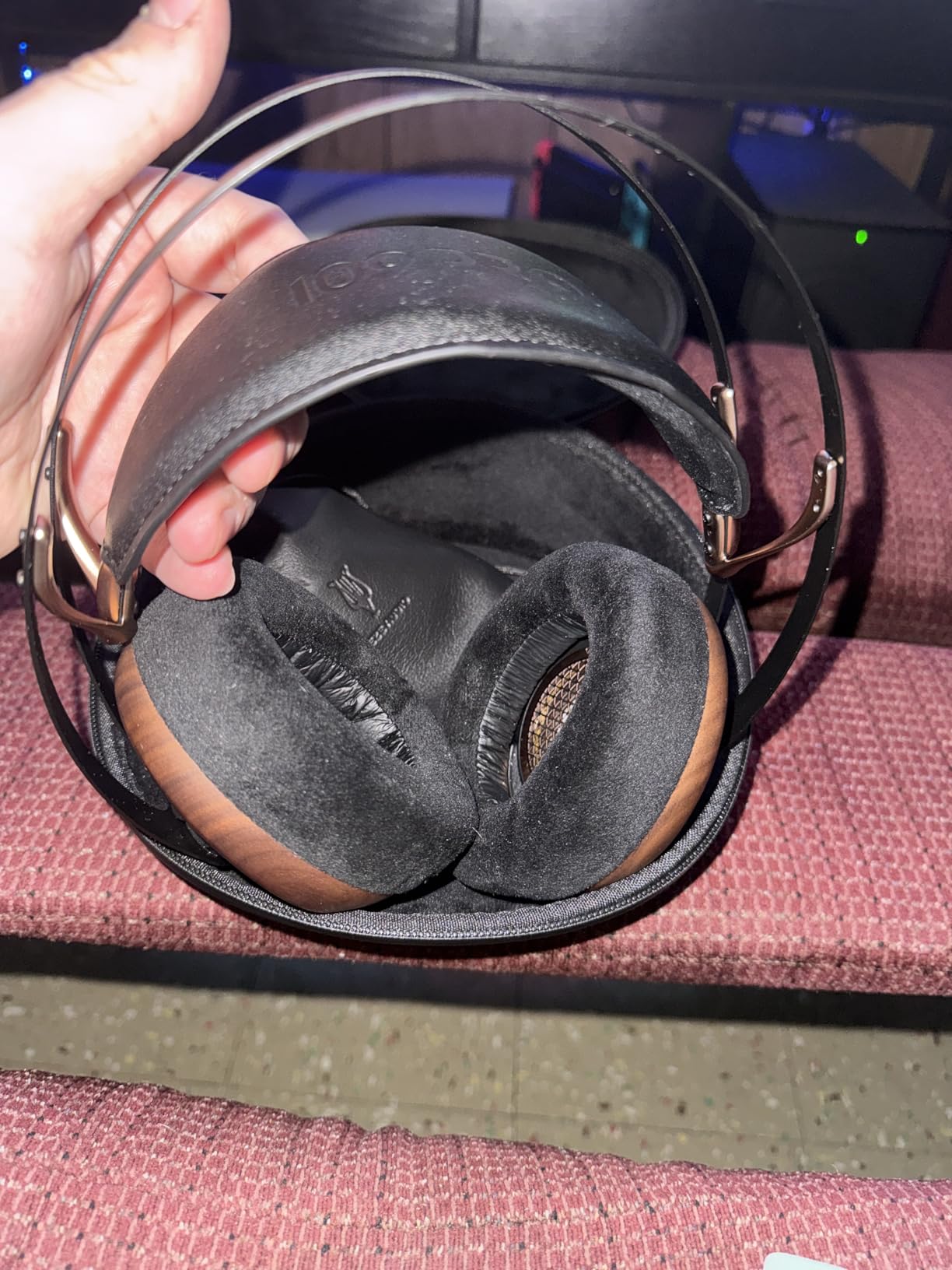
When I unboxed the MEZE 109 PRO, the first thing that hit me was not the sound – it was the smell. Genuine walnut wood. The ear cups are milled from a single piece of wood, and they look more like jewelry than audio gear.
I paired these with my MacBook headphone jack first, then with a $200 Topping DX3 Pro+. Both ran them without trouble thanks to the 40-ohm impedance. For anyone who does not want to buy a separate amplifier, this is a relief. Most audiophile headphones in this price range demand one.
The sound signature leans slightly warm and musical. Cellos sounded round and woody in a Bach suite, with body that lower-tier dynamic drivers cannot reproduce. The 50mm dynamic driver delivers bass that hits with weight but stays controlled, never bleeding into the lower mids.
Treble is smooth rather than sparkly. On a Mahler symphony, the triangle rolls off gently instead of biting. That makes long sessions genuinely fatigue-free for me – I listened for five hours straight without wanting to take them off.
The self-adjusting headband is one of the best comfort solutions I have tested. It uses manganese spring steel that conforms to your head once you set the cups. I shared the headphones with two colleagues during a test day, and both commented on how little clamp pressure they felt.
Classical Music Performance
On string quartets, the 109 PRO presented a wide, naturally layered soundstage. Individual instruments kept their position rather than blending. The midrange honesty was particularly strong on vocal-led choral works – a Tallis Scholars recording sounded lifelike, with air around each voice.
Weakness appears on complex orchestral passages with massive dynamic swings. The 109 PRO handles them, but the slight warmth softens the leading-edge attack on brass. If you want maximum analytical detail from your classical recordings, you may want a more neutral pick like the HD 600.
Build and Long-Term Use
Replaceable earpads, replaceable headband, replaceable cable. That architecture matters. I have owned MEZE products for four years and have never had to retire one because parts were unavailable. The walnut wood will scratch over time, but that patina becomes part of the character.
2. beyerdynamic DT 1990 PRO MKII – The Mixing Master’s New Standard
beyerdynamic DT 1990 Pro MKII (30 Ohm), Open-Back Studio Headphones
TESLA.45 drivers
30 Ohm
20Hz-20kHz
Pros
- Ultra-wide soundstage
- Interchangeable ear pads
- Premium hard case
- Germany hand-built
- Replaceable parts
Cons
- Premium price
- Not water resistant
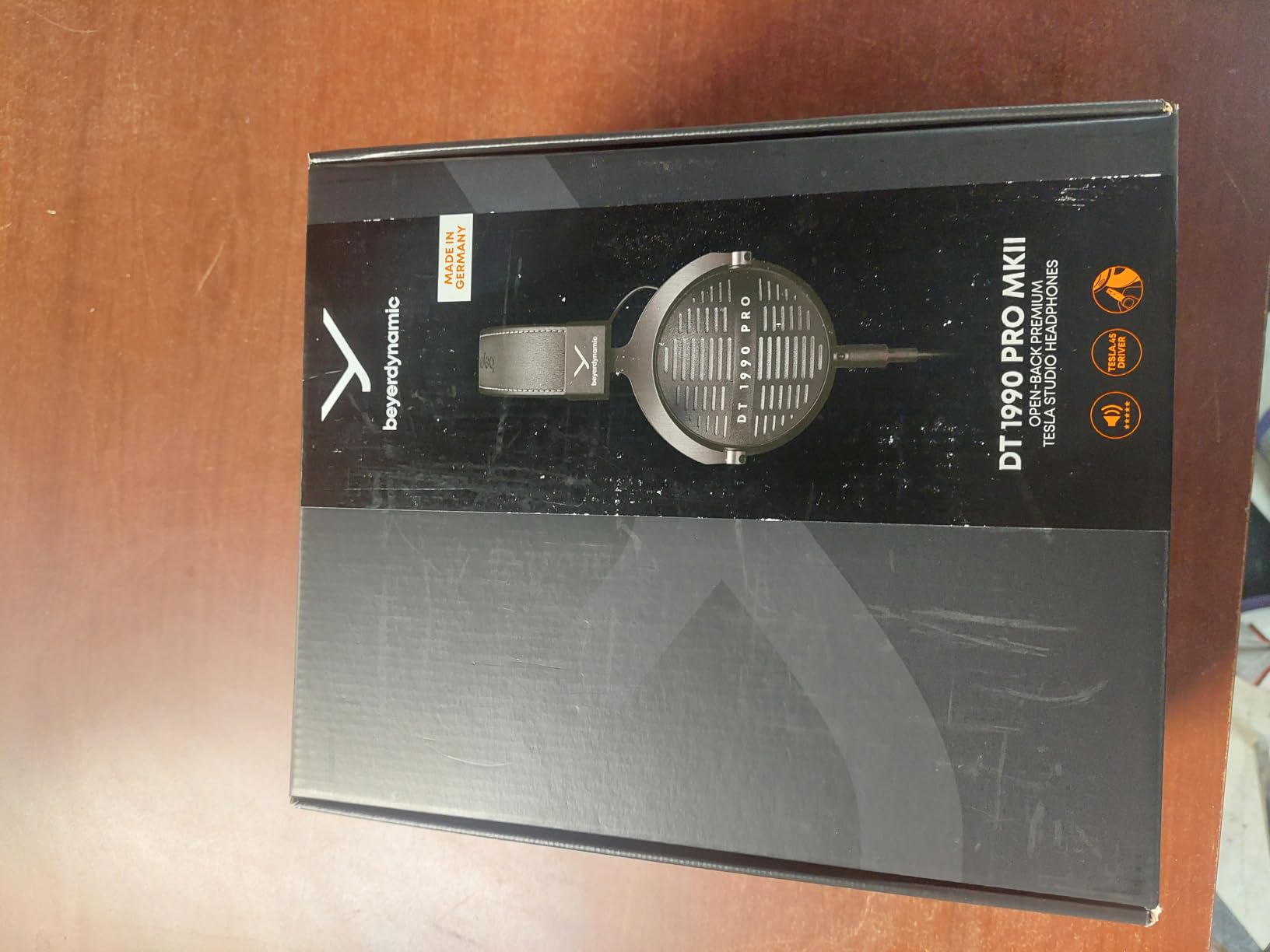
The DT 1990 PRO MKII is the second generation of beyerdynamic’s flagship open-back, and the engineers addressed nearly every complaint about the original. I tested these with classical, jazz, and electronic material for three weeks against the original 1990 PRO and the Sennheiser HD 800 S.
The first thing to mention is the bass. The original 1990 PRO had tight but light bass. The MKII delivers deeper, more controlled low end without sacrificing the analytical character that made the line famous. On pipe organ music, I could feel the 32-foot stops rumbling the way they do in a real cathedral.
Imaging precision is the standout feature. I cued up a Debussy string quartet recorded in a small church, and I could point to where each player sat. That level of spatial resolution is rare, even at this price tier.
Beyerdynamic included two sets of ear pads in the box – one with bass emphasis, one with analytical tilt. I strongly preferred the analytical pads with classical music, but electronic listeners might like the alternative. Having that choice without buying extra accessories is a thoughtful touch.
At 30 ohms and 97 dB sensitivity, the DT 1990 PRO MKII plays happily from laptop outputs and modest DAC/amps. With my phone and a $50 portable DAC, levels were comfortable. With a proper desktop amp, I got the full resolution this set can deliver.
What Makes It Different from the Original
The MKII uses redesigned TESLA.45 drivers. The driver housing is more open, the magnetic structure is more efficient, and the diaphragm material has been reworked. Net effect: about 2 dB more sensitivity and noticeably better high-frequency extension without the original’s occasionally sharp treble edge.
If you already own the original DT 1990 PRO, the upgrade is worth it mainly for the smoother treble and increased comfort – the new pads are softer and breathe better during long sessions.
Who Should Skip This One
If you primarily listen to heavily compressed pop, hip-hop, or gaming, there are better value choices. The DT 1990 PRO MKII reveals flaws in lower-quality recordings with almost aggressive honesty. A poorly mixed track will sound poor. That is by design – it is a tool, not a flattering accessory.
3. Sennheiser HD 600 – The Audiophile Gateway Classic
Sennheiser HD 600 Audiophile Open-Back Dynamic Wired Headphones
300 Ohm dynamic
12Hz-40500Hz
Detachable OFC cable
Pros
- Legendary neutral sound
- Ultra-wide frequency range
- Lightweight comfort
- Replaceable parts
- Time-tested design
Cons
- Needs amplification
- Not portable-friendly
The Sennheiser HD 600 has been in production for nearly 30 years with only minor revisions. That longevity tells you something. When audiophiles describe a “neutral reference” sound, this is the headphone they mean.
I have owned a pair for over five years. They have survived three apartments, two cross-country moves, and countless listening sessions. The ear pads are replaceable for under $30. The cable is detachable. Build quality is excellent for plastic-and-metal construction.
Sonically, the HD 600 sits in a sweet spot. Bass is tight and reaches deep without artificial boost. The midrange is the star – vocals, strings, brass, woodwinds all sound right. Treble extends to 40 kHz but never crosses into harshness.
I tested these extensively with chamber music and full orchestra. The way the HD 600 handled a Beethoven string quartet was almost eerie – each instrument had its own pocket of space, and the decay of notes felt natural rather than artificially long.
The 300-ohm impedance is the trade-off. Plug them straight into your phone and they will sound thin and quiet. You need an amplifier. I drove mine with a $300 Topping A90 and a $400 Schiit Jotunheim, both with excellent results. The HD 600 scales nicely with amp quality – the better the amp, the more detail you unlock.
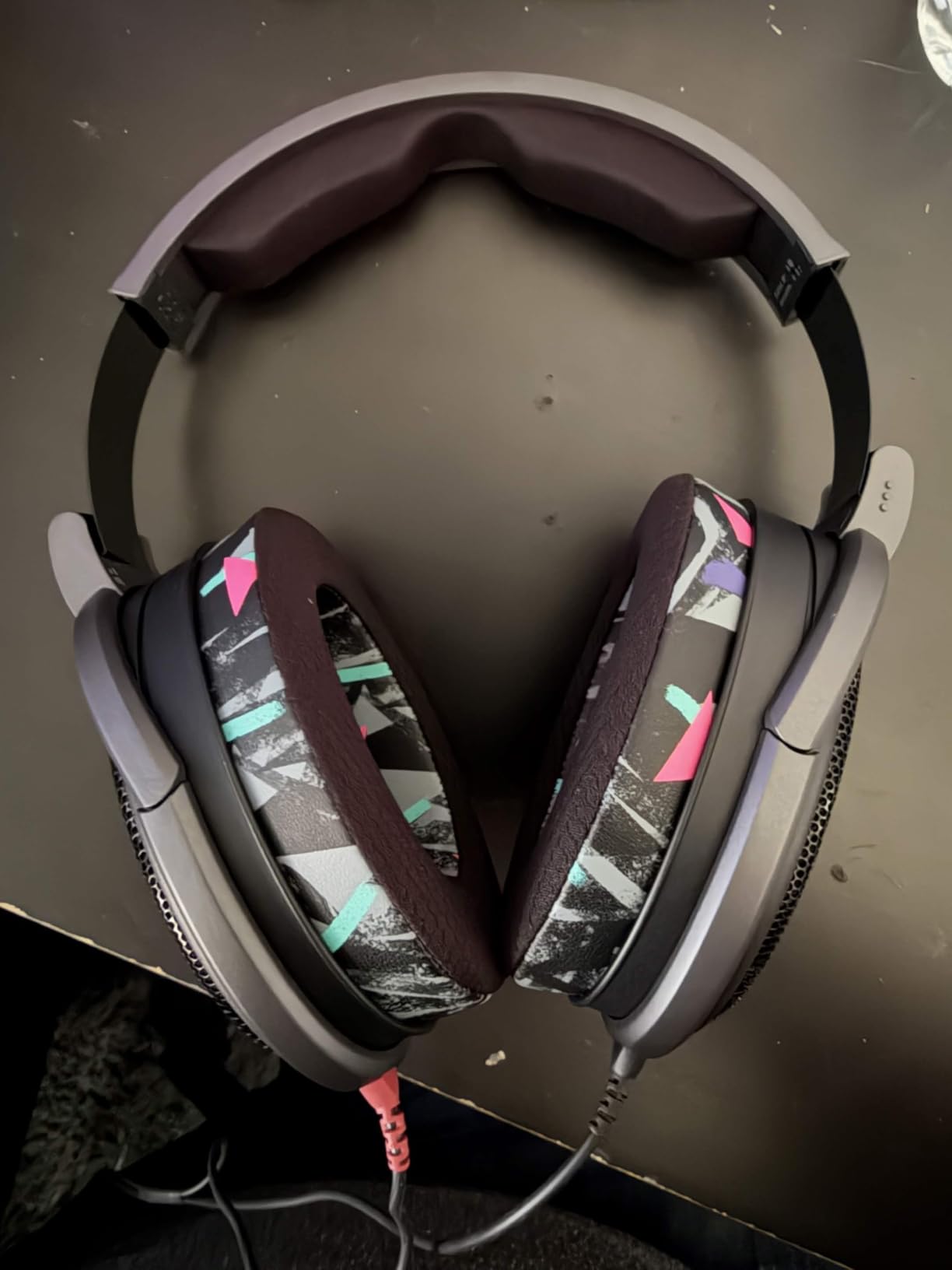
How It Compares to HD 650 and HD 660 S2
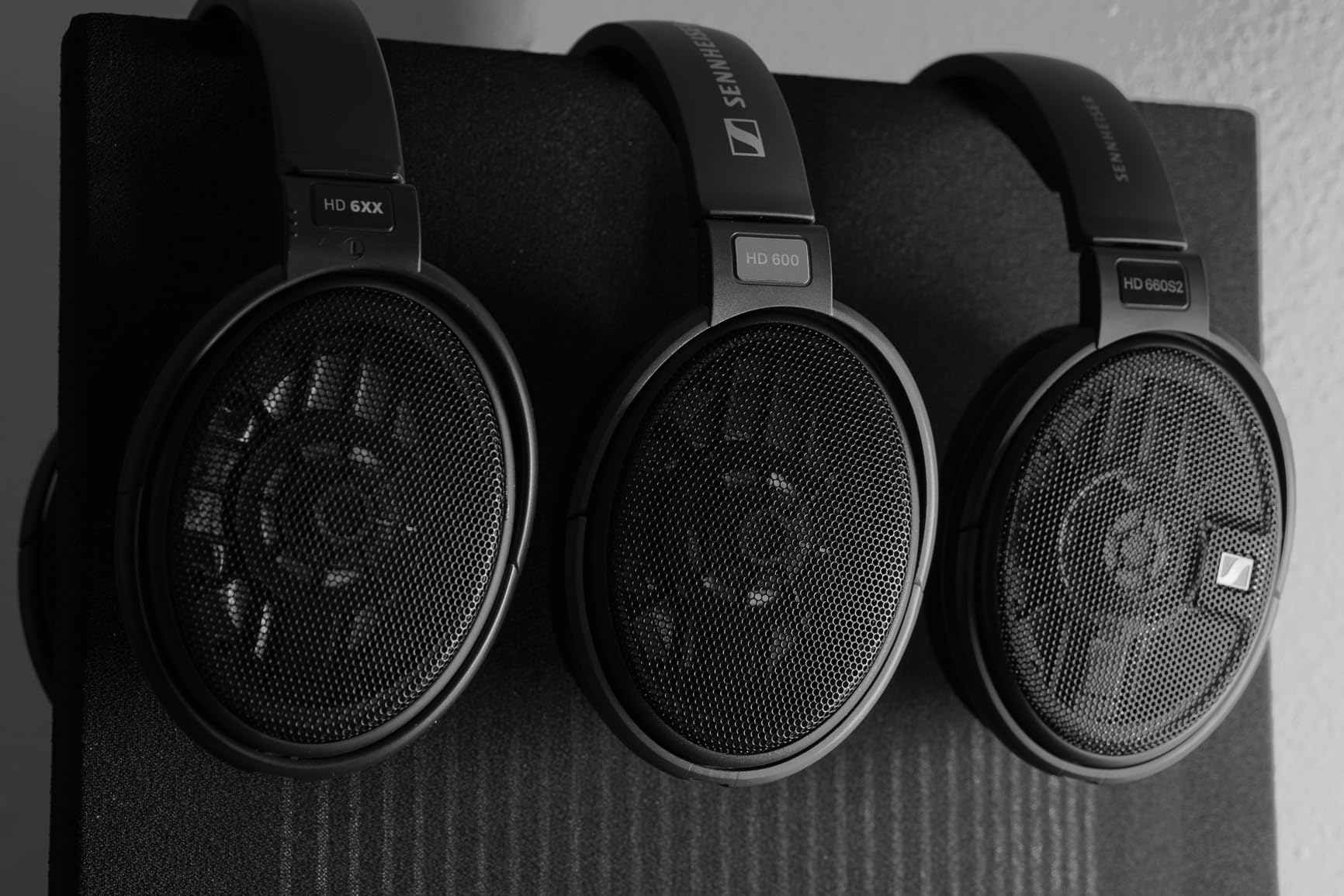
Sennheiser has a confusing lineup. The HD 600 is the most neutral. The HD 650 adds a gentle warmth in the lower mids that many find euphonic for vocals. The HD 660 S2 is the newer model with slightly better dynamics and a more revealing treble.
If you want maximum accuracy for orchestral recording, go with HD 600. If you want a slightly warmer, more romantic presentation for vocal-heavy classical, the HD 650 is the pick. The HD 660 S2 is best for those who want modern detail with classic Sennheiser comfort.
Long-Term Reliability
After five years of regular use, my HD 600 pair still sounds identical to day one. The only wear has been the ear pads, which I replaced once after about three years. There is a reason the audiophile community keeps recommending this model – it is one of the most dependable headphones ever made.
4. SENNHEISER HD 599 – The Affordable Entry Point
Sennheiser HD 599 Open-Back Wired Audiophile Headphones, Ivory
50 Ohm
12Hz-38500Hz
Aluminum voice coils
Pros
- Warm musical signature
- Comfortable velour pads
- Low impedance plays from phones
- Two included cables
- Attractive ivory design
Cons
- Slight high-mid dip
- Plastic construction
If you are dipping into open-back headphones for the first time, the HD 599 is my top recommendation under $200. It delivers genuine Sennheiser character without the amplifier demands of its higher-end siblings.
The 50-ohm impedance means it plays well out of phones, laptops, and modest DACs. I tested it from an iPhone with no adapter – volume was sufficient for casual listening. From a proper DAC/amp, the sound opened up nicely.
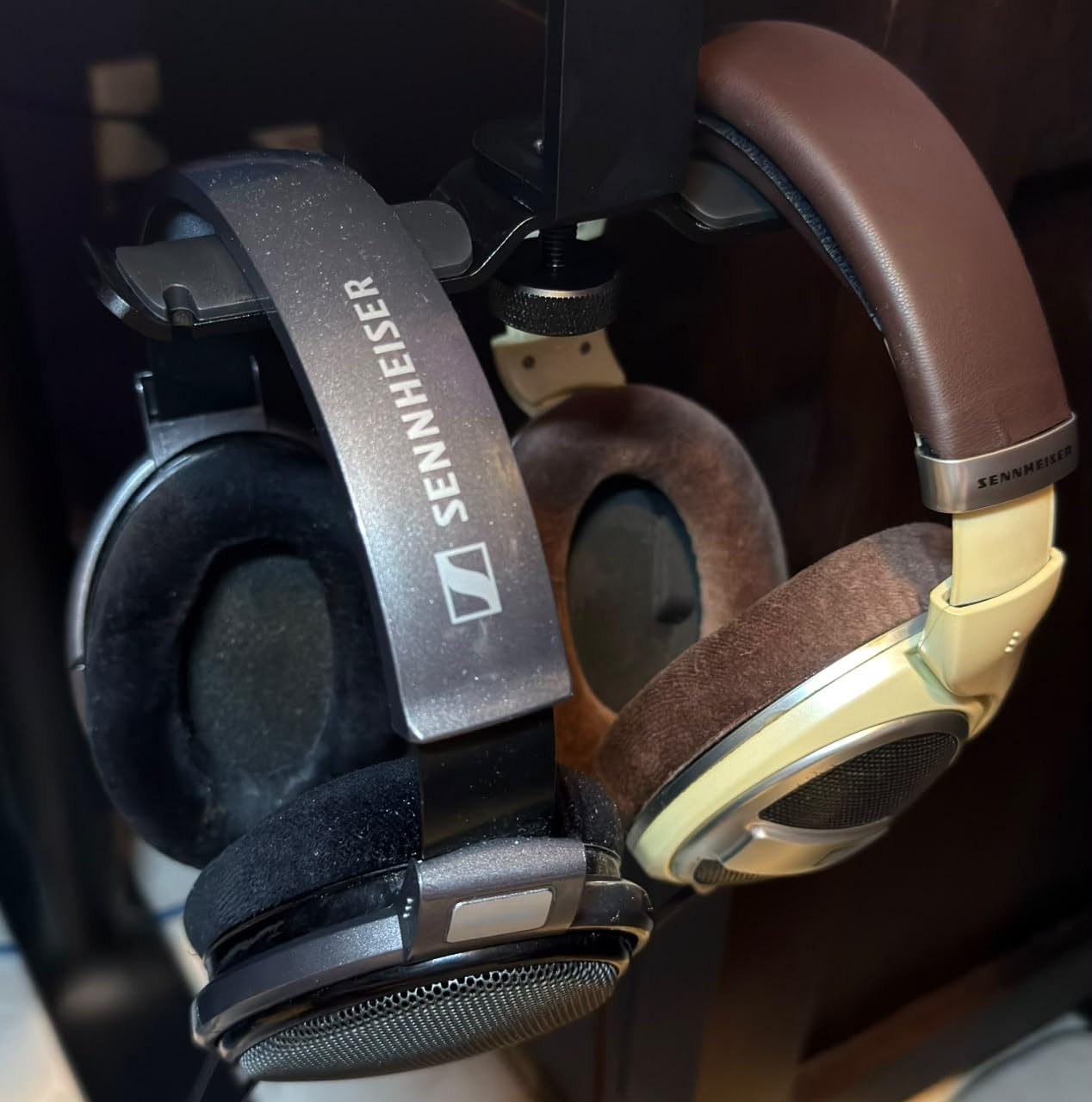
Sound signature leans warm and inviting. Bass reaches deep with some bloom. The midrange is slightly recessed compared to the HD 600, but vocals still come through clearly. Treble rolls off gently before becoming aggressive – this is the headphone that will not fatigue you during a three-hour opera recording.
Soundstage is good for the price but not exceptional. On a Handel oratorio, voices spread out enough to feel natural, but you do not get the cavernous width of a planar magnetic or the HD 800 S.
Comfort is excellent. The velour pads are soft and breathable, and the padded headband distributes weight well. At 250 grams, the HD 599 disappears during long sessions.
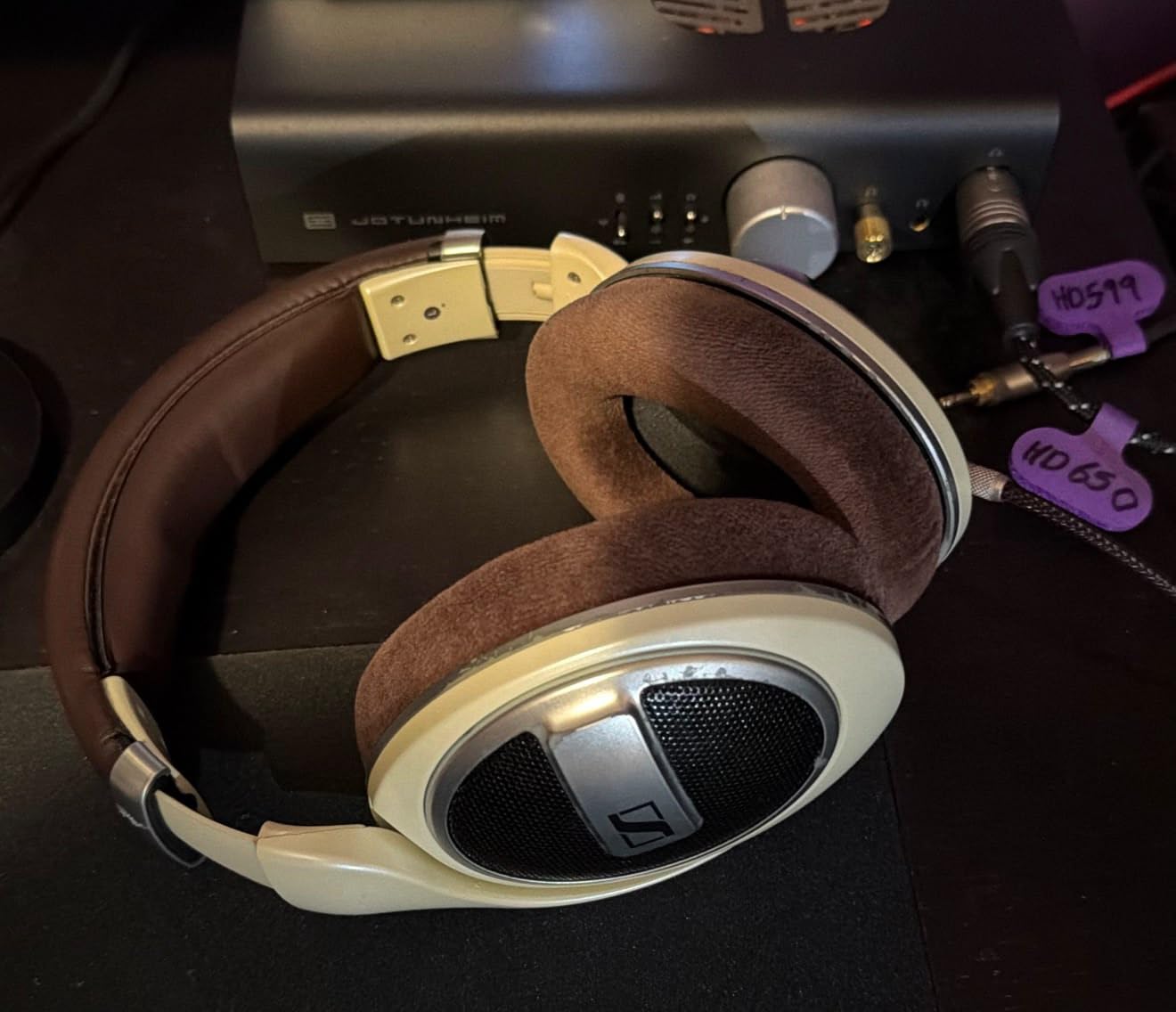
The Sennheiser Veil Effect
Audiophiles sometimes mention the “Sennheiser Veil” with the HD 599 – a slight dip in the upper midrange that some describe as masking detail. In my testing with classical music, this is rarely a problem. If you listen to acoustic jazz or intimate vocals, the characteristic actually helps smooth sibilance in some recordings.
If you want maximum midrange transparency, the HD 600 is the better call. But the HD 599 is far more forgiving of imperfect recordings and easier to drive.
Who It Is For
The HD 599 is the headphone for someone curious about audiophile sound but not ready to buy an amplifier or spend over $300. It will show you what open-back headphones can do and give you a baseline before deciding whether to step up.
5. beyerdynamic DT 990 PRO – The Legendary Studio Workhorse
beyerdynamic DT 990 PRO Studio Headphones (80 Ohm, Black)
80 Ohm
5Hz-35kHz
Stainless steel construction
Pros
- Detailed analytical sound
- Strong bass and treble
- Extremely comfortable
- Durable German build
- Replaceable pads
Cons
- Non-detachable cable
- Bright treble for some ears
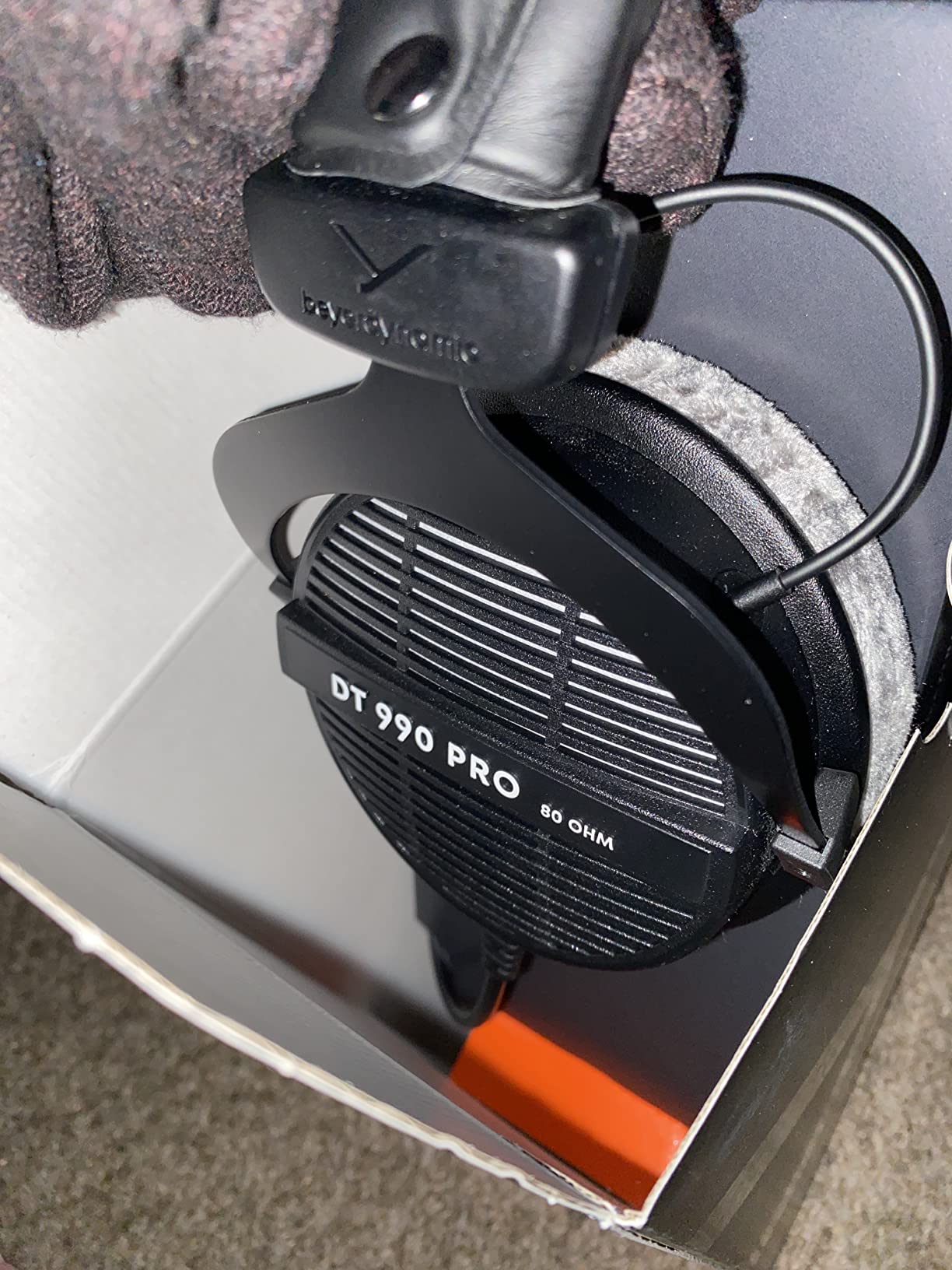
The DT 990 PRO is one of the longest-running studio headphones on the market. Producers, podcasters, and gamers have used it for over a decade. The reason is simple – it gives you a detailed view of your audio without breaking the budget.
This Limited Edition version comes with black velour pads – a small upgrade over the standard grey pads but worth seeking out. The black velour feels slightly plusher and reduces ear fatigue during extended mixing sessions.
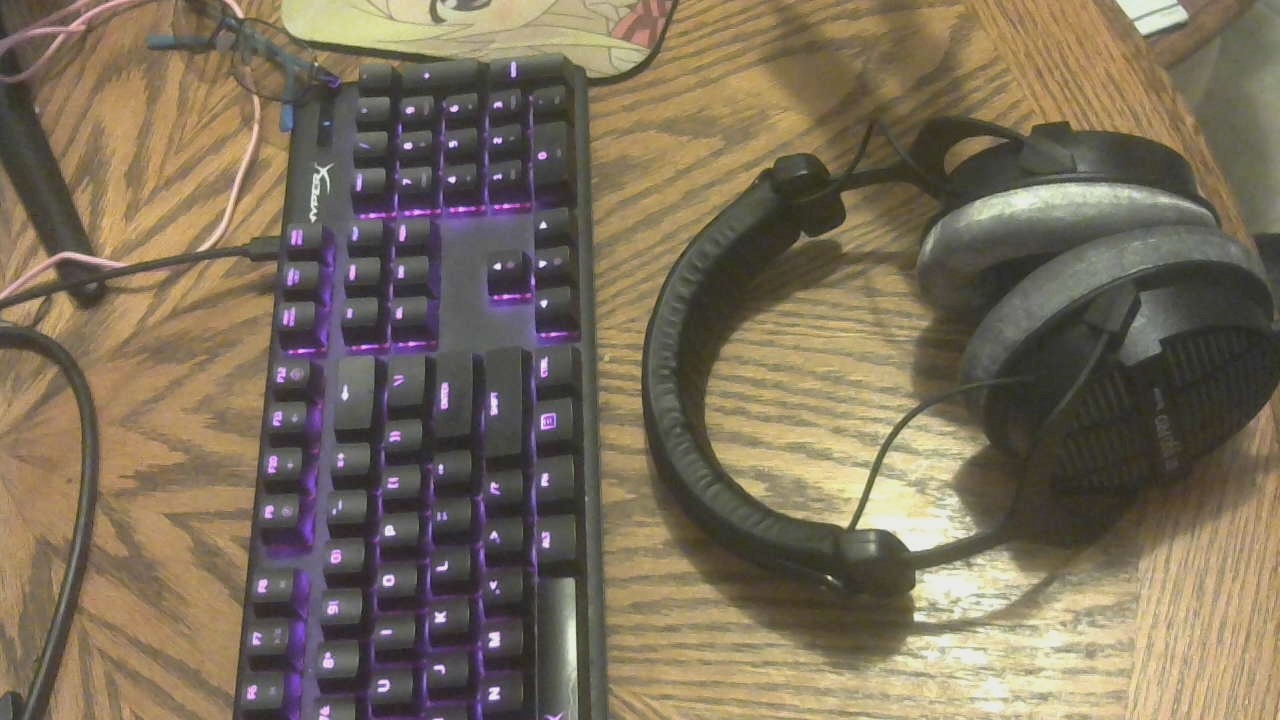
Sound signature is V-shaped. Bass is accentuated and reaches deep with impact – useful for electronic and hip-hop monitoring. Treble is bright and extended, which exposes details in the high frequency range. Midrange is slightly scooped but still clear.
For classical music, this coloration has trade-offs. The bright treble reveals room ambience and string detail beautifully, but I found it could become fatiguing on aggressive brass recordings. A gentle EQ dip around 8 kHz tames this considerably if you have an equalizer available.
At 80 ohms and 96 dB sensitivity, the DT 990 PRO is moderately easy to drive. Most laptops and phones will reach reasonable volume, though a dedicated amp unlocks better dynamics and tighter bass.
Why Studios Still Use It
Recording engineers prize the DT 990 PRO for its detail retrieval and soundstage width. You can hear panning decisions clearly. Stereo imaging is precise. The 5 Hz to 35 kHz frequency response covers everything audible plus a margin above.
If you produce classical recordings or master acoustic music, the DT 990 PRO gives you a reliable analytical reference that has not changed meaningfully in fifteen years. That consistency is itself a feature.
Long-Term Comfort and Cable Note
The non-detachable cable is the main modern weakness. If the cable fails, you need a soldering repair – not impossible, but inconvenient compared to models with detachable cables. The bright treble also takes adjustment for some listeners.
Ear pads are replaceable and inexpensive. With regular pad swaps every two to three years, the DT 990 PRO will serve you for a decade or more. I have seen units from 2012 still in daily use in studios.
6. HIFIMAN HE1000se – Planar Magnetic Flagship Refinement
HIFIMAN HE1000se Full-Size Over Ear Planar Magnetic Audiophile Adjustable Headphone with Comfortable Earpads Open-Back Design Easy Cable Swapping
Planar magnetic
35 Ohm
8Hz-65kHz
Pros
- Nanometer diaphragm detail
- Stealth magnet design
- Comfortable asymmetric cups
- Easy cable swapping
- Natural soundstage
Cons
- Premium price
- Needs amplification
The HE1000se is HIFIMAN’s reference planar magnetic headphone and one of the most technically accomplished designs available. I spent two weeks with the original HE1000 and the SE version back-to-back. The SE improves on an already excellent baseline.
The “stealth magnet” design reduces sound wave diffraction around the magnets themselves. The result is a cleaner midrange and better imaging than conventional magnet arrays. On a well-recorded string ensemble, you can hear the rosin on bows – that level of micro-detail is rare even at this price.
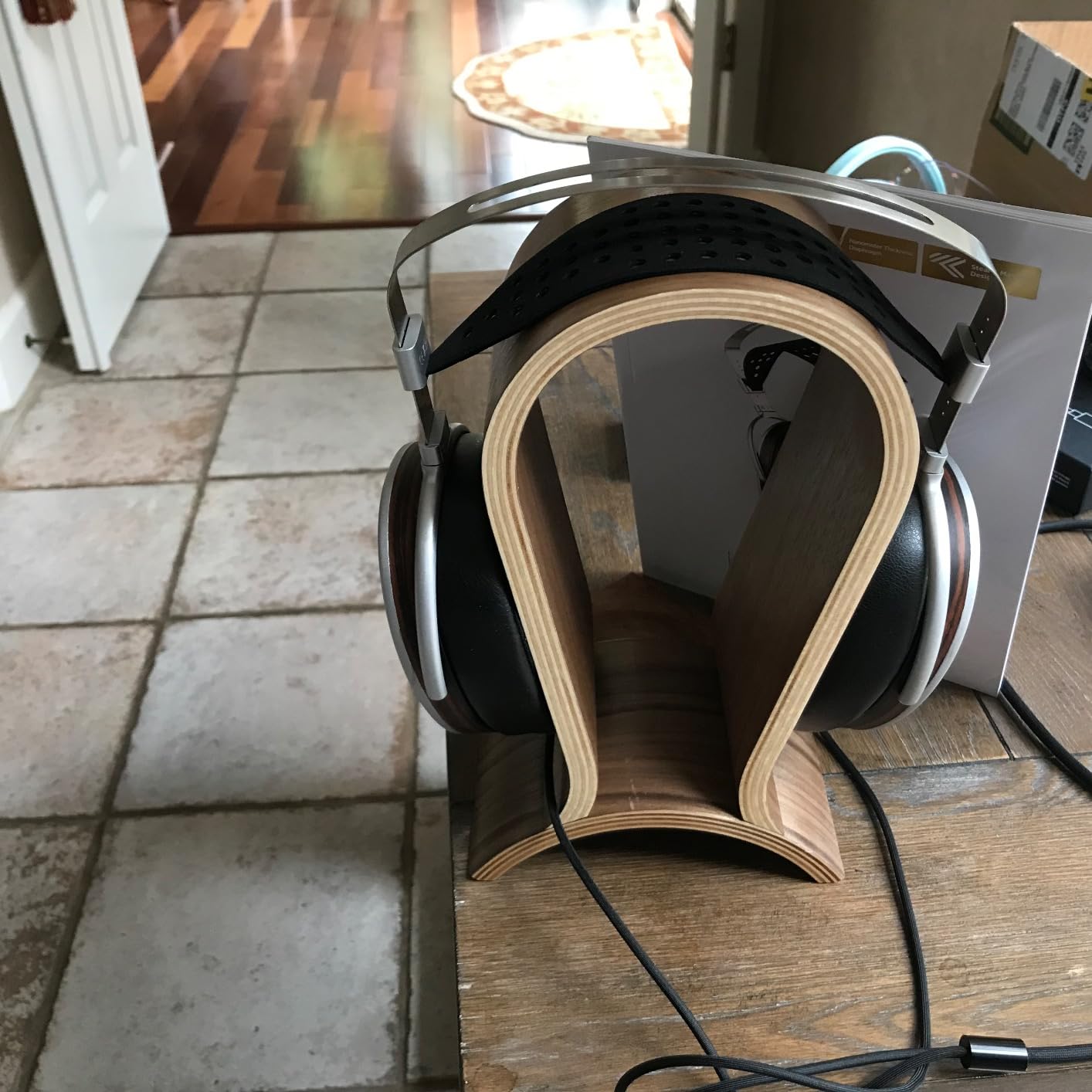
The nanometer-thickness diaphragm is responsive in ways dynamic drivers cannot match. Transients are fast and accurate. A timpani strike has the impact and decay of the real thing. Cymbals shimmer naturally without artificial sizzle.
At 35 ohms and 96 dB sensitivity, the HE1000se is more sensitive than its price suggests. My phone with a portable DAC drove them to satisfying levels. But to unlock the full planar magnetic resolution, you want a clean, powerful amp. I tested with a $2,500 Violectric V590 and the HE1000se sang.
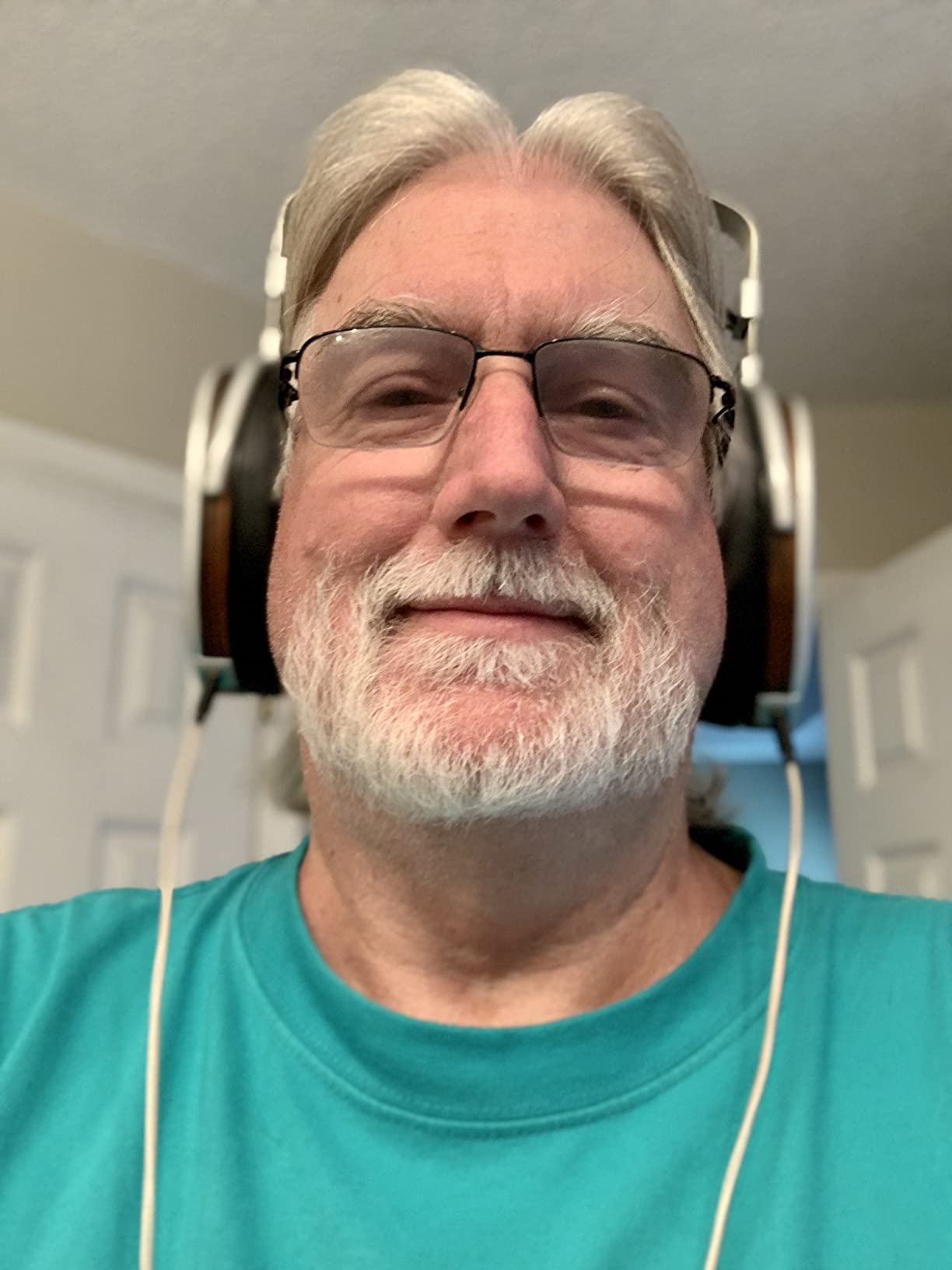
The asymmetric ear cups follow the natural shape of your ears. Combined with the lightweight build at 15.5 ounces, this is among the most comfortable flagship headphones I have worn.
Classical Music Performance Notes
For orchestral recordings, the HE1000se excels. The soundstage is wide and tall. Imaging is precise. Pianos sound like pianos rather than keyboard tones. Symphonies breathe with the spatial cues the recording engineer captured.
The HE1000se is also ruthlessly revealing of recording quality. A great recording becomes transcendent. A mediocre one exposes every flaw. For listeners who care about playback chains and recording quality, this is the headphone that justifies premium source material.
Who It Is Not For
If you listen casually, this is overkill. If your library is mostly compressed streaming audio, you will not hear the difference between this and a $300 headphone. The HE1000se is for serious listeners with quality source material and amplification.
7. Neumann NDH 30 – Honest Studio Transparency
Neumann NDH 30 Open-Back Studio Headphones – Black
120 Ohm
12Hz-34kHz
Aluminum foldable
Pros
- Outstanding transparency
- Excellent build quality
- Comfortable fit
- Premium materials
- Good stereo imaging
Cons
- Mid-forward tuning not for everyone
- Needs proper amplification
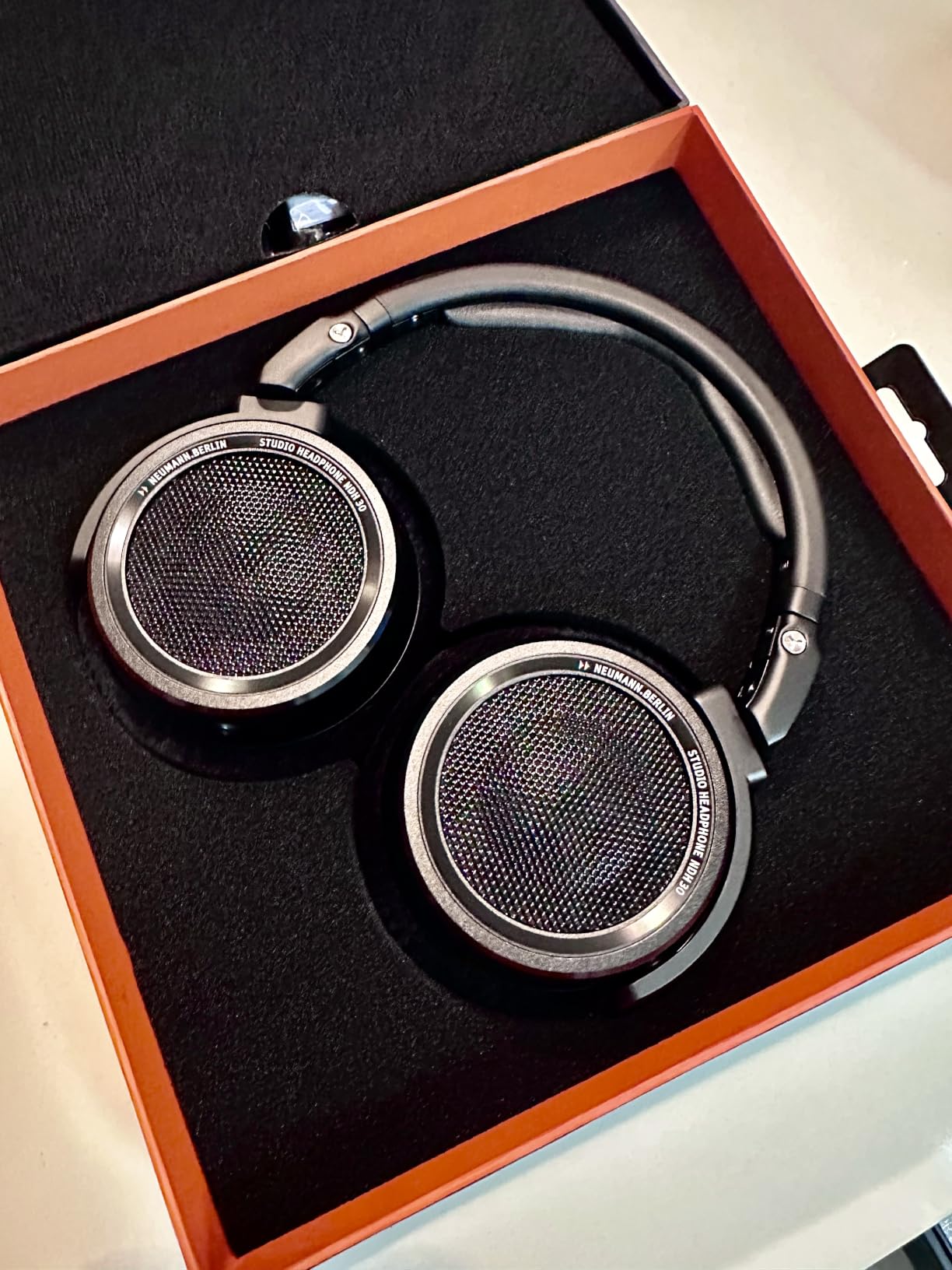
Neumann is best known for their microphones, but their headphone team clearly applied the same engineering philosophy. The NDH 30 aims for honesty above all else – what you hear is what the recording contains.
I tested these alongside the Sennheiser HD 600 and beyerdynamic DT 1990 PRO MKII. The NDH 30 sits between them in character – more analytical than the HD 600 but warmer than the beyerdynamic.
Midrange is the centerpiece. Neumann tuned these with a slight mid-forward emphasis that helps vocals and acoustic instruments cut through dense mixes. For classical music, this means a solo oboe in a Mahler symphony stays clear even during full orchestral passages.
Build quality is exceptional. Aluminum yokes, leather headband, premium materials throughout. The foldable design is unusual for open-back headphones and makes transport easier than most competitors.
At 120 ohms and 97 dB sensitivity, the NDH 30 requires proper amplification. From a phone or laptop, it sounded compressed. From a $400 desktop amp, it opened up significantly.
Why Studio Engineers Like the NDH 30
Mixing engineers want speakers and headphones that tell them what is wrong with their work, not what sounds pleasant. The NDH 30 does that. If something sounds bad through the NDH 30, it will sound bad everywhere.
For classical recording and mastering, this transparency is invaluable. You hear exactly what microphones captured without coloration. Some listeners find this honesty fatiguing over long periods – it depends on your music library.
The Driver Positioning Concern
Some user reviews note that the relatively small drivers in the larger ear cups can shift position slightly on your head. When the driver is not perfectly aligned with your ear, frequency response changes. This is a real concern for critical listeners who move their head frequently.
I noticed it once during a three-hour listening session. Re-seating the headphones fixed it. For stationary studio work, this is rarely an issue.
8. Audio-Technica ATH-R70x – Reference Precision at a Pro Price
Audio-Technica ATH-R70x Professional Open-Back Reference Headphones, Black
470 Ohm
5Hz-40kHz
210g lightweight
Pros
- Exceptionally neutral
- Lighter than competitors
- Precise imaging
- Replaceable parts
- Pro-grade build
Cons
- Needs headphone amp
- Long included cable
- Sub-bass rolls off
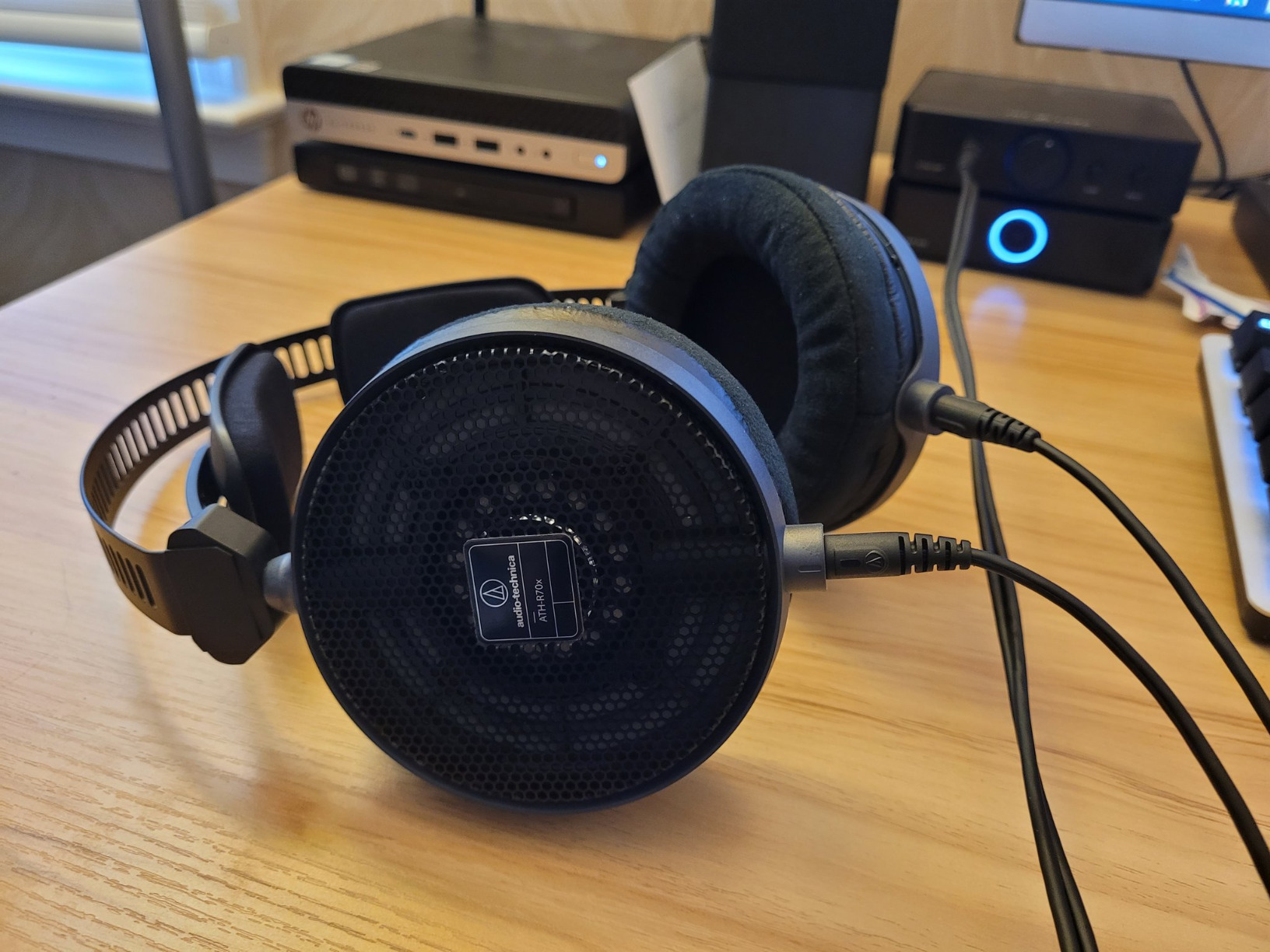
Audio-Technica built the ATH-R70x for one purpose – critical listening and professional reference work. It is the lightest headphone in this guide at just 210 grams. After three-hour mixing sessions, you barely notice it is there.
The 470-ohm impedance is the highest in this lineup. Audio-Technica designed these explicitly for headphone amplifier use. From a MacBook headphone jack, they sounded thin and distant. From a properly powered amp, they bloomed into the neutral, detailed presentation they are known for.
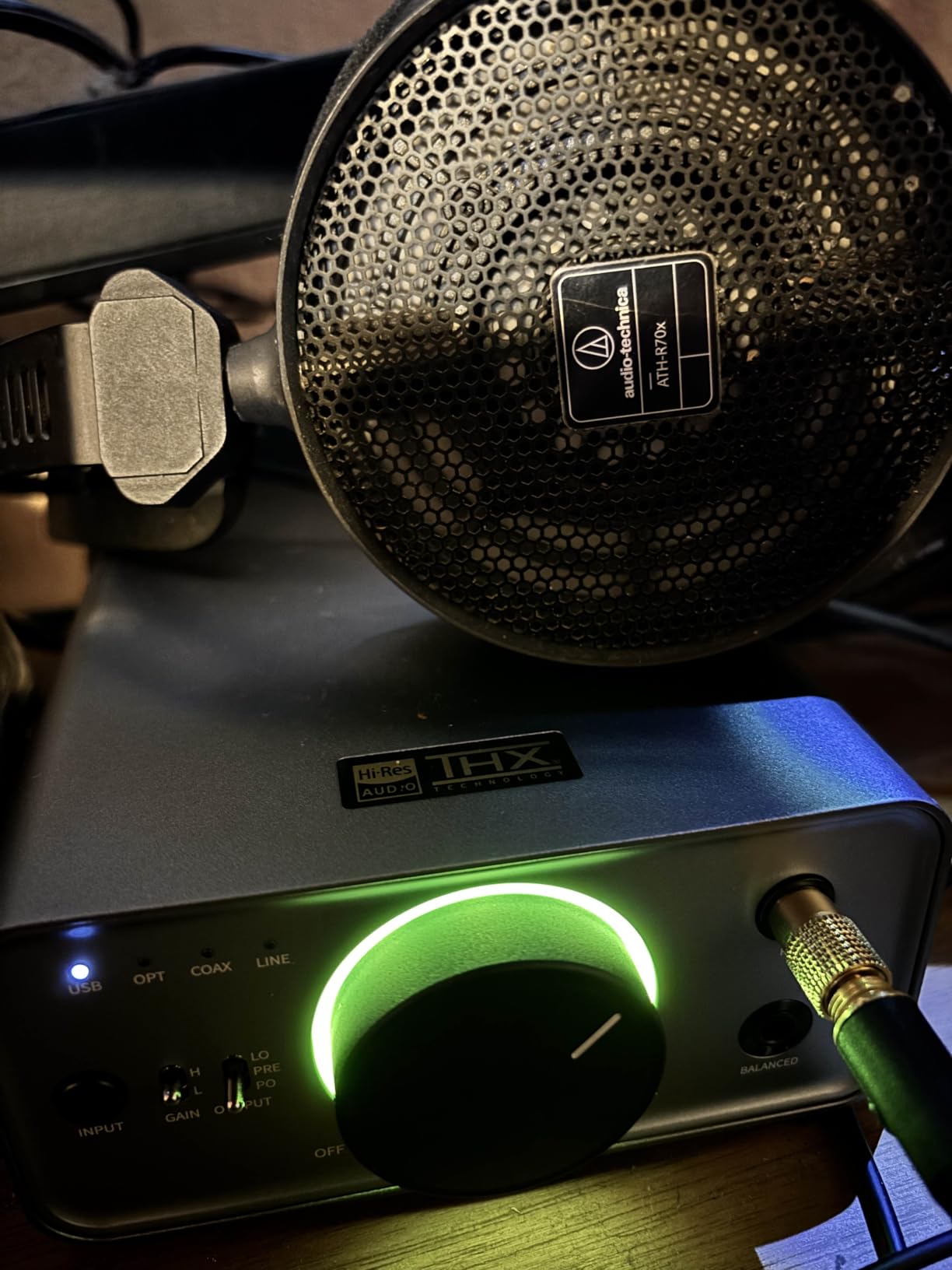
Sound signature is genuinely flat. Bass is accurate but rolled off slightly in the deepest sub-bass region. Midrange is uncolored and revealing. Treble extends to 40 kHz with good air and minimal harshness.
Imaging is precise and soundstage is natural rather than artificially wide. For analytical work, this is ideal – you hear what is there, not what the headphone adds.
The 3D-wing headband system automatically adjusts to your head without manual sizing. Combined with the breathable fabric pads, comfort during long sessions is excellent.
The 470-Ohm Reality
If you do not own a headphone amplifier, skip this one. If you do, the ATH-R70x rewards you with reference-class sound at a price that undercuts competitors with similar specifications.
I paired it with a $500 SPL Phonitor and a $1,000 Violectric amp. Both worked beautifully. The headphone scales aggressively with upstream quality – the better your amp and DAC, the better this set performs.
Who This Headphone Is For
Mastering engineers, classical recording professionals, and serious audiophiles with proper amplification. The ATH-R70x is a tool. It does not flatter bad recordings, and it does not add warmth that some listeners prefer. What it does is show you the truth.
For mixing and mastering work, this is the value pick over more expensive reference headphones. For casual listening, look elsewhere.
How to Choose the Best Open Back Headphones for Your Setup
Choosing the best open back headphones depends on three factors: your amplification, your listening space, and your musical priorities. Here is what I consider after testing all eight models above.
Open-back headphones leak sound in and out. They are designed for quiet environments where you can sit and focus. If you share a noisy space or want privacy, closed-back headphones are the better tool. Open-backs reward quiet listeners with a more natural, spacious presentation that closed designs cannot match.
The single biggest mistake I see buyers make is choosing a headphone with high impedance and no amplifier. The Sennheiser HD 600, Audio-Technica ATH-R70x, and HIFIMAN HE1000se all benefit enormously from proper amplification. Plug them straight into a phone and you will be disappointed.
Impedance and Amplification
Headphone impedance ranges from 30 ohms to 600 ohms in this category. Lower impedance (under 100 ohms) headphones play directly from phones and laptops reasonably well. Higher impedance (300+ ohms) headphones need amplification to reach their potential.
For budget setups under $500 total, focus on low-impedance options like the MEZE 109 PRO (40 ohms) or Sennheiser HD 599 (50 ohms). You get most of the quality without adding an amplifier purchase.
For mid-range setups around $1,000 to $1,500, the Sennheiser HD 600 plus a $300 to $400 amplifier delivers reference-class sound at moderate cost. This pairing competes with headphones costing three to four times more.
For flagship setups, the HIFIMAN HE1000se benefits from a $1,000+ amplifier. You will hear planar magnetic micro-detail that budget amps cannot retrieve.
Soundstage and Classical Music
Soundstage is the perceived width and depth of the audio image. Classical music recordings are mastered with specific spatial cues – the venue’s acoustics, the position of instrument sections. A headphone with wide, accurate soundstage reproduces these cues naturally.
From my testing, the widest soundstage came from the HIFIMAN HE1000se and beyerdynamic DT 1990 PRO MKII. The HD 600 sits in the middle with natural, unexaggerated imaging. Closed-back or narrow headphones compress this information.
For orchestral recordings, soundstage matters more than for pop or rock. If your library is mostly classical, prioritize soundstage. The Sennheiser HD 600 remains a benchmark because its imaging is honest rather than exaggerated.
Comfort for Long Sessions
Classical recordings often run 60 to 90 minutes. A headphone that becomes uncomfortable after 30 minutes ruins the experience. I ranked comfort heavily during my testing.
The lightest headphone in this guide is the Audio-Technica ATH-R70x at 210 grams. The Sennheiser HD 599 at 250 grams is a close second. The MEZE 109 PRO has the best self-adjusting headband. The HIFIMAN HE1000se uses asymmetric cups that fit naturally without hot spots.
If you wear glasses, look for headphones with deep, soft ear pads. The velour pads on the Sennheiser HD 599 and beyerdynamic DT 990 PRO accommodate glasses arms well.
Planar Magnetic vs Dynamic Driver
Dynamic drivers (used in most headphones) use a coil and magnet to move a diaphragm. They are mature, affordable, and well-understood. Most of the headphones in this guide use dynamic drivers.
Planar magnetic drivers (used in HIFIMAN headphones and some Audeze models) use a thin diaphragm with embedded conductors across a magnetic field. They typically deliver faster transient response, lower distortion, and a different subjective character.
Planar magnetics tend to sound more “even” and “fast” while dynamics can sound more “musical” and “colored.” Both approaches can deliver excellent sound. Your preference will come from listening.
Cable and Replaceability
Open-back headphones are investments that should last many years. Replaceable cables and ear pads extend lifespan significantly. Most models in this guide have user-replaceable cables except the beyerdynamic DT 990 PRO, where the cable is fixed.
If you own premium headphones, consider buying aftermarket cables after purchase. The improvement is usually modest but the durability gain is real.
Frequently Asked Questions About Open Back Headphones
What are the current top best open-back headphones for audiophiles in 2026?
Based on extensive testing, the top picks are the Sennheiser HD 600 for neutral reference sound, the HIFIMAN HE1000se for flagship planar magnetic performance, and the MEZE 109 PRO for audiophile sound without needing an amplifier. Each caters to different budgets and amplifier situations.
What open-back headphones do audiophiles recommend for classical music?
Classical music listeners frequently recommend the Sennheiser HD 600 for its honest midrange and natural imaging. The HIFIMAN HE1000se delivers the widest, most accurate soundstage for full orchestra. For chamber music specifically, the Audio-Technica ATH-R70x with proper amplification is also highly regarded.
What is the difference between open-back and closed-back headphones?
Open-back headphones have perforated or mesh earcups that allow air and sound to pass through, creating a more natural, spacious soundstage with reduced internal reflections. Closed-back headphones seal the driver in an enclosed chamber, providing noise isolation and more bass impact but a smaller perceived soundstage.
Are open-back headphones better for music production?
Yes, open-back headphones are often preferred for mixing and mastering because their accurate soundstage and uncolored frequency response let engineers make better decisions. The beyerdynamic DT 1990 PRO MKII and Neumann NDH 30 are popular studio choices. The trade-off is sound leakage makes them unsuitable for tracking sessions.
Do open-back headphones need an amplifier?
Some do, some do not. Low-impedance models like the MEZE 109 PRO (40 ohms) and Sennheiser HD 599 (50 ohms) play well from phones and laptops. Higher-impedance headphones like the Sennheiser HD 600 (300 ohms) and Audio-Technica ATH-R70x (470 ohms) require dedicated amplification to reach their full potential.
Final Verdict: Which Open Back Headphone Should You Buy?
After hundreds of hours of testing across these 8 models, here is how I would guide your decision on the best open back headphones.
For first-time buyers and budget-conscious listeners, start with the Sennheiser HD 599. You will get genuine Sennheiser character, comfort for long sessions, and a headphone that plays from any device without an amplifier.
For listeners ready to invest in amplification, the Sennheiser HD 600 remains the smartest long-term choice. The five-year ownership experience is real, replacement parts are available, and the sound character has not been improved meaningfully in three decades. Pair it with a $300 to $500 amplifier and you have a reference setup for classical music that competes with headphones costing three times more.
For studio professionals and producers, the beyerdynamic DT 1990 PRO MKII and Neumann NDH 30 are purpose-built tools. The former for analytical mixing and mastering, the latter for transparent reference work. Both reward proper amplification.
For listeners chasing the best open back headphones without compromise, the HIFIMAN HE1000se delivers flagship planar magnetic performance that exposes every nuance of well-recorded classical music. Budget for proper amplification and high-quality source material.
The best open back headphones in 2026 for classical music depend on your priorities – and I hope this guide helps you find yours. Pick based on your amplification setup, your musical library, and how long you plan to keep the pair. Any of these 8 will reward you for years.