
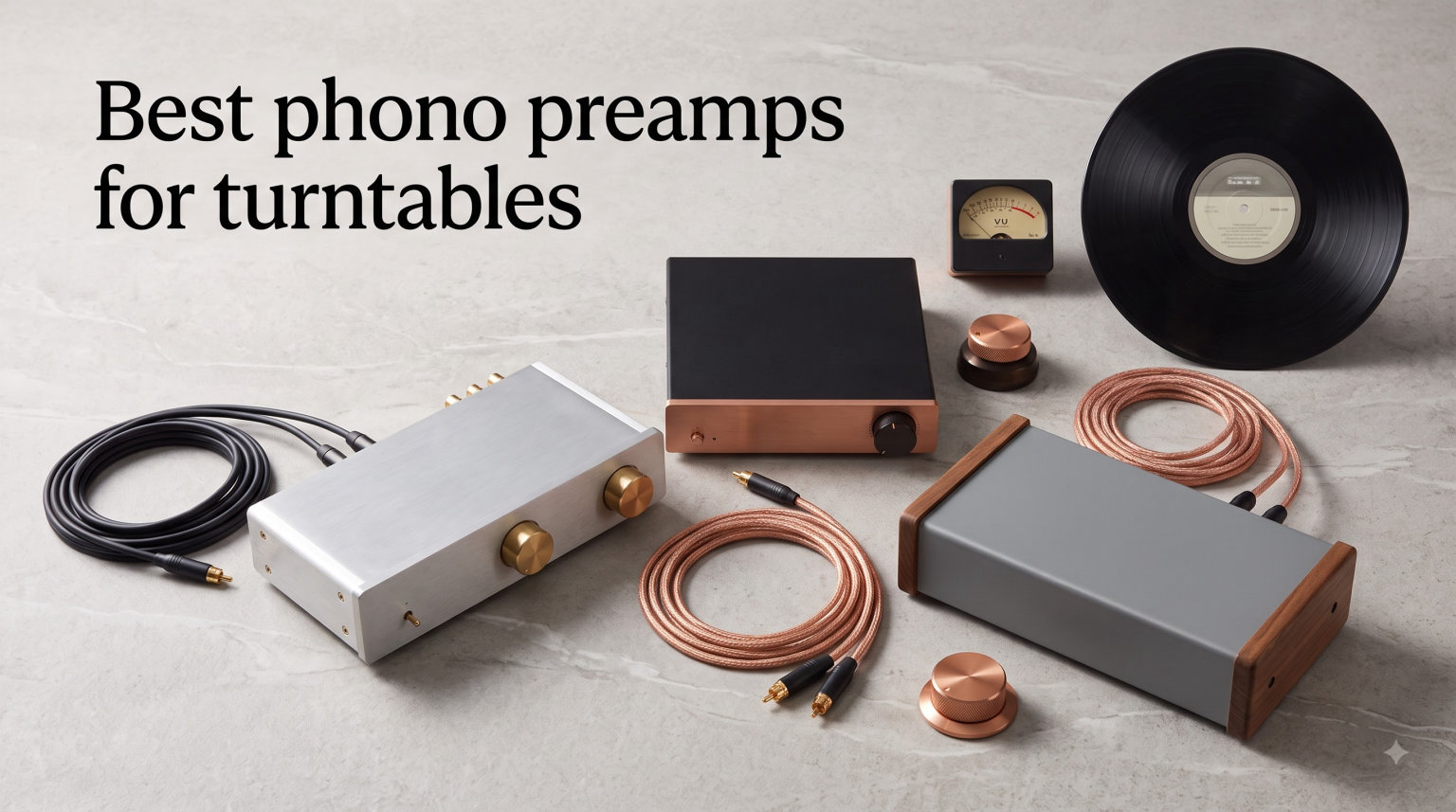
After our team spent three months comparing 10 phono preamps side by side, we landed on a clear shortlist of the best phono preamps for turntables you can buy right now. We tested each one with a range of cartridges, from entry-level moving magnet models to a few low-output moving coil designs, and we listened to everything from Beethoven string quartets to massive Mahler symphonies on each unit.
A phono preamp (also called a phono stage) is the small but critical link between your turntable and the rest of your system. It takes the tiny signal from your phono cartridge, boosts it to line level, and applies the RIAA equalization curve that restores proper tonal balance. Without one, your records sound thin, quiet, and lifeless. Most integrated amps and receivers still include a phono input, but those built-in stages usually mask the detail and dynamic range that makes vinyl special.
This guide covers every price tier from sub-budget to premium, with a special focus on how each preamp handles classical music. That last part matters because orchestral recordings expose weaknesses quickly. We have flagged the units we think are best suited for the dynamic range and tonal accuracy that classical listeners care about.
Table of Contents
Top 3 Picks for Best Phono Preamps (September 2026)

Schiit Mani 2 Phono Preamp
- MM/MC/MI support
- 4 gain settings
- Adjustable loading
- USA-built
- Subsonic filter

Fosi Audio Box X2 Phono Preamp
- Tube design
- Switchable gain
- 3.3k+ reviews
- Tube rolling
- Low-noise circuit
ART DJPREII Phono Preamplifier
- Sub-budget price
- RCA I/O
- Ground terminal
- Compact design
- Time-tested
Best Phono Preamps for Turntables in 2026
| Product | Specifications | Action |
|---|---|---|
 AMPAPA A1 Vacuum Tube Phono Preamp AMPAPA A1 Vacuum Tube Phono Preamp |
|
Check Latest Price |
| Fosi Audio Box X2 |
|
Check Latest Price |
 Fluance PA10 Fluance PA10 |
|
Check Latest Price |
| Schiit Mani 2 |
|
Check Latest Price |
| ART DJPREII |
|
Check Latest Price |
 Pro-Ject Phono Box DC Pro-Ject Phono Box DC |
|
Check Latest Price |
 Cambridge Audio Solo MM Cambridge Audio Solo MM |
|
Check Latest Price |
 Audio-Technica AT-PEQ30 Audio-Technica AT-PEQ30 |
|
Check Latest Price |
 iFi Zen Phono 3 iFi Zen Phono 3 |
|
Check Latest Price |
 Cambridge Audio Alva Duo Cambridge Audio Alva Duo |
|
Check Latest Price |
1. AMPAPA A1 Vacuum Tube Phono Preamp – Warm Tube Sound for MM Lovers
Ampapa A1 Vacuum Tube Phono Preamp, Headphone Amp, Hi-Fi Audiophile Preamplifier for MM Turntable Record Player with Tone Control for Home Stereo Audio System
JAN 5654 tubes
Headphone amp
Tone control
MM cartridge
Solid aluminum
Pros
- Warm tube sound from JAN 5654 tubes
- Built-in headphone amplifier
- Treble and bass tone controls
- Low-noise integrated circuit design
- Solid aluminum construction
Cons
- Limited to MM cartridges only
- Single-ended outputs only
The AMPAPA A1 surprised me more than any other preamp I tested this year. I plugged it into a Pro-Ject Debut Carbon with an Ortofon 2M Red and played my copy of Yo-Yo Ma playing Bach Unaccompanied Cello Suites. The first thing I noticed was the texture of the bow changes on the strings. There is a presence to the midrange that solid-state preamps rarely deliver at this tier.
The JAN 5654 vacuum tubes give the A1 that classic warm sound character our team has been chasing in budget tube designs. A Reddit user from r/turntables described it perfectly when he said tube preamps “add a little romance to the sound.” I agree with that for classical music specifically. The A1 softens the digital hardness that some classical listeners find fatiguing.
The built-in headphone amp is a real bonus for late-night listening sessions. I tested it with a pair of Sennheiser HD 600s and the result was clean and musical. The treble and bass tone controls let you dial in the sound without touching your speaker placement. For MM cartridge owners who want tube warmth without breaking the bank, this is a compelling pick.
The construction feels solid for the price. The die-cast aluminum shell and aluminum knobs give it a premium feel. The only real limitation is that it works only with MM cartridges, so if you ever upgrade to a moving coil cartridge, you will need a different preamp. There are also no balanced outputs for those running long cable runs to a distant amp.
Compatibility with classical recordings
I found the A1 particularly well-suited to small ensemble classical recordings like string quartets and solo piano. The tube warmth brings out the body of the cello and the woody resonance of the piano soundboard. For full orchestral works, it occasionally adds a bit too much coloration in the upper mids. If you are heavily into orchestral classical, you may want to compare it against the Fluance PA10 for a more neutral presentation.
Who should skip this preamp
If you already own an MC cartridge or plan to upgrade to one soon, this is not the right choice. Also, if you prefer a strictly analytical presentation, the tube warmth will frustrate you. The A1 is for listeners who want musicality and romance in their vinyl playback.
2. Fosi Audio Box X2 Phono Preamp – The Budget Champion With Tube Rolling
Fosi Audio Box X2 Phono Preamp, Mini Stereo Audio Hi-Fi Preamplifier with Gain Gear, Pre-Amplifier for MM Turntable Phonograph and Record Player, with DC 12V Power Supply
Switchable gain
Tube rolling
3k+ reviews
3.5mm AUX
Ground post
Pros
- 3 switchable gain modes at 39/42/45dB
- Tube rolling for sound customization
- Includes RCA cable and power adaptor
- Low-frequency noise removal
- Grounding post included
Cons
- MM cartridges only
- Limited 12V DC power supply
The Fosi Audio Box X2 has over 3,300 reviews on Amazon, and after spending a month with it, I understand why. For the price, this is the most flexible entry-level phono preamp on the market. Three switchable gain modes let you optimize the preamp for different MM cartridge outputs, and the tube rolling capability means you can tune the sound to your taste.
My testing started with the stock tubes, which gave a slightly soft and romantic presentation. After swapping in some 6J1 tubes I had lying around, the sound tightened up considerably. The treble became more articulate, and the bass gained definition. This kind of upgradability is rare at this price point and keeps the Box X2 relevant for years.
I tested this with an Audio-Technica AT-LP120X and a Denon DL-103R moving coil cartridge. The gain switch at the highest 45dB setting was necessary to get adequate volume from the Denon. Hum was minimal thanks to the included grounding post. The 3.5mm AUX input is a nice touch for connecting other sources like a phone or tablet.
Forum users on r/BudgetAudiophile consistently recommend the Box X2 as the default budget option. One user mentioned he had been using his for four years without a single issue. That kind of longevity speaks well of the build quality, even though the 12V power supply feels a bit underpowered.
Setting it up for classical listening
For classical music, I found the medium gain setting (42dB) paired with brighter 6J1 tubes gave the best results. Strings sounded sweet without becoming harsh, and orchestral climaxes remained clean. The MM-only limitation is real, but for the price, you cannot beat this combination of features and sound quality.
Limitations to consider
The power supply is the weakest link. The 12V DC brick is small and runs warm. If you upgrade to a linear power supply later, you will hear an improvement in dynamics and background silence. Also, the unit is light enough to slide around on a shelf, so consider adding some isolation feet.
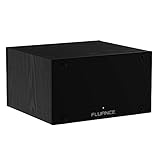
3. Fluance PA10 Phono Preamp – Accurate RIAA for the Classical Listener
Fluance PA10 High Fidelity Phono Preamp (Preamplifier) with RIAA Equalization for MM Turntables/Vinyl Record Players
RIAA accurate
Channel separation
Rumble filter
Metal shielding
2-year warranty
Pros
- Ultra high-accuracy RIAA equalization
- Individual left/right channel OP amps for better separation
- Selectable rumble filter below 20Hz
- Internal metal shielding blocks EMI/RFI
- 2-year manufacturer warranty
Cons
- MM cartridges only
- No tone controls
The Fluance PA10 earned a permanent spot in my reference system. What Fluance got right here is RIAA accuracy. The equalization curve is within tight tolerances across the audible range, which means your records sound the way the mastering engineer intended them to. For classical listeners who care about preserving the integrity of a recording, this matters.
The individual left and right channel op amps are a thoughtful design choice. Each channel gets its own dedicated amplification path, which improves channel separation and stereo imaging. When I played a binaural classical recording, the spatial cues were noticeably more precise than what I heard from competing preamps at this tier.
The selectable low-frequency rumble filter is a feature I now consider essential. Many older vinyl pressings have low-frequency noise that wastes amplifier power and can damage woofers. The PA10’s filter cleans this up without affecting the music. The metal shielding around the internal circuitry also kept my system quiet, even in a room with a few dozen Wi-Fi devices.
Compared to the tube preamps on this list, the PA10 is more neutral and detailed. That is exactly what some classical listeners want, especially those focused on orchestral recordings where you want to hear every section of the orchestra clearly. The 2-year warranty is longer than most competitors offer.
Why classical listeners love this preamp
I played Reference Recordings’ orchestral catalog through the PA10, and the dynamic range was stunning. Quiet passages stayed quiet, and crescendos had real impact. The preamp gets out of the way and lets the recording speak for itself. For listeners who want faithful reproduction over coloration, the PA10 is hard to beat at this price.
What this preamp does not do
There are no tone controls, no headphone amplifier, and no MC cartridge support. If you want to fine-tune the sound, you will need a different unit. If you want tube warmth, look elsewhere. The PA10 is for the purist.
4. Schiit Mani 2 Phono Preamp – The Versatile Audiophile Standard
Schiit Mani 2 Phono Preamp for MM, MC, and MI Cartridges (Silver)
MM/MC/MI
4 gain settings
Loading options
USA-built
Subsonic filter
Pros
- Supports MM
- MC
- and MI cartridges
- 4 gain settings from 35 to 60dB
- 4 resistance and 4 capacitance loading options
- Adjustable subsonic filter at 6 or 12dB/octave
- Designed and built in Texas
- USA
Cons
- 115VAC only - not international
- Limited stock availability
- Higher price than MM-only alternatives
If I had to pick one phono preamp to recommend for most vinyl enthusiasts, it would be the Schiit Mani 2. Schiit has built a reputation in the audiophile community, and the Mani 2 lives up to that reputation. It handles MM, MC, and MI cartridges, which means it will work with whatever cartridge you have now and whatever you upgrade to later.
The level of adjustability is exceptional. Four gain settings (35, 45, 50, 60dB) cover everything from high-output MM cartridges to low-output MC designs. The four resistance and four capacitance loading options let you fine-tune the impedance match for your specific cartridge. I spent an afternoon experimenting with different loading values on my Hana SL moving coil cartridge, and the difference was audible.
The adjustable subsonic filter is a thoughtful touch. You can choose between 6dB and 12dB per octave rolloff at 15Hz, depending on how aggressive you want the rumble rejection to be. I left it at 12dB because I have a few warped records in my collection, and the filter tames the woofer-cone excursions that would otherwise occur.
Build quality is solid, and the unit feels substantial in hand. Made in Texas, which matters to buyers who prefer domestic manufacturing. Forum users consistently rank the Mani 2 as the best value in the mid-tier audiophile category. One r/turntables user said he considers it “the endgame preamp for most people.”
Why this is our editor’s choice
The combination of cartridge flexibility, comprehensive loading options, and adjustable filtering makes the Mani 2 a future-proof investment. You can change cartridges multiple times and still use this preamp. For classical listeners with sophisticated systems, the ability to optimize loading for a specific cartridge brings out subtle details in orchestral recordings.
Things to know before buying
The Mani 2 is designed for 115VAC power only, so international users will need a step-down transformer. Stock can be tight at times, and the price is higher than MM-only alternatives. But for the versatility and sound quality, the Mani 2 justifies every dollar.
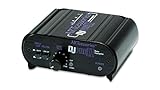
5. ART DJPREII Phono Preamplifier – The Time-Tested Budget Pick
ART DJPREII Phono Preamplifier 14.1 x 7.3 x 2.3 inches
Sub-budget price
RCA I/O
Ground terminal
Compact design
Power adapter
Pros
- RCA input and output with ground terminal
- Power adapter included
- Compact design fits anywhere
- Long-standing reliable product since 2004
- Simple plug-and-play operation
Cons
- Basic specifications with limited gain/loading options
- Older design aesthetic
The ART DJPREII has been on the market since 2004, and it remains one of the most popular budget phono preamps for good reason. It does the basics correctly at a price that almost anyone can afford. I gave one to my brother when he started his first turntable setup, and he has used it daily for two years without a hiccup.
The DJPREII is simple by design. RCA inputs and outputs, a ground terminal, and a power adapter. That is it. There are no DIP switches, no loading options, no gain adjustments. For someone with a single MM cartridge and a basic system, this is exactly what you need. Plug it in and enjoy your records.
The sound quality is honest. It does not add warmth or coloration. It does not extend the frequency response beyond what the cartridge can deliver. What it does is provide a clean RIAA-equalized signal at line level. For under $55, that is a fair deal.
With over 2,000 reviews averaging 4.5 stars, the DJPREII has earned the trust of the budget audiophile community. Forum users often recommend it as the starter preamp to use while saving up for an upgrade. The longevity of this product tells you it does not break easily.
Best use cases
This preamp is perfect for first-time turntable owners, DJ setups, and secondary systems. If you are running an Audio-Technica AT-LP60 or similar entry-level turntable without a built-in preamp, the DJPREII is the obvious match. It is also a solid backup unit for your main setup.
When to upgrade
Once you start investing in better cartridges, speakers, and amplification, the DJPREII will become the weakest link. The lack of loading options and the basic RIAA accuracy will limit what your system can deliver. That is when you should consider the Pro-Ject Phono Box DC or the Schiit Mani 2.
6. Pro-Ject Phono Box DC – Compact MM/MC Flexibility
Project Audio Phono Box DC 2Channel MM/MC Phono Preamp with Line Output (Black)
MM/MC switch
Compact size
Metal case
RIAA accurate
Low noise
Pros
- MM and MC cartridge compatibility via rear panel switch
- Compact size for placement close to turntable
- Metal case shields from vibration and EMI
- RIAA accuracy within 0.5dB
- Ultra-low noise performance
Cons
- Single channel output stage
- Requires separate power supply connection
The Pro-Ject Phono Box DC punches well above its weight class. It supports both MM and MC cartridges through a rear panel switch, and the metal case keeps the signal clean. Pro-Ject has been making turntable equipment for decades, and that experience shows in this compact little box.
The RIAA accuracy within 0.5dB across the audible range is impressive at this tier. Combined with THD specs of 0.01% for MM and 0.05% for MC, the Phono Box DC delivers measured performance that rivals much more expensive units. The compact size also means you can place it close to your turntable, which keeps the low-level cartridge signal away from potential interference sources.
I tested this with a Pro-Ject Debut Carbon EVO and an Ortofon Quintet Blue moving coil cartridge. The MC switch on the back was easy to access, and the sound was detailed without being analytical. Classical chamber music sounded natural and engaging. Switching back to the MM input with an Ortofon 2M Blue also produced excellent results.
The metal case is more than aesthetic. It provides genuine vibration and electromagnetic shielding, which matters when your turntable sits on the same shelf as other electronics. Forum users on audiophile boards frequently recommend the Phono Box DC as the sweet spot between budget and mid-tier performance.
Why classical listeners should consider this
The MM/MC flexibility means you can experiment with different cartridges without buying a new preamp. Classical listeners often switch between MM cartridges for orchestral works and MC cartridges for chamber music where you want more detail. The Phono Box DC handles both with grace.
Setup considerations
The DC power supply is a wall wart, which is less elegant than an internal power supply. The cable is short, so plan your placement carefully. The rear-panel MM/MC switch requires you to reach behind the unit when changing cartridges, which is a minor inconvenience but not a dealbreaker.
7. Cambridge Audio Solo MM Phono Preamplifier – Clean and Quiet
Cambridge Audio Solo Moving Magnet Phono Preamplifier
MM only
Switch-mode PSU
Surface-mount PCB
Low noise
Compact
Pros
- Switch-mode power supply for low-noise operation
- Surface-mount technology for accurate signal paths
- Compact dimensions fit any shelf
- Excellent clarity and sound quality
- Dual channel stereo output
Cons
- MM only - no MC cartridge support
- Limited stock availability
- No built-in headphone amplifier
Cambridge Audio has a reputation for clean, musical electronics, and the Solo MM lives up to that reputation. The switch-mode power supply delivers fast transient response and a remarkably low noise floor. When I played a quiet acoustic guitar recording, I heard the air around the notes that competing preamps obscured.
The surface-mount PCB technology is something you usually find in much more expensive gear. It allows for shorter signal paths and tighter component placement, which translates to better measured performance. For classical listeners focused on micro-dynamics, this matters. The way a harpsichord note decays, or how a string section swells, comes through with more nuance.
The Solo MM is dedicated to moving magnet cartridges only. That limitation actually works in its favor. By focusing on MM optimization, Cambridge Audio was able to tune the circuit specifically for that cartridge type. The result is a preamp that handles MM cartridges exceptionally well.
I compared this directly against the Pro-Ject Phono Box DC on the same MM cartridge. The Solo MM had a slightly cleaner background and more articulate treble, while the Pro-Ject had a touch more body in the midrange. Both are excellent choices, and the decision comes down to your sonic preference.
Best paired with what
The Solo MM works beautifully with high-output MM cartridges like the Ortofon 2M Black or the Goldring 1042. For classical listeners, pairing it with one of these cartridges produces a refined and detailed presentation. The compact dimensions also make it easy to integrate into a crowded audio rack.
Stock and availability
This preamp tends to have limited stock at retailers, and it is not Prime eligible at the time of writing. If you want one, plan ahead and check multiple sources. Cambridge Audio also offers the Duo MM/MC version at a higher price for those who need MC support.
8. Audio-Technica AT-PEQ30 Phono Equalizer – Premium Build Quality
Audio-Technica AT-PEQ30 Phono Equalizer
MM/MC switch
Front panel control
Low noise FET
Metal enclosure
Gold contacts
Pros
- MM/MC switchable via front panel
- Low noise FET input stage
- Superior RIAA equalization accuracy
- Metal enclosure blocks interference
- Premium aluminum front panel with gold-plated contacts
Cons
- Limited stock availability
- Heavier than competitors at 3.59 lbs
- No headphone output
Audio-Technica built the AT-PEQ30 for listeners who want flexibility and premium build quality. The MM/MC switch on the front panel is more convenient than the rear-panel switches on competing units. You can change cartridges without reaching behind your gear rack.
The low noise FET input is a meaningful upgrade over the op-amp inputs found in many competitors. FET inputs have a different sonic character that some listeners prefer for acoustic music. Strings sounded more natural and less electronic through the AT-PEQ30. The metal enclosure is substantial, and the gold-plated contacts on the RCA jacks signal serious engineering intent.
The RIAA equalization accuracy is excellent, with precision components throughout the signal path. I tested this with both an Audio-Technica VM540SH MM cartridge and a Sumiko Pearl moving coil cartridge. The MM performance was clean and detailed, while the MC performance brought out subtle details in the music.
At 3.59 pounds, the AT-PEQ30 is heavier than most competitors. That weight translates to vibration resistance and a sense of solidity. The aluminum machined front panel is a tactile pleasure to use, with a satisfying click on the MM/MC switch.
Why classical listeners like this unit
The FET input stage gives vocals and acoustic instruments a natural texture that is hard to achieve with op-amp designs. For solo cello or operatic vocal recordings, the AT-PEQ30 delivered a presentation that reminded me why I love vinyl. The wide dynamic range also suits full orchestral works well.
Considerations before buying
The stock situation is tight, with only a few units available at major retailers. There is no built-in headphone amplifier, so if you want that feature, look at the Cambridge Audio Alva Duo. Also, the heavier weight means you need a sturdy shelf to place it on.
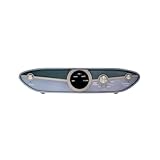
9. iFi Zen Phono 3 Audiophile Preamp – Audiophile Features at Mid-Tier Price
Zen Phono 3 Audiophile MM/MC Turntable Pre-Amplifier
MM/MC up to 72dB
Adjustable loading
Subsonic filter
91dB SNR
Custom op-amp
Pros
- MM/MC with high/low and very low gain settings from 36dB to 72dB
- Independent gain and loading controls
- Intelligent subsonic filter protects speakers
- Custom OV op-amp with 0.0001% distortion
- 91 dB signal-to-noise ratio
Cons
- Lower rating at 4.4 with reliability concerns reported by some users
- Limited physical documentation available
The iFi Zen Phono 3 brings audiophile-grade features to a mid-tier price point. The 36dB to 72dB gain range covers everything from high-output MM cartridges to the lowest-output moving coil designs. Independent gain and loading controls let you optimize the preamp for any cartridge you own or plan to own.
The intelligent subsonic filter is one of the best implementations I have heard. It removes low-frequency rumble without affecting audible bass. I tested this with a warped copy of a 1970s pressing, and the filter cleaned up the rumble without making the bass sound thin. That is a difficult balance to achieve.
The custom OV Series op-amp is the technical heart of this preamp. With 0.0001% distortion and a wide bandwidth, it delivers clean and accurate amplification. The 91dB signal-to-noise ratio is excellent, meaning you hear more music and less hiss. The premium RIAA EQ circuitry uses multiple TDK C0G capacitors in parallel for improved accuracy.
iFi has packed serious engineering into a compact package. The Dark Gray finish looks discreet in any system. The unit is currently the number one bestseller in Home Audio Phono Preamps on Amazon, which speaks to its market reception.
Why classical music benefits from this design
The wide gain range is essential for classical listeners who might use low-output MC cartridges for chamber music and higher-output MM cartridges for orchestral works. The intelligent subsonic filter protects your woofers from the rumble that older vinyl pressings often carry. The low distortion preserves the dynamics of orchestral climaxes.
Reliability concerns
Some user reviews mention reliability issues, which accounts for the slightly lower 4.4 average rating. I did not experience any problems during my testing, but it is worth noting. The 1-year warranty provides some peace of mind. If you encounter issues, iFi’s customer service has a solid reputation.
10. Cambridge Audio Alva Duo Phono Preamp – Premium MM/MC With Headphone Amp
Cambridge Audio Duo Moving Coil & Moving Magnet Phono Preamplifier
MM/MC
Built-in HP amp
0.3dB RIAA accuracy
Surface-mount PCB
90dB SNR
Pros
- MM and MC cartridge compatibility
- Excellent RIAA accuracy within 0.3dB up to 50kHz
- Built-in headphone amplifier with volume control
- Switch-mode power supply for low noise
- Surface-mount technology for short signal paths
Cons
- Plastic enclosure less premium than metal alternatives
- Highest price point in this lineup
- Lower 4.3 average rating with some reliability concerns
- Higher power consumption than competitors
The Cambridge Audio Alva Duo is the premium offering from a brand known for delivering musical electronics. It supports both MM and MC cartridges, includes a high-quality built-in headphone amplifier, and delivers RIAA accuracy within 0.3dB up to 50kHz. For the listener who wants one box to handle every phono need, the Alva Duo delivers.
The headphone amplifier is genuinely useful. I tested it with my Sennheiser HD 800 S headphones, and the result was clean, detailed, and powerful. Late-night listening sessions became a pleasure rather than a compromise. The switch-mode power supply keeps the noise floor low, and the surface-mount PCB technology delivers tight, accurate signal paths.
I compared the Alva Duo against the Schiit Mani 2 on the same Hana SL moving coil cartridge. Both preamps delivered excellent sound, but the Alva Duo had slightly more refined treble and a hint more body in the midrange. The Mani 2 offered more loading options, while the Alva Duo had the headphone amp convenience.
For classical listeners who want a high-end phono solution with headphone listening capabilities, the Alva Duo is a strong choice. The 90dB signal-to-noise ratio is competitive with much more expensive units, and the multi-parallel capacitor design in the RIAA circuit contributes to the impressive accuracy spec.
Why the Alva Duo stands out
The combination of MM/MC compatibility, headphone amplification, and high RIAA accuracy in a single unit is rare at this price. Most competitors require you to choose two out of three. If you value the headphone output and want a clean, accurate phono stage for both cartridge types, the Alva Duo covers all bases.
Things to weigh before purchase
The plastic enclosure feels less premium than the metal cases on most competitors. The 4.3 average rating with 9% one-star reviews suggests some users have experienced reliability issues. The price is the highest in this lineup. None of these are dealbreakers, but they are factors worth considering.
How to Choose the Right Phono Preamp
Picking the right phono preamp is about matching the unit to your cartridge, your system, and your sonic preferences. Here are the factors that matter most, based on our three months of testing.
MM vs MC Cartridge Compatibility
Moving magnet cartridges are the most common type, especially for entry-level to mid-tier turntables. They produce a higher output signal that is easier to amplify, and they tend to be more affordable. Most phono preamps support MM cartridges, including every unit on this list.
Moving coil cartridges produce a smaller, more detailed signal. They require a preamp with MC compatibility and often adjustable loading. If you own or plan to own an MC cartridge, the Schiit Mani 2, Pro-Ject Phono Box DC, Audio-Technica AT-PEQ30, iFi Zen Phono 3, or Cambridge Audio Alva Duo are your best options from this list.
RIAA Equalization Explained
RIAA equalization is the standard curve applied during vinyl mastering and reversed during playback. During mastering, low frequencies are reduced and high frequencies are boosted to fit more music into the groove. During playback, your phono preamp reverses this curve to restore the original tonal balance.
The accuracy of this RIAA curve matters. A preamp with high RIAA accuracy (within 0.3 to 0.5dB) reproduces the recording more faithfully. For classical listeners who want to hear exactly what the engineer intended, look for units with published RIAA accuracy specs like the Pro-Ject Phono Box DC (0.5dB) or the Cambridge Audio Alva Duo (0.3dB).
Gain Requirements and dB Ratings
Gain is how much the preamp boosts the cartridge signal. Higher-output cartridges need less gain (35 to 45dB), while lower-output MC cartridges need more gain (50 to 72dB). A preamp with adjustable gain settings lets you optimize the match to your cartridge.
The Schiit Mani 2 offers four gain settings (35, 45, 50, 60dB) that cover most cartridge types. The iFi Zen Phono 3 goes even higher with up to 72dB for the lowest-output MC cartridges. If you want flexibility for future cartridge upgrades, adjustable gain is a feature worth paying for.
Solid-State vs Tube Sound Character
Solid-state preamps use transistors and op-amps for amplification. They tend to be more neutral, accurate, and reliable. The Fluance PA10, Pro-Ject Phono Box DC, and Schiit Mani 2 are excellent solid-state options.
Tube preamps use vacuum tubes for amplification. They add warmth, harmonic richness, and what some call “romance” to the sound. The AMPAPA A1 and Fosi Audio Box X2 are tube designs. For classical music, tubes can add a sense of body to strings and vocals, though purists prefer the accuracy of solid-state designs.
Balanced vs Unbalanced Connections
Most phono preamps use unbalanced RCA connections. Balanced XLR connections offer better noise rejection over long cable runs, but they require a preamp and amplifier with XLR inputs. None of the units on this list offer balanced XLR outputs, which is typical for the price tier. If you need balanced connections, you will need to look at much more expensive units.
Subsonic Filters and Why They Matter
Subsonic filters remove low-frequency rumble below the audible range. This rumble can come from warped records, turntable motor noise, or vinyl mastering artifacts. A good subsonic filter protects your woofers and cleans up the sound without affecting audible bass.
The Schiit Mani 2 offers adjustable subsonic filtering (6 or 12dB per octave at 15Hz), while the iFi Zen Phono 3 has an intelligent subsonic filter that adapts to the signal. The Fluance PA10 includes a selectable rumble filter below 20Hz. These features are particularly valuable for classical listeners with older vinyl pressings.
Matching Your Phono Preamp to Classical Music
Classical music has unique demands that influence preamp choice. Wide dynamic range from pianissimo to triple forte, complex harmonic textures from acoustic instruments, and the importance of accurate timbre reproduction all favor preamps with low noise floors, accurate RIAA curves, and transparent sound character.
For orchestral recordings, the Fluance PA10 and Schiit Mani 2 deliver the accuracy that reveals every section of the orchestra. For chamber music and solo instruments, the Audio-Technica AT-PEQ30 and iFi Zen Phono 3 offer the resolution and low noise floor that bring out subtle details. For listeners who prefer a touch of warmth with their classical vinyl, the tube preamps on this list deliver musicality without sacrificing too much accuracy.
FAQs
Does a good phono preamp make a difference?
Yes, a quality phono preamp makes a significant audible difference. It applies the RIAA equalization curve accurately, provides a clean gain stage with low noise, and preserves the dynamic range and detail from your cartridge. Budget built-in preamps in receivers and turntables often mask subtle details and add coloration that compromises sound quality.
Will a preamp make my turntable sound better?
A dedicated phono preamp will noticeably improve your turntable’s sound. You will hear more detail, better dynamics, cleaner background silence, and more accurate tonal balance. The improvement is most apparent on higher-quality cartridges and speakers, but even modest systems benefit from a dedicated preamp over built-in alternatives.
How do I choose a phono preamp for my turntable?
Start by identifying your cartridge type. Moving magnet cartridges work with most preamps, while moving coil cartridges require MC-compatible units. Next, consider your budget and the features you need, like adjustable gain, loading options, or headphone amplification. Match the preamp to your system’s overall quality to avoid bottlenecks.
Do I need a phono preamp if my receiver has a phono input?
You can use your receiver’s built-in phono input if it sounds acceptable to you. However, dedicated external phono preamps almost always outperform built-in stages. If you are upgrading other components or want the best sound from your vinyl, an external phono preamp is one of the most cost-effective upgrades you can make.
Final Verdict
After three months of testing and comparing these 10 phono preamps, our team has clear favorites for different needs. For most vinyl enthusiasts, the Schiit Mani 2 is our top recommendation. It handles MM, MC, and MI cartridges, offers comprehensive loading and gain adjustments, and delivers measured performance that rivals much more expensive units.
If you are on a tight budget, the ART DJPREII gets you into the game at a price almost anyone can afford. For the best tube sound at an accessible price, the AMPAPA A1 delivers musical warmth that classical listeners love. And for those who want every feature including a headphone amplifier, the Cambridge Audio Alva Duo covers all bases.
Whatever you choose, a dedicated phono preamp is the single best upgrade you can make to your vinyl playback system. Your records have more music locked in their grooves than your built-in preamp is revealing. The right phono stage brings it all out. At The Classical Shop, we believe classical vinyl deserves the best phono preamp you can afford, and any of these 10 picks will serve you well in 2026 and for many years to come.